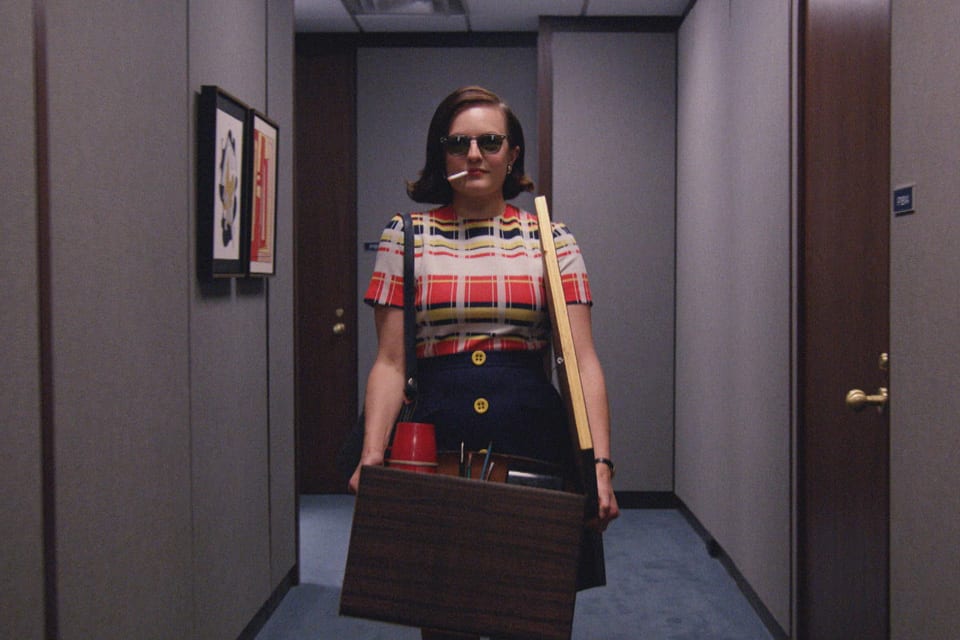
12 Novels About Assistants Trapped in Jobs They’re Too Good For 

In theory, most assistants are on their way to becoming someone bigger. Head coach. Full professor. Editor-in-chief. A more experienced colleague passes down critical know-how while you, the newbie, build up the skill set needed to advance in the organization. That’s how it’s supposed to work at least, but sometimes things go sideways. You’re not given the right opportunities to develop, or you’re simply too valuable as a grunt, and you’re passed over for promotion, never reaching the mountaintop. For others, there is no mountaintop. When I was a personal assistant to a wealthy family, there was no career trajectory. No matter how hard I worked, I would never become my bosses, and many of the skills I picked up were so specific and outré that they didn’t really transfer to any other role. Even if I’d wanted to be a personal assistant to someone else—and there was no reason to, since they treated me well—I would’ve had to start from scratch, learning another person’s routines and preferences.
In my debut novel The Work Wife, about three women in the orbit of a Hollywood movie mogul, only one of the protagonists is an assistant proper, landing on his personal staff after burning out in academia. The other two protagonists—his wife and his ex-business partner—helped to incubate his children and projects. But all three women are equally engaged in the work, paid and unpaid, of insulating this one rich man from the ordinary friction of human life.

The twelve novels gathered here tell the tales of the assistants, temps, apprentices, and unpaid laborers who also smooth the way for others. Is it a coincidence that most of these books are debuts? Or that so many of the protagonists are unnamed while their stories tip into satire? Or are these authors merely following the age-old advice to “write what you know,” when what you know is how to be overlooked even though you’re every bit as smart (or smarter) than the guy (it’s usually a guy) making ten times more (at least) than you? You have to laugh, or else you’ll cry.

The Assistants by Camille Perri

When the CEO of media conglomerate Titan Corporation hollers for his staff, his 30-year-old assistant Tina Fontana knows he needs her—and not his deputy, senior editor, or executive producer—by his tone. “It was a more intimate sound because with me Robert’s needs were always more personal.” But what good is being the first to know about an upset stomach or a marital spat, or being “essential to the success of this castle of a man,” if your own life is stalled? After six years of expensing her boss’s lavish lifestyle—$19K for a first-class plane ticket, or roughly two trips to Tiffany—while her own student loan balance won’t budge, a chance accounting error presents Tina with a unique opportunity to erase that debt. When Emily in Accounting catches on, a conspiracy is born. Perri’s debut is a gleeful page-turner for anyone who’s ever wondered what might happen if the assistants were put in charge.

The Odyssey by Lara Williams

Ingrid’s running from her demons when she’s hired aboard the WA, a cruise ship whose staff rotate through a variety of jobs—IT administrator, manicurist, croupier, able seaman, portrait photographer, customer service assistant, you name it. “I wasn’t good at any of these jobs, none of us were, but that wasn’t the point. We were good at pretending.” When she’s accepted into “the program,” a hush-hush apprenticeship with the ship’s captain that’s organized around the principle of Japanese aesthetics known as wabi-sabi, things start to get extra weird. The assistant becomes the leader in this surreal odyssey. 

Free Food for Millionaires by Min Jin Lee

“In a way, it’s tragic when you can do something you don’t like,” says one of the characters of Min Jin Lee’s debut novel Free Food for Millionaires, and it makes a decent thesis for the book. Queens-born Casey Han is a Princeton grad with expensive tastes. When she passes up Columbia Law School to become an entry-level sales assistant at an investment brokerage (a “bullshit job” in the eyes of her new boss), she disappoints her Korean immigrant parents almost as much as she does by living in sin with her white boyfriend. Thrown out of the family home, she’s got to make her own way through the excess of 1990s Manhattan—and moonlighting in the accessories department of a luxury department store doesn’t help, as she brings home more hats than she sells. But she’s poised to rise to the top of either world, if she can just commit to one path. With the same keen eye for emotion that she brings to her National Book Award–nominated epic Pachinko, Lee charts the wants and pangs of a woman on the verge.

The Employees by Olga Ravn, translated by Martin Aitken

Originally presented as a parallel fiction to Lea Guldditte Hestelund’s 2018 installation Consumed Future Spewed up as Present, The Employees retains its roots in the visual arts while succeeding as a science fiction satire of the modern workplace. The novel consists of statements by the half human, half humanoid crew of the Six-Thousand Ship following the extraction of a set of objects from the planet New Discovery. Those deemed sufficiently “clean” are allowed to enter the gallery-like space where the objects are displayed to contemplate them and their own productivity. “When I enter the room containing the objects, I am, in every respect, the ship’s pilot, every remnant of the private person is gone,” the first officer says. The committee collecting these statements must decide whether the ship and its crew will continue their mission or be terminated (and destroyed). The work of the reader is to figure out which crew members are flesh and blood and which are “made for work,” and whether the difference even matters. “Should I hate myself anyway?” asks a humanoid worker who has inadvertently deviated from the program. “Who do I go to for forgiveness? Is there an application procedure?” Shortlisted for the International Booker prize, The Employees is for anyone who’s ever felt less than human in a corporate bureaucracy.

NSFW by Isabel Kaplan

Like her mother, a brainy, feminist lawyer who moved to Los Angeles for the good of her husband’s career and not her own, the unnamed narrator of Isabel Kaplan’s debut novel NSFW “was meant for Harvard, not Hollywood.” Nevertheless, diploma in hand, she maneuvers her way onto the desk of a development exec at XBS, a television network known for its safe choices and cops-and-lawyers shows. Development is where the power is, a mentor tells her, and “if you want to make change in a big, noticeable way… you need power.” The only problem: to build that power, she may have to abandon her principles—maintaining a soul-crushing beauty regimen, reading her quixotic boss’s mind, dumbing down her script coverage, and looking the other way when scandal strikes. Set in the Obama years but presaging the #metoo era to come, this is a smart and frequently hilarious look at the true cost of women’s success.

Several People Are Typing by Calvin Kasulke

Told entirely through Slack message threads, Several People Are Typing is a satirical romp through workplace culture and a meditation on the pathos and poetry of digital communication. Gerald is a mid-level employee at a public relations firm when he finds himself somehow stuck inside the app. At first he’s desperate to return to the land of living—no thanks to his coworkers, who are convinced he’s only out to milk his remote setup—but he grows to savor his increased productivity and life inside the matrix. After all, “what is a workplace but a cult where everyone gets paid, really?” He also develops surprisingly intimate relationships with both the coworker he pays to check on his body and Slackbot, a helpful but menacing piece of AI in search of a human form. You don’t have to have the rat-a-tat-tat of Slack’s new message notification etched in your consciousness like one of Pavlov’s dogs to enjoy this book, but it doesn’t hurt.

The Other Black Girl by Zakiya Dalila Harris

Editorial assistant Nella Rogers is the only Black woman at Wagner Books, a publisher whose last African American hit came out 35 years ago, so when Hazel-May McCall joins the team, Nella’s thrilled. Finally, a chance to have “a ‘work wife’ who really understood her,” not to mention someone to share the emotional workload at the company’s awkward diversity town halls. But when Hazel encourages her to be frank with their boss about a problematic book going to press, with disastrous results, and then moves ahead of her in the pecking order, Nella knows the other Black girl is not the work wife she hoped for. Throw in a mysterious note telling her to LEAVE WAGNER NOW, and Nella finds herself at the center of a sinister plot that reaches back decades. A former editorial assistant at Knopf, Harris spins a wild thriller that’s also a convincing takedown of the publishing industry.

There’s No Such Thing as an Easy Job by Kikuko Tsumura, translated by Polly Barton

Originally published in Japan in 2016, Tsumura’s first work to be translated into English makes a fitting companion to the Great Resignation of the Covid years. The unnamed narrator has left her profession due to burnout. When her unemployment insurance runs out, she asks a recruiter to find her job “as close as possible to my house—ideally, something along the lines of sitting all day in a chair.” We follow the narrator through a series of temporary odd jobs that are simple enough, yet still emotionally draining. Is it humanly possible to square her work ethic with the symptoms of burnout syndrome that leave her caught somewhere between wanting “a job that was practically without substance, a job that sat on the borderline between being a job and not” and being “happy when people took pleasure in my work, and it made me want to try harder”? When she lands at “an easy desk job in a hut in a big forest,” the lessons she’s learned from each gig thread together in uncanny ways. Part detective story, part meditation on the demands of late-stage capitalism, There’s No Such Thing as an Easy Job charms.

Such a Fun Age by Kiley Reid

Emira Tucker, a broke Temple grad about to age out of her health insurance, knows she can’t be a babysitter forever. But she loves sweet three-year-old Briar Chamberlain so much that it’s easy to postpone the inevitable pivot to adulting. If only Briar’s mom Alix, an influencer who’s the epitome of white entitlement, weren’t part of the package. One minute she’s giving Emira a cheesy branded polo shirt to wear as her uniform (and secretly snooping through her texts); the next she’s trying to be her new best friend. When a supermarket security guard accuses Emira of kidnapping her young charge, and a handsome bystander makes a video of the encounter that goes viral, Emira and Alix’s lives become even more entangled. Such a Fun Age is a richly observed study of the domestic workplace and the tensions that compound when white guilt is in the mix.

Something New Under the Sun by Alexandra Kleeman

Back home Patrick Hamlin might be a big deal, a novelist “on the cusp of his 40s” whose book is being adapted into a Hollywood movie, but on set he’s nothing but a lowly production assistant watching his life’s work get butchered. His initial shivers of pride dissipate when he learns he’ll be doing “a job for a kid,” chauffeuring the film’s star, Cassidy Carter, around LA.

Eager to distinguish himself from his peers, a couple of Rosencrantz and Guildenstern PAs who do little but provide comic relief, Patrick decides “in the first week that he doesn’t fetch, or he only fetches important items, items with an integral part to play in the story.” That means helping Cassidy hoard the cases of real water that she receives in lieu of a salary, and trying to get to the bottom of WAT-R, the synthetic substitute everyone in LA unthinkingly glugs while wildfires rage all around them. Working without finding any meaning in it is just one of the horrors uncovered in this dystopic fever dream about the climate crisis.

Temporary by Hilary Leichter

“There is nothing more personal than doing your job.” The unnamed narrator of Temporary first encounters this adage on a granola bar wrapper but “it’s a sentiment strong enough on which to hang my heart and purpose.” She comes from a long line of temporaries, much like Circe comes from a line of gods, and her life’s purpose is to find “the steadiness,” the near-mythical achievement of a permanent job. Until then, she has “a shorthand kind of career. Short tasks, short stays, short skirts.” In these stints, she fills not just the role, but the person-shaped hole left behind by the absent employee. “It takes an aggressive empathy to accurately replace a person,” whether it’s a pirate, a ghost, a murderer, or the chairman of the board of “the very, very major corporation, Major Corp.” With verve and insight, Leichter embraces the surreal in this sendup of the gig economy.

How Not to Drown in a Glass of Water by Angie Cruz

It’s the spring of 2009 and Cara Romero—56, Dominicana, and unemployed since her factory job of 25 years moved overseas—wants to work. “Write that down,” she tells the counselor she meets with each week at the Senior Workforce Program, because “what is a person without an occupation?”

Through a series of tangent-filled sessions, applications, and questionnaires (“Degree Earned: Survival; Previous Employer: The factory of little lamps; Job Title: Whatever job needs to be done”), we learn Cara’s résumé, both the paid and unpaid obligations (professional, romantic, and otherwise) that fill up the pages of her life story. What emerges is a portrait of a woman who can do it all: care for her community, manage disasters, organize, and problem-solve. Artfully constructed, and by turns laugh-out-loud funny and deeply moving, Cruz’s latest exposes the fragility at the center of American capitalism.
My Earliest Self Is a Boy Who Wasn’t Treated Like a Boy

A year ago, my spouse and I abandoned the small northeastern town we’d lived in for more than two decades and moved to a different small northeastern town. Our official reason for moving—the elevator pitch to friends and family—was financial; our original house was suddenly worth more than twice what we’d paid for it, the nicer house we’d found to move into, a fraction of that. The less official reason for our move was change; we didn’t seek a fresh environment to change us, we needed tabula rasa to accommodate our changed selves. 

Like many trans and nonbinary folk, I first came out as “gay,” confusing and submerging gender with sexuality. My earliest self-knowledge was being a boy unable to be treated like a boy. During an unhappy childhood—desperately begging to be called  “brother,” “son,” “nephew,” “grandson”—I relegated my identity to a religion I practiced alone and in private. Coming out as gay, moments following my shipwreck of a first marriage, I found unprecedented joy and freedom. I was never again questioned for wearing my signature men’s attire (including socks and boxers) nor the plethora of other gender nonconforming behaviors that were simply me being me. As a queer person, I met other people like myself, eventually meeting and marrying (albeit in Canada) my wife Beatrice. Yet I continued answering to the name that had been force-fed to me since birth, and checking a lifetime of gender boxes I knew didn’t describe me. Returning to grad school as part of the pathway towards becoming a full-time writer, my MFA cohort was a mixed age group – some older than I, some of similar years, but most were younger. Being immersed four semesters within this generation stew helped me claim my true self-hood. I re-wrapped my queer mantle around my gender without embarrassing spotlight nor fanfare. When the university president called my updated name at graduation, I nearly lunged for my diploma, cracking open the pigskin binder and grinning at my simple androgenous name while still walking back to my seat. A few months later an essay I wrote about my long and winding gender journey won first prize in a prestigious writing contest, launching my career as an essayist. 

A fresh start with neighbors, business owners, insurance agents and car dealerships allowed Beatrice and I to be seen as who we actually are.

Outside of grad school, coming out again was less fluid; reminding circles outside my closest friends to use my correct name and pronouns proved incessant. Moving to a new location instantly solved this; a fresh start with neighbors, business owners, insurance agents and car dealerships allowed Beatrice and I to be seen as who we actually are, rather than through a hazy lens we’d left behind in our former town. Choosing our new home involved gravitating towards lush nature, progressive local government, proximity to some dear friends, (and yes, economy.) Learning shortly after movers deposited our myriad boxes and drove away, that we had unknowingly relocated to a county aptly named “Middlesex” absolutely thrilled me.

Though nonbinary (or non-binary) presence appears recently ubiquitous, the term first entered mainstream use in 2016 (in California and Oregon as legal gender option on driver’s licenses and passports) and only entered Websters Dictionary in 2019. With a hyphen or without, the ranks of those publicly claiming the tag grow daily. Performers Janelle Monae, Demi Lovato, Miley Cyrus and Sam Smith, all use it. Literary notables include Danez Smith, Kate Bornstein, Cyrus Dunham, Masha Gessen, and Eileen Myles. The first Winter Olympian defining themself as nonbinary is Timothy LeDuc. The first State Representative is Mauree Turner of Oklahoma. 

Ever since adopting the term myself in 2019, I’ve happily noted when film and television offers  representation and increases visibility, but a surprising amount of production falls under sci-fi, fantasy, and animation–genres not included in my regular viewing diet. Yes, “Billions” made history in 2017 with Asia Kate Dillon playing Taylor Mason, but “Umbrella Academy” and “Steven Universe” represent the bulk of what currently proliferates. Similarly, few literary depictions of nonbinary characters align with my reading; While Maia Kobabe’s 2014 graphic novel, “Gender Queer” was groundreaking and remains a favorite, very little fiction crosses my path dealing specifically with the nonbinary journey.  

When I learned nonbinary author Jendi Reiter had a poetry book coming out that specifically dealt with their gender journey, I pre-ordered my copy to ensure I’d receive it as early as possible. While I often read poetry, even concentrating on it for much of my masters degree in creative writing, my anticipation for Made Man had more to do with common denominators I share with Reiter. While I didn’t expect to see myself precisely reflected within these poems, something about this book imposed a strong gravitational pull in my direction.  

Made Man, a thematic volume of 76 poems, is divided into four sections: “The Obligatory Masking”, “Great Tits of the World”, “American Eclipse” and the fourth sharing the title with the combined work, “Made Man.” Not only does Made Man‘s chronology echo the author’s  individual nonbinary experience, it is the first poetry collection explicitly exploring a nonbinary journey (my research found this slim volume has cousins, but no clones.) As Section I flows into Section II, the creature we are witnessing evolves, as readers parse the most intimate of details, those unfamiliar with aspects of transition get an insider look.

Of course this volume doesn’t illuminate every nonbinary journey—rather, just Reiter’s. That fact contributes mightily to making the collection unique; the personal unfolding each poem contains. The second poem in the work, I’m a Laura Ashley Man, Myself, begins “mother desired a sofa but instead she had me…”  A few lines later, “…when I watched Tootsie I was sick / in lonely schoolday bed    tear-stung comedy of red lame /    my dowdy fate    to teeter knock-kneed toward mistaken love…” And ends “…her razor prettying my thighs /    and so ribboned    I raced    blindered    away.” 

Smiling and nodding my way through the familiar cultural touchstones in those lines, I simultaneously imagined Gen-Z thumb-tapping for google clarifications. Do 12- to 24-year-olds relate to cultural references like “Tootsie”?  Or in poems immediately thereafter referencing “the people’s princess” and “Mr. Miyagi.”?  

When reflecting on my own nonbinary journey, I think about Gen-Z-ers and how utterly different their experience is

I think about this because when reflecting on my own nonbinary journey, I think about Gen-Z-ers and how utterly different their experience is. The Trevor Project’s 2021 reporting that 26% of Generation Z identify as nonbinary follows me around most days, tapping on my shoulder and nudging me to pay attention. I interact with this self-reporting nonbinary population – the largest to date as defined by age– in classrooms, bars, restaurants, gyms. Wherever young people are found, more than a quarter of them define themselves as I do. How can this be? During childhood I met one other kid (like me, assigned female at birth) at sleepaway camp who seemed to share my brand of otherness. Mackie moved through space the way I did, athletic and physically bold, like me, she stuffed her hair into a baseball cap all day, and at night slept wearing a stolen-from-the-lost-and-found boys’ camp shirt (the boys’ shirts were dark navy, the girls’ light blue.) Mackie and I once ran away from camp for the day to avoid a tradition of having nail polish applied (in our case, to bitten and gnawed fingertips) by the senior girls. We hid out at the far side of the lake, swimming and sunning wearing only our shorts, our shirts discarded off to the side. But that was it, Mackie didn’t return the following summer and our worlds never again collided. I otherwise grew up entirely alone in who I was, isolated by what I assumed to be the rarest of birth defects. My Gen-X gut can summon, in a single click of a red sequined heel, the intense alienation born of my innate otherness. So now, how can there be, forty-some years later,  so many of me? Will an era soon arrive when visibility couples with sheer numbers to dissipate my hard history? Or, more pointedly, does the generation Reiter and I share traverse such an entirely different trajectory that current and future nonbinary generations can only read such touchstones as historians, absorbing the culture and context via brains rather than hearts? 

A few pages later, in a poem entitled Trans Formers the cultural references leapfrog decades ahead: the last stanza beginning:

“Seven-year-olds across America take it in stride

  on the next Netflix snowday 

  when all the striking women have disappeared

  from Griffin Rock, Cybertron, and NinjagoCity. 

  The next most beta-male character takes their place…” 

Involved parenting can draw you so close to another generation’s culture, you can internalize it as your own.

Here, those potentially clueless to Reiter’s allusions to “Minecraft”, “Strongarm” “Optimus” and “Grimlock” are Boomers and Gen-Xers (at least the ones not paying attention during their kid’s childhood.) Reiter’s fluency with such a broad range of culture icons makes reading these poems like reading a lush lexicon that a reader can either identify with or decipher via context. There is no judgment to ignorance of a reference point—the poet takes each reader by the hand, making it clear they will be treated as respected insider. In this poem Reiter introduces their son. In many other poems within the volume the boy is referenced in his various stages of growth and development. I relate in spades, having raised a biological son along with four additional children courtesy of my nearly 20 year marriage. Involved parenting can draw you so close to another generation’s culture, you can internalize it as your own; thrilling as much to Nintendo’s release of a new Switch Pro Controller as you did 20 years prior to the original Apple IPod. But relatability stemming only from first-hand experience is beside the point in art . How else could contemporary people purchase tickets and stand in line to view Picasso or Mattise? How else would consecutive generations relate to Dickinson, Clifton, Angelou, and Oliver? This ability to jump era when relating to art is how any reader should understand Made Man’s poems – because the power of transcendent work relies on depth of experience rather than shared experience. 

And yet, what if it isn’t cultural iconography I readily identify as the missing link, but rather something deeper? Just as a love of vintage can be nostalgic for some and novel for others, age itself may govern my perspective in ways making me smile and nod when reading Made Man and experience a faint wave of loss when watching nonbinary 20-somethings at work and play.   

Was this the source of my sadness last month heading towards our town’s Pride celebration? My t-shirt emblazoned simply with letters across the chest spelling out: boy(ish) garnered a couple compliments from members of my gender tribe, as it usually does. But its essence is an inside joke I share only with myself. Emanating from a generation devoid of acceptance, mainstream medical interventions, and nomenclature, while I knew I was born a boy, my childhood never allowed me to claim it, roadblocking me into tomboy trope and, with puberty, eventual submission to what society tolerated as acceptable cis hetero-normative modeling. While I finally claimed a queerness presenting itself first lesbian and eventually nonbinary, my adult years are marked by the scabs and scars defining that evolution. 

There is an ever-present attitude of hope in these lines, a desire to brave the path towards metamorphosis.

Reiter’s poem Don’t Get Your Penis Stuck in the Bubble Wand is about one parent’s daily drudge reasoning with their 3-year-old. The first line “You have a choice” is simultaneously tired repetition, and something greater: “Choice” being the uber gift a parent can offer a child. Moreover it’s the invaluable opportunity one generation can bestow upon the next. In offering the toddler what they know is their child’s modern-day birth-right, the poem’s voice also speaks from a place of healing what they themself had not been offered. The poem’s last lines “The ___ on the bus goes ___ and ___, / ___, ___.” make one read words which are clearly there, though they are represented in absentia. The reference point is core–it need never be filled in; there are constants to every generation, and there are overlays which can improve (to continue the metaphor) the ride.  While being queer remains enough of an otherness from mainstream that each individual must still navigate it, the generation currently coming of age grew up with what would have been inconceivable to my (and Reiter’s) early self. They grow up with role models, with increased visibility across entertainment and sports. They grow up with knowledge and (ideally) access to hormone blockers and testosterone and estrogen injections.They grow up with enough controversy surrounding public bathrooms and the amplification of that controversy throughout social media, to understand that while they may not be accepted everywhere, they are clearly a group that exists. I am beyond glad for the progress of my younger gender-peers, but I also feel the sting of having personally missed it. 

In Mr. Miyagi Mourns Another Anniversary, “Meanwhile, for a boy/almost like you, one legged bird”, Reiter’s embrace of their own fledgling self is palpable. In How to Lick a Lollypop on Main Street we are told “Risk being ranked as you lick/ the melting cherry swirls/ like a man’s damp secret hair.” so we endure the fraught exploration as we trust it’s necessary process for the burgeoning new self. In Lust it’s the lines: 

“and how long must I look at the damn roses

  to do them justice they confuse me

  with beauty no one really has

  the right to walk away from”

that acknowledge the deep pain, but one that has a time limit. Throughout, there is an ever-present attitude of hope in these lines, a desire to brave the path towards metamorphosis. 

In the poem Ode to Butternut Squash written to (and about) an oversized gourd “… the War and Peace of vegetables” for guests who, as the last lines explain, “will not be grateful for your sacrifice/ and fill up on pie instead.” is a departure of sorts within the work. Lighthearted, devoid of trauma and seemingly less about the nonbinary, a contemplation on gender still lies within it: 

          “your brute firmness, flesh pink and unmarked, 

sized to give Anna Karenina the shivers.

I do not have the conquering spirit.

Because I am afraid, butternut squash,

that even if I cut you in half without losing a finger,

and you yield your virgin territory” 

It’s always an additional encumberment though, having to announce one’s difference.

This poem snapshots what it is to be a gender other than the more famous binaries; to have thoughts of body and flesh never far from one’s conscience as one endeavors to navigate the rest of life…for example, the cooking of a vegetable. For me, because I was queer in ways not  always visually recognizable, when meandering through a straight cis world, my presentation often camouflaging me as their cohort, my antennae sensed queerness wherever it hid; in peoples’ unintentional use of language and gesture, in how someone wore their scarf, buttoned their coat, zipped their fly… there was no getting away from my perception, real or imagined, of innuendo, because it was the steady silent baseline playing beneath my life.

The TV series “Sort Of” does similar justice to the experience. I thrilled at “Sort Of”, a scripted half-hour HBOmax dramedy series diverging from other gender fluid content. The shows focus on 25-year-old nonbinary Sabi, a part-time bartender at an LGBTQ club and part-time caregiver to two young children of a married hetero cis couple. Sabi’s best friend 7ven is also nonbinary, and the pair offer two very different representations of gender fluidity throughout nine episodes of season one. Sabi and 7ven have complicated lives and what’s groundbreaking is the fact of being nonbinary is not one of the complications, but rather the thread running through everything else. Bilal Baig (star and co-creator of “Sort Of”) said in an interview with Yahoo Canada, “Understanding that everyone’s transition looks different, the way our world looks at transition is different and they’re not equally the same.” There is a simultaneous inner and outer life of each transition, and the out of sync-ness reverberates within both universes. And yet, Sabi and 7ven have each other, and through Sabi’s workplace we see their gender community is widely populated. A generation earlier, their gender would likely have eclipsed everything else going on in their lives; so seemingly unusual, resolution with it would at best have been delayed by decades. 

In Dreaming of Top Surgery at the Vince Lombardi Rest Stop, the opening poem from Made Man’s third section, the reader visits a rest stop bathroom along the New Jersey Turnpike with the poet, long a spouse and parent by this point, whose transition is still commanding center stage. The poet’s voice describes physical FTM transitioning, simultaneously entirely aware of how onlookers view them: “trying to sneak into the Men’s Room / Behind my hopping little boy and patient husband…” then later:

 “no one will honor 

  my Provincetown tank top, shaved scalp and untrimmed chin hair

  as more than the forgivable marks

  of a 12-hour road trip mom who’s quit trying.” 

The poem employs humor to gift wrap its seriousness throughout, abandoning that wrapping only at the final line to pose the quintessential question:

“how do you know where the end zone is

 without a trophy, a team

 of mighty men drenching you in Gatorade

 that shocks you breathless like love?” 

“They’re looking for They/Thems” said an old advertising buddy of mine recently, referring to the target market a client is hoping will expand brand sales. The team developed the strategy after viewing the Indeed commercial “New Beginning” which does exactly that: emphasizing comfort in the workplace as the motivation for verbal inclusivity, this internet job recruiter tracks one nonbinary person’s initial job interview where the interviewer first shares his pronouns (he/him) then asks the applicant if they are comfortable sharing theirs…they are, and gladly say “They/them”. A voiceover summarizes, “we can’t show what we can do until we can show up as who we are.”

A generation earlier, their gender would likely have eclipsed everything else going on in their lives.

I wasn’t initially an adopter of “they/them” pronouns. While “they/them” has become the standard since its 2019 introduction, some of us use “E/Eir” (Spivak pronouns developed in 1983). I used “Eir” for a while before trading it in for the easier recognition of “their”. Less common pronouns folks have used include “Xe/Xem”, “Ze/Zir”, and “Fae/Faer”. Performer Justin Vivian Bond has always used “V” (standing for Bond’s middle name.) Personally, I wish everyone used “e”. That is, I wish all hes and shes would just modernize to e. It would underscore that we are all part of one human team, instead of divided so disparately. Before “They” became the hands-down go-to, I floated this to someone at GLAAD who liked it a lot but said I was “too late.” It’s always an additional encumberment though, having to announce one’s difference. Since I wasn’t they in college or in my earlier career, since I wasn’t they when I married my wife or raised my kids, I burden countless others when asking them and reminding them to address me as they. I don’t embrace the spotlight being turned on me in this ask, nor tasking others with the added assignment of updating. Yet I do it because the opposite of being misgendered feels better than incredible—it feels like affirmation that who I am is both valid and true. 

The significance of pronouns is explored in an episode of “Sort Of” when Sabi expresses their deep ties to their boss Bessy who asked, at their initial interview, what pronouns Sabi would like to be called. Responding “They/them”, we learn is the first time Sabi had verbally spoken their truth. 

Reiter’s poem They Say Don’t Say They offers the most eloquent exploration I’ve encountered of the issue. Beginning, “My pronoun is Oliver Wendell Holmes’ dog. It knows the/difference between being stumbled over and being kicked.” and later in the same poem “…Yes my / antecedent is unclear….”  And “…I Could remind you language is a table that of course/ sets no place for those not allowed to exist. …My pronoun is the seder’s open door for Elijah at the end…” 

If there exists a common denominator for the nonbinary, for those of Reiter’s and my generation and those just coming up now, perhaps this is it. Not a pronoun, but a presence; not for all nonbinary people, not for all trans folks, not even for all queers – but for all humans. Are we not all, upon reading these lines, ignited somewhere deep within ourselves? Pointing excitedly to the poem on page 97 and screaming within our own heads, “YES! EXACTLY! ‘they’ and ‘their’ is not the point – we are all Elijah hoping a door is left ajar and a seat awaits!”

Living and Writing in A Time of Planetary Extinction

The world has been getting weird for a while, and in the process the distinctions between reality and fiction, utopia and dystopia, individual and environment have themselves come to feel strange. In her new essay collection, Death by Landscape, novelist and critic Elvia Wilk asks what we mean by “weird” in the first place and considers how the notion might help us—in literature and in life—to think beyond such hard lines. 

The book explores writing in the age of extinction, questioning the role of the individual human actor in a world that is intimately connected and in crisis. Wilk, whose first novel, Oval, imagined a buggy, hi-tech eco-development in a creepily corporate Berlin, is interested in the different futures that technology or science fiction promise and project. The essays delve into world-building in real and fictional realms or areas that occupy the hazy zone between—VR games, vampire role plays, and solarpunk futures. 

I talked with Wilk about the eerie promise of a frictionless existence, how fiction can come to grasp the scale of the climate crisis and the slow violence of its global effects, and the weirding of “work” during the pandemic.


Olivia Parkes: The title essay of the book tracks the ambivalent fantasy of women becoming plants through folktales, stories, and films. I appreciate how you draw out both the problems of the trope—a view of women as inherently closer to nature, which is itself romanticized and feminized—as well as its potential to reverse what you call the relationship between figure and ground, to establish a different relationship between who and what we perceive to be active versus passive. You keep returning in the essays to this idea of an “ecosystems fiction.” What does an ecosystems approach to fiction look like? 

Elvia Wilk: I don’t love to drop terminology and make categories, but when I’m talking about ecosystems fiction, I’m talking about fiction that tries to undermine or decenter or question the human protagonist as the leader of the story. By leader, I mean the figure at the top of the hierarchy of being, as well as the propulsive force that leads the story forward in time. Most fiction is dependent on an idea of the human figure leading us into the future—a better future or worse one, but a future nonetheless. 

Ecosystems consist of all sorts of human and non-human entities that can’t be ranked in a hierarchy, and no single element can be seen as leading an ecosystem. In that first essay, I deal with the literary history of systems novels, with this masculinist notion of humans and technologies and ideas and language making up a system that can be parsed by a fairly paranoid—usually white—man in the middle of the story. In contrast, in contemporary ecosystems fiction, which is sensitive to climate change, the workings of the world are not to be puzzled out or to be pinned down by the protagonist. The natural, artificial, technological, material elements all have their own influential leading roles, and this is not a conspiracy against the human actor. 

OP: This feels related to the distinction you keep coming back to between the “New Weird” as a development and departure from the “Old Weird”, which is associated with these Lovecraft-era sci-fi tropes in which the “un”natural or the “super”natural—the enormity of the unknown—rises up to threaten the boundedness, or the centrality of the human protagonist’s point of view, which is often our starting point for fiction. Could you talk about some of the problems with that model—what we’re calling the Old Weird—and the potential, as you see it, for the New Weird to do something different?

EW: I think the Old Weird of the late 19th, early 20th century is similarly paranoid to the systems novel, and similarly supposes a conspiracy threatening the human. To a writer like Lovecraft, that conspiracy would be ancient aliens or nonwhite people threatening the way Western imperial figures’ sense of agency over the way the world works. The conspiracy in a systems novel might be a corporation or a government.

The stories I’m interested in are about what happens between, what happens before and after the revolution.

Lovecraft’s books were taken up in arts and humanities discourse in the last ten or fifteen years as a kind of precursor to discussions about the Anthropocene, because they reflect on deep time and the limits of human consciousness. What was the world like before humans? What would it be like after humans? These are questions very relevant to the age of extinction. But those questions were framed by Lovecraft as terrifying ones, about what would happen if the white guy wasn’t in charge, basically. Those questions can certainly be re-purposed and that fiction can be revisited to do something new. Anne and Jeff VanderMeer are the author-editor team who have done the most to make the “New Weird” into a term with some currency within the literary world. Maybe New Weird exists as a genre, maybe it doesn’t. But if you want to identify it as a tendency, it would be fiction that’s picking up on these questions of estrangement, on what it means to see ourselves from the outside. What it means to question the limits of the human. And that for me becomes adjacent to the ideas of ecosystems fiction that I’m exploring. 

OP: There’s this sense, in the climate change era in particular, that the future and its various catastrophes are already here. And I wonder how you think that changes the relevance of terms like utopia and dystopia, or how we can more productively think beyond those categories.

EW: An idea I return to in a few different ways is that utopia and dystopia are coterminous. They happen at the same time and are essentially matters of perspective and scale, which is to say that you might have a utopian moment in time, you might have a utopian group, you might have a micro-utopia in the midst of a large dystopia, or vice versa. As any kind of genre writer or reader knows, utopia and dystopia switch places constantly and that one is never present without the other. As theoretical poles, they’re dependent on their theoretical opposites. So in writing one, you’re always writing around or in reaction to the other. For instance, in movies about utopia the drama of the plot is usually when it disintegrates and is revealed to be a terrible dystopia. A lot of the time the plot arc of the utopian story is just showing how it’s dystopian in the end. 

OP: Yeah. You describe this disturbing trend in which dystopian fictions and films are a kind of luxury good that allow elites to exorcise some kind of demonic fantasy. 

EW: Dystopia is a fantasy for the wealthy, and in this way it’s also a prophylactic. It’s like, if “our” world is not that bad, then we’re still safe. A classic Hollywood dystopia might look like how the movie-makers imagine a refugee camp—something faraway in space and time. And that way “we” can assure ourselves that it’s happening somewhere else or that it happened already in the past, or it’s happening in the future, but it’s not here. It’s not now. 

OP: There’s also this resonance with what I think of as the tech utopian elites, who keep promising a better and better future enabled by technology while preparing for one that’s worse and worse, buying bunkers and land in New Zealand. And that’s a very dystopian trend I would say. 

Utopia and dystopia switch places constantly and that one is never present without the other. As theoretical poles, they’re dependent on their theoretical opposites.

EW: That’s a good example. These people are operating with full awareness of what’s happening to the planet while peddling and selling utopian products. 

Something that comes up frequently in the book is the issue of scale and how hard it is for a person to access the rate of change, the rate of destruction, the global and interconnected nature of the patterns, and especially the enormous, reality of mass extinction. It’s incredibly hard to talk about in a way that is meaningful, because the numbers are too big to grasp. Or the heartbreak is too big to grasp, to feel. The existential threat is too vast. I’m not exactly proposing that we need to put a name or a face to an abstract problem for people to “identify” with it more—like a “save the pandas” campaign. It’s not really so much a problem of abstract versus concrete, of extinction versus pandas. It’s a problem of being able to psychologically and somatically handle something. For me, it’s like, what can I put in my hand? And how can I hold this? I might borrow Ursula le Guin’s carrier bag theory of fiction here, I think that stories are bags that can carry a lot. 

OP: Yes, there’s the issue of scale but also of speed. You talk on the one hand about things accelerating, but on the other about “slow violence”—how a lot of the catastrophe in the world doesn’t happen in a big action or moment that blows up. Rather these long and often invisible processes erode or destroy communities and places over time. One thing fiction seems to be able to do is make these processes visible in some way, which feels similar to what you’re saying about scale. 

EW: Yeah, I think that because of the way that a narrative lives in time, it can deal with the way that things happen slowly and sometimes imperceptibly. Moments of extreme crisis or rupture are what the news cycle runs on. When it comes to personal history or political history, narratives are often likewise framed in terms of major events. But the stories I’m interested in are about what happens between, what happens before and after the revolution. 

OP: The epilogue to the book is a personal essay about writing during lockdown. You talk about the pressure to produce in an atmosphere that combines a sense of pervasive crisis with constant injunctions on social media to practice self-care, which makes individuals personally responsible for overcoming problems (which are often structural) in ways that are profitable for the system overall. What made you want to close the book out in that way? 

EW: Part of the reason that the book ends with this very personal, present-tense essay written during the pandemic is because I wanted to structure the book so that it becomes increasingly tied to me and to the moment. It starts with something like third-person literary analysis and then throughout the sections I creep into the frame. By the last section, I’m dealing with some pretty juicy personal stories; the writing becomes increasingly autobiographical, even confessional. I chose this narrative arc because the book is about zooming in and zooming out, relating the micro to the macro, trying to connect big systems to the experience of living in a body. 

With the epilogue, I felt like the coda needed to zoom all the way in tight, a last act where I talk about how I actually wrote the book—a lot of which happened during lockdown. During that time my ideas about the future, about how to work, about how to be with others, changed a lot, and that personal shift is mirrored in the topics I deal with in the book. 

OP: I’m stuck in this apartment, like all of you. 

EW: Exactly. It’s a window into the writing process, which is a way of puncturing the wall between reader and writer. I wanted to show that the labor of writing wasn’t done in a vacuum. We can’t pretend that the structures we’re actually living and working in have nothing to do with the work that is produced. 

OP: The pandemic also changed our relationship with time in that the future seemed to be on permanent hold. There’s this recognition that if the future was the place we were always supposed to be rushing into, it’s now also a site of crisis. I think a lot of us are recalibrating that sense of the future as the place that we’re always working so hard to get to, of work as something we do for results in the future. How has your own relationship to work changed?

EW: As you say, with the pandemic the idea of working towards a future was called into question. Or more like radically disrupted or ripped away. In the book I talk about this as a loss of my “structuring principle” for daily life—the idea of working each day toward tangible future goals. What if there is no future to work towards? Why work? What kind of work is writing, actually? That feeling of the loss of the future in your body is not the same as writing about the general loss of the future horizon in fiction. 

OP: You capture the way that suddenly having this unlimited space and time to work was a privilege but also a kind of terror. Which makes me think our cultural obsession with optimization—with saving time to somehow liberate work from real life, so that you can fill life with work—is actually a kind of hell. 

What if there is no future to work towards? Why work?

EW: Oh no, it’s a total nightmare. I did a five-week residency a few years ago at the Banff Center in Canada to work on my novel, Oval. At the first meeting with all the residents, the coordinator said: Look, your meals are going to be cooked for you. Your bed is going to be made. You’re going to have nothing to do but write for the next five weeks. And most of you are probably going to have a mental breakdown. We have therapy services. 

OP: I love that. 

EW: At the beginning of the residency I thought, this is paradise. But by the first weekend, it was a catastrophe. How can you be if you have nothing holding you in? How can you create if there’s no friction? It’s hard to work in an artificial vacuum, in a biosphere. 

OP: Totally. It’s that inversion of utopia and dystopia, right? The idea that it’s utopian to somehow liberate work from real life, that a frictionless world is paradise, but it’s hell. 

Forget Cashmere and Angora, Buy 100% Human Hair

“A First-Rate Material” by Sayaka Murata

It was a holiday, and I was enjoying chatting with two girlfriends from university days over afternoon tea. Through the window, the gray office buildings of the business district sat beneath a cloudless sky. Reservations at this hotel lobby tearoom were hard to come by, and it was thronged with a female clientele. An elegant white-haired lady with a deep purple stole across her shoulders daintily carried a piece of tart to her mouth. At the table next to us, some girls with colorful painted nails were taking photos of their cakes. One of them spilled apricot jam on her white cardigan and hastily started wiping it off with a pink handkerchief. 

Yumi opened the menu and ordered a second cup of tea, then noticed the sweater I was wearing. 

“Hey, Nana, that sweater… is it human hair?”

“Oh, can you tell?” I beamed at her, nodding. “Yes, one hundred percent.” 

“Fantastic! It must have been expensive.” 

“Yeah, a bit… I took out a loan. But it’ll last me for life,” I answered rather bashfully, lightly running my fingertips over the garment. The jet-black hair was closely knitted into rows of braids, with an intricate weave at the cuffs and neck, and it glistened alluringly in the rays of light shining in through the lobby windows. Even though it was mine, it was so beautiful, and I gazed at it, enraptured. 

Aya was eyeing it enviously too. “A hundred percent human hair is just the thing for winter! Warm, durable, and luxurious. My sweater contains some too, but it’s so expensive I could only afford it mixed with wool. But human hair really does feel completely different, doesn’t it?” 

“Thanks. It’s too special to wear every day, and normally I keep it safely stored away, but today I really wanted to dress up—it’s the first time we’ve seen each other for ages, and coming to a hotel, too.” 

“Really? But now that you’ve bought it, it’s such a waste not to wear it more,” Yumi said. 

Aya agreed. “Expensive clothes are not meant to simply decorate your closet, you know. You have to put them to good use! Nana, you’re engaged to be married now, aren’t you? Human hair is just the thing to wear for formal occasions, like meeting your future in-laws.”

I toyed with my teacup. “Well, yes, but…” I said in a small voice. “You see, my fiancé doesn’t really like clothes made from human hair.” 

“Whaaat?” Aya’s eyes widened in bewilderment. “Why on earth not? I can’t understand that!” 

“I can’t either, but it’s not just human hair—he doesn’t like any fashion accessories or furnishings made from human materials,” I said, forcing a smile. 

“You’re kidding!” Shocked, Yumi put the macaroon she’d been about to put in her mouth back on her plate and looked at me dubiously. “So, what about bone rings? Tooth earrings?” 

“He can’t stand them. We’re talking about making our wedding rings platinum, too.” 

Aya and Yumi looked at each other. 

“Really? But wedding rings made from front teeth are the best!” 

“Nana, your fiancé’s a banker, isn’t he? He must be well-off, so isn’t he just being stingy?” 

“No, I don’t think it’s that…” I answered vaguely, and smiled. I couldn’t explain it very well myself.

Aya nodded triumphantly. “Yes, there are people like that who are loaded but just don’t understand fashion… but Naoki’s always so well-dressed, I’d never have expected it of him. When it comes to your wedding rings, though, I’d discuss that with him a bit more. After all, they’re what you’ll be using to pledge your eternal love for each other.” She raised her teacup to her mouth. On her left hand was a ring made from pure white bone, her wedding ring, made from a fibula for her marriage last year, and it looked really good on her slender finger. I still clearly remembered how envious I’d felt when she’d happily shown it off to me, even while explaining that it was considerably cheaper than tooth. 

I surreptitiously stroked my ring finger. The truth was that I did want a ring made from either tooth or bone. I’d talked about this any number of times with Naoki, and I knew better than anyone how futile it was. 

“Look, go once more to the shop together. If he can just see what it looks like on his finger, he’ll change his mind, you know.” 

I gave a little nod, looked down to avoid their eyes, and reached for the now-cold scone on my plate. 


I’d just said goodbye to Aya and Yumi when I felt my cell phone vibrate. I took it from my bag and saw that an email had arrived from Naoki, who’d had to go in to work even though it was a holiday. 

Got away earlier than I thought. How about coming over?

Okay, I replied, and got on a subway headed for his place. 

He lived in a neighborhood close to where he worked, with office blocks alongside conveniently located residential condos. Once we were married, we planned to move to a new house in the suburbs, where there was a more natural environment better suited to kids. I was looking forward to living there, but felt a little sad at the thought that I wouldn’t be returning to this neighborhood, where I’d spent so much time over the five years we’d been dating. 

I rang the bell, and Naoki’s amiable voice came through the interphone telling me to come in, so I opened the door with my key. 

He must have only just arrived home since he was still in his shirt and tie, with a cardigan over his shoulders, and was turning on the underfloor heating. 

“I bought dinner on the way,” I said. “It’s cold outside, so I thought hotpot would be good.” 

“Sounds great, thanks. How were the girls?” 

“They’re both fine. They gave us an engagement present.” 

I passed him the bag containing the pair of wineglasses from Aya and Yumi, put down my purse and the bag of groceries, and took off my duffle coat. His smile instantly vanished, replaced by a scowl. 

Seeing the undisguised revulsion on his face, I remembered that I was still wearing the sweater. 

“Didn’t I tell you not to wear human hair?” he said in a low voice, avoiding my eyes, his face turned away from me so forcefully I thought his neck might snap as he plonked himself onto the couch.

“Um, well, I hadn’t seen my friends for ages, and I wanted to impress them. I haven’t worn it at all lately, and I thought it wouldn’t do any harm to wear it just this once.” 

“You should throw it away. You promised me you wouldn’t wear it. Have you gone back on your word?”

“But I haven’t even paid off the loan yet. I promised I wouldn’t wear it in front of you, but I never said I wouldn’t ever wear it again. Why am I being told off for wearing something I bought with my own money?” 

I choked up in spite of myself, and Naoki avoided looking at me as he drummed his fingers irritably on the floor. 

“It gives me the creeps.” 

“But why? It’s no different from your hair, or mine. It’s more natural for us than hair from any other animal—it’s a material really close to us.” 

“Yeah, that’s exactly why it creeps me out,” he spat, picking up a packet of cigarettes and a small ashtray from the side table. 

Naoki hardly ever smoked, and he only ever reached for his cigarettes when he was really stressed and irritable and needed to calm himself down. I always did my best to comfort him whenever he lit up after work, complaining about being tired, but this time it was my fault he was feeling like this—just because of what I was wearing, I thought miserably. 

“You’re going to Miho’s shop to look at new furniture tomorrow, aren’t you?” he said, puffing out smoke. “I can’t go along, so I’ll leave it up to you, but let’s get one thing straight—if you choose even just one item made from human products, I won’t marry you. Teeth, bones, and skin are all out. Otherwise I’ll break off the engagement.” 

“Talk about a unilateral decision. What could be more normal than making people into clothes or furniture after they die? How come you’ve got such an aversion to it?” 

“It’s sacrilegious! I can’t believe you’re so unfazed by using items hacked from dead bodies.” 

“Is using other animals any better? This is a precious and noble aspect of the workings of our advanced life form—not wasting the bodies of people when they die, or at least having one’s own body still being useful. Can’t you see how wonderful it is? There are so many parts that can be reused as furniture, and it’s a waste to throw them away… isn’t that more sacrilegious?” 

“No, it isn’t,” Naoki retorted. “What’s wrong with everyone? It’s crazy. Look at this!” he said, ripping out his necktie pin and throwing it to the floor. “It’s made from fingernails pulled from someone’s body. A dead body! It’s grotesque. Horrifying!” 

“Stop! Don’t break it! If you hate it so much, why do you wear it?” 

“It’s an engagement gift from my boss. It’s revolting— even just touching it makes my skin crawl.”

I held back my tears and yelled, “It’s not like using human material is uncivilized. It’s far more heartless to just burn it all!” 

“That’s enough!” 

We always ended up fighting over this issue. I couldn’t for the life of me understand why Naoki was so averse to wearing or using anything human. 

“I’m sorry,” I said. “I’ll throw it away.” I took off the sleek black sweater and, stifling my sobs, scrunched it up and stuffed it into the kitchen garbage can. As I stood there in my silk undershirt feeling miserable, I felt Naoki put his arms around me from behind. 

In any case, one day we’ll all be turned into sweaters or clocks or lamps when we die. We humans are also materials—and that’s wonderful!

“I’m sorry I got so emotional. I don’t think I’ll ever be able to make you understand, but somehow I find human hair sweaters and bone cutlery and furniture terrifying.” 

Naoki’s slim arms rubbed gently against my body. His body was enveloped in a soft cashmere cardigan. I couldn’t understand why he thought human hair was so wrong when goat hair was fine. But I noticed his hands were trembling slightly and said in a small voice, “I’m sorry, I was wrong— especially since I knew you didn’t like it.” 

“No. I’m wrong for making you put up with me,” he murmured weakly, burying his face in my shoulder. “I just can’t understand why everyone is okay with something so barbaric. Cats or dogs or rabbits would never do anything like this. Normal animals don’t make sweaters or lamps out of the dead bodies of their fellow creatures. I just want to be like other animals and do what’s right…”

I couldn’t think of anything to say to that, and gently stroked the cashmere-enveloped arms that clung to me. Turning to face him, I hugged his hunched-over body to me and rubbed his back. He relaxed a little and sighed, his cold lips touching my neck. With his face buried in my neck, I kept on stroking his backbone for the longest time. 


When I told Miho that I’d decided I wouldn’t consider any furnishings made from human material, her eyes widened. “No way! You’re telling me that even with your budget, you’re not going to buy the shinbone chair or the rib cage table or the finger bone clock or the dried stomach lampshade?” 

“Nope.” 

“Not even the display cabinet of teeth strung together? The warm rug made with human hair?” 

“No. I don’t want Naoki to suffer. Our house should be somewhere we can both feel comfortable.”

Frowning, Miho closed the catalogs she’d spread out in front of me. “I wish I didn’t have to say this,” she said in a low voice, “but don’t you think Naoki’s sick? How come he’s so neurotic about human materials?” 

“I don’t know. It’s probably got something to do with having had a bad relationship with his father when he was little.”

“He ought to get some counseling. It’s abnormal. In any case, one day we’ll all be turned into sweaters or clocks or lamps when we die. We humans are also materials—and that’s wonderful!” 

Miho was right, but I shook my head. “I agree with you, but… anyway, for now I intend to furnish our house in a way that won’t cause any distress for Naoki.” 

Miho finally seemed to understand that I wasn’t going to budge, and she sighed. “Okay, okay. But it’s such a waste when, with your budget, you could get some fabulous furniture. Oh well, I guess we’ll go with this dining table and chairs that don’t have any human bone in them.”

“Thanks.” 

“I really recommend that chandelier with scales made from human nails for your living room, but I suppose we’re going to have to settle for this glass one.” 

“Yes, if I may.” 

Sighing, Miho went on sticking Post-it notes in the catalog as we decided on each item. 

“I wonder why other animals don’t reuse the bodies of their own dead,” I said. 

“Beats me. But the female praying mantis eats the male, doesn’t she? It totally makes sense. I think there are some animals that know to make good use of their dead.”

“Really? I guess…” 

“Nana, aren’t you being poisoned by Naoki?”

“Of course not. But I don’t really understand what he means by ‘barbaric.’ That’s what he says about using human products. But I think it’s more barbaric to burn everything without reusing the materials. We use the same word to condemn each other’s values. I wonder if we can really carry on like this…” 

“Well, I really couldn’t say. But Nana, you’re doing your best to understand him, aren’t you? If you’re willing to make mutual concessions, you’ll definitely be able to work things out together,” she said warmly, and I gave a sigh of relief. 

 “Okay then,” she said. “I’ll draw up the invoice on these items and place the orders. It’ll take a while, so feel free to look around.” 

“Thanks.” 

Miho picked up the catalogs with the Post-it notes and went to the back of the store. I gazed absently around. Time flowed by at a leisurely pace here, maybe because it was afternoon, with happy-looking young couples and genteel elderly ladies all browsing around the furniture. The first floor was full of cheap plastic and glass furnishings, but the second floor had quality furniture on display. Even the armrests of the couch I was now sitting on were of white bone. 

There were some bowls made from inverted craniums on a row of dining tables at the other side of the store. Hanging from the ceiling was one of the chandeliers with human nail scales that Miho had recommended. Warm light, somewhere between pink and yellow, filtered out through the nails. How happy I would be sitting down to a special dinner with Naoki beneath such a chandelier, with soup in those skull dishes on the table! 

I glanced down at my own nails. They looked identical to the ones on the chandelier. After I died, how lovely it would be to have them made into such a beautiful chandelier for someone to enjoy. However much I made a show of going along with Naoki, I would never stop caring for my body, knowing it would someday be converted into furnishings. I would always feel that I too was a material, that I would continue to be put to practical use after I died. The thought that this was a marvelous and noble process was deeply rooted within me. 

I stood up and went over to a nearby bookcase. The dividers were made of bone, probably shoulder blades, given their size. There were several real books placed on the shelves to model what it would look like in the home. Naoki liked books, and I thought how perfect his study would be with such a splendid bookcase in it. I picked up a small dictionary that was leaning against the divider and looked up the word barbaric, which had been niggling me for a while. 

Ruthless, merciless, savage, heinous. 

But I could only think that this applied more to Nao ki’s idea of burning people’s bodies when they died. He was such a gentle person and I still couldn’t believe he could be so harsh and cruel as to say that we should discard the entire body even though so much could be reused. 

But I loved him. For his sake, I was resolved to spend the rest of my life without wearing or using human material, without touching the people who, after their deaths, continued to surround us with their warmth as material and furnishings. 


The following Sunday, Naoki and I went to visit his family in Yokohama. 

We had already completed the formalities for our engagement, and now there were all kinds of matters to discuss, like what time to hold the ceremony, whom to invite, and so forth. Naoki’s little sister was going to be in charge of receiving guests on the groom’s side, so we had to talk about that, too. 

Naoki’s father had died five years previously. His mother and sister welcomed us cheerfully. 

“Come on in! Sorry to take up your time when you’re so busy.” 

“Not at all! Lovely to see you.” 

Naoki’s sister Mami was a graduate student some years younger than him, and had treated me affectionately ever since he and I had started dating. 

“I’m so happy you’re going to be my elder sister, Nana,” she said delightedly as she served us homemade brownies.

Their mother poured tea to go with Mami’s treats, and we chatted while enjoying them. 

“Naoki, why don’t you play the trumpet at the wedding? Wouldn’t it be a great way to show your love for Nana?” Mami asked. 

“No way! It’s years since I’ve played any music, and I’d be far too self-conscious now. Out of the question.”

Naoki looked really cute with his embarrassed smile, and I snuggled up to him happily, feeling that it had been ages since I’d seen him looking so calm and relaxed.

After we’d been talking for a while, Naoki’s mother stood up, saying, “I’ve got something for the two of you.”

She went into another room and came back with a long, thin wooden box. She put it on the table and gently opened the lid. Wondering what it was, I peered inside to see what looked like some thin washi paper.

“What is it?” We both looked at her questioningly.

“It’s a veil made from your father,” she informed us in hushed voice, gazing at it as she took the diaphanous fabric out of the box. It was indeed a billowy, floaty veil made from human skin. 

“Five years ago, when your father got cancer, it was his dying wish to be made into a veil. It must have been just around the time you started dating Nana, Naoki. He always was too strict with you, so it was hardly surprising that you rebelled against him. You never did make up after that quarrel ended in fisticuffs when he tried to force you into medical college. He used to say he’d as good as disowned you, and he refused to talk about you. But then, right at the end, he said, ‘The boy’s a fool, but he’s got taste in women,’ and he told me he wanted to be made into a veil for the wedding ceremony.” 

“Ah…” 

I sneaked a quick look at Naoki. He was staring at the veil, his face utterly expressionless. 

“You didn’t come to the funeral, so I never had the chance to tell you about it, but I always believed this day would come. Naoki, please forgive your father. Use this veil for your wedding. 

“Nana, why don’t you try it on?” Mami begged me, her eyes red and filled with tears. “Isn’t it magnificent?”

Gingerly I reached out and touched the veil. Human skin was generally considered too flimsy and delicate for garments. It looked like rough Japanese washi paper, but it was supersoft to the touch. 

“Nana, look this way.” 

I felt as though I were swathed in an infinite number of particles of light residing in each individual cell. 

My mother-in-law gently lifted the veil and put it over my head, fixing it with a small comb, so that my upper body was enveloped in its lightness. 

The veil reached down to my lower back, covering my ears, cheeks, and shoulders in my father-in-law’s soft skin. It was plain and extremely simple, but if I looked closely, I could see the fine lines of the distinctive mesh of his skin, like delicate lacework. I felt as though I were swathed in an infinite number of particles of light residing in each individual cell. 

“It looks amazing on you, Nana!” 

My mother-in-law and Mami both looked enthralled. Faint spots and moles left on my father-in-law’s skin formed an intricate pattern, and here and there in the light, the white and yellowish-brown blended to give a bluish tinge, complex hues intertwining in a way that could never be manufactured artificially. The rays of sun shining in through the window were softened by the veil as they gently filtered through and coalesced on my skin.

With my whole body swathed in the skin-tinged glow, I felt as though I were standing in the most sacred church in the world. 

I looked at Naoki through the delicate, beautiful veil. Still looking down, he slowly raised his arm and lifted the hem. I half expected him to rip it off, but he murmured in a low voice, “This scar…That was the one from junior high…” 

Next to his hand, I saw a small mark in the lacy hem.

“That’s right. It’s from that time you hit him,” his mother said. “It left a scar on his back, you know. I don’t suppose you ever knew it, but whenever he went to a hot spring, he would proudly show it off and say, ‘The boy had backbone after all.’” 

Naoki stared at the veil, his expression unreadable. I watched him with bated breath, thinking he might suddenly blow up, the way he did that time he threw away his tiepin. But he kept staring at the veil, saying nothing.

After a while his pale face moved slowly toward me, as though he were falling into my father-in-law’s skin. “Dad…” he muttered hoarsely, burying his face in the veil. 

“Naoki!” Mami exclaimed tearfully. 

“Son, you forgive him, don’t you?” his mother said, her voice full of emotion. 

“Yes… of course. We’ll use the veil at our wedding. Won’t we, Nana?” 

I wasn’t sure whether I should smile or not, and just managed a weak nod. The veil trembled and softly tickled my cheeks and back with the movement. The membrane of light passing through my father-in-law’s skin shimmered over my body. 


In the car on the way home, I drove while Naoki slumped vacantly in the passenger seat. Despite the cold, he had the window wide open and was gazing outside. 

“Hey, are we really going to use that veil?” I asked him as the box rattled on the back seat. 

Naoki didn’t answer, but leaned on the open window and lightly shut his eyes, snuggling in the breeze like a child who’d fallen asleep in bed. 

“If you really don’t want to use it,” I went on patiently, choosing my words carefully, “we can always find an excuse, like the wedding planner objected to it, or it didn’t go with the dress.” 

Naoki still didn’t respond, but just sat there as the breeze messed up his hair and clothes. Irritated, I said more forcefully, “Come on, Naoki, answer me! Which is it? Were you being honest or lying for the sake of your family? Look, if you really do feel moved by your father’s wishes, then we’ll use it, but if you feel using human skin is too barbaric, we won’t. I don’t mind either way, so it’s up to you to say how you feel… 

“Which is it? Come on, tell me. Are you moved, or not? Do you think it’s barbaric or not?” I demanded, raising my voice. 

 “I just don’t know what to think anymore,” he finally said. “Maybe everyone’s right, and making things out of people after they die really is a wonderful, moving thing to do…” 

I frowned, and put my foot down on the accelerator, speeding up. “Look, only you can decide whether you’re moved by the idea or not, Naoki. I’m sure I don’t know.” 

“I can’t… I don’t… I really don’t know what to think anymore. Until this morning I was confident about how to use words like barbaric and moved, but now it all feels so groundless,” he muttered vacantly. He looked like a half-wit, with his mouth hanging stupidly open, almost as if he were drooling.

“That word barbaric has been standing in judgment over us, though, hasn’t it? Where has its power gone?”

“I don’t know how I could have been so confident of myself… but one thing I can say is that the veil did look lovely on you. And that’s because it’s someone’s skin. Human skin really does suit people.” 

Naoki shut his mouth and said no more. 

The only sounds in the car were from the breeze and the veil’s box rattling on the back seat. 

A hundred years later, what would our bodies be used for? Would we be chair legs or sweaters or clock hands? Would we be used for a longer time after our deaths than the time we’d been alive? 

Naoki was leaning back in the seat, his arms hanging limply, as if he’d become a material object. The breeze was ruffling his hair and eyelashes. Beneath his sideburns, there was a slight scar where he’d once cut himself shaving. That scar would probably still be there if he ever became a lampshade or a book cover one day, I mused. 

Quietly taking one hand off the steering wheel, I took his hand, which was lying there, abandoned. It was warm, and he squeezed mine back. The sensation of his skin against mine was similar to the way I’d felt earlier, enveloped in the veil. The faint wriggle of finger bones and the pulsing of veins beneath his skin were conveyed through my fingertips.

Right now the live Naoki, not yet converted into a material, was holding my hand. We were spending our very short time as living beings sharing our body heat. Feeling this life was a precious momentary illusion, I squeezed his slim fingers even tighter.

A Queer Memoir About Sex Work That Interrogates Power, Gender, and Heteronormativity

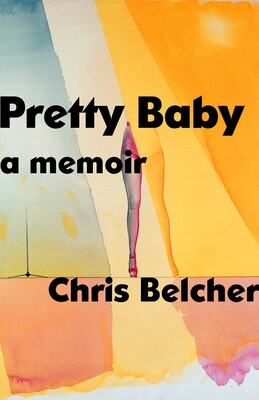
Chris Belcher’s searing memoir about her work as a professional dominatrix isn’t exactly a comfortable read. Not because of the subject, but because Pretty Baby asks more of the reader than many memoirs. Like the best art does, this book invites introspection and interrogation of both our own lives and society at large. 

Belcher grew up in small-town Appalachia before moving to Los Angeles to attend a PhD program. Her girlfriend at the time was a professional dominatrix and soon, to stay afloat, Belcher became one too. Despite a warning she shouldn’t brand herself as as lesbian dominatrix (men would think she’d only want to see women), she did (as the word lesbian never stops men from trying). As a pro-domme, she was paid to make men feel worthless, shameful, and weak—manufacturing experiences that echo abuse women encounter in their daily lives. But sex work isn’t without danger. Belcher found herself in various unsafe situations and had to contend with the ever-present risk of her doctorate program learning about her work as a domme—particularly when a jealous client wanted to expose her as an act of revenge. 

Pretty Baby doesn’t simply recount Belcher’s journey into sex work, but in true academic fashion the book examines larger issues, like how our patriarchal, cisnormative, and transphobic society feeds the need for dungeons and dominatrixes. It asks us to consider our understanding of power, gender, sexuality, safety, and consent—and to question how context may alter or complicate these things. Pretty Baby is a must read for anyone interested in seeing the cultural conversation about gender and sexuality pushed further.


Rachel León: Your book was blurbed by Saeed Jones, who said you don’t simply hand the reader your story, but “demand that we interrogate ourselves in the process.” I love that, and it’s very true. I attribute that quality to how the work seems to blend art and academia. How did your work in academia influence your approach to writing this memoir?

Chris Belcher: I was drawn to academia because I thought that feminist and queer theory would help me understand sex and power, and what I found was that professional work in sex was what helped me understand the unjust power dynamics inherent to academia and academic labor. Academia’s respectability politics, in particular, are hostile to sex workers, and low-income students, low-wage workers, and anyone who doesn’t have the privilege to prioritize their intellectual lives over their material circumstances. And so, while sex work was a viable option for a broke grad student to pursue financial stability, I knew that I was supposed to be in school to write and think about sexuality, not to perform sexual labor. These are the issues that I hope the book demands we interrogate. 

When I was still in school, I thought that I might write about sex work in a way that could validate it for the university. I could turn labor into art—or into feminist politics—when it was neither: it was labor. From that place of capitulation, I wasn’t yet ready to write the book. But once I finished and started the more precarious work of an adjunct professor, I felt that I had little to lose, and started writing work that would allow me to be both the object of study and the critic, the exhibitionist and the voyeur. Memoir allows for both, and in that way, it’s similar to the work I most admire in feminist and queer studies.

RL: Coming out is centered in this book, both coming out as a lesbian, but also as a sex worker. At one point you talk about closets and how we perceive them as safe. Could you talk about the risks of staying closeted? 

CB: I didn’t really “come out of the closet” as a lesbian when I was a teenager, but rather was “found out.” I didn’t feel closeted, as much as I felt I was experiencing my queerness privately as a source of joy and pleasure, and I simply wasn’t ready to share it. I don’t think that closets must be spaces of shame, though certainly they can be. But closets, and the secrets they keep, can be exploited. And so in the book, the second closet I found myself in—the sex work closet—did contain a secret that was marked in many ways by shame, even if it wasn’t my own, and that shame could be used against me. I realized at that point the real risk of staying closeted: that someone else could control my narrative. In its way, writing the memoir was a refusal of that control. 

RL: Let’s talk about shame. I loved the line: “Shame moves us simultaneously in two directions: revulsion and empathy.” Later you write about how shame was discussed in academia “like it was something that happened naturally: always on accident, never on purpose.” The shame clients seek for catharsis is manufactured and transactional—do you think that affects the experience of shame?

CB: Much of what goes down in the dungeon is a manufactured and transactional version of affects and experiences that cannot always be safely or spontaneously produced in everyday life: fear, humiliation, pain, pleasure, anticipation and so on. I don’t think that precludes those who pay for the experience from catharsis, nor from transformation, but I also don’t think it’s a sure bet. Some of us encounter art that changes us, or read work that changes us. We might pay for that experience, but I don’t think that cheapens the transformation. And other times we are not moved, or changed. I was changed in many ways by the scenes I enacted with clients in the dungeon, and in other ways, I strived to be able to feel what they felt, and found myself unable. I continue to seek transformation through BDSM practice with lovers and in queer community.

RL: The prologue opens with a scene that clearly illustrates the danger of your work as a domme. And the first chapter begins when you’re ten. I’d love to hear about your decision for these openings. 

While sex work was a viable option for a broke grad student to pursue financial stability, I knew that I was supposed to be in school to write and think about sexuality, not to perform sexual labor.

CB: If we fail to acknowledge the potential dangers inherent to sex work, we cannot fight for that which would make the work safer: primarily, destigmatization and decriminalization. I started the book with a prologue that highlighted the potential dangers I faced, choosing to do work that put me into situations where I was alone with strange men, but the book then opens into my youth and coming-of-age, where the threat of men and boys was also present. I wanted to show that the threat of patriarchal violence is with us no matter if we are doing sex work or just growing up as girls in America. 

RL: There are different types of sex work, which you touch on, mentioning the hierarchy of sex workers. And there are varying levels of danger: in different roles, and with the identity of the sex worker. You note the higher risk of getting in legal trouble for sex workers of color, and how there can be an expectation for touch put on trans femme dommes. Was it important to you to highlight how privilege plays a role in just how dangerous it can be for some sex workers?

CB: I wanted it to be clear that my experiences in sex work were shaped in every way by my whiteness, by being cisgender, by having access to higher education and the class mobility that could confer. In 2021, I co-edited We Too: Essays on Sex Work and Survival, a book that brought together various sex working writers with diverse backgrounds, experiences in the industry/trades, and experiences of marginalization. Especially after working with these writers and reading their work, it was important to me to highlight my experiences working alongside POC and trans sex workers, because these experiences highlight the ways that my identity kept me safe in ways that more marginalized workers can’t count on. 

RL: You had cis male and male-presenting clients who wore dresses in sessions. Sometimes they did because they saw femininity as degrading, but sometimes it was because the dungeon was a safe place to express their true gender identity. Do you think our society’s transphobia and cisnormativity feeds into the need for dungeons and dominatrixes?

Sex workers should be our teachers when it comes to questions of safety and consent.

CB: Stigma toward non-normative desires of all kinds fuels the need for professional BDSM. It’s not the only factor, but it is why my sex worker friends and I would refer to the money we could make touring “the repressive regions,” primarily the South, which was often more lucrative than sessioning in New York, Los Angeles, or San Francisco. Certainly, someone interested in rope bondage might want to be tied by a professional, even if they play at home with their partner. Or it might be easier for some to pay a professional for casual play that only requires payment and courtesy, not an ongoing emotional connection that a lifestyle partner might expect. But in general, I saw countless clients who kept their fantasies, whether about femininity or submission, from their partners and others in their lives. And specifically with AMAB [assigned male at birth] clients who told me that they knew themselves to be women, but did not “transition” and now use the dungeon as a safe space to embody their truth, transphobia does play a role in the need for dungeons and dommes.

RL: Prior to becoming a domme you favored a non-feminine presentation and write how masculinity gave you a way to say “fuck you” to men and how you saw power in subverting hetero-patriarchal expectations. But the work required you to adopt femininity, and after you started accepting money from men you realized money was more powerful than the “fuck you” of having armpit hair. I wondered if you could talk about the shift of power where you’re taking from men, rather than them taking from you. 

CB: When I was younger, I believed I could remove myself from a patriarchal economy of desire, and that butchness was the way to do it: to literally make myself undesirable to men. But I moved through the world as a butch, and I was still sexually assaulted and harassed by men, I was still compelled by patriarchy to fear them. When I found my way toward femininity for pay, it was a performance that helped me take from men, and that was revelatory to me, as someone who men had simply taken for themselves. I think this might be surprising to folks who’ve held onto the notion that women who sell sex are selling themselves. Femininity didn’t feel like who I was, any more than butchness did. It was a tool that I used to do a job. And I came to enjoy it outside the dungeon, and to understand that it could be hard and strong, or soft and vulnerable, same as butchness. 

RL: The book also explores how you came into your sexuality as an adolescent. You wanted to lose your virginity partially as a thirst for the power you saw sex could bring—so you were clearly aware of the connection between sex and power from a young age. 

BDSM, when practiced responsibly, can be a liberatory experience for women, who have been socialized to say no when we mean yes, or to say yes when we don’t want to.

CB: I think that most girls get an education in sex and power way too soon. We are bombarded with purity myth messaging, where virginity is powerful because sex is something only boys want and you have the power to withhold it. And we are told that you can get a boy and keep him if you do have sex, then slut shamed if we take that bait. I was aware of this at a very young age, that there were two roads to take, but it wasn’t until I was older, in middle school and high school, that I started to understand that neither option would keep me safe. The girls who had sex were treated like sluts, and those who didn’t had their self-worth wrapped up in denying their own pleasures and desires.

RL: The book dives into the issue of consent and how the word “no” can be a disruption to femininity. I thought we could wrap up talking about consent and context.

CB: BDSM, when practiced responsibly, can be a liberatory experience for women and those who were AFAB [assigned female at birth] in particular, who have been socialized to say no when we mean yes, or to say yes when we don’t want to. In BDSM play, scenes are pre-negotiated, we have safe words to withdraw consent at any moment. There can be a real sense of safety, one I haven’t always experienced in other forms of sex and eroticism. And yet, for BDSM to be practiced responsibly, everyone has to feel comfortable accessing these tools of consent. In the book, I narrate various instances where my safety was compromised, and I tried to be honest about the fact that these tools must be learned, social scripts around femininity must be unlearned, and that process was difficult for me. It was also complicated by the fact that sex work is part of the service industry, money and sexual desire are very different motivators, and they have different relationships to the concept of consent. The difficulty of these concerns, and the fact that sex workers deal with them on a daily bases, is why sex workers should be our teachers when it comes to questions of safety and consent.

Looking Back, Was I The Idiot?

Before we begin, I must confess to my bias. I am not an objective reader, so in some ways I have already failed. A few months before I read Elif Batuman’s debut novel The Idiot, I had a conversation with a friend that unlocked a safe in my brain. After, there was nowhere I could look without seeing what we let out.

It was spring, two years ago, and I was in the middle of moving out of the apartment I shared with a guy from Craigslist to an apartment I would share with my wife once the border opened (finally!). Which is to say that I took this phone call sitting on my bare mattress on the floor of a bare room with my back up against a bare wall. We were talking about writing, integrity, protecting one’s own vision, and so on. Then at the end of the call, Lena said to me:

“I have some gossip for you—do you remember XXXXXX?”


When I heard a sequel to The Idiot was coming, I was initially dismayed. How does one succeed a perfect novel? Would a sequel aim to complete what had been left so perfectly incomplete?

The Idiot follows Selin Karadağ through her first year at Harvard and an intense and maybe-reciprocated infatuation with an older student named Ivan. In the end, nothing happens—they don’t have sex. Many reviewers were upset by this. Dwight Garner, reviewing the novel for The New York Times, called this The Idiot’s “only flaw.” Yet, to my mind, after Selin spends the whole year guessing at what Ivan feels—trying to make meaning out of the random and not-so-random signifiers that he volleys at her—receiving any kind of closure in such a relationship would feel pat, easy, and soulless, narratively speaking.

The Idiot is about being an idiot: eighteen-nineteen, so smart yet so stupid, knowing so little and wanting to know more, waiting for revelation, always on the precipice of some great realization of your own humiliation. Ivan is a new, shiny, grown-up thing that Selin can hold up to the light and turn this way and that, a great unknown, a nut for her incredible brain to crack. What could be more enticing? They roleplay lovers in Russian class, though he rarely acknowledges her when they cross paths on campus. He has a girlfriend about whom he is openly lukewarm. He sends Selin strange emails fraught with double and missed meanings—about clowns and poetry, “the seduced atom” and its “energies that seduce people.” “I summon you words, o my stars,” he writes. Like a lab rat suckling cocaine from its cage bottle, Selin is hooked. She tells him she loves him. (We, the readers, collectively go Nooooo.) He tells her they shouldn’t speak anymore, then continues to email her.

The effect is dizzying: “You were so ready to jump into a reality the two of you made up,” her friend Svetlana tells her. “But by now you’re so, so far from all the landmarks. You’re just drifting in space.”

The Idiot is about being an idiot: eighteen-nineteen, so smart yet so stupid, knowing so little and wanting to know more.

Ivan is a longing man—“an aesthete,” “poetic and lachrymose,” who (quoting Mark McGurl) “[seizes] the historical privilege of romantic indecision and [wields] it as a kind of soft power.” When they meet over the summer in Hungary, he introduces her to his family—a big deal for Selin, a sign that he will now perhaps “operate on the level of a real person.” Still, in the end, nothing happens. “Nothing” “happens.” Ivan takes her into his arms for a long embrace; the physicality of his presence, of his body against hers, is overwhelming. Then he lets go, and walks away. There are no answers. “I hadn’t learned anything at all,” Selin concludes.

The Idiot was a refreshing departure from our contemporary offerings of literature about young womanhood—not particularly disaffected, or defused by a tidy romantic closure. Would a sequel undo what it did so well, by, as it were, doing something, maybe even it?


Here’s what I remember about XXXXX: The hugeness of the feeling inside of me, hot and anxious and ecstatic all at once. Texting and emailing and messaging all day (goodnight <3 and good morning <3). Talking late into the night on the couch; buzzing with liquor and happiness; my brain rattling in my skull. Not knowing, not knowing. Talking about all the things you weren’t supposed to talk about. Dancing on drunken feet at the wedding after most of the other guests were gone. 

And then, after the worst had happened: Thinking about XXXXX. Thinking about everything I’d done wrong. A quote shared on XXXXX‘s blog: “That time you confused a lesson for a soulmate.” An email (one of several) from a mutual friend: “​​i do think that if XXXXX knew how you felt about what happened XXXXX would try to make it better.” Losing my place in conversations. Losing my train of thought. My TA trying so hard as I nodded and mhm-ed as if I understood what she was saying; forcing back tears until they came out of my nose instead. (Did you know tears could do that? Me neither.) Failing and dropping classes. Posting on my blog: “I would like to know if there is an after. I would like to know how there can be.”

Lena, that same mutual friend, years later: “I have some gossip for you—do you remember XXXXX?”


In Either/Or, the sequel to The Idiot, Selin returns to Harvard for her second year of study, anxiously anticipating her next encounter with Ivan, whom she hasn’t heard from since Hungary. When she logs back into her school computer, she finds a three-month-old response to an angry email she sent him, reeling from his hot and cold behavior. “I am very shocked that you see me as such a monster,” he had written, wringing injured innocence from his professed bafflement like a wet towel. 

Thus Batuman sets the stage for Either/Or: a novel about the aftermath, or, about what happens, after—in the absence of an explanation. Either/Or doubles down on the end of The Idiot by reinvesting in not knowing, in the inconceivable, the impossible, the unclosed. Not for any lack of trying on Selin’s part. She attempts to confront Ivan with the contradictions between his words and his actions, but he responds with a poem: “I’m just a mass of dishonesties,” “come dance with me again.” Ivan’s friend Peter tells her not to listen to Zita—Who? thinks Selin—because “Ivan does strange things sometimes, but he’s a good person,” and any “misunderstanding” can be settled if she would only talk to him. Ivan’s ex Zita is the worst disappointment of all. Is it misogynistic to say that, in these situations, women often are? By the time she and Selin connect, there’s been some change in the weather, and she assures Selin that Ivan “got into complicated situations sometimes, but it was because he had a big heart.”

So: people fail us. They respond in cliché and predictable and unhelpful ways. Thank god, then, for literature! Selin encounters by chance a secondhand copy of Kierkegaard’s Either/Or (the namesake of the novel), which promises to illuminate the difference between an aesthetic and an ethical life—but she finds a different kind of answer entirely in a novella contained within. “The Seducer’s Story” is about a man who entraps a young girl into a confounding relationship. His methods are covert, coded, such that he could 

“[leave] off … without a word having been let fall of love, let alone a declaration, a promise. Yet it would have happened, and the unhappy girl … would constantly have to contend with the doubt that the whole thing might only have been imagination.” 

Selin, who so often found herself at a rare loss for words to describe her dynamic with Ivan, is stunned. Her relationship with Ivan was so rare and singular—“like something new we had invented”—as to be illegible from the outside (and also from the inside.) Yet here is a text in which her own experiences look back at her. The qualities of an ideal target of seduction: someone who “[has] suffered,” who “[has] always been alone,” and who, as a result, is not drawn to “what usually beckons … to a young girl.” “Had my family background been useful to Ivan?” Selin asks herself, queasy with recognition. So begins a kind of archival work, building an account that has otherwise been denied to her. 

In the first major review of Either/Or, Jennifer Wilson writes that “Selin’s encounters with various works of art […] teach her that her dalliance with Ivan, baffling and torturous though it had been, was good material.” “She is reassured,” apparently, that “her agonies will not be for naught.” Selin’s abstraction from her Turkish background is a political theme, but her kinship with these women who have been instrumentalized in the personhood of men, of male artists, is not. In the end, Wilson writes, “I decided that Batuman is warning us (and Selin, not that she’s listening) against just that sort of fervent need to identify with fictional characters, to see their demons and desires reflected in our own lives.” In other words, perhaps Selin is reading too far into it. 

Here’s what I remember about XXXXX: The hugeness of the feeling inside of me, hot and anxious and ecstatic all at once.

I feel like maybe we read different books. (This review also describes the embrace in Hungary as “a brotherly hug.”) But then, like Selin, I am conscious of my own desperate tabulations. What “The Seducer’s Diary” and Nadja and Eugene Onegin are for Selin, The Idiot was for me. A wishy-washy “need to identify” (how frivolous, how womanly) cannot capture how these texts offer Selin a lifeline from the confusion of the previous year, when she was so lost, unable to “see the common denominator, to understand what counts as a thing,” or to explain it, any of it, to her mother.

The worst part is the endings. So many of these seduced girls go crazy, like the eponymous Nadja, who must be put neatly away in an asylum as the book resolves—so that the book can resolve. For the hero, the story ends; for everyone else, life trudges on unbearably. Is this not what happened in The Idiot? Selin will not be like these girls. She decides to be more like their authors, instead. 


I had never known how to talk about XXXXX, so I didn’t. Instead, I built a ship from the memory of our relationship, and I keelhauled myself against it every night. I needed to be held accountable, if only by myself, because if I forgot that I was a bad person, what kind of person would I be?

As time passes, what was embarrassing and hurtful becomes funny and sad. Then, sometimes—as after that fateful phone call—embarrassing and hurtful once more. I want to have a sense of humor about it. But whom does this serve? The writer’s impulse is to delve with professional distance into the what and the why. (See also: The Idiot; Either/Or.) The therapist I began to see in the aftermath of that phone call asked me to give up on chasing after small details, to work with how it felt, how it impacted me, instead. 

“I realize there’s no way to really, objectively know,” I told her. I had no intention of stopping. I am very good at therapy, or, actually, very bad. 

My old blog became one source of truth. In the first year of after: oblique mentions, sadposting nightposting subposts.

My old blog became one source of truth. In the first year of after: oblique mentions, sadposting nightposting subposts. “feeling so run-down and awful and useless,” “feeling very anxious about giving myself to other people lately,” “constantly trying to find moments of meaning in life because i am an empty shell of a human being!!!!!!!!!!!” One night in January, just under a year after: “there is nothing good enough in my life to be worth this. there is no compelling reason to stay.” I have no memory of this night, or of the inciting incident that apparently set me off, according to follow-up post the next day:

(this is about what happened last year, if yr aware of the circumstances & would rather not read pls keep scrolling by <3)

last night was terrible, today is terrible, and in between I dreamed about XXXXX for the first time all year 

and it was just. some glimpse of another world where reconciliation would be possible or even desirable—one where XXXXX didn’t think what happened wasn’t a big deal, one where i wasn’t such a fucking mess

and it was awkward and quiet and nice and i miss XXXXX so fucking much

and the worst of it is that even with how things went down, if the chance came now i probably would forgive XXXXX and take all the blame on myself, even though i’d never be able to trust XXXXX again, because i’ve never been so in love with another person in my life and i miss feeling that easy and warm around someone and i miss XXXXX, specifically and horribly

Jan 30, 2016 – LIKE REBLOG

So that was how it felt, then. That was how it impacted me. 

It’s interesting—after starting therapy, I began to dream about XXXXX again. In one dream, I was touring a winery, and XXXXX was there. We smiled awkwardly at each other, and walked together through a glass-walled cellar. Not talking. It wasn’t like it was before; I was older, as I am now, and more settled in myself. This was odd for both of us. But better, too, because in this impossible dream, we were both the kind of people who could acknowledge fault, and grow. 

I was reminded of this, in Either/Or, when Selin emails Ivan asking his forgiveness. He grants it. He does not ask for the same.


Early on in Either/Or, when sex still seems like something that happens to other people, Svetlana tells Selin that the appeal of it is “to have clear evidence of being so desired.” Like many things Svetlana says, Selin takes this as gospel. Sex with men isn’t about men; it’s about how being with men makes women feel

Structurally, Either/Or is a series of interconnected studies on how men make women feel, from different angles, with different brush strokes. For Selin, despite the obliterating pain she experiences when putting even just a tampon inside of her, “the idea of being penetrated and dominated” is admittedly exciting. Men make you feel “slender and pliant,” “like the smallest and most delicate person.” Being with a man makes her feel like a woman in a new and meaningful way. When she finally does have sex, the euphoria of submission is almost worth (or is, perhaps, an extension of?) the agony of penetration. Yet, Batuman writes, once it is over, the feeling of accomplishment fades. “I felt sorry and anxious, like I was back on the clock again,” Selin confesses.

In the years since The Idiot’s release, especially during the Trump administration, Batuman has undergone a self-described “rude awakening” about, among other things, the pressures and mores that had shaped her youth. Either/Or is, in Batuman’s own words, “an attempt to dramatize some of the insights of [Shulamith] Firestone and Adrienne Rich,” second wave feminists whose theory she had recently encountered for the first time and been transformed by. The above passages have a whiff of essentialism about them—and yet, they feel true, do they not? On Batuman’s website, there is an excerpt from Firestone’s The Dialectics of Sex, which states that, for men, the defining question in relationships is, “how do I get someone to love me without her demanding an equal commitment in turn?

A feminist reading of the duology has been conspicuously absent from the greater conversation, despite its anti-normative sensibility. Selin’s rejection of “[experiences] designed for you, to make you feel a certain way” is a major part of her self-concept, the thing that sets her apart from Svetlana and her boring boyfriend. Hence, the aesthetic life: sex without emotional attachments, adulthood without marriage, and womanhood without going crazy, if Selin can swing it. 

But what is sex with men but an experience designed for you, to make you feel a certain way? As Selin discovers, finding men to have sex with is easy. For once you’re on the same team, working toward the same goal; before, “it was like there was something jamming the door.” Batuman recently profiled French filmmaker Céline Sciamma, whose lesbian masterwork Portrait of a Lady on Fire she names as another influence. In Portrait, Héloïse asks Marianne, “Do all lovers feel they’re inventing something?” Batuman observes that “plenty of lovers aren’t inventing anything. They’re replaying scenes from movies.” 

When she finally does have sex, the euphoria of submission is almost worth (or is, perhaps, an extension of?) the agony of penetration.

In Either/Or, sex and straightness slowly become apparent (to the reader, if not to Selin) as a currency exchanged for entry into, and navigation through, a world structured by misogyny. At Harvard, sex is part of the graduation into adulthood and induction into a new language of relations. There is an implicit pressure, but it’s not so bad. Later, while adventuring alone in Turkey, travel guidance can be bartered for dinner; a ride turns into a request for sex. Indeed, though Selin acknowledges that sex is “important”, “universal,” and “canonical”—like Shakespeare—it is also “painful,” “pointless,” and “[unsatisfying].” Arguing with a man who is behaving insanely towards her also feels “important and universal.” As she is being pressured into sex that she does not want, she questions, maturely, whether she is the problem. 

Is this what it means to be a woman? Is there no way out, no way to be a writer instead? On a plane at the end of the novel, she begins to read Henry James’ Portrait of a Lady, and is struck by Isabel’s description of “the secret:” an arrangement of “truth” and “mutual relations” and “horror” within the world that arranges it against her. Once again, this passage seems to Selin to reflect her situation with Ivan—yet also, in its invocation of an “architectural vastness,” to transcend it, addressing something bigger, worse, and more resolute. 


My Ivan was not a cis straight man, and our situation was an intrinsically queer one. The heterosexuals do not have a monopoly on unequal dynamics and bad behavior. 

Is this what it means to be a woman? Is there no way out, no way to be a writer instead?

In graduate school, I met a woman—funny, brilliant, also a writer—with whom I quickly became entranced. But when Lexy and I began to text all day, every day, a cold fist of fear gripped me tightly. Was I reading too much into it? I felt eighteen again. I felt like an idiot. 

Overreading is a very queer methodology. Take, for instance, Sciamma’s Portrait of a Lady on Fire, which has no score, a sparse script, and, as a result, a richly textured silence that invites the audience deeply into its world. Mariane and Heloise uncover their desire in this silence, their gazes interested, investigative. Regardez-moi, Mariane tells Heloise: look at me.  Throw aside the usual symbols and codes! Seek out the silence instead! 

In Either/Or, Selin’s friend Lakshmi introduces her to écriture féminine, a French literary movement championed by the likes of Hélène Cixous, who aimed to invent a new feminist mode free of indoctrinated patriarchal thought. Batuman identifies a similar, anti-disciplinary freedom in Sciamma’s oeuvre: the freedom to “[do] what you want,” and, crucially, “to not do what you don’t want.”


And maybe you see where I’m going with this. I did warn you that I would not be an objective reader. 

There is a secret buried in Either/Or, a larger story composed of pieces that can barely be made out—there and then gone, remembered and then forgotten as needed. Selin worries at this secret like a loose tooth. You have to be looking for it to see it, I think. 

“Do you think it’s weird that we spend so much time together?” Svetlana asked me afterward. “It’s almost like we’re in a relationship.” 

“Hm…” I said, stalling. Weren’t we in a relationship? 

“This is how much time I would expect to spend with a boyfriend,” Svetlana clarified. 

“Oh, right,” I said.

It has to be pointed out that Selin thinks more—more deeply, and more erotically—about the women in her life than she does the men. Even Ivan is more of a figment than a person. Shortly after the above exchange, Selin asks Svetlana, “Do you ever think it would be easier if we could go out with girls?” (“Svetlana,” Batuman tells us, “didn’t answer right away.”) There was a “physical response” to Ivan, of course, feelings which Selin had never felt around a girl. “On the other hand,” she thinks, “I usually hadn’t felt them in Ivan’s presence, either; it was more when he wasn’t there.”

 She goes on: 

“How much more fun and relaxing it would be to pet Svetlana’s shining golden hair, to tell her how pretty she was and to watch her get more pretty, as she always did when someone complimented her. Her body wanted to be complimented, and I knew just what to tell her, so why couldn’t I?”

Aloud, she says only, “It just feels like girls are at least something to think about.” Ultimately, she dismisses these thoughts as “childish and unrealistic.” That’s not what love is, she thinks. Love is “death” and “madness”—it’s what happens to women in novels, under the auspices of men. 

It has to be pointed out that Selin thinks more—more deeply, and more erotically—about the women in her life than she does the men.

In “Compulsory Heterosexuality and Lesbian Existence,” Adrienne Rich describes lesbian possibility as “an engulfed continent which rises fragmented to view from time to time only to become submerged again.” I often find myself reading like some kind of unhinged lesbian sleuth. I text passages with no context to my friends, like, Do you see it? Do you see what I see? 

But sometimes I don’t have to look too hard. In Either/Or, Selin recalls staying up all night talking with a friend, Jordan, on the last night of summer camp: “I had never felt so awake, and didn’t want to stop feeling that way.” For the next year, she and Jordan exchanged long letters made out of improvised materials—“brown bags, wrapping paper, continuous-feed printer paper.” Selin’s mother, we are told, had not liked Jordan, and upon seeing one of these letters asked if she was a lesbian. 

Off-handedly, Selin mentions that her mother once asked whether she was a lesbian. Selin denied it; however, she reports with some perturbation that Jordan did eventually come out. “Was that something my mother had been right about?”

While some reviews of Either/Or have acknowledged Batuman’s interest in Rich, a queer analysis, like a feminist one, seems somehow verboten. To speculate so extravagantly about the sexuality of an autofictional character, as I have done, is understandably discomforting.  It’s true that Selin only thinks about queerness in passing, and spends the last third of the novel having sex with men. It is also true that, in her profile of Sciamma, Batuman shares that her partner of several years is a woman. In a podcast for Public Books, she says a little more: that her partner is a lesbian for whom the formative, heteronormative myths and ideas “just didn’t attach” in the usual way.  “I keep asking myself, what was it about me?” Batuman says. 


In advance of writing this essay, I called up a couple of friends from undergrad.

Mara, my roommate, had met XXXXX a couple of times. “It seemed like a very adult thing you had,” she told me in her usual way: fast, astute, a little analytical. She said being around us made her feel young. “The depth, the focus, the intensity. And XXXXX was the North Star of every conversation we had.”

To speculate so extravagantly about the sexuality of an autofictional character, as I have done, is understandably discomforting.

This I had not remembered. She told me that she’d been envious sometimes of the closeness of our relationship. “It didn’t seem to make you sad… to give endlessly,” she said at one point. “It seemed to make you really happy.”

I could hear noise, movement on the other side of the call—it sounded like she was in a café. I was sweating nervously as I acknowledged that it felt special. It made me feel special, at the time.

“Right,” she said, “ XXXXX had chosen you.” 

Yes.

The next day, I called Jess, whose couch I had slept on for a few bad weeks after everything went down. She had never met XXXXX, but I remembered that, on one distinct occasion, at a Nando’s just off St. George St, I had told her about how I was so in love with this person who was so great and smart and ethical and would therefore never return my feelings. I wondered if she remembered this as well. 

Besides youth and inexperience and a personal predilection for emotional black holes—was this another vulnerability?

“It was definitely more than once,” she said immediately. 

Mortifying. I asked her to elaborate. 

“There were so many aspects of a relationship—a romantic, sexual relationship I should say— but it was never officially called that,” she told me. “You had these thought spirals about it. You were always cycling back to “but XXXXX said this,” “ XXXXX did this,” and that came to define the relationship, instead of, you know, the fulsome experience of a real one.” 

She asked what XXXXX‘s partner thought of it all. I said I didn’t know. 

XXXXX liked what XXXXX had in the relationship with you, until XXXXX didn’t,” Jess said. “It was like a box of fun that XXXXX could open up, but also put away. There was no extra effort or thought given to how this kind of relationship would be so confusing and devastating for you.”

Toward the end of our call, she told me, laughing, “I remember thinking, you know, “Maybe this is just how queer, poly relationships are?’”

“So did I!” I said, laughing too.


What was it about me? Besides youth and inexperience and a personal predilection for emotional black holes—was this another vulnerability? My desire to chart a new path, away from the social architecture that had always felt so alien and hostile; my misalignment with the usual practices and protocols, such that the landmarks and boundaries that might otherwise have answered my questions or clarified my position seemed ill fitting. 

A month after we started dating—years before I ever heard of Elif Batuman—I gave Lexy a DIY collection of (bad) poetry I’d written for her. I called it THE FOOL. The cover was a picture of the tarot card, which I’ve always identified with: face turned to the sky joyously, one foot dangling off a ledge into open air. 

The titular poem begins as follows:

i packed a bag

to find a door

in a house once built

of worry

stepped off a cliff

to find a door

at the dusted foot

of a darkened quarry

the dust stuck sullen at the hinges

but there are ruder ways through doors

than push or pull and

cruder things than dust have failed to stop me

I told her I liked her first, an act of courage that felt enormous, impossible—but New Year’s Eve, drunk, sitting on the washing machine in my friend’s basement apartment, anything was possible. I texted her: i like you and is that okay. Turns out: it was. 

Landed in Russia after her flight with Henry James (“pretty sure … he was gay,”) Selin feels that at last she has made a choice under her own willpower. She went to Hungary for Ivan, and Turkey for Let’s Go!, but nobody had wanted her to go to Russia. “It was like when Isabel managed not to marry the guy with the cotton mills,” because “she had done what she preferred.”

“Was this the decisive moment of my life?” Selin wonders. Like The Idiot, Either/Or ends inconclusively, but here with a note of—I think—real possibility. Though she is still invested in a novelistic life, she is also surprised by a feeling of liberation, “of having finally stepped outside of the script.” “I was going to do the subtle, monstrous thing where you figured out what you were doing, and why,” Selin decides. I really hope she does. 

The Magic of Muslim Girlhood and the Quest for Liberation

Safia Elhillo’s much anticipated second poetry collection, Girls That Never Die, spins an incredible lyric around gender, body, desire, and control. The book yearns for a quest to be free, while living in a world where the body is policed by so many forces: womanhood, community gossip, changing countries, racism, islamophobia, language, self-censorship, secret love, fear, and living up to other people’s ideals and expectations. Elhillo’s poems push against what is, and move us towards what could be, what might be, and reach towards a freedom just beyond our grasp. 

Elhillo’s work is undeniably and beautifully Muslim and femme—it puts us at the center of the table while protecting us with it’s softness. It’s the feeling I get from being in Muslim femme spaces; the safety to breathe, to relax, to talk loudly while eating pomegranate seeds, to be at home in our own gaze. The place where we get to say what ghosts our bones, what normally would be turned away from. And with this book, Elhillo shines her delicate light on what normally exists in the shadows—she calls it into the page even as she redacts it, as she shows us the space of our silences.

With this book we get to see a different side of Elhillo as well—at times sparse, at times filling the page with her words. The stories that we both can’t say and the ones that take up our whole being. A master in language, Elhillo conveys that through form as well as lyric, carving a new terrain, a sanctuary for the girls that never die. 


Fatimah Asghar: First of all, both the title and the cover art for this book are gorgeous. Can you give us a bit of insight behind how you landed both, and the significance of both the title and the cover?

Safia Elhillo: Thank you! I’d been holding on to this title for years, before there was ever a book—I’d spent years mishearing this Ol’ Dirty Bastard lyric from his guest verse on Ghetto Supastar: “I’m hanging out, partying with girls. That never die[s]” as “I’m hanging out, partying with girls that never die.” I knew I wanted to make something called “girls that never die.”

These are poems written from sites of pain and discomfort.

At first it was just one loose poem, but after the poem was done, I was still gripped by this fascination with that phrase, and knew I was nowhere near done with it. And a lot of my new poems at the time were thinking about shame and violence and my body, so eventually I started to think about what it would mean to repopulate those stories about danger, about the violences imagined and enacted against my body and my communities, with the girls from that misheard lyric: girls that never die.

The threat of death, the fear of death, is so often used as a way to govern and to control, so if the girls never die, won’t die, maybe they are free from that governance, from that control. And what could that look like?

In regards to the cover, I’ve been obsessed with Hassan Hajjaj’s work since I went to go see his ‘Kesh Angels exhibit in New York in I think 2014 when I was a grad student, and the images and the iconography were immediately so striking and so meaningful to me. I’ve had the same image from that series as my desktop background since then, for 8 years now. And when I was making the mood board for cover ideas, the mood board was like 90% Hassan Hajjaj images. Even the frames are so thoughtful—they’re hand-built and embedded with things like Arabic-language soda cans, Maggi bouillon packaging, things like that, which makes me spend time thinking about the Arabic language packaging that I grew up with for American products like Coca-Cola. And part of what compels me is the way the packaging makes a script as curvy and cursive as Arabic, graphic and bold and aggressive, which is the feeling I wanted to get from this cover, and the feeling I wanted to elicit with these poems. So to end up with an actual Hassan Hajjaj piece as the cover, when at first I thought the most I would get was like, a Hassan Hajjaj-inspired cover, is a dream beyond a dream. 

FA: This is your second poetry collection, after The January Children. What were some of the things that you were navigating writing this second book after writing The January Children—thematically, emotionally, craft-wise?

SAH: The January Children was a project book—it was all poems organized under a particular conceit and a particular set of themes, which I already kind of knew about in advance, and so every time I sat down to work on that book, I knew where I was going to some extent. And it was a very, I don’t know, like a very tidy book. Very neat. Girls That Never Die was unruly. It was messy. One of the reasons it took so long is because I set about trying to write it the way I’d written The January Children. So, I tried to make it, you know, neat and tidy and organized, and have a conceit. That didn’t work. I tried to make it a book-length poem. That didn’t work. But before there ever was this book, there were a couple years after I finished writing The January Children, where I basically was trying to reteach myself to write poetry.

And I think one of the major formal differences between The January Children and Girls That Never Die is that Girls That Never Die has quite a few poems in inherited forms, in traditional forms—there are some ghazals in there, there are some contrapuntals in there, and it’s because one of the ways that I found my way back into writing poetry after finishing The January Children was through setting myself these kinds of low-stakes exercises in form.

The threat of death, the fear of death, is so often used as a way to govern and to control…

The January Children felt in some ways like a book I’d been writing, in one way or another, my entire life. And it was my first book, so before that I didn’t know what it was like to finish a project that I’d been working on for that long and to no longer have it organizing my life. So I felt really unmoored after I finished that book. Without that guiding conceit and without already knowing, almost every time I sat down to write poetry, what I was going to be writing poetry about, I just felt really unmoored. And so one of my main fears at the time was, am I still a poet, or was that just the one book I had in me? Was that the one set of poems I had in me? And now I need to go find something else to do?

One of the ways I found my way back to poetry was by setting these formal exercises, where I didn’t really have a relationship to a lot of inherited forms before that, and so I would sit down to try and write a sonnet for the first time. And when it inevitably failed, it wasn’t devastating, because I wasn’t trying to prove anything to myself about, like, my worth and value and ability as a poet in general. I was like, well, you know why this sonnet is bad? Not because I’m like a terrible, unworthy, finished poet, but because I’ve never written a sonnet before. So obviously it’s bad. So form was really helpful in transitioning between these books.

One of the reasons Girls That Never Die took so long to be finished, and why there are so many unusable drafts of the book, is because, again, I was used to writing a very particular kind of book. And The January Children is primarily a book about other people, in which I let myself be behind the lens. I was the eye, and that was maybe the most my body showed up in any of those poems, was through my looking, through my eye. But my body is not really in any of those poems. It’s not really under scrutiny in any way, or under observation in any way. It’s almost like my speaker in that book is basically a disembodied speaker, and at first I tried to write Girls That Never Die that way because it also is an easier way to write. To just look and not be looked at. And I’m not used to having to think about my body very much. It’s very often an afterthought, after like, my brain, and maybe my eye. Usually, the only times I would register myself as having a body is when something was wrong, in the way that pain often calls attention to the body, and discomfort often calls attention to the body. And these are poems written from sites of pain and discomfort. That was my body calling attention to itself, and for so many drafts of this book, I refuse to look at it because, you know, in looking at it in those poems, I felt like I would be inviting other people to look at it. And it’s scary. It feels like being naked in front of an audience or something, and so I kind of had to learn how to write a different sort of poem for this book. And it’s a type of poem that scares me and is very different from the kind of poetry I’m used to writing. Not that the poetry before that was like, so low stakes or whatever, but at the end of the day, I could write a poem pointing elsewhere and be like hey look over there, and in this book there’s no over there. It’s all like, look over here, and that’s scary and it’s new. 

FA: So much of this book deals with body, femme bodies in particular—the body in the everyday, the body in community, and the body historically. I so deeply love the circular motion of the work, how it feels like there will be a poem that touches on a theme and then the next poem goes even further into that. In that way it feels like it resists surface level understanding, it resists the first or most immediate story and goes into layers and layers of the body. How did you approach writing such a difficult and vulnerable subject, and to do it with such deep precision and layering?

SEH: A lot of that layering and repetition and leaving and returning to subject is kind of indicative of a lot of my early fear and trepidation around the subject matter, where in the earlier versions of the poems would just barely manage to inch my way toward the thing I was scared to say, or think about, or look at. And right when I got to it, I would freak out and like, dismount and end the poem. And then I would get a little braver. And then there would be a next poem that kind of revisits the thing at a deeper level or a closer way of looking or in a way that doesn’t allow me to just exit the thought the second the thought is articulated, and so a lot of that motion is just me like inching close then freaking out, running away, coming back, getting even closer this time, freaking out, running away–and that cycle continued and continued and continued. It felt important to keep poems from all the different stages of that process, because I wanted to be honest about the process and accountable to the process. These poems are really just sites of trial and error. And I don’t know what these poems would even be like, or if they would even exist, without that sense of caution and fear and like, standing too close to the fire. I wanted a motion that showed that part of the process. 

FA: A thing I’ve always found hard is writing about violence or issues within a marginalized (and heavily surveilled) community, because of the idea of not wanting to bring negative attention to the community. At the same time, we’re writers who are not spokespeople for any said community—we create stories and language that are specific to the lived experiences of our characters and speakers. How do you navigate that, in this book and in your other work?

SEH: You and I talk about this a lot, but it feels like there is this tension between wanting to speak truthfully about the things that I have experienced, without also perpetuating harmful ideas that the outside world has about my communities. So it feels sometimes like we’re not allowed to articulate any sort of critique or lamentation or grief in any public way, because then the racists and the white supremacists and the Islamophobes, or whatever, will latch onto it and be like Aha! You see! I knew it! When actually that’s not what was being said at all. But there is this fear of having my particular mourning and lamentation be twisted and used against my community in some way, when all of this is for my community. I’m not talking to other people. And so it’s tricky, because I always want to write as if only the people I’m talking to are listening, and everyone else can eavesdrop (on what hopefully is a very interesting, if maybe not entirely spelled-out conversation) but I’m also afraid of the things I am talking about being taken out of context and used to harm my community.

I think you and I have talked about struggling with this because sometimes it’s like, well, maybe it’s easier to just not say anything at all, but really that’s not an option. You stay silent for so long, but it builds up and it builds up and you realize that your silence doesn’t protect you or your communities either, and I think I had to just let myself speak and not silence myself with the fear of my work being engaged with in bad faith. If I was using that hypothetical as a reason to not speak, then I’m letting the, whatever, racist-white-supremacist-Islamophobes win. And I can’t have that either. I think I had to just give myself permission to do my thing and hope that it is found by those who need to find it and that it is not found by those who don’t need to find it. Because I can’t make my work from a place of fear. Because then I’m not going to make my work. I’m just going to keep quiet. 

The Existential Crisis of a Merciless Siren

Murder Mermaids Make Mistakes

Some of the mermaids wanted to kill him, but their orders said to bring him alive. It wasn’t supposed to matter that they didn’t know what he had done—

I kind of might like to know.

Some of us are curious.

It helps me murder better if I know, just speaking for myself.

I thought we were supposed to keep him alive?

—because they didn’t know what most of the men had done, except for that all men had committed crimes.

They carried harpoons, they carried spears, their hair rippled behind him as they swam, bare breasted, scales flashing under moonlight. They arrived at the edge of the land in the middle of the night, three hundred feet out from the shore, the beach dark—

So do we just wait or

Nobody made a plan for this part?

A siren song.

Somebody’s going to have to swim back for Abby. She’s the one who can sing.

—and so the mermaids waited and became tired. Their bloodlust diminished. Some of them slept, like otters and pups, wrapped up with their harpoons in kelp.

When the siren arrived it was daybreak—

If you do it now, you’re going to attract every dick in a ten mile radius, guys out for their morning jog, getting a coffee.

What do you know about coffee?

I tasted it once.

—and the men came, they came to the water’s edge and they came into the water. The mermaids touched them, kissed them, fondled their beautiful dry hair, killed them, only some of them. 

One of the men held a paper cup, and the mermaids took it and drank from it in turn. The mermaids became caffeinated. Abby’s singing got focused. The men who had been left alive wandered off.

Eventually, the man they were there for came. They tied him up with kelp. They carried him across the ocean on their backs. It was not a pleasant ride for the man.

The mermaids put him on a raft and took turns bringing him fish and seaweed and fresh water, which they traveled distances to collect. Some of the mermaids kissed him. They weren’t supposed to kiss the men, but it was an open secret that they did.

After they kissed him, they asked him what he’d done—

I heard one of the guys kept a mermaid in his bathtub.

You always cut up those plastic rings from a six pack, right? 

Some of these girls will drown you on the spot if they find out you drive a speedboat.

—but the man didn’t answer because he didn’t know. Most of the men didn’t and never would.

The truth was, the men always died. Exposure, dehydration, battered by the waves, burned by the sun and salt, their skin cracking open. It always took longer to construct the prison than the mermaids thought it would. The mermaids grew bored of kissing. They tired of traveling long distances for water.

But to this man one mermaid returned and kept returning. It was less about him, about saving him, than it was about finding out. 

The mermaid touched him, kissed him, fondled his beautiful dry hair, allowed herself to be held. The man caressed the mermaid’s tail, scales smooth in one direction, sharp in the other. 

And the man spoke to her. About the perfect angle of his children’s shoulder blades in the bath, his wife’s crying in another room, the times he’d been late and they’d all already gone to bed. You couldn’t help but hurt the people you loved, not all the time, was what he said.

The mermaid slept there in the water next to him. And she woke to see him—hear him—snoring, the dark shape of his shoulder against the vast and starry sky, his arm reaching out for her. It was then she began to understand.

Because in being kept, the man suffered. The man developed a nutrient deficiency. His gums bled. The mermaid watched him weaken—

We do what we have to. 

—but would not return him, could not remove him, could only wait alongside him. 

You do the only thing you can, the man said. You won’t always get it right. Most of the time, you’ll probably get it wrong, even though you’ll try. 

Days passed without clouds. The mermaid watched as the man’s fingernails fell off and did not grow back, as his muscles thinned and skin hung from his body. Watched as the sun baked him and the rain soaked him. Watched as he watched the sky. Eventually, the man died, as men always do.

And when the mermaid returned to her home, to her sisters, they wanted to know what it had been like—

Did he try to do it to you?

Did he show you how to make coffee?

Did he cry? 

and

Was he guilty?

—because none of them had ever waited until the end. None of them had ever considered what it would feel like if they did. 

The mermaid answered—

I think we all are.

and did not tell them how she had assumed that you loved or you harmed, did not tell them what she now knew. 

Reunited, the mermaids rested, tended their scaled bodies, combed their beautiful hair, and sang each other songs. They waited. And when the time came, they would go—go and do the only thing they could.

7 Books About the Wide-Ranging Cause and Effects of Climate Change

Most writing about the climate crisis focuses on large-scale events like extreme weather, wildfires, and flooded coastlines—and for good reason. Such events impact the lives and livelihoods of millions of people. But how might the crisis affect us in smaller, more intimate ways? How are we seeing it manifest at the level of a life, in our relationships, jobs, memories, and daydreams? How are we seeing it unfold in our own backyards, even if we don’t live in the immediate path of destruction? 

These are the questions that motivated our book, The World As We Knew It: Dispatches from a Changing Climate, an anthology of first-person essays about the contributors’ experiences with climate change. As we write in the introduction, this focus on the individual level “isn’t the most intuitive way to think about climate change.” But we believe that writing that connects the personal to the planetary is “among the most powerful” kind there is.

As the anthology came together, we looked for inspiration in books that, like ours, explore the climate crisis in surprising ways, whether by tackling the subject from a unique angle, connecting climate to other related social issues (such as racism, xenophobia, etc.), or by shedding light on communities too often overlooked in the literature of climate change. Some of these books aren’t directly about climate at all—but explore the surprising, insidious roots of this planet-sized problem. 

Our hope is that our book and the books on this list will inspire readers to see the climate crisis not as a single issue as it’s so often described, but as the wide-ranging, multifaceted phenomenon it truly is—and crucially, feel motivated to do something about it. 

The Intersectional Environmentalist: How to Dismantle Systems of Oppression to Protect People + Planet by Leah Thomas

Leah Thomas coined the term “intersectional environmentalism” to describe an approach to environmentalism that centers the voices of marginalized communities. With this book, she leverages that definition to show in concrete ways how people of all kinds and backgrounds can work together for a more just and sustainable planet. The book drives home the point that the climate crisis isn’t just a crisis of nature; it’s a humanitarian crisis, too.

The Nutmeg’s Curse: Parables for a Planet in Crisis by Amitav Ghosh

In The Great Derangement, Amitav Ghosh argues that humanity’s failure to act on climate change is rooted in a failure of imagination. Humans have been unable (or unwilling) to grasp the immense scale of climate change, he argues, because we can’t properly visualize it in our art and storytelling. With The Nutmeg’s Curse, he seeks a solution to that failure by helping readers to see the climate crisis as part of a most surprising narrative. Combining essay, philosophy, and first-person testimony, this book examines how the history of something as inconsequential as nutmeg is shaped by colonialism and exploitation—the very roots, he argues, of the most consequential problem we face today.

Rising: Dispatches from the New American Shore by Elizabeth Rush

Much reporting on sea-level rise focuses on the physics of the problem, on mathematical equations that predict just how high the seas will rise in a lifetime. In Rising, Rush focuses instead on the intimate ways in which the pending floods will impact the people who live in their wake. Her reportage allows for her interviewees to speak for themselves with direct quotes and all the power and emotion we should expect from people who will soon be saying goodbye to the places and homes they love. 

The Reckonings: Essays on Justice for the Twenty-First Century by Lacy M. Johnson

Some of the essays in this powerful, beautiful collection are about ecological destruction and the consequences of generational violence done to the land. But many are not. What they all have in common, however, is commentary on justice—what it means, how it manifests, and in what ways it’s related to retribution. Taken together, these essays speak to the need for compassion and patience in our fight for a more just society. These are lessons needed now more than ever as the climate crisis continues to lay bare the fact that its origins are rooted in injustice at every level of society.

Braiding Sweetgrass by Robin Wall Kimmerer

Robin Wall Kimmerer is a trained botanist and a member of the Citizen Potawatomi Nation. In Braiding Sweetgrass, she puts both scientific training and Indigenous forms of knowledge into conversation—something the realm of science, in her experience, hasn’t always been open to. But, in Kimmerer’s hands, the combination offers a more capacious way of relating to and inhabiting the natural world. Throughout, Kimmerer models an attentive, reciprocal relationship to the land and its creatures, and calls upon her readers to do the same—to treat the natural world with mutual respect and care. The writing in these essays is playful, human, and will make you see the world differently.

Caste: The Origins of Our Discontents by Isabel Wilkerson

Isabel Wilkerson’s Caste: The Origins of Our Discontents follows her influential study on the Great Migration, The Warmth of Other Suns. In Caste, Wilkerson explores the roots of global caste systems, including race, class, bloodlines, and stigma, to show how such systems continue to fundamentally shape and stratify American society. She argues that caste systems have led to more than social division–they’ve resulted in some of history’s most heinous examples of racism, disenfranchisement, and injustice. Through her view of history, readers can see how all contemporary crises—including the climate crisis—are connected by that which divides us, and that the only just and sustainable way forward is to find and celebrate that which we have in common.

A Mind Spread Out on the Ground by Alicia Elliott

Alicia Elliott’s debut essay collection explores the reality of contemporary Indigenous life in North America. Braiding memoir with criticism, research, and pop-culture analysis, Elliott’s essays investigate questions of intergenerational trauma, systemic oppression, and the legacy of colonialism. She also writes piercingly of the logic of colonial extractivism, a form of violence that has been used to both disenfranchise and displace Indigenous communities, and has been a driving force in accelerating the climate crisis.

Booktails from the Potions Library, with mixologist Lindsay Merbaum

In Abigail Stewart’s novel, The Drowned Woman (published by Whiskey Tit, May 5, 2022) 23-year-old Jeanette has traveled west to start a new life, along with a graduate program in Art History. The narrative initially reveals little of Jeanette’s past, offering a portrait of her as she is now–creatively doling out her minimal dollars for drinks and snacks and smokes, enjoying time alone in her austere apartment–her every gesture and decision revealing, yet at the same time obscuring her identity by prompting more unanswered questions. Jeanette is not so much carefree as indifferent to certain expectations or norms. To her, happiness is “operatic music pumped through rented library headphones, thrifted dresses, a stolen robe, regular sex, enough money for a pack of cigarettes, the plants she’d grown from cuttings, Scotch, art books and writing about them…” When she forms a connection with Oliver, the TA for the Religion in Art class she’s taking, an unforeseen path reveals itself, one that will alter the course of Jeanette’s career trajectory, while shaping–or perhaps excavating–creative and complex aspects of her being. Ultimately, she leaves Oliver and others, including the reader, to ponder what they really know and understand about this talented woman’s narrative of art, identity, and desire.   

A contemporary parallel to the feminist classic The Awakening, Abigail Stewart’s novel is a sharp, beautiful meditation on identity and motherhood, a book that’s as timely as it is engaging. 

As it’s Jeanette’s favorite, Scotch serves as the base of this booktail, mixed with clove for Oliver’s rich scent and the spices in the chai offered by Jeanette’s sole friend, a convenience store owner named Vihaan. Agave adds a touch of sweetness, a nod to Frida Kahlo: in one of her essays, Jeanette writes, “Frida Kahlo’s Self Portrait, 1953 illustrates the places on her body that she felt were not her own, the places that were injured, painful, and necessitated ‘fixin’…” The surrealist painter’s favorite drink was in fact tequila, which also derives from the agave plant. Meanwhile, mandarin juice represents all the mandarins Oliver brings Jeanette, as if “worried she’ll get scurvy,” and blood orange juice adds a sour note, its color a symbol of the savage beauty and the bloody business of womanhood. Finally, aromatic bitters are a nod to Old Fashioneds (which must contain bitters) and bitter truths we sometimes struggle to face. The combined effect is mysteriously raspberry-like, with warm, yet also mild, citrusy notes. In other words, it’s a drink you won’t see coming.

This booktail is presented against a textured canvas layered with blue, purple, and black tones, a red, abstract, bolt-like flower dividing the center of the composition. The book stands on the painting’s left side, the shining base of the display reflecting waves of blue, like water. The petite, vintage-style cocktail glass–the kind you might find in a thrift store, if you’re lucky–stands in front of the book, framed by strands of asparagus and fresh purple, pink, green, and white flowers. 

The Drowned Woman

Ingredients

  • 2 oz Scotch
  • 0.5 oz agave 
  • 0.5 oz fresh mandarin juice
  • 0.5 oz fresh blood orange juice 
  • 3 whole cloves 
  • A dash aromatic bitters 
  • Garnish: a blood orange wheel 

Instructions

First, prepare the juices. Then add all ingredients to a shaker, along with a large cube or chunk of ice. Agitate vigorously, then strain into a stemmed glass—mind the cloves!— and garnish with a blood orange wheel, if desired.