On a South Pacific Island, Two Siblings Face a Difficult Choice as Racial Tensions Flare

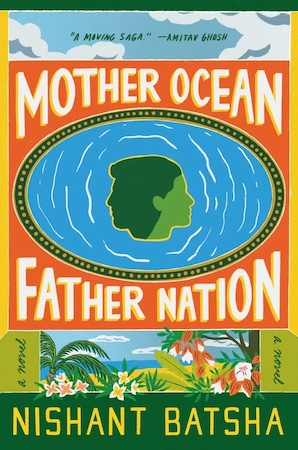
In Nishant Batsha’s novel Mother Ocean Father Nation, a family’s life shatters as the horrors of a military coup befall a fictional South Pacific island. The country is rife with tension between the native population and the Indian community, who arrived on the island as part of colonization. The outsiders and their businesses become targets for nativists’ anger. 

In her dorm room in the country’s capital, Bhumi, a botany student, struggles with the news of attacks while managing campus life under lockdown. In Sugar City, where her family lives, her brother Jaipal deals with his violent father and provincial life by enjoying the escape of foreigners at the bar at which he tends. 

Each of their unstable personal bubbles soon burst. Bhumi’s friendship with the daughter of a government official gets her caught up in the political crossfire; the only route is out and off the island. She leaves for California. Back in Sugar City, Jaipal, having lost his bartending gig, takes advantage of a business opportunity and a romantic connection. His father’s health deteriorates, as does the country’s political situation. 

Batsha, who is a historian of Indian indenture, has spent time in countries such as Fiji and Trinidad, where the Indian populations have faced similar conflicts to one his debut novel portrays. We spoke about how his academic study morphed into his novel, handling character complexities, and his recommendations for further reading on the diaspora of “permanent foreigners.”


J.R. Ramakrishnan: You’ve committed your academic career to the subject of Indian indenture. I understand that you are not part of this specific Indian diaspora yourself so I am curious to hear what initially got you interested in the area? 

Nishant Batsha: ​​Right before I started graduate school, I discovered that I could write for publication. It sounds like a silly thing to say, but at the time, I didn’t realize that anyone wanted to read the things that I had been writing for myself for so long.

I arrived at my graduate program wondering if I actually wanted to be there, or if I wanted to try to cobble together some life around writing, and by the end of my first semester I wanted to drop out. Thanks to the advice of a few writers, including Siddhartha Deb and Mónica de la Torre, I decided to stay.

At the time I was working on a project that had to do with educational policy in mid-19 century north India, and I felt so alienated from that topic. I wanted to somehow understand what life was like inside the classroom, but there was no record of that—it was just state archives and high-level documents.

I decided to change my research topic to the Indian labor diaspora, because I was curious about the long history of migrations from the subcontinent—my parents had come to the United States in the 1970s, but I knew Indians had been moving around the globe through the networks established by British colonialism. And so I wrote a dissertation on Fiji and Trinidad.

One personal connection did come up: my parents are from the Indian state of Bihar, and most of the labor diaspora hailed from the same state. In fact, many laborers departed from the same district that my parents are from. That’s akin to finding out that they’re from the same county in the United States. It was only after conducting my research that I realized that there was this personal connection. The numbers of migrants from that district were so high, it would be impossible that some of my family or distant relatives did not migrate. It is only after immersing myself in the subject did I find the palimpsest.

JRR: How did this novel begin for you? Could you talk a little bit about the choice to make up a country and its location, rather than using a real one?

NB: I came to this iteration after spending some time in Fiji and writing an essay on one of the many coups that Fiji experienced since independence. I interviewed Indian members of the Methodist Church—a church that explicitly espoused anti-Indian views during the coup. That essay opened up a whole set of questions about migration, belonging, political instability, and the life one must live in the face of all these currents.

Now, the country is unnamed because it is a hybrid place that does not exist in the real world. By writing a dissertation on the Indian labor diaspora, I had built up this immense archive of place and circumstance. And when I sat down to write Mother Ocean Father Nation, I took elements from each place to create the island nation. So the country in this book is not Fiji, it is not Uganda, it is not Trinidad, it is not Guyana, it is not South Africa. It is all these places. And by being all these places, it also is none of these places, having become something entirely new.

JRR: Jaipal and Bhumi belong to a community of “permanent foreigners” whose ancestors were brought by the Empire to be put “in the middle of a clear hierarchy: White, Indian, Native.” 

The insular community was brought in by the colonial establishment and they’re perhaps more “Indian” than their contemporaries in the subcontinent. They face oppression (and then expulsion) but also have set racist attitudes as your characters express in slurs. They speak a lot about their hard work while also lamenting the laziness of the natives. 

How did you weigh up the complexities/ambiguities of your characters? With Jaipal, his queerness (and the lack of acceptance from his family and general society) further complicates things.

NB: To write views which I vehemently disagree with was a difficult task. That being said, the book is written in a third-person limited point of view. There is no omniscient raider that could come down from the heavens to shake each character and say, Don’t you realize! Don’t you recognize the traces of a power that led you to think and behave in these ways? But there is no such ontic voice, and to force the characters to inhabit the position of the critic would feel hackneyed. They live within an ideology, never without.

I knew Indians had been moving around the globe through the networks established by British colonialism.

The coup is a final event in a nation. It is the end of one narrative and the beginning of another. The practice of daily life that occurs prior to this final moment is fissured from layers upon layers of doubled thought.

It’s also worth saying that the hierarchy of “White, Indian, Native” is not some essential truth: it is simply the position that these characters think they inhabit, a truth that, on whatever unconscious level, they choose to believe. In the end, they are left to grapple with this fractured sense of personhood and place, all the paradoxes that lay therein.

Now, despite all this, I did not want to let my characters off the hook. There are characters and scenes that hew close to a deep critique of colonialism (and the post-colony)—the mess that was created, and ultimately left unfixed.

JRR: I appreciated the subtleties of Bhumi’s interactions with Indian Americans such as the woman for whom she nannies. She says that she “was not Indian. Not to this woman.” Meanwhile with Vikram, she marvels at his level of assimilation versus that of her community in the island, who are still very connected to Indian culture despite a separation of several generations. Would you meditate a little on these intra-diaspora differences?

The hierarchy of ‘White, Indian, Native’ is not some essential truth: it is simply the position that these characters think they inhabit.

NB: ​​There are the relations of production, and the relations of desire. With her employer, Bhumi leaves behind the life of the mind and is forced inside a relation of production where there are certain markers of difference, loci where class (and caste) can be reified. These markers of difference to the outsider may seem so minor as to be trivial. Inside the relation of production, these differences constitute a totality that define the entirety of a relationship, and form the basis of a fundamental antagonism.

The relations of desire operate slightly differently for Bhumi. Vikram becomes the object of a desire: through him, she feels the lack that is around her selfhood (a lack that arises out of her own dislocation). I don’t think she is consciously aware that her relationship with him is predicated upon this, but she is subject to the distance and disgust manifests because of it. These sorts of contradictions between, let’s say the marketplace and the interiority of desire, create the kind of spaces of difference you mention.

JRR: Gaiutra Bahadur’s Coolie Woman came to mind for me when Bhumi speaks of her grandmother who came to the island. What are some of the books (novels especially) you’d recommend for anyone wanting to read more about this diaspora of Indians (Trinidad, Fiji, Uganda, etc.)? 

NB: Of course there is, as you mentioned, Gaiutra Bahadur’s magnificent Coolie Woman. There’s Rajiv Mohabir’s poetry, as well as his memoir Antiman, and his translation I Even Regret Night: Holi Songs of Demerara. I love the writing of Stephen Narain, who recently had his short story “Temple in the Sea” published in Wasafiri. In fact, that whole issue was on the “Afterlives of Indenture”—a must read.

Mahmood Mamdani’s From Citizen to Refugee is a combination of first-hand experience and piercing academic insight, written right after his expulsion from Uganda. Janika Oza’s A History of Burning will be out in 2023 and looks to be a moving and powerful book. Vinod Busjeet recently published Silent Winds, Dry Seas, which is set in Mauritius over the course of a life. And of course, there’s Amitav Ghosh’s magisterial Sea of Poppies.

The late Brij Lal was such a treasure, for his work on the history of indenture in Fiji, and the personal essays in Mr. Tulsi’s Store. I happened to, by chance, run into him at the Free Speech Café on the UC Berkeley campus (he was in town for a wedding)—a fortuitous conversation in a queue. Sudesh Mishra’s poetry, especially the collections Tandava and Diaspora and the Difficult Act of Dying capture the intersection of lived life and immense history. There are so many. I could go on and on.

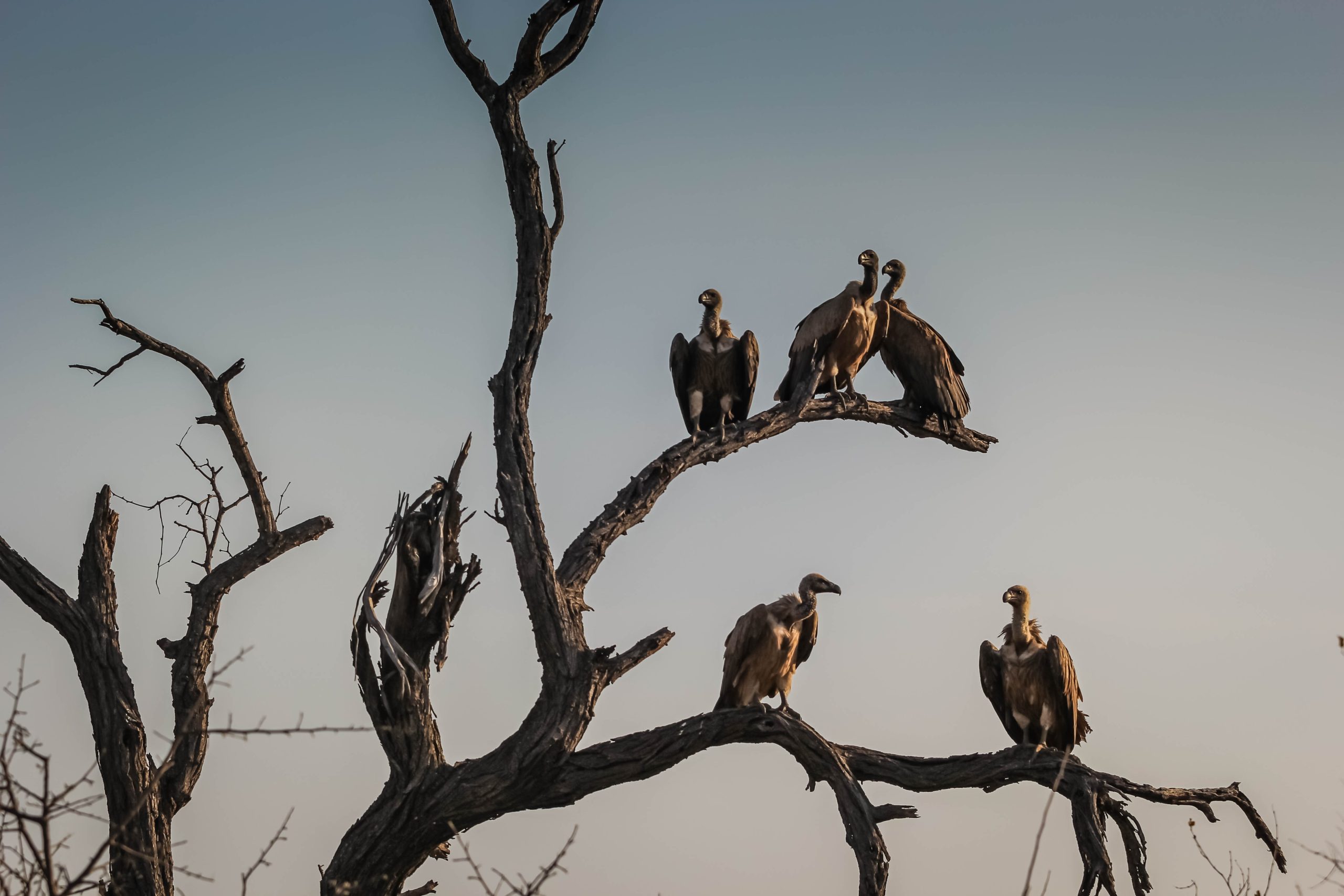
My God Has the Head of a Vulture

Ornithology

After Theodore Roethke
 
To find the owl I must follow the crow  
who says my ears and eyes better behave;  
it’s hard for me to learn what the crow knows
  
unable to refuse the blueish glow  
nor the shiny trinkets my wingtips save.  
To find an owl I must follow the crow  

who says, into an owl I cannot grow  
and takes me to the bend of my eye’s grave;  
it’s hard for me to learn what the crow knows.  

The voice of a crow isn’t caw but snow,  
an arc of ink across a feathered wave.  
To find an owl I must follow the crow  

pick of pine needles where I was below  
pinion of gloss and ash I glide engrave.  
It’s hard for me to learn what the crow knows. 
 
Lost call of the owl is clouded and slow  
wing of midnight and cold blessing me brave.  
I keep walk until sun wake and let go;  
it’s hard for me to learn what the crow knows.


Behind the Back of the Robin 

Even in the city  
the cicadas are heavy  
with song and I am  
too young to call  

a bird anything but red.  
What do I  
name this, when  
the sun enters 
 
my head. I’m afraid  
the flowers are blooming again.  

When my grandmother feeds  
my father I know  
to sit still. A girl  

at my school eats  
ants. She snaps  
off their heads and says  
they taste like candy

and it doesn’t scare me  
like my grandmother does.  
I can’t look at her
 
or the doll she sewed  
me, without arms.

When she leaves the kitchen  
my father lets me eat.
 
The sting of menudo sharp,  
listening for the sound of her  
to return, like a curse.

7 of the Most Memorable Bartenders in Literature

I have thought a lot, over my decade-plus of drinking and working in bars, about what makes any one establishment stand out over another. Why are there places we love and return to, and others we leave with indifference, ambivalence, even disappointment? On the one hand, if there was an easy answer, opening a bar wouldn’t be such a risky venture. There are so many factors at play—location is a big one, and design, and menu offerings—and there are so many different types of bars, so many success stories and failures. In some ways, defining a “good bar” is an impossible task. On the other hand, ask any barfly and they’ll give you the same answer. It always, in the end, comes down to the bartender.

And yet, there is a strange dearth of memorable bartenders in popular culture. Bars appear, generally, as settings divorced from the people that run them; with the occasional, notable exception (Cheers leaps to mind), bartenders are generally anonymous, interchangeable, forgotten. This is part of what I see as a more general lack of service industry stories, a lack that I felt as I worked on my debut novel, The Bartender’s Cure.

In The Bartender’s Cure, the bars are literally defined by their staff: the protagonist’s place of work is called Joe’s Apothecary, but every other establishment remains nameless—Gina’s bar, Casey’s bar, Timothy’s bar. I don’t think I even noticed myself naming them this way, not at first, but it felt right. The bartender defines your experience, as a guest: they shepherd you through your night, they feed and water you, they look out for your comfort, your safety, and your joy. If you’re very lucky, you get to know them a little bit too.

The novels below understand this, and have created compelling, magnetic bar personalities. At the top of the list are the bartenders we know best—protagonists, followed by love interests, followed by memorable minor characters. I would visit any one of them at work in a heartbeat.

Yerba Buena by Nina LaCour

Nina LaCour’s first novel for adults follows two young women, Emilie and Sara, as they find themselves, and find each other. To call it a love story would be accurate but not precise; it’s a gorgeous, many-layered novel, an exploration of family, trauma, creativity, queerness, and the idea of home. Sara, who runs away from home at sixteen and falls into the service industry, is one of my favorite fictional bartenders ever. As a character, we see her as both guarded and vulnerable, a survivor with a romantic’s heart; as a bartender, she’s confident, precise, and everyone who works with her adores her. She has a beautiful, almost spiritual connection to the work of drinks-making—“here was meaning,” she thinks, seventeen-years-old and trying Lillet for the first time. “A home, hers alone.”

The Night Shift by Natalka Burian

The protagonist of Natalka Burian’s upcoming novel is a sort of classic accidental bartender. After leaving her more traditional job working for a successful psychotherapist, Jean Smith takes a job at Red and Gold, a divey bar in early-aughts Manhattan where the nights consist of drunk hipsters and hundreds (maybe thousands) of vodka-sodas. Jean is a newbie, and we see her struggle behind the bar as all newbies do, but she’s hardworking and stubborn, which I respect. And at any rate, The Night Shift isn’t really about the bar—it’s about the nighttime world that bar work introduces Jean to, with its colorful characters and mysterious shortcuts: strange passageways through space and time that are much more sinister than they seem. Jean is a classic reluctant hero type, and Burian weaves together her painful past and troubled coming-of-age with a riveting, high-stakes mystery.

Giovanni’s Room by James Baldwin

The romance at the heart of James Baldwin’s classic, heartbreaking novel begins, as many do, in a bar. Giovanni is the new bartender, a young, conspicuously beautiful Italian man at a Parisian gay bar. He is coveted by the bar’s owner, Guillaume, and by all of the older men who come to the bar, but he is drawn immediately to David, our narrator. Giovanni is passionate to the point of volatility, charming when he wants to be, undeniably difficult but capable of a depth of love that seems to baffle and even disgust David. We don’t see him working all that much, but when we do he is clearly adept, quick, flirtatious, diligent. And everyone falls in love with him, which doesn’t hurt. “It appears that I am good for business,” he tells David; I believe him.

Halsey Street by Naima Coster

Naima Coster’s debut alternates between two storylines: one centered on Penelope, a young art school dropout newly returned to her childhood neighborhood of Bedford-Stuyvesant, and one on her mother, Mirella, who has left Penelope’s father, Ralph, to go back to her roots in the Dominican Republic. It’s a complex and layered novel, as much concerned with love and loss as with racism and gentrification; it’s also, almost quietly, a book about bars and bartenders. Penelope herself is a former bartender, but I fell in love with Jon, who works at Ralph’s longtime local watering hole. He’s curly-haired and brown-eyed, boyishly slender, perpetually amused, with what Penelope sees as “a sweet and hospitable way about him.” When Penelope tries to order a double gin and tonic the second time they meet, Jon laughs benignly and shakes her up a special bourbon cocktail instead—a bold move, but it pays off, and from then on she drinks whatever he feels like making her. There’s much more to him than that, but that would be enough—have you ever had a bartender who just makes you a perfect drink without your even having to order, every single time? I’m pretty sure that’s what being royalty must feel like. Sweet and hospitable, indeed.

Sweetbitter by Stephanie Danler

Stephanie Danler’s debut is all about the service industry, a coming-of-age of sorts about a girl named Tess who moves to New York and gets a job as a back-waiter at the best restaurant in the city. Tess falls, early and hard, for a beautiful bartender named Jake—and while we as readers know he’s trouble, it’s hard not to fall with her. But the real best bartender of Sweetbitter is Nicky, a middleaged man with Clark Kent glasses and a Long Island accent who has worked the bar at Tess’ unnamed restaurant for decades. Nicky has a reliability to him in sharp contrast to his younger coworkers; he’s married, a father of three. He can be harsh—he takes his job seriously, and has little patience for laziness or fuck-ups on the part of his coworkers. But he’s kind to Tess, the new girl, and there’s a scene I love in which he allows a regular to get monumentally, unwisely drunk, when she’s just found out her husband is leaving her for a much younger woman. He pours her entirely too much wine and then he gets her into her coat and into her cab. It’s irresponsible bartending, absolutely, but he understands that this is what she needs, in this safe space, surrounded by people who know her and will make sure she gets home okay. “If we can’t let her get drunk here tonight,” he says, “what good are we to anyone?”

2 A.M. At the Cat’s Pajamas by Marie-Helene Bertino

Marie-Helene Bertino’s debut novel unfolds over the course of one day in Philadelphia, as experienced by Sarina, a recently-divorced schoolteacher; her student Madeleine, a bratty but talented young girl struggling after the death of her mother; and Lorca, the owner of The Cat’s Pajamas. It’s funny and strange and frequently heartbreaking, an absolute joy, and it centers on The Cat’s Pajamas, a jazz club facing the threat of closure.

We meet a few different bartenders over the course of the day, but my favorite is Louisa Vicino, the former “snake girl” at a combination strip club and bowling alley, and until just before the opening of the novel, Lorca’s girlfriend and the bartender at his club. Louisa is funny and kind, maternal to Lorca’s son (who is in need of mothering), but stubborn too—she’s a woman who gets what she wants, and doesn’t let anyone walk all over her. Also, she used to dance with snakes at a strip club, so you know she’d have some wild stories to tell you while you drank.

Olga Dies Dreaming by Xochitl Gonzalez

Olga Dies Dreaming follows Olga, an accomplished wedding planner, and her politician brother Prieto, whose mostly comfortable lives are upended by the landfall of Hurricane Maria and the sudden reappearance of their radical mother. It’s a story about family and community, loss and ambition, and it manages to contain both a withering critique of the United States treatment of Puerto Rico and a beautiful love story—part of which takes place at a fantastic bar.

Sylvia’s Social Club is an unassuming, wood-paneled dive bar in a rare undeveloped pocket of Williamsburg. Olga goes there on a date with her new love interest, Matteo, and the two of them drink golden rum and play each other songs on the old jukebox. It’s a sweet scene, and in it we meet Sylvia herself, the beautiful and charming sixty-something Puerto Rican woman who gets Matteo the rum he likes and holds the line against the developers looking to buy her out. Sylvia doesn’t get a ton of space on the page, but she sparkles—which is sort of the whole bartender job.

Who’s Afraid of the Gender Apocalypse?

We hold onto things more tightly when we feel they are in danger. We cling to a relationship as it falls apart; we know we must leave home, so we keep finding reasons not to. You see the same in pop culture trends. Consider the true crime boom of the last several years: as people begin to question whether we really need police at all, some of those who stand to suffer from their absence fixate on tales in which the police are the righters of wrongs, the defenders of innocents.

In a similar vein is the trope of the gender apocalypse. Lots of media might fall under this heading, including P.D. James’ 1992 novel The Children of Men and its 2006 film adaptation, or Naomi Alderman’s 2016 novel The Power—all of which tie the end of the world to some shift in gendered power. In most recent gender apocalypse stories, though, one gender (defined in various ways) succumbs to a plague, or falls asleep, or simply vanishes, leaving the rest of the population to deal with the fallout. This trope is not new—it dates back to Joanna Russ’s The Female Man in 1970 where, in the world of Whileaway, a plague killed all men centuries ago. Brian K. Vaughn’s comic series Y: The Last Man, which began in 2002 and was recently adapted into a TV show, is another example that predates our current moment.

Our notions of gender are becoming more flexible, and so even well-meaning people are finding themselves holding more tightly to their beliefs.

It’s an established genre, but one that’s come to sudden and alarming prominence. In addition to the aforementioned Y: The Last Man adaptation in 2021, we have Stephen and Owen King’s Sleeping Beauties (2017), Lauren Beukes’ Afterland (2020), Christina Sweeney-Baird’s The End of Men (2021), Gretchen Felker-Martin’s Manhunt and Sandra Newman’s The Men (both 2022), all of which fit the basic definition above. If we broaden the definition to include Alderman’s The Power, or Torrey Peters’ Infect Your Friends and Loved Ones (2016; reissued 2022), we’ve gone from approximately one of these stories a decade to eight in the last six years.

It isn’t hard to see why. Our notions of gender are becoming more flexible, and so even well-meaning people are finding themselves holding more tightly to their beliefs. It’s been just over eight years since Time Magazine reported on the “trans tipping point,” the point at which trans people became represented enough in the media that cis people had a harder time ignoring their existence. Even outside the dubious barometer of representation, more and more people are identifying as trans and non-binary. It’s become common practice to share pronouns, to have all-gender bathrooms. Trans people are more visible than ever—which is a good thing, of course, but also threatens the status quo. Moreover, trans people can jeopardize a lot of the underlying assumptions, language, and power analysis that (again—well-meaning) people attempt.

All of the recent gender apocalypse media is, ostensibly, feminist. Most of it does not know what to do with trans people. In Beukes’ Afterland, trans women are killed by the same plague that kills almost all men; in Newman’s The Men, everyone with a Y chromosome disappears at 2:14 on an August morning. References to these trans women, or to the trans men who survive, are fleeting and uncomplicated. But these are books about gender. They’re trying to reckon with something toxic in the structure of society. Why wouldn’t trans people be a part of that? What fears are they reckoning with that don’t include trans people?


In Afterland, in the wake of the Human Culgoa Virus (HCV) which has killed almost all people with prostates, we follow Cole and her son Miles—one of the rare exceptions to the plague’s power—as they flee from a sort of lab-slash-prison that’s been experimenting on (and ostensibly protecting) Miles. The movement of men and boys—anyone with viable sperm—is heavily regulated in the post-HCV world, and other woman-made horrors exist outside of the governmental restrictions on travel. Cole’s rough-talking sister, Billie, pursues her and Miles across America, hoping to harvest her pubescent nephew’s sperm. Many of the horrors of this world are familiar to us: restricted travel, incarceration, climate change, religious extremism. Beukes takes pains to acknowledge that these are not predicated on the apocalypse itself. “In America, they steal kids from their parents,” reports the opening page. “This was true even before all this.” There are specific references to American Nazism, to police killings of Black children, the regulation of pregnant bodies. Beukes’ message is primarily that “women [are] capable of evil fuckery” the same as men are. These are not one-sided problems, Afterland argues. These power structures pervade America and persist, even without men running things. This is clearest in the character of Billie, who doesn’t care about exploiting her family to get rich quick. By book’s end, she is ready to kidnap her nephew and sell him to a woman who has lost her own son. She is ready to shoot her sister to get him. She is without sympathy, without love.

Of course, women are responsible for nearly all the good in the book as well. They are nurturing, and quick-witted, and capable of taking over previously male-dominated fields of work. Equality cuts both ways: men and women equally good and equally bad.

Women celebrate the disappearance of the men who assaulted them, abused them, even as they mourn the loss of friends, lovers, sons.

Newman’s The Men has a slightly more optimistic view of its gynocentric world. There is an inevitable amount of chaos when everyone with a Y chromosome vanishes (pilotless planes crash, patients of male surgeons are left on the operating table mid-surgery); the narrator, Jane, is undone by the disappearance of her husband and son. But the void left by this chaos is quickly filled by a quasi-communist political party called the Commensalist Party of America (ComPA), run by the narrator’s old friend (and soon-to-be lover) Evangelyne. Jane describes a scene without men as “very sweet and fantastical: a world of lambs with no wolves.” Women celebrate the disappearance of the men who assaulted them, abused them, even as they mourn the loss of friends, lovers, sons. Here, the pre-vanishing world is held up as clearly the worse. Eventually all the disappeared men and boys and trans women appear in a series of videos streaming online—mostly of them wandering through a desolate wasteland version of the world, occasionally with them being hounded by animalistic monsters or devolving, themselves, into killing children. It’s revealed in time that this wasteland is not just some distant hell—it is “a future world in which men had never disappeared.” Men are not merely categorically awful, Jane believes, but will lead to a literal hell on Earth. But here, in the world without them, the ComPA and Evangelyne gain prominence and power, and by the book’s end it is a sure thing that Evangelyne will be the next president of the U.S. The book’s final conflict is a choice Jane must make between these two worlds: the utopian world run by women, or the ordinary hell—which will become full-blown hell—that includes people who have Y chromosomes. Inexplicably (insofar as it is not explained) she chooses the latter.

Both books are also explicitly conscious of racial politics in America and steeped in fear of what white women are capable of. In Beukes, we have Billie’s vicious pursuit of (and desire to quasi-enslave) her mixed-race nephew. But even before the world has properly ended, when Cole and Miles are attempting to leave America, they are apprehended in the airport and Cole reminds herself: “They shoot Black kids in America.” We have the aforementioned concerns about limited movement across borders, and separating children from their parents, and we see all this continue past the point of apocalypse. In Newman, much—but not all of it—centers on Evangelyne, a Black queer woman who was incarcerated for killing cops. She does so to protect her family, a new religious movement of Black intellectuals who are suspected of “every form of Islamic extremism and voodoo witchcraft.” When she’s incarcerated, she begins a mail correspondence with a white ethnic studies professor who seems kind and encouraging, who helps Evangelyne publish prison letters. Once she’s out and making a name for herself, the professor turns on her, treating her with hostility, invalidating her sexuality, and claiming Evangelyne’s book, On Commensalism, as her own work. And, as is revealed late in the book, it is Evangelyne’s childhood friend Poppy, a white girl, who is both responsible for the police shooting that killed much of her family, and for the book’s mass disappearance. Other aggressions—micro and macro—against people of color abound throughout the book. And it makes sense, post-2016 election, post-2020 protests, that people would be grappling with their positionality in fiction in these ways—just as we’ve seen an influx of fiction that grapples with masculinity (and white masculinity) in recent years. And whether or not the books do a good job with that grappling isn’t really for me to say. I bring it up not to comment on how well it’s executed, but because it’s important to recognize the ways these books are consciously about identity, about the fear of the power that white cis women have. An awareness that makes their exclusion of trans women all the more notable.

It’s important to recognize the ways these books are consciously about identity, about the fear of the power that white cis women have.


What do we have so far? Books that are concerned with the horrors that white people, including white cis women, are capable of; books that simultaneously want to insist that women are capable of the good things that men can do, and capable of greater goods; books that fear loss of bodily autonomy. They are both also about how much their women characters miss their men. Cole desperately misses her husband, to the point that her narration is often punctuated by ghostly, imagined interjections from him. The Men has multiple passages about how much women miss their husbands, brothers, friends. In both cases, the argument ends up being, essentially, #notallmen. It isn’t worth the exclusion of the good ones even if it means getting rid of the bad.

And I think, especially in Newman’s case, this is what she believes she’s getting at by disappearing all trans women to the hellscape future along with all men. “Now this,” the narration reads after trans women appear on the haunting live stream. “Those trans girls gone like men. Just another way God fucked you.” It’s not fair, so says Newman, to lump trans women in with men. They should have gotten to stay on Earth, surely! There’s nothing wrong with trans women!

Beukes’ treatment of transness is meant similarly, probably. Notably, she edited small sections to make them less transphobic between the hardcover and paperback editions—laudable that she took criticism to heart, even if I don’t think it ultimately fixes the book’s problems. (I am going to quote from the more transphobic version, because I am more interested in what is done out of instinct than through measured consideration.) A section explaining the apocalyptic virus reads: “Unlike your racist Fox News-lovin’ grandparents, you’ll be pleased to know that HCV does not discriminate on race, class, religion, or sexuality. You just need to have that Y chromosome. Sorry trans sisters, peace out: It’s the equal-opportunity fuck-you we’ve been promised since the dawn of the first mitochondrial collision.” The almost cheeky apology: so sorry, would’ve kept you if we could, didn’t work out that way. Had to do a small genocide instead.

Both books make mention of trans characters, sure, but it ends up being the literary equivalent of Oreos tweeting ‘Trans people exist.’

Of course, in both cases, the disappearance or death of (nearly) everyone with a Y chromosome is a non-human phenomenon. It’s something as natural as a virus, or something as otherworldly as demons banishing evil from the world. It isn’t a neatly planned war crime, it’s just biology. Beukes and Newman could as easily have left trans women on this side of existence. It’s not hard to see that the inclusion of trans women could have furthered the examination of many of their concerns. How are trans women treated in a world where they are the only ones biologically capable of producing sperm? Have some or all of them been made sterile by HRT? White cis women are capable of awful things where trans women are concerned, too; as I write this, I see evidence of that on the news every day. So if these are the core concerns the books address, why not bend their self-imposed rules?

No surprises here: whatever their good intentions, Newman and Beukes both fail to see trans women as not, sort of, men. Both books make mention of trans characters, sure, but it ends up being the literary equivalent of Oreos tweeting “Trans people exist” without further comment. I think both books fundamentally misunderstand the relationship between trans women and power. Between trans women and themselves. In attempting to write a feminist future, they have conjured up a future that can avoid the complexities and nuances that trans women bring to our understanding of gender and power.

Consider, in both cases, the emphasis on the Y chromosome. The thing that determines whether you live or die is so essential to your bodily makeup that it is baked into DNA itself. It is something that cannot be transitioned away from, a link between trans women and men. And though it’s an essential commonality, it’s also meaningless. A trait that men and trans women share that has little to do with the experience of living in the world as either.

The two mentions of trans people quoted a few paragraphs above illustrate how each writer considers trans bodies. Consider Newman’s claim that being vanished from the planet is “just another way God fucked” them. It’s almost impossible to read this without assuming that the primary way these trans women have been “fucked by God” is by not being born cis women—a stance that, to my knowledge, only the absolute most blackpilled of trans women would buy into. Trans people of all varieties are not made unhappy by being trans; they are made unhappy by lack of access to the medical care that helps them live comfortably in the world, by the hostility with which cis people treat them, by attempts to legislate them out of existence. Newman’s framing in conjunction with her worldbuilding is revealing: there is a biological problem with trans women, a perennial longing to be something they can never be, which is to say, women. (Consider, in contrast, trans writer Julian K. Jarboe’s tweet about God and being trans: “God blessed me by making me transsexual for the same reason he made wheat but not bread and fruit but not wine: because he wants humanity to share in the act of creation.”) In ridding the world of everyone with a Y chromosome, in order to rid the world of evil, the narration occasionally shakes its head and says What a shame the trans women had to go as well. But it denies us the chance to see them as women, rather than as members of the horde of men tramping across the desolate landscape.

These writers attempt to undermine gender binaries but ultimately, by their trans-exclusion, only succeed in reinscribing them.

Similarly, consider Beukes’ claim that her virus is “the equal opportunity fuck-you we’ve been promised,” a stance that is put in direct opposition to “racist, Fox News-lovin’ grandparents.” Perhaps this is meant to suggest everyone being brought low together; cis white men wiped out in a genocide the way they might have wished on trans and Black and brown folks. But of course, there’s not actually anything equal about that, any more than, say, affirmative action-less college admissions would be. It is further punishing people who have been the most vulnerable, creating new harm on top of old. The only conceivable way in which this is an equalizing force is if these people are all, again, sort of men. You see this explicitly in a scene immediately after: in a camp for survivors of HCV, we meet “Joe,” who “introduces himself as Josie.” She is “a shy guy, or maybe a wary one, with…beautiful lips—girlish.” Josie is continuously misgendered by the narrative and her partner, treated as an object of pity in her turquoise dress and denim jacket. It’s narrative confirmation that the book–in its hardcover edition, at least–does not distinguish between trans women and men. Instead it coos, Aw look, he thinks he’s a woman!

It is these very beliefs and concerns about trans women that underpin Gretchen Felker-Martin’s Manhunt. Just as Afterland makes the political problems of the present the problems of its apocalypse, much of the conflict in Manhunt stems from the treatment of trans women as man-adjacent. In Manhunt, the plague that has decimated the population of men—turning them into slavering monsters—is triggered not by anything innate or chromosomal, but by testosterone levels. Trans women, like the main characters Fran and Beth, survive by extracting their exogenous hormones from the testicles of men that they, uh, hunt—but so, too, do cis women with hormonal disorders like PCOS. Members of the “New Womyn’s Commonwealth” emblazon themselves with an XX insignia to distinguish their cis womanhood from the trans women they hope to build a world without. “We will no longer let the men who wear our identities and steal our history for their own sexual gratification dictate how we live and what we’re allowed to believe!” rails one of the New Womyn’s members. “We will no longer let them prey on our daughters!” Trans women who pass well, like Fran, are treated better than trans women like Beth, who don’t—a weaponized hierarchy of femininity that’s used to drive them apart once they’re living in a billionaire’s bunker hideout. But no matter how they’re treated in the short term, there’s always the threat that the cis women who run this new world will turn on them. Or as Beth puts it, after a cis woman becomes uncomfortable around her when they hook up: “I’m a girl until a real one decides I’m not.” Trans women are allowed to exist in this world so long as they’re useful: they do manual labor, or sex work, and when they outlive their use, they’re killed. And they’re always treated as a timebomb, as though the testosterone their bodies produce will turn them into monsters at any moment. Of course, as in real life, this threat is mostly an excuse to other them. To treat them as infiltrators into the safe enclaves of cis women. They aren’t the only ones who rely on exogenous estrogen—they aren’t the only ones who could theoretically turn into the testosterone monsters—but it’s their lives that are constantly under threat. Not, in this case, by an inhuman plague, but by the dehumanizing efforts of the cis women around them.

And ultimately, that’s what The Men and Afterland boil down to. However you cut it, whatever Beukes and Newman are attempting to do in their books, the fact remains: these are books that purport to be about womanhood that have no interest or ability in including trans women in that category. They are more interested in defining trans women by what they have in common with men than what they have in common with women. To include trans women would undermine Newman and Beuekes’ claims about womanhood and white womanhood. Women can do anything (good or bad) that men can do is jeopardized by trans women if you cannot quite see them as real women. It is a simplifying move, then, to exclude trans women. These writers attempt to undermine gender binaries but ultimately, by their trans-exclusion, only succeed in reinscribing them.

I’d like to believe that Felker-Martin will put the nail in the gender apocalypse’s coffin. Her book lays bare all the fears that underpin other gender apocalypse media—fears that the writers insist they do not intend to hold (and I believe them that their intentions are good) which nevertheless encourage a view of the world that lumps trans women and men into a single category. I hope that, as we see legislation pass that aspires to prevent trans children from transitioning medically or socially, more writers will recognize the need for stories about gender that do more than simply acknowledge that trans people exist, and acknowledge better our lived realities. But I fear that, just as the wave of true crime has not abated since the protests of 2020, that we will see people holding more to the retrograde ideas they’ve absorbed. That, disseminated widely by well-meaning liberal writers who want to do the right thing but fail to, those ideas will only take firmer hold. I’m afraid of what the gender apocalypse represents—about our present moment, but even more adamantly about where we’re headed.

10 Books About Young Women in (and Out) of Love

The best literary fiction is in some ways a simple character study. It is a roadmap into the interiority of a specific character: the way they think, how their identity impacts their relationships, and what decisions get made in response to the socio-political pressures shaping their lives. But literary fiction about young women too often gets miscategorized as women’s fiction or deemed frivolous, the needs and worries of these characters regarded as more rom-com than Camus. That topics of the body, the emotional, and the domestic are both undervalued and associated with women is no coincidence. But, internalized misogyny aside, I can think of little ground more fertile than being let into the psyche of a young woman in love.

Young, female narrators are at a point in which their futures are most malleable, where a relationship can shape the practical realities of their lives, or, perhaps more importantly, their sense of selves for years to come. The relationships in my own life have undoubtedly spurred my most intense introspection, forcing me to grapple with the space between who I am and who I want to be at times. When do we look most internally if not when trying to slot ourselves into someone else’s life, coming up with the ways in which that is and isn’t possible? When are we most in tune with the boundaries of our own bodies than when the people most formative to us leave? Relationships are inherently vulnerable and force us to confront our most and least powerful selves, often a delicate, dangerous balance of both.

Society overwhelmingly finds both youth and femininity trivial, but the stakes couldn’t be higher for the narrators of these ten novels. Their frighteningly intense unions (age-gapped, interracial, illicit, deliciously queer or devastatingly abusive) offer the first chance to reject the story laid out in front of them, about who they should be or what their life should look like—to recast themselves as agents of their own desire. These nuanced stories are less interested in happy endings than allowing the women at the heart of these dalliances to uncover how universal concerns can play out on the most intimate of stages.

The Idiot by Elif Batuman

This novel follows Turkish American Selin throughout her freshman year at Harvard and an ensuing summer of European travels. Selin completely understands the limits of her experiences and it is this self-awareness that allows for her brilliance as a narrator, her ability to interrogate society and her role in it as she falls in love for the first time. She unpacks the limits of language and culture in the same way she studies her feelings for older mathematics student Ivan, with whom she exchanges emails and ultimately follows to his native Hungary. In scrutinizing both intellectualism and desire, she unveils the very universal need to understand the world and be understood by it. In short, the book takes her seriously as a thinker, not in spite of her being a young woman in love, but because of it. 

Sweetbitter by Stephanie Danler

22 feels like an outward facing age. We are looking outside of ourselves for romantic connection, for mentors in industries we’re not sure we’re sold on yet, for new friends to combat an existence that feels increasingly singular. And who better to guide us down that path than new-to-New York Tess, who lands a position as a backwaiter for an esteemed Manhattan restaurant. Her culinary education unfolds alongside an obsessive interest in the relationship between older, endlessly glamorous Simone and the mysterious bartender Jake. Tess is full of so much yearning—for Jake’s affection and Simone’s approval, sure, but also to belong in this hedonistic, cultured city and to not just partake in its various vices, but to actually enjoy them. And perhaps in all of this focusing on the other: the city, a complicated relationship she can’t quite penetrate, the needs of her customers and eclectic friends, Tess will come to understand herself a bit better. This is a visceral, gustatory read that centers pleasure-seeking in a young woman’s life.

Luster by Raven Leilani

Dating in your 20s is terrifying complicated. Between ever-changing rules and perilous apps, many young women make what others might call bad decisions and what we call Trying Our Best. Such is Edie’s dilemma when she breaks out of her Brooklyn bubble to date a middle-aged white man from New Jersey in an open marriage. After losing her job, Edie ends up moving in with the couple and their adopted daughter, who is also Black, paving the way for messy power relations, unlikely alliances, and misplaced affection. Dating is inseparable from identity, and we come to understand how Edie’s age, race, gender, and class play a role in her loneliness, her humiliations, her sense of self in this dysfunctional set-up. 

Exciting Times by Naiose Dolan

In some ways, picking a relationship can be a way of picking a kind of life for yourself. Does an adventurous partner bring out that side of you? Does a more stable partner promise a different set of freedoms? Who can you become in relation to another? Such are the questions Irish millennial Ava must face while living as a grammar teacher in Hong Kong. She quickly moves into wealthy British banker Julian’s apartment and lets him treat her to a life of luxury. When, in Julian’s absence, she finds herself more compelled by local lawyer Edith, she must decide who she wants to be with and what that will mean for the shape of her life. This debut captures the ways in which romantic decisions expand beyond lust, giving weight to the fiscal and cultural calculations women often make when trying to negotiate for power as they build a life for themselves. 

Acts of Service by Lillian Fishman

20-something Eve disrupts her safe partnership with a woman to post her nudes anonymously online, the first step in her following the thread of her many and demanding desires wherever they might take her. The post leads her into the uneasy and delicate relationship between a young woman and her boss, the power dynamics and lines more blurred than they might first appear. The shifting portrait of intimacy, moral responsibility, and ambiguity involved in navigating sex and relationships proves a profound current in Eve’s life, and her cerebral, philosophical interrogation of desire is nothing short of spell-binding. This debut depicts queerness as a kind of shared religion and complexity as the paradigm through which young people must now live. 

Days of Distraction by Alexandra Chang

The narrator at the heart of Days of Distraction is a 24-year old Chinese American tech writer who, dissatisfied with her job and Silicon Valley, agrees to follow her longtime partner to upstate New York. The best writing about relationships works because it highlights the individual—when is someone more transparent, more aware of the shape of their identity than when intimately juxtaposed against another? When do someone’s differences, incompatibilities, defying experiences of the world come into greater conflict? Who can make someone feel the most seen, or hurt them the most by rendering them invisible? Alongside thoughful reflections on being a young woman in the workforce, this novel follows the narrator as she unpacks her Asian American identity, in her interracial relationship as well as the wider world.

Acts of Desperation by Megan Nolan

They say you have to date the wrong people in your 20s—but there’s wrong, and then there’s toxic. For those of us who have begged friends to get out of bad relationships and those of us still in therapy to make sense of our own experiences, Acts of Desperation is a perfect and suffocating exploration of an abusive relationship, following our unnamed narrator as she falls for the compelling yet cold writer, Ciaran. The writing is all sharp edges with the narrator’s heartbreaking response to rejection, to cruelty, to degradation turning political. Her retroactive commentary on this two-year-long relationship allows the patriarchy into this twisted love story, as she ruminates on the space between the feminist woman she believes herself to be and the treatment she allowed herself to endure. This portrait of isolation, alcoholism, disordered eating and the ways in which relationships can uphold and encourage toxic impulses feels equally apt for a confessional box as it does the debate stage.

You Made a Fool of Death with Your Beauty by Akwake Emezi

While many break-ups require mourning, Akwake Emezi explores genuine grief in their first dip into the romance genre. At 29, Feyi is ready to start dating again after losing her husband to a car accident five years ago. This isn’t a book for people looking to fall into the typical tropes of a romance novel—it’s something much more honest than that. Emezi subverts our expectations, allowing Feyi a whirlwind, messy, queer journey that takes us through various partners, Brooklyn apartments and tropical islands, public art exhibitions and private breakdowns. It allows love to be both heartbreaking and healing and doesn’t play down the weight of young relationships, how their loss can come to shape who we are as people as well as the connections and career-decisions we go on to make.

Our Wives Under the Sea by Julia Armfield 

When Miri’s wife, Leah, doesn’t return from a deep sea research expedition for six months, Miri presumes her dead. The relief of her resurfacing is quickly overshadowed by the repercussions of the traumatic experience: namely, a Leah who is unrecognizable to Miri. This is a masterfully paced horror story, not only because Leah deteriorates into something not quite human in incremental, stunningly rendered beats, but also because the reader’s heart shatters in slow motion. This is a story about two women who love one another deeply, but whose experiences newly mark them as strangers to one another. While much of the reminisced upon love story depicts the women at a young age, this story’s relevance lies mostly in its ability to reflect the ways in which one partner often outgrows the other in young relationships. The tension between the active love these women share and their total inability to connect in the present moment proves an unstoppable current, dragging readers to a dark and scary place where the people we love most aren’t immune to change. A place where grief and love can coexist tenderly but, ultimately, not successfully.

Conversations with Friends by Sally Rooney 

Conversations with Friends is as much about being in romantic love as it is being in love with your friends. Best friends Frances and Bobbi used to date, and the shadow of their falling out of love, into friendship, perhaps back in love, haunts the more obvious plotline: that of the girls befriending married couple Nick and Melissa, and Frances getting drawn into an intimate and compelling relationship with Nick. This novel feels like being young. It is college friendships and summer trips, intellectual conversations where you feel sure of your position and everyday interactions where you feel lost to your own desires. It is selfishness in pursuing connection alongside an earnest effort to prove yourself a good person (no small feat in a world that is nothing if not intent on policing the morality of young women). This well-adored book captures love as the ultimate oxymoron: easy to fall into and impossibly difficult to navigate, often fleeting but with everlasting implications, an ultimate joy and the quintessential heartbreak. Above all, it promises that even when it all feels like too much, when the vulnerability of the experience proves overbearing, it’s a worthwhile endeavor in the making of a life.

The Modern-Day Struggles of Young Native Women Chasing Belonging, Desire, and Autonomy

Chelsea T. Hicks’s A Calm and Normal Heart is a brilliant and breathtaking debut story collection. While it appears straightforward as a twelve-story collection, these stories and their characters impress upon the reader something longer: a legacy, one that simultaneously stretches back and forward.

In “Tsexope,” between a breakup and a shackup, the main character returns home to find a film crew making a movie on the Osage Murders, but the story itself pushes the history into the present by not just illuminating what might be consequences of that past, but the hope that is required to persevere. The theme of existing as an indigenous person in contemporary America is prevalent throughout, but with a much needed new take. No wonder the second story is called “A Fresh Start”—with great insight, Hicks creates a story that doesn’t “perform” for a white readership but instead creates a story with people who happen to be Indigenous. In each story, Hicks moves beyond the hackneyed tropes of the “performing” Native to offer a collection that won’t only last, but one that will be—should be—required reading. 

I honestly can’t remember the last time a book so fundamentally changed the way I think, and I certainly can’t remember the last time a book helped me, as a human being and an Indigenous person, articulate some of the painful truths of existing. 

I spoke with Chelsea T. Hicks over Zoom recently, and we discussed authorial intent, the importance of using one’s Indigenous language—for Hicks, that being Wazhazhe ie—and the idea that Native writers must “perform” for readers.

Editor’s note: Click here to watch the video component of the conversation between Chelsea T. Hicks and Morgan Talty about their short story collections A Calm and Normal Heart and Night of the Living Rez.


Morgan Talty: What I love about these stories is that they are furiously unforgiving in that they don’t offer the reader everything: the stories demand that the reader work in unpacking them. I’m so curious to hear if this was intentional? For example, I found myself having to work out the meaning of Wazhazhe ie and consider the implications on the characters and stories. 

While writing, I repeatedly asked myself why tribal people are the ones asked to feel like outsiders in literature and on their own ancestral lands.

Chelsea T. Hicks: While writing, I repeatedly asked myself why tribal people are the ones asked to feel like outsiders in literature and on their own ancestral lands. Explaining these characters felt like working to make them acceptable to those who might challenge their very existence. For instance, for years I’ve heard responses to my writing such as, “Ribbon work is not a word,” or “What am I supposed to get out of reading this?” meaning Wazhazhe ie. But these stories take place on the land from which Indigenous cultures and languages emerged. I wanted to say something about the fact that here, in America, Indigenous people are incorrectly situated as minorities. We are not, in fact this is our place, and I want to signal that. When I am a guest somewhere, I know that I can behave with respect and listening, and not expect to have everything pandered to me. To assume so would be incredibly arrogant, like a guest who denotes what knowledge is legitimate and illegitimate, instead of listening and being quietly and respectfully watchful. Understanding everything is not so important to me as showing respect. With these stories, I hoped to signal and question belonging. Who belongs, who is made to feel they don’t, and why is that? 

MT: How important was Wazhazhe ie when writing these stories? I feel like as writers, we often approach our work with certain intentions, and I’m curious to know if using the language of your ancestors was at the forefront of your mind?

CTH: I wrote the bulk of the stories while I was teaching at the Wazhazhe language-focused tribal school, Daposka Ahnkodapi, and finishing my low-residency MFA at the Institute of American Indian Arts. After graduating, I edited them while teaching Indigenous second language acceleration courses at the Institute of American Indian Arts. It felt very important to center our language. I want speakers and learners to have the pleasure of reading contemporary literature that reflects what we have going on now. And I want to be one voice helping to normalize Indigenous language writing in the United States. Several years ago, a Niimiipu writer who does translation work for Indigenous writers in Chiapas asked me and a handful of other students, “Why are you not writing in your own languages?” That was Inés Hernández-Ávila, and the question stunned and motivated me. I think the ancestor part of the stories came from my resulting language study. Once I could speak more in the language, I found myself talking to my ancestors a lot, and that inspired me. I also wanted to do something for the kids at Daposka Ahnkodapi, so when they are older, they will have something to read that helps them retain and grow the language they are learning at school. 

MT: There are many moments in this collection that tackle ideas around what Native people look like. In “By Alcatraz,” I was blown away when the narrator writes, “[Mary] couldn’t guess the race of the interlocutor by phenotype, but many tiny braids signal that she’s in the category of Black, which makes Mary think that she should be doing something more in the way of presentation to signal that she is Native. But what can she do that isn’t totally offensive to herself?” Could you talk a little bit about the moments like these in your book, where you tackle appearance and blood quantum in ways that both complicate and simplify? 

I want to be one voice helping to normalize Indigenous language writing in the United States.

CTH: For appearance and blood quantum, many don’t want to examine their thoughts around the topic because the current ideas benefit them. For instance, the idea of blood quantum can either benefit settlers by making Indigenous people less of a problem by virtue of everyone who is less Indigenous under blood quantum; or it can benefit individual Natives who have a high blood quantum and so think of themselves as more Native. Ideas like blood quantum are very attractive in a society that doesn’t recognize the legitimacy of Indigenous ways and choices. So my job in writing about appearance and blood quantum is to overcome the inherent resistance to the topic. To do this, I dramatized something that people do care about today, and that is signaling. I displaced the typical anxieties of signaling—body image, style, body language—onto belonging. To write small moments like these, I read entire books engaging these ideas, like Native American DNA by Dr. Kim TallBear and One Drop: Shifting the Lens on Race by Yaba Blay. Few will understand why blood quantum is harmful, unless you are able to make your concept as digestible as a TikTok that is as compelling as the harmful idea. For me, the short concept is that Indigenous ways of belonging are a taboo in the dominant culture. That’s why people rely on this idea of blood quantum.

Mary’s new acquaintance Joy, may have Indigenous ancestors by virtue of her ancestral history in the United States, but she isn’t included in an Indigenous community because she has no remaining ties, either to a community on Turtle Island or to an ancestral homeland. So, she gets put into this category called “Black” while Mary’s indigeneity gets erased, though it’s operative. It was pretty much a big challenge to me to evoke and then trouble such complex historical situations like what lead Mary and Joy to meet, and yet not linger on that simply because ideas like blood quantum are still popular, and I don’t want a strategy of antagonizing my readers.   

MT: In “Wets’a,” the narrator, when thinking about B’s text, writes, “Why had he never shared his location with me?” This isn’t the first or even last time that the idea of “location” or the act of “being in a space” is introduced. In many of these stories, characters are looking for others or are moving about on their own (or hoping to get away from some place). Was this a deliberate choice? I feel like so much Native literature is set in one place—usually the reservation—and I’m just so curious to know if you were working against that idea to expand the truth about Native people (or, better, specific tribes). 

I want to engage popular conceptions, so as to be heard by those whose minds I want to change, yet in engaging misrepresentation my primary goal is to disrupt stereotypes.

CTH: I absolutely wanted to expand the truth about Native people, and I felt I had to write this book so that I could write future ones with more freedom. Before starting this collection, I shopped around a novel, and got feedback from various publishers that the novel didn’t seem like a first book. I took that to mean that my subject matter—an orphan of one of the Osage oil murders getting by in a rez border town—was not familiar enough. Meaning, the story wasn’t one readers recognize, because I hadn’t done the work of opening up Native literature into a wider scope with previous books. Wow, I thought, well, I’d better write something that will help me open this literary landscape up to tell the specific stories I want to—and I’d better help show that Natives aren’t just represented by one type of experience. I agree that it’s essential to depict specific tribes in literature, because there is no “Native” without tribes. I still don’t think a ton of people have heard of my tribe and know our history, even though books and movies about us are coming out now. Recognition is a problem for many Natives, whether enrolled in federally recognized tribes or not. People just don’t know about each of our specific tribes, so they may not believe we’re real, and that each Nation has an entire culture and a language, not to mention an ancestral land base that’s not necessarily on the reservation, and so may comprise diaspora. 

MT: This is super generalized, but it has truth to it—I feel like nonnative readers expect Indigenous fiction to “perform” for them, to meet their standards of what Native fiction should be. Right now, there’s a huge surge in Native literature that I feel is challenging this idea that Native work has to cater to nonnative readers. I noticed in your stories—such as “Tsexope” and “My Kind of Woman”—that “performance” or “acting” were common motifs. It’s like you put characters in certain situations that could have expected endings, but they ended in unexpected places. Is any of this something you consciously thought about when writing or revising? Trying to destabilize what we think we know? 

CTH: Destabilizing what we think we know might be the single most generative aspect of writing for me. I want to engage popular conceptions, so as to be heard by those whose minds I want to change, yet in engaging misrepresentation my primary goal is to disrupt stereotypes. Native stereotypes are so problematic that I want to totally upend them, not engage them with sincerity. It’s a good trick to use characters who perform—models, singers—because they can refuse to perform stereotypes via their literal performances in music, in fashion. The tension created in performance helps me play with representation in a way that feels complicated and delightful, like playing a challenging game. 

I see Native people wanting to be recognizable as Native, too, and I think clothing brands like NTVS and Urban Native Era play with questions of increasing visibility but in a way that is against stereotype. I also wanted to write musicians and brands because I’m just so interested in them and seeing innovative design really gets me going. 

8 Retellings of Fairytales, Myths, and Folklore

Fairytales, myths, folklore, urban legends, all of those compact, strange stories that we pass from person to person and between generations—they’re the first stories we encounter, a medium for transmitting ideas and expectations, a window into our individual and our collective imaginations. All of this, and they still have to be entertaining enough to hold our interest.

The stories we choose to tell—and how we choose to tell them—speak to what we value. For this reason, I also love retellings of folklore, which are always in conversation with their source material. Sometimes that conversation is about the original story itself, the world that produced it, or how our own world has changed since. My favorite retellings, though, are those that use the opportunity to reflect on the nature of storytelling— its capabilities, its limitations, and its place in defining who we are.

The strange power of storytelling is central to my short story collection, Fruiting Bodies. The collection’s eight stories all examine different aspects of the power narrative holds over our lives, and a number pull directly from fairytales. Both folklore and other authors’ recreations of it played a major role in shaping my understanding of what a story can do, and so, below, I want to share with you eight of my favorite retellings that are also, on some level, stories about telling stories.

Lavinia by Ursula K Le Guin

A retelling of The Aeneid centering Aeneas’s eventual bride, Lavinia shines with the same deeply thoughtful imagination that has made Le Guin’s writing famous. The titular Lavinia hardly appears in the original Aeneid, except for the space of a few lines, and here Le Guin gives her both life and a voice to speak on her own writing. A grounded narrative of Lavinia’s life, from childhood through to after her marriage to Aeneas, occasionally breaks into surreal interludes where she speaks with Virgil, the poet who immortalized her, but, in Lavinia’s words, “Did not sing me enough life to die.” Lavinia is both a lovely and literary piece of historical fiction and a meditation on what it means for a person to become a story, or to be a side character in someone else’s.

Deathless by Catherynne M Valente 

Deathless pulls characters and scenes from Slavic folklore into a power struggle set against the backdrop of the Russian Revolution and its aftermath. Koschei the Deathless, Tzar of Life, spirits young Marya Morevna away from wartime Leningrad to be his bride. In a fairytale world full of strange and lethal laws, Marya fights for agency in her marriage and her new kingdom, as the Country of Life continues an endless war against the Country of Death, and Russia goes to war with itself. Even the demons and legends of Deathless are moved by greater forces, by history and by the shape of their own stories. Valente’s prose is lush and brutal, achingly effective at submerging the reader in the world of Deathless, a strange and terrifying place that you will never want to leave. 

The Penelopiad by Margaret Atwood

A particular gem in the treasure trove of Margaret Atwood’s work, The Penelopiad offers a feminist answer to The Odyssey. In a series of poems and monologues, Atwood gives voice not just to the titular Penelope, the famously patient bride of Odysseus, but to all of the Odyssey’s neglected women, from Helen of Troy to the maids hung for laying with Odysseus’s unwelcome guests. The characters, somewhat like Le Guin’s Lavinia, speak from both within their story and beyond it, reflecting on their human lives and their status as legendary figures. Penelope complains:

“What did I amount to, once the official version gained ground? An edifying legend. A stick used to beat other women with. Why couldn’t they be as considerate, as trustworthy, as all-suffering as I had been?”

In the Penelopiad, Atwood specifically explores the roles women take in myth and legend, and allows her protagonists to be outraged on their own behalf.

The Einstein Intersection by Samuel R Delaney

Some of the most dreamlike and enchanting science fiction I’ve encountered, The Einstein Intersection takes place on a future Earth, abandoned by humans but still haunted by the ghosts of our stories. These ghosts are taken up by the planet’s new inhabitants, an alien species seeking to fit themselves into our vacated niche. Figures from myth and legend as well as contemporary pop culture dance through The Einstein Intersection, legends from Orpheus to the Beatles serving as raw material from which our planetary successors construct their own version of humanity, throwing into relief just how important those same narratives have been in constructing ours.

The Merry Spinster by Daniel M Lavery

Daniel Lavery’s The Merry Spinster turns popular stories delightfully sinister, with source material ranging from the bible to Frog and Toad are Friends. In each story Lavery leads readers into an increasingly bizarre and unsettling world, as with “The Daughter Cells,” a retelling of “The Little Mermaid” that leans into the full strangeness of deep sea creatures or “Some of Us Had Been Threatening Our Friend Mr. Toad,” in which a whimsical group of woodland animals torture their friend in ways they insist are for his benefit. (“I don’t believe we have ever Drowned Toad before,” Mole said. “I suppose Helping is a bit like Drowning.) Lavery’s stories play not just with the conceits of the source material but with their tropes and structure. Several stories unpick fairytale roles from who we might assume will play them—a princess, for example, might be a person of any gender, because a princess in a fairytale is not simply a person but a function, a role that must be filled. The Merry Spinster isn’t quite like anything you’ve read before, but when you’re done you’ll badly want to read more like it.

Witches Abroad by Terry Pratchett

Terry Pratchett’s Discworld books are a source of joy and comfort that I believe everyone should have in their lives. While Witches Abroad is not the first of the series, the books don’t have to be read in order and all stand up well on their own. Witches Abroad follows three witches from the remote town of Lancre. When their coven’s youngest member, Magrat Garlick, inherits a fairy godmothership she doesn’t know what to do with, she and her senior witches—Nanny Ogg and Granny Weatherwax—are swept into a foreign land and a story already in motion. Pratchett parodies and pokes (loving) fun at popular fairytales in Witches Abroad, but, as with all of Pratchett’s humor, Witches Abroad’s meditation on tropes and narrative is as incisive and thoughtful as it is funny. Pratchett renders stories as a magical force unto themselves. As he puts it, “People think that stories are shaped by people. In fact, it’s the other way around.”

The Mere Wife by Maria Dahvana Headley 

A Beowulf retelling set in modern American suburbia, The Mere Wife is as gorgeous as it is strange. Central to the novel are two mothers—Willa Herot, a wealthy but unhappy housewife living in her husband’s housing development, and Dana Mills, a traumatized former soldier living in a cave just outside. Dana’s son, Gren, was conceived under mysterious circumstances and, Dana is sure, will be perceived as a monster by anyone who finds them. As Gren grows older, though, he takes an interest in Willa’s son Dylan, and Dana’s attempts to protect him grow more desperate as their worlds drift closer together. At its core, The Mere Wife is a book about monsters, how we create and define them, how we treat them, and the stories we tell about them. 

Antigonick by Anne Carson

Anne Carson is a classicist and translator as well as a poet and playwright, and Antigonick sits beautifully at the intersection of these strengths. The book is arguably more translation than retelling, though it isn’t trying to be a literal translation—characters make references to Brecht and Hegel, opine on their own stories. Carson achieves a different kind of translation, though. For me, Antigonick was a doorway to the entire genre of Greek tragedy, which is captured here at its starkest and strangest, loveliest and most brutal. It’s yet another type of translation, though, that Carson lays out as the explicit goal of the project, a question of what translation is or, at least, what is most vital to translate. Antigonick opens with an original poem by Carson, “the task of the translator of Antigone” which ends with these lines:

perhaps you know that Ingeborg Bachman poem

from the last years of her life that begins

“I lose my screams”

dear Antigone, 

I take it as the task of the translator

to forbid that you should ever lose your screams

Mom Has Her Boyfriend, I Have Her Cigarettes

“Smokes Last” by Morgan Talty

At the kitchen table, Frick fidgeted with a bag of pork rinds. Mom scrubbed dishes while the oiled pan on the stove got hot enough for her to lay down spoonfuls of batter in it. The sideboard was caked white. The house smelled like the empty sweet-corn can that sat upright next to the sink. 

“Back west, when the Minnechaduza Creek froze over,” Frick said, sitting perpendicular to the table, “we used to go and wait for the white kids to try and cross. Once they made it halfway,” he raised his arms and looked down the barrel of an imaginary rifle, “—pop!—and we’d shoot. I guess our battles were for a different time.” He reached into the bag and pulled out a pork rind. 

I got up from the table. 

“Don’t come home blind,” Mom said, examining a glass cup and then placing it to dry. “And bring the mail in before you go, gwus. Your father said he finally sent some money up.” 

Sure he did. The last money we’d seen from him was on my last birthday, when I turned fourteen. 

Frick chewed a pork rind and then paused. “That’s how I lost most of my vision in my right eye. Rock wars, we called them.” He dug in the pork-rinds bag again, feeling for something other than rind dustings and crumbs. 

“Well,” I said. “If I lose my vision I won’t come home.” Frick wiped his hands on his jeans, and Mom slammed a plate down in the sink. “Stop that!” 

Frick and I looked at her. 

“Wipe your hands on them one more time,” she said, pointing at him with a soapy finger. “I gave you a napkin. Use it.” 

Since Paige had gone to rehab six weeks back, Mom didn’t have anyone to snap at, so that left Frick and me. I went for the door. 

“Don’t forget the mail, David.” 

I turned the cold doorknob and the November air nipped my fingers. Everywhere, bare tree branches reached at a gray sky. With the ground covered in leaves, it was harder to find good sticks for a battle. I walked down the road past all the same long rectangular homes, the only difference being color. I smelled ash and chalk—somewhere a fire burned. Crows cawed in the distance and the road came to an end. Through the high grass and into the woods, I set off along the riverbank. The river was moving fast, but the cold moved faster. Soon, all would be frozen again. 

I trekked along the riverbank until I came to the fallen tree where JP and Tyson said they’d meet me. In rapid bursts a woodpecker drilled on a tree in the distance and the river carried the sound. I unzipped my jacket and reached in my hidden pocket and pulled out a Winston 100 and a red Bic. The cigarette sizzled in the flame.

Smoke clung to the cold air like it clung to my lungs. Exhale. The wind off the river was chilled. The crispy fallen leaves crackled behind me. I faced the sound. Tyson was wearing his bright orange jacket. 

“You going hunting?” I asked. 

He laughed. “It’s the only jacket I got.” 

“Puff?” 

He grabbed the cigarette and pulled off it. “Where’s JP?”

“Thought he’d come with you,” I said. 

Tyson looked out at the water. 

“What, you want to swim?” I asked. 

He looked at me like I was stupid and then pointed with the cigarette to his feet. “I’m not getting my new shoes wet.”

“You know you’re going to ruin those shoes before today’s over.” 

“Nah.” He blew smoke. “My mom will kill me.”

“Whatever you say.” I took the cigarette and turned back toward the river. “So when’s JP getting here?” 

Tyson looked at me, startled, and then he laughed. “Oh yeah, he said head down to the spot and he’d meet us there.”

“So if I didn’t ask, then we’d be waiting here for no one?” I poked him in the chest. “I’m telling JP you forgot what he said. He’s going to go after you during battle.” 

“He’s going to go after me no matter what.” 

Tyson followed me into the deep woods, bending and twisting through tree limbs. “Well, now he’s going to go after you even harder.” 

We had spots all over the Island. Dry spots. Wet spots. Lonely, unvisited spots. Where we were going had been someone else’s spot years ago: a rope swing hung from a high branch off a tree that had an old rotting tree house in it. Nothing grew within fifty feet of there. 

When we arrived, JP was on the rope swing, one foot stuck in the knothole, the other dangling. The tree branch bent and creaked under his weight. 

“I been waiting long enough,” JP said. 

I pulled another cigarette from my pocket and lit it. “Tyson said you’re too heavy to be on that.” 

“What?” JP struggled to free his foot from the knothole.

“No I didn’t,” Tyson said. 

I said it again. “Tyson said you were too heavy to be on that.” 

“Heavy? You wait, Tyson. I got a heavy fucking stick com ing your way.” 

Tyson’s voice cracked. “I didn’t say that!” 

“Don’t matter if you said it or not.” JP freed his foot. “What matters is it was said. And you’re done for.” We walked closer and JP met us. He then plunged two fingers into Tyson’s chest and laughed. “Just messing with you. Let me get a puff, David.” 

I handed it to him. In between drags JP watched Tyson. JP kept shaking his head. 

“What?” Tyson said. 

JP ignored him and exhaled. “Here.” He passed the cigarette to me. JP walked away from us, and he glanced over his shoulder. “You best get running, Tyson. You got twenty seconds.” JP bent over and picked up the first stick. 

I took one last rip on the Winston, handed crack-drag to Tyson, and ran, scanning the ground for ammunition. 

Sometimes, we had twelve people play and sticks flew from every direction and people quickly got bored; sometimes— most of the time—it was us three playing, and those games lasted hours. Once, Tyson hid so well in the woods that JP and I gave up and left him. He thought the game was on for hours after we had quit. 

There was only one rule in battle: submission meant game over for the person submitting. It was a generous rule, but JP never acknowledged it, especially when Tyson said he surrendered. 

I picked up some small sticks, and I saw Tyson was following me. “Get the fuck away from me,” I told him, and I ran as fast as I could. When I looked back, there was only the gentle rocking of the woods behind me. 

I had run toward the riverbank and was trapped against it. While I stopped to catch my breath I searched the ground for better sticks and found a few long and short ones. I walked cautiously, avoiding any twigs that might snap or dried leaves that might crunch. Progress was slow; it seemed as though hours had passed before I made it fifty feet. Crows cawed loudly and the river smelled damp. Off in the distance, a treetop rustled and birds flapped their wings and flew away. Someone was walking. 

A row of pine trees blocked the view, but I approached slowly and crouched down behind them. Smells of pine and sap filled my nose. A branch snapped. 

He was there, bright orange appearing from behind trees and getting closer. I ducked down and watched with my ears. If Tyson’s here, I thought, JP isn’t far behind. 

I stood, cocked back a thick stick, squinted my eyes, and barreled through the pine tree branches, needles pricking at my face. 

SMACK. I crashed into a body and fell over. 

“Jesus Christ!” JP said. 

I lay on the ground looking up at him. He stared back at me, a look of both confusion and wonder at how he hadn’t heard me. Then he lowered his brown brows, battle-mode. 

He poked my chest with a long stick. “You’re done for,” he said. As he pulled the stick back to swing at me, I was about ready to surrender when something smashed into JP’s back. 

JP jumped and swung around. “You little shit,” he said. “You’re dead!” 

Tyson’s laugh filled the air while JP chased him. I rolled over and stood, and then I snatched up my sticks and ran after them. Tyson was leading JP back toward the spot with the rope swing. 

JP only slowed down enough to wing a stick at Tyson, who looked like an orange peel running through the woods. When they broke through brush and came to a clearing, Tyson turned, and in one last effort to save himself from JP’s wrath, flung a stick hard at him. 

JP dodged it. 

I dropped to my knees and grabbed my eye. 

“I submit!” Tyson screamed. 

One final loud crack hit my ears and Tyson wailed.

“I guess I win,” JP said, laughing. 

“I submitted!” Tyson said. 

I opened my eye and I could see, but blood ran down my face and covered my hands. Tyson lay on the ground rubbing his back. JP hurried over to me. 

“You all right?” he said. 

“Where am I cut?” 

JP bent down and looked. “Between your eye and your nose. Man, that’s a deep gash. Nice battle wound.”

“It need stitches?” 

“No, let’s go to Tyson’s and clean it up and get lunch.”

“Fuck you, you can’t have lunch.” Tyson stood and rubbed his back. 

“I can have whatever I want. I’m the winner.” JP raised his fist.

“Fucking hell,” Tyson said. “Look at my shoes.”

Thick mud covered his new sneakers. 


Tyson stood in front of the bathroom mirror lifting his shirt as he examined his lower back. He held his muddy shoe in one hand.

“Would you move?” I said. “Your back’s fine.” 

“It hurts. And I have to clean my shoe.” 

“There’s no scar and you can clean your shoe after. Move so I can clean this blood.” 

“Where’s your mayonnaise?” JP yelled from the kitchen.

Tyson set his shoe in the tub and went to the kitchen.

I looked at my face. Pale skin. Dark bags under my eyes. A thin, tear-like layer of blood streaked down my face. The blood from the gash between my eye and nose had hardened like dried red paint. I turned on the sink. Blood stained my hands and seemed to belong there. I scrubbed my hands hard with a bar of soap and then scrubbed the line of blood off my face. The area around the cut was beginning to bruise. 

With a cloth, I dabbed the gash, gently scraping away small bits of crusted blood. It bled again and was watery. I pressed a Q-tip soaked in peroxide against the wound and winced. I dried the area and put Neosporin on it. Behind the mirror I found a box of assorted Band-Aids and stuck a medium-small one vertically between my eye and nose. 

Tyson’s parents were working so I lit a cigarette and walked into the living room. I plopped down on the couch.

“Nice Band-Aid,” JP said. “It matches your vagina.”

I laughed. “Shut up.” 

JP finished his sandwich. “You going to make one?”

“I’m not hungry.” I flicked my cigarette. 

“I call David’s sandwich.” JP went back to the kitchen.

Tyson stood. “Don’t, you’ve used most of the bologna.”

“Relax, you have an unopened package of it in the fridge drawer.” 

Tyson could do nothing but watch while JP piled on the fixings. 

“Sorry about your face, David,” Tyson said. 

“No worries.” I passed him the cigarette. 

JP sat in the rocking chair in the living room. “See this, skeejins.” He pointed to his sandwich. “This is an Indian sandwich. We got some nice thick white bread, a thin layer of mayonnaise, a dab of ketchup, some shredded cheddar cheese, and then three slices of bologna.” He took a bite. 

“How does that make it an Indian sandwich?” I said.

JP looked at me and then at his sandwich. “Because I’m eating it, that’s why. Don’t ask stupid questions, David.”

Tyson and I laughed. 

I split one more cigarette with Tyson and JP before I decided to go home. When the smoke was butted I went to Tyson’s bathroom and peeled the Band-Aid from my face. In front of the mirror, the cut looked worse than earlier, but better without the Band-Aid. The chance my mother noticed the cut was less without the Band-Aid, but if she did notice it, I preferred that she see it for what it was: a wound. 

Frick’s truck was gone from the driveway when I got home. The wind blew, and yellow and orange leaves twirled in the road. I opened the mailbox at the beginning of the driveway. Nothing but a dead hornet that had been there for months. 

Mom was sitting in her rocking chair with the TV remote in her hand. “Where’s the mail?” 

I unzipped my jacket. “There was nothing.” 

Mom stood, and she walked with a limp. Arthritis. She was as hot as the woodstove. “Where’s the phone,” she said, but it wasn’t a question. 

I made it down the hallway to my room before she spoke: “Come back and call your father.” 

I tossed my jacket on my bed. 

“Here.” She handed me the phone and I dialed his number. It rang. Mom hovered not too close, but close enough. I turned my bruised and split face the other direction. The phone rang. Mom looked in the cabinet under the sink where she kept all the poisonous fluids. I wondered how many times she had checked under there today. The phone rang. I hoped he’d answer, an end for today. Like undone chores, these missed calls piled up. 

It rang. The kitchen table was clean: not a pork rind in sight. I dug my finger into the small dent in the table, formed when Mom and Dad and Paige and I had all lived together. It was one of the few memories I had of that time, and the memory was as sharp as glass. On top of our fridge, Mom had kept a heavy jar filled with nothing, and it had fallen onto the table and left a perfect, smooth indentation. The jar never broke.

The phone rang and rang. Mom slammed the cabinet shut, and the voice on Dad’s automated voice mail said his inbox was full. I pretended to leave a message, to please her, and then I hung up. 

“Your father.” Mom took the phone and dialed his number again and again, each time hanging up before the automated voice said the machine was full. I turned my face away from her and smelled for the first time the corn fritters she’d made. Not a trace of their preparation or their cooking remained—she had cleaned everything. The only dirty dish was the one upon which the fritters sat, cooling. The garbage bin was empty too, the bag white like fresh snow. 

Frick’s truck groaned up the road, and Mom set the phone down and watched him pull in. He got out of the truck, and he kicked shut the driver’s door. He cradled in one hand a large brown paper bag—the bag wet, the chilled bottle having heated and sweated in the hot truck—and in the other hand he carried a bag of pork rinds. 


Dad called later in the evening, but Mom and Frick were out back of the house around the fire. 

“Hey, buddy,” Dad said. He was fully awake. “Whatcha doing?”

“Just got done eating.” 

“What’d you have?” 

Dad loved all food. Even if it were a can of tomato soup, he’d spend all day with it on the stove at a simmer, struggling against his weight to get up from his chair every thirty minutes to stir it and add dashes of salt and pepper. 

“Corn fritters.” 

“The ones your mother makes? Those are good. What’d you have with them?” 

Peace and quiet, I felt like saying. When Frick had come back, he and Mom went straight outside and I had brought six corn fritters back to my room, shut my window so as not to hear them, and ate. 

“Mom made some soup.” 

“What kind?” 

For fuck’s sake. “Chicken noodle from a can.” 

“She’s cheap.” 

“Mom said you were supposed to send money up in the mail.”

“What?” He groaned, and I could tell he was trying to sit straighter. “I sent her money two days ago. Did you get any of it?”

Did I get any of it? “No.” 

He started to cough. “Hold on, David.” 

I moved the phone away from my ear until he was done with his coughing fit. 

“Shit,” he said. “You there?” 

I told him I was. 

“I sent her monthly money and then some.” 

“Mom said you haven’t sent anything since my birthday.”

“That fucking liar. I did too. I sent four hundred.” 

“Earlier this month?” I said. 

“Yeah!” 

I didn’t know what to say, but Dad always said something when I was quiet. 

“I can Western Union a hundred dollars tonight,” he said. “But I’m sending it in your name.” 

“Just send it in her name.” 

“You don’t want any of it?” 

Frick passed by my bedroom window, and he carried an armful of wood. “Fine,” I said. “Send it in my name. You will send it tonight, won’t you?” 

“Yeah, yeah. I’m going right now.” 

I put the phone on the hook and looked at the clock. Seven thirty. 

Mom came in the front door without Frick and I turned to hide my gash. 

“Kwey, gwus,” she said. “It’s chilly outdoors, but the fire’s nice. Come sit outside with us.” The last thing I wanted to do was sit outside with the two of them. It was awkward when they started to bicker; I had nothing to do but sit there and listen. If I moved, my mother would say to Frick, You’ve upset my boy

“I’m all set,” I said. She looked hurt. “I mean I would, but Dad called. He’s Western Unioning some money.” “Oh? What happened to the money coming in the mail?” She walked to the sideboard, picked up a cold corn fritter, and bit into it. 

“I didn’t ask,” I said. “But he said he sent four hundred at the beginning of the month.” 

Mom thought that was funny.

“That’s what he said,” I told her. 

“When’s he sending it?” she asked. 

“Right now.” 

Mom took another bite of the corn fritter. “I think I can drive,” she said. 

“No need,” I said. “He’s sending it up in my name.”

She stopped chewing. “Your name?” 

I shouldn’t have even told her. “I offered to go and get it.”

“How much is he sending?” 

“Eighty.” 

She turned away in disgust and threw the rest of her corn fritter away. 

“Better than nothing,” I said. 

“Sounds about right for us.” 

I went to my room and grabbed my jacket. The back door slammed shut behind Mom and I pulled my cigarettes out. One left. In the kitchen, I looked through the window above the sink at the fire. Mom and Frick were sitting there, guzzling whatever had been in that paper bag. I hurried to Paige’s dusty room and turned on the light. I opened drawer after drawer, searching for a loose cigarette. I found one way under her bed, right next to a blue pill and several bobby pins. 

Before leaving I wrapped two corn fritters in a paper towel and tucked them in my pocket. Outside, the sky was clear and my breath mingled with the stars. I didn’t want to make the walk to Overtown by myself, so I walked down the road to Tyson’s and knocked on his door. He was all for it. He didn’t even put his shoes on inside—he grabbed them and started walking and put them on as we walked down his driveway. 

The Island was quiet and dark. Houses were awake if their outside lights were on; houses were asleep if you didn’t see them in the dark, if all they seemed to be were masses of dense black pulsing between the surrounding trees. 

We passed the church, and the sign under a white light read “Sunday ass.” I pointed to it and we laughed. When we crossed the bridge and were in Overtown I pulled Tyson down a path to the riverbank, and we stood under the cold belly of the bridge. I flicked my lighter, flame casting shadows over steel, and the flame sizzled against the tobacco. I let go of the gas and I wondered what all the shadows were. 

I took a drag. “I found this under my sister’s bed.” I passed it to Tyson. “It’s a Newport. Tread carefully.” 

When we finished the cigarette and were back on the road, I pulled the corn fritters from my pocket. 

“Want one?” 

Tyson took it in his hand and inspected it under the street light. He bit into it. “What is it?” 

“A corn fritter.” 

“It’s pretty good.” He swallowed hard. “Little dry.”

Main Street came into view, and people floated like dust outside the bar. We crossed the street to avoid them and continued the road to Rite Aid. The parking lot was empty except for the dull orange light from the streetlamps beating down on the concrete. Tyson stayed outside. I squinted in the bright light of the store and leaned on the counter while I filled out the Western Union form. The only ID I had was a tribal one and the cashiers never accepted it, but there was an option to set a security question-and-answer system to verify who you were. If whoever sent the money asked the same question and gave the same answer as whoever received the money, then that was valid enough proof.

What is your favorite color? I wrote. Dad always put blue, but I didn’t know if that was his favorite color. Blue, I scribbled. Well, maybe he was asking what my favorite color was?

The cash register cha-chinged and the attendant handed me five twenties. Three stiff, fresh bills and two floppy, smooth ones. No matter the condition, I knew each bill smelled of a million dirty hands. I thanked her and before I got outside I slid one twenty in the pocket with my pack of one cigarette.

On our way back to the rez, people were outside the bar smoking. We passed by on the other side of the road and Tyson and I felt them staring. 

“Hey,” a fat guy said. “You got a cigarette?” 

Tyson yelled back. “Look in your hand!” 

“I’m holding this for someone! Come on, you got a cigarette?” He walked out from under the streetlight and into the dark of the road. “Come back.” 

Tyson and I kept walking toward the bridge. 

“Greedy fucking Indians!” He yelled. A roar of laughter came from all the men. “Can’t spare one lick of tobacco!”

We stopped. 

“Let’s tie our shoes,” I said. 

We knelt down. I checked my laces and they were knotted tight. I searched the ground for rocks. When I stood, I had a handful. 

“Ready?” 

We turned back toward them. 

“Atta’ girls!” Jabba the Hut said. “Bring me a cigarette.”

We got as close as we needed. 

“What are you dicking around for?” His voice was calm, and he held out his hand. “Come on,” he said. “I won’t bite.”

I leaned toward Tyson. “Throw that rock like you threw that stick at my face.” 

“I’ll throw it harder,” he said. 

I counted to three and we let them fly. The fat man was the first to duck and the others closest to the bar door tried to go inside. 

“You dirty fucking Indians!” 

Glass shattered, sprinkled all over the sidewalk. Men rushed out from the bar and the fat man stood. “You’re fucked now, girls!”

Tyson turned first and then I followed, sprinting ahead of him. I didn’t look back but it sounded like footsteps.

“The swamp, head to the horse bridge!” 

I ran so fast across the bridge to the Island that everything was a blur. I passed the church, I knew that much, and soon I found myself near the swamp. I veered off the road and into the woods, twigs snapping and leaves crunching underfoot. I stuck my hands out to protect my face from tree limbs. The moonlight lit the swamp and I avoided the pools of murky water, hopping from one small patch of mossy ground to the other, until those patches got fewer and fewer the closer I came to the river that crept inland and formed the swamp. 

A fallen tree closed the gap between the swamp and the path along the riverbank that led to the horse bridge. I was out of breath when I stepped carefully on top of the fallen tree and wobbled across to the other side. Even, flat ground. I took one deep breath and floored it toward the horse bridge. 

With hands on my knees, I tried to listen. All I heard was ringing in my ears and my heavy breathing. 

I waited. My breath slowly came back to me and my ears stopped ringing. Five minutes passed, then another, and Tyson didn’t show up. 

I wondered what time it was. Panic crept over me. But soon I heard footsteps coming down the opposite way of the path. It sounded like feet were sliding, dragging across ground. 

I hid under the horse bridge and the feet scuffed against the wood above my head. 

“David?” A voice whispered. 

“Below.” 

He was breathing hard and the moon off the river divided his face. We stared at each other until we erupted with laughter.

“Oh, man.” I wiped the tears away from my eyes. I had laughed so hard I cried. 

“I gotta get home,” Tyson said, still laughing. 

“Me too.” I reached in my pocket. “Let’s smoke this last cigarette while we walk.” 

Tyson told me that he couldn’t go into the swamp. Someone was chasing him and was too close, so he led them farther up the road before turning down a path. He ran until he was sure he shook whoever it was and then cut through the woods. He’d already overshot the horse bridge and so he found the riverbank and came back toward it. 

“I thought you were done for,” I said. “My heart was pounding.” 

“You think we’ll get caught?” 

“For what?” I asked. 

“Breaking that window.” 

“When did we do that?” 

Tyson laughed. He took one last drag on the cigarette and put it out. We came out onto our road and we split off in opposite directions, his feet dragging farther and farther away. 

Frick’s truck was gone. I looked out back of the house at a dwindling fire. Coals popped and little red sparks died in the cold air. Inside, the clock read ten. It felt later than that. Mom was in her rocking chair, sleeping, her head crooked sideways. 

I shook her arm. “Hey,” I said. She jumped awake.

“You scared me, gwus,” she said, slurring her words. She shut her eyes again. “What time is it?” 

“Ten.” 

She rocked forward and tried to stand. I grabbed her by the elbow and helped her up. I guided her down the hallway to her room. 

I gave her a good-night kiss and she shut her door. I went around the house turning off all the lights. On the cedar chest in the living room, Mom had left her pack of Winston 100s and I stole three. I put one in my mouth but didn’t light it. In the kitchen, I spread the four twenties out on the table so they covered the small dent. Before I went to bed, I went around the house collecting ashtrays. I dumped them into the garbage, and ashes and filters sifted down over Mom’s half-eaten corn fritter. 


The morning was cold, and my heart thumped. The sunlight lit my room, the trees outside too bare to shield this side of the house. Shivering, I pulled my blanket tight around my body and thought of the bar window and all the ways we would not get caught.

I sat up. I had to tell Tyson not to wear his orange jacket today. With the blanket wrapped around my shoulders I dragged myself to the kitchen. The floor was cold through my socks. I looked out the kitchen window at the oil-tank meter. Less than an eighth of a tank. The woodstove wasn’t burning, so I filled the base of it with crumpled newspaper and then wrapped kindling in some more, lighting it all up with a grill lighter. When it was ready, I fed logs into the fire. 

It was quarter to eight. We were out of coffee filters, so I stuffed a paper towel into the coffeemaker and filled it with grounds, and then I poured eight cups water into the back part. I plugged in the coffeemaker, and it screamed and gurgled. 

I heard a quiet voice over the sound of the coffeemaker and the popping of the woodstove. “Gwus?” 

Mom was up. 

I opened her door and peered into the darkness. Her curtains were blacker than mine and the sun didn’t rise toward her windows. “Yeah?” 

“Bring me some juice?” She didn’t open her eyes.

“You want coffee too?” 

“No, just juice. I’m going to rest some more.” 

I got her juice and set the cup on her nightstand.

She picked it up and took a sip. “Thank you.” Her voice was grateful, as it usually was when she needed something.

I poured a cup of coffee and set it on the cedar chest in the living room and while it cooled I went to my room and made my bed, straightened the corners of the red comforter, and when I finished I went back to the living room and sat on the couch and picked up the coffee and blew on it. I wanted a smoke. I didn’t know if Mom would get up to use the bathroom, but after tapping my foot on the floor for a long time, I went to my room, shut my door behind me, and cracked the window. 

The sun was bright on my face and the first drag brought me to myself. Smoke filled the air and showed the sunrays. I remembered the cut on my face. It was tender, coarse, hard. I picked at it the way my father picked at the sores on his legs. It wasn’t ready to peel. Fresh blood dotted the tip of my finger. 

By ten thirty Mom wasn’t up. I crept in her room, and I shook her arm. 

“Hm?” 

“I’m going out for a bit,” I said. 

“What time is it?” 

I told her. 

“You want to bring me coffee?” 

I poured her coffee and put five sugars in it. 

She grabbed the cup and sipped with shaky hands. “Thank you, honey.” 

I inched toward the door, had my body turned sideways so she couldn’t see the cut. 

“Where you going?” she said. 

“To Tyson’s.” 

“You eat?” 

“No, but I’ll take a few corn fritters with me.” I wasn’t hungry.

“Come home for lunch, I’ll fix you something. What do you want?” 

“Grilled cheese?” I said. 

“We don’t have any bread.” Mom laughed. “I’ll ask next door.”

I dressed, grabbed a corn fritter, and went outside. Out back, frost sparkled on the tips of grass around the fire pit. An open tin coffee can filled with sand and cigarette butts held down an empty pork-rind bag in the wet grass. I took some long-butted Winstons, and then I found the lid to the can and snapped it on. I cut through the woods to Tyson’s.

When I showed up to his house, he was eating a bowl of Lucky Charms, and when he finished and brought his bowl to the sink and came back to the couch he turned on his Xbox and handed me a controller and we played three matches of Halo until his dad left, and we tried to play a fourth match but we grew sick of it, and so we went on his mother’s computer and tried to watch porn, but the videos wouldn’t buffer.

“You have Lucky Charms cereal, yet you have shitty internet?”

Tyson laughed as he cleared the browser history.

“Let’s go smoke,” I said, and he was saying his dad might be back soon. 

“Boiler room,” he said. 

We smoked in the boiler room, yet it was so hot we didn’t even finish our cigarettes and went back inside. Tyson put on jeans and a fresh black shirt. He asked if I wanted to go to the social, the powwow at the football field. I told him my mom was making lunch, and right then I remembered the bread, remembered his jacket. I persuaded him to wear a different one.

At noon, before I left Tyson’s, I stole four pieces of white bread and put them into a sandwich baggie. It had gotten much warmer outside. I carried my jacket over my arm and rolled up my sleeves. I rounded the corner of our road. Smoke rolled out of our chimney and into the sky. The door creaked shut behind me, and Mom’s hair dryer was whistling from the bathroom. I rolled my sleeves down. 

“Ma?” I yelled. 

“Be right there.” She turned off the hair dryer. 

I sat at the table and the money that had covered the small dent was gone. Mom came out. “Oh, shoot,” she said. “I forgot to go ask for bread.” 

I held up the baggie with four slices and smiled.

“David,” she said. “What happened to your face?”

Shit. 

She took the bread from my hands but didn’t take her eyes from the cut. 

“A stick,” I said. 

She put the bread down next to the sink. “I told you. You fucking kids don’t listen.” She meant Paige and me.

“It’s fine,” I said. “Relax.” 

“It won’t be fine when one day you’re blind. You already lucked out once bef—.” 

“I know,” I said. Don’t bring it up, I thought, and she said no more. 

She sprayed a frying pan and turned the burner on medium. We were quiet. When the pan was hot she buttered one side of each slice and lay one down in the pan. It sizzled. She put two slices of cheese on top and then lay the other slice down, buttered side up. She flipped the sandwich over and it sizzled, hotter and louder. She turned the burner lower. 

While the other side cooked she went in the bathroom and put on makeup. After a while, she hollered at me. “Check your sandwich, David.” With the spatula I peeked under the sandwich. It was black. I lifted it out of the pan, set it on my plate, and carried it to the table. The phone rang. 

“Pew, you burn that sandwich?” Mom said. She picked up the phone. “What?” 

The sandwich crunched between my teeth. Here we go, I thought. 

“Why haven’t you called?” Mom took the phone to the bathroom with her and on the way she moved the phone from one ear to the other. “What do you mean they only let you use the phone once in a while? You can use the phone all the time there.” 

Mom listened. “I don’t know,” she said. “How are you? How’s the program?” 

“What’d you say?” Mom paused, and she leaned out the bathroom and looked at me. “He’s fine. Listen . . .” She was serious. “Hold on.” Mom left the bathroom and shut herself in her bedroom. 

The house was quiet except for the hum of the fridge. I leaned in my seat toward the hallway, trying to listen. Nothing. I took a bite of my sandwich, set it down, and chewed and tiptoed to the hallway. 

I heard words, sentence fragments, incoherent and jumbled. There was no context unless I gave them some. Eventually, I heard all I needed to: “He’s stealing my cigarettes.” 

My stomach dropped and I wanted to puke. Mom had this way to make you want to die. I brought my plate to the sink and then sat in the living room. I looked at Mom’s pack and didn’t even want one. 

Soon, Mom came out of the room and put the phone on the hook. She didn’t ask how the sandwich was. “I’m heading to Overtown soon,” she said, returning to the bathroom, and in time Mom’s makeup container snapped shut, and when she came out of the bathroom she said nothing to me and left. I could do no wrong when Paige was around, but the moment she was gone, the world in which we lived became my fault. I scraped the black burn off my grilled cheese. 


The house was quiet when Mom left, except for the crows cawing outside. I put on my jacket and went out to find JP and Tyson. Crows cawed louder; they were in the trees and on the power lines. Through the woods I walked and smoked. The trees were bare, and the sky above was a piercing blue. The smoke made my eyes water, and it was like I was drowning. 

My stomach growled. I hopped over a fallen tree and continued down the path until I heard cars passing on the road. I finished my cigarette and walked onto the street toward Tyson’s, but he wasn’t home, was at the Social with JP probably. I cut through more paths until I came out on the other side of the Island, where the football field pressed against the river. 

No one was drumming and not too many people were left at the Social. People clumped together in small groups that speckled a third of the field. JP and Tyson were sitting on the side of the field tossing rocks into the river. Tyson was wearing a black jacket. I walked over and sat next to them. 

“You missed some good burgers,” JP said. 

“They’re all gone?” I wanted one. 

He nodded. “A lot of people showed up.” 

“I’m surprised they’re not drumming,” I said. 

“Only one drum group came. There’s a powwow up north. You got a ciggie?” JP said. 

“Just butts. They’re good length though.” 

He wiped his hands together to get the dirt off and stood. “Better than nothing.” 

“You want to go now?” I said. 

“Everyone’s leaving.” 

I didn’t want to move, didn’t want everyone to leave, didn’t want the food to be gone. But it was over. We left, and in the woods away from everyone we huddled together and I gave them each a half-smoked cigarette. 

“Damn,” JP said. “Butted Winstons are strong.”

I nodded and lit mine. JP didn’t mention the bar window, so I knew Tyson hadn’t told him. 

“Let’s go down to the river and watch the sun set,” JP said.

“That’s way on the other side of the Island,” Tyson said. “And it’s getting cold.” 

“Shut up,” JP said. “If you’re cold why’d you wear a windbreaker? Going jogging?” 

I laughed. 

“Yeah,” I said, “Why aren’t you wearing your good jacket?”

Tyson shook his head and smiled. Then we were laughing. Really laughing! 

“What?” JP said. 

I caught my breath. “Let’s walk and we’ll tell you.” 


The river drained into the setting sun. 

“I would’ve smashed that guy’s head,” JP said. “At least you broke the window. That counts for something.”

I lit another butt. “I feel so much lighter now that we told someone.” 

Tyson nodded. “Yeah, my dad asked this morning if I saw anything.” 

“Wait, what?” I asked. “Before I came over?” 

“Yeah.” 

“And you’re just now telling me that?” I shook my head. “You’re ridiculous.” 

JP poked Tyson’s rib cage. “Why didn’t you tell David earlier?” 

“I forgot!” 

“What’d you tell him?” I said. 

“Who?” 

“Poke him again, JP.” 

“Stop!” Tyson scooted over some. “Who?” 

“Your dad, dumbass. Who you think I’m talking about?”

“Oh, yeah. I said we didn’t see anything. Then he didn’t ask me anything else.” 

“That’s the most anticlimactic story I’ve ever heard,” JP said.

We were quiet and smoked our butts. After those, I had none left. The sun was setting fast and a few bright stars dotted the sky. 

“I wish I’d been there,” JP said.


It was dark when I got home. Frick’s truck was parked behind Mom’s car. No lights were on in the house. Mom’s laughter poured out from behind our neighbor’s backyard, where a fire burned hot and fast, and her and Frick’s shadows pressed against the edge of the woods, swaying. 

The house was cold. I turned on the kitchen light, went over to the woodstove, and touched the icy steel.

I dug in the wood box for newspaper but there wasn’t any. On the kitchen table some bills lay sprawled as if they were thrown, an empty brown paper bag upright as if set down gently, and a pile of that day’s local paper was neatly stacked. Mom always brought them back from the store for the woodstove.

I put the local papers in the wood box but kept one out, and I glanced at each page before I crumpled and stuffed them in the woodstove. A story about a 5K fundraiser, accompanied by a large picture of a woman running, covered most of the front page. Another story came below, something about a bill for higher taxes, and continued on to a later page. Stories of animal shelters overflowing and grand openings of stores that never lasted and the governor’s new plan for more jobs seemed to compose in no order the paper. There were stories on retirement homes and even a story of a car salesman’s journey to sales titled “Transformer.” They all had stupid titles.

I continued to glance at, crinkle, and toss each page into the woodstove until my eyes fixed on “Crime and Court.”

I froze, fingers clenching the paper. 

Rock ’n’ Roll 

Police say that last night a local bar had its windows smashed out in what they’re calling vandalism. According to the police report, at 8:45 PM, patrons of the local Overtown Bar stood outside smoking when two teenage boys approached them and asked for cigarettes. When the patrons refused, the teenagers became infuriated and began to harass them, eventually picking up rocks and throwing them toward the establishment. 

The two boys have not been identified, but the report suggests that they are from the Panawahpskek Nation. According to the patrons, the boys ran toward the reservation. Overtown police are working closely with Island officers on the matter. 

If you have any information about this crime, please contact the Overtown Police Department or the Office of Tribal Corrections. 

I laughed, but I was angry, too. I ripped the story out, folded it up, and slid it in my pocket. I reached in the wood box and pulled out every local paper. One by one I crinkled up the “Crime and Court” page and put it in the woodstove and then neatly reorganized each newspaper and set them in the wood box. I took a front page and wrapped it around some kindling. I lit a match and touched it to the paper, and the fire crept and crept over the woman running on the front page, and I watched her disappear in the woodstove’s twisting flame. I took the fire poker and prodded the fire, which whooshed. I opened the damper and touched the warm cast iron. 

I flicked on my bedroom light, and when I sat on the bed I saw it. 

I got up. On top of my dresser stood a pack of cigarettes on top of a note. I held them. Winston 100s. I picked up the note. Mom’s handwriting. 

Make them last, it read. 

I folded the note and put it in my pocket with the news article. I undressed, turned my light off, and crawled under the covers. A small breeze slipped under the cracked window behind me and carried with it the sound of my mother’s laughter. 

My Drag Masculinity Steals the Show in “Everything Everywhere All At Once”

To all the versions of myself who haven’t made it to a bathhouse, here’s what to expect. Start with the obscured visibility of a club. Add the purposeful disorientation of a haunted house. Multiply all of that by the atmospheric arousal of scrolling through Pornhub, as most everyone is wearing just a towel. Divide everything by a heightened fear of germs, and the result is what it feels like to gallivant through a bathhouse.

And to anyone like myself who feels universally undesirable—thirsty and nobody’s cup of tea—the most painful part of bathhouses might be the constant, visible acts of evaluation. I’ve been four times—the famous one in Chicago. Whenever I sat down, in front of a TV playing porn or in the psychedelic steam room, I was submitting myself to judgment. Even when I was just trying to watch porn, playing the role of my own fluffer before cruising through the glory hole, I knew that people were watching whenever they wandered by. They were deciding on my worth.

I’m not used to thinking that people might want me. Even the possibility of sight and understanding feels a little hard to name. Speculative, almost, like my worthiness is out of this world. 

In Everything Everywhere All At Once, the characters do unlikely things to jump into other universes. Alpha Waymond gives himself four consecutive paper cuts. Deirdre staples a receipt to her forehead. Evelyn pees her pants. Anomalous, these acts read as absurd.

By this logic, the pair of Asian American henchmen who Verse Jump with butt plugs would never, ever bottom. When the security guard catapults across the room, crotch blurred and legs kicked, his enthusiasm for penetration is supposed to be absurd.

When it comes to gay sex, hetero-patriarchy denigrates bottoming because it positions “the man” as “the woman”—the receptive orifice, the site of vulnerability. Put bluntly, bottoming makes men into pussies, gays into faggots, and Asian American men into—well—nothing.

By default, Asian American men are ineligible for masculinity. At best, our access is conditional—the right body, the right hair, the right voice, the right style. By bottoming, we forfeit an already precarious claim to masculinity.

In the view of Everything, an Asian American man forgoing masculinity is as unlikely and ridiculous as pissing on yourself, as breaking your own arm. Queerness for the film is an unequivocal abnormality. 

Asian American men are undesirable. We are ghostly and illegible. Our undesirability gives us reason to re-invent ourselves in other images, Black or white, masc or femme. In the nowhere of neither-nor, our ghostliness leads us to learn the power of personal style. Presenting as anyone and everyone, we get lost in illegibility. 

Asian American masculinities, failing, are forms of queerness. One way or another, to whatever extent we’re aware of it, Asian American men are doing drag. 

This can be our power. This can be our gift. 


My first time at the bathhouse, I started at the hot tub. Before I knew it, in the midst of so much froth, a Midwestern Oscar Isaac, unambiguously white and unconcerned with skin care, was reaching out to me. Feeling unworthy of touch for most my life, I felt obligated to reciprocate. We were just starting to kiss when he invited me to his room. In that instant, I asked myself whether I was attracted to this person or only caught up in the moment. Thanks to therapy and a loving partner, I was making a decision on the premise of my own desirability. 

I told White Oscar I’m good. I felt bad for leading him on and got my brown ass out of the hot tub. 

Waymond is an icon of kindness. He tolerates Evelyn’s constant derision and disregard. He bakes cookies for Deirdre every time the family goes to the IRS office. And, sticking googly eyes everywhere, he treasures the cute. Through Waymond, the cute, the soft, the weak—all the qualities that render Asian American men worthless in the U.S. sexual economy—transform into such sweet tenderness. Tenderness, at the end, is the family’s saving grace. 

Waymond is who I try to be on my best days.

After the hot tub, I retreated to my comfort zone, or rather, the porn-set equivalent of it on the third floor: the gym. A light-skinned Black man, bald, was working out in the buff. In the middle of reverse lunges, he watched himself in the mirror with the seriousness of a SAT proctor. This rigor might account for his physique—toned arms, thick legs. He stood almost too tall, as if reaching for some desired height. I held my towel at the waist, afraid it would fall off. I approached him like a loser in the lunchroom, deciding whether to stay and, if so, where to stand and how overt to make my watching. Guided by the honorable principle of explicit consent, I walked up to the very naked man. 

Is it okay if I hang out here?

All the spaces here are for public use, so you can do whatever you want.

I felt shamed and put in my place. I went back down to the first floor, floating into the steam room.

Fuck kindness. Waymond—at least, the version of him we see the most—dresses like a little boy. He relies on glasses and a fanny pack. He talks like a strung-out duck. Waymond knows it too, his undesirability. When Evelyn tells him about Alpha Waymond, describing the alter ego as a macho man, regular Waymond squeals, Ooh, I want that!

I felt shamed and put in my place. I went back down to the first floor, floating into the steam room.

Waymond is who I’m terrified of being on my worst days.

The obvious thing to say is that Asian American men are discarded as “feminine” or “effeminate,” and sure, that’s all true enough. Why am I getting a full-sleeve tattoo if not to appear “hard”? (Way more expensive than a breast plate. Permanent too.) Why did I make my Grindr display name “Masc ⬆️ looking” if not to override the assumption that Asian American men are all twinks with tiny dicks and high-pitched voices? 

Reducing our disposability to a hatred of femininity leaves out something key: our particular condition of undesirability. According to NPR, in 2014, OkCupid polled its users and found that Asian American men “fell at the bottom of the preference list for most women.” For the Grindr veterans out there, you’ve likely come across “no fats, no femmes, no Asians.” In season 8’s Drag Race finale, Kim Chi turns the normalized rejection into a lip-sync extravaganza. In the chorus of her song, Kim flips the reasons for her supposed undesirability into a source of power. “Beyoncé, Madonna got nothing on this triple threat,” she sings. “Do the fat, femme, and Asian.”

I’ve been all three at different points in my life—#intersectionality. I was fat until college. As a squishy, Asian adolescent, I often looked to myself like a child. The common denominator between boyishness and sissiness is a soft, almost sexless presence. To achieve the opposite, I’ve hit the gym three times a week for eight dedicated years. Living with all my bodies and so much self-loathing, I message Asian American men now with the fear they won’t respond. In my head, at the least, few of us find each other attractive. It’s hard to hold this assumption and bypass a conclusion of self-hatred. 

On the first floor, in the steam room, I found a corner where two white guys were making out, an Asian American man standing by. He caressed one of them on the back. Knowing better now than to speak, I put my hand on the Asian American. He shook me off and looked at me with disbelief and revulsion. I had crossed a line, obvious and unspeakable. To this day, I feel his rebuke in my body still: a shrinking and a skinning, leaving me tender-bodied like mud.

Putting myself up for an Asian American man’s judgment is like barking up the wrong tree. The tree is the kind growing beside a building’s façade. The tree is a spectacular deformity.


Ghostliness is the condition of Asian American men’s bodies. People see through us as if we were not there—within space without taking any of it up. When it comes to most Asian American contestants on Drag Race, the judges accuse them of lacking personality, as if the queens were all surface and no depth. Elsewhere in Los Angeles, the only people I see eating out alone are my fellow Asian American men. It’s no shade. I notice us as one among us. 

Some Asian American men feel so far from desirability that I fear they’re worse than worthless. I find them immeasurable for value. The ones with the bad haircuts who wear clothes instead of outfits. The ones who are chubby, the ones who are scrawny. The ones who look like I did growing up in the Chicago suburbs. My eyes curve around these men like roadkill. I see them; I don’t want to. I see them, but it hurts to. It’s easier on my ego to refuse these men sight. 

To this day, I feel his rebuke in my body still: a shrinking and a skinning, leaving me tender-bodied like mud.

Knowing how I view my own so-called brothers, I never leave the house looking any less than my best. Clothing has the power to make my body available for sight. Almost compulsively, I’ll change whatever I’m wearing until I get the outfit just right. I dare not dress badly. That would cut me off from worth—from what it is to be in this merciless American world.

From the disproportionate number of Asian American men who appear dressed by professional stylists, I know I’m not alone. Our abjection also explains why some of us get swole to the point of absurdity—even of monstrosity. These men’s bodies look like they have something to prove. And they do: the validity of our claim to value.

An icon of transformation, Jobu is a drag queen. Her wigs, her make-up, her larger-than-life outfits—all of it’s so gorg, all of it’s so stupid, stupid in the best way possible. Recall her club-kid teddy-bear number in the final fighting extravaganza. Rewind to her first appearance in the film. She’s masked and in different patterns of plaid. Insert Valentina joke here. The all-white costume with the bagel hair is precisely what you’d get on Night of a Thousand Beyoncés if a queen did Black Is King. @RuPaulsDragRace.

Jobu Tupaki is supposed to threaten the integrity of the multiverse. On a cis woman, the beautiful costumes read as fashion. On a man, though, they would be drag: a disruption to the gender binary and the heterosexual family it undergirds.

Everything leaves room for Jobu to be a son. It barely genders the character of Evelyn’s child. Yes, much of the story’s pathos comes from the mother-daughter parallel. Still, most of the dialogue would make good sense if the child identified as a man. After all, we know very little about Joy. She’s dropped out of college. She likes pigs. She wears plaid, so maybe she likes Nirvana?

In another universe, the Daniels made this deeply felt movie about a mother and a son. In our universe, though, Asian American men are undesirable, ghostly and illegible. With hot-dog fingers, talking rocks, and an Asian American family to boot, Everything is already a monumental gamble.

To center it on a queer Asian American man? One absurdity too many, that would cross the line.

With hot-dog fingers, talking rocks, and an Asian American family to boot, “Everything” is already a monumental gamble.

After the white Oscar Isaac, the Black bodybuilder, and the Asian American tree, I found a gaggle of guys on the second floor. One was a ginger. Another was Asian, bald and an otter. The ginger came soon after I arrived. Before the ginger left the group, he said something to the Asian American, who said something back and smiled.

Knowing it was safe to talk to the Asian American in the insistently non-verbal space, I told him it was my first time at the bathhouse. He took me on a tour. Eventually, we parted ways. I spotted him later, dressed at his locker. I said hi in my towel, told him I was visiting Chicago. He said he was too. He came for work often, he was leaving again that weekend.

Now we know for next time, he said. Don’t come to Steamworks on a Wednesday night.

Hey, you want to take down my number? In case, you know.

He did, and the following night, I ended up at his hotel. Nothing fancy, just one off the freeway. He was on Outlook when I made it to his room. We talked on his bed for a little, lying close enough to resemble a pair of confidantes. When we held each other, it was with something approaching fierceness. Fierceness and desperation, which is to say, longing.

I’ve longed for a man who saw in me the thing most worth holding: himself.


Once, on a plane, because my hair was past my shoulders, the white-woman flight attendant asked if I was an island boy. Once, as I was leaving a Target, a Black fashion designer messaged me on Grindr, saying my asymmetrical, clashing-plaid puffer jacket had caught his eye, and when I said I was from LA, he said he’d known it—was sure I was from either coast. Once, in line at a different Target, because I was wearing a denim skirt, a white woman carrying kitty litter asked for my pronouns. Once, at the nudity-required Korean spa, after I joined the circle jerk in the sauna, I was sexting with the Black man who initiated it, the one I was making eyes at the week before, then to no avail, and he said he’d assumed I was straight. Once, in a circle of queer writers, including a white dude who looked straight out of a J. Crew catalogue, people were passing around poppers, and when the bottle got to me, I handed it to the next person, and the writer who just hours ago had given a talk about radical inclusivity asked if I was even gay. So when I say that Asian American men are illegible, what I mean is this: people aren’t sure how to read us. 

When I say that Asian American men are illegible, what I mean is this: people aren’t sure how to read us. 

On Drag Race, it goes all the way back to season three when Manila Luzon made herself hyperlegible in an improv challenge by basically performing yellowface—and won to the consternation of Black and Latinx queens. (#ShangelaWasRight. #Mostly.) Jump to season twelve. Kahmora Hall, a classic case of “just a fashion queen,” revised Manila’s stereotypical affect for 2020 standards by walking the runway as a literal dragon lady—and received praise for celebrating her heritage. What happens when you don’t make yourself painfully easy to read? In Rock M. Sakura’s case, people said to her face it must be so easy for Asian queens to do drag—because Asian men already look like women. 

My own illegibility started in elementary school with Abercrombie & Fitch. My siblings and I, three fat Asians, clogged the check-out line while whitegirls filled our shopping bags with clothes in the largest sizes. In middle school, I pivoted to Quiksilver. A different image of whiteness—edgier, riskier; an act of dress-up nonetheless. All these years, I put on clothes to fit in, to hide.

In high school, as I got into the habit of running on the treadmill while watching Six Feet Under and Buffy on DVD, I switched to Hot Topic—band tees, mostly. The deeper shift: I was seeking sight for my body. Urban Outfitters came in college. After my sister and my ma moved me into my dorm, they took me shopping on Thayer Street. I tried on skinny jeans for the first time, tugging onto my body what was never meant to fit me.

My post-college years as a high-school teacher, when I started working out with a trainer, began with the classic cool of J Crew and ended with the loud colors and prints of Scotch & Soda. Since then, John Elliott has gotten me into over-sized, Ivy Park into sneakers and women’s wear, and both into the world of streetwear. 

After dressing like other people all my life, I’ve begun to create my own style. I care less now about making sense to other people. I need to be true to myself, a cliché complicated by the fact that who I am keeps changing, always and forever.

I’ve begun to create my own style. I care less now about making sense to other people.

Evelyn’s visual signature centers her in the frame, universes flashing around her. In contrast, Jobu’s makes her the thing changing, kaleidoscoping from look to look. Her enemies frame this mercurial temperament as a sign of chaos, but I know better. People change their style when they struggle to feel at home in their bodies. It can be hard to feel at home in queer Asian bodies.

Jobu can’t stop changing because the world won’t stop questioning. What are you? Who are you? Where are you from? 

In the U.S. racial imaginary, Asian American men can never be “real” men. We are, at best, copies of other performances of masculinity. Playing the part of frat bros or hypebeasts, on the arm of a whitegirl either way, we never quite sink into the role. When we try so hard to be real, getting every detail down to a T, everyone can tell that we’re faking.

Whereas Black men represent hypermasculinity, a threat to white women that white men must neutralize; whereas Asian American women represent the Orient, a fantasy ripe for domination; Asian American men represent a failure of masculinity. Scrambling the gender spectrum with our big legs and hairless arms, furry chests and tiny waists, we fuck gender up.  

We are doing drag.

Neither masc nor femme, neither Black nor white, we don’t make sense within the order of things. 

Not even in Everything Everywhere. Waymond is a joke, even to himself, right down to his name. We’ve also discussed the henchmen, punchlines about taking dick. Gong Gong looks incapacitated for the first third of the movie. When Alpha Gong Gong shows up, he’s knocking out Jobu like Mario Kart. Even sex icon Harry Shum Jr. turns out to be a live-action Disney-Pixar character. All of these men, all of whom are Asian, end up on the receiving end of ongoing humiliation. 

When I’m understood as a failure of a man, I struggle to access desire, the engine of storytelling. When we find ourselves outside the parameters of narrative and value—TBH, of discourse—we’re picking up on something deep: our disqualification from selfhood and community. 

However hard we try, we not only don’t matter but can’t—like fog, like ether. This explains the paucity of narratives centering us in the recent wave of Asian American storytelling. It’s hard to tell stories about the undesirable, the ghostly, and the illegible. 


I wonder how the gag would land if the Jobu whacking a cop with dildos were a queer Asian American man. What it would mean if mother were standing up to patriarch for the dignity of her queer son. How Gong Gong, left alone with his grandson’s partner of three years, would deliver the line boyfriend.

Maybe if the mother’s mission were to save her queer son, the movie would treat us with some kindness instead.

When I’m understood as a failure of a man, I struggle to access desire, the engine of storytelling.

At the bathhouse, the one man who didn’t think twice about holding on to me was an Asian twink. 

Asian, not Asian American. As an immigrant to the Midwest, far from any ocean, I might always loathe Asian foreignness. Usually, my kneejerk reaction is taking a step back, creating distance and therefore difference.

When I define myself as the negation of something—not fat, not femme, not fobby—I’m doomed to police its presence. Hatred is knowing a thing well enough to lash out at its first appearance. Hatred is fucking exhausting.

The Asian twink closed the gap. He gave me head tirelessly; I made a show of all my pleasure. Any time people walked by, even in the pin-prick thrall of a blow job, I thought about the illegibility of our pairing—how the conjoinment of our bodies made a thing newly undesirable. 

I thanked him before we parted ways. I wanted him to know how good he had made me feel. Pleasure and, grounding that effervescence, worthiness.

Introducing Both/And: Trans and GNC Writers Tell Their Own Stories

Dear Readers,

Happy Pride! It’s been a minute since I’ve written an editorial letter, but I’m doing so now to bring your attention to a special project that I’ve been working on at EL. I’m writing to introduce Both/And, a new limited essay series by trans and gender nonconforming writers of color—the first of its kind—and to ask for your support.

Support Both/And

I first had the idea for this series last fall, in the wake of Dave Chappelle’s latest comedy special. Chappelle infuriated me; the widespread support he received infuriated me even more. But what incensed me most was how rarely trans people, and especially Black trans people, were given space to contribute to a cultural conversation that targeted us. We were the existential center of a cultural boiling point—and our voices were almost nowhere to be found. 

We were the existential center of a cultural boiling point—and our voices were almost nowhere to be found.

Everywhere I turned, allies spoke up for us. Though vocal allies hold a crucial place in any fight for equality, I quickly realized that many allies are ill-equipped to speak on our behalf. Giving voice to our perspective, our history, what transness is, and what it isn’t—this is work that we must do. And we must be the loudest, most visible ones doing it. 

As a Black woman, I can say with certainty that the Black community would never stand for a cultural conversation about us, that wasn’t also led by us. And yet so few people with powerful platforms—who happily discussed Chappelle and his transphobic rhetoric—invited a trans person of color to their proverbial table to join the discussion.

I quickly tired of what I was seeing, hearing, and reading. I realized that in my position, I have the ability and the responsibility to identify, mentor, and publish trans writers of color. I can ensure that the most vital writing about us comes from us.       

In my position, I have the ability and the responsibility to identify, mentor, and publish trans writers of color.

This year, more than 300 anti-LGBTQ bills have been introduced in 42 states, and thus far, two dozen of those bills have been passed into law in 13 states. A massive wave of copycat measures based on Florida’s “Don’t Say Gay” bill have been introduced, all of which ban classroom instruction around sexual orientation and gender identity. The majority of these efforts target the transgender community, specifically criminalizing access to gender-affirming education and medical care for young people. 

It’s also worth noting that while these bills focus primarily on young people, any rollback of legal protections for the LGBTQ community will disproportionately impact the most vulnerable people in that community: young people and transgender women of color. Right-wing anti-LGBTQ activists have designed these bills with the goal of long-term marginalization. It seems their hope is that by criminalizing transgender identity, they will eventually erase the transgender community writ large.

To paraphrase Michael Chabon when he introduced the 2005 Best American Short Stories anthology, a story is the shortest distance between two brains. In a decade when the transgender community has gained unprecedented visibility in both pop culture and socio-political contexts, the publishing industry lags behind. Books published by trans authors are few and far between, and largely limited to white trans people and celebrity memoirs. 

Both/And will elevate the stories of those at the forefront of the fight for racial and transgender equality

In the 10 months since I became the editor-in-chief of Electric Literature, it’s become increasingly clear to me just how much work publishing must do when it comes to elevating the most marginalized voices in our society. According to the 2019 Vida Count, only 6% of literary magazine contributors identify as non-binary, and according to the 2019 Lee and Low Books Diversity Survey, fewer than 1% of publishing professionals identify as gender nonconforming or transgender. 

As the first Black, openly trans editor of a major American literary publication, I know that it’s not enough to be included in the conversation. Both/And will elevate the stories of those at the forefront of the fight for racial and transgender equality, while employing EL’s significant literary platform to uplift transgressive writing. I’m honored to be able to offer the unique opportunity for a dozen trans and gender nonconforming writers of color to be edited and published by a fellow trans writer of color. 

Apart from the editorial work, what I’m most excited about is our commitment to paying each writer $500 per essay—5x our standard rate—and to a hire trans or non-binary editor in a supporting role. 

This is a significant undertaking, one that falls outside our previously allocated budget. Please donate whatever you can today to support this effort. Our goal is to raise $15,000 by the end of Pride Month, and every amount helps. 

Donate Now

On Wednesday, June 15th, President Biden signed an executive order that aims to combat the 300+ anti-LGBTQ+ bills that have been introduced across various state legislatures. There’s no doubt that in some way, this measure of progress is the result of diverse people, voices, and stories. In his speech, he reiterated one of his frequent talking points, saying “We’re in a battle for the soul of the nation.” At Electric Literature, we believe that literature has the power to shape public consciousness. Storytelling breaks down barriers in numerous ways; perhaps the most powerful being the building of empathy, an essential tool in such a battle. Help Electric Literature support trans and gender nonconforming writers of color in this fight.

Yours,

Denne Michele Norris

Editor-in-Chief