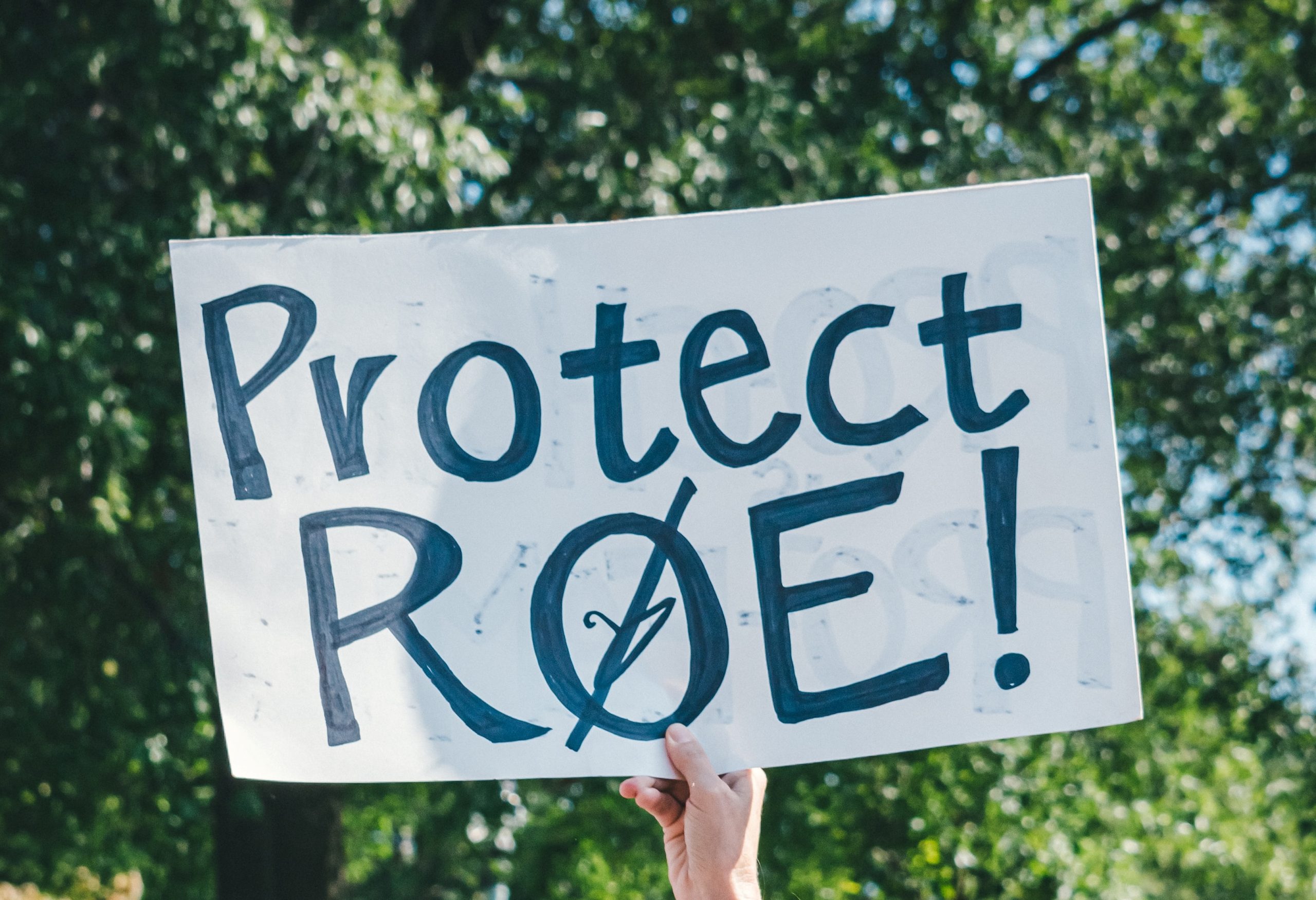
The Long Legacy of Abortion in America

It’s difficult to process the recent news of a leaked draft decision from SCOTUS; what’s even more difficult is that the draft decision, should it become a ruling, will overturn Roe v. Wade, rolling back decades of work fought on behalf of human rights. I say human rights, as opposed to women’s rights, because abortion is, first and foremost, a human right. 

An argument can be made that overturning Roe v. Wade would represent the single greatest political victory of the American far right movement. Abortion has long been their rallying cry, but it’s important to remember that the scope of this decision would reach far beyond a person’s right to choose—simply because there will always be a subset of women (and powerful men) who have access to abortion, whether or not it’s legal. This distinction is crucial: if the very people who claim to want to end abortion will maintain private access to it, then why should it be criminalized in the first place? If safe and legal abortion is taken away, the consequences will reverberate throughout American society. Low-income families and women of color will be disproportionately affected, and cycles of poverty will continue for generations. What this really comes down to is power—who has it, who doesn’t, and the far right’s effort to maintain the socio-economic status quo. 

At Electric Literature, we believe that storytelling has the power to shape public consciousness. It breaks down barriers, offering a forum for deep and sustained critical analysis. To that end, we have assembled a list of books we hope readers will explore. They cover a vast, and still evolving story: the history of illegal abortions in America, the impact of reproductive rights and bodily autonomy on Black women, and the right wing assault on abortion in the years since Roe v. Wade was first passed. Collectively, they tell America’s abortion story—where we’ve been, where we are, and where we are likely headed.

Yours,

Denne Michele Norris
Editor-in-Chief

Editor’s note: The literary guide below was researched by Lauren Hutton and Alexandria Juarez and written collaboratively by Lauren Hutton, Alexandria Juarez, Jo Lou, and Katie Robinson.

Pre-Roe v. Wade (1973)

When Abortion Was a Crime: Women, Medicine and Law in the United States by Leslie J. Reagan

Leslie J. Reagan’s account of pre-Roe America was the first-ever study on the history of illegal abortion in the United States. By thoughtfully and unflinchingly detailing the experiences of those who sought and provided illegal abortions up until the Roe v. Wade decision in 1973, Reagan proves that criminalizing abortions has never stopped them from occurring—instead, it only causes significant risk to both patients who seek help and the doctors who provide it. An unsettling illumination of what happens when abortion rights are nonexistent, this book is a reflection on where we came from, a warning of what might lie ahead, and a chilling reminder that history repeats itself.

The Girls Who Went Away: The Hidden History of Women Who Surrendered Children for Adoption in the Decades Before Roe v. Wade by Ann Fessler

Fessler turns back the clock to what was once a heartbreaking reality for single, pregnant women before Roe. From 1945-1973, over 1,500,000 newborns were placed for adoption, often due to extreme familial and social pressure. Young women were pulled from school, sent to maternity homes with judgmental and cruel medical staff and clergy, and required to give their newborn babies away. Sharing first-hand accounts from these birth mothers, the long-term trauma of this severance is uncovered.

Under Roe v. Wade

Killing the Black Body: Race, Reproduction, and the Meaning of Liberty by Dorothy Roberts

Professor Dorothy Roberts’s meticulously researched book is about the reproductive rights and bodily autonomy of Black women and the violence, trauma, and shame that they have endured throughout centuries in America. Starting from the beginning of slavery to 1997, Roberts takes readers on a journey to examine the systematic oppression and commodification of the Black female body. The book delves into the racist history of birth control advocacy and the ways it intertwined with the 20th century eugenics movement, how Reagan’s War on Poverty impacted Black single mothers, the anti-Black reproductive policies rooted in Clinton’s Personal Responsibility and Work Opportunity Reconciliation Bill—which was enacted in response to the welfare queen stereotype, and how anti-abortion laws disproportionately affect Black women. Killing the Black Body is as necessary today as when it was written 25 years ago.

Impossible Motherhood: Testimony of an Abortion Addict by Irene Vilar

An unflinching memoir about a woman’s abusive marriage and the fifteen abortions she would have in seventeen years. Vilar paints the full portrait of her life: her mother’s suicide, her brothers’ addictions, her infamous grandmother Lolita Lebrón, and her affair with her former professor. Vilar’s prose is heartbreaking, as she tries to answer why fifteen abortions, acutely aware of how she is perceived and hated. “By the time I lay in an abortion clinic waiting for the procedure to begin, I would feel nothing but disgust and shame… I always said to myself, ‘This has to end.’”

This Common Secret: My Journey as an Abortion Doctor by Susan Wicklund

Susan Wicklund details her own experience of having an abortion as a young woman in rural, working class Wisconsin, and how it led her to become an abortion health care provider in the Midwest. As much as this is her own story, one that sees her wearing a bulletproof vest to work, it is also a nuanced and intimate account of her patients and the difficulties they endure. While this memoir tackles the harassment healthcare providers and people seeking abortions face, it also spotlights Wicklund’s love for her profession and the crucial role women’s clinics play in providing reproductive care.

Reproductive Justice: The Politics of Health Care for Native American Women by Barbara Gurr

Because the Hyde Amendment prevents federal dollars from funding abortions, the Indian Health Service—a federal program—cannot provide abortion care to the Native populations it serves. Sociologist Barbara Gurr looks into how South Dakota’s Pine Ridge Reservation navigates abortion and contraception access as well as pre-natal and post sexual assault care. A particularly apt portrayal of the lived consequences of far-reaching government policy, this book highlights the stories Native Nations are telling about their own bodies, communities, and fights for reproductive justice. 

The Turnaway Study: Ten Years, a Thousand Women, and the Consequences of Having—or Being Denied—an Abortion by Diana Greene Foster

Over the course of five years, Diana Greene Foster, PhD and her team of psychologists, epidemiologists, demographers, nursing scholars, and public health researchers, followed 1,000 women from over twenty states. These women either had abortions, or wished to and lacked resources or were denied. Throughout the years, the research team studied the economic, professional, romantic, familial and other impacts the women faced depending on their various decisions. Statistical evidence proves that in almost all cases, the women who were granted abortions fared better over the years, and 95% did not regret their decision. Some of the data can be found, for free, here.

Post-Roe v. Wade
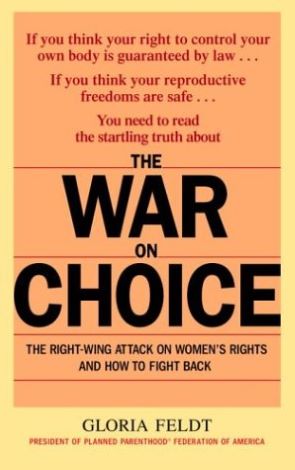
The War on Choice: The Right-Wing Attack on Women’s Rights and How to Fight Back by Gloria Feldt

Gloria Feldt, the former president of Planned Parenthood Federation of America, chronicles the history of anti-choice assault on reproductive rights, sex education, and family planning and how religious dogma has seeped into public health policies and slowly eroded the right to a safe abortion. Intertwined with personal stories of women impacted by anti-abortion rulings, the book also details the concrete steps that ordinary citizens can take to enact change.

Handbook for a Post-Roe America by Robin Marty

Robin Marty’s guide to fighting back and planning ahead in a post-Roe America is no longer about preparing for the worst—it’s now a crucial guide for our current moment. With practical advice from where to seek funding or get involved on a state-by-state level to tips for safe, self-managed abortion care, this is essential reading for anyone who might find themselves in need of an abortion and allies and accomplices alike. Marty rightly saw what was coming and sought to prepare us for it, and while we wish it hadn’t come to this, we’re lucky to have such a detailed resource already available.  

Bodies on the Line by Lauren Rankin

At the front lines of ensuring abortion access are the escorts who guide patients safely to the clinic, away from screaming protestors who are often belligerent and occasionally violent. In Bodies on the Line,  Lauren Rankin delves into the fraught public space that surrounds the American abortion clinic and the “pro-life” disruptors who occupy that small stretch with signs and megaphones in order to manipulate, coerce, and shame women from even entering the clinic: “Their goal? To make it as difficult and traumatic as possible to access an abortion.” Rankin weaves personal testimonies from patients and volunteers with historical research, from the 1970s to the present day, about abortion providers and the violent, deadly attacks on these institutes. A must-read to understand the physical and emotional labor that comes with the fight to ensure that abortion is both accessible and a human right.

The Pandemic Completely Redefined My Relationship with Nature

To weather the early days of the pandemic, I went back to my parents’ house in Southern California. I had lost both of my jobs and, after applying for unemployment, had nothing to do but wander through the neighborhood. In those days we didn’t know about the improbability of outdoor transmission, and many of my neighbors were afraid to go for a walk. So I was alone with the occasional coyote and, of course, the plants. It was spring. Many of us will remember this contrast: while death loomed over the human world, more-than-human life, as Robin Wall Kimmerer calls it, flourished with what seemed, from the outside, like ecstasy. The birds could not stop singing. The sage blossoming in the nature preserve behind my house donned its glossiest shade of green. Same with the statice: the deep, purple shade of artificial grape, it bloomed so vibrantly as to appear surreal. Even the sky shone a deeper and more confident blue. It was as if the plants had put on their Sunday best to say goodbye to us. And so while there was comfort in witnessing their celebration, there was also grief. The thriving of humans appeared mutually exclusive with the thriving of everyone else. The plants had never announced this so explicitly. What would happen when we returned to a pre-plague pace of life and consumption? The world would dim again. 

While death loomed over the human world, more-than-human life flourished with what seemed, from the outside, like ecstasy.

I have always enjoyed being among plants. When I was in high school, my favorite time of day was walking my dog through the brown and amber hills behind our house, though then its perimeter was wider, the mustard and sage had space to stretch. Then, the hills for me were only a setting in which, alongside my black fluffy dog, I could forget the stress of standardized tests and the soccer team. But I felt no sense of belonging among the beings that surrounded me. In fact, any sense of belonging I had—in my city, in the United States, on Earth—felt precarious. 

Irvine, the city I grew up in, operated on exclusionary and destructive values in managing the land and the people that lived there. Real estate development eternally encroached on our nature preserves, while housing discrimination or racism within the school system either kept Black and brown families from moving in, or forced them to move out and into more supportive, inclusive communities. Growing up in a multiracial, diasporic Black family, I felt keenly aware that we, like the ever-shrinking preserve, were unwanted in my city. We weren’t the image of progress, cleanliness, or sophistication that people wanted to see. 

In the same way it took me years to value the vibrant love that my Nigerian extended family bestowed upon me—to remember with gratitude that my grandmother had carried me on her back, that my grandfather had killed a goat to say goodbye to our family the last time we visited—I came belatedly to appreciation of more-than-human life. It is difficult to value what you are taught has no value. It is difficult to treat as alive what you are taught to objectify. And so, although my dad has always spoken to the plants in our garden, it took living in lockdown to make me feel as though time spent in nature was not, in fact, time spent alone. In an abandoned rose garden I passed on my walk, I built a little ritual of rinsing my hands in the old fountain and greeting the wild oranges that hung above its spout. 

It is difficult to value what you are taught has no value. It is difficult to treat as alive what you are taught to objectify.

The pandemic, too, amplified the looming sense of panic about climate change that, occasionally, over the years, has licked up like a flame: in the summer of 2019, I was living in Brazil when the Amazon caught fire. Even in my state in the south of the country, we could see black smoke fill the sky, funneling in from thousands of miles away. This was distressing. But the pandemic forced me to care much more loudly. I wanted to read about climate change, I wanted to see how I could shift my relationship to the natural world. I wanted to restore my relationship with the beings that restored me. 

There were quite a few books, fiction and nonfiction, on my list, but only a few challenged me to think more critically about my relationship with nature as an actual relationship. The first worth noting here was Aimee Nezhukumatathil’s World of Wonders. I was convinced by Kiese Laymon’s recommendation that the volume “was about to shake the Earth.” I was also taken in by Fumi Nakamura’s artwork, reminiscent of the illustrations in children’s books. The collection had a soft, nostalgic aesthetic: Nezhukumatathil offers her childhood memories of the plants, animals, and insects that surrounded her as she moved frequently to different regions of the U.S. and visited relatives in Malaysia and India. It was the more-than-human world that kept her company through so much change, and each story is titled after a beloved creature.

While Nezhukumatathil treats the natural world with deep tenderness, and offers perfunctory accounts of her grief about the destruction of climate change, I felt she treated the beings she described with dissatisfying distance. The book’s cover itself offers an apt illustration of this: the title is centered on a white background, surrounded by vibrant drawings of foliage and wild animals. The sense I had while reading was that the narrator’s relationship to the natural world could be illustrated in the same way: that she stood within some safe enclosure observing nature, which she appreciates as a cherished possession, a work of art. 

Nezhukumatathil aims to inspire in her readers wonder at the non-human world, and still, she does so by engaging with other species only as objects of her gaze. She closes the collection with an anecdote about how, teaching a college class one day, she discovered that the vast majority of her students had never seen a firefly and knew almost nothing about the species, even though they lived in a city where the insects proliferated. Sharing her sorrow at this fact, she asks, “What is lost when you grow up not knowing the names for different varieties of fireflies?” In response to her own question, she lists, in the book’s final paragraph, a series of memories that “a single firefly” can illuminate: “It might make me feel like I’m traveling again to a gathering of loved ones dining seaside on a Greek island,” she writes, or “send me back to my grandmother’s backyard to listen for whip-poor-wills.”

While, on the one hand, her affection for the fireflies is touching, on the other, the centrality of the human experience as an observer of a changing climate, rather than as instigator and, increasingly, a victim of it, feels outdated and a bit unsettling, a reminder of our dangerous fantasy that we exercise dominion over Earth and all its creatures. The real cost of environmental degradation in human lives is absent from World of Wonders. We are to “cherish” nature because of its beauty, and the main consequence of not doing so is that we will live in a less beautiful world. 

By the time I was reading World of Wonders, it was fall of 2020. I couldn’t reconcile reading these strange essays written from this distanced perspective with my reality: smoke from local wildfires seeped through the cracks in my windowsill, I couldn’t go outside for weeks on end. Meanwhile the deadly virus loomed imperceptibly in the air we breathed. I had never felt less like an observer of the natural world in my life, had never felt more vulnerable to it. The pandemic made me feel like part of the world in the humblest possible way. At home with my aging parents, I was keenly aware of the need to protect myself and my family from the manifold threats the “environment” hurtled against us. This had never before felt necessary: growing up from a planned community, I had always felt safely (and prohibitively) insulated against threat, against danger: Irvine kept out “crime.” Irvine cops drove unhoused residents to shelters in nearby cities. Irvine residents called the cops on their Black neighbors for entering their own homes.

We are not on the other side of the glass case. We are touchable, penetrable, eatable, burnable. 

Even marked as a threat to be protected against rather than a girl deserving of that protection, I had trusted that rhetoric. It conditioned me to believe I would always be safe, imbued me with an adolescent sense of invincibility—one that was completely at odds with my dad’s own immigrant sense of precarity. A future microbiologist growing up in Nigeria, he put his toothbrush in the refrigerator at the age of four to ward off germs. He had come to Irvine seeking the fulfillment of dreams, the protection against illness and suffering and poverty that the American state promised and propagandized. I took the security he and my mom had given me for granted; I rode motorcycles without a helmet and until last year ate anything that had fallen on the floor. I never felt my safety was truly at risk. Whatever the risk was, we had the technology to fight it. So many of us feel that way about the environment. But we are not protected. We are not on the other side of the glass case. We are touchable, penetrable, eatable, burnable. 

I don’t mean to say that I expect all contemporary nature writing to speak directly to this vulnerability, or to address the full scope of climate change’s increasingly devastating impacts on humans. But the absence of real relation between the Nezhukumatathil’s narrator and “nature”—the fact that she never really seems situated within our changing environment, but rather securely outside of it, like an aquarium visitor standing on the right side of the glass separating her from a great white shark—feels indulgent, a train of magical thinking about our own position on the planet that we can no longer afford. 

It is the same magical thinking that allowed me, too, to treat the nature in my neighborhood as aesthetic. As a teenager in the preserve, I hated how poorly protected it was: new houses sprouted up each year like mushrooms after a rain. When I longed for solitude, I would frame my eyes with my hands like a blinkered horse. I wanted to look at the land as I imagined it used to be: only amber sage and yellow mustard as far as the eye could see. Once, when I was doing just this, I walked straight into a cactus. The spike drove into my shin. What peace in pretending the world is for looking, that the world does not touch. 

As a teenager in the preserve, I hated how poorly protected it was: new houses sprouted up each year like mushrooms after a rain.

Knowing that separation does not guarantee protection, I began to feel my life in Irvine was like a failed simulation. (Of what, I can’t be sure—probably the simulation of some ideal, an ideal of absolute newness, cleanliness, and orderliness.) So much of Irvine was designed to keep people out, humans and other species. The many privileges that the middle class secure at the expense of poor and working-class people manifest precisely as this separation, the real and imagined insulation against threat. While I recognize the extent to which I have benefitted from these policies and practices, the motivation to put in place boundaries that keep out so much of the world is what leads to the over-consumption and violence that creates greater environmental and human harm. And so, another interpretation of my blinkered eyes is the following: rather than romanticizing nature as a safe and pleasant backdrop against which I lived my life, I was instead acknowledging the more-than-human creatures as precious. I was seeking to witness nature as something to be kept in—held within the parameters of my gaze—rather than pushed, perpetually, out. 

Several nature books I read reflected this sense of turning towards rather than away from what surrounds us. Robin Wall Kimmerer’s Braiding Sweetgrass stands out for its emphasis on relationship with the Earth, mutual giving and receiving. The chapter “Witnessing the Rain” specifically invites comparison to Nezhukumatathil’s position of observation. Kimmerer recounts her experience of being stuck in the rain, torn between seeking shelter indoors and staying, getting soaked in the forest. “I could not bear the loneliness of being dry in a wet world,” she writes. “Here in the rainforest, I don’t want to just be a bystander to rain, passive and protected; I want to be part of the downpour, to be soaked, along with the dark humus that squishes underfoot.” 

The barriers we’ve constructed between ourselves and nature are rapidly eroding.

What we see here is not an account of witnessing at all, but instead of participation. While the experience of being unprotected, as Kimmerer presents it, is a romantic one—ostensibly, she can handle, and even desire, getting soaked because she knows she has access to a warm, dry shelter later on—we might extrapolate from this passage a new way of interacting with our changing environment. None among us would choose to be unprotected from climate change-related natural disasters, but they do force us to recognize that we are, already, unprotected, that the barriers we’ve constructed between ourselves and nature are rapidly eroding. We need to find new ways of being together with the environment rather than trying to maintain the artificial and ultimately impossible separation we’ve constructed.

Additional literary allies writing against separation from the natural world are Shruti Swamy’s A House Is a Body and Jenny Ofill’s Weather. Swamy’s short story and Ofill’s novel felt to me like they were telling the truth about our inextricable link with planet Earth, and our vulnerability to the threat of its expunging us. There’s a sense of our inability to escape a trap of our own making, and the threat climate change poses to humanity is figured as a crisis of care. 

In “A House as a Body,” a California mother is told she has half an hour to evacuate with her feverish child during a wildfire. She sets an egg timer; she puts snacks and a change of clothes in a backpack. Her daughter’s forehead is burning up, she runs a warm bath. The egg timer dings. She resets it. Her enemy is not time, but distraction, which manifests as her delusion that she can manipulate time by manipulating the device that “keeps” it. Another generous ten minutes won’t slow down the fire, but it gives her the impression that she is acting with responsibility—that she is on schedule—when in reality she is perilously disorganized. Her use of the timer offers the illusion of order in the midst of chaos—“I am responsible,” she thinks, “I set an egg timer.” The greatest chaos of the story is not the impending natural disaster, but rather the internal chaos of her distracted mind and its avoidant strategy of reframing death as distant, rather than immediate, as a possibility rather than a near certainty. 

These accounts offset the paradigm of the planet as mother, an inexhaustible well of resources.

Distraction, then, figures as the antagonist; heat applies rigorous pressure. For Swamy’s narrator, the world is burning and her daughter is, too. Everything is on fire. Ofill, interestingly, also includes a narrative about a burning child: one character dreams that he leaves his baby in the car while shopping. His cart full of future trash, he wanders the aisles looking for that last thing. Meanwhile the baby can’t breathe. When he gets out, his car is surrounded, firefighters smash through glass to retrieve the tiny corpse: still soft, but not for long. 

Ofill and Swamy’s harried, exhausted parents are always attending to the less important of two crises, which leaves their babies to burn like the Earth. These accounts offset the paradigm of the planet as mother, an inexhaustible well of resources, a being perfectly suited to take care of our needs. While figuring humans as the caregivers of the Earth places us in an indisputable position of responsibility, it also emphasizes the relational nature of our connection with our planet. Ultimately, the failure in both stories is one of caretaking, of stewardship. The irreparable flaw is the inability to maintain precious, fragile beings. 

The gift of my greater attention to nature, born of alienation from other people, is to expand the knowledge I carry in my heart of what and who is alive. Who and what, indeed, is a precious, fragile being. What and who is worthy of protection. I have since learned and become involved in community gardening projects. It feels empowering to assume even a small amount of responsibility for tending plant beings, for tending my local environment. This is a very small thing to do. I do not mean to romanticize or bypass the death toll of epic proportions that inspired this small change in me. This is only to say that keen awareness of our permeability to the world around us, paradoxically, reminds us of the responsibility we carry to steward and surrender to it in the best ways we know how. Vulnerability is the only thing that makes relationships possible, among humans and beyond. 

Celebrate the Sexiest Novel of the Year With a Custom Cocktail Recipe

Editor’s note: We don’t typically commission custom cocktails for book releases, but when our own managing editor is named one of the National Book Foundation’s 5 Under 35 for her sensational debut, Little Rabbit, a toast is in order. So we invited mixologist and author of The Gold Persimmon, Lindsay Merbaum, to develop this custom cocktail inspired by the novel. 

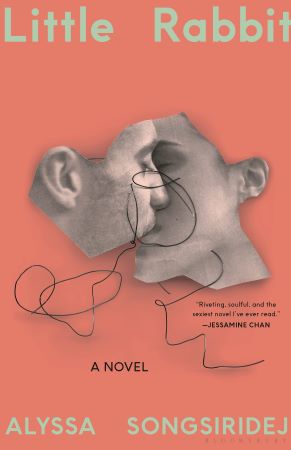
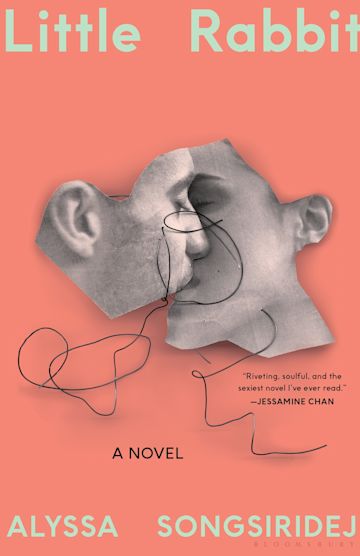
Alyssa Songsiridej’s novel Little Rabbit is the story of a 30-year-old queer writer whose first novel gets published just as the press folds, leaving her with a closet’s worth of dusty copies. To pay her bills, she spends her days at Harvard working as an administrative coordinator. At an artists’ retreat in Maine, she meets an older man, a celebrated choreographer who is annoying at first, talking too much over dinner, yet also gorgeously masculine and erotic—“golden,” she calls him. They quickly become lovers, the choreographer naming her his “Rabbit,” urging her to spend every weekend with him in his apartment in New York, or at his house in the Berkshires.

Their relationship is electric, twisting and turning in on itself like a knot, stretching her life here, binding and tightening there. Until the narrator finds she’s become “a woman with a secret. A woman with a choice,” a person seemingly losing her definition just as she’s coming to know the dimensions of her desire for pleasure, for art, and to be unmade:

“The work possessed me, seized me, until I was no longer a woman writing but writing taking the form of a woman in order to be born. I sank down, surrendered, waiting for the words to teach me about my life.”

Like a modern queer feminist Story of O, this nuanced exploration of desire and the unseen dance between the lover and the beloved sucks you into its lush, yet precisely-rendered reality, one edged with ambiguity regarding possession and power, perception and identity.  


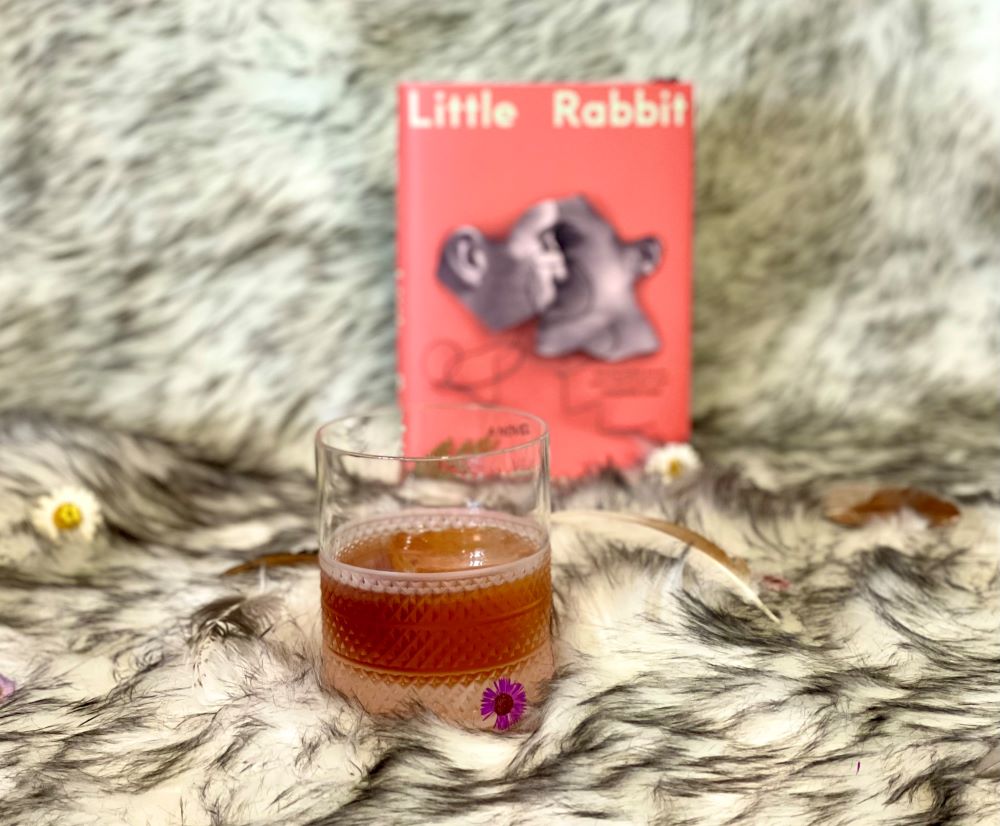
Scotch serves as the base of this booktail, as it’s the liquor the narrator drinks during her one “wild” night in Maine, when she gets drunk and jumps in the lake, unaware her future lover is watching. On their first sort-of date, she again begins with Scotch. The night they officially become lovers, the choreographer makes, discards, then re-makes Aperol spritzes, marking the “before” and “after.” Aperol also shares the bittersweet taste of a gin and tonic, which the narrator always seems to enjoy with others of her own age: in college, with the choreographer’s young dancers at his house in the Berkshires, and at the opulent after-party for the conference her roommate Annie organizes. Finally, coffee liqueur references cafecitos with friends Rita and Vera and a writing practice that involves getting up at 5 am, sometimes accompanied by a whole pot of coffee. The combination of Scotch and coffee produces a chocolate-y tone, while the smoky notes in the Scotch bring out the bittersweetness in the Aperol. Altogether, it’s a simple, beautiful combination that’s not at all what you would expect. 

This booktail is presented against a fur backdrop for “the wolves”–those art critics and donors in need of ego-stroking–and the sumptuous, primal, and slightly dangerous sensuality that exists between the story’s lovers. The Tiffany’s glass in which the drink is served is nestled in the fur, gently framed with feathers for the plumage on the choreographer’s bookshelves. Delicate dried flowers and ferns appear behind the cocktail, reminders of the dried flowers on the altar by the choreographer’s door, as well as atop Annie’s dresser. One purple bloom is also pressed to the base of the glass, its color a complement to the watercolor cover of Hélène Cixous’ book Dream I Tell You. In the background, a dried red petal perches on the book’s top right edge, punctuating the ‘i’ in “Rabbit.” 

Little Rabbit

Ingredients

  • 1.5 oz Scotch 
  • 1 oz coffee liqueur 
  • 0.5 oz Aperol 

Instructions

Set a tumbler in the freezer or at the back of the fridge to chill. Meanwhile, add a large cube or chunk of ice to a shaker, along with the Scotch, coffee liqueur, and Aperol. Agitate vigorously until the shaker turns frosty. Then remove the chilled glass from the fridge or freezer and add a fresh cube of ice. Strain the drink into the glass, over the fresh ice, and serve.

A Young Woman’s Formative Queer Affair With a Married Lover

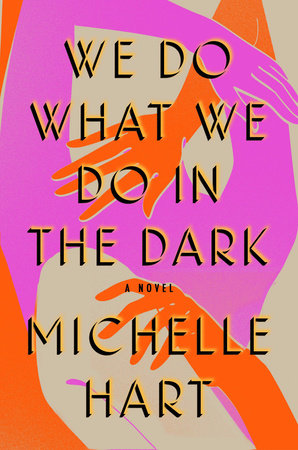
Many of us know Michelle Hart from her wonderful work highlighting queer writers when she was the assistant books editor at O, the Oprah Magazine. Now, she has her own novel to add to the fold: We Do What We Do In The Dark, an exquisitely written, intimately affecting novel about Mallory, a college freshman, who begins an affair with a married professor twice her age, who is only ever referred to as “the woman,” giving her a perpetual air of mystery and power. Despite their age difference, the two women connect over their shared loneliness and grief: Mallory recently lost her mother to cancer, and the woman recently lost her twin sister to lupus. For Mallory, her relationship with the woman helps her see and define herself, even as she gets older. 

We Do What We Do in the Dark by Michelle Hart

The book begins with the affair, then flashes back to Mallory’s youth, detailing her mother’s illness and Mallory’s close friendship with a neighbor girl and eventually that girl’s mother, then it moves forward to show Mallory reuniting with the woman after many years, then it moves forward five years after that, showing Mallory in a new relationship where she tells her girlfriend about her affair with the woman, stating “…the me that’s next to you right now is only here because of my relationship with her,” showing the profound and continued sense of self the woman gave to Mallory.

I was lucky enough to hear Hart read a snippet from the beginning of We Do What We Do In The Dark at a reading series long before its release and as soon as I heard it, I was like GIVE ME THIS BOOK RIGHT NOW. I was truly elated to be able to read the novel early and speak with Hart about it via Zoom.


Celia Laskey: I wanted to start with how you were such an incredible champion for queer books when you worked at O. How does it feel to be on the other side now, as one of the queer writers you used to champion?

Michelle Hart: It’s kind of surreal. I got the hardback copies of my book the other day, and I put one on my shelf and I slotted it in between Melissa Febos and Garth Greenwell, and I was like, Michelle Hart, what’s she doing there? While I was working as the editor, I often had the thought that I could do this; I want to have a book in the world. The way that I revere and want to talk to certain authors—I want to be the author that somebody wants to talk to.

It’s really exciting. But on the other hand, it’s imposter syndrome run amok. I spent four years covering books by some of my absolute favorite writers. And some of them blurbed my book!

CL: Oh my god, you got the best blurbs. That’s when you know the imposter syndrome is not real at all! So when the book opens, we’re told that the woman is twice Mallory’s age when they start their affair. And I just kept thinking about if the woman had been a man, how much more disturbing I would have found that dynamic. Do you think the usual power dynamics in younger/older relationships are different when it’s two women? 

MH: Yeah, absolutely. While I don’t want to make any grand claim about queer relationships, I do think that for these specific characters, they both came of age in times of immense loneliness and their formative sexual romantic experiences were secretive, you know? A lot of queer people’s first brush with love and lust is in the shadows, right? I think that is especially true of queer women because women are always taught to hide our lust. So I think this relationship makes sense for these two characters. You could certainly make the argument that the relationship is toxic, and certainly elements of it are. But you also can’t deny the amount of solace that it gives these two people. 

CL: It’s also interesting, because despite being the younger, more inexperienced one, Mallory is the one who pursues the woman: she follows her into the restroom at the book event, she emails her, she visits her office, etc. Why did you decide to make Mallory the pursuer instead of the woman? Was it to play with that typical power dynamic?

MH: Yeah, it’s actually something the woman brings up later in the book, sort of as a way of saying “not my fault,” you know? So yeah, on one hand, it was to complicate the usual dynamic, to make the woman not the pursuer and throw in more ambiguity around the circumstances of this relationship, which are certainly questionable. But it was also to make the character [of Mallory] less passive and more interesting to me as a person. She wants something to happen. So how does she instigate that? 

CL: The woman writes children’s books and teaches children’s literature at the college despite not having kids. Was her career and her childlessness very intentional choices you made, considering her affair with the much-younger Mallory?

A lot of queer people’s first brush with love and lust is in the shadows. I think that is especially true of queer women because women are always taught to hide our lust.

MH: It was probably ​​more intentional than not. The woman had been a children’s book author from the very beginning, because I thought that was interesting—what kind of person would be drawn to writing about children when she herself didn’t have any?

When I was writing [the book], I read this profile in The New Yorker of Maurice Sendak, and I never realized he was gay, and he was childless, too. He describes his childhood as being very lonely and sort of a constant reaching out for his own mother. I thought that was so interesting, somebody who even in adulthood needs to recreate a time where they don’t feel they lived it correctly.

It was also very intentional to not have the woman be a mother, because maybe that would be weirder? An alternate title for this book certainly could be “mommy Issues,” and I think it would probably be too on the nose to have [the woman] be maternal, even though she does scratch some maternal itches for Mallory. I think it actually makes the woman a little bit more sympathetic in some ways, too.  

CL: Unless I missed it, the word love is never mentioned in relation to Mallory and the woman, but did you have the sense that Mallory was in fact in love with her? And that the woman was not in love with Mallory?

MH: You could argue that they were both in love with the idea of each other rather than the people themselves. I think Mallory certainly loves the woman. Whether she’s in love with the woman? I’m not sure if that’s a meaningful distinction to make. But I think the two of them undoubtedly feel affection for one another. It’s not simply this transactional, cold, emotionless relationship. Maybe that goes back to your first question about relationship dynamics being different between women. I know it’s a cliché that that women can’t have emotionless sex, but that cliché is true to some extent. And I think it’s especially true with people who feel the world so strongly as these two artists do.

CL: In the past section, while Mallory’s mother is very sick, she strikes up a friendship with Mrs. Allard, a neighbor who’s the mother of a girl Mallory used to be best friends with. It’s a platonic but also very intimate relationship kind of similar to her relationship with the woman, which begins shortly after Mallory’s mother dies. How did you come up with the character of Mrs. Allard, and what commentary were you trying to make throughout the book about the relationship between mothers and lovers, especially for queer women? 

For so long our stories have been limited to what the people in power deemed palatable. We come out or we die. Sometimes, we come out and then we die.

MH: When my mom died, I was Mallory’s age, and as an only child, and as a girl who was mostly friends with boys, when my mom died, I sort of lost my connection to womanhood. Like, I didn’t know how to do it and I felt stranded in some weird female purgatory where the person who’s the best to teach you all that stuff just isn’t there anymore. And I think that on the biggest level, that’s what Mrs. Allard represents, this mother stand-in and mentorship. It’s also an escape for Mallory, to have this secretive friendship with somebody she knows is weird to have a friendship with. She leans into that weirdness and it’s proto-romantic, you know? Somebody asked me a while ago whether I had ever considered something happening between the two of them. And my answer was just flat out no. 

CL: We as readers might think that with time and distance, Mallory would see her affair with the woman in a more negative light, but she never does. As she says to the woman during their final meeting, “I don’t remember any of it being bad.” Why do you think Mallory sees their relationship so positively, and do you think the woman felt differently?

MH: For Mallory, it’s really hard for her to imagine a version of herself that didn’t have the woman in it, you know? And how can you not be grateful for that? Even as problematic as some elements of the relationship were. The woman basically stoked in Mallory this sense of creativity, this sense of sensuality. I think the biggest reason why Mallory is attracted to the woman is that the woman seems like somebody who could shape her life, and that’s ultimately what happens. The woman does shape her life. So the woman represented enough positive that it was hard for Mallory to look back in anger, as the Oasis song goes. 

CL: There’s this tweet of yours I always think about: “I will of course read (and probably really enjoy) your novel about an ‘intense female friendship’ but also just know that I will be rolling my eyes and wondering the entire time why the characters can’t just bone it out.” Like, YES. In your opinion, which “intense female friendship” novel is the most sapphic, either intentionally or not?

The queer books being published today reflect the multiplicity of queer life.

MH: Probably My Brilliant Friend, and all the Neapolitan novels by Elena Ferrante. Every time I see the marketing image of the new TV season, I’m like, is that a gay movie I haven’t seen yet? 

CL: Oh my god, yes, the gay baiting going on in that image! 

MH: In 2017 [when I worked at O], I can distinctly remember publicists pitching me books by couching the queer language, saying that it’s about an “intense female friendship.” And like halfway through the book, they would make out or something, you know? Thankfully, in the time right before I left, publicists were just messaging me and being like, “This is gay, just read it. You’ll love it.” 

CL: Speaking of that, we have so many queer books being published per year now. So do you have any general thoughts about the state of LGBTQIA+ lit right now? Like what we might need more of? Where you think the genre is heading? I know that’s a really big question.

MH: Weirdly, it feels like queer fiction is in its infancy. Obviously, this is not at all the case; we’ve been here and queer for a while. But for so long our stories have been limited to what the people in power deemed palatable. We come out or we die. Sometimes, we come out and then we die. Before about five years ago, books that weren’t burying gays or yanking them out of the closet were the exception to the rule. And those exceptions came mostly from indie presses. (I should also mention here that YA and romance have seemed way ahead of the curve). When I survey the literary landscape today, it looks so wonderfully different and diverse: stories of gay moms like Kristen Arnett’s With Teeth; trans blockbusters like Torrey Peters’ Detransition, Baby and Akweake Emezi’s The Death of Vivek Oji; nonbinary romcoms like Anita Kelly’s Love and Other Disasters. The queer books being published today—many of them now coming from the “Big 5” in addition to the indie stalwarts—reflect the multiplicity of queer life. Of course, there could and should be more, but it’s hard not to be encouraged.  

My Gender Won’t Fit in the Family Car

KB’s Origin Story

I was born a weary son
painted into a family unit. I can’t 
fit in, but I do fit jeans if I squeeze 
into them enough. I pain myself 
with laughter when someone asks 
whose baby is this. I sleep 
in a tunnel of judgments I can’t kick. 
I was born a drury daughter, 
a crash into a tiny parked car. In the impact,
my gender sprawls all over 
the navy leather passenger seat. 
This can’t be a wonderful scene:
the navy leather passenger seat
and my gender sprawled all over. 
A tiny parked car crashes; in the impact,
I was born a drury daughter. 
In a tunnel of judgments I can’t kick, 
I sleep. Whose baby is this.
With laughter, when someone asks 
into me enough, I pain myself 
to fit in. And I do fit genes if I squeeze 
paint into a family unit. I can’t 
be born a weary son.

Yebba’s Heartbreak

after Drake 

I do. Count how quickly the moon moves 
phases & how quickly I abandon a poem 
draft for another half-baked memory. The scraps
document in my mind must be at least 300 
pages. My dating profile must be at least 3 zodiac 
signs, 2 fun facts, 1 fatality I’m still recovering 
from displayed in every emoji. My manuscript is spilling 
over with head-turners & heartbreak. Paper clips
& Drake playlists have never been stretched this thin. 
I want to do better but I don’t know how or when. Maybe 
10 of the scraps are romantic; I say it’s cause I leave 
that shit to Sinatra. Truth is I leave pages 
(& lovers) soon as it’s inconvenient; too vulnerable;
too meaningful; I do. But today I want
my skin tethered to this chair. I’m staying 
inside these stanzas; I’m finally ready to tell 
the truth. All smoke & piano & somber 
spillings of times a lover treated me all perfect & I packed 
up prematurely. Her eyes crusted open 
as my glutted gym bag swung across me 
& when her sepia irises filled with my reflection, 
I had to flee. Candyman. Spewing sugared 
empty statements like of course I love you out of unknowing. 
Of course I am a liar & I am learning for you. For now 
I’ll say I do & vow to finish more sapphic poems 
after I wrap these wounds. Tell her Honey, my love spreads 
farther than my need to hide behind history for you. I do.

7 Books That Will Change the Way You Think About the Road Trip Story

In January 2017, I went on a road trip with my father. We drove from our hometown, Fox Lake, Illinois, to Los Angeles, California, where I was going to university. We elected to go the southern route, following the ruins of Route 66. Apart from a few arguments about tattoos and communism, and getting terribly lost in the red mountains of Sedona, Arizona, it was a relatively uneventful adventure.

Screen Shot 2022-01-17 at 7.28.19 PM.png

Road trips are, anyway, awfully boring affairs. Long periods of silence and nondescript landscapes, punctuated by cups of burnt coffee and beige motel room walls. Still, I knew that a near-geological shift was occurring deep within me, a change of heart which I did not quite understand, and because I did not understand it, I knew I had to write about it, and to write about it for a long time.

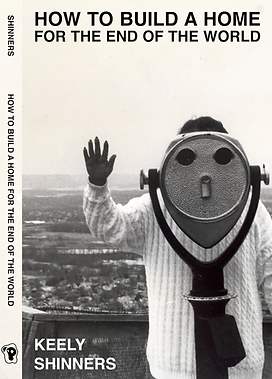
How to write into that silence, that eroded, uninhabitable landscape? These are some of the novels that shaped my understanding of what a road trip could be and, ultimately, helped me to write How To Build a Home for the End of the World, a road trip novel for our dystopian times.

Lost Children Archive by Valeria Luiselli

This novel starts out simple enough: an acoustemologist wants to move to Arizona to record the ghosts of the Apache people. His wife, the narrator, wants to stay in New York. The couple, along with their two children—his son, her daughter—set off on a road trip across America knowing that it is the end of their time together.

Within this frame—the family road trip and its associated diners, motels, and polaroids— Luiselli deftly interweaves more hidden histories: children who go missing on their way to America; indigenous communities decimated by Manifest Destiny. She shows us that a road trip is not wholly personal; when we set out on the road, we are entering into communion with ghosts—past and present—who demand our witness.

Sing, Unburied, Sing by Jesmyn Ward

In Ward’s novel, 13-year-old Jojo, his baby sister Kayla, his mother, Leonie, and her friend Misty drive from the fictional town of Bois Sauvage, Mississippi to real-life Parchman prison to pick up Jojo and Kayla’s father, Michael, who has been incarcerated there for the past three years. This road trip deals with what is visceral: Kayla won’t stop throwing up, Leonie and Misty are on meth, and Jojo starts to see ghosts. Ward’s suggestion is that, on the road, there’s nowhere to hide. Our deepest insecurities, our grudges, our illnesses, and our unburied reveal themselves to us. What we choose to deny stays with us, follows us home. 

The Remains of the Day by Kazuo Ishiguro

The year is 1956. Stevens, a butler who has given his life to service at Darlington Hall, receives a letter from Miss Kenton, a housekeeper with whom he was in love when they worked together at Darlington in the 1930s. Stevens borrows his new employer’s car and sets out on a “motoring trip” to pay Miss Kenton a visit after nearly 15 years of silence. Now, Remains of the Day isn’t typically thought of as a road trip novel because much of its plot is revealed in flashbacks. But because the flashbacks occur on the road—not, say, when Stevens receives the letter—Ishiguro is trying to tell us something. Being on the road begets introspection. Trapped in a cab for many hours, the car becomes something of a confessional booth, revealing our greatest fear, anxieties, sins and regrets.  

Plainwater by Anne Carson

Okay, technically this isn’t a novel, but a collection of essays, but I’m including it because one essay in particular, “Just for the Thrill: An Essay on the Difference Between Women and Men” is easily the best text about a road trip I’ve ever encountered. The narrator of “Just for the Thrill” is a woman on a road trip from Quebec to Los Angeles with her boyfriend whom she calls The Emperor. Throughout, she knows that, when they reach their destination, The Emperor will leave her and she will never see him again.

The way that Carson’s characters oscillate between revulsion and desire, entanglement and alienation, pride and shame, is masterful. She shows how a road trip can throw a relationship into crossfire. To what extent is love scathed on the other side?

Anne Carson is also good at surprises. Half the reason to go on a road trip at all is to look out the window and be surprised. If you have ever driven cross-country, especially in America, you will know that this is often not the case. Between towns, hours-long stretches. Mile after mile of fields, rocks, sky. Carson has language on her side. She will take your eyes and make you look out the window at “clouds bigger than clouds.” You will see “pine shadows hard on the ground.” She will surprise you with “a glass-timber morning.” 

Life & Times of Michael K by J.M. Coetzee

When Michael K’s mother becomes ill, he embarks on a mission to take her from Cape Town to her birthplace Prince Albert across a civil war-torn South Africa. Because they do not have permits to travel— and, anyway, they don’t have a car—K fashions a rickshaw so they can make their way on backroads. If the road, for a writer like Walt Whitman or Jack Kerouac, represents freedom, for Coetzee, it represents the opposite. The road, as an extension of apartheid-era spatial politics, is set up to surveil, to police, to capture. The road is another site of struggle, where a man’s search for freedom comes up against the brute forces of oppression. Relief is experienced only briefly, and the overall feel of the novel is a disorienting one. 

Nevada by Imogen Binnie

After finding out that her girlfriend has cheated on her, Maria steals her car and heads out west. Along the way, she picks up James, who is also trans, and the two proceed to get high, drive to Reno, and confront all that is gross and complicated about being a body in the world. The two separate before they can reach an emotional conclusion. In this way, Nevada is truly the beatnik road trip novel, where beatnik is anti-normativity, anti-respectability, where beatnik is queer, the self is perpetually undecided, and the road upends. 

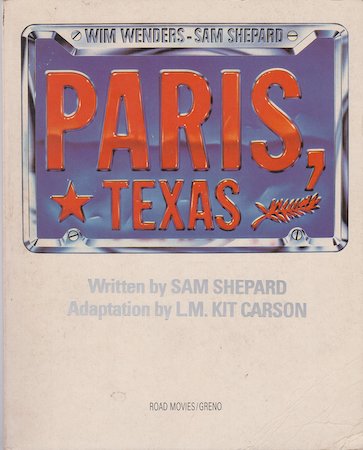
Paris, Texas by Sam Sheperd and L.M. Kit Carson

Okay, again, not a novel but a brilliant screenplay (which you can buy as a book, so it counts). After four years of wandering alone in the desert, Travis reconnects with his seven-year-old son, Hunter. Together, they drive from Los Angeles to Houston in search of Travis’s estranged wife, Hunter’s mother. In this script, the direction of the road is twofold. In the beginning, it is where Travis wanders, disassociates, pursues dissociation as if it could stand in for an ideal life. In the latter half, the road takes him back to reality, where he must face the consequences of his past actions. This double-movement embodies, for me, what makes a road trip story so compelling. We might head out on the road to run away from ourselves. But the road always has a way to return us to the truth of ourselves. Hopefully, it can help us better face it.

10 Books About Women Who Want to Have Sex

I believe that all readers secretly have one particular book they’re looking for, an ideal book that will fill a primal hole in their literary experience. The book I want is a literary novel about a woman who lusts after a man and it doesn’t destroy her life. I’ve recruited some extremely well-read friends into this mission, but I still haven’t quite found it, at least outside of the confines of the erotica genre. Fine, then. At least give me a woman who wants, a woman who is a subject, not an object, and whose lusts are as vivid and bodily as any of the men in a work by James Salter or John Updike.  

Little Rabbit cover

My wish to read this book, and the incredible difficulty of finding it, led me to write Little Rabbit, my debut novel about a 30-something woman who pursues an intense sexual relationship with an older man. My protagonist, who for much of the novel remains unnamed, is old enough and experienced enough to embrace her own desires while still finding surprises within them, qualities I value and wish for us all. 

I would love to deliver a list of books of lusty women whose desires don’t get them into trouble. But then I would have trouble meeting EL’s seven-book minimum. So I’ve broadened the list to be women who are the active agents of their own sexual urges, rather than the passive prize of someone else’s, women who follow their wants into conflict and self-revelation. The books in this list explore, inhabit, and investigate physical hunger with excellence and flair, taking female desire seriously and helping to center it in the literary world. Many went into the writing of Little Rabbit and helped me live a fuller, deeper, more pleasurable life. 

Luster by Raven Leilani

This landmark novel about Edie, a 22-year-old Black painter, shattered inherited biases about how literature depicts bodies and sex. Edie wants, she sweats, she lives in a body that orgasms and has IBS. She begins dating Eric, an older white man who lives with his family in the suburbs. After Edie loses her job, Eric’s wife invites her to temporarily live with them and their adopted Black daughter. The intimate scenes (not just the sex) are nuanced, delicate, and bold, showing the complexity of want and vulnerability.  

By Grand Central Station I Sat Down and Wept by Elizabeth Smart

I read this poetic prose novel by the Canadian author Elizabeth Smart when I was in my early 20s. The raw, operatic desire of the protagonist is so fantastically intense that upon reading the book, I immediately realized what I’d been missing in my reading. The book is a light fictionalization of Smart’s affair with an older married man, but he as a person is less important than the intensity of the narrator’s own passions, which compel her to cross borders, get pregnant, and horrify her family. 

My Education by Susan Choi 

Ginny, a first-year graduate student at Cornell University, is warned off the handsome young professor Nicolas Brodeur, who she first sees brooding in the back of a lecture hall, wearing a duster and not-intentionally ripped pants. Additionally, he is married to the intense and fascinating Martha, a fellow academic who likes to show up at the town bar in a motorcycle jacket and boots. Ginny’s interest—and explosive obsession—ends up dismantling the delicate balance of their lives. Note that I am completely obsessed with this book. I re-read it about once a year. It’s probably about time for me to read it again. 

Abandon Me by Melissa Febos

Melissa Febos is the queen of writing embodied intimacy in a way that startles and electrifies, undercutting our received notions of sex and guiding us, without entirely realizing it, into quiet, startling revelations. Her second book describes the sudden dismantling of the stability she’d fought her way toward in her first memoir. Her life is upended by a kiss from a stranger, a woman with a mouth like “the soft nail on which my life snagged, and tore open.” The intimate scenes in this book are much like this line—focused and surprising, mixing tenderness and devastation. 

I Love Dick by Chris Kraus

A tale of infatuation, abjection, and art. Back around 2012 (sorry to date myself), Chris Kraus’s novel, written in the form of letters to the titular art critic, “Dick,” seemed to be in everyone’s tote bag. At first, the narrator, a failed filmmaker also named Chris, authors the letters with her critic/academic husband Sylvere, and the obsessive letters are a game in their cerebral marriage. Eventually, though, the narrator breaks away, and the letters mingle the hunger for Dick with questions about why and how we make art. This novel was the first book that helped me draw the connection between sexual desire and the creative impulse. 

Bluets by Maggie Nelson

This lyric work of nonfiction by poet and critic Maggie Nelson weaves the want for a color with the want for a lover, the “prince of blue.” The narrative is also laced with tragedy, as Nelson cares for her mentor, who has been left paralyzed after a bicycle accident. Separated into 240 short numbered sections, or “propositions,” the book flows not chronologically, but by its own logic. The want is palpable not just in the descriptions, but in the language itself. “When I met you, the blue rush began,” Nelson writes, and we don’t have to know precisely what the words mean in order to feel the hunger ourselves.  

The Break.up by Joanna Walsh 

Joanna Walsh’s “novel-in-essays” questions whether it’s ever possible to actually break up in an age of constant connection. This entry is an odd one, because the narrator’s hunger for her lover is almost extra-bodily. She travels Europe and sits in hotels, waiting for texts and sending emails, her longing focused on her screens. Most of the desire happens via electronic distance. Two years into the pandemic, this is maybe too familiar a feeling.  

A Simple Passion by Annie Ernaux

In this slender volume, French writer Annie Ernaux focuses exclusively on her passionate affair with a married man only known as A. Because of his need for secrecy, she’s dependent on his schedule for their encounters. Everything about their brief experiences together, from smells to old button-down shirts, turns into talismans and signs. Ernaux’s subject is ultimately not A, or their relationship, which has no trajectory, but her own experience of her passion for him. 

Her Body and Other Parties by Carmen Maria Machado

Machado’s blockbuster debut collection tapped into a deep vein of hunger for stories that depict women’s embodiment and lust. From “Inventory,” a list of a woman’s lovers through the end of the world, to the lead story “The Husband Stitch,” the stories in Her Body and Other Parties burrow into the desires of women and reflect the world’s response through Machado’s unique blend of horror, humor, and brilliance. 

Vladimir by Julia May Jones

The cover announces this book’s intentions before you even get a chance to flip beyond the title page. A 50-something professor in a small liberal arts college copes with her husband’s #MeToo scandal by developing an intense, obsessive attraction to the English Department’s new hire, the titular Vladimir. This recent debut is a subversive take on the campus novel with a lusty post-menopausal narrator at its core. 

Why Is There a Stigma Around Menstruation?

Have you ever gone to the doctor with a problem that you can’t quite put a name to only to be told that it’s “in your head,” or, worse, leave with a recommendation to “try yoga”? Have you tried to confide in those near and dear to your heart only to be told probably have a vitamin deficiency? Or, my personal favorite recommendation, reduce stress? (LMAO.) It happens more than you think. 

It wasn’t until her thirties that Chloe Caldwell started experiencing increasingly volatile hormonal cycles. What was once uncomfortable, and, at times, even painful, now was starting to dominate her life—from her moods to her relationships. Correlating her anxiety and rage with her menstrual cycle, Caldwell began the process of trying to find answers.

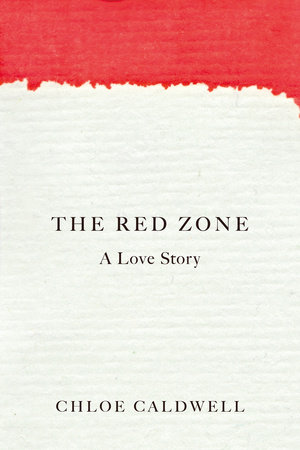
The Red Zone by Chloe Caldwell

In The Red Zone: A Love Story, the critically acclaimed writer takes a closer look at her period, in addition to history of menstruation as a whole. From rubber pants, rags, and other archaic devices to today’s Thinx period underwear, Caldwell examines how social and cultural attitudes towards the period have changed, and how these shifts (or lack thereof) have affected the health and general wellbeing of those who menstruate. It’s through this research that Caldwell discovers Reddit threads and other communities on the Internet suffering from premenstrual dysmorphic disorder (PMDD), which she is (eventually) diagnosed with. 

Validated at long last, Caldwell sets out to create space in her life for her diagnosis, starting with writing this bold and powerful book guaranteed to be a faithful companion for anyone who’s ever struggled with their period.


Greg Mania: Where do you think we are in terms of eradicating the stigma around talking about menstruation and premenstrual syndrome?

Chloe Caldwell: It’s come so far, but that really depends on where you’re looking. Like, my Instagram is lately ONLY people talking about periods, photos of graphic bleeding, and hormone help. But that’s because that’s what I follow. Then there’s the “People Have Periods” ad released by the company Luteal. This is just something you’d never have seen even five years ago. It’s evolving constantly; it’s almost hard to keep up, but I’m so grateful for it. In the book, there is a chapter called “The Linen Closet,” which follows period technology all the way from rubber pants, rags, and menstrual belts, to where we are now with Thinx period underwear. To watch the evolution still blows my mind.

Just the other week, there was this article in CNN about a teacher in Texas who created a “menstruation station” in her classroom. It’s so encouraging that teachers are thinking this way—back in the ’90s, you were barely allowed to go to the bathroom without a hall pass and a whole power trip of signing out. And if you forgot your own menstrual supplies, forget it.

GM: What are some things on the subject that aren’t being talked about enough—or missing entirely—that you would like to see being discussed—or depicted!—more openly?

Periods are a fact of life, and every kid who gets their first period deserves to be educated on what is happening with their body.

CC: I don’t think we talk to kids enough about periods. That’s what made me super sad in “The Linen Closet” chapter, realizing that nine out of ten stories of people’s first periods were negative. My theory is that since so many of us had negative first experiences, we then shut down our bodies. This is tough, because I also don’t want to be the parent or person who is, like, overdoing it and talking about periods all the time. But I do think there’s a way to at least neutralize them. I mean, they were called “the curse” back in the day! That’s nutty. Periods are a fact of life, and every kid/teenager who gets their first period deserves to be educated on what is happening with their body.

GM: Especially because it’s not a one-size-fits-all situation!

CC: Exactly. Some kids are ten-years-old. Imagine being a ten-year-old and having to deal with bleeding and cramps and managing all of that during fourth grade. Others are 18 when they get their periods and have barely any symptoms. There is an enormous spectrum, and the more people talk about it, the more supported kids will be.

GM: The road to diagnosis is anything but linear—trust me, I know. It’s taken me years to get diagnosed with some of the chronic conditions I live with. How did you feel once you were able to name what you’ve been going through?

CC: When I found that one doctor who really believed me and listened to me, and I left my appointment and sat in my car with my paper that said “PMDD” on it, I felt so relieved. Like, SUCH relief. It was similar months earlier when I found the PMDD Reddit group and could read all of these experiences that mirrored mine. It was unbelievable.

GM: I have fibromyalgia, which, like PMDD, is something that hasn’t been recognized as prevalent until recently. Are you optimistic that by sharing our stories more openly, we’ll be met with more validation in doctors’ offices?

It sucks that the patient very often has to educate the doctor with some of these disorders.

CC: I am optimistic about that. I think the reason my experience with the second doctor was so positive was because I really advocated for myself. I had done my research; I was confident in my knowledge, and most of that knowledge had come from the internet. With my first doctor, I presented it more shamefully, I think, with my tail between my legs. It sucks that the patient very often has to educate the doctor with some of these disorders.

GM: Yes, same here! It wasn’t until I did my own research that I was able to walk into a doctor’s office and advocate for myself. And this doctor actually agreed with me! I feel like the whole notion of getting a second opinion is born from a patient’s visceral reaction to being, in some way, dismissed. I think we need to shift from going to the doctor to be told what’s wrong with us to collaborating with doctors to find answers and corresponding solutions.

CC: So true about second opinions! Never thought of it that way. Collaborating is a great way to think of it, and I’ve found I get that more from eastern medicine, like acupuncturists are very collaborative. 

GM: Did writing about PMDD teach you anything new about living with it? If so, what?

CC: Well, it taught me that it’s incredibly challenging to write about. Because whenever I was writing about PMDD episodes I was usually in a more-stable state of mind so it felt difficult to get it onto the page. I think through writing it was how I figured out that treatment was such a layered approach. That’s why toward the end of editing, I changed one chapter name at the last minute from “Things That Helped” to “Things That Helped But Who Really Knows Since Treatment Was Such A Layered Approach?” PMDD is still a goddamn mystery to me.

GM: I always ask my fellow chronic club members if they practice radical acceptance, which is a skill taught in dialectical behavioral therapy (DBT). Is it something you try to incorporate in your life?

CC: Oh, I love this question. In my 20s, I got pretty into DBT and it helped me a lot, though I wasn’t struggling with PMDD then. I haven’t really thought about PMDD in terms of “radical” acceptance to be honest, though the arc of my book does sort of end there. Maybe I didn’t accept it radically, but I did accept it. Whatever you resist persists, and when I realized I was doing myself zero favors by trying to stuff it down, rid myself of it, find a magic cure, and began slowly integrating it, the symptoms began to chill a little.

GM: Another question I like to ask: how do you deal with unsolicited advice, medical or otherwise?

CC: Oof. I used to get this a lot, especially when I wrote about acne. I don’t get too much for PMDD, probably because most people don’t know shit about it. Anyway, I try to let it roll off. People might say stupid stuff, but they mean well, usually. Another technique is to tell the person ahead of time that you’re not looking for advice, you’re looking to vent or rant. It’s hard to be that forthright but it is possible!

GM: You call your PMDD your teacher at the end of the book. What are some things it has taught you since?

CC: I continually learn more about my body, cycle, and symptoms. Every month is a choose-your-own adventure! That’s the cool thing about the menstrual cycle, though. Each month is another chance. Menstruation is actually the fifth vital sign of health—but growing up, it isn’t presented to us that way. And if you can attune your life even a little bit towards your cycle, it can help you thrive.

I Might Be Going Mad, But I’m Not Losing My Mind

The title of La Marr Jurelle Bruce’s How to Go Mad Without Losing Your Mind caught my eye instantly as I scrolled through the lesser-known corner of Instagram known as Black Bookstagram. On the white cover, I made out the silhouette of the shoulders and head of a Black figure whose head is adorned with a dramatically tufted bouffant, summoning the likeness of an early-career Janelle Monae. Written across the figure’s face in white paint are words—French from what I could tell, though I could not make a cohesive translation—that appear as one long sentence too sprawling to fit within the boundaries of the silhouette visage. The figure’s dark eyes stare from the cover. I was transfixed, then enticed.

“Hold tight. The way to go mad without losing your mind is sometimes unruly,” it begins. Over the course of this book, La Marr Jurrelle Bruce articulates understandings of madness that encompass the lived experiences of Black, queer, and disabled people, putting forth a “mad methodology” that capsizes dominant notions of social, political, economic normalcy, and ethics, and invites, for me, a new possibility of Afrofuturistic imagining. It asks the reader to consider what it might mean to extend and exercise “radical compassion” in understanding, seeing, and listening to Black, queer, disabled artists and protagonists whom the dominant culture has deemed crazy.

Bruce’s explorations of madness take examples from both history and fiction, from the dawn of the twentieth century to the present. The book’s mad, Black subjects range from the purported founder of jazz, Buddy Bolden, to more contemporary icons such as Nina Simone, Lauryn Hill, and Kanye West, as well as the fictional protagonists of Ntozake Shange’s Liliane and Gayl Jones’ Eva’s Man. Bruce’s exploration of mad, Black women highlights the racialized and gendered intersections that get tangled up in popular perceptions of madness. In Eva’s Man, Eva demonstrates madness as a (sometimes violent) reaction to the institutional and patriarchal constraints that bind every aspect of her experience. For Liliane, madness is a source of transformation for Black pain into Black art. By the end, what I think Bruce does is craft a dynamic critical analysis of madcrazyBlackness that spans genre, medium, and epoch.

Consider what it might mean to extend and exercise ‘radical compassion’ in understanding, seeing, and listening to Black, queer, disabled artists.

In the first chapter of How to Go Mad, Bruce puts forth a four-pronged framework for understanding madness. First, he describes phenomenal madness, which he defines as an intense unruliness of mind—producing a fundamental crisis of perception, emotion, meaning, and selfhood that centers the lived experience and first-person interiority of so-called madpersons. Second, he describes the most commonly understood form of madness, medicalized madness, which encompasses a range of “mental illnesses” and psychopathologies codified by the psy sciences. The third iteration, and most commonly expressed, form of madness is rage, which he describes as the affective state of intense and aggressive displeasure. And the fourth and most encompassing understanding of madness he terms “psychosocial madness,” which Bruce describes as radical deviation from the normal within a given psychosocial milieu.  

I have thought myself some kind of crazy on multiple occasions throughout my life. In the social context of southern Mississippi, where I came of age, this suspicion was confirmed by my peers who made me aware of my otherness for behaviors, inclinations, and opinions that violated one social norm or another. 

“You talk like a white girl … That’s white people shit … Why you so quiet?”

I have thought myself some kind of crazy on multiple occasions throughout my life.

Knowing this, I tried to tamp down my otherness by trying to be like everyone else. In the insular world of adolescence, the acceptance of my peers was the life-blood of my self-confidence. People-pleasing was ripe within me from my youth. At the same time, I was an introverted, overthinking kid—more concerned with the complexities and conundrums of my inner world, than the social whimsies of the external world. While I wished for acceptance that ultimately never came, I wasn’t overwhelmingly concerned with it. Over time, I found solace in the periphery of the social drama known as high school. 

Rather than sulk in my outcast status, I made a home there as I got older. I insisted on my tomboyish presentation amidst a context that held particularly close to one-dimensional ideals of femininity and gender expression, often drawing stares and derisive comments from family, church mothers, and complete strangers. I doubled down on my bookish tendencies—a disposition that, according to my peers, was evidence of my “trying to be white,” despite my hazelnut brown skin. I kept to myself in a social context that often projected onto anyone perceived as a Black girl, an obligation to give oneself or be of service to others. 

Did that make me crazy? Possibly.

In a cultural zeitgeist that demanded I be one thing—one defined gender who presented one way with one set of interests and one way of being—these interactions and occurrences with peers, family, and community members constituted a “phenomenal unruliness of mind” that could only be expressed in the pages of the diaries I kept as a teenager. The result was a psychosocial madness that manifested itself not in rage (though there was plenty of that built up over time), but in a persistent dissociative tendency. I lived in a “high-functioning” state of prolonged depression that spanned my teens and early twenties. When I buzzed down my chemically relaxed tresses shortly after graduating high school, thwarting the social expectations that I wear my hair as a symbol of my femininity, I learned in hindsight that I had conjured suspicions of madness from members of my immediate community. 

“I was worried about you for a second there,” confessed my father, one afternoon over dinner. 

Embedded in this particular suspicion was a homophobia that was rooted in a Black southern culture of intolerance and anti-Blackness. It was later articulated as a question of whether or not I had “turned lesbian.” At eighteen years old, I had not begun the journey of embracing my queerness in any meaningful way and still had not found the permission to disavow myself of the long-preached condemnation I’d heard levied against same-sex loving people throughout my childhood. It was unreasonable to me how a choice in my appearance could also signal a perceived shift in my sexual preference. 

I have often imagined myself in a lineage of mad, Black artists. I’ve grown obsessed  with the details of their individual lives and stories. I immersed myself in discographies, collections, and bodies of work of artists like Nina Simone and Lauryn Hill—both prominent case studies in How to Go Mad, among others—as well as the works of Octavia Butler and Jean-Michel Basquiat, who are not featured in the book but deserve mention in this conversation of perceived madness. Each of their life stories and subsequent cultural legacies cooled (and sometimes stoked) the embers of anxiety, paranoia, and what Bruce calls “phenomenal madness,” that unruliness of mind that produces a crisis of perception, which are byproducts of their lived experiences of anti-Black racism and queer and transphobia. And in the tradition of mad, Black artists before me, I continue to transmute that experience into language to teach and tell stories that elucidated the human experience in all its nuance.

In my time as an adjunct professor of English, I often taught the story The Yellow Wallpaper by Charlotte Perkins Gilman. I first encountered the story in a Women in Literature class in college and though the protagonist was a nineteenth-century white woman, something about it called to me. In my own way, I was putting forth my own mad methodology of literary analysis trying to uncover—in conversation with my students—the motivations behind the protagonist’s apparent psychotic break. Last semester, while facilitating course discussion of the unreliable narrator of the story, a student offered, “Well, she’s crazy. So, why should we trust her word over her husband’s? Maybe she really needs help.”

Western culture’s popular understanding of madness is an understanding that is limited to medicalized definitions.

Though I didn’t have Bruce’s language to articulate the nuances of mad experience present in The Yellow Wallpaper at the time, that student, without even knowing, it had revealed the limitations in Western culture’s popular understanding of madness—that is, an understanding that is limited to medicalized definitions. Within these definitions, the understanding of what “help” looks like is often limited to pharmaceutical or institutional intervention. The compulsion to diagnose those who vex and perplex the social norms within our social milieu reveals a social desire to dismiss behaviors and ways of being that seem unreasonable. 

The connections between madness—medicalized or otherwise—and artistry were easily recognizable as I worked my way through the recently released three-part Netflix documentary Jeen-Yuhs. Like most people, I have struggled over the past few years to reconcile the MAGA-apologist Ye with the Kanye whose lyrics I’d memorized, whose fashion choices I’d mimicked, and whose infamous TRL proclamation had planted a seed of political awareness in my young psyche in the aftermath of Hurricane Katrina. It is more than apparent that the death of Donda, his mother, was the catalyst for the frenzied psychosis that he exhibits throughout the rest of his career. Bruce extends a “critical ambivalence” that is both critical of the violence and terror that Kanye perpetuates (namely in regards to Kanye’s recent behavior, openly berating and belittling his ex-wife and mother of his children, among other instances of violence throughout his career) and acknowledges the radical artistic possibility embodied in his early career.

This critical ambivalence is crucial in a conversation on madness in a world that insists on ideological certitude and cognitive closure. As with most things in life, madness escapes total condemnation or absolute praise. The question that Bruce calls his audience to consider is what might be the efficacy in madness, even amidst the potential to do harm. What can we learn from so-called madpersons? From the people who don’t fit into dominator logics of normalcy, rightness, and reason? 

As with most things in life, madness escapes total condemnation or absolute praise.

The late-career Lauryn Hill might reveal a radical insistence on what Bruce terms “madtime,” or a sense of time that thwarts the capitalist impulse to show up and perform on queue. Nina Simone’s “Mississippi Goddam” might stand to exemplify the power of rage as a driving force for artistic expression and social awareness. Literary protagonists like the main character in The Yellow Wallpaper or Liliane, another prominent case study in How to Go Mad, may stand to reveal madness as a mode of protection and subversion of “medical” authority. 

In making friends with my own madness—in embracing the process of “going mad” in a world that is maddeningly capitalist, patriarchal, anit-Black, anti-queer, and transphobic in order to not lose my mind—I lean into the radical Black traditions of subversive artistry and transgressive inclination. Though the road is sometimes unruly, I suspect it is a road leading to a liberating future wherein ethics of love, care, and radical compassion reign, and wherein we are active participants in transformation and healing.

8 Literary Friendships Told Through Letters

In 1995, I left the Elliott Bay Book Company in Seattle to teach English in Vietnam. Around that time, my friend and fellow bookseller Janet Brown traveled to Thailand to teach as well. There was no email then, and overseas phone calls were a luxury. So we wrote to one another, meditating on the countries we lived in, the books we read, the books we wrote, and the people we fell in and out of love with.

Love & Saffron by Kim Fay

Four years later I moved to L.A. and Janet moved back and forth between Seattle, Thailand, and China. Rarely were we in the same city at the same time, let alone the same country, but through our devoted missives, we created a shared spiritual plane. When I wrote my epistolary novel, Love & Saffron, we had been corresponding for 25 years. In the story, one character writes to the other: “When a new experience comes into my life, it doesn’t feel real anymore unless I’ve shared it with you.” This is Janet and me. 

We owe our bone-deep kinship to our correspondence. I am certain this is why collections of letters between friends are my favorite. I chose these in particular because each one captures a unique way in which letters can establish profound and unbreakable bonds.  

As Always, Julia: The Letters of Julia Child and Avis DeVoto edited by Joan Reardon

There is plenty of food in these letters, of course! For that it’s worth the price of admission. But what I love most about the exchanges between Julia Child and Avis DeVoto is the way they crafted a rich friendship before they ever met. When Child writes to DeVoto’s husband in 1952 about his article in Harper’s criticizing American stainless steel knives, DeVoto is the one who responds, and in the first letters, it’s clear the two women have an instant rapport. They are unselfconsciously funny. They aren’t afraid to be affectionate with one another. And because of the timing, DeVoto becomes crucial to the success of Child’s Mastering the Art of French Cooking.

Sister Love: The Letters of Audre Lorde and Pat Parker 1974-1989 edited by Julie R. Enszer

Audre Lorde and Pat Parker were Black, lesbian, feminist poets, giving this collection significance in a historical context. But what moves me is the way they constantly encouraged one another. They were both striving as artists and activists, struggling to claim space for themselves, but they never competed with one another. In exchanges about race, politics, motherhood, and cancer, all framed by their writing lives, their mutual trust is unequivocal. When Parker wants to quit her safe job to write full time, Lorde replies: “I support you with my whole heart and extend myself to you in whatever way I can.” To me, this captures friendship in its truest form. 

Between Friends: The Correspondence of Hannah Arendt and Mary McCarthy, 1949-1975 edited by Carol Brightman

Granted, I first heard Hannah Arendt’s name in the wonderfully subversive Party Girl starring Parker Posey. But does it matter how we come to read someone, just so long as we do read them? An admirer of Arendt’s The Origins of Totalitarianism and Mary McCarthy’s Vietnam, I find their correspondence fascinating. Their letters illustrate why they were two of the most important (and controversial) thinkers of their time. They are also a reminder that even the most formidable of people need close friends—that person they can discuss everything honestly with, from the dissolution of a marriage to the definition of Truth with a capital T. 

The Letters of Denise Levertov and William Carlos Williams edited by Christopher Macgowan

Denise Levertov used to come into the bookstore where I worked to chat with one of my co-workers. I was envious. I wanted to have conversations with this serious, surprisingly playful poet. The next best thing was the publication of this book, which begins with the young Levertov’s fan letter to literary great William Carlo Williams. Throughout the 1950s into the early 1960s, the two poets became friends on equal footing. While they share details of their personal lives, their letters sing when they discuss poems; threaded through their correspondence is a master class on writing poetry.

The Delicacy and Strength of Lace by Leslie Marmon Silko & James Wright

I remember first picking up this book because of its physical beauty. A slim objet d’art. I just wanted to hold it. Then I read it and understood what a treasure it truly is. It is yet another correspondence begun by one artist admiring another—in this case James Wright moved to tell Leslie Marmon Silko how her debut novel Ceremony made his life more meaningful. Over the course of 18 months, until Wright’s death from cancer, the two open their hearts to one another with evocative, and often breathtaking, depictions of their lives. 

Always, Rachel: The Letters of Rachel Carson and Dorothy Freeman, 1952–1964  - Kindle edition by Carson, Rachel, Freeman, Dorothy E., Freeman, Martha.  Literature & Fiction Kindle eBooks @ Amazon.com.

Always, Rachel: The Letters of Rachel Carson and Dorothy Freeman, 1952–1964 edited by Martha Freeman

My admiration for Rachel Carson began not with her classic Silent Spring, but with her earlier nature writing about the sea. Her scientific prose as fluid as poetry made me want to know more about her, and I read these letters eagerly. They reveal the genuine love Carson had for the natural world, as well as the tenderness of her heart. She and Dorothy Freeman became summer neighbors in Maine in the early 1950s. During their seasons apart, they wrote to one another often. Their romantic tone has caused endless attempts to define their relationship, but I feel what’s important is the authentic beauty and strength of their bond, which for the two of them was the meaning of life itself.

A Different Distance by Marilyn Hacker & Karthika Naïr

Written during the first year of the pandemic, this exquisite book is an exchange between two poet friends both living in Paris but unable to visit one another. Using the renga form in which the first line of each new poem takes a word from the last line of the previous poem, Marilyn Hacker and Karthika Naïr sent poems back and forth, distilling those early Covid days. Hacker wrote of phone calls and texts that replaced “wine-flavored exchanges in the public privacy of a café,” and Naïr, going through cancer treatment, managed to discover that “something steelier than hope lights the heart once more.” Of the many books written during and about the pandemic, this deserves to be a classic.

84, Charing Cross Road by Helene Hanff

I don’t care that this collection shows up on nearly every epistolary book list. It is a sublime example of how letters can grow a friendship. New Yorker Helene Hanff wrote to Marks & Co. booksellers in London in search of an obscure book. As she and the shop’s chief buyer, Frank Doel, corresponded, their messages about books blossomed into a friendship both tender and fierce, as well as a study on everything from post-WWII rationing in England to the Brooklyn Dodgers. Hanff is especially appealing with her gruff sense of humor and no-nonsense—and occasionally vicious—love of books. Great gaps of time prove (at least to me) why letters make such satisfying reading. They always leave room for the reader’s imagination to play a role in the relationship as it unfolds.