Some years ago, long before I had any writerly visibility, I listened to an audio interview with Elizabeth Strout, one of my literary idols, in which she talked a bit about her philosophy around teaching. At that point she was still a faculty member of the MFA program at Queens University, Charlotte. I had applied there, specifically for the opportunity to work with her, having devoured Olive Kitteridge and then quickly, and rabidly, fallen in love with her entire body of work. But it was her thinking as a teacher that motivated me to apply. Every writer can point to the people and moments that either kept them going, or got in their way—those small encouraging or discouraging moments that have an outsized effect. I can’t find the interview online, but I remember clearly how Strout spoke about keeping her students writing as her primary responsibility: persistence above all else. This was the first time I’d encountered this sort of generosity in my newfound industry. It was welcoming, aspirational in a way. I came away from reading that interview with the distinct feeling that being a writer meant being community minded, a perspective I’d taken to heart during my four years at a liberal arts college with Quaker roots. I didn’t yet understand the many and varied difficulties that accompany the writers’ life, but I promised myself I would adopt the same attitude should I ever make something of myself in the literary world. I would do my best to keep those coming up after me writing.
A year or two later, in graduate school, in the same workshop I wrote about in September’s letter, our professor took the last day of class to reflect on our semester, the publishing industry, and to offer the best advice he could. He told us that literary success (however you defined it) had less to do with talent and more to do with will. He employed an oft-used metaphor: a fleet of racers jumping from a dock into a lake. The successful writers, he said, swam to the other side. Many would turn around—most within months of graduating the program. This had nothing to do with talent, he impressed upon us—it simply had to do with who was willing to keep swimming. I was determined to keep swimming.
My MFA program was my earliest literary gathering place. But in the years since, Twitter has become the writer’s town square. There’s something wonderful about this: a democratization of sorts. Twitter has made literary discourse far more accessible to anyone who’s interested in participating; we are no longer limited to the voices of white, heterosexual, highly educated men speaking from the ivory tower of creative academica—we are Black and brown, immigrant and indigienous, cisgender and trans, and everything along each of these spectrums.
My MFA program was my earliest literary gathering place. But in the years since, Twitter has become the writer’s town square.
When given the chance to advise writers who are just starting out, I tell them to get on Twitter. I tell them to follow both their peers, as well as the more established authors they admire. I encourage them to keep up with the scuttlebut. Follow the heat, develop a presence and voice, and alongside that work, do the writing that needs to get done. I tell them to pay attention—look for the pearls of wisdom that their literary heroes will drop. I’ve come to believe that amidst the never-ending “should I, shouldn’t I” debate about MFA programs, a well-curated Twitter presence and a year or two of community workshops and national conferences are a legitimate low-cost, and often low-trauma, alternative—particularly for those who might not have access to graduate programs due to systemic barriers. I even have friends who use Twitter as a forum for writing prompts, craft exercises in concision.
But alongside the benefits of Twitter, there is something far more troubling at work. All of a sudden, writers have a vocal and quantifiable audience—and boy do we revel in it. The line between public and private has certainly blurred, if not disappeared altogether. There may be no echo chamber more secure than that of an author and their Twitter followers. All I have to do is say “cat person” or “kidneygate” and an impassioned debate rises from the ashes of the most recent discourse. Serious conversations that explore the boundaries of what is, and isn’t, acceptable artistic practice are vital, but what happens when those conversations devolve from high-minded, intellectually curious rhetoric to personal insults and condescension? What happens when there’s a significant, and often unacknowledged, power imbalance between the loudest voices in those conversations? What happens when that power imbalance incites a virtual pile-on—hundreds, sometimes thousands of likes, retweets, and nasty comments from individuals and trolls alike, often directed at one person whom none of these bad faith actors even knows? What if that person looks up to the author they’ve angered? What if, in a more formal setting, they might someday become that author’s student?
What happens when there’s a significant, and often unacknowledged, power imbalance between the loudest voices in those conversations?
Situations often arise on Twitter that almost certainly would be handled differently if they arose in a classroom. Writers who are still cutting their teeth make mistakes, as do all of us. Unspoken codes of conduct are broken, bad assumptions are made, boundaries are crossed. All of this is part of the learning process. MFA-alternative classes hire writers with a wide-range of experience to teach, and enroll writers with a wide range of experience as students. And social media allows writers with varying degrees of experience some influence. Essentially, writers of all experience levels are teaching each other, online and off.
But appropriate classroom conduct doesn’t only apply to teachers, of course. In my junior year of high school, I took a course called “Ethics and Religions.” Our teacher encouraged spirited debate. And one day, in the middle of such a discussion I called another student’s opinion idiotic. My teacher immediately stopped the class, told me why my classmate’s opinion was legitimate, and made me apologize in front of everyone, before continuing the conversation. There was no structural power imbalance between myself and that student, but my teacher reminded me of what I’d forgotten in my fervor: decency, respect, and good faith. I remain grateful to him for that moment; simultaneously, I hope I never recreate it.
We could ask ourselves to engage in ways that we wouldn’t be ashamed to engage with our students, or our classmates.
If we thought of literary Twitter more like the classroom it’s become, we could raise the level of discourse. We could ask ourselves to engage in ways that we wouldn’t be ashamed to engage with our students, or our classmates. It will, of course, forever remain important to have safe spaces, both private and public—to critique, to question, to vent. To be silly, and to be thotty. But it’s also important that our public spaces maintain room for education, for intellectual, literary, and personal growth. It’s important that we refrain from creating those discouraging moments that have an outsized effect. I want to keep people writing, editing, and criticizing, and play a part in their growth in these areas. I want to keep people swimming to the next shore.
Agnes, my landlady, was standing in front of the building, wrapped in a dark blue shawl that swallowed her thin shoulders, twisting and folding luxuriously around her torso.
It had been a long day at the archives: I’d gone through the illustrations of several books of hours from the northern region. The majority of historiated initials represented women in supplication. I had only gotten up from my table as the archives announced its closing.
Agnes appeared to be looking for something in her bag and I thought she must have lost her keys, but I noticed when I came closer that she was holding them in one hand.
“Back from the archives?” she asked. It was true that I didn’t have much variation to my days but I was nevertheless taken aback. Had she been waiting for me at the door, guessing the hour of my return?
Beneath the blue shawl, she was wearing a wool purple coat. A red scarf was knotted at her neck. Even though the colors were striking, they were also unharmonious, as if she had chosen her outfit in the dark. In fact, her appearance suddenly struck me as disturbed.
She suggested going to the café next door. Hadn’t she been on her way somewhere, I asked.
“Not really,” Agnes said. “I thought I’d just step out for a little and then I ran into you.”
Again, I wondered with some irritation whether she had been waiting for me to come back. Still, I had to maintain a good relationship. Agnes’s husband Pascal was an important scholar in my field—it was through the art history department that I’d found my lodging—and he would most likely be on my dissertation committee the following semester. I had never met Pascal in person; Agnes had come to the city alone, with the intention to paint in the studio above my flat.
“Just a quick coffee,” Agnes said. “But feel free to tell me if you’d rather not.”
Alright, I told her, adding that I’d need to get going soon.
“Did you have plans?” She may have been calling me out, or she may have asked in all sincerity.
Yes indeed, I said. In reality, all I wanted was to be back in my room.
At the café, we took the back table. Agnes ordered a black coffee and asked for milk on the side, though she didn’t pour any into her cup once it arrived. She asked me if I’d had a good day. I was too tired to tell her about my findings at the library. I said that I’d gotten a lot of work done.
“You’re so productive,” she said. “I envy your discipline.”
She, on the other hand, had been distracted all day, fiddling with a painting she’d recently started. In the afternoon, after a phone conversation with her daughter, she’d finally decided to put the painting aside. She would get to work seriously tomorrow, or the day after.
It had happened once or twice before, she told me, that she’d felt so detached from her work and could find no way of relating to it. At those times, too, it had taken a while to make her way back to the surface and see things afresh.
After the birth of her children, when every day passed in a flurry of activity, the small and repeated tasks consuming days and months, she’d come to view her paintings as belonging to another person; someone who probed the world with curious superficiality. In the time that passed, with nothing more than ideas for works and a handful of sketches, she’d begun to doubt that she had anything of worth to communicate.
She’d felt so detached from her work and could find no way of relating to it. At those times, too, it had taken a while to make her way back to the surface and see things afresh.
What did it matter, she wondered, the fruit placed on the table, showing off its angles and colors in a perfect assembly, the landscapes, the interiors, the bodies, and all the forms close to abstraction that provided momentary relief from the world? Her paintings appeared rigid to her, even meaningless, though they had done well in her absence. Her gallery encouraged her to continue on the work she’d been doing before her children were born, as did her husband Pascal. His own research had continued steadily through the children’s births, without the slightest obstacle to his routine. It was Pascal’s idea to hire an au pair—a distant relative of someone at his department—who would live with them for two years and take over the children’s care during the day. Agnes consented, even though what she’d wanted from him was to take a step back and reevaluate their lives, rather than rushing to make things as they had been before.
When speaking of the toll of motherhood, women pointed to the time that was taken from them and never quite given back. But what was lost was also the capacity for selfishness and single-mindedness. Agnes wanted Pascal to share in this loss, for the two of them to let go of their work and to pick it back up in time, after they’d come to terms with the shock of what had happened to them.
The top of Agnes’s head was illuminated by the golden evening light. I noticed that the thin strands of hair, pulled back as usual into a low ponytail, barely covered her scalp.
She brought her coffee cup to her chest, held it there for several seconds.
The au pair, Jana, arrived on a rainy weekend. Standing in the hallway beside her suitcase, she looked as if she would burst into tears. Pascal’s colleague had told them that Jana was more mature than her years; she’d recently graduated from university and was taking some time to decide what to do next. But it seemed to Agnes that the stranger at the door was really just a child. She asked to go up to her room at once. After an hour, she emerged having changed into baggy, colorless clothes, looking as if she’d prepared herself for arduous physical labor. She barely spoke that whole day, though she listened carefully to the instructions given her: what time the children had breakfast, what time they needed to be picked up from nursery school, what they ate for snacks.
Those first weeks, she didn’t join conversations during dinner even though she sat with them the entire time. Agnes supposed the girl must be homesick or very shy; other times, that she despised them.
It was also unclear whether Jana liked the children. Of course, Agnes added, it was naïve to expect real affection from a stranger hired to work for them.
One Sunday morning, Agnes’s son appeared in the kitchen and asked whether Agnes knew that an angel resided on his right shoulder and a demon on his left. If only he focused hard enough, the child continued, he could hear what they were saying. He closed his eyes and stretched his arms in front of him, as if he were walking in his sleep. “It will be a stormy day,” he finally proclaimed. “And then sunny.”
Pascal was reluctant to confront the au pair, insisting that their son had probably made up the whole thing. Anyway, Pascal said, there was no need to cause trouble just as Jana was finally warming up to the family. So, it was Agnes who had to speak to her, when Jana came home after her day off.
They all wondered what she did on those days, slipping out before breakfast and not appearing until dinner was off the table. Agnes didn’t think the girl had any friends. The shops in town were closed. She imagined Jana sitting alone on a bench, wandering aimlessly around town, just so she could be by herself.
The anecdote about the angel and demon, Jana said, was something she’d heard when she was a child herself. The children weren’t even scared, she insisted. But as Agnes explained to her how such a story would no doubt be startling, would deform out of proportion into a nighttime army of chimeras, Jana began to nod. Alright, she said bitterly, she’d never tell such stories again. In fact, she would never tell the children any stories but only read from the books that Agnes selected.
“That’s not what I meant,” Agnes said, though she was aware that the argument had already shifted off track.
From time to time, Agnes went into Jana’s room with renewed determination to act motherly, to soothe out whatever troubles the girl harbored. She told Jana that she wanted to know more about her and tried to recount amusing anecdotes from her own day. The girl sat silently at the edge of her bed, cheeks flushed crimson, as if she were being unjustly scolded. She answered all of Agnes’s questions without offering anything more, as though determined not to reveal any part of herself—out of fear, or stubbornness, it was hard to tell. It was on one of these evenings that she asked Jana, having gotten nowhere in conversation, whether she could paint her portrait.
“She was extraordinarily beautiful,” Agnes said to me. “Did I already say that?” She swirled the pitcher of milk on the table then finally poured a few drops into her empty coffee cup.
For some reason, they all took pride in the girl’s beauty, as if Jana had chosen them as friends; as if her good looks meant something about them as well. To Agnes’s surprise, Jana agreed immediately to having her portrait painted. The following day, she sat in front of the easel, hands stacked on her lap. She posed as still as a rock, like she were a trained painter’s model, her eyes fiercely introverted.
Agnes worked slowly, over several weeks, building outwards from Jana’s eyebrows, which formed a slight crease above her nose, her wide, tinted cheeks, her pursed, proud mouth. The face, as it emerged, did not so much reflect her beauty as it did her reserve, the frown of suspicion as Jana studied her painter.
“She gave me the chills,” Agnes said. She added, also, that the girl thrilled her.
In the two years she lived with them, Jana always had a project to which she dedicated herself with discipline: memorizing monologues from plays, looking through art books, reading dated classics she couldn’t possibly have been interested in. If the children wandered into her room during her free time and asked to participate, she would firmly ask them to leave. It was admirable, Agnes and Pascal remarked, how seriously she took on the task of educating herself. Pascal lent her books and sometimes sat with her in the evenings quizzing her, delighted by the girl’s dedication to whatever he gave her. Jana was more at ease around him, even joyful.
Agnes had noticed, when she went into the girl’s room to bring her flowers or fresh linen, that Jana painted watercolors in a small rectangular notebook, the pages crammed full of sketches. There were the objects of her room, the neighborhood streets, drawings of children that resembled Agnes’s son and daughter.
Agnes looked up from her cup and studied my face as if she were looking into a mirror. “Perhaps she was the reason I went back to painting seriously,” she said.
Not necessarily because of the time Jana afforded her, but out of rivalry with the young stranger in her household, who spent almost as much time painting as Agnes did. Eventually, Jana began working on larger sheets and later on canvases, all of which she propped up around her bedroom, perhaps for Agnes to see. She was annoyed with the girl for painting so much, considered it dishonest, maybe because Jana had gotten the idea from her, or because she’d never asked Agnes for help.
“You’d think,” Agnes said, “that she was in competition with me.”
Still, she continued, it was a happy time, those two years of living with an au pair. This was when they settled into the rhythms of being a family, with an order to the way they lived their lives. In the presence of an outsider, their dinners were livelier, their affections softer. They teased each other and made up endearments, hoping to enchant Jana and catch her attention. Agnes remembered that at that time she even set the table with greater care, thinking to light candles, put out cloth napkins. She might prepare casual desserts, though this was not standard in their family, or cook something involving ritual and various steps—a pitcher of sauce on the side of soup, shells to crack, a recipe from fleeting seasonal vegetables—as if they had always enacted these traditions. Pascal was engaged, the way he was around students, and more charismatic than Agnes had ever known him to be at home. And whatever Jana might have felt about them, it was always clear that she watched them greedily.
In the presence of an outsider, their dinners were livelier, their affections softer. They teased each other and made up endearments, hoping to enchant Jana and catch her attention.
Something else, Agnes now remembered, was that Jana began to dress like her. It didn’t happen all at once, nor was it unexpected. Agnes had given the girl many clothes—ones that no longer fit her, others that she considered too youthful. The first time, she asked Jana to look through some bags and take whatever she wanted from them before she brought the rest to the charity in town. The girl took everything. Agnes was flattered, and assembled more things. Jewelry, scarves, bags. There were items she gave Jana even though she still wore them. Agnes felt satisfaction in her own generosity and the acknowledgment of her good taste each time
Jana accepted her things. But her generosity, she added, was no different from her pride. It was not out of kindness that she gave Jana those things, but a pretense of it.
The girl wore Agnes’s clothes in surprising configurations, with pieces that had never belonged together. She made them eccentric yet alluring, as if she were playing the role of Agnes in a film.
It was during this time that Agnes began her series of portraits, starting with Jana, then her husband and children and other acquaintances who sat for her. She no longer had any interest in professional models; she only cared to discover the people she knew through her paintings. But the cold and expository style of these works, whose faces were made up of a network of bulging veins, had worked most startlingly for the portraits of the au pair.
Their friends often observed how much Jana had changed while living with them, from a shy, unremarkable child to an assured young woman. She should be grateful to Agnes and Pascal, they said. By this time, Pascal had convinced Jana to apply to the art history department and had more or less arranged for her admission. It happened abruptly that their life together came to an end and Jana moved to a campus dormitory to start school. Within days of her departure, Pascal found someone to take her place as a nanny. The children were upset for a day or two, but quickly adjusted to the older woman who came several days a week, bringing them home from school and preparing their snacks before leaving in the early evening, when Agnes would be done with her work in the studio. Jana didn’t come over for dinner, or for weekend outings.
Agnes had learned that the essence of a relationship often became apparent with separation. In Jana’s case, it was evident that the girl had been neither family nor a real friend.
Once or twice, Agnes had seen her on campus. She had grown at once fuller and finer, though she looked no more confident than that first Sunday afternoon when she’d stood, forlorn, on their doorstep.
One time, Agnes had cycled past Pascal and Jana, eating lunch at a park adjacent to the campus. They were glowing, Agnes thought, immersed in what appeared to be an animated conversation. Or perhaps it was simply the ease they had in each other’s company. For a moment, it seemed that Agnes was watching two strangers. She hadn’t known that the two of them kept in touch, though she probably could have guessed it. She didn’t stop to say hello.
Agnes looked down into her cup, with its shallow pool of milk.
She was remembering all this, she said to me, because of a conversation she’d had with her daughter. On the phone this morning, her daughter mentioned that the topic of the au pair had come up in therapy. Agnes was skeptical of the things that emerged at her daughter’s therapy sessions, which often suited her daughter’s immediate needs and urges particularly well, but she was nonetheless startled by this particular memory.
How was it, her daughter asked, that this young girl had lived with them for so long even though Agnes deplored the girl’s presence? And why had Agnes never said a word about it, choosing, instead, to be willfully blind?
I asked Agnes what her daughter had meant by that.
“You see,” Agnes said, “I was just as puzzled. She was on the verge of tears on the phone, but I didn’t really know what exactly she was referring to.” She kept her eyes lowered on the cup. “There was nothing she could have witnessed,” she added. “I’m quite sure of that.”
Her daughter, now crying, went on to say that what she remembered most of all was the terrible constraint of that time; the fear that her mother might suddenly be angry, even though she appeared so calm. The fear that their lives might shatter. It was only now, her daughter said, that she could look back on those years and wonder why Agnes had chosen to react as she did—silent and resentful—knowing that this would only hurt her own children.
“She couldn’t bring herself to speak very clearly,” Agnes told me, “and I didn’t want to push her.”
Before hanging up, her daughter asked whether Agnes remembered the way she used to calmly fold her napkin in the middle of dinner, then suddenly excuse herself. What did she want to say to them in those moments, as she and her brother waited in trepidation for a disaster that never arrived? And she wondered now, with the therapist’s probing, about the au pair’s disappearance from their lives, the smooth arrangement of her removal without a scene.
“But it wasn’t a disappearance at all,” Agnes insisted, like she were trying to convince me as well. “The girl had figured out what she wanted to do with her life and she got some help from Pascal to achieve it.
“Surely you know how these things go,” she said, “when professors pull a few strings.”
It sounded, I began, as if Agnes had left out a part of the story. My voice was cool, measured. I wanted to go on, to get at the heart of something—what was it exactly? Curiosity, irritation, a wish for accountability or an urge to be cruel.
As if to prevent me from speaking, Agnes raised her hand.
“I know you have plans for the evening,” she said. Then all at once, she summoned the waiter.
In his debut collection,I’m Not Hungry But I Could Eat, Christopher Gonzalez explores the lives of young, fat, and queer Puerto Rican men. In these stories, men hunger not just for consumption but for communion—with friends, lovers, siblings, a cat.
In the title story, a young man eats more than he can stomach to support a distraught friend. In “Little Moves,” Felix attempts to process the death of his older sister, whose strongly held views on masculinity he is still trying to escape. In “Juan, Actually,” an unnamed man’s ride home from a party is disrupted after he’s roped into helping his Uber driver transport the courier he hit to the hospital. Each character in this collection is vibrantly rendered—it’s easy to imagine the lives of these characters outside the bounds of their stories, to wonder what aspects of them would be revealed in other contexts, with other people.
I first met Gonzalez on Twitter, after a literary magazine I read for published one of his short stories (“What You Missed While I Was Watching Your Cat,” included in the collection). I had already been a fan of his writing, how his stories negotiated yearning and humor and sadness and intimacy, and how each line of dialogue felt perfectly attuned to the character speaking it. I was struck by the sincerity he brought to every conversation, whether it be about oat milk, Raúl Esparza’s run as Bobby in Company, or equity in the publishing industry. After knowing Gonzalez as both a friend and a writer, there was no book I looked forward to more this year than I’m Not Hungry But I Could Eat.
I spoke with Gonzalez about the relationship between identity and desire, hookup apps, and the responsibilities of personal growth.
Matthew Mastricova: The inclusion of the author’s note about these characters’ identities fascinated me, partly because I felt these stories explored the tension between how people identify and how people act. Was this something that you aimed to explore?
Christopher Gonzalez: I don’t think an identity is at all an indication of how we actually move through the world. I think it’s a way to find community. It’s a way to label experience, but within those labels, within those identities, there’s just so many types of experiences that overlap and are contradictory, and I’m interested in how we self-identify and how we also move through the world can be contradictory. Whether the character M in “Enough for Two to Share” claims to be straight, but is clearly at least DL, if not bisexual. It doesn’t matter, but he puts up a front for whatever reason and I think people are just walking contradictions all the time. Even for the narrator of that story, he’s out but he sort of plays along with this role of being someone who’s slinking around in the shadows.
MM: I was struck by the types of sex writing in this collection. There’s a section in “Tag-a-long” where there’s this litany of shitty hookups and it made me think a lot about the ways in which sex is often framed as this great release of tension or desire.
There’s a thin line between preference and prejudice and toxic fucked-up attitudes about what you’re entitled to during sex, and I think it’s all sort of murky on the apps.
CG: Sex can be so fraught. I’d say many of the characters in this collection are freshly out of the closet in some way or another, and I feel like hooking up, especially in New York City, can be a very fraught experience. I think for a lot of queer men many of those initial sexual experiences were brought about by the apps and by this filtered communication and distancing so you’re having sex with people you don’t fully know, and I think that’s a very difficult thing. It’s interesting to me that we can string together a personal sexual history based on empty hookups, and in those spaces, we navigate them with all of our identities. I don’t think I really get into the way fetishization happens on the apps in the collection, but when you’re a fat Latinx person, those identities can yield certain types of friction.
MM: Do you think the friction between identity and desire is amplified by apps or is it something that apps have just made more explicit?
CG: Apps are so fascinating to me because apps like Grindr present themselves as almost a Candyland, but within that, there is room for somebody’s fantasy being somebody else’s nightmare. If somebody has a fetish for fat bodies, the person who is fat is on the receiving end of that. I think a lot of us resign ourselves to “this is the only way I can find or have sex or have connections with other people” through these apps that are toxic, so I think maybe both [amplified and made more explicit]. People feel they can be more forthright with what they want, but there’s a thin line between preference and prejudice and toxic fucked-up attitudes about what you’re entitled to during sex, and I think it’s all sort of murky on the apps.
MM: I think about the ways in which like how people signify their identities on apps where it’s not just “I’m looking for a hookup” but “I’m specifically looking for this body type or this ethnicity,” which results in a situation where one’s desire becomes their identity, which is desiring another’s specific identity. As shown in “Enough for Two to Share,” this erases the humanity of the person being desired.
CG: Yeah, you become somebody’s plaything. And I think for some people there are spaces and contexts where you can be into that, but I think there’s a fatigue when that becomes the dominating experience in your sex life, where you’re only desirable because of these traits, but only in these specific situations and it’s only about sex and never progresses to anything beyond that.
I just think it’s exhausting, and I think for the narrator in that story, what’s exciting about the whole interaction for him is that it’s happening very much in the present. You don’t really get the context of what his sexual history is before that night, but in that brief aside you get the feeling that he’s been around the block because he knows how specific types of guys tend to treat guys like him. There’s something exciting about hooking up with someone in an organic way and also that the power dynamic has shifted in his favor.
MM: Do you think the power of explicit sex in a story has a different weight than just the description of it?
It’s more about the action and the persona of being fat, rather than how you feel about your own physical appearance.
CG: Yeah, for sure. I think explicit sex allows you to reveal character in a way that describing it doesn’t. I think it’s less about the sex itself, even if that’s what’s at the surface; it’s about desire and need, which aren’t always inherently sexual. In this context, there is this element in what these characters both feel they need and what they feel they’re getting out of this moment with each other. In the moment they might feel one way, but after there’s gonna be a different light on [that experience]. I purposefully ended before the after. I end that story quite literally on the cusp of a connection in literal body contact.
MM: There’s this tenderness in “Enough for Two to Share,” where fatness is acknowledged in the context of a spontaneous queer meetup but not as a roadblock and without being fetishized or being made the totality of who they are.
CG: Maybe the author’s note was a cheat, in a way, where I could say these characters were fat and then not have to worry about how to get that point across in every single story. [My fatness] isn’t on my mind 24/7, but it comes up, right? And it comes up in sex, which feels like a very natural organic way to mention it, in settings where there’s food, in settings where you feel on display in any way.
M was in no way fetishizing [the narrator]. It doesn’t come up in that way. The narrator also doesn’t dislike his own body, it’s just his body yields these different responses in different sexual encounters. So to have one where he’s allowed to be the more dominant person, where I feel like sometimes when you’re shorter and fatter, there’s this submissive persona that’s projected onto you—it was important to mention his fatness. There’s this tenderness in the way they kiss and it highlights what’s been lacking in other interactions. There would have been no way to write this story without mentioning his body.
For all the stories, it was important to me that these characters were seen as fat men, even in contexts where their body wasn’t particularly highlighted because I think, you know, the reader can’t look away and be like “these fat guys are fucking.” You have to see them fully as that in every story, whether it’s something sexual or not. I didn’t write any moment of particular excessive self-love for the body because that didn’t feel true for any of these characters. I think many of these characters do like their bodies. They’re negotiating liking their own bodies and how they feel in certain spaces in those bodies, and I think there’s a tension there. I think this goes back to your earlier question about contradiction and tension between identity and how you act.
It could very well be that the narrator of the titular story has no problem being fat, but in that specific setting, where you’re aware of your own binging and how this is a practice of, in one sense, being the fat friend who’s always down for a meal and how you have to live up to that. Maybe there’s a part of that that’s pretty shitty and it’s more about the action and the persona of being fat, rather than how you feel about your own physical appearance. I think it’s just a constant negotiation. I could have learned to like my body more than ever, but there are still situations that might bring me back to that mental space where I don’t or didn’t love it as much.
MM: I feel like there’s an expectation, especially amongst queer app users, where people on the DL are less willing to be intimate, but in my reading this was the most emotionally intimate of the stories.
On the apps or a one night stand you can open up, because you won’t have to worry about the ramifications. If you go in being like I’m probably never gonna see this person again, you can immediately let your guard down.
CG: What initially draws them together in the narrator’s mind is that they’re both Puerto Rican, and it sort of ripples out from there. I think they’re both incredibly honest with one another in a way that I think is more difficult when you’ve known someone longer. Ideally, you should be able to vocalize frustration or more difficult emotions with people who you’re closer to, but there’s something built into an interaction that occurs on the apps or a one night stand where I feel like you can open up because you won’t have to worry about the ramifications of having done so, whether that’s conscious or not. I do think if you go in being like I’m probably never gonna see this person again, you can immediately let your guard down without worrying about it later.
MM: What is it about the people close to us, or even just people we know, that keep us from asserting the dignity we deserve?
CG: I think for the characters, there’s always the fear of losing these connections for being fully authentic because if those connections were based on a version of you that wasn’t fully authentic, then I think there’s a fear for them that the minute they sort of assume their true identity or whatever you want to call it, it won’t be well received.
In “Better Than All That,” Justin of course wasn’t out in high school and is in love with his former best friend, but I think there’s that idea of is he actually worried that they’ll be homophobic or is he worried more that he will be revealed as having been a fraud to some extent. And I think there’s room for both. But if your relationship with someone has been built on even a hint of falseness then I think there’s a fear, rational or not, that you can lose it by “coming clean,” so to speak.
MM: Do you think that’s part of the reason the characters in “Here’s the Situation” and “That Version of You” cling to these shitty friends?
CG: I think that’s part of it. I think there’s comfort in those connections for them even though they’re deeply toxic or unhealthy. Something I was interested in exploring in the collection is that these characters are in their early-to-mid-20s and there’s something very formative about those relationships. What happens when you try to break free of them? A lot of these characters are afraid to be their authentic selves, because they’re afraid of losing those connections. Then there’s the question of what comes next after I’ve decided to end this thing. And we don’t really get to see that in any of these stories.
And in those two stories, it’s complicated by the fact that both narrators are in love with, or have at the very least strong feelings towards, their friends. I think for people who are scared to put themselves out there or find someone who’s actually available, it’s almost easier to languish in this connection that you know won’t ever be more than what it is rather than trying to seek out something where you’re uncertain about the result. That was one of the major through lines I was working through in this collection—wanting to change your situation but being completely terrified and debilitated by the idea of doing so. Which is why, I think, each story ends for the most part on this subtle shift where you know something has changed. It might not seem that big, but for those characters it’s massive.
MM: In “Better Than All the Rest,” the main character has literally forgotten how he performed his identity while in survival mode. Do we have a responsibility to others in changing?
CG: I think our personal journeys and self-growth will always result in the relationships around us shifting in one direction or another. I think we are all capable of enacting unintentional harm, and that, to me, is more interesting than intentional cruelty—casual cruelty or, in the case of “Better Than All That,” this cruelty that was a means of survival. It was a tool that played into homophobia and internalized homophobia, but had actual consequences.
That was one of the major through lines in this collection—wanting to change your situation, but being completely terrified and debilitated by the idea of doing so.
As far as what our responsibility is to others, I think the difficult thing is to acknowledge when harm has been done. I think sometimes it’s harder to do when your main goal was self-preservation, but I don’t know what [being responsible to others] looks like, to be honest. I don’t know if that’s apologizing, if that’s owning up to it. I don’t know if that’s extending kindness in a situation later in life that echoes a situation where such harm was enacted, but I think for all these characters who wish to grow, for all of us, I think there has to be recognition of what it took to get there, and what it took isn’t always sunshine and rainbows.
It’s a terrible way to put it, but so often we’re like “I’ve gone through a lot to get to where I am,” and that’s true. I think we all have that moment where we’re like ”Wow, I’ve grown as a person,” but I think in order to grow sometimes we’re just a little unaware of who we might have stepped on, or we’re so focused on our own insecurities or fears we didn’t realize somebody else needed help. And I think it’s complicated.
MM: I think one of the interesting tensions of writing identities with fidelity is that, as you said earlier, you’re not always aware of every facet of your identity at once. I was particularly interested in your approach to writing bisexuality and bisexual characters.
CG: It was something that, as I was writing the book, came up with first readers of the stories being like “Well, it was a little unclear. Maybe he’s gay, maybe he’s—” and part of me being like “Maybe it actually doesn’t matter whatever the label is.” They’re bisexual because they are and I didn’t feel like it was necessary to unpack that. And of course in “Tag-a-long” there’s that moment of “Well, it must be easier to date because you’re bisexual.” Part of writing this book was taking the piss out of those interactions I’ve had, those invalidating experiences. There’s nothing in “Blank White Spaces” that would suggest explicitly the narrator is bisexual. The person he’s longing for or has had this intense relationship and breakup with is a woman,m but I think if you were to write another story about that character, maybe it would come up that he has had feelings for men or maybe it wouldn’t.
Going back to the author’s note, part of it was also a level of defensiveness. I’m not going to justify their sexuality in any way. It was very important to me for readers to not see the character in “Packed White Spaces” as straight. A big part of the collection is just these characters who are feeling unseen in their full complexity and [sexuality is] one facet of their character, even if it’s not a part of that story. There are stories where it’s a conscious choice to mention it specifically because a character has had many relationships, like in “Juan, Actually,” but that’s the thing! There’s no one way that bisexuality works, and the idea that just because somebody has had more experience with men doesn’t mean they’re any less bisexual.
As a queer New Yorker who enjoys making bad choices for good stories, with queer friends who also regularly make and support bad choices for good stories, there is a fundamental joy that comes with reading the 2021 wildly popular novels Detransition, Baby by Torrey Peters and One Last Stop by Casey McQuiston. There we are, on the page, reproduced: messy choices and nontraditional chosen families; the hookups—oh the hookups!—and the strange New Yorker-ish weaving into someone’s life for a short time by way of their fascinating apartment. In these novels, the queer joy reads like a sunny Saturday at Jacob Riis Beach; like a 24-hour diner across from a techno club where queers dressed in leather harnesses order food; like walking into your local pub where they remember you and your order.
As a writer, I felt only happiness for the inclusion in Peters’ and McQuiston’s glorious stories. There it was, nothing scrubbed: the sex work, the shitty apartments, the Daddies, the subway makeouts, the indulgent prose—all of it so antithetical to what publishers claim the market wants. As a reader, I latched onto the characters who looked, talked, and thought like me: Jane, the hot Chinese American lesbian featured in One Last Stop who is covered in zodiac animal tattoos, enjoys talking to strangers, and rides the Q train; and Katrina, the biracial cis woman in Detransition, Baby who has a Chinese mother, is fed up with heterosexuality, and works in advertising. There’s some of me in both of them—a hot (indulge me, please) Chinese American queer tired of heteronormative institutions, with arms slathered in tattoos, unfortunately working in advertising, thriving happily and messily in New York City, living by the Q train, enjoying befriending strangers despite the New Yorker stereotype.
Though neither Katrina nor Jane are what Gen Z and literary lingo call the main characters of their novels, the plots entirely hinge upon them. They are essential. In Detransition, Baby, Katrina accidentally becomes pregnant with Ames’s baby, and together they work with Ames’s ex Reese to explore the possibilities of three-way co-parenthood. In One Last Stop, Jane is displaced from the 1970s into the current 2020s, where she is time-stuck on the Q train. She meets and falls in love with August, who, armed with a healthy side of pancakes and drag queen adventures, helps her break free into the present.
Without Katrina and Jane, there would be no Baby, no Q train romance, no novels—novels which rely on their bodies. Detransition, Baby is structured by the amount of time that has come before or after conception inside Katrina’s body, and Ames and Reese, the two protagonists, only reunite and reflect on their past after finding out about the pregnancy. In One Last Stop, August, the heroine, begins to blossom once she embarks on a journey to rescue Jane’s time-stuck body, a body whose strength is reliant on August uncovering more of Jane’s past. Despite Katrina and Jane’s importance to their respective storylines, we are never directly given their perspectives or personal histories. We only learn about them through the ears and eyes of Ames, Reese, and August—the white main characters. Yet Katrina and Jane’s bodies are tools for the plot and the other white characters’ growth.
Despite Katrina and Jane’s importance to their respective storylines, we are never directly given their perspectives or personal histories.
Despite the joy I felt reading these novels, I can’t help but reflect upon how Detransition, Baby and One Last Stop are two more popular stories in which Chinese American characters are reduced to plot tools, to objects of affection—the body, and the body only. I am acutely aware of this reduction in novels, in history lessons, in current day events. How could I not be, when so much of our history reveals our bodies’ disposability on the railroads, in the cotton fields, in the Gold Rush? When even our proud and much-loved literary journals are titled with names like The Margins, showing where our bodies and stories reside in the literary landscape? When our elderly are beaten up in the streets like their bodies are nothing but punching bags?
In fiction, the writer weaves certain characteristics and happenings into the plot to help the reader understand the character and their motivations. As the novels progress, we learn, through conversations and events, more about Katrina and Jane’s lives. Katrina is divorced; traumatized by the remains of her miscarriage she had to flush down the toilet; a girlboss-type advertising executive who, to Ames’s surprise, is rather freaky in bed and grew up in rural Vermont with hippie parents. Jane is—as described by the book’s sleeve—dazzling, charming, mysterious, impossible; a punk rock lesbian; a wanderer in every sense of the term until she becomes stuck in time; a leather jacket wearer; the kind of charismatic person diner sandwiches are named after.
While both women are lovely full-fleshed characters, their backstories are only seen through the white protagonists, making Katrina and Jane’s centrality to the storyline wrenchingly painful to read. Because when I reflect on the things that make me lose my grasp on my own body, from the debilitating eating disorder I suffered from 2015-2019 that left a gaping black hole in my memory; to the subsequent club drugs I did in an effort to dance away the calories on weekends; to the daily smothering of my cigarette cravings; to the strangers who grab my arms to examine my tattoos without permission—all of these attributes and happenings in my journey made and make my body feel like it’s not mine.
Throughout these experiences, I was technically the main character. This was—and is—my life! These were all my choices, yet I felt like the side character to my own main character experience, because I was never fully in control. I was beholden to whatever constructs and judgements seemed more important than what made me feel at home in myself.
I was beholden to whatever constructs and judgements seemed more important than what made me feel at home in myself.
I am mostly sober now by choice. I am enamored with my life’s queer messiness, and I dance to K-pop in my apartment and techno in clubs, not because I want to lose calories but because I truly do enjoy it. Perhaps most importantly, I spend my time doing what I want—my choices are conscious because I am now aware of what makes my body mine. There is such joy in agency, a freeing sensation that comes with reclaiming a body, discovering what Melissa Febos calls “the bounty of time“—time spent reading and writing and ruminating and making art, instead of “orienting to the desires of others, profoundly obscuring my own.” These bounties are free for us to explore on a personal level, but also help expand our notions of what we can do and have, from the kind of art we make to the chosen families that support us making it—aspects of queer life explored in Detransition, Baby and One Last Stop, and in recent greater cultural discourse.
I’m continuing to embrace my body agency, which makes reading Katrina and Jane’s lack of it all the worse. Both characters are aware of their lack: when discussing their shared parenthood, Katrina points out to Reese and Ames that she could simply become “some vessel … to grow his ex-girlfriend’s dreams inside.” And during a fight with August, Jane emphasizes that “she’s not just a fucking case to be solved,” though Jane’s memory and existence is directly dependent on August’s goodwill. Katrina and Jane’s recognition of their potential autonomy happens in conjunction with their failure to seize it. Their warring inner states remind me of my own past failures.
To be clear, I know neither of these novels intended to focus on Chinese American characters or Asian American angst (or joy!). Those would be entirely different books. And I wholly enjoyed both stories—Detransition, Baby is a wonderful, vulnerable novel about trans women, detransitioning, gender constructs, and the failure of traditional heteronormative structures. One Last Stop is a fun and sexy New Adult romance novel meant to make the reader squeal rather than reflect. I know fiction should not be judged by how much the reader can “resonate” with its characters, and I am not arguing that white writers should never write across difference. I also know that nearly everything and everyone mentioned must primarily serve the main characters in novels, especially novels based upon Western empire craft expectations for fiction.
Therefore, it is simply, truly, the sheer delight of reading these two novels which compels me to analyze Katrina and Jane through the lens of my own life. The relegation of these Chinese American characters’ bodies into tools, into objects, is precisely why I cannot let go of them. I have seen us become objects far too often. I want so much more for Katrina and Jane, for myself, for my community. I want us to free ourselves from the weight of narratives we have been cursed to live under. Our bodies deserve autonomy. Our bodies deserve our selves.
The relegation of these Chinese American characters’ bodies into tools, into objects, is precisely why I cannot let go of them.
Perhaps my wanting is why I adore Chinese American retellings of popular tropes, especially in the frontier genre. They represent a reclamation of agency, especially during a time in history when our bodies were used as tools to build railroads, pluck cotton, and mine for gold. We have been recently blessed with a wealth of what Lavinia Liang calls the “Eastern Western“—Asian American Westerns, or what Shing Yin Khor calls, the Asian yeehaw agenda, from C Pam Zhang’s How Much of These Hills is Gold, to Khor’s The Legend of Auntie Po, to the Cinemax/HBO’s Warrior television series—three works of art featuring queer Chinese American characters. But aren’t these kinds of retellings the greatest sort of corrupted freedom? To take on someone’s culture and wear it as a costume, draped over the body you own completely?
At the end of One Last Stop, Jane is no longer time-stuck, her body freed from the subway. She and August embark on a road trip to find Jane’s long-lost family. August is given everything she ever wanted: a beautiful girlfriend, a new chosen family, a renewed relationship with her mother. But Jane’s only support system is the girlfriend who released her, and though Jane is excited about the possibility of finding her family, it is likely her parents are dead and her siblings old—a depressing reality disguised as a happy ending. One Last Stop asks the reader to imagine what will happen to Jane and August on the road. How will their relationship blossom as they travel? Will Jane reunite with her family? Will she be able to adapt to the contemporary timeline she now finds herself in?
It is unfair to me that we got so many pages of August’s past and present, yet only as the novel ends are we given a storyline centering Jane that does not hinge upon August’s collaboration or Jane’s static body. The reader is left imagining the possibility of Jane’s freedom, of the Chinese American queer now free to move. But I no longer want to imagine a queer Chinese American character or self that is free. I want to read, write, and live as a queer Chinese American whose body is free, and whose novels are entirely their own.
I remember traveling in the north of Sri Lanka, two years after the civil war, in areas where some of the worst fighting had taken place, and seeing yellow caution tape cordoning of large tracts of land. Signs warned in several languages of land mines. Later, I sat, safely ensconced in a Colombo café, as the leader of an NGO showed me pictures of women, protected by nothing more than plastic visors, crouched over piles of dirt and sand with implements that looked surprisingly like the kinds of rakes and hoes you find at a local Home Depot. The work clearing the land of mines, she told me, would likely take two decades.
I started working on my latest collection, Dark Tourist, after that 2011 trip as a way of exploring aftermath. Once the fighting has stopped, the ceasefire arranged, the peace treaty signed we turn our attention to the next conflict, too often ignoring the repercussions of the trauma and the attempts to heal. I wanted to explore the ways that grief both marks us and also the ways we manage to survive, to persevere, and to reckon with and make stories of our memories.
I have over the course of writing about Sri Lanka, about my family’s immigration to North Carolina, and my own struggles with recognizing and learning to live and find joy in my queer identity, turned to other writers as models. The following books are extraordinary in their scope, their willingness to unflinchingly face brutality, and their attempts to reckon with the toll of war and conflict—particularly on women. Some of the books explore the impact of conflict on individuals who are trying to manage deep traumas. Others document the impact on generations one or two decades removed from the fighting. All the works are testament, to the need for fiction, creative nonfiction, and poetry to document and give voice long after the journalists and the NGOs decamp to other hot zones.
Anuk Arudpragasm’s novel A Passage North begins with an invocation to the present:
“The present, we assume is eternally before us, one of the few things in life from which we cannot be parted.”
The novel goes on to carefully unravel that opening assertion. The present of the protagonist, Krishnan, is impinged on by multiple losses: the death of his father in a bombing during the height of the civil war; the estrangement of a lover, an activist who refuses to return to Sri Lanka; the imminent death of his aging grandmother; and his duty to her former caretaker. As Krishnan undertakes the titular voyage, the novel transforms into a meditation on loss and grief and also a reckoning in the ways his sorrow often blinds all of us to the suffering around us.
In a reversal of the traditional immigrant story, Thi Bui, in her graphic memoir, sets out to understand why her parents, both refugees from Vietnam, have failed her and her siblings. Bui’s delicate ink wash drawings provide a careful and detailed reconstruction of her father and mother’s experiences during the Vietnam war and their losses: the separation from family members, exile from home, the death of a child. As the memoir progresses, it becomes clear that Bui’s intent is not merely to document but to reconstruct, to revision, and finally, with deep care and compassion, to make her parents’ story truly part of her own.
Lina Ferreira Cabeza-Vanegas genre-bending essay collection combines Colombian myth, the history of the country’s nearly five decades of civil war, and personal history. But the heart of the collection is Cabeza-Vanegas herself. Her fierceness and resourcefulness manifest itself not just in her will to survive and tell the stories of her family but in her determination to go beyond the newspaper clips and forefront and make visible a history that is too often ignored or reduced to clichés about drug trafficking and guerilla war.
A young schoolgirl slices away pieces of her body. A young woman steps through the doors of a house and is never seen again. A feral boy eats his neighbor’s cat alive in front of her. Each of the fabulist horror stories in Enriquez’s collection is deeply rooted in the aftermath of Argentina’s decades of dictatorship and the Dirty War. What makes the stories remarkable is the way that Enriquez shifts subtly between the fantastical and the real creating stories that unsettle not simply because of their graphic depictions of violence, but because it becomes hard to tell what is real and what is the result of trauma to psyches that have been warped by decades of exposure to war and to terror.
Korea
Grassby Keum Sek Gendry-Kim, translated by Janet Hong
In this graphic novel, Gendry-Kim recounts the story of Lee Ok-Sun, a former Korean “comfort woman.” Gendry-Kim stays close to her source material providing a recounting of Ok-Sun’s early childhood, to her parents’ choice to put her up for adoption in hopes that a new family could give her a better life, to her kidnapping at the age of 15 by the Japanese Army and her experience as a sex slave. Gendry-Kim’s clean, elegant black and white drawings renders Ok-Sun’s story without editorializing or sensationalism. The result is both a masterwork of literary journalism and a testament, a gifted artist ceding her extraordinary talent to give voice to someone who otherwise might not be seen or heard.
The ten stories in Okparanta’s Lambda award-winning collection split between Nigeria and America. Civil war and unrest mar and mark her protagonists’ lives forcing them to make choices and accept strictures out of fear of reprisal in a culture that accepts violence as part of life. The assault at the heart of “On Opeto Street” reveals the truth of a husband’s devotion to his dutiful wife. The protagonist of “America” lies in order to build a new life in America with her female lover only to come to regret her untruth. The child protagonist of “Fairness” inflicts a deep cruelty on a family servant out of a mistaken need to meet a standard of beauty. Throughout the collection, Okparanta’s portraits are deeply empathic and felt, recognizing the ultimate dignity of her characters in the face of inhumanity.
Israel
Minor Detail by Adania Shibli, translated by Elisabeth Jaquette
The first half of the novel, set in Israel after the 1948 Nakba, focuses on a brutal reconstruction of a now nearly forgotten war crime. The second half follows a young researcher trying to uncover the truth. Part war narrative, part detective story, this novel is ultimately a smart, brutal, and occasionally witty deconstruction of the illusion of boundaries: those drawn on a map and those that make us believe we are civilized and morally superior. Minor Details is a slim novel but profoundly ambitious. The final, surprise ending also hinges on a careless gesture, one that upends everything that comes before it.
Back by popular demand, Electric Literature is hosting our second annual “Best Book Cover of the Year” tournament, where readers determine which cover designs impressed in 2021. Just as the Italian Renaissance was born of the bubonic plague, will covid’s enduring grasp on society inspire similarly enlightened art? Help us decide which of these books are the most innovative, accurate, and visually appealing and who the Da Vincis are among this talented cohort of cover designers, illustrators, artists, and photographers.
Click on the image to enlarge
The following list details all 32 book covers paired in 16 match-ups for the first round, and you can vote for each of your favorites on our Twitter and Instagram stories today. Voting continues throughout the week, with round two on Tuesday, quarterfinals Wednesday, semifinals Thursday, and the final face-off Friday. If you want to really lean into the competitive spirit, download the full bracket here and make your predictions for the entire tournament to see who among your literary friends has the best taste.
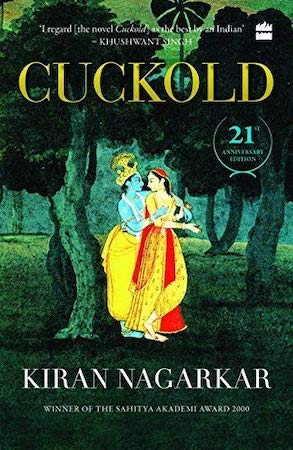
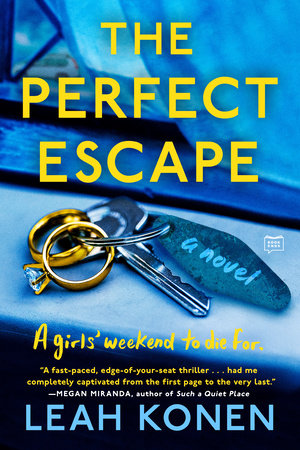
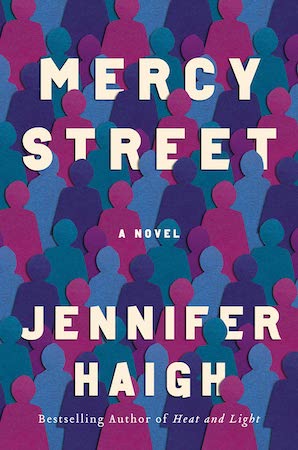
Left: Cover design by Rodrigo Corral Studio, illustration by Polly Nor Right: Cover design by Holly Ovenden.
Left: Cover design by Jakob Vala, photograph by Louisa Wells, modeled by Janine Tondu Right: Cover design by Rodrigo Corral Studio, photograph by Roozbeh Roozbehani
Left: Cover design by Stephanie Ross, illustration by Misha Gurnanee Gudibanda Right: Cover design by June Park, photographs by Jose A. Bernat Bacete and Robert Alexander
Left: Cover design by Vince Haig, artwork by Olga Beliaeva based on the photograph “Morning Tea” by Serge N. Kozintsev Right: Cover design by Olga Grlic, cover illustration by Colin Verdi
Whatever your particular situation, we’re willing to bet that this year has probably been a year of unique growth—and failure. Maybe you finally figured out how to unmute—only to realize your boss heard you say (unmuted) that he looks like Lucifer. Maybe you managed to keep your children alive and happy for an entire week—only to realize that the dinosaur-shaped nuggets your 5-year-old demands for every meal actually have no nutritional value. Maybe you’ve finally returned to your pre-pandemic morning routine—only to realize that the barista you’ve been crushing on for two years has replaced their flirty smile with a wedding ring.
On the other hand, maybe we’re wrong. Maybe 2021 has been nothing but rainbows and puppy dogs. Either way, there’s no way you’re on top of your laundry game.
Whatever your life looks like right now, allow us to recommend a handful of literary podcasts interesting enough to distract you from Zoom snafus, vitamin deficiencies, and mundane household chores. Some of them might even distract you from the heartbreak of knowing your favorite cafe is now only serving coffee.
Hosted by Jordan Kisner, author of Thin Places, this podcast is a thoughtful interview series focusing on transformative experiences, liminal spaces, and Deep Existential Things. In every episode, Kisner sits down with a writer and has a meaningful conversation about those “life-wasn’t-the-same-after-that moments.” For a fairly new podcast, Kisner’s guest list features an all-star ensemble: recent interviewees include Maggie Nelson, Susan Orlean, Jericho Brown, Rachel Kushner, and Hanif Abdurraqib.
If memoir is your genre—especially torrid, tell-all memoir—you’ll love Celebrity Memoir Book Club. (Alternatively, if you are the kind of reader who is just a smidge too sophisticated to be caught dead reading JLo’s memoir on the subway, this podcast is also for you.) Co-hosted by two New York comedians, Claire Parker and Ashley Hamilton, every episode is a no-holds-barred review of a celebrity memoir. You can jump in anywhere, but “Lena Dunham Is Not That Kind of Girl” will give you a good sense of the show’s aesthetic. Be warned: though the hosts try to adopt a journalistic approach, sometimes their petty, whore nature gets the best of them (their words, not ours).
The co-hosts of this podcast are all-stars. Marlon James, Man Booker Prize-winning author of A Brief History of Seven Killings, and Jake Morrissey, executive editor (and James’ editor) at Riverhead Books, team up to talk about dead authors. The duo’s episode on “gateway books”—the first books by authors that hooked them into reading more—is our recommended gateway episode.
Canadians Ariel Bissett and Raeleen Lemay became friends IR(online)L via BookTube, and the podcast feels something like an energetic hug from your very bookish friend. Every episode features an organic-feeling conversation between the hosts as they chat about what they’re reading, what they’ve bought to read next, and which books they recommend to listeners. Books Unbound is a great option for heterogeneous bookworms because Ariel and Raleen give airtime to literary fiction, classic literature, poetry, graphic novels, genre fiction, and YA.
NPR podcasts are reliably high quality (if you’re not already listening to Terry Gross, you should probably pause on this list and come back in five years when you get through the Fresh Air archives) and Book of the Day is tailored for flagging attention spans and tight schedules. Every episode features one (sometimes two) book recommendations in 15 minutes or less.
Host Publications is a small press with big dreams. They began as a publisher of international voices, but have since shifted focus to marginalized writers in the United States. Hosted by editors Claire Bowman and Annar Veröld, The Host Dispatch is the press’ latest endeavor and boasts discussions on literature, publishing, the writing life, and all things literary.
Tina and Renee are both book bloggers who met on Bookstagram and bonded over books and their Midwestern identities. Each week, the hosts, self-described “mood readers,” discuss the books they’re reading, the books they’re looking forward to reading, and books that fit within the episode’s “theme” (e.g., backlist reads, one-sit reads, popcorn thrillers, etc.).
Poetry Unbound from On Being Studios is hosted by acclaimed Irish poet and theologian Pádraig Ó Tuama. The series records two 15-minute episodes every week (on Mondays and Fridays), each of which offers a guided reading of a single poem. This podcast is perfect for anyone looking for an immersive, curated poetry experience.
Even if you’re not a writer, you’ll find plenty to love in this look-behind-the-publishing-scenes podcast. Hosted by Bianca Marais, Carly Watters and CeCe Lyra, episodes feature interviews with every type of professional associated with the book world, from authors and editors, agents and publicists, to creative writing instructors, booksellers, and even an intellectual property attorney.
Book Reccos is a new podcast, but its hosts are hardly new to the book world. Jess and Lauren are the Brits behind the @bookreccos Instagram account, and their podcast is in much the same vein. Targeted to listeners interested in discovering new books across genres without spoilers, episodes feature occasional interviews, in-depth reviews of one book, and smorgasbord episodes that explore books on a theme. If you’re looking for a fun way to kill 45 minutes, we recommend starting with the “Taste” episode, which covers both Stanley Tucci’s new foodoir and includes “side dish foodie book” recs—perfect listening for post-Thanksgiving eaters too full to ingest anything by mouth.
Bad on Paper is a podcast slash book club hosted by two 30-something friends, Grace Atwood and Becca Freeman, who dish out good life advice and conversation about “bad” books in weekly doses. The subject matter is eclectic here—episodes might cover anything from snack foods to small business tips—but at least one episode a month is a dedicated book club. A full listing of book club picks is available on the show website.
In 2021, the Keystone XL pipeline, which threatened Indigenous burial and archeological sites, was officially canceled. Canada celebrated its first National Day for Truth and Reconciliation to honor the lost children and survivors of residential schools on September 30. And the Yukon Tribe received the green light to reestablish California condors, a critically endangered species of cultural and ecological importance, in the Pacific Northwest for the first time in over a century. Indigenous activists fought hard for each of these wins.
It’s time to forget colonial and reductionist narratives about what year Columbus sailed west. Instead, let’s celebrate the abundance of works by talented Native writers being published in 2021: explore characters who go undercover in FBI investigations, delve into a parent’s difficult past, reclaim their land and reframe their history for the better. These 10 new books from Native authors are dissimilar from one another in many ways—they span from fiction to nonfiction, genre to literary pieces, and are set everywhere from Oklahoma to Michigan—but each narrative proves propulsive. Discover who the villains are, whether they are cast as simply as capitalist drug dealers or as complexly as systemic racism. Explore the works of highly decorated fiction writers and those making scorching debuts.
Seamlessly blending Cherokee folklore and generational trauma, Brandon Hobson’s second novel builds on the themes that earned him a National Book Award nomination in 2018. Told from multiple perspectives, the novel follows the Echota family as they prepare for their annual bonfire commemorating the loss of their middle child, killed by a white police officer 15 years before the story opens. When Maria Echota, the family matriarch, agrees to foster a 12-year-old Cherokee boy navigating his own trauma, the family’s emotional scars—visible and unseen—are given new light. The Removed is a haunting blurring of past and present, grief and hope, purgatory and Earth.
The death of Geller’s mother, following a period of homelessness and substance abuse, serves as the impetus for the author’s journey into the past. In the assured prose of a creative writing instructor, Geller’s memoir traces her mother’s departure from the Navajo reservation at 19 and catalogs her life thereafter in letters, photographs, diaries, and personal items. As Geller reconstructs her mother’s story, she is forced to confront her own. This memoir is a moving examination of Navajo identity, family relationships, and the power of history.
In a dystopian universe, only a precious few—the Indigenous people of North America—retain the ability to dream. In residential “schools” across a disaster-scarred landscape, the government imprisons Native people and harvests their bone marrow to treat non-dreamers. The novel, DiMaline’s second installment in her young adult series, picks up where The Marrow Thieves left off: 17-year-old Frenchie wakes up in a dark room while his found family of dreamers searches for him on the outside. Hunting by Stars is a page-turning adventure that pairs a diverse cast with high stakes.
Rosalie Iron Wing spends the first 12 years of her life in communion with the land. Her Native father raises her in the tradition of the Dakota people with a deep respect for her roots. But when he dies, Rosalie’s ties to her history are abruptly severed. After six years in a white foster care family, she marries a white farmer, becomes a mother, and makes a life on land stolen from her ancestors. The story opens 28 years later when a widowed Rosalie finally returns to her home to reclaim her past. Told in narratives layered with the voices of Rosalie and her female ancestors, Diane Wilson’s debut is a meditation on generational loss and a people’s profound connection to the land.
It’s 1926 and Two Feathers, a young Cherokee woman, is determined to succeed as a horse diver for the Glendale Park Zoo, an amusement park in segregated Nashville. But when a sinkhole opens up during a performance, Two Feathers’ injuries sideline her act and strange things begin happening at the Park. Blending historical fiction and magical realism, Margaret Verble’s eclectic cast of characters offer readers a lens on race and social class against the backdrop of a dangerous and outlandish landscape.
Savannah Johnston’s debut is a post-colonial collection of stories about the everyday lives of Indigenous people in Oklahoma. The characters in Rites are flawed and complex, many of them trapped in cycles of intergenerational harm; indeed, some of them actively perpetuate cycles of despair. Johnston’s stories give an unflinching look into the modern-day Indigenous experience.
In this YA thriller, 18-year-old Daunis Fontaine struggles to find belonging, whether it is with her paternal Anishinaabe side on the Ojibwe reservation, or her white maternal side in Sault Ste. Marie, Michigan. Daunis witnesses a murder and finds herself undercover in an FBI investigation regarding a hallucinogenic form of meth with an ever-increasing body count. In this debut, Boulley has crafted a robust lead who navigates familial struggles and sacrifices, fake romance and secrets, hockey and chemistry, and grief and racism with nuance and heart.
Kyle R. Mays, a Black Saginaw Chippewa writer and historian, explores anti-Blackness and settler colonialism alongside one another in order to reframe our understanding of American history. Mays’ work is novel in that it acknowledges the intersectional nature of Black and indigenous struggles for freedom, both historically and in the present moment.
As part of Beacon Press’s ReVisioning American History series, the book explores everything from The Declaration of Independence and sacred Native texts to the Civil Rights Movement and modern-day conversations about cultural appropriation. In tackling the origins of the riffs between Indigenous and Black communities and the shared harm that capitalism and colonialism have inflicted on both, the potential for Afro-Indigenous solidarity is presented as a powerful tool in combating white supremacy.
Jade escapes the parts of her life she doesn’t like to think about—like living with her abusive, alcoholic father or that fact that she doesn’t speak to her mom—by delving instead into the gore and drama of slasher films. Her encyclopedic knowledge of Halloween films becomes more than a lighthearted obsession though, when she becomes convinced that her hometown of Proofrock, Idaho is under the grasp of a very real serial killer. Graham Jones doesn’t shy away from graphic descriptions of bodies or characters battling with the darkest realms of human experience, spanning everything from gentrification to child abuse. But the creepiness and gore is not just decoration and instead serves the emotional heart of the story: a young, part-Indian girl trying to make sense of her trauma, to survive.
It’s just bookseller Tookie’s bad luck that when Flora—the most annoying customer at the independent Minneapolis bookstore where she works—dies in November 2019, she decides to stick around as a ghost. In a story that spans the following historic year, particularly for Minneapolitans, the death of this acquaintance and the murder of George Floyd work alongside one another on personal and political planes to interrogate the ways in which we are haunted, by histories of violence, our own pasts, and all that we cannot change.
With complicated relationships taking center stage (or perhaps bookstore aisle, in this case), we discover that “Indigenous wannabe” Flora considers Tookie her best friend and that Tookie, who is Ojibwe, ends up married to the tribal cop who arrested her before her ten-year stint in prison. In a book that is as funny as it is poignant, Pulitzer prize-winner Erdich grapples with this contemporary moment of grief, violence against Black and Indigenous bodies, and national unrest, without forgetting the weight of history and how it continues to shape the present day — a specter not always seen but intimately felt.
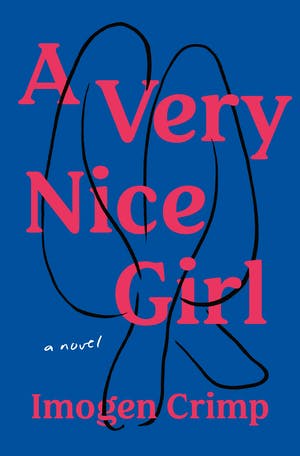
Her name was Felicity; she had called herself Fliss as a small child, and it had stuck. The children in her reception class at Holly Grove School called her Miss Fliss, affectionately. She had been a pretty child and was a pretty woman, with tightly curling golden hair and pale blue eyes. Her classroom was full of invention, knitted dinosaurs, an embroidered snake coiling round three walls. She loved the children—almost all of them—and they loved her. They gave her things—a hedgehog, newts, tadpoles in a jar, bunches of daffodils. She did not love them as though they were her own children: she loved them because they were not. She taught bush-haired boys to do cross-stitch, and shy girls to splash out with big paintbrushes and tubs of vivid reds and blues and yellows.
She wondered often if she was odd, though she did not know what she meant by “odd.” One thing that was odd, perhaps, was that she had reached the age of thirty without having loved, or felt close, to anyone in particular. She made friends carefully—people must have friends, she knew—and went to the cinema, or cooked suppers, and could hear them saying how nice she was. She knew she was nice, but she also knew she was pretending to be nice. She lived alone in a little red brick terraced house she had inherited from an aunt. She had two spare rooms, one of which she let out, from time to time, to new teachers who were looking for something more permanent, or to passing students. The house was not at all odd, except for the dolls.
She did not collect dolls. She had over a hundred, sitting in cosy groups on sofas, perching on shelves, stretched and sleeping on the chest of drawers in her bedroom. Rag dolls, china dolls, rubber dolls, celluloid dolls. Old dolls, new dolls, twin dolls (one pair conjoined). Black dolls, blond dolls, baby dolls, chubby little boys, ethereal fairy dolls. Dolls with painted surprised eyes, dolls with eyes that clicked open and closed, dolls with pretty china teeth, between pretty parted lips. Pouting dolls, grinning dolls. Even dolls with trembling tongues.
The nucleus of the group had been inherited from her mother and grandmother, both of whom had loved and cared for them. There were four: a tall ladylike doll in a magenta velvet cloak, a tiny china doll in a frilly dress with forget-me-not painted eyes, a realistic baby doll with a cream silk bonnet, closing eyes and articulated joints, and a stiff wooden doll, rigid and unsmiling in a black stuff gown.
Because she had those dolls—who sat in state in a basket chair— other dolls accumulated. People gave her their old dolls—“we know you’ll care for her.” Friends thinking of Christmas or birthday presents found unusual dolls in jumble sales or antique shops.
The ladylike doll was Miss Martha. The tiny china doll was Arabel. The baby doll was Polly. The rigid doll was Sarah Jane. She had an apron over her gown and might once have been a domestic servant doll.
Selected children, invited to tea and cake, asked if she played with the dolls. She did not, she replied, though she moved them round the house, giving them new seats and different company.
It would have been odd to have played with the dolls. She made them clothes, sometimes, or took one or two to school for the children to tell stories about.
She knew, but never said, that some of them were alive in some way, and some of them were only cloth and stuffing and moulded heads. You could even distinguish, two with identical heads under different wigs and bonnets, of whom one might be alive—Penelope with black pigtails—and one inert, though she had a name, Camilla, out of fairness.
There was a new teacher, that autumn, a late appointment because Miss Bury had had a leg amputated as a result of an infection caught on a boating holiday on an African river. The new teacher was Miss Coley. Carole Coley. The head teacher asked Fliss if she could put her up for a few weeks, and Fliss said she would gladly do so. They were introduced to each other at a teaparty for incoming teachers.
Carole Coley had strange eyes; this was the first thing Fliss noticed. They were large and rounded, dark and gleaming like black treacle. She had very black hair and very black eyelashes. She wore the hair, which was long, looped upwards in the nape of her neck, under a black hairslide. She wore lipstick and nail varnish in a rich plum colour. She had a trim but female body and wore a trouser suit, also plum. And glittering glass rings, quite large, on slender fingers. Fliss was intimidated, but also intrigued. She offered hospitality— the big attic bedroom, shared bath and kitchen. Carole Coley said she might prove to be an impossible guest. She had two things which always came with her:
“My own big bed with my support mattress. And Cross-Patch.”
Fliss considered. The bed would be a problem but one that could be solved. Who was Cross-Patch?
Cross-Patch turned out to be a young Border collie, with a rackety eye-patch in black on a white face. Fliss had no pets, though she occasionally housed the classroom mice and tortoises in the holidays. Carole Coley said in a take it or leave it voice, that Cross-Patch was very well trained.
“I’m sure she is” said Fliss, and so it was settled. She did not feel it necessary to warn Carole about the dolls. They were inanimate, if numerous.
Carole arrived with Cross-Patch, who was sleek and slinky. They stood with Fliss in the little sitting room whilst the removal men took Fliss’s spare bed into storage, and mounted with Carole’s much larger one. Carole was startled by the dolls. She went from cluster to cluster, picking them up, looking at their faces, putting them back precisely where they came from. Cross-Patch clung to her shapely calves and made a low throaty sound.
“I wouldn’t have put you down as a collector.”
“I’m not. They just seem to find their way here. I haven’t bought a single one. I get given them, and people see them, and give me more.”
“They’re a bit alarming. So much staring. So still.”
“I know. I’m used to them. Sometimes I move them round.”
Cross-Patch made a growly attempt to advance on the sofa. Carole raised a firm finger. “No, Cross-Patch. Sit. Stay. These are not your toys.”
Cross-Patch, it turned out, had her own stuffed toys—a bunny rabbit, a hedgehog—with which she played snarly, shaking games in the evenings. Fliss was impressed by Carole’s authority over the animal. She herself was afraid of it, and knew that it sensed her fear.
Carole was a good lodger. She was helpful and unobtrusive. Everything interested her—Fliss’s embroidery silks, her saved children’s books from when she was young, her mother’s receipts, a bizarre Clarice Cliffe tea-set with a conical sugar-shaker. She made Fliss feel that she was interesting—a feeling Fliss almost never had, and would have said she didn’t want to have. It was odd being looked at, appreciatively, for long moments. Carole asked her questions, but she could not think up any questions to ask in return. A few facts about Carole’s life did come to light. She had travelled and worked in India. She had been very ill and nearly died. She went to evening classes on classical Greece and asked Fliss to come too, but Fliss said no. When Carole went out, Fliss sat and watched the television, and Cross-Patch lay watchfully in a corner, guarding her toys. When Carole returned, the dog leaped up to embrace her as though she was going for her throat. She slept upstairs with her owner in the big bed. Their six feet went past Fliss’s bedroom door, pattering, dancing.
Carole said the dolls were beginning to fascinate her. So many different characters, so much love had gone into their making and clothing. “Almost loved to bits, some of them,” said Carole, her treacle eyes glittering. Fliss heard herself offer to lend a few of them, and was immediately horrified. What on earth would Carole want to borrow dolls for? The offer was odd. But Carole smiled widely and said she would love to have one or two to sit on the end of her big bed, or on the chest of drawers. Fliss was overcome with nervous anxiety, then, in case Cross-Patch might take against the selected dolls, or think they were toys. She looked sidelong at Cross-Patch, and Cross-Patch looked sidelong at her, and wrinkled her lip in a collie grin. Carole said
“You needn’t worry about her, my dear. She is completely well-trained. She hasn’t offered to touch any doll. Has she?”
“No,” said Fliss, still troubled by whether the dog would see matters differently in the bedroom.
When they went to bed they said good-night on the first floor landing and Carole went up to the next floor. She borrowed a big rag doll with long blond woollen plaits and a Swiss sort of apron. This doll was called Priddy, and was not, as far as Fliss knew, alive. She also borrowed—surprisingly—the rigid Sarah Jane, who certainly was alive. I love her disapproving expression, said Carole. She’s seen a thing or two, in her time. She had painted eyes, that didn’t close.
She did not collect dolls. She had over a hundred, sitting in cosy groups on sofas, perching on shelves, stretched and sleeping on the chest of drawers in her bedroom.
Other dolls took turns to go up the stairs. Fliss noticed, without formulating the idea, that they were always grown-up or big girl dolls, and they never had sleeping eyes.
Little noises came down the stairs. A cut-off laugh, an excited whisper, a creak of springs. Also a red light spread from the door over the sage-green staircarpet.
One night, when she couldn’t sleep, Fliss went down to the kitchen and made Horlicks for herself. She then took it into her head to go up the stairs to the spare room; she saw the pool of red light and knew Carole was not asleep. She meant to offer her Horlicks.
The door was half open. “Come in” called Carole, before Fliss could tap. She had put squares of crimson silk, weighted down with china beads, over the bedside lamps. She sat on the middle of her big bed, in a pleated sea-green nightdress, with sleeves and a high neck. Her long hair was down, and brushed into a fan, prickling with an electric life of its own. Cross-Patch was curled at the foot of the bed.
“Come and sit down,” said Carole. Fliss was wearing a baby blue nightie in a fine jersey fabric, under a fawn woolly dressing-gown.
“Take that off, make yourself comfortable.”
“I was—I was going to—I couldn’t sleep . . . .”
“Come here,” said Carole. “You’re all tense. I’ll massage your neck.”
They sat in the centre of the white quilt, made ruddy by light, and Carole pushed long fingers into all the sensitive bits of Fliss’s neck and shoulders, and released the nerves and muscles. Fliss began to cry.
“Shall I stop?”
“Oh no, don’t stop, don’t stop. I—
“This is terrible. Terrible. I love you.”
“And what’s terrible about that?” asked Carole, and put her arms around Fliss, and kissed her on the mouth.
Fliss was about to explain that she had never felt love and didn’t exactly like it, when they were distracted by fierce snarling from Cross-Patch.
“Now then, bitch,” said Carole. “Get out. If you’re going to be like that, get out.”
And Cross-Patch slid off the bed, and slunk out of the door. Carole kissed Fliss again, and pushed her gently down on the pillows and held her close. Fliss knew for the first time that terror that all lovers know, that the thing now begun must have an ending. Carole said “My dear, my darling.” No one had said that to her.
They sat side by side at breakfast, touching hands, from time to time. Cross-Patch uttered petulant low growls and then padded away, her nails rattling on the lino. Carole said they would tell each other everything, they would know each other. Fliss said with a light little laugh that there was nothing to know about her. But nevertheless she did more of the talking, described her childhood in a village, her estranged sister, her dead mother, the grandmother who had given them the dolls.
Cross-Patch burst back into the room. She was carrying something, worrying it, shaking it from side to side, making a chuckling noise, tossing it, as she would have tossed a rabbit to break its neck. It was the baby doll, Polly, in her frilled silk bonnet and trailing embroidered gown. Her feet in their knitted bootees protruded at angles. She rattled.
Carole rose up in splendid wrath. In a rich firm voice she ordered the dog to put the doll down, and Cross-Patch spat out the silky creature, slimed with saliva, and cowered whimpering on the ground, her ears flat to her head. Masterfully Carole took her by the collar and hit her face, from side to side, with the flat of her hands. “Bad dog,” she said, “bad dog,” and beat her. And beat her.
The rattling noise was Polly’s eyes, which had been shaken free of their weighted mechanism, and were rolling round inside her bisque skull. Where they had been were black holes. She had a rather severe little face, like some real babies. Eyeless it was ghastly.
“My darling, I am so sorry,” said Carole. “Can I have a look?”
Fliss did not want to relinquish the doll. But did. Carole shook her vigorously. The invisible eyes rolled.
“We could take her apart and try to fit them back.”
She began to pull at Polly’s neck.
“No, don’t, don’t. We can take her to the dolls’ hospital at the Ouse Bridge. There’s a man in there—Mr. Copple—who can mend almost anything.”
“Her pretty dress is torn. There’s a toothmark on her face.”
“You’ll be surprised what Mr. Copple can fix,” said Fliss, without complete certainty. Carole kissed her and said she was a generous creature.
Mr. Copple’s shop was old and narrow-fronted, and its back jutted out over the river. It had old window-panes, with leaded lights, and was a tiny cavern inside, lit with strings of fairy-lights, all different colours. From the ceiling, like sausages in a butcher’s shop, hung arms, legs, torsos, wigs, the cages of crinolines. On his glass counter were bowls of eyeballs, blue, black, brown, green, paperweight eyes, eyes without whites, all iris. And there were other bowls and boxes with all sorts of little wire joints and couplings, useful elastics and squeaking voice boxes.
Mr. Copple had, of course, large tortoiseshell glasses, wispy white hair and a bad, greyish skin. His fingers were yellow with tobacco.
“Ah,” he said, “Miss Weekes, always a pleasure. Who is it this time?”
Carole replied. “It was my very bad dog. She shook her. She has never done anything like this before.”
The two teachers had tied Polly up into a brown paper parcel. They did not want to see her vacant stare. Fliss handed it over. Mr. Copple cut the string.
“Ah,” he said again. “Excuse me.”
He produced a kind of prodding screwdriver, skilfully decapitated Polly, and shook her eyes out into his hand.
“She needs a new juncture, a new balance. Not very difficult.” “There’s a bite mark,” said Carole gloomily. “When you come back for her, you won’t know where it was.
And I’ll put a stitch or two into these pretty clothes and wash them out in soapsuds. She’s a Million Dollar Baby. A Bye-Lo baby. Designed by an American, made in Germany. In the 1920s.”
“Valuable?” asked Carole casually.
“Not so very. There were a large number of them. This one has the original clothes and real human hair. That puts her price up. She is meant to look like a real newborn baby.”
“You can see that,” said Carole.
He put the pieces of Polly into a silky blue bag and attached a label on a string. Miss Weekes’s Polly.
They collected her the next week and Mr. Copple had been as good as his word. Polly was Polly again, only fresher and smarter. She rolled her eyes at them again, and they laughed, and when they got her home, kissed her and each other.
One of the most interesting things about Polly was that her look was sometimes composed and babylike, but, in some lights, from some angles, could appear angry.
Fliss thought day and night about what she would do when Carole left. How it would happen. How she would bear it. Although, perhaps because, she was a novice in love, she knew that the fiercer the passion, the swifter and the harsher the ending. There was no way they two would settle into elderly domestic comfort. She became jealous and made desperate attempts not to show it. It was horrible when Carole went out for the evening. It was despicable to think of listening in to Carole’s private calls, though she thought Carole listened to her own, which were of no real interest. The school year went on, and Carole began to receive glossy brochures in the post, with pictures of golden sands and shining white temples. She sat looking at them in the evenings, across the hearth from Fliss, surrounded by dolls. Fliss wanted to say “Shall we go together?” and was given no breath of space to do so. Fliss had always spent her holidays in Bath, making excursions into the countryside. She made no arrangements. Great rifts and gaps of silence spread into the texture of their lives together. Then Carole said
“I am going away for a month or so. On Sunday. I’ll arrange for the rent to be paid while I’m away.”
“Where,” said Fliss. “Where are you going?”
“I’m not sure. I always do go away.”
Can I come? could not be said.
So Fliss said, “Will you come back?”
“Why shouldn’t I? Everyone needs a bit of space and time to herself, now and then. I’ve always found that. I shall miss the dolls.”
“Would you like to take one?” Fliss heard herself say. “I’ve never given one away, never. But you can take one—”
Carole kissed her and held her close.
“Then we shall both want to come back—to the charmed circle. Which doll are you letting me have?”
“Any of them,” cried Fliss, full of love and grief. “Take anyone at all. I want you to have the one you want.”
She did not expect, she thought later, that Carole would take one of the original four. Still less, that of those four, she would choose Polly, the baby, since her taste had always been for grown girls. But Carole chose Polly, and watched Fliss try to put a brave face on it, with an enigmatic smile. Then she packed and left, without saying where she was going.
Before she left, in secret, Fliss kissed Polly and told her “Come back. Bring her back.”
Cross-Patch went with them. The big empty bed remained, a hostage of a sort.
Fliss did not go to Bath. She sat at home, in what turned out to be a dismal summer, and watched the television. She watched the Antiques Roadshow, and its younger offshoot, Flog It!, in which people brought things they did not want to be valued by experts and auctioned in front of the cameras. Fliss and Carole had watched it together. They both admitted to a secret love for the presenter, the beautiful Paul Martin, whose energy never flagged. Nor, Fliss thought, did his kindness and courtesy, no matter what human oddities presented themselves. She loved him because he was reliable, which beautiful people, usually, were not.
And so it came about that Fliss, looking up idly at the screen from the tray of soup and salad on her knee, saw Polly staring out at her in close-up, sitting on the Flog It! valuing table. It must be a complete lookalike, Fliss thought. The bisque face, with its narrow eyes and tight mouth appeared to her to have a desperate or enraged expression. One of the most interesting things about Polly was that her look was sometimes composed and babylike, but, in some lights, from some angles, could appear angry.
The valuer, a woman in her forties, sweetly blond but sharp-eyed, picked up Polly and declared she was one of the most exciting finds she had met on Flog It! She was, said the purring lady, a real Bye-Lo Baby, and dressed in her original clothes. “May I look?” she asked sweetly, and upended Polly, throwing her silk robe over her head, exposing her woollen bootees, her sweet silk panties, the German stamps on her chubby back, to millions of viewers. Her fingernails were pointed, and painted scarlet. She pulled down the panties and ran her nails round Polly’s hip-joints. Bye-Lo Babies were rarer, and earlier, if they had jointed composition bodies than if they had cloth ones, with celluloid hands sewn on. She took off Polly’s frilled ivory silk bonnet, and exclaimed over her hair—“which, I must tell you, I am 90% sure is real human hair which adds to her value.” She pushed the hair over Polly’s suspended head and said “Ah, yes, as though we needed to see it.” The camera closed in on the nape of Polly’s neck. “Copr. By Grace S Putnam// MADE IN GERMANY.”
“Do you know the story of Grace S Putnam and the baby doll?” scarlet-nails asked the hopeful seller and there was Carole, in a smart Art Deco summer shirt in black and white, smiling politely and following the movements of the scarlet nails with her own smooth mulberry ones.
“No,” said Carole into Fliss’s sitting room, “I don’t know much about dolls.”
Her face was briefly screen-size. Her lipstick shone, her teeth glistened. Fliss’s knees began to knock, and she put down her tray on the floor.
Grace Story Putnam, the valuing lady said, had wanted to make a real baby doll, a doll that looked like a real baby, perhaps three days old. Not like a Disney puppet. So this formidable person had haunted maternity wards, sketching, painting, analysing. And never could she find the perfect face with all the requisite qualities.
She leaned forwards, her blond hair brushing Carole’s raven folds.
“I don’t know if I should tell you this.”
“Well, now you’ve started, I think you should,” said Carole, always Carole.
“It is rumoured that in the end she saw the perfect child being carried past, wrapped in a shawl. And she said, wait, this is the one. But that baby had just died. Nevertheless, the story goes, the determined Mrs. Putnam drew the little face, and this is what we have here.”
“Ghoulish,” said Carole, with gusto. The camera went back to Polly’s face, which looked distinctly malevolent. Fliss knew her expression must be unchanging, but it did not seem like that. Her stare was fixed. Fliss said “Oh, Polly—”
“And is this your own dolly?” asked the TV lady. “Inherited perhaps from your mother or grandmother. Won’t you find it very hard to part with her?”
“I didn’t inherit her. She’s nothing to do with me, personally. A friend gave her to me, a friend with a lot of dolls.”
“But maybe she didn’t know how valuable this little gift was? The Bye-Los were made in great numbers—even millions—but early ones like this, and with all their clothes, and real human hair, can be expected to fetch anywhere between £800 and well over £1,000— even well over, if two or more collectors are in the room. And of course she may have her photo in the catalogue or on the website . . .”
“That does surprise me,” said Carole, but not as though it really did.
“And do you think your friend will be happy for you to sell her doll?”
“I’m sure she would. She is very fond of me, and very generous-hearted.”
“And what will you do with the money if we sell Dolly, as I am sure we shall—”
“I have booked a holiday on a rather luxurious cruise in the Greek islands. I am interested in classical temples. This sort of money will really help.”
There is always a gap between the valuation of an item and the showing of its auction. Fliss stared unseeing at the valuation of a hideous green pottery dog, a group of World War I medals, an album of naughty seaside postcards. Then came Polly’s moment. The auctioneer held her aloft, his gentlemanly hand tight round her pudgy waist, her woolly feet protruding. Briefly, briefly, Fliss looked for the last time at Polly’s sweet face, now, she was quite sure, both baleful and miserable.
“Polly,” she said aloud. “Get her. Get her.”
She did not know what she wanted Polly to do. But she saw Polly as capable of doing something. And they were—as they had always been—on the same side, she and Polly.
She thought, as the bidding flew along, a numbered card flying up, a head nodding, a row of concentrated listeners with mobile phones, waiting, and then raising peremptory fingers, that she herself had betrayed Polly, but that she had done so out of love and goodwill. “Oh, Polly,” she said, “Get her,” as Carole might have said to Cross-Patch.
Carole was standing, composed and beautiful, next to Paul Martin, as the tens turned into hundreds and the hundreds to thousands. He liked sellers to show excitement or amazement, and Carole— Fliss understood her—showed just enough of both to keep the cameras happy, but was actually rigid inside, like a stone pillar of willpower and certainty. Polly went for £2,000, but it was not customary to show the sold object again, only the happy face of the seller, so, for Fliss, there was no moment of good-bye. And you were not told where sold objects were going.
All the other dolls were staring, as usual. She turned them over, or laid them to sleep, murmuring madly, get her, get her.
She did not suppose Carole would come back, and wondered if she should get rid of the bed. The headmistress at the school was slightly surprised when Fliss asked her if Carole was coming back—“do you know something I don’t?” Then she showed Fliss a postcard from Crete, and one from Lemnos. “I go off on my own with my beach towel and a book and lie on the silver sand by the wine-dark sea, and feel perfectly happy.” Fliss asked the headmistress if she knew where Cross-Patch was, and the headmistress said she had assumed Fliss was in charge of her, but if not, presumably, she must be in kennels.
A week later, the head told Fliss that Carole was in hospital. She had had a kind of accident. She had been unconscious for some time, but it was clear, from the state of her nervous system, and from filaments and threads found on her swimsuit and in her hair, that she had swum, or floated, into a swarm of minute stinging jellyfish— there are millions out there, this summer, people are warned, but she liked to go off on her own.
Fliss didn’t ask for more news, but got told anyway. Carole’s eyes were permanently damaged. She would probably never see again; at best, vestigially.
She would not, naturally, be coming back.
The headmistress looked at Fliss, to see how she took this. Fliss contrived an expression of conventional, distant shock, and said several times, how awful, how very awful.
The headmistress said “That dog of hers. Do you think anyone knows where it is? Do you think we should get it out of the kennels? Would you yourself like to have it, perhaps—you all became so close?”
“No,” said Fliss. “I’m afraid I never liked it really. I did my best as I hope I always shall. I’m sure someone can be found. It has a very uncertain temper.”
She went home and told the dolls what had happened. She thought of Polly’s closed, absent little face. The dolls made an inaudible rustling, like distant birds settling. They knew, Fliss thought, and then unthought that thought, which could be said to be odd.
DON’T MISS OUT
Sign up for our newsletter to get submission announcements and stay on top of our best work.
YOUR INBOX IS LIT
Enjoy strange, diverting work from The Commuter on Mondays, absorbing fiction from Recommended Reading on Wednesdays, and a roundup of our best work of the week on Fridays. Personalize your subscription preferences here.