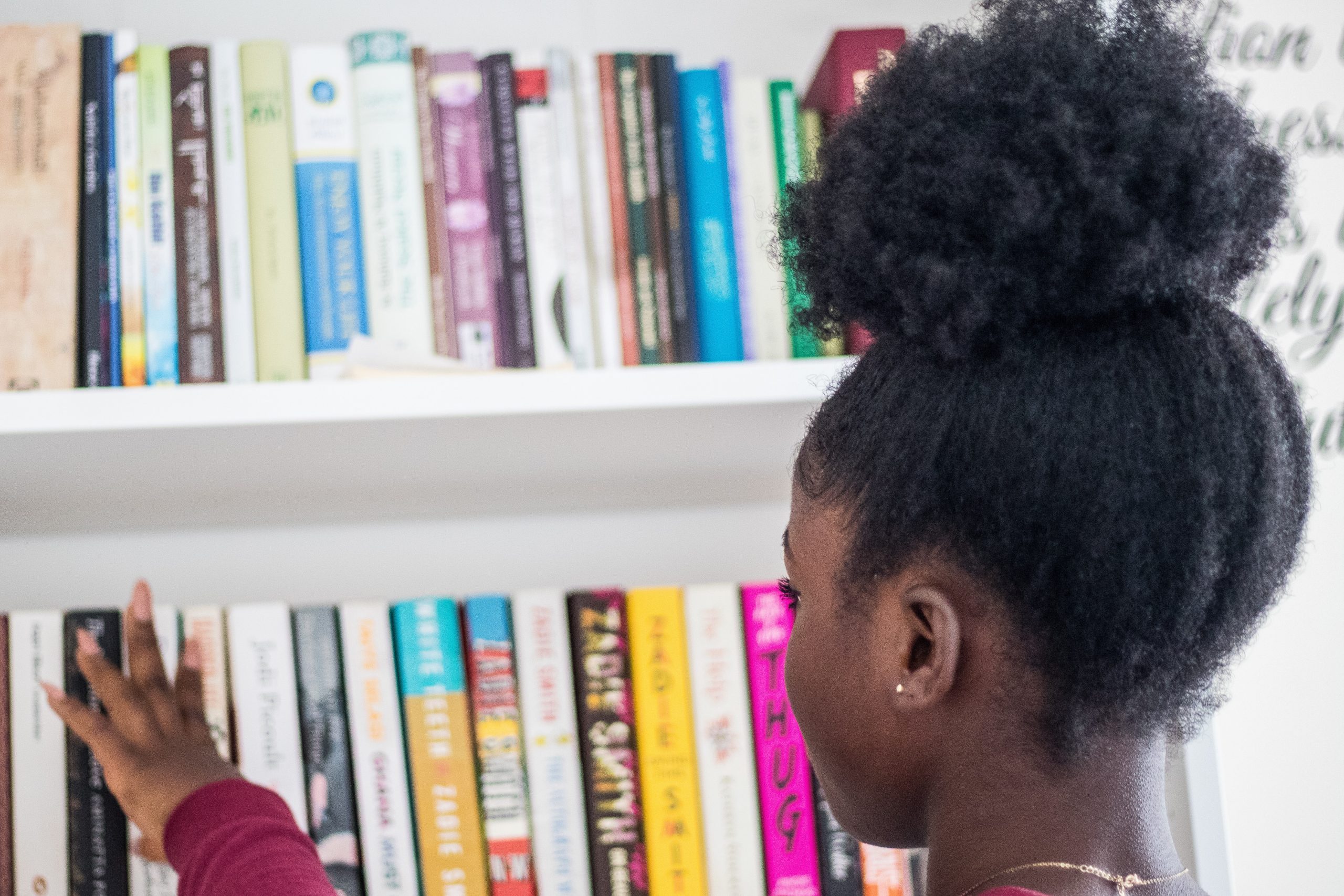
This Filipino American Memoir Confronts Privilege, Sacrifice, and Colonialism’s Legacy

Like the complex Philippine history the book aims to depict, there is no single sentence that can sum up Albert Samaha’s Concepcion, especially when he renders that history through the lens of his own diasporic family, dating back to his ancestors’ first encounter with Europeans. Though nominally a memoir in the sense that it tracks Samaha’s life as a second-generation immigrant child in Northern California, his search for a stable identity as a teenage football player caught between cultures, his fraught relationship with his Trump-supporter mother as an adult, Concepcion uses these moments from the recent past to jump across centuries and explore the imperialist circumstances that brought them into being, a history that the United States continues to ignore because of its role as the Philippines’ former colonizer.

Concepcion by Albert Samaha

Samaha’s primary strategy for getting an American readership to face this history is to tell it through his own family members, which renders it both intimate and urgent. Writing about his great-aunt Caridad, an informant for the Americans during the Japanese occupations whose quick thinking prevented her death by sword, Samaha writes: “Her fate was one of countless breaks to swing our way, unearthing reminders that before a moment hardens into the past, it exists in a suspended fragility of the present.” Caridad was the first person from Samaha’s family to immigrate to the United States, and without her, neither Samaha nor Concepcion would exist in their current form.

Samaha and I spoke a week before Concepcion’s publication in a room at the Bowery Hotel overlooking the New York skyline. It was an appropriate location not only because a sizable portion of the hotel’s staff is Filipino, but because one of the book’s main questions is how to balance current prosperity against the sacrifices of previous generations, on familial, diasporic, and existential scales.

[Editor’s note: Meredith Talusan and Albert Samaha were briefly colleagues at BuzzFeed.]


Meredith Talusan: It really struck me reading the book how it’s simultaneously epic because it covers hundreds of years of history, but also generous in the sense that including your whole family in a memoir, which is usually thought of as an individual act of putting one’s perspective onto paper. Was that your vision from the beginning? How did it evolve?

Albert Samaha: The structure was the hardest part. But eventually, I came around to this idea that a central theme in the book is the way the past imposes itself upon the present, that we can’t escape the past, that we are still entrapped in its ripple effects. And so, to sort of jump back and forth in time, in sometimes vast distances of time, to me, offered an opportunity to show how true that is, and to show how that actually works. 

The other thing in my mind was I wanted the book to be a bit disorienting in time and space, because that’s the experience of being an immigrant, of coming into a new country. You come in and you have to figure it out. “Where am I? What’s the restaurant? Do I tip? Do I not tip? Where do I get a job?” All these little discomforts of being an immigrant, where I feel like people like me who is not an immigrant oftentimes will, I think, think of the challenge of immigration in kind of very macro terms, which is that you’ve got to learn the language and get a job and get a visa. But what I hear from many of my immigrant friends and immigrant relatives, the stories they tell, it’s always like the little things, like the first time my grandfather had stepped into an elevator, and what buttons to press, or the time that my mom first went to Paris and was struck that you could try out all the perfumes. They’ve got these little aspects of experience that stand out in their mind.

MT: You’re talking about how the past illuminates the present, but then I feel like also one of the effects is that it makes the past feel more like the present, right? 

I was wondering to what degree you were aware, or did you want to make what people perceive as history come alive? Especially, I think, in an American context where there’s a lot of denial and a lot of avoidance around specifically this history and specifically the ways in which America and the United States have behaved towards its major former colony.

AS: Totally. And I intend to apply that even broader in the sense that I think history, on its face, can feel inevitable, especially what we learn about in history books, where it’s like “Oh, of course, when you have a general as capable as George Washington and a legislative mind as brilliant as Thomas Jefferson, you’re going to create an exceptional nation such as America.” And that inevitability washes away the arbitrariness of history, and the fact that oftentimes the people who win win by chance just as much as by merit, like Cortez did not know that he was carrying on his boat the germs that would defeat his enemies.

And so, I think a theme I really wanted to unpack in the book is all those inflection points where things could have gone a different direction. And I think this was one of the central questions in the book where I asked if my mom’s sacrifice was worth it, if she should have come. But that begs the question: what other paths were there along the way that we might have missed?

I ultimately realized that the only way to get across the idea of how fragile the present is one hundred years ago is to make one hundred years ago feel present, and to try to bring the reader into that world as much as possible, and see the figures not as historical epic figures, not as like myths, but as human beings, whether that’s Magellan or Lapu Lapu or Rajah Humabon. 

MT: One of the other aspects of the book that really struck me is your engagement both at a historical and at a personal level with you and your family coming into an American culture that has this entire history, especially around white supremacy and Black slavery and anti-Black racism. How do you feel about the book in terms of intervention into this entire history while at the same time, we still live in an America that is so deeply oppressive to Black people? How do we as Filipino people situate ourselves within that racial paradigm?

AS: It’s an ongoing question for all of us immigrant diasporists who are newcomers to this centuries-old struggle for America’s soul that Black Americans and white supremacists have been waging. The reason colonialism works is because it makes the colonized aspire to assimilate to colonists, right? And I think to the colonized, it’s like, “We could either die or starve, or do what the colonizers say.” And over time, it creates the colonial mentality, which many brilliant minds have written about in many different ways.

But when we think of colonial mentality, I think the term E.J.R. David has used is internalized oppression. The way that my mom didn’t teach me how to speak Tagalog, and the way we revere white culture, and want to assimilate white culture, want to talk like white people and dress like white people, all that, have the same jobs as white people. I think what that often leaves out is what that means to side with them, with white people. What it means is to side with the people who have oppressed Black people and Indigenous people and a lot of other people. And I think we only think about it as how we’re internally oppressing ourselves, and not often enough about how we’re actually externally oppressing others by helping to uphold the imperial caste system that has kept Black people at the bottom and many other Brown people close to the bottom for many years.

What other paths were there along the way that we might have missed?

So what I hope to accomplish in the book is to reframe what it means to be colonized in a way. And I’m still grappling with it myself, you know? What are our responsibilities as Americans? I feel like the idea of asking about what you can do for your country is often framed from the right-wing perspective, where it’s almost this idea of “What can we do for our country?” is a taboo question, rightfully so in some ways because, no, we don’t owe anything to the country, right? It’s a country, and we are people who live here, and it’s not some loved one that we need to bestow any sort of reverence upon. It is a government institution. We owe it nothing. It owes us fair recompense for the taxes we pay. It is a transactional relationship, so let’s not try to make it bigger than that.

But I kind of want to rephrase the question of “What do we owe to the country?” in a different way. It’s not like “What do we owe to the U.S. government?” What do we owe to Black people? They are the reason that you and I have voting rights in America, because however Black folks are treated in America historically has been the bare minimum for how every other non-white group would be treated. None of us get treated as poorly as Black Americans, from a self-interested perspective even. Forget the morals of it. From a self-interested perspective, the worse Black Americans are treated, the worse that Filipino Americans can be treated. Ideally, everyone gets treated well, right?

So, for me, it was about honoring what it means to come to this country and to honor the country’s history. It’s not about, say, the Pledge of Allegiance. It’s not about knowing about Paul Revere’s Ride and George Washington’s cherry tree and about who signed the Declaration of Independence. It’s about looking at the history about who were the people whose blood and toil built the country? Who were the people who have suffered in order to push the country towards democracy?

MT: It’s fascinating how we’re talking about this in broad geopolitical terms, but the book coalesces this difference in perspective in terms of the relationship between you and your mom, who is a Trump supporter and believes in right-wing conspiracies, etc. Do you think of the book as a sort of template for figuring all of that stuff out?

AS: The first chapter of the book where my mom was getting scammed, I wrote that as it was happening. This book was an ongoing process. I was living it as I was writing it. One of the narrative arcs of the story is my own personal journey of understanding.

One of the quotes I have, the epigraph, was Maya Angelou who said, “Without willing it, I had gone from being ignorant of being ignorant to being aware of being aware. And the worst part of my awareness was that I didn’t know what I was aware of.” And I love that quote because it’s so true, man. Before you know what racism is, you’ve experienced it. And you’re just like, “Huh, that was weird. Why did that happen to me?” You know? And so I think the book is my effort to understand things that I needed to understand for myself. Even the way the book, I think, is structured subconsciously traces to the order in which I learned things, where we start in pre-colonial times.

A lot of the animating questions of the book stem from a reckoning with my own privilege, which is that I’m lucky enough to write this book in the first place, to be in a position where I had the education to write a book like this and have the time to work on a book like this. And it stems from this privilege that I did not necessarily see in the generation above me. So it’s like, “Okay, they sacrificed so I could have comfort.” Very classic immigrant story. But why is that the case? Why is it that they had to sacrifice to begin with, for my comfort? You know what I mean? When my friends’ parents didn’t have to sacrifice for their comfort, you know? And so it was sort of reckoning with my privilege. Like what was it over the course of all time, or at least as far back as I can trace, that led to me being born into the circumstances I was born into and allowed me to have these things.

And in a way, I sort of saw myself and every individual person as a sort of metaphor for America, which is that “Yeah, okay, richest nation, most powerful nation. What were the sacrifices made along the way?” To me, the real story of any empire’s rise is the sacrifice and suffering and toil that allowed it to happen. America would not span from a major continent between the two largest oceans and have all these natural resources if they didn’t genocide Native Americans. The wealth that the cotton industry was able to generate because of all the enslaved people who were purchased, bred, shipped in here, contributed largely to America’s original economic rise. So, America would not have the power it has if not for those oppressions. So that creates a natural guilt that I related to very much because I would not be able to benefit from the fruits from that bloody tree if my mom and my family didn’t come here and withstand the setbacks that the migrant generation experiences for the benefit of the second generation.

The real story of any empire’s rise is the sacrifice and suffering and toil that allowed it to happen.

A lot of the book, and also a lot of the sort of divergence between my perspective and the perspective of my elders, is from my position of privilege. I have the privilege to sit down in a lounge chair and think, “Hmm. How did I get all these luxuries?” You know what I mean? While if you’re the migrating generation, you ain’t got time for that shit. You’ve got kids to feed. You’ve got jobs to apply for. You’ve got so much happening. And that’s why I think in the first chapter, I had a line about how there’s something about being in the second generation that makes it easier to look at this, because I’m not the one who lived the sacrifice. I’m not the one that made the migration. I’m the one on the front row who benefited from inside, up close. And I think that’s sort of at the root of it. It’s a lot easier to care about other people of oppression when you’re not the one at the heart of the oppression. But if you feel you’re being oppressed, it makes it a lot harder to care about somebody else being oppressed before anyone deals with your oppression. 

And that’s part of the reason why my mom and I have diverged, because I’ve had the luxury of a very specific experience growing up and going to good schools in Northern California, being around a diverse collection of students, going to Columbia for journalism school, having jobs in these places that allow me to pursue my dreams and pay the bills and live the life that my mom dreamt for me. And so, for her, it’s like, yeah, this country is amazing. It all worked out. I’m happy. I could take care of her now. But for me, it’s something that I feel complicated feelings about, because these are successes that she worked for and wanted more than anything and sacrificed for. To her, they’re like unequivocable wins. But for me, as the person living it and benefiting from it, the natural question is like “Who had to sacrifice for these benefits? And how do I feel about that?”

MT: And is it worth it?

AS: And is it worth it?

MT: It’s interesting that being both writers, we both have this privilege that you describe, being paid in the ways that we are. But also, I can’t help but think of the meta-question that this book obviously involved extensive amounts of labor on your part. Speaking of toil and hardship, it might be a different form, but still. And it’s your second book. And I was wondering, as I was reading about the history of Filipino labor and the way in which Filipino identity is so tied to labor, that that’s one of the ways that we get ahead is that we work more than other people. Is that something that was present for you, and continues to be present for you, as you work in your life as an editor and an author? How do you contend with engaging with cultural reproduction, engaging with labor? And do you still feel like that’s still our path as Filipinos towards success in a country where our position is fragile?

AS: I’ve been told I have an unhealthy relationship with labor. You can interview any of my exes for that. I mean, I joke about it. It’s very easy for me to say I’m a workaholic because my work entails typing on a computer. You know what I mean? I can sort of romanticize working long hours because my long hours are sitting on a computer. So, that said, and maybe because of that, maybe because it’s a job that I consider much easier than the jobs any of my elders or ancestors had over the years, I’ve always sort of felt a duty to make sure that I squeezed every drop of juice from that fruit. I mean, I’ve always sort of been raised to really see the virtue of work ethic. My dad and I share that similar flaw (I probably got it from him) of just this idea that you get ahead by working harder than everybody else. So, ironically, I might have gotten it from the Lebanese side of me. 

I mean, it’s almost cliché to say that being part of an immigrant family involves thinking and caring deeply about working hard to prove your worth. And I do think that, at least subconsciously, and maybe even consciously sometimes, there was always that driving force of proving yourself worthy of the opportunities, of the sacrifices. I always knew. Even before I knew the details, I knew generally that my elders sacrificed for me. I didn’t know the scope of that sacrifice or the depth of it, but I knew that they had left their country to come here so that I would have more opportunities, whatever that meant. So there was always that impulse to not squander those opportunities. Even within my family, I was the spoiled one, I was the privileged one, because my dad had a lot of money. And even though my parents separated very young, his child support was able to ensure that she didn’t have to work all the time for many years until I was ten. She didn’t have to work. And no problem going to Catholic school in grade school, elementary school. So I had more toys than my cousins. 

So I always had this sense that I was more fortunate than even other people in my own generation, my own family. And I wanted to make sure I didn’t waste that. And I think, psychologically, perhaps what that did to me was to create this sense of value in putting in the hours. Not even a value. Like a reverence to it. I really do revere it in a way that my mom wishes I revered the Bible. Even before I was a writer, when I was a football player, I’d come in at 6:00 a.m. before school to lift weights and do some drills on the field by myself afterwards. And I think it was because I had opportunities that some of my closest friends and cousins didn’t have. I didn’t want to let people down. I didn’t want to let them down. I didn’t want to let my parents down. And I think that’s just sort of carried over. It’s like a mix of all those things, the sort of inherent Filipino work ethic, kind of immigrant “prove your worth,” and then also there’s like “Don’t squander the privilege that you have,” all sort of combined together, I think, to create the psyche I have now. I mean, two books in, I still haven’t taken a book leave.

The Weirdest Schools in Literature

Schools have their own set of rules and morality, rituals and language. What makes sense in an elite private Manhattan school—good grades, fancy clothes, the competitive sports of the wealthy (squash and tennis) can be entirely anathema in a progressive school where cooperation, eschewing of labels, and creativity are valued. In a small community, an outsider can never fit in or understand what goes on in the center. Sometimes the most ordinary school can be rendered creepy. The inhabitants—students and teachers—are stuck there after all until they graduate or retire. Throw in a charismatic leader, secret society, or strange ideology, and what you have is a cult.

In my novel The Pessimists, six couples wrestle with what it means to raise and educate children in a new century that seems destined to leave them behind. The Petra School promises a back-to-nuts-and-bolts education, but what it offers instead are elitist and poorly conceived ideas about children not firmly based in reality. Almost every parent struggles with their children’s schools at some point or another, whether the school is private or public, and educating children at times feels like wild speculation. One child thrives in an environment that is to another child’s detriment.

Many of us remember our high school years with the intensity as if they happened yesterday. I can barely remember anything that happened the year before the pandemic, but I can still smell my high school cafeteria at noontime. Bewildering things happen in schools all the time and there are often no other adult witnesses. The wildest things happen in schools: violence, sex, breakdowns and breakups, abusive teachers, bullying, tragedy, but comedy also. Boarding schools are especially ripe settings for novels and I’ve included four novels that take place in them. Carrie is the most American, most John Hughes of all the high schools on the list and Curtis Sittenfeld’s is perhaps the most benign. Ishiguro the most heartbreaking—the students are doomed from the start.

Here are the seven weirdest high schools in literature:

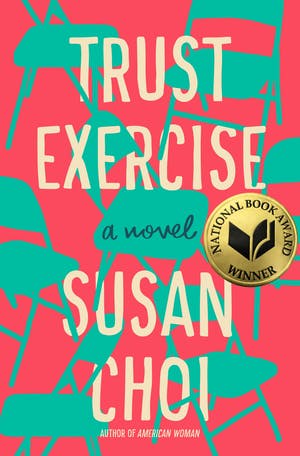
Trust Exercise

The Citywide Academy for the Performing Arts (CAPA) in Trust Exercise by Susan Choi

As grownups, we look back on our school years with bewilderment and sometimes bewitchment. Susan Choi’s Trust Exercise has all the culty elements I appreciate in a novel: an ’80s school culture I recognize, teenage romance, artistic ambition, unreliable narrators, surprise twists, and a dangerously charismatic leader. The Citywide Academy for the Performing Arts (CAPA) is a high school for talented drama students. The first third of Trust Exercise, features Mr. Kingsley, a charismatic teacher with an arbitrary set of rules and criteria for succeeding:

“His very way of gazing told them plainly how far they fell short….they felt their deficit all the more sharply because the unit of measure was wholly unknown.”

The last two-thirds spin the entire book on its head; the author pulling us through the high school gauntlet experientially: elliptical, circuitous, gaslighting.

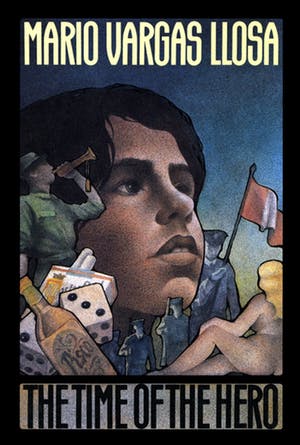
The Time of the Hero

The Leoncio Prado Military Academy in The Time of the Hero by Mario Vargos Llosa, translated by Lysander Kemp

Originally titled La Ciudad y Los Perros, “The City and the Dogs”, this 1963 novel is set at the military academy in Lima that Llosa himself attended as a teenager and deals with the death of a student and the school’s subsequent cover up. This nonlinear story is told from multiple perspectives and was influenced by Faulkner who Vargas Llosa said he read with pencil and paper in hand trying to attempt to distill Faulkner’s style. The abuse and violence described was directly related to Vargas Llosa’s own 1950s experience as a student there in the 1950s and the publication of the novel so angered the administration that they went on to publicly burn 1,000 copies.   

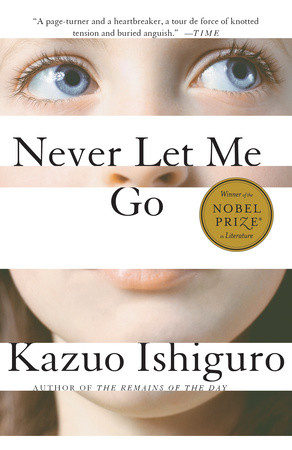
Hailsham Boarding School in Never Let Me Go by Kazuo Ishiguro

I love books where the slow reveal of the reality of a place is the central mystery. Indoctrination is the central theme of Ishiguro’s dystopian novel Never Let Me Go where young students reside unwittingly at a boarding school for future organ donors. The writing is gorgeous and gripping and as both a love story and a mystery, it also manages to explore questions of science decoupled from ethics. 

The Chocolate War by Robert Cormier

Trinity High School in The Chocolate War by Robert Cormier

“Do I dare disturb the universe?” reads the T.S. Eliot quote in Jerry Renault’s locker. If the main goal of a school is education, the second is to conform: to rules, to tasks, to groups, to an identity. Set at a fictional Catholic high school, The Chocolate War depicts a secret student organization’s manipulation of the students that sets a mob mentality against Jerry who is coping with depression after the death of his mother. When Jerry refuses to sell chocolates for the school’s annual fundraiser, the ire of the headmaster and the secret society are set upon him.  For any non-conformist, The Chocolate War strikes fear in the heart while imparting one note of comfort: you are not alone.

Prep by Curtis Sittenfeld

Ault School in Prep by Curtis Sittenfeld

Upper-class waspy prep schools are something I can’t get enough of. A club so elite they’d never accept me? Please, tell me more. I devoured this book when it came out. Being a Midwesterner myself, I also pined for the J Crew catalog-looking East Coast boarding schools and begged my mother to attend one. However, because we were not rich and I was a fairly terrible student, it was never going to happen. Prep is the quintessential fish out of water story: Lee is Midwestern, not rich, not schooled in the ways of the monied East Coast elite, but she wants desperately to fit in. She finds herself, at least initially, with the outsiders on the margins, but rejects them as she moves closer to the center. Ault School is full of the sort of arcane rituals one expects: names like Tig and Cross and Gates, summers in Nantucket, and the game of Assassin played throughout campus.

Carrie by Stephen King

Barker Street Grammar School in Carrie by Stephen King 

As a preteen, I read all of Stephen King but there was one book my mother would not let me read: Carrie. As kind of a skinny girl, scrappy and ugly, and one of the only kids in my school who did not attend a church or synagogue, she was concerned I would relate too much to Carrie’s loner status. By the time I did finally read it, I was solidly ensconced in a fairly normal teenage experience. It was no less horrifying. Carrie’s school is utterly ordinary and what’s terrifying in the end about the book is not Carrie’s retributive fury, it’s the cult of the ordinary: the horrors ordinary students will inflict on anyone who is different from them. 

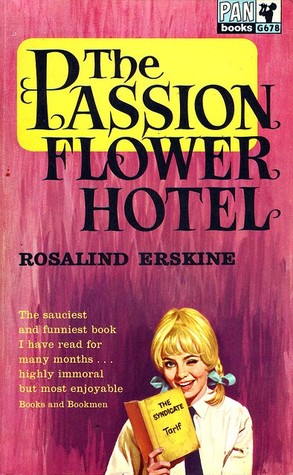
The Passion Flower Hotel by Rosalind Erskine

St. Clara’s Boarding School in The Passion Flower Hotel by Roger Erskine Longrigg (writing as Rosalind Erskine)

I found this book on my father’s bookshelf when I was a kid and couldn’t resist this dusty ancient paperback. It’s wildly inappropriate and at the time felt irresistibly naughty. It’s the early 1960s and a group of girls are obsessed with losing their virginity. One of the girls reads a sociological study on prostitution and they are inspired to turn their English boarding school into a brothel for the boys across the lake. They call themselves “The Syndicate” and offer three services: Vision Only, Touch, and Nothing Barred. Other activities include a striptease and burlesque. Although funny and Woudhousian at times, the book is dated with racist elements and 1960s mores on gender and sex. Best read as a time capsule.

Trans Characters Are In Vogue, But Where Are the Thinkpieces?

In 2015, Casey Plett wrote about the rise of a particular kind of novel in Canada: ‘Call them the Gender Novels – books about Gender with a capital G.’ She describes the rise of non-trans authors writing sympathetic books about trans characters, exemplified by books like Jeffrey Eugenides’ Middlesex (2002) and Shani Mootoo’s Moving Forward Sideways Like a Crab (2014), and how they almost inevitably produce identikit main characters: flat, stereotypical sketches of trans people with no inner lives, who exist mainly to make cis readers feel edified.

If the only alternative were a return to The 40-Year-Old Virgin or CSI—using the trans character as a punchline or serial killer—then perhaps the Gender Novel, for all its literary deficiencies, would still have political merit. But that is not the only alternative. There are people out there writing good trans characters; many of those writers happen to be trans.

Casey Plett

2015 is a while ago now, particularly in trans years; the full-on Gender Novel has since become a little gauche in polite company (though it doesn’t stop everyone). But cis authors are writing about transness more than ever. So often, now, I’ll pick up a bestselling, award-nominated, comfortably popular literary novel – the kind you find on three-for-two tables in bookstores – and discover that it has a trans main character, or transness is a notable part of its plot. Girl, Woman, Other. Everything Under. The Ministry of Utmost Happiness. Frankissstein. The Vanishing Half. A Burning. The Perfect World of Miwako Sumida. Hurricane Season. The Mars Room. 10 Minutes 38 Seconds In This Strange World. How Much of These Hills is Gold. Going earlier: Infinite Jest, A Prayer for Owen Meany, Kafka on the Shore.

We are people of interest! We are the topic du jour. So, to ask bluntly: where are the thinkpieces? Usually, a common trend in fiction by cis people merits comment: I’ve read a lot of articles about novels where straight millennial women have mildly humiliating sex. In fact, seeing another one makes me emit the kind of high, keening sound a chicken might produce seconds before laying an egg. But for years, I’ve been watching the same cycle. A cis author produces a work full of rich and strange ideas about transness (often bad ideas, but compelling nonetheless); I wait for cis reviewers to say anything interesting about its use of transness; I get nothing. Well, I get something: avoidance, discomfort, transphobia, and a firm implication that transness is not for genteel literary discussion, even as all these lauded authors keep writing about it. 

Usually, a common trend in fiction by cis people merits comment: I’ve read a lot of articles about novels where straight millennial women have mildly humiliating sex.

Now, not everyone has the good taste to care about trans people as much as I do, and I know from personal experience that word counts are tight. I’m not demanding every trans cameo be documented in print. But there are multiple prominent reviews of Booker-winning novel Girl, Woman, Other that don’t mention the book’s nonbinary character, despite their existence being referenced in the book’s title, and despite their crucial dissenting role in a book about modern Black British womanhood. Or take Jeff VanderMeer’s review of Everything Under, a retelling of Oedipus with two trans main characters, where the tragic prophecy is fulfilled through the main character’s gender transition; the incredibly central importance of transness and transition is considered an afterthought – ‘The novel also explores gender roles and gender fluidity.’

The first two of those Girl, Woman, Other reviews incorrectly describe the twelve characters as all ‘women’ and ‘female’, which is also a mistake its author, Bernardine Evaristo, has made in interviews. Slips in terminology are common in reviews of books with trans themes, when they would easily be caught by a trans staff member, sensitivity reader, or robust style guide. It doesn’t take a degree in trans studies to learn not to call a trans woman of color a ‘sassy transvestite,’ or to avoid using terms like ‘female’ for trans men and nonbinary people. Nor does it take incredible reading skills to know that Conan, a character in The Mars Room, is a trans man, not a ‘trans woman’. (Some other reviewers call him a ‘female-to-male trans’, which was already an outdated term by the novel’s 2018 publication.) 

These slips are irritating, infuriating, even upsetting at times, but they’re impactful mainly because of how they betray a deeper lack of care and empathy. There’s a fundamental incuriousness here about why transness is in this book, and what it is doing or failing to do.    

There’s a fundamental incuriousness here about why transness is in this book, and what it is doing or failing to do.

If you read the newspaper reviews of Frankissstein (2019), Jeanette Winterson’s Booker-nominated reinterpretation of Frankenstein, you might get a similar initial sense that I did: a zany, imaginative, weird, comic novel that tackles cyborgs, feminism and AI. “Jeanette Winterson’s Playful New Novel Offers Thoughts on Mad Science and Sexbots,” reads the NYT’s headline; they describe the novel as ‘talky, smart, anarchic and quite sexy.’ The Independent calls it ‘light and comic’, full of ‘zany fun’, while various outlets focus on its hilariously loathsome sex doll seller and treatment of hot-button topics. When they mention Ry – the trans protagonist of one of the novel’s two narratives – it’s mostly casual, basic descriptions of their character: ‘The narrator is a trans man named Ry Shelley’ is the simple (and arguably inaccurate) summation in the Washington Post. Ry’s transness is of interest but is implied to be a simple fact rather than a driver of the novel’s events. There’s only a rare, slight glimpse of trouble, such as a throwaway comment in the LA Review of Books review about Victor, Ry’s sexual partner, ‘repeatedly assert[ing] that he is not gay.’ 

Forgive my shock when I actually read the book and found that Ry is subjected to an exhaustive array of minor and major harassments, culminating in a sickeningly graphic scene where they are clocked as trans in a men’s bathroom and viciously sexually assaulted. It felt like Ry was a martyr archetype who existed to experience pain, rather than a human person. Ry’s characterisation is flat and passive: they inexplicably answer invasive and threatening questions, they put up with fetishization and objectification from almost everyone they meet, and they talk like a cyborg. (They self-describe as ‘I am a hybrid’, which is admittedly pretty metal but is also more suggestive of a Toyota Corolla than any trans person I’ve ever met.) And it is irritating to see a novel treat trans bodies as freakish and newfangled. 

But what obsessed me after reading Frankissstein was going back to those reviews, trying to fathom the gulf between their descriptions and the novel itself. For whom is this fun? For whom is this light? What do cis people see when they read this? 

In Lian Konemann’s book The Appendix: Transmasculine Joy in a Transphobic Culture, Konemann describes keeping a list of transphobic things he encounters for a few months in 2019. Coincidentally, the first thing he mentions is a review of Frankissstein in the London Evening Standard:

You flit in this narrative between Shelley in the 19th century and our contemporary narrator, Dr Shelley, a transgender – of course! – medical doctor. S/he is called Ry, short for Mary (as in Mary Shelley), which makes you wonder why s/he isn’t called Ree, so as not to sound like Ryan. S/he started out female and has XY chromosomes but has had upper body surgery, no prosthetics and testosterone supplements which gives Ry an elongated clitoris – two centimetres, I think – and a satisfactory sex life.

‘Of course!’. For once, it’s clear enough what the reviewer sees when she looks at Ry: a mixture of obvious disdain (hence her ostentatious avoidance of their pronouns) and anatomical, objectifying interest. She sounds like a zoologist describing an abnormally developed frog. These are reviews of trans themes at their worst: they become a fun way for the reviewer to promote dehumanizing and hostile attitudes toward trans people. Regrettably, these are often the only reviewers who engage sustainedly with a book’s trans themes, but only out of voyeuristic delight at having an object to poke at. Specifically an ‘elongated clitoris,’ which plenty of cis women also have, by the way. 

These are reviews of trans themes at their worst: they become a fun way for the reviewer to promote dehumanizing and hostile attitudes toward trans people.

It’s clear that most reviewers don’t want to talk like this. However, lack of interest in trans people, anxiety about pissing people off, and lack of knowledge of trans subject matter tends to produce unsatisfying reviews. Avoidance is disappointing, as is an uncritical, magnanimous ‘oh, how lovely’ attitude towards the mere existence of trans representation. Transness has the curious capacity to turn off cis reviewers’ critical capacities. Part of this could likely be solved by having a robust style guide (which the Trans Journalists Association has), but part of it comes, I believe, from a desire not to poke the bear. I live in the UK, where most of our papers are openly trans-exclusionary, and even in the US there are almost no trans journalists stably employed in journalism. If reviewers talked more explicitly and seriously about transness, it might be more difficult to pivot to trans scare propaganda for your Sunday feature, or to blithely ignore trans people when we’re inconvenient. And wouldn’t that be a shame. 

In dangerous times, I would like to suggest a riskier approach to trans criticism, given that I have little to lose: what if we asked about why cis people are so interested in transness, and what function characters serve in cis novels? What if we admitted that, at least some of the time, trans characters are used as a way for cis authors to talk to other cis people, and asked about the messages they’re sending? What if we looked at the anxieties and prejudices folded into some portrayals of trans people, the genuine interest and desire for connection that come in others, and work backwards towards a trans criticism where cis people might, just might, be allowed to admit that they find us interesting and scary? What if we broke the awkward silence?

I Am Waiting To Be Built

Missense

Once, I followed the snow, watched as it blinked. 
In this language, to ask is to bury. In this language, 

eyes are less than mirrors. What is lost in translation: a bird 
is a beginning that sings; a horse is an untamed tongue. 

Pears are as good as boats are as good as stomachs 
in the bearing of rot. How they can only sink. 

In this language, the names that follow us are castles 
of memory. In this language, I am waiting to be built 

& to be seen. Do you remember what was asked? 
That is to say, do you remember how we were buried? 

How raindrops fell like stones. How they were only stones 
until we felt them. How we were only bodies 

until we fell.


Iteration

I am told again & again: there was light once, 
        in small motions. This is before my mouth 

was a bullet, rusting. Before my spine was a road to be 
        worn. All the ways to begin unwound. Here, 

floating in a mother’s stomach: the remains of typhoon 
        uncut. The sun is only an open wound if you stare 

too long. The sky is only a vault if you let it 
        hold you. Consider if the world was built 

on a Sunday. If it is still beginning. If we are still 
        beginning. Another telling, & I am reminded 

that the earth has teeth. That bodies are softness & the 
        shadows that follow. There was light once, 

& nothing to drown in it. Again & again, we are only as bright 
        as our stars. How quiet, this irreversible reaction,
 
these small tragedies. How terrible it is to be 
        the home of so much light.

7 Books About Older Women Behaving Badly

In our youth-obsessed culture, we want older women to disappear. But what happens when they refuse? 

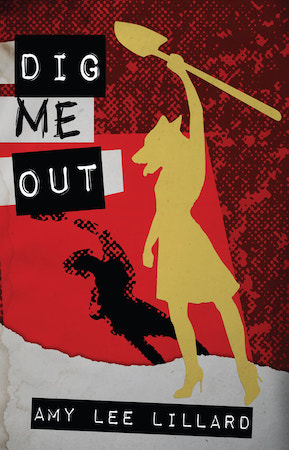
In my new story collection, Dig Me Out, I focus on women filled with anger. And often, that’s older women. When women reach forty, our culture tells us we’re no longer sexy or fertile, not as sweet and pliable. We’re worthless. It’s maddening and infuriating. 

Books so often fall prey to this cultural bias by centering young characters. The older women that are featured are minimized, made cute, feisty, or harmless. They accept the imperative of our culture, swallow any anger they might have, and push themselves to the sidelines. 

But these seven books celebrate the older woman that defies logic and bias. They won’t go quietly into oblivion. They won’t disappear, and in fact, insist on being seen. Even if that involves letting their anger out. Even if it involves violence. 

A Certain Hunger by Chelsea G. Summers

A gruesome story with a beautifully self-aware narrator, one who knows the violence and cruelty behind men, and haute cuisine. And she will use her knowledge to make her true mark.

On the first night we meet Dorothy, a renowned food critic in her 50s, she’s picking up a younger man at a bar. After a few wild weeks together, she brutally kills him. But not just that: she slices off pieces of him and makes him the centerpiece of her fancy dinner. The rest of the story is spectacularly visceral prose charting the evolution of a truly wild and dangerous woman.

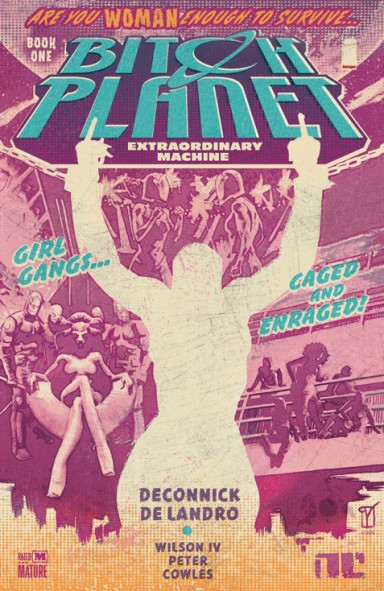
Bitch Planet, Vol 1: Extraordinary Machine TP

Bitch Planet by Kelly Sue DeConnick

A graphic novel set in the future, this book creates a world of our biases turned fascist. “Non-compliant” women in this story are sent to the Auxiliary Compliance Outpost—a distant Bitch Planet. These are women who are deemed too old, too worthless, too crazy, too dark, too much by the ruling group called the Fathers. On Bitch Planet, overseers require the inmates to participate in an insanely violent game called Megaton for their enrichment. But the older women, the weirdos, the incorrigible, and the deviant will team up, break the rules, and take down the system. Funny, campy, and gloriously gratuitous, this quick read is filled with beautiful, badly-behaved bitches to celebrate.

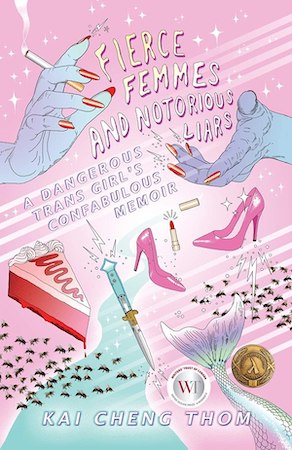
Fierce Femmes and Notorious Liars by Kai Cheng Thom

A young Chinese trans girl runs away to a magical city and finds her chosen family: a group of femmes living and working in the Street of Miracles. The family is led by older women: Kimaya, spreading love to her girls and teaching the lessons of age, and Valaria, the goddess of war, pissed off by years of men behaving badly, and ready for revenge. When one of the young girls is murdered, the group forms a vigilante gang, fighting back against the corrupt cops, violent johns, and transphobic assholes that frequent the Street. Is the violence justified and sustainable? What is it doing to them? Can they ask for a better future? The older women will lead the way.  

I Love Dick by Chris Kraus

One night Chris and her husband meet Dick. Unexpectedly, desperately, she falls in love. So begins an obsession, with Chris inundating Dick with her affection, initiating disastrous rendezvous, and otherwise blowing up her life. As the men around her cry “crazy,” Chris follows her unfathomable desire to where it will lead. That may be called behaving badly. It may be crazy. But it’s real.  

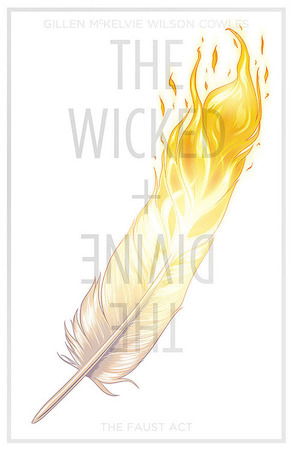
The Wicked and the Divine by Kieron Gillen

This graphic novel features The Pantheon, a group of 12 young people who discover they’re actually very old reincarnated gods. And now, in new and youthful bodies, the older women will take full advantage, creating fame as rock gods and modern uber-celebrities. They’ll be dead again soon; why not behave badly? The older women reincarnated as young women are selfish, mean, and domineering. And they fascinate in their sheer audacity to live boldly.  

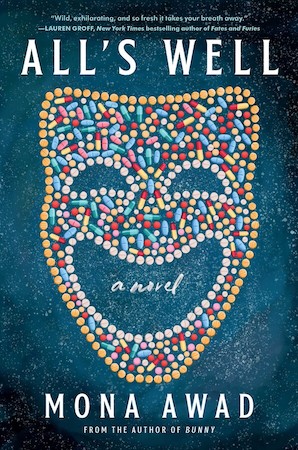
All’s Well by Mona Awad

Miranda was once a budding actress with an adoring husband. But an injury gave her chronic pain that no doctors could fix (and most didn’t believe). Now in middle age, she’s teaching in a mediocre theater program, miserable and desperate. Until she meets three men at a Scottish bar who teach her a neat trick: the ability to transfer her pain to others. A woman in pain won’t be believed, so why not act out? Why not hurt others to free yourself? The book embraces these ideas in a wonderfully witchy (and Shakespeare-infused) way. 

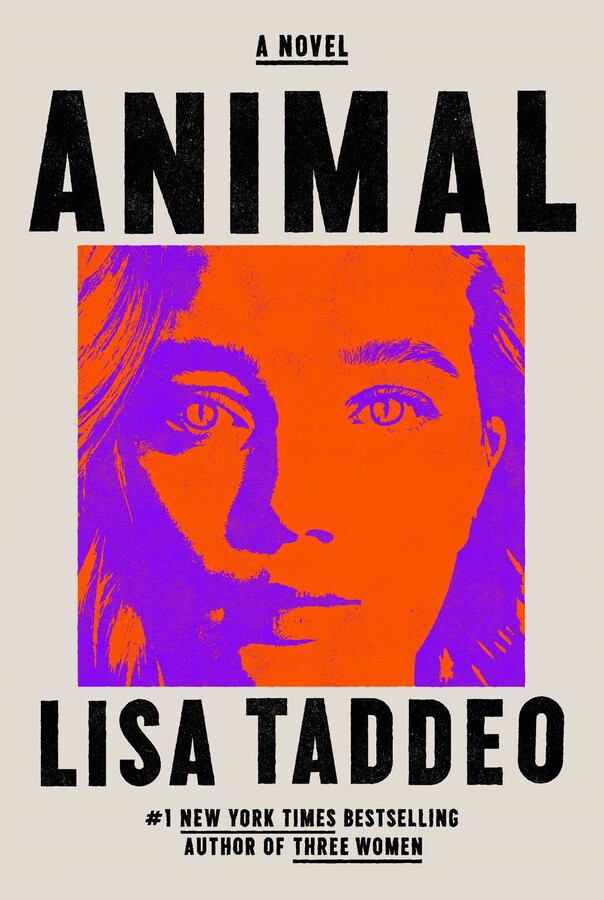
Animal

Animal by Lisa Taddeo

After losing her parents at a young age, Joan has spent her life pursuing men. Especially the married, rich men that serve as father figures. She trades her youthful looks, her body, her emotional labor, for a sense of protection and care. But as she ages, things grow desperate.

When one of the delusional married men kills himself in front of her, she flees. And in California, she discovers her dormant, lifelong rage at men is demanding to come out. This is an intensely deep and nuanced look at a woman who defines herself with men and against women. But with age, with the withering of all her tools of youth, she accesses both a murderous anger and a shocking capacity to love. And with both, she’ll never cede the floor.

The Saga of Britney Spears Eerily Retells Verdi’s Classic Opera, “La Traviata”

The 1999 Video Music Awards were operatic by design: In honor of the burgeoning new millennium, MTV rented out the grandest of all possible venues, the Metropolitan Opera. Under the sputnik chandeliers, host Chris Rock joked (presciently) that he was the first Black man to be onstage at the Met without a mop. An opening number featured the mashup of Carl Orff’s Carmina Burana and Kid Rock’s Moonman-nominated “Bawitdaba.” 

And, of course, there was Britney. 

Had she been a debutante in lieu of a pop star, 1999 would have been Britney Spears’s coming-out season. Her maiden single, “…Baby One More Time,” debuted at the end of 1998 to near-instantaneous media saturation. Her pigtails—secured in fuzzy pink, chastity-belt scrunchies—bounced in time to the music. Her midriff-baring Catholic schoolgirl skirt swayed lasciviously in the music video. When she sang that her loneliness was killing her, it came off as coyly ironic, even smug, in the face of her ubiquity. At least, that’s how it seemed to me, a cynical teenager cast more in the mould of Daria than TRL.

Still, I remember those VMAs. I’d grown up with opera. I loved its grand gestures and sweeping emotions. I also still had one foot in the world of Billboard 100, even though my tastes ran more towards Beastie Boys and Hole. 

Underneath my black hair dye and oversized turtlenecks, I saw Britney for who she was: she was no Violetta.

I remember the ad campaign that MTV ran in advance of the broadcast. The glossy photos, scattered between pages of Entertainment Weekly, Rolling Stone, Twist, and YM featured a baby-faced Britney alongside legends like Janet Jackson, David Bowie, and Madonna. Paying homage to that year’s venue, each star was photographed in costumes that recreated the look and feel of an opera. Jackson was Cleopatra in Handel’s Giulio Cesare; Bowie was Mephistopheles in Gounod’s Faust; Madonna, that most Italianate of all divas, was Bellini’s Norma. 

Britney had been dressed up to look like Violetta, the synonymous heroine of Verdi’s La Traviata and a character oft-recycled in pop culture (see: Julia Roberts in Pretty Woman and Nicole Kidman in Moulin Rouge). Here was her narrative: Despite being a courtesan, Violetta was a “good girl.” A romantic, just doing her best in one of the two roles available to women in 19th-century Paris. Underneath my black hair dye and oversized turtlenecks, I saw Britney for who she was: she was no Violetta. She was a Carmen, the titular seductress of Bizet’s opera who gyrated her hips and might feign innocence but in actuality knew exactly what she was doing.

The photo itself gave it away: Britney looked out of place, a plastic deer caught in the headlights of a more sophisticated art form. Her face was overly made up, thick rims of black eyeliner that shouted “anachronism!” against the rest of the set pieces, all meant to evoke a 19th-century Parisian salon. In a pair of lace gloves, fingers cut off, she held an oversized handkerchief, the must-have accessory for all tuberculosis-ridden courtesans of the era. It was clear to me that she had no idea what she was doing. She was a black hole cinched into a corset and crinolines.

Perhaps Spears was more consumed with surviving the opera than merely seeing it. For all of its grand gestures, and sweeping emotions, opera’s ability to sting, subjugate, shatter, and smother women is far more inconspicuous—and insidious. For an art form that is often criticized for being nothing like real life, the way that opera undoes women (as feminist philosopher Catherine Clément once described it) is surprisingly true to lived experience. Take Spears: in the span of a year, she shaved her head in a Tarzana beauty salon, attacked a paparazzo’s car with an umbrella, and initiated a custody dispute that resulted in six police cars, a helicopter, and a fire truck descending upon her house and an involuntary hospitalization.

Traviata is one of the best examples of this invisible hand doing artisan-level work. As a girl, I watched the action play out on a set of velvet fainting couches and crystal candelabras. I romanticized Violetta, wanted to be Violetta—the courtesan who lived a life of pleasure and excess, trading it for true love, only to die tragically of tuberculosis in the end. I was around the same age when, sick one night at my grandparents’ house, I asked my grandmother if I “had what Violetta had.” (I’d thought that my stomach bug was consumption.) 

To some, they were toxic. To others, they were lucky. To everyone, they were stars.

Everyone romanticized Violetta. Courtesans were the highest rung on the ladder of sex work in their time; mistresses to dukes, generals, and (in the case of Madame de Pompadour) kings. They were worldly and beautiful, refined yet unabashed. Rather than abandon the traditional role of womanhood in that time, they subverted it. They traded on their sex according to its market value, sure, but they did it for liberty rather than security. To some, they were toxic. To others, they were lucky. To everyone, they were stars.

Still, as Verdi intimates in the opening act of Traviata, Violetta could still cry, cry, cry in her lonely heart. A great lover, she had yet to know great love. At the end of that first act, her party guests dispersing as dawn breaks, she sings that she is a poor, lonely woman abandoned to the wasteland of Paris, fated to the vortex of fame and pleasure until her last breath. But then she meets Alfredo, a bourgeois, naïve young man who is new to Paris and in love with Violetta beyond commercial interest. Perhaps she can, in fact, escape the vortex. 

Verdi became interested in the plight of the “fallen woman” (a literal Traviata) after scandalously taking up with soprano Giuseppina Strepponi out of wedlock. However, he didn’t invent the story entirely on his own; it was based on the novel and subsequent stage play by Alexandre Dumas (the younger), La dame aux Camélias. Dumas, in turn, based the story on his affair with real-life courtesan Marie Duplessis, though the term “based on” does a lot of work here, turning Dumas’s alter-ego into the selfless hero for trying to rescue a fallen woman (while being part of the same system that issued the push). Nearly 170 years later, Alexander Chee would restore some balance to this story with his subversive, antiheroic Prussian tenor in The Queen of the Night, whose attempted proto-conservatorship of the novel’s heroine, Lilliet Berne, backfires—quite literally. 

Her father gave her the news that he had accepted this recommendation on Britney’s behalf. She cried for an hour.

The Mickey Mouse Club is about as far away from the Parisian demimonde as you can get, and yet Britney’s own trajectory is not so different from that of Violetta’s—or Duplessis. Spears was 16 when she signed her contract with Jive records, roughly the same age that Duplessis was when she reached the upper echelons of Paris’s sex industry (two years after her father first began prostituting her to older men). The way Duplessis was financially “kept” and overtly sexualized by men many times her age isn’t that far off from the way male record executives marketed Spears and her music career: equal parts spun-sugar and sex. Both women also saw their abusive, alcoholic fathers take active roles in their careers: In reading Spears’s testimony of her father’s conservatorship abuse, my mind immediately went to Marin Duplessis selling his 14-year-old daughter to an octogenarian man in their village and eventually abandoning her in Paris. 

In her testimony this summer before a Los Angeles probate judge, Spears likened the cycle of nonstop work, which was orchestrated by her father, to sex trafficking: “Making anyone work against their will, taking all their possessions away—credit card, cash, phone, passport—and placing them in a home where they work with the people who live with them.” She testified that she had worked nonstop between 2014 and 2018, first in a Las Vegas concert residency, then on a three-month, 31-show US tour. She had been forced on pain of legal action to go back to Las Vegas for another residency. When she said she needed a break, her psychiatrist put her on lithium and recommended a custom, private rehabilitation program in Beverly Hills that would cost Spears $60,000 a month. Her father gave her the news that he had accepted this recommendation on Britney’s behalf. She cried for an hour. He “loved every minute of it.” 

A father factors into Traviata as well, though it’s not Violetta’s. Instead, it’s Alfredo’s father, Giorgio Germont, who meets Violetta at the cottagecore arcadia the pair have run off to. They’re in love—real, non-transactional love. But Alfredo’s father needs her to abandon the relationship: It’s all well and good for a man of his standing to have a dalliance or two. But this affair, held out in the open, masking itself as a respectable, loving relationship, had begun to threaten the family’s social status. Violetta, without much of a choice, relented, weeping over the loss. 

“Cry, go on and cry,” Germont consoles her. “I know I’m asking you to make the greatest sacrifice.” The words are sad, perhaps contrite, even. But the cloying melody he sings is a different tune: Germont is happy and satisfied. He gets exactly what he wants, and loves every minute of it. 

Much like Alfredo’s own vindication at Violetta’s downfall, we were, in 2003, thrilled to see an over-hyped starlet get hers on primetime TV.

Alfredo is unaware of this exchange that takes place between his father and his lover. Violetta leaves him a note, explaining that she’s returning to her old way of life, hoping that this will deter him from trying to win her back. Instead, Alfredo tracks her down at a friend’s party. Calling all of Violetta’s friends and admirers into the salon, he says that, as her former lover, it’s time for him to pay his debts, and asks everyone to be witnesses as he pays her back. He throws a fistful of francs into Violetta’s face, a symbolic insistence that their love was nothing more than economics and that she was nothing more than a prostitute. Violetta crumples. 

In Britney Spears’s 2003 interview with Diane Sawyer, which was excerpted in this year’s documentary Framing Britney Spears, Sawyer gravely informs Spears that she must ask her about her 2002 breakup with Justin Timberlake. Spears accepts this with the demeanor of a penitent at confession. 

“You did something that caused him so much pain, so much suffering,” Sawyer says with a slightly pained expression. “What did you do?” 

When the 22-year-old Spears demurs, visible tears in her eyes, Sawyer presses on: “But you said, ‘I’ve only slept with one person in my whole life, two years into my relationship with Justin.’ And yet, he left the impression that you weren’t faithful, that you betrayed the relationship.” Britney, her chin resting in her right hand, responds: “I’m not technically saying he’s wrong, but I’m not technically saying he’s right, either.” She then turns to the camera with the same doe-eyed daze on her face that is seen in her Violetta portrait. “This was really awkward,” she says, without a trace of humor. 

To paraphrase John Berger, we’re rarely, if ever, able to reconcile what we see with what we know. Much like Alfredo’s own vindication at Violetta’s downfall, we were, in 2003, thrilled to see an over-hyped starlet get hers on primetime TV. It was a similar gleeful schadenfreude that made her very public breakdown just four years later as compulsively watchable as Dynasty. As Variety executive editor Ramin Setoodeh told the New York Times, it was an era in which it “was almost like a sport to watch a woman self-destruct.” 

It was an opera. 

It’s easy to forget the humanity in that girl, and to think of her more as another role.

Years after watching Britney sing “…Baby One More Time” onstage at the Metropolitan Opera, I heard director Jonathan Miller speak about Traviata. He had just helmed a production for the Glimmerglass Festival in upstate New York: a staging that featured Violetta almost completely immobile in the final act. It’s there, on her deathbed, that she reunites with Alfredo in a swell of romantic crescendo. Their eyes lock and they cry out to each other. Yet Miller didn’t play this for romance, didn’t give in to the music video cinematography or caramelized sentiment. I asked him about this choice.

“Have you ever seen a late-stage tuberculosis patient?” Miller, who had also been a physician, asked in return. 

I had not. 

“They aren’t running halfway across a stage,” he explained. “She’d be lucky if she could get out of bed. And when Alfredo enters, he probably would have been shocked by the state of her room. It would have stank. She’d probably shat herself.” I think of all the times I’ve been in hospitals, even the nicest ones. There are still colostomy bags and biohazard bins. Little about death is dazzling. Little about watching women self-destruct is entertaining, especially in 2021. 

At 14, it’s easy to think that a 17-year-old knows exactly what she’s doing. It’s easy to see her squeezed into a corset, hair full of ostrich feathers, and feel more protective of the ostrich feathers than the 17-year-old girl wearing them. It’s easy to forget the humanity in that girl, and to think of her more as another role. It’s only now, half a life later, that I realize how powerless all 17-year-old girls are. How such powerlessness obfuscates the adult men hidden behind the curtain. 

Like Alfredo, we’re now realizing what has transpired offstage. The punishing work schedule Jamie Spears forced on his own daughter has been revealed. That Spears was forced onto birth control by her conservatorship is now public knowledge. As she said in her July 14 hearing, she thought they were trying to kill her. 

Of all the songs in the Britney canon that resonate a bit differently in light of her recent court testimonies, I’m most struck by the operatics of 2009’s “Everytime.” Spears plays a version of herself in a storyline that feels heightened, baroque, and grotesque. She arrives at a hotel in a limo mobbed by fans and photographers, bathed in a sickly, acidic green light. She makes it through the crowd, though not without a few bumps and scratches, and moves through the bowels of the hotel’s back-channels in order to make it up to her room, fighting with her boyfriend the whole way. 

Once in her suite, she gets into the hot tub, and notices the blood running through her hair — one of the blows from a rogue paparazzi camera. Her eyes roll shut as she slips under the water. Cut to her boyfriend discovering her unconscious body. Cut to the paramedics wheeling her out, fans still brandishing glossy magazines in hopes of an autograph. Cut to the doctors trying, and failing, to revive her. No glamour, no glitter. You can almost smell the latex and rubbing alcohol. 

And then, in the final seconds of the video, we see Britney emerge from under the jacuzzi water, smiling with the carefree joy of an Herbal Essences ad. No blood, no hospital. Had the entire thing been a fantasy? If so, for whom? A public clamoring for women to come undone for their own entertainment? Or a woman sick of being the entertainer? 

Why Are Americans So Lonely?

Well before the plague of 2020 and what would turn into the loneliest years ever in America and elsewhere, Kristen Radtke began working on her graphic nonfiction meditation, Seek You: A Journey into American Loneliness. There is perhaps no book that is more perfect reading for this time—and the post-pandemic one on the horizon somewhere out there. You might be familiar with Radtke’s delightfully intimate and public visual-prose takes on New York life from The New Yorker’s Page Turner dating back to 2017, as well as from her previous stint as art director of The Believer magazine’s singular look. 

Seek You by Kristen Radtke

In Seek You, Radtke draws readers raw into loneliness, and all its various individual and public facets, and dives us into a sizable chunk of scientific research about the topic of disconnection. Amongst the latter, include her imaginings of the terrifyingly cruel experiments of Harry Harlow, the psychologist who studied isolation and maternal deprivation using monkeys. Radtke wonders: “Did he take some pleasure in watching their suffering?” This thread had, for me, the echo of a (much lighter) observation that Radtke makes earlier in the book. She notes that having observed “companionless strangers,” loneliness might exist mostly in the eye of the beholder. “Perhaps we see loneliness in others to feel less lonely ourselves.” 

I spoke to Radtke about her the very Americanness of being lonely, the special brand of pandemic loneliness, and her buoyant hopes for the world’s reconnection post-pandemic. 


J.R. Ramakrishnan: You have great titles (Radtke’s first book Imagine Wanting Only This). You explain the first part in the book but I’d love to hear about the “American” specificity in the second half of the title. 

[Americans] are more likely to be suspicious of variables or of people they don’t know. They don’t recognize themselves as a part of a community.

Kristen Radtke: For a long time, I had a working title of Essays on Loneliness. I knew I needed “loneliness” in the title but I didn’t know what it was going to be. One of the opening anecdotes in the book was about amateur radio operators who make a “CQ call,” which is a call outwards over the airwaves to make a connection with basically anybody. Just like, “Hey, a call for anyone who wants to talk to me!” I think we all need to make that sort of antidote for our loneliness.

On the American part, I felt like there was a specific way I wanted to address the problem of American loneliness, of how we feel so much separateness. We don’t have a lot of community centers or gatherings anymore, but we do have our big yards and so on. I’m actually arguing that this separation is one of America’s downfalls.

JRR: You hit upon two things that quite define America, guns and driving, and how these things relate to loneliness.

KR: Loneliness is a very difficult way to quantify. There are ways in which scientists determine whether or not a person is lonely. There are surveys where you answer these questions where you rate how you feel and so on to see if you are certifiably lonely or not. Of course, not everyone is taking these surveys so it’s hard to say where loneliness rates are. But we can say that a lot of people live alone and they’re less likely to involve themselves in communities. And then, in places where you need to drive, we are very separate from one another since we spend most of our time in our cars. And then, gun violence is part of that kind of separation that we feel in America in that there are different value systems around guns. It’s such a dividing line: us versus them, which is a very dangerous thing.

JRR: You also speak about the community that incidents of gun violence create. In the book, you reflect on the 2017 shooting in Las Vegas and how the community came together, and how this happens with mass shootings in general. 

KR: Yeah, we do. We come together to comfort one another, very obvious, but it’s also about creating this sense of [feeling like] we are separate from this tragedy. We’re kind of like a warm bath.

JRR: The line where you say that guns are the ultimate separation was so powerful. You also talk about your husband being a gun owner. From the outside, guns seem foundational to America. Going from that, can we also say that loneliness is foundational to America too? 

One of the difficulties with loneliness and one of the reasons it is so painful is because it can feel like a personal failing.

KR: I think you’re exactly right. There’s this idea of you must protect your lands and that kind of thinking about separation by definition and expression. In America, people are more likely to be suspicious of variables or suspicious of people that they don’t know. They don’t recognize themselves as a part of a community. The bad analogy is like they talk about with garbage removal, you want to create a pathway for the truck to go all through the neighborhood. Also when you’re planting flowers in your yard, you should think of all the other yards. But we don’t do that. I think it’s true for a lot of wealthy countries that you have to stand on your own two feet. You’re not really standing on your own two feet. You are part of a network. Everyone needs one another to survive, and not just that, but to be happy and thrive. 

JRR: I thought it was very cool to see loneliness and your different explorations in images. This book is so deeply reported, and I am curious if you ever considered writing a regular prose book? 

KR: Yeah, I mean basically I’ve never written anything particularly long in prose. I might write a script that I’ll later illustrate. I think any graphic novel could be in prose. I don’t think that the graphic novel is a superior form in any way. It’s the form that makes the most sense to me as an artist.

JRR: When were you loneliest in 2020?

KR: Well, 2020 was, of course, it was probably the longest loneliness. To me, this felt like a kind of a different kind of loneliness because it was imposed upon all of us. One of the difficulties with loneliness and one of the reasons it is so painful is because it can feel like a personal failing. Why didn’t I do a good enough job of finding a family or building up a network of friends, becoming popular, or whatever?

However, during the pandemic, we have been all alone or in our little isolated pods. I think, especially at the beginning there was something of a solidarity or a sense of camaraderie, which started to change the idea of loneliness for a lot of people. That wore off as time went on and people got worn out. What I think is valuable about this time of loneliness is that it has been exposed as a problem. But it’s not like there’s a solution to be had during a pandemic when the solution is something that could kill you. 

JRR: What do you do when you feel lonely? 

KR: I try to deal with it by doing something different. Like I will send 700 text messages to see who wants to go do something. Loneliness, though, can sometimes be hard to distinguish between like a regular kind of listlessness, or like, what are they saying that we’re gonna experience after the pandemic: languishing. That’s the thing for 2021, we are all languishing. When I feel a twinge of  dissatisfaction, it feels a lot like loneliness. Then, I’ll try and do something that will be a guilty pleasure. But generally, I try to reach out to another person.

JRR: I thought it was interesting the part where you cite an MIT study about mice going into overdrive after isolation. Is this what maybe the rest of 2021 and perhaps more likely 2022 in America (at least) is going to look like? There’s a lot of people talking also about post-Pandemic awkwardness. 

KR: Yes, I keep seeing articles about people fearing or having social anxiety. And that is really emblematic of what it’s like to be isolated. Socializing isn’t awful. You’re just out of practice. 

The thing about the pandemic, it’s maybe trickling out. It’s not like there’s going to be one day where we all throw open our doors together, and know it’s done. But yes, when this is over, I am hopeful for the idea of a new Roaring Twenties. I want us to go all out! I want us to be together all the time!

Even I Don’t Know Why I’m at This Baptism

“Godfather” by Blake Sanz

To grant Mercedes’s wish, we had to find this old priest in a cheap resort town called Tecolutla; if I was okay with it, the we should include me. Or anyway, that’s what Manuel told me over the phone that morning. “She wants you to be there,” he added. He told me how things had gone the night before when they all got back to his apartment from our final planning session at the Hotel California. The argument started innocently enough. He and Tommy had needled Mercedes about this baptism business. Why expose Tita to anyone official in Mexico, they argued. The fewer to know about her before she crosses, the better. Wouldn’t there be a document certifying the rite? Couldn’t the certificate of baptism later be used against them? Or, might it not work the other way? Wouldn’t a priest require a birth certificate to perform the ceremony? And in that case, how would it be possible to find a priest willing to baptize the child on such short notice?

This had all sounded like bullshit to Mercedes. She felt ganged up on. She told them flatly that she didn’t care what the rules were, and she didn’t care about anything so petty as the bureaucracy behind a birth certificate. What was that in the face of a child’s soul? What was that in the face of performing a rite that that been performed on every single member of every single child in her family, going back as far as the time of the mixed-race great-grandchildren of Cortés? “Híjole,” she had said, “my mother and father would have wanted this!”

This, the trump card.

Tommy and Manuel let it drop. Tommy explained to his father: the only reason she’d ever gone to America—Louisiana, at that—in the first place was that her mother had been murdered when she was a girl. “At the Acteal massacre,” he said. “The one at the church in the jungle. The day her husband disappeared. Her parents, they were churchgoing people. Very devout.” And so, on Mercedes’s behalf, at Tommy’s begrudging behest, Manuel was calling to see if I would come.

“Where is Tecolutla?” I asked. “And why there? Why not here, in Poza Rica?”

“An hour away. My mother had me baptized at the church there. The same old priest still runs that diocese,” he said. It was the only religious place in the world, he reasoned, where his name might have any pull, where he could ask a priest to do something like this. He’d made a few calls and arranged for the old man to perform the ceremony.

What was that in the face of a child’s soul?

We took off late that morning, scrunched together in Manuel’s truck, four of us in a row with the baby on Mercedes’s lap. The truck’s cabin jostled us about as we rolled over uneven roads with holes from where the rain had washed them out. The road cut through tiny towns carved out of the jungle that surrounded us. Every few miles, a street side vendor sold something preposterous—pickled chicken necks, Batman action figures, always Coca-Cola—at the spots where the traffic had to slow to pass over earthen speed humps. Tommy asked Manuel about Tecolutla. As Manuel responded, Mercedes asked Tommy to take the baby, but he paid such close attention to his father that he didn’t notice her. She turned to me then. Gladly, I accepted the child.

We came out of the jungle on a road that ran along the Gulf. Suddenly we were in a dreamworld version of Mexico where the sea sparkled as the sun rose high in the sky. Where the paper flags hung over the streets promised cheap fun. Where even the fun didn’t need to be taken seriously. Souvenir vendors populated street corners, holding up PVC piping from which hung luchador masks and huaraches, plastic skeleton dolls and crucifixes with the puncture wound in Jesus’s side bleeding down his ribs. Manuel fended them off with waves of his index finger. We turned on a road that went up a hill away from the sea. As we climbed it, banana leaves brushed against the chassis. At the top, an adobe church looked down on the hill from its perch, its coral window treatments and white bell tower pristine in the sun. To the side of the church stood a small office painted the same colors. The town looked nothing like the wasteland of Poza Rica, where I’d arrived the week before from Cameron, Louisiana, to consult with Manuel on his waste oil treatment business. He pulled his truck into a parking spot and we got out.

“This is some place,” Tommy said. “You sure you don’t want to just stay and live here, sweetie?”

Mercedes looked at him like a petulant child.

“My mother used to take me here from Veracruz once a year, on my saint’s day,” Manuel said.

As Manuel reminisced, Tommy listened like the son he was. Mercedes glanced around, pleased with the look of the church. We walked in a motley caravan through the portico and into the rectory’s lobby. There, a woman in a blue blouse and jeans welcomed us and spoke to Manuel. I looked around at the pictures of Juan Diego and la Virgen de Guadalupe on the walls. Eventually, an old priest donned in black emerged from the hallway and waved us to the back with a kind smile. As he led us down a hall, he put his arm around Manuel and spoke to him fondly. I couldn’t understand their words, but it seemed like the old man was asking about Manuel’s mother and father. The priest put his arm gently on Manuel’s shoulder as they reminisced. We came to a conference room, not unlike the one at the Hotel California, except for its bookshelves, which housed endless volumes of hymnals, stacks of musty missals, framed photos of priests posing with important-looking people. The priest asked us to take a seat. At that point, he recognized me for the gringo I was: “I see we have an American, yes?”

I nodded.

“Welcome,” he offered. “My name is Father Antonio.” 

“Keith,” I said, and extended my hand.

“Where are you from, Keith?” Despite his brown skin, he had no trace of an accent.

“Denver.”

“Ah, Denver. I was there once, in 1993. Do you know the Cathedral Basilica of the Immaculate Conception? The one on Colfax Avenue?”

What could I say? “Yes. My parents were parishioners there.” 

“Ah!” he said. “And so, did they baptize you there?”

“I don’t know,” I said.

“Well, you might remember that in 1993, Pope John Paul came to Denver. Our bishop granted me a dispensation for the travel. Lovely city, Denver.”

“Yes, it is,” I said.

“And we have a little one here, yes?” He turned to Mercedes to decipher whether she was following his English. Seeing she wasn’t, he returned to Spanish. Because I couldn’t understand his words, I focused on his continental air. With his shock of white hair and gnarled hands, he looked feeble, but judging by his smooth face, it seemed impossible that he was old enough to have baptized Manuel. Tommy and Manuel and Mercedes took turns speaking to him, and he acknowledged them with soft nods. Despite my lack of Spanish, he made eye contact with me as much as the others as he spoke. He rose when he finished, and we all took his cue. He led us back out into the portico, and as he made for the door, he spoke to me again: “We’ll see you in just a minute,” he said, and then he was gone.

Are you ready to help the parents of this child in their duty as Christian parents?

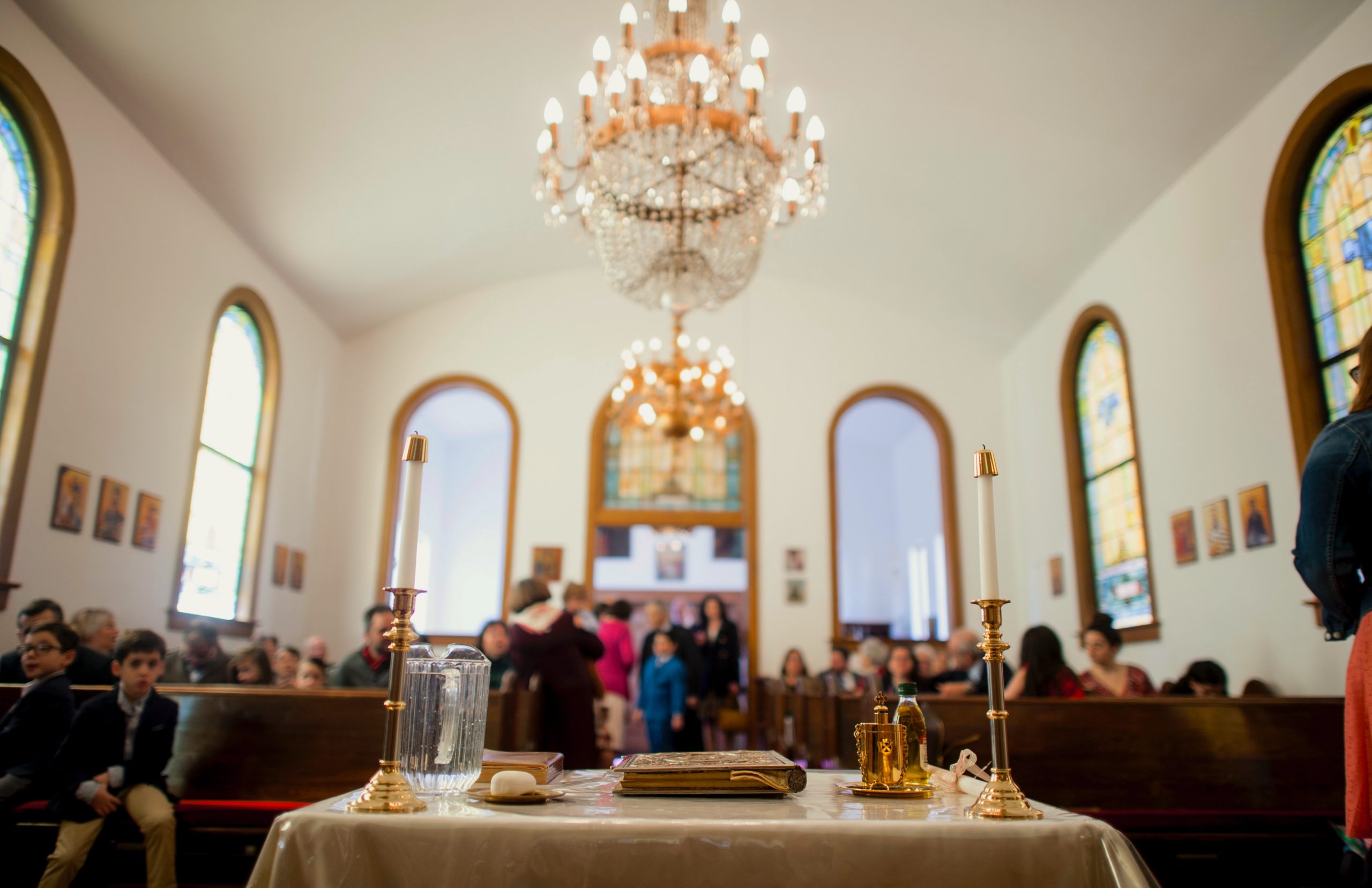
As we entered the church, its size and quiet signified its holiness. Up in front, an old woman knelt before a votive she’d lit to the side of the nave. When she heard us close the massive wooden door with a creak, she didn’t move. We walked down the center aisle, my hard-sole shoes clicking and echoing in the vast, high-ceilinged space. The midday sun shone brilliantly through the stained glass mural behind the altar. Shafts of dust swirled in the sunbeams and made the shadowed portions of the church seem darker than they were, the votives’ red holders more reverent.

As we reached the front pews, Manuel genuflected and made the sign of the cross, a begrudging nod to old childhood traditions. Tommy did the same, with all the tactlessness of youth. Mercedes made the gesture in the manner of a believer, even as she held the child in her arms. I awkwardly imitated her and took my seat. We sat in silence, waiting. The old woman kneeling in front of the candles arose and crossed herself. As she turned, I saw that she held a rosary. She walked past us on her way out, and as she did, she smiled at me and patted me on the shoulder.

Mercedes knelt beside me and mouthed the words to a prayer in Spanish. Tommy and Manuel both held the same seated posture— slumped, hands in their laps, heads tilted up, both staring straight ahead at the engravings etched into the stone pulpit before them. I marveled then at the art’s detail: human figures gestured to each other and upward at heaven, signs and symbols aplenty in the smooth stone firmament above. The stained glass windows featured on every wall revealed that same level of embellishment. Each one had a mural with a story on it: Jesus at the well with the Samaritan woman, a flock of sheep and their shepherd, John the Baptist visiting Mary and Joseph for the first time since the Savior’s birth—each of them, I imagined, the work of an artist or a believer, a penitent or a craftsman, or anyway someone who wouldn’t have considered the role that oil might have played in its construction.

The massive wooden door squeaked open behind us and I turned to see. Father Antonio stood at the precipice, donning a green vestment that covered his collar and his black shirt. He held the same expression as before, but the garments transformed him. His walk exuded authority. When he extended his arm high to wave at us, the cloth came with it and created the illusion of a wing running from his wrists to his hip. He no longer appeared as a man Manuel had called for a favor. Master of this space, he acknowledged me. I bowed in his presence.

As he approached us in the first pew, Mercedes stood up with her child. The rest of us followed suit. Father exchanged whispered words with Mercedes, and she nodded her head at his explanations. After draping a folded white cloth over his forearm, Father Antonio turned to me.

“So, you will be the godfather?”

I’d been dense enough not to fathom my official role in the ceremony.

What else could I say? “Yes, Father,” I replied. 

“All right then. Are you ready?”

We walked up to the baptismal font on the right of the altar, a marble monolith filled with holy water. As Father Antonio crossed in front of the tabernacle, he bowed deeply. Not wanting to mess anything up, I followed suit. We gathered round the font. Father Antonio lit the paschal candle beside it and started to recite a prayer from a book held in his hands. Occasionally, he looked up to prompt Mercedes and Tommy for a response, and they gave it. Entranced by the rhythm of his speech and my own remove from the Spanish he spoke, I didn’t recognize when he was talking to me. At least not until he paused, and the silence held long enough for me to look up and see that he was smiling at me patiently.

“I’m sorry, Keith. The question was, ‘Are you ready to help the parents of this child in their duty as Christian parents?’”

“Uh, yeah. Sí,” I said.

He went back to Spanish, continuing the rite. When he paused for a response, Tommy and Mercedes echoed my words: sí. And later again: sí. Soon enough, because I kept thinking of the word I was embodying—godfather—I thought of the scene in the church where Michael Corleone’s niece is baptized, and only because of that could I decipher the words that Father Antonio must have been asking us all: Did I reject Satan and all of his works? Sí. I thought of a movie thug pulling the trigger on courthouse steps. Did I reject all of his empty promises? Sí. I thought of migrants crossing the border even in that moment. Did I believe in God, the father almighty, creator of heaven and earth? Sí. I thought of my uncle, who raised me. Did I believe in Jesus Christ, his only Son, our Lord, who was born of the Virgin Mary, was crucified, died, and was buried, rose from the dead, and is now seated at the right hand of the Father? Sí. I thought of my own dead father, the picture of his kind face in Uncle Stock’s house. Did I believe in the Holy Spirit, the holy Catholic Church, the forgiveness of sins, the resurrection of the body, and life everlasting? Sí. And I thought, finally, of Tita, the child cradled in the priests’ arms, the American ita of Poza Rica, the fragile soul whose body I would ferry across the Rio Grande and on to New Orleans in the coming days like some kind of fucked-up saint.

8 Goblincore Books to Help You Embrace Your Inner Goblin

Remember last year, when everyone suddenly got really into baking sourdough bread and sewing their own clothes and making so much jam that there was a national jar shortage? Those were the days of cottagecore, a romantic aesthetic that valued pastorals and strawberries and wicker picnic basics. The popularity of the cutesy cottagecore has since given rise to a similar but opposite aesthetic: goblincore. 

Goblincore is like cottagecore’s grimey, grungy little sibling who won’t stop flipping over rocks in the backyard to find cool bugs. Some of the tenets of goblincore include: embracing the parts of nature that aren’t traditionally beautiful, like moss, fungi, and toads, reframing clutter as curated collections, living a more sustainable life, and being anti-capitalist. Basically, goblincore is a big middle finger to a lot of modern society’s ideas about what makes a good life. If any of this sounds good to you, then you might just be a goblin—and, as a goblin, you’re sure to love these goblincore books.

A Psalm for the Wild Built by Becky Chambers

This slim fiction volume is what I like to refer to as “sci-fi goblincore.” The book is set in a world very similar to earth, which used to be highly industrialized and relied on robots for manufacturing—until one day, the robots suddenly gain consciousness and leave human society to live in the wilds. Hundreds of years later, a monk named Sibling Dex is struggling with a quarter-life crisis and decides to explore the wilds, where they almost immediately meet a robot who wants to learn about humans. Wild Built is anti-capitalist, anti-gender, and beyond charming. Read it if you want your goblin heart to be warmed.

Gathering Moss by Robin Wall Kimmerer

Braiding Sweetgrass author Robin Wall Kimmerer has also written this goblin-friendly book that tells a personal and scientific history of mosses through a series of linked essays. Moss may not always be traditionally beautiful in the way flowers are, but in this book Kimmerer explores the ways that mosses can teach us how to live better lives, and how mosses, like us, are at their best when they’re tangled in the lives of others.

Witchlight by Jessi Zabarsky

This intimate, aesthetic graphic novel probably isn’t like any fantasy you’ve read before, because it’s focused more on the relationships between the characters and quiet moments of growth than it is about conquering heroes and epic battles. When Sanja, a peasant girl with a talent for sword fighting, is kidnapped by Lelek the witch, she’s frightened at first. But as time goes on and the two search for the missing half of Lelek’s soul, they begin to fall in love. An emotional, queer fantasy story about witches, swordswomen, and love—what could be more goblincore than that?

Strange Beasts of China by Yan Ge, translated by Jeremy Tiang

In this novel-cum-beastiary, the fictional Chinese city of Yong’an is a place where humans coexist with spirits and monsters. The narrator is a cryptozoologist who takes up the dangerous task of indexing all the different types of beasts that live in the city, some of whom live happily beside humans, while others are more hostile. As the narrator learns more about the creatures that inhabit her world, she also learns about herself—and what’s more goblincore than finding yourself in the strange and unexpected?

Wintering: The Power of Rest and Retreat in Difficult Times by Katherine May

We live in a society that highly values the capitalist ideals of productivity positivity above personal care and mental health. That’s why Wintering is such a relief, and why it’s a wonderful goblincore book. In her book, May encourages readers to embrace the periods of sadness and quiet that often punctuate our lives. Rather than arguing for positivity and telling readers to work through the pain, May takes the radical stance that sometimes we just need to rest and lean into our fallow times in order to learn about ourselves, which is a message goblins can get behind.

Small Bodies of Water by Nina Mingya Powles

This lyrical essay collection written by poet Nina Mingya Powles explores grief, growth, and the ways water binds us together. Small Bodies of Water is about Powles’ childhood spent between New Zealand, New York, and Shanghai, and the search for nature in a time of climate loss and increasing urbanization. What does it mean to connect to nature while living in a big city? How much nature do you need to be around in order to be “in” nature? From ponds and pools to food and family, water offers us so much, and it’s always at our fingertips. This book embraces the goblincore idea that nature is everywhere, even if we don’t always recognize it.

Mooncakes by Suzanne Walker and Wendy Xu

A young witch, Nova Huang, works in her lesbian grandmothers’ magical bookshop and spends her days learning about magic and hanging out with friends (so, basically the dream). That is, until she finds out that her childhood crush, Tam Lang, a nonbinary werewolf, is back in town. The two must work together to understand Tam’s werewolf magic and get them out of the trouble that’s been chasing them—while also falling in love, of course. With a fun, diverse cast of characters, this graphic novel celebrates differences and uplifts the stories that don’t always get told. That’s goblincore as hell.

Entangled Life by Merlin Sheldrake

Every goblincore reading list worth its salt must have a mushroom book, and Entangled Life is a great mushroom book. This book really explores the question “What the hell is going on with fungi?”, a question we should be asking ourselves every day, since fungi can both digest rocks and survive in space. Mushrooms don’t typically get a lot of love unless they’re Disney-fied amanitas, but Sheldrake explains that nearly all life on earth relies on fungi in one way or another. Basically, without fungus, there would be no us. Embrace your goblin nature and dig into some fungus literature.

Howl’s Moving Castle by Diana Wynne Jones

This book needs to be included because Howl is truly the goblincore prototype: A weird guy who collects all kinds of strange objects, does questionable magic, loves spiders, and hates cleaning. It’s a lovely book about friendship and the importance of human connection, but mostly it’s a book about how goblins are really good at finding each other and bad at tidying up (Sophie being the exception that proves the rule). If you’re a fan of the romantic Studio Ghibli movie adaptation, be sure to read this novel, where Howl is not a dope bird-creature in his spare time, but rather a Welsh rugby thug. 

I Love Sally Rooney’s Novels, But They Aren’t Written For Me

I first discovered Sally Rooney’s novels at a time in my life that felt practically written by her. I was nineteen years old, out of college due to Covid-19, and living in a house with my two closest, most complicated female friends. When we weren’t talking in circles about life, politics, sex, and the world, I was exchanging long emails with my highly articulate, highly confusing college crush, rekindled after months of separation—at whose recommendation I purchased Normal People. I read it, and then Conversations With Friends, and like seemingly every twenty-something on BookTok, I faithfully ordered Rooney’s internet-breaking new novel Beautiful World, Where Are You.

As a college student, Sally Rooney’s novels about women my age growing up and falling in love often speak to me on a spiritual level. I find her work enjoyable and relatable, if not groundbreaking. Rooney writes exclusively about white, pointedly thin, elite-educated women with miraculously attractive lovers; I’m not like them, but I’m invested in them nonetheless, which is due in part to Rooney’s storytelling gift, as well as the fact of my limited media options. I don’t expect Sally Rooney to write an experience closer to mine; she knows her niche, and she’s nailed it. But when I witness Rooney’s massive hype across the media and internet, I can’t help but chafe against her literary empire’s assumption of relatability and universality—one that is only afforded to white narratives. The way that Rooney is often celebrated, or at least discussed, as the voice of her generation, has never existed in the same way for readers and writers of color.

When I witness Rooney’s massive hype across the media and Internet, I can’t help but chafe against her literary empire’s assumption of relatability and universality.

To me, Rooney’s novels belong firmly in a contemporary female coming-of-age canon that spans artistic mediums, from films like Lady Bird to shows like Fleabag and musical artists like Lorde. A refreshing departure from traditional male coming-of-age stories, this canon centers female sensibilities, sexuality, and even social awareness. It’s so popular that it’s spawned its own archetype of TikTok girls who listen to Taylor Swift and carry Normal People in their tote bags. If you are an angsty white girl seeking media representation, there’s never been a better time to be alive. But if you are a girl of color like me, you’re more pressed for options—while authors like Akwaeke Emezi, Carmen Maria Machado, and Jacqueline Woodson are writing us gloriously into narratives, few of them receive Rooney levels of hype or status. For a time I wondered: Where are the Normal People of Color? But after seeing Rooney recently break the Internet (again) with her third novel, I realized we might never be permitted to do the same—and this is by design. 

Much of Rooney’s winning literary formula simply isn’t available to writers of color. White writers are permitted to use social justice as an intellectual experiment and aesthetic element in their novels, to a degree that writers of color could (and would) never. Rooney is a self-proclaimed Marxist, a fact that sits uncomfortably beside her literary empire, and her characters loudly debate inequalities in class and gender, and more rarely race. Other critics have derided the “self-awareness” that plagues the politically earnest characters of the Rooneyverse, or else defended the ironic juxtaposition of the characters’ sweeping ideologies and trivial lives. Self-awareness is a particularly prominent trait in the emerging genre of “internet novels,” a genre synonymous with white women novels such as Lauren Oyler’s Fake Accounts and Patricia Lockwood’s Nobody Is Talking About This. While novels written by authors of color, such as Kiley Reid’s Such a Fun Age, also comment on the thorny nature of communication and identity formation online, theirs are less likely to be recognized and labeled as groundbreaking. Meanwhile the fictional renditions of internet discourse populated by Rooney’s characters, and others like them, feels particularly pessimistic and whitewashed, detached from the digital ecosystem innovated by Black people, queer people, and people of color. The literary world doesn’t seem ready for those perspectives—at least not yet. Further missing from this discourse is an acknowledgement that writers of color have written self-aware protagonists for far longer, with far less fanfare—self-aware in that their narrators are conscious they are living as marginalized selves, regardless of whether they speak it aloud, on every single page. 

Fiction by younger writers is increasingly confronting our society’s impending doom; “general systems collapse,” as Beautiful World, Where Are You protagonist Eileen puts it, is a lauded theme of Rooney’s work. But the indulgent hand-wringing embodied by Rooney’s solipsistic young scholars is reserved only for privileged, urban white characters—similar to the protagonists of Oyler and Lockwoods’ novels, as well as of Jenny Offill’s Weather. I think of why white women flock to dystopian novels like The Handmaid’s Tale, featuring horrors, such as enslaved conditions or deprivation of reproductive autonomy, that have actually, historically been inflicted on women of color: for them, existential threat still remains firmly in the domain of fictional imagination. Characters of color don’t spend the same time nursing existential malaise, because they’re more likely to be on the front lines, with less time to wax poetic. Of course, Rooney’s characters are self-aware enough to know that. “Of course in the midst of everything, the state of the world being what it is, humanity on the cusp of extinction, here I am writing another email about sex and friendship,” says protagonist Alice in Beautiful World, Where are You. (Movingly, rightfully, she adds, “What else is there to live for?”) Still, for white women only recently made aware of injustice through the internet, social issues are mere fodder for conversations with friends. For characters of color, they are reality. 

Characters of color don’t spend the same time nursing existential malaise, because they’re more likely to be on the front lines, with less time to wax poetic.

Writers of color have long been aware of how universality is granted automatically to our white counterparts. It’s a miraculous, contradictory blessing—white characters are viewed as individuals, rather than representatives of an entire community, and yet their experiences are meant to speak for us all. Rooney writes about experiences that I suspect many readers will only believe if the characters are white, such as chronic miscommunication, glamorous self-sabotage, and endless navel-gazing, passing it off as a universal experience. As a reader of color, her characters’ moments of self-absorption and privilege are jarring reminders to me that we are not the same. Rooney’s characters pursue affairs and break hearts, while attending elite schools, working prestigious internships, publishing bestselling novels, scoring magazine features. It’s not that girls of color don’t get into messy situationships, pity ourselves amid our success, or string one another along—I can personally attest that we do—but it’s hard to imagine white readers suspending their belief to stick around and see themselves in us. Novels like Elif Batuman’s The Idiot, Ling Ma’s Severance, Jean Kyoung Frazier’s Pizza Girl, Raven Leilani’s Luster, and Candice Carty-Williams’ Queenie are all excellent, complicated coming-of-age or millennial narratives that hold their own against Rooney’s in terms of content and craft. The Idiot even contains miscommunication, pining, and emails at an elite university. But objectively speaking, none of these have gotten the same levels of attention.

While Rooney’s characters insist on their normalcy, girls of color are not treated with the mundanity that makes us appealing to mainstream audiences. The double standard is particularly thorny when considering how authors of color are also assumed to be writing from real life. The reality remains that coming-of-age narratives by people of color are considered racialized works first, and coming-of-age narratives second. The writer Brandon Taylor, reflecting on why there are no Black existentialist novels, or novels of consciousness, or internet novels, posits: “If such a thing existed, would we even be able to point our finger to it? Would we even be able to recognize it as such?” At the moment, the answer seems to be no. Identity is self-directed performance art for Rooney’s protagonists, but it’s an impassable burden on characters of color. Our works become must-reads during ethnic history months, windows into specific communities, but very rarely more.

Since it’s rare that I find stories with protagonists exactly like me, I’ve learned to find elements of belonging in a wide range of narratives.

Relatability is a tricky concept for me, given the politics of who is assumed to be universally relatable and who is not. While I do read novels to expand my worldview—fiction is a brilliant tool for building empathy and understanding with people with different backgrounds—more often I’m looking for relatability and representation in my reading lists. As a first-generation American, as well as a young queer woman, I often turn to fiction for much-needed guidance on how to exist, which is why I adore coming-of-age novels in the first place. When I’m older I’d love to write an accumulative, indulgent, listless coming-of-age story of my own where the girls are smart and earnest girls of color, and readers relate to and root for them even when they don’t save the world, when all they do is think and hurt and love. To me, relatability is a necessary and valid metric to help decide which books to read, love, gift to all my friends. It is also a fluid, elastic metric. Since it’s rare that I find stories with protagonists exactly like me, I’ve learned to find elements of belonging in a wide range of narratives. I still read more white authors than any other race. This flexibility towards representation is expected from readers of color, but never demanded of white readers. And this expansive, inclusive approach towards relatability is what I’m still seeking from white people with cultural power. I love reading about sad white girls, but will sad white girls ever love reading about me?

I adore Rooney’s earnest, unsparing female gaze, how she writes with a seriousness that young women’s intellectual and romantic lives are rarely afforded. But I reserve the right to critique the literary ecosystem that nourishes her at the expense of others. I am still awaiting the day that girls of color get mainstream coming-of-age stories that sell a million copies; when we’re finally viewed as normal people, and we get to take the lead.