When I first started working on this list, I didn’t have a list of titles so much as I had a list of problems that would make it very difficult to cobble one together.
Firstly, while Malaysia doesn’t lack for women writers, but most write in local languages—Malay, Tamil, Mandarin—many works remain inaccessible to English-language speakers, and thus, the world. The second issue is economic: because Malaysia’s small industry is reliant on the sales of educational textbooks, there is little room for non-fiction, let alone fiction. To hedge their bets, publishers tend to prioritize work by writers with established followings (i.e. prominent politicians, pugilistic journalists, rich businessmen) most of whom are men—and so we have our third problem, systemic sexism.
The lack of opportunity in local and international traditional publishing has enabled the flourishing of an indie scene. These indies and a persistent (if not robust) self-publishing industry have surfaced some of our most important women writers like Shih-Li Kow and Chuah Guat Eng—but it’s not enough. Many women writers publish as part of anthologies, but most never go on to produce book-length works. And the danger of going the route of indies and self-publishing is that there are many books that will never exist beyond the first print run. I will always mourn the loss of Dina Zaman’s seminal work, I Am Muslim, more or less impossible to find these days.
So no, I was not optimistic going into this. But when I began to really look, I was surprised by what I found. There are bold adventures, political mysteries, and stories about our uneasy cohabitation with the supernatural. Many experiment with the boundaries of genre, and span a range of mediums, perspectives and styles. There are books based in Malaysia, abroad, and beyond. All were written within the last 10 years, and eschew the colonial fictions that tend to sell well on the international market.
The thing is that colonial stories are expected of our writers—but while colonial history is important, it is not our only history. In many ways, our fixation with the past belies an inability to reckon with it, and doing so we are unable to imagine different, possible lives. These writers’ works suggest a hidden richness that has been poorly acknowledged, and a courageousness to break with those old expectations.
It’s the honest stories—the ones that speak to our country’s messy, unjust history and the calamities in their aftermath—that have long been missing from the conversation. These Malaysian women writers are changing the game by insisting on the value of their stories and perspectives:
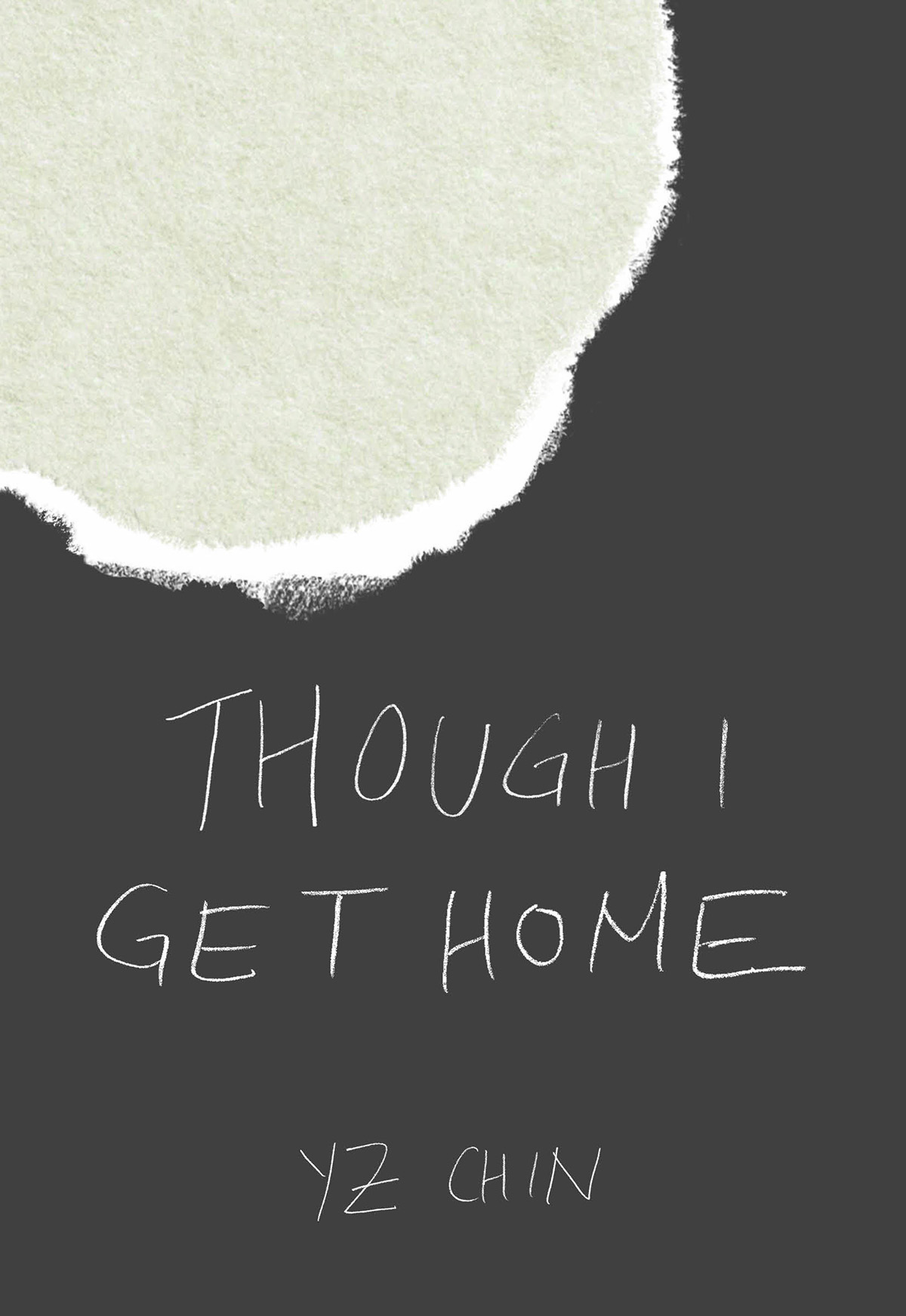
The loosely connected stories orbit around Isabella Sin, an inadvertent prisoner of conscience in Kamunting Detention Centre. Kamunting became notorious for its role in Operation Lalang crackdown in the ’80s, which ended with the government’s current stranglehold on the press. While Though I Get Home doesn’t directly reference this political history (likely no coincidence that Isabella is nicknamed “Isa”, the shorthand for Internal Security Act), its influences are obvious: characters are constantly dissembling, and the danger of exposure shadows every step. There is the hovering sense of a world on the cusp of transformation, as small-town Taiping reluctantly gives way to shiny, plastic Kuala Lumpur. Through the stories’ fragmentary, circular quality, Chin dives into the murky margins where the personal meets the political—hints and secrets abound, scattered like breadcrumbs leading to some unknowable past that no one wants to give voice to.
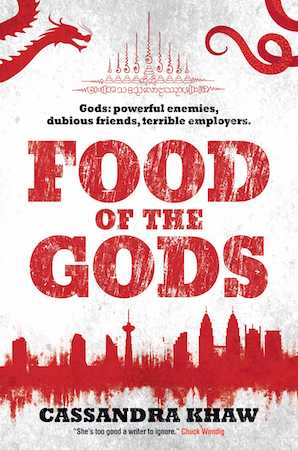
Rupert Wong—a cannibal chef with a knack for turning unsuspecting tourists into food—has been enlisted to investigate the brutal murder of a dragon’s daughter in exchange for his vampiric girlfriend’s freedom. The first in a series about the Seneschal of Kuala Lumpur, Khaw deftly conjures a plot out of bureaucratic deadlock—what’s more Malaysian than that?—and riffs on cross-cultural mythologies. From beginning to end, the novel is steeped in the gory, fetid underworld of gods, bad spirits, and even worse bargains, its prose sliding easily between languages and space. The Kuala Lumpur of this novel isn’t neatly subdivided between the living and the not-quite human; it is a city rife with supernatural and manmade chaos.
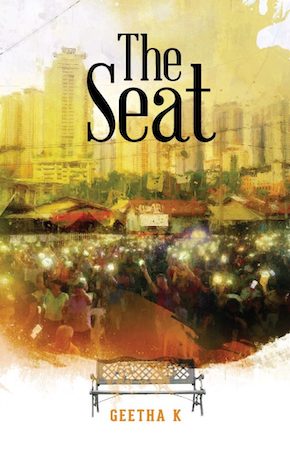
The 14th General Election, to put it mildly, changed the trajectory of Malaysian history and rewrote what is possible in our politics. While the events of 2018 have more or less passed into the realm of myth, The Seat offers an opportunity for readers to re-immerse themselves in those heady days by blending memoir and story into a kind of “verbatim” fiction. The fight for Segambut—a parliamentary constituency in Kuala Lumpur—really happened and the speeches by political characters can be accessed online. A clarity of place grounds the novel: Geetha devotes long stretches of prose to descriptions of the geographies and textures of Satya’s life in vivid detail, charting where the old where meets the new, speaking to each across time.
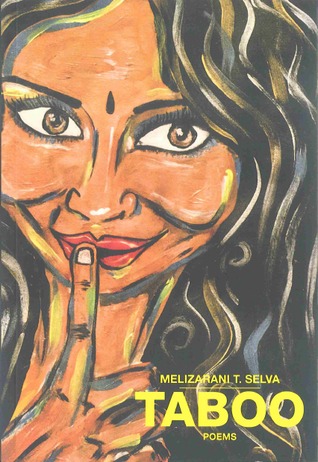
Spoken word performance has had an inordinate influence on the most recent generation of Malaysian poets, thanks in part to the form’s physicality, which allows poets to navigate communication in a country where most people are at least bilingual. Taboo, Melizarani’s first collection, probes the liminal space between the physical and linguistic, asking what life is possible (or permissible) in a place that can be suffocatingly restrictive for someone who is both Indian and female. Rejecting any neat conclusions about the incongruity of taboos with the modern era, Melizarani picks fights with tyrants and bad politics in language that is physical but playful, probing and self-possessed. Her narrators are always speaking with their mouths open, tongues wagging in defiance.
Chauly’s entire body of work is obsessed with locating individual meaning amid senseless decay and corruption. Onkalo (Finnish for “small cave” or “cavity”) is a slim volume full of chthonic and restless energy that first accuses, then whispers. The first poem, “Jerit” (Malay for “howl”) opens with a scream of barely-leashed anger at Malaysia’s many injustices, a thread that recurs throughout the collection. At times, the poems slide into a haunted quest for the “right to write,” that parallels (and, at times, is dissolved by) the narrators’ longing for a lover’s constancy. However she may search, though, the writer retains supremacy:
“I deserve this I deserve to be known again no longer a lost continent no longer lost.”
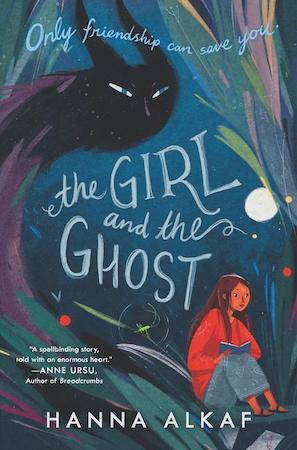
Malay Muslim women novelists writing in English are a rare breed, and rarer still are Malay Muslim women characters whose narratives aren’t driven in some part by their identities as Muslims or as women. The Girl and the Ghost’s main character, Suraya, is a revelation armed with a rich interior life that Hanna marshals to explore ideas around the hard work required to connect across gaps of time, distance, and feeling. Throughout the novel, Suraya navigates an unlikely friendship seeded and shaped by loss with Pink, a ghostly inheritance from her grandmother. Narratives about women trying to reconnect with absent mothers of all kinds are the locus of Hanna’s work, as are her depictions of a heat-swamped Malaysia—a distinct setting that is both familiar and strange.
Lake Like a Mirror by Ho Sok Fong, translated from Chinese by Natascha Bruce
In Ho’s award-winning short stories, feminine interiority offers an escape from a life stifled by male chauvinism—right up until the moment it can’t. Then we get revenge, bloodthirsty pontianaks, and stepmother-shaped puzzle pieces. With a specificity that belies their familiarity, Ho maps a vision of Malaysia’s sleepy small towns characterised by absence and presence: the wilderness at the margins, and those lost to them; the old people who decay in place, and the young gone to big cities. Here, nothing and everything seems to change: a young girl gets stuck in a time loop between her lovelorn aunt and a mysterious visitor, while an old woman loses herself in loneliness amidst a cluttered sundry shop. She writes:
“Sometimes, people carried on living even after a part of them had died. Then that dead part started to reincarnate.”
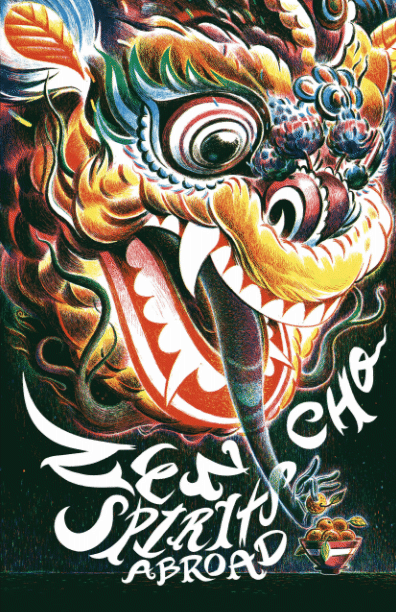
Zen Cho is perhaps best known abroad for her Hugo Award-winning Regency fantasies, but her 2014 collection—first published by local house Fixi Novo, and soon to be reissued by Small Beer Press—is a criminally-underrated gem that weaves paranormal interruption into mundane Malaysian life. The collection offers a kaleidoscopic vision of a society living cheek-by-jowl with a community of ghosts, spirits, and mythical creatures, in a state of not-quite harmony. At turns unfazed by their presence and annoyed by their mischief, Cho’s characters move through the world with an enviable understanding of their place within it. In the logic of the Spirits Abroad extended universe, “magic” isn’t a force to be wielded or feared—it is air itself, as powerful and common as dirt.
Part botanical record, part sociological census, part oral history, and part memoir, Recalling Forgotten Tastes seeks to center the environmental and culinary knowledge of Peninsular Malaysia’s indigenous Orang Asli communities, specifically the Semai and Temuan peoples. Far more than just a compendium of plants and their uses, Syarifah’s delicate illustrations are accompanied by accounts of each community’s displacement, how they have been continually robbed of their land. In doing so, she has inadvertently created a new geographical history of where the Orang Asli live, and how, in spite of it all, they remain startlingly resistant in the face of widespread deforestation and loss.
Zeynel—the titular carpet merchant of this Eisner-nominated work—is a man of faith left unmoored from life and love thanks to a chance encounter with a vampiric djinni. Inspired by Gothic romances, vampire fiction, and Victorian detective stories, The Carpet Merchant duology is rendered in a rich visual language inspired by Turkish motifs and techniques that spill across the page and beyond the border. Yee’s painstaking research, intricately woven into the plot’s treatment of Turkish artwork and the Islamic faith, makes a subtle argument that it is possible to depict cultures that are not your own with sensitivity—but only if you’re willing to put in the work.
My family discovered each other in a house
during a heat wave. The five of us,

on the bare floor, trying not to touch
each other, breathe too loud, and

inching closer to the window. My sister
is the youngest and won’t stop crying.

She asks if we’re poor now, if she has to go
get a job. We laugh, congratulate her

for being able to see the bigger picture.
At night, my dad orders buffalo chicken pies,

vodka pies, a classic pepperoni, and as many
cold 2 liters of Coke we want, keeping our mouths

full and quiet. We speak again as we determine
the bathroom order like strangers

having met for the first time seeing
each other differently every morning.
Bowl of Fat
She rattles the oxtails in the milky
yellow soup with a wooden spoon.

The humid garage fills with a smothering
of garlic, pepper, and gasoline.

The portable gas burner wobbles every time
she stirs. With steady hands,

she skims off the yellow fat from
the surface and dumps it into a bone

white rice bowl. She calls for me
once she is finished. Before I carry

this brimming offering inside, ask
why she bothers to skim the fat when it takes so long.

She says it’s healthier this way and asks
if I want this yellow gunk inside my body.

Before I can answer, she snaps
for me to close the door quickly to not

waste the cold air inside, for me to go
straight to the bathroom and wash my feet

because the floors are clean—
she is barefoot.
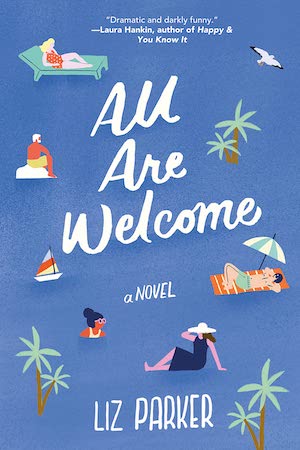
I can say with certainty that my first love was romantic comedy fiction. While the past few years have born some wonderful queer romantic comedies, we need more.
When I set out to write my debut, All Are Welcome, I wanted to write a rom-com teeming with gay characters that anyone could relate to. I wanted these characters to be funny and complicated and tortured, with none of that humor, complication, or baggage coming from being gay.
What would happen if the main characters, two women who identified as lesbians, were perfectly comfortable with their sexuality, but their families were the ones trying to keep up? Would it be too on the nose if these characters came from a world that eschewed talking about anything real, lest it offend? It was worth the risk: a lesbian destination wedding goes hilariously awry in Bermuda, and a new book can be added to the queer rom-com bookshelf.
We should all be so lucky to have a Gay Uncle Patrick. Rowley is the author of two other novels, Lily and the Octopus and The Editor, and he returns here with The Guncle, a heartfelt and deeply funny novel about what happens when you’re thrown into the driver’s seat of a car you never expected to drive. While Patrick has always adored his niece and nephew, he’s also loved his life of independence in Palm Springs, California. He looks forward to their visits, and he looks forward to their return home. But when a tragedy and a health crisis calls for Patrick to become his niece and nephew’s primary guardian, he realizes that what works as a Guncle does not work as a Dad. Patrick rises to the occasion, and in the process, becomes his truest self.
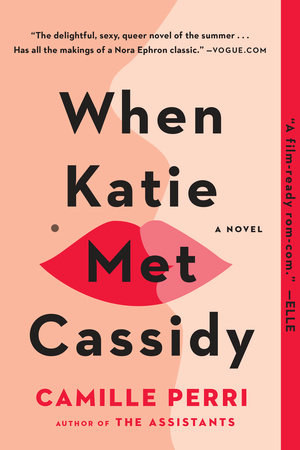
The author of The Assistants returns with a workplace romantic comedy fit for any beach reading. When Katie Daniels—fresh off a break-up with her fiancé and transplanted to New York from Kentucky—first meets Cassidy Price at the law firm where they both work, she’s not sure what to make of it. Cassidy is all confidence in a men’s suit, unlike any other woman Katie has met. Cassidy is equally skeptical of Katie, thinking she’s met plenty of straight women in New York before. And yet, when their paths keep crossing, a mutual attraction grows, and soon both women realize they should never let first impressions win the day. Equal parts humorous and touching, this one should be adapted for the screen!
Juliet Milagros Palante has just come out to her family, and whether they speak to her again is up for debate. She leaves her hometown of the Bronx for Portland, Oregon determined to get this “Puerto Rican lesbian” thing. First up? An internship with a famous author named Harlowe Brisbane who is an expert in all the subjects Juliet needs to learn: feminism, women’s bodies, and all that other stuff gay people are supposed to know. As Juliet embarks on finding herself, she realizes maybe the answers to all the questions she’s asking other people are questions she needs to ask herself.
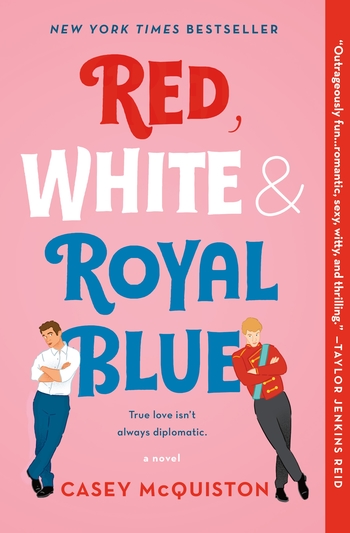
We’ve seen this set-up before, but we have not seen this set-up with these characters before. Alex Claremont-Diaz is pretty much American royalty as the son of American President Ellen Claremont. He spends most of his time with his sister and the Veep’s granddaughter, and together they form a dynamite millennial marketing team. But when Alex finally hashes it out with his nemesis, Prince Henry, and photos leak to the international press, damage control goes into full effect. Alex and Henry stage a friendship tour in efforts to mend American/British relations, no easy feat for these foes. Luckily for them, and for us readers, their fake tour soon turns real, and we sit on the edge of our seats as these two young men figure out what (and who) they really want.
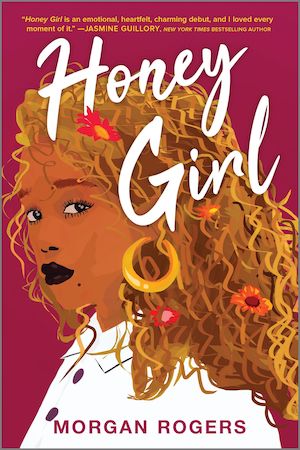
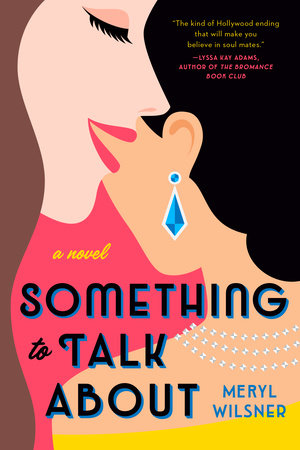
For anyone who has struggled to marry who they are with who their parents want them to be, Honey Girl is for you. Grace Porter is any parents’ dream: straight As, a Ph.D. in astronomy by 28-years-old, the type of kid who worked every summer. But when Grace goes to Vegas and drunkenly marries a woman she’s just met, and then moves to New York with her new wife, Grace realizes there is a lot of her she’s been trying to ignore. This is at once a finding yourself tale and a story about how love still pops up and demands your attention.
A will-they-won’t-they for the ages. Jo is a Hollywood powerhouse director. Emma is an aspiring director and Jo’s assistant. When they’re photographed on a red carpet looking awfully couple-like, the tabloids have a field day and rumors abound. At first it’s unequivocal denial. They have a working relationship, and that’s it. But as Jo’s newest film is ready to launch, the pair are spending more and more time together. Sure, two people can get along and speak honestly and laugh through the crevices of the day. But what’s the line between a good working relationship and something much deeper? For Jo and Emma, they’re about to find out.
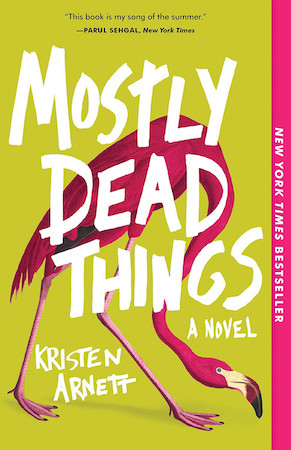
Comedy and pain have always gone hand-in-hand. That’s absolutely the case for Jessa-Lynn Morton, a young woman who steps in to run her family’s failing taxidermy business after her father’s suicide. While Jessa tries to get the business up and running again, her family continues to fall apart around her: her brother completely withdraws, her mother starts to create increasingly provocative animal art, and her brother’s wife—the only person Jessa has ever been in love with—walks away without a word. However, every action demands a reaction, and Jessa soon sees her world opening up in ways she never imagined. This is a story about family and love and how we weave loss into our paths forward.
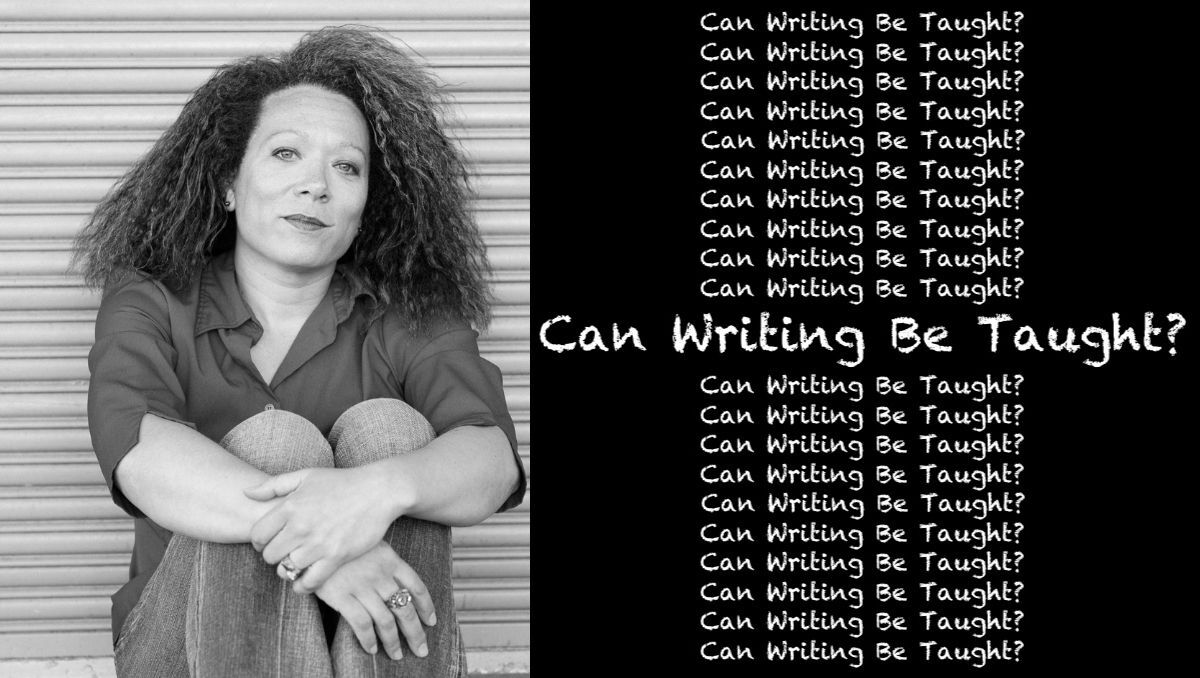
In our series “Can Writing Be Taught?” we partner with Catapult to ask their course instructors all our burning questions about the process of teaching writing. This month we’re featuring Tara Campbell, author of a novel, TreeVolution, and four collections: Circe’s Bicycle, Midnight at the Organporium, Political AF: A Rage Collection, and Cabinet of Wrath: A Doll Collection. Campbell teaches introductory Catapult workshops on speculative fiction: check out her profile to see her upcoming classes. She talked to us about restraint, ambiguity, and writing vs. publishing.
What’s the best thing you’ve ever gotten out of a writing class or workshop as a student?
The concept of restraint, and the idea that I can trust my reader to put more things together. I’ve pared back my use of adjectives over the years, and I’m also experimenting with a dash of ambiguity as a spice.
What’s the worst thing you’ve ever gotten out of a writing class or workshop as a student?
At first, I felt like I wanted to “fix” every issue that came up in a workshop. It took me a while to realize that I wasn’t supposed to be answering all of the questions in my manuscript–they were supposed to help me define what I wanted the work to be doing. That’s something I wish I’d heard explicitly from instructors earlier on.
What is the lesson or piece of writing advice you return to most as an instructor?
I wouldn’t want a student to feel like a failure just because they’re not getting anything published.
I find myself returning to these questions from David Mamet again and again: “Every scene should be able to answer three questions: Who wants what from whom? What happens if they don’t get it? Why now?” I find them helpful not at the beginning of the writing process, but when you get to the muddle in the middle and start to question why you’re even writing this thing.
Does everyone “have a novel in them”?
Great question. I know there’s tremendous pressure toward novels, but I don’t think everyone has to write one. I’ve gotten swept away by short stories and flashes that have stuck with me longer than many novels I’ve read. I want to read your truths, whatever the word count. The connection is what I’ll remember.
Would you ever encourage a student to give up writing? Under what circumstances?
No, never. I might, however, encourage a student to focus on writing and not worry about publishing right away. Those two aren’t the same thing, and I wouldn’t want a student to feel like a failure just because they’re not getting anything published.
What’s more valuable in a workshop, praise or criticism?
I don’t think anyone should write with publication in mind.
Stepping back a bit, I’m a fan of starting with a brief synopsis to clarify what I’m seeing on the page, which helps me determine what the author’s intention might be. Without that clarity, any other praise or questions/suggestions (my preference over the word “criticism”) may not be of use to the author. It’s hard to help someone get to where they want to be when you’ve misread where they want to go, and it’s important for the author to know if multiple folks are having the same problem.
Should students write with publication in mind? Why or why not?
I don’t think anyone should write with publication in mind. The story is going to come out of you, but whether it ever sees a submission queue is another matter. You might be inspired by a call for entry, which is great, but I’d caution against letting the call and the submission deadline squeeze the story into a shape it doesn’t want to take. There will always be more calls, and I find it freeing to focus on the story itself rather than who might accept it.
In one or two sentences, what’s your opinion of these writing maxims?
Kill your darlings: Don’t kill them, just cut and paste them into another document to live another day.
Show don’t tell: All absolutes are flawed. (See what I did there?) I like to say show more than tell, to give your reader a chance to participate in creating meaning, but also keep them on the right path when absolutely essential.
Write what you know: Or research the hell out of what you don’t know. And even then, depending on what it is, know that you may have to find a different way to tell the story.
Character is plot: Okay, I’m down with this one—mostly. Actions do reveal character, but it can also be helpful to peep into a character’s thoughts to know whether they’re conflicted about what they’re doing, and if so, why.
What’s the best hobby for writers?
Anything that doesn’t involve thinking about reading or writing. When I was stressed out by the pandemic, I turned to knitting, because I could let my mind wander and still feel productive—if this can be called productive. Exercise is great too, especially after sitting at our desks for so many hours. And gardening has been a gift, digging my hands in dirt and eating tomatoes from my own little balcony garden months later.
What’s the best workshop snack?
Almonds. They’re my go-to. They don’t stink up the workshop room and you can shovel them into your face endlessly while still pretending to be healthy.
It’s hard to summarize Names for Light, which is exactly what makes it so compulsively readable. But here are the basics: told in lush, lyrical language, the story follows Thirii Myo Kyaw Myint’s family across multiple generations, starting with her great grandparents in Myanmar all the way to her and her siblings’ present-day lives in America. What powerfully binds all these lives together is the narrator of Myint herself, who, alongside retelling her ancestors’ stories in vivid detail, also offers dispatches from the various places her life has taken her—Denver, Madrid, and of course, Myanmar, to name a few—that read less like travelogues than moving reflections on what it’s like to inhabit a world that alternately fetishizes and invisibilizes a body such as hers. But we get the sense that Myint is neither young nor alone in her explorations: the sense of her ancestors accompanying her, guiding her, and indeed, living alongside her, is present on every page, in every paragraph and line.
It would be easy to summarize Names for Light as a tale of a family surviving dictatorship in Myanmar to eventually immigrate to America. But to do so would not only be simplistic, but profoundly wrong. Rather, in this book, Myint interweaves memories, dreams, and mythology to create a haunting story that raises profound questions about identity, movement, time, and what binds a family together.
I chatted with Thirii Myo Kyaw Myint over Zoom about the things that haunt her, the instability of memory, and, of course, her family.
Raksha Vasudevan: It’s so interesting that you call this a family history.Even if you were talking about yourself, it was a lens of talking about your family.
Thirii Myo Kyaw Myint: It’s hard to separate my sense of self from my sense of my family. And in the same way, I think most of these stories are my reimaginings of my parents’ retelling of events, and so it’s already totally filtered through my body and their bodies. These ancestors that we’re conjuring are already part of us, they already live inside of us and that’s part of the reincarnation stories too. It’s a way for my family to have our lives be simultaneous with the ancestors.
RV: The narrative of this book is kind of haunted by the early tragedy of your brother’s death. Did you know that would be the case when you started writing?
TMKM: Yeah, absolutely. That’s definitely a big shadow over not only my childhood but over my family, and it was something I never really understood that well. Whenever I fought with my parents growing up, they would be like, “you have to remember, we’re not normal because we lost a child and [that’s why] we’re a little protective.” That was always something that was a big part of my life and my sense of self. Especially because there were three of us girls, and he had been this Brother, this boy, and that was always very mysterious to me because I just didn’t know any boys growing up, especially being homeschooled. And my parents have endured a lot of traumas, like living under a dictatorship, and their parents having lived under one. But somehow, the only one that they would focus on was my brother’s death. So it became this magnetic force that drew all these other different tragedies into it.
RV: Towards the end, when you go see a bestselling author talk about their immigrant experience, it didn’t feel like you were bashing them, but you were expressing your doubts about any kind of authoritative voice on a certain type of experience.
TMKM: I don’t want to be an authoritative narrator of these events, and at the same time, the whole reason I started this project—the reason I started interviewing my parents, recording them, and writing this book—is because I was thinking about mortality. I was thinking about my parents being the last people in my family who have actually grown up in Burma and who actually are fluent in Burmese. And I was starting to feel this sense of loss even before they had passed away.
And so in a way, I wanted to write the book so that my children and my future grandchildren would always have this connection to where my parents and grandparents had come from, and where I was born. I wanted them to have that connection, but I think too often people lose that in this country and we’re forced to lose it through assimilation. And so I wanted to have my kids and grandkids not be able to escape it because they have this like, weird published author grandma. [Laughs]
RV: I wanted to talk about how you use myth in this telling of your family’s story. Do you remember interpreting events as they happened through Buddhist and Burmese mythology, or was that something you pieced together as you were writing this book?
TMKM: I think those are just the stories that I just use to interpret the world. There are just certain stories that I have internalized. They just came out in the book. But things like the story of the Buddha’s birth and how he was born somewhere that was not his mother’s hometown—I don’t think that’s something I ever thought about until I was writing the book. I always knew that myth and it always touched me. But it wasn’t until I was writing the book that I realized, he also didn’t belong to a certain place.
RV: Now I see I was asking the question from an assumption that you could clearly differentiate between a myth and “reality,” but of course stories are part of our realities too.
TMKM: Yeah, there are certain things that are just my worldview, like reincarnation, or dreams having prophetic qualities or ghosts and vomit being associated with each other. It’s not a superstition, that’s just how the world works in my eyes.
RV: Can you talk more about your relationship to an inherited history of colonialism and dictatorship?
TMKM: Those two things are separate, but they’re also interconnected and similar in the way they impact me.
On the one hand, there’s a lot of pride in my family around the history of Burmese resistance against British colonialism, starting with the Anglo Burmese wars, extending to the nationalist movement and the war for independence during World War Two. Both of my grandfathers fought against British and Japanese occupiers during WWII. To give you another example [of this pride], the worst insult in my family when I was growing up was ဗိုလ်ရူး, or bo yuu which means literally to be white crazy. It was an insult used to describe someone who was seen to be Westernized or wanted to be Westernized or thought highly of white people. And we often used it against each other. The funny thing is, the insult wasn’t even directed towards “white behaviors.” It was just directed towards any behavior that was deemed inappropriate.
But on the other hand, the British were in power for so long that they were these hated masters, but they were still the masters. Like the word “bo” which I always thought meant “white” in Burmese actually means “major” or “lieutenant” or “boss,” because that’s what the British were. And so even the word we’re using to describe white people or British people is still the word for boss.
I feel like the traditional immigrant narrative places so much emphasis on that moment of immigration as the most important moment in someone’s life or even as a rebirth for a person.
So, on the one hand, there is a lot of pride in resisting colonialism. On the other hand, there is a weird nostalgia for colonialism, because it was a time before the dictatorship and the dictatorship was so bad. And it was so anti-imperial on its surface that, for certain people, it’s this difficult choice between two evils. You can see that even with the language surrounding Burma / Myanmar. In a sense, the two names come to represent the two evils: Burma is the name that the British colonists used, and Myanmar is the name that the dictatorship gave the country. Many Western countries did not acknowledge Myanmar as the new name for a long time. But I always thought that was ironic, because they’re still acknowledging Burma, which is a name that was given by the British colonists. So it’s this choice between colonialism or dictatorship. Which one do you think is worse?
For me as a Burmese American person, the history of colonialism and the history of dictatorship still impact my life, because I have encountered many people who treat me as an archive, and who will ask me questions about Burma and colonialism and dictatorship. And so that’s annoying. But on the other hand, when I’m not being forced into talking about it on someone else’s terms, those histories are a useful nexus for me to connect to a variety of other people. For example, when I lived in Madrid, a lot of my friends there ended up being children of Argentinian refugees in Spain. And there was this strange connection that I had to those friends because even though we were from foreign countries, even though we’re speaking different languages, there was still the strange connection of having parents who fled a dictatorship. It’s not the same as being an immigrant who leaves their home country for economic reasons.
RV: How do you think about addressing the colonial legacies inherent in the English language and traditional narrative structure in your writing? Do you have any advice for other writers who are struggling with similar questions?
TMKM: It’s something that I’m continuing to figure out as I write, but for me, the writing leads me in answering that question. I don’t have a theoretical answer that is separate from the actual process of writing. And by that, I mean that when I write, it’s a choice that I’m making to use English, which is the only language that’s available to me to distill or contain something that the language historically was not made for. So when I write, I’m choosing to basically not be silenced. The choice isn’t between writing in English versus writing in Burmese, because I can’t write in Burmese, I can hardly read in Burmese.
What I’ve discovered is that the English language is flexible, it’s changing. And even if the history of the language or its origin of language was not made for a person in my body, the fact of the matter is that it is my language now, and so I am remaking it with my body. I’m remaking it in the way I use it. I’m remaking it in the way that I am trying to get it to contain my experiences and thoughts and feelings.
For me, writing is about trying to unlearn or momentarily forget the rules that I have been taught about how to use English. So instead I allow myself to have it come out of my body however it comes out without too much judgment. And oftentimes, how it comes out is what people have described as lyrical or poetic. But really, I’m not trying to write poetry in the tradition of Western poetry, I’m just trying to use English in a way that resists certain structures and forms that are taken for granted. So maybe that’s the advice that I have for other writers is to let your body do the writing. With my students, for example, I get them to do writing exercises that are somatic, or that take chance or luck into account. Keep trying different things, try anything that’s going to unstick you from your patterns and your habits.
RV: Was addressing and complicating “the immigrant narrative” something you wanted to consciously do from the start of writing this book?
TMKM: Absolutely. I feel like the traditional immigrant narrative places so much emphasis on that moment of immigration as the most important moment in someone’s life or even as a rebirth for a person. The immigrant narrative has this temporal relationship where there’s a past and a present, and then and now, here and there. That all exists for people to understand in simplistic terms what it means to be an immigrant, but my lived experience has never been that simple or easy.
For too long, I felt like as a Burmese American, as a Bomar American—of which there are few in this country—I wasn’t included under that umbrella of ‘Asian American.’
In this book, I wanted to give equal weight to all the different movements that I have made in my life and the movements that my ancestors have made. So rather than just taking for granted that moment of immigration [as all-important], it doesn’t even appear in the book. I wanted to foreground the fact that my life and my ancestors’ lives are complicated. We’re not defined simply by the one move, or the one migration that we’ve made from some other country to this country. And I didn’t want to give too much weight to the social constructs of nations. Instead, I wanted to show that even within Burma, people were moving around a lot. Even within America, people are moving around a lot. For me, that was also a subversive answer to people always assuming that the move from Burma to America is what defines me. That’s why the word immigrant even exists.
RV: Can you say more about your relationship to Asian American identity? Do you consider this book to be a work of Asian American literature?
TMKM: In general, when I was younger, I don’t really think I identified as Asian American. And part of that has to do with the fact that I didn’t really identify as Asian because my earliest memories were formed in an Asian country. I just took my Asian-ness as for granted because I was living in Asia among Asian people. So when I was younger, I identified as Bomar or Burmese, but I didn’t identify as Asian. And then when we moved to California, we settled in a very diverse—I hate that word—let me say instead that, we settled in a community where many people were also immigrants from Asia, or whose parents were immigrants from Asia. And so weirdly, that was the norm of my high school too.
When I was in high school, there was an article in the Wall Street Journal about how my high school was so Asian—it was 70% Asian, I think—so all the white students were leaving my public high school and going to private high schools, basically to be with other white people, or to not be with other Asian people. And that was the first time that I even had awareness of me and my classmates being lumped together by outsiders. I had friends who were either from or whose parents were from many countries across that continent: Taiwan, China, Vietnam, Korea, Pakistan, India, Iran. I never thought “we’re all Asian American.” So that was the first time that I started to become aware of the fact that we were Asian American, but in a negative way, because it was through the Wall Street Journal writing this article about people, basically, fleeing us. And so it took me much longer to start to identify as Asian and Asian American in a positive way, as a way of building community. And that only happened in college or in graduate school, when suddenly I was in majority-white communities for the first time in my life.
When I was writing this book, I definitely wanted it to be read as an Asian American work of literature. For too long, I felt like as a Burmese American, as a Bomar American, of which there are few in this country, I wasn’t included under that umbrella of “Asian American.” Even stereotypes about Asian Americans or Asian people like the model minority myth often did not apply to my lived experience or to Burmese people. So I want it to be a work of Asian American literature, because I wanted to expand what that could mean. But moreover, I want it to be a work of American literature. Even though so much of it takes place in Burma, I’m an American person, and this is a book about me and my family. And I really do want it to be read as a work of American literature.
On March 30, 2012, as I was nearing the end of my second year of a PhD program in English literature, my friend Annelise sent me the Jane Tompkins essay “Me and My Shadow.” I know that she sent it that day because I still have the email that contains only a pdf of the essay, no text in the body. It was my first semester teaching composition to college students and I had no idea what I was doing. Annelise, having taught before and being a generally brilliant person, was my lifeline. The conversation that precipitated the email probably had something to do with the challenge of teaching academic writing at the undergraduate level, the requirement to educate young people in a genre that most of them would use for four years and then never again, perpetuating a form that sometimes felt useless to all but a select few. I can’t say for sure but this seems plausible.
Either way, the essay burrowed into my brain, answering a question I hadn’t yet thought to ask after four semesters of learning to write seminar papers and studiously adopting the parlance and cadences of academic writing. The first word in Tompkins’ essay, “I,” announces its project. “The criticism I would like to write,” she divulges, “would always take off from personal experience. Would always be in some way a chronicle of my hours and days. Would speak in a voice which can talk about everything.” This voice, Tompkins tells us, is the same as the one Ursula LeGuin referred to as the “mother tongue,” language that establishes connection rather than distance. It is language as relationship, writing as a conversation. “I think readers want to know about each other,” Tompkins writes. But there is a catch. In an interview years later, Tompkins shared that she only started writing more creatively once she became a full professor and didn’t have to worry about what the older faculty would say. It’s only when you become successful, she noted, that you can start breaking the rules. In other words, the father tongue must precede the mother tongue. You have to be a dad before they let you be a mom.
Now, nearly a decade after I first read Tompkins’ essay, when we are all much more open about the decimation of the academic job market and the system of precarity that has taken its place, the questions are clear. What of those who can’t, or choose not to, become successful in the way that Tompkins means? What about contingent faculty, or scholars who leave academia rather than submit to the low pay and indignities of contingency? What happens when you haven’t attained the traditional markers of success that might allow you to write in the kind of hybrid form Tompkins celebrates, to set free the reclusive tools of criticism and teach them to frolic in the overgrown fields of personal experience?
The father tongue must precede the mother tongue. You have to be a dad before they let you be a mom.
Because I have Annelise’s email, I know that I received that pdf nine days before I would give birth to my first child. Five months after that, Kate Zambreno would publish Heroines. That book is often referred to as a “manifesto” because of its unapologetically angry meditation on the “mad wives of Modernism,” the women marginalized and kept from fulfilling their own creative potential due to their proximity to male genius. It would be another couple of years before I would discover the book. Even that was a bit too early; I still had a dissertation to complete, and dissertations are traditionally written in what LeGuin would consider to be the “father tongue.” I suspected that there wasn’t a place for me in academia, especially given the fact that, by the time I devoured Heroines on a research trip to London, I had become pregnant three times and birthed two children. And so I was a perfect mark for the book’s implicit argument that memoir could enrich criticism, and vice versa, and that a person could write about books outside of academe in a way that would still make a difference for the people who read them. But even as the mother tongue grew more necessary in my life, it also felt increasingly out of reach. As I neared graduation, pregnant yet again, the question became not just how I could begin to write about literature without the certifying apparatus of the university, but how I would write at all.
At the end of Drifts, the novel Zambreno published two months into a national lockdown last year, the narrator has a baby but has not yet written the novel promised to her publisher. The final pages see her returning, after much time has passed, to writing, her notebook balanced on her sleeping baby’s head; her office has become a nursery. And yet, this narrator is calm, even though she seems no closer to achieving her writing goals. Finishing the book late at night after a day of eleven-parts childcare to one-part writing time, I wondered whether it was intentional, that replacing of the book with the baby. I felt a mix of pity for and deep identification with the narrator. For a long time I have worried that for each baby, I am losing a potential book, that because I have chosen to become a mother so many times, I have exhausted whatever creative potential I might have once possessed. Other times I become more concerned that I am, ultimately, okay with not having the books because I have the babies, that the babies might be enough. Was this how Zambreno herself felt?
But of course the narrator of that book is not Zambreno, because there I was holding the hardcover edition of Drifts in my own two hands. Unlike the character trying to write, the author of Drifts had managed to produce both the book and the baby. She was, in the parlance of our time, having it all.
Or at least that’s what it looked like on the surface. So much of Zambreno’s work is about her desire to write criticism and participate in literary culture despite her status as an outsider, professionally, geographically, and even temperamentally. In Drifts,and again in her new novel, To Write as if Already Dead, Zambreno is an outsider not just because of her academic and bodily precarity but because of her status, incipient in the first book and intensifying in the second, as a mother. Like Drifts, To Write as if Already Dead is a book about trying to write a book, a narrative of non-writing—false starts and challenges of structure and form—that somehow results in a bound volume. But if writing was a challenge before, this latest book takes it up several notches. “Everyone tells me to go to Italy to write this book,” Zambreno writes early on, before the pandemic hits the United States, thinking through how she might be able to make the trip. Ultimately, she concludes, it would be impossible: “Why is everyone telling a mother of a toddler to go to Rome? I haven’t gone to a movie by myself in years. And what would I do in Rome? I’d go to Rome with a partner and a toddler…I wouldn’t be able to read or write in Rome…I can go to Rome but I cannot go to Rome alone, I cannot go to Rome for this book.”
For a long time I have worried that for each baby, I am losing a potential book.
If Heroines was a masterclass in how to write the kind of personal criticism envisioned by Tompkins, To Write as if Already Dead is what it looks like when you try to do it while parenting a small child, a very literal instantiation of writing in the mother tongue. And while Drifts ends with the implication that Zambreno’s narrator is embracing motherhood and all that means for her writing, To Write as if Already Dead shows conclusively that Zambreno herself has not. Instead, she applies her signature blend of the critical and confessional to the problem of art-making as a parent. Just like the narrator of Drifts, Zambreno has agreed to write a specific book, in this case a study of the French writer Herve Guibert, who fictionalized his friend Michel Foucault’s death from AIDS and his own struggle with the virus in To the Friend Who Did Not Save My Life. This time the barriers to writing include the time and energy required to parent her toddler, the other work she must take on in order to pay the bills, a second pregnancy, and, in the second half of the book, a global pandemic. The resulting narrative comes closest of anything I’ve read to representing what trying to write while parenting small children actually feels like, particularly after a year like 2020. Despairing over a publishing setback and the difficulty of making a living as a writer, Zambreno writes:
Did I allow myself to be pushed into this, since I have had a child?… All that week in full crisis mode with John over our future. His desire to go back to a full-time library job in order for us to have regular benefits, which for me would mean mommy jail again, when I was so miserable that first year. It’s not like I wouldn’t have to teach then, I just wouldn’t be able to do the deep thinking required to do my work, even once Leo went to preschool. Making lunch in the morning, the drop-offs, the pick-ups.
This acknowledgment of the tedium of day-to-day childcare and its impact on the deep thinking necessary for artistic expression is surely recognizable to a certain kind of writer-parent, usually mothers, whose seeming flexibility means that their work is the first thing to go with even the slightest fluctuation in the familial routine.
In an interview given after Drifts was published, Zambreno spoke about her own mixed feelings about writing and pregnancy: “When I found out I was pregnant, which was a big surprise for me, I really was upset, I really thought it was going to spoil the book I was working on. I was really furious…I just thought to myself, can someone be a pregnant Sebald? Is this narrator of consciousness and literature, is she allowed to be pregnant?”
Can we take seriously literary criticism that is delivered alongside the messy business of creating and caring for children?
It is somewhat astonishing that Zambreno, who has again and again put her own body in conversation with the literature she writes about, was unsure if this process by which all bodies are made had a place in her writing. By the time she wrote To Write as if Already Dead, it seems, she had made up her mind that it did, or at least she had no choice but to try. Written in part while she was pregnant for the second time, the book challenges us to take seriously literary criticism delivered alongside the mundane particulars of caring for a child.
This is, perhaps, the truest test of the mother tongue. Zambreno’s question of whether her narrator is allowed to be pregnant is another way of asking: do we allow criticism and motherhood to coexist? This is not the same as asking whether criticism be done by someone who is also a mother, which is obviously the case. Many of the literary critics I most look forward to reading these days are also parents to young children. What Zambreno was really asking was: can we take seriously literary criticism that is delivered alongside the messy business of creating and caring for children? More than that, can we allow the personal to not just be allowed to share space with the critical but also to inform it? To influence how we understand literature? In other words, can we allow the personal to seep into the critical without worrying that it is “unserious”?
It is easy to say that, yes, of course we can allow these two modes to coexist, but the reality is more complicated. There is always institutional, patriarchal reluctance. Zambreno has said that almost no reviews of Drifts touched on the pregnancy plot line, and that one male editor passed on the book because, he said, he couldn’t deal with the pregnancy, that it was “too awful.” But there is also the more insidious resistance borne of a certain kind of education. I am ashamed to admit that sometimes I worry that my training has ruined me, that all of those voices insisting that the personal and the critical belong in two different kinds of journals have had the last word. While reading To Write as if Already Dead, I kept having to ignore the voice that wondered whether Zambreno was making Guibert’s work, his illness and his death, all about her. I needed to resist the voice that wanted to chide her for equating a devastating virus with something as ordinary, as commonplace and banal, as motherhood. Why does this voice still exist in my head when I know perfectly well that the so-called banality of motherhood has such far-reaching implications for the kinds of people who populate the world?
Why do I still believe, deep down, that serious work is supposed to be done in spite of one’s children, not necessarily inspired by them and certainly not involving them.
Also: why do I still give myself grief for my own desire to write in the mother tongue? Why do I still believe, deep down, that serious work is supposed to be done in spite of one’s children, not necessarily inspired by them and certainly not involving them. I am not supposed to mention, for example, that I am writing these sentences while two of my children—one sick and one six weeks old—sleep two feet away from me. I am not supposed to include the fact that I am typing furiously, trying to arrive at some sort of argument (what, after all, is my point here?) before the clock runs out. Lately when the baby wakes up and my frenetic note-taking, thinking, writing is done, I change her and put her in the stroller for a walk, which can also be a form of writing. I can listen to music and think through various projects I’m working on. Sometimes I get weird looks from neighbors watering their plants or walking their dogs as I speak ideas out loud into my Notes app. But this, too, is often interrupted when the baby, bothered by something I’ll never know, cries the rest of the way home. Today, with three out of four kids at home and no childcare, I don’t even get the walk. So many ideas in my head and so few on paper. I haven’t published an essay in eight months and the word count log for my novel-in-progress is frozen in time, the last entry is from the day before the baby was born.
There have recently been quite a few books that fictionalize the struggle to create art while parenting small children, some of which gesture toward the incompatibility of those two modes of creation.I’m thinking of novels like Jenny Offil’s Dept. of Speculation, which features a would-be “art monster” unable to write a second book after having a baby. There is also Julia Fine’s The Upstairs House, about a PhD student with a stalled dissertation on Margaret Wise Brown and who suffers from postpartum psychosis, and Rachel Yoder’s Nightbitch, whose protagonist, frustrated that she has had to put her art career on hold to stay home with her baby, may or may not be turning into a dog. And, of course, there is Sheila Heti’s Motherhood, in which the narrator wrestles with the either/or of motherhood and art.
All of those books diagnose a problem: the tedium of being the primary parent, the way in which it is often mothers who bear that burden, especially those with “flexible” writing schedules. Each in their own way, they illustrate the way in which motherhood can easily become the enemy of art-making, which requires time and the ability to think for long periods without anyone asking for cucumbers sliced and sprinkled with just the right amount of salt. They are a primal scream in the face of societal expectations and inequities, and those that are more private, deep in our own families and psyches.
If you think about it, it’s a bit of a flex to publish a book as a parent of young children that takes as its central concern the difficulty of writing a book while parenting young children, but Zambreno’s approach is not just a flex, it’s a quiet revolution. By approaching the experience of motherhood with the same seriousness and rigor applied to Guibert and his narrative of friendship and ego and human suffering, To Write as if Already Dead becomes proof that sometimes the only solution to that problem turned over and over in so many motherhood/art books is to collapse the boundaries between what we think of as “work” and what we consider to be “life.” In this way To Write as if Already Dead is one answer to the question that has unfolded in my mind since I read Tompkins’ essay—whether we might write about books inthe mother tongue without first paying obeisance to the father; and whether we can do it in a way that integrates that very first connection, motherhood itself. It is a model we desperately need. Zambreno has been writing in the mother tongue for longer than she has been a mother, and by using her powers to describe, and thereby elevate, early motherhood, she produces a new kind of criticism that integrates the creation of life with the creation of art.
I used to look at Howard first thing in the morning to see if he was awake, too, and if he wanted to get something going before one of the kids crashed into the room and plopped down between us like an Amish bundling board. Lately, though, with the children long grown and gone to their own marriage beds, I found myself glancing over to see if Howard was still alive, holding my breath while I watched for the shallow rise and fall of his, the way I had once watched for a promising rise in the bedclothes.
Whenever I saw that he was breathing and that the weather waited just behind the blinds to be let in, I felt an irrational surge of happiness. Another day! And then another and another and another. Breakfast, vitamins, bills, argument, blood pressure pills, lunch, doctor, cholesterol medicine, the telephone, supper, TV, sleeping pills, sleep, waking. It seemed as if it would all go on forever in that exquisitely boring and beautiful way. But of course it wouldn’t; everyone knows that.
There were running death jokes in our family. My father, driving past a cemetery: “Everybody’s dying to get in.” My mother: “Death must be great—nobody ever comes back.” Howard’s mother: “When one of us dies, I’m going to Florida.” That would have been funny except that she actually meant it. Now, none of them was laughing or ever coming back.
Howard’s father, who had no apparent sense of humor, was the first to go, quickly, of a blood clot that stopped his heart like a bullet. This sent Howard right to the precipice without fair warning. Next! He seemed to be summoned as if he’d been waiting his turn at the deli counter. He even told me that his number was up, extending the metaphor.
He wasn’t next, though. His pushy mother cut the line and went second, succumbing to kidney failure after a short, spirited stint as the Merry Widow of Boca Raton. Then my parents sailed off into the abyss, felled in tandem by dementia and a series of strokes. We’d had our own health scares—Howard’s enlarged prostate, a lump in my breast. Several of our friends beat us to it anyway, in a kind of social massacre, while, in what seemed like only a few long afternoons, he and I turned seventy and then eighty and then nearly ninety.
We had been together for such a long time that all of our grievances had been set aside, if not completely forgotten. Every once in a while, out of nowhere, I would remember his infidelities with a startling sting. And he must have still harbored resentment about what he’d called my “martyrdom,” my “too-muchness,” which, in truth, was only my largesse, my gregarious, forgiving nature.
But the business of being old took up most of our time and concentration. A schedule for our various pills and tonics was stuck by a magnet to the refrigerator, where we used to hang the children’s drawings, then the grandchildren’s. And our bodies let us down as we lurched toward oblivion. My statuesque figure had given way to random bulges, as if my curves had been rearranged by an inept or sadistic sculptor. “Good padding against a hip fracture,” Dr. Ginsberg said in dubious consolation. Then there was the matter of my heart. There was nothing really wrong with it, but I was often uncomfortably aware of its beating, like the meter ticking in a taxi stuck in traffic.
Howard, who had once been so gorgeous and in such hot demand, was grizzled and paunchy and gray. He couldn’t quite believe what had happened to him, and he avoided mirrors and what he perceived as the pitying glances of strangers. I didn’t tell him that I still had images of his younger self in the strongbox of my brain, of both of us at the beginning, when we couldn’t keep our hands off each other. My nostalgia would be cold comfort for his sense of loss. I wondered if he remembered us, too, but I was too afraid, or shy, to ask.
I often said that we were lucky to still be alive, but he had to know I was lying. This hurt and that. “What?” one of us yelled to the other from the next room. “What is it now?” The little flash fires of frustration and anger. We’d both become relief maps of keratoses, skin tags, and suspicious-looking moles. “What’s this thing on my back, Paulie?” Howard would say, yanking up his shirt while I searched for my reading glasses. “It’s nothing,” I’d tell him. “I have a million of those.” Cheerleader and competitor at once. And I finally understood why my father, in his dotage, kept going on about his feet.
The children telephoned, Ann far more regularly than Jason, of course. She was the good, attentive child, the one with keys to our apartment—“just in case”—and with our super’s and Dr. Ginsberg’s numbers on her speed dial. “Mom,” she would say without so much as the preface of a hello. “Are you okay? Is Dad?” As if she had heard we’d been in a terrible car accident, when neither of us even drove anymore.
Then she would relay a spate of news—world news first, in a flurry of headlines: the latest chaos at the White House, a terrorist attack in London or Boston or Beirut, another police shooting of an unarmed Black man, and did I know that someone famous had just died? Howard and I read the Times every day and watched CNN after supper, but Ann seemed to hear about everything first. I think she received bulletins on her watch or somewhere. Personal news usually followed, from the mundane—she thought she was getting a cold, and her brother had asked to borrow money again, for weed probably—to the spectacular: She’d made partner at her law firm! Her daughter Abigail was three months pregnant! Ann and Bradley were going to be grandparents. When I broke this latest to Howard he burst into tears. I put my arms around him and wept, too. And then we laughed together. How joyful we were, and how astounded that we had come to this.
Ann and I conspired on a daily basis about possible baby names, as if we’d have a say on the subject. It was going to be a boy; what would sound euphonious with LeffBernstein, Abigail and her husband, Greg’s, conjoined last names? Jeremy? Dominic? Leo? Howard wondered if the baby might be named for him—after he was dead, that is, in the Jewish tradition. “Shut up,” I told him. Why did he always have to spoil things?
The business of being old took up most of our time and concentration
I offered to host a baby shower and Ann agreed, although she insisted, in her amiably bossy way, that it would be held at her spacious SoHo loft instead of my junior four in Washington Heights, and that she would choose the theme and the caterer and cover all of the expenses. Which left me as no more than an honorary hostess, but I didn’t argue with any of it. At a certain point, you have to accept the shift in the balance of power between you and your children. And it was just so good to have something to look forward to.
Then one wintry day Ann called very early in the morning. Howard and I were still eating breakfast. “Listen, Mom,” she said. “There’s something going around, a virus.”
“I read something about that in the Times. I hope it’s not like SARS or that other one…MERS?” When had these dire uppercase acronyms slipped into our vocabulary? With AIDS, I remembered.
“It’s in the same family,” Ann said, “and it may be very contagious. You and Dad should be careful.”
“Well, we’re not kissing anybody.” Not even each other, I didn’t add.
“You should both stay close to home for now,” Ann said.
“We don’t go anywhere,” I said, “beside Safeway and the doctor.” I needed a haircut, though, and my book club was scheduled to meet soon—we were reading Mrs. Bridge—and Howard wanted to get to the podiatrist to have his toenails clipped as soon as Medicare would allow it. Feet.
“Order in for now,” Ann advised. “I can set you up with a good food service. And cancel everything else.”
“Sweetheart,” I said. “Aren’t you being a little extreme?”
“Mother. I have it on good authority.”
She probably did. Ann was on the board of two hospitals, with privileged access to several noted specialists.
“Well, what’s it called? Maybe I’ll ask Ginsberg about it.”
She sighed. “Ginsberg,” she said.
She had never exactly called Dr. Ginsberg a quack, but she’d intimated that he wasn’t up to her high standards. I pointed out that Howard and I had survived almost half a century in his care, and that he always returned phone calls, usually the same day. I didn’t say that I was a little bit in love with him, and that her father might be, too.
“It’s called novel coronavirus,” Ann said.
“Sounds fictional,” I quipped, but she didn’t laugh.
“The word ‘novel’ refers to the fact that it’s new, unknown,” she said, “which is what makes it so worrisome.”
Later, I reported what Ann had told me about the virus to Howard, and he said, “I think she’s becoming a bit of a hypochondriac.”
“Gee, I wonder where she got that,” I said. How many times had I caught him surreptitiously taking his pulse or his temperature?
“Ha ha,” he said without a trace of mirth.
“Maybe we should listen to her. She’s always up on everything, and she’s so well-connected.”
“Whatever,” Howard said. “But I’m making an appointment with Perez. I can hang from a tree by my toenails.”
I’ll remember that exchange forever, although I barely registered it at the time. How strange the human mind is.
When my mother began to lose hers, she tried not to acknowledge it and I was her willing accomplice. “Everyone forgets a few words,” she said after such a long mid-sentence pause on the phone I thought we’d been disconnected. It wasn’t an unreasonable claim. Howard and I already suffered from an occasional folie-à-deux forgetfulness—unable to come up with Ida Lupino’s name while we were watching one of her movies, or what the brussel sprouts on our dinner plates were called. But my mother’s harmless “senior moments” devolved into some bizarre behavior. Either that or my father was the one losing it when he called to report that she’d been chewing on Kleenex or that she’d tipped the handyman in their building a hundred dollars for changing a ceiling lightbulb.
So I found myself sitting in her Elmhurst living room, with its battling floral patterns of wallpaper and upholstery, smiling falsely while sneaking glances at the Kleenex box on the end table closest to her. Two brazen cockroaches skittered across the middle of the floor in plain view. Usually, she’d be screaming at my father to take off his shoe and kill them, although he invariably missed his target and knocked over a lamp or stubbed his toe in the process. But this time she didn’t seem to notice, and I think he pretended he didn’t, either.
Yet she looked all right—her housedress was clean and buttoned correctly, and her conversation was ordinary enough. She offered me the requisite repulsive snacks of canned peaches and lime Jell-O. She asked after Howard and the kids, getting everyone’s name right without hesitation. She said, “Your father is driving me crazy”—a familiar refrain—before ticking off a list of his latest crimes: he dropped crumbs everywhere, he loaded the dishwasher with the knives facing up, he added salt to his food without even tasting it. Your father, as if I was the one who had brought him into the family. Then, “Do you like your hair like that, Paulette?” Her customary, sly way of criticizing me, of telling the truth slant. But all of those maddening old habits of hers only elicited a whoosh of relief and even a ripple of affection. I was beginning to relax when she reached over and pulled a Kleenex from the box near her elbow and popped it into her mouth.
“Stock up on toilet paper and hand sanitizer,” Ann advised. “Fill up your freezer.”
By then, the virus had spread a little. “Annie,” I said, “It’s not here. Some guy went to China, and now it’s in Seattle. It’s in a nursing home there.” Where there were other, more decrepit and less fortunate old people, thousands of miles away. It was in the paper, and on the nightly news. Anderson Cooper seemed calmer than my daughter.
“Do you want to die, Mom?” she asked.
“Hmm. Good question.”
“Stop it,” she said. Then, “Don’t you remember when you promised me that you would never die?”
She was three or four at the time, and had just had her first intimations of mortality after the death of her goldfish. It was an easy leap from Goldie to me, and she was inconsolable; what else could I say? “I never said that,” I told her, blithely erasing her memory. “I said that I wouldn’t die until you were ready for me to.”
“I don’t remember that,” she said. “But anyway, I’m not ready. So don’t.” Her voice had thickened a little.
My poor girl. I didn’t remind her of the message I’d once found scribbled with a marker inside the cover of the board game Sorry. I hope Mommy dies. At first I suspected Jason, who was given to that kind of sentiment in some of his adolescent outbursts, but it was clearly Ann’s writing, down to the incongruous little heart dotting the i. She’d probably written it after a contentious family round of the game; she was never a gracious loser.
“Okay,” I agreed. “I won’t die yet.”
Harry Houdini and his wife, Bess, famously made a pact to try and establish contact after one of them died. They came up with secret code words and other private signals and signs. He died first, and she held regular séances on his birthday for a decade, attempting to coax Harry’s spirit into communicating. She failed, of course. My mother got that right—death is great; nobody ever comes back, or sends messages from the other side.
One night, in bed, just after Howard and I had taken our Ambien and turned off our lamps, I said, “If we made a deathbed pact, like the Houdinis’, what would our secret code be?”
Howard groaned. “Jesus,” he said. “Let’s just go to sleep.” Death was his least favorite topic, in any context, and especially at bedtime. So I didn’t share my conviction that there was only one mystery left after a lengthy marriage: Which partner would die first? And I had stopped reminding him to check those blank boxes on his living will about heroic measures, about the withholding of food and water. He wasn’t amused when I’d threatened him with an Incomplete.
The bed creaked now with his restless displeasure. “Why do you always have to talk about everything?” he said. A fair, if rhetorical, question. Why, indeed? Why did I feel compelled, as a small child, during a lull in the chanting at a family seder, to announce loudly that I had a vagina? Why did I tell Howard that I loved him before he had a chance to say it to me first? Did I think that “I love you,” and “I love fucking you” were the same thing?
“To sleep, perchance to dream,” I said, relentlessly. Hamlet’s take on dying. “Remember when that idiot hotel in LA put those cards with the quote on our pillows?”
I could sense Howard smiling in the darkness. “Next to the mints,” he said. Then, after a moment or two, “They called Houdini the Handcuff King.”
“Sounds kinky,” I said. But I felt sad. Harry and Bess—like the Trumans, like someone’s old uncle and aunt in the Bronx, longing for each other from the grave. “So what would our secret code be?”
Howard didn’t answer and I thought he’d fallen asleep. He sometimes did that in the middle of a conversation, a gift I believed was exclusively granted to men. But then he pulled me to him and kissed me deeply. I kissed him back—so hard our teeth collided—and his hand grazed one of my breasts and then the other. How lonely I had been for his touch, for his mouth. We did whatever we could still do to satisfy our resurgent desire, and we stayed in each other’s arms afterward. I was just dozing off when Howard said, “Paulie.”
“Yes?”
“That’s my code word,” he said. “Go back to sleep.”
By early March there were a few cases in New York City. I didn’t need Ann to tell me about them, although she’d already sent us a care package of surgical masks and vinyl gloves. Howard put on a mask and growled, “I’ve got a gun. Give me all your dough.”
Nobody ever comes back, or sends messages from the other side.
Then, in the middle of a weekday, there was a surprise visit from our son, Jason. He was between jobs—he’d been a bartender, an appliance salesman, and a greeter at a Walmart until they phased the position out. Decades ago, Howard had taken him on as an apprentice at his music studio, but Jason was often late getting in, and he kept screwing up. “I’m sorry, Dad,” he said, finally. “It’s just not my bag.”
“He’ll find himself, Howie,” I predicted, I promised.
“I don’t think he’s even looking,” Howard said.
Now Jason might be between marriages, too. I loved his current, second wife, Honey, the antithesis of the evil stepmother to his daughter, Summer. They’d separated before, and I kept hoping they would resolve things and become a couple again. For the time being he was couch surfing with friends on the Lower East Side.
“Just checking up on you guys,” he said, handing me a bunch of bright green carnations. Was it St. Patrick’s Day already, without a parade?
“You look like a bum,” Howard told him after they’d hugged. Such a handsome bum, I thought, even in his sixties—we’d all be on Medicare together soon—with his father’s dark eyes, and that stubble. He had been a mere comma under my ribs at our shotgun wedding, and now he filled the doorway. Like a mother in a sitcom, I tousled his hair and made him lunch. Before he left, Howard slipped him a twenty.
“And you let that moron into the apartment?” Ann shrieked over the phone. “I’ll bet he took the subway there!” No, he took a limousine, a chariot, a flying carpet.
“Did you wear your masks, at least? Did you wash your hands?”
“Yes,” I lied. I was getting better and better at it. “Of course we did.”
It was my friend Ruth’s turn to host our book group, but on the advice of her son Jeffrey, a radiologist, she called everyone to cancel, or at least to change the venue. We were going to have a Zoom meeting, whatever that was, instead of convening at her place. There was much nervous back and forth among the members of the group about this latest development. Everyone had a computer or an iPad, but there was a wide range of technical expertise. It sounded easy enough, though. We’d all receive a link and, at the specified time, we would simply open it and go from there.
Ours was strictly a women’s group, and the few husbands still around were usually banned from our meetings. Whenever it was my turn, I took my laptop into the living room, where the refreshments were laid out, and Howard skulked off to the bedroom like a grounded teenager, closing the door behind him.
But the Zoom meeting changed all of that. Enough aloneness! We had to stick together. Ruth, long a widow, would have Jeffrey right beside her to help facilitate things, and I invited Howard to sit next to me on the bed, with the laptop between us. I hit the link and we waited, the way our ancestors must have waited for the flickering Magic Lantern to do its thing. After what seemed like a long time, the screen filled with a notice that our meeting would begin soon. “Well, this is exciting,” I said.
Mrs. Bridge was my favorite novel, with its brief, brilliant paragraphs like vaudeville blackouts, and characters I would think about wistfully, as if they were old friends with whom I’d lost touch. I loved Mrs. Bridge, even when she exasperated me. She was the product of her circumstances, of her time and place, but I still wanted her to have more insight and more courage, and to make better choices, the way I had once wished for a happier outcome for Emma Bovary and Anna Karenina. When I was very young, I’d read a beloved book over and over again with the stupid hope that it would end differently this time. A few critics had said, when Mrs. Bridge and its sequel, Mr. Bridge, were first published, that they were unkind, even brutal portraits of the author’s parents, whose upper middle class lives in Kansas City bore a strong resemblance to his protagonists. But I saw both novels as candid observation, leavened by the charity of humor and the imagination. I was gripping my dog-eared, underlined book and looking forward to saying some of all that when our meeting began, if it ever did.
Suddenly, Ruth’s and Jeffrey’s faces loomed before us, almost as big as life. They were both wearing the kind of masks Ann said you couldn’t buy anymore for love or money. Then one of them seemed to bark, piercingly, and Jeffrey shouted “Mute, Evelyn, mute!” Evelyn Lasky and Mildred, her ancient, incontinent, and yappy Maltese.
“How?” Evelyn cried. “Oh! Oh! What do I do?” while Mildred barked in frantic unison.
“Just hit your damn mute button!” Jeffrey commanded through his mask, as muffled and menacing as Darth Vader. “And shut that dog up!” So much for his bedside manner, I thought, but didn’t say. What if I wasn’t muted, either?
Then, the faces of all the other women in our book group popped up, each in a separate little frame, like the celebrities on Hollywood Squares. Some of the women’s mouths were moving soundlessly. Only Evelyn’s frame was empty until she whizzed by, calling “Mildred! Stay! Come!”
“Everyone else, unmute!” Jeffrey ordered, and soon there was a cacophony of voices, a chorus of confusion and dismay. And someone’s cell phone chirped and chirped.
“So this is what I’ve been missing all these years,” Howard said.
Then Ruth was in the center of the screen again, sans Jeffrey, holding up her copy of Mrs. Bridge and wiggling it. “Settle down, people,” she said, like the middle school teacher she had once been. “Now, who would like to begin?”
I raised my hand and leaned eagerly forward—the way I had in AP English—just as the connection was broken and everyone grew silent and disappeared.
The sirens woke me again from a disturbing dream. Out of the frying pan…Howard was still asleep next to me, still breathing. Everything had changed in just a couple of weeks. There were so many new cases in the city and not only in nursing homes. I remembered telling Ann that I wouldn’t be caught dead in one of those places.
Novel coronavirus, Covid-19—like the devil, it had alternate names. A neighbor informed me, through her barely cracked door, that someone on the floor below us had it, and there were rumors about the super’s wife. Howard stayed home most of the time, pacing the apartment for exercise like a hamster on a wheel. I only ventured out for a few essentials at a small bodega rather than the more treacherously populated supermarket, and to pick up the mail and empty our trash. I wore a mask and gloves like almost everyone else I saw in the street. We all looked like aliens, like expressionless robots. One afternoon, I saw a barefaced young man coming toward me and I said, “Excuse me, but don’t you have a mask?”
“Cunt!” he shouted, and he lunged at me with a raised fist before sauntering off. Why do you always have to talk about everything? My heart rioted for minutes afterward.
Upstairs, the phone rang and rang. An automated voice offered a terrific deal on automobile insurance. I just had to press “one” to reach an agent. Another told me that my Amazon account had been hacked and that I owed $1,046. A sweet-sounding boy pretended to be my grandson who needed Target gift cards sent immediately to bail him out of jail. I guess they all figured we were trapped at home and had nothing else to do, which was largely true.
But there also were legitimate, welcome calls, from both children, a couple of the grandkids, and our daughter-in-law, Honey. She was taking Jason back in, for the duration, anyway; she didn’t want him to be among strangers in a plague.
“Darling,” I said. “That sounds almost biblical.”
“I guess I’m just a sucker, like you,” she said, which felt absurdly like a compliment.
Rosa, who had been our weekly housecleaner for years, phoned to say she wouldn’t be coming in for a while, or working for any of her other regulars. She was afraid of bringing something bad home to her disabled husband and his elderly mother, who lived with them. How would they get by without Rosa’s income? I put some money in an envelope and mailed it to her, the way my mother used to send a crisp ten-dollar bill to Jason and Ann on each of their birthdays. I dragged the vacuum cleaner out of the hall closet. It seemed to draw back, like an obstinate leashed dog. I was embarrassed to realize I’d forgotten how to turn it on.
Houdini—that escape artist, the Handcuff King—was a great magician, but also a pragmatist. He knew that his tricks were just that, not anything mystical or otherworldly. So why did he and Bess ever devise that ridiculous pact? Maybe terror makes believers of us all.
Howard hated wearing a mask. He claimed that it impeded his breathing and, perversely, his vision. At the same time, he’d become more of a germaphobe, not touching the mail or the newspaper until they’d lain around the apartment for hours, and then washing his hands raw. Every few days he developed a new imaginary symptom, usually shortly after he’d first heard about it. One evening I found him sniffing an almost full bag of garbage—coffee grounds and onion peels—as if he were inhaling the scent of roses. “I think I’ve lost my sense of smell,” he said. I opened an old jar of Vicks VapoRub and held it under his nose, and he recoiled, relieving us both.
I’d taken to reading aloud again, which used to annoy him, especially if he was trying to read at the same time. Now, he seemed to find it soothing, maybe because I chose poems by Lucille Clifton and Billy Collins that tended to remind us of ourselves.
I didn’t get my hair cut and it grew at what seemed to be an accelerated pace. There was nothing more unattractive, I thought, than an old woman with long, scraggly gray hair. I found a purple scrunchie that Abigail or Summer had left at our place and pulled my hair into a makeshift ponytail that made my ears stick out. Howard said he liked the way I looked. I wasn’t the only liar in the family. He put on a CD of Sidney Bechet standards and we slow-danced around the living room for a few laps before collapsing together on the sofa. We’ll get through this, I thought.
Then Howard told me that he had an ingrown toenail—it was killing him—and he’d made an appointment to see Dr. Perez.
“Let me see it,” I said. “Maybe I can fix it.” I had been filing my own toenails with a coarse emery board.
“You’re not a podiatrist,” he said.
“No,” I said. “But I play one on TV.”
He was not in a playful mood. His toe wasn’t killing him, exactly—he was given to hyperbole—but it hurt a lot. “Howie, you can’t go,” I said. “The bus will be a hotbed of germs.”
“I’ll take a cab.”
“But there may be other patients in the waiting room.” I remembered it as being closet-sized, with a few hard chairs jammed up against one another. “And who knows about Perez himself?” I enlisted Ann’s help in trying to deter him, but all of her wheedling and warnings didn’t work, either.
I don’t know if he took a cab or the bus. I don’t know if the waiting room was empty, as he insisted later, or if he and Dr. Perez both wore masks for the entire visit. All I know is that a little more than a week later, Howard began coughing, and it wasn’t one of his extravagant imaginary symptoms. He even tried to suppress it. By the next morning, he was running a fever—not that high, really, but steady. He said he didn’t feel terrible and that his toe was much better. And his sense of smell was intact. “You smell pretty good,” he said, when I was probably rank with fear.
Dr. Ginsberg had been exposed to an infected patient at his office and was quarantining at home. A television droned in the background. “It doesn’t sound too bad,” he said. “He’s in pretty good shape, and it could just be a run-of-the-mill flu.” He paused. “But there’s his age, and this other thing seems to turn on a dime. Tylenol and some Robitussin for now, but watch him, especially his breathing, and let me know.”
I was a seasoned breath-watcher, so I could see and hear that Howard’s had become labored even before he began to complain about it. And then his fever spiked.
“Call 911,” Ginsberg said, just as I knew he would.
When the paramedics came, they put an oxygen mask over Howard’s face as soon as they had him on the gurney, so that all I could see were his wide, frightened eyes. “Get his insurance cards,” I was instructed. “Get his cell phone and a charger. Get him some pajamas.”
“My glasses,” Howard said through the mask.
I ran around looking for everything. His charger was under the bed. The only clean pajamas I could find didn’t match. I hardly had a chance to think until after we’d raced down the hall and they were in the elevator and the door had slid shut between us. “Good-bye! I love you!” I called, after the fact.
The person who answered the phone in the emergency room took Howard’s name and after long minutes a doctor got on. She said that he’d tested negative for Covid-19 but had pneumonia. They were going to keep him overnight for observation, but I should know that he’d been exposed to the virus there and would have to be quarantined once he got home. “Yes, yes, of course,” I said. “Thank you.” He didn’t have it! I was manic with gratitude. I wanted to tell her she was a saint and a genius, and that I worshipped at the shrine of medicine.
Ann said, “But, Mother, how can they send him home—he has pneumonia.” They called it the old man’s friend. That was before antibiotics, though, wasn’t it, before we were old? I began to deflate as Ann went on. How could he quarantine in our tiny apartment? Where would I sleep? I would need hired help, and that would be hard to come by in a pandemic. By the time we hung up, I was trembling.
That night Howard called on his cell phone. He was still in the emergency room; I could hear other voices behind his, like a discordant backup group, and beeping heart monitors. He said he felt like crap, but he’d eaten some of the cardboard chicken they’d given him. “Did you have dessert?” I asked—his favorite part of any meal.
“Yeah, Jell-O, he said. “Your mother could have been the cook here.”
I couldn’t believe we were discussing food. At suppertime, I’d stood at the sink eating a sandwich, something my mother would do during a quarrel with my father, a spin-off of her famous silent treatment. Once, she didn’t speak to him for an entire month, and I was enlisted to go back and forth between them with messages, like a carrier pigeon. Was that why I always talked so much? My throat ached with contained language. When I could, I said, “Hospital food, what do you expect?”
The next morning I woke up coughing. “Howie,” I said, forgetting for a moment that he wasn’t there. I ran my hand along his side of the bed just to be sure. The sheet was cool and smooth, but I continued speaking to him anyway, like an imbecile, like Bess Houdini. “I don’t feel well,” I whimpered. “What’s going on?” Of course I knew the answer to that even before I sipped some tasteless coffee and tried to smell the odorless jar of Vicks.
At Dr. Ginsberg’s request, they retested Howard; this time the results were positive, and his oxygen level had worsened. They were going to admit him, although there weren’t any available beds yet on a medical floor. I was advised to stay home, despite the cough and the fever I now had, as long as my breathing was all right; the hospital was a madhouse and there was nothing they could do for me there anyway. I was no longer kneeling at the shrine of medicine.
Wearing a mask and gloves, I put tied trash bags just outside our apartment door. A masked and gloved stranger picked them up and left mail and the groceries my children had ordered. Sometimes I looked through the peephole just to see the back of another human being receding down the hallway. I dropped my underwear and T-shirts on the bathroom and bedroom floors and let my dirty dishes accumulate in the sink, infractions the sixties hausfrau I had been wouldn’t have abided from her preteen children. I’d had to air out Jason’s reeking room every day, and Ann’s bed had always looked as if she were still in it.
Howard and I didn’t talk about food anymore. We seemed to have entered a dual delirium. I fretted about losing my keys in the street, although I hadn’t left the apartment for days. When I asked him how he felt, he said, “With my hands,” and I could tell by his flat tone that he wasn’t trying to make a weak joke. Maybe he believed it was a kind of cognitive test: I feel with my hands, I see with my eyes, etc., etc. He handed his phone to a doctor who introduced himself as David Chin. “I’m taking care of your husband,” he said. His voice was young, yet weary. He explained that his main concern was Howard’s oxygen levels, which hadn’t improved. Still, he was hopeful that things would turn around. They had a malaria drug they were going to try. He took my number and promised to keep me informed.
Dr. Chin called every day at the end of his shift—things were always the same or only a little worse. “He’s holding his own,” was the way he put it, and then Howard would get on to say hello. He sounded like those creepy men who used to pant into the phone and then hang up. “I’m still here,” he said one day. I wasn’t sure if he meant in the hospital or in the world. “Me, too,” I said. Dr. Chin took the phone again to ask if Howard had a living will. I wanted to come to Howard’s defense for not checking off those boxes about final measures. He must have been thinking about the aroma of simmering soup, of quenching his thirst with lemonade on a summer’s day. How could he renounce those simple pleasures with the stroke of a pen? Dr. Chin said, “Don’t be alarmed. It’s just routine.”
I began to feel better, in small increments. The cough was still deep and wrenching, but less frequent, and my sense of taste and smell had returned, if not my appetite. I turned on the television news and saw the rising numbers of coronavirus cases everywhere, heard the president’s cruel and cloying voice, and then the stock market report, the weather, and even a bit of entertainment news, as if things were normal.
I went into the bathroom and opened the medicine cabinet. There was that dusty bottle of citrusy cologne, years after I’d decided to simply smell like myself. Nail polish in a palette from the palest pink to the bloodiest red, and Howard’s near empty can of shaving cream, his redundant bottles of antacid tablets. I dumped most of it into the wastebasket. Then I attacked the drawer in the kitchen—the crazy drawer—that was jammed with corroded batteries and takeout menus, with expired coupons and the manuals for appliances we no longer owned. Out, out!
Why had we lived this way, burdened by so much domestic clutter? I had been halfway through a literature major at Brooklyn College when I met Howard, and he had been that sexy thing, a jazz musician, his golden saxophone an extension of his golden body. We might have settled in Paris to pursue our artistic dreams instead of setting up house in Queens and then Washington Heights. We might have married other people or no one at all. What a radical idea—obliterating our long, tumultuous history, our indelible children and their children.
Howard needed the maximum oxygen flow, and Dr. Chin admitted that things looked grim. Ann, who had anguished over not being allowed to visit, told me that she’d been speaking to Dr. Chin, too—behind my back, I thought—and that on the brink of being attached to a ventilator Howard had declined and signed a DNR. “He’d never do that!” I cried. It was a mistake; maybe he didn’t understand what he was doing. But Ann assured me that he’d been fully aware, that his dread of suffering must have overwhelmed his dread of nothingness. “Daddy is being brave,” she said, and we wailed to each other until one of us hung up.
Like the book club meeting and a bar mitzvah I had recently attended, the baby shower was conducted via Zoom. All of the gifts had been selected from a registry, and when Abigail opened them, she and the guests in their little frames exclaimed over them in counterfeit surprise. She had told me the baby would be named for her grandfather, whom she’d adored, but that no one called a child Howard anymore. Would I mind if she just used his initial? She was thinking of Hunter or Hugo.
Dr. Chin had left word with Ann that he would be happy to speak with me whenever I was ready. I couldn’t bring myself to call him. I didn’t want to hear about last words or last breaths, and I let the weeks go by. Ann said that if I waited much longer, Dr. Chin might not remember Howard or me. There were so many other patients and their families, those dense pages of obituaries in the Times every Sunday.
I kept thinking I was beside myself…In reality, I was beside no one
I kept thinking I was beside myself. I knew it was only a figure of speech; Howard would say I was being melodramatic. In reality, I was beside no one—in our bed, on the sofa, or at the kitchen table. And Howard had died without anyone who loved him nearby, had been cremated with no one there to see him off. I hadn’t witnessed any of it and my imagination failed me for once—I couldn’t picture it. His clothes were hanging in the closet, his frayed blue toothbrush was in its holder. It was as if he had merely vanished, like a magician’s assistant falling through a secret trapdoor.
I wouldn’t let the children into the apartment yet, although I had scrubbed almost every surface with a disinfectant, and I needed their help disposing of Howard’s things. We all met in the street in front of my building, wearing our disguises, and keeping the recommended distance between us—waving and blowing kisses until Jason leapt across the chasm like a caped superhero and clutched me to his heaving chest.
I left a message for Dr. Chin with his answering service, and he called me back a few hours later. “I don’t know if you’ll remember us—” I began, and he interrupted me. “How could I forget?” he said. “Your husband was my favorite patient.” Did he tell that to all the new widows? Then he said, “Howard was such a sweet guy. He told me all about you, your whole love story, in daily installments.” It didn’t matter whether or not it was true. I had been shown mercy.
It’s still going on—I mean the pandemic and all the rest of life. I haven’t had a FaceTime visit with a psychic, and I didn’t hold a Zoom séance on Howard’s birthday in October. But I often speak to him. I was hesitant and self-conscious at first, trying out a few possible code words, like his name and my own. Over time, I’ve become my usual garrulous self again, talking and talking about anything and everything, as if I’m goading him into answering me, if only to tell me to be quiet. So far, he hasn’t.
For Women in Translation month, we’ve curated a reading list of novels and short story collections written and translated by women. Exploring everything from gender biases and millennial burnout in the Japanese workplace to a toxic relationship in Iceland, these stories expand our perspectives of what it means to be a woman—or woman-identifying—in today’s society.
Author of Things We Lost in the Fire, Mariana Enríquez worked with the same translator to bring another book of delightfully disturbing stories to the English-speaking world. Longlisted for the International Booker prize, The Dangers of Smoking in Bed’s dark stories marries supernatural horror with the mundane in contemporary Buenos Aires: a neighborhood is under a fatal curse, grave-robbers try to steal the body of a rock star, and teenage girls find an Ouija board with sinister results.
Read an interview here with Mariana Enriquez about witchcraft, hysterical teenagers, and heart fetishists.
María Ospina’s collection of stories centers around Colombian women in Bogota from all walks of life: from a Colombian American woman who develops an obsession with a young girl at a convent to a former guerilla fighter reintegrating into urban society.
El Salvador
Slash and Burn by Claudia Hernández, translated by Julia Sanches
Set in an unnamed Latin American country that is based on the author’s native El Salvador, Slash and Burn explores the mental and physical consequences of being a woman during wartime. Spanning decades, the novel follows an unnamed woman as she joins her father and brother as a guerilla fighter and, despite her contribution to the rebellion, is forced to split from her daughter.
Iceland
Magma by Thora Hjörleifsdóttir, translated by Meg Matich
Icelandic poet Thora Hjörleifsdóttir uses spare language in her debut novel to tell a haunting story of toxic love. Magma follows a narrator who loses herself to the desire to be a perfect lover, shocking the reader with the intricacies of an abusive relationship that are often not spoken out loud.
Journalist Nasim Marashi paints an intimate portrait of three modern Tehranian women in her debut novel, I’ll Be Strong for You. Split between past and present, we follow Roja, who’s trying in vain to further her education in France, Shabaneh, who’s navigating her oscillating feelings for her partner, and Leyla, whose husband abandoned her for a new life in France. While leading their diverging lives, these three friends struggle to communicate with each other as they encounter conflicts with family, freedom, and love.
Nasim Marashi recommends 8 novels in translation by Iranian women writers here.
Set in modern-day Tehran, as the city falls to made-made and natural disasters alike, In Case of Emergency depicts Iranian counterculture through the lens of a wealthy, cross-dressing opium addict who is constantly searching for her next fix even as everything around her crumbles.
Kikuko Tsumura’s English-language debut, There’s No Such Thing As An Easy Job, tackles a topic that has become uncomfortably familiar over the past year: millennial women feeling burnout in the workplace. With a subtle hand, Tsumura takes the unsuspecting reader on a strange mystery as her protagonist quits her dream job to try her hand at floating through life effortlessly, taking one temp job after another. Unsurprisingly, she finds that, as a woman, there is no such thing as an easy job and her journey exposes the dark underbelly of workplace gender biases in Japanese culture.
Natsuko Imamura tackles the universal feeling of loneliness in her debut novel, The Woman in the Purple Skirt. In the novel, the narrator shares almost nothing about herself save her self-effacement and diffidence. Rather than telling her own story, or even living it, she opts to be a voyeur of the woman in the purple skirt, relaying this woman’s life in unsettling detail, leaving the reader to wonder about her motivations and desires.
Japan & the United States
An I-Novel by Minae Mizumura, translated by Juliet Winters Carpenter in collaboration with the author
The I-novel is a Japanese literary genre in which authors offer confessions of events from their own lives through fictionalization. Minae Mizumura’s semi-autobiographical book was deemed radical when it was first published in 1995, because of its liberal use of English words and being printed horizontally rather than vertically.
An I-Novel takes place over the course of one day in the 1980s, during which the protagonist—a Japanese woman living in New York—reflects on her life as a writer in the United States, her complicated feelings about the English language and American culture, and her decision to return to Japan to write in her native language.
South Korea
Shoko’s Smile by Choi Eunyoung, translated by Sung Ryu
Choi Eunyoung’s award-winning debut story collection, Shoku’s Smile, assembles seven stories that show the effects of geopolitics and national tragedies on the lives of young Korean women. Using spare prose to take an intimate look into women’s desires, relationships, and experiences, Eunyoung’s style has been likened to that of Sally Rooney and Marilynne Robinson. First published in South Korea in 2016, this collection was selected by 50 Korean writers as the best fiction title of the year.
Read an interview with Choi Eunyoung and Sung Ryu about what it means to be a social outcast in South Korea here.
Paparazzi photos of Ben Affleck and Jennifer Lopez are proliferating in the tabloids. Teenagers are flooding stores to buy track suits, crop tops and low rise jeans. People are looking forward to Lindsay Lohan’s new acting gig. The Sopranos, Friends, He’s All That, The L Word, The Proud Family, Sex and the City, and Avatar the Last Airbender have all been rebooted. It’s hard to believe it’s 2021 and not 2002.
Time is cyclical, and this year is becoming eerily reminiscent of the late nineties and early aughts, now lovingly called “Y2K aesthetics” by the youth.
However, some things have changed in the last 20 years. According to GLAAD, LGBTQ representation is about as high as it’s ever been. Diversity in children’s media, both books and television, continues to grow each year. Stories that didn’t have the opportunity to be told around the turn of the century are being retroactively told now. For all of the disastrous trends—looking at you concealer lipstick and whale tails—that we tried to leave behind, these contemporary releases show us the worlds we shouldn’t have overlooked.
Taking its title from the Dostoevsky novel, this Pulitzer Prize finalist follows Selin, a Turkish-American Harvard freshman, who is bookish and naive. Upon starting college she is thrust into a world of emails, new class subjects, and a Hungarian mathematics major, Ivan. The charm of this book isn’t in a mystical world or outlandish plot, but instead that Selin is so realistically a young person figuring it out.
In 1994, Clemantine was an average child in Rwanda—until the genocide. Over the next 100 days, over half a million people died, and millions more were displaced, including Clemantine and her older sister Claire. After spending six years in seven different countries, the sisters are granted asylum in America, where they are forced to adjust to a vastly different culture. This memoir is raw, tragic and powerful, and it opens with the tear jerking tale of her reunion with her parents on The Oprah Show.
Set primarily in the 90’s in New York City, Zhang gives voice to a generation of daughters of Chinese immigrants. We Love You Crispina, the opening story,sets the tone for the rest: dark, humorous, vulgar, and filled with family. In it a young girl deals with moving from roach infested apartments to dilapidated hotels as her family struggles to save. In The Evolution of my Brother, a sister torments her brother, only to be horrified as he begins to inflict pain on himself. This collection is bittersweet and littered with pop culture icons.
This web of mothers is set in the late 90’s in an upscale Cleveland suburb. Elena Richardson should be a suburban dream, but secretly she’s unhappy in her role. When Mia Warren, a single mother and artist, moves to Elena’s quaint town, their paths immediately cross. Their younger daughters find solace in the others’ mom. Elena’s daughter, an alternative outcast, loves Mia’s creativity, and Mia’s daughter craves the stability of the Richardson family. Then enters an adoption case that ignites everyone’s secrets.
This novella might only be 112 pages, but it excels in creepiness. The book is composed of fictional transcripts between two women in 2000. When Agnes joins an LGBTQ forum to sell an antique apple peeler, she begins an exchange with Zoe. The two quickly become entangled in a BDSM relationship over email and instant messenger, where Zoe’s demands become increasingly deranged.
The unnamed narrator at the center of this novel is unlikable. She is all of the bad and vapid things white women could be at the turn of the century. She went to an Ivy League for an art history degree. She is undeservingly rich and refuses to work. She eats poorly but is thin. She’s a terrible friend, and she uses everyone to her own advantage. And yet, she is a product of the environment: Manhattan in the early aughts, and it’s easy access to eating disorders, prescription pills, and hiding away unseen.
Ahlam aka Ariel, the daughter of an Israeli waitress and a Palestinian cab driver, and Laura, the daughter of a rumored witch who has been dead for many years, are best friends. Meeting in the suburban desert of Arizona, they decide to run off after a string of deaths at their high school. They find a free place to stay to Brooklyn, where they immediately become entangled in partying, drugs, and sex. This poetic tale across landscapes and time addresses toxic friendships and what it means to find home.
In overlapping narratives, Red at the Bone slowly unveils a family’s history. The novel opens in 2001 on Melody’s sixteenth birthday, where she is surrounded by family and wears her mother’s old dress— a dress her mother never wore because she became pregnant with Melody before her sixteenth birthday. Considering the present, her parents’ past, and even her grandparents’ past, this book tackles generational trauma, racism, and how the past can define the present.
The early 2000’s loved nothing more than making young women famous. Cassidy “Sassy Cassy” Holmes was Britney meets Xtina, only hotter and in the most famous girl band around. But after a blow up in 2002, the group disbands.Years later, Sassy Cassy is found dead by suicide. Now, her old bandmates must reunite to process her death and make some meaning out of the tragedy. This novel also takes a critical look at the sexism and racism of pop bands from the turn of the century, and how that ultimately impacted the women in their lives.
When a small parish outside of Buffalo closes, four nuns are sent to work at a sober living facility. One of the nuns, Agatha, decides to also take a job at a local Catholic school as a geometry teacher. The friendship between the nuns is at the center of this novel, and the hidden atrocities of the Catholic Church lurk in the background. Agatha finds herself within a cast of lovable misfits and all former catholics, especially the queer folks, will recognize the themes present here.
Set in Washington, D.C., and Chicasetta—a fictitious town based on Eatonton, Georgia, the birthplace of Jeffers’ mother—the novel relies on historical “songs” to trace Ailey Pearl Garfield’s lineage from the arrival of her first African ancestor on American soil and her Creek ancestors’ early encounters with Caucasians in America. The songs serve as a narrative of the land and what happens throughout the years to the inhabitants of that land.
Given the period, the novel touches on large issues—slavery, the removal of Native Americans from their ancestral lands, colorism, race relations—but for Jeffers, the heart of the novel is the growth of the messy, chubby, loud, and imperfect Ailey.
When we first meet Ailey, she is a preschooler, traveling with her mother and sisters to spend the summer months in Chicasetta. The coming of age novel follows Ailey through her teenage and college years. As Ailey grows older, the annual pilgrimage and her relationship with her elders take on a different meaning. Ailey’s Uncle Root introduces her to the work of W.E.B. Du Bois and gifts her a first edition of The Souls of Black Folk. Later, when Ailey attends university, Du Bois serves as a guide leading her to discover her life’s calling and forge a path distinct from that of her parents and sisters.
Donna Hemans: Where does your fascination with history come from?
Honorée Fanonne Jeffers: When I first learned about slavery, I didn’t learn about it in a history book. I am a child of the ’70s. Even though I went to primarily African American schools up until junior high school, we didn’t get a lot of that in school. You had to learn it elsewhere.
My grandmother’s father was born in slavery. And he was a little bitty boy—a toddler—and my great-grandmother Mandy was a teenager when freedom came. One of her first memories is of her father being sold down the river to Mississippi or where ever, sold deeper south. That was a very traumatic experience for her. She told that story to my mother. She was an old woman and my mother was maybe five and Momma would always despair that she hadn’t spent enough time when Great-Grandma Mandy tried to tell these stories. The kids wouldn’t listen; they wanted to go out and play. Great-Grandma Mandy would say “You got to hear this.” And then Momma would always say “I wish I had paid more attention.”
That made an impression on me. But you know when you are a child, you don’t have these sorts of critical thinking skills. But as an adult, I think there was something about that grief that Momma had had if she had paid more attention to her great-grandmother that made me pay attention to the older folks. So that’s how I first learned about slavery through family stories.
Later, when I first began reading the classic slave narratives—Frederick Douglas’ narratives, Harriet Jacobs’ Incidents in the Life of a Slave Girl—things began to click about the stories I had heard in Eatonton and then the history that was on the page. And that’s when the fascination really began.
The first time I was in graduate school, The University of North Carolina at Chapel Hill, had a big archive called the Southern Historical Collection. That’s where I first encountered the archives and I still have photocopies of letters written by enslaved Black people that I found in the Southern Historical Collection. Once I saw those letters I was just hooked. I couldn’t get those people out of my mind.
DH: I think of the focus of the book as building lineage. Ailey says to her white classmate that for white descendants of the Pinchard family “paternity is an a priori assumption.” But that’s not the case for Black Americans. Lineage of Black people in the Americas is such a complicated thing. Why did you want to write about the complexity of lineage? Is it tied to the fact that it is so difficult for Black folks to trace who we are and where we came from? And do you think the complexity of lineage is widely understood outside of Black communities?
HFJ: I definitely do not think that many people who are not African American understand that most of us have European ancestry, no matter what we look like. I am a cocoa-brown woman with coily hair and I have white ancestors on both sides, paternal and maternal. I don’t think people understand the violence behind white lineage in Black communities. I do think the half has not been told about Native American lineage in Black communities.
One of the reasons is that there is so much missing from the historical archives. In the United States, no one bothered to keep these sort of impeccable records. When you go to 1860, that’s basically where you’re going to hit a wall for Black lineage to be able to trace names, to be able to trace where people lived. If you don’t have bills of sale, if somebody wasn’t sold, typically you’re not going to have a paper trail. So lineage was very important.
But also I think that only within Black communities are we really aware of the way that skin color has been used as a hierarchy. Skin color, hair texture, all of that. But also only within Black communities are we aware that in one family with the same mother and father, you can have several different skin colors, several different hair textures. So within the family, you may be treated the same or you may not, but when you go out people will respond based upon phenotype.
The reason I found that to be fascinating to talk about is that we have always heard this sort of story about the house and the field slave, and that enslaved Africans who worked in the house were close in color to the master and many of them were related to the master. And so they had an easier time than people who worked the fields. What I hadn’t seen a lot of in fiction is an examination of what those people who lived in closer proximity with the master had to deal with in terms of sexual harassment and sexual abuse.
DH: On both sides of Ailey’s family, loss is prominent, particularly the loss of land. That kind of loss still remains a major issue for Native Americans and Black Americans today, right? Is that part of the reason you focused on that issue?
HFJ: I think that in a very real way—even though I don’t make overt gestures toward environmentalism—for African Americans and Native Americans, the loss of the land is an environmental issue. I have not met one African American—even if they don’t want to go back to Africa, even if they don’t want to visit Africa—where there is not this sort of grief in their family line about the loss of Africa.
Even if people take DNA tests, that is not going to give you closure. It’s not going to give you home. Home is lost.
Even if people take DNA tests, even if you know someone in your bloodline came from Nigeria or Cameroon or Senegal or the Gambia or Ghana, that is not going to give you closure. It’s not going to give you home. Home is lost. You will never be able to return to that place and have relatives that are there. You will always be a stranger. That is a grief that never subsides.
And in the same way with Native Americans, that loss of their homeland is a grief that never subsides. It’s always with the Creek, with the Cherokee, with the Choctaw, with the Seminole—there is always a grief that they have that the land that is in the east can never be recovered. I wanted to explore that connection to home.
DH: I thought the loss of land was tied to the importance of the annual gatherings in Chicasetta. Am I right about that? Is that why the annual gatherings in Chicasetta are so important?
HFJ: You are right about that. The loss of land and also they are making sure that Ailey and her sisters do not lose their culture. It’s very important. Going back home is to reconnect with the land and the land reconnects with the culture. It’s like a trinity: the people, the land, the culture. That’s incredibly important.
It doesn’t matter how educated Uncle Root is or Belle is or later Ailey. They always return to this place. This place is essential because it is the only place where everyone knows everyone. It’s the only place where you can trace back as far as you can until the archives don’t provide anymore. It’s the only place you have memory and you can’t lose that memory. Whatever color of skin tone, whatever hair texture, education you have or don’t have, this is the place where everything is tended, restored, and maintained.
DH: Uncle Root is such an endearing and generous man. He saves Ailey time after time. How did you come to choose his name and what does his name mean to you?
HFJ: It’s a couple of things. It’s that he has remained. After Dear Pearl, his big sister, passes away, Uncle Root is the oldest. He takes that place because his sister was the matriarch and he becomes the patriarch but he defers to all the women. It’s still very much a matrilineal family. The rootedness is essential to his name.
W.E.B. Du Bois devoted his entire life to the betterment of not only African Americans but Black people around the globe.
But the other part is, he has this almost supernatural charm. As we see in the songs, that charm of his is inherited. It goes all the way back to the first African who arrived in that area. He was charming. His son was charming. This sort of almost supernatural charm that Uncle Root has, the way he can predict how the women in his family are going to act so he is always prepared to sort of counter that if he doesn’t agree with what they are saying, but he does it in a loving peaceful manner. In the deep South when somebody has that kind of power, we say they have roots. They have supernatural power. They may know folk medicine, know how to put spells on people. That’s where the name also comes from—his almost supernatural charm.
DH: What role does W.E.B. Du Bois play in the novel? Uncle Root certainly talks about him and his experiences with certain figures. Can you tell us why you chose the title and why you focused on him?
HFJ: W.E.B. Du Bois is considered to be the most accomplished African American intellectual in the history of America. He grew up in Massachusetts and when he was 17, he went down South to Fisk University. This was the first time he had ever encountered a majority of African Americans. He fell in love with Black people at Fisk. That was a turning point in his life. Then he devoted his entire life to the betterment of not only African Americans but Black people around the globe.
He becomes a shadow character in the book. In the same way he devotes his life to African Americans, Ailey is on the path to devoting her life to African Americans. She is first introduced to Du Bois through the story of Uncle Root when he talks about the first time he met who he calls the great scholar. Later that same summer that she hears the story for the first time, he gives her a first edition of The Souls of Black Folk. So Du Bois’s words serve as a guidepost. He becomes this shadow character.
Whenever you encounter the story of different characters, first you encounter Du Bois, what he has to say about Black folks who leave the South and come North, what he has to say about the problems of Black people, what he has to say about the evolution of Black people, what he has to say about African American spirituals. All of this guides the book.
DON’T MISS OUT
Sign up for our newsletter to get submission announcements and stay on top of our best work.
YOUR INBOX IS LIT
Enjoy strange, diverting work from The Commuter on Mondays, absorbing fiction from Recommended Reading on Wednesdays, and a roundup of our best work of the week on Fridays. Personalize your subscription preferences here.