“Piranesi” Is a Portal Fantasy for People Who Know There’s No Way Out

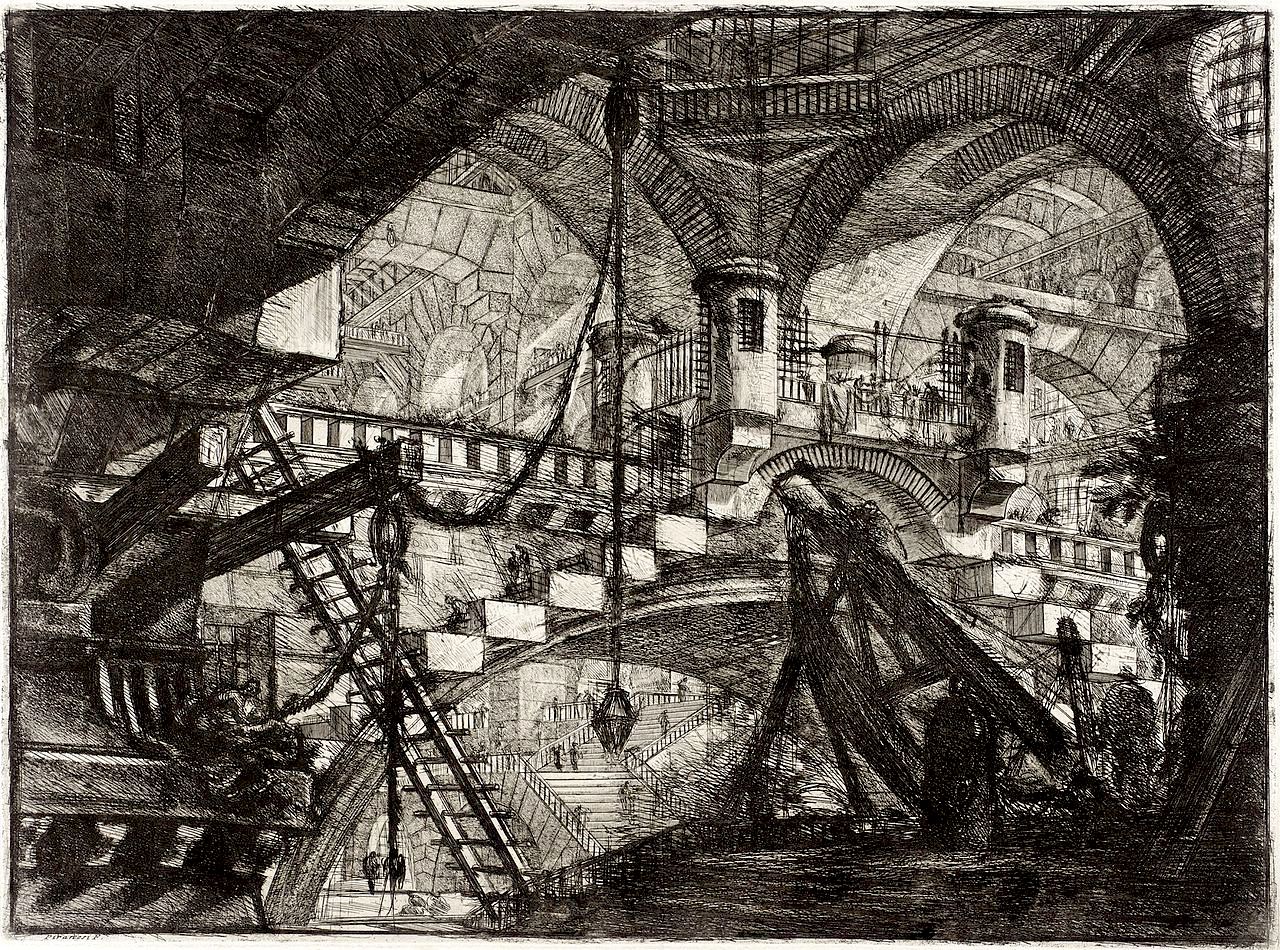
In 1742, the Italian engraver Giovanni Battista Piranesi fell ill. Malaria, a seasonal epidemic that killed thousands of Italians every year until the middle of the 20th century, afflicts sufferers with high fever, chills, and pounding headaches, among other nasty symptoms. Delirious with fever, the 22-year-old aspiring architect hallucinated prisons.

When he recovered, instead of doing his best to forget about the nightmarish dungeons he’d imagined while he was sick, Piranesi set them to copper plates and had them published. The Carceri d’Invenzione (imaginary prisons), first sold as a set of fourteen prints, were a flop, especially compared to the images of Roman ruins Piranesi would make later in his career. But the sinister, unique and inscrutable prisons, though unpopular during Piranesi’s lifetime, later became the darling subject of moody writers and critics. Piranesi’s goth genius was like catnip for Herman Melville and Victor Hugo. Marguerite Yourcenar, the novelist and member of the French Academy, borrowed Hugo’s description of the engraver for the title of her long essay about his work: “The Dark Brain of Piranesi.”

Susanna Clarke is the latest writer to draw inspiration from the endless halls, staircases and arches of the prison engravings. The eponymous hero of her new novel Piranesi lives alone in a version of them, a salt-soaked and sun-drenched series of halls he calls the House. And reading her novel in 2020 makes it clear why Piranesi’s Carceri have, in the end, become even more indelible than his images of Rome’s decaying grandeur. In Piranesi, and in Piranesi, it’s prisons all the way down.

Clarke’s novel comes at a moment with an unfortunate resemblance to Piranesi’s Italy. The COVID pandemic has constrained our lives in various ways, forcing most of us to live in greater confinement than we’d like, making travel more difficult, and death more likely. Even those of us who shared quarantine with family and loved ones have at least a passing familiarity with Piranesi’s monastic life in the House. Anyone who’s taken off a mask after hours of breathing stale air can appreciate Piranesi’s strange, almost somnolent satisfaction with the most common comforts of life (shoes are a joyful luxury for him). 

At times the book celebrates escapism, the purity of isolation from society and the Waldenesque hope that it might make us better people. At the same time Clarke condemns it as a trap, questioning the value of fantasy’s love affair with portals to new and beautiful worlds.  

Clarke’s Piranesi is a prisoner, but the nature of his predicament isn’t immediately clear, and the House is as virtuous as Piranesi’s Prisons are depraved. In fact, the hero is profoundly happy, living in a distinctly un-Hobbesian state of nature. He passes time by exploring the halls of the House, fishing for his dinner, and looking at the statues on the walls. He makes things out of seaweed, spends almost all of his time alone, and considers himself blessed. He’s unaware of any other world but the House, and he has no enemies that he knows of—only one other person lives in the House. The Other, as Piranesi calls him, seems friendly enough, and is sometimes even helpful. 

Seeking to reconcile his faith in God with the reality of evil, the economist Malthus wrote that “evil exists in the world not to create despair, but activity.” Piranesi stays busy. With no long-term goals other than exploring the House, Piranesi fixates on basic tasks like making broth to keep up his strength, repairing fishing nets, or cataloging the statues in the House. It’s a suspended animation familiar to those of us who have spent months studying the minutiae of social media, bingeing Netflix, and worrying over houseplants. You can easily lose a day, a week, and then a month. Next year is no longer a concrete fact of our reality, but a nebulous bundle of expectations about the future condition of the world, out of order and incoherent as Piranesian architecture. Clarke’s Piranesi is similarly focused on the present, writing the journal entries that comprise the book in present tense, and marking them with whatever event he finds most significant: “The One- Hundred-and-Ninety-Second Western Hall,” “I resolve to take better care of Myself,” “I write a letter,” “The other explains that he has said this all before.”

For critics like Yourcenar, time stood still in the Prisons too: “Nor does time move any more than air; the perpetual chiaroscuro excludes the very notion of the hour, and the dreadful solidity of the structure defies the erosion of the centuries.” As the mystery of Piranesi unravels, it becomes clear that the House itself induces forgetfulness—a psychiatric symptom sometimes induced by lingering malaria—and that its basic units of time, the constantly changing tides, are more reliable than months or years. The House is no paradise.

Generally, in escapes to other, unfamiliar worlds—a common trope in fantasy writing—readers hope to find new ones in which the usual confinements, tortures and various injustices of our world have no power. In different worlds, talking animals throw us banquets because we’re the right species. Personal limitations are overcome. Lions and protagonists alike find their courage. And visitors who know nothing about the world they’ve stumbled into resolve long-held grievances nonetheless, restoring balance and order. This kind of wish fulfillment, common in fantasy, is darkly reversed by Clarke’s trapped naif.

This isn’t the first time Clarke has played with genre conventions. Jonathan Strange and Mr. Norrell also questioned long-held values of fantasy, a story that, as noted by Elizabeth Hoiem in a 2008 essay published in Strange Horizons, ended with women saving the world, power-obsessed aristocrats trapped in a column of perpetual darkness, and a Black hero with godlike magic power. Its refusal to conform with the time-honored trope of Carlylean Great Magicians saving the day is echoed in Piranesi’s disturbing vision of the traditional portal fantasy.

The only tortures in this parallel world are the ones humans brought to it.

The confined but benevolent world of the house is dangerous because of the people who traveled there. A self-sufficient master of the tides, Piranesi would be completely safe if the Other would just leave him alone. The only tortures in this parallel world are the ones humans brought to it. This is true in the prison universe Piranesi etched as well, which is stuffed with the machinery of pain: chains, hooks, nooses, racks; a giant St. Catherine’s Wheel. Among them, tiny figures stroll, apparently indifferent to the dungeon paraphernalia around them, the suffering close at hand. “Such gnats do not seem to notice they are buzzing on the brink of the abyss,” wrote Yourcenar.

In Piranesi, the hero is happy in his prison world because he is ignorant of ours, as oblivious as the gnats. When he contemplates the skeletons of former prisoners, he isn’t afraid but comforted by the idea that one day he’ll be numbered among them. Unseen dangers lurk even closer. The duplicitous Other pretends to be Piranesi’s friend, but is actually his jailer. Yourcenar, in “The Dark Brain of Piranesi,” noticed the same perversity in the Prison plates, comparing Piranesi’s work to de Sade, who “both express that abuse which is somehow the inevitable conclusion of the Baroque will to power.” While Clarke’s Piranesi shivers in the dark, The Other sleeps in a warm, dry bed.

Our world isn’t so different. Public officials call for citizens to stay at home, but the rich flee the cities, finding solace in abandoning the world for a cabin with a nice back deck and contactless delivery services. The pandemic has given us claustrophobia and agoraphobia, afflicting us with the same symptoms as the feverish artist. The unsettling idea put forward in Piranesi is that such a solitary confinement might be good, inspiring, or beautiful.

The lamp-post is knocked over, and the wardrobe’s smashed to bits.

Piranesi’s cover depicts a satyr that evokes Mr. Tumnus from The Chronicles of Narnia, and begins with an ominous epigraph from The Magician’s Nephew: “I am the great scholar, the magician, the adept, who is doing the experiment. Of course I need subjects to do it on.” Like the Pevensies in Narnia before him, Piranesi’s been behind the wardrobe a long time, long enough to forget that he was once a citizen of our world. He lives in the House as both its High King and the unwitting victim of an adept’s cruelty. But instead of succumbing to dread and listlessness, the malarial hangover of the enchantment at work in the House, he adopts its logic and reality as his own, thriving in a way that surprises his jailer. Like the oblivious figures in the engraver’s Prisons, Piranesi’s confinement is only a state of mind. The Piranesi we meet at the beginning of the book is enjoying a much richer life in his lonely Narnia than the one he left behind on Earth. At the end of The Lion, The Witch, and the Wardrobe, the Pevensies “lived in great joy and if ever they remembered their life in this world it was only as one remembers a dream.”

Reading Clarke’s novel makes me think there’s no coming back to Earth, for us or for her Piranesi. The lamp-post is knocked over, and the wardrobe’s smashed to bits. At times, Piranesi seems to suggest that the world is better off without us in it, and that we’d all be a lot happier if we were confined, alone, to a prison of endless halls, birds, statues, and water. In another, less interesting book, the drowned halls and crumbling statues of the House might suggest a ruined monument to long-dead humanity, the result of climate cataclysm. But Clarke’s Piranesi is protean. We bring to it what we take with us, and it offers no glib self-explanation. From the world of one dark brain to another, we can recognize genius; but its aims and reasons are ultimately inscrutable, as hidden to us as the conjurer’s tricks.


Announcing the Winners of the 2020 Rona Jaffe Foundation Writers’ Awards

The Rona Jaffe Foundation has been recognizing outstanding emerging women writers since 1995—past recipients include Elif Batuman, Chelsea Bieker, Eula Biss, Rivka Galchen, Vanessa Hua, Helen Phillips, Namwali Serpell, and Tracy K. Smith. This year, six extraordinary writers will receive grants of $30,000 each to support their work. In the past, Electric Literature has published Rona Jaffe Awards ceremony keynote addresses from Tayari Jones and Jacqueline Woodson. For 2020, since the in-person event has been canceled, we are instead honored to make the exclusive announcement of the winners.

The 2020 winners are Hannah Bae (nonfiction), Mari Christmas (fiction), Yalitza Ferreras (fiction), Temim Fruchter (fiction), Elisa Gonzalez (poetry), and Charleen McClure (poetry). Read on for their bios, a description of their work, and quotes from their anonymous nominators.

In celebration of this year’s awards, the 2020 winners will be giving a virtual reading in New York University’s Creative Writing Program Reading Series on Thursday, September 17, at 7 p.m. Eastern. The event is free and open to the public, and you can register here.

“Our 2020 award winners are reframing and revisioning our world and bringing it into focus in important and inventive ways. Their work is surprising, inspiring, challenging, and deeply personal,” says Beth McCabe, the Foundation’s Executive Director. “The Foundation is honored to support these original literary voices. They remind us that Rona Jaffe’s vision remains vital and necessary as her generous legacy continues to support and inspire women writers in their creative endeavors.” In the 26 years since novelist Rona Jaffe (1931–2005) established the award, the foundation has disbursed over $3 million to 164 uniquely promising women writers, who have gone on to earn such recognitions as the National Book Award, the National Book Critics Circle Award, the Guggenheim Fellowship, the Lambda Literary Award, the Pulitzer Prize, and poet laureate of the United States. We can’t wait to see what the 2020 cohort has in store.


Photo by Gaby Demeike

Hannah Bae (nonfiction) is a Korean American freelance journalist and writer living in Brooklyn, NY. Her essays have appeared in Catapult, Slice Magazine, Bitch Media, Pigeon Pages, among other publications. She is the recipient of recent fellowships from The Writers’ Colony at Dairy Hollow, Asian American Writers’ Workshop, and The Poynter Institute. She received her B.A. from the University of Miami. Her essay, “Survival Mode,” was published in the anthology, Don’t Call Me Crazy: 33 Voices Start the Conversation About Mental Health (Algonquin, 2018). Bae is currently working on a memoir entitled Way Enough about family estrangement, mental illness, childhood trauma, and cultural identity. Her nominator writes, “Her chilling, closely rendered depictions of feeling unwanted as a child by both biologic and foster parents are made even more complex by feeling ostracized in school because of her class and race. With heartbreaking vulnerability she recounts her struggles to free herself from her parents’ manipulations, while also empathetically exploring their own history of trauma, growing up in war ravaged Korea with parents whose own mental illness went untreated. Hannah’s life story is as unique as it is inspiring. Already her work has brought comfort to so many.” Bae plans to use her Writer’s Award “to assist with my reporting and research needs; continue my self-guided education in the craft of creative nonfiction and the business of publishing; and most of all, to benefit from the gift of uninterrupted time.” She concludes, “I am writing my memoir because I felt alone in navigating familial estrangement and mental illness, especially as a person of color. By completing this book, I hope to reach readers who will see parts of themselves in my pages and realize that they are not alone, either.”

Mari Christmas (fiction) is an assistant professor at Allegheny College and splits her time between Idaho and Pennsylvania. She received her B.A. from Haverford College, her M.F.A. from the University of Notre Dame, and she has just completed her Ph.D. from SUNY Albany. Her fierce, darkly humorous, emotionally riveting work explores and embodies today’s world reflecting our deepest anxieties and the complexities of current-day feminism, motherhood, and modern love. Christmas’s fiction has appeared in Cosmonauts Avenue, New Ohio Review, Juked, Fence, and Black Warrior Review. She has received fellowships from Kimmel Harding Nelson Center for the Arts and Surel’s Place. She has also begun a novel entitled Fugue States that traces the path of the narrator as she navigates her own difficult relationship to new motherhood. Her nominator writes: “Mari Christmas is an independent, thoughtful, and ambitious thinker, and has what I have come to believe is one of the most unique writing voices of her generation. Transgressive and socially engaged, her fiction is informed by her identity as Japanese and American, her existence between languages and cultures. She pushes the boundaries of possibility in order to forge new ground for thinking about not only what it means to be a writer but also human. The questions that she asks are urgent: What are the ethics of aesthetics? And, how can the female body, particularly a body that has experienced loss, be mapped onto the page?” Her Writer’s Award will allow her to reduce her teaching load next year and pay for child care so she can focus on these writing projects. She says, “This award is not just a financial gift. It is an affirmation of the ways in which women continue to reach out to one another, and how we are able to nourish and support each other as artists and thinkers in times of crisis.”

Yalitza Ferreras (fiction) is a Dominican American writer who lives in San Francisco. Her stories have appeared in Kenyon Review, Bellevue Literary Review, The Southern Review, Aster(ix) Journal, and The Colorado Review among other publications. Her story “The Letician Age” was selected for inclusion in the 2016 Best American Short Stories. She received her B.A. from Mills College and her M.F.A. from the University of Michigan. Ferreras has also received fellowships from Djerassi Residents Artists, Yaddo, Voices of Our Nations, and the Tin House Writing Workshop. She also held the 2014–15 Steinbeck Fellowship from San Jose State University. Her nominator writes, “What I love about Ferreras’s singular voice is the way it catches the reader by surprise. You read her and immediately understand she can write beautifully, with rigor and insight, but then like an undercurrent, she snatches the reader by their feet with the story’s emotional power. The stories are intimate and fueled with her passion for strong women in challenging situations who must and will survive.” In 2011 Ferreras was struck by a car and suffered a traumatic brain injury. She has spent the ensuing years working toward recovery and pursuing her writing. She is currently working on a novel, The Four Roses, about the ambitious Altagracia, a poor young woman who emigrates from the Dominican Republic to Spain in the early 1990s and seeks to make art amidst her struggle for survival. Ferreras will use the support from her Writer’s Award to rent a dedicated writing space and take time off from her design work in order to focus her attention on completing her novel. She says, “I am grateful for the progress I have made, for the support of my writing mentors, and the generosity of my writing community. The question I pose at the heart of my novel is one I have struggled to answer for myself—how does someone who is in the act of survival make art?”

Photo by Sindayiganza Photography

Temim Fruchter (fiction) is working on both a short story collection and her first novel, City of Laughter. These projects reflect and celebrate her deeply-rooted Jewish heritage and her queer identity combining a keen intellect with playful inventiveness and deep wisdom. She says, “My novel spans four generations of women in an Eastern European Jewish family and dreams of a queer ancestral line. The story zigzags geographically and temporally, moving from Poland in the 1920s to Brooklyn in the 1950s, to Maryland in the 1980s, and finally, to contemporary Warsaw. Part speculative queer family history and part polyphonic sacred encyclopedia, the novel’s central story is interspersed with a body of invented Jewish folklore that, while heavily remixed, is inspired by the stories that raised me and the superstitions that shaped my imagination.” Fruchter began her career as a musician and in 2013 turned her creative attention to writing. She received her M.F.A. from the University of Maryland in 2019. Her work has appeared in Tupelo Quarterly, Foglifter, NPR, Brevity, and PANK. In 2020 she received fiction awards from New South and American Literary Review as well as a fellowship from Vermont Studio Center. She says, “I feel a kind of urgency—the most excited and hungry kind—to finish this first book and launch it into the universe. My path has been non-linear, and, as such, I take the hard work and spiritual maintenance of building a writing life very seriously.” Fruchter works for an education non-profit and has recently returned to New York City. She will use her Writer’s Award to create time and opportunities outside of her day job to devote more attention to completing her novel.

Elisa Gonzalez’s (poetry) work ranges widely, investigating childhood and family history, social inequalities, estrangement, God and language. Her first collection of poetry, currently in progress, includes wild elegies to lost selves, sharp-edged essays in lyric, and poems of eerie delicacy and strangeness. A queer, half-Puerto Rican writer who was raised in the Midwest, she says, “What binds the poems is travel in diverse forms: I’ve crossed geographies, languages, beliefs, class lines. It’s a story of departure and pursuit. It’s a story of the island my father left; of the island of the family; of Cyprus, the island that enthralled me in part because of my separation from Puerto Rico. And of the island of the self, uneasy and alone wherever she is.” Gonzalez received her B.A. from Yale University and her M.F.A from New York University. Her work has appeared in The New Yorker, The Literary Review, Hyperallergic, and other publications. A Fulbright scholar in Poland from 2016-2018, Gonzalez has also held scholarships from Bread Loaf Writers’ Conference. Her nominator writes: “Elisa is truly a thinking poet who values both clarity and doubt in her lines. … You feel the work constantly driving at something beyond the safe or easy thing to say, while also avoiding what is emotionally manipulative or overwrought. The poems are never glib or easy. They are brave, wild, precise, and honest.” Gonzalez’s Writer’s Award will allow her to reduce her work as a freelance editor while she finishes the collection, as well as a novel. She lives in Brooklyn, NY.

Photo by Raven Jackson

Charleen McClure (poetry), the daughter of Jamaican immigrants, was born in London and raised in the suburbs of Atlanta. She earned her B.A. from Agnes Scott College, her M.A. in TESOL from Hunter College, and is currently pursuing her M.F.A. in poetry at New York University. A Fulbright scholar, she has received fellowships from The Conversation Literary Arts Festival, Cave Canem, Callaloo Creative Writing Workshop, and VONA. Her work has been published in The Offing, Poetry Project, Mosaic, Muzzle, and elsewhere. Currently, she is at work on her first collection of poems entitled Kiss Your Teeth, which explores black women’s refusal through the lens of desire. “The book,” she says, “elaborates on the ways that black women have come to articulate and assert what they want. The poems sort through the myths and models of black femininity with speakers attempting to reconcile competing desires. Yet, at the same time, they revel in the body’s bad attitudes and wild appetites to reclaim it from the historical and ongoing systems of oppression that have sought to abuse it.” Her nominator writes, “In Charleen McClure’s poems the body—its needs, desires, repulsions, ghostly impulses, also its il/legibility, its immediacy and mediation—is central. She possesses bone-aching patience in the presence of revelation’s slow arrival, working in unpretentious, serious counter-partnership with the word.” To meet the demands of her book project, she plans to use her Writer’s Award to further and deepen her research from materials and archives housed at the Schomburg Center as well as the libraries at Harvard and Spelman College. She lives in New York City. 

For more information about these writers and the Foundation’s program, please see www.ronajaffefoundation.org.

Walter Mosley on Writing Awkward Black Nerds

Three decades ago, Walter Mosley published Devil in a Blue Dress, his first novel, a mystery featuring the now-famous private investigator Easy Rawlins. Almost 60 books (including 15 staring Easy Rawlins) and several awards later, Mosley has earned an imposing place in Black literature. Last week, he was awarded the Medal for Distinguished Contribution to American Letters from the National Book Foundation. The first Black man to achieve that high honor. His oeuvre spans time and genre. From the Post-WWII Los Angeles of Easy Rawlins to dystopian futures, there exist few subjects Mosley hasn’t touched.

His latest project, The Awkward Black Man, is a wide-ranging story collection and meditation on Black life, where quiet and odd protagonists struggle for purpose and acceptance. In one story, a teenage modern-day cowboy moves to Harlem with his mother. “Showdown on the Hudson” exemplifies Mosley’s ability to balance heroics, sensitivity, empathy, beauty, humor, and style. There’s a murder. There’s shame. There’s raw awkward emotion. At the center: a loving friendship.

Before the world locked down and caught fire, Mosley was writing for Snowfall, a series about crack and Los Angeles in the ‘80s. On an afternoon in late July, I spoke with Mosley on the phone about his new collection, America’s current unrest, hope, and much more. I was in Buffalo, New York. He was in Los Angeles. 


Gabriel Bump: In previous interviews, you’ve discussed a desire and need to depict Black heroes in fiction. The characters in The Awkward Black Man are woefully unheroic. 

Walter Mosley: In what way?

GB: They’re bumbling. They’re unspectacular. 

WM: That’s the heroes. The real heroes are those people. You have heroes like Captain America, right? There really are no Captain Americas. You have them, but they don’t exist. What people are looking for, I think—people who reflect them. Most of us are kind of bumbling, right? 

Some of them do extraordinary things, but other ones are just normal people. I want to write about them. So often Black male characters fall into five or six characterizations and that’s it. 

GB: Tell me more about those characterizations.

WM: Well, you have the sidekick, the pimp, the craven criminal, the sex machine. They’re people. They exist too. And a lot of people want to be some of those people. The thing is: what about the guy that’s the bookkeeper, who’s raising a koala bear in his attic? Those kinds of people. If you’re not talking about it, if you’re not thinking about it, then we lose the benefit of literature. 

GB: You have an Easy Rowlins novel coming out in January. These characters are inhabiting a different world. And right now you’re writing for Snowfall.  How is it placing people in these different aspects of Black life?

WM: It’s the way I think. We have such extraordinary people, who are so complex in their way of thinking, in their way of acting. And, indeed, the world around them is really complex. 

One of the stories, called “Haunted”, it’s about a guy who’s 68. He’s married. He’s written a thousand stories, none of them have been published. And he’s just full of bile and bitterness. He has a heart attack. He ends up being haunted by his own inability, his own commitment to himself, which was so misplaced. Rather than the ghost haunting the people. The people are haunting the ghosts, which is the way I see it happening. Of course, I’m a writer. I’ve written a whole lot. I’ve been rejected all over the place for all kinds of books, for all kinds of reasons. So, THAT’S ME. That character is me. And not just me in my writer’s life. But me all through life: trying to imagine being someone and not being that perfect cutout person that we all want to be. 

GB: But none of us are.

WM: Very few. Even the people who are, aren’t, you know? 

GB: “Showdown on the Hudson” was my favorite story in this collection because you are able to combine this Western-feel in this urban environment. It’s also touching, especially at the end where we have these letters exchanged. 

So often Black male characters fall into five or six characterizations and that’s it.

WM: This was a story I wanted to write. I always wanted to write a Western. It was the only genre that I haven’t written. I really wanted to. Because so many Black people, especially from Texas, you say “what are you?” and they say “Well, I’m a cowboy.” Because everybody from Texas is a cowboy.

GB: Even in LA, there are famous cowboys. 

WM: Listen, they all came from Texas. They came up here. In many ways, Billy (a protagonist) can do everything. He can ride a horse. He can shoot a gun, seduce the girl. He does everything.

GB: Even talk to police.

WM: He approaches everybody as an individual because he’s a cowboy and individualism is a big part of that. He also has a creed. There are things he won’t do. There are things that are wrong. The killing that he does is wrong. He knows it’s wrong. That’s what fun about doing this. Even though he’s so perfect in some ways, in others he’s not. He’s so different from everybody. But everybody understands exactly what he’s doing. 

GB: It’s shocking that you’ve written so much and just now getting around to writing this thing you’ve really wanted to write.  

WM: Well, nobody’s really interested in you writing it. It’s not a very interesting genre. I had to make money. Also, I couldn’t really figure out how to do it. I decided: I’ll just put it contemporary in Harlem, but it’ll be a cowboy from Texas. Because I had been down to Texas. Houston has this gigantic rodeo, livestock thing going on. All these people, from way out in the middle of nowhere, show up. They got the biggest pig. They got the biggest pumpkin. They ride horses. Well, these are cowboys and they’re living today. So, I can use them. I don’t have to go back to 1842. It was so different. It’s so telling that the most evocative Westerns about America are made in Italy. 

GB: Why do you think that is? 

WM: Because people want heroes. You’re trying to develop a hero. 

GB: I guess Cowboys in real American History aren’t necessarily heroic figures.

WM: Exactly. They might have been the hero for the people there because they killed somebody. But, really, it’s so ugly and debilitating. I saw this thing the other day about this guy. He was a sheriff of some kind. But he just murdered people. They figured he murdered like 51 people. 

GB: We’re living through a historic moment, in terms of Blackness. How have you been experiencing this moment? You were in LA during the ’92 riots, right?

WM: I wasn’t living here in the ’92 Riots. I did happen to be here. 

GB: In the last couple months we’ve seen unrest in major cities, like LA.

WM: It’s nothing like the ’60s. 

GB: Tell me about the difference. I’m 29. For young Black people, young Black artists around my age, we’re trying to process this moment. It feels huge.

In order to mark your place in history, you have to be able to see where everything has come from.

WM: More people got killed in the LA Riots of ’65 than got killed over the whole country in this most recent uprising. I look at it as waves, slowly, like the tide coming in. It’s one wave at a time. There has never not been an interesting moment in Black history in America. When you look at Oklahoma. People of color lived in the Oklahoma territory. All kinds. Native Americans. Mexicans. Chinese. Blacks. When the radical Republican congress lost power, they came and killed all those people. There are moments all through history where we struggled. The great thing about today is that it’s everybody’s history. It’s not just Black people out there saying “We’re mad.” It’s all kinds of people out there saying “no, this is not right. What’s wrong with you? Killing people and sitting on a man’s neck for eight and a half minutes—what’s wrong with you?” That’s beautiful.
In order to mark your place in history, you have to be able to see where everything has come from. From the NAACP with a sign hanging out front of their offices in New York every time somebody was lynched. Billie Holiday singing “Strange Fruit”. All of our involvement throughout the history of America. The only people that haven’t been here as long as Black people are Native Americans. Everybody else—we’ve been here longer than everybody. The Irish and the Italians, all those people—they came later. All of this is incredibly difficult and challenging history. Today is no different. 

GB: How hopeful do you feel this moment will lead to change? You say this is now our shared history. Does that make you feel hopeful? I can’t tell how I feel. 

WM: Listen, great things are happening. When you have police chiefs around the country saying the guy that sat on [George] Floyd’s neck should be arrested, tried, and sentenced—when you have policemen saying that about other policemen that’s a major change. Change has already happened. When you have a country where people are saying “maybe we should defund the police department.” Just saying the words—it’s a major event. 

GB: It looks like it might not happen.

WM: But it’s like those waves. It may not happen everywhere. It’s already happened in a couple places. That’s one thing. But something is going to happen. Somebody’s going to say “oh, yeah. The police are still like in the old days when they use to enforce runaway slave laws. That was their job. But it’s different now. We need people that understand people with mental problems, racial issues, sexual biases.” All that stuff is really happening. Seeing what has already happened means there’s already been a change. I don’t have to be optimistic about it because it’s happened. 

GB: This idea of general progression. 1965 is different than 1992 which is different than 2015 which is different than 2020. 

WM: Yeah.

GB: Do you think the shifting national perspective has influenced how you approach your work? 

I’m just writing stories about odd Black protagonists trying to live their lives.

WM: It might very well. I wouldn’t be able to tell you how. I’m just writing stories about odd Black protagonists trying to live their lives. 

GB: Do you feel like your job has remained the same? 

WM: When you say “job”, what do you mean exactly?

GB: Well, your goals as a writer.

WM: I’m not completely sure that I have goals. 

GB: You say you want to portray a certain type of character.

WM: And I do. And that’s what that book is about. But, you know, I write different books. I wrote Blue Light. A whole bunch of science fiction stuff. I’ve written nonfiction. Books about writing. Each book has an idea. I’m not sure—it may, like waves, be generally going in that direction. That’s nothing something I feel like I need to make a decision about. Because I love writing. 
GB: To me, your ability to move through genres is enviable. At some point, does it get frustrating that people know you primarily for Easy Rawlins? 

WM: That’s the thing. I don’t really think about it. I keep writing other books. They keep on getting published. I talk to people about them, like I’m talking to you. That’s enough for me. Literary fiction is never going to the genres anyway. I’m not trying to say “Why don’t you pay attention to this book?” People read all the books. The Socrates stories. So, no, I don’t get bothered. 
Are you in LA or Chicago?

GB: I live in Buffalo now.

WM: Oh, you’re in Buffalo. My God.

GB: I like it here. 

WM: Are you teaching? 

GB: I was teaching. Now I’m mainly working on my second book and screenplays. The film industry is a lot different than literary publishing.

WM: It’s a lot better and a lot worse.

GB: What do you mean by that?

WM: 1. You make real money. E. L. Doctorow once suggested to the people running the writing program at NYU that they should have me in. Someone called me in. I could tell by the way they were talking to me—they weren’t very happy with me. At one point, they told me how much I’d be making, which was basically an adjunct’s salary. I said, “Listen, E.L. Doctorow told you I’d be a great addition here.” And they said, “Well, that’s what we offer.” I had a lot of friends who worked for NYU. I knew what they were making. Okay, well, no thank you. This guy I knew was making 15 times what you just offered me. You can make your career in the university.

In my book, Elements of Fiction, the penultimate chapter is an attack on universities teaching writing, which I don’t think is their province. What they do to the writing students and they writing teachers. I think they just drain away all your creativity. If that’s what you want to do: read books and talk about them, which is great, that’s a wonderful thing to do. But if you’ve going to talk about writing—writing is always changing. And the university is always looking back. In things like literature and history. Maybe even in physics and biology. 

GB: Last year, you wrote about your experience in a writer’s room. That didn’t sour it for you.

WM: Listen, I live in America. Somebody comes up to me and says, “So-and-so is a racist.” And I go, “Uh-huh.” 

“Isn’t that terrible?” 

“Well, yeah. It’s terrible that everybody in America is a racist.” 

That’s it. Everybody in America is a racist. What am I supposed to do about that? And they go, “He said that word! He did that thing! They blah-blah-blah.” This is America, man. This is where we live. The idea that you’re going to defeat this thing without completely opening the wound and airing it out. I don’t know. Anyway…

GB: That’s interesting to hear after what you said earlier about feeling hopeful. 

WM: You ever watch those nature shows about the ocean?

GB: Yeah. Of course.

The fact that everybody is a racist in America doesn’t bother me. It’s complex. It’s not an absolute thing.

WM: It’s so beautiful down there, right? The coral. These creatures that are so perfect. Like sharks, for instance. But every one of them eats the rest of them. I watched this thing once where they showed this one fish that came up and ate that one. And another fish came up and ate that one. And another fish came up and ate that one. I was like, “Damn.” HBO had this great series called Rome. God, it was so good. These two guys, plebes. One guy goes up to the other one and says, “I want to join you.”

“Well, we’re doing some very dark stuff. This is going to be really bad. I don’t know where it’s going to end up.”

“Look, man. Everybody ends up in the same place.”

“Yes. You’re right about that brother.”

And I just loved it. Life is beautiful. Life is beautiful. It’s difficult. It’s hard. We’re very small. The systems we belong to are very large. That can always cause a problem. But I—I—I don’t care. I’m happy to be in the world and living in the world. The fact that everybody is a racist in America doesn’t bother me. It’s complex. It’s not an absolute thing. A lot of people are just ignorant. They have to be disabused of that ignorance. 

GB: For me, it seems like the ignorance now is pretty malevolent. It seems like a lot of anger. Certainly not to the same degree as the sixties.

WM: Or the ’30s, or the ’20s, or the ’70s, or the 1840s. When you go back it gets worse. Like right now, you’re writing novels and publishing them. There was a time when that wasn’t happening. I remember when there were about ten or twelve people getting published, Black people. You could be writing all the books you wanted to write. Nobody was going to publish them. Because of unconscious racisms. Like, “Well, Black people don’t read.” “Nobody’s interested in reading Black stories.” That’s what everybody was thinking, who ran publishing. And, if you think it, it becomes true if you’re in charge… Things are getting better. It’s still hard. But things are getting better. Still, someone can sit on your neck in the middle of the day, downtown, and kill you. And nobody’s going to stop them, without becoming a murderer themselves. 

GB: That’s an example of something that’s happened for centuries. 

WM: Oh, sure. Every day. Every day somewhere.

Everything Is Filthy and I Am All Chores

A Clean Story

I was taking a bath in the old clawfoot tub and noticed a lot of garbage floating around me so I pulled the chain to drain it. My daughter and I watched as the water left a pile of black bananas and carrot coins behind. “Where did all this come from,” I asked her.

“I was cleaning out the fridge and threw all this in the tub. I didn’t want to stop up the sink.”

I started filling buckets with the stuff so that she could dump them outside in the compost box. I noticed both shepherds were nudging the door to be let out. I couldn’t remember how long it had been since they went out. The door was locked so I had to get the key. When I came back with the key, the large male, Hazard, was squatting over a rolled-up rug and I stopped him. Behind lay what looked like one segment of a super-size Tootsie Roll. Not too bad. It could have been worse—it could have been soft. I opened the door and both dogs ran downstairs. The outside door had been left open and snow had drifted up, covering the basement door. I could see the jobs, with my name on them, piling up.

Standing on the porch, I noticed the service door on the garage was open. There was a white van in the drive with men going in and out of the garage. They saw me. Quickly I jumped into my white sedan and blocked their vehicle from moving. The overhead garage door was open too and I saw my red pickup decked out with a red cap looking like a miniature fire truck. “What the hell?” I said.

The man in charge said, “We’re only doing our job. We were hired to do this.”

I said, “I want your names and your driver’s licenses now.”

The one in charge reached into his pocket and pulled out a scrap of paper with a name scribbled on it. Another scrap had a license number scribbled on it, which had been crossed out and corrected about five times.

“None of this is real,” I said. “I’m calling the police.” When I turned I felt a hand slip under my shirt and a cold knife against my back. I fainted.

When I came to I was back in the bathroom. My daughter had removed the tub and was trying to dig more carrots out of the pipe. “You can’t just put the tub back in place and expect it not to leak.”

Water had leaked out all over the floor and soaked about thirty pairs of her dirty jeans that she had stuffed behind the tub because she was too lazy to take them downstairs to the wash room. I pulled the jeans out and handed them to her to take into the basement. I went outside to check the yard and garage. The men had left. I noticed a side window in the lower flat was open. I peered inside and heard noises. I tried to yell, “You better leave,” but no sound came out of my moving lips. So I slapped my hand a few times against the inside wall to make them hear me and leave. I pulled the window down to keep out the weather.

I went back in for a new bath. While I was in the water my daughter came in with a plate. On it was that pooper that looked like a brown sushi. “What should I do with this?” she said.

“Why is it on a plate?” I asked.

“I didn’t want to touch it, so I used a fork to push it onto this plate.”

“Throw it outside,” I said.

“Okay.” She set it on the edge of the sink and started to put her makeup on. She was at that age where she couldn’t go outside without makeup. She adjusted her shirt and smiled at herself a few times in the mirror. Then she reached over for the hairbrush and her sleeve brushed over it. This really got her flustered. “I can’t wear this now.” And she started taking off her shirt and accidentally knocked the plate into the tub. I quickly moved back and the tub tipped backwards. The water came out in a wave and took off into the kitchen. I tried to imagine how I was going to get all this cleaned up, and do all the chores I had lined up for the day. Everything was wet and I still wasn’t clean.

10 Books about Doomed Love

The pleasures of sex, like life, are temporary. Love is perhaps more complicated, but if we are being honest with ourselves, I think we have to admit that many love relationships have an expiration date, as evidenced by the fact that so many of them end. Being time-bound, however, does not make sex or love less desirable. Quite the opposite. 

Earnest, Earnest?

Eleanor and Earnest, the two ill-suited lovers in my first book of poetry, Earnest, Earnest?, are not meant to be together, but something drives them to return to each other again and again. To seek the connection of sex and love knowing this connection is likely to die is either reckless, or brave, or both. Beyond the prurient, this is what draws me to tales of doomed love—in these unions and breakups, I see a microcosm of the human predicament. My favorite visions of lovers who lose each other are contained in these ten books:    

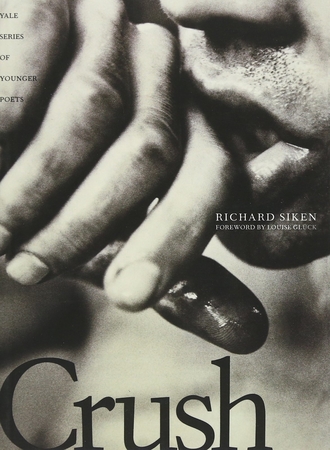
Crush by Richard Siken

“The entire history of human desire takes about seventy minutes to tell,” writes Richard Siken, “Unfortunately, we don’t have that kind of time.” And it is at breakneck pace that the lovers in Siken’s poems come together and split apart. Before he wrote Crush, Siken’s boyfriend died in a car accident, but that loss is transmuted in the book, so the lovers are torn apart for different reasons across the three sections—sometimes the cause is death, sometimes choice, but the result is always heartbreak. 

Brute by Emily Skaja

When we want someone to love us, we want them to love our body and our mind, yet this is rarely what we get. In Brute, the man the speaker lives with says to her, “I could never love someone so heavy.” What proceeds from here is an exquisite portrait of a brutal love affair. 

The House of Deep Water by Jeni McFarland

The House of Deep Water by Jeni McFarland

After the dissolution of her marriage and the loss of her job, Elizabeth DeWitt is forced to move back to River Bend, Michigan, the small town where she grew up, but—because of the color of her skin—never quite felt she belonged. Beth’s return is an unhappy one, and it leads her to reunite with her first doomed love, a man who dated her and her best friend simultaneously, and, ultimately, married her friend. The novel confronts not just the consequences of being the other woman, but also the consequences of being labeled other in the place you call home—it’s an exploration of how trauma and loneliness, like everything else in America, are not equally distributed. 

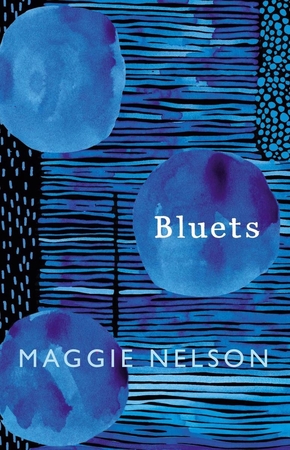
Bluets by Maggie Nelson

In Bluets, Maggie Nelson describes being left by a man, then falling in love with a color: blue. Part nonfiction, part prose poetry, what I love particularly is how the common wisdom of getting over or moving past a lost or unrequited love is interrogated and found to be lacking:

“For to wish to forget how much you loved someone—and then, to actually forget—can feel, at times, like the slaughter of a beautiful bird who chose, by nothing short of grace, to make a habitat of your heart.” 

Image result for dream house by carmen maria machado

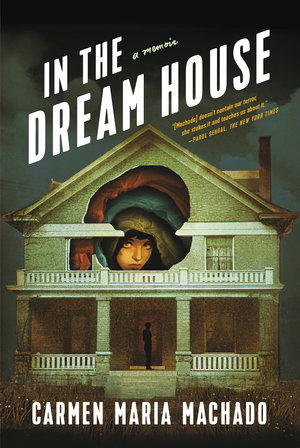
In the Dream House by Carmen Maria Machado

This memoir writes into the silence surrounding domestic abuse, and in particular domestic abuse in lesbian relationships; and asks whether knowledge can save us:

“Would knowing have made you dumber or smarter? If, one day, a milky portal had opened up in your bedroom and an older version of yourself had stepped out and told you what you know now, would you have listened?”

The inventive architecture ensures that with every section, the story changes and it stays the same. 

An Equal Music by Vikram Seth

An Equal Music by Vikram Seth

Michael Holme, a talented and accomplished violinist, is in love with Julia McNicholl, an equally gifted and skilled pianist, but he has a nervous breakdown and he leaves. Ten years later, a chance encounter reunites them in London, and they resume their relationship, but now Julia is married and has a secret. It’s a story about how we can be precise in work and imprecise in love. 

Autobiography of Red by Anne Carson

Autobiography of Red by Anne Carson

What slays Geryon is not violence, it’s Herakles’ carelessness and indifference: “It was raining on his face. He forgot for a moment that he was a brokenheart / then he remembered. Sick lurch.” But this is only the beginning of this novel in verse. 

Tea by D. A. Powell

After the end of a relationship, D. A. Powell did not write for a year. When he began again, he “took my failed relationship as subject” and “turned my notebook sideways, pushing into what would traditionally be the margins of the page.” The result is this book of brief-but-long-lined poems, impeccable in their observation of how bodies tangle and disentangle, hardcore in their longing: 

. . . we rubbed each other out:     a pair of erasers

what happened to “significant” out of bed: abolished in the act of standing. like a “lap”

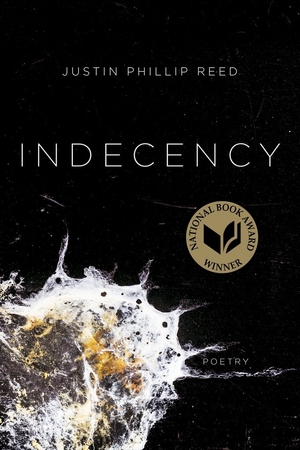
Indecency by Justin Phillip Reed

Sex and love are not entirely private matters. Rather, our most intimate acts and feelings are policed by what the larger political realm deems decent and indecent. Indecency explores how this societal policing limits access to pleasure for the queer Black speaker, and imagines how this could change:

. . . For a second, you realize

that every single man in the room

has his back to another. Suppose

this were not true all the time. 

Troilus and Cressida by William Shakespeare

Troilus and Cressida by William Shakespeare

We give too much time and space to Romeo & Juliet. My preferred tale of doomed love is Troilus & Cressida. Set against the backdrop of the Trojan War, which is also the backdrop of Western literature, Troilus (a teenager) swears undying love to Cressida (another teenager), yet after their first night together, he agrees to trade her to the Trojans. He promises to visit Cressida in the opposing camp, but spies on her instead, which is how he witnesses her first tryst with Diomedes. Troilus then calls Cressida a “whore,” and this is more or less how history remembers her. It’s a stark reminder that when things end, blame is rarely evenly assigned. 

A Scientist Tries to Understand Her Family Problems Through Mice

Yaa Gyasi’s debut novel Homegoing told the story of two branches of a Ghanaian family, one descended from a woman who marries a white slave trader and whose line stays in Ghana, another descended from her half-sister who is captured and sent to America in bondage.

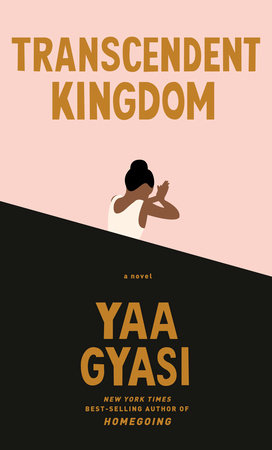
Transcendent Kingdom by Yaa Gyasi

Gyasi’s second novel Transcendent Kingdom follows Gifty, a Ghanaian-American doctoral student at Stanford studying the neuroscience of addiction and depression in mice. Gifty’s mother immigrated to Alabama, her father reluctantly in tow. When the Chin Chin Man, as Gifty and her older brother Nana call him, finds the racism and joylessness of life in Huntsville too much to endure, he returns to Kumasi and the family is never quite the same. Nana, a talented rising star on the basketball court, is prescribed opioids after an injury and ends up a heroin addict. After his death, her mother falls into a deep depression, often not leaving her bed for weeks on end. Though a pious member of her family’s otherwise all-white church as a child, Gifty struggles with a loss of faith, efforts to coax her mother back to life, and the alienation she finds in even her closest relationships as she attends Harvard and moves on to graduate school.

I spoke with Gyasi about writing a novel inspired by neuroscience, the unique challenges faced by Black immigrants to America, and the meaning of transcendence and salvation.


Preety Sidhu: Her mother’s depression is a major issue that Gifty grapples with throughout this book, and it comes about in part because Gifty’s father abandons their family, but more significantly in the wake of Gifty’s brother’s death from a heroin overdose. In Gifty’s research, there is a really interesting neural twinning between depression and addiction: “in depression, where there is too much restraint in seeking pleasure, or in drug addiction, where there is not enough.” To what extent do you see Nana’s addiction and Gifty’s mother’s depression as two sides of the same coin? Possibly as different responses to similar pressures?

Yaa Gyasi: In terms of me personally, I don’t think I actually thought about the fact that addiction and depression existed on this same continuum. That wasn’t something that was really on my mind until I started researching the neuroscience aspect of the novel, particularly the research that one of my close friends from childhood does. Right now she’s a postdoc at Stanford but when I started the novel she was a Ph.D. candidate in neuroscience. She researches the neural pathways of reward-seeking behavior. The way she always explained it to me, in lay terms so that I could understand it, was that she studied addiction and depression. I didn’t really think too deeply about what that meant until I started digging further into her work. That was when I started to see the connections—there’s the reward-seeking that mice do where they don’t care about risk and then there is the reward-seeking that the mice do not do even though there is a chance of pleasure. And I liked that. I liked that doubling and I felt like it would be a nice way to explore the relationships in the novel. 

PS: But you perfectly set up my next question, which is that you mentioned that Gifty’s research is based on the scholarship of your friend Christina Kim at Stanford University. In a literary sense, Gifty’s research is also so precisely and poetically aligned with the circumstances of her life and family history. How did this alignment come about? Did you have a sense of what Gifty’s family would go through and track down the corresponding science, or dig in farther? Or did you encounter this really compelling science and wonder how these issues might shape the lived experience of a family?

YG: The science really came first. It was my friend’s research that came first. I found it really interesting. I also found it interesting the way that she would talk about it to non-scientists, which felt to me to be this narrative-driven thing about addiction and depression. She would illustrate what the mice were going through and that felt like something that you could quite easily map on to human experience.

This book almost felt like a writing prompt, like: write a novel about a woman who studies addiction and depression. And you could go a million different directions with that kind of a prompt but I thought it would be nice to have a woman working on this research, who is also experiencing the things that she researches in real time in her life. So the aspects of addiction and depression that her mother and her brother go through really were born out of wanting to write about this specific field of neuroscience. 

PS: Gifty’s family are the only Black people at their Alabama church, because their immigrant mother doesn’t know any better, and it’s an incredibly isolating experience. After Nana’s death, Gifty and her mother are physically alone at a time when they shouldn’t be, until their white pastor finally decides to show up for them. Before that, her mother might be the lone person at that church still believing God can heal her son. Yet Huntsville is about two-thirds white, it does have a significant Black population who are not recent immigrants. Do you think having a local Black support system might have changed anything for this family? Can you speak more to your decision to not explore this kind of connection or community for them, in this particular story?

YG: Yes, I absolutely think that having a local Black community would have made a world of difference. For Gifty, in particular, perhaps also for her mother. But her mother is such a standoffish and reticent character. There’s a moment later in the book where it talks about how she never goes to the Ghanaian gatherings even. And I’m not sure why that is, but I think for some immigrants—and perhaps we’ll just speak specifically for Gifty’s mother—there can be this sense of, well I’m already isolated within this community in America, what does it matter to be isolated further? There isn’t a desire to assimilate or enmesh with the communities that already exist within the country. I’m thinking of Black immigrants, specifically, but you’re right that Huntsville has a pretty large African American population. I would venture a guess that Gifty’s mother does not really consider herself African American, and wouldn’t feel ease or comfort around that community, but also just doesn’t feel at ease or have any comfort around any community. So her choice to isolate herself has this ripple effect on her children, who would clearly benefit from any kind of engagement with their Blackness. Any kind of engagement with community in general. Her isolation isolates her kids in these really specific ways that I think are damaging both for Nana and Gifty.

PS: Do you think Alabama’s Black community may have embraced them if they pursued that option? 

YG: I think they would have been embraced. It might have been hard in the beginning, as they were just learning to fit in with American culture in general. But I think the avenue is open, particularly in a place like Alabama or like Huntsville that doesn’t have a large immigrant population. If you move to somewhere like New York that has plenty of Ghanaian Americans, I think you can settle easily into a Ghanaian American community and keep kind of separate from the African American community.

PS: For me, one incredibly painful moment in the book was learning after his death that Nana’s father wanted to take him back to Ghana as a child, and his mother’s anguish at having said no. The Chin Chin Man does paint a compelling, if perhaps overly simplistic, vision of Ghana as a much happier place than America, where “no one is enjoying” (which also was a very resonant comment at the moment). While Gifty doesn’t connect strongly with Ghanaian culture, she is aware that Ghanaian schizophrenics hear kinder voices than their American counterparts, that the smiles and ease with which her Aunt Joyce moves in the world could have been her mother’s, maybe. Do you think things might have worked out differently for Nana if he’d gone back, or even just known that his father wanted to take him? That he hadn’t been completely abandoned? 

I think for some immigrants, there can be this sense of ‘well I’m already isolated within this community in America, what does it matter to be isolated further?’

YG: Yes, I do think that things might have gone differently for him if he knew that his father wanted to take him or if he hadn’t felt so utterly abandoned. At the same time, I think there’s still a difference between wanting to bring somebody back with you and, after being told or feeling like you can’t do that, giving up entirely on the relationship. So it’s hard to say if the Chin Chin Man was the kind of person who would have the follow-through to go through with that, had he gotten a yes out of their mother, or if Nana would have encountered other related issues because of the nature of this father figure. So, hard to say, though I think probably it would have meant a great deal to him, just to have his father continue to attempt to be in his life in more significant ways. Whether that was bringing him to visit or bringing him to stay, but also following through on his promises to come see them, and keeping the lines of communication open. So yeah, I think it’s a good thought experiment, but hard to know. 

PS: And of course it’s only so useful to speculate about the versions that you didn’t write. I think what I’m trying to get at is it felt like there’s this underlying tragic thing that, it’s such a quick moment on the page but you could tell that it was pointing to something so much deeper.

YG: Well I think the mother probably felt that things would have gone differently if she had allowed it and I think she feels a lot of guilt around the fact that she didn’t do it. So yes, I do think there’s that. And there are fewer people suffering from addiction in Ghana, certainly, so the kind of access to that particular way of coping wouldn’t have been present for Nana, necessarily, had he gone back to Ghana. So yes, perhaps.

PS: I love how you claim the word “pioneer” for Gifty’s mother. You first set us up with the more standard cultural image of white American settler colonialists heading west in wagons, before dropping the line: “[t]hough she didn’t ford a river or hike across mountains, she still did what so many pioneers before her had done, traveled recklessly, curiously, into the unknown in the hopes of finding something just a little bit better.” What are your thoughts on the power of the word “pioneer” when used to describe the experience of immigrants of color moving to America?

YG: I liked that reclamation of the word for Gifty. You’re right, the associations with it here, you think of the West, you think of settler colonialism, you think of people killing the indigenous population and building their houses, you think of Laura Ingalls Wilder and Little House on the Prairie. Gifty is able to reclaim that term and say my mother is doing a similar thing, without any support and without much success, but she is also trying to make a space for herself in a hostile territory. If that is what pioneer-ism could be defined as, then she is also doing that. 

PS: I find Gifty’s relationship with her college friend Anne quite compelling, especially in how it ends. Anne is one of the closest and most loving—however imperfectly so—relationships Gifty has ever experienced, and yet after Gifty shares how Nana died, her heart hardens and she never speaks to Anne again. Either she doesn’t forgive Anne for extracting this information or for the privileges that allow Anne’s sibling to thrive despite experimenting with drugs. Gifty says “The last text Anne ever sent to me said, ‘I love you. You know that right?’ and it took everything I had not to respond, but I gave it everything I had. I took pleasure in my restraint.” Reading that line, I think of her experimental mice who show restraint and don’t fall into addiction, but Gifty has also established that too much restraint is correlated with depression. Do you feel that it is a healthy choice for Gifty to cut Anne off? Is there anything Anne could or should have done differently to avoid this fate?

YG: I do not think it was a healthy choice to cut Anne off. I think that Gifty suffers from it for many years. That choice to cut off the significant relationship in her life, you see reverberate through how she deals with relationships in general. I think of Gifty as a character who has built all of these walls around this particular part of her that hurts, built so many walls around this wound that is her father’s leaving, her brother’s death, her mother’s depression. Anytime anyone attempts to breach the wall, she cuts them off or distances herself or is just emotionally distant. I do think that the healthier option, the better option, would have been to be honest with Anne and keep her in her life. But I don’t think that college-aged Gifty was at a place in her life where she could recognize that.

PS: So I guess Anne was doomed, that there’s nothing she could have done differently.

YG: Poor Anne. 

PS: We get a clue or key to understanding this book’s title early on, as Gifty looks at a mouse’s brain and wonders what it might point to about the “comparable organ inside [her] own head.” She remembers the words of a high school biology teacher, that Homo sapiens are “the most complex animal, the only animal who believed he had transcended his Kingdom.” What does the idea of a person transcending their kingdom mean to you? Is it linked to what one of Gifty’s friends says about her: “You’re like taking the pain from losing your brother and you’re turning it into this incredible research that might actually help people like him one day.” Is there even more to it than that?

Salvation means being able to make choices that change the course of your life. Not being beholden to the faulty workings of [the] pathway in your brain.

YG: I think that’s part of it. I do think there’s more to it. There’s the moment later where Gifty says something like that she had spent her whole life hearing that humans have dominion over animals without ever hearing that she herself was an animal. This idea that humans are somehow set apart in a way that makes them different than other animals is one that Gifty is concerned with, particularly as she does this research that involves the manipulation of another animal in order to hopefully eventually serve the human animal. It’s a combination of things but it’s mostly about this idea of the dominance of the human-animal and does that cut us off from seeing things in a different way—being more charitable, being more attuned to the idea that we are, in Eula Biss’s words, continuous with everything on the earth.

PS: After seeing that she can inhibit reward-seeking behavior in addicted mice, Gifty says, “[t]hat saving grace, amazing grace, is a hand and a touch, a fiber-optic implant and a lever and a refusal, and how sweet, how sweet it is,” linking that church idea and language of salvation with the addicted mouse’s salvation, and by extension what salvation might have looked like for Nana. What does salvation mean to Gifty?

YG: I think for Gifty, in terms of her research and her obsessions, salvation means being able to make choices that change the course of your life. Not being beholden to the faulty workings of this pathway in your brain that has continued to allow you to press the lever, even when you consciously, or on some level, do not want to be pressing the lever. When it comes to her work salvation is about a refusal. For the other aspects of her life, I think it’s about freedom and transcendence—that word again—and an understanding of what she calls in some parts of this book “the whole animal,” the fullness of one’s life, being able to tap into the wholeness of your life.

You Probably Still Need the Soothing Embrace of Cottagecore

Cottagecore—the escapist aesthetic that romanticizes a simple, pastoral lifestyle—has been the internet trend of 2020. As Rebecca Jennings notes in Vox, cottagecore has become a way to make this national quarantine romantic by aestheticizing the joys of crafts and rural life. It’s also deeply rooted in previous pastoral movements, inspired by Romanticism (think: nature poems by Coledridge and Wordsworth) and pre-Raphaelite painters (like John William Waterhouse and William Morris). But as set in stone as the aesthetic seems to be, cottagecore is also a fluid movement filled with contradictions. On the one hand, it embraces returning to nature; on the other, it is an entirely virtual (and thus technology-dependent) phenomenon. Similarly, while cottagecore is coated with nostalgia for a simpler past—it’s been criticized for valorizing colonialism—it is also associated with progressive politics and LGBTQ+ subcultures. Accordingly, the books below showcase the long tradition of pastoral novels, as well as contemporary meditations on nature and cottage life. They offer a variety of takes on what could be called “cottagecore literature,” extending beyond Beatrix Potter and L. M. Montgomery—while still relating to the cottagecore aesthetic in some way. 

So the next time you pack a picnic lunch for frolicking in the meadows, consider tossing in one of these books to idle away your afternoon with.

The Way Through the Woods by Litt Woon Long

The Way Through the Woods: On Mushrooms and Mourning by Long Litt Woon

A memoir about mycology and mourning, The Way Through the Woods explores the author’s foray into mushroom foraging after her husband’s sudden death. Woon acutely describes the feelings of bleak grief after losing her partner of 32 years, and how mushrooming offered a way to connect with nature, re-vitalizing her life. Woon also offers educational insight into the fascinating forms of fungi all around us, from Norwegian forests to Central Park. After reading her vivid descriptions, you may find yourself taking a second look at the fungal growth on your week-old leftovers—or embarking on a mushroom forest adventure of your own. 

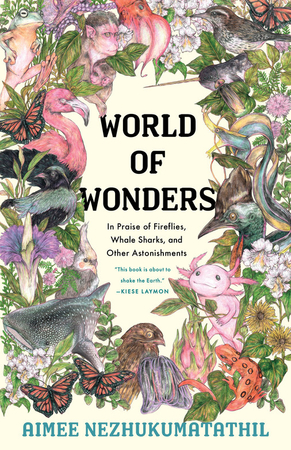
World of Wonders: In Praise of Fireflies, Whale Sharks, and Other Astonishments by Aimee Nezhukumatathil, illustrated by Fumi Nakamura

If looking for a way to appreciate the joy and beauty of our immediate surroundings, World of Wonders is the perfect choice—both in aesthetics and content. Nezhukumatahil’s non-fiction essay collection explores how we can find wonder in the everyday, even in places or creatures that we might not immediately deem “cute” or lovely. Growing up, Nezhukumatahil was constantly transplanted, moving from one different landscape to another; she found solace and kinship with the creatures around her, no matter where she went. Her lyrical prose is exquisitely illustrated by Nakamura’s vibrant and whimsical drawings.

As You Like It

As You Like It by William Shakespeare

The OG pastoral, written by someone who created a canon for pastoral plays. Published around 1599, As You Like It features genderbending, an idyllic mini-dukedom in the woods, and love verses carved onto trees. Rosalind—who dresses up as a man after she is exiled to the woods by her evil uncle and finds a way to set up a series of marriages—is a craftsy, DIY heroine after any cottagecore millennial’s own heart. (Side note: where is the contemporary adaptation of this play that we’re all waiting for? She’s the Man and 10 Things I Hate About You couldn’t hold a candle to a cottagecore version of As You Like It. Imagine Instagram poetry carved onto your neighborhood oak tree!)

Far From the Madding Crowd

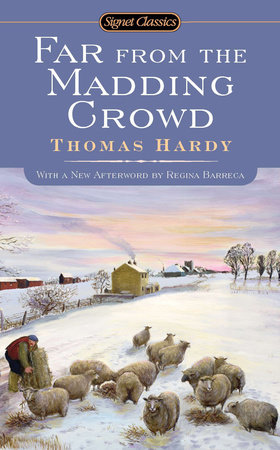
Far From the Madding Crowd by Thomas Hardy

Another classic of the traditional pastoral genre, Hardy’s 1874 novel shows both the idyllic and harshness of a farming community in rural Southwest England. The spirited, proud heroine, Bathsheba Everdene, inherits a large farming estate; while running the estate, Bathsheba also juggles the attention of three men. Hardy relishes in the details of everyday Victorian life (making this an apt supplement for lovers of Animal Crossing), as well as the drama of finding love. Bonus for those interested in animals: lots of sheep. 

Braiding Sweetgrass: Indigenous Wisdom, Scientific Knowledge and the Teachings of Plants by Robin Wall Kimmerer

If you’re worried about cottagecore having a colonial edge, throw away all the white influencers and read this instead. Kimmerer draws upon her background as a biology professor and Potawatomi woman, braiding together a narrative that is both holistic (such as symbiotic ecological systems at large) and specific (such as sweetgrass harvesting and lichen growth). Furthermore, she shows how these elements are interconnected to one another, and calls on us to be more mindful about the collateral damage we wreak on our environment. Kimmerer shows how we must cultivate “cultures of regenerative reciprocity” and “demand an economy that is aligned with life, not stacked against it,” with practices that acknowledge and celebrate the natural world around us. 

540489

Wise Child by Monica Furlong 

Set in a Scottish village during the Dark Ages, a nine-year-old orphan is taken in by the local wisewoman, Juniper. Wise Child learns about herbs, midwifery, and witchery; however, when her estranged mother comes back to claim her, Wise Child is faced with difficult choices about both magic and loyalty. If you’re specifically into the witchcore aesthetic or extremely invested in your home herb garden, Wise Child may be the book for you.

Pilu of the Woods by Mai Nguyen

If you’re more into faeriecore than witchcore, try Nguyen’s graphic novel about a friendship between a human girl and a tree spirit. Willow struggles with her turbulent emotions (vividly drawn by Nguyen as little water monsters), particularly in the wake of her mother’s death. After a rough day, she runs away to the nearby forest–and stumbles upon an equally distraught tree spirit, Pilu, who is lost. Together, they find a path home through the woods.  Pilu of the Woods is a bittersweet and beautifully illustrated look at friendship, family, and self-discovery. 

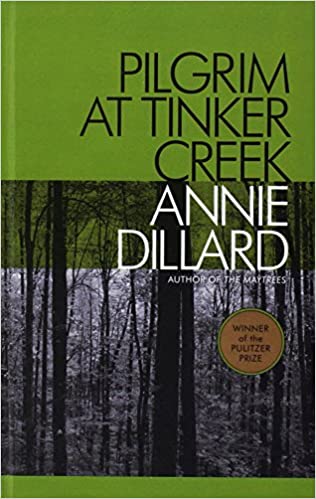
Pilgrim at Tinker Creek by Annie Dillard 

If you’ve already read Thoreau’s Walden, built your own log cabin, and are looking for another narrative on immersing oneself in nature, look no further. Winner of the 1975 Pulitzer Prize for General nonfiction, Pilgrim at Tinker Creek is a lyrical meditation and updated Transcendentalist homage. Dillard tracks the course of one year in Virginia’s Roanoke Valley, exploring the region on foot. She is meticulous about describing the flora and fauna around her, but also imbues the narrative with thoughts on theology, solitude, and the inherent violence and beauty of nature. 

Trophic Cascade by Camille T. Dungy

Trophic Cascade is another lyrical, acutely observed meditation on nature; Dungy’s poetry collection explores the themes of nature, motherhood, and power, including the ways in which racial violence plays out within our ecosystem. With sharp, vibrant prose, Dungy explores what it means to be rooted and inextricably connected to the world around us. “It seems everyone is silvered, dead, / until we learn to see the living—” she writes; in Dungy’s work, the ability to see life and hope comes from observing our environment and bearing witness. She is also the editor of Black Nature: Four Centuries of African American Nature Poetry, an anthology (not included on this list just because anthologies feel like an awful lot of people for one cottage). 

Arcadia by Lauren Groff

What can go wrong when a group wants to build its own bohemian community? Arcadia shows the dark side of “cottagecore,” or what happens when an aesthetically, idealistically pleasing idea turns sour. Bit, the novel’s shy protagonist, grows up in a hippie commune where everything is crafted by hand and everyone reveres nature. However, as Bit becomes an adult, he must reckon with the fallout of the commune and grapple with contemporary environmental disasters. Groff nails the intensity of climate change anxiety, while simultaneously luxuriating in beautiful descriptions of nature. 

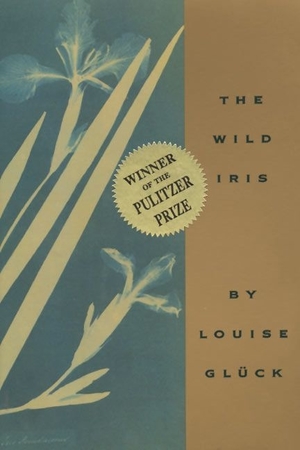
The Wild Iris by Louise Glück 

If you’re looking for a poetry book to place your dried flowers in, The Wild Iris is the perfect volume. Glück’s Pulitzer-winning collection, with its exquisitely crafted language, is one to reread on any occasion, but especially when you’re dreaming of running away to the woods. The flowers are often the narrators in Glück’s poems, such as “Wildflowers” or “Silver Lily.” Interspersed between the flower poems are various forms of prayers, like “Matins.” Glück explores the cycles of life and death, joy and grief, intimacy and distance in both the human and natural world. The Wild Iris questions—and ultimately celebrates—what it means to be alive “in the raw wind of the new world.”

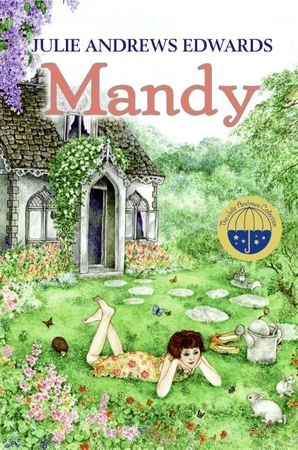
Mandy by Julie Andrews Edwards

Who could have known that Julie Andrews (yes, Mary Poppins, Maria from Sound of Music, and iconic Princess Diaries grandmother) would be the prophetess of cottagecore? Andrews’ novel centers on Mandy, a young orphan who decides to fix up a deserted cottage. Mandy climbs over the orphanage wall and, over the course of a year, becomes increasingly obsessed with crafting a lovely space for herself. This may be a book written for young children, but adults and kids will both be charmed by Mandy’s quest to find a place she can feel at home. 

15 Modern Indian Classics in Translation

When I wrote my first novel, The House With a Thousand Stories, I drew inspiration not only from great 20th-century novels like Toni Morrison’s Song of Solomon and important Indian English novels like Amitav Ghosh’s The Shadow Lines, but also from fiction written in the regional languages of India. My first language is Assamese but I also know how to read Bangla and Hindi. At home, we had a large stock of Bangla, Assamese, and some English books. The library I regularly visited had delicious thrillers written in Hindi that I devoured during summer vacations. All of these languages translated world classics, too. I read most of the great Russian novels in Assamese, some British and American classics by Twain and Dickens in Hindi, Bengali, and Assamese. Perhaps this is why every time a Western newspaper comes up with a recommended list of novels about India I find them insufficient. These lists always contain books written originally in English. Due to British colonialism, there is no doubt a large body of important Indian literary works that are read globally are written in English. But there is a problem here: only ten percent of India’s population knows English, and this group of people gets to represent India through their works.

Only ten percent of India’s population knows English, and this group gets to represent India through their works.

The rest of India’s population— who don’t have the privilege of learning English or away from the wealthy metropolitan centers of opportunities and thus English learning and discourse—read and write in one of the many official languages in India. India’s constitution lists 22 significant languages such as Assamese, Bengali, Bodo, Tamil, Gujrati, Kashmiri, Hindi, etc.—and that’s not including the thousands of dialects and tribal languages in which people write as well. These languages have a long and continuous written tradition. For instance, Assamese—my first language—has a literary tradition reaching back to the 5th century. With the arrival of print culture in the modern period, Assamese literature, like all other Indian literary cultures, flourished. A large amount of this was anti-colonial literature that led to the growth of nationalist consciousness and eventually contributed to British colonizers’ ejection from India. 

The colonial administration systematically tried to replace these strong literary cultures with English. But they failed. A complex body of literature emerged from this linguistic violence on India’s native intellectual culture and subsequent resistance. Modern Indian literature draws nutrients not only from South Asia’s indigenous traditions, but also from literary cultures in the U.K., Europe, Latin America, Russia, China, and the United States (because the colonial administration taught English widely and thus we natives could now read in English). 

Every Western list of books from India that doesn’t feature a single work written in one of India’s many languages reinforces colonial stereotypes.

Hence, every time a Western publication makes a list of books from India and doesn’t feature a single work written in one of India’s many languages, it reinforces colonial stereotypes and erodes the process of decolonization. It reestablishes the hegemony of the English language and wipes the rich local traditions that are longer and richer. The novels in this list—widely considered as modern Indian classics—attempt to challenge the Western stereotype that Indians primarily read in English or that Indian literature is written predominantly in English. In fact, in the last two or three decades, the reading public has shifted towards local consuming more and more literary works translated from Indian languages. I also belong to a generation of new writers from India who are comfortable writing in both English and a regional language. The future is at least bilingual, if not multilingual. 

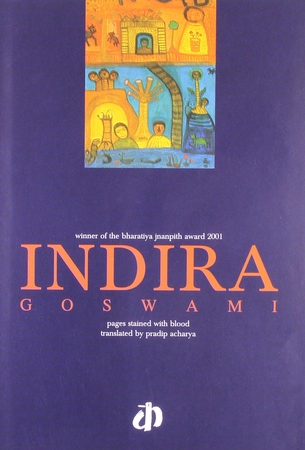
Pages Stained With Blood by Indira Goswami, translated from Assamese by Pradip Acharya

Set against the Anti-Sikh pogrom of 1984 that followed the assassination of the Indian Prime Minister Indira Gandhi, this is (as you might guess from the title) a bloody book. The novel follows the life of a young professor at Delhi University who witnesses the pogrom first-hand. The author, Indira Goswami, is one of the most loved writers in India and her deeply transgressvive, feminist, genre-bending autofictional novels won her the highest literary honor of the country, the Jnanpith Award. This book evokes Delhi and its history in a way that it is hard to forget, and rarely seen in Indian English fiction or popular orientalist narrative nonfiction. In the middle of this chaos, there is a love story that will stab your heart and make you smile. 

Sahni Bhisham Books - Buy Sahni Bhisham Books Online at Best Prices In  India | Flipkart.com

Tamas by Bhisham Sahni, translated from Hindi by Daisy Rockwell

Set against the backdrop of the communal riots around the partition of India in 1947, Sahni’s novel opens with a harrowing scene that perhaps has no parallel in Indian fiction: a long chapter that shows a man trying to kill a pig so that he can desecrate the local mosque with the pig corpse to incite a riot. This war, between the pig that wants to live and the man that is trying to kill it but isn’t able to, reminds me of Santiago’s struggle with the fish in Hemingway’s The Old Man and the Sea. The novel is a post-mortem of the turbulent period following partition, when communal riots killed close to a million, and the trauma that continues to haunt the subcontinent even to this date. Tamas has been translated into English and other languages many times, but I love the translation by American literary translator Daisy Rockwell. 

On a Wing and a Prayer by Arun Sarma, translated from Assamese by Maitreyee Siddhanta Chakravarty

These days, the Indian right wing often finds a new language, new terms, new concepts to demonize Muslims and minorities. One of their recent, ridiculous terms is “Love-Jihad,” the (self-evidently absurd) claim that conniving Muslim men are spreading Islam by tricking innocent Hindu girls into marriage. This book counters that parodic view, with a love story that is also a complex picture of one of the most persecuted minorities in India: the people of Bangladeshi origin in India’s Northeast. The novel is a meticulous picture of pre-independence rural India, and has one of my most favorite characters: Gojen, a lower-caste Hindu man who falls in love with Hasina, a girl from the immigrant Muslim community from erstwhile East Pakistan. Arun Sharma won the Sahitya Akademi Prize for his book.

Naalukettu: The House Around the Courtyard by M. T. Vasudevan Nair, translated from Malayalam by Gita Krishnamurthy

Set in the South Indian state of Kerala, among the matrilineal Nair community, the novel follows the life of Appuni, whose mother is asked to leave the house for marrying against her family’s wishes. Appuni grows up listening to stories about his wealthy, powerful, upper-caste family, and the large house around the courtyard where the family lived. When he goes to claim a place in that location, he is rejected, which plants the seeds of revenge in his heart. This is considered a classic in Indian literature, and it’s hard to believe that it was M. T. Vasudevan Nair’s first novel (which also won him the Kerala Sahitya Akademi Prize in 1959). 

The First Promise by Ashapurna Debi, translated from Bengali by Indira Chowdhury

The first installment in a mammoth trilogy, this novel follows the life of child-bride Satya in 19th-century India. Rebellious, feisty, always questioning, Satya never loses an argument: why are women not allowed to read when the deity of knowledge is a woman who sits on a swan? Why can’t I call a British doctor to treat my husband who is suffering from typhoid? Why wouldn’t widows be allowed to marry? Set amid the growth of nationalist anti-colonial consciousness in colonial Bengal, the novel is about the domestic history of women who carried the “first promise” of hope and change for a progressive, liberal future, who are forgotten by public history. “My novel leans on the backbone of petty, daily activities,” Ashapurna Debi, who produced more than 150 novels, wrote in the introduction to the novel’s Assamese edition.

Sonam by Yeshe Dorje Thongchi, translated from Assamese by Mridula Baroaah

Set among the Brokpas, a polyandric indigenous community, this a fiercely feminist, women-centric novel. The central character, Sonam, chooses to have two men in her life because her husband Lobjang, the love of her life, has to live away from home for long durations to earn for the family. It is hard for Sonam to deal with her loneliness and desires, and she decides to opt for a second husband after discussing with Lobjang. Like most love triangles, this leads to conflict, tragedy, and reconciliation. Often compared with Chinua Achebe, Yeshe Dorje Thongchi is a writer from Arunachal, who belongs to the small Serdukpen tribe that numbers no more than 4,000. 

Zindaginama by Krishna Sobti, translated from Hindi by Neel K Mani

I love a good plot, but I couldn’t make this list without including this unruly novel that defies all expectations. I wonder if Zindaginama, which means the saga of life or the story of life, baffles us deliberately by mimicking the messiness of life in the best possible way? Sobti’s magnum opus is set in a small village in Punjab. If you pick this novel hoping to get a narrative thread that you can follow through the nearly 500 pages, you would be disappointed. But if you allow yourself to experience the sounds, the mingling, coalescing narrative threads, you would experience an intimate portrait of life in India before partition where many communities lived together for generations, with comparatively less acrimony and hatred!

Those Days by Sunil Gangopadhyay, translated from Bangla by Aruna Chakravarti

Those Days, set in colonial Bengal, charts the life of many historical and fictional characters who worked towards the reformation of India. If you have enjoyed sprawling novels such as Anna Karenina you will enjoy this novel, but it is much more than that: the plot is tighter, faster; the details are meticulous; the characters unforgettable. Even the historical characters feel fresh and new in Gangapadhyay’s writing. It is a historical novel, but becomes far more than the portrait of an era when India was entering modernity since you will remember the novel for life of the protagonist Nabinkumar, who is in the middle of these changes. 

The Hour Before Dawn by Bhabendranath Saikia, translated from Assamese by Maitreyee S. C.

Occasionally, an Indian writer in English will emerge and claim that it is daring to write about poverty in India. What surprises me most is that there are thousands of novels set in India that are about poor people and their problems. The characters are in The Hour Before Dawn are poor, living in rural India, but their poverty is not a plot device. Menoka, the protagonist, is involved in an extra-marital relationship with the local petty thief. The novel explores the transgressions of Menoka and the costs she would pay for it, along with providing a meticulous picture of rural India.

godaan - AbeBooks

The Gift of a Cow by Munshi Premchand, translated from Hindi by Gordon C. Roadarmel

Comparable with Dickens, Balzc, or Gorky, Munshi Premchand wrote fiction about the poor peasants and their desires, aspirations, and struggles in colonial, semi-feudal India, in the critical-realist mode. In this novel, Hori, a peasant, is tired of living in poverty and starts hoping to own a few acres of land and a cow so that he can cultivate on his own. In a narrative that challenges caste, colonialism and class, Premchand tells us in great details why Hori’s dream remains unfulfilled.

Cuckold by Kiran Nagarkar, translated from Marathi by the author

Author’s note: After publication, I found that though Nagarkar wrote some of his works in Marathi, Cuckold was originally written in English, then translated to Marathi by Rekha Sabnis and published by Popular Prakashan, Mumbai. For a Marathi-original novel, try one of Nagarkar’s earlier works such as Seven Sixes are Forty-Three (originally Saat Sakkam Trechalis), translated by Shubha Slee and published by Katha (2004)

Cuckold challenges you to read it: for its massive brick-like size and length, its rich imagination of the sixteenth-century kingdom of Mewar, and the difficult subject matter about a beloved mystic poet called Meerabai who was so obsessed with her love and attachment to the God Krishna that her husband felt abandoned. It is hard not to know about Meerabai or listen to her songs if you have grown up in India. Nagarkar chooses to narrate the novel from the point of view of her husband, Maharaja Kumar, providing the portrait of a complex person, statesman, husband, son; and yet, the novel manages to tell us a lot about Meerabai, and fall in love with her once again.

The Crooked Line by Ismat Chughtai, translated from Urdu by Tahira Naqvi

Written by one of my favorite fiction writers, The Crooked Line explores the life of Shaman, growing up in a North Indian Muslim household around the time of India’s independence. Chughtai, known for her controversial queer love story “Lihaaf,” wrote often about the experience of regular Muslim women in India. Like many of Chughtai’s earlier heroines, Shaman is rebellious, doesn’t do things that the society expects her to do as a woman, and even desires women in the novel. Part of the Progressive Writers Movement that started before Indian independence, Chughtai uses the form of the novel and the social realist mode to critique idiosyncrasies and conservative attitudes of Indian Muslims. It is a delight to read Chughtai’s fiction: with her quick, lively dialogues, layered but colloquial narration, and tinge of humor, she is one of the finest. 

Samskara by U.R. Ananthamurthy

Samskara: A Rite for a Dead Man by U. R. Ananthamurthy, translated from Kannada by A. K. Ramanujan

Originally written in Kannada, and translated by the MacArthur “genius grant winner” A.K. Ramanujan, this book is part of almost all Indian literature classes. Set in a Southern Indian village in the state of Tamil Nadu, Samskara explores the stringent and puritanical traditions of an upper-caste Brahmin community in modern India. Praneshacharya, the main character, is married to a disabled woman. He takes care of her, more out of a sense of duty, than love, and believes that he is leading a virtuous, moral life. But when Narranappa, the rebellious man from this village who rejected the age-old traditions dies, Praneshacharya’s loyalty to the Brahmanical traditions start to wither away until he finds himself in a surprising path of transgression, doing things he never thought he would ever do. U. R. Ananthamurthy was nominated for the Man Booker International Prize and this novel.

Sangati: Events

Sangati: Events by Bama, translated from Tamil by Lakshmi Holmstrom

Made up of a series of anecdotes or vignettes, Sangati is another novel that seeks to defy the conventions of the novel form. These anecdotes often celebrate the lives of Dalit women from the Periyar community in the state of Tamil Nadu and are juxtaposed with deep analysis and reflections in the narrator’s voice. This is one of the most important texts that informed Dalit feminism in India. 

River of Fire by Qurratulain Hyder, translated from Urdu by the author

Hyder’s magnum opus is an astonishingly ambitious book. The story starts in the ancient city of Sravasti in the 5th century BCE during Buddha’s lifetime, and ends in modern India at the cusp of independence in the city of Lucknow. Covering multiple epochs through a wide cast of characters in the sub-continent, the book follows the same set of characters through different periods, using them as canvases to depict the moral, philosophical, literary and intellectual tussles of those eras, and perhaps to suggest a long, continuous subcontinental intellectual tradition.

The Health Insurance Plot Is the New American Happy Ending

In Raven Leilani’s Luster, Edie is a 23-year old Black woman who, amongst other problems, has irritable bowel syndrome. “I can’t shit,” she explains, describing her bowels at various points as “dysfunctional,” “inaccessible,” and “shy.”

She goes to see a doctor; the doctor suggests further tests. But with Edie’s insurance expiring in four days, she’s ultimately only prescribed an over-the-counter laxative. The doctor asks her to return once she has insurance. “The plea is so sincere,” Edie observes, “that when I visit the pharmacy to pick up my prescription, I wander the vitamin aisle and cry.”

Welcome to the Health Insurance Plot. 

The Health Insurance Plot is a cousin to the Marriage Plot, which refers to a story that concludes in a marriage. The Marriage Plot is still prevalent today, but in 19th-century England it was especially popular. All of Jane Austen’s novels, for example, end with weddings. At the time, marriage was essentially permanent and offered Austenian heroines domestic and financial security—a kind of happy ending.

These aren’t stories about women with diseases. They’re stories about women who are seeking security.

Today this happy ending is instead achieved by acquiring a job, one with great health benefits. The Health Insurance Plot may have a deadline, as in Kiley Reid’s Such a Fun Age, in which the protagonist anxiously seeks a job with insurance before her 26th birthday. Or the plot can follow a character through her uneven access to health care and into how this uncertainty feels. 

The characters embroiled in a Health Insurance Plot may have a specific ailment. Edie has her irritable bowels. In Lily King’s Writers & Lovers, Casey has a questionable lump. These health issues amplify the stakes of needing insurance, but they are rarely the primary plot. Sometimes the character is perfectly healthy, like Emira in Such a Fun Age

But Emira still needs a job with health benefits; insurance is an issue independent of illness. It’s worth noting these characters are usually millennial women, struggling with life things: love, sex, the gig “economy,” racism, having a body, making art. These novels aren’t stories about women with diseases. They’re stories about women who—much like their Austenian predecessors—are seeking security.


The American health system, Beatrix Hoffman argues, has always been characterized by two things. The first is a refusal to adopt a right to care– the closest thing the U.S. system has to a right to health care is EMTALA, an act passed in 1986 that requires the provision of emergency care for the indigent and uninsured. The second is the unequal and ineffective rationing of medical services by income, immigration status, race, region, and insurance coverage.

This rationing is reflected in recent American media and fiction. Consider a scene from Writers & Lovers by Lily King. Casey, a 31-year old white woman, is riding her bike. A car hits her. The woman in the car offers to take Casey to the hospital. Casey explains that she can’t afford that, leading the woman to exclaim, “I will pay! Of course I will pay!”

The work-health link can manifest as a persistent anxiety.

“When I tell her that without insurance X-rays will cost hundreds of dollars,” Casey notes, “she grows frightened and gets back in the car.” Afterwards, Casey feels relieved. She notes that her leg doesn’t “feel” broken. “I got lucky,” she thinks. “If the accident had been any worse, the cost would have sunk me.” (Lucky! She was hit by a car!)

Beyond cost, America also rations health care by employment status. So the Health Plot is also about work. (Luster, Such a Fun Age, and Writers & Lovers are great work novels.) The work-health link can manifest as a persistent anxiety. What kind of work provides insurance? How do I get a full-time job with benefits? Is this a job I want? Does that matter?

In Such a Fun Age, Emira does not have a particular physical ailment; she’s a young Black woman who’s just trying to figure life out. We’re introduced to Emira on the cusp of her 26th birthday, when she’ll be booted off her parents’ health plan. (“Should we get you a helmet for while you’re uninsured?” her boyfriend jokes.) 

 Emira loves Briar, the white child who she babysits part-time. But when Emira is racially profiled in a grocery store — accused of kidnapping Briar — she tells herself:

This wouldn’t have happened if you had a real fucking job…You wouldn’t leave a party to babysit. You’d have your own health insurance. You wouldn’t be paid in cash. You’d be a real fucking person. Taking care of Briar was Emira’s favorite position so far, but…part-time babysitting could never provide health insurance.

You’d be a real fucking person. Beyond the actual health inequity, what makes me so angry for Emira (and for myself) is that a “real job” becomes equal to “a nine-to-five position with benefits” becomes equal to “adulthood.” If Emira loves her babysitting position, why should she have to leave it?

Let’s look, for comparison, at Sally Rooney’s Conversations with Friends. The novel is set in Ireland, where there’s government-funded public health care. The protagonist, Frances, suffers from harsh period pain and is eventually diagnosed with endometriosis. 

But Frances is not worried about access to a doctor. She has a basic security where Emira, Casey, and Edie have only an abiding anxiety. She doesn’t have to apply to full-time jobs for insurance. Frances is a writer, and she’s able to pursue art while working part-time at a coffee shop.

Meanwhile, Casey is also a writer, and Edie a painter. When Casey and Edie make art in America, they experience not only the expected economic instability but an embodied insecurity: the threat of illness or even death, and an associated everyday anxiety. This in turn makes it more difficult to make art, or as Raven Leilani has put it: “There is also the fact of [Edie] trying to make art while she barely has enough money to eat or pay rent, and it is nearly impossible to produce anything when most of your bandwidth is spent trying to live.” 


So, suffering. One way health insurance is made urgent in these novels is by bringing up suffering. The stakes of insurance are made clear by the horror of physical and mental suffering, which occur seemingly at random to our protagonists. And in my experience, this is how sickness feels: challenging to ignore, and generative of a basic kind of nihilism:

Casey: “Then I remember the oncologist appointment tomorrow, and maybe none of it will matter because even if I get the job I’ll just be the teacher who has cancer and dies.” 

The stakes of insurance are made clear by the horror of physical and mental suffering.

Edie: “God is not for women. He is for the fruit. He makes you want and he makes you wicked, and while you sleep, he plants a seed in your womb that will be born just to die.”

Frances: “A searing anxiety developed inside me…first the realisation that I would die, then that everyone else would die, and then that the universe itself would eventually experience heat death, a kind of thought sequence that expanded outward endlessly in forms too huge to be contained inside my body.”

Of course nihilism is not new, and fiction has always dealt with illness, and suffering. The nihilism is because of mortality, not insurance. Health benefits can’t remove this anxiety. But not having insurance, or having other barriers to care, can press this anxiety into every day, and we already live so precariously now. Health inequity is especially present for marginalized groups, like undocumented immigrants who face greater barriers to even obtaining insurance, and Black women, who are two and half times more likely to die of maternal causes than white women. 

Why wouldn’t fiction account for these anxieties around care? This is what life is like. With no right to health care in America, “real fucking jobs” with health benefits are a clear path to some security. As a reflection of this, insurance is functioning in recent fiction the way marriage did long ago: as a happy ending, as a relief. 

In the American novels I’ve brought up, our protagonists get lucky. Near the end of these novels, the characters are offered full-time jobs. Of course they accept the offers. In Luster, Edie takes an internal communications job, “a job I actively do not want but that offers paid sick leave, health insurance, and a free mattress.” 

Casey from Writers & Lovers is offered a full-time teaching job with Blue Cross Blue Shield health insurance. It’s a happy moment. “There’s a particular feeling in your body,” she thinks, “when something goes right after a long time of things going wrong. It feels warm and sweet and loose.”

Insurance is functioning in recent fiction the way marriage did long ago: as a happy ending, as a relief.

And Emira, in Such a Fun Age, gets a job offer without benefits. But with a friend’s guidance, in what is a deeply satisfying scene, Emira negotiates the offer. She lowers her rate to secure health insurance. Emira hesitates to accept — she’s lowering her rate? — but her friend Zara intervenes. “Mira? It’s just for now,” Zara says. “This is a real-ass job.”


An ending does not necessarily provide closure. Both the Marriage Plot and the Health Plot offer happy endings. A partner, a real-ass job. But the Marriage Plot used to offer closure, the firm sense that insecurity would not return, even beyond a book’s pages. Since marriage was basically irreversible, its associated domestic and financial security was assured over time. In Austen’s Mansfield Park, when Fanny and Edmund marry, their happiness is “as secure as earthly happiness can be.” 

There was a finality to the Marriage Plot, but getting health insurance is no final thing. Health insurance is not wed to these characters by law. People lose their health insurance all the time. In the Health Insurance Plot, closure is untenable because insecurity is likely to return. 

Still, getting health insurance is a happy ending. In these novels, having insurance removes a latent anxiety. For Edie and Casey it opens up space to make art. And if either of them, or Emira, is hit by a car, she can now go to a hospital with a somewhat lessened fear of bankruptcy. Today this is a substantial, if tenuous, security. In America this is a lucky thing.

Sigrid Nunez’s “What Are You Going Through” Asks What We Owe to Other People

Sigrid Nunez’s latest novel, What Are You Going Through?, explores the rich interior life of a narrator whose name we never learn. She has a series of frank and meandering chats, some in her head, some with people; her Airbnb host, an ailing friend, a woman at her gym. Often she listens in on the people around her; a lecturer giving a fatalistic talk on climate change and capitalism, a mourning father and daughter at a café. The talks are about everything and nothing so the book is initially deceptively breezy. Until, that is, her ill friend—who’s been receiving cancer treatment at a local hospital—surprises her with a request: she wants help ending her life. This friend request closes out the first of the book’s three parts. Its weight and abruptness help transform the book from a casual read into a deeply empathetic study of the two women’s friendship and of the elaborate matrix of human connection. 

What Are You Going Through by Sigrid Nunez

This new book follows on the heels of her last book, The Friend, for which Nunez won the 2018 National Book Award. The Friend was widely praised for its unflinching and elegant three-pronged interrogation of grief, death, and friendship. In this follow-up Nunez again probes the depths of our fears about death and our desires for companionship. What does it mean to love your neighbor? Do we ever really have control over our lives? In What Are You Going Through?, Nunez mines a single complicated relationship for the truth of it all and endows us with many possible answers. 

I had the opportunity to speak with Nunez over the phone in August. We discussed the perennial nature of human suffering, how she’s inspired by eavesdropping on strangers, and why her writing will never be perfect. 


Naomi Elias: The book’s title is pulled from an essay written by Simone Weil in Waiting For God. Where did you first encounter the quote and why did it speak to you? 

Sigrid Nunez: I’ve known about it for many years and it just was something that really rang true to me when I first heard it and still does. Her definition of what it would mean to love your neighbor would be to really listen to that person and ask them, “What are you going through? What is your trouble?”

NE: Between this forced quarantine and the global protests this year has helped put in clear relief who is capable of compassion and who isn’t. It feels like the release of this book and the questions it’s asking about the function of companionship and acts of service couldn’t be more perfectly timed. 

SN: Well, I guess that might be true except the idea is that actually, you know, it’s always true because people are always going through this part of the human experience. You might not necessarily notice it but you’re surrounded by people who are living an ordinary life but they’re suffering from something; loneliness, or someone they know is ill, or they don’t have whatever they need. I guess we’re living in a time that feels intense because there’s such a focus on people suffering but really it’s always there. 

NE: Right, I just mean, it’s going to feel more relevant to people because I feel like the question of what we owe to each other is very en vogue especially in pop culture. A book with the same title, What We Owe Each Other, by the philosopher T.M. Scanlon was the inspiration for Mike Schur’s very popular television show The Good Place and I think impending ecological collapse and all the protesting has kind of forced more people to reevaluate their lives and their connections to each other. 

SN: Yeah, I agree. 

NE: This isn’t a book about death but rather a book about the questions we have when faced with our mortality and the self-audit the narrator starts to do of her life. You explore those questions through conversations the narrator has with other people. It’s loose in the way conversations have a loose flow but the book still feels structured. How did you outline the conversations and the book itself? 

SN: I wrote this book in exactly the same way that I’ve written every book that I’ve written. I don’t actually outline it or structure it ahead of time. That never felt natural to me. Although I know many writers who do do that. What I do is I gotta start somewhere so I just jump in with something. In this case, I decided to start with “I went to hear a man give a talk” and then, you know well, about what? Where? What? Where is she? Is she alone? I can start storytelling and then things flow into place.

I take certain things from life in that some of those conversations are from eavesdropping. In the bar early on where a woman and her father are talking about the mother who had died a year before, that was something that I heard many years ago and I was struck by that and how this young woman was desperately trying to get her father to focus on her pain at that moment and he just wouldn’t do it. He was just saying, well, your mother really suffered. Well, I remember she said she suffered. But she kept saying, I know dad, but I’m trying to tell you that I too need some attention here. I take things from life and I also invent things. Then at a certain point the options narrow down. You can’t just do whatever you want. You have to finish what you started, you have to make some connections. When it’s finished, then I see it should be in this three-part structure, these are the natural breaks. But none of this is actually planned beforehand. It all happens in the process. 

NE: In the first part of the book you slip into different perspectives including the perspective of the house cat owned by the narrator’s Airbnb host. Was that fun? Was going into a cat’s perspective a way to explore commonalities between what humans and animals are seeking from the world or am I reading too much into it? 

We’re living in a time that feels intense because there’s such a focus on people suffering but really it’s always there.

SN: It’s a little bit of a tricky thing because I don’t really like when animals speak because they don’t really speak. But in this case, she’s in bed and the cat jumps on the bed and she’s going to sleep and so it’s kind of unclear. I mean, is she dreaming? In the morning she says the cat told a lot of stories last night but this is the only one I remembered when I woke up. So it is unclear whether or not that’s a real cat or that’s a dream. But I did feel that if you put yourself into the mind of an animal, particularly a domesticated animal, it’s not hard to imagine how they could tell their story. If the rescue cat could tell their story it might come out like this. It seems like a true history for that cat for me, the idea that it would be happy now with this second mother but that it was taken away from its mother and that that was kind of traumatic. So that’s where that came from. It was fun to write. It was hard to write. It was actually much harder to write than I thought it would be. I struggled with that passage. I think in the end I liked the idea of having an animal represented. I thought that maybe it wouldn’t work or be too much. I thought, well, I have an editor, I have an agent, I have other people who read this before it gets published. If they think it doesn’t work or it’s too much, they’ll say, ‘I think you should get rid of that.’ And I would have done so. But everybody seems to love the cat! 

NE: For me, I wasn’t prepared for it but I certainly thought it was interesting. So many people wish they could talk to their pet so I feel like that’s a relatable thing. 

SN: Right!

NE: Switching gears a little bit, the book touches on the idea of assisted dying which is illegal in nearly every state in the U.S. The book doesn’t seem to take a side either way. Is it something you hoped to start a conversation about? 

SN: I think the conversation has started. I think people talk about it quite a bit. I didn’t think I was really opening up anything new there. I do think it’s a problem. I mean, it’s a huge problem because people don’t seem to know how to talk about it. We seem to be at an impasse. But I don’t really have any answers about it myself. One of the concerns of the medical establishment is how much resources are used for people at the end of their lives in the hospital. That’s not a good thing for the medical world. It’s just the way we do it. We make all these efforts at the end of life to keep somebody alive who in some cases does not really want that to happen, it’s their family that wants it to happen or in cases where it’s not really buying them very much, it’s buying them [time] at the cost of a really terrible prolonged suffering. But it’s just the way our culture is set up that you do everything you can to keep the person alive. There are plenty of people who feel that that’s not the best thing for the dying person, and it’s not the best thing for the people who love that person, and it’s not the best thing for the medical establishment.

NE: Would you feel comfortable saying whether you support it or not? 

SN: I certainly do support it. I mean, it’s up to the individual. But if I were aware that somebody had made the decision because their situation is absolutely terminal and they are aware of that and that rather than going through a long, prolonged period of suffering, they would rather have a euthanasia drug, certainly I would support that decision. I would respect that decision. I would understand it completely. 

NE: It prompted me to look into the death with dignity laws because it’s not something that I’ve thought a lot about but it was interesting to hear different perspectives on it. 

Often we say ‘words fail me’ or fall back on hideous clichés like ‘I’m sorry for your loss.’ None of it is really adequate. So where are the words that you’d feel really captures it?

SN: Yeah, Death With Dignity, and there’s also an organization called Compassionate Care I think. There are quite a few. There’s a certain amount of activism about this cause. It’s complicated because of course, I see how certain people are afraid that if you make it too easy that then people would pressure people into dying more quickly. Of course that’s a frightening thing. 

NE: I was struck by something the narrator says in the book—“every love story is a ghost story.” Is that something you believe? 

SN: I think that’s the title of the David Foster Wallace biography.

NE: Oh ok, I’m looking it up. Yes, Every Love Story is A Ghost Story: A Life of David Foster Wallace. So have you read that book? Is that where you got the line? 

SN: Well, I got the line from the title. I actually haven’t read the biography, but that’s what she’s referring to when she says that. I do have a friend who once said, “every story worth telling is a love story.” I think that’s a beautiful quote and I actually used it as the first sentence of a story that I once wrote. I wrote “every story worth telling is a love story but this is not that story.” I love that. 

NE: The narrator throws away the idea of journaling the experience she has with her friend because she says “language would end up falsifying everything, as language always does.” Do you as a writer ever feel you’ve written exactly what you wanted to write, as truthfully and faithfully as you intended? Or is the end result always a compromise?

SN: I think there’s pretty much always that anxiety that it’s always a little bit to the left or the right of what the thing really is. We have language but very often we say “words fail me” or we fall back on hideous clichés like “I’m sorry for your loss.” None of it is really adequate. So where are the words, where is the language that you’d feel really captures it? It’s a very familiar feeling for any writer, the frustration of, well, I’m doing the best I can but I realize that I’ll always be missing the mark because language is so imperfect.