7 Darkly Fascinating Books About Cults

For many, the 2018 NXIVM court case, indicting NXIVM’s founder Keith Raniere and his associate, the Smallville television actress Allison Mack, was wildly entertaining click bait, a salacious tabloid story, complete with sex slaves and the language of self-improvement and greed, but when I came across this story, I had been waiting for the arrest; it had been a long time coming. 

When I met my friend Daniella in 2010, we became fast friends during weekly chats while our young sons played soccer in Brooklyn. I was struck by her beauty and humor and complexity. Also: her storytelling. She was from Mexico City and had become entrenched in a cult called NXIVM a year or two before having a child. She’d suffered a breakdown while being isolated on the cult’s property and somehow managed to get out of there not only alive but without having sex with or being branded by anyone. Nevertheless, the experience had clearly exploded her life. She’d tried to explain how Keith Raniere was gifted at honing in on vulnerabilities, how he was a master manipulator. She’d been entranced by his intelligence, had wanted desperately to please him. I read all that was available about Raniere at the time, but then—and still—the news stories only hinted at the complex emotional and psychological terrain. Daniella’s story not only continued to stick with me over the years, but it worked its way into my imagination. 

My most recent novel St. Ivo is about two couples reckoning with the long-hidden secrets that have shaped their families. A cult makes an appearance. Or, more accurately, a cult and its ramifications reverberate through the story.  Here, in no particular order, are some books that feature cults of one sort or another. All are completely and often scarily compelling.

The Great Believers by Rebecca Makkai

The Great Believers by Rebecca Makkai

This compassionate and razor-sharp novel seamlessly merges the 1980’s AIDS crisis with a 2015 mother in search of her daughter who’s been lost to a cult. As these separate stories unfold, populated by an admirably large cast of soulful and often funny characters, they merge into one deep investigation of humanity and simultaneously create indelible love letters to both Chicago and Paris. 

My Life in Orange by Tim Guest

When the popular Netflix documentary Wild Wild Country aired in 2018, I couldn’t go to a dinner or a party without the conversation veering into an animated discussion about the controversial Indian guru Bhagwan Shree Rajneesh (also known as Osho), his one-time personal assistant Ma Anand Sheela and their often middle-class, well-educated followers, who—on several communes across the globe—wore orange clothing and had lots of sex, while their children ran wild. Author Tim Guest was one of those children. His 2005 memoir recounts how, at age five, he was taken by his mother to live on an ashram in India, where they were given new names and promptly separated, as children on the Rajneesh communes were raised communally. Without trashing his mother or her fellow seekers, Guest writes unflinchingly about his own sense of abandonment, as well as the manipulations of Osho, whose utopian empire spectacularly crumbled into a swirl of laughing gas, Rolls Royces, tax-evasion…and murder. 

The Secret History by Donna Tartt

The Secret History by Donna Tartt

This popular, page-turning ode to Dionysian rituals and beauty and the particular louche cool of Bennington in the mid 1980’s features Academia-as-Cult. A charismatic professor, Julian Morrow, improbably bewitches a group of elite students with his engaging teaching of ancient Greek. The names alone (Frances Abernathy! Bunny Corcoran!) are unforgettable, and as these characters become increasingly cut off from campus life, a glorious and harrowing unraveling ensues.

Going Clear by Lawrence Wright

Going Clear: Scientology, Hollywood, and the Prison of Belief by Lawrence Wright

This 2013 National Book Award finalist for nonfiction is an exhaustive and wildly entertaining look at the famous celebrity-studded organization/cult/religion started in the 1950’s by science fiction writer L. Ron Hubbard and currently led by David Miscavige. The title itself is brilliant; “going clear” is how Scientology refers to the state of being freed from “engrams” which are “subconscious memories of past trauma.” Prepare to be amazed, especially if—like me—you know some practicing Scientologists or at least some Scientology apologists. 

The Family: The Shocking True Story of a Notorious Cult by Chris Johnston and Rosie Jones

Perhaps the most sensational cult story out there (though it’s clearly impossible to pick just one), The Family does not disappoint with its examples of both a glittering charismatic leader and its downward spiral of abuse. Australian Anne Hamilton-Byrne is described as a “Kim Novak blonde”—wealthy, educated, radiant, and cruel. Her personal mythology drew from “Christianity, Hinduism, hatha yoga and New Age journeys into crystals, auras, light, color, LSD, and magic mushrooms, and even extraterrestrial life.” I admit I do wish she’d been around for Instagram. This story is shocking at every turn except one: the cruelty. And the ultimate destruction of innocent lives. 

Image result for educated by tara westover

Educated by Tara Westover

This much-lauded memoir tells the story of an American family-as-cult, with a charismatic father-as-leader. The Westovers (their names are pseudonyms) are Mormon survivalists living in rugged isolation on an Idaho mountain, which the author describes with unforgettable beauty and tenderness, especially in contrast to the abuse she suffered there. Despite receiving no formal education of any kind, Tara Westover, with the encouragement from one of her also-brilliant brothers, manages to study and take the ACT (a standardized test required for college admission), attend Brigham Young University and then the University of Cambridge in England, where she ultimately excels and graduates with a PhD. This story is so outrageous and yet completely relatable and left me pondering how all families—not just the abusive ones—can have their cult-like moments. 

Image result for trust exercise book cover

Trust Exercise by Susan Choi

This was my favorite book of 2019. Though much of its well-deserved praise has understandably centered around elements of its dazzling meta-fiction, what lingers is the cult-like atmosphere of the theater program at the arts high school that Choi so sharply evokes. Having previously explored the world of cults (her 2004 Pulitzer Prize-finalist American Woman fictionalized the Patty Hearst kidnapping), Choi is no stranger to radical natures. There is menace in the 1980’s thespian atmosphere of Trust Exercise, but there is also profound humor and passion. Here’s one cult that’s not too difficult—at least for this reader—to imagine wanting to join. 

I Can Only Save My Grandparents’ Home by Preserving It in Fiction

In the bedroom of Harlem Renaissance poet Anne Spencer, there’s a mural depicting a well-dressed crowd at a cocktail party pasted to the wall. Spencer’s granddaughter, Shaun Spencer-Hester, points to small black lines that outline the teeth of some in the crowd: a handful of them, chest-high or so, the only faces Shaun could reach when she “enhanced” the mural as a child. The artwork was installed to cover the random lists and thoughts that her poet grandmother habitually wrote on the wall. To get to the upper level where the family sometimes entertained, guests walked through the master bedroom; concerned about what visitors might think about the scribblings on the wall, Spencer agreed to have the mural installed. Shaun smiles as she points out the features of people in the crowd and names Harlem Renaissance figures she thinks are depicted in the painting. 

Shaun speaks lovingly of her grandparents’ home, which—with its furnishings, Spencer’s favorite magazines, bed linens, toiletries, wallpaper, and letters from Harlem Renaissance writers—looks just as it did when she was a child. The poet’s house in Lynchburg, Virginia has been preserved as a museum: The Anne Spencer House & Garden Museum. To walk into the house is to step back to a time when the literary giants of the Harlem Renaissance gathered there for dinner or parties. It is to step back to a bygone era, to handwritten letters and tea sets, to the apron in the kitchen hanging in wait for the body whose shape it holds. And for me, it is to step back into another house altogether, to my paternal grandparents’ house in another town, another country. It is to hold on to a disappearing past, and ask myself over and over: What do we preserve of the ones who came before us?

I thought of what it meant for my grandparents—born some 70 years after the abolition of slavery in Jamaica—to own land and build a house they could pass on to future generations.

On the spring afternoon when I visited the Anne Spencer Museum, the details of my grandparents’ house, which they called “Hope View,” came back to me in a rush. This relic of another era conjured Hope View for me, not because my grandparents’ home was similarly preserved, but because I feared its loss, the permanent removal of a connection to my past and the erasure of my family’s roots in Anchovy, a little town eight miles uphill from the coast of Montego Bay, Jamaica. I thought of what it meant for my grandparents—born some 70 years after the abolition of slavery in Jamaica—to own land and build a house they could pass on to future generations. Instead of restoring Hope View with care, as Shaun has done with her grandparents’ home, my family has been planning for its eventual sale. 

Hope View is the house my grandparents built when they returned to Jamaica in 1931 after spending a little more than a decade as migrant workers in Cuba. As a child I didn’t know they called it Hope View, didn’t think of it as a place that embodied my grandparents’ dream of the way they wanted their children to live: in hope of something better and with a view of what is possible.

The house is built into a hillside, and looks down on a sloped piece of land where my grandparents grew a range of crops. Banana, coffee, and coco yam, among others, grew alongside towering breadfruit, coconut, and avocado trees, which shaded the lower portion of the land. To the left was a single star apple tree, long gone now. The house itself is small, built so close to a rock outcropping that it looks like it rises out of the hillside. Two concrete columns hold up a small verandah and frame the door to the cellar. To the right of the columns, a set of concrete steps rises up to the red floor of the verandah and the aqua railing that hems it in. From the living room, you walk through a small and dark middle room, where, for much of my childhood years, the wood floor dipped as if set on springs. Grandma’s curio cabinet sat in that dark middle room untouched. Bedrooms branch off from the middle and dining room. The dining room, also dark and windowless, is a step down from the middle room, and the extended kitchen another step down from there. To the rear, the kitchen backs up to a small cliff, with only a sliver of space in which ferns and moss grow. 

Specific scenes are etched in my memory: my grandfather in his undershirt standing at the railing and watching his son and family climb the hill; Sunday afternoon dinners of brown stewed chicken, rice and peas, and milky carrot juice; my sisters and me running down the slight slope to the right of the house, peering under the house at the chickens or cats hiding in the crawl space, and picking ferns from the back wall; standing by the side of the house drinking coconut water and waiting for an adult to slice through the coconut so we could get at the jelly inside.

When I was growing up, there was a set of black traveling trunks in the house, which I’ve always imagined as the trunks that carried my grandparents’ belongings to Jamaica when they came back from Cuba. The trunks are gone now, perhaps thrown out after my grandparents’ deaths when my father and his siblings readied the house for tenants. Gone, too, is the kitchen cabinet with chicken wire built into the doors. Gone is the curio cabinet and the shot glasses and spoons that marked the places to which my grandparents or their children traveled. Gone are the ancient books and magazines—some transplanted to my parents’ house after my grandparents died. Chickens no longer roam the yard. The cherry tree three-quarters of the way up the hill, the naseberry tree halfway up the hill, the towering coconut trees, and the large breadfruit tree under which my father often parked have long been gone.

I had already held on to Hope View the only way I know how: I had preserved it in writing.

A few years before I visited the Anne Spencer House & Garden Museum, my father and his siblings began talking about selling their childhood home. My grandparents were long dead and with their children aging and descendants living primarily in America and scattered around the globe, who would take care of the house and land? Theirs was a legitimate concern, but it didn’t ease the sadness of having my grandparents’ home disappear from our lives completely. My grandparents built that house and added to it over the years as their family grew, similar to the way Anne Spencer’s husband, Edward Spencer, designed and built their house in 1903, periodically modifying it over the years to accommodate his growing family and the family’s expanding social life. He found and recycled various materials—wooden banisters, a set of red leather padded doors that were originally part of the all-black Harrison Movie Theater and remain today as the door to the side porch. At the back of the house on the edge of the poet’s garden is her writing room, a separate space her husband constructed for her to work. Throughout the studio and the house are remnants of the poet’s life: bed linens and toiletries, magazines, photos, letters from Harlem Renaissance era writers, the mural.

With my grandparents’ house empty of their things, I don’t have Shaun’s tangible memories of her ancestors. But walking away from the museum and lamenting the personal connection I soon will no longer have, I realized I had something else. As a writer, I had already held on to Hope View the only way I know how: I had preserved it in writing. I set a portion of my latest novel, Tea by the Sea, not only in Anchovy but in my grandparents’ house. When I chose Anchovy as one of the central places where the novel takes place, I had in mind Hope View as it looked years earlier after a tenant had moved out. On the verandah, just above the steps, was a sheet left behind by someone surreptitiously using the empty house—or at least the verandah—perhaps for a night-time tryst. My father had forgotten the keys so I couldn’t walk through the empty rooms, couldn’t stand in the semi-dark dining room where we sometimes ate Sunday dinner or through to the side door that led to the fern-filled and mossy rocks at the back of the house. Instead, I only had access to a single room an uncle had remodeled and converted to a small apartment, complete with a kitchenette and separate entry from the rest of the house. 

When the novel begins, Lenworth is on the run and has chosen the house in Anchovy as his refuge. He doesn’t expect that anyone would find him there. By the time he comes to the house, which has been in his extended family for years, it has been abandoned, left empty for years because the family members who would have rights to own it have all migrated to distant countries, and none, it seemed, had any intention of returning to the house and its old-world charm.

The fate of the abandoned house in my novel—and that of my family—is not a unique story. It is a story most every immigrant in America can tell of family land left alone too long or lingering in limbo, of migrants who had great plans to return home but who, after years abroad, find it hard to return to a place they’ve long left, a town empty of friends and family.

It is a story most every immigrant in America can tell of family land left alone too long or lingering in limbo.

The last time I visited Hope View, the grass was overgrown, so high it tickled my bare ankles and skin. Beneath the grass, the soil was muddy, slippery. There were plants hanging on the verandah, a little garden plot below the steps, and the steps—once a vivid red—were black with mildew and dirt. The house looked smaller. But it lived on in the family—saved from an imminent sale by one of my uncles who sees to its upkeep. 

It is only a matter of time before the question of its fate rises again, before we hear an echo of what Lenworth thinks in Tea by the Sea when he chooses the abandoned house: “The line of children and grandchildren, who would have claim to the house and most of whom had migrated abroad, had no use for it—too small, too remote, too old, too generous with old-world charm (if it could even be called charming at all). Lenworth’s own father, who had migrated to England and never returned, had no use for it either.” Whatever happens, though, it will live on in my writing.

When I think of preserving Hope View forever in fiction, I also think of my own childhood home, a rambler on a hill. Somewhere along the way I heard that a river once ran along our street. Jamaica is mostly limestone rock, and over time the limestone weakens and the above-ground river eventually disappears underground. Sometimes I can imagine the ancient river winding its way in the valley between our house and the main road. Sometimes when the rain is sufficiently heavy, a pond forms in a flat area a half mile from our house. And I have imagined a story that incorporates this nameless river that went underground. But I haven’t found a way to incorporate my childhood home in a piece of fiction, or to accurately reflect the serenity of looking out across the valley to the main road leading into town, or looking across the eastern sky at the rain falling two towns over and guessing if or when it will reach our house. I haven’t found a way to capture the quirks of the house itself, the small nook near the front verandah built specifically for the piano I dreaded being reminded to play, the tinkle of the piano keys drifting down hill. But perhaps I won’t need to write about my childhood home. I don’t yet fear its loss. 

Fantasy Is a Dangerous Tour Guide

“The Island at Noon”
by Julio Cortázar
translated by Suzanne Jill Levine

The first time he saw the island, Marini was politely leaning over the seats on the left, adjusting a plastic table before setting a lunch tray down. The passenger had looked at him several times as he came and went with magazines or glasses of whisky; Marini lingered while he adjusted the table, wondering, bored, if it was worth responding to the passenger’s insistent look, one American woman out of many, when in the blue oval of the window appeared the coast of the island, the golden strip of the beach, the hills that rose toward the desolate plateau. Correcting the faulty position of the glass of beer, Marini smiled to the passenger. “The Greek islands,” he said. “Oh, yes, Greece,” the American woman answered with false interest. A bell rang briefly, and the steward straightened up, without removing the professional smile from his thin lips. He began attending to a Syrian couple, who ordered tomato juice, but in the tail of the plane he gave himself a few seconds to look down again; the island was small and solitary, and the Aegean Sea surrounded it with an intense blue that exalted the curl of a dazzling and kind of petrified white, which down below would be foam breaking against reefs and coves. Marini saw that the deserted beaches ran north and west; the rest was the mountain which fell straight into the sea. A rocky and deserted island, although the lead-grey spot near the northern beach could be a house, perhaps a group of primitive houses. He started opening the can of juice, and when he had straightened up the island had vanished from the window; only the sea was left, an endless green horizon. He looked at his wristwatch without knowing why; it was exactly noon.

Marini liked being assigned to the Rome-Teheran line. The flight was less gloomy than on the northern lines, and the girls seemed happy to go to the Orient or to get to know Italy. Four days later, while he was helping a little boy who had lost his spoon and was pointing downheartedly at his dessert plate, he again discovered the edge of the island. There was a difference of eight minutes, but when he leaned over to a window in the tail he had no doubts; the island had an unmistakable shape, like a turtle whose paws were barely out of the water. He looked at it until they called for him, this time sure that the lead-grey spot was a group of houses; he managed to make out the lines of some cultivated fields that extended to the beach. During the stop at Beirut he looked at the stewardess’s atlas and wondered if the island wasn’t Horos. The radio operator, an indifferent Frenchman, was surprised at his interest. “All those islands look alike. I’ve been doing this route for two years, and I don’t care a fig about them. Yes, show it to me next time.” It wasn’t Horos but Xiros, one of the many islands on the fringe of the tourist circuits. “It won’t last five years,” the stewardess said to him while they had a drink in Rome. “Hurry up if you’re thinking of going, the hordes will be there any moment now. Genghis Cook is watching.” But Marini kept thinking about the island, looking at it when he remembered or if there was a window near, almost always shrugging his shoulders in the end. None of it made any sense—flying three times a week at noon over Xiros was as unreal as dreaming three times a week that he was flying over Xiros. Everything was falsified in the futile and recurrent vision; except, perhaps, the desire to repeat it, the consulting of the wristwatch before noon, the brief, pricking contact with the dazzling white band at the edge of an almost black blue, and the houses where the fishermen would barely lift their eyes to follow the passage of that other unreality.

The island was visible for a few minutes, but the air was always so clean, and it was outlined by the sea with such a minute cruelty that the smallest details were implacably adjusted to the memory of the preceding flight.

Eight or nine weeks later, when they offered him the New York run, with all its advantages, Marini thought it was the chance to end that innocent and annoying obsession. In his pocket he had a guide book in which an imprecise geographer with a Levantine name gave more details about Xiros than was usual. He answered no, hearing himself as from a distance, and, avoiding the shocked surprise of a boss and two secretaries, he went to have a bite in the company’s canteen, where Carla was waiting for him. Carla’s bewildered disappointment did not disturb him; the southern coast of Xiros was uninhabitable, but toward the west remained traces of a Lydian or perhaps Creto-Mycenaean colony, and Professor Goldmann had found two stones carved with hieroglyphics that the fishermen used as piles for the small dock. Carla’s head ached, and she left almost immediately; octopus was the principal resource for the handful of inhabitants, every five days a boat arrived to load the fish and leave some provisions and materials. In the travel agency they told him he would have to charter a special boat from Rynos, or perhaps it would be possible to go in the small boat that picked up the octopuses, but Marini could find out about this only in Rynos, where the agency didn’t have an agent. At any rate, the idea of spending a few days on the island was just a plan for his June vacation; in the weeks that followed he had to replace White on the Tunis run, and then there was a strike, and Carla went back to her sisters’ house in Palermo. Marini went to live in a hotel near the Piazza Navona, where there were secondhand bookstores; he amused himself not very enthusiastically by looking for books on Greece, and from time to time he leafed through a conversation manual. The word kalimera pleased him, and he tried it out on a redhead in a cabaret; he went to bed with her, learned about her grandfather in Odos and about certain unaccountable sore throats. In Rome it rained, in Beirut Tania was always waiting for him; there were other stories, always relatives or sore throats; one day it was again the Teheran run, the island at noon. Marini stayed glued to the window so long that the new stewardess considered him a poor partner and let him know how many trays she had served. That night Marini invited the stewardess for dinner at the Firouz, and it wasn’t difficult to make her forgive him for the morning’s distraction. Lucía advised him to have his hair cut American-style; he talked to her about Xiros for a while, but later he realized she preferred the vodka-lime of the Hilton. Time passed in things like that, in infinite trays of food, each one with the smile to which the passenger had the right. On the return trips the plane flew over Xiros at eight in the morning; the sun glared against the larboard windows, and you could scarcely see the golden turtle; Marini preferred to wait for the noons of the trip going, knowing that then he could stay a long minute against the window, while Lucía (and then Felisa) somewhat ironically took care of things. Once he took a picture of Xiros, but it came out blurred; he already knew some things about the island, he had underlined the rare mentions in a couple of books. Felisa told him that the pilots called him the madman of the island, but that didn’t bother him. Carla had just written that she had decided not to have the baby, and Marini sent her two weeks’ wages and thought that the rest would not be enough for his vacation. Carla accepted the money and let him know through a friend that she’d probably marry the dentist from Treviso. Everything had such little importance at noon, on Mondays and Thursdays and Saturdays (twice a month on Sundays).

Everything had such little importance at noon, on Mondays and Thursdays and Saturdays (twice a month on Sundays).

As time went on, he began to realize that Felisa was the only one who understood him a little; there was a tacit agreement that she would take care of the flight at noon, as soon as he stationed himself by the tail window. The island was visible for a few minutes, but the air was always so clean, and it was outlined by the sea with such a minute cruelty that the smallest details were implacably adjusted to the memory of the preceding flight: the green spot of the headland to the north, the lead-grey houses, the nets drying on the sand. When the nets weren’t there, Marini felt as if he had been robbed, insulted. He thought of filming the passage over the island, to repeat the image in the hotel, but he preferred to save the money on the camera since there was less than a month left for vacation. He didn’t keep a very strict account of the days; sometimes it was Tania in Beirut, sometimes Felisa in Teheran, almost always his younger brother in Rome, all a bit blurred, amiably easy and cordial and as if replacing something else, filling the hours before or after the flight, and during the flight, everything, too, was blurred and easy and stupid until it was time to lean toward the tail window, to feel the cold crystal like the boundary of an aquarium, where the golden turtle slowly moved in the thick blue.

That day, the nets were clearly sketched on the sand, and Marini could have sworn that the black dot on the left, at the edge of the sea, was a fisherman who must have been looking at the plane. “Kalimera,” he absurdly thought. It no longer made any sense to wait. Mario Merolis would lend him the money he needed for the trip, and in less than three days he would be in Xiros. With his lips against the window, he smiled, thinking that he would climb to the green spot, that he would enter the sea of the northern coves naked, that he would fish octopuses with the men, communicating through signs and laughter. Nothing was difficult once decided—a night train, the first boat, another old and dirty boat, the night on the bridge, close to the stars, the taste of anis and mutton, daybreak among the islands. He landed with the first lights, and the captain introduced him to an old man, probably the elder. Klaios took his left hand and spoke slowly, looking him in the eyes. Two boys came, and Marini found out that they were Klaios’ sons. The captain of the small boat exhausted his English: Twenty inhabitants, octopus, fish, five houses, Italian visitor would pay lodging Klaios. The boys laughed when Klaios discussed drachmas; Marini, too, al- ready friends with the younger boys, watching the sun come up over a sea not as dark as from the air, a poor, clean room, a pitcher of water, smell of sage and tanned hides.

Nothing was difficult once decided—a night train, the first boat, another old and dirty boat, the night on the bridge, close to the stars, the taste of anis and mutton, daybreak among the islands.

They left him alone to go load the small boat, and after tearing off his traveling clothes and putting on bathing trunks and sandals, he set out for a walk on the island. You still couldn’t see anybody; the sun slowly but surely rose, and from the thickets grew a subtle smell, slightly acidic, mixing with the iodine of the wind. It must have been ten when he reached the northern headland and recognized the largest of the coves. He preferred being alone, although he would have liked to bathe at the sand beach even better; the island impregnated him, and he enjoyed it with such intimacy that he was incapable of thinking or choosing. His skin burned from sun and wind when he undressed to thrust himself into the sea from a rock; the water was cold and did him good. He let a sly current carry him to the entrance of a grotto, he returned to the open sea, rolled over on his back, accepted it all in a single act of conciliation that was also a name for the future. He knew without the slightest doubt that he would not leave the island, that somehow he would stay forever on the island. He managed to imagine his brother, Felisa, their faces when they found out he had stayed to live off fishing on a large solitary rock. He had already forgotten them when he turned over to swim toward the shore.

The sun dried him immediately, and he went down toward the houses, where two astonished women looked at him before running inside and closing their doors. He waved a greeting in the void and walked down toward the nets. One of Klaios’ sons was waiting for him on the beach, and Marini pointed to the sea, inviting him. The boy hesitated, pointing to his cloth pants and red shirt. Then he ran toward one of the houses and came back almost naked; they dived together into an already lukewarm sea, dazzling under the eleven o’clock sun.

It wouldn’t be easy to kill the former man, but there up high, tense with sun and space, he felt the enterprise was possible.

Drying himself in the sand, Ionas began to name things. “Kalimera,” Marini said, and the boy doubled over with laughter. Then Marini repeated the new sentences, teaching Ionas Italian words. Almost on the horizon the small boat grew smaller and smaller; Marini felt that now he was really alone on the island with Klaios and his people. He would let some days pass, he would pay for his room and learn to fish; some afternoon, when they were well acquainted, he would talk to them about staying and working with them. Getting up, he held out his hand to Ionas and started walking slowly toward the hill. The slope was steep, and he savored each pause, turning around time and again to look at the nets on the beach, the figures of the women speaking gaily to Ionas and Klaios and looking at him askance, laughing. When he reached the green spot he entered a world where the smell of thyme and sage were one with the fire of the sun and the sea breeze. Marini looked at his wristwatch and then, with an impatient gesture, put it in the pocket of his bathing trunks. It wouldn’t be easy to kill the former man, but there up high, tense with sun and space, he felt the enterprise was possible. He was in Xiros, he was there where he had so often doubted he could reach. He let himself fall back among the hot stones, he endured their edges and inflamed ridges and looked vertically at the sky; far away he could hear the hum of an engine.

Closing his eyes, he told himself he wouldn’t look at the plane; he wouldn’t let himself be contaminated by the worst of him that once more was going to pass over the island. But in the shadows of his eyelids he imagined Felisa with the trays, in that very moment distributing the trays, and his replacement, perhaps Giorgio or someone new from another line, someone who would also be smiling as he served the wine or the coffee. Unable to fight against all that past he opened his eyes and sat up, and in the same moment saw the right wing of the plane, almost over his head, tilt unaccountably, the changed sound of the jet engines, the almost vertical drop into the sea. He rushed down the hill, knocking against rocks and lacerating his arm among thorns. The island hid the place of the fall from him, but he turned before reaching the beach and through a predictable shortcut he passed the first ridge of the hill and came out onto the smaller beach. The plane’s tail was sinking some 100 yards away, in total silence. Marini ran and dived into the water, still waiting for the plane to come up to float; but all you could see was the soft line of the waves, a cardboard box bobbing absurdly near the place of the fall, and almost at the end, when it no longer made sense to keep swimming, a hand out of the water, just for a second, enough time for Marini to change direction and dive under to catch by his hair the man who struggled to hold on to him and hoarsely swallowed air that Marini let him breathe without getting too close. Towing him little by little he got him to the shore, took the body dressed in white in his arms, and laying him on the sand he looked at the face full of foam where death had already settled, bleeding through an enormous gash in his throat. What good was artificial respiration if, with each convulsion, the gash seemed to open a little more and was like a repugnant mouth that called to Marini, tore him from his little happiness of such few hours on the island, shouted to him between torrents something he was no longer able to hear? Klaios’ sons came running and behind them the women. When Klaios arrived, the boys gathered around the body lying on the sand, unable to understand how he had had the strength to swim to shore and drag himself there bleeding. “Close his eyes,” one of the women begged crying. Klaios looked toward the sea, searching for other survivors. But, as always, they were alone on the island, and the open-eyed corpse was all that was new between them and the sea.

How the United States Gaslights Asian Americans

Having already established herself as a formidable poet, Cathy Park Hong turns her sharp, unflinching gaze on racialized consciousness in America. Part memoir, part cultural criticism, part historical survey, Minor Feelings: An Asian American Reckoning examines, as its title suggests, not unimportant feelings but ones that come with being “a minority”: “the racialized range of emotions that are negative, dysphoric, and therefore untelegenic, built from the sediments of everyday racial experience and the irritant of having one’s perception of reality constantly questioned or dismissed.” With humor and brutal honesty, Hong maps out a nuanced understanding of her relationship to the English language, shame and depression, and art-making, to reveal how people of color are conditioned to believe the lies we are told about our own racial identity. 

During my interview with Hong, we delved into such topics as the pitfalls of autobiographical writing, researching Asian American history, navigating friendships with female artists of color, and hope. 


Marci Calabretta Cancio-Bello: You mention early in the book that you never felt comfortable writing about personal experience through poetry because of the conventions of the forms. How did nonfiction help open that up for you?

Cathy Park Hong: That was key. In poetry, I use a lot of persona. The lyric is more a form for me to throw my voice. I guess I was a little bit both wary and scared of autobiographical writing. When I was done with my third book of poetry, it was a dare to myself to write personally, because I hadn’t done it before. What would it be like if I did? I think that was also why the poetry form was not working for me. I know a lot of poets write autobiographically, but for me, when I was trying to write autobiographically through the lyric form, it felt more like I was putting on a persona and I didn’t want to do that. Nonfiction was a more down-to-earth, inviting form for me to stretch out and be autobiographical. It was also lovely to be tonally wide-ranging. With the lyric form, there’s this kind of intensity and pitch to it, like singing a song, whereas nonfiction felt more comfortable for talking. 

MCCB: You’ve established your career as a poet long before this book came out. What is it like to switch to writing nonfiction?

CPH: I basically learned how to write nonfiction from writing this book. Before this I published three books of poetry. I had some experience as a journalist in my 20s, and I also wrote occasional essays. So it wasn’t this completely new genre for me, but I wanted to write about race. I wanted to work on a poetry book that directly tackles the Asian American condition in a kind of blunt and satirical way that I’d never done before, and I realized that it wasn’t working. I even tried writing it as a novel. And then eventually it turned to nonfiction. I think the reason why nonfiction prose worked was that I just needed room to stretch my thoughts. For me, it was more about asking a question, and then following that question to its end. It just seemed to work better for prose rather than poetry. Even though I was writing nonfiction, I still wanted to encompass multiple disciplines: history and theory and memoir and cultural criticism. It was also important to me that it had poetic elements too, that not a word was wasted. 

MCCB: You wrote: “In the past, I was encouraged to write about my Asian experience but I still had to write it the way a white poet would write it—so instead of copying a white poet, I was copying a white poet copying their idea of an Asian poet.” You also mention the turning point: “Myung Mi Kim was the first poet who said I didn’t need to sound like a white poet, nor did I have to ‘translate’ my experiences so that it had to sound accessible to a white audience.”

CPH: With poetry, it was more like using artifice to point out artifice, a performance with form using different voices, whereas with prose, it was easier for me to access my own interior thoughts because I didn’t have to worry so much about things like the line break. I could just focus on what I was thinking, writing a memory, unpacking it, and then analyzing it to death, which is harder for me to do with poetry. In that way it felt more personal.

MCCB: Minor Feelings includes so much history about Asians in America, such as the origins of immigration policies, the “model minority” myth, and even how the term “Asian American” developed. Can you talk about the research component?

I wasn’t thinking I was going to write a book that was about where Asian America is now. But then Trump got elected.

CPH: I wasn’t planning on doing a survey of Asian American history. I knew it was going to be about race, politics, and art, particularly institutional racism in the arts. I wasn’t thinking I was going to write a book that was about where Asian America is now. But then, after Trump got elected, I began thinking that there’s a lot of brilliant poetry and fiction and critical scholarship on the subject of Asian America, but there isn’t general nonfiction on Asian Americans. I thought I would just do it in my own weird way and give it my strange singular, very subjective perspective on the Asian American condition. But then I realized that I also have to give some context. A lot of people don’t know about the history of Asian America. There are so many historical moments that even I didn’t know about because it’s just not taught in classes. For example, I did not know about the lynching in Chinatown, Los Angeles until I started researching—these young Chinese boys and men were tortured and hung in the largest mass lynching in American history. I knew that it was necessary for me to put that in the book.

All of this information is out there, especially the history of Chinese American railroads workers, but the problem is that it’s in dry sociological language. I wanted to make it accessible for readers, and also to show that it’s so relevant to politics and race and capitalism in America now. When people think about Asian American history, there’s not much discourse about the history of racism and exploitation and indentured labor that a lot of Asians have to go through. It’s so essential to write about that. 

MCCB: You give absolutely no quarter to anyone about how Asians have been situated to be both disappeared and pitted against other minorities. We’re both perpetrated against and perpetrators of through “stay-in-your-lane” politics. You also make a distinction between “speaking nearby” and “speaking about” certain racialized experiences.

CPH: Yes. It’s weird the kind of zero-sum game that we kind of get into, which is very capitalist. We’re vying for that spotlight, vying for that attention. In this age we’re living in, attention is a currency. I think there’s even more pressure to say, “This is my territory. Don’t come into my territory.” Why are we referring to ourselves in terms of real estate? It troubles me that a lot of it is generated from media and social media, which divides and polarizes us. 

I think there needs to be a deeper, more nuanced discussion around writing about other people’s experiences.

It is important for writers to write about their own experience, but I think there needs to be a deeper, more nuanced discussion around writing about other people, and writing about other people’s experiences. It’s fraught just to write about your own experience. My Asian American experience has been told for me. There are expectations of how I should frame that experience, how I should highlight traumas in my life, and so forth. How then do I push back against those expectations and find a way to write about my experience that feels truer to me? These are the bigger questions that I’m asking.

MCCB: Speaking of other people’s experiences, I appreciate that you wrote about your craving for friendships with other women of color, and artists of color. You mention checking in with those friends to say you’re writing about them, and how you navigate their opinions about what you do or don’t include. 

CPH: I was a rookie, because this is kind of treacherous territory when you’re writing autobiographically. You’re not just writing about yourself. You’re also going to talk about other people—family members, friends, people you encounter. That is an ethically thorny issue that I didn’t really think about until I collided with when I was writing the friendship essay. There was this constant negotiation with the friends I was still in contact with. One friend didn’t want to read the essay at all because she knew that her memories were going to be different from mine. I was writing about a very personal part of her life that I had to ask her about. She seemed to accept that it was time for me to write about her past, and then at the last minute she changed her mind. I panicked because I was about to turn this book in, and thought, “What am I going to do?” And then I decided I would just have a conversation instead, and actually I kind of prefer that. 

It shows you the problems with writing memoir and taking from other people’s lives, and also highlights the current conflict between art-making and autobiography that I think a lot of women of color, people of color, have more difficult relationships with. I try to bring it up in the book that a lot of times your life is used to define your artwork, and my friend was really sensitive about that not happening to her. I’m kind of glad she told me that I wasn’t allowed to use it. 

MCCB: There’s a very short line where you mention that your father wanted to be a poet also. Did that feel like added pressure to you as a poet?

I don’t want this book to be a multicultural kumbaya like ‘we’re all one.’ We are not that.

CPH: For me? No. He had given up that dream a long time ago. He was very happy for me…well, it wasn’t that he was happy for me so much that he thought it was funny that I chose writing without him prompting me. I didn’t know anything about his dream to be a writer or a poet until I started taking poetry classes. And he liked to say, “Oh, it’s in the Hong blood.” Sometimes he would give me advice that was a bit of a head-scratcher. Like, “You need to practice every day.” And “It’s all in your hands.” And I’d be like, “How is it all in my hands?” But he’s very proud of what I’ve achieved, and I’m very grateful to him, and grateful to my mother for giving me the space to do what I want, trusting me that I’ll find my way, and I think that the reason they gave me that trust was that they understood, or at least my dad understood, that kind of yearning in me to be a poet.

MCCB: At the end of Minor Feelings you quote Tom Ikeda, a Japanese internment camp survivor who protests the Japanese internment camp in Oklahoma that re-opened to fill up with Latin American children. He said, “We need to be the allies for vulnerable communities today that Japanese Americans didn’t have in 1942.” What do you hope as we move toward? 

CPH: I really hope that we’re  able to think about race in America, and America itself in a more nuanced and complicated way. It’s so important for me that Asian Americans read this book, but I also hope that other people of color, and white Americans read this book as well. I hope we really try to understand the common historical threads that tie us together while acknowledging the differences in conflict between us. I don’t want this book to be a multicultural kumbaya like “we’re all one.” We are not that. I think that we also have to acknowledge the divisions between us. It’s important that we recognize our struggles and other people’s struggles, and I hope that we can move forward in this pressure-cooker political time that we’re living in. For Asian Americans, I hope that they feel seen and recognized, and that this will open up more discussions and more alliances among people of color who are so often left out of racial discourse.

A Mother-Daughter Cult Experience

Chelsea Bieker’s dazzling, propulsive, and deeply affecting debut novel, Godshot, announces a remarkable talent. Fourteen-year-old narrator Lacey May is dealing with immense internal and external struggles: her mother suffers from alcoholism, and the two of them (along with almost the entire community of Peaches, their tiny, drought-addled town in California’s Central Valley) turn to a cult leader named Pastor Vern for guidance and relief.

Godshot: A Novel by Chelsea Bieker

As you might suspect, things go from bad to worse under the pastor’s care, and just as he gives Lacey May a secret “assignment” to bring back the rain, he excommunicates Lacey’s mother from the church, leaving Lacey May alone in a filthy house with her widowed grandmother. Soon Lacey finds herself in a tremendously vulnerable position (“A gun in the face lets you know in an instant just how badly you want to live,” she laments) and an unlikely coterie of women comes to her aid. These circumstances are crushing and unthinkably bleak, yet in Bieker’s deft hands it’s Lacey’s strength, resilience, and hope that resonate. 

The plot of Godshot is multi-faceted and compelling, covering topics as wide-sweeping as motherlessness, addiction, poverty, and adolescent yearning, but what sets this novel apart is the ambition, style, and grace of the prose itself. Lacey May’s voice is as urgent and darkly funny as a late-night phone call from your troubled best friend, but its Bieker’s skillful swerves and breathless rhythms that make the story gleam. 

Chelsea Bieker and Leni Zumas, acclaimed author of Red Clocks, recently spoke about these masterful sentences, as well as resilience, friction, female friendships, arranging art around one’s family life, and more.

– Kimberly King Parsons
Author of Black Light


Leni Zumas: I’m struck by so many kinds of powerful friction in this novel: emotional, familial, sexual, class-based, gender-based. Friction is not quite the same as conflict, to me—for one thing, a text might enact friction in subtler ways, even at the level of a single image or phrase. What do you see as the most vital sites of friction in Godshot, and why?

Chelsea Bieker: I love this idea of friction. The first thing I think of is my experience with the actual writing of Godshot in terms of place. The thrill of writing this barren and monochromatic droughted town of Peaches, California, and the way it bumped up against the more garish and unexpected details of the objects and people inhabiting it. Everything is dead, beige, dusty and dry, but the characters wear sequined capes and clear platform shoes with stars floating in them, they are shaving the tops of their heads to receive God’s messaging and adorning themselves in bright makeup and driving magenta hearses. One of the characters is setting out to make his fortune painting dead lawns neon green. This need for color and brightness and specialness amid the desolate landscapes was an important contrast for me, and really fun to write. 

Another vital site of friction here is the way Lacey May, our fourteen-year-old narrator is forced to self educate about her body and sex through found materials—romance novels and the wisdom of sex workers and birth workers, and books and magazines smuggled around—because she is not receiving this education formally in school or church, or from her mother. There exists a friction between her initial understanding of her body (something of use to the church and to men) and then a new definition, the education she seeks herself. 

LZ: Motherhood is at the core of your novel. You are a mother. How did your own experiences of parenting and of being parented come to bear on this book? 

CB: The answer to this question is everything. My own experience with motherhood and my experience being parented formed the heart and soul of this narrative, which, after you strip away all the cult glitter and soda pop baptisms, is really about a young girl forced to raise herself and reckon with the living grief that comes when a parent deserts you.

The idea of mothering someone was spiritually daunting when I had felt so unmothered and abandoned all my life.

It was striking to me when I became pregnant with my daughter over six years ago, that I would need to conjure an unknown love. I knew on some practical level I would be able to do it, because I had broken many familial cycles before this one, but there was something spiritually daunting about the idea of mothering someone when I had felt so unmothered and abandoned all my life. It seemed I would have to perform a sort of imaginative magic to do it, some deep reach into myself to find a new strength and resilience in the face of such a huge life shift. And now, six years into mothering my daughter and son, feelings will come up to the surface as they reach the ages I was when certain things happened, and I’m forced to re-process my own loss and traumas all over again.

I knew I would have to write a book where the narrator is dealing with the grief that comes with being the child of an alcoholic and having a parent leave you but not die. The book is also about living in the simultaneous space of unresolved anger and sadness but also persistent love. I never stopped loving my mother deeply and I never will. Lacey, too, never will. I think there’s something beautiful about that but also really sad. I’ve learned that sitting with sadness and feeling its dark edges and then putting it away is something I can survive. 

LZ: How does your identity as a mother most keenly inform, intersect with, and/or collide with your identity as a writer?

CB: First let me say how honored I am to be the mother of my children. Not a moment goes by that I’m not mowed over by my good fortune that they chose me, and I believe that love finds its way into my writing. On the other hand, being both a writer and a mother can be very difficult. I wrote this book pregnant and then ravaged and sleep deprived, nursing, bleeding, pumping, and then just as I was sleeping again semi-normally, I did it all again and through it all I grasped to my writing practice like it would save my life. Writing was all my own when nothing else was, not even my body. Even as I’m writing this, I’m interrupted by my child’s need for one more snuggle. There’s always someone’s needs to attend to, and to say that that is easy for me, is a lie. Loving them is easy for me. But the rigor of full time parenting on top of writing is intense. But I wanted and still want both hard things.

Recently, I heard someone describe my book in just one word: raw. I think that’s right. I’ll own that. Motherhood is raw. Loss and grief and addiction are really raw. I’m not interested in art that doesn’t reckon with that in some way. 

LZ: For me, one of Godshot’s biggest pleasures is its nuanced exploration of friendships among women. How would you describe the role of female friendship in Lacey’s story?   

CB: For Lacey May, female friendship is a crucial part of her survival. It’s her way out of her circumstances. The unlikely friendships she makes were a joy to write because usually when we come through trauma, we aren’t doing it all alone, and I wanted that to be painted here. When we are coming of age and looking for other ways to be and live beyond our own limited scope, friends can show us new truths. The role of Lacey’s friendships here move her and empower her, and force her to call into question the way she has always perceived the world. It’s also a source of happiness in her world, a source of hope. It’s healing too, when someone sees something in you you had never seen before. It expands your consciousness of what is possible for your life, and I think that happens to Lacey here.

LZ: Place is a crucial (and fascinating) ingredient of Godshot. How did your own ties to California’s Central Valley shape the book?

I’ve learned that sitting with sadness and feeling its dark edges and then putting it away is something I can survive.

CB: I grew up in the Central Valley and experienced so much formative trauma there that I spent most of that time imagining my way out. The reality of that place for me is chock full of difficult memories, but once I was away from it, a new curiosity formed and I was drawn in. I closed my eyes and saw the flat landscapes and the hazy blue sky. I felt the heat of summer in my body and in my own way, I became reacquainted with it. I was out of my trigger zone and able to explore it on my own terms through writing.

To me, the Central Valley is a fascinating place, full of contradictions. I wanted to explore these in this book, and how a place makes you. I’m not sure that the old adage wherever you go, there you are, holds up for me there. When I am there, I am not myself. I need distance from it to see it clearly. To be the person I am meant to be. In real life I don’t want to drive by the liquor store my mom used to frequent and be thrown into memory, but I feel compelled to write about it. That’s my way of loving a place that didn’t love me back. Though I do crave the way that particular sun looks setting over the fields, or the ticking by of rows out the window as I drive by an orchard. 

LZ: What’s most important for you in the making of sentences? 

CB: All sentences for me are rooted in voice. I hear the music of a sentence and I transcribe. It is as though I’m channeling characters speaking and I feel the buzz of their aliveness. Usually I abandon work on a piece when the sentences don’t seem to have that musical magic anymore. I like playing with variation, rhyme, and in revision of course, rewriting sentences to be more surprising and succinct, or winding and breathless. But there’s something energetic about that first burst of sound I hear with a story or a voice. I like to follow that and not question it. 

LZ: In what ways did this book change as you were writing it? And in what ways did writing this book change you?

CB: Writing this book asked me to evaluate the things I was taught and (mainly) not taught growing up about my body and consent and sex and feminism. As Lacey May was self-educating, so was I. When I first began writing the book, it struck me that I was a pregnant adult and had never seen someone give birth before. Had never seen someone breastfeed. It had all been kept behind closed doors from me which just caused me to file it in with all the other shameful womanly acts. The energy of my rage over my own experience heightened as my rage over what Lacey May experiences in the book did. Each draft felt like a deepening of discovery, rage, and then, empowerment. 

LZ: In Aja Gabel’s 2018 novel The Ensemble, which is about classical musicians, a composer says: 

It had long been a dream of mine to do something like this, to arrange my life around the people I love, to create a shared life with every one of them. I think probably many of you have considered this at one point or another, but thought it impossible. I think many of us strive for community and family but often find it difficult to participate in because of, well, life gets in the way. But it is possible. It is possible to arrange your life around art, and to find, in that art, a kind of love that grows like corn, from way down here to way up here, that changes, goes away, comes back.

At this particular moment in your art-making life, how does the composer’s ambition resonate with you?

CB: What a beautiful book. I love Aja’s writing. I love the hope here. But it is possible. A life arranged around art and family describe my dream. I am lucky to have found both despite, yes, it not being a second nature for me to participate. That was a learned skill. In this current moment of physical distancing, I find my connection to other writers heightened. I find the exchange of stories and books ever more important as we find ways to survive our times. And when I think maybe things are hopeless, I can go back to the mantra of the composer: But it is possible. I love that spiritual nudging, that interruption of doomsday thinking. That delightful and staggering expansion of a possible beautiful and better reality.

We Are Not Going Back to Normal

I’ve always had a thing for disaster novels. When Gold, Fame Citrus—a drought apocalypse novel set in Los Angeles—was published in the fall of 2015, I immediately knew it was for me. I tore through it on flights between Los Angeles and San Francisco, while the water was running out and the dry brush around both cities was begging to be lit up. We seemed to be on the precipice of disaster then, but ultimately never fell off. Even when the wild fires burned in subsequent years and we made a run on N95 masks, we (in the cities) largely kept our innocence.

I often reflect on Gold, Fame, Citrus. The way in which Claire Vaye Watkins envisioned a starkly changed world has stuck with me over the years. Now that we are faced with a disaster—albeit one of a different nature—that is irrevocably altering the way we live, I find myself returning to it again, looking for solace as I watch my old existence of health and restaurants and meetings over coffee and gleefully dancing in crowds crumble around me. 

While the shape of the particular disaster that the novel images may be different from our own, the details and logistics of it are ultimately irrelevant. Disaster is disaster, and the result is the same: our lives are upended, and we must navigate the wreckage. The emotional experience of finding our way through is what Vaye Watkins captures so compellingly, and it eerily mirrors the arc of what we are experiencing now:

  1. Shelter in place. Fight boredom. 
  2. Console yourself with small, sensory pleasures left over from your old life. Overspend on specialty food.  
  3. Discover how deeply our world has been disfigured. 

Today, we’re deep into phase one, and beginning to enter phase two. But waiting at the end of this crisis—whenever that may be—is phase three.

“Things went one-at-a-time in the lifeless waking world.”

The novel opens in Los Angeles, which has become a skeletal, abandoned city. The protagonist, an ex-model named Luz Dunn, and her boyfriend Ray are squatting in a movie star’s vacant home in the Hollywood Hills. Having decided to hunker down in the city after most of its other residents decided to abandon ship, they are essentially sheltering in place, doing their best to fend off boredom with an array of time-killing projects. 

It was important to have a project, Ray said, no matter how frivolous. The Santa Anas winged through the canyon now, bearing their invisible crazy-making particulate, and Ray said she should try to keep her hands busy. She should try not to sleep so much. Some of Ray’s projects included digging out the shitting hole and siphoning gasoline from the luxury cars abandoned throughout the canyon.

Our self-quarantine began in earnest on Wednesday, March 11th. That was the day my partner stopped going into his office, in favor of working from home. The next day, rumors of a complete lockdown of New York City—no one in or out—circulated like a wildfire over text. Thankfully, it was debunked as a hoax. But it was enough to push us over the edge to leave the city that weekend. We decamped for rural Connecticut, where two friends are renovating a house. 

Our friends are good at projects: tiling the kitchen, building furniture, hunting down toilet paper. I still struggle against the desire to sleep in. The first week of our quarantine here, I’d sleep until 10 am. I found it nearly impossible to apply myself to my work, which proved to be fine, because my work was dwindling. Clients put work on “pause.” Editors went dark. New business prospects put proposals on ice. Projects were evaporating and everything felt frivolous. 

Things started getting better when I started forcing myself out of bed early enough to have breakfast with the rest of the house. When I didn’t have work to do, I occupied myself with the pantry: taking inventory of what we had, what we were running low on, and what we needed to make whatever it was I wanted to make. I kept a meticulous grocery list and volunteered to do the shopping.

“Tomorrow they would eat berries.”

To console Luz after a particularly rough day, Ray offers to take Luz to the “raindance”: a grotesque, moonshine-fueled party and makeshift illegal swap meet in the dried up, trashed Venice Canals, which feels like the Tenderloin in San Francisco, if the Tenderloin were transformed into Burning Man. Fresh berries, he suggests. Rumor has it that someone has brought a batch of fresh blueberries down from Seattle, where things still grow. 

Now, dusk was coming to the dry rills of raindance. Luz followed Ray along the berm and, though it scared her, into a man-high rusty corrugated drainage culvert, where the berry man was supposed to be. […] From the darkness materialized a shirtless, ashy-skinned daddy-o, bald head glistening, tiny mouth gnawing on a black plastic stir straw. […] [He] held a drained cola can aloft in the darkness. “King County blues. One-fifty.”

Ray tries to negotiate the price down, but Luz is a dead giveaway that they have money—she’s wearing jewelry pilfered from the movie star’s house—and the berry man instead ups the price to $200. They pay it. 

If you had an abundance of cash and nothing to spend it on, wouldn’t you too pay an exorbitant price for a taste of your old life? To moisten your dry, bored tongue with a few drops of familiar luxuries?  

Ray took the can and examined it. He handed it to Luz. A handful of berries padded inside the aluminum. She put the can to her nose and thought she smelled the dulcet tang of them.

But the smell—or her belief in the smell—is a false promise. It’s only a projection of her desire. When she puts a berry in her mouth, she is dismayed to find it “a tasteless mucus.”

I have a Californian sentimentality about things like fresh produce. When I lived in San Francisco, I used to pay about $8 for a half a pint of fresh blueberries at the midsummer farmers markets. They were firm and delightfully sweet. I don’t think I savored them enough. 

Have we savored anything enough? Restaurant meals—even the mediocre ones. Expertly made espresso drinks. Picnics in public parks.

Have we savored anything enough? Restaurant meals—even the mediocre ones. Expertly made espresso drinks. Picnics in public parks. Bread from the local bakery. A leisurely walk down the street to buy fresh produce. This year, I’ll miss the first ramps of the season at the farmers market. We might all miss the entire growing season. There are much greater things to be sad about in this pandemic, but these are the things I’m sad about right now. Desirous, impractical: I am Luz. 

“This was no forest but a cemetery.” 

Luz and Ray load into their car and flee the city. Some distance outside, they approach a forest of trees: yuccas, date palms. They stop to explore it.

The yuccas were white in the moonlight and some had holes bored into their shaggy trunks, holes so perfect the wind would have whistled through them, except there was no wind. […] “These are ancient,” said Luz. “They must be.”

They reach out and touch one, hold the leaf in between their fingers. Things are not as they seem.

There was a sound then, an incongruous sound, like the tearing of very delicate fabric. Gossamer, or cheesecloth. A crepe-ish rip, and the massive hairy yucca swayed, somehow. Luz and Ray staggered back and the tree fell between them, sending up a dry veil of dust. […] They investigated the broken stump and found it completely hollow, save for some dry, twiny marrow inside. […] “They’re dead,” Luz said. “All of them.” Dead, without moisture enough to rot.

A forest; a city. A hollow tree; a vacant building. What will our cities look like when the curve is flattened, the virus abated? Some estimate that 75% of independently-owned restaurants may never reopen. It has also been suggested that one-third of American museums may never reopen. Imagine: summer comes, restrictions are slowly lifted, but the fabric of our cities is irreparably ripped. The restaurants, bars, galleries, museums—all of the institutions we love—are but shadows in our memories, ghostly figments of our imagination as we walk through cemetery streets. 

What will our cities look like when the curve is flattened, the virus abated?

Recession hits; unemployment skyrockets; even those who still have jobs take pay cuts. Will we continue to pay the price to live in the city? If the culture and lifestyle we fell in love with dies with this virus, can we justify the rent? Is home still home if it’s disfigured beyond belief? 

There’s a new word for this: solastalgia. It refers to the emotional distress that we feel when the environment around us is being changed for the worse. It’s mostly been used in the discussion of climate change, but as the virus reshapes our urban landscape, it takes on a broader application. “[Solastalgia] is connected to ‘dis-ease,’ or a lack of ease due to a hostile environment that a person is powerless to do anything about,” medical journal The Lancet reports. 

Ray and Luz trample the petrified forest. “Desiccation vibrated in their sinews, destruction tingled in their molars.” They are delirious with fear. For them, it’s a terrible omen of what awaits them on the coming pages.  

Finally, they stood breathing in a clearing of their own gleeful debris, no night breeze chilling them in their sweat. A supernatural stillness overtook them, the fear they had tried to laugh away.

The next chapter hasn’t been written for us. Here, in quarantine, we’re in a prolonged moment of stillness, watching, waiting, hoping for the best. Maybe we daydream about all the things we’ll do when this is all over. But Ray and Luz’s misadventures in their radically altered world are a reminder: the world will not be normal when we finally return to it. 

Luz believed only the most absurd Disney fantasies—the canyon menagerie, the Hollywood escape—so that their failure to materialize was proof that all things would always fail to materialize. […] The ultimate project: to believe. 

There will be no Hollywood escape. The best we can do is obey the rules, offer whatever support we can to those who need it most, and hope that the rain comes to our cities before they completely dry up. That way, when the day comes—though some fermentation of will and time and miracle—that we emerge from this desert, we are able to find our way through the wreckage, having learned new depths of our humanity along the way.

God Said Let There Be Light & I Said No Thanks

God Said Let There Be Light & I Said No Thanks

I have a headache, 
though with the SAD lamp’s magic glow and all, 
I receive it like a gift. 
opening my palms for that hollow 
shock of recognition: the familiar whine of too much, too bright. 

what’s artificial?
which rays will hurt me most? 
sitting on a stool in the bookstore, looking up 
at the artfully caged bulbs 

standing in line at the grocery store, the CVS 
all the string lights flicker, all these people 

wearing their own
respective underwear & all these hands 
holding things 
tasting their own leftover mouths.


Keep & Touch

I got lost so much 
today, looping in circuits of dark 
streets, my maps and various brains 
clogging up with the faster 
and slower routes. 

My frozen phone 
pushed me over the edge. 
I passed an ER and felt urged to enter
all, excuse me, I have an emergency, 
I need to use your wifi. 

I’m tired of walking 
down all these narratives!  
Sometimes I want 
to sit around all day 
and describe things.  
 
Legs parallel
to the blue. Buildings rising 
up to reach the nightclouds 
who resist the turn 
from day. 

The heart not a heart, 
but a clot stuck pulsing 
through a chest full 
of bone & wind, breathing 
as if the body were not predetermined
to end. 

Emily St. John Mandel Did Not Predict the Pandemic

I’ve seen more than one person wonder on Twitter lately: how is Emily St. John Mandel doing this month? It’s a fair question—she wrote an extremely successful novel about a pandemic five years ago, and now we’re in the midst of… a pandemic. Not only that, but she also released a new novel, her first since Station Eleven, another epic parable about collapse, human folly, and the intimacies that lay behind destruction. 

The Glass Hotel by Emily St. John Mandel

But The Glass Hotel shouldn’t be judged as a Station Eleven follow-up, no matter how relevant the latter seems right now. The Glass Hotel is a deeply engrossing story of our times in its own regard, in a way that captures the present the same way Station Eleven captured a not-so-distant future. 

The Glass Hotel has several beating hearts at the center of it’s narrative—there’s billionaire Jonathan Alkaitis, whose investment firm’s return statements simply can’t be correct, and the billionaire’s young wife, Vincent, a beauty with a mysterious past. Alkaitis’s investors range from a downtown painter to oil oligarchs and securities contractors to a man who runs a beautiful hotel on an island in Vancouver, the hotel that gives the book its name.

But back to the question: how is Emily St. John Mandel doing? I was lucky enough to speak to her (over the phone, of course) last month, and though we spent plenty of time discussing our relative pandemic situations in New York (we are both lucky to have terraces), we managed to get our minds off of COVID-19 for an hour of discussing her masterful new novel.


Rebecca Schuh: Obviously as your fans have noted, there are many ways in which your last book, Station Eleven seems so relevant right now given that it’s a pandemic, but I feel like The Glass Hotel is also very relevant…how has it been to have two such relevant books in this moment of upheaval?

Emily St. John Mandel: Yes, this moment with pandemics and financial crises. It’s been a weird time. The thing with Station Eleven—what became clear to me as I was researching it, as I was reading about the history of pandemics—is that an unfortunate reality of human history is that there will always be another pandemic. This is not to minimize the horror of the current situation, but it’s something that happens. So I’ve got a lot of tweets about Station Eleven having predicted the future, which I find really uncomfortable. I didn’t predict anything, this is something that happens every so often. It’s been a little weird to navigate. It’s gotten a bit better though. The bulk of those weird tweets came in the first couple weeks, and people have gotten it out of their system. 

And then with The Glass Hotel, I’ve been kind of painfully aware this week that of course it is a narrative about financial collapse. And yeah, I was really thinking of it as historical fiction when I wrote it, the 2008-2009 financial collapse. It’s definitely some unfortunate parallels here between the books I’ve written and our time. It’s been… it’s been a little weird to navigate.

RS: When you were starting The Glass Hotel, how did you decide that a financial crisis and a Ponzi scheme was going to be your next fictional focus?

ESJM: I was fascinated by the Bernie Madoff story. A massive Ponzi scheme which collapsed in December 2008, so at the height of the last economic collapse. My fascination with the story was partly the scale of it, and partly it was the staff involved. Something I like to emphasize with The Glass Hotel is that every character in this book is fictional. It’s not a novel about Madoff or Madoff’s actual family or actual investors or actual staff, but what really interested me is that Madoff had a staff of six or seven people who all went to prison. 

An unfortunate reality of human history is that there will always be another pandemic. I didn’t predict anything, this is something that happens every so often.

When the story broke, I had this really great day job. I was working in a cancer research lab at the Rockefeller University in New York, I was an administrative assistant, and I just found myself fascinated by the idea of a Ponzi scheme staff. I was thinking about the camaraderie that I had with my coworkers, who I really liked. That was the best thing about the job. And thinking about how much I liked these people, speaking of the camaraderie one has with any group of people who show up to work together every day, and then imagining how much weirder and more intense if you’re all showing up at work on Monday to perpetrate a massive fraud. I mean that’s crazy. It’s so weird how heightened everything would seem. How high the stakes are. So the first chapter of the book that I started writing was a chapter that ended up being kind of toward the middle of the book, about the Ponzi staffers. That was my point of fascination. I was really interested in the scale of that particular crime. But because I don’t write from an outline, my books can sometimes go off in unexpected directions, and somehow it went over the years from being a book narrowly focused on a Ponzi scheme to being a ghost story with a Ponzi scheme in it.

RS: I really loved that aspect of it, there’s something that I’ve noticed with both of your books where I don’t quite know how to say it, but it’s this idea that… it’s these gigantic things that have happened or are happening or will happen in the future, but then the focus on these little threads/stories running through it, by the end of both of them I was just like, this is the story of our time. 

ESJM: Thank you. It’s hard to parse exactly why we’re drawn to writing about the things we write about. Part of the project for me in both books has been to try to humanize these massive events. Both books ended up being about these massive large scale collapses. 

RS: Everybody thinks they’re living in a time of a collapse, but in terms of capitalism and the U.S. political system, we really are living in a time of collapse, so it’s like if you’re writing a book with such large themes, it’s almost inevitable that it would all feel so relevant. 

ESJM: There might be something to that. It took a really long time to write this book, it took about five years. So when I started writing this book, I guess back in the lost paradise of the Obama administration, it was a different world. I really felt like I was writing historical fiction. 2008-2009 economic collapse, way in the past. But something really interesting about Madoff that I remember from that time is that there was tremendous popular rage directed toward him. He seems like the embodiment of the era. But back then, we thought our economy was solid. It turned out to have been somewhat built on a house of cards. And here was this conman, this spectacularly wealthy swindler who’d just been playing poker with people’s retirement savings and spent it all. As the political situation has, I was going to say changed, but I’ll say deteriorated over the past several years, it seems to me that there’s a horrible relevance in that idea, the figure of the con man. 

Even before this crisis or the pandemic broke, there was such a feeling that we’re back in the era of the man in the empty suit.

Even before this crisis or the pandemic broke, there was such a feeling that we’re back in the era of the man in the empty suit. Trump’s the obvious one, consider also the Prime Minister of Australia insisting that climate change is a political problem while his country is literally on fire, or Brexit in the U.K. All these guys with their empty promises, who—as it’s become painfully clear as the coronavirus has unfolded—are absolutely incapable of leadership, on both sides of the Atlantic. There is a relevancy to this book that frankly none of us would want. 

RS: There’s a couple lines that I’ve written down that I was interested in talking about and expanding on. The first one is, “Do you find yourself sort of secretly hoping that civilization collapses just so that something will happen?”

ESJM: I think that’s a kind of naive idea that people have probably mostly when they’re young. If there was some event, then I could prove my secret heroism. Rise to the occasion. Maybe what I’d say to that is, we’ve all seen too many Hollywood movies. We’re steeped in that narrative. The reality of it is something terrible happens and you just think oh my god, let this stop. 

RS: About the book’s conman, Jonathan Alkaitis, another character says: “He carried himself with the tedious confidence of all people with money, that breezy assumption that no serious harm could come to him.” Money and the lack thereof is a major theme of the book, can you talk about how you developed that? 

ESJM: I was raised in a very working-class environment, there are some obvious downsides there, but also some pretty serious advantages in the way that you’re required to step into adulthood pretty early. You don’t get this sort of extended adolescence.

Growing up in a really working-class environment and then finding myself in a life where I was surrounded by people who grew up middle class, or upper-middle class, or even quite wealthy, there’s a real cultural difference between people who grew up with money and people who didn’t. I don’t mean that in any kind of derogatory way, I know a lot of people who grew up with a lot of money and I really adore them, they’re great people. But they do absolutely have a different understanding of the world. A different understanding of the way the world works and what they can expect from life. And they do have this confidence about them because they’ve always had a safety net. Even if they don’t really realize it or admit it to themselves. It’s not derogatory, I try to emulate that confidence in the way I move through the world. Of course, harm does come to them, they’re just as susceptible to cancer as all the rest of us are, but they’re just protected from this enormous swath of human misery. The way that not having enough money limits your options in life. That breeziness and that confidence is kind of remarkable to me. It’s notable. It’s a real difference that I’ve observed between people who grew up with money versus people who grew up without.

RS: Over the past year or two, the “Age of the Scammer” was becoming more of a zeitgeist thing in popular culture. How was that for you watching that become a thing, knowing that you were writing this book on a somewhat similar subject matter? 

ESJM: I didn’t really tie it to the book to be honest, but I’m fascinated by those stories. There’s something about raising yourself into a new life, by sheer force of will, that most people who are able to do that, do that by honest means. But the way some people kind of invent this… I don’t know how to describe it, but they invent sort of this thing around them. This crazy scam. Caroline Calloway or Adam Neumann, the last couple years there’s been so many of them, and it makes me wonder how many of them are undetected. 

RS: Yeah, over the past few years it felt like every couple of weeks there was a scammer in this industry or that industry. 

There’s a moment in the book where Leon is talking about what’s a performance versus presenting yourself in the best possible light, and connecting that to Vincent going from being a bartender to fashioning herself into Alkaitis’s wife, how it relates to all the characters in the book, this idea of making oneself—it’s all very relevant. 

ESJM: I’m really interested in this idea of performance, which is of course at the heart of a con man or woman’s art. They’re presenting this false persona and performing that to the highest degree that they can. Then, of course, we’re all always performing. It’s interesting the way that we’re different people on this phone call than we would be talking to really close friends, or you’re a different person with your family than with anyone else in your life. I think about Vincent, where she does force herself—no, that’s too negative, she fashions herself into this role where she’s playing the trophy wife and it is really performative in a way that’s almost a little bit creepy. But at the same time, is it any worse than what we all do every day with our jobs? 

RS: Even her being a bartender wasn’t so different. 

ESJM: Exactly, there’s such an element of performance to bartending and waitressing, any customer-facing job. Any job! You’re different in the office than you are at home. What interests me about that is the idea that you can have different personas without any of them being false, necessarily. You’re not necessarily less yourself at work than you are at home, it’s just different. It’s the idea of multiple personas that kind of interests me. 

RS: I found, as I was reading, I was almost jealous of that ability in Vincent. Even though bad things happen to her eventually, there’s this moment where I found myself being like wow, I wish that I had the skills to just make myself into someone that a millionaire would want to marry! Obviously there are negatives, ha, but you know. There are so many people in real life who are able to do that, who are able to make themselves into the person that can accomplish seducing a millionaire or doing whatever job, and I think there are downsides to it but I find that very intriguing and seductive, and I was jealous.

You can have different personas without any of them being false. You’re not necessarily less yourself at work than you are at home.

ESJM: But here’s a question, are we sure we couldn’t do that? I’ve worked in restaurants too and the way that one can be really quite charming and sparkling because there are tips at stake, it’s not so different. It’s just an exaggeration of that. 

RS: And how that applies in certain instances, right. 

ESJM: So I don’t know that it’s a skill, it might just be a kind of ruthlessness. A willingness to go for it.

RS: All of these characters are people who really embraced confidence at the exact right moment, that cross section of confidence and luck. 

ESJM: Yes, I think there’s something to that. Confidence is so important. 

RS: You had this whole passage about the idea of opportunity, and I feel like that’s the other thing that’s going in with this little triad is luck, confidence, opportunity: “A lonely man walks into a bar and sees an opportunity, an opportunity walks into a bar and meets a bartender…” I found that to be very evocative.

ESJM: The implication of that passage is not just about recognizing opportunity, but how mercenary and opportunistic was Vincent in that moment. But what if she was? Is that such a bad thing? She willed herself out of a life where she was stuck into this crazy existence she never could have imagined. There’s a power in that. Even if what she’s doing is kind of morally questionable. 

RS: I found her to be such a fascinating character for all those reasons. Alkaitis was starting on a higher base, if you’re thinking of the phrase being born on third base and thinking you hit a home run, but Vincent seems like someone who really did start from the beginning and watching her rise and then fall again like that was such a parable of being a woman in America.

ESJM: I keep talking about force of will, which has been an important idea in my own life, but yeah, the way she willed herself out of one life and into another. But what I found interesting writing her was where she finds true happiness is on the ship. That is truly a happy life. And I like that idea, of trying something, that thing causes catastrophe and ruination, and then finding something else. There’s kind of a redemption in that. It’s nice to think about. Especially something that’s maybe a little bit off the beaten track. We have such rigid ideas about success in our culture, you have to find the husband or the wife and have the 2.5 kids, have the big house or the big apartment and the high-status job, but what if you’re truly genuinely happy to be a cook. It’s a classism in our culture that we don’t really think about that much. 

RS: I’ve thought about that a lot recently with restaurants closing in the pandemic because you know most people try to be pretty nice to me about working in a bar, but I still feel this classism coming through. Especially now, it’s like pretty often… people aren’t really overt about it because they’ve been taught not to be, but I still feel it a lot. And now seeing how much everyone misses bars and misses restaurants, I’m like will there be a change in this attitude afterwards, or will things just go back to the way they were?

ESJM: It’s a fascinating thing. When I was in the cancer research lab, my boss was great, he would read my books, and I kept this weird kind of double life. I was in that job for a year after Station Eleven came out. To be honest, when you’re from a working-class environment, it’s really hard to quit the day job, it’s terrifying. So I had this funny experience where a philanthropist came into the lab, someone who’d given money to the university. And my boss was giving him a tour and introduced me as a novelist, and the guy could not have been lovelier or more interested. But maybe a year later, he came back to the lab, this time my boss wasn’t there, and I don’t know if he’d forgotten the previous conversation, but I found it fascinating, he couldn’t quite see me. His eyes just went across me. I was like a filing cabinet. It was fascinating to get that from both sides from the same person. 

RS: Another line that I had noted was, “It seemed to her that Jonathan was describing a woman who dissolved into his life and became what he wanted, a disappearing act essentially.” That struck me because it’s almost this dark side of Vincent’s ambition. Like I said, I found a lot of inspiration in Vincent, but then reading that line I was like eek, it freaked me out. 

EM: It is dark, but at the same time, it’s kind of… it’s a very negative interpretation, and I’m not saying it’s wrong, but what if she did? What if she did kind of chameleon herself into a different kind of person, but that gave her what she wanted. That was the price that she paid, which she didn’t find to be too high of a price, to have what she thinks of as an extraordinary life. 

A Drag Queen Recommends 7 Books About Rejecting Normality

In 1987, Barbara Cartland and Jackie Collins sat on Terry Wogan’s couch. Both deeply abnormal people (in a good way), both in deep disagreement. “It’s evil really,” says conservative Cartland. “What?” asks Jackie in a gold pleather jacket. “The books that you write, quite frankly.”
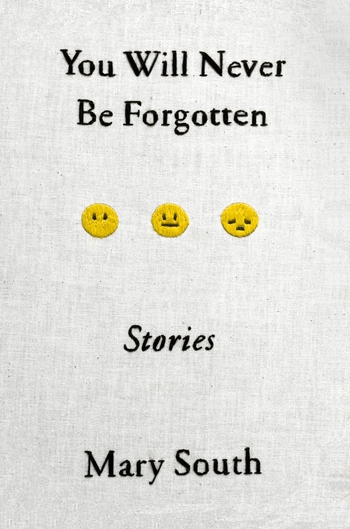
Now the similarities between these two powerhouses of fiction are manifold, but the difference between them is that one of them (Cartland) isn’t aware that she’s not normal, while Jackie is proud of the fact that she is. Cartland campaigns against a permissive society, sat there like a drag queen in a frou-frou pink dress, white face paint and diamonds, while Jackie’s books are testament to what happens when people are given permission. 

When I was writing my book Diary of a Drag Queen, I thought about these two authors a lot. The book is wildly different in style to both of their writings—it would be foolish for anyone to try to emulate either—but I found it fascinating that both of them played with the concept of normality so much. To me, normality is a terrifying prospect. For some reason, the idea of normality has always felt synonymous with mediocrity, boredom, dissatisfaction. And neither of these writers traded in any of these things at all. I tried to write a book for people who have always found the prospect of normality scary, whatever their reason. For me, it started with not having an option to be so—I’m gay, non-binary, fat and a drag queen from a small town in the North of England—but when I’d finished my book I realized that being not normal had been the greatest gift I could have possibly received from society. 

The following are books that view the world from different positions, but all from places of not being “the norm.”

Image result for michelle tea against memoir

Against Memoir: Complaints, Confessions & Criticisms by Michelle Tea

All I ever want is to be inside the mind of Michelle Tea. When my friends and I first discovered her books some years ago we passed them around like wildfire, creating WhatsApp groups to claim characters in Michelle’s real life as our own. Tea has lived the queerest life. No, Tea has lived five of the queerest lives, and she writes about it with such a knowledge of who is going to be reading her words. These books are so precious to so many queers because she’s written them for us. There’s no explainers, it’s just her writing about us, parts of us, for us.

Against Memoir is a collection of essays on topics that interest the author. It’s my favorite of her books—Black Wave a close second—because you can pick it up and imbibe a slice of Tea’s mind in five minutes. More than that, it helped all of our friends become a little bit more like our idol: now we love Gene loves Jezebel and Erin Markey follows me back on Instagram. She reminds so many of us lost queers of the joy of it all, of why we were all drawn to this life lived elsewhere.

Secret Diary of a Call Girl by Belle De Jour

This was the first book I ever read cover to cover. I was 18 and on holiday in Benidorm (if Miami and Vegas had a cheaper, slimier baby) and I borrowed it off a girlfriend who had always been obsessed with sexy chick-lit. It’s arguably an easy read, a sort of erotic Bridget Jones, with a devolved sense of its own politic. But in a pre-woke world this iconic piece of pop culture, or low culture as many literary snobs would like to name it, was where my obsession with life writing started. The book details the life of Belle De Jour—a book-smart sex worker who is incredibly expensive to hire, and who, like the rest of us, is trying to work out how to balance a widely castigated means of income with her personal life.

We didn’t read much growing up, because in Northern working-class culture gossip and soap operas are what make up the bulk of our entertainment. I’d found books we were forced to read at school—Dickens, Shakespeare — dull, not for or about me at all. But when I opened Belle’s book, it was the first time I’d felt understood by a character. Perhaps because she was living on the outside of sanctioned society, as was I, or perhaps because the prose is personable, playful and oftentimes powerful. Whenever I come to write personal essay, I think of Belle, of how scandalous simply writing your experience can be, and if that doesn’t help get through the block I’ll often put on a sky-scraping pair of heels and channel my inner De Jour. 

Image result for Poor Little Bitch Girl

Poor Little Bitch Girl by Jackie Collins

As expected, I’ve always been obsessed with Jackie—from her life story to the fact that so many people thought of her as vulgar and yet she’s one of the best-selling authors of all time. I think it’s remarkable, and truly very camp, that to achieve such sales figures many of her detractors must have been secretly stashing their Jackie tomes under their pillows, out of sight of judgemental friends who were probably doing the exact same. 

Jackie’s writing is the definition of glamour, even when the scene is scary or tragic. She paints pictures with the worlds we know, by looking at them always from the viewpoint of the insider. Because, even though the books aren’t about her per se, you know that everything in them is something she has seen. Roman a clef. Which makes reading them all the more glorious—like a game of Guess Who!

Poor Little Bitch Girl is on this list because it’s the one I most recently read, about high school friends reunited through a mysterious, high profile death. But really, I could put any Jackie on this list and be happy with the choice. She is unmatched and her very existence proves the deep immaturity of our society: that people are still shocked by her work, as a woman writing about men and sex, belies how conservative our world really is. Jackie taught me to lean into the shock. Jackie taught me how to be a drag queen.

The Vegetarian by Han Kang

The Vegetarian by Han Kang

I’m not a vegetarian, but this book is about more than meat. It’s about finding a metaphor by which to reject and renegotiate patriarchal control. In this instance, it’s giving up meat and, eventually by the end of part three, becoming a tree. It’s a book which goes deep, yet remains subtle, into the depths of despair that can be brought about by being controlled or oppressed. It’s about domesticity, and about how rejection institutions—both big and small—create friction that eventually spreads through this family structure like wildfire. This book rejects normalcy, but it doesn’t scream about its doing so. 

In the Cut by Susanna Moore

In The Cut by Susanna Moore

I haven’t seen the film, but I’ve read this book twice (the only book I’ve ever read twice). Moore’s lead is complicated and judgemental—a woman obsessed with language, a teacher whose fantasies are laid bare. This book is so powerful because its gender politics are uncomfortable. It’s about male violence and desire for men. It’s an erotic book, and yet it confronts violence towards women, at the hands of men, within the same scenario, unpicking the fact that these two things might well be linked. That’s hard to do: when male writers do it, it’s often with stories of murder and assault. And while In The Cut is set around a murder, that Frannie (Moore’s lead) and the detective she’s sleeping with are both linked to in different ways, it’s not insensitive to the violence, but it doesn’t obsess over it either. It illustrates the way so many women navigate the world when male violence is a constant threat, and while it was published in the ‘90s, it’s as brand new a book as anything released today. 

Role Models by John Waters

Waters’ writing is so beautifully non-judgemental, it makes an art out of seeing everything with value—venerating low and high culture with equal importance. This practice has informed so much of how I both write and see, treating people’s emotions and tastes as something valid to their experience. What Waters also does so dextrously is expect the highest of people, never applauding people for being good people—simply expecting it of them. Icons is a rare insight into what creates an abnormal auteur. Some of the book is uncomfortable, and Waters’ viewership can often feel exploitative, but when it clicks, it clicks so powerfully that Waters, as in his movies, subverts acts deemed socially so shameful into things so powerful, so iconic. An interview with his friend Leslie Van Houten, a Manson devotee who remains in prison, caused a stir. But what Waters communicates to those of us who live on the edges of society is that everyone deserves a chance to be heard. And that is a powerful thing to understand when you belong to a community that so often isn’t. I love this book. 

Bodies That Matter: On the Discursive Limits of Sex by Judith Butler

I’m unsure whether Butler meant for every word in this book to be understood, but most of them can be felt. Inside these pages was where so many of us who find ourselves diverging from the normative gender binary understood, for the first time, not only that what we are is real, but why we are real. Or more accurately why binary gender is not real. Until reading Butler, I’d only ever understood a construct to be something that was made in a physical sense, not in a metaphorical or social sense. I can’t describe what a 22-year-old wearing a dress in a stuffy university library felt when they found such a mirror to themselves. And really Butler sits at the top of the pile of which I am at the bottom. So much of my book Diary of a Drag Queen aims to explain what Butler taught me in language my mother can understand, that I can understand.

Why “Ok.” Is the Most Terrifying Text You Could Ever Receive
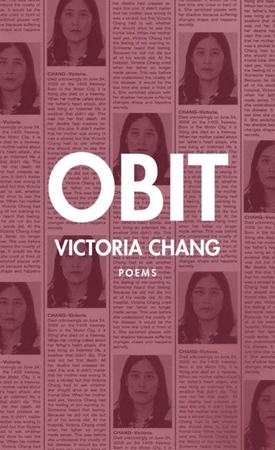
Could you pick up some bread on your way back please?
– Sure.

I’ll be home by 8pm!
– Ok.

Do these text exchanges make you reel in discomfort, squeezing your emotional core? Or do they seem perfectly normal, an everyday occurrence? If you feel slightly sick inside, welcome to the club. If you’re wondering what the problem is: are you my mother? 

I’ve spent the better part of several years trying to explain to my mum how her two-letter “ok”s and overuse of periods makes me feel. She, in turn, tells me that all her friends text this way. It’s true, they do. (I checked.) But despite my concerted efforts, I can never quite find the words to explain what exactly the problem (or rather, my problem), is. Because internet. 

Because Internet by Gretchen McCulloch

No, really. In her book Because Internet: Understanding the New Rules of Language, Gretchen McCulloch writes: “Getting an Internet Person to stop overthinking a text message is just as impossible as getting people of any age to stop reading emotional nuances from tone of voice. We can’t help it.” 

This debut nonfiction book from Wired’s resident linguist is located deep within “the internet as a cultural context,” taking readers on a clear-eyed and often funny journey into the intricacies of online language. From exploring “an inequitable distribution of typographical emotional labor” to drawing a beautiful comparison between memes and embroidery, Because Internet is written for readers across linguistic generations.

Whether it’s punctuation marks, memes or deciding whether to capitalize words, the internet is constantly shaping how we write—and, as McCulloch tells us, “how you write is who you are.” Because Internet allows us to know ourselves that little bit better. 

I spoke to Gretchen McCulloch about sexy emojis, ellipses, the anti-authoritarianism of all-lowercase texts, and how democratic online language really is. 


Richa Kaul Padte: Please let’s start with emoji, because the way you situate them totally blew my mind! Emoji, you explain, are gestures— the way we talk with our bodies as well as with our words. You write: “We use emoji less to describe the world around us, and more to be fully ourselves in an online world.”

Last month, Facebook banned “sexual uses” of emoji on its platforms, including 🍆 the eggplant emoji (sometimes used to connote a dick) and 🍑 the peach emoji (sometimes a butt). While the impetus for this policy was a continued hostile offensive against sex workers online, your book also made me wonder: has this ban completely misunderstood how emoji actually work? 

Gretchen McCulloch: Facebook’s ban of emoji sort of confuses the result with the cause. The eggplant wasn’t initially a sexual emoji; in fact, there still aren’t any overtly sexual emoji. It’s people using the eggplant in sexual contexts that makes us interpret it sexually. So what I’ve seen most people predicting as a result of this particular ban is that people will find something else to use as a sexual emoji—here are lots of other objects in the emoji spectrum that one could potentially use! So while it may have a short-term effect, I don’t think the ban will actually do much in the long term. 

RKP: You write not just of emoji, but of all internet language: “once we had the technology…we used it to restore our bodies to our writing.” This makes me think of the French theorist Hélène Cixous, for whom writing, and especially women’s writing, is always an embodied act. She also believes that it is a necessary act: not just for women’s words, but for our bodies and our selves. 

There’s a study you cite in Because Internet which finds that “women lead 90 per cent of linguist change,” making them primary “language disruptors.” And I wonder, to what extent is the embodied nature of online writing born from women’s needs? Not just for communication and community, but to restore our bodies to our selves? 

What English speakers take for granted is that the internet is available primarily in their language.

GM: That’s an interesting theory! I think that as we do more writing, and as writing becomes more a part of our everyday experiences—something we do as regular communicators, and not just in the form of professionalized remote writing—its embodied aspect becomes more interesting and even more essential. So whether that’s combined specifically with women’s writing because women have often been excluded from spaces, or whether that’s simply a human need to connect with each other, I think both of those things can be true. 

RKP: Gretchen, your book is full of explanations I didn’t know I needed but now consider e s s e n t i a lespecially when trying to understand people who text differently to me (namely, my mum). Take the use of ellipses to separate sentences.  Prior to the real-time interwebz, ellipses were a way of indicating informality: from letters to recipe cards to (embarrassingly) my own early emails to friends. This also explains why people who never had an informal writing context outside the internet didn’t understand why anyone would use them. Were they trailing off? Was there a hidden message?

But now, ellipses have made a comeback! I find myself using them all the time, in texts and tweets and emails. What does this…mean?

GM: Ellipses can mean a bunch of different things depending on the context. As you said, your mum sometimes uses them to indicate informality. Other people use them to indicate a kind of trailing off. But now there’s a rising use of ellipses to sort of parodize the tendencies of older people to use ellipses a lot. In these cases, it’s used to express an incredulity or a lack of familiarity with technology—or as an ironic distancing mechanism. Essentially, they’re context-dependent, but so are a lot of things we communicate. 

RKP: Many of us have shifted to using all-lowercase letters in our internet sentences—a minimalist typography that you trace from its first days on Tumblr to its present moment in the sun as “a soft/weird aesthetic” on Twitter.  

But compared to dot dot dot, which felt very intuitive, I was a lot more conscious of this shift to minimalism in my online speech. It’s almost as if I realized that everyone I liked had started doing this thing and now I needed to…do it too? You talk often about how we use language to project who we want to be, or as a means of aligning ourselves with particular groups. Does this mean we’re all simply trying to be cool, or does emulation indicate a desire for belonging? Is there even a difference?

When smartphones capitalize everything automatically, all-lowercasing shifted into being anti-authoritarian.

GM: Dot dot dot is something that emerged from a set of existing cultural practices: it had an offline [life], so using it online for some of those purposes involved a more gradual emergence. And while minimalist typography does have historical antecedents—like e.e. cummings poems—I think its moment in the sun starts with a reaction against automatic capitalization. When smartphones capitalize everything automatically, lowercasing things takes more effort and can have additional semiotic value: “Here’s this thing I’m doing in rebellion against what the phone is trying to get me to do.”

I also think people are aware that all-lowercasing was considered a sort of lazy practice in the early days of the internet—because it was the default thing to do. And when it became no longer the default, it shifted into being anti-authoritarian, while also invoking in an ironic sense the stereotypes of those early internet users. So there are many levels of interpretation. And because all-lowercasing involves a multi-step reaction against default capitalization, I think it is something that all people do tend to do more self consciously—and less as a natural outgrowth of existing practices.

RKP: Internet language serves as community, but it also acts as a tool for exclusion. You explain how it can be “a way of repelling outsiders, of saying, ‘I don’t care if you take this the wrong way.’” That’s so true, and very much reflects how I respond to unwanted comments online: by using language that primarily makes sense to my own linguistic community. Do trolls/men/other people understand? ngl idgaf. 

But this “you can’t sit with us” energy also works to solidify existing hierarchies: class, race, caste and so on. In India, where I live, it is a visibly felt truth that internet access does not equal internet literacy—and that neither equal English fluency, much less fluency in the shape-shifting English of the internet. If “language is the ultimate participatory democracy,” does the online world still need to catch up?

GM: I think saying that language is a democracy can mean that it has the same problems that offline democracies also have. So technically we all have equal votes in a democracy, but that doesn’t mean that democracies are paragons of inclusion, or that they’re perfect and don’t need to continually address hierarchies of class, race, gender, caste and so on. I think you can be a democracy and still have lots of things to work on, and I think that’s true of both the online and the offline world. 

I definitely think there is still a lot of English dominance on the internet, though. What English speakers take for granted, especially in English speaking countries, is that the internet is available primarily in their language. And that’s definitely not true for a large portion of the world. So having phone interfaces in your language, having Wikipedia articles in your language, or when you’re trying to code a website, having keywords in a language that you can already understand—these are areas in which the internet really needs to catch up for speakers who aren’t in the top ten languages of the world.