8 Powerful Women Leaders in Fantasy Novels

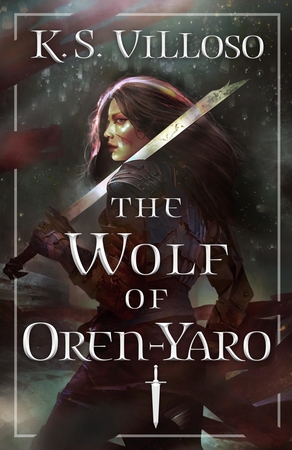
By now, the idea of a woman in power shouldn’t even be a point of debate. When I set out to write The Wolf of Oren-yaro¸ I wanted to explore what a traditional hero’s journey looked like from the point of view of a woman, with the same challenges that a man in that position might deal with. I thought it would be easy. I’m a woman. I’ve written about women before. 

But there was something about having Queen Talyien in an obvious position of power that seemed to make her situation more potent, rifer for misunderstanding. Women are held to certain standards of behavior, made all the clearer when she is in power. Within the narrative, I found myself having to confront how power and gender intersected—how some of the same things Queen Talyien’s forebears were both feared and respected for were used to tear her down. Named the Bitch Queen to mock the wolf emblem of her clan, there seemed little room for sympathy in her world… a fact that reflected in real life, where some readers found her off-putting for the same sort of character traits that is often celebrated in men. 

But if not with cutthroat efficiency and a desire to set things in motion, even when she doesn’t have all the answers, how else do we define women in power? Many other ways, in fact. I’ve gathered a list of women in fantasy literature who show power in many different ways. 

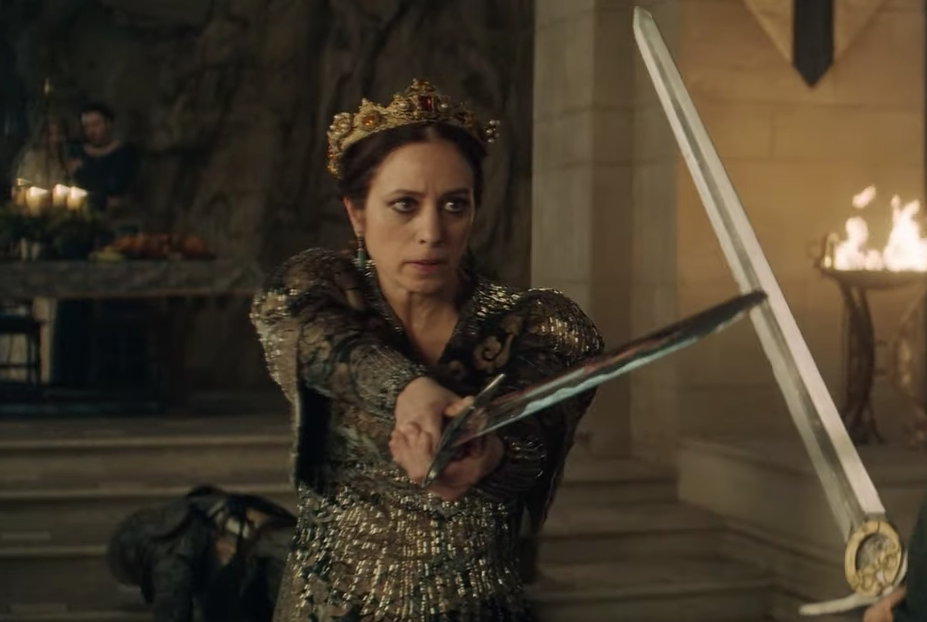
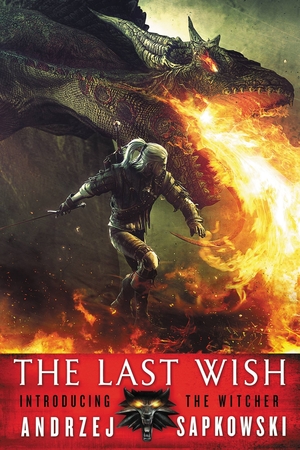
Calanthe from The Last Wish by Andrzej Sapkowsi

Known as the “Lioness of Cintra,” Queen Calanthe won her first major battle at the age of fifteen—a full year after she took the throne upon her father’s death. She continues to be known by her prowess in battle. Later, she marries and has a daughter, Pavetta, who gives birth to Ciri; after Pavetta’s untimely death, Calanthe takes over the care of raising her granddaughter. She dies in battle during a Nilfgaard invasion of her city, though her body is never found. 

Image result for george rr martin a game of thrones book

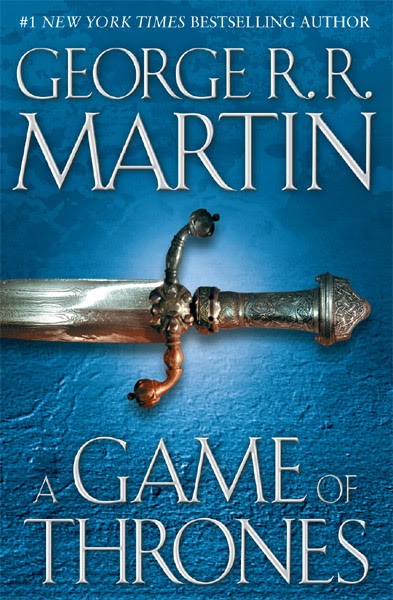
Catelyn Stark from A Game of Thrones by George R.R. Martin

Wife of Lord Eddard Stark of Winterfall, mother of Robb, Sansa, Arya, Brandon, and Rickon, Catelyn Stark (nee Tully)’s journey sees her wading through the brutal land of Westeros in an attempt to protect her family and bring them back together. Proud, honorable, and wise, she persists with her mission even seemingly past death, where she comes back as Lady Stoneheart. 

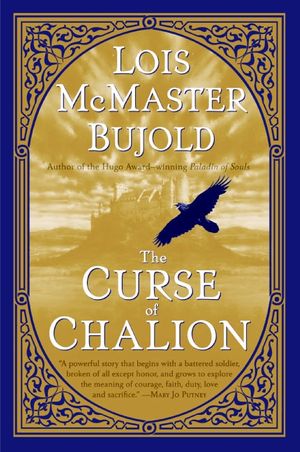
Ista dy Chalion from The Curse of Chalion by Lois McMaster Bujold

Ista dy Chalion marries into a family with a curse and becomes queen of Chalion. She has the ability to see the curse, but the people around her chalk it up to insanity. Despite being set aside after she was widowed, relegated from queen of Chalion to “mad Ista,” she persists in her belief in order to protect her children. She eventually implores the help of Cazaril, her daughter’s tutor, to help break the curse, and he believes her. In the sequel, Ista’s gifts propels her into a new journey that involves ridding the land of demons.

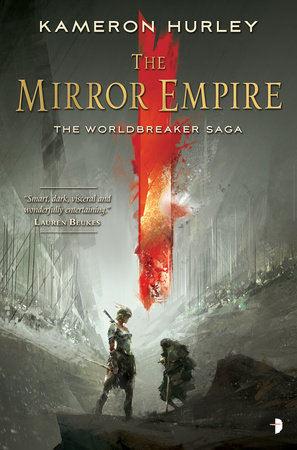
The Mirror Empire by Kameron Hurley

Zezili from The Mirror Empire by Kameron Hurley

A Captain General who reflects many of the traits seen in complex male characters, Zezili has a sense of love verging on cruelty and sadism, and shows a casual indifference to violence, rape, and murder. The character reflects a shatteringly unapologetic portrayal of a woman in a culture where the brutality she displays towards men—and her husband in particular—is the norm in a matriarchal society built in response to oppression. She invites the audience to rethink how they sympathize with male heroes who reflect many of the same traits but are somehow not vilified for them.

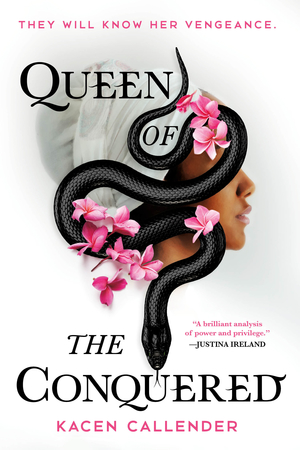
Sigourney Rose from Queen of the Conquered by Kacen Callender

Born in an island where her mother’s people has been colonized, Sigourney Rose lost her family to a brutal murder at a young age and has been fixated on nothing but vengeance since. She shows ruthless cunning as she climbs her way up the ranks in court, hoping to be chosen Queen by the end of it. But the uncompromising decisions she sees as a necessity in a sea of white faces are viewed as a privilege by those beneath her, her own people in whose enslavement she is also complicit. 

The Palace of Illusions by Chitra Banerjee Divakaruni

Draupadi from Palace of Illusions by Chitra Banerjee Divakaruni

This account of the Hindu epic the Mahabharata is told from the perspective of Draupadi as a woman instead of as a mythical princess. Draupadi resents the restrictions imposed on her by her position, especially those brought on by womanhood. In this novel, Draupadi is injected with agency, weaving through a complex web of politics that in all other accounts have only been interested in the doings of men. 

Image result for jy yang the black tides of heaven

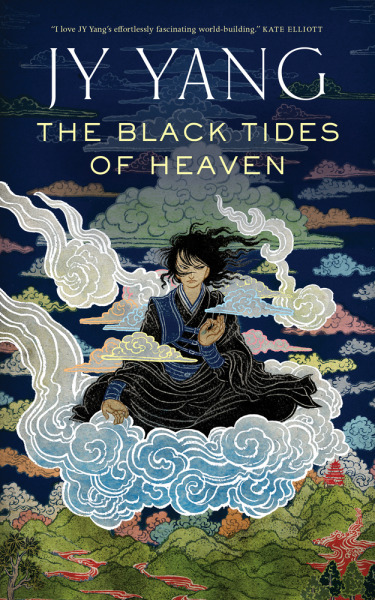
Sanao Hekate from The Black Tides of Heaven by JY Yang

Lady Sanao Hekate is the Protector, who rules a land filled with magic. Drought and civil disorder lead Sanao to promise one of her children as a blood price to the Grand Monastery in exchange for their help. She has twins, a boy and a girl, and both are offered up as payment, though Sanao is not happy with the arrangement. The girl is able to see the future with visions. The boy is not as fortunate, but Sanao later uses her son in her political scheming. A brutal leader who doesn’t give a second thought to mass murder, Lady Sanao defies gender roles and amasses immense power along the way.

Anyanwu from Wild Seed by Octavia Butler

The immortal and shapeshifting Anywanwu isn’t a leader by the traditional sense, but she is a matriarch of generations of children and grandchildren. She is originally drawn to another immortal, Doro, for his promise of children who will never die. Later, she goes to great lengths to protect her descendants and kin, including weathering Doro’s abuse. The strength and resilience Anyanwu shows is remarkable and highlights how power can be found in silence and the willingness to endure, until finally she finds an opportunity to stand her ground and break away. 

The Urethra-Crushing Meaninglessness of Death

At the end of last summer, I inherited a piece of my dead friend’s library. Books—words, poetry, ideas—had formed the nucleus of our friendship. They sustained us as Natalie gradually succumbed to the cancer that began to take over her body just a few weeks after we first met. And they were still there at her memorial service, at a funeral home in Brooklyn. Her husband and family brought stacks of them so that each of us could have a piece of Natalie, each one containing a small bookplate with her name, the day she was born, the day she died, and a quote from Susan Orlean:

Our minds and souls contain volumes inscribed by our experiences and emotions; each individual’s consciousness is a collection of memories we’ve catalogued and stored inside us, a private library of a life lived.

A few weeks later, I picked up even more of Natalie’s books from her husband, who was packing up their apartment and moving out of New York. In her absence, the words, poetry, and ideas that shaped her were still everywhere. In particular, I noted a print in their kitchen that Natalie had gotten when she learned that her UTI was in fact bladder cancer. The quote was from BoJack Horseman: “Life is just one long, hard kick in the urethra.”


Natalie and I had initially bonded in our divinity school cohort. We were both there, in part, to study death: how do we make sense of it, and how do we continue living in the wake of loss? Up until that point, our lives had both been dotted by moments that placed us in the same room as those questions, and we’d both reached the point in our lives and careers where we wanted to weave some meaning out of the myriad of possible answers. 

Natalie’s books begged for me to find meaning—if not a grand, unifying meaning, then at least a sliver of it.

In the penultimate episode of BoJack Horseman, Raphael Bob-Waksberg’s characters refute the idea of meaning. In a scene set in BoJack’s subconscious as he faces death, the Byronic bronco has a conversation with his dead father, Butterscotch (in the body of racehorse legend Secretariat). The idea of inner peace comes up, and Butterscotch-slash-Secretariat scoffs: “Peace? That’s someone trying to convince himself of something.” 

“Of what?” asks BoJack. 

“That life has meaning, or purpose. That if you check the right boxes and do the dance, then you get a little parting gift at the end—a framed certificate that says, ‘Congratulations, you’ve got peace.’… But guess what? All the time those people spent, trying to do good or help people or be something? I did none of that shit, and yet here I am, same as them.” 

Natalie preemptively echoed this a few weeks before she went into the hospital and, eventually, into hospice. “There is no philosophizing,” she wrote. “There will be no meaning to make of my death, no reason for me dying before I had the chance to grow old with the people I love.”

But Natalie’s books begged for me to find meaning—if not a grand, unifying meaning, then at least a sliver of it. Many of the books I inherited from her were dotted with white Post-it flags, each one marking a sentence or passage she found particularly resonant. In this way, reading Natalie’s books became an oblique way of reading Natalie herself. One example, from Jessa Crispin’s The Dead Ladies Project

The mob sorts itself out into individual people with their own hopes and needs and routines, each contained by their own reality. And moving between these units is not a linear act but an act of stepping from one parallel universe into another. And each moment has to be considered and understood, and the person who follows behind you, that person travels through their own moments.

Stepping from one parallel universe into another, this act of reading Natalie—an act of divining—began to feel like another book that we referenced throughout our friendship, the novel-in-verse Eugene Onegin. 

After Pushkin’s eponymous character leaves the countryside and returns to St. Petersburg, his lovesick heroine Tatyana goes to his abandoned dacha. There, she combs through his library, analyzing every title, every thumbnail imprint in the pages, every scrap of marginalia. Through this, she begins to understand more fully the dissolute, enigmatic man whom she once followed around like a cocker spaniel. 

Eugene Onegin isn’t unlike BoJack Horseman: Solipsistic and self-destructive, both tread the well-worn path of the Byronic hero (Onegin even has a portrait of Lord Byron in his study). Through their respective character arcs, they remain mostly static. BoJack even romanticizes the predictability of inertia (epitomized by the bland-but-harmonious pace in the world of his ‘90s sitcom), as opposed to the urethra-crushing pain of the unknown. In the end, both are left alone to figure out how to move on when all of the other people (and animals) in their lives have changed and drifted away. 


BoJack has his own parallel to Tatyana in Diane Nguyen, who initially enters his orbit as the ghostwriter for his memoir. Because writing a memoir requires a degree of reflection BoJack is incapable of accessing, that project turns into an uncompromising biography, presenting BoJack as what Pushkin might have termed “a child of heaven, of hell perchance. / Devil and god of arrogance.”

It’s in tandem with, rather than in spite of, the comedy of BoJack (which is, in and of itself, a Russian doll of references, cross-references, double and triple entendres) that the biggest gut-punches are delivered. I think that may have been one of the reasons that Natalie and I enjoyed it so much: It brought us up close with the shit of human existence, but it couched that shit in a way that offered, if not meaning, at least camaraderie. (As BoJack’s man-bunned Judah Mannowdog says of a Stephen King musical opening on the same night as a Stephen Sondheim musical, “Misery loves Company.”)

As much as BoJack seemed to speak to our lived experiences, it also kept them in perspective. Animation means you can explore multiple worst-case scenarios without any real sense of risk to your characters. They can drive their cars into swimming pools and emerge without a scratch. The animators and writers can, as the official BoJack coffee table book suggests, put the art before the horse. 

When the fifth season of BoJack Horseman was released in September of 2018, Natalie was just finishing up a round of chemotherapy. She had a Sinead O’Connor fuzz of hair, but her eyebrows and eyelashes were starting to plan their comeback. She was still iffy on alcohol, but had enough of an appetite for apple fritters and bourbon donuts. That winter, she would be declared tumor-free. Art had created a safe space for catastrophe to spin out as normal life continued in a relatively calmer cadence. The fear of burying someone my age seemed to subside. 

Less than a year later, Natalie was gone. A month after her positive scans, she was back in the hospital for what she initially thought was a flu-like virus. A brain scan revealed a lesion that was incurable. 

Grief isn’t logical. When Natalie died, after nearly eight months of seizures, treatments, and hospitalizations, I was, in part, relieved. The last time I saw her, I only caught glimpses of her as she periodically latched onto lucidity. I was trying to find her in the margins of morphine drips and breathing tubes. 

Grief isn’t linear, either. It’s an act of stepping from one parallel universe into another. I initially skipped denial, anger, bargaining, and depression like a superfluous opening credits sequence, immediately going for acceptance. But at some point, I had my inevitable crossover episode with anger. 

The bridge between the two, incongruously, became the final season trailer for BoJack Horseman, which came out a few weeks after the memorial service, after I got my new books. My anger all funneled into the fact that Natalie would never see the series conclude. We’d never be able to analyze it together, finding every hidden bit of meaning. Adding insult to injury was Bob-Waksberg’s revelation that he’d hoped for two final seasons versus the one that he’d been given by Netflix, meaning that the pre-orchestrated end for Hollywoo would be accelerated, truncated. 

Living in the wake of loss means one can’t help but try to seek out some meaning. Natalie’s insistence that there was no meaning to find in her death didn’t mean that she hadn’t accepted her prognosis. But rather than spend the remaining time she had trying to tack a meaning onto her death, she focused on adding more meaning to the rest of her life. For those of us left behind, though—like Tatyana in the wake of Onegin, like Diane in the wake of BoJack, and, ultimately, like BoJack in the wake of everyone else—the idea of finding meaning gives us something to cling to amid the nonlinear mess of grief. Even if it’s not the end goal of grieving and processing loss, it’s something we can work with to escape inertia. 

For those of us left behind, the idea of finding meaning gives us something to cling to.

While closure isn’t a guarantee, the project of meaning-making can also help us move towards a kind of (sorry, BoJack) peace—or at least habituation. Every loss we can begin to process gives us more to work with for the next inevitable loss. It’s a card catalog for our private library of grief. 

BoJack faces his own backlog of overdue processing head-on in the penultimate episode of the series. It’s a setup straight out of another acerbic ode to show business, Bob Fosse’s 1979 movie All That Jazz: BoJack’s subconscious goes into overdrive as his brain shuts down following a bender that may prove fatal. 

The characters whose death permeate the series—BoJack’s uncle Crackerjack, his Secretariat costar Corduroy Jackson Jackson, his Horsin’ Around showrunner and former best friend Herb Kazzaz, his father-Secretariat hybrid, his mother, and, of course, Sarah Lynn—come together for a dinner party. This culminates in a variety show in which, one by one, each character gives their final performance, before entering a door that leads to an unknowable void. (“Blest he who leaves a little early/Life’s banquet without eating up,” Pushkin writes at the end of Onegin.)

It’s during this sequence that BoJack’s father-slash-Secretariat rejects the idea that life has meaning. It’s as cynical a moment as any like it in Russian literature (or in a Bob Fosse musical, for that matter). But BoJack doesn’t suggest that there’s meaning in death, either. Moments after this conversation, BoJack is saying goodbye to Herb. 

“Is it terrifying?” he asks as Herb stands on the threshold. 

“No, I don’t think so,” Herb responds. “It’s the way it is, you know? Everything must come to an end. The drip finally stops.” 

When BoJack says he’ll see Herb on the other side, Herb’s thoughtfulness turns to disappointment. “Oh no, BoJack,” he murmurs. “There is no other side. This is it.” 

It’s not necessarily a relief to see, in the next and final episode, that BoJack lives. He’s arrested for breaking and entering into his former home and sentenced to 14 months in a maximum-security prison. His friends move away and move on, leaving him to reconnect with them at Princess Carolyn’s wedding one year into his term, on a prison furlough. Each conversation, whether it is indeed their last or not, feels like a goodbye—a way of making peace. But, like Onegin, they’re not necessarily satisfying.  


Despite BoJack’s urethra theorem (which, parenthetically, is the name of my new riot grrrl band), Natalie wrote last May, “We don’t really have cultural stories to tell about the bladder.… This, to me, is generally a relief.” For her, this meant that there were no metaphors to ascribe to the part of her body where the cancer originated. There is no bladder equivalent to being lily-livered or anal-retentive. 

Meaninglessness, while a relief, is also a vacuum.

But meaninglessness, while a relief, is also a vacuum. Natalie had no family history of bladder cancer, wasn’t exposed to any of the known risk factors, and took care of her body, with caffeine being her biggest vice. As a result, she wrote, it was hard “not to feel betrayed and alienated by this inarticulate organism that carries me around each day while allowing cancer cells to proliferate.” Her disease wasn’t metaphorically overburdened, but that lack of metaphor also meant there was no easy or comforting way to fit it into the rest of her life’s narrative.

In the finale of BoJack Horseman, Todd posits that, if art has a point, it’s less about what people put into it and more of what people get out of it. It’s an absolution to those of us who—like BoJack, like Tatyana—keep searching for meaning even in the meaningless. After I finished the series finale, I revisited Natalie’s post about how the bladder has no cultural weight. I forgot that, amid feeling betrayed by her body, and trying to separate her imagination, her metaphors and emotions, from the realities of her body and treatment plans, that she made an about face. No, her body wasn’t betraying her. It was, against all odds, trying to sustain her as she navigated the changes caused by tumors and treatments. 

“There is, in fact, no place of retreat from my body, no safe space where I can memorize drug names and compile dispassionate to-do-lists,” she concluded. “My body and mind are not just connected, we are—and will only ever be—inescapably and incredibly whole.” 

There’s no right or wrong answer in the end. Fully aware of her own mortality, not just as an abstract concept but as an imminent eventuality, Natalie wasn’t responsible for telling us what her death meant in the grand scheme of things. She was shaping and re-shaping her own sense of meaning in real time, along with the rest of us—but unlike the rest of us, she had a deadline. 

I thought of Natalie the hardest during the final lines of the last episode. Echoing a bumper-sticker platitude that he could have just as easily said at the beginning of season one, BoJack sighs, “Life’s a bitch and then you die.” 

Diane concedes that, sometimes, this is true. But she doesn’t let him stop there. “Sometimes,” she adds, “life’s a bitch, and then you keep living.” 

We keep living among the marginalia. We continue to collect the notes and the Post-it flags, but not to find meaning, or to come up with a grand unifying theory. Instead, we move between the marginalia, like parallel universes, until the meanings present themselves, changing over time as we continue from one universe to the next. The good-bad news is that there’s no closure, just more questions. But it’s those questions that keep us going. 

Everyone On the Moon Is Essential Personnel

“Everyone on the Moon Is Essential Personnel” (Excerpt)
by Julian Jarboe

The full moon is rising over an endless expanse of barbed wire and electric fences. They sit atop the city’s dark horizon of high walls, district and ward borders, checkpoints, gated neighborhoods, and private estates. Even the gardens of Stella Maris are jagged: armored groves and greenhouses of fruiting Scrub Nut and Atlantic Palm encased in wrought iron, the decorative Treacher Fern and Wandering Wasp collared in shrapnel. Sebastian would like to slide between the bars, over the bricks, and past the security cameras as easy as a shadow, let his dusk-tan skin turn gray-blue in silhouette, his shade-tree stature camouflage him among the delicate vines of Prophet’s Hand and fickle-twisted wands of Rare Pear on the branch, the temperamental nightshades, the sugar tubers. Root himself to the Earth’s surface.

His stomach whines like an obstructed garbage disposal and Yonatan says, “girl, same.” Yonatan promises to buy them both a late dinner when they get to Omens and Pour Tends. The moon looms above them all, flashes through their imaginations in panoramic view of the commercial compound and industrial complex on its surface. Everybody knows all the shitty jobs are headed to space. Sebastian knows he’s headed there eventually, inevitably, running out of earthbound dead ends, spinning in stasis and self-sabotage, though hardly losing the strength to deny and delay again; procrastination as the only working perpetual-motion machine.

“Whatever happened to applying to—what’s it called—seminary?” Yonatan asks. “I can’t believe that’s really the word for it. Still sounds like some weird sort of… cum thing.”

“Uhhhh, so,” Sebastian demurs. “I actually got pretty far in the process! They didn’t really tell me why it stopped, but it stopped after the psychological exam.”

“Oh.” Yonatan sounds a little insulted to not have heard this news sooner. “Shit. Did you literally fail an ink blot test? Is that even possible?”

“Yes? I mean, I don’t know, but I’m pretty sure.”

Sebastian tries to keep a diary, but he has never been the type to recount what is happening, how he feels about it, or one moment’s connection with any previous or upcoming moments. Instead, he uses a Daily Examen app on his phone to keep lists of words. Each evening the app prompts him to review the day in the presence of God through five steps and input a short response for each:

  1. Ask God for light.
  2. Give thanks.
  3. Review the day honestly, without delusions.
  4. Face your shortcomings.
  5. Look toward tomorrow and the days to come.

The program also displays his stats and leaderboard compared to other users, how many decades of the Holy Rosary everyone is praying and how many days since his last Confession and so on, but he skips these. Instead he records words he sees, reads, hears, writes, says, sings, or repeats. What difference between them is there, anyway? Slogans, idioms, quotes, allusions, prayers, marketing campaigns: anchors to the delicate vessel of his memory, some heaviness, a weight not unlike certainty, sequence, and significance.


Omens and Pour Tends is a long room in the basement of an old six-story row house, and Sebastian and his friends prefer to meet at the loudest, darkest corner of it. The booth seating along the tin-tiled walls is comprised of antique oak pews surrounding scavenged work benches, discarded kitchen counter tops, and one foosball table that the owner insists is from a genuine Two-Thousand-And-Ought-Naught era tech startup, but Yonatan and the other servers suspect it’s just from the owner’s old fraternity house where some of his roommates happened to work in tech startups.

Kero is already there when they arrive, her piles of impractical novelty backpacks and totes stuffed onto one side of their usual booth while she sets up her DJ rig on the platform of shipping crates and road cases that designates the “stage.”

“Love the new hardware,” Yonatan remarks on Kero’s robotic left arm, where tonight she’s switched out her usual claw for a flayed and circuit-bent Furby.

“Thanks dude,” she says, and uses the terrible little beak on the toy to pincer audio cables and records.

Yonatan brings them all dandelion toddies and places down a caddy on the center of their table crowded with bottles of hot sauce, packets of tapioca pearls, salt, utensils, and miniature divination games: a pocket-sized magic eight ball, a fold-out Ouija board, a scattering of fortune cookies, dice and cards and so forth that all came standard with a table at Omens.

Usually the friends read their paper cookie fortunes aloud to each other, always adding “but at what cost?” to the end of the fortune. If you performed the whole thing with high-volume melodrama it was called “fortune yelling” and whoever else laughed first had to give you their fries.

Sebastian cracks a cookie open and announces its contents to Yonatan, waiting for a grin of recognition, but Yonatan’s attention has already shifted to the televisions above the bar.

Sebastian itches on the inside of his stomach as he watches his friend entranced by some pointless commercial. Yonatan’s eyes are deep hazel flecked like bloodstones, armored by dark lids, broad brown cheeks, and eyebrows thick enough that Sebastian could take shelter from a rainstorm beneath them, and Yonatan might say, “my goodness, you’re soaked through, let’s get you out of these clothes before you catch your death a cold,” because for some reason, in this fantasy, Yonatan talks like a cross between a simple country nurse gone to tend the wounded soldiers on the field and a Byronic anti-hero finally deciding to sow tenderness upon his vast estate.

Kero dims the overhead lamps and sets off a chase of small rainbow pin-lights around the room, and there’s a moment, right as everything is ready to go but nothing is happening, where time pauses entirely.

Sebastian has—or had, or will have—a difficult time with time. Sometimes it moves in a different direction or not at all, he was sure of that much, or it was naked anticipation. He could lay down and live there.


Witching hour comes and the room packs with late-night regulars, mostly older goths and punks, some of the Jesuit brothers from the nearby parish, the community college theater club, and a handful of that particular kind of tourist who pride themselves on seeking “authenticity” in their travels. Omens and Pour Tends is not on any visitor’s guide, which is precisely its appeal for this type, usually single white dudes in their twenties and thirties, but also hippy couples, awkward graduate students of all stripes conspicuously looking for a narrative in their observations. Sometimes, even poets come, already three sheets to the wind and clearly hoping for something violent to occur so they can possess and decorate it, but there’s rarely fights. There’s never sports on the televisions. The staff are fearless, the regulars are friendly, and the rowdiest it ever gets is when the theater club kids bring new members to initiate and think everyone else is their captive audience. But nobody minds, really. One of the Jesuits always claps politely for the singers.

The tourists stick out by how they carry their assumptions. Sebastian can always tell when someone comes to bask in the atmosphere of the dive. Their faces curl and glint with the masochism of standing too close to the blown-out speaker, finishing the odorous well draught, earning themselves a little bit of damage to escape their own minds, but with a wink, like they were regular people trapped in the onslaughts of their daily lives and not jerks on vacation.

It gets later and then too late. Sebastian misses the last bus home until morning. His friends are busy during these peak hours, of course, so Sebastian has a lot of time to eat fried food and gently disassociate, or to watch who in the crowd watches him, and to contemplate the way his presence becomes the subject of other’s contemplation.

Some part of Sebastian wants to tell these people, “I have nothing against you, but other sorts of people, who are not here, would steal your wallet and kick your butt all the way to Pizza Hut if they were. I just think you should know that. Maybe you can put it in your autobiographical road novel? But I don’t know anything, really. I’m only a local character. I’m the atmosphere. I’m the vibe. By my very definition, I’m somewhat naive. Not creative in any way. Not like you.”

A scruffy, kind of waxy-looking guy with his collared shirt tucked in and a yellow lanyard hanging from his back pocket comes in and half-waves at Yonatan, orders an expensive sake. The man is unfamiliar, but carries himself with less transience than tourists, so must be new to the city for an office job that keeps him long hours. Something thin, hard, and rectangular sits at the end of the lanyard, an ID card for the job most likely, but Sebastian doesn’t need to see what it says to know the company. The shade of yellow is trademarked. The color belongs to the same people, or entity, or whatever they are, who are running the recruitment ads for the moon, looking to staff it with the huddled masses yearning to break into the bourgeoise.

Their logo is everywhere. Their name is a household one. But Sebastian resists speaking or writing it as much as he can. Power that omnipresent should not be permitted something as volatile as a name, not even a codename meant in parody. Taking God’s name in vain was one thing. But there is no safety in naming mortal power, least of all to satirize it, when all the good that does is inspire the power to take you at your word, enact your dystopian exaggeration as their next move, turn your hell into your next reality.

Here is what to do instead:

  1. Write down the longest verb you can spell, in any language, without a dictionary: __________.
  2. Write down the last, family, or formal name of the worst boss you’ve ever had. Or if you, like Sebastian, have never been employed, choose any other authority figure who sticks in your memory like thorns through the palms of your hands; one who lacerated your motivation, you idealism, or your benefit of the doubt: __________.
  3. Now take (a.) a syllable of choice from each word and write them together as a single bicapitalized word, or, (b.) if you’re feeling that big pharma energy, with a hyphen, or, (c.) for a dash of software-as-a-service, drop consonants and swap vowels for emoji. Whatever it is your decide, write it down but keep it secret: __________.

And if you cannot keep a secret, you may still write it down, but then you must—you simply must—erase it immediately.

Give it a try in this following paragraph: __________ (fill in the blank) are establishing their second North American headquarters in Stella Maris following a years-long bidding war between cities across the continent, the governing bodies of each locale genuflecting before the promise of “jobs,” courting with tax incentives and exemptions, ceding public lands, extending eminent domain to cede more than a few private ones as well.

Most people in Stella Maris are as surprised as anyone else to be the chosen site. Some are very angry. Some are very excited. And enough are trying to find hope and positivity in their lives to tune out the anger and ride the excitement instead.

It doesn’t seem to matter what else __________ produces if it produces jobs; it started as an online-only clearinghouse for novelty infomercial products and light consumer gadgets, then it had outposts nationally, then globally, now extra-terrestrially, expanding to include a private mail service, a coffee shop franchise, a bank chain, weapons manufacturing, raw materials speculation, and a popular subscription box of shelf-stable food and nutrition supplements. Their business on the moon is vaguely described as “research.”

But it also doesn’t seem to matter to most people in Stella Maris what manner or quality of jobs this development entails, if there are a high enough quantity of them. Technically, thousands of jobs appeared virtually overnight for the fancy, lucrative positions, but if Lanyard Guy is any indication, they were just as quickly filled by internal transfers. What’s left are the contracts, the subcontracts, temping and testing and data entry and other garbage gigs, also some literal garbage gigs.

Sebastian thinks, hello, yes, his skills and qualifications are that he knows how to cross a floor of any material without making a sound. That he is quite adept at evading blows, for example to the face, for example he can cross his arms over his face in such a way that bruises can be hidden by long sleeves. That he is proficient at being anywhere and feeling like a visitor to a distant relative and that he should not touch anything. That he is an expert at crying for no reason, or used to be, though he hasn’t cried at all in a long, long, long, long time but that he is confident he could pick it back up again at any time, like riding a bicycle, as they say, though he wouldn’t know, as he never learned to ride a bicycle. Or drive a car. Or swim. Since he’s not supposed to go in the ocean past his chin, he’s probably not allowed in space, either, at least not into the sky past the top floor of a building, really, and even then, only if he leaves enough room for the Holy Spirit between his restless, impulsive body and any open windows.

The moon has always been there as a motif in art or a glow sticker on his bedroom ceiling, but now it grows, becomes the distant shore of his impending future, and he understands that the walls of Stella Maris are his mother. The border is her body. “Here” and “her” lose all meaningful distinction. Is he trapped? Could leaving a place ever really be an escape from it? Is what happened before still happening and will it happen again?

Time forms a circle, and then another circle along a different axis, and then another, until time is a mesh sphere pulsing through darkness to synthesizer arpeggios, a crude computer model on an old tape about the future, but the future in the video is from the past, and so everything collapses, flattens, and tomorrow and the days to come are already here, and you are certain of three fates at once:

  1. You never leave home and never defy your mother.
  2. You leave the entire planet in defiance of your mother.
  3. Your mother is waiting for you on the moon when you arrive. She is in her pajamas and raises one of her slippers, hurls it at your head, and the slipper thwacks you in the face as she shouts about how dangerous this is, that you will definitely, absolutely die if she doesn’t kill you first, how since she made you that she can unmake you, how she saw you before you saw yourself, and meanwhile the slipper ricochets off your forehead and twirls off beyond the ends of the solar system, until aliens find it and study it to better understand human kind. And you cry out, please, yes, hello, your skills and qualifications for this exciting and rewarding opportunity are that you still have a pulse, and you excel at forgetting entire years of your life, and laying in bed any time of day, and laying awake any time of night.

Are you there Sebastian?

It’s me.

Sorry I’ve been kind of distant lately. The reason for that is that I’ve been kind of distant lately.

Follow my instructions. Message one of the contact codes from the recruitment materials. A billboard, a targeted ad, a commercial, it doesn’t matter. They all take you to the same inbox. Receive the automated response with the link that says “get started.”

Get started. Install their proprietary software. It’s a personality assessment. It really is that long. Maybe the duration screens out anyone who isn’t serious about serving a global community for flexible pay. Maybe it’s just a way for them to better understand your judgment and ability to sort important information from unimportant information.

Press “acknowledge.” The light on your phone’s camera and microphone pulse blue. They are recording you taking the test, to ensure that you don’t cheat by looking up answers about your own judgment and ability to sort important information from unimportant information. Maybe they analyze the feed in real time. Maybe they have those graphics analysis A.I.s that can tell them about your vital statistics, or if your face matches the face on any watch-list, or what your expression implies about your intentions.

powered by Typeform

NOTE: You may now begin.

NOTE: Check all that apply.

Q: What is your age?

  • Like, twelve.
  • Youth.
  • Old enough to know better.
  • Vanishing into obscurity.

Q: Are you a robot?

  • No, I am not a robot. 
  • I’m unsure.
  • Cyborg (Registered). 
  • Cyborg (Unregistered).
  • Android, Virtual Assistant, or Electronic Companion.

Q: What is your race?

  • Passively invested in structural inequality through ethno-nationalism.
  • Actively invested in structural inequality through ethno-nationalism.
  • Passively resistant to structural inequality through ethno-nationalism.
  • Actively resistant to structural inequality through ethno-nationalism.
  • Guilty, confused, opportunistic, and/or defensive about this question.
  • Actually, it’s about fairness in video games journalism.

Q. Optional but strongly encouraged: How do you identify?

  • Goth.
  • Prep.
  • Jock.
  • Nerd.
  • Top.
  • Bottom.
  • Verse.
  • Sefile.
  • Cranky.
  • Furry.
  • Hexagon.
  • Everything but rap and country.
  • Womxn, womyn, fem/me (including fatal-spectrum), bimb@, or sugar baby.
  • Call me Cis Male. Some years ago—a lady never tells—having no cash, no class, and neither gas, ass, nor grass to pay my way around the old count-ray, I went to sea for a fee and to see if the sea would agree with me. Anchors a-weigh for pay; it is a way I have of driving off panic attacks and a very long list of other ailments and self-diagnoses. Anyway, I got gone; I prayed, got paid; I did not get laid. With a philosophical flourish, I sashayed to the ship. If they but knew it, almost all men, women, enbees, robots, and probably dogs, in their degree, some time or other, are horny for the ocean, which is our collective wife. This is also the extent of my bisexuality.

Q. Suppose that an explorer boards a galleon headed west across the Atlantic, at a maximum speed of nine knots but an average speed of five knots. Suppose he possesses an outdated map which indicates the trajectory of a floating island off the coast of the New World, somewhere between the Chesapeake Bay and the Saint Lawrence River.

The island is said to have black sand and lost treasures from every sea-faring civilization. The island is said to be strewn, as well, with skeletons. Among the pebbles and the gold are the blanching bones of men and women who followed the call of sirens or mermaids or their own death wish, or so it is said. It may also be said that they are the bones of those who have been kidnapped, enslaved, thrown or leapt overboard, those who drowned in failed expeditions, forgotten would-be conquerors, pilgrims and pioneers, whalers, sailors, pirates.

And growing in the black soil, thriving on the constant fertilization by human remains, is every manner of vegetation: taro and pineapple and pumpkin and corn and saffron and cocoa and tea, lush and wild as mud boils in a hot spring.

Suppose the explorer’s ships are wrecked along seven treacherous rocks in a gulf, a body of water he dubs The Sorrows, where he establishes a village which grows into a fortress which assimilates, eventually, into the American empire. Suppose, in letters, the explorer claims to have discovered the island he sought after all. Arguably, his star-shaped fortress comes to hold many of the world’s wonders within, especially beautiful gardens and orchards, and in the ground beneath it and in the sand all around it, just the same, lay the bones of the less fortunate. Assuming the above statements are true, which of the conclusions follow logically for why the explorer claims to believe in his own folly?

  • It will increase profits.
  • It will encourage everyone to work harder.
  • It will support the spread of common values.

Q. When you consider your earliest memories, whose love ensures survival and whose attention is a force to be dodged?

  • Childhood is a void to be approached and circled but never ventured into.
  • Recovered memories come back emptier and more fragmented than when you started.
  • None of the above. Childhood is a myth invented by the Victorians.

Q. When you consider that the responses and habits of trauma can be passed down for generations without conscious knowledge of their origins, whose fear is it when your throat shuts and your joints lock?

  • Cold sweat (a plague permitted to ravage, for you are undesirable).
  • Night terrors (a destructive dynamic that goes excused and normalized).
  • Black out (taken by force, taken by night, suppressed by law, by drink, by your own hand).
  • White out (a language and a custom eradicated softly by means of conversion, re-education, love and marriage and sex and family where blending means blending away your distinguishing features).

Q. Who by fire and who by flood?

  • Learning to burn.
  • Learning to drown.

Q. Whose words do you hear long after they are spoken? Whose opinion of yourself do you hold to be true? Whose fault is it this time? Who is going to pick up the tab? Who is going to fix this? Whose walls protect them and whose walls confine? Who has the luxury to worry about the future? Whose homeland and whose frontier? Whose natural resource and whose unmarked grave? Whose memory of a motherland and whose mother? Whose extermination, whose relocation, and whose assimilation is written on your body but redacted from the records? Who wanders and who is lost? Who is willing to accept pain and who is unwilling to acknowledge their power because of their pain?

  • Ask God for delusions.
  • Give up.
  • Review what is at stake.
  • Face your light.
  • Look toward tomorrow and its shortcomings.

Q. If you take tomorrow as a true statement, which of the conclusions follow logically?

  • There is no such thing as the end of the world, but this also implies that there is no such thing as saving the world, either.
  • There are no open spaces in North America, only opened spaces.
  • All times are troubled times, troubled differently.
  • Delusion is the true nature of evil.
  • Hope is a delusion. It will encourage everyone to work harder.
  • Despair is a delusion. It will increase profits.
  • Not by faith alone are we saved but through Good Works on Earth.
  • Not by faith alone are we saved by through Good Works in outer space.
  • Aliens might be more likely to find you if you are in space already and some of them could be good looking.
  • Slap yourself across the face where your mom can’t reach to do it anymore and cut this out, drama queen.
  • Focus!
  • God’s light might also be found staying in bed and having a robust panic attack.
  • Jesus H. Christ himself is not administering this assessment.
  • When the moon is out, clap for it. Tell everyone to applaud. Shout, “ladies and maties, tonight’s entertainment!” Tell everyone that’s where you’re going. It will support the spread of common values.

Q. Look at the shape of your city’s outermost walls. Trace the fortified star. Star like a distant sun, like a compass rose, like the Queen of Heaven, like the fruit of salvation missing from her outstretched hand, the apple sliced lengthwise revealing five seeds arranged in five points. Look at her tin crown of seven stars with five points each, atop her painted head, above her painted feet, pressed onto the silver face of a crescent moon.

Look at the cold-cold moon over the burning Earth. Look at the rockets that go to the cold-cold moon from the burning Earth. Visualize yourself strapped into a window seat. Accept the chances of critical malfunction and fatal catastrophe in any form of travel but most of all the kind beyond the atmosphere. Decide that you will definitely, absolutely die and make a sign of the cross that turns into a shrug halfway through.

Look for trouble and find it. Look at the word “revolution” in every advertisement for soft drinks and sneakers, at “compassion” contained in a forty-five-minute weeknight yoga class with the pretense of spiritual practice. Look at these promises accumulate onto your body and then be ritually shed from it. Look at the world outside your body, and remain the same, regardless.

Look at your mother’s limp and your city’s plans for redevelopment. Look at the places along her kneecaps and her spine where the revolution failed. Look at the places along the side of the road where compassion has died on a night with record freezing temperatures.

Look at yourself in the surveillance video and compare it to the last picture you took of yourself: defiant, “reclaiming” your beauty and your presence against the advertisements for soft drinks and sneakers that would have you feel ugly, against the weeknight yoga class that would have you remain absent. Look at the filter that produces an algorithmic light leak and the suggestion of grease on the lens. Look at how it has lightened your skin and widened your eyes and narrowed your nose. Look at how it memorizes and recognizes you and how well it looks out for you by knowing where you have been and where you are going. The bars close and your friends go home but you stay downtown. God has granted you free will, but the police tell you otherwise. They think you loiter too long outside a bodega, so you buy a juice barrel with your bus money and walk home. It’s sunrise when you return. Your feet are blistered over and bleeding with free will. Your mother may not ask where you’ve been all night, but she already knows. There are eyes on the back of her head.

Look how fondly you take to your childhood bed even though your childhood was anxious and unhappy. Look at yourself in the mirror constantly or not for weeks on end. It is possible to be conscious of the myriad overlapping systems of oppression that are against you and still be wrong. It is possible for one’s anger to be justified and one still to be a jerk. It is possible to learn the less humane lessons from so-called practicality, to fall in love with your own sadness even as you long for relief. Look how nostalgia appears to give meaning to this tragedy, give purpose even to despondency. Look for salvation in personal liberation and a revolution of the spirit. The cyberpunks lost, and all that remains is nostalgia, which is an acid that eats meaning.

Your deity rolls back her eyes in every icon and statuary. Look at her from the periphery of your faith so that she can see you in return. Do you love her, or, are you so desperate for recognition that you will seek it even when it destroys you? Stand behind your mother when you decide to leave here—her—and look into the eyes on the back of her head. Tell her where you’re going and break her heart.

Look to the stars. Look at how the winners get history and the losers get culture. Close your eyes and ask God for light and look for it.

Press “save.” Press “submit.” Press “submit” again to confirm. Submit as in send, submit as in surrender. Confirm as in verify, confirm as in initiate.

Hello?

Are you there?

Are you still there?

Are you still with me?

Can you hear me now?

Come back, Sebastian. You are shaking. That is not a productive movement. It’s time to hold still again, to quiet our body, and give it over wholly to the future.

10 Books About Model Minorities Behaving Badly

Q. What’s an Asian F?

A. An A-.

Q. What’s the Asian Triple threat?

A. Medical doctor, researcher, and professor

When people have asked me about my short story collection, Deceit and Other Possibilities, I’ve joked it’s about “model minorities behaving badly.” My characters—immigrants and the children of immigrants—attempt to fake it until they make it, to hold together their family and their identity. The secrets and lies are a mechanism not only for harmony, but also for survival.

Model minorities are said to achieve a higher degree of socioeconomic success than average. For decades, white conservatives have used the perceived success of Asian Americans as a racial wedge, to minimize the impact of structural racism on blacks and Latinos. See: Harvard admissions lawsuit. See: admissions to elite public high schools in New York.

The myth also turns Asian Americans into a monolith, masking huge variations in language, culture, and educational and economic status within the community. 

My collection—now reissued with additional new stories—subverts these stereotypes and expectations. What follows here are books that shatter such myths in ways poignant and funny, dark and light.

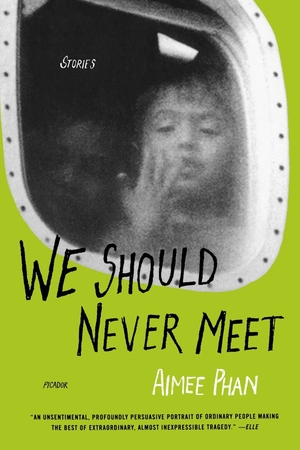
We Should Never Meet by Aimee Phan

This stunning linked short collection moves between Vietnam and Orange County, following the troubled fates of children evacuated in Operation Babylift. I’m still haunted by the robbery gone wrong between the elderly Bac Nguyen and the hoodlum Vinh. Their interiority, histories, and actions belie easy labels.

Image result for no good very bad asian

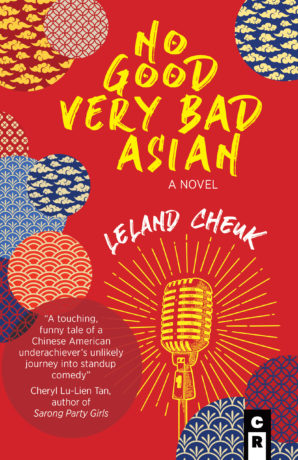
No Good Very Bad Asian by Leland Cheuk

In this darkly funny novel, a Chinese American comedian pens a letter to his daughter to explain how race and class have warped him—and his sense of humor. You’ll laugh so hard you’ll cry, and then your heart will break.

Dear Girls by Ali Wong

Dear Girls: Intimate Tales, Untold Secrets & Advice for Living Your Best Life by Ali Wong

Also written in the form of a letter to her daughters, the memoir is hilarious, revealing and inspiring, as Wong shares her struggles and victories. The comedian turns the final chapter over to her husband—whom she’s mentioned often in her routine—and he offers a touching coda of his own.

The Farm by Joanne Ramos

The Farm by Joanne Ramos

In this dystopian novel, the scheming Asian American striver Mae dreams up a “gestational retreat” that all but imprisons mostly working-class immigrant surrogates. A scathing satire as frightening as it is funny.

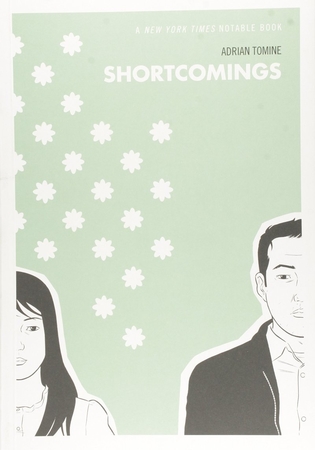
Shortcomings by Adrian Tomine

Hilarious and poignant, with spot on observations about inter-ethnic and interracial dating, the East Bay versus New York, and stifled aspirations. I kept snapping photos of the comic panels to friends, and handed the book to my husband to read as soon as I finished it.

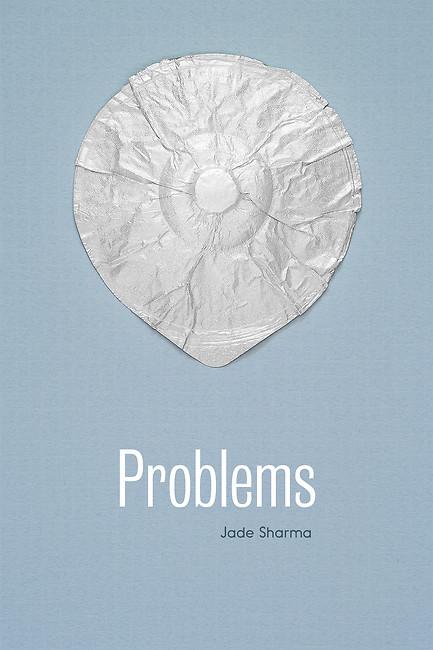
Problems by Jade Sharma

Vulnerable and biting, this novel about a troubled young heroin addict is unforgettable. Sharma’s untimely death has left many mourning her and the untold stories she might have written.

6493426

All That Work and Still No Boys by Kathryn Ma

The ten short stories in this moving debut collection travel the Chinese diaspora. Told with grace and humor, the stories challenge expectations at every turn.

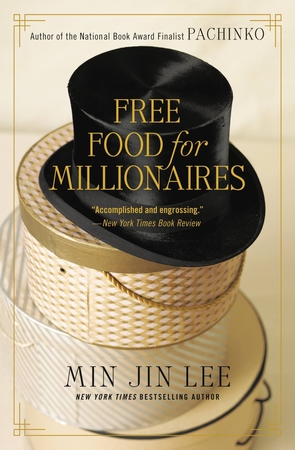
Free Food for Millionaires by Min Jin Lee

Casey Han—new Princeton grad and daughter of Korean dry cleaners—is figuring out what to make of her life. It’s witty and wry, with sharp observations of New York in the 1990s.

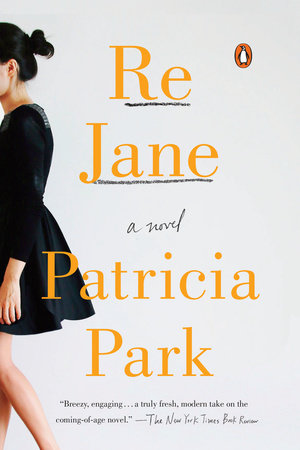
Re Jane by Patricia Park

Re Jane by Patricia Park

In this witty and fun retelling of Jane Eyre, the half-Korean heroine travels from Queens to Brooklyn to Seoul and back in search of love—and self-discovery. The cultural insights are fascinating.

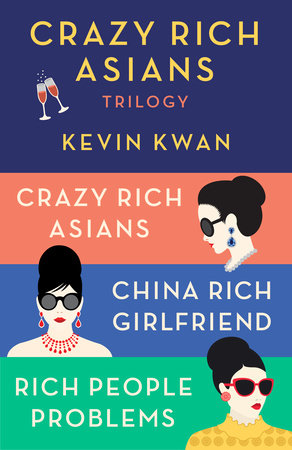
The Crazy Rich Asians Trilogy Box Set by Kevin Kwan

Crazy Rich Asians by Kevin Kwan

Breezy and engrossing, this novel kicked off the trilogy that has launched acting careers and a film franchise. A satirical, page-turning romp.

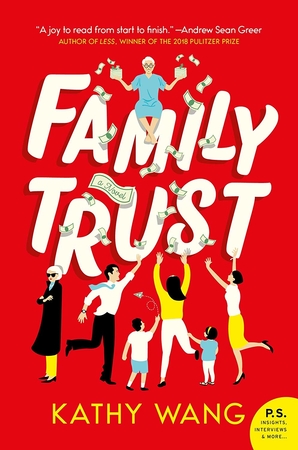
Family Trust by Kathy Wang

As the patriarch lays dying in Silicon Valley, his children, ex-wife, and second wife contemplate what his will has in store for them. A page-turner, by turns comic and poignant.

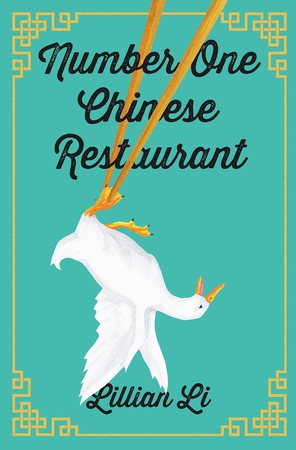
Number One Chinese Restaurant by Lillian Li

This sprawling debut is poignant, big-hearted, funny and insightful. You can’t help but root for different characters at this Chinese family restaurant, even as they bungle their way into ever more trouble.

12 Books About Pandemics

As the world struggles to come to terms with the growing COVID-19 crisis, many of us are turning to fiction as a way of understanding the scope of the danger—and, perhaps paradoxically, a way of finding comfort. If the last thing you want to think about right now is global epidemic disease, we get that! But novels can also help people wrap their heads around something that may seem too big and scary to process. If you feel like you’re living in the first pages of a post-apocalyptic story, these books about historical and speculative future pandemics might help you feel less alone. Pick one up, and then wash your hands.

Severance by Ling Ma

Candace Chen has resigned herself to a soul-crushing 9-to-5 job at a Manhattan publishing house that produces novelty Bibles embellished with semi-precious stones (tacky, but important for later on in the novel). The company outsources the manufacturing to a factory in China whose workers are dying from lung disease because of the dangerous working conditions mining the semi-precious stones. Soon the Shen Fever spreads through the world via the mass-produced cheap junk produced in Chinese factories, turning the population into zombies who are doomed to repeat the same actions until they die. Candace and her band of millennials find refuge in a mall, turning to Google to figure out how to survive the apocalypse (until the internet dies, that is). Sure, Severance is a pandemic-zombie-dystopian-novel, but it’s also a relatable millennial coming-of-age story and an intelligent critique of exploitative capitalism, mindless consumerism, and the drudgery of bullshit jobs. 

Image result for dreamers karen thompson walker

The Dreamers by Karen Thomas

A plague has taken over a small college town in the middle of nowhere SoCal: “The first stage of sleep is the lightest, the brief letting go, like the skipping of a stone across the water.” One by one, the college students fall asleep into a heightened state of dreaming, but… they don’t wake up. The survivors are forced into quarantine on campus and forbidden from leaving in case they spread the illness to the wider population (sounds familiar?). The Dreamers is a propulsive novel about the lengths we will go to in order to survive. 

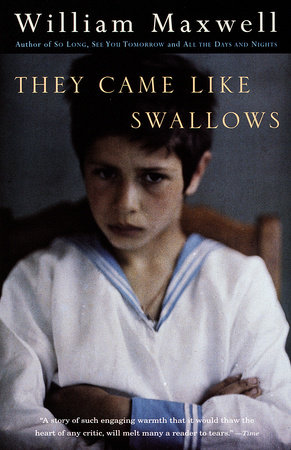
They Came Like Swallows by William Maxwell

They Came Like Swallows by William Maxwell

Novels about what life might be like in the grips of a global epidemic don’t have to be speculative fiction—we’ve already had widespread and deadly worldwide diseases, like the 1918 Spanish flu. They Came Like Swallows is a finely-crafted, understated novel about family dynamics set against a backdrop of illness and fear, as influenza rages through a Midwestern town.

Station Eleven by Emily St. John Mandel

Station Eleven by Emily St. John Mandel

A viral pandemic, the Georgia Flu, has exploded “like a neutron bomb over the surface of the earth,” wiping out 99% of the global population. The Travelling Symphony, made up of musicians and actors, roam from small town to small town (all that remains of North America) in horse-drawn wagons to entertain survivors with concerts and theatrical performances. At one of their stops, their hopes to reunite with two members of their troupe and their newborn baby are dashed when they discover that the town is under the sway of a cult controlled by “The Prophet.” Weaving in flashbacks, Station Eleven is a quietly haunting novel about nostalgia and survival. 

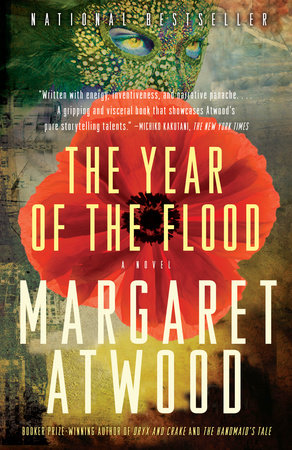
The Year of the Flood

The Year of the Flood by Margaret Atwood

This novel is a sequel to Oryx and Crake, which is perhaps better-known (it was a finalist for the Booker Prize in 2003). But where Oryx and Crake mostly sets up the circumstances leading up to the “Waterless Flood,” a manmade disease that decimated humanity, The Year of the Flood zeroes in on life after the devastation. How did people try to survive the plague? How do they rebuild, physically and emotionally? Unlike many post-apocalyptic novels (including Oryx and Crake), this one focuses on the experiences of women.

Blindness by Jose Saramago

In this haunting, disorienting novel, a city suffers a mysterious epidemic that leaves its victims blind. Quarantined in an empty mental hospital, the sightless patients are subject to violence, exploitation, and fear; the group at the center of the story bands together to escape their confinement, but they can’t escape the collapse of society due to panic and government mishandling. 

Zone One

Zone One by Colson Whitehead

A plague has transformed the infected population into “skeletons.” The military has purged Zone One of Lower Manhattan of the living dead and now they are attempting to restore civilization through propaganda (American Phoenix Rising) and a cheesy anthem (“Stop! Can You Hear the Eagle Roar? ‘Theme from Reconstruction’”). The novel follows the very passive Mark Spitz, a former social media manager turned zombie-sweeper (both of which he’s just mediocre at), as he narrates his post-apocalyptic life into a non-functional Bluetooth. A dense and darkly humorous novel, Zone One leaves readers questioning “who are the real zombies?” 

Pale Horse, Pale Rider: Three Short Novels by Katherine Anne Porter

Pale Horse, Pale Rider by Katherine Anne Porter

Pale Horse, Pale Rider was written by 1918–19 flu pandemic survivor Katherine Anne Porter. A bittersweet romance that will make you cry, this short novel revolves around a doomed love set amidst WWI and the outbreak of the Spanish flu. 

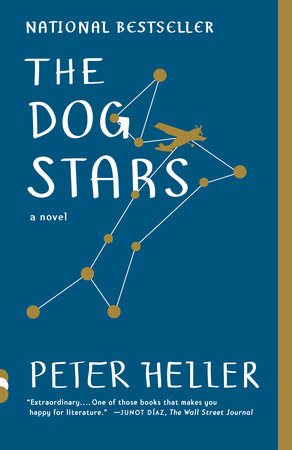
The Dog Stars

The Dog Stars by Peter Heller

The Dog Stars is set 10 years after a flu epidemic has decimated most of the American population. Hig, his dog Jasper, and a sardonic old man with a stock-pile of weapons live in an abandoned airport. The trio spend their days barricading themselves against violent bandits (who, for some unfathomable reason, wear necklaces made out of vaginas???). When Hig receives an unexpected transmission through the radio of his plane, it sparks hope in him that there is still civilization outside of their compound.  

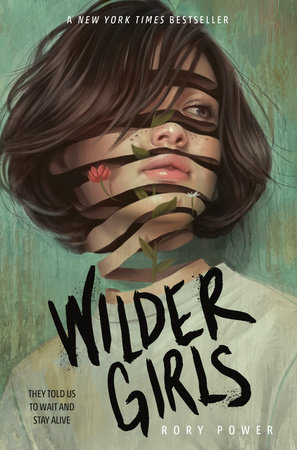
Wilder Girls

Wilder Girls by Rory Power

A body horror coming-of-age novel, Wilder Girls is set at an all-girls boarding school on an isolated island that is under quarantine. A year and a half ago, a disease called “The Tox” spread through the school; those who survived grew second spines or scales on their skin or turned luminescence. Not even the wildlife is immune from the epidemic as the animals mutate and stalk the school’s gates. One by one, the girls disappear and it’s up to their friends to find out what has happened to them.    

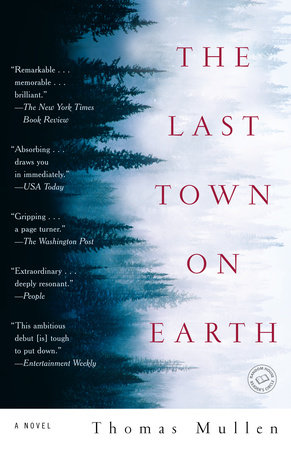
The Last Town on Earth

The Last Town on Earth by Thomas Mullen

The Last Town on Earth is about a small mill town, Commonwealth, in the Pacific Northwest who have voted to quarantine themselves against the Spanish flu. No one in and no one out. Philip Worthy assigned to guard the one road that leads in and out of the town when he has to decide whether to allow a weary refuge-seeking soldier into Commonwealth.  

4997665

The Last Man by Mary Shelley

We all know that Mary Shelley pioneered the science-fiction genre, but did you know that she also invented the apocalypse novel? Published in 1826, The Last Man is set in 2100 England where a plague has left only one man alive, Lionel Verney. 

7 Solitary Residencies for Writers Who Are Hermits

Some writers thrive at conferences and colonies where there are communal meals, informal after-dinner salons, and opportunities to network and perhaps even fall for a soulmate. But, if you’re someone for whom a residency is to eliminate as many distractions as possible, including the temptation to be a social butterfly, and thus get as much work done in the precious hours stolen away from everyday life, you may be called to a more hermit-like retreat. Here’s a list of some opportunities to hunker down solo, from urban islands to the most remote escapes.    

Photo via The Kerouac Project on Facebook

Jack Kerouac Writer-in-Residence Project of Orlando, Orlando, Florida 

This residency is located in the heart of Orlando, where the selected writer resides alone for three months in the bungalow where Jack Kerouac wrote The Dharma Bums and was living when On the Road was published to critical acclaim. Social obligations are minimal; the writer participates in a Welcome Potluck at the start of the residency and a Farewell Reading at the end, with further opportunities for community outreach on a volunteer basis. As resident, you’ll have plenty of alone time to write on the porch or explore the streets and cafes of College Park, the sleepy neighborhood where the bungalow is tucked away. At the same time, the writer-in-residence can take advantage of exploring all that the fast-growing cosmopolitan center of Orlando has to offer—from craft breweries and foodie spots, to reading series and world-class music acts—if one so desires. 

Fairhope, Alabama. (Photo by GPA Photo Archive)

Fairhope Center for the Writing Arts, Wolff Cottage, Fairhope, Alabama

Similar to The Kerouac Project although more under-the-radar, this solo residency also takes place in a historic 1920’s bungalow. But what makes this stay in Wolff Cottage unique is its location in Fairhope, a small town on Mobile Bay that began in the 19th century as a utopian experiment and single-tax community that has drawn artists and out-of-the-box thinkers ever since. The cottage is located right beside the library, an airy, state-of-the-art facility, and one block away from charming Main Street. As writer-in-residence, you can walk to restaurants, a pharmacy and grocery, to Page and Palette, the well-known independent bookstore and coffee shop, and down to the Fairhope Pier at sunset. Other than an author reception, you’ll be blissfully left alone for the month to write your heart out.

Photo via Soaring Gardens Artists Retreat‘s website

Soaring Gardens/Ora Lerman Charitable Trust, Laceyville, Pennsylvania

In the rolling hills of north-central Pennsylvania you’ll find a serene oasis in this residency, where you have no obligations for public receptions or outreach and can deeply immerse yourself in your project. Residencies take place in either a farmhouse or country church, with a maximum of four or five residents at the house and two at the church. During my stay two summers ago, I was given the good fortune of five weeks at the church, with three of those weeks to myself and two shared with a poet. The rural setting is tranquil but not remote wilderness, with access to amenities about fifteen to thirty minutes away, and several state parks nearby that boast hikes to some of the most gorgeous waterfalls on the East Coast. 

Photo via Sitka Center for Art & Ecology on Facebook

Sitka Center for Art & Ecology, Otis, Oregon

For writers with an environmentally themed project, the Sitka Center for Art and Ecology on the Oregon coast outside Lincoln City offers hermitage-like accommodations amongst breathtaking scenery. Residencies take place from October until May and include a few scheduled gatherings and outreach events with fellow artists-in-residence. However, for the vast amount of time, you’re on your own in a cozy, comfortable cabin where you live and work, surrounded by enormous Sitka spruce and quiet. On daily walks you may encounter the elk herd that grazes near campus, and the hike to Cascade Head offers spectacular vistas of the estuary and crashing surf. This residency belongs on any writer’s “dream list.” 

This IS a photo of Alaskan wilderness but not where you’ll be staying. (Photo by Joris Beugels)

Voices of the Wilderness, Alaska 

Sponsored by the U.S. Forest Service, the National Park Service & the U.S. Fish & Wildlife Service, this summer residency sends grantees into the Alaskan wilderness, paired with a park ranger and/or research specialist. You may find yourself staying a remote cabin or camping, kayaking, collecting samples, and helping with educational outreach. So although this residency may not entirely be for curmudgeons, the remote locations offered throughout Alaska (often in grizzly bear country), and requirements for physical condition and training (including aviation and boat safety, use of radio and satellite phones, experience and ability to camp, kayak, and otherwise keep up with a ranger) make this a wilderness residency not for the faint of heart. The intent is to provide participants with an inspired, extraordinary wilderness experience, which he or she will then write about after the residency and donate a piece back to the park service.   

Dry Tortugas National Park. (Photo by Thomas James Caldwell)

Dry Tortugas National Park and Loggerhead Key, Florida Keys

This is a unique opportunity for artist couples who embrace rugged adventure—to spend one month at the longtime research facility and lighthouse of Loggerhead Key, in the remote Dry Tortugas National Park near Key West. A $2000 stipend is provided, the couple must bring all food and supplies with them for the entire month and have insurance. A satellite phone is recommended. For those who are highly self-sufficient and up for an entirely “off-grid” experience of briefly dropping out of civilization, and plunging deeply into a largely untouched island wilderness, this residency may be for you—and with your partner, sure to make the memories of a lifetime.  

Photo via the MacDowell Colony on Facebook

The MacDowell Colony, Peterborough, New Hampshire

Although the MacDowell Colony hosts a cohort of talented fellows across disciplines who come together in the evenings for group dinners and gatherings, this esteemed colony may offer the best of both worlds—and moreover, a great deal of seclusion for hunkering down and making strides on a manuscript. If you’re among the lucky few selected from its extremely competitive applicant pool, you’ll be given one of thirty-two cabins nestled upon the wooded New Hampshire acreage. Staff will deliver lunch to your cabin’s doorstep, thus not interrupting the flow of your artistic process. When at last you’re restless for a break, downtown Peterborough is just a few minutes away and a picturesque respite. The inspiration for the famous play “Our Town” by Thornton Wilder, Peterborough still beckons with pubs and restaurants, its warm and well-stocked indie bookstore, the Toadstool Bookshop, and delicious organic sandwiches and soups at Nature’s Green Grocer Market and Café.  

Forget Prince Charming, the Women in These Fairy Tales Want Revenge

There are a few writers who we trust as the de facto town criers of literary twitter—they always seem to have their finger on the pulse of the community, and you can trust them to have a level headed opinion on any news item, literary or otherwise.

And I Do Not Forgive You

I think we can all definitely agree that Amber Sparks is one of those writers. And now, we’re lucky enough to have a new collection of fiction from her that serves a similar purpose—And I Do Not Forgive You understands and extrapolates on the tenor of our current moment through stories that relate how women experience anger and revenge. 

Sparks birthed this collection through the anger of the #MeToo movement and the supreme court hearings of two years ago, but the stories resound just as much today as they did when she first wrote them, because the patriarchy still exists and women are still fighting within it every day.

I talked to Amber Sparks about the bloody history of fairy tales, the fantasy of revenge, and the catharsis of writing about anger. 


Rebecca Schuh: You can really feel the anger at the heart of the book, at the world and the patriarchy, and we are in this exact moment with the presidential primaries fueling so much of that every day. I wanted to ask how you’re feeling with the primaries, with your work, with your feminism. How that’s relating to your day-to-day feelings? 

Amber Sparks: There’s so many feelings right now. One of the things I was trying to do with the book was a sense of catharsis. That’s the point of the revenge, right, is to come to some sort of catharsis and some sort of conclusion that would be cleansing. With the book, I get to have that weird great feeling of conclusion, this sense of revenge that I can have that I don’t actually get to have in real life.

In some ways, it’s kind of fun talking about it right now because it’s almost like a little fantasy that you can escape into. It’s an interesting reminder because when I first talked to Liveright and my editor about the book two years ago, I said: “I do hope that #MeToo and the women’s anger is still part of the conversation in a few years.” And of course, I had no idea that this is where we’d be and it would be a more relevant book than ever. 

RS: I’m interested in what you said about catharsis. It’s a metaphorical word but it’s also a very physical word. Did you feel that you got physical relief when you were writing the stories? 

AS: Yes, oh yes. That’s why I actually started writing this book. I’m working on a novel, but I felt so angry and so blocked and so frustrated that I felt like I had to do something. And Lord knows the only actual skill set that I have is writing. I was like okay, I’m just going to write. I called them my revenges. I said I’m going to write some little revenges for myself to make myself feel better. It definitely felt physically better as well as emotionally better. I would write these things and I would feel like oh, okay, now I can work on something else. I can get rid of those feelings for a few minutes. I never thought about even putting it into a book until I started talking to other women who were like “why don’t you make that a book? I would read that, I would love to have that sense of catharsis.” 

RS: The first story in the collection involves this very traumatic friend breakup. When I read it and reread it, I couldn’t find evidence as to what caused the friend to ghost her best friend, leaving the reader as much in the dark as the ghosted friend. Was that an intentional move for you? Making the mystery not solvable?

I want to give women the idea of the ability to exist for the sake of herself.

AS: Yeah, absolutely. I wrote that after reading an advice column where somebody wrote in about being ghosted by a friend and didn’t know why. I thought “my god, that is just horrible. I couldn’t think of anything more horrible.” You really don’t have any sort of recourse, the kind of recourse that you would have if it were a family member or lover. I started thinking about that and wrote the piece. And it was funny because after I wrote it, I had so many people write to me or message me and were like the same thing happened to me. It’s just such an ultimate horror and such a particular horror for our modern society to think about, being ditched and you have no idea why and no real way to find out.

RS: Thinking about what you said comparing it to a romantic ghosting because even if you’re banging on your ex-lover’s door, and you’re acting like oh my god I just need to know, people will call you crazy but they also will kind of get why you’re doing it. It’s happened, that’s common, that’s how exes are. 

AS: People might call you crazy, but they get it. If you went and banged on your best friend’s door, people would definitely think you were out of your mind and would call the police on you. 

RS: The other thing that’s so disturbing with friendship is obviously we all want our relationships and marriages to be completely open, we know what our partner is thinking, but it’s very common that people have a secret that leads to something bad. You’d think those are the things you’d tell your best friend about. 

AS: Exactly. The people in the story, they share everything, they know everything about each other. The larger thing that I was trying to get at is our alienation in our current society. The way that people who live in the city live so weirdly apart sometimes. 

RS: And the acceptance of alienation. To know how common, it’s a part of modern life. The next thing I wanted to talk about is the story “A Place for Hiding Precious Things, where the young woman has to escape her father’s incestuous desire after the death of her mother by hiding in a donkey skin. Where did that story originate? 

AS: It actually comes from a fairy tale called “Donkey Skin.” It’s a very loose retelling of that fairy tale. The protagonist is a young princess whose mother dies and her father, the king, decides he has to have the next best thing, the next most beautiful woman in the world, who happens to look just like her mother did. And so she has to escape with the help of her fairy godmother. In that fairy tale, she finds a handsome prince, and of course, they get married and live happily ever after. And there is a cake and a ring and some other elements of it that I kind of threw in. 

It’s one of my favorite fairy tales, and because it’s just so off the wall, it’s really wild and weird. The way that she disguises herself when she runs away is she kills a donkey, her father’s favorite donkey, and wraps herself in the bloody donkey skin. I’d always wanted to write this because it’s such a feral fairy tale, but every time I tried to write it, I kind of got stuck at the part with the prince. And then after a while, I figured out that I don’t think the happy ending for this girl is ending up with the person. It’s such a feral story, it deserves a more feral ending. She can transform herself in a way that has absolutely nothing to do with running from one man to another. 

RS: I love that aspect of it. She experienced the men and then…

AS: She tried it out and it didn’t work out so she’s living in the forest now. 

RS: I’ve read several books in the last few years that are taking on the retold fairy tale, I love watching that develop as a modern genre. When did you start working within that? Are there other writers you took inspiration from?

AS: Angela Carter, Helen Oyeyemi, and Kelly Link have been doing it for a while. I definitely took inspiration from folks like that. Matt Bell has rewritten a lot of fairy tales. It’s something that I think kind of started with the modern feminist movement. There was a story that came out about how fairy tales are actually much older than we thought that they were. The sort of men that we think of collecting these tales and being the first, the Brothers Grimm and stuff, they were actually much older than that. Thousands of years ago, as opposed to hundreds. There’s sort of this interest and a resurgence in going back and subverting some of these traditional stories, and digging into the older origins. A lot of versions of these stories that we have are sanitized. If you actually go back and look at some of the more original stories, they were really fucked up. Cruel, violent, a lot of them were really bent on revenge and retribution in crazy ways. It’s fun to go back and find the…I don’t think you can really call them feminism, but you can find the service to women in those particular stories.

RS: It’s interesting, I hadn’t heard of that particular story, but when I was a kid, my sister and I, we really loved gory stuff. And there were two or three fairy tales we were obsessed with, and one of them was the girl with the red shoes who has to dance forever or get her feet cut off, and the other one was the little match girl where she ends up simply dying in the street. 

In traditional stories, your protagonist is going to end up with a romantic partner but that’s not the only way to be happy.

AS: I had this book of Hans Christian Anderson stories that was at my school library when I was in elementary school, and I used to go and check it out over and over again just to read those stories. I was obsessed with them, and my mom was like they’re so weird. He kept that weird violent stuff that got sanitized out of a lot of the other versions. He kept those in there. That totally appeals to kids, kids working out their fears and trauma through horror. Find the worst thing and then okay, you can feel better, you’ve faced that demon. 

RS: Speaking of worst things, you had this dichotomy of “the release of loneliness being the best thing for a character and possession being the worst” I found that so interesting, because usually loneliness is what people are afraid of, and possession is the desire. 

AS: I’m obsessed with the idea of loneliness not being a bad thing. And people will be like oh, being alone, and I’m like no, specifically loneliness, the emotions that are attached to it—that they might feel alone and feel your aloneness and embrace that. 

In traditional stories and traditional romance, your protagonist is going to end up with a man. Or if you’re reading particularly enlightened romance, with a woman. Either way, they’re going to end up with somebody, a romantic partner, but that’s not necessarily the only way to be happy. A huge growing number of women are single, want to stay single, and have no interest in having a long time romantic partner. I think it’s great, that there’s a freedom in that. That maybe we can’t entirely experience unless we are alone. Especially for fairy tale heroines and the kinds of people who are constantly being sought after by men for their own various reasons. I want to give women the idea of the ability to exist for the sake of herself. 

Electric Literature Is Seeking Spring/Summer Interns for 2020

Update: Due to the pandemic, all Electric Literature staff are currently working remotely, so all internships are very likely to start remotely as well. Since we don’t know how long this will last, we are for the first time considering remote applicants for one of the two open intern positions. (Successful applicants who live in New York will be expected to come into the office once the office reopens, and remote interns who can get to New York are encouraged to do so, once doing so is understood to be safe.)

Electric Literature internships introduce undergraduate and graduate students, emerging writers, and aspiring publishing professionals to digital publishing and the New York literary scene. Because we are a small, not-for-profit publisher, we provide unique opportunities for professional development and resume-building.

As an Electric Literature intern, you are encouraged to become involved in any aspect of our work that interests you. You’ll sort mail and go to the post office, but you’ll also have the opportunity to contribute to editorial decisions, write for the site, and attend cool literary events. Our interns have gone on to work for places like Publishers Weekly, Oxford University Press, Penguin Random House, and… Electric Literature.

Responsibilities

● Comb the web and social media for breaking literary news
● Write book lists and news items for electricliterature.com
● Staff events
● Select images to pair with articles
● Format, copy edit, and draft articles
● Update contact databases
● Fulfill online merchandise sales
● Transcribe interviews
● Perform other administrative tasks
● Open mail and catalogue books

Skills

● Personal experience using WordPress, Twitter, Facebook, and Instagram—professional experience is a plus
● Excellent writing skills and a unique point of view
● Basic understanding of Photoshop and inDesign
● Firm grasp of grammar and spelling
● Organized and fastidious

The ideal candidate

● Has an educational background in journalism, literature, or creative writing
● Has prior internship or entry-level job experience at another publishing, media, or non-profit organization
● Participates in the contemporary literary scene
● Regularly reads literary magazines and literary websites (including but not limited to Recommended Reading, The Commuter, and electricliterature.com)
● Believes strongly in the Electric Literature mission to make literature more relevant, exciting, and inclusive
● Is hard-working, pays great attention to detail, and can work independently
● Writes clearly and with personality
● Has an eye for design and knows what images will grab a reader’s attention

Details

This is a part-time internship (10–20 hours/week) with a $200 per month stipend to cover transportation and meals. Candidates must be able to come to our office in downtown Brooklyn at least two days a week. We are happy to work with universities and graduate programs to provide course credit, though you do not need to be a student to apply. Interns will start ASAP and work the summer, though exact dates have some flexibility and there may be an opportunity to extend.

How to apply

Please submit the following through Submittable by 11:59 pm on March 23 April 6:

  1. A cover letter and resume
  2. The headline and 2–3 paragraph introduction for a reading list (you can look at the lists section on our site for inspiration). Include 5–7 book titles that you would include on the list, and a short capsule description of one of those books.

8 Contemporary Novels by Japanese Women Writers

My novel The Perfect World of Miwako Sumida is a story of how a young woman’s unexplained suicide shapes and transforms the lives of those she left behind. It’s a literary mystery with elements of magical realism set in Japan, not unlike my debut novel Rainbirds. Because of these, I am often asked, “As an Indonesian-born Singaporean, why do write a novel set in Japan with Japanese characters?”

The Perfect World of Miwako Sumida by Clarissa Goenawan

The short answer would be because I want to write the kinds of novels I enjoy reading most. I love Japanese novels, especially literary and crime fiction. And this is the slightly longer version:

I was a Gen Y kid, growing up when anime, manga, and Japanese pop culture started to gain popularity. I spent my free time watching Naoko Takeuchi’s Sailor Moon on the local TV station, borrowing Aoyama Gosho’s Detective Conan comic series from my friends, and listening to Utada Hikaru’s First Love and L’Arc~en~Ciel’s The Fourth Avenue Café. Soon after, I got my first taste of Japanese contemporary literary fiction—Haruki Murakami’s Norwegian Wood. I was hooked, and I began to look for similar reads.

Over the years, I discovered a number of talented Japanese women writers. In this list, I introduce some of my favorites, with the hope that you’ll enjoy them too. I also include the names of the translators to acknowledge their importance in bringing these wonderful books to a wider audience. 

Kitchen by Banana Yoshimoto, translated by Megan Backus

Kitchen introduces us to Mikage Sakurai, a young orphan who recently lost her grandmother. Her friend, Yoichi, and his mother—who was once his father—decide to take her in. It’s a warm and tender story about family, love, and tragedy.

Banana Yoshimoto is the pen name of Japanese writer Mahoko Yoshimoto, the daughter of the famous Japanese poet Takaaki Yoshimoto. Yoshimoto’s quirky and captivating stories mainly deal with the exhaustion of young Japanese people and how experiences shape a person’s life. Read a short story about love after the sex party circuit by Banana Yoshimoto here.

I Want to Kick You in The Back by Risa Wataya, translated by Julianne Neville

In I Want To Kick You in The Back, a first-year high school student named Hatsu has trouble fitting in with her classmates. She gets to know Ninagawa, a loner in her class who is obsessed with an idol and has no interest in actual girls. Gradually, Hatsu develops a strong urge to. . . kick Ninagawa’s back.

Risa Wataya was a 19-year-old student at Waseda University when she won the prestigious 2003 Akutagawa Prize with this book. She became the award’s youngest-ever recipient. 

The Professor and The Housekeeper by Yoko Ogawa, translated by Stephen Snyder 

Unlike most writers who tend to produce works in the same vein, each of Yoko Ogawa’s books is unique in terms of topic and tone. It’s very hard to pick a favorite, but The Professor and The Housekeeper scores high for its beautiful writing and sensitivity.
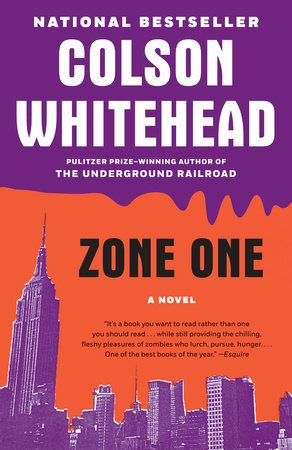
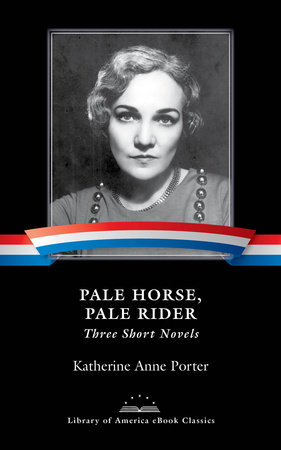
The story’s protagonists are a brilliant math professor with only 80 minutes of short-term memory, a young housekeeper who is hired to care for him, and her ten-year-old son, affectionately nicknamed “Root” by the Professor.

Convenience Store Woman by Sayaka Murata, translated by Ginny Tapley Takemori

At 36-years-old, Keiko has worked part-time at a convenience store for 18 years and has never been in a romantic relationship. She’s an excellent worker who knows how to do her job well. But as she ages, the social pressure to get a “real” job or to settle down in a marriage is mounting.

This is another Akutagawa Award-winning novel. The writing is particularly transportive—I love the vivid description of the sounds and sights at the convenience store. Read about how a Japanese novella about a convenience store worker became an international bestseller here.

Image result for hiromi kawakami strange weather in tokyo

Strange Weather in Tokyo by Hiromi Kawakami, translated by Allison Markin Powell

Tsukiko, a single office worker in her late 30s, chances upon her former high school teacher in a local bar. Unable to remember his name, she simply calls him “Sensei.” They continue to meet and form a bond over food and drink and a trip to the mountains. Be prepared to get hungry, mouth-watering descriptions of Japanese food are aplenty.

Fun fact: the original title of this book is The Briefcase, which might be less intriguing than the current title, but makes a lot of sense once you’ve read the book.

The Lonesome Bodybuilder by Yukiko Motoya, translated by Asa Yoneda

A housewife takes up bodybuilding, but her workaholic husband fails to notice; a newlywed woman notices her spouse’s features are beginning to match her own; a saleswoman waits on a customer who won’t come out of the fitting room. This is a delightful collection of eleven whimsical short stories, all of them peppered with magical realism elements. Read the titular story from The Lonesome Bodybuilder here.

Image result for snakes and earrings hitomi kanehara

Snakes and Earrings by Hitomi Kanehara, translated by David James Karashima

Snakes and Earrings follows Lui, a young woman in Tokyo, and her new boyfriend, Ama, who has a split tongue. Her deep fascination with body modification and sadomasochistic sexual activities drives her to increasingly dangerous choices, including a violent relationship with bisexual body modification and tattoo artist named Shiba.

In 2003, Hitomi Kanehara’s Snakes and Earrings jointly won Akutagawa Award together with Risa Wataya’s I Want to Kick You in The Back. Kanehara’s works often deal with young, rebellious women outside the mainstream Japanese society and are written in a language style that reflects vernacular Japanese.

Ms Ice Sandwich by Mieko Kawakami

Ms Ice Sandwich by Mieko Kawakami, translated by Louise Heal Kawai

A boy obsesses over a woman who sells sandwiches in a supermarket. He goes there almost every day, just to see her face. This novella about first love is quirky and refreshing, and there is a certain musicality in the narrative. Kawakami is a singer, so perhaps that influences her writing style. Read a short story, “A Once Perfect Day for Bananafish,” by Mieko Kawakami here.