Unconditional love often comes with a side effect of incessant fear. What happens if the object of affection is hurt? How can you cope with losing someone who was once your whole life? A parent or guardian’s unconditional love for a child goes even further. The fear is even deeper, denser. Almost flammable.
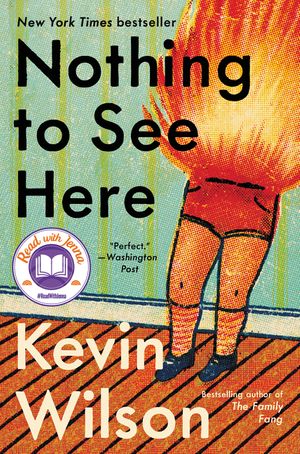
Kevin Wilson depicts this fear in an alarmingly unique way in his novel Nothing to See Here, through characters who spontaneously combust and come out the other side unscathed. It’s one thing to worry about the natural disasters that could befall a toddler, but the parents and caretakers in this story have to deal with the seemingly supernatural as well. Wilson writes a world populated by dynamic characters and paranormal events, begging questions about how far they will go to protect their loved ones.
I spoke with Kevin Wilson about the vulnerability of parenting, his childhood obsession, and figuring out how to take care of each other when we’re all so damaged.
Frances Yackel: Where did the idea for spontaneously combusting children come from?
Kevin Wilson: It came from the same place that most of my writing comes from, which is childhood obsession. I was maybe ten when I first heard about spontaneous human combustion and it became this immediate and powerful obsession, something that I couldn’t get rid of. And so I had this recurring image in my head of people bursting into flames.
I was ten when I heard about spontaneous human combustion and it became this immediate and powerful obsession.
And this is actually the third time I’ve published a book that has spontaneous human combustion in it, so obviously I’m still processing it. For so much of my life, it was inward, thinking about myself blowing up, worrying about that possibility or kind of wanting it to happen just to relieve the anxiety that filled me up.
But once I had kids, and became responsible for them, and felt that love for them while also realizing how difficult it was to take care of them, that obsession kind of naturally shifted to them, imagining what it would be like to take care of someone who might burst into flames. I think that’s been a big shift in my work, moving from looking at the world through the perspective of a kid, the freshness of each experience, and now trying to look at the world from the perspective of an adult, realizing how different it is, how every action is tinged with a kind of nostalgia that connects you to the person you used to be.
FY: The doctor in the novel takes some guesses at certain diseases or reasons that a person might spontaneously combust, was there a research process to this? If so, what were some of the things you found?
KW: I don’t think it’s laziness, though it might very well be, but I try to do as little research as possible if it ultimately doesn’t matter. The doctor in the novel is touched by a kind of mania, so I tried to imagine not what might be scientifically possible, but what a crazy person would think. The holy spirit, a divine possession, something like that made sense to me. In the books I read as a kid, the explanations were kind of boring, a cigarette flame burning the fats in someone’s body if they were passed out. Or internal organs rubbing together to produce a flame.
FY: Lillian fascinates me. She’s direct and unapologetic and knows how to tick people off when she wants to, but she’s so tender toward the people that she empathizes with. She’s biting but she loves deeply. Could you talk about the development of this character, how did you get in her head?
KW: A former student recently told me that she read the novel and imagined Lillian as me in a wig. I don’t know if that’s true, but I do think the way my brain works, my internal monologue, is pretty similar to Lillian. But I had to move beyond myself to imagine her as a separate character and I think that you touch on something about her that interested and surprised me, which is her innate ability to know how to tick people off. And that she kind of likes fucking with people who irritate her, which is not me at all. I tend to hate someone in my mind with an intensity that might psychically damage them, but I can’t confront people. I honestly was thinking about Merricat Blackwood in We Have Always Lived in the Castle, and Ramona Quimby, who was my favorite character as a kid. But unlike Merricat, I didn’t want her to be a psychopath. I wanted that biting nature to be wrapped up with her ability to empathize and love, though it might be an odd way of doing it.
FY: As for the children; all three of them jump off the page. They are each so alive and unique. Does having children of your own influence your characters or the narrative?
KW: Oh, for sure. Not just my own kids, but observing their friends, watching all their strange little personalities, how wonderful they are. They have such odd mannerisms and it’s all kind of alive and shifting because they don’t really know yet how to control or hide anything. In creating the novel, I didn’t want to put too much weight on the kids. I didn’t want them to be oracles or adults in kids’ bodies. I wanted them to be what they are, children, in all the weird ways that childhood functions. And that’s what’s lovely about children, that moment when they gain clarity and see something, the way the world opens up. I love watching that with my kids.
FY: Lillian is seemingly always looking for what it means to really care for another human being. In almost every chapter, she has a different answer to the question. As a social animal, humans are brought up against this question every day. We need to look out for one another in order to coexist safely. In what ways do you think the addition of a scientific anomaly, such as spontaneously combusting children, change the way we might look at that question?
I’m trying to figure out how we take care of each other when we’re all so damaged in different ways.
KW: I don’t want to be overtly symbolic or anything. To my mind, the book is about taking care of fire children. I want that. But at the heart of it, I’m trying to figure out how we take care of each other when we’re all so damaged in different ways. The fire children are a kind of huge, visible issue that might relate to disability, and I’m trying to figure that out. I believe that we have to take care of each other. That’s the only thing that matters in the world, to help everyone get safely to whatever comes after this life. And that kind of altruism sounds so nice in theory, but people are weird and it’s not that easy all the time. How do we protect ourselves and other vulnerable people when it isn’t easy? How do we respect every person and take their unique elements into consideration? And as Lillian tries to figure it out, I’m trying to do the same thing. And I’m not there yet, but I’m trying.
FY: The reality of children setting themselves on fire (and coming out unscathed) is maybe difficult to fathom happening in this world. But the side effects are certainly tangible. The children get upset, or angry, or stressed, and the adults around them become stunned, or hysterical. But some adults, Lillian in particular, stay calm and can help others calm down. This story has made me think about how I react to other people’s emotions—children as well as adults. Because emotions are so difficult to convey, it can sometimes be difficult to know how to respond in a respectful and safe way. Could you talk about this theme in your novel? How does the spontaneous combustion bring out the best, or worst, in us?
KW: I think Jasper and Madison, in some ways, because they have come from privilege, are stunned by the need and vulnerability of these children. And I think about this a lot, how sometimes people with the most power, with the most ability to affect change in the world, seem repulsed by vulnerability, that simply engaging with it might rub off on them and they’ll lose that power. They’d rather put up a huge wall between themselves and that need. But I think Lillian, because of her own history, has a better sense of how to deal with the children, to actually treat them as human beings. And to do that, I think you have to make yourself vulnerable, to be willing to accept the pain that comes with being vulnerable, in order to help someone else.
And that’s really fucking hard for me to do, because my own brain is so overwhelmed most of the time, because I live in a state of anxiety, but it’s what I focus most of my energy on, especially with my kids and my students and the people in my life that I love. I try to allow myself to be vulnerable in ways that lets me connect and try to move forward together with that person. So we’re each helping the other one get somewhere better than when we started. I think that’s what Lillian and Bessie and Roland are doing for each other.
In Brandon Taylor’sdebut Real Life, Wallace, a black, queer Alabama-born doctoral student contends with the virtual all-whiteness of a Midwestern campus—and how it infects his personal and private life.
Taylor wrote the novel in an incredible five weeks (!) during his own science doctoral program before switching tracks to pursue an MFA at the Iowa Writers Workshop. The book, which times feels pointed though placid with its observations through the introverted Wallace and at others, absolutely violent and devastating, has been greeted with near-universal praise from the literary establishment.
The novel dissects Wallace’s otherness through his friends, colleagues, and love interest. The interactions stew with awkward misfires, microaggressions, and downright racism—all of which offers a sort of sociology of campus otherness set against the backdrop of Midwestern niceness.
I spoke to Brandon Taylor, who is a senior editor for Electric Literature’s Recommended Reading, about learning to fight with oneself on the page and the most gratifying response to his debut.
J.R. Ramakrishnan: You captured the feeling of being the only person of color in academia so acutely. You and Wallace share a lot in common. How much of the novel is lifted from your real life?
All of the really awful things that the white people say [in my novel] are actual things that were said to me while I was a doctoral student.
Brandon Taylor: I took situations that happened but the ways they unfold in the novel are quite different from how they unfolded in my actual life. The reason for that is that Wallace and I are very different. Once you move something into fiction, it belongs exclusively to the realm of fiction. But I did make up my mind to use the raw transcript of the racial accosts that I experienced while I was in my Ph.D. program in Madison, Wisconsin. All of the really awful things that the white people say to Wallace are actual things that were said to me while I was a doctoral student. I didn’t trust myself not to want to tamp it down because of discomfort. If I used what was actually said, then I didn’t have to worry about trying to make it more palatable. The reader will have to sit with that, the same way I had to sit with it and the same way that Wallace has to sit with it in the novel.
JRR: I thought you wrote the hell out of Chapter 5 where you give us Wallace’s horrifying backstory (but so beautifully rendered and such a shock after the tense but calmer early chapters)? It cleaves the novel and the reader. I understand from your essays that some of this is also drawn from your personal history. Could you talk about writing that chapter?
BT: I wrote this novel in five weeks, but two of those weeks was about not being able to write that part. When I set up the novel, I knew that the middle would contain all of the mess and difficulty of Wallace’s past. I knew the other parts couldn’t contain this. I wanted to seal it all in the middle of the book and it would exist in this totally different register to everything else in the novel. I knew that was what I needed to do. So when I sat down to write, I wondered, how do I write this? How do I get my way into this? If I can’t finish this section, and the whole book is a wash.
It was so incredibly difficult. I just didn’t know how to access the language I needed because it’s a moment in which Wallace is having to make a disclosure about all of the things that have happened to him and all the reasons why he hasn’t been able to face it. And all the reasons why he is the way he is. I didn’t have the language for that because it’s the most interior part of the novel. All artifice has been dropped and it’s just a moment of raw emotion. But at the same time, it’s a novel so it has to make sense. And it was just incredibly, incredibly difficult.
But, one night I was coming home and there was this crack of thunder in the sky. That’s when the first line of that section came to me. I went home and I wrote it in 40 minutes and then it was over. I then felt very sick because it was just so much. Once you make such a disclosure, what do you do? How do you pick up the pieces when someone has told you, all of this awful stuff? It was a bit difficult to start the novel up again because it’s a huge molten core of energy.
BT: In my doctoral program, my thesis advisor was so tough on my writing in a way that my English teachers had never been in school. She was always saying things such as, this has to be more rigorous. This needs to be more thoughtful. This needs to be more skeptical.
If you look at contemporary publishing, you would think that there are no black, brown or queer people anywhere, in any field.
She was teaching me how to write about ideas and how to push my writing. I got a comprehensive education of how to think and write critically, how to reason through complicated ideas, and how to pitch them together into a larger narrative in science. It taught me a lot about inquiry, curiosity and how to manage a large unwieldy intellectual project like a novel or a short story.
My education in writing is one that is deeply rooted in the tradition of treating the ideas I hold most dear with absolute ruthless skepticism and doubt. I pursue ideas through this intense line of inquiry where I always second guess, double-check, and second guess again until what emerges is a solidly argued, reasoned piece of thought on the page.
When I left my Ph.D. program to come to the Iowa Writers Workshop, there was very little actual writing instruction or people teaching me how to think on the page or write rigorously. And that was a source of great disappointment and in some ways, a lot of suffering.
JRR: You are guest hosting EL’s advice column, Blunt Instrument, soon. What’s the best writing/literary advice you’ve been given?
BT: Justin Torres told me that I had a tendency to punish my characters and to take sides. He said, even if you, as the writer hate the character, the character still deserves a moment of grace in which they’re allowed to be dignified. Instead of pushing my characters to behave in ways that were convenient for me, it was about allowing each character to be real, complicated, and human. That was one of the most important things for this novel—making sure that the characters were allowed to be full and messy.
JRR: Before you wrote this novel, did you read or have any affinity for novels about science or scientists. If so, can you recommend your favorites?
BT: I haven’t read a lot of novels about science because as a scientist reading novels about science, I’m always thinking, well that’s not how it is. That’s not right. Or the science would bother me. It’s funny because when I was in my science program, other scientists would constantly critique with depictions of science in the media, be it books or movies or TV shows or podcasts. The pedantry was out of control. I didn’t read any science-y books in the run-up to this novel. The novel is more directly inspired by campus novels that I have read. I see it fitting into a tradition of this contemporary moment of novels of anxiety and novels of consciousness. That to me is really the mode in which it is operating. So I don’t have any recs on this.
JRR: What are your favorite novels of queer life and/or coming of age?
BT: The novel that made me want to write is André Aciman’s Call Me by Your Name. I read it when I was 18 years old and it just totally rearranged the world for me. Before that, I had never read a single book about a queer person or queer life. For most of my life before that point, I went around thinking that no one else felt the way that I felt, that no one else felt weird, precocious, alone, and without a sense of self. That book was when I detected the consciousness of a queer person. The novel is integral to my artistry but also to my sense of myself as a queer person.
Edinburgh is one of my favorite books. It’s so beautiful and wise. Garth Greenwell. His What Belongs to You and Cleanness are both superb. The Price of Salt by Patricia Highsmith is deeply, deeply, deeply, deeply important to me as a writer and reader. I just love that book to death. Justin Torres’ We the Animals is so lyrical, and yet so earthy, concrete, and deeply imagined. It’s an exquisite book.
JRR: What has been the most gratifying response to your book thus far?
BT: One of my big fears was that I had written a novel that would make white people feel just uncomfortable enough that they could be say, “Oh yes, I have eaten my moral vegetables for the day,” but that other queer people of color might say that I’d written a book that that glorified whiteness. I was just so afraid that I had written a morally unsophisticated novel. To me, the most gratifying responses has come from other queer people of color who see this book as being complicated, nuanced, and rigorous, but above all else, truthful about a kind of experience that I think doesn’t get talked about enough.
If you look at contemporary publishing, you would think that there are no black, brown or queer people anywhere, in any field. What this book is showing and what the response is showing that we’re here, we’ve always been here, and finally, we’re maybe being heard a little more.
The horror genre and its close kin are well-suited to class-conscious critique. Alien’s working-class protagonists are killed by Xenomorphs, sure, but their deaths are written off as the price of doing business by a greedy corporation. Cabin In the Woods turns slasher tropes into corporate drudgery. Get Out is a blistering critique of the commodification of Black identity and bodies by rich white people.
As a kid, horror was the first genre I truly loved, and the one that I always turned to when I couldn’t make sense of the world. Which was frequently; the happy, wholesome middle-class existence normalized on television was a rarity in my working-class town. Families like mine–parents with multiple jobs, struggling with addiction or anger or bankruptcy–were relegated to Very Special Episodes, one-off moralizing cautionary tales.
We seemed to proliferate in the horror genre, though, and maybe that’s why my adolescent comfort reading was just as likely to give me nightmares. My bookshelves were heavy with RL Stine, Lois Duncan, and Robert Cormier, which transitioned easily into Stephen King and Poppy Z. Brite in my teens.
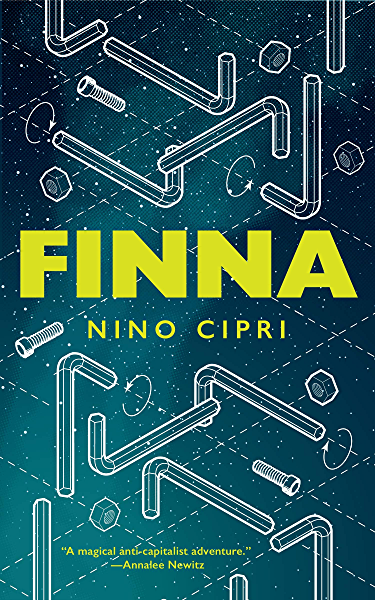
As an adult, I keep returning to horror, the strange, and the surreal for the same reasons. My novella Finna features two queer ex-lovers at a big-box homegoods store, where the horrors are rooted in their employer’s ruthless capitalistic mindset as much as carnivorous furniture or murderous sales associates. For me, living and working late-stage capitalism often feels like being stuck in the plot of a surreal, slowburn apocalypse, where the third-act plot twists just keep coming.
Here are a few of my favorite stories that tackle class and late-stage capitalism, and its intersections with race, power, and violence.
Burke is one of the most criminally underrated horror writers in the genre. Her 2011 short story collection shows off her daring and her skill in writing the intersecting horrors of racism, sexism, and poverty. The book opens with “Walter and the Three-Legged King,” which forces its protagonist to make a choice: endure the indignities and pains of poverty, or compromise his Black identity. Either way, he’s trapped in a racist system. Other favorites include “I Make People Do Bad Things,” about a Harlem madame-turned-numbers-queen whose secret weapon cuts both ways, and “CUE: Change,” which turns the zombie apocalypse story on its head.
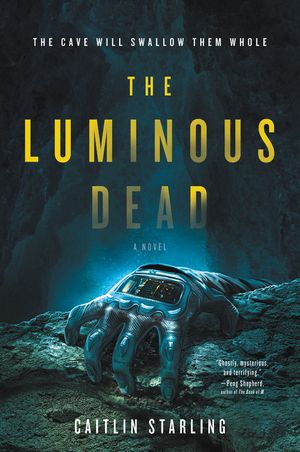
Broke, desperate for money, and even more desperate to prove herself, Gyre gets a job mapping the interior of a cave system. Her only lifeline to the surface world is Em, her handler. Em isn’t exactly reliable; she drugs Gyre, cuts off communication, and knows a lot more than she’s telling. Em knows Gyre lied about her qualifications, and isn’t afraid to use that knowledge against her. Em’s secrets, however, aren’t the whole of Gyre’s troubles. She’s not alone down in the caves; everyone who died exploring it is here as well. Starling has written a tight, tense, and claustrophobic sci-fi thriller, with notes of body horror and a number of unexpected twists.
Stephen King remains one of my problematic faves among horror writers with working-class backgrounds. In On Writing, King wrote extensively about his hardscrabble upbringing in Maine, with a single mother who worked long hours to support her sons. Before selling his first novel, King took shifts at a local industrial laundry to supplement his meager income as an English teacher and short story writer. Some of those experiences—as well as his familiarity with rural New England class politics—are on display in his first short collection, and make up for some of the more tired or trope-y stories in the volume. “The Mangler” and “Graveyard Shift” in particular demonstrate his distaste for casually cruel bosses or the nightmarish danger of industrial accidents.
The second book in VanderMeer’s Southern Reach Trilogy sees the weirdness of Area X permeate the facility tasked with controlling it. Authority mixes mundane office drama with spy-vs-spy paranoia and VanderMeer’s particular brand of the Weird. The novel thrums with a strain of dark humor and the surreal, familiar to anyone who’s been trapped in a job with a dysfunctional organization. For a shorter and stranger take on surreal office horror, read “The Situation” in his collection The Third Bear, or a comic adaptation of it at Tor.com.
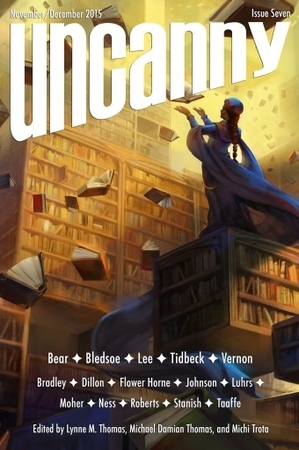
Tidbeck’s 2015 short story takes the idea of ghostwriting to its properly spooky conclusion: the narrator, an impoverished writer trying to break into publishing, is referred to a ghostwriting gig by a friend. She finds out that the gig isn’t, as she thought, editing notes left by deceased authors, but taking actual diction from their reanimated corpses. When the friend who referred her dies via a falling piano and is resurrected, the narrator is tasked with transcribing her postmortem rambles. The story is full of these kinds of tender ironies, told with a deadpan tone that disguises real concerns about intellectual property, profiteering off creative labor, and the afterlife of art. Tidbeck’s novel Amatka also tackles the futility and ennui of living in self-devouring economic systems.
Stephen Graham Jones is a prolific horror writer, he’s churned out several books and novels, in addition to critical work about the horror genre. As such, he gets easily into the heart of what ghosts are: outsiders, creatures of the margins and fringes, finding hidden ways into the places we thought were safe. The novel’s young protagonist encounters a vision of his father’s fancy dance regalia, despite having died on the reservation nearly a decade earlier. Mapping the Interior’s characters are forced to make terrible choices when faced with the colliding extremes of poverty, necessity, pride, and power.
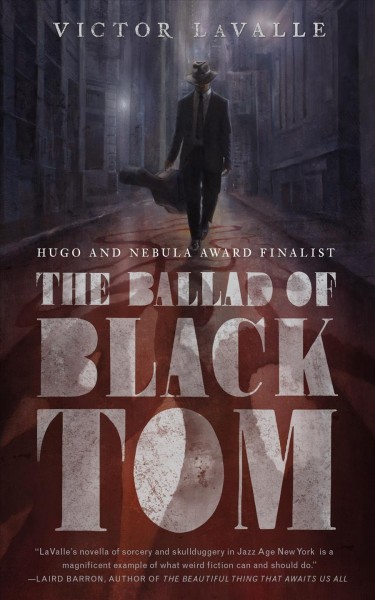
Whiteness, wealth and the systems upholding them are on par with monsters from the outer planes in LaValle’s slim novella, a retelling of HP Lovecraft’s virulently racist “The Horror at Redhook.” Lovecraft’s story used New York City’s Black and immigrant populations and the slums that they were confined to as a backdrop for a monster-worshipping cult. LaValle’s protagonist, a mediocre bluesman mourning a father murdered by the police, flips the script. The chilling indifference of the Great Old Ones—a source of terror in cosmic horror—seems like a kindness compared to the hatred of the white and the wealthy.
In The Cactus Leagueby Emily Nemens, the year is 2011 and Salt River Fields, the new baseball stadium, is open for spring training in Scottsdale, Arizona. The Recession is in the rearview, and the next baseball season beckons. Jason Goodyear, the beloved Lions left-fielder, is still beloved as an athlete, but his personal life (“coming off a possible divorce and a lonely drive across the desert in his busted Jeep”) has many fans asking questions about Jason Goodyear the celebrity. Is he okay? One recently laid-off sports writer takes it upon himself to follow the left-fielder to spring training to figure out how to tell the story of Jason Goodyear, the athlete, the celebrity, the man.
The novel is structured as a series of interconnected stories, each told from a different person in the Scottsdale spring training universe––the aging batting coach, the Lions pitcher returning from an injury, the rookie kid who’s just been signed, Jason’s manager and his new assistant, the Lions owner, a young boy who’s Goodyear’s #1 fan, among others. Each chapter proceeds linearly through the spring training season. Taken together, these chapters also move vertically through the place of Scottsdale, Arizona, digging deeper and deeper into the people, the architecture, and the land that is always changing. Punctuating each character’s story is an interlude from the sports writer, who leads the reader to the next character, while examining perspectives on baseball, on celebrity, on the relative significance of a season, on Scottsdale, on what it means to tell a story about someone you cannot know. This is a novel that spreads like a web, its elegant strength and line-level detail on full display.
In the first chapter, the sports writer explains to the reader why baseball is so pleasurable. There’s the clean linearity of the game, sure. But it’s not so simple, he explains: “there’s so many men playing together, so many more behind the scenes, coaching and cajoling and sometimes sabotaging the game’s progress, pulling the line until it goes bonkers, more like a dance chart than any sort of arrow.”
Emily Nemens and I corresponded over email about baseball, editing versus writing, and how to write a dance-chart novel.
Erin Bartnett:First, I wanted to ask you about your relationship to this book. What was the genesis of The Cactus League? What did you think the book was going to be about, and what did it end up becoming for you?
Emily Nemens: When I moved to Baton Rouge in 2011, to start an MFA at Louisiana State, maybe the first thing I wrote was a tiny story about Yankee Stadium. I was really intrigued by the relationship between the life of this architectural monument and the life of a man who, albeit briefly, interacted with it, and was thus shaped by it: in some, 78-word way, it was proof positive that I could build a human story around a baseball stadium. So, making the book was just multiplying that idea by one thousand!
Not really. But it was an auspicious beginning. The other thing that happened to me was LSU football, and the carnival aspect of tailgating that occurs on home-game Saturdays in Baton Rouge. While in Phoenix and spring training it is less concentrated—and there are a lot less boudin balls—something very similar unfurls. One million people show up to watch practice baseball! I wanted to explore that idea of a carnival coming to town: What happens to the town?
EB: The novel is delivered by a sportswriter who is following the career––and life, really––of one Jason Goodyear, star baseball player for the Lions. But each chapter explores the world and particular lives of people circulating around Jason Goodyear. Like baseball, according to the narrator, which is linear, yes, the novel also moves “around and around” until it is “more like a dance chart than any sort of arrow.” How did you decide on this structure for the novel?
EN: For a long time I had a disorganized pile of stories, all happening in the same place at the same time. But rather than dancing together, they were all elbows, running into each other and not talking as they should. When I realized Jason could and should be the pivot point—he’d been there all along, but was lurking quietly in left field—I was able to reorient those individual characters toward him, not unlike flowers turning toward the sun. I wanted to preserve the pacing and payoff of the individual narratives (I do love the story structure), but have this compounding factor of the season marching forward and Jason sliding downhill.
EB: In the sportswriter’s chapters, he zooms the lens out on Scottsdale Arizona, and reframes the story as its situated in “geological time.” So I want to ask you about perspective. I was interested in the way you created distance –– personal, physical, and now, even geological distance –– between the reader and Jason Goodyear. Why was it important for you to create distance between Jason Goodyear and the reader? And what did zooming out help you think about?
American celebrity culture is so insistent on intimacy, on knowing all things about our most famous people.
EN: Those are two questions, really. I wanted to create distance between Jason and the reader because he’s a private person. I’m a bit fascinated and horrified by the way American celebrity culture is so insistent on intimacy, on knowing all things about our most famous people. To be honest, we really just need to know if Jason can hit, catch, throw, and run, if he’s healthy enough (physically and mentally) to do his job. But in our media environment, that’s never enough.
As for the narrative distance of those interstitial chapters: the narrator started as a more disembodied Greek chorus, and I realized a few years into the draft that our modern-day equivalent (someone all-seeing, speaking for the group, from something of a remove) could be a journalist. To make him a disenfranchised one (he lost his job in the recession) gives him both a chip on his shoulder and a bit of emotionality that was interesting to exploit. He’s harping on geological time to try to keep things in perspective—in the current media cycle, and the one within which he had operated, the news around Jason seems like the A-1 story. But now that he’s stepped out of the cycle, he can see we’re all pretty puny, that this salacious story (which he can’t let go, the journalistic instinct kicking in), is really minor compared to all else. He is trying to convince himself, maybe, that even as he’s chasing this story, we should take a step back and think about the scale of things.
EB: How did you settle on this cast of characters? Was there one character/perspective that you felt closer to? One that was harder to write than the others?
EN: I was at a party a few weeks ago, and an acquaintance who had started an advanced readers’ copy looked at me and said, “How did you become such a good old man?” (The first chapter circles around Michael Taylor, a nearly retired batting coach.) I took it as a compliment: I wanted to write with credibility and empathy from all these different perspectives. It was important to get into the mindset of the athlete, of course—I worked for years to get the pitcher’s chapter just right—but I also wanted to think about this constellation of characters that felt like an ambitious map of the community. I could’ve plotted another nine points, created another nine characters, and told a parallel story of this community, I’m sure—but at a certain point I just liked these guys.
EB:This novel is so richly imagined––the baseball knowledge is really insider-level. What brought you to baseball? Were you already someone who is passionate about baseball? Who were your go-to sources for baseball knowledge and language?
EN: I’m a fan first—I’ve been watching since I was a little girl. But I’m not a 162-game a year fan—I have too many books to read to watch every game! Still, baseball’s spot in American culture (the primacy of being the country’s pastime, the perilousness of seeing that position slip) and American lit (there are more good baseball books than books about any other sport) made it an exciting thing to delve into.
I didn’t have a go-to resource, I was much more of a magpie than that. Autobiographies, interviews, and oral histories for voice of the athletes; reportage, documentaries, and reality TV for details of the sporting landscape. The Best American Sports Writing of the Century and Sportswriting from the New Yorker were nearby always: I love a good piece of longform journalism, and I wanted to build a world that felt as realized as the best narrative nonfiction, then overlay a compelling plot atop it.
EB: There’s a thread in The Cactus League between architecture and baseball––Jason loves architecture, so does his agent, Herb, Tami works at Frank Lloyd Wright’s Taliesin West in Scottsdale, and William Goslin, the new rookie has an architect father. What are some of the overlaps in architecture and baseball that were generative for you while writing this novel?
EN: I’m interested in the built environment and particularly monumental architecture as a catalyst for community-building, to go back to that first question about writing stories about stadiums. When I realized that the opening of this new stadium would be the inciting incident of The Cactus League, it felt right to plant architectural counterpoints and resonances elsewhere in the story. Paul Goldberger wrote a great book on baseball stadiums that came out too late to be helpful for writing my book, but was helpful in affirming the project of it. In that book, he says, baseball isn’t the ultimate American metaphor—baseball stadiums are.
EB:For some of these characters––Tami, the baseball wives, Lester the organ player, Michael Taylor the batting coach, Greg the injured pitcher, Herb the agent and Sara his assistant––there is anxiety about aging, injury, and the body. Even for those who aren’t playing baseball, some of them are aware of their value as bodies. So, I wondered, how did writing a novel about an athlete help you think about the way other characters’ bodies interact with the world?
EN: Sports fans understand that athletes age, that they peak relatively young and grow old and retire and that’s the natural order of things. I think we have a lot less introspection about the fact that everyone is going through that same cycle, losing their primacy and performance of their bodies. How do different characters, on parallel courses, respond to that trajectory? It was interesting to build out a chord, as it were, of different types of people facing that same diminishment.
EB:“Here’s the thing about baseball and all else: everything changes. Whether it’s the slow creep of glaciers dripping toward the sea, or the steady piling up of cut stones, rock upon rock until the wall reaches chest high, nothing is static.” Were you writing this novel during the election of 2016? Did that moment affect the way you were thinking about “change”?
No doubt about it, being a full-time editor slows down my writing.
EN: Oh, interesting! I started writing in 2011 and finished when they pried third pass pages out of my fingers about six months ago. The election impacted me as a human, but I was honestly grateful to have the necessary peg to 2011—the year Salt River Fields opened—to keep my story a bit less contemporary. I read so much new fiction at work that is trying to wrestle with this moment, and some of it is great, and a lot of it is overpowered by emotion.
I have great respect for those who can assess, distill, and quickly create art that doubles as cultural commentary, but I know I’m one that needs to stew and simmer. The book’s explorations of economic vulnerability, outsize celebrity culture, and the emotional ripples of disenfranchisement—I think those are very 2020. But this story needed to take place during the nadir of the last recession. And I had no interest in letting 45 into my book.
EB: I’m sure you get asked this a lot, but as someone who also works in publishing, I wanted to ask you about the balance between being an editor and being a writer. How do the two experiences inform one another?
EN: No doubt about it, being a full-time editor slows down my writing. I get back to my manuscript at the end of the week, or after I send a quarterly issue off to the printer. I deeply admire those at-the-desk-every-day writers, but I’m more of a snake about it—I stalk my prey (well, think about next steps) for a while, eat a big meal (have a productive session), then digest (replay the recent progress) for a spell. Sorry, that’s a gross metaphor, but I do write in chunks, grabbing time when I can.
But editing is also a real asset to my writing: I’m able to think about story and structure and line-level language all day. I pay attention to what works and what doesn’t, and on a good day I can suggest improvements that make writing I greatly admire even stronger. As an eclectically minded quarterly editor, I could be working with a dozen different story writers at any given moment, all trying to do something different. And they all need something different from their editor. That means I have built out quite a toolkit for how to solve problems, and I’m very grateful to have that at my disposal when I do get back into my draft.
Though illustrated books were common in the 19th century, you won’t find illustrations in many adult books these days. Perhaps it’s the production cost, or that illustrations in books are often perceived as unserious or unnecessary.
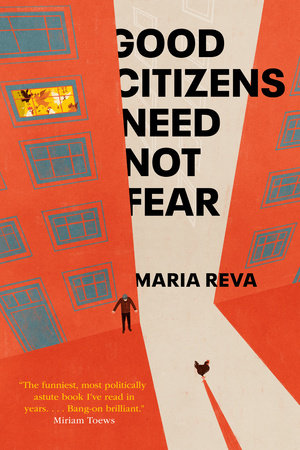
While workshopping the stories from my linked collection, Good Citizens Need Not Fear, the graphic elements met resistance. Did I really need the diagrams showing how beds are arranged in a Soviet orphanage? What about the illustration of a truck tire being cut into a swan (a common DIY in Ukraine)? Couldn’t I just use my words?
Not only do illustrations efficiently evoke a complex concept (a tire-to-swan description would have read like a tech manual), they express what the text cannot—or will not. In the orphanage story, “Little Rabbit,” the narration portrays a charmingly efficient institution, but it’s the diagrams that tip the reader off to a horrifying reality: the children deemed to have less potential begin disappearing from records.
Here are 7 books whose authors don’t (exclusively) use their words:
A psychiatrist is convinced his wife has been replaced by a doppelganger, and embarks on a desperate search for his real wife. As he slides into insanity, he uses scientific models to prove to himself that he is indeed of sound mind. His commentary on one of the models, however, betrays his true state: “That image […] looked to me like a lonely man, in an alien landscape, glancing back over his shoulder as if to ask something of someone he was not sure was there.”
Most people know what the American flag looks like. Or what a pair of underpants looks like. But Vonnegut illustrates them anyway, accompanied by the refrain, “This is what [X] looked like.” Vonnegut’s illustrations might seem comically redundant, but they perform a vital function: their archeological tone gives the reader distance, creating the impression the novel is about an alien civilization, its idiosyncrasies to be examined with a fresh eye.
Illustrations, diagrams, redaction: you name it, this whirlwind of a novel has it. In the original McSweeney’s edition, there are even pages with offending words/names physically cut out. As the characters wage a war against the omnificent narrator and his pesky habit of intruding upon their thoughts, the graphic elements become more and more wacky. (Illustrations by Sarah Tillman.)
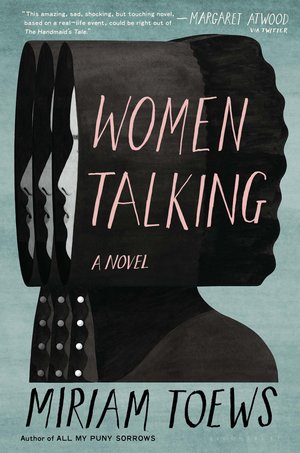
The novel begins with a set of three illustrations by Willow Dawson: curly clouds over fields, a man and woman brandishing knives at each other, and a horse walking away. We soon find out that the illustrations are a voting ballot: a group of Mennonite women (who are illiterate) will cast their vote to decide how to respond to the crimes perpetrated against them.
Women develop the ability to generate electrical current with their hands, thereby becoming physically (and, by extension, politically) superior to men. The novel is framed as a male writer’s fictional account, 5,000 years later, of the origin of female dominance. Peppered throughout are archeological drawings of our present time, satirically interpreted through the matriarchal gaze of the future.
Little is based on the life of the famous wax sculptor Marie Tussaud. We witness Tussaud’s growth as a woman and artist through her (Carey’s) delightfully upsetting illustrations: body parts, dead animals, personal effects, and more. As Aida Edemariam writes, “To look well, for Carey, an illustrator as well as a novelist, is to see how emotion and meaning inhere in all objects, giving them independent life.”
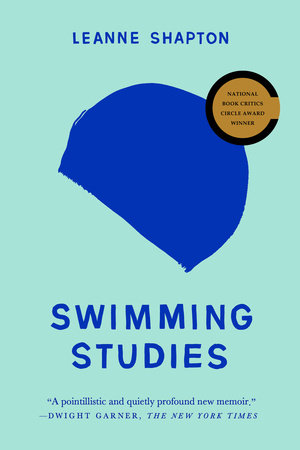
Shapton’s memoir explores her fraught past in competitive swimming—she was a former contender for the Canadian Olympic team—and the challenge of shedding one identity (swimmer) for another (artist). Photographs and illustrations intersperse with autobiographical sketches. For example, in what Ben Wiley calls “a marvelous piece of synesthesia,” Shapton paints and describes fourteen odors from swim meets (parka hem included!).
The first time Smena’s neighbor knocked on her door, she asked to borrow cloves. The woman stood in Smena’s doorway, clutching a canvas sack to her chest. Her diminutive frame barely reached the latch. “I’ll bring the cloves back,” she promised. “You can reuse them up to three times.”
This neighbor, Smena knew, associated with the building’s benchers. The woman never sat with them but did spend a good deal of time standing beside them, cracking sunflower seeds, no doubt gossiping, and Smena would often hear the metallic clang of her laughter through the bedroom window. Smena had placed the woman in her mid-sixties, around Smena’s age, but up close her wet lips and bright caramel eyes made her look younger. Her cropped hair, dyed bright red, reminded Smena of the state-made cherry jam she used to see in stores.
She did not let the neighbor in, but made sure to leave a crack between the door and its frame so as not to shut it in the woman’s face—word got around if you were rude, especially to a bencher or bencher affiliate. Smena rummaged in her kitchen drawers for the cloves, then continued the search in her bathroom cabinet, which contained the kitchen overflow. There, the cloves rattled inside a newspaper pouch; they’d lost their peppery tang.
Smena stepped out of the bathroom and blurted “Oi.” The neighbor was sitting in her kitchen. The woman had taken off her clogs, and a grayish middle toe poked through a hole in one of her socks.
Neighbors rarely visited each other, and if they did, it was to complain about a leak in the ceiling or to spy out who had better wallpaper and why. Smena tossed the pouch of cloves on the table, hoping the woman would take what she’d come for and leave.
“I’m Nika, from fifth,” the neighbor said. “Have a biscuit.” From her canvas sack she produced a small plastic bag, rolled down its rim, and Smena felt a pang of delight: inside were the same cheap biscuits Smena used to buy at the bazaar, the ones that had the shape and consistency of a fifty-kopek coin and had to be soaked in tea to save teeth from breaking. This gesture meant her guest wanted tea, which she, the host, should have offered long ago, upon greeting.
Nika craned her neck for a better view down the corridor. “Say, this a one-room or two-room?” Nika pronounced her words with a dawdling slur that was at odds with her quick movements. Smena wondered if the woman was recovering from a stroke.
“Two-room.”
“For one person?”
Smena tensed. Anything she said, already she could hear being repeated around the block. “My husband snored.” This was true: Smena had shared the sofa bed with her daughter, in the other room, until the girl had moved in with her fiancé’s family many towns away.
To occupy herself, Smena set the kettle on the stove. When she turned back to the woman, beside the biscuits lay a black plastic sheet. An X-ray scan. Smena recognized it instantly; she had a stack of them in the cupboard beside the refrigerator.
“I hear you make a nice ruble copying vinyl records onto X-rays,” said Nika.
Smena’s brows lifted in mock surprise. “Who told you that?”
“A friendly worm in the ground.”
“The friendly worm is mistaken.”
“I used to own a few bone albums myself, a long time ago,” Nika went on. “Only played them a couple times before they got worn through. Didn’t compare to vinyl, of course, but that’s how you got the real music.” By “real” she meant banned music. American rock ’n’ roll, decadent capitalist filth, the stuff with sex and narcotics. Smena’s specialty. She had begun copying bootlegged albums in the postwar years, when she and her husband were desperate for money and radiology film was the cheapest, most readily accessible form of plastic. Now, with the national shortage of reel cassettes—the national shortage of everything—Smena was back in business.
“I hear your records are the best,” said Nika. “Can play for days.”
Smena hunched her shoulders in an attempt to make her broad frame appear small, innocuous. “I don’t know what you’re talking about. I’m a simple pensioner, just like you.”
“A simple pensioner like me doesn’t have a two-room all to herself.”
Smena detected judgment in Nika’s voice—it was uncouth for a woman, especially one far along in her years, to take up so much space—but also envy.
When the kettle whistle blew, Smena was wary of turning her back to the woman again; she imagined discovering a pile of X-rays, or the woman’s entire family, in the kitchen. She reached a hand behind her hips to turn off the gas, fumbled with the cutlery drawer for a spoon—then stopped. This was the same drawer that contained the lathe for engraving X-rays. Smena used her fingers to pinch tea leaves into cups, and stirred the tea by whirling each cup in a circle.
“I hope you can help me,” said Nika.
“Sugar in your tea?”
“Please. Say, ever got an X-ray done yourself?”
“Everyone has.”
“The radiation alone is enough to kill you, just slower than whatever it is they’re checking for.” Nika paused, as though waiting for Smena to say something. “What were they checking for?”
“A bout of pneumonia, a couple years ago,” said Smena, distracted. She’d remembered the sugar jar lived in the same cupboard as the record player—which was a perfectly mundane object in itself, but not if seen in conjunction with the lathe. “I forgot, I’m out of sugar.”
The two women drank their tea bitter. Smena observed that once, when Nika made to dip her biscuit, she missed the cup, tapped the table instead, noticed the error, and dipped the biscuit into her cup with vigor. Before her guest left, Smena tried to push the X-ray back into her hands, but Nika refused. “I’ll be back with your cloves,” she said from the doorway.
“Keep them.”
“You can reuse them up to three times. I read about it.”
“Keep reusing them, then.”
“Oh, I couldn’t.”
Smena forced a smile. “It’s a gift.”
“I’m the one who should be gifting you gifts, for helping me.”
“I haven’t done anything to help you.”
“But you will,” said Nika. “I can always pick out the good people. Like good watermelons.” She was about to head off at last, then paused and turned to face Smena again. “You said your husband snored. What fixed it?”
“He died.”
Nika winked. “I’m divorced, too. They say our building is cursed.”
Smena closed the door on the woman, to hide her own blush. She shoved the X-ray in the garbage bin under the sink. Her underground business made Smena vulnerable to extortion. If Nika visited again, she might ask for more than cloves.
Smena’s worst traits, her mother had once informed her, were her height and her curiosity.
But the X-ray did not stay in the bin long.
Smena’s worst traits, her mother had once informed her, were her height and her curiosity.
It was the golden hour, the best time of day to inspect new X-rays, when the sun hung low and its rays shot directly through Smena’s kitchen window, illuminating each feathery detail of the bones. Smena lived on the tenth floor, and the neighboring building was far enough from hers for the X-ray viewings to be conducted in privacy. She secured Nika’s scan onto her window with suction cups.
The profile of a skull shone at her. The architecture of a human head never failed to shock Smena, or make her wonder how such a large bulbous weight balanced on the thin stack of vertebrae.
Smena couldn’t help but feel excitement: a head X-ray did not come her way as often as those of other body parts. And heads were the most popular with the buyers, fetched the most money. A shame she couldn’t use this one. She would not be lured into Nika’s trap.
The small white letters on the bottom right-hand corner of the film, easily overlooked by the untrained eye, read VERONIKA L. GUPKA, TUMOR. Smena noticed a thinning at the base of the skull, a shadow overtaking it from inside. The thing looked contagious, like a curse. She didn’t like the tumor hanging on her window, projecting its tendrils onto her kitchen wall.
She understood then: the woman was dying. Whatever she wanted from Smena stemmed from this fact.
Smena hid the scan, but this time, despite herself, she did not try to dispose of it.
Megadeth’s growls and screams, banned in all fifteen Soviet republics, came from Smena’s cupboard record player—at minimal volume, of course.
“I’m with the Kremlin on this one,” said Milena, Smena’s dealer. “If these are the latest tunes from the West, maybe the place really is rotting.” As usual, Milena stood leaning against the windowsill, ignoring the vacant stool in front of her. She seemed to prefer heights, like a cat, Smena had noticed.
This was their biweekly meeting. Milena brought wads of cash from selling bone albums at subway stations, public squares, and parks, and Smena counted the profit, taking the largest cut for herself. Next, Milena presented her with an array of X-ray scans procured through her job as a polyclinic custodian, and Smena picked out the most desirable designs. Today’s winning selection included a foot that had been subjected to an asphalt roller; a handsome pelvic girdle; a torso with what looked like a prominent colon but was really the spine of a fetus; a child’s hand curled into an obscene gesture.
Smena had recruited Milena because of her proximity to X-rays, but also for her proximity to Smena herself. Milena lived two doors down in a one-room she shared with her poet husband, and Smena didn’t even need to cross her own doorway to coax her neighbor in for a chat. From the first, Smena had known Milena would be perfect for the position; no one would suspect the pale middle-aged woman with drab clothes and uneven bangs of dealing illicit albums. At first Milena had refused, recounting how just last month she’d had to shake off a government lackey who had been trailing her husband, and was not sure she would be able to get rid of another, but after a second round of shots Milena confessed she could use the extra money. She was saving up—what for, she didn’t say.
Seated across the kitchen table from Smena was Larissa, the style hunter who supplied hits from the West. “Megadeth is a deliberate misspelling of the English word ‘megadeath,’ one million deaths by nuclear explosion,” she explained. Unlike Milena, who wore only black like a perpetual mourner, Larissa was a carefully choreographed explosion of color: red-and-yellow checkered dress, tangerine tights, peacock-blue heels (which she hadn’t taken off at the door). She sewed most of her clothes herself, copying styles from British and French magazines, complete with embroidered duplicates of the most prestigious logos. Thirty-one years old, Larissa lived with her mother and two daughters in the suite below Smena’s. From the fights Smena overheard through the heating vent—typical topics raised by the mother: Larissa’s low-paying job at the chemical plant two towns over, Larissa’s expensive tastes, Larissa’s failure to keep a man—Smena had gauged that her downstairs neighbor, like Milena, could not refuse a second income. It had only taken Smena two nights of thumping her floor with a broom handle before an irate Larissa paid her first visit.
Smena closed her eyes, taking in Megadeth’s restless rhythms. She couldn’t understand the lyrics, of course, but the singers’ screams were so wrenching, they seemed to be dredging up bits of Smena’s own soul. She wondered how Megadeth would sound at full volume, the power of the screams unharnessed.
“I think there’s something to this,” she said.
Milena’s and Larissa’s eyes swiveled to her in surprise. Smena glared at the women in return. “Oh, come off it. I’m old but I’m not obsolete.”
“The group’s aesthetic is contextual. People scream a lot in America,” offered Larissa, adjusting her horn-rimmed lensless glasses. “They have screaming therapy for terminal patients. Very expensive. I read about it. Doctors drop patients off in the middle of the woods and get them to hurl their lungs out. Barbaric, yes, but most come back happier.”
“The last time I made a person scream they didn’t seem any happier,” Milena remarked with a smirk, “and I did it for free.” Smena nodded without comment, assuming Milena was referring to one of her fencing tournaments.
When the meeting ended and Milena left, Smena found herself alone with Larissa as she gathered her effects into a quilted faux-leather purse. Smena leaned across the table toward the woman and stretched her lips over her teeth into a smile. This felt awkward, so she unstretched them. “You’re doing a fine job, Larissa.”
Larissa simply nodded, without deflecting the compliment. Another of her imports from the West: a lack of modesty.
Smena produced two bills from her pocket. She did not look at the money as she slipped it into Larissa’s breast pocket. She wanted the action of touching money to look easy, as if it was something she did a lot, something she barely noticed anymore. “I hear the bakery by the chemical plant is better than the one around the block. Mind picking up a loaf sometime this week?” she said. And added, “Keep the change.”
A child’s whining cry reached them from the suite below. Larissa gave a weary smile. “I’d be happy to.”
“And a dozen eggs, if you see them.”
“At the bakery?”
Smena slid a few more bills across the table, many more than necessary.
“Brown or white?” asked Larissa.
“White bread, brown eggs.” The pricier options.
Smena had asked Milena to bring potatoes two weeks prior.
If Milena and Larissa picked up an item or two of food for her every now and then, with her small appetite she would be fine. She did not want her neighbors to suspect that, combined, they were part of a greater pattern. She hadn’t been to the bazaar in over a year, hadn’t even ventured past her front door. Each time Smena opened the door, she felt the dank air of the outer hallway cling to her skin, as if she were being pulled into a tomb.
Smena’s fears had begun with a newspaper article: a boy had tripped over exposed rebar and broken both wrists. For years, the townspeople had been privately griping about the poor state of roads, sidewalks, bridges, but this was the first time the consequences of decaying infrastructure were publicized. Soon more and more reports came, from all over the country, each more outlandish than the next. A sinkhole trapped a commuter bus. A family of five plummeted to their deaths in an elevator malfunction. A gas leak gently poisoned preschoolers for weeks before being discovered. Pedestrians were advised to avoid underpasses.
Even previously privileged information was released, about how the town had been built on a not-quite-drained marsh that was slowly reliquifying. Smena’s daughter, and her daughter’s university friends, had cheered on the liberation of the press, which was taking place in their respective towns, too. But Smena had felt safer under the maternal hand of censorship.
Smena’s building, her entire town, now felt like a death trap, but she convinced herself that the concrete walls of her own apartment were secure. After a yearlong renovation, none of the windows or doors creaked. The new checkerboard linoleum felt smooth and sturdy under her feet. As long as she stayed in her space, twelve by twelve steps, she would be safe.
The X-ray of Nika’s skull lay on the kitchen table. Smena admired its smooth round shape. No matter how penetrating the radiology waves, the thoughts and desires within that doomed chamber remained secret. There Nika lived, and there she would die.
Smena felt no pity. Pity masked itself as kindness, but was rooted in condescension. Smena would not want to be pitied herself.
She turned Megadeth back on. Screaming therapy, she thought. Now there’s something useful.
She lit a cigarette, and paused to appreciate the scratchy vocals and pulse-raising tempo before hitting Stop, resetting the needle to the beginning. Using manicure scissors, Smena cut the radiograph into a circular shape. She made a hole in the middle of the circle with her lit cigarette, right where the ear would be, and the acrid smell of burning plastic rose from the film. She positioned the film on the phonograph, attached a spidery metal arm from the record player’s needle to the cutting stylus on the phonograph, and hit Play on both machines. As the grooves on the vinyl vibrated the needle and produced music, the metal arm transmitted the vibrations to the cutting stylus and reproduced the grooves onto Nika’s skull.
The evening before the next meeting, Larissa’s eleven-year-old daughter knocked on Smena’s door. Given Larissa’s talent for fashioning replicas, Smena found it fitting that Dasha should look just like her wide-eyed mother—down to the cowlick, and the platoon of bobby pins enlisted to flatten it. The girl informed Smena that her mother couldn’t make it to their biweekly study session on dialectical materialism—Smena couldn’t help smiling—because her mother was so sick with the flu she couldn’t crawl up two flights of stairs to tell Smena Timofeevna so herself.
Smena dropped her smile, remembering. “Eggs? Bread?”
Dasha tilted her head, confused. “No thank you.” She turned on her heel and skipped down the corridor, purple dress rustling.
Smena spent the next hour scouring her kitchen, making a mental inventory of the remaining food: three potatoes, two bread heels, nine walnuts, one thimble-size jar of horseradish. Her millet and rice stocks had run out the month prior. If she cut down her already meager consumption, she estimated the supplies would last less than a week.
The smell of boiling chicken now wafting from the heating vent did not help calm Smena’s nerves.
One thing Smena would not do was call her own daughter. After the grandchildren started coming, occasionally the daughter called to suggest Smena come live with her and her family in Crimea. They could sleep on the sofa bed together like old times, her daughter would joke, figure out a cot for the son- in-law. Smena would hear the shrieks of the grandchildren at the other end of the line and try to imagine herself as the babushka depicted in children’s folktales: stout, puffy-cheeked, bending over a cauldron of bubbling pea soup with a wooden spoon in hand, ready to feed, bathe, rear an entire village.
“The time isn’t right for a move,” she had told her daughter the last time they spoke. “I’m too busy.”
“Busy with what?” Her daughter didn’t know about the bone business. “You’re all alone over there!”
Smena took this to mean, “You’re going to die alone over there,” which was where the conversation always headed, and promptly hung up.
Smena’s mother had birthed six other children before she had Smena, and had made a point of telling her that a husband and children were the best insurance against dying alone. The family had lived in a crumbling clay house. One day, when Smena’s father was at work and she and her siblings were at school, Smena’s mother took her metal shears and slashed away at the tall grass outside the window. The blades crunched into an electric cable. Smena was the one who found her mother’s body in the weeds. Smena remembered how her own throat had contracted in shock, how her scream had come out as a hiccup. For a long time Smena had studied her mother’s face, which was set in a wild openmouthed grin, as if she were biting into the sweetest happiness on Earth. Seven children, eighteen years of cleaning, chiding, spanking, loving, pea soup making, and what did it matter? Smena’s mother had died alone, and seemed to have fared all right. Before the accident, Smena had imagined death as a send-off, a majestic ship to board while your party of relatives crowds at the port ledge, waving goodbye. The higher the attendance, the more valued your life. Now, she imagined something more private. Once you got past the ugly physicality of death, you were left with a single boat, a cushion. Room to stretch out the legs.
The second time Nika knocked on the door, she returned the cloves in their newspaper pouch. From the doorway she beamed up at Smena, as though she had proven herself by fulfilling her ridiculous promise. She produced a baking tray of buns from her cloth sack. Fragrant, buttery, they bulged out of the tray in a tight grid, ready to spring into Smena’s mouth. Each had a neat hole on top, from a clove.
“Borrower’s interest,” Nika joked. Her speech had slowed since the last visit, her syllables become more labored.
Smena didn’t know whether it was the hunger, or the shock at this small act of kindness—albeit suspect kindness—that made her say, “Come in for some tea?” before she could stop herself.
“Oh no, thank you. I couldn’t.” But already Nika was kicking off her clogs. “Just for a minute.” She was wearing the same faded socks, with her toe sticking out. Smena offered a pair of furry dalmatian-print slippers, ones Milena usually wore during their meetings.
As Smena brewed tea, Nika separated the buns and arranged them in a circle on a glass platter—also conjured from the magical sack. “Got any butter?” She was quick, ant-like, and before Smena could intervene, she opened the refrigerator. The expanse of white gaped at her, empty. With horror Smena imagined this detail registering in the neatly categorized inventory of Nika’s mind, and wanted to snatch it back out.
Without comment Nika turned and marched out of the apartment, leaving Smena to wonder if the state of the refrigerator had offended her. But a few minutes later Nika returned bearing not only butter, but also bread, eggs, and a pat of lard wrapped in a plastic bag, for frying. She began piling the supplies into the refrigerator.
“You don’t have to do that,” said Smena. “I was going to go to the Gastronom tomorrow.”
“So was I. We’ll go together?”
Smena pretended to consider it. “Actually, tomorrow’s no good.”
“The day after.”
“I’m tied up.”
Nika shut the refrigerator, gave its handle a conciliatory stroke. “The benchers told me they haven’t seen you leave the building in months,” she said softly. “They only see your visitors, not you.”
Blasted benchers, Smena thought. Nothing better to do. “Most of those old stumps are half-blind,” she said. “And I move very fast.” She pulled a bill from a metal tin on the counter, knowing she risked insulting the woman. But Nika only laughed, swatted the money away. “Please,” she said. “Kak aúknetsja, tak i otklíknetsja.” Do as you would be done by.
The women sat down together. Smena’s discomfort melted away when she took her first bite of bun. Its thin caramelized crust, where egg whites had been painted on in crisscross, protected a warm flaky interior. The best bun she had ever tasted.
Nika ran her hand along the chrome length of the table. “This is nice. Quiet. Where I live it’s a zoo. Fourteen people, another one in my daughter-in-law’s belly. Imagine! Despite his position, my son and his family still haven’t been assigned their own peace.”
Smena wondered if she meant “place,” and if the tumor was pressing a fibrous finger on just the wrong spot. “Which factory does he work for?”
“Timko works for the government.” She let the last word fall heavily, significant.
Perhaps this was a threat? Working for the government meant anything from licking envelopes to spying on high-profile citizens.
“A nice two-room, is that so much to ask?”
Smena wasn’t sure to whom, exactly, the woman was directing the question. But there it was: the dying woman’s motive. A lovely two-room for her lovely family. Her legacy secured. If Smena were to be imprisoned for the bone business, Nika’s growing, government-affiliated family would be next in line for her apartment. Smena wanted to jump up, scream “Gotcha!” like she’d seen a man do at the bazaar once, after he’d stabbed his finger into a vendor’s pot of golden honey to reveal the cheap sugar syrup underneath.
Before Nika left, she placed a second sheet of black film on the table, without inquiring about the first.
An hour later, the new scan glowed on the kitchen window. Smena wanted to track the progression—again, for curiosity’s sake.
The sun’s rays showed more thinning of the bone as the tumor burrowed toward the spinal column. Smena couldn’t help being impressed by the thing—an organism living by its own will, clawing for space in the tight dome of the skull.
The next meeting, Larissa forgot about the bread and eggs, but did bring two albums by John Coltrane.
“Never heard of him,” said Milena, who stood at the window, left thigh resting on the sill.
Larissa straightened the velvet lapels of her blazer and looked up at Milena. “John Coltrane,” she explained, “was one of the most prominent jazz musicians of the twentieth century.” Her nose and cheeks were red and puffy. Despite her best efforts to appear composed, she looked in danger of crumpling to the floor any moment.
“How am I supposed to know? No one’s ever asked for a Coltrane,” said Milena. She eyed the tray of buns poking over the top of the refrigerator, then glanced at Smena for permission. Smena nodded—she regretted not having offered them herself.
“You’re supposed to know what you’re selling,” said Larissa, hoarse voice rising. Smena shushed her. “How else do you test for fake clients, impostors?” Larissa whispered.
“Speaking of,” Milena said through a mouthful of bun.
Smena and Larissa turned to her.
“It’s probably nothing,” Milena tried.
“Tell us the nothing,” said Smena.
Milena scratched a spot of grime off the window with her fingernail. “I was at the park, my usual spot by the thousand-year oak, when a guy came up to me. Skinny, with a sad attempt at a mustache. Asked for a KISS. Like the group. The music group.”
“Very good,” said Larissa, rolling her eyes.
“I started to grill him,” Milena continued. “Year the band got together, band leader’s middle name, year of their breakout single, whichever useless facts Larissa shoves down my ear.” She winked at Larissa, who turned away in a huff. “The guy was doing well, seemed to know everything. Then he started grilling me. Asked why Ace Frehley added eyeliner to his iconic ‘Space Ace’ makeup design. What was I supposed to do, look stupid? I played along, answered best I could, but when I asked, ‘So are you buying the album or not?’ he only said, ‘Nah, I got what I came for.’ ”
“And then?” asked Smena.
“He just walked off.”
Milena helped herself to another bun. She mashed the entire thing into her mouth, and Smena watched her masticate it without any apparent enjoyment. There were only four buns left, and she imagined what would happen once they were all gone, how she’d gnaw on laurel leaves, suck peppercorns for taste.
After a while Milena said in a low voice, “It’s what they do. Play with you first, see you flail, knowing you have nowhere to go.”
“Play is all it is,” countered Larissa. “No one gets sent to the camps anymore. Human rights,” she proclaimed, chin tilted up, “are in vogue.”
“My sweet thing,” cried Milena. She sank down to the stool beside Larissa, grasped the young woman’s hand. At first Smena took Milena’s outburst for sarcasm, but Milena seemed genuinely shocked by Larissa’s innocence, as if she’d discovered a kitten playing in a dumpster. Larissa blushed, but did not retract her hand before Milena let go.
When Smena had starting making bone records, in the fifties, the risks were clear, the boundaries stable. Now an invisible hand was loosening the screws, but it was impossible to tell which screws, and for how long the loosening would last. Although no one got sent to the camps (for now), every citizen was able to imagine more clearly than ever before what might await them in those very camps; the newspapers had begun publishing prisoners’ accounts, down to the gauge of the torture instruments.
“Camps or no camps,” Milena said, “prison wouldn’t be fun either.” She turned to Smena. “So what do we do?”
“You didn’t show the man any of the albums?” Smena asked. “You kept them inside your coat the whole time?”
Milena nodded. “He saw nothing.”
While the possible punishment was unclear, something else was not: they all needed the money.
Larissa turned to Milena. “When the man asked why Ace started using eyeliner, what did you say?”
“To keep the silver face paint out of his eyes. He’s become allergic.”
Larissa smiled proudly.
Now Nika visited Smena every week. She would bring soup or cabbage pie, and the pair would sit down for a midday meal followed by tea. Each time Nika knocked, Smena vowed to confront her. If Nika really was looking to extort her, Smena was willing to preempt, negotiate, even give her a cut of the bone music profits. But confronting Nika would also mean admitting to the business, and what if the woman wasn’t willing to negotiate? And, a distant possibility: What if Nika wasn’t trying to extort her at all? More and more, Smena was willing to believe it.
In truth, she didn’t mind Nika’s visits. The woman’s chatter offered a lens into the outer world that the newspapers—which Smena had mostly stopped reading anyway—could not. From Nika, Smena learned that the irises were blooming, the flowers floppy as used handkerchiefs; that it was the time of year when woodpeckers drummed on utility poles down by the river, to woo their mates. Nika exclaimed, “Can you imagine the ruckus?” Yes, Smena could.
Week to week, Smena watched the change in Nika over the rim of her teacup. One visit, Nika’s slur was so pronounced Smena could barely understand her, and the pair sat in silence, pretending nothing was wrong. Another visit, Nika regaled Smena with jokes, but as she spoke her face lacked expression, as though she were posing for a government identification photo.
“You keep giving me a funny look,” Nika remarked on that occasion.
Smena tried to brush it off. “I’m impressed. You tell a joke but keep such a straight face.”
“I’m losing feeling in my face.”
“Oi.”
“My daughter-in-law says it’ll do wonders for the wrinkles.”
“The brat.”
“I’ll look all the better when they bury me.” A strand of hair fell over Nika’s eyes and her hand pecked at her forehead, trying and failing to find the strand.
“You should be in the hospital, Nika.”
The women locked eyes.
“So you’ve looked at the scans,” said Nika.
“I don’t know why you keep giving them to me.”
Nika shrugged. “They’re as useless to me as they are to the doctors who order them.”
“What do you mean?”
“The polyclinic has quotas for tests, so they do tests. Or they just make the numbers up to fill the quotas, so their money and supplies don’t get cut. The polyclinic’s filled with these ghost patients and can’t admit new ones.”
“You have a growth in your brain the size of a lemon and they can’t admit you?”
“They can’t admit me because of the lemon. I’m not a viable patient.”
“With your new face I can’t tell when you’re joking.”
“Really, Smena, when was the last time you went out into the world?” Nika sighed, as if she were about to explain basic arithmetic. “The polyclinic doesn’t want to exceed their death quota.”
“Which I’m sure they’ve made up.”
“Doesn’t matter. The nurse said if they exceed the quota, they get investigated, and if they get investigated, it’s worse for all of us.”
“How nice of her to give you an explanation.”
“It was,” she said softly. “I gave her chocolates.”
Smena looked at her neighbor. She was a shell of the woman who had first come to Smena’s door two months ago, determined to get her way.
“At least you can make something useful out of the scans,” said Nika. “Something beautiful.”
Smena heaved herself to her feet. A vertiginous feeling overwhelmed her. She saw herself on the edge of a precipice, its bottom beckoning. She feared heights, perhaps because she also loved them—she always wondered what would happen if she jumped.
Smena swung open the cabinet above the fridge. She retrieved the five albums she had made for Nika and spread them out on the table in chronological order. She pointed to the first, the Megadeth. “You won’t like this one at first but it’ll grow on you. Listen to it when you’re alone, and imagine the sounds pouring from your own mouth.” She pointed to the rest: “Pink Floyd, to relax to. Suzi Quatro and Julio Iglesias, to cheer up to.” Nika studied the scans on the table, the ripening shadow at the base of the cranium.
Smena set the fifth, Coltrane, on the record player, and watched Nika see her skull spin into a milky blur as the needle sucked music from the grooves. The horn section came in, ecstatic, then melted away into the oily tones of solo sax. Nika closed her eyes, swayed lightly to the music. At the end of the song Smena lifted the needle from the record. She searched her friend’s face for a twitch, a nudge, but was met with an unsettling blankness.
Nika opened her eyes. “Thank you.”
Smena gathered up the bone albums. “Take them, they’re yours.”
“I said you were a good watermelon. Didn’t even have to thump you to know it. Didn’t I tell you?” Nika took the scans, placed them in her cloth sack with great care.
Smena wasn’t sure what to say, or why she settled on “Cut me up and eat me.”
“Don’t think I won’t.”
“I’m all seed.”
“I’m smiling, Smena. You just can’t tell.”
When Nika made to leave shortly afterward, Smena asked, “No more scans for me this week?” Nika shook her head. “No more.”
A few days later, Smena woke to hurried knocking on her door. On the other side of the peephole: Milena. Smena checked herself in the hallway mirror, discerned the blurry shape of her body through her thin cotton nightgown. She swung a fur coat over her shoulders before unhinging the locks.
“Heading out?” Milena asked when she stepped inside. “Yes,” Smena lied. “You’d better make this quick.”
Milena locked the dead bolt behind her. “I got approached again,” she said, her posture unusually straight. “Not by the same guy as last time, but this one was just as wormy. He gave me a record.” From her long raincoat Milena produced a yellow vinyl sleeve, the same type Smena used for distribution. She slid out a bone album, set it on the record player. Smena recognized the perky melody. The Beach Boys. The quality of the copy was poor, mostly scratching and bubbling, as though the singers were being drowned.
After a few seconds, the music cut out.
A man’s voice came on, in low and booming Russian. Came for the latest tunes? You’re done listening. A slew of curses dipped in and out of the hisses and pops.
Smena let out a bark of nervous laughter. “Hardly the latest tune. That song is almost twenty years old.”
“Smena Timofeevna.” Milena hadn’t used Smena’s patronymic in years, and the sudden formality was more frightening than the cursing still blasting from the player. Milena slowed the record to a stop with her thumb. “We’re fucked.”
She looked at Smena, expecting instruction.
Smena picked up the X-ray record and did what she did with every new X-ray that fell into her hands: she hung it on her kitchen window. The morning light shone strong enough for her to make out a pair of lungs and a shadow of a heart. The center hole of the record had been burned through the aorta. With a sickening familiarity, she saw the tiny bulbous alveoli filled with mucus, laced around the bottom of the right lung. Pneumonia. Right where her own had been, a couple years ago. Since the corners of the film had been cut off, she couldn’t check for the patient’s name. Many people get pneumonia, she thought. This could be anyone’s scan. Still, she couldn’t shake the suspicion it was hers. It made her uneasy, to think of looking at her insides outside her own body, as though she were being dissected. She felt a peculiar wringing in her chest, a hand palpating her organs. She thought about the few people in her life who knew she’d been sick: her daughter. And, most recently, Nika.
Since Nika’s first visit, Smena had known that she’d been caught. But she’d been foolish enough to believe the woman wouldn’t follow through with her scheme. She’d allowed herself to forget: neighbors never visited each other.
She curled her fingers into fists, uncurled them, let her hands flop to her sides. “We’ll need to warn Larissa.”
“I just did. She almost seemed happy about it, our little martyr. Made me promise to teach her sparring techniques.” Milena saw the pained look on Smena’s face. “Don’t worry about her. She comes from a model family with a squeaky-clean record. Worry about yourself.”
Smena walked around the room, aimless. She took vinyl albums from the bookshelf at random, put them back. With Larissa’s careful hands, each original sleeve and center label had been replaced with state-approved ones, from acts like Jolly Fellows, Good Guys, Contemporanul, Red Poppies. That Smena’s music library presented as perfectly flavorless had always amused the three women, an inside joke. Perhaps she could keep just one or two albums? She briefly let herself entertain the possibility, then admonished herself. If back in the fifties keeping one album would have been as risky as keeping one hundred, why should things be different now? She turned to Milena, who was stationed by the balcony door, watching in silence. “We’ll need to get rid of the equipment,” Smena said. “And the music.”
Milena gave a curt nod. “Leave it to me, Smena Timofeevna.”
From her wardrobe Smena retrieved a linen sheet. She wrapped it around the record player and phonograph. “Wouldn’t want them to get scratched.” With utmost care she placed the cutting lathe and its metal arm into a pillowcase. She slipped the forbidden vinyls into another, trying not to think of the effort Larissa had put into procuring them. It would only take Milena two trips to her husband’s beat-up Kombi, parked in the courtyard, to make the bone music studio disappear.
When Milena came up to get the second load, Smena asked, “What will you do with yourself now?”
“Leave town, get lost in the countryside. Something I’ve been saving up for anyway.” Milena was trying to sound casual, but Smena thought she detected a tremor in her voice.
“Hard to imagine your husband in the country.” The last time Smena had seen him two balconies over, polishing a loafer, she’d marveled at his delicate hands.
“Isn’t it.” Milena shot Smena a sly look, and for one moment Smena wondered if she intended to leave him behind.
Milena stalked down the hall with the rest of the equipment, her footsteps eerily quiet. Smena wondered if she would ever see her neighbor again. Then she imagined leaving her own apartment, sharing a sofa bed with her daughter again, and her daughter’s husband, and her daughter’s husband’s family, and all those lovely, spirited grandchildren, and the knobby cats they brought home from the streets. She wept into the sleeve of her fur coat.
Smena was searching her apartment for tools or X-rays she might have overlooked when she heard the wail of a siren. She dropped to the floor. Her heart flapped against the linoleum, loose and arrhythmic. She wanted to shush it so the downstairs neighbors wouldn’t hear. The siren grew louder, until it reached their building, then cut out. Hurried footsteps echoed from the depths of the building, but never reached her floor. Smena crawled to her bedroom window, peeked out. The source of the siren was not the police but an ambulance. After a few minutes, a pair of paramedics emerged from the building’s entryway carrying a stretcher, and on the stretcher lay Nika. Sunlight glimmered on her cherry-red hair as the paramedics loaded her into the ambulance. Smena wanted to rush downstairs and—what? Strangle the woman? Embrace her? Both?
The vehicle lurched into motion, rounded the street corner, and disappeared.
Smena stood back from the window. She was still wearing the fur coat. The coat would have to do. The polyclinic was only four blocks away, but she thought she might be away for longer than the four blocks and so made preparations. She retrieved her reserve of cash from a jar hidden in the toilet tank, packed a few changes of clothing into a duffel bag. A dull ache set into her knees and hips from the earlier drop to the floor, from the crawling, but she quickened her movements, ignoring the pain.
Smena swung her door open, and stepped over the threshold. The exterior corridor was cold, dimly lit, smelled of stale tobacco. The damp climbed her calves and thighs, made her shiver in her coat. She wanted to turn around, banish the hostile world with a flick of the dead bolt. But her apartment had lost the protection it once held.
Taking the elevator was out of the question. Clutching the rickety metal banister, Smena descended one step at a time. She tried not to look at the cracks in the walls. A piece of candy perched on a stair and she reached for it before thinking, hungry, but the puffy wrapper was hollow inside, a child’s trick. The entranceway at the ground floor greeted her with the stench of garbage and urine, a waft of boiled potatoes.
Smena stepped outside and, for the first time in more than a year, felt live air move across her face. Her windows and glassed-in balcony had been sealed against drafts—she’d forgotten that drafts could feel nice, like a gentle tickling. She parted her lips, let the warm autumn light fill the cavity of her mouth and throat.
“I’ll be damned! She’s alive,” exclaimed one of the pensioners on the bench outside. The man had acquired a new sprinkling of moles and sun spots on his face since the last time she’d seen him. “How long’s it been, Smena Timofeevna?”
“Too long, Palashkin,” she answered.
She shuffled on, her feet unsteady on the cracked slabs of the sidewalk. The concrete ten-stories around her were identical to the one she had just exited and Smena had the impression she was walking the same block over and over. She kept her eyes on the ground. She stepped on a curled dry leaf and its crunch underfoot delighted her. She stepped on another, then another, progressing leaf to leaf. Parts of the roads sagged. The edge of the town, where the sunflowers normally grew, was being closed in by cattails. Let it all sink, she thought. She imagined herself and the townspeople on the bottom of a great marsh, to be discovered centuries later, open-eyed, their skin blue, hair orange from the gases, preserved for eternity.
The next time she looked up, she stood in front of the building she thought might be the polyclinic. The gleaming white-tiled edifice in her memory cowered under the poplars, its walls matte with graffiti, many of the tiles missing.
Inside, wooden benches lined the walls of a small lobby. A nurse pushed a mop around the floor, transferring dirty water from one corner of the room to another. It didn’t take long to find Nika, who lay on a wheeled bed in a corridor off the lobby. The two paramedics who had collected her were arguing with the receptionist. As Smena approached Nika, the expression on her neighbor’s face transformed from happy surprise to terror. By the time Smena reached her bed, Nika had lifted the covers over her nose, as though expecting to be hit.
Smena stepped back. She’d been feared before, certainly— by Milena and Larissa, whenever she chastised them for an oversight—but not like this. It stung. “You can move your face again,” she observed, attempting a level tone.
“Now it’s my feet.”
“Where’s your son and the rest of them?”
“Work, the park, and the belly,” said Nika. “But you came.”
It sounded like a question, Nika wondering aloud which version of Smena had come: the vengeful or the forgiving one. Smena still wasn’t sure herself.
“So they’re finally admitting you,” said Smena.
Nika nodded at the men and receptionist yelling at each other. “To be decided.” She lowered the cover from her face. The skull with which Smena had become so well acquainted shone under Nika’s pale, cracked skin, its outline disturbingly visible, now in three dimensions.
Nika gave a nervous laugh. “This is a bed, Smena. Look at it. It doesn’t fold into anything. It’s not a couch or a desk or a storage box. It’s a bed and you don’t feel bad lying in it. Try it.”
“What?”
“This bed. You’re going to try this bed.” Nika pushed her head and shoulders into her pillow, wriggled the rest of her body toward the rail at the edge of the bed. Smena thought Nika was playing a joke until a pale leg poked out from under the sheets and draped itself over the rail.
“No, Nika—” She grabbed Nika’s bony ankle. Nika swung a second leg over the rail, and now Smena held on to both ankles. “Keep down, will you?”
“You can’t know till you’re in it.”
Nika’s breaths were heavy, rasping, and Smena now saw the immense strength Nika’s seemingly whimsical gesture had required. She heaved Nika’s legs back onto the bed, rearranged the sheets.
“Tell you what,” said Smena. “When you’re well again and ready to go home, we’ll get you a real bed. A big one. Have your son and his family move into my apartment. I don’t need the space anymore. And as for me, if you want, I mean, only if the prospect doesn’t sound too awful—”
“You’ll move in with me.” Nika’s face softened. “It’ll be like back in the dorms,” she said. “But only the best parts. No exams. And you’ll take the bed. I’ll take the foldout.”
“We’ll get two beds. They’ll take up the whole room.”
“What if one of us takes a lover?”
“We’ll work out a visitation schedule.”
Nika looked up at the ceiling, spread her arms and legs out, letting herself float in the daydream. “If only we’d decided all this sooner.”
“It’s not too late.” It felt so easy now, to play along, to plot their future together. Smena stroked her friend’s hair. The roots were oily and she longed to grab them by the fistful, let the musky sheen settle between her fingers.
The nurse with the mop was eyeing them. Smena said, “I have to go.” Where, she wasn’t sure. It would be midday, the sun at its warmest. She could go to the bazaar, buy something to eat right from the stalls. Fried dumplings, filled with mushrooms or ground beef. Or sour cream, fatty yellow and runny, which she’d drink straight from the jar. And afterward? She could go anywhere, board any bus or train. The thought was terrifying and thrilling.
Winter is in full swing in the northern hemisphere, which means cold and dark abounds (we’re on the other side of it, though! It’s going to be okay!). Sometimes in the throes of late February and early March, when spring is so close yet so far, it helps to have some books for the Mood. You know the Mood. It’s the thing that makes you feel like everything’s just a little gray, a little sad, a little heavy.
Here are 15 new or forthcoming books that can help with the Mood, either by embracing the dark or bringing a little light into it.
Set in rural India, Paralkar’s sophomore novel has a great mix of creepy ghost story, medical drama, gory body stuff, murder mystery, spiritualism, and parable-esque commentary on humanity and the failings of government. It takes place mostly over the course of a single night and reads just as fast. The characters are compelling and flawed, and the pace is a fast drumbeat. This is a great one-sitting read for a dark night.
Another one for indulging the Mood, this debut novel is set in the Pacific Northwest (so, the grayest place) and follows a group of young people navigating poverty, addiction, and each other in a rural Washington state town. The writing is lyrical and airy, the subject matter heavy and visceral. This is another quick read, and a rough one, demanding that the reader not look away from the realities of how capitalism fails rural America (and really, all of us).
If you’re in need of a little starlight (in the form of poetry!), look no further than Brooke Matson’s second poetry collection. Matson is another Washington-based author, who also happens to be a book artist and designer, and also happens to be really into physical sciences. This book blends chemistry, astrophysics, light, and time with grief, mystery, resilience, and love into some truly gorgeous poems that you don’t have to be a scientist (or a poetry nerd) to love.
This little book is the perfect read for some moody teenage vibes that are also achingly exquisite. Translated beautifully from the Korean by Sunhee Jeong, b, Book, and Me embodies the vital and fraught relationships between adolescent girls, while also being a meditation on depression and the meaning of place. It will make you smile, break your heart, and put you on a breakwater with wind in your hair as you grapple with the trickier parts of life.
If ever there was a universal existential crisis, it’s climate change. Jenny Offill, whose Dept. of Speculation was a literary event in 2014, is here to help us deal with it in the form of a basically-perfect, tiny novel about a couple of librarians, a doomsday podcast, a family coping with addiction, politics, and what it means to survive something. The prose is deceptively simple—easy to read, but will jump up and surprise you with its poetics when you least expect it. If you’re in the mood for something that’s dark and light at the same time, this one’s for you.
Speaking of climate change/existential crises, I for one never thought to wish for a farm heist novel, but reader, it is here, and it is glorious. (Also, Jenny Offil blurbed this one.) Framed inside the world of commercial chicken farming (which is a whole thing in itself, both in real life and in the book), the razor-sharp prose and surprisingly heartfelt insight move this book right along into unexpected places. Barn 8 is so weird in the best way, hilarious even as it probes deep into fault lines of capitalist society, politics, and revolution.
The subtitle of this book by celebrated essayist Jordan Kisner is Essays From In Between, which hints at the ontological nature of this collection. From apocalyptic robocalls to personal blogs to electro-shock therapy, Kisner gets into the narrow liminal spaces of modern American culture and digs out worlds. Those worlds have a sense of breakdown about them, making this book both an unsettling and an endlessly curious read. This is a good one for when you need some intellectual, philosophical essays that aren’t pretentious and just might shake the Mood for a while.
If you’re in need of some summer vibes, look no further than this short story collection from Leesa Cross-Smith, the author of 2018’s wildly popular Whiskey & Ribbons. Here, Cross-Smith packs 42 short stories into just over 250 pages, all of them centered on girls and women in potent moments of their lives. Whether it’s obsession, lust, “bad” behavior, wild imagination, or coping with fear or loss, the characters in these stories are fully realized and compelling. With a magic mix of the bonds between women, sensual detail, a dash of nostalgia, and a lot of heart, this collection is an engrossing read that’s perfect for bringing some light into winter.
Speaking of bringing the light, this YA anthology is exactly it. Billed as “Beyoncé’s Lemonade meets Octavia Butler” (I mean, that tagline sells itself), this is a book of speculative fiction and fantasy stories that center Black girls, women, and gender nonconforming people. It’s edited (and contains a fantastic story) by Patrice Caldwell, founder of People of Color in Publishing. Its contributors include big names like Elizabeth Acevedo, Ibi Zoboi, and Rebecca Roanhoarse, in addition to a roster of emerging voices. From folk tale retellings to futuristic worlds, the characters in this collection are a joy to read; the prose dazzles; and the racial, gender, and sexuality diversity is a breath of fresh air.
That Hair by Djaimilia Pereira de Almeida, trans. Eric M.B. Becker
Described as a “tragicomedy,” this is the story of a young Angolan-Portuguese girl and her journey with feminism, her hair, and her identity. As a European-African girl, Mila—who was born in Luanda but moved to Lisbon at age three—reckons with a feeling of outsiderness as she comes of age. With themes of colonial inheritance, memory, family, identity, and changing society, That Hair is a short but punchy read filled with gorgeous prose and expertly rendered metaphor, a stirring and lyrical read.
Listen, we’re all high-key stressed about the upcoming election, so if you need to laugh-cry at a political satire populated with queer characters and homophobic ones, taxidermy and parallel timelines, plot twists and toxic masculinity, well then, here you are. Fair warning, this might be a bit much for some of us (see: homophobia and sleazy politicians), but it’s a wild ride and might just be the perfect antidote to the wild ride we’re in in real life.
If you’re after something kind of cerebral and meditative for the middle of the night (which, this time of year, could be 7:00 pm), Stefany Anne Goldberg’s memoir-cum-philosophy book is here for you. Goldberg grew up in a hard family situation outside Las Vegas, where she decided to separate herself from the world by staying up all night. My Morningless Mornings explores the concept of being awake, ideas about psychology and art, and what happens at 3:00 am. It’s a short and meandering read perfect for the dark hours.
Sometimes, in winter, northern hemisphere people like to go on vacation to places like Hawaii. This book is set in Hawaii, but this is not vacation Hawaii. In his debut novel, Kawai Strong Washburn—who was born and raised on the Big Island of Hawaii—weaves a gripping family saga framed within the legends of ancient Hawaiian gods and the realities of the sugarcane industry in 1990s Hawaii. This is a captivating novel that sweeps a reader into its fold and bites like the titular shark.
Letters from Tove by Tove Jansson, trans. by Sarah Death, edited by Boel Westin and Helen Svensson
If, on the other hand, you’re into cold places, why not travel to Finland by way of the collected letters of Moomin creator (and lesbian icon) Tove Jansson? This reprint from University of Minnesota Press captures Tove’s signature clear-eyed writing in letters that capture the mid-century bohemian Nordic life of a celebrated artist and author of much more than just children’s books.
Finally, for some more summery atmosphere—this time set in Australia—bestelling Australian childrens’ and YA author Martine Murray’s first adult book is getting its US debut in April. Set in a sweltering summer, this book follows 9-year-old Ada Bloom, the emotional barometer for her fraught family, as she unveils secrets and grapples with what it means to grow up. Come for the elegant pacing and family dynamics, stay for the lyrical prose and emotional investment. This one will have you feeling the swelter of an Australian summer, which, after all, is happening right now!
I first heard of Nana Oforiatta Ayim when she outdoored ANO, an art gallery and non-profit organization in Accra, Ghana’s capital city. Her name was also hard to miss as curator of Ghana’s debut at the 2019 Venice Biennale. A filmmaker and art historian, she is now in the thick of curating a mobile museum that allows Ghanaians to control their narratives and is spreading her reach to a colossal project—a Cultural Encyclopedia of African history.
In The God Child, Ayim’s expansive and contemplative debut, themes of art, history, literature, film, and legacy intermingle with Maya’s coming-of-age. Born to Ghanaian parents living in Germany and shuttling between there and the UK, Maya suffers the indignities that come with being an outsider—even as the child of a princess. A cousin from Ghana moves into their home, giving Maya a new view into the land of her parents’ birth, and together, they begin to work on unspooling, reclaiming and rewriting their history, one that is tightly woven with that of their country.
I asked Nana about her process, what it means for women now to be custodians of history, and the world’s obsession with royalty.
Ayesha Harruna Attah: There is a moment when Maya’s father is berating her for getting less than perfect grades, and she observes that it is not her father she is hearing, but her father’s father. I thought it was telling as a quiet nod to the book’s theme of the burdens passed down the generational ladder. From the very beginning, Maya tells us that she realized quite soon that her life was not hers, and when she learned of the word “ancestors,” she understood. Why is Maya chosen for this work and what does it mean to do ancestral work?
Nana Oforiatta Ayim: I am not sure if she is chosen or if it is that she knows how to listen. Do the ancestors pick just one or a few, or do they speak to everyone and only a few care to do the work of listening? I think I wanted to explore this notion through the very concept of The God Child, the Nyame Akola, the one who can see or hear between worlds. It reminded me of the process of creativity and the question of whether it is given to only a few; or whether it is imbued in all of us and that we grow it through a combination of circumstance, determination, diligence, and the capacity for stillness or listening.
So even in writing it, for example, it wasn’t clear whether the God Child was Kojo, Maya or her mother. They all had the capacity to carry forth what had been given, but only one prevails, and it was interesting to me to understand why that person did, and not the others. It is similar in a way to when you read about a group of artists or writers starting with the same prospects, the same abilities, and only one succeeds, with the others falling by the wayside, you often wonder why that person and not the others? Were they chosen or was it something else that led to their survival? Was it inevitable that it was her, or did she fight for that privilege or burden?
The book explores this carrying of ancestral legacy as both privilege and burden, especially in the context that Maya comes from, as a child of African independence, of thwarted revolution, of collective idealism, and the struggle of finding your own individual freedom alongside this, especially as a girl or young woman, within structures not made for you, and growing up as she does in societies where individual freedom is prized so highly. It is a constant pull towards one or the other, almost a kind of madness, which I think, I hope, she somehow overcomes, with a vulnerable, tenacious stillness.
AHA: Did you have easy access to the history of Maya’s and her family? What hat did you wear as you did your research—that of an art historian, a writer, or a child of Akyem? What does it mean for a woman to be doing this work of remembering?
NOA: I love this question of what it means to be a woman doing the work of remembering, it resonates very deeply in me. I think I had to wear many hats simultaneously; I did factual research through doing a research degree in the drum poetry and history of my kingdom; I dug into my own personal family and political histories. I was very aware that there is so much that is unspoken in the passing on of our history, so much that is necessarily elliptical and I wanted to reflect that in the telling of this story, the gaps, the things left unexplained and unfinished.
As a woman, I am not allowed to be a Divine Drummer, because my blood nullifies the blood of animals that is used to sacralize the talking drum.
I have historians in my family, both in the Western tradition, my great-uncle J.B. Danquah obtained his PhD at SOAS, the same university where I studied for mine; and in the Akyem tradition, my great-grandfather and my uncle were Odumonkomakyerema, Divine Drummers, trained in telling the histories of our kingdom. As a woman, I am not allowed to be a Divine Drummer, because I bleed once a month, and my blood nullifies, or is more powerful than, the blood of animals that is used to sacralize the Atumpan, the sacred talking drum. So I have had to find my own way of telling history and in a way legitimize myself, give myself the power to create a new language that is mine, whilst still drawing on the elliptical forms of the drum poetry through which we have passed down history for so long.
AHA: The God Child touches on many topics, one of which is an exploration of loss—on a personal, familial level, on a much larger scale—the fall of a dynasty. What is it about the medium of fiction versus non-fiction, film or other art forms that let you tell this story?
NOA: I think fiction allowed me to get into the crevices that other forms did not. It is so meditative and limitless, it allows you to go places you cannot with non-fiction, or even with film, even though you can play with it, film is still representation. Fiction gives you freedom to delve into truths, its abstractions, its many different shades, maybe only music can do so more. I wanted to explore and delve into loss with all that was at hand to me, fiction and essayistic writing, the cyclical elliptical rhythmical nature of drum poetry and the more linear nature of many Western literatures I’ve read; and the page, the fictional page, allowed me to do that.
AHA: “She was wearing her Diana Ross wig, with its bouffant and side-parting, and patent black shoes with a gold buckle that perfectly matched her bag. The other mothers stopped shifting. … everyone was looking at her as if she had taken the little bulbs from all the lanterns and put them inside of her, and I wished that sometimes she would just turn the light off.” Maya’s mother, in all her extravagant beauty and confidence, is nothing like her daughter, which makes their relationship, at best, strained. And yet, when life gets tough for Maya, her mother is the first person she calls. Please talk about this.
NOA: The book is a lot about love and the difficult painful nature of love as you’re growing up, especially if you grow up unmoored. Maya in a way grows up in the shadow of her luminous mother, and is at once in awe of and repelled by her, but has such an all-encompassing love for her, and all of those emotions exist in the same space. In many of the books I read growing up, especially as a young girl, love was so simple, mothers were good and kind and hardworking and sacrificial; Maya’s mother is not, she is selfish and determined and swallows the whole world around her into herself until it feels like there is nothing left, yet she is still wonderful. I wanted this book to be about the complicated nature of love, and how at the same time it is so simple; you can hate and be repelled by someone and they can still be the first person you call to give you succor. They can be all those things and more at the same time, and it does not necessarily need to be explained.
AHA: You write this book in English, and it is peppered with German and Akan phrases. What was your thought process on what language to write in, on when to translate and when not to?
What really is the difference between an expat and an immigrant other than the color of their skin?
NOA: Language has always been very important to me. I grew up trilingual and learnt other languages on top of these. Many Ghanaians grow up at least bilingual, with their mother tongue and English at least, and maybe one or two other local languages, and I think it does something to your notion of reality to be able to dive in and out of different languages and different modes of being, I wanted to bring some of this polyphony, this polyrhythmic way of being, to the story and make it natural, so that you don’t necessarily have to understand each word so much as the flow.
AHA: Maya and her mother receive totally different responses when they let others know of their royal heritage. People fawn and fuss over Maya’s mother, while Maya even loses a friend over her announcement. Maya’s mother wholeheartedly embraces the idea of royalty, while Maya, acknowledging the privilege it comes with especially in her Ghana stay, seems lukewarm to it. In popular culture now, everyone is a queen. What’s your take on the world’s fascination with royalty?
NOA: I identify with Maya in that I come from a family whose lineage spans many centuries, and that trajectory brings with it an abundance of traditions and rootedness, which you can see in the mother character, but also this notion of hierarchy, of one class of people being better than another because of an accident of birth, which to me is nonsensical. In the end, like much else in the world, it’s about navigating power, and royals because of practice, are often more skilled, at least in the navigation of the narratives of power, than others, which can be of use to nations, like it is to the English or the Ashantis, for example.
I think the fascination comes from the personification of this power, the storytelling we attach to this, the parts that are played. Ultimately it’s about lifting yourself to the highest potentiality of your being, the ability to use your power at will, which I don’t think is a bad thing. What is unfortunate is that royalty by its very nature differentiates and is always the provenance of a very few. I guess the endurance of the fascination with royalty is how does one get to those heights if not born to them, and how does one maintain (or lose) them? I think it’s at the root of so much of the dynamics of the stories we tell.
AHA: You refer to Maya and her family as “expats.” Can you say more about this? What is it about Ghana that keeps its “expats” so tied to it?
NOA: I purposefully used the word “expats” and not “immigrants,” because I am tired of how the Western world differentiates and allocates value through words. What really is the difference between an expat and an immigrant other than the color of their skin? It is really about time we stop having words, and therefore value, allocated for us and start allocating them for ourselves.
It’s amazing how you can be born somewhere else and never visit the country of your parents’ birth and yet identify wholly with it, more even than the country you’ve spent your whole life in. Again I think it’s about storytelling, the stories we hear as we grow up, the stories in food, in clothing, in rituals and traditions, in laughter, in the timbre of voices, in the smells of creams and lotions; they all come together to give us a sense of belonging to a certain place, even if we have not necessarily been in that place, and there is beauty in that particularity, especially when it’s about communion and not separation.
AHA: “The arts are just a part of the weapons of life,” said poet Jayne Cortez in a speech she once delivered. Maya and Kojo are determined to use art as a way of reviving a stolen legacy. What was it about working in the British Museum that sparked off the conversations that were had in this book? And can you tell us about your museums project, and what comes next for you?
Many of those objects in Western museum were stolen in gross acts of violence.
NOA:The whole museums debate is such an emotional one. I’ve been in the storerooms of the British Museum and many other museums across Europe and seen masks and objects in their hundreds, and felt as I’ve entered these spaces, an energy that feels so wrong and conflicted. It is such a complicated issue, but at its simplest, many of those objects were imbued with spiritual import and energy; many of those objects were stolen in gross acts of violence, or taken out of their contexts with no consideration of their importance to the balance of things; and it is not right for Western museums to pretend that enough time has gone by for the objects just to “belong” to those museums with no regard to their places of origin. It is dishonest, and it is cowardly.
The complications are in how and where to return some of these objects, but this is a matter of logistics. First, there needs to be honesty, and then the negotiation of movement and collaboration can be built on this; but it is inevitable, we no longer live in a world where one side decides how things are, and everyone else accepts it. In the book, Maya and Kojo both understand the importance of repatriation in the process of mending fragmentation, and in a way dedicate their young lives to this act of healing, even though they are not sure at first how.
I have two projects, the Mobile Museums and Cultural Encyclopedia projects that both work on recreating structures of collective narrative-building. They are sourced from communities, and rehabilitate and reinvent some of our historical knowledge systems and ways of navigating the world. I am also working more internationally on a large project, the Action for African Cultural Restitution, on national museums in Ghana, and I’m speaking about the possibilities of new kinds of models and the impact they could have across the world. Speaking about and creating these ideas and spaces for new realities and possibilities is exciting.
AHA: How long did it take to write the book and what was your writing process?
NOA: It took many many years. I was doing so much alongside the writing, setting up an arts institution in Accra, creating a Pan-African Cultural Encyclopedia, a mobile museums project, making films. A lot of the writing was done in residencies, which were a blessing; residencies in Norway, Brazil, France, Senegal, Benin, and Ethiopia. A lot of it was written during early mornings and late nights. Sometimes when the exigencies of creating context in Ghana took me away from writing for longer periods, it was an act of training to get back to the book again, of warming the muscles little by little, with a kind of hellish soul amnesia of the fact that you would eventually get back into the flow, until suddenly you were there again, and it was like coming home.
I love reading novels about bad men. At least I thought I did.
A few weeks ago, I watched Greta Gerwig’s Little Women with a close friend. When I left the theater, eyes pink and puffy from crying—if you watch Little Women and you don’t cry, were you even watching?—I felt overwhelmed with an unidentifiable emotion. Returning to the real world after watching the film felt like stepping out of a hot bath and into a cold room. As I opened the passenger door to my friend’s car, something about the film struck me: all of the male characters were shockingly good. Nowhere in the story was a woman ever fearful for her life or safety at the hands of a man. I realized that by the time the credits rolled, I’d already started to feel homesick for a world I’ll never know—one that Alcott created and Gerwig expanded upon—in which women are universally safe from the threat of violent misogyny.
By the time the credits rolled, I’d already started to feel homesick for a world I’ll never know, in which women are safe from the threat of violent misogyny.
After watching Gerwig’s adaptation, I decided to reread the novel. Was it possible that there wasn’t a single bad man in its entire 132,000 words? If so, would the novel bore me?? Nearly two decades had passed since I’d last read it and in the interim I’d consumed a steady diet of fiction about terrible men. From classics like Lolita to more recent titles like Jami Attenberg’s All This Could be Yours, I can’t seem to get enough of the bad guys.
Over the past decade or so, researchers around the world have been conducting experiments on how reading fiction correlates with various traits in readers. Many of the studies suggest that people who read fiction exhibit higher levels of empathy. As an avid fiction reader, I’d like to think that I’ve cultivated a high level of empathy for the stories’ heroes and victims. But after a recent examination of my Goodreads history, I began to wonder: am I reading fiction to empathize with the good guys, or to understand the bad guys?
If I’m not consciously reading these books to empathize with the villains, then maybe I’ve been reading them to assuage my fears that reality is worse than fiction. (Though I can’t say that I’ve ever read a novel about a reality TV star slash con artist slash accused rapist who winds up president and threatens to undermine the basic tenets of democracy. But wouldn’t that be nuts?!) Whenever I feel like a real world villain wins—Donald Trump elected, Bret Kavanaugh confirmed, another man from the Shitty Media Men list getting away with more Shitty Media Men shit—I turn to books. If only I can find something more sinister on the page, maybe I’ll feel better about the real world. But is this the best coping mechanism?
Enter: Little Women, a novel that doesn’t present bad guys for the hero to fight and overcome, but instead presents only good guys (and gals) fighting their inner demons, learning to deal with grief, and facing a bloody war that threatens their country and family. Without its reliance on a traditional male villain, the novel becomes a character study on goodness. As a film, I’d watched rapt, but would the book have the same emotional impact on me? After all these years of binge-reading Lolita and co., I wondered if I’d warped my literary preferences the same way that, say, eating too many Flamin’ Hot Cheetos can dull your taste buds. I decided that there was only one way to find out.
In the novel, I found that all of the primary male characters are forces for good, just like they are in the film.
Tucked under a fleecy blanket, I began to re-read Louisa May Alcott’s Little Women—and once I started, I had a difficult time putting it down. In the novel, I found that all of the primary male characters are forces for good, just like they are in the film. They’re not perfect—Mr. March, Laurie, Mr. Laurence, John Brooke, and Professor Bhaer are all complex characters—but none of their flaws include violence. (The only instance of violence occurs when Amy’s teacher, Mr. Davis, catches her with forbidden pickled limes, strikes her hand with “several tingling blows on her little palm,” and humiliates her in front of her classmates.)
Alcott occasionally slips into a sort of narrative intrusion, abandoning the novel’s close third person point of view and in this way she (or the narrator) states the novel’s thesis about how men can and should be morally upright citizens. In a scene in which Laurie tries to move on after being rejected by Jo, Alcott interrupts and states:
Very likely some Mrs. Grundy will observe, “I don’t believe it; boys will be boys, young men must sow their wild oats, and women must not expect miracles.” I dare say you don’t, Mrs. Grudy, but it’s true nevertheless. Women work a good many miracles, and I have a persuasion that they may perform even that of raising the standard of manhood by refusing to echo such sayings. Let the boys be boys,—the longer the better,—and let the young men sow their wild oats if they must,—but mothers, sisters, and friends may help to make the crop a small one, and keep many tares from spoiling the harvest, by believing,—and showing that they believe,—in the possibility of loyalty to the virtues which make men manliest in good women’s eyes.
Alcott’s refusal to accept the idea that “boys will be boys” in the late 1860s strikes me as quite radical, for the “boys will be boys” sentiment was one I heard throughout my childhood in the 1990s. In Little Women,Alcott hasn’t created a utopia of perfect men, but rather a society in which all people hold each other accountable for being good. Never have I ever loved a narrative intrusion this much.
In her recent opinion piece “I Don’t Want to Be the Strong Female Lead” published in The New York Times, filmmaker Brit Marling explains that there’s a shortage of stories—in both film and literature—about strong women who are praised for their feminine force. She notes that the Strong Female Lead is often presented as a better alternative to many traditional female character archetypes, but that it still exists within the confines of the patriarchy. She writes:
It would be hard to deny that there is nutrition to be drawn from any narrative that gives women agency and voice in a world where they are most often without both. But the more I acted the Strong Female Lead, the more I became aware of the narrow specificity of the characters’ strengths — physical prowess, linear ambition, focused rationality. Masculine modalities of power.
Instead of accepting the Strong Female Lead as the best alternative to roles like “Dave’s wife” or “robot girl,” Marling began to write speculative fiction and populated her worlds with characters whose strength comes from their feminine force.
“Worldbuilding” is a term often used to describe the author’s process of creating setting in fantasy and science fiction. But worldbuilding is a critical part of writing any novel. The author is like a photographer, choosing where to focus and how to frame the story. In Little Women, Alcott chooses to focus on female characters and creates a value system in which being a good person is the highest possible feat.
Marling writes, “It’s difficult for us to imagine femininity itself—empathy, vulnerability, listening—as strong. When I look at the world our stories have helped us envision and then erect, these are the very qualities that have been vanquished in favor of an overwrought masculinity.” In Little Women, as the characters strive to better themselves, the very qualities that Marling describes are presented as strengths.
Alcott paints the male and female characters with the same brush, as complex figures who are striving to be good.
Though Mr. March is physically absent at the beginning of the novel—serving as a chaplain for the Union army—his presence is felt throughout both the film and the book, beginning on the very first page. And while he’s celebrated for his service, he is primarily celebrated for his devotion to his family, the kind words he sends in letters, and the support he provides to Marmee (Mrs. March), especially in helping her manager her temper.
The reader doesn’t meet the other male characters until they intersect with the March sisters, but that’s because the four sisters are the protagonists—it’s called Little Women, after all. When the reader does meet them, it’s clear that they are similar to the female characters in their attempts to be good. Mr. Laurence is praised for his generosity rather than his wealth. And then there’s John Brooke, Laurie’s tutor who falls in love with Meg. John accompanies Marmee to Washington when Mr. March is ill, a kindness for which the girls dub him “Mr. Greatheart.”
Alcott paints the male and female characters with the same brush, as complex figures who are striving to be good. Alcott writes that Laurie
had temptations enough from without and from within, but he withstood them pretty well,—for as much as he valued liberty he valued good faith and confidence more,—so his promise to his grandfather, and his desire to be able to look honestly into the eyes of the women who loved him, and say, “All’s well,” kept him safe and steady.
He withstood his temptations “pretty well,” which is really all any of us can hope to achieve. Like the men in the novel, the women are flawed—who can forget the moment in which Amy burns Jo’s manuscript (the horror!)—but they’re perpetually trying to better themselves. Jo, like Marmee, strives to manage a fiery temper and Meg learns to feels satisfied without fancy things. After Beth dies, Jo struggles and Alcott writes:
Now, if [Jo] had been the heroine of a moral storybook, she ought at this period of her life to have become quite saintly, renounced the world, and gone about doing good in a mortified bonnet, with tracts in her pocket. But you see Jo wasn’t a heroine; she was only a struggling human girl, like hundreds of others, and she just acted out her nature, being sad, cross, listless or energetic, as the mood suggested.
Alcott reminds the reader that Little Women isn’t a “moral storybook” and that its world isn’t a utopia, but nevertheless, the characters are good because they try to be.
Little Women is not dull for its cast of overwhelmingly good male characters. It doesn’t need a sinister male antagonist because the story contains other antagonistic forces: illness and war. The threat of mortality is ever-present in the pages of the novel. And the book does acknowledge the existence of bad men, but at a remove. Alcott references villains in embedded stories within the story, specifically in a play that Jo writes for the sisters to perform on Christmas, as well as in a storytelling game the sisters and their friends play. Similar to these embedded villains, Alcott includes oblique references to troubled boys in the March sisters’ world, like the King children, “wicked brothers” who do “wicked things” such as gambling, running away, and forging their father’s name. Perhaps these references to external evil are Alcott’s way of reminding the reader that evil exists, but so does safety. Of course there are threats, but it’s threats that make safety all the more sacred.
Little Women presents a world without violence against women, an idea that’s both revolutionary and incredibly simple.
Revisiting Little Women changed my mind about the necessity of the violent male villain in fiction. Though it isn’t necessarily a believable picture of gender politics, Little Women presents a world without violence against women, an idea that’s both revolutionary and incredibly simple. I’m sure that I’ll always read books—and news stories—about the Humbert Humberts and Harvey Weinsteins of the world, but I no longer think the bad-man-as-antagonist is a necessary element for creating tension.
When I finished rereading Little Women, I felt a similar sensation to what I’d felt after watching the film. I was already missing the safe space I’d found in its pages, but was comforted but the knowledge that I can return to it whenever I need to get away from the reality of today’s world. Maybe I don’t need to exclusively read books about misogynists because there is no making sense of them. No amount of empathy is going to make me understand a rape or a murder, and it’s alright to change the channel every so often. Whether the bad guy “gets away with it” or rots in a jail cell, the crime has already been committed. As it turns out, stories can exist (and entertain! and delight!) without such crimes. Instead of escaping the villain, when I read a book like Little Women, I’m escaping the violence of the patriarchy. And I can’t say that I miss it.
You comb your hair, white girl into black, black girl into man. You look terrible. Either too much Ultra Sheen or too little Coconut Blend—what were Mom’s instructions? Your father laughs when you slide into your seat at the table. You look like Edna, he says. Then notices the anger in your eyes and doesn’t miss a beat: Go on and change your head, he shouts, I ain’t taking you nowhere looking like that. People be up here thinking you a girl when in reality.
You’d just spent two hours in the bathroom perfecting Chaka-Khan-meets-Don-Cornelius on your head, raucous curls shading face. So not your mother. Last week Myrlie Black swirled herself around you in the boys’ locker room at Inglewood Continuation and said, Baby, you got yourself some real football eyes. She was waiting for you to look at her with them. Yesterday Ernestine Hunter said it would be all right for you to come to after-school dance squad if you wanted—You got the kind of body that can really move, she added, softly.
You’ve already applied the Aqua-Net, the Clairol Styling Mousse. You’ve never felt so proud of what your father calls your “chapeau” even though you think this is the hairdo your parents are getting divorced over. I don’t like it when I can’t see your eyes, your father says when you return to the table, barely changed. He shrugs. Go in and see what Granny can do cause I’m not about to witness another black boy get his ass cold-cocked on the street.
(What you wanted to tell Myrlie Black was that your eyes were not football but kickball, plain and simple. You played on West Kelso; everyone got a go and everyone was fair. When you were up, your foot sent that ball straight into heaven and back down—Mrs. McDade came out and raged at her destroyed potted cactus. Her son Big Jamal ran behind and shouted, Whose ass I got to kick now? The rest scattered, it was you alone. When Big Jamal glimpsed your face, he shrugged and said, My mama told me never hit a girl.)
Granny has done your hair ever since Mom left, saying it was all right to keep it this long; Come sit, she says, pulling you down between her knees. She begins to tell a story of a slave captain who led a nighttime revolt right under General E. Lee’s nose. They had to be all stealth back then, the slaves; they had to wear next to nothing of clothes and their heads had to be cornrowed to perfection—It was all about the aerodynamics, Granny explains, separating your mop into four massive strands, commencing the braids. You know your father will hate this hair even more. She says, Be careful in Redondo, baby. Whatever black people have can be taken away.
(You want to go back in time and tell Ernestine Hunter that your moves are better than all the dance squad’s put together. Fuck her. Maybe she wants your arms for the slow dances, to feel her up in boy-girl appropriate ways. She’ll never call you a fag to your face. Fuck everyone. Recently Principal Halimah grabbed your arm on the way out: You only have to believe in yourself, she said. The rest will follow, Shawn.)
Boy, you having bad thoughts? Granny asks, finishing your head. You be good to your mama today, she adds. Even white ladies need kindness now and then.
Moments later you are in your father’s Mustang heading southwest—and immediately there is the breath of sea upon your face, silking your crags. Your father talks about the Lakers last night—did you even watch the game like he asked you to? What was the point in getting you your own TV? You hang your head further out the window. You hate leaving Inglewood every Saturday. Your father’s apartment seems green with men, hair of all imaginations. For now, though, it’s visiting Mom in the Del Amo Mall, answering questions about your father and his so-called new life, how she wished she’d seen him for who he was all those years back, her so-called soulmate being nothing but a man-loving fair-weather friend. How is school, baby? That principal finally putting you in the smart classes? Your mother’s inquiries douse you like cologne. Jade East? Aqua Velva? You’re awash all the time.
Your father stops the car a block from the mall, the court-appointed drop-off. As if he can read your mind, he says, DO NOT let Edna buy you any more rainbow tee shirts. DO NOT let her spend my hard-working child support on rainbow shit in Spencer Gifts. When you look at him quizzically, he reiterates: DO NOT come back to me looking like the switchiest homosexual this side of Century Boulevard!
You open the door but then he reaches back to touch your shoulder. Forgive me, he says. When you are quiet, he adds, Shawn, I only want better for you. When you are quiet some more, he smiles and says, One day you will know how real my love is.
You walk the rest of the way. Your father drives behind you to the entrance, then speeds off. To the Beverly Hills Hotel? To Jeff’s Big Huge He-Man Lounge? The loud corners of West Hollywood are calling out to your father in strangely calm tones. You’ve no desire for them to stop.
You open the door to the Del Amo Mall. But then heed your feet as they instruct you otherwise.
It’s not a far walk to Redondo Beach; the braids come out easily as your fingers unknit them to the beat of the sidewalk. You cross sun-streaked boulevards, smile at passing cars and wait for them to smile back. Your hair is back to Chaka Khan, Don Cornelius having faded for good; one car drives by and shouts, Kill it, baby!
It had been your mother’s plan to treat you to anything today—your fourteenth birthday being just around the corner—but all you can do now is head toward the water, to the boardwalk with all the white people, where your silence could win an Academy Award. You envision your mother in Spencer Gifts, leaning against the fitting room door, shouting, You can have anything you want, Shawn! Rainbow tee shirts! Rainbow shit! I don’t care what he says cause you’re my baby and it’s my go now!
Half an hour later, it’s there: the plasma sea. Principal Halimah once explained to your class that the Pacific holds the most volcanoes in the world—more than the Atlantic, older than Mount Vesuvius. Does anyone remember when I told you about the last days of Pompeii? Children, we have no idea what it is like to be buried but we do know what it’s like to be alive.
You see a bunch of Sun-In teens standing around a GTO underneath the boardwalk. Their smiles smiting tanned skin, the crackle of illegal bonfire so close to the gas tank. They were here last week, boy, girl, boy, girl. Tequila Sunrises in clear plastic cups, bliss in broad daylight. They cannot have any idea how much they mean to you. Girl, boy, girl, boy. Maybe if you could crawl in their sand, that would be enough. Principal Halimah has several hand-painted signs lined up on the walls of Inglewood Continuation, including I WILL GRADUATE FROM HIGH SCHOOL. Know suddenly that you will not disappoint her.
Your father’s first man was deep-set and bearded; the next one shallow and dark. They never have wild hair. They never keep bags from Spencer Gifts under their beds, busting with mood rings, Magic 8 Balls, general shit. They smoke cigarettes and wear collared shirts and complain about jobs, women, prices, traffic. They laugh and wonder why your father still lives in hellhole Inglewood. They put on seersucker jackets of armor and stand around as if it’s no big thing.
You arrive at the souvenir shop where last week you were chased out by the owner—he’d mistakenly accused you of lifting a bikini into your backpack. You greet him today—he clearly has no memory of you—then blend in the crowd, searching for that very suit. A tan and gold reversible; you stick it into your shirt, wave goodbye. The owner hardly notices, thanks to the Redondo High girls clamoring at the register.
Your mother is probably worried, but it’ll only take half an hour to run back to the mall. Really, really run. You’ll tap your hair in place at the plate glass doors. You’ll slip inside the fitting room at Spencer Gifts and then inside the bikini, careful to place everything where it needs to be. Why don’t you know that everything is already yours? Your mother will giggle and hand you a rainbow tee through the door. When you emerge, she’ll look you over for a second and say, Perfect. We’ll take it.
DON’T MISS OUT
Sign up for our newsletter to get submission announcements and stay on top of our best work.
YOUR INBOX IS LIT
Enjoy strange, diverting work from The Commuter on Mondays, absorbing fiction from Recommended Reading on Wednesdays, and a roundup of our best work of the week on Fridays. Personalize your subscription preferences here.