Reading a good book can feel like traveling to a remote island. A particular kind of journey where having crossed a stretch of water, and surrounded by sea, you are cut off from the rest of the world. For a writer, an island lends itself to creating atmosphere—claustrophobic, mystical, exposed. Or, as Agatha Christie understood, a different kind of locked room.
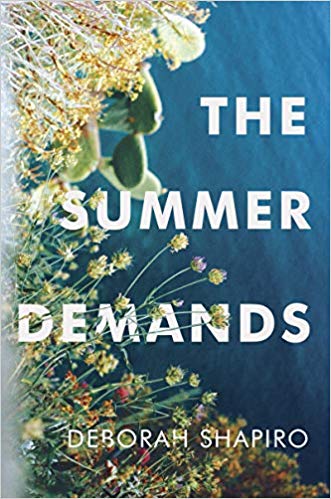
I began writing The Truants after a hiking holiday on a far-flung island of the Aeolian archipelago when it occurred to me that the landscape, and its position—stranded in the Mediterranean—was the ideal backdrop for a psychodrama of suspense. But somewhere in the writing process, the island started to feel more like a character than a setting. The winding cliff-paths, the sheer drops and forbidding sea all started having their own effect on the story.
Naturally, writing about an island was also a very good excuse to go back.
Here are some of the novels that inspired me to leave the mainland.
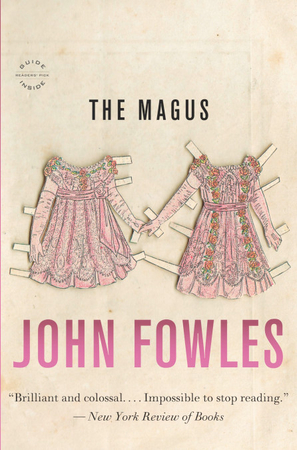
Fowles uses a Greek island to great effect as a backdrop for an intense psychological experiment that is carried out on his now-you-like-him-now-you-hate-him protagonist Nicholas Urfe. I remember reading this at university for three days straight, curtains closed. Compulsory reading for any young man who thinks that he “loves women.”
Two of Agatha Christie’s best works—this and Evil Under the Sun—take place on an island that was based on the real-life Burgh island, off the coast of Devon, where Christie went for periods of extended writing. And Then There Were None makes best use of the setting, with stormy seas cutting off the assembled suspects to create a sense of fatal claustrophobia as they are picked off one by one. I swam around Burgh island while I was doing some research for The Truants, lost all sensation in my hands and feet, and nearly joined them.
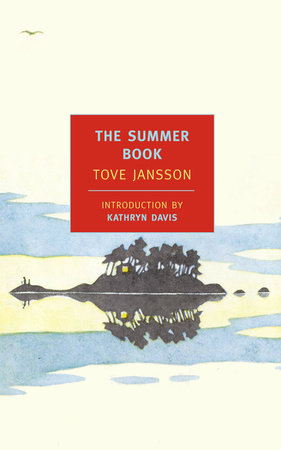
Jansson writes delicately about a relationship between grandmother and grandchild—in which the missing mother is felt keenly in the silences on a wild Finnish island. The non-verbal communication between the old woman and young girl and the daily workings of a simple life works beautifully to bring out the poignancy of this quiet, inter-generational masterpiece.
The island of Cephalonia feels like one of the central characters in this charismatic love story, and is, in fact, pivotal to the plot. Not only is the ambiguity of heroism and villainy explored through the occupation of the Greek island by an Italian army who are then massacred by the Germans; but the idea of “history” itself is challenged—as Dr. Iannis, the heroine’s father, struggles to write a factual book about the island, but finds himself constantly diverted by personal feelings and biases.
Most of Miller’s evocative, feminist retelling of Circe’s story takes place on Aiaia, the island on which Circe has been banished by Zeus because her occult powers don’t sit well in divine circles. Circe learns to make her place of exile work for her, harvesting dry herbs to make spells and soon the island itself begins to feel like an extension of her powers.
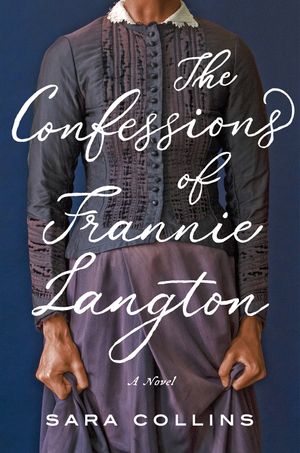
A devastating story of control, abuse, and twisted love told through Frannie, a Jamaican slave girl who is being tried at the Old Bailey for a double murder. But the roots of the crime take place in Jamaica, and with Frannie’s re-telling of the horrific abuse that took place as a slave girl in the “Paradise” plantation, the fetid “sun-addled” island takes on the nightmarish quality of a traumatized psyche.
Most of the action in The Great Gatsby takes place on “that slender, riotous island which extends itself due east of New York.” Like many of the characters in the novel, the island has a schizophrenic quality to it, split into East Egg—where the Buchanans live—and the “less fashionable” West Egg, where Gatsby and Nick live. One of the prevailing images of the book is of Gatsby standing at the bottom of his garden at night time, staring at the green light at the end of a dock on West Egg where Daisy and all his hopeless romantic ideals abide.
Not many people know this, but the first memoir in the English language was probably written by a mom who cried a lot.
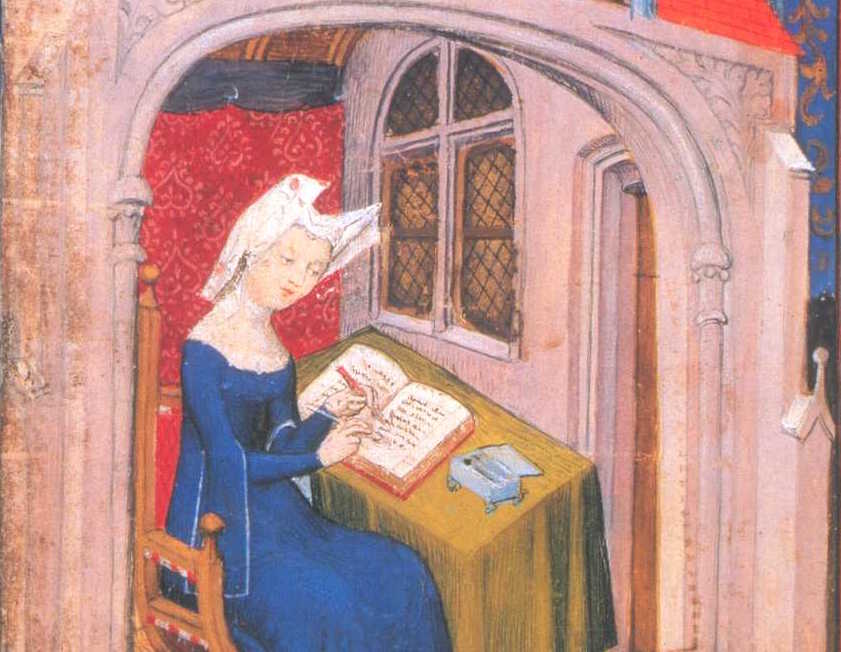
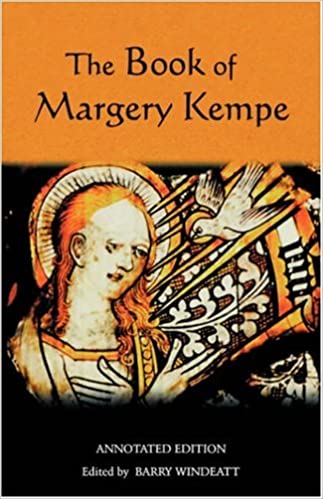
The Book of Margery Kempeis mostly the kind of text you read if you’re a medievalist, or maybe an English major at a women’s college, although I was an English major at a women’s college and I didn’t read it until I was in graduate school. It’s a shame that The Book isn’t more widely known, because we’re missing out on an important entry—possibly the very first—in the writer mom canon. The Book’s depiction of Margery’s spiritual reinvention is also a startling portrayal of a woman who strains against the parameters of her life and then reimagines them. And it is the story of a woman who becomes a writer because she believes that what she has to say is something that others should hear, even though she doesn’t fit neatly into any of the categories of people whose stories are understood to matter.
My brain—my one beauty!—became saturated with the responsibilities of motherhood.
Writing almost always feels impossible when you’re a mother with young kids, even while you’re actually doing it. I was unprepared for this truth when, a year into my literature Ph.D. program, I decided to grow a human being inside my body for the first time. New motherhood blindsided me like a semi truck. There was, naturally, the prisoner of war-level sleep deprivation. There was the fact that breastfeeding physically tethered me to my child like one of those yo-yo balls from the ‘90s, able to extend only so far before I had to rocket right back. But the hardest part was the way motherhood infiltrated every last corner of my consciousness. The well-rested idiot that I was before kids must have imagined that, with the onset of parenthood, my brain would become helpfully bifurcated: one side devoted to the vulnerable glow worm I had just birthed and the other held in quarantine, reserved for the work of thinking and writing. Instead, a potent cocktail of hormones and preexisting anxiety meant that my brain—my one beauty!—became saturated with the responsibilities of motherhood and the idea of the responsibilities of motherhood. Every minute was now a minute when someone might potentially need me. If I wanted to write, I needed not only to set aside the time and money to physically leave my child, but also to figure out how to mentally leave her behind. During those first few months, all of those things—time, money, and the ability to think deeply about anything—ranged from paltry to nonexistent. This was very unfortunate because I still had a dissertation to finish. Luckily, one of the subjects of that dissertation happened to be Margery Kempe, the patron saint of writer moms.
Like any story of religious conversion, The Book describes Margery’s pre-visionary life. She tries her hand at running a brewery and a grain mill, both common in-home businesses for late-medieval women in England, but both businesses ultimately fail. Then, after a spiritual awakening precipitated by mystical visions, Margery decides to pursue a religious calling and dedicate her life to Christ. The problem is that when you are a 15th-century married woman with young children, dedicating your life to Christ is a complicated proposition. When she makes this decision, Margery is no longer of the right age or virginity status to become a nun, but is still too young and married to enter a convent as an older widow, as some women did at that time. Instead, she creates her own idiosyncratic path. She travels widely, visiting various pilgrimage sites in England, throughout Europe, and even as far as Jerusalem. Everywhere she goes she confuses people by blurring boundaries. She insists, for example, on wearing white clothing, a symbol of virginity, despite the undeniable existence of her 14 children. She also adopts the kind of intercessory role usually reserved for priests. She is repeatedly asked by her fellow Christians to pray for them and at one point develops a reputation for being able to tell others if they are saved or damned. At the same time, she becomes known, and widely despised, for her loud and boisterous weeping, which she does every time she thinks about Christ. She thinks about Christ a lot.
Most medieval female visionaries were cloistered virgins, not married mothers of 14, so it is an uphill battle for Margery to be taken seriously.
The question of who possessed the authority to speak and write about God and the Bible was very much a live one during Margery’s life. Biblical interpretation and other religious writing was mostly a man’s game, mostly priests. The exceptions were women who experienced mystical visions, often understood to confer a kind of parallel, if slightly inferior, form of authority. Even so, those visions and their religious meaning were often filtered through a male scribe, usually a confessor, whose involvement in the production of that text was another, necessary authorization. Most medieval female visionaries were cloistered virgins, not married mothers of 14, so it is an uphill battle for Margery to be taken seriously and to get her book written. She fights for her book just as she fights for her unusual spiritual role. Serving as an intercessor between God and her fellow Christians meant stepping into a role that was parental but patriarchal. Perhaps because she becomes a visionary and a mother almost simultaneously, Margery attempts to reinsert motherhood into the spiritual parentage conversation from which it had been excised. In one of my favorite passages of The Book, Christ tells Margery that she should “make every Christian man and women your child in your soul…and have as much grace for them as you have for your own children.” In a spiritual economy in which women could either be spiritual mothers or physical mothers, this vision of Christ suggesting that it is precisely Margery’s physical maternity that makes her a great spiritual intercessor is nothing short of radical. It is, perhaps, the strongest affirmation of physical maternity in Middle English, making the case for the physical, lived experience of motherhood as a prerequisite for spiritual care rather than a disqualification. Margery can no longer be a virgin visionary, but she refuses to be a silent mother.
It is important to note that The Book of Margery Kempe is a book written by a mother but it is not a book about being a mother. It mostly ignores the years Margery spent birthing and raising her children. But motherhood, and the way it changed her, is suffused throughout the text. The story that The Book tells, one that Margery works hard to get down on parchment, suggests that the experience of becoming a mother was integral to Margery’s spiritual and literary aspirations. The first story she tells us is of a childbirth so difficult that she thinks she may not survive. Wishing to confess before death, she sends for her priest. But he is “too hasty” with her and she never ends up fully confessing. A period of madness follows, almost nine months of terrifying visions. There are devils and the flames of hell; she tears at her own skin trying to end her life. Finally, when her first baby has been out almost as long as it was in, Margery is restored to herself by a vision of Christ promising love and acceptance.
The Book of Margery Kempe is a book written by a mother but it is not a book about being a mother.
It is not hard to see how this experience is reflected in the religious role Margery ends up creating for herself. Many of the people she encounters are put off by her tears and her refusal to adhere to socially acceptable religious categories, but there also seem to be plenty of others, including members of the clergy, in need of a boundary-blurring spiritual mediatrix. The relationships between Margery and those who come to her for counsel are sometimes described using the language of motherhood. One priest who looks to Margery for spiritual guidance calls her “mother.” The Book notes that he is comforted by her words and that he treats her “as if he had been her own son born of her body.” I probably don’t need to tell you that tying spiritual comfort and authority to the language of bodily maternity was radical in the 15th century, just as it is radical today.
Notably, The Book suggests that Margery had a particular ministry among women. She visits with one woman suffering from temptations so great they render her unable to engage in any devotional activities. Later, The Book describes how she goes to see a woman who is “out of her mind” after childbirth. The woman’s husband tells Margery that his wife “roars and cries so that she makes folk terribly afraid.” They have put manacles on her wrists, he says, because she “will both smite and bite.” But when Margery enters the house, the woman speaks to her calmly. She tells Margery she is comforted by her presence and asks her not to leave. Margery continues to visit the woman every day, even when her behavior with other people becomes so violent that she is bound in iron chains. She prays for the woman to be restored to her wits, which she eventually is. Writing about this episode, scholar Lynn Staley notes that in helping the postpartum woman, Margery “seems to offer consolation to her former self.” It is not hard to imagine why Margery might have been popular among married and childbearing women. When she arrives in Leicester the Mayor there accuses her of coming to town in order to lead all of their wives away from them. I will always wonder what she was saying to those women in Leicester, and other women in other towns, just as I will wonder whether, when she finally succeeded in getting her book written, those women or their daughters read it and, seeing something of themselves, found comfort in it.
Margery’s Book offers perhaps the earliest example of how childbirth and motherhood can become generative in a literary context—even, or perhaps especially, when the writing is not about childbirth and motherhood. We need all the examples we can get. I am, I’m sure, one among many women writers who look to established women authors as guideposts. We scour interviews like detectives, hoping to gather clues about what it takes to turn the ideas in our heads into bound books with our names on them. That’s why comments like Lucy Ellmann’s in The Guardian—“You watch people get pregnant and know they’ll be emotionally and intellectually absent for 20 years”—are a punch in the gut. In another interview, she notes that the narrator of Ducks, Newburyport, a mother of four, “clearly has too many children”; too many for herself, for the planet, for the desire to do anything other than raise children. Perhaps some children would be fine, but not so many. And it’s true that, when I think about the women writers whose work I love, I note that nearly all of them have at most two children. I have three children under the age of eight: a veritable surplus of intellectual absence.
By Ellmann’s standards, Margery Kempe certainly had too many children. And, in fact, The Book’s account of her life seems to support Ellmann’s point about pregnancy heralding two decades of “intellectual absence.” Margery writes that it was twenty years or more from the time she first had her revelations until the time she could get them down on parchment. This is partially by choice—she tells her readers that for a long time she was “commanded in her soul” that she not yet write it down—and in part because it takes her a while to find a scribe who would agree to help her and then live to finish it. When she finally does get her story out into the world, she warns readers that it isn’t written in chronological order but instead in the order it came into her mind while she was writing it since “it was so long before it was written that she had forgotten the time and the order when things befell.” Truly, a mom at work.
I don’t need a scribe, but having children means that time is rarely under my control. When I had only one child, I used to get up at 5:30 to have an extra, quiet hour to write. These days, I’m often up just as early but it is neither extra nor quiet. Sometimes I end up writing a few sentences with a four-year-old on my lap. We watch the sun come up and I think about all of the hours I squandered before I had kids. Trying to write this very essay while my children were out of school for two weeks was representational in its abject horror and futility. But while it is true that there is less time to write when you have small children, it is not necessarily true that you have less time to think. When I am lying awake at 4:30 am, having been woken for a “drink emergency,” I am thinking. I am exhausted, but I am thinking. I turn ideas over in my head as I flip pancakes in the kitchen. Sentences or phrases sometimes spring to mind fully formed while I perform the repetitive tasks that parenthood demands. I once wrote the first draft of an essay while flying halfway across the country with all three kids. One arm held a sleeping baby while the other alternated between handing out snacks and typing into the Notes app on my phone. Having children has made me into a paragon of efficiency, teaching me to take the time when I can rather than hold out for the perfect moment. Margery waited decades to put her life to paper. I guess I don’t have that kind of patience, or maybe this overcrowded life is just the command that my particular soul was waiting for. Parenthood has undoubtedly given me more than it has taken. Children are defamiliarization machines, and seeing the world through three more sets of eyes enriches the quality of my own thought. Writing demands time, but ideas require stimuli, and I have no shortage of stimuli.
Children are defamiliarization machines, and seeing the world through three more sets of eyes enriches the quality of my own thought.
There are fewer gates to keep these days than in Margery’s time, or maybe the gates are just different, but we all need to feel authorized to write. There are some who would use motherhood as a cudgel or a cautionary tale in an attempt to convince us that becoming a mother—or too much of a mother—means locking ourselves out of the writing life. But the truth is that, like Margery, I found that motherhood unlocked something in me. Maybe it was surviving four days of labor or fourth months of no sleep, but when I emerged from the fog, I had more to say and an increasingly fiery need to say it. Those first weeks and months of motherhood threw me for a loop, but in retrospect the hormones saturating my brain were preparing it for a messier but more fertile creative stage. Like my life, it was never going to be helpfully bifurcated—but, like my life, the chaos enhances more than it impedes. The impact of having kids on my creative output is, in fact, so profound that I sometimes worry that it’s fueled by the hormonal changes that come with pregnancy and breastfeeding, and will disappear now that I’ve weaned my youngest child. Having children has simultaneously fried my brain and made it sharper and more focused. I don’t know how this is possible, but it is my truth. I see things differently now because growing and birthing a baby changes you. It can change your palate and your shoe size and it most certainly changes your brain. For Margery, this meant a series of divine visions that altered the course of her life. For most of us, the changes are far less spiritual, but they can be similarly revelatory.
Of course there are many women authors who have managed to create both children and books, even some with more than two children. But Ellmann’s comments do contain a kernel of truth: becoming a mother must necessarily change one’s relationship to writing. The reality is that children require the very same things to thrive as writing: time and sustained attention. I am always making a choice, even if sometimes that choice is doing both with less than ideal devotion. This is why I need Margery Kempe—and maybe you do, too.
There are scholars who argue that Margery’s Book was like a For Your Consideration screener for sainthood, that she was hoping it would get her the exposure she needed for canonization after her death. Christendom never recognized Saint Margery, but it’s time we think about how The Book can serve as a spiritual balm for women looking for a literary reflection of the ways in which motherhood can elevate rather than impede writing, or for women who seek a third option when it seems like the only choices are art monster or intellectually absent mom. Here’s what we can learn from Margery Kempe, patron saint of writing mothers: cry if you must, then bulldoze your own path.
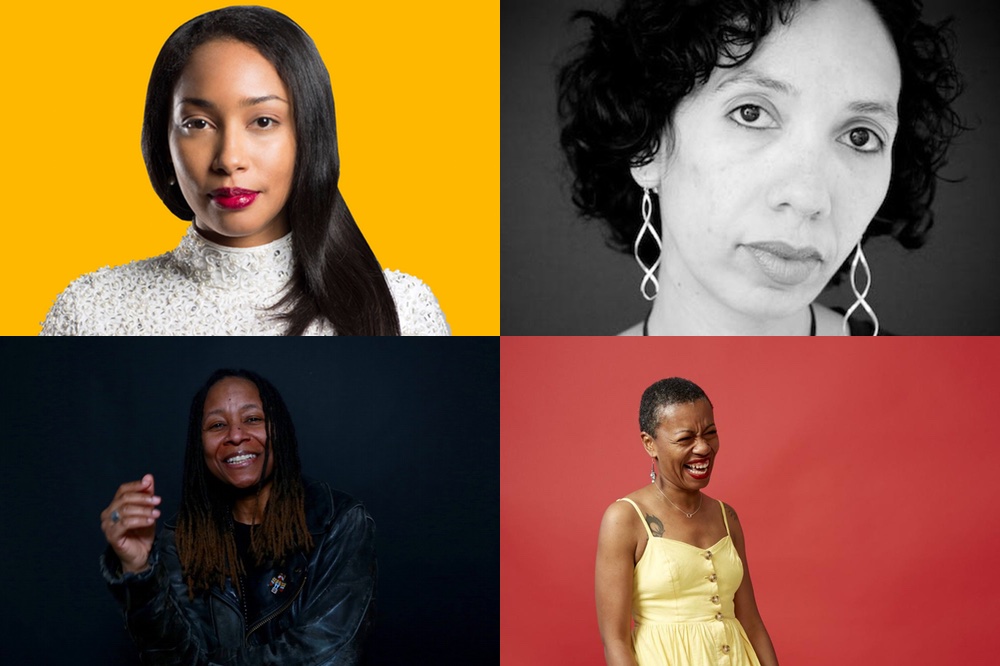
If you’ve been to a Baptist church, you know what a poetry reading feels like. The meaning reverberates in each line and stanza, inciting an “umph” or snap or clap from listeners to validate what the speaker just said. Elder ladies fanned themselves with one hand and snapped agreement with another every Sunday as I sat beside my grandmother in church, and at poetry readings that “holy feeling” ripples through me whenever I hear the work of the four poets I asked to take part in this roundtable: Anastacia-Renée, JP Howard, t’ai freedom ford, and Safiya Sinclair. You are different after experiencing their poems.
Anastacia-Renée, JP Howard, t’ai freedom ford, and Safiya Sinclair are educators, mentors, creators, activists, uniters, and the list continues. They encompass what I think of when words such as “consummate artist” and “community organizer” and “litizen” and “grace” are used. There’s no one way to define them, because collectively they encompass what we need in the larger world. I ask that you hear them below and in their poems, feel the urgency in the work they do and love for the people they speak to/of in their work. These four women graciously took the time to talk about the poets who feed their souls and the ways you can build a community of your own (spoiler alert: don’t want for one to find you).
Jennifer Baker: A friend of mine mentioned that poets have often been at the forefront of the political conversations, speaking for/about the people, inciting change and revolution. There appears to be a prominence in this discussion in poetry, at least how I read it or whom I’m reading, and it makes me wonder about the accessibility of it through trade-y spaces.
Anastacia-Renée (author of Forget It, (v.), 26, Kiss Me Doll Face, and Answer(Me)): In my opinion it’s a luxury to write about rainbows and butterflies only. It’s a luxury to ask myself if I consider myself an activist or artivist—the question is when am I not? If I am writing about truths from the past or present, for MY WORK, there is no escaping the melting of artistry and activism and I cannot imagine a world where my writing predecessors did not do the same. Lately I have been trying to practice what I am calling “the mellow poem practice.” Which is writing a poem a week (I have been writing everyday since August 2010) about nature or love or hell…a lamp. But honestly if I go back and look at those “mellow” poems, they are still activist-driven. Yeah, no breaks for me in that realm.
Poetry’s truth can transform, unite, and empower folks.
JP Howard (author ofSAY/MIRROR and a chapbook “bury your love poems here”): I think of June Jordan’s quote: “Poetry is a political act because it involves telling the truth.” Because poetry can be so powerful, so transformative, can speak truth to power. I think the #BlackPoetsSpeakOut movement is a prime example of how poetry’s truth can transform, unite, and empower folks. The #BlackPoetsSpeakOut activist movement actually gained its momentum from poets around the country/world sharing videos in solidarity and in protest and that digital component, showed how powerful and transformative poetry can be. When Black poets/Black voices took to the mic in poem after poem, video after video and declared for the world to hear: “I am a black poet who will not remain silent while this nation murders black people. I have a right to be angry” this showed how poetry in this “digital/online forum” can both unite and empower folks.
t’ai freedom ford (author of How to Get Over; & More Black): I think the advent of social media has put a spotlight on poets in the ways that mainstream outlets probably never would. Because of this, we are now seeing some rockstar poets emerge. As for their political messaging and activism, well, I think it’s quite revolutionary to engage with folks on a microlevel where they are able to have conversations around self-love and care. But I also think it’s interesting that super mainstream mags like the New Yorker with Kevin Young as poetry editor and Terrance Hayes over at the New York Times Magazine are giving the gatekeeper keys to Black folk and thusly we are seeing more of the work of Black folk in their pages. This is important because so often poets find themselves preaching to the choir. No one buys more books of poetry than other poets. So to have the opportunity to reach newer and wider audiences is necessary exposure for poets who also assert a particular politic.
Safiya Sinclair (author of Cannibal and the upcoming memoir How to Say Babylon): In the literary world, poetry remains the purest and most innovative of the arts. It functions and flourishes outside of capitalism. It grows from a root of its own necessity, and bears the fruit of its own survival. Precisely because poetry operates outside of capitalism we find that poets are more politically engaged and unafraid of taking risks—formal, thematic, and otherwise. Poets are undaunted by being the discomfort in the room. Because most poets are primarily unconcerned with the desires of a market, poetry is inherently more revolutionary in its aims; work born from individual necessity translated into universal urgency. It’s hard for me even now to see outside of that urgency; I read at least one poem every day, and my world is constantly filled with poetry. For me, poetry is quite visible and also indivisible from my understanding of natural, socio-economic, and geopolitical systems. Poetry by its nature shapeshifts and evolves like wildfire, pioneering ideas, revolutions, and language, and I think it is innately suited for digital formats, where it has been thriving much in the same way it thrived on paper, and the way it thrived before paper. Poetry, which began with singing, and existed before the novel or the essay, will continue to outlive us.
JB: The question I get most often from artists breaking new ground is: How do I find community? It seems to be one of the biggest impediments for writers to keep going. What’s your advice to those struggling to find theirs?
Poetry, which began with singing, and existed before the novel or the essay, will continue to outlive us.
Anastacia-Renée: The biggest and most important lesson I have had to learn about finding community is that: (1) You have to want to be found and be part of a community. (2) Sure, we want to handpick our community and be with our “chosen” family, but there may be times when what you are choosing or what you want may not come in the shape or design of what you imagined (I am laughing so hard at myself). The chosen family might not be what you chose at all but due to geography or energy or life circumstances or divine intervention. The third lesson I learned is that it takes work. No one plants a seed and says “My garden work is done!” The fourth lesson is that true community means trust and vulnerability from all its members. And the fifth and most difficult is that, just like family, if the love is there, it’ll be there whether or not you are in constant contact with your community members or not. Sometimes community comes and goes or you do. The older I get the less attracted I am to light lunches and casual exchanges. Long lasting relationships feel important and necessary. I have moved around so many times and have had to start over every time I move, so I understand the feeling of isolation and looking for a community but I also believe in energetic asking. Tell the universe what you want in a community and also tell the universe what you can give to a healthy community.
JP Howard: Yassss!! Community is literally everything and often what keeps me going when the world feels oppressive, which these days, can be often. The chance to be in conversation with the poets in this interview feels just right because I admire and respect my fellow poets and, like Anastacia said, we have many overlaps and connections in the poetic community. I am fortunate to call Anastacia one of my best friends, literally my “poetry sistagurlfirend” ever since we met during our first year at the Cave Canem Retreat as “suitemates” 12 years ago. I consider myself a community builder as the founder and curator of Women Writers in Bloom Poetry Salon, a NY-based monthly writing community and traveling Literary Salon, inspired by traveling Salons of the Harlem Renaissance. I am a big believer in reaching out to community to collaborate and because I am a part of so many writing communities, some large, some small, each one has nurtured me in different, but important ways. I tend to reach out and collaborate with fellow poets a lot. I write and exchange two new poems a day with my NaPoMo groups (I belong to two) each April and sometimes we extend that to other months. I often speak to folks around the country about Bloom as a model of community and collaboration and I always tell folks that a writing community can be as small as two writers connected, exchanging and supporting each other, in person or even virtually. It is showing up and remaining accountable that keeps a writing space going. I agree that folks should seek out writing communities that feel “just right” for them; sometimes it takes time to find a writing community that is a “good fit,” so my advice would be please don’t give up! Do seek out and go to local readings, local writing series, take local writing workshops, attend literary Salons, and writing conferences; they are all great ways to find a community that fits. Of course, I’m also a big believer that if the writing community you want/desire doesn’t exist yet, then folks should consider starting it themselves. Ultimately, follow your gut and write with communities that affirm and welcome you.
t’ai freedom ford: I was talking to a younger poet at a writing retreat similar to Cave Canem but for fiction writers and she was lamenting how many times she’d applied and been rejected from Cave Canem. After informing her of how the math can work against you in ways that have nothing to do with one’s personal merit, I told her that she could very well create her own community of poets with whom she could regularly meet, workshop new work and fellowship. And that’s my advice in general, create what you are longing for. I admire the work of JP and her WWBPS writing group because she did exactly that. She created a space that seemed to be missing for women of color, especially queer women. Honestly though, I often feel just on the outskirts—a lonely outlier who would love to commune with folks but often times finding myself just going at it alone. Writing by nature is a solitary endeavor, but if community is necessary, attend readings, put yourself in public writing spaces and you will find your folks (and they will find you).
Poetry is such a small community and we poets all share that communal fire, what burns in us to burn brighter in the work.
Safiya Sinclair: For as long as I can remember, my work was born in solitude, and I still write that way now. Alone at my desk, in the quiet midnight hours, sharing my work with only a few trusted readers. But I started writing poetry precisely because of that solitude, making art out of this forlorn sense that I lacked a community of like minds. It wasn’t until I started my doctoral program at USC and began attending writing conferences that I finally started finding other poets kindled by a strange fire. Poetry is such a small community and we poets all share that communal fire, what burns in us to burn brighter in the work. So many times I’ve marveled how much my own work has gone ahead and fostered this community for me. Once my first book came out, so many poets, particularly Black poets, welcomed me in with open arms, and I felt at home in an artistic community for perhaps the first time. I continue to find them now through their work, all of us poets who were born in solitude. Now my poetic seascape is so full. Often when I meet other Black poets for the first time we find that we already feel a kind of kinship, that we are already part of a particular family, and I cherish that. Find your people—reach out with your words to other writers who move you, and keep writing, keep doing this strange work, which is the most vital part of building the community meant for you.
JB: When I look at more historically dated collections that remain defining tomes I think of The Black Poets by Dudley Randall. But even when reading it I see a dearth of female voices. Which women poets have been your influences and what aspects of their writing challenged you?
Anastacia-Renée: Some writing and creative ancestors who have helped shaped me are: Audre Lorde, Lucille Clifton, Gwendolyn Brooks, Pauli Murray, Toni Cade Bambara, Pat Parker, June Jordan, Monica Hand, Zora Neale Hurston, Lorraine Hansberry, Octavia Butler, Jayne Cortez, and Nina Simone. It’s strange I know, but at times I feel like these women are pouring libations on me, though I am alive. They remind me not to grow tired and to continue to write and do the hard and heart work even when I feel completely spent or empty. I am in a place in my writing and personal life where I am thinking about what it’s like to be a living legacy and I can only do that by looking at those who have left a legacy for me to LIVE. For me to WRITE. For me to make change whether it be loud or by choosing to be mindful of self-care and or chilling with a high vibration and low tolerance for bullshit. In all of that, I know I can pick up a book and turn to a page and gain wisdom, strength, joy, and even divine spiritual guidance from these women.
JP Howard: I was an early fan of Margaret Walker and at age ten would memorize and recite her powerful poem “For My People” to my Mama and the elder church sistas every Sunday at Abyssinian Baptist Church over on Lenox Avenue. At that time, I was painfully shy, but I loved how powerful my voice “sounded” when I recited Walker’s poem week after week. My Mama was my first and fiercest fan of my poetry skills and really helped to build up my confidence.
I often say Black lesbian poets helped saved my life. I am a Black lesbian activist poet and write in the tradition of Pat Parker, Cheryl Clarke, and Audre Lorde. I discovered their work while a freshman at Barnard College, right before I came out as a lesbian to my family. Parker and Lorde wrote about being black, lesbian, feminists, mothers, activists and loving women unapologetically; Clarke in her early collection, Living as a Lesbian, mesmerized me with her honesty about loving women. Collectively these womyn/these magical wordsmyths, were kicking down doors/barriers and essentially giving me permission to raise my voice loud and clear. They gave me permission to write about loving women, about walking through the world as a black womyn, about race, and to also write about the early struggles of coming out to my family matriarchs. I adored my Mama and Grandma and was their only child and grandchild and was adored in return. However, they had migrated up north from the deep south, were deeply religous and on learning I was a lesbian in my freshman year of college, it was my beloved Grandma who boldly called me a “bulldagger.” I was heartbroken, but Parker had written about similar struggles in “My Lover Is a Woman.” Reading her work allowed me to speak up, use poetic forms that I adore, such as ghazals, etherees, and praise poems, yet to bring my activist outlook to the page and stage. I make sure to let folks know I am bringing all the parts of myself to the stage and, in doing so, I am honoring Parker and those that write in the tradition of queer activist poets of color.
t’ai freedom ford: When I finally I accepted that I was queer I was a freshman in college and I happened upon the work of Audre Lorde which cracked me wide open and gave me new ways to understand my existence. Before that, my sweet English teachers had exposed me to the usual suspects: Angelou, Hughes, Baldwin. Then, I came across the poetry of Sapphire and Asha Bandele and the fiction and memoir of Dorothy Allison and I finally felt as if I’d found my people. All of them allowed me to stretch the boundaries of subject matter because they were writing about desire and pain and family and sexual abuse in ways I’d never seen. Presently, I would say I’ve learned a lot from folks like Wanda Coleman, francine j. harris, Tonya Foster, Natalie Diaz, Bhanu Kapil, r. erica doyle, LaTasha N. Nevada Diggs and others. Formally and thematically they’re all over the place, but they’ve given me permission to take more experimental risks with both language and form.
Safiya Sinclair: I am always learning from Audre Lorde’s words, particularly how she writes about the power of the feminine erotic as a source of knowledge. June Jordan’s rebellious and unflinching poems light a fire in me whenever I most need it. As a budding poet, Sylvia Plath was the first poet to take the top of my head off when I saw what nuclear power could be enriched in a lyric line; the way music and imagery entwine to create the lushest hothouse of the poet’s interior. I love Lucie Brock-Broido and Brigit Pegeen Kelly’s work for the same augury and texture they weave to create their own verdant landscapes. I love the raw unearthing and historical keening of Bettina Judd and Natasha Trethewey’s poems, and the clear-eyed rigor of Monica Youn. My favorite poet writing today is Natalie Diaz, whose work always bewitches me, leaving me lovestruck and awestruck with its sheer velocity and beauty, entrancing me with her own moonlit duende. I wouldn’t be here without my mentor Rita Dove, whose work and words constantly teach me about grace, and how to let a poem breathe, and soar, and transform me. Most of all, the oral folklore, storytelling, and earthy spells of language passed down to me from my mother molded me into the poet and woman I am today.
It’s a strange thing to be overlooking Paris from the rain-dampened steps outside the Sacré-Coeur Basilica, a little love-struck, and have your new wife lift her nose out of her paper cup of wine to ask, “Darling, could you kill a Muslim?”
Strange, to be sure, but it happened to me two days into my honeymoon with Alison.
The previous week, a pair of religious fundamentalists had stabbed seven people, including one American tourist and two French school children, on the Metro. Five of the seven had died. At the time of the attack, I’d offered to cancel the trip. “And let them win?” Alison had said. Our travel agent, who was also my second cousin, had reassured us of our safety and rattled off comforting statistics, citing obscure reports whose validity I never confirmed. Still, the terrorist attack had given Alison nightmares. In one dream, she watched a U-Haul park outside of the home we were in the process of purchasing. Rather than hauling in our furniture, the movers carried in hundreds of backpacks, wherein Alison found the dismembered bodies of murdered children.
“All those backpacks,” she said now, to jog my memory.
In the shadow of the grand church, I picked up a half-crushed Kronenbourg can some vagrant had left behind and deposited it into a waste-bin. I told myself that Alison’s altruistic impulses had been derailed but that, in a matter of seconds, she’d see her error. After a moment I sat back down beside my wife and poured the last of our red wine into my cup.
Alison placed the empty bottle on its side and with a finger set it rolling.
“You just don’t get it,” she said, and with each word she spoke, the bottle descended another step. “They hate us.” This wasn’t just about the Metro attack. Even as we’d shopped earlier that day, in a Champs-Élysées supermarket, she’d heard talk of violent protests. In the halls of the Louvre, she’d been so deeply impressed by the abiding beauty of Delacroix’s Liberty Leading the People that she’d felt a kind of maternal urge to hold the entire museum to her naked breast. Later, while purchasing a sparkling water and a postcard of the aforementioned painting from an on-site café, she had spotted a brown man in a skullcap whose torso seemed unnaturally thick, “as if wrapped in a dynamite.”
As she said dynamite, our empty wine bottle exploded somewhere below.
“Can you imagine Liberty in a burka?” she said.
Again, I ignored her question. Sometimes silence is the best medicine.
This was not one of those times.
Back at our Montmartre apartment, Alison failed to respond when I placed my hands on her ample hips and settled my chin—which she’d once deemed “adorably cleft”—on her right shoulder. I waited for her to turn her wine-stained mouth to mine, for a humid embrace followed by a love-tumble onto the king-sized bed. She said something in French, a language she’d learned in college decades earlier and of which I have only emergency phrases memorized from guidebooks.
She brushed my hands off her hips. “Imagine,” she said, drawing back the comforter as we ventured into the realm of hypotheticals, “imagine if that man had blown up the Mona Lisa.” She sighed and crawled into bed. She opened up her paperback thriller, sighed, and set it back down without reading a word. “I’ll have nightmares about the museum,” she said. “I know I will.”
Within a matter of seconds, she fell asleep.
The brevity of our courtship had made premarital cohabitation inconvenient if not impossible. This did not bother me. She worked early; I slept late. Until now, we’d shared a bed only when making love or if one of us had drunk too much to safely drive home.
Alison slept noisily. Her lips made a puh sound with each exhalation. When she adjusted her head on the pillow, which happened frequently, she mewled like a cat. Soon she’d torn the corners of the fitted sheet away from the mattress, and the fabric bunched beneath my bare shoulders. These problems were compounded by my overactive imagination: I envisioned the nightmares she must be having, scenes of violence I had no way of stopping.
Though I had books of my own, I reached for Alison’s novel on the bedside table; I could just read by the street lamp shining its faint light through the window. The epigram, from Tony Kushner, called love “a magnificent rose smelling faintly of blood.”
I don’t care for thrillers.
I did not sleep.
The next morning, banished from the cramped bathroom where Alison was applying more varieties of make-up than I knew existed, I escaped to the balcony with a cup of coffee and a travel guide by Rick Steves, who offered not one solution to my marital unease, but who did list several options for authentic crêpes on a budget. I memorized a few more phrases in French—Can you speak more slowly please? Come with me!—and watched as school children passed along the sidewalk holding hands.
Across the road, on a neighboring balcony, a lanky, olive-skinned man stepped out of his apartment with a cigarette and a newspaper. He had a long, pointed beard, and as he took his seat, he glanced toward me. He did not smile as an American might, but he gave me a look of recognition and, I thought, kindness. Then he lit his cigarette, opened his paper, and began muttering to himself as he read.
A moment later, Alison appeared beside me, better looking and better dressed than I, in tight, dark-washed denims and a blue blazer with gold buttons double-columned along the torso. Never before the honeymoon had I seen her in such outfits, and I complimented her.
“A good traveler assimilates,” she said, and glanced toward the bearded man.
“Have a seat,” I said. “I want to tell you something.”
In a previous marriage, I’d been forced into couple’s counseling. The bonding strategies described had made no difference in that relationship, but, determined not to fail again, I had recently revisited some of my therapist’s advice. If you feel like you’re losing the battle, she said, take off your armor and hand your enemy a weapon. Vulnerability and openness solve more problems than emotional warfare ever can.
Unable to meet my wife’s eyes, I stared at our neighbor as I told her about my teenaged hunting disaster, when I’d shot a deer nibbling corn beneath a feeder. Afterward, I’d dragged the doe half a mile over dirt and cactus and rock, and by the time we’d hefted the carcass into my uncle’s truck, the fur had been scraped from the back of the animal’s head. Worse still, I’d aimed poorly, and the shot had entered the deer’s right flank and passed through its entrails. Intestines uncoiled out of the exit wound, emitting a sickening scent. In celebration, when the animal had been processed, my uncle had invited all of my extended family over to share in the kill. He’d chicken-fried the venison and heaped it onto my plate. Everyone in the family had waited for me to take the first bite.
“And when I took it,” I told Alison, “I tasted raw sewage.”
“He’d cooked it badly?”
“Everyone got seconds. But I could only taste the bullet that had ripped apart the doe’s insides and the food my food had half-digested. A taste like death.”
“And so next time you shot the thing properly, through his—what, his heart?”
“Lungs would be the correct shot,” I said, “but there was no next time.”
“You gave up?”
“And one other thing: I don’t really care for the Mona Lisa. It’s one of those paintings that’s so ubiquitous you can’t really see it.”
“Darling, why are you telling me this?”
“I’m not a violent person,” I said.
She considered this for a long moment. A wisp of smoke from our neighbor’s cigarette reached our balcony. Alison coughed. Then she said: “I don’t think we ever know what we are, exactly. I think we’re always finding out.”
I don’t think we ever know what we are, exactly. I think we’re always finding out.
That afternoon, as we approached the entrance to the Musée Rodin, Alison nodded toward an old, fragile-looking black man. He stared at a half-eaten sandwich with demented intensity. In the hard-up, the lonely, the defective, I sometimes glimpse my own capability for failure. A few bad choices, and I too might be a haunting passersby outside of museums.
“I see a man like that,” Alison whispered, “and wonder: What if some maniac beheaded The Thinker?”
I briefly mentioned the connection I felt—but this worked opposite of my intention. Rather than momentarily extending compassion to this man, she retracted it from me, and took off walking. We passed through the museum, first the garden then the galleries, in silence, until we approached a crowd, in the center of which stood a sculpture called The Kiss, a life-sized depiction of two naked lovers, mid-embrace. A guide commented on the statue in French, and instead of trying to understand, I soaked up the scene’s explicit sensuality.
When the crowd had dispersed, I slid between Alison and the statue, kissed her, and, mimicking the lovers’ pose, pressed my right hand into her left thigh.
She bit my lower lip, gently at first, then with increasing pressure.
A guard cleared his throat.
As she pulled away, Alison said: “They’re in hell.”
Only then did I read the English translation of the placard, which described a scene from Dante’s Inferno: Two lovers slain by the woman’s cuckolded husband were damned to eternally wander through the afterlife.
“But who knows,” Alison said as I caught up, “maybe the kiss was worth it.”
For the evening, she’d made reservations at a highly-Yelped, traditional French restaurant called A laBiche au Bois, and as she got dressed at our apartment, I again stepped out, hoping to escape the toxic reek of hair spray.
This time, our neighbor had beaten me to the balcony, and across from him, at a table, sat a teenaged boy, to whom the man spoke loudly, authoritatively, but with compassion. Twice he reached across the table, touched the boy’s face, and said something soft and inaudible. The boy nodded. After a while the man handed the child a cigarette.
The boy lifted it to his lips and inhaled.
He coughed violently—a sound drowned out by the father’s laughter.
As a younger man, married for the first time, I had the conviction that I’d been denied some essential knowledge of adulthood—some rite of passage. My father was clunky, awkward, and prone to detonate intimate moments with mis-remembered quotations from screwball comedies.
I silently drank my wine and watched the scene on the opposite balcony.
Alison was, like me, near the midway point in her journey through life, and it never bothered me that the age she advertised (forty-one) did not align with the age listed on her driver’s license (forty-seven). Mystery thrives on such small deceptions. Neither did I mind how little I understood her career as a Customer Success Specialist for a tech company. I found my own job unworthy of conversation; I assumed she felt the same. She earned a good deal of money, checked her email frequently, led a team of underlings, and made time for me. More information than that might prove gratuitous.
Mystery thrives on such small deceptions.
What I did, however, abruptly find disturbing was the fact that, by my calculations, we’d known each other for approximately one percent of our lives. As two divorcees, we had met through a website, dated briefly, and married with minimal ceremony. Still, I’d felt then that we knew each other, that we essentially were the same kind of lonely and loving. Only now did I consider that while I might know Alison’s deepest self, I did not know what to make of her supposed fatigue or of love’s relationship to violence.
I did not even know how to fall asleep beside my wife on our honeymoon.
For a moment I thought this neighbor, about whom I knew nothing, might be capable of leaning across the railing, stretching over the street, and whispering some secret of existence into my ear.
“He makes me nervous,” Alison whispered, suddenly appearing behind me.
“Why?”
She looked at me as if the question were absurd.
“I don’t think he’s Muslim,” I said.
“That’s the thing about belief: You can never tell.”
“He’s smoking. Can Muslims smoke?”
“They can burn buildings but not tobacco?”
“Jesus, Alison—”
“Let’s go,” she said. “We’re taking the Metro.”
I did not tell Alison I had never ridden on a subway before.
I assumed, from the way that she spoke, that we’d be entering some kind of cultural exhibition—that the train cars would be brimmed with women in burkas, men muttering in Arabic, entire tram cars kneeling on prayer rugs.
The reality was worse. The crowd into which we stepped made me feel like a particle—a piece—a fragment—which fit into a larger collective over which I had no control. The identities of the passengers, religious or otherwise, bothered me less than the quantity. I could hardly move. I could hardly communicate: Apologizing in English earned me nothing more than a confused look from the short, angry-looking woman into whom I’d bumped. The smell—here a whiff of urine, there of perfume—sickened me. There were no seats to be had. I hung onto the overhead strap for balance as our train left the station. With my hands over my head, I thought about how open my body would be to an attack—how easily a psychopath could target my vitals. At each stop passengers exited only to be replaced by more passengers. I felt like a cat fallen into a garbage compactor. I kept trying to make myself smaller. The air tasted of poison, and I breathed in and out quickly, as if toxic oxygen, like dropped food, had its own five-second rule.
Then, one stop from our own, as passengers exited, Alison threw her arms around me. Her pelvis pressed against mine. She slid her hands over my back pockets.
Suddenly I could breathe.
Merged with Alison, my existence in the crowd became real. One person was nothing, but a couple could mount a mutiny. As the train started once more, its momentum seemed to surge through me. A set of tracks, I realized, had been leading me to just this place at just this moment. My destination was Alison, whose nose nudged my cheek as the car shook to a stop at our exit.
Inside A laBiche au Bois, Alison ordered for both of us. Well into a bottle of wine, I said, “Darling, what made you grab me like that?”
“Love,” she said, as though reading my thoughts.
I took her hand.
“When you love someone,” she went on, “you want to protect them.”
“The crowd,” I said.
“That man on the train—” she said.
“What man?”
“That thief,” she said. “He smelled like a gutter.”
“I didn’t see—”
“He was about to steal your wallet,” she said. Something about his stature, and the way he puppeted an empty sleeve, had tipped her off.
I believed her. She understood the culture and the language better than I; she would understand the gestures better, too.
Still, it left me sad, aware of all the dangers I failed to recognize, and, for the first time, I felt homesick for America, where I could always climb inside my own vehicle and lock the doors.
The food arrived: baskets of bread, a pot of steaming beef stew which we spoon-fed each other, mashed potatoes swimming in butter, and escargots—all of it excellent, paired with good wine. Yet my stomach felt queasy. I felt as if I’d left my insides on the train, and soon after we’d finished eating, I found myself weaving through the tables in that tiny restaurant, passing beneath a large set of mounted antlers, and ducking into the bathroom. Sweat stood out on my forehead. Above the mirror there was a painting of a countryside in which fawns, still covered in spots, grazed beside their mothers. I went to the toilet and afterward washed my face in water from the faucet.
When I returned to the table, Alison told me she was proud of me for facing my fears.
“I don’t think I’ll make a habit of riding the train,” I said, “but this once, with you—”
“I meant the deer.”
“I told you earlier,” I said, “I never did hunt again.”
“You’ve been studying French for weeks, I assumed you knew—” She paused. “Knew where we are.”
“What?”
“A la Biche au Bois,” she said. “The doe in the woods.”
“I don’t understand.”
“We just shared the venison stew,” she said. “You kept it down. Don’t you see? It’s never too late to gain courage.”
I felt another wave of nausea crest and crash. “You tricked me,” I said.
“Darling.”
“What’s the matter with you?”
“The matter with me?”
“First you ask me that homicidal question, then you poison me. For god’s sake, when you married me, you knew who I was.”
“We marry a mystery.” Alison said, half-draping her cloth napkin over her hand, and cleaning beneath her fingernails with an escargot fork. “Life is change. I want to protect you—from others, from yourself. I want you to protect me too. That means more than just staying up late at night, drinking wine by yourself on the balcony. Never lying down beside me. Don’t forget: You committed to a mystery, too.”
“We marry a mystery.” Alison said, half-draping her cloth napkin over her hand, and cleaning beneath her fingernails with an escargot fork.
With those words, she dropped her fork and stood up from the table. I thought she meant to make her own trip to the bathroom, but instead, she walked right out the front door, turned left, and disappeared.
I struggled to communicate with the waiter, until finally he brought over another waiter, this one more patient and with better English.
Alison didn’t return.
Outside, in the middle of a foreign country, lacking the language, a map, my wife, I felt utterly lost. A couple on a moped sped past in the tree-lined street. Already I could hear people back home laughing: The marriage didn’t even last through the honeymoon! The sound of their laughter drove me into every restaurant or bar within a four-block radius, searching for my wife.
Inside a dimly lit café, I momentarily mistook another woman for Alison. They wore the same coat, had the same gray eyes. Even their noses were identical, tiny and turned up at the end. I’d already placed my hand on her shoulder when I saw a tattoo of a blackbird on her inner wrist. To make up for the mistake, I bought the stranger a cocktail. I bought one for myself as well.
Eventually I flagged down a taxi, but when the driver asked for my address, I blanked. “Sacré-Coeur Basilica,” I told him, and he took me to a street below the church.
As I ascended the stairs, I again heard laughter. I high-stepped over a broken wine bottle. The laughter grew louder as I climbed, and for a moment, I thought perhaps this was the voice of God, coming from the church, reveling in the absurdity of his creation. Another flight up, I heard two distinct voices laughing.
Then, at the top, I saw Alison, smoking a cigarette, sitting in the darkness, conversing in French with a pale, young man, no more than a child really, in a black T-shirt, tight jeans, and Nikes. He wore his hair short on the sides, with a tuft of bleached hair on top.
By now I was sweating, a little drunk, and angry, and coming out of the darkness, I must’ve cut a strange figure against the skyline, because the boy rose to his feet apprehensively. He looked scared—an expression I recognized, even identified with, and that made me hate him all the more. Alison said something in French. The boy’s face softened.
“Hello,” he said. “We were just talking about you.”
“Fuck off,” I said.
He looked at Alison. “I don’t—I don’t understand.”
“Get the fuck away from my wife,” I said, and slipped my right hand into my pocket.
Again he looked at Alison, who shrugged and ground out her cigarette.
“I do not think you are a good man,” he said, and took a wide berth around me.
As he slunk into the darkness, I asked Alison: “Since when do you smoke?”
She began to laugh, to laugh and to kiss me. Instantly my anger melted into desire.
Back at the apartment, we had the kind of honeymoon sex people get married just to experience. I felt like a teenaged boy, if a teenaged boy knew what to do once he undressed.
But even exhausted with love, I could not sleep. I ate a chocolate bar on the balcony. I drank more wine, watching foot traffic. I felt a little drunk by the time I heard a door open on the street below.
Across the road, our neighbor stepped onto the sidewalk. He lit a cigarette. After five or ten paces, he stopped. He squatted. I imagined, hazily, that he might be unrolling a prayer rug.
He placed his cigarette between his lips to free his hands and tie his shoes.
Our positions recalled for me the hunting experience I’d had with my uncle: The man knelt broadside like a doe at a feeder. It sickened me a little, and yet, I let the encounter play out in my mind. When I’d killed the deer, my uncle had explained the process as natural. People needed food, the deer provided food. In the same way, a sort of intricate logic suggested itself to me now. If this man meant to kill schoolchildren, if he meant to blow up museums, if he meant to fuck my wife, then, as a man, I had no choice but to see him as a body. I imagined his anatomy. I imagined the dual, wet lobes of his lungs. I imagined a rifle scope crucifying my field of vision, centered over the man’s ribs, beneath which his internal organs lay vulnerable. I imagined pulling the trigger and seeing him slump and dragging his corpse over the cobblestones.
The man stood, retrieved his cigarette from his mouth, and resumed his walk.
The following day we visited Edith Piaf’s grave at the Père Lachaise cemetery. We hummed “La Vie en Rose.” We lunched at a nearby restaurant, where I had a fried-egg sandwich with white cheese and sliced ham. Alison ate hard French bread slathered in butter. When we returned to our apartment, we drank wine, made love, and lay awake talking about our pasts. About the people we’d been, the lives we’d led. We lamented the strangeness of middle age, the feeling that we had been children playing in a field who had dozed off and awoken with achy knees.
“I’d do anything for you,” I told her.
“Anything?”
“Even that.”
Alison never again mentioned the Muslim question.
She bought me a Mona Lisa keychain with a bottle opener on the bottom.
But I could not stop thinking about the hypothetical man and his hypothetical crimes. It boiled down to preventative justice: killing to avoid a crime. And say this man’s son had been with him? Would I kill the child, too? It sounds absurd, I know, but I lay awake the entire final night of our honeymoon contemplating this, the consequence of it. If a man could be killed for his beliefs, for the possibilities that they engendered, what might I be guilty of? Earlier in the week, I’d indulged impolite thoughts about a waitress. I have a weakness for women in stockings.
If a man could be killed for his beliefs, for the possibilities that they engendered, what might I be guilty of?
Better not to linger on the idea, I decided now. Better to focus on my wife, our marriage, the foundation we were laying for the life we would build together.
Love ended the discussion, as it does, eventually, end all discussions, the last word on a world of idiocy and hate.
On the runway at Charles de Gaulle I read a New York Times article about a native Iowa woman who had been acting as an ISIS recruiting agent on Twitter. In the featured photo, she had blonde hair, green eyes, and pearl earrings; she was wearing a Victoria’s Secret PINK t-shirt. The Face of Radical Islam? the headline ran. Without meaning to, I imagined choking her as she kicked my shins. I wondered whether my fingers could penetrate her skin and sink into the cords of her throat.
Sleeping beside me, Alison looked completely at ease, lost in pleasant dreams.
The stewardess, informed that we were returning from our honeymoon, brought us very bad champagne that I nonetheless drank quickly. Once we reached cruising altitude, I got up to encourage my circulation—my mother died of an embolism—and to go to the restroom.
If the pretty Iowan could be ISIS, I thought, walking up the aisle, who was outside the realm of suspicion?
Not the businesspeople with laptops on their fold-out trays.
Not the mother reading to her toddlers.
Not the wide-eyed tween peering out the window.
I looked at a sedated Jack Russel Terrier with a mixture of fear and distrust.
I loved Alison. I wanted to protect her.
But could I kill the college-aged boy fitting pillowy blackheadphones over his ears?
Could I kill the grandmotherly woman unwrapping the foil from her stick of gum?
In the tiny lavatory, listening to the great plane hum, I decided that if I had to, I could. I could batter the pilot, take the plane down, sacrifice the innocent people, if it meant saving Alison—if it meant saving us. I could open the hatch and push out the stewardess with her attractive British accent and the bald baby sucking his pacifier and the acned adolescent in constellation-covered yoga pants. I could watch them tumble into oblivion without blinking, and I could crash the plane into the side of a building, and I could die without remorse.
Somehow this did not seem like enough.
The flushed toilet made a violent sucking sound. I washed my hands.
The true test would be killing someone who exactly resembled Alison. Not a likely scenario but also decidedly not impossible: I’d already seen her doppelganger in a Parisian bar.
I sipped her champagne and stared at Alison’s eyelids. I had a hard time imagining Alison as a corpse; when I succeeded, envisioning her skeletal remains in a gold-buttoned blazer, I had a harder time reining in my heart rate.
The cabin lights dimmed.
The stewardess brought one more plastic flute of champagne.
I watched Alison breathe. Her left index finger began to twitch, and I placed my palm on her knuckles. Then I picked up the pen with which I’d been doodling—mostly images of wine bottles and rudimentary birds—and gently pressed the nib to her neck, right beneath a thick artery, until a blue spot appeared. I pressed harder, a little harder yet.
I withdrew as she began to stir.
“Why are you smiling like that?” she asked, blinking and then pawing at her neck.
I kissed the crease that a headrest pillow had imprinted on her left cheek. “I’ve made a decision,” I said.
“Quit smiling like that,” she mumbled.
“I feel light. Like a bubble in a glass of champagne. Like The Thinker when he finally stretches his legs. The Mona Lisa when she blinks. Like—”
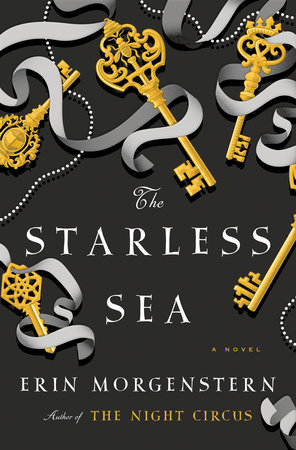
Erin Morgenstern writes big, magical books that you can wander around inside. The Starless Sea, her follow up to world-beating bestseller The Night Circus, is a twisting maze made of stories. It follows the adventures of Zachary Ezra Rawlins who once, as a boy, encountered a magical door and failed to open it. Zachary gets another chance years later when, as a grad student in Emerging Media, he stumbles across a mysterious book in which his younger self is a character (alongside arcane rituals, gigantic dollhouses, and a romantic but metaphorical pirate.)
The book becomes Zachary’s key to a vast underground refuge of tunnels and rooms, an unconventional library where narratives appear in all formats, not just the bound and written. He also finds himself at the center of an international conspiracy, choosing sides in the schism of a secret society dedicated to protecting and maintaining the Starless Sea.
I’m a playwright, so when I first read The Night Circus, I was pleased but not surprised to read about Morgenstern’s theatre degree, and the inspiration she drew from Punchdrunk, the company behind pioneering immersive theater work Sleep No More. Her novels have an incredibly strong sense of place, but that place feels designed rather than described, almost like a set. I love that I write stories that take place on sets, but I happily offload them to entire teams. I couldn’t get over Morgenstern’s ability to create haunting and complete environments with the written word.
The Starless Sea (the novel, not the place) references classic literature alongside geeky pop culture of all genres. (If I wanted to, I could prove that the whole thing functions as an adaptation of the opening credits sequence from the classic David Bowie vehicle Labyrinth,and if you know what I’m talking about, you’ll know that’s a good thing.) At the same time, the images Morgenstern creates feel like they are derived from a new mythos. Or rather, they feel like an old mythos that you’re reading for the first time. It’s both dense and expansive, and while it’s firmly a novel, it betrays a fascination with storytelling in all of its limitless possibilities.
Erin Morgenstern and I talked over email about immersion, meta-narratives, and 1980s portal fantasies.
Reina Hardy:The Starless Sea almost feels like an uber-portal fantasy. Can you talk a bit about the portal fantasy genre, and why you chose to write in it and what it means to you?
Erin Morgenstern: I grew up on portal fantasies. I love fantasy in general but there’s something about a portal fantasy that always captured my imagination in a particular way. Alice’s Adventures in Wonderland and Through the Looking-Glass and What Alice Found There were likely the original ones that grabbed on and didn’t let go (I spent my senior year of college adapting & directing them for the stage) but I also read and re-read this series of very 1980s books called The Secret of the Unicorn Queen where a “normal” 80s teen girl gets transported to a world of unicorn-riding warrior women. I would have thought I imagined them entirely but I still have my copies and once in a while I meet someone around my age who remembers them, too. I’m also just the right age where the movie Labyrinth was a formative experience on multiple levels.
I love fantasy that brushes up against the real world, magic that’s hidden from the everyday but close enough to be found.
I think there’s something fascinating about the idea that there is another place, a different place, a magical place and that it can be accessed from the everyday world if only you find the right rabbit hole or structurally unsound wardrobe and then getting there can be as simple as opening a door. I love a fantasy that brushes up against the real world, magic that’s hidden from the everyday but close enough to be found if you know where to look.
I didn’t actively approach The Starless Sea as a portal fantasy, at least not in a classic sense. Though it plays with related tropes and there are a great many doors the sea and its harbors exist in the same world as the rest of the book, it’s just that accessing that space gets complicated. But I did want it to be conscious of other pre-existing fantasy worlds, so Zachary has been reading The Chronicles of Narnia and those types of books his entire life and has the reference points for them. And then I’m able to use those reference points but continue beyond them into something new.
RH: The early image of Zachary in front of the painted door is so powerful. I can’t stop thinking about the line “if he does not try he cannot be disappointed, and he can go on believing.”
EM: I tried to call extra attention to that moment, to make it significant because it’s many moments at once. It’s an instigating incident that ends up not instigating, an opportunity waiting to be missed. It’s a crossroads.
In an earlier draft, I’d thought maybe Zachary did open that door when he was a kid and had already visited this place and probably wrote it off as a dream or a moment of particularly over-active imagination. But the more I thought about it the more I wanted to leave that door closed, to let it be a “what if?” that hung there in his past. What if you didn’t follow that rabbit down the rabbit hole, even though the chasing of it felt significant at the time? Do you think about that rabbit years later? Does that rabbit haunt you?
The instigating image moment is so vivid in that sort of story. Just that single moment illustrated can call up the entire adventure afterward once you know what it means and where it’s going. The rabbit disappearing down the rabbit hole, the shadowed space in the back of a wardrobe that maybe smells like snow. I knew I wanted young Zachary standing in front of that door to feel like those moments, where you could have an illustration of that boy with an unopened painted door and it would encapsulate the entire story. And then that moment is echoed throughout the story with other doors and other moments before they’re opened, which reinforces that initial door. They’re all transitional moments, between the now and the next.
RH: You had four books-within-the-book, all four of them existing within the world of the story, so that you are constantly switching back and forth between the text within a given imaginary book, and a narrative where said book is a physical object. I’m obsessed with this, please talk about it.
EM: I had earlier drafts where Sweet Sorrows was the only book-within-the-book and then after it progressed past that in Zachary’s narrative it felt like something was missing. Plus the more I wrote the more I needed to explore different pieces of the story and increasing the number of books allowed me to do that. I figured once I’d done it once I could do it again (and again, and again) and have it be part of the structure throughout as well as having them each be physical objects that could be interacted with, just like Sweet Sorrows. It didn’t seem right to not let them be read by the characters if they were going to be read by the reader.
And of course, those book stories expand and overlap with the greater narrative because a single book can’t contain the entire story. I like to keep things nice and simple, can you tell?
RH:You have a theatre degree and you’ve noted an indebtedness to immersive theatre companies like Punchdrunk. I’m a theatre person, so I have to ask: is theatre-thinking different for you than other kinds of story-thinking, and how does that show up in your work?
EM: My thinking, both theatre-wise and story-wise, always starts visual. I’m a very visual person so I picture everything and when I’m writing the theatre background kicks in and expands those visuals, blocking out scenes and designing the lighting. (I studied lighting design so I’m always concerned with how spaces are lit, it has such huge impact on mood.)
All forms of storytelling have their merits, and I will fight anyone who tries to discount video game as a storytelling medium.
I’d burnt out on theatre after college to the point of not even going to see anything. But while I was working on The Night Circus, Punchdrunk’s production of Sleep No More opened near Boston and it sounded kind of intriguing so I checked it out. It was the first properly immersive production I’d been to and it was just what I needed, I was already working on a book about an immersive entertainment space and it really expanded my concept of what that could be.
I think in that immersive way when I’m writing now: what is the character or even the reader seeing/hearing/smelling as they work their way through this imaginary space? How can I manipulate it to feel the way I want it to feel? I get to do everything from directing to lighting design to acting all the parts when I’m writing and I think about it in those terms, mentally transposing everything into an immersive, visual medium to try to make it feel like the reader is in these spaces.
RH:Pretty early in the book, Zachary leads an undergraduate discussion group on storytelling in gaming that turns into something of a craft discussion. It almost feels as if you are debating the merits of different methods of storytelling. Is that true,? And why did novels win the debate for you personally?
EM: When I first started working on this book I thought I was writing a book about books and then it slowly started to become a book about stories. Personally, the distinction came down to the fact that a book is a fixed narrative and a story is malleable, but the reasoning was to allow for expanding those storytelling mediums to include everything from myths told by firelight to video games.
I think all forms of storytelling have their merits, and also I will fight anyone who tries to discount video game as a storytelling medium, some of the most interesting storytelling moments I’ve experienced in the last few years have been in games.
I personally favor the novel as a storytelling form because I can do everything by myself with minimal equipment.
RH:Can you talk about the use of puzzles as a storytelling device? Are there puzzles in this book for the reader to solve? (I am definitely not good enough at games to have figured this out for myself!)
EM: There aren’t any secret easter-egg puzzles to be solved within the text or anything like that, I don’t have enough bandwidth in my brain to work that sort of thing in on top of everything else. But I love puzzle as a form even when it’s as simple as a whodunit, I think it makes the reading experience feel more active to have something to think about and problems to solve even if you only have to keep turning the pages to solve them.
I get really fascinated by the way story can be manipulated in game form, that there’s no single, fixed version of a story in a game because it gets to vary for each individual player. I hit on gaming as an area of study for Zachary fairly late, I knew he was in grad school studying something story-related and I had him in my head down to his cable-knit sweaters but English major wasn’t sitting right and then I had moment thinking about narrative structure in video game when I realized that’s what he could be studying and it was one of those pieces that just fell into place perfectly. So he approaches everything that happens to him with a problem-solving, puzzle-centric skill set.
I ended up giving the whole book a video game undertone, I wanted it to feel like there were different options and choices and paths not taken just off the page. If Zachary had made different decisions at different points it could have changed the entire story.
RH: There’s a huge tension in this book around the idea of endings. You reference things like the (famously lost) Library of Alexandria, and you also bring in characters like the story sculptor, who is initially reluctant to sculpt anything that lasts. Your first book, “The Night Circus” is kind of about immortality, but here it seems as if you are circling around the idea that things must end.
EM: Part of the focus on endings came from not being able to figure out how to end the book for a very long time. I rewrote the back half of the book almost entirely three or four times. Someone different was The Owl King in every draft. I’m always interested in endings and points of change and time passing but for this book I definitely kept coming back to the question of what makes an ending an ending.
I also think a lot about story-shapes and arcs and I remember being younger and feeling frustrated that real life didn’t feel story-shaped, that it didn’t have those familiar beats and clear beginnings and middles and ends, because life is so many stories all overlapping and with the boring bits left in.
Some of that thinking about story-shapes always kept bringing me back to how things change and so much of the book is about change and regeneration and letting things grow or die or become something else. And thinking about an ending as another point of change, an ending is a new beginning.
RH:There’s a sense of loss in this book, an idea that this magical place is in decline. Where do you think that sense of loss comes from?
EM: I have a long-standing fascination with abandoned places, bits of architecture that have been retaken by nature or crumbling ruins or even just buildings that are no longer being used for the purposes that they were constructed for. Places that were inhabited at one point and aren’t anymore. Maybe I just love a haunted space but there’s also a sense of time there, a tangible sense of time passing and I think it does have a sense of loss but if someone is viewing it even in a decayed state it’s still there, it’s just changed.
I have a strange relationship with nostalgia, I throw things away and I’m forgetful about large swaths of personal history and I tend to be forward-looking, so even with this idea of a magical space in decline, there’s part of me that wants to examine why you would hold onto it in its previous state instead of letting it go so it can become something new.
RH: Most of the questions I just asked have been circling around the central idea of how you can tell stories—through buildings, books, games, objects. For you, how is that “how” connected to the “why”?
EM: I think the why is part of the how. I think there are so many ways to tell stories and all of it comes down to communication, to shared experiences and emotions and finding ways to relay those to others. We constantly find new ways to tell them and experience them and I love that so many of those storytelling methods are becoming so collaborative because it is an inherently collaborative process between storyteller and story-listener.
While I was trying to write this book I kept asking myself why? Why was I doing it at all, why I was writing a novel, especially in the times that we live in, why is it important and is it important at all and does any of it matter? I don’t know if I found out any answers but I spent 500 pages asking various versions of the question why do we tell stories? We tell stories to reach through time and hold someone else’s hand.
Summer is a strange, delirious season. Thanks to an emotional holdover from our school years, it feels like a three-month vacation from our ordinary, everyday selves. The heat slows time to a slog. Moments tick by yet each feels infinite, containing a whole universe within it. The damp makes you acutely aware of your body; you make decisions you might not, if you weren’t addled by the humidity. When you are awoken from your haze by autumn, you may find yourself changed.
This may all sound rather theoretical, from our position fully in the depths of winter. But winter is just as important as summer in making sense of the course of our lives. The quiet of winter offers the chance for reflection, for looking back on warmer days and taking stock of the course we’ve set upon. If we don’t take advantage of this opportunity, we find may ourselves stumbling through life, repeating the same mistakes, failing to uncover our deepest values and motivations. Only by knowing what we value can we learn to protect it.
One way to learn what we value is to look closely at a time when other desires or temptations led us astray, in errant directions. That is the premise of Deborah Shapiro’s most recent novel, The Summer Demands, which follows the protagonist, Emily, as she reflects on one languid summer spent on the grounds of a remote children’s camp that used to belong to her aunt, but which has since gone out of business. Emily and her husband David’s plan to reopen the camp as an upscale resort has foundered on lack of money and motivation. That failure, coupled with Emily’s recent, devastating miscarriage, grinds the flow of her life to a halt.
The sticky stasis of summer mirrors Emily’s stagnation in life. She spends her days wandering the grounds of the camp, floating in its lake, wondering what her future holds. Her sense of self-worth is profoundly in question—a common malaise among childless middle-aged women, whose social value has largely been defined in terms of reproduction.
“Who were you, in a way, when the wanting was gone?” she asks, finding herself, as many of us do at one time to another, bereft of motivation. She feels a “creeping sense of not catching on. Of being aware there was something to catch on to and missing it.”
This is a winter feeling, both literally—we want to stay home, doing nothing but burrowing under blankets—and figuratively. In the winter of life it’s hard to rekindle the urgent yearnings of youth, the belief that we will be able to achieve fulfillment only by meeting those desires. I, like Emily, don’t have kids, though unlike her, that’s by choice. I’ve gotten what I wanted—a fairly peaceable relationship with a loving partner, the seeds of a fulfilling career—so what is there left to yearn for? When I find myself reflecting on past summers, what I miss is the hot-headed desire of those days. Yes, I’m now old(ish) and married, but I wasn’t always. In fact, until relatively recently, quite the opposite: drawn in many different directions, personally and professionally; impulsive; in love with three different people within the span of a week. But those who met me today would be surprised to learn these things, based on the stolid constancy of my present life. How, I wonder, do I assimilate my aching past into my more placid present?
In the winter of life it’s hard to rekindle the urgent yearnings of youth.
For Emily, the answer to this wintry stagnation arrives in the form of Stella, the college-aged girl squatting in one of the camp’s empty cabins. Stella’s graceful youth and unselfconscious free spirit captivate Emily, and the two strike up a powerful intimacy from day one—which, as the summer goes on, edges closer and closer to real infringement upon Emily’s marriage. They swim together; they don’t bother to hide watching each other naked; they speak of their romantic pasts and presents with unusual candor. When a storm drives Stella into the main house, where Emily and her husband live, she ends up meeting David as well, and a complex triangle of desire takes shape between the three: desire, as Emily says, “like shards of a mirror reflecting and refracting in endless combinations.” One momentous night, Emily and Stella share a clandestine, brief yet ardent kiss, which does not repeat itself, and stands as Emily’s one concrete infidelity.
It’s notable that the spark of Emily’s passion reignites in the form of a close female friendship that crosses over into the romantic, as friendships between women are wont to do. If there is space for a reemergence of intimacy that can respect the boundaries of heterosexual marriage (which, to be clear, Emily and Stella’s friendship does not), it may well inhere in the particular intensity of these friendships. They can serve as an outlet for the “crush” energy that married people otherwise don’t get to indulge. I have found it more, not less, important to cultivate these relationships in the setting of marriage, which can threaten to eclipse other connections that are equally vital and nourishing. The lack of non-romantic companionship in Emily’s life is striking, though not unbelievable. One wonders how she would have fared in an alternate story, where she had a stable of age-appropriate, world-wise peers to support her through her midlife malady, instead of an ephemeral sprite who vanishes as quickly as she appeared.
But the salient aspect of summer is that it ends. After her fever for Stella cools, David reminds Emily that there are “actual, lasting consequences” to people’s actions. As the novel nears its end, it becomes evident that the marriage, rather than the affair (if it can even be called that), is the book’s true subject—the aspect of Emily’s life she values deeply. We learn that David and Emily do move on from the Stella episode, in a farewell tableau that confirms the overriding concerns of the novel: family, sustained intimacy, not the kind that floats directionless in a lake, but which is accreted over years and anchors into a subterranean foundation. When I finished reading, I swelled with hope for, of all things, the institution of marriage, or perhaps what it represents: constancy, devotion, other-directedness. Though summer’s lust—not just for sex, but for novelty, risk, thrill—captivates our attention in the heat of the moment, it loses much of its shine once it belongs to the past, once we’re able to sit still and assess whether it served our long-term goals and beliefs. We need not discount that yearning, but rather recognize its proper place: as an integral part of who we are, a mental touchstone, even, but one that must be shaped into a form that fits with how we’ve chosen to structure our lives.
Indeed, although the action of the novel is inflected with the moods and scents of summer, its tone is essentially wistful, clearly the product of measured reflection on past events; if summer and youth are a time of striving and winter is a time of rest, you might say this is autumnal. Emily comes to see that she didn’t long for Stella because of her romantic appeal, precisely, but because she briefly rekindled the longing of Emily’s youth, and allowed Emily to meet that longing—until she went too far. Emily forgives Stella her thoughtless interference in the lives of others because she understands that Stella is young, and that the happenings of one’s youth can only be parsed in recollection, just as that summer can only be explained in a later season.
The happenings of one’s youth can only be parsed in recollection, just as that summer can only be explained in a later season.
That is to say: if the split-second impulsiveness which summer draws out—the affair, the risk, the adventure—takes place in a moment of heated abandon, the project of the novel is to place that moment in time, to make sense of it in the wider context of the characters’ lives. This is the activity of our wintry selves, which have retreated inward, away from the temptations of sun and skin, toward the comforts of home, the known, the continuous and stable. In other words, the main action of our lives, meaning-making, happens after and apart from the events that generate meaning. One of those contemplative activities that accelerates and molds that meaning-making, is, naturally, reading.
In this way, novels like The Summer Demands make sense of two kinds of times or moods: the ardency of youthful desire, which can lead us even to the point of betrayal, and the mature, staid instinct to take stock. Neither is right or wrong; rather, they exist in balance, and accrue meaning in relationship to one another, just like the seasons themselves. Infatuation with someone other than one’s partner only takes on a frisson of transgression in the context of the marriage it violates; a marriage consists of a daily decision not to step beyond its bounds, to find value and peace in directing the will towards building a life with someone. We never stop wanting, but we do learn what wanting should be met.
To define a rule, we must study its exceptions. To know ourselves, we must hold an eyeglass to the occasions of which we are least proud, to layer meaning onto them, and thus move toward the versions of ourselves we most wish to embody. We read about our summer selves not to escape the dreariness of winter, but to recall the virtues of cold, of stability, and of space to reflect on the times we succumbed to the seduction of heat.
There’s this great moment in The Morning Show where journalist Bradley Jackson, played by Reese Witherspoon, launches into a monologue of frustrations:
“I’ve only been told in about a thousand different ways [that] I’m too liberal, too conservative, too in-between, [have] too much chin, not smiling enough, too brunette (do you wanna go blonde?), where are your boobs, put your boobs out, put your boobs away, you’re attracting men, you’re scaring women…I’m tired. And I don’t feel like pretending.”
There’s a truth in here that many of us will recognize: As women, no matter what choices we make, we are always, in some avenue, perceived as too much.
But Rachel Vorona Cote reassuringly writes, “The roots of rules are never so deep that they cannot be wrenched from the soil.” In her debut nonfiction book Too Much: How Victorian Constraints Still Bind Women Today, Vorona Cote develops a sharp, expansive argument around the too-muchness of women: a label and fear that shapes many of our experiences today. From the way we speak to the sex we want, from the rage we feel to the friends we keep, Vorona Cote contends that most of us will, “at some moment…be marked as a Too Much woman.”
But this isn’t necessarily a bad thing. In fact, it’s in our too-muchness that we can uncover room to breathe, to grow, and finally, to feel. “Permission,” Vorona Cote writes, “is irrelevant to the matter; it’s merely a fiction born from power. There is always space, and it ought to be claimed.”
Early into The Morning Show, Bradley storms out of her TV reporting job, snapping at her employer: “Find somebody else to be invisible for you—to deal with the world’s heartaches and not have any fucking feelings about it.”
Indeed, find someone else. We, over here, are simply too much.
I spoke to Rachel Vorona Cote about illness, self-harm, Britney Spears, imperialism, and why friendship between women defies taxonomies of control.
Richa Kaul Padte:The Victorian era, you write, was “a historical period when women’s too muchness underwent vigorous medical scrutiny,” often arriving at the catchall diagnosis “hysteria.” Centering on the idea that women’s emotions—born from their wombs—were almost always in excess, an 1847 medical text stated: “the symptoms of this disease comprise…those of nearly every other disease under the sun.” How, um, convenient.
As someone who lives with chronic illness, I’ve had so many doctors tell me that my emotions are the root cause of my symptoms, from migraines to dizziness to debilitating fatigue. You write: “women’s bodies…are not trusted to register maladies in ways legible to the institution of medicine—and we, the custodians, cannot be trusted to accurately represent our interiorities.” Why, according to you, does this absurd 19th-century diagnosis still persist today?
Rachel Vorona Cote: First of all, I’m so sorry about the experiences you’ve had. That’s just wretched!
Patriarchy thrives because our most influential institutions unite in structural efforts to divest women of autonomy.
I think people become very attached to explanatory narratives, especially when those narratives are fundamental in shoring up their power—and, crucially, withholding power from others. After all, dominant histories and ideologies prevail because they benefit those perpetuating them. So while I don’t believe that doctors are explicitly diagnosing women as hysterical today (god, I hope not), the enduring refusal to take us seriously as patients, to assume that our symptoms are illusory or are the byproduct of runaway emotions, makes a depressing kind of sense to me. Patriarchy thrives because our mightiest and most influential institutions, including medicine, unite in structural efforts to divest women of autonomy. This is even more the case for women of color, queer women, and for the trans and nonbinary communities. Too often, we’re not regarded as reliable narrators, particularly when we’re talking about our bodies, and how it feels to live inside them. Of course this is an absurd mythology; it was absurd in the 19th century, too. But powerful men profit from a system that does not prioritize us, and so for them, the notion of the hysterical woman is a necessary myth.
RKP: When I was a teenager, I was often told that I got “irrationally” upset if something negative was said about my friends—a state of affairs that my mum, who often had critical things to say, continues to remind about me today. But I know deep down it’s true. I still feel wildly protective over my friends in a way that I never have over a romantic or sexual partner, and that I doubt I ever will. However, the unspoken messaging from the world is that this is a weird territory to so aggressively defend; an overreaction to relationships that are not supposed to count for that much.
You reassuringly state: “platonic romance is as vast and boundless as anything sexual.” Why are we collectively so hell-bent on dismissing this truth?
RVC: I’m so glad to be reassuring on this point! It’s a gospel I embrace. But we humans do love our taxonomies, and I think that urge to classify and draw boundaries, to say “this or that,” is born from a fundamental anxiety of control. We like to know how to identify things; it feels reassuring, as if by naming a phenomena, or in this case, an interpersonal relationship, we immediately exercise authority over it. And of course, there is power in classification—we wield authority by assigning names to communities and countries and supposed illnesses like hysteria. When we are little, we name our toys not only as a sign of affection, but also to lay claim.
Historically, women have shouldered a heavy burden of over-signification, and this is an issue of power. I don’t want to seem like a Foucault acolyte, but I do think we attain power through knowledge, or at least perceived knowledge, and therefore we feel more dominant when we believe we understand something. Friendship between women is not supposed to threaten heteronormative arrangements. It’s not supposed to challenge what we think we know about romantic love or sex, and specifically the way women love and have sex. When we say two women are friends, we want to rest easy on the assumption that the friendship matches a certain template: one that has been naturalized over centuries and ultimately codified as “normal.” There is simply no correct way for two people to love each other—apart from being compassionate and emotionally generous—and to my mind, this is a gorgeous quality of human life. How great it would be if people could simply accept this and remember that another person’s relationship, whatever its manifestation, doesn’t concern them? But all-consuming intimacies between women do not seem to leave room for men, so they will always seem transgressive, even dangerous.
RKP: When I was an art student in high school, I had a beautiful craft knife. It came in a blue plastic casing with pastel illustrations, and had a long, segmented blade: when it lost its sharpness, you could snap off the topmost part and move to the next one. I can’t remember whether it was the first knife I ever used cut myself, but I know it’s the one I used going forward: so innocent and pretty, tucked safely into my pencil case.
One of the (many!) things I love about Too Much is the way you position cutting—including its antecedents in the Victorian “Needle Girls” phenomenon—against various “socially sanctioned forms of self harm,” from corsets to diet pills. You write: “we have always been encouraged to wreak havoc upon ourselves, so long as it is in the interests of male desire.” Where, in this context, do my blue craft knife and your purple scissors fit? Are they acts of self-sabotage, or bids for agency and control?
RVC: Oh, I wish I could hug you right now! It’s so hard to live in the world sometimes, rubbing up against all those jagged edges (hmm, a complicated metaphor for this topic).
Powerful men profit from a system that does not prioritize women.
I could never presume to tell you what your experience with self-harm means. I will only say that I hope you are safe, ensconced in the tender care you deserve. As for my purple scissors, and my own tangled relationship with cutting—it has always been imbued by a yearning for agency and control. And to the extent that I have inflicted wounds upon myself and indulged a malicious personal narrative, yes, it is destructive. When I feel shame about a particular behavior or feeling, I’m often motivated to intellectualize it, and this is probably a partial motivation for writing about self-harm. It’s a little like taking myself to trial and demanding testimony of myself. It’s also, surprise, another means of exerting self-command.
That’s the peculiar thing about self-injury: it’s simultaneously a loss of and a desperate grasp for control. I engage in it when my most miserable feelings have overwhelmed me, which catalyses the urge to render them legible, something I can examine and trace with my finger. In the moment, I can pretend that I’m managing and reorienting my pain, although I am only acting at its behest. Because even if cutting can serve as a pressure valve of sorts, it merely supplies me with the illusion of control: I only ever emerge from these episodes embarrassed, not to mention frustrated and dejected (though, to be clear, nobody should be embarrassed because they live with mental illness). I’ve been fortunate to have access to excellent therapy and effective medication, and both these tools have aided me in finding other ways to grapple with my unwieldy brain.
RKP: Please let’s talk about Britney Spears (who, for the record, I will ride and die with for all my days!). There’s a popular meme of the pop star from a famously challenging period in 2007: it in, she sports a shaved head, grey hoodie and slightly bared teeth. The block-capital white text reads: “If Britney can make it though 2007, you can make it through today.” My best friend and I have strong feelings about this: if it’s shared between “true fans,” the meme can be an act of genuine encouragement—we know how the media hounds her, the legal conservatorship she’s trapped in, and the fact that she is still not allowed to drive a car or own a smartphone. When anyone else shares the meme, though, we perceive it as what you accurately term “pageantry.”
You write: “A woman whose too muchness trickles into the realm of mental health is never granted the pen to her own story.” Is the difference between pageantry and empathy an awareness of someone’s context? And can we ever #FreeBritney without allowing her the space to narrate her own?
RVC: So much about Britney Spears’ story—or at least what we believe her story to be—is equal parts absorbing and sad. There is no way to know how fully her public image has been manipulated—by her PR people, the tabloids, etc. And that’s okay, because we’re not entitled to her, something she seems to have tried to express here and there.
I like the distinction you’re drawing between pageantry and empathy, and yes, I do think that a sensitive consideration of context makes the difference, together with intent. If you and a friend share the Britney meme to remind each other that shitty circumstances can be overcome, that’s very different from printing the meme on a t-shirt and making it joke fodder. We have to think carefully about the images we circulate of women, even famous women like Spears who benefit financially from public exposure. Because, inevitably, those images tell us something about our inclinations, desires and the sorts of assumptions we make about people—especially when they broadcast the sort of vulnerability so apparent in the Britney meme. I hope that she can escape that terrible conservatorship and that she’ll one day be able to speak more freely, if she wants to, and on her own terms. Beyond that, I’m not sure what freedom would look like for her versus somebody who is not rich and famous—and who, accordingly, is not exploitable in the same ways but also does not have access to her privileges.
RKP:There’s this moment in the book where you’re laughing and chatting with a group of people, until one of them snaps at you: “Rachel, you’re SO LOUD!” This story really struck me, because it recalled a pivotal moment in the trajectory of my own self-modulation. I had recently moved to the U.K. and was in the company of my new friends, talking enthusiastically about something. And suddenly, one of the girls turned to me and said: “Richa, the way you talk sometimes really frightens me.” I immediately felt so ashamed, even though I didn’t know exactly why. But after living in a predominantly white area for many years, I realized that almost everyone who was deemed “scary” when they spoke was a person of color. If “seizing the tatters of respect and tolerance has always meant whittling ourselves into shapes that are…easiest to swallow,” is the burden on some women greater than others?
RVC: I’m really sorry that happened to you, Richa! It’s mortifying to be called out in that way, and to be told that something about you is frightening, especially in public—how accusatory and maliciously shaming. It is absolutely the case that the burden of whittling ourselves down is by no means evenly distributed among women. Whatever my experiences have been, I am white, cisgender, and although I’m bisexual, I pass as straight. I cannot possibly know the trauma that results from being policed when you are a woman of color, a transwoman, a feminine-presenting non-binary person, or someone who is otherwise gender non-conforming. If sharing my experiences is clarifying and comforting, then I am both grateful and glad. But I’m keenly aware that as a deeply privileged white woman, my most important work will always demand rigorous de-centering. Whatever is difficult for me about living in the world is exponentially more complicated and harrowing for so many other women. And practicing empathy means always keeping that in mind, and doing what I can to make our shared environments more tender and, above all, fully inclusive.
RKP:British Imperialism was at its height during the Victorian era; as a result, many countries are still navigating legacies left behind by their ex-colonial rulers. In India, where I live, Victorian beliefs are perhaps at their most insidious in the realm of sexuality. To date, British obscenity legislation governs all sexual representations in India—though in practice, these laws are only used to curb sexual content pertaining to women. Similarly, in the Victorian period, it wasn’t that there was no sex-talk; there were just very strict rules around “who had the authority to speak about it…[and] how that information was dispersed.”
Rachel, Too Much is such a wonderful invitation for people who have been historically excluded from certain narratives to speak; to understand how we have been shaped by what came before us, but that we need not be bound by it. Was this, partly, your intention for readers—or simply my personal takeaway?
RVC: No pressure, Richa, but I am enthusiastically here for your book on sexuality and British Imperialism. Please let me know when I can preorder it.
I am humbled that you received Too Much in this tremendously generous way. It’s not for me to extend any invitations, but I do hope that my book will encourage a thorough conversation, one enriched by many voices who can speak to history and experiences of which I am totally ignorant. That said, I also think via writing: it’s my preferred and most trusted mode of figuring things out and determining where I land on a chosen subject. So while I did write this book in part to sketch out a cultural history, it was also a selfish undertaking: I needed to explain this history to myself. For that matter, I needed to explain me to myself.
But as I say at the start of the book, this project is inherently limited: I’ve told one story based on my research, personal history and understanding, but it’s by no means definitive. This is something I have to remind myself because I cling so tenaciously to narratives. I’m always referencing them because of my own anxieties about the unknown and unpredictable. I scout out every possibility for lucidity, searching for a broad, bright web of cause and effect. If I were a narrator in a novel, I’d want to be third person omniscient so that I could bear witness the full scope of the story. But Too Much, despite the title, was never going to be the full scope, only a slim pathway. I hope that other paths will wind around to meet it, and maybe even sprout from it.
 Awake, asleep, I don’t know what I was
 in childhood, feeling things deeply
 or not at all. It was a bad time for secrets.
 Kudzu laid hands but failed to cleanse me
 of the cruelties I exacted and received.
 When I asked to ride a horse on my birthday,
 I did not mean tracing circles on an invisible lead.
 I wanted my steed mean-spirited
 and wild, scattering clamshells up the levee
 to race cargo ships and rust-bottomed barges
 the Mississippi shouldered above my head.
 How can it be so easy to force water
 to change its shape? The wicked girls next door
 called through the fence, begging
 for me to join them in the pool. As quick
 as I could scuff down the driveway
 I was there, frantically trying
 the locked gate while they laughed.
 Likewise, I followed my brother
 to the skate ramp, well-aware that a broomstick
 was coming for the spokes of my bike.
 I remember braiding a ribbon
 in my ever-damp ponytail for the occasion
 and afterward recording the long sad tale
 in my diary, which I then hid in plain sight.
Regarding My Prolonged Absence from Church
My leavetaking began with an Irish goodbye that felt like a journey to the underworld. The gimmicky sermons made me groan, and I already had one foot out the door since they voted to allow a horror movie to film inside–altar, loft, pews stuffed with imposters. So what if the money went to organ repairs. Just like Christmas, Easter–I couldn’t unsee the vicious faces. When some Buddhists came to town and taught my sons to paint with sand, I loved that they never turned to see who followed as they walked to the river. Not one word was spoken. I blamed the devils of sixth grade that time I left small change for a waitress at the bottom of a water glass, but it was me revealing the poverty of my own soul. Try explaining that to the choir, or singing with such a stone in your mouth. It was much easier to recognize the pauses between cypress trees as holy ground, and walk away.
There is no one immigrant experience. Nor is there only a handful to draw from, and yet, at a time when the immigration debate is inescapable in American politics, both sides still reach for their handful of tired narratives to argue either for or against the humanity of people without U.S. citizenship (and even then, the goal post can always shift). On both sides, immigrant stories are marionetted and exploited in ways that not only flatten real experiences but also flatten the real people who lived through them.
Enter A Map Is Only One Story, with twenty writers who assert the seemingly unfathomable truth that there can be as many experiences as there are people who experience them. In this stunning collection, the debut anthology from Catapult Magazine, each writer invites you alongside them as they contend with unnatural borders and their devastating consequences, which hide in plain sight in our daily lives in America.
Without the necessity of an outside voice to translate their experiences for the public, the writers let their stories be complex, but even that word seems to do a disservice to their work. Refusing clean narratives, these stories dig deep and entangle themselves in ways that, once you walk through the mist of otherness that words like “immigrant” and “undocumented” inspire, you will find are deeply human, deeply relatable, and merely circumstantial.
I spoke with editors Nicole Chung and Mensah Demary about the necessity and achievement of nuance in stories about immigration, and how these writers prove that the idea of the faceless, voiceless brown mass is the biggest lie yet.
Frances Nguyen: This is the first published anthology of writing from Catapult. Why did you choose immigration?
Mensah Demary: Since 2015, Catapult Magazine has published a wide-ranging collection of narrative nonfiction from writers all over the world. When we considered the possibility of a print anthology, we realized [it] should have a narrow focus, and it quickly became clear that immigration as a topic seemed, to us, one of extreme importance and urgency.
Nicole Chung: Right, I remember we talked about a lot of different ideas, but migration was the one we kept coming back to. We knew we had a deep well of immigration stories to draw from, and we had them precisely because the subject is one of such pressing and ongoing importance that intersects with so many others.
FN: In the introduction to the anthology, you describe the intent to explore “the human side of immigration.” What does that look like? Is it exploring the consequences of policy, or the idea of borders and belonging—or, maybe, just the normalcy of movement to the human experience?
NC: All three, I think. I’m glad you raised the point about migration and movement being part of the human experience; these things are inevitable and always have been. Everyone should be able to recognize this as the most natural and human of motivations, to go where you think you can work and live and seek greater safety and security for your family.
Early on, when Mensah and I were reading through the archives and considering pieces to add to this anthology, I was particularly struck by a paragraph from Jamila Osman’s beautiful essay “A Map of Lost Things”:
“When the colonists came, they committed our edges to paper; they tried to cage us with their borders. A country is impossible to contain; a people are impossible to boil to the silt of parchment. A map is only one story. It is not the most important story. The most important story is the one a people tell about themselves.”
Obviously we took the title of the anthology from this passage, but for me, personally, it also feels like a distillation of what we hoped this collection would do: focus (or refocus) readers on the fact that migration is always the story of people—of individuals, families, and communities—before it is anything else, and then let the writers in this collection speak to those truths and experiences with honesty and authority and nuance.
FN:What did you find most striking about this collection?
MD: The collection brings up the complicated nature of immigration, which might appear as a simple truism to shrug off but in actuality results in stories that upend any would-be assumptions and refuse to cater to easy, stereotypical labels. The contributors speak for themselves, sharing with readers deeply personal stories that refuse clean, simple resolutions.
NC: I agree with Mensah. I think one of the strengths of this collection (and good narrative nonfiction in general) can be found in that tension or gray area, and for many of the writers in this anthology, that’s actually where some sense of belonging comes from, when it does. You see them resisting the pressure to go along with uncomplicated definitions or ideas—that you can only have one home, or that belonging is best defined or gate-kept by people who hate or fear you.
FN:Many of the essays seem to encircle themes of shipwreck, the politics of their very bodies, and the trauma of not just code-switching but almost dismembering oneself to assimilate. Did you find the same?
Migration is always the story of people—of individuals, families, and communities—before it is anything else.
NC: You do see plenty of writers grappling with the insidious pressure to assimilate, but I think what has stayed with me, after repeat reads of all these pieces, is not just the fragility of our bodies but the fluidity and flexibility of our identities. Each one [of these twenty different writers] is trying to define self, home, and family in their own way, because in the end, they’re the only [ones] who can do that. But I don’t think any of them are looking for a better understanding of themselves completely independent of that experience.
MD: I would just point to how immigration politics provoke and fuel objectification of people and their complicated lives, made all the more fluid by their living and working in a foreign country. The awareness to this objectification stands out in my mind when I think about some of the writers’ works.
FN: I found that a deep, relational connection (or lack thereof) threads through the entire collection. What have these stories taught you about love, by its most expansive definition?
MD: Love contains an element of visibility, of being seen, and it’s this visibility as a question and source of tension that cuts through each of the pieces, I think. Whether or not you’re sure if you’re seen fully for who you are, love, in this way, further complicates the meaning of home as a way of being and feeling rooted.
I have long been interested in mysticism, and in the mystic, who resides as much in an ethereal world as a material one. In a way of life bound to societal expectations and heavily invested in logic, that there are those who dedicate themselves to what lies beyond that—transcendence and surrender to the ineffable—is comforting. I’m drawn also to the idea of religious ecstasy, and though I myself am not religious, I think I have experienced a hint of what it must feel like in chanting and meditation, and understand how one might place it above all else.
Art too has the ability to transport us. In my novel Indelicacy, the narrator, Vitória, experiences a kind of rapture, and maybe even transcendence, while being in the presence of and looking at art, as well as listening to music and watching dance. It is then that she joins with something larger than herself, but remains very much in tune with her own self. It is her form of contemplation and study.
Here is a list of female characters in literature that seem to exist within, or approach, self-surrender, negative capability, euphoria, or transcendence. Though not religious mystics, necessarily, they share something with that figure all the same, deeply absorbed into something beyond them. I love these characters and these books, and find within them signs of how to live.
When those in poverty are depicted in literature, it is often through pity and a sense of lack. In the hands of Lispector, the reader is given something more. A portrait of a poor young woman in Rio de Janeiro, Brazil who is unloved and trodden upon, still Macabéa glows from within, connected to the secret currents of life.
This is the story of an elderly woman living in an attic who roams the streets of Paris in search of food and human connection. She finds kinship instead in objects, notably an old fox fur she finds in the trash. In the novel, there is a great awareness of pleasure and delight, as Leduc’s “lady” transforms her world through her warm and vivid imagination.
At once a book about an unwritten novel and a series of performance notes for an “auto-sacrifice,” Ban en Banlieue shows me what radical presence looks like. Ban is an absolute witness to the violence that has been done to brown and female bodies, from the race riots in London in 1979 when Blair Peach was killed, to the young woman from New Delhi who was gang raped and beaten to death on a bus in 2012. I’ve never read a book before that holds space in such a loving way, almost outside of time.
The Obscene Madame D by Hilda Hilst, translated by Nathanaël in collaboration with Rachel Gontijo Araujo
In this surreal novel, a sixty-year-old woman decides to live under the recess of her stairs after she has a revelation. Madame D is a philosopher extraordinaire of the crudest kind, and this catapults her into another category of living altogether. Her mysticism comes not from a purity of thought, but from excess.
After her father dies, Zebra sets off alone from New York to Barcelona to retrace the steps they took together when she was a child. Opinionated, funny, and whip smart, with the soul of an artist, Zebra reminds me of what living can look like when we are connected to our deepest selves.
Margaret Cavendish was a real person, of course, a duchess from the 17th century who was also an important writer and thinker, penning one of the first science fiction novels in history, The Blazing World, and I am certain she was a mystic. In Dutton’s fictional portrait, which spans her childhood up until her death, we get to see how the eccentricities of Cavendish (both in her writing and life) might have played out against the normalcy and conservatism of England at that time.
The Ice Palace by Tarjei Vesaas, translated by Elizabeth Rokkan
In The Ice Palace we meet two young mystics, Siss and Unn, who form a deep, almost unsettling, bond before one of them disappears. In this way, it is their friendship, perhaps, that serves as the true source of mysticism in the book, as well as their separate explorations of the ice palace.
Eliot’s epic novel of life in a fictitious town in Central England features one of my favorite characters in literature, Dorothea, and I’ve always thought of her as having the qualities of a mystic. Though she is very much grounded in the world, she also seems to float above it. I love her devotion to religion, and her unchanging desire for contemplation and study.
DON’T MISS OUT
Sign up for our newsletter to get submission announcements and stay on top of our best work.
YOUR INBOX IS LIT
Enjoy strange, diverting work from The Commuter on Mondays, absorbing fiction from Recommended Reading on Wednesdays, and a roundup of our best work of the week on Fridays. Personalize your subscription preferences here.