



Click to enlarge and scroll.



Click to enlarge and scroll.
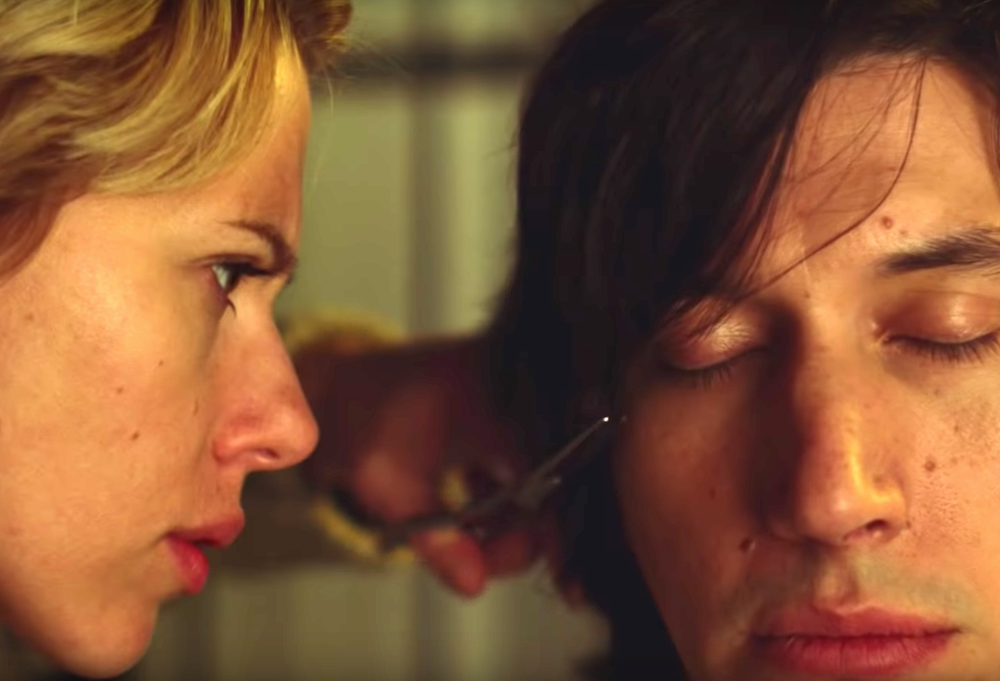
When the Oscar nominations were announced, Noah Baumbach’s “Marriage Story”—a naturalistic and at times excruciating portrait of a collapsing relationship—was one of the most honored films, netting six nominations including Best Picture and Best Screenplay. But the film itself, despite its honors, is a frustrating misfire, falling short in an effort to say something new about relationships. It’s constrained, ultimately, by a narrow perspective that moors it in familiar territory.
The Oscar nominations kicked off another round of debate on whose stories we value, and what kind of stories are seen as serious and prestigious. Stories about men dominated the Best Picture category, and in turn those Best Picture nominees dominated the other categories, leading to an Oscar playing field narrowly centered on a few movies, “Marriage Story” among them.
Much of the debate around “Marriage Story” circles around the question of whether the movie takes a “side” in the argument between its protagonists–Charlie, played by Adam Driver, and his soon-to-be-ex wife Nicole, played by Scarlett Johansson. Every viewer of the movie is going to have a different answer to this question. But I think it’s the wrong question to ask. I agree with the critic A.O. Scott that the interesting question here is not “side” but “perspective”—and there, it’s clear, we see the story through Charlie’s eyes.
Even at the outset, it becomes clear that one of these characters will be controlling the narrative.
As Baumbach told the L.A. Times, the movie isn’t strictly autobiographical, but the depth of feeling that he puts into the material didn’t come out of the blue. “I have a personal connection to the material,” Baumbach said. “My parents divorced when I was a kid. And I’ve been through a divorce.” (Not for nothing, Charlie is also a director.) So it makes sense that Charlie becomes our viewpoint character.
At first, it seems, the movie is at least attempting to be even-handed: we hear in narration Charlie and Nicole describing what they like about the other. But even at the outset, it becomes clear that one of these characters will be controlling the narrative. This is literally true, in the sense that the Charlie analogue is the one making the film, but even within the context of the story, Charlie is the one putting the relationship into words: in a therapy session, he’s excited to share a letter he wrote to Nicole, but she won’t read her own letter aloud.
In the second half of the movie, as the conflict escalates emotionally and legally, we spend more and more of our time with Charlie. The perspective shrinks, the weight of the events is expressed in Driver’s performance. By the end of the movie we see Charlie reading the letter Nicole wouldn’t share at the outset: Nicole’s words, but a story about Charlie, delivered in Charlie’s voice, in a film made by a guy who looks a lot like Charlie but smaller.
By tightening the window of perspective and telling the story—by the end—of a flawed intellectual man who feels put-upon by the structures of the world that constrain or defy him, Baumbach is very much evoking mid-20th century novelists like Phillip Roth and John Updike. But two decades into the 21st century, maybe we should instead be emulating novelists who break free of a man’s worldview as the default perspective. Taffy Brodesser-Akner’s Fleishman Is in Trouble and Lauren Groff’s Fates and Furies both take on the same challenge as Marriage Story—depicting a collapsing relationship through a deliberate and thoughtful exploration of multiple perspectives. Ultimately these books succeed where Marriage Story flounders, because they’re able to transcend the bounds of the male perspective. In getting outside a man’s viewpoint, Fleishman and Fates and Furies tell us more about relationships than Marriage Story—and even more about men.
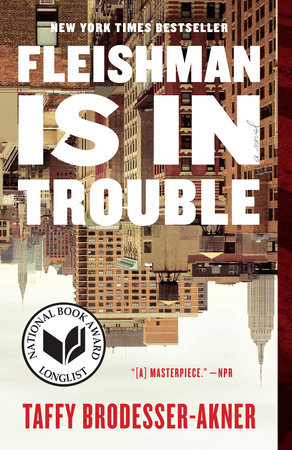
Brodesser-Akner accomplishes this through a sharp and radical shift in perspective. The first two thirds of the book are told exclusively from the point of view of Toby Fleishman, a doctor whose wife disappears and leaves him with her children. At the outset, we are embedded deeply in Toby’s point of view, seeing all of his inconveniences and frustrations and challenges up close and sympathetically. Rachel, his wife, seems to exist only as the creator of his problems.
Then Brodesser-Akner pulls the rug out from under everything she’s just built. She introduces us to Rachel, and the story we learned from Toby is pulled apart and re-assembled. In Rachel’s side of the story, everything that Toby couldn’t understand becomes clear, and his grievances and frustrations—which the reader has been feeling alongside him during his narration—pale to irrelevance in comparison to hers.
Fleishman questions Toby’s worldview in the same ways that “Marriage Story” takes Charlie’s seriously. In each story the male protagonist has a young, female protege; in Baumbach’s story, Charlie’s stage manager is fixated on him romantically, while in Brodesser-Akner’s story, Toby assumes a romantic longing in his young resident that vanishes completely as soon as we get a chance to hear her opinion on it.
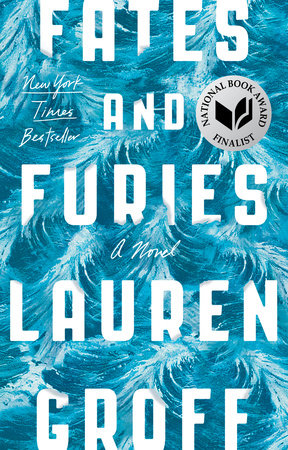
Like Fleishman, Groff’s Fates and Furies sets two stories of the dissolution of a relationship against each other, laying out the husband’s story before showing us the same events from the wife’s perspective and changing the way those events land. As in Fleishman, the reader is initially invited to sympathize with Lotto, a playwright from a wealthy family, as he meets, marries, collaborates with, and grapples with his partner Mathilde. (Lotto, like Charlie, feels familiar as the center of a story like this—he’s a male intellectual with a big personality and artistic renown.) Then the scene shifts, and we learn Mathilde’s personal history. Lotto’s cruelties and manipulations are revealed, and we can no longer trust the story we learned in the first half.
In all three works, the way we present ourselves to each other, the information we choose to emphasize or exclude, is a central theme: how can a relationship do anything but collapse if the two people involved have not just separate interests, but separate ideas of what’s even happening here? But where Baumbach defaults to Charlie’s viewpoint of a put-upon intellectual man and offers the story in a straight chronological order, Brodesser-Akner and Groff deliver us that familiar perspective and then intentionally complicate it, showing us how the woman in the relationship experiences the same events. These novels fracture time and shift perspective, calling into question what we thought we learned in the earlier parts of the story.
In art or in life, we can’t talk about perspective and power—whose stories are told, whose arguments are given credence, whose pain has merit—without addressing gender. The worlds of mid-century novelists like Roth and Updike are built on an implicit foundation of men as the inherent protagonist of any given story, and women as secondary characters, there to provide the hero with support or challenge as the story demands. So there’s disappointing familiarity to the fact that Baumbach settles so comfortably into centering Charlie’s pain even as he argues for Charlie’s culpability in the events that pain him, pushing Nicole to the side until we’re left with Charlie reading her words about him to himself.
Where Fleishman succeeds is in perfectly setting up that familiar story, telling it as plausibly and compellingly as any of its forebears, and then radically subverting it. It’s why, upon leaving Marriage Story, my mind went immediately to Fleishman, which succeeds (and then some) at what Marriage Story attempts.
These books aren’t just telling the story; they pose a challenge to the way we’re expected to see these stories.
“Marriage Story” seems to grasp at something like even-handedness, and doesn’t depict Charlie as an unambiguous hero in the face of an unreasonable world. It doesn’t seem to be Baumbach’s intention to demonize Nicole or elbow her out of the narrative, but as Charlie takes more screen time, Nicole’s role shrinks into something that we the viewer are observing, through Charlie’s eyes, rather than relating to.
By contrast, Fleischman and Fates achieve something sharper. They aren’t just telling the story; they pose a challenge to the way we’re expected to see these stories. By questioning a familiar perspective and offering another, they can step back from the details of the story itself, to say something more interesting about power and storytelling in general. Brodesser-Akner puts her intentions in Libby’s voice, as her narrator promises herself she’ll write a novel with “all the sides of the story, even the ones that hurt to look at directly—even the ones that make us too angry to want to hear them.” Oscar voters should keep that in mind.
I’m an asthmatic who loves speed. By that, I mean adrenaline. I also mean that my emotional life operates in short circuits. I have a quick fuse. I fall in love hard and multiple times a day with strangers in bodegas, sick trees trying their best, old couples at hotel bars who still engage with the weather of each other. By speed, I also mean mobility, instant gratification, impulsivity, all those things you might read ironically in a self-help book about “sensation-seeking” in your twenties and then less ironically in your thirties when you sign up for a “recovery” course with British comedian, Russell Brand. Please, no judgment.

By speed, I also mean by how fast things can escalate in our geopolitical climate and the danger of nationalist “might.” The speed with which we can destroy each other. The speed with which we accuse each other, cancel each other, cage each other. The speed of reactiveness is also one of the markers of our communication and it can be hot. Quick, flirty banter with a friend is pleasurable. On the other hand, the speed of our reactiveness is also the worst part of the internet. In one of my poems, “No Black. No Asian. No Femme,” a trans friend of mine shows me how quickly the internet (Grindr) can dehumanize you: six words. The bite is fast. The mark, long.
So, yeah, speed can be uncritical. For those who identify as women, non-binary, LGBTQ, and people of color, speed can also be a radical act of self-assertion since many, if not most of those who identify within those demographics, know that assessing our environments in “cool” and collected ways is crucial to our survival. I grew up knowing, for example, how not to wound masculinity in situations where I felt my body in a space of potential threat. We all know that wounded masculinity and white fragility are the ultimate catalysts for violence. We also know that the process of assessing such threats, with slow and logical temporality (how far am I from a door, are there others around to help me, I will slowly put my hands on my head, officer), is counter to the privilege of engaging with life fast and uncritically.
There is no such way of possessing uncritical speed for the populations I mentioned above, and so, when I wrote my book, Good Boys, about nuclear anxiety, interpersonal carelessness, bureaucratic and physical violence, I also wrote very purposefully with adrenaline. I wrote with speed, breathlessness, syntactical brokenness. I love an enjambed line. I love the unfinished, the messy, the abandoned. I love syntactical fury. It felt radically freeing.
And, of course, by speed, I also mean all those things I find stimulating and joyous. I like to chase the night. My heart beats too fast. I don’t sleep but when I do, I sleep like the dead. I like the substances that both lobotomize and enhance speed. I love its wild spontaneity, the way planes and trains compress time, the bizarre dreams I have when jet-lagged. In short, speed changes time and space and disorients us. Sometimes this disorientation can be welcoming (the rush of adrenaline, overwhelming joy, the privilege of mobility), and other times it can be restless, emotionally intense, and protective. Whatever you interpret it as, it’s a high that I have found differently explored in the following books.

“I am writing this essay sitting next to an anonymous white male that I long to murder.” So starts one of the essays in the collection killing rage: ending racism by bell hooks. hooks gives a heartbreaking account of her interaction with a white man who, along with a flight attendant, has humiliated her black female friend in the first-class cabin of an airplane. hooks is quick to a rage which has been building after a day of nauseating racial harassment. She has a fantasy of slicing the man slowly with a knife. She becomes unrecognizable to herself in that moment. How does one become capable of these thoughts? How could such thoughts give one, who is otherwise sensitive, empathetic, such pleasure?
hooks grew up in the apartheid South and so she knows that “To express rage in that context was suicidal. Every black person knew it.” But she also talks about how rage is an important part of the resistance struggle, quoting Morrison:
“In Morrison’s first novel, The Bluest Eye, her narrator says of the dehumanized colonized little black girl Pecola that there would be hope for her if only she could express her rage, telling readers ‘anger is better, there is a presence in anger.’ Perhaps then it is that ‘presence,’ the assertion of subjectivity colonizers do not want to see, that surfaces when the colonized express rage.”
hooks explains that a critical rage teaches us that we are human beings with cognitive and emotional limits. A quickness to rage demonstrates a politics of humanness, a way of immediately being witness to how the most vulnerable subjects who are continually robbed of not just their humanity (that abstract and often politicized term), but also, their ability to sit in a classroom, cross a street, walk home innocently eating skittles.
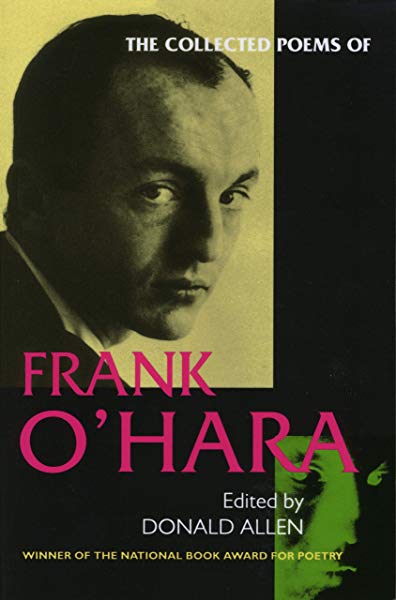
Maybe this is the obvious choice on this list, but I don’t care. O’Hara is my spirit poet and he converses with me in the night and is always whispering just stay out one more hour. O’Hara’s New York is the one I conjure even as it slips away into its current (and often disappointingly bro-y and fascist) corporatization. I never tire of his lines and restlessness and joy. I never tire of summoning his voice as I zip across the bridge late at night between Manhattan and Brooklyn. I love the way he turns celebrities into Madonnas. I love that he treats the sacred with irreverence and the irrelevant as sacred. Most of all, I love his speed. The speed of his lines, his observations, the way he makes visions appear with such fast associations that the reader actually feels the “high” of his imagination. And of course, I love that Robert Lowell threw shade at him at a reading they gave together at the College of Staten Island in 1962 when he sneered at O’Hara’s work and said, “I’m sorry I didn’t write the poem on the way over here,” implying that O’Hara’s creative process was too quick and therefore, trivial. Sorry, but most of us still would rather read Frank on our deathbeds.
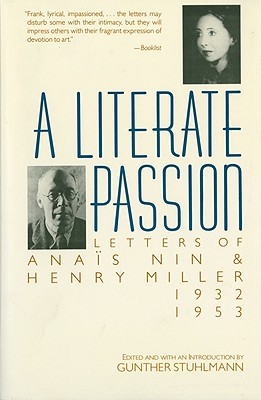
I’m addicted to the banter between Miller and Nin. I love their heady analysis of Lawrence, their self-mythologizing, the way their excitement about something they’ve been reading rips across the page. They are the ultimate nerds. But even though the relationship is presented in this epistolary way, usually counter to speediness and reactivity, these two have a way of slinging insults and accusations and confessions of love that feel like they are happening in “real time.”
One of my favorites is a letter Nin sends to Miller because she is pissed at him because he came over and ignored her or dismissed her when she was trying to confide in him. She wrote a searing paragraph of a letter stating: “I made all the excuses for you. I never expected you to be human for a whole lifetime, even seven days a week.” She calls him selfish and shocking and says she doesn’t want to have anything to do with him. Miller writes back a seven-page letter chiding her for her reaction: “Do you believe all that nonsense you write?… Bah! If I thought you really felt that way about me I’d never see you again… never. Because that’s a degradation to all that exists between us.” Emotionally manipulative and seemingly cool-headed, he then writes about spring and love and his bicycle and yet, all the while, he writes with the fury of a panicked and sorry man. The speed of his prose betrays his actual guilt. He says: “You’re not going to tell me, are you really, that however it was I failed you yesterday, it’s the end, that I killed it? I should imagine that I ought to be able to fail you still more miserably, and yet not let it be the end. On Tuesday I may prove a failure. And on Thursday or Friday I may prove magnificent. People have calendars too. Or are calendars.” People are calendars? I love that.
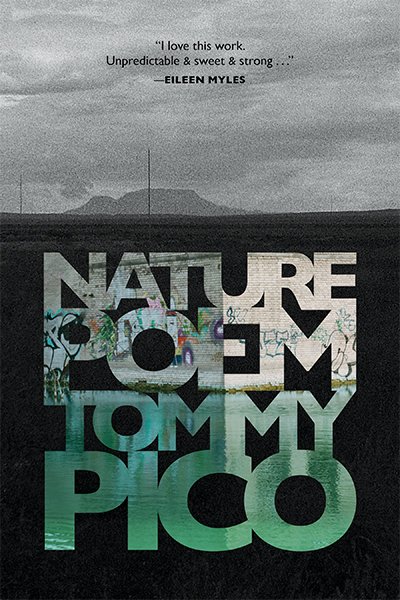
“Nothing can fall that wasn’t built” writes Teebs, the queer American Indian (NDN) speaker of Nature Poem. Pico is a master of leaping from subject to subject. Indeed, he reinvents the poetic epiphany here through language that appears conversational and text-like, but actually has many traits of aphoristic writing. He drops truth real casual: “It’s hard for me to imagine curiosity as anything more than a pretext/for colonialism.” And if you enjoy, as I do, being overwhelmed by truths that feel like they can fall anywhere, on any subject, with a kind of tender matter-of-factness, then this book is for you. Pico writes a nature poem that is against the stereotypical meditative, rational, objective temporality of white, colonized interiority. (Think of the dude on your Norton Romantic poetry textbook who looks over a vista and gazes unto the sublime of Nature). Instead, things happen fast. He wants to slap a tree. He rejects a thesis of planetary exoskeletons. Slow time is a luxury for those who aren’t being killed for their land and their resources. Pico really gets something about “ruins” in this book. How does the speed of modernity and consumption and online love re-make us? What does contemporary ruin look like? Just look around.

Who is responsible for the suffering of your mother? When was the last time you lied and were you protecting yourself or someone else? These are just a few of the questions Kapil asks a variety of strangers in India, England, and the United States before making up a collage of poetic vignettes from the answers she received. Particularly, Kapil looks at the experience of Indian women living in the diaspora for whom a sense of place and belonging is constantly in flux. Kapil, therefore, reverses a long-time idea about diaspora (meaning “scattered”) as that which is slow, taking place over many generations and including many migratory patterns. Through her formal inventiveness, the reader experiences diaspora all at once with a fast simultaneity of voices. The speaker(s) tend to let go of what they cannot know. They, dispossessed, let go of the earth and all her rules of light and gravity: “When she is grown, she realizes that she has forgotten everything. How to live without explanations. How to travel light. How to let the earth go. How skin can see.”
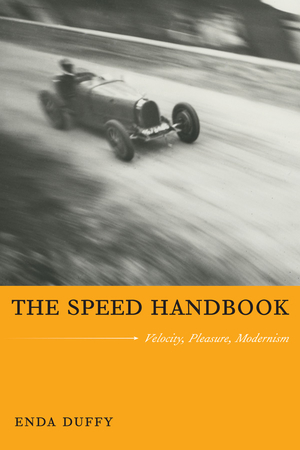
Duffy was one of my professors in graduate school at the University of California, Santa Barbara and his imaginative lectures were something of legend. His book investigates the politics and aesthetics of speed, particularly asserting speed as a new pleasure of modernity by analyzing, among other technologies of movement, the motor-car. For Duffy, speed is not only about acceleration, but also alertness, sensory excitement, and the new fantasy structure of Western conquest:
“Speed, as the achievement of the technologies of Western modernity, was offered as a personal sensation to individuals as a means to experience space in a new way, at the very moment when there was no more new world space left to organize.”
The coolest part of the book is how Duffy thinks about sensations related to speed: thrill, bewilderment, awe. By linking emotionality to the technological, Duffy asks us to consider the ways we live as modern adrenaline junkies (face it, we like our hearts to race). If you’re wary of academic prose (and sure, there are some Marxist dips), fear not. The book is exquisitely written and the subject material, captivating.

This book is hands down the best novel I’ve read in the past five years. It is a poet’s novel with time layering upon itself and mythologies and outer-space weaving into the “real world.” The book follows the intense bond between two young women who move from the Sonoran Desert to New York City. They take too many drugs and go to too many parties and hang out with questionable, fucked up men. But what is brilliant about the book is that the speed of their lifestyle is countered with a slow haunting so on one hand, the novel propels the characters towards doom and on the other hand, the characters sort of get to exist outside of time and therefore, outside of mortality. Basically, this book is smart about speed and stimulants. It doesn’t make the mistake of stupidly glamorizing those who use drugs as self-indulgent party kids. Instead, drugs are imagined as ways to enhance visions that are already part of the occupied land in which girls live. It’s not “speed as escape” from an Arizonian suburb. It is speed (blow) as that which extends the feeling of the ecstatic, that which keeps the fever-dream going just a bit longer, that which communes with the spectral haunting of maimed civilizations coming back to life and echoes of colonial violence from their ancestral homelands.
Early on in the sequel to Ghostbusters, imaginatively titled Ghostbusters 2, Peter Venkman interviews a guest on his TV show who professes to know the exact date of the apocalypse. According to her source, the end of the world will be February 14, 2016. Bill Murray’s character succinctly replies, “Valentine’s Day. Bummer.”
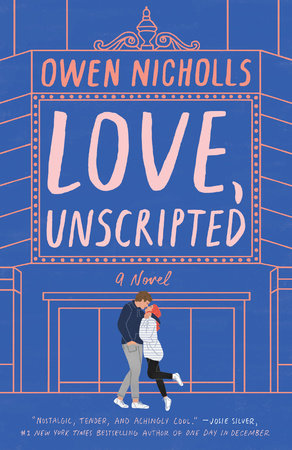
Armageddon notwithstanding, Valentine’s Day can be a grim prospect. For those that aren’t in a loving relationship, the day can be a constant reminder of loneliness and rejection. Which is where, in my new novel Love, Unscripted, we first meet Nick, our film projectionist protagonist. He’s feeling rejected and alone, and reeling from being left by Ellie, his partner of four years. But this is only Nick’s side of the story—and as we quickly learn, he’s more than capable of telling himself the tale he wants to hear.
We all know a Nick. Someone whose obsession with all things cinematic creeps into their language, their thought process and even the way they want the world to be. (He’s the sort of guy who, if asked to write a list of romantic novels, would open with a quote from an ’80s movie.) And when it comes to relationships, Nick longs for the resolutions and perfect endings usually reserved for the end of the third act.
But as centuries of storytelling can attest, it’s not only movies that make us feel like love really ought to be a many splendored, all around sort of thing. Here are eight books that might help Nick understand what love really is.

After her mega-hit One Day In December, Josie Silver strikes gold for a second time with this tale of love, loss and addiction. The story of someone losing the love of their life doesn’t sound like the most uplifting book, but Silver manages to find a new perspective on grief, and delivers an ending that’s as rewarding as it is revelatory.
Discovering Julia and her sexual awakening in London was as eye-opening to me as it was to her. And while the main relationship in Davies’s debut deals with a controlling partner, the romance comes in Julia’s discovery of what—and who—she’s looking for when it comes to love. It’s funny and filthy and features some graphic descriptions of other f-words too.
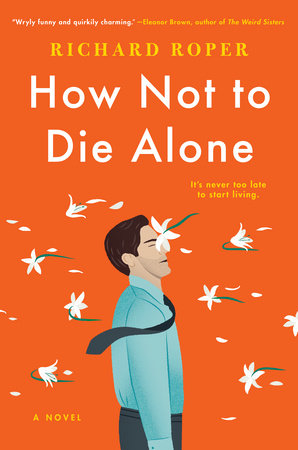
If you want the fist-pump moment of two people coming together in the final reel, start with one of them being the loneliest person in the world. Andrew, Roper’s companionless protagonist, tells a white lie in a job interview. He says he has a wife and two kids when in fact he’s single and childless. Afraid to reveal the truth, he uses the lie as another reason to push people away—that is, until Peggy enters his life.

Released in the same year as The Wedding Date, this book proves Guillory’s strike rate is second to none—unlike the swing and miss of her jerk of an antagonist, Fisher, who thinks a Jumbotron proposal is the way to control a woman’s response. Thankfully, this leads our hero Nikole to find Carlos, someone who understands that relationships need dialogue and consent.

Plenty of literary snobs will reject the notion that last year’s phenomenon belongs in the Romance category. But then, plenty of literary snobs can climb into the nearest bin. Recently adapted for the screen by directors Hattie MacDonald and Lenny Abrahamson, along with writer, Alice Birch, and Rooney herself, Normal People is a will-they-won’t-they in the truest sense. Fans of the novel should feel in safe hands for what will hopefully be an honorable adaptation of a complex, often painful tale of young love in the 21st century.
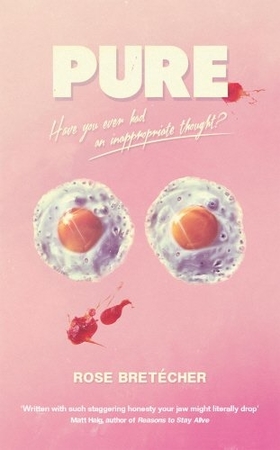
The old adage that “you have to love yourself first” runs through pretty much every book on this list. But in Pure, Bretécher’s memoir of her struggles with obsessive intrusive sexual thoughts, that journey seems insurmountable. When Rose finds both an answer to her issue and someone strong enough to help her, the result is as romantic as waking up to see someone has silently brought you a cup of coffee and a couple of aspirin after a night out.

Tiffy and Leon share an apartment and even a bed, yet Tiffy and Leon have never met. It’s the sort of premise that no doubt inspires people to mindlessly intone “that concept writes itself!” But, of course, no book writes itself, and O’Leary does a tremendous job of keeping our definitely-going-to-get-together pair apart until the reader can’t take it anymore.

Cooper’s second novel also keeps her leads Sophie and Samuel apart for much of the novel’s running time, putting the reader though the ringer as much as the characters. Right up to the epilogue you’ll be questioning when (and if) a happy ending is ever going to happen. Luckily, there’s a supporting cast worthy of a Richard Curtis movie to keep you company until then.
How would you prepare for the end of the world? Chana Porter would throw a dinner party. At the beginning of The Seep, her protagonist Trina FastHorse Goldberg-Oneka hosts a gathering with her wife Deeba as the disembodied alien entity “the Seep” gently infiltrates the world’s water supply. Fast forward several years, and the Seep has solved all of humanity’s problems. No one is hungry or sick. No more wars are fought and no one ever has to die. The planet is healed and the Seep makes all beings, human and otherwise, deeply aware of their connection to one another. Best of all, Seep technology makes anything possible. Deeba decides to erase a traumatic, pre-Seep childhood by regressing to infancy, to start her life anew. When Deeba asks Trina to become her mother instead of her wife, Trina is devastated and the two part ways.
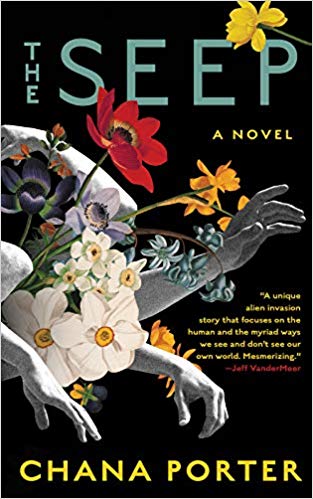
As Trina wrestles with grief over her wife’s decision, her perspective on the Seep and the nature of its benevolence changes. When she encounters a boy who has, until now, lived apart from the Seep, Trina sets out to rescue him from the perils of their utopia.
Chana and I met at a dinner gathering several years ago, and despite some apocalyptic natural and political events since then, the world perseveres. That night, we discussed weird fiction, climate change, and Houston restaurants. I have been inspired by her vision ever since. Though The Seep is her debut novel, Chana is a playwright, a MacDowell fellow, and co-founder of the nonprofit The Octavia Project. We spoke over the phone about grief, snack cakes, and how the end of the world might spark new beginnings.
Charlotte Wyatt: I was going to start by asking about utopian tropes and how they influenced you, but I think we have to start with food. The novel is bookended by instructional tips for dinner parties. There’s subtle religious imagery throughout, in how food is communal. First contact with the Seep is through ingesting it. How do you understand the role of food and eating throughout The Seep?
CP: The food is incredibly important to me, and it’s something I think about a lot. When I read a book and pages and pages go by, and no one’s even mentioned getting peckish and eating a banana, that seems very strange to me. I try to write from an embodied place. Food is culture, and food is community. Food is family. So there’s all those things about how we take care of one another, how we take care of ourselves.
And at the same time, I think I use food to underline this very amazing, complex thing about being a person, which is that we like to eat things that aren’t good for us. It was funny to me as I wrote, and I found people in my story talking about what they missed from the past, in pre-Seep time before they could feel everything—like let’s say you hold a banana. You bring it to your mouth, and through the Seep, you’re not just tasting the sweet flesh, you’re feeling if pesticides were put in the ground while these bananas were being grown, and the harm that did to the microbiome. And whether or not the people who are growing and picking the fruit were underpaid or enslaved, or if they were allowed bathroom breaks. You’re tasting the petroleum these bananas are being shipped by. You’re tasting all of the social, environmental, and emotional costs at the same time. It really changes what we can put into ourselves. And it’s just so funny—I mean, I think about the things that I feel nostalgic for, like Little Debbie chocolate cakes. Zebra Cakes.
CW: Oh my God, yes!
CP: I’m very aware that they taste like artificial, chemically processed waxy black plastic. And yet! And I haven’t had one for a very long time. I think it’s such a funny puzzle that we can be attracted to things that are not only toxic, literally, for our bodies, but the environmental cost of them, too. And the social and political costs. Like, who makes these? We think that we deserve very cheap food in America. We spend less in America for food than most people in Europe do, and the hidden costs of those foods are being wreaked on our own bodies, which is another form of environmental racism.
CW: Even in the utopia that’s created by the Seep, there are characters like Trina who are abusing substances. Was that abuse something you were interested in exploring in the book?
CP: I don’t think I sat down one day and thought, I’m going to explore some substance abuse. I’m very keen on the ways we try to silence or escape the way we feel. I think Trina, making the choice to use alcohol to be self-destructive—while it’s not the most graceful choice, I do think there’s something valid in that choice. Because she’s in this culture, partially through the Seep but supported by all the people around her, where they want her to let go of pain. And she is finding value in pain. Part of the value I think she finds throughout the course of her grief was that she was part of a very beautiful and very meaningful relationship, for a long time. And to use a balm to soothe that without really mourning I think would be a disservice to its memory. She does spiral. There is a messy kind of falling apart, and I’m not trying to validate her substance abuse. But I do think she is pointing towards something—”I don’t want you to take away my pain. I want to spend some time in my pain. Don’t try to find meaning for me. Let me be lost for a time.” That’s a dark and a hard journey, but I think it’s a valuable one.
CW: Her grief feels very much at the heart of the story. People are grieving for the broken world that existed before the invasion, and that leaves them feeling conflicted. But Deeba’s decision to be reborn through Seep technology also stems from grief, albeit a different kind. There are lots of specific ideas about grief in the book. What does grief mean to you?
CP: Octavia Butler wrote, “God is change.” I really resonate with that. And also, I’m not into it!
There’s a beautiful, tender pain in the fact that everything changes, everything dies, nothing is permanent.
CW: Oof. Yeah, I get that.
CP: There’s something so human about how we’re these creatures of great dichotomies, where we want to cement and gather and hold on to things. When something’s great we want it to never stop. And there’s a beautiful, tender pain in the fact that everything changes, everything dies, nothing is permanent. Have you ever felt the very strange feeling of getting something you always wanted, only to find out you’re no longer that person? You don’t want it anymore. The way we can’t even depend firmly on our own dreams, our own likes, our own emotions. Things are always in flux. All we have are these very tender, present moments, where we have to be supple and share and be curious about the unfolding of now. It’s very hard, because, I think, we are drawn to, and to some degree supposed to, commit. Commit to our dream. Commit to other people. Commit to community. Commit to building a home. And that push and pull of “I want to strive,” and “I want to plan,” and “I want to invest in you and in me and in this home that we’re making,” and at the same time, you can’t make a promise for your future self. It’s not actually possible.
CW: I feel this is an important place to say the book is also very funny! There’s something whimsical about it that reminds me of Terry Gilliam’s film Brazil, but the negative of Brazil. Instead of horror rooted in absurdity, there are joyous moments. Like a foot chase interrupted by a passing topless unicycle collective. Were you consciously bringing humor into the book?
CP: I am not interested in exploring, or spending time with characters that have zero sense of humor. I think that the world is funny, and absurd. I think recognizing humor is one of the really wonderful things about being alive. All of my work, be it novels, plays—they will always have not just the jokes, but I want to spend time with characters that have senses of humor about the world and themselves. I think that is a distinctly wonderful thing about being human.
CW: In addition to your own writing, you cofounded The Octavia Project, a nonprofit that offers workshops to traditionally underrepresented voices in science fiction, especially young women and non-binary youth of color. Did that work influence your choice to write a protagonist who is a trans woman?
CP: I was already writing the book before the Octavia Project, which I started with Megan McNamara in 2014. At that time, I was just starting to get how much energy, money, space, time, and belief is required to take your book from an idea in your brain to something being published. So I really think we need the powerful imaginations of girls of color and non binary youth from more fragile communities, and that our world will be significantly poorer if we do not invest in these narratives.
I started writing The Seep the year before that, in a graduate program at Goddard College. At that time it was a massive novel, with shifting multiple points of view. Trina had been one of three named characters. I write from a very intuitive, gut-based place. I didn’t sit down and think, I’m going to write a book with a trans protagonist. But I did write a book with one trans protagonist out of three. And as I wrote and rewrote, it became clear that Trina’s story about loss, and about grief, was the most compelling way for me to explore all these other themes about change, but also about racism and identity.
I went to Goddard college because I wanted to study with Rachel Pollack, who is the planet’s foremost Tarot scholar. I had originally met her through Tarot. She wrote this amazing, spiritual sci-fi, where she explores bureaucracy in a way I found really smart. (People who don’t know should go read Rachel Pollack’s Temporary Agency and Unquenchable Fire. She is so smart!) Rachel is in her 70s now. She’s a trans woman and she’s a “tryke,” as she lovingly puts it, a trans lesbian. It was really nice to be working on the book with her as my mentor. And getting closer and closer to [understanding] Trina really does need to be the main character, allowing the other plots to kind of fall [into place]. And then having this mentor who’s very much a trans pioneer. So she’s our elder. She was an amazing person to guide me, not just through that stuff, and the talking about identity, but she helps me so much. She’s very responsible for the creation of Pina [Interviewer’s note: Pina is a waitress at a diner in the novel, and she is also a bear.] She was the one who was like, “Chana, I think you’re being too human-centric. How is the Seep affecting other beings?”
CW: Pina’s song is definitely—I want to avoid spoilers, but quickly: Pina’s song was the moment where I burst into tears. It feels so intuitive now, looking back on it. Of course every animal has songs they would write. But, back to Trina: she also talks at one point about her heritage, both Native American and Jewish. Both are important to how she arrives at the end of the novel. Why were these specific identities important to you?
CP: I wanted to parse through and explore how, sometimes in utopian or dystopian sci-fi and fantasy, race is not addressed. Fantasy and sci-fi can whitewash people. And because the Seep wants to heal and make everything abundant, healthy, happy, there can be this whitewashing of past trauma, of past inequality. So I chose to make her both Native American, and Jewish, one to acknowledge—for indigenous people of America, there’s already been what, you know, anthropologically would look like an Apocalypse. You could frame these things as: this is already a dystopia. I wanted there to be a very strong component of the text that would underline that, and that Trina would stand and say, My story is valuable, my past is meaningful. [My] history is not interchangeable. And there’s meaning in acknowledging. Native American and Jewish identities sometimes get whitewashed. And so you have Native American displacement and genocide, and then you have the Jewish, not just genocide but also diaspora, where I think it can be very easy to assimilate. Which eventually becomes just white supremacy. So I was really intrigued by having Trina both being from the occupied lands we’re standing on now, and then in another way, being someone without a home.
CW: This next question feels silly by contrast but I’m going to ask it anyway: The starred review of The Seep in Booklist talks about human contact with the Seep as mimicking the sensation of being drugged. That Seeped humans “experience benevolence and serenity.” How do you imagine contact with the Seep would feel?
I hope something about this book will help us to imagine the planet as one great body.
CP: In my twenties, I did a fair amount of psychedelic drugs. Then I got into meditation, and I found out that I didn’t need to take drugs. I found out through the brute power of meditation, and spending time with my own brain, I could get myself to these feelings of peace and interconnectedness and beauty. The Seep is very much a metaphor for consciousness. I think it’s actually something that’s available to us now. I think that we could use the power of our minds to think about the choices that we’ve made, and the choices that we continue to make. There’s a really nice tweet I just saw, something like Nestle says they can’t provide us chocolate at these low prices without slaves. And it’s like, well, if we can’t have chocolate without slavery, maybe we shouldn’t be eating chocolate.
I think that the hidden costs of things is something we’re very much bringing to light now, in terms of environmental costs and climate change. It’s something that will be, I think—like “the ways that the sausage gets made,” it’s going to be harder and harder to turn a blind eye to that. I’m really grateful about that, because I do not want my clothes made by enslaved people and children. I do not want them made with cotton that has been so heavily genetically modified and covered with pesticides that are impacting the environment. I don’t want my food grown by farmers that are killing themselves because they’re so in debt. I think the Seep, in terms of being a euphoric feeling of interconnectedness, is something we can feel now. And I think the pain of that is true, too, and is something that we need to feel.
I’ve been doing this practice where, whenever I do something nice for myself—like yesterday I took a bath. And I thought about the water and how good it felt. And at the same time, I was thinking about being a migrant in our country today, being in a concentration camp. And both of these things are happening at the same time. I am in a bath, and I’m enjoying my bath. And there’s someone in our country, now, probably in our state—definitely in your state—who is being held away from their child. Who is being refused clean water. Who is sleeping with the lights on.
I hope something about this book will help us to imagine the planet as one great body. And that every single thing we do does come back to us, and does touch us.
Welcome to Read Like a Writer, a new series that examines a different element of the craft of fiction writing in each installment, using examples from the Recommended Reading archives. Each month, the editors of Recommended Reading—Halimah Marcus, Brandon Taylor, and Erin Bartnett—will select a few stories that illustrate a specific technique, style, or writing challenge. The title of our series owes a debt to Reading Like a Writer by Francine Prose.
Flannery O’Connor allegedly said that endings should be “surprising yet inevitable.” Whether or not she actually said this, the internet will not easily verify. But it does apply well to her stories, most notably “Good Country People” and “A Good Man Is Hard to Find.” (Or as we like to think of them together “A Good Country Man Is Hard to Find.”) The experience of reading to the end of these stories is certainly surprising—in the first, a lonely academic woman’s leg is stolen by a “simple” bible salesman, in the second, a grandmother is executed point blank by an escaped convict—but inevitable? It’s only in retrospect and through subsequent readings that you realize O’Connor doled out the material for those endings from the first page. Inevitability is crafted: it’s what separates “surprising,” which energizes the reader, from “a twist,” which makes the reader feel tricked.
Inevitability is crafted: it’s what separates “surprising,” which energizes the reader, from “a twist,” which makes the reader feel tricked.
The idea that endings should be surprising yet inevitable is an escalation of something Aristotle wrote in his Poetics: That the “change of fortune” should “arise from the internal structure of the plot, so that what follows should be the necessary or probable result of the preceding action.” Sometimes “necessary” is translated as “inevitable.” (We’re using the S.H. Butler translation offered by the Internet Classics Archive.)
Aristotle’s request is reasonable—that the action follows a chain of cause and effect—where as O’Connor’s edict seems oxymoronic, even impossible. And yet, there are writers who continue to pull it off. In fiction, when every sentence is subject to change, written out of order, and endlessly revised, endings are built piece-by-piece. So how do these writers do it? How do they signal the ending without giving away the surprise?
For the first edition of Read Like A Writer, we’ve selected three stories from the Recommended Reading archives that deliver a surprise and not a trick. These stories showcase a range of surprising endings—from unexpected to shocking—and offer lessons in how the tools of tone, plot, and character are used.
The following stories are by definition very easy to spoil. We’ve done our best not to give away specifics, but if you want a pure, unadulterated surprising but inevitable reading experience, we suggest you read them before the analysis.
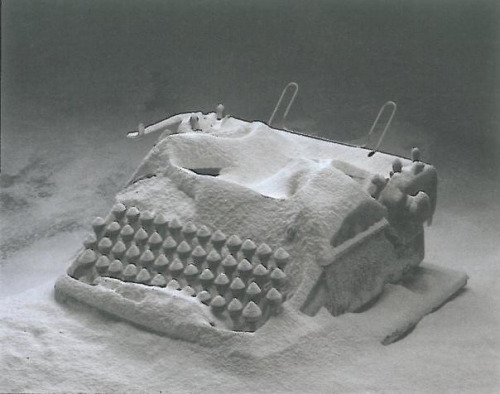
The writing prompt for “Wintering Over” might as well have been: think of a person’s worst secret, one that they have never told anyone. A secret that is as devastating as it is criminal. Now, reverse engineer the story that would move that person to share their secret for the first time.
Charlotte and Nathan are “wintering over” in an old, rickety house in Maine. She’s a potter and he’s a writer, and the cold and the isolation wears at Nathan’s creativity. Neither enjoy their new home, but neither are willing to admit it. Soon Nathan is in a full blown bought of writer’s block, worthy of the Overlook Hotel. During their stay and the hours she increasingly spends alone, Charlotte reflects on the summers she spent with her family in Minnesota, a place that feels opposite to Maine in season and setting but related by freedom from responsibility. She was outside of life there as she is here, and neither place is particularly happy. Their stay concludes with a staggering confession. To bring Charlotte to the place necessary for her to tell Nathan her secret, Brown makes use of every tool available to him as a writer: setting, circumstance, weather, character, memory, emotion, and theme. Without the reader noticing, every aspect of the story is working, but not pointing, to the end.
When you’re having trouble finding the right ending, the first thing to do is to take a thorough inventory of everything you’ve already written. If the ending is going to be surprising yet inevitable, its seeds are already planted. There might be something you can use that you’ve overlooked. A character who left but can come back, a step that’s always creaking, a lie that was told. “Wintering Over” is an excellent example of where the ending might hide. The surprising element here doesn’t come from a plot turn, an action, or an event that changes the course of the narrative. The surprise comes from a memory; it comes from the past.

“Valentine” by Alexander Yates
A common downfall for story endings is the “flinch”––when a story inches up close to something emotionally scary, and then, instead of pushing deeper, pulls up and away from the very thing the story is most interested in. “Valentine” by Alexander Yates does not flinch.
Sandra works at a flower shop in a small town to which she’s recently relocated. When she leaves for work on Valentine’s Day, she finds a bloody beef heart on her porch. The meat has been stabbed with something like cupid’s arrow. Sandra looks closer. Actually, it’s a metal bolt. You, reader, might be surprised. But Sandra? “She’s surprised and then not surprised to see it,” Yates writes, because she already knows who has done this. Sandra scans the street and spots her stalker sitting naked in a rental car, staring at her from a legally-permissible distance away.
How can the story escalate from here? In part, “Valentine” raises the stakes by contrasting the chaos of the stalker with the lawfulness of Sandra’s new life, where her friends make up the small town establishment. There’s Molly the emergency dispatcher, who is engaged to the sheriff. And there’s Sandra’s new boyfriend, the deputy, aka “Deputy Jeff,” whom Sandra dates at Molly’s encouragement.
As the tension between Deputy Jeff and the stalker grows, the story moves towards an ending that is more inevitable than it is surprising. The end, we know, will involve a confrontation. But when that confrontation occurs, no one in the scene looks away, not Sandra, not the stalker, and especially not Yates. “Valentine” proves that there’s a way of surprising the reader by fearlessly facing the story you’ve set up, and carrying it through to the painful end. The surprise isn’t what happens, it’s how it happens, and how it makes you feel.

“Ball” by Tara Ison has the most out-there ending of any of the stories on this list, a classic “what the fuck?” plot swerve that makes you immediately return to the start, asking, “What makes this story think it can get away with this?” And then you reread the first few paragraphs and realize, “Oh, that’s why.”
“Ball,” as Rick Moody writes in his introdution, “is a truly outrageous story about contemporary relationships, sex, and dog ownership.” He also calls the story honest, tragicomic, astringent, and provocative.
The narrator is dating a guy named Eric. They have amazing sex but she doesn’t take him seriously. She plays games with him, like going on a long trip without telling him, just to keep him at a distance. The narrator also plays games with her dog Tess, who is obsessed with “ball” and can never be satisfied. This all seems fairly normal, except the narrator devotes most of the first paragraph to Tess’s “prettiest little dog vagina.” Her description is at once affectionate and disturbingly medical: “It’s a tidy, quarter-inch slit in a pinky-tip protuberance of skin, delicate and irrelevant and veiled with fine, apricot hair.” Who hasn’t looked at their dog’s vagina, but also, who has described it so precisely?
While you’re busy either justifying or pathologizing the narrator’s behavior, little do you know, dear reader, that this story has been preparing you for its outrageous conclusion by challenging your expectations of the action that follows the jokes.
The first thing I have to confess is that pretending to have a relationship with the church (The Church?) came easily to me, in a way that at the time did not feel like a sin.
“A relationship with God, you mean. You’re not praying to a building.”
My friend Maggie had been out of Fordham for four months and found, back in her Vermont hometown, a need to reaffirm, at every turn, her hundred thousand dollars of intelligence and acquired wisdom. The phone crackled with static, her bad reception up there in the woods. I imagined her in the middle of a brown leaf pile, neck high, and stifled a laugh at the image. She continued disapprovingly, “It’s worth asking: Is this ethical?”
“You mean moral,” I said.
“No,” she said, aghast with the special irritation at having been corrected by someone who graduated from a state school.
“I mean ethical.”
“I guess I’m not worried about that,” I said. She didn’t reply immediately. I could tell I was upsetting her more but pressed anyway. “Didn’t you do kind of the same thing? Saying you played tennis for Bryan?”
“That actually could have been true. I have the body for it. Plus, I can pick that up anytime.”
“And I can’t just start going to church?”
“Again,” she insisted, “it’s about going to God. And for your first relationship?”
“Plenty of people who go to church don’t believe in God.”
“Ugh,” she said. “You sound like Bill.”
Bill was a contrarian who Maggie had dated and complained about through her sophomore year, a Columbia guy with long black hair he modeled on weekends who pushed back on everything she said, and who once infuriatingly “iced” her on a fire escape during a party. A shame memory for us both. She’d called me right after, and I’d been too drunk myself to be of any help. She still hadn’t gotten over him, I knew, and I felt awful that she still couldn’t see a fact so clearly before us both, obvious even at the time: Bill never really liked her. She was trying to become him now, though I’d never tell her that. You sound like Bill, I wanted to fire back.
“Sorry,” I conceded instead. Throwing the conversation in the trash, I said pointlessly, “What are your plans for the day?”
She ignored the question, the phone making a crinkling, fading-out noise that suggested the fraying of our friendship with each of these less and less frequent calls.
“Why are you even doing this? Is a guy worth all this energy?” She strung up those words, put extra spaces between them for emphasis: All. This. Energy.
It was something I would have said to her, might already even have. I had the urge to get off the phone, which seemed to come at me from out of the blue but in truth had been lurking all along. I touched my chest where I imagined the metal Jesus resting, proving my devotion.
“Maggie, you just have to understand. He’s like—he’s so, so hot. He has one of those fucking butt chins.”
“So you said you were Catholic?”
“Christian,” I corrected, not totally sure of the difference. “Leaves me options, right?”
“Is this worth eternal damnation?” she said. I laughed.
We were two different people now, and scheduling the conversation felt like a display of my loneliness, a feeling the city often made me think I might finally be getting rid of. The past few months, I had started to know that Maggie hated that we had switched places, and now it was my turn in the city, and despite what we’d both believed would happen, I was the one making it. And in fashion. It felt like a gift that I had to succeed at all costs. Not because I wanted to pull for a September issue or boss around an assistant, but because it created distance between who people thought I used to be; it made them know they were wrong.
“Probably I’m already damned,” I said. “Is avoiding that even an option for me at this point?”
Eric and Amy moved their chairs up to my desk, rolling them noisily along the long corridor of glass conference rooms, revealing to anyone within earshot their status as forever-assistants, unpromotable people who never get why they’re not promoted. They were the kind of people I risked letting myself become when I indulged their gossip and exclusive group lunches. Their unprofessionalism was contagious in that it gave the impression I was like them, which I wasn’t. Charm Magazine handed out one promotion every two years, on the same date—the next day. People called it the day someone gets Charmed. New though I was, six months in I’d heard during a performance review that I was being eyed for it. A secret I’d kept at all costs.
“So the date,” they said. “The church guy.”
“His name is Simon!” I said.
“He’s so hot,” Eric said. “Like, dreamy. I went on a date with a guy like this once. He ordered sushi. I could barely speak.”
Amy and I stared at him. The sushi detail read as pathetic.
“How are you playing this?” Amy said. She rolled her chair up closer. “You need a game plan.”
“I should get a cross,” I joked.
Eric gasped loudly. “My God, that’s genius.” In her office his boss, one of the top fashion editors, leaned back in her chair, wondering what had caused it.
“Probably worth a shot actually,” Amy said.
“I don’t know if I’ll see him again.”
“I have to pull for the deciduous shoot this afternoon. I’ll see if we have a prop or something.”
The “deciduous leaves shoot” was Eric’s promise at a good idea that every one of us knew would get killed last minute, and we were thankful for it. He’d saved up all his trust for this moment. The gift of self-elimination.
“Eric,” I said, “if I do it I’m getting a real cross.” He nodded and I told them I needed to get back to calendaring lunches. Overkill? Maybe. It seemed worth it, to have this insane attention to detail. As they screeched their chairs down the hall, I wanted to tell them how I’m succeeding and why they’re not: that I come in on Sunday nights to do memos. Call down to the front desk to have the nineteenth floor lights turned on. I leave with strain in my lower back from hunching over my keyboard for hours. I shut myself up pretty much all the time. I wanted to just finally say, Stop talking to me. You aren’t getting Charmed; I am.
My roommate, Dave, was a gaymer on weekends and, during the depressive episodes that were becoming a regular feature in his life, every other day of the week too. He’d quit two good jobs and been left unable to find another.
When I got home from work, he was talking into an earpiece with several other men like him, gays who don’t moisturize and spend their money on consoles not condoms. He met them all on some online forum I had been avoiding asking about, and I resisted the urge to pity him because he was such a nice guy. Even asking him to help clean the shower left me doused with guilt.
“Hey,” I said. “How’s the day?”
He took off his headset fast. “Hey! Okay. How are you?”
“Wiped,” I said. “Long day.” I didn’t mean to upset him, but bringing up that I had a salary touched a nerve, I could tell, so I kept on. “How’s the game?”
“Oh, it’s good! Yeah, good.”
“What’s the point?”
“Kill the bad guys,” he said, laughing a little. “As always.”
“Who are the bad guys?” I dropped my brown leather satchel near the couch and walked toward the screen.
“This one is pretty messed up. You go to different areas and, like, take whole places out. They’re filled with bad guys though. But weird I guess.”
“Almost makes you seem like the bad guy, huh?” I said.
“Yeah,” he said. He was choking through his words a bit, flustered. “But I’m not.”
I normally never got this close to Dave. He had an aura of palpable sadness, covered up with desperation. I could always see it from a distance, but getting too close left me unable to exit conversations gracefully. I always had to shut him down, and every time I did, I knew it just made things worse. He had paid his rent on time these past few months, with life- or- death deadline urgency. Last month he told me, his forehead shining with anxious sweat, leaning nervously on my bedroom doorframe, that he’d be a little late. He’d been close to tears. I couldn’t help but think if I were him I’d have just secretly sent my check in late, that it really didn’t matter. Later on, he’d shown up in that doorframe again and asked if I wanted to get a beer. The first time we’d have hung out. I told him I had plans, and then quickly made them, as if to prove to myself I could do such a thing. An hour later, I was laughing at a bar down the street with Ashley and Lauren, hoppy foam on my upper lip.
I sat down next to him on the couch and saw the thin gold chain around his neck. “I like that,” I said.
“Oh!” He took it out, the chain hung slack. “My mom gave it to me. She said I should always wear it.”
“It looks good on you,” I said, offering him a kindness I didn’t mean.
“Thanks! I have others if you want this one.”
“Really? Or I could have one of the others,” I said. Are you this entitled? I thought, just to myself. Taking your roommate’s cross?
“Yeah, it’s totally fine!” He struggled it around his head and cupped it in the palm of his hand, holding it out for me. “She sends them to me a lot.” I took the cross from him. There was a greasy quality to the metal. He grabbed at his headpiece fast, noticing something blinking on the screen. “Sorry,” he said. “We’ve been waiting on this battle. We finally got access to the vampire armory.”
“No problem,” I said, hoping the secondhand embarrassment at his lameness wasn’t obvious in those words. And then I went off to wash the cross in the kitchen sink.
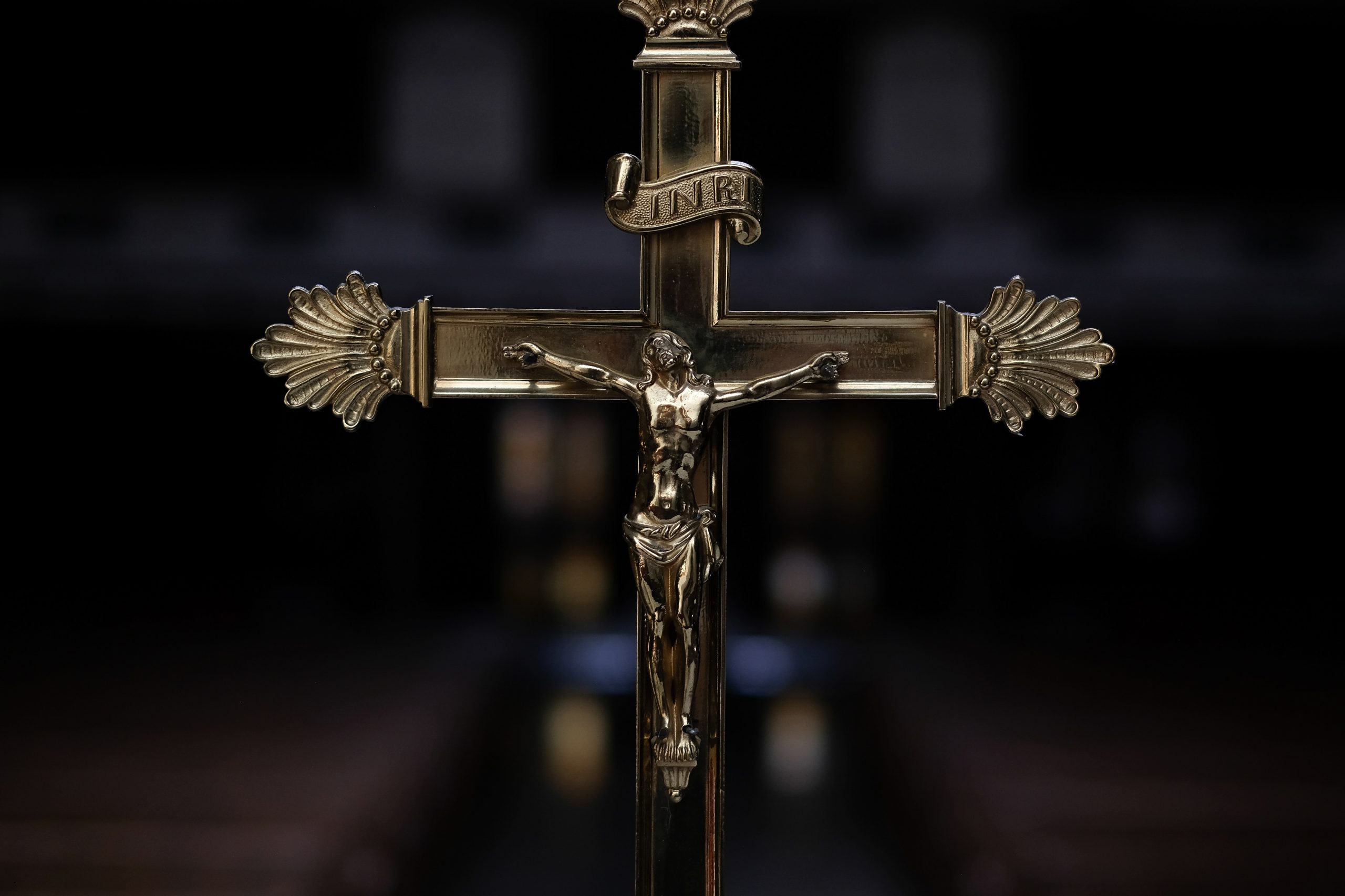
I lifted my head from his pillow, sitting upright on Simon’s couch, and adjusted my shirt (as planned) to the side so that the thin gold chain that led down to a crucifix, carved out with a tiny Jesus, flashed against my neck.
“Oh,” Simon said. “Did you have that last time?”
Glad as I was Simon had noticed, I expected for the noticing to go something like this: a quiet acknowledgment I was religious too. Eventually, a new intimacy deepened by the respect of this choice, which would (also eventually) lead through a few small devotion-proving fights to love and then marriage. I had not expected to have to confront my religiousness aloud just yet, and for a moment the lie seized me around the waist. “Yeah,” I told Simon, measuring my voice, trying to make the word sound aggressively mundane, as if I spoke of the chain often. “I wear it everywhere.”
I had worn it only once, to the grocery store the day before, in a dumb practice round of trying to pull “the look” off in public after he’d texted to ask what I was up to the next night. What is the look? I wondered to myself. Do I walk differently now? Does this make people think I’m not gay? That I’m not comfortable with my gayness? My internal dialogue was running at such a high level that I had forgotten half of what I’d gone to the store to get—chicken and rice, a roll of toilet paper Dave hadn’t bothered to buy despite the recent assurances of his accountability. (“I know it annoys you—sorry, I’ll get it tomorrow!”)
“That’s really cool,” Simon said, placing a glass of water in front of him. What would have been a normal gesture of hospitality felt oddly like a profession of love. Really cool. Not just cool. It pleased me; this was working.
“Thanks,” I said, injecting a hint of weariness into the word. “A lot of people don’t understand it.” I adjusted my shirt so the chain disappeared, and we got back to talking about the movie we were about to watch, a Christian horror film called Bells of Reckoning in which nuns become vampires and then turn absurdly and confusingly back into nuns.
“Have you seen this one?” Simon asked.
“I haven’t!” I said. Obviously, I thought to myself. The movie case looked like a bargain-bin novel, fanged nuns in idiot red tones. I was comforted by the fact we had ended the moment on a note of my honesty (no, I had not in fact seen this movie), and placed my head at an angle, so that if Simon wanted to, he could nudge me to fall romantically onto his lap. The only scene that held my attention was the one where the nuns become unpossessed, their fangs shrinking back to human teeth. It reminded me of the cool crucifix above my heart, and what it would mean for me to break through the illusion of my Catholicism, which was amazingly simple to pull off.
“Church Sunday?” he asked.
“Of course,” I said. Of course.
Maggie called me at exactly five thirty the next day, a punctuality that seemed desperate. “I have him wrapped around the palm of my hand,” I told her excitedly right when I picked up, walking to the subway. I wanted her to say anything that would support this decision, this certainty that we can change for other people, or ourselves. Maybe private school taught that.
“Isn’t the expression ‘in the palm of your hand’?”
“Both!” I said.
“It can’t be both. That doesn’t make sense.”
“How’s Bryan?”
“Rough patch but every rough patch ends.”
“Yeah, I hope so too,” I said.
“You hope what?”
“That every rough patch ends.”
“I didn’t say I hope. I said it does.”
“Sorry,” I said, letting her win.
In the background, over the bustle of cars and distant horns, I heard, “Mag, where the fuck you put the tomatoes?” I winced at how embarrassed it must have made her feel, knowing I heard that.
“I have to go,” she said. “Did you get the cross?”
“I’m wearing it now,” I said. “I actually like it.”
She sighed loudly, sparing me the sense this was about me at all. “I have to go too,” I said. “Dinner with friends in the Village.”
She didn’t tell me what she was going to do, so I was sure it was nothing she wanted me to know. I walked down into the subway and waited ten minutes for a train and didn’t think of her once. I imagined myself going through Charm’s closet with Eric in the next few days, pulling out church-wear. White and black, I told myself. But I honestly had no idea.
“You deserve it. I’ve always known it’d be you,” I told Eric outside, waiting for him to finish his cigarette. Steam pummeled angrily up from a vent down the street. Eric had just gotten tapped to be Charmed that morning, and I was caging in my fury. His boss had walked over to him with a cake heavy with vanilla frosting that read in florid red cursive: You’re a Charmer! The whole spectacle of the promotion felt too rich, condescending in a way that made me question whether I really even wanted this anymore. I had thought the crowning would be a little quieter. For the first time I wondered if I might be too good for the job; the idea I had given up too much for it upset me.
He made a face, like he was about to cry. “That means a lot. Thanks. I honestly thought it might be you.” He laughed.
“Oh please!” I smiled knowingly, performing for him how ridiculous that must sound to me. “No, not my time.”
But it was my time, and I knew it. A taxi pulled over in front of us, two young women stepping out, bright yellow high heels.
“Fuck, my three o’clock,” he said.
“Them?”
He didn’t answer. He stabbed out his cigarette and walked quickly back into the lobby with a new kind of confidence I seethed at. His refusal to finish the conversation felt like a personal attack. That’s my three o’clock, I thought, just to myself. You just sat your ass down and never got up.
Dave could tell I was pissed when I walked in the door. He turned off the game right away, and I saw his face in the blank screen ahead of him, tired. I almost asked him if he’d even gotten any sleep.
“What’s got you grumpy?” he asked.
“I’m no Charmer, not today.” He seemed not to remember I had told him about this, about work, or maybe I had never told him. Either way, I felt myself blame him.
“Still wearing that cross though! I like it!”
He smiled his big, fake grin, and I wanted to tell him to take a shower.
We arrived at the church five minutes before the Mass started. The air outside was thick with the syrupy scent of frankincense or something like it. Whatever it was exactly, the smell was just left of Christmas at my rich aunt’s. Simon’s dirty blond hair, parted, slicked down, started to get me hard, so I bit my tongue. The crucifix felt invisible, the temperature of my chest, as if it had melted right into me.
Outside the large stone entrance, people were folding their hands, bowing their heads. Small groups formed, the ominous groan of an organ warming up its hundred throats. When we walked inside, Simon dipped his fingers in a bowl of water and made a cross. I could see him touch, left-right, across his chest, and did the same. A small drop of water lingered at the corner of my brow, and I sensed that at any moment it might bore a hole right into my head, announce me as the impostor I was. We sat on the end of the hard pew in the back. What kind of choreography did one do in the church? Whose lead did I follow? Suddenly, I felt more at risk of being exposed than ever before. What was the padded green bar under the pew ahead of us for? How long did this even last? Growing up, I’d heard friends talk about how Mass dragged on. Were we talking hours?
We rose at the sight of the pope. The pope? Was that a priest? It was not a shaman. The pope was the one in charge. Ah, I thought. Vatican.
He greeted us warmly; we stood, then we took our seats. I thought, Game time. One eye always on Simon. I stood behind him, sat after his lead, a power play unknown to him that registered in me as sexy. At several points we sang, “Hosanna in the highest!” And I found the tune kind of catchy. After what seemed like an hour (it had been an hour), there was a scene playing out about the Body and Blood of Christ, and I realized I was going to have to commit. To eat the Body of Christ.
Simon’s shoe lifted the bar we’d been kneeling on, and he gave me a look. Like pride. Guilt surged through me. We attached ourselves to the back of a long line of everyone. (Nothing I could have sat out.) We moved forward with a kind of overly mindful step-touch. It made everyone look pretty gay.
A few people ahead of me eyed what looked like crackers as the priest lifted them, mumbled a thing, and then placed them in the palms of hands.
I heard Maggie’s voice, singsong, almost funny: Eternal damnation.
I saw people bypassing the goblet so (unlike me) skipped on the wine. When we got to the back, Simon took my hand. I almost gasped. He led me to the foyer, where a few hymnals were scattered on the floor, that water I dabbed myself with on the way in—and he kissed me. I could still taste the grape juice. The Blood of Christ, I almost said aloud, just to correct myself.
A few days later, Amy stopped by my desk, looking around suspiciously. It was the kind of care I didn’t expect from her, and both this and the attention she’d paid to her redbrown hair, which waterfalled down onto her shoulder, gave me a jump of sit- up respect I normally didn’t experience with her.
“So, about Eric,” she said. “What do you think?” Amy was a famous gossip, so I never got to know her. (“Smart,” a photo assistant Lexi had said during drinks one day, revealing some experience she didn’t want to share. “Very smart.”)
“I don’t know,” I said, tired of being in a dishonest mode. “I’m happy for him.”
“Yeah,” she said, leaning against my desk. “He’s been here four years.”
“Four years?” I said. “That’s insane.”
“Yeah, it is. He tells all the new hires he’s coming up on two.” She ate some peanuts I didn’t know she had in her hand. “Kind of embarrassing.”
I felt a reminder not to disclose anything about myself. “Good for him,” I said again, trying to pump the words full of meaning, trying to mean them.
She sighed. “They told you you were up for it, didn’t they?”
“What do you mean?” I said, feeling a heavy thud in my heart.
“Oh, they do that with everyone. Makes you work hard like crazy,” she said.
“They told you?”
“They still tell me.”
“Why are you telling me this?” I said.
“Honestly? So you can take yourself out of the game,” she said. “Four years? Four years,” she said, making a face like she’d just witnessed a grimace-worthy football play.
“Have you really been here for just two years?” I asked her. I hoped my ability to see through her shit would override my anxiety at having bought into all this crap. Crap on crap on crap.
“Three,” she said. “And a half.” She paused for a moment. “So I’m next. By the way, I like the chain on you,” she said. “It’s a good look. You need the edge.”
I took it out from under my shirt, feeling the bumps of the little Jesus in my fingers. “It feels bad,” I said. “To be honest. To wear this and not mean it.”
“You really can’t have that much of a conscience,” she said. “Obviously he likes you.”
“Anyway, I don’t care about getting Charmed,” I said, trying to end the conversation. Just after I said it my eyes darted around, making sure no one that mattered had heard. The lie felt strong, bulletproof, but my eyes were starting to water, so I didn’t look at her. Amy laughed. She clapped her hands free of the peanut residue and placed one on my desk, staring into me. “Yeah. I said that too.”
My key didn’t open the lock. The knob felt stuck. I fumbled with it, then knocked on the door. “Dave?” I eyed the keyhole. “Dave? Can you open this up, please?”
I knew he was home. I heard gunshots on the television screen. “Dave, can you open this?” I yelled louder. Sometimes the headpiece was hard for him to hear through.
Finally, the lock gave. On the screen, Dave was out—no lives left. Blood punched at the monitor, paintballs of it. I put my bullshit keys on the bar cart and felt a lifting in me for some reason, like finally I wanted to just talk to him. It looked like they’d beaten the armory and were on to someplace else. It almost looked like a church.
I froze when I turned the corner into the hallway, my body shivering up, standing reflexively on tiptoe, like a ghost at the sight: blood traveling in a thin chain, slow, down a divot in the hardwood, from the bathroom. It looked like grape juice. I stopped in my tracks and called Maggie instantly. My hand shook, and my voice erupted with panic, everything I couldn’t keep in bursting out. She was in a good mood when she answered.
“What’s got you grumpy?” she said.
“I think my roommate killed himself.”
“You know,” she said, laughing a little, “you don’t always need to be dramatic.”
“He’s in the bathtub, I think.” The silence between us fell, hard, to the floor.
“I’m going to call someone.”
“Can you just stay on, for just a second? Dave!” I called again. I didn’t want to face it. I had nothing to feel sorry about, not a thing in the world. Maybe no one else did either. Behind me, gunshots. A tiny, triumphant voice through his headset: “Got him!”
Since I was a child, watching my older brother play video games, I had the idea that when we die we are taken to something like an end screen to give away our goodness and our badness, the sum accumulation of all we’ve done, before our game really ends. I want to give Dave everything. All of it. Not because I care, but because I can’t keep it for myself. I looked at what the truth was doing to me, disgusted, and wondered if he’s giving it all to me right now, before that red light on his console turns off.
Date four was Simon’s plan to help me heal. He said that certain views can mend a heart, God calling out clear over the hills, after I phoned him crying. Through the insanity of that moment, my tears slicking that glass, I recalled feeling perversely happy that an awful thing was bringing us closer together, and it made me wish for the suffering I had.
So it’s right now, right now. Simon and I have made it to the top of that abandoned fire tower upstate where God had visited him two years ago in a breath, something he told me on the drive there. God told him he could be gay, but he had to be careful. Date the right guy. We drove through piles of fall leaves kicking up past us, like the deciduous shoot that had actually turned out well. Not that I was there to see it with my paid leave.
On the walk up, I admired the way he moved, sometimes taking two of those rickety metal steps at a time, an eagerness for the view that seemed too pure for me. Looking out now over the trees, the sunset, all that glimmering beauty, an apology rises in me. I don’t even know who it’s for, but I don’t want it for myself. For the first time, I know Simon wants to kiss me. He thinks I’m finally safe to love. I’ve passed all the tests. A hot breeze hits us, and I watch its path through the trees, fluttering their orange-brown leaves like a spirit. Will he still love me when I tell him the truth? Will he still love me if I tell him the truth? The faith is in me, I want to say. I promise it is. I just don’t think it’s where you want it to be.
Picture perfect, I’m wearing almost everything I’ve borrowed from Charm’s closet, throwing around orange patterned shorts and spiky overthought shoes with Eric that day when we knew this is where we’d be, back when I thought I could have a clear conscience about all of this, like it wasn’t just going to hurt me in the end. The brown belt that risks, but fashionably. My white sleeves cut up higher than a short sleeve, highlighting the place my bicep starts. Suddenly, I wonder if I just look ridiculous, someone trying so hard for something they don’t need, or can’t sustain. That anxiety gives birth to a fact I know I wear well: I just look stupid.
Simon turns to me and says, “Let’s pray.”
“Okay,” I say. He has one of his serious moments, looking up with those gorgeous eyes, like a Charm cover model.
“I’m so glad we met,” he says.
“Me too,” I say. I fold my hands on the cold metal bar. When I close my eyes, I wonder if maybe he’s in a tower taller than this one, looking down on me. But I don’t believe it, not for a second. I love you, Dave, I think, and try to make myself feel it. That cool metal cross just over my heart, the one I won’t ever take off. Entering this prayer I can’t leave. A breeze coming now from the other direction, moving my hair back into place—picture perfect. Simon with his proud smile. No clue of those words but the first two. Dear God,
Black Appalachians have always been invisible to mainstream culture that wrongly conflates “white” with “Appalachia.” Stereotypes are even more prevalent in today’s political climate but the presence of African people in the Appalachian mountains was documented as early as the 1500s. Many Black people are still settled in hollers, former coal camps and thriving urban Appalachian towns and cities throughout the region. Our ancestors were among the earliest settlers. My own family has lived in the hills of Kentucky, where I grew up, for four generations.

The Birds of Opulence, my debut novel, begins with Yolanda Brown being born in a garden and follows two Black mountain families as they struggle with mental illness, vexing relationships and the land itself. At the center of the multigenerational novel is always what each character brings forward from the past and what they choose to leave behind. And always the gift of the land itself and its capacity to heal.
I could easily fill this list up with writers from the poetry collective The Affrilachian Poets, comprised of nearly 40 writers including Frank X Walker, Nikky Finney, Mitchell L. H. Douglas, Randall Horton, Kelly Norman Ellis, Kamilah Aisha Moon, Keith Wilson, Amanda Johnston, Shayla Lawson, Joy Priest, Parneshia Jones and others. We have been a collective since 1991 when Walker coined the term Affrilachia (which now appears in the Oxford dictionary) to negate the belief that all of the region is white. Affrilachian Poet books of note that will be released soon include:
But outside the Affrilachian Poets, there are other Black writers who are also writing about the region. Some you will recognize immediately; others you may be hearing about for the first time. This list includes both scholarly work and literature.

Demby, who spent his teen years in Clarksburg, West Virginia, won the Ainsfield-Wolf Lifetime Achievement Award in 2006. He was born in Pittsburgh and spent much of his life in Italy and Sag Harbor, New York. His other books include The Catacombs, Love Story Black, and Blueboy, and his final novel King Comus was published posthumously in 2017 by Ishmel Reed. Demby died in 2013. Beetlecreek, his debut novel, explores the relationship between a Black teenager and a white recluse in West Virginia. His work was sometimes criticized for not being “Black” enough and he was quoted in the Bloomsbury Review saying “I believed, as I still do, that a black writer has the same kind of mind that writers have had all through time…He can imagine any world he wants to imagine.”

After coining the phrase Affrilachia and increasing the visibility of Black people in the region, Walker wrote this first book of poetry, which is now a classic. These poems, both historical and personal, address race, family, a sense of place, identity and social justice. Walker is a native of Danville, Kentucky and has won a Lannan Literary Fellowship and an NAACP Image Award (among other awards) for his poetry. He is currently writing a novel and is a professor of creative writing and English at the University of Kentucky.
Smith, a poet of the early twentieth century, was born to former enslaved people in Pike County, Kentucky. She received her teaching certificate at what is now known as Kentucky State University. This expansive volume captures the includes her poetry as well as several short stories and is edited by Henry Louis Gates, Jr., who also hails from Appalachia.

Set in the 1950s in Mt. Sterling, Kentucky, Townsend’s well-received debut centers around compelling characters Caroline and Audrey who are coming of age in Appalachia amidst segregation, the Jazz Era, and struggles with family and identity. Townsend won the Kafka Prize and the James Fenimore Cooper Prize for historical fiction. The book was also the 2015 Honor Book of the Black Caucus of the American Library Association. She received her MFA from the Iowa Writers Workshop and spent a year as a Fulbright fellow in Cote d’Ivoire. She is currently Berea College’s Appalachian Writer in Residence. Townsend earned degrees from Harvard and Duke Law School.

This anthology celebrates the 25th anniversary of the poetry collective and is a testimony to the talent and accomplishments of the group. This collection includes poems from nearly every member of the collective and pays homage to Frank X Walker’s original idea of “Affrilachia” as both a geographical place and a cultural one. Spriggs, a multidisciplinary artist, is the author of four collections of poems including most recently Call Her by Her Name and The Galaxy is a Dance Floor. She has also edited several anthologies and is currently an assistant professor of English at Ohio University. Paden is an Associate Professor of Spanish at Transylvania University and also on faculty in Spalding’s low-residency MFA, where he teaches literary translation. He is the author of two previous chapbooks, Broken Tulips and Delicate Matters, the latter comprised of translations. His poems and translations have appeared widely in literary journals.

This was the first book to look at the presence of African-Americans in the region. It is one of the most valuable and comprehensive tools for anyone who wants to study the contributions of Appalachia and Black history. The contributors in this volume range from Carter G. Woodson, who was not only the Father of Black History but also one of the first scholars of Appalachian Studies, and W.E.B. DuBois to more recent scholars such as Theda Perdue and David A. Corbin. Both Turner and Cabbell are sons of the region. Cabbell grew up in Mercer County, West Virginia and was founder and director of the John Henry Memorial Foundation. Turner, a native of Lynch, Kentucky, has served as a vice president of the University of Kentucky, was interim president of Kentucky State and retired in 2017 from Prairie View A&M University.

These beautiful poems take us to the town of Logan, West Virginia and make connections between history, genealogy, and geography. This collection won the inaugural Lexi Rudnitsky Poetry Prize. Hairston, also known as elen gebreab, lived in Logan County, West Virginia during her formative years and is a writer, artist, teacher and performer in Oakland. She holds an MFA in Creative Writing from Brown University and is a Cave Canem Fellow.
Bone Black chronicles bell hook’s childhood and provides an intimate portrait of her journey to womanism, writing and the unleashing of the power of a creative and intellectual life. Born in Hopkinsville, Kentucky, preiminent intellectual, feminist theorist, cultural critic, artist, and writer bell hooks has written more than 30 books. hooks’ books Belonging: A Culture of Place (a collection of essays) and Appalachian Elegy: Poetry and Place also address her connections to the region as an Black Appalachian woman. She currently serves as the Distinguished Professor in Residence at Berea College, the home of the bell hooks Institute, and makes her home in Berea, Kentucky.
Brown gives us a broad look at race, identity and politics through over 150 extensive interviews with current and former residents of Harlan County, Kentucky, who were black coal miners. This book too, solidifies that Appalachia may not be what you think. Brown, a sociologist, is Assistant Professor in the Department of Sociology at UCLA.
In this poem sequence, davenport welcomes readers to Soque Street and its Black inhabitants. Set in northeast Georgia, the book lets residents’ voices come alive in davenport’s hands. Davenport is a self-defined lesbian-feminist, working class Affrilachian from Northeast Georgia with a BA in English from Paine College and a Ph.D. in American literature from the University of Southern California.
In Jenny Offill’s Weather, Lizzie is a librarian who takes a side job answering questions for a podcast called Hell and High Water. A sample query from the show’s listeners: “How did we end up here?” Lizzie offers a quote from English naturalist and philosopher William Derham from 1711:
We can, if need be, ransack the whole globe, penetrate into the bowels of the earth, descend to the bottom of the deep, travel to the farthest regions of this world, to acquire wealth, to increase our knowledge, or even only to please our eye and fancy.

As she plunges deeper into the research hole, Lizzie becomes obsessed with doomsday survivalist tips such as using a can of tuna can be a source of light and starting a fire with a gum wrapper and battery. The big picture is not the only thing on poor Lizzie’s mind. There’s her sort-of sober brother, Jesus-loving mother, and and then there’s the 2016 elections to add to the anxiety. In a style that is her very own, Offill gives us Lizzie’s mind and life in wry, cerebral—the references go from prepper wisdom to psychology theories to classical civilization interludes—in tiny fragments.
Despite its weighty climate anxieties, the novel is dryly hilarious, a sort of lit fiction stand-up comedy of overthinking, middle-class New Yorkers. As in her last novel, Dept. of Speculation, her glittering characters, particularly the little children, will rob your heart. Lizzie’s son Eli, for example, becomes distraught over the mouse’s skull under the sink. His father investigates. “But it is only a knob of ginger and we are saved.”
I spoke to Jenny Offill about miniaturizing prose, worrying (and attempting to do something) about climate change, non-dystopian stories, and her favorite vignette writers.
J.R. Ramakrishnan: You populate Weather’s world super quickly and fully with multiple characters—Lizzie, the library’s patrons, the recurring people she encounters on the street—with so little words. I am sure it’s all magic but how did you start? How did you shape the vignettes into a novel?
Jenny Offill: It was actually a real challenge for me because I usually write a really small number of characters. So how to have someone who had a job where people came in and out all day was central to my idea of this novel. At first, I couldn’t figure out if I should name them all or not name anyone. I ended up giving them all the different jobs I’ve had.
Libraries are some of the last places left in America where people of all ages and all backgrounds can come and go.
I think libraries are some of the very few places left in America—they might be the actual last—where you can go and be free, where people of all ages and all backgrounds, can come and go. I wanted this novel to look outward a little bit so I started collecting little sections in a file called “Patrons.” I wasn’t sure where I was going to start the novel, but after I’d been doing this for a while, I kept coming back to the woman who says she is “mostly enlightened.” Someone once said this to me in all seriousness. I was like, ooh… It was a kind of joke that spoke to the whole novel: this feeling that in one moment you think you can see for miles and miles and understand things but in the next, you don’t know anything at all. That’s something I was interested in thematically and is where I started it.
I mostly write the vignettes individually and mess around till the tendencies please me. Maybe after three or four years into this, I was feeling stuck. I printed everything out, cut them up, and put them on the wall. I didn’t try to order them. I just wanted them out of the computer so I could walk by and get some ideas. Although seriously, it is the least efficient way possible to write a book. I would maybe get five new ideas after having spent five hours, though very enjoyable ones, cutting up little bits of paper.
JRR: There’s a lot of worry and obsession here. I remember the bed bug fixation in Dept. of Speculation. How do you write and consider the current collective anxiety while also living in it?
JO: I started the book a little before the election when I was very worried. I began by reading about what it was like before World War II, the French Resistance, and different troubled times in history. With the climate stuff, I felt that I was writing about an ambient fear of something that has not yet completely taken shape. At least for people in the West who are relatively wealthy. It’s only been fairly recent that it feels like, “Oh, climate change, it’s not in the future, it’s here.” But, of course, it happened much earlier than this in the Global South. It’s like that old quote of William Gibson, “The future is here, it’s just not evenly distributed yet.”
So, it’s been about six or seven years that I’ve been reading about it. My friends thought it was kind of funny. When did Jenny become a climate change doomer? But you do go down the rabbit hole when you are learning about it. The main thing is the timeframe and that it’s no longer a hundred years off. As a mother, I had to figure out how old my daughter would be then. It’s the only number I decided to put in the book, climate departure, which is 2047. Part of what became the novel for me was trying to map what it’s like to go from being interested but not emotionally invested to actually feeling it.
JRR: Lizzie knows a lot about climate change. What did you learn in your research that really surprised and/or influenced you?
JO: There were two books that were really key to me. The first is Don’t Even Think About It: Why Our Brains Are Wired to Ignore Climate Change by George Marshall. He talks a lot about the (climate change) denials that are softer. For example, you know, but you don’t really look at it or the attitude that we’re all screwed so what’s the point anyway? The latter is a nihilistic form of denial. Even if it’s true, I don’t think it’s necessarily a free path to not have any agency. He figures out that you have to use different language with different people because everybody sees climate change through the prism of their own experience. If you are going to talk to hunters, you need to be talking about conservation. If you’re talking to Evangelical Christians, then talk about stewardship that the Lord has called on us. It was useful for me to think about the language this way.
You gotta have activism for hypocrites.
The other book I’m always trying to get people to read—it’s such a hard sell—States of Denial: Knowing about Atrocities and Suffering by Stanley Cohen. He writes about the different ways people find to not look at ongoing or coming atrocities. He talks about “twilight knowing,” where you do know but you don’t admit you know. Until recently, I noticed that people would talk about how it was crazy that it was so warm but no one would go into the climate stuff.
Cohen also writes about people who were against the regimes in 1970s Brazil and apartheid-era South Africa but who didn’t feel like they could speak out. They became instead incredibly interested in domestic things, hobbies, and sports. He calls this “innerism.” I think of this when I am reading a really elaborate restaurant review, It’s great—and I suppose, it’s what I do too—but it’s so strange to consider something in a vacuum.
JRR: Here’s a question for Hell and High Water: Do books/literature have any power to do anything for us as the end approaches?
JO: Obviously, I think so. I think we have some new stories that we need to tell. Most of us know the doom-y stuff. But I think we need the other stories too, the ones about what it would be like if we did make the change to a low-carbon society. We have a lot of dystopian fiction about climate and I’m not recommending utopian fiction. But I think there’s something about what could be is interesting.
I don’t really approve of the idea of the novel as a big, baggy monster. Every word has to be there for a reason.
For example, in Holland, they have these bus stops with grass roofs to provide a corridor for butterflies and bees. You sit under it while you wait for the bus. This is kind of lovely. I also spotlight organizations in my Obligatory Note of Hope [a website of climate action resources Offill put together for “what to do if (like me) you hate to march”] that give a little insight into what it might be like to have a more localized economy and how it doesn’t necessarily have to be like a big weird commune. They have little things like tool libraries, which are about building communities that are neither too oppressive nor too atomized, where we are now with our phones and things like that. I don’t think there is much hope without a sort of humility about how this way that we’ve been living doesn’t work anymore.
That said, I am going to fly around to talk about this. I’m not a vegan or anything. You gotta have activism for hypocrites. You just gotta be able to do it even if your own house isn’t in order. I mean, even if you want to donate to the Sunrise Movement and do nothing else, that’s great. Or maybe you want to do some small little project in your own community. In Don’t Even Think About It, George Marshall says to stop being silent about it. I spent a year talking about it to everyone I met.
JRR: My absolute favorite line in your book: “(Democritus wrote 70 books. Only fragments survive.)” Classics geeks will recall he was known as the mocking philosopher. Who are some of your favorite fiction miniaturists?
JO: I always go back to Joy Williams. I just taught The Visiting Privilege. She puts so much into her sentences. To me, it’s a lesson in what you could possibly do. Recently, I read Clarice Lispector’s The Hour of the Star, which is about 90 pages long and fantastic. Jean Rhys because she did so much in very small spaces. Fever Dream by Argentine writer, Samanta Schweblin. It’s a creepy environmental ghost story.
Sometimes I try to expand my horizons and read long books. Somehow I have the endless ability to read these super long non-fiction books like The Age of Surveillance Capitalism, which is like 500 pages long. But I don’t really approve of the idea of the novel as a big, baggy monster. I like to feel like every word has to be there for a reason.
Most of what I learned in college was useful. Not practical, often, but socially or existentially helpful. The glaring exception is an idea I picked up God knows where, and clung to for five bleak years: that love meant losing control. True romance, I thought, should feel abject. It should be a descent.
Unsurprisingly, this concept of romance led me away from a very kind boyfriend, and toward a very bad one. It exerted an evil hold over me. I am sure I was not helped by the abundance of movies, books, and television shows in which love appears to be a form of voluntary torture, though, to be fair, I refused the wise counsel of books like Michelle Huneven’s Off Course, which should have served as a warning. I doubt, though, that even I could have denied the force of the poet Elaine Kahn’s audacious second collection Romance or The End, whose speaker starts out believing that romantic “suffering brings women to god” and ends up declaring that she is a god herself. The paired ideas of romance and godliness drive the collection forward. In eight fast-paced sections, Kahn guides her speaker toward a bold new understanding of love not as a loss of control, but as a stepping stone on the way to divine power.
Kahn is not the only contemporary writer to emphasize control and authority as strategies for overcoming restrictive or harmful ideas about romance. Romance or The End falls on a spectrum between sexual-intellectual power stories like Susan Choi’s Trust Exercise and Lisa Halliday’s Asymmetry and Carmen Maria Machado’s shape-shifting memoir of abuse, In the Dream House. Like Kahn, Machado is interested in redefinition, but where she retells the story of her abusive relationship from a dizzying multitude of angles, Kahn moves through time linearly, reorienting not her story but her definition of romance, which changes over the course of the collection from sex to surrender, surrender to dishonesty, and dishonesty to control. At the book’s start, the speaker can’t imagine anything more romantic than being what her partner likes. At the end, her idea of romance is the ability to tell other people, and herself, the truth.
Romance or The End also bears a very light similarity, or else owes a small debt, to the novelist Akwaeke Emezi’s debut Freshwater, whose protagonist, Ada, is ogbanje—a spirit child who returns repeatedly to Earth in different human incarnations. Emezi, too, is ogbanje, and has written nonfiction about their divinity as a source of power. Where Emezi’s fiction and essays are rooted in Igbo ontology, though, Kahn steers away from religious specificity, almost never invoking any one faith or tradition. She always puts the word “god” in lowercase, and, though her speaker claims repeatedly to be a god by the book’s end, she never seems to get any divine powers. Unlike Emezi’s Ada, she can’t talk to gods or spirits, and Kahn gives no indication that her speaker might be immortal or omniscient. She is, however, in control.
In Romance or The End, divinity lies in autonomy. For Kahn, a god is less a deity than a kind of powerful person, which means that just about anyone can become one. The path to divinity is difficult, but that does not make it special or rare. In fact, the opposite is true: divinity is the closest available solution to the problems of conventional romance. This does not mean that Kahn is espousing some kind of self-help-ish goddess-within-you argument. She seems uninterested in the predictable virtues of inner peace and strength. The path she creates for her speaker—and, perhaps, for her reader—leads not to resilience but to ruthlessness. She’s not advocating for romance, ultimately. She’s advocating for lovers to be unafraid of love’s end.
The path to divinity is difficult, but that does not make it special or rare. In fact, the opposite is true.
This lack of fear is the core, for Kahn, of godliness. It’s also a major departure from the ideas about romance the speaker has at the collection’s start. When she first falls in love, she understands godliness as a mysterious inner quality that serves mostly for attracting a man. In the book’s opener, “Romeo & Juliet & Elaine,” the speaker watches “Love’s Commercial,” which opens with a woman named Maria saying “hello to Paul / hello,” then “turn[ing] on / like a wide band” when he replies. Paul “wants to fuck / the god inside her,” which seems promising for them both, but the commercial ends dismally: “Maria serves Paul’s emotional and sexual needs / in exchange for pizza.”
The ad prefigures the speaker’s own arc. In the first few sections, she engages little with the idea of divinity, barring one poem in which she grumbles, “Tomorrow I will be as tired as a god.” For the most part, though, she seems focused on building and protecting her relationship, striving first toward “the impossible art of touch” and then, once the relationship’s early sexual heat starts cooling, toward an equally impossible state of contentment. The sourest, most bracing poems in Romance or The End come in the third and fourth sections, in which the speaker grows restless and dissatisfied with her partner. In “A Wish to be Poisoned / What I Want to Touch I Click On,” the speaker, watching television with her partner, thinks irritably, “god / your mind is boring.” In “Alarm,” which beautifully alternates spoken dialogue with the speaker’s parenthetical inner monologue, she resists “(the temptation to flee) / (to freedom),” contenting herself with the thought that “(limitation invokes invincibility).”
The speaker, it seems, believes in this part of the collection that limitation is romantic, or is inherent to romance. She seeks value in the “sacrament of being / held without affection,” which positions her as a worshipper, not a god. She bristles when thinking about marriage, and yet, at the end of “A Wish to be Poisoned / What I Want to Touch I Click On,” declares to her partner, “I decided / I decide / You can do pretty much anything to me.” The next poem, as I interpret it, seems to depict a rape—the dense, repetitive scene that begins “All I Have Ever Wanted Is to Be Sweet” conveys terror and paralysis, or perhaps even an inability to escape. In the following poem, the speaker refers obliquely to an “it” that “happened / so many times,” her evasiveness serving to underscore her earlier fear.
The section of Romance and The End that, to me, evoked sexual assault is brief and stark. Its first poem, “All I Have Ever Wanted Was to Be Sweet,” is both the collection’s most moving and its most formally thrilling. Kahn splits the poem into two parts, perhaps mirroring the speaker’s dissociation from her body or from her fear. In the first half, the speaker repeats herself over and over, rearranging the same sequence of words until the mounting pressure seems to raise issues of consent. Then she shifts into precise, measured couplets, announcing coolly, “to you who say my fall was justly wrought / know this: I paid for more than what I bought.”
Arguably, this line starts the speaker’s transformation into a god. Kahn seems to figure her as either Eve fallen from Eden or a Milton-style Satan fallen from heaven. The former would render her more human, the latter more divine—which, of course, is Kahn’s pick. By the section’s last poem, “Romance,” which reads in full, “Love has turned on me / and now I am its liar,” it seems clear that the speaker intends to become a silver-tongued fallen angel, not a victim of snakes or men. By the next section, which ends with the speaker declaring, “Love turned me into a liar / Lies turned me into a god,” it seems clear that she will succeed.
She may be a god now, but, like Satan in Paradise Lost, her proximity to divinity doesn’t mean she gets to be happy.
In Romance and The End’s last three sections, the speaker sets out to free herself from expectations, both social and personal. She shakes away the idea that suffering is good for women, and that invincibility should come with limitation. She accepts her ongoing search for sex and love, but points out that “I can’t transcend a thing / if I’m unable to desire it.” Her goal, then is, to transcend romance, but she remains fallible. She may be a god now, but, like Satan in Paradise Lost, her proximity to divinity doesn’t mean she gets to be happy, or that she gets what she wants. It means, mostly, that she has taken control of her own narrative arc. She gets to determine her own truths, to no longer “consent to destiny,” and to assert, “When I tell myself a story / I decide the end.”
Kahn’s speaker’s new fearlessness in the face of endings indicates that she has shaken off her earlier desire for permanence, which is the ultimate myth of romance. Any marriage, or marriage plot, contains the promise or threat of till death do us part. For a real, immortal god, this would be irrelevant. For Kahn’s speaker, in her minor and earthly divinity, rejecting her old aspiration to a relationship that lasts forever brings her fully into her own power. It teaches her to be truthful with herself, and to “want to be more / than anything I want.”
The double meaning in this line, which comes in the collection’s epilogue, is key to understanding the ways in which the speaker has changed. She could mean simply that she wants to be, meaning to survive, more than she wants anything else. She could also mean that she wants to be more—to exceed expectations, to keep accruing power, to be as godly as a human woman can. Likely, of course, she means both. Romance and The End is a portrait of survival through grandiosity. All its bold claims of divinity coalesce around a very simple idea: no one should have to rely on fate or “providence / who is unqualified.” True power, romantic and otherwise, lies in relying, like a god, on oneself.
Editor’s note: At the publisher’s request, this essay has been edited to clarify that Lily Meyer’s description of the events in “All I Have Ever Wanted Is to Be Sweet” are Meyer’s interpretation alone, and not a reflection of the author’s intent.
 Thank You!