Faking Catholic To Attract a Hot Gay Man

“In the Palm of His Hand”
by Peter Kispert

The first thing I have to confess is that pretending to have a relationship with the church (The Church?) came easily to me, in a way that at the time did not feel like a sin.

“A relationship with God, you mean. You’re not praying to a building.”

My friend Maggie had been out of Fordham for four months and found, back in her Vermont hometown, a need to reaffirm, at every turn, her hundred thousand dollars of intelligence and acquired wisdom. The phone crackled with static, her bad reception up there in the woods. I imagined her in the middle of a brown leaf pile, neck high, and stifled a laugh at the image. She continued disapprovingly, “It’s worth asking: Is this ethical?”

“You mean moral,” I said.

“No,” she said, aghast with the special irritation at having been corrected by someone who graduated from a state school.

“I mean ethical.”

“I guess I’m not worried about that,” I said. She didn’t reply immediately. I could tell I was upsetting her more but pressed anyway. “Didn’t you do kind of the same thing? Saying you played tennis for Bryan?”

“That actually could have been true. I have the body for it. Plus, I can pick that up anytime.”

“And I can’t just start going to church?”

“Again,” she insisted, “it’s about going to God. And for your first relationship?”

“Plenty of people who go to church don’t believe in God.”

“Ugh,” she said. “You sound like Bill.”

Bill was a contrarian who Maggie had dated and complained about through her sophomore year, a Columbia guy with long black hair he modeled on weekends who pushed back on everything she said, and who once infuriatingly “iced” her on a fire escape during a party. A shame memory for us both. She’d called me right after, and I’d been too drunk myself to be of any help. She still hadn’t gotten over him, I knew, and I felt awful that she still couldn’t see a fact so clearly before us both, obvious even at the time: Bill never really liked her. She was trying to become him now, though I’d never tell her that. You sound like Bill, I wanted to fire back.

“Sorry,” I conceded instead. Throwing the conversation in the trash, I said pointlessly, “What are your plans for the day?”

She ignored the question, the phone making a crinkling, fading-out noise that suggested the fraying of our friendship with each of these less and less frequent calls.

“Why are you even doing this? Is a guy worth all this energy?” She strung up those words, put extra spaces between them for emphasis: All. This. Energy.

It was something I would have said to her, might already even have. I had the urge to get off the phone, which seemed to come at me from out of the blue but in truth had been lurking all along. I touched my chest where I imagined the metal Jesus resting, proving my devotion.

“Maggie, you just have to understand. He’s like—he’s so, so hot. He has one of those fucking butt chins.”

“So you said you were Catholic?”

“Christian,” I corrected, not totally sure of the difference. “Leaves me options, right?”

“Is this worth eternal damnation?” she said. I laughed.

We were two different people now, and scheduling the conversation felt like a display of my loneliness, a feeling the city often made me think I might finally be getting rid of. The past few months, I had started to know that Maggie hated that we had switched places, and now it was my turn in the city, and despite what we’d both believed would happen, I was the one making it. And in fashion. It felt like a gift that I had to succeed at all costs. Not because I wanted to pull for a September issue or boss around an assistant, but because it created distance between who people thought I used to be; it made them know they were wrong.

“Probably I’m already damned,” I said. “Is avoiding that even an option for me at this point?”


Eric and Amy moved their chairs up to my desk, rolling them noisily along the long corridor of glass conference rooms, revealing to anyone within earshot their status as forever-assistants, unpromotable people who never get why they’re not promoted. They were the kind of people I risked letting myself become when I indulged their gossip and exclusive group lunches. Their unprofessionalism was contagious in that it gave the impression I was like them, which I wasn’t. Charm Magazine handed out one promotion every two years, on the same date—the next day. People called it the day someone gets Charmed. New though I was, six months in I’d heard during a performance review that I was being eyed for it. A secret I’d kept at all costs.

“So the date,” they said. “The church guy.”

“His name is Simon!” I said.

“He’s so hot,” Eric said. “Like, dreamy. I went on a date with a guy like this once. He ordered sushi. I could barely speak.”

Amy and I stared at him. The sushi detail read as pathetic.

“How are you playing this?” Amy said. She rolled her chair up closer. “You need a game plan.”

“I should get a cross,” I joked.

Eric gasped loudly. “My God, that’s genius.” In her office his boss, one of the top fashion editors, leaned back in her chair, wondering what had caused it.

“Probably worth a shot actually,” Amy said.

“I don’t know if I’ll see him again.”

“I have to pull for the deciduous shoot this afternoon. I’ll see if we have a prop or something.”

The “deciduous leaves shoot” was Eric’s promise at a good idea that every one of us knew would get killed last minute, and we were thankful for it. He’d saved up all his trust for this moment. The gift of self-elimination.

“Eric,” I said, “if I do it I’m getting a real cross.” He nodded and I told them I needed to get back to calendaring lunches. Overkill? Maybe. It seemed worth it, to have this insane attention to detail. As they screeched their chairs down the hall, I wanted to tell them how I’m succeeding and why they’re not: that I come in on Sunday nights to do memos. Call down to the front desk to have the nineteenth floor lights turned on. I leave with strain in my lower back from hunching over my keyboard for hours. I shut myself up pretty much all the time. I wanted to just finally say, Stop talking to me. You aren’t getting Charmed; I am.


My roommate, Dave, was a gaymer on weekends and, during the depressive episodes that were becoming a regular feature in his life, every other day of the week too. He’d quit two good jobs and been left unable to find another.

When I got home from work, he was talking into an earpiece with several other men like him, gays who don’t moisturize and spend their money on consoles not condoms. He met them all on some online forum I had been avoiding asking about, and I resisted the urge to pity him because he was such a nice guy. Even asking him to help clean the shower left me doused with guilt.

“Hey,” I said. “How’s the day?”

He took off his headset fast. “Hey! Okay. How are you?”

“Wiped,” I said. “Long day.” I didn’t mean to upset him, but bringing up that I had a salary touched a nerve, I could tell, so I kept on. “How’s the game?”

“Oh, it’s good! Yeah, good.”

“What’s the point?”

“Kill the bad guys,” he said, laughing a little. “As always.”

“Who are the bad guys?” I dropped my brown leather satchel near the couch and walked toward the screen.

“This one is pretty messed up. You go to different areas and, like, take whole places out. They’re filled with bad guys though. But weird I guess.”

“Almost makes you seem like the bad guy, huh?” I said.

“Yeah,” he said. He was choking through his words a bit, flustered. “But I’m not.”

I normally never got this close to Dave. He had an aura of palpable sadness, covered up with desperation. I could always see it from a distance, but getting too close left me unable to exit conversations gracefully. I always had to shut him down, and every time I did, I knew it just made things worse. He had paid his rent on time these past few months, with life- or- death deadline urgency. Last month he told me, his forehead shining with anxious sweat, leaning nervously on my bedroom doorframe, that he’d be a little late. He’d been close to tears. I couldn’t help but think if I were him I’d have just secretly sent my check in late, that it really didn’t matter. Later on, he’d shown up in that doorframe again and asked if I wanted to get a beer. The first time we’d have hung out. I told him I had plans, and then quickly made them, as if to prove to myself I could do such a thing. An hour later, I was laughing at a bar down the street with Ashley and Lauren, hoppy foam on my upper lip.

I sat down next to him on the couch and saw the thin gold chain around his neck. “I like that,” I said.

“Oh!” He took it out, the chain hung slack. “My mom gave it to me. She said I should always wear it.”

“It looks good on you,” I said, offering him a kindness I didn’t mean.

“Thanks! I have others if you want this one.”

“Really? Or I could have one of the others,” I said. Are you this entitled? I thought, just to myself. Taking your roommate’s cross?

“Yeah, it’s totally fine!” He struggled it around his head and cupped it in the palm of his hand, holding it out for me. “She sends them to me a lot.” I took the cross from him. There was a greasy quality to the metal. He grabbed at his headpiece fast, noticing something blinking on the screen. “Sorry,” he said. “We’ve been waiting on this battle. We finally got access to the vampire armory.”

“No problem,” I said, hoping the secondhand embarrassment at his lameness wasn’t obvious in those words. And then I went off to wash the cross in the kitchen sink.


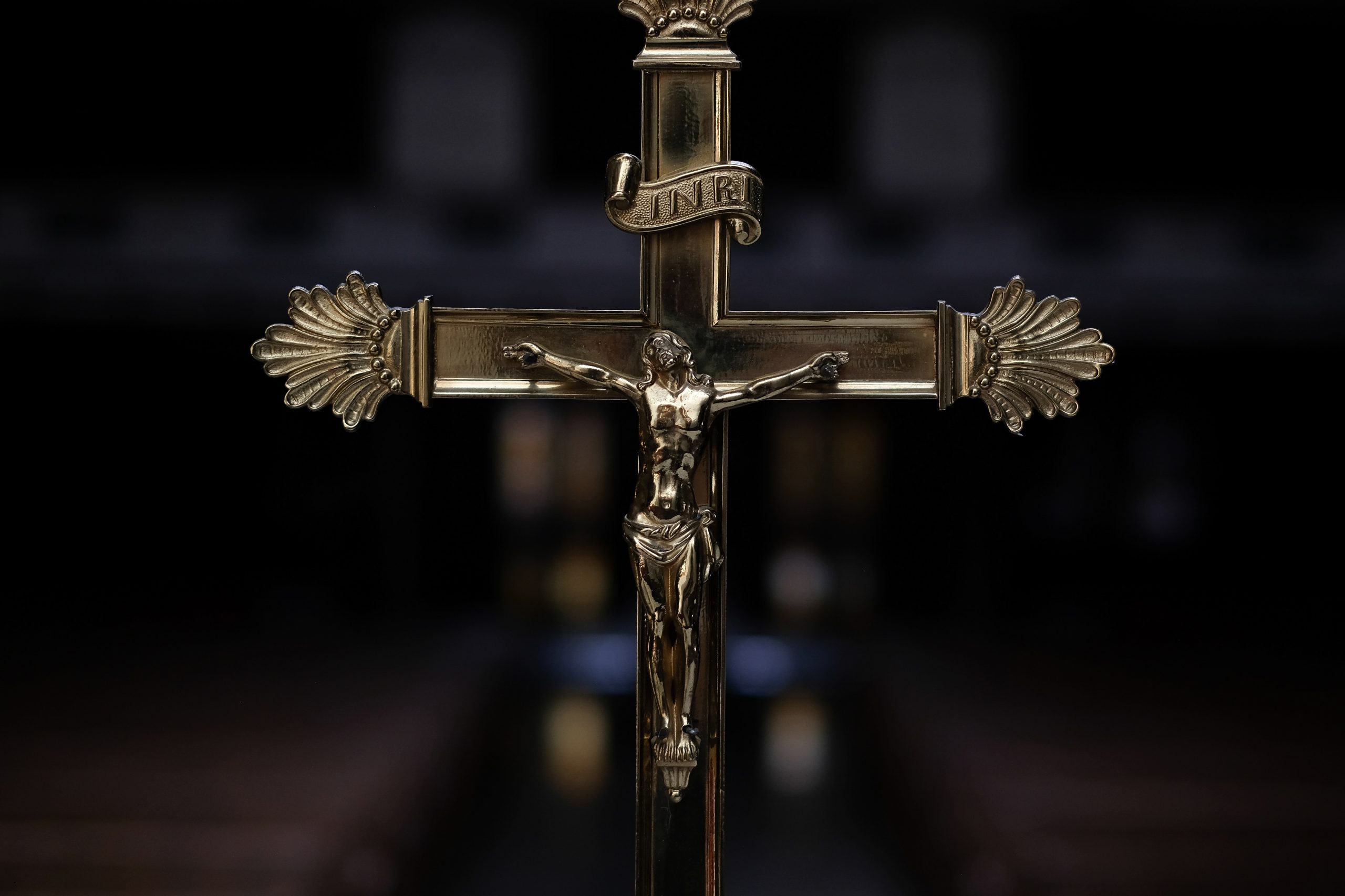
I lifted my head from his pillow, sitting upright on Simon’s couch, and adjusted my shirt (as planned) to the side so that the thin gold chain that led down to a crucifix, carved out with a tiny Jesus, flashed against my neck.

“Oh,” Simon said. “Did you have that last time?”

Glad as I was Simon had noticed, I expected for the noticing to go something like this: a quiet acknowledgment I was religious too. Eventually, a new intimacy deepened by the respect of this choice, which would (also eventually) lead through a few small devotion-proving fights to love and then marriage. I had not expected to have to confront my religiousness aloud just yet, and for a moment the lie seized me around the waist. “Yeah,” I told Simon, measuring my voice, trying to make the word sound aggressively mundane, as if I spoke of the chain often. “I wear it everywhere.”

I had worn it only once, to the grocery store the day before, in a dumb practice round of trying to pull “the look” off in public after he’d texted to ask what I was up to the next night. What is the look? I wondered to myself. Do I walk differently now? Does this make people think I’m not gay? That I’m not comfortable with my gayness? My internal dialogue was running at such a high level that I had forgotten half of what I’d gone to the store to get—chicken and rice, a roll of toilet paper Dave hadn’t bothered to buy despite the recent assurances of his accountability. (“I know it annoys you—sorry, I’ll get it tomorrow!”)

“That’s really cool,” Simon said, placing a glass of water in front of him. What would have been a normal gesture of hospitality felt oddly like a profession of love. Really cool. Not just cool. It pleased me; this was working.

“Thanks,” I said, injecting a hint of weariness into the word. “A lot of people don’t understand it.” I adjusted my shirt so the chain disappeared, and we got back to talking about the movie we were about to watch, a Christian horror film called Bells of Reckoning in which nuns become vampires and then turn absurdly and confusingly back into nuns.

“Have you seen this one?” Simon asked.

“I haven’t!” I said. Obviously, I thought to myself. The movie case looked like a bargain-bin novel, fanged nuns in idiot red tones. I was comforted by the fact we had ended the moment on a note of my honesty (no, I had not in fact seen this movie), and placed my head at an angle, so that if Simon wanted to, he could nudge me to fall romantically onto his lap. The only scene that held my attention was the one where the nuns become unpossessed, their fangs shrinking back to human teeth. It reminded me of the cool crucifix above my heart, and what it would mean for me to break through the illusion of my Catholicism, which was amazingly simple to pull off.

“Church Sunday?” he asked.

“Of course,” I said. Of course.


Maggie called me at exactly five thirty the next day, a punctuality that seemed desperate. “I have him wrapped around the palm of my hand,” I told her excitedly right when I picked up, walking to the subway. I wanted her to say anything that would support this decision, this certainty that we can change for other people, or ourselves. Maybe private school taught that.

“Isn’t the expression ‘in the palm of your hand’?”

“Both!” I said.

“It can’t be both. That doesn’t make sense.”

“How’s Bryan?”

“Rough patch but every rough patch ends.”

“Yeah, I hope so too,” I said.

“You hope what?”

“That every rough patch ends.”

“I didn’t say I hope. I said it does.”

“Sorry,” I said, letting her win.

In the background, over the bustle of cars and distant horns, I heard, “Mag, where the fuck you put the tomatoes?” I winced at how embarrassed it must have made her feel, knowing I heard that.

“I have to go,” she said. “Did you get the cross?”

“I’m wearing it now,” I said. “I actually like it.”

She sighed loudly, sparing me the sense this was about me at all. “I have to go too,” I said. “Dinner with friends in the Village.”

She didn’t tell me what she was going to do, so I was sure it was nothing she wanted me to know. I walked down into the subway and waited ten minutes for a train and didn’t think of her once. I imagined myself going through Charm’s closet with Eric in the next few days, pulling out church-wear. White and black, I told myself. But I honestly had no idea.


“You deserve it. I’ve always known it’d be you,” I told Eric outside, waiting for him to finish his cigarette. Steam pummeled angrily up from a vent down the street. Eric had just gotten tapped to be Charmed that morning, and I was caging in my fury. His boss had walked over to him with a cake heavy with vanilla frosting that read in florid red cursive: You’re a Charmer! The whole spectacle of the promotion felt too rich, condescending in a way that made me question whether I really even wanted this anymore. I had thought the crowning would be a little quieter. For the first time I wondered if I might be too good for the job; the idea I had given up too much for it upset me.

He made a face, like he was about to cry. “That means a lot. Thanks. I honestly thought it might be you.” He laughed.

“Oh please!” I smiled knowingly, performing for him how ridiculous that must sound to me. “No, not my time.”

But it was my time, and I knew it. A taxi pulled over in front of us, two young women stepping out, bright yellow high heels.

“Fuck, my three o’clock,” he said.

“Them?”

He didn’t answer. He stabbed out his cigarette and walked quickly back into the lobby with a new kind of confidence I seethed at. His refusal to finish the conversation felt like a personal attack. That’s my three o’clock, I thought, just to myself. You just sat your ass down and never got up.


Dave could tell I was pissed when I walked in the door. He turned off the game right away, and I saw his face in the blank screen ahead of him, tired. I almost asked him if he’d even gotten any sleep.

“What’s got you grumpy?” he asked.

“I’m no Charmer, not today.” He seemed not to remember I had told him about this, about work, or maybe I had never told him. Either way, I felt myself blame him.

“Still wearing that cross though! I like it!”

He smiled his big, fake grin, and I wanted to tell him to take a shower.


We arrived at the church five minutes before the Mass started. The air outside was thick with the syrupy scent of frankincense or something like it. Whatever it was exactly, the smell was just left of Christmas at my rich aunt’s. Simon’s dirty blond hair, parted, slicked down, started to get me hard, so I bit my tongue. The crucifix felt invisible, the temperature of my chest, as if it had melted right into me.

Outside the large stone entrance, people were folding their hands, bowing their heads. Small groups formed, the ominous groan of an organ warming up its hundred throats. When we walked inside, Simon dipped his fingers in a bowl of water and made a cross. I could see him touch, left-right, across his chest, and did the same. A small drop of water lingered at the corner of my brow, and I sensed that at any moment it might bore a hole right into my head, announce me as the impostor I was. We sat on the end of the hard pew in the back. What kind of choreography did one do in the church? Whose lead did I follow? Suddenly, I felt more at risk of being exposed than ever before. What was the padded green bar under the pew ahead of us for? How long did this even last? Growing up, I’d heard friends talk about how Mass dragged on. Were we talking hours?

We rose at the sight of the pope. The pope? Was that a priest? It was not a shaman. The pope was the one in charge. Ah, I thought. Vatican.

He greeted us warmly; we stood, then we took our seats. I thought, Game time. One eye always on Simon. I stood behind him, sat after his lead, a power play unknown to him that registered in me as sexy. At several points we sang, “Hosanna in the highest!” And I found the tune kind of catchy. After what seemed like an hour (it had been an hour), there was a scene playing out about the Body and Blood of Christ, and I realized I was going to have to commit. To eat the Body of Christ.

Simon’s shoe lifted the bar we’d been kneeling on, and he gave me a look. Like pride. Guilt surged through me. We attached ourselves to the back of a long line of everyone. (Nothing I could have sat out.) We moved forward with a kind of overly mindful step-touch. It made everyone look pretty gay.

A few people ahead of me eyed what looked like crackers as the priest lifted them, mumbled a thing, and then placed them in the palms of hands.

I heard Maggie’s voice, singsong, almost funny: Eternal damnation.

I saw people bypassing the goblet so (unlike me) skipped on the wine. When we got to the back, Simon took my hand. I almost gasped. He led me to the foyer, where a few hymnals were scattered on the floor, that water I dabbed myself with on the way in—and he kissed me. I could still taste the grape juice. The Blood of Christ, I almost said aloud, just to correct myself.


A few days later, Amy stopped by my desk, looking around suspiciously. It was the kind of care I didn’t expect from her, and both this and the attention she’d paid to her redbrown hair, which waterfalled down onto her shoulder, gave me a jump of sit- up respect I normally didn’t experience with her.

“So, about Eric,” she said. “What do you think?” Amy was a famous gossip, so I never got to know her. (“Smart,” a photo assistant Lexi had said during drinks one day, revealing some experience she didn’t want to share. “Very smart.”)

“I don’t know,” I said, tired of being in a dishonest mode. “I’m happy for him.”

“Yeah,” she said, leaning against my desk. “He’s been here four years.”

“Four years?” I said. “That’s insane.”

“Yeah, it is. He tells all the new hires he’s coming up on two.” She ate some peanuts I didn’t know she had in her hand. “Kind of embarrassing.”

I felt a reminder not to disclose anything about myself. “Good for him,” I said again, trying to pump the words full of meaning, trying to mean them.

She sighed. “They told you you were up for it, didn’t they?”

“What do you mean?” I said, feeling a heavy thud in my heart.

“Oh, they do that with everyone. Makes you work hard like crazy,” she said.

“They told you?”

“They still tell me.”

“Why are you telling me this?” I said.

“Honestly? So you can take yourself out of the game,” she said. “Four years? Four years,” she said, making a face like she’d just witnessed a grimace-worthy football play.

“Have you really been here for just two years?” I asked her. I hoped my ability to see through her shit would override my anxiety at having bought into all this crap. Crap on crap on crap.

“Three,” she said. “And a half.” She paused for a moment. “So I’m next. By the way, I like the chain on you,” she said. “It’s a good look. You need the edge.”

I took it out from under my shirt, feeling the bumps of the little Jesus in my fingers. “It feels bad,” I said. “To be honest. To wear this and not mean it.”

“You really can’t have that much of a conscience,” she said. “Obviously he likes you.”

“Anyway, I don’t care about getting Charmed,” I said, trying to end the conversation. Just after I said it my eyes darted around, making sure no one that mattered had heard. The lie felt strong, bulletproof, but my eyes were starting to water, so I didn’t look at her. Amy laughed. She clapped her hands free of the peanut residue and placed one on my desk, staring into me. “Yeah. I said that too.”


My key didn’t open the lock. The knob felt stuck. I fumbled with it, then knocked on the door. “Dave?” I eyed the keyhole. “Dave? Can you open this up, please?”

I knew he was home. I heard gunshots on the television screen. “Dave, can you open this?” I yelled louder. Sometimes the headpiece was hard for him to hear through.

Finally, the lock gave. On the screen, Dave was out—no lives left. Blood punched at the monitor, paintballs of it. I put my bullshit keys on the bar cart and felt a lifting in me for some reason, like finally I wanted to just talk to him. It looked like they’d beaten the armory and were on to someplace else. It almost looked like a church.

I froze when I turned the corner into the hallway, my body shivering up, standing reflexively on tiptoe, like a ghost at the sight: blood traveling in a thin chain, slow, down a divot in the hardwood, from the bathroom. It looked like grape juice. I stopped in my tracks and called Maggie instantly. My hand shook, and my voice erupted with panic, everything I couldn’t keep in bursting out. She was in a good mood when she answered.

“What’s got you grumpy?” she said.

“I think my roommate killed himself.”

“You know,” she said, laughing a little, “you don’t always need to be dramatic.”

“He’s in the bathtub, I think.” The silence between us fell, hard, to the floor.

“I’m going to call someone.”

“Can you just stay on, for just a second? Dave!” I called again. I didn’t want to face it. I had nothing to feel sorry about, not a thing in the world. Maybe no one else did either. Behind me, gunshots. A tiny, triumphant voice through his headset: “Got him!”


Since I was a child, watching my older brother play video games, I had the idea that when we die we are taken to something like an end screen to give away our goodness and our badness, the sum accumulation of all we’ve done, before our game really ends. I want to give Dave everything. All of it. Not because I care, but because I can’t keep it for myself. I looked at what the truth was doing to me, disgusted, and wondered if he’s giving it all to me right now, before that red light on his console turns off.

Date four was Simon’s plan to help me heal. He said that certain views can mend a heart, God calling out clear over the hills, after I phoned him crying. Through the insanity of that moment, my tears slicking that glass, I recalled feeling perversely happy that an awful thing was bringing us closer together, and it made me wish for the suffering I had.

So it’s right now, right now. Simon and I have made it to the top of that abandoned fire tower upstate where God had visited him two years ago in a breath, something he told me on the drive there. God told him he could be gay, but he had to be careful. Date the right guy. We drove through piles of fall leaves kicking up past us, like the deciduous shoot that had actually turned out well. Not that I was there to see it with my paid leave.

On the walk up, I admired the way he moved, sometimes taking two of those rickety metal steps at a time, an eagerness for the view that seemed too pure for me. Looking out now over the trees, the sunset, all that glimmering beauty, an apology rises in me. I don’t even know who it’s for, but I don’t want it for myself. For the first time, I know Simon wants to kiss me. He thinks I’m finally safe to love. I’ve passed all the tests. A hot breeze hits us, and I watch its path through the trees, fluttering their orange-brown leaves like a spirit. Will he still love me when I tell him the truth? Will he still love me if I tell him the truth? The faith is in me, I want to say. I promise it is. I just don’t think it’s where you want it to be.

Picture perfect, I’m wearing almost everything I’ve borrowed from Charm’s closet, throwing around orange patterned shorts and spiky overthought shoes with Eric that day when we knew this is where we’d be, back when I thought I could have a clear conscience about all of this, like it wasn’t just going to hurt me in the end. The brown belt that risks, but fashionably. My white sleeves cut up higher than a short sleeve, highlighting the place my bicep starts. Suddenly, I wonder if I just look ridiculous, someone trying so hard for something they don’t need, or can’t sustain. That anxiety gives birth to a fact I know I wear well: I just look stupid.

Simon turns to me and says, “Let’s pray.”

“Okay,” I say. He has one of his serious moments, looking up with those gorgeous eyes, like a Charm cover model.

“I’m so glad we met,” he says.

“Me too,” I say. I fold my hands on the cold metal bar. When I close my eyes, I wonder if maybe he’s in a tower taller than this one, looking down on me. But I don’t believe it, not for a second. I love you, Dave, I think, and try to make myself feel it. That cool metal cross just over my heart, the one I won’t ever take off. Entering this prayer I can’t leave. A breeze coming now from the other direction, moving my hair back into place—picture perfect. Simon with his proud smile. No clue of those words but the first two. Dear God,
10 Books About Black Appalachia

Black Appalachians have always been invisible to mainstream culture that wrongly conflates “white” with “Appalachia.” Stereotypes are even more prevalent  in today’s political climate but the presence of African people in the Appalachian mountains was documented as early as the 1500s. Many Black people are still settled in hollers, former coal camps and thriving urban Appalachian towns and cities throughout the region. Our ancestors were among the  earliest settlers. My own family has lived in the hills of Kentucky, where I grew up, for four generations.

The Birds of Opulence, my debut novel, begins with Yolanda Brown being born in a garden and follows two Black mountain families as they struggle with mental illness, vexing relationships and the land itself. At the center of the multigenerational novel is always what each character brings forward from the past and what they choose to leave behind. And always the gift of the land itself and its capacity to heal. 

I could easily fill this list up with writers from the poetry collective The Affrilachian Poets, comprised of nearly 40 writers including  Frank X Walker, Nikky Finney, Mitchell L. H. Douglas, Randall Horton, Kelly Norman Ellis,  Kamilah Aisha Moon, Keith Wilson, Amanda Johnston, Shayla Lawson, Joy Priest, Parneshia Jones and others.  We have been a collective since 1991 when Walker coined the term Affrilachia (which now appears in the Oxford dictionary) to negate the belief that all of the region is white. Affrilachian Poet books of note that will be released soon include: 

But outside the Affrilachian Poets, there are other Black writers who are also writing about the region. Some you will recognize immediately; others you may be hearing about for the first time. This list includes both scholarly work and literature.

Beetlecreek by William Demby

Demby, who spent his teen years in Clarksburg, West Virginia, won the Ainsfield-Wolf Lifetime Achievement Award in 2006. He was born in Pittsburgh and spent much of his life in Italy and Sag Harbor, New York. His other books include The Catacombs, Love Story Black, and Blueboy, and his final novel King Comus was published posthumously in 2017 by Ishmel Reed. Demby died in 2013. Beetlecreek, his debut novel, explores the relationship between a Black teenager and a white recluse in West Virginia. His work was sometimes criticized for not being “Black” enough and he was quoted in the Bloomsbury Review saying “I believed, as I still do, that a black writer has the same kind of mind that writers have had all through time…He can imagine any world he wants to imagine.” 

Affrilachia by Frank X Walker

After coining the phrase Affrilachia and increasing the visibility of Black people in the region, Walker wrote this first book of poetry, which is now a classic. These poems, both historical and personal, address race, family, a sense of place, identity and social justice. Walker is a native of Danville, Kentucky and has won a Lannan Literary Fellowship and an NAACP Image Award (among other awards) for his poetry. He is currently writing a novel and is a professor of creative writing and English at the University of Kentucky. 

Collected Works of Effie Waller Smith by Effie Waller Smith

Smith, a poet of the early twentieth century, was born to former enslaved people in Pike County, Kentucky. She received her teaching certificate at what is now known as Kentucky State University. This expansive volume captures the includes her poetry as well as several short stories and is edited by Henry Louis Gates, Jr., who also hails from Appalachia.

Saint Monkey by Jacinda Townsend

Set in the 1950s in Mt. Sterling, Kentucky, Townsend’s well-received debut centers around compelling characters Caroline and Audrey who are coming of age in Appalachia amidst segregation, the Jazz Era, and struggles with family and identity. Townsend won the Kafka Prize and the James Fenimore Cooper Prize for historical fiction. The book was also the 2015 Honor Book of the Black Caucus of the American Library Association. She received her MFA from the Iowa Writers Workshop and spent a year as a Fulbright fellow in Cote d’Ivoire. She is currently Berea College’s Appalachian Writer in Residence. Townsend earned degrees from Harvard and Duke Law School.

Black Bone: 25 Years of the Affrilachian Poets edited by Bianca Spriggs and Jeremy Paden

This anthology celebrates the 25th anniversary of the poetry collective and is a testimony to the talent and accomplishments of the group. This collection includes poems from nearly every member of the collective and pays homage to Frank X Walker’s original idea of “Affrilachia” as both a geographical place and a cultural one. Spriggs, a multidisciplinary artist, is the author of four collections of poems including most recently Call Her by Her Name and The Galaxy is a Dance Floor. She has also edited several anthologies and is currently an assistant professor of English at Ohio University. Paden is an Associate Professor of Spanish at Transylvania University and also on faculty in Spalding’s low-residency MFA, where he teaches literary translation. He is the author of two previous chapbooks, Broken Tulips and Delicate Matters, the latter comprised of translations. His poems and translations have appeared widely in literary journals.

Blacks in Appalachia by Willam H. Turner and Edward J. Cabbell

This was the first book to look at the presence of African-Americans in the region. It is one of the most valuable and comprehensive tools for anyone who wants to study the contributions of Appalachia and Black history. The contributors in this volume range from Carter G. Woodson, who was not only the Father of Black History but also one of the first scholars of Appalachian Studies, and W.E.B. DuBois to more recent scholars such as Theda Perdue and David A. Corbin. Both Turner and Cabbell are sons of the region.  Cabbell grew up in Mercer County, West Virginia and was founder and director of the John Henry Memorial Foundation. Turner, a native of Lynch, Kentucky, has served as a vice president of the University of Kentucky, was interim president of Kentucky State and retired in 2017 from Prairie View A&M University.

The Logan Topographies by Alena Hairston

These beautiful poems take us to the town of Logan, West Virginia and make connections between history, genealogy, and geography. This collection won the inaugural Lexi Rudnitsky Poetry Prize. Hairston, also known as elen gebreab, lived in Logan County, West Virginia during her formative years and is a writer, artist, teacher and performer in Oakland. She holds an MFA in Creative Writing from Brown University and is a Cave Canem Fellow.

Bone Black: Memories of Childhood by bell hooks

Bone Black chronicles bell hook’s childhood and provides an intimate portrait of  her journey to womanism, writing and the unleashing of the power of a creative and intellectual life. Born in Hopkinsville, Kentucky, preiminent intellectual, feminist theorist, cultural critic, artist, and writer bell hooks has written more than 30 books. hooks’ books Belonging: A Culture of Place (a collection of essays) and Appalachian Elegy: Poetry and Place also address her connections to the region as an Black Appalachian woman. She currently serves as the Distinguished Professor in Residence at Berea College, the home of the bell hooks Institute, and makes her home in Berea, Kentucky.

Gone Home: Race and Roots through Appalachia by Karida Brown

Brown gives us a broad look at race, identity and politics through over 150 extensive interviews with current and former residents of Harlan County, Kentucky, who were black coal miners. This book too, solidifies that Appalachia may not be what you think. Brown, a sociologist, is Assistant Professor in the Department of Sociology at UCLA.

Madness Like Morning Glories by doris davenport

In this poem sequence, davenport welcomes readers to Soque Street and its Black inhabitants. Set in northeast Georgia, the book lets residents’ voices come alive in davenport’s hands. Davenport is a self-defined lesbian-feminist, working class Affrilachian from Northeast Georgia with a BA in English from Paine College and a Ph.D. in American literature from the University of Southern California. 

Jenny Offill Is a Climate Change Doomer

In Jenny Offill’s Weather, Lizzie is a librarian who takes a side job answering questions for a podcast called Hell and High Water. A sample query from the show’s listeners: “How did we end up here?” Lizzie offers a quote from English naturalist and philosopher William Derham from 1711:

We can, if need be, ransack the whole globe, penetrate into the bowels of the earth, descend to the bottom of the deep, travel to the farthest regions of this world, to acquire wealth, to increase our knowledge, or even only to please our eye and fancy.

Weather by Jenny Offill

As she plunges deeper into the research hole, Lizzie becomes obsessed with doomsday survivalist tips such as using a can of tuna can be a source of light and starting a fire with a gum wrapper and battery. The big picture is not the only thing on poor Lizzie’s mind. There’s her sort-of sober brother, Jesus-loving mother, and and then there’s the 2016 elections to add to the anxiety. In a style that is her very own, Offill gives us Lizzie’s mind and life in wry, cerebral—the references go from prepper wisdom to psychology theories to classical civilization interludes—in tiny fragments. 

Despite its weighty climate anxieties, the novel is dryly hilarious, a sort of lit fiction stand-up comedy of overthinking, middle-class New Yorkers. As in her last novel, Dept. of Speculation, her glittering characters, particularly the little children, will rob your heart. Lizzie’s son Eli, for example, becomes distraught over the mouse’s skull under the sink. His father investigates. “But it is only a knob of ginger and we are saved.” 

I spoke to Jenny Offill about miniaturizing prose, worrying (and attempting to do something) about climate change, non-dystopian stories, and her favorite vignette writers. 


J.R. Ramakrishnan: You populate Weather’s world super quickly and fully with multiple characters—Lizzie, the library’s patrons, the recurring people she encounters on the street—with so little words. I am sure it’s all magic but how did you start? How did you shape the vignettes into a novel?

Jenny Offill: It was actually a real challenge for me because I usually write a really small number of characters. So how to have someone who had a job where people came in and out all day was central to my idea of this novel. At first, I couldn’t figure out if I should name them all or not name anyone. I ended up giving them all the different jobs I’ve had. 

Libraries are some of the last places left in America where people of all ages and all backgrounds can come and go.

I think libraries are some of the very few places left in America—they might be the actual last—where you can go and be free, where people of all ages and all backgrounds, can come and go. I wanted this novel to look outward a little bit so I started collecting little sections in a file called “Patrons.” I wasn’t sure where I was going to start the novel, but after I’d been doing this for a while, I kept coming back to the woman who says she is “mostly enlightened.” Someone once said this to me in all seriousness. I was like, ooh… It was a kind of joke that spoke to the whole novel: this feeling that in one moment you think you can see for miles and miles and understand things but in the next, you don’t know anything at all. That’s something I was interested in thematically and is where I started it.

I mostly write the vignettes individually and mess around till the tendencies please me. Maybe after three or four years into this, I was feeling stuck. I printed everything out, cut them up, and put them on the wall. I didn’t try to order them. I just wanted them out of the computer so I could walk by and get some ideas. Although seriously, it is the least efficient way possible to write a book. I would maybe get five new ideas after having spent five hours, though very enjoyable ones, cutting up little bits of paper. 

JRR: There’s a lot of worry and obsession here. I remember the bed bug fixation in Dept. of Speculation. How do you write and consider the current collective anxiety while also living in it?

JO: I started the book a little before the election when I was very worried. I began by reading about what it was like before World War II, the French Resistance, and different troubled times in history. With the climate stuff, I felt that I was writing about an ambient fear of something that has not yet completely taken shape. At least for people in the West who are relatively wealthy. It’s only been fairly recent that it feels like, “Oh, climate change, it’s not in the future, it’s here.” But, of course, it happened much earlier than this in the Global South. It’s like that old quote of William Gibson, “The future is here, it’s just not evenly distributed yet.”  

So, it’s been about six or seven years that I’ve been reading about it. My friends thought it was kind of funny. When did Jenny become a climate change doomer? But you do go down the rabbit hole when you are learning about it. The main thing is the timeframe and that it’s no longer a hundred years off. As a mother, I had to figure out how old my daughter would be then. It’s the only number I decided to put in the book, climate departure, which is 2047. Part of what became the novel for me was trying to map what it’s like to go from being interested but not emotionally invested to actually feeling it. 

JRR: Lizzie knows a lot about climate change. What did you learn in your research that really surprised and/or influenced you?  

JO: There were two books that were really key to me. The first is Don’t Even Think About It: Why Our Brains Are Wired to Ignore Climate Change by George Marshall. He talks a lot about the (climate change) denials that are softer. For example, you know, but you don’t really look at it or the attitude that we’re all screwed so what’s the point anyway? The latter is a nihilistic form of denial. Even if it’s true, I don’t think it’s necessarily a free path to not have any agency. He figures out that you have to use different language with different people because everybody sees climate change through the prism of their own experience. If you are going to talk to hunters, you need to be talking about conservation. If you’re talking to Evangelical Christians, then talk about stewardship that the Lord has called on us. It was useful for me to think about the language this way. 

You gotta have activism for hypocrites.

The other book I’m always trying to get people to read—it’s such a hard sell—States of Denial: Knowing about Atrocities and Suffering by Stanley Cohen. He writes about the different ways people find to not look at ongoing or coming atrocities. He talks about “twilight knowing,” where you do know but you don’t admit you know. Until recently, I noticed that people would talk about how it was crazy that it was so warm but no one would go into the climate stuff. 

Cohen also writes about people who were against the regimes in 1970s Brazil and apartheid-era South Africa but who didn’t feel like they could speak out. They became instead incredibly interested in domestic things, hobbies, and sports. He calls this “innerism.” I think of this when I am reading a really elaborate restaurant review, It’s great—and I suppose, it’s what I do too—but it’s so strange to consider something in a vacuum.  

JRR: Here’s a question for Hell and High Water: Do books/literature have any power to do anything for us as the end approaches?

JO: Obviously, I think so. I think we have some new stories that we need to tell. Most of us know the doom-y stuff. But I think we need the other stories too, the ones about what it would be like if we did make the change to a low-carbon society. We have a lot of dystopian fiction about climate and I’m not recommending utopian fiction. But I think there’s something about what could be is interesting. 

I don’t really approve of the idea of the novel as a big, baggy monster. Every word has to be there for a reason.

For example, in Holland, they have these bus stops with grass roofs to provide a corridor for butterflies and bees. You sit under it while you wait for the bus. This is kind of lovely. I also spotlight organizations in my Obligatory Note of Hope [a website of climate action resources Offill put together for “what to do if (like me) you hate to march”] that give a little insight into what it might be like to have a more localized economy and how it doesn’t necessarily have to be like a big weird commune. They have little things like tool libraries, which are about building communities that are neither too oppressive nor too atomized, where we are now with our phones and things like that. I don’t think there is much hope without a sort of humility about how this way that we’ve been living doesn’t work anymore. 

That said, I am going to fly around to talk about this. I’m not a vegan or anything. You gotta have activism for hypocrites. You just gotta be able to do it even if your own house isn’t in order. I mean, even if you want to donate to the Sunrise Movement and do nothing else, that’s great. Or maybe you want to do some small little project in your own community. In Don’t Even Think About It, George Marshall says to stop being silent about it. I spent a year talking about it to everyone I met.

JRR: My absolute favorite line in your book: “(Democritus wrote 70 books. Only fragments survive.)” Classics geeks will recall he was known as the mocking philosopher. Who are some of your favorite fiction miniaturists? 

JO: I always go back to Joy Williams. I just taught The Visiting Privilege. She puts so much into her sentences. To me, it’s a lesson in what you could possibly do. Recently, I read Clarice Lispector’s The Hour of the Star, which is about 90 pages long and fantastic. Jean Rhys because she did so much in very small spaces. Fever Dream by Argentine writer, Samanta Schweblin. It’s a creepy environmental ghost story. 

Sometimes I try to expand my horizons and read long books. Somehow I have the endless ability to read these super long non-fiction books like The Age of Surveillance Capitalism, which is like 500 pages long. But I don’t really approve of the idea of the novel as a big, baggy monster. I like to feel like every word has to be there for a reason.

How Love Turns You Into a God

Most of what I learned in college was useful. Not practical, often, but socially or existentially helpful. The glaring exception is an idea I picked up God knows where, and clung to for five bleak years: that love meant losing control. True romance, I thought, should feel abject. It should be a descent. 

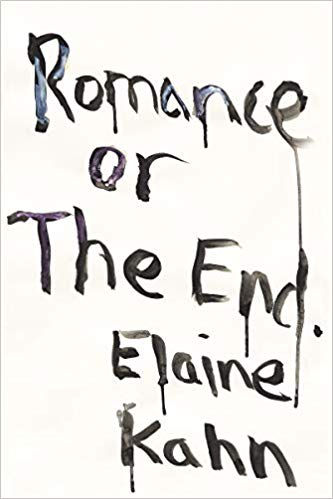
Unsurprisingly, this concept of romance led me away from a very kind boyfriend, and toward a very bad one. It exerted an evil hold over me. I am sure I was not helped by the abundance of movies, books, and television shows in which love appears to be a form of voluntary torture, though, to be fair, I refused the wise counsel of books like Michelle Huneven’s Off Course, which should have served as a warning. I doubt, though, that even I could have denied the force of the poet Elaine Kahn’s audacious second collection Romance or The End, whose speaker starts out believing that romantic “suffering brings women to god” and ends up declaring that she is a god herself. The paired ideas of romance and godliness drive the collection forward. In eight fast-paced sections, Kahn guides her speaker toward a bold new understanding of love not as a loss of control, but as a stepping stone on the way to divine power.

Kahn is not the only contemporary writer to emphasize control and authority as strategies for overcoming restrictive or harmful ideas about romance. Romance or The End falls on a spectrum between sexual-intellectual power stories like Susan Choi’s Trust Exercise and Lisa Halliday’s Asymmetry and Carmen Maria Machado’s shape-shifting memoir of abuse, In the Dream House. Like Kahn, Machado is interested in redefinition, but where she retells the story of her abusive relationship from a dizzying multitude of angles, Kahn moves through time linearly, reorienting not her story but her definition of romance, which changes over the course of the collection from sex to surrender, surrender to dishonesty, and dishonesty to control. At the book’s start, the speaker can’t imagine anything more romantic than being what her partner likes. At the end, her idea of romance is the ability to tell other people, and herself, the truth.

Romance or The End also bears a very light similarity, or else owes a small debt, to the novelist Akwaeke Emezi’s debut Freshwater, whose protagonist, Ada, is ogbanje—a spirit child who returns repeatedly to Earth in different human incarnations. Emezi, too, is ogbanje, and has written nonfiction about their divinity as a source of power. Where Emezi’s fiction and essays are rooted in Igbo ontology, though, Kahn steers away from religious specificity, almost never invoking any one faith or tradition. She always puts the word “god” in lowercase, and, though her speaker claims repeatedly to be a god by the book’s end, she never seems to get any divine powers. Unlike Emezi’s Ada, she can’t talk to gods or spirits, and Kahn gives no indication that her speaker might be immortal or omniscient. She is, however, in control.

In Romance or The End, divinity lies in autonomy. For Kahn, a god is less a deity than a kind of powerful person, which means that just about anyone can become one. The path to divinity is difficult, but that does not make it special or rare. In fact, the opposite is true: divinity is the closest available solution to the problems of conventional romance. This does not mean that Kahn is espousing some kind of self-help-ish goddess-within-you argument. She seems uninterested in the predictable virtues of inner peace and strength. The path she creates for her speaker—and, perhaps, for her reader—leads not to resilience but to ruthlessness. She’s not advocating for romance, ultimately. She’s advocating for lovers to be unafraid of love’s end.

The path to divinity is difficult, but that does not make it special or rare. In fact, the opposite is true.

This lack of fear is the core, for Kahn, of godliness. It’s also a major departure from the ideas about romance the speaker has at the collection’s start. When she first falls in love, she understands godliness as a mysterious inner quality that serves mostly for attracting a man. In the book’s opener, “Romeo & Juliet & Elaine,” the speaker watches “Love’s Commercial,” which opens with a woman named Maria saying “hello to Paul / hello,” then “turn[ing] on / like a wide band” when he replies. Paul “wants to fuck / the god inside her,” which seems promising for them both, but the commercial ends dismally: “Maria serves Paul’s emotional and sexual needs / in exchange for pizza.” 

The ad prefigures the speaker’s own arc. In the first few sections, she engages little with the idea of divinity, barring one poem in which she grumbles, “Tomorrow I will be as tired as a god.” For the most part, though, she seems focused on building and protecting her relationship, striving first toward “the impossible art of touch” and then, once the relationship’s early sexual heat starts cooling, toward an equally impossible state of contentment. The sourest, most bracing poems in Romance or The End come in the third and fourth sections, in which the speaker grows restless and dissatisfied with her partner. In “A Wish to be Poisoned / What I Want to Touch I Click On,” the speaker, watching television with her partner, thinks irritably, “god / your mind is boring.” In “Alarm,” which beautifully alternates spoken dialogue with the speaker’s parenthetical inner monologue, she resists “(the temptation to flee) / (to freedom),” contenting herself with the thought that “(limitation invokes invincibility).” 

The speaker, it seems, believes in this part of the collection that limitation is romantic, or is inherent to romance. She seeks value in the “sacrament of being / held without affection,” which positions her as a worshipper, not a god. She bristles when thinking about marriage, and yet, at the end of “A Wish to be Poisoned / What I Want to Touch I Click On,” declares to her partner, “I decided / I decide / You can do pretty much anything to me.” The next poem, as I interpret it, seems to depict a rape—the dense, repetitive scene that begins “All I Have Ever Wanted Is to Be Sweet” conveys terror and paralysis, or perhaps even an inability to escape. In the following poem, the speaker refers obliquely to an “it” that “happened / so many times,” her evasiveness serving to underscore her earlier fear.

The section of Romance and The End that, to me, evoked sexual assault is brief and stark. Its first poem, “All I Have Ever Wanted Was to Be Sweet,” is both the collection’s most moving and its most formally thrilling. Kahn splits the poem into two parts, perhaps mirroring the speaker’s dissociation from her body or from her fear. In the first half, the speaker repeats herself over and over, rearranging the same sequence of words until the mounting pressure seems to raise issues of consent. Then she shifts into precise, measured couplets, announcing coolly, “to you who say my fall was justly wrought / know this: I paid for more than what I bought.” 

Arguably, this line starts the speaker’s transformation into a god. Kahn seems to figure her as either Eve fallen from Eden or a Milton-style Satan fallen from heaven. The former would render her more human, the latter more divine—which, of course, is Kahn’s pick. By the section’s last poem, “Romance,” which reads in full, “Love has turned on me / and now I am its liar,” it seems clear that the speaker intends to become a silver-tongued fallen angel, not a victim of snakes or men. By the next section, which ends with the speaker declaring, “Love turned me into a liar / Lies turned me into a god,” it seems clear that she will succeed. 

She may be a god now, but, like Satan in Paradise Lost, her proximity to divinity doesn’t mean she gets to be happy.

In Romance and The End’s last three sections, the speaker sets out to free herself from expectations, both social and personal. She shakes away the idea that suffering is good for women, and that invincibility should come with limitation. She accepts her ongoing search for sex and love, but points out that “I can’t transcend a thing / if I’m unable to desire it.” Her goal, then is, to transcend romance, but she remains fallible. She may be a god now, but, like Satan in Paradise Lost, her proximity to divinity doesn’t mean she gets to be happy, or that she gets what she wants. It means, mostly, that she has taken control of her own narrative arc. She gets to determine her own truths, to no longer “consent to destiny,” and to assert, “When I tell myself a story / I decide the end.”

Kahn’s speaker’s new fearlessness in the face of endings indicates that she has shaken off her earlier desire for permanence, which is the ultimate myth of romance. Any marriage, or marriage plot, contains the promise or threat of till death do us part. For a real, immortal god, this would be irrelevant. For Kahn’s speaker, in her minor and earthly divinity, rejecting her old aspiration to a relationship that lasts forever brings her fully into her own power. It teaches her to be truthful with herself, and to “want to be more / than anything I want.” 

The double meaning in this line, which comes in the collection’s epilogue, is key to understanding the ways in which the speaker has changed. She could mean simply that she wants to be, meaning to survive, more than she wants anything else. She could also mean that she wants to be more—to exceed expectations, to keep accruing power, to be as godly as a human woman can. Likely, of course, she means both. Romance and The End is a portrait of survival through grandiosity. All its bold claims of divinity coalesce around a very simple idea: no one should have to rely on fate or “providence / who is unqualified.” True power, romantic and otherwise, lies in relying, like a god, on oneself. 
Editor’s note: At the publisher’s request, this essay has been edited to clarify that Lily Meyer’s description of the events in “All I Have Ever Wanted Is to Be Sweet” are Meyer’s interpretation alone, and not a reflection of the author’s intent.

7 Books to Read in Freezing Weather

My novel The Mercies imagines what took place in the time between two traumatic events in a Norwegian fishing village in the 1600s: a storm that killed most of the male population, and three years later, witch trials that murdered many women. It is about suspicion, and friendship, fear, and love.

Writing The Mercies was always going to mean writing the weather, too. Set on a tiny Arctic Circle island named Vardø, the characters (and current population) are constantly at the mercy of the elements. I visited twice. Once alone, at the time of the midnight sun. Sea fogs would come rolling in, dissipating sunlight and making everything glow. I also returned with my husband in winter, when the sun rose for only two hours a day, and only at the horizon, imbuing everything with a blueish light. And it was cold. 

The word is insufficient to describe the viciousness of it. How combined with the wind it bit our ear lobes, rendered our hands stiff and useless, formed ice on our eyelashes. The sea threw off an ironlike frost, permeating everything. This was the moment the reality of the life of the women I was writing about punched home, and I tried to capture some of the ferocity of the weather in The Mercies. Here are some books I turned to, for their incredible mastery over the language of cold.

Image result for dark matter a ghost story michelle paver

Dark Matter by Michelle Paver

Set in a remote Arctic scientific research post in the 1930s, Paver’s chiller introduces an icy punch to the gut. Part mystery, part horror, and all wonderfully evocative, it follows a man braving the sunless Arctic winter alone—or is he?

It takes a lot to spook me. I’m hardened to horror films, and whilst I love reading scary books, they rarely haunt me afterwards. But reading Dark Matter was like living with a malevolence, like walking knowingly into a trap. It was terrifying, don’t-look-now-can’t-look-away terrifying. Surely the best contemporary ghost story? If you think otherwise, tell me.

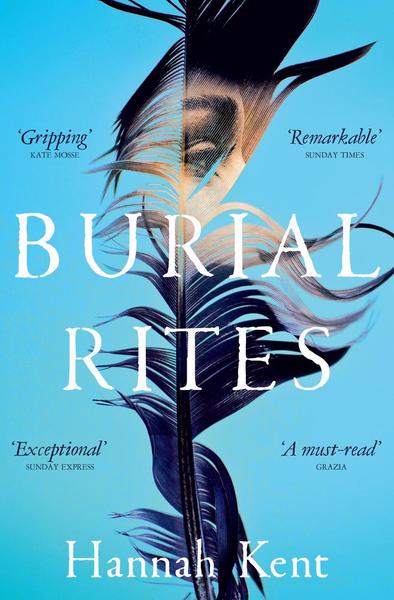
Burial Rites by Hannah Kent

Kent borrowed from history in her bestselling debut. Taking the story of the last woman to be hung in Iceland, she weaves a deft and moving portrait of the bleak landscape and the people struggling to survive in it.

This is a beautiful read, which carries you with the kind of effortlessness it takes real skill to achieve. I read it like a thriller, devouring it, but truly it’s about people and place, and how they impact each other. This was a touchstone text for The Mercies, and returning to it was a joy. It’s also in development for the screen, starring Jennifer Lawrence—it’ll take a lot to be better than the book. 

The North Water by Ian McGuire

Based on an Arctic-bound whaling ship in the 1850s, The North Water follows Dr. Patrick Sumner as he escapes a marred past and stumbles onto a vessel inhabited by one of the most evil men he’s ever met. 

Not many books should come with trigger warnings, but this was one of the bleakest and most upsetting books I’ve ever read. So why is it on the list? Because it’s also epic, and beautiful, and grapples with some of the mightiest themes: survival, love, and the nature of evil.

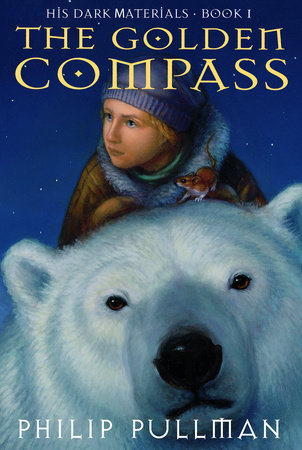
His Dark Materials: The Golden Compass (HBO Tie-In Edition) by Philip Pullman

The Golden Compass by Philip Pullman

The first installment of the momentous His Dark Materials trilogy, this glorious book introduces us to Lyra Belacqua and her daemon Pantalaimon, and a mysterious life force named Dust. We follow them north, through frozen seas, past encounters with armored bears, to the shimmering stairway of the northern lights…

This trilogy has so many layers: adventure, mystery, thriller, a love story, the story of us all. It is also masterfully drawn, each setting told in shimmering prose undercut with harsh realities. 

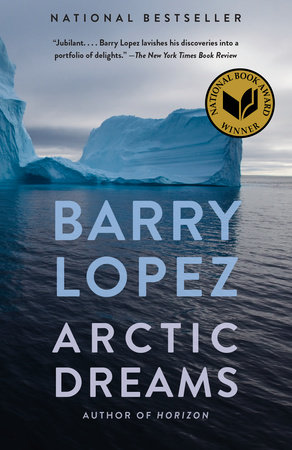
Arctic Dreams by Barry Lopez

Arctic Dreams by Barry Lopez

Lopez’s love letter to the Arctic tracks it across its entire width and depth. It explores both what we recognize—snow, and ice, and emptiness—and lesser-known aspects of life this far north: indigenous populations, flora, and food. 

This elegiac book verges on poetry in its clarity and precision. It accompanied me on my first, solo visit to the island of Vardø in the Arctic Circle, and illuminated so much of what I saw.

The Ice Palace by Tarjei Vesaas

This short novel holds so much. Siss and Unn become fast friends, with all the heady power of a childhood obsession. They become mirrors to each other, as well as offering a new view on life. While exploring an ice castle—a frozen structure that emerges around waterfalls in winter—Unn becomes lost. 

This was the other book I took to Vardø, and I read it in one great gulp, sitting beside a waterfall under the sun, and it managed to deliver ice to my veins. It reads like a folktale, with the bite only the best writers of human nature can achieve. As close to perfect as it is possible for a book to be. If you were to pick up one book on this list, make this it.

Image result for journals captain scott's last expedition"

Journals: Captain Scott’s Last Expedition by Robert Falcon Scott

The lure of the north is evident in this list, but no writing about the cold can match the desolation and beauty evident in Captain Scott’s account of his final expedition to the South Pole. 

We know this story, but for all the folly and masculine bravado of exploration, this manages to be a stunning piece of writing from an obviously intelligent and sensitive man, rendered all the more tender by its discovery beside his frozen body, only twelve and a half miles from safety.

My Boyfriend Tells The Most Beautiful Lies

So Gentle You Don’t Feel It        

The boarding school in Surrey where Luke taught science gave him the worst bullies to tame. I guess they figured his height (6’4”) gave him authority, while his gentle demeanor proved a bloke could be manly without being mean. Luke had the befuddled aura of an absent-minded professor but his grip could crush you and he was fierce on the squash court. They said he could separate two tussling sixth-formers with one hand behind his back. Where did that rumor start?

The school knew nothing of Luke’s deception. We weren’t married, which would have disqualified us from a campus apartment. When I worried he’d lose his job if they found out, he shrugged. “There’s no one to tell on us.  Besides, we’re as good as married.” He leaned over, kissed my forehead, tousled my hair. We’d been together three years. My friends in the solicitor’s office where I worked knew our status but were too preoccupied with babies and nappies to care. They weren’t likely to visit, much less out us.

The school authorities hadn’t learned to read Luke the way I had. When we first met, I thought Luke was unattached but soon realized my belief arose not from anything he said but from my own ill-founded expectations. By the time we arrived in Surrey, we had already put that past behind us. We’d sit in the empty dining hall after the boarders were in bed and he would tell some story designed to make me laugh, trying to quell my fears about the future. The dining hall resembled a medieval Great Hall, but the trappings were fake. The grandfather clock hadn’t worked in decades, and the stuffed head of a deer that hung above it had eyes of glass. Luke despised blood sport and often bemoaned the death of that poor stag. 

One fine spring night, I intercepted Luke returning near midnight with Anne, the pretty music teacher. He carried a blanket. Their faces were flushed, eyes bright. She murmured goodnight and scurried off. “Wait till you hear what happened,” he said. “You won’t believe it.” He drew me into the dining hall. “Let’s sit at the High Table,” he said, and snuggled next to me on a massive throne-like chair at its head.  

Luke said he’d taken ten boys on a biology field trip that afternoon, to an area where trees were dying from Dutch elm disease. “One young sapling, fifteen feet high, was thriving, bucking the odds. Two boys took their penknives and stripped its bark off. I caught them red-handed.” His voice cracked. “I was furious. They took something living and destroyed it, senselessly.”  

He gripped my hand. I imagined I could feel his heart beating. My own pounded painfully.

“On the walk back,” he continued, “the smallest boy, Peter, asked, ‘Sir, would it help if we brought a blanket and covered the tree?’ He was practically crying. I said ‘Perhaps’ and left it at that. Then when I was doing evening rounds Peter wasn’t in his bed, and his blanket was gone. I went looking; Anne came, too. We found him, sent him home. Here’s his blanket.”

He draped the blanket around my shoulders like a shawl. It was dark green and rough and smelled of boy. Didn’t a story delivered in such even, careful, hushed tones have to be true? Except his eyes kept flitting away from mine to that ancient clock, its hands perpetually at midnight; to the antlers; to the dark sorrowful eyes of that deer.  

How to Help Prisoners Get Books

From 2017 to 2018, Turkish novelist Ahmet Altan was sitting in a prison outside of Istanbul and writing his critically acclaimed memoir, I Will Never See the World Again. Serving a life sentence on charges of anti-government propaganda, Altan had little hope of being freed, but he yet managed to find solace in reading. “I wasn’t helpless, I wasn’t alone, I wasn’t lost,” he writes after a prison guard drops The Cossacks by Leo Tolstoy into his cell. “I had a book in my hands.”

Since 1996, NYC Books Through Bars has helped prisoners feel less helpless, alone, and lost. Each year, the all-volunteer organization collects tens of thousands of donated books and distributes them to prisoners across 40 states, relying on fundraising only for postage. I recently had the pleasure of speaking with volunteer Rachel Casiano about how supporters can help get more books to prisoners in their area.

Step One: Connect with Prisoners

“Getting in touch with local prisoner support groups first is a good idea,” says Casiano, “because it incorporates the experience and perspectives of people who have been doing this work for decades and connections to people in prison.” Connecting with prisoner support groups, as she suggests, ensures that you’re sending books that prisoners are actually interested in and that administrators will actually let them receive. (More on the latter below.) Reach out to local independent bookstores to find out if there isn’t already a prison books project in your area. If there isn’t, try to contact more general prison support groups. Casiano herself became involved in NYC Books Through Bars through Black and Pink, which supports LGTBQ prisoners as well as those living with HIV, and Tenacious, a zine of art and writing by incarcerated women. Other nation-wide prison support groups with local chapters are the Anarchist Black Cross Federation and the Incarcerated Workers Organizing Committee. These organizations can help connect you with prisoners, but Casiano suggests reaching out to them with an open mind. “Maybe local prisoners are good with books,” she posits, “but need a visit transportation service instead.” 

Step Two: Gather Reading Material

While collecting books may seem like the most difficult part of the process, Casiano says it’s easier than it seems. “The easiest way to get reading materials is just to ask for them, especially on social media where you can get a wide reach,” she says. “People like knowing the stuff they don’t need is going to a good cause, so it’s a win-win.” NYC Books Through Bars requests that donations be left at Freebird Books in Brooklyn, where they meet twice a week, but the organization also maintains a wishlist with another local bookstore, Greenlight, which donors can purchase from for delivery directly to Books Through Bars. Casiano also suggests soliciting publishers for advance reader copies or remainders, and local libraries for texts they might be discarding.

Step Three: Pack to Order

The restrictions can vary wildly from state to state, facility to facility, and even the mood of whoever’s screening the mail.

This is the tricky part. “The restrictions can vary wildly from state to state, facility to facility within the same state sometimes, and even the mood of whoever’s screening the mail,” says Casiano. Regardless, she offers a few rules of thumb. To begin with, work with a local bookstore to post your packages from a “reputable retailer.” When it comes to the books themselves, make sure they are softcover and free from any writing, highlighting, or stains. Prisons may also ban anything that “threatens the security of the facility,” which can include book covers with images of weapons, racial content (Casiano notes that many of Alice Walker’s titles are banned in Texas), or nudity (she also recalls having to tear all of the pictures out of a book on Roman art, which someone had requested). NYC Books Through Bars normally packages their books in donated brown paper bags, but Casiano notes that some facilities may require white wrapping or proper envelopes.

Step Four: Fundraise for Postage

Postage is the only element in the equation that NYC Books Through Bars cannot meet without funding. “No particular hacks for postage,” admits Casiano. “We use ‘Media Mail,’ which gives us a slightly cheaper flat rate per pound than first class.” To raise the $2.75 or more per package sent via USPS’s Media Mail, NYC Books Through Bars regularly organizes fundraising events, like karaoke, panel discussions, and bingo, as well as online fundraisers, like their recent one on Fundly. Prison Books Collective, another prison books program based in North Carolina, also suggests applying for grants or selling books in its manual, How to Start a Prison Books Collective.

Step Five: Repeat!

It’s not just the physical books that help relieve the helplessness, loneliness, and waywardness that Ahmet Altan mentions in I Will Never See the World Again; it’s the engagement between those who are imprisoned and those who wish to see them freed. Casiano recognizes that, in the current political climate, many of us are finally acknowledging the brutal toll of incarceration and rightfully flocking to the banner of prison abolition, which means we may be inclined to establish stronger bonds with recipients than simply dropping off a book. She encourages that instinct, but also warns that engaging deeply with someone who is incarcerated only to lose interest after a brief correspondence may ultimately hurt that person more than it helps. In other words, get emotionally involved if you’re so inclined, but set up realistic and sustainable expectations. “If you want to send a personalized letter with every package, that’s going to add up fast and create an expectation that will be devastating to the people who don’t receive a letter,” warns Casiano. “Abolition is a long-distance run, not a sprint.”

9 Books That Should Be Adapted as Video Games

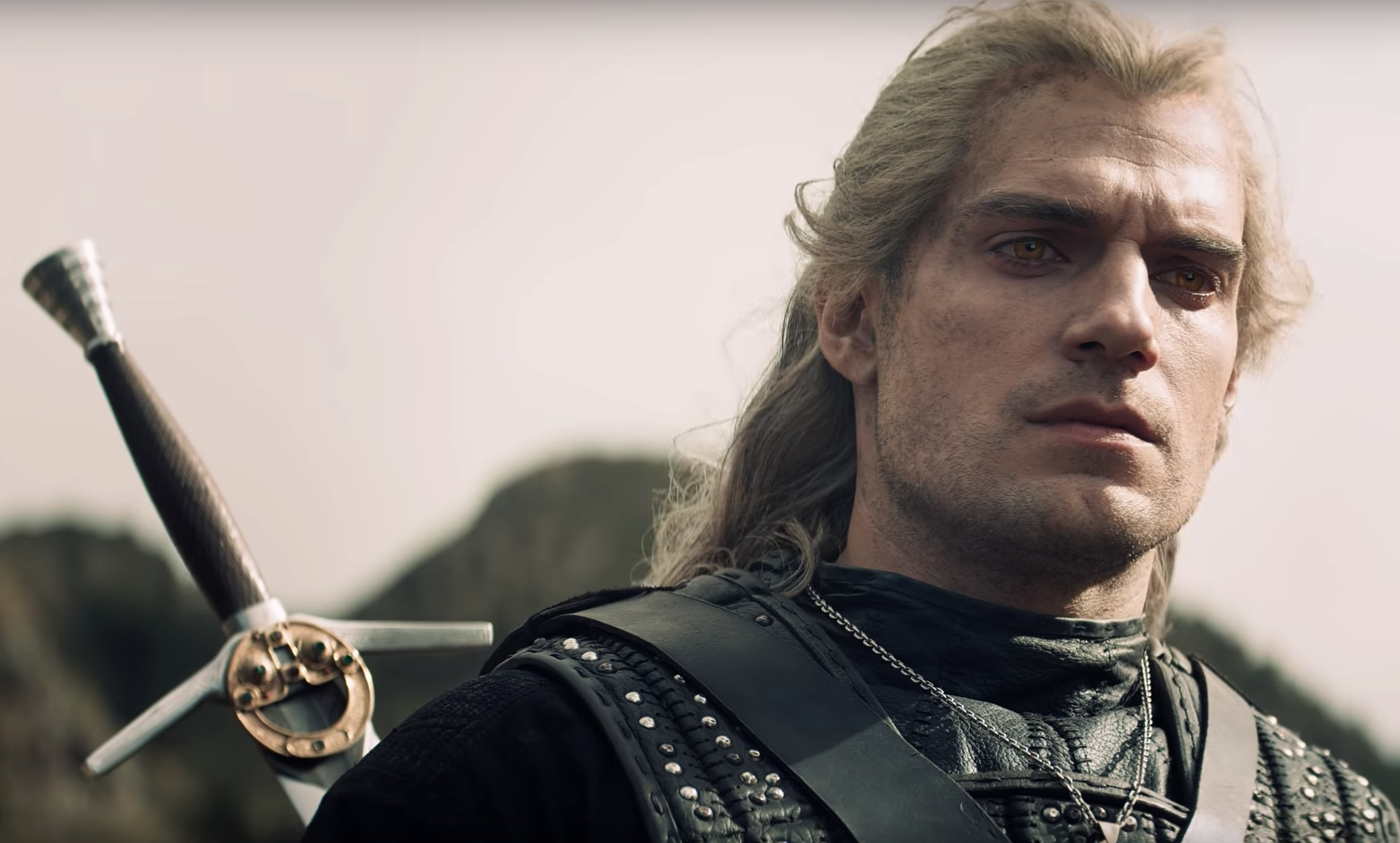
With the success of Netflix’s adaptation of The Witcher, viewers are scrambling to read Andrzej Sapkowski’s series of Witcher books and play CD Projekt Red’s series of Witcher games. As an avid reader, avid gamer, practicing witch, and huge nerd, this is all very relevant to my interests.

In an article on how “The Witcher proves games should adapt books more often,” Malindy Hetfeld points out many reasons literature can make for successful game adaptations—not least of which is that when adapting a book, “developers get to create a visual identity” without firmly preconceived notions about characters’ appearances. As a reader, I certainly have lots of ideas about what my most beloved characters look like—but I’m also open to different interpretations.

I’ve inhabited so many stories as text that would translate beautifully into an interactive digital platform, and while reading Hetfeld’s article, I couldn’t help thinking about the many books I want to play as video games. There are too many to list comprehensively, but here are 9 books I would like to play as games right now. If you’re an indie game company looking for a Witcher-sized success, you could do worse than adapting one of these books.

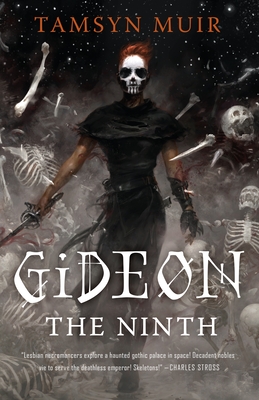
Gideon the Ninth by Tamsyn Muir

At an airport Hudson News, I saw the blurb “lesbian necromancers explore a haunted gothic palace in space” and immediately pulled out my wallet. A swordswoman bound to serve her necromancer childhood nemesis, Gideon is a character I want to play games as, write articles about, and be best friends with. In this universe, necromancers can manipulate bones, turning even tiny bone particles into full skeletal constructs, and control them. It is a cool-ass set of powers. Gideon and her necromancer, Harrowhark, fight murderous skeletal constructs, unravel mysteries, and solve puzzles. My Gideon the Ninth gameplay fantasy involves alternating player perspectives—fighting as Gideon and necromancing as Harrowhark—while exploring said haunted space castle, creating bone monsters, and seducing other necromancers. Honestly, what other game would I ever want to play? I am actually furious that I can’t play this right now.

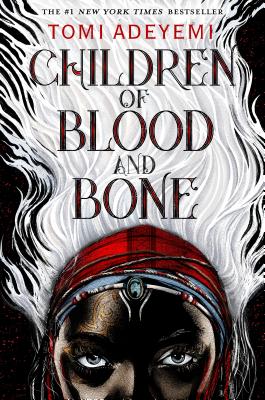
Children of Blood and Bone by Tomi Adeyemi

In Orïsha, everyone is either a divîner—someone with the capacity to work magic—or a non-magical kosidán. Magic has been banished from the land, many of its divîners killed and its surviving divîners oppressed. Heroine Zélie Adebola unwittingly assists a princess, and finds herself on an epic journey to restore magic to Orïsha and defeat the monarchy. Many elements of this book would lend themselves brilliantly to a game—the vibrant magical powers, artifact collection quests, aquatic arena games, and even fantasy cats—yes, fantasy cats. When asked about her world-building approach in an interview, Adeyemi said (among other things), “If I want my character to ride a lion, then it would make sense to have other fantasy jungle cats—which means there’s probably a fantasy cheetah, a fantasy panther…Then you think about our real world, how you have methods of transportation but then you also have nicer methods of transportation—so which of these cats is like having a Ferrari, which part of society has that?” Even in a game whose primary questline would be something world-changing like “restore magic,” what could be a better side quest than “ride every cat”?

The Power by Naomi Alderman

In a world where women mysteriously develop the power to channel electricity, the tables of power and patriarchy turn pretty quickly. This could be a pretty cool first-person shooter (like, electricity shooter), the player a woman developing her powers. With generous helpings of moral ambiguity, this story could be a strong contender for a game where choices matter. Choosing whether or not to kill an NPC, what to say in a dialogue tree, or how to level up your powers could critically affect the game’s outcome.

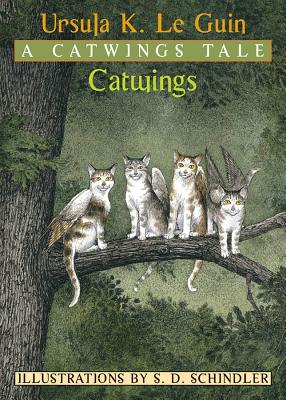
Catwings by Ursula K. Le Guin

The basic premise is that you’re a cat, with wings. This could play like a classic flight simulator, but cuter and therefore better.

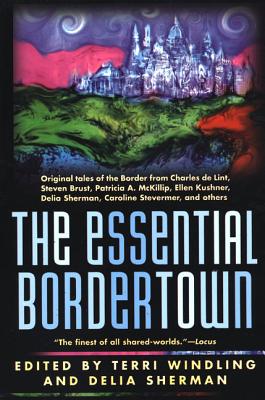
The Bordertown series created by Terri Windling

This shared universe urban fantasy series takes place in a dystopian city between the Elflands and the modern human world. In the liminal metropolis of Bordertown, neither magic nor technology functions as expected. Runaways (human and otherwise) flock to the city; artists and cool outfits abound. The series comprises anthologies and novels by SF&F heavyweights and cult favorites alike, including Neil Gaiman, Jane Yolen, Charles de Lint, Nalo Hopkinson, and Holly Black. Bordertown has already spawned a text-based role-playing game, but no videogames—yet. I’m imagining an MMORPG with elaborate character customization, a first-wave goth soundtrack (the original anthology was published in 1986), and a lot of gritty NPCs selling mystical herbage. Please, give me this game.

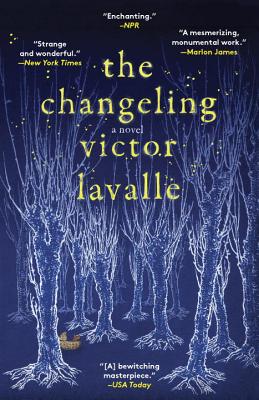
The Changeling by Victor LaValle

I’m a lifelong sucker for stories about changelings, and Victor LaValle’s 2017 novel is one of the best. Protagonist Apollo Kagwa’s wife vanishes after seemingly committing a horrifically violent act, and Apollo searches for her through the enchanted landscapes of New York City. The novel is both fairy tale and horror, occupying spaces both familiar and surreal. As a story-driven adventure game, players could explore the city as Apollo, examining their surroundings for leads (starting with a mysterious box of memorabilia from Apollo’s missing father), talking to other characters for information, using that information to solve puzzles, and determining where to travel. The Changeling is full of breathtaking, eerie settings—including bookstores, rivers, forests, subways, and cemeteries—that could balance its haunting story with a rich interactive environment.

The Diamond Age: or, A Young Lady’s Illustrated Primer by Neal Stephenson

Do you like technologically mystical books-within-books (or in this case, books-within-games) that give you life advice? Do you also love oligarchal Neo-Victorian societies and the possibility of having a gun embedded in your skull? Okay, maybe you don’t love those, but you have to admit they are all potentially solid components of a game. Stephenson’s Diamond Age envisions a world revolutionized by molecular nanotechnology, where society is divided into “phyles” (social tribes) rather than nations. The story follows Nell, a girl so low-born that she doesn’t even have a phyle, who comes into possession of a stolen, interactive nanotech book—the Young Lady’s Illustrated Primer—designed by and for the wealthy Neo-Victorians. For a novel (The Diamond Age) that’s already based around interactive technology (the Primer), videogame adaptation feels as natural as a story about nanotech could feel. With questlines driven by an in-game guide (and perhaps unlocked by solving in-Primer programming puzzles), a protagonist maneuvering between phyles, and threats both physical and psychological, I’d love to inhabit this postcyberpunk universe interactively—as long as I had the safety of a screen between myself and the horrors of aristocratic oligarchy.

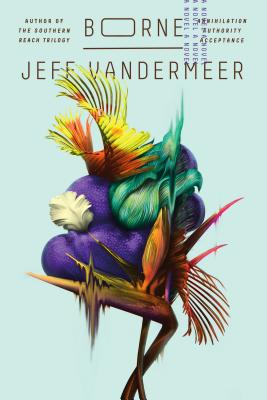
Borne by Jeff Vandermeer

A review described this novel as reading “like a dispatch from a world lodged somewhere between science fiction, myth, and a video game”—so clearly, I’m not the only one who can see Borne in the interactive digital realm. The story of a scavenger, a giant flying bear, genetically engineered creatures, and the ravages of a sinister entity called “the Company,” I would play any game set in this world. The Company is so creepy, so mysterious, it’s the perfect villainous megalith (in the context of game aesthetics, it might look something like the Institute in Fallout 4). With nature bubbling up over technological ruins and an abundance of mutated creatures, I can’t imagine a better dystopia in which to run around and scavenge biotech.

The Blondes by Emily Schultz

A rabies-like virus affecting only blonde women sweeps the world. I can imagine game adaptation of this novel being something like Left 4 Dead, with the option to play either as non-blonde survivors, or as rabid blondes intent on killing people. I could also imagine a tower defense game where protagonist Hazel Hayes and the wife of the man with whom she had an affair protect their cabin from rampaging blonde women. I could also see The Blondes as a plague simulator, where you’re some kind of megalomaniacal god trying to spread Blonde rabies throughout the world. Maybe a minigame within the plague simulator where you can design your own blonde? So many options! The Blondes: Left 4 Blonde. The Blondes: Rural Cabin Defense. The Blondes: Plague Simulator. Better yet, let me play them all.

Where Can a Young Black Man Find Belonging in America?

Gabriel Bump’s debut novel Everywhere You Don’t Belong is about growing up on the South Side of Chicago. We follow Claude, a sensitive kid who loses his parents early and is raised by his grandmother and her friend Paul. Claude craves connection but there’s a pattern of transience surrounding the people he loves. He’s not particularly good at anything his community values. And these recognizable coming of age struggles cannot be unwed from the constant and complex trauma of racism.

product image

When the violence in Claude’s neighborhood reaches a tipping point, he tries out leaving home to go to college in Missouri where he finds different shades of the same struggles.

It was particularly exciting for me to talk to Gabe about Everywhere You Don’t Belong, because we were classmates in UMass Amherst’s MFA program. There, I got to read early versions of this book and watch it evolve (and in some sections, remain the way it was set down years ago). Here, Gabe and I talk about the many different categories of love and racism in this book and what it was like to write it against the backdrops of both national and more personal racist events.


Jane Dykema: Romantic love is such an important part of this book. There’s a great description of it in that scene with Paul and his boyfriend, and more throughout. How does Claude understand romantic love’s role in his and everyone’s quality of life when there’s constant transience and fear of death surrounding his parents and friends?

Gabriel B: Claude’s relationship with Janice seems like a good place to start. When they first meet, Claude experiences this youthful tingling that we associate with teenage love. In Janice, he sees something new and exciting and powerful. I believe our memories of first love are so clear because the sensations are so bright. Claude and Janice’s love goes through different phases after that initial spark. It shifts, somewhat, to platonic love. Then familial. In these different stages, although Claude may still harbor romantic urges, their feelings for each other grow more complex, stronger, more like adult love. When we’re young, love is simple. Do you want to hold my hand? Do you want to sit next to each other on the bus? Do you want to have sex? Do you want to sneak out of your parents’ house and come over? As we get older, those questions change: Who is going to leave the house and pick up dinner? Etcetera. 

Claude comes to understand love’s great importance through necessity, like most of us, I think. When things aren’t going well, when Claude needs someone, there’s love he can reach out and hold. At the beginning of the book, Grandma and Paul provide it. When Claude’s dealing with bullies in middle school, Jonah provides important love. At the end of the book, Janice provides it. 

We all need some kind of love to help us through hard times. Romantic love isn’t the only salve. We can call on friends. We can call on family.  

Now, I’m veering towards cliched platitudes. Better stop before I crash. 

JD: The way you portray all these kinds of love reminds me of the way you portray so many different sides of what Paul calls the struggle for black people in the riot scene. There are the two defined sides, the police and Big Columbus, but Claude and most of the other people land somewhere on a spectrum between them, trying first to stay alive. Can you talk about the tension between ideology and survival in this scene (and in the whole book!)?

GB: That riot scene is an ideological mess. First, the police: this oppressive presence in South Shore, America, the world. Second, the faction in South Shore that believes in non-violent protest, which is best represented by Grandma. Third, Big Columbus and the Redbelters, who believe in taking back their neighborhood through force. Fourth, the largest group: all the people trying to live their lives without having to pick a side, heads down, moving about the chaos. Claude fits best in this last group. Remember, as the riot starts, Claude is meeting Janice’s family for the first time.

All those sides pushing against each other give the scene energy, I think. I wrote it fast, tried to keep up with all the moving parts. I discovered something interesting about that scene once it was written. There was a lesson in there that wasn’t intentional, or, at least, wasn’t a conscious goal. While all these different ideologies exist in South Shore, as they exist in most communities, particularly communities of color, they are forced to join together against a common oppressor. The cops don’t care about the different ideologies within the community. They see each citizen as a threat. Somewhere in that hectic scene lurks a lesson about unity, which, of course, is damn hard to achieve. Look at the Democratic Party today. 

The above-mentioned ideologies are all different ways to survive. I’m not going to say which one I think is best. Except for oppression. Oppression is a bad ideology. Don’t oppress people.

“Belonging” and “survival” are close ideas in this book. Claude is placed in situations where his survival is a literal battle. During the riot scene, there’s a chance Claude would get killed if he doesn’t make it back home in time. Also, at the end, there’s a chance he might not survive. Between and around those two instances, Claude’s attempts to figure out his place in the world represent a different type of survival. It’s a mental and spiritual form of survival. 

JD: I like the mention of that surprise lesson. I wonder, when you were writing, did you feel more like you were grappling with how to tell your audience things you knew, or were you grappling with things you didn’t know, either? Or both?

GB: In the first draft of that scene, I focused on the action. I wanted to see how Claude was going to get out there. There wasn’t that long chunk of interiority where Claude offers an abbreviated history of black protest in America. That section, which contains some explicit mental grappling, came later. Most of this book, at least the first half, was written and rewritten during the height of Black Lives Matter, when those ideologies were present in our everyday discourse. At least, present in mine.

What is uniform, what is common, in white-dominant institutions are both overt and subtle forms of racism.

I assume there’s a disclaimer somewhere in this interview about how we went to grad school together. Remember the racist incidents on campus? All those forced meetings about diversity? During those years, which seem long ago, it seemed like everyone was reading James Baldwin and bell hooks, yelling about race at parties. There was a constant flow of think pieces placing the Black Lives Matter protests in a historical context, blaming Obama for not doing more, forgiving Obama for not doing enough; personal essays about personal racial trauma, a genre I dabbled in for a while. The national discourse has shifted a few times since then. Now, I imagine, a lot of grad students are getting drunk and yelling about Trump. 

My point is that I knew about the different ideologies. I studied and experienced them in college. I saw them come to life in grad school, across the country, on our campus, in our classrooms. And the answer is always unity. What unity looks like, how it’s achieved—that’s hard to say. 

JD: I sure do remember the racist incidents! In the book there’s a great portrayal of the kind of racism you see at “progressive” places like universities or nonprofits (which is, while we’re on the topic, more passive than what happened to Zoe Mungin when we were in grad school): Claude and Simone, the two black reporters at the school newspaper, are assigned to work on some sort of diversity spread, which means closing them off in a room and making them read all day about horrifying hate crimes and structural oppressions and traumas white people did to black people in the area. But in the narrative there’s empathy for the white characters who’ve given them this assignment. Connie is complex—she shows some awareness that it’s fucked up. Whitney is scared and Claude feels bad for her and imagines, with some contempt, her reading Baldwin and being moved. Can you talk about how you wanted this common situation to read?

GB: There’s pressure on minorities moving through white-dominant institutions, i.e. most universities, to represent some imagined and uniformed black experience. This pressure is based around a false premise. Of course there is no uniform black experience. What is uniform, what is common, I believe, in these white-dominant institutions are both overt and subtle forms of racism. Maybe “aggressive” and “passive” are better adjectives than “overt” and “subtle.” Claude, in Missouri, experiences both aggressive and passive racism. For the first time in his life, he’s in a place where white people far outnumber black people, or other minorities. When he and Simone are closed off in a room, forced to face this gruesome and hateful history—that’s a somewhat crude and ridiculous metaphor for the black experience on college campuses. Their assignment is not just traumatizing. It’s not composed well. It’s just a vague exploration of racism. It has a similar feeling to those diversity meetings we experienced. Like, “Okay, everybody, let’s go around the room and say why racism is bad.” Or, “Does everybody know what racism looks like?” Talking about racism in obvious terms, chairs in a circle, is pointless for students and faculty of color. Those meetings felt like White Guilt parties with bad snacks. The intentions are good. The execution, at least in my experience, is a little boring. There are Whitneys and Connies on all college campuses. Well, maybe there aren’t many Connies.

College diversity meetings felt like White Guilt parties with bad snacks.

Claude didn’t see a point in the assignment, doesn’t come back. Simone decided to stick with it, keep her head down, do the work.

When I’ve found myself in similar situations—in high school, college, grad school—I think I alternated between those two reactions. 

In college, in Missouri, I said “fuck this” and moved back to Chicago.

In grad school, I ended up isolating myself and focusing on this book.

There are plenty of options in between.

Zoe, for example, stood up for herself when the bullshit was too much. She brought the fight to the administration. She, and other students on campus, through their fighting and toughness, made my life on campus better. As a result of their fighting, more scholarship opportunities were made available for students of color. She was a third-year student, about to graduate. All this happened during my second month on campus, I think. Looking back, I should’ve expressed more gratitude in the moment. It’s a hard thing to stand up and fight. It’s exhausting. Grad school is exhausting enough. So, I’ll express some gratitude now. Zoe, if you’re reading this. thank you.

What I hope comes through in the second part of this book, when Claude goes to college, is how the transition from high school to college is hard enough without adding racism to the experience. Like all kids, students of color are homesick. They’re trying to make friends. They’re trying to balance homework and a social life. They’re dealing with dorm drama. I know you can’t eradicate all forms of racism on college campuses. Just like you can’t eradicate all forms of racism in the world. I would suggest, however, not locking students of color is tiny rooms and forcing them to engage with their trauma. 

JD: We should really have an interview with Zoe. The homesickness in the second part of the book lends really well to what seems like a larger case being made for not being traditionally exceptional. Of the tasks put to Claude throughout—basketball, fighting, journalism–we see he’s not a brilliant athlete like Jonah, he can’t really defend himself, he’s not brilliant student like Simone, doesn’t really have a knowledge base or new ideas. He is, however, crying a lot of the time. Often choosing comfort, always choosing survival. Can you talk about defending the value of this character, which is, what seems to me, the heart of the book.

GB: Zoe should get an interview. And publishers should pay top dollar for her work.

For me, Claude, in most ways, represents a large percentage of the population. He demonstrates, I hope, how people we consider unexceptional can still contain and tell worthwhile stories. They are characters worth exploring. 

That said, I think Claude is exceptional. Maybe not in terms of athleticism or intellectual power. Still, he’s capable of exceptional empathy. He’s a kind person, caring, loving. His love for Janice sprouts a few exceptional acts of bravery. He’s also smarter than he lets on. During the riot, for example, in his long internal monologue, Claude shows a deep understanding of the negative forces around him.   

He’s sensitive and prone to depression and anxiety. Those are traits that make him less exceptional and more common. People like Claude tend to suffer in silence. They move around without garnering much attention. Claude’s the melancholic kid on the swing set, who you don’t notice as you drive past. 

Claude comes in contact with several exceptional people. I was interested in exploring Claude’s attempt to process his mundane self compared to those exceptional people. Our society pushes us towards certina types of exceptionalism (athletic, monetary, intellectual). Through Claude, I hope, I showed how empathy and kindness are also significant character traits. If there were more Claudes in America, I think we’d all benefit. 

Kavita Das Wants You to Think About Why You’re Writing in the First Place

In our series “Can Writing Be Taught?” we partner with Catapult to ask their course instructors all our burning questions about the process of teaching writing. This time, we’re talking to Kavita Das, author of Poignant Song: The Life and Music of Lakshmi Shankar. Kavita is teaching a one-day seminar on February 22 and a six-week workshop starting March 9, both on the subject of writing about social issues, both of which will draw on her many years of experience writing about culture, race, feminism, and their intersections.


What’s the best thing you’ve ever gotten out of a writing class or workshop as a student?

It’s a toss-up between some of the salient feedback I’ve gotten from writing mentors and some of the great writing friends I’ve made. It’s exciting to see pieces from workshop be published, your own and others, and feel like you were on this journey together. 

What’s the worst thing you’ve ever gotten out of a writing class or workshop as a student?

Early on in my writing career, I had writing workshop experiences that shook my confidence as a writer, where I felt the spirit of the critique was not fair or generous. This was true when instructors didn’t set the tone and parameters for the workshop and when the workshop wasn’t diverse. 

What is the lesson or piece of writing advice you return to most as an instructor?

When you hit a wall with your writing, remembering what motivates you to write can be fuel to help you get over or through that wall.

Whether you’re writing fiction or nonfiction, I think it’s important to interrogate why you write. When you hit a wall with your writing and can’t figure out how to move forward, remembering what motivates you to write can be fuel to help you get over or through that wall. This is why I start all my Writing About Social Issues classes by asking my students to reflect on why they write. 

Does everyone “have a novel in them”?

No, all my writing and workshop experience point to the fact that everyone does not have a novel or book in them. However, I do believe that most people benefit from attempting to put words to certain ideas and emotions they’ve been carrying around inside them. Whether they have what it takes to shape those words into something universally resonant, whether those words are publishable, are separate matters.

Would you ever encourage a student to give up writing? Under what circumstances?

I would never encourage a student to give up writing, especially if they are deriving something positive from writing. However, I might encourage writers who are writing memoirs of trauma to step away from what they’re writing about because it is still too emotionally raw, and to come back to it after they’ve had a chance to heal from and process it. 

What’s more valuable in a workshop, praise or criticism?

Although I’m a vegetarian, I use the “hamburger” approach to workshop feedback. I begin with the “bun”— feedback on various positive elements in the piece, whether it’s language, character development, and then I get into the “meat” of the feedback—these are the areas that need work, language or narrative that need greater depth or clarity. Finally, I end with the “bun” again, summarizing my overall feedback, emphasizing the positive elements they can build from. This ensures students get a balance of praise, which is motivating, and criticism, which is actually actionable. 

Students get a balance of praise, which is motivating, and criticism, which is actually actionable.

Should students write with publication in mind? Why or why not?

When writers are starting out, I really don’t think they should write with publication in mind. They should write to develop their own voice, their own perspective. As I mentioned, they should also be clear about why they write. Once they’ve grounded themselves in these elements of their writing, then they can start to seek out venues and platforms that are best suited for their writing. If early writers write with publication in mind, they risk trying to create a voice or style that fits a publication, rather than ones that speak for themselves.

In one or two sentences, what’s your opinion of these writing maxims?

  • Kill your darlings: I prefer to reframe this as figuring out which darlings get to stay and which ones you need to bid adieu to because they are not serving the narrative. But always remember, the darlings were sometimes the spark that helped you get the words down on the page, so we should be kind to them even if we’re asking them to leave.
  • Show don’t tell: I think it’s about balancing the showing and the telling. And also figuring out if this is more of a “show” piece or a “tell” piece, and therefore what the balance should look like for each piece.
  • Write what you know: In general, writers should be driven by a mix of curiosity and compassion. If you need to know something for your narrative, if its something beyond your sphere of knowledge or experience, then approaching it with curiosity and compassion can guide you to research and write about it with integrity.
  • Character is plot: Yes, I know this to be true because as a reader, I will follow a well-developed character through strange plot twists. However, if a character is one-note or half-baked, I don’t even feel like following them across the street.

What’s the best hobby for writers?

It’s interesting, I just published my first book last year and it was a five-year slog. In the meantime, I was writing and publishing articles and essays. However, I’ve come to realize that writing keeps me in my head all the time and I actually need hobbies that are tactile, physical, which give my mind a rest so I can return to writing refreshed. So, I’m learning how to knit and I’m getting back to yoga. I also love walking around the city, especially with my hound Harper. 

What’s the best workshop snack?

The best workshop snacks are easy to share, not too noisy, and contain variety so people can pick what they like—for example, variety packs of chocolates. This reminds me, I need to pick some up for my upcoming Catapult classes