Literature, to me, seems to thrive on a curious contradiction. While it is an essentially solitary activity, it is also driven by the desire to commune with others. We wish to be alone with a book, but fulfilling this wish means engaging in a conversation so intimate that it overcomes the limitations of space and time — readers may reach out to the dead; writers sometimes touch the unborn.
Purchase the novel
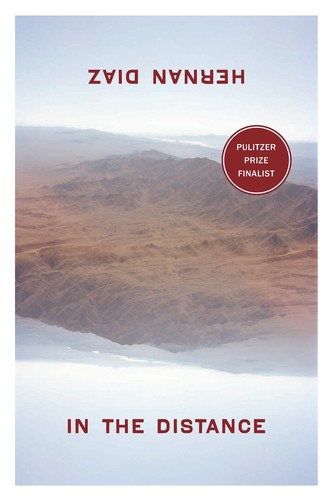
Many of my favorite books are about isolated people — either in a literal sense (Robinson Crusoe) or figuratively (Jane Eyre, Villette). My first novel, In the Distance, was initially conceived as an exploration of solitude. It tells the story of a Swedish immigrant who walks from San Francisco to New York, against the big push west during the 1850s. He spends most of his time alone in what was known as the “Unorganized Territories” and finds, paradoxically, that as these expanses grow, so does his feeling of claustrophobia. Sometimes, his hands and his feet are the only living things he can see.
These are some of my favorite books on isolation and loneliness. Some of them influenced my book; others, I read only recently; all of them have shown me how nuanced solitude can be.
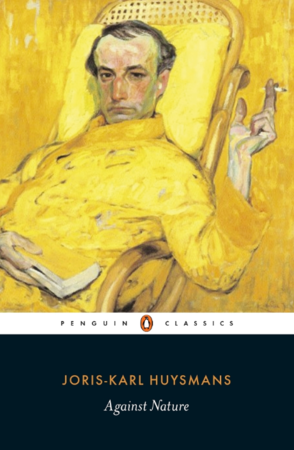
Full of “contempt for humanity” and “weighed down by splenetic boredom,” Jean Des Esseintes retires to the artificial paradise of his house in the outskirts of Paris, a temple dedicated to his decadent whims. “Nature, he used to say, had had her day.” In the perpetual color-tinted twilight of his seclusion, his few companions are his books, some mechanical fish in dyed water, and a gold-glazed, jewel-encrusted tortoise. Des Esseintes artificial isolation is so radical that it ends up transforming his body and its basic functions.
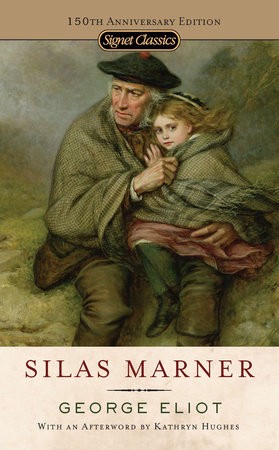
Different layers of isolation coexist in this quiet masterpiece. Silas, a weaver, is a member of a “narrow religious sect.” After being wrongly accused of theft, he is expelled from this insular congregation and lives like a hermit, reducing his life to “the unquestioning activity of a spinning insect.” He also becomes a money hoarder — but, strangely, not a miser. After years of solitude, Silas’s life ends up “narrowing and hardening itself more and more into a mere pulsation of desire and satisfaction that had no relation to any other being.” A lonely little girl wanders into his life and changes everything.
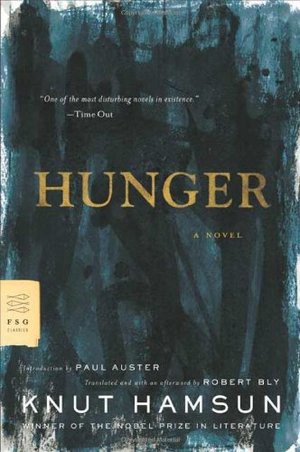
Nowhere is the oppressive loneliness in the midst of a multitude felt more acutely than in Hunger. The protagonist of Hamsun’s novel wanders around the throngs of the Norwegian capital but is thoroughly alone and always at the verge of mental and physical collapse from starvation. “I was turning into a freak from hunger, right here in the city of Kristiana!” He loses his hair; his body decays; he eats woodchips, pebbles, and his own pocket. He almost eats his own finger. All while trying to write monographs, philosophical treaties, and plays.
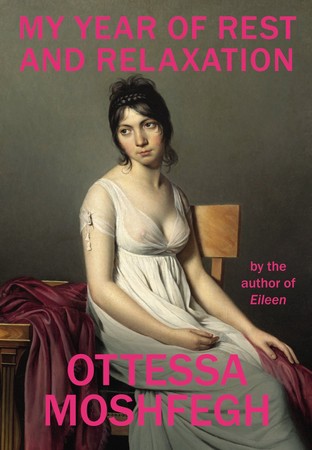
Sleep is the loneliest activity we can engage in — it takes us away even from ourselves. Still, the few works of fiction on this subject that I can think of — “Rip van Winkle,” Oblomov, Finnegans Wake,The Interpretations of Dreams — are either concerned with the content of dreams or view sleep as an obstacle. Not so Moshfegh. Hers is the story of a solitary woman who, with the help of a prescription-writing quack, intends to “hibernate” for the better part of a year to then be “reborn.” To this “somnophile,” sleep becomes a goal in itself — thus showing how absurd our goal-oriented culture is. “I was finally doing something that really mattered. Sleep felt productive.”
More than a novel, this is a collection of propositions, a text made up of lonely sentences. Kate, the narrator, is certain she is the last human left on the planet. Although she is (or believes herself to be) absolutely alone, the novel feels wonderfully populated, thanks to the ceaseless references to Western culture, from Odysseus to Marlon Brando, as if our entire tradition had been entrusted to this reverse Eve. Every now and then, Kate takes up residence in desolate museums — the Louvre, the National Gallery, the Met. “Once, in the Borghese Gallery, in Rome, I signed a mirror,” Kate confesses. “Though in fact the name I put down was Giotto.”
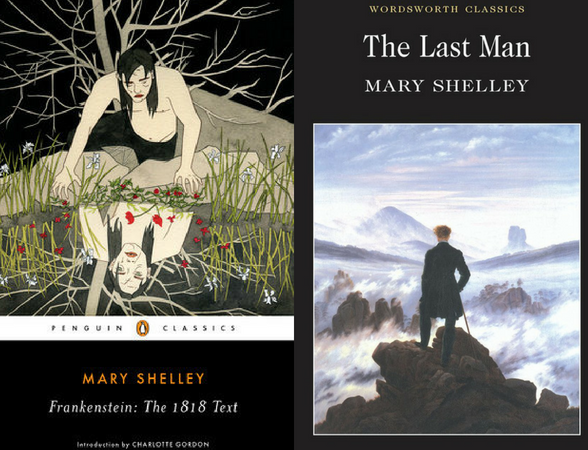
I find it remarkable that Shelley should write a novel about the first superman (Frankenstein’s creature is stronger and smarter than any human) and then, a few years later, a novel about the last man. Victor Frankenstein’s creation is one of the loneliest characters in literature. “I am an unfortunate and deserted creature, I look around and I have no relation or friend upon earth.” The monster’s revenge is to leave his creator as friendless as he is. Meanwhile, despite its title, The Last Man is a crowded novel with a rather melodramatic plot. But this only makes the final pages more poignant. The protagonist, the only survivor of a plague, wanders around Rome — a monument and a ruin among monuments and ruins.
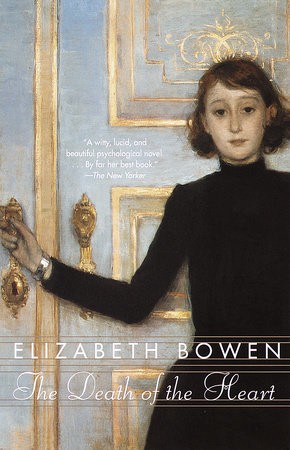
Can anyone be lonelier than a lonely teenager? Portia, the protagonist of Bowen’s novel, is the offspring of an illicit union that sends the family into exile. After her parents’ death, Portia is entrusted to her half-brother and his wife. Her isolated upbringing gives her a unique perspective on social relationships, which she commits to a journal that becomes the very core of the novel. Bowen’s breathtaking prose abounds in reflections on solitude: “The heart may think it knows better: the senses know that absence blots people out. We really have no absent friends.” Bowen’s book would pair well with Henry James’s What Maisie Knew, also about a lonely girl caught between dysfunctional adults.
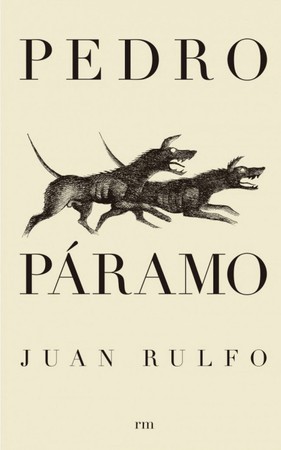
A ghost story like no other, Rulfo’s perfect novel narrates the return of Juan Preciado to Comala, his hometown, in search of his father, Pedro Páramo, the village’s tyrannical strongman. The plot’s chronology is so masterfully crafted that the reader immediately feels marooned in time. Whispers, echoes, shadows. . . Juan soon learns the town is deserted and that he is alone, surrounded only by specters: “the words I had heard until then . . . had no sound, they were soundless; they could be felt; but without a sound, like the ones heard in dreams.” Rulfo only published this short novel and a collection of stories, but his influence is immeasurable.
“To a house of some sort the woman has been confined for a period as long as history,” Perkins Gilman writes in The Home: Its Work and Influence. The most disturbing depiction of this form of domestic seclusion can be found in “The Yellow Wall-Paper.” The narrator’s husband, a condescending and suffocating physician, orders her to rest in a room with a tattered yellow wallpaper. Gradually, she starts perceiving moving patterns and, finally, a woman trapped behind the wallpaper’s design. “She crawls around fast, and her crawling shakes it all over.” The ending of the story is chilling. It may be as a response to this domestic confinement that she wrote her best-known novel, Herland, about a utopian community of women, thriving in isolation.
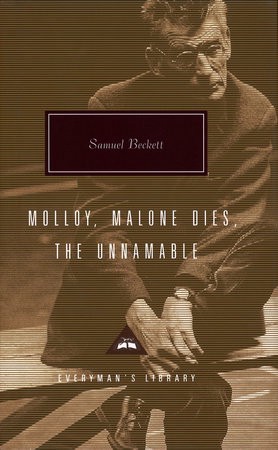
The monologue is the genre of solitude, and Beckett is its undisputed master. His trilogy shows a progression toward absolute loneliness and dispossession. Molloy, a crutched tramp, writes his story for an unknown man. The protagonist of the second book is no longer upright: Malone is a bed-ridden naked old man, scribbling incessantly with a pencil stump. In the last novel, there is just a head in a jar, which becomes a disembodied voice. But these loners are everywhere in Beckett’s work: in his early novels (Murphy), in many of his plays (Not I), and in his later stories (Company). From The Unnamable: “Yes, in my life, since we must call it so, there were three things, the inability to speak, the inability to be silent, and solitude, that’s what I’ve had to make the best of.”
In this era of air travel, it’s hard to fathom what it must’ve been like when boats were our only option for long-haul transportation. Air travel may often be messy and inconvenient, but imagine weeks or months trapped on a ship. The relentless roiling under your feet. Violent bursts of weather. Not to mention the constant threat of a slow, agonizing death by drowning. Catastrophe is always at hand and, since you are bobbing along the earth’s surface like a floating toy in a bathtub, salvation is usually far from hand.
The closest you can get to this heady mix of dread and hardship is a good book about the good ole seafaring days. Alas, most lists of such books seem to regurgitate the same titles and authors: Patrick O’Brien, he of the Master and Commander series (which always sounded a little BDSM to me); or, for those into thrillers, the late Clive Cussler. Classics, like Moby Dick, Billy Budd, The Swiss Family Robinson, The Odyssey, or modern classics like Life of Pi or The Perfect Storm. So, I set myself some rules: I wouldn’t include any of the above, nor would I include other books about the Titanic (though if I were, it would be to include The Ship of Dreams by Russell Gareth, a fabulous non-fiction account that came out shortly after I’d finished writing The Deep.)
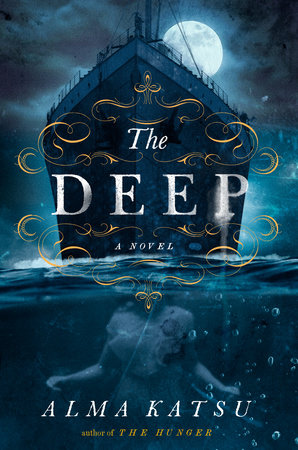
In my novel, The Deep, mysterious happenings begin to affect the passengers on the Titanic. It’s not clear to stewardess Annie Hebbley who is to blame: con men, or the supernatural. Four years later, on the Titanic’s sister ship the Britannic, Annie is confronted by the ghosts of the past and must come to terms with her role in the tragedy that fateful night.
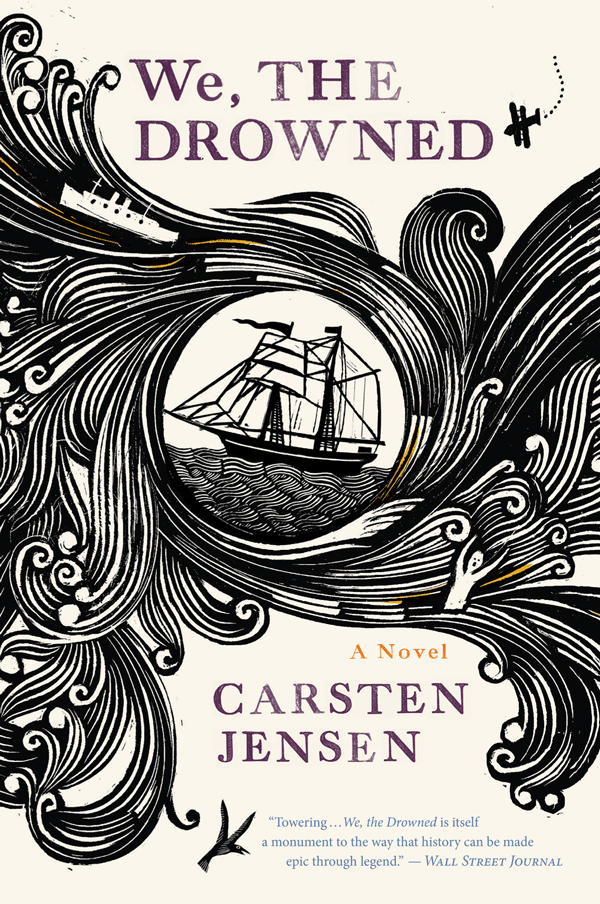
Stories about ships and the sea are often in reality about life transitions. This is true of Jensen’s We, the Drowned, first published in Danish in 2006 and out English in 2010. It also includes all the things we have come to expect in historical novels of the sea: world-travel in exotic locales, miraculous feats of derring-do, introspection, and—because books about life at sea tend to be men’s books—war, violence, and regret. A great epic tale where the sea is a metaphor for life.
A bookseller pressed this novel into my hands after I’d finished an event for The Hunger, my reimagining of the story of the Donner Party, saying, “After hearing you talk about your book, I think you’ll like it.” I’m glad she did. To serve on a whaling ship in the 1850s meant you had few other options. The work was dangerous, the environment unpleasant (a huge understatement), and the company undesirable. Characters in this highly acclaimed 2016 novel are products of their time: rough, unscrupulous, irredeemable. While shocking in places, if the reader perseveres, they will be rewarded with a taut story and masterful writing.
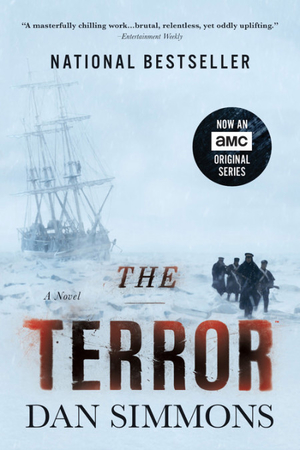
I read Simmons’ 2007 novel after I’d finished writing The Hunger, only because I’d heard my book compared to it so often. After reading it, I understood what a great compliment that was. The Terror is an amazing piece of historical fiction, a reimagining of the story of the ill-fated Franklin expedition to find the fabled Northwest Passage. It has everything you’d want in a story: painstaking historical degree effortlessly sewn into the fabric of the story; strong writing; unforgettable characters. Given that supernatural elements are always tough to pull off in a novel as realistic as this, Simmons has done an extraordinary job, creating something that is as beautiful as it is mystical.
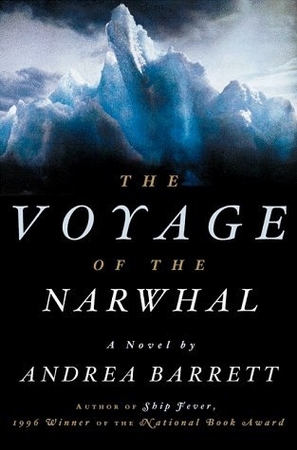
This novel, published in 1998 to much acclaim, is a great one to pick up after you’ve finished The Terror, as it’s the tale of a fictional group dispatched to find out what happened to the doomed Franklin expedition. Like many books of the sea, it is really about men’s ambitions: the hubris to think the sea can be tamed and that you are the man who will do it.
Like many people, I’d read anything written by Erik Larson, but his treatment of the sinking of another great ship? Yes, please. Many people have tangled the Lusitania and the Titanic together in their minds and it’s not hard to see why: the Lusitania was sunk only three years after the Titanic, and both claimed similar numbers of fatalities (1,500 on the Titanic, 1,200 on the Lusitania). Like the Titanic, the Lusitania’s sinking has been shrouded in rumor and conspiracy. It deserves to have Erik Larson set its record straight.
While Moby Dick may be the first book to come to mind when one thinks of seagoing adventure, the real-life event that inspired Melville was the capsizing of the whaling ship Essex. Historian Philbrick captures that heart-stopping story in this 2000 work, the basis for the movie by the same name and winner of the National Book Award for non-fiction.
For many of us, few periods in history are as exciting as the end of the Age of Discovery. Dash’s 2002 book provides a little bit of schadenfreude for anti-colonialists, telling the tale of what happened when the Dutch East India company sent the wrong man to safeguard the treasure stored on its flagship, the Batavia, resulting in a shipwreck and a murderous descent into madness.
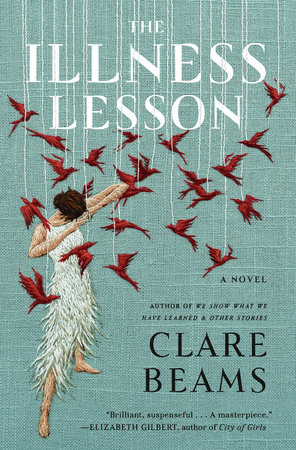
Set in 1871 in a Massachusetts familiar to us thanks to Little Women, The Illness Lessonby Clare Beams takes on issues of gender equality and abuse that feel just as urgent 150 years on—possibly even more so in this particular cultural moment.
Caroline has grown up under the shadow of her father Samuel, a famous essayist and thinker known for the failure of his utopian experiment, Birch Hill. When Samuel and his protege David decide to start a school for girls, it is assumed that Caroline will join them in teaching—and in their vision of educating girls in the same subjects as boys and proving that girls can learn more than sewing and social etiquette.
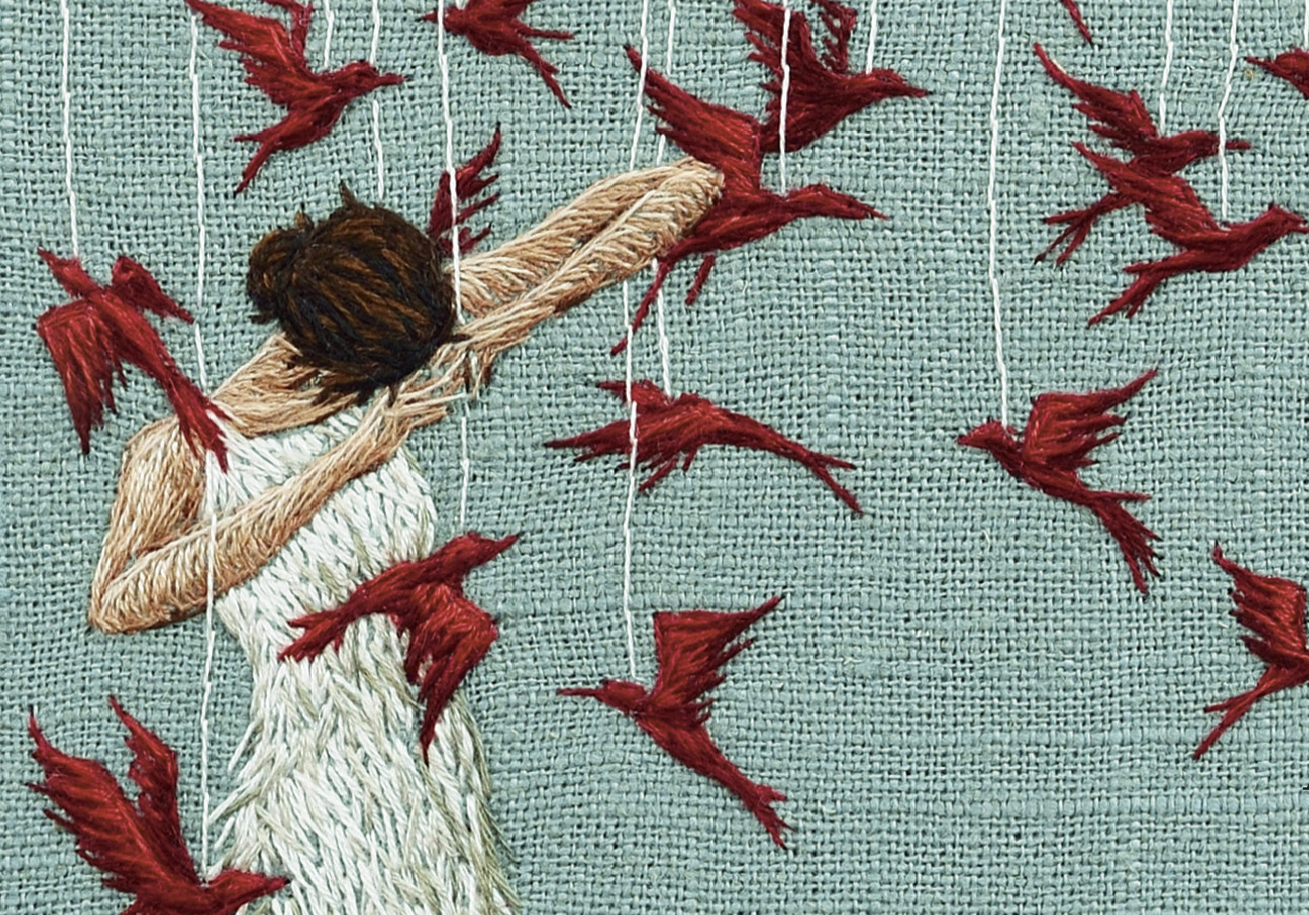
When the girls show up, however, nothing goes as planned. Led by Eliza, the daughter of Samuel’s deceased nemesis, they begin secretly reading an all-but-forbidden Gothic novel and experimenting with rituals in the woods at night. Then, one by one, they begin to fall ill. Meanwhile, the area is overtaken by mysterious red birds, a species that has only been seen once before, back when Caroline’s mother and Eliza’s father were still alive.
The Illness Lesson follows on the success of Beams’s haunting 2016 story collection, We Show What We Have Learned. I spoke with Beams about hysteria, the magic of teenage girls, and writing while parenting young children.
Shayne Terry: The Illness Lesson deals with the self and what it means to be oneself. Eliza tells Caroline that she is “looking for a way to be, here” and Caroline answers that the right way to be is “of course to be yourself.” But Eliza’s fifteen! She’s figuring out who she wants to be. And that teenage impulse to try on different identities is very much at odds with the Transcendentalist ideals of the men who run the school — the belief that each girl has a “deepest self,” and all it will take is a certain amount of education to excavate it.
Clare Beams: The Transcendentalists had these noble ideas of the self, and, in theory, they applied to women as well—many of them were women, brilliant women—but there was this tension that we’re still living with, that the things we tell women about their possibilities are not the things women encounter in the world.
ST: And then there is the question of how illness affects the self. As Eliza’s body is overcome by strange symptoms, she can’t stand to feel like herself. And Caroline lives under the threat that the illness that killed her mother may be genetic, every moment wondering when a seizure might take her away from herself. The men seem to want to ignore the body—who we are is in the mind, in the soul. But, as anyone who has been seriously ill or injured knows, when the body demands attention, it has a way of taking over. What made you want to write about illness?
CB: While I had not consciously articulated all of that to myself, I knew there would be this school and that it would have this fatal flaw of not acknowledging the bodies of these girls, their femaleness. To Samuel and David, these girls are essentially genderless minds—or at least that’s what they want the girls to be. I knew there would be trouble, and it made sense to me intuitively that the trouble should come from their bodies because that’s what’s being ignored.
Anyone who’s ever been a teenage girl or been in a school knows that you’re part of something that is beyond any individual.
The men don’t deal with the whole thing well. They’re looking for ways to squelch the body and its demands. Much more than helping the girls, they are interested in silencing the problem that is being so noisy through the girls’ bodies. The illness brings out the problem with the vision for the school.
Eliza’s illness is, I think, psychogenic; she is genuinely sick, but it’s coming from her mind. That doesn’t mean that she’s not ill. This mass hysteria that overcomes all the girls—it’s their bodies, insisting on themselves.
ST: That brings me to another of the book’s preoccupations, which is the mysterious magic that can arise within a group of teenage girls. It has echoes of the beginning of the Salem witch trials, though this story takes a very different turn.
CB: Anyone who’s ever been a teenage girl or been in a school knows that you’re part of something that is not yourself, that is beyond any individual. The group is not the same thing as the sum of its parts. These girls become their own organism, and the group has its own power.
A psychogenic illness spreading through a group is a real historical phenomenon that has happened periodically—I recently wrote about it for Lit Hub. It tends to happen in schools, and it tends to happen to adolescent girls. No one is faking. The illnesses are real, but the causes are not concrete. The brain has a power over the body, and the body can respond first to tensions that arise in the mind.
ST: Yet, when the girls begin to fall ill, the men around them ignore their bodies in a whole new way, deciding that the sickness must be in their ideas. These girls are presenting with physical symptoms and the men are basically saying, “It’s all in your head.”
CB: In a certain way, Samuel and David are correct, but when they say it, they mean, “This isn’t real.” The illness is real—it’s just not something the girls have caught from, say, the water.
The girls have been taught that someone else knows more than they know about their experience, and yet their bodies keep insisting on a truth.
ST: This gaslighting and the doctor’s “treatment” feel, sadly, very current.
CB: Yes, the book has these current echoes, and there are certain parallels with things that have become part of the cultural conversation recently, such as the abuse perpetrated by Larry Nassar, although what happens to the girls was in the book before that came to light. I think there’s something so weird about that, that a book set in 1871, which was fully drafted in 2014, should have these resonances. I had a draft before #MeToo was the thing it became, although, of course, the forces that produced it have been around forever. It makes you wonder: how has so little changed?
ST: The girls’ illness is diagnosed as a case of hysteria. We get quotes from the historical literature on hysteria, including the fantastical metaphors that were used to describe it: the womb as an animal within an animal, the womb as a wanderer liable of getting lost. And then the 19th century’s “modern” way of thinking about it: “pelvic congestion,” with its long list of symptoms, painful menstruation and abdominal heaviness lumped in with ticklishness and worry. Most women I know could claim multiple symptoms from that list on any given day. To this doctor, we’d all be hysterical.
CB: Part of what fascinated me about this is that I have been amazed, as a woman, how much we still don’t know, medically, about women’s bodies — we just don’t know anything! Historically, no one has wanted to study women. There’s a weird squeamishness about it, an astonishing vagueness and lack of knowledge.
ST: Yes! When I was pregnant, there was an issue with my cervix, and when I asked the midwife why it was happening, I was met with a shrug and told, “We know very little about the cervix.”
CB: Almost every woman has something like that in their medical history. “We found this weird thing, we don’t know if it’s really weird or if you’re just a woman. Take this information and try not to be too anxious.” That, to me, is also fascinating.
ST: Let’s talk about the birds. You received a glowing review from Publishers Weekly, but I felt they totally missed the point of the trilling hearts, the eerie red birds that take over the town. They called it a “fantastical thread” that didn’t fit with the “otherwise plausible plot.” But the birds are the plot! The birds are the girls, and the girls are the birds!
CB: I know! I love most of that review. But the truth is that the birds were there before anything else. I start with an image when I write, and this time it was an image of those red birds.
The brain has a power over the body, and the body can respond first to tensions that arise in the mind.
Originally, the novel was set across three different historical time periods, and there were two recurrences of the birds, one in the 1940s and one in the present day. As it turned out, I wasn’t very interested in the other two sections, and once I started writing, I knew pretty quickly there was no way the school would survive the events happening in 1871—and even if it did, the novel would be 700 pages long. So I ended up focusing on just this one time period, but the birds were there before the novel was anything like itself.
With reviews, sometimes you receive criticism and think, “Maybe that is true?” But occasionally a comment just feels like it’s about a different kind of book than the one I wanted to write. Some readers really want a book to be either realism or surrealism. Where I tend to live as a writer is in this weird foggy zone between those two, where realism is stretched, bent, intensified. That’s where I find the spark, as a writer.
ST: I personally loved the fabulist element of the trilling hearts, with their girl-shaped nest that contains, among other things, a fingernail, a human tooth, and a rag soaked in brown-red blood. The nest resembled, to me, an ovarian teratoma—a type of ovarian tumor that has been known to grow skin, muscle, bone, and hair. Was that something you were thinking about?
CB: The birds are very connected to the girls’ bodies. They’re stealing little bits of the girls, and it’s one more really loud insistence that the people running the school cannot pretend the bodies of these girls don’t exist. They are not genderless minds. Their bodies are real things, whether or not the men want to look at them. I don’t think I had consciously gone as far as thinking of the nests as teratomas, but I certainly had this image of them being an assemblage of little bits of bodily things, constructed from pieces of the girls.
ST: There’s this moment when Eliza first arrives and she overshares with the other girls. Caroline wonders if she’s seeking attention or if she’s simply hoping that “if she met Trilling Heart with her entire self in her hands, it would give her its entire self in return.” There’s a vulnerability there, but you get the sense that after her encounter with the school, she’ll never be able to get that vulnerability back. Do you think you’ll revisit what happens to Eliza in some future work?
CB: This is a matter of taste in fiction, but I think a good ending has to have things it leaves you wondering about. The book has question marks that, I hope, live on in people’s heads. I don’t want you to feel at the end that you can stop worrying.
I think some readers will be frustrated that I didn’t fast-forward 20 years and tell about Eliza’s marriage and so on, but for me, there’s a certain kind of aesthetic satisfaction, or maybe just truth, in not knowing how everything is going to turn out.
ST: What was your writing process like?
CB: I started The Illness Lesson in 2012 and had a draft in 2014.At the time, I was parenting a small child and editing my story collection, and during the years that followed, I had a second baby and my story collection came out.
Then, in early 2018, I ended up with a semester with no teaching, not entirely by choice; I had been doing a bunch of adjuncting and they didn’t have a class for me. At the same time, I received a grant from the Sustainable Arts Foundation, which is an amazing organization that supports creative work by parents. The grant was almost as much as I would have made adjuncting. My husband and I had two children, so we had to sit down and ask, “Can we carve out this time as a family?”
My husband’s job is much more structured, and his is also the job that gives us health insurance. If yours is not the job that provides that, you’re usually the one to take the kid with pink eye to the doctor or meet the person who comes to fix the furnace. We made the decision that, for three months, that would not be me.
It’s tough to write a novel during the phase of life that is early parenthood. With a story, you can get the whole thing in your head pretty easily. With a novel, you don’t always need to have the whole thing in your head, but for the big overhaul-type stuff, you do need to understand how all the parts are talking to each other. To do that, I needed to be working on it really intensively every day. I really did need that burst of time, and it turned out to be enough. My brain had been working on it all those years.
It wasn’t easy to get kicked out of Happy Trails RV Park and Camp. The owner put up with a lot, as long as you followed the rules. Put your fire out before turning in. Dump your trash each night and secure the lid to keep the raccoons away. No fireworks on the beach. Only if people fell to shouting and shoving—after a long day of drinking that slid into night—did the owner call the cops. I won’t abide fighting, she said.
But she let us go without summoning the authorities.
Mama and I had arrived at Happy Trails the spring I turned fourteen. We drove north on Highway 101, past the green hills and herds of cows in Sonoma County, the billboards for the Indian casinos, the signs to Shelter Cove and the Lost Coast. Past Ukiah and Willits and Garberville and Phillipsville, each town smaller than the last. It seemed like we’d been driving forever in our truck camper and we were still in California.
We entered a grove of redwoods that kept the roads in a cool perpetual twilight and not long after came upon a carved wooden cowboy sleeping in a crescent moon, the sign for Happy Trails. At the front counter, the woman studied our hair, our clothes. Our camper’s shower had a lukewarm, faint spray, never wet enough.
“We’re looking for a place to stay,” Mama said.
“How many nights?” The woman wore a green velour track suit and a white visor tucked into her bobbed silver hair.
“Is there a discount for more nights?” Mama asked.
The woman peered at us. I didn’t look much like either of my parents, with my tawny skin and dark brown hair that people mistook for Mexican or Italian or Native American or Middle Eastern. Mama had sandy blond hair and fair skin freckled from too much sun. In photos, my Chinese father had been lean and dark enough to disappear into my mother’s shadow.
A fat man in flipflops came in and pulled out a cherry popsicle from the freezer case. “Thanks, Ma.” He tossed the plastic wrapper toward the trash can by the door. He missed but didn’t pick it up.
“That’s my profit you’re eating into,” she grumbled. She must be the owner. “Alan. Alan!” He didn’t acknowledge her and the screen door slammed behind him.
Fetching the wrapper, Mama asked the owner if she had any jobs around the campsite in exchange for a discount on the weekly rate. The owner leaned forward for a closer look, checking my mother’s hand—no ring. Please, I asked silently. Let us stay. Just for a while. A place to start over, maybe settle for more than a few weeks. For the last five months, Mama and I had bunked down in RV parks, by warehouses and factories, and in superstore parking lots.
“I could use a little help around here,” the owner said. “I’m Margie.”
Last winter, Mama’s boyfriend, Roy, tried to get her to sell the 1983 Ford Conestoga truck camper that she inherited from Grandpa Milanovich. With the money, they could vacation in Rosarito, relax on the beach with margaritas, and feast on $12 lobster dinners.
Then Mama caught Roy cheating on her for the third time, after a slow night at the Jackson Rancheria, where she worked as a bingo attendant. She left early and let herself into his apartment, only to find him with his neighbor under the silk sheets Mama had driven two hours roundtrip to Sacramento to buy.
I was asleep on the foldout couch when Mama returned home. She ripped open the closet and yanked out his belongings. A pair of jeans ripped at the crotch. A sweat-stained baseball hat. A stuffed bear with a red bow tie. I flicked on the television, and a travel show about the California coast flashed onscreen, the view swooping above jagged rocks, golden sand, bobbing otters, and surfers skimming waves without end. A red convertible zoomed along the cliffs.
We started packing that night.
My entire life, I had lived in Jackson, in the foothills of the Sierras. Mama left once, at eighteen, and returned six months later pregnant with me. She’d been waiting tables at a San Francisco diner when she met my father, a merchant marine. Joe Chang. His stories about the ports he visited entranced her: Hanoi, Shanghai, Manila. Names that floated like soap bubbles. He mailed us postcards and presents: a hula girl carved from a coconut, a cone-shaped straw hat, a wooden cricket. His gifts stopped when I turned two, though our desire to be any place else didn’t. Mama sent away for brochures for vacations in lodges in Greenland, cruises to Alaska, and resorts in the Bahamas. We tacked up free posters of mountain vistas and fjords, castles and cathedrals, waterfalls and jungles, and I checked out travel books from the library, memorizing maps of city centers and historical trivia. Someday, we hoped.
We drove to San Francisco on New Year’s Day. After we parked at Ocean Beach, I explored the truck camper, the closet-size compartment that held a tiny shower, toilet, and dinette that folded into a sleeping platform beside a two-burner stove and small refrigerator. Everything was covered in a peeling dark wood laminate, and orange plaid curtains edged the narrow windows along the bed. This was what it must be like to live on a sailing ship, I thought. To be carried away by the wind.
That night, I listened to the rain pounding on the ceiling, inches from my face. I loved being in the middle of something big, yet still protected. My mother slept beside me, her right arm curved above her head. If I had looked more like my father, more Chinese, would he have stayed? Would our lives be easier? He could have been an asshole like Mama’s other men. Maybe he’d been the original.
Mama cleaned the communal showers and unloaded deliveries at Happy Trails. She also drove into towns along the coast finding work, sometimes waiting tables at a brewery in Eureka or cleaning rooms in motels and bedand-breakfasts. At the local library she picked up books for me about life on other planets, the mysteries of the body, and histories of pioneers blazing trails to California.
If I had looked more like my father, more Chinese, would he have stayed?
One morning, before heading into town, she put her hair into a French braid, her hands hovering like hummingbirds. I stood behind her.
“How do I look?” She eyed my reflection in the mirror. The hollows under her eyes were deep and dark as thumbprints.
I tugged the end of her thick braid. “This will hold.”
“I’ve gotten so used to being around you all the time.” She tucked my hair behind my ears. “Do you want a braid?”
“Thanks,” I said, “but . . . it always falls out.” My hair was slippery compared to hers, and her handiwork would have un raveled after an hour.
That afternoon, thirsty for a soda, I went to the general store where Margie perched on her stool. A bell tinkled and a chunky woman walked in, followed by her husband, a short balding man with a groundhog’s overbite. She signed and paid for an RV berth. When her husband asked for a candy bar, she scolded him, no, that would spoil dinner.
“I bet she’s the boss,” Margie said after they left.
We both laughed, and in that moment, I knew how we could be united—against others. I bought a soda. “Pull one out for me too, hon,” Margie said.
She spread out a sheaf of brochures for local attractions: Fern Canyon. Trinidad Bay. Whale watching. Ferndale, the Victorian Village. I thumbed through them, remembering Mama’s freebie travel guides. We had dumped them when we left Jackson, and now I realized how much I missed them and their possibility.
Within a week, I began helping Margie keep order at Happy Trails. She forced a family to pay for the damages after I reported seeing their son flushing handfuls of toilet paper that caused the bathroom to flood. She yelled at a father with a sticky mess on his picnic table, after I told her that he left out a bag of marshmallows that raccoons devoured. In return, Margie slipped me hard candies wrapped in gold foil, and let me borrow books and magazines from the rack if I was careful not to wrinkle them. She’d paid for Happy Trails from her divorce settlement. She’d made mistakes but made the best of it.
At the weekly movie night, I wheeled a twenty-five-inch television under the trees and set up cardboard tubs of vanilla ice cream and bottles of root beer.
“You’re lucky to have a daughter like her,” Margie said to Mama.
I looked down, embarrassed, but it felt good to pull my weight. Margie’s son, Alan, fixed himself a root beer float, adding so much ice cream that foam spilled down the side of his plastic cup. He ran his tongue up the cup and licked his hand, studying me. “You want one?” he asked. He had his mother’s rangy build, but with a paunch big as a sack of cement. After hurting his back working construction, he was laid up on disability.
“No, thanks,” Mama said.
I said nothing, even though I knew he was offering the float to me. He’d been coming by the front office more often, awkwardly chiming into my conversations with Margie. The attention my body had started to attract both disgusted and thrilled me. I was developing my mother’s body, her curvy hips and breasts. I felt clumsy, off-balance. Askew.
Mama and I spread out a blanket and watched Star Wars. I smirked when Leia kissed Luke and a goofy grin spread over his face. He wouldn’t know it was his twin sister until two movies later. But what if they never found out, married, and had monster babies? It was a relief to see Leia and Han Solo flirting in the final scene.
Mama sighed. “I had such a crush on Han. Who’s your favorite?”
“No one.”
“You’re not interested in boys yet?” she asked. If I had to pick, it would be Han. Luke was annoying; Han knew what he was doing. But Mama and I couldn’t have a crush on the same person.
Other nights, when Mama worked in town, I patrolled the campground. Margie had complained there were too many Mexicans jamming the site with their tents and cars. “How can they live that way?”
She asked where my father was from and when I replied New York, she’d clarified, but where is he really from. After I told her his family was Chinese, last name Chang, she seemed relieved, and I knew she would have hardened toward me if I told her something different. If I told her that he—I—was Mexican.
The Mexicans brought their living room outside, installing bright lights and televisions hooked to generators. One night, two boys kicked a soccer ball, the thumps stuttering into the darkness. A pair of young men played guitars, and the family started singing along, some mouthing, others belting out the words. One of the guitarists waved at me. He had smoky eyes and messy curls. I shook my head but after they widened the circle, I squeezed in. Mama would have loved this music—on the road, we had listened to yearning songs like these, even though we didn’t understand the words. Although my butt went numb on the damp log, it was cozier than in the empty truck camper. Tomorrow, I’d convince Mama to stay in and bring her here.
The next morning, they were gone.
Mama and I snapped at each other when the weather was cold and foggy, and when the sink was piled high with dishes that neither of us wanted to wash. I was mortified when our periods synched and our single trash can overflowed with our used tampons. I had started my period a year earlier and my cycles had been sporadic—every five or six weeks. Now they were as regular as the moon, something to do with our sweat or hormones. Disturbing, what effect we had on each other when we weren’t trying. As we slept.
My mother started staying in town a couple of nights a week, to work late, she said, and didn’t want to drive back to the campground in the dark. She stayed with a coworker. A man, I guessed. Maybe the same guy or different ones, who offered to take care of her and expected her to wait on them in return.
One morning I caught her wearing my favorite T-shirt, a soft faded shamrock green. “That’s mine!” I hated the whine in my voice but hated her in my clothes even more. It was like watching her try on my skin.
“Some jerk spilled beer on me,” she said, “then tipped fifty cents.”
“Not that one. Take this.” I held up an ugly blue plaid shirt, torn at the elbow.
“I like this one. Didn’t you have time to do laundry? I left you quarters. Or were you with Margie?”
“It’s not her fault that your life sucks.”
“It’s our life, Nina. Our life.”
In June, we picked up another passenger, my cousin Ritchie. Though technically speaking we weren’t going anywhere. And technically speaking, Ritchie was not my cousin, but the son of Mama’s best friend from high school who lived in West Sac. Susie had landed in jail, after getting pulled over driving drunk for the third time. It had been decided that rather than staying by himself or with his granny—with whom he fought—Ritchie would live with us. He would sleep on the other side of the curtain, on the bed that folded out from the wall. His father had long since disappeared, like mine.
Ritchie rode the Greyhound to Eureka, about thirty miles north of Happy Trails. At the bus station, Mama hugged him and he mumbled hello. At fifteen, Ritchie was a year older than me, with the oversized feet and hands of a Labrador puppy. He rode shotgun. From the bench seat, I stared at the whorls of brown hair curling down his neck.
He was half Mexican—something I didn’t remember until now—with caramel skin and watermelon-seed eyes that could almost be Chinese. He and I looked alike, more so than Mama and I. The last time I saw Ritchie, I was eight or nine years old. Our mothers had blended mango margaritas while his father manned the grill. Ritchie and I watched television, not a word passing between us. He controlled the remote, flipping through the shows. Just as I started to understand, he was onto the next. That’s not what bothered me, though. It was how he complained that he hated burgers without cheese. How he wanted Dr Pepper, not Coke. How he brushed off his dad’s suggestion they play pingpong. You talk that way when you think that the people in your life will always be there. No one should be so confident.
The following day, I gave Ritchie a tour of the facilities: the basketball court with no net, the sagging pingpong table, and the horseshoe pit littered with cigarette butts. I brought him to the front office with the promise of free potato chips. Margie’s eyes lingered on him, trying to catch him shoplifting. Fidgeting, he flipped through dusty guidebooks.
You talk that way when you think that the people in your life will always be there. No one should be so confident.
I watched the both of them watching each other.
“Did you see the family that drove in today?” Margie asked me. “At campsite forty-nine. Their truck bed was filled with scrap lumber! Talk about cheap. Can’t even afford firewood.”
Ritchie dropped a magazine, and when he retrieved it, the cover ripped. He tried to hide it behind the others, but Margie had seen what happened.
“I’ll take it,” she said. “No one’s going to want that.”
He set it on the counter. “I’ll be outside.”
Margie shot me a look.
“I’ll pay for it when Mama gets home tonight,” I said.
She smoothed the cover of the magazine. “Just tell him to be more careful. You know how expensive these are, and people read without buying.”
Through the window, we glimpsed Ritchie huddled on a picnic table, arms around his knees, his head turned toward the redwoods.
“What’s his story, anyway?” Margie asked. I held back because he was too much like me, I could already tell, and I had to keep our common secrets from getting out.
“Mama told me to keep him entertained. Keep him from getting lost in the woods.”
Margie laughed. “Too late.”
Ritchie was dead in the water. He floated facedown, legs dangling, arms outstretched in the Eel River.
I took a deep breath and dunked my head. The water filled my ears, muffling the screams of a brother and sister splashing in arm floaties. Their parents were sitting in lawn chairs in the shallows, keeping their beer cool in a net bag.
Two weeks had passed since Ritchie arrived, and this was how we spent our days. We slept late, went swimming in the late morning, and hiked through the redwoods in the afternoon. We went cross-eyed, trying to see the tops of trees, immense and ancient, like the leg of a dinosaur. I had someone close to my age to hang out with after many months alone with Mama. I didn’t miss the girls from school, who flashed fake smiles and whispered when I passed them, or else stared right through me. I’d been marked as strange from kindergarten, after I arrived swollen, scabby, and oozing from rolling in poison oak.
“. . . sixty. One minute, two, three, four, five . . .”
My lungs burning, heart pounding, I lifted my head and gasped for air. I’d won.
He ignored me and floated on his back, drifting in the slow-moving current. I clasped my arms around myself and rubbed away goose pimples on my shoulders and belly. Looking up, I spotted Alan watching us from shore, sipping from a can in a foam insulator. I shivered. He waved and walked back to camp.
Ritchie threw a handful of gravel against the opposite shore. Most pebbles arced into the water, but a few clattered in the bushes. Drops sparkled in his hair. I felt a flutter in my chest, a silly rising excitement. He didn’t flirt with me in that jokey, bullying way boys had, as if they deserved attention for whatever they said.
“There’s nothing to do around here, is there?” His question was a kick to my gut.
I’d had more fun in the last two weeks than I had all summer, and I thought he felt the same way too. In his eyes, Happy Trails was a rundown campsite in the middle of nowhere, and I must seem like a freak with no friends.
An idea, an impulse, flickered in me as we paced in front of a shady corner site, far from the front office, far from Margie and Alan. I unzipped the red tent but then hesitated, thinking of Margie’s disappointment if she found out. She treated me like I mattered, and this was how I repaid her? Then I felt ashamed for thinking of Margie first. Getting caught would cause a lot of trouble, trouble I wasn’t sure Mama could handle.
Ritchie dove in. “Are you coming?”
I followed him inside the tent. Scrambling through the sleeping bags and air mattresses, we found a headlamp, a pair of glasses, and a pocketknife.
“Cool.” He folded open the pliers.
We were on our sides, admiring our finds, when he leaned over and kissed me. My eyes were open and his kiss landed off-center, taking in part of my chin. My first kiss. His sour-cream-and-onion breath. His heat upon my cheek. Should I move to kiss him square? Where should I put my hands? I gave Ritchie a tight smile and cleared my throat, remembering that Margie had warned me about him.
“We should go.” He dropped the pocketknife and started crawling out.
“Take it.” Maybe this would keep him with me.
He pocketed it, and that was the start of our spree. Soon we were hitting three or four tents or RVs a day. We took whatever we wanted. They would never know, and we would always hold that over them. We witnessed the lives of ordinary people who did not live on the road or flee bad boyfriends and debts. Tents were the easiest. Inside we found books, condoms, knit hats, and mittens. Our rule was to take only one item, without sentimental value, that would not be missed immediately. People always left the doors of their RV unlocked. We snacked from refrigerators, flipped through board games and playing cards. I figured them out from their smells—mothballs or sweat or grease or rotting orange peels, the sweetness of blood and the penetrating stink of shit, the thick sticky scent of sex. Everything magnified in close quarters. I saw them in the porn they stuffed in drawers next to self-help books, in the bags of marijuana and bongs tucked under the sink. Without their façade, people were disgusting. Just like us.
We were almost caught once. We watched three boys and their mother leave their RV, loaded with folding chairs and striped towels for a day on the river. As soon as we were inside, we heard someone pounding up the stairs, and we jumped into the bathroom, drawing the accordion door behind us. We held each other, Ritchie’s feet between mine, trying to avoid falling backward into the room. The kid bumped around, opening drawers.
Without their façade, people were disgusting. Just like us.
“Won’t be long,” Ritchie whispered.
“If he finds us, we’ll say we mixed up their RV with ours.” At that, the intruder—for that is what it felt like, that he had invaded our private territory—farted. Three sharp bleats. I shook with silent giggles and though Ritchie clamped his hand over my mouth, he was holding back laughter too. The door slammed and then we were kissing, our arms tangled around each other, me pinned against the wall.
That kept us away only for a day. Most people thought what we stole had been misplaced, left somewhere in the mess of the car or never packed in the first place. We eavesdropped when they were hurrying to pack. It’s got to be here somewhere. We’ll find it later. Others were more frantic, running around their campsite or rooting through their back seats, but they always ended their search, the call of home greater than possession.
We hid our stash inside a hollow log in a clearing where the sun filtered through the redwoods. A creek flowed nearby, a quiet burbling that ended by some miracle in the Pacific—picking up size and certainty and direction along the way, though it started off as a trickle.
One afternoon Ritchie scrolled through the pictures on a digital camera, nude shots of a blond couple posing like statues in the woods. Bushes rustled and I sat up.
“Do you hear that?” I whispered. Ritchie and I had a cover story if we were caught: we had stumbled upon these items. No one could prove we had stolen them. I imagined Alan flat on his belly, peeking at us through the brush. His bad back aching. I hadn’t seen him in days and assumed he had given up whatever it was he wanted from us. From me. We waited, listened, and heard nothing but the sound of high wind in high trees.
Ritchie rolled on top and kissed me. A week ago, we started groping each other on the outside of our clothes, which led to him resting his hand under my shirt. Now he guided my hand to his hard-on, which I squeezed before pulling away. I was beginning to see how Mama could want this, and how it would make Ritchie want me. What I liked best was his dead weight on top of me—comforting, like a heavy blanket or an old coat.
“Do you think your mom would like me?” I asked Ritchie. “Mama likes you.”
He rested his head on my shoulder, his mouth next to my ear, his breath the roar of the ocean. “So listen. Tonto and the Lone Ranger are riding their horses, when suddenly they’re surrounded by enemy Indians.”
“Who’s Tonto?”
“The Lone Ranger is a cowboy and Tonto is his Indian side kick,” Ritchie said. “You never saw it? Grandpa’s favorite show.”
I nodded, picturing a bowlegged cowboy in a white hat, and a man in fringed buckskin and a single feather in his beaded headband.
“They’re surrounded. The Lone Ranger says, ‘Tonto, Tonto, what are we going to do?’ Tonto replies, ‘What do you mean we, paleface?’”
Ritchie started laughing, shaking on top of me. What did he mean? Our difference was all that mattered? I thought of the family of Mexicans, singing a song not meant for me. Ritchie was a boy and I was a girl. He was older and I was younger. He was half Mexican and I was not. Would he sell out his best friend to save himself?
I sat up. “We should get back.”
“What do you mean we,” Ritchie repeated, snorting with laughter.
The next day in the clearing, we stripped down to our shorts, our shirts off, even though I’d told myself I wouldn’t go this far. That I wasn’t like Mama. He pulled me on top of him and we rubbed, crotch to crotch. I felt an ache, a pounding between my legs. I opened my eyes and stared at him, his eyes closed and his chest pulsing with fast, shallow breaths. I could have been anyone to him. Anything. I was friction, nothing more. He started to knead my butt and ran his finger along the leg hole of my bikini bottom.
“Do you want to see it?” His voice sounded strained, as if he’d been running laps.
I nodded, my mouth gone dry, and he pulled it above the elastic waistband. Up close, it was hard, purple, veined, alien. I put my hand on it—smooth and hotter than I expected, like a feverish forehead—and then he came. Sticky wetness. Egg whites. Snot. His eyes shut tight, and his mouth hung open, exposing dark fillings that made his teeth look rotted out.
I wiped my hand on the grass, yanked on my shirt, and fled. He caught up with me by the time we reached the trailer, where Mama had lunch ready, ham sandwiches and fruit cocktail, and afterward, she suggested gin rummy. Work had slowed after Labor Day and she was spending more time with us than she had all summer. She was dealing the first hand when the knock came at the door.
Margie entered, her eyes lingering on the dirty plates in the sink, piled higher than the faucet. We’d run out of dish soap and Mama had forgotten to buy more. She informed us that Ritchie’s mother was calling collect from jail to the office phone. Cell phone service at the campsite was patchy.
In the office, Mama relayed each sentence to us: Susie was fine, reading a lot of books. She handed the phone to Ritchie, who listened before replying, “No, I don’t.” He dropped the phone and darted out of the office. I suspected that Ritchie’s mother had asked him if he missed her. Mama hung up soon after, offering to pay for the phone call, but Margie waved her off. “I know how expenses can add up. Especially with kids,” Margie said, and I flushed, feeling as if she knew exactly what Ritchie and I were doing together—the stealing, the groping— even if Mama did not.
Mama and I walked back to the truck camper. “Maybe,” Mama said, “maybe we could move back in a couple weeks. Get you enrolled in school.”
We never talked about what we left behind. Mama and I had seen so much, traveling around California, but life plodded on as usual in Jackson. While we were away, I figured they were the ones missing out. It aged you, to stay still. Like the twin paradox I’d read about. One twin rocketed at the speed of light and returned to earth younger than the twin who remained behind. Your life was set before you had a chance to figure it out.
“To West Sac. We could stay with Susie and Ritchie for a while.”
I said nothing, unable to imagine Ritchie outside of Happy Trails. Would he still want me in any other circumstance besides one boy, one girl, alone in the woods? I let things go as far as they had because I knew our time here would end.
The next day, Alan came by the truck camper after dinner. Margie wanted to see us, he said, crowding the doorway and blotting out the last of the sunset. “All of you.”
“If it’s about the rent, I told Margie, I’m getting paid tomorrow,” Mama said.
“Right now.”
If we ran now, we would never have to face her. I glanced at Ritchie. His expression gave nothing away. If he stayed calm, then so could I. The fluorescent light in the front office stole our shadows, making everything flat like a cartoon. The stolen goods sat on the counter. Prickles burned on my neck, down my back, as though I’d fallen in stinging nettles.
“Well?” Margie stood in front of the counter while Alan waited by the door, blocking our escape.
“What is it?” Mama asked.
“Ask your daughter, and her friend. About what they stole.”
Mama gripped her hands together and thumped them against the counter. “Nina could never do something like that,” she said. “You know that, Margie. You told me how much she helps you out.”
“Used to.”
“I would have noticed.” Mama would always defend me, because she loved me, yes, but also because she didn’t want to acknowledge what she might have done to lead us here.
“You can’t notice if you’re not around,” Margie said.
“Fuck you!” Mama said. Her shoulders sagged. She hardly ever swore, and this outburst seemed to exhaust her.
“Alan followed them and found these items piled in a log,” Margie said.
Earlier that afternoon, as Ritchie and I set off for the clearing, I’d felt unseen eyes on my back. I’d almost stopped us from going, until Ritchie impatiently tugged on my elbow. Not on my hand, we didn’t hold hands. I felt like a bird squashed flat in the road. A bloody pulp, with only the suggestion of a feather or a beak.
“That’s nothing. That’s no proof,” Mama said.
Margie rested her hand on my shoulder—gently, as though she were about to praise me for a job well done. “Not until you admit if there’s anything else you’ve taken. I understand someone might have put you up to it. Just tell us. Tell me.”
It was as if we were the only people in the room. My thoughts flared, disintegrated like a log on a fire. I had to blame someone, someone Margie expected, not someone she trusted.
“It was the Mexicans,” I shouted. “The Mexicans!”
Alan snorted and I wanted to swallow my words, even if they ate away my insides like toilet-bowl cleaner, even if it meant I would never speak again.
“Please vacate the premises,” Margie said, her eyes glistening. If I ever doubted she cared about me, now I knew.
We left. Ritchie did not look at me, not then, not while we were packing. Not while we hooked the camper to the truck, Mama cutting her hands in her hurry, and not after we pulled into the last available spot in an RV park about twenty miles up the road. Not when we put him on a bus the next day. He was gone, just like my father and all the men who had followed.
When we were on the road, Mama and I had only each other, and I might have told her how I felt: I was owed. Why should other people have casual accessories of permanence and stability? Look, these objects say, there is so much more where this came from. People don’t know the worth of their possessions because they so easily replace what is lost.
People don’t know the worth of their possessions because they so easily replace what is lost.
Mama and I had tried to start over, and we wound up here, worse off, punished for wanting more. She turned on the radio, skipped past a Spanish pop station, and settled on classic rock. The lead singer wailed about a small-town girl escaping into a lonely world—the coincidence of a song about our lives. We burst out laughing during the extended guitar riff. If you were driving in the opposite direction and glanced into our truck, you might think that Mama and I were on vacation. Together, exploring the coast, no worries except what to see next.
From the east to the west comes a deadly plague, a “death-dealing pestilence,” that has devastated Italy and has no known cure; one that baffles physicians, and spreads too quickly for many to take preventative measures; where touching something that an infected person has touched is enough to get the disease yourself; where some ignore the severity of the pandemic and go about carousing, while those who know best quarantine themselves.
The current generation of students and scholars may wish to consider taking a deeper look at this newly relevant text, which offers both haunting parallels. Besides the transmission pattern of the disease—east to west, spread through touch, decimating Italy—there’s the way that the population grasps for ritualized but ineffectual remedies. In his opening description of the plague Boccaccio has a long paragraph on how people hold “odoriferous herbs and other some divers kinds of spiceries” to their noses, in accordance with the prevailing miasma theory, that held that diseases were spread by bad air and scents. This is akin to wearing a surgical mask nowadays, in terms of ubiquity, and also in terms of effectiveness at preventing you from getting sick (neither one works).
There’s also the way that in the face of isolation, people turn to a different remedy altogether. They embrace storytelling as a way to survive. Technology changes, but human responses remain remarkably similar.
Boccaccio published The Decameron two years after the Black Death (1348 to 1351) had ravaged his home city, Florence, which had lost between 45 and 75 percent of its population to the plague. He drew from his own experiences in creating the world of uncertainty, terror, and loss that leads his ten young Florentines—seven ladies and three gentlemen—to voluntarily withdraw from the city and society for two weeks, and to tell each other stories to fend off boredom or malaise. Each person takes a turn being “king” or “queen” for the day, and one of their duties as temporary ruler is setting the theme for that day’s stories. Only Dioneo, whose tales are the bawdiest, is allowed to break from this structure, and tell the last tale of each day however he chooses and on whatever subject he chooses, as a tribute to his wit. The stories focus on hope at times—how happiness follows misfortune, or the power of a witty retort—but every storyteller returns, and turns, to Fortune’s wheel. Underlying each story is the struggle to understand the vagaries of fortune. No hero or heroine in these collected tales ever lives through the narrative they expect, or that the reader expects when the protagonist is introduced. Virgin princesses become courtesans and become virgin princesses again. The worst man in the world becomes a local saint. Virtuous women are raised from peasants to marquises and by acts of arbitrary cruelness, cast down and raised up once again.
When the traditional narratives of society collapse, creating your own narratives can be a bulwark against the onrushing chaos.
The rigid structure of the work—ten characters tell ten stories for ten days—seems at odds both with the chaotic setting of the plague and with the content of the tales, where characters tumble from fortune to misfortune to fortune again, with each spin of Fortune’s wheel. But this strict structure is intentional. Just as Boccaccio most likely wrote these tales as a way to understand and also escape the plague, so do his ten storytellers embrace this structure as an escape from the now ordinary chaos of their lives. The ten storytellers are stuck in one place for two weeks; well then, so are some of their characters, while others wander around the Mediterranean like Odysseus. They do not know if they will live or die; their characters contemplate death, arrange for burials, hide in tombs, or make miraculous recoveries. When the traditional narratives of society collapse in the face of a pandemic—the minor ones like your daily routine, or the major ones, like the course of your life or career—creating your own narratives can be a bulwark against the onrushing chaos. It can help you to regain some sense of lost structure, assert some order, some sense of comprehensible cause-and-effect against massive upheavals whose workings are, as of yet, imperfectly understood.
Boccaccio’s The Decameron offers not only a parallel, but a path forward. In this time of “social distancing” and sudden telework, where two-week quarantines are once again the norm, it can be easy to become fixated on the chaos of endlessly changing news cycles to the exclusion of all other activities. The act of storytelling can seem impossible. How can one create in such an environment? I personally find it telling that our ten Florentine ladies and gentlemen do not just tell stories to pass the time, and they never begin their days with it. They take walks about the grounds, they play the viol, sing “quaint and merry ditties,” eat together, weave garlands, rest, and dance. But they do tell stories at the same time every day, creating a space for creation… generally after a “repose.” In re-reading The Decameron during the pandemic, I was struck with just how often the ladies and gentlemen in the frame story rest, and how the exchange of stories was more about community building and psychological processing than a capitalist drive to optimize production.
I doubt that I am alone in seeing all the posts about Shakespeare writing King Lear during quarantine, or Newton discovering the laws of physics, and becoming frustrated by my own lack of productivity. I’m a writer. I process the world through words. Why aren’t I writing? Why instead am I endlessly refreshing Twitter and retweeting puns about Zoom calls, or making jokes about my cats being my new supervisors? The Decameron may initially seem like a similar scold: these ten characters came up with a story a day for ten days!
But these are fictional people. Unlike the tweets valorizing productivity as the only acceptable use of one’s social distancing, self-isolation, or quarantine, the frame story of The Decameron serves a different purpose: setting up storytelling not as a responsibility but as a recourse. The ten quarantine Florentines aren’t trying to create a product to sell; they are intentionally creating and cementing social bonds. Storytelling is a means of community building, one that fits in with resting, with enjoying other forms of art, with taking solitary walks outdoors, and with singing and making music.
The Decameron sets up storytelling not as a responsibility but as a recourse.
We already seem to be telling each other stories on mutually agreed upon topics: our pets as our new coworkers; jokes about how introverts have prepared for this day; pacts not to DM your exes in the loneliness of quarantine; the ways to make telecommuting work for those unaccustomed to it; the total absence of toilet paper from grocery store shelves; jokes about the mundanity of daily life during what feels like the end times; and how our political leaders have failed us. (Some of those stories have already taken a more formal, Decameronesque shape. The Social Distancing project collects volunteered gossip and complaints about the strain that forced cohabitation can put on a relationship, and collects donations from gawkers, which are parceled out to food banks and relevant charities.) “Flatten the curve!” has become our rallying cry before or after stories of voluntary isolation, as fixed a phrase as “Once upon a time,” or “They lived happily ever after.” And then there are the viral tweets and videos of community creation: the bingo games in Spain,the concerts in Italian towns, and the hand-washing song and dance in Vietnam. We have also taken to social media to share what stories we have turned to in comfort or in escape. I have lost count of the number of Twitter threads where people have volunteered to recommend books to others, based on genres, other books, or tropes they like. To offer a favorite story is in some way to offer a piece of yourself. Though we cannot be in physical contact, we can still touch each other.
It is also telling that the storytellers in The Decameron are not focused on disease, or any scientific, logical, or authoritative response to disease. Their interest lies in luck, in love—and above all, in sex. The stories in The Decameron are very bawdy, and the storyteller allowed the most freedom is the one whose stories are most focused on sex. They’re not dissimilar to some of the stories now popular in the face of the pandemic: the jokes about quarantine babies, the photos of sex toys as necessary companions in our isolation, the repeated assertion that old-fashioned courtship might have to replace hook-up culture now that we have to keep our distance from others. I am inclined to promote the latter. If the crowded bars in downtown D.C. or New York or any other U.S. city (despite all the warnings from experts that social distancing is now essential!) are any indication, the drive for physical pleasure is stronger than almost any other human response. But here again, Boccaccio’s fictional storytellers offer an avenue of connection. So we must isolate the body—so what? We have hundreds of new ways of sharing the mind, the heart, the spirit. Channel Jane Austen. Focus on conversation and written communication; learn to enjoy the yearning, and the extended wait before physical consummation. (And take long walks for exercise if you can keep six feet away from other people.)
Create your own stories, or share those you love to strengthen your connections with others. There’s no shame in escaping into your own created world, or in recognizing that global pandemics have a negative impact on one’s ordinary standards of productivity and creativity. Many of the stories Boccaccio included in The Decameron are retellings, stories Boccaccio found interesting or useful, and decided to change for his Italian audience. I have personally found more comfort in seeing how many people are sharing the stories people are turning to, or recommending to each other, than struggling to write something in between stress-cleaning and mediating on my own mortality. As the late, great Terry Pratchett once said, “we are Pan narrans, the storytelling chimpanzee.” Let us gather round the bonfires of social media and share stories. The ones that help us to understand, or to escape, or to take some comfort in the continuing anxiety and ambiguity of modern existence. It has been, and always will be, the way our species survives.
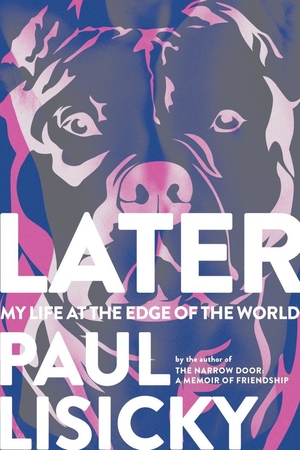
A relationship to place is not dissimilar from one to a person. Anytime a text places geographic location at the heart, it’s like reading about a love too private to make public. Provincetown is that love for so many—it’s recently showed up in the works of Eileen Myles, Hanif Abdurraqib, and Carmen Maria Machado to mention a few—and Later: My Life at the Edge of the World is just another testimony of a town that has served as a safe haven for the outliers of society for so long.
In 1991, Paul Lisicky arrived in Provincetown looking for love, connection, and, most of all, a sense of community. The AIDS pandemic, which was at its apex, claimed at least one life a week, if not more. With funerals being held weekly, Later is a love letter to a community facing a dire crisis, a timeless reminder to find ways to feel love, joy, and anger when hopelessness permeates from every surface, and a testament to finding purpose and belonging in a world that offers limited space for you to begin with.
Even though the events in Later take place almost thirty years ago, its commentary on the legacy of crisis rings true today, especially when senators claim that responses to virus outbreaks have always been apolitical when the AIDS crisis was anything but. And while medicine such as Truvada for PrEP (which lowers the risk of HIV taking hold and spreading throughout the body) exists, erasure of individuals who’ve died is still a threat. It’s a conversation that can’t stop, because queer folks’ right to exist in the world is a fight that includes access to healthcare.
Greg Mania: You’ve written five books prior to this one, including your critically lauded memoir, The Narrow Door. Why was now the right time to write Later?
Paul Lisicky: In a time of so many emergencies (the climate crisis, the crisis at the southern border, the rancid politics, the opioid crisis, and now the Coronavirus), I couldn’t help but look back at another emergency: the earlier years of the AIDS pandemic and how it shaped daily life in Provincetown from 1991-94. Instantly the writing stirred up questions: how did we survive when dread was the fact of the day? How did we keep each other buoyed and energized and pissed off and laughing when we needed to laugh?
I’ve been thinking about what community means for years, maybe because I’ve since lived temporarily in so many places where I’ve felt isolated and out of sync, but in that particular place and time, I was a participant—or part of an experiment in which queerness wasn’t on the margins but was central, the dominant culture. I don’t mean to idealize, as the community I’m talking about was forged by a health emergency. But in terms of right now: how do we live? That’s the question I hope the book invites in you.
GM: Your book is a portrait of a haven for the fringes of society: the outsiders, anomalies, and artists that comprise of the community that has made Provincetown well known for its values and inclusion. You write about Provincetown—which you affectionately dub “Town”— as though as it’s a person: “Town does…Town wants…” Do you see it more as a person as opposed to a place, and, if so, how?
Joy is the life force that some people summon up when they need it, like breath or blood.
PL: Ah, great question. I definitely know Provincetown is part of the world of facts and history, but there’s another side of it that exists primarily in the inner lives of the people who love it. For those people—and I’m including myself in that group—it’s as much a myth as it is a place of streets and buildings and a harbor. It implies a dream of what a community could be—safe, energizing, inclusive—even if it’s often getting those things totally wrong. I’m glad to hear that the book made you think of Town as a person, because for anyone who first falls in love with it, it’s like the beginning of a romance or an infatuation. It can take your bearings away for a while.
GM: What is your relationship to Provincetown like now?
PL: The Provincetown of 2020 is different from the Provincetown of the book in that it’s super expensive. A single house that might have sold for $100,000 back in 1990 can go for at least $1.2 million now. I could say a lot about how that’s influenced the creative culture in town, and all of my remarks would be all too obvious—things we’ve already heard said about SoHo or Williamsburg or South Beach or San Miguel de Allende. So I’ll just say I go back pretty frequently, sometimes as often as once a month. I stay at my friend Polly’s place in the West End, which is a home to me, or at the Fine Arts Work Center, where I teach, in the summer. I’m in town frequently enough that it’s assumed I live there. When I say hi to acquaintances on the street, I don’t get the sense that anyone thinks I’m just visiting. That’s a good feeling.
GM: You catalog many beautiful memories during a time in which there were several funerals being held on a weekly basis. Why is it important to find joy during times of crisis?
PL: I think laughter and joy are often inevitable in these circumstances, maybe they’re simply aspects of release when it comes to extremity. I don’t know. Maybe joy is just the life force that some people summon up when they need it, like breath or blood. I don’t think it’s something that can be willed or engineered. It sneaks up on you, which is a part of what’s great about it.
GM: Why is continuing discourse about the AIDS crisis important even now in the age of prescription medicine like Truvada?
If we tell ourselves AIDS is in the past, we’re just lying and participating in the erasure of so many.
PL: Statistics are almost impossible to process, but here go a few: 38 million people in the world live with HIV today; a little less than 2/3 of them have access to antiretrovirals. A couple of weeks ago I heard that a million people globally died of AIDS just last year. It’s hard to feelfacts like that—our centers of emotion don’t know how to hold onto them or make meaning. But if we tell ourselves AIDS is in the past, we’re just lying and participating in the erasure of so many.
GM: You grew up with a history of family trauma. Has writing this book helped you in any way make peace with your past? If so, how?
PL: That’s complicated because I never would have used the word trauma until recently. I never doubted my parents loved me, but my mother, in particular, was dealing with the residue of deep pain, and she came up in a time in which she wasn’t given the resources to manage. Deal with it—or, worse, bury it. Get normal. I think this book might be tougher on my parents than my other books, but I hope its candor is a way to getting to be close to them again, even though they’re no longer around. I hope any exasperation is just read as another form of love.
GM: What do you want young queer readers, from this generation and ones to come, to take away from this book?
What can you do, even if it’s very modest, for the people who will come after you?
PL: Queerness is so much about looking toward the future, maybe sometimes at the expense of the past, which we can’t help but associate with oppression and punishment. I’ve certainly been guilty of that kind of thinking. There’s a quote from José Esteban Muñoz that says it better than I can: “Queerness is not yet here…. Put another way, we are not yet queer. We may never touch queerness, but we can feel it as the warm illumination of a horizon imbued with potentiality.” But in order to inhabit that future, that potentiality, you need some grounding in the past, in the lives of people who came before you. How did those people—even if they were simply two men walking hand in hand on a city street in 1993—help make your world possible? What can you do, even if it’s very modest, for the people who will come after you?
But all of that sounds fairly lesson-y and Later is a book that’s wary of giving out instructions. I hope it’s a book that you take in like a long song, that you’ll read it once, then go back and enter individual passages, out of sequence, again and again. And replay it in your nervous system like one of your favorite albums.
GM: What are some other site-specific texts you had closeby while you wrote Later?
PL: Two that come to mind are Mary Heaton Vorse’s Time and the Town and Thoreau’s Cape Cod. There’s also Denis Johnson’s oddball Resuscitation of a Hanged Man if only for its descriptive weirdness. And though I didn’t exactly have them on my desk: Michael Cunningham’s Land’s End and my ex Mark Doty’s Heaven’s Coast and Dog Years, as well as his books of poetry from Atlantis through School of the Arts, which I read as they came into being. Everyone’s Provincetown is radically different. Provincetown has lots of flex: That’s one of the delights of reading someone else’s account of it.
GM: You have two novels, two memoirs, and one collection or prose under your belt. What’s next and what can you tell me about it?
PL: I’ve been working on a book about my father for the last five years. I’ve accumulated over a hundred pages, and published some individual sections, but it still hasn’t found its bonding agent. Frankly, I’m sort of surprised I haven’t been too bothered by that. Why does it need to be told? I’m waiting for that a-ha!— and I’m trusting that that will appear when I’m not trying.
At the end of 2019 I had my first real experience of writer’s block.
I have always insisted that writer’s block isn’t real; that you don’t have to be inspired to write; that sitting down and putting words on the page, even when they’re terrible, is the only way through a writing slump. My favorite teacher told me that in sixth grade, and I took it as gospel for 21 years.
But then it was a few days before Halloween, and all of a sudden, I couldn’t write. It wasn’t a question of motivation or time management or even not having ideas. One day, I opened my computer and burst into tears. For the next two months, I couldn’t write so much as a pitch email without becoming anxious to the point of nausea.
One day, I opened my computer and burst into tears.
I’d spent the previous year—in some ways, the previous seven years—laying the groundwork for a project I felt compelled to write: a memoir about mourning my best friend, who died unexpectedly at the age of 25. I have told that story, or some facet of it, so many times. I never seem to stop writing it, in part because it never seems to stop happening. There is always, even seven years later, a new way I find myself mourning, a light that hits her memory at a new angle. I could write about grief until I die and still leave volumes unsaid.
The day before my writer’s block hit, I had finished what I hoped would be a chapter of that book, and sent it to my agent. The next morning, I tried to edit a short story and ended up weeping until I gave myself a migraine. I wondered vaguely if the two events were related.
It’s a tired truism that writing is hard and painful, and that the people who make it the focus of their lives will also do practically anything to avoid it. Literary Twitter is full of memes about how clean a house can get when the writer who lives there is on a deadline. Dorothy Parker once wrote that the greatest favor you can do someone who aspires to be a writer is “shoot them now, while they’re happy.”
I have a long-standing habit of hurting myself in small ways. I never engaged in the sort of self-mutilation that leaves scars, but at various points in my life I have bitten myself, scratched myself, pulled out hair, slapped my own face, and peeled off scabs nowhere near healing. I describe myself as “fidgety,” but most of the ways I find to fidget are also painful. Perhaps writing what makes me miserable is another manifestation of this unsavory impulse. I am very bad at leaving myself alone to heal. I want to see what’s going on in there, even—especially—if looking makes things worse.
I’m not unique in writing past the point of comfort or safety. The archetype of the suffering artist is centuries old.
But I’m not unique in writing past the point of comfort or safety. The archetype of the suffering artist is centuries old, a cultural memory that long predates my own idiosyncrasies. Writers are encouraged, tacitly and explicitly—no, fuck that passive voice. Writers encourage each other to steer into the pain. We value “raw” and “searing” prose, venerate brutal honesty. We say “write what scares you” but seldom “write what makes you happy.” There is so much advice about “bleeding on the page” and “cutting deeper” and, if you follow those instructions, you can end up a mess of open veins and damaged tissues.
“Writing this book almost killed me,” a writer I admire tweeted recently about her new memoir, and maybe she didn’t mean it as a point of pride, but I’m certain I wasn’t the only one who read it that way. When I was a slam poet, I watched over and over as people I loved delved into their most painful moments, live and onstage, reliving trauma with their whole bodies for the sake of a compelling performance. In some creative circles, the willingness to push oneself to the edge of a breakdown is considered vital to producing great art.
It’s not a surprise, then, that so many writers seem to hate writing—if “writing” is synonymous with “chewing open old wounds.”
Shortly before my writer’s block hit, I listened to the audiobook of Ted Chiang’s short story collection Exhalation. The title story contained an image that affected me deeply. In “Exhalation,” an entire civilization is stymied by the growing disparity between how they perceive time and how clocks measure it. The story’s unnamed protagonist, in an effort to solve the mystery, uses an array of mirrors to dissect and stare into their own brain. This strikes me as an apt metaphor, perhaps not for everyone’s writing process, but certainly for mine. Something inside me does not line up correctly with the world; therefore, I must open myself up to find the explanation.
What the protagonist discovers inside their head is an intricately detailed machine. Their thoughts are composed of the movements of air, the way each breath minutely rearranges the clockwork of their consciousness. Being apparently inorganic—though it seems too crude to call them a robot—Chiang’s protagonist experiences no physical pain from the autodissection. They observe their inner workings clearly, without the distraction of severed nerves and spurting fluids.
Like many writers I am introspective to a fault. I’m always trying to figure out why and how I feel and think and do the particular things that make up my life. I write to be understood, but also to understand. However, I don’t have the luxury of detached evisceration. When I cut myself open, it hurts like a motherfucker, and sometimes that makes it hard to understand what I’m looking at.
By the end of 2019, the physical act of sitting down to write had begun to require courage I didn’t always have. No matter how many words I wrote about my grief, there was always more to say, and I kept pushing myself to say it. Like I couldn’t stop while there was still an untapped vein of sorrow to be found. After months of carving into the worst thing that has ever happened to me, layer by screaming layer, I was flinching from the sound of my own thoughts.
I’m a writer. I love writing. It’s all I’ve ever wanted to do with my life. And yet hating to write felt almost normal, almost expected. It felt, horribly, like validation: if the art I was creating was this close to unbearable, it must be important.
Sometimes, it’s true, writing is unavoidably painful. Some things must be said that are not easy to say. There’s a line, though, between acknowledging uncomfortable truths and writing with the intent to suffer. It is brave to write the thing you need to write, even if it hurts. But that doesn’t mean that the hardest writing is always the bravest. Self-flagellation for its own sake is not noble—and it doesn’t necessarily make for good art.
It is brave to write the thing you need to write, even if it hurts. But that doesn’t mean that the hardest writing is always the bravest.
The writing that I beat myself to a pulp for last year was not, at a few months’ remove, anywhere near my best work. Bleeding on the page mostly just makes a mess. I convinced myself that it was vitally important to trace every thread of my grieving process, that it was a story needing to be told, but to be honest, grief seen from the outside is often banal. My friend died and I’m really fucking sad about it and I miss her all the time. I can say that in one sentence or a hundred pages, but the story is the same.
“What’s the takeaway? What did you learn from this?” my agent asked when she read the chapter I’d shredded my mental health over.
The answer was: nothing. Lost in a forest of grief, I’d catalogued the trees instead of looking for a path. The writing went nowhere, because I had gone nowhere.
After finishing that fruitless section, I spent two months absolutely dismantled, crumbling into tears at any provocation or none, unable to continue that project or meet deadlines for other writing assignments. I felt useless, defensive about my lack of productivity, resentful of everyone who could still create.
In that same two months, I also happened to write more words than I had in the preceding year. I just didn’t count it as writing. While even outlining a personal essay made me want to hide under my bed, I was churning out a thousand words a day or more of fanfiction. Waking up in the night to feed my son, I’d stay up long after he fell back asleep, working on stories in which all the dead characters I love came back to life. I couldn’t write, but I also couldn’t stop writing.
I made up reams of happy endings as a counterweight for the grief that threatened to destroy me. Nothing I wrote during that time period was publishable, but then, I’ve written thousands of unpublishable words about death and loss. Why does that feel like valid writing—like work, as in “doing the”—while my stack of “everyone lives” stories don’t?
Bleeding on the page mostly just makes a mess.
One distinction is the fact that my grief project was intended to be readable and fell short, while I never planned to share my fanfic with any audience but me. Mostly, though, the difference is that writing because I want to strikes me as frivolous. I was and am a little embarrassed about the enjoyment those self-indulgent stories brought me. I pretended I wasn’t writing for two months because that felt more defensible than writing for the sheer escapist fun of it. Do you see how I’m still, in this paragraph, apologizing for wanting to make myself happy? For choosing that, even temporarily, over beating my head against a brick wall of bad memories?
Looking back now, it strikes me that I knew what I needed, even when I was ashamed of it. I had to write something completely trivial and uninteresting to anyone but myself to remember that I still liked writing. For a while, I didn’t know that I was building a bridge back to my own voice, one fix-it fic at a time.
I’m still working on remembering that creating can be fun as well as painful, which I suspect will be a project I can never put down for long. I made a resolution at the beginning of the year to write only what brings me joy, clarity, or money. The urge to press on sore spots just to prove I can take it is still there, but I’m trying to sit with it until it passes. The most painful stories are not the only ones worth telling. Someday I want to be able to write about how I healed.
Today’s argument with my niece is over whether there was ever really a time when white people–even nice ones–would unashamedly ask to touch your hair. Or worse, as I originally contended, just march up and do it without asking. The former she disbelieves, the latter she regards as dystopian fantasy. Her last school play was a nugget of pedantry titled Consent is Important!, in which she played an overenthusiastic hugger.
This argument takes place during no-swim time at the expensive pool. Her father, my brother, was finally plucked off the waiting list after a three-year limbo, but his workday collides with the best pool hours, and so here I am, my joblessness for once an asset. Rosé in a Mason jar and a deep reserve in my backpack. In the years since my parents were members, they’ve hiked up the prices fivefold, but instated a BYOB policy that’s loosened up the clientele considerably. Stay-at-home moms laughing and pinching each other’s cellulite. Divorcees flirting by the grill.
My niece stretches on the chaise beside me in her two-piece, a husky ten with the bullshit meter of a TV judge. “Auntie,” she says. “I’m not saying you’re lying, but come on.” Her onyx eyes pierce, there’s a little smile at the corners of her mouth. “Who would even do that? Nobody would do that!”
She gives her head a hard shake, rattling the pony beads hanging at her shoulders. On weekends my sister-in-law parks my niece in front of The Great British Baking Show for four hours and meticulously cornrows her hair. Voila, ready to resist the breakage-inducing poison of heavily chlorinated water for another week. My sister-in-law doesn’t just grab any pony bead at random, like certain people used to do; she picks a color scheme and sticks with it, an extra parcel of dignity for the kid. Today it’s alternating white and aqua, an inadvertent echo of the pool dècor.
A coconut-oiled half-inch tuft peeks out beneath the terminal bead of each braid, and this is how we got here. Helping my niece towel off, I was hit with a sensory memory: me and some blonde kid at this very pool, the punishing sun on our poolwater-slicked shoulders, the kid reaching over without asking to yank at one of my fat, unruly braids. Haha, she said to someone nearby. Look, it bounces!
The someone was our swim coach, then an old woman but now–when I adjust for her smooth, freckled thighs and wide-open summer afternoons–early twenties? An adult in name only. Her wet hair clung to her neck. She wore a claddagh ring with a prick of emerald at the center, and it grazed my shoulder when she reached for my braid. Totally! she said, fiddling with the unplaited part that hung at my collarbone. Sproing, sproing, sproing!
Braids that big don’t even protect your hair, not really. Certain people tried to talk me into cornrows, even promised to make them so slim they’d flow just like the improbable tresses of one of my black Barbie dolls, but I was a stubborn little so-and-so. Could not possibly risk the degradation of trillions of braids finished with multicolored beads that could be seen from space. The swim team, which consisted of me and a dozen white girls, was about sapling thighs and sameness. Everyone else’s hair was done in one braid, max. I settled–resentfully–for two. No one else wore a swim cap, so I told certain people I’d lost mine after the first day and bore the sting of the wide-toothed comb when it raked through my hair after meets.
“Look, kid,” I say. “That’s what happened. I don’t care if you believe me or not. They almost yanked my head off. I had to fight them off with boxing gloves.” I lean in close, exaggerating my face like she did in Consent is Important! “And not just me. A friend of mine lost a whole braid by the pool, and the lifeguard thought it was a rat and made everybody get out.”
This last part is true, though I didn’t hear that story until I was five years older than my niece is now and away at a camp run by the Urban League. A tiny hut packed with a dozen black girls who had never not been surrounded by white girls, shocked by the revelations of sameness. That girl–her name was Danielle–let a few tears leak when she told us about losing a hair extension to a friend’s curious tugging. The lifeguard’s freakout, the mass exodus, the nearby Encyclopedia Brown who pointed at Danielle and shrieked It came from her!
All of that before there were cell phones or social media blowback, before that sort of microaggression could invite the wrath of every social justice warrior with a keyboard. Before grabbing a black person’s hair became a thing not to be caught doing. A decade before my niece was born.
She stares at me and does an eye roll that’s not supposed to be sassy. “Whatever, Auntie,” she says, her voice laced with indulgence. She’s nicer than I was at ten, telling certain people whatever, I already know that when they tried to tell me about whites-only water fountains or show me the pictures of Emmett Till in the copy of Jet they kept in a box under their bed. Weaving their strange, fantastical stories about how this very pool once tweaked and retweaked its bylaws, hiking the prices and adding zoning clauses, all to stave off de factointegration for a few more years.
They raked through my tangled braids and said if I wouldn’t wear a swim cap, well, I’d pay the price in a way my teammates wouldn’t.
A whistle shrieks and the lifeguard calls for All Swim. My niece is off like a shot, jackknifing into the deep end alongside her willowy friends. All thoughts of debunking my memory, left behind with her crumpled towel. I refill my Mason jar.
Spring is coming, which means it’s a new season, which means we’ve got a new crop of LGBTQ+ books sprouting up. While there are never enough books from LGBTQ+ authors (especially from the + side), representation is slowly increasing (though it remains very white). However, 2020 is shaping up to be one of the best years for queer lit maybe ever, so here are 15 of the most anticipated LGBTQ+ books for your blossoming literary heart.
This debut novel from Laura Bogart, whose essays and criticism around sizeism and body image (among other things) can be found across the internet, is a gut-punch of a book—in a good way. After a car accident leaves Angelina Moltisanti’s wrist fractured and her artist dreams dashed, she must also move back in with her charming and abusive father. When she meets another artist named Janet, she finds her world expanding in ways that help her unsettle the dynamics that keep her tethered to her father. Deftly navigating the hard and soft and complicated aspects of living in a body and feeling broken, Bogart’s lucid writing carries the reader through a story that is both challenging and elegant, and beautifully queer.
Unless you’ve been under a rock for the past decade, you know Cameron Esposito as one of our mainstream-famous queers, rocking the world with her innovative standup, her interview podcast Queery, and the tragically short-lived TV show Take My Wife. In Save Yourself, Esposito brings her signature sharp-as-nails humor and deeply resonant insight into a memoir about growing up Catholic, and how that helped her be gay. (Well, sort of.) It’s definitely in line with a lot of celebrity memoirs, in that it’s filled with anecdotes and stories, but Esposito’s voice is singular enough to carry this book right past your ribcage and into your queer heart.
Speaking of comedians, if you haven’t read Samantha Irby’s previous essay collections Meaty (2013) and We Are Never Meeting In Real Life (2017), you’re missing out. She’s one of the wittiest and most incisive essayists out there, writing on everything from Hollywood to animal hospitals to physical illness to lesbian bed death. This latest collection is hilarious, relatable, and surprisingly heartfelt in random corners, just as you’d expect from a writer of this caliber.
Written by journalist and queer performer Tom Rasmussen and their drag persona Crystal, this book is a fast-paced, humor-laced memoir that reads like an epistolary novel. Charting a year in Tom and Crystal’s life from their birthplace in northern England to London to the fashion industry in New York and back again, this book is a quick jab of sex, playfulness, and in many ways, coming of age as a queer person—again.
This stunning debut novel is not marketed as queer, but it is one of the queerest things I’ve ever read in that it joyfully centers a gender nonconforming character, and in that its writing is absolute fire. Following two pre-adolescent Chinese-American siblings during the Gold Rush somewhere in the southwest United States, the story starts out with the pair hauling a trunk containing their father’s corpse into the desert hills, and goes to the most unexpected and dazzling places that I’m hesitant to say more. Just read this one. When you read it, you’ll know.
John Elizabeth Stintzi’s got two books releasing within a month of each other (their novel Vanishing Monuments comes out May 5), and this poetry collection is bound to be a literary north star for nonbinary folks, especially creative ones, who grapple with mental illness. Moving among the various planes of depression and isolation, love and freedom, this book breaks down those gender walls we all find ourselves in sometimes and celebrates self-determination in the form of a mythical creature called a Junebat (but really, we’re all mythical creatures).
In 1993, the Old Topanga Canyon fire ravaged 18,000 acres of southern California landscape. Kept Animals takes place in the months leading up to that event, following three teenage girls whose lives orbit a horse ranch. Rory Ramos works as a ranch hand at her stepfather’s stable where June Fisk rides competitively; Vivian Price lives down the hill with her movie-star father. As Rory finds herself increasingly drawn to Vivian, her stepfather gets into a car accident that leaves his body wrecked and Rory, June, and Vivian spinning closer together. This is a coming of age novel with spot-on narrative pacing and intriguing characters, set in a time and a place that are characters in themselves. It’s a thrilling read with a breathless climax.
Dr. François Clemmons created the role of Officer Clemmons on Mister Rogers’ Neighborhood, the first recurring role for a Black character on a children’s program. A musician by training and trade, Clemmons is also gay and proud. This memoir is a map of a vibrant and complex life told in a vibrant and complex voice, from childhood loss to a moving friendship with Fred Rogers to a career in music that involved global travel and a life marked by creativity. Clemmons is a skilled storyteller, and this memoir sings.
For those of us who are into boundary-breaking linguistic fun times, Francisco Aragón is a poet to read. His latest collection translates and plays with the poetry of Spanish-language poet Rubén Darío. Invoking places like Aragón’s native San Francisco and his parents’ native Nicaragua, and traveling through time and across space, After Rubén is an homage, and its own contribution, to queer Latinx poetry.
Molly Wizenberg is best known for her popular food blog, Orangette; for her previous memoirs, A Homemade Life andDelancey; and for the restaurant she opened with her then-husband (also called Delancey). However, The Fixed Stars is not a food book. It’s about evolving, fluid identity, something Wizenberg found herself thinking about for the first time at age 36 when she fell in love with a woman. Wizenberg is an excellent writer; her meditations on what it means to know yourself—or think you know yourself—and how unpredictable and exciting life really is are a joy to read.
The author of 2018’s hit novel The Map of Salt and Stars is back with a book that is pure magic. Centered on a closeted Syrian-American trans boy whose ornithologist mother has died, and who is now his grandmother’s caretaker, this book is bursting at the seams with art, symbolism, mystery, family, secrets, of course, birds. Nadir is one of the most compelling characters to come out of fiction in a long while (see also: Sam from How Much of These Hills is Gold). An unforgettable and queer as hell novel, this one is a must-read.
In addition to writing fiction and nonfiction, Ilana Masad is one of the best contemporary book critics out there, and her debut novel is evidence that all that reading has done her good. (Brandon Taylor, author of the brand-new Real Life, called her a genius in a recent interview, so that tells you something.) Maggie Krause is 27 when her mother dies in a car crash, pretty much at the moment she’s finally exploring intimacy with a new partner, Lucia. (The book opens with a lesbian sex scene that will suck you right in, no pun intended.) Returning home to her parents’ house, Maggie finds a series of sealed letters to other men who are not her father that her mother left with her will. Over the course of the funeral and shiva, Maggie embarks on a journey to deliver these letters, revealing all kinds of secrets—about everything and everyone. Brimming with enveloping writing, this is another don’t-miss.
Zaina Arafat has been a prolific writer and teacher for years, and in her debut novel, we follow a queer Palestinian-American protagonist who tries all kinds of (sometimes unexpected, sometimes strange) ways to cope with what she has always been told is too much desire—too much existing. The unnamed narrator is flawed, to be sure, and the story itself plays a little off of bisexual tropes, but the writing here is electric and carries the narrative all the way through. This is an exciting and dynamic book that explores intersectional identity and human longing extremely well.
Another voltaic debut to look out for, Pizza Girl is just the right blend of angst, humor, commentary, vulnerability, and bildungsroman to satisfy a craving for something that’s not actually that cheesy but is very warm and saucy. The protagonist—18 and pregnant, living with her boyfriend and her mom, working at a pizza place—receives a strange order from a new woman in town, Jenny. Jenny is a stay-at-home mom, and quickly becomes the object of fixation as the narrator navigates the rocky terrain of impending motherhood, growing up, and growing into herself. Frazier is an author to watch.
Navigating the internet never used to produce this level of collective anxiety. As early as ten years ago, it still felt like there was a chance that technology could accelerate us into a happier future. The mask has since been ripped off, as targeted advertising follows you wherever you go, trolls are ready to run you offline for expressing any non-normative identity or opinion, and tech companies have sold your privacy for a profit.
Kevin Nguyen’s debut novel, New Waves, is set in the New York startup scene of 2009, during those last days of so-called “tech optimism.” Lucas is a Vietnamese American 23-year-old working a low-level customer service job at a tech company—the kind with foosball tables, free snacks, and no functional HR department. His only highlight is getting drinks after work with his best friend Margo, a brilliant Black engineer who rails against the racism they face as the only people of color at the company.
After Margo gets fired, she and Lucas team up to steal their company’s user database in retaliation. But when she dies suddenly in a car accident, Lucas is left aimless and grieving. He seeks comfort from Jill, a struggling sci-fi writer that Margo had befriended over a semi-anonymous online forum, while also managing the web of privacy violations racking up at his Snapchat-esque employer.
A variety of themes and plot threads compete for your attention in New Waves, but it all manages to come together as an incisive satire of startup culture, an exploration of a life defined by science fiction, and a stirring reflection on how identity is made and unmade online.
I spoke to Kevin Nguyen, features editor at The Verge, about working in tech, finding community on a decentralized internet, and the limits of Asian American representation.
Taylor Moore: What was it like to translate all your experience in the tech world into the novel?
Kevin Nguyen: I started jotting notes that would eventually become the book when I was working at Oyster [a “Netflix for Books” app acquired by Google in 2015], which was a place I liked, but you know, when you’re inside tech, you see a lot of strange things.
From the inside, so many things just felt wrong—not just sexist and racist, but sloppy and inconsiderate. All the incentives just kept demanding that we grow and and it was interesting watching that scramble happen day-in and day-out and how quickly it would erode people’s sense of right and wrong. Everyone was well-meaning; it’s just we had to move so fast on every decision that we made that there wasn’t really time to be thoughtful about it.
It was 2014-2015, and we were in the last days of tech optimism. 2016 was when we finally hit our reckoning with tech companies and the kinds of consequences and harm that they can cause upon people and societies.
TM: What’s something that people who haven’t worked in the startup world don’t understand about that kind of workplace?
KN: It’s actually hard to get across the energy and excitement that is very infectious. And I definitely bought into it. It manifests itself in a bunch of different ways and can be used to take advantage of employees pretty easily, but I don’t know, there’s a part of me that misses that a little bit. It’s a weird experience. People don’t quite expect that. To do these jobs, even though they’re kind of menial, can suddenly feel exciting when you give people a sense of purpose.
TM: Lucas and Margo become close friends in the workplace, but they first came to know each other through an online forum dedicated to archiving obscure music. From what I can tell, those small pockets online have pretty much gone away with Facebook, Twitter, and Instagram in the past 10 or so years.
I’m curious: what do you think has been lost with the collapse of the decentralized internet?
KN: There’s a sense of community that’s been lost. The communities have moved to those social networks and they’re just too big. I know you can find pockets of Twitter—there’s Book Twitter, right?—but that community is so vast and disparate and disorganized. It’s really hard to form any kind of meaningful connection through that.
These internet forums that used to exist were super niche, and you could really have a healthy internet forum with just 100 people, maybe even less. Posting in a forum just felt more deliberate. The forum that Lucas and Margo meet on is called PORK, which I kind of named in reference to an old torrent site called OiNK that I was actually not part of. It was very exclusive, very elitist, you needed an invite. But you know, it speaks to this era where people were trying to keep communities as small as possible. Whereas now with Twitter, Facebook, and Instagram, their goal is to have as many users as possible.
TM: Were these online communities formative for you growing up?
You just don’t read a lot of books where you have an unambitious Asian male.
KN: It was just what I was doing as a middle schooler and part of high school—I was on a bunch of forums. I feel like the closest thing we have to this now, or did have, is Tumblr, because a lot of these forums are where I discovered music and movies and a version of culture that didn’t really exist in my life in the suburbs of Massachusetts. You know, I was learning about all these books and all these old movies and things that were just out of my aesthetic palette that I would encounter on a daily basis on the internet.
TM: Margo says something in the book that I think was really poignant. She says that science fiction makes her feel nostalgic for the future. What about this retro vision of the future is different from how we see the future today?
KN: The funny thing about Margo is she’s very cynical and very skeptical, but at the same time she still embodies that tech optimism. She reminded me of a lot of engineers that I’ve met. Even the very critical ones, at the end of the day, believed in working towards something in the future—that things can be better. That’s the only way you can operate in tech and I don’t think it’s a bad way to operate.
There’s a very strong anti-tech sentiment right now that is not unwarranted, but [tech is] here to stay and you want people that are really thoughtful and skeptical, but also believe in it enough to keep working on it and trying to make it better. I think a lot of those engineers are influenced by the same sci-fi as Margo. I thought it’d be fun to have her be influenced by 60s pulp science fiction. Robert Sheckley is an author who I based a lot of her stories on.
TM: I noticed you’ve written quite a few profiles of Asian American actors and writers and just generally about representation or lack thereof. I was curious: what ways have you tried to avoid stereotypes in your own writing?
KN: This came up a bunch when people were reading the book and I was shopping it around. So, Lucas is kind of a loser, right? He’s bumbly, he’s not particularly smart, not very likable even.
Racism takes stronger forms than who we cast in Hollywood, which is important, but it’s not the only thing.
I had an editor that I started with, she’s Japanese American and feels very strongly about representation. She’s like, “Why did you make Lucas such a loser? There’s so few depictions of Asian men—why did you lean into a negative one?” Which is a really good question. And I was like, “If all the authors I love, like Ben Lerner, can write a bumbly, stupid white guy that drinks too much and walks around Brooklyn, I think I can make an Asian one. I feel like that’s representation.”
It was less my intention from the get-go, but you just don’t read a lot of books where you have an unambitious Asian male. There aren’t a lot of books where an Asian man and a black woman are friends. You don’t even really get a lot of books where an Asian guy is a customer service person. I make that distinction between Lucas and other Asian co-workers who are engineers. I wasn’t trying to do anything weird or radical, but part of writing the book was, subconsciously or consciously, filling in some gaps I felt existed.
TM: A couple months ago, you tweeted: “I would love to read one piece about Asian American racism that does not reference Sixteen Candles. Just once!!!!” How do you think conversations about representation have stalled? And where do you think the conversation should be?
KN: I don’t want to jump too hard on anyone that’s having this conversation because one of the challenges among Asian Americans is just explaining that racism towards Asian Americans exists. Some people just don’t believe it. It exists in a very different form than it does for Black people or Latinx people. In some ways, the perceived proximity to whiteness that Asian Americans have gives them a little bit of a pass on a lot of forms of racism or even convinces them that they themselves are not victims of racism.
I do think that the conversation is so caught up in representation on TV and film. Racism takes stronger forms than who we cast in Hollywood, which is important, but it’s not the only thing. We just keep referencing the same movie from the ’80s. 30 years ago is not that long, but, like, people are being deported. People are dying. You know? The stakes are different. I think that’s where the conversation has stalled. It just feels like the way we talk about the end goal is to have an Asian Marvel hero. That’s great, I’d love to see that. That is just one small piece of a much bigger puzzle.
DON’T MISS OUT
Sign up for our newsletter to get submission announcements and stay on top of our best work.
YOUR INBOX IS LIT
Enjoy strange, diverting work from The Commuter on Mondays, absorbing fiction from Recommended Reading on Wednesdays, and a roundup of our best work of the week on Fridays. Personalize your subscription preferences here.