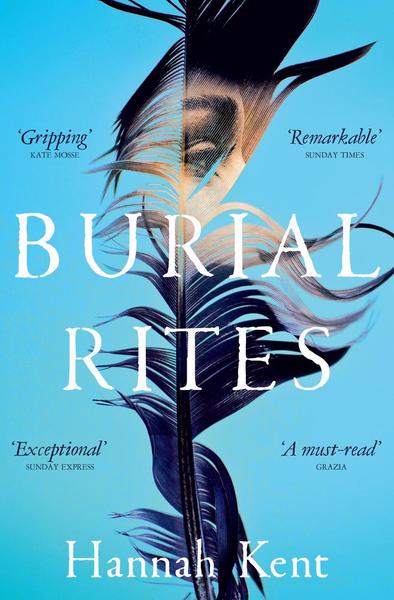
My novel The Mercies imagines what took place in the time between two traumatic events in a Norwegian fishing village in the 1600s: a storm that killed most of the male population, and three years later, witch trials that murdered many women. It is about suspicion, and friendship, fear, and love.
Writing The Mercies was always going to mean writing the weather, too. Set on a tiny Arctic Circle island named Vardø, the characters (and current population) are constantly at the mercy of the elements. I visited twice. Once alone, at the time of the midnight sun. Sea fogs would come rolling in, dissipating sunlight and making everything glow. I also returned with my husband in winter, when the sun rose for only two hours a day, and only at the horizon, imbuing everything with a blueish light. And it was cold.
The word is insufficient to describe the viciousness of it. How combined with the wind it bit our ear lobes, rendered our hands stiff and useless, formed ice on our eyelashes. The sea threw off an ironlike frost, permeating everything. This was the moment the reality of the life of the women I was writing about punched home, and I tried to capture some of the ferocity of the weather in The Mercies. Here are some books I turned to, for their incredible mastery over the language of cold.
Set in a remote Arctic scientific research post in the 1930s, Paver’s chiller introduces an icy punch to the gut. Part mystery, part horror, and all wonderfully evocative, it follows a man braving the sunless Arctic winter alone—or is he?
It takes a lot to spook me. I’m hardened to horror films, and whilst I love reading scary books, they rarely haunt me afterwards. But reading Dark Matter was like living with a malevolence, like walking knowingly into a trap. It was terrifying, don’t-look-now-can’t-look-away terrifying. Surely the best contemporary ghost story? If you think otherwise, tell me.
Kent borrowed from history in her bestselling debut. Taking the story of the last woman to be hung in Iceland, she weaves a deft and moving portrait of the bleak landscape and the people struggling to survive in it.
This is a beautiful read, which carries you with the kind of effortlessness it takes real skill to achieve. I read it like a thriller, devouring it, but truly it’s about people and place, and how they impact each other. This was a touchstone text for The Mercies, and returning to it was a joy. It’s also in development for the screen, starring Jennifer Lawrence—it’ll take a lot to be better than the book.
Based on an Arctic-bound whaling ship in the 1850s, The North Water follows Dr. Patrick Sumner as he escapes a marred past and stumbles onto a vessel inhabited by one of the most evil men he’s ever met.
Not many books should come with trigger warnings, but this was one of the bleakest and most upsetting books I’ve ever read. So why is it on the list? Because it’s also epic, and beautiful, and grapples with some of the mightiest themes: survival, love, and the nature of evil.
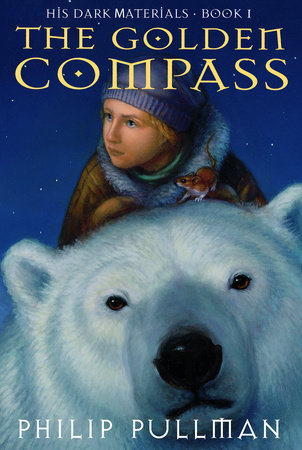
The first installment of the momentous His Dark Materials trilogy, this glorious book introduces us to Lyra Belacqua and her daemon Pantalaimon, and a mysterious life force named Dust. We follow them north, through frozen seas, past encounters with armored bears, to the shimmering stairway of the northern lights…
This trilogy has so many layers: adventure, mystery, thriller, a love story, the story of us all. It is also masterfully drawn, each setting told in shimmering prose undercut with harsh realities.
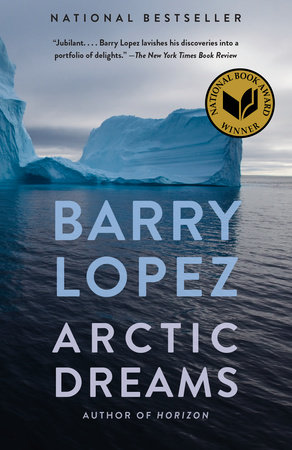
Lopez’s love letter to the Arctic tracks it across its entire width and depth. It explores both what we recognize—snow, and ice, and emptiness—and lesser-known aspects of life this far north: indigenous populations, flora, and food.
This elegiac book verges on poetry in its clarity and precision. It accompanied me on my first, solo visit to the island of Vardø in the Arctic Circle, and illuminated so much of what I saw.
This short novel holds so much. Siss and Unn become fast friends, with all the heady power of a childhood obsession. They become mirrors to each other, as well as offering a new view on life. While exploring an ice castle—a frozen structure that emerges around waterfalls in winter—Unn becomes lost.
This was the other book I took to Vardø, and I read it in one great gulp, sitting beside a waterfall under the sun, and it managed to deliver ice to my veins. It reads like a folktale, with the bite only the best writers of human nature can achieve. As close to perfect as it is possible for a book to be. If you were to pick up one book on this list, make this it.
The lure of the north is evident in this list, but no writing about the cold can match the desolation and beauty evident in Captain Scott’s account of his final expedition to the South Pole.
We know this story, but for all the folly and masculine bravado of exploration, this manages to be a stunning piece of writing from an obviously intelligent and sensitive man, rendered all the more tender by its discovery beside his frozen body, only twelve and a half miles from safety.
The boarding school in Surrey where Luke taught science gave him the worst bullies to tame. I guess they figured his height (6’4”) gave him authority, while his gentle demeanor proved a bloke could be manly without being mean. Luke had the befuddled aura of an absent-minded professor but his grip could crush you and he was fierce on the squash court. They said he could separate two tussling sixth-formers with one hand behind his back. Where did that rumor start?
The school knew nothing of Luke’s deception. We weren’t married, which would have disqualified us from a campus apartment. When I worried he’d lose his job if they found out, he shrugged. “There’s no one to tell on us. Besides, we’re as good as married.” He leaned over, kissed my forehead, tousled my hair. We’d been together three years. My friends in the solicitor’s office where I worked knew our status but were too preoccupied with babies and nappies to care. They weren’t likely to visit, much less out us.
The school authorities hadn’t learned to read Luke the way I had. When we first met, I thought Luke was unattached but soon realized my belief arose not from anything he said but from my own ill-founded expectations. By the time we arrived in Surrey, we had already put that past behind us. We’d sit in the empty dining hall after the boarders were in bed and he would tell some story designed to make me laugh, trying to quell my fears about the future. The dining hall resembled a medieval Great Hall, but the trappings were fake. The grandfather clock hadn’t worked in decades, and the stuffed head of a deer that hung above it had eyes of glass. Luke despised blood sport and often bemoaned the death of that poor stag.
One fine spring night, I intercepted Luke returning near midnight with Anne, the pretty music teacher. He carried a blanket. Their faces were flushed, eyes bright. She murmured goodnight and scurried off. “Wait till you hear what happened,” he said. “You won’t believe it.” He drew me into the dining hall. “Let’s sit at the High Table,” he said, and snuggled next to me on a massive throne-like chair at its head.
Luke said he’d taken ten boys on a biology field trip that afternoon, to an area where trees were dying from Dutch elm disease. “One young sapling, fifteen feet high, was thriving, bucking the odds. Two boys took their penknives and stripped its bark off. I caught them red-handed.” His voice cracked. “I was furious. They took something living and destroyed it, senselessly.”
He gripped my hand. I imagined I could feel his heart beating. My own pounded painfully.
“On the walk back,” he continued, “the smallest boy, Peter, asked, ‘Sir, would it help if we brought a blanket and covered the tree?’ He was practically crying. I said ‘Perhaps’ and left it at that. Then when I was doing evening rounds Peter wasn’t in his bed, and his blanket was gone. I went looking; Anne came, too. We found him, sent him home. Here’s his blanket.”
He draped the blanket around my shoulders like a shawl. It was dark green and rough and smelled of boy. Didn’t a story delivered in such even, careful, hushed tones have to be true? Except his eyes kept flitting away from mine to that ancient clock, its hands perpetually at midnight; to the antlers; to the dark sorrowful eyes of that deer.
From 2017 to 2018, Turkish novelist Ahmet Altan was sitting in a prison outside of Istanbul and writing his critically acclaimed memoir, I Will Never See the World Again. Serving a life sentence on charges of anti-government propaganda, Altan had little hope of being freed, but he yet managed to find solace in reading. “I wasn’t helpless, I wasn’t alone, I wasn’t lost,” he writes after a prison guard drops The Cossacks by Leo Tolstoy into his cell. “I had a book in my hands.”
Since 1996, NYC Books Through Bars has helped prisoners feel less helpless, alone, and lost. Each year, the all-volunteer organization collects tens of thousands of donated books and distributes them to prisoners across 40 states, relying on fundraising only for postage. I recently had the pleasure of speaking with volunteer Rachel Casiano about how supporters can help get more books to prisoners in their area.
Step One: Connect with Prisoners
“Getting in touch with local prisoner support groups first is a good idea,” says Casiano, “because it incorporates the experience and perspectives of people who have been doing this work for decades and connections to people in prison.” Connecting with prisoner support groups, as she suggests, ensures that you’re sending books that prisoners are actually interested in and that administrators will actually let them receive. (More on the latter below.) Reach out to local independent bookstores to find out if there isn’t already a prison books project in your area. If there isn’t, try to contact more general prison support groups. Casiano herself became involved in NYC Books Through Bars through Black and Pink, which supports LGTBQ prisoners as well as those living with HIV, and Tenacious, a zine of art and writing by incarcerated women. Other nation-wide prison support groups with local chapters are the Anarchist Black Cross Federation and the Incarcerated Workers Organizing Committee. These organizations can help connect you with prisoners, but Casiano suggests reaching out to them with an open mind. “Maybe local prisoners are good with books,” she posits, “but need a visit transportation service instead.”
Step Two: Gather Reading Material
While collecting books may seem like the most difficult part of the process, Casiano says it’s easier than it seems. “The easiest way to get reading materials is just to ask for them, especially on social media where you can get a wide reach,” she says. “People like knowing the stuff they don’t need is going to a good cause, so it’s a win-win.” NYC Books Through Bars requests that donations be left at Freebird Books in Brooklyn, where they meet twice a week, but the organization also maintains a wishlist with another local bookstore, Greenlight, which donors can purchase from for delivery directly to Books Through Bars. Casiano also suggests soliciting publishers for advance reader copies or remainders, and local libraries for texts they might be discarding.
Step Three: Pack to Order
The restrictions can vary wildly from state to state, facility to facility, and even the mood of whoever’s screening the mail.
This is the tricky part. “The restrictions can vary wildly from state to state, facility to facility within the same state sometimes, and even the mood of whoever’s screening the mail,” says Casiano. Regardless, she offers a few rules of thumb. To begin with, work with a local bookstore to post your packages from a “reputable retailer.” When it comes to the books themselves, make sure they are softcover and free from any writing, highlighting, or stains. Prisons may also ban anything that “threatens the security of the facility,” which can include book covers with images of weapons, racial content (Casiano notes that many of Alice Walker’s titles are banned in Texas), or nudity (she also recalls having to tear all of the pictures out of a book on Roman art, which someone had requested). NYC Books Through Bars normally packages their books in donated brown paper bags, but Casiano notes that some facilities may require white wrapping or proper envelopes.
Step Four: Fundraise for Postage
Postage is the only element in the equation that NYC Books Through Bars cannot meet without funding. “No particular hacks for postage,” admits Casiano. “We use ‘Media Mail,’ which gives us a slightly cheaper flat rate per pound than first class.” To raise the $2.75 or more per package sent via USPS’s Media Mail, NYC Books Through Bars regularly organizes fundraising events, like karaoke, panel discussions, and bingo, as well as online fundraisers, like their recent one on Fundly. Prison Books Collective, another prison books program based in North Carolina, also suggests applying for grants or selling books in its manual, How to Start a Prison Books Collective.
Step Five: Repeat!
It’s not just the physical books that help relieve the helplessness, loneliness, and waywardness that Ahmet Altan mentions in I Will Never See the World Again; it’s the engagement between those who are imprisoned and those who wish to see them freed. Casiano recognizes that, in the current political climate, many of us are finally acknowledging the brutal toll of incarceration and rightfully flocking to the banner of prison abolition, which means we may be inclined to establish stronger bonds with recipients than simply dropping off a book. She encourages that instinct, but also warns that engaging deeply with someone who is incarcerated only to lose interest after a brief correspondence may ultimately hurt that person more than it helps. In other words, get emotionally involved if you’re so inclined, but set up realistic and sustainable expectations. “If you want to send a personalized letter with every package, that’s going to add up fast and create an expectation that will be devastating to the people who don’t receive a letter,” warns Casiano. “Abolition is a long-distance run, not a sprint.”
With the success of Netflix’s adaptation of The Witcher, viewers are scrambling to read Andrzej Sapkowski’s series of Witcher books and play CD Projekt Red’s series of Witcher games. As an avid reader, avid gamer, practicing witch, and huge nerd, this is all very relevant to my interests.
In an article on how “The Witcher proves games should adapt books more often,” Malindy Hetfeld points out many reasons literature can make for successful game adaptations—not least of which is that when adapting a book, “developers get to create a visual identity” without firmly preconceived notions about characters’ appearances. As a reader, I certainly have lots of ideas about what my most beloved characters look like—but I’m also open to different interpretations.
I’ve inhabited so many stories as text that would translate beautifully into an interactive digital platform, and while reading Hetfeld’s article, I couldn’t help thinking about the many books I want to play as video games. There are too many to list comprehensively,but here are 9 books I would like to play as games right now. If you’re an indie game company looking for a Witcher-sized success, you could do worse than adapting one of these books.
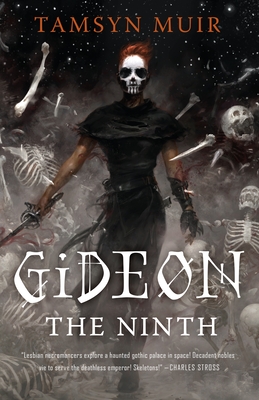
At an airport Hudson News, I saw the blurb “lesbian necromancers explore a haunted gothic palace in space” and immediately pulled out my wallet. A swordswoman bound to serve her necromancer childhood nemesis, Gideon is a character I want to play games as, write articles about, and be best friends with. In this universe, necromancers can manipulate bones, turning even tiny bone particles into full skeletal constructs, and control them. It is a cool-ass set of powers. Gideon and her necromancer, Harrowhark, fight murderous skeletal constructs, unravel mysteries, and solve puzzles. My Gideon the Ninth gameplay fantasy involves alternating player perspectives—fighting as Gideon and necromancing as Harrowhark—while exploring said haunted space castle, creating bone monsters, and seducing other necromancers. Honestly, what other game would I ever want to play? I am actually furious that I can’t play this right now.
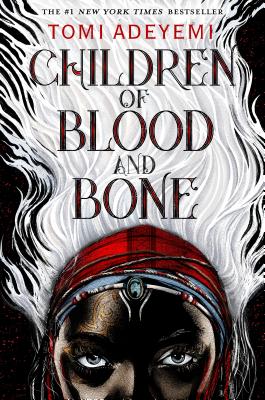
In Orïsha, everyone is either a divîner—someone with the capacity to work magic—or a non-magical kosidán. Magic has been banished from the land, many of its divîners killed and its surviving divîners oppressed. Heroine Zélie Adebola unwittingly assists a princess, and finds herself on an epic journey to restore magic to Orïsha and defeat the monarchy. Many elements of this book would lend themselves brilliantly to a game—the vibrant magical powers, artifact collection quests, aquatic arena games, and even fantasy cats—yes, fantasy cats. When asked about her world-building approach in an interview, Adeyemi said (among other things), “If I want my character to ride a lion, then it would make sense to have other fantasy jungle cats—which means there’s probably a fantasy cheetah, a fantasy panther…Then you think about our real world, how you have methods of transportation but then you also have nicer methods of transportation—so which of these cats is like having a Ferrari, which part of society has that?” Even in a game whose primary questline would be something world-changing like “restore magic,” what could be a better side quest than “ride every cat”?
In a world where women mysteriously develop the power to channel electricity, the tables of power and patriarchy turn pretty quickly. This could be a pretty cool first-person shooter (like, electricity shooter), the player a woman developing her powers. With generous helpings of moral ambiguity, this story could be a strong contender for a game where choices matter. Choosing whether or not to kill an NPC, what to say in a dialogue tree, or how to level up your powers could critically affect the game’s outcome.
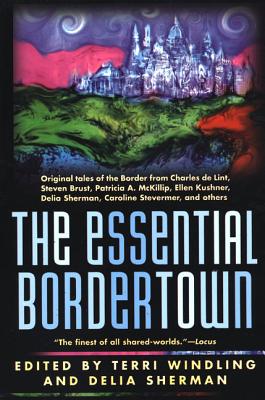
This shared universe urban fantasy series takes place in a dystopian city between the Elflands and the modern human world. In the liminal metropolis of Bordertown, neither magic nor technology functions as expected. Runaways (human and otherwise) flock to the city; artists and cool outfits abound. The series comprises anthologies and novels by SF&F heavyweights and cult favorites alike, including Neil Gaiman, Jane Yolen, Charles de Lint, Nalo Hopkinson, and Holly Black. Bordertown has already spawned a text-based role-playing game, but no videogames—yet. I’m imagining an MMORPG with elaborate character customization, a first-wave goth soundtrack (the original anthology was published in 1986), and a lot of gritty NPCs selling mystical herbage. Please, give me this game.
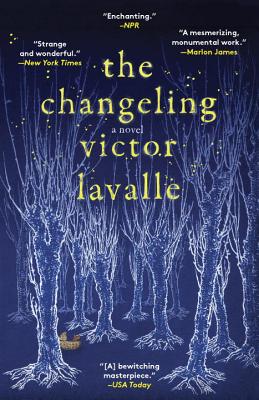
I’m a lifelong sucker for stories about changelings, and Victor LaValle’s 2017 novel is one of the best. Protagonist Apollo Kagwa’s wife vanishes after seemingly committing a horrifically violent act, and Apollo searches for her through the enchanted landscapes of New York City. The novel is both fairy tale and horror, occupying spaces both familiar and surreal. As a story-driven adventure game, players could explore the city as Apollo, examining their surroundings for leads (starting with a mysterious box of memorabilia from Apollo’s missing father), talking to other characters for information, using that information to solve puzzles, and determining where to travel. The Changeling is full of breathtaking, eerie settings—including bookstores, rivers, forests, subways, and cemeteries—that could balance its haunting story with a rich interactive environment.
Do you like technologically mystical books-within-books (or in this case, books-within-games) that give you life advice? Do you also love oligarchal Neo-Victorian societies and the possibility of having a gun embedded in your skull? Okay, maybe you don’t love those, but you have to admit they are all potentially solid components of a game. Stephenson’s Diamond Age envisions a world revolutionized by molecular nanotechnology, where society is divided into “phyles” (social tribes) rather than nations. The story follows Nell, a girl so low-born that she doesn’t even have a phyle, who comes into possession of a stolen, interactive nanotech book—the Young Lady’s Illustrated Primer—designed by and for the wealthy Neo-Victorians. For a novel (The Diamond Age) that’s already based around interactive technology (the Primer), videogame adaptation feels as natural as a story about nanotech could feel. With questlines driven by an in-game guide (and perhaps unlocked by solving in-Primer programming puzzles), a protagonist maneuvering between phyles, and threats both physical and psychological, I’d love to inhabit this postcyberpunk universe interactively—as long as I had the safety of a screen between myself and the horrors of aristocratic oligarchy.
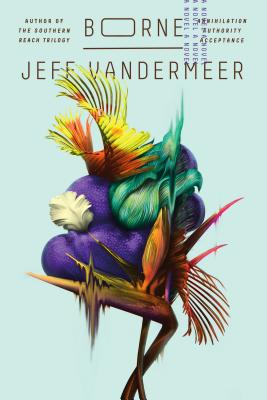
A review described this novel as reading “like a dispatch from a world lodged somewhere between science fiction, myth, and a video game”—so clearly, I’m not the only one who can see Borne in the interactive digital realm. The story of a scavenger, a giant flying bear, genetically engineered creatures, and the ravages of a sinister entity called “the Company,” I would play any game set in this world. The Company is so creepy, so mysterious, it’s the perfect villainous megalith (in the context of game aesthetics, it might look something like the Institute in Fallout 4). With nature bubbling up over technological ruins and an abundance of mutated creatures, I can’t imagine a better dystopia in which to run around and scavenge biotech.
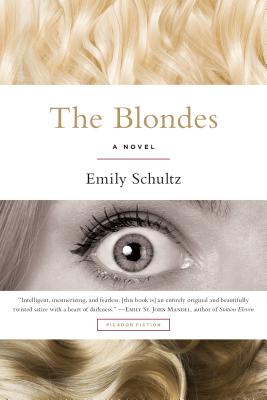
A rabies-like virus affecting only blonde women sweeps the world. I can imagine game adaptation of this novel being something like Left 4 Dead, with the option to play either as non-blonde survivors, or as rabid blondes intent on killing people. I could also imagine a tower defense game where protagonist Hazel Hayes and the wife of the man with whom she had an affair protect their cabin from rampaging blonde women. I could also see The Blondes as a plague simulator, where you’re some kind of megalomaniacal god trying to spread Blonde rabies throughout the world. Maybe a minigame within the plague simulator where you can design your own blonde? So many options! The Blondes: Left 4 Blonde. The Blondes: Rural Cabin Defense. The Blondes: Plague Simulator. Better yet, let me play them all.
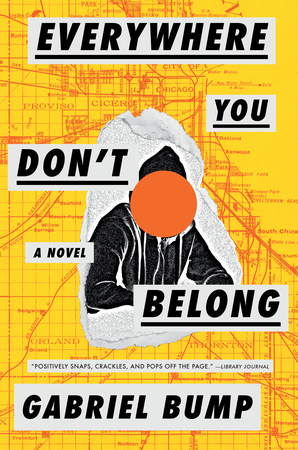
Gabriel Bump’s debut novel Everywhere You Don’t Belong is about growing up on the South Side of Chicago. We follow Claude, a sensitive kid who loses his parents early and is raised by his grandmother and her friend Paul. Claude craves connection but there’s a pattern of transience surrounding the people he loves. He’s not particularly good at anything his community values. And these recognizable coming of age struggles cannot be unwed from the constant and complex trauma of racism.
When the violence in Claude’s neighborhood reaches a tipping point, he tries out leaving home to go to college in Missouri where he finds different shades of the same struggles.
It was particularly exciting for me to talk to Gabe about Everywhere You Don’t Belong, because we were classmates in UMass Amherst’s MFA program. There, I got to read early versions of this book and watch it evolve (and in some sections, remain the way it was set down years ago). Here, Gabe and I talk about the many different categories of love and racism in this book and what it was like to write it against the backdrops of both national and more personal racist events.
Jane Dykema: Romantic love is such an important part of this book. There’s a great description of it in that scene with Paul and his boyfriend, and more throughout. How does Claude understand romantic love’s role in his and everyone’s quality of life when there’s constant transience and fear of death surrounding his parents and friends?
Gabriel B: Claude’s relationship with Janice seems like a good place to start. When they first meet, Claude experiences this youthful tingling that we associate with teenage love. In Janice, he sees something new and exciting and powerful. I believe our memories of first love are so clear because the sensations are so bright. Claude and Janice’s love goes through different phases after that initial spark. It shifts, somewhat, to platonic love. Then familial. In these different stages, although Claude may still harbor romantic urges, their feelings for each other grow more complex, stronger, more like adult love. When we’re young, love is simple. Do you want to hold my hand? Do you want to sit next to each other on the bus? Do you want to have sex? Do you want to sneak out of your parents’ house and come over? As we get older, those questions change: Who is going to leave the house and pick up dinner? Etcetera.
Claude comes to understand love’s great importance through necessity, like most of us, I think. When things aren’t going well, when Claude needs someone, there’s love he can reach out and hold. At the beginning of the book, Grandma and Paul provide it. When Claude’s dealing with bullies in middle school, Jonah provides important love. At the end of the book, Janice provides it.
We all need some kind of love to help us through hard times. Romantic love isn’t the only salve. We can call on friends. We can call on family.
Now, I’m veering towards cliched platitudes. Better stop before I crash.
JD: The way you portray all these kinds of love reminds me of the way you portray so many different sides of what Paul calls the struggle for black people in the riot scene. There are the two defined sides, the police and Big Columbus, but Claude and most of the other people land somewhere on a spectrum between them, trying first to stay alive. Can you talk about the tension between ideology and survival in this scene (and in the whole book!)?
GB: That riot scene is an ideological mess. First, the police: this oppressive presence in South Shore, America, the world. Second, the faction in South Shore that believes in non-violent protest, which is best represented by Grandma. Third, Big Columbus and the Redbelters, who believe in taking back their neighborhood through force. Fourth, the largest group: all the people trying to live their lives without having to pick a side, heads down, moving about the chaos. Claude fits best in this last group. Remember, as the riot starts, Claude is meeting Janice’s family for the first time.
All those sides pushing against each other give the scene energy, I think. I wrote it fast, tried to keep up with all the moving parts. I discovered something interesting about that scene once it was written. There was a lesson in there that wasn’t intentional, or, at least, wasn’t a conscious goal. While all these different ideologies exist in South Shore, as they exist in most communities, particularly communities of color, they are forced to join together against a common oppressor. The cops don’t care about the different ideologies within the community. They see each citizen as a threat. Somewhere in that hectic scene lurks a lesson about unity, which, of course, is damn hard to achieve. Look at the Democratic Party today.
The above-mentioned ideologies are all different ways to survive. I’m not going to say which one I think is best. Except for oppression. Oppression is a bad ideology. Don’t oppress people.
“Belonging” and “survival” are close ideas in this book. Claude is placed in situations where his survival is a literal battle. During the riot scene, there’s a chance Claude would get killed if he doesn’t make it back home in time. Also, at the end, there’s a chance he might not survive. Between and around those two instances, Claude’s attempts to figure out his place in the world represent a different type of survival. It’s a mental and spiritual form of survival.
JD: I like the mention of that surprise lesson. I wonder, when you were writing, did you feel more like you were grappling with how to tell your audience things you knew, or were you grappling with things you didn’t know, either? Or both?
GB: In the first draft of that scene, I focused on the action. I wanted to see how Claude was going to get out there. There wasn’t that long chunk of interiority where Claude offers an abbreviated history of black protest in America. That section, which contains some explicit mental grappling, came later. Most of this book, at least the first half, was written and rewritten during the height of Black Lives Matter, when those ideologies were present in our everyday discourse. At least, present in mine.
What is uniform, what is common, in white-dominant institutions are both overt and subtle forms of racism.
I assume there’s a disclaimer somewhere in this interview about how we went to grad school together. Remember the racist incidents on campus? All those forced meetings about diversity? During those years, which seem long ago, it seemed like everyone was reading James Baldwin and bell hooks, yelling about race at parties. There was a constant flow of think pieces placing the Black Lives Matter protests in a historical context, blaming Obama for not doing more, forgiving Obama for not doing enough; personal essays about personal racial trauma, a genre I dabbled in for a while. The national discourse has shifted a few times since then. Now, I imagine, a lot of grad students are getting drunk and yelling about Trump.
My point is that I knew about the different ideologies. I studied and experienced them in college. I saw them come to life in grad school, across the country, on our campus, in our classrooms. And the answer is always unity. What unity looks like, how it’s achieved—that’s hard to say.
JD: I sure do remember the racist incidents! In the book there’s a great portrayal of the kind of racism you see at “progressive” places like universities or nonprofits (which is, while we’re on the topic, more passive than what happened to Zoe Mungin when we were in grad school): Claude and Simone, the two black reporters at the school newspaper, are assigned to work on some sort of diversity spread, which means closing them off in a room and making them read all day about horrifying hate crimes and structural oppressions and traumas white people did to black people in the area. But in the narrative there’s empathy for the white characters who’ve given them this assignment. Connie is complex—she shows some awareness that it’s fucked up. Whitney is scared and Claude feels bad for her and imagines, with some contempt, her reading Baldwin and being moved. Can you talk about how you wanted this common situation to read?
GB: There’s pressure on minorities moving through white-dominant institutions, i.e. most universities, to represent some imagined and uniformed black experience. This pressure is based around a false premise. Of course there is no uniform black experience. What is uniform, what is common, I believe, in these white-dominant institutions are both overt and subtle forms of racism. Maybe “aggressive” and “passive” are better adjectives than “overt” and “subtle.” Claude, in Missouri, experiences both aggressive and passive racism. For the first time in his life, he’s in a place where white people far outnumber black people, or other minorities. When he and Simone are closed off in a room, forced to face this gruesome and hateful history—that’s a somewhat crude and ridiculous metaphor for the black experience on college campuses. Their assignment is not just traumatizing. It’s not composed well. It’s just a vague exploration of racism. It has a similar feeling to those diversity meetings we experienced. Like, “Okay, everybody, let’s go around the room and say why racism is bad.” Or, “Does everybody know what racism looks like?” Talking about racism in obvious terms, chairs in a circle, is pointless for students and faculty of color. Those meetings felt like White Guilt parties with bad snacks. The intentions are good. The execution, at least in my experience, is a little boring. There are Whitneys and Connies on all college campuses. Well, maybe there aren’t many Connies.
College diversity meetings felt like White Guilt parties with bad snacks.
Claude didn’t see a point in the assignment, doesn’t come back. Simone decided to stick with it, keep her head down, do the work.
When I’ve found myself in similar situations—in high school, college, grad school—I think I alternated between those two reactions.
In college, in Missouri, I said “fuck this” and moved back to Chicago.
In grad school, I ended up isolating myself and focusing on this book.
There are plenty of options in between.
Zoe, for example, stood up for herself when the bullshit was too much. She brought the fight to the administration. She, and other students on campus, through their fighting and toughness, made my life on campus better. As a result of their fighting, more scholarship opportunities were made available for students of color. She was a third-year student, about to graduate. All this happened during my second month on campus, I think. Looking back, I should’ve expressed more gratitude in the moment. It’s a hard thing to stand up and fight. It’s exhausting. Grad school is exhausting enough. So, I’ll express some gratitude now. Zoe, if you’re reading this. thank you.
What I hope comes through in the second part of this book, when Claude goes to college, is how the transition from high school to college is hard enough without adding racism to the experience. Like all kids, students of color are homesick. They’re trying to make friends. They’re trying to balance homework and a social life. They’re dealing with dorm drama. I know you can’t eradicate all forms of racism on college campuses. Just like you can’t eradicate all forms of racism in the world. I would suggest, however, not locking students of color is tiny rooms and forcing them to engage with their trauma.
JD: We should really have an interview with Zoe. The homesickness in the second part of the book lends really well to what seems like a larger case being made for not being traditionally exceptional. Of the tasks put to Claude throughout—basketball, fighting, journalism–we see he’s not a brilliant athlete like Jonah, he can’t really defend himself, he’s not brilliant student like Simone, doesn’t really have a knowledge base or new ideas. He is, however, crying a lot of the time. Often choosing comfort, always choosing survival. Can you talk about defending the value of this character, which is, what seems to me, the heart of the book.
GB: Zoe should get an interview. And publishers should pay top dollar for her work.
For me, Claude, in most ways, represents a large percentage of the population. He demonstrates, I hope, how people we consider unexceptional can still contain and tell worthwhile stories. They are characters worth exploring.
That said, I think Claude is exceptional. Maybe not in terms of athleticism or intellectual power. Still, he’s capable of exceptional empathy. He’s a kind person, caring, loving. His love for Janice sprouts a few exceptional acts of bravery. He’s also smarter than he lets on. During the riot, for example, in his long internal monologue, Claude shows a deep understanding of the negative forces around him.
He’s sensitive and prone to depression and anxiety. Those are traits that make him less exceptional and more common. People like Claude tend to suffer in silence. They move around without garnering much attention. Claude’s the melancholic kid on the swing set, who you don’t notice as you drive past.
Claude comes in contact with several exceptional people. I was interested in exploring Claude’s attempt to process his mundane self compared to those exceptional people. Our society pushes us towards certina types of exceptionalism (athletic, monetary, intellectual). Through Claude, I hope, I showed how empathy and kindness are also significant character traits. If there were more Claudes in America, I think we’d all benefit.
In our series “Can Writing Be Taught?” we partner with Catapult to ask their course instructors all our burning questions about the process of teaching writing. This time, we’re talking to Kavita Das, author of Poignant Song: The Life and Music of Lakshmi Shankar. Kavita is teaching a one-day seminar on February 22 and a six-week workshop starting March 9, both on the subject of writing about social issues, both of which will draw on her many years of experience writing about culture, race, feminism, and their intersections.
What’s the best thing you’ve ever gotten out of a writing class or workshop as a student?
It’s a toss-up between some of the salient feedback I’ve gotten from writing mentors and some of the great writing friends I’ve made. It’s exciting to see pieces from workshop be published, your own and others, and feel like you were on this journey together.
What’s the worst thing you’ve ever gotten out of a writing class or workshop as a student?
Early on in my writing career, I had writing workshop experiences that shook my confidence as a writer, where I felt the spirit of the critique was not fair or generous. This was true when instructors didn’t set the tone and parameters for the workshop and when the workshop wasn’t diverse.
What is the lesson or piece of writing advice you return to most as an instructor?
When you hit a wall with your writing, remembering what motivates you to write can be fuel to help you get over or through that wall.
Whether you’re writing fiction or nonfiction, I think it’s important to interrogate why you write. When you hit a wall with your writing and can’t figure out how to move forward, remembering what motivates you to write can be fuel to help you get over or through that wall. This is why I start all my Writing About Social Issues classes by asking my students to reflect on why they write.
Does everyone “have a novel in them”?
No, all my writing and workshop experience point to the fact that everyone does not have a novel or book in them. However, I do believe that most people benefit from attempting to put words to certain ideas and emotions they’ve been carrying around inside them. Whether they have what it takes to shape those words into something universally resonant, whether those words are publishable, are separate matters.
Would you ever encourage a student to give up writing? Under what circumstances?
I would never encourage a student to give up writing, especially if they are deriving something positive from writing. However, I might encourage writers who are writing memoirs of trauma to step away from what they’re writing about because it is still too emotionally raw, and to come back to it after they’ve had a chance to heal from and process it.
What’s more valuable in a workshop, praise or criticism?
Although I’m a vegetarian, I use the “hamburger” approach to workshop feedback. I begin with the “bun”— feedback on various positive elements in the piece, whether it’s language, character development, and then I get into the “meat” of the feedback—these are the areas that need work, language or narrative that need greater depth or clarity. Finally, I end with the “bun” again, summarizing my overall feedback, emphasizing the positive elements they can build from. This ensures students get a balance of praise, which is motivating, and criticism, which is actually actionable.
Students get a balance of praise, which is motivating, and criticism, which is actually actionable.
Should students write with publication in mind? Why or why not?
When writers are starting out, I really don’t think they should write with publication in mind. They should write to develop their own voice, their own perspective. As I mentioned, they should also be clear about why they write. Once they’ve grounded themselves in these elements of their writing, then they can start to seek out venues and platforms that are best suited for their writing. If early writers write with publication in mind, they risk trying to create a voice or style that fits a publication, rather than ones that speak for themselves.
In one or two sentences, what’s your opinion of these writing maxims?
Kill your darlings: I prefer to reframe this as figuring out which darlings get to stay and which ones you need to bid adieu to because they are not serving the narrative. But always remember, the darlings were sometimes the spark that helped you get the words down on the page, so we should be kind to them even if we’re asking them to leave.
Show don’t tell: I think it’s about balancing the showing and the telling. And also figuring out if this is more of a “show” piece or a “tell” piece, and therefore what the balance should look like for each piece.
Write what you know: In general, writers should be driven by a mix of curiosity and compassion. If you need to know something for your narrative, if its something beyond your sphere of knowledge or experience, then approaching it with curiosity and compassion can guide you to research and write about it with integrity.
Character is plot: Yes, I know this to be true because as a reader, I will follow a well-developed character through strange plot twists. However, if a character is one-note or half-baked, I don’t even feel like following them across the street.
What’s the best hobby for writers?
It’s interesting, I just published my first book last year and it was a five-year slog. In the meantime, I was writing and publishing articles and essays. However, I’ve come to realize that writing keeps me in my head all the time and I actually need hobbies that are tactile, physical, which give my mind a rest so I can return to writing refreshed. So, I’m learning how to knit and I’m getting back to yoga. I also love walking around the city, especially with my hound Harper.
What’s the best workshop snack?
The best workshop snacks are easy to share, not too noisy, and contain variety so people can pick what they like—for example, variety packs of chocolates. This reminds me, I need to pick some up for my upcoming Catapult classes.
“A Beautiful Wife Is Suddenly Dead” by Margaret Meehan
Karen Roberts is going to fall out the window. She likes to perch her ass on the sill and lean against the cool glass pane, slid open halfway, the breeze lashing at the sliver of skin between the hem of her shirt and the waistband of her jeans. It feels scandalous to have the tip of her crack exposed to the world like this while reading excerpts of Hamlet or Silas Marner to her eleventh-grade English class. Neither of which she has read to completion herself. She got by on CliffsNotes in high school, then SparkNotes in college, and now follows the school-board curriculum exactly, her only pedagogical interpretation being dramatic hand gestures, like beating her chest while shouting the last line of that Lord Byron poem. She doesn’t like literature so much as she likes Dead Poets Society, the potential for theater in teaching. As if at any moment her students might erupt into applause, hearts bursting, changed forever. She says her favorite author is Hemingway, because that seems acceptable, though she only made it to page twenty-five of The Old Man and the Sea.
When Karen’s class begins filing out, she hops off the windowsill. One of her worst students, Lucy, approaches her to tell her how beautiful—“like, literally beautiful”—her hair looks today. Lucy, smart but too often taken with drawing gruesome eyeballs in the margins of her notebook, always stays behind, gathering her belongings in slow-motion, to pay Karen an arbitrary compliment in hopes it will sway her grade. Yesterday, it was her eyes: “So, so pretty,” Lucy had said, which, considering her skilled illustrations of corneal leakage and wormy waterlines, frightened Karen more than it flattered her.
Karen wonders if her students actually find her attractive. There are seventeen-year-old boys in her class who look twenty-two and she can’t help it if her twenty-nine-year-old body feels a jolt at the sight of their veiny, football-wielding forearms. She’s a woman with a pulse, after all, until she won’t be. But if she knew she was about to die, she might do something not illegal but definitely questionable. Like daring to unbutton the fourth button of her Ann Taylor Henley. Or keeping Jesse or Bryan or Tate after class to demonstrate burpees, watching their muscles clench under taut skin, overexerting themselves to impress her. Or playfully tousling her students’ hair as she passes them in the hallway, then whipping around to wink. Though winking comes unnaturally to her, which she finds frustrating. The inability to escape herself long enough to perform sexiness. To express the full range of her desires. Always recoiling in embarrassment when her husband discovers her wetness. Always facing away from her classroom door during lunch hour so passing students and colleagues won’t catch how greedily she brings the plastic fork to her mouth, or how many processed toppings she’s dumped on her salad—fried onions and cheese cubes and croutons atop the most unenlightened of lettuces: iceberg.
She doesn’t like literature so much as she likes Dead Poets Society, the potential for theater in teaching. As if at any moment her students might erupt into applause, hearts bursting, changed forever.
The truth is, aside from Lucy’s desperate compliments, her students don’t give a shit about her. The same way Karen never gave a shit about her teachers. Except for the time when she ran into Miss Schmidt, her seventh-grade art teacher, at a Cheesecake Factory. Miss Schmidt appeared to be on a date with an oily-faced man. Karen’s twelve-year-old brain decided, as a coping mechanism, that he was handsome—to push away the terror that men like him might be waiting for her, too, in some abstract adult future of inconceivable X-rated acts. Miss Schmidt was wearing dangling gold earrings and a mandarin-style dress that positioned her as someone worldlier and sexier than Karen remembered from class, where she wore black turtlenecks and taught a painting called “Nude Descending a Staircase” that didn’t have a single nude person in it. She looked foreign and strange, and Karen felt betrayed. But the betrayal nudged awake something dormant within her: the erotic. Like being simultaneously stabbed in the heart and gripped by the groin. And that’s when it began: the gripping—and pulling and tugging and knocking around—of desire deep inside her that’s she’s never been able to still.
On the drive home from school, Karen blasts John Mayer, her guilty pleasure. Though there are few pleasures that Karen experiences that aren’t guilty. She wonders if her body—good-looking in clothes, confusingly less so naked—would be considered a wonderland by John Mayer’s standards. And what is a wonderland, exactly? At a stop sign, she looks up the definition on her phone: “a land of wonders and marvels.” This reminds her: she’s never really traveled anywhere. Just Cancún on her honeymoon five years ago, which was a seven-day hellscape of drab buffets, screaming children, and Mark’s vacation style of bowling shirts and Birkenstocks, an outfit that further complicated her already complicated desire for him.
During the first week of their courtship, Mark wore a baseball cap that he only took off in the pitch black of his bedroom before they would undress and press their equally pale bodies together. Their bodies, together: for Mark, sublimity; for Karen, well, she wasn’t sure but obliged and continued to oblige until she had, it seemed, suddenly obliged herself into full-blown marriage. One night, their lips locked underneath the covers, she caressed the top of his sparsely haired head. He reflexively brushed her hand away, then rerouted it to his erection.
“But I like your head,” Karen said, reaching toward it again.
“Really?”
“You know how people say they don’t see color?”
“Yeah, but—isn’t that racist?”
“Well, I don’t see bald.” Then, she kissed the shiny spot on his head that she always knew was there, but that he thought she didn’t—a kiss that was a sort of silent commemoration of every tragic person, including herself, who had tried and failed to hide their physical shortcomings from the world. The kiss inspired in her heart a pity for all of mankind, from homo erectus to homo sapiens, throughout earth’s history, which was a grandiose jump, she knew, but it allowed her to have compassion for him. And compassion was love, wasn’t it? So, she did love him—or, she was maybe avoiding his erection. Either way, it was the first time she had kissed him with any certainty, even if she didn’t know what she was certain about.
At a red light, Karen nearly rear-ends the minivan in front of her. When she rolls down her window to collect herself, which, as a person uncollected—always late, lost, misplaced, and misplacing—she frequently does, a pair of shirtless teenage boys, swinging T-shirts by their sides, pass her and shout, “Ho can’t drive!” Ho, she thinks. Hos are attractive, aren’t they? Perhaps, if these boys find her attractive, her students do too. Or, too consumed by their revolting doodles and Lay’s Variety Packs, do they perceive her as nothing more than a loud fuzzy shape? To hell with her students! She should quit her job to travel, finally, find herself. Like her cousin Barbara who went on that Yoga retreat in Hawaii because she thought it would transform her into the kind of person who woke at dawn to make complicated smoothies. When Barbara returned, she was, sure, very tan, but jobless, thousands of dollars in debt, and drinking burnt Folgers spiked with whiskey every morning. Anyway, Karen already knows exactly who she is.
She is Virginia Woolf. She is E.T. the Extra-terrestrial. She is Khloe Kardashian. She is Ross from Friends. She is Samantha from Sex and the City. She is a roast-beef sandwich. She is a standard poodle. She is an open-casket funeral. At least that’s what Buzzfeed quizzes tell her. “Pick a New Outfit for Kim Jong-un and We’ll Guess What Kind of Funeral You’ll Have.” Karen’s body, too beaten and debased by the sidewalk three stories down from her classroom window, will be cremated then funneled into a mid-price urn etched with purple butterflies—meant to symbolize the tattoo on her ankle, which she got while blasted out of her mind on a spring-break trip to Daytona Beach in 2008. The skin soon became infected, then scabbed over, permanently deforming the lines of the left wing.
Karen was certain that a prostitute was a woman who killed herself, then sold her body to help with the family finances…And it didn’t seem at all odd to her that there might be, somewhere out there, a market for dead women’s bodies.
Karen makes a sharp right into Pretty Woman Nails. She remembers when she watched Pretty Woman for the first time and asked her mother what a prostitute was. Her mother was in the kitchen doing mother-like things. Like dumping a bag of frozen mixed vegetables into a boiling pot, then cursing, “Fuck the Lord,” when the water splashed up in her face, scalding it. After clearing her throat, she slowly and carefully said: “A prostitute is a woman who sells her body.” For the next three years, Karen was certain that a prostitute was a woman who killed herself, then sold her body to help with the family finances. Because she could only imagine a body being sold if it was dead. And it didn’t seem at all odd to her that there might be, somewhere out there, a market for dead women’s bodies.
She parks at the front of the salon and spit-fixes her eyebrows in the rearview mirror. “Whore,” Karen says to her reflection, startling herself, recalling the seated row of well-coiffed women she once saw on some talk-show segment called “women who love being called whores and the men who love calling them whores,” and, not wanting this moment to go to waste—this rare door of arousal creaking open inside her before the squall of shame slams it shut—she fishes in her purse for her stub of red lipstick and smears it on liberally to commemorate the feeling. “Whore,” she says again, laughing this time and sees in the mirror how crudely her face distorts when it laughs. How is it possible she’s never before caught a glimpse of this fright night—her chin, enormous; her teeth, far too many of them. I must get some pulled, and, is that a thing? She buffs her incisors with a fingertip, hoping a glossier finish might redeem them. At the very least she’ll have a few shaved down significantly. But will the insurance cover it? Probably not, so she vows to never allow herself to laugh so freely again. Lock up your gigantic teeth, she thinks, and throw away the key.
“Hello miss, what would you like?” a woman squatting at another woman’s feet asks as Karen bolts through the door of Pretty Woman Nails, ready to submit her body—this betraying body!—to whatever sharp tool or hot goo might shock it into compliance, once and for all. She asks for an eyebrow wax, then decides to get a manicure and, why the hell not, a pedicure, too. While she’s at it, might as well get her pits waxed—never tried that before—and, hey, is there time for a facial? What about hair extensions? Okay, clip the damn things on. Light Ash Blonde No. 22 blends nicely. She flicks her new twelve-inch long ponytail over her shoulder, almost able to stand her reflection again. “Looks cute, honey,” a middle-aged man, sipping a fountain soda and flipping through an Us Weekly, says from the waiting area. Once Karen’s been painted and preened and prodded, she’s upsold a ten-minute shoulder massage while her cherry-red nails dry under UV lights. She pre-shames herself in the event that someone she knows, heaven forbid, walks by this floor-to-ceiling window framed in a garland of faux daisies, and catches her in such an obscene state of pleasure.
Karen walks through the parking lot, her arms outstretched before her, admiring her newly painted fingernails all the way to the car, almost tripping over a curb, thinking of all the things she’s going to point at to show them off: maybe a stale croissant in the display case of her favorite coffee shop, or examples of metaphor in Shakespeare on the whiteboard, or acned teenagers who defy her by texting underneath their desks or rubbing on fruity lotions that give her a headache.
Described in the voice-overs as “talented,” if they played the cello or bassoon in high school, and “beautiful,” no matter how appealingly their faces were arranged. Karen appreciates this generosity. This miraculous recasting of mediocrity in death.
Back at her apartment, Karen switches on the TV to catch up on her true-murder shows. There’s Her Husband Killed Her, Why’s Mom Dead?, and He Cheated, Then She Died! Cheap dramatic reenactments of wives who were, just days before their tragic deaths, out buying lunch meat at the grocery store and off-season purses at the outlet mall, maybe picking up a pack of defective underwear for their soon-to-be murderous husbands. Described in the voice-overs as “talented,” if they played the cello or bassoon in high school, and “beautiful,” no matter how appealingly their faces were arranged. Karen appreciates this generosity. This miraculous recasting of mediocrity in death. She settles on an episode of He Cheated, Then She Died!, which features a Wisconsin nurse whose husband, a respected fire chief, attempted to drown her while she was in the bathtub. She was still alive when he dragged her out by the armpits, so he bludgeoned her with a rustic horse bust from Pottery Barn, which he grabbed off the sink behind him.
“Hello, my angel,” Mark says, entering the apartment. “What did you do to your hair?” he asks, joining Karen on the couch.
“You don’t like it,” Karen says, stuffing the ponytail inside her shirt, embarrassed. It scratches the skin on her chest.
“I do, but you don’t need all that stuff,” he says. “I like your hair the way it is.” Mark pulls out the strange mane and sniffs it, which he attempts to segue into a kiss, but Karen flinches.
“It smells weird,” he says, miffed.
Karen plops her feet on Mark’s lap and returns her attention to He Cheated, Then She Died! Eventually, the police collected enough evidence to arrest the Fire Chief and the local Pottery Barn was forced to sweep its shelves of the now-triggering horse busts. Karen feels unsatisfied, as if she’s eaten a saltine cracker while visualizing it as a cheeseburger. She recalls an episode of Why’s Mom Dead?: a mother shot through a goose-down pillow, blood-soaked feathers flying. The father dismembered her, piled her parts into their toddler’s red wagon, and wheeled it down the hill in their backyard toward an icy ravine. His lie would be that she vanished while jogging; he even stretched a sports bra over her torso for plausibility, in the event that a wild animal sniffed her out of the dirt. Now that was compelling, Karen thinks, to her moral discomfort. How many more wives must die to keep my shows going?
How many more wives must die to keep my shows going?
She notices a cystic pimple on Mark’s jawline—the same spot it recurs every month. An unwelcome truth was that she enjoyed seeing her husband somewhat debased; it wrecked her with sadness in a way that made her feel capable of love.
“Are you embarrassed of me?” Karen asks. “Do you ever just look at me and cringe?”
“What? No,” Mark says, as if the question is ridiculous, which gives Karen the real answer she’s looking for: that he’s never wondered this about himself. Mark has never, like her, pondered his potential to be an object of pity.
An unwelcome truth was that she enjoyed seeing her husband somewhat debased; it wrecked her with sadness in a way that made her feel capable of love.
He massages her feet, squeezing each toe. “That’s nice,” Karen says, momentarily relieved of the day’s disturbances, but Mark, as usual, mistakes this pleasure for another kind of pleasure: a desire for him. Like so many men, he believes that all pleasure is a monolith, one big wagging indiscriminate tongue, or, at the very least, is transferable. So he moves his fingers up her calf, then thigh, grasping it and, of course, Karen sees where this is going. She lifts his hand off her leg like it’s someone else’s wadded up cocktail napkin at a bar and disposes of it on the couch.
“I’m going out,” Karen says, suddenly gripped by an awful sense of urgency, a throb of ambition—but for what, exactly? In her own dilapidated way, she had already achieved many of the goals she push-pinned long ago on her college vision board: tear-outs of cheesing brides, modernist living rooms, an image of a sexy business lady with her hair in a French twist, a pen dangling from her lips. She never did pin up a baby but remembers printing out a monkey in a diaper as a joke.
“Going where?” His expression sags. He looks old and hurt.
Where is she going? Karen takes stock of her body parts—is there anything left to service? Should she get a belly-button ring? Another tattoo? Maybe there was some kind of extreme skin treatment she could try, where they clip leeches to your flesh or douse you in your own blood. How about a colonic? Would that cure her of the panic rising in her chest? Being sucked dry of toxins? Surely, she was filled with them.
“Wow, you’re so mysterious,” Mark says, putting “mysterious” in air quotes, which stings, chafes at Karen like a cheap thong. Is it really so hard for him to believe that she could be mysterious? After everything she’s done to emotionally disorient him, like pooh-poohing his sexual advances or wandering away from him at K-Marts and Targets, ignoring his panicked texts, only for him to later find her crouching in the accessories aisle trying on ridiculous sunhats and fake cocktail rings. Why was she like this?
“I’m going to McDonald’s,” she says.
“McDonald’s?” he asks, disbelieving, which pleases her.
“Yeah, ever heard of it? Big clown guy. You want anything?”
“An Oreo McFlurry,” he says in a high-pitched voice, as if he can’t help but regress into a small boy when shouting the names of treats. He clears his throat and looks away from her.
On the highway, Karen accelerates irresponsibly and rolls down the window to give her new hair a go at glamorously blowing in the wind. What would Lucy think of her new look? She can finally enjoy it away from Mark’s suffocating insistence on loving her for who she is. Revel in this mystery, Mark. She feels reborn! But then—ah, fuck—the wind. Her hair pummels her in the face, nearly blinding her, adhering itself to what’s left of the lipstick she applied earlier. She rolls up the window, feeling spurned, and gathers the faux ponytail into her mouth and sucks on it for a few miles, soothing herself, the chemical taste oddly appealing. She passes the McDonald’s, not quite ready to relinquish her freedom, and keeps driving. A song she’s never heard but assumes is popular comes on the radio, the kind of shrill thumping her students crowd around iPhones to bop their big dumb heads to. Karen weakly pumps her shoulders to the beat and projects herself on the movie screen of her mind but it’s too humiliating, so she turns it off. Another McDonald’s flies by. How long could she prolong this escape before Mark begins to wonder if she’s dead? Tangled up in shrubbery or, better yet, kidnapped. He should try searching for something for once. “Where’s my moisturizer,” he’s always yelling at Karen. It’s under the God damn sink.
“Adios, Ronald,” she says to a third McDonald’s, one with an intestine-shaped slide. Perhaps she’s on the cusp of cracking some secret code of the universe. After passing a certain number of McDonald’s, does one drive straight into a new dimension, a new life? But Karen, weak and hungry and a little musty, turns on her blinker and steers into the next shopping center crowned with golden arches. She pulls into the drive-through, cranes her neck toward the speaker, and orders the McFlurry for Mark and a Happy Meal for herself. A glance in the rearview mirror reveals Mark pulling up right behind her, his eyes cast downward beneath a baseball cap. Her stomach clenches. As if a hat is enough to disguise not only his familiar frame hunched over the steering wheel but the behemoth of his SUV made particularly recognizable by the Hula-girl figurine bobbing on the dashboard. Unbelievable.
But then a twinge between her legs. Was Mark—who has rosy cheeks, kneads all the soft blankets in the house like a kitten, and once stopped in the middle of sex to put a pillow under her neck, which she told him to never do again—a stalker? A controlling alpha male? Both hallmarks of a murderer, she thinks. Filled with a strange excitement for this creepy little game they’re playing, she pays at window one, then snatches the food from window two, and pulls into a parking spot at the rear of the building. Behind her, Mark turns in the opposite direction and exits the shopping center, seemingly satisfied with whatever it was that he wanted from her. Must be nice to be so satisfied all the time. She grabs the McFlurry from its paper cupholder, opens the car door, and throws it against the asphalt.
When Karen dies, Mark will scoop up her mess of hairbrushes, uncapped perfumes and lipsticks, noisy bracelets, and smelly candles and smash them on the living room floor. He’ll dive into her closet and hang from that stupid Puebla dress she bought in Cancún until the rod breaks and he’s suffocating under the weight of her clothes, stuffing them into his mouth. Clothes that taste like her sweet musk. At night, he’ll dig out a pair of her underwear from the bottom of the hamper and squeeze them tight in his angry fists, against his broken heart, until he finally falls asleep. In the morning, he’ll shuffle aimlessly around their apartment until he can’t take it anymore, the heaviness of his sorrow, and calls his mother. When she says hello, he’ll say nothing. Just let out a sob so big he chokes on it.
The next day at school, it’s Karen’s floral-print wrap dress, a Diane von Furstenberg knockoff. “You look like a famous person in that,” Lucy says. “That blonde lady from that show about lawyers.”
“I’m giving you a C, Lucy,” Karen says from her usual perch on the windowsill, a stack of final exams on Thoreau in her hand. “You can stop sucking up now.” She leans forward and twists her ponytail into a fat sausage curl, but Lucy doesn’t notice as she leaves the room.
Oh, Karen would love this: Lucy on the quad reciting a snot-muffled eulogy—“Mrs. Roberts was seriously the best teacher ever and she had the most awesome eyes and hair and dresses I had ever seen in my entire life”—surrounded by thousands of students. Some collapsing to their knees, digging their fingers into the earth in sheer agony, decrying God for this injustice, a photo montage of Karen’s best angles projected behind them. Then, as a blood-red sun sets over the horizon, everyone sways in unison with lighters in the air, as if she’s the saddest, most important rock ballad ever sung.
But that won’t happen. Karen will get lumped into a memorial with Ethan Foster, the handsomest kid in school, who’ll spin out and crash while speeding and swerving down a quiet street not as quiet as he anticipated thanks to the semi that clips him.
“The jerk,” Karen’s ashes would have shouted from her butterfly-etched urn if they could. Ethan will spend a week sustained by a ventilator before his last breath, the whole of Jackson High more focused on planning a talent-show fundraiser for his family’s medical expenses than establishing her legacy of, well, now history will never know. Girls who were her students, who didn’t even know Ethan, will embrace one another, and weep, “He was so gorgeous.” Was I not attractive enough to die memorably? Karen’s ashes would have thought if they could. At least Leslie Stillman will sweetly warble Bette Midler’s “Wind Beneath My Wings,” which happens to be Karen’s karaoke song, over the intercom.
Karen readjusts her weight on the windowsill, then scoot, scoots back, inadvertently banging her tired head against the glass. She thinks she hears something click or crack but is distracted by Ethan Foster, that doe-eyed student she had last year, amble by underneath her. Karen likes to observe her students when they don’t know she’s observing them and marvel at how impossibly goofy and innocent they can look. As she watches Ethan disappear into the parking lot, his ridiculous backpack bobbing up and down on his lanky, still-boyish frame, there is a foreshadowing. The stack of final exams in Karen’s hand blows out the window; she watches them dance in the breeze. Like a cliché. Like a metaphor for something she’d be able to name if she had read more of the literary canon. Shit, she thinks. This is beautiful, she thinks. A sight worthy of being adapted and scored in an award-winning film that she will never see, and which might never be made, because her imminent death could very well set off a chain of events that disrupts the universe irrevocably, causing a truck or asteroid or very large man to hit and kill who would have been the greatest filmmaker of the twenty-first century, and maybe this, accidentally thwarting the creation of some magnum opus, is Karen’s legacy. She opens the window wider and notices one of the exams wedged in the branches of a massive oak. That one, trapped, probably represents me, she thinks, twisting her face into an expression that she hopes looks wise and longing, while the other exams, not her, whirl and swell freely up into the clear blue sky. Yes, this is the metaphor for my life, she thinks. Ha! She laughs at her own feeble thoughts. Then, it finally happens: Karen Roberts falls out the window.
She falls out of the window the same way everyone else who has fallen out of windows fell out of the window in the great tradition of falling out of windows. Either a few rusty screws at the hinges come loose, or she loses her balance leaning out to have a stylish smoke or suck in fresh air, or she’s pushed out by an evil villain, or she leaps out of her own freewill, but the police will determine that’s doubtful by the way her body lands on the pavement. Without determination or intent or much thought. A hapless pile of arms and legs. In the few seconds that she flies high above finality, she regrets that her students aren’t here to witness this. To have this tragedy forever imprinted on their young, impressionable minds. She regrets everything she’s ever said or thought or been or done or didn’t do. Who wouldn’t in a moment like this. Karen reaches her hands toward the sky, cherry-red nails refracting the sun, her plastic blonde ponytail whipping in the wind, and she doesn’t scream.
When I saw My Winnipeg at the Music Box Theater in Chicago many years ago, I knew nothing about it except that its director, Guy Maddin, described it as “docu-fantasia.” It seemed maybe a little pretentious at the time, but to this day, I can think of no other way to describe it.
There isn’t much of a plot, and there’s no real protagonist beyond Maddin himself. For just over an hour and a half, he shares a number of details and stories about his hometown, Winnipeg. A dispute between the city’s two taxi companies exiles one to the alleyways. A young man is talked off a literal ledge by his mother on the popular local television program, Ledge Man. And, in the dead of winter, a number of horses escape their stables, attempt to make their way across the nearby river, and freeze, leaving a knee-high forest of petrified horse heads sticking out from the ice that becomes a destination for locals.
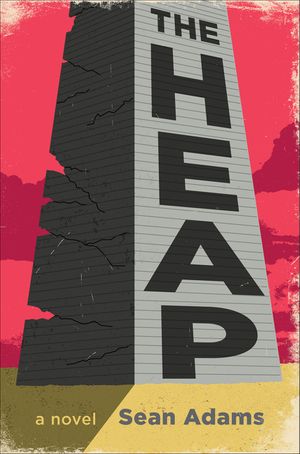
It’s one of my favorite films because of its devotion to a certain strain of madcap world-building that I can’t get enough of. It’s what I seek to do with my writing. In my novel, The Heap, I gave myself the task of creating two fictional cities: that of Los Verticalés, an enormous city that exists fully inside a 500-story building; and that of CamperTown, the city of campers that has sprung up to house the relief workers cleaning up following Los Verticalés’s collapse.
Moreover, though, this devotion to bending reality—sometimes just a bit, sometimes wildly—drives my reading. So here are seven books that do a great job of building delightfully strange, engrossing, and often hilarious worlds:
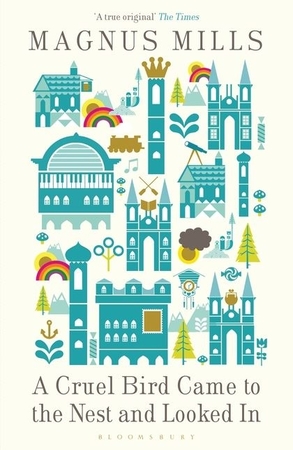
Things are amiss in the Empire of Greater Fallowfields. Well, actually many things are amiss. The king is gone. The conductor of the royal orchestra knows nothing about music. The royal astronomer must use a coin-operated telescope. Charming and subtly menacing, A Cruel Bird Came to the Nest and Looked In is a perfect introduction to Mills’s deceptively simple and bizarre oeuvre.
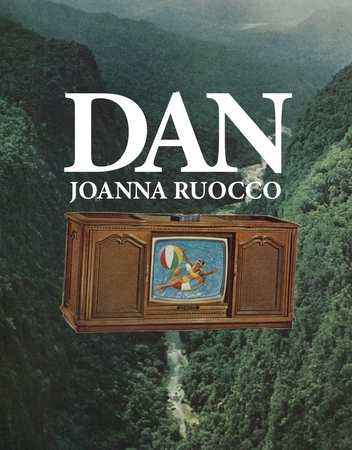
Dan is a town. A town among mountains, a town with a formerly bustling hosiery district, a town where doctors don’t believe in horses and principals go missing while seeking answers in the school basement. But what is Dan really? That is the question at the heart of Joanna Roucco’s unsettling (and laugh-out-loud funny) novel, told through a dizzying series of interactions, which themselves conjure memories of other interactions, which themselves often conjure even deeper memories still.
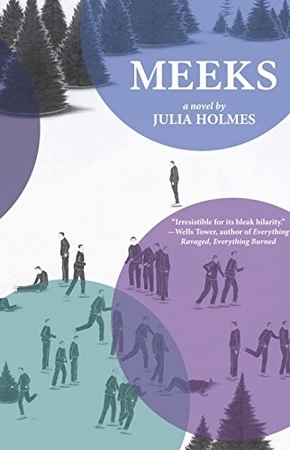
That I think of Meeks as being a delightful romp perhaps says something sinister about me. After all, within the opening pages, a man helps clean the blood left on his brother’s face after a DIY tooth extraction so that he’ll be more presentable at the public execution. Shifting between a number of different characters who occupy different places in the social strata, the novel immerses us in a society of municipally-required marriage where a thin veil of quaint formality hides true menace. A great read for fans of Yorgos Lanthimos’s film, The Lobster.
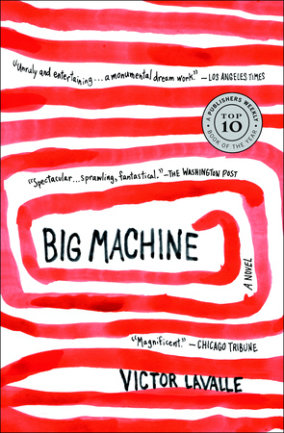
A number junkies and petty criminals are lured to a remote camp in Vermont where they are trained as paranormal investigators. And that’s just how Big Machine begins. What follows is a wild ride through a world of cults, paper-thin demons, soul-eating cats, and wild, terrifying plays for power. Is it science fiction? Is it noir? Yes and yes, but it’s also something all its own.
The word “dreamlike” is so often ascribed to novels that are anything but, and that’s frustrating because it undercuts the work authors put in, designating their carefully constructed weirdness as zany nonsense. And yet, how else is there to describe Event Factory? As the unnamed narrator makes her way through Ravicka—a fictional city where the air is yellow and something is driving the populace away, and wherein each moment seems to be dictated by its own logic—it’s difficult not to feel like you’re inside a dream that is as absurd as it is beautiful.
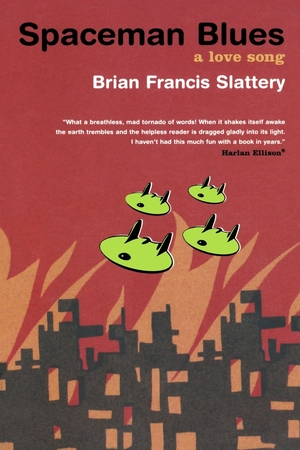
Fairly early in Spaceman Blues, the protagonist, Wendell Apogee, visits Swami Horowitz, who lives on the second floor of his childhood home despite the fact that a storm has long since pulled it into the bay, flooding the ground level and killing his parents. On the ceiling of his parents’ former bedroom, Swami has nailed pieces of papers on which are written the names of everyone he knows and then connected the nails of those who know each other with threads of certain colors corresponding to the nature of their relationship. This is essentially Slattery’s novel in microcosm: a wild, unpredictable story about love, community, and encounters with the unexpected.
Heartbreaking, thoughtful, and at times brutal, André Alexis takes us to present-day Toronto, where some want power, some seek comfort, and others desire only intellectual rewards. 171 pages long and yet spanning years, Fifteen Dogs is a compact epic about what it means to be human… and it just so happens that all of the central characters are dogs that’ve been given human intelligence as part of a bet between Greek gods who themselves play a part in the story’s action (in case you were starting to wonder how this made it onto this list).
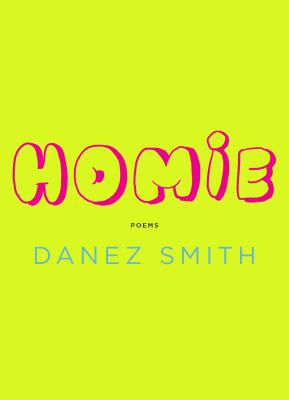
Danez Smith’s third full-length collection, Homie, contains all the love and magnanimity that the poet—author of the National Book Award finalist collection Don’t Call Us Dead—is capable of. The poems in this book are surprising and fervent, emerging from all the joys, sorrows, and complexities of friendship, intimacy, and desire. Tenderness, in these poems, is wedded to insult, love to violence. “With yo ugly ass,” Smith writes in “acknowledgments,” “at the end of the world, let there be you/ my world.”
To describe how deeply this book affected me I would need to sing. I would need to spend hours cooking an elaborate feast, large enough to feed all the characters of Smith’s world—and mine. And yours, too. Smith graciously spoke with me while they were at the laundromat and we discussed the crafting of Homie, the surprising shapes of their poems, and how paradoxes of love and violence figure in the book.
Roberto Rodriguez-Estrada: How are you feeling about this book being in the world?
Danez Smith: This was, I think, the most difficult and frustrating book I’ve written so far, because of the process. It was not always happy and fun mining or excavating. There was a lot of writer’s block, a lot of feeling like crap. So I am excited for the book to come out, and I’ve finally forgiven the book for making me write it.
RRE: Where did the frustration come from?
DS: I think I kind of stumbled into the collection, in the midst of working on this wayward chapbook project. So I had all these poems and I said let me see what I’ve been writing about and all of a sudden I have all these poems about friendship. I guess I’d been low-key thinking about friendship in the back of my mind, not even knowing I was writing a book. I think emotionally, I’d written some of the hardest poems in the book, so it wasn’t as emotionally trying as Don’t Call Us Dead, which had no emotional reprieve. So then I got to write the fun part. The problem was there was a pressure in my own mind because I had this one book that was into the zeitgeist in a very particular way and that had commercial success and critical success, and think I was very nerve-wracked about writing the next book. Don’t Call Us Dead did all the things that I hoped would happen at some point in my career and I was so appreciative but I was also like “ahhh, what do I do now?” There was a while when I couldn’t write poems while also, in the back of my mind thinking, is this going to affect people in the same way? Is this even worth writing?
RRE: Many of the poems in Homie are addressed to specific individuals or name particular friends. Can you talk about what it means to address these poems to so many people in your life, people whom you deeply love?
DS: I think it both enlivens the poems and focuses the language. It also brings up for me not living in the falsehood of the universal, and being intentional when writing a poem that’s not only for oneself. The act of being a poet in public, of writing and running into other people and sharing what I wrote, should require some sort of stakes or consideration for the people reading it. And for me, it just makes them intimate and better! You would write a letter to your mother differently than you would write a letter to your teacher than you would to a friend than you would to the whole town! And it’s great that the whole town can read it, but maybe I just want to talk to my mom or I just want to talk to my friend—I just want to talk to people. And that conversation requires a language particular to that person.
RRE: I really loved how different a lot of the poems felt. It’s a book about friendship, but it doesn’t at all feel univocal. For instance, can you talk about your poem “C.R.E.A.M.,” which is about money and debt?
Writing about money made me feel like somebody rich, not currency rich but somebody rich.
DS: It was written after Morgan Parker’s poem “ALL THEY WANT IS MY PUSSY MY MONEY MY BLOOD” and I think closely draws from some of the moves in that poem. I wrote that poem a couple of years ago and was sort of thinking about a place of money frustrations. Money has been one of my main anxieties in my life. When you don’t have it, it’s obviously really frustrating. And also something I’ve been thinking about more and more, for instance, is that I have more money now than my mom did when I was young. I have more money than I did a couple of years ago. And I’m still not rich! But it’s weird, I didn’t think I could write about money before but it’s been constantly on my mind. When you have so little control of it, one way to process that is through verse and writing. For some reason writing about it made me feel like somebody rich, not currency rich but somebody rich. Morgan’s poem also addresses economic insecurity and I wanted to speak back to it in that way.
RRE: Some of the poems take on these amazing shapes. “rose” for instance is a block of text that’s been tilted. “saw a video of a gang of bees swarming a hornet who killed their bee-homie so i called to say i love you,” displays a poem that’s framed by a repeating line: “we are in their love.” Does the shape come first or does it come about in the drafting process?
DS: The visual field, the experience of viewing a poem, is something that interests me. I don’t always write like that but I like to play with the visual from time to time. Sometimes it becomes part of my editing process where I can look up and say, is the problem with this poem the line, the lyric or a word or can this poem be remedied or be heightened in a visual way? The way this book ended up is that there’s a lot of visual play towards the front of it. With “rose” I thought it could seem selfish and a bit dishonest to write this apologia for an elementary school lover and if that happened to me I think I’d probably look at it with a bit of a side-eye. It’s tilted so that you do have to give it a side-eye. I also wanted it to look kind of like a note and something about turning it sideways makes it look like a page within a page which makes it feel like not just another poem in the book but this sort of found letter.
The frame around the “bee” poem—well I was reading it the other day and I wanted it to look like what I saw in the video. I wanted to give the impression of being circled or trapped, which is a particular kind of violence that comes up multiple times in the book, like the poem “jumped.” Entrapment also brings up the question of how do we hold each other? or what happens when the body is surrounded? Is that about love? Is that about violence? Can violence be a type of love? Can you commit violence as an act of love?
RRE: I’m glad you’re bringing up how violence figures into Homie; you interrogate it through multiple angles. I was really moved and surprised by “my poem,” which is incantatory and invokes this notion of words and language being wielded for violence. You write that your poems are restless: they’re “fed up and getting violent.” You write: “i poem a nazi i went to college with” and “i poem ten police a day.”
Can violence be a type of love? Can you commit violence as an act of love?
DS: Again, one of the big questions of the book is: when do you choose violence? What is our own capacity for violence? I think poetry can be a safer place to ask dangerous questions but people expect the answers to involve peace and love. So I’m constantly trying to negotiate this line between love and violence in the book. Violence in this poem is evoked while stopping short of actually enacting violence. I wanted to raise questions that are sometimes uncomfortable to address in poetry.
RRE: There are poems where, tucked between poems about friendship, you address sexuality and illness. “Undetectable” for instance, which is a sort of ode to HIV treatment.
DS: Most of the poems that deal specifically with HIV were some of the later ones to be added and I think the way they function in the book is similar to how they function in my psyche. I used to think about my diagnosis so much, but now, because I don’t have to as much anymore, the anxiety comes in flashes. These poems function in that same way, where the anxiety flares up because something aggravates it. I run into some ignorant stigmatizing motherfucker. Or I see some racist shit on Grindr. Or all of a sudden my medicine is gone. All these things that send off flares.
RRE: The book also takes on the concept of solidarity and complicates it a bit. I’m thinking about “shout out to my niggas in Mexico,” where you address and sort of invite a wide range of people of Latin identities to the conversation, and “what was said at the bus stop,” which observes a conversation between a young Pakistani woman and a white dude. In one line, you write: “‘solidarity’ is a word, a lot of people say it / i’m not sure what it means in the flesh.” What are your thoughts on solidarity and how it’s been appropriated under the umbrella term of POC-ness?
DS: Sometimes I get annoyed by POC-ness because it’s often equated with Blackness and hides anti-Blackness. When I talk about with my good friends it’s like a college diversity photo’s wet dream because my friends come from all these different backgrounds. I think those poems are trying to, on a large scale, what other poems are doing intimately and unnamed. Some poems are addressed to my Asian-ass best friend, whereas these poems are addressing the particularities of: I see you and you’re brown. And if I’m going to talk to you, then I’m going to say “hey” to the entire family. Because I was raised in this way where whenever I go to a friend’s house, the first person I address is the head of the family. I think those poems are trying to mirror that same thing. I’m saying hey to your family, hey to your people, and thank you for making that person I love.
When I was a child, my parents took my sisters and me apple picking in the Hudson Valley, though we thought of it only as upstate, a place with enough open space to astonish girls from Brooklyn, where running is done from curb to curb.
That was as much as I knew about the Hudson Valley until I went to Marist College in Poughkeepsie, New York. Coming and going from class or the library, I’d walk along the edge of campus for the view of the river with the mountains rising behind it. In late in October, the first flush of color appeared, as though the veins of the leaves were lit with a thousand slow-moving fires. To see the mists rising off the Hudson on bitter winter mornings was to see a river of ghosts. In spring, the mountains were green and the river sparked with sunlight. In summer, I was gone. Two hours—the length of the ride on the Metro North from Poughkeepsie to Grand Central Station. Two hours, but it was leaving one world for another.
At Marist, I learned that the Hudson Valley is a region of New York with its own distinct history, art, architecture, and literature. My novel, Ghosts of the Missing is set in the fictional Hudson Valley town of Culleton. The book follows Adair McCrohan goes to live with her uncle in the Culleton after the death of her mother. Her uncle is both caretaker and poet-in-residence at a writers’ colony, housed in what was once one of the grand estates of the region.
The books below are either expressly about the Hudson Valley, or they are set there. As Ghosts of the Missing, the past and present often intersect and where they meet, there are hauntings, literal and figurative. Whether fiction or nonfiction, each portray the vibrancy of the region, its folklore, its tragedies, and its beauty.
This book explores how the Hudson Valley gained its reputation as an especially haunted region with ghost stories that span centuries and cultural backgrounds. Richman deftly explains how tales of hauntings often have less to do with the dead and more to do with the living, searching for a way to understand their own world.
Ask Again, Yes is set in the fictional Gillam, based on Pearl River, where author Mary Beth Keane grew up. Two New York City police officers live next door to each other, both having moved away from the city to remove their families from the violence of 1970s New York. The families’ lives remain entangled in ways none of them could ever predict.
TC Boyle won the Penn/Faulkner for World’s End, in which he tells the story of Walter Van Brunt, whose family of Dutch descent, have been settled in the Hudson Valley for generations. The novel spans from the 17th century through the late 1960’s as the heavy-drinking, lost-soul Walter searches for his father and is haunted, literally, by his family’s ghosts.
It’s 1987 and fourteen-year-old June Elbus lives in suburban Westchester with her parents and her older sister. Sensitive June only feels truly at home with her Uncle Finn, a renowned artist who lives in New York City. When he dies of AIDS, she is lost, until her uncle’s partner reaches out to her. This book contrasts safe, even sedate, suburbia with Manhattan, a world June saw on her visits to Finn but one she only begins to experience after he is gone and she begins to visit his grieving boyfriend on her own.
In this memoir by journalist Gwendolyn Bounds, she recounts an experience that is the opposite that of the fictional June Elbus. When Bounds’s Manhattan apartment is badly damaged on September 11, she finds a temporary home in Garrison and a new community in Guinan’s, the Irish bar known locally as the Little Chapel on the River. For Bounds, the Hudson Valley is the opposite of the city, a place of peace and solace. It is what she needs to regain her balance in a world completely changed.
A married couple move from Williamsburg, Brooklyn to their Hudson Valley college town where they become caretakers to an old estate, home to their former writing professor. Here again, the Hudson Valley is a respite to city life. Only in The Widow’s House, Clare Martin’s peace does not last as she begins to believe the old house may be haunted by the ghosts of the family who once lived there.
Kaaterskill Falls is a small town in Greene County, where a robust Orthodox Jewish community spends its summers, alongside the secular, year-round “Yankee” population. Elizabeth Shulman, wife and mother of five, begins to wonder about the world outside the only one she’s ever known.
Light Years is about a couple named Nedra and Viri who are raising their two daughters in their beautiful Hudson Valley home. Salter frequently evokes the serenity of their surroundings, “The river is a reflection. It bears only silence, a glittering cold.” Yet this is one sentence of many can stand as a metaphor for the slowly failing marriage at the center of the book.
In Washington Irving’s short story, published in 1820, Sleepy Hollow as a “sequestered glen” that is part of Tarry Town, where “a drowsy, dreamy influence seems to hang over the land, and to pervade the very atmosphere.” Ichabod Crane is a schoolteacher and purveyor of ghost stories who becomes one himself when he vanishes in the night, possibly at the hands of the Headless Horseman. Ichabod and the Headless Horseman live on in local lore, both in the story and in life, as Irving’s story is so emblematic of the Hudson Valley, that part of Tarrytown was re-named Sleepy Hollow in its honor.
DON’T MISS OUT
Sign up for our newsletter to get submission announcements and stay on top of our best work.
YOUR INBOX IS LIT
Enjoy strange, diverting work from The Commuter on Mondays, absorbing fiction from Recommended Reading on Wednesdays, and a roundup of our best work of the week on Fridays. Personalize your subscription preferences here.