The following story was selected by National Book Award winner Susan Choi as the runner-up of The Academy for Teachers “Stories Out of School” 2020flash fiction contest. (Read the winner here.) Choi calls it “a story of insiders and outsiders; of know-alls (five-year-old Jacqueline Lopez) and know-nothings (the Sub); of immigration-policy-enforcement agents, and a vulnerable undocumented family; of those able to offer kindness and those who most need it.”
The Sub
1-2-3 eyes on me and 48 eyeballs, 49 if you count Pumpkin the one-eyed hamster’s, look up. They used to belong to Mrs. Haskell, but this Monday, at Sam Houston Elementary, and maybe until Mrs. Haskell’s clavicle heals, they are mine.
8:10 am Only Jaqueline Lopez knows where the attendance sheet is. Only Jaqueline Lopez knows how to fill it out. (She’s five.)
8:20 am The nurse walks Camilla Martínez in late with a skinned knee. Abby Porter says Gross I hate blood.
9:00 am Oliver Holland barfs on his worksheet while we are working on the letter “V.” Abby Porter says “V” is for Vomit Face.
9:45 am The room smells like throw-up and feet but I can’t open a window during instructional time. District policy.
9:50 am An aide named Eddie enters unannounced and hands me a pink slip of paper and leaves with three students. Abby Porter says they are special kids.
10:30 am Only Jaqueline Lopez knows who “buys” and who “brings” (is there a binder somewhere?) and only Jaqueline Lopez knows which Olivia has a nut allergy (did I miss a form?)
12:00 pm I let them out for lunch but Teddy Watkins says Eddie is supposed to do that and Abby Porter says maybe I am not very smart.
12:35 pm I confuse the Olivias again and Abby Porter says subs are not as smart as real teachers.
1:05 pm Eddie opens the door and walks them to art and I sneak a cigarette, against district policy, in the teacher’s parking lot with the cafeteria ladies before I cut out flash cards with kiddie scissors that blister my fingers.
1:35 pm Eddie brings the class back and Abby Porter says she smells “cee-gar-ettes” and it sure does smell like her dirty Uncle Ted’s house. The kids chant “Dirty Uncle Ted! Dirty Uncle Ted!”
1:50 pm The glorious bell rings and tomorrow I will quit. Smoking and the job too.
But the next morning Abby brings a ripped duffel bag to class and says she spends Tuesdays at her Dad’s where it is loud and she gets scared. She keeps her head down in reading circle and uses the bathroom a lot.
At pickup, I hold her hand and tell her father that Abby was a delight. I memorize his license plate number.
On Wednesday, Abby returns and Oliver is back too. But Camilla is absent and Principal Williams calls me into his color-coded chart and file-folder swamp of an office: Custody. IEP. CPS. Allergies. ESL. Immigration. The labels and stickies and papers flutter in his pedestal fan’s line of fire.
Mrs. Martínez is detained at her night job, he tells me, and he plucks a file from one tall stack and puts it on another. Five kids, fourteen years, Honduras and a facility near Corpus are the words that he says and “Corpus is like three hours away,” is what I think I say back and a lump forms in my throat that aches and swells for the rest of the day.
On Thursday, Camilla is absent again and Pumpkin gets loose and there is a new kid from a foster home with sensory issues.
He pee-peed in the reading area once, Abby whispers to me. She had blamed it on Pumpkin and walked him to the nurse’s office. I tell Abby she is a good friend. Kind and caring.
When they go to music, I cry at my desk in the little room that smells like urine and hamster and vomit and feet.
Pumpkin watches me from behind bars. 1-2, eye on you, Pumpkin.
On Friday, the foster kid is gone but Camilla is back and her father gives me a note that says “Camilla reads much and her favorite color is purple. Please take care of her.” I wipe more hot tears off my face and turn my back to the class.
Later, Abby tells me I am pretty and that sometimes she cries too.
By Friday afternoon, I can tell the Olivias apart and at pickup, Mr. Martìnez brings me tamales wrapped in foil. I stay late to clean up Pumpkin’s cage and sharpen pencils and put smiley-face stickers on worksheets about the letter “V.”
Principal Williams pops his head in. “Will I see you Monday?” he asks.
Teachers have one of the most fascinating, difficult, and important jobs on the planet, and their work days are filled with stories. Yet teachers seldom appear in fiction. This annual contest was created by The Academy for Teachers, which seeks to raise respect for the teaching profession.There were two criteria for submissions: that the story’s protagonist or its narrator be a teacher, and that the story be between 6 and 749 words long.
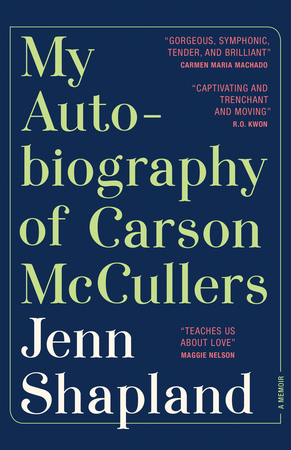
It’s hard for a woman to write about herself, her own life, for the simple reason that women have been positioned throughout history as objects, not subjects. Perhaps as a result of this challenge—the challenge of making yourself a subject—it’s not at all unusual for a woman’s memoir to have as its subject someone other than the author. In between telling your own story and telling someone else’s lies an overlapping mess of genres: autobiography and biography, fiction and autofiction, the speculative and the subjective. This in-between is where I’ve lived for the past seven years working on a book about Carson McCullers, but when I look back I see that I’ve dwelled here since I was an adolescent devouring the few women’s stories I could get my hands on—usually the stories of privileged, straight white women (who, I suspect, could snag a book deal as long as “memoir” was stamped on the front cover).
It only occurred to me recently how formative this specific subgenre—the memoir about someone else—has been in my own reading life, and how influential it was on writing my first book, which involved the relentless pursuit of someone else’s life story as a way to voice my own. My Autobiography of Carson McCullers began with finding a trove of love letters McCullers received from Annemarie Schwarzenbach, and led to cataloguing her nightgowns and cigarette lighters at the Harry Ransom Center, living for a month in her childhood home in Columbus, Georgia, and following her to Yaddo, where she wrote several of her novels. When I describe the book, I can finally hear how McCullers’ story has shaped the arc of my own life.
Often framed as stories of obsession, memoirs about other people are really about finding yourself in another person and articulating your identity through your relationship to them. Seeing yourself in someone else is a queer practice, though the books that left a mark on me, for the most part, weren’t queer. They were simply the stories of relationships: fandom and friendship, intellectual stalking and emotional shadowing.
I’m embarrassed by this formative book, which I probably pulled from my older brother’s shelf when I was in eighth grade. My best friend Kaitlyn and I were obsessed with The Doors, with Pearl Jam, with all kinds of terrible rock stars beloved by high school dudes everywhere. I’m not proud of it. But Ashcroft used her relationship to Morrison to write over five hundred pages about her own life, even though it’s his photo on the cover of her book. Deep down it’s a coming of age story about a woman navigating the heady patriarchy of late 1960s counter culture.
As with many true stories authored by women, Wild Child has been alleged to have been largely made up, and Morrison’s parents and legal team put a stop to its publication in the UK. While I didn’t know this at the time I read it, I remain dubious of those who question the author’s credibility, and unwilling to wade too far into the aged scandal. (One Goodreads reviewer writes, “She claims that she tried to have sex with him at the age of 15. Was Jim capable of statutory rape?”)
These days female friendship is at the heart of so many touchstones, from Broad City to Insecure to Sally Rooney’s Conversations with Friends. But in the early 2000s, it was Ann Patchett who showed me that a friendship, a relationship between women, could be the central driving force of a life story. I remember reading this when I was a teen and being blown away by the complex friendship at the heart of it between two young women writers trying to make their way in the world. “We shared our ideas like sweaters,” she writes. “We gave over excess words, a single beautiful sentence that had to be cut but perhaps the other would like to have.” I listened to it again recently on audiobook, and it still snaps.
Audre Lorde’s “biomythography” is the closest thing on this list to a memoir, a single life story, but it’s also the strangest memoir I’ve ever read. It begins “To whom do I owe the power behind my voice?” It’s about Lorde’s own life, but it reads like a novel. It’s also a collective memoir of her life through other women, formative mentors and role models and friends and girlfriends who shaped her and changed her perspective on the world. In the spirit of my proclivity for borrowing borrowed things—life stories, titles—I borrowed her epigraph (“In the recognition of loving lies an answer to despair”) for my own book.
Camus: A Romance came out right when I started working at BookPeople bookstore as a 22-year-old, and it’s possible I read it because the subject was so familiar—all through college I competed with Camus for the attention of my girlfriend, who was so into her thesis she started to look a bit like him. Peacoat lapel up, cigarette at a low angle. I now see how Hawes’ work informed my understanding of what a biography is and can be, how all biography is a complicated love story, and how all research is deeply personal.
Imagine, though, if you were sixteen and working at a bookstore in Buenos Aires, and Jorge Luis Borges walked in and asked you to read aloud to him. With Borges chronicles Manguel’s evenings spent reading to Borges from books the aging, blind writer knew by heart. At first, Manguel doesn’t realize that he’s stumbled into a part-time job that will change his entire life, but by the end the influence of Borges is all over the person Manguel becomes. Like Borges, he will go on to serve as the Director of the National Library, and he will devote his life to writing about books. Writers caretaking older writers and artists is a genre unto itself—another gem in this category is Eileen Myles’ short story “Chelsea Girls,” in which she works as an assistant to poet James Schuyler.Like each book on this list, these are autobiographical forays into mythmaking, affirmations of the fiction at the heart of how we relate to other people—especially those we come to idolize.
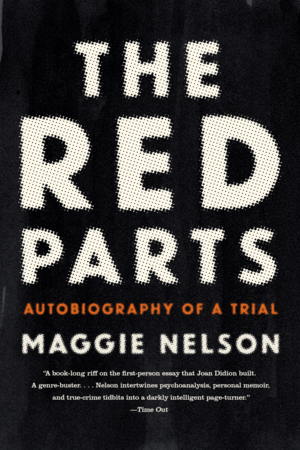
Maggie Nelson’s first book of prose is subtitled “autobiography of a trial,” so you know right away conventional genres are up for grabs here. It’s an instance in which she would say she’s “‘in drag’ as a memoirist,” using the still unfolding details of her aunt Jane’s murder trial to examine her own relationship to her family, her past, violence, and fear. It’s also a spin on the true crime genre, from the perspective of someone who moves fluidly from the role of unofficial detective to voyeuristic bystander to victim, as she tries to understand why the crime that occurred decades ago still has a hold on her.
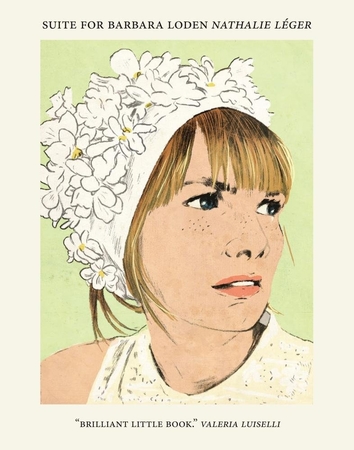
Given the prompt of writing a short film encyclopedia entry about the film Wanda, Nathalie Leger is unable to write anything without researching everything from “the history of the United States” to “the history of the self portrait” to “the invention of hair curlers.” I felt this exact desire when I first read Carson’s love letters from Annemarie: how could I begin to understand this one person’s story unless I learned everything about the time period, the ensuing years, queer women and their histories?
Leger sums up the structure at the heart of each of these refracted memoirs, including her own: “I felt like I was managing a huge building site, from which I was going to excavate a miniature model of modernity, reduced to its simplest, most complex form: a woman telling her own story through that of another woman.” Or, in some cases, through the story of a lizard king.
Electric Literature is excited to welcome Kima Jones, founder of Jack Jones Literary Arts, to its board of directors.
Jones founded Jack Jones Literary Arts in 2015 to support the work of writers of color through publicity services, a speakers bureau, and writing workshops. In addition to her work as a publicist and advocate, Jones is a poet and writer. She has received fellowships from PEN America West Emerging Voices, Kimbilio Fiction, Yaddo, and the MacDowell Colony, and her work has been published in GQ, Guernica, Poets and Writers, NPR,and McSWeeney’s, and was included in New York Times best-selling anthology The Fire this Time, edited by Jesmyn Ward. She was the recipient of the 2019 Energizer Award for Exceptional Acts of Literary Citizenship by CLMP.
Jones is also an active supporter of the literary community at large, and serves on advisory boards for the Rumpus, theAnisfield-Wolf Fellowship, the Black Mountain Institute and its flagship magazine, The Believer, and the Loft’s literary festival, Wordplay.
Jones brings her passion for community-building to Electric Literature. “As a representative of West Coast publishing interests, I’m very excited to help Halimah and her team expand its programming and reach outside of New York and the East Coast,” said Jones, who will be Electric Literature’s second board member outside New York City and its first on the West Coast.
“EL’s mission is to make literature more exciting, relevant, and inclusive,” said EL’s executive director, Halimah Marcus. “That means remembering that the literary world doesn’t start and end in New York—or in the U.S. We have contributors from all around the country and the world, and we plan to keep expanding our focus both nationally and globally.”
Kima Jones joins newly appointed board members Meredith Talusan and Nicole Cliffe, as well as long-time board members Sean McDonald (Executive Editor and Vice President, Farrar, Straus, & Giroux), Danielle McConnell (Publisher, BookForum), Sara Nelson (Executive Editor and Vice President, Harper Collins), Pulitzer Prize–winning author Michael Cunningham, and board chair Andy Hunter (Publisher, Catapult and Lit Hub).
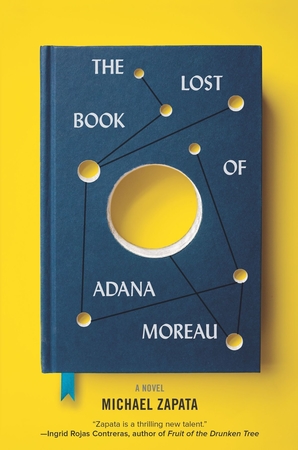
Some years ago, while visiting family in Ecuador, my grandfather casually remarked that his father Manuel Zapata Mariño, a leftist political exile who founded a farming village in the Andes, had also been a poet hiding in plain sight and that a journal of his poems had been missing for decades.
At that time, in what might be best described as accidental mimesis, I was in the foggy middle of writing a novel about a lost science fiction manuscript written by a Latin American refugee from the 1920s. At some point, while both finishing the resulting novel, The Lost Book of Adana Moreau, and searching for my great-grandfather’s poems, which my grandfather incredibly discovered on his 100th birthday, I began to wonder about the innumerable books condemned to the abyss by personal and historical ruptures of space and time, and all those books nearly lost to history which, through impossible odds, still reach us like shadows from other worlds.
In many of the rebellious works of literature listed below, we have an extraordinary reminder that the record of history is never permanent.
Here are ten works of literature that were lost and then saved by a hair:
Predating Indiana Jones by 128 years, the Assyriologist Hormuzd Rassam discovered 12 incomplete Akkadian-language tablets containing the Epic of Gilgamesh in the ruins of a royal library in Nineveh. In the epic, when the gods kill Gilgamesh’s frenemy Enkidu, he sets off on an epic and dangerous journey to discover the secret to eternal life, only to be hoodwinked by a (suspiciously familiar) serpent. Gilgamesh returns home to Uruk, reconciled with his mortality. “Indiana, we are simply passing through history.”
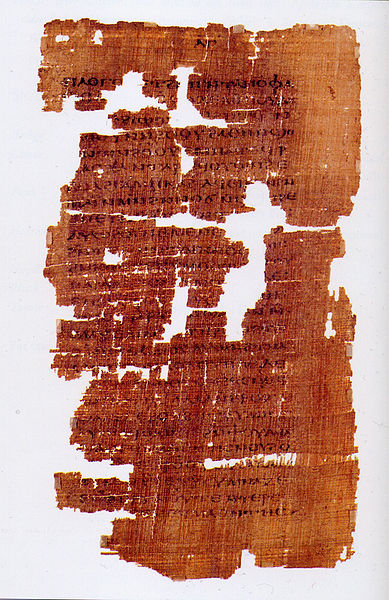
In what amounts to the greatest double plot twist in human history, a leather-bound Coptic language papyrus document looted from an Egyptian tomb in the 1970s and discovered decades later languishing on the black market, reveals that Judas and Jesus are holy besties and that Jesus asks Judas to betray him to the, no doubt, increasingly confused Romans…but then, after the credits roll (and more Gospel scholars and Scorsese get involved), Judas is exposed as a dark agent/human alter ego of the king of demons, Ialdabaoth, and we learn that Jesus is sacrificed not to God but to the demons.
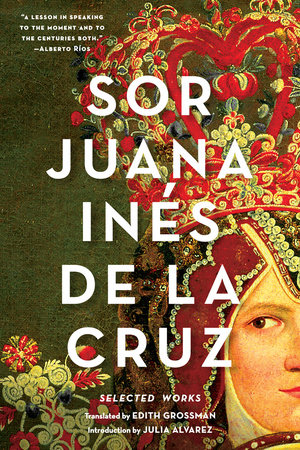
Sor JuanaInés de la Cruz—The Tenth Muse, the Mexican Phoenix, the First Feminist of America—was a 17th century writer and Hieronymite nun. Ever defiant against a colonial-minded and obstructive hyper-patriarchal church, she was forced to sell all of her estimated 4,000 books—the largest library in Mexico at that time. Of more than a hundred works of her own writing, only a few have survived—reportedly saved by the Countess Maria Luisa de Paredes, vicereine of Mexico, to whom de la Cruz often wrote love poems. What did survive—including the brilliant and subversive prose letter Reply to Sister Philotea, written in 1691 in response to a bishop’s injunction against her work and in defense of women’s rights to an education—serves as a radiant and profound reminder that literature can move mountains.
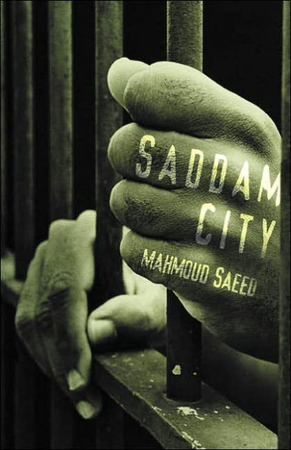
Saddam City is a scathing, Kafkaesque indictment against Saddam Hussein’s regime and the modern world’s tendency to drift toward tyranny. Saeed, who was a political prisoner three times over and whose work was often banned or destroyed, hid the early unpublished pages of this novel (along with remarkable others) in plastic bags in the tank of his toilet before fleeing Iraq with them.
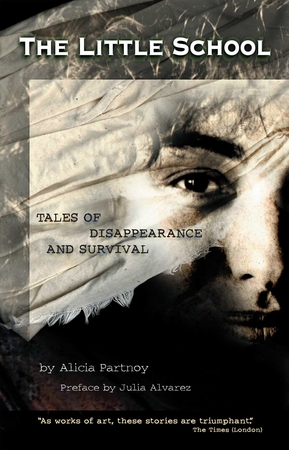
In 1977, in the midst of Argentine’s Dirty War, student activist Partnoy was abducted from her home in Bahia Blana by secret police and taken to a concentration camp called “The Little School.” This profound and acutely compassionate memoir, recounting her horrific experiences and solidarities with other prisoners as seen through a tiny hole in her blindfold, was smuggled out and first published anonymously in human rights journals.
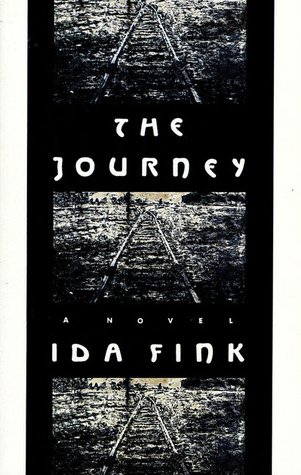
Like the two Polish-Jewish sisters in her deeply stirring novel, Fink and her own sister survived the Nazi regime by concealing and often changing their identities. In fact, cheating a little here in the parameters of this list, Fink’s entire oeuvre is a complex excavation of mutable and imagined identities, memories, and survivals. “Did you ever see someone who was killed in the war, but who is still alive?” she writes in her short story “Cheerful Zophia.”
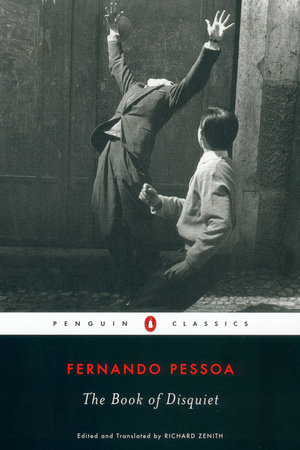
Long before the (depending on your elected tastes) scourge or muse of autofiction, Pessoa created up to 75 alter egos. One of them, Bernardo Soares, filled this impossibly strange, impossibly beautiful, incomplete, and fragmented “factless biography.” Like all Modernist masterpieces, it was discovered in a domed, wooden trunk replete with some 25,000 unpublished manuscript pages and published 47 years after his death.
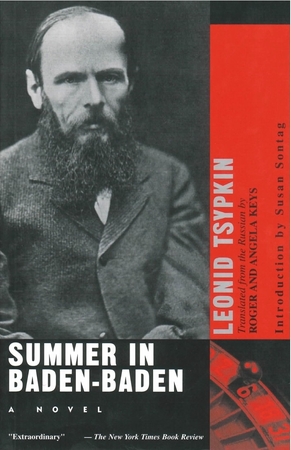
This revelatory genre-inventing masterpiece follows the Dostoyevsky-obsessed Tsypkin himself on a train headed to Leningrad as he reads a (fictionalized) memoir written by Anna Dostoevsky that eloquently recounts a trip she and Fyodor—so manic, so messy, so astronomically brilliant—took to Baden Baden in 1867. Tsypkin, a doctor and medical researcher who hid from Stalin’s anti-Semitic campaigns on the staff of a rural psychiatric hospital for seven years, never saw a single page of his work published in his lifetime. A journalist friend of Tsypkin’s smuggled the original manuscript out of the Soviet Union.
Not a nearly lost work of literature so much as a tragically forgotten one, Hurston’s achingly lovelorn, once-controversial novel was almost pushed to the dustbins of literary history before being rediscovered and praised in the 1970s and 1980s by luminary and rebellious writers like Audre Lorde and Alice Walker. This makes perfect sense as the self-determination of Hurston’s heroine is nothing less than radical and was decades ahead of its time.
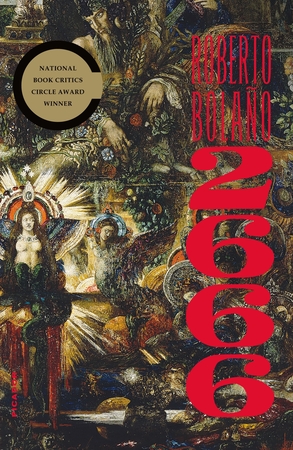
Famously, Bolaño wrote his meteoric, apocalyptic magnum opus while waiting for a liver transplant, pursued both by his own impending biological (if not literary) death and visions of an impressionistic global literary future full of soccer matches “between a team of the terminally ill and a team of the starving to death.” Published a year after his death, 2666 is everything a novel could ever beand it leaves its readers blinking, like Bolaño, into the abyss.
Sue Rainsford’s Follow Me to Ground is the story of Ada and her father, two not-quite-humans who possess the power to heal sickness by burying ill and hurt people, or Cures, in an area called The Ground. They live as semi-outcasts, both feared and revered by the local Cures, until one day when Ada begins a relationship with a man named Samson and their way of life is threatened by Ada’s awakened desires and Samson’s mysterious past. Part fairytale, part myth, with a touch of horror and a heavy dose of magical realism, the book is unsettling in the best way. Ada’s otherness allows us to see human illness at a remove and to consider what it might mean to be truly healed.
I met Sue Rainsford in 2007 when we were both studying at Trinity College Dublin. I was taken with her writing from the first time I heard her read and knew then that it wouldn’t be long before I held her published work in my hands. Since then, Sue has earned her MFA from Bennington College and has been the recipient of multiple grants from the Arts Council of Ireland, as well as a MacDowell Colony Fellowship. She is currently the writer-in-residence at Maynooth University in Ireland.
We spoke over video chat about writing desire and the female body, subverting the gendered tropes of writing sex scenes, and monstrous women in fiction.
Shayne Terry: One of the many things I love about this book is how viscerally it portrays the female body in various stages of life. The Cures that Ada works on are pregnant, birthing, menopausal, and she describes their bodies—and their bodily fluids—in clinical detail. The gaze is not a male one, but because Ada is otherworldly, it’s not quite a female one either. How did you approach writing the female body in this work?
Sue Rainsford: Going into the book, I had two concerns. I had just read Simone de Beauvoir’s The Second Sex and had become really drawn to this sort of imagistic and poetic language that she and people, to a lesser extent, like Julia Kristeva use when they’re writing within this psychoanalytical or existential genre. They still find themselves going to this really dense, often metaphorical language to talk about the female body. And I wanted to question that impulse, why it’s so ingrained in us, as women, to write about ourselves that way, and also to tackle it a little bit. It sounds sort of paradoxical or oxymoronic because I’m writing through a sort of magical realist lens, but I wanted to see what would happen if the images ascribed to the female body were made play out in the real world. To look at the female body functioning, and this idea of fluid, that the leaking body or the staining body is this sort of infectious, contaminated vessel. This is what the female body is doing at all times: it’s making substances, it’s leaking substances, it’s holding substances or failing to hold its substances, and I wanted to focus on those processes that so often prove offensive to people.
I wanted to write about the female body functioning, and this idea of fluid, that the leaking, staining body is this infectious, contaminated vessel.
And then a big fixation of mine at the time of writing the book was how we as women—and women as an inclusive term—might experience our bodies if we weren’t so thoroughly enmeshed in Western discourse. So, for example, when Samson and Ada first have sex, Ada sees herself as swallowing Samson or consuming Samson. She doesn’t see herself as being penetrated or owned or invaded or perforated in any way. I was trying to look at female bodies without the backlog or the weight of gendered discourse. Obviously, it comes through because I’m a product of my environment and my education, but I was trying to, like you say, not fall into any of the conceits of the gendered gaze.
ST: And I think you accomplished that beautifully. Ada doesn’t start out having a vagina; it’s something that develops with her desire. Desire comes first and the organ follows.
SR: That is something that I included relatively late. I left the book alone for a long time, and when I came back to it, I realized, because I’d been looking at Kristeva, de Beauvoir, Elizabeth Gross, that a lot of the metaphors I’d been working with seemed reductive or biologically deterministic. I wanted to include something that broke out of too stringent a second-wave feminist template, something that shows how the female body can change and expand and grow into its own form, and again literalizing this idea that woman is not born, woman is made. She makes herself and her desire changes the topography of her body.
ST: The story has echoes of the Biblical story of Samson and Delilah, which many have interpreted as being about the treachery of women and the dangers of lust. Our Samson is also betrayed, but this story is more complicated. Ada is the superhuman one, and it is her powers she risks by pursuing the relationship. And though FMTG does explore the dangerous side of desire, there is no parable here. Sex and desire and even love are neither good nor bad in and of themselves, and the text passes no judgment on Ada’s desire. Was the Biblical story in your mind when you were writing, and did you intend to subvert it?
SR: Samson does come from the Biblical story, but I studied art history, and, especially with 17th-century Italian painting—Artemisia Gentileschi, Caravaggio—something that always struck me about Biblical painting of that timeframe was these huge, muscular men and this almost excess of male flesh. Same with the painterly depictions of women, but with the men, just the way Samson was painted, visually, this spent testosterone or this spent masculinity struck me. There’s something, within art history, transgressively sexual about a totally depleted male. I wanted to spend time thinking about a male body that is castrated in metaphorical ways.
There’s something transgressively sexual about a totally depleted male. A male body that is castrated in metaphorical ways.
I’m really glad you feel that there’s no judgment in those scenes. I didn’t want the book to be in any way polemical, but I did want to write a version of femininity in which Ada pursues her desires in an unapologetic way. There’s that story by Margaret Atwood about this woman who goes on a cruise, and she’s this black widow type who murders men and steals their fortunes. There’s a flashback in that story where you realize that one of the men she sets her sights on raped her when she was in secondary school. And I just thought, yeah, sometimes you get to kill your rapist. When it comes to female salvation within fiction, often the quieter moments are expected to resonate: the woman alone in her room afterward, having decided to take a higher moral high ground or having decided to sacrifice some element of herself. I wanted to counteract that.
ST: Ada certainly has the capacity for violence. She is also surprisingly uncaring toward the Cure women, almost to the point of cruelty—she heals them, but she has very little sympathy for their pain. How did you go about crafting this monstrous character while still giving the reader space to cheer her on? Because we do! We want her to be happy.
SR: It’s interesting that you observed her being uncaring toward the Cure women. As you know, I have endometriosis, so I have this long relationship with my gynecologist, who is wonderful, but as I was working on early drafts of the book, I was thinking about just how strange Western medicine is. You go to the doctor and they perform with you all of these strange intimacies. You’re in this emotional and physical proximity to someone you never see outside this room, and they glean all of this information from your body. They can tell things about you that you don’t know about yourself, just by looking at you. And that seemed to me the most intense form of violence.
I think people really identify with Ada because she’s so lonely, but she doesn’t know what her loneliness is. She’s been born into loneliness, and once she’s awakened to her desires, she feels them very intensely. And her relationship with Samson, which is hugely flawed and imperfect and holds all of these transgressive elements, maybe that’s what resonates with people, but I’m not sure to be honest. I’m still sort of surprised that people are on her side. Sometimes I think it’s that very basic writing conceit of giving a character desires and giving a character obstacles. But I’ll never get tired of hearing why individual readers side with her or cheer her on.
ST: Going back to this idea of sickness and the doctor/patient relationship in the Western paradigm—I, too, have a history of gynecological and obstetric issues, so this theme hit home for me. The book’s central question is really, “What does it mean to be sick, and what does it mean to be healed?” Ada and her father are not truly healing these people, are they? Part of what the Cures are searching for is emotional healing—I’m thinking of Lorraine, a Cure who keeps showing up even though, technically, nothing is wrong with her or Samson’s sister Olivia, who bears a moral burden over the paternity of her unborn child—but that’s not the kind of work Ada does. Father says, “Once they start talking heart and mind, you ask to be paid.”
It makes me wonder: what do we look for in our healers? Because illness can be traumatic. As Ada says, “a couple of the curings became local folklore and got told over and over, getting longer and stranger each time.” And isn’t that how we are with our worst sicknesses, turning them into stories, trying to find healing by putting a narrative to them?
We all live under the burden of the illusion of wholeness and that wellness or a consistent contentedness is an attainable thing.
SR: There is this strong connection between narrative and the healing process as we view it here in the West. And we sometimes conflate our sicknesses with our personalities; people blame themselves for their sickness, or your illness can start to have a real effect on your lifestyle. Reading Foucault’s History of Sexuality, there’s this idea that you used to go to the priest to confess and now you go to the doctor. As individuals in Western society, we’re so fixated on this idea of someone that you “go to” to divulge things about yourself, and they take all that away and they narrativize it and they compartmentalize it and they hand it back to you in a way you can digest. Therapists fill that role for people as well, but with a therapist it’s straightforward—that’s what they’re there to do. With doctors, people are going through this side door because maybe they don’t want to acknowledge fully what it is they’re looking for.
I love that you say the Cures are not really cured. We all live under the burden of the illusion of wholeness and that wholeness is an attainable thing, wholeness meaning wellness or a consistent contentedness. When Lorraine starts coming to see Ada, for example, Ada is confused because what Lorraine is dealing with is her menopause.
ST: The story has no stated setting or time period. We understand that it’s a rural farming community and that, sometime in the past, there was a war. Some have suggested that it takes place in the US, in the Deep South, partially due to the long days of heat and sun. But the story feels undeniably Irish to me, in both its lyricism and its subject matter: the forbidden, the female body, the mother. Are there particular Irish texts you felt you were in conversation with when writing FMTG?
SR: That close relationship between language and a girl’s growing awareness of herself was really important to me. And she just throws everything out the fucking window in that book. It was so freeing. That dense, dense unapologetic lyricism. I was just infatuated with it.
In terms of landscape, it’s funny because so many people have said it feels like the Deep South, and I’ve never been there—I would love to go—but I am really interested in how the atmosphere of a landscape bears down on a person and how consistent, intense heat affects your state of mind. Misty heat, when it’s hot in the morning and hot in the night, and there’s no respite from it, and how it affects the way you look at your body and feel your body. What sex is like in that kind of atmosphere because you’re just making yourself hotter by forcing yourself into proximity with another person. What it does to desire and what it does to even the most daily activity, even just being in the kitchen because the kitchen’s hotter anyway.
ST: But then The Ground itself is so reminiscent of an Irish bog, which can preserve bodies for centuries.
SR: The bog aspect of it came into the writing in a subconscious way. It’s probably one of the few big nuggets of the book that I didn’t curate, because it did start off as a quite conceptual undertaking, and I had to work to get it functioning as a piece of fiction as well. The very first scene used to be Ada and Father digging Lorraine’s grave, and that kind of came to me as this weird photograph when I was down in West Cork, surrounded by that very poetic, dramatic landscape. It’s not really the type of landscape that people think of when they think of Ireland. It’s rocky and arid and so much of it is untraversable because the gorse is growing in such dense knots. But it is very much Irish.
ST: A major theme of the book that we haven’t yet discussed is mothers. It seems to me that the text is writing around the figure of the mother. Ada has none. The Cures we meet who are mothers we see in the context of Ada saving their dying babies (except in the case when she doesn’t). We see Olivia pregnant, but we never see her in her role as a mother—and even then we know she is a sort of monstrous mother figure.
SR: Oh, she’s the worst, yeah.
ST: Father tells Ada that it’s “unspectacular business, coming into the world.” But that’s not really true, is it? FMTG is all about birth—how it comes about and the many ways it can go wrong.
We punish female bodies, but we really punish the maternal body.
SR: I love what you say about how the book moves around mothering; we see lots of mothers, but we don’t see them mothering their children. In Ireland, largely because of the Catholic Church, we’ve always had this problematic relationship with mothers. We punish female bodies, but we really punish the maternal body. All of these things were in my head while I was writing, Repeal the 8th [a movement which, in 2018, led to the Irish people voting to repeal the 8th amendment to their constitution, allowing the government to legislate for abortion], Survivors of Symphysiotomy—
ST: What is symphysiotomy?
SR: There were these women who were basically experimented on during childbirth in hospitals around Ireland, and who started speaking out and organizing in 2012. These women had had their pubic symphysis, the joint in the center of the pelvis, severed with, essentially, a saw to enable vaginal birth. At the time, Caesareans were considered a form of contraception and, of course, the Catholic Church did not approve of contraception. Catholicism is so entwined with the Irish state, with these religious orders behind hospitals, that you basically had these women being butchered so that they could proceed to have multiple children vaginally. And many of them weren’t even told that a procedure had been performed on them; they were just told this was childbirth. So they would go home, they might be incontinent, in acute pain for the rest of their lives, sex was agony, but very rarely did someone say, you were subjected to, without your consent, this vicious procedure, and that’s why this part of your body has been destroyed.
ST: That’s awful. I had no idea.
SR: At the time that I was writing, there was a lot of coverage about it. They put together this document for the UN and the UN classified it as a form of torture. All that was very much at the front of my mind, thinking about Lorraine especially and about what we punish women for. We ask female bodies to perform their childbirth function so thoroughly, and then as soon as you have fulfilled that role, then you’re spent and you move into another phase—a menopausal body. And menopausal bodies are punished for going outside of their prescribed boundaries, so a menopausal body that is feeling sexual desire is seen as gross and taboo. As I was thinking about this idea of uncompromising female desire, I also wanted to show maternal bodies doing all the things they’re not meant to do, to drop the maternal body into these situations where it’s doing things that we find horrific and asking then, why do we find these things horrific? Sometimes, of course, they genuinely are horrific, as with Olivia and the circumstances of her pregnancy. But the maternal body is something that we try so hard to control that it was interesting to me to try and provoke those templates a bit. And that’s something that I’m trying to do in my second book, as well—I haven’t quite gotten over that.
If you pick up a Tochi Onyebuchi book you can always expect something hard-hitting, fantastical, and continually relevant, no matter where you’re from.
Onyebuchi’s novella Riot Babyspans time, place, and reality, following siblings Ella and Kevin (Kev) through pain they witness and experience personally. The book begins on the day of the 1992 L.A. riots—after the acquittal of the cops who attacked Rodney King. On this day of upheaval and duress for Black communities, the effects of which sadly reverberate to this day, “riot baby” Kev is born. Ella has a front-row view of not only the fires flaring around her, but of those that have burned through generations of oppression: a “gift” that feels like a curse, a Thing inside her. Ella’s twin traumas of violence and her “gift” carry through to the present day, as she’s burdened with knowledge, emotions, and powers she’s not immediately able to control. When her brother is assaulted by police and arrested, Ella must try to find a way to utilize this Thing for actual change in the larger world and within her family, starting with Kev.
This is Onyebuchi’s fourth book, so it’s not his first time exploring the dynamics of race, our pasts and futures, and how power structures aim to inhibit rebellion. It was a pleasure to talk with him about those themes, what makes a “villain,” and how social media and more awareness of the wrongs in the world can be a burden carried both by his characters and by us in our day-to-day lives.
Jennifer Baker: I wanted to start with the superhero mythos and the differences in building a stronger narrative. In Riot Baby we’re really looking at character building. This isn’t an origin story. You’re depicting how a person deals with differences within the society that made them and how society further makes them when they have this attribute (Ella’s “Thing”) that can be incredibly volatile.
Tochi Onyebuchi: I love how power can congregate characters. So you have the hero, and it’s generally understood that as the hero unlocks more and more of their powers, it’s generally a power that comes from within them. It’s not necessarily a power that’s granted to them from an external source. There are all these instances of characters in tough situations unlocking something within them, or there will be a very emotionally tense situation in the midst of a battle, and they have that moment where they tap into something that ignites them, and allows them to save the day. So there’s that trope, but another one that fascinated me were those deal-with-the-devil mythos, where you have this quest, but you’re not powerful enough to fulfill it right now. But, you make a deal essentially with this external phantasm to grant you the power to fulfill that quest. But there’s a dark side. You don’t think you’re a villain because you’re going to, for instance, avenge your loved ones. You don’t think you’re a villain, but over the course of that you become a villain. The power you tap into goes feral. It allows you to lose the essence of what it’s like to be human. That was always something that really fascinated me, which was that you have your powers, but we’re always going to be human. We’re going into the future and we’re still going to have, at least in my imagination, racism, classism, misogyny, all of those things in space. It’s not like we’re going to leave the atmosphere and those things vanish or they get stuck in orbit and then once we transfer we’re free of those baser impulses.
JB: That perceived freedom isn’t an option, it seems, even for your characters Ella and Kev.
TO: Yes, exactly. When you have a character like Ella who, like a lot of Black kids in general growing up in the recent past and present of America, where there’s constant racial trauma that’s happening, and you grant them super powers, they’re going to be taking their trauma with them. It’s not as if the powers erase memories of families or siblings that are lost in a shooting. It’s not going to erase all those memories of microaggressions, like how they tried to get off an elevator and a white lady walked on before they had a chance to get off. That was definitely really important to bring to the character of Ella, and also to Kev. They have really interesting journeys with anger, like whether or not anger can be productive.
What would it look like to have a hero, or potentially an anti-hero, who has that anger, that drive that’s in a lot of protest movements?
I think with a lot of the protest movements that have been happening lately in the United States, one of the things that I’m constantly noticing is that the powers-that-be will try to quell that anger and try to police how protests happen. “Oh, you shouldn’t be blocking the freeways. Oh, you shouldn’t be making so much noise. There are better ways to protest.” In each instance, they’re trying to leach the protestors of their anger. I think in a lot of ways anger is the catalyzing ingredient. When you have a protest without anger you’re defanged. Anger is that engine that’s driving it. What would it look like to have a hero, or potentially an anti-hero, depending on how you look at Ella, who has that anger, that drive that’s in a lot of protest movements, and she has this power, right? And Ella has a very different journey with anger than Kev because Kev starts from a very strong personal angle. It’s very localized and very immediate, and basically all the things being lower class and Black in urban America, all the things that could trigger that anger. It takes him through incarceration, and one of the things that he learns, one of his transformations, is how to quell that anger because you see how it can become a destructive force in his life. That’s the lesson he’s sort of taken from it. “Okay, anger got me into a lot of these situations. Anger got me here. If I just play the game, I can make parole. I can live a peaceful life. I can be a free citizen again.” But Ella is like, “Look, all the things that made you angry are still there, and it’s not going to change if you’re not angry enough to change it.” For me it was very, very important to have anger be such a vital ingredient in their journey.
JB: When it comes from quelling the anger, “don’t be angry” or “I just don’t want you to be mad at me,” all these things that push against pain, because people just want us to all just get along. You kind of tap into that with the Rodney King introduction.
TO: That was one of the things that was going through my head as I was writing this. It’s funny because with that particular chapter, even though it’s the first chapter in the book, it was the last part that came to me. In a way, it was the thing that tied everything together. Because before, it wasn’t necessarily this disembodied journey that these two characters were going on, but it didn’t necessarily have the center that I wanted. That’s why working with [my editor] Ruoxi Chen was such a dream because she helped nudge me, she pushed me to look for it. I was like, “That’s it!” This is the thing that made them. This is the thing that they came out of. Once that happened, it all clicked, and when I was writing it, I was thinking of Rodney King and “why can’t we all just get along.” There were thoughts that kept coming up in my head saying, “because you won’t let us.” If it were up to us, maybe things would be different, but they won’t let us. That was a big thing for me. Looking at the current political situation, Black people, people of color, we’re all voting the way that we need to vote to change things, but it’s the rest of the world that’s messing that up, right? We didn’t get 45 elected. You all did.
JB: And that’s essentially the conversation that Ella is having with Kev.
We can’t just play the game. We have to break their shit.
TO: Exactly. There’s a very personal connection to it, where it’s like, “Okay, you just gotta survive this. Let me help you through this.” But there’s also the complication of, “Well, this is the situation. This is the dynamic. We can’t depend on them to change it.” The change we need to enact needs to be rapid, it needs to be all-encompassing. We can’t just play the game. We can’t just protest or make noise the way they want us to make noise. We have to break their shit.
JB: From the get go, Ella seems so in tune with her body, the world, everything. It feels like at no point is she allowed relief. And Riot Baby re-emphasizes what we just said: That knowledge is power, that ignorance is bliss, but knowledge is necessary, but you’re burdened with knowledge. You’re burdened with awareness. I don’t think it’s horrible to have, but I do feel like it’s a burden in the world that we live in today. It really feels like that symbolism is very, very key here.
TO: That’s definitely a dynamic that I wanted to replicate with this book. You don’t have to wait for the police to release the footage of the shooting. You will get the Facebook livestream. All of a sudden we’re all exposed to this vicarious trauma, that we might have been shielded from it in the past. I heard about Sean Bell and about Amadou Diallo, but I saw Philando Castile die. It’s the same event, but you witnessed that event. And that did something to me.That did a very very big thing to me, and that might not have happened if I hadn’t heard about it in the Chicago Tribune or the Chicago Reader or read about it in the Times or the Washington Post or something. I think it’s important to know these things, but it can be a burden. For black people, for people of color that are constantly dealing with this reality of living in an oppressive society, it’s that added burden of, “Oh, also this is happening.” Even though it’s not in a place where I live this is also happening. What I think it is for white people who don’t necessarily have to deal with an environment of constant microaggressions, constant questioning of their experiences, constant gaslighting with regard to experiences based on their race, they find out about this thing, and they’re like, “Oh, I didn’t know this was happening before. Now I know.” Or “I didn’t know this was happening before, but I need more evidence to believe.” They’re starting from a different place, and so it’s very interesting to see what is happening with the conversation with regards to the necessity of this kind of burden. For Riot Baby, a lot of it is based on people I know, people that I’ve met, the stories and the experiences that they’ve told me. These are all real stories. Those are all very, very real stories. But my impression, fair or unfair, is that a lot of the readership don’t really know about people like this. They don’t know people in Rikers. They don’t know what happens there. They know, maybe, academically that people are there, but they don’t know that they’re human beings that are having these experiences.
You don’t have to wait for the police to release the footage of the shooting. You will get the Facebook livestream. All of a sudden we’re all exposed to this vicarious trauma.
JB: To me there’s an elevation in conversation by utilizing the speculative perspective. This genre elevates the story in a way that, I think, forces us to look at things in an even more realistic way than if it was just a “straightforward” story. Do you feel similarly?
TO: Absolutely. I also have a personal investment because it’s what I grew up reading and writing. It will always be my first love. One of the things that speculative fiction does is it operates on two levels simultaneously. It has more than one reality. A very obvious example is the civil rights struggle. You can make all these parallels. You can also have all these quote-unquote stories, and you can have all these issues. I think in the past, the characterization would be that these issues would be leveled in, like “Oh, this would be a parable about gender roles.” You look at Parable of the Sower or The Handmaid’s Tale and see all the different messages with regards to gender dynamics and gender repression and, in at least in Parable of the Sower, racial oppression. There’s this plot that drives the story forward, and you can really extrapolate situations in a way that if you’re writing literary fiction that didn’t necessarily have even any fabulist elements to it, you might have to cover a longer period of time or you couldn’t venture into the future and speculate about what it would be like or how the continuing of certain socioeconomic trends would impact the public. And with speculative fiction, you have this freedom to do that, and what I think is fascinating is that you loop that back on a story that is grounded in this almost photo-realistic present. So that was something I wanted to do with Riot Baby, which was really drive messages home and not have to risk that what I was saying about race being buried underneath levels of allegory.
Each “Unfinished Business” will examine an unfinished work left behind by one of our greatest authors. What might have been genius, and what might have been better left locked in the drawer? How and why do we read these final words from our favorite writers — and what would they have to say about it? We’ll piece together the rumors and fragments and notes to find the real story.
In November of 1996, Orchises Press, a tiny independent publisher in Alexandria, Virginia known mostly for putting out small books of poetry, quietly began to tell booksellers that early the following year it would be publishing the first new book by JD Salinger since 1963. The book had an odd title, Hapworth 16, 1924, and would mark the first break in the reclusive author’s decades-long silence. Curious Salinger fans soon were even able to preorder the book on a new bookselling website, Amazon.com.
There was no official release date set, but it was said to be expected in April. But as April arrived, a notice went up on Amazon.com saying that the publication was delayed indefinitely. In the end the book was never published, and neither was anything else by J.D. Salinger, even after his death thirteen years later, in 2010.
In the end the book was never published, and neither was anything else by J.D. Salinger.
What was Hapworth 16, 1924, and why had it almost—and then not—been published? Only recently have readers finally begun to get some answers. The saga of Salinger’s missing book spans decades, involves a 20,000 word New Yorker story about summer camp, former New York Times book critic Michiko Kakutani, billionaire Jeff Bezos, and a man named Roger Lathbury who dreamed of bringing his favorite author out of hiding.
Today, most readers know J.D. Salinger for his 1951 novel The Catcher in the Rye and its protagonist Holden Caulfield. The novel remains widely-read around the world and is assigned often in high school English classes, despite perennial debates about its continued relevance. J.D. Salinger spent the better part of the 1940s writing stories about Holden and the Caulfield family, sending pieces like “The Last and Best of the Peter Pans” and “A Slight Rebellion Off Madison” to editors at Story Magazine and the New Yorker, even while he was a soldier in Europe during World War II.
But after the success of Catcher, Salinger turned his devotion to another character, and another family. In January 1948, the New Yorker published his story “A Perfect Day for Bananafish,” later collected in Nine Stories (1953), in which a young man named Seymour Glass, freshly home from the war, has a lengthy chat with a little girl on the beach, and then goes back to his hotel and shoots himself. The story cemented his reputation in the literary world, three years before Catcher, and earned him a spot as one of the New Yorker’s frequent contributors. It also cemented the character of Seymour Glass in his literary work, and ever since writing the story, Salinger returned, over and over again to Seymour and his brothers and sisters in the Glass family.
In 1961, he published Franny and Zooey, a book containing two previous stories from the New Yorker involving Seymour’s two youngest siblings. Then in 1963, he repeated this move, taking two more New Yorker pieces and gathering them into Raise High the Roof Beam, Carpenters and Seymour: An Introduction, with both sections surrounding Seymour yet again.
Most consider this fourth book to be the last Salinger publication before he entered a reclusion that would stretch on for nearly 60 years to his death.
But there is another.
Two years later, in June of 1965, the New Yorker published a 20,000-word short story by Salinger titled “Hapworth 16, 1924.” It is, in fact, the author’s true final publication, and it takes up almost the entire magazine. Today, those with a digital subscription to the New Yorker can still read the entire thing, online, but at the time one would have to find a rare, physical copy. “Hapworth” is “like the Dead Sea Scrolls of the Salinger cult,” critic Ron Rosenbaum explained in a 1996 New York Observer piece. (Surviving print copies of the New Yorker issue currently sell for $250 and up.)
“Hapworth” is written in the form of a (very long) letter sent home by Seymour at the age of seven, while he is away at summer camp. Only instead of recounting his time fishing on the lake, or making charm bracelets with the other children, Salinger has Seymour writing like no seven-year-old who has ever lived.
“Bessie! Les!” (he addresses his parents). “Fellow children! God Almighty, how I miss you on this pleasant, idle morning! Pale sunshine is streaming through a very pleasing, filthy window as lie forcibly abed here. Your humorous, excitable, beautiful faces, I can assure you, are suspended before me as perfectly as if they were on delightful strings from the ceiling!”
Discussing a fellow camper named Griffith Hammersmith, he says, “Oh, what a heartrending boy he is! His very name brings the usual fluid to my eyes when I am not exercising decent control over my emotions; I am working daily on this emotional tendency while I am here, but am doing quite poorly.”
He goes on and on, mixing little reminiscences with spiritual advice, eventually asking if someone can send him “The complete works again of Count Leo Tolstoy. … Charles Dickens, either in blessed entirety or in any touching shape or form.” And if that wouldn’t be enough to last anyone a few years, let alone a few weeks, Seymour also requests all of Proust, in the original French.
Critics almost universally hated the story, unable to work out what is meant to be going on.
Critics almost universally hated the story, unable to work out what is meant to be going on in “Hapworth.” Is it total self-indulgence? Some kind of satire? It marks a sharp departure from his early realist style, and even from the already unpopular didactic spiritualizing that marked “Seymour: An Introduction” a few years earlier.
But many devoted Salinger fans dearly loved “Hapworth” and found much to enjoy in Seymour’s oddly pretentious, insecure, and homesick letter. One such fan was Roger Lathbury, then 18 years old. And as he grew up and eventually became an editor at Orchises Press in Virginia, he never forgot the strange lost story of Seymour at summer camp.
In a New York Magazine article called “Betraying Salinger,” Lathbury finally shared in 2010 how he almost turned the piece into Salinger’s first new book in over 30 years.
In 1988, Lathbury sent a letter addressed only to “J. D. Salinger, Cornish, NH,” hoping the post office would deliver it properly. In it, he confessed to his love of “Hapworth” and suggested that Orchises, as a small publisher dealing mostly in reprints of classics and books of poetry, would be a good match for the private author.
Eight years passed with no response.
Then in 1996, Harold Ober Associates reached out to get more information. In a subsequent phone call with the agency’s president, Phyllis Westburg, it was confirmed that the author was seriously considering the arrangement.
Two weeks later, Lathbury received a letter from Salinger, written on a manual typewriter. Then, over the phone, they discussed “Hapworth” and Lathbury recalls Salinger saying, “he thought […] was a high point of his writing.” They arranged to meet at the National Gallery in Washington, D.C.
Lathbury retyped the entire 20,000-word story from the original New Yorker issue, and formatted it as he imagined it might look in Salinger’s exacting specifications for book form.
“We went over small details of bookmaking. (Running heads at the top of the page? No. The fabric headband at the ends of the spine? Plain navy blue. ‘Can’t go wrong with that!’ Salinger said, with an explosive laugh.) The cover would carry just the title and, below it, his name. There would be no dust jacket. I showed him a mock-up of the spine, and when he saw the horizontal type, he said, warmly, ‘Oh good.’”
Lathbury discovered that part of the appeal for Salinger was the limited distribution abilities of Orchises Press.
“He told me, ‘Nothing would make me happier than not to see my book in the Dartmouth Bookstore.’”
Salinger’s ideal publication run would be limited and under-the-radar. He wanted his name removed from the cover entirely.
Salinger’s ideal publication run would be limited, under-the-radar, and relatively inexpensive. Later, it would come out that Salinger wanted the books to be sold only at retail price, with no mark-up for the store at all—and that he wanted his name removed from the cover entirely. It should just read Hapworth 16, 1924, with no author listed.
Lathbury agreed and proceeded to order two boxes of empty book covers done to these specifications, sending one to New Hampshire for Salinger’s approval.
He also applied with the Library of Congress for “Cataloging in Publication” data, or CIP: the dry legal text included in the copyright page of any book. “The filings are public information,” Lathbury writes, “but I didn’t imagine that anyone would notice one among thousands. It would be like reading a list of register codes at the grocery: apples 30, bananas 45, oranges 61.”
Lathbury expected nobody would sit there, scanning through thousands of boring title listings, and happen upon a new work by Salinger. But he neglected to factor in Amazon.com, the new bookselling website founded by Jeff Bezos in July of 1994, one year earlier.
“What I know now, but did not then,” Lathbury writes, “was that CIP listings are not only public but also appear on Amazon.com, even for books not yet published. Someone spotted Hapworth there, and his sister was a reporter for a local paper in Arlington, the Washington Business Journal.” Because the listing was on Amazon.com, anyone doing a simple keyword search for “Salinger” could come up with this odd new listing.
The reporter called Lathbury and he decided to speak to her, thinking that it was only a small local paper. But their interview was spotted by David Streitfeld at The Washington Post, who wrote his own article about Hapworth in January of 1997. “Salinger Book to Break Long Silence,” the headline read. “Barring last-minute troubles, the book will be on sale by early March.”
After that, the cat was out of the proverbial bag, and “last-minute troubles” were soon everywhere.
“My phone nearly exploded,” recounts Lathbury. “Newspapers, magazines, television stations, book distributors, strangers, foreign publishers, movie people. South Africa, Catalonia, Australia. The fax machine ran through reams of paper. People wanting review copies. (There were to be none.) People wanting interviews. I held as closely as I could to “no comment,” but when asked for a publication date, I gave one—at first March 1997, then later. […] The only one who didn’t call me was Salinger. I asked his agent, and repeatedly got the same answer: No news. I couldn’t proceed without him, because we still had too many details unsettled.”
Then, in February, critic Michiko Kakutani dug up the old New Yorker story and wrote an article expressing serious disappointment in the source material. “The infinitely engaging author […] who captured the hearts of several generations with his sympathetic understanding, his ear for vernacular speech, his pitch-perfect knowledge of adolescence and, yes, his charm, has produced, with ‘Hapworth,’ a sour, implausible and, sad to say, completely charmless story.”
For many years, Salinger fans blamed Kakutani’s “review” for Salinger’s fresh retreat, but Lathbury’s 2010 description of events suggests that the author had likely already decided to cancel it even before that.
As far as we know, Salinger never again even considered publishing his work during his lifetime.
Bookstores everywhere had begun to list the book as a pre-order for $22.95, including the mark-up that Salinger intended them to forego. Lathbury knew that if reporters were calling him, they were surely calling Salinger’s agents, and even trying to reach Salinger up in Cornish for comment.
He never gave any to the reporters, or to Lathbury. The contracts eventually expired, and the Hapworth saga ended. As far as we know, Salinger never again even considered publishing his work during his lifetime.
Ten years have passed since the death of J.D. Salinger, and still no one knows for sure if we will ever see a book publication of Hapworth, or of anything that he may have written since, though some recent signs are promising.
Salinger’s last public interview was in 1974, over the phone, with Lacey Fosburgh of The New York Times. In it, Salinger claimed to still be hard at work. “There is a marvelous peace in not publishing. It’s peaceful. Still. Publishing is a terrible invasion of my privacy. I like to write. I love to write. But I write just for myself and my own pleasure.”
In a 1998 memoir, Dream Catcher,Salinger’s daughter Margaret described her father going to his desk to write nearly every single day, often for ten or more hours, as well as a “vault” filled with manuscripts. She claimed he had a color-coded system for indicating what could be published, and how long, after his death.
And author Joyce Maynard made similar observations of a still-writing Salinger in her memoir At Home in the World, in 2000, in which she also described her consensual, but emotionally abusive relationship at age 18 with “Jerry,” then 53.
Kenneth Slawenski’s 2010 biography, J.D. Salinger: A Life, speculates that the author might have left behind as many as fifteen novels, but that he may have requested they be held for as many as 80 years after his death, meaning that—unless his executors overruled his wishes—no one would see this work until 2090.
At a talk in 2011, I asked Salwenski if he believed that Salinger’s estate would maintain the 80-year hold. He said that he imagined this would depend entirely on the quality of the author’s late work—if it was strong, he said, they’d be likely to want to release it sooner, to maintain Salinger’s legacy. But if the work was not up to par, we’d likely never see any of it, because they would not want to damage his reputation. It might take several years, he cautioned, as the author’s reported pace, over the span of nearly 50 years of isolation, could mean there were thousands or even tens of thousands of pages to sort through.
In 2013, writer David Shields released another biography of Salinger in which he and his filmmaking partner Shane Salerno claimed to have knowledge of “at least five additional books—some of them entirely new, some extending past work — in a sequence that he [Salinger] intended to begin as early as 2015.” His sourcing for this was anonymous, and the claims were refuted by the author’s son, Matthew Salinger, who co-manages the Salinger Literary Trust with Colleen O’Neill, the author’s widow.
By 2015, nothing had been released, and there was no news of anything on the way either. In 2017, Matthew Salinger was asked by New York Times reporter Matthew Haag about the books that Shield had promised. “Yeah, what came of those?” he responded. “You are not going to get an answer from me […] I would consider the source.” But Shields stood by his claim, saying that he still expects there will be new work released before January 2021.
The Shields biography specifically asserts that the coming works will include a novel set during WWII, based on his first marriage to a German woman while he was an American soldier. (In 1948 Salinger published a story along these lines, “A Girl I Knew,” in Good Housekeeping.)
There would also be a novella based on his own time in World War II (something Salinger generally avoided writing about) and a collection of stories about the Caulfield family based around an unpublished piece, “The Last and Best of the Peter Pans” which involves Holden’s brother D.B. (named Vincent in the original) preparing to leave for the war despite his mother hiding his draft card in a kitchen drawer. (I described this story and another about the Caulfields in more detail in the earlier piece about Princeton’s collection.)
Finally, Shields suggested there would be a novel about the Glass family, but it isn’t clear if Shields is referring to a wholly unknown novel, or novels, or if this could be Hapworth 16, 1924 once again.
About a year ago, in February of 2019, Matthew Salinger broke his customary silence to throw cold water on some of the rumors started by Shields and others about these new works.“They’re total trash […] The specific bullet-point dramatic quote-unquote reveals that have been made are utter bullshit. They have little to no bearing on reality.”
He specifically dismissed the idea that his father would write a novel about his brief first marriage to a German woman after the war, calling it “hysterically funny” and “beyond the realm of plausibility.”
But he did confirm to Guardian reporter Lidija Haas that his father had left behind unpublished work: some 50 years worth of material, and that eventually much of it would “be shared with the people that love reading his stuff.”
Whether this will involve any new, finished novels remains to be seen. Haas shares Matthew’s descriptions of working arduously through, “pages typed on Underwood and Royal typewriters, as well as what Salinger called ‘his squibs, or his fragments’ on ordinary paper cut into eighths: ‘a lot of handwritten, very small notes.’” He goes on to add that there is “‘no linear evolution’ in the later work: ‘It becomes clear that he was after different game.’”
It has taken him much longer than he expected, he explains, to get through everything and to organize it. But he promised Haas, “when it’s ready, we’re going to share it.”
As Matthew has been working on this project, he’s also recently sponsored, through the Salinger Literary Trust, a small New York Public Library exhibit about his father, which reveals many previous letters and images about the author and his reclusion that had been unseen.
Nearby are photographs of the elderly author sitting at his writing desk, seemingly hard at work on—something. But what?
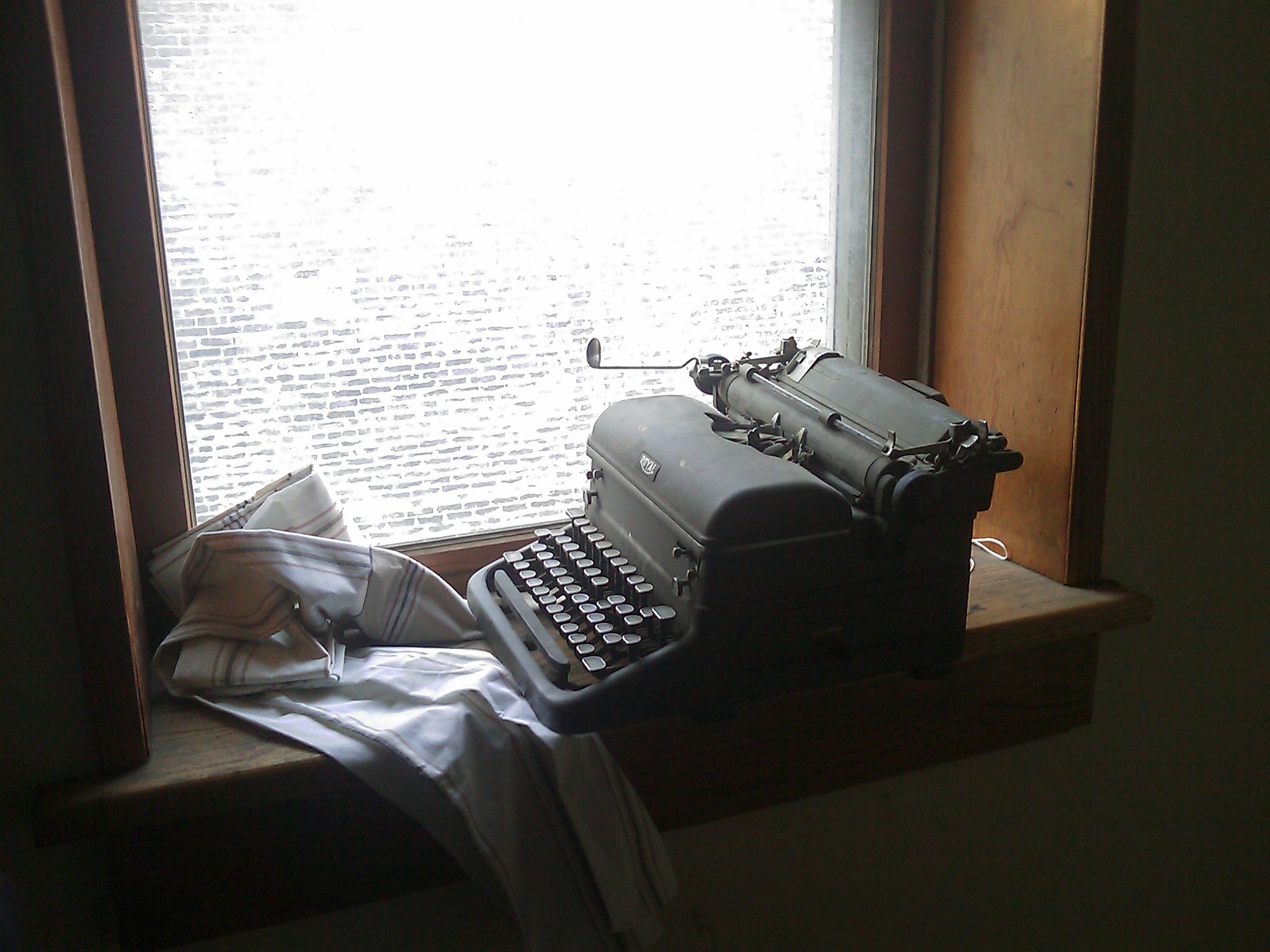
The first thing one sees upon entering the small exhibit is Salinger’s 1948 Royal manual typewriter, loaded with a piece of paper, upon which a line has been typed and abandoned: “now is [gibberish] for all good [gibberish]” This turns out not to be a garbled line from a mysterious final work-in-progress, but a standard typing drill: the full quote “Now is the time for all good men to come to the aid of their country” perfectly fills a 70-space line.
Next to Salinger’s typewriter is a small jar filled with yellow crayons, worn down to the nub, which he apparently used as highlighters. Beside this is a small collection of handwritten extracts from various religious texts: Vedanta, Jewish, Islamic, and Catholic mysticisms which he called his “Vade Mecums” (Latin for “Go With Me”). And then, a fragment of something, tantalizingly cut-off along the right edge, involving one of Salinger’s most famous characters, Seymour Glass:
Seymour: A biographer/ admitted to his / just deceased-subject / reclusive bedroom will / later record in print / with what the reader / will assume to be / rather immensely …
Nearby are photographs of the elderly author sitting at his writing desk, white-haired, back to the camera, seemingly hard at work on—something. But what?
There is also a rotating bookshelf, which was kept near his bed in the last year of his life when he was not as mobile: The Portable Anton Chekov, works by Kierkegaard, Russell Baker’s Book of American Humor, The Complete Adventures of Sherlock Holmes, Lao-Tzu’s Te-Tao Ching, and many more. Its shelves contain many of the very books requested by young Seymour while he was at summer camp—enough to fill a lifetime, or at least a few weeks.
And perhaps conspicuously, beside the rotating bookshelf is a copy of the original typescript of “Hapworth 16, 1924” just waiting—one manuscript that is all ready to go (back) into print. Perhaps someday soon, it will.
The arranged place was not easy to find. Angela drove, her window rolled down. She knew if someone glanced inside her car, they would think: That woman’s life has gone to shit, and she has been living, like a pig, in her car. She imagined the smug satisfaction such a person might derive from the scene: Things are hell for me but I don’t live in my car! The world’s dumb and uneven distribution of sadness was something she had no interest in. Let them have it, she thought. She knew she didn’t live in her car. She lived in a house. Her car was in a state of disorder, yes, but then again so was her house. Except people couldn’t see into her house. If they pressed themselves close to the glass she could simply say, “Shoo, peepers!” and close the blinds. Her car didn’t have blinds. Her car had an overflowing ashtray, a litter of coffee cups, clothes and bundles of colored paper. Her house was in a row of other houses. She wasn’t that invested in it. It was done when that was the theme––curbing, piping, structure. These days, it was taking her longer to get out of the car and into the house. But, she still did it. The upshot was: her life hadn’t gone to shit.
The car park was deserted, except for a lone, hunched figure resting on the bonnet of a car, in communication with the cloudless night. This moonlit man was Angela’s date. She rolled her tongue absently over her back teeth and watched through the windscreen as he cupped his hands and attempted to light a cigarette. Even as the wind ruined his efforts, he remained unruffled. This, to Angela, was a sign of huge integrity. She smoothed her skirt down over her hips and thighs. She checked her wide-eyed expression. She went slowly about her maintenance. She was older now, forty-one. She would have been unaware of that herself, except people told her. The world practically crossed the street to tell a woman she had gotten older.
“What the fuck is that?” Angela’s date said, gesturing to her car, as she rose gracefully from the driver’s seat.
There was always a moment on Angela’s dates, usually at the beginning, when she allowed herself to think: This guy’s the whole package! As the night progressed, the realization invariably arrived that this man was not a package at all. He was an envelope, an envelope with a bill in it, an envelope she, quite frankly, wanted to put in a drawer and forget all about.
She felt invaded by his judgement but refused to show it. “It’s a Honda,” she said, sweetly.
The restaurant was a basement really, with a damp smell of impending disaster and a neglected feeling. Angela and her suitors conducted all their encounters underground, in this place where the name changed frequently ––letters disappearing, vowels skipping across the brightly lit sign––but the menu remained indifferent to external pressures. She chose this place because it had little or no phone signal. Otherwise, their fingers would be moving across their screens, sloppily swiping. When they swung the front door open, carrying in the heavy, co-mingled scent of perfume and aftershave, the staff stared at them. A teenage boy seated them with a reluctant sigh, as if exhaling was too much of an effort. Two further teenagers, stumbling at a furiously slow pace in true disbelief that anyone would demand service at this time, provided a tablecloth, cutlery, glasses. When Angela and her date (forty-five, salesman, no visible scars) gave their orders, the waiter nodded as if he might be willing to consider it.
Her date held up the menu in his paw hands, the familiar black marker scrawled across several of the selections. She ordered the salad, anticipating the single tomato rolling around her plate.
“So you go on many of these?” her companion asked, reddening. An entry to a dirty joke.
There was a deep silence and they let it labour between them for a moment.
“Yeah,” she replied. She had heard a lot of arguments against honesty in this particular arena, but she disregarded them. “Make them feel special!” her oldest friend advised, but making people feel special required a lot of exertion and alcohol.
Although intimacy made her anxious and, often, physically sick, she had an absurd level of success in securing dates. In one careful photo taken at the wedding of a colleague, she sat beside a pristine table-cloth, her palms clasped like a choirgirl, her grin lopsided and benign. It was pleasant. You would have no problem being stuck in a tight dinner-space, island B&B or tiny house with this woman. You would barely know she was there. Other women engineered their profiles all wrong: too sexy, too obvious, their indecent mouths suggesting a closeness that had yet to be earned. She got a lot of attention for one particular set-up: hair loose, eyes alert. Soft. There was nothing to suggest she had made mistake after mistake after mistake.
“Is it much fun?” Her date (navy suit, tan shoes) fidgeted in his chair.
It was the last good feeling, to look across a table and know someone else was terrified too.
“Kind of.”
In truth, she had begun to approach these dates with the same level of clinical excitement as might accompany the scheduling of a dental appointment: the same dim sense of obligation, the same knowledge that a man was going to examine her and decide something was horribly awry. But she forced herself to enjoy it. It was the last good feeling, to look across a table and know someone else was terrified too.
‘Right.’ He nervously scanned the room.
They drank for something to do with their hands and mouths. Angela cursed her gin and tonic. It was impossible to look wise, and to project an air of disinterest in various earthly disasters, while using a straw.
“I said I was stopping after hitting ten,” he said. “One zero. You know, with what’s going on, some guys don’t know how to stop. But I don’t like this. I don’t like superficial connections with people.”
“That’s a shame,” Angela said. “I love them.”
“Angela, I don’t want to jump to any conclusions. I don’t like conclusions, they are dangerous, but may I say something?”
“Go ahead.”
“On first read, you strike me as a cold person.”
She considered this for a moment, as it was not an unreasonable observation.
“I can be likeable if you get to know me,” she promised, silently wondering if this was true or one of those first-date lies she would have to catalogue and monitor. “I just mean I never thought I would become one of those people who enjoys talking to strangers. I never thought my life would swerve off like that, but it has.”
“Tell me about your friends.”
“I have two,” Angela said, boastfully.
She was in possession of one old friend who offered helpful advice like, “Have some self-respect!” Her old friend was full of bizarre ideas inherited from her time in business. She also had a friend in the supermarket. Where all her other friends had disappeared to was a mystery she had no interest in solving.
The silence became quite natural after a while. They ate their dinner to the beat of it.
He gleamed suddenly, as if he had made a discovery. “What music do you like?”
“I like the classics,” Angela said.
“Oh yeah? Me too. Which ones?”
Angela threw open her arms and sang loudly but rushed, rendering the lyrics incomprehensible.
“I don’t know that one.”
Her date’s face was unmoving. And oddly small, she noted warily. It was an awfully tiny face.
“There’s plenty more where that came from,” Angela promised. “I have a lot of CDs in my car. I don’t like the radio so much lately.”
“Nobody does,” he sighed. “Who do you blame for it all?”
“It’s not anybody’s fault. That’s what they say on the radio.”
“I have a few ideas,” he said, edgily. “So what age are those kids you teach?”
“I’m not sure,” Angela smiled. “They are short and move quickly in all sorts of directions.”
Out of Angela’s class of twenty-six children, there were now only nine remaining. She sometimes passed absent students on the streets, riding or being pushed on scooters by their parents. The kids pretended not to know her. The remaining few spoke a language that was not from this planet, a language Angela couldn’t understand. She distributed safety scissors and said, “What’s that?” loudly, to let them know she was on to them, curtail any uprising against her.
“It’s good to have work you enjoy,’” her date announced. Angela thought he looked restless, like he was gearing up to make some class of speech.
“Do you know what sort of man I used to be?”
“No idea.”
“I used to be the sort of man who always said, ‘I just need a break!’ But now I’m making money for the first time in my life, selling dating equipment. What do you think of that, eh? You wait twenty years and––BOOM––all the money comes at once.”
“Money is no good when you’re dead,” she intoned.
“I could have a younger girlfriend,” he said.
Angela could tell he was in the early stages of grief for someone he had never known.
“You are probably judging me for saying that.”
“Not at all.” She saluted him from across the table. “It’s a grand historical tradition.” She paused. “Why do you do it anyway? It seems like a base job for a cosmopolitan individual, exploiting people’s loneliness.”
“Cash,” he said. He stared past her, to the front door. “I have gambling debts.” He hesitated. “It’s probably something to do with my father as well.”
“The excuse that never dies,” Angela said. “Something something my father. I swear when the world does end, there’s just going to be one man meandering around the scorched earth saying again and again: ‘I had a bad relationship with my father.'”
“Are you a feminist?” he asked abruptly, as if she might be surprised he knew the word.
“At this stage in my life, I can take it or leave it,” she replied. She lit a cigarette and watched the smoke swirl up towards the splintered ceiling. Witnessing her defiance, one of the teenagers glared at her through the long bar mirror. She was waiting for her date to mention an ex-wife. She wanted to run into the past and scatter these women like birds.
“Were you married?” she asked.
“I was,” he said and looked at her in a practiced, sheep-ish way.
Angela shifted in her seat, preparing for her own declaration. She gazed off into space. “There’s a time in a woman’s life when everyone she is sleeping with is married, then there’s the extended period of time when she may be married herself, then suddenly everyone she is sleeping with is divorced.”
“That’s an interesting theory.”
“It’s just an old saying of my mother’s,” she shrugged.
“Well,” he said, “no one gets off lightly––my dog is dead, my bicycle is destroyed, my life is a bit messed up, to put it mildly. But that’s marriage, isn’t it?” He nodded as if in sincere agreement with himself. “You?”
“I got the car in the divorce.”
He smirked. “Kids?”
She made a zero figure with her thumb and wedding-ring finger. “So,” she asked and dipped her finger into the surface of her drink, “have you been doing anything?”
“This,” he said, pointing back and forth between them. “A lot of this, interacting with new people.”
“Same.”
There had been a series of bad dates recently. There was the man with a face of deep crevices and dents who, up close, looked rather like the moon. There was another who rested his slithery hand on hers while trying to sell her life insurance. No matter how many times Angela thought That’s not happening again, it happened. It happened and it happened. It was all over quickly, but it happened. Dating was not the worst of it though.
Angela cleared her throat. “I did something else.” She closed her eyes, as if preparing for confession. “I stole a cat.”
“Excuse me?”
“There has been a cat hanging around the school grounds and, today, I bundled it up under my coat and took it home. It did not belong to me in any way,” she grinned, “but now it does.”
“Why?”
“Firstly, it had a great look. If sunglasses were an option for this cat, he would have been wearing them. I have always been weak for that sort of coolness. Also my principal told me if it was still there by the end of the week, he was going to cook and eat it.”
“Jesus Christ, that’s disgusting.”
“It is,” Angela said, “but that’s him all over. It’s his nature. He’d do it because the world’s ending and he can. I would use the word ‘lunatic’ to describe him. First day, he separated all us female teachers into two groups. He didn’t say it but I could see his mind working: the women he wanted to sleep with, and the women he considered good teachers.”
“Which group were you in?”
“Neither.” Angela gestured for a second drink. “But you should have heard the arguments in the staff room: he wants to lick me up and down, he wants to mentor me. I eat lunch in my car a lot.” Angela was suddenly passionate. “You know, there is a lot I will tolerate in this life, and a lot I have tolerated, but the cooking and eating of a cat to prove you’re a tough guy is not a pursuit I will entertain.” She looked down at her napkin, surprised by her sudden outburst.
“Have you named the cat?”
“Screechy.”
“That’s a gorgeous name.” Her date looked at her with warmth. “Angela, I got you wrong. I apologize. You’re a kind and considerate woman.”
“Stop,” she said stiffly. “I have some interesting qualities too.”
I don’t want to paint her in a negative light, but my ex-wife murdered my dog.
“I never thought I would meet a nice woman, let alone another animal-lover.” He paused. “I don’t want to paint her in a negative light, but my ex-wife murdered my dog.”
“I guessed that.”
“Imagine that bathroom in there,” he pointed to the restaurant bathroom, “normal bathroom, tiles, bit of mould, nothing spectacular.”
“I can see it.”
“Now picture it with blood everywhere. That was how it was. A disappointing sight.”
“I’m sorry,” Angela said.
“What was up with your ex?”
“He was non-violent. He didn’t murder anything, as far as I know. All in all, an agreeable man.” She paused. “Do you like clever people?”
“Not really.”
“You would have liked him then. He wasn’t clever at all. It wasn’t a big deal like people make it out to be.” She looked at him. “Not that he was an imbecile either.”
“What is it all for, Angela? Sometimes, when I am selling them the damn equipment I want to say, ‘Don’t bother,’ but I can”t because of the money and the commission.”
“I have an old friend who thinks it’s for companionship. Someone to hold your hand at the end, that sort of thing.”
“I don’t like the sound of your friend much,” he said.
“Yeah,” she agreed. “She’s not great. It’s terrible when you get old enough to dislike your old friends.”
She glanced down; her salad was gone. She had no recollection of putting that fork in her mouth. Her body was always making decisions independent of her.
“Angela, would I be correct in saying we have a deep and profound connection at this present moment in time?”
“You wouldn’t be too far off.” She pondered. “Would you like to sit in my car with me for a while?”
When they stood to leave, the teenagers gathered in a circle and unenthusiastically waved them off. As they settled the bill, the man interlaced his fingers with Angela’s. One of the serving boys made a discreet retching face at this display of middle-aged affection. In the car park, her date said, “Look, the stars are low,”––and they were.
In her car, they sat in silence. Her date rested his feet impolitely on the dashboard. He looked like a monarch, surveying his kingdom.
“You know that number I gave you?” Angela asked.
“Your telephone number?”
“Yeah. If you are going to use that number the best time is between 5 pm and 8 pm because that is after school and before night.”
“What do you do at night?”
“I go to the supermarket,” Angela said simply.
“Is it…nice in the supermarket?”
“It’s a good time,” Angela said. “I have a friend there.”
They both stared out the windscreen.
“Angela, I want to take you home. But before I take you home, can I tell you something?”
“Sure.”
“Men are after me. Threatening men I encountered during my gambling period.” He slouched dramatically in his seat. “I would like to spend the night with you but I don’t want to put you in a bad situation. In truth, I’m being blackmailed and I’m being followed.” He let out a long, weary sigh and ran his hands over his face, as if the blackmailing would be okay if it weren’t accompanied by the following, and the following would be fine if it weren’t accompanied by the blackmailing.
“I have never dated a man who was being blackmailed before.” She paused. “We can take my car if you think that will throw them off?”
He glanced around Angela’s car. “We will take mine, I think.”
He took Angela home and banged her like he was partaking in a burglary––ransacking the house for something he would never find. Angela was confused, but alive. This could be it: the last neck they clawed at, the last post-coital conversation, the last beautiful excuses they ever made.
Leaving was such a non-event. You turned a doorknob either to the left, or to the right. Leaving was the same everywhere.
The morning came while she was still feigning sleep. Before the sun even lit across her body, he was back on his dating equipment. The man was determined he was not departing from this planet with Angela’s cursed face as his final conquest. Fair enough, Angela thought. These were testing times and she was recently big on forgiveness. It was being pushed heavily on the radio. Sometimes, she left these situations feeling something near happiness. Leaving was such a non-event. You turned a doorknob either to the left, or to the right. Leaving was the same everywhere.
That night, she took her usual trip to the 24-hour supermarket. She strolled around, swinging her wire shopping basket, the empty aisles opening out in front of her. She used to come here with her ex-husband in the sunny days of their courtship. They placed healthful items in baskets, their bodies slyly touching as they strolled. Now, the cashier girls wandered around, indifferent, as if this supermarket wasn’t once the site of a Great Romance. She said, “Oh, girls, I just want you all to be so happy,” and tried not to cry. That particular Saturday, she watched the artificial rain falling on the vacant spaces where the greens used to be displayed. She admired the labels: their verve, their refusal to stop selling themselves even in the direst circumstances. She put in orders for exotic fruits, fruits that would never pass her lips, and the girls wrote them dutifully down, avoiding her gaze.
The restaurant was a basement, really, with a damp smell of impending disaster and a neglected feeling. Inside, the waiters kept their jackets on over their uniforms, expecting to be called away at a moment’s notice. There were only two waiters left from the previous staff of six. They hugged the menus to their chests, as if in possession of ancient secrets. The windows were fully covered. Angela and her date (forty-seven, artist, no visible scars) had just been to the theatre. Theatre wasn’t something she normally did––and the imminent end of the world wasn’t the time for trying new things––but, regardless, they attended the theatre. They had sat on a long, hard bench, their knees touching, then not-touching, then occasionally touching again at moments of dramatic seriousness. The touching was electrifying to Angela. It gave her a powerful rush to the head. The play didn’t do much for her at all, at all.
“I’m not sure,” Angela said. “I didn’t get it.”
“What didn’t you get?”
“All of it, it has to be said.”
There was one other couple in the restaurant, young and disturbingly beautiful, their smiles wide and postures primed as if in constant pose for a photo. They glanced over as Angela and her date began to raise their voices.
“That’s a very ignorant point of view,” her date said.
Didn’t you like the way their naked bodies symbolized their vulnerability in the face of the end of the world?
“It is, I agree. My own ignorance is my business though, and I don’t feel the need to explain or justify it to anyone.”
“Didn’t you like the way their naked bodies symbolized their vulnerability in the face of the end of the world?”
“No.”
“And the dancing as the earth opened up below them? Their bravery? Their joy? Didn’t you like that?”
“No.”
“Angela, I don’t want to put pressure on you but if you didn’t enjoy and appreciate that play, you’re not going to understand me, fundamentally, as a human being.”
“That’s okay,” she said.
The surlier of the two waiters approached them and set down their near-empty plates. Angela’s date suddenly began grabbing at the dinner items as if to speed up the process.
“Don’t do that,” she instructed, “that’s his paid employment.”
The artist whipped out his napkin and produced a pen. “Angela, what is your ex-husband’s address?”
“Why?”
“I would like to send him a card in the post, just a small token, to show him his hard work didn’t go unnoticed. I believe people should be thanked for the duties they have performed in this life and you must have been a handful.”
“I was,” she agreed. “I was like a long day’s labor in the sun. You would emerge disorientated and physically exhausted, but stronger for it.”
His hand hovered excitedly over the napkin, as if planning exactly what to write inside his card.
“I’m sorry I don’t know his address. I know he lives alone in an apartment but I couldn’t tell you which one. It’s a block of apartments with other men who live alone.”
Her date leaned backwards and performed a waving motion with his hand, as if trying to communicate with Angela’s ex-husband from a distance. “What age are those kids you teach?” he said, through a mouthful of lettuce.
“I don’t know,” she said. “They are short and move quickly in all sorts of directions.”
Her date (wide-legged jeans, shirt from a disco decade) looked desperately at the young couple across the restaurant as if wishing to signal his immense distress.
“You know what I didn’t like about that play?” Angela didn’t know how to let things go.
“What?”
“The way it was about the end of the world. Doomsday stuff. That felt obvious to me.”
“But that’s what is happening right now. That’s life,” he said, and the way he emphasized life made Angela want to throw her knife and fork at him. She would have done it too, had she not been nervous of the ire of the waiters.
“Yes, exactly. It’s happening. I don’t need to see it on stage.”
“I don’t think you like art, Angela.”
“Maybe I don’t,” she said, thoughtfully. “I think I’m too anxious to spend long periods of time looking at things trying to figure out what they are.”
“You know what else I think you don’t like?”
“What?”
“Nudity. Oh God, you’re just like my ex-wife. A prude––exactly like her. I bet if I got naked right now you would have a problem with that.”
The young angel-boy leapt out of his seat and dashed to his girlfriend’s side. He placed his hands over her unbelieving eyes as Angela’s date began unbuttoning his shirt. The waiters let him get to the third button before they intervened. There was a brief bout of wrestling before Angela’s date, out of breath, fully-dressed and furious, sat back down.
Angela exhaled a long, delightful plume of smoke. “I”m having such a nice time,” she said. “After dessert, would you like to sit in my car with me for a while?”
In Angela’s car, they listened to the radio. Two men with the wild intensity of actors were shouting about disease and rising sea levels. One of the radio presenters said he had been having bad dreams, the other said he hadn’t been sleeping at all. Finally, the more innovative of the two screamed, a thin piercing sound that rattled Angela’s car and further reduced its life span.
“These people shouldn’t be allowed on the radio,” she said.
As the presenters listed out the odds for the human race––which were not favorable from what Angela could tell––her date made to kiss her. She turned away at the final moment.
As the presenters listed out the odds for the human race––which were not favorable from what Angela could tell––her date made to kiss her
“Would you like to see a picture of my cat?” Angela inquired, as a token of peace.
“No,” he replied, sulkily.
Without a further word, he stormed out of the car, slamming the door behind him. She watched through the windscreen as he ruffled his hair and popped the top button of his shirt, creating a bedroom look. When the young couple emerged from the restaurant, he stopped the boy and offered a high-five, as if to celebrate his incredible sexual success in the car.
Angela thought: I’m never coming to this restaurant again. Never again.
The restaurant was a basement, really, with a damp smell of impending disaster and a neglected feeling. The waiters hung around in stained vests, helping themselves to drinks from the bar. Music Angela had never heard before was being piped through the speakers: loud, explicit and full of pushy directions. “Get low,” this music advised and the waiters obliged by limboing underneath the entrance to the wooden bar. Each limbo was followed by a supportive whoop from a fellow waiter.
When Angela and her date (fifty, fruit and vegetable man, one faded scar running across his cheek) entered the restaurant, one of the waiters embraced Angela like she was a cousin who reminded him of carefree memories from his childhood. Plaster and dust from the ceiling littered the abandoned tables. A sign, in sloppy teenage handwriting, read: “Only Dessert Available.” At a table nearby, sat a shabby-seeming couple and their young daughter, sharing a single slice of chocolate cake.
“This place is usually wall-to-wall sophisticated people,” Angela told the man.
The waiters, out of unquestioned routine, threw them two dinner menus. Angela shouted across to them, “This fellow isn’t my date.”
Her date raised his head in alarm.
“He’s more of a guest,” she explained. “He’s employed in the local supermarket.”
The waiters ignored her.
“It’s not always easy to recognize people out of their work uniforms,” she said. “You look nice.”
“How is the school coping?” The fruit and vegetable man shredded his napkin nervously. He glanced at the waiters as if to find an answer to the apocalypse in their unruly behaviour.
“The staff room,” Angela shook out a cigarette, “is pure farce at this point.”
“What do you get up to in there? I’ve always wanted to know.”
“Talking. Rage.”
A few days previously, the end date named, one of the older teachers had taken to wearing a veil––a wispy, fluttery piece of fabric that obscured her hunted face––as a gesture of mourning. Soon, she had amassed followers, a group of impressionable teachers who moved in a slow pack wearing makeshift veils fashioned from household materials. “We just listen to the radio, eat sandwiches,” Angela said. “Think regretfully about our lives.”
“Great!” he said. “I just want to inform you this is a date.”
“Is it?”
“It is. I have seen you around the supermarket and I always thought I would like to show that woman somewhere nicer than a supermarket––like a museum. We don’t have much time left but would you like to go to a museum?”
“I like the supermarket,” Angela said. She pictured the hideous fluorescent lighting, the disappointing stock, the scowling staff in their polyester fleeces. “I think some of the happiest moments of my life have taken place in that supermarket.”
“You would look good walking around a museum, I think.”
She ignored the compliment. “So,” she said, eyeing up the rotating desserts, “have you been doing anything?”
“I prayed.” He perked up at the memory of his brief interaction with God. “I also lit a candle in a church.”
“Wow,” Angela said, in genuine awe. “I stole a cat. I didn’t necessarily steal it. I just looked at it and it came with me. I don’t consider myself a sexually aggressive person but it’s possible I seduced that cat.”
The little girl at the next table over vomited chunks of chocolate cake across the tablecloth. She carefully wiped her mouth, as if in preparation for a second round.
“I’m sorry,” the mother announced to the waiters. “She’s just nervous, I”m sorry.”
The waiters nodded in unison but made no move to clean up.
“That’s one of mine,” Angela said. “She’s been doing that a lot lately.”
“She’s in your class?”
“Yeah.”
“Say hello.”
“I’d rather not,” she said. “They don’t like me so much, the children.”
“I imagine you are a good teacher, Angela.”
“Oh, I do my best,” Angela said. This was true, maybe once. She had kept a close eye. There were still accidents on her watch, of course. A scratched elbow, a stone that had to be wrenched free. The children would rest their bodies on her lap. They would rise up then, recovered and forgetful. At the end of the day, no matter what she did, they left with whoever came to collect them. Children could be as breezy and carefree as adults.
“Today, I had to write ‘China: Wiped Out’ on the board. Doubly underlined.” She managed a weak half-smile.
“How did that go?”
“Lots of questions: ‘Why are we still here, teacher?’ ‘How do you spell that, teacher?’ That sort of thing. The afternoon dragged right on.”
“It’s hard to know how to fill the time,” he agreed.
At the other table, the little girl was crying, clutching her stomach with one hand and attempting to eat the remains of the cake with the other. Her parents observed her, their hands flat on the table in front of them, skillfully avoiding the vomit.
The fruit and vegetable man watched the family for a moment before turning back towards Angela. “Have you been in contact with anyone?” he asked.
“No.”
“Me neither. My ex-wife, she would just disappear.
Even when she was there, she wasn’t there.”
“My ex-husband lives alone. He lives in a block of apartments with other men who live alone.”
“Kids?”
She made a zero figure with her thumb and wedding-ring finger. “Well one actually,” she admitted, “but he died. Do you mind me saying that? Not really died,” she corrected herself, “got away from us early.”
“Did you try again?”
“No.”
“Why not?”
“He wanted to. I was scared.”
“Scared of death? That’s natural.”
“No,” Angela said, “scared of everything else.”
“My ex-wife used to say I wasn’t ambitious,” the man explained. “Afraid to progress from the fruit and veg section, but I explained it was just because I really liked fruit and vegetables and I wasn’t going to fight it any longer.”
She laughed. “Do you know what I find amazing about this world? What I will miss? How you can wander around looking like other people, but not really be like other people at all.”
“In what way are you not like other people?” The fruit and vegetable man gestured determinedly at the dessert tray.
“The child didn’t like his surroundings, that’s what the doctor told me,” she said. “Like even a fetus couldn’t bear to spend time with me.”
“What did you do?”
“I screamed, ‘Look around, moron, who does like their surroundings? I wouldn’t rush myself to get here either.'”
One of the waiters, sweating heavily, chose this moment to slop the unappetising carrot cake in front of them. They took a fork each.
“Do you think that’s small? Being a woman who screams in a doctor’s office?”
“Not at all.”
“It’s not something I had planned for myself.”
They both took huge mouthfuls of cake, crumbs spilling indelicately on the table.
“So, what music do you like?” Angela asked.
“I like the classics. The oldies.”
Angela threw her arms open and sang loudly.
“That’s one of my all-time favorites. I love that one,” he said. “So tell me how you met your ex-husband?”
The family stood up and, without discussion, the girl bundled up in her father’s arms, left the restaurant. Their exit brought in a blast of cold air and a quick glimpse of the outside space. The car park, the street lamps, the fluorescent restaurant sign––soon they would be gone. And then the restaurant itself, and whatever followed after that and after that. It would all go.
A wail silenced the restaurant. A teenage body lay unconscious on the floor. The waiters gathered cautiously around their brother, as if shocked by consequences at a time when there weren’t supposed to be any consequences.
Angela stared directly at her guest. “I had wanted him to stay, you know,” she said. “But I didn’t know how to say that. That one word seemed like a big word. I couldn’t find a way into it. And I was afraid of what might happen if I even tried.”
He sat up straight, smiled wanly in her direction.
“Don’t look too delighted,” she said. “I took him to the cleaners in the divorce. Got the car and everything.” Her guest put down his fork, struggling for the words like a man who has spent a long time without company, living alone in an apartment complex with other men who live alone.
The car dealership was on the outskirts of town. She expected to find it abandoned, but no––through the windscreen she watched the man behind the counter swinging gloomily on his swing chair. He had the look of someone who might have debated wearing a cowboy hat to hawk his goods, but was persuaded out of it by a sensible person aware of cowboy hats and what they could do to a man’s reputation. The tinkling bell announced the arrival of Angela––a tall woman, a handsome woman, a woman with a cat peeking out from underneath her coat––and the counter-man’s disappointment was plain. He would not be able to tell Angela what he told men: that cars brought a certain type of life, a certain type of woman, a certain type of insane luck. Angela just wanted to sit in a car for one last time, enjoy the new car smell, and not feel fear or disappointment. In the window of the car dealership there was a convertible rotating sleekly in defiance of all the outside decay.
“How much is that?” she asked.
The man, his belly swinging bountifully, spread his arms out wide, a move Angela suspected he had been practicing in new and used cars during his downtime. It was a clear and direct arm-spread: it said, “Angela, you are going to love it. You probably dismissed the sports car experience at some stage, we all have. You probably have thought––that’s not for me. But you’re going to adore it. Every last bitter second.”
Angela fitted snugly in the leathered front seat and Screechy mewed appreciatively. It was a car that could make a singular impression. Yes, Angela thought, as she exited the car dealership, that’s smooth. On the radio, the announcer said we should be frightened, very frightened, and Angela looked at the sky: a fantastic scene of pinks and reds.
Years of thought and debate have gone into this monumental question and yet it’s still to be answered: Is there a difference between corn-pone and corn bread? And is corn-pone cooked in a skillet or baked? Should it have sugar, milk, or eggs? Should it have baking soda? Is corn-pone one word or two? There are no such difficulties, however, when it comes to distinguishing corn-pone, whatever that is, from Trinidad’s “pone.”
Trinidad pone is a delicious delectable dessert, a confection crafted from cassava, coconut, sugar, and spice. It’s sold everywhere: to hoity-toity hipsters in uppity farmers’ markets, and to starving bachelors at no-frill vegetable stalls, to momzillas in bakeries on the main street, and to old tanties in parlors on the corner, to blue-collar workers shopping in supermarket chains, and to smiling-faced children in tiny school cafes. I’ve had “gourmet” pone, from a restaurant that specialises in “deconstructed local classics.” I’ve had pone from a tired lady selling snacks to raise funds for her sick son. I’ve had pone warm, lightly drizzled with a caramel sauce. I’ve eaten it cold, as if it were some kind of iced treat, on the warm sands of the northern coast.
Pone is made of cassava but if you’re not a purist (and want to be wrong) there’s leeway as to what you can put in it. Some people use pumpkin to add excitement to their life by raising the color of the dish, which tends to fall somewhere along a spectrum between pale brown to golden. The texture of pone, however, is consistently the same: gelatinous Turkish delight cocooned in a crisp cassava coconut skin. Connoisseurs of taste add loads of spice: cinnamon, nutmeg, ginger, clove, ground spice. The raucous and more adventurous throw in raisins, but this is universally accepted to be a gratuitous touch.
Some dictionaries say a corn-pone is a simple-minded person.
Trinidad pone isn’t to be confused with Jamaican pone, which is, unfortunately, made from sweet potato, milk, sugar, and rum. Incidentally, the overbearingly lumpy Jamaican pone is at times made from cornmeal and is as ostentatious as a dancehall queen. The Jamaican use of cornmeal makes the theory that the Caribbean pone is the sweeter, better-looking brother to the American pone seem plausible.
Yet, for all these nuances, Trinidadians feel no need for precision. A Trinidadian will call cassava pone simply “pone,” removing the adjective in the assumption that what constitutes pone here must also be pone everywhere. In fact, had I not encountered Mark Twain’s famous essay “Corn-pone Opinions,” I might never have questioned what a pone is and how it differs from a bread. Nor would I have pondered the fact that some dictionaries say a corn-pone is a simple-minded person, a meaning which might have something to do with the argument in Twain’s essay.
Twain isn’t concerned with the complexities of pone aesthetics. He takes for granted that when he opens his essay with a slave saying, “You tell me whar a man gits his corn pone, en I’ll tell you what his ’pinions is,” we’ll know what corn pone is and, what’s more, that we’ll understand its place in 1901 society. Admittedly, he didn’t publish the essay in his lifetime—it was published posthumously in 1923. But Twain being dead hasn’t stopped him from publishing acclaimed work. His essay opens the 2001 Best American Essays of the Century, edited by Joyce Carol Oates.
Instead of dessert, Twain has his sights on making a mundane point about the way people think, or rather, don’t. He believes his friend, the slave, is saying man is not independent and cannot afford views that might interfere with his bread and butter (to mix up the pone metaphor a bit). He also feels his friend is saying that in order to prosper we must all line up with the majority, must think and feel what everybody else thinks and feels, or else suffer the consequences.
“He must restrict himself to corn-pone opinions,” Twain paraphrases. “He must get his opinions from other people; he must reason out none for himself; he must have no first-hand views.”
Twain doesn’t fully agree with this. He thinks the situation is more dire. Whereas his friend feels people cherry-pick their opinions strategically, Twain believes this exceeds their capabilities. Whereas his friend assumes it’s possible to formulate original positions, Twain casts doubt on the existence of free thought. He says: “I am persuaded that a coldly-thought-out and independent verdict upon a fashion in clothes, or manners, or literature, or politics, or religion, or any other matter that is projected into the field of our notice and interest, is a most rare thing—if it has ever existed.” To wit, the only way people could like hideous hoop skirts was because everyone else did.
When I was a wee little child, I was a well-behaved Trinidadian boy. I listened to my parents. I went to church. I tried to become an acolyte (though they threw me out after suspecting I was more into the pretty, flowing gowns than the Holy Ghost). I paid attention in school. Back then, the Belmont Boys Roman Catholic School was yet to develop a reputation for bad boys and ruffians. I studied hard.
By Standard Five, however, this good behavior started to get me into trouble. As everyone knows, there is only so much good behavior that little boys can take. The other boys grumbled, softly at first, then openly, that I had never made a mark in the world, had never distinguished myself through any form of truancy, had neglected to uphold the long-held tradition of boys being in fights. Such was my appalling decency and civic-mindness, that the elder boys were incensed. I became a pariah, a figure of censure, persona non grata.
To address this misconduct, it behooved me to take action. I arranged, with another similarly-circumstanced do-gooder, to orchestrate a skirmish. We discussed our plan prior, and scheduled an appropriate day for the momentous duel. Naivety got the better of us: we believed it necessary to come up with a background story to justify our war. A jumbled narrative, involving the theft of marbles and a lunch kit in which a precious piece of pone had been stolen, was formulated and tantalisingly teased out. There was enough withholding of key details to fan the flames of speculation and conjecture. Then, the Friday of our chosen appointment arrived. We wanted tales of our exploits to spread over the weekend.
The school bell rang like a death knell. I immediately pushed Kwesi around for a while, he grabbed the neck of my shirt, I ripped off a button or two of his, as we groaned and grunted strenuously as a mark of our manly exertions. The fight needed to have an epic scale so we prolonged it for as long as possible until, both of us having run out of moves, it came to a natural end. It was determined—universally I think—that the fight was a good one, that we both had “won” since there was little to distinguish us, though maybe Kwesi had a few more scratches on his arm than I did.
So when Mark Twain alludes to the ridiculous lengths people will endure in order to conform, I fully understand.
Entire careers have been built on work that is unlikeable but has nonetheless found favor with people, or at least been said to have found favor with people.
And I think it’s safe to say everyone has had that moment when there’s a new emperor and he’s not wearing clothes but you have to pretend he is and not only do you have to pretend he is but you also have to compliment him on just how fabulous the clothes are even if you’re seeing nothing but you do it anyway because everyone else is complimenting him and if you don’t people will think you are dumb or blind or just plain mean. The Emperor’s New Clothes explains the success of many films, books, plays, and art exhibitions. Entire careers have been built on work that is, even within the subjective realm of the humanities, unlikeable but which has nonetheless found favor with people, or at least been said to have found favor with people, the snowball growing bigger and bigger, threatening to squash anyone who will not yield. Twain was on to something.
Social media has magnified this. It’s given us tools by which we can empirically gauge just how admired something is, how many views it has received, the quantum of votes it has drawn or comments it has acquired. Some of us, seeing only that other people have liked something, sheepishly click the like button without reading the full post, or listening to the full podcast, or watching the full 20-minute video.
But when Twain’s nameless slave, whom we will call Uncle Jake, says “You tell me whar a man gits his corn pone, en I’ll tell you what his ’pinions is,” what Uncle Jake truly means is not what Twain hears. What Uncle Jake was alluding to was the unabashed fact that people are generally self-serving. We all have vested interests, hidden agendas, values that fall to the wayside if there is a need to ensure self-preservation. People do not consider deontological values, as a philosopher might say, nor do they care about the greater utilitarian good; we do not have such luxuries when living from day to day, meal to meal, paycheck to paycheck. This does assume the capacity for independent thinking. But the premise is not the conclusion.
Nor is it worthwhile attacking that premise. For assertion of self-preservation is selfish, sovereign thinking. What is more independent than that?
Is Twain really skeptical of free thinking? If there is no independent thought in the world, this would render his corn-pone opinions automatic. We would live in a world of determinism. There would be no choices on the menu. What would be the point of saying someone has an opinion? We would all have a passion for hoop skirts come hell or high water.
Even if Twain’s interpretation is substantially correct, I have reservations about his argument.
“We are creatures of outside influences,” he argues, “as a rule we do not think, we only imitate.” However, even when we copy others, we mentally formulate our positions. We decide, consciously or even subconsciously, whether we will follow the status quo. Twain underestimates how much we intuit.
All this cogitation on corn-pone opinions makes one have a hankering for corn-pone itself. But what exactly does it taste like? As Tom Sawyer did before me, I steal into the kitchen. Call it research. Call it art. Call it hunger. Why shouldn’t I indulge my taste buds? I devise a plan. I assess the stocks in my pantry, pull out my smartphone, and scour the internet for recipes. This throws up the first challenge. The search yields a million results.
Corn-pone is so popular there must be a reason. It’s clearly been around for a long time. The internet tells me it’s a Native American dish, corn being primarily a Native American invention. (Interestingly, Trinidad’s pone, made from cassava, has also been linked to our indigenous peoples.)
My chosen recipe calls for just five things: cornmeal, water, milk, salt, and baking powder. I’m not sure about the baking powder, though. Wouldn’t the more authentic corn-pone be flat and unleavened? Did people always have baking powder to hand when roving through the forest, pitching tents, lighting fires and whatnot?
I halve the recipe. Don’t really need four corn-pones for this experiment when two will suffice. Listed are precise measurements to follow, but I’ve got a deft hand so I go with the flow, eyeing the amounts I put it. Cooking is a science but it’s also an art. You use what’s to hand, you do what feels right, drawing from experience.
We do not always think things through, yes, but at the same time we feel. We intuit and, therefore, we reason.
Just as meals are fashioned in this intuitive way, so too do we formulate viewpoints. We are not machines. We do not always think things through, yes, but at the same time we feel. We intuit and, therefore, we reason.
The corn meal is a light dusty yellow, but when I add my liquid ingredients the color gets deeper: more saffron than butternut, more turmeric than lemon. It comes together in a dough that’s similar to the dough we use in Trinidad to make Christmas pastelles, a kind of stuffed polenta; a steamed empanada. As I knead the dough, which feels like the plasticine children used to amuse themselves with, feels as real as thoughts made material, I think about how easy it is to forget the past, forget the names the of all the tribes and peoples that might have done the same thing. Yet we are still tied to them. A simple thing like a meal can be a commemoration.
Our very nature is to feel. Feeling allows us to sense whether we think something is moral. Our emotions guide us. This is a kind of reason. Without having a principle clearly formulated in our mind, we know something is bad by just the way we feel. Stealing. Killing. Lying. We talk of conscience. Even if something is the bees’ knees, we first have to decide if it tickles our fancy. Hoop skirts only became the rage because they pleased us on a level we may not have been able to articulate.
Sometimes the results of this process are dangerous: the wrong emotions dominate. So it is fear that accounts for the rise of the Nazis, the racism of Twain’s America, the xenophobia of Britain. The Brexit vote and the rise of Donald Trump have emboldened certain people to come out and follow suit. The cause: fear. People are afraid of that most reliable of Boogeymen, The Other. The counter to such fear is to draw upon opposite and equally powerful emotions: compassion, love, kindness. Understanding that we are all human. For things to change, these purer feelings must be admitted into the equation.
My pones are surprisingly satisfying. I try them with butter. I try them with maple syrup. I try cheese. They are like arepas. They can match whatever you put on them, meet flavors halfway.
But let’s say Twain is right and all we do is conform. Can’t conforming still be a form of resistance? Can’t it trigger rebellion? Be its own sign of an independent assertion of values?
When Rosa Parks got onto the bus in Montgomery, Alabama, on December 1, 1955, she didn’t disobey any rules. She conformed to them. The prevailing laws divided the bus into white and black sections. Parks sat in the black section. When the white section filled up, the bus driver attempted to expand the section for whites only. The law called for “equal but separate accommodations”; it didn’t permit this practice of shifting the goalpost, a practice that had apparently developed over time. Parks stayed in the section designated for her under the law. She said: “When that white driver stepped back toward us, when he waved his hand and ordered us up and out of our seats, I felt a determination cover my body like a quilt on a winter night.” It was by conforming to a racist law that she asserted her individuality. It was through this conforming that she defied everything. If individuals could find freedom through compliance, so too could entire nations.
Can’t conforming still be a form of resistance? Can’t it trigger rebellion?
In the late 20th century, a wave swept through the Caribbean. Territories of the British Empire sought what Rosa Parks achieved. They flirted with, lobbied for, then gained independence. Jamaica and Trinidad and Tobago in 1962, Barbados and Guyana in 1966, Bahamas in 1973, Grenada in 1974, Suriname in 1975, Dominica in 1978, St. Lucia in 1979, St. Vincent in 1979, Belize and Antigua and Barbuda in 1981, St. Kitts and Nevis in 1983. One by one, they attained access to the comity of nations.
Was this wave merely a case of following fashion? Or was swimming with the tide a way of swimming against it? By emulating each other’s example, these countries cultivated the sense of a shared destiny. This made the fate of the islands irresistible. In this way, independence was achieved not through bloody rebellion, but through collective power. There was strength in numbers. As swimmers in the Caribbean will tell you sometimes, to survive a deadly current, you must let it take you then slowly make your way to the shore.
“Power is everywhere,” wrote Michel Foucault, “not because it embraces everything, but because it comes from everywhere.” We see power in action when individuals protest peacefully. We see it when nations come together to raise a fist. We also see it when artists, painters, musicians, writers, and poets adopt forms that on the surface seem like imitations but, in truth, are signals of resistance.
St. Lucian poet Derek Walcott and gay poet Thom Gunn did this. They sometimes put on a costume, paraded in it, then took it off in order to move on to the next poem, or sequence or book. In their verse, these poets set out to show they too could write in the traditional forms that have dominated English letters for centuries. Walcott took on the idea of the epic, its rhythms, tones and textures. He co-opted the theatre, emulating Shakespeare, and produced dramas in verse. He applied these forms not to white, European subjects, but to the Caribbean. His mimicking was not appeasement. It was an assertion of a black man’s inherent and equal claim to words. “The English language is nobody’s special property,” he said.
Like Walcott, Gunn was a poet with a penchant for the metres of a long tradition. His poems followed a regimented pulse. Sonnets, elegies, syllabic verse, couplets. Yet, using these forms Gunn addressed the queer, even when carefully wrapped and tied with a metaphorical bow. The poem ‘The Allegory of the Wolf Boy’ is about life as a gay adolescent. Like Walcott, he too was laying down the gauntlet on behalf of a disenfranchised class. “Rebellion,” Gunn wrote, “comes dressed in conformity”.
These poets know what Twain forgets. Twain underestimates how following can be leading. It can be the ultimate inside job.
Corn-pone opinions reflecting the general consensus might appear shallow, simplistic, half-baked. But that alone should not stop us from taking a second good bite.
For a decade now I’ve written personal essays describing hidden bottles of cheap Chardonnay and the whine of ambulances and how the lip of the bumper of a 1999 Toyota Camry curls when it brushes a tree. The essays were meandering and hemorrhagic, overly personal in a pointless way. I wasn’t interrogating anything or exploring a greater concept; I was trying to make sense of one of the greater confusions of my life. I was trying to write about my mother.
Anne Lamott famously says, “You own everything that happened to you. Tell your stories. If people wanted you to write warmly about them, they should have behaved better.” In the spirit of pure artistry, I tried to abide by that ethos, representing what happened truthfully, without pulling punches or softening the edges. But still, I always added a nice scene from my childhood that showed her at her best — patient and generous and funny. I wanted to tell the truth, that she was a good mother, a good person, and, also, an addict.
Even though the essays weren’t publishable, they still had utility. When my mom snuck away to chug wine from the open bar at my graduate school reception, a classmate found me so I could intervene. She knew it was my mother because of what I’d written, she said, and because we have the same face. I write about this here because I have to show you what I mean when I say, “My mother is an alcoholic.” I need you to take me seriously in a world where you can buy a wine glass that has “Mom Juice” etched on it.
Each time, there is a scene but no greater context. The structure unravels and the end is helpless.
I’ve tried to write essays about transitioning to the authoritative role in a parent-child relationship, about loving someone who lies to you all the time, about how to exist when you’re constantly waiting for the other shoe to drop. Sometimes making sense of addiction feels impossible in the same way that any disease is difficult to rationalize. Each time, there is a scene but no greater context. The structure unravels and the end is helpless. The general themes can be summarized as, “Addiction is painful for everyone it touches. I am scared all the time.” With every clunky paragraph, I wanted to ask the reader, Is it clear that I love her?
Last year, instead of writing I started reading about addiction in pursuit of understanding. I hadn’t talked to my mom in eight weeks. The last time I’d been home I hid her car keys and she picked the kind of fight you pick when you’d rather be left alone than win. I’d tried everything I could think of to help her: radical honesty, earnest emails, gentle emotional blackmail. Distance was a last resort. Her health was waffling, her bones brittle and snapping, her hummingbird heart telling her nervous system there is always something wrong. The stakes felt like they were increasing every day, every new affliction evidence that alcoholism is a chronic, progressive disease with one seemingly-inevitable destination.
I started my reading with the Diagnostic and Statistical Manual of Mental Disorders (DSM)—alcoholism is called “alcohol use disorder”—written with a cool medical detachment where the body and the brain do not seem like they comprise a person. A bender is “chronic exposure.” The difference between want and need is a “neuroplastic change.” When I am angry or hurt, the distancing language helps. It introduces a sense of control, of cause and effect. But, the DSM felt like an objective approach to a subjective experience. Though clinical language can reframe addiction as an impersonal disease, the resulting behaviors—the criteria for diagnosis, questions like does your drinking affect your relationships, your ability to take care of your family, your interest in things that were important to you—are inherently personal. The behaviors of addiction obscure the person and blur the boundaries of illness.
I wanted clarity, answers to questions she wouldn’t or couldn’t give me, answers I couldn’t find from studies on rodents. Addiction is in many ways a dual life shrouded in half-truths and omissions. I wanted to ask her outright about her experiences, why she started and how it felt. When she was in an abusive phase, I wouldn’t get a straight answer. When she was in a period of relative sobriety, I didn’t want to hurt her by showing her how she’d hurt me. Still, I wanted to know some version of her story, in detail. I wanted to know my mother’s story to know where to put mine, but more urgently, I was scavenging for help, stories I could run my hands over like a topographical map to find a safe path out of the woods, words that could heal.
I wanted to know my mother’s story to know where to put mine, but more urgently, I was scavenging for help.
Addiction memoirs are so prevalent that they have their own genre: quit lit. “They’re all the same and they’re all correct,” Grace Lavery writes about addiction memoirs in an essay about sugar and recovery that proves the rule. My mom’s candy of choice is stale Twizzlers. I find solace in a package on the counter with the corner snipped.
I picked three memoirs by contemporary women—their ages somewhere between mine and my mother’s—writing specifically about alcohol: Mary Karr’s Lit, Caroline Knapp’s Drinking: A Love Story, and Leslie Jamison’s The Recovering. Each memoir follows a predictable pattern I learned was standard for recovery narratives. The first few chapters sketched out where it all started, or at least the author’s best estimate, trying to nail down the mix of genetics and experience, the cocktail of nature and nurture that got them to the same place. But what it comes down to is summed up by Jamison as, “The whole world stood accused: You never told me it felt this good.” The middle was the sordid stuff, the hard drinking and deceit, whisky taped behind desks and lost cars. This section I knew well, the singular focus on drinking above all else at all costs. That was where the pain was for partners, sisters, children, me. I’d been close enough that, even as the details changed, I knew how that part of the story went. The end was sobriety, how it happened and how it stuck, the hedging that life wasn’t perfect but it was better than when they were drinking.
Knapp says alcohol offers:
protection from the pain of self discovery, a wonderful, cocooning protection that’s enormously insidious because it’s utterly false but it feels so real, so real and necessary. And then, tragically, the protection stops working… You drink long and hard enough and your life gets messy… Discomfort + Drink = No Discomfort ceases to suffice… So after a while, you alter the equation, make it stronger and more complete: Pain + Drink = Self-obliteration.
None of the behaviors themselves surprised me. Alcoholism, to me, seemed like an intentional removal of oneself from the world. Pillars of addiction include secrecy and isolation, which I always took to mean an abdication of responsibilities and relationships. I tried to attribute intentionality so I could have something concrete to blame, but it wasn’t there. For instance, Karr’s love for her son is never diluted by her drinking. No matter how much she drank, she never lost sight of her role as wife, mother, and writer, though it often manifested as shame. She can’t look at her husband without “hearing some muffled verdict pounded out by [her] own heartbeat—“guilty guilty guilty.”
Anything positive—book deals and teaching jobs and solid men and well-loved children—became enmeshed in shame. Jamison’s partner writes her a poem as a confirmation that he will always love her, no matter what, but she trips on a line that mentions her drinking and sees the poem as an indictment. Shame could be teased out of gestures of love, no matter what was offered.
Recovery isn’t a simple choice between self-obliteration and death-by-drinking. If Pain + Drink = Self-obliteration, then Pain = Self-obliteration – Drinking. The math isn’t perfect, but the pain and problems remain after the drinking is gone. Karr describes in detail the difficulties of her sobriety, checking herself into a hospital after writing a suicide note. Jamison writes about her own relapse, the rationalization and subsequent spiral reading like the point in a horror movie when you know something bad is about to happen but your screams are powerless to stop it. For our family, the worst relapses came after a period of calm. They hit like a suckerpunch, half the pain from the surprise: How did we let this happen again.
Well-meaning people in my life keep stressing to me that alcoholism is a disease, and that relapse is statistically a nearly-certain symptom. “You wouldn’t get mad at someone if they had cancer,” they say. But it’s hard to know where to put my own very real pain of loving someone with addiction, the constant buzzy undercurrent of fear, the hurt of knowing your presence is something they want to escape, and most excruciatingly, the futility of feeling like there’s nothing you can do about it.
In these memoirs, relapses are absorbed in the rhythm of the story. Personal history is arranged into a structure of how things got to where they were, their undoing similarly templatized. The narratives follow identical trajectories, a characteristic that gets them panned in critical reviews but celebrated in the comment section on Goodreads and Amazon. “It feels like this book was written about me,” readers say. The drama of addiction becomes mundane, the same moment again and again. What feels acute and personal is neither. It’s just part of it, a story every addict has.
The Recovering spends chapters grappling with the value of these stories, in the repetition itself, and the community they build in sobriety. Jamison writes about the utility of stories in recovery, “Your story is only useful because others have lived it and will live it again.” I have a reflexive resistance to stories as service. A story with a message seems didactic or self-righteous, moralizing like the author knows best. But that resistance ignores the history of human communication, that we told stories because we learned a way to survive and we didn’t know that it was the right or wrong way but it was a way. It was the one we had, so we shared it.
Addiction is just one part of a life story, even if sometimes it seems to obscure everything else. There are parts of my mother that are so full of joy it’s hard to fathom her as someone who struggles with anything. No matter where she is, she’ll sit down on the ground to get to know a dog face-to-face. She spends too much money on just-because gifts for other people. She cries at beautiful things, wears too much black but loves color. She buys tulips and carnations because they’re the happiest flowers. Is it clear that I love her?
I’ve wanted her to get sober for a long time, but the reasons have been a slow slide down the hierarchy of needs. I’ve always wanted her to be the person she is, to travel and explore and learn new things. I want her to feel good about herself at her core, to believe all of the wonderful things people constantly tell me about her. I want her to be secure financially and to know that she will always have what she needs to live. But more than anything, I want her to not die.
I was searching for the words to save her. The books did not give me those things. They couldn’t.
I wanted the memoirs to give me the right way to frame my own experiences as someone who loves an addict. I was searching for the words to save her. The books did not give me those things. They couldn’t. I was hoping that by understanding the mind of an addict, I could find an argument that made sense. The stories were ripe with the cyclical reasoning of addiction, a system of thought that promises control, logic they held onto as it failed them time and time again. The most obvious answer is the true one: There is no logic. There is no control. Anything I do is trying to impose order on a system that abides by its own code. The internal consistency of addict behavior armors it against outside influence. It’s playing by different rules. I am telling you that I learned that, but I don’t think I’ll ever be able to stop searching or trying.
Even without a panacea, the rhythm in the memoirs gives me hope that my family’s stories, too, could be like Jamison’s or Karr’s or Knapp’s, told from a distance, removed by time. The comfort in these memoirs is in the repetitive story, a model that can be duplicated. Knowing they made it out alive. They had enough space from their drinking years to mold a narrative arc from entropy, finding meaning, or at least a story that was useful to someone who had been through the same thing. Addiction narratives are full of people who did die, but also people who lived, who told their stories and helped others through their own. There is suffering, but there is also healing. I feel like we’ve been stuck in the middle chapters of a drinking life like a skipping record. This part of the story is simultaneously melodramatic and routine, a slow and dangerous sink. The memoirs are tangible examples of how the story can go on.
For the first time in a long time, hope doesn’t feel dangerous. People can get better, and do, not always but sometimes. Right now, there is just pain, but after the coda of recovery, pain can be retrofitted to have meaning. The clawing desperation to fix her, the senselessness of dramatic falls, the sadness of drinking in a closet over the holidays can have value, even if it doesn’t have it in the moment. There is hope that once things get better, this moment that I’m living in now will actually have been something useful instead of just pain. And that possibility feels like a gift.
DON’T MISS OUT
Sign up for our newsletter to get submission announcements and stay on top of our best work.
YOUR INBOX IS LIT
Enjoy strange, diverting work from The Commuter on Mondays, absorbing fiction from Recommended Reading on Wednesdays, and a roundup of our best work of the week on Fridays. Personalize your subscription preferences here.