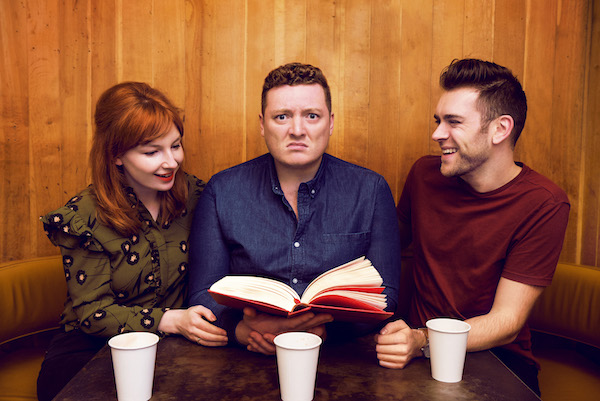
What Women Talk About When Men Aren’t in the Room

Miranda Popkey’s compact, powerful novel Topics of Conversation begins when its narrator is 21and spans nearly two decades, revolving around the conversations she has with those around her. These conversations, mostly with women—friends (or frenemies), mothers (the narrator’s own, plus the ones she encounters), and strangers (on the screen and in the ocean)—span a range of topics, of secrets, of fears and of desires. 

Topics of Conversation by Miranda Popkey

“There is, below the surface of every conversation in which intimacies are shared, an erotic current… This is the natural outcome of disclosure, for to disclose is to reveal, to bring out into the open what was previously hidden,” reflects the narrator as she listens to another woman tell the story about her marriage’s end. The women of Popkey’s novel are searching, skeptical, and hyperaware. They are spiked with equal doses of hurt and want. 

I had the chance to talk with Popkey over the phone about her book, as well as women’s anger, power dynamics in relationships, how desire is formed by the stories to which we’re exposed, and the ways narrative functions in our lives.


Alexandra Chang: You write that you believe a writer shoves into her first novel “more or less everything she has ever thought, seen, read, loved, hated, experienced.” In your book, you do tackle so many topics—desire, power dynamics, class, art, motherhood, anger, friendship, storytelling, and more. What was your entry point? How did you navigate fitting all of this into the novel? 

Miranda Popkey: One entry point was that I had wanted, and I’d been trying for some time, to write about a particular relationship dynamic that I have experienced, which is exaggerated in the story that the narrator tells when she is at a new moms’ group. She talks about having an affair with a professor. I, to be clear, never had an affair with any of my professors. But I have been in relationships where the power dynamic was unequal in a way that was both appealing and, in retrospect, damaging. I was interested in trying to write a story about that somehow. I tried for a while and it wasn’t working for whatever reason.

The most obvious thing to say is that what happened in the fall of 2017, the allegations about Harvey Weinstein—sexual assault, sexual abuse, sexual harassment, rape—all of those started coming out. Suddenly there was much more of a conversation about these kinds of relationships in which someone has much more power than the other person, and the conversation expanded so that it was possible to also talk about situations where the power dynamic was more equal, but still troubling. I worked in publishing for a long time and there was quite a spirited discussion about various people who had potentially been sexual harassers or had been otherwise inappropriate. I don’t know why, but that was a way that things got unlocked. It certainly played a role—just having that be in the air and having women’s anger be a topic of news, and not in a negative way. We were talking about good reasons that women might be angry. 

AC: The voice of this novel, with the narrator especially, there’s such a strong sense of ambivalence, which I really loved because, at least for me, ambivalence is a really productive state for inquiry. I was wondering if you, especially in depicting these relationships with older men, could talk about how ambivalence played a role in your writing.

MP: I do want to answer this question but I’m not totally sure exactly what you’re getting at. 

AC: Several of the women who appear in the book talk about having relationships with older men, and to me, I guess there’s a strong ambivalence toward that. The women almost enjoy the relationships because the power dynamics are very clear. And then there are women who, some of them the same women, sabotage their relationships with “kind” men, as the narrator does. So there’s both a sense of ambivalence toward relationships, and of not being able to trust one’s own desires as a woman.

MP: Okay. Totally. In my mind this is very much a novel about being socialized as a woman in a particular moment. The novel is not meant to speak for all women. My particular experience is quite narrow—middle class, white, cis, straight. But I don’t think I was the only woman who was surrounded by images of a certain kind of dynamic in popular culture in heterosexual relationships. It’s inevitable that you are absorbing, especially when you’re younger and you’re not thinking as critically, all of these models without really knowing how influential they might end up being. 

Part of writing the book was trying to go back and figure out, what’s my damage?

What is appealing about the power dynamic that you described is—and you sort of hit it right on the head of as you were expanding on the question—the power dynamic in that situation, older man with power, younger woman with less power, is quite clear. I think that’s appealing because that is a model that we have seen. Though it is also a model that is coming to be challenged more and more. 

I didn’t watch the second season of Fleabag until after I finished writing, but it’s the moment where she’s in the confessional and she asks the hot priest, Tell me what to do. I think it’s very hard to be a person in the world right now. It’s quite appealing to consider, what if I just ceded control to someone else? That’s especially appealing to women because it is a paradigm that’s been so available and that, in fact, has been presented as the right paradigm, the model. That’s where that ambivalence comes from. There were not a lot of models that I saw growing up, when all of these ideas were solidifying in my mind, of women who were seeking sexual or romantic partnership on their own terms.

AC: What I found so interesting, too, is that a lot of the women in your book when they’re talking about those kinds of relationships, there’s this awareness that the dynamic is not great, but because of the socialization and the stories you’re talking about, they’re still drawn to it. 

MP: Yeah, that’s the particular bind of being alive in this moment. When you know it’s bad for you, but you’ve been told you want it for so long. And it’s hard for those two things to coexist. I think that there are lots of different reasons why stories written by women, stories written by queer people and people of color and trans people and nonbinary people, are important to tell. One reason is that there are a lot of people whose understanding of sexuality, of their own sexuality, would be so much more expansive if the cultural offerings were broader or had been broader when they were growing up. This is very true of myself. And part of writing the book was trying to go back and figure out, what’s my damage? What the hell is going on with my brain, that this is the kind of thing I have at times wanted? 

AC: So when you were trying to figure that out, were you re-watching these movies and going back to other source material?

MP: Yes. One that was really important was LA Confidential, which is a movie I watched once a month for a year when I was like 12 or 13. I was obsessed with that movie. Have you seen that movie?

AC: No, I haven’t. 

MP: I’m not going to recommend it. It certainly did a number on me. But the central romance of that movie, set in the 50s in Los Angeles, is between a cop who is obsessed with wife beaters, and who is himself quite violent towards them because his father beat his mother, and a high-class call girl who is styled to look like Veronica Lake. The central romance is between these two characters, a very angry man and the sex worker who unwillingly falls in love with him, so that was a movie that, in retrospect, I don’t think I should have been watching. 

I find it impossible to think of life as other than a narrative.

I mean, honestly, the Veronica Lake look-alike character was so much less important to me than the fury that is contained within the angry cop. He’s played by Russell Crowe, and he’s a ball of fury, and the movie presented it as tantalizing. The idea that he could at any moment snap. And he does at one point hit her. Anyway, it’s a really sad movie. But I was like, okay, yes, I see what I like. My dumb little adolescent brain was like, Yes. You are a cold woman. You have sex for money, but an angry man comes and he sweeps you off your feet. Yes, this is correct. 

That one was a real trip to watch for a second time or for, I mean, a 200th time.

AC: That’s related to the long “Works (Not) Cited” section in the back of your book. Your novel is, like most works of art, in dialogue with a lot of other texts, including books, but also movies, TV shows, podcasts. I liked that you made it explicit in that section. I was wondering if you could talk a bit more about how you understand that dialogue taking place, and how these other texts shaped your book. 

MP: The book owes a really obvious debt to Rachel Cusk. Reading Outline broadened my understanding of the ways in which a novel could be structured. Also, I had read in my MFA, Rings of Saturn, the Sebald novel. There’s a thing that he does, I think more than once, where the narrator of a section will change mid-sentence. You’ll sort of continue reading a couple pages and realize you’re not sure who’s speaking, and you go back and you try and find the moment of the handoff, and it was in the middle of a sentence. I just thought that was so cool. It didn’t occur to me that you were allowed to do that. 

Azareen Van der Vliet Oloomi’s Fra Keeler has a list of works that influenced the novel at the back. I loved it, because it gave such a clear picture of the places that her mind had drawn from. And it also gave you more things to read. I don’t think of myself as a very creative person. I don’t think of myself as someone with a great imagination. For that reason, it was important to me not to present this novel as a work that had sprung fully formed, or even formed at all from my brain. Of course, it did come from my brain, but my brain is a soup with all this other stuff. It felt really important to me to acknowledge that. 

Once I’d seen someone else do it, and once I decided I really can’t publish a book that does these things and not credit Rachel Cusk and not credit Sebald, then it became a real pleasure to think about where all this was coming from and do some of that exploration and rediscovery. I would keep adding to that list forever. 

Also, I had a lot of fun admitting to myself and to the reader some of the garbage that I was inhaling as I was writing. Like, I literally watched 11 seasons of Frasier in the space of a couple of months.

AC: That’s pretty amazing.

MP: It’s something, yeah. One stands amazed before such an accomplishment. But at its core, I just really, really wanted people to know, this isn’t all mine. It comes from so many other places. My fondest hope is that my book gets dropped into the soup of someone else’s brain and that some writer at some point in the future is thinking about it when they write.

AC: The act of storytelling in the book is so important. There’s one chapter where the narrator is with the group of new single mothers and asks them to tell the story of how they got there. “There,” being single motherhood. Another woman calls her out and says life is just a series of accidents and coincidences and demographics, and that there’s no point in understanding the why and the how. There’s no reason. The narrator later, alone, counters that take. I was curious about your own thoughts on the function of narrative in our lives. 

MP: I find it impossible to think of life as other than a narrative. And I recognize that tendency in myself and I try and be quite careful not to try and build a narrative out of my life. If, retrospectively, it helps to see a story, to understand why things happen, I think that’s fine. The thing that I really have tried, as I’ve gotten older to avoid is what the narrator says casually, early on in the book, about wanting or looking for the better story. I think that there is a kind of fatalism or determinism there that helps her feel absolved of certain kinds of responsibility that she should actually be bearing the full burden of. If you think that once you’ve put certain plot points in motion, that you can see the end of the narrative, it sort of absolves you of responsibility for the further choices that lead you closer to what you’ve decided is the end point. I think that is the kind of thinking that leads her to make some of the more damaging decisions in her life. 

Like I said, though, I can’t think of my life other than as a narrative. I was once involved with a person who told me that they did not think of their life as a narrative. I truly did not know what to do with this information. This seemed so psychotic to me, that you could actually look back at your life and not try to make a story out of it. But there are those people out there. And perhaps they are more well-adjusted, they are living more fulfilled lives, because they don’t have that urge to complete the narrative. 

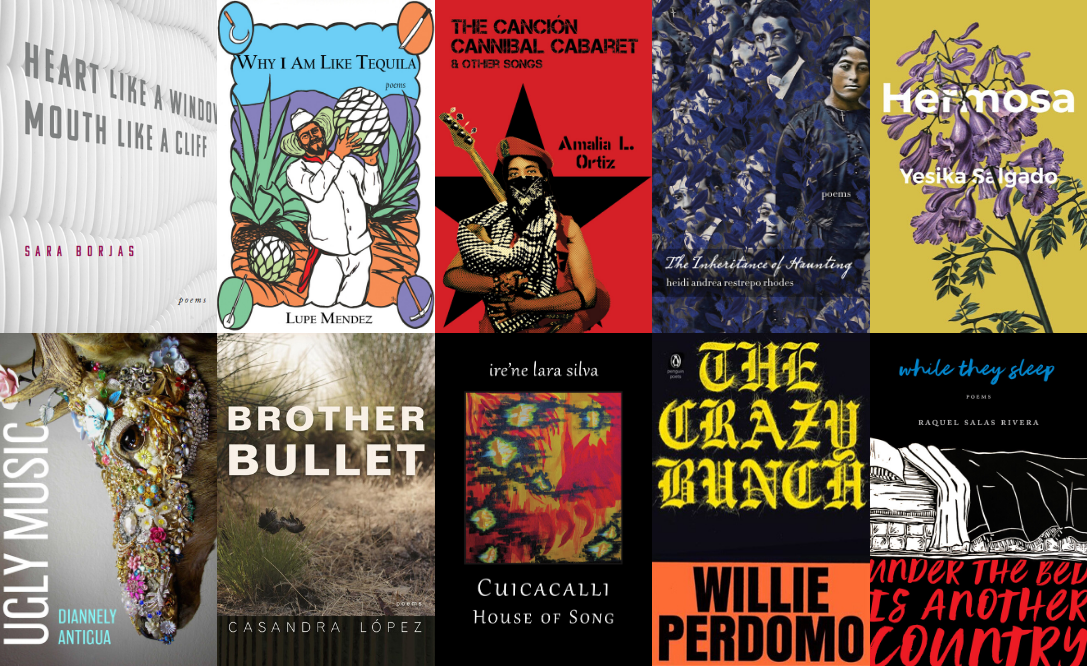
10 Collections By Latinx Poets You Might Have Missed in 2019

Poetry serves to disrupt, to inquire, to interrogate the nature of being. Latinx communities are, more than ever, subverting the narrative that there is a singular expression of Latinidadan expression that has historically centered the mestizo, largely Mexican experience. Some are even rejecting the label of Latinidad in favor of celebrating other aspects of their identity: queer, indigenous, African, or Carribbean. What it means to be Latinx (still an evolving term) is celebrating the intersections of Latinx cultures with race, class, migration, disability, and access to our own stories. 

In a time where Latinx peoples have continued to be made both hyper-visible and invisible by the current administration, it is exciting to see a multitude of Latinx poetic voices interrogating the identities that have been imposed on them and blazing new paths for themselves.

Ugly Music by Diannely Antigua

In her debut collection, Diannely Antigua searches for identity amidst the murkiness of a religiously oppressive adolescence, past traumas, and mental illness.

Heart Like a Window, Mouth Like a Cliff by Sara Borjas

In my interview with poet Sara Borjas, we discussed how her new collection explores being a “pocha” poet, the struggle to feel Mexican enough in the face of stereotypes, and what being Chicana means to her.  

The Crazy Bunch by Willie Perdomo

The Crazy Bunch by Willie Perdomo

Set in 1990s East Harlem, this collection tells the story of a crew over one summer weekend. Read an interview with Willie Perdomo about storytelling as a bonding agent and recreating a memory about a neighborhood that no longer exists.

Hermosa by Yesika Salgado

Hermosa, the third book in Yesika Salgado’s poetic series, explores how healing allows the poet to find a home within herself. Her previous two collections were about finding love, both familial and romantic, after mistreatment and loss. Hermosa is about the poet contending with her past, her family history, the Salvadoran diaspora, and how this affirms the self she has always hoped for.

Image result for While They Sleep (Under the Bed Is Another Country) electric lit

While They Sleep (Under the Bed is Another Country) by Raquel Salas Rivera

In one of the poems in the collection, the poet asks “how could i just move on?” calling to the in-between place that many Puerto Ricans find themselves in the wake of Hurricane Maria and the continued fractured relationship between homeland and the colonial power of the United States. In the collection, the questions are partly in English, speaking to the perspective and concerns of American imperialism, while the answers are in Spanish, speaking for the colony that will not remain silent.

The Canción Cannibal Cabaret & Other Songs by Amalia L. Ortiz

Amalia Ortiz is a spoken word performer and poet who has been performing with other young, queer Xicana artists around Texas, even playing at the border fence in the Rio Grande Valley. The Canción Cannibal Cabaret, a punk rock post-apocalyptic opera, shows her ability to combine lyrical style with theatrical performance. The book depicts la Madre Valiente, a radical matriarch, and her Hijas de la Madre, a gang of revolutionaries who combat racist and misogynist violence at the hands of the State. The collection includes both narrative and lyrical poems and sheet music for the performed songs, transcending what we understand as the traditional poetry collection by affirming that poetry should be radical and accessible. 

Image result for Brother Bullet: Poems

Brother Bullet by Casandra López

An unflinching look at grief in the wake of personal, familial and historical violence, Casandra López’s debut collection explores life after the unsolved murder of her brother. The poet is tender with the memory of her brother while also indicting the historic violence against young indigenous men in the US. These haunting poems illustrate how grief is a means of survival. 

Why I Am Like Tequila by Lupe Mendez

In his debut collection, poet and performer Lupe Mendez acts as witness to the elders, neighbors, and children of the Tejanx and Mexican communities he is a part of. Codeswitching across English and Spanish, the poems show the work, the love, the beauty created by these communities while also depicting the violence levied against them by outside forces.

Cuicacalli: House of Song by Ire’ne Lara Silva

Ire’ne Lara Silva is a prolific poet who often writes in cycles, ruminating on pressing issues in the Chicanx community. This collection speaks to the responsibilities of Chicanx elders to help a younger generation struggling with their identities to get free from the colonial legacies that created a border and fracturing families. 

Image result for inheritance of haunting

The Inheritance of Haunting by Heidi Andrea Restrepo Rhodes

Winner of the 2018 Andrés Montoya Poetry Prize, this collection is a rumination on the memories, the violence and the acts of liberation that live in the body across generations of colonization, war, and upheaval. In an interview about the collection, the poet said that “that which haunts us also entrusts us with what we will make of it all, urging us to labor, to conjure ungovernable life against the hold.” Representing the voices of individual and collective ghosts from across Latin America, this collection asks us to account for the past and to celebrate the lives that come after. 

Tristan and Isolde But Make It Queer

“Tristan”
by Lucy Hughes-Hallett

“You’ll have to go and meet her.”

“Why? Is she a half-wit?”

“Her flight gets in at eleven fifty-five. Find her. Be sweet. Take her to lunch in Windsor––she’ll like that.”

“What makes you think she”ll like it?”

“Then bring her back here. Why are you being like this? It’s a question of politeness.”

“Why can’t she just get the train. Is she a cripple or something?”

“She’s physically perfect. As near to perfect as it’s possible to be.”

“What’s she coming for?”

“To marry me.”

“What the fuck? Are you joking?”

“No. This is real.”

Silence

“Why aren’t you meeting her then?”

“You know I can’t. Not with the Fair on.”

“You won’t miss half a day’s business for her, and you expect her to marry you.”

“It’s a pity but…We discussed it. She knows I have to work. She kind of likes it. She likes knowing her man is this big busy deal-maker.”

“She doesn’t. Nobody would. You’ve got to be there when she comes through the gate. Next to all the drivers with their bits of cardboard. You put your hand on the barrier and you vault lightly over it and you put your arms around her and lift her up so her feet are two inches off the floor and you bury your face in the side of her neck and she’s dropping things––passport, wallet, everything, the duty-free vodka, and you say…”

“She’s actually appreciably taller than me.”

“Oh. Oh. In that case I have to revise all my ideas. In that case you stand quite still at the end of the barrier and let her come to you, and she walks with long easy strides, she lopes, and she’s wearing a linen dress that’s like a coat and it billows out behind her and it’s unbuttoned at the front so that her legs are half bare and they’re burnished like bronze swords and she doesn’t wear jewelry but there’s a leather thong around her neck and when she reaches you she puts a hand on your shoulder and she dips her head and she bites…”

“Shut up, Tristan. She is actually a real person.”

“Yes? So? Where did I say she wasn’t?”

“She’s real so there’s no need to make her up.”

“I like making people up. The people I make up are much more amusing.”

“More amusing than…?”

“More amusing than you, you literal-minded old faggot.”

“No more cheek. And no more homophobic language. I’m getting married.”

“So you say.”

“That’s right.”

Silence

“And have you considered the possibility––has it crossed your mind for even one single second––and if it did would you give a toss about it––has it occurred to you that if you really are doing this thing, then you might be breaking my heart?”

“Eleven fifty-five. Terminal 3. Car keys on the hall table. Have dinner with us tonight.”

“Us?”

“With me and my girl.”


The things that Mark Cornwall bought and sold were––at least purportedly––very old indeed. Their monetary value was more closely related to their antiquity than to their beauty. His regular clients liked to hold an Egyptian basalt hawk, or an agate bull from Mesopotamia, and feel the centuries thrumming through the stone. No matter that the carving tended to be crude and the creatures depicted barely identifiable in the lumpen forms. You didn’t have to be superstitious to feel the potency of a thing that had been held and treasured and very, very gradually worn away by the stroking hands of generation upon generation of long-dead human beings.

To get the non-specialist buyers in, though, you needed some straightforwardly lovely stuff. Alabaster always looked good, so long as you knew how to light it (Mark’s tech-guy really, really did). Fragments of Roman wall-paintings for color. A Macedonian gold tiara for flash. Anything that had once been animate got attention. Mark had recently been amassing a stock of mammoths” bones. Dutch trawlers brought them up in their nets from the bed of the North Sea. Quite a few people were interested. The big draw at his stall at this year’s Fair, more popular even than the tiny silken shoe of a Han dynasty princess, was the shoulder blade of a bison scratched all over with twig-like bipeds––a three-thousand-year-old hunting scene depicted by the predator on a left-over part of the prey.

Mark was nervous, which was a condition so unfamiliar to him that he initially mistook it for oxygen-deprivation. “I’m going out for a breather,” he said to the intern. “Text me at once if anyone looks like they’re getting serious.” The intern had a vapid face, but there was something about the turn of her neck that reminded him of Izza and he felt the ground shift beneath him again. “Back in ten,” he said.

The park was full of football games. He stood on the temporary decking outside the Art Fair’s enormous marquee and watched groups of boys running, red-faced and determined, around and about each other. Viewed from above, he thought, they would have made swirling centripetal shapes, kinetic art. From his viewpoint they merely looked desperate.

Kurt was there––fellow-dealer, rival, nosey-parker. He started to say something. Mark knew in advance the tenor of it––some innuendo about the footballers––and wanted nothing to do with it.

“Congratulate me,” he said. “I’m getting married.”

“You?” said Kurt, as though the first person singular pronoun might possibly have applied to someone else. “I had no idea you and Tristan had got that far.”

“She’s called Izza,” said Mark. “I saw her at the Biennale. She’s arriving today.”

“Christ,” said Kurt. “You’re not serious? You are serious. But you’re not . . .”

“The marrying kind? Turns out I am. Tristan’s at Heathrow now, picking her up.”

“You sent Tristan?”

“Sure. They’re the same age. Nice for her.”

“But not so nice for Tristan. The boy must be devastated.”

“Oh well. He’ll live.”

Kurt looked at him for a couple of beats. “You are a reptile, Mark Cornwall.”

Mark said, “Hang on. I’m just a station he stopped off at.”

Kurt said, “On the whole I’d say an absence of vanity was a positive attribute, but this is callous. You don’t know the effect you have on people.”

“My oh my. Are you owning up to being besotted with me, Kurt?”

“You shit.”

The two men each put an arm across the other’s shoulder, and they walked together back into the Fair.


Naturally enough, Tristan was expecting an androgynous being with a shaved head poised on a long etiolated body. Something not unlike the Ife terracotta deity (awfully late for Mark, but aesthetically bang up his street) that stood on the first-floor landing in the Little Boltons. Tristan wasn’t ready for the woman walking towards him, looking as though she was about to cry, or perhaps was already crying. He hadn’t imagined her to be someone he would ever get to know, so he had been staring at her shamelessly and without any kind of greeting on his face or welcome in his posture. She was pretty much right on top of him when she began speaking. On top, yes, because Mark was right, she really was tall.

“Do you get met at airports often? I never have. I’d never thought. It’s so difficult isn’t it, getting the right expression on your face as you come through those doors? Did you think it was me? Of course not. Obviously. How could you know? And how to handle the luggage. It’s so awkward. This is Bronwen. Mark said you live with him. He implied he had teams of ephebes and so forth to fetch and carry for him, but I’m not going to be surprised if they turn out to be figments. Are you one of legions?”

Which, if any, of her questions required an answer? Tristan said, “I’m Tristan.”

Izza said, “Isolde.”

Bronwen, neatly packaged in denim, was as compact as Isolde was wafty. She said, “You take this one, would you?” and passed him the handle of one of the two immense mauve metal suitcases she’d been trundling. “You brought a car?” He hadn’t expected another person. There was a lot about this encounter for which he hadn’t been prepared.

Isolde, if that was what she was really called, looked like a bride. Not that she was in a big white dress, although her clothes were much more in evidence, more in need of tossing and twitching and generally tending, than the sleek suits and close-fitting dresses of the women who hung around the gallery. It was more the impression she gave of being entirely, defenselessly, on offer that was bridal. Her face was pale and the skin on it looked damp, as though she had been newly peeled. Her lips trembled slightly as she talked. Her large pale eyes shifted and misted, suggesting she needed glasses, not to see with, but to provide protective cover. Tristan thought that she would never initiate a contact, a relationship, a love affair, but always wait to be found, and that sometimes the person who sought her out might not wish her well, and that she was aware of that danger. Ungainly, superior, nervous, she reminded him of a horse he sometimes groomed. He had many little jobs.

She said, “Where’s Mark?”

“Didn’t he tell you, the Fair?”

Evidently Mark had not told her.

Bronwen stood silently waiting for something to resolve itself.

Tristan said, “Mark thought you might like to go to Windsor, have lunch. He’ll be through by evening.” He was beginning to rather like the idea of an afternoon in the Great Park with these odd young women. “I brought a picnic.”

Again that look of imminent tears. He’d get used to it. It didn’t signal grief. Bronwen took over. “Let’s do it then. I can’t stand these places. You’re in short-stay?”

She set off in the right direction. He followed and so did Izza, talking in her breathy, curiously elderly voice, telling some story that, what with the recorded announcements, and the rattle of the suitcases” wheels, he couldn’t follow. Something about someone getting injured in Venice, and her nursing him, and Mark being tied up in it somehow. How trite, he thought. Didn’t Mark know that everyone falls in love with nurses? It’s fear that triggers it, and then euphoria at being still alive, and so you think some perfectly ordinary overworked health-worker is your delivering angel. And when you go back for your check-up you get a bit of a jolt to see how they no longer have a halo, just grey panda-rings around their exhausted eyes. His interest in exploring ways of altering his consciousness had occasioned quite a few trips to A&E. After his last little mishap he’d actually made a date with an anesthetist. Mistake.


The Great Park, where kings have been hunting down stags and damsels for two millennia, is surrounded by mile upon mile of suburbia, of pebble-dash semis and harsh, unweathered red-brick mansions with high walls and electronic gates and security cameras that crane their necks to follow visitors up the driveways like dispassionate predatory birds. Even inside the park there are clumps of housing scattered among the clumps of trees. But for all the way that modern Outer London has infiltrated it, the park is still a wilderness. It is not hard at all to get lost there.

“I think if we go that way we”ll get to the Long Walk,” said Tristan, who was prone to claustrophobia. He wanted openness and majestic scale, not fidgety changes of mood between pinewoods and pools of bracken and driveways leading to Tudorbethan houses in bosky glades. Bronwen went ahead the way he indicated, hands clutching rucksack straps. Her gait was as neat and purposeful as the rest of her demeanor. Would she, he wondered, be moving into the Little Boltons as well? He rather hoped so. Izza’s softness and scattiness was beginning to tire him. Her conversation was elaborate. She was clever, obviously. She made sure everyone knew that. But she was also, he thought, helpless as a baby, and needed almost as much attention. Bronwen, like a confident nanny, was quite brusque with her. It was obvious they adored each other. Did Mark know that Bronwen looked like being a part of the marital ménage? Did Mark know anything?

“So, when did you meet Mark?”

“Oh, we haven’t actually met.”

“But aren’t you…?”

“Getting married? Yes, it’s too impossibly silly, isn’t it.”

They were picking their way now between lightning-struck oaks, their charred and riven trunks festooned with irrepressible green. “He wrote to me about the accident, you see, and I wrote back, and long after there was anything for us to discuss these emails kept pinging back and forth. Very long ones from me because, as you may possibly have noticed, I am a babbling brook in human form, and laconic, witty short ones from Mark, and then just as I was thinking I really should stop wasting this man’s time with my reflections on this that and the other thing, he suddenly wrote, “I think we should get married, don’t you?” And he probably just meant it as a rhetorical flourish, but I thought Yes, Yes, and then we could carry on this conversation night and day and well…’the marriage of true minds.’ So, met, no, we haven’t yet. It’s actually kind of clarifying not to have any idea how he smells or to be aware of any of that mind-fuddling carnal stuff.”

Bronwen had found a perfectly circular dell and was sitting cross-legged at the centre of it. They paced around her, Tristan too agitated to settle.

“But marriage. I mean. Suppose you don’t find him attractive.”

“Oh, sex. Well. It’s not very difficult, is it? I mean guinea pigs do it all the time. Actually, guinea pigs are very clever, they can virtually talk. But llamas too. And God knows what. I’ve always been rather in favor of arranged marriage, haven’t you, it cuts out all that shy-making courtship. And failing a Pandar to arrange one for me, I thought let’s give it a go. I mean people manage to procreate, don’t they, without having felt they were drowning in the deep deep pools of a lover’s eyes or whatever. Haven’t you ever had sex with someone you hadn’t previously found physically attractive?”

Oh yes. Yes, he had. Tristan had done that often enough. He didn’t reply. He laughed it off. This woman might be verbally incontinent, but he knew how to keep his thoughts to himself. He spread his jacket gallantly, and when she folded herself down, ignoring it, he sat himself neatly on its denim square.


Tristan had brought sausage rolls and salmon quiche and cold asparagus and punnets of tiny tomatoes, yellow and red, and a bottle of rather good white and one of mineral water, and proper glasses to drink them out of (but only two because he hadn’t been aware of the existence of Bronwen––the women shared). For afters there was bitter chocolate and a bag of cherries. This is what Mark liked to have on a picnic, and Tristan had seen no need to vary the formula. Bronwen had brought three pale pink tablets. Fourteen minutes after they had taken them Tristan and Izza were deeply, ecstatically, helplessly in love.

Love swept Izza up onto her feet and blew her, a tossed veil, spinning around the dell. She wasn’t small but her movements were airy. She undulated. She drifted. Tristan danced after her. As Mark had sometimes observed (not always kindly) he was a natural-born partner, a lifter and catcher, a twirler and supporter of more sparkling beings. As the prince or woodcutter’s son kneels, his legs well-muscled in tights, so that the ballerina can use his thigh as a mounting block to spring up from, Tristan was obliging, reliable, gorgeous but in a boring sort of way. Mark, frankly, was not a ballerina. Too clearly defined as a personality, insufficiently ingratiating, too self-engrossed. Izza was much better in the role. She floated around Tristan. He was her core, the pole to her banner, the peg to her blown-away tent. She appreciated him. She could make use of him.

Bronwen narrowed her eyes and smiled and sang and drummed on the biscuit-tin for them until they withdrew into the bracken, whereupon she put on her headphones and lay back. The afternoon passed.


Mark liked keeping an eye on people. Izza had been less startled by his proposal of marriage than she was by his request for her consent to his following her on the where-the-hell-are-you app. Tristan, of course, he’d been tracking for months. As soon as the Fair began to fall apart into a multitude of champagne-moments he checked his phone. What he saw made him smile. He texted both of them, “Well done you found my favorite spot…hold on I”m coming.” Kurt dropped him home, and he took off westward on the Ducati. He was vain, he knew it, and vain enough to be amused by his own vanity. She probably thought he was a middle-aged smoothie. It would be fun, he thought, to roar into her life on the bike and carry her away in a whirl of black leather and hot metal. Tristan wouldn’t mind, surely. He could pack up the picnic and bring the car back. He really seemed to like the car. Mark thought he might give it to him. Why? A sort of consolation prize.


Bronwen stood up and positioned herself so that Mark had to turn his back to the hollow full of bracken in order to greet her, but the respite that bought the hidden pair wasn’t long.

“I was looking…” said Mark, nonplussed.

“Yeah. I came with Isolde,” said Bronwen.

The picnic things lay scattered. The empty bottles, the two glasses, the cherrystones that Izza had arranged in a triangle on a patch of bare ground as she talked.

“They went for a walk. Her and Tristan. I’ve been sleeping.”

The last statement was implausible. Bronwen was brisk as ever. Her irises had dwindled to pinpricks but you would still have trusted her to book a holiday for you, or to draw up a table-plan.

Mark dismounted ponderously. Roaring up is one thing, but you can’t just swing down from the saddle of a bike and stride off. There’s a lot of dragging and positioning to be done, and careful extending of the supporting leg. This other young woman needed to be absorbed into his planned future somehow––short-term only, he hoped. By the time his intended emerged from somewhere behind him, Tristan trailing her and doing that rather annoying thing with his thumb in his right ear, Mark was furious with himself for getting into this awkward situation. Why hadn’t he waited at home and greeted Izza with poise intact, and a good bottle chilling in the fridge? He needed someone to kick. “You’ve made a right mess, haven’t you?” he said. “This patch was pretty once, before you dropped all this crud around.”

Tristan, who knew what he was talking about, who had been trained up to Mark’s extremely high standards of litter-awareness, began to pick up the plates. Izza came forward and put out her hands, taking his, and said, “My life’s partner!” in a high warbling voice. He thought, She’s barking, and then, a moment later, She’s off her face.

He got them all home in the car. The next day he sent Tristan to retrieve the bike from the Windsor police compound. It took all day and some acrimonious exchanges of opinion and lots of money. At least it got the boy out of Mark’s hair while he accustomed himself to his bride.


Time passed. Love grew.

Mark’s love for Izza, because he’d been right. He’d first seen her when she was dithering about in the centre of the Campo San Barnaba. She hadn’t noticed him then, why should she, he was just another of the art-bods eating linguini with bottarga, one of the lucky ones who had got a table on the shady side opposite the church. He thought at once that she was fine and unusual and would need careful conservation work. He thought he would enjoy that. His companion knew who she was. Mark watched her. She looked tremulous and arrogant simultaneously, and the light reflected ripplingly off the canal accentuated her paleness as water brightens polished pebbles. Her hair was almost transparent. When the person she was waiting for arrived (in retrospect he realized it was Bronwen) she began to talk, to gush, not in the lazy colloquial sense of the word but like a spring after heavy rain. He saw that all her awkwardness, which was sexy in his eyes, came from the superfluity of words in her and that once she had someone to talk to she found grace.

Then their mutual friend Morris fell off some scaffolding while squinting at a frescoed ceiling, and Mark and Izza were the only people in Venice who were prepared to help the poor guy. (Actually it was Bronwen who sorted out the insurance.) So they had each other’s numbers, and they used them a lot. And then Mark made his reckless offer because he was bored of the life he had, and Tristan was proving hard to shake, and though they’d yet to have their first date he felt truly excited by her, as he had been by the Thracian cup––and look how well that had turned out. Once he’d got her, the sex was a pleasant surprise too––not because she was much of a performer but because her swooning disengagement from the process made him into one. He’d had women before, of course.

Tristan’s love for Izza. That was delirium. Astonishing. Chemically-induced to start with, and chemically sustained, but only because it was so utterly fantastic when they took the tabs together that why wouldn’t you keep doing it? Everything else faded out. Work, food, clubbing, clothes, movies, his thesis on the tension between the sacred and the secular in Renaissance depictions of the Virgin––all gone. It baffled him to remember how much time and energy he’d put into thinking about that stuff. All that was left was her––waiting for her, then being with her, then waiting until he could be with her again. In those waiting periods he was suspended, going through the motions, observing from very far away the manikin that was his everyday self, amazed at how trivial that banal self’s occupations were––evenings prattling nonsense with his mates, mornings in the gallery smiling and suave, and let-me- know-if-you-need-any-help. And then, like the tide coming in with a rush, it would be time to see her again and he’d be right there, present, in his skin, every receptor alert, talking back when she talked to him (Christ how she talked!) kissing when she kissed him, dying, just totally dying of the bliss of it, when she dragged him into bed.

Bronwen’s love for Izza. That was the strongest and truest. They all knew it. Bronwen couldn’t abide compromise. Her mind was lucid, her thoughts consistent. Izza was the most important person for her, and so it would have been ridiculous for her not to devote herself entirely to Izza’s care, Izza’s happiness.

Mark accepted her. She was an asset to the gallery. It was so rare to find someone you could rely on absolutely. She instigated the practice whereby, each afternoon when he was in London, between three and five, he went through everything with her: every acquisition, every enquiry, every sale, every contact that needed following up, every piece of research that needed to be incorporated into an object’s cataloguing. By the end of the afternoon he’d have made it through more work than he’d previously have done in a week, and felt light and free and joyful for it. As he left the gallery Bronwen would call Izza and, though they never picked up, the lovers, recognizing her ringtone, would haul themselves back from whatever circle of paradise they were in. When Mark got home, Tristan would be on the way out for the evening, waving to him from the basement steps (he’d moved down into the flat when the women arrived), and Izza would be upstairs, on the sofa in her study wearing spectacles, reading. Bronwen, watching over them from Cork Street, kept them all out of harm’s way and by the time she came home, looking forward to a run and a shower and an arthouse movie delivered to her by MUBI, Izza and Mark would be out (so many openings to go to) or cooking together and she could congratulate herself on another day during which her darling had got away with it.

Mark’s love for Tristan. That had always been a puny thing.No one missed it much.

Tristan’s love for Mark. The funny thing about that was it was still flourishing. So much so that Tristan longed to tell Mark about his rapturous afternoons, just as he’d been used to telling him pretty well everything that passed through his mind. Knowing that they shared a woman made him feel tender towards his ex-lover. It was a bit of an odd emotion, he realized that, but jealousy wasn’t any part of it. Whatever loving Izza felt like to Mark, it couldn’t come near to resembling what was happening to Tristan. He was flying. He was melting. He was burning. He was expanding until he filled the sky and dwindling until he was a pill she could hold beneath her tongue. Mark didn’t know how to cut loose. He was too good-looking ever to lose sight of himself. He couldn’t possibly know what it was to feel any of this. Tristan felt sorry for him. He would like to have shared a little of his felicity, but he knew that would have been cruel. His silence was all he could offer as a token of his love. Or loving-kindness, more like, nowadays.

Izza’s love. Who did Izza love? Did she love any of them? On the day of the wedding she had been luminous. It wasn’t only the dress, the layer upon layer of sequined grey chiffon, the floating sleeves, the skirts artfully tattered so that their diaphanous panels had no edges. That teary look, that made it seem she was never quite securely contained within her own skin, was more pronounced than ever. She walked in a miasma of glittering vapor, not that there was really a fog in the registry office. Beauty is as baffling as mist.

Mark, looking at her, saw treasure. Tristan saw a kind of nimbus into which he could fall and which would transport him, as golden painted clouds bear the Virgin up in depictions of the Assumption. Bronwen saw heartbreaking vulnerability. But Izza’s glass-pale eyes showed no sign of seeing anyone – only the fixtures and fittings. She leant down to Mark and murmured to him about the ferociously varnished yellow pine benches, about the fitted carpet which crackled with static electricity, about the registrar’s magenta lipstick. She was being funny, Mark realized that, but he was hurt. This was his life he was giving her. It wasn’t a joke.

She was soft. She was fine as gossamer. But she was also somehow impervious. Was there even perhaps something wrong with her? He didn’t really like to think this, but frankly wasn’t it a bit odd the way she had agreed so readily to marry a stranger? As though actually she couldn’t care less––as though she was so uninterested in anyone other than herself that any presentable man would do. “Shut up,” he told himself. “She’s beautiful. She’s the making of me. The new me. This is what I wanted. It’s great, isn’t it?” And, for a good long while, it was.


When Mark went to New York, as he fairly often did, or Dubai (he had a very loyal and appreciative client there), Izza began to drift into the gallery of a morning. She hadn’t wanted to work there. It was essential to her, she told Mark, that her professional life should be independent of his. But despite all the people with whom she went for coffee––she had a well- filled address book––none of the encounters led to any job offers that she considered worth her while financially or helpful in terms of her personal development. So she was often in Cork Street. She’d be on her way to the London Library, where she might find inspiration for something or other. Or she’d be meeting someone for lunch so she might as well drop in first. Or it was raining, so whatever she’d planned was no-go. Tristan would look around and see her and it was as though the dove that comes rushing down the golden shaft of light to impregnate the Virgin of the Annunciation had tobogganed down into his heart. The sight of her filled him up, to bursting point, with joy.

They stood about together. Bronwen had a chair in her little back room but, while in the gallery, personnel were required to stay on their feet. They were absorbed in each other, but they were also very attentive to walk-ins. They didn’t touch each other in public, or murmur endearments, or even look at each other too markedly, and their self-control generated a shimmering warmth. One visitor, after Izza had offered her fizzy water, and a hand-sheet, and had shown her the pre-Columbian crystal jaguar that seemed to pulse and emit sparks beneath the cunningly positioned laser-lights, put out a hand and said, “What’s happening to you, babe? Your aura’s like off the graph!” and Tristan, hearing, thought, Yes. She’s transfigured, isn’t she? I didn’t realize anyone else could see.


You know how this ends. Mark surprised them. It could have happened in any number of ways. Perhaps they were in the backroom, poring over a depiction of Lancelot and Guinevere, their shoulders touching, when he came in hours earlier than expected, having got fed up with the woman he’d been placed next to at the Met Gala dinner and taken a cab to JFK in time to make the red-eye. Perhaps Bronwen had a doctor’s appointment (even Cerberus’s eyes sometimes close) and wasn’t there to hear Mark as he called from the doorway, “I’m meeting Donatella for lunch in Le Bistro so I’ll go straight on home after.” Perhaps he said to Izza one night, “Is that a love-bite? You’ve not been doing it with Tristan have you?” (because he was familiar with Tristan’s ways) and she, thinking he already knew everything, told him straight out.

It could have been any which way. The point is––he found out.

Nobody died. Liebestod is actually quite a rare occurrence. But Mark was taken aback to discover that, for all his sophistication, and for all his varied sexual history which might, you would have supposed, have made him immune to anything as dully conventional as jealousy, he deeply disliked the condition of cuckoldry. Was it because it was Tristan, who’d been his lover, and his protégé, and his kind of son? Not really. He’d never been possessive of the boy before––there were plenty of nights in the old days when they’d gone their separate ways.

He was astonished by how absolutely livid with rage he was at Izza’s placidity. She never apologized. She moved around the Little Boltons, for days, packing up her preposterous quantity of gauzy dresses, talking serenely all the time about how love was a drug and an enchantment. She acted as if it was she and Tristan who were to be pitied when, as far as Mark could tell, they’d done exactly what they fucking well felt like without a moment’s thought for anyone else. What a cow. Once he’d been delighted by the theatrical way she dressed. Now he thought “blowsy.”

He didn’t throw things or slam doors. He didn’t cry. He didn’t let himself down. The only person he yelled at was Bronwen because in stories like this it’s never the perpetrators who seem loathsome, only the enablers who haven’t, poor things, had even so much as a nibble of the forbidden fruit.

The two women moved to Lisbon. Bronwen became a highly successful dealer in pre-Isabelline Iberian ceramics. Mark told people she’d picked up all she knew from him, but when he was being honest with himself (which he usually was––it’s what made him so quick and flexible as a businessman) he knew how much she’d taught him too. The gallery was much better run thanks to her systems. Izza became, in sequence, a junkie, a psychotherapist, a contessa, and then, to everyone’s surprise, a nun.


Time passed. Love, and its attendant jealousies and resentments, dwindled to a manageable size.

Mark and Tristan met in Kensington Gardens. They hadn’t seen each other for nearly a decade. Although there was a fifteen-year age gap between them they had arrived simultaneously at an appreciation of the pleasures of middle age: gardening, Schubert, dogs. Mark had a rough-haired Pointer (female), Tristan an Airedale (male).

The dogs sniffed each other’s backsides and at once they were deeply, ecstatically, helplessly in love. Their human companions stood watching them while they twirled and pounded the earth, celebrating the wonder that was the other, and the miraculous good fortune that had brought them together. The pointer performed clumsy earth-bound pirouettes. The terrier leapt up and down on the spot, yapping.

“Is this what it was like for Bronwen, do you suppose?” asked Tristan.

“Watching the two of us, you mean?”

“Being driven crazy by her. Yes.”

“So,” said Mark. “You’re suggesting that Bronwen stood in relation to Isolde as you and I do to Biscuit and…what’s yours called?”

“Willesden.”

“Good name. That’s where you live?”

“Yes.”

“With?”

“You’re asking am I available?”

“Dearest Tristan, no. No. I’m not. I’m not asking that. I’m a married man.”

“Yeah. I was at the wedding, remember. I handed you the rings.”

“And very lovely you looked. How could I forget? But no. Not that marriage. He’s called Brian. You?”

“The love potion worked for me. No one else has come close. I think about her every day. I was with someone for a while. Guess what. She was called Izza, short for Isabella. Not exactly moving on.”

“Another woman?”

“Yes. That stuck too.”

“Why did you let her go, then?”

Tristan looked out over the Round Pond. It was a late afternoon in September. The light was piercingly beautiful, silver-gilt and icy clear and loaded with the melancholy of summer’s passing and the irrecoverability of lost time. The dogs were now performing a pas de deux which involved Willesden’s lying flat to the ground, barking, while Biscuit made repeated lunge-and-retreat moves. “Shall we walk?” he said.

And so they walked and they talked and by the time  they had passed under the bridge into Hyde Park, and called the dogs off when they tried to steal bread-crusts from a Japanese family who were feeding the ducks, and scoffed at the Diana fountain, and remembered the time they got locked into the park after an opening at the Serpentine Gallery and took off all their clothes and swam together, and kissed very carefully because they really really hadn’t wanted to swallow any of that soupy brown water, they were fond friends again.

“What happened?” said Mark. “Why haven’t we seen each other all these years?”

“Because I adored you and you dumped me. Because you’re a heartless bastard. And because then I betrayed you,” said Tristan, but he wasn’t very interested in that question. Instead he reverted to the earlier one. He said, “I think part of the reason I didn’t go after her was that she didn’t ask me to. But I can see now that was absurd. I was supposed to be the wooer. I wasn’t very confident back then. But also…She wasn’t the kind of person you could run off with. Insubstantial. Do you remember telling me off for making her up?”

“No. What did I mean by that?”

“You’ve forgotten all about me, haven’t you?” Now Tristan sounded really hurt. “It was a thing we did. I’d tell you silly stories about the people we met. It was fun. We didn’t really have that much to talk about so…Well. It was a private thing we had.”

Mark said, “And so?”

“I still do it,” said Tristan. “I teach. All the kids love stories.” 

“Great. But…”

“What I mean is you were right. We both made her up. You more than me. You invented a woman you could marry. And I invented one who could whisk me up to heaven. You said she was real, but that wasn’t actually true.”

Mark considered. His memories of that time were full of hectic color and jittery excitement. It was when the dealership was really getting going. It was while he was with Izza that he had made his first sale to the British Museum. He remembered coming back from meetings, strung to the maximum tension with adrenalin. He remembered how her languor and her tallness had turned him on. He remembered very exactly how he had felt about her archaic vocabulary and the slow way she drew out her complex sentences, how he’d relished it as he relished the virtuosity of a glass-blower or, for that matter, of a football team playing perfectly in concert. He remembered her scent. He remembered how naked she seemed, far more so than any of the other people with whom he’d been to bed. The softness of her thighs. The blueness of her veins. She’d seemed pretty real to him.

“Now you’re making things up again,” he said.

“Probably,” said Tristan. “That’s what lovers do.”

8 Stories About What Really Happens on Campus

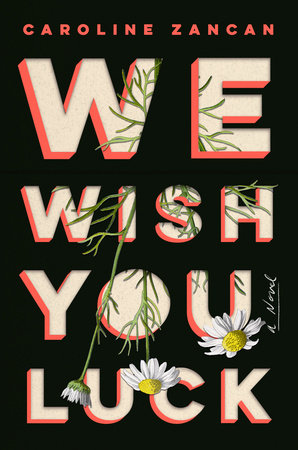
I find the siren call of a campus novel as irresistible as the next reader, and because the only piece of writing advice I endorse without caveat is that writers should write the novel they want to read, one of the first things I knew about my novel We Wish You Luck is that it would be set on a campus where my characters would roam wild and misbehave mightily. 

We Wish You Luck

I personally think of the campus novel as the anti-beach read, often demanding to be read under a flannel blanket with a glass of red or a stout, because there often is a naughty, scandalous, or just plain dark element at work in them. What is it about an uninterrupted stretch of lawn or a few steepled buildings that makes us behave so badly? In any case, it’s no surprise to me that many of the books below were originally published in January or one of the other ungodly cold, early months of the year. Now that the festive, cheerful weeks of winter are behind us, and there’s still three plus months of the grey, blank cold ahead, it’s time: kick off your shoes and pull the bar cart up alongside one of these master works. Just make sure the chair you choose allows for frequent turns of the head to see who’s behind you.

Prep

Prep by Curtis Sittenfeld

Prep is the consummate campus novel—its jacket still pops up in my mind like a billboard on an abandoned highway when I consider the genre. I remember being at first puzzled and then completely thrilled upon reading it my senior year of college, that this big, serious novel everyone was talking about didn’t have some epic, winding plot or live or die stakes—it was simply about the interior life of a young girl at a prestigious east coast boarding school who sometimes struggles to make sense of her place in the world, and connect meaningfully with people around her. Yes, there was a pink belt on the jacket, but everything else about the book’s packaging—from its trim size to the Tom Perrota blurb on the cover—made it clear that it was meant to be taken as more than a beach read or chick-lit despite its young heroine. And rightly so—the journey through this one high school career manages to say meaningful, memorable things about race and class. And I still remember being completely scandalized by that cheese or fish dichotomy! (I’ll avoid expounding not to avoid spoilers, but because as a repressed Catholic school girl I’m already blushing. Just read the book.) 

On Beauty by Zadie Smith

On Beauty by Zadie Smith

You might think the characters in a novel about university faculty would be better behaved than those in a student gazing novel. Not so, but it’s lucky for us. I personally think this is Zadie Smith’s very best work—so few literary novels are as Will Ferrell-level funny as this one, which also happens to be incredibly wise and profound. Smith has managed to make a philosophical story about one family’s entanglements in academic life as gripping as Gone Girl. 

Image result for separate peace

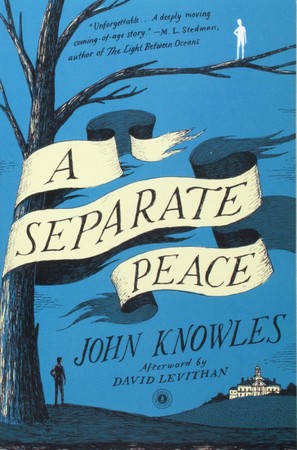
A Separate Peace by John Knowles

Did Gene really mean to bounce Phineas out of the tree or was it an accident? I’VE READ THIS BOOK HALF A DOZEN TIMES AND I STILL DON’T KNOW! Phineas doesn’t know! Even Gene doesn’t really know! This was one of the central questions of my high school English career, and if you want to know what a nerd I am, I’ll tell you that it’s still one of the dozen or so questions that rotates through my mind in a loop when I can’t sleep. In fact, the list I am probably much more qualified to put in front of you is pieces of evidence in favor of and against the fateful sway of that tree branch having been an actual, intentional act of violence. The novel is set at an all-boys boarding school in New England at the start of World War II, and while its secluded campus might shelter the boys’ from the raging war, it can’t protect them from their own dark impulses. 

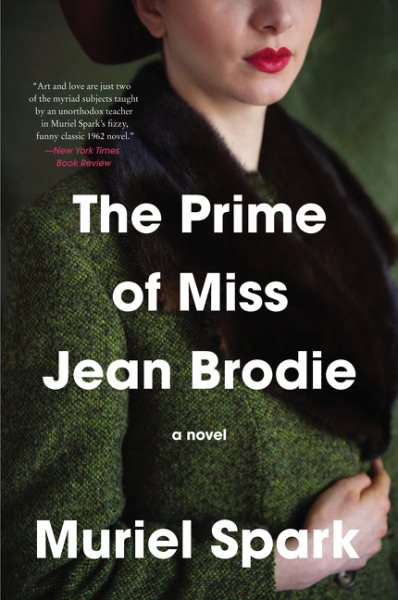
Image result for prime of miss jean brodie book cover

The Prime of Miss Jean Brodie by Muriel Spark 

My copy of The Prime of Miss Jean Brodie is an elegant 137 pages, and how Muriel Spark manages to so fully contain the rich, often surprising lives of the girls at the Marcia Blaine School for Girls in Edinburgh, Scotland and their beloved Miss Brodie in such little space is as much a mystery to me as how murderous Gene was really feeling up there in the tree the day Phineas fell. I suppose one of the great advantages to a writer of keeping your manuscript slim is that you’re all the more poised to make sure every last word is in just the right spot, and that no one of the sentiments you’re trying to convey might not be better served by a different choice. Here, Spark employs that advantage masterfully. I’ll never forget the day James Wood gave a lecture on this book during one of my MFA residencies at Bennington, perhaps the most eerily gorgeous campus in all of fiction or life. He showed us just how much mileage Spark was getting out of words most writers would consider completely functional, throwaway words—words traditionally used to prop up the real showbirds of a sentence. He put one of my own favorite passages of the book up on an overhead projector and asked us to pinpoint the exact word that gave it its power. Spoiler alert: it wasn’t the word we were expecting. But then, a master like Spark doesn’t need showbirds.  

The Secret History

The Secret History by Donna Tartt

Part of the magic of The Secret History is that it may be the only book in the history of the written word that has as much to recommend it to Dateline fans as it does to classics scholars. But anyone who’s ever stepped onto Bennington’s campus knows that its real power is in its setting—a place that haunted is practically begging to have rapturously dark things committed there. Tartt famously attended the school with Bret Easton Ellis and Jonathan Lethem, and her changing its name to Hampden in her now classic debut did little to disguise her alma mater (or some of her classmates). I had the distinctly unsettling pleasure of reading The Secret History across one snowy January residency on Bennington’s campus, an experience further heightened by the few undergrads on campus during that stretch, who were all too eager to point out the spots that had inspired the backdrops for various scenes in the book. There’s no recapturing that for you here, but pointing you to Lili Anolik’s brilliant oral history of the college during Tartt and co’s time there is a close second.

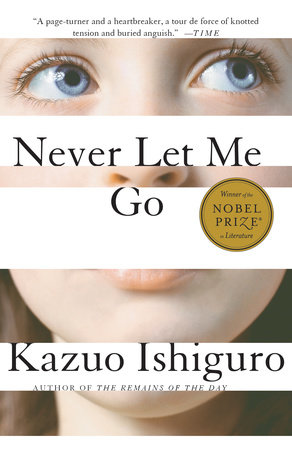
Never Let Me Go by Kazuo Ishiguro

Never Let Me Go by Kazuo Ishiguro 

Hailsham, the exclusive English boarding school where Ishiguro’s novel begins, feels more like a grand old manor than it does a traditional campus, but that’s ultimately the least strange detail of the many unorthodox elements at work there. The sci-fi twist that ultimately explains many of the mysteries that the book’s earnest, heartbreaking narrator tries to untangle across the story does nothing to diminish how real and raw her experience is. Like all the best science fiction—like all the best fiction—the book ultimately speaks to what it means to be a human. How a middle-aged man managed to so realistically inhabit the voice of a young girl coming of age and harness it to convey all the capital T Truths he illuminates here may be the greatest mystery of all.

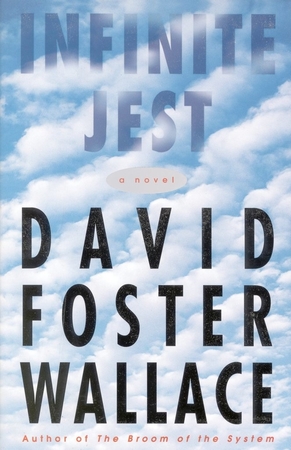
Infinite Jest by David Foster Wallace 

I know I know, it’s a first-sip-of-hot-chocolate hot take to try to file Infinite Jest away as a campus novel, but hear me out: some of the best, most memorable scenes of this brain-breaking book take place at the Enfield Tennis Academy, perhaps the most singular, whack-a-doodle campus of all time? And part of the book’s greatness is that it is so many different things at once—campus novel, spy novel, treatise on addiction, commentary on our pop culture—that it becomes a new thing entirely. Something so rare and unwieldly that you finish wondering if you can even call it a novel. I’m often a little bashful to admit that it took several false starts before I finally read this one cover to cover. I much more readily follow up with the fact that David Foster Wallace gave my commencement speech on the day I left my first-love campus, Kenyon College, in 2005. He delivered a now-famous speech that, even at the time, felt life-changing to me. Before he had finished I swore to myself I would finish Infinite Jest, my copy currently face down on the floor of my still unpacked dorm room after I abandoned it twenty pages in, no matter how many tries it took me. That day he finished his speech by saying “I wish you way more than luck.” I had already been planning to move to New York with my college roommates when he dispatched us that way, but I had assumed it would be a short-lived adventure—a year or so of spectacularly messy nights out and story gathering—and those seven little words changed how seriously I took myself, or how grand I let my post-collegiate scheming get. It changed the shape of the life I felt allowed to imagine for myself. His final words—his being there at all—felt like a benediction, and I took the luck he offered and I ran.

Of the many, many things that have happened in my life since I left Kenyon’s campus that make me feel lucky, that David Foster Wallace being my commencement address giver made me return to this novel again and again until I was ready to read it in full is near the top of the list. Yes, it’s difficult, but it’s also great. It’s warm and funny and very very human, despite its superhuman ambitions. And like so many impossible-seeming things in life, it’s worth the work and effort. And sure, it may be passe in 2020 to admit you’re a DFW devotee, but who cares—that’s a terrible reason not to love something. Which is just about the best set of lessons any campus or commencement speech or novel can impart. 

Image result for Room
Photo by Nuno Alberto on Unsplash

The Suicide Room” by Adam Ross

I know it’s kind of cheating to put a short story on a list of novels but cheating is a hallmark of the campus novel tradition, so I’m going for it. Plus, any story that begins “We were sitting on the floor of Will’s dorm room, smoking pot, when the conversation turned to death” has to be taken as a serious contender in this genre, regardless of its length. And the rest of the story is just as grimly Great. 

Celebrate Zora Neale Hurston’s Posthumous Legacy

I once heard a joke that Zora Neale Hurston is the literary 2Pac because she continues to release material years after her death, sparking debate on how much more of her writing will be unearthed in time. 

This month we’ll be met with new(ish) work and a republication of one of the collections that actively recirculated her into the Canon. These titles include “found” texts, which presumes Hurston’s stories had been previously “lost,” rather than going out of print and needing to be resurfaced. I’m grateful to the publishers and editors who recognize how her work needs to be back in heavy rotation in the public consciousness. Often I wonder: How dare it have ever left. 

Hurston, as writer and anthropologist, burgeoned during the Negro Renaissance (aka Harlem Renaissance). Most of her short stories (and several essays) were published in the 1920s prior to her novels. Since the Harlem Renaissance there’ve been other periods where the “establishment” saw and invested in Black stories every few decades. Sadly this interest has waned when the consumerist link to Black engagement appears to fade. The fact is that publisher made only negligible outreach to those who needed these stories most. Ebbs and flows are bound to arise in every area of the arts and by extension business in general. Many stories from before, during, and after the Harlem Renaissance remain due to their everlasting quality and the multifaceted depictions of Black stories by Black people. This explains their everlasting presence. This also explains Hurston’s continuous rise and visibility on shelves 100 years after the Negro Renaissance began. 

Below is a short list of titles from Hurston released and re-released since her passing in 1960. 

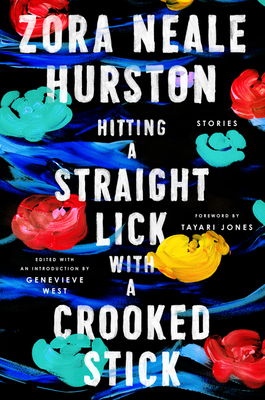
Hitting a Straight Lick With a Crooked Stick (2020)

Including published and unpublished short fiction by Hurston in her early years of publication to the early 1930s, this is one of the more up-to-date collections of short fiction along with The Collected Works (listed below). The majority of these stories take place in the South—Eatonville, Florida, to be exact—and a few in Harlem. The stories are organized in order of publication so you can read the full trajectory of Hurston’s short fiction from start to finish.  

I Love Myself When I Am Laughing… (2020)

Rereleased by Feminist Press, Alice Walker’s 1979 anthology was a resurrection of Hurston’s catalogue. This anthology concludes with Walker’s popular essay “Looking for Zora” about her own travels to find and mark Hurston’s final resting place. This book may be one of the best “starters” for reading Hurston because it includes excerpts of her novels, short stories, essays, reportage, and folktales. 

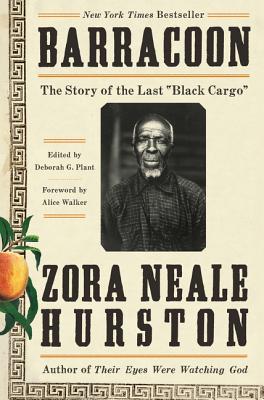
Barracoon: The Story of the Last “Black Cargo” (2018)

The previously unpublished Barracoon is based on interviews Hurston conducted in the late 1920s, it was finally released in hardcover last year by Amistad Books. (The paperback published this month.) Professor Deborah Plant takes the helm to collate Hurston’s interview with Cudjoe Lewis (née Kossola), the “last Black cargo,” who remembered being taken from his home on the African coast and brought to America illegally to serve as a slave. Hurston’s methods as reporter and ethnographer reveal her empathy for Kossola and her attention to the importance of letting the storyteller speak in the way that befits the story. This has become one of the more talked-about Hurston books in contemporary times thanks to its pertinence, length (it’s short at slightly more than 200 pages), and the emotional impact of Kossola’s story along with the bond created between him and Hurston.

Every Tongue Got to Confess: Negro Folktales from the Gulf States (2002)

Hurston is known for her extensive work in collecting folktales and Black history. This compilation of stories Hurston acquired during extensive travels doesn’t just exhibit her tenacity, ability, and focus; it also gives added weight to the fact that her anthropological roots boosted her approach to all kinds of narrative. 

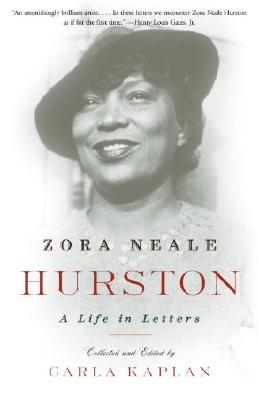
Zora Neale Hurston: A Life in Letters (2002)

One of my personal favorites, this collection of letters, compiled by Carla Kaplan, from Hurston to those she had relationships with over the years (including Carl Van Vechten and Langston Hughes) really immerses you in who she was, her work ethic, and her thought process. Her personality is not simply a persona but a complete entity of someone with a steadfast nature, great humor, and much capability. 

Zora Neale Hurston: The Complete Stories (1995)

One of the most circulated collections of Hurston’s short fiction was compiled by Henry Louis Gates. This was one of the first books I acquired after reading Their Eyes Were Watching God to absorb Hurston’s mastery of the short form aside from The Eatonville Anthology. The short fiction within are also arranged in order of publication at the time. (You’ll find some stories here in Hitting a Straight Lick.)

Why Do We Keep Telling Sister Stories?

On the second floor of the Metropolitan Museum of Art, there is a painting by Léon Frederic called The Three Sisters. A triad of young girls—the eldest no older than nine, the youngest around five—are quietly peeling potatoes, hemmed by an impressive gold frame. Their brilliant matching red frocks draw one’s attention like moths to a streetlight.  In Western art, women’s portraits tended to confer importance to the men in their lives, like fathers, husbands, or fiancés, and so I was surprised to realize that there are many paintings of sisters at the Met. It seems strange that great artists gave up canvases to depict these bonds between women, but the more that I considered it, the more I found that sisters have long been objects of fascination.

In 1868, Louisa May Alcott published the first volume of Little Women, and some 150 years later, the fifteenth season of Keeping Up With the Kardashians was released on E!. In the century or so bracketed by the March sisters and Kim, Khloe, and Kourtney, stories of sisterhood have been chaperoned through time and space, becoming fixtures in our cultural consciousness. Art, literature, and film have defined a general impression of sisterhood that can either reinforce or dismantle our perceptions of women and their inner lives; for instance, while Alcott’s view of sisterhood was plural and dynamic, others have since succumbed to reductive stereotypes. The variety of sister tropes now include fetishized virgins, catfighting divas, and creepy spinsters. In any case, these renditions of sisters make them out to be like what wolves are to nature documentaries: magnetic, beguiling, inscrutable—even sinister. 

Sister tropes now include fetishized virgins, catfighting divas, and creepy spinsters.

Imagining the wee girls in Frederic’s painting, I am struck by how the empty room in which they labor feels like an entire world of its own, where an unspoken harmony rests gently between them so that they are in lockstep with one another. Like a snowglobe, we want to jostle the frame and shake out what secrets have crystallized their bond. No one knows who the subjects of The Three Sisters were, or whether they even existed, but every time I visit the museum, I check in on them. Over the course of my visits, I have begun to wonder—what is it about sisterhood, as a particular code of feminine bonding, that has arrested our culture’s attention for so long?

I don’t have a sister. I have an older brother instead, who was my closest friend and ally growing up. As a result, most of my understanding of what it would be like to have a sister came from movies or literature, and revolved around the lessons of girlhood that were shared by young women in domestic spaces. These covens were populated by beautiful buttoned-down white girls who educated one another in the crucial lessons of Femininity 101: makeup, parties, bras, torturing boys, and self-hatred. “Sister Stories,” as we might call them, almost always star women who are young, pretty, and notably quiet, performing all of the idealized traits of femininity to the nth degree. They show us how these traits are taught and learned, particularly in adolescence. As a tomboyish child, I felt pulled in two directions—against the stereotypes of docility that I saw on TV, and simultaneously towards them, fearing that I must be inadequate for not knowing how to be a proper girl. I found surrogate sisters in pop culture; the Olsen twins’ bevy of straight-to-VHS buddy movies taught me how to plan slumber parties and inspired every fashion choice that I sported in kindergarten (bandanas, cargo pants, beaded chokers, etc). On long car rides, I restaged Passport to Paris in my mind, parachuting in as the ultra-cool triplet. I thought that if I had a sister, she could teach me how to “do” femininity, a task that seemed far more vexing to figure out on my own.

I thought that if I had a sister, she could teach me how to ‘do’ femininity.

In 1999, Sofia Coppola made her pink-hued adaptation of Jeffrey Eugenides’s novel The Virgin Suicides. Its heroines are the Lisbon Sisters—Cecilia, Lux, Mary, Bonnie, and Therese—and they are patron saints in the pop cultural cult of sisterhood. Veiled from the corrupting outside world by their parents, they become conspicuous objects of scrutiny to four local boys, and it is from this watchful gaze that the sisters’ mythology coheres. The girls are diaphanous figures ripe for subversion, unified by their shimmering blonde hair and matching Victorian nighties that are just fragile enough to suggest a thinly-repressed sexuality quivering beneath. Being somehow both virginal and suggestive, they embody the peak patriarchal fantasy of young women. By keeping themselves locked away from the outside world, it is as if this femininity is totally pure and innate—like they were just born this way. The protection of their chastity is also inextricable from their whiteness, which so often operates as a code for both innocence and racial purity. The Lisbons, and the hereditary model consolidated by their sisterhood, reproduce eugenic fantasies of gender and race unfettered.

 “As teenagers, we tried to put the pieces together. We still can’t,” muses one of the boys in a voiceover, the four of them staring up at the Lisbon house from the opposite curb. “Now whenever we run into each other at lunches or parties, we find ourselves going over the evidence one more time. All to understand those five girls.” The boys cut out the girls’ yearbook pictures and collect their hairclips and plot to free them and know them and have them for themselves. Sisterhood is crucial to the Lisbons’ mythology because it makes them appear uncorrupted, and thus corruptible. It also flattens them into a recurrent pattern where they could each replace one another, as if in a circle. 

The Lisbon home is like a dollhouse, and the sisters are the unreal playthings that interlopers mobilize to satiate their imagination, blank canvases onto which viewers can project their fantasies. They live, and ultimately die, for public amusement, their hallmark trait being their sameness, their flatness, their reproducibility. Today, the Kardashians are steeped in the same paradigm of voyeurism, on steroids. We are not, in this case, watching from the curb in the steamy Michigan summer; instead, the omnipotence of reality television and social media have turned us into tenants of their Calabasas mansion. The Kardashians look and act so similar that their sisterhood is like a shiny accessory, and we are a swarm of magpies pulled towards their empire of TV shows, Snapchat stories, makeup, and merchandise. Keeping up with the Kardashians is centered around the home; the sisters go out to shop or party, but they spend most of each episode standing around an immaculate marble kitchen and plotting against each other. The show is about women, but pivotally, it is about women whose lives revolve around the domestic sphere, where their identities are defined by being mothers, daughters, and sisters; even when they accrue status as entrepreneurs, it hinges on their relationship to one another, to their image as Kardashians and not as individuals. 

Back at the Met, I contemplate what The Three Sisters means in the shadow of Sister Stories today. Surely, these shows and movies don’t give voice to the depth of character, the dimension of dreams, and the breadth of bonds passing between these young companions. Virginia Woolf wrote in A Room of One’s Own about how underexplored women’s friendships have been in fiction; Sister Stories are a spin-off of this struggle for representation, penetrating the hidden stories cloaked behind the private sphere. With the sisters dressed so handsomely to peel potatoes, the painting has a performative quality to it, and yet there’s no observer in the picture—there isn’t even furniture in sight. The primary relationship of these young girls appears to be to one another.

We rely on the male gaze to see women, even when men are not central to their stories.

Maybe this is what storytellers find so perplexing about sisters—that they cannot conceptualize a world in which women rely more on each other than they do on men. Where notions of female friendship, love, or solidarity have seemed too radical for our culture to grapple with, we instead access the bonds between women through sisterhood, and find an easy way to reroute women and girls back to the heterosexual, patriarchal, nuclear family. Like the boys peering in at the Lisbon girls, we invent stories to pacify us, stories that resonate with our common beliefs about femininity.  We rely on the male gaze to see women, even when men are not central to their stories. We augment and magnify the mysteries of sisterhood, and then deescalate our fears by revealing that at the center of the myth, our protagonists simply default to cultural expectations.

Sister Stories imagine that women obey the codes of their gender even behind closed doors, and yet the March sisters of Little Women defy this trope. The Marches have endured the passage of 150 years perhaps because of how precisely textured they are; each with their own distinct personality and ambitions, Meg, Jo, Beth, and Amy embody the adventuresome qualities that we are not used to seeing in representations of sisterhood—qualities that were radical in their era, and remain radical to this day. When readers step into Orchard House in the 1860s, we discover a home that is fully alive, whose female occupants might be shouting, playing, working, studying, or creating, can be messy, irreverent, flawed, and crude, and are bonded by their fierce love for another, rather than notions of sameness. Meg and Jo work to support the family (a helpful reminder that low-income women have always worked, even before Betty Friedan): Meg teaches and Jo writes, while Beth plays the piano, and Amy cultivates her prowess as an artist. The sisters could not be more different from one another and although they bicker, they still find ways to get along. When Amy burns Jo’s manuscript, she is overcome with guilt—Alcott shows a mutual respect for ambition in both sisters, even if what they aspire for is ultimately different. Though Little Women is a 19th century novel, perhaps it still feels more modern than the supposedly “unfiltered” Sister Stories on reality TV. The whole of the March family is worth the sum of its parts, as opposed to other Sister Stories where women are only valued as an essentialized total. Even though Alcott’s book revolves largely around their childhood home, their domestic lives offer an alternative to gender roles rather than their reinscription.

Gloria Steinem has said that Alcott’s book was “a world in which women talked about everything” and is one of the rare examples of a story about girls who want to be women, and not women who want to be girls. It has inspired a small army of modern feminism’s most crucial voices, from Steinem to Simone de Beauvoir to bell hooks. And yet if Alcott’s book has had this kind of power, why have we spent the last century and a half being force-fed stories that contradict her dynamic, feminist outlook? Today, so many Sister Stories tend to be about women who are infantilized, frozen in a pose of stock femininity and whiteness that is pacified by being beautiful and doing nothing. By being sutured to the family unit, they are tacitly bonded to domesticity and premanufactured destinies. The March sisters each had their own desires and specific, individualized outcomes, but in other Sister Stories, each sister serves more or less the same function. Perhaps what I find the most frustrating about these tales is their obsession with uniformity, perpetuating the notion that women are all the same, and thus consolidating a group ethos of what it means to be “authentically” female. The onscreen family reproduces feminine one-dimensionality like a gene, passing down and naturalizing the tropes that feminists have fought to dismantle.

Greta Gerwig’s adaptation of Little Women is the first to lean with all of its weight into subversive ideas.

Popular culture has struggled to come to terms with representing feminism and often goes for watered down stories about “girl power” that do more to subdue rebellion than stoke it. Little Women was adapted for the screen six times by men before a woman, Gillian Armstrong, landed in the director’s chair in 1994, but even then, the film’s acknowledgement of Alcott’s politics was fairly tepid. As feminism has become an increasingly mainstream ideology, the newest adaptation of Little Women directed by Greta Gerwig is the first to lean with all of its weight into subversive ideas about women’s obligations, class, gender performance, ambition, solidarity, and all of the transgressive heft of Alcott’s novel. The film bathes the sisters’ younger years in a warm glow, but also takes care to flesh out each of their lives as young women pursuing dreams on their own. In doing so, this adaptation questions whether Jo has to marry and why Amy wants to, and explores the fruitful fulfilling power of women’s creativity. Whereas other versions end with Jo’s betrothal or wedding, Gerwig’s film offers Jo’s novel as the peak of her achievements, inspired by her sisters and mother. The family’s bond is not only inwardly transformative, because like the real Alcott family, the Marches volunteer, donate to the poor, and open an integrated co-ed schoolhouse. Gerwig’s film takes up sisterhood as a utopian model for a world where women care for one another and are the source of each other’s strength, where autonomy can be more fully realized, and where individuality and difference are not a sin. Little Women drives its heroines toward independence, not dependence, and so asks us to question the roles that we are used to seeing sisters play. 

Over the shoulder of the eldest girl in Frederic’s painting, there is a glimpse of a hallway and a set of stairs beyond it, flooded with light. We can see through the door—it is open. I wonder where those sisters went.

Why Is It So Hard to Just Say What We Mean

The Dance

Esme and Ismer have a game they play at dinner. Esme looks at the table and memorizes everything—the silverware, the position of the steak, the saltshaker, and when she closes her eyes Ismer moves something, slightly. To the left, to the right, into his lap. Tonight Ismer switches their wine. Esme notices a lipstick stain on his glass.

After dinner they flop onto opposite ends of the couch, looking at their ventless fireplace, both thinking, separately, about what they will do that evening. For the entire day Ismer had been thinking of going dancing, ever since he overheard his colleague talking about salsa classes as a way to overcome anxiety. Ismer pictures Esme moving her body around under a dim light with her eyes slightly closed, smiling softly to some sort of rhythmic music. 

They’ve been together for seven years and have never gone dancing. In college, Ismer went out, and Esme stayed in. Recently, Ismer goes out, and Esme stays in. Ismer isn’t a rabid extrovert or wild pleasure seeker in any sense, but the idea of going dancing for the sake of it—especially with Esme—seems exciting, perhaps even reckless, something they could think of next week, in fond remembrance of a night when they let loose. 

“Do you want to go dancing?” Ismer asks.

Esme shifts her weight on the couch. She is pleased that Ismer asked, but feels vulnerable answering. For a few weeks, Ismer’s late-night office work has been distancing, and Esme feels like they need something. But the question is out of the ordinary. Why does he want to go dancing—for her benefit? Does he think she’s bored at home? The last thing she wants is to feel pitied, or like he’s “taking her out” to be aired. She does want to go dancing, though.

The last thing she wants is to feel pitied, or like he’s “taking her out” to be aired. She does want to go dancing, though.

“Is that what you want?” she asks. “I would if you want to.” She sits up, her tone lifts, but she makes sure that her preference isn’t clear from her voice alone.

Ismer thinks of Esme in the past as a reference point. She’s declined going swimming in the river, sliding down banisters, role-playing—specifically his wounded- civil-war-soldier-and-nurse fantasy—driving without maps, and cigarettes. He thinks of her gentle disposition, her attentiveness to safety and to him.

If he says “yes” she might be put in a position to accommodate him. He wants to prevent a compromise. Does he love her? Of course he does. Because of her he can be the most perfect version of himself: considerate, safe, and responsible with each decision and its impact. If she isn’t certain about dancing, it is not worth pursuing.

“I would only be doing it if you wanted to,” he says.

It is as though the lexis of their feelings is a separate creature within the house. Like a fat cat that holds all their secrets and stolen glances. Howling, obese, and grumpy, the keeper of their true feelings, bursting with things that want to be said.

Esme slumps. Ismer doesn’t really want to go dancing, she thinks, and if we go it won’t be fun for the both of us. Ismer thinks I’m a drip, she thinks. Though dancing would be entirely out of her routine, it was something she had recently wanted to do. In fact, she had been waiting for Ismer to suggest it. 

If she were to say yes, and persist, as she wants to, she would feel foolish. She knows nothing about dancing, and therefore if Ismer isn’t enthused at the prospect, who is she to say otherwise? Like the time they made breakfast smoothies and couldn’t impose upon each other the different sets of fruits they separately enjoy, sticking them in some dumb strawberry-banana limbo.

Esme fills the empty rooms of Ismer with a sense of wonderment. He wants to value the things she values. He wants to do the things she wants to do. He wants to buy her a scrap of fabric, a ruby ring, a token of endearment that solders them together.

“No, I think we want to stay home,” Esme says sheepishly, watching Ismer closely.

“All right,” Ismer says. He gets up and takes a deck of cards from the coffee table, gesturing toward it to ask if she wants to play a game. 

“Yes, sure, let’s play blackjack,” Esme says. 

She doesn’t want to play cards. They play blackjack every night. 

Esme wonders if, eventually, while appearing to be gracious to each other, they will end up spending weeks, or months, or maybe even many years, inside their house, in separate rooms, looking out from separate windows and desiring a thing, a person, or a place that is very far away. 

Ismer is pleased. He did well, he thinks. He suggested something that his wife enjoys, and therefore he can too. That’s the best he can do. The wind comes in from the open window and gently shivers the deck of cards. The both of them go back to being floppy on the couch.

That night they go to bed silently, feeling some form of contentment. Ismer watches Esme sleep, and swoons at the way her hair moves when she exhales a dream. A dream in which she is dancing.


Copyright © 2020 by Nicolette Polek, from Imaginary Museums. Excerpted by permission of Soft Skull Press.

Kamala Khan Is the Superhero Zoomers Deserve

Children growing up in the 2010’s may be more immersed into the stories of superheroes than any generation before them. Marvel just closed out “Phase 3” of its blockbuster series of Avengers and friends movies. DC has taken over the CW with hit shows like Arrow and The Flash, with Marvel taking over streaming with Netflix exclusives and upcoming series on Disney+.

Despite the wealth of superheroes dominating our screens, it can be hard for Gen Z or “Zoomers”—the generation after Millennials, born in the late 1990s—to find any they can relate to. While they can understand many of the problems the superheroes face in The Avengers and Guardians of the Galaxy, none of these ultimately powerful and privileged figures are truly speaking to them. 

There is a hero telling their story, though. She just hasn’t hit the screens yet. Kamala Khan, or Ms. Marvel, is the hero that Zoomers needed, and she is the hero that zoomers should be reading and looking up to. 

She is, in short, the voice of a generation.

Khan made her first appearance in an August 2013 issue of Captain Marvel, and was later given her own solo series in February 2014. She was part of a wave of diverse superheroes Marvel debuted at the time, including a female Thor and a Black Captain America. Khan was special, though, as she became the first ever Muslim character to star in her own comic series.

The narrative about Kamala upon her introduction focused mainly on her identity as a Pakistani-American Muslim. And while she does prove to be representation for a usually underrepresented group, she truly gives representation to a much bigger group. She is, in short, the voice of a generation.

Though Kamala’s Muslim identity is important to her (and important in the comic), Islam plays a comparatively minor role in her life She is a typical high schooler with (mostly) typical high school problems: she wants to fit in, make friends, impress her crush and get good grades, all while trying to save Jersey City from a zany group of supervillains—villains that may feel familiar for today’s youth. 

In Generation Why, the second volume of Ms. Marvel, Kamala faces off with a holographic, robot-building supervillain named “The Inventor.” She discovers that The Inventor is powering his robots with energy extracted from the bodies of teenagers. When attempting to rescue the teens, she learns that they voluntarily chose to sacrifice themselves to The Inventor to become human batteries.
The reasoning for this, as the villain explains, is because he convinced the teens they were a scourge on our dying planet. We need renewable energy, and humans are a constant source of it. He convinces young kids that since they spend all their time “on their phones” and are not productive workers, they are the ones hurting the planet and if anything this is their way to give back. 

As far-fetched as this story may sound, it has more parallels to our real world than you may think. White supremacists and other dominant groups do use climate change and other potential natural disasters as excuses to carry out their misdeeds. For example, a mass shooter who killed 22 people at a Walmart in El Paso, Texas last August cited impending climate disaster as his main reason for his killing spree. The shooter drove from hours away to El Paso—a city with a large Hispanic population—because he believed that impending climate disaster would create a battle for resources, and killing Hispanic people now would make it easier for white people like himself to dominate the scarce supplies.

While situations like the one in El Paso are violent outliers, eco-fascist rhetoric has been normalized. Notably, Bill Gates, who is often credited as being a “savior” of some sort due to his philanthropy, pushing myths about overpopulation into the mainstream. “Population growth in Africa is a challenge,” Gates says in a WeForum report. In doing this, Gates and others are pushing the fault of climate change from the corporations responsible for potential climate disaster to some of the poorest people in the world—just as The Inventor does with vulnerable teenagers.

The rhetoric The Inventor uses to convince children to join in on his scheme—telling the teens that since they are not “productive” they do not deserve their lives—is familiar to Zoomers as well.  This draws parallels to our real life schooling systems, which are not designed to educate, inspire and grow our youngest members, but instead ready them for the dehumanizing life ahead of them as a working-class person in a capitalist society. We teach kids from a young age they are only as valuable as how much capital they produce and how much money they earn, which leaves them even more vulnerable to fascist rhetoric. 

Explaining the intricacies of these concepts to a teenager may be a hard task, but stories like Generation Why get the point across in a more palatable fashion. They teach kids that people in power will try to guilt and fear by placing our world’s problems on their shoulders, and then use that to take advantage of them. Intergenerational tension is as strong as ever at the moment, and today’s teens need to learn that they have a voice instead of letting those older than them take advantage of their vulnerability. Ms. Marvel is taking that on.

In just one storyline alone, the comic manages to tackle the issues of eco-fascism, the dehumanization of capitalism, and intergenerational tensions. The other volumes have even more in store for younger readers.

In Super Famous, a development company begins building new luxury housing in Jersey City. This angers the existing residents, as they fear that this new influx of money in the area will slowly shove out the city’s working-class residents. This is an issue many Zoomers may have firsthand experience with, as gentrification begins to slowly change America’s major metropolitan areas, kicking out families who have been there for years and destroying neighborhoods and communities all around the country. 

Civil War II, Marvel’s modern sequel to the classic 2006 comic series, sees Kamala tasked by her childhood hero and namesake Captain Marvel with taking the lead on a Minority Report–style taskforce that attempts to arrest criminals before they can commit crimes. Issues quickly arise regarding the idea of police overreach and the surveillance state, and what truly classifies someone as a criminal.

The darkest and most pertinent storyline comes in Mecca, where a group begins to haul off people suspected of having unregistered superpowers and taking them to mysterious prisons. Kamala’s brother gets caught, as he had powers for a brief moment in a previous storyline, and she is at risk of losing him forever. The parallels to the treatment of undocumented immigrants in America, who in their own way are not “registered,” could not be more clear. A group of officers who are not quite police show up at your house and next thing you know parts of your family are being hauled away, put into camps, and sometimes never seen again. The story is also similar to the tribulations of many Muslims who were put into Guantanamo Bay post–9/11, and even the treatment of Jewish and minority populations by the Nazis in the 1930s.

Social commentary is nothing new to comics. If anything, it was the purpose for their existence in the first place.

Social commentary is nothing new to comics. If anything, it was the purpose for their existence in the first place. Captain America’s longtime enemy, Hydra, is an obvious stand-in for Nazis. The X-Men series tackles the issues of racism, homophobia, and just general “otherness” and how it affects populations. Watchmen famously criticized the concept of law and order. It’s the way Ms. Marvel does social commentary that makes it truly special. Kamala is a relatable avatar for younger readers, and she is often in situations that Zoomers can easily recognize from their own lives.

Ms. Marvel’s charming nature, poppy art style and the fact that many of her side problems and hobbies match that of the average teenager remove the first barrier of entry. Its relatively light nature makes it palatable for a casual reader.

Casual readers can delve further into the medium, and even gain a further understanding of both the comics and the movies that have increased in popularity in recent years. They can jump from Ms. Marvel to stories like Civil War, which commentated on the surveillance state or stories like Cable and Deadpool which discuss the ideas of loneliness and the demonization of those who do not quite fit within society—both of which are important to zoomers as both issues have plagued their upbringing thus far.

It is hard to get into the gritty, complex, storylines of many of the previously mentioned examples unless you are already a fan of comics. Ms. Marvel helps introduce new fans to comics, though, and she can even draw younger, newer readers to the more complex stories that have dominated the medium for decades. This introduces Zoomers to even more of the many important political and social issues tackled in them.

Kamala will get her shot at the spotlight soon, as she is slated to star in a new TV series coming to Disney+. In the meantime, her comic series gives young readers a fun, but very real look at the issues that are facing them in the real world, and a good, positive, relatable role model to show them how to deal with these challenges. 

Which WWI Poet Should You Fight?

Whether it’s sweet and right to die for one’s country is up for debate, but everyone loves a good brawl. In one corner we have you, the reader, an expert at reading and maybe other stuff. In the other corner, we have poets writing from the frontlines and the home front during WWI, profoundly affecting the course of literature and laying the foundations of modernism. A real clash of the titans scenario. Luckily, we’ve researched fighting styles of each poet and created this definitive guide to help you decide which poet you should fight.   

Rupert “Toxic Masculinity Incarnate” Brooke

Fighting for a cause. Victory driven. Fight might go on longer than he expects but he’s still intent on beating your ass. Strapping young English lad. Thinks death is hot. Sleeps in a grave plot for fun. Will kill your horse, will kill anyone’s horse. Fight him if you want to die in a blaze of glory. 

Wilfred “My Dead Friends are Hot” Owen

Standard round of fisticuffs. Will buy you a beer afterwards. Takes place in a bar parking lot. Insists on shaking your hand—has a very firm handshake. Fights you because you insulted his writing style. Haunted by his dead friends but secretly into it. Keeps insisting that he doesn’t have a crush on Sassoon even though you never brought that up. Punches you because he’s not allowed to gently caress you. 

Mary “Critically Underrepresented” Borden

Can’t predict her next move. Keeps a fancy set of brass knuckles in her bag. Will tear you apart just to stitch you back up. Cheats but you don’t notice until it’s too late. Will never forget this as long as she lives. Thinks the bruises you leave on each other are “artsy” and wants to take photos of them. After the fight you ask around but no one’s heard of her. Fight her only if you can afford the medical bills.

Isaac “Isaac Rosenberg” Rosenberg

Weak but scrappy. Never lets go of his morals. Poor, Jewish, nothing to lose. Is not above biting you. Pacifist but will fight for money. Loyal to no gentile. Just wants to leave. Loves his mom. Would fight you but more importantly would fight Sassoon. Is probably a decent fight but he’s saving it for Sassoon.

Siegfried “Sluice Me Free” Sassoon

Will sluice you. Homosocial. Can’t bench press you yet, but he’s building up to it. Always checks his phone while you’re talking. No respect for morality outside his own. Might decide halfway through that the fight is pointless. He’s literally just a meat sack full of testosterone. Doesn’t know this Rosenberg guy. Spends the whole fight showing off for Owen. Fight if you want a really cool looking black eye. 

Robert “Just a Friend” Graves

Fights you, but as a friend. If you go down, he’ll go down too out of solidarity. Searching for that wet bond of blood. Believes your lives are now entwined. Do you want to get a drink after this haha just kidding unless. When he says your fat lip is hot he’s actually saying you’re hot. Hitting you but also hitting on you. 

Jessie “Women Can Be Bootlickers Too” Pope 

Will call you a pussy if you don’t fight her. Texted all her friends about how great this fight is going to be. She’s doing enough by showing up but you need to put your life on the line. Shit-talks you like crazy. Tries to draw a crowd so they can all boo you. Facetimes her boss into the fight. Feigns an injury two seconds in.    

WB “The B Stands for Bastard” Yeats 

Wears stupid pince-nez glasses that aren’t going to stay on his face. Not remotely prepared for this. Won’t show up to the fight but later he’ll tell everyone you’re a shitty fighter. Asks why you don’t like getting your ass kicked. Tells you that you should find beauty in getting your ass kicked or you’re not a real fighter. Won’t let anyone near his ass so it’s never been kicked but still, he wants you to know that the Greek tragic choruses sang. 

8 Podcasts That Will Make You a Better Writer

I am a big fan of listening in order to write better. Long before I published my first novel, I supplemented the MFA that I don’t have with a DIY MFA that saw me going to one reading series for every night that I was in New York City during a short-term job contract I had there. It was thanks to my over attendance at these reading series that I was able to identify the narrative shortcomings that were keeping me from getting work published in the magazines that I admired. At a sticky table with an IPA in hand, I’d listen as a writer went on a tangent just when you wanted to linger in a scene; when a memoirist belabored a point in a way that felt needlessly self-effacing; I’d cringe when a sex scene depicted a form of robotic, uncomplicated sex that didn’t sound like any of the sex that humans actually have.

Image result for before and after the book deal

Hearing (and watching) people lose their audience at the microphone made it much easier for me to address the faults in my own manuscripts—revision no longer felt like a slog towards another form rejection letter, it felt like a way to save my ego at the mic. I think it’s for this reason that I keep turning to live storytelling when I need to improve my writing (or my mood about my writing), now. Not that I don’t believe in books about writing—I just wrote one!—but there is something so affirming about listening to a story, and I do believe that we can find both joy and education from our entertainment choices. For me, that current choice is podcasts. I have a stand-up group of favorites that I listen to religiously because they make me laugh, they make me re-consider preconceived notions that I have, and in some cases, they make me cringe. Here are the podcasts I currently listen to which inform the way I write and revise. May they bring happiness to your heart…and pen!

Image result for Publishing

Minorities in Publishing by Jennifer Baker

An interview-format podcast hosted by writer, editor and activist Jenn Baker in which she invites professionals throughout the publishing community—many of them underrepresented—to discuss the lack of diversity in book publishing. With guests like author Morgan Jerkins, the founder of FOLD (the Festival of Literary Diversity) Jael Richardson, and agent (and former editor) Anjali Singh, this podcast encourages listeners to be more attuned to the impact of not just what they read and write at present, but also, what they don’t.

Image result for alice levine jamie morton james cooper

My Dad Wrote a Porno by Jamie Morton, James Cooper, and Alice Levine

Aside from being hysterical to listen to, this show (that features a son reading his father’s pornographic novels to his two best friends) will help writers understand write enticing sex scenes, how to avoid tangents, and avoid extraneous set up by hearing these narrative mistakes be made fun of time and time again.

Image result for tin house

Between the Covers by David Naimon

The benchmark for interview-based shows with writers, host David Naimon gets deep into the process of America’s most exciting writers in 90-minute segments that you’ll wish would never end. Given the show’s length, there is a lot of airtime devoted to problem-solving which will inspire—and hopefully, help—writers who are feeling stuck, themselves, and Naimon’s proclivity for the independently published and translated is a great way to discover what you should read next.

Image result for savage lovecast

Savage Lovecast by Dan Savage

If you’re working on a creative writing project that involves human beings, it’s good to know how they are having sex. The iconic columnist Dan Savage gives sex and romance advice to the vanilla, to the kinky, and to every uncategorizable concern in between. An entertaining reminder that real life can be more interesting than fiction, and thus, should probably inform it.

Image result for wrong

You’re Wrong About by Sarah Marshall and Michael Hobbes

For writers of non-fiction especially, this intelligent and darkly funny podcast by Sarah Marshall and Michael Hobbes about pop culture stories that America got wrong will inspire writers to research, analyze, and fact-check before they consider something “done.” Fiction writers will enjoy the underdog tales that the show favors, as will adepts of everything 1990s.

Image result for dani shapiro podcast family secrets

Family Secrets by Dani Shapiro

This podcast by the bestselling writer Dani Shapiro is as intimate as they come. Her guests—Kiese Laymon, T Kira Madden, Joanna Rakoff, most recently—are master storytellers who walk listeners through the stages of courage it took to get their stories right. Especially useful for writers working on memoirs with revelations or information that could damage their relationships—you’re sure to find an aspirational mentor in this podcast.

Image result for serial podcast

Serial by Sarah Koenig

There is a reason that Serial was the first podcast to go viral—it’s incredibly well-paced. For those of you who have already listened to this investigative podcast hosted by Sarah Koenig and its riveting follow up, give it another listen to note the narrative deployment: how were characters introduced and developed? What information was released when? What information was held on to? How was the story built?

Image result for should we begin esther perel podcast

Where Should We Begin? by Esther Perel

Vulnerability is crucial in creative writing. It’s not enough to say something, it’s better to believe what you say, and better still is to be vulnerable when you say it. Therapist Esther Perel’s groundbreaking show lets you hear the behind-the-scene counseling sessions of actual couples, and gives writers a beautiful way to understand the resentments and hopes that we all harbor.