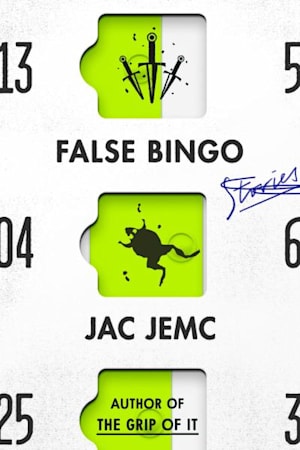
A man in an empty parking lot took pictures of our train as it passed. He made use of a tripod. Its shadow and his were a vanishing math on the pavement below. For a second I might have known anything at all about what it was like to live in his life. Then it was not that way. I saw vertical brick. I saw letters of words.
2. HIDE
The man in off-white, painted in oil, hung in a room in that library. His name was engraved in a plate on the frame, along with his period of life. Certain kids felt that reading the plate would give them the power to study the man and laugh at his candid gravity. These kids were lost. We knew to avoid the man, and his room, and that building entirely.
3. APPOINTMENT
I met with the meaning consultant for twenty minutes, which I could afford. I said she should probably charge more for her service, so people would enter less doubtful. “What’s the problem with doubt?” she asked. “Really?” I said. She studied me for a time. “Let me ask you this,” she said. But asked nothing. It began to get harder for me to act like the earth was not flying around, and with it our chairs, the floral arrangement, the paintings, the Tiffany lamp.
4. TENDER
The ghost of Hollywood Boulevard forgets who she’s supposed to be. She elongates, spins. Maybe she was an athlete in life, a dancer, canting her way through the crowds without touching, like she was a child, like it was a game she could play in her mind. Maybe she hustled tourist groups, like this kid in the sagging Spider-Man clothes, crouching to smooth the cloth of the pocketed dollars he has acquired.
5. HARD
Bikers in leather appeared and filled the street with roar and glare. I asked my elderly mother if she wanted to wait it out. “All I do is wait,” she replied. I narrowed my eyes at this information. I wheeled her back into the day. “Afternoon, ma’am,” one biker said. They parted for her, Bible-style. “I paint horses on cigarette boxes,” another explained, handing her one. My elderly mother leaned toward the man, who bent so he could hear. She vouched for the toasted tuna melt at the café we had just been to.
6. WARN
You can’t tell people what they don’t want to hear. Try and they’ll make it all about you. They’ll say (without saying, because silence is power), Why do you care so much, anyway? What do you need me to think about you? I don’t care, I’ll say then. I’m not even here. Look through me. Look through everything. S.I.P., you know what I mean? No? That’s shop in peace.
7. INTERLUDE
Many years ago, I got lost in north Lake Tahoe. In the pines. Which pointed every way at once, without investment. This way. This. A particle light in the reach of the needles. This way here. Like it was some game. But I could not play, knowing neither the object nor the rules.
8. CRAMP
You don’t need to be that good at math to see how storing all of the off-shoot realities would become a problem. There was not enough space. Even though there was much more space than anyone could comprehend. It affected the program. Our ignorance was compromised. We had visions: something like a hand, and something like a kill switch.
9. SPEAK
I took a seat next to a talkative man, a tenor who put out architectures of grammar like it was his job. I wanted to pay him. The sound of his voice in my head was this endless fucked-up audio book I could populate with my own dreams, of—I don’t know, phantoms, and airborne contortionists, monkeys hanging out on clouds, throwing down pennies and seeds.
At the end of 2019, I’ve been thinking a lot about gratitude. I am grateful for the things that sustained me. This year especially, I held poetry close to my chest, needing the warmth and understanding that comes from a poet’s clarity and wisdom. Poetry, more than any other artistic medium, helps me feel connected with others. The more I read, the more I realize we’re all asking the same questions, we all wanting the same recognition from each other.
So, dear poets: we are grateful for you. Thank you for your work, your vulnerability with audiences. Thank you for the many hours you spend submitting poems to journals, traveling the country, connecting with editors, and hustling to get your words to us. We appreciate your thoughtfulness, all of the new ways you’ve found to express your anger, your joy, your loneliness, your desire. Thank you, in particular, for these 14 books.
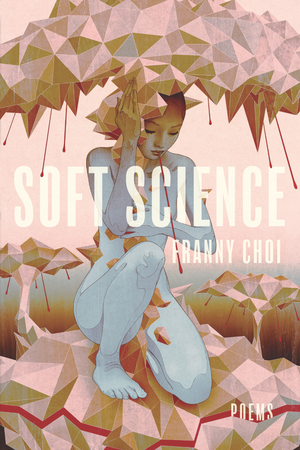
What does it mean to be human, to be real, especially in a world with increasing dependency on artificial intelligence and web presence? How do we still reach out to each other? Through our relationship to technology — using the Turing Test as a touchstone, but also drawing from programming languages, television, and the internet — Choi examines the nature of consciousness and human connection. These are poems about the selfhood we seek, the desire to be wanted, seen, acknowledged as real, and all of the mistakes made along that path to recognition. Soft Science is an earnest collection, written with dazzling expertise.
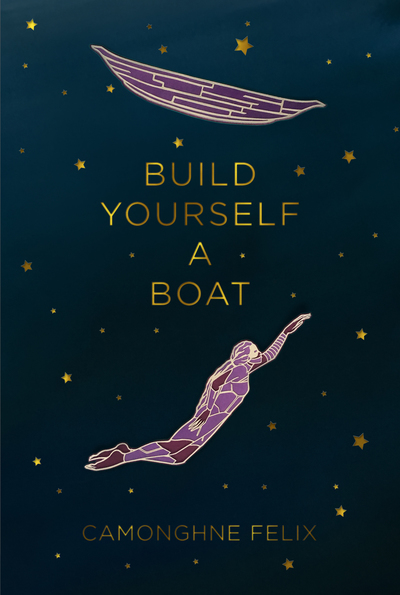
Camonghne Felix has written a collection of poems that seep into your consciousness and continue to unfold long after you’ve turned the page. These are stories about where we come from and how that shapes us, about the brightness and darkness of family, about womanhood and Black womanhood and death and survival. These are emotionally dynamic poems by a woman who has continued to live a full life and succeed despite all of the things that might have held her back. I think it’s probably cliché to call poems about trauma and hardship “brave” but I do think Felix is brave, and her careful approach to poetry is a feat to be admired.
This is a collection of very specific memories and moments: a familiar sound playing out of an open car window as it rolls down the street, the smell of something cooking, the laugh of a friend. Among these things there are ghosts, sirens, dark clouds rolling in. Abdurraqib plays with nostalgia and history, both personal and cultural, and through that find commonality. He asserts: “& lord knows I have been called by what I look like/more than what I actually am” — and proceeds to share the blossoming garden of what he actually is. I get Fall Out Boy stuck in my head every time I see this book on my shelf, which is one of my life’s little joys.
Sometimes I wonder if we deserve Shira Erlichman and her beautiful mind. If there’s one thing this collection shows us, it is that there is joy and grace in this life, even alongside pain.Erlichman writes each moment with such skill and precision every poem is full of resilience and thoughtfulness. Ode to Lithium is exactly what it says on the tin: an exploration of the ups and downs of mental illness, and all of the struggles that come along with taking care of oneself. The voice in these poems deals with shitty doctors, family, friends and lovers, Bjork, cockroaches, and so much more. But more than anything, this collection is about living, finding ways to live and doing it on purpose.
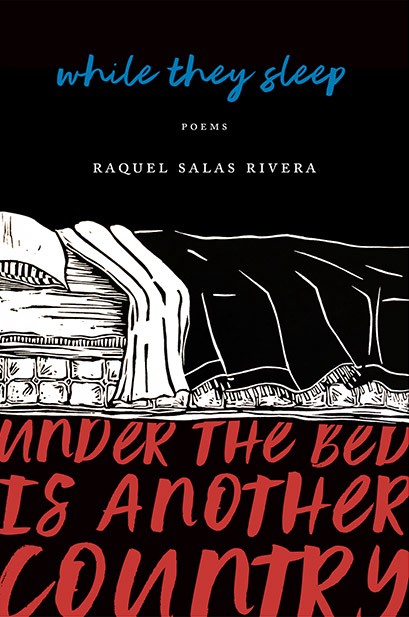
Rivera starts their collection with a proclamation: the number 4,645 bold across the page. This is the number of people dead as a result of Hurricane Maria due to the storm and governmental negligence afterward. This is an angry, grief-stricken, confrontational book that uses space to it’s advantage: at the top, English; below, Spanish as a footnote, echoing the voices of those who are an afterthought, if they are thought of at all. Rivera confronts readers with ugly truths. As a non-Spanish reader, I am confronted with my privilege. As a person with Puerto Rican ancestry, I am confronted with the distance between myself and my homeland. This is not so much a book but a slap across the face, a tear, a hug.
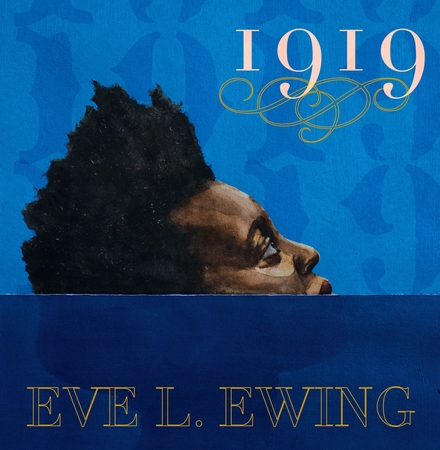
Eve L. Ewing’s second book is a preservation project. Ewing writes of Chicago in 1919, a time of Black migration to the north in search of work, and a race riot that shook the Black community to its core. The poems draw on history and Black cultural traditions to give voice to Chicagoans who became involved in and affected by the riot, who were buried by history and white supremacy. Exploring issues of race, class, and privilege, Ewing contrasts of graceful words and horrific realities to make 1919 a collection that soars.
It is an incredible gift for a writer to be able to place their reader so vividly in a location, amongst a people, within nuanced emotions. Sarah Borjas accomplishes all three in this collection with poems that echo into a long stretch of desert night. Balancing the deep love a person can have for their hometown with the wisdom from having moved on, Borjas illuminates Chicanx culture and family, heartbreak and loneliness, trauma and struggle. These poems ask, how do we fill the holes that have been left in us, the holes that have been punched through? How do we continue to bloom?
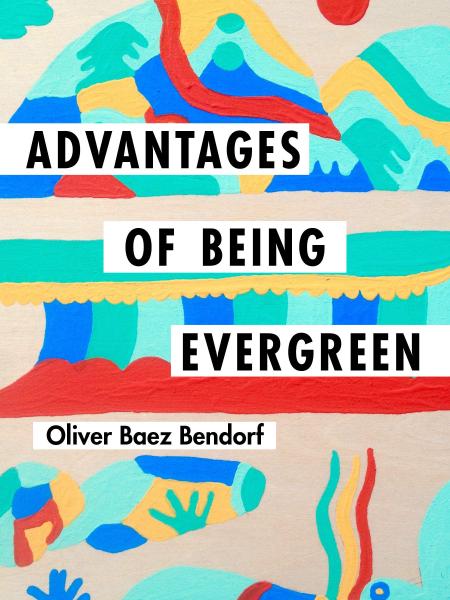
Reading this collection felt much like reading Oceanic by Aimee Nezhukumatathil. It’s about the Earth, yes, but more particularly about those who inhabit it and the space they take up, simultaneously encompassing a grand, aerial view of life and a simple, close, tender one at that. In a collection full of distinctive characters, the landscape is a character in itself, rendering a sweet slice of rural, rustic queer life. Bendorf’s collection is a testament to wild queerness, a collection that howls at the moon, demanding to be seen.
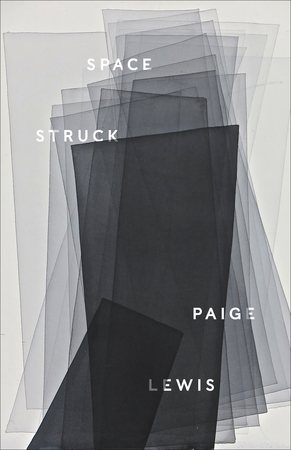
Lewis depicts a world of gentle, quiet observations and wonderment. Reading Space Struck made me want to see the world through the narrator’s eyes, to watch birds gather on a tree outside a kitchen window and think of joy, family, comfort. In these poems a person tries to find their place in nature, in the universe, by asking what is fair and what is good. Lewis’s poems balance the anxiety of being human with the excitement of knowing there could be more to life than what we know.
Coal. Beer. Boys. Gasoline. Smoke. Desire. Shattered glass. Discarded jeans. The world of Jake Skeet’s poems is both haunting and sweet, full of dirt and kisses so vivid you can taste them against your mouth. It’s a world that will hurt you, break your heart, but also reach for your hand and ask to be held. This collection examines all the shades of masculinity and manhood through the lens of someone young, queer, and Native. These poems hold pain and tenderness together in one hand to observe all the ways they interact. Thorn. Mouth.
In Liew’s first full-length collection, politics and pleasure are at play. These poems examine the intersection of race and sexuality, the roots of trauma and desire, and what it means to inhabit a politicized body. Liew’s sequential poems are ripe with bruises, both accidental and intentional. What stands out in these poems is the juxtaposition of fierceness and softness—the language is both vulnerable and assertive, which feels like an undeniably feminine experience. What does it mean to be a woman who wants? What does it mean to want, to be wanted? What does it taste like?
In one fell swoop, Malcolm Tariq has joined the ranks of Danez Smith and Jericho Brown with this essential collection of poems on the queer Black experience. Heed the Hollow is about what it means to be a man, how to deal with wanting what you’re told you shouldn’t want, how to love your religion and family and home while reconciling with history and culture. These poems interrogate racism in the South, the politics of sex and pleasure, the politics forced on Black bodies, while also balancing care, reverence, and self-love. Tariq’s empathic voice truly owns its space in the world.
It may be strange to call a collection about gender violence and emotional labor beautiful, but it is, in the same way that women’s capability of finding something to hold on to even when everything seems built to destroy them is beautiful. Scenters-Zapico’s poems are both sour and savory, sweet and sticky. Exploring the nature of machismo in Latinx culture, relationships and sexuality, femininity and domesticity, Scenters-Zapico has crafted a book that speaks to anyone who has jumped through hoops to please someone else. But there is an assertion of selfhood here too, and above all else, the truth of a survivor.
Alison C. Rollins does Simone Biles-level gymnastics with language, effortlessly backflipping and twisting over inquisitive and introspective lines on love and loss, on Blackness and womanhood, on tragedy and discovery. With a delicate mix of history, surrealism, and library reference numbers, the poems in this collection are in command of their subject matter, coming at us so fiercely and swiftly. We don’t know what hit us until the damage is already done. “Dear Dewey Decimal System, / How will I organize all the bodies? / The professor said that in judging / women’s bodies by their covers / we have a system for returning / things back to where they belong.” Library of Small Catastrophes secures Rollins’ place alongside a long lineage of poets at the top of their game.
Before you go: Electric Literature is campaigning to reach 1,000 members by 2020, and you can help us meet that goal. Having 1,000 members would allow Electric Literature to always pay writers on time (without worrying about overdrafting our bank accounts), improve benefits for staff members, pay off credit card debt, and stop relying on Amazon affiliate links. Members also get store discounts and year-round submissions. If we are going to survive long-term, we need to think long-term. Please support the future of Electric Literature by joining as a member today!
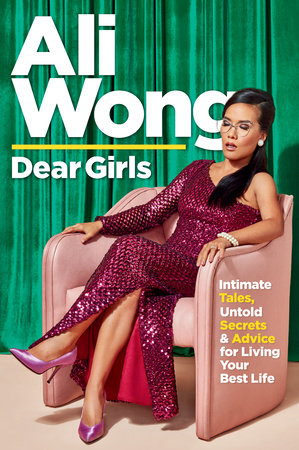
When I read the reviews of Ali Wong’s memoir Dear Girls: Intimate Tales, Untold Secrets, & Advice For Living Your Best Life, I was at first thrilled—the responses were glowing—and then perplexed. I fundamentally agreed with what they said: that the book is a more intimate and poignant (yet still hilarious and incisive) extension of her Netflix specials. The reviews talked about her raunchiness and her vulnerability, the thoughtful ways she delves into her various roles—as mother, as a comedian, as a woman of Vietnamese and Chinese descent. And yet for all their gushing, all the reviewers I read overlooked the part of Dear Girls that I, as an Asian American woman and writer, found the most revelatory: that it was written to me.
Well, not to me exactly. The book is presented as a collection of letters to her two young daughters, providing life advice for when they grow up. Yet the memoir’s conceit is a remarkable sleight of hand. When Wong addresses the book to her daughters—a narrow, fixed audience—we immediately understand that framing is a literary device, and her advice is meant to be read universally. Yet at the same time, the device allows her to speak directly to Asian American women—a demographic that in media is often spoken about, or spoken down to, but rarely spoken to, peer to peer. In Dear Girls, Ali Wong both describes (through her loving depiction of her family and environment) and inscribes (through her specific audience choice) the ways Asian American-centered creative community can provide support and nourishment.
Such examples are sorely needed in a literary and media landscape where we are reduced to the alien. In an NPR interview shortly after the book was published, All Things Considered host Michel Martin told Wong that her family’s history is “quite extraordinary… I mean, your dad is Chinese American. Your mom is Vietnamese American. And when you read their backstories… it just kind of takes your breath away.” I was struck by the phrase “takes your breath away,” because it aligns with the reception I’ve received to much of my writing on my grandfather’s time in the Japanese American incarceration camps, or on my grandmother’s history in Taiwan. People say things like: astonishing, astounding. What they mean is that my family’s story is foreign, inexplicable, a narrative of the unknown.
Because that is the white narrative of Asian Americans: we are benign, and we are unknowable. Even in works by Asian American writers, the literature that gets the most attention still tends to be tied to tales of immigration. The narratives are ones of boundary-crossing: of one foot grounded in the old world and one in the new, stories of pain and exile and belonging. Yet many Asian Americans have lived in the United States for generations, for nearly a century or longer—and these works are harder to parse. Not an immigrant narrative, but not the narrative of a white American.
That is the white narrative of Asian Americans: we are benign, and we are unknowable.
I’ve struggled with these expectations when writing about my family in various writing workshops and classes, where I am usually the only Asian American (and sometimes the only person of color). In writing spaces, my peers critique the content of my work to the best of their ability—but lack cultural context. Workshops often devolve into questions about cultural references, instead of structure, style, character development. I don’t expect my readers to understand my history—even other Asian American readers won’t always know it—but I become frustrated with the attempts to pigeonhole our stories into easily-read shapes and old tropes. A professor suggested I drop a section about Japanese colonialism in Taiwan because it was “too confusing.” When I write about my ethnic identity, it’s not about search for assimilation, but about trying to hold onto roots of cultures and countries I am increasingly distant from, of holding onto traditions that are dying away with our great-grandparents and grandparents. I thought about this while reading the first chapter of Dear Girls, where Wong touts the benefits of being with another Asian American. “You don’t have to constantly explain everything or act like a tour guide for Asian American culture,” she says.
That’s why Dear Girls takes my breath away for a different reason—not for how surprising it is, but how familiar and familial. As I read her list of good and bad signs in Chinese restaurants (Good signs: “There’s a tank full of live fish in front,” “It takes an hour to get a glass of water”; bad signs: “The dim sum is being served on trays,” “The waitstaff ask you ‘How’s everything going?’”) I thought, yes, yes, then took a photo of the page and sent it to my family. In Ali Wong’s comedy, we are inside the in-jokes, jokes that stem from understanding our community and acknowledging the ludicrous aspects of our lives. It’s not the kind of “humor” we’ve been subjected to for as long as we’ve been in America: from Fu Manchu in the 1930s to Shane Gillis today, ones that depend on communal disgust at us—where the comedy relies on the shared understanding between the comic and the white audience. In Wong’s work, we are the people that make up the contextual fabric; the relationship exists between the comic and the Asian American audience.
In Ali Wong’s comedy, we are inside the in-jokes.
I often struggle with negotiating the role of my audience. I want to write without having to provide layers of explanation for every allusion, every cultural reference. And yet I want to reach a wide readership—code for “white people” in American publishing—and have been trained to see writing to other Asian Americans as either too niche or as unnecessary. In the United States, East Asians occupy a peculiar position where we’re usually seen as being white-adjacent enough not to need to be spoken to separately. I am not Black or brown, but I am not white, either. My skin color results in microaggressions, not bodily harm or death. We have assimilated—by necessity—and then we assimilated further.
While Black and brown artists and writers have long inhabited—and flourished—in their own spaces, Asian American creatives do not have as wide or as deeply rooted communities in most parts of the country. Part of this, I imagine, has to do with white America’s vision of East Asians as the “model minority.” We are not white, but are accepted by whiteness inasmuch as we are benign and useful as a wedge and tool for anti-Blackness. We are given crumbs of access. This, of course, is a sort of privilege; it has also prevented us from staking out our own space.
So when I read Wong’s description of the Asian American creative community she comes from, I was envious. The examples of Asian American support—from her parents, her brothers, her friends, her Bay Area community—showed me the necessity of collaborators who share your cultural context. It made me want to develop a stronger network with other Asian American writers and artists.
We are not white, but are accepted by whiteness. We are given crumbs of access.
On the face, this seems antithetical to Wong’s position in her book. In the chapter most frequently discussed in reviews, “My Least Favorite Question,” she expresses frustration that Asian Americans always want to know about what it’s like being an Asian American in Hollywood, a question she finds reductive and ancillary to more critical questions of craft, work ethic, and failure. She tells up-and-coming Asian American entertainers to expand their circles beyond just other Asian Americans. In many reviews, this seems to be the point that critics take away: that to define yourself as Asian American is to pigeonhole yourself.
I’d argue that this expansive chapter is much more nuanced than that. Right after Wong gives advice to go beyond your community, she dedicates pages to discussing the importance of being friends with Asian Americans in entertainment. She talks at length about specific Asian American people who have supported her. That chapter concludes, “This brother- and sisterhood with other Asian American people in entertainment—how they treat me and take care of me and demand other people respect me—has given me my community that keeps me protected. So I’m saying you need both—your community and what lies out of it.”
For people who, like Wong, grew up in spaces rich with Asian Americans, the latter part of advice—get outside your community—is pointed. For the rest of us, the former part—get inside your community—is the part that hits home.
Wong recognizes the gift of such community when describes a Asian American actress who felt envious and excluded after not being cast in Crazy Rich Asians. “For her,” Wong explains, “that was the truthful but ugly answer to the question, ‘What’s it like to be an Asian American in Hollywood?’ Don’t miss the one spot every ten years.” I identified with this immediately. Wong was naming the frisson of anxiety I feel when seeing a book by another Asian American writer whose content overlaps even slightly with mine: that there is only one space, and now that they have captured it, there is no room for me.
But Wong feels differently, which surprises the slightly older actress—a difference that Wong credits to age and upbringing. “I also grew up feeling special because I was Asian, but for the opposite reason,” she says. “Not because I was different from the people around me, but because I was the same, which filled me with pride.”
After reading this, I wondered what it would look like if I always imagined an Asian American audience for my writing—an audience with a similar context and history. Not that my pieces would not apply to other people—we, too, are people; our experiences, too, can be read universally—but to envision my community as my ideal readers.
I wondered what it would look like if I always imagined an Asian American audience for my writing.
Recently, a friend started up a group for young Japanese American creatives. We meet monthly to discuss our work and create together. Though our content varies widely (we work in a variety of artistic media), we have shared context. Most of us have at least one grandparent who was incarcerated in the American internment camps during World War II; though we are a few generations removed, this history comes up over and over again as we discuss our work. I also participate in Asian American creative communities online—though we may lack a quorum in whatever town we live in, we can gather in full force on the web. I can’t ignore the issue of audience, but it reminds me that creating is a process, and who you walk with along the way is as important as who consumes it at the end.
These communities can also bring up tension that is difficult but necessary; we can push back on each other in a way that white readers can’t and don’t. When we exist only in relation to the dominant white society, Asian Americans are brought together. When we speak to each other, Asian to Asian, we have to reckon with our own complicity, both historical and contemporary—colonialism, by intra-Asian racism, South and Southeast Asian erasure. (South and Southeast Asians have rightfully pointed out that while we East Asians–what Ali Wong refers to as the “fancy Asians”—are out here fighting for visibility and representation, many of them are literally fighting for basic human rights.)
These dialogues can be painful, especially when we’re unused to reckoning with own power and privilege. Wong mentions a Japanese American student who asked Native Hawaiian activist Haunani-Kay Trask how her family, who had lived in Hawaii for generations, could support Native Hawaiians. Wong remembers, “Trask simply responded, ‘Get out.’” As a Japanese American whose family has lived in Hawaii since the early 1900s, I felt a deep—and necessary—pang.
If we exist as the sole Asian American in our communities, if we only try to write for white audiences, these dialogues get sublimated. (While reading Ali Wong’s interviews, I thought about the discussions that might have happened if her interviewers were Asian Americans or people of color. I wished somebody would have pushed her on her statement that the Asian American women who ask her about identity “view being an Asian-American woman [as a] weakness. If you see it as a weakness, it will be a weakness.”)
But Wong grew up in an “Asian American Wakanda” where we were seen as individuals, where we were not the minority—and explicitly acknowledges how this has framed her identity and understanding. Although not all of us were able to experience that, through this book she allows us to imagine that space. Dear Girls is a window into a world where Asian American creativity and identity is not dependent on adherence to whiteness, but on creating space for and collaborating with each other. On laughing with, not at, our own community.
Before you go: Electric Literature is campaigning to reach 1,000 members by 2020, and you can help us meet that goal. Having 1,000 members would allow Electric Literature to always pay writers on time (without worrying about overdrafting our bank accounts), improve benefits for staff members, pay off credit card debt, and stop relying on Amazon affiliate links. Members also get store discounts and year-round submissions. If we are going to survive long-term, we need to think long-term. Please support the future of Electric Literature by joining as a member today!
Electric Lit got a whole new look this year (and a new store! And a new membership platform!). But let nobody say we’re all style and no substance. We also published over 750 essays, stories, interviews, lists, humor pieces, and other great writing. Here are our 15 most popular articles from 2019.
Is the Irish phenom a literary powerhouse or a chick lit writer? The media can’t seem to decide, writes Mullins: “So maybe this is what breaking out of the ‘women’s fiction’ ghetto looks like: a commercially successful book that is praised by Camila Morrone, Leonardo DiCaprio’s Instagram model girlfriend, and also by Anne Enright, winner of the Booker Prize.”
Why did the literary world get so up in arms when Marie Kondo gently suggested clearing out your book stash? It’s not just because people are kinda weirdly racist about Marie Kondo; it’s also because we have a complicated societal relationship with owning books and book accessories. McGregor looks at the “long, classed history of book consumption as social posturing.”
Reading books whose protagonists are different from you is great for increasing empathy—but it’s not just character-building. Boys are also perfectly happy reading books that focus on girls and their everyday lives. They just don’t usually get those books as gifts, or assigned at school. Akabas explains why we should be making books about girls more available to everyone, not just girls themselves.
Were you today years old when you found out that Go Ask Alice, the iconic anonymous diary of a girl sliding into drug addiction in the 1970s, was actually a work of propagandist fiction? You’re not alone. Sloane Tanen takes us through the effect Go Ask Alice had on her life as an anxious teen, and how she felt when she discovered she’d been played.
This year, a folk opera retelling of the myth of Orpheus and Eurydice garnered almost as many Tonys as the record-holding hip-hop retelling of the life of Alexander Hamilton. In other words: there’s a formula for award-winning musicals, and it works. And you can get your own, using only your initials.
Before Carmen Maria Machado’s stunning memoir—our pick for best nonfiction book of the year—made everyone reckon with abuse in relationships between women, Jedediah Berry wrote about his experience of emotional abuse from a female partner, a writer who wanted to exert toxic control over their story.
Small bookstores agree to embargoes for highly-anticipated books like the sequel to The Handmaid’s Tale, promising that they won’t make it available for sale until a certain day. Amazon is subject to embargoes too—but if you’re Amazon, you can afford to break the rules. Lexi Beach lays out why that’s bad for indie bookstore owners like her.
The Sealey Challenge, set by poet Nicole Sealey, encourages you to read one full book of poetry per day in August. Christina Orlando talked to 31 poets (including Sealey) about the can’t-miss books you should add to your pile for August or any time of year.
Kwon’s yearly list of upcoming books by women of color is reliably one of our most popular posts. This year, she offered more highly-anticipated books than ever before, and expanded to include nonbinary authors.
Talking about sex with your friends: the most normal of interactions, and also the most fraught. In Sarah Gerard’s short story, four friends on a writing retreat—one of whom just left a bad marriage—navigate questions about art, love, relationships, and desire.
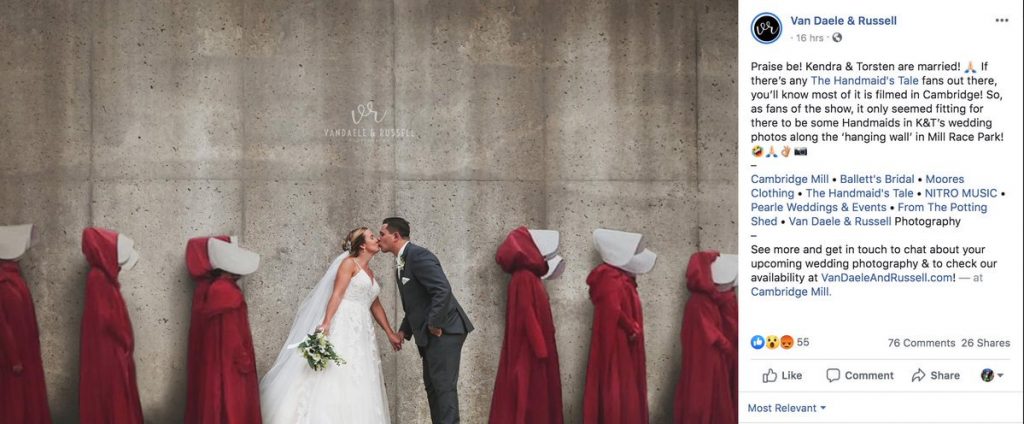
Someone already did a Handmaid’s Tale–themed wedding, but don’t worry: if you’re determined to celebrate your commitment in a way that also celebrates your mild confusion about literature, we have plenty of other ideas for you!
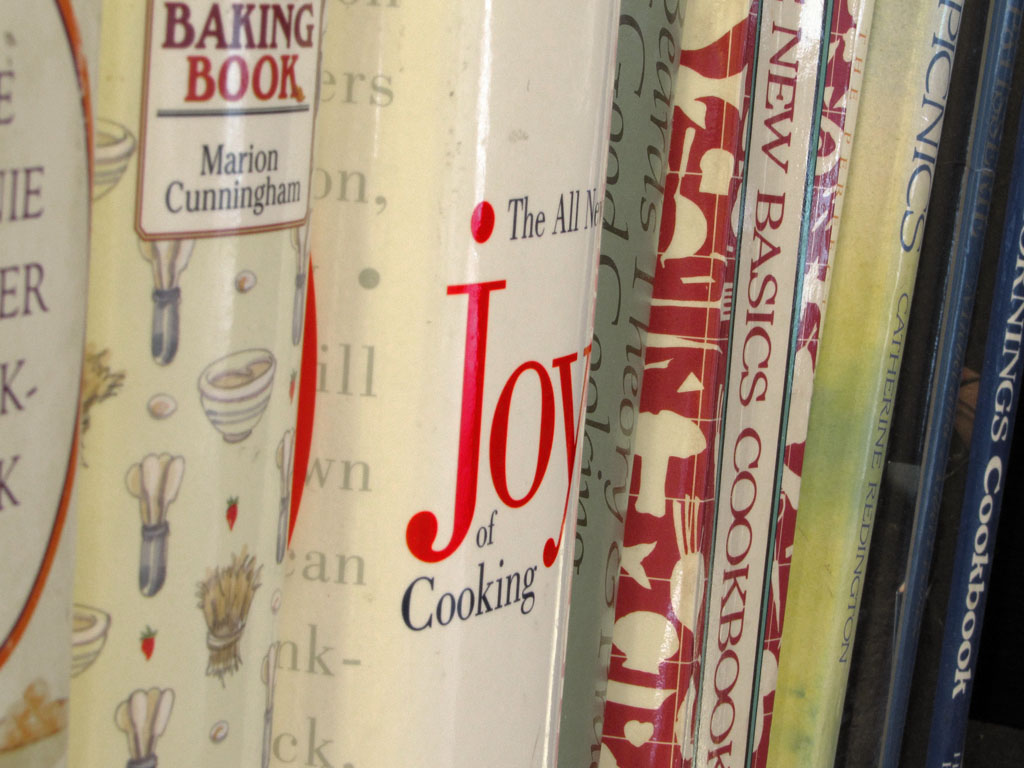
Cookbooks tend to reflect the cultural moment—but Joy of Cooking is timeless. Abigail Weil lays out the history of this family project, which has changed just enough with the times to stay relevant ever since its first edition in 1931.
The Twitter feed Men Write Women collects the most eye-popping examples of writers confused about women’s experiences, emotions, and especially bodies. We round up some of the worst anatomical offenses, and the resulting image is… unfortunate.
Nothing at all is weird about Theodore McCombs’s interview with Carmen Maria Machado about the new edition of J. Sheridan LeFanu’s vampire novel Carmilla! Nothing weird happens at all.
We have a cultural horror of women’s hunger—and what better way to examine it than by looking at how hungry women are portrayed in horror films? “Beneath the resistance and suppression of appetite is something wild, something terrifying,” writes Maw in an essay that bridges the critical and the personal.
Before you go: Electric Literature is campaigning to reach 1,000 members by 2020, and you can help us meet that goal. Having 1,000 members would allow Electric Literature to always pay writers on time (without worrying about overdrafting our bank accounts), improve benefits for staff members, pay off credit card debt, and stop relying on Amazon affiliate links. Members also get store discounts and year-round submissions. If we are going to survive long-term, we need to think long-term. Please support the future of Electric Literature by joining as a member today!
We know what you’re thinking: “Is there a way to make Dungeons and Dragons even nerdier?” It’s your lucky day, dear reader, because the answer is yes! We’ve assembled the D&D characters we imagine some of our favorite authors playing as, complete with backstory and stats. You can also use this as a guide to play as your favorite author, which will probably be a lot of fun for both you and your DM who wanted this to be a serious fantasy campaign. Get your dice ready, because it’s time to roll for authorship.
Edgar Allan Poe
Race: Gnome Class: Warlock Alignment: Chaotic neutral Highest stat: Intelligence Abilities: Arcana, Medicine Special equipment: Mysterious bag of bricks and brick-laying tools
A small goth who mistakenly became a warlock when he pledged his allegiance to the god of Getting Murdered. He was forced out of his village over allegations that he was a drunk, but really he was just trying to rid himself of the dark god hiding in his floorboards.
Haruki Murakami
Race: Half-Elf Class: Paladin Alignment: Lawful Neutral Higheststat:Intelligence Abilities: Investigation, Persuasion Special equipment: A hot younger woman with whom he has a non-sexual relationship
A paladin professor who seeks to educate young paladins in the ways of celibacy and morality. He travels around the coast, respecting women and spreading his surrealist philosophies.
Stephen King
Race: Dragonborn Class: Sorcerer Alignment: Neutral Evil Highest stat: Charisma Abilities: Survival, Stealth Special equipment: A new idea for a novel that he’ll have finished in two weeks
A dragonborn who became a sorcerer after a childhood brush with a demonic clown. He spends his time wandering around semataries, casting frightening spells and illusions that leave passersby chilled to the bone.
Margaret Atwood
Race: Gnome Class: Wizard Alignment: Chaotic Good Highest stat: Constitution Abilities: Survival, Insight Special equipment: A great theme for one of Kylie Jenner’s parties
She was raised in a noble house but kicked out for prophesying that her wealthy, patriarchal family would bring about a dystopian turn in society. Now she’s trying to convince others that her visions are true so she can stop her family.
Oscar Wilde
Race: Elf Class: Bard Alignment: Chaotic Neutral Highest stat: Charisma Abilities: Performance, Perception, Persuasion Special equipment: Painting of himself but older
His wealthy parents planned to disown him for his lack of direction in life, but they died under mysterious circumstances before anything could be made official and he inherited a fortune. He enjoys throwing elaborate parties where he convinces his most important guests to divulge their secrets to him.
Carmen Maria Machado
Race: Tiefling Class: Warlock Alignment: Chaotic Good Highest stat: Dexterity Abilities: Sleight of Hand, Insight, Arcana Special equipment: Green velvet ribbon (do not touch!)
She grew up alone in a haunted mansion, with only spirits for company. Eventually these ghosts became her closest confidants, and they introduced her to a god of Dark Magic who granted her spellcasting abilities. Spirits still tend to follow her around, asking for favors and demanding their deaths be avenged.
Alison Bechdel
Race: Human Class: Sorcerer Alignment: Neutral Good Highest stat: Wisdom Abilities: History, Insight Special equipment: Raincoat of love
In every mirror, she sees herself as she was in the past. She can even visit certain memories by enchanting large mirrors. An encounter with Death gave her these abilities and more, and she must fight to stay present when the past is so accessible.
She looks like a sweet young woman carrying a strawberry shortcake, but in reality she’s a devourer of bodies and souls. All the creatures she consumes leave their stories inside of her, and she enjoys sitting in her garden, running through films of their lives in her mind.
Walt Whitman
Race: Half-Elf Class: Druid Alignment: Neutral Good Highest stat: Wisdom Abilities: Animal Handling, Nature, Insight Special equipment: Barbaric yawp
Never fully accepted in either human or elf society, he made his way into the woods and never left. He’s become more tree than creature, with a beard of lichen and mushrooms growing from all his knuckles. His gray beard points in the direction of oncoming threats, so he can defend his forest home from danger.
Marlon James
Race: Halfling Class: Fighter Alignment: Lawful Good Highest stat: Wisdom Abilities: Insight, History Special equipment: National Book Critics Circle Award finalist for The Book of Night Women Dayton Literary Peace Prize (Fiction) for The Book of Night Women Minnesota Book Award (Novel & Short Story) for The Book of Night Women Silver Musgrave Medal from the Institute of Jamaica National Book Critics Circle Award finalist for A Brief History of Seven Killings Anisfield-Wolf Book Award for Fiction for A Brief History of Seven Killings OCM Bocas Prize for Caribbean Literature (Fiction category winner), for A Brief History of Seven Killings Man Booker Prize for Fiction for A Brief History of Seven Killings Green Carnation Prize for A Brief History of Seven Killings National Book Award for Fiction finalist for Black Leopard, Red Wolf
A prize-winning halfling fighter who’s become famous in throughout the world. Unfortunately, his dream isn’t to fight, but to learn to shapeshift. He’s now partially retired and spending his fortune searching for someone who will grant him the magic he needs to become a shapeshifter.
Shirley Jackson
Race: Gnome Class: Rogue Alignment: Chaotic Neutral Highest stat: Intelligence Abilities: Arcana, Stealth, Intimidation Special equipment: The death-cup mushroom
Her parents died when she was young, and she was raised by her older sister in half-destroyed mansion. As an adult, she left home to track down any men who hurt women and enact justice on them. Often referred to as The Ghost because of her haunting looks and her ability to remain unseen by those she wishes to harm—although she wishes people would call her The Werewolf.
Ernest Hemingway
Race: Human Class: Ranger Alignment: Lawful Evil Highest stat: Constitution Abilities: Animal Handling, Intimidation, Performance Special equipment: Fishing rod that he claims he used to catch an enormous fish (no evidence of said fish)
After the war, he began tracking down the rarest animals in the world in order to capture them or their magic. He runs a black-market animal trade and has become successful from that venture, but secretly he hopes to leave the business and search for his true love.
Before you go: Electric Literature is campaigning to reach 1,000 members by 2020, and you can help us meet that goal. Having 1,000 members would allow Electric Literature to always pay writers on time (without worrying about overdrafting our bank accounts), improve benefits for staff members, pay off credit card debt, and stop relying on Amazon affiliate links. Members also get store discounts and year-round submissions. If we are going to survive long-term, we need to think long-term. Please support the future of Electric Literature by joining as a member today!
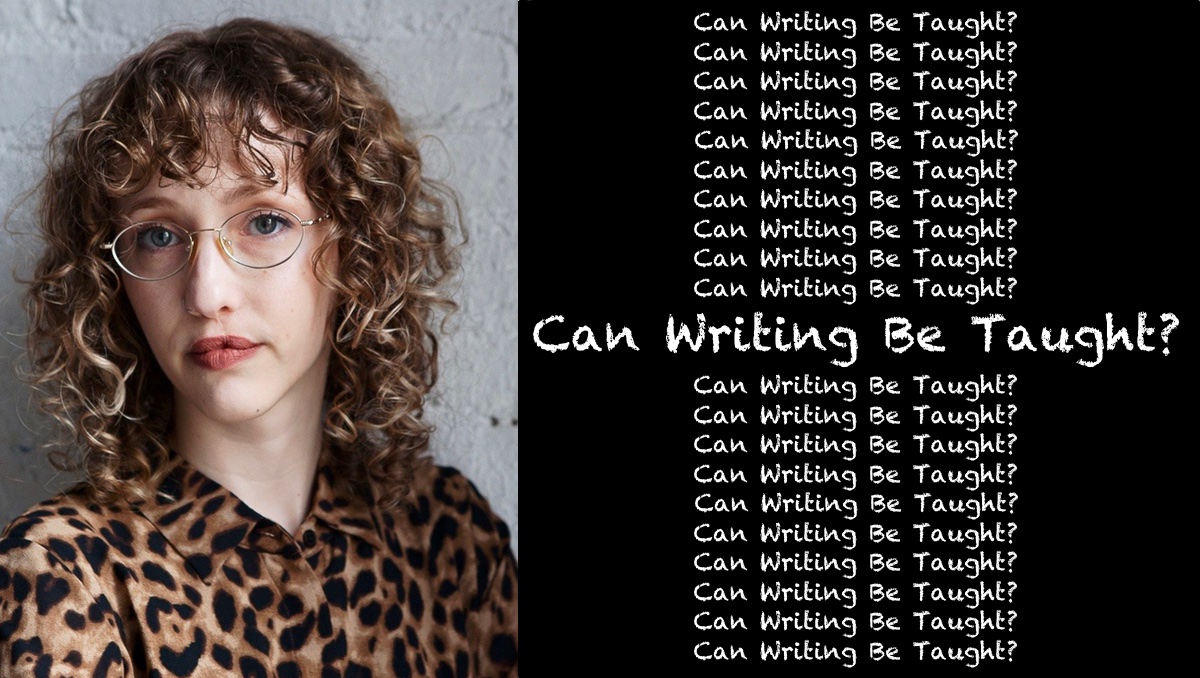
In our series “Can Writing Be Taught?” we partner with Catapult to ask their course instructors all our burning questions about the process of teaching writing. This time we’re talking to Lilly Dancyger, editor at Narratively and author of the forthcoming memoir Negative Space. Lilly’s next Catapult class is an online nonfiction workshop about how to make your messy life into a neat life story—but she’s got another nonfiction workshop immediately after that one, and another one after that. Check out her upcoming classes here.
What’s the best thing you’ve ever gotten out of a writing class or workshop as a student?
I did a weekend workshop with Lidia Yuknavitch at the Corporeal Writing center in Portland, and she talked about how we all have core metaphors that we return to over and over again in our work. The way she talked about examining the same concepts or images from different angles—potentially forever—made me realize that I wasn’t returning to the same things in my writing over and over because I was bad and stupid and had limited ideas… But because I’d discovered my core metaphors and was writing into them, discovering something new each time. It was such a nourishing and affirming thing to hear, and it really shifted my perspective on my own work. I actually wrote about that workshop and everything it unlocked for me in my memoir, Negative Space (which is forthcoming from the Santa Fe Writers Project in 2021! This is a plug!).
What’s the worst thing you’ve ever gotten out of a writing class or workshop as a student?
You know, I can’t really think of anything! I’ve always been good at identifying when advice is not useful for me and immediately flushing it out of my mind. So I’m sure I’ve gotten bad feedback or advice in classes and workshops before, but I’ve intentionally and completely forgotten it!
What is the lesson or piece of writing advice you return to most as an instructor?
Your only task for a first draft is to put words on a page.
I am constantly reminding students (and myself) that first drafts are supposed to suck. If you’re self-editing along the way it’s almost impossible to ever finish anything! Your only task for a first draft is to put words on a page. Try to resist judgement, and just get something down so you have something to work with—then you can hack it to bits and find the soft spots and rearrange it and do all the fun and grueling work of writing.
Does everyone “have a novel in them”?
Eh, no. Or maybe yes, but they don’t all need to come out.
Would you ever encourage a student to give up writing? Under what circumstances?
I don’t think I could bring myself to do it. Even if what they’re doing right now isn’t working, or I don’t see how it’s working, I don’t think highly enough of myself to believe I have the authority to tell someone to stop trying. I do sometimes push students to consider what they’re trying to accomplish, whether they’re in the right place at this moment/working with the right material to accomplish it, etc. I will encourage them to shift their lens, try a different approach, but I don’t think I’d tell anyone to quit.
What’s more valuable in a workshop, praise or criticism?
Both are valuable—sometimes you really are on the right track and just need that affirmed by someone who’s not personally invested in your work (friends telling you you’re doing great is so easy to doubt and disregard). But most of the time you’ll get more out of honest criticism than you will out of general, bland praise. Asking for feedback and hearing only “it’s great!” is so frustrating and useless. I respect my students enough to tell them the truth and challenge them to get better.
Should students write with publication in mind? Why or why not?
I think that depends on where they are in their development as a writer. If you’re just getting started and getting a feel for a new genre or for writing in general—try to just play for a while. It can take some time to find your voice and get comfortable. But if you’re a little further along than that and you’re taking a class to push yourself or hone specific skills, then I think having a particular publication in mind can really help clarify what you’re aiming for. It can provide models to work from, and a goal to work toward, both of which can be so helpful.
In one or two sentences, what’s your opinion of these writing maxims?
Kill your darlings: I don’t kill my darlings, I just banish them to a scrap document from which I may or may not someday rescue them for a future project.
Show don’t tell: An oversimplification that’s too often treated as gospel. It’s useful because for many beginners telling is the first instinct, and they need this reminder as a way to nudge them toward balance—but the goal is balance, not all showing and no telling.
Write what you know: Sure, but also write to discover.
Character is plot: This one feels fiction-specific, so I can’t really speak to it. I have only ever written one piece of fiction and it was godawful and will never see the light of day.
What’s the best hobby for writers?
When I get tired and fed up with writing, drawing something, even badly, feels like such a treat.
I love switching to something else creative that doesn’t involve words—when I get tired and fed up with writing, drawing something, even badly, feels like such a treat and can get my brain working again.
Also anything that gets you out of the house once in a while, I guess! I used to play a lot of pool, but that fell off since I don’t hang out in bars anymore. Maybe I should start going to pool halls during the day…
What’s the best workshop snack?
I have severe misophonia so the sound of people eating is actual torture for me. I can’t hold onto a thought while horrible wet smacking and squishing sounds are happening, so I ask students not to eat in class when I’m teaching in person. Sorry! But when I’m writing at home alone I eat a probably/definitely unhealthy amount of peanut butter pretzels and chocolate.
My friend and I have come to the Yellow Brick Road Casino looking for a good time. We are not optimistic about this, but we think it might be a laugh. Neither of us are gamblers. We have both set ourselves a twenty dollar budget because we value our money and because we do not trust ourselves.
I have been driving by this casino in Chittenango, New York for almost two years. It is painted emerald green and has a wide yellow awning. Above the awning, the Yellow Brick Road sign’s neon bricks blink in a spiral. I am hoping that, inside, the YBR will have a little bit of Oz-y magic to it. You’ll think this is naïve of me but I am hopeful because I used to know the Wizard of Oz. We were in communication for many years. I had my eye on the casino because when the wizard died he left me short on a kind of magic I’ve been looking for ever since.
The thing my granddad loved most was The Wizard of Oz, and when I was a child he convinced me that the Land of Oz was real.
In any given room, my grandfather would find the smartest, strangest child and put himself in league with them against the adults. He loved: handbuzzers, trick horses, fake vomit, squirting daisies, cowboy curses, knock-knock jokes, and scatological humor of all kinds. On grandparents’ visiting day in the third grade, he promised every child at my lunch table a strawberry shortcake bar, against the wishes of their parents. Instead of simply handing out the ice creams, he gave us each a dollar, so we could feel the power of exchanging currency ourselves.
I thought of him as a kind of wizard. This is not a metaphor. The thing my granddad, Ed Joyce, loved most was The Wizard of Oz, and when I was a child he perpetrated an obvious but persuasive prank upon my little sister and me in which he convinced us, methodically and across multiple media, that the Land of Oz was real.
Is it fair to call it a prank if he never hoped for a gotcha moment? If he hoped we’d believe in him forever?
Inside, there is nothing Oz-like about YBR at all. It looks like clipart of a casino. Worse, it has been so long since I last gambled that everything about how a casino works has changed. At the problematic Disneyland that is Mohegan Sun I’d once been given a velvety pouch of chips, heavy with possibility. On a riverboat in Natchez, Mississippi that looked like the set of Maverick, I’d received a Styrofoam cup of golden tokens with a lovely jingle to it. There’d been a kind of magic in the transubstantiation of money into these new currencies which had the power to multiple and divide themselves into something more.
This is not the case at YBR. At the info desk, we are given loyalty cards with our legal names on them. We take these to the slots, which are mostly digital: Lobstermania, Snow Leopard, Sexy Viking Lady— none of them Oz-themed. I put my card into a slot and try to load money onto it, only to discover it does nothing other than earn rewards points at a local gas station.
I approach a pair of nicely dressed workers who are milling about the floor, to ask them how I’m supposed to give the casino my money. The workers, it turns out, are called, I shit you not, munchkins.
The munchkins tell me that YBR is now a state-of-the-art casino, just like Atlantic City, just like Vegas.
What does that mean, I say.
It means, the munchkins say, you can put your cash directly into the machine.
My friend and I return to the digital slots, which it turns out are boring. You press a button to pledge your dollar amount, and the digital wheels spin.
The analog slots are better. Their tumblers roll and glow: bar, cherries, dollar sign. Is it the hefty thunking of the machine that appeals, or is it that I have seen people win money this way in a movie? Or is it maybe that this machine has, not a button, but a handle? It takes some heft to pull it, you have to try, and there’s even some technique to it, I tell myself. I develop a slow then quick maneuver that gets me closer to the triple cherries than I’ve come before.
I’ve put in my time with this machine and America raised me to believe that time invested will always pay off.
I like how the old gen machines make it seem like maybe I’m a tiny bit in charge of my own fortunes. I can decide how to pull the bar, and how hard, and each time I feed the machine a dollar I become a little more convinced I’ve got my technique down.
Soon, I’m going to pull the handle and the triple cherries will come, because I’ve earned this. I’ve put in my time with this machine and America raised me to believe that time invested will always pay off, no matter who you are. I lose again. I find myself in the space where the image of the Self-Made Man and the truth that The House Always Wins collide.
My grandad’s Oz origin story was the Depression. He was the son of a deeply charming military war hero and ex-con called Cap who, when his Arizona dude ranch went bust during the depression, took his family on the road. My grandfather spent many of the early years of his life living out of the family car as Cap joined the Civilian Conservation Corps and ran a wild west magazine. My grandfather often found himself parked at the library of whatever town they landed in, where he found his only friends: Dorothy and the Scarecrow and Tik-Tok and Polychrome and the whole cast of characters in L. Frank Baum’s Oz series. He told himself that someday, if he ever had any money, he would buy all the Oz books. The 13 originals written by Baum, and 26 further written by other authors in the series.
As it turned out, as an adult, he did have money. Quite a bit of it.
The story of how this happened is the sort of “up by his bootstraps” American Dream tale people can’t resist, and it was as ubiquitous in my childhood as the story of Oz. Ed Joyce went from being a child of the depression living out of a car to working in radio. He hosted a jazz program as Jazzman Joyce! (exclamation mark included). After that there was a live children’s television show, which featured a pet monkey named Cookie. There was an interview show, The Talk of New York, where he brought on guests like Malcolm X and Timothy Leary. When he moved into hard reporting, he was responsible for covering the story of Ted Kennedy at Chappaquiddick. He became the president of CBS News in the ‘80s, where he gained a reputation for being so simultaneously brutal and charming that he was known as “the velvet shiv.”
Across these years and successes, he went about acquiring a complete set of the Oz books in first edition. He read them to his own children, and growing up he read them to my sister and me. We all lived in the same small Connecticut town.
There was nothing I loved more than these stories. He had a radioman’s flair and performed the chapters as a madcap, polyphonic one-man show. I can tell you exactly what the Nome King, and Princess Ozma, and Tik-Tok are supposed to sound like.
The Oz readings were only briefly discontinued when my grandparents retired back west to a horse ranch in Santa Ynez, California. I was seven and my sister was four. The radioman’s solution to the distance, of course, was recording.
Every day, after school, my sister and I checked the mailbox for a padded mailer with a cassette tape inside. An Oz chapter. My granddad included photocopies of the illustrations that went with the reading. He set the scene at the beginning of the tapes—telling us where he was sitting and whether any of his dogs were around. At the end he always let us know what he was doing next, normally feeding his horses, and then he told us to be good to our parents and stay “frisky and jolly.”
This was when my grandfather truly began convincing us that Oz was real.
Has he told the kids that Oz is real? Oh no, no he hasn’t yet. But he will, when the time is right. Goodbye, wizard.
There is one bit of tape that survives to this effect. In the recording, he receives a phone call, the line bleating stagily in the background. He apologizes for interrupting our reading. “I think I have to take this…” he says, and pretends to turn off the tape. Then he says: OH HELLO, WIZARD in a tone of absolute delight. He proceeds to makes a date to hang out in a poppy field, assuring his caller, thefucking Wizard, that he has indeed been practicing the magic he’d taught him so he could perform tricks for us kids that coming Christmas. Has he told the kids that Oz is real? Oh no, no he hasn’t yet. But he will, when the time is right. Goodbye, wizard.
When my sister and I first heard this bit of tape we turned to each other and said nothing. Not one fucking thing. Because to even repeat what we had heard would break the spell.
It was possible to believe. Because my granddad did do magic tricks. He pulled scarves from his nose and guessed the color of dice in secret boxes and erased images from coloring books with flourishing gestures.
Why wouldn’t we think he was in league with the wizard?
With each trip to California, the illusion grew. He took us to Figueroa Mountain and led us waist deep into a legitimate poppy field. He pretended he could talk to animals (in Oz, animals talk) and taught his own horse to nod and stamp responses to his questions—an old dude ranch trick learned from his father. He hid gemstones around the garden, insinuating that the Nome King had left them there and would be very angry if we took his treasure. We always took the treasure, and often found notes in the same spot a day later threatening, thrillingly, to “stomp our curly toes off.”
My granddad was the sort of man who was always pulling your leg while simultaneously doing real things too amazing to be believed, so where the truth might lie was hard to parse. Back then, I think I knew I was supposed to believe… but only halfway, the way a good scene partner might. Instead, I believed it desperately, recklessly, as if asking too many questions might scare the fantasy away.
I had my reasons for wanting to believe that the world my grandfather was spinning for us was possible. I was a very ordinary girl who feared I might never become anything different, and in the Oz books even very ordinary girls from Kansas could be whisked away from chores and schoolwork to have adventures with robots and queens. It didn’t matter that Dorothy wasn’t remarkable—she could still do incredible things. Back then, I made no distinction between believing in Oz and believing in an American Dreamish world where the poor son of an ex-con cowboy could rise through the ranks of American life. America would see something in you that no one else did and give you a chance at whatever marvelous future you aspired to! Oz was for everyone! 2019 is not a good moment for believing in either of these kinds of magic.
As an adult, the real world often disappoints me. I am a person who prefers to live in my head, in books and fantasies where everything shines slightly brighter than reality. I’ve often wished to go back to the times when the Nome King’s rocks might appear on my front stoop, when some animal would speak to me its secret.
The first cracks in the illusion came in the sixth grade, when we were asked to read a biography by a significant person. It is perhaps telling that, in my Oz-mania, I did not choose to read a biography of Baum and instead read Little Girl Lost: The Life and Hard Times of Judy Garland by Al DiOrio, Jr., which my mother had helped me locate at the local library. We were meant to come to school on Biography Day dressed as the subject of our chosen book and to report to the class about our lives in the first person, in character. We would then go on to mingle with our famous compatriots at a “Character Brunch.”
I was horrified and obsessed by Garland’s tragic biography and was determined to bring her truth to the people. And yet, in a totally warped choice, I chose to appear at school that day dressed not as Garland, but as Dorothy. I was all pigtails, glitter-glue heels, and blue ankle socks when I stood in front of my fellow six-graders and introduced myself as “Judy, Judy, Judy.” I told the class that the rigors of my film shoots required me to take “uppers,” which were drugs, which also helped me lose weight, which was “good for Hollywood,” and about the difficulty I then had sleeping which required “downers,” (also drugs!) and this cycle of uppers and downers eventually killed me. I then whispered that there were rumors that my death wasn’t really an accident but a suicide.
When the bell rang, my teacher suggested I play-act as Dorothy instead of Garland at the impending character brunch.
Can I at least tell people about Carnegie Hall? I asked.
Sure, she said.
I understand now that I was meant to read and report on something uplifting, to behave like the other children who’d come dressed as Jackie Robinson and Marie Curie and whose families had presumably found them biographies that did not dwell on the other black and brown ballplayers who were robbed of the chance to make good on their talent or the effects of radiation exposure. We were all meant to be Dorothy and not Judy that day—to recite the shiny, Oz-y dream version of our biography’s subject. I love fantasy, but I hate a lie, and even then I knew there was a difference between the two. That day in sixth grade, I was pretty sure which one I was dealing with. I smelled a rat.
Hi Grandad, I was Dorothy at school this week, I told him on our regular phone call.
How did it go? he asked.
Not too great, I said. Not too great at all.
When I told him what had happened he positively cackled.
I once spent an entire semester accidentally calling the American Dream “The American Myth” to undergrad literature students in Florida. It was November before one of them, a Cuban-American woman I’d grown close to, gently corrected me.
“What an embarrassing and strange thing to get wrong,” I told the class.
“I mean you were wrong but you’re not wrong,” she said, plonking her copy of Winter’s Bone on the desk. We all laughed. It was funny but it wasn’t funny.
I suppose something about the word “dream” doesn’t sit right with me.
In Baum’s books, Dorothy’s adventure with the Wizard is only the first of many times she goes to Oz—later, she even brings her family with her, an uplifting example of chain migration—and these return visits make it clear that Oz is a real and literal place. The movie sends a different message—because in the end, Dorothy wakes up. It was all a dream, her family tells her. “But it wasn’t a dream,” Garland says, “it was a place.” All the Gales’ farmhands are gathered around her bedside when Dorothy claims she saw them in Oz. And yet here they are, Haley and Bolger and Lahr, with their gorgeous faces, now in the reality of black and white; they are dressed sensibly, the dirt of their work on their faces. They are still down on the farm.
Were men like them ever in such a place?
Oh no honey, their looks say, not us, we never got to go anywhere like that.
I’ve always hated the way the movie gave us the promise of Oz only to snatch it away in the end, and the three friends break my heart most of all.
I’ve always hated the way the movie gave us the promise of Oz only to snatch it away in the end.
I’ve taught undergrads at five very different schools over the past decade. I am essentially an optimist and I earnestly believe in my students’ futures. Some of the students I’ve taught came up rough like my grandfather, some of them were middle-class kids who never doubted they’d get a degree, some of them were farm kids, some of them survived lifetimes of hardship and were finally going back to school in their sixties, some of them were veterans, some of them had escaped gangs, some of them came from intense privilege, and many of them were first generation Americans. I know that all these different kinds of students wound up in my classroom in no small part because they had bought into an American Dream that promised a college degree would open professional doors. And maybe this was why my belief in the dream crashed and burned. It is easy enough to believe a dream for yourself, and quite another to speak it out loud to a room of students who trust you to tell them the truth.
These days, I cannot bring myself to sell my students any kind of American rhetorical goods which claim to be equally available to all of them. I cannot bring myself to tell them about the technicolor future, to say, I see you there, and I see you there, because there is a chance that even if I see it, and I believe in it, someday we’re all going to wake up and I will have betrayed them by dreaming too vividly at the front of the room.
I think my mouth said myth when it couldn’t say dream because to describe our collective American story to students as an available goal and not as a fantasy, bordering on a lie, makes me feel like I am back in the sixth grade, Dorothy on the outside but Judy on the inside. Like I am smelling a rat, and the rat is me.
Most of the current day town of Chittenango is on Oneida, or Onyota’a:ká, lands. Chittenango is also the birthplace of L. Frank Baum. Presumably, it is for this reason that the Oneida Nation decided to name its casino Yellow Brick Road, and its adjoining liquor store the Tin Man’s Flask.
Had I read a biography of Baum, instead of a biography of Garland, back in sixth grade, I would have learned what I found out the morning before our casino journey, when I looked up his Chittenango connection.
At the top of my search results was this, from a recent NPR story: “L. Frank Baum, before he wrote The Wonderful Wizard of Oz ran a newspaper in South Dakota. This was in the early 1890’s during the Indian Wars. When Baum heard of the killing of Sitting Bull and the massacre at Wounded Knee, he wrote editorials calling for killing each and every last Native American. From his Sitting Bull editorial:
The Whites, by law of conquest, by justice of civilization, are masters of the American continent, and the best safety of the frontier settlements will be secured by the total annihilation of the few remaining Indians. Why not annihilation? Their glory has fled, their spirit broken, their manhood effaced; better that they die than live the miserable wretches that they are.
Why would the Oneida Nation create a casino inspired by the work of the man who’d published this monstrous op-ed? I’m dumb enough to hope someone decided turning Baum’s world profitable for native people would be a satisfying irony. Dumb enough to hope maybe no one knew. I have the good sense not to call the Oneida Nation or the casino and ask. To spare whoever I’d get on the other end of the line my awful question and to instead ask myself what I’m supposed to do with all this.
I ask myself: why, if I’ve called myself an Oz-freak all these years, a super-fan, have I never googled Baum?
Perhaps I knew better than to try to look for the man behind the curtain.
Stories of someone rising up are usually at the expense of someone else we don’t talk about.
I’m sure my grandfather wouldn’t have been surprised by the facts of Baum’s life and prejudices. There are inconvenient truths behind the curtain of most American Dream stories. Capitalism seldom offers a free balloon ride. Stories of someone rising up are usually at the expense of someone else we don’t talk about. That’s the wizardry of most lovely stories—the sleight of hand, the misdirection, the look over here not over there.
I think these were ideas my grandfather understood. He was the wizard who broke Chappaquiddick and took the shine off Kennedy. His father had traded with tribal members across the United States to sell ad space in his cowboy magazine for mail order rez crafts.
As it happens, I do own a biography of Baum. The Real Wizard of Oz by Rebecca Loncraine has sat unread on my shelf since my grandfather gave it to me, years ago. When I flip it open, my grandfather’s inscription reads: “I know you thought I made up all those stories. But this is really the guy. Love, Grandad.”
I don’t know what to do with Oz anymore. I want to tell you that it was real when I was small, when my grandfather was alive, but that would mean that it was only real so long as it was easy to believe in. So long as my granddad and most of the greatest generation were alive, performing for us reenactments of their greatest magic tricks, it was easy enough to believe in the American Dream.
I want to tell you Oz was real when I was small, but that would mean that it was only real so long as it was easy to believe in.
But so many of them are gone, and now it’s harder to believe. Without my granddad around pulling silks from his ears, hiding quartz in the garden, coaxing horses to nod and stomp with sugar cubes, the illusion falls flat and the chances of American-Dream-Style success in this world begin to feel dinky, random.
And yet, even though there’s nothing beyond the façade of the Yellow Brick Road casino that promises any kind of Oz, here we are in Chittenango, on Oneida land, in Baum’s birthplace, feeding our money directly into those state-of-the-art machines.
We call it quits and put on our winter coats. It is November and there is snow on the ground. On the way out, I ask my friend to take a picture of me. In the parking lot there is a larger-than-life emerald green mural of Dorothy’s friends: Scarecrow, Tin Man, Lion. They are rendered almost like the old illustrations I knew. My friend backs up and backs up, almost all the way into the road to take the picture.
When I look at it the next day, I realize what a stupid idea the photo had been. The Oz folk are simply too large, and I am lost in the shot. A puny thing who can’t compete with the storybook people behind me.
Before you go: Electric Literature is campaigning to reach 1,000 members by 2020, and you can help us meet that goal. Having 1,000 members would allow Electric Literature to always pay writers on time (without worrying about overdrafting our bank accounts), improve benefits for staff members, pay off credit card debt, and stop relying on Amazon affiliate links. Members also get store discounts and year-round submissions. If we are going to survive long-term, we need to think long-term. Please support the future of Electric Literature by joining as a member today!
We’re closing in on the holiday season, which if you’re lucky means a few days to drink some nog and catch up on your reading. This tumultuous year produced some great books, and while they’re mostly not cozy per se—there’s a nonzero amount of eldritch ritual, war-torn countryside, menacing secret police, and cult abuse—they can still be a vital part of your winter hygge. We polled current and former Electric Lit staff and contributors about their most-recommended novels of the year. Here, in ascending order, are the results.
This 2019 National Book Award finalist for translated literature follows three siblings who must take their father’s body from Damascus to Anabiya. Though it’s only a two-hour drive, the trip between these Syrian cities becomes an odyssey through a war-torn country full of death and danger. Read our interview with Khaled Khalifa here.
A multigenerational story spanning over a hundred years, this novel explores the relationships between three Zambian families living in a colonial settlement called The Old Drift. After a mistake threads the families together, they remain linked as conflicts are reignited and the future is confronted. We interviewed Namwali Serpell about transcending time, genre, and binaries.
When a Taiwanese immigrant family living outside of Anchorage, Alaska loses a daughter, the family quickly spirals into grief. They each feel the loss differently, and the rural landscape heightens the family’s emotions until a lawsuit threatens to blow apart everything they’ve built. For more, read an interview with Chia-Chia Lin or an excerpt from The Unpassing recommended by D. Wystan Owen.
Perdita lives in London with her mother, Harriet, a baker who makes magical gingerbread. When a teenage Perdita decides to visit her mother’s home country, she learns that her mother’s life is more extraordinary than she ever could have imagined. Read our interview with Helen Oyeyemi about fairytales, gingerbread, and family.
A Sri Lankan inmate has locked himself in a prison computer lab while a riot rages around him—a riot caused by a poem in The Holding Pen, the prison’s highly-regarded literary magazine. He’s writing his final Editor’s Letter for the magazine, and in doing so he’ll tell his life story, explain his connection to the riots, and maybe vindicate himself along the way. Check out our interview with Ryan Chapman about teaching writing.
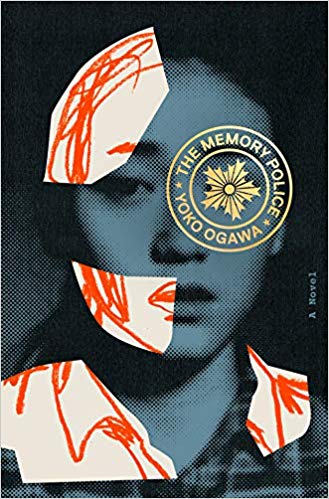
The Memory Police are causing things to disappear, and only a select few people can remember what. When a young novelist discovers that her editor is in danger from this dystopian police force, she decides to hide him under her floorboards and the two must face the oncoming threat of loss while working to preserve their past.
When quiet, unpopular Marianne and well-liked Connell start secretly dating in high school, they don’t imagine how much their relationship will impact their lives. Following Marianne and Connell from high school to college, as their social roles are reversed and their traumas are revealed, this thoughtful novel explores the difficulties of growing up and being in love. Read Carrie V. Mullins’ essay about how Rooney’s literary genius is subjugated to the genre of “chick lit.”
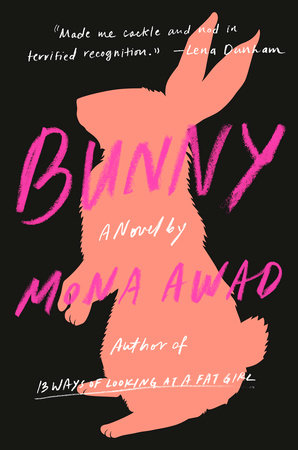
Even though Samantha Mackey feels like an outsider in her MFA program, she accepts an invitation to a mysterious Salon run by the “Bunnies,” the wealthy, obnoxious members of her fiction cohort. As Samantha becomes more involved with the Bunnies, she slips into a dark world of magic and rituals, where the things she writes can become nightmarishly real. Here’s our interview with Mona Awad.
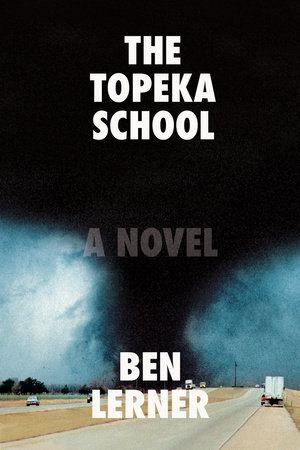
Adam Gordon is a high school senior, debate champion, and the son of two brilliant parents. Everything seems to go his way—until he invites a troubled new boy into his social scene, and Adam’s world begins to collapse.
A cultish acting class run by a teacher with questionable methods, an intense romance, and an event that flips the plot completely on its head: the winner of the 2019 National Book Award for Fiction is a dynamic and exciting novel about students in a prestigious performing arts high school. This book will keep readers guessing about the truth until the last page. Here’s our interview with Susan Choi, as well as an excerpt from Trust Exercise recommended by Julie Buntin.
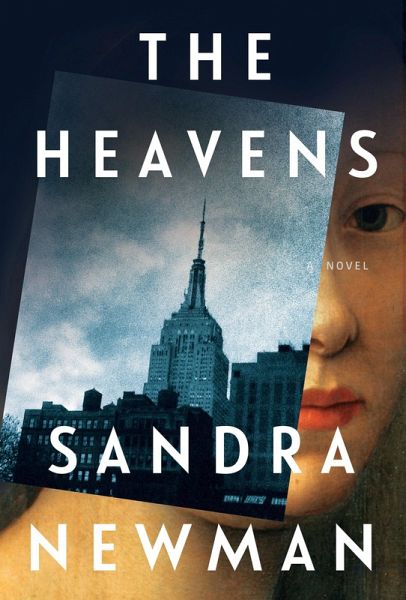
Ever since she was a child, Kate has been plagued by dreams that she’s a woman named Emilia in Elizabethan England. But when she starts waking up to an altered present, Kate and her boyfriend, Ben, must struggle with whether or not these dreams are real, and whether they can affect reality. Check out our interview with Sandra Newman here.
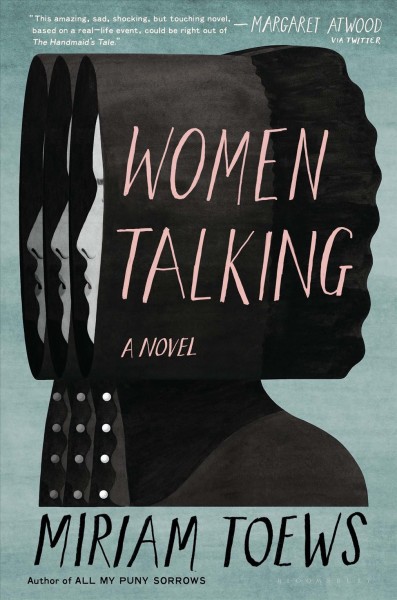
Eight Mennonite women in a hay loft have two days to make a decision that will affect every woman in their colony. It’s been discovered that a group of men in the colony have been drugging and raping the women nightly for years, and now this all-female congregation must decide whether they will stay in the only home they’ve ever known, or escape to save themselves. Read our interview with Miriam Toews to learn about the historical events that inspired this novel.
Jessa’s family is torn apart after her father commits suicide in his taxidermy shop. As their lives warp towards grief and absurdity, Jessa is forced to reckon with her family, her identity, and her relationships, all while finding a way to keep the shop running. Check out our interview with Kristen Arnett for more about taxidermy and queerness.
When news leaked out of Viet Nam that Old Hell and Hardtack Mackenzie had shot down an angel, every newspaper in the world dug into its morgue for the background and biography of this hard-bitten old warrior.
Not that General Clayborne Mackenzie was so old. He had only just passed his fiftieth birthday, and he had plenty of piss and vinegar left in him when he went out to Viet Nam to head up the 55th Cavalry and its two hundred helicopters; and the sight of him sitting in the open door of a gunship, handling a submachine gun like the pro he was, and zapping anything that moved there below—because anything that moved was likely enough to be Charlie—had inspired many a fine color story.
Correspondents liked to stress the fact that Mackenzie was a “natural fighting man,” with, as they put it, “an instinct for the kill.” In this they were quite right, as the material from the various newspaper morgues proved. When Mackenzie was only six years old, playing in the yard of his North Carolina home, he managed to kill a puppy by beating it to death with a stone, an extraordinary act of courage and perseverance. After that, he was able to earn spending money by killing unwanted puppies and kittens for five cents each. He was an intensely creative child, one of the things that contributed to his subsequent leadership qualities, and not content with drowning the animals, he devised five other methods for destroying the unwanted pets. By nine he was trapping rabbits and rats and had invented a unique yet simple mole trap that caught the moles alive. He enjoyed turning over live moles and mice to neighborhood cats, and often he would invite his little playmates to watch the results. At the age of twelve his father gave him his first gun—and from there on no one who knew young Clayborne Mackenzie doubted either his future career or success.
At the age of twelve his father gave him his first gun—and from there on no one who knew young Clayborne Mackenzie doubted either his future career or success.
After his arrival in Viet Nam, there was no major mission of the 55th that Old Hell and Hardtack did not lead in person. The sight of him blazing away from the gunship became a symbol of the “new war,” and the troops on the ground would look for him and up at him and cheer him when he appeared. (Sometimes the cheers were earthy, but that is only to be expected in war.) There was nothing Mackenzie loved better than a village full of skulking, treacherous VC, and once he passed over such a village, little was left of it. A young newspaper correspondent compared him to an “avenging angel,” and sometimes when his helicopters were called in to help a group of hard-pressed infantry, he thought of himself in such terms. It was on just such an occasion, when the company of marines holding the outpost at Quen-to were so hard pressed, that the thing happened.
General Clayborne Mackenzie had led the attack, blazing away, and down came the angel, square into the marine encampment. It took a while for them to realize what they had, and Mackenzie had already returned to base field when the call came from Captain Joe Kelly, who was in command of the marine unit.
“General, sir,” said Captain Kelly, when Mackenzie had picked up the phone and asked what in hell they wanted, “General Mackenzie, sir, it would seem that you shot down an angel.”
“General Mackenzie, sir, it would seem that you shot down an angel.”
“Say that again, Captain.”
“An angel, sir.”
“A what?”
“An angel, sir.”
“And just what in hell is an angel?”
“Well,” Kelly answered, “I don’t quite know how to answer that, sir. An angel is an angel. One of God’s angels, sir.”
“Are you out of your goddamn mind, Captain?” Mackenzie roared. “Or are you sucking pot again? So help me God, I warned you potheads that if you didn’t lay off the grass I would see you all in hell!”
“No, sir,” said Kelly quietly and stubbornly. “We have no pot here.”
“Well, put on Lieutenant Garcia!” Mackenzie yelled.
“Lieutenant Garcia.” The voice came meekly.
“Lieutenant, what the hell is this about an angel?”
“Yes, General.”
“Yes, what?”
“It is an angel. When you were over here zapping VC—well, sir, you just went and zapped an angel.”
“So help me God,” Mackenzie yelled, “I will break every one of you potheads for this! You got a lot of guts, buster, to put on a full general, but nobody puts me on and walks away from it. Just remember that.”
One thing about Old Hell and Hardtack, when he wanted something done, he didn’t ask for volunteers. He did it himself, and now he went to his helicopter and told Captain Jerry Gates, the pilot:
“You take me out to that marine encampment at Quen-to and put me right down in the middle of it.”
“It’s a risky business, General.”
“It’s your goddamn business to fly this goddamn ship and not to advise me.”
Twenty minutes later the helicopter settled down into the encampment at Quen-to, and a stony-faced full general faced Captain Kelly and said:
“Now suppose you just lead me to that damn angel, and God help you if it’s not.”
But it was; twenty feet long and all of it angel, head to foot. The marines had covered it over with two tarps, and it was their good luck that the VCs either had given up on Quen-to or had simply decided not to fight for a while—because there was not much fight left in the marines, and all the young men could do was to lay in their holes and try not to look at the big body under the two tarps and not to talk about it either; but in spite of how they tried, they kept sneaking glances at it and they kept on whispering about it, and the two of them who pulled off the tarps so that General Mackenzie might see began to cry a little. The general didn’t like that; if there was one thing he did not like, it was soldiers who cried, and he snapped at Kelly:
“Get these two mothers the hell out of here, and when you assign a detail to me, I want men, not wet-nosed kids.” Then he surveyed the angel, and even he was impressed.
“It’s a big son of a bitch, isn’t it?”
“Yes, sir. Head to heel, it’s twenty feet. We measured it.” “What makes you think it’s an angel?”
“Well, that’s the way it is,” Kelly said. “It’s an angel. What else is it?”
General Mackenzie walked around the recumbent form and had to admit the logic in Captain Kelly’s thinking. The thing was white, not esh-white but snow-white, shaped like a man, naked, and sprawled on its side with two great feathered wings folded under it. Its hair was spun gold and its face was too beautiful to be human.
“So that’s an angel,” Mackenzie said finally.
“Yes, sir.”
“Like hell it is!” Mackenzie snorted. “What I see is a white, Caucasian male, dead of wounds suffered on the eld of combat. By the way, where’d I hit him?”
“We can’t find the wounds, sir.”
“Now just what the hell do you mean, you can’t find the wounds? I don’t miss. If I shot it, I shot it.”
“Yes, sir. But we can’t find the wounds. Perhaps its skin is very tough. It might have been the concussion that knocked it down.”
Used to getting at the truth of things himself, Mackenzie walked up and down the body, going over it carefully. No wounds were visible.
“Turn the angel over,” Mackenzie said.
Kelly, who was a good Catholic, hesitated at first; but between a live general and a dead angel, the choice was specified. He called out a detail of marines, and without enthusiasm they managed to turn over the giant body. When Mackenzie complained that mud smears were impairing his inspection, they wiped the angel clean. There were no wounds on this side either.
“That’s a hell of a note,” Mackenzie muttered, and if Captain Kelly and Lieutenant Garcia had been more familiar with the moods of Old Hell and Hardtack, they would have heard a tremor of uncertainty in his voice. The truth is that Mackenzie was just a little baffled. “Anyway,” he decided, “it’s dead, so wrap it up and put it in the ship.”
“Sir?”
“Goddamnit, Kelly, how many times do I have to give you an order? I said, wrap it up and put it in the ship!”
The marines at Quen-to were relieved as they watched Mackenzie’s gunship disappear in the distance, preferring the company of live VCs to that of a dead angel, but the pilot of the helicopter flew with all the assorted worries of a Southern Fundamentalist.
“Is that sure enough an angel, sir?” he had asked the general.
“You mind your eggs and fly the ship, son,” the general replied. An hour ago he would have told the pilot to keep his goddamn nose out of things that didn’t concern him, but the angel had a stultifying effect on the general’s language. It depressed him, and when the three-star general at headquarters said to him, “Are you trying to tell me, Mackenzie, that you shot down an angel?” Mackenzie could only nod his head miserably.
“Well, sir, you are out of your goddamn mind.”
“The body’s outside in Hangar F,” said Mackenzie. “I put a guard over it, sir.”
The two-star general followed the three-star general as he stalked to Hangar F, where the three-star general looked at the body, poked it with his toe, poked it with his finger, felt the feathers, felt the hair, and then said:
“God damn it to hell, Mackenzie, do you know what you got here?”
“Yes, sir.”
“You got an angel—that’s what the hell you got here.”
“Yes, sir, that’s the way it would seem.”
“God damn you, Mackenzie, I always had a feeling that I should have put my foot down instead of letting you zoom up and down out there in those gunships zapping VCs. My God almighty, you’re supposed to be a grown man with some sense instead of some dumb kid who wants to make a score zapping Charlie, and if you hadn’t been out there in that gunship this would never have happened. Now what in hell am I supposed to do? We got a lousy enough press on this war. How am I going to explain a dead angel?”
How am I going to explain a dead angel?”
“Maybe we don’t explain it, sir. I mean, there it is. It happened. The damn thing’s dead, isn’t it? Let’s bury it. Isn’t that what a soldier does—buries his dead, tightens his belt a notch, and goes on from there?”
“So we bury it, huh, Mackenzie?”
“Yes, sir. We bury it.”
“You’re a horse’s ass, Mackenzie. How long since someone told you that? That’s the trouble with being a general in this goddamn army—no one ever gets to tell you what a horse’s ass you are. You got dignity.”
“No, sir. You’re not being fair, sir,” Mackenzie protested. “I’m trying to help. I’m trying to be creative in this trying situation.”
“You get a gold star for being creative, Mackenzie. Yes, sir, General—that’s what you get. Every marine at Quen-to knows you shot down an angel. Your helicopter pilot and crew know it, which means that by now everyone on this base knows it— because anything that happens here, I know it last—and those snotnose reporters on the base, they know it, not to mention the goddamn chaplains, and you want to bury it. Bless your heart.”
The three-star general’s name was Drummond, and when he got back to his office, his aide said to him excitedly:
“General Drummond, sir, there’s a committee of chaplains, sir, who insist on seeing you, and they’re very up tight about something, and I know how you feel about chaplains, but this seems to be something special, and I think you ought to see them.”
“I’ll see them.” General Drummond sighed.
There were four chaplains, a Catholic priest, a rabbi, an Episcopalian, and a Lutheran. The Methodist, Baptist, and Presbyterian chaplains had wanted to be a part of the delegation, but the priest, who was a Paulist, said that if they were to bring in five Protestants, he wanted a Jesuit as reenforcement, while the rabbi, who was Reform, agreed that against five Protestants an Orthodox rabbi ought to join the Jesuit. The result was a compromise, and they agreed to allow the priest, Father Peter O’Malley, to talk for the group. Father O’Malley came directly to the point:
“Our information is, General, that General Mackenzie has shot down one of God’s holy angels. Is that or is that not so?”
“I’m afraid it’s so,” Drummond admitted.
There was a long moment of silence while the collective clergy gathered its wits, its faith, its courage, and its astonishment, and then Father O’Malley asked slowly and ominously: “And what have you done with the body of this holy creature, if indeed it has a body?”
“It has a body—a very substantial body. In fact, it’s as large as a young elephant, twenty feet tall. It’s lying in Hangar F, under guard.”
Father O’Malley shook his head in horror, looked at his Protestant colleagues, and then passed over them to the rabbi and said to him:
“What are your thoughts, Rabbi Bernstein?”
Since Rabbi Bernstein represented the oldest faith that was concerned with angels, the others deferred to him.
“I think we ought to look upon it immediately,” the rabbi said.
“I agree,” said Father O’Malley.
The other clergy joined in this agreement, and they repaired to Hangar F, a journey not without difficulty, for by now the press had come to focus on the story, and the general and the clergy ran a sort of gauntlet of pleading questions as they made their way on foot to Hangar F. The guards there barred the press, and the clergy entered with General Drummond and General Mackenzie and half a dozen other staff officers. The angel was uncovered, and the men made a circle around the great, beautiful thing, and then for almost five minutes there was silence.
Father O’Malley broke the silence. “God forgive us,” he said.
There was a circle of amens, and then more silence, and finally Whitcomb, the Episcopalian, said:
“It could conceivably be a natural phenomenon.”
Father O’Malley looked at him wordlessly, and Rabbi Bernstein softened the blow with the observation that even God and His holy angels could be considered as not apart from nature, whereupon Pastor Yager, the Lutheran, objected to a pantheistic viewpoint at a time like this, and Father O’Malley snapped:
The plain fact of the matter is that we are standing in front of one of God’s holy angels, which we in our animal-like sinfulness have slain.
“The devil with this theological nonsense! The plain fact of the matter is that we are standing in front of one of God’s holy angels, which we in our animal-like sinfulness have slain. What penance we must do is more to the point.”
“Penance is your field, gentlemen,” said General Drummond. “I have the problem of a war, the press, and this body.”
“Penance is your field, gentlemen,” said General Drummond. “I have the problem of a war, the press, and this body.”
“This body, as you call it,” said Father O’Malley, “obviously should be sent to the Vatican—immediately, if you ask me.”
“Oh, ho!” snorted Whitcomb. “The Vatican! No discussion, no exchange of opinion—oh, no, just ship it off to the Vatican where it can be hidden in some secret dungeon with any other evidence of God’s divine favor—”
“Come now, come now,” said Rabbi Bernstein soothingly. “We are witness to something very great and holy, and we should not argue as to where this holy thing of God belongs. I think it is obvious that it belongs in Jerusalem.”
While this theological discussion raged, it occurred to General Clayborne Mackenzie that his own bridges needed mending, and he stepped outside to where the press—swollen by now to almost the entire press corps in Viet Nam—waited, and of course they grabbed him.
“Is it true, General?”
“Is what true?”
“Did you shoot down an angel?”
“Yes, I did,” the old warrior stated forthrightly.
“For heaven’s sake, why?” asked a woman photographer.
“It was a mistake,” said Old Hell and Hardtack modestly. “You mean you didn’t see it?” asked another voice.
“No, sir. Peripheral, if you know what I mean. I was in the gunship zapping Charlie, and bang—there it was.”
The press was skeptical. A dozen questions came, all to the point of how he knew that it was an angel.
“You don’t ask why a river’s a river, or a donkey’s a donkey,”
Mackenzie said bluntly. “Anyway, we have professional opinion inside.”
All were agreed that the angel was a sign—but what kind of a sign was another matter entirely.
Inside, the professional opinion was divided and angry. All were agreed that the angel was a sign—but what kind of a sign was another matter entirely. Pastor Yager held that it was a sign for peace, calling for an immediate cease-fire. Whitcomb, the Episcopalian, held, however, that it was merely a condemnation of indiscriminate zapping, while the rabbi and the priest held that it was a sign—period. Drummond said that sooner or later the press must be allowed in and that the network men must be permitted to put the dead angel on television. Whitcomb and the rabbi agreed. O’Malley and Yager demurred. General Robert L. Robert of the Engineer Corps arrived with secret information that the whole thing was a put-on by the Russians and that the angel was a robot, but when they attempted to cut the flesh to see whether the angel bled or not, the skin proved to be impenetrable.
General Robert L. Robert of the Engineer Corps arrived with secret information that the whole thing was a put-on by the Russians and that the angel was a robot.
At that moment the angel stirred, just a trifle, yet enough to make the clergy and brass gathered around him leap back to give him room—for that gigantic twenty-foot form, weighing better than half a ton, was one thing dead and something else entirely alive. The angel’s biceps were as thick around as a man’s body, and his great, beautiful head was mounted on a neck almost a yard in diameter. Even the clerics were sufficiently hazy on angelology to be at all certain that even an angel might not resent being shot down. As he stirred a second time, the men around him moved even farther away, and some of the brass nervously loosened their sidearms.
“If this holy creature is alive,” Rabbi Bernstein said bravely, “then he will have neither hate nor anger toward us. His nature is of love and forgiveness. Don’t you agree with me, Father O’Malley?”
If only because the Protestant ministers were visibly dubious, Father O’Malley agreed. “By all means. Oh, yes.”
“Just how the hell do you know?” demanded General Drummond, loosening his sidearm. “That thing has the strength of a bulldozer.”
Not to be outdone by a combination of Catholic and Jew, Whitcomb stepped forward bravely and faced Drummond and said, “That ‘thing,’ as you call it, sir, is one of the Almighty’s blessed angels, and you would do better to see to your immortal soul than to your sidearm.”
To which Drummond yelled, “Just who the hell do you think you are talking to, mister—just—”
At that moment the angel sat up, and the men around him leaped away to widen the circle. Several drew their sidearms; others whispered whatever prayers they could remember. The angel, whose eyes were as blue as the skies over Viet Nam when the monsoon is gone and the sun shines through the washed air, paid almost no attention to them at first. He opened one wing and then the other, and his great wings almost filled the hangar. He exed one arm and then the other, and then he stood up.
On his feet, he glanced around him, his blue eyes moving steadily from one to another, and when he did not find what he sought, he walked to the great sliding doors of Hangar F and spread them open with a single motion. To the snapping of steel regulators and the grinding of stripped gears, the doors parted—revealing to the crowd outside, newsmen, officers, soldiers, and civilians, the mighty, twenty-foot-high, shining form of the angel.
No one moved. The sight of the angel, bent forward slightly, his splendid wings half spread, not for flight but to balance him, held them hypnotically fixed, and the angel himself moved his eyes from face to face, finding finally what he sought—none other than Old Hell and Hardtack Mackenzie.
As in those Western films where the moment of “truth,” as they call it, is at hand, where sheriff and badman stand face to face, their hands twitching over their guns—as the crowd melts away from the two marked men in those films, so did the crowd melt away from around Mackenzie until he stood alone—as alone as any man on earth.
The angel took a long, hard look at Mackenzie, and then the angel sighed and shook his head. The crowd parted for him as he walked past Mackenzie and down the field—where, squarely in the middle of Runway Number 1, he spread his mighty wings and took off, the way an eagle leaps from his perch into the sky, or—as some reporters put it—as a dove flies gently.
Is your attention span ravaged by living in our hellscape of a modern era? Good news: 2019 brought us plenty of brilliant short fiction. We polled current and former Electric Lit staff and contributors about their favorite collections of the year, and their picks include debuts, National Book Award finalists, posthumous anthologies by overlooked masters, and the latest from some of the titans of the craft. The results are in ascending order, so read to the bottom for our #1 pick.
Alexander Chee, recommending Wang’s “Days of Being Mild” for Recommended Reading, writes that this collection about young people in China “marks the arrival of an urgent and necessary literary voice we’ve been needing, waiting for maybe without knowing.”
The fictional town of Cross River, Maryland, where these stories take place, is “a masterpiece of true imagination, art that reminds me of the work it takes to make a meal from scratch,” writes Tyrese L. Coleman in her interview with Scott.
Maizes’ stories are all about outsiders, deftly writing not only to the humanity of her characters but also the ways in which we, too, have all been outsiders at some point of another. Recommending “A Cat Called Grievous,” EL executive director Halimah Marcus calls it “domestic realism with a wrench in it.”
“In the months that it took to put Where The Light Falls together, I have often asked myself how we could have turned our eyes from a writer of such precision and strength,” says Lauren Groff, who edited this posthumous collection, recommending “The Bubble.”
In a debut that interviewer Sarah Neilson describes as “weird, eerie, and sublimely beautiful,” stories of characters all longing for lives just out of reach fully immerse readers in their minds and their longings. Read a story recommended by Aimee Bender here.
Blum follows characters and communities from the margins in sparse, yet devastating prose. Read “The White Spot,” recommended by Deborah Eisenberg, to see it in action.
In Jac Jemc’s interview she discusses empathy, her grandparents, and the shades of gray that make up human nature. Her short stories are mini character studies preoccupied with the same themes.
Brian Evenson is a master at crafting stories of doubt, delusion, and paranoia. His stories take you into the twisted depths of human obsessions only to abandon you in the middle of the labyrinth.
Nearly forgotten when its author suddenly disappeared from public view, Calm Sea and Prosperous Voyage restores a voice that chronicles 1970s Chicago with a sly, joyous humor.
Hempel’s first short story collection in over a decade is a study in magnifying minds in motion, Yvonne Conza writes in her interview with the author. Hempel’s narrators “swerve toward us with a muscled complexity of vulnerability, not a state of victimhood.” Rick Moody recommended a sad story about dogs from this collection.
Maria V. Luna thinks that Fajardo-Anstine’s greatest strength is her courage. “[She] reveals all this through acts of social and cultural justice in literary form. She does not tread lightly upon truth, instead she brushes away layers of dirt and deception.” Read the rest of our interview with the National Book Award finalist here, read Ruby Mora’s essay on how Sabrina & Corina represents a new generation of Latinx literature, or read an excerpt from Sabrina & Corinarecommended by Mat Johnson.
Ted Chiang is specializes in inventive speculative short stories that engage with deep questions about human nature—even when they’re also about time travel, AIs, or sentient parrots. “No matter the species of a story’s protagonist, no matter the universe that forms the story’s setting, the subject is always us,” writes Tochi Onyebuchi of Exhalation in his interview with Ted Chiang. “The Great Silence,” published in Recommended Reading all the way back in 2016, is one of the stories included.
“There are murky darknesses inside all of us that can be dredged up by fiction,” writes Alison Tate Lewis in her interview of Samanta Schweblin, and these surreal short stories do the trick. Sarah Rose Etter also interviewed the translator of Mouthful of Birds about what it takes to bring a book like this into another language. The title story ran in Recommended Reading back in 2012, but with a different translator, so you can compare notes.
The word “community” is so overused as to become almost meaningless, but Washington manages to do it justice in his stories about the various communities within Houston. Candace Williams delves more into this in her conversation with Washington, and you can read the title story from Lotin Recommended Reading, where recommender Aja Gabel says that Washington’s “restrained but unctuous” writing “reliably knocks me over.”
Karen Russell is a master of the weird, and Orange World is one of her best yet, full of indelible stories about parasitic trees, long-dead bog bodies, echolocating gondoliers in post-deluge Miami, and strange little devils that live on breast milk. Throughout, says Erin Bartnett in her interview with Russell, there’s an odd kind of optimism.
DON’T MISS OUT
Sign up for our newsletter to get submission announcements and stay on top of our best work.
YOUR INBOX IS LIT
Enjoy strange, diverting work from The Commuter on Mondays, absorbing fiction from Recommended Reading on Wednesdays, and a roundup of our best work of the week on Fridays. Personalize your subscription preferences here.