Podcasts are now a fixture of popular media and while certain podcast genres consistently rank high on the charts — true crime and political commentary being the mainstays—there has been an increase in more creative styles of podcasting: the fiction podcast, sometimes called the audio drama. These stories use the medium to guide listeners through fictional sonic worlds, oftentimes laced with elements of horror, building stories that can readily blend fiction and reality. While a similar attempt at blending fiction and reality through a faux-documentary approach in horror movies, like the Blair Witch Project and Paranormal Activity, were once considered genre-bending hits, they have now inevitably become a cliche. Viewers seem to lose interest once a handful of directors deployed the documentary approach well. On the other hand, radio dramas have existed for significantly longer than horror movies, yet their current podcast iterations are just as effective now as they have been in the past.
Audio drama podcasts come out of the long history of radio and the serialized narratives performed live for listeners at home. The most infamous example being Orson Welles’s October 30th, 1938 radio play based on H.G. Wells’s classic alien invasion story, The War of the Worlds. The play, which was only about an hour long, is most well-known for the hysteria it supposedly sparked among listeners, some of whom believed the invasion was actually happening in real time as the story unfolded over the airwaves. Though the rumors of widespread panic may be more of an urban legend, the broadcast reveals the medium’s potential for real-world impact on listeners. As Dorothy Thompason, a New York Tribune columnist, wrote of the play: “They have proved that a few effective voices, accompanied by sound effects, can so convince masses of people of a totally unreasonable, completely fantastic proposition as to create nation-wide panic.”
We are aware that we are staring at a screen or a page of a book—but there are more ways to subtly trick the ear.
The listener response to Welles’ dramatized Martian invasion exemplifies the audio drama’s unique ability to blend fantasy and reality in ways other genres cannot. Although we might lose our sense of time or be wholly engrossed in a movie or book, there is less potential for slippage between reality and fiction. We are aware that we are staring at a screen or a page of a book—but there are more ways to subtly trick the ear.
Key to the effectiveness of Welles’s play was the structure of the broadcast itself. If listeners did believe Martians were attacking, they did so because the play was presented as regular radio programming, periodically interrupted by the fake newscasts detailing the invasion. If the listener happened to miss the show’s opening, which clearly introduced the play as fiction, then they would have little reason to believe that this wasn’t a real broadcast. By playing into listener expectation around radio conventions, Welles was able to manipulate listener experience.
Using established audio tropes as a springboard for more fantastic stories is an approach that still works today. Like Welles’s fictional use of newscasting, a common convention used in modern audio drama podcasts draws direct inspiration from the format of other popular podcasting genres, namely the highly produced reportage of shows like This American Life and Serial. When Serial premiered in 2014 it was an instant success, reaching 5 million downloads and streams in less than nine weeks. Its popularity impacted the entire podcasting community, creating what was dubbed “The Serial Effect,” where listeners of Serial also began listening to other podcasts in similar genres. Though podcasts were already gaining popularity across the board, Serial brought a noticeable bump in listener numbers for many shows.
Serial ushered in a slew of other shows tackling the topics, but it also provided a blueprint for fictional narratives. While programs like Welcome to Night Vale already took from community radio hours and added their own fantastical twist, 2015 and 2016 saw a rise in horror- or thriller-based fiction podcasts mirroring Serial-like reporting—but with a decidedly spooky bent. One early staple of the genre, The Black Tapes, follows the reporting of Alex Reagan, an investigative journalist for Pacific Northwest Stories profiling the paranormal investigator Dr. Richard Strand and his collection of unsolved mysteries housed on VHS tapes, dubbed “The Black Tapes.” The radio program, like Reagan and Strand, are completely fictional, but the charm of the show lies in its juxtaposition between the straightforward, slickly produced tone and the weird paranormal content. The format was so believable that quite a few fans bashfully reached out on forums, asking whether the story was “real.”
It’s precisely because listeners approach the story with preconceptions that it feels believable.
The serialized investigative journalism framing works well for these paranormal and thriller narratives because the form gives writers enough structure to explore fantastic elements while remaining grounded. No matter how bizarre the plot points get, listeners can still track the story. But more importantly, the format troubles the line between reality and fantasy in the same spirit as The War of the Worlds. It’s precisely because listeners already approach the story with their own preconceptions that it feels believable. A podcast that hits certain beats will unconsciously trigger certain responses because it plays off how we consume the media it is mirroring.
There are other ways for audio dramatists to blur the line between fantasy and fiction to trick the mind and ear of the listener without relying heavily on a specific structural trope. In Theater of the Mind: Imagination, Aesthetics, and American Radio Drama, Neil Verma discusses the discourse among early radio dramatists as they tried to expand the narrative capabilities of radio. He writes,
Dramatists thought they were writing for a “blind man” and used speech to convey anything that would be silently visual in the theater. By the late 1930s, that preference had changed. Radio listeners became accustomed to recognizing purely aural rules that signified movement around the world of drama. For instance, around this time it became common for narrators to cut in and out at the end. Listeners learned that the longer the pause between scenes, the greater the distance traversed in the world of fiction.
Venma shows how listeners became familiar with narrative conventions over time, even when these conventions are not explicitly explained. Rather than relying on spoken exposition to position the listener in space and time, sound engineers conjure the scene using sound cues. Over time, specific sounds come to be linked to certain locales or affects based on usage, thereby situating the listener without relying on a narrator constantly explaining what is going on. Because an enjoyable audio drama isn’t just about tracking a linear story through sound; it’s about experiencing an atmosphere.
Marc Sollinger, the co-creater and writer for the audio drama podcast, Archive 81, writing about the art of effective podcast for Electric Literature, made a similar point about building a sonic world:
An easy way to think about audio drama is as television without pictures, but just writing a television script and expecting it to make a good fiction podcast is a terrible plan. The audience won’t know what the heck is going on and the whole thing will sound boring and lifeless. This is a super obvious point, but it bears pointing out: TV and film are visual mediums, audio drama is a sonic medium.
As Sollinger notes, developing an effective audio drama is not only about making sure that listeners know what’s happening. It’s technically possible to keep a story tightly structured, making sure that a listener knows precisely what is happening and when. But there is the secondary issue that Sollinger points out—that tight-fisted type storytelling, though precise and clear, will also be boring and lifeless.
Letting go of heavy spoken exposition creates the space for greater listener participation in the story, leading to a more immersive experience. The bustling sounds of a city—honking cars, revving engines, the rapid sound of many feet hitting the pavement—are enough to tell the listener what type of environment they are in, but the city appearing in the listener’s imagination is of their own design. Without visual stimuli providing corroborating information to go along with sonic information, the brain fills in the gaps on its own. This process is particularly effective when it comes to horror, as the area of our brain that takes in sensory information is also the same area that processes some elements of memory. Adding in just the right amount of narrative to lay the groundwork for the story, supported by carefully crafted soundscape, will allow the listener to fill in the rest with what scares them the most. Audio dramas, by their very nature, can take advantage of this auto-fill aspect of human imagination, providing enough material for the listener to get involved in the story, but leaving enough open-endedness to make the experience unique to each listener.
Without visual stimuli providing corroborating information to go along with sonic information, the brain fills in the gaps on its own.
But Sollinger’s point about the differences between building sonic worlds versus building visual worlds highlights the potential problem when a story is transcribed the other way: from podcast to television. While there are examples of this shift occurring for non-fiction podcasts—Lore being one of the most famous, along with other popular hits Dirty John and Crimetown—there is new interest in bringing audio dramas to the small screen. Yet the switch to visual media presents a unique problem for fiction podcasts. The ones that are well-crafted and innovative are successful because they push beyond the constraints of a purely sonic medium. It’s the very limitations of the format that can create truly spectacular experiences when they are executed well.
Sam Esmail, the director of the television iteration of the popular audio drama podcast, Homecoming, gestures towards something similar in an interview. In the first of four behind-the-scenes episodes Gimlet Media ran on the television show’s production, Esmail describes when he was first approached to direct the show: “I asked, is it any good? And they said it was great and I said well, then, why mess with it? I am not necessarily in the business of taking any great art and translating it into something else.”
Esmail ended up signing onto the project, but his statement should give us pause. When bringing these sonic worlds to life, are producers and writers approaching the process in the way Sollinger said not to do—simply thinking of the story in one medium and forcing it into the constraints of another—or are they considering ways to blend the advantages of the visual medium to enhance what was originally accomplished in the sonic medium? Whereas in an audio-only format there was freedom for listener imagination to fill in the gaps and make the fictional world our own, the visual medium threatens to concretize the images, monopolizing the narrative. The space we traversed in our imaginations on the wave of the audio drama’s soundscape now becomes a static, delineated image prepackaged to viewers on the screen. If these shows are made as studio cash grabs to take advantage of the popular buzz around them, then there is a high likelihood that they will lose the innovation that made them successful as audio dramas in the first place.
In order for these stories to translate from podcast to screen, writers and directors need to maintain the blurred balance between fiction and reality.
That isn’t to say that podcasts should not make the move into visual media—this might actually be a beneficial shift for the investigative journalism shows like The Black Tapes, Tanis, and Limetown. These shows can feel claustrophobic at times, as the reporter must feed listeners information directly and can only occasionally intercut the narration with other aural elements, such as interviews or recordings taken in the field. By opening up the fictional world to encompass elements beyond the cramped studio space and the voice of one character, viewers might have a richer experience of the fictional world. Regardless of which shows end up optioned for visual adaptations, navigating the aural to visual switch is something that writers should keep in mind as the number of podcasts moving to the television format increases as their popularity and critical acclaim grows. Two classics of the genre, Homecoming and Limetown, premiered in the last few months and adaptations of other podcasts, like Tanis, have also been in the works.
I don’t want to suggest that these podcasts should not make the move to visual media. But we should appreciate the ways in which audio is a uniquely effective medium for these shows, in order to recognize how easy it is to lose the spark of narrative ingenuity when audio dramas are carelessly translated to the visual realm. For those of us who have long enjoyed the podcast format, it is exciting to see larger media entities recognize the creativity and craftsmanship that goes into developing a strong fiction podcast. In order for these stories to translate effectively from podcast to screen, writers and directors need to maintain the blurred balance between fiction and reality, making sure to pick the right story and develop an effective visual language. Rather than forcing podcasts into a visual medium, with its pre-established conventions and structures, writers and producers can take a critical look at how to create the same blurring of fiction and reality, by developing a format that is as well-suited to visual storytelling as the horror and thriller podcasts are for audio drama. My hope is for the innovation that made these audio dramas popular will spill over into visual media, forcing those working on the show to think of their own craft in new ways to recreate the same sense of uneasy uncertainty about whether the story was reality or fiction.
Before you go: Electric Literature is campaigning to reach 1,000 members by 2020, and you can help us meet that goal. Having 1,000 members would allow Electric Literature to always pay writers on time (without worrying about overdrafting our bank accounts), improve benefits for staff members, pay off credit card debt, and stop relying on Amazon affiliate links. Members also get store discounts and year-round submissions. If we are going to survive long-term, we need to think long-term. Please support the future of Electric Literature by joining as a member today!
We lived in one of the poorest areas of one of the ugliest cities in the country: the Santa Julia neighborhood in Talcahuano. A port town that no one liked: gloomy skies, factory soot that turned everything gray, and air that famously stank of fish. But it didn’t bother us to live in a place people considered ugly; I, at least, felt strangely proud of it. We all—Pancho, Camilo, and Marquito Carrasco, and I—felt strong and satisfied. We enjoyed those days, sitting on the Carrasco brothers’ front stoop and looking out at the shacks that spilled down the hillside toward the sea, making plans and eating watermelon. That was how we spent the whole summer of 1997. We ate watermelon every day. Pancho and Marquito got a bunch of them from a trucker they’d hitched a ride from in Concepción. The trucker said it had been a long time since he’d laughed so hard, and he let them keep as many watermelons as they wanted. That afternoon, between the four of us, we carried fourteen of them to the Carrascos’ house. And when we finished, we sat at the foot of the steps putting half moons of rind over our faces to flash brazen grins at the ruinous place we called home.
I can see us clearly, our happiness on display in our pulpy watermelon smiles. Laughing in the faces of our neighbors, so tired and distraught. Especially that year, when the fishing industry was in crisis and no one had jobs, and unemployed people would wander the streets with servile and defeated expressions, as if they belonged to a vanquished battalion of soldiers.
But my father was the only real military man among them. After fifteen years at the marina, they’d laid him off. But even though it happened at the worst possible moment, it wasn’t the crisis that kept him from finding another job. In a way, it was his own decision. He didn’t want to start over.
Before summer break started, my parents had a sort of fight. I say sort of because, as was usual between them, there was no direct argument, or even—in this case—an exchange of words. This is another clear memory. The family—my parents, my two sisters, and me—sitting around the kitchen table. A bowl of hard bread in the middle, and a mug of watery tea for each of us. Food had been scarce in our house for days. My mother tells us she’d toasted the bread to soften it a little. No one responds. The bread had burned, and now, in addition to being stale, it’s black as coal. We drink our tea in silence. Suddenly, my mother stands up, grabs one of the rolls, and throws it against the wall, screaming. I see the rage in the movement of her arm, as if she were throwing a rock instead of hard bread. And when it hits the floor, it does sound like a rock. My sisters and I stare at the bread on the floor. My mother sits back down like nothing happened, but when she picks up her mug her hands are shaking. As soon as she takes a sip she stands up again, this time to go to her room. We can hear her sobbing. My sisters follow right behind her; they sit beside her on the bed—I can see them from where I’m sitting—and hug her.
My father, who has kept his eyes on his tea throughout the scene, keeps drinking it without a word. And I just sit there in the kitchen with him and drink mine, too. I stay with my father and not with my mother and sisters, but not because I’m taking his side. I’m not on anyone’s side. Back then I participated in family problems as if I were watching a movie. One whose unfortunate story couldn’t affect me beyond the seconds I spent looking at it, and that I could easily leave behind. I wasn’t worried by my father’s silence, or his empty face as he gazed at his tea. I was happy to remain on the sidelines. I was sure I could get along just fine on my own, with my friends.
That’s why I spent almost all day at the Carrascos’ house, where Camilo and Pancho lived. We had the place to ourselves. Their father was a miner in the north—the only dad of our group who had a job—and their mother spent the whole day at the Carrascos’ grandmother’s house with her newborn daughter. Pancho was the younger brother, and my best friend. His barely there neck, broad back, and short legs gave him a rigid look that didn’t correspond in the slightest with the torrent of energy he gave off. Ever since he was little, he’d had a talent for concocting adventures and getting into trouble. Nothing dangerous, just childish mischief.
Pancho and I were both thirteen, but there were seven months between us and I would turn fourteen soon. We lived just a couple blocks apart, and we had spent almost every day of our lives together. The Carrascos’ house was on Pichidegua, which means “Little Mouse,” and I lived on Malal, “Corral.” All the streets in the neighborhood were named in Mapudungun. Years before, Pancho and I and a classmate who was half Mapuche had translated the names of almost all the streets. We harbored the illusion that we were discovering meaningful names for those narrow dirt alleys we lived on—I guess we had the idea that Mapudungun was heroic. In the end they were mostly names of animals common to the region, but we still took a certain pride in our streets, especially if we compared them to the industrial neighborhoods around us, where the streets were numbered.
Talcahuano, “Thundering Sky,” was the only name that lived up to our expectations.
Santa Julia was born from a land occupation in Los Cerros de Talcahuano, and almost all of its houses had been built by their owners with wooden planks and metal sheeting. The Carrascos’ house was one of the biggest, with a second floor, concrete steps leading up to it, and cement walls enclosing the back patio. My house was very small, because my father had built it on the same plot of land as his mother’s house. He’d decided to live in Santa Julia rather than accept one of the houses in the Naval Village, which he had a right to as a marine. It’s not that he was ashamed of being in the navy—he, more than anyone, possessed the pride typical of military men— but he said he didn’t want his children to get used to that environment. Meaning, I thought, that he didn’t want any of us to end up in the navy like him. In addition to our house itself, my father made many of the things inside it, from the furniture to our toys. He liked to work with wood, but he could manage with any kind of trash he found lying around: bottles, aluminum caps, powdered milk cans, spools of thread. He used to say that if he’d had more options, he would have been an engineer. My mother used to try to convince him to start a workshop so he could earn some extra money. But he had always replied, in a serious voice, that he already had a job, and as long as he could feed his family, it was enough.
He already had a job.
Since I was little, I’d been used to people imagining my father’s job was something great. The neighbors, my mother’s family, my teachers, and my classmates all treated him with the utmost re spect. A respect that was born partly of admiration but mostly of fear—I suppose because of the dictatorship—and it imbued his job with an aura of excitement and mystery. Of course, for his family, his work possessed none of that intriguing darkness. We knew ex actly what he did.
Sometimes when I was little I’d go with him to the naval base, and he let me play in a warehouse full of torpedoes while he worked. I entertained myself with a simple game that could keep me captivated all morning long: bounce a plastic ball against the head of the torpedoes. That was it. The torpedo warehouse was the closest his job got to anything warlike or dangerous. As far as I knew, he had never even been out to sea. He’d gone into the service in search of opportunity—something to do—and he ended up working at Talcahuano Naval Base. Some nights as a guard, mostly as a waiter—“steward,” I think was his official title—in the mess hall. He washed and ironed his navy blue uniform himself, and he wore it under his white waiter’s apron with all the haughtiness of an officer.
I never knew why they laid him off. My sisters said it was because of a dumb accident in the mess hall, something about an altercation with a captain. Whatever it was, starting then, the resolute soldier’s gaze that had captivated so many people became blank and indifferent.
It was the middle of January when Pancho announced his plan to us. That morning, Marquito and I were sitting at the foot of the steps. Marquito was the Carrascos’ cousin. He was twelve, the youngest of the group. He lived close by, on Cahuello (“Horse”), and like me he spent all day at his cousins’ house. At first his mother had sent him there so her sister could watch him while she worked, and then he became one of us.
While we waited for the Carrasco brothers to wake up, we were trying to translate the lyrics of the Smiths’ song “The Head master Ritual” into Spanish.
Before the semester had ended, Pancho and I had stolen two English dictionaries from school. The idea was to translate the lyrics of our favorite bands over the summer vacation. Back then we were hooked on the Smiths. There was a music store in Conchester—our nickname for Concepción—and we’d spent so much time there looking and admiring without buying anything, the sales guy had offered to record whatever albums we wanted; we only had to bring him blank cassettes. We whiled away whole afternoons talking to him. He told us that Morrissey had named his band the Smiths because it was one of the most common and unrefined last names in England, and he thought it was time to show the vulgar side of the world. Our eyes shone when we heard stories like this. We wanted to be like Morrissey. We felt just as common and just as superior.
We wanted to be like Morrissey. We felt just as common and just as superior.
Pancho burst through the front door of his house. “I’ve got it all planned out,” he said.
Marquito and I turned and looked up at him. He was tapping his head with his index finger, repeating, “It’s all right here.” He was just waking up; his hair was tousled and his eyes bloodshot. He sat down beside us and looked straight ahead with that unhinged look he had whenever he was plotting something. Marquito and I put our dictionaries aside and waited for him to tell us what he had in mind, but Pancho said nothing. He just breathed deeply, as if trying to calm his thoughts.
“Where’s Camilo?” he asked suddenly.
“Wasn’t he with you, sleeping in your room?” I asked, and I picked up the dictionary again. I flipped to J to look up the word jealous, from “jealous of youth.”
“What?” asked Pancho, confused. He jumped up and went back inside.
A gust of air whipped up eddies of dust in the street, and I shielded my eyes. The wind never left Talcahuano, no matter the season. Pancho reemerged, this time with wet hair and some slices of watermelon that he handed out.
He took a couple of bites and then declared: “We’re going to steal the church’s instruments. I call dibs on the guitar.”
“I thought the plan was to translate songs,” I said.
“Now we’re going to do both,” he replied, not looking at me as he spat out some watermelon seeds. Pancho always wanted to do everything at once.
“Which church?” asked Marquito.
“Betsabé’s dad’s church,” replied Pancho. He stood up again. He went into the house and put on “The Headmaster Ritual,” the song we were translating. He turned the volume all the way up and started to dance, moving his arms like he was having an epileptic fit, and he took a running leap from inside the house to the street.
Betsabé was the daughter of the pastor of Talcahuano’s evangelical ministry, Blessed to Bless. We had played with her when we were little, until her father really embraced religion and became a pastor. That summer, Pancho had a crush on her. The truth was, we were both trying to woo her, but Pancho was more persistent than I was and he went to the pastor’s meetings—that’s what evangelicals called the kind of masses they held—just so he could see her. He’d gone to a meeting the day before, and that’s where he’d had the idea for the heist.
He told us it was like he’d had a mystical enlightenment while everyone was raising their arms to the sky, shouting Hallelujah and chanting, “He lives, He lives. He returned from the dead. He lives, He lives. We will celebrate.” That was when he started paying attention to the accompanying music played by a band on a small stage to one side of the pastor’s pedestal. According to him, he saw the instruments floating in the air without the musicians who were playing them: guitar, bass, drums, and keyboard. He felt that God was appearing to him and revealing a new mission; basically, God wanted him to steal the instruments. We had decided the year before that God didn’t exist, or that if he did, we weren’t interested in him. But still, it wasn’t strange to hear Pancho say such things. There was something about the evangelicals that just fit with his personality: the ecstacy, the delerium of fanaticism. You could imagine him as a Christian who converted after years of sinning, or as a self-proclaimed prophet who went into mystical trances in the middle of a small town plaza, surrounded by a small group of loyal followers—people like Marquito and me.
When Camilo appeared, Pancho still hadn’t managed to entirely explain his new plan. Camilo was a year older than Pancho. He was short like his brother, but thinner. He didn’t seem any older physically—or in any of his abilities—but he compensated by being more violent. He was prone to fistfights, especially with Pancho. He was wearing only the pair of sweatpants that he never took off, not even to sleep, and he held a slice of breakfast watermelon in his hand. He greeted us with a raise of his eyebrows and sat on the ground a little away from the three of us. He leaned his head grumpily against the wall of the house, as though to make it very clear he wasn’t at all interested in whatever Pancho was plotting.
With Camilo to one side and the three of us at the foot of the steps, we were finally all assembled. I can see us as the inoffensive gang that we were, each of us playing his role. Marquito the kid, Camilo the troublemaker, Pancho the impulsive agitator, full of crazy ideas, and me, the other side of the coin and his faithful sidekick—serene and quiet, thoughtful. We sit there listening to Pancho, who’s so enraptured with his plans, he stumbles over his own words and can’t finish one sentence coherently before launching into another, just like the surf down below us: before one wave can break, the next is on top of it. Marquito and I interrupt him every once in a while to ask him to get to the point.
The most important thing was that the instruments were stored in the church at night. That’s what the bassist had told Pancho when he went up to compliment the band and pump them for information.
At first, Camilo seemed indifferent to Pancho’s plan and his intensity. But then he asked, suspiciously: “And how are we going to divide up the instruments? Dibs on the guitar.”
That interruption led to a fight between the brothers that lasted, intermittently, until well into the afternoon. They finally agreed that Camilo would play drums, Pancho guitar, Marquito bass, and I would play keys. I liked the idea of playing keyboard. It seemed like an instrument that went with my personality—keyboard players tended to be mildmannered and intellectual guys. Although, had I been able to choose, I would have gone with the guitar.
By the end of that day we were all as excited as Pancho about the new plan, and we decided to go over the details in the following days. As I was leaving, I saw that someone had written on the curb with a piece of charcoal:
Give up education as a bad mistake.
Walking home, I felt excited as I thought about what the coming days would hold. I didn’t know how the whole matter of the heist would turn out, but thinking about it filled me with energy and confidence. Above all the uncertainty and adversity I could see ahead, there prevailed a feeling of invulnerability that lifted me up. I imagined us sneaking into the evangelical church at night and emerging triumphant. The goal of stealing the instruments was diffuse—I couldn’t exactly picture myself playing “How Soon Is Now?” on the keyboard. I just saw myself and the Carrascos having a ball with some instruments we would never have been able to pay for.
At home I was hit by the aseptic smell of bleach that had pervaded the house for weeks now. A new smell, and one that contrasted with the familiar scent of damp, burned wood that used to reign. My mother had been obsessed with hygiene and order ever since she’d gotten work cleaning houses for some families in Concepción.
Everything was dark except for my mother’s room, where she and my sisters were talking and laughing. She had never worked outside the house before, and I figured they were happy to get to spend some time together the way they used to. They were listening to a cassette of mine, by Los Tres. I heard how they laughed and sang: Quién es la que viene ahí, tan bonita y tan gentil. I stayed hidden in the dark behind the half-drawn curtain that served as a door. It was strange to see my mother cheerful. She looked especially young, almost like one more sister. My father wasn’t home. I spied on them for a while, and at a certain point my older sister, Carola, looked over to where I was standing. I thought she would call me out and say something mean—for a while now she had been constantly reproaching me, though I didn’t know for what—but instead she pretended not to see me. She started singing louder, almost shouting, and she snapped her fingers while she danced, shimmying in a ridiculously provocative way, making my little sister and my mother laugh and clap in encouragement. I stared at Carola, knowing that she knew I was watching, and for a second, watching her from the shadow, I remembered how much fun we’d had when we were little. I remembered how close we’d been back then, when it was just the two of us. I went to the bedroom then and lay face-up on the bed, and I listened to them sing and laugh until very late, when my father got home.
His key turned in the lock, and in a few seconds the house was silent. He walked straight down the hall. I saw his dark profile outlined in the bedroom doorway, his head high. He still had his marine’s haircut, shaved at the neck and smoothed to one side at the crown, his cheeks shaved close and his mustache meticulously trimmed, though he had nowhere to go. I could almost catch a whiff of his English cologne from my bed. But it was impossible to relate such a fresh smell to his flaccid face and listless expression. He didn’t greet me. Maybe he thought the room was empty or that I was asleep. Maybe he just didn’t want to say anything. I didn’t greet him, either. He took a deep breath and went into the bathroom. Then he left the house again, and I didn’t hear him come back.
The next morning Pancho was waiting for me, sitting on the steps with a pile of books beside him. He looked even more agitated than the day before, and he seemed to have gotten up very early or not slept at all. In an enigmatic tone, he informed me he’d had an amazing idea for the heist, and he’d tell us about it once we were all there. The books he had turned out to be encyclopedias and dictionaries, stolen from who knows where. Marquito arrived soon after with the bag of tobacco; he sat on the steps and started right away to roll a cigarette. Marquito had an innate talent for rolling. We collected the tobacco from cigarette butts we picked up in the street and stashed in newspaper. Marquito also took care of the rolling papers—he stole them from his mother’s purse.
Pancho took the cigarette Marquito handed him and took a deep drag, then said: “This is the last smoke.” He showed it to each of us, then brought it close to his face and looked at it as though saying a last goodbye, and he flicked it away with his thumb and index finger. “We’re going to have to make some sacrifices to get the goods.”
“And you’re going to make us?” Camilo suddenly appeared in the doorway. Pancho replied with a sigh and a condescending smile. “I never said this was going to be easy. But if you’ll just let me explain.” Pancho paused and filled his lungs with air. “We’re going to give up smokes because we’re going to start training for the robbery.” He stood up again and looked at us with his eyes wide, excited. “Because we’re going to train in the ancient Japanese art of espionage and guerrilla war: ninjutsu.”
“Ninjas?” said Camilo, laughing uproariously. “You want us to dress up like ninjas? Like the Ninja Turtles?”
Pancho’s eager smile vanished for an instant.
“Let me finish, Camilo,” he said, annoyed, but he didn’t explain any further. He was quiet for a moment and then he turned to me. “What do you think?” His eyes begged for approval.
“Yeah, what does our little brain think?” said Camilo.
“I don’t know . . . aren’t ninjas supposed to be the bad guys in movies?” I asked doubtfully. Pancho’s eyes lit up and his confident smile returned.
“And how are we supposed to just turn into ninjas from one day to the next?” asked Camilo, which led to another fight between the two brothers. Marquito and I took the chance to roll and smoke the cigarette Pancho had robbed us of.
Pancho had a talent for mixing things together and complicating them. He came up with one idea after another and didn’t follow through on any, although that didn’t take away from the marvelously authentic way he invented his schemes, fascinating in its unreflective spontaneity. It was as if, for Pancho, the world were a place specially designed to astonish him in particular. Even today I can picture him absorbed in thought, his face determined. I suppose Camilo envied him, and that’s why he used to make fun of him. Next to Pancho, everyone else seemed like a fraud.
Camilo sank his fist into Pancho’s ribs and said: “Okay, okay, what’s the plan? ”
Pancho explained that there really wasn’t much information about ninjutsu, so for now we would read what he’d found in some encyclopedias, and then we’d see what we should do next.
“And why don’t we try something else?” asked Marquito. “I took some kung fu classes at school.” Pancho raised his hands to the sky, as if to say “Finally.”
“We’re going to learn the art of ninjutsu because ninjas are like us.” His tone was so ridiculously solemn that even he couldn’t help but burst out laughing. Then he calmed down, hopping in place a couple of times, and looked at us with a seriousness that was comical for being forced. He nodded, as if agreeing or convincing himself of something, and then he couldn’t hold back any longer and burst out laughing again.
After reading what Pancho assigned me—some encyclopedias styled as newspaper facsimiles—I thought I understood what he meant when he said ninjas were “like us.”
Much of the information we managed to collect didn’t refer directly to ninjas, but rather used them as an excuse to talk about samurais; ninjas were reduced to foils, the samurais’ historical enemies. But as far as I understood, ninjutsu techniques and combat strategies had basically evolved from those of samurai warriors, and the main difference lay in the ideals that inspired them. The samurais were a military elite that governed Japan for hundreds of years, and their philosophy was full of values associated with superiority, honor, obligation, and loyalty. Ninjas, on the other hand, were mercenaries who always perpetrated their sabotage and espionage anonymously. Ultimately, all the differences that led them to take opposite paths in the art of war seemed to come down to this: to be a samurai you had to come from a certain caste; that is, you had to have a name and money. The only condition for becoming a ninja was that you had nothing to lose. They were poor, so they accepted all kinds of jobs, honorable or not. I supposed that was why they had so enchanted Pancho. And he was right, ninjas were more like us.
That night, as I was in bed reading about one of the ninjas’ classic modes of operation—infiltrate castles in disguise, hide until the moment is right, kill the guards and set the towers on fire, and then escape—I had a short conversation with Andrea, my little sister. For all I knew, she’d been watching me for hours from the bed next to mine, but I was engrossed in the encyclopedias. The three of us slept in the same room, a small bedroom that barely fit the bunk beds and a twin that my father had built. My sisters took the bunk beds, Carola above and Andrea below. I had the privilege of a construction one hundred percent my own.
“Day after tomorrow we’re going to Grandma’s,” said Andrea as I was underlining the phrase “flee furtively in anonymity.”
My maternal grandmother lived in Tirúa, Arauco, some four hours from Talcahuano. We used to spend vacations at her house in the country. My grandmother and my uncles grew wheat and oats, and their land was bordered by planted forest. When I was younger I liked to wander through the eucalyptus plantations with my mother and sisters. We always ended up losing our way among the thousands of stalks, all identical and planted the same distance apart. Of course, just then I wasn’t thinking about those days in the country; I barely heard what my little sister said.
“Shut up, Andrea!” shouted Carola from the upper bunk. “You’re such a bigmouth!”
“What?” I asked, never taking my eyes from the encyclopedia.
“Stop talking and turn out the light!” Carola protested again.
“Just wait a little!” I shouted. Her attitude with me recently had been exasperating.
Andrea spoke now in a quieter voice: “I said, day after tomorrow we’re going to Grandma’s house.”
“Oh, that’s nice,” I said. “Say hi to everyone for me.”
“You’re gonna stay with Dad,” she said, speaking even more quietly, a little hesitant, as if she was unsure whether what she was saying was a statement or a question.
“Andrea!” my older sister scolded her again.
“I guess,” I said, ignoring Carola’s interruption.
I put the encyclopedia on the floor and turned out the light. As I got used to the darkness I could see that Andrea was still in the same position as before, lying on her side and looking at me. I could see her eyes shining brightly, and they reminded me of that classic image of little animals hidden in the shadowy forest in animated movies. I smiled at her, thinking she could see me, but if she made a gesture in reply I couldn’t see it. I turned over, closed my eyes, and started thinking about ninjas again.
“Your dad was military,” Camilo said. “Doesn’t he have a gun or something we could use?”
“I don’t know,” I replied, uncomfortable. It was true, I didn’t know. I remembered how when I was little I used to play with bullets that didn’t have any gunpowder, but I’d never seen a gun.
“When’ve you ever seen a ninja with a gun?” Pancho asked his brother. “We’re going to use traditional weapons: ropes, chains, a lot of shuriken.”
Shuriken were ninja stars. I told Pancho I knew how to make them. My father had taught me to do something similar with a plastic bottle cap and five nails. We used to spend entire afternoons together, throwing them at tree trunks.
We were walking to the plaza to start our “training” when my mom arrived with my sisters. Each of them was carrying an enormous bag. “You guys moving?” joked Pancho. My mother greeted him affectionately and teased him, asking what he was plotting this time.
Again, I noticed she looked very young. Her black hair was loose. She greeted each of us with a kiss on the cheek, gave me a long hug, and said they were going to my grandma Clara’s. My little sister hung from my neck and told me she would miss me a lot, but Carola grabbed her from behind and pulled her away. “I want to say goodbye too” was her excuse, but she barely brushed my cheek with a quick kiss. She gave Camilo a few little pats on the cheek—he’d always had a crush on her—and she told my mom and sister to hurry up, they were running late.
We used Plaza San Francisco in Santa Julia for training. It was ideal because it had a playground built of metal and wood where we could exercise without anyone bothering us, since the equipment was so old and shabby that almost no kids ever used it. In the end we couldn’t find much more information about ninjutsu; so just like that, with a little knowledge and no sensei, we trained in the things our intuition told us were essential. Supposedly, ninjutsu meant “the art of stealth,” so we focused especially on learning how to slip away, how to make all our movements silent.
We practiced our balance on the teetertotter and climbed whatever was in front of us, from the playground equipment to the walls guarding houses or abandoned factories. Sometimes we used ropes, but most of the time we climbed using just our hands. To improve our speed we ran downhill, jumping any obstacle we came upon. The climbing, running, and jumping, though—those were the easy parts. We ended up covered in scrapes and bruises, but we were overflowing with energy, especially Pancho, who jumped higher than anyone in spite of his short legs.
What was really hard for us was learning to move without making noise. Ninjas were so silent that some castles had floors that were specially designed to squeak at the slightest contact. They were called “nightingale floors,” because the alarm they sounded was similar to that bird’s cry. We split up the day to work on the two skills: in the morning we ran all over, and in the afternoon, once our bodies were more tired and less anxious, we set ourselves to quieting our footsteps.
We cleared out the Carrascos’ bedroom—they slept in the living room during that whole period—to train on the wooden floor. We left our socks on so the cotton would muffle the noise, and we got into a single-file formation: whoever went first gave the orders and moved around the room with full freedom to make noise. The rest had to imitate his movements, but without making the floor boards creak. Like in a game of Simon Says, except we were raising our legs and walking carefully on tiptoe. The first one to make noise lost. Another exercise: we crouched down without leaning on anything, and competed to see who could stay in that position the longest. I almost always won, and Pancho was the first to give up. Last exercise: we blindfolded one person and put him in the middle of the room. He had to catch us while we moved around him, not breathing, in a kind of blindman’s buff. By nightfall we were exhausted, though we always had more energy for the next day’s work.
Some nights, or in free time when we weren’t training, I searched among my father’s things for a gun. I don’t know why, but I wanted to know if he had one or not. I went through his drawers, his clothes, some old suitcases, his toolboxes, even my mother’s things. All I found were pieces of wood, and that was strange for him. He had always been so orderly and meticulous, thanks to his military training. Eventually I realized there were bits of wood scattered all over the house. Different sizes and types, almost all useless: broken, old, or burned. I thought he must have been planning to make something, or maybe he was getting materials together to start the workshop my mother was always insisting he open.
As the days passed, he went on accumulating more and more unworkable wood. The house had been a disaster since my mother and sisters left for my grandmother’s; the only upside was that the smell of bleach had faded. There were also piles of old newspapers with classified ads circled in marker: “company seeks security guards . . . ,” “workers skilled in vibrated concrete . . .” Most of them were for jobs outside Talcahuano, in Santiago or farther north. My mother had bought the newspapers. She’d circled the ads and left them for my father on the table beside his breakfast. She talked about these opportunities in other cities, and how everyone was leaving Talcahuano. Until now, I’d thought my father had just thrown them away. One time he had yelled at my mother that he was never going to leave his house. But here they were now, all those newspapers, like one last chance, though I suppose they held more resignation than hope.
The ever-accumulating garbage in the house was the only sign of life I had from him in those days when I was training for the heist.
The ever-accumulating garbage in the house was the only sign of life I had from him in those days when I was training for the heist. Neither of us spent much time at home, and I saw him out only once, while I was training in the plaza with the Carrascos. He appeared out of nowhere and started to dig through the trash. He was wearing dirty clothes, his hair was a mess, and he had several days’ growth of beard. The Carrascos didn’t notice, and I didn’t approach him. I don’t think he saw me; he seemed really lost. He pulled a couple of boards and a bottle from the dumpster, put them into a bag, and walked off with his eyes fixed on the ground. I watched him go up the street, hunched over and dejected. He disappeared when he turned a corner, and then I remembered how when I was little I had also watched him disappear around the corner by our house when he left at dawn to go to work. I hadn’t been more than six years old, but when the alarm clock went off at five in the morning, I’d get up with him and keep him company while he ate breakfast and the rest of the family slept. When he finished, he got up from his chair and I imitated him, then I brought him his military coat and briefcase and followed him to the door. He’d give me a few pats on the head and leave. I would stay in the doorway and watch him walk off in the fog, and I stayed there even after he disappeared from my sight. I didn’t want him to go. And sometimes, after a few minutes, I’d see him return, rushed and a little annoyed. His rough hand would take mine, firmly but tenderly, and I would go with him to work.
As for the incredible acrobatics and fighting techniques that ninjas in the movies employed, we decided, after several arguments— especially with Camilo—that we wouldn’t spend too much of our training time on them. Not because of how difficult they were, but because we didn’t expect to have anyone to use them with, since according to Pancho there were no guards at the church.
After three weeks we’d acquired a certain dexterity, though surely nothing compared with real ninjas. At first glance our train ing sessions must have seemed poor and unorthodox. But I feel sure that we really did come close to the spirit, the idea that the fundamental thing was to be practical, to focus on the element that could save your life.
“TECHNIQUES ARE USELESS, INTUITION IS EVELYTING,” Pancho would say when he got bored practicing in his room. “EVELYTING IS A WEAPON,” Camilo would say, kicking.
Those were quotes from Masaaki Hatsumi, a legendary master ninja we had been able to find a little more information about.
What was an unquestionable fact was that we were prepared to flee without being caught. We were faster and more agile than when we’d started out. Still, in case anyone gave chase in cars, we made some spikes from the nails left over from our shuriken that we could throw down to puncture tires.
The plan was ultimately laid out as follows: we had one hour, between three and four in the morning, to break into the church and get the instruments out. Pancho would climb the wall and enter through one of the upper windows (framed by metal that was so old and rusty it never closed), some three or four meters up. Pancho’s firsthand reconnaissance told us the side door was locked with a padlock; he would use a bolt cutter to break it. Once that entrance was breached, the rest of us would come into play: we’d load up the instruments and get out as quickly and silently as possible. We would escape through the side door that let out onto El Piñón—a dark hill covered with pine forest, where the route back would be longer but safer. Once we were in the woods we’d divide up the booty. The most complicated part of the plan was transporting all the instruments in a single trip without any noise, especially the drums, which were by nature unwieldy and loud. Pancho and I sketched out on a piece of paper how we would do it: Camilo would strap the bass drum to his back with the tom-toms still attached, like a backpack, and he’d carry it like one; I would carry the snare and the floor tom tied to my back and the cymbals on my chest; Marquito would carry the keyboard on his back; Pancho would carry the bass and the guitar across his body in front and back. Camilo complained that his brother had gotten the easiest part, and Pancho argued that he had already done plenty of work planning the whole thing out. We would cover the instruments with the enormous dresses that the Carrascos’ mom used when she was pregnant. If there was time and space, we’d grab some cables and music stands. The amps were a no-go; we’d have to figure out how to get our hands on some smaller ones later.
We all thought it was an impeccable plan. At least like that, sketched out on paper, each of us was a ninja, instruments strapped across our backs instead of katanas.
The day of the heist, we felt the weight of the historic, dangerous moment hanging over us. It didn’t make sense to train anymore, and plus, just like athletes, we decided it was better for our bodies to be well rested. So what we did was use the morning to wash our sweat suits and lay them in the sun to dry, and then watch the afternoon pass, sitting at the foot of the steps and eating the last of the watermelon. Camilo asked Marquito to get the tobacco so he could smoke a cigarette. He admitted he was just too nervous, and even though Pancho scolded him for his lack of commitment, we all ended up smoking. I told them how that image of ninjas dressed in black was a myth. They used navy blue, because black shone in the darkness. Marquito said that meant our school sweat suits were perfect for this mission.
“Anyway, they’re the only thing we have,” added Pancho, blowing smoke. We all agreed, laughing.
Last details.
Since neither Marquito nor I have ski masks like the Carrascos’, we agree to use black shirts as hoods. The clock in the Carrascos’ kitchen says 10:30 p.m., and we’ve just realized there are a couple of tools we need that their father doesn’t have. They aren’t essential for the mission, but we can’t risk it. I say I think I’ve seen them in my father’s toolbox, and we decide Pancho will go with me to get them; when we return, all of us will go to keep watch at the church. We’ll start the operation at 3:00 sharp.
The street is empty, and Pancho doesn’t stop talking the whole way to my house. He’s more excited then ever. He asks me, over and over, if I understand what we are about to do. “Do you get it? Do you get it? ” he repeats, almost shouting. He walks fast, with determination, his eyes staring. But then he looks me straight in the eyes for a second and tells me that we’re going to strike big now, and after we do, nothing will stop us, we’ll be invincible. I look at him and reply with the same sureness that yes, I do get it, we’re really going to do it, it’s already practically done. We are invincible.
My house is dark when we arrive, and the first thing we see inside is my father stretched out on the sofa. His position gives the impression that nothing could wake him up. We also see a puddle of vomit on the floor. Pancho makes a gesture like he’s drinking from a bottle, and then cocks his head to the side, sticks out his tongue, and rolls his eyes back, imitating my father’s drunken face. I tell him to go back to the patio, where the tools are. Once he’s gone, I approach my father. I observe his body splayed out on the sofa, my grandmother’s old sofa that he had repaired himself using a couple of nails and then stuffed with wool. His face—in contrast to the room, so full of newspapers, wood, and garbage—is empty, expressionless. He looks old, old and useless. Looking down at him lit by the faint light that makes it through the curtains, I think how low he has fallen, and how different I am. And all that time I look at him, and all those thoughts and all that revelatory silence, makes it even more incredible and humiliating that I haven’t realized what is happening, and that it’s Pancho who, after trying to play a joke on him with the wrenches he’d gone to find, finally shouts that my father isn’t breathing.
I think how low he has fallen, and how different I am.
Days later, Pancho told me that he’d never run so fast, and that in the end all that training hadn’t been for nothing. I hadn’t even finished shouting for him to go for help when he jumped up and ran out of the house and up the hill. Of course, nothing that had to do with training, with our plan, with ninjas, or with Pancho himself made sense to me any longer.
It wasn’t his breathing—or lack thereof—that made me throw myself on my father and shake him, trying to bring him back to himself. It was the smell, the nauseating smell he was giving off. Not exactly of rot, but a strange blend of sterility and fermentation. Pancho had been mistaken, my father was breathing. But I didn’t have to bring my ear to his nose to realize something was very wrong. It was the stench, the stench that had been emanating from him the whole time I’d been standing there and that I perceived only when Pancho started screaming. The stench led me to stick my trembling fingers into his mouth to make him vomit. I was shaking, my hands and my knees were trembling. My whole body was convulsing in fear as with one hand I tried to make him retch and with the other I hit his stomach so he would spit out more of that bilious liquid that had been waiting for us from the start.
Bleach. My father had swallowed bleach. A liter and a half, a CocaCola bottle full of the bleach that a van came by to sell every week. There were cases of people who died from ingesting bleach, although it was almost always children who drank it by accident. Maybe my father thought he would be as susceptible as a child and that he could die that way. Or maybe it was the only thing he had at hand. It turned out he didn’t have a gun. No, he didn’t think about any of that. He thought only about my mother. He wanted to get her attention. He thought: I’m going to send her a message, I’m going to swallow her job, her stupid aspirations. Her ambition. I’m going to gulp them down and let them kill me with every sip.
He thought: I’m going to send her a message, I’m going to swallow her job, her stupid aspirations. Her ambition. I’m going to gulp them down and let them kill me with every sip.
Because after I waited hours in the emergency room to see him, the only thing he said was “Call Carmen.” After I tried to tell him not to worry, that she was fine, summering at my grandmother’s house, he said to me again, more harshly:
“Call your mother.”
“Yes, Dad.”
“Call her.”
“Yes, sir.”
And then it was as if I understood everything all at once. I didn’t call anyone, and I told the Carrascos’ mother and Pancho, who kept me company in the hospital with the others, that I would rather walk home alone.
But I didn’t go straight home. I walked along the water in my ninja sweat suit, and while I did, I imagined my mother far away, lost in the eucalyptus forest, and I knew she had left us. My mother was gone. She’d left me alone in the house, abandoned to my fate alongside a moribund man. They all knew it but me. Even my little sister knew and she’d tried to tell me, but I didn’t listen.
I reached the port and sat on the stairs to watch some sailors getting ready to embark. Years before, Pancho and I used to come here at dawn to watch the fishing boats set out. We dreamed of being merchant marines. We’d looked at the sailors’ faces, stiffened by the cold and laced with wrinkles, troubled and anxious as they went about their tasks before shoving off. We thought we recognized the faces of strong, tough men. Men who weren’t afraid of anything. But now, at daybreak and with the black sea behind them, the only thing I could see reflected in those sailors’ faces was sadness. A dry sadness that drove into their bones as deeply as the cold on the high seas. My whole life I’d thought that Talcahuano was a tough place, but the truth was, it was just sad. And then I thought of my father in the hospital bed, and I knew why he’d done what he had done. I could finally get a fix on him: my father was a wretched man, but he could still do damage. He could wound, even if it wasn’t his intention. I should have known it sooner, but I didn’t.
When my mother and my sisters arrived several days later, the house was just as they had left it. I had thrown out the wood and the newspapers and mopped up the vomit. Cleaned the house. That was the first thing I ever did for myself, for me. And maybe I did it in the hopes that my luck would change. Those first days I entered a state of numbness, and I became convinced that I had no choice but to think only of myself. It was as if the garbage my father had collected suddenly struck me as dangerous, as if it had me cornered, as if it could take me down with it and I wouldn’t even notice. All the garbage, and the poverty, and the afternoons with the Carrascos— it all suddenly became threatening. Not because of the mission; I wasn’t afraid we would start robbing banks. Most likely we would have gone on being a harmless gang, forever sitting at the foot of the stairs, or on some corner once we were older, dreaming up plans that would never come to fruition. Maybe that was precisely what made them threatening. I thought about how stupid I’d been all that time with the Carrascos, playing and bragging about how sly we were, without understanding what was really happening around us. And then the light that made Pancho shine for being so astonishingly him was extinguished, leaving the shadow of a stubborn, foolish, and insignificant boy.
The summer ended quickly, and winter came and brought more wind, plus rain and chimney smoke. I turned fourteen. My mother and sisters came back to the house for a while. My mother explained her version of events to me and promised me things would get better, that we would all start over again together, but I knew it couldn’t be like that, and in any case I didn’t care. When a person lives through intense experiences, he has the illusion of understanding many things. I thought I understood how life worked. When I finished cleaning the house I was exhausted, and I thought that I should keep going that way from then on: tire myself out and self-impose obligations in order to get ahead. I thought that would keep me safe. I wasn’t going to drift like my father, or fearfully wonder what would become of me. I was going to fight, to sniff out threats on the wind and build a life of my own. Who knows what fate awaited me alongside the Carrascos; I never found out. I left Talcahuano as soon as I could, first to work in the north with the Carrascos’ father—my last link to Pancho—and then in Santiago. I got rid of my family and the only friends I had. And I went into debt to study, and I worked twelve hours a day and spent two more riding buses, and I did all the things that people do to achieve a certain wellbeing, and I got tired, I became a tired person and I lived in Renca, in Recoleta, and in Quilicura, without ever knowing what the names of all those places meant.
Writers of literary fiction are supposed to disdain celebrity memoirs. They’re sucking up all the big advances and lowering the bar of what’s supposed to be Literature, right?
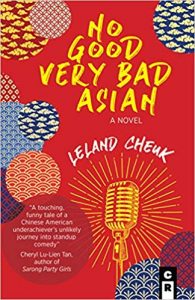
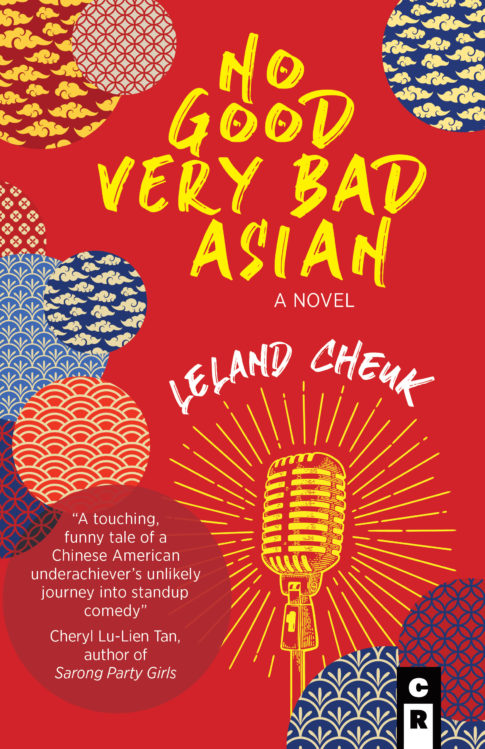
But I’ve got a dirty reading secret. I love celebrity memoirs, particularly by standup comedians (and not just because I was doing research for No Good Very Bad Asian, my novel about a fictive famed standup comedian named Sirius Lee). The best standup memoirs can be so raw and honest, revealing uncomfortable truths about life that even the best fiction rarely addresses.
Here are some of my favorites, a mix of books that I read while researching No Good Very Bad Asian and recent entrees into the genre.
“I became an ‘energy producer’ at Bar Mitzvahs. Energy producer is what white suburban people call a ‘hype man.’ I was basically the Flava Flav of Bar Mitzvahs.”
If I had to choose one book to read before going to my grave, I would choose The Last Black Unicorn over just about any work of literary fiction. The book alternates between serious chapters that detail her relationships with abusive, possessive men as well as her violent, brain-injured mother and hilarious chapters about Haddish’s romance with a disabled co-worker and her quirky friendship with Jada Pinkett and Will Smith. Haddish’s inspirational life story is one of overcoming filial abandonment and poverty. It’s legit one of the best books I’ve read in a long time.
“Don’t perform in heels. It’s not worth your calves looking 20% better.”
This one’s just came out and like my novel, also happens to be framed as a series of scandalous letters of advice to the comedian’s daughters. Though we’re complete strangers, I swear she stole my idea! When I was doing standup, I would treat myself by going to Comedy Cellar and seeing the soon-to-be stars and Ali Wong was one of them, and believe it or not, she was even raunchier back then.
“It was easy to be great. Every entertainer has a night when everything is clicking. These nights are accidental and statistical: Like lucky cards in poker, you can count on them occurring over time. What was hard was to be good, consistently good, night after night, no matter what the abominable circumstances.”
Widely considered canonical in the genre, Born Standing Up was one of the first books I turned to in my research. Martin’s unique brand of absurdism made him the biggest comedian in the world for a time in the 1970s. Unlike many of his peers, Martin skirted the life-curtailing nighttime dangers of the profession, and the prose has a level of erudition you don’t typically find in standup memoirs. For instance, not many standups cite Lewis Carroll’s logic textbooks as comic inspiration.
“You haven’t lived till you’ve played Scrabble in a psych ward.”
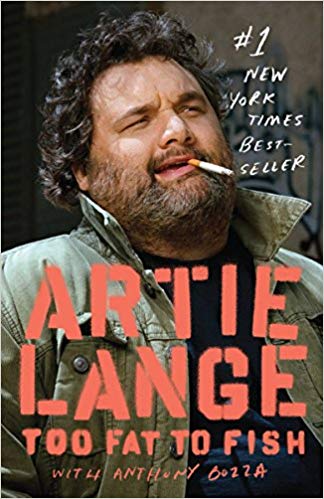
If there’s one book that inspired No Good Very Bad Asian, it’s Too Fat to Fish. One of the traits that many standup comedians share is a lack of self-worth. This void drives them to the stage to seek laughter as an affirmation of their personal value and a temporary salve for their psychic damage. Lange’s memoir, which chronicles a difficult upbringing and an ongoing, harrowing battle with serial substance abuse, portrays the symbiotic relationship between comedy and pain.
“The expectation of happiness creates a lot of unhappiness.”
A comic’s comic, Davidoff is probably best known for being a character actor on TV shows like NBC’s Shades of Blue. But like the legendary Dave Attell, Davidoff is a bard of the dark and surreal existence of a road comedian. In Road Dog, he leans in on this life, with wild tales of drug-spurred trysts with fellow comedians and the sundry mistakes you can make when you don’t like being alone and have nothing but time by yourself in hotels, casinos, and bars after shows.
Soon to be a Broadway musical, The Bedwetter chronicles Silverman’s embarrassing childhood bladder control struggles with her trademark mashup of charm, pathos, and raunch. One of the strengths of the book is also her strength as a comedian: the ability to tell true Hollywood stories from the American celebrity stratosphere while remaining relatable as a regular person.
“The first time I showed my mom a scene from Silicon Valley, she said: ‘Jimmy, how many times do I have to tell you, don’t hunch your back.’”
Though he wasn’t born in America like my protagonist, Jimmy O. Yang’s rise to fame mirrors that of my protagonist Sirius Lee. Yang came of age in Los Angeles and disappointed his father by choosing to pursue comedy over becoming a financial advisor. Unlike No Good Very Bad Asian, Yang’s book has a happy beginning and end. Not only does Yang become a star, but his father fulfills his lifelong dream of becoming an actor as well, appearing in films like Patriots Day, thanks to a dearth of older Asian male actors in Hollywood.
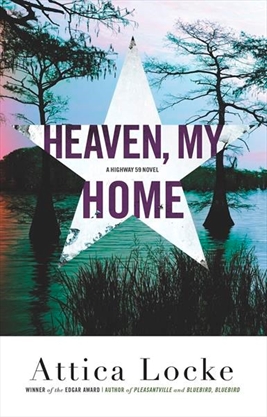
Texas is a state known for many things: Beyoncè, The Alamo, South by Southwest. But these big city exports are only a small part of Texas charm. Attica Locke displays her small-town East Texan roots in Heaven, My Home, the followup to her acclaimed Bluebird, Bluebird.
The book focuses on African-American Texas Ranger Darren Matthews in rural Hopetown, East Texas, where a 9-year-old white boy, Levi King, has gone missing. Levi’s father is an Aryan Brotherhood of Texas member, and the tensions between white, Native, and Black Hopetown residents rise as Darren races against the clock to find out where Levi is and who’s responsible. Through Detective Matthews, we can see that although Hopetown isn’t a picture of racial harmony, Black folks deserve to make wherever they live a welcome place.
Attica Locke is a multi-award winning author and one of the few Black women recognized in mystery today. From the Edgar Award to the Harper Lee Prize to the Ernest J. Gaines Award for Literary excellence, she continues to ask big questions about race and the color line in America. I spoke with Locke about the magic and mastery behind weaving mystery into contemporary plots and how Heaven, My Home interrogates our understanding of forgiveness.
Maya Davis: How are you able to sow clues throughout Heaven, My Home? In the end I thought, “Oh, right here that was a clue.” But while a person is reading, the clues were right under the surface, so you don’t realize what’s unfolding.
Attica Locke: Practice! I learned how to do that by practice. When I pitched this series I called it “tightly coiled rural noir” so I want my books to be slim and packed. I don’t want them to be 350 pages. I find it in the writing and it looks like I did it so seamlessly but the truth is I go back in and lay in those Easter eggs. Sometimes they’re there for you as you’re writing, you know you’re leaving a clue. But other times you go back and make sure to find the right place to put it in so that it doesn’t tip anything off, but it’s memorable. It can’t be so buried that people are going “What? That came out of nowhere.”
MD: The question that I asked while I was reading was: Who is innocent and who is deserving of presumed innocence? On one hand we have Levi King who is a child, which society deems the most innocent of us. But he’s being raised in this cauldron of white supremacists and negative influences. And I thought about Rosemary King who pleads for her own innocence in saying that she had no role in raising her son, Bill [Levi’s father], to be a racist.
AL: I think over the course of the book, your feelings about some of them might change. Levi’s presented as kind of the innocent kid. And then you find, “Oh you’ve been burning shit down and writing n***** on stuff, wait a minute.” Ultimately you kind of come back around to: maybe there’s a way out for him and there really is an innocent soul somewhere in there that can be saved. In terms of Darren Matthews, there’s the confusion of: How do I mete out justice when half the time I can’t figure out who the bad guys are? Like how do I do this job? I’m making assumptions that I’m correcting justice by making sure that Mack is taken care of. I think all of those shifting sands provide a metaphorical look into what he’s struggling with in terms of who’s guilty. If you shoot somebody because they came onto your property and they’re a white supremacist, is that okay or not okay?
How can you forgive and move on if the injury is still recurring? How do you ever get past it?
It’s interesting when you talk about innocence, the thing that was so deeply in my mind was the issue of forgiveness. Is it safe or smart to forgive? I think there’s a line about that. Maybe it’s something like: Does forgiveness make Black folks saints or stooges? There’s a sense of psychological freedom within forgiveness. That you can free yourself from some of this pain if you can forgive and move on. There’s also a point at which—how can you forgive and move on if the injury is still recurring? How do you ever get past it? Everything that I’ve seen in the course of my life has been a trajectory toward what Dr. King said with everything bending toward justice. My parents marched. My grandparents fought. And here comes Trump now and I’m like: What just happened? And the feeling was one of “You know what? White folks, I was this close to forgiving y’all. We’re not gonna forget our history, we’re not gonna forget what you did. But I am willing to take the election of Barack Obama as a start toward something else.” And then that got ripped from under us and the betrayal I felt was profound. When Trump is gone: How do I live with my fellow citizens? How do I do this? Because I feel like I don’t know how to look into your eyes and know that you were okay with the breadth of racial violence that was being suggested and perpetrated as long as you had an economy you could live with. How do I go to church with you? How do I stand in line at the grocery store behind you? So I was really caught up in that and really trying to figure it all out.
MD: One of the characters in Heaven, My Home says, “Black people are the most forgiving people on earth.” For me, forgiveness and justice are somewhat like siblings. Oftentimes I wonder is it possible to forgive someone and still seek justice? Is forgiveness part of justice? Those kinds of questions were rattling around in my head because, Darren is trying so hard to figure out who’s innocent and who’s not, who’s deserving and who’s not. Part of forgiveness to me is trust. Once that trust is broken it’s really hard to seek forgiveness for someone. And it’s also hard to see where justice is. Because trust is a part of honesty, and justice is dependent on honesty as well. Are these questions you wanted your readers to be wrestling with?
AL: It took me after I finished the book to realize there was something that happened in my children’s life that had an impact on this. We live in Southern California. My daughter goes to a very progressive school with parents who have these values and education. We’re talking about a school where they do health and sex ed, they talk about what pronouns people want to be called by. A couple years back, one white kid at school called a Black kid the n-word. And I was stunned, stunned, because I had been lulled into my California dream. After it happened I had such rage at that kid. Like fuck that kid. Fuck his family, I can’t stand them. Whereas my daughter, she had the capacity to forgive him. She said, “Mommy, I feel sorry for him.” But she was not holding this thing that happened against this child, she could recognize something was going on in the home. So this whole thing of what to do with Levi King, that’s where it came from.
I remember the day of Trump’s inauguration, there was a school event that day. I remember I sat down, and I looked behind me and there was a mom with a Black child and I just burst into tears. That kid who used the n-word, he was there and his parents were there and between that and Trump being inaugurated, I thought about the times I was called the n-word and shot with a BB gun. I was like, I don’t have the luxury of forgiving that kid. It means something different. But also, does he really know? I was just so thrown that my child had a bigger and greater forgiving heart than I did as an adult. We probably had dinner table discussions about this incident 20 times. Twenty times. Because I was ashamed of myself that I was holding a child to a standard of behavior of an adult. All this stuff was stirring in me when thinking about a child and whether or not you lean into this optimism and hope that the child can be saved. Or that we can stop manufacturing white supremacists and terrorists, that there’s a way to stop this cycle.
MD: When I read about Levi King, I wasn’t mad at him. My rage was more towards Rosemary who was saying, “I didn’t raise a racist. I don’t know how he got that way.” I cannot muster forgiveness for that sort of criminal unawareness. Look at the seed that sprouted and grew from her raising that child. This is going to be an eternal question for so many people. The way Heaven, My Home presents it has so many sides. It’s not just this Good Black Ranger [Darren] and then this backwards trailer park white people. You’ve got him, you’ve got the voices of his elders, William and Clayton, in his head. You’ve got the DA, you’ve got his boss, you’ve got his best friend Greg. I love that there are so many voices in the conversation because that’s how it is in real life.
AL: Thank you for that. Thank you. I appreciate it.
A lot of country came from Blues. Which came from Africa. That’s ours too.
MD: In the book you mention Lightning Hopkins, Betty Wright, and Jessie Mae Hemphill. Given the rising star du jour, Lil Nas X, and Megan Thee Stallion, who is from Texas, there’s this wave of what Black, I guess Gen Z and Millennials, are calling the Yee-Haw Agenda. What do you think of this embracing of Black Country music, Black Country artists, and Black folks from this region of the country?
AL: I love it. I’m probably too old to listen to Lil Nas X all the time. But god bless him. I love everything that he’s doing. I’ve listened to Black country music since Charlie Pride, who is the OG of it all. Blues and Country are fraternal twins. They are of the same cloth. One wouldn’t exist without the other. A lot of country came from Blues. Which came from Africa. That’s ours too. I’m all into people reclaiming that. One hundred percent.
MD: I love all these people bringing out their cowboy hats and showing their pictures from the rodeo. It’s fascinating to me as someone who grew up outside of that environment. I truly love seeing all of my Southern, my Western friends, enjoying the moment.
AL: I get you.It’s only late in life that I’ve become this, but I wear cowboy boots every day. Mainly because it reminds me of home, it makes me feel grounded in who I am. There was a time I would’ve felt a little embarrassed that I liked country music. It would’ve felt so white or whatever. And also there are new country artists coming out now. Country was real existential and deep and interesting in the 60s and a little bit into the 70s. And then a lot of 80s, 90s, 2000s country, other than a few artists, became more about drinking beers and the flag and also dog whistles in ways to “real America.” There are a lot of newer artists coming up with the existential, the questions that blues and country music have that other genres don’t. Pop and rock don’t sit down on the front porch and contemplate life the way that country does. There are artists that are doing that again on the country side.
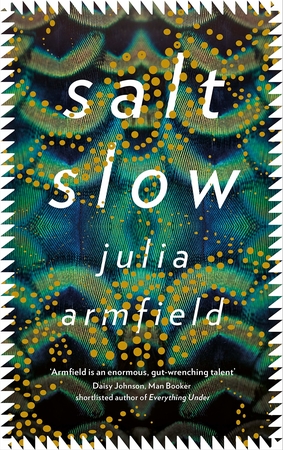
Number of stories in Salt Slow: nine. Number of men destroyed in the telling: five. Putting Julia Armfield’s literary skills aside, what excited most critics about her debut was the incredible body count for the book’s male cast, eaten alive by giant insects or torn apart by modern-day maenads. Her female characters, so sharply drawn, draw blood.
More than murder, Julia Armfield’s debut short story collection also concerns itself with transformation: late puberty is a common setting, and so are sudden sproutings, unruly desires, metamorphosis, and independence. The stories are nothing if not gothic: whether it’s a zombie ex, neglected child, end-times floods, or jellyfish strandings, some grotesquerie always reveals itself before each climax to delight and/or horrify.
A passionate horror fan from the spine-tingling to the unabashedly schlocky, Armfield gave up half an hour in her lunch break to talk It Chapter Two, ghostly visions on the Tube, and the unique cruelty of Catholic virgins. (No men were harmed in the making of this Q&A).
Ellie Broughton: I wondered if we could start with talking about transformations. The collection is full of them, but sometimes when the characters turn into monsters it seemed to be liberating. Could you tell me a bit more about where that idea came from?
Julia Armfield: Most of the time, when you’re watching a horror film or reading a horror text, the monster is the most interesting thing. You’re chasing the main character around or the character is being chased by the monster, but the monster is the thing that you’re preoccupied with. It’s always the thing that you sell a movie with, it’s always the cover art. I find it really interesting when, in terms of transformation, the idea of becoming the monster is actually a sort of reclamation. Because my collection is mainly about women, women who become monsters are stepping into their power, rather than becoming something disenfranchised.
For instance, in the first story in the book (“Mantis”) there is this girl who turns into a praying mantis and for all that it is horrendous, so much of that is her stepping into her true self, in some sense.
There’s something about women and adolescence as well I find which is often characterized as monstrous but it is essentially just becoming a different version of yourself, becoming a more complete version of yourself.
In “Mantis,” it’s already there, isn’t it? It’s beneath her skin. It’s not something that she’s becoming, a sense of the Other. It is something that was already a part of her and I find that as well, not in that story so much, but there’s also something to be said about the reclaiming of the monstrous Queer. In old Universal horror—the old Frankenstein movies and things like that—there’s such an obvious camp quality and such an obvious sense of the Otherness of the monsters being oftentimes, in some way queer, or Other. I liked the idea of taking that back and the monster being the good thing and the monster being the true thing.
EB: When the characters aren’t doing an explicit transformation (“Smack,” “Granite”), they’re often frightened of their power to hurt others or their potential for cruelty. What does that tension mean to you between the cruelty and tenderness of the characters and the tenderness of the characterization?
JA: I’m not tender with many of the male characters, to be completely fair—a lot of the time they’re being ripped to pieces.
I’m preoccupied with teenage girls or young women as people coming into themselves. So much of that is bound up with not really knowing what your potential is. I always feel incredibly empathetic with, and sorry for, young women who have not been told what their powers are.
There’s so much disinformation—like in “Mantis,” again, when they’re having this really unhelpful sex education and they don’t really know what’s normal and what’s going on. I feel empathetic towards the struggle of growing as a woman and the implicit cruelty, because nobody’s really told women what they are allowed to do, or what they are capable of doing. Ignorance is a kind of cruelty—it’s another form of suppression, isn’t it? So maybe there’s something redemptive about treating that with empathy.
EB: “The Great Awake” is probably a way in to your work for a lot of readers. The story is told quite calmly, but the subject matter is so frightening. The embodiments of sleep [“Sleeps”] are beautifully imagined, but we also have this threat of the epidemic of insomnia. Can you tell me a bit about where that story came from?
Salt Slow is about women who become monsters and step into their power. The monster being the good thing, the true thing.
JA: There’s an image of them halfway through of them [the Sleeps] taking up all the seats on the train, and all the actual awake people sort of like forced to the doors. I remember thinking about that particular image—it’s a nice thought—and how I would sort of weave something into that because I often come to stories kind of from the idea of an image or a tone. I’m not particularly “plotty”: there’s always something that I want to evoke and I’ll build the scaffolding around that. With that one, it was built from that image.
I live in London, and the exhaustion of the city, the overcrowdedness and the sense of isolation come hand in hand. You can be anywhere in London, completely surrounded by people, and know nobody. A lot of it came out of that.
It’s the most metropolitan story in the collection—there are quite a lot of sea stories or rural, but this one is more about the city, to me, than about sleep, and that sense of being alone in a place where there are so many people.
EB: Do you know how you got that balance between the frightening subject and the calm tone?
JA: I think it’s just the way that I write. I like being affectless when talking about something terrifying because it’s immediately more effective. Making a comparison, I really like H.P. Lovecraft, but that’s because it’s so high-key all the time. I love that but a lot of the time in modern horror it’s a lot more effective if we’re talking about something that’s completely normal but also, like, there’s a wolf in the room, or there’s a monster right in front of you. I like the unsettling slip, and the fact that you can talk your way into an ordinary situation where something terrifying is going on. It allows us to look at it more straight-on.
EB: We’ve talked a bit about the horror films and books that you read, so it’d be good to talk about what you felt were the main influences on Salt, Slow.
JA: I’m sure you can tell from the collection, but I’m completely obsessed with body horror. I love David Cronenberg. I love anything in which the general concept is the way that your body can contain and betray you, the unreliability of the body but also the fact that it’s the thing that entirely predicates everything about you.
Really really crap films which I love intensely are things like Ginger Snaps. It’s terrible, but it’s a really good film about this girl whose first period coincides with her turning into a werewolf.
Horror is the only genre that takes women’s fear seriously. The body is so bound up in that. My relationship with horror has always been more visual so it’s like what I said before, I often start from the idea of an image or a tone, like there’s a scene in a horror movie that I want to or some lighting in a film that I want to invoke myself.
But I love Lovecraft as well. It’s just really squirmy. I love Shirley Jackson and to be honest, for my sins, I really love Stephen King.
EB: Yes! Don’t apologize.
JA: I watched It Chapter Two way too many times, it’s really embarrassing.
EB: So we should definitely talk about sexuality. I guess a basic perspective on the book is that a lot of the approaches to sexuality in the book are frightening, or at least unusual. Would you be able to say a bit more about why?
Horror is the only genre that takes women’s fear seriously.
JA: I don’t know, necessarily. Quite a few of the stories have a Catholic undertone. That feeds into a sense of misinformation, and the fact that that can breed fear and the monstrous in its own way. In The Virgin Suicides by Jeffrey Eugenides there is this great bit when one of the boys sneaks into a sex education class the girls have. And he comes back and goes to one of his friends: “Okay, listen: when they hit 13 their tits bleed.”
And it’s the weird construction of this strange Frankenstein’s monster woman who has been created by this total misinformation. Nobody knows what’s going on.
In terms of the Queer, a lot of the time I want to give it the same balance. I don’t want it to be like, “and here is a queer story.” I want it to be one and the same. But at the same time, I’m interested in the idea of the queer monster actually being the norm, and then turning that into a good thing.
EB: We should probably address the fact that so many men die in the collection. I feel like this is probably something you get pulled up on in every interview.
JA: It depends. If it’s a man there then yes, definitely.
EB: And with women, you just laugh about it.
JA: Yep. It’s like: “Yeah, great. I’m so glad they all died.”
A few years ago I started collaborating with a client on her first book. When we signed the papers, in addition to including the fee structure and the schedule, I added one important stipulation: There is no guarantee that this book will sell.
My client signed the papers but I knew that that line meant nothing to her. She assumed—still assumes—that if she writes a good enough proposal that it will sell, that she’ll have readers, the same way you think If I take all the requisite courses, I’ll graduate. She’s often talking about her hypothetical readers—not a reader, as in the hypothetical one she envisions as she writes, but her readers, real people who will go to a bookstore and purchase the book with her name embossed on the front and photograph on the back flap.
I admire her confidence—or perhaps it’s simply her ignorance—but I can’t help but brace myself. When she launches into one of her oh, but how will people react to me writing about—I often stop her: Please don’t worry about that now, write what you want to write, we will worry about selling later. She claims to hear me—oh, of course, I know that, this has been such a wonderful experience either way!—but I can tell that she doesn’t really believe me. She doesn’t yet know that you can have a compelling story, a strong voice, a well-known name, maybe even many publications under your belt, and still not sell a book you’ve spent years of your life on. (I say this, of course, having absolutely no idea whether her book will sell. I hope it will; I think it should. But I know that it might not.)
Over and over, I remind her that she needs to write the book because she wants to write the book, not because she wants to sell the book. They are two separate things, you know this, right? I tell her again and again. The satisfaction is in the writing.
That’s exactly what I told myself for a decade while I worked on my first book. That’s exactly what I was told to focus on while in graduate school. But at a certain point it’s hard to convince yourself that you’re doing this thing day after day, year after year, and that you don’t actually care whether anything happens to it.
Here’s the central, inescapable conundrum any person writing a book faces: In order to keep fear at bay, you have to imagine that you are doing this for yourself alone—for the deep, creative satisfaction of committing to, and executing, a vision over the long haul. You dig and dig and dig and write with as much honesty and grit and bravery as you can, pretending no one will ever see it.
In order to keep going, you have to believe the book will sell. That means you have to ignore the reality of publishing.
But in order to keep going—to put in the hours day after day for years—you have to believe, somewhere inside you, that it will eventually exist outside the confines of your mind and your computer. That it will, in other words, sell.
This means you have to willfully ignore the reality of publishing. You have to forget that it is, in fact, extremely hard to sell a book. That the chances of it happening are slim, and that the reasons it does or doesn’t sell might have little to do with the quality of the book itself.
The question is: how do you sustain all these realities at once, for years on end?
And what happens when the book you pretended you were writing for you but secretly hoped, secretly believed would sell, actually doesn’t?
During the two years I spent at Columbia getting my MFA in nonfiction, there was very little talk of what happened when the doors to the workshop rooms opened and we were let loose into the publishing world. At school, we were in an incubator where we were to focus exclusively on the writing itself and not worry about anything unrelated to craft. This was part of the program’s philosophical approach, one it was easy to get behind: Craft is the most important part after all. Without it you can’t sell a damn thing.
We knew deep down that this was an enormous, expensive luxury and we took full advantage, reading three books a week, producing thousands of awful and then less-awful pages and then pretty good pages that no one but us would ever see. We were never supposed to write for the marketplace, or really even think about the marketplace, even though many of us had gone into tremendous debt to be there. It was irrelevant anyway, and maybe even a relief. Good literature, we assumed, floated to the top, or something like that.
Write the book you needed to read that didn’t exist. I don’t know how many times this was said, but that’s what we tried to do, all the while not talking about whether said book would sell. We did talk a lot about what was a book and what was—as one of my favorite professors put it—an “‘ook.” We put our heads down and dug into draft #872, trying to turn our ‘ooks into books.
But as the exit sign got closer, a lot of us started to panic. Well, this was fun, but now what? Does it really not matter if anything comes of this?
Here’s what happened to my book, in brief:
During graduate school, I knew that what I wanted to write was longer than an essay, but doubted whether I could actually write a book. During my second semester one of my professors looked at the mass of material I had so far and said, “This is a book. Get to it. You’re no spring chicken!” (I was 32.) So I wrote the book, my thesis, all 360 pages of it, which was a memoir about the back injury that ended my career as a professional dancer and the unconventional journey I went on to heal my body. It was nothing I could sell, but it was a start.
Over the course of the next eight years—during which time I got married, moved across the world twice, had a baby, and kept trying to prioritize the book while also struggling to make a living—I had three different agents try to sell it. The first signed me too early, before there was even a book there, and then quit agenting. The second tried to sell it on proposal when I was eight months pregnant, and the last tried to sell two-thirds of the manuscript, even though the whole thing was written, when my daughter was four.
The last two agents sent it out, as one often does, in a small batch, to ensure that if changes needed to be made, we wouldn’t have exhausted every publisher already. The responses were lovely and kind (“beautiful writing,” “what a story,” “I love her voice”) but the editors rejected it nonetheless. They couldn’t quite put their finger on the problem, but it was there. The ones who actually read the book—not the proposal—said it was “too quiet,” which is code for “won’t sell.”
My third agent and I regrouped. No big deal! This happens all the time. She suggested a massive rewrite, one that involved adding another story line. I didn’t quite see how it fit inside the book I’d already written, but was willing to take a stab at.
It took me nine months to figure out that I didn’t, in fact, want to take a stab at it. My total avoidance of it told me all I needed to know.
I was exaggerating when I said that there was never any talk during grad school of selling our books. There was Sam Freedman’s famed Book Proposal class at Columbia’s Journalism School, which some of us took. Other times, selling or not selling our books was chalked up to whether or not we’d finished what we started. “Ninety percent of you will never sell a book,” we were told to audible gasps. Then came the punchline: “Because most of you will never finish one.”
And issues related to the marketplace seeped through the cracks in odd moments. For example: early on in my second year—after reading perhaps two of my workshop submissions, totaling 60 or so pages—one of my mentors asked me, “How are we going to get Melanie Thernstrom to blurb your book?” Thernstrom had just published a massive nonfiction book about pain, which was a central part of my book. My book wasn’t even a full thesis yet, just a collection of chapters that didn’t yet have a proper shape. I knew there was a story there—I’d lived it, I knew its contours well—but I was swimming around in the material, trying to find my way, trying to believe that I could one day craft it into something that came to 300 coherent, magnificent pages. And now we were thinking about blurbs?
This comment almost single-handedly got me through the next two years of writing it. This was going somewhere, there would be an actual jacket cover that necessitated a blurb. A real jacket cover!
The only other time this came up was during my thesis conference when one of the readers, a writer whose work I deeply admired, wrote in her comments, “When she sells this book—and I mean when not if….”
That comment, too, kept me going for another few years. All this time I was spending away from my baby, sneaking time away from paid work, declining full-time jobs and asking my husband to foot the bulk of the bills for just a little while longer, believing in this dream: it would come to something.
Selling my book meant that I wasn’t crazy, that I wasn’t just another person writing my novel.
It somehow didn’t matter to me that, by then, I regularly sold essays, had worked as a magazine editor for years, and had landed college teaching gigs. Selling my book was the only thing that made me believe I had made it. Selling my book meant that I wasn’t crazy, that I wasn’t just another person writing my novel.
But also—and this is something we rarely talk about—it meant I’d make actual money for all this time I’d put in. That my skills and hard work would be compensated. It meant that this had been a worthy investment, and not just for my soul.
After my agent suggested the massive change I couldn’t wrap my head around, I called that same mentor, the one who’d imagined a Thernstrom blurb, for advice. I was sure she’d tell me to persevere, to keep working on it—she was, after all, the one who’d said we had to finish, the one who’d told me repeatedly I was telling a unique story.
Instead, she heard me out and asked, “Are you working on anything else?”
“Anything else?” I asked, confused. “Like, another book?”
“Yes.”
It had taken everything I had to write this book. No, I didn’t have anything else. At least nothing else that was remotely presentable.
“Maybe you should consider moving on.”
I hadn’t written the first one to sell it. I’d written it—like most people write books—because I needed to. Because I needed that much space to explore the issues I was grappling with: losing dance, the thing I loved most on earth, and my easy relationship to my body. I needed to explore the reality of pain, injury, identity, growing up, the frailty and resilience of the body, a swerve that comes out of nowhere, the sad fact that our parents—and doctors—can’t always protect us. I knew, in my bones, that while my story was mine alone, I was touching on universal themes. Who cared whether the reader knew the first thing about dance?
I also wanted to write a good book—I wanted to find the right structure, tone, narrative arc. To make a beautiful piece of art.
Any time you devote years and years to something, you of course want to feel that the work has not been in vain.
I did not write it to sell it, and I certainly didn’t write it to make a lot of money. But any time you devote years and years to something, you of course want to feel that the work has not been (that horrible phrase) in vain.
Now she was suggesting I move on?
The truth is that books have a shelf life. By the time I called my mentor for advice, the book had already started to feel dead to me, inanimate. I could almost see it drifting off to sea on a little raft and I just didn’t have it in me to dive in after it. So I didn’t.
At a certain point, I realized that I could spend the rest of my life rewriting this one book or move onto another one, hoping I still had the courage to try again.
Then last summer, years after I thought I’d basically let that first book go and didn’t care about it not selling anymore, I saw on Twitter that a similar book had been sold. I sobbed in the bathroom for hours, totally undone. It felt, momentarily, like I’d wasted ten years of my working life, like a fool, and here was the proof. All this time someone else was doing it better and she hadn’t failed. She didn’t need to turn to her husband, and say sorry, I guess it didn’t pay off in the end. Maybe I should just do something else?
Yes, most writers have a dreaded drawer book or two, the ones that taught us about perseverance, about structure and arc and voice and the difficulty of crafting a story out of the mess of life or our imaginations; about keeping your butt in the chair, about returning even when you think it’s hopeless, about drowning out the voices that say, this fucking sucks, you suck, this will never work, as well as the ones that say, you’re a fucking genius.
I have, ten years after starting the first one, finally started on a new book. All the work I put into my first one is informing this new project. But this attempt feels different, and I don’t think it’s just because what I’m trying to do artistically is so unfamiliar.
I think it’s because on some level I’ve let go of the idea of selling it at all, which is a small sadness at the heart of it. But it’s also a relief, at least in working on it day to day.
Which is to say: the very thing that kept me going the first time—one day this will sell!—is precisely the kind of commentary I’m avoiding altogether this time. On this project I’ve sought out almost no feedback. Every time I think about sending a piece of it to my agent, I stop myself. I want to protect it, and myself—to keep us in this cocoon for as long as it takes.
I know, for real now, that believing in something has nothing to do with selling it. I know that putting that pressure on the material doesn’t help. I know, of course, that the satisfaction is in the work itself—in making your mind and heart do the puzzling through, the hard labor, to take on another intellectual challenge—not in its complete, out-in-the-world form.
Pouring your life for so long into something that never comes to fruition is a distinct kind of shame.
But, I must point out, this is often said by people whose books exist in that out-in-the-world form, who can compare the experiences.
Still, I will say that making anything at all is terrifying. Pouring your life for so long into something that never comes to official, physical fruition is a distinct kind of shame. A broken-heartedness. A feeling of failure you need to keep at bay if you want to keep going. It’s knowing that the money you thought you’d contribute to your family had to come from elsewhere (which was always going to be the case anyway), not from The Big Thing you devoted so much of your life to, The Big Thing you swore would one day pay off—not with millions, never with that, but with just enough to say: see, I’m working, too; here’s my part. This was never a hobby.
But pouring your life into something you care about is also distinctly human. It’s being brave, it’s going for something even when you have no possible way of knowing whether it’ll work out, or even knowing what “working out” means.
Does it mean finishing it? Liking it? Feeling challenged intellectually? Moved by your choices? Pushed artistically? Does it mean you didn’t pack it in? Does it mean you actually did become a better writer during all that time you spent moving commas around and rearranging the sections and fleshing out characters and trying to think up new structural fixes while swimming endless laps in the pool, your mind unencumbered and searching?
What kind of payoff are we looking for? Because I think I am, in fact, finding something these days just by showing up and wrestling with my hopes and my sadness, with my skills and my blind spots, with each word I set down. I am, dare I say, enjoying it, even a little.
Maybe “having it all work out” simply means you’re ready to try again, to let your heart be broken, to wade down into the depths with no guarantee that you will swim up to the surface with gold in hand.
Before you go: Electric Literature is campaigning to reach 1,000 members by 2020, and you can help us meet that goal. Having 1,000 members would allow Electric Literature to always pay writers on time (without worrying about overdrafting our bank accounts), improve benefits for staff members, pay off credit card debt, and stop relying on Amazon affiliate links. Members also get store discounts and year-round submissions. If we are going to survive long-term, we need to think long-term. Please support the future of Electric Literature by joining as a member today!
These are some important things to know about my dad: every Halloween he dresses up in a different inflatable costume to hand out candy, he’s seen Bigfoot, he watches John Wick about once a month, he wanted to name me Elvis, and when I was younger he read all my favorite books along with me. My dad did a lot to instill a love of reading in me, so I thought it would be appropriate to ask him his thoughts on the 2019 National Book Awards finalists for fiction, even though he doesn’t know anything about these books. Here, we have his guesses at what each book is about based on their cover and title, along with his odds on who will win tomorrow. Please place your bets accordingly.
A demanding psychological fitness book aimed at helping people overcome their fears about pumping iron. The green chairs on the cover symbolize the twiggy losers who are envious of a swole slab of beef like me. While I’m obviously not afraid of exercise, I’d still give this one a read just to kick my confidence up to 11.
Sadly, I doubt the creampuff award judges will have enough sand in their colon to vote this the winner. Odds at taking home the title: 1000:1
The cover art makes it look like this teenage witch has grown into a woman with the heart of a plant. I don’t know how Corina fits into the plot, but this botanical-human hybrid looks like a fresh departure from the dystopian cyborgs that plague literature these days. I’ll read it just to see if Round Up can handle this weedy witch.
The odds of winning are unclear, but I’m hoping Corina scorches the earth to keep competition at bay. 3:1 odds to win.
I believe this book is printed with blood and testosterone instead of ink. This author must have read the manifesto for my fifth grade Kickass Skull Club and then channeled the fire in a Redbull-and-whiskey fueled writing rampage. Sounds like it’s a must read for supersecret ninja spy assassins and their victims.
I’m not betting on red or black this time. Like any good secret agent novel, the odds to win are a million to one.
I think this book looks like a smart response to Trump’s wall. By saying, “Native, Central, and South Americans are Americans too,” the author is confronting the divisive dualistic assumption of ethnic isolationism by using historical, economic and genetic evidence to repudiate the arguments of racist jerks. Will read—aloud.
While this book may earn the popular vote for best book, I expect the College will deny the honor. Odd to win 500:1.
This one has me confused. The cover has a huge mountain—which is the part of earth I’d expect to disappear last. Then the people are running away from the mountain. If Waterworld taught me anything, it’s to head for the high ground before Kevin Costner comes for you. I’ll wait for the movie reviews.
Odds of this Smoker taking home the Oscar: 300:1
Projected winner: Sabrina & Corina by Kali Fajardo-Anstine, a novel about a vengeful plant-woman
 My cats were born soft and small as peaches
 and I tell my mother I cannot get over the miracle

 of cell division. How something minuscule
 multiplies into muscle mass, coat patterns, a registry

 of cause and effect, and divergent personalities.
 Like, how one of my cats has grown smart

 enough to open doors, chews scenery only
 when she wants fed, while her sister, restless

 as a cooped finch, is also too scattered
 to learn the higher arts of tantrums and escape.

 I confess to my mother I can hardly understand
 this hurt of watching, loving them as they grow.

 My mother gives me a look that makes me stop talking.
 As if none of the words I’ve learned could describe

 how it feels to mother two girls. My smart cat
 comes to me each night to go through the motions

 of suckling. She kneads into my right bicep, claws out
 so many beads of blood that the skin scabs over

 like sandpaper. I’m afraid, now, to tell my mother
 about this ritual of caregiving. She has yet

 to lift up her shirt to show me all her scars.
Meaningful Symbols Placed in Meaningful Places
 I woke up this morning to tell you there may be caves on every continent
 marked with ochre and blood and calcium, that we have never been so alone

 as to be alien in expressions of love. It has never been a mystery why a child
 would trace her hand upon paper any more than any vertebrate that shivers

 would turn its face to the sun. Maybe, to be alive today is too much, to choke
 upon the lies so many people serve in lieu of common dignity. But to be alive

 has always meant waking up, facing sunward, repeating to those we love the truths
 that will outlive us. I woke up this morning to tell you Neandertals made art

 in caves and as-yet undiscovered places. Surely, all our common ancestors
 made art in leaves, art in hair, in song and other intangibles. I woke up because

 our lives are holy with such truths as cell division, rock formation, mental
 maps that leave their traces in uranium-thorium decay. I wake up in such good

 company, knowing we were never the first and won’t be the last to turn the fact
 of sunlight into symbol, symbol into body language, movement of bodies against

 other bodies into such sciences, such memories, into such blinding hopes.
Not one for self-help books, I like to look to novels to get me through certain difficult periods in my life. Change can be lonely, so it’s best not to endure it alone. And who better to share it with than characters in a book, going through the same changes? Reading the stories of those going through similar experiences—even if they come from completely different backgrounds or live in an entirely different part of the world—always allows me to see my own situation from a new perspective. If you’ve diagnosed yourself with one of the following particularly life-altering moments, I have just the prescription to get you through it.
Mariko and Jillian Tamaki portray with delicacy and vibrancy the chaotic world of adolescence in this beautifully illustrated graphic novel. Kimberly (Skim) Keiko Cameron battles with dark thoughts, infatuation and sexuality while attending a girls’ private school.
Donna Tartt’s first novel takes place in an elite Vermont college and brings the setting to life through each arduous New England season. The narrator, Richard Papen, recounts his undergraduate years as he finds his way into the ultra-exclusive Plato-revering clique comprised of wealthy mysteriousstudents. After Richard secures his place at the Classics table, he realizes that inclusion wasn’t what he expected, or what he wanted.
Selin, a Turkish American student at Harvard, studies semiotics and becomes fixated on the way languages can shape the way we see each other and the world. In her first year, Selin befriends Sventlana, a head-strong Serbian, and falls in love with her Russian language classmate, Ivan, with whom she speaks exclusively through email. Following a suggestion by her e-penpal, Selin spends the summer in Hungary teaching English, where her studies and theories about contrasting linguistic lifestyles manifest in her new life abroad.
Stephanie Danler shows her readers the intoxicating, exhilarating, and punishing world of a young waitress in New York City. Tess lands a job in a highly respected restaurant, based on the famous Union Square Cafe. She navigates the labyrinthine of fine dining during her shifts and immerses herself in the whirlwind lifestyle of booze and drugs when she’s off the clock. Tess’s story typifies the hurdle of getting and keeping a first job.
The titular marriage in Jones’ novel weathers an unimaginable storm when Roy and Celestial become separated by bars. During a visit home to Louisiana, Roy is accused of rape and sentenced to prison. Celestial reckons everyday with the decision whether to stay loyal to her husband while taking her life into her own hands as an artist and entrepreneur. An American Marriage deftly questions gender roles within modern marriages and racial injustices in our current political era.
After a secret separation from her husband, the narrator is forced to confront the turmoil and deceits of their marriage when he goes missing in the Greek islands. During her search for him, the narrator uncovers things about her husband that she never knew. Her dark interior monologues contrast with her compliant disposition, demonstrating the gulf between what we think we know about someone and who they actually are.
Set in a GOOP-esque farm in Massachusetts where immigrant women carry fetuses for the wealthy, The Farm tackles messy truths about surrogacy, capitalism, the wealth gap, and racial disparities. The elite surrogacy business at the heart of the novel, Golden Oaks, offers poor women of color money in return for renting their wombs to carry the babies of wealthy white families.
Raising a child can be terrifying. For the protagonist of The Need—a thrilling page-turner loaded with philosophical questions about identity and empathy—motherhood is a nightmare. Helen Phillips reveals how the unequivocal devotion a mother feels can lead to hopelessness and inner terror when Molly confronts danger in her own home while taking care of her young children.
Heidi Sopinka explores old age through the story of Ivory Frame, now nearly a century old, a woman who ran away to Paris in her teens and fell in love with surrealist art and a Russian artist. But her bohemian life was upended during WWII, and she now works in solitude on her final masterpiece: the dictionary of animal languages.
In this posthumously published novel, Samuel Park writes about the complexities of dependent relationships and the sacrifice and hardship of caring for a person who can no longer take care of themself. Mara Alencer is the Brazilian caregiver of a white woman with terminal cancer in California. Before she moved from Rio de Janeiro, she lived with her mother, a voiceover actress who depended on her daughter as much as her daughter depended on her.
Whenever the topic of Asian Americans in the entertainment industry comes up, for a few moments, I mentally include Sirius Lee. And then I remember that he is only a fictional standup comedian, the protagonist of Leland Cheuk’s intimate novel No Good, Very Bad Asian. It’s such a vivid and engrossing portrait of a lovable, modern-day schmuck—a character who feels immediately iconic, like Holden Caulfield—that I was almost disappointed when I learned that Cheuk is not at all like Sirius Lee, although he did perform standup in bars while researching for this novel.
While Sirius Lee finds fame as a teenager and struggles with the fallout from that, Cheuk’s fiction didn’t get picked up by publishers until he was in his late 30s. His debut novel, The Misadventures of Sulliver Pong, was published by the Chicago Center for Literature and Photography in 2015; a story collection, Letters From Dinosaurs, followed soon after in 2016 from Thought Catalog Books. Before all that had happened, Cheuk survived a life-threatening diagnosis of MDS, receiving chemotherapy and a bone marrow transplant. Over coffee in Brooklyn recently, Cheuk revealed how his manuscript-in-progress for No Good, Very Bad Asian took a different turn after his recovery. But it’s still funny as hell.
Cathy Erway: I don’t think I’ve encountered in literature an Asian American character who’s overweight, struggles with substance abuse, and is constantly screwing up in life. Have you?
Leland Cheuk: I was very conscious when I started out that I was trying to write a book that was about everything that a model minority isn’t. I consider myself reasonably well read but I don’t think I’ve read one. But the question is, why haven’t we seen someone like that sooner? Asian American literature has a long history dating back to the early 1800s and there’s been many books about men and the trials and tribulations they’ve gone through, so I’m sure there have been many characters like that, but maybe they just haven’t percolated up in the consciousness enough.
CE: So you wanted to write about someone who’s not a model minority—why?
LC: I think there are plenty of writers that are doing mainstream literature related to immigration, which is very top of mind with all the things going on in the news, or writing about the home country. And I just didn’t want to do it. I don’t like doing things that people expect me to do. Because that’s, like, my parents. Especially with art, you know, it’s so hard to succeed to begin with. So I feel like I might as well enjoy what I’m doing and 100% believe in what I’m doing and just have fun.
CE: Is there also some desire for you as an Asian American writer to help broaden the range of experiences we’re seeing in literature, and have more diverse characters?
I think that’s sort of the crux of Asian American literature, trying to prove that you’re human to a white audience, sadly.
LC: Yeah, I think that’s sort of the crux of Asian American literature, trying to prove that you’re human to a white audience, sadly. That’s kind of the underlying subtext no matter how different the book is, and I just wanted to write a book where the person is a human. Like, he’s got all kinds of problems makes all kinds of mistakes, or he just is. It’s a book about being Asian and the existential pros and cons of being a person of color in America, specifically a Chinese American.
CE: It’s funny because I don’t think there are too many white American novelists who are like, gosh, I really need to represent a person who’s a drug addict.
LC: With white narratives, there’s so many of them. They really span the gamut, so you don’t really ask why isn’t there a book about a white drug addict because there are plenty of books. But for Asian Americans, that’s a genre of itself. Mainly around the immigration narrative or around the vacation novel in the home country.
CE: Like Crazy Rich Asians?
LC: Right. Unfortunately there isn’t a huge span of novels about Asian Americans just being here, being American, and you know I’m kind of tired of the question: When do we get to be American? I hope that the book contributes to that broadening of point of view—rather than just Asians, it’s just people.
CE: How did you come up with this character? Were you interested in comedy?
LC: I was always into standup. As a fan I wanted to write about comedy. And then I started doing standup just to validate that track. I took a class and started doing open mics, when I moved to New York City. I went to clubs did that for 2.5 years. I enjoyed it, it was for research but I enjoyed the people I was around, and I never laughed so hard. This is before I got sick, and then I basically trailed off after getting sick.
CE: Did you write the book in full before you got sick?
LC: In 2010 I had a first draft. Now it’s 2019.
CE: Did it change a lot in light of your illness and recovery?
LC: It did; it was a bigger book. The comedy part was a sort of book within a book, it was a literary mystery about a private detective… It never worked. I could never find the ending. And then I basically had to scrap the whole frame around it. And then my illness had something to do with the way this novel ends.
CE: I love how [the finished novel] is framed as a letter to the protagonist’s daughter.
LC: That came up late as well. Once I scrapped the frame, I felt like I needed to do something to bring the reader closer to the character because he’s basically spewing all his misdeeds. There are also a lot of great standup memoirs that you can read, and I was thinking, well, why would someone read my fake standup memoir as opposed to reading just a great standup memoir? Some of which are listed in the acknowledgements. I’m not a huge fan of Artie Lange’s comedy, but his book Too Fat to Fish is amazing.
CE: A lot of people might think the author must be a lot like the character when it’s written in first person. Are you?
I’ve since demonstrated how the son of immigrants can be downwardly economically mobile.
LC: I’ve more or less been clean—I mean, I had a phase in college. Drugs are not foreign to me. I actually borrowed Sirius’s background more from my wife than myself. I grew up privileged, went to Berkeley, my dad still works in tech in Silicon Valley and is pretty well off. Of course, they escaped from China and swam to Hong Kong, they did that all-night swim, they were one of the freedom swimmers back in the early ’70s and they’re very lucky to survive. My dad was 97 pounds when he immigrated. So yeah, they made this American life and became far more successful than they could ever imagine, and I grew up and went to the same high school as Steve Jobs and Wozniak in Cupertino [not at the same time], drove a Mercedes to school. I was very privileged. Since then I’ve since demonstrated how the son of immigrants can be downwardly economically mobile. My wife’s from Monterey Park in San Gabriel Valley, so I know that area well, it’s very Chinese. Great food. Working class. I was very conscious to create a person not like myself, but some of the incidents were real, like I did steal that Yoda toy, and my grandfather did give me a talking-to.
CE: Some people might be shocked about how unaffectionate the parents of the main character in No Good, Very Bad Asian are, and how unsupportive they are of him.
LC: That’s somewhat autobiographical. When you come from immigrant working-class background they don’t really understand why you would do something as non-lucrative as the creative arts or comedy, and when I tried to write novels and kept quitting my job for years on end to do it. But they’re not wrong. Now I realize, “oh, my mom was right.” But it is tough. I think it’s a cultural thing and it’s just another hurdle if you’re an Asian American; your family might not be as supportive of you, and you have to prove it more.
CE: Are your parents still around? Do they like the book?
My mom looked at the book’s title and was like, aren’t Asians gonna sue you?
LC: They don’t really read English. So I don’t know if they’re going to like the book. Maybe if it gets translated one day. My mom was at my book event in San Francisco recently, and she looked at the book’s title and was like, aren’t Asians gonna sue you for calling them bad? And after the reading she was like, why do you always have to write about parents? It’s like life imitating art.
CE: Do you feel like you wrote this book for any certain audience?
LC: I hope it’s a broad audience, but I have been getting a lot of fan mail from Asian American males… I do think that their point of view isn’t necessarily top of mind in our culture and I don’t think there’s any terrible desire in big publishing to share it — this book got rejected roundly by dozens of publishers so it’s from a small press. I can probably name 45 Asian American women novelists off the top of my head but you can really only name ten men… so I hope we see more.
DON’T MISS OUT
Sign up for our newsletter to get submission announcements and stay on top of our best work.
YOUR INBOX IS LIT
Enjoy strange, diverting work from The Commuter on Mondays, absorbing fiction from Recommended Reading on Wednesdays, and a roundup of our best work of the week on Fridays. Personalize your subscription preferences here.