The occult makes many of us feel uncomfortable, perhaps because we’re so hardwired as humans to hate uncertainty. Yet writing, like life in general, is full of uncertainties; often there’s no saying what words or images will enter our strange minds and work their way onto the blank page in front of us. Whether you’re writing about demonic possession or a fictional character growing up in suburbia, writing is an inherently mysterious process. To understand it better and learn more about their sense of self, many writers, artists and thinkers have looked to the occult, that strange territory between art and science.
The late Victorian period is largely remembered as a period of disenchantment, but it also witnessed a revival of occult and magical belief. In the drive for modernity came a crisis of faith; people sought new means of spiritual development, of communicating with the dead and manipulating reality. As spoils from the far flung reaches of the British Empire returned to the British Museum, including the Rosetta Stone, new and established beliefs and practices (re)-emerged.
Arthur Conan Doyle (1859–1930)
Like his character Sherlock Holmes, Arthur Conan Doyle was a man of reason. He was a trained doctor and a celebrated author in the most logical genre of fiction. Yet he also became a prominent public proponent of spiritualism, a new religious movement whose adherents believed the spirit survived death, and could be contacted through séances. Spiritualists found comfort in the belief that death was only the death of the material self.
Like Charles Dickens, Doyle was a member of The Ghost Club, a paranormal research organization.
Deaths in his family, including the death of his son in 1918 during the Battle of the Somme, and his brother in 1919 of pneumonia, likely reinforced his beliefs, though Doyle became a spiritualist before these bereavements. In earlier life, like many of his contemporaries, he dabbled in mesmerism and expressed interest in other esoteric ideas, but according to biographer Christopher Sandford he may have politely turned down an invitation to join the Hermetic Order of the Golden Dawn.
Like Charles Dickens, Doyle was also a member of The Ghost Club, a paranormal investigation and research organization. In 1983, Doyle joined the British Society for Psychical Research, and in 1925, he became president of The College of Psychic Studies in London, an institution which still opens its doors to students eager to develop spiritual awareness.
Bram Stoker (1847–1912)
Some say Bram Stoker was a member of the Hermetic Order of the Golden Dawn. Whether or not the rumors are true, he was likely exposed to some of the order’s ideas through friends who were, including J. W. Brodie-Innis and Pamela Coleman Smith.
We learn little of Count Dracula’s early life, but we know he had a deep knowledge of alchemy and black magic. Like many writers of his era, Bram Stoker was likely familiar with mesmerism, or animal magnetism. Based on the theories of Austrian doctor Franz Anton Mesmer (1734-1815), mesmerism claimed that practitioners could manipulate a “universal fluid” that ran through all matter. It piqued the curiosity of several prominent scientists, and for a while “caused not a few Victorians to re-evaluate traditional magic,” writes Thomas Waters in Cursed Britain. Among Count Dracula’s supernatural abilities are telepathy, the power of illusions and hypnosis, likely derived from this widespread belief in mesmerism. Philip Holden notes “it is difficult to find a late Victorian novel that does not in some way touch upon hypnotism, possession, somnambulism, or the paranormal.”
To literature scholar Christine Ferguson, the clearest occult borrowings in Dracula are structural. Professor Abraham Van Helsing enlists a team of vampire hunters, who swear an initiatory oath of secrecy in order to gain the tools necessary for fighting against vampirism, or black magic. This process of concealing and revealing occult knowledge, says religious studies scholar Kocku Von Stuckrad, is an integral part of Western occultism.
One reading of Dracula: Modernity cannot kill vampires or their hunters, or the connections humans have with the old gods and spirits. It just turns them into secret occult beliefs, practiced underground, from which only a select few have the tools and knowledge to defend themselves.
W. B. Yeats (1865–1939)
In 1891, “a neurotic German” named Mrs Ellis banned W. B. Yeats from her Bedford Park home because she thought he was bewitching her husband Edwin Ellis, with whom Yeats collaborated. She may well have been right.
Most significant for Yeats was his time in the secret initiatory order The Hermetic Order of The Golden Dawn.
Yeats was one of his era’s great searchers. Inspired by Irish folk tales and the work of Blake and Swedenborg, he studied Eastern and Western religions, joined the Theosophical Society, and in later life explored spiritualism. Most significant for Yeats, perhaps, was his time in the secret initiatory order The Hermetic Order of The Golden Dawn. Initiates (among which were Annie Horniman, Florence Farr, Arthur Machen, Aleister Crowley and allegedly E. Nesbit), worked their way through levels of magical study and practiced ceremonial magic in pursuit of the “hidden knowledge.” The curriculum drew from multiple antique sources, including medieval grimoires, tarot, papyri from the British Museum, freemasonry, the work of Elizabethan alchemist and astrologer John Dee, and an 1887 book written by the order’s co-founder MacGregor Mathers, The Kabbalah Unveiled.
Writers and critics mocked Yeats for his fascination with the uncanny, often distinguishing the poet from the magician. Among them, Terry Eagleton in the [London] Independent wrote: “Yeats was a lot sillier than most of us. Few poets of comparable greatness have believed such extravagant nonsense.” But in 1892 Yeats wrote this in a letter to his mentor John O’Leary: “The mystical life is the centre of all that I do and all that I think and all that I write.”
Sylvia Plath (1932–1963) & Ted Hughes (1930–1998)
In a letter to her mother dated October 23, 1956, Sylvia Plath wrote that when she and Ted Hughes moved in together, they hoped to make a team “better than Mr. And Mrs Yeats.” He would be the astrologer, she wrote, while she would read the tarot.
In the early days of their relationship, Plath was curious about Hughes’s knowledge of astrology. (Years later, during a visit to his family home in Yorkshire in 1960, she heard the rumors about his mother Edith, who—according to Plath’s biographer Paul Alexander—”studied magic and passed the knowledge on to her children.”)
She and Ted regularly consulted a homemade Ouija board they’d made from a wine glass, cut-out letters, and a coffee table. Through private seances they met many spirits, among which were Keva, Pan, and G.A, Alexander tells us; the latter suggested he could predict the weekly football pool, but ultimately got it wrong. The spirits were more helpful in providing artistic inspiration. Plath’s verse poem Dialogue over a Ouija board: a Verse Dialogue, Hughes claimed, was basically a transcript of a conversation he and she had with spirits Sibyl and Leroy. Plath thought the poem so obscure that it wasn’t published until after her death in Collected Poems.
Plath made a ritual bonfire from Ted’s fingernails, dandruff, and manuscripts.
In 1962 Hughes left Plath for another woman. Plath made a ritual bonfire from Ted’s fingernails, dandruff, and manuscripts. Here the history becomes mythical: some say she did this to kill her cheating husband—an act of witchcraft. Her poem “Burning the Letters” suggests she was trying to ascertain the name of Ted’s lover. By some accounts, a single piece of paper fell by her foot revealing the name. According to Ted Hughes biographer Elaine Feinstein, the woman telephoned their house once the bonfire was lit, and Plath answered. Either way, soon after lighting the fire, Plath learnt the other woman was Assia Wevill.
Reaching out to another world, or the lower reaches of her internal world, helped Plath write some of her best poems. As the poet Al Alvarez writes, perhaps this also came at a cost. With a history of mental illness and one prior suicide attempt, Plath had already been to hell and back—but Hughes’s own demons may have helped Plath sink further into the darker chambers of her mind.
William S. Burroughs (1914–1997)
William S. Burroughs was obsessed with finding order in the chaos. In pursuit of visions, he scried in mirrors and experimented with psychedelics and other drugs, which he documents in The Yage letters. He explored aforementioned animal magnetism in his first published essay. He also accidentally killed his wife when drunk. (His explanation? Demonic possession—he was being controlled by the “Ugly Spirit.” He always sought, as “order addicts” tend to do, an explanation for the seemingly unexplainable).
From the Dadaists and Surrealists, Burroughs borrowed and helped popularize the cut-up method, whereby he would cut up a complete text and rearrange the pieces to create a new one. In his science fiction series The Nova Trilogy, he explored his obsession with control and addiction and explained how and why he employed this method. He aimed to destroy “word and image locks,” which he believed enter, shape, and control our minds by locking us into conventional patterns of thinking, and keeping us trapped in a false reality. The Ticket That Exploded (1962) is the second book in the trilogy, and in it Burroughs introduces the concept that language “is a virus from outer space.” He tells us “modern man has lost the opportunity of silence,” and challenges us to “Try to achieve even ten seconds of inner silence … You will encounter an organism that forces you to talk. That organism is the word. In the beginning was the word. In the beginning of what exactly?”
The cutup method, he believed, could free us from this language virus by exposing a true, hidden meaning. This he believed could break down our conception of time, among other things:
When you experiment with cut-ups over a period of time you find that some of the cut-ups in re-arranged texts seemed to refer to future events. I cut-up an article written by John-Paul Getty and got, “It’s a bad thing to sue your own father.” This was a re-arrangement and wasn’t in the original text, and a year later, one of his sons did sue him…Perhaps events are pre-written and pre-recorded and when you cut word lines the future leaks out.
Shirley Jackson (1916–1965)
Jackson’s dark, psychologically unsettling plots were not born out of dark nights in gothic mansions in the woods; she imagined many of them in the drudgery of domesticity. “The Lottery” was one such story, conjured up while running errands in her ordinary town. It was so shocking to readers of the New Yorker at the time that many cancelled their subscriptions. Jackson had a knack for seeing and exposing everyday evil.
Jackson was marketed as a witch by her first publisher, who wrote that ‘Miss Jackson writes not with a pen but a broomstick.’
Unsurprising, then, that she was marketed as a witch by her first publisher, Roger Strauss, who wrote that “Miss Jackson writes not with a pen but a broomstick,” and by her husband, who wrote of Jackson in the biographical note to accompany The Road in the Wall: “…She is an authority on witchcraft and magic, has a remarkable private library of works in English on the subject, and is perhaps the only contemporary writer who is a practicing amateur witch, specializing in small-scale black magic and fortune-telling with a Tarot deck…” This was a persona Jackson sometimes wore with zeal, sometimes denied.
Did this private library really exist? Jackson knew well the history of the Salem witch trials. In her non-fiction work the Witchcraft of Salem Village she showed how the town fell into mass hysteria, pinning the blame for its troubles on a number of women and some men, all trialled, some executed. Scapegoating, reminiscent of witch hunts, is a recurring theme in her works, including her novel We Have Always Lived in the Castle and her short story “The Lottery.”
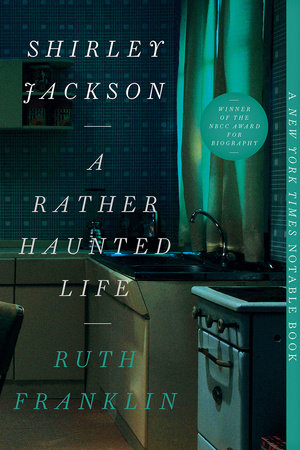
Her biographer Ruth Franklin tells us Jackson also read tarot cards. The protagonist of her novel Hangsaman, Natalie Waite, is an obvious nod to the maker of the iconic Rider-Waite-Smith deck, conceived by the occultist Arthur E. Waite and illustrated by Pamela Coleman Smith. The novel draws on the symbolism of a card from the major arcana, The Hanged Man, which can indicate spiritual transformation.
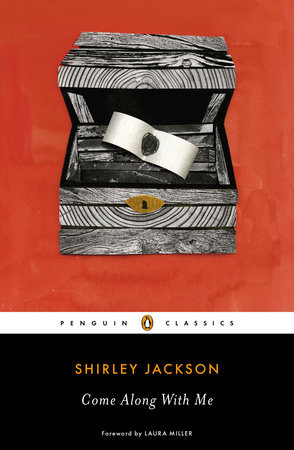
Seeing reality from the perspective of the hanged man is central to Jackson’s fiction. In a lecture on writing (“Experience and Fiction in the posthumous collection Come Along with me), Jackson wrote: “I like writing fiction better than anything, because just being a writer of fiction gives you an absolutely unassailable protection against reality; nothing is ever seen clearly or starkly, but always through a thin veil of words.” Franklin emphasises that “…on some level writing was a form of witchcraft to Jackson—a way to transform everyday life into something rich and strange, something more than it appeared to be.”
KFC, or the taste of success is—wait for it—tender on the outside, tough on the inside
 Birmingham
 Heart of Dixie
 Winter March
 Superstorm 1993

 Were we between
 homes? Piecemeal
 family packed into
 North American

 green four-door
 Pontiac parked in
 the swirl of cold
 bundled together

 Dad fed the engine
 set to burn gas paid
 with lesser Washingtons
 who was there with

 the five of us? Colonel
 Sanders visited in
 his pressure-fryer
 bucket to bless us

 with a secret incense
 of eleven herbs and
 spices wrapping up
 a good paper meal

 for a Korean household
 christened again in
 the name of chicken
 new snow people

 biting into crisp
 country Southern
 hospitality to melt
 water crystals

 We wasted nothing
 even without power
 waited for the gravy
 train not knowing

 what it meant to live
 like it’s all gravy we
 were warm enough
 eating our laughs

 one at a time
 piling up joy
 an avalanche
 to remember
Real Imitation Crab Meat
 you, semipelagic, you,
           schooling, you, bering sea spawn
                     you, low-value, you,
                               chum, you, product,
                                         you, imitation, you,
                                                   water-logged luxury


                                                             short-lived species,
                                                                     storms serve you well


                        hunger gatherer,
                                  get big while you
                                            can for the lean years


 muscle pounded into a fine gel that can hold itself,
            chuck sugar over your left shoulder to fast-forward centuries to glaciate
                    in the name of scale and shelf life expectancy of my crab-flavored flesh


             i dream of my other bodies:
                    myeongtae (living)
                    saengtae (fresh caught)
                    dongtae (ice bound)
                    bugeo (air dried)
                    hwangtae (freeze dried)
                    nogari (dried while young)
                    kodari (semi-dried young)
                    and my pickled roe (myeongnanjeot)
                    and my pickled guts (changnanjeot)


                         i’ve become a beloved phony fish baloney,
                         i have no stomach to stomach myself
What if you’re a writer, and the post-apocalyptic world you carefully created seems to be coming true? How do you disentangle your professional catastrophizing from reality? How do you cope with despair about the future and our continuing damage to the planet? If you’ve raised your kids and you’re reaching 60, why carry on living when the world is overpopulated and resources are running out?
These were questions I wrestled with over the five years I spent writing my Fiery Spiral trilogy. The answers changed me fundamentally. I discovered that I needed to create a web of connection, and the best way to do this was through kindness—to myself, to the planet and to the people around me.
My trilogy is set in Cape Town in 2055, sixteen years after a major nuclear war has melted the ice caps and sea levels have risen 83 meters. Those who haven’t been killed by war have been wiped out by nuclear fallout, disease, famine and extreme weather events. Only 20,000 people remain alive, clustered around the southern tip of Africa, where the earliest humans lived. Two thousand of those are young adults trapped in a bunker inside Table Mountain, forced to farm food, the highest value commodity in a world low on land and technology.
To get an idea of how both individuals and the government might prepare for the cataclysmic destruction a nuclear World War III would bring, I made a clay model of the city, marking off the anticipated sea level rise. In my story, the wealthiest group, who have seized control of the city, build themselves a network of luxury bunkers on the highest land in Cape Town and surrounded it with a huge granite wall to keep out both the sea and outsiders desperate to share their vast stockpile of essentials. This group worships Prospiroh, the god of prosperity, and are manipulating the system to ensure their survival at the expense of everyone else.
The majority of Capetonians would find their homes underwater. They could escape into caves to avoid the expected nuclear fallout, but after that where could they live? How could they be safe from extreme weather? I created a community of raft dwellers and had them move into a fjord created by the flooding of Hout Bay, the leafy valley behind Table Mountain.
Next I needed an economic system based around availability of resources like food, clean water, shelter and medicine. Lastly, I designed a society where nothing has been learned by the devastation of the planet.
Books one and two were relatively easy to plot—I turned to my old favorite, John Truby’s Anatomy of Story, and worked in reveals and plot twists to show the unfolding events as things darkened politically for the heroine.
But the more I wrote, the more sensitive I became to the political events I saw on the news.
President Trump came into power and began reversing environmental legislation. He demanded a wall across the Mexican border to keep away outsiders. Extreme weather events were becoming more frequent, and social media’s reporting of them became ever more shrill. It was starting to look uncannily like the events I was writing about.
I began to reflect on the way I could see people around me, and particularly on social media responding to the news. There were various responses that arose again and again.
To go into denial and pretend everything was fine. Just a few storms… There have always been refugees… Nothing more than usual—it’s just social media whipping up our emotions.
To be outraged for a day or two, and then forget about it all.
To become bitter and angry. To point fingers. I’m doing my bit but ‘they’ keep littering/using plastic bags/etc.
To become an activist and fight for change. This was rare.
To express it through art. I was trying to do that in my book, and all that was happening was my depression was worsening the more I focused on it.
I started book three as Cape Town’s four-year drought reached a critical level. President Trump and Kim Jong Un started their war rhetoric about the size of their nuclear missiles, and the news began to fill with devastating images of drowned refugees, starving children in Yemen, communities devastated by hurricanes.
Those of us living in Cape Town had less than a month until Day Zero when the taps would finally run dry. Our dams were at less than 10%. We were allowed 50 liters a day per person. We joined queues of people collecting water from mountain springs, made plans for composting toilets, did only essential laundry, cut our showers to three minutes maximum (collecting every drop in buckets to flush the toilets), and used greywater to water our gardens. And this wasn’t a once off problem.
Scientists told us to expect more droughts like this one in the future. More droughts would mean more devastating wildfires, more expensive food, more protesting citizens, the rise of the super-rich who could throw money at the problem to maintain their lifestyles, more refugees as wars over dwindling arable land became more frequent. We were faced with a planet imploding environmentally, and meanwhile we bickered on social media about who had pushed their way to the front of the queue at the mountain spring, and newspapers published lists of households who had used more than their allowance of water.
The theme of this final book is the battle between green and greed, and I could see it playing out more and more clearly. My generation—with our baby-boomer lust for new, shinier, bigger things—had fueled this destruction and now our children were going to pay for it. We were too focused on our quests for personal happiness and success to see that we were we losing the best parts of being human—our empathy, compassion and generosity of spirit. Meanwhile we needed more and more material things to distract us because we felt starved of real engagement with nature, with our communities and with ourselves.
I’d spent so much time thinking about a post-apocalyptic future that I couldn’t stop fixating on the disastrous world I had created.
I fell into a depression. Maybe I’d outstayed my usefulness on the planet, I thought. I’m nearly 60 years old. Perhaps it’s my duty to remove myself from the list of people using its dwindling resources. My kids told me I was catastrophizing, but I’d spent so much time thinking about a post-apocalyptic future that I couldn’t find a midpoint between hiding my head in the sand and fixating on the disastrous world I had created. But I couldn’t separate the two.
I had to tackle book three, and a technical challenge I couldn’t see a way around. At the opening, my heroine Ebba finds herself alone in a barren landscape. She must cross a desert to continue her journey. I couldn’t think of a way to make this a compelling narrative without dialogue or regular plot events to push the story forward.
The emptiness of the landscape echoed my depression. My imagination had dried up as much as the city I lived in. What was the point of finishing it? I spent more and more time escaping into the blingy world of Candy Crush, where the dopamine rushes are inbuilt.
Strangely, it was the drought that showed me the way through. One way to save water was to have a morning swim instead of a shower. But it was getting colder and I hate cold water.
I happened to watch a documentary on Lewis Pugh preparing to swim at Antarctica. “Courage is a muscle,” he says. “You have to exercise it.” I began to force myself to get in without stopping to anticipate the unpleasantness.
But as the water temperatures dropped to under 15 degrees Celsius I started to feel energized, jolted out of my head. It wasn’t just the stimulation of my vagus nerve and dopamine rush—it was the fact that I was pushing myself into feeling my hands and feet burn from the cold, into looking upwards and seeing the sea gulls swirling through the clouds before a storm, the flamingos clustered in the shallows of the vlei, the bright red aloes against the winter sky. I was connecting with nature and with my body in a way I hadn’t before.
Maybe all that was needed for my book was the courage to push myself into unknown territory.
Maybe all that was needed for my book was the courage to push myself into unknown territory. Maybe I could immerse myself in my subconscious, and let the book filter up from the depths, instead of trying to force it to conform to my conscious process.
I bought a dictaphone, and every morning after my swim, swaddled in blankets I sat quietly, closed my eyes, and told myself the story. I didn’t control it or plan—just let it flow out, trusting that somewhere in my subconscious the muse had a plot. And so the second connection happened—to a deeper part of myself, the inner storyteller. It was like free-diving to a coral reef and finding a marine display of extraordinary richness that was invisible from the surface.
The muse brought up solutions to the plot line, ones that my conscious mind would never have thought up. She had ideas for the characters too. The heroine was still the insecure girl she’d always been, too afraid to step into her power and lead. But now I found there was a second narrator—a complex, damaged man who could be a potential love interest if only he could find the courage to trust other people.
The muse brought my two main characters to a place in the story that my conscious mind would never have thought up. They find themselves in an infinite space between worlds and are confronted with their vulnerability. They are forced to reach out to each other and to connect in order to survive. They see that they are just part of a huge net of connectedness, one that not only joins them to others, but will hold them if they fall.
It was the answer I was looking for. I needed to leave my introvert safe space and start making deeper connections.
I started by sewing knickers and posting photos on my Facebook page. Many of my friends wanted a pair, so I made them as gifts, personalizing them to suit that person as I perceived them, and making sure I delivered them face to face or through other people I knew. I made several hundred, sending them all over South Africa, to Ethiopia, Kenya, Australia and New Zealand, the U.S. and U.K. And each one brought a deeper engagement with its recipient, reaching through the screen with something tangible.
I couldn’t do anything about the forest fires in Brazil, but I could do something about the people I encountered every day.
But what about the people around me? I couldn’t do anything about the dying child in Yemen, the drowned refugee on a European beach, the forest fires in Brazil. But I could do something about the people I encountered every day who needed something I could give. I could engage with intent and kindness.
In a city like Cape Town where so many people live below the poverty line, I could do my bit to ensure they had essentials. I could sew underwear for the local homeless community, for children in orphanages, and those who had lost everything in fires in the informal settlement near me.
I started sewing washable menstrual pads for a maternity hospital, and issued an open invitation on Facebook for anyone to join me. A group of twelve women formed, and we met regularly to sew, upcycling barely-used towels and facecloths from a luxury hotel into postpartum pads. I learned that there are few things more powerful than a group of strong women focused on a mutual task.
And as I started reaching across the divide and forming tiny communications with many different people, I realized I was feeling better. Each act of giving gave me a dopamine boost as good as the one I get from cold water swimming. I wasn’t doing it to be “good” or “nice” or “thoughtful.” My primary reason was to ease my own pain.
What surprised me though was the warmth and kindness that came flooding back to me. I realized in practical terms what a net of connection means—that it not only connected me to other people in a more meaningful way, but it could catch me when I was falling into despair.
As Ebba and Lucas reached the end of their journey, as they reached the end of their own self-absorption and engaged with each other and the world around them, I found my depression lifting.
Connection and kindness. That was the answer I’d been looking for. Connection and kindness.
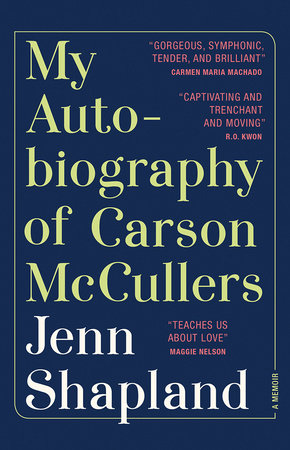
I have birthed three babies these past eight years: one girl with dark hair and a penchant for haiku, and two nonfiction books that have unearthed previously buried memories of childhood—that is to say, memories of my mother. Or, more accurately, my many mothers.
I was adopted into the United States at age sixteen after having escaped a harrowing life with a mentally ill and criminally notorious biological mother—only to become undocumented at age seventeen, when my adoptive mother learned that I was too old to be naturalized through adoption.
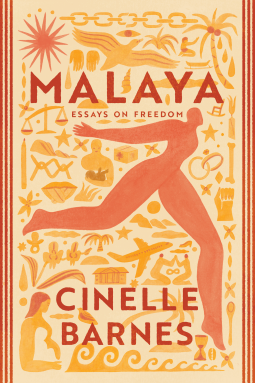
I detail my unexpected immigration from the Philippines, the complex transnational adoption process, my anxious and precarious years as an undocumented teen, and finally, my life as a young mother of color in the American South in Malaya: Essays on Freedom. While it has been rewarding, I’d be lying if I said that the writing of this book (and the previous one) has been easy. It has required the kind of strength that, as some might say, only a mother has. To survive these eight years, I sought wisdom and sustenance from eight nonfiction books written by women (daughters, mothers, caregivers of various kinds) of color.
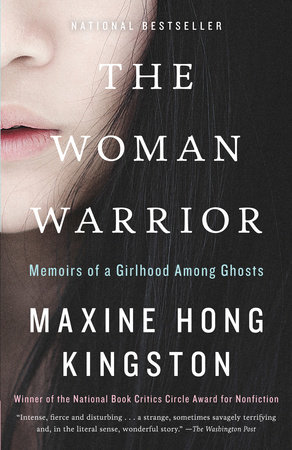
I first read Maxine Hong Kingston’s memoir while finishing my MFA in the thick of early motherhood. In the chaos of it all, I found comfort in Kingston’s reimagining of her childhood. The world she built on the page mirrored for me the tension that I would say is commonly found between Asian daughters and mothers. Kingston understands that in our cultures, daughters and mothers are bound—constrained—by physical, linguistic, economic, and even spiritual ties, and that these constrains can become abusive. It was helpful to read a book that portrayed girlhood similar to how I experienced it as a child, among “ghosts.” It reminded me of what I did not want for my daughter.
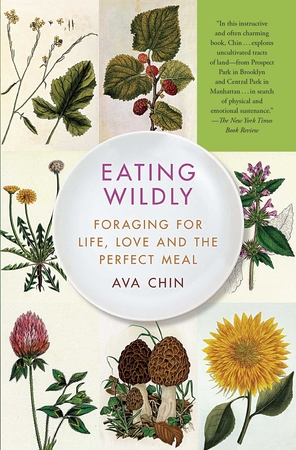
I met Ava Chin when I took her creative nonfiction workshop through Kundiman. At the time, my daughter was already a toddler—a little human who subsisted on yogurt and only yogurt. This was one of the many rants I took with me to the workshop. But Chin—I’ll call her Ava, actually—understood my griping. Because Ava, too, was a mother and an immigrant’s daughter, she knew that I had used precious diaper money on a flight to New York City because I needed sustenance. She provided nourishment in two ways: by carving out a literary space that was safe for Asian nonfiction writers and by reading us excerpts from her book, a memoir about her single mother, her ailing grandmother, and her quest for wisdom and edible flora, fauna, and fungi.
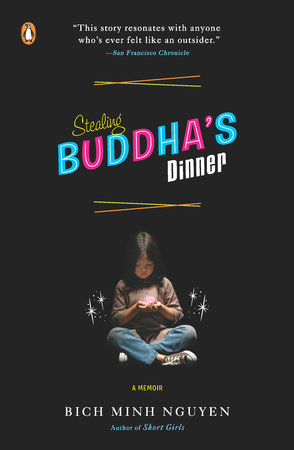
In Stealing Buddha’s Dinner, which I read when my daughter was in kindergarten, I met young Bich, a new refugee from Vietnam with a voracious appetite for American food. That is, junk food. Consumed by her desire to belong and to be American enough, she hankers after Pringles, Kit Kat, and Jell-O. But as loud as her stomach’s growling is her desire to connect with a mother figure: a mysterious and absent birth mother and a Puerto Rican stepmother who at times is just as much an enigma.
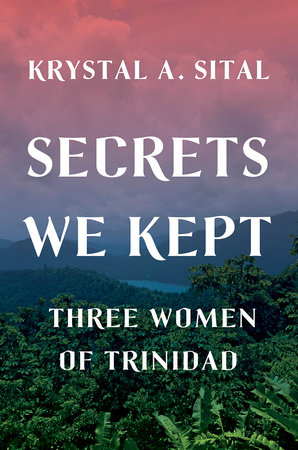
My daughter had taken upon herself the role of book-tour sidekick when I was introduced to Krystal A. Sital’s work. I remember reading the first pages of Secrets We Keep on a plane when my daughter asked if it was anything like my first book, Monsoon Mansion. I told her, vaguely but truthfully, that the stories were similar in that they both depicted how joy and pain traveled through families. Sital’s Trinidadian family narrative, like mine, showed how trauma traveled through generations—and how storytelling can break cycles of terror and abuse.
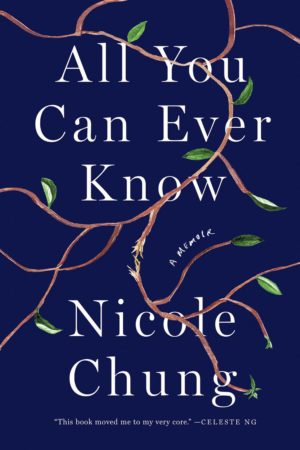
Fellow adoptee Nicole Chung gave me the courage to write about my own adoption story. In her memoir, she details her search for her biological mother, father, and sister, and how this coincided with the birth of her own child. The search—and the result of it—reawakened contemplations and questions from childhood: Who was she? Where was home? Who was family? To whom did she belong? These are questions I’ve also asked and have tried to address in Malaya: Essays on Freedom.
I wish I had known about this book much earlier in motherhood. So many of my concerns as a brown mother raising a Filipino American daughter in the South wouldn’t have seemed so peculiar (thus making me feel so alone) had I consulted this anthology sooner. The essays in Revolutionary Mothering, which center mothers of color and marginalized mothers’ voices, confirm so many of the doubts and fears I’ve had since birthing a dark-skinned girl into this profoundly white world.
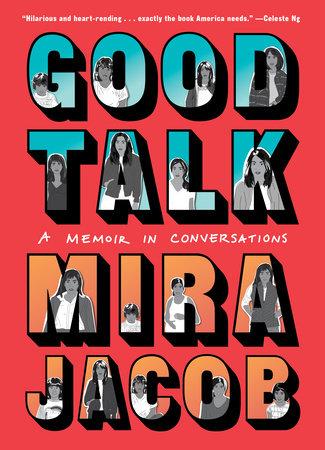
My daughter, now almost eight, frequently asks questions that could very well be the beginning of another book. This is, actually, how Mira Jacob’s hilarious, edifying, and intimate graphic memoir, Good Talk, came about. Jacob’s half-Indian, half-Jewish son asks innocent questions about family, Michael Jackson, being biracial, and life in New York post-9/11.
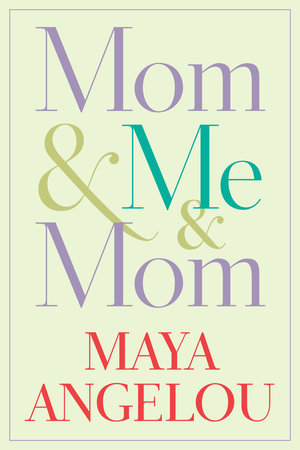
A literary mother to many, Maya Angelou has bequeathed to us tomes that I believe will continue to nurture us, teach us, and heal us. In the prologue for Mom & Me & Mom, she says, “Love heals. Heals and liberates…. This book has been written to examine some of the way love heals…” Born to a woman with an arresting presence yet who was absent for most of her early life, Angelou tells us what could be her most personal story: how she reconciled with Vivian Baxter, the mother who abandoned her. I listened to the audio version of this book because I could not pass up hearing Angelou’s story in Angelou’s voice. In the audio version, I could still hear the trepidation with which she approached her estranged mother—a trepidation I know so well. Listening to how Angelou found healing and love inspired hope for my relationship with my own estranged mother.
Witches have cast a captivating shadow over centuries of storytelling, though they have traditionally occupied a rather unsettling role. More often than not, they’ve been depicted as homicidal monstresses like murder-mother Medea of Greek mythology or Roald Dahl’s child-hating, rodent-obsessed Grand High Witch. Otherwise they’re shown as morally ambiguous and untrustworthy: it’s difficult to discern whether Shakespeare’s Weird Sisters or Slavic folklore’s Baba Yaga have the protagonist’s best interests at heart.
Today, however, novels are populated by far more friendly witch depictions—not to mention the plethora of people like myself who proudly call themselves witches, whether for spiritual or political reasons (or in my case, both). So how did the witch go from a hideous hag to, well, Hermione?
This is the question I set out to answer in my book, Waking the Witch: Reflections on Women, Magic, and Power. In it, I explore how the figure of the witch is inextricably linked to our anxieties and aspirations regarding female power. Looking at witches in fiction became a crucial part of my research because, as I quickly discovered, the archetype of the witch is constantly evolving, and beliefs about “real” witches are deeply influenced by the stories we tell about them. In other words, our conception of witches is a cross-pollination—or even a cross-pollution—between reality and fantasy.
Though witches in fiction were almost always villains, that all began to change when L. Frank Baum set his good witches sparkling from the pages of his 1900 children’s book, The Wonderful Wizard of Oz. Glinda the Good Witch of the South was allegedly modeled after Baum’s mother-in-law, the American suffragist and abolitionist Matilda Joslyn Gage. Her own non-fiction book, Woman, Church, and State (1893), posited that the women who were accused as witches during the European and New England witch hunts were in fact “among the most profoundly scientific persons of the age,” and that they were persecuted by the Church because they were deemed a threat to the patriarchy. Whether historically accurate or not, this reframing of witches as sympathetic figures who stand in opposition to misogyny made a huge impression on Baum, thus both Glinda and the unnamed Good Witch of the North were born. Baum’s vision of witches as strong women with positive powers gained momentum, and heroic, feminist witches have become a common trope in modern fiction ever since.
Here are 13 of the fiercest witches in literature:
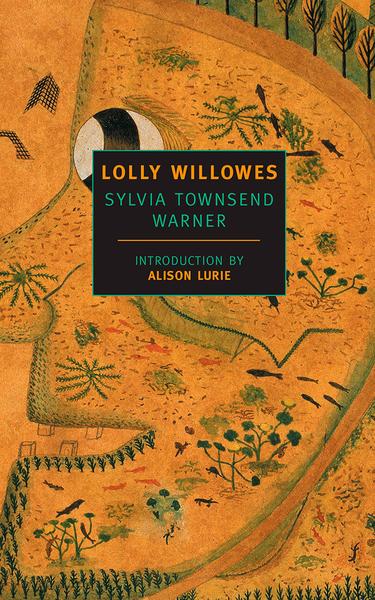
Laura “Lolly” Willowes is a spinster at the age of 28, living with her brother’s family in London. She longs to abandon the stifling domestic duties that come with being relegated to the sad, single auntie. After nearly two decades, she can take it no longer, and gives into a dark urge she feels calling her to the country hamlet of Great Mop. Here, she realizes she is a witch, having pledged herself to the Devil in exchange for a life of revelry and freedom in the forest:
That’s why we become witches: to show our scorn of pretending life’s a safe business, to satisfy our passion for adventure. . . . One doesn’t become a witch to run round being harmful, or to run round being helpful either, a district visitor on a broomstick. It’s to escape all that—to have a life of one’s own.
Though presumably influenced by such non-fiction writers as Gage and French historian Jules Michelet, Warner is also notable for her early subversive positioning of Satan as a feminist liberator nearly 100 years before films like The Witch and shows like Chilling Adventures of Sabrina did the same.
Many will recall Circe as the sorceress from The Odyssey who turns Odysseus’s men into pigs. But Miller’s expansion of this small episode into an entire book about Circe’s life is an act of great alchemy itself. This Circe is a black sheep—or disdained demi-goddess—whose witchy ways mean she doesn’t quite fit in with her illustrious Olympian family. However, her supernatural skills allow her to tap into the powers of plants and animals, and witchcraft becomes a means for her to protect those she cares about. Circe spends much of the novel in isolation on the island of Aiaia. But rather than feeling imprisoned, she turns her solitude into an oasis of self-actualization. Like any good witch, she relishes having sovereignty over her home—and herself.
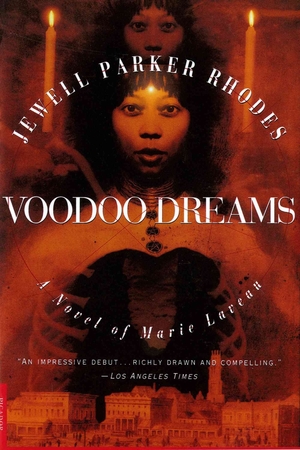
Marie Laveau in Voodoo Dreams by Jewell Parker Rhodes
Voodoo Queen Marie Laveau has enjoyed a recent surge in popularity thanks to Angela Bassett’s depiction of her in the FX series American Horror Story: Coven. But Rhodes’ version of Laveau’s story is a far richer and more nuanced imagining of the infamous New Orleanian’s life. In her novel, Laveau is a free, young black woman in early 19th-century Louisiana who is taken in by a seductive and violent charlatan named John. He grooms her to pretend to be a voodoo priestess so he can gain power and money from unwitting followers, but drama ensues when it becomes clear that Marie has true spiritual gifts and real miracles start to occur. Themes of lineage, religion, responsibility, and autonomy undulate beautifully throughout Rhode’s lush prose, as does the majestic snake deity that Marie comes to worship and embody.
I know, I know, Hermione is not lacking for appreciation. But one would be hard-pressed to make a list of feminist witches without putting her on it. It’s true that she comes across an all-around badass throughout Rowling’s entire series—she’s brilliant, outspoken, and consistently brave whether facing down homework or homicidal tyrants. But it’s in this fourth installment that her social justice side begins to emerge. Concerned about the mistreatment of House Elves, Hermione starts S.P.E.W., or the Society for the Promotion of Elfish Welfare, and thus begins her ongoing devotion to equal rights issues. Witches are often associated with outsiders and marginalized populations, which makes many of us more empathetic to the plight of oppressed people. Hermione is an excellent example of an activist witch who uses her powers to change the world for the better.
Anathema Device in Good Omens by Neil Gaiman & Terry Pratchett
It’s difficult to choose a favorite witch from Neil Gaiman and Terry Pratchett’s individual enchanting oeuvres, but lucky for me they teamed up to create one of the most badass witches in lit. Anathema Device is the great-great-great-great-great granddaughter of the 17th-century prophetic witch Agnes Nutter, and using her ancestor’s book she must attempt to thwart the Apocalypse itself. Anathema is described by Gaiman and Pratchett as “more psychic than was good for her” as well as “precocious, and self-possessed.” She also carries a foot-long bread knife with her everywhere, finding it a more sensible protective tool than amulets or spells. She’s smart, pragmatic, and more than up to the task of saving the world—if she doesn’t die trying. It must also be mentioned that Good Omens is the source of this oft-shared, scrumptious quote: “Most books on witchcraft will tell you that witches work naked. This is because most books on witchcraft are written by men.” Indeed. Lucky for us the writers of this one chose to wear their feminism on their sorcerers’ sleeves.
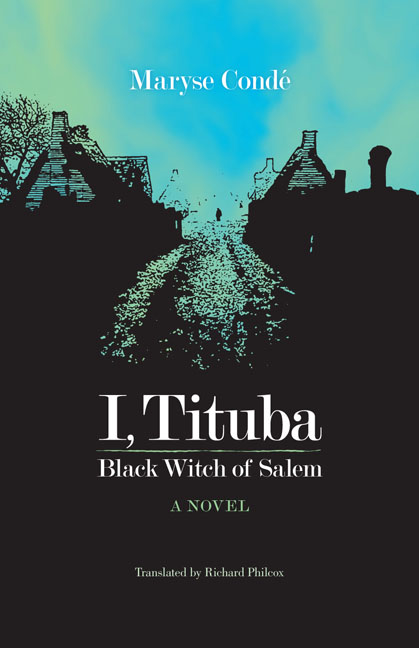
Many are familiar with the depiction of Tituba as a minor if pivotal character in Arthur Miller’s The Crucible: a voodoo-practicing slave who is accused of teaching witchcraft to a bunch of Salem teens. Maryse Condé’s novel seeks to set the record straight by centering Tituba in the narrative, and drawing from the real-life figure’s Caribbean background (though some historians have since posited that she was originally from an Arawak village in present-day Guyana or Venezuela, and not born in Barbados as the novel suggests). Condé’s Tituba is gifted in spirit communication and herbalism. She is also unashamed of sex and pleasure, and many of her adventures and hardships hinge upon moments when she follows her desires. Though at times a heartbreaking read, this version of Tituba has far more autonomy and complexity than one usually encounters in history books and Salem Trial dramatizations. As Angela Y. Davis puts it in her introduction to Condé’s book, here, Tituba “has an active, constitutive voice…shattering all the racist and misogynist misconceptions that have defined the place of black women.”
This sci-fi classic has given us so many iconic images and phrases, from “sandworms” and “the spice” to the mantra “Fear is the mind-killer.” My favorite element of Dune is the Bene Gesserit, a group of all-mighty women who have powers such as using a special “Voice” to control people’s minds as well as the ability to select the sex of their embryos in utero. Lady Jessica is a formidable Bene Gesserit witch who defies orders by choosing to give birth to a male heir instead of a female one. She teaches her son, Paul Atreides, some of her otherworldly techniques, and together they end up training a group of rebels in the “weirding way” in order to attempt to overthrow the universe’s corrupt emperor. Eventually Jessica becomes the group’s religious leader, and as their Reverend Mother, she gives birth to yet another miraculous child. I especially appreciate that unlike the Virgin Mary she is clearly modeled on, this Dune witch gets to rule, fight, and fuck.
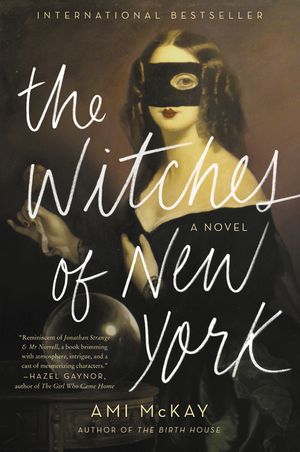
There are several wonderful witch women in Ami McKay’s charming late-19th-century New York City yarn, but Eleanor St. Clair holds a special place in my heart. As co-owner of a tea shop, the potions she brews help her female clientele in all respects: “‘Witches see to things best sorted by magic: sorrows of the heart, troubles of the mind, regrets of the flesh,’” Eleanor recalls her mother telling her, and she is determined to live up to these words. Aphrodisiacs and dream teas are in her bewitching wheelhouse, but so are herbal contraceptives and abortifacients, reminding us that women’s reproductive freedom has long been associated with witches as well. A queer woman in the Victorian era, Eleanor is also a symbol of living one’s truth without shame. “The world has need of more witches,” she states. It certainly needs more like her.
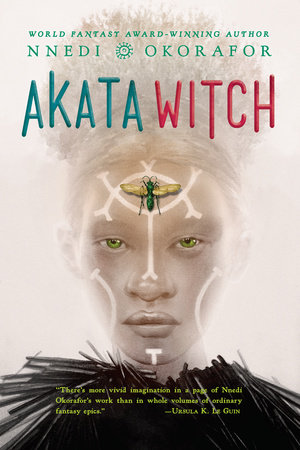
Okorafor’s Akata series is an example of “Africanjujuism,” a term she coined to describe, in her words, “a subcategory of fantasy that respectfully acknowledges the seamless blend of true existing African spiritualities and cosmologies with the imaginative.” In the series’s first book, Nigerian-American protagonist Sunny Nwazue is 12 years old, an age when many young people find themselves subject to strange, new forces of all sorts. In Sunny’s case, she not only has supernatural visions—she also has to contend with a strict, sexist father, as well as the cruelty of her peers who tease her for being albino. Fortunately for her, she falls into a group of friends who initiate her into the magical community of Leopard People. Through their encouragement, and that of the magical teachers she meets along the way, she learns to hone her juju and face down her fears.
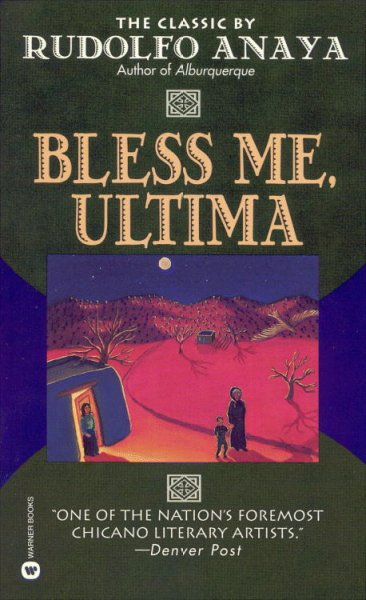
The protagonist of this novel is a young boy named Antonio Marez y Luna, but it’s the book’s titular character Ultima who is the real star of the story. Ultima is an elderly curandera, healer, who is living out her twilight years with Antonio’s family in their New Mexico home. She becomes Antonio’s mentor and passes along her spiritual wisdom to him. Though their community makes a distinction between benevolent curanderas and evil brujas, witches, Ultima has all the marks of a good witch. She has an owl who accompanies her wherever she goes, and she uses the power of herbs and nature to heal the sick and protect the people she cares about. As Antonio states, “…that is what Ultima tried to teach me, that the tragic consequences of life can be overcome by the magical strength that resides in the human heart.”
The narrator of Ariel Gore’s book is also named Ariel, and the novel is very much drawn from the author’s life. As a young, single mother living below the poverty line in California, Ariel the character wants nothing more than to be a writer and to provide her daughter with a good life. She reads the works of such feminist powerhouses as Audre Lorde, Adrienne Rich, and Diane di Prima, and laces their words throughout her own spells. Bit by bit this blend of witchery and women’s studies fortifies her and helps her transform her circumstances. We Were Witches is a glorious celebration of the relationship between creative craftsmanship and witchcraft, and both Ariel the author and Ariel the narrator show us that there are such things as magic words.
Surrealist artist Leonora Carrington is best known for her marvelous, mythic paintings, but she was also a spectacular writer. Her novella’s story is told from the perspective of Marian Leatherby, a deaf, toothless 92-year-old who has been unceremoniously placed in an old folk’s home. But ceremonies eventually do ensue, as Marian discovers that the institution is a deadly cult. And so she bands together with a group of geriatric misfits to try and flee. Their escape plans involve invocations to ancient goddesses, alchemical riddles, and a heaping helping of other strange magic. The author herself was enchanted by notions of the divine feminine and witchcraft practices of all stripes, and Marian is a witch that can only have been concocted from Carrington’s specifically magnificent mind.
I’m often asked how I came to identify as a witch myself, and while there are many answers to that question, this childhood favorite of mine played a giant part in making me want to be one and not just read about them. Wise Child is a young Scottish villager who, after being abandoned by her parents, gets taken in by Juniper, a kind and mysterious witch. Juniper is feared by the other villagers who believe her to be a devil worshipper, but they also secretly visit her when they are in need of healing. Juniper teaches Wise Child botany, astronomy, tarot, animal communication, and many other mystical arts, and over time becomes a surrogate mother. And, I too learned from Juniper that witches are not only magical, but could also be conjurors of compassion and immense, wild love.
So you want a Halloween costume that will convey the depth of your literary knowledge, but you’ve also expended all your creative energy on your unpublished novel draft. Never fear! Feed your birthday into our Halloween costume generator, and it’ll spit out an effortlessly bookish, if possibly a little high-concept, idea. Now you just have to figure out how to pull it together in time for your party.
Each “Unfinished Business” will examine an unfinished work left behind by one of our greatest authors. What might have been genius, and what might have been better left locked in the drawer? How and why do we read these final words from our favorite writers — and what would they have to say about it? We’ll piece together the rumors and fragments and notes to find the real story.
In the spring of 1965, author Shirley Jackson embarked on a cross-country college lecture tour, in a new MG sedan. The cost of the car would be completely covered by the speaking fees she was earning for the five lectures she’d be delivering. After the tour, she settled back at home with intentions to rest and continue working on a new novel, Come Along with Me. In one of her last diary entries, she described it as “a funny book. a happy book.” She wrote about getting over a long bout of writer’s block that had settled in the wake of President Kennedy’s assassination, as well as an affair she suspected her husband, critic Stanley Hyman, was involved in. She ended the diary with these repeated words: “laughter is possible laughter is possible laughter is possible.”
A few months later, in August, 1965, Shirley Jackson passed away during an afternoon nap. Doctors would later give the official cause as “coronary occlusion due to arteriosclerosis, with hypertensive cardiovascular disease as a contributing factor.” Her death was met by an outpouring of affection from readers and publishers. Her last two books, The Haunting of Hill House and We Have Always Lived in the Castle had been great successes, though her most significant claim to fame was (and probably remains) one short story, “The Lottery,” published in the New Yorker in 1948.
Come Along with Me, the “funny … happy book” that Jackson had described in her diary, was at the time of her death only about 75 manuscript pages—six brief, mostly-connected episodes. Three years later, Stanley Hyman would publish it along with a selection of her essays and stories—including “Janice,” the story that had made him fall in love with her 27 years earlier.
Hyman praised these shorter works effusively in his preface to the posthumous collection, but of Come Along with Me he wrote only that it was “the unfinished novel at which Shirley Jackson, my late wife, was at work at the time of her death in 1965. She rewrote the first three sections; the remaining three sections are in first draft.”
To better understand why Hyman might have found Come Along with Me so uninspiring, one must go back to the very beginning—to 1938, and Syracuse University, when Hyman and Jackson first joined literary forces.
Shirley Jackson transferred to Syracuse University from the University of Rochester. Officially, she was at Syracuse to study journalism, but according to Ruth Franklin’s biography, Shirley Jackson: A Rather Haunted Life, young Jackson dedicated much of her time and energy to writing poems and short stories, the first of which were soon published in a class magazine, TheThreshold, put out by her professor, poet A.E. Johnson.
Jackson’s 250-word story “Janice” opened the magazine. It opens with the narrator describing a casual phone call from a friend, Janice, who wants to tell them that her mother can’t afford to send her back to school. Almost as an afterthought, Janice adds that, earlier in the afternoon, she tried to kill herself by sitting in the garage with the car motor going, but was thwarted by the man mowing the lawn, who came and got her out.
Later, at their friend Sally’s party, the narrator asks her, “How did it feel to be dying, Jan?”
Janice replies, laughing, “Gee, funny. All black.”
She then turns to their friend and explains, “Nearly killed myself this afternoon, Sally…” And the story ends.
Possibly the story was inspired by her time as a student at Rochester, where she’d felt alienated and done poorly in her classes, eventually suffering a major depressive episode. But in Syracuse, things would turn out differently.
“Janice” immediately caught the attention of Jackson’s classmate Stanley Hyman, who in the preface to the Come Along with Me collection, wrote that his “admiration for it” led to their meeting.
This is apparently an understatement. According to friends who spoke to Ruth Franklin, “Stanley closed the magazine demanding to know who Shirley Jackson was. He had, he said, decided to marry her.”
Jackson and Hyman did meet, and soon became a couple. Hyman was a well-liked, self-styled bohemian who loved to debate the merits of Communism with his classmates. As his companion, Shirley Jackson initially flourished. Hyman encouraged her to keep writing fiction, something he had long desired to do himself; after meeting Jackson he realized he “could not compete.” One friend recalled that he “wrote painfully, it was a tedious, forced thing, whereas she—the thing flowed like you turned on a faucet.” Another friend agreed. “He talked a lot, but she wrote better.”
Hyman soon began to focus his efforts on becoming a literary critic, giving Jackson detailed pages of notes on her stories and, later, her novels. They debated their views on the role of politics and art, with Hyman an admirer of “the gritty realism of John Steinbeck and John Dos Passos” and Jackson more interested in the “esoteric high modernism” of Djuna Barnes.
The following year, Jackson was elected to the post of fiction editor of thelong-running campus magazine Syracusan. But the other editors suddenly decided that the magazine should stop publishing fiction entirely.
An article in the student newspaper The Daily Orange that December described Jackson as having “recently resigned from her post as short story editor of the Syracusan.” Another Daily Orange article, written a number of years later, clarified that the position “became superfluous following a change in the magazine’s format” with the Syracusan becoming “strictly a humor magazine.”
Jackson had a simpler take on the matter. “I got fired from the Syracusan,” she wrote in the editor’s note to the very first issue of the new literary magazine that she and Hyman soon created, which they named Spectre, alluding to a couplet from a William Blake poem.
From the start, Hyman and Jackson wanted their magazine to invite controversy.
With hand-drawn images and typewritten pages, Spectre had an edgy, homemade sensibility, almost as if it had been run off in secrecy behind enemy lines. From the start, Hyman and Jackson wanted their magazine to invite controversy.
Franklin describes how Jackson and Hyman commissioned a sketch of a male nude for the cover of the first issue. They then cajoled an English department advisor into publicly criticizing it, so that they and Spectre could turn around and rail against the hypocrisy that only female nudes were considered to be of artistic value.
With Jackson as editor and Hyman as managing editor, Spectre soon became a conversation piece in the literary community on campus. Likely thanks to Hyman’s influence, the magazine frequently criticized the politics of the University. In the first issue, Jackson and Hyman, writing together in an introduction called “We the Editor,” took on the topic of campus anti-Semitism. In the third issue, they wrote scathingly of the campus policy to house black students separately from white students—pointing out that conveniently this allowed the university to admit fewer black students since there was such limited housing available for them.
Recently, I got to spend time with an incredibly rare copy of the third issue of Spectre, at Honey & Wax Booksellers in the Gowanus neighborhood of Brooklyn. The blue, hand-drawn cover shows two women in feathered hats, sitting at a diner counter. A sign on the wall advertises the daily special: “HASHED MANAGING ED WITH BAKED ONIONS” (Hyman is listed as the Managing Editor) and at the bottom the issue is: “Vol. 1, No.3 SPRING TRA-LA 1940” and declares itself to be the “OFFICIAL MAGAZINE OF SYRACUSE ENGLISH CLUB.”
This third issue contains a poem of Hyman’s, “Ill Fares the Land” and one short story of Jackson’s, “Had We But World Enough”—the title apparently suggested by Hyman. (According to Franklin, Hyman and Jackson often published other pieces in the magazine under pseudonyms.)
Jackson’s three-and-a-half-page story is mostly dialogue, between a “boy” and a “girl” sitting on a park bench on a snowy day watching children tobogganing. The young couple talk about how they’d like to get married, if only the boy can find a job, which the girl jokes might take years.
“Someday,” she said. “When I’m an old old lady in a wheel chair and you’re an old old man, you’ll come staggering up to me and trip over your beard and fall flat on your face and say: ‘Hey, kid, hey, listen! I got a job!’ And then… with me in my wheel chair and you with your beard, we can go get married.”
The boy suggests he might become a detective, but she says she won’t be married to anyone working nights. Or, he says, there is an ad for a job as a “Deisel Engineer” where he could make “fifty a week.” (The word “Deisel” is charmingly misspelled throughout their conversation).
The girl imagines having a house, and a telephone of their own. The boy says they’ll have children too.
“The hell with you,” she said. “You think I’m going to have children and ruin my whole life?”
They laughed. “Twenty children,” he said. “All boys.”
“One girl.”
“Nineteen boys and a girl. And a brown and yellow living room… I hate yellow.”
“You’ll have it and like it,” she said…
In Jackson’s unique style, the story manages to have both a lightness and a foreboding air, at least partly because it presages the issue of children, which would eventually become a major source of friction between Jackson and Hyman—clearly a model for the couple in the story.
But as they neared graduation, the major obstacle to their future together was not money, or children, but the fact that both Hyman’s parents were Jewish, while Jackson’s were Presbyterian. Both sets of parents were very much opposed to the Stanley-Shirley relationship.
Friends of the couple, who called them “S & S,” told Franklin of a tempestuous relationship, a “symbiosis” that “was always in danger of turning parasitic.” S & S broke up several times, but always came back together in the end.
Often, they fought about politics: as Europe lurched into the second World War, Hyman had become more and more of an ardent Communist. Meanwhile Jackson wrote in her diary that politics interested her “less than does Sanskrit.” Hyman insisted that she write more politically, declaring that “you must show misery and starvation” to create lasting art.
Specifically, he pointed to “Janice”—the story that had supposedly made him want to marry her before they’d even met. Only two years later, he told her that it was “a finger exercise, well done, but meaningless.” (It wasn’t her fault, he later conceded, that she’d had a “sheltered upbringing.”)
In lurid detail, Hyman wrote letters to Jackson about his attraction to other women he’d encountered.
At other times the issue was, according to Franklin, Hyman’s “persistent interest in other women, which he saw no reason to hide.” Stanley’s interpretation of the teachings of Communism extended to a disavowal of monogamy, and in lurid detail, he wrote letters to Jackson about his attraction to other women he’d encountered, and once he even brought a girlfriend over and introduced her to Jackson. He insisted that she was, of course, welcome to see other boyfriends as well, but by and large she did not.
A friend told Franklin that at one point Hyman gave Jackson a “cheap engagement ring” but that it was soon lost during a fight, because she “bounced it off Stan’s skull.”
Then, just before graduation in 1940, their wonderful literary collaboration, Spectre, was ended after its fourth issue.
The university claimed that the reason for shutting down Spectre was because it included a harsh review of a new book of poetry by the couple’s once-admired professor, A.E. Johnson. Jackson and Hyman wrote that his poems “advocate retreat and weakness […] Professor Johnson is hidden away from the world and happy in his illusion.”
Franklin points out that this was hardly a harsh critique, given Hyman’s abilities, and that the anger over the review was almost surely a pretext covering the University’s actual displeasure about the magazine’s political criticisms.
But Jackson and Hyman were off to greener pastures. Hyman soon landed a summer job in New York City for The New Republic, for which he was paid $25 a week—not quite as good as being a “deisel engineer,” but much more in his wheelhouse.
A few months later, Jackson married Hyman in a “brief three-minute” informal ceremony at a friend’s apartment, attended by a “small, motley group of friends,” and they began wedded life in Greenwich Village.
Hyman would soon end up working for The New Yorker, while Jackson wrote more stories, which he would meticulously critique. They yearned for a quieter life, outside of the city, and began to travel to New Hampshire to work, finding “country life suited productivity.” But in the winter of 1942 their uninsulated cabin became too cold to work in, and so they returned to Syracuse together.
There, they saw old friends, and reminisced about the good old days working on Spectre together. Jackson and Hyman began to keep a shared diary, and held their door open for company. Soon there was a daily salon of visitors, for whom Stanley would play jazz records and provoke with political conversations and talk about involvement in the War in Europe.
During this period, a doctor told Shirley she was likely pregnant; she jokingly referred to the baby as “Simon Hyman.”
But being back in Syracuse again also “triggered a relapse” of Stanley’s infidelity. Once, while Jackson was out of town, he immediately set off to seduce an ex-girlfriend—the same one he’d introduced to Jackson in college. Jackson was apparently worried about exactly this occurring, and so spent her entire time away filled with anxiety.
When she returned home, Hyman happily showed her the diary entry he’d written describing how badly his attempted seduction had gone—the ex-girlfriend had gotten so drunk on Sauternes that she became ill and he’d had to throw her into a shower.
Jackson rebuked herself for her jealousy in a subsequent diary entry, saying that if she had married a “gay dog” she couldn’t well “expect him to be housebroken so quick.” Of the ex-girlfriend, Jackson wrote that despite being “coarse and vulgar” she had “a beautiful body and after all i am too fat.”
Jackson had long struggled with anxiety and depression, but now she began to experience panic attacks, leading her to worry that she was psychopathic or insane. She eventually decided to sleep with a heartbroken friend of Hyman’s to try to settle the score, only to end up feeling that it had just given Hyman more license to cheat again.
Later, Jackson wrote that she should never have married him at all. But she was hopeful that motherhood would be better.
Franklin cites one of Jackson’s diary entries during this period as evidence that Hyman may have even forced Jackson to have sex with him: “‘If it is sex I can’t do anything about it […] He forced me God help me and for so long I didn’t dare say anything and only get out of it when I could and now I’m so afraid to have him touch me.”
Later, Jackson wrote that she should never have married him at all: “Tantrums and hatred and disgust—what a married life—” But she was hopeful that motherhood would be better. “Maybe when I have my baby […] I can talk to it and it will love me and won’t grow up mean.”
Jackson and Hyman eventually settled in North Bennington, Vermont, after he was hired as an instructor at Bennington College. They would have four children together, not 20—two sons and two daughters (none of them, thankfully, named Simon).
Jackson kept the house and lived in relative anonymity in the town, known to most as “Mrs. Hyman,” the quiet wife of the boisterous, quirky new professor.
It was an incredible struggle for Jackson to balance writing with the demands of raising the children. Meanwhile Hyman, continued to insist on their marriage being “open” and carried on public affairs, including with his own students—one of whom even moved in with them for a time.
Just a few years into their life in North Bennington, Jackson wrote what would become her most famous short story, and probably her most famous work of any kind, “The Lottery” about a group of residents in a small town gathering to stone a randomly selected citizen to death, as a way of ensuring a good harvest. The story kicked up a near-immediate furor, just a few days after it was published in TheNew Yorker. Jackson received over 300 letters from horrified readers that summer alone. Even her mother wrote of her distaste. “…it does seem, dear, that this gloomy kind of story is what all you young people think about these days. Why don’t you write something to cheer people up?” Jackson was most disturbed by several letters from people who believed The Lottery was real—and wanting to know if they could come up to watch.
Jackson was relieved that most people in North Bennington did not read the New Yorker and largely had no idea that “Mrs. Hyman” had stirred up such a national scandal, especially because Jackson had considered real people in the community as models for the townspeople in her story. But after a few months, the story became so widely-discussed that even her neighbors began to hear about it. The “general consensus” in town was that the “nasty story [made] them all look bad and uncivilized.” Jackson began to experience bouts of agoraphobia, and began chain-smoking and rapidly gaining weight.
Hyman, meanwhile, had been effectively fired from his position at Bennington (others in the faculty found him to be “abrasive”). His first major book of criticism, The Armed Vision, was published without much impact, just as Jackson’s story was becoming more and more celebrated in prize issues and anthologies. In 1949, she sold three stories to Good Housekeeping for $1000 a piece. Hyman was making only about $35 a week writing for TheNew Yorker. The money from Jackson’s literary career continued to vastly outweigh Hyman’s income. Nevertheless, Hyman controlled the family finances, and gave his wife money only as he saw fit.
As Jackson withdrew farther from public life, her work returned to some of her favorite youthful fascinations, including witchcraft and the occult. Her turn to “gothic horror” was a huge success. In 1959, The Haunting of Hill House was nominated for a National Book Award and reviewed by The New York Times as evidence that Jackson was “the finest master currently practicing in the genre of the cryptic, haunted tale.”
Three years later, her final completed novel, We Have Always Lived in the Castle, centered on sisters Merricat and Constance Blackwood, who live alone in a gothic mansion with their doddering uncle after the mysterious poisoning of their parents. They are surrounded by a Bennington-esque town full of suspicious and hateful villagers, who eventually come to try and destroy them and their home. It was named one of 1962’s Ten Best Novels by Time Magazine. Along with The Haunting of Hill House, it is today cited as a major influence by writers authors like Stephen King, Neil Gaiman, Jonathan Lethem and Carmen Maria Machado.
As Jackson’s literary successes mounted, she began experimenting with automatic writing and generating new ideas for novels and stories. What might she have written, had she lived beyond her 48 years?
Thanks, in part, to Stanley Hyman, we have some idea.
Soon after Jackson’s passing, Hyman began to respond to the outpouring of affection from readers and publishers, with what Franklin calls “efforts on behalf of Shirley’s reputation.” He wanted people to see her as more than just a writer of ghost and horror stories—to “dissipate some of the ‘Virginia Werewoolf of seance-fiction’ fog.”
To this end, in 1968, Hyman agreed to publish a posthumous collection of Jackson’s work that would include “Janice,” “Biography of a Story,” and the only known pages of a novel-in-progress called Come Along With Me.
This unfinished project gives us a rare glimpse into the writer, and the woman, that Shirley Jackson was so close to finally becoming.
The novel begins with a nameless woman arriving in an unfamiliar city, shortly after the death of her husband “Hughie.” About Hughie’s sudden death she says she feels “a fine high gleefulness; I think you understand me; I have everything I want.”
She happily recalls clearing all of Hughie’s papers and books from their barn, including the half-finished canvas he was working on when he died: “It was just as lousy as all the rest; not even imminent glowing death could help that Hughie.” She unloads everything, despite her fears that “Hughie might turn up someday asking, the way they sometimes do […] knowing Hughie it would be the carbon copy of something back in 1946 he wanted.” It takes “one thousand and three trips back and forth” but eventually she has sold all her old things to their disingenuous neighbors and is finally free to leave.
A series of random encounters leads her to take a room on Smith Street with a woman who has a disabled son. She decides to call herself “Mrs. Angela Motorman” almost arbitrarily, after chatting with a trolley car operator (a motorman) on the way there.
The chapter ends with an abrupt shift into third-person perspective: “So Mrs. Angela Motorman walked slowly and decently up the walk to the fine old house with the sign in the window saying ROOMS. […] As she set her foot on the steps, she put her shoulders back and took a deep breath: Mrs. Angela Motorman, who never walked on earth before.”
Her landlady, Mrs. Faun is also recently widowed, and the two soon bond over it.
“I’ve just buried my husband,” I said.
“I’ve just buried mine,” she said.
“Isn’t it a relief?” I said.
“What?” she said.
“It was a very sad occasion,” I said.
“You’re right,” she said, “it’s a relief.”
Like much of Jackson’s work, there is an eeriness to Motorman’s narration; she explains several times that she “dabbles in the supernatural” and continues to speculate about Hughie coming back. At the end of the third chapter she sits alone in her room and looks outside at the place where she’d stood earlier, picking out her new name.
“It’s all right, Angela,” I said very softly out the window, “it’s all right, you made it, you came in and it’s all right; you got here after all.” And outside the dim nameless creature named herself Mrs. Angela Motorman and came steadily to the door.
In the fourth chapter the narrator describes her childhood, where she learned that she is a clairvoyant, able to see people everywhere that no one else can see.
After marrying Hughie, the ability left her, but now that he’s dead it has returned. Eventually, she gives a séance in the main room of the house for the other tenants, explaining that she can speak to their dead loved ones that way that others might take a long distance call on the telephone. They all drink sherry and ask questions; Angela is dismayed at the end at how little they tip her and that all they want to talk about is “death and dying.” Mrs. Faun says they all just want someone to tell them what to do, and that they’ll listen to any crackpot at all willing to tell them.
The final chapter shows Jackson in a large department store where she goes shopping because the small boutique in town doesn’t carry blouses in her size: “…my age and size—both forty-four, in case it’s absolutely vital to know.”
With humor, she notes the way that men ignore or avoid her, particularly the motorman in the streetcar (from whom she’s absorbed her name), who first tells her his wife has asthma and then when she asks after the wife later says he’s not married, “thank God.”
“I’m trying my hand at shoplifting,” she tells the salesgirl in the department store—and they both laugh. Later she says it again and they enjoy another laugh, at which point Angela really does set off to shoplift a candle that she plans to give to Mrs. Faun. When the salesgirl sees her put the candle in her bag, she asks if she can help her, and Angela replies again, “No, just trying my hand at shoplifting,” and they laugh a third time before Angela puts the candle back and leaves the store.
The novel ends here, with myriad possibilities still unexplored, but the key themes already clear. While We Have Always Lived in the Castle examined the crushing agoraphobia of the Blackwood sisters trapped and isolated in a small town, Come Along With Me has an older female protagonist, not isolated but unbound by death—not fearful of the villagers, but footloose and happy in the big city.
Franklin writes that the narrator sounds like the charming but isolated and vengeful sister, Merricat from Jackson’s previous novel, but “a Merricat who somehow managed to grow up, leave the house, and get married.”
Jackson had increasingly moved towards leaving Stanley Hyman in her final months, and felt she was heading into a new phase in her life.
From her diaries, we know that Jackson had increasingly moved towards leaving Stanley Hyman in her final months. That with the help of friends and therapy, she’d embraced her rising popularity as a writer and left Bennington to tour colleges in her new MG Sedan—bought by herself, with her own money—and that she felt she was heading into a new phase in her life at last. You can tell, reading the pages of Come Along with Me, that Jackson was, as Franklin notes, “thoroughly enjoying herself.”
There is something of a vengeance, and a mirth, in Angela Motorman, of which we can only imagine the full power. With the netherworld communicating to her again, she is alive and well, seemingly ready to wreak a bit of havoc on everyone as she passes through. “There is a comfort in largeness,” Franklin adds, that “never appeared in Jackson’s work.” Angela Motorman is not anxious, or panicky. She is a laughing spirit, newly freed, and in full control of her supernatural powers for the first time in a long, long time.
Special thanks to Syracuse University and librarian Nicole Westerdahl, as well as Heather O’Donnell of Honey & Wax Booksellers, for their help with the research for this column.
It starts like this: there’s a late-night radio show where nervous listeners call in with questions about sex and relationships: Is this weird? Is this okay? Am I okay? The psychologist, who’s heard it all before, reassures them that as long as what they want is safe, sane and consensual, it’s absolutely fine.
And yet.
“There was one thing he’d ask that made me bristle. Whenever a girl called in with a problem, he’d start off by asking, ‘Where’s Dad?’ Where’s Dad? As if that were the key to it all.”
Saskia Vogel’s debut novel Permission isframed through this slippery lens of so-called daddy issues, beginning with the sudden loss of twenty-something-year-old Echo’s father. As his body drifts undiscovered in the ocean, the narrator finds herself unmoored, undertaking a private search to find solid ground. She tells us early on: “Even as a child, I knew the landscape would not hold,” and when Orly, a dominatrix, moves in across the road, Echo is drawn into a complex world of desire, yearning and constant calibration.
In language that’s as beautiful as it is precise, Vogel’s sparse narrative takes readers on a journey that shifts beneath our feet, featuring a cast of characters who resist easy definition: Orly, who holds space for so many people; Piggy, her submissive, who has spent his life searching for that space; Echo’s mother, caught between grief and resentment; and Echo herself, constantly renegotiating desire, memory and consent.
There’s a moment in the novel when Orly tells Echo: “The hard part is that most people don’t know how to ask for what they want. They don’t think they’re allowed.” Without ever spelling it out, Vogel’s book ultimately gives us, its readers, permission.
I spoke to Vogel over the internet about desire, shame, sex, consent, and Britney Spears.
Richa Kaul Padte: You write that the erotic is an exchange, but Permission shows us that this exchange isn’t always clear-cut. Even in seemingly demarcated relationships—like the one between BDSM dom and sub Orly and Piggy—there is something unstable and messy that permeates erotic encounters. What, according to you, is this something?
Saskia Vogel: Oh my. There’s the million-dollar question. It’s the messy quality that makes the erotic so difficult to navigate, right? On the one hand, it’s the thing that allows certain kinds of unwanted sexual attention to go unchallenged because it exists in grey areas. But on the other hand, it’s that quivering space of uncertainty and searching when mutual erotic interest sparks, and you flit between being sure and unsure of where you’re headed…all the while hoping you’re headed somewhere you both want to go. Because messiness is an inherent part of the pleasures of the erotic, it’s essential that communication is clear, honest and open. When we all feel safe, heard, respected and on the same page, that’s when the messiness flourishes. And it’s also when we can start to get a sense of what the instability or messiness [constitutes]. I think it’s unique to each instance of desire.
RKP: There are so many things I love about Permission, but my favorite is that Britney Spears makes an appearance! You position her song (anthem, imo) “I’m Not A Girl, Not Yet A Woman” as an expression of transition, which is a thread that winds its way through the novel: the characters are all in the process of becoming. For Britney, this journey seems complete only when she “turn[s] her back on the world that shaped her.”
But the narrator, Echo, often appears to seek being shaped—and I totally see her point too. She works as a life model, telling us: “The artists tried to find me in their clay…[and] I emerged, radiant in the logic of their architecture.” Is being molded by others as important to the process of becoming as molding ourselves?
SV: I’m so glad you liked the Britney reference (and so much else!). That section went through a number of drafts, but I really needed to get it right. It roots the book for me in an exploration of power, patriarchy and the ever-shifting concept of womanhood.
Something I think about often is a YA book by Jessica Schiefauer that I’ve been lucky enough to translate. It’s coming out in 2020 and I think it will be called “Girls Lost”; in Swedish, it’s called “The Boys.” It’s about a magical flower that turns three bullied teen girls into boys for one night at a time, allowing Schiefauer to explore how the gaze shapes us. Her idea of the gaze became part of my inquiry in Permission, and also helped me make sense of my own experiences. I remember how confusing it was to suddenly have breasts as a young teen. They brought a different kind of attention that I had no interest in or use for, but also the awareness that something was wanted of me. This fact impacted how I dressed and behaved, it required me to navigate the world differently. How people see us does indeed impact how we take shape as people.
RKP: Piggy is a middle-aged man who has lived most of his life terribly lonely, afraid of his own desires. You write, “He had an idea of, but not a language for, what he meant when he said he was looking for sex…[P]ervs, he concluded, borrowing a word. It made him feel uncomfortable and ashamed, but at least…there was somewhere he fit in.”
I feel like this idea is intricately linked to what you name elsewhere in the book as “the science that makes sense of sex through pathology.” On the one hand, there are (scientific) words that demonize desires, but on the other hand, there are kinder words that give these desires space to breathe. What does it mean for Piggy to have access only to that first set of words; what does it mean for all of us?
Imagine if we were all able to give our sexual selves the same consideration we give our sartorial, dietary, or career choices?
SV: What you’re saying recalls something that resonated with me in Lisa Taddeo’s recent reportage on female desire, Three Women. In it, there’s a woman whose husband likes to see her have sex with other people, so they have an open sort of marriage. But the woman herself only started to understand that her sexual life had a wider context when she read 50 Shades of Grey. It hadn’t even occurred to me that this character had felt isolated until then. I assumed that she was at least aware of an alternative erotic community because of the people they were bringing into their marital bed. But Taddeo writes: “Revolutions take a long time to reach places where people share more Country Living recipes than articles about ending female subjugation.” And I think that’s important to remember.
We are living in a time where lexicons of desire and countless communities are at our fingertips…but also not. One might not think to go looking for them, not know how, not want to, not feel that we belong there — there are a million reasons why not. Part of the fear you identify is Piggy’s awareness of the risk he associates with trying to connect with people erotically the way he wishes to. He knows he might be shamed for his desires or thought aberrant. Nobody wants to feel that way. What I would like this to mean for all of us is an increase in compassion and understanding, and a willingness to embrace the complexities of our beings – a thinking of desire as part of us and our everyday lives, rather than something separate or as an aside. Imagine if we were all able to give our sexual selves the same consideration we give our sartorial, dietary, or career choices, you know?
RKP: You develop a really great interplay between stillness and action in the narrative. For example, during play sessions, the hovering of a hand or the beating of a heart feel deeply charged with motion. But then there’s this moment between Echo and celebrity agent Van, where he thrusts his dick in her face. She tells us: “I felt cornered, so I opened my mouth and gave it a suck. A reflex parallel to inaction. The thought that follows: it’s already done.”
This scene was so hard for me to read, because it felt intimately familiar. And I think it might for other women too: that experience where doing something sexual feels less like action than resisting what you are expected to do. What makes some forms of erotic stillness seem charged and other moments of erotic action seem dead? Consent?
SV: Thank you for this observation, and I’m so sorry that scene with Van feels familiar. Unfortunately, it’s familiar to a lot of readers. For instance, the calculations one might make when in a situation like that: am I more at risk staying and just letting it happen, or might I face violence or other unwanted experiences if I decide to say no and end this right now? But to answer your question, sometimes that good, charged stillness is about being in a certain headspace. When you’re both on the same wavelength. Yes, consent is part of it. Respect is also part of it. I think Echo might have imagined that her and Van were meeting somewhat eye-to-eye, because each of them were at the dinner table with their own set of assets. But then the blowjob is such an act of dominance that I think Echo feels like the balance of power has unexpectedly shifted. The rug gets pulled out from under her. And suddenly she knows, but also does not know, where she stands.
RKP: I’ve just been reading Audre Lorde, where she describes the erotic as a “power which rises from our deepest and nonrational knowledge…the open and fearless underlining of [a] capacity for joy.” I was thinking about this in relation to Echo’s grief at losing her father: the event which both sparks and frames the narrative. And how even if can be explained rationally, grief itself is nonrational: it follows its own course, sucking us into tides whose logic we can’t account for. Is the erotic a lifeboat for Echo because it mirrors grief in this way, allowing for a nonrational path towards joy?
Because messiness is an inherent part of the pleasures of the erotic, it’s essential that communication is clear, honest and open.
SV: Audre Lorde’s “The Uses of the Erotic” was hugely important to me in the writing of this novel. My bookwas shaped by that essay, by Ellen Willis’s writings on pornography, feminism and consumer culture, and also by Pat Califia’s “Whoring in Utopia”—among other writings. I hadn’t thought about grief in the novel like this, but your question really resonates with me. At first I had thought of the dad as an organizing principle: the force around which the Echo’s and her mother’s lives are shaped, and what happens when that force is removed. What shape would their lives take on then? And in terms of the erotic and grief, I wanted to explore with BDSM in particular, the uses of the erotic beyond just pleasure. The meditative states that can be accessed, what happens when we move beyond the intellectual, the verbal. What we can access through sensation. [In other words,] the potential of the erotic when we allow it be integral to our lives and take it seriously in all its slipperiness.
RKP: Permission can be read as a book about sex, but for me, it was ultimately a book about care: about seeking the care we need, no matter how strange and unlikely its form. From Piggy’s home-blended salve to the soft love of Echo’s housekeeper to the deep attention required during play sessions, I came away from Permission feeling that “being receptive to an act of care” can be redemptive. Can it?
SV: I’ve thought a lot about how we give and receive love. And how sometimes they way a person offers us love might not feel like love to us. We might not be able to see it, and vice versa. Care falls into the category of “love,” but it isn’t just about loving in the way you know how; it’s about being attentive to the needs of others, understanding how they want to be loved, and also learning to see different forms of love. For instance, the dad expresses his love through labor — providing for the family — and the mom has a hard time seeing that as an expression of love. She wants him to be more present in the home. But they’re not really able to have a productive conversation about it, and this leads to conflict within the family. Opening yourself up to seeing and understanding different forms of loving can be redemptive, I think. At the very least, it helps us see and understand the people around us. And isn’t that what so many of us want? To be seen for who we are.
Whether you’re a winter hater or a die-hard hygge practitioner, we can all agree that this is a great season for never leaving your bedroom. So while the darkness descends on the northern hemisphere, why not pick up a new book? And while you’re picking up a new book, why not support queer writers?
Here are 11 buzzy books by LGBTQ authors coming down the pipe from November to February. Whether memoir, literary fiction, short stories, poetry, essays, nonfiction, or some genre-bending mix of these, all of these books are more than worth the read.
Carmen Maria Machado’s highly anticipated memoir is unlike anything you’ve ever read. For one thing, it contains the story of an abusive queer relationship, which itself is rarely told. Queer and straight folks alike tend to want to believe that domestic abuse doesn’t happen in same-gender relationships. In In the Dream House, Machado herself grapples with not wanting to make queer women “look bad.” But if society is going to see queer folks as fully human, it needs to see everything, even that darkness. This book is dark—it often reads like a horror story, cold fear creeping up from the corners—but it is also a work of pure poetry, a study in language and form, a wildly successful use of second person, and a potent example of how we frame and re-frame and re-frame again the stories we tell others and ourselves. It’s gripping and gorgeous, one of the best memoirs to be released in years.
If you’ve ever thought it would be great to have a sprawling literary Western with queer protagonists, this is your book. Taking the reader through postwar California, Las Vegas, and Tijuana, the book centers on Muriel, a young newlywed, and Julian, her charming brother-in-law. Their bond configures them into a kind of family, even as they live apart—Muriel growing ever more interested in gambling and keeping secrets from her husband Lee, and Julius following his wanderlust to Vegas where he meets a romantic interest, Henry. On Swift Horses is dense and as sweeping as the Western sky, a bold story of characters who are experiencing the restraints of a nation claiming to be full of possibility. It’s a book that will engage the mind as much as the heart, worth savoring and perfect for a winter escape.
Tommy Pico is a titan of poetry, and this final installment in his Teebs series (following IRL, Nature Poem, and Junk) returns us to the world of Pico’s alter-ego, Teebs. Teebs is a queer Indigenous almost-nihilist: irreverant and funny, intellectual and playful, sexy and observant. This collection is perhaps the most epic of the series. Musing on music, texts, headlines, and yes, food, Pico writes stream-of-consciousness poetry that is profound on every level, not least because it’s unpretentious, witty, and full of vitality and emotion at once.
This collection of illustrations of, and text about, women and nonbinary gender-defying warriors of history started as a zine series. Now, a single bound volume brings Aquino’s portraits and hand-lettered passages into one place. With a particular focus on people of color, Aquino renders her subjects with care, reverence, humor, and pragmatism. Not all of these figures—most of whom were working in creative fields like writing, film, photography, and music—were queer, but most of them were, and all of them actively defied gender stereotypes as they created art, created space for themselves, and profoundly influenced culture. From Audre Lorde to Gloria Anzaldúa to Jenny Shimizu and a plethora of others, this is a great book to use as reference and inspiration, and to return to again and again.
The U.S. release of this illustrious saga with no fewer than 12 protagonists made news most recently when the Booker Prize judges decided to break its own rules and split the award between Evaristo and Margaret Atwood, but this book deserves a full spotlight. Not much has been said about the queerness of this novel, but it’s here, and it’s complicated, which is true to life. Exploring intersectional identity—Black, queer, gender nonconforming, British—on a grand, intergenerational scale, Evaristo uses poetry and poetic prose to craft her characters and stories in a way that makes the novel so captivating that you won’t even notice its nearly-500-page length.
If you’ve read Don’t Call Us Dead (which, if you haven’t, what are you doing?), you already know: Danez Smith creates some of the most magnetic, dynamic, shrewd, and saucy poetry of our time. Homie is no different in this regard. Functioning as a love letter to friends—an undersung relationship in most writing/music/pop culture—this collection shines with pain and triumph, brimming with love for the people who make life worth living despite and because of the dark inner and outer worlds we often inhabit. This is sure to make it onto pretty much every Best Books of the Year list, and with good reason. Especially for queer folks, friends can be life-saving family. Smith captures this in a way only they can.
Carson McCullers is perhaps best known for her novels The Heart is a Lonely Hunter and The Member of the Wedding, but she was a prolific and well-connected writer in the 1930’s and 40’s. She was also queer. In My Autobiography of Carson McCullers, Shapland, after encountering the love letters McCullers wrote to Annemarie Schwarzenbach, follows her gut and her heart into the depths of McCullers’s queer life: her childhood home, her Yaddo writing retreat, even her therapy transcripts. As she engages with McCullers’s archive, we see both how eye-opening and how limiting archives can be. What results is part biography, part memoir, part genre-less series of vignettes, part poetry, part queer manifesto. It’s about not only finding ourselves in literature, and in the writers who make it, but in making ourselves from it. This is a gorgeous, brilliant book that is all but guaranteed to resonate with queer folks, word nerds, and readers everywhere.
Lidia Yuknavitch is one of the most celebrated contemporary writers. Her novels and memoir are bestsellers and have been used to teach craft in creative writing classes across the country. In her first work of fiction since 2017’s The Book of Joan, Yuknavitch returns with a collection of short stories that embody her unique blend of the unsettling and the delightful. The stories border on the fantastical, with visceral roots in the world as we know it. The characters are children and adults, living on the margins, building worlds and being torn apart by them. Fans of Yuknavitch’s sublime prose won’t be disappointed.
It can fairly be said that Daniel Mallory Ortberg is a cultural figurehead: his previous books, Texts from Jane Eyre and The Merry Spinster, were bestsellers; he co-founded the now-defunct but ever-beloved online magazine The Toast; he is Slate’s Dear Prudence columnist. In this memoir-in-essays, Ortberg brings his signature humor and insight to exploration of gender, pop culture, history, literature, and ultimately, living life in the world. Like all of his work, Something That May Shock and Discredit You is a stand-alone pillar in Ortberg’s remarkable canon, one in which the lines typically drawn around topic and genre are obliterated, resulting in a wide-open field of possibility.
(Full disclosure, Brandon Taylor is a senior editor of Recommended Reading.) This debut novel follows a young graduate student named Wallace, who is the kind of introverted queer person who is rarely portrayed in literature, and to whom many people (queer or not) will be able to relate. The fine line between introversion and isolation can be tricky, especially when introversion is a self defense mechanism, as in Wallace’s case. Wallace is a gay Black man in a Midwest town; his colleagues and friends are mostly white. This is a very real-life (no pun intended) aspect of higher education in America, and over the course of the book, Wallace must grapple with longing, desire, racism, loneliness and complicated connection. The prose is luminous, from the very first sentence to the last; it is ethereal and corporeal; it is a stunning novel that won’t be easily forgotten.
R. Eric Thomas is a playwright, senior staff writer at Elle.com, and host of The Moth in Philadelphia and Washington D.C., so he’s no stranger to telling a good story. In his debut memoir/essay collection, Thomas tells his story of being a Black gay kid and a doing-his-best adult. He writes about code-switching: as a city kid in a white suburban school, in his Ivy League college, between his Christian and queer identities. He writes about what it means to be “other.” He questions what “normal” means, what the future holds, and why the heck do we even try? If that sounds dark, it’s only sort of dark—these essays are also hilarious. Thomas is one of the most revered pop culture writers working today, and this collection is a welcome addition to his abundant and admirable work.
First, I have to say, I love this piece so much!!! If it were up to me, I wouldn’t touch a word. But there are a few little things, questions mostly, totally on me, I’m sure I wasn’t clear at lunch. It was that Condé Nast special—rare burger, no bun, no fries, no fun, and two just-kill-me sodas. Ouch!
Anyway, it was so great talking to you. You were so honest—or maybe it was the tequila talking? (But wait, I don’t speak Spanish! lol.) Which is why I have to say, I’m a little surprised [and a tad bit disappointed] that a lot of the great stuff you told me isn’t in here, because I felt like we really connected.
And how crazy that you grew up just one town over! Some of my friends had older sisters and brothers so it’s totally possible we were at some of the same parties. Small world!
Actually, I used to babysit for a family in your town, maybe you knew them.
Okay—let’s jump right in. I know this deadline is INSANE and I’m sorry, but let me say again how thrilled I am that you’re doing this.
What would you think about rewriting the opening? You get it right? Stats are a total nonstarter. We all know the number of sexual assaults, rapes, nonreported rapes that occur every year is HUGE (omg that Mount Everest of untested rape kits—soooo grim), and that’s the problem, the numbers are so mind-boggling you can’t even wrap your head around them.
It’s incredible. For centuries women don’t want to talk about rape because they’re afraid of being punished, shamed, or having no one believe them, and then one day Harvey Weinstein comes along, drops his bathrobe and boom! It’s like magic. Suddenly everybody has their hand up, Me too! Me too! And a movement is born! Did you see the piece in the NYT about Boomer moms being triggered by classic rock in shopping malls, and what about that little old lady who was goosed by a porter on the Titanic?
So many…
You have to wonder if some women aren’t voting twice, jk!
No listen. If I could write this piece I would, in a heartbeat. The exposure you’re going to get!!! Not that you need it, or care, Ms. Army of 2 million Twitter followers. This will be easy money for you. (I know that money is a thing for you right now.) Just tell us what happened to you, and how you got past it. I am not saying the ending has to be uplifting, but you know.
Don’t hate me but I need this ASAP, like our real drop-dead deadline is next Friday.
FYI I wanted to do #MeToo months ago, but the editor in chief (you know him, right?) wouldn’t do it, swore it was a fad, it would never last. Did I mention that we’ve started calling him Oz? As in Wizard of… because he wants to have a hand in everything, total control, unless of course he’s mysteriously disappeared to go hot-air ballooning.
Now he’s freaking out that by the time the issue hits the stands #MeToo will be dead (like he’s been predicting for months), and it will be all about the #Backlash.
He is determined to be ahead of the curve on #Backlash. Seriously, we’re about to have our first meeting, I can’t tell you the number of times he’s said, joking/not joking, “One day this is going to come back and bite women on the ass.”
All my best, L
P.S. Attaching that hilarious pic I told you about of the entire editorial staff in our pink pussy hats.
MONDAY, 5:30 p.m.
Oops, spaced on the contract. (If I only had a brain, a heart, some courage…) Sending ASAP and YES we do pay on acceptance not publication. I can expedite if you like. Sisterhood is powerful. Yay us!
WEDNESDAY, 3:33 p.m.
Dear Katie,
Oh my god, Please believe me, I didn’t mean to rewrite you! You have to believe me, It’s your story not mine. 100% yours.
I only revised that party scene so you’d get an idea of the kinda world-building details we want. See, I didn’t know if you were in college or high school. If it was one guy or two guys, and I don’t know how drunk/stoned you were. What happened? If you told me at lunch I blacked it out. Do you think maybe someone slipped you a roofie? Is it possible this could be a teachable moment?
I could have sworn you told me that you woke up with your underwear on backward. It sounds here like maybe you lost it? Forgot it? Clarify.
I know this is dumb, but what were you wearing? Ugh. I know, but the reader will wonder and it will help them better imagine the scene.
I know this is dumb, but what were you wearing? Ugh. I know, but the reader will wonder and it will help them better imagine the scene.
Also, did you report? That will be important to readers. Did you report? And no judgment if you didn’t!
I’d say that publishing your story would more than make up for it.
As a fellow English major, I appreciate that you’re trying to conjure a mood with that “heavy canopy of smoke over the dance floor,” but how about just “smoky”? Not so sure about details like “The slow oscillation of a fan moving the air like hands”? Or the motif of the red camp blanket with the print of hunters and the hound dogs on it. Worship all of it but in the interest of space we will have to lose some of it. I want to hear the throbbing bass of the stereo, smell that smoke—is it pot, hashish??
On another note, Amen to your comment about those privileged “ivory tower feminists with their Harvard degrees and peashooters” attacking women who complain about sexual assault, Grow up! and Stop whining!
I mean, what would THEY do if their boss exposed himself in the break room while they were trying to microwave Cup o’ Noodles? Quit? Slap him with a lawsuit? Slap him? What if he appeared out of nowhere and said it was an accident? Would it matter whether or not you were eating?
Love that you included that taxi ride with the “boy genius” editor (boy genius leaning back hard into his forties) who passed on your book because you wouldn’t let him grope you in the taxi. That line “your cunt is made of ice, frozen and impenetrable as Superman’s Fortress of Solitude” is priceless. Kudos to you for saying what no one else will, but unfortunately, we can’t use it even with ***s. It’s silly but the magazine doesn’t allow offensive language or profanity, even in dialogue.
Re: money. I promise I’m trying to get you $2 a word (times are tough but you deserve it)! You’re an established writer and a vocal feminist, and what a great platform this is for you, right? Just get the piece in—seriously knock it out of the effing park and cross my heart I’ll get you $2.
Also, Oz says feminists have no sense of humor. Maybe you could make this a little funny? Add a few jokes? It might soften him up…
Yours in the struggle, L
P.S. I think the pussy hat pic is cute too.
P.P.S. Just sign the contract. Once the piece comes in—and he loves it—we’ll change it from $1 to $2.
P.P.P.S. Mea culpa, I know that joke about women “voting twice” was dumb.
FRIDAY, 5:30 p.m.
Hello friend,
Good news, I’m still at the office! I get that you’re stressed. I wasn’t suggesting you “throw in some rape jokes.” I would never do that. I was suggesting maybe you could lighten the mood, that’s all, if it wouldn’t kill you but clearly you think it’s a bad idea.
L
FRIDAY, 6:00 p.m.
Can I give you some advice? In times like this I always return to the master: Charles Dickens. Dickens says if you want to hook the reader and gain their sympathy you have to tell them a story. I’m not saying you’re Oliver Twist or David Copperfield, but ask yourself, because the reader wants to know: Are you or are you not the hero of your own story?
Are you or are you not the hero of your own story?
Screw nuance. It’s black-and-whit. No gray. Gray is for foreign movies with subtitles. You know, woman smoking a cigarette weeps silently at the sight of a bicycle with a flat tire.
Think about it. Anyway, hope this all makes sense. I am happy to talk it through with you. Sorry about the misunderstanding.
Also we should have some art soon, very excited to run it by you!
Yours in Solidarity!
P.S. You got this. Forget about getting that emergency root canal, sister. If you give us the kind of searing realism that gets people talking, Oz will buy you a fur coat. LOL. We will definitely go out and get white girl wasted.
MONDAY, 10:45 a.m.
Yes, confirmed. I got the contract.
Sigh. I see you stetted that “some women, some women” section. I know every woman experiences sexual harassment/sexual assault/rape differently. I know that “it’s personal,” it’s supposed to be a personal piece. Remember? That’s what we agreed on.
So, get personal. Get right to that “elbow-titting” thing those guys did in the halls of your high school. THAT’S GREAT. How did they get away with that? No, I know. It’s that You-should-be-happy-he-hit-you-it-means-he-likes-you thing, am I right? I hate that. Also LOVE the image of trying to dodge the ass-grabbing customers in that beach restaurant being like a game of Whac-A-Mole, the minute you escape one hairy varmint another pops up.
This is what I mean about funny!!! Maybe more humor would be good?
Someone joked the other day that girls who like male attention should wear a cute little button, like a wink emoji or Flirting Zone, to signal that they’re safe to talk to, compliment, hang out with, etc…
Here’s a crazy idea, maybe we should look at this from a service angle? Provide a sort of a visual, a chart (maybe in the shape of dress?) laying out what’s generally considered acceptable behavior and what’s sexual harassment/sexual assault/rape—not from the point of view of the law, but from a woman’s point of view.
Since you’re wed to the “not all women experience sexual harassment the same way” thing, the headline could be something like “Jane says bad behavior, Sally says sexual violation.” Keep it snappy.
At one end you’ve got the 100-year-old grandfather who pats you on the fanny and says, Va va va voom, then whistling construction workers, then strangers looking down your shirt on the bus, followed by coworkers who say, “If I told you that you had a nice body would you hold it against me?” or coworkers who sometimes rub your shoulders, then all the other stuff, you know, groping, date rape, all the way to being raped at knifepoint.
How’s that?
Question: Where on this scale would you put the father who every Saturday night, before he takes the babysitter home, parks his car around the corner from her house so he can feel her up?
Question: Where on this scale would you put the father who every Saturday night, before he takes the babysitter home, parks his car around the corner from her house so he can feel her up? All through middle school. I can’t write it for you, you’d have to figure it out.
Best, XOXOXO
MONDAY, 4:27 p.m.
Hey, did you get my last email?? Are your ears burning?
They should be. We had our first #MeTooBacklash meeting yesterday and your name came up! Oz was not joking about being ahead of the pack here. He also asked me again when he could see your piece. There’s a lot of buzz about it here… I am stalling, but I can’t hold him off much longer. He said, “I want details,” I said he’d have to wait. But seriously, tick tock tick tock. We are running out of time.
We looked at possible cover art for #MeTooBacklash. Hey, can I run something past you? I know you’ve got a great eye. What would you think about either a woman in a neck brace, like “whiplash,” or a woman on a hill waving a white flag in surrender—and the white flag is a white miniskirt? Maybe off-base, just running it up the old flagpole.
(ha ha wink emoji)
Can’t wait to get your reaction to the attached art for your story.
Ugh… I do have some bad news. I’m sorry and I hate this so much, but zero percent chance we’d publish this without your name on it. No initials, no pseudonym. That’s the whole point. It’s you. Also zero percent chance for a kill fee now after all this.
But hey, let’s be positive! Ask yourself, WWGSD? What Would Gloria Steinem Do? Sisterhood is powerful!
Cheers! XO
TUESDAY, 10:05 a.m.
Wow! Rise and shine girlfriend. Were you really up at 4 a.m.?
I am going to pretend you didn’t just send this back to me—again—without directly addressing my questions. I am going to pretend this didn’t happen.
Also, what about the chart we talked about? Grandfather, construction worker, knifepoint, babysitter being molested in the driveway?
Relax. I spoke to the art department about swapping out the image of Raggedy Ann in the mouth of the dog “wolf ” and they’re fine with it. Who knows where that image even came from, but you have to admit it’s arresting. It catches the eye. Danger!
Tell me the truth—is it the photo, or do you have a problem with Raggedy Ann personally? Personally, I love Raggedy Ann. I mean she’s the all-American “Every Girl” doll, right? Didn’t you have one?
Honestly, we’re all a little surprised at how upset you are by this image. Outside of Raggedy Ann being in a dog’s mouth no one here thinks she looks like “the victim of a violent assault,” or “traumatized… like she’s just going through the motions… putting on a happy face for her friends and family.” I don’t see how button eyes can project a “haunted stare,” but what matters is you do. You see “a mask of pain,” I see a poker face—and if she is putting on a happy face, is that the worst thing?
Don’t forget she’s smiling! 🙂 You can’t deny that big smile. Raggedy Ann is no one’s chew toy. Hell, I can think of a dozen photos of me where I am smiling like that. Of course I’m drunk, and she’s not, she’s a doll, but what matters is she/we are having fun. I think that’s the point. Even in the jaws of a dog Raggedy Ann continues to smile, she never loses her sense of humor.
Jean-Claude Phillipe, you know our art director, yes? He says what else could it be but a reference to Little Red Riding Hood and the Big Bad Wolf ? Is the wolf not the epitome of stranger danger? Danger!
They also say if the issue is the saliva, they can lose it. For the record, nobody here interpreted this as crying wolf = crying rape.
L
WEDNESDAY, 10:10 a.m.
Dearest Katie,
I just want you to know that of course, the minute you said that, I saw it. I don’t know how I missed it. Crying wolf. At this point I think I’m too close to this piece. I literally broke down crying twice yesterday. I had a dream that I was back in middle school and my mom and dad, and the mom and the kids I used to babysit for (but not the dad, he was somewhere else waiting for me), all morphed into star-nosed moles. I woke up crying and I couldn’t breathe. It felt so real. Now I have a stomachache—maybe I’m getting sick.
Yours truly,
THURSDAY, 8:00 a.m.
Kate,
I was hoping and praying I’d find your revise in my mailbox this morning.
I don’t know what to say. I’ve already lied and told Oz the story was in—and it was great, and I’m on my period so stop bugging me every five minutes.
I know that’s not your problem. That’s mine. If I get fired, that’s on me.
Just let me know? I feel like we’ve really gotten close these last few days, so just friend to friend, be straight with me. Also, just so you know, if you can’t deliver as promised, we’re going to be forced to swap in a photo spread of Woody Allen’s greatest hits—you know, “Can we still love Annie Hall?”
(Btw there’s a target between Mariel Hemingway’s eyes. It’s awful.)
Copyediting needs this by noon tomorrow. Drop-dead. Latest. Seriously. It’s Friday, you know people are heading for the country. I’ll stay as long as it takes—it’s not like I’m dashing off to the Hamptons like everyone else—but I don’t have a time machine.
I can’t do this for you. I mean, if I need to I will—I mean, I can if you want. I can do it. I will write it if you want me to, but I don’t think you want me to.
All I want is this: How old were you? Where were you? What time of day was it? What were you wearing? Skirt? Pants? Shorts? How dark was it? Was it before or after midnight? Were you wearing perfume? If so, what kind? When was the last time you’d showered? Could you smell yourself ? Could anyone else smell you? Was he older than you or the same age? Was he handsome? Did you laugh at his jokes? Was there anything going through your mind? Were you happy for the attention? How did you react? When did you react? Did you react? If not, why not? What were you thinking? Could you think? When did everything change? If you saw yourself, was it like looking through the wrong end of a telescope? If you said anything, what did your voice sound like? Like a cartoon mouse? Is it possible that before you knew what was happening, it was nice? At first was it as unremarkable as bending a straw? Does your life break down into life before and after?
FRIDAY, 9:30 a.m.
We’re almost there! Just one last thing—about the ending. We need some closure. Can you clarify, or simplify it?
You don’t want the people you love, who love you, who are proud of you, to know you were raped, because they will believe it, and they will be heartbroken and they will be angry and full of guilt and helplessness, and they will want to do something, anything, their hands balled up in fists, but what? Hire a hitman? There’s nothing they can do. They know it. And that will make them feel small and pathetic, and that pains you. You hate it. Their impotency embarrasses you. It will remind you of how small and pathetic and full of impotent rage you are. The fact that on top of all this, the people you love, who love you, who are proud of you, will also now feel awkward, possibly uncomfortable around you because you were raped when there’s no reason for them to feel awkward or uncomfortable, after all, this was the whole point of keeping your mouth shut! It will be all the small things. Your mother, your sister, your friend will immediately change the channel when a man threatens a woman on TV, apologizing for not knowing it was coming, as though this were her fault. Your father, your brother, your friend, will hesitate before putting his hand on the small of your back to guide you across a slippery patch of ice, because he is afraid of startling you, of taking some liberty with your body—these men you love, reduced to their gender! This was the whole point of keeping your mouth shut! You didn’t want the burden of their pity, or their guilt, or their sadness, or the burden of having to talk about it, you didn’t want to wonder who among them wondered—full of shame but unable to help themselves, how much of this was your fault. You didn’t want the responsibility of making everyone feel better about what happened to you. If you’re not saying, “I’m fine,” you are saying, “I’m sorry.” You never envisioned this life for yourself. You don’t know where you turned left instead of right, why it happened. All you know is that this is your story, and your story has a happy ending. This is a happy ending.
See what I mean, Kate?
The whole piece has been building to this moment! Come on! Just tell us the truth. Make us believe it.
DON’T MISS OUT
Sign up for our newsletter to get submission announcements and stay on top of our best work.
YOUR INBOX IS LIT
Enjoy strange, diverting work from The Commuter on Mondays, absorbing fiction from Recommended Reading on Wednesdays, and a roundup of our best work of the week on Fridays. Personalize your subscription preferences here.