“Judy” Is What Happens When a Film Loves Its Subject Too Much

There are good Judy Garland fans and there are bad Judy Garland fans. As Susie Boyt sketches out in My Judy Garland Life: A Memoir, it’s very easy to pick out the differences between the two. “Judy, to her good fans,” she writes, “is both the epitome of a very theatrical brand of glamour and an approachable, natural, hard-working champ. She is sophisticated and homely, humanity in its most dazzling incarnation, unassuming and captivating.” This is a version of Garland that dominates loving tributes fifty years after her death. Her memorable turns in The Wizard of Oz, Meet Me in St. Louis, and A Star is Born; her electrifying live performances at The London Palladium, The Palace and Carnegie Hall; her magnetic TV performances in her variety show—they’re all reminders of the larger-than-life star she was. 

Meanwhile, bad fans relish instead the lurid details of Garland’s most unseemly personal demons. “She is most beautiful to them when viewed through a lens of pain,” Boyt writes. Considering Garland battled addiction for much of her life, struggled with weight issues, had a string of unsuccessful marriages, and was on the receiving end of abusive behavior from suitors, agents, executives, and family members alike, there’s no shortage of Garland pain to wade through and exalt as a “bad fan.” 

The film attempts to give us Judy the woman, but only offers us Judy the legend.

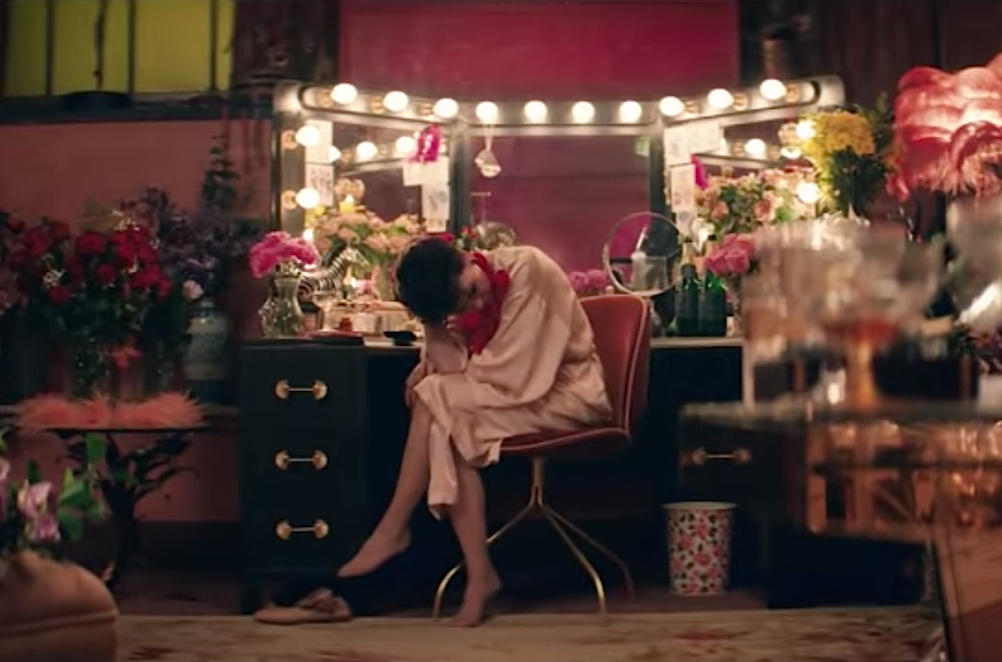
Watching Rupert Goold’s Judy, with Renée Zellweger in the titular role, you very quickly realize what kind of Garland fans these are, both in front of and behind the camera. The film is perhaps the perfect example of what has become the norm when it comes to big screen biopics: complex individuals and their wayward journeys are distilled into palatable and very moving stories that polish off a sanitized image of the star in question. Working as a kind of posthumous publicity stunt, the biopic serves as an opportunity to make myth into reality, to tell the story as it should have happened with the added conceit that what you’re seeing is as faithful a recreation as one can find. Thus, while there are a number of exhaustive biographies of Garland out there (not to mention a musical currently playing at the Paper Mill Playhouse all about her childhood stardom and an upcoming Showtime documentary about her marriage to Sid Luft on the way), Judy is already primed to be the way many contemporary audiences encounter her backstage antics for the first time. And in true Hollywood fashion, it delivers a heart-tugging and tear-jerking drama that’s designed to make good Garland fans of us all. For, despite mining one of the most tumultuous years of the star’s life (we’re with her almost until the day she died of an overdose), Judy is almost too reverential, a hagiographic portrait that attempts to give us Judy the woman, but only offers us Judy the legend. Or rather, the gay legend, as told to us by oh-so-good fans.

Ostensibly based on Peter Quilter’s concert-cum-play After the Rainbow, Goold’s film dispenses with much of what made that theatrical event—a recreation of Garland’s months in London during a five-week run of sell-out concerts—so fascinating. Gone are many of the raunchy moments between Judy and her much younger husband Mickey Deans (played in the film by Finn Witrock); downplayed are Garland’s mood swings and suicidal ideations. The film also does away with one character from what was, on stage, a three-person play: Judy’s (fictional) gay London music director “Anthony,” a stand-in for all the fans who loved and wished to care for the A Star is Born actress. “We have given her everything,” he tells Deans at one point in the play. “Shown her the kind of loyalty and devotion that you couldn’t even dream of.” The line is nowhere in the film. Nor is Deans’ scathing comeback: “What the hell is it with you people? The more she falls apart, the more you adore her … If she was found half-dead in the gutter, you’d all cum in your pants.” But Anthony’s worshipful sensibility—and his sense that Garland owes something to the gay community in return for their adulation—has all but taken over the film’s approach to Garland and her story.

Judy gave voice to those who felt voiceless; they understood at a visceral level how her resilience made her all the more beautiful.

There’s a gay couple, in fact, who recur throughout the film. They love Judy to pieces and make a point of seeing her show as many times as possible. At one point, they even invite her out to dinner at their place, where they confess just how much she’s meant to them. They stand in not just for “Anthony,” but for millions of gay men, then and since, who saw in the young girl with the big voice an avatar for their own resilience. To them she was always first and foremost Dorothy, a wide-eyed girl in search for somewhere over the rainbow where misfits and oddballs could be themselves surrounded by a community that loved them for who they were. There was hope in the image Garland offered them; the personal issues she came to struggle with later in life—and the comebacks it fueled—merely made her feel more relatable to a community that felt equally targeted. Judy gave voice to those who felt voiceless; they understood at a visceral level how her resilience made her all the more beautiful, all the more worthy of their love. In Boyt’s configuration gay fans shuttle back and forth between being good and bad fans, celebrating her highs while always constantly keeping her lows in sight.

“Her audience,” as Vito Russo once wrote about her gay fandom specifically, “was never sure whether she’d fall into the abyss or soar like a phoenix. One wanted to hold her and protect her because she was a lost lamb in a jungle, and yet be held by her because she was a tower of strength, someone who had experienced hell but continued to sing about bluebirds and happiness.” Judy leans hard into that first impetus: Goold and screenwriter Tom Edge seemingly want nothing more than to protect Garland. And in Zellweger’s tic-ridden and squint-heavy performance, they go out of their way to elicit a mix of woeful pity and concerned well-earned compassion whenever Judy is on screen—even, or especially, when she’s hurting or depressed or in a drug daze. There’s an attempt here to show Judy Garland, warts and all, but those warts are so lovingly drawn and placed and lit that they don’t ever feel real.

Such an airbrushed image of Garland will feel familiar to anyone who’s loved The Wizard of Oz and A Star is Born and who, perhaps, knows little about the backstage drama that dominated the star’s life. But diehard fans (good and bad alike) will recognize how much the film goes out of its way to mollify Garland’s own personality, especially in the 1960s. If, like me, you’ve gone out of your way to learn everything there is to know about Judy (not just the whispered stories about her or the bite-sized trivia that litter her Wikipedia page) you know there’s more to the anxious insomniac the film depicts. To watch footage from Garland’s last decade or to hear the expletive-laden recordings she made when working on her memoir is to get a glimpse of a performer who was broken in a truly ugly way. To see her try and get through late night appearances (with Cavett or Carson, say) is cringe-inducing; she’s manic and unfocused, clearly trying her best to look put together even as she’s spiraling. Similarly, to hear her rail against the world in the privacy of her home to a recorder she doesn’t quite know how to operate is outright unpleasant. Those abrasive public and private moments color our perception of Judy. The impulse to look away from them, to want to shield others from them, is central to her good fans. For how could you bask in her light when faced when such darkness? 

The biopic requires stars to merely suggest inner turmoil, never truly embody it.

In Judy, those moments are prettified to a fault. They must be. For the biopic demands and depends on our unconditional sympathy, a premise that requires stars merely suggest inner turmoil, never truly embody it. In an attempt to shower Garland with the empathy and compassion she so clearly lacked (and deserved) while alive, the film ends up over-protecting her, asking us to look away from the most unbecoming aspects of her private life. Even flashbacks about the abusive behavior she suffered at the hands of MGM’s Louis B. Mayer are beautifully framed in shadows and close-ups, as if the filmmakers didn’t trust us to grapple with Judy’s own disastrously formative scenes.

Similarly, the moments that should awe us into submission are few and far between. They come, mostly, in the shape of musical numbers. It is while singing Garland hits like “The Trolley Song” and “Come Rain or Come Shine” that Zellweger taps into what made Judy such an icon: she’s as dazzling as could be asked of her. But Zellweger can’t really match Judy’s vocal range—who can, really? Her voice is much too quivery and tinny. What that means is that Garland’s belts, those moments where you’d hear firsthand the strength she could conjure up when performing (or when yelling at her ex-husband), are not really in the film. We get instead some soulful whispered lyrics and a beautiful toned-down rendition of “Somewhere Over The Rainbow.” We get the intimate, heartbroken Garland but rarely the boisterous, brassy gal she could also be. Where Judy Davis (in the ABC miniseries Life with Judy Garland: Me and My Shadows, based on her daughter Lorna Luft’s memoir) and Tracie Bennet (in Quilter’s play) had found ways of weaponizing Garland’s iconic “big voice” to explore how she could be both an anxious mess and a tower of strength—they were both incandescent, with Bennet playing Judy like a wind-up toy whose manic energy could light up all of London, and whose blackouts were just as frightful. Zellweger plays more with Judy’s meekness, a performance that leans in on those moments where her voice broke on stage, not the times when it tore through the theater like a tornado.

There’s an admirable ambition in telling Judy Garland’s story with such affection. A lavish biopic starring an Oscar-winning A-lister, after all, is as loving a tribute as any screen legend could hope for, especially one who suffered at the hands of the Hollywood system that now fetes her with abandon. Here was a performer who struggled to feel loved—by her mother, by her husbands, by her peers, by her fans—all throughout her life. Her need was so overt that it was covered in the press; a 1963 headline in the TV Radio Mirror read “Behind Judy Garland’s Frantic Drive for Success is this Fervent Prayer: Please Somebody… Love Me!” Her good fans, as arbitrary and contrived as that kind of label may be, live to shower her with that love. And watching Judy you can’t help but feel how much Goold and Zellweger feel for their protagonist. To offer Judy that love in telling her story is a kind of kindness. But this is a film that so loves Judy and that so wishes to care for her that it ends up stripping her of the alluring complexity that defined in her life and enshrined her in death. Judy here is, to Russo’s point, more wounded bluebird than soaring phoenix—and not, like the real Judy, both at the same time.
9 Sad Girl Books for Your Sad Girl Autumn

Hot Girl Summer (™ Megan Thee Stallion) has come and gone, and it’s time to become a 24/7 Sylvia Plath and welcome Sad Girl Autumn to the scene. Dig up your blackest jeans and a sweater that’ll break your barista’s heart because you’ll be looking thoughtful and melancholy in the corner of your favorite coffee shop with one of these #sadgirl books under your arm. Here’s the perfect booklist to settle into the cooling weather while remaining a cool girl yourself. 

The Bell Jar by Sylvia Plath

When Esther Greenwood moves to New York City for a magazine internship, she is introduced to an adult life of sex and disappointment. Her depression and dissonance slowly worsen when she returns home to live with her mother for the summer. Following a failed suicide attempt, Esther is sent to a mental hospital where she finally begins to improve—at least for a moment. Plath’s masterpiece novel follows Esther as she spirals into darkness.

Hotel Iris

Hotel Iris by Yōko Ogawa

In a seaside hotel on the coast of Japan, seventeen-year-old Mari, daughter of the hotel owner, becomes obsessed with a middle-aged male guest. After the man is kicked out of the hotel for abusing a sex worker, Mari finds him in the small town they share and begins a dangerous relationship with him. But when rumors swirl through town that the man, a widower, murdered his wife, it becomes harder to keep their relationship secret, especially from Mari’s mother. This haunting novel explores the ways we hurt each other, and ourselves, in the search for intimacy.

Image result for voyage in the dark anna

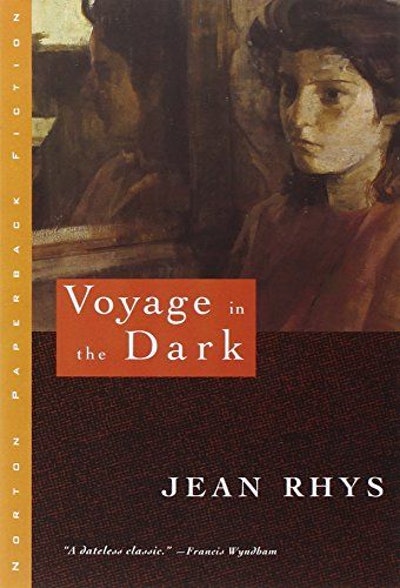
Voyage in the Dark by Jean Rhys

Anna Morgan is painfully alone when she moves to London from the West Indies. She floats through her life like a ghost, trying to make ends meet as a chorus girl, until she meets an older man who offers to support her financially. What begins as a chance encounter becomes a foray into a world of sex and darkness that nearly pushes Anna to the edge.

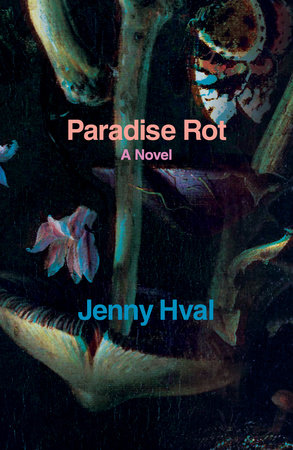
Paradise Rot by Jenny Hval

Paradise Rot by Jenny Hval

When university student Jo moves from Norway to Australia for school, she decides to reinvent herself. Thus begins a novel that constantly questions the nature of reality as Jo moves into a decaying old brewery with her roommate, an older woman named Carral. As Jo loses touch with reality more and more, the brewery turns into a soggy, psychedelic den of fungus and rot, with Jo and Carral as roots that twine together. Norwegian artist and musician Jenny Hval explores the decay of identity in her debut novel. 

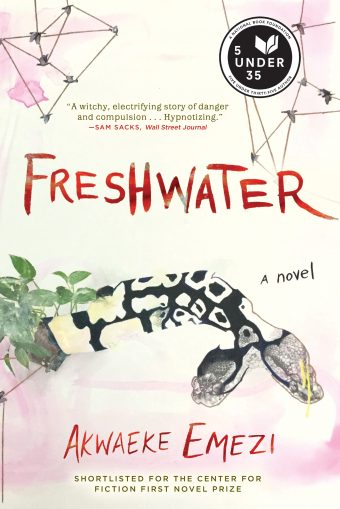
Freshwater by Akwaeke Emezi

Ada was born with more than just her own spirit in her body. As Ada grows up in southern Nigeria, the separate selves within her become more powerful. When she moves to America for college and experiences a tragedy, her separate selves begin to take over and Ada’s identity fractures even more. At the whim of her unpredictable selves, Ada’s life is thrown off kilter and into darkness.

Marilou Is Everywhere by Sarah Elaine Smith

Marilou is Everywhere by Sarah Elaine Smith

Cindy dreams of escaping her life of poverty and maternal abandonment for something more. Her chance comes when Jude, wealthy girl from a better home, goes missing. When Jude’s grieving, alcoholic mother mistakes Cindy for Jude, Cindy slips quietly into her new identity as a girl who has it all: money, a beautiful house, and, most importantly, a mother’s undying love. For once, Cindy feels her life means something—but is it really her life at all? Stark, vivid and emotional, this novel examines what it means to disappear. 

Walking on the Ceiling by Aysegül Savas

Walking on the Ceiling by Ayşegül Savaş

Nunu meets M. shortly after she moves to Paris. Nunu is trying to run away from her past in Istanbul; M. is a British novelist who writes about Turkey. The two strike up an unexpected friendship based on their conversations during long walks through the streets of Paris. Nunu shares her memories of Istanbul to help M. with his new novel, but as their friendship grows deeper, Nunu worries that by sharing her memories, she may be giving integral parts of herself away. 

Image result for skim tamaki

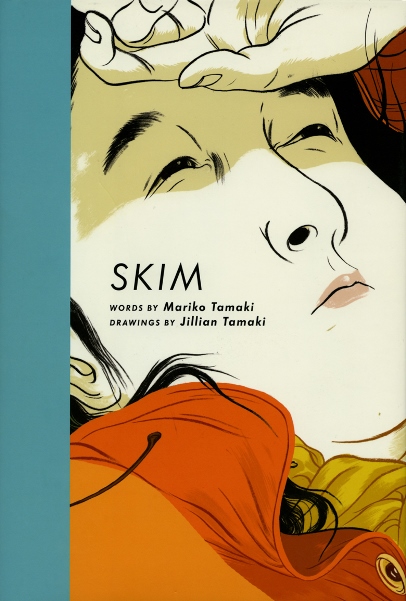
Skim by Mariko Tamaki and Jillian Tamaki

Skim, who has embraced a nasty nickname about her plus-size frame, is a Wiccan goth at an all-girls Catholic school. When the popular Katie Matthews’ boyfriend dumps her and then kills himself, the school descends into a chaos of mourning. Skim has to navigate her own depression as well as her peers’ performative grieving, fueled by guidance counselors and grief clubs—while also trying to cope with a confusing, heady crush on a female teacher.

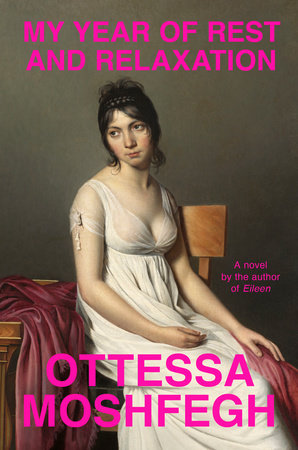
My Year of Rest and Relaxation by Ottessa Moshfegh

My Year of Rest and Relaxation by Ottessa Moshfegh

A young woman in New York City should be happy with her seemingly-perfect life, but there’s something wrong (and it’s not her dead parents, deadbeat boyfriend, or frustrating best friend). So, she decides to hibernate for a year. Using a mix of prescription pills acquired under false pretenses, our narrator pulls away from society through a drug-induced haze of naps that shows how living a traditional life isn’t always satisfying, and isolation isn’t always painful.

Giving Women Permission to Own Their Anger

I was speaking with a friend recently about how we both deal with our anger as women on a daily basis, but especially during a time in which our reproductive health and our bodies are under attack by our country. So many women carry anger within us as a necessary step towards healing from trauma, from mistreatment, from microaggressions, and daily living. The issue, she said, is when anger is no longer productive and keeps us stuck spinning our wheels, roiling around inside of us with nowhere to go. 

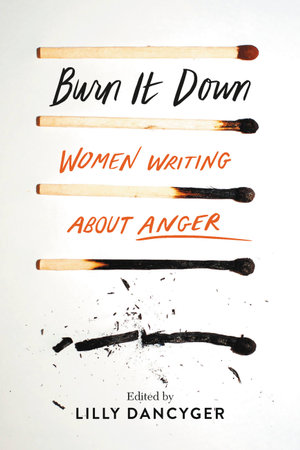
Image result for Burn It Down: Women Writing about Anger

 Burn It Down, a new essay anthology, contains voices from women across cultures and experiences who are attempting to address this very problem. Their work discusses anger caused by many different catalysts: misogyny, transphobia, sexual assault, racism, Islamophobia, gun violence, domestic violence, hormones and the more innocuous things like hunger and annoyance that make us angry just because they do. But, as editor Lilly Dancyger says in her introduction, “this anthology is not about the things that make us angry; it’s about us, and all the many ways we feel and live with our anger.” The authors discuss how they continuously work towards validating their anger first before they can make use of it. So many times, women and femmes are socialized to suppress anger, to push it down and even question whether one’s own anger is justified. The title, Burn It Down, suggests that in order to make real change, anger must be allowed to burn first like a cleansing fire that can make room for new growth. Part of the work of this collection is to say, yes, women’s anger is justified, and more than that, it is necessary to live authentic, healthy lives. 

I spoke with the editor Lilly Dancyger about what  can happen when women are allowed to understand and own their rage. 


Leticia Urieta: Why did it feel important to create this anthology now? Where did it begin for you? 

Lilly Dancyger: The idea started with Seal [Press]; it was a project they developed in-house. I had a good relationship with an editor there and they reached out to me. And I was like, “Have you been reading my diary? Of course I want to work on this!” It felt important now largely, but not entirely because of the political climate and everything happening in the world right now. Many women are tapping into and reclaiming anger that they have been repressing or explaining away that they didn’t know was there. I think that collectively we are angry. Women are so conditioned not to get angry or not to show it when we are. We are supposed to be nice and sweet and kind. So for a lot of people who are experiencing this cultural and communal anger, it is an uncomfortable and confusing experience and they don’t know what to do with it or even if they are right to express it. I was excited at the opportunity for writers to articulate that anger and for others to see it and understand that they are not alone when they feel that way. A lot of the pieces in the book talk about not only feelings of anger but what to do with it, which I think is important to have as we all navigate this really infuriating time. 

Women are so conditioned not to get angry or not to show it when we are.

LU: One of the ideas that I think comes across in this anthology is that anger expressed by women is a threat to patriarchal oppression, and this is why women are socialized to eat their anger before it leaks out and harms others. In your introduction, you describe having to push many of the writers in the anthology to “get angry” despite this socialization. How did you do so as an editor without being triggering or unkind? 

LD: So much of editing is pulling out what is already there without veering into projecting what I think is there that is not. I am pushing them to go all the way there. That is why so much of this is a conversation. A lot of writers described what they were angry about, and so I would ask questions like “What did that feel like or look like? Can you describe it? What does it feel like physically to feel angry?” A lot of this process is getting back into the body. We often talk about emotions in a detached way, particularly as women in personal writing, and so embodying that rage is difficult and takes some digging and that is what an editor is for, to push you to go beyond the edges of the thing, and to go into the moment more deeply. Usually that is enough. But there were some writers who I pushed who pushed back and made me realize that I was imagining a version of the story that was in my head that wasn’t their experience. 

LU: That seems important too because it seems that you are trying to get to an authentic representation of their anger without being performative. 

LD: Yes, and it was really interesting working with so many different writers on the same topic all at once and to leave room for all of them to feel and express their anger differently. There were some things that came up a few times, like a few writers wrote about anger as the color red. I didn’t want to cut those patterns out because it is interesting to see concepts repeat and that there are things that are shared, like embodying physical heat. I also liked the variations. It was important to leave room for them to write about anger authentically to each of them, even in their writing styles. Some are more lyrical and others are more editorial, and I had to resist my impulse to make a uniform style because that was not authentic. I wanted to avoid a preconceived notion of any particular style or tone that I might be seeking. 

LU: Do you think that the anthology is working to dispel the notion that women’s anger is singular in some way? 

Women’s anger can be a positive force politically but it can also be poisonous if we don’t get it out.

LD: I hope so! Women’s anger is “popular” right now. It’s a topic that has emerged as a talking point and a political force, and we have culturally come around to at least admitting that it exists. But that also runs the risk of thinking about it as a singular thing or as uncomplicated or simple. Women’s anger is not just the Women’s March; women’s anger can be quiet, can be internal and self-destructive and sometimes it can be external and destructive, it can be healing, it can be productive, it can be empowering, it can be all kinds of things. It can be a positive force that we talk about politically but it can also be poisonous if we don’t get it out. I wanted to give space to talk about anger beyond, “rah rah, girl power” and to talk about it as it actually is in our lives. 

LU: I think you are touching on how there is a danger in anger if we allow it to consume us. In your introduction you say that “I wanted to treat anger not as a means to an end, but for its own sake.” What healing is there when we allow anger to burn? 

LD: There is harmful, all consuming anger that is expressed, like becoming obsessed with something, or looking for revenge, but a lot of the harm that comes with anger is when it is held inside and not acknowledged. Sometimes just acknowledging that “I’m angry” and allowing that to be true is a huge step. I do that when I fight with my husband. I like to talk through conflict, but sometimes I have to say, “I’m fucking pissed off right now, and you need to give me some space to be angry.” The first time I did that, I felt like I was breaking the rules! But once I did it, I realized that it’s not harsh or mean, it’s just true. Sometimes what you need is space to be angry. 

LU: I think that is something happening in this anthology, which is acknowledging that anger is not an ending place, but a starting place. 

There’s not always a way to redirect anger and turn it into something positive.

LD: Exactly. And I don’t know that there is an ending place. That’s the complicated thing about anger, there’s not always a way to redirect it and turn it into something positive. Sometimes it can be, and a lot of writers in the anthology talk about channeling into creative energy or politically energy, and have found a way to make it useful. But sometimes it’s not. It doesn’t have to become pretty and useful. 

LU: Right, and that if it is allowed to exist, you are allowing yourself to live more authentically. 

LD: Yes, and also that in feeling anger, it loses its power over you. 

LU: How did you make it a priority to feature many different voices and expressions of women’s anger? 

LD: That was a big priority from the beginning. This whole project would be pointless if the entire book is a bunch of cis straight white women talking about anger. It would have made it invalid. At first the process of soliciting pieces was challenging because I wanted to include as many different writers as possible, but I also didn’t want to tokenize people like I’m checking off a list of perspectives or identities. So I prioritized reaching out to writers whose work I admired or am excited about, but also keeping track of demographics and considering representation. I didn’t ask any white women until the second or third round of solicitations. Some of the essays I solicited because of topics I was interested in them covering. I knew we couldn’t create a book about women’s anger without discussing the stereotype of the “angry black woman,” that had to be in there. I also knew that there had to be trans women’s voices included both to dispel any notion that trans women are not women, and to hear their perspectives on how they learned the rules of women’s expressions of anger and what that awareness looked like. 

LU: Several of the essays in the collection, such as Marissa Korbel’s “Why We Cry When We’re Angry” and Meredith Talusan’s “Basic Math” ask the reader to reconsider what expressions of anger we consider feminine and what we consider masculine. Do you think that these pieces are complicating the gender binary and how it limits what expressions of anger are generally considered acceptable from women and femme peoples? 

LD: It’s an immediately fraught topic to talk about gendered anger. We are already starting with a presumption of what that means. Still, that is why I reached out to the smartest writers I know! They already had that question in mind of what makes women’s anger women’s anger as opposed to just anger. The writers were immediately aware of assumptions around that. When I reached out to them I simply said “talk to me about anger and how you experience it.” A lot of it ended up being about how women are socialized to suppress anger, but it was also about how writers who happen to be women feel anger. 

LU: What conversations about women’s anger do you hope to create with this book once the reader is finished with it? 

LD: I hope that the reader will take a closer look at the ways that they experience anger, and the ways that they do or don’t express it. So many of the essays ended up talking about the unexpected ways that anger comes out when we try to repress it; it comes out as tears, or guilt, shame, eating disorders, so many ways. I hope that it encourages people to give themselves permission to get their anger out, to examine it, express it and letting it be what it is. 

LU: Do you feel that examining anger is a path towards social change? 

People don’t change the world by being apathetic, they do it by getting angry and not taking it any more.

LD: Yes, of course. I don’t want to de-value anger as a social tool, but I want to see it as more than that. I do think though that getting angry is essential to being directly engaged with society and making change. We can look around and see what is happening in the world and shrug, or we can get angry and do something about it. People don’t change the world by being apathetic, they do it by getting angry and not taking it any more. That’s a point I think we all need to get to. 

LU: Yes. My hope is that a cis man would read this and understand a bit more and feel some compassion. Not that they will save us. 

LD: It’s funny, I didn’t really think about that. This book felt like a reciprocal act of care between women. But yes, there is something to living in this world as women that cis men are oblivious too and it would be good for them to see what we are going through. However, I think that whether they listen or not, if enough of us get angry and go out and do what needs to be done, they won’t have a choice anymore. 

Why I Love Earthquake Season

Earthquake Season

They say it’s getting longer every year. Still, I thought earthquake season would be over by now. I was walking to work this morning when I realized it’s nearly April and they still haven’t announced the end. Distracted by this thought, I stepped into a crosswalk too early, just as a car was speeding up to make the yellow light.

“Get out of the goddamned way!” the driver screamed. I raised my middle finger at him. I hadn’t been yelled at since earthquake season started with that six-point-seven in July.

I talked to my coworker Sarah about it later that afternoon, in line for a coffee. She told me she’d noticed the same thing, when someone at the grocery store was cruel to an old man counting coupons too slowly. Sarah and I both speculated that this—the loss of goodwill, and not the official announcement on the news—this was the true sign that earthquake season was over.

On the other side of the coffee shop, a heavy-set woman in a wheelchair was struggling to move a chair out of the way to make space for herself at a table. Everyone looked away from her. Sarah and I were too far away to help, and it would have been awkward to walk across the whole room, so we stayed where we were. We shook our heads, and agreed we would miss the goodwill of the season.

Not twenty minutes later, we were gossiping about our upcoming annual reviews when our cups clattered to the floor.

We ran out into the street. People streamed out of the buildings on all sides. I realized I had forgotten about the woman in the wheelchair, but when I turned back she was already on the sidewalk. Two girls were helping her outside. I felt a little warm glow in my chest, watching the woman and the two girls hug each other and cry.

Then there was a sound like a shelf of wine glasses collapsing. The street-facing side of our office building was spilling down over itself like a waterfall. To my surprise, I started moving toward it immediately. Normally after an earthquake I’m paralyzed for a few minutes in shock. My slow generosity always embarrasses me—I’ve often been the last one running to help others. But today I was ready, and that made me feel proud.

Low wails rose as the dust settled. The front corner of the building had sheared off, leaving each floor open like a doll’s house. A figure stood on the edge of the fourth floor, peering out between stalks of rebar. I counted bodies on the rubble below—six—no, seven. Then another chunk of the floor collapsed and the figure from the fourth floor tumbled down with a cry. To think that just that morning I’d been dreading my annual review. I chuckled at myself as I grabbed a hunk of concrete from the edge of the pile where the front corner of the building used to be. The hunk was about the size of a microwave, but I hauled it up and aside easily. I marveled at my own calm strength. It’s taken me a while to get here, but I’m proud to say that today, for the first time, I became the best version of myself after an earthquake.

Then Sarah, working beside me, shrieked. She’d found a foot. A bunch of people rushed over to help, and we all worked together quickly, lifting rubble out of the way. We were careful never to disturb the pile; we’d all seen near-survivors crushed by tiny avalanches. We cleared space around the foot, and then the ankle, and then the calf and the knee. I soothed the emerging leg: We’re coming for you don’t worry hang in there.

An aftershock rumbled up around us. We all had to back away from the leg. We held our breath as concrete rained down and dust rose up. When it stopped, we rushed forward and exhaled loudly because the leg was still there, uncrushed. Almost there, you’ll see my face soon, I called out, until the buried person appeared.

It was one of our building security guards!

For a year this woman had greeted me by name every morning, and I always felt bad because I’d forgotten her name on her second day. I’d been too embarrassed to ask her again; I usually just said, “Oh, good morning!” Now, here she was covered in dust, and still I couldn’t greet her by name. “Oh, it’s you! You’re alright!” I said.

“I’m alright!” she said to me, amazed. In the shock I guess she had forgotten my name, too. “Angels!” she kept saying, looking at me and Sarah.

You rarely get to pull a whole person out of the rubble. But we did today. I stood on the security guard’s right side and Sarah stood on her left and we walked her out to where people were gathering, where the EMTs were already setting up pyramids of free bottled water. I’d heard on the news that the ranks of the EMT had swelled four hundred percent in the past five years, half of that in this last season. What a rush of human kindness. As I looked around today I realized why; those who signed up were only taking a small step by making it official; we are all first responders now.

We passed a man holding a mangled arm against his chest. I recognized the metallic smell of blood in the air, mixed with some chemical smell that always comes out of buildings when they collapse. We saw another leg, less lucky than that of the security guard. We saw a man put his jacket over a body on the ground. But what really matters is that we saw a lot of other people comforting the bloody and mangled. All of us were surrounded, comforting hands on all our shoulders. “What a beautiful world we have,” I said.

“Angels,” the security guard on my shoulder agreed. Sarah and I handed her over to a volunteer, who had a bottle of water and a place to wait until the worse injuries had been treated. We left her there, brushed off our hands, and walked along the street filled with people helping each other. It was beautiful.

And for as long as earthquake season lasts—and it’s getting longer every year; we’ve passed the point where we could have fixed it—but for as long as it lasts, we are all the best versions of ourselves.

9 Science Fiction and Fantasy Stories about Music

Translating one medium into another is tricky. Music is music and art is art and dance is dance; to try to convey the power of another art in fiction is its own sleight-of-hand.

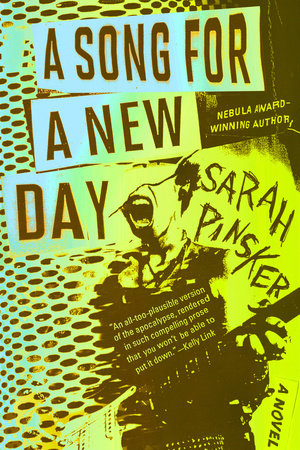
A Song for a New Day by Sarah Pinsker
Buy the book

My own first novel takes on that challenge. In A Song For A New Day, musician Luce Cannon was on the cusp of making it big when escalating violence caused the government to pass congregation laws, preventing public gatherings of any sort. In the new After, she has to carve her own space, playing illegal shows. The second main character, Rosemary Laws, grew up on a remote wind farm in the After, and has never known anything other than virtual life–until she gets a new job that requires her to actually venture out in the world. It’s a novel of music and community, which to me are interconnected.

As a musician and an author myself, I love it when an author manages to convey music well in prose. I haven’t had a chance to read Annalee Newitz’s new book The Future of Another Timeline yet, which I’m betting should be on this list, but here are a bunch of novels and stories that I thought managed to capture music well in fiction, whether they’re talking about otherworldly bands, songs and collaborations that could’ve been, or the concert to end all concerts.

Image result for wylding hall elizabeth hand

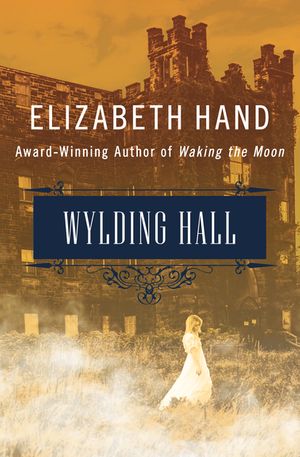
Wylding Hall by Elizabeth Hand

The rest of this list isn’t ordered, but I can’t imagine this book will ever slide off the top of my list of music done well in fiction. The book is told as an oral history of the Fairport Convention-standing Windhollow Faire, a band I found so believable that I looked them up at least twice while reading this, just to make sure they hadn’t actually existed. She perfectly captures the dynamics of a band holed up to record in a creepy English manor. I loved the combination of Gothic creepiness and “whatever-happened-to…”

Image result for lewis shiner glimpses

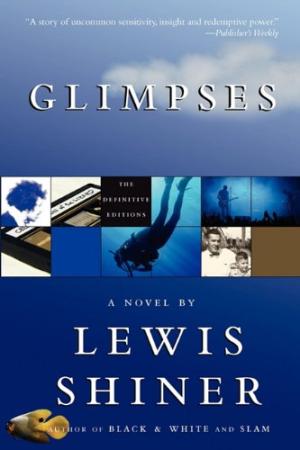
Glimpses by Lewis Shiner

I haven’t read this since high school, but it had a profound effect on me at the time. The protagonist, Ray Shackleford, is a washed-up music lover whose own music career never happened. I don’t remember the time travel mechanism that takes him back to the sixties, but he is able to connect with a series of musicians including Jimi Hendrix, Jim Morrison, Brian Wilson, and the Beatles, and get recordings of their lost or misrecorded music as it was meant to be, starting with an acoustic version of “The Long And Winding Road.” This came out before some of these lost recordings ended up appearing in our world—I don’t think anyone anticipated Brian Wilson actually releasing Smile—but Shiner, a musician as well as an author, captures and conveys the musical moments well, even for those of us without 60s nostalgia. 
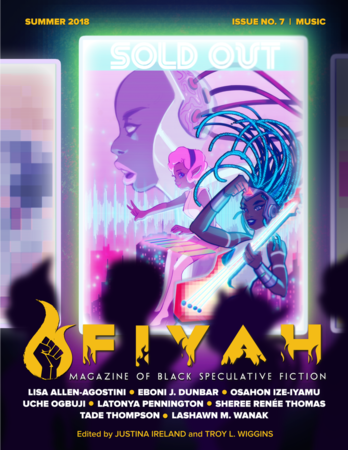
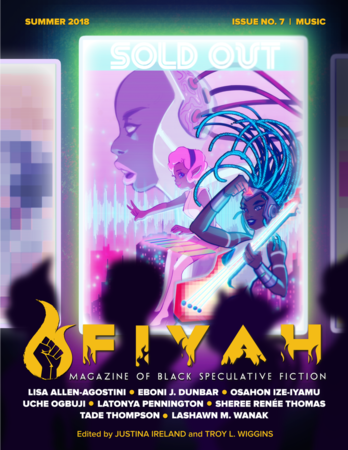
Yard Dog” in Fiyah! Magazine by Tade Thompson

I’m going to cheat and include two short stories from Fiyah! Magazine’s excellent music issue last year. “Yard Dog” is about jazz musicians and a trumpet that maybe should not be blown. I love when music stories echo the genres they touch upon, and this story feels like 1940s jazz. It picks up some other things really nicely too, like the fact that most musicians see an interesting instrument and itch to get their hands on it. The description of the first time Yard plays his horn in the club echoes accounts of the first time New York heard Louis Armstrong. I love that this comes across like a tall tale, but also a story of joy and wonder. Some great lines too: “Open night is no excuse for bad jazz.”

67948

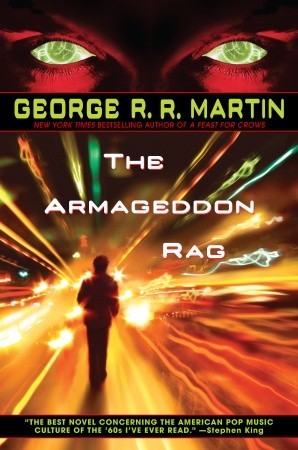
Armageddon Rag by George R.R. Martin

Some of this novel hasn’t aged very well, starting with most of its portrayals of women. Like Glimpses, it’s nostalgic for a bygone musical and cultural era. That said, it has some very cool elements, starting with the band at the center, the Nazgul, and the paths the various members take. The band dynamics are good, and the outdoor concert that serves as a climax for the novel is every bit as grand and bombastic as it needs to be. 

Sister Rosetta Tharpe and Memphis Minnie Sing the Stumps Down Good” in Fiyah! Magazine by LaShawn M. Wanak

Yes, this is the second story on my list from the excellent music issue of Fiyah! Magazine. Technically a novelette, I think. It’s an alternate history of real-life musicians Sister Rosetta Tharpe and Memphis Minnie, in which they are exterminators charged with destroying a seeming plague of fungal “stumps” that take on the likeness of people before exploding and killing everyone in the vicinity unless neutralized first. It’s a system accepted by all until Tharpe and Minnie start poking around the edges. Wanak recreates these two women, both of whom deserve to be better known, and conjures a great relationship between the two. It also uses the stumps and exterminators—and the related ban on singing—as a powerful metaphor. 

Image result for signal to noise silvia moreno garcia

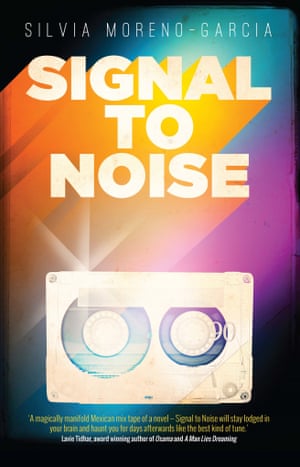
Signal to Noise by Silvia Moreno-Garcia

Moreno-Garcia conjures a powerful music-magic. I love the use of contemporary (okay, 80s) vinyl in the place where other novels have used ancient chants and madrigals. Music has power. I’ve never been to Mexico City, but the setting is used to excellent effect here too, as the narrative moves between the 80s, when the teen protagonists discover magic, and a second timeline twenty years later.

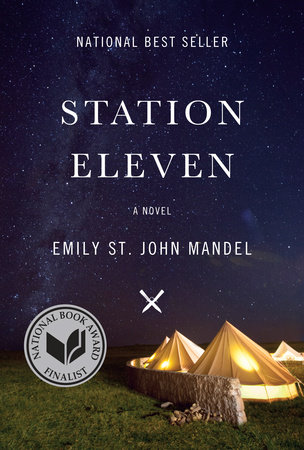
Station Eleven by Emily St. John Mandel

Station Eleven by Emily St. John Mandel

I’ve read a fair number of post-apocalyptic wasteland books, from McCarthy to Kunstler, and they are often joyless in a way that strikes me as deeply unrealistic. I loved that this book envisioned a dire post-apocalypse and still populated it with people who made art. The roving musicians travel under a credo lifted from Star Trek Voyager, stating “Survival is Insufficient.” I had a similar thought that I applied to my own novel, A Song For A New Day. People need music. People have always needed music. We clap our hands if we don’t have instruments; we raise our voices. This book leavened darkness with purpose.

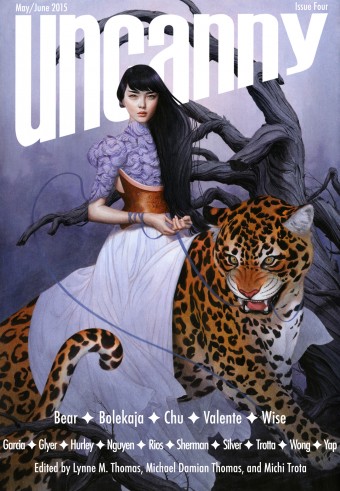
Three Voices” in Uncanny Magazine by Lisa Bolekaja

Composer Andre Irving stops caring that he was tricked by a friend into attending a street festival when a singer named Chocolate Tye blows him away. He knows she’s the only one to sing the difficult “Three Voices,” a piece his father had started and he had finished. Except the piece has plans of its own… Bolekaja does an excellent job of capturing both performance and the sweat that goes into getting music right. 

A Visit from the Goon Squad by Jennifer Egan

A Visit from the Goon Squad by Jennifer Egan

I’m not sure if this fully qualifies as a music book, but it features a music exec and an aging rock star, so I’ll allow it. I’m also stretching things by calling it SFF, but parts of it take place in the near future, so again, I’ll allow it. I loved the strange non-linear structure and the way it somehow cohered, and the way the narrative flitted between characters, spotlighting one person and then letting her fade into the backing band until she appeared again in the background of someone else’s spotlight. I love the way we meet characters in their youth and their faded glory, and sometimes both at once (the goon in the title is time, and it isn’t a spoiler to say time visits everyone). On a further musical note, if I remember correctly, the powerpoint chapter manages to talk about songs that fade out until you think they’re over and then explode again, and then the book literally did exactly that thing, which I wouldn’t have thought possible for a book.

11 Books To Read If You Miss Being a Horrible Goose

I am not a gamer. Not even slightly. I like Katamari Damacy but I’m not very good at it. I played about half of a farming game called Harvest Moon, but once I’d convinced the goth girl to be my bride, I lost interest in running my farm.

Which is why I was as startled as anyone to find my pulse quickening and my eyes transforming into hearts at every mention of Untitled Goose Game

For those who don’t know: Untitled Goose Game is an indie game from the Australian games company House House. They’re a very small team—there are four main developers, and it looks like fewer than 20 people worked on the game in total. The game does not have a title, it’s simply being called “Untitled Goose Game” because they couldn’t come up with anything they liked better. And it seems to be a massive, massive hit. 

I am ecstatic to honk about books that will fill that goose-shaped void in your heart. 

The game play is simple. You are a horrible goose. You live in a bucolic English village (the creators said Postman Pat, Wallace and Gromit, and Hot Fuzz were big inspirations) and you wander from garden to café to town square, ruining people’s days by stealing their hats, interrupting their picnics, honking menacingly, and, in one case, trapping a poor scared child in a phone booth.

It’s hilarious

This is, honestly, the first time in my life I’ve ever bought a game on release day. I have already spent hours playing it. I have spent hours talking about it in multiple Slacks and every group text I’m part of. I’ve retweeted fan art. Everything about the game makes me happy. I am ecstatic to take my goose-love into a new media, and honk about books that will fill that goose-shaped void in your heart. 

If You Think the Horrible Goose Needs a Tragic Backstory

Are You My Mother?

Are You My Mother? by P.D. Eastman 

We all agree that the horrible goose is horrible. Personally, I’m fine with imagining him as some sort of inscrutable chaotic force, like the Nolan/Ledger take on The Joker, but maybe some people need an explanation? A reason that Horrible Goose hates everyone? Well…if you read this classic tale of a baby bird searching for his mother and allow yourself to imagine…what if that was the goose and he never found her? What if he grew up alone, his isolation twisting him into the sort of malcontent who would drop people’s sandwiches into a pond? 

If You Just Want to Keep Being a Goose, Dammit

The Magician King by Lev Grossman

The Magicians by Lev Grossman

There is a long section in Lev Grossman’s 2009 hit novel in which several of the main characters, who are, you know, magicians, transform into geese and fly south for the winter. It’s one of the most affecting sections of the book, as Grossman really gets into the heads of the birds, as the students’ human personalities are subsumed by their new goose-natures. And unlike Horrible Goose, Grossman’s geese can actually fly! 

If You Love the Village So Much You Want to Stay…FOREVER

Year of Wonders by Geraldine Brooks

Year of Wonders by Geraldine Brooks

In Year of Wonders, Geraldine Brooks takes us back to 1665, as an outbreak of plague hits the lovely village of Eyam. The villagefolk, terrified of succumbing to illness, decide to quarantine themselves and avoid all contact with the dangerous outside world. The book is narrated by a young widow named Anna Frith, who tries to raise her two boys while working for Eyam’s new, unsure rector as he attempts to provide pastoral care to his panicking flock. 

Just pretend that the Bubonic Plague is a Horrible Goose.  

If You Love Bucolic English Villages—But You Also Love It When Something Destroys Them 

The Loney

The Loney by Andrew Michael Hurley

At its heart, Untitled Goose Game is a great example of rural folk horror. People are living their lives in a lovely village, safe in the arms of civilization, but not trapped in the isolation and modern terrors of a Big City. They have a community together, and together they will keep the dark at bay. But then a chaotic element of Nature Itself invades their village and reminds them that beneath that veneer of gentility chaos seethes, uncaring. 

It’s just that in this case Chaos has taken the form of a Horrible Goose.

So if you like that sort of thing, you might want to read The Loney! Andrew Michael Hurley’s 2016 novel is a great modern horror novel, in which a family goes on a religious pilgrimage into the English countryside, stay in a cozy village, and soon learn that danger and weirdness can lurk beneath the most thatched of roofs.  

If You Want Even More Animals to Run Amok in English Villages

Image result for all creatures great and small book

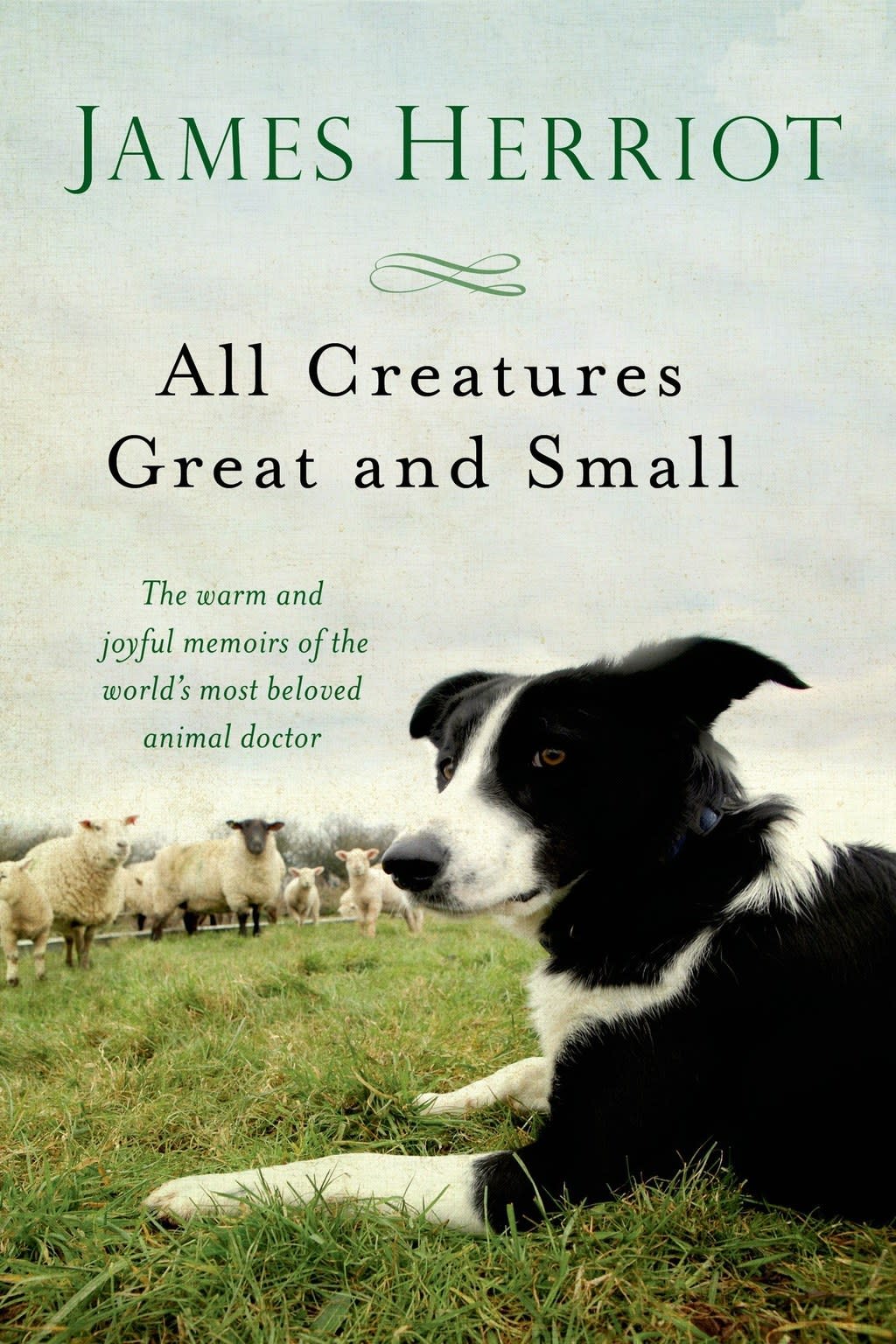
All Creatures Great and Small by James Herriot 

James Herriot’s classic tale of a village veterinarian has everything you can want: unruly beasts, a cozy village, wacky British people, and a warm, Hobbity love of rural English life. It also has a surprisingly detailed and informative look at changes in veterinary practice over the course of the 20th century…which has nothing to do with the Horrible Goose, but is pretty cool.

If You Wish the Entire Game Was Just Horrible Geese Fighting Each Other

Image result for jk rowling books not harry potter

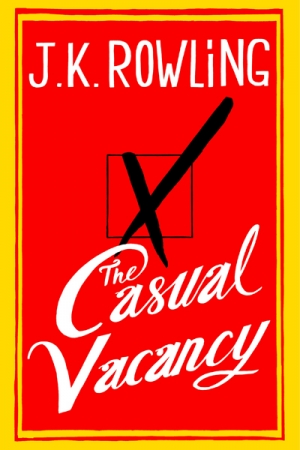
The Casual Vacancy by J.K. Rowling

Idyllic English hamlet! Wacky villagers! Utter bastard-ness! Rowling’s first published work for adults is basically Untitled Goose Game if the entire village were nothing but horrible geese, except the geese are humans, and they all want to make each other as miserable as possible, and it’s darkly funny to read about. All the sandwiches are going in the pond, people! 

If You Really Want to Enact Vengeance Upon the Horrible Goose

The Adventures of Sherlock Holmes by Sir Arthur Conan Doyle

The Adventure of the Blue Carbuncle” by Arthur Conan Doyle

If you’re angry at the goose, want to see a comeuppance of sorts, and like mystery, might I recommend “The Adventure of the Blue Carbuncle”? There is a goose, who comes to a sticky end, but who also features in the resolution of one of Sherlock Holmes’ trickier cases. It’s also the closest Doyle came to giving Holmes a Christmas story? So if you’re looking for a Yuletide mystery that also feeds your goose yearning, this might be perfect. 

If You Really Need the Goose to MEAN SOMETHING

Image result for ten white geese

Ten White Geese by Gerbrand Bakker

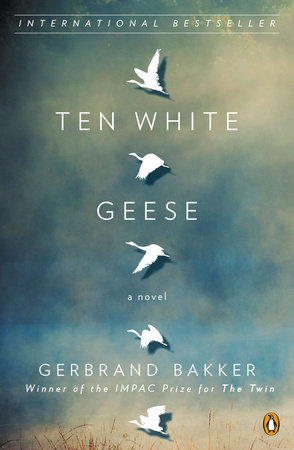
Gerbrand Bakker’s novel is titled De omweg in his native Dutch, The Detour in David Colmer’s British translation, and Ten White Geese in the U.S. edition. The story follows a Dickinson scholar who calls herself Emilie, as she takes up residence in a remote part of Wales after an affair. It’s possible she needs time and solitude to think; it’s possible she’s escaping her husband. What’s definite is that when she moves into the Welsh farm there are ten white geese waddling the property, but one by one, they disappear. 

If You Seriously Just Want the Goose to Be a Metaphor 

The Wild Geese

The Wild Geese by Mori Ōgai

For symbolic rather than chaotic goose energy, you might want to try Mori Ōgai’s classic novel The Wild Geese. The book tackles the tumultuous times between Japan’s Edo and Meiji periods, exploring tensions between classes and the gulf between the opportunities for men and women in Japanese society. Young Otama becomes a mistress to a rich man named Suezo in order to buy security for her elderly father. She’s desperately unhappy about the situation, however, and becomes increasingly attached to a promising student, hoping that a marriage with him could lift her into a brighter future. 

If You Wish the Horrible Goose Had Also Raided a Library

Petunia by Roger Duvoisin

Petunia by Roger Duvoisin

OK, this is my one moment of sentiment in a goose pond of snark: a billion years ago, when I was in first grade, my school had a convoluted book fair in which you earned tokens for good behavior and then got to spend them at the fair. (So like the Scholastic fair but with an utterly unnecessary moral component? Just let me get to the books, c’mon.) I doubt I earned too many tokens, but I had enough to buy Roger Duvoisin’s Petunia, a book about a vain goose excited to show off her “wisdom” after she finds a book. She can’t read it—she just thinks owning a book confers genius. While this isn’t quite accurate, it certainly spoke to my burgeoning book hoarding tendencies. 

If You Want to Expand Into Other Waterfowl

Ducks, Newburyport by Lucy Ellman

Ducks, Newburyport by Lucy Ellman

I’ll admit that ducks are not geese. I’ll further admit that this book is not even about ducks. However, Ducks, Newburyport rockets us through its narrator’s mind, taking us down a stream of consciousness journey not unlike the creek that winds through the village and empties into the pond that Horrible Goose calls home (or, more likely, “HQ”), and I’m going to posit that the book itself is such an agent of chaos, with its whole “I’m one long sentence and I run for 1,000 pages come at me, bro” deal, that in its very existence it takes on the role of Horrible Goose. 

Literary Wedding Ideas for People Who Don’t Really Understand Books

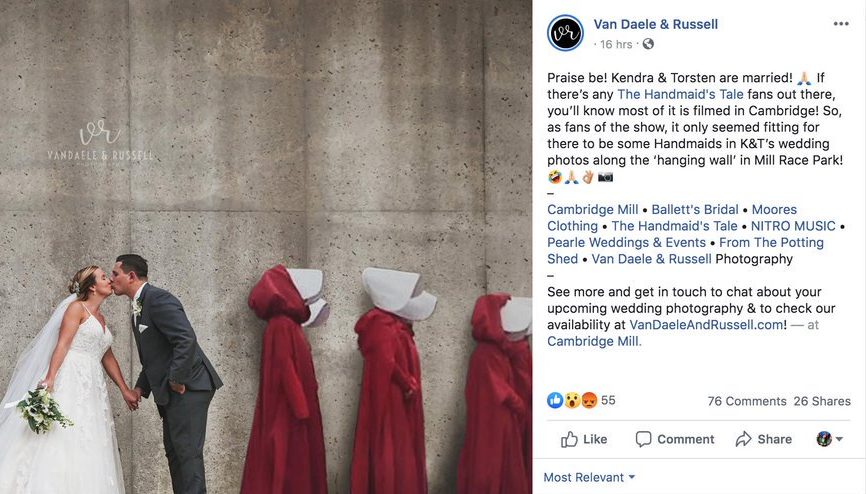
Like most people, your first thought after reading The Handmaid’s Tale was probably, “Ummm … this would be a PERFECT theme for my wedding.” And so like many people, you were probably horribly disappointed to find out that a Handmaid’s Tale-themed wedding had already been done—hanging wall photo backdrop and everything. No fair! 

But not to fear: if you’re the type of person who both loves and yet deeply misunderstands books, we’ve got even more perfect suggestions for your literary-themed wedding.

Love in the Time of Cholera

Before you ask, yes, I have definitely read this book (title’s first word)! So I know that like weddings, this book is technically about love! 

Also, Love in the Time of Cholera would make the perfect theme for a wedding if you’re the kind of person who has always, upon hearing the vow about “in sickness and in health,” thought, “Okay sure … but could you be much more specific? Like, graphically specific?”

We Have Always Lived in the Castle

Every little girl dreams of being a princess, so harness that with a We Have Always Lived in the Castle-themed wedding!

Every little girl dreams of being a princess on her wedding day, so harness those royal vibes with a We Have Always Lived in the Castle-themed wedding! Yes, I read this book and yes, my takeaway was that it’s a book about how dope castles are to live in! 

A Storm of Swords

Any hardcore G.R.R. Martin fans will tell you that A Storm of Swords is, above everything else, a book about how to throw a wedding. Your Red Wedding-themed wedding will have your guests raving, “This music is too haunting to dance to” and “Oh God, are you wearing chainmail under your dress?” and “Why would you do this?” And the answer is: because I am confused by books! 

The Catcher in the Rye

Now, hear me out. I actually have a lot of good reasons for choosing this one.

  1. You can do a Catcher in the Rye Whiskey Signature Cocktail!

Fahrenheit 451

Some people will ask, is a novel about violent government censorship and the way that popular entertainment rots our minds really a great theme for a wedding? To them, I would say two things:

  1. On the one hand, no
  2. On the other hand … “It was a pleasure to burn, baby, burn” is a great way for a wedding DJ to intro “Disco Inferno”

The Bell Jar

I’ve been on Pinterest! So I know: everyone loves jars! A Bell Jar theme makes coming up with wedding favors easy-peasy: just buy a bunch of jars! Then give each guest a jar! And while you’re giving them a jar, thank them for coming by saying something sweet like, “You’re such a good friend” or “It means a lot that you’re here,” or “To the person in the bell jar, blank and stopped as a dead baby, the world itself is a bad dream.” 

I am, I am, I am … crazy about this wedding theme!

Animal Farm

Something old
Something new
Something borrowed
Something moo

Flowers in the Attic

Nobody understood the importance of family like V.C. Andrews—and no one would appreciate a good father-daughter or mother-son dance like her, either.

Infinite Jest

Uh oh … the best man showed up with 1,000 pages of prepared notes for his toast! Plus footnotes?! Oddly, this is the first—and will definitely be the last—wedding he’s ever expressed any interest in.

Admittedly, the bloody pig’s head on a stake makes this a hard sell for some brides.

Lord of the Flies

Admittedly, the bloody pig’s head on a stake makes this a hard sell for some brides. But we think she’ll come around when she sees everyone on the dance floor bumping to the “Kill the pig! Cut her throat! Spill her dub dub dub dub dub dub” remix.

Sophie’s Choice

Your red-eyed guests will weep with gratitude when they enter the ceremony and see your “Pick a seat! Not a side!” signage (painted in cursive on reclaimed wood). Alas, it is already too late.

The Jungle 

A theme for a true foodie! Your guests will have a hoot choosing between meal options like “borax and glycerine sausage slop” and “the bread is moving because it’s  rats” and “fresh-caught salmon (hint of child gristle).”

Moby Dick

This one is actually better for bachelorette parties.

America’s First Banned Book Is for Sale for $35,000

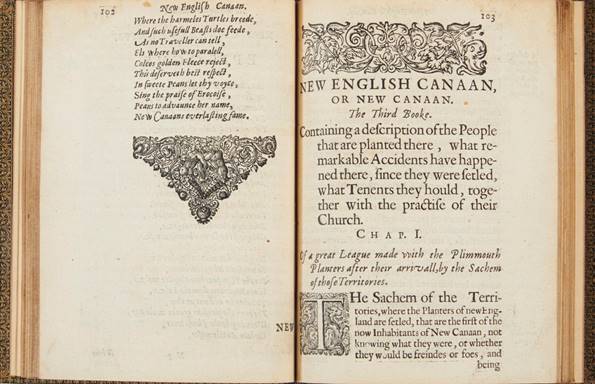
If you have a spare 35 grand or so, you now have a shot at a rare copy of the first book banned in America. Christie’s Auction House in New York recently announced that it will be auctioning a copy of New Canaan by Thomas Morton, a 1637 political satire that caused outrage among New England Puritans for its attacks on Puritan beliefs. As a result, the book was banned in America, and Morton became a celebrity overseas. 

New Canaan was Thomas Morton’s revenge against Puritan colonists who had banished him from America. After attempting to start a free community in New England, Morton was arrested and sent back to England for inviting the native Alongquin people to a pagan maypole celebration in his new community. In response to his banishment, he wrote New Canaan, which satirized and reprimanded the colonist Puritans while elevating the morality of the noble Algonquin people. With the help of Ben Jonson and other literary figures of the time, Morton wrote and published his manifesto, which denounced Puritans and called for a diverse, free community called New Canaan to be settled in the New World. New Canaan made Morton a political celebrity, and was immediately banned in Puritan colonies. 

This book’s material is a bit more forgiving than the Puritans were.

If you love the idea of getting your hands on a book that invoked the wrath of the Puritans, you might wonder what it takes to keep a volume like this in good condition. According to John Overholt, curator of the The Donald and Mary Hyde Collection of Dr. Samuel Johnson/Early Books & Manuscripts at Harvard, “The number one rule for taking care of rare books is that they want to live in the same space you do, not an attic, basement, or garage.” No matter how well a rare book might fit in your attic along with all your other haunted paraphernalia (dusty travel trunks, mannequins wearing moth-eaten ball gowns, strings of skeleton keys that don’t open any known locks), please remember that these books will do better in clean, temperature-controlled rooms. Luckily Mr. Overholt also states, “The good news is that when this book was printed, paper was made from rag fibers, not wood pulp like modern paper is. It’s usually very strong and soft—brittle, crumbly paper is more common in books from the 19th and 20th centuries.” This book’s material is a bit more forgiving than the Puritans were.

Ironically, the Puritans’ censorious attitude probably made this New Canaan sale a much bigger deal than it otherwise would have been.  Mr. Overholt explains, “If there’s a campaign to destroy copies of a particular book or prevent it from being sold, that’s likely to mean it’s rare today, and often the things that made something forbidden in the time it was published make it especially interesting today.” While it’s not always true that every banned book is worth more, it’s certainly likely that taboo books will be more interesting to collectors. In the case of New Canaan, only two other copies of the book have been available at auction in the last 30 years, and this 1637 first-edition is valued at a cool $35,000–45,000. For reference, that’s about the cost of a decent-sized home in Cleveland, a tiny home in Sacramento, a month’s rent in New York, or roughly 700 tickets to Electric Literature’s Masquerade of the Red Death

If you don’t happen to have that kind of money lying around, you can find the full text of the book on Project Gutenburg, or a digitized version on the Smithsonian Library website. If you’d like to see a copy of the book in person, visit the British Library’s English Short Title Catalogue for a list of libraries in Britain and North America with copies of New Canaan

I Lived Through the End of the World in a New York Basement

One evening in late July, I huddled in a Manhattan basement, battling radioactive creatures and trying to stay alive in a post-apocalyptic world. Afterward, my fellow survivors and I recapped the events over drinks at the karaoke bar upstairs. 

For me, who avoids performing in public at all costs, spending time with people lined up to sing karaoke was far more unusual than fighting for survival in a post-apocalyptic dystopia. Despite having never played Dungeons and Dragons or any form of live action role playing, coming together with relative strangers to survive a hostile and dangerous world did not feel that unusual to me. The Bunker—part immersive theater, part live-action roleplay and part tabletop game—felt eerily prescient of my future—and the world’s. 
At the beginning of the evening, I was greeted the sidewalk by Ian McNeeley, artistic director of Broken Ghost Immersives and co-creator of the Bunker. Dressed in a hazmat suit, he led me down a steep, narrow staircase into an arts space called Wildrence. After introducing all the participants, McNeeley informed us of our circumstances: following a nuclear catastrophe, the world was uninhabitable and we had been kept in suspended animation for 114 years in a “deferred existence bunker.” Now we were awake—and running out of supplies. For us to survive, something had to change.
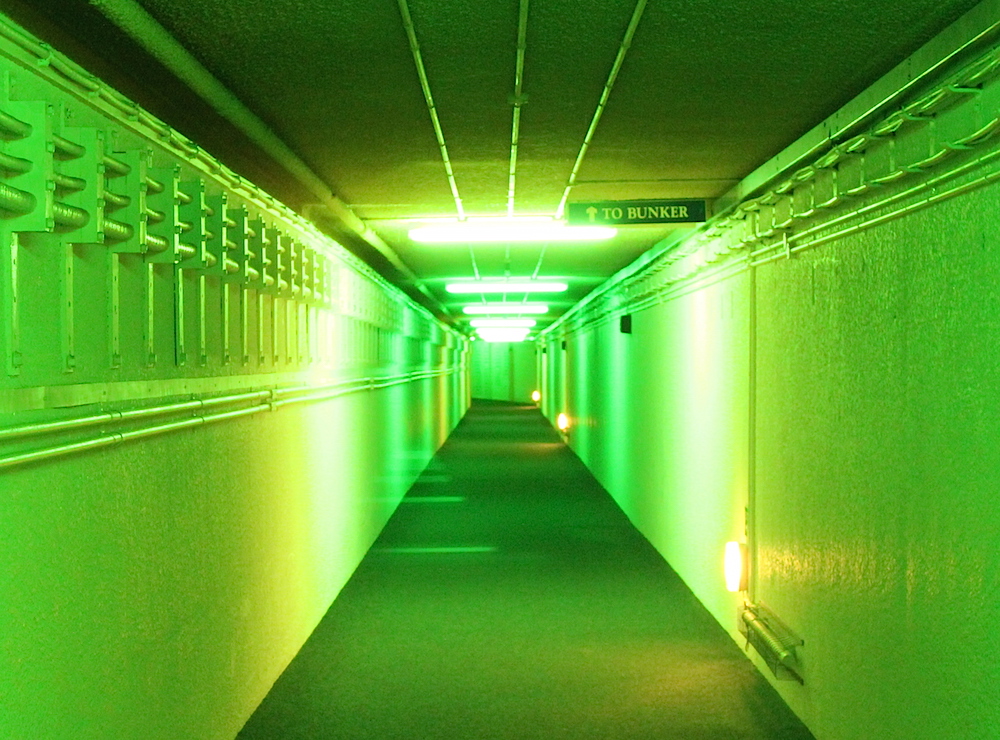
The post-apocalyptic situation felt familiar. But this time, I wasn’t reading or watching. I was part of it.

The situation felt familiar. There have been enough post-apocalyptic dystopian books and movies released in the past few years for me to read and watch until the real thing actually takes place. And given the current state of the environment, it might not be that long. But this time, I wasn’t reading or watching. I was part of it. Not only that, but I was a member of a group, and our group was in danger. Our bunker was stocked with some rations, but there weren’t enough for everyone and we were running out. There were 13 of us and just six hazmat suits. 

I was nervous. I had walked into the room knowing no one, while almost everyone else had come in pairs and groups. I needed to find some allies, and fast. In situations like this, loyalties form quickly and just as quickly broken, and I was curious to see how these relationships would change as the night went on. I expected drama—fighting for survival would inevitably bring out everyone’s primal instincts. The question was: who would betray whom and how deep it would go?  

The groups formed. Scattered throughout the room, which featured a couch, a few chairs and a table containing our rations as well as a place to create tabletop crafts, we began to plan. Some people ventured out of the Bunker wearing hazmat suits, seeking the supplies we needed to survive as well as fending off attacks from nearby bunkers. (The hazmat suits, as well as the supplies and most other important props, were represented by cards that we carried from place to place.) Different groups of survivors were scattered throughout the wasteland, communicating through electronic tablets. (The tablets were real.) One particularly hostile group informed us that if we did not meet their demands, we would be violently attacked. Reading threatening messages sent electronically, with no idea who it was writing them, was jarringly familiar, but interacting with the other survivors raised the stakes and brought us together. Nothing is more unifying than a common enemy. Even an epic catastrophe hadn’t changed that.

My actions could affect how this story ended and who survived. Did I really want that responsibility?

I had seen all of this before. I’d read it, too. But inside a small underground room, sitting next to fellow survivors on the touch, watching their faces and hearing their voices, was entirely different. It was more intimate, more dangerous—and I was a part of it. My actions could affect how this story ended and who survived. Did I really want that responsibility? And if I didn’t, could I really absolve myself of it? 

Periodically the lights went out and the shelter’s artificial intelligence, DeBUNK, informed us that another day had passed, instructing everyone to consume another serving of the rapidly dwindling rations. Even though the rations, like everything else in the game, were extremely low-tech—the entire experience in the Bunker relied on one costume, tabletop game pieces, the tablets, and one computer—the atmosphere became more and more intense. As we lost members to mutant monsters and others returned wearing signs that proclaimed “HIDEOUS MUTATION,”  informing us they now had missing limbs or newly-sprouted tentacles, the loss hit me hard. 

I kept postponing my own venture out of the bunker, though I wasn’t entirely sure why. Being responsible for other people’s well-being made me cautious, and instead I found myself drawn to the notes that other “survivors” had left behind, most of them correspondence between two people. Another participant and I pored over them, seeking clues about how the disaster took place and how to survive. What had happened? Who had betrayed whom? What was this “goop” we so desperately needed? 

Even in a make-believe apocalypse, I thought, I still want to tell stories. Sure, we might die, but I want to know why. 

The clock ticked on, and the stakes were raised again and again. The more the risk, the more personal it became and the more uncomfortable I became. As I finally ventured outside (into the building’s hallway), I reminded myself that this was all a game but I was apprehensive. If I failed, who else would suffer? And would anyone help me, or would I be left to be eaten by the radioactive dogs? 

The hallway hadn’t transformed, but the atmosphere had. Emotions were high as McNeeley, still dressed in his hazmat suit, informed everyone of their fates. Standing close and maintaining intense eye contact, McNeeley told me I had succumbed to insanity after witnessing the destruction throughout the world. I felt my stomach sink. Even as I thought, “That sounds about right,” I felt a sense of loss and even grief. All of the courage I had worked up to leave the Bunker had been for nothing. If I had stayed, I would have survived. 

Rescued by pure luck,  I rejoined my teammates for our final moments. Time was running out and we were about to lose power—and another Bunker was planning to attack us. I thought fights would break out, but everyone worked together peacefully as we evaluated our options. Why did I expect fireworks? I wondered. Perhaps I had been conditioned by entertainment or even American government to expect dramatic power struggles when the danger was imminent. Instead, even when two people of our group defected and attempted to run away with our getaway van, the group remained calm. There was no shouting or screaming, but the feelings of betrayal were real, as was the sadness when one member of our group was defeated in battle with a radioactive monster.

In this Bunker at least, peaceful, democratic decision-making could take place. If the apocalypse comes, it will probably feel a lot like this, I thought, listening to everyone talk. Participating in the Bunker didn’t include music, special effects or any real danger, but it was the lack of effects that heightened the tension and made it more real. In an actual dystopia, there wouldn’t be dramatic music or closeups of people as they give climactic speeches. There wouldn’t be costumes or gas masks; we’d probably all be dressed like we were tonight. In movies and books, you know when it’s the culminating moment, but here there was nothing to indicate that. It was up to ourselves to evaluate our decisions and their consequences. The weight of these decisions snuck up on us slowly, but there was hardly time to reflect on them as we continued to fight for our survival. 

This is far more realistic than any book or movie, I thought. We’ll only know how important our decisions are after they happen.

This is far more realistic than any book or movie, I thought. We’ll only know how important our decisions are after they happen. A newscaster isn’t going to say, “This is what will cause the end of the world” or “The apocalypse begins today.” We’ll have to stop and think about what’s happening, weigh the consequences and make our choices—actions that often feel rare in a 24-hour Twitter-driven news cycle.

The night concluded with DeBUNK narrating how our story ended. Sitting together, listening to the story was charmingly old-fashioned, reminiscent of telling stories around a campfire—despite the story being told by a disembodied electronic voice—a throwback to the past but also potential foreshadowing of the future. 

The Bunker left a lot to unpack, so our group climbed the stairs to adjacent karaoke bar to recap and discuss. Some were cheerful and some were unsettled. I was in the latter category. I joked that the group had been almost too mature and polite, and the lack of drama or power struggles resulted in the calmest dystopia I had ever heard of. I wondered if I had stumbled into a remarkably mature LARPing community, or had the state of the world caused everyone to take these situations more seriously.

Maybe the Bunker should be required for everyone as preparation for the future. The past three years have inspired so much fear about where the world is heading, but I hadn’t seriously considered how I would react if I was actually fighting for survival. The night had shown me some of what I could do, and what I was scared of. It also showed me that what could be my last day on Earth looked and sounded a lot like today did. It wasn’t going to be drastically different overnight—and because of that, it could sneak up without me or anyone else noticing. 

Was The Bunker fun? In another time or political climate, I would answer yes without a doubt. Right now I would describe it as useful. 

What Does Accountability Look like in the #MeToo Era?

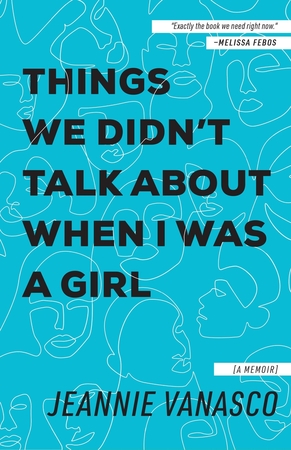
Note: Masie Cochran is Jeannie Vanasco’s editor for her memoir Things We Didn’t Talk About When I Was a Girl.

“I’ll tell him: I still have nightmares about you,” Jeannie Vanasco writes early in her second memoir, Things We Didn’t Talk About When I Was a Girl. The “him” in question is Mark, a man who was one of Jeannie’s closest friends. But when they were both nineteen, he raped her at a party. Fourteen years later, Jeannie is still asking herself why. With this memoir, she extends the why to Mark—interviewing him on the record about the rape and its aftermath.

Buy the book

When Jeannie and I first talked about her idea for this book, the follow-up to her 2017 memoir The Glass Eye, Trump had recently been elected and the #MeToo movement was building momentum. Both contribute to the story Jeannie tells in this book, as she explores the definition of rape; the ways women are socialized to tend to the comforts of men; the necessity of female support networks; and the many ways in which sexual assault is handled (and mishandled) in our society.

At the center of Jeannie’s book are a series of conversations she has with Mark—first over text and email, then over the phone, and then in person. There are no easy answers, but there is real power in Jeannie’s willingness to ask hard questions and dissect the language of sexual assault, pushing against its confines and unpacking its complicated history.


Masie Cochran: I’d like to start things off with the title, Things We Didn’t Talk About When I Was a Girl. Why do you think it is that we don’t discuss many of the issues you raise in the book? Do you think things have changed at all since you were a young girl?

Jeannie Vanasco: My undergraduates ask me the same questions I asked myself at their age: What counts as sexual assault? Was it bad enough to report? What’s the point of reporting if there’s no proof? And these questions usually come prefaced with “I haven’t told this to anyone else.” I wrote this memoir for a lot of reasons, but mostly I wrote it for my students—when I realized that, in a lot of ways, things have not changed. Men still overwhelmingly wield enormous power. I mean, a bunch of men added Clarence Thomas to the Supreme Court when I was a girl, and now a bunch of men (including two who voted for Thomas) hurriedly made Brett Kavanaugh a Supreme Court justice instead of pursuing a substantive investigation. His nomination arrived after I finished writing this book, as did a white noise machine that I blasted while crying in my campus office as I watched him shout about liking beer. 

#MeToo is about empowering and supporting survivors, and holding perpetrators accountable.

But my belief, perhaps head-in-the-clouds, is that some things have changed. Americans definitely seem more interested in talking about sexual assault—more so than when I was a girl. But a lot of us feel silenced when our thoughts and feelings clash with how we’re encouraged to think and feel. For example, the shame that I felt in 2003 when the rape happened and the shame that I felt in 2018 when writing this book made talking about the rape really hard—yet the shame existed for different reasons. In 2003, I felt shame because my behavior conflicted with popular portrayals of the good victim: I’d been drinking that night, I didn’t fight back, I froze. And then in 2018, I felt shame because my thoughts and feelings conflicted with those voiced by #MeToo supporters I admire: I didn’t hate the guy, I didn’t want him locked up, I didn’t even know if I could call what he did rape—and I actually wanted to talk to him, to ask him how the experience had affected him. 

MC: As you mentioned above, your memoir dovetails with many concerns raised by the #MeToo movement. What do you think it means to release a book during this particular moment? 

JV: #MeToo is about empowering and supporting victims/survivors, and it’s about holding perpetrators accountable. Some of us may disagree about what accountability looks like. But #MeToo is massive enough and sturdy enough to hold different points of view. It’d be pretty weird if every #MeToo supporter agreed with one another about important subjects, such as statute of limitation requirements. Reaching a common goal results from passionate, messy disputes—within a movement—about how that goal can be reached. 

And now, having written this book, I’m interested in the different reactions that it will elicit. Not every reader will agree with my approach. And that’s okay. That’s healthy. Though it won’t be healthy for me to comb the internet for reactions—so I’ll probably unplug for a few months and stick to in-person discussions. Mostly, I want readers to come away from my memoir with a deeper understanding of how they consume and interpret someone else’s story of sexual assault. 

MC: Your female friends also play a large role in the narrative. How did talking with them enable you to work through this material? 

Some of us may disagree about what accountability looks like. But #MeToo is massive enough to hold different points of view.

JV: Their questions and critiques helped me interrogate my own motives and reactions as intensely as I interrogated my rapist’s. They read the transcripts of my conversations with him, and they pointed out instances where he was manipulating me, whether consciously or not. My friends—all strong feminists—also made me feel better about sticking with this project.

MC: You see yourself as a feminist, but worry in the narrative that you might disappoint other feminists. Where you do you think this worry comes from? What do you hope your book might generate in terms of conversations amongst women? 

JV: My friends often talk about perpetrators as irredeemable. And statistics point to perpetrators as being repeat offenders. So my friends didn’t think it was a great idea to talk to the guy who raped me. And I understood their rationale. But I wanted to believe—still want to believe—that people are capable of change, or at least capable of remorse.

I hope, too, that the book reaches readers regardless of their gender identity. I hope it helps any victims/survivors who feel guilty about feeling other than how they’re “supposed” to feel or have been taught to feel. And it’d be great if men would read this book and talk about it with other men as well as with teenage boys. This reminds me: I was recently on a plane. I had a notebook on my lap and was staring off into space, and the couple next to me asked if I was a writer. I thought, Oh great. But I told them yes, and then they asked what I write. And we ended up discussing the topic of this book. And the woman was incredibly interested in talking about it. The man seemed interested, but then he said of his partner, “She’s really into #MeToo.” I wish he’d said, We’re really into #MeToo. 

MC: Outside of your interviews with Mark, your partner, Chris, offers a male viewpoint. How might the book have been different if not for Chris’ perspective?

JV: Women are conditioned to prioritize the feelings and wellbeing of others. Chris encouraged me to focus on my own feelings. But my female friends also encouraged me to focus on my own feelings. So I’m not sure if Chris’s perspective was particularly gendered. 

I wanted to put the focus on my rapist, instead of having readers focus on me, on any perceived unreliability, on what I could have done to prevent or stop the assault.

Chris’s perspective helped, though, because he could offer insight about memories that I’d forgotten. For example, when I began writing the book in January of 2018, I thought that my nightmares about the rape had happened mostly after the last presidential election. But Chris said they’d been happening when he and I started dating in 2009, and would happen every few months after that. 

Now this part risks sounding retrograde, like when somebody’s response to a man pushing a stroller is “What a good dad,” but I’ll mention it anyway—in case it inspires other men to step up: while I drafted the book and taught, Chris handled what were otherwise shared domestic responsibilities, such as the laundry, the cooking, the cleaning, the groceries. A telling anecdote: our local grocery store did some remodeling while I was writing the memoir. After I turned in the manuscript, I went to the grocery store and couldn’t find the entrance. 

MC: Your first memoir, The Glass Eye, was a consuming memoir that took you more than a decade to write. Both that book and this one address events from your teenage years, but in very different ways. Did you feel you had to write one before the other? Did writing The Glass Eye help you to write this?

JV: The Glass Eye was a deathbed promise to my dad, and writing it became an obsession. Anything else I tried to write transformed into writing about my dad. My grief for him caused me to push aside my feelings about the rape—and about pretty much everything else. I didn’t realize how much the rape had stayed with me. 

And after publishing The Glass Eye, which covers my experiences with psychosis, I felt extraordinary pressure to seem reliable in this book—and I hate that that’s the case. But on my tour for The Glass Eye, I was asked about my hallucinations all the time—how did I know that what happened had happened? I didn’t want to go through those kinds of questions again. I wanted to put the focus on my rapist, instead of having readers focus on me, on any perceived unreliability, on what I could have done to prevent or stop the assault. I wanted him on record saying that yes, he knew what he was doing was wrong. I wanted him to confirm my memory of that night. Which is messed up, sure. But as a writer, I’m interested in exploring complicated desires.