Leslie Jamison Is Hauling Out Her Emotional Baggage

In Make it Scream, Make it Burn, Leslie Jamison returns to the essay form that first brought her to literary fame.

Buy the book

After graduating from the Iowa Writers Workshop, Jamison published a novel The Gin Closet. But it was her second book, The Empathy Exams, that won Jamison widespread acclaim. Debuting on the New York Times bestseller list, the collection of essays was praised for its unique blend of memoir, journalistic writing and criticism. Her follow-up memoir, The Recovering: Intoxication and Its Aftermath, explored her alcoholism and sobriety alongside popular narratives of recovery.

The 14 essays in her most recent collection reflect evolutions in Jamison’s interests and personal life. The subjects of the essays range from reincarnation to visiting post-war Sri Lanka to marriage and pregnancy. But across them all, Jamison returns to what anthropologists would call a stance of “self reflexivity.” Her book constantly asks what is the relationship of the researcher (or writer) to her subject? How does this relationship act upon and inform the subject, the writer and the writing itself?

In our email exchange, we dove into how the tools of fiction shape her essays and how profound meaning can—and indeed must—be found in the day-to-day.


Raksha Vasudevan: The book is divided into three parts: “Longing,” “Looking,” and “Dwelling.” As the book progresses, the essays become much more personal, with the last section exploring your grandfather’s death, your marriage, and pregnancy. How and why did you decide this time to begin with phenomena in the larger world, and then turn towards your own life?

Leslie Jamison: The flip cocktail-party answer to that question is that I was sick of myself and wanted a break from my own life—or at least, my life as material. But whenever I teach, I tell my students to dig beneath the topsoil of their cocktail-party answers (I also tell them not to mix metaphors!) and find the messier truth lurking underneath. So here I go, digging: I think that turning from introspection to the world beyond (as I did in The Empathy Exams), turning from the external world back to the self (as I do in this book), or shuttling back and forth between them (as I did in The Recovering, exploring addiction and sobriety) are all ways of illuminating the ways we bring our emotional baggage to the world, and bring the world back to our baggage—the ways we are always seeing other people, other art, even nature itself through the cracked lenses of our aches and longings. 

I tell my students to dig beneath the topsoil of their cocktail-party answers and find the messier truth lurking underneath.

In this book, it felt like a fruitful experiment to begin the collection with some of the longform reportage I’ve been doing for the past five years, and then confess some of the personal reckonings that were informing my reportorial obsessions: How was my interest in digital avatars as a form of escape connected to my feelings about domesticity and starting a family? How was my investigation of reincarnation connected to my broader obsession with the “past lives” of former relationships and the residue of breakups? 

Part of the pleasure of a collection is that you don’t need to spell out all these collections; you can let them live—and remain multiple, generative, simultaneous—in the arrangement itself. For the essays that were previously published, almost all of which were substantively revised anyway, I believe they become something differently layered when they are put in the echo chamber of the collection—in conversation with other pieces in this way. 

RV: The essay from which the collection takes its name focuses on James Agee’s “Let Us Now Praise Famous Men,” a book about tenant farmers during the Great Depression. You remark that the author himself “is tormented about what it finds beautiful”—something that could be said of you, the narrator in this book, whether you’re writing about your own body, a woman you meet on a layover who at turns irritates and moves you, or a museum dedicated to objects from failed relationships. Is it possible, in your opinion, to find (and write about) something beautiful without feeling some torment or ambiguity about it? 

LJ: It’s funny; I’m typing my answer to this (very smart!) question as I sit in a park near my home, with my first childcare in a week, watching a man slowly unfurl and then fly a kite bearing the Jamaican flag—green and yellow and black and red—with a long trail spelling J-A-M-A-I-C-A, and I was freshly struck by the primal awe of a kite: how it satisfies some deep human impulse, something slightly beyond language, to make something FLY. It does what we can’t.

I found myself speculating about this man’s story—fiction-writer at heart, always, I’d rather wonder than ask him—and whether he misses home, whether that’s why he’s flying this kite; why he’s alone on a Sunday afternoon (as I am, too). Point being: I can’t seem to find a way of encountering or writing about this beauty without somehow providing the chiaroscuro of darker tones: homesickness, aloneness. Why is that? Why does beauty invite torment or ambiguity? There’s an aesthetic imperative here, sure, some version of Newton’s Third Law of Motion: For every beauty, there exists an equal and opposite force…That somehow it would be unsatisfying or too easy to simply let beauty stand unencumbered; that it requires some darkness to be compelling. But I think it’s ultimately about honesty rather than aesthetics.

When I’m finding the pain in the beauty—the heartbreak underneath the beautiful relics of love, the difficult and messy real lives behind the glossy online paradise, the residue of civil war lurking behind the Sri Lankan tourism industry—it’s less about craft, and more about recognizing that essential truth: No beauty exists in isolation. It’s all dappled with pain like shadows on grass. 

RV: In the essay about Annie Appel, who kept returning to Mexico to photograph a family over 25 years, you make this observation about artists like her: “photographers who take ordinary people as their subjects and insist on the importance of their ordinary lives.” Was that also a guideline for choosing the subjects of this collection? Has this imperative—to center “the importance of ordinary lives”—changed over the past few years, in light of recent political events (where “extreme” characters and views garner much of the attention)?

LJ: It’s certainly part of what compelled me about Annie’s work—that her photographs document an ordinary family, and that everything that feels infinite about her work is a testament to the infinitude of any given ordinary life. I believe in that infinitude absolutely. That’s certainly part of why I find myself documenting regular folks—regular folks obsessed with a whale, regular folks creating online lives, regular folks donating their toasters to a Croatian breakup museum. It’s an idea that was at the core of my last book, too: The Recovering explores how “ordinary” stories help people stay sober not despite their ordinariness but because of it.

It seems like we’ve accepted the premise that fiction can be about ordinary lives—and still hold meaning, profundity, etc.—much more readily than we’ve accepted it in nonfiction, where there’s still some idea that it’s hubristic to write about your life if you haven’t, like, died in six car crashes. I think it’s fascinating to put this idea—about the significance of ordinary lives—into a political context: so many politicians appeal to the “common man,” or position themselves as his advocate, but you are absolutely right that the news cycle inevitably caters toward extremity. Maybe this is part of the role literary writing can play in the ecosystem of all our cultural narratives: it can direct its gaze toward quieter lives, for more sustained periods, and find their truths, too. 

RV: Another recurring theme in this collection is letting your subjects—even yourself—subvert the narrative you anticipated they would slot into. Consistently, you anticipate certain reactions from yourself and others, and end up with quite different ones. Is this for you the most exciting thing —this subversion of expectations—that an essay can do?  

LJ: I love surprise. I used to struggle with the fact that an ex-boyfriend told me he was “rarely surprised by anything,” which made me insane because I wanted to surprise him AND because it felt like such a cloistered way to live. The comedian Kyle Kinane has a great bit about burning his own laundry and not even knowing it was possible to burn his own laundry, and partway through he tosses off this little bit of earnest profundity that most comedians wouldn’t be caught keeping hidden in their pockets but he just openly owns: “All a miracle is the world letting you know it can still surprise you.” (h/t Mishka Shubaly, a wonderful writer and another guy breaking down boundaries between funny and profound…). It’s so beautiful! And so true! And such a weird, optimistic thing for a comedian to say! In a weird way, the fact that it’s surprising to hear him say it makes it an enactment of precisely what he’s describing. 

In any case, as a writer, surprise is one of my holy grails. I know I’m on the right track when I surprise myself during the course of my reporting/remembering/revising. Often, I like to keep the fossils of my own expectations layered into the piece, so that the surprise is something that the text actually dramatizes, rather than simply a secret history buried inside of it. I like the essay to confess that I thought it was going to be an essay all about my drunk air force pilot grandfather, but it ended up becoming about my suburban father/brother instead…or that I thought I was going to be ruthlessly skeptical about folks with past life memories, but ended up feeling a kind of tenderness toward their beliefs. Illuminating the arc of surprise across a piece is one of the most satisfying intellectual plotlines available to the essay, I think. 

And now the Jamaican kite has fallen to the grass! The man is struggling to make it fly it again, but it keeps falling down—and this, of course, is where the heart of the essay lives: in the falling kite, rather than the flying kite; in the ways the story takes another turn. 

RV: Pain is another theme of both your last essay collection and this one: the ways we bear it, try to escape or ignore it, and sometimes even long for it. In the essay on Second Life, for example, you write about a woman with multiple sclerosis who rides waterslides and another with bipolar illness who rides horses through a virtual Yosemite. But in writing about your eating disorder and your pregnancy, you discuss the relief that these particular types of suffering both induced. What fuels your ongoing urge to write about pain? And what is it, in your opinion, about the nature of pain that births all these diverse reactions or emotions?  

No beauty exists in isolation. It’s all dappled with pain like shadows on grass.

LJ: Yes! This is a beautiful observation. We seek ways to escape pain, but it also—often—offers an ineffable kind of relief. It can consolidate us. Part of that consolidation resides in the fact that we get a sense of ourselves and our edges from pain; we exist in it. But I think it’s naïve and sort of blind to talk too much about what’s generative or appealing about pain without acknowledging that most of the time—and certainly in the most extreme cases—it’s just painful. Randall Jarrell said it pretty well in 90 North: “Pain comes from the darkness / And we call it wisdom. It is pain.” So sometimes you just want to build an online world and ride its waterslides. Or go skinny-dipping at night.

In an essay called “Young Adult Cancer Story,” the wonderful writer (and my dear friend!) Briallen Hopper writes, “pain makes demands, but being felt is not always one of them.” This is an essay about taking care of a good friend with terminal cancer, and living through what they called “The Summer of Care and Delight,” just after her diagnosis: drinking vinho verde, re-watching Mystic Pizza, driving down Alabama backroads with an open bag of hot Atomic Fireballs between them…I love that notion, as a writer and a human being, that we can document pain not only in terms of the price it exacts from us, but in terms of the beauty it inspires us toward. 

RV: Part of what makes your writing so compelling is that you are comprehensively honest about your judgements and thoughts towards situations and characters, especially when those reactions might be considered shameful. Do you think this can ever go too far? That is to say, can an essayist ever be too honest?

LJ: There’s a brief scene in the final essay in the collection—“The Quickening,” which is a piece about pregnancy and anorexia but really about longing and expansion, how and when we permit ourselves those states—where I recount a man in my first nonfiction workshop who said, in response to one of my pieces, “Is there such a thing as too much honesty? I find it incredibly difficult to like the narrator of this essay?” In the piece, I’m using this comment to explore the divide between the “unlikable” woman who is too obsessed with her own pain, and the “likable” woman who is gracefully gestating another life. But it’s also a way of thinking about the shame of being “too much,” a shame that the essay is reckoning with from a thousand directions, and one of the things I’ve been trying to reckon with my whole life: the fear of having too much body, too much need, too much pain on the page. Part of what was fascinating to me about pregnancy was that it felt like a state in which the cultural script finally—for once—not just accepted but mandated that I be “too much”: that I eat as much as I wanted, that I make my body large.

Which is all to say: I’m quite interested in the dynamics of excess, and what it even means to call a narrator or an essayist “too honest.” What veins of discomfort inspire that critique? I’m suspicious of the sweet spot of honesty that grants the texture of revelation without really risking anything. I like Phillip Lopate’s dictum on confessional writing: “the trouble with most confessional writing is that it doesn’t confess enough.” I think often, for me, the material or judgments that feel shameful also hold important truths—which doesn’t mean you disclose them for the sake of disclosing them, but you might be able to follow them to generative insights. 

RV: In all of your writing, your recall of detail—around setting, what you ate, what you and others looked like—is remarkable. Do you keep a diary? Do you keep it with the intention or potential for using the details in your essays?

LJ: Whenever I’m reporting, I take meticulous notes. This partially comes from my background as a fiction writer: I’m obsessed with world-building, visceral specificity, and the small details that pull together a scene or a character: the purple hair scrunchies and bent spoons of this life. The fiction writer who wants to have access to all those details is constantly coaxing the reporter—immersed in the scene itself—to take better notes, so I’ll have it all available to me when I write.

How do we relate to our own longings? How are we defined by the things we don’t have? How are we shaped by our fantasies as well as our realities?

In terms of lived experience, I have kept a diary—inconsistently, but ongoingly—for much of my adult life. I’d say my diary has definitely become less wholly abstract, and more populated with concrete details, over the course of my life. That’s less about intentionally wanting to mine my diaries for details down the road, and more about the ways I noticed that putting down concrete specifics—what I ate for breakfast, what I saw on the side of the highway—meant my diaries captured the world (and even, often, my mood in the world) more fully than when I stayed ruthlessly interior. When I talked to Chris Kraus for Interview Magazine a few years ago, she and I had an exchange about precisely this phenomenon, the impulse to make your diary more exterior and concrete. I loved how she described the diary as a kind of self-reporting: “I realized that a diary is a kind of report—or self-reporting. And if you report, you have to give details.”

And now the Jamaican kite is back up! Higher than it’s been at any other time this afternoon, maybe a hundred or two hundred feet up—as high as a high-rise. And it’s not that I know what it’s a metaphor for—just “things can fly again, even after they’ve fallen?” Could it be that simple?—and more that I’m interested in transcribing it—the kite going up tentatively, coming back down, going up again—and maybe later these details will arrive in service of some question I’m reckoning with. Sometimes it’s liberating to just transcribe the world and let the meaning filter in later. 

RV: In your essay on visiting Sri Lanka, you quote a journalist who says he would only go to Jaffna, the city at the heart of the 30-year civil war if he felt “useful” doing so. This idea of utility runs throughout the collection: the utility of writing and art, of witnessing and telling ourselves stories about what we’ve witnessed. How do you think about usefulness or utility in relation to this book specifically? What purpose do you hope it serves?

LJ: The great anxiety! What good is writing, anyway? Or rather, what good is this writing? How is it useful? There’s a particular kind of utility that the journalist in Sri Lanka was referencing—in terms of active contribution to social justice—that I think it would be naïve to pretend like my literary essays were really making a dent in.

But yes, I think about usefulness. And yes, I hope this book is useful. I hope it invites people to think about certain ideas in new ways: Where do we find surprising sources of solace and community? How do we relate to our own longings? How are we defined by the things we don’t have? How are we shaped by our fantasies as well as our realities? How does it shape us—challenge us, terrify us, inspire us—to show up for daily intimacy? Ultimately, I’ll always be a bit of a romantic when it comes to literature, because I’m such a devoted and desperate reader—I need books. I crave their company. I crave their disruptions. And my belief in the utility of my own work is a function of that craving: If I could just write something that offered some fraction of the grace I’ve felt as a reader, that would be enough.

An Agent Explains the Ins and Outs of Book Deals

Everyone wants to write a book, or to say they have written a book. Publishing a book is still an honor, a point of pride—but like pretty much everything else, it’s also dependent upon a capitalist business model. And the financial side of publishing can be opaque, unfair, and downright contradictory. Combined with the distinctly American habit of not wanting to sully talk of artistry with talk of money, this means that many people who want to make writing their full-time career have no idea how the money part of writing actually works. In this TED talk I will answer some of the most common questions I get as a literary agent about the money side of things. I will try not to make it too depressing. 

Note: this information is based on the American traditional book market, and won’t necessarily apply to other countries, or to self-publishing. 

How much money am I going to get for my very, very good book?

This is the single most common question I get from my clients, and other people when they find out I’m a literary agent, and I respond with a very infuriating “$5,000 to $50,000.” Most times, though, I’m right! I have sold books for both more and less than those amounts, and to be fair, there are many genres where I can estimate a much smaller spread. But the total advance depends on so many things, including the quality of the work, the sales potential of the work (not the same thing!), the author’s platform and/or previous sales, the zeitgeist, the “market,” how many  other editors are interested (if any), how similar books have performed for the publisher and/or other publishers, and many, many other things. Because there are so many factors, there’s no “average” book advance. $1,000 is rare. $1,000,000 is also rare. 

What does it mean when you say “advance?”

Because there are so many factors, there’s no ‘average’ book advance.

A book deal is not patronage for your sheer talent, or even direct compensation for the hours you have toiled to create the book. It is an advance against what the publisher thinks your book will earn. The publisher takes a financial risk on your work. If your book doesn’t sell well, you don’t have to pay it back—the publisher assumes that risk. But you do have to sell that much in books to earn anything more on top of that. 

Oh, is that what royalties are?

Yes, royalties are what you get when you “earn out” your advance. You earn a percentage of each book sale, and that adds up against your total advance. When you earn more than that, you get royalties. Here’s how that works. (Math incoming.) 

A common royalty rate is 10% of the cover price of the book. If your book retails for $25, then you earn $2.50 a book. (There are different rates for different formats and you can negotiate higher royalty rates, to a point.) If you get a $10,000 advance, you have to sell 4,000 copies of the book to earn any more money (10000/2.5 = 4000). There are many books that do not sell 4,000 copies and plenty of books that do. 

When can I quit my job?

You probably can’t! You’ll see why soon.

When will I actually get money?

Your advance will be broken up into several payments, anywhere from two to four depending on how big your advance is, how you negotiate, etc. First, you’ll get a portion after you sign the contract. Having your agent review and vet your contract, signing it, getting it countersigned by the publisher and waiting for the publisher to send your check can take several months. Then you’ll likely get a portion when you are finished writing AND editing, editing again, and editing some more. This could also be months after your contractual delivery date, which could be six months to a year after you sign the contract. You may then get another portion when the book is published, which is almost always about a year after you deliver the manuscript. Even if you got an $100,000 advance, you might get $33,333 when you sign the contract, but after agent commissions and taxes (YMMV), you’ll probably net a little less than $20,000, and you might not get another check for a year.

Sooooo when do royalties checks come?

Royalties are calculated and paid out every six months, but according to a fixed schedule that differs from publisher to publisher. For example, one major publisher sends their royalties out in April and October. The April statement and money (if any) covers books sold from July to December of the previous year. The October statement and payment covers sales made from January to June. Yep! Statements are about 4 months old when you get them.

You have got to be kidding me.

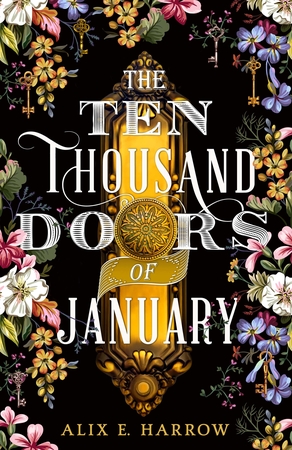
Nope! It’s true! Publishing is a consignment business. That means a wonderful place like Books Are Magic can order, say, 1,000 copies of the fantastic novel The Ten Thousand Doors of January by Alix E. Harrow (just to pick a random book with a great agent!), and if they only sell 955 of them, after a while, they can send the remaining 45 back to the publisher.  These are called “returns” (for obvious reasons), and publishers have to wait for them to come back before they pay the author royalties, or they’ll overpay everyone all the time and go bankrupt. 

Oh, is that why I can’t find out how many books I sold hour by hour, like how you can see website traffic and stuff?

Yes! There isn’t a single book-tracking entity that reports all books sales from every retail outlet and makes that available to everyone. There is something called BookScan, but it’s imperfect at best and infuriating at worst (getting into why would be a whole other article). The publisher can see the sales of their own books, but they don’t (yet, fingers crossed) have robust and detailed author portals to share that kind of information. 

If I don’t earn out my advance, will I ever sell another book?

Earning out does not dictate whether you’ll sell another book, for better and worse. Publishers do look at that, and earning out, or getting respectably close to it, does factor into their decision-making, but it also matters if your book is good, has sales potential (not the same thing!), how your platform has improved (or not), the zeitgeist, the “market,” how similar books have performed, etc., you get the picture. Once you have a book and a sales track record publishers will consider that in making future decisions about your work, but it’s not earn out or GTFO.

Okay, but can’t I just write 16 books at the same time and then make a living wage?

You probably can’t. There are clauses in a book contract that prevent you from directly competing with your own work and something called an option clause that gives your publisher dibs on your next book, but only after you’re done with the first. It’s complicated. That’s why you probably want an agent (but of course I’m biased). There’s good reason for this, though. If you have a dedicated fanbase, they’ll only be willing or able to buy one of your books at a time. And your fanbase, such as it is, is your strongest market.

Publishing is not a meritocracy. ‘Good’ books don’t get the most money.

But what about that person over there? THEY got a huge advance and my book is way better than theirs.

I know, right? It sucks. But publishing is not a meritocracy. “Good” books don’t get the most money. Besides, what you think is great, someone else thinks is crap. There’s a book out there for every reader, and that’s how it should be, in my opinion. 

Shouldn’t I just write some crappy **~~*commercial**~~* book and cash in?

If you want to? But “cashing in” and “book publishing” don’t usually go hand in hand. If you’ve gotten this far, you can probably see why.

Why does anyone write anyway?

Because people, writers, readers, interior designers, love books. Books are the best. There should always be more books. You just aren’t going to get rich from them.

Fall 2019 Horoscopes for Writers

After an emotionally torrid summer, this fall settles down (somewhat). Libra, Scorpio, and Sagittarius season are on deck as we get back to work and dig up those projects that may have taken a beat to allow for vacations, mental and otherwise. 

Fall is busy for writers. We’ve got the last Mercury retrograde of the year, traipsing through Scorpio October 31–November 20, which will offer all of us the opportunity to review, renew, revise, rethink, redo. Anything with a re in front of it: that’s the key to working with, and not against, retrograde energy. (But also: back up your hard drive.) We’ve also got lucky, expansive Jupiter changing signs at the tail end of Sagittarius season, right before the winter solstice. If there’s an area of your life that’s been particularly blessed or big this year, chances are good Jupiter was involved. 

What does this fall have in store for you, and for the work? Read more to find out. 

P.S. If you’re into learning more about the nitty gritty of what goes on every other week, you can sign up for my astrology newsletter, geared to writers and creatives: astrology for busy bitches.


Aries symbol

ARIES

If the summer was about creative inspiration and getting a handle on your daily routines, this fall is all about partnership and shared resources—and what you can build with and through them. Libra season, in particular, puts the spotlight on your most committed relationships—romantic and business. As writers, we get into bed with people by way of contracts all the time: literary agents, publishing houses. Who are you in partnership with, and why, and what kinds of resources are both of you bringing to the table? A full moon in your own sign on October 13 puts particular emphasis on making sure that your individual needs are being respected in any ongoing negotiations. 

Meanwhile, Jupiter, that big ol’ planet of bounty and good fortune, is finishing its year-long trek through your zone of travel, education, long-term journeys, and—most notably—publishing. Have you taken advantage of this extra boost, Aries? If you haven’t, be sure to pitch your ass off this fall—especially after Jupiter finally and fully clears Neptune in the week following September 21. It’s clear skies from late September through early December, when Jupiter enters Capricorn and your zone of career and public image. Get ready to take that pitching energy you worked on during Jupiter in Sagittarius and put some long-term strategy behind it. This is an entirely new glow-up coming your way, one that will hopefully capitalize on the advances you’ve made in the realm of publishing and/or education this year. 

Aries writer inspo: Flannery O’Connor, Eudora Welty, Maya Angelou

Taurus symbol

TAURUS

For you, Taurus, this summer was about creative nesting: about really refining your relationship to your regular writing schedule and to your nearest and dearest—the folks you let into that inner circle when you’re in the thick of imagining. As we move into fall, the emphasis moves to a more expanded vision of your daily routines: how you’re taking care of your body, and how that subsequently impacts your partnerships and the resources you share and create within those partnerships. You feel and create from your body more than most, and making sure that you have a schedule and routine (however limited or liminal) that keeps you in your ideal state of being is the focus as we enter Libra season. The full moon in your own sign on November 12, during Scorpio season, puts an emphasis on how you can reclaim time and energy for yourself, even in the midst of an energetic wave of focus on the other

Meanwhile, Jupiter—the most expansive planet in the galaxy, where we find our luck and fortune—wraps up its journey through your zone of shared resources. Sagittarius season puts a particular point on whatever issues around shared intimacies you’ve been working through this year. It’s hard to be vulnerable, especially in business, but if you used this energy to your benefit, then there was a lot to gain. And this will help you as we move into 2020. In early December, Jupiter enters Capricorn and your house of publishing, education, and long-term journeys. What projects are ready to move to center stage, Taurus? 

Taurus writer inspo: Angela Carter, Adrienne Rich, Louise Gluck

Gemini symbol

GEMINI

Summer was about the fundamentals: getting your money, everyday communication, and home in order. Fall? That’s where you see the payoff, Gemini: how getting the everyday essentials in order sets you up for creative success. This fall highlights your creative energy, how that funnels into your work routines, and then—finally—how you manage all of those things in your committed partnerships. There is a transition in this season, for you, from considering your individual needs—what you require for the writerly life you want—to an expanded bigger picture (cause you’ve been growing, growing, growing). What does that look like when you bring people like editors, agents, and writing groups into the fold? How does your creative energy blend with, nurture, and perhaps even challenge those around you? On a very pragmatic level, Gemini, how has your creative growth this year impacted your personal relationships? These are all questions that will come up for you this fall—and success lies in the road directly chosen and communicated. A full moon in your own sign on December 12 highlights this choice. 

But then, you’ve had some practice this year at considering your own needs both with and against the demands of partnership—professional and otherwise. Jupiter, the largest, luckiest, most expansive planet in the sky, has been traipsing through your opposite sign of Sagittarius and, consequently, your zone of committed partnerships. Perhaps you’ve seen some luck in the realm of folks wanting to partner with you long-term on professional, creative projects; perhaps this has manifested in a more personal way. Jupiter is at home in Sag, where it can do so much good if we work with its energy consciously: you’ve got until December 2 to take advantage of this transit before Jupiter enters Capricorn and your zone of shared resources, where new blessings and challenges (and perhaps, even, a book deal) await. 

Gemini writer inspo: Gwendolyn Brooks, Louise Erdrich, Jamaica Kincaid

Cancer symbol

CANCER

Summer is your season, all about renewing yourself as a snake sheds its skin. You get to reconsider your sense of value (and what you value); you take another look at how you best communicate. And then, before you know it, we move to fall, where it’s still all about your individual needs, but where we press deeper. Where that work you’ve done around identity and value provides the building blocks for any changes that need to happen around the home (Libra), for a renewal in creative energy (Scorpio), for how your daily routines may need to find a little more room to breathe to fit this new self you’re building (Sagittarius). Fall is about praxis; it’s about putting the version of you that you want to build into practice. Easier said than done. 

There are blessings to be found in this work, if you accept the journey ahead. Jupiter, that big, beneficent bringer of blessings, has been sifting through your daily routines and your relationship to your own body: what do you quite literally, physically, require for daily success, whatever “success” means to you? How can you best support yourself? This is the question Jupiter asks. In Sagittarius, Jupiter has been home and consequently particularly powerful; we all have until December 2 to work with this Jupiter in Sag energy before Jupiter moves into Capricorn and your zone of committed partnerships for the next year. What 2020’s Jupiter transit will bring for you, who can say: perhaps new agreements or renewals in your most important relationships, perhaps—if you’re in the market—a new partnership with someone who is just as committed to your career as you are. Focus on laying the track now. 

Cancer writer inspo: Jhumpa Lahiri, June Jordan, Lucille Clifton

Leo symbol

LEO

For you, Leo, summer is complicated: you move from a deeply contemplative state in Cancer season to complete and utter buoyancy in your birthday season to and how do we put everything together and reshape our values? in analytical Virgo. If you’ve been feeling it lately, there’s a reason why! But fall moves you further into that stage of building or, perhaps, rebuilding: of considering what kind of communication most feeds you, what kinds of workspaces—and work/life boundaries—you need in the home, and then, at last, how you can best work with your creative energy. Everyone’s life is individual, of course, but these are major themes that are on the table for you as the days get shorter. 

The big story this fall is that Jupiter, the planet of big faith and big luck, is wrapping up its journey through Sagittarius and your zone of creative and erotic energy. If you’ve had big ideas—and a correspondent thirst for inspiration—this year, that’s where that energy is coming from. This energy is a huge blessing for the artistically inclined, especially for short-term flings and generative new directions you’d never before considered. You’ve got until December 2 to take advantage of this transit, when Jupiter goes into Capricorn (your zone of daily routines and health) and asks you to take a serious look at what is and isn’t working when it comes to your physical body and its relationship to your work. 

Leo writer inspo: James Baldwin, Beatrix Potter, Alexander Chee

Virgo symbol

VIRGO

Fall is about moving through the deep internal work you’ve been doing around your communities and subconscious patterns and into a renewed sense of self: how are you using the information you gained over the summer to transform your sense of value, your communication patterns, and your very conception of home? These are foundational questions, Virgo, that may not always be explicitly about the writing but that deeply inform the writing: an ever aware and evolving understanding of self—and the foundations on which you build your life—is what lends a sense of stability to your ever growing body of work. 

So: home. Let’s talk about that. If you’ve had changes around your home that felt more inspirational than oh fuck, that was Jupiter, sifting through the base of your chart throughout this entire year. This may have felt sensitive—planets, no matter how lovely, pushing on this particular zone usually bring up tender things. But you’ve had opportunities to bring changes to your home that serve who you are now: what are you creating for yourself? These changes could have manifested physically, by moving or redecorating a home office, or conceptually, by working through deep-seated beliefs around your ideas of home and family. And the transit isn’t done: Jupiter will be in Sagittarius until December 2, when they move into Capricorn and your zone of abundant (if structured) creative and erotic energy. Yes

Virgo writer inspo: Mary Oliver, Leslie Feinberg, Stephen King

Libra symbol

LIBRA

Happy birthday, Libra! You are probably ready to take a load off, because for you, Libra, summer has been all about the work. Whether getting work done, networking your ass off, or working through some of your most subconscious, self-sabotaging patterns, you’ve been at it. And now, with the fall equinox, we officially enter your season. This is all about taking the lessons from summer and sifting through what works, and what doesn’t: what career goals and friendships serve who you are, now, and who you most want to be—and how are those informed (and challenged) by your roots? As we move deeper into fall, you’ll take these fundamental questions to your sense of value—which may also impact your money-making—as well as your daily communication habits. The end of the year is about shedding, shifting, and realigning. A new moon in your own sign on September 28 brings an opportunity to particularly powerful intentions for the months ahead. 

What have you learned about setting intentions within the last year, Libra? With Jupiter in Sagittarius in your zone of daily communication, you’ve had a crash-course reminder in how our words have power: what we say to ourselves, about ourselves, is, truly, what we believe—and what will come to pass. So… what are you saying these days? What are you writing? What are you putting out there, into the universe? Make this manifestation happen as Jupiter wraps up this transit; it’ll enter Capricorn and your zone of home on December 2, where you’ll take what you’ve learned about the extraordinary magic of small daily routines and apply it to your nest. 

Libra writer inspo: Oscar Wilde, Zadie Smith, Nora Roberts

Scorpio symbol

SCORPIO

Did you get a lot of work done this summer, Scorpio? This summer lit up your zones of publishing, career, and professional networks—if you were open to working with that energy, then you’re seeing a payoff now, as your birthday season dawns and brings with it a time of shedding and rebirth. Some folks are less comfortable with the deep, subconscious dive that some seasons demand of them, but let’s be real: you love this. You live for this. You are energized by this: by working through the deep subconscious—even facing those fears—and coming out the other side, in a new skin that suits the creative individual you are ever becoming. There’s a reason Scorpios are associated with the phoenix. You rise, and rise, and rise again. (Take a minute on October 27 to enjoy the new moon in your own sign.) 

While you’re in the process of being in process, you’re also being asked to consider your relationship to value and, specifically, money. Jupiter, that big, beneficent planet of expansion, has been traipsing through your financial sector, probably bringing you some wonderful money-making opportunities over the last year but also asking you to get right with your budget. Are you charging your worth, Scorpio? On another level, Jupiter is often thought of as a blessing, but it can also blow things out of proportion—say, in the realm of over-spending. If you need to get back on track, you’ve got until December 2 to use this energy; then, Jupiter moves onward to Capricorn and your zone of those daily communications that need tending. Is it time for a new writing routine? Jupiter in Capricorn says probably.

Scorpio writer inspo: Sylvia Plath, Margaret Atwood, Neil Gaiman

Sagittarius symbol

SAGITTARIUS

You’ve had a year, Sag. The last few months of summer have been all about translating your resources into publishing opportunities that buff up your public image and move your career forward. But fall brings a bit of a slowdown: the opportunity to invest in the community that supports the work (and let them invest in you). However, it’s also time to invest in yourself. For you, the further we get into fall, the more it’s about dreaming: about tapping into your subconscious, about reflecting on the lessons you’ve learned this year, and then—when your birthday season arrives in November—translating those insights into a renewed sense of self. A new moon in your own sign on November 26 marks your new year. 

But then, you’ve been enjoying a renewed sense of self all year already: Jupiter, the biggest, most inspirational planet in the sky, has been traveling through your own expansive, freedom-loving sign of Sagittarius, bolstering you as you expand your conception of self. Jupiter has been home here in Sag, and particularly powerful; if you’ve still got some work to do around shedding what doesn’t serve and establishing what does, you’ve got until December 2, when Jupiter enters Capricorn. Here, at the very end of 2019 and throughout almost all of 2020, Jupiter will turn its lucky focus toward your money and overall sense of value. Get ready for a shakeup. 

Sagittarius writer inspo: Jane Austen, Willa Cather, Joan Didion

Capricorn symbol

CAPRICORN

If you’ve been a little obsessed with how your partnerships—romantic and business—fuel your resources, there’s a reason: astrologically, that was what summer was all about for you. Major eclipses in Cancer and your own sign of Capricorn set off chains of events that will continue to unfold over the next few years. As we turn to fall, your focus is how the work you’ve been doing on yourself and also on your most committed relationships impacts your career. For you, Libra season kicks off a renewed season of focusing on your career and public image, and you carry that energy into how you invest in your community and professional networks—and also yourself. As fall trails into early winter, you get quiet; you go deep. All of these big projects, big plans, big career moves: what’s the foundation for them? 

You’ve been thinking a lot about how the behind-the-scenes impacts that perpetually having-your-shit-together persona that you like to project, Cap. Jupiter, the planet of expansion and faith and luck, has been traveling through your most psychic, subconscious zone: in many ways, the quietest part of your chart, but also the most potentially disruptive. Here lives all the long-buried secrets; all the shit you don’t want to have to deal with. But if you’ve worked with this energy this year, Cap, if you’ve done the damn thing, then Jupiter has blessed that work. And you’ll see the benefits when Jupiter goes into your own sign of Capricorn on December 2. The very end of 2019 and most of 2020 will bring all kinds of opportunities through other folks seeing you—really seeing you—and rocking with what you’re putting out in the world. 

Capricorn writer inspo: Zora Neale Hurston, Patricia Highsmith, Susan Sontag

Aquarius symbol

AQUARIUS

How have you revised your daily routines, your expectations, your relationship to your resources—especially the ones you share? That was summer’s focus for you; as we move into Libra season and, with it, the first light of autumn, your task is to translate these renewed and refined everyday habits into Big Work. Publishing opportunities? Coming your way, if you’re willing to put in the work. The writing you do in the next few months may be different than what you started the year expecting, but that’s okay; here, in the depth of fall, what feeds your vision for your career and long-term legacy is what’s on the table. Low-hanging fruit isn’t what you’re here for. You’ll take the deep work that requires you to be rigorously self-aware. That’s where the gems are.  

Your community is here to support you as you do this work, Aquarius. Jupiter is home in Sagittarius and your zone of community, and it’s been a particularly blessed time for y’all, as Jupiter absolutely loves helping us out when it comes to friendships and professional networks. If you’ve had opportunities come to you through people you know—and especially from people you’ve been building relationships with in recent years—that’s all Jupiter, creating pathways of ease between the personal and the professional. This transit doesn’t end until December 2—it’ll be all systems go until then, when Jupiter enters Capricorn and your most dreamy, subconscious zone and takes a lot of this year’s energy deep, into a time of reflection. 

Aquarius writer inspo: Langston Hughes, Audre Lorde, Toni Morrison

Pisces symbol

PISCES

If summer was about digging up new sources of creative inspiration to introduce into your daily routines, then fall is about expanding the vision: considering the resources you share with other people, deciding which stories to tell and why, looking at the long-term vision. You move from your individual concerns to more social concerns as the days get shorter, Pisces; you’re thinking not only about how your work feeds you but also how it works in the public and perhaps even for the public. No writer is an island; the work exists in conversation, if you put it out there. (And you want to put it out there.) 

You’re more aware of this than ever, in part due to expansive Jupiter in Sagittarius lighting up your zone of career and public image. But here’s the thing: though you may crave emotional connection and understanding as a person, when it comes to your career, you want freedom. You don’t want to feel penned in or tied down, which may have caused some hiccups over the last year as you gain more professional prominence. But there’s a silver lining to this, Pisces. On December 2, Jupiter moves into Capricorn for a year-long journey through your zone of professional networks and community. After a year of bringing new career opportunities to your door, you focus on building your community. Who do you want to do the work WITH, long-term? This is a year where you figure out who you want to really build with, and opportunities feed your need for freedom while building your brand. 

Pisces writer inspo: Edna St. Vincent Millay, Anais Nin, Gabriel Garcia Marquez

The Best Books Under the Bigtop

Couldn’t get your tickets to the greatest show on earth? Don’t worry, we saved you a seat. In these circus books, you’ll find death-defying stunts, powerful beasts, and sideshow performers who aren’t always what they seem. With daring, danger, and cotton candy around every corner, you’ll need to hold onto your top hat to get through these exciting books.

The Night Circus by Erin Morgenstern

The Night Circus by Erin Morgenstern

Le Cirque du Rêves is only open from sunset to sunrise, but the drama continues all day long at this traveling circus. Dueling magicians Celia and Marcus have been raised to be enemies, and the circus is their battleground. But when the two young spell-casters fall in love, their lives–and the lives of everyone else in the circus–are suddenly at stake.

The Book of Speculation by Erika Swyler

When a young librarian receives an ancient book inscribed with his grandmother’s name, he immediately plummets head-first into a world of family secrets, magic, and mermaids. When he discovers a curse that has haunted generations of circus-performer women in his family, the librarian must untangle the mysteries of his family’s past before it’s too late.

Geek Love by Katherine Dunn

Geek Love by Katherine Dunn

Narrated by Oly, a bald, albino, hunchbacked dwarf, this novel tells the story of a couple who sets out to bear only “circus freak” children. Through the use of both legal and illegal drugs, and other dangerous materials, the Binewskis manage to give birth to a family whose anatomy ensures them success at any circus—but who also, perhaps unsurprisingly, have slightly more than the regulation amount of boiling family resentment. Katherine Dunn turns a carnival mirror to her audience in this dark, funny, and hugely original read.

Swamplandia! by Karen Russell

Swamplandia! by Karen Russell

When a Florida family’s gator-wrestling theme park falls into disarray, it’s up to Ava, the youngest daughter, to save the day. With her mother ill, her father gone, her sister tied up in a spooky love affair, and her brother defecting to a rival theme park, Ava must travel through a magical, dangerous swamp called the Underworld in order to hold on to the life she knows.

Image result for museum of extraordinary things

The Museum of Extraordinary Things by Alice Hoffman

In turn-of-the-century Coney Island, young Coralie lives with her father above a museum of oddities. When Coralie’s father begins displaying her in the museum as a mermaid, she forms bonds with the other so-called freaks on display. One night, while out for a swim, Coralie happens upon a young Russian immigrant with a camera and quickly becomes embroiled in a mystery involving a missing girl and the Triangle Shirtwaist Factory Fire that sets Coralie’s life into motion. 

The Boundless by Kenneth Oppel

On the maiden voyage of the greatest train ever built, Will Everett happens upon the key to a car filled with treasure, and immediately has to run for his life. Will escapes to a traveling circus where he meets a ringmaster and a young escape artist, and the three must stop the villains pursuing Will and save the train before tragedy strikes.

Nights at the Circus by Angela Carter

Nights at the Circus by Angela Carter

Sophie Fevvers is part woman and part swan—or is she? When an American journalist desperate to uncover the truth about this famous aerialist falls in love with her, he’s swept away with the traveling circus on a tour of nineteenth-century England and Russia.

Image result for electric woman tessa fontaine

The Electric Woman by Tessa Fontaine

In this electrifying memoir, a young woman pushed to the brink of fear over her mother’s long-standing illness is offered an opportunity to escape her life—by joining the circus. As she learns to control her body and mind while performing death-defying stunts, Fontaine also learns about her deepest self, and the power of love to overcome even the most frightening moments. 

Image result for Why the Child is Cooking in the Polenta

Why the Child is Cooking in the Polenta by Aglaja Veteranyi

A family of Romanian refugees/circus performers travel through Europe and Africa in a caravan: A mother who can’t quit her dangerous and reckless performances, a father with dark secrets, two daughters trying to keep their family together. Told from the point of view of an illiterate narrator, Veteranyi’s only novel is both dark and funny, gripping and elusive, but always brilliant.

Sea Monsters: A Novel by Chloe Aridjis

Sea Monsters by Chloe Aridjis

In 1980’s Mexico City, Luisa feels trapped in a life without meaning. When she stumbles upon a newspaper article about a troupe of Ukranian dwarves who ran away from a circus touring Mexico, Luisa decides she must find these Soviet escapees in order to find herself. After boarding a bus to the Pacific coast with a boy she barely knows, Luisa will discover more than her fair share of dark secrets waiting in an eccentric beach town on the Mexican coast.

Image result for tumbling turner sisters by juliette fay

The Tumbling Turner Sisters by Juliette Fay

It’s 1919, and the Turner family has just lost their main source of income. In order to avoid poverty, their mother pushes daughters Gert, Winnie, Kit, and Nell into a tumbling vaudeville act. When their act is picked up by an agent, the sisters and their mother are sent on a tour of east coast vaudeville theaters, where they travel with a peculiar company of performers. As the Turner women become closer with their fellow vaudevillians, the characters tumble together into a world of romance, friendship, and theatrics that will leave them changed forever. 

It’s Time to Let Meat Loaf Into Your Embarrassing Little Heart

Within ten minutes of opening his 1977 album Bat Out of Hell, here are the feelings that performer Meat Loaf has already felt to completion:

  • Desire
  • Anguish
  • Desperation
  • Perfect, adolescent faith in the attachments of the flesh
  • Motorcycle—not classically a feeling, no, but what else can be said about the lyric “I’m gonna hit the highway like a battering ram/ on a silver-black phantom bike” except that it encapsulates the feeling of Motorcycle—that is to say, motorcycle-qua-motorcycle, the Springsteenian motorcycle, the emblem of masculine longing to get out?

That’s five feelings, more than I allow myself to feel on a good day, and he cranks them out one after another in the span of a single song! And as if that weren’t a severe enough display of emotional generosity, he’s still got six songs to go! This is the way Meat Loaf drives me to speak: in exclamations, in exhortations, with my hands full of my interlocutor’s shoulders because nothing on the planet is more important or destructive than human sentiment. Walk with me now, please. No, rather than walk, straddle me on my chopper. Take a chance on the silver-black phantom world of Meat Loaf, Jim Steinman, Todd Rundgren, and the chaos orchestra that is 1977’s Bat Out of Hell.


Once, I was languishing on a fellow writer’s lap, his hand high on my thigh, the two of us nearing the end of the mating dance that introduces sex. I’d spent the day noticing his petty meannesses. When he showed me snatches of poems he’d written for me, they were brutal verses, meaner and shallower than any other words I’d ever read about love. He always spoke as if through a smirk, and when he told me I was gorgeous or that he liked me, I couldn’t quite believe it: everything he said felt as if he were cueing a laugh track.

This is the way Meat Loaf drives me to speak: in exclamations, in exhortations.

This was a brush with an “irony guy,” though I didn’t know it then. We weren’t calling them that yet, but the signs were there. For example, all his tattoos were jokes (I vividly recall a Garfield stick-and-poke). He dressed, as a joke, like a kid on his first day of school, all oversized sweaters and threadbare corduroy pants. He once texted me a video of him mocking his weed dealer to his face, expecting that I’d respond with mockery of my own, and deflating when I asked instead what the weed dealer had done that was so mockable. “He’s never heard of Merzbow,” my proto-irony guy explained. “Merzbow.”

“What do you want to do?” said my irony guy into my neck now.

High off his coke, I wanted to do a thousand things, only one of which was the thing I’d come here for. I said brightly, “I want to listen to Meat Loaf!”

We’d been listening either to one sixteen-minute chillwave song, or several identical chillwave songs. But I was hungering now, as I always do in the presence of irony, for something sincere. And so I was determined to mainline Meat Loaf’s human agony into my veins, cherishing him as the father of all feeling.

Meat Loaf’s Bat Out of Hell still sells approximately 200,000 copies every year, 42 years after its release. He’s retained the popularity that every creator dreams of, with one hitch: no creator wants to be popular in the exact way that Meat Loaf is popular. When we think of Meat Loaf, we imagine Broadway-loving aunties and dads who don’t have time to “get into” “real music,” and other people we fancifully imagine to have worse taste than ours. These are not the people that we want to appeal to, inasmuch as we’re conscious of the people whose opinions matter. Upon its release, Bat Out of Hell received iffy reviews, most of which pointed to its overwrought arrangements and sprawling song lengths and, frankly, its silliness. This was an album whose lyrics were about macking in backseats, yet its arrangements all spoke to apocalyptic self-importance.

The album spoke to passions that were simultaneously too deep and too shallow.

When reading reviews and retrospectives about Bat Out of Hell, you’ll often see the word “uncool.” Chief songwriter Jim Steinman’s lyrics were uncool, as were producer Todd Rundgren’s neo-wall-of-sound arrangements, as were Meat Loaf’s operatic vocals, as was that inimitable album cover. The whole thing reeked of squirming, slimy sincerity. The album spoke to passions that were simultaneously too deep and too shallow; too deep, because the entire record was about capital-L Love; too shallow, because it was a love that groped over a girl’s bra and left hickeys on her neck, a kid’s love. Meat Loaf offered his slobbering heart on a silver tray, and so did we all before we knew better, and thus did he violate one of the cardinal covenants of artistic maturity: as adult creators, we are never again to partake of the gasping desperation of those teenage years once they pass us by. If we only wrote what we felt, we’d be teen idols forever, enslaved and enfeebled by our emotions. If we said what we felt as soon as we felt it, what havoc we would wreak! 

People are generally uneasy around their own emotions, and writers in particular cope with this by introducing a level of intellectual distance that actually makes feelings uneasier—squirmier, crueler, never allowed to just exist but always analyzed and turned into content. Does it infect us? Do we open a wound when we write about each other, forever injecting poison into it, until the inherent self-consciousness in the act of mining our human feelings for creative material becomes all we are? I don’t know for sure, but what I know is that literary Twitter is an insecure and insulting place where we blast each other’s innocuous behaviors for our little audiences all day long in a poisonous, mocking drawl. The tone is singular: aggressively modern, to the point that I can hear people’s vocal fry in their tweets, and yet timelessly bitter. Editors roast writers’ flakiness. Writers rail against their icy, remote editors. Publishers demand that both parties shut the fuck up and admit how easy they’ve got it. Agents, presumably, watch.

I’m as guilty of the poisonous, mocking drawl as anyone else, lest this sound preachy (or worse, lest it enter into the Twitter discourse as its own stance to be mocked). I’ve dunked on strangers when I could just as easily ignore them—as an active Twitter user, my days are consumed with little else. I want to be cool, too. I want to sit on the irony guy’s lap without wishing we were listening to Meat Loaf. When I lash out in cruelty, what I’m really doing—what we’re all really doing—is trying to stay ahead of the cruelty. As long as I’m in charge of it, aiming it at somebody else, it isn’t being aimed at me.


As Jim Steinman once said, Bat Out of Hell is timeless precisely because it’s so uncool. It was not ahead of or indeed behind its time; it would have been equally uncool no matter what cultural epoch it landed in. 

When I lash out in cruelty, what I’m really doing—what we’re all really doing—is trying to stay ahead of the cruelty.

In an oral history of Bat Out of Hell that appeared in Classic Rock Magazine, Meat Loaf has claimed that two Ivy League professors performed a “psychological test” in the “US Medical Journal” (all quotations sic) to determine the subjects’ state of mind, using the album as a litmus test. Per Meat Loaf’s interpretation of this test, any listener who doesn’t like Bat Out of Hell is psychologically unsound. This sounds exceptionally incorrect, but as a lover of this album, I agree that its emotional highs and lows feel informative. I trust people more when they admit that they love this album as I love it; I trust them less when they offer the same old critiques of it, the predictable way my proto-irony guy did. “Meat Loaf?” he said doubtfully when I made my suggestion. “I can’t have that in my Spotify history.”

Regardless of whether this psychological test ever happened in the way that Meat Loaf believes it happened, its existence is true to the spirit of Bat Out of Hell. A team of scientists heard this album and believed it was not only worthy, but declarative: that an hour of Meat Loaf’s music has legitimate claims to make about a listener’s brain. Sure! 

I agree, for the record. A person who believes this album is too cheesy must also believe that all-consuming eros is too cheesy. And if you can’t love the poetics of loving, failure, itching, abjection, yearning, beating your chest, kissing your girlfriend, starving, fleeing, bawling, Motorcycle—if you can’t love every open wound on the skin of humanity, then, my God, what do you love?

I don’t mean to be the sort of wet blanket who gets classified as a “scold” on Twitter, but when we write into one another’s cruelest tendencies, when we roast each other on social media and publish thinly veiled prose about each other written in a perfect flat affect, we resist the hostile invasion of feeling that Meat Loaf represents. We hold honesty at arm’s length so that none of us has to face the humiliation of weeping on another’s shoulder, dying in another’s arms. Fuck that, I say. We have limited time to explore the glittering fascinations that live within other humans; before long, we’ll all be dead, and the flat affect will have done us little good.


No other experience is like listening to Bat Out of Hell. Every comparison of Meat Loaf to other artists is lacking. Nobody does what he does. The closest comparison is probably to a Broadway musical (and indeed, there is now a musical based on this album), but that doesn’t do justice to Meat Loaf’s earnestness; actors in a musical are acting, and Meat Loaf is proselytizing. Listening to Bat Out of Hell means sitting in the front pew and absorbing the spirit with every inhalation. 

For all that he tried to pass himself off as a different kind of man, in his little boy’s outfit and his arty haircut, my proto-irony guy was as conventional as they come. Born, probably, with the same willingness to bleed as the rest of us, but self-cauterized; he was now roundly, wholly unavailable. Meanwhile, Meat Loaf has been riding flying motorcycles and wailing in multiple octaves. How have we forsaken him so? Why don’t we creators want him on our team? Depressingly easy to say: we still think we’re too good for him. 

I’m not too good for Meat Loaf. No writer is, no artist should be.

Well, I’m not too good for Meat Loaf, any more than I’m too good for the truly elemental experiences of the earth, the orgasm or the slashing of an artery or the blissful thrill of Motorcycle. No writer is, no artist should be. The more willing we are to inhabit agony and ecstasy and the rest of it, the more popular we become! How magical is that? All we have to do to appeal to humans is feel the feelings of humans. It’s simple, and yet if the writer’s goal is not to get hurt, it’s the most impossible thing in the world. Already too susceptible to feelings, we believe we avoid them with good reason. 

It’s a reasonable strategy, but I don’t approve of it. Surely we all remember when “baby you’re the only thing in this whole world/ that’s pure and good and right” was a way we were willing to feel about someone. I think that we should all aim to hit the highway like a battering ram on a silver-black phantom bike; to tell our loved ones that they’re the only thing in the whole world that’s pure and good and right; to occupy the human spirit utterly, with all the messiness that entails, and all the pain.

Like Meat Loaf, I don’t like anybody or anything unkind, even unkind as a joke, and so my yearning for irony is an act of profound self-sabotage designed to leave me unhappy. Because an ironic writer is, above all else, an armed writer. Free from the expectation that his work passes any emotional smell test, he is shielded from too much feeling, any kind of feeling, even love. Even Motorcycle.

When people call Meat Loaf uncool, they’re saying that he is irony-proof. And they’re right. The sheer scale of his songs leaves no room for tittering. When you listen to the self-titled opening track on Bat Out of Hell, with Todd Rundgren’s ululating guitars and Max Weinberg’s deafening drums, a gauntlet is immediately thrown down: you can either hang, or you can’t. And Meat Loaf has no time for you if you can’t hang, or if you need to pretend you’re spending time in his universe as a joke. There’s work to be done. Throw open the doors to the castle instead, and walk through his towering hallways with him, and allow yourself to feel every feeling in its highest degree.

The Best Writing Tips from Electric Literature Interviews

So you’re a writer who’s come to Electric Lit for some writing advice, but you don’t feel like scanning through all of our conversations with authors to find those glimmering gems of wisdom. Don’t worry, we already did the hard part for you. Here’s a list of some of the best writing advice available on Electric Literature dot com, straight from the mouths of the experts themselves. (For more pearls of wisdom, click through to read the interviews they come from, or any other interviews on the site.)

Jia Tolentino: Throw away the first day

It helps to remember that the first sentence you write, the first paragraph, probably the first day’s worth of writing at a bare minimum (at least on an essay of the sort of length I was doing for the book) will almost always be discarded—it’s just there to get you closer to what will actually stick, and you can’t get there any other way.

Kristen Arnett: Writers are life preservers

These kind of nostalgic memories of places, people, and important events in our lives. We try to preserve them in a way that is not necessarily true to how they are, because as the creator of those memories we get to have a say in how they get to be preserved.

Tyrese Coleman: Know what you’re owed

Join a local union, hire an attorney if you don’t have an agent, question the contract, damn it, READ the contract and know what is up and what is owed to you. Don’t just be grateful that someone is publishing you. Expect to be published.

Karen Russell: Jump out of the bushes

As a reader, I am very aware of how hungry I am for action, for tension: “What? I don’t want your lyricism about the hydrangea. Is this guy going to kiss her? Are they going to fight?” As a reader you want things to stay in the heat of the moment, but as a writer, much as in life, sometimes I have this impulse to flee conflict and dive into the bushes.

Ocean Vuong: Stay obsessed

We tend to see themes as products: once we produce work around them, they should be “done with” and therefore abandoned; we should then “move on.” Otherwise we would repeat ourselves. A culture bent on “fresh new flavors” frowns on obsession, which is misread, particularly in the western lens, as stasis and therefore death. But it’s arbitrary that any book should be an ultimate container for its investigations.

Miriam Toews: Characters are king

I think that the tone of a novel is created by the characters, by who they are, where they come from, what they’re in conflict with and by what is motivating them. I guess I’m saying that I think story informs tone. Or that being true to the character of your narrator will naturally create the tone.

George Saunders: Don’t be afraid to chop

What you’re doing when your cutting, you’re actually saying with every cut, “Dear Reader, I trust you’ll get this without me hitting you over the head.”

Shelley Jackson: Everything is up to you

You have to invent at every moment both the road you’re walking down and yourself, walking.

Tana French: You’re smarter than you think

I always have to go back and rewrite. The funny thing is, though, your subconscious is doing half the job while you write. Sometimes, when you figure it out — “Oh, my God, that’s who done it!” — you realize you’ve actually been planting clues already. Before you even knew what you were aiming for, you already have a lot that fits just right.

Anne Lamott: Trust your gut (and your pen)

Asking for help is the way we develop trust in ourselves. Writing really terrible first drafts is how we develop trust in our writing.

Ivelisse Rodriguez: An ending should sing

 I’ll spend days going over the ending, and it has to sing to me. It has to touch me, and if it doesn’t touch me then it’s not the right ending. It needs to feel like something akin to a gut punch.

Fatima Farheen Mirza: Pay attention

Fiction asks a reader to look closely at a life, and the act of looking itself, even if it is looking at something painful, is a loving act, an affirming one, and it sends a powerful message: your life matters.

Mona Awad: Don’t try to be better than a tree

I feel like a boring tree murderess very often. I always think, “Is this as good as a tree?” It’s never going to be as good as a tree. Why put it out in the world? We need trees.

Helen Phillips: Keep talking to yourself

Part of the reason I write books is because I want to have a conversation about something, and that conversation begins as a conversation that I have with myself as I write.

Mary Miller: Listen to your narrator

Some writers make lists and do exercises to find out more about their characters at different points in their lives, their likes and dislikes, etc., but I’ve never done this. If the narrator is present, he or she lets you know who they are, so these things are unnecessary. And if the narrator isn’t present, no number of lists will make a difference. You can’t write a story that doesn’t want to be written. Or you can, of course, but it will be painful and unsuccessful and hard on everybody.

Tessa Hadley: Stand in the river of the present

The present feels so substantial and self-evident when it’s all around us. But it’s rushing away like a fast silent river in the dark, falling over the invisible waterfall some little distance ahead of where we are. Our present will soon pour into oblivion along with all the other infinitude of presents that have gone before it. I suppose I want to dip my sieve into that rushing river of present moments and hold back some flotsam and jetsam of detail, almost like an anthropologist — just to make a picture, for as long as this present lasts, of what it feels like and what it means for these kind of people to live, just here and just now.
Josh Gondelman Recommends 5 Hilarious Books By Women

If you know of Josh Gondelman, it’s probably for his comedy, but it might also be for his Twitter pep talks or the fact that he’s the kind of white man who, when people are complaining about white men, they add “except for Josh.” In short, Gondelman puts the “nice” in Nice Try, the title of his newly-released essay collection. So we thought he’d appreciate a chance to shout out some of his favorite books by non-men for our Read More Women series, in which we feature prominent authors, of any gender, recommending their favorite books by women and non-binary writers. Sure enough, Josh got so into the project that he couldn’t resist adding a quick list of extra suggestions after the five we asked for. This is technically against the rules, but we’re gonna let it slide because he’s such a good guy.


Okay, so, my book Nice Try: Stories of Best Intentions and Mixed Results is out now. It’s a collection of funny personal essays that I hope you buy and enjoy. But more importantly for the purposes of this column, I have compiled a list of some of my favorite funny essay collections by women that I think you might like. Buy these books before you buy mine. They came out first, so it’s only fair!

One Day We'll All Be Dead and None of This Will Matter

One Day We’ll All Be Dead and None Of This Will Matter by Scaachi Koul

Scaachi writes alternatingly with hilarious scathing fury and equally hilarious aggrieved tenderness. It’s amazing to see the way she turns her laser focused prose from wrath at the world’s sexism to her intense love of her niece to her bemused frustration with her parents in quick and powerful succession. What a joy to read the work of someone in total command of her voice, you know?

We Are Never Meeting in Real Life.

We Are Never Meeting In Real Life by Samantha Irby

We Are Never Meeting In Real Life explores so many difficult topics (painful family dynamics, heartbreak, pooping by the side of the highway) but is full of giant laughs throughout. Samantha Irby writes about misfortune and insecurity in a way that is less “woe is me” and more “fuck this shit.” Sometimes writers throw personal embarrassments into stories as just a parade of calamity, presented as unflinching honesty, but Irby fills her essays with insight and style that make every one worth reading.  And in the end, there’s lots of hope and a ton of jokes, which is really all I want out of a book.

Maeve in America by Maeve Higgins

Maeve In America: Essays by a Girl from Somewhere Else by Maeve Higgins

It’s such well-trod territory to describe an Irish person as “charming” but Maeve Higgins is so charming that it’s ridiculous not to mention. She has such a beautiful way of imbuing every topic she writes about with genuine compassion and such a light touch that she makes for a constantly wonderful and trustworthy narrator. She also has a great reading voice, so consider listening to the audiobook or at the very least digging into one of her many podcasts to get a feel for what she sounds like! 

You Can't Touch My Hair by Phoebe Robinson

You Can’t Touch My Hair: And Other Things I Still Have To Explain by Phoebe Robinson

You probably know that Phoebe Robinson is the co-host of the giant hit podcast Two Dope Queens that became an HBO series. And that she’s in movies now and touring comedy venues across the country. I guess if you know those things, you probably know that she’s also a terrific author. And if you know none of those things, what have you been doing with your life? The point is, enjoy her unflinching, self-aware essays, and then enjoy the rest of her global media takeover.

25229592. sy475

I Can’t Believe It’s Not Better: A Woman’s Guide to Coping With Life by Monica Heisey

Monica Heisey is so funny it makes me shake with anger. She invented the concept of “horny jail.” She’s written for Schitt’s Creek and other hilarious tv shows. Her Twitter feed is great all the time. And you can buy a whole book full of her funny and brilliant thoughts and put them directly into your brain through your eyeballs. It’s an incredible deal!

A few more books you might like: Just The Funny Parts by Nell Scovell; How To Weep In Public by Jacqueline Novak; A Field Guide To Awkward Silences by Alexandra Petri; Nobody Cares by Anne T. Donahue; You’ll Grow Out Of It by Jessi Klein

Sunset Is the Best Time to Get High

“Pineapple Crush”
by Etgar Keret, translated by Jessica Cohen

The first hit is the one that colors your world. Save it for the evening—and any piece of trash flickering across your TV screen will be riveting. Puff it at midday, before you get on your bike, and the world around you will feel like one big adventure. Smoke it as soon as you wake up in the morning, before your coffee, and it’ll give you the energy to crawl out of bed or dive back in for another few hours of sleep.

The first hit of the day is like a childhood friend, a first love, a commercial for life. But it’s different from life itself, which is something that, if I could have, I would have returned to the store ages ago. In the commercial it’s made-to-order, all inclusive, finger-licking, carefree living. After that first one, more hits will come along to help you soften reality and make the day tolerable, but they won’t feel the same.

I always take my first hit at sundown. The after-school program where I work is half a mile from the beach, and I finish at five, when Raviv’s sweaty mother, who always gets there last, finally comes to pick up her snot-nosed second-grader. That leaves me time to run errands, if I have any, then to grab a coffee on Ben Yehuda or HaYarkon, and mosey over to the promenade. That’s where I eagerly wait for the sun to kiss the sea, the way a kid waits for his good-night kiss, the way a pimply teenager slow-dancing at prom waits for his first French kiss, the way a wrinkly old man waits for a wet peck on the cheek from his grandchild. The second the sun starts reflecting off the water, I pull out the joint from my pack of Noblesse cigarettes and light up.

I smoke that joint quietly. I try to be in the moment, to feel the breeze on my face, to take pleasure in the colors of the sky and the way the sea sizzles in the red sunlight. I try, but I can’t really do it, because as soon as I take the first puff, my mind starts letting in all kinds of thoughts about how it was a mistake to call that first-grader Romi “poop face,” because the little snitch will tell her bitch of a mother about it, and she’ll go straight to the principal. And about how the tall, skinny second-grade teacher is nicer to me than the other teachers are, always smiling and asking how I am, so maybe something could happen there. And also about my rich asshole brother who keeps working over Mom to make her stop helping me out with my rent, like it’s any of his business. I always try to lose those thoughts and not waste the best hit of the day on them, and sometimes I can do it. But even when I can’t, I figure if you’re going to think bad thoughts about your brother, you may as well be high while you’re doing it.

Life is like an ugly low table left in your living room by the previous tenants. Most of the time you notice it and you’re careful, you remember it’s there, but sometimes you forget and then you get the pointy corner right in your shin or your kneecap, and it hurts. And it almost always leaves a scar. When you smoke, it doesn’t make that low table disappear. Nothing except death can make it disappear. But a good puff can file down the corners, round them off a little. And then when you get whacked, it hurts a lot less.

After I finish smoking, I get on my bike and take a little spin around town. I watch people. And if I see someone really interesting—and that someone is almost always a she—I follow her and make up a little story: the person who just got yelled at over the phone by the tanned woman I’m following is her younger sister who’s always making eyes at her husband at Friday-night dinners; the pint of ice cream she picked up at the corner store is for her spoiled brat of a son; and the drugstore stop is for the Pill, so she doesn’t accidentally have another spoiled brat. After that, if the weather’s decent, I plunk myself on a bench on Ben Gurion Boulevard and smoke a regular cigarette, and I sit there as long as the high or some bit of it is still going. When it completely fades, I jump on my bike and head back to my apartment to the TV, to Tinder, computer games, trance music.
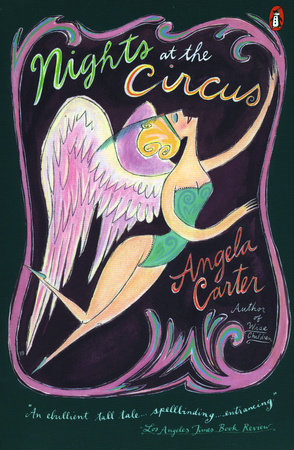
For four years, I’ve been taking my first drag at sundown. Barely missed an evening. There were a few anomalous puffs that managed to convince me to light up earlier in the day, but  nothing major. And that is something that a suggestible, addictive personality like me can certainly be proud of. More than one thousand puffs on Frishman Beach at sunset. More than one thousand uninterrupted puffs until she came along. With her “Excuse me?” so soft and gentle that even before I turned around I knew she would be ugly, because pretty girls don’t have to try so hard to be gentle: people do whatever they want anyway.

She was older than me, about forty. White blouse, black skirt. Brown hair tied back. Smart eyes. Glistening complexion, a few wrinkles, mainly under the eyes, but they only made her sexier.

I wanted to ask if I could help, but because I was smoking, the only sound that came out was a slightly aggressive “What?” I think it sounded aggressive, because she took a step back and said, “I’m sorry, nothing.” I cleared my throat and said, “No, it’s okay, tell me. What did you want to ask?” She smiled shyly and half whispered: “I wanted to ask if that’s pot.” She didn’t look like someone who stopped people on the street to ask them a thing like that, and she definitely didn’t look like a cop. So I nodded. “Can I have some?” she asked, and held out two fingers. Her hand was shaking.

I handed it to her. She tried to inhale and say thanks at the same time. It ended with a splutter. We both grinned. Giving up on the thanks, she took a long drag and held it in, like someone diving underwater. I hadn’t seen anyone smoke that way for years, like a kid smoking a cigarette. She tried to give the joint back but I signaled for her to keep smoking. After another few puffs she tried to give it back again, and this time I took it. We smoked together. When the joint was done, the sun had already set. “Wow,” she said, “I haven’t smoked for so many years that I forgot how much fun it is.” I wanted to say something clever, but the only response I could come up with was that it was good stuff. She nodded and said thanks. I said she was welcome and she walked away.

That was it. It was supposed to end there. But like I already said, when I’m high I follow people, especially women, and so I followed her. She walked to Ben Yehuda, where she bought a bottle of mango-flavored “Island” juice. From Ben Yehuda she took a cab. I followed the cab and saw her get out at the Akirov Towers, walk into the lobby of one of them, and say hello to the doorman. Forty years old, pressed white blouse, Akirov—not exactly the kind of woman you’d expect to share a spliff with on the beach.

On the way home I told myself I should have hit on her. Asked for her phone number. My greedy brain kept scolding me for not trying to take advantage of the situation, to get something out of it, but then my heart said very clearly that it would have been not cool to do that. She asked me for a drag, that’s what she wanted, and, yes, I could have tried to get somewhere with her, but the fact that sometimes when a woman smiles at me on the street I can just smile back without trying to cash in on it actually says something good about me. Maybe about her, too, considering that’s what she brought out in me.


The day after I get high with Akirov, I finish work early. Raviv’s mom comes to pick him up at four fifteen because they have a doctor’s appointment with a specialist. In the thirty seconds it takes her to put a sweatshirt and backpack on her booger-smeared kid, she manages to say the word “specialist” five times. Except that not one of those five times does she say what he’s a specialist in. Maybe snot.

I hop on my bike and get to the beach earlier than usual. I grab a bench and sit there people watching to pass the time until sunset. There’s not much foot traffic. Tourists in T-shirts and sweatpants, gushing about how nice it is in February in Tel Aviv. Israelis on their cell phones, hurrying somewhere without even noticing that they’re by the sea. When the first ray of sun scratches the waves, I don’t light up yet. And even though I’m super-horny for that first puff, I wait another three or four minutes before I start. I don’t even know why.

While I smoke, I do what I always do: I look at the sea, try to live in the moment, let the beauty sink in. But thoughts fly around my head in all directions. I imagine Raviv at the specialist. Maybe he has something terminal. Poor kid. All the kids at after-school torment him. I do, too. I call him Snotface, and I’ve mimicked him wiping his nose on his sleeve. I promise myself I’m going to stop, and the thoughts go back to her again. Akirov. Some part of me was hoping she’d come again today, but it’s weird enough when someone you don’t know asks to smoke with you, just like that, right on the promenade—what are the chances of it happening two days in a row? I finish smoking and keep sitting there until the sun completely sinks into the sea. It’s not nice of me to call her Akirov. So what if she lives in a luxury building? That’s just stereotyping. Like calling an Arab “Arab,” or a Russian “Russian.” Although, when I think about it, that’s exactly what I always do. I’m getting cold now. It was hot in the afternoon so I didn’t bring a jacket.

I’ve already stood up and taken a step toward my bike when I see her coming. She hasn’t seen me yet. I turn my back to her and start digging through my pockets. I usually roll only one joint ahead of time, but today I have two, because I promised to bring one for Yuri, the Russian security guard who stands at the school gates. He never turned up for his shift, so I still have it in my pack. I pull out the second joint and light it, all casual, like I’m not already high as a kite from the first one. I take two quick drags, still with my back to her, and then I turn around. She’s really close now, maybe twenty steps away, but she hasn’t spotted me yet. She’s on the phone. It’s a grim conversation, I can tell. I’ve had enough of them in my life to recognize one. She hangs up right as she walks past me. It looks like she’s crying. I follow her. Fast. But I don’t run. I don’t want to look too eager. When I’m right next to her I say, “Excuse me?” but in an American accent. Like those old American Jews who always say “Shalom?” and when you stop to see what’s up, they speak to you in English. She looks at me. No recognition. “You dropped this,” I say, and hold out the joint. Now the lightbulb goes on. She smiles and takes it. When she’s right in front of me like that and I can see her eyes, I can tell for sure she’s been crying. “Wow,” she says, “you came just when I needed you. Like an angel.” “What do you mean, like?” I say, “I am an angel. God put me on the promenade today just for you.” She smiles again and blows out a little cloud of smoke: “The angel of weed?” “I’m the angel who makes wishes come true,” I tell her. “Five minutes ago a little girl wanted a Popsicle, and before that it was a blind guy who wanted to see. I can’t help it that I landed a pothead.” I manage to make her laugh. Or rather, the combination of the pot and me manages to make her laugh. She’s happy, Akirov. And I feel happy with her, briefly useful to humanity.

When the joint is finished, she says thanks and asks which direction I’m going in, and I realize that while we were smoking I kept walking with her and got far away from my bike. I consider lying, but then I decide to confess. I tell her my bike is tied up back where we met.

“Do you come here every day?” she asks.

I nod. “And you?”

“I have to.” She shrugs and points south to the corncob skyscraper. “I work there.”

I tell her I always come to the promenade after work, to light up a joint with the sunset. A girl once told me that watching the sunset opens up your heart, and my heart’s been closed for a long time, so I come here every day to try to open it up.

“But today you were late,” Akirov says, glancing at the time on her phone.

“Today I was late,” I concur, “which is a good thing. Otherwise we wouldn’t have met.”

“So if I come here tomorrow at sunset, will you share with me again?”

I pause for a second and scrutinize her. Maybe something’s there, maybe she’s hitting on me. But I can see she isn’t. It’s just the pot. Even today, when I stopped her, she only recognized me by the pot. “Sure. It’s more fun to smoke with someone nice than alone anyway.”


For five days me and Akirov have been smoking at sunset. Five days, and I still know almost nothing about her, not even her name. I know she’s vegetarian but sometimes eats sushi, and that she speaks good English, and French, too, because this pain-in-the-ass French tourist came up to us the day before yesterday and Akirov explained to her in fluent French how to get to the port. I also know she’s married, even though she doesn’t wear a ring, because on one of our first days she told me that her husband doesn’t let her smoke pot because it’s illegal and because it screws up your short-term memory. “And what do you say to that?” I asked. I wanted to see if I could get her to spill any dirt on her husband. “I don’t have a problem with it being illegal,” she said, shrugging. “And the short-term memory thing? To be honest, it’s not like I have such great short-term memories to preserve anyway.” Well, that was almost a complaint. Either way, it was obvious there was something weighing on her. Something she didn’t talk about even when she was stoned, which for me was the sign of a strong person. Strong and not a whiner. That—and the thing that happened with the fascist vice cop yesterday.

It was the first time a cop had ever come up to me while I was smoking, and this guy was an especially creepy one. Short but muscular, with a neck as thick as a utility pole and a tight plaid shirt with cut-off sleeves. He shoved his badge in my face and wondered in a cocky voice if he could ask what I was smoking. Akirov, without missing a beat, pulled the joint out of my mouth, took a drag, blew smoke right into his face and said, “Marlboro Lights.” She tossed the joint over the railing onto the sand below, and just as swiftly pulled out a pack of Marlboro Lights from her pocket, lit one, and held out the pack: “Want one?”

The cop flicked her hand away. “What do you think?” he screamed. “You think I’m retarded?”

“I’d rather not answer that,” she said with a sweet smile, “because I am a law-abiding citizen, and insulting an officer of the public is a crime.”

“ID! Show me your ID right now!”

Akirov pulled out her driver’s license and also handed the cop a business card. “Keep this,” she said, “I’m a lawyer. And, judging by your face, it’s only a matter of time before you beat the crap out of a Palestinian and need legal counsel.”

“I know your firm,” the cop said as he dropped her card on the path. “You guys’ll defend any shithead if he has enough money.”

“True,” said Akirov, jerking her head at the tossed card, “but once in a while we also defend shitheads pro bono.”

The cop didn’t answer. He went over to the railing and peered down at the sand strewn with trash. You could see from the look on his face that he was debating whether or not to jump down and try to find our roach among the dozens that littered the beach. “Don’t give up,” Akirov called out, “if you look carefully you’ll find it in an hour at most. And if you take it to forensics they may even be able to isolate my fingerprints, and then you can go to your commissioner and tell him you want to press charges for a marijuana roach. Which is maybe not quite the same as solving a double homicide, but hey . . .” “Bitch,” the cop muttered without thinking, and Akirov continued, “An officer of the law cursing at a lawyer, on the other hand, is a slightly more serious offense.” She winked at me when she said that. “Okay, get the hell outta here,” the cop snapped. I started moving toward my bike but Akirov grabbed my hand and held me back. “You get the hell out, Popeye,” she told him, “before I decide to ask for your details and report you to Internal Affairs.” The cop gave us a violent glare, and my instincts told me to make myself scarce, but Akirov’s hand around mine told me to stay put. Her clammy palm made me realize she was stressed. That was the only sign. The cop hissed something and walked off, and when he was far enough away, she leaned over and picked up the card. “Dumbass,” she murmured, “we lost half a joint because of him.” With an expert hand she tore off a strip of the card to use as a filter. “You have enough on you for another one?” she asked. I almost said that I didn’t but that I lived nearby and we could go over to my place, but something about her wouldn’t let me lie. So we rolled another one, sitting on a promenade bench. A third of her business card became a filter. The other two thirds, which said “Iris Kaisman, Attorney,” stayed in my pocket.

On Friday evening I’m at my mom’s for dinner. My older brother, Hagai, comes, too, with his daughter, Naomi. You can tell from the second they walk in that they’re half fighting. It’s not hard to fight with my brother. He’s one of those people who are always sure they know everything. He’s been that way since we were born, and the boatloads of money he made in the tech industry have only made things worse. Not even the wallop he got two years ago when Sandy, Naomi’s mother, died of cancer, did anything to soften it. Naomi’s seventeen now, a beautiful, tall girl, like her late mother, and even though she has braces, she doesn’t look or sound like a child for even a second. At dinner she tells us excitedly about a species of dwarf jellyfish that lives forever. This jellyfish matures, mates, then becomes a baby again, and it goes on like that ad infinitum. “It’ll never die!” Naomi gushes, and the mixture of enthusiasm and braces makes her spit on Hagai and me a little bit. “Think about it—if we can study its genetic composition thoroughly, then maybe we’ll be able to live forever, too.”

I grin at her. “To tell you the truth, even sixty or seventy years sounds like too long to me.”

My brother explains that Naomi wants to go to Stanford next year and get her degree in biology.

“Wonderful!” my mom exclaims. “You’ll be brilliant.”

“What do you mean, ‘wonderful’? I told her she can do her army service first, like everyone else, and when she’s done I’ll pay for her to study whatever she wants.”

“Not an option. The army has nothing to offer me,” Naomi says.

“It has nothing to offer you? It’s the army, it’s not a branch of Zara! No one goes there because of the selection or the styles. You think income tax has anything to offer me? No, but I still pay it every month. Isn’t that so?” Hagai glances at me, expecting me to intervene on his behalf. Not because he’s always been such a great brother and I owe him. He hasn’t. But because he’s so right.

“Nothing bad will happen if you skip the army,” I tell Naomi. “The world will be better off with you studying jellyfish than spending two years making coffee for some horny officer.”

“Yeah, take your uncle’s advice,” Hagai hisses, “he’s really gone far in life.”

After dinner, when Hagai and Naomi are gone, my mom gives me another slice of cake and asks if everything’s okay and if I’m seeing anyone. I tell her everything’s fine, that they’re pretty pleased with me at school, and I’m dating a lawyer. I almost never lie to my mom. She’s the only one who has to accept me as I am, so there’s no need, but this lie isn’t for her. It’s for me. It’s for those few minutes when I get to imagine I have a life different from the one I really have. When I warm up at night in bed with someone who isn’t “divorced, looking for a noncommitted relationship” whom I dug up on a dating app. At the door my mom says, “You know Hagai didn’t mean it,” and when she hugs me she puts some bills in my jeans pocket. Whenever Hagai lays into me, she gives me a few hundred shekels. It’s starting to feel like my side job.

I take a cab to the bodega next to my apartment and buy a cheap bottle of whiskey, which the Ethiopian checkout guy with the dyed-blond hair swears came from Scotland even though the label is in Russian. At home I finish off half the bottle. Then a slender forty-six-year-old from Tinder comes over. Before we fuck she tells me it’s important to her that she be honest and inform me that she has cancer and it might be terminal. Then she takes a deep breath and says, “That’s it. I’ve said it. If you’re not comfortable, we don’t have to do it.” “I’m totally comfortable,” I say, and when she comes she screams so loud that the upstairs neighbor bangs on my door. Afterward we smoke a cigarette together, a regular one, and she takes a cab home.


Sundays are usually my least favorite day of the week. It wasn’t always this way, only since I started working. Before the after-school program I did nothing for five years, and then I hated all days equally. Honestly, most of the time I couldn’t really tell the difference. When I got up at midday, I would look at my watch and wonder if I had any hash or weed or money left and if I remembered where I’d put my cell phone and keys. Questions like “what day is today” hardly ever came up, and other than Fridays, when I went to see my mom, the whole rest of the week felt like one big, sticky glob of sleep-wake-eat-shit-TV and the occasional fuck.

My job set things straight. It separated the days out. Mondays started to mean darbouka class and the pretty counselor with the tongue piercing, and Wednesdays meant meatballs in sweet tomato sauce in the cafeteria, which the kids hated but always reminded me of Grandma Geula’s cooking. And Thursdays were soccer in the yard and the kids looking at me like I was Cristiano Ronaldo and not just a tired grown-up who could barely outsmart a bunch of seven-year-olds. And then shitty Sundays with the quasi-Nazi roll call put on by Maor, the guy who runs the after-school program, who always had a bad word for each of the counselors before he disappeared from our lives for another week. After my chill Saturdays, that always rubbed me the wrong way.

But this week, for the first time since I started work, I was looking forward to Sunday. To the sunset, to the promenade, to getting high with Akirov. And it wasn’t out of horniness or anxiety about how maybe I’d say something and she’d come over to my place. It was that I genuinely missed her. I missed someone I didn’t even really know. And that was exciting and at the same time humiliating. Because that feeling of missing someone was mostly evidence of how vapid my life had become.

Except Akirov didn’t come on Sunday. I waited for her till it got dark—long after, in fact. She didn’t come on Monday or Tuesday, either. While I smoked alone, I reminded myself that she was just a random woman who’d shared a joint with me on the promenade a few times, not my fiancée or someone I’d donated a kidney to or anything. But it didn’t do any good.


On Wednesday, after the kids finish wrangling their lukewarm meatballs, I realize Raviv isn’t there. I never count them, even though Maor says we’re supposed to count them every hour. But when someone’s missing, I usually figure it out, so I ask Yuri, who says he saw a few kids go behind the gym. They’re not allowed to leave the classroom without permission, and by the time I get to the gym I’ve had time to think up the punishment I’ll give Raviv, feel sorry for him, and cancel it. Behind the gym, in the long-jump sand pit, I see Raviv crying, and not far away from him I see Liam, the meanest kid in my group, lying facedown in the sand while some fat redhead whose face I’ve seen before sits on top of him and punches him in the back. He’s punching the way a kid does: lots of anger, very little technique. Without even knowing how things got to this point, I’m with the redhead. I’ve felt like punching Liam myself a bunch of times. The kid doesn’t talk, he just gives orders, and even that he does in a shitty way. Every other line out of his mouth is  about how he’s going to tell Mom, or the teacher, or the principal.

The redhead keeps pounding on Liam, and I know I should run over and separate them. The fact that they disappeared from the classroom is my screwup, and now I’m really going to get in trouble, especially with Liam’s mom being on the parent council. But as I watch the redhead railing on him, a little voice inside me tells me to wait a while longer, just till he lands one really good punch.

This has not been a good week. Not good at all. All that embarrassing waiting around for Akirov. I didn’t even try to bring a single girl home. This fight is without a doubt the highlight of my tedious week, and another few seconds of enjoyment aren’t going to hurt anyone. While I think all this, the redhead gets off Liam’s back, and just when I think the whole thing has played itself out, he takes a step back and slams his foot on Liam’s head. As I start running, I realize Raviv is on to me. He saw me watching the fight that whole time without doing anything. I sprint the few feet between me and the redhead as fast as I can, both because I’m stressed and to confuse Raviv a little, so he’ll think afterward that he must have been wrong: it wasn’t possible that I was standing there watching instead of breaking them up and that I took off so fast.

When I get to the redhead I shove him hard enough to move him off Liam and I yell, “What are you doing? Are you out of your mind?” Then I bend over to check on Liam, and all that time out of the corner of my eye I can see Raviv watching me. Liam’s upper lip is bleeding and he looks unconscious. The redhead stands there wailing. He says Liam cheated him on Trashies and when he asked him to give back his cards, Liam told him he had poop-colored eyes and his dad was unemployed. From the way the redhead says it, I can tell he doesn’t even know what “unemployed” means. I try to talk to Liam and shake him gently, but he doesn’t respond, and I get really nervous. I tell the panicky redhead not to move and I run to the water fountain. On my way back I can hear Liam up and screaming, “You’re finished at this school, you fat-face loser! My mom’ll make sure of that!” Liam is sitting on the ground with his hands on his face, and the redhead stands next to him, shaking all over, really sobbing now. Suddenly Yuri turns up. I’d left the kids alone in the classroom and one of them found a lighter in my bag and set fire to a poster of Yitzhak Rabin in the hallway. Yuri’s account of how he put out the smoldering poster makes it sound like, at the very least, he’d saved a baby from a burning house. I splash water on Liam’s face. He looks all right now and his lip is hardly bleeding anymore. The redhead keeps blubbering, but I’m not interested in him. What I am interested in is that snot-faced Raviv, who doesn’t take his eyes off me even after we go back into the classroom. I call Liam’s dad, who works as a land surveyor and is usually at home, and he gets there in five minutes. Liam screams that he took too long and he’s going to tell on him to Mom, and then he tells him about the redhead. He embellishes a lot, and says the redhead hit him on the head with a rock, but I don’t intervene. As long as he doesn’t start in on me, I figure I’m better off keeping quiet. Then the mom of the twins with the unibrows arrives. She has a South American accent. She had the twins through IVF and, judging by the way they turned out, she must have used a caveman’s sperm.

Eventually it’s just me and Raviv. I let him play on my iPhone, even though I never do that, and while he annihilates entire species on a game I downloaded a few days ago, I try to talk to him about what happened. “It’s not okay that you and Liam ran away from class without permission,” I tell him, but I say it pretty gently, like a kind mother, so he’ll know I’m not against him but at the same time he’ll understand I have something on him. “I won’t tell your mom,” I continue, “but I want you to promise not to do that again.”

And this kid, without even looking up from the phone, says, “I saw you.”

“Saw me what?” I ask, like I have no clue what he’s talking about.

“I saw you while Gavri was beating up Liam. You were smiling.”

“No I wasn’t. I wasn’t smiling. I ran. I ran as fast as I could to break it up.”

But Raviv isn’t with me anymore, he’s in the game. Shooting lasers at anything that moves.

When his mom gets there, I don’t call her out for being late like I usually do. I just tell her, “You have a really good kid. He’s a sweetheart.” Right next to him, so he can hear.


In the five minutes it takes me to get to the promenade, I have two unanswered calls and a text message from Maor. The message is blank. The fucker was too lazy to write anything, but he wanted me to see it and call him back. I debate whether to have a smoke first and then call him, or the other way around. The pro of smoking first is that the reefer will soften the discussion, envelop the whole unpleasantness in styrofoam and bubble wrap. The con is that I’ll need to be sharp with him. I’ll have to answer fast, maybe make up a lie or two right on the spot. I go with the second option and call him cold sober.

Maor yells at me: Liam’s mother called and vowed to get all the other parents on board and make sure he loses the program next year. She’s been compiling a list of complaints on him all year and she’s going to make everything public, including the fact that the lunches are sometimes served frozen. Maor says that if she pulls it off, this whole episode could cost him two hundred thousand shekels and it’s all my fault. Her kid won’t be at school tomorrow because he has a concussion, and Maor wants me to go visit him before work and take him some candy or a toy, and suck up to his mom so she’ll get off his case. The whole phone call is a total drag. He repeats everything ten times. I wish I’d smoked first. Before he hangs up he threatens me again. He says if they take away his license, he’ll sue me. I tell him to calm down and I promise to go over tomorrow and kiss the mom’s ass. By the time the call is done I’ve missed the sunset. I sit there in the dark, staring out at the sea, fully sober. Once the sun has set, there’s nothing in that spot apart from ugly tourists and lousy music from the restaurants on the beach. And the next day I have to set my alarm clock and get up early so I’ll have time to buy a gift for my least-favorite kid in the world. This week started off lousy and it’s only gone downhill.

“I thought you left after sunset.” I hear her voice and I feel—or at least imagine—her breath on the back of my neck.

“Sunrise, sunset—I’ve been waiting for you since Sunday,” I reply with a smile, and then I get mad at myself because instead of saying something positive I managed to sound like a whiner and a doormat all at once.

“Sorry.” Akirov sits down next to me. “Work was a shit show this week. Not just work—life, too.”

I want to ask her what happened but I can sense she doesn’t want to talk about it. So instead of drilling on about it, I take out a joint. After one puff I pass it to her and she sucks it up like a junkie. “I’ve been thinking about this drag for five days,” she says, smiling, and hands it back to me. I don’t take it. “You smoke it,” I tell her, “smoke it to death.” She hesitates for a second and then takes another toke. “Tough week?” I ask. She nods and sniffles. I’m not sure if she has a cold or if she’s trying not to cry. “My week wasn’t so hot, either,” I say. “It’s bad for us to not see each other for so long. It throws a wrench in our karma.”

She smiles. “Listen, I want to ask you for a favor . . .” She digs through her bag while she talks, and I try to guess what she could possibly want from me. “I want to hire you.” She takes out her wallet.

“As what?” I give her a big grin. “Your bodyguard? Babysitter for your kid? Personal chef?”

“I don’t have a kid,” she says with a sigh, “I’m not into food, and I’m pretty good at taking care of myself. I want to hire you to keep doing exactly what you do: come here every day at sunset, and wait for me if I’m late. Not long. An hour at most. And then smoke with me.” While she talks, she counts out the money. “Here.” She hands me a stack of hundreds. “There’s two thousand here. Two thousand for three weeks. What do you say?”

“What do I say?” I repeat her question to buy time. “I say that I come here every sunset anyway, and smoking with you is more fun than smoking alone, so it’s great that you want to pay me for spending a pleasant fifteen minutes with you on the beach when you have time, but taking money for talking to a friend . . .”

“But that’s just it—we’re not friends. And three weeks from now I’m going to vanish from this place and you’ll never see me again. These three weeks are going to be the toughest ones of my life. The daily joint with you will help make them a little bit easier.” Her hand with the money is still held out. When she says we’re not friends, it hurts. It hurts because it’s true. I try to ignore it and focus only on the pragmatic stuff.

“If you want, I can buy you some weed for a couple of hundred shekels. At the rate you smoke, it’ll last you more than three weeks.”

“But I don’t want you to buy it for me. I want you to smoke it with me. I can’t keep weed around. I promised my husband I’d stop buying it.”

“You promised him you wouldn’t smoke,” I correct her.

“I know,” she says, and suddenly she starts crying, “But it’s different with you. Even if he finds out, it’ll be like I just met you on the street and you happened to be smoking so I had a drag, too. It’s not the same as buying . . .”

I take the money. I don’t want her to cry. “Okay, boss, we have a deal.” I give her a wink. “But the two grand only covers drugs. Sex and rock ’n’ roll are extra.”

She laughs, and the laughter and tears come out together. I don’t know what she’s going through, but it sounds like some serious drama, and even though there’s nothing going on between us, I really want to help her. “I only have one condition,” I add as I shove the money into my wallet, “I want you to tell me why you’re disappearing in three weeks. When you said that, the way you said it, it didn’t sound like a good kind of disappearance. And, speaking as . . . your employee, I have a right to know.”

“I’ll tell you,” she says, and wipes her face with her hand. “I promise. But not today.”


The alarm clock on my phone wakes me at eleven. I brush my teeth, shave, and roll a joint for the evening. I do everything fast. I still have to pick up something for Liam and go by his house, and I only have an hour and a half. It’s a good thing he lives near the school.

His mother opens the door wearing a pink tracksuit and a sour face. “I came to check on Liam,” I say, trying to sound like I care.

“It’s a pity you didn’t check on him yesterday, before he was brutally beaten,” she retorts in her low, sludgy voice. “I still don’t understand how a child can disappear from the classroom for almost an hour without anyone noticing.”

My instinct is to say something about how it’s easier to look after kids who respect other people than ones who keep lying and running away, but I remember my talk with Maor, so instead I explain apologetically that yesterday a child brought a lighter to school and tried to burn some posters in the hallway, and since I was busy taking care of this unusual incident, it took me a while to realize that Liam was gone. “I just want you to know, Mrs. Rosner, that I didn’t sleep all night because of what happened. It was a terrible mistake and I want to apologize to you.”

“I’m not the one you should apologize to,” she says in a voice that sounds slightly less furious. “I’m not the one who was beaten unconscious and is still suffering from aches all over my body. You should apologize to Liam.” She takes me to the little shit, who’s sitting up in his parents’ bed, watching a Japanese anime series—a soccer match between robots and aliens. Other than a slightly puffy lip, he looks totally fine. “Liam,” his mother says in a teacherly tone, “you have a visitor.”

“Not now,” Liam says without taking his eyes off the screen, “I’m in the middle.”

“He brought you a present,” she says, trying to tempt him. “Lego Space!”

“I hate Lego.”

“Hey, Liam,” I jump in, “I came to see how you’re feeling.”

“I’m in the middle,” he says, still not moving his eyes off the screen. “Did you get a gift receipt for the Lego?”

At the door, Liam’s mother thanks me for visiting and says she has a meeting with the principal and Maor tomorrow and that she’s not planning to let this slide. “Liam has three older brothers,” she says in a pathos-filled tone, “and as a parent, I have never come across such an extreme incident: a seven-year-old boy attacked with rocks and sticks without anyone intervening.”

I realize the last thing I should do is get into an argument with her, so I just nod. I tell her that if I were a parent I would react exactly the same way. “You have a lovely boy, Mrs. Rosner, and, thank God, he came through this whole thing without serious harm. That’s what really matters.” Walking down the steps, I text Maor to say I made the visit and the mom is still pissed, but I’m confident she’ll calm down before the meeting. He doesn’t answer, which is a good sign. When Maor texts or calls, it’s always bad.

The afternoon at work goes by without incident, but it’s tense. All the parents who come to pick up their kids throw out something: they’re worried, this is not okay. They’re not blaming me personally, but they’re unhappy with the program and the school. The twins’ mother says that in Buenos Aires they’d have at least two counselors for this number of children. Noya’s father, who is an officer in the navy and always wears his uniform when he comes to pick her up, says it all starts with education at home. I murmur agreement with everything they say, and try to look contrite. There’s obviously going to be loads of yelling and threats at the meeting tomorrow, but if I know this school, nothing serious will come of it. They’ll suspend the redhead for a few days, they may even expel him if his parents are weak or suckers, but it looks like I’ll survive—as long as Raviv doesn’t talk.

Raviv and I are the last ones there, as usual. I tell him I downloaded an upgrade for the game he likes and ask if he wants to play. He smiles and holds out his hand for my phone. Before I give it to him, I explain that it’s fine with me for him to play, but it has to be a secret, because if he tells the other kids they’ll want to play, too, and I can’t let everyone do it. Raviv thinks for a moment and then nods. I give him the iPhone and he starts the game. While he plays, I ask him if he’s good at keeping secrets. He doesn’t answer. I don’t know if it’s because of the question or because he’s absorbed in the game. After a few seconds the iPhone makes a happy tune—he must have leveled up.

“Way to go! You’re really good at this!” I exclaim.

“Why did you smile while Liam was getting beaten up?” He doesn’t even look up from the screen when he asks me that.

Now it’s my turn to keep quiet. My instinct tells me to make something up. My instinct always tells me to make something up. But just like with Akirov, I ignore it. “I did it because I don’t like him,” I finally say. “Lots of times he’s done bad things that I thought he should be punished for and he always gets away with it, and when I saw Gavri hitting him—I know this isn’t a nice thing to say, but I was glad.”

Raviv looks up and stares at me. The game keeps running and I hear him getting eliminated, but he doesn’t seem to care. “What did he do? What things did he do that you thought he should be punished for?”

“Lots of things. But mostly it bothers me that he picks on the weak kids.”

Raviv wipes his nose with the back of his hand without taking his eyes off me. “But he’s not the only one who picks on weak kids.” He doesn’t say it, but we both know he means me.

“That’s true, and it’s a horrible thing to do.”

“Then why do you do it?” He doesn’t look angry at all, just curious.

I shrug my shoulders. “I don’t know. Maybe because most of the time I feel weak myself, and when I pick on someone, I feel stronger.”

Raviv nods. He seems to understand me.


It’s cold on the promenade that evening, and there’s a gusty wind. The sky is completely black and it looks like it’s about to storm. I huddle in my coat and wait for Akirov. It’s my first day as her employee. She’s late, but not by very much. She’s wearing a wool hat. I don’t usually like girls with hats—it always makes them look like a character on a kids’ show. But on her the hat sits really well. It brings out the green in her eyes.

It’s too windy to light up, so I suggest we find a lobby somewhere. While we smoke together in the doorway of a decrepit building on HaYarkon Street, it starts raining, and I think about my bike getting wet on the promenade. “What a crappy day,” I say, and she nods, as though something that belongs to her is also getting wet out there. I tell her about my day, and the whole story with Liam and his mother. She asks if I like my job. I think for a moment—no one’s ever asked me that. “I don’t know if I’d use the word ‘like,’” I finally answer, “but I definitely prefer it to working with adults. With kids, you can take a bite out of their sandwich or you can tickle them. With adults it’s more complicated.”

She takes a sandwich wrapped in paper out of her bag. “Want some? I made it this morning. It’s tuna fish.”

I tell her I’m not hungry and ask if I can tickle her instead.

She smiles. “Do you think you’ll get fired?” She takes a bite out of her sandwich.

“I don’t know. I’ll find out after the meeting with Maor tomorrow.”

“I have a tough time with kids. It’s not that I don’t like them, I just don’t know how to get along with them. Oded hasn’t stopped talking about kids since the day we met, and I just keep trying to buy time.”

I ask if Oded is her husband, and I point out that she’s always referred to him only as “my husband.”

“I guess now I feel a little less sure that he’s my husband.”

“What do you mean?” I ask her.

All she says is, “It’s complicated.” Then she asks, “Do you think it’ll keep raining for a long time?” I remind her that she promised to tell me why she was going to disappear, and she nods and says she’ll keep her promise but not today. “I hope tomorrow goes well. I hope you don’t get fired,” she says, and a second before she steps out into the rain she gives me a kiss on the cheek and wishes me a good weekend.

I keep standing in the doorway for a few minutes, thinking about Raviv, about the meeting tomorrow, about Akirov’s husband, Oded, who is now a little less her husband, and about that kiss she gave me. It was a friendly sort of kiss, and it smelled like tuna fish. The rain is coming down harder, and when I get sick of waiting, I walk out into it.


I don’t wake up till four the next day. On days when I don’t have to be at work, I don’t set my alarm clock. On my phone I see a text message from Mom saying it’ll just be the two of us for dinner because my brother is going away for the weekend with a woman he got set up with at work. She puts three exclamation points at the end of the message, like a sixteen-year-old girl. She’s always dreaming about the day when my brother will remarry. Somehow she’s managed to convince herself that all the pissed-off bitterness that Hagai keeps vomiting on us comes from loneliness, and that the minute he finds someone who’s willing to put up with him, he’ll turn into a prince. The good news from my perspective is that I won’t have to see him this evening. Then there’s another blank message from Maor. I try to call him but his phone is off, so I leave a voice mail.

My mom makes an even more awesome dinner than usual— four courses, and for dessert, a layer cake from a recipe she found online. She’s happy because of Hagai, and her happiness is contagious. I drink a lot of wine and we talk about my dad, about missing him, but it’s still a cheerful sort of conversation. My mom says she’d always hoped to live to see grandchildren, and that even though she’s already been a grandmother for ages, her dream is for me to have a child. She asks how my lawyer girlfriend is, and I say everything’s going great, and that Iris actually likes kids, but she’s a little anxious that she won’t know how to manage them, just like I am. “I’m in no hurry,” Mom says with a smile, “I’ve been waiting for you for so long, I can wait a little longer.”

It rains all day on Saturday. I huddle under the covers, watching horror flicks and chain-smoking what’s left of the crappy pot Avri sold me a month ago. Maor’s cell phone is still off but he calls in the evening. He says the meeting didn’t go well. “You told Rosner that a kid brought a lighter to school and caused problems, and that was why you didn’t notice Liam was gone—why did you do that? She brought it up it at the meeting, and the principal talked to Yuri and started poking around. The kid said the lighter was yours, and Yuri told the principal he was the one who put out the fire. So, bottom line, now you’re a liar.” He pauses, waiting for me to say something in my defense. But I have nothing to say and I can’t be bothered anyway. “Rosner and the principal are both pissed off, and it turns out that Gavri, the redhead kid who was punching Liam, his grandfather’s something senior in the Ministry of Education, so they can’t kick him out of school. Rosner was raring to go, she wants blood. So, long story short, I told them you’re done. Don’t show up at work tomorrow. Call me in early March and I’ll leave you a check at the school office with however much I owe you for February. And, dude, next time you lie? Use your brains. So long.” Maor hangs up on me, and I feel pretty fine about that. I didn’t have anything smart to say on the occasion of my termination: it’s not like it was some toast where you have to make a speech and then they give you a watch. Tomorrow I’ll go look for another job. Maybe bartending. Night hours are better for me, and free liquor is just as good as meatballs in tomato sauce. It’s insulting to be fired, there’s no getting around that. To hear someone tell you you’re not good enough is never a good feeling. But doing that work for 2,800 shekels a month wasn’t something I could keep up for much longer anyway. I wonder if any of the kids will miss me when I don’t turn up on Sunday.


At three a.m., Avri texts me: “Awake?” Like I’m his fuck buddy or something. On the phone he tells me his friend just arrived from Amsterdam with some good stuff. “Primo fresh,” he says excitably, “he just shat it out. Should I run you over some?” By four he’s at my place, and I use what’s left from Akirov’s two grand to buy eight grams. Avri tells me it’s called Pineapple Crush, because this stuff is so strong that if you smoke enough of it, you can fall in love with a pineapple. After his passionate speech we smoke a bowl, and I don’t fall in love with anything, but I do fly far, far away in my mind: I think about Raviv, and about that little stinker Liam, and about Liam’s mom in her pink sweats who probably didn’t give birth to him but just shat him out like Avri’s friend shat out the Pineapple Crush for us. Then I think about Raviv some more, growing old and then becoming a baby again like that dwarf jellyfish; but mostly I think about Akirov and Oded, her slightly-less-so husband, and about how she’s pretty much the only ray of light in my life, and now that’s going to disappear, too. I’m so baked that I don’t even notice Avri leaving, and sometime after the garbage truck finishes its round on my block, I fall asleep.

I get up just in time to shower, roll a joint, and bike to the promenade. The rain and wind have stopped, and there’s finally going to be a real sunset. Akirov’s already waiting on our bench. She finished work early. The first thing she does is ask about Maor and the meeting on Friday, and I tell her I got fired, and that maybe it’s better that way. “Now you’re my only employer,” I say, as I pull a joint out of my Noblesse pack, “and that’s why I’ve decided to take this business a little more seriously from now on. Check out the sunset I arranged for you!” It really is a beautiful one, and Akirov sits there silently, probably trying to come up with something comforting to say. I tell her that not only is there a premium sunset today, but premium pot, too. I tell her about Avri and the Pineapple Crush, but I skip the shitting part. The truth is, I’ve been smoking pot for twenty years and I’ve never had anything this good. After a few tokes you’re absolutely flying.

We stay on the bench well after the sun has gone down, and I remind her again that she promised to tell me why she was disappearing. She looks at me with her clever green eyes. She’s stoned out of her mind but she’s still scrutinizing me. She smiles sadly and says she’s also leaving her job, and that it’s ending badly for her, too. Her law firm represents a few organized crime families, and with one of them, it wasn’t just legal advice—the firm was helping them launder money. We’re talking tens of millions, and lots of important people are involved. But she wasn’t. She found out by accident, and like an idiot she went to the police. When she did that, she didn’t realize the extent of it. She thought she’d discovered a onetime transaction, which only one of the partners was involved in. By the time they figured out how serious it was, she couldn’t back out. Now she’s a state witness. She goes to work every day like everything’s normal, eavesdrops and gathers material, and soon, when the whole thing blows up, she’ll be out of here— they’ll put her in the witness-protection program and give her a new identity overseas. Even she doesn’t know where. “Oded told me yesterday,” she said, attempting to sound calm, “that he’s not coming with me. He’s very close to his family and he’s not up for disappearing.”

“I’ll come with you,” I say, and I suddenly take her hand. “I’ll come with you, wherever it is. I love surprises.”

“This shit really is powerful,” she says, laughing.

“Yeah, but regardless, I’d be happy to come. You’re my only employer here, and when you leave, that’ll be over, too. A new place? A new beginning? I could really get behind that. Just imagine if they put us on a tropical island! Every morning I’ll climb up a tree and crack open a coconut for you.”

“You’re really into this!” She laughs some more. “It’s too bad we can’t switch.”

“I don’t want to switch.” I start getting a little choked up now. “I want you.”

She bites her lower lip and nods. Except it’s not an “I know” nod, but more of an “I want you too” nod. And then comes this long second that the world has cleared away for us so we can kiss. But I’m too worked up to just kiss her. My stoned brain is too busy imagining us together, with different names, in a different place.

The second is over faster than I thought it would be. She stands up and smiles awkwardly and says she came to say goodbye because the timeline has changed: they’re picking her up at ten tonight, and she has to say good-bye to her husband and her sister, who doesn’t know anything about all this. I stand up, too, still trying to comprehend how I could have let that second evaporate, and she gives me one of those ordinary American-type hugs and says I’m a special person, which is something almost all the girls who wouldn’t sleep with me said.

“Don’t tell anyone, okay?” she says while she hails a cab. “Even after it all comes out. Promise? That’ll only get me in trouble. And you.”

I nod quickly and a minute later she’s gone.

I bike home, still wicked high, and all the stoplights and the headlights and the cars honking mingle together in my head and it feels like a huge dance floor. The whole city looks happy—too happy. The munchies set in and I stop at the Yemeni falafel guy’s stand on Nordau. Tomorrow Akirov starts her new life in a faraway place, without a husband and with a different name. It sounds like the beginning—or maybe the end—of a fairy tale. I believe she’ll be happy there, wherever it may be, even if it’s without me. Someone else will pick coconuts for her. Or she’ll pick them herself. Wherever they send her, I hope it’s somewhere warm. Every time I passed her a joint and our hands touched, her fingers always felt cold. 

A Legal Thriller About a Magical Talking Lemur

Anita Felicelli spent eight years as a litigator in a law firm. It’s not surprising then that she so deftly recreates the combative atmosphere of a courtroom. “Every trial is made up of five billion moments, both dark and shining, scripted for years in advance during discovery,” Felicelli writes in her debut novel, Chimerica. “And what’s left, the fixed corpses of these moments, are trotted out at the right time for judgement.” 

Chimerica traces the journey of the down-and-out Tamil-American lawyer Maya Ramesh. After being unceremoniously fired by her law firm, Ramesh fights to save a painted lemur that’s come to life. Blending magical realism and a legal thriller, Felicelli creates a novel that showcases not only the violence of the courtroom, but the true centrality of art and nature in our lives. 

Anita Felicelli is the author of the short story collection, Love Songs for a Lost Continent, which won the 2016 Mary Roberts Rinehart Award. Her fiction has been published in journals such as Joyland, The Rumpus, The Normal School and her criticism has appeared in Slate, Salon, The San Francisco Chronicle, The Los Angeles Review of Books, and more. 

I spoke with Anita about technology, the violence of the law in American society, and the importance of art and nature in a culture that doesn’t value it.


Nishant Batsha: One thing I was really interested in when I first started the book was the way in which communication and technology is deployed in the background of this book. We can never escape from technology—especially in the Bay Area—but chatrooms, comments, Twitter, Tumblr, and emails play a big role in this book. What is your relationship to technology and fiction?

Anita Felicelli: I’m really fascinated by technology because I live where I live and because my parents migrated because of jobs in technology. For some people, technology is very much in the background of their lives, but I feel like our social interactions and our psychologies are so transformed by the degree of connection we have with other people online. 

I’m always fascinated by how few literary fiction authors use technology and the ways in which we behave are mediated by technology. I wonder if that’s a class thing. You can more readily shut off the world if you’re from some classes. But if you’re an immigrant, that’s how you keep in touch with your family in another country. There’s not really a likelihood that I’ll shut off my Facebook or Twitter because that’s the only way I can keep in touch with people I’m related to—I’m not surrounded by these people but I want to still have contact. There’s that aspect, but there’s also one of surveillance. 

There’s a connection between the performance we do online and the performance you would do in the courtroom.

NB: The point you make about surveillance is especially interesting because there’s a feeling (and reality) that we’re constantly being watched. In Chimerica, this takes the form of a doppelganger. It’s terrifying: what if everything that’s watching me online is forming a version of me that exists somewhere in the deep reaches of the internet?

AF: Social media is so performative. I have a billion thoughts in my head but I’m only ever sharing a couple of them online, which creates a performance of the self. That relates to trial law: a lawyer is creating a self that allows the jury to sympathize or feel something for the attorney, even if they think whatever the client did was despicable or don’t particularly like the client. The attorney stands in the client’s place as a performance. There’s a connection between the performance we do online and the performance you would do in the courtroom. 

There’s a sense of persuading people: this is who I really am or this is my real self. The fact is, we’re so many selves, but we choose to exploit some of our thoughts and suppress others.

NB: Thinking through the performativity of law and law in general: this novel, like a person, has many different facets and forms. I was really interested in Jonathan Lethem’s blurb. He pegged this as a legal thriller. Do you agree with that? 

AF: To be fair, he says it’s a surrealist legal thriller. “Surrealist” puts a completely different spin on it. It’s not meant to be Scott Turow or John Grisham. It definitely hits the surrealism harder than it hits the legal-thriller genre, but I also engage with noir, speculative fiction, existential drama. 

I was partially inspired by William Gaddis’ A Frolic of His Own. It’s satire about the law. Part of me thought, he gets to do that and he wasn’t a lawyer. How could I put my own spin on it? It’s that hysteria of litigation I’m aiming for. Genre-wise that’s a postmodernist novel.

NB: Chimerica  is meant to focus in on law as instrument of violence. Why use art to open up this story? 

AF: I’ve always been looking for something that stands outside of structures and systems of control. The only two places I’ve found that are nature and art. So I combined those two and made them the subject of this book. 

I’ve always been looking for something that stands outside of structures and systems of control. The only two places I’ve found that are nature and art.

Even so, I think that American capitalism tries to put structure around these two things that are spaces of freedom. How do people function together? People function together—this may be too dark—through violence. And yet people long for a deeper connection or something that’s unmitigated by other people. 

Art and nature are the places where there’s something wild that people want to protect. They want to protect the impulse that brings people towards those things. American capitalism is not set up to protect the particular freedoms that come from embracing art and nature. 

NB: Do you think people are ultimately able to connect to art and nature in a meaningful way? Your characters sometimes seem very self-interested. When confronted with art and nature, characters in Chimerica seem to make gestures towards wanting to connect with it, but don’t let themselves dissolve in a way that allows for a deeper connection. 

AF: Well I think that in children there is a meaningful connection to art and nature. I have three children and they seem very connected, but I’m sure as they get older—I found this in myself—that the interest is diminished. But I do think our most human impulse is toward art and nature, but we have to live together, and we find ourselves with these constraints and a desire to look for money, fame, and more material things. We ignore the soul in favor of the trappings or products associated with a soul. 

NB: Maya has elements of being an anti-hero. How did you envision her connection to the law and moving away from it?

AF: I don’t think she moves away from the law at all. I don’t think she learns anything about the law. I think she realizes that there is something mysterious in the world that she can’t quite get her hands around—that which should be treated as sacred. 

She’s intended to be an anti-heroine, but I don’t think she’s irredeemable.

NB: Why do you think you wrote her as an anti-heroine? I’m not that familiar with books that have a courtroom element, but it seems to me like the lawyer is often seen as a white male hero. Did you write Maya as an anti-heroine purposefully with that in the background?

AF: I made her an anti-heroine because the novel functions as a critique of the hysteria of litigation, and the traits that make her an anti-heroine are what it takes to succeed as a trial lawyer. The white male hero is a fantasy. That whole legal thriller genre is a fantasy of the American legal system, and I’m not interested in an escapist fantasy about society. 

That whole legal thriller genre is a fantasy of the American legal system, and I’m not interested in an escapist fantasy.

The very traits that are lionized in rich white American heroes in the legal thriller genre come across differently when a brown woman performs an exaggerated version of them in order to beat the system. And equally, in order to achieve the same outcome, a different psychological state is needed for a brown woman than for a white man. With Maya’s questionable choices, I wanted to unsettle the reader, I wanted to interrogate what a heroine or anti-heroine is, and more than that, I wanted to show the double-bind of what it takes to “succeed” within a system that’s not made with either fairness or you in mind.

NB: I love that phrase, “the hysteria of litigation.” Do you think you could unpack it a little bit?

AF: The hysteria of litigation is the way in which one action leads to a worsening of a situation rather than a resolution. You start out in litigation with problems, and my experience as an attorney was that the American legal mindset is one that encourages further litigation rather than stepping back from it. 

NB: This is mirrored in the book—lawsuits seem to come out of lawsuits, and I don’t want to give away too much, but the only way it seems like anyone can ever escape the cycle of lawsuits is to leave the country, with grave risk!

It’s like that movie from the ’80s—Wargames—“the only winning move is not to play.”

AF: Exactly. That’s been my experience. I’ve had good experiences too. I’ve loved all my clients, but that’s another piece of it: you’re trying to get money for your clients, and whatever strategy to get that is what you use. But there’s no real escape. Everything gets more intensified. 

NB: Were you ever worried that you’d bring your clients or your courtroom experiences into your work?

You can embed things in a magical creature that you can’t reveal about particulars of your real life.

AF: This is the benefit of magic realism. You can embed things in a magical creature that you can’t reveal about particulars of your real life.

When I set out to write this book, I had been through so many lawsuits. My work isn’t based on just one lawsuit that I’ve experienced, but it’s all of them over eight years of litigation coalesced into one viewpoint. 

NB: When you started to write this, did you set out to write a magical realist book?

AF: Yes! I knew right away that I was going to have a talking lemur, and it was always my intent to have that lemur. The lemur to me is more important than Maya, but Maya is from an earlier novel I wrote. I already knew her. 

NB: What was the genesis of the talking lemur?

AF: I went to Madagascar in 2007 or 2008. My cousin was getting married in South Africa and I went to Madagascar with my sibling. I fell in love with the indri. I had never heard a call like that at the wild. You can hear it on YouTube, but there’s something about hearing it in the rainforest. It’s so transcendent and strange, and it was so divorced from my life as a litigator at a firm. The character of the lemur came from my experience of being away from law firms. 

I knew I was going to write about the lemur. When I actually got to leave litigation, I knew I could write about that experience.

NB: The image of the lemur stuck with you for all those years?

AF: It was the sound of being in the rainforest with the indri and the way they move overhead. They had such a sense of freedom! 

I think a big part of it was that I didn’t feel like I was free as an attorney. The lemur spoke to me in that way too. I needed that escape. I needed that freedom for myself. 

NB: So many people in the book are paranoid about the dangers of the lemur, not as a part of a mural that’s come to life, but as an animal. But it’s the lawyers that are fixating on whether someone has a “killer instinct” in the courtroom. Maya focuses on whether she has it or not, and Spencer, her former boss, mentions it, as does her father. The killer instinct becomes an obsession for humans that’s not at all there for the lemur. Was that purposeful?

AF: Yes! That was very purposeful. The law is an instrument of violence and lawyers are hysterical conduits of that violence. They see themselves as noble and just, or whatever other positive attributes there are. The lemur is what is wild, pure, and what’s good in the world, but is constantly getting hunted by people.

8 Books to Help You Understand the Kashmir Conflict

The region of Kashmir has been in conflict for more than 70 years. The dispute began in began in 1947 when the partition of British-colonized India that created two newly independent countries along religious lines: India and Pakistan. The Maharaja of Kashmir, a Hindu who ruled over Muslim subjects, did not want to join India or Pakistan. He preferred to have an independent Kashmir. But soon after the partition, the Pakistani tribals invaded Kashmir. They declared that as a Muslim dominant state, Kashmir should have acceded to Muslim majority Pakistan. The Maharaja of Kashmir turned to India for help. India agreed but on the condition that Maharaja signed an instrument of accession. It was decided that after the intruders are cleared out, the people would be given the right to vote for a proper referendum. That referendum never took place.

Since 1947, India and Pakistan have waged three wars over Kashmir. The people of Kashmir have demanded a referendum to be held, but the Indian government has mercilessly crushed any dissent. Almost every year, the people of Kashmir revolt and start an uprising, demanding freedom from Indian rule. From the past month and a half, Kashmir is again on the edge and its population placed under lockdown. In early August 2019, the Indian government (the Hindu nationalist party, Bharatiya Janata Party) scrapped the Article 370 and Article 35A of the constitution. Those articles gave Kashmir a limited autonomy and conferred certain rights like to a separate constitution and flag, among others. The people of Kashmir saw this as a death of their fragile autonomy and a betrayal from India.

Here are 8 books to help you understand the conflict in Kashmir:

Image result for curfewed night by basharat peer

Curfewed Night by Basharat Peer

With Curfewed Night, Peer paved the way for Kashmiri writers to tell their own stories through literature. A searing memoir of growing up Kashmiri in the 1990s, the book sheds light on the young men who crossed the border for military training in Pakistan. In the second half of the book, Peer writes about how the Indian security forces oppressed the local population and how the freedom movement was crushed by state-sponsored terrorism. 

Image result for book of gold leaves

The Book of Gold Leaves by Mirza Waheed

In Mirza Waheed’s second novel The Book of Gold Leaves, we have a classic Shia-Sunni love story set against the backdrop of the conflict in Kashmir. Faiz, a Sunni papier-mâché artist, falls in love at first sight with Ruhi, a Shia girl. The turning point in Faiz comes when his god-mother is killed in a cross-fire by the Indian army. At that moment he decides to become a militant and go to Pakistan for training, leaving Ruhi alone in Kashmir. His love letters to Ruhi are smuggled to Kashmir via Nepal. “I couldn’t take it anymore,” writes Faiz in one of his letters to his beloved. 

Image result for kashmir we want freedom

Until My Freedom Has Come edited by Sanjay Kak

The summer of 2010 was the beginning of non-violent protests in Kashmir. Until My Freedom Has Come, edited by Sanjay Kak describes the 2010 Kashmir “intifada.” It is an anthology of essays, interviews, cartoons, poems, and songs. What makes it stand out is that almost all the contributors are Kashmiris, which was missing in the literature produced before. Here you read the first-hand account of street protests and the growing desire among Kashmiri youth for the Azaadi or freedom from the Indian rule.

Munnu: A Boy from Kashmir by Malik Sajad

Malik Sajad’s finely crafted Munnu: A Boy from Kashmir is the only graphic novel to come out from Kashmir. Inspired from German expressionist wood prints, Sajad paints a harrowing picture of what it’s like to come-of-age in Kashmir. The local characters are anthropomorphized as Kashmiri Stags, an endangered native species. Rather than viewing Kashmir as a geopolitical problem, he prefers to see the conflict through the lens of humanity. This brilliant piece of literature won the Verve Story Teller of The Year award in 2016.

Danger in Kashmir by Josef Korbel

Any discussion on Kashmir is incomplete without understanding the role United Nations played in the dispute. The book is written by Joseph Korbel, the Czech-American diplomat and father of the former U.S. secretary of state Madeleine Albright. Danger in Kashmir sheds light on the early U.N. interventions in solving Kashmir conflict. Korbel explains why Pakistani tribals invaded Kashmir and what made the Maharaja of Kashmir sign the instrument of accession and Lord Mountbatten’s role in it. The book delves into the work of United Nations representatives, their negotiations with the governments, and why they ultimately failed the solve Kashmir.

Do You Remember Kunan Poshpora? by Essar Batool, Ifrah Butt, Munaza Rashid, Natasha Rather and Samreena Mushtaq

One night in February, Indian security forces raided a village in Kupwara. They imprisoned all the men of the village and raped 31 women in two hamlets: Kunan and Poshpora. Do You Remember Kunan Poshpora? is a brave attempt to expose the war crimes committed by Indian security forces in Kashmir. 

Image result for Kashmir: A disputed legacy,

Kashmir: A Disputed Legacy by Alastair Lamb

In Kashmir: A Disputed Legacy, Alastair Lamb delves into the genesis of the conflict. Because of a 1994 order by the Indian home ministry that forbade the import of books about Kashmir written by foreigners, Kashmir: A Disputed Legacy is unavailable in India. In the book, Lamb argues that Kashmir’s accession to India in 1947 was invalid because the people of Kashmir were not consulted at the time and their desires were never take into consideration by the Maharaja. He maintains that the actions of the Indian army in Kashmir in 1947 were illegal on judicial grounds. Kashmir: A Disputed Legacy has been a favorite to all scholars who have challenged India’s claim on Kashmir. 

Image result for poster

The Limits of Influence: America’s Role in Kashmir by Howard B. Schaffer

The Limits of Influence: America’s Role in Kashmir is an important read to understand America’s diplomatic attempts at solving the Kashmir conflict. Schaffer, a retired diplomat living in India, looks at Kashmir from 1948 until Obama’s presidency in 2008. He explains why John F. Kennedy took a different position from his predecessors on the conflict and how it helped America maintain good relations with both India and Pakistan.