




i like to get naked

I like to get naked

I guess because it makes

Me think about death

All nakedness ends

In death even if you start

Out as Emily Ratajkowski

Death is the soul getting naked

Much like the dark side

Of the hermit crab

Scientists have no clue what

This actually looks like

I am guessing it’s very yucky

Many lovers have commented

The more clothes I take off

The less sexy I become

Sex at my age is almost

Always fully-clothed

If not extra-clothed

The older I get sex is so wild

And animalistic

Think of daisy-fed lamb

Ravaged by mountain lion

Fuck no was there time

To remove the ugg boots and xmas sweater

The sex too spontaneous to remember

I have a body beneath these clothes

I like getting down to a naked body only

It is the opposite of sexual

For me it is a death thing

I am dying

In that I am expanding

Everything far from the pump at the center

Note the direction of stretch marks

Like the growth rings of an oak

This the coroner said

Was the year of pig-belly nachos

Circling my man-titties

With her laser pointer

I ask were you shocked

My coroner was a woman

Or that her skirt

Was so tiny

What does this say about society

Is it flawed

It is flawed


skeleton of glass and marmalade

Wolverine’s superpowers are healing

The physical fleshy type wounds very good

But he sucks big time

At healing emotional wounds

Try saying a small thing

About Jean Grey

Near that keen doglike hearing

Two modes

Either he air punches the muthafucking christ

Out of the sky with his santoku knife hands

And turns his tank top into a clingy pungent confetti
Or gets all silent

Walks briskly to the nearest bar

And murders like 8 1/2 bikers

I say 1/2 since there is always one in the gang

Who hasn't saved up to buy his own bike

So less biker and more

A man who enjoys hugging

His friends upon their bikes

The point is Weapon X murders that poor dude too

He is touchy as hell

Maybe you do not even say Jean Grey

Maybe DAMN

Look at Scott there in his new gray jeans

Wish I had gray jeans from jcpenneys

Out come the adamantium fist kebabs

Another microbrewery covered floor to ceiling

In the blood and terror pee of frat boys

I wouldn't have my Wolverine any other way though

Given the spectrum of mutant abilities

You know there’s another Wolverine out there

In Portland or San Francisco

Who is the mutant inversion of Logan McClaw Face

Probably this other Wolverine is like a very mature

Well adjusted man with kleenex tissue for skin

His girlfriend dumps him but they remain best friends

Until she marries one of his coworkers

Maybe his boss from cheesecake factory

Then they organically drift apart

Only remaining friends by facebook

Where he comments on photos of her children

They look so much like his boss!!

Then at the ripe age of 28

One of his crocheting hooks pricks his thumb

And the skin of his hand falls from bone like rotten leaves

And his babyish pectoral muscles fall past his knees like rotten leaves

And his hair and teeth come out of his head like rotten fucking leaves

And his cock dehydrates and faints and tumbles over his balls

And snaps off and hits the carpet with a dry thud

He bleeds to death mid reach for a band aid

His skeleton of glass and marmalade disintegrating

Falling across the unfinished crocheted lap blanket

Because this Wolverine

Pleasant party guest Wolverine

Always complained of a persistent chilly lap he did

O my lap is so chilly!

He would say

Because my legs are not hairy at all!

No I would not want that constellation of superpowers

Good at emotions but terrible at living
There’s No Surgery for Loneliness

In Sarah Rose Etter’s The Book of X, we enter a world technically altered but emotionally the same as ours. We follow the life of Cassie, a girl born with a knotted torso, a rare and hereditary (fictional) condition in women. Cassie tries to navigate adolescent obsession with a traumatically different body from her peers. Meanwhile, her mother, also knotted, offers her rocks to suck on to quell her appetite, and her father mines meat from their family-owned quarry. When she moves out on her own, Cassie tries to navigate adult life with a knotted body, and later, without. Her experience is punctuated by visions she has of a slightly altered world from her own, though not so altered that she’s able to see herself, even there, with real companionship.
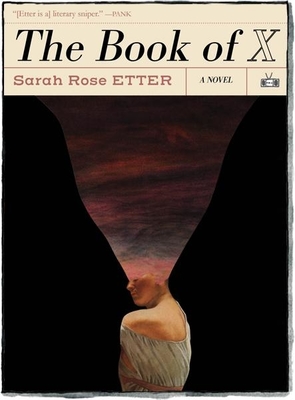
I first met Etter in Lisbon in 2014 at the Disquiet International Literary Program. There, I got to read the stories she was writing five years before The Book of X would be published, stories different from the book, but undoubtedly from the same mind fascinated by bodies, what they mean to themselves and to others, how they’re treated, and what they’re for. These stories stayed with me and made me very much look forward to this debut, which does not disappoint my appetite for more of Etter’s ideas about bodies.
Sarah Rose Etter and I talked about just that—how Cassie’s body dictates her experience, and what her experience says about trauma and the isolation it creates in a society so consumed with perfection.
Jane Dykema: I was thinking about how relatable this loneliness is that Cassie is living, and how almost all of the contemporary discussion of loneliness is couched in a discussion of technology, how technology is isolating us, etc. But there is no specific technology happening in this world-—the world is actually free from most kinds of time markers. Do you think the kind of emotional and physical isolation Cassie is experiencing is a timeless truth for people, or do you think it has to do with her specific experience?
Sarah Rose Etter: I knew I wanted to write a story that was surreal and resisted the ability to be set during any certain year and technology is one of those markers that can give a story an absolute timeframe. I didn’t want to tackle the impact of smartphones and social media in The Book of X, because it would detract from Cassie’s experience and emotions. Once you’ve introduced a device like that into a character’s life, it’s so easy to say Oh, just go on a smartphone diet and you’ll be fine! You just need more self control!
For Cassie, though, loneliness is much more complex. Based on her body, based on her past, it’s not as simple as going to a singles mixer and opening herself up to the nearest accountant. Further, this is a society that has already decided she should be an outcast because of how she looks. Her loneliness feels, to me, like an extension of her knot—it is one of the biggest ways in which her body works as a barrier between herself and the rest of the world. And once her knot is removed physically, it does remain for her mentally. There’s something so relatable about this to me—the idea of a woman being trapped in and by her own body, and being other.
I’ve been reading a lot about the research into loneliness—how there are doctors exploring whether we can cure loneliness with a pill. That seems wrong to me, for some reason—almost as if we’re curing something medically that we could fix by seeing each other and building real relationships. It seems surreal, doesn’t it?
So much of this book is about loneliness and isolation. I suspect one of the reasons I feel so drawn to those topics is because loneliness is one of the few emotions that crosses lines of gender, race, and class. Like death, and to some extent love, loneliness is one of those major human concerns that none of us can escape. In that way, loneliness is universal—in that way, our loneliness unites us.
JD: I’m interested in what we do and don’t know about our characters and what they can teach us about what we actually think, or what they can teach us to unthink. Do you think there’s a difference between how you would describe Cassie’s trauma and how she would describe it?
Like death, loneliness is one of those major human concerns that none of us can escape. In that way, our loneliness unites us.
SRE: The ability to break out of our traumas is not easy—I think for Cassie, that was just her life. She is unable to step back and look at her life the way we can see it because she is so mired in her condition. She really represents the power of heredity in some ways—of course, we often hear for things like depression or chronic illness or pain that we need to go to yoga, practice deep breathing, try CBD. But in reality, the amount of time, money, professional help, medication, self-awareness, skill, and strength required to overcome our birthrights is not easy to come by. To me, Cassie would be the kind of person to briefly explain the entirety of her trauma in a few brief sentences over a drink with a friend and shrug at the end.
And that’s an important question: What happens to us when aren’t offered the care or recognition we need? I think frequently whenever I meet someone new how I’m not just meeting them—I’m also meeting all of their trauma, pain, and previous experiences, which combine to create their behaviors and reactions to the world. Ultimately, the amount of pain we’re all carrying is immense. If you think about it, it’s incredible that some of us keep moving through the world.
JD: Yes! I was thinking when you said they’re working on a pill for loneliness in our world, there’d be so much stigma associated with taking it at first. But is loneliness just another chemical process like depression, and if you can do yoga, deep breathe, spend time outdoors, and make meaningful connections in person all day, can you manage it “naturally”? And if your life is not organized in a way in which that’s possible, you’re poor, you support other people, you work remotely, it’s always winter, etc., then what do you do? Cassie seems like a very realistic version of what you would do.
SRE: Absolutely—we often ignore those who cannot afford or don’t have access to help, whether that’s financially, or they don’t have the knowledge or resources to reach out. And you’re right—even if we invented a pill for loneliness, who would be able to afford it? What would the side effects be? How would it serve to further isolate us? By covering up the symptoms of loneliness, how do we effectively stop trying to make connections with other people? I’m of two minds about that—in nature, we feel pain as a response to a stimulus in order to set off alarm systems in the brain so we will do something to protect ourselves. If we think of loneliness as a type of pain, how does numbing it stop us from really addressing our isolation? I don’t have a clear answer to that, but those are questions we have to ask.
In Cassie’s case, too, you have so much of the medical field basically telling her We’re not here to help you. Your experience and your body don’t matter. So when you have an institution like that essentially crushing you, what’s left to do? In many ways, after writing this, I wondered how much of the desperation came from just being a woman in America right now—from having a body that is regularly discussed, regulated, legislated, but never really understood. Or simply from watching the rights and access to medical care being stripped from so many other people.
I won’t get on a soapbox here, but if you compared the amount of money being spent to address erectile dysfunction versus the amount of money being spent to invent new forms of birth control that were cheap and accessible, the numbers would upset you. To me, Cassie represents a woman who is given almost no knowledge about her body in any form, and then sent out into a world that almost runs on sex. So much of her pain comes from that alone.
JD: This seems like a perfect opportunity to transition to Cassie as a woman in this world and her relationship to men. I laughed so hard when the boy she has a crush on in high school says, “I like it when you listen to me.” It’s so innocent and true and understandable, yet so recognizably a problem between men and women. There’s a lot of both generous and realistic prodding at these relationships. We see men who mind Cassie’s knot and men who don’t, and we’re left to wonder, what would we all want if society wasn’t always whispering our own cultural standards of beauty in our ears?
The concept of American perfection is so ingrained in all of us that we can’t help but want to be other than what we are.
The representation of men in this book is complicated, but Cassie interacts with an accurate mix of the types of suitors who would be drawn to someone with her condition. She’s also a character with no working model for a true relationship—I’d argue her parents have a fairly utilitarian relationship, so her understanding of romance is limited. Further, her inability to draw boundaries with partners feels directly tied to her self-worth.
But I do like that she explores her body despite all of that—the men she attracts in the bar, for instance, do seem like a solid representation of one night stands, while her two major loves, Jarred and Henry, are both very limited in both their feelings for her, their own emotional intelligence, and how they can be available to her. You can feel how much she’s yearning for more from everyone around her—and yes, how her mother and the men she encounters either demean her or glorify her because of her condition. In her world, there’s a clear portrayal of a mother and a series of men serving as the bullhorns for capitalist expectations of how we should look as women – whether that’s coming from her mother’s magazines or the comments of the men who see her naked. In reality, her father and Henry are the only two characters exempt from this behavior. They serve as a sort of safe harbor from that entire line of thought.
What would Cassie want without all of this? I think she’d ultimately still want to be knotless. That’s how deep all of this goes, really. Even without the mothers, men, and mouthpieces, the concept of American perfection is so ingrained in all of us that we can’t help but want to be other than what we are. I could ask anyone: What’s your knot? What would you remove from yourself?
JD: I was so struck by how you treated the knot’s removal. When she’s younger, before her knot is removed, Cassie’s visions feature a smooth, unknotted belly, and the receipt of desire and acceptance that she perceived would come with it. And after it’s removed, we don’t see a huge internal celebration, much change in the way she’s treated, or even her noting it too much. What is the link as you see it between Cassie’s belief about what she looks like and her reality?
SRE: There’s an incredible book called The Body Keeps The Score that helped me portray Cassie’s experience with pain and trauma. That book is written exceedingly well, but it’s also full of research about what happens to the body and the brain after a traumatic experience – and the brain is literally re-wired after we undergo a trauma.
So, ultimately, a trauma is never “over.”
And even when it comes to our bodies, that seems to be an idealization to me. Sure, we can have surgeries to look like each other and then continue to operate in the world, but some wounds stay with us forever and I mean that literally. There is no erasing our traumas from our minds or our bodies, not really.
Post-surgery, I wanted to show that she continues to be judged by her body. Her place in the world doesn’t elevate without the knot because it was only the cosmetic she changed—she never addressed her core issues. That’s why her relationships stay largely the same. She is ultimately able to attract a partner and fall in love. In my mind, her relationship with Henry, and his acceptance of the scars on her body post-knot removal do a lot of work to obliterate her trauma for a brief stint. It gives her a few months of relief and acceptance of herself.
But in the end, her trauma and her experience are both still there, lurking beneath the surface, waiting to re-emerge, forcing her to address them. At times, I felt like the book was really a portrayal of someone battling depression and losing the fight. Her surgery illustrates that—she didn’t do the real work, and so there can be no true change.
With Cassie, it also felt important to me to reject the idea that life always gets better. It’s very American, in some ways, this arc of improvement that we constantly return to. And those are the books that sell, right? The books that tell us we can refine ourselves and improve. There’s this urge to tell each other life always gets better if we just get the next thing—the next surgery, the next phone, lose the next ten pounds, get the next great job, the next car. That is what feels so American about some of those more mainstream narratives.
JD: What are some non-American books you admire that don’t have this sort of improvement of life narrative?
SRE: Oh, this list will be long! Ha! From France, Bonjour Tristesse by Francoise Sagan definitely comes to mind, as does The Book of Words by Jenny Erpenbeck from Germany. Both of these are really coming of age stories that take place during difficult times—familiar divorce and war, respectively – but leverage short, sparse sentences to drive their narratives forward. Neither end on what I’d call a redemptive or happy note. Similarly, Why The Child Is Cooking In The Polenta by Aglaja Veteranyi, a story about a traveling Romanian family in the circus, is a spliced together, fragmented narrative that leads somewhere quite dark. Fever Dream by Samanta Schweblin, of course, too—another one that ends with a sad bang.
Let’s even go beyond books to talk movies. I think here of The Lobster and The Favourite—both of these movies, by Yorgos Lanthimos, grapple with love, violence, and power without leaving the viewer in a safe, soft place. Rather, they imply life never gets better, really—it only gets more desolate. Both of those movies really stuck with me—I think I saw The Favourite four times while I was editing The Book of X, and I felt like it did give me some power to let the story end how it should, however harrowing that might be.
Again, it just seems to me there is more freedom for art to be raw and unsolvable whenever I look internationally. I love a lot of what’s happening in America, of course—Halle Butler, Carmen Maria Machado, Amelia Gray, and plenty of other writers are pushing American weirdness forward. Caren Beilin’s Spain was one of the most exciting books published stateside that I read this year. I was also really crazy about Trisha Low’s Socialist Realism, and Ultraluminous by Katherine Faw. So of course, there are still interesting things that are happening in America—I just tend to feel there’s a little more weird happening beyond our country, or a weird that appeals to me very much. I always get so excited for works in translation for this exact reason. I want to understand the global weird.
12 Novels about Historical Women to Inspire a Better Future

The Spanish philosopher and poet George Santayana once said, “Those who cannot remember the past are condemned to repeat it.” As a genre, historical fiction allows us to shuttle back in time to stand in the shoes, clogs, chopines, and go-go boots of people—real and imagined—to consider the events that shaped their personal characters and the outside world.

Novelists come to historical fiction from multiple points of origin, and their research approaches differ widely. In some historical novels, the time period itself is the main event: the customs, dress, and social manners of that period are the book’s protagonists. For other authors, trying to understand what a certain person was feeling and experiencing during an upheaval is the project’s appeal: what was it like for the dancer Isadora Duncan to lose both of her children at the height of her career? How did the young Alexandrina Victoria steel herself to the surprising news that she was—suddenly, and despite serious pushback—the Queen of England?
Putting an obstacle in the path of your protagonist’s hopes and dreams is Creative Writing 101, and it’s a narrative practice that the patriarchy has been burdening women with since the dawn of time. As Trump’s regime continues to make handmaidens out of its female citizens, we’d all do well to revisit books in which women gain ground—only to lose it— so that we can more thoughtfully examine the rinse and repeat cycle we’re currently mired in. From blousy bestsellers to voice-driven literary fiction, there is a book for every tote bag on this reading list—particularly if the patriarchy’s not your bag.
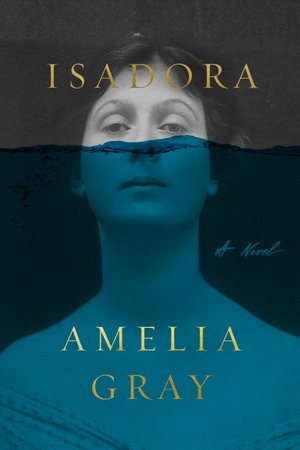
Isadora by Amelia Grey
In 1913, a freakish car accident saw both of dancer Isadora Duncan’s young children drowned in the Seine on the nanny’s watch. In this symphonic novel, steely-nerved Amelia Grey takes us through two years of Isadora’s mourning when she is casting about pre-war Europe trying to heal her mind and heart while gossip over her eclectic lifestyle and belief system only grew. An unflinching portrait of a grieving woman whose talent is seen as both a boon and a curse.
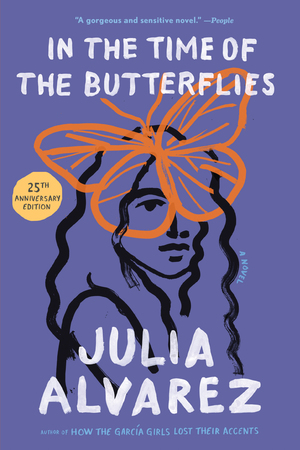
In the Time of the Butterflies by Julia Alvarez
In Julia Alvarez’s 2010 classic, she revisits the assassination of the Mirabal sisters (who were leading opponents of Gen. Rafael Leónidas Trujillo terroristic regime in the Dominican Republic) literally breathing new life into the three women who died for their political beliefs. The only surviving sister is also heard from in this piercing epic that spans three decades and shines light on the cost—and necessity—of intellectual bravery.
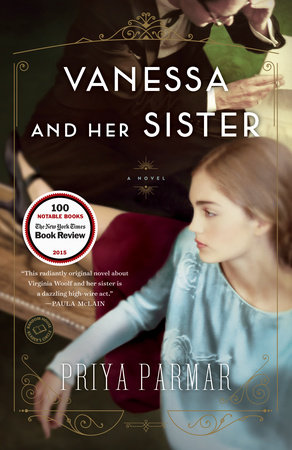
Vanessa and Her Sister by Priya Parmar
Although Virginia Wolf’s diaries are beloved, there are no surviving diaries of her sister Vanessa Bell, a painter also played host to the famous group of intellectuals known as The Bloomsbury Group who visited the Bell/Wolf house regularly in the early twentieth century. Priya Parmar used years of letters between Vanessa, Virginia, and the other Bloomsbury members to reimagine how the sisters’ relationship fractured when needy Virginia “lost” her devoted sister to a suitor’s love.
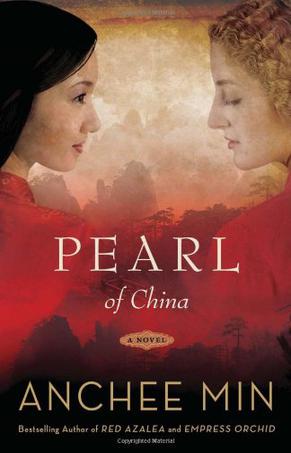
Pearl of China by Anchee Min
It is the end of the 19th century, and nine year-old Willow is bored out of her skull in rural Chinkiang. This novel—by the acclaimed author of The Last Empress (which reimagines the life of one of the most important figures in Chinese history, the Empress Tzu Hsi)—depicts a relationship between the fictional Willow and the real Pearl S. Buck, the Chinese-born eldest daughter of a zealous American missionary who would grow up to be a Nobel Prize-winning writer and humanitarian. When the Boxer Rebellion separates the two childhood friends, their friendship is the only steady element in a life of war and broken dreams.
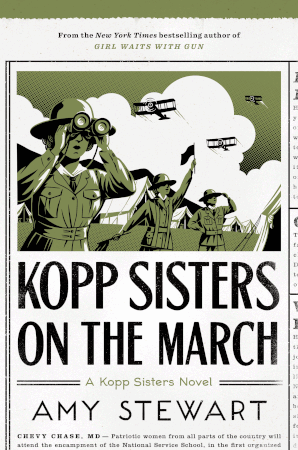
Kopp Sisters on the March by Amy Stewart
Moxie, humor, and meticulous research always go into an Amy Stewart project, and this latest offering in the Kopp Sisters series—inspired by the life of Constance Kopp, one of America’s first female deputy sheriffs—will not disappoint. On the March revisits the military preparedness movement of 1916, in which women began taking part in military camps before the US had even entered the war. In true Stewart style, the novel also manages to tackle reproductive rights, female desire, and mother/daughter/sister bonds.
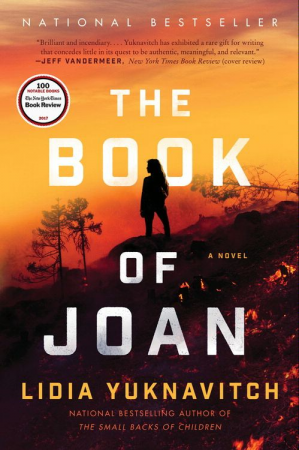
The Book of Joan by Lidia Yuknavitch
Ever-inventive Lidia Yuknavitch reimagines Joan of Arc as a dystopian child-warrior whose supernatural gift allows her to commune with the earth at the exact time that a ruthless cult leader is turning humanity’s safe-house of a platform, CIEL, into a police-state battleground. It’s as mind-bending as it sounds—no one is writing quite like Yuknavitch right now.
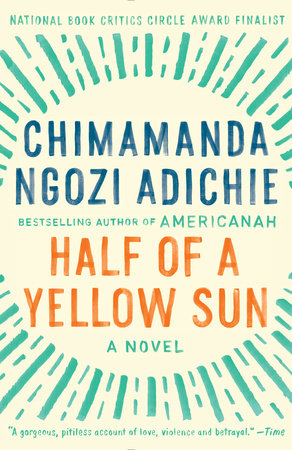
Half of a Yellow Sun by Chimamanda Ngozi Adichie
Chimamanda Ngozi Adichie’s 2006 precursor to her 2013 Americanah takes place in 1960s Biafra, when the state is trying to separate from Nigeria, an act of willfulness that results in a civil war of merciless violence. This seminal period in Nigerian history is told through a triangle of love stories—both requited, unrequited, and platonic—and centers mainly on a professor’s mistress, who has left her privileged life in Lagos behind to join her lover in a dull university town.
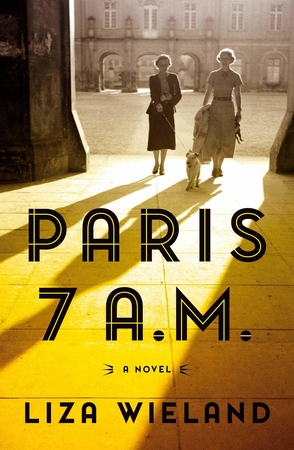
Paris, 7 A.M. by Liza Weiland
It’s Spring Breakers, but for poets—in this luminous novel about a college-aged Elizabeth Bishop who has come to Paris with her Vassar roommates to escape the husband-hunting that society expects young women to be occupied with. Instead of husbands, the college friends find a Paris on the brink of fascist occupation, along with an entirely new sense of what it means to be a woman and a citizen in a world divided.
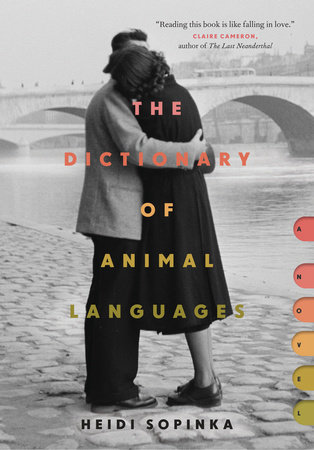
The Dictionary of Animal Languages by Heidi Sopinka
The legendary Leonora Carrington is reimagined as the reclusive, ninety year-old painter Ivory Frame, who is quietly at work at a dictionary of animal languages when she finds out that she has a granddaughter she didn’t know of—a turn of events as disorientating as surrealism itself, as Ivory never actually had a child…
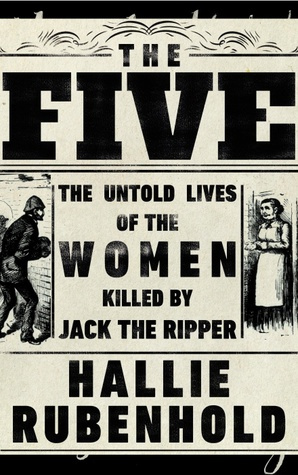
The Five: The Untold Lives of the Women Killed by Jack the Ripper by Hallie Rubenhold
In this cultural moment where male serial killers are getting their own television shows, The Five rightfully turns the spotlight onto the female victims. This meticulously-researched book about the women that Jack the Ripper slaughtered reads like a novel, which is why I gave myself a hall pass to include it in this list.
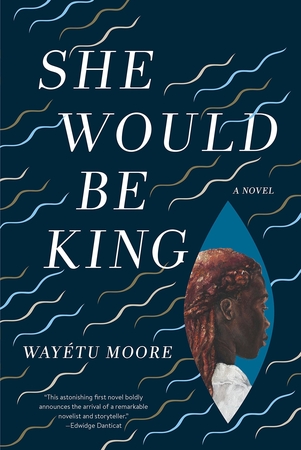
She Would Be King by Wayetu Moore
The early history of Liberia is reimagined here through the lives of three different characters with an unexpected bond in Wayetu’s powerful debut, inspired by her own childhood during the Liberian civil war. Endowed with superhuman strengths and abilities, one of the characters is an indigenous “Vai” Liberian whose immortality convinces community-members to believe she is a witch, and to treat her with disdain and mistrust. Vai legends, magical realism and historical facts sensuously intertwine in this astonishing debut.
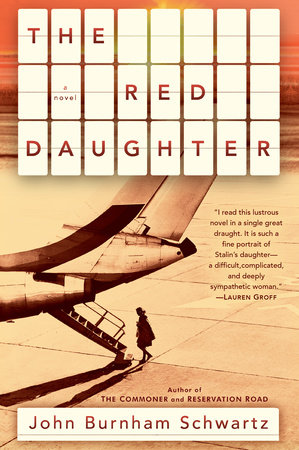
The Red Daughter by John Burnham Schwartz
The book’s cover says that novelist Lauren Groff read this story of Stalin’s daughter defecting to America in the 1960s to escape her father’s brutal legacy in “a single great draught,” and you’ll gulp it down, too.
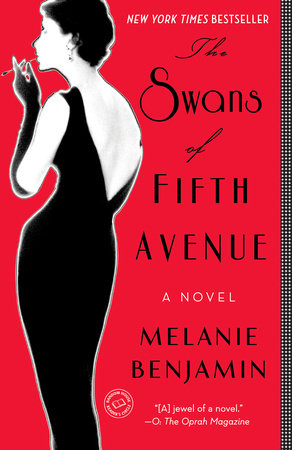
The Swans of Fifth Avenue by Melanie Benjamin
When you’ve got a long weekend ahead of you and a brain that needs some candy, treat yourself to Benjamin’s exuberant portrayal of socialite Babe Paley’s headline-making friendship with Truman Capote in the martini-fueled corridors of 1950s high-society New York.
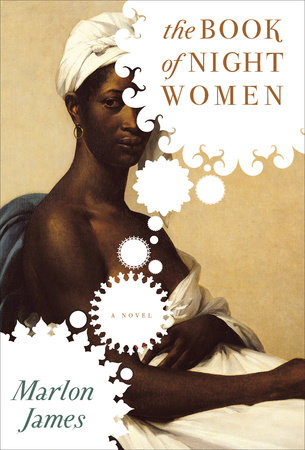
The Book of Night Women by Marlon James
In his 2015 Man Booker-winning A Brief History of Seven Killings, Marlon James took us behind the scenes of the 1976 home attack on Bob Marley in Kingston, Jamaica. In his 2009 Book of Night Women, we return to Jamaica—but at the end of the 18th century—where a young slave named Lilith seems to be possessed of the dark powers that the older, female slaves decide to leverage for a revolt that they’ve been planning. As Lilith comes of age though, she has other plans, plans that could make her an enemy within her own sisterhood.
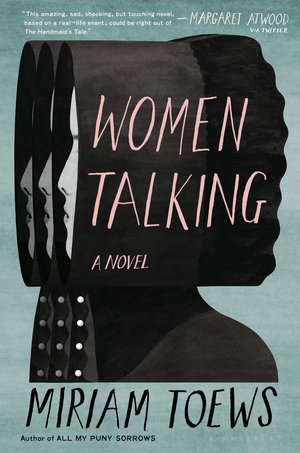
Women Talking by Miriam Toews
In Women Talking, Miriam Toews reckons as much with her own Orthodox Mennonite past as she is with the current struggle for women’s rights throughout the world. This astonishing novel reimagines the real efforts of eight of the hundred plus Mennonite women who were drugged and raped repeatedly by male members of their community over a period of years in the mid 2000s. Presented to us via the minutes of their hayloft meeting, the women grapple with whether or not to confront, escape or forgive their perpetrators, who are currently in prison awaiting their Mennonite supporters and relatives to get them out on bail.
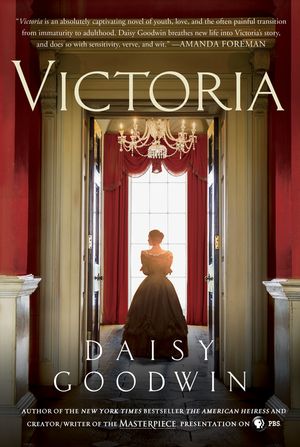
Victoria by Daisy Goodwin
Daisy Goodwin first started reading Queen Victoria’s diaries when she was a student at Cambridge, and the struggles and secret joys of the young nineteenth-century monarch fascinated her. The result of this obsession is the bestselling Victoria that kicks off in 1837 when eighteen year-old Alexandrina Victoria became Queen of Great Britain and Ireland, unexpectedly. Goodwin writes deliciously about a young woman coming into her own powers, while learning to wield and relish all the power of the throne.

The Age of Light by Whitney Scharer
Model Lee Miller moves behind the camera in Whitney Scharer’s buzzy debut about a woman’s transition from “muse” to artist in her own right. Set in Bohemian Paris of the 1930s, this book proves that Lee Miller was much more than a pretty face. Refreshingly, it also gives its female heroine a mighty appetite for sex.
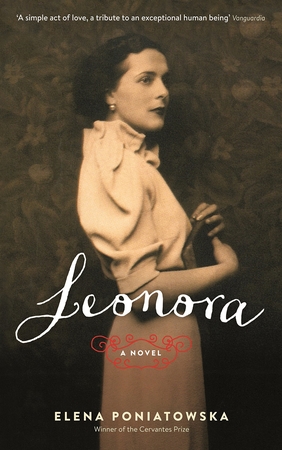
Leonora by Elena Poniatowska
Leonora Carrington is having a moment not just in this reading list, but in the larger world. The film rights to Elena Poniatowska’s fictionalized biopic just sold at Cannes, which will hopefully bring more readers to the French-born Mexican author’s award-winning work. As a fierce defender of human rights and womens’ issues (and the first woman ever to win Mexico’s National Journalism prize) it’s no wonder that Carrington’s incredible life story becomes a hymn to passion and liberty in Poniatowska’s hands.
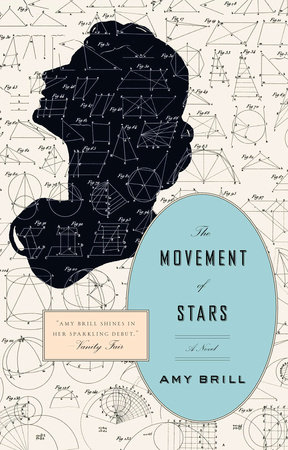
The Movement of Stars by Amy Brill
It’s Nantucket as you’ve never seen it. Inspired by the work of Maria Mitchell, the first professional female astronomer in American history, this is the story of two intelligent dreamers, both beguiled by astronomy, whose stars aren’t meant to align.
In Memory of Brazenhead, the Secret Bookstore That Felt Like a Magical Portal
In a popular trope present most often in YA novels, a character finds a secret key to another world. The key is rarely literal. More often, it’s an action as banal and everyday as leaning against a train platform barrier, walking into a phone booth, or looking for a winter coat in the back of an old wardrobe, that sends our hero out of the familiar and into something stranger and better. It usually happens by accident, on a day like any other day.
These through-the-looking-glass plot devices are meant to offer the reader hope, to invite us to feel part of the story. By depicting entry into an imaginary world as something on which anyone could stumble by tripping over their own feet one morning, it allows the reader to believe that the same magic might happen to us, in our own dull, repetitive, familiar lives. We are always just one wrong step, one turn around one corner, one missed exit away from falling sideways in Narnia.
For many of us who were lonely kids, books act as portals. We are always still hoping to tumble through them into elsewhere.
This longing for secret doors to another world is largely seen as a childish way to access literature, as childish as admitting that you still read books because you love them, and for no more lofty or sophisticated reason than that. Plenty of people, plenty of serious readers and writers and critics, don’t engage with books this way at all. But for many of us who were bookish, lonely kids, and grew up to be bookish, awkward adults with lives based to some degree around reading or writing, this is a desire that we never quite scrub from our hearts. Even when we’re no longer reading books about portals, the books themselves act as portals. We are always still hoping a little bit to tumble through them into elsewhere.
Brazenhead bookstore was up two flights of unremarkable stairs in an unremarkable small apartment building on 84th street, down an unremarkable grimy hallway lit by the same awful, ubiquitous fluorescent overhead lights that preside over the conclusion of every late-night house party in New York. The door was painted a blue-ish grey-ish color like every other door in a New York apartment building that’s been painted and repainted so many times that it can’t really be any color at all. The first time I visited was in January of 2011; a friend had invited me to a literary salon at a bookstore, an invitation that sounded like dozens of other events happening every night in New York. We knocked on that unremarkable door and it cracked open, belching yellow light and smoke and laughter, and then shut behind me before I had a chance to notice where I was. I looked around and for one brief, nearly-hysterical moment, I thought: this is it, I’ve done it, I fell through the wardrobe and got into another world. The other, better, wilder, secret place had in fact always lived just at the edge of this one, and finally I’d knocked on the right door, performed the right series of accidental choices, and arrived in the place the books promised.
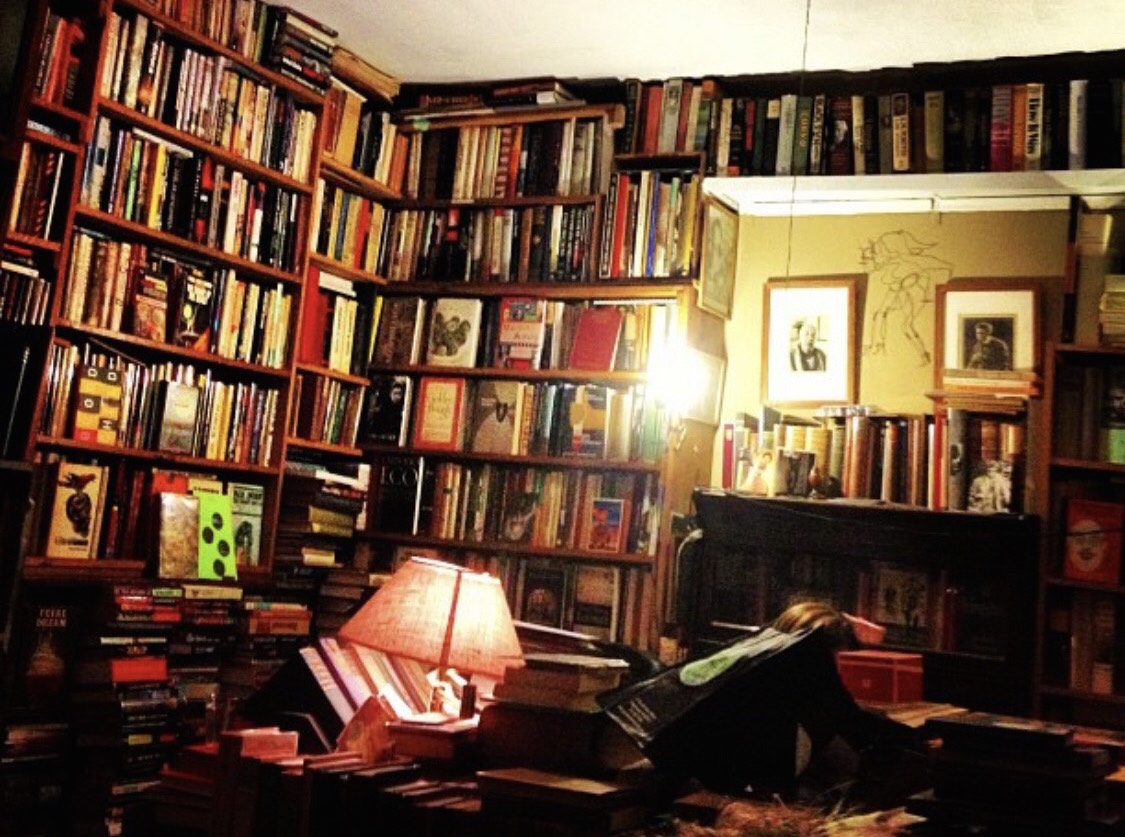
Brazenhead was, as you probably already know since it was the worst kept secret in New York City, a speakeasy bookstore run by the legendary Michael Seidenberg, who passed away earlier this week. At the time I first visited, it was housed in what had once been, and was technically still supposed to be, Michael’s rent-stabilized one-bedroom apartment. Books covered the room, only grudgingly making space for people to walk and stand between them. The walls were lined from floor to ceiling with books, some of them in shelves and some of them just accumulated into teetering piles. They covered all of the windows, making it perpetually nighttime in Brazenhead, a place that kept insomniac hours and only came to life at night anyway; if you emerged from Brazenhead into daylight, it was because you had stayed there until the next morning. There were no clocks; a friend called time inside Brazenhead “bookstore casino time.” There were two front rooms in which the books were divided with meticulous disorganization into sections by genre, which included New York Literature and Science Fiction next to each other near the front, and Pornography in a highly popular heap near the back. Behind a small curtain and furthest from the door there was the First Editions room, which was smaller and darker and more secret than the rest. It had a little cushioned bench, a very dim lamp, and shelves of first editions, mostly novels, some rare, some signed, some just weird. It was where people went to hook up during parties, because they didn’t know everyone knew what they were doing back there, or maybe because they did.
For one brief moment, I thought: I’ve done it, I fell through the wardrobe and got into another world.
Since Brazenhead was an illegal business, the only way to visit was hearing about it by word of mouth. It was best to buy books if you could, and it was advisable to bring whiskey to share with whoever else might be there, and most importantly with Michael. Some nights there were fifty people there, some nights there were two. You never knew quite what kind of party, or what kind of evening you would walk into. It was secret but not exclusive: The price of entry was merely that you had to want to be there, that you had to want to sit around talking shit with Michael about whatever ridiculous topic Michael wanted to talk about, that you had to think a night where you were allowed to lapse out of conversation and sit in a corner taking books down from shelves for 45 minutes was a good time. It was a place that attracted weirdos and losers and social climbers and grown-up awkward kids who still wanted to live inside books, and it is where I met or became close with many of my very favorite people.
If I say that Brazenhead was like stepping inside a book but for real, it sounds stupid; stuff that is magic always sounds stupid. The belief in it always sounds childish and naive. But the people I knew who frequented Brazenhead, and especially Michael himself, who ran it and had created it and from whom its magic originated and emanated, were anything but naive. We had grown up past the idea of books being somehow enchanted, past the YA novel idea of being special enough to be offered the right accidents. I understood well by the time I first walked into Brazenhead that books were no more magic than a corkboard coaster, a bunch of paper jammed together into a physical object that mostly sat around underneath drinks. But I still carried through my life the hope underneath everything that something big enough, something enough not-myself, would lift me up and carry from away from the essential mundanity of my life, and I continued to seek in books this temporary and artificial escape. That reaching for elsewhere was both hopeful and, like many hopeful things, desperately crushing when it turned out not to be true, one of the many processes of necessary disappointment that propels one from childhood to adulthood.
Brazenhead was the place where it did turn out to be true, where there was another world, not beyond this one, but right here inside of it. When I walked in there for the first time, and every time when I walked in there after that, no matter how bad a mood I was in, what kind of day I had had, what I was worried about, or how drunk I already was from where I had gone before, I always felt just the tiniest bit transformed. It was always welcoming in the same way the worlds within books is welcoming, a place that said all those promises of escape might be true.
Escapism in the manner of the bookish kid longing to get away from their own life seems selfish. A lot of adolescent loneliness turns out in hindsight to be selfish, predicated on the inability to heave yourself up out of your own experience and see that other people are in pain, that other people are struggling, that your own difficulties are neither unique nor spectacular, that they do not excuse you from kindness. Eventually, you learn that your pain is not large enough to replace the slow and hard and gentle work of listening to others.
The type of escapism found in books at its best provides an experience of selflessness.
But part of what books can offer, in their portal-worlds, is nearly the exact opposite of the adolescent self-pity that seeks to evade connections with others by hiding in an imaginary world. Reading can temporarily grant us the ability to shake off self-obsessed worries about the events of our own humid little lives. The type of escapism found in books at its best provides an experience of selflessness. That selflessness is not necessarily generous or empathetic, but it is escapist precisely in how it allows us to de-center ourselves. In books, we forget, abandon, or transcend the self for a few hours, dwelling somewhere other than our own small and falsely urgent life.
In a similar way, Brazenhead was a living argument against the idea that the belief in portals, the longing for escape, was childish or naive. That’s not why Michael, who was definitely not a wide-eyed kid trying to find Platform 9 ¾, created the store. He didn’t have some magical or idealistic mission for it; he just didn’t want to leave his house. He wanted to know lots of people, he wanted to hear about what people cared about and were reading, he wanted other people to bring him booze, he wanted in general to live entirely on his own terms. Lots of us who love books have claimed we wanted to live in a bookstore, to hide inside a library and never have to leave: Michael actually did it. But by the force of his belief in the world as he wanted it to be, he built a portal to a place where that live-all-night-and-forever-in-the-library feeling seemed briefly available to everyone who walked through the door. It was a better world, even if it was only five hundred square feet of it. It was a place where the limits, rules, laws, and logistics that bind us, the pedestrian nagging and worry that we are bound to, were left outside—which was, in the end, always the escape I was hoping for when I submerged myself in books. At Brazenhead, going inside books was literal and real.
Michael was a myth by the time I met him, and more so by the time he passed on Monday night. His bookstore could never really stay secret because everyone wanted to know him, and everyone wanted to talk to everyone about how they knew him; I like to think it was because none of us could quite believe he was real, and we were all trying to narrate him into reality, to pin him down into our own stories. Jonathan Lethem, a Brazenhead regular, and a dear friend and former employee of Michael’s, had actually turned him into fiction, basing characters in both Motherless Brooklyn and Chronic City (the which book, my favorite of Lethem’s, always feels to me like it is about Michael more than anything else) on him (his dog is in Chronic City, too). Michael would sometimes jokingly sign copies of these books, implying he was their real author.
Of course, he wasn’t an author, not primarily. He was a beautiful, skilled, fiercely intelligent writer, as evidenced in the “Unsolicited Advice for Living In End Times” columns he wrote for The New Inquiry, which are collected online here and which I truly can’t recommend enough. But his enduring genius was what he created with Brazenhead. If books are seeking to invent imaginary worlds into which one might escape, then Michael authored that portal experience in real life, through his insistence on living exactly how he wanted, and then being fiercely, radically generous with that living, opening up this elsewhere to anyone who wanted to visit. He was a host at a level of genius so great that it created a world.
Michael authored that portal experience in real life, through his insistence on living exactly how he wanted.
I went to Meow Wolf in Santa Fe about a year ago, an immersive art installation piece in a bowling alley that is also a 20,000 square foot science fiction novel. It was, again, that experience of stepping into another world, of submerging oneself in an elsewhere. Meow Wolf is full of literal portals; you actually can lean through a wall and fall into a different place. It made me miss Brazenhead more sharply than I had in years. Brazenhead was this same thing, but the portal led back to the real world. These things, it said, could actually exist. You could actually hide in the library and live there forever. Brazenhead may have felt removed from reality, but it wasn’t. It was a very real place in which I could travel vertically into the idea of books, into the unreasonable desire for a better world, into the early longing created as a reader and as a lonely kid looking for anything that was not myself.
There was a night once when Michael opened Brazenhead just for me and two friends. It was past midnight by the time we arrived. All three of us were heartbroken about failed relationships or unrequited loves. Michael would have been fine with it if we had just sat around in his bookstore and gossiped about our little personal sorrows while we smoked his pipe in the background, but instead we did the thing that people usually did when they came to Brazenhead: We took books down off the shelves and read them out loud. We competed to see who could find the saddest, most absolutely heart-punching poem or prose excerpt to read out loud. It was both a serious expression of our pain, and a mockery of it. Michael listened, and laughed at the right times, and very occasionally offered very gentle no-nonsense advice. We all three of us needed to escape into books that night, and had we all just gone home separately to cry ourselves to sleep, we probably would have individually done just that. But we went to Brazenhead instead. The portal was right here where we lived, a few subway stops away. We slid out hours later into the early sunlight, to go home and sleep through the morning. Nothing was fixed, but I knew I could go back anytime I wanted, I could knock on the secret door that wasn’t really secret, and be admitted into this elsewhere that wasn’t really elsewhere at all.
Brazenhead moved locations since then, the original one on 84th street eventually becoming unfeasible and shutting down. There was a long series of “last” nights there, one last night after another after another for at least a month, and then, eventually, it re-opened. I rarely went to the new location; it some ways I felt I had outgrown it, that it was better to cede it to newer people who needed it more than I did. In some ways I was just too afraid of not knowing anyone, too afraid it wouldn’t be the same. But I always loved knowing it was there. I loved walking around with buried knowledge that I could go back any time I wanted, that I could still knock on the secret door, and trust in the world that waited behind it.
In the days since Michael passed, tributes to him have proliferated online, and at first some part of me felt jealous or possessive, that other people I’ve never even met had loved someone I loved, that they too had known how to lean sideways just right and fall through this reality into a better and stranger one. But I remind myself that these remembrances are what he created; they hold together a world, hopeful and unlikely, that once existed in a room made of books, where there were no clocks and no windows, where it was always nighttime, and the night never had to end.
14 Bastille Day Books to Read If You’re Considering a Revolution
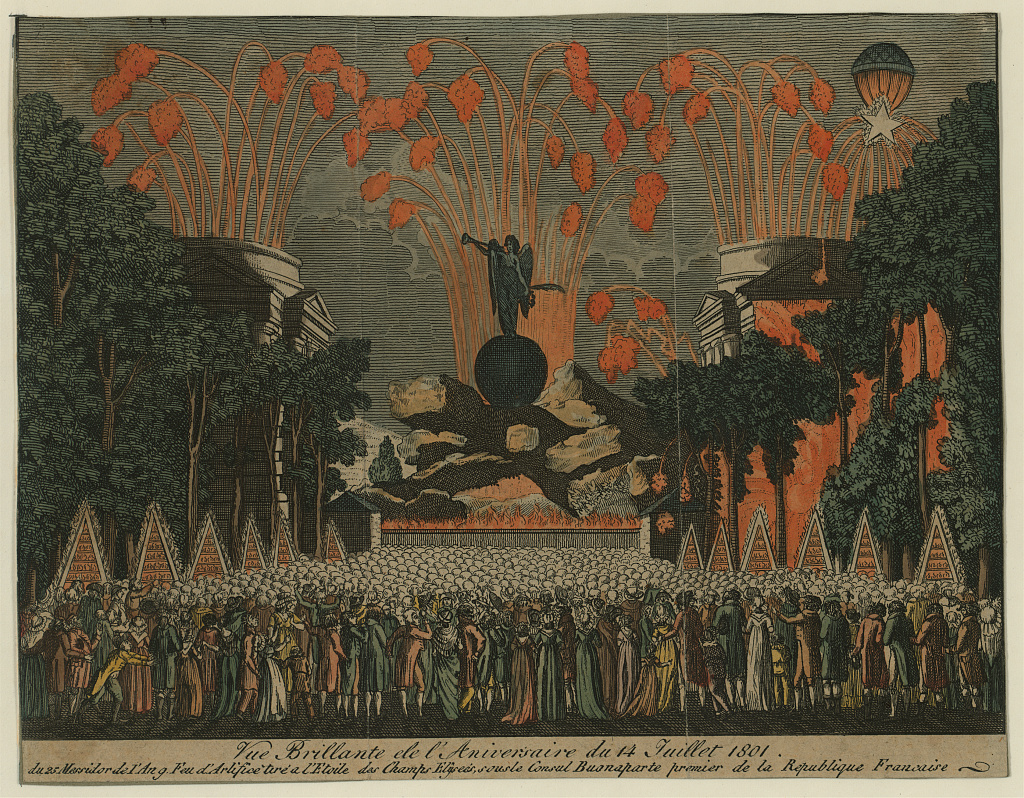
On the 230th anniversary of what the French call quatorze juillet (July Fourteenth), and we call Bastille Day, when that infamous fortress was seized—of which no trace remains but a few stones moved to another location and an opera house on the site which bears its name—it’s amazing to recall the space it occupied in the popular imagination. As Jules Michelet writes in his History of the French Revolution:
“The Bastille was known and detested by the whole world. Bastille and tyranny were, in every language, synonymous terms. Every nation, at the news of its destruction, believed it had recovered its liberty.”
Even though only a handful of prisoners were left to liberate by that time, everyone recognized the symbolic importance of the moment when power passed from the crowned head of France into the calloused hands of the people. Except the king himself.
Away at Versailles, Louis XVI went to bed early and unperturbed. The Duke of Liancourt woke him to explain the enormity of what had just happened. The king, still half asleep, asked if it was a revolt. According to Michelet, the Duke’s grim response was, “Sire, it is a revolution.”
Here, in deliberately random order, are fourteen books, each offering a different perspective on the seminal event that changed the course of history in France . . . and in the world:

A Place of Greater Safety by Hilary Mantel
Mantel’s astonishing gift for bringing history to life, on full display in Wolf Hall and Bring Up the Bodies, is just as evident in her earlier novel about the French Revolution, where three men emerge from provincial obscurity to dazzling influence in Paris. In this page-turner (with some 800 pages to turn), Mantel shows how the braided destinies of Danton, Robespierre, and Camille Desmoulins were inseparable from the course of the Revolution: from exhilaration to excess, from power that goes to men’s heads, to the violence that in turn claims their heads.
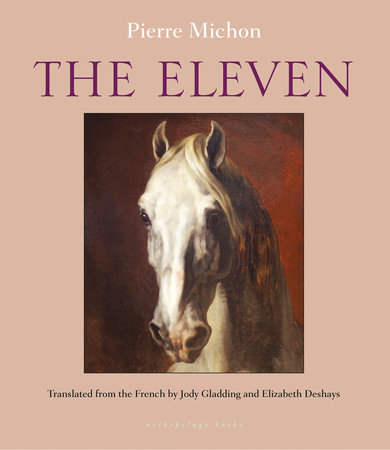
The Eleven by Pierre Michon
In this slim volume, an unnamed narrator describes Corentin’s famous painting, “The Eleven,” a group portrait of the Committee of Public Safety during The Terror which followed the Revolution. The primary concern of the eleven men (with Robespierre at their center) was for their own safety, which they ensured by sending their old allies, Danton and his followers, to the guillotine. “The Eleven is not a painting of History, it is History,” writes Michon slyly, for there is no such painter, and no such painting; but if History tells us about the men whose signatures sent thousands to their death, Art ensures that they will live forever in their infamy.

The Marie Antoinette Romances Series by Alexandre Dumas
The Marie Antoinette Romances Series comprises of five novels—Joseph Balsamo, The Queen’s Necklace, Ange Pitou, The Countess de Charny, and The Knight of Maison-Rouge—filled with palace intrigue and Dumas’ characteristic plotting and pacing, detailing the conflicted loyalties between revolutionary ideals and royalist sympathies. It’s astonishing how Marie-Antoinette, so loathed by her people, is so loved by writers. And by royalists like the Knight of Maison-Rouge, who tried to save her life.
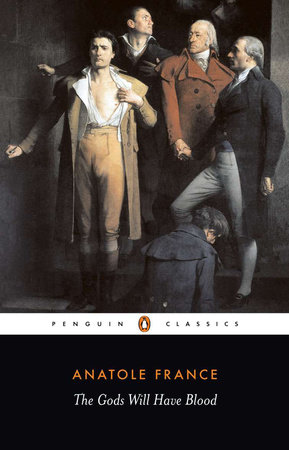
The Gods Will Have Blood by Anatole France
The Gods Will Have Blood is the story of an unsuccessful painter during the Reign of Terror that swept over France: Évariste Gamelin is a follower of Robespierre, and his fanaticism about the ideals of the Revolution outweighs his love of family and friends, whom he consigns to the guillotine as a juror on the Revolutionary Tribunal. The times ensure that any portraits of the era are painted not in oils or aquarelles, but in blood.
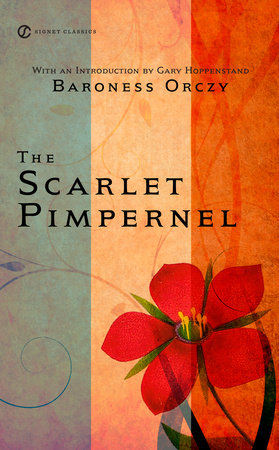
The Scarlet Pimpernel by Baroness Orczy
Originally a play, this novel loses none of its theatricality in the transition from stage to page. A dim English baronet, Sir Percy Blakeney, is such a master of disguise that even his own wife doesn’t know he is the dashing Scarlet Pimpernel, who leaves messages with his characteristic insignia of the little red flower––from which he takes his sobriquet––as he foils the French revolutionaries and rescues French aristocrats from the guillotine.
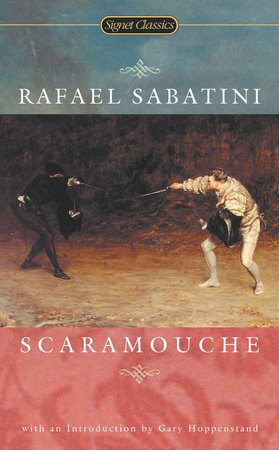
Scaramouche by Rafael Sabatini
From a famous first line to famous last words: “He was born with a gift of laughter and a sense that the world is mad” is chiseled on the author’s tombstone. Andre-Louis Moreau tries to avenge his friend’s death by the Marquis de la Tour d’Azyr and stirs up the crowd with revolutionary words only to find himself forced to flee for his life. He disguises himself as Scaramouche in a traveling company of commedia dell’arte players and finally, during the French revolution, meets his friend’s killer and challenges him to the long-awaited duel.
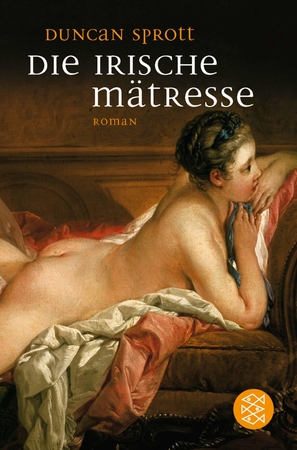
Our Lady of the Potatoes by Duncan Sprott
A story as racy as the life of Marie-Louise Murphy—a woman of Irish descent, whose name morphed into Morphi in French and whose titillating nude portrait by François Boucher attracted the attention of King Louis XV. She went from the proverbial gutter to become one of his petites maîtresses, little mistresses—hidden from view as opposed to the maîtresses-en-tître presented at court. But once she vied to replace the official mistress, Madame de Pompadour, she was quickly banished from Versailles.

Farewell, My Queen by Chantal Thomas
The story is told through the eyes of Agathe-Sidonie Laborde, whose job is to read to a Queen not particularly interested in books. The court at Versailles is a parallel universe to the unrest in Paris, with courtiers dining sumptuously while citizens starve in Paris. Long after Marie-Antoinette lost both the loyalty of her subjects—their affection she never had—as well as her head, Agathe-Sidonie, who escaped from Versailles, remains faithful; she is clear-eyed about the court, but still dazzled by the Queen.
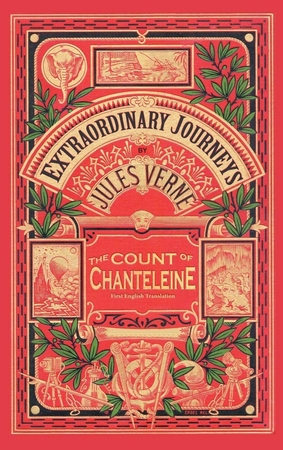
The Count of Chanteleine by Jules Verne
One of Jules Verne’s lesser-known works, the Count of Chanteleine bands together with local peasants and priests as they fight to preserve the old traditions of France. They are loyal to a land of church steeples and a history of crowned heads, and united against the Revolutionary Army that would tear it all down. He loses everything in the fight, his home destroyed, his wife murdered, his daughter on her way to the guillotine. Can he save her?
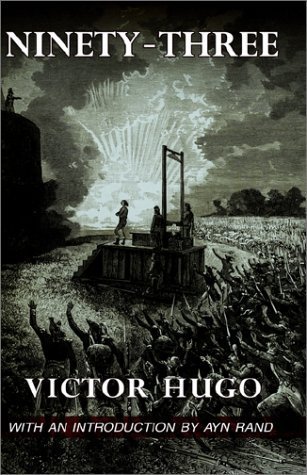
Ninety-Three by Victor Hugo
Victor Hugo last novel, Ninety-three, deals with the most terrible year of the French Revolution. The idealism and optimism of 1789 had darkened into blood and betrayal, with its most violent counterrevolutionary manifestations in the Vendée, where the bloodletting between the monarchist blancs and the revolutionary bleus was more ferocious than at any time in Paris. (This historical terrain was also the setting for Balzac’s novel Les Chouans.)
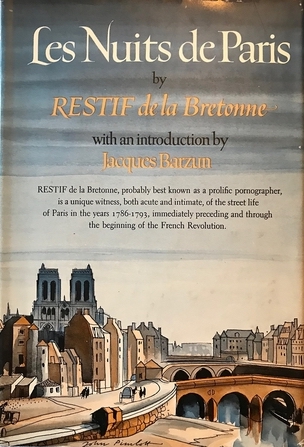
Les Nuits de Paris by Restif de la Bretonne
Prolific and often voyeuristic, Bretonne claims he has promised a noblewoman that he will report his nocturnal wanderings to her. This fictional framework allows him to blend fact and fabrication, first-hand accounts and hearsay. Above all, these sketches give an invaluable contemporaneous rendering—a precursor to today’s fascination with eyewitness news—of the nights in Paris during the revolution and its aftermath.
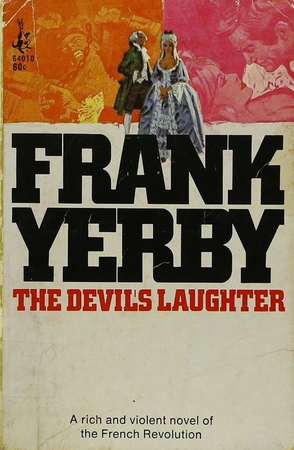
The Devil’s Laughter by Frank Yerby
Frank Yerby, prolific and popular in his own time but largely neglected now, tells the story of Jean Paul Marin, who starts out as a poor country lawyer, and through the revolution rises to become one of the most important men in France. While he believes in the ideals of the revolution, his grudge against the nobility is as much personal as political.
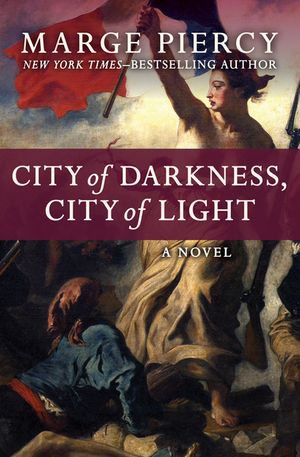
City of Darkness, City of Light by Marge Piercy
For once, three women are given equal weight as actors in the Revolution, and indeed, one of them is a performer whose theater group puts on plays for aristocrats. Both Claire Lacomb, the actress, and Pauline Léon, a chocolate-maker, founded The Society of Revolutionary Republican Women to argue for women’s equal rights, but they were firmly put down by a political movement that seemed to loathe independent women as much as aristocrats. The third woman is Madame Manon Roland, who disseminated revolutionary ideas in her salons. Though Danton, Robespierre, and the Marquis de Condorcet also appear, it’s interesting to see women in the spotlight.
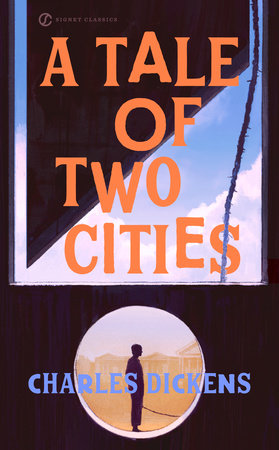
A Tale of Two Cities by Charles Dickens
Perhaps the single fictional woman most closely associated with the Revolution is the infamous Madame Defarge, one of the tricoteuses regarding the sliced heads of the guillotine’s victims as calmly as they treat a dropped stitch in their knitting. The family drama of Dr. Manette, a prisoner released from the Bastille, his daughter Lucie, and the two men who look uncannily alike—Sydney Carton and Charles Darnay—plays out against the backdrop of the Revolution. The opening lines are justly famous; but more pertinent is the warning: “Crush humanity out of shape once more, under similar hammers, and it will twist itself into the same tortured forms. Sow the same seed of rapacious license and oppression over again, and it will surely yield the same fruit according to its kind.”
What Happens When Emotional Labor Is Your Job?
In Lila Savage’s novel Say Say Say, Ella is hired as a caregiver to Jill, a woman with rapidly advancing dementia. The moment Ella steps into the house, she is swept into a world of extraordinary intimacies and wrenching, private grief. Still, there remains a distance she can’t quite cross—particularly with Bryn, Jill’s husband and her employer—even when she yearns to do so. She’s a domestic worker, not family; she’s full of youth in a house where aging and decline are on stark display; she is able to walk out of the house at the end of her shift. How does she navigate a space full of boundaries but resounding with cries for true human connection?
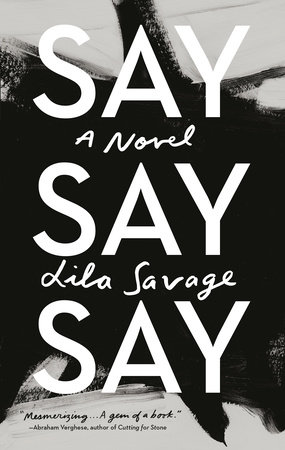
Say Say Say gives us a close-up look at the work of caregiving, and how the tasks of physically caring for another human being can be simultaneously monotonous and momentous. In the process, it also explores societal stratification—particularly of gender and class—but resists easy commentary. Instead, the novel is full of complexity and page after page of piercing insights.
I was hungry for this novel before I knew it existed. Here is a book that does not chase the hot-button issues of our day and yet feels timely and crucial. Here is a book not held hostage to plot, but whose drama involves the highest stakes.
I felt compelled to talk to Lila Savage about her novel—what drove her to write it, her own work as a caregiver, and, really, anything at all she cared to tell me about creating this strange and gorgeous book.
Chia-Chia Lin: Contained in this slim, 161-page book is a stunning array of inquiries. The novel tackles sexuality, gender roles, power dynamics, class, grief, and more. Was there one obsession that called to you especially? Put another way, what was your entry point into the novel?
Lila Savage: Two things really drew me to write this novel: finding personal meaning in the caregiving work I engaged in for so many years and also exploring the nature of intimacy in such settings. I studied sociology and social justice as an undergraduate and remain very interested in the sense of identity and purpose found in employment, especially working-class labor.
As a much younger writer, I hoped to become an oral historian or labor journalist, but fiction has thus far provided a more flexible emotional framework for the ideas and feelings I’ve sought to explore. What are the roles and interpersonal obligations of employee and employer in such emotionally fraught situations? What does it mean to perform caring and to be compensated for emotional support? What does it mean to bear witness to loss of self and in what ways might this be a gift to both client and caregiver? Say Say Say is my attempt to grapple with these kinds of questions.
CL: Each one of those questions is so richly and deeply explored, and the scenes are packed with the details and specificity of real-life experience. Can you talk more about your caregiving work, and also about any challenges that arose as you created art inspired by your experience?
LS: When I began writing this novel I was working as a full-time caregiver for a woman with Alzheimer’s. It was very challenging to work with her all day and come home to relive the feelings of stress, boredom, isolation and shared grieving associated with caregiving work as I tried to capture them on the page. My progress was very slow until she moved into assisted living and I qualified for unemployment. I felt such gratitude for the opportunity to write full-time while I looked for work and then for the further opportunities to write full-time that followed (two years as a writing fellow and then two more as an MFA student).
What does it mean to perform caring and to be compensated for emotional support?
Now that I haven’t worked as a caregiver for a few years, however, I find myself grateful that there was overlap between caregiving and writing about it. I think it’s very likely the work is better for it. Still, balancing a day job and writing is a significant challenge most writers face. Not very many writers from class backgrounds like mine receive the remarkable opportunities I’ve been graced with, and yet I so crave more art depicting working lives and jobs and the experiences of folks whose struggles with various forms of marginalization overlap or differ from my own. Some criticize MFA programs as rendering writing lamentably homogenized. That differs from my experience but also neglects to acknowledge how crucial time and funding are for working-class writers.
CL: It’s surprising to me that you had a period of overlap in caregiving and writing. The novel feels so ruminative, full of the kinds of insights that come with time and distance. One of the things I love most about this book is how unapologetically interior it is. With the weight of Ella’s sharp insights, even the smallest of gestures suddenly becomes far-reaching in significance. So many novels being published today contain dramas and conflicts that play out externally rather than internally. Why were you interested in writing something that pointed inward?
LS: I’m drawn to interiority, I think, because where else besides reading do we have such ease of access and empathy to the innermost thoughts and feelings of another? Narrative action can take other forms with great success but this depth and reach of access is in some ways unique to writing. In Say Say Say, however, I think the interiority on offer is particularly unusual, in a class sense as much as anything else.
Most folks know much more about how people experience aging or the aging of their loved ones than they do about the internal experience of being a professional caregiver. It is a role observed by many from the outside, and it is maybe more comfortable to deny domestic workers interior lives. One reason may be the feeling of uncomfortable exposure—it may be easier to imagine detachment and uncomplicated contentment as the primary responses from close observers to deeply personal loss. That is understandable. But I think there is much more to be gained from making room for the emotional complexities of full personhood.
CL: Earlier, you mentioned the compensation aspect of domestic work. Stuck at the back of Ella’s mind is the fact that money is exchanged for her care: “[I]t was a strangely limited intimacy, it always was, no matter how much Ella loved a client, loved their family, because there was always a degree of withholding that came with being paid for her time.” This notion is present throughout the book and returns at the end, when money prevents Ella from saying what she wants to say to Bryn, her employer. The ending intrigued me. It’s moving and complex. Why did you end the book with this small-yet-enormous, incomplete connection?
I crave more art depicting working lives of folks.
LS: I suppose in the end it’s a book about work, about employer and employee. It’s about workplace intimacy and its limitations. However, too much can be made of the transactional aspect. More than one concern interferes with Bryn and Ella’s ability to connect—there’s age, and gender, and temperament to a certain degree. But the tenuousness of their connection is part of what interested me in writing about these characters—their imperfect, complicated, and heartfelt esteem for one another. It’s more unusual than romance and I think deserves a more nuanced ending than we might expect from something romantic.
CL: I also want to ask you about bodies. In a way, the novel’s intense focus on physical bodies—its needs and hungers and desires, but also its limitations—provides a counterweight to the interiority, the depths of the mind. And in the character of Jill, we witness both the body and the mind in decline. “Every skill was leaking from her.” We start to ask terrifying questions about what makes us human.
LS: I love that observation, that the physical provides a counterweight to the interiority. Thank you. On the subject of bodies I would say I am fascinated by physicality, especially thoughts and feelings about bodies and having a body. Writing a book about decline offered welcome opportunities to explore that. After observing the similarities and differences in the decline of so many clients, I’ve maybe become somewhat desensitized to that terror. Of course not entirely—I’m not at peace with aging—but there’s a certain amount of inevitability involved. I suppose I’m saying that aging is a human experience.
CL: I love short novels. Do you? Do you have favorites, or did you have models in mind when you were writing Say Say Say? Was it always a short novel, or did you pare it down to its current size?
LS: I do love short novels, but I didn’t set out to write one on purpose, at least not in the beginning. I am, I think, a writer and reader who tends to value succinctness, and once I realized more than half the pages I’d written weren’t necessary, it became a pleasure to concentrate it down to its essence. I did want a degree of claustrophobia to permeate the story and that left less room for digression.
7 Novels that Make U.S. Foreign Policy Feel Real
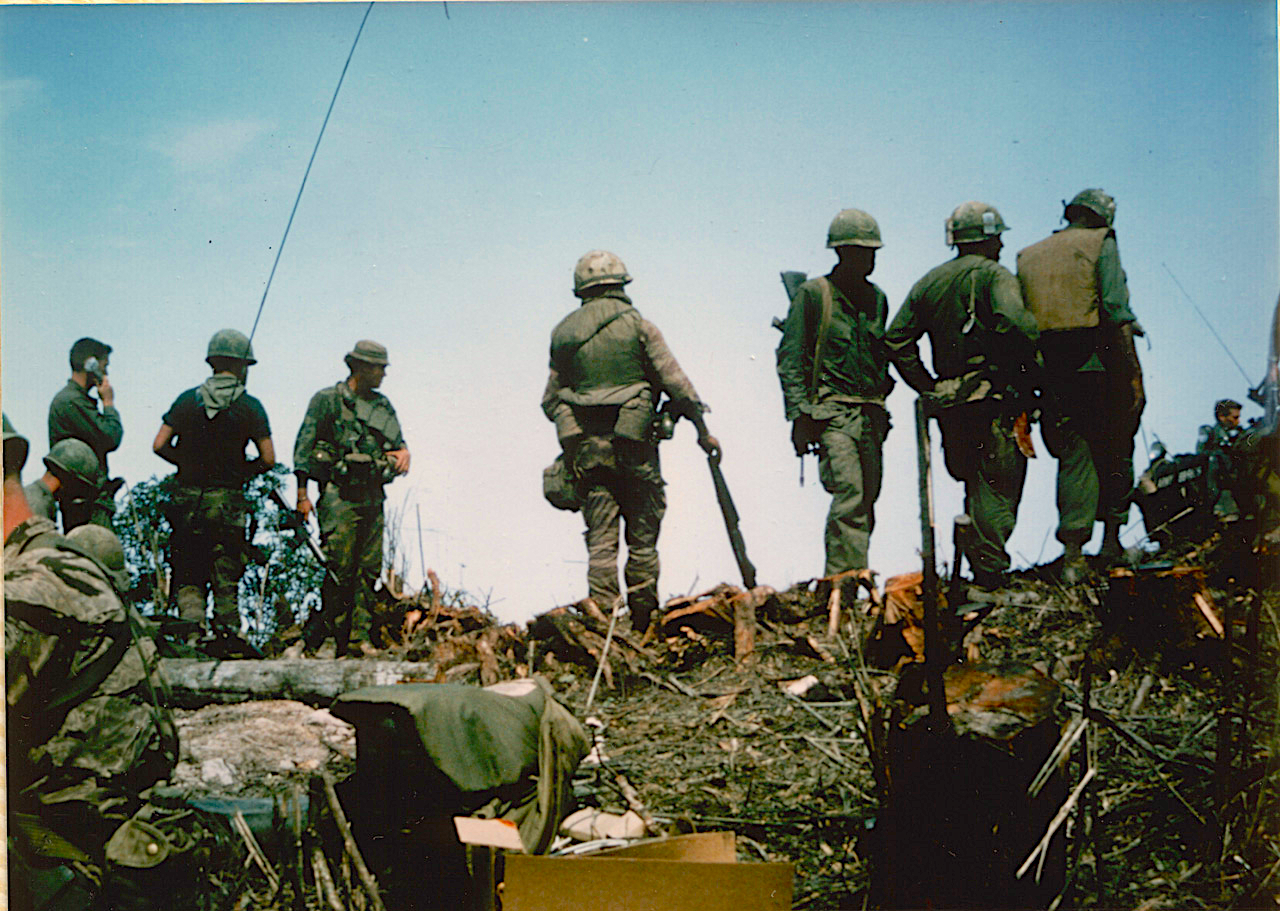
My grandmother, who came to North America following the brutally thwarted 1956 Hungarian uprising, had a thick accent (think something along the lines of a Mrs. Dracula) and a line she would say when asked about escaping the Iron Curtain: “People think I was fleeing Communism. I was fleeing my mother-in-law.”

I stole that line for my first novel, Russian Winter, and not just for the laughs. It spoke to something deeply true about the interplay between politics and family life, between foreign and domestic relations. After all, the arrival of the Russian Soviets in Hungary and their appropriation of formerly private housing meant entire families now squeezed into single rooms—ratcheting up my grandmother’s desperation to ditch her husband’s mother.
This intersection between the political and the personal has long interested me, and while I have no great desire to peruse a treatise on foreign policy, I’ll gobble up any good novel that vividly brings to life the ways U.S. interventions abroad—whether in the form of helpful rescue or troublesome meddling—affect individual lives and interpersonal relationships. I’ll also wager that for many of us a novel can be just as effective a way of gaining a sense of a government’s machinations (whether overt or behind the scenes) on foreign soil. To have this political and historical information delivered through the intrigue, suspense, rising action, climax, and denouement of a satisfying novel, whether as the focus of the plot or as background to the storyline, whether obliquely or in nuanced detail—these are the spoonsful of sugar that help the medicine go down. And that is precisely what these worthwhile novels achieve.
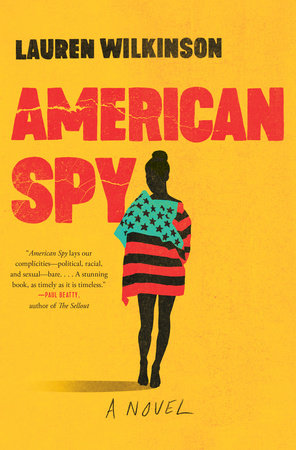
Burkina Faso Cold War: American Spy by Lauren Wilkinson
In this elegantly engaging novel, a Reagan-era FBI agent gains a new perspective on herself and her country when she takes part in the CIA’s covert efforts to unseat Burkina Faso’s popular Marxist leader. Smoothly ranging back and forth in time, the narrative at first builds slowly yet thoughtfully, lending equal weight to the titular protagonist’s family background (via Martinique, Harlem, and Queens) and her assignment to “get close to” Burkina Faso’s president on his visit to New York. When, midway through the book, the assignment requires her to travel to Burkina Faso, this entertaining read, with smart plot developments that stay true to the complexities of relationships both romantic and diplomatic, becomes a page-turner concerning the lies we tell others and ourselves—regarding the true nature of ourselves and of our homelands.
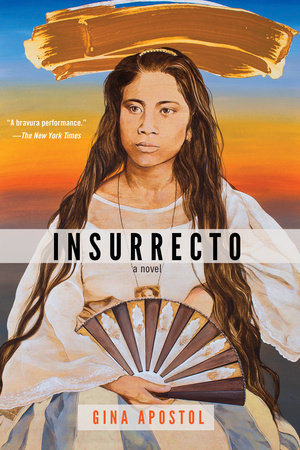
Philippine-American War: Insurrecto by Gina Apostol
This vigorously postmodern take on the consequences of colonialism centers on “a blip in the Philippine-American War (which is a blip in the Spanish-American War, which is a blip in latter-day outbreaks of imperial hysteria in southeast Asian wars, which are a blip in the spiral of human aggression in the livid days of this dying planet, and so on).” Specifically, in 1901, locals on the island of Samar ambushed occupying American forces, killing 40-something U.S. soldiers, for which the U.S. retaliated by killing thousands of Filipinos. In Apostol’s brilliant and roguishly comic novel—set in current times—a young white American filmmaker who lost her father following a childhood stint in Manila returns to the Philippines to make a movie based on the Balangiga massacre, with the help of a local translator who decides to improve the script. Told from multiple female perspectives, including a delightfully opinionated appendix mixing fiction and fact, this unique work raises smart questions about why it matters who tells a story.
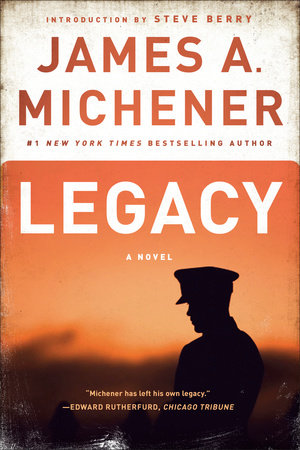
The Iran-Contra Affair: Legacy by James A. Michener
Michener’s great strengths were his ability to understand historical sweep and cultural context while dramatizing these elements at the personal level; at his best, his characters are always living human lives in the midst of big moments, so that we care about what happens to them as they struggle to survive, build homes, fight wars, make money, fall in love, and adapt to change. Legacy is not the typical 1000-page Michener novel but, rather, a novella springing from an army major’s involvement in the Iran-Contra scandal. Preparing to defend himself before Congress, the protagonist, who justifies his actions through his fierce patriotism and fervent anti-Communism, is advised by his lawyer to cite his venerable Virginia ancestors as evidence of his moral character. As he brushes up on their histories, we learn about a framer of the constitution, a slaveholder freeing his slaves, a suffragist, and others—including a bigoted grandfather who, when told FDR has died, replies, “Just saying that to make me feel good on my birthday.” Each of these vignettes returns in some way to a discussion of the U.S. Constitution and its amendments—the actual stealth history lesson in this fleet multigenerational tale.
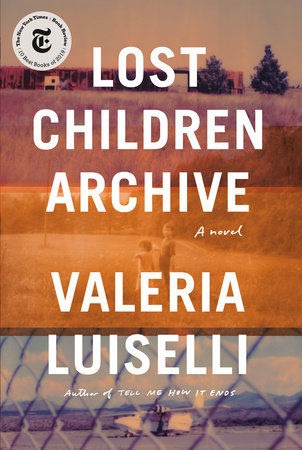
Criminalization of Unaccompanied Migrant Children: Lost Children Archive by Valeria Luiselli
What could have been a flat portrayal of a hot-button issue from the headlines comes poignantly to life in Luiselli’s hands. Based on a real life road-trip she took in 2014 with her husband and children to the southwestern border (about which she also wrote a non-fiction account, Tell Me How it Ends: An Essay in 40 Questions), this moving novel presents richly imagined passages about the often perilous journeys taken by unaccompanied children crossing from Central America into the U.S. in search of asylum. Luiselli dramatizes not just the suffering of child refugees but their bravery and ingenuity—to the degree that the reader experiences their eventual surrender to Border Patrol, their mass deportations back to the countries they have fled, and their unexplained disappearances as gut-wrenching. In a brilliant move, Luiselli uses the narrator’s 10-year old son and a 5-year old daughter riding in the back of the car to celebrate the wonder, curiosity, intelligence and wisdom of childhood. Because we get to know these two children so well, the specter of their loss feels all the more real and devastating.
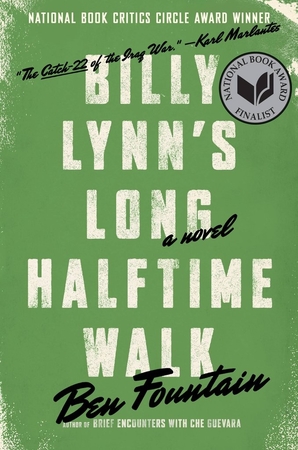
The Iraq War: Billy Lynn’s Long Halftime Walk by Ben Fountain
This beautiful, heartbreaking—and often piercingly funny—novel of the Iraq war takes place over the few brief days that Billy, a 19-year-old army Specialist and newly minted war hero (thanks to Fox News), returns home to Texas with his troop to participate in the Superbowl halftime show before heading back to duty in Iraq. In Fountain’s hands, the random absurdities of war meet the crassness of the television industry, creating a compact, propulsive, and absolutely believable story in which every character feels fully real. From Billy’s complex feelings for his sister to his love for a sergeant killed in action, the tug of his emotions and growing confusion of his heart and mind feel absolutely true—perhaps mirroring that of his country.
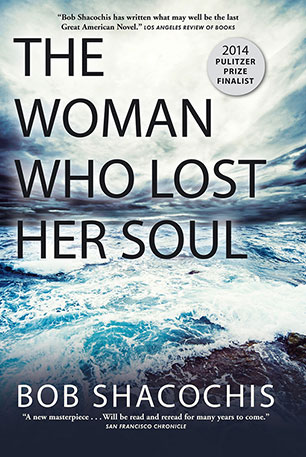
U.S. Foreign Intervention: The Woman Who Lost Her Soul by Bob Shocochis
The power of this expansive, mesmerizing work is its unraveling of deep historical wounds and scars—both personal and political—that are then replayed in different countries and contexts (WWII Balkans, Cold War Turkey, 1980s Haiti) generations later. A finalist for the Pulitzer Prize, this magnum opus is divided into five books and deftly brings to full light the sticky, extensive web of U.S foreign policy decisions, revealing the way those strands stretch through time and space, with ramifications that never allow the characters to break free. Troublingly, there is some narrative lingering on the sexual traumas enacted on the main female character that at times can feel voyeuristic. But the collective traumas and betrayals experienced by the protagonists expose their hidden lives in ways that resonate hauntingly to tell a larger story of America’s pre-9/11 coming of age.

The Vietnam War: The Sympathizer by Viet Thanh Nguyen
America’s war in Vietnam and the resulting exodus of Vietnamese refugees to the U.S. gets a masterful satirical treatment in this compelling saga of a young Vietnamese double-agent who settles in L.A. The virtuoso confessional voice and razor-sharp insights keep us turning the pages, along with a plot somewhere between a mystery and thriller. A scathingly comic section concerning the filming of a would-be Apocalypse Now is also a mordant send-up of racial stereotyping that will make you think hard about the persistence of typecasting into the present. And though the final pages might not be fully in keeping with the book’s satirical bent, this Pulitzer prize-winner will leave you moved.
Putting Together the Pieces of Toni Morrison
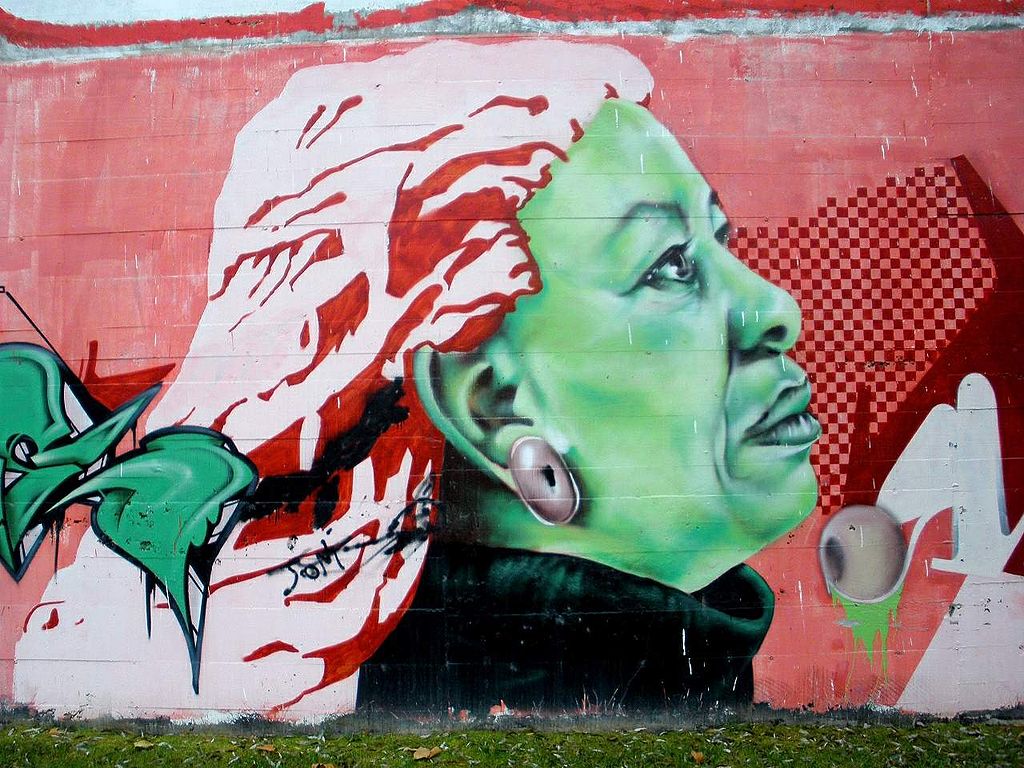
Toni Morrison knows how to tell a story. When she won the Nobel Prize for Literature in 1993, she opened her lecture with a fable: Standing before the Swedish Academy in Stockholm, she outlined a tale about some disrespectful young people, a blind old woman, and a bird. She turned the story over like a prism, examining how the angle might differently refract its biases, its perspective, the very language that translated it from narrator to audience. “Narrative is radical, creating us at the very moment it is being created,” she said, describing the generative power of literature and its inverse: “Oppressive language does more than represent violence; it is violence; does more than represent the limits of knowledge; it limits knowledge.”
So it’s fitting that Timothy Greenfield-Sanders’s new biographical documentary, Toni Morrison: The Pieces I Am, frames Morrison’s life in her own words. “Toni is a brilliant, brilliant storyteller herself,” Greenfield-Sanders said recently. “I’m not talking about as a writer—I’m talking about as a speaker. She can weave a story so beautifully.” Morrison is a stately presence on screen—the film is anchored in a lengthy series interviews with the writer herself, now 88, conducted at her home in upstate New York by Sandra Guzman (Greenfield-Sanders estimated he had 20 hours of interview footage, shot over the course of several seasons). And the title, The Pieces I Am, is itself a fragment of a passage from Beloved: “She is a friend of my mine. She gather me, man. The pieces I am, she gather them and give them back to me in all the right order. It’s good, you know, when you got a woman who is a friend of your mind.”
The Pieces I Am takes a fragmentary approach to Morrison’s life and career, moving between the various spaces and identities she’s inhabited.
The Pieces I Am takes a fragmentary approach to Morrison’s life and career, moving between the various spaces and identities she’s inhabited: Chloe Wofford, the young woman who grew up in Lorain, Ohio, and eventually adopted her baptismal name, Anthony, professionally; the Random House editor who shepherded books by Angela Davis, Muhammad Ali, and Gayl Jones, as well as the seminal anthology The Black Book, into the world; the professor who encouraged her students not to—as the adage goes—write what they know, but to take imaginative leaps; the single mother who raised two boys while writing novels before dawn; the eventual Nobel Prize winner. Along the way, guest appearances by friends, fans, and critics attest to her far-reaching influence—including Oprah Winfrey (who memorably called the fire department to acquire Morrison’s unlisted home number; Winfrey also produced and starred in the film adaptation of Morrison’s Beloved) and Fran Lebowitz, who accompanied Morrison to the Nobel prize ceremony.
A filmmaker and photographer by trade, Greenfield-Sanders first met Morrison during a portrait session for the Soho News in 1981; over the intervening 30 years, they’ve cultivated a friendship as he’s photographed her for her book jackets, press photos, and magazine features. (Among the other artists in Greenfield-Sanders’s portfolio are Andy Warhol, Robert Mapplethorpe, and Beyoncé; his 1998 documentary, Lou Reed: Rock and Roll Heart, won a Grammy for best long-form music video.) The director’s respect for his subject radiates through the movie; The Pieces I Am delves into what has made Morrison such a legend while also sustaining the legend itself, braiding together its subject’s easy humor and warmth with the more obviously serious elements of her personal and family history.
“Toni Morrison’s work shows us through pain all the myriad ways we can come to love,” Oprah says in The Pieces I Am. “That is what she does—with some words on a page.” I spoke with Greenfield-Sanders about how he distilled Morrison’s rich history into film.
Katherine Cusumano: The title encapsulates the project of the film, which is taking these different elements of who Toni Morrison, the writer, the person, the literary icon, is, and reconciling them and exploring what makes them, them. Who were the different Toni Morrisons you wanted to explore in the film?
Timothy Greenfield-Sanders: People see Toni Morrison as the writer, and we really wanted to show Toni Morrison the single mother, Toni Morrison the teacher, the editor, Toni the great influence. We wanted to also show how much she meant to people by bringing in fine art from all these artists—it was all a way to bring that beauty of African-American art into the film, because they’re all influenced by Toni, I assure you. My mission was to bring art into it, to bring other voices into it—African-American voices, specifically. Mickalene Thomas’s magnificent opening montage [a collage of Greenfield-Sanders’s portraits of Morrison], which of course, plays again with the title, The Pieces I Am.
We wanted to show Toni Morrison the single mother, Toni Morrison the teacher, the editor, Toni the great influence.
KC: The secondary sources in the film seem to speak to that far-reaching influence—the urgency with which Oprah, for example, needed to get ahold of her, as well as her influence among visual artists and musicians. So what do you think sets Toni Morrison apart as an icon?
TG-S: Toni speaks to us in a way that very few people do. There’s something that’s very musical about her writing, that’s very emotional, that draws you in, that changes you, and I can’t think of another writer that does that for me. There’s a profoundness to her. She’s the Shakespeare of our time.
KC: The film strikes a balance between the Toni Morrison who has a great sense of humor and bakes carrot cake and loves parties with the graver elements of her life and her work. How did you balance the fun and delightful parts without trivializing the larger picture? For example, how do you incorporate an anecdote about her secret carrot cake recipe into a segment that’s also discussing inequality in the workplace?
TG-S: With great difficulty. [Laughs] I think that’s what the magic of editing is—that we were able to. The film is very deep and profound and also has moments of real, great humor. Toni is a complex person. She’s not this monolith; she’s very much a human being herself, and people don’t see that. They see Toni Morrison, the iconic figure. I think Chloe [Wofford, Morrison’s birth name] comes through in the film in some way—that kind of person who’s not the famous person who everyone’s excited to meet and means so much to them.
KC: In that editing process, how did you remain cognizant of the parts of the film that would get you there, that would strike that balance?
TG-S: We structured the film so that it was not linear. It doesn’t start with her birth and end where she is today. It’s more these little sections—The Pieces I Am really is a metaphor for the way we edited it. So you have Toni, Random House years. You have Toni, the single mother. You have the Nobel; Lorain, [Ohio, where Morrison grew up]; her parents’ migration from Alabama. All of these sections were created as pods and then we tried to figure out how we could connect by going forward in time and back. My concern was that there was too much material. She lived such a rich life; how does one put that all in there? Toni could have 10 hours. We had to leave a lot of things out, but you make decisions as a director.
KC: Right, you mentioned in another interview that the Peter Sellars interview was one that was pretty gutting to have to leave out.
Toni is a complex person. She’s not this monolith.
TG-S: It was wonderful, yeah.
KC: Have you tried the carrot cake?
TG-S: I’m close to getting the recipe from her. [Laughs] It’s the best, absolutely. I want the recipe, though. My wife is a very good baker as well, so her carrot cake is pretty damn good. Toni thinks it is, too.
KC: That’s probably pretty high praise.
TG-S: That’s very high praise. Her pride in that, that she was a very good baker—I love the way we carry it through in the film.
KC: Why do you think those moments where you see Toni’s humor and what she’s like as a person are especially striking or captivating?
TG-S: People have not seen the side of her that we show in the film. There’s an intimate quality in the way she talks here, direct-to-camera. The others talk off camera, so it sets her apart from everyone else. You want to come back to her over and over again, because she’s so wonderful.
KC: The Pieces I Am also explores how her work has been siloed and compared to writers she doesn’t actually have that much in common with, like Ishmael Reed, just because they are both black and writing black characters and had the audacity to do so not necessarily taking a white audience into account. It must have been in the back of your mind that you are a white male filmmaker making a documentary on a black woman writer for whom centering black characters is paramount. How did you negotiate that?
TG-S: It was certainly on my mind at all times. I made a very strong effort to bring in other voices into our team, from Mickalene Thomas to Kathryn Bostic to Tommy Walker, who’s a producer with me for a dozen years, to all of the fine art that’s in the film from African-American artists. Ultimately, I think it’s about Toni’s trust in me: that Toni said, “You can do this, I’m agreeing to let you make this film about me.” I think that says so much and gave me so much—what’s the right word—it gave me the courage to do it.
KC: When was it among all the portraits you took of Toni that you thought, this should be a film?
TG-S: I think around the time of The Black List [Greenfield-Sanders’s documentary film series about notable black Americans], which had come from an idea in 2005 from Toni, who had been working on an opera, Margaret Garner, to do a book on black divas. That idea turned into The Black List.
Once I got it funded and we started to do The Black List, Toni was the first to sit for it. Certainly, when that film was finished, I thought everyone in it was so extraordinary and deserving of a documentary, but if I had to pick one, it would be Toni first. [The Black List also features Reverend Al Sharpton, rapper Sean “Diddy” Combs, and former Planned Parenthood president Faye Wattleton, among others.] I knew her the best; she was very part of my life in many ways; and her story is extraordinary. Aside from the Nobel, there’s all the other pieces to her life—her life as an editor, a teacher, a single mother, all the things we address in the film. It was rich for documentary.
KC: So you and Toni already had this established relationship both as friends and as photographer and subject before The Pieces I Am. How did those two dynamics translate into the film for you?
You’re seeing a very open and funny and real Toni Morrison that very few people get to see.
TG-S: It’s very helpful. She knew me well; she knew my crew; she knew my producer, Tommy Walker, from The Black List. She was at ease with the team I had, and there was a very strong trust there. My skill as a photographer is being able to read a person, being able to sense the nervousness in a photoshoot or a film interview. I’m good at making people feel comfortable. I think that’s what you see in the film: You see people very relaxed and willing to open up and talk. You’re seeing a very open and funny and real Toni Morrison that very few people get to see—the Toni Morrison that I know. I think she enjoyed the interviews; she had fun thinking about these issues and talking about her life; it was a really magical experience.
KC: How has that subject-photographer relationship changed over the 30-odd years you’ve been working together?
TG-S: Each photo session, you become closer to your subject. A few years ago, we were talking about the portraits and I said, “‘I’ve really got you here in this one. It’s really you.”’ And she said, “‘Yes, because I let you see me.”’ And I think that’s a great point—that’s the level you want to get to with a subject, where they’re open to you and allowing you to see them.
KC: Was there anything over the course of those interviews that surprised you or you hadn’t considered?
TG-S: When you know someone as a friend and you have a professional relationship as well, you haven’t researched the person; it’s your friend. When you start to research them for a film like this, you learn so much more. I was familiar with her work at Random House to some extent, but not to the extent that I was after research for the film. [In 1995], one of Toni’s writers, Toni Cade Bambara, died, so Toni Morrison took a year of her own life to finish Toni Cade Bambara’s book, These Bones Are Not My Child. It was an extraordinary thing. All of the parts of Toni that you kind of know in a peripheral way, you find much more depth as you get into the filmmaking process. If it were possible to have more admiration for Toni Morrison, I have it.
Meet the Most Promising New Voices of Nigerian Fiction

The next issue of McSweeney’s Quarterly Concern, Issue 56, publishes early July and includes a section featuring fiction by five outstanding new Nigerian authors—all alumni of Chimamanda Ngozi Adichie’s Purple Hibiscus writing workshop. Their stories blew us away, exhilaratingly original, brimming with heart and life. We’re confident that their names will soon be widely known. We talked with these five writers about their take on audience, the role of place in their work, their experiences at Purple Hibiscus, and more. These interviews are prefaced by Adichie’s introduction to their stories from Issue 56. And if you want to buy Issue 56 or subscribe starting with this issue, you can save 15% with the code ElectricLit.
Chimamanda Ngozi Adichie
Every year, I organize a writing workshop in Lagos. Thousands of people apply, many of them talented. But we have room for only twenty. In choosing the twenty, I look not only for good writing but also for courage and for what I like to call heart.
We spend ten days in a small hotel, around a large table, talking and laughing, reading stories from laptops and phone screens. We disagree and agree. We argue and explain. We talk about popular culture and politics. We break for lunch in the hotel restaurant, and pile our plates with rice and yams and plantains and vegetables. We take pictures. I ask about the poets they like and I ask about their love lives. We become, even if only briefly, a family.
This year, the tenth of the workshop, my friend Dave Eggers was kind enough to come and co-teach and to give these young writers a chance to have their first major publication.
I’m so delighted that these stories have found a home in McSweeney’s.
I love the confidence, the clear-eyed honesty, the beauty, of these stories. In the early 1960s, with European colonialism ending all over Africa, Nigeria was at the center of a new African literary renaissance. But cultural production dipped with the military dictatorships of the 1990s, when little fiction was published. Today there is another renaissance, and it feels to me more resilient, more diverse, and with less of an obligation to overt politics. The young writers I have met at my workshops—like Ope, Roy, Adachioma, Chukwuebuka, and Ngozi—make it clear that our storytellers are here to stay.

Chukwuebuka Ibeh
What did you see as your audience, if any, when you wrote this piece? When you write in general?
I was too obsessed with getting the story down on paper as vividly as it played in my mind to consciously ponder an audience. Generally, when I write, I only hope my family, especially the ones older than me, do not read it. And that the younger ones are sensible enough not to discuss it with them. I suppose this is a way of saying I don’t really think of an audience when writing. It has been said that doing this is a sort of self-censorship—and where I’m coming from, there’s a whole lot of things you’re not supposed to be talking or writing about—so it gets in the way of the writing, and I quite agree with that.
What was your biggest takeaway from the Purple Hibiscus workshop?
The idea of “plausibility” in fiction is overrated. Also, it’s important to acknowledge your privilege and be intuitively aware of how much it allows you, even things you don’t necessarily deserve. It’s doubly important to have this in the back of your mind when what your writing involves an under-privileged group. Acknowledging your own privilege gives room for empathy, which is probably the best quality you can have as a writer. I could go on and on.
How would you describe yourself as a writer?
I think about writing much more than I actually write. I’m hoping this changes. I am an obsessive editor. I could take so long to write a very short story. “The Good Ones Are Not Here,” my story in McSweeney’s, was in the works for about three years.

Adachioma Ezeano
Where do you live? How does it affect, or not affect, the sense of place in your writing?
I was born in Onitsha, Nigeria, and in 2003 we moved to Awka, a small university town, the capital of Anambra State. I was young, very young. Yet I can still remember the transition, and it shocked me. Though I didn’t know what culture shock meant then, I believe what happened to me was more than culture shock.
In Onitsha, life was fast, noisy, very noisy. It was in Onitsha that I learned what it meant to experience armed robbers in broad daylight; muscled men shooting their guns loud, citizens aka the victims running for shelter while the police flew from the crime scenes. It was in Onitsha that I learned what it meant to watch humans burnt alive for stealing something as trivial as underwear. It was in Onitsha that I learned what it meant to have neighbors who genuinely called you neighbors, strangers who would become family simply because you preferred to pay for the apartment next to theirs.
The rhythm was different in Awka. In Awka, life was simple. My father worked in a mortgage bank, and my mother taught in a state government-owned primary school. We lived near university lecturers and civil servants and public servants, people who read. And life was like the early morning breeze; soft, uncorrupt.
Now, when I write, consciously or unconsciously, of course I find these places working into my settings. These are the stories I know. And not all of us can tell of Lagos.
What was your biggest takeaway from the Purple Hibiscus workshop?
I remember on this particular day, one of the workshop participants pulled out this fanciful diary that was further fancied with words from Chimamanda Adichie, and I was surprised and guilty at once. I hadn’t thought of taking notes while Chimamanda was speaking, not because I didn’t know I should. I had even come with a book. But I was consumed with looking at her while she talked, while she gesticulated, batted her eyes, stood up, walked, sat down. One particular evening, class had ended, and we were having the moments, a sort of social class, I cannot remember what was being discussed. But she called me by the name I love, Kpakpando, and asked my opinion. Sincerely, I don’t know where what I said had come from. I’m sure I said rubbish. Yet, nobody acted like I said rubbish. And that was one of the many strings of beauty of that workshop. Sitting in that class. Filled with beautiful young men and women. Beautiful, smart, intelligent. Yet, kind, excessively kind.
I said to my friends, I think I might reapply again this year. Of course, that is not possible.

Roy Udeh-Ubaka
What did you see as your audience, if any, when you wrote this piece?
I don’t quite believe I think about my audience at all when I write. I just write. Now, this is not to say that in general I do not write to be read. It’s such a beautiful thing to be read, and to be read by many, but when it comes down to it, I really do not consider my audience in the primary process of writing. A word comes to mind when I think about writing for an audience, and this word is “allow.” I find that with my stories, and the contents of most of them, there are a lot of questions surrounding what I am (should be) allowed to write about, and I find this absurdly restricting.
I like to think that first and foremost, I write to and for myself, like a written soliloquy—a note, of sorts, to self. I did, however, appreciate the feedback from close friends, particularly women, who read through the first draft of this story and were taken by the limitless boundaries of what love should and can be. And this, for me, is how I hope this story will translate for everyone that reads it—as a heartfelt love story.
What surprised you most from the Purple Hibiscus workshop?
The workshop was, as Chimamanda often put it, a safe space. I guess if I was particularly surprised by anything, it was the intentional consistency with which this space was guarded. For ten days, we watched each other unravel, strip ourselves bare, and stand in what the world outside would have cloaked in prejudices, and we chose—for it was always a choice—to press our bodies together, guarding jealously one another’s truths like they were ours. And this, for me, was everything.
Where do you live? How does it affect, or not affect, the sense of place in your writing?
I think place, whether good or bad, like the weather, encompasses us—sometimes without our knowledge. I was born and raised between Enugu and Lagos, and these locations have been central in most of my stories. Place plays a considerably important role for me because it provides an indelible sense of presence. In “Until It Doesn’t,” there is a small mention of the “abroad,” which one of the protagonists believes to have changed his friend. This is an age-old belief in my country, that “abroad changes you,” particularly for the worse, and I wanted this to be fundamental in pulling the characters apart. The concept of place, nonetheless, played a pivotal role in differentiating the behavioral patterns of both protagonists. Before I wrote this story, I often wondered about the possibility of a place owning you in ways that are not primarily known, in ways that seep in and take root in who we are constantly becoming, whether for good or bad.
Ope Adedeji
What’s the value of short stories, in your mind, over longer fiction? Why is it a form that speaks to you?
I love short stories. With this form, you can compress so much in so little time and space. To do this requires expertise. Every word is intentional and is there for a purpose (as we learned in the class taught by Lola Shoneyin) unlike with novels, where there’s avenue for diversions. Short stories leave room for readers to imagine and to create multiple scenarios in answer to questions the story may have left hanging.
Still, I value the longer form as much I do the shorter form. Reading a novel is also like going on a journey into the unknown. There’s that adrenaline that good novels offer, in both reading and writing them.
What was your biggest takeaway from the Purple Hibiscus workshop?
I feel like I took so much of equal importance from the Purple Hibiscus workshop that it might be wrong to put one lesson on a pedestal and say, this is bigger than the rest. I’ll just say that the workshop gave me a community of people with whom I can share my work with; who can give me honest feedback; and who I can share my writing victories and rejections with. I had no idea just how fundamental this community was to my career until the workshop. Ours is a community of very brilliant writers of various backgrounds and ages who I consistently learn from and who share valuable criticism, opportunities and their reading list! Every writer needs this.

Ngozi John
What did you see as your audience, if any, when you wrote this piece? When you write in general?
When I write, I don’t have to actively think of an audience. Because I am Nigerian, and share her experience, I automatically write as Nigerian, and to/for Nigerians. I’m writing in their culture, their language, their nuances, complexities, dynamics. In a scene from my story, a father abandons his child to attend a Fela concert. Now, while a non-Nigerian can relate to this, the only point of connection might be the rave of attending a similarly famous artist’s concert. But for a Nigerian, there is a psychological, ideological, political, musical, and social attachment. However, as much as my primary audience is Nigeria, I’m writing human/individual stories which aren’t peculiar to only Nigerians. So, by extension, I’m writing to anyone who shares similar experiences with the characters in my story. They may not be able to situate themselves within the environment in which my story occurs, but they can identify with it.
What was your biggest takeaway from the Purple Hibiscus workshop? What surprised you most?
Oh, the friendships! But more than that, a scene plays out in my head, where one of the participants had written about a myth of wrapping children’s waists with snakes to prevent them from bed-wetting. There was some sort of argument on how valid or effective this myth is. Two other people confirmed this belief, but most of us were ignorant of its existence. Listening to and interacting with twenty-one people from different parts of the country and world for ten days began to highlight my limited insight of the world—even my own society. How little attention we pay to the diversities in our existence. How unmotivated we are in the deliberate learning and observation of the world.
What surprised me most? Ironically, I would say, the parallels in our worlds. I know Cameroon is proximal, but I still found it interesting that we share some proverbs. I remember Clementine using “na condition make crayfish bend,” in one of her stories, and trying to explain to us, and we were like, “Ooohh, we know this one.”
How would you describe yourself as a writer?
Self-aware. Empathetic. Emotive. Emotional, too. I don’t start to write until I can feel it trying to jump out.
From Homesteader Wolf to Public School Boy
An excerpt from Stay and Fight
by Madeline ffitch
PERLEY
The snake has strong beliefs. The snake has strong beliefs about territory my Mama K said when the snake began to sleep with us in our bed. We tried to ignore him, at least I think it was a him. He wasn’t the biting kind, but he had a piss flinty smell which was hard for Mama L to sleep through. The snake considers our home to be its home. Who will say whose home it is? It’s the same with the wasps. We let them nest up there in the rafters they are a bunch of grapes. They sometimes lose their grip and drop onto the sofa like anyone would. They sting you if you sit on them like anyone would. Who will say that this is their fault? What would you do if you were a wasp?
Most of the people I know are women except for the snake and me, we are boys. A small boy, Mama K said, he’s small for his age so we can get rid of Rudy’s friggin shirts. Which we didn’t. When my age was five I stopped nursing. When my age was six I climbed the tree and shook the acorns down onto the blue tarp. When my age was seven the yellow bus rumbled by on the road each day, passed right by the bottom of our drive- way, but I didn’t get on it. The thing about me that isn’t like other kids at the IGA or the gas station or down along the road is that I am the only male in the vicinity and I have an extra mom. And I have a Mean Aunt who isn’t fun or anything my Mama K says she’s bitchy and she knows everything. They aren’t like a lot of people but they are mine. My women are always working and I am always working.
This is what we do, me and my women. We hunt in the woods. We gather plants. We fry grubs in a skillet. We roll the dice. We know how to fight. We drill our reflexes. We practice lying down on the ground and then getting up really fast. We practice throwing spears and shooting arrows into bales of straw. Sometimes we get really hungry and then we make a big stew that is dark green and then we get our bellies full of iron my Mean Aunt says. When it is time to kill the ducks, we kill them and eat them, even the extremely cute one named Brownie Starlight. I named him that. We don’t cry.
In the evenings in the summer and also when it rains and also when it snows I build a fire that my Mama K showed me how to build log-cabin- style, little stuff then medium stuff then big stuff then the bow drill. I blow on it so the Smoke Witch dies and the Fire Fairy comes out, and then we sit with our stew and Mama K asks for my report and then she whit- tles with her sheep-killing knife and I demonstrate everything I know how to do: bowline, klemheist, one-handed push-up, pickle a bean, cure a potato, process a hickory nut, four-strand braid.
A wizard chiseled from the very stone holding a crystal ball that is for sale at the gas station is what I’m not allowed to have. Also cereal from the IGA. Also anything from the mall on the way to the feed store. Also TV, sugar, and a dirt bike like the kids along the road. What I am al- lowed to have is lip gloss that came in the mail for the Mean Aunt that looks like you’re supposed to eat it but don’t eat it. What I am allowed to have is as many blackberries as I can pick, venison jerky, ElfQuest, and chocolate-chip pancakes secretly. What I am allowed to have is as many pet snakes as I want. That is what Mama L says even though I know she doesn’t like the snakes. She says that because she doesn’t want me to be afraid, but why would I be afraid? Mama K says the snakes aren’t pets, they are wild. She says they are wild and I am wild. What does it mean to be wild? I asked, and she said, It means that you can make yourself invisible. When you are in the woods, no one can see you.
That’s true. For example the mowed head kid along the road. I hid behind a sycamore and watched him catch the yellow bus and I knew the bus was going to school because the Mean Aunt told me. Were we alike or not alike? Was he real or was I real? We both had like a ton of freckles and winter-grass kind of hair I mean yellowish nothing color but mine kept falling into my eyes and someone had driven over his head with a tractor. The Mean Aunt saw me behind the sycamore and said, Don’t worry about that kid, Perley. Trust me, Perley, you are the lucky one. But what’s the point of being the lucky one if all those other unlucky kids along the road have each other and you have no one and are skinny and small and can’t even have a chiseled wizard? The mowed head way looked pretty good. The mowed head way was to eat Twinkies and black cherry soda pop and to ride on a dirt bike which Mama L said was too dangerous. The mowed head way was to eat at the DQ on the road into town if there was a four-piece special, and then sit outside in the back of his uncle’s truck. And if there was a wasps’ nest in the mowed head house his dad sprayed it with WD-40 and he had a dad. Also he didn’t use a bow drill but poured gasoline onto his campfire. That’s toxic, said Mama K when I suggested it. Do you want to be toxic? she asked me, even though the answer was obviously hell yes. His dad burned a tire which turned all kinds of colors and his uncle was there with fireworks and his family would, it’s hard to say, just mix more. Like with other people. They knew good songs with music you could move your body to. I thought I could be like that. I watched every day from the woods, skillfully like a Wolfrider with ultimate stealth, but the mowed head kid didn’t see me and the mowed head kid didn’t invite me over. If someone doesn’t invite you over how do you get to go over? You have to go live with them. Or you have to go to school.
If someone doesn’t invite you over how do you get to go over? You have to go live with them. Or you have to go to school.
So I said, I want to go to school.
Mama K said, Christ, who put that into his head, Lily, was it you? And Mama L said, School, my Piglet? Of course you can go to school if that’s what you really want, but you missed kindergarten. I don’t care I want to go to school with the other kids, I said, and the Mean Aunt said, I’m sure he could test into first grade no problem, and Mama K said, He’s not going to school conversation over. And I said, Yes, I am too going to school. I’m going to go down there and get on that bus tomorrow and go where it takes me. And Mama K said, Oh, you are, are you? And Mama L said, My Perley, are you sure? And Mama K said, You know what they have at school? Useless bullshit brainwashing is what, and the Mean Aunt said, You know what they have at school? Other kids is what. Mama K said, You stay out of this you aren’t his parent, and the Mean Aunt said, It’s actually really problematic not to let Perley go to school. You see how he watches the neighbor kids, he hides behind the trees and spies on them it’s not healthy, and Mama L said, Perley, you should go play with those kids, you don’t have to go to school to do that, just go say hello, I’m sure they’ll love you as much as I do. Mama K said, Who cares about other kids? There’s more important things. I care about other kids, I said. I want to mix more. Mix more? said Mama L. Come here and give a cuddle and a nose kiss, and I said, No, and hid behind the sofa with the black snake who looked at me with silver eyes and who sent me this message, Stay true, Perley, stay true. The Mean Aunt said, What’s going to happen is that he’s going to be fixated on school the more you won’t let him go there. You should probably just let him go to school and get it out of his system. And Mama L said, I think that if Perley really wants to go to school it should be his decision. Mama K said, Of course you do, Lily. You always think that Perley should get whatever he wants. But he’s not going to school.
Mama L went down to enroll me and she stopped at the gas station on the way home to buy me school supplies which were a notebook and a pack of pencils but not the chiseled wizard even though I begged. Maybe for your birthday, Mike said. Maybe, Mama L said.
Then it was the first day, and I opened my eyes and looked through the crack in the wall to the light out in the woods, and I felt the snake at my belly uncoil. I sat up and the snake slid down into the wall. During breakfast Mama L cried, My Velvet Piglet, and Mama K sharpened my pencils with her whittling knife and she said, Oh, now you’re crying, Lily? Well, just remember I didn’t think he should go in the first place, and I said, Mama K? and she said, What, Perley? What is it now? And I knelt down as Strongbow would and I said, Don’t worry, I am prepared. You have trained me well. I will honor your training. I will return this evening and I will be ready to give you my report. She said, Get up. Let’s just hope your report is that you don’t want to go back to that horrible place, and she gave me my pencils. The Mean Aunt looked at the clock and said, If he’s going, he’d better go, and Mama K said, I can’t believe any son of mine wants, actually wants, to go to school, and Mama L lay on the sofa and wiped her eyes and the Mean Aunt took me by the hand and led me down to the bus stop so I wouldn’t miss the bus.
In my lunch box there was a jar of pemmican packed in tallow and there was a jar of milk and there was a can of sardines with the tab I could pull and Mama L had put a square of chocolate in there, too, even though Mama K didn’t know. The Mean Aunt marched me down the hill and pulled out some yarrow as she passed it. She chewed it furiously and gave me a fistful. Chew on this it has superpower, she said. It will shoot juice into your brain that will make you so brave. It’s like she didn’t even no- tice that I was already brave. I was going to school which is where the other kids were. So I pulled my hand out of the Mean Aunt’s hand just as we got to the roadside where the mowed head kid stood waiting for the bus. His eyes were crusty and he was eating something from a piece of cellophane with a cool animal on it in sunglasses. He looked at me real quick but then he looked away again and the yellow bus pulled up so that the sun went dark and I didn’t wave goodbye to the Mean Aunt. I threw back my shoulders and I walked to the door of the bus and then I turned to the Mean Aunt, and I put my fist to my heart the way that a Wolfrider would, a noble salute of undying gratitude and respect.
On the bus everyone was laughing, and I loved laughing. It was one of my favorite things to do so I started laughing, too, except then I thought maybe we weren’t laughing at the same thing exactly because the bus was full of kids, which was toxically cool, but they were all making the same sort of salute I had made to the Mean Aunt, the noble salute I gave so that the Mean Aunt would tell Mama K that I was steadfast and resolute. No one had ever laughed when I did the salute before. But when I saw all the kids on the bus doing the salute, I knew that it was funny. In fact, it was the funniest thing anyone had ever done and I was the one who did it.
I sat down next to the mowed head kid and the girl in the seat behind us put her fist on her heart and said, Hey, Bexley, aren’t you going to say hi to your new friend? So then I knew the mowed head’s name so I said, Hello, Bexley, I am Perley. We could be new friends.
Could be but ain’t, he said. I’ve seen you. I’ve seen you, too, I said.
Shut up, he said. You wouldn’t hide like that behind the sycamores with your mouth hanging open unless you were touched, is what my uncle said.
I am an elfin spy with optimum fighting skills, I said. Part wolf. Maybe you are, too.
I am an elfin spy with optimum fighting skills, I said. Part wolf. Maybe you are, too.
You’re touched, he said. Or you’re a baby. That’s how come you need a grown-up to take you to the bus. He pointed out the window at the Mean Aunt, who stood scowling at the bus as it pulled away but that was just her face. Is that your mom or is that your dad I can’t tell, said Bexley. The girl behind us laughed so I was helpful and said, Actually I don’t have a dad that’s my aunt.
You know what that makes you? said the girl. That makes you a bastard.
I don’t think so, I said.
Yes, it sure does, said Bexley.
I have two moms and one mean aunt, I said.
Two moms? the girl asked, and I said, Yeah, Mama L and Mama K.
That makes you a faggot bastard, Bexley said. And I didn’t know what either of those things meant because they weren’t in ElfQuest, and they weren’t in The Encyclopedia of Organic Gardening by J. I. Rodale and Staff, 1970 edition, and my women had never mentioned them to me. I didn’t know what they meant, but I knew I would have to remain extremely vigilant at school to find out.
It’s a good thing I was prepared. It’s a good thing I was ready for anything. It’s a good thing I remained steadfast and resolute. Because even after the bus stopped and I went into my classroom things didn’t turn out the way I had imagined them. I was highly skilled, my training was top- notch, and I thought that would make the other kids like me, but I didn’t get a chance to show them how prepared I was or how much I had practiced. When do I get a chance to make my report? I asked the teacher, who was a grown woman like a box of tissue at the IGA, that beautiful. I almost touched her, but I remembered Mama K had said, Don’t touch anything, Perley, just don’t. So I held my hands to my sides, and the teacher said, Your report? And I said, When do we show our skills? And she said, Right now is the time to show your skill on the tablet. Which is one thing I knew about because the elves had tablets, too, they were made out of stone. The teacher said, Class, it’s time for Specials and from now on we are going to do our Specials on our tablets. It’s an initiative, it’s an initiative that each Appalachian child gets a tablet. Carved from the very stone, I said. No, you faggot bastard, said Bexley, but really quiet so the teacher didn’t hear. She passed around books that weren’t books and each and everyone else got started but I just waited for the tablet. Perley, you’ve got to turn on the tablet so that you can do your Specials, she said. Oh yes, I said, and that’s how I knew that the book was a tablet not an elf tablet a school tablet it was made of plastic. It was like what my women had but bigger, a phone with a screen that they had to walk up to the top of the ridge to get reception, and they wouldn’t let me touch it because they said it would rot my ear.
I love tablets, I said. That’s good, Perley, said the teacher. Plastic is my favorite material, I said. So you should turn it on and get started, she said. That’s okay, I just love to hold it, I said. But you’ve got to do the work, Perley, she said. You’ve got to do your Specials. I just stroked the tablet like it was a baby wolf and she said, Perley, the other children are getting started, what is the trouble? Nothing, I said. Fucking hillbilly, said Bexley, but still so quiet it was almost like he was sending to me with his mind like an elf would even though I was beginning to realize that there was no way Bexley could be an elf, or at least not a valiant one, definitely not a Wolfrider.
The teacher leaned down and pressed a button on the back of my tab- let and the screen glowed up at me like opening a magic vault. There, she said. Thank you, I said. I love this. I love this tablet. Good, she said. I’ll let you get started. She left me alone. I looked at the tablet. But I didn’t know what I was seeing because I was a total fucking hillbilly. All the other kids were quiet, staring into the light and using highly skilled fin- ger actions, but when I looked at mine, all the light from the vault went so fast that I didn’t know where to look, and I didn’t know where to put my hands. I knew how to read but it’s like I forgot I knew how to read. So even though I loved the tablet, and even though plastic was my favorite material, I took a break and looked out the window for a minute. Just to check if I was missing anything out there, and I soon saw Leetah and Cutter through the oaks at the edge of the playground and they were riding on Nightrunner, the noble old wolf. Nearby were their children, Suntop and Ember, tumbling around with Choplicker, who was still only a pup.
They were calling to me and I had to go. Also my leg had a cramp it felt like it was flexing itself. I’d never been inside for so long unless it was a total friggin blizzard. I stood up. Perley, what is it? asked the teacher. I knew that she wouldn’t understand. She wouldn’t understand that when- ever I saw the wolves with their elfin riders I had to drop whatever it was I was doing and see how close I could get to them before they disappeared. I had to get close to them because one day they might carry me off and there was no way that I was going to miss that. I have to go to the bath- room, I said. It was my first lie. At home I told the truth and then watched my women fight it out. But I could tell school was different. Optimum strategy was called for, like when the elves match wits with the trolls. It didn’t matter if I lied or not. What mattered is if I made it through. So the teacher gave me a hall pass which said hall pass and was a laminated piece of construction paper with some yarn on it.
I took the hall pass and I didn’t go to the bathroom I went out to the playground but by the time I made it outside Cutter and Leetah were gone, and the wolves were gone, so I undid my pants and peed in a bush. Then I looked up at the school and Bexley was looking back at me through the open window and then the nice teacher’s head appeared above his mowed head and then she came outside and took me by the arm to the principal’s office.
Perley, said the principal. Sir, I said. You’ve just joined us, he said. Yes, sir, I said. This is your first day, he said. Yes, sir, I said. Don’t call me sir, he said. Call me Mr. Anderson. Yes, sir, I said. He won’t focus, said my nice teacher. He can’t focus on the tablet. We’re doing Specials and he won’t do it. He went outside without permission. Think of the trouble I could get in. Also another child said he peed in the bushes not that I encourage tattletales. The principal was a good man I mean he was a good big man I mean his belly was big he was like a balloon with the nicest wig on top. The teacher said, I have twenty-five other kids to look after, and he said, Go, Ms. Carroll, go on I’ll take it from here. When she left he smiled sadly at me and I smiled sadly back at him and I had never smiled sadly before, not like that, and it felt good, almost as good as being an animal wearing sunglasses on some cellophane. Perley, the principal said, we can’t have kids wander away what if you were hit by a car or a stranger kidnapped you, think what would happen to us here at this school think about it we are responsible for you. I thought about it. I smiled sadly. You have to focus, he said. You have to do what the teacher says. Don’t you want to do your Specials? I said, Yes, sir, of course, sir. And he said, Why did you go outside without permission? And I said, My body did it my body went outside without permission, and he said, That is unacceptable, and I said, Yes, sir. And he said, Did you pee in the bushes you can tell me. And I said, The Best Practices Binder says, Don’t pee in the bucket. Pee on a tree but instead I peed on a bush. I waited for the principal’s sad smile to turn to a sad smile of understanding, but it didn’t. Instead he asked, Don’t you have a toilet at home, Perley? And I waited ten seconds. I waited exactly ten seconds I know because I counted and I looked out the window behind the principal and I saw that Nightrunner the wolf had come back and was winking his green eyes at me from behind the oak tree. I wanted to make the principal happy so I said, Yes, sir, you should see our toilet it has one of those automatic flushers with a flashing light, it’s even more powerful than the one at the IGA. Which was my second lie.
I said, My body did it my body went outside without permission, and he said, That is unacceptable, and I said, Yes, sir.
I thought the principal was going to make me do like fifty push-ups or run laps or something where I could show my physical strength and endurance, but the principal just sighed and wrote something on a piece of paper and then he said, This is an adjustment period, Perley. You’ll soon understand how things work around here. Remember our motto here is excellence.
He sent me back to my classroom but by that time Specials were over for the day and anyway no one cared about the skills I had and I could hardly even remember what they were because there was no place to try them out because we were always inside except for half an hour at recess. And later, when we opened our lunch boxes I realized that sardines were the funniest thing a person could eat. They were the funniest thing a person could eat and I was eating them and everyone was laughing.
I knew what my women would say, they’d say, Fuck Bexley, don’t say fuck, and Mama K would point out all the reasons Bexley could never be a Wolfrider and was totally not noble. But they hadn’t seen him mix. It was like Bexley built the school himself he was that easy inside it. He was like Winnowill, who was evil but was also beautiful and in charge. I wanted to know if Bexley’s way could be my way. So I threw my hilarious lunch in the garbage and I stood against the chain-link fence and I watched.
Bexley and the other kids did everything like they’d always known how to do it, like they’d known how to do it even when they didn’t exist yet, even when they were just an energetic force in the universe which is what Mama L said I was before I was born. Even then, they were an energetic force that knew all about tablets and Specials and kickball and shoes that flickered and animals wearing sunglasses, and they had bubble gum instead of yarrow and they knew what was funny and what wasn’t funny and they knew why.
They knew what was funny and what wasn’t funny and they knew why.
And I saw that even though it seemed like all the other kids were one way and I was the other way, actually there were some other kids that were also the other way. For example, there was this one kid, a chubby kid, he was in the second grade, but the other second-graders avoided him, and this kid had round glasses and brown skin and curly hair that floated around his head, like only a few of the other kids at school did, like what the Mean Aunt said about Mike at the gas station, He is an oppressed minority, and Mama K said, Why don’t you say that to his face? and Mama L said, Love sees no color, and the Mean Aunt and Mama K laughed meanly at her. But what I really noticed about this kid is that he wore red rubber rain boots even though it was definitely not raining and this kid collected acorns.
I watched him skirt the perimeter of the playground. He walked beneath the oak trees at the edge of the wood chips and he picked up a few acorns at a time and he put them in a pouch he made by tying the front of his T-shirt in a knot. No one else looked at him they just barreled past him screaming and throwing the kickball onto the roof of the school. No one else looked at him but I looked at him and then I followed him.
He took his acorns around the corner of the school building, behind the blue dumpster where there was an oak tree whose roots were tearing up the pavement. He checked to see if anyone was watching, so I hid behind the dumpster and he knelt down by the tree and then I saw that he had dug out under one of the roots and untied his T-shirt so that the acorns fell into the cave he had made there and he must have had hundreds stored away. I wanted to help him so bad so I sent to him with my mind like an elf or like a wolf but he didn’t hear me so I stepped out from behind the dumpster and I said, We could do that together I am pretty good at collecting acorns I actually do it pretty much all the time with my Mean Aunt, but he said, Back off I have all the help I need, which was weird because he didn’t have any help he was doing it all by himself. Which I told him and I said the Mean Aunt is toxic at acorns and I am toxic at acorns. Actually I’m part wolf. He said, Back off faggot bastard.
I backed off. But my motto was excellence. I stayed resolute and steadfast and I played a game with myself where I was his wolf acorn guard. I stood against the chain-link fence and made sure that no other faggot bastards tried to help him. And none did.
