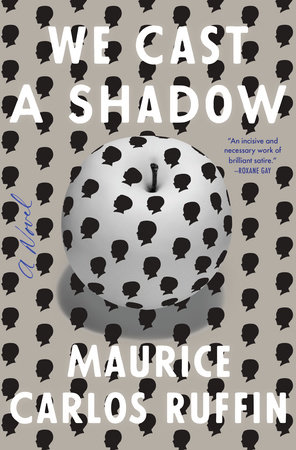
We Cast a Shadow is about a father’s fierce determination to protect his biracial son, Nigel, from racism. The unnamed protagonist feels certain that “demelanization” is the way to go. To pull it off, all he needs is the resources, which involves obtaining a higher position at the shady law firm where he works. The novel tackles topics such as racism, workplace politics, and most importantly, parenthood.
Buy the book
While Maurice Carlos Ruffin and I have been social media friends for some time, I finally got to meet him in person, and break bread with him, in October of 2018 in New York City. Maurice and I talked about books, life as black men, life as black writers, life in general. It wasn’t a date, but it was the most genuine fun I’d had with a man in a long time!
I’m pleased to have had a chance to ask Maurice Carlos Ruffin a handful of questions about his page-turner of a novel.
De’Shawn C. Winslow: The novel opens with a look into office politics. The characters Riley, Franklin, and the narrator are three black attorneys who all need a promotion that only one of them can have. Do you think we, as a society, are moving toward a place where that sort of competition will no longer be necessary?
Maurice Carlos Ruffin: I wish. It seems that one of the effects of white supremacy is tokenism, which is where the opportunities for success are artificially limited. In a scramble for resources, the players fight each other instead of the game. I don’t see that letting up anytime soon.
DCW: One of the main themes in the novel is father-son relationships—black father-son relationships, to be more specific. You’ve mentioned that Trayvon Martin’s death was heavily on your mind while writing this novel. Was there ever a point when the narrator’s child was a girl? And how might that have changed the narrative, if at all?
One of the effects of white supremacy is tokenism, which is where the opportunities for success are artificially limited.
MCR: I always try different variations of a story. The narrator at one point had no children. At another point he had multiple kids. Then he had one, a girl. I settled on the son. It was almost a coin toss that made me choose. After all, Black women and girls have the additional oppression of misogynoir to contend with. Look what happened to Sandra Bland, Rekia Boyd, and so many others. There were some other forms of oppression I wanted to deal with, but that was when I envisioned the book as a 700-page tome with three different timelines!
DCW: The narrator is a bit disapproving of his mother’s fried chicken business because of the long-held stereotypes and jokes about…well…black people and fried chicken. Yet, his mother’s business offers community members (and the narrator) so much more than food. She drops wisdom, left and right, about race relations. What inspired this scene?
MCR: I owned a restaurant for almost five years. My dad had a restaurant back in the 70s. Some cousins had a restaurant. You get the picture. In New Orleans, we have Leah Chase, the proprietor of Dooky Chase restaurant. Ms. Chase literally fueled civil rights leaders who passed through the city back in the day and provided a safe space for them and their allies. So it runs in the blood and in my community. It was an easy, true idea to include.
DCW: I enjoyed reading all of your women characters—even when they weren’t being likable. They’re so distinct from each other. What’s one thing you think male writers need to do to get writing across gender right?
I think guys fall for essentializing women to their body parts and accessories as if physical descriptions are a stand in for a soul.
MCR: That women [in my novel] have rich internal lives and motivations that are often unrelated or only tangentially related to the desires of men. That seems so obvious, but we needed the Bechdel test to remind us of it, so I guess it wasn’t that obvious. Characters like Araminta and Octavia could care less whether they are liked. They have higher priorities. Also, I think guys fall for essentializing women to their body parts and accessories as if physical descriptions are a stand in for a soul. It’s time to level-up gents.
DCW: What generally comes first for you? Plot or character?
MCR: For me, character is plot. The person makes the choices, and the choices drive the story. So I don’t care how many pages into a story I am, I haven’t really started it until I know the character. Knowing the character comes from usually dozens, or even hundreds, of discarded pages over an extended time.
DCW: Maurice, tell me a bit about your writing routine. Do you like to schedule writing time, or do you sit and write when the feeling hits you?
MCR: I’m an anti-routine writer. I certainly don’t write daily. The thought of writing every day makes me a little sad. Each day should have some variables, you know? I write when I have a call to write. Sometimes that’s because an editor asked me to write something. Other times it’s just because I feel like it. I guess this is why writing never feels like a grind to me. I do what I love.
DCW: Congratulations are in order! Rumor has it that your next book will be set in New Orleans. Will you tell us what themes that book might cover?
MCR: True. It’s a book of short stories where I present the lives of all kinds of residents of my hometown, which happens to be the most different city in America. I could say we’re the greatest or most European or whatever the visitor’s bureau is saying now, but I think different is more honest. I’ve traveled enough to know that this is truly weird place and that some of these voices need to be heard. New Orleans is literally the drain for much of the country. It’s almost like some of America’s most difficult problems—white supremacy, gentrification, poverty, etc.—get concentrated to a syrup here. I’m never a loss for things to be frustrated by. Yet, I fall in love almost every day because we have so much human beauty. The book reflects all of this. I can’t wait until everyone gets to read it.
One of the inconveniences of reading physical books is finding a bag that’ll fit the novel you can’t currently leave at home. While heading out the door in the morning, thinking about that long commute you have ahead of you, it’s impossible not to try to jam your book into your already crowded tote. But if you’re in the middle of A Little Life or War and Peace, it can get problematic and potentially cause a shoulder sprain. My suggestion is to find a slim easy-to-carry novella. Here’s a reading list of shorts novels that you can read in one sitting:
Wioletta Greg is a Polish poet with a gift for metaphor and evocative imagery. In her novella, she relays the intellectual journey of a girl, Wiola, growing up in the Polish People’s Republic. Though too young to understand the political background in which the bildungsroman takes place, Wiola recognizes and interprets the ways that Soviet Communism effects her own life. Set in a fictional town, and surrounded by the reality of a historical moment, Greg’s novella offers a coming of age story told with the lyricism and brevity of a poet.
The comically deadpan musings of the oddball protagonist in Murata’s short novel will make it hard to put down at the end of your commute, and will follow you throughout the rest of your day. This story follows Keiko who finds fulfilment and happiness in the structured orderliness of working at a convenience store, but faces pressure from her friends and family to quit her working class job and find a husband instead. Convenience Store Woman is a humorous and thought-provoking novella about the visible and invisible forces that pressure women into conforming to patriarchal conventions of society. Read about how this Japanese novella about a convenience store worker became an international bestseller here.
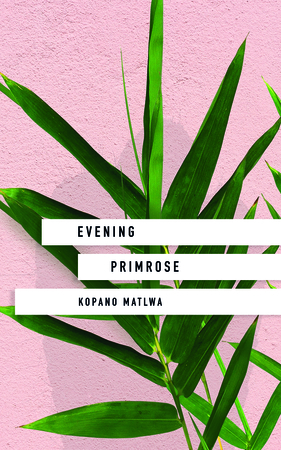
Evening Primose takes place in post-apartheid South Africa, where the protagonist, Masechaba, is attacked for her anti-xenophobic activism. Masechaba’s story is told through journal entries, offering the reader a heartfelt and raw perspective on the personal consequences and socioeconomic effects of the political landscape. Matlwa’s short, though powerful, novel enlightens readers about the gender-based violence and racial tensions still alive today in South Africa.
Trick by Domenico Starnone, translated by Jhumpa Lahiri
Domenico Starnone pairs together two opposites in this suspenseful novella, when a disillusioned grandfather reluctantly leaves the comfort of his home to take care of his precocious grandson. The old man, an illustrator, is too preoccupied with a deadline from his editor to properly look after the young boy who goes to great lengths for attention and companionship. This dangerous mix of carelessness and craftiness will keep you on your toes up until the boy plays the titular trick. Read an excerpt from the novel recommend by Jhumpa Lahiri here.
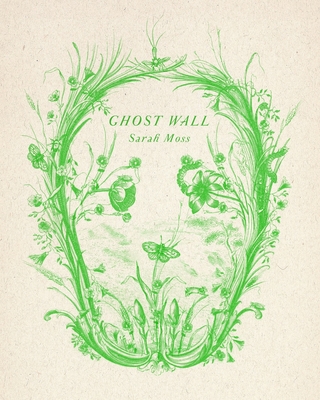
Moss’s 149-page novel takes place over one week in the late 1990s, carrying us swiftly and meticulously through an educational camping trip in rural Northumberland, England. The purpose of the expedition is to dive into the past; learn first-hand about ancient England by adhering to iron age traditions, foraging techniques, and survival skills. Moss’s skill with description leaves the reader with vivid images of the British hinterland as the Iron Age reenactment takes an unplanned turn and goes sour.
Amara Lakhous orchestrates an array of conflict by setting a pig loose in a mosque in Turin, Italy. The Muslim community, animal rights activists, and right-wing xenophobes have irreconcilable views on what should be done about the very Italian piglet owned by a Nigerian immigrant. An Italian journalist, Enzo, tries simultaneously to solve this issue alongside a murder mystery concerning Albanians and Romanians. With an exciting plot, witty humor and a sharp eye, Lakhous unravels a tale about multicultural Italy.
Acclaimed Egyptian novelist, Naguib Mahfou, writes from the perspective of a man just released from prison, where he was kept for doing something he believed to be just, only to be shunned by his own family and companions. Mahfou’s psychological sketch, told through stream of consciousness, allows the reader into the mind of someone who is certain of his own integrity and fixated on exacting revenge on those that seek to undermine it.
In Iwaki Kei’s award-winning debut novel, two women who have recently moved to Australia from Nigeria and Japan meet in an ESL class. As immigrants, non-English speakers, and mothers, they face seemingly insurmountable challenges just to adapt to their new environments. The power of strong female friendship proves vital in this brief, moving novella.
Told over the course of three nonconsecutive summers, spanning 1984 to 2011, Chronicle of a Last Summer captures the political movements and minimalist literature of Egypt during the protagonist’s generation. As the unnamed Egyptian woman ages, the reader is taken through her meditations on the meaning of revolution and her particular role—as an observer or participator, activist or artist—in the changing times.
Told through vignettes, The House on Mango Street chronicles a year in the life of a Mexican American girl after moving into a cramped house in a crowded Latino neighborhood of Chicago. Cisneros draws from her own experience and from stories of her writing students to piece together a portrayal of life as a Hispanic woman growing up in a racially segregated city in America. Since its publication in 1984, the novel has been translated into several languages, taught in schools across America, and won the American Book Award.
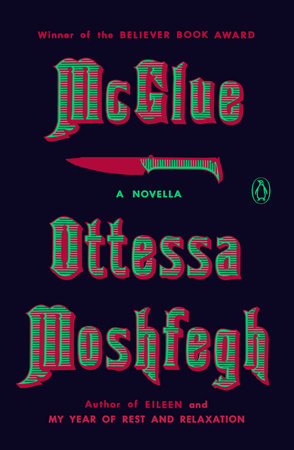
Ottessa Moshfegh wrote her first piece of fiction about a drunk deckhand chained to a bed on a boat after being accused of knifing a man named Johnson. Written in first person, this swift novella reads as though the narrator is belching out his uninhibited thoughts right onto the page, jumping in time as he blacks out and recalling impaired memories about the man he’s been told he killed.
In our home,
a magnet held a polaroid
of my father’s penis on the fridge:

a ghostly phallus wearing
a novelty Patriot’s football helmet.

He advised me:
Never trust a dick without a helmet.

Later, I wondered who to trust
in public restrooms while standing

with my legs spread apart
at the shortest urinal.

Beneath the sleeping bag,
my cousin and I compared ourselves.

Outside, our parents were naked
and bubbling in the hot springs.

Good, he said, yours is like mine.
But his was bigger.

As we grew, he would sneak up
behind and flub me with his penis,
or rest it like a rodent on my shoulder.

I wanted to hold the girth of it
like a pool cue in my hands,

or not his, but another, any other.

The first one I touched
after mine was long,

narrow at the tip
like the lip of a beer bottle.

And like the loose skin on a bone
of cooked meat, when I pulled down
the skin slid back.

In his French accent he asked
as he grabbed me,
Why do they do this to boys in America?
TV Dreams
As we collect garbage
by backlot cargo ramps
between department stores
and banks, a child in a blue
coat picks up newspapers
scattered on the cement.
I reach the back of your neck
and pinch the tiny hairs.
I’d kiss you but we only kiss
drunk. Rain is falling now,
the child makes mud splatter
paintings—damp pants, he looks
like two depths of ocean.
His mother is smoking
under a blue bus terminal.
He brings her a paper and she says,
She's with Jesus now.
Way up there, like the moon?Yes, son.
Do you need a spaceship in heaven?
No, son.
I laugh and look into your eyes
and you ask
if my bag is full.
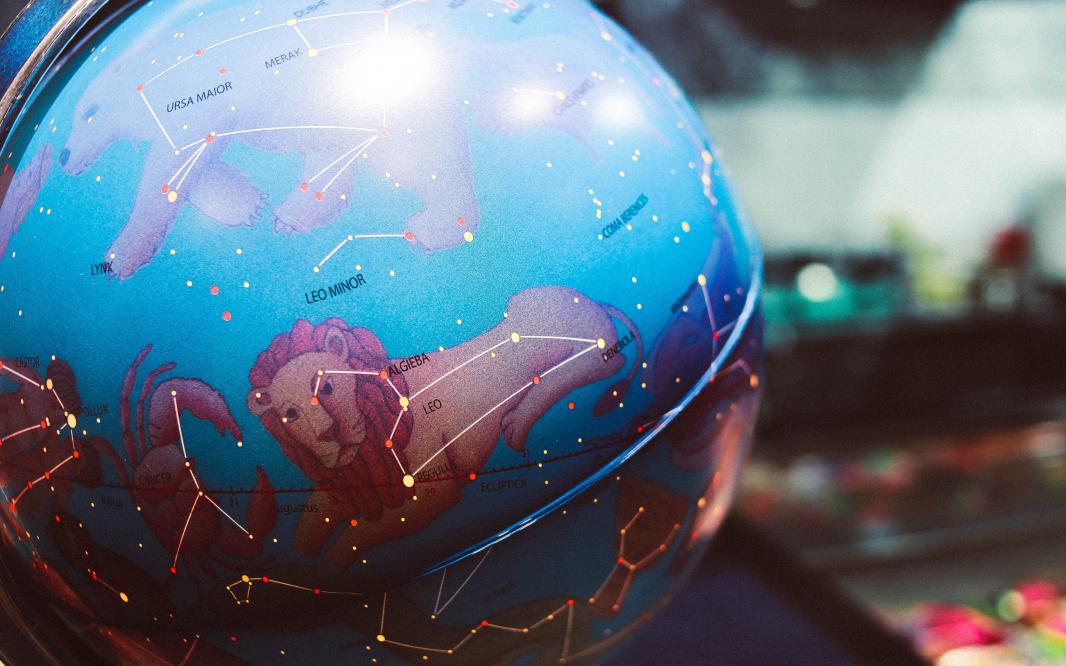
This summer brings birthdays for Cancer, Leo, and Virgo, but the big story that we’re going to focus on are two major eclipses hitting in early July. Eclipses are catalysts, slingshots, that help us focus energy, encouraging us to either move into or let go of things that are coming into or moving out of our lives.
The first eclipse is a total solar eclipse at 10 degrees of Cancer, conjunct the North Node. This eclipse is about new beginnings, about increasing our desires, appetites, and attachments. This is about wanting more, in whatever zone of our chart Cancer governs. It’s the second of four Cancer eclipses between July 2018 and June 2020; this part of our life is getting major attention.
The second eclipse is a partial lunar eclipse at 24 degrees of Capricorn, conjunct the South Node. This eclipse is also conjunct Pluto, the planet of transformation: it’s big and cathartic, encouraging us to release the structures that aren’t working for us.
Creatively, this is a big summer. Projects and creative relationships are going to develop rapidly; on the flip side, we are also in for a lot of changes and personal and professional shakeups.
Find out what’s in store for you this summer with the horoscopes for your sun and rising signs.
ARIES
This summer turns on the axis of the public and the private, home and the office, family and career: or, to put it simply, work/life balance. How have you been managing – or not managing – your relationship between the two?
The first eclipse of the summer, on July 2, occurs in your zone of home and family, a Cancer eclipse during Cancer season activating your deepest roots. Your focus on your home and family (or those you’ve chosen as family) is increasing. What do you need from your home base, from the most important people in your life? How are you internally reconciling your fierce sense of independence with this desire for emotional security, Aries?
Then, on July 16, the second eclipse of the summer hits, lighting up your zone of career and public image with veritable fireworks. The partial lunar eclipse is all Capricorn energy, but while Capricorn usually wants to build an empire, this particular brand of Capricorn is about completing. This eclipse is occurring on the south node, which is releasing psychic debris; it’s also next to Pluto, the planet of breakdown and radical transformation. Something you began in January 2019 is coming to fruition; some goals you once held dear may no longer resonate. Celebrate what you’ve accomplished, and give yourself permission to release what no longer feels true to who you are. Give yourself time to recuperate, too.
Writing Prompt: What do you most value about your home? What do you most want to change?
TAURUS
For you, Taurus, this summer is about journeys. Short journeys, long journeys; journeys of the mind, journeys of rediscovery, and perhaps, even, the elucidation of a new life path.
The first eclipse of the summer, on July 2, lights up your zone of communication and short-term plans. This zone is particularly relevant for writers, as it’s all about the inspiration and subsequent scheduling that happens in our immediate environments, and for you, Cancer season is raking over your writing life, asking you to consider what’s working—and what’s not working. But the eclipse is something more: the eclipse is a big idea. The eclipse is initiation. Some big new project is getting off the ground—or perhaps, a project that was waylaid gets new wings.
Just as you begin something new and exciting, you also are letting go of something major. The Capricorn eclipse on July 16 occurs in your zone of (you guessed it) long-term journeys, but also education, faith, religion, philosophy: you know, easy stuff. Stuff that can take a lifetime to work through; stuff that can transform at a moment’s notice. This eclipse is about release. Perhaps the release of a long-cherished dream made irrelevant by where your life (and new plans) are taking you, perhaps the release of old psychic debris related to some of that Big (totally easy) Stuff you didn’t know was still lingering, but that has still been impacting your work.
The work of an eclipse is not done in a day, or a week, or a month. Give yourself time to sift.
Writing Prompt: What project(s) have you been meaning to get to, but kept putting off? Make a list of three ideas (or five, or ten) things—stories to write, essays to pitch. Things that are purely career-pushing—not administrative!
GEMINI
Time to get your money right, Gemini. This summer’s eclipses are all over your money zones—which are really about value, intimacy, and how you see yourself and your work.
The first eclipse of the summer, on July 2, hits your zone of money and value, which is Cancer. Cancer season is deeply uncomfortable for you for a lot of reasons—it’s water that wants to go one direction whereas you’re the kind of air that wants to fly everywhere – but it’s also hard because, for you, it brings up all the uncomfortable history and baggage tied to your bank account. But this summer is for starting fresh. This Cancer season has been clearing out your money house, with tons of planets traveling through it, encouraging you to get your head on straight about what you’re worth (ask for more!), and this eclipse is all about initiating a huge new change in your life. Whether it’s an influx of money or the creation of a life-altering new structure around how you deal with money (like, say, getting an accountant or setting up quarterly freelance taxes), this is a big opportunity for you to alter some ingrained habits.
Meanwhile, the next eclipse asks you to shed some old baggage around how you’ve related to money and shared resources when it comes to other people. The Capricorn eclipse on July 16 hits your most intimate zone, which can be about sex and death but is also about other sexy things like taxes and inheritance. For writers, shared resources are obvious: the percentage cut that an agent gets from a book deal, for example, or restrictive contract language where you may have signed away your work in perpetuity, in the past. In this society, sharing with others is sort of a necessity, so you’re reexamining your relationship to how you share with others, with boundaries, and what old patterns can be released.
Writing Prompt: How does money make you feel?
CANCER
Happy Birthday, Cancer! You’ve got so many planets taking a trip through your sign, bringing you an extra jolt of creativity, abundance, and energy. You’ve also got some powerful eclipses to reckon with: some major growing, and major releasing.
The first eclipse, on July 2, is in your sign and heralds a new source of energy and abundance in your life. What new aspect of yourself are you growing right now? What person do you want to become, to grow into? Certainly, this will impact your work, but remember that life isn’t all work: you have to have experiences and live a life in all its richness and strangeness in order to have anything to write about in the first place. Don’t worry if this season perhaps takes you outside of your typical creative orbit.
The second eclipse, on July 16, is in your opposite sign of Capricorn. Whereas the first eclipse is about hunger, about growth, this second eclipse, in your zone of partnerships, is about release. Some heavyweights (Saturn, Pluto) have been slowly traversing your partnership zone, teaching you about how you partner in life, not only romantically but also when it comes to business—those long-term relationships with editors and agents come to mind. What do you need in these relationships? What do you crave? How do you work best with others? What is, and isn’t, working for you right now: what are you ready to let go of? This eclipse highlights the psychic debris that you are ready to release, the patterns you are ready to step away from, so that you can work toward building healthier, stronger relationships that support your creative and personal growth.
Writing Prompts: How do you feel about the person you are? About the writer you are? What kind of person do you want to grow into, or do you feel like you’re growing into? How does this dovetail (or not) with the kind of writer you’re growing into?
LEO
Even though your birthday season promises an energetic high, Leo, this summer is all about introspection.
The first eclipse of the summer, on July 2, is in Cancer and your most subconscious, spiritual zone. This eclipse is interesting: even though this zone can be quiet, all the energy we aren’t necessarily aware of, this eclipse is about hunger, about increase, about our appetites awakening. You’re suddenly hungry for more: more awareness of the self, of the patterns that have led you thus far, of how your past and all that is seen and unseen informs your creative process, your relationships: the varied tangled threads of your life that make you you. Cancer season is about getting real with yourself, about really sitting with yourself, about maybe owning that you don’t have all the answers. It’s not comfortable work, Leo. Are you ready for it?
A few weeks later, an eclipse rocks your zone of work and health: some habits that have held you, or perhaps that you have held dear, in your daily routines are getting a cleanse. Some psychic debris needs to be released. This is a Capricorn eclipse; these are structures around your work and health routines that you’ve built, that have served for a time, but that need to be renewed, or redone entirely. Don’t be afraid of what’s on the horizon.
Writing Prompt: What subconscious patterns have you been realizing lately? How do these impact your creative life?
VIRGO
What’s happening with your community, Virgo? Where are you investing in people, and where are you pulling back? This summer is all about boundaries. Boundaries are, after all, an indication that you want to continue a relationship.
The first eclipse of the summer, on July 2, is all about increase, appetite, hunger: what communities are you growing and truly investing in? Where do you have the energy to plug in and really nurture others, and allow yourself to be nurtured? A new writing group, a new class of students, or something else entirely. This particular zone is where the personal and the professional can blend together, the energy fusing in a way that helps you continue to pursue the ideals that are most important to you in this life. What kind of literary citizenship are you creating and holding space for in your life?
This is followed by a weeding out, an editing, if you will, of other kinds of relationships—romantic, erotic, creative. Or, perhaps, it is simply a revising of your relationship to your process in how you form these particular attachments. What needs to change, structurally? What psychic debris needs to be released? Think abundance, not scarcity.
Writing Prompt: What kind of writing and/or creative community do you have, or not have? What do you want to nurture?
LIBRA
Your career is on fire, Libra, and this summer, your visibility is set to 100. But are you personally ready for that?
The first eclipse of the summer on July 2 lights up your zone of career and public image, putting you in the public eye. This is the start of something bold, new, and exciting—either a brand new initiative, or a major turning point in an already-existing project. You start attracting attention; your social media is poised to blow up, in the best way. It feels like everything you’ve been working for might finally start paying off. You’re hungry, and that’s healthy! You’ve just got to keep putting in the work, and listening to your own inner voice—and not the voice of the crowd. Trust yourself. You’re on the right path.
Increase in your professional life might require some readjustments at home. On July 16, there’s another eclipse, this one hitting your zone of home and family—chosen, natal, or otherwise. You’re releasing something major: could be an apartment or living situation, or even a person who is close to you. There’s psychic debris related to the roots of you that is flying around, that you’ve been dealing with for a long time, and finally, finally, you’re ready to move through, and move on.
Writing Prompt: Not a prompt, but an audit—before the eclipse, do a sweep of your social media. What do you like about your social, and what do you not like? Where could you stand to tighten things up, whether that means posting more or less? Are there things you talk about that feel boundary pushing, that you could post about less? Are there aspects of your creative life that you want to talk about more, or people who you’ve been meaning to connect with?
SCORPIO
Planning a trip, Scorpio? Cancer season always gives you the itch, but this summer, you’re feeling the wanderlust in a particularly deep-seated way: like you’re ready to shed this skin and grow a new one.
The first eclipse of the summer inspires you to grow in a massive way, a way that might feel so big as to be untenable, but sit with yourself a minute: that kind of growth isn’t too frightening to a Scorpio, is it? This eclipse lights up your zone of philosophy, religion, faith, education, and long journeys on July 2, inspiring you to do some big thinking and imaginative work. You’re hungry for something new. Something you haven’t done before. Some place you haven’t journeyed before, even if it’s just somewhere in your mind. A way of thinking about life that is brand new territory. Are you tentative because it threatens to upend other parts of your life? Lean into the creative process of making all things new.
The second eclipse of the summer is about release: about letting go of things that are unworthy of your attention. Daily schedules, forms of communication, muss and fuss that is just clutter. Debris that needs to go in the trash. There’s a way of life that isn’t serving you, that you need to shed like an old skin. July 16, Scorpio. Mark your calendar, and get ready to embrace a new way of doing things.
Writing Prompt: If you were going to shed a skin and start something totally new right now, what would it be?
SAGITTARIUS
Your relationship to money and resources is under review this summer, Sagittarius. It might not seem sexy, but money makes the world go round: it’s what fuels all those journeys you love, those new experiences that fire up your creativity. You may not like to think about money, but it’s time to give it some attention.
Not giving money its due may have got you in some sticky situations with other people. On July 2, the first eclipse of the summer sails through your zone of collaborations and joint ventures: a new opportunity may be coming your way, but you have to look for it in order to take advantage of it. These things don’t often just fall in our lap. Think of Oprah’s definition of “luck”: preparation meeting the moment of opportunity. In order for outside resources to find their way to you, you have to be ready—you have to look like an attractive person to partner with, professionally speaking.
But this isn’t just about other people coming to you: this eclipse is about hunger, about you seeking opportunity. Summer is a time for applying to residencies, and for grants—this is a time to not count yourself out prematurely, and to apply for things that may previously have seemed out of reach. Use that eclipse energy!
On July 16, the second eclipse sweeps through your zone of money and value, encouraging you to take a look at your budget and really get your day-to-day finances in order. You are releasing a major pattern in your life around money; you may also be experiencing a transformational lesson around how you interact with money. Remember that money isn’t the enemy, and that changing how we think about it can alter how we interact with it.
Writing Prompt: Who, or what, would you be comfortable partnering with in your life right now? If there isn’t anyone, or anything, is there a reason for that?
CAPRICORN
You can climb any mountain solo, Capricorn—but the whole point of this summer is, you don’t have to.
Lesson the first: you can let other people in for the long haul. Trust your gut; boundaries are healthy. On July 2, the Cancer eclipse lights up your partnership zone. This isn’t just about romance, although of course it could relate to a new relationship, or to the rejuvenation of an existing one. It also relates to those long-term business partnerships that can certainly feel like a marriage: say, with editors we spend years working with, and most especially with literary agents, those folks whose contracts can be more binding than a prenup. This eclipse is about growing a relationship, nurturing a relationship and, specifically, about what you are growing together.
Are you in the market for someone new, or do you need to have a conversation with an existing person? Mercury will retrograde through this part of your chart later in July, encouraging you to review your conversations and contracts, so bear that in mind, as well.
Lesson the second: sometimes, what you’ve built for yourself doesn’t work anymore. It worked for a time, but it’s time to let it go. The second eclipse of the summer hits your zone of self and identity on July 16. It sits with Pluto, the planet of transformation; this one is big, Capricorn. You’ve been getting raked over the coals, with heavyweights Pluto and Saturn constantly delivering ego checks, but if you work with them (not against them), you’ll emerge stronger than ever, with a renewed sense of self—and with less of that psychic debris you’ve been carrying. Whatever structures have helped get you this far—it’s time to reexamine those. You don’t need all of them. You probably don’t need most of them. You’ve been doing some tremendous growth. Time to let go of the security blankets.
Writing Prompt: What security blankets are you holding on to? What partnerships are you nurturing?
AQUARIUS
Work, work, work, work, work, work. For you, summer is all about an exciting new project—and letting go of some major old emotional stuff that probably relates to it. Easier said than done.
The first eclipse of the summer, on July 2, lights up your zone of work, daily routines, and health. This zone has been getting a lot of attention lately: Mars, the planet of action, just took a spin through here, inspiring you to pay extra attention to what was working (or, perhaps more notably, what wasn’t), and Venus, the planet of value, is hanging out here, too, adding some encouragement and grace to your work relationships. For you, this eclipse is about starting a new work-related project, or, alternately, about something that’s been baking for a while really getting lift-off this month. This eclipse is a power-boost: Cancer energy isn’t your favorite—it’s about being powered by your emotional center—but, like it or not, all of your career and money zones are governed by water energy. To succeed with your work and career endeavors, you’ve got to get comfortable with centering your feels and your spirit. No time like the present.
Speaking of spirit: the next eclipse, on the 16th, might be in earthy Capricorn, but it hits your most spiritual, unconscious zone—and the eclipse is on the super-karmic south node, hanging out right next to transformational Pluto. You’ve been doing a lot of work in this part of your chart (maybe therapy, maybe some other deep-digging emotional work) over the last few years, and this eclipse is going to feel like emotionally taking out the trash: letting go of lots of psychic debris… probably that relates, in some capacity, to freeing up some creative space for that new project to grow and thrive.
Writing Prompt: What project are you starting? Nurturing?
PISCES
Your summer is all about where you draw the line, Pisces. What relationships do you want to invest in? Who and what is worth your creative energy?
The first eclipse of the summer, on July 2, is in your most creative, romantic, erotic zone. You’re beginning an exciting new creative project, or perhaps you’ve suddenly got a ton of inspiration for an old thing you put down ages ago that you’re seeing in a new light. Cancer season is good to you that way: all those waters refreshing and nurturing the deepest, most sensitive parts of your psyche. This eclipse is about growth, about investment, about taking the time to really put roots down so that this one sticks.
Meanwhile, the second eclipse, which hits the Capricorn zone of your chart on July 16, is all about releasing your involvement in communities and groups that are taking up too much of your time. You’ve got this precious new creative project, which means you don’t have as much time for other obligations and commitments. Bow out gracefully; you already know which ones I’m talking about. Don’t ghost; don’t be that person. You also don’t have to justify your exit. A simple this has been great, but I have to step away will suffice. Think Marie Kondo: thank them for their place in your life, and move on.
Writing Prompt: What communities are you releasing attachment to? How can you gracefully back away?
Kristen Arnett’s Mostly Dead Things follows Jessa, a queer woman struggling to keep her family and their taxidermy business together in the aftermath of her father’s suicide. The novel is also about Florida (a place with a presence so big it’s essentially a character), messy relationships, and how we choose to remember people who have left us or died.
Buy the book
Arnett’s work has appeared in The Normal School, Gulf Coast, Electric Literature, Catapult, The Guardian, and other places.Her debut story collection, Felt in the Jaw, was published by Split Lip Press and was awarded the 2017 Coil Book Award. Arnett is also a columnist for Literary Hub and a librarian.
Kristen Arnett and I discussed all things Florida, writing about the minutiae of queer domestic life, and how the art of taxidermy is like writing.
Deirdre Sugiuchi: I grew up in Mississippi but my partner is from Florida. Now I love Florida, but before I knew it, my impression was just strip malls and theme parks. It also seemed like there was nothing literary going on in Florida until the last ten years. Can you talk about Florida and the emerging Orlando literary scene?
Kristen Arnett: There are these preconceived ideas about how people view Florida but also even the parts of Florida. People think of Miami in a certain way. Panhandle is its own kind of thing. When people who are not from Orlando come to Orlando, there are these embedded ideas like strip malls or theme parks, things that are not necessarily in the day-to-day logistics sometimes for where someone from Florida functions.
Within the past decade or so Orlando specifically has had a group of people who have lived and tried to stay here and bring it up instead of kind of leaving and going to other spaces, taking the creativity and ideas with them. They stayed and tried to grow those things and cultivate it.
And with regard to the literary scene, the local Burrow Press has done a really good job advocating for the literary scene here. They’ve been bringing a lot of readers. They brought in Lauren Groff to magnify what we have, because Lauren is a Florida writer, so it’s like look, this is a big name but it’s also a big name Florida person. And the scene in Orlando has been able to grow more because of Burrow Press and the work that they’ve been able to do, not only with their literary series but also with the kind of books they are trying to put out. Susan Lilley, who was the first poet laureate of Orlando, has her poetry collection coming out from Burrow, and that’s the first poetry collection they’ve ever done.
There’s this idea that there isn’t culture here, that it’s a tacky kind of place that you go to vacation and leave, but there’s a lot here and there’s a lot of people are working really hard toward a bigger idea, a community that wants to support each other, and really radicalize the idea of what culture looks like in Orlando. It’s something I’m really passionate about and that I love to see because I love Orlando. I’m happy to see that other people love it like I do too.
DS: It’s like on one hand you’re driving down what I-75, and you are seeing Bible verses, and anti-abortion this and that, but on the other hand you have this really incredible lush writing scene, and also a queer writing scene.
KA: I also think it’s because it’s work where the queerness just happens to be embedded, which is exciting. I love to read and have the book I’m reading not necessarily be a coming out story. It makes me excited to read work where the people are queer but not necessarily something where we have to sit and unpack it.
DS: Which is what I loved about your book. Jessa’s queer and that’s what it is, just her life, and I love that that’s what you’re loving about other people’s work, because that’s exactly what you did.
The things about queerness that I want to read or write about are the day to day minutiae of going about the world being a queer person.
KA: That’s really good to hear, because that’s something that was really important to me. The things that interest me in queerness that I want to read or write about are just the day to day kind of minutiae of going about the world being a queer person and interacting in a household. Domestic dynamics in a household interest me, the physical acts of queer people. Sex is very important to me, or just like sex being a natural progression they’re not necessarily unpacking all the time, the emotional impact of sex, because sometimes people just like to fuck.
DS: Sometimes (laughs).
KA: That’s something I wanted to see in a queer book, that’s something I wanted to read, that was a thing I wanted to be part of the world I’m creating, and not like something I need to explain to readers. I feel like as a queer reader when I go in and read sometimes, and see something unpacked for me, I wonder who that’s for sometimes. That’s the stuff I want to read, the stuff I’m most interested in, how it happens to just be part and parcel of everyday domestic life and queerness.
DS: Can you talk to me about writing about Florida and how it affects you as a writer?
KA: I wanted to write about place in a way that if you took place out of it, it would not remotely be the same book. I wanted it to be completely incapable of separating the two. I wanted them to be entwined. I consider myself to be a regional writer, like a place writer. It’s very important to me in my work and what I love. I feel like place to me is embedded. The writers I get really excited to read are the writers who do that. One of my favorite books is Dorothy Allison’s Bastard Out of Carolina. South Carolina is such a presence in that book.
Florida is such a big presence. It’s creeping constantly into everything that we are doing. It’s in our homes, It’s in our cars. We deal with the weather. You can’t ignore it, it’s part of everything that you are doing. You plan your life and your days around how it is to be and to live here. Writing about Florida to me it felt very natural, pun intended, to have Central Florida be an important character, a main character, to have a place that’s creeping into you all the time.
Florida is very broad and large. Different areas of Florida are wildly different from each other. So me writing about Florida is not the same as someone writing about Miami. There might be some similarities, but culturally it’s going to be different, not just physically. Even the insects or the plant life or what the air feels like pressed against you, those things are all different…
The other thing that’s in this book, and in some essays as well, is that things don’t have a permanence here, which is very odd because there’s also lots of other places you go where there is collective social memory of places that used to be there but here there’s…collective amnesia I keep calling it. Something used to be there and it’s gone and people are like I don’t remember it. There’s a paving over of places and people forget about them like they didn’t exist. Which is very interesting too, a thing I’m constantly trying to unpack. It’s not a thing I feel like happens in other places.
I’m third-generation Floridian and there are times when I ask my grandma about places because she’s lived here and she’ll be like “Oh I don’t remember.” How do you not remember it? Something was here 20 plus years and it’s wiped from your memory. You only remember the new thing that is there now! It’s very bizarre. It’s a very Central Florida thing to me and I’m always very interested in it.
DS: I struggle with that too. I’m seventh generation Mississippi Deltan, from a place where nothing is ever torn down, it just crumbles, and the area where I live now is rapidly gentrifying. I’m always like, “They just tore down that grove of pine trees and put up a strip mall!” and my partner, who grew up in Orlando, will say, “Well, that’s just how things go,” and I’m like “No, that’s just fucked up.” So is that just a writer thing?
KA: Well, there is that thing where we’re trying to preserve a specific kind of memory, which was interesting to write about in the context of taxidermy, because taxidermy is trying to do that same type of thing, preserve a specific memory. It’s what people are trying to do when we’re preserving ideas or memories. Nostalgia functions pretty much in that way. These kind of nostalgic memories of places, people, and important events in our lives. We try to preserve them in a way that is not necessarily true to how they are, because as the creator of those memories we get to have a say in how they get to be preserved.
Taxidermy is about preserving a created memory.
Taxidermy is doing a lot of that same stuff. Taxidermy is like, here’s the thing, but I want it to be fashioned or recreated to how I want to remember. Especially a lot of times with taxidermy, someone hunted the animal, then shot it, so their memory of how they shot it is not necessarily how that thing lived, but they get to have a say in how that thing is remembered, mounting it, and preserving it. They get to say this is my created memory, and that’s something we get to do with writing, and it’s something we definitely get to do with how we remember people. We get to keep the things that we want, or embellish the things that we want, or expand upon the things that we want. Sometimes the things aren’t necessarily accurate because that’s how memory functions. I can’t remember who said it but someone said a memory is only a memory of the last time you told it, which I find very fascinating as a writer.
Specifically in this book every other chapter is a memory. It’s not sequential but the past doesn’t work like that, so we get to bring a sense of sound, a picture, a scene, and it will trigger a memory for us. That’s how we remember things.
DS: I liked seeing how the taxidermy, particularly the mother’s taxidermy, changes throughout the book until it’s something that a taxidermist would think was a blasphemy.
KA: I was thinking about especially with the mother, with Lily’s work, the idea of the breakdown of memory. Let’s reconstruct it and take it apart to pieces, and that’s difficult for Jessa for multiple reasons. She sees taxidermy as a kind of specific art. She also sees it as an infallible, pristine thing that can’t be taken apart. To watch her mother be like “yes, we can take this apart, and reconstruct it in uncomfortable ways,” for Jessa that’s wildly uncomfortable because she’s very much a control freak who only wants to see the thing configured in the exact perfect way that she wants to construct it. To see it be taken apart for the pieces, or that it can be repurposed, is a very terrifying concept to a person who is like that.
DS: Did you have any experience with taxidermy? Or was this all research?
KA: I would say it’s like an amalgam of different things. I definitely had familiarity with being around taxidermy. There’s a ton of it in Florida. I never did any of it, but also because I grew up in a household with very strict gender roles, I never would have been allowed to do like any hunting or taxidermy. But I was always around it so it’s very familiar.
I started writing about it, a surrealistic short story, and it was the first time I wrote a short story that felt bigger than the story. It didn’t feel complete. I was still compelled to think about the characters. It was about a brother and sister and taxidermy and they fucked it up. I was also very interested in the family dynamics.
I also started researching taxidermy. I love researching things and I also love that it was very visceral and hands-on. I bought a million books. I watched a million YouTube videos. I went on a lot of web forums for people who were chatting with each other. I could spend years researching taxidermy and not really have a grasp of all the different kinds and hows and ways of doing taxidermy. A bird isn’t how you taxidermy a fish, which isn’t how you taxidermy a small mammal. Also it’s just different kinds of techniques and styles. It’s detail work.
The more I would read people discussing it, I realized “oh this is like art, this is not just a hobby, this is something they take so seriously, it’s dear to them.” No pun intended. It’s a craft. I’m also interested in domestic roles in the house and what does crafting look like there. Also what is art? What type of art do we allow to be high art vs. low art? What is specifically different kinds of domestic female art vs. what is masculine?
DS: Ialso love when you are discussing queer relationships because the core of the story is betrayal by Brynn, but it’s also super fucking double messy because the person Brynn betrays Jessa with is Jessa’s brother. Can you talk about writing a messy relationship like that?
KA: Relationships are just messy. Emotions are not very clean. We don’t get to choose how we feel. We don’t get to choose who we love. We don’t get to make those decisions, a lot of times they’re uncomfortable or disorienting. I also think it’s just how intimacy functions.
We don’t get to choose how we feel. We don’t get to choose who we love.
I was looking at a lot of queer relationships, and how so many of those can be confusing, specifically if they involve friendship because friendship is so intimate. There’s an intimacy in friendship that borders on the romantic a lot of the time with people. It’s like, “Oh, you’re as close to me as anyone in my life and I would kill someone for you, or bury a body” is like the level of intimacy that’s there. But that becomes even more confusing when the relationship turns romantic, because it’s got this friendship element, and what if it’s a person that’s deeply involved with your family, there comes a way different level of intimacy and those things are very hard to untangle, and can be confusing.
I also think that sometimes too we like things that are messy. Sometimes I think that we like the ecstasy or the sadness or just the completely desperate kind of feeling. I think that’s a draw too, it’s a kind of passion that’s very large and difficult to dislodge. I don’t think all relationships have to be messy but I do think there’s a mess to them. I think we’re human beings, we’re messy, unless you’re just robots in a relationship.
DS: Who are your favorite Florida writers?
KA: Karen Russell is fantastic. I love Lindsey Hunter’s stuff. She lives in Chicago now, but she’s just such a central Florida kind of person. A person who I also love who writes Miami is Jaquira Diaz. Her book (Ordinary Girls) comes out in October. She’s such a gorgeous writer. I can’t wait to read that collection. T Kira Madden just came back down here. She’s from Boca. Her memoir that came out in March, Long Live the Tribe of Fatherless Girls is such a beautiful kind of Florida book.
DS: A lot of the writers from Florida right now that really interest me are women.
KA: There’s also more queer Florida writers too, which is excellent.
DS: Agreed! Could you talk about that?
I am very specifically a queer writer. It’s part of my writing, the way being from Florida is part of my writing.
KA: Yes, because I’m interested in Florida but I’m also a queer writer. I put that first in my biography and when I introduce myself. I am very specifically a queer writer and my writing is queer. It’s part of my writing, the way being from Florida is part of my writing. It’s interesting to see other writers that do that. T Kira’s book is most certainly a queer book and Jaquira’s book is queer as well, and we’re all writing about different areas of Florida. That kind of queerness in Florida spaces, you’re getting to read place but also queerness in the spaces. That’s exciting because I feel like I haven’t been able to read that. I grew up here and as a young queer person to see myself represented, it makes me excited to think about other young queer people being able to read work and see that, it’s exciting to have work I’ve been longing to read, not just write but read.
DS: Can you talk about working with Tin Houseand what that was like? How did they help you shape this book? How did you decide to work with them?
KA: Well, I love Tin House very much. I got to know them from being at the workshop myself. I don’t have an MFA. I have an MLIS, my Master’s in library. I feel like it was very beneficial for me to go to that workshop for a lot of reasons.
You want a publisher who will work with you the way you need to work, and I knew they would be fine with me doing all of my 7-Eleven verbiage shtick, my humor, that they would be good with that. I also liked the idea that I knew all those people and like all of those people. I love the body of work that they put out. It felt the most right to me. It feels like a little family, a community maybe, and that’s what I’m looking for. I’m looking for how do I fit in this community space? Is this my community?
Maybe sometimes there’s this idea that you want a publisher that bad and somebody’s ready to take it, but maybe you have misgivings, but you really want your book published if people are willing to overlook some things, but for me, I wanted to feel really good about the people I was working with and what they produced and how they were going to treat my work. I knew I wanted the book to stay very queer and I knew that they would see that vision with me and that was very important to me.
Of the bedtime stories my parents told me, I took the most interest in the ones involving ghosts and spirits. These stories were often used to teach me lessons on how to behave and live; however, instead of malevolent ghosts looking to terrorize people for their misdoings, I was more interested in ghosts who haunted people with the intention of connecting with them. My parents often loosely improvised “scary” stories about ancient ghosts from the Hebrew Bible and old Korean folktales, in which spirits manifested themselves in ways that weren’t always malicious or evil.
These ghost stories had to do with diaspora—characters, living or not living, wandering the earth and navigating the conflicts of displacement. So these ghost-story novels and collections from Southeast Asian writers feel familiar to me: they deal with the same restless spirits and the same sense of displacement. Animism lingers in these selected Southeast Asian stories that center around “hantu,” the Malay word meaning “ghost” or “spirit.” Here are ten books in which ghosts manifest themselves in vampires, virtuous spirits, and more—all set in Southeast Asia and told by the prominent Southeast Asian writers of our time.
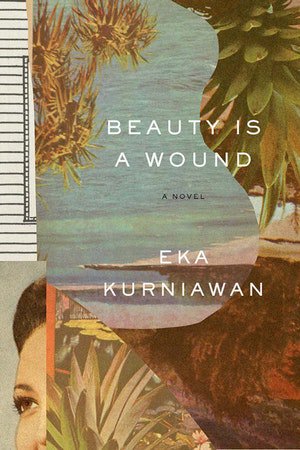
Beauty Is a Wound opens with the line: “One afternoon on a weekend in May, Dewi Ayu rose from her grave after being dead for twenty-one years…” What follows is the story of the ghost of a sex worker who comes from the dead to visit her youngest daughter, told by one of Indonesia’s most celebrated writers. The writing in this epic about a tortured family, history, independence, and romance, with notes of magical realism and satire, has been compared to that of Márquez, Melville, and Gogol. Eka Kurniawan’s first book (of three) released in English and translated by Annie Tucker is a special debut to be celebrated.
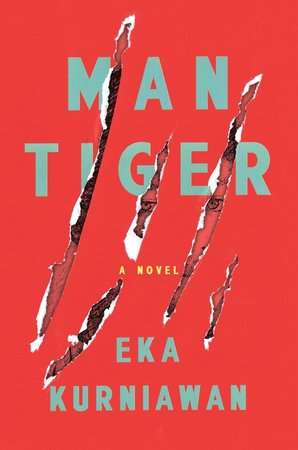
Eka Kurniawan’s second English-language release is set in a small coastal Indonesian town, where the lives of two families and a young man, Margio, intertwine. After Margio murders his neighbor, he inherits both the spirit and body of a white female tiger from his grandfather. This translation by Labodalih Sembiring takes us on a journey in which the line between reality and fantasy are blurred and that makes us re-examine the crime genre by considering violence and betrayal in this post-Japanese occupation period novel.
Bangkok and its ghosts are the center of this debut. A cast of characters ranging from an American doctor to a pair of separated Thai sisters roam the aqueous city in multiple, interconnected vignettes from the nineteenth century to the future in Thailand.
A thriller set in Oakland and Las Vegas, Dragonfish follows police officer Robert, formerly married to Vietnamese refugee Suzy, who has mysteriously disappeared. After being blackmailed by her new husband to find her, Robert encounters her ghost, as well as the ghosts of the Fall of Saigon and present-day Las Vegas. Characters’ trust are questioned in this exciting and heartbreaking hard-boiled noir.
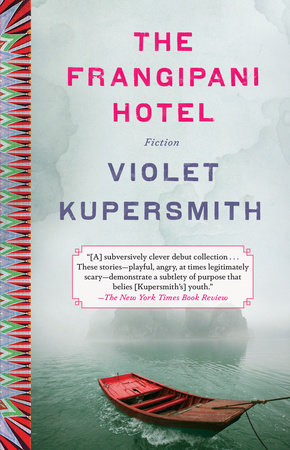
Kupersmith’s collection of ghost stories set in the aftermath of the Vietnam War explores the haunted lives of those who stayed and those who left their home country. The Frangipani Hotel in Hanoi is host to a beautiful young woman who shows up in an overflowing bathtub in the opening story in this eerie and modern collection, based on traditional Vietnamese folktales told to Kupersmith by her grandmother.
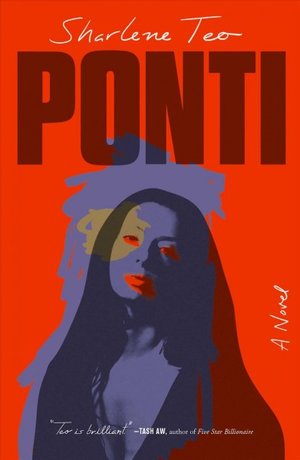
The debut of Singaporean writer Sharlene Teo centers around four women whose bodies are haunted by puberty, family, and illness. Szu, a lonely teenager, is berated by her cold and beautiful B-list actress mother, whose best known role was as Ponti (or Pontianak, a succubus in Malay folklore) in a 1970s horror film series, and who is now a medium who works from home. Once Szu meets Circe, a privileged classmate who has intentions to learn more about Szu’s mother, Amisa, things take a pivotal turn, as the past, present, and future converge in this story about isolation, horror, and relationships.
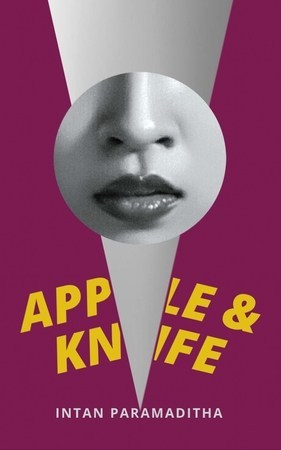
A feminist short story collection translated by Stephen J. Epstein, Apple and Knife delves into the lives of Indonesian people, both domestic and abroad. Fiction writer and scholar Intan Paramaditha transforms myths, fairy tales, and stories from the Quran and Bible by creating ominous atmospheres in seemingly normal settings in which supernatural powers interact with the personal and the political.
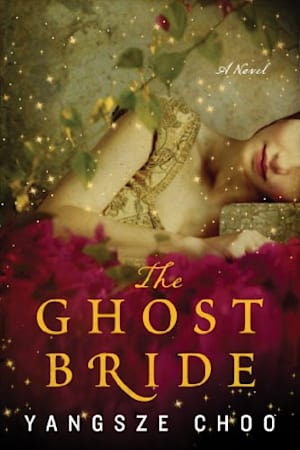
Malaysian writer Yangsze Choo’s first book uncovers colonial British Malaya and the Chinese afterlife. When the young Li Lan is proposed with a “spirit marriage” to a deceased son by his wealthy family, her nightmares and reality converge. The Ghost Bride is Choo’s fantastical take on a coming-of-age story that is currently being adapted into an original Netflix series.
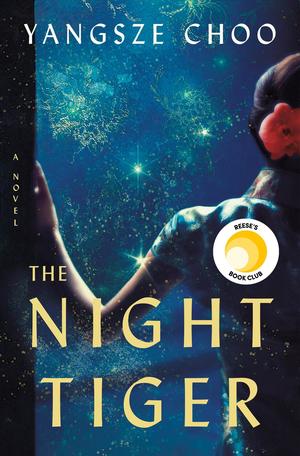
An apprentice dressmaker by day/secret dancer by night joins forces with a young boy when they find a man’s accidentally severed finger, which becomes the epicenter of a mystery in Choo’s second novel. Also taking place in colonial British Malaya, The Night Tiger invites us into a magical, dark world where this unexpected pair has 49 days to bring the finger to its owner.
Published two years after The Sympathizer, Viet Thanh Nguyen’s first collection of shorts opens with the story, “Black-Eyed Women” (originally published in Recommended Reading!), in which a ghostwriter is confronted with loss and literal ghosts after taking up a memoir-writing job. Using elements of comedy and tragedy, Nguyen’s stories are scintillating examinations and tales of the displaced in Vietnam and in the U.S.
Bestselling author Jennifer Weiner was calling out biased books coverage before it was cool. (It’s cool now! We made it cool.) In 2010, she took a lot of heat for criticizing the media’s obsession with Jonathan Franzen, saying “I think it’s a very old and deep-seated double standard that holds that when a man writes about family and feelings, it’s literature with a capital L, but when a woman considers the same topics, it’s romance, or a beach book—in short, it’s something unworthy of a serious critic’s attention.” She was right—and remains right—that reviews and coverage are slanted towards white men, and that books about women’s lives and concerns tend to be treated as less inherently literary. But at the time, she garnered criticism and caviling, including an accusation of “fake populism” from then-Paris Review editor Lorin Stein.
Nine years later, we have a whole series focused on authors who aren’t men. In Read More Women, presented in collaboration with MCD Books, we feature prominent authors, of any gender, recommending their favorite books by women and non-binary writers. Twice a month, you’ll hear about the five non-male authors who most delight, inspire, and influence your favorite writers. Jennifer Weiner’s picks are a range of recent books, from nonfiction to dystopia, plus one old fave.
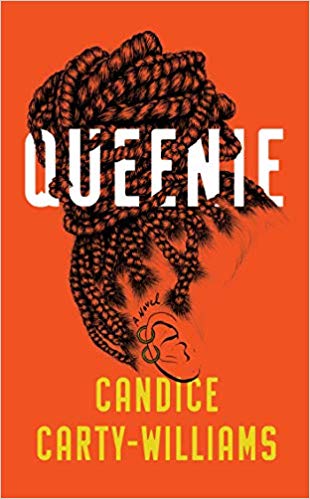
Imagine Bridget Jones, only now it’s 25 years later, she’s British-Jamaican, her boyfriend has dumped her, and she’s dealing with online dating, a damaged mother, a bratty cousin, invasive grandparents, and every bad man in the world. The book gives you all the laughs and all the sexy fun of Bridget Jones’s Diary, but has a raw, honest edge when it considers how Queenie’s been impacted by her traumatic childhood. A book for any single lady who needs a reminder that, as RuPaul put it, “if you can’t love yourself, how in the hell you going to love somebody else?”
A family of Korean immigrants opens an experimental medical treatment facility that holds out hope to everyone from autistic children to infertile couples. A tragic explosion leaves a mother and child dead. A courtroom showdown reveals that everyone has secrets, from the dutiful wife to the rebellious teenage daughter to the doctor being treated for his own health problems to the saintly mother of a special needs child. A twisty, timely thriller that will keep you guessing until the last page.
Jane and Nick meet in college, fall in love, and move to New York City to pursue their dreams of acting. Jane puts her career on hold and ends up an unhappy housewife, while Nick becomes a movie star, rich and famous beyond his wildest dreams. The story of a marriage, and the story of how our families and our history shape and mold us, and whether anyone can escape his or her past.
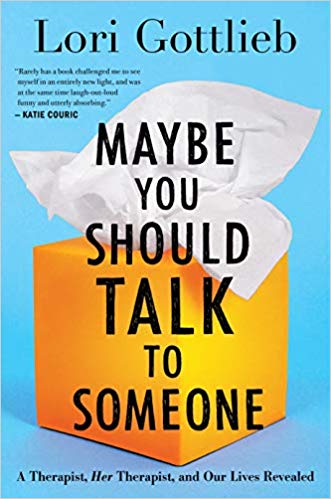
Have you ever looked across the room at your therapist and wondered what she was thinking? In this compulsively readable book, Laurie Gottlieb takes you into the therapist’s brain, describing her own post-breakup despair, and her own stint on the other side of the couch, as well as sharing the stories of some of her patients, including a young woman with a cancer diagnosis, a frustrated artist who’s estranged from her children and at the end of her rope, and a type-A Hollywood writer who hates everyone he meets.
In dystopian, not-too-distant America, where abortion, contraception, and fertility treatments are all illegal, four different women struggle with their lives, and the babies they either desperately do or desperately do not want. A terrifying and timely look at what happens when women lose agency over their own bodies.
An alternate tale of Cinderella has haunted me since childhood. A picture book in rich pastels, it told the story of a poor servant girl with a nasty step-family, named Yeh-Shen, who lived “In the dim past, even before the Ch’in and the Han dynasties” in China. This folklore can be traced back in writing to the T’ang Dynasty (618-907 A.D.), and shares remarkable similarities with that of Cinderella—she goes to a ball, loses a slipper, and is found by a prince by virtue of her small feet. But the oldest European version of Cinderella dates back only to 1634. “Cinderella seems to have made her way to Europe from Asia,” reads a note on the dedication page to Yeh-Shen: A Cinderella Story From China. The book was written by Ai-Ling Louie and illustrated by Ed Young, and it was first published by Philomel Books, a division of Putnam, in 1982.
Like the legend of Yeh-Shen, Ai-Ling Louie’s career has lived in the shadows of children’s book publishing. As an Asian American author who came of age during the ‘60s, her trials and tribulations are a sharp contrast to the creative careers of many Asian American artists working today. A graduate of Sarah Lawrence College (where she and Vera Wang were the only Chinese Americans in their class of ’71), and Wheelock College, Louie aimed to write children’s books about successful, modern-day Asian Americans, but no publishers were interested. Louie switched gears to publish the legend of Yeh-Shen, but remained determined to see her passion project through. Between 2012 and 2018, she ultimately self-published the series under her own Dragoneagle Press. It includes biographies on Vera Wang, Yo-Yo Ma and his sister Yeoh-Cheng Ma, astronaut Kalpana Chawla, and most recently, U.S. Congresswoman Patsy Mink.
When Electric Literature asked Twitter followers to share the first book they’d read by an Asian American author during APA heritage month, I realized my answer was Louie’s Yeh-Shen. I then was thrilled to discover her more recent biographies for children—books I wish I’d had growing up. I talked to Louie about her struggle to put the series into the world, why she felt it was valuable, and what it was like to be an Asian American author during her time.
Cathy Erway: Were there many other Asian Americans in your school environment? And did this have an effect on you or your work?
Ai-Ling Louie: I’d like to start a little farther back than college and show how immigration laws affect the lives of real people. I was one of the few Chinese American children born in the U.S. in the 1940’s. Immigration laws discriminated against us, keeping immigration from China to 150 persons a year, while those from Great Britain, Ireland, and Germany numbered over 104,000.
In 1954 when I was a kindergartener in a public school on Long Island in New York, I, alone, integrated my school as the only non-white in the entire building. The name-calling and insulting gestures and shunning I received were a shock to me. It was a good thing I came from a strong family, who told me I was to hold my head up and to use my wits to find a way around any obstacle.
Even if we celebrate the few who make it, we must not forget the many whose lives are stunted or whose minds are embittered by their treatment.
When discriminatory immigration laws are written and prejudice against one race or another is acceptable, I find there are many who suffer and only a few lucky ones who find a way to thrive. Even if we celebrate the few who make it, we must not forget the many whose lives are stunted or whose minds are embittered by their treatment.
I saw all around me the perception that Chinese girls are pretty and docile and Chinese boys are weak and unassertive. It warped my generation, and I still see these stereotypes around me. My family and I talk about them all the time. We see how it has negatively affected many of our Chinese American cousins, nieces and nephews. I set out to try to change these perceptions.
CE: What made you decide to share the story of Yeh-Shen as an illustrated book for children?
ALL: I wanted to write stories about Asians in America, but the ones I submitted to publishers were not being accepted. I decided to try to break in to publishing with a folk tale that my grandmother knew, Yeh-Shen. Sure enough, it was quickly accepted. I thought I could write my Asian-American stories after “Yeh-Shen” was published.
CE: How did you publish your series of Asian American biographies for children?
ALL: I spent many frustrating years trying to get a second book published. Finally, I realized I was going to have to find a way around this obstacle. I started my own publishing company, Dragoneagle Press, in 2007. My brother, Jonathan Louie, a graphic designer, is my partner. Children and teachers were clamoring for biographies of Asian Americans. May was designated as Asian American History Month. Libraries needed attractive books for their May displays. I decided to write a series, “Amazing Asian Americans.” It was my hope that someday the big publishers would pick up my series and distribute it across America.
CE: How do you decide on the subjects for these biographies? And are you working on any new additions to the series now?
ALL: When I got to Sarah Lawrence College, Vera Wang and I were the only Chinese-Americans in our class. She was the best-dressed, affluent daughter from one of the top private schools. I was the girl on scholarship, who had needed tutoring in French class. After graduation, I watched her career rise and rise and rise.
I spent many frustrating years trying to get a second book published. Finally, I realized I was going to have to find a way around this obstacle.
When I was a librarian in New Jersey in the 2000’s, I saw that the state had a large population of South Asian Americans, mostly from India. I learned that South Asian Americans were the U.S.’s latest and largest Asian immigrant group come to the United States. There wasn’t a single biography of a South Asian American on the children’s bookshelf. I knew there was a U.S. astronaut, who was originally from India, Kalpana Chawla. So, I set out to write a book about her.
Patsy Mink was the first congresswoman of color and the co-author of an important law, Title IX, which changed education and women’s lives in a big way. Yet Americans didn’t seem to know who she was, or why she was important. I found out her papers, 2,000 boxes of them, were stored at the Library of Congress in Washington, D.C. and open to the public. I spent three summers at the Library, doing research, a job I find exciting.
I am not working on any new books for the series. I am happy that I accomplished what I set out to do.
CE: Why did you feel that this series was an important addition to children’s books?
ALL: After 1965, I saw the next generation of Chinese Americans come to the U.S. The new Hart-Cellar Law let more Asian Americans, African Americans, Hispanic Americans, come to this country and to bring in their families, their sisters and brothers, to reunite families. There were more young students of color in public school classes. As an elementary school teacher and then a children’s librarian, I was getting to see children from China, India, Brazil and Egypt, all in the same school. There were many students who looked like me but came from Vietnam, Korea or the Philippines. And so, I began to see myself as an Asian American rather than just a Chinese American. These Asian American children needed books in their libraries that showed children like them. They needed to see a future for themselves as American citizens, capable of contributing to the country. Indeed, all Americans needed to see Asian Americans and other non-whites as full Americans. American publishers were slow to see this and change. The few books they were publishing were full of stereotypes. I knew I could do better.
There are more than 25 million refugees in the world—people who have fled their countries to escape religious persecution, war, violence, and other dangers so intense it’s worth giving up your home and often your family to get away. While there are a number of ways for people in stable countries to support the displaced—donating to refugee organizations, supporting politicians who welcome asylum-seekers—it’s also vital to develop understanding of and empathy towards people who are in an impossibly dire situation. For World Refugee Day, here are ten books that delve into the experiences of people displaced from home countries across the world.
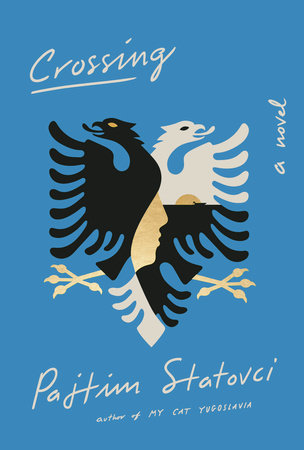
In Crossing, Bujar and his friend-cum-lover Agim flee Communist Albania in a small boat across the Adriatic Sea to Italy in hopes of a better life. Finding xenophobia and hostility in Europe, Bujar hides his Albanian origins and invents a new self in every city he moves to. Author Pajtim Statovci fled Kosovo for Finland at 2-years-old during the Yugoslav Wars.
Dina Nayeri was 9-years-old when her family have to leave Iran because of religious persecution, eventually settling in Oklahoma after a couple of years in Dubai and Rome. In her memoir, Nayeri draws from her childhood and from the accounts of asylum seekers she meets in Greek refugee camps to explore what it means to be a refugee.
The Far Away Brothers recounts the true story of a pair of identical twins, Ernesto and Raúl Flores (as they’re known in the book). Facing violent threats from the MS-13 gang, the siblings flee El Salvador and cross the US-Mexico border with coyotes before finally reuniting with their brother in the Bay Area. Markham met the Flores brothers while working as a program coordinator at Oakland International High School and spent 11 years following them.
A little known fact is that Dadaab in Kenya was the world’s largest refugee camp for decades until 2017 when violence and ethnic cleansing forced almost 625,000 Rohingya refugees to flee Myanmar for neighboring Bangladesh. City of Thorns follows the lives of nine displaced people (and their families) in Dadaab refugee camp located near the Somalian border. The refugees live in FEMA-style tents and are not allowed to work or leave the camp (unless they voluntarily return to their home country). They spend their time (months, years, decades) waiting and fantasizing for resettlement when their “real lives” will finally start. There’s a word the residents of Dadaab invented for that longing for resettlement: buufis. City of Thorns is a heartbreaking glimpse into the hopes, dreams, and aspirations of the refugees that the world has forgotten about.
In 2013, Iranian-Kurdish journalist Behrouz Boochani fled Iran after the office of Werya, the Kurdish magazine he worked for, was raided by the Islamic Revolutionary Guard Corps. He made his way to Indonesia and attempted to reach Australia by sea. His boat was intercepted by the Australian Navy and he (and the other 60 asylum seekers) were detained on Christmas Island before being moved to a detention centre on Manus Island, Papua New Guinea. The Australian government had implemented a zero tolerance policy against “illegal boat arrivals” and forced refugees into mandatory detention in offshore detention facilities. As of 2019, he is still detained on Manus Island. Written entirely on Whatsapp, Boochani’s memoir is a searing and heartbreaking account of Australia’s cruel and inhumane immigration policies.
Lauren Hilgers met Zhuang Liehong, an activist leader in Guangdong province, while she was a political reporter stationed in Shanghai. Several years later, they reconnected when Zhuang and his wife sought asylum in the U.S. Hilgers chronicled both Zhuang’s experience as a political dissident and the couple’s attempts to establish themselves in Flushing, Queens—navigating language barriers, supporting themselves, applying for asylum, and attempting to reunite with the child they left behind. The result is a deeply-reported portrait of a man, a family, a neighborhood, and America’s byzantine asylum-seeking process.
In the aftermath of the Sri Lankan Civil War, the cargo ship MV Sun Sea was intercepted by the Canadian navy near Vancouver. Onboard were about 500 Tamil asylum-seekers fleeing Sri Lanka–two of them a father, Mahindan, and his six-year-old son. Their hope for starting a new life is questioned when they, along with the other Sri Lankans, are thrown into a detention center for suspicion of involvement with the Tamil Tigers. In Sharon Bala’s debut novel, the Canadian government’s equivocations on refugees are exposed through the accounts of Mahindan, his lawyer, and an adjudicator with a substantial amount of power over Mahindan’s fate.
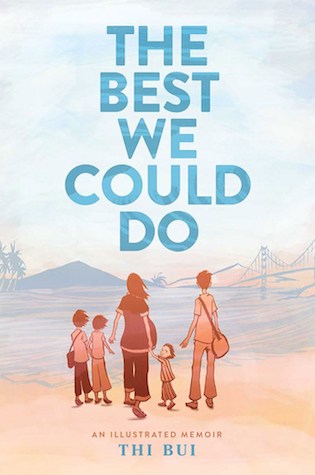
The past and future clash for one family after the fall of Saigon in Thi Bui’s debut graphic memoir. With striking visuals, Bui recounts her family’s journey from South Vietnam to a Malaysian refugee camp and finally the Bay Area. The sacrifices she must make as an immigrant and new mother are uncovered in this family tale that questions what makes a family, especially in times of crisis.
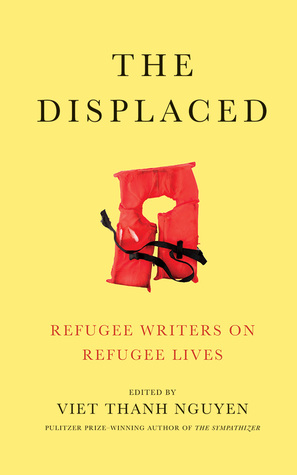
Edited by Pulitzer Prize–winner Viet Thanh Nguyen, The Displaced features essays about exile and dislocation by 17 refugee writers from around the world. 10% of the book’s cover price is donated to the International Rescue Committee.
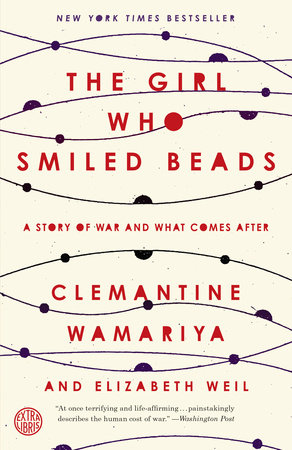
In 1994, 6-year-old Clemantine Wamariya and her older sister Claire fled Rwanda and made their way through 7 countries, hoping to find refuge and reunite with their family. The Girl Who Smiled Beads isa powerful memoir about surviving the Rwandan genocide.
Dear Massachusetts Institute of Technology Department of Media Disruption,
On the first day of our concern, I was in Principal Shurmur’s office. My twin sister, Annette, who is disabled, was in her wheelchair beside my regular chair. Principal Shurmur was across from us, at his desk.
Principal Shurmur: “I want to know what, exactly, you meant to express with your little stunt.”
Me (technically Charlene Babineaux, but please refer to me as Charlie): “We.”
At that, Annette gave me a look. It was one of her bad days, where she couldn’t quite turn her head, so I had to feel the look telepathically. And I did.
“We?” he asked, his eyebrow arching.
“We did it together,” I said. I am not a good liar, which may be useful for your admissions committee to know, though I will do it in the service of societal progress. So I looked at the other office chair, instead of Principal Shurmur’s face. He had clumsily dragged it out of the way, apologizing a lot, when Annette didn’t have the space to roll inside. “Annette and I.”
I could feel him looking at me. “The security footage clearly shows one person on the roof and—” here he paused, blushed. “The person climbed. Up the fire ladder.”
In moments like this, I wished Annette would be angrier. But she was not. She never is. I feel, sometimes, that I have to be double-angry, angry for both of us. This was one of those times.
“So?” I said.
He seemed to decide to abandon this point—the climbing point. Instead he picked up my write-up slip, and read: “‘Student poured a tub of blood into the air conditioning duct.’”
This was your applicant’s first attempt at Media Disruption for this essay. I told Shurmur I obtained a tub of porcine blood via the dumpster behind the Whole Foods, but the truth was that I had only made imitation blood: corn syrup and food coloring. I subsequently decanted the blood in the duct above the AV room while Kyle Lafferty and Marissa McBride—who had failed to stifle a laugh the week prior while reading my suggestion for the Winter Formal theme (Climate Apocalypse)—were filming the morning announcements, therefore disrupting media.
“Well,” I said. “If it was one of us, how do you know it was me? Not her?”
Principal Shurmur looked at me queerly.
“We’re twins,” I said, pointing to Annette. “Identical.”
Consequently, I became suspended. Annette, who does not like the identicaljoke, didn’t speak to me when she got home from school, unsuspended, or later that night.
You are probably thinking, Wow. That is a bit extreme, Charlie. But please let me explain some things about my actions and my suitability for your program.
First: Westlake High School serves approximately thirty-five dismembered bovines and porcines per day for lunch (according to calculations made by Annette and C. Babineaux), despite the pamphlet sent to the PTA by your applicant’s mother about the contribution of meat-eating to global warming;
Second: Westlake, Ohio is, in my opinion, the most boring and least disruptive place in America;
Third: Media Disruption occurs only when “people of vision deliberately break, pervert, and offend the content consumers and barriers to entry” (Bezos, Jeff; TED Talk). The barriers to entry, in this case, being literal, since the AV room is not wheelchair accessible.
Media Disruption occurs only when ‘people of vision deliberately break, pervert, and offend the content consumers and barriers to entry.‘
Thus, I accepted Annette’s anger and my punishment. I accepted my mom crying in the van on the way home, even though it made me feel bad, because I saw the greater goal (more on this later).
Even as this episode concluded—Mom ceasing crying, the school paper writing a small article about what happened (attached here for your reference)—I knew it was not disruptive enough to gain admission into such a prestigious and discriminating program.
That night I went into Annette’s room and tried to induce her forgiveness.
She was painting. She is right-handed, but in recent years her right hand has become somewhat claw-like, as it suffers from intention tremor.But the left one is okay. She paints with this hand, her non-dominant hand, for hours at a time, longer than I do anything, even though it hurts her arms and spine and neck, even though she is often soaked with sweat when she’s done. I used to watch her, but recently I have stopped. When I used to watch, every time she dropped a brush I would rush to pick it up, resulting in me feeling sorry for her (which she hates) and her yelling at me to just leave them on the ground! So now she has like a hundred brushes in a jar on the easel, and the carpet in that corner of her room is covered in a floral sheet, spotted all over by triangular brush printings.
“I’m sorry,” I said.
“Move,” Annette said, because I was standing in front of the window. Her painting was of the van. Mom’s pea-soup-colored Dodge Caravan. Souped-up, Mom says, cringily, of her van. Both because of the color and because of the stuff she has added, like Annette’s wheelchair ramp and hand controls on the steering wheel so she can drive on days when I am morally objecting to the consumption of fossil fuels. For three months Annette had been doing paintings of the van. They were stacked in a corner of her room like old pizza boxes. Every time she painted the van it looked exactly the same, and every time she insisted it was different.
Annette peered out the window at the green-black Westlake nighttime. She then turned back to the painting, her hand rocking back and forth like a wooden chair with rounded feet, and finally poked the canvas with her brush.
I squinted at her painting. If the brush-poke had changed it at all, I couldn’t tell. But Annette fell back in her chair, her body relaxing, and looked satisfied.
I took her posture as an invitation to speak.
“I’m sorry,” I said again, a little less nicely. I added: “It would have been really cool if it worked.”
(The fake-pig-blood disruption hadn’t quite gone according to plan. I’d figured that the blood would flow through the duct like a downhill mountain stream, thereby spilling out of the vent and onto the desk/heads of the morning announcement anchors, Kyle Lafferty and Marissa McBride (see above). However, when I had last been in the AV Room—delivering my wheelchair ramp schematics—I had failed to see that the vent was relatively non-sloped, so the blood just sort of pooled, for several hours, and then stank, plus bugs.)
“Cool,” Annette said. “Cool how?”
I ignored this. As the Latin proverb says (translation via Magistra Hughes), There’s no accounting for taste.
“Do you hearme?” I, now irritated, said somewhat snippily. “I’m trying to apologize.”
She snorted. “This is you apologizing? Like everything else you do, Charlie, you certainly make it complicated.”
“I know you don’t like the identical joke. I shouldn’t have said that. And I know you have this weird friendship with Principal Shurmur—”
“Just write a normal college essay, Charlie. Christ.” She aimed one more stab at the painting, but, perhaps because I was still there, thought better of it, and put the brush down. “Everybody else writes essays without getting expelled. There must be some other way to tell MIT that you must be the center of attention at all times. Think of something else to write. Or there’s always self-immolation.”
I didn’t (yet) know what self-immolation was, but I’d understood her tone. That had been enough to let it slip out.
“Easy for you to say.”
Her eyes narrowed.
“What the fuck is that supposed to mean?”
“Nothing,” I said.
“Coward,” she said. “You were going to say—what? If only you had a disability to write about? If only you had a hardship? Was that it?”
I know how bad this exchange must look. However, I hope that the committee would understand, as briefly referenced above, that certain actions have been taken by your applicant which may appear selfish or cruel but actually are in service of the greater good. In Mrs. Mullaney’s class we learned about utilitarian ethics, which is when right and wrong are determined by outcomes. If a seemingly bad small action causes a bigger good result, it is ethical. Like: if the guy who invented Ziplocs had a dungeon torture chamber that was very expensive to run, and you mobilized your followers to destroy the Ziploc factory, so the CEO of Ziploc no longer had any money to torture, that’s an ethically right action. Even with the breaking-in and burning. This is just one example.
What I’m trying to say is: yes, that was what I was going to say. I had nearly blurted out the cruelest thing I could have said; and yes, Annette saw straight through me.
I kicked over her painting of the van. It fell with a flat thump to the carpet. Mom has made me scrub the stain in Annette’s carpet three times hence, but there is still a ghost of the van.
“What about me?” she yelled, as I stormed out. “Aren’t I your great big hardship?”
You should know that Annette has been in her chair her whole life. She can stand, sometimes, if she has something to brace herself against; she can walk, too, with a walker, though she hardly ever does anymore. All of it—the chair, the physical therapy, the day-separated plastic containers of pills—it is something she is used to. She is used to old ladies practically bursting into tears when she rolls by. She is used to the way people at movie theaters or hotel desks or Mom’s Christmas party lean in and speak at her in slow, loud, enunciating voices, smiling so hard that their faces are painful to look at. She is used to people saying she is brave, when they really mean that they are sorry that this happened to her, which really means they are glad it didn’t happen to them.
She is used to all of it. She has jokes.
THEM: You are so brave!
ANNETTE: Brave?! I peed my pants when I saw The Shining! Matter of fact— *here she makes expression of concentration*—I’m peeing my pants right now!
THEM: My cousin/aunt/neighbor’s stepson has cerebral palsy, too.
ANNETTE: Of course! I saw him at last year’s convention!
THEM: You are truly an inspiration, young lady.
ANNETTE: *twists face and makes Chewbacca sound*
The jokes are a “defense mechanism,” (Mom—Nicole Babineaux, 41; nurse; nice, tired) but that phrase, in my opinion, is sort of misleading. It makes me think of animals, how small things evolve to survive. Annette’s jokes aren’t like that, like a porcupine’s spines or a skunk’s excretions, because the jokes aren’t natural, and they aren’t easy for her to make. I know this not because I am her twin, but because our bedrooms share a wall, and for years I could hear her practicing the jokes as she got dressed. Over and over, for hours, until she got the tone just right.
Annette’s jokes aren’t like that, like a porcupine’s spines or a skunk’s excretions, because the jokes aren’t natural, and they aren’t easy for her to make.
Not applying to college: that is a defense mechanism, too. Of course she would get in. She would get in to places whose SAT ranges are so high they’d give me nosebleeds.
But how could she go? Would Mom quit her job, get some crappy wall-to-wall carpeted apartment nearby, in case Annette’s health suddenly went bad? Would she get a service dog again, like she had for ages 8-11, constant sneezing and runny noses of her allergies be damned? Could she be the girl in the wheelchair without us? Without me?
There was community college, of course, or Shawnee State. If she went there she could live at home. But the only time I saw Dad mention either of these options Annette closed her face up like a fist and left the room. I understand it, even if Mom and Dad don’t: those places, they are consolation prizes. They are so much less than she deserves, so far below what she has earned. She’d rather just blow the whole thing up.
So she didn’t apply at all. All those years of Student Government. All that SAT tutoring—all for nothing. The applications Mom had printed went from a pile on the kitchen table to a pile in Mom’s office to, presumably, the recycling bin.
And then, like everything else, she made it a joke. Annette University. When Mom pointed out her grades are slipping, she said, they don’t mind over at Annette University! When Mom was frowning her way through my philosophy capstone (Diamond Handcuffs: The Delusion of Monogamy by Charlie Babineaux), Annette, grinning, said, dumb and slutty—perfect for AU! Free morning after pills at the student union!
Because that is how she deals with things: she laughs, and then later she goes quietly into her room alone and forces herself to get over them. I will be honest and say that although sometimes I wish I was in her room with her, most times I am glad I am not. Either way the sight of her closed door makes me feel lonely, in a way that is hard to explain. It’s like: I feel lonely for Annette, that she needs to close everyone off, but I also feel lonely for me.
I know that is selfish to admit. She is the one with the disability—I am able-bodied and healthy. But there was a time that I can almost remember, when we were babies, before we were old enough to understand why her little baby-fists didn’t unfurl like mine, or why the left side of her face looked sort of blurry, or why she couldn’t wink—when we were still the same. Still twins, still connected.
Ergo: the reason I am explaining all of this is that several weeks after my suspension, something happened that Annette couldn’t get over, couldn’t laugh off.
Here’s what I know. She had a meeting scheduled with Principal Shurmur. In the meeting, they were going to talk about the Winter Formal. (Annette is student body Vice President. The current student body President, Heinrich Beasmore, is in Colombia on a very snooty service trip. Thus, Annette is in charge of Winter Formal planning.) She went to said meeting after school on Thursday, and then proceeded to fail to pick me up from Ultimate practice at Barrett Field. I stood at the gazebo getting chomped by mosquitoes until it got dark. I had to walk home. My phone told me the walk was 3.4 miles. By the time I got home, to use a Dad phrase (Peter Babineaux, 42; husky but not fat; funny; away on business), I was royally pissed.
But when I got there, I saw the van in the driveway. The ramp door was open, so all the lights in the van were on, but no one was inside.
I hurried into the house. It was dark. I walked through the kitchen (empty) and the mudroom (no sign of Annette’s coat), and went upstairs, turning lights on as I went. I had that scary-movie sensation, when your guts feel like they’ve been double-knotted.
Annette’s bedroom door was open. I flicked on the lights. The window was open: the breeze and the night-sound of traffic on I-83 pushed inside. And there was Annette’s chair, empty, between the window and the stack of old paintings.
I went to the window and carefully climbed out. There is a narrow stretch of shingles outside the sill, a foot, maybe, wedged there between the sill and the gutter. When we were younger, and we fought less, we would come out here at night; I’d help Annette onto the ledge, and then she’d press forward onto her hands and knees and sort of army crawl up the slope of the roof, into a sitting position. We’d sit and smoke the cigarettes that Mom hides in her sock drawer, talking about nothing, only crawling back inside when dawn started showing, working on the black line of the horizon like an eraser. But I couldn’t remember the last time I’d been out on the roof. And even then, with my help, it had been dangerous trying to get Annette out there. Thinking about how hard it must have been for her to climb out on her own, how close she might have come to tumbling over the edge—all of a sudden I felt seventeen years’ worth of guilt for every time I hadn’t been there, every time I’d acted like I had the night before.
She was there, halfway up the roof, where the incline of the roof-shingles makes an armpit with the window-shingles. She saw me coming and wiped her face. Her cheeks were shining in the dim orange of the streetlight. She’d been crying.
You have to understand something. Annette and I have different fingerprints. I bet you’re surprised. Our whole lives, in a way, are about division. Divergence is maybe an even better word. We were one egg in the womb, and then, poof, there were two eggs, two of us. From that moment we were on separate paths. The different parts of Mom’s womb that we touched changed our fingerprints. I came out first, eleven minutes before Annette, and by the time she did, the air in the room was different. The temperature, the smell. The chemicals in my mother’s body, after delivering a baby. Only eleven minutes later, but everything was different. And so it has been, on and on and on.
Annette’s life, the doctors explained to Mom, who later explained to us—it would be hard to predict. They told Mom that Annette might die before she ever left the hospital, but she didn’t. That she might die before she turned five, but she didn’t.
One doctor, I remember, used the phrase 50-50 shot. I never got it out of my mind. Fifty-fifty. What he’d meant was that it was a coin flip, whether Annette would survive another year—but what I heard was: Two equal parts. Two halves of a whole. Me and Annette. She could have been me. I could have been her.
And always, every year, when we sit there blowing out two cakes, Mom doing a bad job hiding her crying, I have this tiny, awful thought: what if we weren’t meant to be two people at all, but one? We were once a single zygote. What if the split wasn’t 50/50 at all? What if things haven’t been equal from the very beginning?
Two equal parts. Two halves of a whole. Me and Annette. She could have been me. I could have been her.
That’s what I think, in that moment while the candles are flickering, everybody is holding their breath so they don’t accidentally snuff them out. And some part of me knows: it isn’t equal . It never has been. Of course not.
She was up on the roof, and she wiped roughly at her face where the tears had left streaks. All around us, peepers and crickets yammering. Me half-hanging out the window, feeling like, utilitarianism aside, I would have dumped myself straight out onto the front lawn if it would have gotten her to stop crying. But I didn’t say that. We don’t say things like that to each other. Not anymore.
Instead, Annette sniffed. She nodded, as if answering something I’d forgotten I’d asked. And she said, “You figure out a new plan for your essay yet?”
We climbed back into her room (Annette allowing me to help her) and started brainstorming.
Something had changed after her meeting with Principal Shurmur. She wasn’t pushing me away, or hurrying me out of her room. Now she wanted to help.
With no explanation, she started telling me what Shurmur had discussed with her, the plans for the Winter Formal. She unrolled, on her desk, a big blueprint-y drawing of the layout of the dance. I am sure I don’t need to tell you this was top secret stuff.
The Winter Formal, she explained, was to be Winter Wonderland themed. (Please see earlier, where I explained Westlake’s staggering boringness.) There would be little glittery snowflakes dangling from the gymatorium ceiling on glittery strings; there would be several frosted plastic Christmas trees on the stage; there would be papier-mâché penguins as centerpieces on all the white-table clothed tables. And so on and so forth.
She also explained that there would be a big presentation at the beginning of the dance. Shurmur was going to make remarks, sort of a toast, give an award—Annette seemed vague on the details. But—“that,” she said, “that’s where you come in. When everyone is stopped. Watching and listening. That’s your moment.”
Instantly, disruption ideas appeared in my mind: We hire a locksmith and lock everybody inside the gym. We drive a car to the gym and park it on stage. We rearrange the marquee letters above the stage—WESTLAKE HIGH SCHOOL into: WE HATE SCHOOL. WEAK HIGH SCHOOL. Or STALE TALK SHOW. COOL LAKE WHIGS. We fill the penguin centerpieces with blood—
“Jesus, Charlie,” Annette said. “Why is it always blood! No blood!”
It wasn’t all blood, I told her. But she was right. I had done the blood thing before, and I don’t need to explain that to you, admissions committee, about the daunt of your 11% acceptance rate. I felt itchy and frustrated, sitting on the floor of Annette’s room, worrying that I had a great opportunity but not the creativity to seize it. I thought of self-immolation again—but, no. No use getting in to MIT if I was dead.
Something else was bugging me, too. Annette.
“Was it this meeting?” I asked. I tried to stare at the floor, but I had to look at her. “What was it? That made you so upset?”
But she just looked away.
“Anal fissures,” she said. “Now go. Go plan your stupid thing.”
Here I will fast-forward past a few weeks that are not super-relevant to our story. Things that happened:
Dad came home and the three of us went to a Browns game. On way home after game:
Dad: “There is no better argument for nihilism than the Cleveland Browns.”
Annette: *laughed*
Me: Looked up nihilism on my phone.
At Thanksgiving, relatively good time had by all, except when Mom overcooked turkey, proclaimed it petrified. Hard to disagree. Dad went back on road next day.
Crazy Jeff Garbo at school was rumored to have shoved sharpened pencil into eye of Trevin Lutz. Lutz indeed seen with eyepatch. Garbo, however, was neither expelled nor in jail; day after rumor, he was spotted at school; it was soon revealed that Lutz had a contact-lens related infection. Disappointment.
I finished four college applications: DePaul, Ohio State, University of Pittsburgh, Loyola Chicago. (Since these were listed on p. 4, I assume it will not hurt my admissions chances to mention them. They are just safeties.)
Me and Mom at dinner table one night working on Common App essay.
Annette (at open door of pantry): “We’re out of Puffins.”
Mom (not looking up from essay draft): “Well. The keys are right there and there’s gas in the van.”
Annette: “I don’t want to go to the store.”
Mom: “Annette, shh. We’re trying to work here.”
Annette: “I just don’t understand why we don’t have them if I put them on the grocery list.”
Mom: (put down red pen, crossed arms)
Annette: “I’m just saying.”
Mom: “Annette Marie. You are an adult woman, perfectly capable of buying groceries for yourself. And I am not your maid. You better fix your attitude—“
Annette: (slammed pantry door) “Fuck this.”
Mom: (stood up so fast her chair tipped over) “Go to your room! Right now!”
Annette: (did not go to room; picked up keys) (*in fake-nice singy voice*): “Anybody need anything from the store? I need to go so I don’t disturb Charlie’s college applications! Because I’m an adult woman who better learn self-sufficiency! But Charlie needs Mommy to check all her commas and periods! Oh well! Once Charlie is off getting a 1.5 GPA in her American Studies degree at Buttfuck State College at least I’ll have had lots of practice going to the HyVee!”
Annette: (went out kitchen door, slammed it, started van, drove away)
Mom: (crying, stood up, went upstairs, closed bedroom door quietly)
With two days left before the Winter Formal, I was starting to freak out. The bolt of inspiration I awaited had not yet electrified. Every night after school I scoured the blueprint Annette had given me, and I googled best senior pranks and media disruption and cool ways to make anarchist statement + high school + not technically illegal, but I kept finding the same stuff. Toilet-paperings, car/parking lot stuff, prank phone calls to the principal. Etc. I knew I would come up with something better eventually, but I was running out of time.
I hope that the committee will consider this next part with the following qualifications in mind:
I did not actually 100% go through with it (more on this below).
I conducted plenteous internet research and two controlled backyard experiments.
I am willing to bet no one else in your application pile showed this kind of commitment.
If you recall, earlier in this story Annette made a snarky half-joke about “self-immolation,” which means to “set fire to oneself, especially as a form of protest or sacrifice” (Google). After I looked it up that night, the idea kept bugging me, poking at my mind for weeks like a stone in my shoe.
Although I couldn’t really watch the videos of the Buddhist monks self-immolating in the 1960s without crying, I thought that was also a pretty strong indicator of how powerful the spectacle was. I did not want to actually burn myself—I hope that is obvious—nor did I want to be seen as “culturally appropriating” something so serious, so I found what I thought was a good middle-ground:
I would steal the Westlake High School mascot suit (the Proud Bear);
I would set up a Kiddie Pool full of water on the wings of the Winter Formal Stage;
I would douse the mascot suit—with myself inside it, carefully ensconced in Dad’s flame-retardant onesie (from his yearly trip with “college buddies” to “NASCAR camp”)—in lighter fluid;
I would set the suit on fire, run across the stage blazing and screaming something impactful (Impactful Statement TBD) and dive into the Kiddie Pool.
Westlake High School’s janitor, a 74-year-old man named Dexter Higgins, has been an unwitting accomplice to all my disruptions. Dexter is very nice. He has one eye that long-ago detached from its roots and thus points down and to the right, at nothing. He is good at his job in the sense that the school is pretty clean and the trash cans are usually emptied on time, but he is bad at his job in the sense that he has not remembered to lock the big industrial delivery door for—this is a guess—twenty years.
I couldn’t take the van—the Souped-Up Van is well known around Westlake—so I started the long walk to the school at midnight and got there at quarter to one. I went in through the auto shop door, ignoring the cameras (which are all fake/turned off), and made my preparations. I stole the mascot suit from Coach Gerrity’s office. I went into the gymatorium and inflated the Kiddie Pool, dragged it to the wings of the stage, filled it with water and covered it with a sheet from the school’s production of Sweeney Todd. I had also brought a small bath of my fake blood, just in case, so I tucked my industrial bucket beneath the tablecloth skirt of table number six.
But then I heard something behind me. I stood up too quickly, cracked my head on the table, and whirled around.
It was Annette. She was between tables seven and eight. On her lap, the bear’s head, which I had apparently dropped while dizzily pumping up the Kiddie Pool with my breath. The bear’s head looked spooky, there in her hands, its big meshy eyes black and empty.
“You followed me?” I said.
She didn’t answer. She scratched the bear’s fluffy ear.
“The pig blood thing,” she said. “You stole that from Carrie.”
I thought about this. It occurred to me that it was possible that Carrie, a Stephen King book-cum-movie which, without spoiling too much, involves a girl having pig’s blood dumped on her at a dance, had subconsciously influenced some aspects of my disruption.
“You shouldn’t do this,” Annette said. “You don’t even have a reason.”
This annoyed me. “You’re the one who suddenly wanted to help me.” Except, there, in that moment, I couldn’t remember exactly how she’d helped at all. What inside information had she even given me? Who cared that the theme was Winter Wonderland. But she had encouraged me, hadn’t she? She wanted me to do something.
But before I could ask, she said, “I know. I know that I told you about it. I know that I helped. I just wanted… I can’t explain it now. But I changed my mind. You can’t do it. You might get expelled.”
I snorted. The sound echoed weirdly in the empty gym. “I won’t get expelled.”
“You really might,” she said. “You’ve already been suspended three times.” (NB: the other two are addressed in Supplemental Essay #1: Miscellaneous Disciplinary Concerns.)
“What do you care?” I said. “You probably want me to get expelled. That way I can’t go to college. So I have stay home with you.”
Annette looked at me for a long time. Like I said, I was upset. I was confused. I felt guilty. I had accidentally scorched a toenail during a controlled backyard experiment that afternoon and my foot was throbbing so bad it was like it was trying to tell me something. I was surprised Annette had followed me there—she doesn’t like to do rule-breaking things. And as I looked at her, looking at me, feeling the whole swirl of confusing feelings… for one of the first times in our life I had no idea what she was thinking. We share 99.6% of the exact same genetic material and yet we are very different people.
“You can be a real idiot sometimes, Charlie,” she said. She put the bear’s head on the ground. And then she rolled out of the gym, and I heard the van start up, and for the second time in a month, I walked home in the dark.
Winter Formal day. I got up and felt pukey. Mom had already taken Annette to school for the Student Government meeting at six, so when she came back to give me the van and then carpool with Bev to the hospital, she was too tired and too focused on work to notice I was acting strange. She just gave me the keys and kissed me on the head and left.
I drove to school in silence. No Wait Wait Don’t Tell Me, nothing. In the back seat, I had my black duffel, stuffed with the necessary implements for all my potential disruptions: Dad’s jug of Kingsford Lighter Fluid; Dad’s floppy flame-suit; three Bic lighters; band-aids and Neosporin and aspirin; and the tattered friendship bracelet Annette had made me during our first year at sleepaway camp.
The school day passed without incident. No one was talking about pranks, or if they were, no one suspected me. Is it silly to say I was a bit disappointed? I do not, as Annette has sometimes suggested, do everything for the attention—I do things for the societal benefit. But the attention is a not-bad byproduct.
In sixth period, I asked Mr. Holster for a pass and he signed one, yawning. I went to my locker and got the duffel (my locker reeking like a grill). I went to the girl’s locker room, waited for Sadie Jorgenson and Ashley Wu to finish re-straightening their hair, and then changed into the mascot suit. I slipped into the gymatorium—decorated and dark—and ducked underneath table six, where I found my blood bucket, undisturbed from the night before.
The dark, quiet space underneath the table felt like the inside of the igloos I would make for Annette and I when we were kids. I had five hours until the dance started, and for the first four, nothing happened.
I played games on my phone ‘til it died.
I looked at the gym floor and tried to guess where I was on the basketball court by the weird hieroglyphs of tape on the ground.
I laid on my back and stared at the green and pink landforms of gum adhered to the bottom of the table, wondering who had chewed them, thinking about how teeth are almost bones and our whole bodies are just bags of bones and cables and goop.
I don’t usually genuflect so deeply, to tell the truth. But I was nervous. Actually, I was, to use a Dad phrase, “pants-messing scared.” The self-immolation suddenly seemed offensive and misguided. Even if it wasn’t, it was not impossible I would get expelled. It was not impossible I would die, or at least burn my arms/face/scalp irreparably. And for what? These disruptions were not MIT-worthy. They were just stupid pranks. The Charlene Babineaux show, as Annette would say. I could practically hear her voice in my ears. Why did I do any of the stuff that I did? Did I even believe in any of it? Anything I did? The veganism? The demonstrations? The sit-in at the Rowley IndiePlex? Everything I did suddenly seemed empty. It was all spectacle.
I was crying again, quietly. I decided to leave. To pull the plug on the whole thing. I would go home and take the MIT bookmark off my browser and finally let Dad teach me how to be a fucking accountant.
But just as I went to climb out from under the table, the double-doors opened, and I heard Principal Shurmur and Vice Principal Mack, and then a cacophony of voices, and the whole class of 2019’s shoes squeaking on the gymatorium floor.
I was trapped.
Within minutes, it got hot under the table. All those bodies, throbbing with hormones, excreting their weird heat in the air. I was sweating in the mascot suit. I had to take the bear head off, which was bad, because if anybody peeked under the table, or if I went for it and fled, I would not have a disguise on.
And then, after who-knew-how-long, I heard the music fade out, and the sound of somebody tapping on a microphone.
“Hey, all right,” Principal Shurmur said, with maximum lameness. “How we doin’ tonight, Seniors?”
A few mild woops.
“I just want to say thank you to our teacher chaperones—Ms. Bachelder, Mr. Link, you guys are looking very spiffy this evening.”
Some clapping.
“And to all our student government representatives, let’s get a round of applause.” Genuine clapping. “Yeah, right? What a great night. Everyone being safe, enjoying themselves. You guys did a great job planning this.”
For some reason, my stomach clenched. Strangely, I was feeling that tingly twin feeling. The onset of telepathy. But then again, maybe I didn’t realize that then. Maybe I only see it now, looking back.
Shurmur cleared his throat.
“I wanted to take the opportunity to highlight one particular member of our Class of ’19 student government. This student has been an elected rep for four years. She has done it all—planned events, mediated student disputes, fund-raised.”
I belly-crawled to the front of the table and lifted the tablecloth. It took my eyes a moment to adjust, but when they did, I could see Shurmur on stage, and behind him, an easel, with a big rectangle perched on it, covered by a black cloth.
“This student,” he said. “Is someone I really admire. Not just as her principal. But person to person. She is—oh man, she’s going to kill me. She really didn’t want to do this! But I have to embarrass her, I’m sorry. Listen, I’m sure I speak for all of us when I say her bravery, her energy, her spirit… she is an inspiration. An inspiration to our whole community.”
The crowd clapped, murmured. I heard people muttering, whispering. Somebody sneezed.
“We want to dedicate a scholarship to this person. This pillar of our community. So that we can all remember her impact on this place.”
And he reached over and pulled the curtain off the easel. Underneath was one of those huge novelty checks.
ANNETTE BABINEAUX MEMORIAL SCHOLARSHIP, the check read.
And right then it all clicked.
Her meeting with Shurmur. Why she’d been so upset. The vague stuff she’d said about a presentation, an award.
He was doing the two things she hated most. One: all those barfy words about her bravery, her integrity, what she meant to the community. And two: pretending she was already dead.
He turned to back to the microphone, and he was about to say her name—and all of a sudden I had my reason.
Admissions Committee Reader, the reason is not always one thing. This is what I learned in my disruption—this is what I will know for the rest of my life. When I graduate from your program. When I get my first job. When I get old and have kids. When Annette’s 50/50 finally comes up the wrong way. When I have to pull over on the way to work to write down her old jokes to make sure I still remember them. When I visit Mom alone. When June 11th is no longer our birthday, it is only my birthday.
I was under the tablecloth, sweating through my bear costume and I didn’t know what the hell I was doing. But then I saw Annette on the side of the stage, the left wheel of her chair and the scuffed-white toe of her left Converse, and the twin-telepathy feeling was crashing like cymbals in my ears—and I lifted the tablecloth, and I went.
Please find the attached pictures of my disruption. There are three.
In the first, you will see Principal Shurmur pulling back the black cloth on the novelty check that is propped on an easel. If you squint, you can see the end of the To: line of the check —BABINEAUX MEMORIAL SCHOLARSHIP. If you squint, you can see Shurmur glancing to his left, his eyebrows knitted in surprise or confusion at what he is seeing. Also there, at the side of the stage, you can see Annette, just starting to roll out from the wings. Her back is to the camera. She is still partly obscured by the curtain. And yet—though I am biased, though I know her better than anybody—I bet you can tell how horrified she is. You can feel it, just looking at the photo. The tension in her neck, the way she grips the wheels of her chair: her titanic embarrassment. Her panic. The SOS signal she was sending, that only I could hear.
In the second photograph, Annette has emerged from the curtain. She is making her way across the stage. She is craning her neck, turning back to look at something, something behind her. She still has not made it to the edge of the spotlight that is illuminating Shurmur and the mic stand and the check, so even though she’s out on the stage, she is still semi-shrouded in darkness.
Behind her, a headless Westlake Proud Bear has clambered onto the stage. In the bear’s arms is a bucket. The bucket is swinging; a wave of extremely believable fake blood is cresting. The bucket is tilting; the corn syrup is reaching the lip of the bucket, just about to fly. Because of the angle of the camera, you cannot see the bear-person’s face—only her sweaty pony-tail, the Utah-shaped birthmark on the back of her left ear. You can only see, in other words, the moment before the real moment.
But before that—before the blood hits, before Principal Shurmur is covered, his suit sticky, his toupee gloopy and lollipop-red, his doofy novelty check ruined—before the eyes widen in the faces in the crowd, before the chaperones rush to the stage—you can see it. Frozen in a photograph, Attached here as proof.
Look at Annette. She is pretending to be shocked. She is pretending to be oblivious. But look at the corners of her mouth, her cheeks, her eyes. Something is changing. An expression is forming. It is like: pre-delight.
DON’T MISS OUT
Sign up for our newsletter to get submission announcements and stay on top of our best work.
YOUR INBOX IS LIT
Enjoy strange, diverting work from The Commuter on Mondays, absorbing fiction from Recommended Reading on Wednesdays, and a roundup of our best work of the week on Fridays. Personalize your subscription preferences here.