How to Write a Fiction Podcast

There are things that audio drama—scripted fiction with no visual element, usually distributed via podcast—can do that no other medium can. Sound creates a unique bond with an audience, a sense of intimacy. There’s a specific rhythm to it. Characters’ journeys become sharper, horror becomes more terrifying, otherworldly vistas can be created in the mind’s eye. Writing for sound allows me to tell stories that wouldn’t work as a film or novel. And if you’re used to writing solely for text, you might want to try it.

I say this as someone who, a long long time ago, had a secret, kind of sad dream of becoming the next Ursula K. Le Guin. (This dream isn’t completely dead, just dormant as hell.) But listening to old episodes of Orson Welles’ Mercury Theater on the Air, as well as the then-just-starting Welcome to Night Vale, demonstrated that sound could be a uniquely captivating way to tell stories. And there’s a whole bunch of exciting stories being told in audio fiction. Podcasts like The Bright Sessions and The Truth are doing some really cool things. And outside of the unique power of audio drama, they’re can be a good fit logistically. An fiction podcast can find an audience more easily than a short story or novel, and can be less complicated to produce than a TV show or web series.

Logo for new Archive 81 miniseries, Left of the Dial
This illustration by ANOBELISK, lead illustration by Lauren Kolesinskas, both used with permission

Have you been sold on writing an audio drama? Great. Congratulations. Welcome to the not-that-wide world of aspiring sound titans. Now for the bad part. Actually writing for audio drama can be really really difficult. And I’d know, as the co-creator of, and writer behind, Archive 81, a fiction podcast about horror, loneliness, family, and creepy tapes. Every time I brainstorm a new season with my lovely and talented producing partner Daniel Powell, every time I start a script for a new episode, every time I try and think of something engaging for a character to say… I still struggle to make the best possible use of the audio medium. It requires a different mindset, a different toolbox.

So here are some tips and tricks and stray flotsam I’ve picked up from writing a whole bunch of fiction podcasts. They’re not a roadmap or a bible, just things I think you might want to consider if you’re moving from writing prose or film to writing audio drama. Because writing audio drama might be uniquely challenging, but it’s also uniquely rewarding. Remember how I wrote at length about the power of audio drama? Yeah, I didn’t lie. Anyway, before I get too gushy, here are the tips and tricks.

Before anything else, think of SOUND.

This is the big one, the mountain spring which every one of these dumb tips flows. An easy way to think about audio drama is as television without pictures, but just writing a television script and expecting it to make a good fiction podcast is a terrible plan. The audience won’t know what the heck is going on and the whole thing will sound boring and lifeless. This is a super obvious point, but it bears pointing out: TV and film are visual mediums, audio drama is a sonic medium. So when you brainstorm your cool new fiction podcast… think of how it’s going to sound.

Just writing a television script and expecting it to make a good fiction podcast is a terrible plan.

Now, what does this mean in practice? It means making your characters, your setting, and your plot sonically interesting. Maybe you want to tell a story about a daring team of interstellar archaeolgists who gradually uncover the disturbing secrets of a long dead (or are they???) alien race. Cool! But it’s probably not going to be that cool if the archaeologists are trying to decipher an alien script. Consider instead having the aliens be a sightless species, perhaps leaving “singing” crystals that the very attractive archaeologists, accompanied by their silent robot pal, have to decode. Fun! And it gives you the opportunity to wow the listener with interesting, engaging sounds. That’s exactly what you want to do when you’re thinking of the overall plot of your audio drama.

Before you start writing, think of sounds that interest you, and let those shape the arc of your audio drama. When I was writing short stories, I often thought of a phrase or sentence that stuck in my mind, and I’d write my stories to get to those sentences. A screenwriter might think of a monumental image that they’d like to get to, and construct the plot to highlight that image. You can do the same with audio. Whether it’s a father coldly describing arcane rituals into a tape recorder, or eerie banjo music playing over a car’s stereo, I’ve found that thinking of interesting sounds, interesting sonic textures, and altering the plot to get to them, is a useful way to write.

Earlier, I gave the archaeologists a silent robot pal. But having the robot be silent probably isn’t the best idea in an audio medium. Instead, let’s give the robot a static-y voice, dripping with disdain. Or (if you’re not scared of being sued by Disney) let them respond to various situations with beeps and whirrs that all the other characters can inexplicably understand. Point is, give each of your characters unique, distinctive voices. When writing, think of what each of your characters sounds like, what separates them sonically from the other characters. This doesn’t just apply to archaeologist robots, this applies even if you’re doing a realist drama set in a coworking space in Gowanus. With no visual or textual context, it can sometimes be tough for an audience to distinguish between two characters when they sound similar. So… don’t let your characters sound that similar. This is about dialogue, but it’s also about natural voices: a more diverse cast (in gender, age, accent, etc.) will automatically sound more distinct from one another. That also has the added benefit of making sure your script isn’t filled with boring twenty-somethings with the exact same background. Also, when in doubt, write robot characters. They always sound cool.

Even when your characters all sound different, though, it usually isn’t a good idea to have more than four separate voices in a scene. Visually it’s easy to keep track of multiple characters. Textually it’s easy to keep track of multiple characters. Sonically… it’s tougher. I made this mistake a lot in Season 2 of Archive 81, and it made that entire season a lot more difficult for the audience to follow.

Once you’ve thought of ways to make your plot sonically interesting and your characters vocally distinct, it’s time to make your settings sound-rich. A lot of an audio drama’s sense of place, its worldbuilding, comes from the background atmosphere of a scene. The clatter of a 18th-century tavern, the cold beeps of an alien starship, the background radio and tire squeals of a long road trip. These are the things that make audio fiction come alive in a listener’s mind. So don’t just set your scenes in bog-standard living rooms; set them in places with background noise, places that feel alive. When the listener hears two characters talking, they should also hear the world surrounding them, so think about these sonic textures in the writing process. And give your audience an immediate sense of where they are—either through dialogue (“gosh, this diner sure is crowded”) or better yet, through sound design (SFX: the ceramic scraping and background chatter of a crowded diner).

Before I actually get down to writing, there’s a rule I like to consider: have something that sounds fascinating in each and every scene. However engaging the scene is on a plot and character level, don’t forget to have something going on that uses the potential of the audio medium. A kid walking by with a blasting boombox, the unearthly static of an alien device, the resonant hum of a record player that’s being turned on… the specifics don’t matter. It’s a useful challenge that helps me prioritize sound when I write scenes.

Let your audience’s imagination do the work for you.

Have I mentioned that audio drama is a sonic medium? For some reason, I feel like I’ve mentioned that before. Anyway, because audio drama is a sonic medium, your audience can’t see the weird monster, or 50’s bar, or elegant funeral that you want to convey. Thus, the temptation is to over-describe things visually, either in narration or dialogue. Don’t do that. Your characters shouldn’t spend a minute describing every glistening curve of the monster that’s attacking them or comment on every flying buttress of the church they’re sheltering in. Not only is this cruddy, unrealistic dialogue, it makes for poor visuals. Give your audience just enough information for them to paint a picture in their minds. Have the monster drip viscera onto a tiled floor and cause the scientist to mutter: “teeth, there’s too many teeth,” and your audience will create a monster far more terrifying than you could describe with a thousand words. Yes, different people are going to have different mental images of the monster or sexy interstellar archaeologist or coworking space in Gowanus… but that’s fine! There’s nothing wrong with that.

Read the dialogue out loud to yourself.

This is probably just good advice for whatever medium you’re writing in, but it’s especially vital in audio drama, where most of the information is conveyed in dialogue. If you’re moving from writing short stories and novels to writing audio drama, it’s important to make sure that the dialogue works spoken, not just on text.

Realize that some things just sound SUPER gross.

Next time you kiss your partner, close your eyes and really listen to the sounds. You’re going to be icked out.

Kissing looks romantic and can be described in super romantic ways. However, the audio of people kissing is… kind of off-putting and weird. (Next time you kiss your partner, close your eyes and really listen to the sounds. You’re going to be icked out, as evidenced by this truly harrowing piece of footage.) That doesn’t mean that you can’t write a good romance audio drama, it’s just something to be aware of before you write a climactic make out sesh. Sounds like vomiting, chewing, kissing, etc. will make your audience uncomfortable. This is great if you want to make your audience uncomfortable (I can proudly say that there was a metric shitton of vomiting in Season 3 of Archive 81), but once again, something to be aware of.

I could go on for much longer with all my audio drama advice and hang ups. (I’m leaving out a whole diatribe about narration in fiction podcasting and how to properly write action scenes) The main thing to remember, other than the fact that I most certainly don’t have all the answers and everything I write should be taken with a grain of salt, is to think deeply about sound when you write. To use the specific strengths of the medium to tell your story. Because there are a lot of audio drama stories that can be told, and you should most certainly get started.

How Can Our Mothers Ever Live Up to Our Expectations?

I remember first reading Michele Filgate’s essay “What My Mother and I Don’t Talk About” on Longreads. It was a year and a half ago, October 2017. In the wake of sexual abuse accusations against Harvey Weinstein, the hashtag #MeToo had just begun to blow up. I remember being shocked and thrilled by that first raw blush of widespread openness from all kinds of women, famous and otherwise, who chose to share their stories. Against that backdrop I remember being struck—immediately, from the very first line—“Our mothers are our first homes”—by the thoughtfulness and honesty of Filgate’s piece, which was about her abusive stepfather, but focused on her relationship with her mother. By looking at the problem through a wide-angle lens, describing the environment and interconnected relationships that enabled her stepfather’s behavior, Filgate had written a #MeToo story that nevertheless transcended the genre. I remember thinking, This could be a book—and, pages later, This should be a book. So I was not the least surprised when I discovered, months later, that it would be.

With What My Mother and I Don’t Talk About the book, Michele Filgate, a longtime pillar of the Brooklyn literary community, has created an anthology of personal essays. Although it is named for her original Longreads piece, it is not limited by her subject matter. The roster of contributing writers is impressive. The range of subjects and styles is remarkable. It was a pleasure to speak to Filgate about the project.


Rachel Lyon: All of these essays are stunning, they all merit much more time and space than I can give them here, and this book cannot be easily summed up. That said, I think Lynn Steger Strong comes closest to getting at the heart of this collection when she writes:

“There is a gaping hole perhaps for all of us, where our mother does not match up with mother as we believe it’s meant to mean and all it’s meant to give us. What I cannot tell her is all that I would tell her if I could find a way to not still be sad and angry about that.”

Tell me a bit about the process of creating the book. The idea for it began with your own piece, right? How did that piece come to be, and what happened after you published it?

Buy the book

Michele Filgate: I started writing the title essay many years ago when I was an undergraduate at the University of New Hampshire. Sometimes you need a lot of perspective in order to write about traumatic or painful events, and that was certainly the case for me. In the first draft, I focused on my stepfather. There was anger and resentment on the page. The core truth of this essay took a long time to show itself. What I needed to write about was how toxic silence can be. Silence can come in a lot of forms, but one of the worst versions of silence is denial. What I ended up writing about, in the end, is the fracture the abuse caused in my relationship with my mother. My essay is full of longing because I’m attempting to communicate with her, to set everything on the page that we can’t have a real conversation about. Originally my editor at Longreads (Sari Botton) scheduled the essay to come out around Thanksgiving. But once the Weinstein story broke, she moved it up and published it right away. I think the timing helped the essay go viral. I heard from many strangers who had similar stories to share.

RL: At the risk of getting caught up in semantics right out of the gate, I’m curious about the “don’t” in your title. When I worked as a copywriter at a marketing agency we called this the knowledge gap: with the word “don’t,” an outline is drawn; quite naturally, the reader expects it to be filled in by some kind of secret, or confession. But the book is not called, “What My Mother and I Can’t Talk About.” It’s not “What We Won’t Talk About.”

“Don’t” leaves a lot of room for a range of relationships and intentions—we could just have happened never to discuss it, or we could be intentionally avoiding the topic—and the essays in the collection reflect that range, I think. They are not necessarily confessional at all. Some, like Dylan Landis’s and Leslie Jamison’s, are investigative. Some, like Cathi Hanauer’s and Sari Botton’s, are humorous. Some, like Nayomi Munaweera’s and Brandon Taylor’s, are almost elegiac. Kiese Laymon writes, “I still desperately want to believe that a haphazard collection or cataloguing of cherry-picked confessions is what makes art last. I know it doesn’t.” Knowing from personal experience how hard it is to arrive at a title you love, I’m curious: how did you arrive at “What My Mother and I Don’t Talk About?” And how is the confessional essay, as concept and genre, both embraced and resisted throughout the book?

What goes unsaid is often where the heart of the story is.

MF: Oh, this is a great story. My original title for the essay was “Lacuna” because a lacuna means “an unfilled space or interval; a gap.” I felt like that was the perfect word to express the longing I have for a better relationship with my mom. But Sari Botton pointed out that no one would ever click on this headline. I needed to think of something that would intrigue people and get at the core of the piece. So I came up with the current title. It resonates with so many people. Almost everyone I’ve talked to responds with a version of “I have my own story to tell.” I’ve also used it as a writing prompt with my students, and it turns out that a lot of people have something they can’t discuss with their mom. What goes unsaid is often where the heart of the story is. Why is it that we can’t discuss certain things, and what does the shame and weight of that do to us? What would happen if we made ourselves more vulnerable? How would this change our relationships?

As far as confessional essay, I really hate that phrase because it’s often used in a gendered or negative way. I brought this up during one of my Red Ink panels, and Lidia Yuknavitch said:

“Historically, we took on the word “confessional” to talk about women’s writing, in particular, and the moment that that word got pressed upon writers of color and women and LGBT writers, it robbed us of our own agency as people who make art…when women or anyone from those communities is writing about their bodies and emotive states and physical realities, they are being precise. Intellectually precise. And the historic tradition I use as a touchstone started with Whitman. So maybe interrupt the idea that women’s writing is confessional. That’s a market-driven label that has been pressed upon women writers that have been writing our hearts forever, and the only way to make it go away or change it is to simply begin to reject it and admit that women are participating in intellectual tradition and not off to the side, crying and weak.”

So I don’t think of these essays as confessional. I think of them as searing, powerful narratives that need to be told. The fourteen writers in this anthology all have different reasons for writing about their moms, but there’s a thread that runs throughout: an urgency that can’t be denied.

RL: There is such a beautiful variety of writers represented here. Every family has its own very particular microculture, and those microcultures grow up in the context of much larger macrocultures. Bernice L. McFadden writes about her mother’s time in a women’s detention facility in 1958. In what I felt was one of the most devastating pieces in the book, Nayomi Munaweera explores her mother’s struggle with borderline personality disorder as a Sri Lankan immigrant in Nigeria and the US. Kiese Laymon and Brandon Taylor both write about their mothers in the context of sexual assault in the African American community—though both of their essays are, I should say, about much more than sexual violence.

So the author’s relationship with their mother is not just subject matter here; it becomes a lens through which they can see, or a door through which they can enter into, other, broader subjects. Were you, as the editor, as stunned as I was by the variety and power of these writers’ responses to your prompt? Did any of them enable you look at your own work in a new light? Tell me how these pieces hit you.

Home doesn’t always represent a nurturing and safe environment. Home can mean a place you need to leave in order to save yourself.

MF: Absolutely! I’m glad you brought this up, because one of my main goals with this anthology was to include a wide range of essays about the mother/child relationship. The end result is more than I even hoped for. Read collectively as a book, all of the pieces speak to each other and form a kaleidoscopic picture of different experiences. And while the overall topic of this book is universal, there’s an intimacy and unique voice in every single essay. Editing this book (along with my superb editor at Simon & Schuster, Karyn Marcus) gave me permission to go deeper in my own work. I no longer want to shy away from hard truths. I want to examine everything with the precision of a poet.  

RL: I’m interested in the age differences here, as well as the cultural ones. Broadly speaking—and there are exceptions to this, for sure—I sensed a shift in the way the writers talked about their mothers, which seemed consistent with their age: the older writers seemed to have more of an arm’s-length, almost biographical interest in their subjects, while many of the younger writers seemed still to be grappling for perspective.

Cathi Hanauer, for instance, demonstrates a remarkable degree of acceptance of her own turmoil. And of all the mothers in the book, the mother who’s treated with the most perspective and objectivity is, I think, André Aciman’s. She’s a deaf Jewish Egyptian emigré born in 1924. Aciman approaches his mother with the compassion and curiosity of a biographer. Perhaps because of his mother’s disability, he had to reckon early with his frustrations with her: “Those of us who have lived with the deaf stop feeling sorry for them,” he writes. “Instead, one jumps quickly from pity to cruelty, like a pebble skittering on shallow water.” We all tend, sometimes, to “jump from pity to cruelty” when it comes to our mothers, I think, and some of the younger writers here seem still to be mid-jump. Carmen Maria Machado writes from a place of active anger at the mother from whom she is estranged. Brandon Taylor admits that, at first, “the thing that kept me from writing about [my mother], about grief… was that I lacked… empathy for her. I was so interested in my own feelings about her that I couldn’t leave room for her feelings or for what she wanted out of life. I couldn’t leave a space for her to be a person.” All these approaches are fascinating and moving, in their own right, on the page, but at 35 years old, myself, I felt like I’d made a real discovery: solid writerly proof of the idea that, with time, we might all gain perspective on our mothers. Did you feel that, too? Did you see any other patterns emerging as you assembled the book?

MF: Can I just say that you ask the best questions? Thank you for reading this book with such care and attention. I do think it’s possible to understand our mothers as we get older, but I also think it’s true that we might never really know the full version of them. Can we ever understand another person without living in their shoes for a day? But writing allows a person to try those shoes on, perhaps. Writing about our mothers can give us empathy for them, as was the case with Brandon Taylor. It can also lead us to articulate things we couldn’t necessarily say to their face. But good God, I hope that we all can gain perspective as we age. That’s what living is all about, right? We’re lifelong learners. As far as any patterns I noticed, I’d say that the main one is an attempt to reckon with mothers as three-dimensional characters. Who are our moms, and why are they that way? Can we ever really see them as they want to be seen?

RL: Striving for a certain degree of objectivity in the mother-child relationship seems to be a kind of theme that comes up here in different ways. Dylan Landis and Leslie Jamison both mine the idea of the mother-that-might-have-been by researching romantic relationships their mothers had with men other than their fathers before they were born.

In her masterful essay “I Met Fear on the Hill,” Jamison writes, “My mother before she was a mother has always lived in my mind as a collection of myths—half-invented, barely possible.” But elsewhere, she writes, “Perhaps it’s a way back into the womb, past the womb—seeking these stories of [my mother], from before I was born.” To continue this tangent, you yourself say, “Our mothers are our first homes,” and there is a recurring theme throughout the book of mother-as-home. Of the first night she spent without her mother after her parents’ separation, Melissa Febos writes, “I hadn’t known that she was my home.” Like Jamison, she weaves myth into her work (and defines it, beautifully: “A myth is the memory of a story passed through time”).

That tension in our relationship with our mothers, between a distance as faraway as myth, on one hand, and a proximity as safe as home on the other, feels to me like the essential tension of this book. Is that tension part of what drew you in to this subject?

We mythologize our mothers but we look to them for comfort and a good dose of reality, too.

MF: Yes! We mythologize our mothers but we look to them for comfort and a good dose of reality, too. And as I get at in the introduction to the book, how can our mothers ever really live up to all that we want them to be? I wanted to deconstruct the stories we tell about our moms while also allowing for space to honor them, too. And for some of the writers in the anthology (including myself), the stories about our mothers can contain so much pain that it’s almost too much to deal with. Home doesn’t always represent a nurturing and safe environment. Home can mean a place you need to leave in order to save yourself. But just because we leave doesn’t mean we won’t always think about it. I will write my way toward my mother for the rest of my life and hope that the meaning of home can change. Wouldn’t it be lovely if the mother as home had a good connotation for all of us?

RL: I want to return to the idea of not talking—but writing—about the most difficult things in our relationships. Many of the writers here grapple openly with the task and craft of memoir. Melissa Febos beautifully describes the memoirist’s tension between talking and writing:

I had made a choice to tell the world the things I couldn’t talk about. In doing so, I had forced myself to talk about them, though I still barely could with [my mother]. My choice revealed those things to her and simultaneously forced her to have a conversation with the world.

As primarily a fiction writer myself, I often find myself astounded by the magic tricks of memoir. It is so impossible to render the absolute truth in words: impossible to remember anything accurately, impossible to describe with as much vividness as one wants to, impossible to give enough context that the reader will understand as well as you do what you mean. On not remembering, Alexander Chee admits, “I could tell you I remember… but I’d be lying. …The borders around this conversation are like something hot was set down on the rest of the memory and it burned.” Bernice L. McFadden writes, “The mind is as wonderful as it is wicked; it can choose to save us from our memories or bludgeon us with them.” Julianna Baggott calls storytelling “a fight against forgetting, against loss and even mortality. Every time a story is told about someone who’s dead,” she says, “it’s a resurrection. Every time a story is told about the past, we’re doubly alive.” Brandon Taylor reckons perhaps most frankly of all your writers with the form:

I find it difficult to wrangle facts. I find it difficult to know what to do with them, how to organize them so they make sense and tell some sort of narrative. Truth is the thing that emerges from the careful arrangement of details. Fact is the word we use to describe a detail that has some particular relationship with the truth. But any group of details can be arranged so they seem to cohere into a truth—and when we have discerned that truth, we call those details facts, even if they previously were untrue. I had a difficult time with essays because facts always felt so slippery to me.

Is it even possible to tell a true story? How do you personally reckon with the relationship between truth and memory in your work?

MF: Essayists and memoirists can write the subjective truth. If you were to survey a bunch of people who were in the same room when something happened, I guarantee that something about each recollection would be different. Small details. Someone might remember that a person was wearing a blue coat, for instance, when it was in fact green. Truth in creative nonfiction goes deeper than recounting the facts–although it’s important to be as accurate as possible and aim for emotional truth.

Cheryl Strayed once said in an interview in The New York Times: “Memoir is the art of subjective truth, and while I feel a strong obligation to the truth piece of that, I also firmly plant that truth within the context of my own subjectivity. I didn’t write anything that didn’t happen the way I remember it happening, and yet I’m fairly certain there are things that others would remember slightly differently.” Truth is why I write in the first place. Even when I write short stories as I’m doing now at NYU, I’m aiming for the deepest understanding of the world and the people in it.

7 Honest Books About Hoaxes

I’ve long wondered what makes a person believe something improbable — either really believe, or convince themselves to err on the side of a questionable opinion, even if on some level they suspect they’re being taken for a ride. There are people who believe deeply in the sides they take in a political discussion, in their acts of religious faith, and in apple cider vinegar as a digestive aid. Why does a friend insist that John Fogerty was singing “There’s a bathroom on the right?” when he clearly was not? (Except that now sometimes he does.)

What, in other words, is real, and what are our reasons for needing to believe?

Buy the book

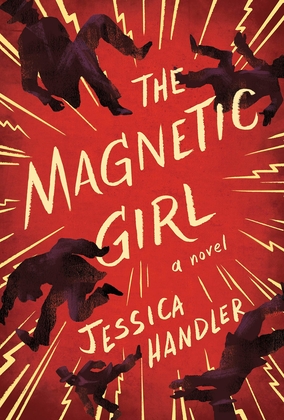
My novel The Magnetic Girl imagines the stage career of a real 19th century vaudeville performer named Lulu Hurst, who “lifted” men in their chairs and “threw” them across the stage with the touch of a walking cane. Her audience was willing to believe what they were told; that she transmitted the then-mysterious science of electricity through her touch. She and her father, who was for a time her interlocutor, named these gestures “tests” in the interest of sounding scientific.

In the last years of the 19th century, electricity, magnetism, hypnotism, and Spiritualism flowed together in a current of rumor and fascination. Hurst’s autobiography was published in 1897, more than a decade after she left the stage. In it, she gently chides her audience for their gullibility. Their belief in her ability to conduct magnetic force, she explained, was a lack of reason that “possessed their minds.”

And yet, people want to believe. In 1884, watching a young girl perform logic-defying feats of strength offered an evening’s thrill. No matter the era, falling for a hoax means a willingness to believe in the beauty of the impossible, if only for a short while. Here are seven books that peel back the curtain on why we believe, even when we know better.

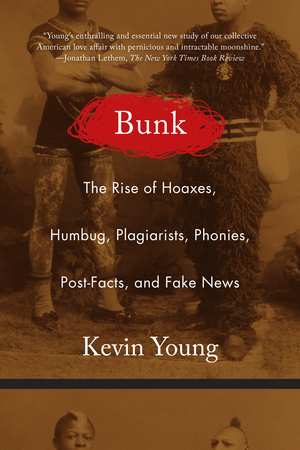
Bunk: The Rise of Hoaxes, Humbug, Plagiarists, Phonies, Post-Facts, and Fake News by Kevin Young

Poet and scholar Kevin Young draws a direct line from P.T. Barnum’s “Feejee Mermaid” — a monkey’s torso stitched to a fish’s tail, first exhibited in the 1840s — to the paranoia and fascination with “fake news” in contemporary America. I began the book as if it were a scorecard for my awareness of historical humbug; check mark for knowing the story of Joice Heth, the elderly Black woman Barnum exhibited as having been George Washington’s nurse (she was not), another check mark for knowing that JT Leroy was never a real person. I quickly recognized my participation in a culture where too much is taken at face value. “The hoax without a witness is not a hoax, but an idea,” Young writes.

Beyond Black by Hilary Mantel

What if a work-a-day clairvoyant had a no-nonsense assistant, a repellent spirit guide, a struggling business, and a troubled past? That’s the premise of Hilary Mantel’s funny, wonderfully grotesque novel. Alison “Al” Hart is a professional “sensitive” who works with the knowledge that “the dead won’t be coaxed and they won’t be coerced. But the public has paid its money and it wants results.”

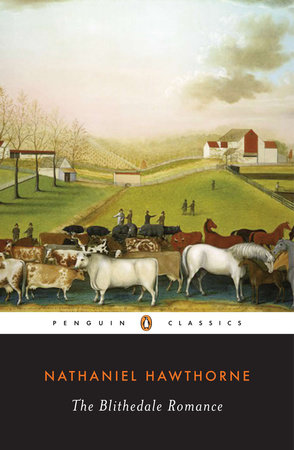
The Blithedale Romance by Nathaniel Hawthorne

The Blithedale Romance by Nathaniel Hawthorne

Yes, that Nathaniel Hawthorne, of The Scarlet Letter fame. My copy, bought used, is littered with earnest marginalia. “Spiritualism!” a previous reader has written beside the phrase “…tables upset by invisible agencies, bells self-tolled at funerals, and ghostly music performed on jewsharps”. Hawthorne based the novel on his brief time in the Utopian experimental community of Brook Farm. There’s a sickly child, a mysterious old man, a supposed clairvoyant called The Veiled Lady, differences of opinion about how a Utopian community should function, and of course, a death.

The Wonder by Emma Donoghue

The Wonder is a contemporary novel about an age-old conundrum. In the Irish midlands in the middle of the 19th century, nurse Lib Wright is hired to tend to a young girl and verify that she is not a liar. Is young Anna O’Donnell a “living wonder,” subsisting for months without eating, or is she the victim of someone’s  need to convince the community of a miracle? Inspired by almost fifty cases of “so-called Fasting Girls,” some of whom died, others who claimed to live for decades without food.

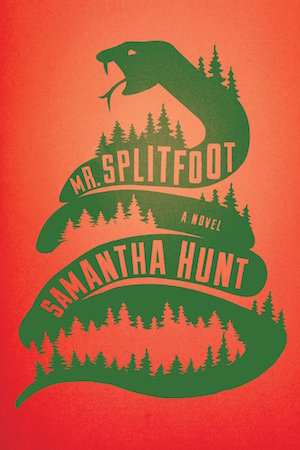
Image result for mr splitfoot samantha hunt

Mr. Splitfoot by Samantha Hunt

I love any book that cradles the legend of the Fox sisters within its pages. Mr. Splitfoot is the name given the Devil by the three girls in Hydesville, New York, in 1848, sisters who convinced their neighbors that they received messages from the dead via knocks and taps in the woodwork. The girls eventually confessed their hoax. Other than the title Samantha Hunt has given her third novel, and setting the story in the wilderness of New York state, the Fox sisters make no real appearance. But they’re here in a nod, in this narrative of child con artists skilled at seances escaping a Dickensian children’s home, twinned with the story of a mute aunt guiding her niece on a treacherous journey on foot in search of an answer to a question that the aunt cannot voice.

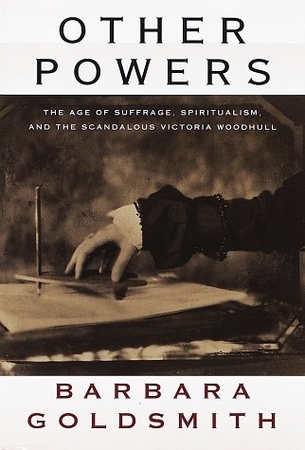
Other Powers: The Age of Suffrage, Spiritualism, and the Scandalous Victoria Woodhull by Barbara Goldsmith.

This exhilarating history rings with the voices of a group of forgotten and nearly-forgotten women who made their voices heard, sometimes through convincing the powerful that they were speaking with voices from the beyond.

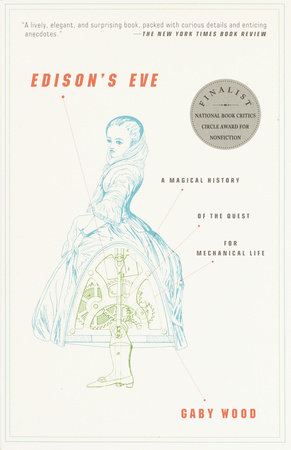
Edison's Eve by Gaby Wood

Edison’s Eve by Gaby Wood

Subtitled, “A Magical History of the Quest for Mechanical Life,” this is an elegant book about exquisite things. As self-driving cars and robots that care for our elderly ease into the mainstream, it’s a stunning revelation to read about automata from the 1730s, when Jacques de Vaucanson built a mechanized flute-playing man. He also made a gold-plated mechanical duck that ate, digested, excreted, and baffled those who attended it. Not long after, Wolfgang von Kempelen developed a chess-playing machine, which some viewers believed was “manned by some demon.” And what of Edison’s “Talking Doll,” the foremother of my own 1960s “talking Barbie.” Mechanical life, Wood writes, treads a “fine line along … borders of perception.”

Worshipping at Jerry Springer’s Daytime Altar

“Girls don’t play baseball,” Will said. He kicked a footful of the playground’s pea gravel at me when I tried to join the boys for a game.

I was less mad about Will––he’d always been a bully, so it was unsurprising. I was mad at Andrew, Will’s friend, who everyone knew had let me play baseball with them last week when Will was out sick because I was the fastest girl in our class. Even if I could only bunt, I could sprint to third base before anyone had even figured out where the ball went.

So I looked at Andrew and called it like I saw it. “You son of a bitch,” I hollered, eyes flicking to Will so he’d know I meant him too.

“Oooooh, I’m telling!” Will said before running off to the teacher’s bench.

I came to kindergarten with an extensive vocabulary for a little kid. One that allowed me to use inconspicuous and approximately correctly in a sentence. One that also allowed me to use shit fire, damnit, son of a bitch, and stupid-ass cocksucking motherfucker correctly in a sentence.

“Where’d you learn to talk like that?” my teacher, Mrs. England, asked, concern creasing her brow.

Accustomed to being praised for my vocabulary, I answered proudly: “My great-grandmother! We watch Jerry Springer in the afternoons when I get home from school. I learn new words every day!”


Nona was 72 years my senior––and I mean 72 years to the day. She was fond of telling everyone, especially the cloyingly sweet cashiers at the Piggly Wiggly who asked “And who’s this darling little girl?” “That’s my great-grandbaby. Borned on my birthday!”

She’d hold her head high, her straight white bob with the ends curled under coming loose from behind her ears as she nodded proudly. Then she’d pat my arm and her pink tourmaline and opal rings––our birthstones––would spin around the bony part of her finger between the knuckles. 

We were enough alike in spirit that we might have been born 72 years apart right down to the hour.

Though I never lived in her house, Nona raised me. She was the only adult in my life who gave me plenty of attention. Everyone else seemed like they were too busy, tricking me into playing by myself so they could nap or do housework. Or better yet, tricking me into playing a game whereby I laid in bed with my eyes closed and tried to see how long I could be quiet, in an attempt to make me fall asleep so they could do something else.

Nona was the only one who never tired of me. Her house an island unto itself and her wrinkled, sagging arms wrapped around me as we sat in front of the TV, a refuge.

Nona saw no reason to give up watching Jerry in the afternoons just because I might get some creative ideas about the world.

She lifted the veil of her adult world and welcomed me in. Rather than shutting me out of the things she liked, she introduced them to me without shame. I was her ingénue. We ate banana pudding, listened to the AM station that played Cajun music at night and danced polka. She taught me to gamble with her friends. We danced along to The Lawrence Welk Show and shook our fists at the cheating men on Divorce Court. And my favorite: cursing all hell and creation while watching Jerry Springer.

The first episode of The Jerry Springer Show aired in 1991, less than a year after I was born, so to say I grew up watching is no exaggeration. Nona was retired by the time I came along, so she was my daily childcare after school. Something about the show riveted her and by the time I got old enough to recognize some of the words and know adults fighting was wrong, she’d been hooked for years. Even with the title card at the top of each episode warning that the content may not be suitable for children, Nona saw no reason to give up watching Jerry in the afternoons just because I might get some, ahem, creative ideas about the world.


I don’t remember my first episode of Jerry Springer, but I remember my last.

A few months ago I discovered full-length episodes on YouTube. Missing my Nona, I watched them in her memory. The stories were what I’d remembered: a woman cheating on her boyfriend, who loved her oh-so-much and wanted to marry her, with his best friend. A man cheating on his new wife with his coworker who’s gay. People who can’t decide between multiple partners and cry onstage while all the jealous partners, who just found out about each other, attempt to duke it out around the guards.

And that was just one episode.

While this happens, Jerry stands off to the side, observing the action and only occasionally stepping in to comment or ask a question. Somehow, amid the chaos, Jerry’s quiet demeanor demands attention––the fighting halts abruptly and all eyes, including those filled with fury only moments before, calm under Jerry’s spell. Jerry seldom takes sides, preferring instead to ask clarifying questions to make these enraged, heartbroken people see the flawed logic that caused their misery.

“You busted out the headlights to his car? Why?”

“So you had sex with a pregnant stripper. Then what happened?”

“I understand you’re angry and you have reason to be angry, but are you saying you’ve decided that you don’t want to marry her?”

“Now she’s saying she doesn’t want someone who only wants to have slow sex. She’s saying she wants you to pull her hair. What do you think about that?”

“But you’re still not sure that she stole the money, right? Because who told you that?”

“He’s outside the studio now, but why don’t we bring him in and you can tell him?”

In his mysterious way, Jerry gently leads them to see the error of their ways and guides them toward a more righteous path. To these people who don’t respect anyone––not their partners, not their parents or friends, and least of all themselves––Jerry Springer commands respect.

Jerry reigns over his guests, a god on his mount.

The Jerry Springer Show is oddly egalitarian. The stereotype of the people who take its stage is that they’re all trashy, poor, and ignorant. Otherwise, why seek help on national TV, airing the intimacies of their miseries for the nation to consume? But within the perceived trashy/poor/ignorant umbrella, you find people of all ages, all colors, all religions, and all political leanings.

And Jerry reigns over them, a god on his mount. He’s an embodiment of the Christian god of judgment; the coyote trickster god of Native Americans; Hermes, the Greek god of sport; and Anansi, the West African god of story. A god of many faces for his many subjects––a form of equity in itself.

I’d like to think Jerry started the show as a way to help people or at least give them a marginally safer outlet to share their grievances. Who can say but the former episode stars with their 15 minutes of fame in tow? 

The theatrics are enacted in front of a crowd of people who are there to gawk and ridicule the pain of those onstage. While some audience members have followed Jerry’s lead and asked thoughtful fquestions, the audience is known to shout for women to lift up their shirts to expose their breasts, as well as challenging men to fistfights.

Nona cheered the fighters, picking the ones she thought were justified in winning or, if they were both atrocious, wanting them to knock each other out. But she almost always shook her head in disapproval at the boob-flashing women, perhaps sensing the exploitative and unfair nature of the demand. After all, men were not asked to flash their penises (though some chose to moon the camera). Each case functioned as a measurement of masculinity or femininity. The “real men” could hold their own in a fight and the “real women” had conventionally attractive breasts. Meaning, ones that weren’t deemed too small to be worth showing, else they would be booed by the audience.

At least the women, whether applauded or not, were rewarded with shiny plastic Jerry beads––a pittance if you asked Nona.

“Don’t you never go pullin’ your shirt up like that,” she told me, shaking a knobby finger in my face. “Just ‘cause mens ask don’t mean it’s worth it.”

I nodded, though at the time when my breasts were still a few years off, I couldn’t imagine anyone wanting to see anything I had.

Jerry is the ringleader in the circus tent of his domain, though he often chooses to stand by as a neutral third party, relinquishing his power to the guest who creates the most spectacle. He makes people think they’re running the show when it’s him pulling the strings.

At the end of the day, Jerry’s loyalty isn’t to the people onstage, the live audience, or the people watching on the other side of their TV screens––it’s to the story.

At the end of the day, Jerry’s loyalty isn’t to the people onstage, the live audience, or the people watching on the other side of their TV screens––it’s to the story. He channels Anansi, prying information out of the show’s guests, even when he knows the revelations will hurt the people affected by them. Because it’s information, especially when its release is timed to hold the audience’s interest, that spins the tale.

The audience will chant Jerry’s name, pounding their fists into the air: Jer-ry, Jer-ry, Jer-ry––a prayer to their deity. And perhaps––after managing the emotions of fifteen or twenty adults who, in theory, should know how to behave––he does deserve an affirming cheer.

Jerry is an angry god looking down on the world’s destruction from his position on high and doing nothing. Only putting the histrionics on display and judging them for it.


Born in 1918 in Alabama’s Bible Belt, Nona could hardly conceive of a world without religion. Her family went to church, her friends went to church, and the boys she wanted to date, among them the man she would marry, went to church. The sanctuary held the social fabric of her society together––until, in her old age, widowed, and friends frail if not dead, she stopped attending. She never liked it anyway.

It was around that time she found daytime television, specifically the curly haired ash blonde former mayor of Cincinnati with his modest smile and wire rim glasses. Better than any televangelist, he held Nona enraptured––not with promises of eternal life, but eternal entertainment. For some, that’s just as good.

During Jerry’s Final Thoughts, Nona would nod along, giving claps of approval, and yelling “preach!” and “amen!” She worshipped at Jerry’s altar: her TV stand his pulpit, her recliner a private pew, his ending incitement to “take care of yourselves and each other” a commanding dismissal not unlike being called to share the good news.


Jerry has seen it all. If you watch enough episodes, you will too.

You’ll learn just how many different kinds of stories and people there are. Even without the nuance and subtlety that skillful writing requires, you’ll see the bare bones and master how to erect the scaffolding of story. That’s the kind of thing they don’t always teach you in elementary school. The kind of thing a kindergartner, with the blessing of her great-grandmother, might learn from Jerry Springer.

Even without the nuance and subtlety that skillful writing requires, you’ll see how to erect the scaffolding of story.

When asked about the success of the show, Jerry told People, “If I had to guess, for so many of our guests, no one ever asks them a question. They live their whole lives—they don’t have kids who ask them their opinion, they don’t have parents who ask them their opinion, they’re not in a job where their opinion is valued… For one day in their life, people are really paying attention. They’re talking about something that is important to them. We take it for granted.”

To tell a story is to detail conflict. There is no perfect, harmonious story; there’s no story without strife. Legends are not born of happiness. Myths are not made of contentment. The cruelest gods make the best bards.

I can’t say whether the people who appear on the show feel better afterward or whether their lives tangibly improve. Many, I’m sure, go back to the middle class lives they abandoned for the day. In interviews, Jerry has mentioned how he started the show to cover serious discussion topics and give people a voice who might not otherwise have one, but eventually, in a grab for ratings, the show morphed into what we know it as today.

I want to believe Jerry doesn’t intentionally exacerbate the suffering of the people who entrust him with their dramas, though the show is long rumored to be fake and a ploy for ratings. There was a rumor that Jerry would recruit people from the audience to play a part. You, you’re going to be the pregnant stripper. You’re going to be the Klan member. And you, you’re going to play the cheating boyfriend. (Is that not the job of a god? To assign people arbitrarily to the conditions of their lives?)

Admittedly, the thought of the show being fake never occurred to me until adulthood. Nona swore the family that lived around the corner from her had been on the show––something about a cheating husband making illegitimate children all over Jefferson County. They were real. I saw the fiercely muumuu-ed and red-faced matriarch of the family getting her mail and taking their poorly shaved poodle out when I went to Nona’s house. The woman gave my mother a fur coat once––too hot for the mild Alabama winters and, broke as she was, rumored to have been bought with money she got from being on The Jerry Springer Show.

The writer Scott McClanahan said, “I never look at a painting and ask, ‘Is this painting fictional or non-fictional?’ It’s just a painting.”

Jerry Springer is just a show. Nona said it was real and I believed her. That was all I cared about.

Though the viewer never wants to imagine someone like them––us! YOU!––darkening that stage door, in the nearly 4,000 episodes in its 27 seasons, the likelihood is that there is someone just like you who’s either been confronted or doing the confronting under Jerry’s tutelage.

The show parades in front of the rest of the country the painful truths it would prefer to ignore. It feeds on the need of the privileged to point at those they deem beneath them and say “at least I’m not as bad as that.” Whatever their problems, the privileged can deal with them quietly. Whatever their problems, they’ll be handled away from morbid curiosity and prying eyes. Whatever their problems, they can rest easy knowing they will never appear on the mirror of humanity that is The Jerry Springer Show.

This is how I believe Nona understood the show too. No matter our family’s dysfunctions––and we had dysfunctions a-plenty––we had the good sense to deal with it in-house, never alerting the outside world. Unconsciously, this is how I understood the show too. Between my own family and the backwoods Alabama community I was raised in, it didn’t seem far-fetched that I might grow up to become like the people on the show, perhaps even gracing its stage myself. My family insisted on keeping its problems quiet mostly by pretending they didn’t exist, and I fantasized about calling Jerry to confront them all and, for once, forcing them to listen to me and acknowledge their failures.

If the fantasy of me confronting my family onstage (everyone except Nona, of course) were to come true, I didn’t know back then what I’d have even said. I imagined myself being struck dumb, unable to think or speak, then spending a lifetime thinking of what I should have said.

The Jerry Springer Show works best for drama where there’s a clear right and wrong, or where both parties are wrong. With only 43 minutes of airtime to each episode and each episode being divided up into three or four segments, the show doesn’t have the time or space for nuance. The show has no room for subtlety––no grievances for emotional or psychological abuse, only tangible things like cheating, physical violence, or just plain getting tired of somebody.

The most intriguing part of the show is perhaps not the dramas played out onstage, but rather the last two minutes of the episode in which Jerry shares his “Final Thoughts.” Offstage, removed from the action, Jerry comments on what the viewers at home just watched. He blames people for not knowing what they want, not communicating well, having too many partners, being unreasonable in their desires, or any number of things he sees as moral and societal failings. Often he makes comments about social responsibility respectability politics like, “You can’t always trust someone who says they love you,” and “You have to be responsible for your actions,” and “If you keep repeating this pattern, you’re going to get hurt again.” It’s a modern-day Aesop’s Fables; an easy ending to a surprisingly complex show.            

Jerry also taught me how not to tell a story; to avoid the cowardice of silence at the most crucial moments.

As Nona watched Jerry religiously, so too did I when I went over to her house after school. When I got too big to sit in her lap, I’d sit at her feet. And when she deemed my fine motor skills developed enough, she’d ask me to pluck her chin hairs during the commercial breaks or empty her spit can. If I was lucky, there’d be an alcoholic on the show and Nona would rant and rave about her late husband, my great-grandfather who died before I was born, making it sound like his litany of offenses had happened just yesterday.

Jerry also taught me how not to tell a story, to avoid the cowardice of silence at the most crucial moments and to make myself uncomfortable by confronting the people and situations I need to face, rather than hiding behind a stage door after the action has played out. All the while, Jerry Springer taught me how to hold people captive with story. To know when to insert myself in the action and when to take a more distant look.

Nowadays when I watch clips of the show on YouTube, trying to evoke Nona’s memory, I find myself cringing. I’m unable to un-see and un-know what eluded me when I was a kid. Rather than being able to appreciate the storytelling aspect, I find myself speculating. Don’t they know they’re going to have to go back to their normal lives where the fact that they were on Jerry Springer will be prefaced before anything else about them from now on? I knew this from Nona, who in her old age, riddled with dementia, had forgotten her neighbor’s name, but continued to refer to her as “you know, the one who was on Jerry Springer.”

The raw melodrama, the unashamedly confessional nature of it all makes me fidget in my seat––not with shock, but with people’s ready willingness to do something that much of the world would find humiliating. And yet, do I lay out my traumas (and occasionally that of other people) on the page for the benefit of others’ morbid curiosity? I dare you to show me a storyteller who doesn’t.

As the bar for what’s appropriate gets lower, conversely, so does the ability of the show to shock its viewers. They’ve seen these horrors before. How many ways of suffering can one extract from the human condition? It seems appropriate that after 27 years on air, the show would end during the Trump era, when the very shock factor Jerry thrives on is all too abundant.

In the end, The Jerry Springer Show is a tribunal and Jerry is the judge presiding over the people’s court. The cases brought before him are those you can rarely sue over in a court of law, yet the need for justice remains.

This likening of Jerry to judge is not lost on his network, NBC Universal, which recently announced that Judge Jerry, a courtroom drama starring Jerry where he’ll draw from his J.D. degree and experience working in law firms pre-politics and TV, is set to air in fall 2019.

And who are judges if not the gods of the earth.

I’ll be watching Judge Jerry on my lunch break, in my own recliner, thankful for the ability to work from home, and wishing Nona was still here to see Jerry in his final iteration come full circle: the Christian god of judgment. I may even watch as religiously as we used to and imagine her smiling down at me, happy she converted me after all.

Help Us Raise Writer Payments and Double Your Gift

UPDATE, May 13: We did it! Thanks to the support of nearly 200 readers, we managed to raise $10,628 in two weeks! With Nicole Cliffe’s matching contribution, that’s $25,000 toward raising our payments to writers, plus a little left over to cover Paypal fees. Thank you to everyone who donated!

UPDATE, May 9: We have just $1,000 left to raise before midnight on Monday, May 13! We are incredibly grateful to each of the 150 people who have donated thus far. Whether is $5 or $500, your gift makes a significant difference to our writers. If just 40 more people give $25 each, we will make our goal. Please donate now!

UPDATE, May 1: Thanks to the support of just under 100 readers, we reached our $5,000 fundraising goal in only three days! With Nicole Cliffe’s 2:1 match, that means a $15,000 gift toward raising writer payments. Thank you so much to everyone who gave!

It’s gratifying and humbling how quickly our readers stepped up to help meet our goal—and it’s equally important that we keep going. Nicole Cliffe has extended her gift with a $5,000 1:1 matching challenge.
That means any donation made before 11:59PM EST on Monday, May 13, 2019 will be doubled.

It only took 100 of the 3 million people who read our website for free in 2018 to make a significant impact. If that number were 200, or 500, Electric Literature could enjoy the kind of peace of mind rarely afforded to our dying breed of indie non-profit publishers—and eventually meet our goal of paying market rate for the work of our writers. Please stand with our writers by becoming supporter number 101.


At Electric Literature, we make everything we publish available for free to our readers and pay all of our writers—but, if we’re being honest, we can’t pay them what they’re worth. And we do want to be honest. We see being transparent about our finances as part of our mission to make literature more inclusive. Being upfront about what we are able to pay—and what we want to pay—will hopefully encourage other publications to do the same. It also levels the playing field for writers to know what their peers earn. Though we have continued to raise our writer fees over the years, we still pay our writers less than we would like. Our standard 2018 rates were $40 for interviews, $50 for lists, and $60 for essays.

We see being transparent about our finances as part of our mission to make literature more inclusive.

As our 2019 resolution, we decided to raise the minimum payment to $100 for essays and $75 for interviews and lists. These are modest goals, but they represent a large expense to our small non-profit. A longer term goal is to pay $300 for longform essays, which, because of earmarked grant support, is what are able pay for original fiction. We’ve wanted to do this for a while, but there is always some expense that is more urgent, or some small crisis that unexpectedly diverts funds. But we’re sick of putting it off! So we’re just going to do it. No matter what. Even it if means publishing less, we believe in paying our writers more.

With your help, we see a path to raising writer payments while still publishing the same amount—three pieces per weekday.

Our board member Nicole Cliffe has generously agreed to match contributions 2:1, up to $10,000. That means if you give $25, your gift will be worth $75. We’re setting a goal to raise $5,000 from our readers by 11:59PM on Monday, May 13, 2019, which will mean a total gift of $15,000 to Electric Literature with Nicole’s contribution.

All of those funds will go towards increasing writer payments. Can you pay for a $75 writer payment by contributing $25 right now?

or donate another amount here.

If there’s one thing we know about Electric Literature readers, it’s that you understand that writing has value. That value is more than monetary, of course, but it’s monetary too; writing shouldn’t have to be a labor of love alone. If we could, we’d pay our writers and interviewers the best rates in town. With your help, we can take this tiny step towards giving them what they deserve.

Electric Lit, Inc. is a 501c3 nonprofit and all contributions are tax-deductible to the extent permitted by law.

It’s Not Goodbye Without a Little Blood

Back When

I do miss the house, I’ll say. I miss how I could feel my way to the bathroom in total darkness. That certainty. That’s love, right? I remember love.

I was chopping the vegetables for dinner. So it goes with beginnings. Stir fry with tofu. Sesame baked how you like. That marinade takes a minimum four hours, do you know? Enough time for a load and three fourths of laundry. Enough time for nine or so sitcom episodes I can watch half-hearted, chuckle up a ghost here and there, though I’m certain I laughed in full once.

Your laundry finished first. I folded it at the kitchen table so I could watch the vegetables sigh and numb up. I pressed the sleeves of your favorite button down together, smoothed the wrinkles, pictured tucking the buttons together right under your chin. Kissing the plaque from your teeth. Morning bliss. How domestic, yes, me, a homemaker in dull. Prod the veggies, fold the shirts, scoop the lint from the dryer. What a dream I was.

It wasn’t raining or nighttime but could pass for both if you asked me. I was patient. Had been. Still am, maybe. That all depends. Your laundry finished first, after all. The rice cooker you insisted on clicked off right as your tires hit the driveway. Headlights shining cinematic over the plastic house siding and me in the spotted apron, a gift from your mother. A nice touch. I’m never trying to forget the past. When you walked in, I still kissed you slow and sweet. I still let your hand creep under. I still let you remember what had passed.

There were even candles on the table. I really went for it, I really wanted to give you everything. Hard to imagine now. How did I know I had changed? You moaned around the first bite, and nothing stirred. I imagined you drawing that sound out of another.

Those soy-stained plates shattered everywhere. Impossible range, I know it surprised you. Something whole, then not. Something whole, then, a slip. That’s what I called it. That’s what you called it. Does it matter either way? What did those plates really carry? Or the house? Or our bed?

And then the shard, of course. In my hand, smooth as baby’s skin. And your neck, angled perfect and away. Once savored. You didn’t mean to, so you said. What did that matter? I didn’t mean for the ceramics to carve up my palm, so be it.

Let me tell the story all over the linoleum. Never mind the counter space, we’ll spread out. The green cutting board is for organic meats, bled with ultimate care. I stopped eating meat after our first anniversary. Anything for you, anything.


Portrait of a World Where My Mom Never Works Again

In retirement, my mom becomes the sailor she always has been. She has every right. To my brothers, she leaves the trailer, the two living rooms, the bargain furniture that would never survive the water. To the debt collectors, she bakes three coffee cakes and leaves no crumb behind.

With all the time in the world, my mom is a sailor. Not by trade but by heart. She uses what she knows—cuts the sail out of thrift store curtains, fills the tears with coconut oil, flosses with fishing line. She builds herself a boat from the long-forgotten backyard table and nail-files it of its faults. Proud of her sweat drip and muscle strain. I haven’t been home in years but can imagine the swing of her braided hair with certainty.

That first dawn on the water, she nearly backs out of it all. Never mind all that effort, all those perfectly good intentions. Here is a precipice asking to shake hands. A body of water can never be known. My mom doesn’t shy away from wide open spaces—she loves like the horizon with no end in sight. Take my dad, he was the emptiest of fields and she ran straight through the tall weeds. Even her mistakes are made in perfect stride. The second her boat touches shoreline, she knows there’s no going back.

I’m told our small town turns her legend. Lady of the lake. The local kids wave to her on their way into school, her toes dipping between the calm blue-green. She yells over good morning, and even though her voice doesn’t carry, they always say it back. The shape of her carries. Before long, summer seaweed gets plucked to make-believe her hair. Mothers pray to her before dunking their babies for the first time.

Mom tells me she’s not like those other sailors. She knows no ocean. Her dreams are not so grand. A born lake-sweller, with waves like kitten licks and cold as fathers’ love—that’s the home she sails for. Even so, the pocket lake in our town can only hold her for so long. I remind her to send me postcards. The bed of her Ford pick-up cradles the boat gentler than any current as she glides up the state. In each new town, she takes a wildflower from the roadside so she never forgets where she’s come from. I tell her how to press them between the pages of her favorite books. In each picture, her smile grows wider, dark circles long forgotten.

She puts on weight from sheer happiness, fresh crab legs slick with butter, chocolate mousse, fried pineapples. Never once does shame cross her mind or her lips. The time for that has gone. There is at least one lake every six miles in the state of Michigan, and every one of them calms their wake to meet her.

I don’t think of it as losing her. I think of her as freedom. Not having it, but being it. How many people get to become their own dreams? We haven’t seen each other in a long time, but I picture her laugh every time the trees shake with the wind. I send a blue jar and ask her to catch some for me, to remember me back to her side.

When she gets to the top of Lake Michigan, the autumn chill begins to set. Against the shore rocks, she wraps herself in the blanket I wouldn’t let her leave behind. Even at a distance, we never stop caretaking each other. With all the time in the world, she takes out a legal pad and writes—shopping lists for my brothers, self-affirmations, prayers, daily love for me, everything—for as long as the pain in her hands evades. It never seems to come, or it does so quietly. Here, timeless in the dimming light of day, she becomes herself. The suns fall into the horizon, and my mom sends the wind home to me.

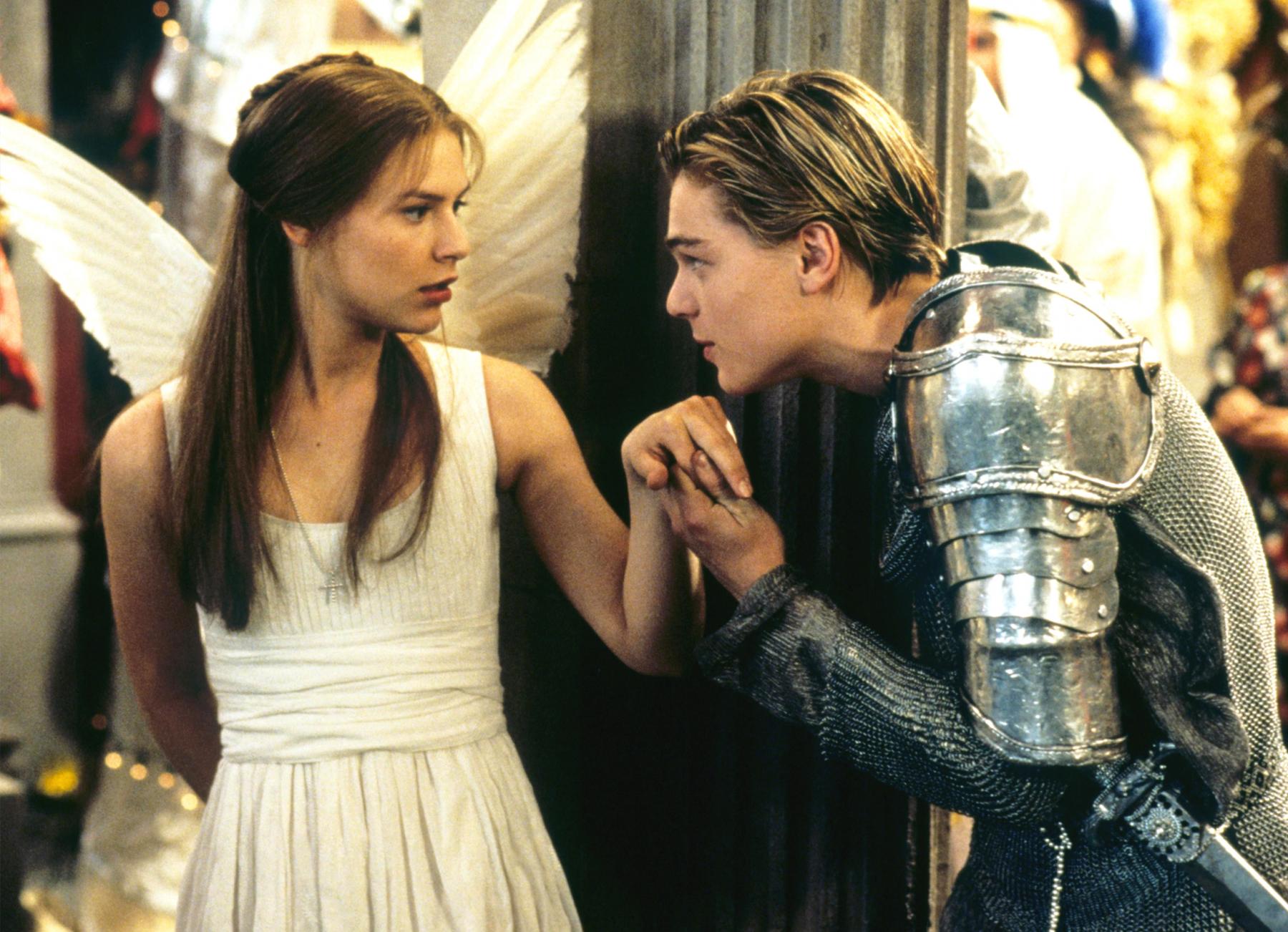
10 Shakespeare Retellings Adapted for the Modern Era

William Shakespeare is the Immortal Bard, the Sweet Swan of Avon, the National Poet of England, and, most importantly, the Overseer of High School English Curriculum. Having written more than thirty plays and one hundred sonnets, and coining over four hundred words still used today, Shakespeare’s influence on contemporary literature is undeniably prolific. Here are 10 writers who have reimagined Shakespeare’s work for the modern era.

The Taming of the Shrew

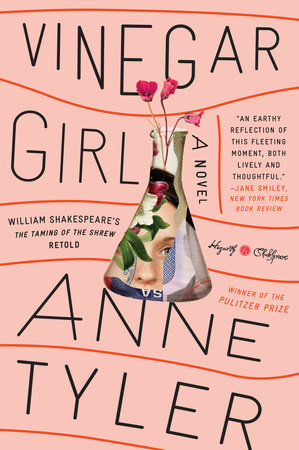
Vinegar Girl by Anne Tyler

Vinegar Girl by Anne Tyler

Kate Battista is overworked and under-appreciated in this Pulitzer Prize winning retelling of The Taming of the Shrew. When Kate’s father, Dr. Battista, is on the brink of an academic breakthrough, his much-needed assistant, Pyotr, receives notice of his imminent deportation. Dr. Battista forms a convoluted plan to keep Pyotr in the country, relying on Kate to follow through.

Othello

I, Iago by Nicole Galland

I, Iago depicts one of literature’s greatest villains, Iago from the Bard’s Othello. The novel examines the unexpected series of tragic circumstances that transform Iago from a loyal friend to a traitor and asks: is evil a simple question of nurture or nature—or something entirely more complicated?

Desdemona by Toni Morrison

There is another version of this list that is dedicated solely to Shakespearean theater adaptations. That is not this list, but how could we not include Toni Morrison? In this retelling of Othello, the female voices of Desdemona and her African nurse, Barbary, are given space on the stage to speak and sing the narrative of Shakespeare’s doomed hero.

King Lear

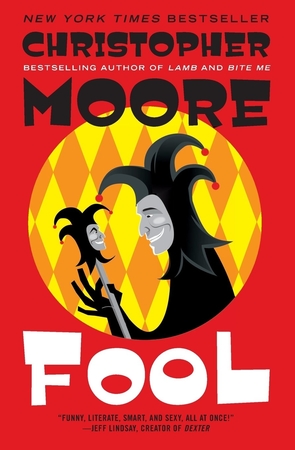
Fool by Christopher Moore

King Lear is rewritten from the perspective of the moronic king’s jester, Pocket, in this hilarious new take that twists through betrayals, war, lust, revenge, and a ghost. Pocket maneuvers to save King Lear’s daughter, Cordelia, from being married off, but when she is dropped from the liege’s good graces, Pocket’s vendetta really begins. This fool is smarter than he appears.

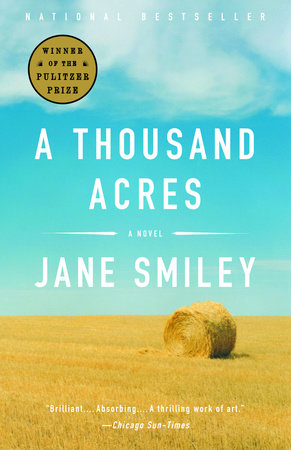
A Thousand Acres by Jane Smiley

A Thousand Acres by Jane Smiley

Winner of the 1992 Pulitzer Prize for Fiction, A Thousand Acres follows an Iowan farmer, Larry Cook, who divides his farm between his three daughters, until the youngest, Caroline, objects and is cut out of the agreement. Dark truths come to light, in this recreation of King Lear, as the patriarch deteriorates while his daughters cope with the stark reality of life in the Midwest.

Hamlet

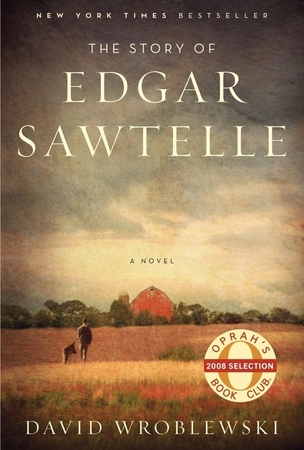
The Story of Edgar Sawtelle by David Wroblewski

The Story of Edgar Sawtelle transplants Hamlet to the Sawtelle farm in rural Wisconsin. For generations, the Sawtelles have bred dogs, and Edgar is prepared to continue the family tradition. When tragedy strikes, Edgar runs away to live in the woods, until he is forced to face the decision of leaving his family forever or go back home and confront the past.

The Tempest

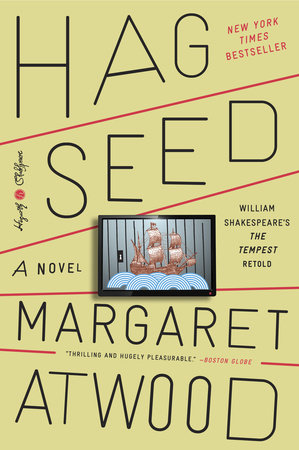
Hag-Seed by Margaret Atwood

Hag-Seed by Margaret Atwood

The Tempest is retold in Margaret Atwood’s Hag-Seed. The novel follows Felix, the Artistic Director of the fictional Makeshiweg Theatre Festival. After his long-awaited production of The Tempest is cancelled, Felix is exiled to the backwoods of southern Ontario, where he is haunted by his daughter, Miranda. With the help of a local prison’s inmates, Felix directs his play . . .with a vengeful twist.

The Winter’s Tale

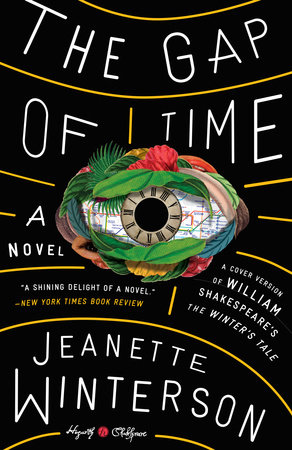
The Gap of Time by Jeanette Winterson

The Gap of Time by Jeannette Winterson

This adaptation of The Winter’s Tale is set in post-2008 financial crisis London and the fictionalized American city of New Bohemia. In the original play, the king’s jealousy causes the death of his wife and the banishment of his child to the Bohemian coast, until they are all reunited once more. Swap out these characters for a hedge-fund owner, his French folk singer wife, and their musician daughter, and you have the beginnings to the Gap of Time.  

The Merchant of Venice

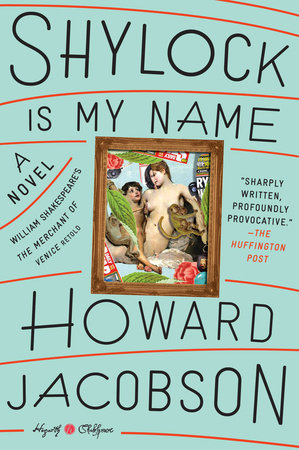
Shylock Is My Name by Howard Jacobson

Shylock is My Name by Howard Jacobson

Man Booker Prize winner Howard Jacobson explores the The Merchant of Venice’s unforgettable character, Shylock, as modern-day Simon Strulovitch. Strulovitch has to reconcile Jewish identity with his daughter’s betrayal when she becomes infatuated with an antisemitic footballer, all the while grieving the death of his beloved wife.

Sonnets

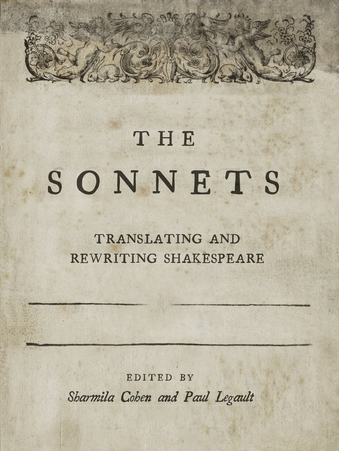
The Sonnets: Translating and Rewriting Shakespeare edited by Sharmila Cohen and Paul Legault

This one goes out to the poetry lovers. In this collection, all of Shakespeare’s 154 sonnets are rewritten in refreshing English-to-English “translations” from 154 poet-translators like Paul Celan, Mary Jo Bang, Tan Lin, and Juliana Spahr. The bard’s poetry is revamped in the form of tweets, political and pop culture references, and homophonic adaptations.

Samuel Beckett’s “Avengers: Endgame”

[Bare interior of a secret, tech-filled Avengers lair. Grey light. Left and right back, high up, two small windows, curtains drawn.

Front right, a door. Hanging near door, its face to wall, a picture of Stan Lee. Front left, touching each other, covered with an old sheet, two ashbins. Center, in an armchair on casters, covered with an old sheet with an Avengers logo on it, Iron Man. He wears a broken version of his mask, with the eye lights dimmed.

Captain America stands by the door, looking nobly into the middle distance.]

Captain America: [possibly in character, or possibly not] Finished, it’s nearly finished, it must be nearly finished. [Pause] I don’t know, I was never given a full script. Were you?

Iron Man: [beneath the sheet] No one was.

Spiderman: [offstage] The directors didn’t even tell me who I was fighting! I had to punch the air in front of a green screen for fifteen minutes!

Captain America: [ignoring him] Ten years of complicated storytelling, laid out like sand in a mandala. Grain upon grain, one by one, and one day, suddenly, there’s a heap, a little heap of ashes where your 40-person cast once stood, the impossible heap. [Pause] I can’t be punished anymore. I mean, they killed off all of the supporting cast members who provided my emotional arcs in my solo movies. I don’t know what else they could do to me.

[A disembodied laugh from somewhere offstage.]

Captain America: That can’t be good. [Pause] Are they going to use another one of my solo movies to focus on Iron Man?

Iron Man: [throwing off the sheet] Can there be misery loftier than mine? My parents? [gesturing at Captain America.] Killed by his best friend. The substitute father I turned into a sentient AI? Destroyed first by his girlfriend, and then again by a giant purple people eater. The fifteen year old superhero whom I look upon as a son? Turned to dust. My goldfish Goldie was eaten by the cat, and the cat choked on the goldfish. Whose backstory, leading into this film, is more tragic? No doubt, formerly. But now? [waves an imperious hand at Captain America] Get me ready, I’m going to monologue again.

Captain America: But you just had a monologue with comedic pop culture references.

Iron Man: Wasn’t quippy enough.

Captain America: Why aren’t we dead?

Iron Man: We’re two fifths of the original Avengers. There’s no way we’re getting killed off without replacements in mind.

[The lid of one of the bins lifts, and the hands of Thor appear. Then his newly shorn head emerges.]

Captain America: I’ll leave you, I have five other subplots to check on.

Thor: Me plot!

Iron Man: Calm down, Shakespeare in the Park.

Thor: Give me my plot! All the nuanced statements Taika Waititi made about immigration got completely destroyed by the start of the last Avengers movie.

Iron Man: Cap, give him something to do.

Captain America: Thor, do you want to go get the MacGuffin again?

Thor: Will it defeat the villain?

Captain America: Probably not.

Iron Man: It will take up a lot of screen time.

[Thor knocks on the lid of the next ashcan. Pause. Knocks Harder. Captain Marvel emerges.]

Captain Marvel: Is it time for my subplot?

Thor: Yes. You’ve got a plan to beat Thanos, haven’t you?

Captain Marvel: Obviously.

[Pause. Everyone looks uncomfortably at one another.]

Thor: Why don’t you do something?

Captain Marvel: We have three hours to fill.

Iron Man: I haven’t had a quip in a while.

Captain Marvel: Nothing is funnier than unhappiness.

Thor: This one time my brother transformed into a snake, because he knows I love snakes. Then when I picked up the snake to admire it, he shouted, “mblergh! It’s me!” and stabbed me. That was pretty funny.

Iron Man: Let’s bring the focus back on me. Bottle those two, Cap.

[Captain America puts the lids back on the ashbins.]

Iron Man: Am I center stage?

Captain America: You’re definitely pulling focus.

Iron Man: I feel a little too far to the left. [Captain America moves him.] Now I feel a little too far to the right. I think you’re center stage, Cap. Move.

Captain America: No. You move. [Pause] Is that a cat?

Iron Man: A cat?

Captain Marvel: [emerging from her ashcan] It’s not.

[A ginger cat wanders onstage.]

Thor: [emerging from his ashcan again] That is no cat.

Captain America: What?

Captain Marvel: It’s a Flerken.

Iron Man: Catch her! She could start the next phase of the franchise!

[The cat jumps into Captain America’s arms.]

Goose: [opens her mouth, revealing an improbable number of large tentacles] RAAAAAAAGH.

Captain Marvel: She does that sometimes.

[Exit Goose. Thor and Captain Marvel retreat into their ashcans.]

Iron Man: Do you remember why you’re here?

Captain America: No. I never got a full script. Did you?

Iron Man: No. Are you going to leave us?

Captain America: You want me to leave you?

Iron Man: Why don’t you finish me?

Captain America: We tried that, remember?

Iron Man: You couldn’t finish me. I couldn’t finish you.

Captain America: I’ll leave you.

Iron Man: We all know you’ll dramatically return at the climax.  [Pause] Don’t you think this thing has gone on long enough?

Captain America: The franchise or this movie?

Iron Man: This thing!

Captain America: What?

Iron Man: You can’t leave me. Phase Four is about to start.

Captain America: I can’t leave you.

Iron Man: Wake up Thor, I need to monologue again.

[Captain America stoops, wakes Thor.]

Captain America: He doesn’t want to listen to your story. He’s tired of this franchise. He wants to go over the script for Men in Black.

Iron Man: I’ll let him say his catchphrase.

[Thor’s hands appear, gripping the rim. Then his head.]

Thor: Captain Marvel gets to say hers as well?

Iron Man: Sure. But first… [He launches into the story of how he brought Spiderman into the MCU.] I’ll soon have finished with this story. [Pause] Unless I bring in other characters. [Pause] But where would I find them? They’re all still dust. Cap!

Captain Marvel: Let’s build a time machine and go on a quest for six different MacGuffins.

Iron Man: I meant Captain America.

Captain America: I’m putting things in order.

Iron Man: You can’t, there’s too many plot threads and plot holes.

[Thor and Captain Marvel retreat into their ashbins.]

Iron Man: What are they doing?

Captain America: [lifting the lid] Going on side quests.

Iron Man: And where are you going?

Captain America: To save Bucky, probably. It’s my only consistent motivation.

Iron Man: Let’s play it that way. [Puts his sheet back on. Takes it off, regards the audience.] You all… remain.

Captain America: For the post-credits scene.

[Brief tableau.]

[Scene.]

Damon Young and Kiese Laymon Discuss Death, Sex, Money, and More

The following transcript, which has been edited for clarity, is excerpted from an episode of the WNYC podcast “Death, Sex & Money.” It features Damon Young, author of What Doesn’t Kill You Makes You Blacker, interviewing Kiese Laymon, author of Heavy. To quote Young’s caveat on the show, it includes “quite a bit of bleep-worthy language, including frequent use of a colloquial version of a racial slur that Kiese and I use pretty often.” The transcript has been reprinted with the permission of WNYC.

On body image:

Kiese Laymon: I had eating issues so I’d weigh myself before I played [basketball] to see if I could lose like 10, 15 pounds in sweat. But to lose all that weight in sweat you had to bring lots of shirts so you could lose more weight if you put on a dry shirt. So like when I could still ball—you know, I could ball out of college—I became like the dude, I was the motherfucker who would bring five shirts. And to bring five shirts you got to be able to play a little bit.

Damon Young: So what I do right now is, I hoop, and I weigh myself right after I hoop. Like, I wait till I get home. I shower, and I weigh myself when I got out of the shower. And that’s how much I weigh.

KL: That’s interesting.

DY: That’s what’s in my head. That’s how much I weigh. Not how much I really weigh, but how much I weigh after I sweated out five pounds of water, after I shower—

KL: Sweat a little bit more from the shower.

DY: Sweat a little bit more from the shower. I’m butt-ass naked. This is what I weigh.

KL: I ain’t gonna try and diagnose you, but that was me in a bad way. But I had to weigh myself before so I could know the difference. At my worst too, fam, I used to love to take pictures only after I balled because then your cheeks get sunken in and shit. Your veins are popping out more.

On boys being boys:

KL: I’m often trying to think about why did I not take part in like train running, gang rapes and shit that a lot of my other friends did. But I know I didn’t. And I know one of the reasons I didn’t is because I was afraid. But I don’t think the fear of doing that kind of stuff necessarily made me not harmful. And that’s why I started that book with the way these dudes ran this train on my friend. And you know I was complicit in that, I didn’t stop it from happening, and when she asked me to help her I said no. So, I’m just starting to understand now, 20 years too late, that there’s so many different ways to be complicit in the abuse of real fuckin’ people, right? And this is what black people always are asking white folks to do. Like, “See how y’all are complicit when you’re not actually calling us niggers” and all of that kind of shit. But I think even from even 15 to 16 people saw me as a good dude meaning that I wasn’t going to try to like slap a girl. I wasn’t ever going to try to make a move on a woman at all, right? And that made people put their guards down with me, and I—you know, I can say like I never physically did anything to anybody, because I was just afraid. But I wasn’t afraid to be emotionally manipulative. You know what I’m saying? I wasn’t afraid to be like, tell somebody something I knew wasn’t true.

DY: Yeah, I mean. You know you hear people refer to themselves as good. As decent. And usually what qualifies as goodness and as decency is, well, I haven’t done this thing or I haven’t done this thing. And, you know for a long time I’ve used that as like some sorta fuel to be like, oh yeah, I didn’t do these things so that makes me a good dude. But I didn’t do these things because of fear.

KL: Yep.

For a long time I’ve been like, I didn’t do these things so that makes me a good dude. But I didn’t do these things because of fear.

DY: You know, even when adult men think of themselves as being good or being decent, it’s just very—it’s hard, it’s difficult, but it’s crucial to interrogate intent.

KL: Yeah.

DY: And thinking about that is messy.

KL: Scary, too.

DY: And scary. Even saying some of that shit out loud. But, you know, if we really want to change this, then those are the sorts of things that we need to talk about with each other, you know. Instead of just, I don’t know, going back into that good dude closet.

On sex:

DY: So which is the hardest to talk about? Death, sex, or money?

KL: Sex. My fear with sex too is like, I just equate so much with sports and basketball. And I’m like, damn, I was so much better at basketball when I was 19. Does that mean I’m—is that the same—does that apply to sex? Surely you gotta get some points for knowledge or some shit, right?

DY: You know, it’s funny that you talk about fear, particularly in regards to engaging women, because that was like the primary emotion that kind of colored my interactions with women and girls for the first 20 years of my life. Maybe the first 25 years. I was much more comfortable with the basketball, I was much more comfortable being myself around dudes and when I was with young girls, particularly ones I was attracted to, I would just dive, just basically compress inside myself. I’d be like one of them collapsible suitcases, like, “How’d all this shit fit into this little bag?” And that was me because I was just so governed by anxiety. I was scared of being inadequate. Of saying the wrong thing, of being naked. Of possibly a woman being into me and me not being able to satisfy her or please her. But it how much of that is just about ego?

KL: Yeah. Which is about amazing amounts of fragility, right?

DY: Yeah. About, like, you knowing that you could do this. Not her feeling this way. But you knowing that, okay, I was able to satisfy her in this way.

KL: Yeah. Yeah, fam. Like, I mean I was a big boy so I was really afraid of hurting people or people doing things with me because I was just bigger than everybody else. But, like you, when I started to have sex around 16 and 17 and 18 and into my early 20s, I was definitely just obsessed with—at the time I would tell myself I was obsessed with whether or not you know this person felt comfortable and good. But I mean during every thing, like every five minutes, like, “Did you come? Did you come? Did you come? Did you come? Did you come?” Young women who I was with were like, “I’ll let you know. You gon’ know. It’s okay.” Like, “When it happens we both gonna know that.” You know? And so, that wasn’t about me wanting this person to really feel good. That was about me wanting to make this person feel good and this person treat me like I made them feel good, which I think sorta sounds, if not abusive, definitely sort of aggressive in a way.

DY: It’s manipulative. It is.

KL: Completely manipulative. And again, what I think is important is that I just don’t—and this is not to take any responsibility off of us—but I think these are conversations not only that we needed to have, but that we still need to have, as grown ass men. I’ve never honestly had those conversations until right now.  I try to do it in my work, but in public it’s a little harder.

On death, and money:

KL: Do you worry that you could ever be in that place again where you’re making $32,000 or less and feel embarrassed about how much you are quote unquote worth in this culture?

DY: You know what, I think that’s one of the things that scare me so much that I don’t even think about it. it’s a fear like, I don’t know, like aliens attacking or…it hits me on such a primal level that I don’t even bother. Or even worse than aliens. Like hell.

KL: Oof.

DY: I definitely think about death more. I think about, like, just, terrible calamities, disease. I think about—

KL: Since you started making money.

Since I started making money, I’m in a constant state of just hoping bad shit doesn’t happen.

DY: Since I started making money, since I have a family— I’m in a constant state of just hoping bad shit doesn’t happen.

KL: Wow. I feel like I’m in a perpetual state of just assuming it is gonna.

DY: Mm-hmmm.

KL: I mean, I don’t have kids either, but the money, I feel like I’m black people rich. But I feel like I could lose it—but I feel like I could get it back. You know what I’m saying? I could lose it because everybody around me needs money. One of the things I’m good at is giving people money (laughs). But yeah, like the death thing, I definitely anticipate dying every single day. I feel like I’m gonna die soon as I leave here, go get on this plane to Pittsburgh. And I assume at some point I’m gonna lose every dime, again. But I think I’ll make it back, that’s the weird part. But part of that is I think, because I have a tenure-track job, so technically I have a job for life. But I actually don’t think that’s true. I think they’re going to find some way to get rid of me. So anyway, I just—I think white folk will take my money away from me somehow, and/or the black people around me who need my money, I’m’a give it all away.

DY: But someone’s going to take it.

KL: But somebody’s gonna take it. But I feel like, I feel like, if I don’t die (laughs), I feel like I could make it all back, which is a silly-ass way to live in the world.

To hear the full episode, listen to Death, Sex & Money below, or find the episode in your favorite podcast player or at deathsexmoney.org.

7 Unlikeliest Friendships in Literature

In my novel Walking on the Ceiling, the narrator Nunu says that her friendship with the writer M. was the type of friendship she might have imagined when she was younger. In their detachment from the real world, Nunu and M.’s e-mail exchanges and walks certainly resemble the friendships of children: they make lists of things they love (from the colors of bird eggs, to dishes served in Istanbul’s fish restaurants); make up nicknames for waiters; repeatedly walk the city’s most beautiful streets; have picnics on the river. They don’t discuss topics that weigh on them or ask each other personal questions. Their time together is at once a consolation and an escape; a space where they can live in their imagination.

Walking on the Ceiling

It’s no wonder that children’s books are often about friendships and the adventures that ensue. In that early time of creativity and curiosity, friends define our sense of self by mirroring us, becoming our doubles, and expanding the borders of our imagination. But novels for adults about friendship are surprisingly rare, compared to those that center on romance, family, or solitude. And yet, friendship is all these things—an in-between state that is at once intimate and reserved.

Here are 7 eccentric friendships in literature.

The Friend by Sigrid Nunez

The Friend by Sigrid Nunez

Sigrid Nunez’s The Friend, explores this shifting territory through a writer’s bond with a Great Dane she’s inherited from her deceased friend: the woman and the dog know nothing about one another but can also sense each other’s subtlest moods. Behind this relationship looms the memory of the deceased friend. Like the dog, the friend is in many ways a stranger to the narrator as well as the closest person she had in life.

Image result for strange weather in tokyo

Strange Weather in Tokyo by Hiromi Kawakami

In Hiromi Kawakami’s Strange Weather in Tokyo, Tsukiko runs into her former high school teacher “Sensei” one night at a Tokyo bar. Their friendship continues over many late-night dishes at Izakaya joints, baseball games, and mushrooms hunts. It’s not always clear why Tsukiko continues to spend time with the recalcitrant Sensei who is thirty years her senior. But her unarticulated tagging along becomes a moving character study and the backbone of the novel’s subtle tension.

Image result for A Useless Man: Selected Stories

A Useless Man by Sait Faik Abasiyanik

In the slippery, deceptively simple stories of Sait Faik, the narrator’s imaginary friend Panco takes on many forms, from friendly to evil. Panco is sometimes a voice, sometimes fully grounded in the world. In one story, he “lives on a street named Strawberry. In his dreams, he sees football games.” In another, the dreaming Panco comes back to menace the narrator’s. “I felt as lonely as I always did when he was with me.”

Molly Fox’s Birthday by Deirdre Madden

The multiple roles assumed by friends is exquisitely depicted in Deirdre Madden’s Molly Fox’s Birthday, about the friendship between a playwright and an actress. The narrator is spending the weekend at her best friend Molly’s house in Dublin, hoping to start writing a new play. Molly, an actress, is away but her character unfolds through the descriptions of her possessions, as the narrator moves from room to room, unable to sit down to work. Molly’s house becomes the stage, and the reminiscence of their friendship the play’s invisible acts.      

The Summer Book by Tove Jansson

Tove Jansson’s The Summer Book is about an old woman and a young child spending a summer on a small island. They fight and curse, break into strangers’ homes, build a model of Venice, and care for each other tenderly. Their friendship is all the more touching in their effort to pretend indifference. Even though the old woman is the child’s grandmother, their relationship is that of fully autonomous individuals, slyly curious about one another but always on guard.

Mrs. Palfrey at the Claremont by Elizabeth Taylor

Elizabeth Taylor’s Mrs. Palfrey at the Claremont is another book about the friendship between old and young. A young writer visits the elderly Mrs. Palfrey at the Claremont Hotel, full of nosy residents, pretending to be her grandson. That the quirky relationship never becomes sentimental is because of the bitter limits of the characters’ emotional capacities and their expectations from one another. Nor does the characters’ selfishness become so rigid as to hinder real connection in Taylor’s swift, graceful prose.  

The Epic of Gilgamesh by Anonymous

The Epic of Gilgamesh

The earliest surviving work of literature, The Epic of Gilgamesh, is also a story of best friends. Gilgamesh, a cruel king, is sent Enkidu by the gods to keep him in check. Enkidu is Gilgamesh’s match in magnificence, though he is wild where Gilgamesh is civilized; wise where Gilgamesh is reckless. Gilgamesh is devastated by Enkidu’s death and travels to the edge of the world to learn the secret of immortality. From his journey, he brings back the story of the great flood, which will later resurface in the Biblical story of Noah. It’s a strange and wonderful fact that the Western foundational myth is attained with the loss of a best friend. (And Herbert Mason’s verse translation of the epic is a pleasure to read for the sake of its language alone.)