I live on a large underpopulated island in the middle of the Pacific Ocean. It’s ripe for the taking said our politicians yesterday, today, the day before, since two hundred years ago when early colonial settlers first came down the river behind my house and the Indigenous warrior Pemulwuy tried to chase all those ghost white invaders and their boats down the river and back out into the sea.
According to the T.V. we are always in danger of being invaded–at one time it was from the Asian countries to our north and now it’s by the refugees, or Muslims (the T.V often doesn’t distinguish between these two groups) but always, always there are hordes of people massing somewhere just outside our territorial waters waiting in their boats for that moment when we let our guard down.
The great majority of migrants and even refugees to Australia do not arrive by boat but the facts of things don’t matter much in these debates. What matters is that wide open sea which symbolises our vulnerability and the boats we place our real and imaginary fears onto.
My dad’s people came here by boat too. This was in the 1950s, a time when we reluctantly let them in because we needed cheap migrant labour to help build things and mine things. My dad’s family was a hodgepodge of foreignness, my grandmother being a Greek from Egypt who migrated to Ethiopia where she met my grandfather in Italian-occupied Ethiopia at a very complicated time when people like them ended up in British internment camps. They got on the first boat out of there. To cut a long story short, they faced a lot of the usual hardship and racism successive generations of outsiders have faced when coming to Australia. Then my dad met my mum, a woman of Scottish/English stock whose family had never met a migrant before my mum married one.
Buy the book
All this brings me to my book No More Boats and the books I want to recommend to you here. In writing No More Boats, I wanted to write something really complicated, something about how ‘outsiders’ and ‘insiders’ navigate all that fear of our borders in complicated and unpredictable ways, from the protagonist of the novel who is an Italian migrant who joins the far-right anti-migration movement in Australia, to his daughter who is on the left side of politics but forgets to really care about human beings, to his son who just grew up in a highly multicultural community and doesn’t think about it very much, to his Anglo-Australian wife who will never understand the trauma that migration leaves inside of you.
While writing my book I looked for similarly complicated texts that dealt with nationalism, identity, borders and belonging and, of course, do what really great books do, which is to give the very personal, very human story of the complicated times we live in. Here are 10 novels about our borders and our fears:
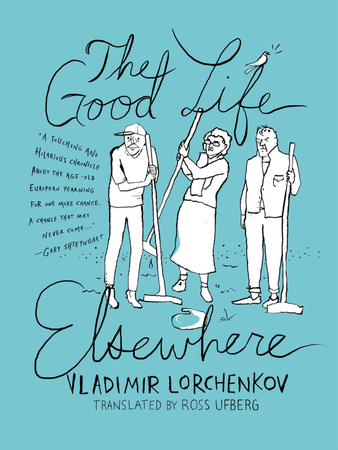
The Good Life Elsewhere by Vladimir Lorchenkov is a wholly original satire about the citizens of a small town in Moldova who are constantly attempting to immigrate to the more prosperous Italy. As most of the town is turned away from the border one by one, we begin to understand how borders and boundaries can shape the collective imagination. This is a book about big issues like a supposedly united Europe and the Soviet legacies that still hang over the former Eastern Bloc but it tells those stories by taking a microscope to the small lives of people from a small town.
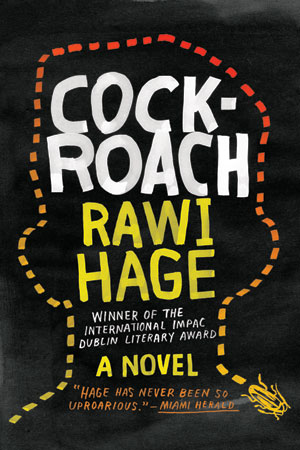
Cockroach has this wild energy in the way that Hage throws a dizzying kaleidoscope of image after image down on the page, the accumulative effect of which is to make the reader profoundly and deeply feel the conflicted and contradictory world of the protagonist. He is the immigrant outsider, the bully, the thief, someone who exposes the hypocritical and overprivileged world of the non-migrant in Montreal and someone who simultaneous longs to be bourgeois himself, someone who engages in the exploitation of other migrants and who plays on the guilt of dogooders by exoticizing his own foreignness and poverty. He also believes he is half cockroach, an effective metaphor which emphasizes his invisibility and the lack of compassion in the world around him. I love that you can never pin him down.
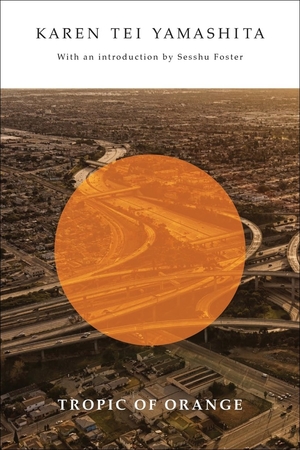
Tropic of Orange by Karen Tei Yamashita is a novel that shows what a complicated and complex discussion of what identity can look like and why fiction is often the best place to stage these discussions. Her novel is filled with the kind of transnational identities I grew up with but very rarely see in fiction – Singaporeans growing up speaking Spanish in Latino neighborhoods in the US, undocumented Chinese characters who arrive over the Mexican border–it even has a magically real character called “archangel.” All these figures wander somewhere around LA reworking and rewriting it’s geography in surreal ways that decenter both our understanding of race and place.
Splithead by Julya Rabinowich is told from two intriguing first-person perspectives both of which tell the story of Mischka and her family’s migration from Russia to Vienna and their fraught attempts to find a home in the Austrian capital. While Mischka, the main narrator, relates the story from a purely subjective position, Splithead, a surreal all-knowing character, gives the readers insight into Mischka’s Jewish family history. He intervenes whenever one of the characters is overwhelmed with life. He coldly comments on all the members of Mischka’s family, exposing their hidden fears and harrowing family memories. This novel takes that old adage that to be a migrant is to always be split in two, quite literally.
The Shadow Lines by Amitav Ghosh explores the rise of borders in the regions of India and Pakistan. Every character in this novel is in the process of crossing and recrossing or even of demanding new borders. In poetic prose Gosh looks at the way that borders not only set people apart but displace people from their own home. What is most interesting is the way that he explores the idea that borders force constrictive national and religious identities on people and the violence that often results in the state telling us who we are and who our enemies must be.
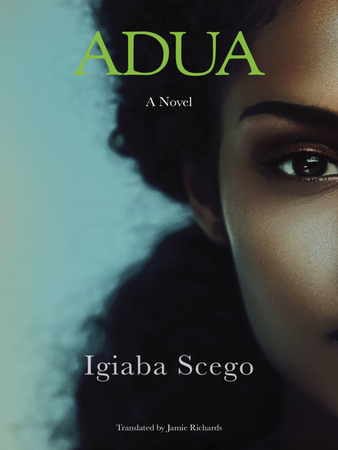
Adua by Igiaba Scego opens with the main character Adua contemplating if she should stay in Italy or return to Somalia after her father has died and she has inherited the family home. Adua once fled a brutal regime but she also fled her overbearing father and the constraints placed on women in her home town only to find that Italy was not the free and radical place she was looking to find herself in. What I find most impressive in this novel is the way Scego merges African fable and folklore, family anecdotes, and a sophisticated knowledge of both African and Western literature and cinema to explore themes of colonialism, racism, sex and power.
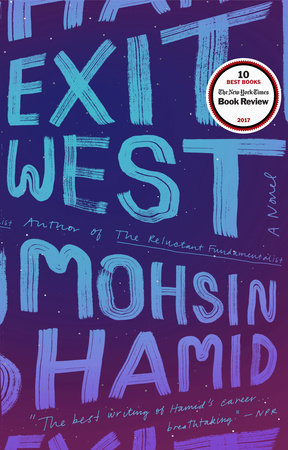
Exit West by Mohsin Hamid is the story of Nadia and Saeed, two quite different young people gradually falling for each other when war breaks out in the unnamed Middle Eastern country they inhabit. The novel is stripped back and unsentimental. It doesn’t scream its politics at the reader, which is what makes it such an uncompromising and affecting book about the individual realities of war, migration and refugees. Nadia and Saeed are flung into perpetual movement as they discover fantastical doors that act as portals to other places outside their war zone, places which are at once both comforting and unwelcoming. I don’t think I’ve stopped thinking about it since I read it.
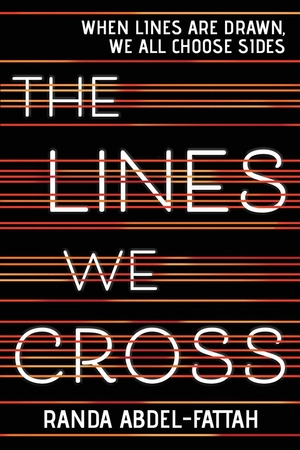
When Michael Met Mina (published as The Lines We Cross in the US) by Randa Abdel-Fattah is that very rare kind of work that delves into both sides of the story with the same level of insight and compassion and therefor asks harder questions of the reader and it’s those hard questions that ultimately allow this book to be so powerful. Michael comes from a family of far-right anti-immigration activists, Mina is from a refugee background. A relationship between them gradually develops as they meet on the opposite side of rallies and end up at the same school. What unfolds between them is a meditation on race, class, nationalism and the damage parents can do to their children by passing on narrow minded and uncritical perspectives of the world.
Last week the New York Timesreported that Woody Allen tried and failed to sell his memoir to four of the big five publishing houses. In the past, Allen’s book would have been an obvious sale; celebrity memoirs are one of the more robust genres of publishing, providing reliable and occasionally gargantuan sales, and most celebrities of Allen’s renown receive at least six-figure deals for their memoirs. On top of that, Allen has experience as a writer—he started his career as a magazine writer and has authored multiple humor works—and apparently had a full manuscript ready, which is more than a lot of celebrities can offer. And yet he’s now poison to publishers. Executives who spoke anonymously to the paper acknowledged that publishing Allen’s personal account in the #MeToo era would be daunting if not outright “toxic.” In other words, the story of his rejection isn’t just a salacious bit of schadenfreude. It introduces a bigger question: has the publishing industry finally changed?
Allen has been subject to abuse allegations for a long time without damage to his career. The accusations first came in 1992 when his daughter Dylan Farrow, then seven, claimed that he molested her at her mother’s home in Connecticut. Allen denied there was any truth to the story, but Dylan repeated her claim over the intervening years, during which time Allen married his own adopted daughter, Soon-Yi Previn, and continued to be a box office draw, making dozens of movies and working with a raft of famous actors. Publishers courted him, too; in 2003, Allen turned down a $3 million advance from Penguin because it was too low. Real pushback only came after the start of the #MeToo era, most notably in December 2017 when, following revelations about Harvey Weinstein, Dylan wrote an op-ed for the Los Angeles Times titled “Why has the #MeToo revolution spared Woody Allen?” After that piece, celebrities from Greta Gerwig to Colin Firth publicly regretted having worked with Allen, while others from his just-shot film A Rainy Day in New York, such as Rebecca Hall and Timothée Chalamet, pledged their salaries to charity.
Generally speaking, when it comes to writers, personal conduct has never mattered much to either publishing houses or the consumer. Ezra Pound and T.S. Eliot were notorious anti-semites; Herman Melville beat his wife; William S. Burroughs murdered his wife; David Foster Wallace stalked, abused, and tried to push his girlfriend Mary Karr out of a moving car. In fact, being a badly behaved (male, usually white) writer has long been seen as attractive. I recently came across a 2012 Flavorwire list of “Bad Boys in Literature,” which includes the controversial and racist French author Michel Houellebecq and literal wife-stabber Norman Mailer. What was clearly written as a harmless piece of click-bait now feels like an artifact from another era. The term “bad boy” itself reflects a culture which supported abusive men and excused their behavior.
The publishing industry has historically rejected any responsibility for not giving abusers a platform—and readers have, for the most part, not made this into a liability. For example, Stephen Rubin, the president and publisher of Holt, toldThe New York Times that “the corporate stance is that it’s not our job to judge our authors”—especially when those authors are best-sellers like Bill O’Reilly. O’Reilly was fired from Fox News and dropped by his agency, WME, following his admission that he’d paid off women to cover up years of sexual harassment, but Holt continues to publish his books, presumably because his Killing series has over 17 million copies in circulation. Similarly, Grove Atlantic and Hachette Book Group said they were “surprised and troubled” by the allegations of sexual harassment against author Sherman Alexie, but they will continue to publish his earlier books. (An additional example is Dan Mallory aka A.J. Finn, who didn’t sexually harass anyone but was revealed by TheNew Yorker to be as gross a liar and manipulator as you can find outside fiction. HarperCollins will still publish the follow-up to his best-seller, The Woman in the Window.)
Only recently have we begun to seriously consider if an author’s behavior should affect their career.
Only recently have we begun to seriously consider if an author’s behavior should affect their career, either through a self-directed consumer boycott or the industry formally cutting ties. So far, the former seems to be driving the latter; the publishing houses who rejected Allen likely did so at least in part out of self-protection. Investing in an author accused of sexual harassment has become a gamble; authors have been pulled from shelves, had their literary awards revoked, or been dropped by their agents. Online protests and boycotts can become a real thorn in the publisher’s side and a bad reputation can damage profits: Allen is currently locked in a battle with Amazon, who he is suing for $68 million after they canceled a four movie deal claiming that his reputation and actions, such as dismissive comments about the #MeToo movement, would make it “impossible to profit from Allen’s work.” If Amazon worries about being able to recoup its investment in Allen, then publishers have a legitimate reason to be wary.
Exactly how legitimate? It’s hard to say, as individual consumers are still grappling with the question of how to treat the work of an artist whose personal conduct is ethically objectionable. The trend in book sales seems to be that allegations of sexual harassment or assault hurt an author’s sales immediately after they break, but the books often rebound when it becomes old news. Look at Publishers Weekly’s 2018 review of the sales numbers for three children’s books authors who had been accused of sexual harassment. Only one, Sherman Alexie, author of The Absolutely True Diary of a Part-Time Indian, saw his book sales steadily decline after the news broke. Sales for James Dashner, the author of the extremely popular children books series Maze Runner, immediately dropped but have since picked back up, whereas sales of Jay Asher’s popular YA novel Thirteen Reasons Why actually spiked following the news, although it’s important to note that the Netflix series of the novel launched at the same time as the allegations of sexual harassment broke, and it’s likely that many people who found the book through the series weren’t aware of the accusations against the author. The same goes for the trend towards a rebound in sales; if a book isn’t pulled from the shelves or marked with some kind of warning sign, prospective readers (especially children or teens) likely don’t know the author’s history. The case of Bill O’Reilly actually sums up much of the situation for the publishers. His books did take a serious hit; the first installment in the Killing series published after his scandal sold less than half the number of copies in the first week than its predecessor. But at 65,000 copies versus 144,000 copies, it was still enough to put him in the number two slot of BookScan hardcover adult nonfiction list. Holt made a lot of money by its decision to stick by him, even if it was less than they’d hoped.
Given the money still to be made by selling Woody Allen’s memoir, publishers must be acting on ethical concerns, too—or at least acting out of a different kind of self-protection, less about their investments and more about their reputations. I think it goes back to 2017, when Milo Yiannopoulos, a writer for Breitbart and an established alt-right troll, was signed for a six-figure book deal with Simon and Schuster. Author Roxane Gay pulled her book from S&S, saying she wouldn’t be published by the same company that was putting hate speech into the world. S&S was forced to publicly grapple with the ethics of publishing Yiannopoulos, and in the end it dropped him. The conversation around the ethical side of publishing is ongoing, a crucial question that can no longer be ignored.
I don’t think publishers are going to suddenly become watchdogs for progressive values (and arguably, they shouldn’t). But thanks to financial and public pressure, we do seem to be entering a moment when it’s not worth a publisher’s time and effort to give hateful ideas or abusive people an uncontested platform and hundreds of thousands (or millions) of dollars. I see this as a heartening sign that publishing, by no means flawless, is working to be an industry that values ethical consciousness at least a fraction as much as it values profits.
An earlier version of this article mistakenly said that Allen is suing Netflix rather than Amazon.
Nicola Griffith, most recently the author of So Lucky, may have the distinction of being our first Read More Women participant who’s also been recommended by another participant: Robin Sloan describedHild, her novel about a gifted young woman in seventh-century England, as “deep, cat-purr pleasure.” So Lucky, a semi-autobiographical novel about chronic illness, brings the action much closer to home, but with the same depth and generosity.
Read More Women is Electric Literature’s series, presented in collaboration with MCD Books, in which we feature prominent authors, of any gender, recommending their favorite books by women and non-binary writers. Twice a month, you’ll hear about the five non-male authors who most delight, inspire, and influence your favorite writers.
As a child I read and still occasionally reread Mary Stewart’s The Crystal Cave, a potent and atmospheric entry in the Matter of Britain—Uther, Merlin, Arthur and the fight of Light and civilization vs. Dark and barbarism. It is heady stuff: menhirs looming from the mist, the scent of woad and wet wool, and moonlight gleaming on chased hilts and chainmail as noble warriors gather to stoop down on invaders like wolves from the fold. So far, so Dark Ages. But unusually for the genre, women are not rape toys—in fact they are largely absent, leaving 10-year-old me to imagine myself in the hero’s saddle. And the hero is not a warrior but Merlin.
Stewart chose well. The prevailing historical wisdom of the time was that in an era of petty kings and warlords, women of any class were victims without sufficient agency to do anything interesting. So Stewart writes about a man, one who is twice royal—but a bastard; straight but not a man of the sword. Rather Merlin is an instrument of divine power, his sexuality subordinated to his priestly role as mouthpiece of the Light. He is mocked by his princely contemporaries for gender noncompliance but, even as they laugh, the reader—that is, 10-year-old me—knows that he holds a far greater power than any blade. It’s enormously satisfying when he gets to flash that awful power and make those manly men go white around the eyes and tremble. Basically he’s a witch in boy drag.
What I really loved about this book, though, is how Stewart immerses us in nature. We feel it, smell it, and hear it; it seeps into our bones and infuses us with a sense of immanence and wild magic. It was this book, and Sword at Sunset by Rosemary Sutcliff, and Fire From Heaven by Mary Renault, that fired my longing to experience the landscape where I grew up without contrails and car exhaust, to feel how it might be for a woman, in a time when might was right, to be powerful enough in, of, and for herself to make a difference, to be a hero.
In my early twenties I was reading a lot of novels but writing only lyrics: songs for the band I fronted. When the band faded away, as all bands do, I found I didn’t want to stop writing. So I wrote poetry; I wrote nonfiction. Something began to gather in the back of my brain but I couldn’t access it. Then I found Mary Barnard’s translation of Sappho.
Without warning As a whirlwind swoops on an oak Love shakes my heart
Her bold, vertiginous leaps shocked me awake and open the dam in my head. I wrote 30,000 words of a novel in five days. This, I realized. This is what I will do with my life.
But, like Stewart’s, it was Sappho’s language of the the natural world, specifically using that language to talk about the body, that lit something in me. Her lyrics are fresh and astonishing. As Barnard herself says in her footnote, some of her words feel invented in that moment for that line alone. She was writing more than 2,500 years ago, yet her works speaks directly to us even today. So many of what we consider literary clichés were her original imagery: silver moon, rosy-fingered and rosy-armed dawns and moonrise, turning pale, being tongue-tied. She shaped our understanding of what it is to be human.
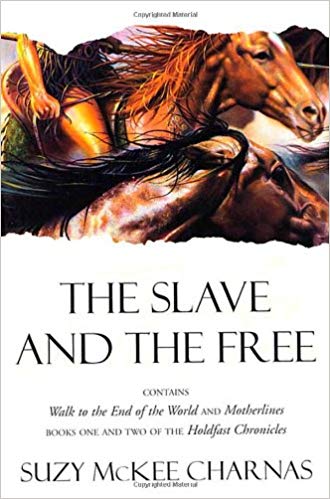
Poetry by and about women has never been too hard to find, but for a while I could find no historical fiction and very little contemporary fiction about women that was not romance. So I started to read about the future—but that, too, was about men, with the occasional space bimbo or scientist’s daughter thrown in to be explained to or rescued. I despaired until I discovered feminist science fiction. Here I’m going to cheat and talk about The Slave and the Free, an omnibus volume of the two first and best novels in Suzy McKee Charnas’s Holdfast Chronicles, Walk to the End of the World (1974) and Motherlines (1978).
Walk to the End of the World commits to an implacable sci-fi logic of post-apocalyptic gender war. The world is largely arid and inhospitable, with small isolated populations clinging on here and there. In one region men hate women, and fuck them not for pleasure but to make babies. Women are domesticated animals: bred as both beasts of burden, and food. We follow the story of one pregnant slave, Alldera, and her eventual escape. We have no idea what she’s escaping to, if anything, and if she’s walking into certain death in the desert, it seems like a reasonable choice because Walk to the End of the World makes The Handmaid’s Tale feel like a tidy little bedtime story. Like “Cold Equations,” a story that shocked a generation of science fiction readers with the relentlessness of physics, it does not flinch from its premise. It will give you nightmares, and those nightmares have teeth.
But Alldera does escape, to the world of Motherlines, a world of all women who breed their own domestic animal: not fellow humans, but horses. This is a much less terrifying book but it, too, looks right into the face of brutal choices and doesn’t blink. It was the first book I read with no men in it at all, and refutes essentialism effortlessly. For a new writer it is a marvelous introduction to, and almost perfect exemplar of, show-don’t-tell: a master class disguised as feminist legend that never was.
If you want to understand the shape of 21st-century science fiction, read Charnas and Vonda McIntyre’s Dreamsnake (1978). They are the others of us all.
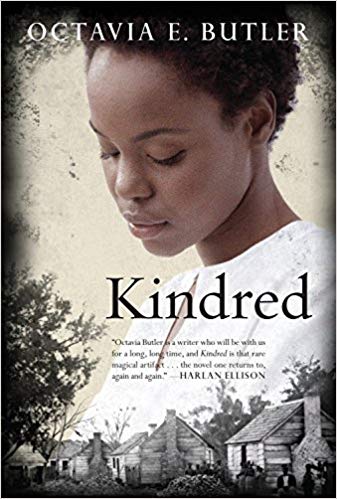
I loved reading Charnas’s and McIntyre’s futures in which women had space to roam, but I was also getting hungry for fiction by a woman about a woman set in a recognizable present. I remember picking up a copy of Octavia Butler’s Kindred, marveling at the cover illustration—a black woman who was neither half-dressed nor being threatened by a man. I had to read it—and instantly finding myself in familiar science fiction territory: time travel.
In 1976 Los Angeles, Dana, a young black woman married to a white man, is somehow called to the antebellum South to save a young white boy from drowning. She does and, bang, she’s back in L.A. But the boy, Rufus, ends up summoning her to save him every time he’s in danger. And Dana has to keep saving him to ensure her own existence, because he is the father of one of her ancestors. Each visit to the past—in which the people in the past age while Dana does not— is worse than the last, until she finally frees herself by killing the adult Rufus, already a father. What makes all this work as realism is that Dana does not escape unscathed, and her loss is tangible, not just internal and metaphorical: she loses teeth, and her left arm.
This is a book for all those women (and queer folk, and people of color) who look at their elders and sneer: I wouldn’t have knuckled under like you did! Why didn’t you fight back?? Butler shows that people in every time often do the best they can in the circumstances—probably better than you or I could—and it’s a miracle they survive, never mind conquer. History is never the inevitable, magisterial story we’ve been told; history is contingent upon circumstance, and the circumstance here is structural oppression.
This had a big impact on my work, as did two other things. One, the way Dana learns the reality of master and slave via personal, visceral experience: somatic knowledge that helps her unlearn the extra-somatic modes of dry text and TV representation. Two, that the notion of a protagonist as lone hero is bullshit; survival is all about being a member of a group, embedded in a network of others—and one’s actions have consequences beyond oneself.
In terms of craft I was fascinated by Butler’s nicely calibrated Othering. Dana suffers; her life as a slave is brutal—but not too brutal. Clearly Butler understood the nature of narrative empathy: put the reader inside your character and the character inside your reader, make them feel what they feel and learn what they learn, but don’t make it too hard, because if you do, the reader will put the book down and walk away, or at least barrier themselves up emotionally. Butler knew you can’t change the world unless you change the reader, and you can’t change the reader unless she stays open to your fiction’s great power of empathy.
Joanna Russ’s “When It Changed” (1972) was the short story that perhaps had the most immediate impact on me (Ammonite could not exist without that story), but here I want to talk about “The Mystery of the Young Gentleman,” (1982) a novelette in her brilliant collection, ExtraOrdinary People. It’s my favorite piece by Russ: fast-moving, thrilling, and sly.
It’s set on a clipper ship sailing from England to the U.S. in the late 19th century, narrated by a—well, I’ll have to say “woman,” because if you follow the textual clues that’s what makes most sense, biologically speaking at least. Though s/he could, just possibly, be an alien. And of course the point of the story is to deconstruct the notion of gender’s pernicious binary, throw out the Either/Or and replace it with Neither/Nor and a sprinkle of Yes/And. The narrator does not identify as gendered at all but, Wittig-like, insists that among their people there are no men and no women: if all refuse gender, there’s no need to perform it.
So, It’s about a woman with a young charge—who is definitely a girl, or more precisely a young woman, but in any case most certainly not a lady, oh no—who are traveling as father and daughter. Though, oh dear me, their relationship is not filial. At all.
So, It’s about a woman and girl on a transatlantic crossing who use gender performance to stay safe. Not safe from bad men. Safe from the dull-eyed herd, each plodding behind the placid beastie ahead. Our protagonists, you see, are telepaths. And Russ has a tremendously fine time fucking with everyone’s gendered heads as she ratchets up the stakes.
So, It’s sharp, witty, genderqueer science fiction. But we are talking about Russ, so that’s not all it is. It’s pulp adventure fiction, with sex and gunplay and gambling, money and reversals and danger. Also a parody of Victorian porn. And, literally, a comedy of manners. Exhilarating stuff.
Another great piece in this collection is “Souls.” Abbess Radegunde slices open the clichés of Dark Age Britain, salts them, and eats them.
Finally, if you want to know why, despite campaigns like #ReadMoreWomen, women still aren’t read, respected, or rewarded when we write about women, read Russ’s magnificent How to Suppress Women’s Writing. And then take the Russ Pledge: whenever you talk about books, talk about books by women about women.
Picture this: an existence punctuated by yoga classes and country walks, sustained on a quinoa-heavy diet, swaddled in Merino wool. That’s the schedule of the women making possible this promise: the compromise of career or family resolved, without compromise. This is Golden Oaks, known as the Farm, a surrogacy facility that allows the global elite to outsource the labor of pregnancy to surrogates.
The setting of Joanne Ramos’s debut novel, The Farm, sounds like a thought experiment, but it’s better understood as a projection of the current inequalities. In a world of ubiquitous Louis Vuitton, the most conspicuous form of wealth, the truest status symbol, is the ability to buy back time. In Ramos’s novel, gestational surrogacy, a situation where a woman carries a baby that isn’t biologically related to her for compensation, is the ultimate luxury good. For those employed as surrogates, it’s a windfall. It’s a shot at the longest shot: the American dream. It’s also a sinister reversal of the idea of invisible labor—the labor of housework and childrearing that mostly exists below the drag net of economic measurements. That work here is given its due, a dollar value. But surrogacy as work turns its women into more than a labor force—the women become units of capital. It’s the body as manufacturing belt
Those coming to the novel expecting a burning-down of this new system will, however, be disappointed. Every party has a seat at this fire. The novel rotates between four characters, the capital-owning class represented by Mae Yu, an executive at the conglomerate behind the Farm. There’s also Ate, an immigrant and a long-time caregiver bent on forcing the American dream into existence. Reagan is a white, privileged, millennial with a still-calibrating moral compass who finds herself a surrogate on the Farm. Finally, Jane, an immigrant, a mother, and now also a surrogate.
At the same time that the novel pioneers a new business model for pregnancy, it consecrates a quality of traditional motherhood. The four characters, who exist across class strata, are unified by a single motivation: they want more for their kids.
I spoke with Joanne Ramos over the phone.
Mai Nardone: There’s an excellent, mimetic moment at the beginning of the novel where a wealthy mother starts filming her nannies, saying she’s working on a documentary project about them. The Farm throughout is very deliberate about documenting lives across the class spectrum. Can you talk about writing across that divide?
Joanne Ramos: That’s a subject I tackled in that episode, but also in another section when Mae Yu tells Reagan about a friend who started a program where they bring kids from the ghetto, basically, to somewhere in the Hamptons to see what they should aspire to. I do believe many people of privilege are well-meaning and want to help when they see injustice, or inequity. But it’s hard to know how to really make an impact, and it’s also delicate. Charity done without context or an understanding of the complexities of the “divide” can come across as awkward, patronizing, even bumbling.
MN: Beyond class divides, did you feel like you had to write into the current socio-political moment, especially in response to Trump’s anti-immigrant rhetoric and immigration policies?
JR: The immigration debate wasn’t as heightened until Trump became president, but it’s always been one for me because I did immigrate here and I know people who are here legally and illegally. We came to the States when I was six. I was born in Manila. It was a typical immigrant story, you know: make it. I grew up, like many immigrants, straddling worlds. We moved to Wisconsin in the late 1970s, in the wake of auto factories closing. My sister and I were two of four Asian kids in our public elementary school and yet on the weekends we visited my dad’s family. They were part of a tight Filipino community. Then I went to Princeton. It was the first place I started to sense what class might mean, or entitlement, or really great privilege. Like many immigrants to the States my dad and mom believed in this idea of American meritocracy. All you had to do was play by the rules and work really hard. That’s how I was raised until I got to Princeton.
MN: With its yoga routines, wholesome food, and dorm dynamics, the Farm is half tech campus, half university campus. You’ve taken a character like Jane, a poor immigrant, and you’ve put her in an environment where she has the class shock that you’re describing from when you went to college. Why create this contrasting environment for the surrogates on the Farm?
JR: What I realized when I was raising my kids was that the only Filipinos I knew day-to-day in Manhattan were housekeepers and nannies and baby nurses. They would tell me about their kids still in Manila who they were supporting, and the dorms where they lived, renting beds by the half-day to save money. In my community if someone like you makes it then you’re proud of them. Like my mom knew Bruno Mars. She didn’t listen to that stuff [pop music], she liked opera, but she knew Bruno Mars because he’s Filipino. These women who became my friends, they’d say, “Oh you’re so smart. You’re the one. You made it.” Meaning: I am also Filipina, they were proud of me for ‘making it’—for going to Princeton, for having had good jobs and a nice family. I was like, “You guys work hard. You guys are smart.” It reinforces everything I felt since college that what separates a successful life in America from one deemed less successful is as much or more happenstance than any kind of merit.
Then I happened to pick up my husband’s Wall Street Journal and read this tiny article about a surrogacy facility. I started doing that “what if” thing. What if the clients weren’t just well off but they were the super-rich? Of course they’d want organic food, clean air, and everything pristine and wholesome. I’m of this generation of perfect parenting. Like this crazy college scandal here where rich people were buying their kids into college—that could have been in my book. There’s this zeal that can go crazy places when you have crazy wealth and privilege.
MN: The novel doesn’t open with the Farm, but with a portrait of New York City caregivers. You show how one privileged vision of motherhood exists at the expense of that type of motherhood for others mothers. You could call it the establishing idea behind the Farm. How did you decide to begin here?
JR: The first real thing I ever wrote was about Jane baby-nursing. She wasn’t Jane yet. She was a mother with a newborn at home who she left to be a baby nurse. Even that wasn’t taking me far enough until I read that article about surrogacy. It allowed me to broaden my lens. I could’ve written a very discrete story about Jane in a private home that still talks about race and class, but I wouldn’t be able to talk about whether the system works at all, or the corporate side of it, or how much we’re willing to let society sell. That was only available to me because the Farm suddenly became a part of a luxury goods conglomerate.
MN: For me it was notable that the novel was not representing a dystopia. Inevitably you’re going to get the comparison to The Handmaid’s Tale, but the way I read it, it was resisting that tradition. Is there a reason you have resisted the tropes and label of dystopian fiction?
I realized when I was raising my kids that the only Filipinos I knew in Manhattan were housekeepers and nannies and baby nurses.
JR: I didn’t ever mean it to be a dystopia. I meant it to be a snapshot of our world pushed forward a few inches, but not miles ahead. I was really interested in motherhood, and more broadly the sacrifice that parents or immigrants make for the next generation. Once the surrogacy part came in that broadened it to include all these questions about whether the system works anymore, whether what I was able to do, meaning work hard and change my life and my family’s life, whether that’s possible now, in a country where the middle-class income hasn’t grown at all since the ‘70s. I was less interested in making a futuristic, sci-fi thing that people may be able to dismiss. I was much more interested in pushing the world of The Farm far enough that there’s that suspense of disbelief and then after you think, “Huh, I didn’t like that world.” Hopefully the response can be, “But why?”
MN: Despite not being a dystopian book you invent a taxonomy for use on the Farm that sounds dystopian. Surrogates are “Hosts” and Golden Oaks, the surrogate facility, is “the Farm.” Why did you decide on these labels?
JR: It’s like a lot of business-speak and jargon. Here it’s less about specificity and short-hand but more about distancing from the world outside, the world of emotions and human relationships. It’s the way that we dehumanize people—I mean dehumanize is pretty strong, but you distance yourself and deaden it to make easier some decisions that would be harder if you saw people as people. As far as calling the coordinators “Coordinators,” I also think that for the Hosts it’s meant to imply that these women weren’t friends, they were handlers. Reagan knew one of them by name. But Jane never addressed any of them by name. I think that also speaks to the power differential between those characters. Agency is to some degree, maybe to a large degree, dependent on how privileged you are.
MN: Even the way Jane and Reagan see their clients is very different. For Jane it’s just a job. It’s about how it affects her pay. But Reagan feels proud when she’s told her client is a self-made billionaire with an exotic backstory.
JR: Jane’s equation is more difficult because she doesn’t have many good options. In some ways that makes it clearer. She is there to make the big money for her and [her daughter]. Of the four narrators Reagan was the hardest one to crack as far as motivation. She doesn’t need to be at the Farm. She’s educated, her dad has money, she’s privileged, she’s Caucasian. She needed another reason to want to be there. She’s someone seeking meaning, some reason for being where she is. She has more complicated reasons for wanting to be there than Jane.
MN: Because the chapters revolved through four different characters, it was hard to make an easy villain of anyone. I found it very nuanced. How did you arrive at this rotating structure?
What separates a successful life in America from one deemed less successful is more happenstance than any kind of merit.
JR: Jane and Ate were the ones who started me off. Their characters were this sediment, like this whole building up of observations and people’s stories. For instance, I have this one story in the book about one of the newer women in the dormitory in Queens being enslaved by her Filipino employers in New Jersey. Growing up I knew a Filipino family who were actually jailed because the housekeeper I had known growing up was never paid. These stories were always there if you knew or were connected to immigrants. Some of the women I met in New York had stories worse than Ate’s. I had to pare it back to make it seem realistic. Those two are the heart of the book in my mind because that’s what sucked me in. Then I realized that those two perspectives in a surrogacy facility allowed me to broaden the lens, like to the perspective of someone running it so I could talk about the system.
It goes back to debates about free trade I had with my dad growing up. He was the immigrant who came over here and fe
lt like, “I made it.” I needed my dad’s perspective, as a person who really believed in the system. That became Mae Yu. She allowed me to talk how it felt for me being a woman in a very male world when I was in finance. I had this throwaway line about how she’s the only female manager at Holloway. She’s a glass ceiling breaker. She’s very impressive in her own right. She also makes some very questionable decisions.
MN: Ate is probably my favorite character. She’s an older caregiver who sends money home, buys land at home, and supports the extended family at home. By immigrant standards, she’s a success story, but at the same time her life is quite sad because she remains, into old age, a cog in the American Dream machine, like she doesn’t know what else to do but keep turning.
JR: I think that Mae Yu and Ate, in very real ways, are similar. Both of them are not questioning the system but are trying to make it work for them, to master it. All of us compromise. We’re juggling different masters. I didn’t want any of my characters to be archetypes. Straddling worlds again, I know people who I consider my friends who have left their kids back home and work here very hard, some legally, some illegally. And I know people who have gobs and gobs of money and I’ve heard both of them demonized. To a fault I see different sides to everything.
The flipside is that you do have to come down on one side sometimes, and judge, and I’m not the best at that. I was less interested in having a “view” and getting on my soapbox to expound on my “take” on the world, and much more interested in the questions and the conversation that falls out of these questions. I met with one reader recently through a presentation. She ended up saying that what made her feel uncomfortable about the book was that a lot of this was already happening. Just to hear her say that was incredible. Was that my intent? I don’t know. I hoped to explore the questions that have consumed me for most of my adult life. I was trying to find the right, most salient questions to ask given where we are right now as a society. If some percentage of the readers feel that compulsion to want to talk about and figure out why we feel certain ways about these women and the world that we’re in, that we’ve chosen, then that’s it. That’s everything I wanted from the book.
We used to drive forty minutes into Anchorage to shop at a Korean grocery. The one vaguely Chinese store was associated with a Chinese mainlander, and mainlanders lacked values. That owner, my mother said, stirred rat meat into the ground pork; when you unwrapped the butcher paper, you might catch a faint scent of urine. Pork, in turn, was passed off as beef with a squirt of red dye. So she shopped at a Korean store no bigger than our garage, blocking pinched aisles to ponder the mystery of Korean packaging, while I snuck promising foods into the cart: purple rice, tofu that came in a squeezable tube, a can of what looked like shiny pretzels but turned out to be candied lotus root.
At the end of winter, my mother and I made our first visit to the store since Ruby had died. Six weeks had passed. Halley’s Comet had been visible as a smudge. It was to return bigger and brighter in 2061, but which of us would be alive to see it? Our aliveness was precarious. Divers had found the crew compartment of the Challenger with all of the bodies inside. Soon the wreckage would reveal that four emergency air packs had been activated; not all of them had died instantaneously.
At the grocery store my mother stood in an aisle and stared at the bottled vinegar. She walked the length of the display, following the spectrum from clear to black, and then stood staring at the blackest vinegar. We left the store without buying a thing. She pulled off the road and parked. In a series of actions that startled me, she hopped a guardrail, scampered across the forbidden railroad tracks, and led me down to a huge rock at the beginning of the mudflats. The rock was shaped like a fist, knuckles down. Standing on the rock, towering over the low beach, she said she was trying to listen to it speak, the water, but she couldn’t hear it from there. The tide was low; the mudflats were vast.
Across the rippled terrain was the same ocean she’d grown up beside; here was Turnagain Arm, which was part of Cook Inlet, which was part of the Pacific Ocean. If you cut a slanted path through the water, she said, you could end up on the eastern shores of Taiwan. Her village, even. You could stagger to land as the first light broke, coming in with the fishermen who’d just climbed down from their anchored boats. They dragged swollen nets of fish behind them on Styrofoam flats. As they came to shore in their rubber waders and boots, long squeaks marked the rhythm of their walking. On the sand, in early light, my mother waited for her father with a bamboo pole. They’d string the net over the pole and carry the fish between them. The short beach was sloped upward, so she walked at the front, and the load was easier on her.
Our aliveness was precarious.
My mother climbed off the rock and tested the hardness of the silt. These days, the sun was setting during dinner; we watched each other chewing and gulping in coppery light. In a couple of months the sun would be glowing in electric perimeters around our blinds into evening. Giving us all a charge. The previous summer, Ruby had insisted she was a fish, and my mother had fed her huge sheets of dried seaweed, folding and crumpling them into her mouth. Pei-Pei had asked to go camping with her friends. Camping! my mother exclaimed. Here, where black bears lumbered down from the Chugach Mountains, gorged on salmon at Campbell Creek, and then stuck around to swipe at your garbage cans.
Beyond a scrawny, twisted tree was a huge white boulder at the edge of the water. A person was squatting beside it. “My heavens,” my mother said, and started running. I tried to grab the bottom edge of her coat, but caught nothing, which made my hands feel empty. We ran past the tumbling of rocks and stray driftwood and made our way toward the boulder. For a while we followed the arcing tracks of a bird, stamped into the silt, a trail of half asterisks.
It was a whale, and my first impression of it was its whiteness, unsullied. It was nearly as long as my father’s pickup truck, lying in a puddle. The slump of its body came up to the chest of the squatting man, who stood up. “It’s still alive,” he called to us. “Bleached,” I thought he said, but of course he must have said, “Beached.”
“What is it?” my mother asked, though she knew about the belugas in Cook Inlet. On certain stretches of Seward Highway she told us to watch the water for their writhing bodies, whiter than the crests of the waves. Just once I’d seen a short, misty spray. But she didn’t know how to make conversation in English. She was always asking, What time is it?—with her watch curled in her coat pocket.
“Beluga,” he nearly sang, and each strange syllable was liquid and warm.
The man was short, with a wide, deep chest and arms so muscular they hung away from his sides. He was wearing a neon-orange cap with earflaps, from which a few gray curls escaped. I’d never seen such a funny hat, or such a happy color. My mother approached the whale and stopped two yards from its face. I hurried to her. The whale was situated in a crevice of mud and was wriggling its head side to side. I froze in the steady gaze of its small, oily black eye, not so much bigger than a human eye, embedded in a thick ring of skin. The protruding forehead and long mouth gave it a strange expression—a pained smile—as though we’d asked, Shouldn’t you be in the water?
“Go back,” the man said. “It’s dangerous, this glacial silt.”
“Is okay,” my mother said, and tapped the toe of her loafer against the ground. When nothing happened, she dug her toe in harder.
The whale lifted its head and slapped it back down. There was a cool, silty splatter on my arm.
“Oh,” my mother said, delighted. Her sweatpants were streaked.
Its flippers pressed against the silt and its flukes fanned the air twice. The heft of its midsection was too great for it to do more than flex. Here is a whale, I told myself, and then I wondered if it would die. It looked too big to die, too big to vanish during a sudden, silent creak of the world.
And what, I thought, had they done with Ruby’s body?
The man scratched his bristly neck and flicked the brim of his cap up. “Best she can do is stay still and wait for the tide to come back in.”
My mother sprang forward, and with a shock I saw her put her hands on the body of the whale. She ducked her head and shoved, arms locked straight, her loafers gouging tracks into the packed silt. Her feet slid out of her shoes. Her socks darkened where they soaked up water.
The man belted out a laugh. “That’s, like, two tons you’re trying to roll.”
Here is a whale, I told myself, and then I wondered if it would die. It looked too big to die, too big to vanish during a sudden, silent creak of the world.
My mother’s face hovered beside the blowhole, from which a milky foam was leaking. She slipped her shoes back on and walked around to stand before the whale’s face. She touched its forehead bump, the same gesture as when she pressed a palm to our sternums to put us to sleep at night. Pei-Pei, me, Natty. “Sleep,” she would say. And, so quietly we could barely hear, “Wake up again tomorrow.” The heavy weight of her hand, like sleep itself bearing down on us, paralyzing us where we lay. “Come here,” she said to me now. She lifted my hand to the whale’s forehead.
It was not especially cold or warm. The skin had a rough, porous texture, and behind the skin its flesh was soft, like a ripe peach; I could have left dents with my fingers.
I don’t know what kind of expression I made, but the man, a yard away, started laughing again. “This kid,” he said. I liked the way he laughed, upward, without self-consciousness.
He swept an arm back the way we had come. “Nothing to be done. We should get out of here.”
My mother did not move. She was staring hard at the whale, which began exerting more effort, its head and extremities whapping against the ground.
“Do you understand what I’m saying?” His voice sounded far behind me, and when I felt his hand on my shoulder, I started and flung it off. “Easy. Does your ma speak English?”
The wind lifted my mother’s permed hair into a mane, making her taller and more savage.
“Do you? English? Hey, kid. English?”
I looked up. A neat mustache hid half his mouth, and his eyes were translucent.
“What’s your name?” he asked.
“Gavin,” I said.
“How would you spell that in English?”
My mother kicked off her shoes. She peeled off her wet socks, rolling them into a single ball that she stuffed into her coat pocket. She picked up her loafers, one in each hand.
Immediately I wanted to be barefoot, too. The man offered an arm to me as I balanced shakily on each leg and removed my sneakers and socks. When I ran to my mother, my feet stuck to the cold silt, which turned softer, muddier, where it met the water. It sucked on my heel.
“It’s thirsty,” my mother said. “The poor thing. It’s dry and it’s thirsty. The air hurts its skin.” She dipped a loafer into the puddle and dribbled water onto the whale’s back, spreading the liquid with her hands.
I became aware of my own thirst, big and insatiable; I looked past the flats at the glinting water, out of reach, and the wind felt sharp and dry.
The man said, “Tide’s starting to come in.” There was an icy splash at our legs. The puddle around the whale overfilled. I raised one clean foot to my hand; the foot was cold and foreign.
“Let’s go,” the man said.
My mother nudged me away from the water. The man began to walk, turning around to check that we were following. He held the laces of my sneakers in one hand, and below it my sneakers danced. In front of me, my mother swung her shoes in arcs to dry them, and there was an easiness to her walk. I watched our bare feet keeping pace with his boots. His khaki pants were folded once at the hems, showing the inside threads and exposing strips of wool sock at every step. My mother’s pants were darkened up to midcalf, and mine to my knees. Though my legs were wet and cold, I felt a slow loosening in my chest as the three of us walked, as though my windpipe were untwisting and clear, unobstructed air coming in.
At the fist-shaped rock, my mother took a seat at the far end. Her legs fit perfectly into two scallops on the rock’s front edge. She pulled me up beside her. The man stood for a while, then leaned against the rock, then scooted in until he was sitting beside me.
The water had come in; it was maybe a foot high around the whale. Even from this distance we could see the whale pulsing. I rubbed the tops of my cold feet. They were nearly dry and a little ashy. Beside me, the man was working his thumb through a hole in his windbreaker sleeve.
Then he bent over and grabbed my left foot, setting it on his lap and sandwiching it between his hands. He began to rub my foot. His hands were rough, and I could feel a snag of dried skin scratching the center of my sole. He moved his hands faster, making a rasping sound, and the resulting friction was very warm. I raised my other foot in the air, and the man chuckled and warmed it, too.
He and my mother conversed haltingly about the recent spell of rain and the plummeting oil prices. It was the kind of conversation I might have overheard any afternoon at Carrs or the Qwik Stop, and I was proud that my mother was part of it. The man absently alternated between my feet, and I sat rapt at his hands.
They fell silent, then the man said, “Where are you from?” and after my mother had answered, he asked, “And what’s that like?”
My mother tilted her head. “There, not so many signs,” she said. “Danger. Stay away from tracks. Don’t fall off cliff. Do not drown. There are no signs like this.”
The man laughed, and his eyes struggled to expand below his heavy brows as he looked at my mother in a way that made me turn to her, too. The curls of her hair had been loosened by wind, and they moved restlessly about her narrow shoulders. In her wool coat, gray sweatpants, and bare feet, she belonged nowhere but this forsaken beach. She paddled her callused feet on the rock, and the man looked down at her toes. There were threads of dirt beneath her toenails.
“And children there,” she said, nudging me, “are more useful.” In her childhood, she had tied nets and cleaned fish and scraped tiny oysters from rocks.
The man was still rubbing my feet, but more slowly. I could feel the warmth slide from my heels to my toes and back, following his large and heated hands. The skin pooled, darker, around his knuckles.
“And do you have a dad?” he asked me.
“Yes,” I said.
“And do you live with him?”
My mother moved her hand very slightly and dug her fingernail into my arm. She said to me in a low voice, in Taiwanese, “Say no.”
I looked at the notch her fingernail had left on me. “Yes,” I said.
Silence followed, and then my mother said in the same tone, “Couldn’t you just have pretended?”
“Pretend what?”
“That you don’t have one.”
The man stopped rubbing my foot, and I was very sorry for it. The wind that bore down on us seemed to have traveled from afar; it carried a cold, unfamiliar scent. My damp pant legs turned icy.
My mother lurched forward and said, “Whale.”
I had to squint, for the sun had sunk lower. The whale was gone, and all that was left was water. I felt we had done this by waiting and watching over it.
“It went home,” my mother said. Her voice sounded strange to me, soft and full of too much air.
“It won’t die?” I said.
“Not today,” the man said. He flung his head back and let out a long whoop.
My mother jumped from the rock, hooked my elbow, and pulled me down, half catching me but allowing me to fall to my knees. It hurt but I didn’t show it. She picked me up by the armpits and started to run, staggering. I thought we were headed back to where the whale had been, but then she veered away. She was only running. I could not stop laughing at how she carried me, careening yet strong, each bare foot anchoring us as it drove into the ground. My legs swung like a doll’s and my toes dragged. The mudflats were clean and gleaming, raw batter shaken inside a pan, and we zigzagged across them, too nimble to sink.
When she stopped to catch her breath, I stared into her wind-raked face and said, in a voice that came out scratchy, “I love you.”
She narrowed her eyes to consider me. “Where did you learn that?” she asked.
The sound of clanging and the freight train’s whistle made my mother whirl around. The boxcars kept coming. I couldn’t have said if it was an eighty-car train or whether the cars numbered in the thousands, only that they kept barreling by, bringing their own wind, metal scrubbing metal, the couplings rattling. In winter, moose preferred the easy walking on the tracks when the snow was deep, and just two months earlier, a single train had killed twenty-four moose in one round trip. The cowcatcher mounted at the front had plowed right through them, fourteen on the northbound, ten on the southbound. My father, reading the newspaper, had rested his forehead on the dining table with a sadness that astonished us.
The freight train left behind a spoiled space and silence. My ears could still create the tone of the last whistle burst. Beneath it, a wheezing sound came from my mother.
“Let’s run again,” I said, but she didn’t respond. She was gazing at the rock. When I looked, the man was no longer there. I searched in vain for the bright blip of his orange hat.
“Let’s run,” I said.
“I don’t feel like it.”
I picked at my pants below the knee, trying to keep them from clinging to my skin.
“When can we go home?” I asked. When she didn’t reply, I said, “I want to go now.”
She scratched hard at her jaw, where there was a trace of mud. She tossed her head back so her hair settled behind her shoulders. “Why do you want to go home?”
I was stumped. A single gull cried far above us. “Natty,” I said. “Natty and Pei-Pei are home.”
“Don’t you want to go somewhere else?” she asked. “Anywhere else?”
I scraped hard at my upper lip with my lower teeth. I tried to imagine another home. Neither my mother nor father had taken to Michigan. We had lived in another home in Taiwan but had left when I was three. I could not picture it, though I had a feeling of dim, oily rooms, soggy air, sticky skin. Home was a place you could see every detail of. Not-home was a void, the outside that crept upon you when you were about to fall asleep—the thing you tried to keep at bay as you jolted yourself awake.
“Is there anything at home for us?” she asked.
I gnawed at my lip and tasted salt or blood, and when I pressed the side of my hand to my mouth for confirmation, it came away with a tiny red print.
“It’s possible to be someone else,” she said. “I used to be.”
I pretended to think about this, but the wind was constant now, as though it no longer needed to gather breaths, and I was trying not to shiver. The gull laughed. Where the sun met the water, it pulled wide into a tomato-orange strip and sent a corresponding line over the surface of the water straight at us, hot-forged steel.
My mother pinched my earlobe hard. “I’m just kidding. Of course we’re going home.”
“Yeah,” I said, “we’re going home.”
She grabbed my chin and pushed it up. “Don’t talk in English,” she said.
“We’re going home,” I said in Chinese.
My mother made an ugly face. “You never speak Taiwanese anymore,” she said. “It’s all your grandfather knows. When we visit, will you be able to say anything to him at all?”
I took a few steps toward the train tracks.
“You never speak it anymore,” she said. “Can you, even? Can you still speak it? Say something.”
“Khah kín-leh,” I said rudely, the phrase crooked and angular in my mouth.
But she didn’t hurry up. “Yes, speak like that when we visit.” Extending her arm over my shoulder, she pointed at the water, as though my grandfather were swimming out there, a speck but visible, waiting for us. I knew that in fact he was bedridden; once a month, my aunt pulled him on a wagon to the village school, where there was a phone, and they waited for my mother to call.
“Let’s go,” I said.
Home was a place you could see every detail of. Not-home was a void, the outside that crept upon you when you were about to fall asleep—the thing you tried to keep at bay as you jolted yourself awake.
“You tell him you’ve missed him, that you remember him. It wasn’t so long ago. You remember him, don’t you?”
The tracks were still many yards away, up a little stretch of scree. Beyond that was another small slope, then the road where we had parked. We would have to cross the tracks and climb back over the bent guardrail. It wasn’t far, but I had a hard time lifting my feet. A couple of weeks after Ruby had died, my mother had woken us in the dark, running from bed to bed, her large fearful face so close we could smell the decay of her teeth. I could still hear her cracking voice, saying again and again to us: Never cross the train tracks. It’s dangerous to cross the tracks. Promise me you will never cross the tracks. Promise. Promise me.
Decades later, a woman ambling along the coastal trail told me this with the grave authority of a tourist: The mudflats here, they were not to be trifled with. A man had died on these flats, two legs rooted in the silt as the tide came in. Drowning or hypothermia, she didn’t know. They attached a rope to his body and the other end to a helicopter, but only managed to tear him in half. For the mudflats could turn watery on you, like quicksand, then cement you up to your thighs. Maybe she thought I was a tourist, too: an Asian man in Anchorage, carrying a backpack. Or maybe it was the way I stood at the edge of the flats, seduced, toeing the start of the sodden beach.
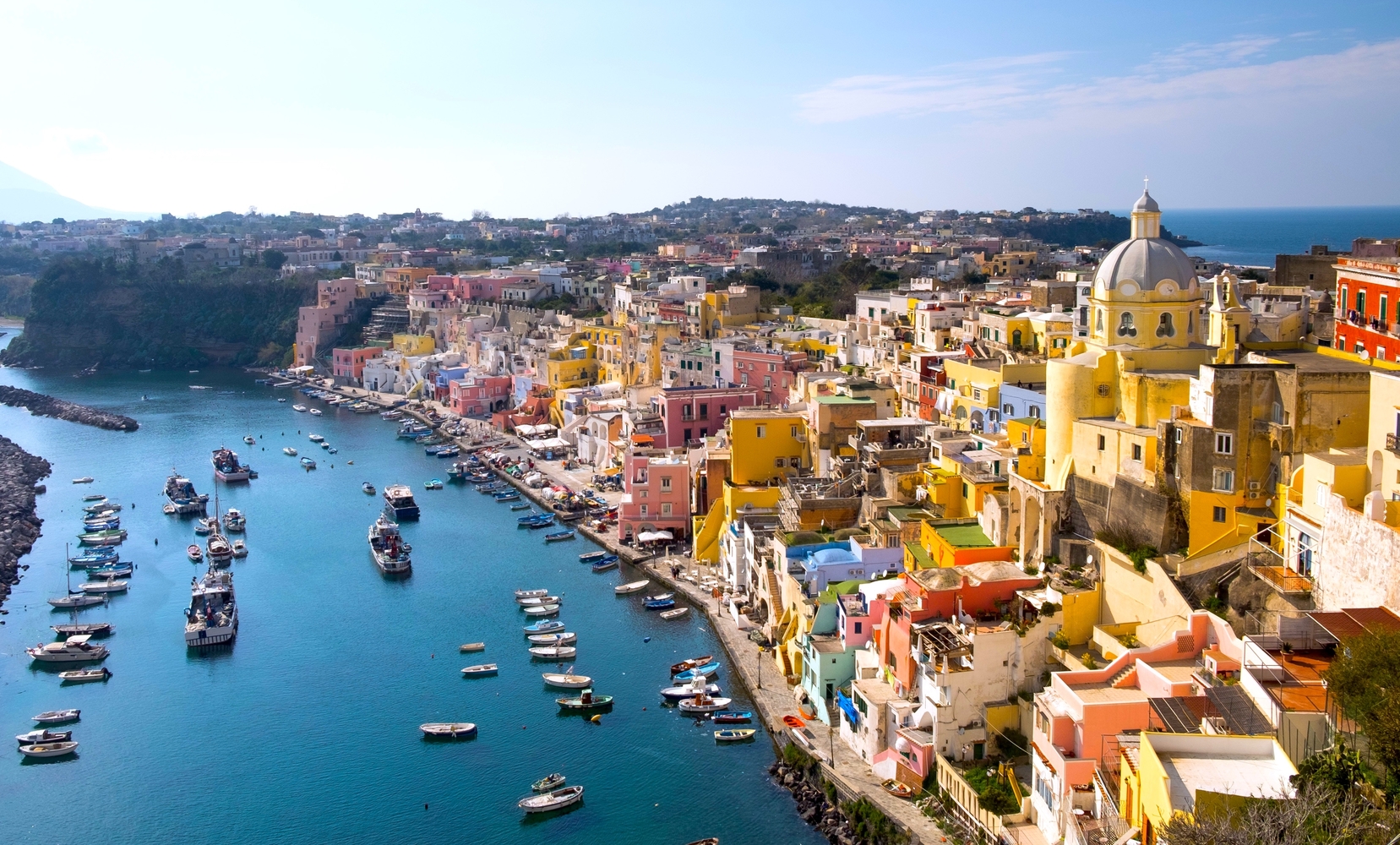
The Italian South is a part of the world in which many Americans have roots. The Mezzogiorno, as it’s known—which includes the states of Sicily, Calabria, Campania, Basilicata, Puglia, Abruzzo and Molise—is where the majority of 5 million Italian emigrants departed from before arriving in America. It is a place of great natural beauty, complexly layered multiculturalism, and spellbinding storytelling—very much worth reading about. But it is still overlooked for its cultural capital, misunderstood because of its complicated and often tragic past, and ignored by tourists.
Buy the book
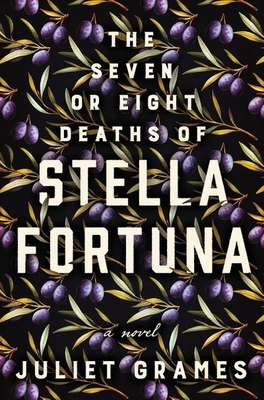
My novel, The Seven or Eight Deaths of Stella Fortuna, was inspired by my own Calabrian family’s history, and in order to write the portions set in Calabria at the turn of the 20th century I tracked down and read every single book I found any mention of with a connection to the place and time period. Unfortunately this reading didn’t take me as long as it should have because of the dearth of literature from and about these fascinating provinces.
Because of 400 years of feudal exploitation under Spanish colonial rule, the Italian South was repressed in a way the North was not. While literature and art flowered in Florence and Venice and scientific theory at universities in Bologna and Pisa, Southern peasants toiled to stay alive under merciless foreign rule, and the Mezzogiorno became labeled a cultural backwater no one bothered to visit, never mind write about. In some areas, literacy rates through the 1920s were below 5%, meaning there were no native chroniclers able to argue for their own perspectives. The challenge of writing about a woman like my grandmother—a young, illiterate peasant woman living in the remote hills of Calabria in the 1910s and 1920s—seemed overwhelming.
But of course if you dig deep enough you’ll find the treasures of a hidden body of literature, and it turns out Southern Italian literature, though often not well-known, has much to offer. I’m compiling this starter reading list in hopes it inspires others to experience the mélange of tradition, tragedy, sorcery, religion, pageantry, honor, sugar and garlic that typifies the region.
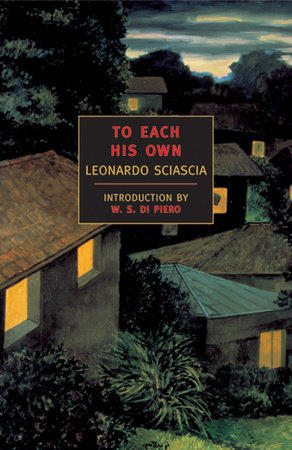
Each of mid-century Sicilian author Sciascia’s short, hair-curling crime novels is exquisite and creepy, but To Each His Own is my favorite. It’s the story of a morally upright and sadly naive professor who tries to help solve a double homicide. Like all Sciascia’s books, the cost of corruption is evident at every turn in the plot.
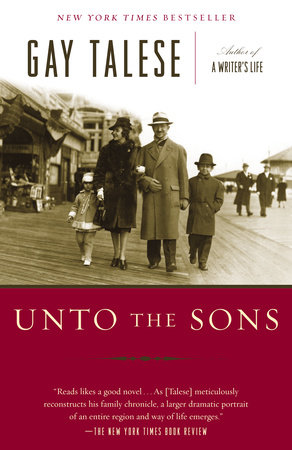
Talese’s 1992 memoir-cum-family history traces his father’s family back to their origins in Maida, Calabria, through his own childhood in New Jersey. For me, the most powerful passage of this long and richly detailed book is the account of his uncle Antonio’s time serving as a soldier in World War I—a horrifying and rarely recorded piece of history tempered by Antonio’s good-humored gumption.
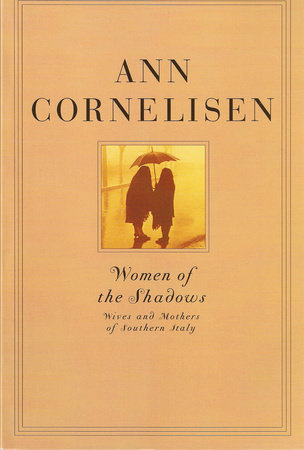
Cornelisen, who spent the 1960s in Abruzzo and Basilicata working for the charity Save the Children, wrote several critically acclaimed memoirs and novels inspired by her time there. Women of the Shadows is organized into profiles of several women in “Torregreca,” Cornelisen’s anonymizing name for the Basilicata city of Tricarico. It glitters with poignant and revelatory details and captures the struggle—often the futility—of daily life in the post-War years. It is also a thought-provoking meditation on the ingrained cost of patriarchy.
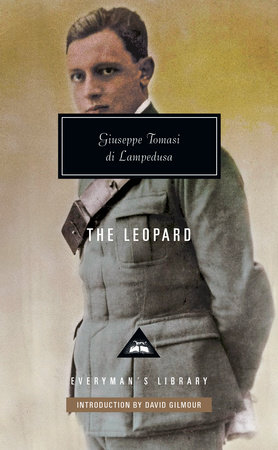
Published posthumously in 1958, this lushly nostalgic novel depicts the dissolution of the Italian nobility through the lens of a Sicilian prince who watches his power erode over the years of Italian unification and political reform. I would like to express frustration, however, that the title is always translated as “The Leopard” when in fact “gattopardo” means “ocelot.”
This memoir-cum-family history deep-dives into Stapinski’s family roots in Basilicata, where her mysterious great-great-grandmother emigrated from under strange circumstances and with a reputation as a murderess. Stapinski’s relentless journalistic investigation eventually reveal the heartbreaking truth while also shedding light on the realities of daily life for the 19th century Southern Italian peasant.
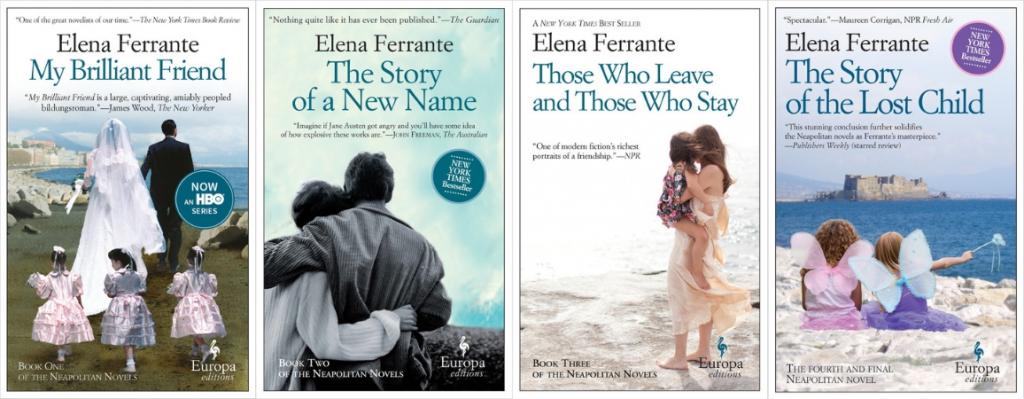
They’ve taken the literary world by storm with good reason. Ferrante’s tetralogy (beginning with 2012’s My Brilliant Friend) are not only painfully engrossing chronicles of two separately fascinating women’s entwined lives, they are also riveting portraits of Naples in the 1960s.
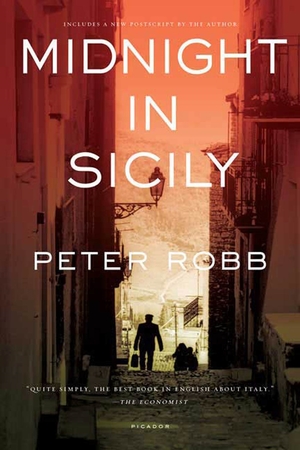
Another memoir-cum-history in which the author weaves observations gleaned from his journalistic assignments in Sicily with a comprehensive and sobering history of Cosa Nostra. A dense but engrossing read that illuminates the effect of organized crime on every aspect of Southern Italian society. As Robb proves, it is unfortunately impossible to understand the Italian South over the last two centuries without addressing the ugliness of the mafias.
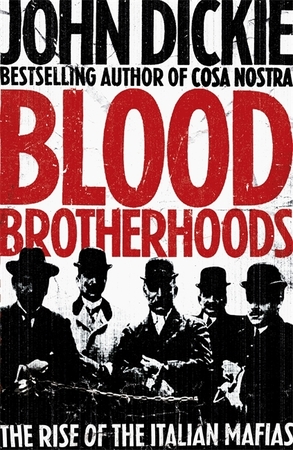
If you have stamina for even more comprehensive treatment of organized crime, don’t miss John Dickie’s Blood Brotherhoods, a very readable scholarly history of three Southern Italian mobs: Sicily’s Cosa Nostra, Naples’s Camorra, and the one that scares and fascinates me the most, Calabria’s ’Ndrangheta. Dickie assembles obscure sources to create a convincing narrative about the secret origins, rites, and exploits of all three syndicates.
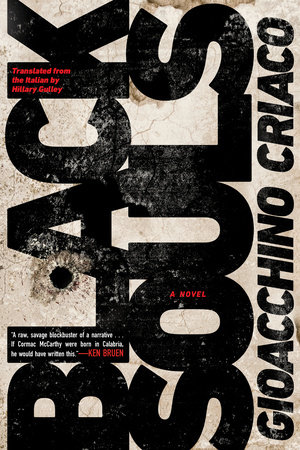
Black Soulsby Gioacchino Criaco, translated by Hillary Gulley
Full discloser: I acquired and edited this book myself for Soho Press, but it was because I was so desperate to have a translation available in English. I came across this coming-of-age story about three young men from Calabria’s Aspromonte mountains during my research for my own novel, and became obsessed with its morally complex depiction of this fascinating isolated area, home of the brutal ’Ndrangheta.
I loved Bigfoot in the daytime. Really any and all cryptozoology phenomena—Bigfoot, the Loch Ness Monster, Sasquatch, the Abominable Snowman, Champ, the Jersey Devil, the Kraken—and I spent all my daylight hours reading every detail I could about them.
But when nighttime came around, Bigfoot became a different beast. Suddenly the tales I had read with the sun out, stories that had deeply intrigued and fascinated me, turned against me. Suddenly I was sure that Bigfoot was hiding in our backyard, ready to break in through my window after dark. He would choke me with his big monster hands; he would tear my flesh apart with his big monster teeth. Unable to sleep, I went seeking my parents, and my dad walked me back to bed as he asked me some questions.
Where does Bigfoot live? He knew the answer, but he also knew I loved to show off my knowledge and research.
The Pacific Northwest, I said.
And where do we live?
New England.
My dad then began to help me calculate—how many miles were between Oregon and Massachusetts, how fast the average Bigfoot might be able to run, how many hours, days, weeks, months it would take Bigfoot to cross the country.
Yeah, but, Dad, I countered. What if he left six months ago? Then he’d already be here!
True, my dad agreed. But of all the thousands of houses, of all the thousands of little girls, in New England, why do you think he would choose you?
And just like that, my anxiety deflated. Of course my dad was right. He had proven through logic that this thing I was so deeply afraid of simply wasn’t likely to happen, and I was able to accept that and sleep.
Throughout my childhood, I cycled through fears of fires, shark attacks, car accidents, plane crashes, dying in general, dying young specifically, my dad dying, my mom dying, being alone, being forgotten. And for all of these things, Dad was able to use some logic to help comfort me. Racing thoughts and anxiety attacks are all part of the Bartels family genes, he reassured me, time after time. I have these thoughts, too, he said, and explained how he liked to read to distract himself until his mind slowed. He taught me how to logically talk through my fears, how to do deep yoga breathing (long before I would start doing yoga), and how to understand that it was actually okay, that it was all in my head.
The thing I was most scared of was not in my head, but my head itself.
But the one fear I never spoke about with my dad was the fear that one day I might not be able to think myself out of a panic attack, that I might lose the ability to find the logic. That the thing I was most scared of was not in my head, but my head itself.
I grew up with three grandparents: my mom’s parents, Nunni and Puppy, and my dad’s dad, Papa B. My dad’s mom, Genevieve Beckers Bartels, had died when he was a teenager, 25 years before I was born. I collected facts about my ghost grandmother in my mind: she was born in 1915, she attended college, she worked as a nutritionist, she had four daughters and one son, she wore rimless glasses with nose pads, she was the leader of the Girl Scouts troop. I knew that my grandmother preferred to be up on a ladder, wearing pants, stripping old paint off the side of the house, her face covered in spackle, instead of donning white gloves and floral dresses and playing bridge at the country club like all the other New Jersey housewives. I know she died in 1962, when she was 47. I knew she drank vodka martinis, smoked three packs of Camel cigarettes a day, and she had schizophrenia.
I knew the word schizophrenia long before any of my classmates; I remember explaining what the word meant once to a friend in elementary school. My dad was never one to keep family secrets, to feel shame over mental illness. Both of his parents, though extremely conservative in some ways—both were raised deeply Catholic—were also very progressive. If your body wasn’t well, you went to the body doctor; when your brain wasn’t well, you went to the brain doctor. While my mother’s side of the family sees going to therapy as something to keep quiet, getting mental health help is all part of the Bartels family experience. My dad and his sisters have shared panic attacks, relentless anxiety, deep spells of depression, battles with bipolar disorder. I would joke with myself that you weren’t really a Bartels unless you had spent some time at McLean. (The famous mental hospital, featured in Girl, Interrupted and known for treating the likes of John Nash, Sylvia Plath, Anne Sexton, James Taylor, Robert Lowell, Ray Charles, and David Foster Wallace, is located less than ten minutes from my childhood home.)
But for all the openness in talking about mental illness, for all my background knowledge about schizophrenia, for even seeing my aunts come out of dark periods and live happy, healthy, full lives afterward, I was still deeply afraid. And this was the one thing I felt I couldn’t talk to my dad about, because it wasn’t some outside force—it wasn’t a monster, a fire, an act of violence. It was something already inside, and something he passed to me, from his mom. The brain couldn’t logic away the fear of the brain. And so while the fears of Sasquatch and flames, sharks and airplanes, dissipated as I grew up, one very real, very possible fear, has stayed with me my whole life: the fear of becoming schizophrenic.
I knew that my grandmother spent the last four years of her life, when my dad was nine to thirteen years old, in and out of hospitalization. She died one Saturday in the middle of April—the first weekend, my dad recalls, that she was back after a long period of treatment. She sat on one end of the couch, my dad on the other, baseball on the television. She sneezed, wet herself, and had a stroke; she was taken to the hospital and died eight hours later. My dad and his sisters will never know the exact reason for their mother’s death—her death certificate lists complications from heart disease as the cause, but was it actually the heart disease? Was it a clot set loose during electroshock therapy? Was it the self-medicating with vodka and cigarettes? Was it a bad combination of medications? All they knew was that their mother was gone and, in many ways, it seemed the disease that had sent her to the mental hospital had been the thing to take her. This was the information that I dwelled on: that something inside your own head could change you in that way, that it could make you act in a way that you could not control, that it could kill you—that paralyzed me. I did not want to die, but in middle school I became frightened looking at belts, in high school it was driving my car near the edge of a cliff—it would be so easy to cinch the leather around my neck, to swerve over the ledge, if in just one moment I was no longer myself. It didn’t help that I watched so much Law & Order, where it seemed the murderer was always someone with schizophrenia. Schizophrenia was presented as dangerous, frightening, horrifying. And someone I was very directly related to—someone whose genetic material made up a quarter of mine—had it. Died from it.
In the grips of my anxiety, I used first-person accounts of neurodivergence to cherry-pick passages that fueled my own irrational fears.
I am not one to hide from my fears. If my dad taught me anything, it was that thinking deeply and directly about the things that scare me helps. Trying to ignore them only makes them worse, and so I follow my dad’s model, using reading as a distraction, but reading deeply and widely about the things that scare me the most; perhaps knowledge will help me better understand and explain my fear. The fear of getting kidnapped, raped, and murdered led me to an interest in true crime. It seems that if I look closely at something, read deeply about it, I will become less afraid. Exposure therapy is often the most effective treatment for many types of fears, and so I tried it on myself and read everything I could about schizophrenia. I learned a lot of facts about the illness. I absorbed statistics. But a lot of it actually only made me more afraid: women often don’t develop schizophrenia until their late 20s or early 30s, and so I spent all my teenage years and 20s waiting to begin my spiral. I read that hallucinogenic drugs can sometimes trigger psychotic episodes, so I drank a lot of alcohol in college, but avoided acid, mushrooms, even weed––anything that could cause hallucinations.
I also read personal accounts of women living with schizophrenia––such as Susannah Cahalan’s Brain on Fire and Esmé Weijun Wang’s The Collected Schizophrenias––but in many ways, these only stoked my fears. These are the first-person stories of people who were able to both have this disease and thrive, people who are creative, intelligent, and living full lives. But in the grips of my anxiety, I used these nuanced accounts of neurodivergence to cherry-pick passages that fueled my own irrational fears. I found myself projecting my own experiences into these women’s books: Was the way I incoherently babble when half-asleep the beginning of the schizophrenic “word salad” speak? Was the lucid dreaming I am prone to the beginnings of psychosis? During that morbid period in middle school, I remember seeing a gaping dark void in the side of my house, a black hole. Was that sunspots in my eyes or an inherited hallucination? For all the research and reading I did, I found myself looping back to the same panicked thoughts. My dad’s strategy to use logic to chase away the fear didn’t work this time. The fear only finally went away this spring I read Marin Sardy’s book The Edge of Every Day: Sketches of Schizophrenia.
The Edge of Every Day is an artful account of Sardy’s experiences growing up with a schizophrenic mom and brother. Her collage-style chapters––short vignettes, beautifully surprising pairings of seemingly unrelated thoughts––makes her book a tribute to the associative workings of the human brain. The way Sardy bounces from family story to medical research to the history of the illness is both startling and logical. To read her book is to be fully immersed in her brain, a brain that has spent many hours thinking about the workings of brains. “We have not yet fully grasped how the brain creates perception, thought, and emotion to begin with, let alone such spectacular distortions,” writes Sardy in the opening of her book. But it seems that her memoir is an attempt to try to understand or, at least, to mimic, that functioning.
At its core, The Edge of Every Day, is a deeply moving story about a woman trying desperately to hold onto and help two people who are very sick, whom she loves very much. I cannot see why anyone would not be moved by Sardy’s story, but for someone with a history of mental illness in her family, of the same mental illness, Sardy’s book was a revelation.
We meet Sardy at the beginning of The Edge of Every Day as a little girl, trying to understand her mother’s delusions. “Reality is slippery,” writes Sardy, “If someone tells you something often enough for long enough, regardless of whether it’s true, you begin to believe it. Or at least you begin to doubt your own perceptions, think, Maybe she knows something I don’t know. Maybe I’m missing something. Maybe there’s something here that I don’t understand.” Sardy’s anxiety manifested itself in a “nervous stomach.” I thought of my own childhood stomachaches, late at night, thinking of a fire consuming me in my sleep, and how my dad reassured me that Bartels nervous stomachs were an inherited trait. I didn’t think much of that statement at the time, but reading Sardy’s story, I began to understand why my dad might have had a nervous stomach growing up with a schizophrenic mom, how worrying about a sick loved one could cause a physical manifestation of anxiety for him, just like it did for Sardy.
From the very first pages, Sardy’s book began to crack open my own life. I began to see the nuance, to learn about the disease, through Sardy’s eyes, and the deep fear I had felt for so long about becoming schizophrenic myself began to recede. For as much as I had tried to learn about schizophrenia in adolescence and young adulthood, I had yet to read such an account from the family member of a schizophrenic person. Even though I had read the very personal and raw stories of Wang and Cahalan––and nothing can replace women being able to reclaim their own narratives and share their experiences in their own words––for me, there was something different about reading from the point of view of a family member. When Sardy attempts to explain what it feels like to be in the middle of psychosis (“In this state, a person may feel godlike or enslaved, all-controlling or entirely controlled, both at once”) and tries to recreate the experience the best she can, to her understanding, for her reader (“Schizophrenic delusions share some features in common with a healthy brains’ nighttime dreams”), she does so with the deepest care and kindness; she is trying so hard to understand the experience of someone she loves. Over the course of the book, we follow Sardy through adolescence and young adulthood: her love of David Bowie (Bowie, too, had schizophrenic family members, something I didn’t know until Sardy’s book, despite my own Bowie phase) and Wiccan shrines (“These objects anchored me to my life when I forgot again that I was real, that anything was real. When the scaffold of the world collapsed, leaving only madness and more madness. These were the fragments I shored against my ruin”), the different ways she tries to steady herself while such chaos surrounds her. And even in moments of resentment and frustration towards her mother and brother, it’s still there: the love.
“Schizophrenia takes even my words away from me,” Sardy once wrote to herself, trying to write about a phone call with her mother while she was suffering from a hallucination. At times in The Edge of Every Day, there are moments where Sardy does seem to be at a loss for words, where her love for her family is so strong but she feels so helpless, but as Sardy eventually realized that “overcoming the illness wasn’t about shutting it down but finding a path through it,” she worked to find the right language. This book is, in my opinion, her path through her experiences.
“When you go hunting for advice about how to help a mentally ill loved one, much of what you find actually focuses on what you can do for yourself,” writes Sardy. “Learn as much as you can about the mental illness, find a supportive community, ask questions.” And, I would add, tell stories. In a lecture Jesmyn Ward gave at the Museum of Fine Arts in Boston, she said, “I seek to tell stories that will make us more real to each other.” That is exactly what Sardy has done in her book: she has made the stereotypical schizophrenic, often treated in culture as an exaggerated bogeyman, into a fully fleshed out, real, beloved person. She has made her brother and her mother real to me—and she made my grandmother real to me, too. Wang and Cahalan’s memoirs give voice to the complex schizophrenic experience, but Sardy’s book gave me something I also needed, and hadn’t found anywhere else: the voice of someone who loves a person with schizophrenia. It made me realize how much of my anxiety was bound up in the fear that if I became schizophrenic, I would lose the people I loved.
I have been lucky enough to feel loved my whole life––by my family, by my friends, by my fiancé, by my pets. I have a wonderful community of people who know me, who care about me, who love me for exactly who I am, irrational fears of Bigfoot and all. And I realized, after finishing Sardy’s book, that my fear of developing schizophrenia was that, with that illness, I would no longer be myself, and therefore I would no longer be loved by my people. When I read first-person accounts, while I saw that it was possible to suffer from schizophrenia and still be loved, my anxious brain misinterpreted that as being loved in spite of an illness. After reading The Edge of Every Day, and hearing from the person doing the loving, I realized that it was possible to be loved not in spite of schizophrenia, but for it, with it, all of it. Even with schizophrenia, I would still be myself. I would still be worthy of love.
When I finished The Edge of Every Day, I was on an airplane, flying back to Massachusetts from Europe. It was dark and quiet, the plane half-empty. Everyone else was asleep, and I sat there holding the book, staring at the cover, tears on my cheeks. I was sad, of course, for Sardy, for her family, for the suffering they had to endure. But I was also sad for my own family. I realized in that moment on the airplane that I didn’t know my grandmother as a person. I knew some stories of her, yes, but mostly what I knew of her was her disease. I didn’t know her as a person with an illness, just as an illness, as a ghost of schizophrenia. I didn’t think about the fact that she was someone who was loved. She was my dad’s mom. My own fear had consumed me and pushed away that very obvious fact. “The work of understanding sometimes requires finding another way in, a back door,” writes Sardy, of trying to understand her brother’s mental illness. I found my own back door in Sardy’s book. For in order for me to stop being afraid of schizophrenia, of being scared of inheriting my paternal grandmother’s disease, I realized I had to ask about her. I had to get to know her as a person. I wanted to know who she was and what my dad and my aunts loved about her.
I realized that it was possible to be loved not in spite of schizophrenia, but for it, with it, all of it.
After reading Sardy’s book, I asked my dad to tell me about his mom. He told me about how the pads on her glasses left deep imprints on her nose. He told me how his dad would always bring his mom coffee in bed while she smoked her first cigarettes of the day. He told me how his mom worked so hard and stayed so busy polishing the floors, painting the house, spackling the walls, to distract herself from what was happening in her head. He told me how his dad explained schizophrenia to him, eventually, during one of his mom’s last hospitalizations: she hears voices that she thinks are God and the angels talking to her. My dad described watching his mom try to walk through a door frame but suddenly freeze and crumple, an Alice in Wonderland type effect taking hold, she suddenly certain she would not be able to fit through, and how hard it was to see that. My dad also recounted how his dad would comfort her: She would collapse, my dad told me. She would melt into Dad’s arms and he would say: It’s going to be okay, Gen.
Gen.
I had only ever thought of my grandmother before as her whole name—Genevieve Beckers Bartels—a name on a tombstone or death certificate, not as a person with a nickname, with a worried husband, with passions and fears, as a human being, someone who was loved. “No matter how my mother acted or how afraid I was,” my dad told me, “I still loved her.”
We are fortunate to have beautiful accounts of what it’s like to be a person with schizophrenia. But for me, Sardy’s book filled a crucial role by showing me what it means to love that person. Over the course of The Edge of Every Day, you, too, come to care about and love Sardy’s brother. You want him to be okay, whatever “okay” ends up looking like for him.. And the legacy of Sardy’s writing is that you take that desperate hope and desire out into the world with you, beyond the page. This book changed how I thought about schizophrenia in a way first-person accounts couldn’t do. It changed how I thought about my grandmother, and, in turn, how I thought about her legacy. I no longer think it’s likely that I’ll develop schizophrenia; the anxiety itself seems to be my version of the Bartels inheritance. But if I did, I would be like Sardy’s brother, or like Gen: always loved.
Football enthusiasts wait in anticipation for the Superbowl, film fans countdown to the Academy Awards, the rest of mankind eagerly awaited the return of Game of Thrones for eighteen months, and I show up for the Met Gala. There are no gold trophies to carry home, no White Walkers or Lannisters wreaking havoc on New York City, but undoubtedly, winners emerge at the Metropolitan Museum of Art.
As a fashion journalist, much of my career has been spent trying to understand why trends take hold—the psychology, if you will, of personal style. Why, you might ask, did everyone in Chelsea suddenly strip down to spandex bicycle shorts at the first sign of sunshine? Well, Chanel, Fendi, Stella McCartney made it viable, though the verdict is still out on its office appropriateness—but I digress. The point is that before I was a fashion journalist, I was a reader. My personal psychology means I’ve spent years sitting in fashion show venues, strobed with white lights and loud music pulsing, matching my favorite heroines of literature to the collection presented before me. Some of my favorite writers, like Joan Didion and Edith Wharton, used sartorial style to illuminate character, set the scene, or build tension. Occasionally, the stars would align, and backstage post-show, a designer would confirm that he had been inspired by a certain novel (like when Erdem Moralioglu explained that his Spring 2012 collection was a riff on Bonjour Tristesse and my fantasies of Celine traipsing about in dainy yellow lace burst to life), suggesting that the relationship between fashion and prose was, in fact, reciprocal.
Which brings me to this year’s Met Gala, inspired by Susan Sontag’s essay On Camp. “Essay” is a loose description, as Sontag herself was quick to point out: nothing about this “fugitive sensibility,” fits the the framework of a fixed argument, because the very nature of camp is evolving. “Camp is a certain mode of aestheticism,” according to Sontag. “It is one way of seeing the world as an aesthetic phenomenon. That way, the way of Camp, is not in terms of beauty, but in terms of the degree of artifice, of stylization.”
While you’re scrolling through thousands of feathers, gold (so much gold!), lace and ruffles and androgynous delights, I’ve matched the most iconic looks with their literary counterparts.
When you realize Lady Gaga showed up in not one, but four outlandish looks, read Gentlemen Prefer Blondes.
This was Gaga’s year. Not only did the A Star Is Born actress stun onlookers with four Brandon Maxwell outfits, they all layered back to one. She started with an extravagant Barbie-pink satin gown, which then became a strapless black gown, then a slim-fit pink corset dress, and finally —finallllly—a lace black lingerie set, because at that point, well: why not? She also had the platinum locks and wide-eyed look down pat, which reminded me of a favorite Jazz Age novel.
Admittedly, I was late to Anita Loos. I picked up a worn copy of Gentlemen Prefer Blondes at a market in London and read the whole thing in an afternoon in Hyde Park. Every improbable decision seemed to turn out right for Lorelei Lee, and the same could be said of Lady Gaga. Remember the meat dress, or those impossible Alexander McQueen Armadillo shoes (from the designer’s last collection, titled “Plato’s Atlantis”)? Who better than to capture the essence of the ultimate, over-the-top blonde bombshell than Gaga? “I’ve had my best times when trailing a Mainbocher evening gown across a sawdust floor. I’ve always loved high style in low company.”
When you catch Anna Wintour looking rather bird-like in Chanel haute couture, pick up Edith Wharton.
The lauded Vogue editor has presided over the Met Gala since 1995, so it’s no surprise she arrived in stunning style on Monday night. According to Sontag: “The hallmark of Camp is the spirit of extravagance. Camp is a woman walking around in a dress made of three million feathers.” Check and check. Wearing a whimsical pink-and-purple feathered cape over an embellished gown, Wintour looked every inch the grand dame of New York society—which brings me to Edith Wharton, a writer beloved for exposing the intricacies of Manhattan’s elite a century ago. Wharton continuously employed dress to analyze the transformation of the social scene, as well as illuminate character development. Enjoy: “It was the old New York way…the way people who dreaded scandal more than disease, who placed decency above courage, and who considered that nothing was more ill-bred than ‘scenes,’ except those who gave rise to them. ”
When you are in awe of the force that is Laverne Cox, try Nightwood.
I don’t know how else to explain this, other than to say when I caught a glimpse of Laverne Cox in that fierce shimmering black sequin gown, the headpiece, the icy blue eyeshadow, the head-to-toe effect was magnificent and somehow beyond me. The first book that sprang to mind was Djuna Barnes’ Nightwood, hailed as a camp classic by many. I often feel like I’m a little tipsy (or need to be) to follow Barnes’ linguistic Olympics, but it’s never prevented me from trying. Take for instance, this: “Mademoiselle Basquette…was damned from the waist down, built like a medieval abuse. She used to wheel herself through the Pyrenees on a board…I wanted to give her a present for what was missing and she said, ‘Pearls—they go so well with everything.’” Built like a medieval abuse is a wonderfully brutal phrase. Similarly subversive and erotic, Barnes’ story of heartbreak exploits dress-sense to show motive and character, use both to unlock her dizzying world: “They used to walk along slowly, all ruffles and rags, with big terror hats on them, a pin struck over the eye and slap up through the crown, half their shadows on the ground and the other half crawling along the wall beside them; ladies of the haute sewer taking their last stroll, sauntering on their last Rotten Row, going slowly along in the dark, holding up their badgered flounces, or standing still, silent and as indifferent as the dead, as if they were little girls; their poor damned dresses hiked up and falling away over the rump, all gathers and braid, like a Crusader’s mount, with all the trappings gone sideways with misery.”
When Florence Welch is giving off Wizard of Oz vibes and Katy Perry is a chandelier, enjoy Her Body And Other Parties.
Florence Welch is a phenomenal performer, and her Met Gala look attested to this. One part Glinda the Good Witch, one part Ophelia, and one part Maleficent (please see: the winged cape) Welch came to play in a lacy, mint green number underpinned with lavender. Ethereal and somewhat more wood-nymph that camp (perhaps wood nymphs are camp), Welsh’s elaborately beaded gown reminded me of “Real Women Have Bodies” by Carmen Maria Machado. Easily one of the strongest short stories in Machado’s collection (the other being “The Husband Stitch”), Real Women tells the story of a shop girl who becomes suspicious of the dresses that she is selling when she starts noticing women starting to fade away. The story is chillingly beautiful in its depiction of womanhood and the constraints imposed by fashion, but it was the memorable way in which Machado described the clothes in the shop that felt truly authentic to the protagonist: “Mermaid cuts in salt-flat white; trumpet-style in algae red; princess gowns in liver purple. The Ophelia, which looks perpetually wet… The skirts curl, ruffled, with layers of taffeta, except when they drag and slink. Their busts are crunchy with coral hand-stitched sequins, or studded with pebbles, or stretched with netting the color of frosted sea glass or neon early-morning buttercream or overripe melon.” Katy Perry was the sartorial translation of magical realism, and that’s really all that needs to be said about that.
When you’re totally on board with Harry Styles in Gucci, consult…well, Sontag.
A most perfect line from Sontag’s essay sums up the gift that was Harry Styles in sheer Gucci: “What is most beautiful in virile men is something feminine; what is most beautiful in feminine women is something masculine. . . . Allied to the Camp taste for the androgynous.” Styles was a co-chair of this year’s Met Gala, which meant he couldn’t afford to play it safe on the pink carpet, but that’s never really been the singer’s style anyway (sorry, had to). The frilly, femme-forward Gucci blouse and slacks were pretty tame compared to Styles’ past history with paisley suits, but no matter: it worked.
To quote Oscar Wilde: “To be natural is such a very difficult pose to keep up.”
“Nablus is a little village. It’s a town, I mean a city. It’s not large but we call it a city. What I mean is, even when you leave Nablus, you take it with you.”
Midhat Kamal’s response, the main character in Isabella Hammad’s The Parisian, or Al-Barisiis symbolic of the central role Nablus plays in her debut novel. It’s a city and country. Tradition, home and family. Love, loss and memory. Past, present and infinity. Nablus unfolds with history and the stories of each character—the main ones inspired by family stories. She says: “It’s a product of an obsession, in a way. It’s also not any one thing. Even the act of writing about Palestine feels complicated—What does it mean to write in English about Nablus, for example? But it became a kind of imaginative compulsion for me. In the end I think you have to follow those compulsions.”
Buy the book
Isabella Hammad voice echoes like that of a hakawatiyeh or storyteller, in an old coffeehouse in Palestine. But we are in Le Pain Quotidien in Soho. It took Hammad five years to finish the novel, released April 2019 by Grove Press. She was twenty-two years old when she started—after she graduated with an English literature degree from Oxford and before she enrolled in the creative writing M.F.A. program at New York University.
She recounts that the book was like the through-line of her life, it was the thing around which everything else revolved: From the beginning I knew it was going to be long and that it was going to use time in this way. The gulf of time is important in the book in general.
Hammad merges what we think we know and what we have yet to discover about what it means to be Palestinian. The complex characters and storyline, and the colorful and bustling city of Nablus, also known as the uncrowned queen of Palestine,are memorable. The novel begins with the fading days of the Ottoman Empire to British Mandate Palestine, and follows the Midhat Kamal’s journey to France to study medicine, his haunting love story with Jeannette Molineu in Montpellier before heading to Paris, and his eventual return to Nablus.
Despite decades of occupation, Palestinians have continued to contribute to literature, art and cinema globally——from historic Palestine to Africa, Asia, Australia, Europe, North and South America, where its diaspora lives. They write in multiple languages, have different nationalities, cultural influences, wide-ranging aesthetics, and many belong to other literary traditions and nations. But despite their contrasting experiences, they stem from a place and memory that have marked their imagination; and though they are still separated they are more connected than ever. This debut writer Isabella Hammad, this historical novel The Parisian, is an exciting addition to the literary world stage.
Nathalie Handal: Midhat Kamal is inspired by your great grandfather. How did you deal with the boundaries between fiction and non-fiction?
The author great-grandfather Midhat with his children
Isabella Hammad: As many books are, this book was written somewhere in that weird zone where memory meets imagination. It just happens that in this case they weren’t only my memories. Of course, when we make narratives of anything that has happened we are always already dancing with fiction—memory invents, and even history invents, hanging facts on strings of meaning—and so by the time they reached me, the stories of the real Midhat varied pretty drastically depending on the narrator. The result being that there were so many gaps and contradictions in my “research” that it didn’t feel, to me, that there even was a clear boundary between “fiction” and “non-fiction.”
As for broader historical realities, I immersed myself as much as I could in history books and archives and conversations with academics or people who remembered things. Imbibing history like that, your imagination puts flesh on the bones of the past pretty automatically. I tried to reach a point where my knowledge of the facts was organic enough that it could come out of me without much distinction between what I knew, remembered, and had made up. If I was writing an academic book that might be an issue. Fortunately it’s a novel.
NH: Love and nation are interweaved—is love political?
IH: For an American reading something like this, I imagine they will naturally be on the side of the individual over everything else. But for example, the bit in the end when Jamil is critical of Midhat “al-Barisi wandering around with his colored ties”—one reader told me she was shocked to see this external critical image of Midhat, as someone who is not committed enough. It’s actually a very fair criticism of him, though. When you don’t have a nation, you have to be a nationalist. It’s all hands on deck. But everything’s complicated, and we’re all human.
The author’s great-grandmother Fatima
I grew up hearing stories about Midhat, and most of the stories are from the later period when my father and his siblings knew him as their grandfather. They were often about his love for Fatima, which was a real love story. When she was in hospital he was kissing the soles of her little wrinkled feet and said, look at her beautiful feet. It was a real love, and also an arranged one, defined from the beginning by the dynamics of family and class in Nablus, and maybe not always easy, not always ideal.
Nablus has historically been quite stratified in terms of class. There are several main landowning families that have had historically political roles, the Hammad family included. I was interested in Midhat’s family being middle class and upwardly mobile, seeming to have this promise, this economic promise, which is partly why she consents to the marriage but things fall apart.
NH: Can you expand on that?
IH: Nablus has always been traditional and politically engaged and culturally rich, as well as full of contradictions—as most places are when you look closely enough. It’s traditional and yet, for example, some major figures in the women’s movement came out of Nablus. The image of a Nabulsiyeh is a woman who is strong-minded. I was interested in the life of a young man living under the social pressures of a conservative society that is itself under threat, on shaky ground, where everything is uncertain but they are still operating according to this ancient system. What does that mean on a human scale? What’s the fall-out?
The story I was told was that Fatima had an important role in selecting her husband and that’s why they got married. She chose him. It was important to show in the novel that it was not as simple as a man selecting a woman.
NH: Can you speak more about this change: “In Constantinople, his understanding of love changed. The curriculum at the Mekteb-i Sultani exposed him to the poetry of the pre-islamic Jahiliyya and Abbassid verses… and the works of Imru’ al-Qays and the love lyrics and ghazals.”
We think of romantic love as personal but it is intensely social–bound up in family expectations, our communities, and cultural production.
IH: Writing that passage I was thinking about romantic love being constructed by our reading habits – and the construction is always mutual – although maybe nowadays “reading habits” can also include film and tv. It’s one of the things that can vary between cultures. We think of romantic love as personal but in fact it is intensely social and bound up in other things, in family expectations and our communities and cultural production, and, even though novel-reading is mostly solitary, I do think of literature as fundamentally social. Novels are a pretty late addition in the history of literature. So that passage follows Midhat progressing from having a very childlike bond with a little girl to a more adolescent understanding of romance which is essentially couched in fantasy—coinciding with when he becomes literate. And then he meets an actual woman he likes, feels very confused, and things change again. Books can only get you so far, after all.
Midhat undergoes changes throughout the book, and I also think of him as a person who struggles with change. There are many things you could say the book is “about”, of course, but one of them is the psychological development of a man very sensitive to instability, living in chronically unstable environments.
NH: Did you read Arabic literature?
IH: My mother is a big reader and she fed me the English classics when I was young. I read Arabic literature a bit later and with pleasure and astonishment—among the first novels were probably Tayeb Saleh’s Season of Migration to the North and Anton Shammas’ Arabesques. Maybe those influenced me, I don’t know. Certainly the very earliest “texts” I was exposed to, if you can call them texts, were the oral stories.
NH: What is your relationship with the Arabic language?
IH: I don’t speak it perfectly. I speak it with my father and family members, and I did a lot of my interviewing in Arabic. But I’m shy. The spokenness of Arabic and rhythm of spoken Arabic were important for me to include in the dialogue. It seemed natural for me. There is a particular way Arabs speak to each other that you can’t translate directly into English, so I wanted to give a flavor of the sounds, and what they do rather than what they mean.
I did not grow up reading and writing and made efforts to learn. I’m reasonably fluent.
NH: For most Palestinians, the first visit to their ancestral city is a major moment—moving, memorable, a metamorphosis. Tell us about your first journey to Nablus.
IH: I didn’t know what to expect. I’d been to Lebanon and Jordan but this was different. It is one thing to be passionate about Palestine in the diaspora without going, and another thing to go and see. It had always been my intention to go. I was planning to go after university. I went in 2013. It was an exhausting trip. My grandmother and I crossed the bridge. They kept us for a long time at the border. When we finally arrived in Nablus, we met so many people, endless relatives. Engagements everyday.
NH: What surprised you?
IH: The mountainous-ness. I had an emotional reaction to it. I insisted on going walking. There is something about the way the land just comes up at you. Something about being close to the earth. The landscape moved me in a way I can’t express. It sounds like a cliché but I had a visceral reaction to it.
Nablus is beautiful—beautiful buildings. I spent a lot of time with architects. The Hammad house is still standing and features heavily in the novel.
NH: Where is it?
IH: Near the center, next to the English hospital. You can often see it from afar because of its three peaked windows, it’s the Levantine style. A couple of years ago I went on the top floor for the first time. And it’s nowa circus school, there were kids doing back flips. Exquisite molding. When I first went downstairs, years ago, they sent a little boy to accompany me. I opened the cupboards and found photographs of my grandmother and relatives from the 30s and 40s.
NH: What are the differences and similarities between the Nablus during the time of the British mandate and pre-WWII Europe, which the novel is set, and the Nablus you know today?
Aerial photo of Nablus, Palestine 1918
IH: It depends on which “then” we’re talking about. Comparing Nablus now with Nablus before the 1927 earthquake, for instance, there will be major architectural differences, since so many of the old buildings collapsed. 1948 was another massive shift, because the influx of refugees changed the city’s dynamic, and determined what happened during the intifadas.
I think the quality of engagement among young people is maybe something that marks off the present time, given the town’s history as a locus of political organization. My cousin says that if as a young person you want to get involved in politics nowadays you should move to Ramallah. In a way, that’s understandable. During the early 2000s, Nablus was ringed with checkpoints and unemployment soared, and economic hardship can do a lot to dampen engagement. But it can also have the opposite effect, as we have seen elsewhere. In any case, these things are never permanent and an atmosphere can change on a dime.
NH: And what is the same?
IH: The soap factories, the old coffee shops, the street vendors. The heart of old Nablus is still there, in the valley, on the mountains, in the old books.
NH: Is there an object that reminds you of Nablus?
Nablus has always been traditional, politically engaged, culturally rich and full of contradictions.
IH: There is an old map of Nablus, made by a French man. It’s outdated and has the railway line. Made in the 20s. I love his spellings. I once used it to navigate Nablus, to see the differences.
Nablus is important in the book and I didn’t grow up there so I always visit it. It became a Nablus of my imagination. I spent so much time reading and thinking about the town it would feature in my dreams.
NH: Where in London did you grow up?
IH: In West London, in a neighborhood called Acton. It was kind of suburban so as kids we played outside. It was fairly diverse. For secondary education, I went to a private school, which wasn’t as diverse. London is highly class-based and at the same time, there is a sort of mingling of ethnicities that I don’t see in New York in the same way. That’s something London has to offer that’s really wonderful. I hope it continues, as we are in a worrying moment in England.
NH: Did you grow up identifying as British or English?
IH: We were British. But my mother is Irish English and my father is a Palestinian who grew up in Lebanon. Palestine was important to us growing up. My grandmother was involved in the Palestinian community in London. She has worked for many years with several charities.
NH: Did you question your identity?
IH: I didn’t grow up feeling consciously embattled about my identity, but as a child I was also in a pretty multicultural environment anyway. There were always people of different nationalities in the house. The Palestinian cause was always important.
NH: Is living in the United States what you imagined?
IH: I thought I knew America because I had seen American television shows and films. I also thought it would be more similar to England, because of the language. At first it was pretty alien to me, and I found I was always looking for subtext when people talked—in England there is always subtext. There is also subtext in America, it just took me longer to recognize it.
NH: What is your gaze on the new generation of Palestinians?
When you don’t grow up in Palestine, Palestine becomes an imaginary place, maybe problematically so.
IH: Palestinian society has the potential to be one of the more progressive Arab societies. The pressure of Palestinian identity as a collective overrides sectarian and geographic divisions ultimately. You can see it particularly in the young generations. There are attempts to connect and be unified. Which is promising. There isn’t much to be optimistic about but this is something I feel we can be.
NH: Can you speak about what your obsession feels and sounds to you, what secret and desire have you given it?
IH: When you don’t grow up in Palestine, Palestine becomes a—maybe problematically—imaginary place. So it begins with a sort of an imaginative fixation for me, as it does for many others. I suggest problematic primarily because I think that if, after lots of idealizing and nostalgia a Palestinian from outside does manage to go back, the reality of the situation can be a bit of a shock. I am interested in all of that, all of the problems of it, both ethically and emotionally but also from a standpoint of sheer curiosity. Obsessions grow new obsessions. What does it mean to be inside or outside? Where exactly is inside? We say inside to refer to Palestinians living in 48, but I’m sure they experience their fair share of feelings of being outside. What about Gazans, are they locked in or locked out? Both, I suppose; that’s partly what it is to be imprisoned.
As for secrets and desires, those are things not to be shared.
NH: What’s your song?
IH: Firstly, storytelling. I grew up around a lot of stories. Everyone in my family is an amazing storyteller. My grandmother can tell stories for days. Her stories are weapons. The other element is language, and expression, self-expression. There is a particular pleasure from language that I do not get from anything else.
In the days after I gave birth to my daughter, Washington state’s worst measles outbreak in decades made headlines. Two hundred fifty miles removed from the outbreak’s epicenter in Vancouver, Wash., I rocked my sleeping newborn while reading about the emerging public health crisis. Since my daughter cannot receive the MMR vaccine until her first birthday, she relies on herd immunity. As the number of confirmed measles cases rose from 36 to 55 to 71, the Google searches I relied on to assuage my first-time mom, postpartum anxieties assumed a more ominous tenor. In addition to researching cradle cap and milk supply, I began to seek information about Koplik spots and maternal antibodies.
Facts did not comfort me. More information just made my fear more real, and I found it just as frightening that other parents choose not to vaccinate when faced with the same facts. Nothing frightened me more than the fact the measles virus can contaminate an airspace for up to two hours in the wake of an infected person. The few times my husband and I ventured out in public with our newborn, the air chilled me, as if I could sense the presence of every sneeze and cough haunting the space. I felt like the older woman I gaped at on the bus in the days prior to giving birth, the woman who wore a surgical mask, latex gloves, and a plastic bag over her head and mumbled incessantly about chemtrails. I had never before had reason to fear the air.
“What will we do with our fear? This strikes me as the central question of both citizenship and motherhood,” Eula Biss writes. I was thinking about fear at three weeks postpartum, when I rose from the couch during my daughter’s nap to search my bookshelves for Biss’s On Immunity: An Inoculation. Several years earlier, when motherhood was still a theoretical and far-off state, I read On Immunity simply for the prose, for the way Biss blends research and criticism with personal experience, for Biss’s careful examination of immunity through the lenses of history, medicine, literature, economics, myth, and metaphor. The second time I read On Immunity, it was for Biss’s perspective on fear, for how she argues compellingly for vaccination without deriding parents who want to make informed choices and are fearful of harming their children. After all, even as I feared how other people’s decisions could put my infant’s wellbeing at risk, if there was one thing I now understood it was the overpowering desire to protect one’s child.
As the measles outbreak persisted in Washington state and cases surged elsewhere in the United States, I struggled with how to respond to the vaccine hesitancy that circulated among some of my friends and family. A relative who visited my newborn asked if we planned to vaccinate and described how their grandchild contracted a respiratory virus after receiving their four-month shots—an anecdote offered as evidence for the dubious claim that vaccinations can overload a child’s immune system. Still newly postpartum, I was either too anxious, or too exhausted, to muster a counterargument. Even though I affirmed our intent to vaccinate—in fact my efforts to confer immunity began with the Tdap and influenza vaccines I received while my daughter was in utero—I felt relieved when the conversation moved on to other matters. After the visit, I was troubled by how the topic of vaccination threatened to divide us even as we sat together on the sofa in my living room cooing over my daughter, and I was troubled by my timid response. Later, I would ask our pediatrician for advice about limiting our daughter’s contact with unvaccinated or undervaccinated children without being perceived as hyper-vigilant or damaging relationships with parents and children we care deeply about. “If you need to blame someone,” she said, “blame me.”
Only weeks before I had taught conversational inquiry as a form of argument to my first-year college writing students, but now I could barely remember the version of myself who emphasized the importance of making specific, arguable claims, gesturing to examples displayed on the screen behind me all the while breathing through Braxton Hicks contractions and carefully positioning myself to avoid the digital projector’s bright light and the exaggerated shadow of my protruding belly it would cast. After giving birth, I remained certain my husband and I would vaccinate our daughter, but I couldn’t quite figure out how we’d reached that conclusion, how to explain it without falling back on the social media rejoinder, “because science.”
The pages of On Immunity welcomed me into conversations about motherhood that were new to me, conversations that felt risky.
It’s not just that I lacked the energy in the weeks after childbirth to marshal facts and research findings to support vaccination. I also didn’t know how to disagree productively with other parents, especially from my position as an inexperienced new parent. During pregnancy, I had learned to speak cautiously about the decisions we were making, even when I felt confident in those decisions, because I was loath to imply criticism of other parents. The pages of On Immunity welcomed me into conversations about motherhood that were new to me, conversations that felt risky. During Biss’s son’s infancy, the 2009 H1N1 influenza pandemic and the ensuing vaccination campaign prompted mothers to debate the merits of the flu vaccine. Rather than censure these conversations for what they might reveal about our regard for science or rationality, Biss dedicates her book to other mothers, and to her own mother, and in an endnote writes, “In a culture that relishes pitting women against each other in ‘mommy wars,’ I feel compelled to leave some traces on the page of another kind of argument. This is a productive, necessary argument—an argument that does not reduce us, as the diminutive mommy implies and that does not resemble war.”
While Biss acknowledges the decision to vaccinate is not exclusively the purview of mothers, her decision to write directly to mothers is a nod to how her conversation partners have “helped [her] understand how expansive the questions raised by mothering really are.” I came to On Immunity for confirmation of my beliefs about vaccination, but found something more: the company of another mother’s mind at work, troubling the false dichotomy between public and private spheres. Just as Biss counts Rachel Carson and Susan Sontag among the mothers with whom she is conversant, so in Biss I found a much-needed companion. I recognized myself in her descriptions of life with a newborn: in her obsessive note-taking of nursing and sleeping times, in the way her hearing became so attuned to the sound of her baby crying that she perceived phantom wailing in the sound of jets flying overhead, in the monsters she imagined creeping at the windows during night feedings, in the compulsion to lie awake listening to her baby breathe. In those wakeful nights of early motherhood, I reached for On Immunity because I didn’t know how to protect my child from the decisions of other parents and the politicians who seized on vaccination as a wedge issue by framing it as an attack on individual liberty.Biss expanded my view of parenting, helping me to see how mothering is an act of citizenship, how the decisions I make for my child have consequences that reach far beyond the walls of our home.
Re-reading On Immunity during the current measles outbreak made me feel less alone in my fears about motherhood and citizenship. In her book, Biss demonstrates how our metaphors for vaccination—as well as our metaphors for the conversations we have about vaccination—can affirm or deny our interdependence, that is, the connections between our bodies and our body politic. In Biss, I found a model for how to talk with other mothers, how to become a more trustworthy conversation partner, even and especially when I am afraid. Learning how to disagree productively strikes me as essential both for being a mother and for being a citizen of the world.
When we are afraid, it’s much simpler to think in terms of familiar binaries—good and bad, natural and unnatural, public and private, us and them.
When we are afraid, it’s much simpler to think in terms of familiar binaries—good and bad, natural and unnatural, public and private, us and them. Biss sets out to disrupt these dualisms and in doing so, demonstrates the debate about vaccination has to do with nothing less than what it means to be human. For example, Biss’s response to parents who would prefer their children to develop “natural” immunity includes both an argument for our kinship with animals and machines based on Donna Haraway’s Cyborg Manifesto as well as an accounting for how the term “natural” favors the perspective of Euro-American colonizers and slavers—in other words, those responsible for bringing epidemic diseases like smallpox, malaria, and measles to the Western Hemisphere in the first place. This is a move Biss makes frequently throughout her book, demonstrating how the personal is political, making the point that “the natural body meets the body politic in the act of vaccination, where a single needle penetrates both.”
Vaccine hesitancy and fake news are words that do not appear in the pages of On Immunity, which was published in 2014, but Biss seems to anticipate the current measles outbreak as well as the viral misinformation that poisons our public discourse. “The fact that the press is an unreliable source of information was one of the refrains of my conversations with other mothers, along with the fact that the government is inept, and that big pharmaceutical companies are corrupting medicine,” writes Biss, reflecting on the 2009 H1N1 influenza pandemic. “I agreed with all these concerns, but I was disturbed by the worldview they suggested: nobody can be trusted. It was not a good season for trust.” When I read this now, as a mother and a citizen, I wonder: when has it ever been a good season for trust?
I spent the third trimester of my pregnancy discussing trust with my college writing students. As they evaluated sources for their research projects, we engaged the questions social media scholar Danah Boyd asks in her article, “Did Media Literacy Backfire?” As Boyd points out, teens seeking information about sexual health online, the conspiracy theorists behind #Pizzagate, and even parents who choose not to vaccinate are doing what teachers like me have taught them: “to question the information they’re receiving and find out the truth for themselves.” In their eagerness to demonstrate critical thinking, my students were often too quick to dismiss a source as biased simply because the writer constructed an evidence-based argument. They could critique sources, but they were inexperienced at assent. In other words, they did not know what to do with a source they deemed trustworthy.
Motherhood, as I discovered, requires many of the same research skills I wanted my college writing students to develop. Motherhood often means working from incomplete data and contradictory advice from experts and other parents to make decisions about every aspect of my child’s care, decisions whose stakes, because of my love for my child, feel staggeringly consequential. Like my college students, it means doing this work while transitioning into a new identity with new responsibilities, all while sleep-deprived. And it requires the discernment to recognize when it is appropriate to trust information sourced from others. Ultimately, Boyd makes a compelling case for assent: “I believe that information intermediaries are important, that honed expertise matters, and that no one can ever be fully informed. As a result, I have long believed that we have to outsource certain matters and to trust others to do right by us as individuals and society as a whole. This is what it means to live in a democracy, but, more importantly, it’s what it means to live in a society.”
Researchers recently released the results of a large study that offers further evidence the MMR vaccine does not increase the risk of autism. The same day, while scrolling through my news feed, I happened upon a post from a friend who in the years since we last interacted had become a mother and decided not to vaccinate. She posted a link to an article that questioned the study’s findings and admonished her followers to read studies for themselves and to fact check the articles they read and share. In the comments that followed on this post and subsequent posts, several other parents quoted from the CDC and NIH websites in their arguments against vaccination. How do we talk together about matters of import, especially when we don’t agree on what constitutes a fact? More than statistically significant results, these parents seemed to want what no study can provide: absolute certainty.
But what I can’t stop thinking about is the woman who made plain her fears by posting an image to the comments section that I can only describe as propaganda, a photograph that calls to mind a pietà, in that it depicts an adult child wearing a diaper cradled in the lap of his mother. The caption reads: “The herd who expects you to vaccinate your child will abandon, mock and ridicule you once you’ve made that sacrifice and injured your child on their behalf. And then they will expect you to do it again.” I reacted first to the image’s ableism, and then with sadness over the worldview the caption espoused, a worldview in which no one can be trusted. What does it mean to this woman, I wondered, to live in society?
“Belonging and not belonging is a common theme of children’s books, and maybe of childhood itself,” Biss realizes while reading to her son. These stories are about the kind of “us versus them” thinking that has come to characterize our public life. If vaccination is about who we understand ourselves to be as humans, it is also about who we are, or who we could be, to each other. The borders that separate our bodies are neither fixed nor impermeable, and our immunity to vaccine-preventable illnesses depends on each other.
When faced with uncertainty, I believe that trust can soften the fear.
Reading Biss renewed my conviction that as mothers and citizens we need to have productive, necessary arguments about vaccination and other matters of concern, conversations that demand better metaphors than warfare. Conversations like the series of hours-long living room sessions hosted by oncology nurse Blima Marcus, a member of Brooklyn’s ultra-Orthodox community. Marcus invited mothers to gather to discuss their fears about vaccinations. She listened to and validated their concerns even as she responded with evidence-based arguments. As a community member, she was able to address the underlying fears that made the ultra-Orthodox women more susceptible to anti-vaccination arguments while also connecting her arguments for vaccination to their values. In order to have these kinds of conversations, we need to cultivate trust. When faced with uncertainty, I believe that trust can soften the fear that forces us to extremes of dogmatic or cynical thinking.
At my daughter’s two-month well-child visit, I thought about the advice Biss’s father, a pediatrician, offered her. To seek medical care, he said, “You’re going to have to trust someone.” So it was trust I was thinking about as my husband and I cradled our daughter, leaning over the examination table while a nurse administered the rotavirus vaccine by compressing its oral applicator. A few drops of clear liquid dribbled like milk from the corner of our daughter’s mouth, but she consumed most of the dosage and the nurse seemed satisfied. Next, the nurse injected our daughter’s left thigh with the first of three shots, which in all would include the pneumococcal, DTaP, Hib, polio, and hepatitis B vaccines. I watched pain register on our daughter’s face. As she squirmed on the table’s thin paper, our ministrations were part restraint and part comfort. With calm efficiency, the nurse applied shiny, holographic band-aids. I dressed our daughter in her onesie, settled her into the car seat, and by the time we exited the waiting room she had stopped crying and fallen asleep.
Late that night, while washing my hands, something gleaming caught my eye in the bathroom mirror. There on my still-soft, postpartum belly, just to the right of my fading linea nigra, a third of my daughter’s band-aid was stuck to my skin. Like The Rainbow Fish who found happiness in sharing his beauty with the school of fish to which he belonged, my daughter’s bandage had rubbed off on me, a sparkle, a shimmering scale. As I peeled it off, I thought about all my daughter and I have shared, about how my daughter and I belong to each other and to all the other others with whom we share public space, and recalled Biss’s words, “The boundaries between our bodies begin to dissolve here.”
DON’T MISS OUT
Sign up for our newsletter to get submission announcements and stay on top of our best work.
YOUR INBOX IS LIT
Enjoy strange, diverting work from The Commuter on Mondays, absorbing fiction from Recommended Reading on Wednesdays, and a roundup of our best work of the week on Fridays. Personalize your subscription preferences here.