7 Unlikeliest Friendships in Literature

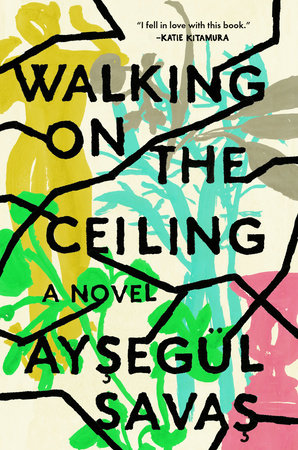
In my novel Walking on the Ceiling, the narrator Nunu says that her friendship with the writer M. was the type of friendship she might have imagined when she was younger. In their detachment from the real world, Nunu and M.’s e-mail exchanges and walks certainly resemble the friendships of children: they make lists of things they love (from the colors of bird eggs, to dishes served in Istanbul’s fish restaurants); make up nicknames for waiters; repeatedly walk the city’s most beautiful streets; have picnics on the river. They don’t discuss topics that weigh on them or ask each other personal questions. Their time together is at once a consolation and an escape; a space where they can live in their imagination.

Walking on the Ceiling

It’s no wonder that children’s books are often about friendships and the adventures that ensue. In that early time of creativity and curiosity, friends define our sense of self by mirroring us, becoming our doubles, and expanding the borders of our imagination. But novels for adults about friendship are surprisingly rare, compared to those that center on romance, family, or solitude. And yet, friendship is all these things—an in-between state that is at once intimate and reserved.

Here are 7 eccentric friendships in literature.

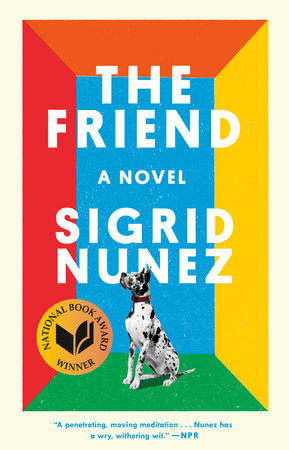
The Friend by Sigrid Nunez

The Friend by Sigrid Nunez

Sigrid Nunez’s The Friend, explores this shifting territory through a writer’s bond with a Great Dane she’s inherited from her deceased friend: the woman and the dog know nothing about one another but can also sense each other’s subtlest moods. Behind this relationship looms the memory of the deceased friend. Like the dog, the friend is in many ways a stranger to the narrator as well as the closest person she had in life.

Image result for strange weather in tokyo

Strange Weather in Tokyo by Hiromi Kawakami

In Hiromi Kawakami’s Strange Weather in Tokyo, Tsukiko runs into her former high school teacher “Sensei” one night at a Tokyo bar. Their friendship continues over many late-night dishes at Izakaya joints, baseball games, and mushrooms hunts. It’s not always clear why Tsukiko continues to spend time with the recalcitrant Sensei who is thirty years her senior. But her unarticulated tagging along becomes a moving character study and the backbone of the novel’s subtle tension.

Image result for A Useless Man: Selected Stories

A Useless Man by Sait Faik Abasiyanik

In the slippery, deceptively simple stories of Sait Faik, the narrator’s imaginary friend Panco takes on many forms, from friendly to evil. Panco is sometimes a voice, sometimes fully grounded in the world. In one story, he “lives on a street named Strawberry. In his dreams, he sees football games.” In another, the dreaming Panco comes back to menace the narrator’s. “I felt as lonely as I always did when he was with me.”

Molly Fox’s Birthday by Deirdre Madden

The multiple roles assumed by friends is exquisitely depicted in Deirdre Madden’s Molly Fox’s Birthday, about the friendship between a playwright and an actress. The narrator is spending the weekend at her best friend Molly’s house in Dublin, hoping to start writing a new play. Molly, an actress, is away but her character unfolds through the descriptions of her possessions, as the narrator moves from room to room, unable to sit down to work. Molly’s house becomes the stage, and the reminiscence of their friendship the play’s invisible acts.      

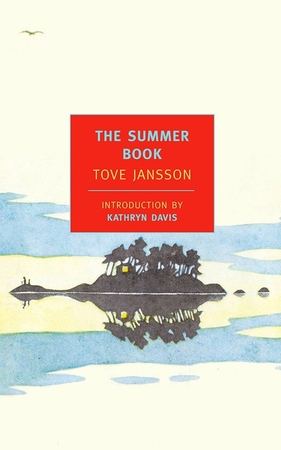
The Summer Book by Tove Jansson

Tove Jansson’s The Summer Book is about an old woman and a young child spending a summer on a small island. They fight and curse, break into strangers’ homes, build a model of Venice, and care for each other tenderly. Their friendship is all the more touching in their effort to pretend indifference. Even though the old woman is the child’s grandmother, their relationship is that of fully autonomous individuals, slyly curious about one another but always on guard.

Mrs. Palfrey at the Claremont by Elizabeth Taylor

Elizabeth Taylor’s Mrs. Palfrey at the Claremont is another book about the friendship between old and young. A young writer visits the elderly Mrs. Palfrey at the Claremont Hotel, full of nosy residents, pretending to be her grandson. That the quirky relationship never becomes sentimental is because of the bitter limits of the characters’ emotional capacities and their expectations from one another. Nor does the characters’ selfishness become so rigid as to hinder real connection in Taylor’s swift, graceful prose.  

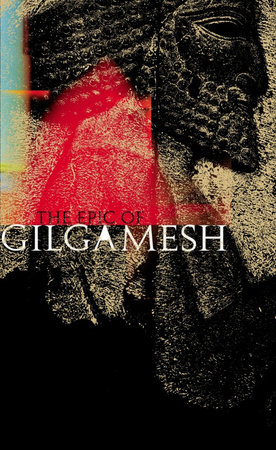
The Epic of Gilgamesh by Anonymous

The Epic of Gilgamesh

The earliest surviving work of literature, The Epic of Gilgamesh, is also a story of best friends. Gilgamesh, a cruel king, is sent Enkidu by the gods to keep him in check. Enkidu is Gilgamesh’s match in magnificence, though he is wild where Gilgamesh is civilized; wise where Gilgamesh is reckless. Gilgamesh is devastated by Enkidu’s death and travels to the edge of the world to learn the secret of immortality. From his journey, he brings back the story of the great flood, which will later resurface in the Biblical story of Noah. It’s a strange and wonderful fact that the Western foundational myth is attained with the loss of a best friend. (And Herbert Mason’s verse translation of the epic is a pleasure to read for the sake of its language alone.)  

“The Affairs of the Falcóns” Centers Immigrant Families at a Time When They’re Under Attack

Melissa Rivero’s debut novel, The Affairs of the Falcóns, opens with eleven-year-old Ana Lucia Cardenas Rios negotiating with God over the infraction of kissing. The image of young Ana is one that resonates through the rest of the novel: “She sat in front of the fire pit, her arms wrapped around her scarred and flaky legs. The smoke stung her eyes, but she did not flit away her tears. She let them hit her knees even as she kept her body still.” Fifteen years later, Ana is in Brooklyn, married to Lucho Falcón with two children, sheltered in her husband’s cousin’s apartment bartering her heart out for a chance to live a life on her own terms. Uncontrollable circumstances repeatedly limit Ana and yet she tries for love, for equal standing in a family that will not accept her, to make a life for herself and her husband and her children even when they can’t see or want the possibility for themselves. Defiance and optimism in the face of tremendous obstacles permeate The Affairs of the Falcóns, a book that speaks to family separation, immigration, heroic friends and heartbreak. The complex, shifting emotional life of these characters called to mind another bold novel about an immigrant woman, Lisa Ko’s The Leavers. I had a chance to talk to Rivero about her characters, her writing community, and her education as a lawyer.


Jimin Han: The women in this book, from Ana, Valeria (Ana’s cousin-in-law), her childhood friend Betty, and Mama who lends her money along with friends in the factory are part of an intricate network of relationships that you depict so well. The men have a substantial impact on these women’s lives, but I loved seeing such strong women have conflict yet stand up for each other too. In developing this novel, were there some characters who you wrote before others? Any that you added or decided not to include?

The Affairs of the Falcons by Melissa Rivero

Melissa Rivero: The first characters I wrote were Ana and Valeria. The two were very vivid in my mind from the smell of their shampoo to the pitch of their voices. I was always drawn to tell Ana’s story—she may not be the most vocal of the bunch, but she was certainly the loudest to me. There was something about Valeria that made her the most fun, and, at times, the most heartbreaking to write. I think because, in her own way, she believed she was helping Ana, even though Ana distrusted her and was always going to do what she thought was best for her and her family, regardless of what anyone else thought. The other women came about as I explored Ana’s world and story. All these women are unapologetically ambitious and hardworking. That is something I was fortunate enough to grow up seeing and admiring, and something I couldn’t help but put on the page.

JH: I love that Ana and Valeria go for what they want. They’re the ones who find a variety of ways to economically support their families. They’re also different in their personalities—you show that so well with the way they physically occupy the apartment and are free to move, one more than the other, to travel between Lima and New York City. To me, Betty was such a pivotal character too. Can you tell me a bit about how she came to be?

MR: Betty came out of a scene where Ana is heading to work and bumps into a friend on her way there. I knew Ana needed a confidante. From their very first interaction, I knew that person was Betty. Most immigrants gravitate to areas where other immigrants from the same country or similar backgrounds also live, so it’s not surprising that Ana would have a friend in New York that she knew from back home. Like Ana, Betty’s also looking for a better future, but unlike Ana, she is confident and outspoken. Ana might be a little envious of the fact that Betty only has herself to worry about. She also represents Ana’s past, both the good and the bad. You can’t really leave the past behind. You have to wrestle and come to terms with it in order to move forward. And I think that Betty is a reminder of that for Ana.  

JH: The title of your book points to the family that Ana married into, the Falcóns. You’ve said that you wanted to show how people can be made to feel like outsiders, the “other,” even within the same family. Can you expound on what you want to say about how we form opinions about ourselves and how those opinions affect our lives?

Colorism is something the Latinx community needs to grapple with. We can start by addressing it within our own families.

MR: Family has a huge impact on how we see ourselves and the choices we make, and that is certainly the case for Ana. She is a brown-skinned woman of mostly Indigenous descent from a province in Peru, whereas los Falcón are white-presenting Peruvians from Lima. That puts her in a vulnerable position both in society at large and in the family. In Peru, like in most places, you are judged based on your skin color and your physical features. The “whiter” you are, the kinder society tends to treat you. In Ana’s case, she felt like the outsider because some in the Falcón family saw her as “beneath” them or a threat to their position in society: She was not white or wealthy and didn’t have a European-sounding last name. She’d been conditioned to believe she was less than and she’s fighting it in her own way. Colorism and racism is, unfortunately, something the Latinx community needs to grapple with and I think we need to be better at addressing it. We can start by addressing it within our own families.

JH: What are some of the ways we could address these issues?

MR: We can start by calling out racism and colorism when we hear/see it. It’s so normalized that folks sometimes don’t even blink when it happens. For instance, referring to someone by their skin color rather than their name is not uncommon in many Latin American countries. These nicknames may seem innocuous, but they reinforce stereotypes and fail to see a person for all their complexity and humanity.

JH: How did you go about the research you did for the book?

MR: I interviewed people who’ve had experiences that are similar to Ana’s. Friends, cousins, aunts, my mother and her contemporaries.What it was like working in a factory in New York, growing up in a Peruvian province, how life was like in Lima? I haven’t been to Peru in almost a decade, but I have very vivid memories of the smells and sounds in my grandmother’s town, Pucallpa. I relied on those memories, and on my 99-year-old grandmother’s, to take me into young Ana’s world. I grew up in Brooklyn and still live here, but the Brooklyn of the early 90s  is very different from the one we’re living in now. I relied on memory and photographs for that. I also rode the 7 train into Queens a lot and took pictures, jotted down notes. I’d go on real estate websites to find the right layouts for the apartments in the novel. I did online research on immigrant communities and prestamistas (neighborhood lenders), motherhood, birth control, etc. And I read books and articles on the history and politics of Peru.

JH: I really got a sense of both places from your details, not only physical descriptions but how you built it into the story. From how rural Ana’s town was to Lima and how long it took Ana to get around New York City. Every time she was late to get home, I worried! Interviewing friends and family also helped me in my writing. I find that when I talk to writers who are just starting out, they want to know how research like this is used in fiction. What kind of responsibility do we have? Do you have suggestions for them?

MR: It’s important to get as much sensory detail about a place as possible. Interviews and online research are certainly a great place to start, but there’s nothing like having been to a place or going there to get a real feel for it. My advice to writers would be to travel to the places they’re writing about, or dig deep into their memories if it’s a place they’ve already been to. Sometimes, photographs can trigger memories you thought were long forgotten, so look at old pictures, journal entries, and talk to folks that were there with you. And when conducting interviews, ask a person about sights, sounds, smells, but also how a place or experience felt and where on their body they felt it. Writing with this kind of specificity can only enhance your work and the reader’s experience.

My advice to writers would be to travel to the places they’re writing about, or dig deep into their memories if it’s a place they’ve already been to.

JH: What has been the reaction to your book from those you interviewed?

MR: They haven’t read the book yet! Many don’t read in English, so we’ll see what their reaction will be if/when the book is ever translated into Spanish.

JH: By portraying an undocumented woman and her family, your novel is particularly timely. Did you have an ideal reader in mind when you were writing your book?

MR: I began writing the novel back in 2011, and the story itself takes place in the early ’90s so, yes, it’s timely given the current administration and the policies that it is promulgating. But it’s also, unfortunately, not. These issues have been around for decades. That being said, I had only one reader in mind when I wrote the book. That reader was a writer in my writing group named Stacie. She is neither Peruvian nor undocumented, she’s a Black American woman and one of the most insightful readers I know. Whenever I sat down to write Ana’s story, I had Stacie in the back of my mind. This is ultimately my ideal reader or at least the kind I aspire to satisfy: someone who is thoughtful, perceptive, and who seeks to understand the human condition through fiction.

JH: I love the way you describe your ideal reader. Tell me more about your group. How long have you been with them?

MR: We’ve been writing together for about seven or eight years. We’re a smaller contingent of the larger VONA NYC community. One day, some of us got together and decided we were going to swap manuscripts instead of critiquing excerpts, which is what we were doing at the VONA meetups. That turned into monthly writing dates where we discuss what we’re working on, what we’re struggling with, and give each other advice on how to tackle those concerns. We then take a few hours to write, read, research, whatever it is we need to do to move our work forward. There’s only 3-4 of us and we’re all women of color. It’s truly been a blessing to be a part of a group that is dedicated to their work and understands what it is to be a writer of color. I don’t think I could’ve finished this book without their support and encouragement.

JH: Sounds like a great mix—not only in what you do but how you go about helping each other. How has being a lawyer made an impact on your outlook as a writer?

My law training has allowed me to consider the myriad ways a particular policy can affect not just the individual, but their family and community.

MR: My training as a lawyer taught me discipline and structure. For instance, in law school, you are reading and writing pretty much 24/7. Especially that first year—it is brutal. You learn quickly that if you want to finish your reading and writing assignments, you need to just sit down and do it. That might mean scheduling your time down to every meal, saying “no” to your social life, working very late into the night, etc. That discipline and structure helped me finish this novel, especially after I had my children. I had no time for extracurriculars. I had to apportion my “free time” (basically, my kids’ bedtime, naps, and weekends) and make time to write, much like I did when I was in law school.

More importantly, my training has allowed me to consider the myriad ways a particular law or policy can affect not just the individual, but their family and community at large. Laws are in place to help maintain a certain kind of order, but it’s no secret that not all laws are written or applied fairly or equally. Sometimes defiance of those laws is the only way a person can survive.

For me, writing is an act of both self-preservation and defiance. Through Ana’s story, I can explore issues that matter to me while preserving some aspects of the undocumented immigrant woman’s experience, an experience that I haven’t really seen on the page. I think just by virtue of being an author and an attorney, I’m also perhaps defying some people’s expectations of immigrants. My hope is that this book stirs conversations not just about the lives and choices of these fictionalized characters, but about the laws and policies that have a real life impact on people like Ana and her family.

How “Riverdale” Turns Masculinity Into a Queer Thirst Trap

There’s a fine line between the image of so-called “All American” hetero masculinity and gay male eroticism. Marky Mark in a pair of Calvin Kleins. Marvel and DC’s hunky superheroes. Sailors on day leave. Frat bros sunning on the lawn. Jocks in locker rooms. Each of these images conjures up both oppressive heterosexuality and irrepressible gay allure. That’s the joke, as it were, behind the disco group the Village People: dashing young men, who co-opted the trappings of performative manliness (props and costumes for cops and firefighters, cowboys and construction workers) to embody a coded call to gay arms. And it’s the Village People who come to mind whenever I watch Riverdale.

The CW live-action adaptation of the long-running Archie comics may not appear, immediately at least, to have much in common with those campy takes on hetero masculinity. But the more you pay attention to the ways that teen drama has repurposed the Archie Andrews character (and its hometown in turn), the easier it is to see the undeniable queer sensibility that runs through this 21st century reinvention of an All-American classic. Or, in layman’s terms, in his move to the small screen, Archie became not just a walking and talking Abercrombie & Fitch editorial but a one-man Village People, and thus careened straight into gay thirst territory.

In his move to the small screen, Archie became a one-man Village People.

When he made his debut in 1941, Archie Andrews embodied a wholesome and almost inoffensive brand of masculinity. Over the years, the freckled ginger Riverdale high schooler has stood for a very specific brand of Americana: he enjoys sports, loves his car, splits his romantic affections between two iconic girls, and is otherwise a perfect example of a typical American teenager. Just as the fictional Riverdale was not an actual place but a deliberately generic Anyplace, Archie Andrews was always an imagined vision of an American Everyman, a riff on Mickey Rooney’s Andy Hardy and a blueprint for Ron Howard’s Richie Cunningham in Happy Days. In the early comics, he was a vessel for projection: a varsity letterman despite his lack of athletic physique, a top student despite his unthreatening intellect, and crucially, a hotly-pursued boyfriend despite being pretty average-looking (Rooney and Howard were his live-action avatars back then, after all). In its 21st century incarnation, the viewer is clearly supposed to look at Archie, not see themselves as him. He’s played by the perfectly-chiseled KJ Apa, a choice that turned the once unremarkable Archie into a beefcake that falls in line with how 21st century pop culture (hilariously) sees everyday teenagers in primetime soaps. Despite billing itself in its first season, at least, as a teen heir apparent to Twin Peaks, with its nondescript Pacific Northwest setting and murder mystery surrounding a washed up teenage body, Riverdale is most indebted to teen dramas like Beverly Hill 90210, teen horror flicks like Scream, high school comedies like The Breakfast Club, and even many of the WB/CW teen soaps that dominated the early 2000s like One Tree Hill. Most of Riverdale’s adult cast — Mädchen Amick, Luke Perry, Skeet Ulrich, Molly Ringwald, and most recently Chad Michael Murray — come straight from those projects, locating Archie as both endpoint and framework of pop culture’s fascination with the All-American teenager.

But under the artistic guidance of Roberto Aguirre Sacasa, Riverdale’s showrunner and Archie Comics‘ chief creative officer, that most famous Riverdale resident has also emerged as a deliriously campy example of teenage masculinity. Over the course of its first three seasons, Archie has been a star athlete and a sensitive guitar-toting songwriter, a brooding vigilante and a puppy-eyed romantic, often switching between these various poses and identities in service of the show’s increasingly wild plots (about gangs and drugs, serial killers and pagan cults). Moreover, the show has a propensity for lustfully shooting KJ Apa shirtless every chance it can, making him a walking queerbaiting machine. In keeping with the ever-shifting masculinities his Archie has embodied over the years, the teen-aimed show has made him a wrestler (in a body-hugging singlet, naturally), sent him to prison where he became an illegal fighter (in grey sweat shorts, no less), had him work for his keep in a farm moving hay (sans shirt, of course), and let him preside over a group of masked (and shirtless) vigilantes. Add in the fact that he’s actually worn a construction hat while helping out his dad, and you start to see how Archie’s version of masculinity stretches into camp: a whole beefcake calendar’s worth of hypermasculine archetypes. It’s a Village People-like array of tropes, but more modern in spirit—bad boys instead of cops. And more violent, in turn, making the once-earnest high school character into a full-blown action hero (or, perhaps more to the point, an action figure). Visually, Apa’s Archie has more in common with Tom of Finland’s illustrations of bulging, macho men than with the comic book Archie of yore.

Apa’s Archie has more in common with Tom of Finland’s illustrations than with the comic book Archie of yore.

This queering of Archie’s image is no surprise if you know about a play Aguirre Sacasa wrote called Archie’s Weird Fantasy. The 2003 Atlanta production was to follow everyone’s favorite Riverdale character, now a grown adult, as he navigated the growing pains of leaving his beloved town behind and lived his life as an openly gay man. “You did know I was gay, right?” the script has Archie ask, shortly after revealing that fellow Riverdale dweller Dilton Doiley was his first same-sex kiss. The play—which later has Archie witness the Leopold and Loeb murder (the pair of thrill-killers who went on to inspire Hitchcock’s Rope) and then move to New York City where he begins writing comic books and starts up a relationship with a Jimmy Olsen-type reporter—never quite saw the light of day. Before the production opened, the playwright and Dad’s Garage Theatre Company were served with a cease-and-desist letter. The show couldn’t go on if Aguirre Sacasa used Archie and his fellow Riverdale friends, even as the entire premise of his play depended on an attentive reframing of the “Riverdale” world that Archie had left behind—a world that could all too easily be read as a metaphor for the closet, as one reviewer put it at the time. To avoid a futile legal fight with Archie Comics, the play was reenvisioned as Weird Comic Book Fantasy, with nondescript names and references standing in for the specific Riverdale ones that had first framed the production. Archie became “Buddy,” Riverdale became “Rockville,” Jughead became “Tapeworm,” and so on and so forth. Further retooled, the play opened in New York as The Golden Age two years later.

In many ways, the elements that drove Aguirre Sacasa to deconstruct and play around with Archie in Archie’s Weird Fantasy/The Golden Age are all over his dark teen soap drama Riverdale. The campiness of the CW show is almost too cloying at times (this is a show where a line like “word is, Papa Poutine’s son Small Fry is looking for payback” is delivered with a straight face), but it’s also what’s allowed it to produce two musical-themed episodes centered on campy reworkings of iconic explorations of maladjusted teens. The show’s Carrie: The Musical and Heathers: The Musical episodes are just as bonkers as they sound, but they also reveal that at its core, Riverdale is an exercise in meta-pop culture that uses its comic book characters as launching pads for heightened discussions of what it means to be a teenager in the 21st century, when everything is a reference, everything a quoted line, everything a pose. Just as he plucked the plucky Archie from the comforts of his small-town to face more pressing social struggles in New York City (the play dealt, if obliquely, with the AIDS crisis), Aguirre Sacasa has made a point of pushing the fictional Riverdale to grapple with insidious social ills like drugs, gangs, corruption, and gentrification in ways that are surprisingly progressive. Veronica’s dad alone, for example, has been revealed to be a corrupt crime boss hoping to push out low-income households from lands he hopes to develop, a druglord intent on keeping a stronghold on Riverdale’s trade, and later still a would-be for-profit prison developer. These storylines have pushed the once family-friendly comics into more adult territory, allowing for Archie and friends to deal with real-life violent threats on the streets and also with more hormonal urges in the sheets.

While the show has clearly favored putting its characters through the wringer when it comes to portraying the underbelly of violence that runs through what seemed like an idyllic town (see: the murder that opens the show’s pilot), the drama has also sexed up characters that had, for decades, been much too prim and proper to even conceive of such a thing. It was no accident that Riverdale got Archie to have sex (with a teacher!) in its very first episode. From the get-go it was clear that this was not your (grand)parents’ Archie: the comparatively neuter Everyman — Everyboy, really; early Archie is almost prepubescently scrawny — had been transformed into a sexy hunk. That evolution feels almost too quaint. After all, hormonal teenagers are now part and parcel of contemporary pop culture; Archie is just mirroring the more frank approach to pubescent adolescents we’ve grown so used to in recent decades. (Unsurprisingly, Archie purists initially balked at this vision of a Riverdale populated with teens who had sex, with one ranting upon the show’s premiere that Aguirre Sacasa had turned “Archie characters into his own masturbatory fantasies that have no relation to the characters from the comics.”)

To titillate with such sanctified male ideals is to court a gay gaze that’s long been denied.

Apa, for his part, has embraced his status as teen heartthrob, toying with his character’s All-American image in editorial photos that make a point to remind you that this faux red-headed actor is a stud. In a shoot for GQ Australia, after being named Breakthrough Actor of the Year back in 2017, for example, he donned white socks, tighty-whities and a mesh football jersey for one pic where he’s jumping into bed while, hilariously, holding onto a basketball. In a nutshell it captures exactly why his Archie falls squarely in line with those images of American masculinity that have been both co-opted and queered to serve a gay male audience. As pop culture has gotten more comfortable with sexualizing its male stars, there remains the sense that to titillate with such sanctified male ideals is to court a gay gaze that’s long been denied.

Riverdale turning Archie into a jock, and making his body such a central fixation of the show, is a wink to its contemporary audience. A show as aware of male gazes and woke sexual politics no doubt understands the way it queerbaits its audience whenever it flaunts Apa’s abs or has him kiss another guy (in prison!). There’s a knowingness to such gestures, as if the show were intent on bracketing his masculinity and let it stand as a site for exploration: Archie, after all, has a savior complex, makes irrational decisions almost every episode, and gets away with ill-conceived plans all the time because he’s so charming, so earnest, so beloved. The vision of heteromasculinity he embodies is so stretched out to its limits that it ends up addressing and embracing a queer audience. Therein lies the show’s most significant overhaul from its 1940s roots; Aguirre Sacasa hasn’t just modernized that All-American boy. He’s made Archie Andrews into a pin-up guy whose winking masculinity cannot help but feel parodic, worthy of our swoons and laughter in equal measure.

Arabelle Sicardi Recommends 5 Books That Aren’t By Men

You probably know Arabelle Sicardi from their writing for adults and teens—they’ve written about beauty for Teen Vogue, Elle, Allure, Rookie, BuzzFeed (where they were previously the beauty editor), and more. But this fall they’re expanding their influence to a new demographic, with a children’s book on queer heroes, illustrated by Sarah Tanat-Jones. For Read More Women, they collected books by non-men that will inspire across many different age ranges, from fantasy geared towards children to adult strategies for operating in the difficult real world.

Read More Women is Electric Literature’s series, presented in collaboration with MCD Books, in which we feature prominent authors, of any gender, recommending their favorite books by women and non-binary writers. Twice a month, you’ll hear about the five non-male authors who most delight, inspire, and influence your favorite writers.


These books span age groups, but they’re all filled with lessons and act as guides through the journey of being a human with a lot of questions about how to be a good person and one that is honest about your identity and what you’re capable of. My favorite books are old friends; I return to them on a regular basis for different advice each time and introduce them to the people I love when I think they’ll appreciate them, too. These are some of my most frequently recommended books that I give to people questioning their gender, their political practice, their emotional bandwidth, or just need something both inspiring and unusual they can escape into for comfort and growth. The heroes in the fiction recommendations are young women of color, and the non-fiction recommendations are either written by women of color or lovingly highlight and center the experiences of marginalized people through history.

Emergent Strategy by adrienne maree brown

Emergent Strategy, adrienne maree brown

It is not hyperbole when I tell you this book made my 2018. I couldn’t stop talking about it with all of my friends, and it’s still an essential on my “Mood” book pile I keep next to my bed, because it is endlessly necessary to flip through and remind myself of the lessons adrienne shares so beautifully. I think it is a perfect book to keep on hand and to work through with all sorts of people, whether it’s your lover/partner, best friend, close friends, or co-workers. Besides breaking down how to effectively communicate and advocate for your community, it shares examples of how to recognize and foster resilience and how to check in on your feelings, that of others, and how to work towards better relationships overall. It uses examples from nature, news, and science fiction to do so and it does so very simply. I use the workbook pages in the back on a regular basis and wish more classrooms considered this for their shelves.

My New Gender Workbook by Kate Bornstein

My New Gender Workbook, Kate Bornstein

This book was introduced to me in college by one of my favorite professors, who asked us to work through it, and it’s something I’m so grateful for because I pass on this book to queer folks who come to me for advice all the time. Kate is continuously updating it, which is great because as a queer community we’re all constantly transforming our politics and the language and images we use to share them with. I especially love the chapter, “There’s Only One Gender: Yours,” because it’s a very comforting and helpful conversation starter about the complexity of an individual’s gender experience. It’s a book appropriate across age groups, and it’s genuinely fun to work through, with no pressure to finish. Kate is a wonderful queer elder —and given the rarity of queer elders at all, what a special treasure to have her authorship in the world.

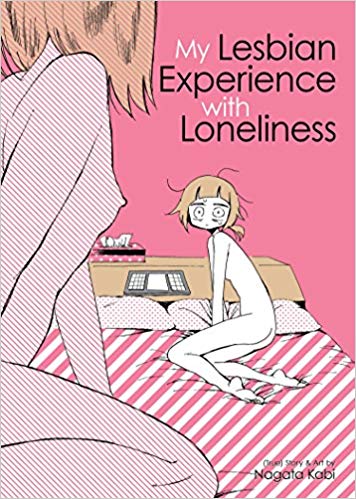
My Lesbian Experience with Loneliness by Nagata Kabi

My Lesbian Experience with Loneliness, Nagata Kabi

This is one of the best graphic novels I’ve ever read, and the fact it is actually an autobiographical manga about lesbianism, depression, self-harm, sex work, and other things is probably why. It’s dark, and tender, and honest about the fact sometimes we don’t get “over” our problems, but we do find ways to get through them. I think that’s an important lesson to learn, and as early as we can in our life. This does have graphic content (pun) so I wouldn’t recommend it to children, but it’s definitely something I wish I had as a teen.

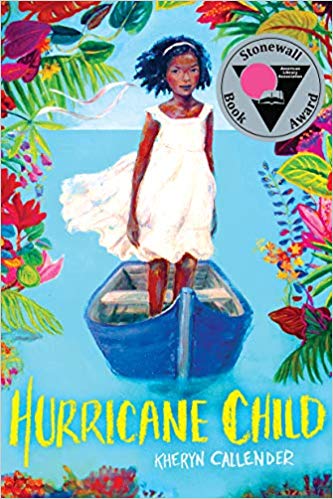
Hurricane Child by Kheryn Callender

Hurricane Child, Kheryn Callender

This is a children’s book about a queer black child navigating grief after disaster, and it made me cry and snuggle the book so hard at the end that I considered using it as a pillow or possibly eating it. The protagonist, Caroline, was born on an unlucky day during a hurricane, and is ostracized because of that and her unusual gifts she has had all her life. A new girl arrives in school, and the healing power of friendship (and CRUSHZONE) changes their life.

Deep Wizardry by Diane Duane

Deep Wizardry, Diane Duane, book two of the Young Wizards series

This is my absolute favorite fiction series and is probably the root of my praxis and one of the reasons I wanted to become a writer. I re-read the entire series every other year and would love to hug Diane one day and cry embarrassingly about how important the lessons she taught me in these books were to me and still are. This book in the series is particularly memorable to me because I think it’s a great and imaginative way to write about climate change, global warming, community activism, and sacrifice. Plus, I always find it really fun when book narrators aren’t centering a human narrator or experience.

Do You Want to Be Her or Do You Want to Fuck Her?

“Pussy Hounds”

By Sarah Gerard

Lit Wife filled the car from Brooklyn to Maine with the worst bacterial farts you can imagine. Like hot, greasy pizza. None of us said anything. Next to me in the backseat, Rita smiled through the pain like a good Christian girl. In the driver’s seat, Leo turned up “Heartbreaker” and rolled the windows down wordlessly, as if what would really make her feel empowered this weekend was the wet, biting January air.

The retreat took place just a week after Curly and I broke up. I had gone to the courthouse with him a month after sleeping with him for the first time. This was six years ago. We were young and infatuated. I was older by one year, which makes sense in retrospect, since what he was really looking for in a wife was a mother. Now I’m thirty-two and divorced.

I had stayed with Lit Wife the night before kicking him out. I’d chosen her because I thought she would want to protect me. She’d understand that I had fled my apartment for the last time.

She put me up on her sofa. She left to go on a date with a straight girl she had met at a New Year’s party, and when she returned she brought the girl with her. I listened to them have sex while I made a list of reasons why I should leave Curly and another why I should stay. He broke a window with his head, read the first list, and, Our fights are so loud that our neighbors called the police. I wanted to be concrete. I wanted to point to specific facts or instances.

The other list: He’s probably a genius, and, We have amazing sex.

“This is a great story,” said Lit Wife the next morning, when I showed her the lists. It was typical for her to respond to me as a writer first, and a person second. “About an abusive relationship.”

“You think it’s abusive?” I said.

“Nina, does he really not like any of your friends?”

“He likes you.”

Perhaps because she’s a lesbian. Perhaps he believed her not to be a threat. Like Lit Wife, Curly is charismatic and good at parties. Enigmatic with boundaries. He wore sunglasses in our counseling sessions. Spent my money on cigarettes and weed. Shit-talked all of my friends. Snooped through my emails. Never stopped touching me.

In the car, by way of introducing myself to Leo, I’d announced that I would never again fuck any man. At the time, I’d intended this to mean I would be celibate. I was proud of myself for escaping. I wanted Leo to know me on my own terms. I felt safe with her as another part of Lit Wife’s inner circle. I did not feel safe with Curly. I was traumatized, in shock, crying hourly. I was smoking weed throughout the day. I was drinking, which I don’t even like to do.

I was surprised when Lit Wife invited Rita to come with us, and further surprised when Rita accepted. Lit Wife had still not let go of the back-massage incident from two years before. Rita had since married Churchgoer. Lit Wife skipped both her bachelorette party and the wedding, both times RSVP’ing, then failing to show. It was as if even Lit Wife did not really know how she felt about Rita—as if she wanted to be magnanimous, yet harbored resentful feelings about Rita marrying straight. It was as if even Lit Wife didn’t know what she wanted from this weekend.


Lit Wife knew the cabin’s owner. A rich friend-of-a-friend, she vacated the house in winter when defecting to warmer climates, leaving it open to fellow writers. As each other’s first readers, Lit Wife and I had a tacit agreement to share such opportunities. Prior to the back massage, Rita had also been included in this agreement; now Rita and I had our own. In our private conversations, Rita and I framed this retreat as both a workcation and a bonding opportunity with Lit Wife.

Leo was not a writer. Lit Wife invited her the week before we left, informing us that she would be the one renting us a car. We had never met her. We recognized her simply as the person Lit Wife had skipped town with on the day of Rita’s wedding—something Rita had discovered via Instagram, searching tagged photos of Lit Wife for the reason she no-showed. We couldn’t tell from their body language whether Lit Wife and Leo were sleeping together. We agreed to the car rental out of curiosity as much as gratitude for the labor it saved us. We all had bad credit.

Now we unloaded groceries from the car Leo rented us. We carried them into the kitchen and stored them in the cabinets as if the cabinets were ours. Beneath the kitchen sink, I found a vase into which I placed the roses I had bought for Leo at the supermarket when I saw her eyeing them. It’s possible I was flirting with her in that safe way straight girls flirt with lesbians. It’s possible I was simply trying to thank her, this friend of Lit Wife’s who had driven us here.

Rita turned on Whitney Houston. We’d bought a roast chicken and were feeling frisky; we gathered around it on the island counter. We’d subsisted on trail mix and gas station coffee for eight hours, and Big Red, which I was chewing a lot of at this time, for the burn.

“We should name it before we eat it,” said Leo. “To honor it.”

We looked at Rita.

“His name is Fabio,” said Rita.

“Thank you, Fabio,” I said.

“How will I know (don’t trust your feelings)?” sang Whitney.

“So good of you, Fabio,” said Leo. She opened the rye.

“How will I know (love can be deceiving)?” sang Whitney.

We held out our glasses.

We ate Fabio with our hands.


Full of Fabio, we watched Mrs. Doubtfire. We decided that it does not stand the test of time. Robin Williams’s cross-dressing is designed to humiliate him, demonstrating the lengths to which he’ll debase himself in order to win back his woman: he will transform himself into something he’s not; he will traverse moral and ethical lines; he will interfere with her relationships.

My phone buzzed in the kitchen. I went to check it and found an email from Curly. An email. Something he had sat down very seriously at his computer to write to me. Dear Nina, I hope you’re having a restful time with Lit Wife and Rita, he said. I don’t want to disturb you, I just want to let you know that I saw a psychologist today.

I had begged him for years to see a therapist.

I’ve been diagnosed with a mood disorder, he said.

I reread the email. I believed he was telling a true story. Our arguments were interminable. Circuitous and senseless, with no beginning and no direction, doubling back on themselves, always escalating, never resolving. Twisted. We lived in a studio apartment, so there was no place for us to be alone. I’d lock myself in the bathroom; he broke the lock. He’d fight me against the door. I’d leave the apartment and he’d follow me around the neighborhood; he once followed me to Chicago; he followed me to New Orleans. I’d mutilated myself to find silence, something I hadn’t done since high school. He accused me of hurting myself to hurt him. He accused me of thinking I was better than him. I said horrible things to him.

In no way is this supposed to be an excuse, or a reason for us to get back together, he said, and I thought of all the times I had left him in the past, how I had always gone back to him, how somehow, he had always reeled me back. I know we’re over. I simply wanted to tell you because it’s a medical issue.

I returned to the couch, leaving the email unanswered. I was crying but nobody noticed. Leo and I shared a blanket. I drank rye and watched Mrs. Doubtfire ruin his wife’s birthday. Mrs. Doubtfire was just another man who couldn’t take no for an answer. He transgressed lines that were clearly drawn, because those lines had been drawn by a woman over whom he’d laid claim.

“This is worse than Ace Ventura,” said Lit Wife.


The sheets were freezing. A body hadn’t touched them in weeks. I lay awake swiping on Tinder. I’d turned it on two days after kicking Curly out, simply because I could. It felt like a middle finger. He had always been jealous, even of my platonic friends. He wanted to know who I was hanging out with, why, when I would be home every night. If I was twenty minutes late, he’d start calling. Once, he came around the corner of our apartment building where I was finishing a phone call and demanded to know who I was talking to. I was looking at both men and women, because I didn’t have to explain myself to anyone. I felt horribly free.

My first night on Tinder, I matched with the ex-boyfriend of a girl I knew from my MFA program. I’d always thought her boyfriend was sparkly. He had big, deep eyes like Matthew Broderick. I remembered him being a playwright.

When I got to his house, he was nursing a broken rib. He couldn’t move well but we drank wine and went up to his bedroom. I rode him indifferently, leaning on his chest. He stopped me abruptly and grabbed my wrist.

“Be careful,” he barked.

I moved off him. I was reminded that we weren’t using a condom. He held me tightly in his fist. He was chubbier than I remembered, like he’d gained weight since he and my friend broke up. He was almost as short as I was. His junk was not memorable. All of this suddenly reflected poorly on me.

“We can stop,” I said, humiliated, but we finished. As I was leaving, he pulled me towards him. He sat on an ottoman, clearly in pain. He took me around the waist and I knew that he wanted to see me again. I felt furious. He was laying a trap for me. I was vengeful slamming the front door. I imagined stabbing him. My profile said, Let’s have fun, nothing serious.

I matched with a Latina girl with a boy’s haircut. Her name was Yesenia. She was 31 and three miles away from me. A tattoo artist. I flipped through her pictures. She had geometrical patterns up and down her forearms like cuffs. She had bows on the backs of her thighs. She hung around muscular men in white tee shirts. She looked confident in her leather jacket. She was intimidating. Her easy femininity linked with the edginess of her life made me feel soft and nerdy. I didn’t know what to say to her. How to break the silence. There was too much power in her leather jacket. I wanted her to corrupt me. I wanted her to make me.


I was first in the kitchen. While the coffee steeped, I rearranged magnets on the refrigerator. I made a poem about celebrating your moist universe and posted a picture of it on Instagram, tagging Lit Wife, Leo, and Rita while they slept. I felt naughty. I sat at the breakfast table reading a friend’s memoir about his sexual maturation, up to and until the point when he lost his virginity. I was on Chapter Four, third grade, when he discovers Jessica Rabbit and shows his penis to a neighbor girl, when Rita came downstairs. “Can I read this to you?” I said.

“What is it?”

She poured herself coffee and I read her my friend’s story about being infatuated with the neighbor girl. How they married when they were nine but he never worked up the courage to kiss her. How later, she watched him spell his name on the driveway in urine. And how, the next time he saw her, as an adult—

“She was a lesbian,” said Rita.

“Wait, how did you know that?”

We laughed.

“Because they weren’t going to get married.”

“They did get married.”

“Right.” She rolled her eyes.

“Couldn’t they just be friends?”

“That’s not enough of a tragedy. Then you don’t get the shock value of her being a lesbian.”

“How dramatic,” I said.

Leo came downstairs.

“Leo, let me read this book to you,” I said.

“I feel like we should cut up this watermelon,” she said.

“Do it,” said Rita.

I read to Leo while she disemboweled a watermelon. She leaned over it and cut downward with a butcher knife guided by meaty shoulders. She wore a wife beater and sweatpants and rested her weight against the counter, lowering her face to the wet fruit. I read the story of my friend measuring his penis against the pages of a snuff magazine. Peeking around the sides of urinals. Fucking a sandwich bag of pudding between two couch cushions.

“What is this?” she laughed.

“A book that just came out,” I said. “I know the person who wrote it.”

“Is that what it’s like being a straight guy?”

“I guess.”

“I don’t know,” said Rita. “I don’t think Churchgoer is like that.”

“Churchgoer is different. He’s older. He’s more mature.”

“Is Churchgoer your husband?” Leo asked.

“Yes,” Rita grinned.

“How long have you been married?”

“Six months,” she said.

“Do you like it?”

Rita laughed. “Yeah, I like it.”

Lit Wife came downstairs. We turned to acknowledge her. “Morning, dumplings,” she said. “Let’s go for a hike.”


Outside it was thawing. We descended a set of stairs built into the hill behind the cabin and followed Lit Wife down a mossy path to a river. The sun was bright and cold water flowed down the hill and sparkled over the lichen. The river opened. Ice drifted atop it. I felt in my pocket to take a picture but had left my phone in the cabin, so dug out the one-hitter instead. I stuffed a nugget inside it and passed it to Leo; she passed it on to the others. We sat on stone slabs that sloped down to the river, and smoked, and admired the blue, a perfect replica of the sky. The walls of the hills made a mudra. The weed settled in. We were cozy in our coats, and benevolent. Leo passed the dugout back to me and the gesture felt like a message. Though I hadn’t yet had a conversation with Leo alone, it seemed to me that we were alike in that we were both Nonsexual Friends of Lit Wife’s and therefore a silent audience to the drama of Lit Wife and Rita. The atmosphere shifted around us. I wanted to talk to Leo about it. I wanted to know what she knew.

“What are you working on right now?” Rita asked Lit Wife.

Lit Wife trained her eyes on the distance. “I’m working on a short story about my relationship with straight girls,” she answered.

She’d sent me a draft of it. Rita was in it, but I hadn’t told her. The back-massage incident was narrated in full. The weekend with Churchgoer, the afternoon on his golf course, the shame of his accidental discovery of them in the den.

“What about straight girls?” said Rita.

“I’m looking at the ways the queer body is objectified, commodified, and exploited by straight girls,” said Lit Wife. Leo sat back on her elbows. I did the same. Between Leo and I was the understanding that we were actively listening in. “I’m pulling from my personal history and queer theory, and examining the dynamics at play in different fictionalized situations of microaggression or violence.”

“Oh. Like what?” Rita said.

“Anything from a homophobic comment made by a teacher or a coworker to an abusive relationship, to a manipulative so-called friend.”

Rita returned her attention to the river. Her jaw was set. I ran my hands over my history with Lit Wife looking for lumps and found it more or less smooth. I decided we had a strong relationship with open communication and healthy boundaries. I was as close to her as I could expect to be with anyone in New York City, where I saw my closest friends every few months. Lit Wife was a steady presence. In New York, I’d learned, what was important was that a person continued to show up for you, that they didn’t become someone you saw only at publishing parties. But also, you couldn’t ask too much of them, because no one in New York had much to begin with. No one had spare time or money saved. No one had an extra room to put you up in for a night.

I had never called upon Lit Wife for more than writing advice in the seven years I’d known her, until recently, when I was forced to leave Curly.

I looked at Rita. The back-massage incident was splattered across her face.


We sang “Elastic Heart” on our way back to the cabin. We installed ourselves in separate rooms. I lay on the couch expanding the lists I’d started at Lit Wife’s apartment the night before kicking Curly out. By the time I’d decided the next morning that it had to be done, the list of reasons not to do so was three pages long; the list of reasons to do so was seven. I called my mother and asked her how to do it. How did she get Derrick out of the condo? She said to bring someone with me. Make it someone who intimidates Curly. Preferably a man. I asked Lit Wife. She had work to do. So, I brought my friend Kevynn.

Asked me, in front of Kevynn, “Did you bring him with you because he’s your least threatening male friend?” I wrote.

He had thrown his suitcase across the room. He smashed our wedding portrait on the kitchen tile. The list was now nine pages long.

Screamed, “Ask yourself why this keeps happening to you! You’re the problem!” in my face as he left.

Kevynn couldn’t stay, so another friend spent the night. The next morning, we watched Mr. Roger’s Neighborhood and ate oatmeal and ice cream for breakfast. My friend left. I watched out the window all day in case Curly came back. I was prepared to call the police. He was out of his mind, unpredictable. I didn’t go outside for four days. I didn’t shower. I had the locks changed.

Once said to me proudly, “I’m kind of an asshole, Nina.”

Stuck his finger in my bellybutton over and over even though I told him a million times that I hate that.

Road rage that puts me in fear for my life.

My phone buzzed. I had left it in the kitchen. I rose from the couch and rubbed my face as I crossed the room. I found another email from Curly, along with ten of his missed calls. I considered not opening the email. We’d arranged for him to retrieve the last of his belongings from my apartment while I was away. I knew this confused and enraged him.

Dear Nina, I need to tell you this before the landlord does. I called him twice but he didn’t answer. He says he didn’t get any calls, so I’ve attached a screenshot of my call record here. Time was running out and I had to sneak in the bathroom window. The landlord saw me on the camera and chewed me out, but he locked the apartment door behind me. It is not something I wanted to do, but I had to. I removed my final belongings from the apartment, the PlayStation, the two chairs, one wedding photo of us from the floral box, and my lock of your hair. Also, if I were you, I would have changed the top lock, not the bottom one.

I returned to the couch and added this incident to the list.

He broke into my apartment.

He compulsively minimizes his wrongdoings

He nitpicks me constantly.

It bothered me that I couldn’t be more specific. In retrospect, I had been conditioned to think that explaining grievances like these was overdramatic. Like I was taking things too seriously, being unfair, failing to see myself clearly. “We’re the same, Nina. I’ve been trying to tell you that,” Curly would say. Two years beforehand, after my abortion, I began a memoir about leaving Curly. My hope was that I would be able to finish it, that I would be forced to. I’d started it longhand in a notebook Curly’s friend had made for me in prison. He’d ripped the pages out of a spiritual self-help book called How’s Your Soul? and hot-glued a sheaf of unused notebook paper into the empty hardcover. The wide-ruled pages had been left behind in another prisoner’s abandoned journal. I gave up on the memoir after twenty pages, afraid Curly would find it. I couldn’t write about him now, beyond recording the facts. I figured I would get around to telling the story when I was ready.


That night, we drank bourbon and played cards. We sang along to Rocky Horror Picture Show on the TV, though none of us watched it. I told them about playing Columbia in my high school theater class’s mini-mashup of Rocky Horror selections. I was fourteen. I’d just gotten my period. I self-selected the role of Columbia the tap-dancer while my best friend played the maid and my other friend played Frank-N-Furter. The fat kid in the class played Eddie. In the movie, Eddie is played by Meat Loaf. He’s a Hell’s Angel who forms the nucleus of Columbia’s love-obsession. I related to love-obsessions. I’d always had them. They’d be flattered by my attention and return it from time to time to encourage it. None of them were truly interested in me. By the age of nine, I was used to being abandoned.

“I should have known after the first time that it would happen again,” Leo said.

She had just finished telling the story of the last person who used her, a woman who led her on for weeks, making love to her, but failing to make a commitment. “That’s just the way she is.”

“You can’t blame yourself,” said Lit Wife. “I felt like I was in free-fall after Line Dancer and I broke up. There’s stability even in a dysfunctional relationship.”

“It’s true.”

“Sex also traps you,” I added.

“What do you mean?”

“You feel close to a person even if you know they’re not good for you,” I said. “You can’t trust your feelings.”

“So true.”

“Curly and I would argue in the mornings a lot because he always woke up cranky, and I would have no desire to be anywhere near him for the rest of the day. But then at night he would want to have sex, and I would just be like, ‘Ugh, no.’ But he would get pouty. So, I would work myself up to have sex with him, and then afterward, I would feel all close to him, but I knew it wasn’t real. I knew it was wrong. But our sex was amazing. It’s a lot of the reason we stayed together, I think. I was trapped by my own body. It got to the point where I didn’t trust my body anymore.”

“I’m so glad you’re taking care of yourself now, honey,” said Lit Wife. “I think sex was a lot of the reason Line Dancer and I kept ending up back together. It’s a horrible cycle.”

“It really is,” I said.

“But weren’t you and Curly open?” asked Rita.

“Ostensibly. It was complicated.”

“Yeah, it seemed like it was really hard on you,” said Lit Wife.

“How did you deal with the jealousy? I don’t want to think about Churchgoer with another woman unless I’m there with them.”

I looked at Lit Wife. She showed no reaction.

“Curly never dated other people,” I said. “He had a hard time staying friends with people. He didn’t really like people or trust them. I think he had crushes on other girls, but he never told me about it.”

“I couldn’t do it,” said Leo. Lit Wife agreed.

“I don’t know,” said Rita. “Churchgoer and I have talked about having a threesome with a woman. I think I’d be comfortable with that.”

Leo glanced at Lit Wife.

“Curly and I did that with a guy,” I said.

“What did you think?”

“The other person was Curly’s friend from high school who I’d always thought was hot, but he was a weird kisser. He opened his mouth and stuck his tongue out, and it was like I was making out with a room temperature steak.”

“That is disgusting,” said Lit Wife.

“There was this dynamic among the three of us where Curly was slightly competitive, and would push Lifeguard out of the way, which made me feel bad for Lifeguard, which wasn’t sexy.”

“Did Curly and Lifeguard fuck?” asked Leo.

“They had an agreement that if their dicks touched, that was okay, but neither of them wanted to go further.”

We looked at our cards. We listened to the TV. Frank was seducing Brad, unaware that, in the meantime, Rocky has betrayed him with Janet.

“I’m surprised, to be honest,” said Rita. “I thought Curly was bi.”

“I’ve wondered, but if he is, he doesn’t know it.”

“There’s no crime in giving yourself over to pleasure,” said Frank.


The next morning, we hiked back to the river. We sat on the slabs and brought our boots close to the water, and Leo fashioned a boat from a piece of driftwood and a broken stem with a leaf on it. It was the flag of biology. She sent it out into the drift, where it tangled with some aqueous plants. “It’ll free itself,” she said. In time, the current freed it. We bared our faces to the sun. The silence of the moment filled me, and I felt that it would be futile to continue using other people to barricade myself against the void. That it would be potentially fatal. I saw how love could bring me down. I was very pessimistic about it. I took a radical existentialist view. No relationship lasts forever. Everything is mortal. For that reason, I claimed pleasure as my guiding force. I would be kind, I would love others, but in a distant, humanitarian way.

I felt a pleasant darkness pass through me. I could behave in any way I wanted to. To be in relation to only one other person, I had learned to move within fixed behavioral parameters. I had learned to cheat those parameters, but I had always been forced to confront them. My open relationship with Curly was a form of confrontation. I had urged him for months to read The Ethical Slut. I pretended not to notice or accept that he hated the book. It drove him crazy. In the dead of winter, when Curly stood over me screaming, after I had gone to bed—to end the argument—I’d pulled the covers over my head to block out the light—I’d thought, Surely, this would qualify as abuse—but there was nothing I could do about it. I couldn’t move out without money. And where would I go? And where would he go?

The morning after that argument, I’d sat on a sidewalk in Bushwick with Kevynn. I’d tried to tell him what happened. “We argue several times a week,” I said, crying. “There’s nothing I can do to end an argument once it starts. It just keeps going and going. I try to separate, and he doesn’t leave me alone. He follows me into the bathroom. He fights me against the door. I have bruises. He asks me how long I need to be alone, he wants a precise number.”

A few weeks later, I escaped to New Orleans and hid in bed with Fisherman. Curly drove twenty-six hours to bring me home. He forced me to tell him the details of what Fisherman and I had done together. I told him I couldn’t be monogamous. That it’s not how I was made. I have never been faithful to any person; I must not be capable. At the time, I felt this could be true. I didn’t know myself. But I knew in the end that I could force his hand because beneath Curly’s anger was his terror of losing me. I knew, I feared, that Curly would never leave me.

We set new parameters. Transgressions or suspicion were met with consequences. Curly’s frequent mental breakdowns. More promises I couldn’t keep. More secret searches on Zillow. At times the walls felt close.

The driftwood boat was almost gone. I reached for my phone in my pocket, wanting to take a picture. On my lock screen, I found an Instagram notification for Fisherman. He’d ghosted me, and over the ensuing weeks my obsession with him had reached the boiling point of Post Notifications. I was desperate for any sign of activity from him, any sign that he may be thinking about me. A secret message. Total degradation. They all came to that. I was ghosted and ghosted. I was a ghost. Self-disgust rose from my stomach. It was a picture of Fisherman’s girlfriend. They’d eloped.

“It’s so far away now,” said Rita.

I trained my camera on the boat and shot video. Sam Cooke sang from Leo’s phone. My life was a song about infatuation—infatuation that burned hot enough to transmute into marriage. Like my parents. My life was a song about the heartbreak of making a home.

“Darling, you thrill me,” Sam sang. “Honest you do.”

The late morning sun cut the water in cold sheets. The driftwood boat was too small to see.


In the bathtub, I scrolled through Fisherman’s Instagram, a daily ritual I maintained even months after my last text went unanswered. His girlfriend had tagged him in a photo of a tattoo of a wedding ring. It hovered beside a matching one on his own hand: two indelible black lines reaching as far into eternity as they could go. Like all my meta-boyfriends, Fisherman was long-distance; I’d established whatever we had while away on book tour. I’d insisted on going on tour without Curly because separateness made a new togetherness possible. Emotionally capsized from aborting our baby, from Curly’s as-yet-undiagnosed mood disorder, I tethered myself to Fisherman and begged him to take me. I abandoned myself to him. I drowned.

It was as if in my brief relationship with Fisherman I had regressed back to my childhood fantasy that absolute candidness with a pen pal made the deepest connections possible. I wrote him letters from airplanes and trains. I wrote him though he never wrote me back. The letters were a secret code I was trying to crack, as if sending the right message would grant me access to him, which would reverse his decision to reject me. I designed special envelopes, drew pictures for him, tucked irreplaceable childhood photos into the crevices of his pages, forcing a protective love that would never be, because I didn’t deserve Fisherman’s protection. I had never deserved any man’s protection.

“I slept with you because I thought you wanted me to,” he told me in New Orleans. I sat on the floor while he sat on the couch. I wanted to rest my chin on his knee. I wanted to be his dog. “I’m in love with Mermaid,” he said. “I’ve been in love with her for a long time.”

“So, you don’t want to have sex with me?” I said. I felt his hands on me from the night before. His fingers traveling up my ass crack. I didn’t care that he had a girlfriend. I was willing to share him.

“No,” he said.


Leo had braised cod while we were holed up elsewhere. She served it in the dining room, where the overhead light was garish and unappetizing. I tried several times to enter the conversation, but each time the anxiety of the light overwhelmed me. It was the same white light they’d installed in the bathroom of the first rehab I locked myself up in, when I was fifteen. I was there for depression and self-mutilation, which I did to get my parents’ attention and convince them to get back together. That year, I swallowed three of my friend’s Adderall and had a panic attack at school, or perhaps faked a panic attack so that my mother would pick me up in the middle of the day. In my bedroom, I cut myself with a broken Lady Bic in deep red crisscrosses, and walked into her home office to show her my wounds. What did I want her to see in them? Her failure? The blood soaked through the baby blue cotton of my pajama pants. “You made me do this,” I said to her.

Soon after, I cut into my wrists. I knew I wasn’t suicidal, but my new therapist, the one my mother had made me see, threatened to put me away against my will. I could go voluntarily instead, she said. So I did.

Jenner was my roommate. She smoked cigarettes. She was seventeen and had snuck them into the facility in the lining of her suitcase. All other contraband had been confiscated: her Elliott Smith and Bright Eyes CDs, her copy of The Perks of Being a Wallflower, her ball bearing necklace, anything she could use to harm herself. Her commitment to self-abuse was incandescent. She craved it, sought after it, always threatened to use it against authority. She forced other people to inflict it upon her, made them her tools. She defiantly smoked in our shared bathroom and taunted me for being afraid. She crept into my twin bed in the middle of the night.

“Your body belongs to you,” she told me. Her father had begun molesting her when she was five. Her mother had filed a restraining order but sometimes he still showed up to watch Jenner get on the school bus. I told her about the man who worked for my mother, our secret meetings. “You think you have more power than you have,” she said. “He’s a grown man, Nina. You’re practically a virgin.”

I couldn’t stand the light. I rose from the table and switched on the floor lamp in the corner, the lamp in the adjacent living room, and the light in the kitchen, and turned off the dining room’s overhead fixture. The room glowed. I was drunk on bitter white wine and watched Leo watching me as I resumed my seat at the table. Rita was asking her a question. I smiled. The fish tasted sweet.

“I had a boyfriend all through high school and some of college,” said Leo.

“Did you like having sex with him?”

“I think I liked penetration.”

“Did you love him?”

“I was with him for five years.”

“So how did you ultimately know that you were gay?”

“I slept with a woman.”

“And there was a difference?”

“I haven’t wanted to have sex with a man since.”

“I never wanted to,” said Lit Wife. “But I had a raging hard-on for Whitney Houston.”

“When I was a kid, I was obsessed with Whitney Houston,” I said. “I had a poster of her in my bedroom.”

“Yeah, but did you want to fuck her, or did you want to be her?” said Lit Wife.

“Both?” I said. “Neither?”

“Well, I wanted to fuck her.”

“That’s fine, but your metric is heteronormative. It puts me in the category of a cisgender male partner if I were to want to fuck Whitney Houston, because if I did, then I couldn’t also want to be her. That’s the problem with binaries—they don’t allow nuance. It’s also misogynistic. What if instead of objectifying her, I just want to talk to her? What about bisexuality or asexuality? What if I’m trans or nonbinary?”

“I think you’re thinking about this too much,” said Lit Wife.

“I don’t think so,” I said.

“Leo, tell me if this is too personal,” said Rita. “How big was your boyfriend’s penis?”

“Normal-sized. Why?”

“Is he the only man you’ve ever slept with?”

“No, there were one or two others.”

“Okay.”

“Why?”

“Because size matters,” Rita said.

Leo looked at her. “Are you implying that I only think I’m gay because I haven’t taken a big enough dick?”

“Well, when you put it that way…”

“A small one is really disappointing,” I said. “Just saying.”

“It really is.”

“I thought ‘size doesn’t matter,’” said Lit Wife.

“It’s a lie,” I said. “There’s no worse feeling than building yourself up all night to fuck a dude, and then you reach into his pants and—” I winced. “It makes everything that happens between you afterward that much worse.”

“‘Everything,’ like the sex?” asked Leo.

“Like everything,” I said. “Like, last summer I had this—affair?—with my friend’s friend, Tiny Dick. I was in Texas for a week while my grandma died, and it was really hard on my relationship with Curly because he was back in New York, and we were arguing every single day. Tiny Dick and I ended up hanging out a lot because I was in a dark place, and grieving, and lonely, and I liked him. He was cocky. I slept with him thinking it would make me feel better about Curly and my grandma. Dumb move. His dick was literally the size of my index finger.” I held it up. “Then he ghosted me, slept with my friend, and cheated on her with some girl no one had ever met—and he got that girl pregnant.”

“Damn,” said Leo. “That’s savage.”

“And it’s so much worse because his dick wasn’t even worth it.”

“I bet his baby is ugly,” said Rita.

“I feel bad for the girl,” I said. “She seems rad. She can do better.”

“Why do girls do that?” said Rita.

“Because they think they can’t do better,” said Lit Wife. “They think they deserve to be mistreated. They’re reenacting their first trauma over and over again because the pain is excruciating but at least it’s familiar, so it’s less terrifying than the possibility of a new and unfamiliar pain. It’s even a little bit comforting. It’s like, why do I keep fucking straight girls?”

Rita and I looked at each other.

“Because the conquest is so sweet?” said Leo.

“No, because I know I’m going to get hurt,” said Lit Wife.


Rita found me by the garbage cans at the side of the house. The sun was setting. It had snowed while we were eating, and it looked like it would snow again. I thought of that Mary Ruefle poem about snow, about burrowing down into it next to the warm body of another person with whom, after having sex, you might sleep the sleep of the dead. The lids of the trashcans were covered, and I wrapped my sleeve around my hand and lifted one by the handle. I dropped the fish scraps inside and placed both hands in my pockets.

“Can I tell you something?” Rita said behind me. I waited for her. “It really bothers me that Lit Wife is writing this story.”

“Which story?” I said.

“You know which one. I’m not stupid. You’ve read it, haven’t you?”

I paused. “I’ve read parts of it. She’s told me about it.”

“She likes saying ‘straight girls.’ It has a ring to it—it sounds like Mean Girls. She likes hearing herself talk about it, like she’s figured something out.”

“She’s upset about the back massage.”

“Did she tell you that? She won’t even talk to me about it. I’ve tried bringing it up and she just says everything is fine. I know it’s not. I can tell she hates me. She’s spitting in my face calling me a straight girl. Even my husband gets that I’m bi.”

“She doesn’t hate you. If she hated you, why would she invite you here? Lit Wife is sensitive. Maybe she wants to keep everything superficial until she’s sure she can trust you again.”

“That places all of the blame for her feelings on me, and she was an active, consenting participant in the massage.”

“It seems like she knows that on some level, but Lit Wife has a massive ego. It was bruised.”

“She needs to take responsibility for her behavior and stop treating herself like a victim. It’s really annoying.”

She stared into the darkness. I could tell she was furious, and that her fury made her feel vulnerable. It was the violence of misidentification and mischaracterization and blame. Lit Wife’s story suggested that Rita had choreographed the back massage. That her desire for Lit Wife was never genuine. It suggested that Rita did not also feel betrayed.

“What do I do?” Rita asked me.

“I think you just need to give her space.”

“She’ll never bring it up on her own, no matter how long I wait.”

“There’s nothing you can do about that.”

“I’m so upset.”

“I know.”

I hugged her over the fish-smelling trash.

“She doesn’t get to decide how this ends,” she said.

Back inside, Lit Wife was finishing the last of the wine and refilling her glass with bourbon. Her legs were wrapped around Leo’s waist, and Leo was hunched over in the kitchen, humping along, carrying the dead weight of Lit Wife on her back.

“Leo, you’re strong for being so little,” said Lit Wife.


Later, we sat on Lit Wife’s bed in clean pajamas. I watched Rita smile serenely, her feelings neatly compartmentalized. Our mouths were minty from brushing and our hair was wet from bathing. Our cheeks were flush with liquor and pheromones. We were babies fresh from the womb, as yet unaware of how our lives would be gradually closed off by definitions. We were oxytocin drunk on exertion and the elation of escape: for the last two days, we had lived outside the bounds of our everyday lives with no schedules or strictures, no one watching, accountable only to ourselves within the walls of this cabin, which had become our nexus of pleasure. We were unreachable to those who knew us as we normally were. We were unavailable for explanation. It felt as though we could slip free, step out of our proclaimed identities. Leo was first. “Honestly, I’d do Macauley Culkin in Party Monster,” she said.

“A murderer?” I said.

“Excuse me, I thought this was a safe space.”

“I’m just saying: physically, I can see it, but he did kill a man.”

“There’s something erotic about it.”

“He looks a little like Justin Bieber,” said Rita.

“He looks a little like you, Leo,” I said.

Leo flipped me off.

“Can we not get violent?” I said.

“I’d do Arsenio Hall in Coming to America,” said Rita.

“Those eyebrows,” said Lit Wife.

“John Leguizamo in To Wong Foo,” I said. “Or Hilary Swank in Boys Don’t Cry.”

Rita’s phone rang on the nightstand in her bedroom. “That’s Churchgoer,” she said. “I’m going to talk to him before he goes to bed. I’ll see you ladies in the morning.”

We watched her leave the room.

“Can’t you go one night without talking to your boyfriend?” said Lit Wife.

“Husband,” I said.

Then Lit Wife said to Leo: “This is what I’m talking about.”

“What’s what you’re talking about?” I said.

“Nothing.”

“No, what?” I looked at her. She looked at Leo. Leo smirked.

“Grace Jones in A View to a Kill,” she said.

“Grace Jones in Boomerang,” said Lit Wife.

We all laughed.

“‘No man can turn down this pussy,’” I said.

“So true,” said Lit Wife.

“So true,” said Leo.

We looked at one another.

“I’m feeling a little sleepy,” I said. “Do you want to lie down?”

We weren’t saying what we meant. It was akin to what Daddy had said to me on the phone the one and only time I saw him in person: “Do you want to come over and snuggle?” It was enticingly innocent. I was in Chicago, where he lived. I had met him on Instagram via the account he kept for his high-contrast black-and-white BDSM drawings a few months before, and had messaged him to buy one for a hundred dollars, informing him that I would be using it to masturbate. It was a POV shot of a girl with a ball gag getting titty-fucked, looking wide-eyed into the camera. I framed it above my desk. Curly knew what was happening. Daddy and I sexted for a week or so and then I began applying to artist residencies in Chicago. I wanted to give myself a reason to be near him, but he did not ask me to do this, so I wanted it to seem coincidental. I wanted him to react with excitement. His girlfriend was six years younger than me, and a student at SAIC, and was moving in with him as soon as she graduated with her BFA. “She just does it for me,” he had told me. I performed being laid back about his girlfriend. It was part of what made me disposable in the end.

I wanted to snuggle with him that night because, though I knew intuitively upon landing in Chicago that he didn’t care about me, I couldn’t allow myself to believe it. If Daddy didn’t want me, I had no reason to live. I was on the edge of the abyss. I paid for an Uber half an hour to the house he shared with two other dropouts. It was necessary that I believe on my way to the house that we really would only snuggle that night—that snuggling with me would have been enough for him.

The next day, Curly called me from Midway. I still believe he is psychic. Three days later, I sat in the lobby of the Planned Parenthood back in Soho awaiting my free round of STI tests, terrified of what I would be forced to do if one of them came back positive, how I would say that to Curly. I gagged at the memory of Daddy’s Rottweiler’s tumors, and his dresser caked in cigarette ash, and his bare mattress, and the taste of his beer breath, and his asshole on my tongue. He had not showered since getting off work at the Salvation Army. He pulled a fuchsia ski mask over my face with two eyes cut into it, and a ghastly mouth. I gagged in disgust, but I persevered in a state of suicidal abandonment. Whatever happened to me on Daddy’s bed was appropriate. Any punishment he wanted to exact. The orange numbers spelled five in the morning when he laid down to spoon me. I didn’t even pee afterward. He drove me back to my Airbnb at nine, smoking a cigarette on the way with the windows up.

I folded myself between Lit Wife and Leo. They enclosed me in protective layers of flesh, a softness that made me want to weep. I wondered if we really would fall asleep. We were very still. I began to drift.

Lit Wife moved her hand to my breast. With her full palm over my tee shirt, she massaged it gently in a circle. She found my nipple and a warm radiance filled my stomach. With it came the realization that I did not want to fuck her. The idea of it was repellant. She did not do it for me. I remembered the stench of her gas in the car, the freezing window.

Leo was warm in my lap. Between my chest and her shoulders was enough space to keep Lit Wife’s activity a secret. I pinned my hips to hers, found her breast with my hand, and slid my fingers inside her wife beater. I grazed her nipple, rolled it between my fingers. Her stomach trembled. I held my arm perfectly still so as not to alert Lit Wife.

Lit Wife stroked my stomach with her nails.

“I think I’m going to bed now,” said Leo.

She sat up suddenly. Lit Wife pulled away.

“We have to get up early,” she said. “I’m the only one who can drive the car, and the rental is in my name. I would just feel safer if I could get a good night’s sleep.”

“Yeah, that’s fine,” said Lit Wife.

“Okay,” I said. “Sweet dreams.”

She smiled at both of us. I sat up. I looked at Lit Wife.

“I think I’m going to get some sleep, too,” I said.

Lit Wife smiled from me to Leo, working something over in her mind. “Goodnight, sweet peas,” she said.

On the way to my room, I stopped in front of Leo’s door. Through the crack, I saw her sitting on the twin bed, reading a magazine. She lowered it and smiled.

“Goodnight,” I said.


I waited three months to propose a reunion. In the meantime, I gave myself over to my trauma. I would cry on the train; freeze up, heart racing, when someone passed me from behind; stare paranoid out my front windows, afraid I might see Curly coming up the block, as if he’d returned for me. I locked and relocked my only door, and failed to sleep knowing that the ground-level windows above my bed did not have bars on them. I drank every night though I hated being drunk. I couldn’t stop. I drank to feel and I drank not to feel. Leo drank with me. When I finally hit bottom, it was at her apartment, into a quart of Chinese takeout she’d bought for me, because I hadn’t eaten in days. I locked myself in her bathroom, hyperventilated over the sink, felt fragile and depleted. Curly forced his way into me. My mind itself was inaccessible, and yet I had no desire to access it, I wanted to destroy it. “Why is this happening to me?” I pleaded to Leo. She held me. I knew that she wanted to be with me. I loved her for that, but I was incapable.

I sought help at a domestic violence center. My counselor taught me how to use grounding methods. “No feeling is final,” she told me. She assured me that a spasmodic distrust of the male sex was normal after what I’d been through. She told me not to worry about defining my orientation toward or away from one gender or another, that whatever I was experiencing right now was complex and personal, that I would soon find balance. In the meantime, it was important to be patient with myself, she said, as Curly had not allowed me to be. She said it was expected that I would miss him. I cried on her shoulder. She smelled like my grandmother after a shower. I wanted to keep seeing her after our free eight weeks was over, but the center wouldn’t allow it. I grieved her along with my marriage. I was grateful for what we’d been through together.

Leo never responded to my group email. Rita canceled at the last minute, explaining, Unfortunately, something came up at work, but have fun without me.

Lit Wife found us a table at Le Pain Quotidien. She was drinking a bloody Mary when I arrived. It was Saturday afternoon, the same weekend I had proposed for the reunion dinner, which was now canceled. The din of the room gave us privacy.

“I feel like you could have just not done it,” she told me when I asked her why she’d been distant lately. I could tell she didn’t want to talk to me. I could tell it had to do with Leo. I was defensive. I had done nothing wrong to Leo. I had made her breakfast. I’d bought her flowers. I’d made her a Valentine’s Day present. We had cried when we’d decided after two months to stop seeing each other, but then we’d had sex on the floor. As far as I knew, there were no hard feelings.

“Leo was very hurt, Nina,” Lit Wife said.

“I didn’t want to be in a monogamous relationship,” I said. “I was clear about that. I had just broken up with Curly.”

“Exactly.”

“I was just realizing that I’d been closeted to myself since high school.”

“That doesn’t change the fact that Leo was very hurt.”

“What business is it of yours? You make it sound like her feelings are my fault. She came into my room.”

“That’s not what she told me.”

“Well, that’s what happened.”

I hated Lit Wife. I cried angry tears as the waiter served me avocado toast. I resisted lashing out as a pain response, though I had every right to defend myself. I felt gaslighted. I knew how I’d behaved with Leo. I had been ethical with her.

“You don’t know both sides,” I said.

“Maybe not.”

“No, you definitely do not know both sides.”

I gathered my tote bag and left. That night, I stayed up until sunrise writing Lit Wife an email. I laid bare my soul and the details of my relationship with Leo, being careful to preserve my own image, and avoid any potholes or plot holes. If Leo could tell her story, then I could tell mine.

I ended the email with a question: I’ve been thinking about your short story, Lit Wife, and I feel that I should ask you: Have I ever done anything like that to you?

I texted her to let her know I had sent it. She responded a minute later.

With love, I’m going to take some space.

After 25 Years, “In the Time of the Butterflies” Is More Relevant Than Ever

“‘For the girls,’ I always tell myself.”

Julia Alvarez was reading a short excerpt from her novel In the Time of the Butterflies. The speaker is Dedé, the sole Mirabal sister who survived the ordeal that inspired Alvarez’s 1994 novel about the lives and deaths of three revolutionary women in her home country of the Dominican Republic. In the brief scene Alvarez sketched out for the audience gathered at the Proshansky Auditorium in the CUNY Graduate Center, Dedé is bemoaning needing to attend all the celebratory events that greet every anniversary of her sister’s deaths. She does it, alas, for the girls.

Buy the book

One couldn’t help but hear in that line Alvarez’s own drive towards celebrating her novel’s 25th year in print. As she told Elizabeth Acevedo, author of The Poet X, who led the PEN Out Loud conversation between the two that night, the Mirabal sisters always haunted her. As in her own family, there were four girls. But where the Mirabals fell victim to the Trujillo regime, Alvarez and her sisters made it safely to the United States. They were ghosts to her, she shared, who beckoned her to tell their story. Twenty-five years later, Alvarez’s novel remains a timely and touching ode to that earlier generation of Dominicans who wouldn’t stand for the injustices — especially against young women — that were so rampant around them. They have since become symbols of that fight, with Alvarez’s novel serving as document.

I phoned Julia Alvarez the morning after her spirited conversation with Acevedo, intent on getting her to expound on various snippets of wisdom she’d doled out all too casually the night before. During our chat, we discussed how it feels to revisit In the Time of the Butterflies on its silver anniversary, why the Mirabal sisters continue to enthrall readers and activists alike, and how books can serve as a kind of literary homeland for those in need of one.


Manuel Betancourt: One of the things you said last night that I wanted to pick up on was how surreal it feels to see your own books getting older and growing up on their own, in a way. And I wondered if, like kids who are now turning 25, if your relationship with In the Time of the Butterflies had changed over the years?

Julia Alvarez: I think it gave me a really deep political understanding. You know, Garcia Girls was kind of my immigration novel, a kind of Bildungsroman. It wasn’t an autobiography but a lot of it dealt with my particular family’s experience. Of the transit over. It was very focused on that generation—our generation, the sort of “bridge” generation. Once we were part of the American scene, and I was protesting against the Vietnam War in the ’60s and so forth, I didn’t get why and how a country went through a 31-year dictatorship. Or why my parents were a certain way. Even though they’d been politicized there, I didn’t know what trauma that they had gone through that made it hard for them to understand why we were protesting the war. They were afraid we were turning into radicals and hippies.

Writing In the Time of the Butterflies helped me to understand that generation, the country I had come from, the kinds of forces that had come to play in the generation of my parents, and its effect going forward in their behavior and in the Dominican Republic, too. Because we got rid of the dictator but we had a long, I call it, democratic dictatorship with [Joaquín] Balaguer. So it helped me to understand the history and the complexity of where I come from. I had left as a 10 year old. I didn’t have that understanding.

The Mirabal sisters: Patria, Minerva, and María Teresa

A lot of it was that this was a history that had not been written down. It was an oral history. And so in writing Butterflies and doing all the research, it was like reading the history books that weren’t books yet. These were four beautiful women, three of whom had been politicized and had lost their lives in a way that eventually did mobilize the country and inspire them to topple the dictator. In the end they were very very effective: but they had lost their lives so that the rest of us could be free! They were like the shadow sisters that haunted me and my sisters: these other four young women that hadn’t made it. I felt like what they talk about when it comes to war survivors and concentration camp survivors: survivor’s guilt. Except I’m not sure I would exactly call it “guilt.” There’s a wonderful word in Spanish: “inquietud.”

MB: That sense of unease.

JA: Yes, it was like a survivor’s uneasiness that I just kind of felt. I felt this need, as a survivor of that dictatorship, to tell that story. Last night I talked about Scheherazade being my hero: a woman who tells a story and saves herself and the women in her kingdom and changes the Sultan’s mind so he’s no longer a misogynist killing women. Well, the idea with this book, over time, has moved and inspired other people to do their work. That has confirmed for me my mission statement of the power of story: how art and activism are related. Not in the obvious ways—writing polemics and such. But in the ways that a story can shift our way of seeing the world and inspire us to change it.

Writing In the Time of the Butterflies helped me to understand the country I had come from.

You know, in 1999 the United Nations declared November 25th—the day of their murder—International Day for the Elimination of Violence against Women. I mean! There have been millions of deaths of women. But the fact that the story of these three women who got slaughtered in this tiny country (a lot of people didn’t even know where it was!) became the inspiration for a worldwide movement—I mean it’s amazing! I didn’t set out to do that. I can’t say I did it. I surrendered to that story. But it’s not my story. That other people have access to it because of what I wrote just confirms so many things that I believe about the power of art. I can get very teary about it because it’s thrilling to think that we are all connected and that art has the power to make community, to unite us, and to transform.

MB: That is something that struck me about last night. Every single young woman who went on to ask you guys a question was Dominican. And they weren’t just asking questions. We got to witness these sort of confessional moments they were sharing.

JA: Yes, yes! It was almost like being down South in a black Baptist Church with people testifying, with people clapping their hands and snapping their fingers, supporting each other and confirming what one was saying. They were like testimonials. And also, someone noted: a lot of craft talk. Obviously the audience was stacked with young writers wanted to tell the story so it was almost kind of like a craft talk. That was interesting. It was a very engaged audience, and passionate. That’s beautiful.

MB: One of the things you two talked about in terms of craft is dealing with the burden that sometimes other people will put on your stories. You know, what the Dominican American writer can talk about or what they can write about. You phrased it beautifully, talking about not wanting to “colonize” your characters. I wondered if you could expand on that.

JA: Oh yeah, colonizing them with your politics. Or with what will promote them to readers. Or writing by poll: What’s going to win hearts and have everybody love you? That’s not what the work is about. It’s to allow the full, complex and sometimes troubling personalities and opinions. It’s a way of respecting and loving people, by seeing them accurately. And granting them the full complexity and humanity, which includes their flaws.

As a community you sort of want to pull in the wagon to one side. On the other, you know, they’re saying we’re rapists and drug dealers and that we’re invading this country and we need to get out. You don’t want to give those people any ammunition! So, you know, if outside of this wagon pulling, we tell the story, airbrushed and clean, then you’re just stereotyping and diminishing the possibilities and your full entry into the whole complexity of being part of a human family by doing that. It’s just another kind of oppression. Even if it’s morally inspired, it’s still not allowing the full complexity of each person, individually within any ethnicity or race or group.

MB: Do you think those conversations have gotten more nuanced in the last two decades or so?

JA: Remember, when Sandra [Cisneros] published [The House on] Mango Street and when I published Garcia Girls, it was the first — it began, I think, with Maxine Hong Kingston and The Woman Warrior. This kind of “ethnic” literature. We were kind of a little marginal group. And now we’re part of the big table, you know?

The Mirabal Sisters had lost their lives so that the rest of us could be free!

I don’t know if you know that Langston Hughes poem, “I, Too, am America?” It’s a poem about how he was sent to the kitchen to eat, and not invited to the big table as an African-American writer in the 20s and 30s. But he says in the poem that someday, I’ll be at the table, Someday, I won’t be sent to the kitchen. There was even a press that used to publish our writings called Kitchen Table Press. We were kind of a marginal group, an interesting little sort of glitch over there. And now it’s like, we’re full storm at the table! We’ve infused that with our energies, with our stories, with our syntax, our vocabularies. As Elizabeth said last night, I don’t have to have my Spanish in italics anymore! I mean, we did feel we had to do that back then. We can sit at the big table. We are part of this literature, and we’ve changed it. So-called “American writers” have felt that energy and inspiration and it’s changed their work. It’s changed American literature.

Now I see that my little offering—I was writing basically for my sisters and other Latina writers like Sandra, like Ana Castillo, like Denise Chavez, like Norma Alarcón. I had my little group and now to see that they’re still there, but that we’re now a part of something bigger. We’re in the curriculum and our work is taught. And we go to a library and there we are besides Dickinson and all those other writers. It’s been amazing. We’re all impatient for it to go quicker. And we’re all disheartened by what we see is a kind of falling back on so many levels politically right now. But we also have to remember that some of us who have been here for a while, there has been a change. Never as fast as we wanted, and never as inclusive as it should be. But it has gotten better.

MB: I actually encountered Butterflies in a Women’s Studies course in college. This was in the mid-2000s—in Canada, no less!—which is what got me thinking about how far the book has traveled.

JA: Like last night when people were coming to me to sign their books: some people were coming with a brand new cover—the 25th anniversary edition. And some people came with the first edition. Some young women were coming to tell me it’s their grandmother’s copy. Or their mother’s copy. And I was just thinking, Wow. That it has traveled in that way, but also that it’s traveled within families and within the community.

MB: That sense of community was very much palpable last night and it brings me to something else I wanted to hear you talk more about. You mentioned that sometimes, whether because of the community we’re in or the family we’re born into, we’re led to reading and writing to find our own homeland. I wanted to hear you talk a bit more about that and to ask you who else belongs to that literary homeland you’ve created?

JA: Well, you know, I think I didn’t create it, I think I joined it. And it’s a homeland that stretches down generations. To all of us in the human family. I think of Terence, the Roman slave, who freed himself with his writings. He was a playwright and he said something: I am a human being, nothing human is alien to me. And I think that’s the motto of the writer, of the storyteller. Nothing human is alien to you. You come out of your particular tribe, your particular roots, your particular histories. You’re a storyteller that has gotten energized by those roots. But the root system connects us all. So I didn’t create a homeland so much as I joined it.

I’m part of that whole need in the human creature, to create meaning out of experience. To create narratives and stories. To understand the experience of being alive. So I feel like I joined that whole line. And when people read me, or they read Elizabeth [Acevedo], or they read Sandra Cisneros, they’re not just joining the little homeland of Latinx writers or the homeland of North American writers, or the homeland of American writers. They’re joining the human experience.

Art and activism are related: a story can shift our way of seeing the world and inspire us to change it.

But, of course the way we enter that huge homeland is through particular doors; writers that have inspired us, and many times, it means writers that what they’re writing about links with what we’re living, as, let’s say, a Dominican American in Washington Heights. Last night quite a few people said, It was so wonderful that when I opened Garcia Girls it was the first time I got to see the Dominican Republic in print! So that’s the door that they needed. And that’s why it’s so important to have a diversity of books and authors in the classroom. Because that’s how we come inside that homeland. That’s our little passport, the way we got enticed.

MB: To bring us back to Butterflies. For this anniversary edition, you wrote a note from the author which speaks to why it remains depressingly timely. Thinking of that I wanted to hear what you think this 1994 novel can teach readers in 2019.

JA: It is, as you say, depressingly still relevant. Violence against women is still rampant. The #MeToo movement is bringing to the surface so many ways in which it’s been obfuscated in this country. So it remains relevant. Given the times we are living in, and the work that remains to be done, really the cumulative power of change that gets inspired by story to make a difference.

Here’s a story about why people are massing at our borders, political refugees, people fleeing violence. I hope that the story and the book gives an understanding of what it means to live in an oppressive situation where violence is rampant, and where you just have to get out. My hope is also that the book helps those who talk about political refugee and people fleeing violent. That maybe it gives stories in the news ever more credibility, and that the plight of those people that are needing asylum becomes ever more vivid. I think, if you read a story that engages you, and involves you in the drama, it becomes closer to home. It becomes something that you feel with the Scheherazade model we talked about, that a story can transform us and, and save us.

What If Jane Austen’s Mr. Darcy Were a Teenage Steampunk Vampire Platypus?

You may remember Pride and Prejudice and Zombies, the 2009 bestseller that reimagined Jane Austen’s classic with more of the living dead. It made a huge splash, getting written up in The New Yorker and eventually being developed as a film. People really responded to a novel that dared to ask, “what if Pride and Prejudice, but with zombies?”

What you might not know (we didn’t!) is that Jane Austen fans had a lot more questions to ask. What if Pride and Prejudice, but detectives? What if Pride and Prejudice, but time-traveling teens? What if Mr. Darcy were a vampire? An artificial intelligence? A were-platypus?

A list on Goodreads, “Inspired by Pride and Prejudice,” is actively compiling a list of published novels that seem to suggest that P+P can be adapted to any genre, any history, any species, and it still works. Can it be a campus novel? Sure. A dystopian thriller? You bet. What about pugs—can Pride and Prejudice handle pugs? Honestly, I’m surprised you’re even asking.

The list specifies that the books “don’t have to be great or even good, they only have to be based on, variations of, or continuations of Pride and Prejudice,” but the list itself is good, even great for its sheer volume alone. There are currently 436 books on this list. What a time to be alive.

We’ve compiled some of our favorites here.

Pirates and Prejudice by Kara Louise

Pirates and Prejudice

Is he a pirate or is he just heartbroken? After Elizabeth turns Darcy down, he escapes to London where he turns to the drink and hangs out by the docks. He’s mistaken for a pirate and embarks on an adventure that will turn him into the man Lizzie wanted him to be all along.

Prada and Prejudice by Katie Oliver

Prada and Prejudice

Fifteen-year old Callie buys herself a pair of red Prada heels and is pumped to finally be a grown-up woman. But then she falls and hits her head and, strangely enough, lands back in the year 1815. She meets Emily, who mistakes her for a long-lost cousin, and takes her in. There are “dire engagements” and an arrogant cousin named Alex and a kiss to get before the clock strikes and… something happens? Maybe her Pradas turn into a pumpkin?

Pride and Prescience by Carrie A. Bebris

Pride and Prescience

A sequel of sorts, in which Caroline Bingley is marrying an American and might get murdered and Lizzie Bennet and Mr. Darcy are detectives.

Prom and Prejudice by Elizabeth Eulberg

Prom and Prejudice

Regency England is a private high school. Lizzie is there on scholarship and her BFF is named Jane. Jane wants Chris Bingley, just back from a semester abroad, to take her to the dance. His friend Darcy is snobbish and uninterested in Lizzie because she’s a scholarship student. But she still wants him to like her.

Pride and Post Apocalypse by Lauren M. Flauding

Pride and Post-Apocalypse

The write-up of this “regency dystopian” makes a lot of promises: Electromagnetic pulses that ruin everything! Embarrassing family antics and men who won’t stop flirting with an Elizabeth Bennet who just wants to protect women’s rights! An anonymous tyrant named the Badger! How is he anonymous if he’s also named the Badger? Just the magic that happens when Austen meets apocalypse.

Steampunk Darcy by Monica Fairview

Steampunk Darcy

Darcy’s obsessed with his ancestors and wants to rebuild Pemberley. Seraphne Grant is a restoration expert who can help him rebuild the family estate destroyed in the Uprising. Goodreads promises “dirigibles, funky fish, and swash-buckling pirates.”

Pemberley: Mr. Darcy's Dragon, by Maria Grace

Pemberley: Mr. Darcy’s Dragon

It’s like Game of Thrones, except Darcy and Lizzie Bennet are the king and queen of the dragons because they have excellent hearing and they don’t trust each other to take care of the dragons properly. Bonus: no one dies at their wedding.

Mrs. Darcy versus the Aliens by Jonathan Pinnock

Mrs. Darcy versus the Aliens

Lydia is abducted by aliens and Lizzie Bennet is forced to join forces with her nemesis Wickham while poor Charlotte falls in love with Lord Byron and Darcy and Mr. Collins spend too much time hanging out together.  

Pulse and Prejudice by Colette L. Saucier

Pulse and Prejudice

Mr. Darcy is a vampire who must control his desire and bloodlust for Elizabeth Bennet. Dark, passionate, London debauchery follows.  For more of Mr. Darcy as vampire see the second in the series, Dearest Bloodiest Elizabeth and Vampire Darcy’s Desire.

Pugs and Prejudice by Eliza Garrett

Pugs and Prejudice

Like Pride and Prejudice but with pugs. Finally, a book that fills in the gaps: “with everything the original lacked—namely, a colourful cast of adorable pugs dressed head to paw in Georgian clothing. Turns out Mr Darcy is even more lovable with a fuzzy muzzle.” And if you need more of the classics, told by “the finest breeds,” Classic Tails has Romeow and Juliet, The Picture of Dorian Greyhound, and The Great Catsby, too.

Emoji Pride and Prejudice by Katherine Furman, illustrated by Chuck Gonzales

Emoji Pride and Prejudice

“Would Elizabeth call Mr. Darcy a poop emoji? Would Darcy drink and dial and accidentally reveal his true feelings complete with a heart emoji?” All we can say about that is: thinky face emoji.

Building Mr. Darcy by Ashlinn Craven

Building Mr. Darcy

In which Mr. Darcy is an artificial intelligence program designed by an Austenite looking for love. But when AI Darcy starts using “its scary degree of emotional intelligence” to threaten the job security of the programmer who made him and her colleague who is trying to sell him, the marriage plot goes off track.

President Darcy by Victoria Kincaid

President Darcy

President Darcy “has it all: wealth, intelligence, and the most powerful job in the country” and vows to stay single while in office, but he finds himself attracted to Elizabeth Bennet, who works for the Red Cross and has a “nouveau-riche” embarrassing family.  The president meets her and her family at a White House state dinner, things go awry, and the president calls her “unattractive and uninteresting” which gets blasted on Twitter.

Pride and Platypus: Mr. Darcy's Dreadful Secret by Vera Nazarian

Pride and Platypus

The full moon turns all the men of Regency England into different animals: skunks, wolves, etc. Mr. Darcy, who appears to be superior to Elizabeth Bennet by day, is harboring his own shameful secret. The full moon turns him into a platypus. No shade to Jane Austen, but we want to see this one replace Pride and Prejudice proper on every high school syllabus.


Kali Fajardo-Anstine’s Latinx Vision of the American West

Kali Fajardo-Anstine’s short story collection Sabrina & Corina summons a world we hardly recognize, but should. Do you know the origin story of the Navajo? Would you recognize Doña Sebastiana in her cadaverous form, armed with a bow and arrow, custodian of the path to the afterlife? What can be said of the Latinx peoples of isolated Southern Colorado of antiquity, or the Denver of modernity? Fajardo-Anstine reveals all this through acts of social and cultural justice in literary form. She does not tread lightly upon truth, instead she brushes away layers of dirt and deception.   

Sabrina & Corina by Kali Fajardo-Anstine
Buy the book

She can make a story smell of sickness. She can make legend of malediction. Conjuring the Sangre de Cristo Mountains, and unfurling the Denver skyline, there is no limit to what Fajardo-Anstine can manifest on paper and, subsequently, in our dreams. Yet, what is most admirable is the courage of her hand. She’s unafraid to delve into areas of race, feminism, queerness, and class. She interrogates whiteness, and its associations like passing and colorism, prodding unapologetically.

Fajardo-Anstine and I spoke about craft, music, and writing through inherited trauma, and she drops gems for us to pick up all along the way.


Maria V. Luna: In your collection, what do characters like the Cordova family represent when it comes to contributing to the portraiture of Latinx communities?

Kali Fajardo-Anstine: I was trying to portray a community that, often times, is invisible in the greater Latinx narrative. Southern Colorado, Northern New Mexico, mixed Latinx communities here in Denver—I was trying to create characters that were very individualistic, very human, in a way that I haven’t seen rendered before.

MVL: The term primas hermanas, or cousin sisters, refers to female cousins who are brought up so close they transcend Western nuclear kinship structures and are considered sisters. Sabrina and Corina, characters from the titular narrative, are primas hermanas, and as so often cousin sisters do, they become character foils. Can you talk a bit about Corina’s seeming stoicism in the face of her responsibilities to Sabrina? Corina applies makeup on Sabrina’s lacerated corpse, and she carries out this act with an alarming lack of emotional response.

KFA: I love that you call Corina stoic because that’s definitely a word reserved for men, in particular white men.

Those are comments I got early on in workshops—that my women characters were unfeeling, cold, and emotionless. That’s just part of my aesthetic. That’s the way I write, and that’s the tone I write in. I recently saw a lecture with the writer Jay Parini, and he said that tone is an author’s attitude toward his or her subject matter. I think that unfeelingness, or coldness is related to my worldview. I came out of a lot of violence in my childhood, and maybe that’s one of the ways I coped with it, which was to develop this hardened shell. How do I compartmentalize the violence that I am experiencing and still live my life in an organized and rational manner?

MVL: That is absolutely evident in the Sabrina & Corina narrative. How is this coping mechanism deployed in other stories within the collection?   

KFA: Excellent question. The first character that comes to mind is eighth grader Sierra from Sugar Babies who has been tasked with raising a bag of sugar, as if it were a real baby, with her class partner, Robbie. Sometimes, when I give readings and revisit that story, I am shocked at how funny and wise Sierra can be, but I am also surprised at how very closed off she is to those around her. She can be downright mean to Robbie, but I never got the sense while writing her that Sierra didn’t care for him. Sierra often feels connection to those around her while actively brushing aside any form of affection. At one point in the story, Sierra’s mother asks her if she can feel the landscape wrapped around her so tight it’s like being in a rattlesnake’s mouth. Sierra lies to her mother. She tells her that she feels nothing at all. Whenever I read that passage, I am surprised by Sierra in that moment, but also sad for her. It’s almost as if by showing love, we make ourselves more vulnerable to pain.

MVL: To go back to your workshop experience, how did you respond to comments about “unfeeling” characters? Do you think there was a gendered slant to those comments?

I wonder if readers expect a greater level of sentimentality from women writers and this influences the way fiction is read.

KFA: Once during a workshop, a classmate, after reading the first draft of my story Remedies, told me that she would never treat her children in such an awful way—that no woman would. But I disagree. People do hurtful, vicious things to each other every day. I think my characters are often misread as unemotional, numb, and even cruel. I’ve wondered if readers expect a greater level of sentimentality from women writers and this somehow influences the way fiction is read. The ways to hurt another human being are innumerable, and for reasons I can’t quite know, mapping those crimes feels valuable.

MVL: “Sisters” is a devastating narrative. There is so much going on in this piece, and you handle topics of abuse, racism, classism, and lesbianism with subtly and then a sucker punch. All this is happening in the 1950s. What was the impetus for this story?

KFA: This piece is based on a family story, inherited trauma that was passed down from generations. I remember being in my apartment in Wyoming and I could hear the character Doty speaking to me, and I knew I had to write this story. It’s one of the most difficult things I’ve ever written, and it made me sick to my stomach to have to write it, but I knew this haunting was never going away.

You were asking about racism, classism, and lesbianism. Queerness was something that was common in my family. I had an aunt who was in Dykes on Bikes, and an uncle who, in the 1940s, was trans. My godfather, who is also my cousin, died of AIDS in the early 90s. This is part of my reality and I wanted to show that people have inhabited these spaces for a very long time. It was important to me that queerness wasn’t solely portrayed as contemporary.

MVL: Landscapes are rendered masterfully in this collection. What is intriguing about these narratives is that soundscapes are important as well. Can you talk about how the music of Neil Young, Patsy Cline, Steely Dan, and Bob Dylan works within these stories?

KFA: When I write, I usually create a playlist, and I repeat a song over and over again while I work on one story. It helps create continuity between the characters’ consciousness and my authorial consciousness. You can’t write a short story in a day, and when I play a song back, I am able to re-enter that space fluidly—something that became very important during the editorial process. Some of these stories I first wrote nearly a decade ago, and I needed to find a shortcut back into the world of the story. Music created that.

There is another layer of why music is so important in my work. To me, ordering a short story collection is a lot like choosing song order on an album. When it came time to put my stories in order for Sabrina & Corina, I asked friends what are some of the greatest ordered albums they could think of. People were throwing out album examples from Stevie Wonder to Kendrick Lamar to Bob Dylan. That made a lot of sense, because I devoured Dylan albums as a teenager. I discovered his music through my father when I was 15 years old. I think a lot of Dylan’s lyrical styling found its way into my prose style.

Patsy Cline’s music, too, was important to me throughout the writing of Sabrina & Corina. As a little girl, I spent time with my great grandmother and the rest of the women in my family who would play Patsy Cline’s songs as we cooked and cleaned house together. These were not white women, but they adore Patsy Cline because I think they were able to identify with the sadness and the violence she had experienced in her life—all the hardship she had gone through. You can hear that in her songs.

MVL: Can you talk about the allure of spaces the characters inhabit like Benny’s Dancehall, the town of Saguarita, and Cheesman Park?

KFA: I am a big fan of Edward P. Jones’s work, especially Lost in the City. That collection of short stories inspired me to authentically showcase the place in which I live, and where my people have lived for generations. My characters and my people have been in the Colorado/New Mexico region for as far back as history can trace. I wanted to show this with as much humanity and detail as I could. Jones’ work taught me to be as specific as possible about my characters and their place.

As for Benny’s, when I was a child, my great grandmother Esther and her sister Lucy would talk about these grand dance in Denver. They would go to these dances to see their friends and socialize with their community, a community of color. My great grandfather Alfonso was from the Philippines and it was at these dances where he met my great grandmother. Dance halls like Benny’s were spaces reserved for people of color in the West. But when I started researching these types of dance halls, I wasn’t able to uncover much in archives, which I believe has to do with who is doing the collecting and who is telling what stories. In my work, I wanted to bring Benny’s back to life.

Cheesman Park was a cemetery and in the later part of the 1890s real estate developers decided to build on it. They didn’t remove all the bodies. Now, whenever there is new development in the area, bones are found in the ground to this day. As a teenager, my friends and I used to hold seances in Cheesman, surely inspired by the Craft or another 90s movie. Living with that kind of knowledge, that kind of folklore, and not having it presented in any official history breeds a disconnect between the place where you’re from and the place you feel instinctually beneath your feet.

With Saguarita—I became fascinated with fictional towns in literature. You know, Faulkner has his fictional Yoknapatawpha County. My family emigrated up to Denver from Southern Colorado, and in my novel I call this place the Lost Territory, and that is where Saguarita is. I have the landscape of the Lost Territory in my mind, but because my family left that place, I thought it would be more respectful to render it as a fictional space. Denver is a specific place in my imagination while Saguarita is a more magical realm.
MVL: On examination of Colorado demographics, I noticed there are two ways the White population is considered: White and White non-Hispanic. This binary manifests physically in a few characters throughout the collection as being Hispanic and White. Can you unpick the duality of this embodiment?

If you can take a people, erase their history and who they are, they don’t have access to their power anymore.

KFA: I have a white father. I grew up with a lot of people who looked like me, or have last names like I have, and they would say that they are Spanish. They didn’t know about their indigenous or their Mexican background. I think this was a way to protect earlier generations from deep-seated racism in Denver. There was a forced cultural assimilation that happened here. It’s a form of cultural killing. If you can take a people, erase their history and who they are, they don’t have access to their power anymore.

Sabrina, from the story “Sabrina & Corina,” has an absent white father, and there are a lot of Chicanos in the Southwest who are white passing. So you may have a Spanish name, and you may come from this culture, but you don’t resemble the stereotype or dominant idea of what a Latinx person looks like. Sabrina is double alienated. The family thinks she’s gorgeous, and they put all their hopes and dreams into her, but that doesn’t elevate her, and it distances her further from her family. There is a scene where Sabrina asks Corina if she even looks like one of their family members. Colorism is a real thing in my family—some of us are light, and some of us are dark, and some have black hair and some have red hair. When you are mixed, these kinds of unpredictable physical traits appear and I really wanted to talk about that.

MVL: Staying on the topic of whiteness for a moment, there is an emphasis on white transgression throughout the collection. White fathers abandon their Hispanic children. White husbands and boyfriends provide opportunities for social ascension, yet they exoticize Hispanic women in exchange. Were you at all worried about alienating White readers?

KFA: That’s an interesting question because I never envision having readers—ever. I was just creating art, and it came out of a place of urgency and a deep truth. I don’t worry about centering White readers because the books I love don’t necessarily center White readers. I mentioned Lost in the City, I think you could give those stories to some White readers and maybe they will feel alienated. But alienated is how I felt when I was reading supposedly canonical literature throughout my education that only featured White characters. I felt alienated by the books that didn’t show me, and I hope my work helps start a conversation about who gets to be centered as a reader. My upcoming novel is historical fiction, and it examines the emphasis on the unattainable ideal of becoming White. Whiteness becomes so valued that it creates violence in these communities. It’s something I think about and I think about it often.

MVL: Your upcoming novel is about Depression-era Denver. Tell me about that.

KFA: I started working on this novel before I wrote the short stories. The novel explores the migration of the Lopez family, from Southern Colorado (the Lost Territory), to Denver in the 1930s. This is the genesis generation of all my characters, even those in Sabrina & Corina. They are a mixed people, Spanish and Pueblo Native Americans, working in a Wild West show before fleeing north to Denver after racial violence incites. During this time, Denver saw shifting demographics—the Ku Klux Klan had been in power up until the 1920s and the novel looks at institutional racism in Colorado during that time. It’s also a love story. The world of my novel is almost epic, and I’m excited for readers to be able to see as story from me this large.

MVL: In terms of Chicano literature, can you say whether writers like Gloria Anzaldúa, Pat Mora, or Cherríe Moraga were inspirational to you?

KFA: Gloria Anzaldúa is definitely an inspiration. I remember reading Borderlands/La Frontera in college—I was a Chicana/o Studies minor. Some of the concepts Anzaldúa writes about made me feel recognized on the page for the first time. In particular, she highlights this idea of a sixth sense, “la facultad,” or an instant knowing, a deep form of intuition that serves as a survival tactic for those who have experienced oppression. It was the first time I’d seen that concept articulated. La facultad runs throughout my whole book.

Sandra Cisneros has been an enormous influence, too, and the Chicano writer Arturo Islas, author of The Rain God—his work is set in El Paso with robust characters, queer characters, and gorgeous prose. I was first exposed to his work in college and I hadn’t seen anything like that from the literary canon before. I love his books.

Going from Cocaine to Novels, with the Help of “Novel with Cocaine”

Novel Gazing is Electric Literature’s personal essay series about the way reading shapes our lives. This time, we asked: What’s a book that changed your mind?

Novel with Cocaine, or, according to a different translation from the original Russian, Cocaine Romance, is a book of mysterious provenance. The pseudonymous writer, M. Ageyev, was likely an émigré to Istanbul in the late 1930s. For me, Ageyev’s lack of an origin story—or ending, though some hypothesize he returned to Stalin’s Russia and faced execution in a death camp—was an appealing enough reason to read this book. Under the current U.S. administration, with its frightening immigration policies, and in light of possible Russian meddling in the 2016 presidential election, as well as the powerful historical role of literature in Russian politics, Ageyev’s novel might seem more relevant than ever.

However, that’s not why I chose to read the 1998 English translation published by Northwestern University Press. I picked up Novel With Cocaine to get inside the head of an adolescent with addiction; I saw it as possible inspiration for the coming-of-age novel I’m writing. But when I read it, I ended up reckoning with my own past substance abuse problems.

Novel with Cocaine by M. Ageyev

When my MFA professor recommended the book, he warned me that the narrator, Vadim Maslennikov, is not nice to women. He wasn’t wrong. Vadim is a brilliant but impulsive and indulgent 17-year-old who competes academically with his classmates and friends, beds numerous women, and becomes hopelessly addicted to cocaine after a breakup. While in the early stages of recovery from an unnamed venereal disease, Vadim has sex with a woman he has just met. Later, the protagonist derides women who receive sexual satisfaction from their romantic encounters, referring to them as harlots. To round out his charm, Vadim steals from his mother and shames her for addressing him in public.

Still, I have thick skin. I assumed my instructor knew of my feminist proclivities but didn’t know about my party girl past. One Tuesday morning, freshly 21 years old, I woke to find my neck blossomed with two hickeys. They matched my wine-stained tongue, and I reeled, recalling a make-out session with a stranger in the middle of a boisterous booty dance I’d done atop a bar the night before. We’d briefly discussed our shared journalism majors and literary pursuits before his tongue swirled around in my mouth like an aggressive snake, reaching for my postnasal drip numbed tonsils. The weeknight partying ended when I left undergrad, but my “work hard, play harder” duality intensified.

The author frequently depicts how Vadim is at one moment the philosopher and the next an adolescent with impulse control issues. Now, the innocent teenager and now, the addict. These character dualities create tension in the book as Vadim lapses into philosophical and psychological musings, contrasted with his boorish behavior. In the first section of the novel, Vadim is a bright schoolboy with an admiration for the intellect and politics of his classmate Burkewitz. The book abruptly shifts into the next section, “Sonya,” implying that, despite Vadim’s deep admiration for his friend, a beguiling woman is able to distract him from school and camaraderie with the blink of an eye. Ah, adolescence.

In the third and fourth sections, “Cocaine” and “Reflections,” Vadim puts as much effort forth trying to understand the effects of cocaine on his psyche as he did attempting to understand Burkewitz’s non-conformist philosophies and Sonya’s cuckolding love. He is on one page the ingénue and on the next an out-of-control, petty thief.

Vadim’s dualities toward cocaine mirror mine. In fifth grade, I won a D.A.R.E. essay contest warning against the dangers of illicit drugs. My brief speech spouted this sobering truth: cocaine is among the most addictive street drugs. Ten years later, I snorted my first line off a marble countertop in a gilded Manhattan bathroom at an after-hours open bar event I got invited to through my magazine internship. I was curious, and the woman offering the bump coalesced everything I wanted to be—slim, power-suited, hair perfectly blown out, makeup smudge-free despite what had to have been a 60-hour work week at a high-powered PR firm. I felt chic, quick-witted, and, most memorably, rich. Only rich people did cocaine, I reasoned. It’s got to be a classy drug.

In fifth grade, I won an essay contest warning against the dangers of illicit drugs. Ten years later, I snorted my first line off a marble countertop.

Having grown up lower class, scratching and scraping for educational and career opportunities, I embraced the same aspirational consumerism that leads Vadim to become a cocaine user. I also shared his simultaneous disdain for the belle époque, with its obvious, unfair chasm between the rich and poor.

However, cocaine’s addictive properties worried me, and after that open-bar event I didn’t try it again during my underpaid New York sojourn. Things changed when, a few years later, I found myself, as so many recent graduates do, embedded in the restaurant industry in my college town, Madison. I had struggled and failed to find a job in my field, so I got by on a grape harvesting gig and a cocktail server job. I supplemented paltry wages with shift drinks and medicinal bumps, before and after endless shifts. I earned the fun, I would tell myself, tasting the bitter drip in my throat, after hours on my feet, heaving open a leaden patio door to deliver saccharine pineapple booze and almond-crusted shrimp to regulars. I lost twenty pounds snorting cocaine that summer.

Later the same year, I escaped the restaurant industry and its nocturnal lifestyle. But I was dogged by the expensive habit. After a night of doing lines, I would stumble onto a city bus to go to work at my management-level office job. Mouth twitching and eyes wide, I wore a flared floral mini dress from the night before all day at work. Nobody said a thing.


“How to explain the absolute and constant recurrence of a phenomenon that could not but lead me to believe that my most humane sentiments were inextricably bound to my most bestial sentiments and that once I began straining the limits of one set of feelings I would necessarily call forth the other. It was an hourglass situation: as one vessel emptied, the other necessarily filled.”

Vadim concludes in this passage that ethical pendulums must remain in some sort of cosmic balance and swing as hard the other way when pushed—whether from darkness into light, goodness into evil, or mental wellness into depression. The cocaine and Vadim’s subsequent addiction to it only exacerbates the swinging of this moral pendulum, and yet he remains lucid in his analysis, as seen in the striking metaphor that ends the passage above. The parallel structure of the vessels and the calming rhythm of the words “emptied” and “filled” lend credibility to an increasingly irrational, unstable, and unreliable narrator.

An unreliable narrator—or, an educated young person on the cusp of adulthood. Me. As a cocaine user, I was young and stupid, but youthful and smart. I held multiple journalism and corporate jobs requiring high levels of analysis, patience, and ability to multitask. Like Vadim, I was credible and irresponsible, corruptible and corrupted.

I quit cocaine for good after that morning on the city bus, loathing the up-all-night effects of the drug and the mild but persistent depression I’d plunge into for nearly two weeks after one night of fun.

Vadim’s death at the end of the novel, through his intentional ingestion of a huge amount of cocaine dissolved in water, both jolted and inspired me.


In August 2018, in Fond du Lac, the small Wisconsin city near where I live, nearly twenty people were arrested for distributing one hundred twenty-seven pounds of cocaine. This drug dusts every hard-partied surface in every town. It seems to follow me around.

I go on a cleanse after reading Novel with Cocaine, trying to rid my body of past sins.

My husband and I discuss the possibility of having children, now that our lives are relatively stable and the idea of refraining from alcohol for a few months doesn’t seem like an insurmountable obstacle. I imagine going to a bar and leaning against a spot reserved for after-work bumps, the cocaine coating my forearms and seeping into my pores, my heart, brain, intestines, kidneys. Into my uterus, lying in wait for the first breath of pregnancy to inflict birth defects on a future unborn child.

Of course, I know this paranoia is ridiculous. I’ve quit partying, I tell myself. Cocaine clears the average adult human’s system in something like three days. It’s not accumulating in my organs. But it’s true a smidge of cocaine causes birth defects at the earliest weeks of gestation. Vadim cannot escape his vice, and I see his character’s life as a cautionary tale. I go on a cleanse after reading Novel with Cocaine, trying to rid my body of past sins. I avoid bars entirely.


This brilliant, compact novel is not only a commentary on adolescent drug use. It depicts the universal dualities of adolescence itself—wrenched back and forth between childhood and adulthood, young people act out, trying to find their places in the world. The protagonist is a doomed Holden Caulfield. Vadim’s drug habit and vile behavior can be seen as symbolic critiques of Russian politics—as he spirals into addiction in late 1917, severing all his positive, close relationships, the country rages into civil war.

Vadim’s death is the anti-Communist author’s symbolic escape from an oppressive dictatorship. As the late Michael Henry Heim, the translator of Ageyev’s work, wrote of the protagonist in his introduction to Novel with Cocaine:

“For cocaine allows him to believe he has grown up—believe that his wildest dreams of success have come true—without the slightest effort on his part.”

The irony here cannot go unaddressed. In the “Cocaine” part of the book, Section 4, the protagonist takes his first snorts of cocaine and relishes his supposed profundity:

“And all the while I feel better and better. I feel new joy welling up within me, feel it tucking its tender head into my throat and tickling it. Before long (I am having a little trouble breathing) I can’t contain myself for joy, I feel it running over, I have a burning desire to tell these poor little people a story.”

In his coke-addled mind, Vadim falls under the delusion he is an adult, and a clever, condescending one at that—a storyteller, a yarn weaver, despite his high school dropout status. My and Vadim’s similarities were never clearer to me than when I read his character’s most coked-out scenes. I, however, have had to elicit much effort to grow up after kicking the recreational habit. The pattern I was in seemed sustainable for a lifetime—secure a job, pump out “work,” and party weekends away.

I believed I was so clever, walking into bar after bar on those partying nights to dominate with sheer cocaine confidence. For days after the comedown, I would berate myself for spending time on uselessness—the meaningless of the bar scene so clear in the daylight, reality foisted upon me by ravaged serotonin levels. I guilted myself over the human rights atrocities cocaine causes, the drug trade and its accompanying violent horrors, the trafficking routes, the gangs, and the child refugees attempting to escape that life. After the all-nighter and self-loathing day at the office, teeth still grinding, I knew I needed to stop living for the weekend, acknowledge my complicity in a worldwide bloody hellscape, and accomplish real work, namely telling my stories to all “these poor little people.”

If this addicted boy genius valued his story to such comical heights, surely mine is worthy of sharing with the world.

What an asshat, I thought, as I read another scene, “Reflections,” Section 1, which depicts Vadim addressing the reader; the implication is that the novel I read is a memoir the protagonist leaves behind after his self-imposed overdose death. If this little fool, this addicted boy genius, valued his story to such comical heights, I determined, surely mine is worthy of sharing with the world. Vadim never gets to see his written account make it into publication, but I will, I vowed as I read its last pages.


Despite my professor’s warnings, I found it difficult to reconcile Vadim’s horrifying treatment of women. He steals from his mother but often lapses into sentimentality when describing her, which indicates he tells his story from a regretful point of view. Vadim appears to believe his mother and Sonya can save him from an inevitable and painful end, as seen in several cocaine hallucinations depicting Vadim’s dream wedding to Sonya and his mother dying by hanging as a sacrifice to fund his existence. The protagonist recognizes the repulsion his behavior must induce in the reader, seemingly comparing his left-behind memoir with a play starring a sympathetic hero who stabs a cruel villain to death. The audience rejoices in the nobility of the hero but in doing so, Vadim explains, also praises murder and amoral endings: “… do they not, for all that, point directly to the fearsome, murky nature of our souls?”

Vadim taunts his future readers, critiquing both them and his basest urges. How can you like me? he seems to say. I’m so awful. You must be terrible, too.

It’s true. By rooting for Vadim’s wellbeing, hoping he gets away with stealing his mother’s most-prized possessions, and willing him to live, readers are complicit in his awfulness.  I wanted the protagonist to survive, even though, when a doctor asked why Vadim kept returning to cocaine, Vadim compares his addiction to the acclaimed Russian writer Gogol’s creative process. Both Vadim and Gogol try to quit their respective “drugs”—cocaine and creative writing. But the depressive effects of the comedown—the cocaine hangover and a lack of “the euphoria, the combustion of creation,” respectively, lure each back to “continue to succumb to his obsession even though it promised him nothing but despair.”

The cleanse gave me newfound energy, and I relish a life full of eight-hour nights of sleep, green smoothies, and less alcohol. Shunning acquaintances who party hard, I tell myself a 30-something professional woman doesn’t need to give into social pressures anymore. Instead, I throw myself into writing the coming of age novel I’ve always wanted to craft, and I buckle down in my MFA program to focus on it. I read voraciously. Be more like Gogol, I tell myself—the writing obsession is much healthier to succumb to, even if it results in despair.

This book, of the many books I’ve read in my MFA program, serves as a locus for creativity, the overlap between my life and Vadim’s pregnant with parallels—from the lack of a present biological father to financial straits to our substance abuse. My protagonist does not have a male lover or a biological dad to save her from an expensive coke habit, though, and neither did I.

Women have spent too much time trying and failing to save men in narratives like Novel with Cocaine.

My irritation at the protagonist aside, Novel with Cocaine is a brilliant, dark version of the hero’s arc, and literature needs more messy and unlikable protagonists like Vadim. But female.

Women have spent too much time trying and failing to save men in narratives like Novel with Cocaine. So, I write the female, semi-autobiographical protagonist in my novel into a messy, drug-laced, bad path from which she emerges, a little broken but victorious, and extraordinarily humbled. She does not dream of marriage to save her from the messiness of casual drug use or an empty checking account. Her parents are absent.

Her journey, like Vadim’s, is a raw and accurate illustration of adolescence. The trajectory of her character arc, like mine, is one of mistakes and redemption, a cycle of growth and pain that hurts but allows her to grow—and survive. Novel with Cocaine changed my view of partying, now that I’m in my thirties. It also taught me how my protagonist could save herself.

7 Books About Women Searching For Home

When I was growing up, the only constant in my life was change. Like Oksana’s family in my novel, Oksana, Behave!, my family left Kiev, Ukraine, when I was a child—by the time I was eleven years old, I had already gone to five elementary schools in several different states, and I don’t think I would have become a writer if my family hadn’t moved around so much. Moving constantly while also trying to figure out what the hell it meant to “be American” made me pay careful attention to the people around me, learn to adapt quickly, and to also spend a lot of time alone trying to figure out where I fit in.

Buy the book

Each chapter of my novel is a love song to the different places where I have lived—no matter how hard a time I had in any of those places, there was always something about them I missed when I left, whether it was the torrential downpours of Florida, crayfish hunting in Ohio, late-night trips to 24-hour diners in New Jersey, or the lush hills of the Bay Area. Naturally, many of my favorite books were about bold, rootless women.

Here are seven books that explore the lives of women who search for home all over the world, the country, or even within the same city.

Geek Love by Katherine Dunn

This wonderfully bizarre novel is told by an albino hunchback named Oly whose parents genetically modified her and her siblings through insane drug use in utero, allowing them to travel the backwaters of the U.S. to show off their brood at various carnivals. The family had no physical home other than the van the father drove all over the place, but this was more than enough for them to feel rooted, however odd their circumstances. Oly begins her story by declaring, “Nights on the road this would be, between shows and towns in some campground or pull-off, with the other trucks and trailers of Binewski’s Fabulon ranged upon us, safe in our portable village.”

We Need New Names by NoViolet Bulawayo

Darling leaves an unnamed African country that resembles Zimbabwe after political upheaval as a child and finds herself in a place she calls “Destroyedmichygen” – an American state that could not feel further from home. By watching her Aunt Fostalina’s failed attempts to order from a Victoria’s Secret catalogue due to her accent, having calls with her hometown friends that leave her feeling even more lonely, and exploring pornography with her new school friends, Darling navigates her dual identities and finds something resembling peace. “Lot’s wife turned back just like you’re doing and turned to salt,” a character named Mother of Bones warns Darling, early on, and her words take on a secondary meaning after she leaves her native land.
Sour Heart by Jenny Zhang

Sour Heart by Jenny Zhang

Nothing feels permanent for Christina after her family leaves China, moving all over New York City in search of more space and cheaper rent. “Let’s ask the gods for help,” her father suggests after they find an apartment that brings some comfort. Christina says, “We stomped our feet and shouted, ‘Let us stay, let us stay, let us stay,’ until our voices grew hoarse and the next day mine was squeaky and my mom’s was sultry and my dad liked the way she sounded and I saw them holding hands and my mom fixing my dad’s shirt collar in the morning and I felt like this was the reason why I never wanted to get older, because why move forward when it was so brilliant to just remain as we were?” By the book’s end, Christina’s family finds some stability while her much-younger-college-graduated sister lives in “a glorified closet” in Williamsburg, yet there’s a sense that Christina misses her childhood upheaval.

You Don’t Have to Live Here by Natasha Radojcic

Fourteen-year-old Sasha runs away from home in Yugoslavia, leading her mother to move her to Cuba, then Greece, and at last, New York—but no matter where she goes, she can’t seem to stay out of trouble. From falling in love with a series of questionable men, to stealing and doing drugs, she can’t find stability in any of the places where she lives, though she does try. When she first runs away, the police officer who finds her asks, “Why aren’t you in school, where are your books, your parents, and where on earth do you live?” The last question haunts her throughout her gritty, dark, and wonderfully electric journey all over the world.

Saint Mazie by Jami Attenberg

Mazie Phillips was born at the turn of the 20th century and is a big-hearted, hard-drinking woman with a temperamental sister who makes her family move around New York just when any place begins to feel secure. When her family leaves the city for Coney Island after she suffers a pregnancy loss, Mazie says, “Rosie said living by the ocean would heal us all. But what does she know about getting well?” It’s understandable that Mazie is drawn to helping the homeless and feels more rooted in New York City itself instead of whatever cramped space she and her family inhabit.

Brooklyn by Colm Tóibín

Eilis Lacey isn’t exactly thrilled to be leaving her family in Ireland in order to support her family in America. She’s devastated to leave her mother and ailing sister, but wants to make a good final impression: “What she would need to do in the days before she left and on the morning of her departure was smile, so that they would remember her smiling.” In America, things get complicated when she falls for a baseball-loving Italian, and she feels even more torn between two homelands when she feels a spark with a hometown friend when she returns to Ireland for her sister’s funeral. She finds herself at a loss, deciding not only between two men, but between two countries.

Girl at War by Sara Nović

Ana’s story begins when war breaks out in her native city of Zagreb, Croatia, which tragically leads her to move to America, where she is adopted by an American family. As a college student with an American boyfriend, she is still haunted by her home country and the fate that befell her parents in the bloody war. She returns to home for the first time, meets an old flame, and hopes to find closure when they try to track down her family’s former vacation home. “I hope it’s still there,” she says as their car careens past a deserted beach.