There are only two constant truths of me and both are to do with literature.
I’ve always looked to books to explain the world, and I’ve always needed to write things down to process my experience of and in it.
Buy the book
When I got sick, I went to a library long before I went to a hospital. I needed more than “something for the pain” I was looking for more than a diagnosis or a treatment plan. I was in search of humanity, which I had begun to feel illness was stripping from me.
I met many others along the way searching the stacks for the same thing. Having not found exactly what I felt I needed, I started writing the words I wanted to read. At first, I just wanted to distance myself from the pain and give myself the space to process it. I wasn’t hopeful for hope and that was never what I was looking for.
That was never going to be the book I would, or could, write. And no one story, or one person, should be expected to be a beacon of hope. Taken as part of a (growing!) body of work about the lived experience of pain and illness, truth holds more power for us than hope.
On the matter of hope, if I have any at all, it’s that more voices will feel empowered to join this conversation. The collection of voices in the discussion needs to be diversified and amplified.
These books, and their authors, have individual merit—but taken together they are creating a more complete picture of the human suffering, healing, and triumph. Literature has always been a study of life and death, but these books go beyond, boldly illuminating the space between.
Sickby Porochista Khakpour, Doing Harm by Maya Dusenbery, and Invisible by Michele Lent Hirsch
These recent additions to the chronic illness/pain canon are varied, as all three women are very different people and storytellers. But what’s remarkable, and truly a little unsettling, is what is similar. And what so many who read these stories will recognize from their own experiences — many of which they may have felt very alone in.
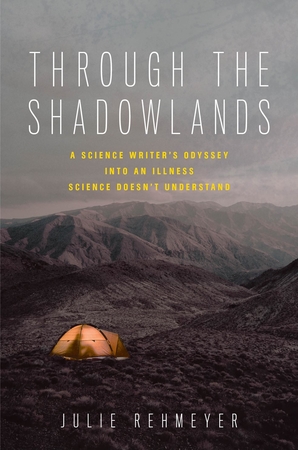
Rehmeyer is one of the best science writers out there, and, when she turns the lens inward to her own experience, it’s really compelling. It’s also a volume that I think will become an integral addition to the growing canon of literature on chronic fatigue syndrome.
Thernstrom’s was the first book that gave me permission to study and experience pain simultaneously. After I read it for the first time many years ago, I immediately started over again and took copious notes. I wanted to understand the broader cultural and historical record of human pain so I could distance myself from my own personal portion of it—but by the time I got through the book a second time, I felt unified rather than further fractured.
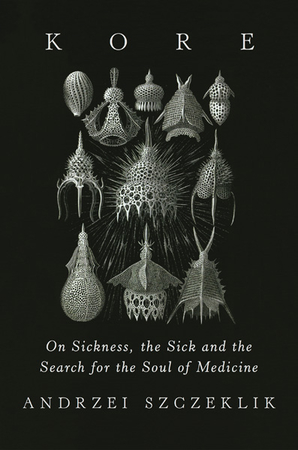
Kore by Andrzej Szczeklik and translated by Antonia Lloyd-Jones
I only just finished this and need to sit with it a bit longer, but if I can entice others to dive in with the quote that led me to it:
“The art of medicine depends on inter alia on exposing the symptoms of disease. Just as a magician summons up spirits at a small, spinning table, so the doctor summons up the symptoms of an illness. But can we force an illness to drop its guard by tickling its feet?”
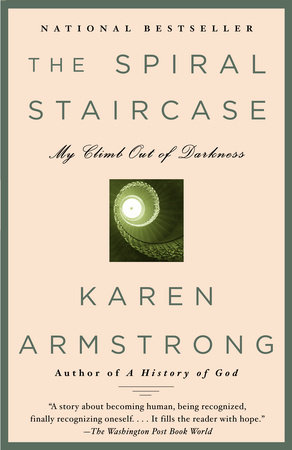
I initially read Armstrong’s memoir as a teenager (before I was mysteriously ill myself) because I’d been making my way through books about women who had reckoned with their faith. I was looking for a path to follow to find it myself. When I came back to it years later after I got sick, it was like reading a completely different book. On the first read, I’d come in expecting it to give me something. On the second, I only wanted to be comforted—and I was.
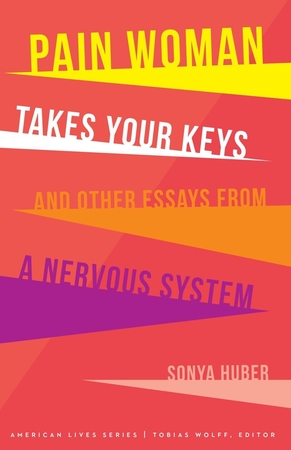
Huber’s essays are among some of my favorites ever penned about pain, and this book is really unlike anything else you’ll read about chronic illness. Even for people who don’t have chronic pain or illness, this is a book that catches and stays with you long after you’ve finished it.
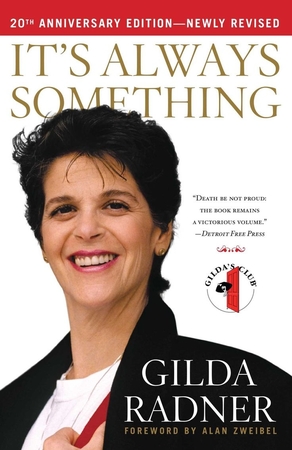
Radner’s tale is a cautionary one; her death from ovarian cancer was one of the first high profile instances where we can say even a beloved, well-known actress with access to the best levels of healthcare, the best doctors, the best treatments, was still disbelieved.
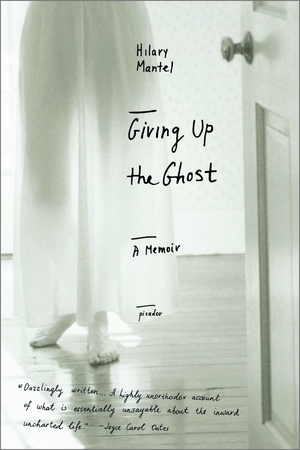
I quote Mantel’s memoir in my book quite a bit because it was one of the first accounts of endometriosis — and the quest for an explanation — that I ever read. Mantel is a phenomenal storyteller but writes about her own life with a kind of truth that feels even more resonant than the history she writes about in her fiction.
Amanda Laird of the Heavy Flow podcast has a forthcoming book of the same name from Dundurn Press that you will absolutely want to pre-order. To round out your understanding of the power and politics of hormones and menstrual equality, add to it Randi Epstein’s Aroused and Jennifer Weiss-Wolf’s Periods Gone Public.
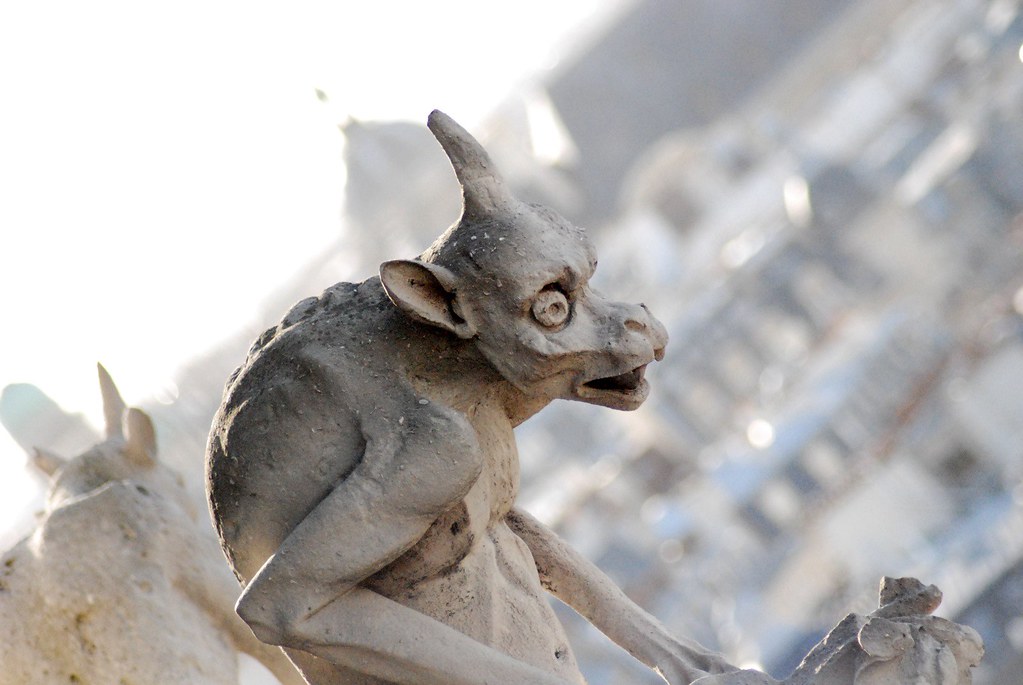
As any French Romantic knows, there is no love more profound, or more sacred, than that between man and a building. This was certainly true for Victor Hugo, whose novel, Notre Dame de Paris (often translated into English as The Hunchback of Notre Dame) inculcated a love of the cathedral of Notre Dame de Paris in his society, and to generations thereafter.
Yesterday’s cathedral fire drove me back to the novel, in search of the soul of Notre Dame when its physical form seemed so likely to disappear before my eyes. I went automatically to my favorite digression, Hugo’s long contemplation on how the printing press had replaced architecture as the principal means of conveying meaning to the masses.
“Ceci tuera cela,” wrote Hugo. “Le livre tuera l’édifice.”
It felt odd to translate this in my head: “This will kill that. The book will kill the building.”
I don’t think he could have predicted we would all watch the destruction of the cathedral in a Twitter livestream—nor that after seeing the spire break and fall into a red and smoking abyss, I would seek out his book to remind myself of the cathedral’s previous existence.
‘Le livre tuera l’édifice,’ wrote Hugo. The book will kill the building.
The cathedral of Notre Dame de Paris takes up such huge imaginative real estate not only in my mental map of Paris, but, I would guess, in the mind of any tourist who has seen it. How could it not? It bears the weight of generations of history and of fiction, its image is immortalized on postcards, tea towels, and key rings. It’s a featured stop on any tour, a monument every friend and family member back home asks about. For historians, architects, artists, Catholics, the cathedral of Notre Dame de Paris seemed an unshakably constant source of beauty and wonder. It was a helpful cultural touchstone. In conversation everyone could put their hand to the old stone first quarried centuries ago and understand what the other person was talking about. In personal reflection, one—or at least I—never got the sense I was alone with my hand literally or metaphorically on the cathedral stone.
I am always conscious of the hands before me that shaped the stone, the many hands that painted or repainted it, that passed by it, that touched it in reverence or curiosity or boredom in all the centuries following. I wonder if I’ve touched the spot where Hugo, while snooping around the cathedral, said he came across or an obscure corner, the word “Ananke,” engraved deeply in the stone. The Gothic calligraphy convinced him it was a hand from the Middle Ages, and the fatalistic, melancholy meaning of the word struck him deeply. “Ananke” is a Greek personification of inevitability. Who had been moved to write such a thing? When Hugo returned to the cathedral the word “Ananke” had disappeared. Someone had painted over it or scraped it off.
The cathedral of Notre Dame de Paris was a palimpsest of an edifice—something reused and rebuilt, showing traces of its past under the additional story of each new century. Each generation modified the cathedral according to its needs: a space for Catholic worship remodeled according to new trends and tastes, a storehouse during the French Revolution (with some statues of kings beheaded, according to the new prevailing ethos), an architectural marvel of the Romantic re-interpretation of the Gothic.
Hugo based upon that fragile memory of a vanished word perhaps the most popular story of the cathedral. The popularity of the novel helped cause the cathedral to be fully restored in 1844. It brought the cathedral of Notre Dame de Paris to public consciousness not just in France but across the world.
The cathedral, through the novel, lives in thousands of new contexts, bearing the weight of meanings its architects could not have envisioned.
It is amazing how widely traveled Notre Dame de Paris has become. You can find it translated into almost every language, in the conversations and imaginations of people all over the globe. The cathedral, through the novel, lives in thousands of new contexts, far from its original home on the Ile de la Cité, bearing the weight of meanings its original architects could not have envisioned.
Each time I look into the novel myself, I see not just the story Hugo wrote, but all the stories I have brought to it and built on top of it. I’m hesitant to loan out my copy, much underlined, with scribbled translations in the margins, for fear that people will read all I have brought to the text. In it I can trace my development not just in French comprehension, but as a thinker, as a writer. It was the first novel of Hugo’s I ever read, the first novel that lead me to think critically about adaptations, the novel that evokes all that I felt when I visited the cathedral every Sunday, when I was studying abroad.
That was the year I began to drift away from religion—but within the cathedral I still found the sacred. Perhaps the stories in the stained glass windows were not straightforwardly true, but were true the way Hugo’s novel was. I found myself drawn back to the cathedral at different times of the day, attuning my ear to the differences between French Catholic services, watching the differing plays of light from the widows onto the walls and floors of the cathedral. My belief in story grew; my wonder at the material culture of human history developed. The cathedral became a linchpin of my emotional life, a source of go-to metaphors for the moments where the divine touched upon the mundane. When I met the man who would become my husband in Paris that year, I told him that being with him was like sunbathing in the light of a stained glass window.
The novel stood in for the edifice when my year abroad came to an end. But looking at the book again today made me think, “Perhaps this is all there will be.”
Mutilations come to Gothic cathedrals from every quarter. The priest paints, the architect rebuilds, and the people follow and destroy it.
Even then I know I am giving into the strain of Romanticism that usually annoys me: the almost maudlin devastation over change, over the inevitable and inexorable deterioration of the physical. Hugo and his contemporaries were brought together over shared enthusiasm more than anything else, seeking to preserve what they loved in the amber of their fiction. And, as Hugo once again points out in the preface, “mutilations” come to Gothic cathedrals from every quarter. The priest paints, the architect rebuilds, and the people follow and destroy it. This isn’t even the first or most famous time the cathedral has badly needed repair.
In losing Notre Dame, it feels almost, as if we have lost all that we have graven into its stones in our own hand: all the memories we associate with it, all the realizations we came to in it or because of it, all the stories we love that let the light into its high vaulting interior. The cornerstone of many an interior world has been shaken. I cannot claim my interactions with the cathedral to be particularly unique, and I can only imagine the devastation felt by those to whom the cathedral was the center of their spiritual lives.
Hugo’s preface concludes, in a characteristic mix of despair and hope, that the man who wrote the word “Ananke” has vanished, as has the word—and perhaps, one day, the cathedral. But it is on that word, writes Hugo, that the he has made his book. It echoes a pun that Hugo returned to in other writings—that Peter (Pierre, also the French word for stone) was the rock upon which the church was built. The novel built on that forgotten word has given the cathedral new life, new cultural resonances with every edition printed, every adaptation staged or filmed. It gives the cathedral new life again, with every person who reads it. And here I offer a stone to the cathedral’s rebuilding, in our memories if not in fact: I offer all that I brought to Notre Dame de Paris and its fictional form, in thanks for all it has given me.
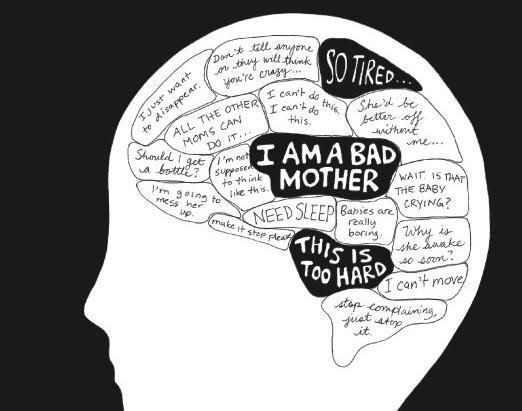
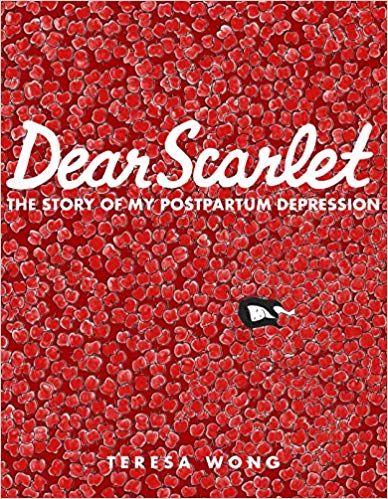
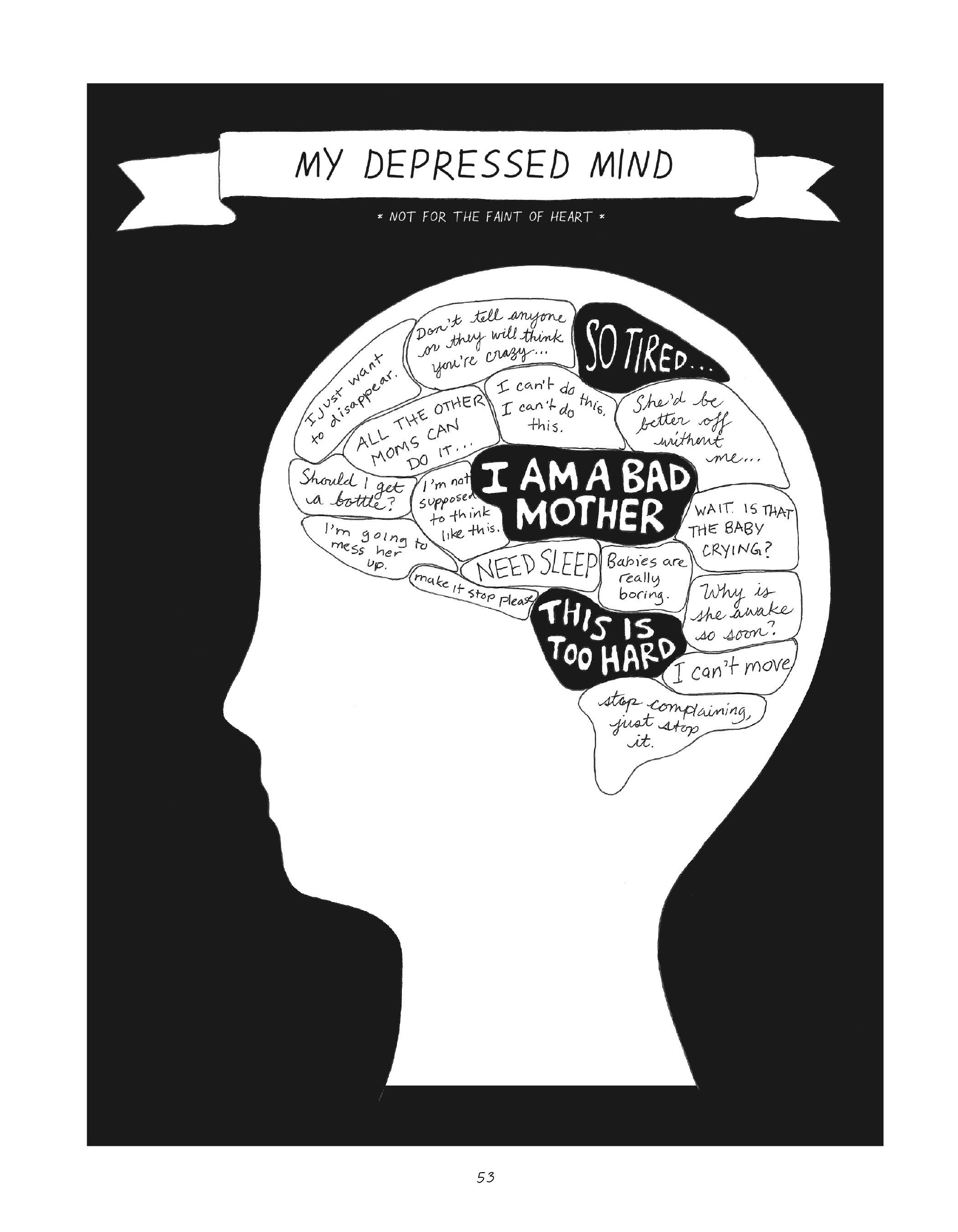
As someone who has written extensively about mothering and mental health in Asian America and in Asia, and the outsized impact of maternal mood disorders on immigrant parents and parents of color, Dear Scarlet: The Story of My Postpartum Depression a graphic memoir by Calgary-based writer Teresa Wong hit me hard. This slim, stark and powerful volume captures both the terrors of postpartum depression and the turning points to better health.
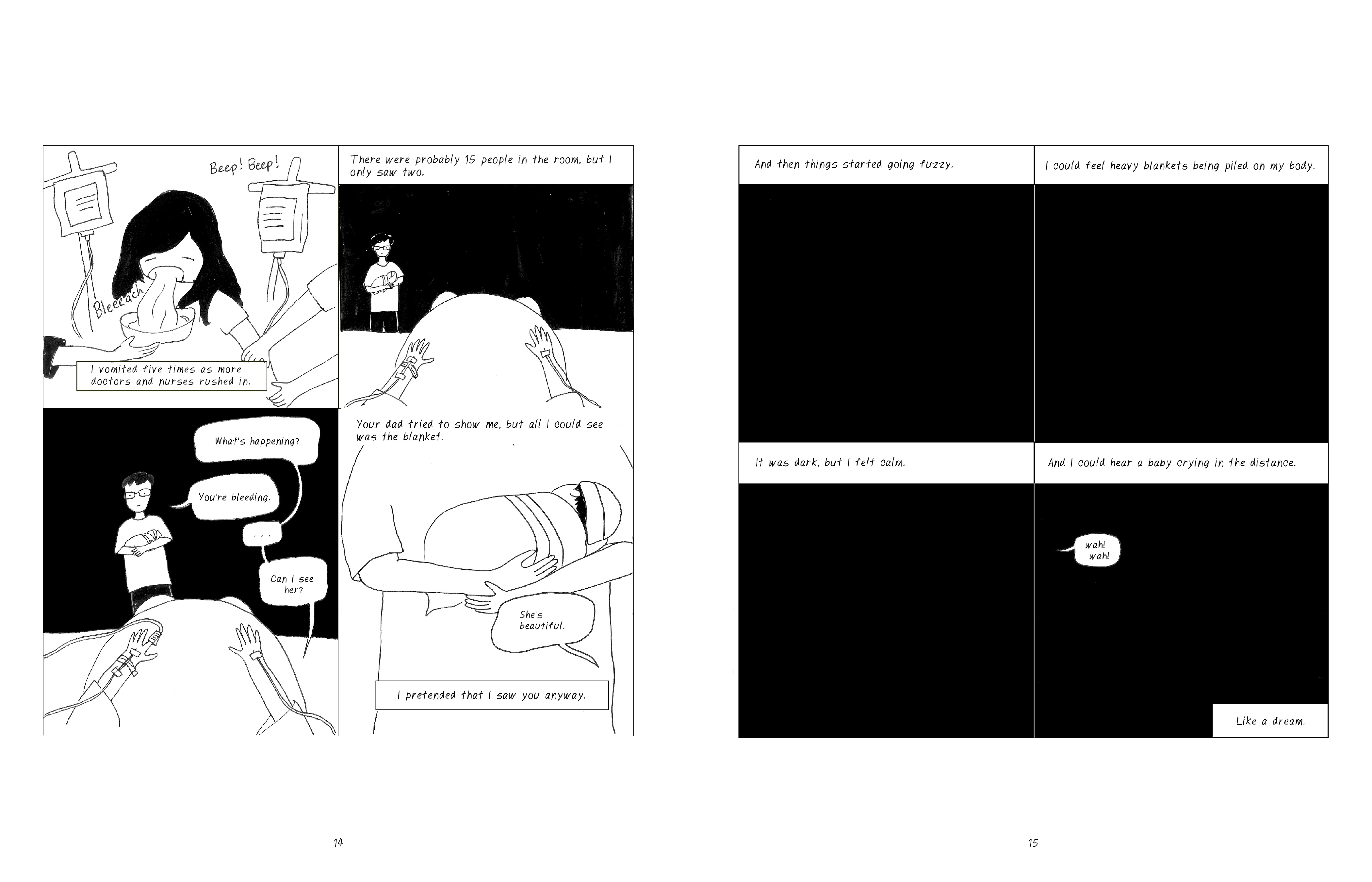
Wong’s high-contrast, black-and-white illustrations are atmospheric and touching, and are reflective of her own highs and lows. In a particularly arresting spread, Wong is undone by a Coldplay song, and her mind begins to spiral. Literally: Wong employs circular script as well.
Buy the book
When I spoke to Wong we shared our experiences, and I mentioned that, as far as I knew, there were very few mainstream memoirs by Asian or Asian North American women in general — save for Amy Chua’s “Battle Hymn of the Tiger Mother — and none about postpartum depression more specifically, and how much that might mean to readers like us.
“I just read an article on Electric Lit about the whiteness of motherhood memoirs,” she said. “I definitely didn’t set out to fill a void, but I’m happy that my experience is adding to the plurality of voices out there.”
Pooja Makhijani: Dear Scarlet explores motherhood, mental health and community. Why a graphic novel? Why is this story best told in comic form?
Teresa Wong: I don’t know if it’s best told in this form, but it seemed like a good way to me when I first started writing it! I was pregnant with my third baby at the time, and I kept having all these flashbacks to [my first child] Scarlet’s delivery. They came as random images, which stuck in my mind. As I started to envision what the book could be, I kept going back to those images and I decided to pursue that, even though I’m a writer not an illustrator. Caring for a newborn is such a “silent” time of life — there’s nobody to talk to — and it felt like images would be a good way to convey that.
Dear Scarlet by Teresa Wong (click to enlarge)
PM: Did you ever think of writing this story first, as opposed to illustrating it? You say you are not an illustrator; how did you develop the skills to tell this story in this form?
TW: I did write it first; I started with a script. I felt pretty confident that I didn’t have enough story to do a straight prose book.
I am definitely not an illustrator. I thought, for sure, I’d need to collaborate with someone to get the drawing part done. But I thought it would be helpful if I “storyboarded” the script so that I could discuss it with potential collaborators. I bought a sketchbook, cut up my script, and pasted it on the left side of each page, then sketched what I envisioned on the right side. I showed that first draft to some friends who had design and illustration backgrounds, to see what they thought. To my surprise, most of them liked my drawings! They said that the simplicity of my illustrations kind of added to the vulnerability of the story, and that it would be more powerful if I wrote and drew the book myself. I decided to do a second draft to the best of my drawing ability, and that became my manuscript.
After doing the book, I realized that I wanted to keep at it, so I started an Instagram account to continue practicing. I know I’ve gotten better, but I’m definitely not where I want to be with my art. Lynda Barry, a cartoonist, says that everyone should draw, whether they’re good at it or not. It’s a fundamental human activity, like singing or dancing.
Dear Scarlet by Teresa Wong (click to enlarge)
PM: In Dear Scarlet you reference your Chinese Canadian culture throughout. How did race and culture play into your postpartum experience, and in the writing of this memoir?
TW: I love the Chinese tradition of “sitting out the month” because it meant I had no obligation to do anything but eat and sleep and recover. It was isolating, but I’m pretty sure I needed it. It made it feel like a sacred time. I know that it’s de rigueur to say that pregnancy is not an illness, but labor and delivery can be pretty traumatic. Having the time to heal and adjust is wonderful.
What’s funny is that a Chinese friend suggested that I cut out the Chinese parts of the book; she wasn’t sure others would find it interesting or relatable. But in the end, I think it’s what caught my publisher’s attention.
Caring for a newborn is such a silent time of life — there’s nobody to talk to — and it felt like images would be a good way to convey that.
PM: Does how you feel about motherhood now changed from when you were writing about it?
TW: Writing about motherhood has given me a certain amount of perspective and distance that, I think, really helps with the day-to-day struggles. First, writing the book helped me work through my unresolved feelings about the postpartum experience. It made me see myself more compassionately, and it helped me understand that we are all just trying to do our best. It also reminded me of how far I’d come. I write and draw about motherhood now on Instagram and that has helped too.
The best thing that has come out of writing about my motherhood experience has been having people, sometimes strangers, reaching out to let me know they are encouraged by my work. So much of modern motherhood is done in isolation. It can be a very lonely time. It’s great to connect with others through words and drawings.
Dear Scarlet by Teresa Wong (click to enlarge)
PM: There’s this old debate about whether or not making art can be healing or therapeutic. I’m curious what you think.
TW: It has been therapeutic for me. I just read a book called The Secret Life of Pronouns. In it, [the author] talked about a study in which people wrote about a traumatic event, and how writing could change their feelings about that event. The key was not to simply ruminate over the details, though, obsessively going over everything that happened. I do believe that writing and drawing are helpful ways for me to work through things. When you place yourself and your experiences within a story framework, you gain perspective. I think doing this book was what I needed to really sort through what I’d lived through. I’d had a lot of therapy too, and taken medication, but there’s something altogether different about writing it.
PM: What are you working on now?
TW: I’m currently trying (and failing spectacularly) to start a second book. It’s about my parents, who both escaped from Chinese communes during the Cultural Revolution, and also about my fraught relationship with them. I have a structure in mind, but haven’t figured out whether I can draw the thing. I do want to do another graphic novel, but I feel the limitations of my talent pretty strongly these days.
My obsession with fires and burns comes from the accident that happened when I was 10, during our last winter in Korea. School had just let out, and I’d walked into the shed outside our one-room home that served as our kitchen. Standing on the uneven concrete floor, I caught a whiff of a broth cooking on the knee-high stove and crouched down to see what it was when my school bag caught the pot handle.
It was almost 40 years ago, but close my eyes, and I can still see it—the broth swishing around the pot like a tidal wave, the boiling bubbles popping as the pot tilts down, the liquid hitting my navy knit leggings. My mother dragging me to the water pump, the rising steam from my leggings dissipating into the air. Scissors cutting through the leggings, my mother’s hands shaking so badly she had to use both hands to cut. Bits of white fuzz—my skin—all over the knitted cloth.
Strangely, I don’t remember any pain at the moment of the incident itself. The pain came later, during the following month when I stayed in our room, taking all the medication my aunt could sneak out of the pharmacy where she worked (we were too poor to afford the hospital) and my mother changed the dressing six times a day, buttering my raw, red flesh with antibiotic ointment.
Purchase the book
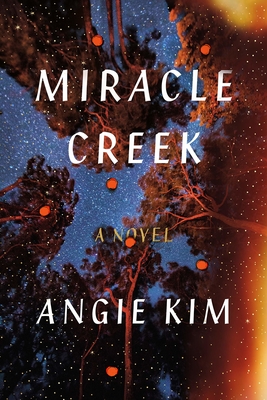
That was the most painful thing I’ve ever gone through, and the trauma stayed with me long after the burns healed. I’m no psychoanalyst, but I’m guessing that has something to do with my obsession with books about burning—fires, explosions, acid, scarred victims, all of it. In fact, my first novel, Miracle Creek, starts with a fire and an explosion, and that horrific incident gives rise to the murder trial that anchors the novel. But my real interest isn’t in the incident itself, but rather, in using it to explore the before and after—the history of the relationships between the characters, and the unexpected ways that their lives changed after the fire.
Here are seven stunning books in which fires/explosions/burnings give rise to the story, but are about much more, in which the fires are quasi-MacGuffins that the authors use to great effect to explore the lives of the people affected by them:
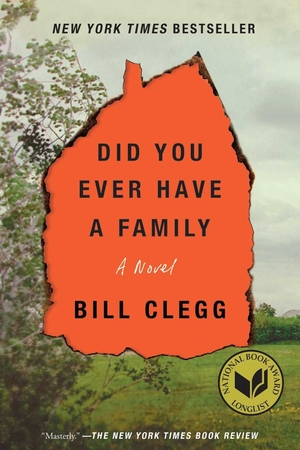
On the morning of June’s daughter’s wedding, a gas leak causes an explosion and fire in her house, killing her daughter, the daughter’s fiancé, her ex-husband, and her boyfriend. It’s devastating, not only for June (who leaves town and drives across the country) but for the other family members of the victims and other residents of the small Connecticut town. Bill Clegg masterfully delves into the aftermath in poignant, tender vignettes, and we learn, little by little, what led to the fire and glimpse the devastating consequences for the town.
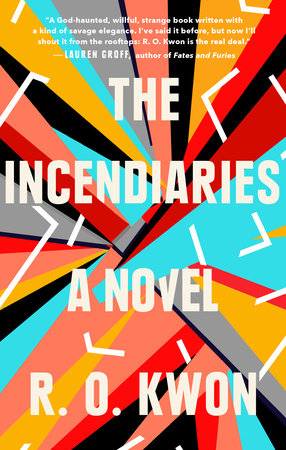
This dazzling novel begins with an explosion, a bomb that destroys a building as those responsible—Phoebe Lin, John Leal, and the other members of their religious cult—look on from a nearby rooftop and shout in triumph. Or so imagines Will, who wasn’t there but pictures the scene as it must have played out. Who are Phoebe, John, and Will, and what is this explosion all about? In sparkling prose, R.O. Kwon explores the forces of obsession, grief, and fundamentalism that led these characters to that moment. I can’t count how many times I paused to re-read a passage, marveling at its precision, its conciseness, and most of all, its rhythm. (Describing the explosion: “Three minutes to go, two, one. The Phipps building fell. Smoke plumed, the breath of God.”) You can tell that R.O. Kwon slaved over every word, every sentence, every paragraph. The result is a powerful must-read.
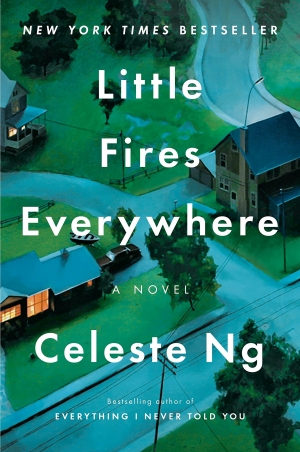
“Everyone in Shaker Heights was talking about it that summer: how Isabelle, the last of the Richardson children, had finally gone around the bend and burned the house down.” So begins the opening chapter, which is centered around the fire, including the reactions of the Richardson family and their neighbors, the descriptions of the firefighting effort, and the discovery that the fire was the result of multiple fires deliberately set in the middle of all the beds in the house. Celeste Ng then takes us back in time to take us into the lives of the Richardsons and the other families in their planned community, as we uncover the secrets and complex dynamics that eventually led to those little fires everywhere.
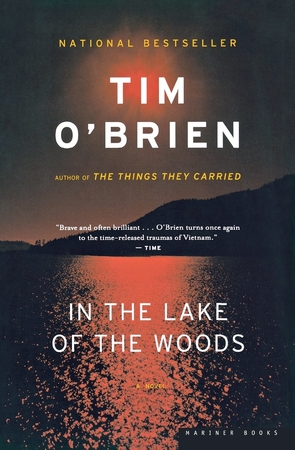
After a humiliating loss in an election for the US Senate, John Wade is hiding away in a remote lakeside cabin with his wife Kathy when he wakes up one morning to find her and their boat missing. His only memories of that night: boiling water in their iron tea kettle and pouring it on their potted plants, killing them. Through a series of Hypotheses chapters, Tim O’Brien tantalizes us with what could have happened—she could have run away, he could have killed her using the boiling water and thrown her body in the lake, she could have gone for a boat ride and gotten lost, or this whole thing could be an elaborate ruse for them to disappear and make a new life for themselves. Through interspersed flashbacks, we see what’s at the root of John’s traumatized life and his landslide election loss: his role in the My Lai Massacre in the Vietnam War. Trees on fire, smoke billowing around bodies and houses, explosions. It’s a powerful novel with a brilliantly unconventional structure. Easily one of my top five favorite books ever.
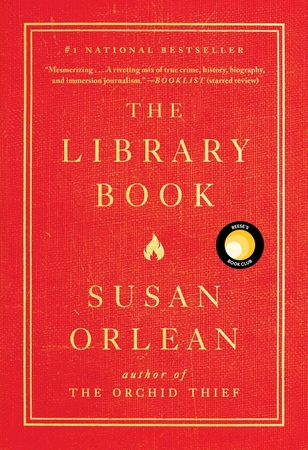
This isn’t a novel, but I’m making an exception because this is an exceptional book. The Library Book is a nonfiction account of the devastating 1986 fire of the Los Angeles Central Public Library, which burned for seven hours and destroyed 400,000 books. The fire was what initially hooked me—Orlean’s description of the fire itself (“feeding itself book after book, a monster snacking on crisps”) and the mystery of who or what caused the fire—but what made me fall in love with this book were the colorful, fascinating stories about libraries, librarians, and the people associated with them, from Susan Orlean’s own mother to Harry Peak, the chief suspect. It’s a gift to those of us who love books and reading.
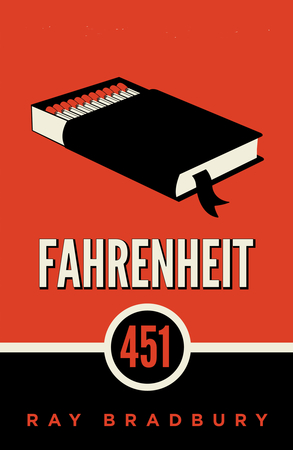
How can we talk about book burning without mentioning this great classic? Fahrenheit 451 is, as the book tells us, the temperature at which book paper catches fire and burns. In this dystopian “future” (in quotes because the book was published in 1953, and Ray Bradbury has said that the book takes place in 1999), books are outlawed and “firemen” burn any they find. The concept alone is striking, but the book is most chilling when it depicts the shocking consequences of this threat to our liberty, as when the firemen raid an old woman’s house, and she sets fire to her own house, killing herself rather than leave her books to be destroyed.
All right, fire is not a Trojan Horse for the real story in this sci-fi/horror/thriller from The King; fire is the real story. But I can’t have a list of books that start with fires and not include a book called Firestarter! Besides, it’s special to me for several reasons: 1) It was published in 1980, the year of my boiling-broth accident; 2) 1980 is also when I moved to America, learned to speak English, and started reading books in English; and 3) Firestarter was the first Stephen King book I ever read. Also, the film version starred Drew Barrymore, whom I idolized during that post-E.T. era.
Charlie has pyrokinesis, the ability to start fires. The Shop, a secret government unit (which, oh, by the way, performed experiments on her parents, which is what caused her extraordinary power), is after her, and she and her father are on the run. Pure suspenseful fun, with fires and explosions galore.
This March, I borrowed a friend’s copy of Ursula K. Le Guin’s The Left Hand of Darkness, excited to finally remove the novel from my “To Read” list. On the title page of my friend’s 1999 paperback edition, there is a note scrawled from her college sweetheart who gave her the book as a birthday present in 2011. In scratchy script, he comments on the irony of writing a love letter in the front of “one of the most unromantic books ever written.” On this point, he and I disagree. Perhaps because of Le Guin’s careful, mechanical writing, and Left Hand’s arctic setting, the book has sometimes been characterized as cold. But it is with love that this novel interrogates the binaries that lord over human lives—female and male, pride (shifgrethor) and humility, love and hate. With tenderness, Le Guin attempts to stretch her readers’ minds and envisions a boundless, more cooperative future.
The book just celebrated its 50th anniversary of publication, but in 2019, The Left Hand of Darkness still resonates. Winner of both the Hugo and Nebula Awards for Best Novel, Le Guin’s opus is consistently ranked as one of the best works of science fiction ever written. In Donna R. White’s 1999 book, Dancing With Dragons: Ursula K. Le Guin and the Critics, she callsLeft Hand “one of the seminal texts of science fiction, as important and influential as Mary Shelley’s Frankenstein.”
Set thousands of years from now, The Left Hand of Darkness follows human Genly Ai on his mission to Gethen, an icy, alien world. As an envoy of the Ekumen, a peaceful confederation of planets, his goal is to recruit Gethen to join the coalition. This proves to be a challenge; Genly struggles to navigate the harsh terrain and puzzling customs of the foreign world. Gethenians have no fixed sex, but enter kemmer—become either physiologically male or female—once a month to engage in sexual activity. This ambisexuality permeates the culture of the planet, and impedes Genly’s understanding of his hosts, and theirs of him.
The novel acts as a warning against xenophobia and a call for radical collaboration.
Acknowledged as one of the first works of feminist science fiction, Left Hand is often examined through the lens of gender. In a 1994 interview with writer Jonathan White, Le Guin herself calls the book a feminist thought experiment. She notes that in the 1960s, “everybody was asking, ‘What is it to be a man? What is it to be a woman?’” Left Hand is her attempt to answer those questions; she “eliminated gender to find out what would be left.” However, as author Becky Chambers writes for Lit Hub, “this book is both about gender and not about gender at all.” The novel acts not only as an examination of the gender binary, but also as a warning against xenophobia and a call for radical collaboration—powerful and timely messages in 2019.
Two years into Genly’s mission on Gethen, the planet is beginning to develop the concept of the nation-state. Intensifying territorial disputes between two of Gethen’s continents, Karhide and Orgoreyn, are pushing Gethenian society closer and closer toward nationalism. In many ways, Gethen is a more advanced world than our own: there is no gender-based privilege, no sexism, no rape, and no war. But, the planet is still young; given a little time, Gethen may establish some of the same structural evils that plague Earth today.
In The Left Hand of Darkness, Le Guin suggests that nationalism is a developmental milestone for any growing nation, a kind of transitional philosophy. Over time, it becomes obsolete, displaced by a more enlightened, more socialist ideology. (Le Guin notes that Genly comes “from a world that outgrew nations centuries ago.”) This “enlightenment” is part of what Genly offers the people of Gethen. As Charlie Jane Anders remarks in The Paris Review, “they could leapfrog over this drive toward nationalism by joining the Ekumen and becoming one unified world among many.” In Left Hand, the implication is that they should.
Throughout the book, readers are repeatedly reminded that patriotism is a double-edged sword. Le Guin’s progressive politics are no secret (she reviled “militant patriotism” and “self-interest”), and they inform the morality of the world she creates. Early on in the novel, Estraven, a Gethenian politician who becomes Genly’s ally and companion, asks the envoy if he knows what patriotism is. Genly responds, “I don’t think I do, if by patriotism you don’t mean the love of one’s homeland.” Most people (and dictionaries) would agree with Genly’s definition of the term. However, Estraven replies, “I don’t mean love, when I say patriotism. I mean fear. The fear of the other.”
Estraven later ponders aloud to Genly, “What is love of one’s country; is it hate of one’s uncountry?” He further asks, “I know towns, farms, hills and rivers and rocks…but what is the sense of giving a boundary to all that, of giving it a name and ceasing to love where the name ceases to apply?”
These questions are just as pertinent in 21st-century America as they are in fictional Gethen. In a nation where the President relentlessly pushes for a border wall, likens immigrants to animals, and spouts “America first” rhetoric, the “love of one’s country” looks a lot like “the hate of one’s uncountry.” In a nation that misrepresents peaceful protest as unpatriotism, that cages refugee families, whose politicians question why “white supremacy” is considered bad, the critical interpretation of patriotism that Le Guin offers seems particularly apt.
Globalism, Le Guin implies, is unpatriotic: To be a patriot is to love one’s country, and that country alone, unquestioningly.
In The Left Hand of Darkness, Le Guin also touches on what it means to be a patriot. When Estraven ultimately chooses to help Genly in his mission to convince Gethen to join the Ekumen, his country of Karhide labels him a traitor. Significantly, Estraven doesn’t dispute this label; he affirms it, noting that he “is not acting patriotically.” Although by aiding Genly, he is acting in the best interest of Karhide, he’s also acting in the best interest of the planet as a whole. This globalist attitude, Le Guin implies, is fundamentally unpatriotic: To be a patriot is to love one’s country, and that country alone, unquestioningly.
This is a profound sentiment in 2019: Just last week, Congress held a hearing on nationalism, and as experts have noted, the ideology is on the rise all around the world. The choice Gethen faces in The Left Hand of Darkness—to either join the Ekumen or veer toward isolationism—mirrors the crossroads that we find ourselves at today. What kind of society are we? And what will we become? Despite its fifty-year-old publication date, Left Hand shows us a path forward today.
Toward the end of the book, Genly reflects on his conversations with Estraven. He wonders “what the love of country truly consists of, how that yearning loyalty…arises, and how so real a love can become, too often, so foolish and vile a bigotry. Where does it go wrong?” In the final chapters of The Left Hand of Darkness, Le Guin suggests a cryptic answer to these questions in the form of a Gethenian poem:
Light is the left hand of darkness and darkness the right hand of light. Two are one, life and death, lying Together like lovers in kemmer, Like hands joined together, Like the end and the way.
Like light and darkness, love of one’s country and fear of “the other” are yin and yang. One cannot exist without the other.
Genly shows Gethenians an entirely “new road,” a radically kind and cooperative way forward that looks very different from the world’s current trajectory toward nationalism. In The Left Hand of Darkness, Le Guin does the same for her readers by expanding what is possible and encouraging us to think beyond. In 2004, she remarks that “in an America where our reality may seem degraded to posturing patriotism and self-righteous brutality, imaginative literature continues…to examine the roots of power, and to offer moral alternatives.”
Within the pages of Le Guin’s masterpiece, there is indeed a simple, overarching moral: We are better, and can accomplish more together. If that isn’t romantic, I don’t know what is.
Petar didn’t have enough money. All his friends had forgotten him. He couldn’t pay his sex tax and that meant that he could no longer be a man. He’d be processed into a stone, and he knew he’d be deaf and blind dust. Each particle of the dust he would turn into would be listening to her steps, Nia. How could he forget her? He’d been a stone several times for her.
Her family would never agree to pay his sex tax. They didn’t want him around; they were heaps of brown stones around her and he had to climb over them. He had to endure in order to reach her. They were endless hard sharp crags closing in on him, encircling Nia. When finally he managed to pay his tax, her father told him she had been processed into sand. Petar went looking for her. How could he be sure she was the gray rock jutting like a knife into the sky? He believed he’d know, he’d been dust, lowly powder without form of its own, and he’d been a rock, so he knew: a rock would recognize if another rock was Nia.
She used to be a small island lost in the sea, then she was a dune. She was a hillock of sand and he was the wind in the night that touched it gently, very carefully. He loved her so much he wanted to be dust all his days without her. Petar had been sandstone. He’d been patient. He’d been mud. And he had been a digger for years and years. Diggers were the sexless workers who cut the stones and carried the bags of sand with which other diggers built houses. He had been a heap of bricks and other diggers had built a house with him. He had remained a wall of a house forever, rubble in the base of a mausoleum, a tile on its roof, a chimney dead with smoke. He could not become a man until the house crumbled, until the roof disintegrated and the chimney melted away.
The diggers were losers, the despicable riff-raff that lived to grab money. They were happy when they stole small change or killed other diggers for small change. They were no men or women; they were bad eggs that had no embryos in them. After ages of building houses and making roads they could finally pay to be men or women for a day. Petar knew very well what it felt like to be a digger. He had built a garden amidst a desert for a newlywed couple. He watched as they kissed and he was there while they made love. His task was to bring them water and food. They liked his docility and paid him well.
Even while he was a digger he never forgot. He didn’t know where Nia was. He hoped she was not a digger like him. He hoped he could earn enough to buy her off, to pay her sex tax. Her parents could pay any price and she could remain a girl all her life. Her parents could find a different man for her every time she was a woman, but Nia…
Petar remembered…
“You are my bread and you are my hunger,” she had said. “I don’t want anybody else. I’d rather be a digger all my life… or a house that will never collapse if you are not with me.”
Petar didn’t want any other girl. He could afford to be a man an hour every year. There would be women for him. He could find a sweetheart and she’d love him; being a woman was a short-lived bliss and every second was a treasure. It was a common sight to see a man caressing a piece of stone. His woman had no more money to pay her sex tax and her time as a girl had passed. Sometimes a woman held a pebble in her hand; that was the man she had kissed a minute before.
Petar knew what happened after the kiss. Women threw the pebbles away and rushed to find other men. Every second counted. Every heartbeat was a reward. Men got rid of the stones that had been the love of their days. No one wasted time.
Nia was in his dreams. On the day he was a man, one short winter day in the endless year, he didn’t look for another girl. He wanted Nia. “You are my shore and my infinity,” Nia had said.
“He’s sick,” the diggers said. “He’s deranged. He’s a stone that has crumbled the wrong way.” But Petar was not a stone that had crumbled the wrong way. He hoped Nia was a pebble he could press to his heart.
“I’ll pay the digger to carve your name on me, after he processes me into a stone, Petar,” she had said. “And you’ll know where I am. You’ll find me.”
“Your parents won’t let you be a stone. They’ll find someone for you.”
“No,” she said. “I will not be a woman for anybody else!”
He could not find her.
He’d been an outcrop of syenite for all eternity before he made enough money to become a man again. He paid a digger to carve her name on the gray rough rock he had turned into. It cost him all he had earned while he was sand, and what he had saved up while he was dust and mud. The digger that had carved Nia’s name on him could afford to remain a man for an interminable week on Petar’s money.
Petar waited. He was a crag. Winds hit him and the mist slept on him making his surface slippery and freezing cold. Birds perched on him and moss grew on him, destroying his crystals. Petar made money by slowly dying. He hoped the moss had not covered Nia’s name. He prayed it remained cut deep and sharp into him.
One day Nia came. She touched the moss that grew on his surface. She cleared the leaves of the trees that had been falling onto him for years. “Petar,” she said. “Dearest Petar!”
A stone cannot feel, Petar had been told that many times. A stone is dead. A stone cannot love the summers and the winds. Petar knew all that. But that was not true. There she was, his Nia. You are my bread and my hunger. You are my eyes. You are my mist, and my birds, Nia. He understood her words. He could feel her touch. He had been a sexless digger so long, and he had loved her. He had been dust, the storms had scattered him all over the world, and he’d loved her. He had been a road of stones that her parents destroyed, and he’d loved her.
Something was happening. His surface broke. Deep crevices cut through his cold depth, the moss which grew on him caught fire. He had paid that digger to carve Nia’s name on him. Now, her name was no more. His crystals creaked and shrieked, his granite depth writhed and shook. There was no more strength in him. He was not a stone anymore. He was not sand, not even dust. He didn’t know what was happening to him. Then he heard her voice.
“Look!”
“Yes, you were right, my child.”
That was her father speaking. Petar could understand. He recognized the man by his firm touch. Petar had been a stone and her father had kicked him and pushed him hundreds of times.
“Look at it. What a beautiful ruby!” another voice said, a man Petar had never seen before. “You wouldn’t imagine cheap granite could make such a splendid ruby!”
“Oh, they all do, James,” her father said. “The trick is to make them fall in love.”
“My fiancée is very good at that,” said the man Petar had never seen. “You are unbelievable, Nia. Congratulations.”
“Thank you, James.”
There were no winds and there was no mist. Petar was not a man and had no heart. Something much more powerful than a heart broke in him.
“Let’s wrench that beautiful ruby from this rubbish heap,” her father said.
“That’s the best gem in your collection, dear,” the man she called James remarked as he carefully placed Petar in a box. A dozen of other smaller rubies sparkled momentarily under the thick lid.
The thing that was more powerful than a heart screamed deep inside Petar, You are my bread and my hunger. You are my coast
and my infinity. Perhaps Nia did not know that a ruby was a stone that would live longer than the wind.
“The supremacy of the United States must and will be enforced throughout every part of the archipelago, and those who resist it can accomplish no end other than their own ruin.”
Issued to the Philippines in 1899, The Proclamation of the U.S. Commission Towards Conciliation and the Establishment of Peace is about as true to its name as Operation Enduring Freedom. The sentence above was the commission’s first principle. Less than a month later, the Philippine-American War began, and that conflict—that insurrection—would irrevocably shape the future of both countries. A definitive record of Filipinos killed during the war is difficult to ascertain; the number ranges anywhere between 200,000 to 1.4 million (the politics of the census are complicated when so many on one side of a war have been massacred). Waterboarding was first used by American soldiers in the Philippines as a form of torture during this period. Even Mark Twain understood that American imperialism in the Philippines was a genocidal project: “There must be two Americas: one that sets the captive free, and one that takes a once-captive’s new freedom away from him, and picks a quarrel with him with nothing to found it on; then kills him to get his land.”
This was a war that established America as a global empire—the strategies used on Filipinos had already been implemented to devastating effect on Native American populations during the Plains Indians Wars—and yet somehow it remains a ghostly presence, a blip, in the annals of American history, not to mention mainstream contemporary American memory.
Buy the book
Fiction writers are often expected to address such absences. And while there are wonderful novels and fiction authors who do just that—most notably Gina Apostol in her most recent book, the searing and kaleidoscopic Insurrecto—I know that I’ve also had discussions with fellow fiction writers, especially writers of color and immigrant writers, who often point out the sometimes frustrating consequences of being expected to use your fiction as a platform to educate the wider American public about a historical lacuna.
And I get it: there’s a particular vitality to fiction that makes the past come alive, when an author manages to turn a fact about war into flesh and blood. But sometimes the assumption that we should go to writers of color to learn about forgotten history can often mean we end up instrumentalizing those writers and their art for the ethnographic value they bring to us. The divide often then results in readers going to minority writers to learn the particular, and going to white writers to feel the universal. Certainly many of the literary panels I’ve seen or been on during the year I’ve been on tour have been organized thematically in just this way.
I don’t mean to suggest that writers of color be less politicized in their reception—we’re political, historical and emotional animals and those material facts of our being will inevitably find their way into our fictions. But that logic should be applied equally to all artists. I would love to see a panel about identity consisting of entirely middle-class writers, or a panel about women’s anger in fiction that doesn’t center white women. I would love for readers to expect more white American women writers to write fiction about why so many of them voted Trump into office. I would love a list of fiction recommendations about whiteness, for people who want to “learn more.” (I’d love to write that list, too: George Eliot’s The Mill on the Floss, one of my favorite books of all time, would definitely be on there, along with maybe Hemingway’s The Garden of Eden; obviously The Great Gatsby, or what about the entire oeuvre of Marguerite Duras?)
So below are a few of my favorite contemporary Filipinx American critics and historians from whom I, too, have gained a valuable education about the wonders and terrors of American statecraft and its rippling effects around the world, particularly the country my parents immigrated to California from—in the hopes that by expanding the list of people from whom we learn our history, we can also expand the list of people from whom we experience our art.
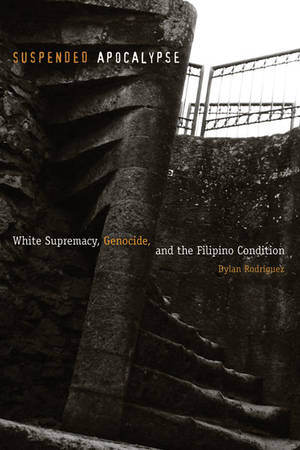
This book should be required reading in American schools. It’s a rigorous and searing work of critical history, in which Rodriguez shows us how contemporary American identity and statecraft as we know it was constructed by its relationship to the Philippines—and vice versa. It connects American anti-blackness and indigenous genocide with its similar policies in the archipelago, and extrapolates that history to the modern day, with a virtuosic chapter on race and natural disaster that compares the aftermath of Hurricane Katrina to the eruption of Mt. Pinatubo in the Philippines. Often shocking, utterly indispensable.
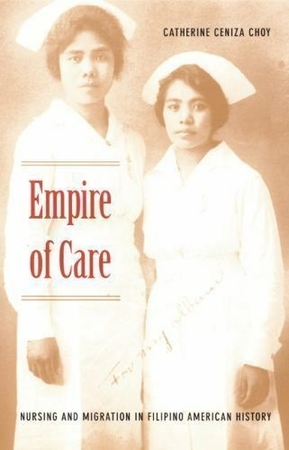
Another absolute classic: chances are, if have ever been to a hospital of any kind, you’ve benefited from the care of a Filipinx nurse. Maybe it was my mom, or one of my aunts or cousins. Catherine Ceniza Choy traces the long history of that labor back to, you guessed it, the American colonization of the Philippines, which makes this book a vital work of American history as much as it is a cornerstone of Filipinx history, labor history, and feminist history.
Growing up, I had a godfather who was also sometimes my godmother. The way he liked to be addressed—he usually used masculine pronouns even when referring to himself as a woman, in a way that was both true to him and also indicative of the fact that gendered pronouns do not exist in Tagalog, and thus he was dealing with both gender and grammar in a second, lesser language—was akin to calling someone Uncle Jessica. Queerness in my family was present, protected, often unremarkable, and yet went hand in hand with an underlying structure of patriarchal machismo, misogyny and homophobia. How those two things could live together, often in one person, I still find difficult to articulate, even (maybe especially) as a bi woman. Books like Manalansan IV’s book help: another long-time staple that delves into the lived specifics of a subset of Filipinx queerness (in particular bakla identity; the book doesn’t focus on queer women), while also thinking through the ways race and prejudice inform and deform our desires.
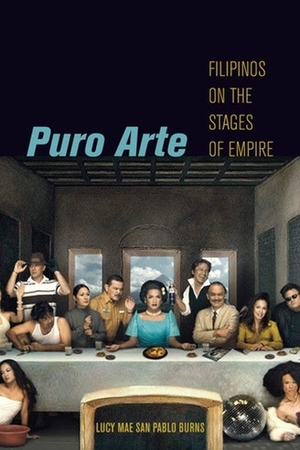
Chances are, if you’ve ever watched The Voice or American Idol, you’ve encountered a Filipinx performer—usually singing a pitch-perfect cover of a torch song, in the vein of Celine Dion or Boyz II Men or a classic musical. Puro Arte explores the long history of Filipinx performance and connects it to the formation of Filipinx identity under U.S. imperialism—more specifically, what the book calls “imperial amnesia.” From white mobs chasing Filipino men in the 1920s era of taxi dance halls (and the accompanying fear-mongering around miscegenation and hypersexuality that historically differentiates the treatment of Filipinos from other Asian groups in America) to the phenomena of Filipina actresses starring as the Vietnamese character Kim in Miss Saigon, Puro Arte will deepenyour understanding of the politics of performance—and maybe even ensure you never look at performers like Bruno Mars the same way again.
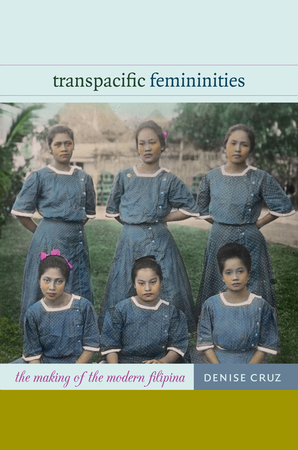
A GOAT work of scholarship and criticism, with a staggeringly wide historical scope and a generous, approachable readability. Denise Cruz brings us from the colonial era to the Cold War, and gives us a much-needed feminist historicist approach to thinking about everything from national heroism, to class, colorism, and the ways in which the costs of war and empire are often borne on the bodies of women.
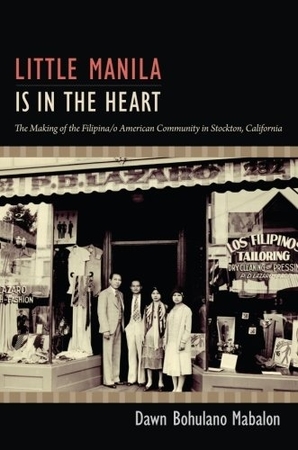
Mabalon’s sudden passing in 2018 dealt a tremendous blow to the Filipinx American community. Little Manila Is in the Heart is a much-loved masterpiece of ethnography, history and activism all at once, centering on the titular Little Manila of downtown Stockton, California. Mabalon’s writing is as sharp as it is loving and accessible, and the way she traces the community’s origins to its contemporary struggles against gentrification could be fruitfully linked to similar struggles around the country, particularly the rapidly changing Bay Area. Rest in power, Dawn.
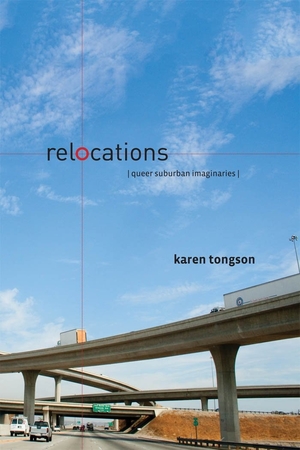
I’m a bi suburban kid of Filipinx immigrants, and though Tongson’s book mostly covers the queer suburban imaginaries of southern California, I still feel like I recognize traces of the Bay Area I grew out of in the pages of this deeply felt work of criticism as love letter. The attention to and love for queer suburban life (and the particularities of, for example, suburban gentrification and displacement and its effects on queer lives) is what makes the work shine: it’s a much-needed antidote to both art and criticism’s focus on narratives of queer urbanity. The writing itself is elegant and singing with emotion, and Tongson understands beautifully that there is as much history (American, global, colonial, interethnic) in our strip malls as in our libraries; as much global epic drama in our garages as in our grandest theaters.
Music had its night in February at the Grammys. The film world followed closely behind with its Oscars. Now, in true saving-the-best-for-last fashion, it’s our time, book people, to celebrate American literature from the year that was. In just a few short days, on April 15th, the announcement of the 2019 Pulitzer Prize for Fiction—yes, contrary to recent tweets by a certain someone’s son, it’s a real award—will become the popular culture news event of the day.
The Pulitzer Prize, of course, isn’t the only major literary award that gets people talking. It’s the oldest, though; Ernest Poole’s His Family claimed the inaugural award for fiction all the way back in 1918. And the Pulitzer Prize is the rare literary award that garners mainstream media attention and produces real sales. Reading through some of its past recipients sounds like a through-the-ages who’s who of American literature: Toni Morrison, Jhumpa Lahiri, Cormac McCarthy, Annie Proulx, Eudora Welty, William Faulkner, and Edith Wharton.
The announcement of the winner can provide pleasant surprises. Last year’s recognition of a comedic novel (Andrew Sean Greer’s Less) is one such example. But the Pulitzer Prize announcement can also come with confusion—and even anger. I’m thinking of the 1974 scandal involving Thomas Pynchon’s Gravity’s Rainbow. The three-person jury pushed for Pynchon to receive the honor, but the board rallied against the decision, resulting in no winner. And I won’t remind you of the near-unspeakable recent disaster from 2012. (Yes I will. Karen Russell was robbed!)
Guessing what title will win is a tough gig, but it’s a challenge I welcome. Truthfully, I’m up for just about anything that celebrates the written word. And what a celebration we should be having from the plethora of wonderful books released in 2018.
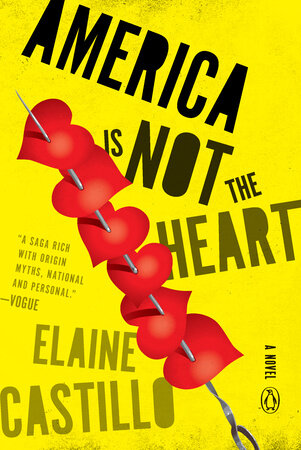
Before getting to the ten most likely contenders, I have to mention a few of the many fantastic and acclaimed books that will likely just miss receiving the 2019 Pulitzer Prize for Fiction. These include memorable debut novels from Tommy Orange (There There) and Elaine Castillo (America Is Not the Heart); masterful collections from Kevin Wilson (Baby, You’re Gonna Be Mine), Nana Kwame Adjei-Brenyah (Friday Black), and Nick White (Sweet and Low); and (already) award-recognized titles from Luis Alberto Urrea (The House of Broken Angels), Lisa Halliday (Asymmetry) and the late Denis Johnson (The Largesse of the Sea Maiden).
For the record, I’m focusing on other awards, reviews, buzz, and good old-fashioned intuition in making these predictions. (I decided not to allow my own personal feelings about the best books of the year—shout out to Leesa Cross-Smith’s Whiskey & Ribbons and Jamel Brinkley’s A Lucky Man—to interfere too much with my judgment on what I think will happen.) Without further ado, here are the predictions, in order, for the ten books most likely to receive the honor of being the winner of the 2019 Pulitzer Prize for Fiction.
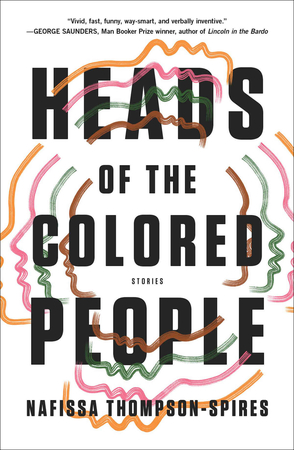
It’s hard to resist a debut collection of stories that is this good. And, really, who would want to? This collection received multiple awards citations. It was a finalist for the Kirkus Prize, a L.A. Times Book Prize finalist for first fiction, and longlisted for the National Book Award. In Heads of the Colored People, Thompson-Spires looks at issues of race and class in ways that are incredibly timely and darkly funny. If the jury wants to champion a short story collection by a new writer, watch out. This one is certainly worthy.
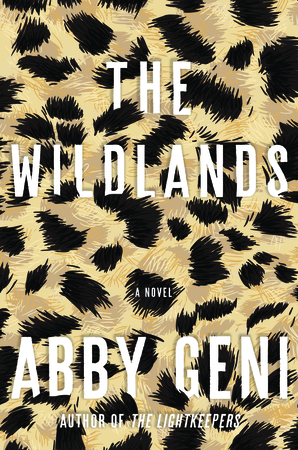
Abby Geni’s first novel, The Lightkeepers, was longlisted for The Center for Fiction’s First Novel Prize, and her sophomore novel, The Wildlands, proves that honor was a sign of the things to come. In her latest novel, which begins after a deadly tornado tears apart the town of Mercy, Oklahoma, Geni explores humanity’s relationships with other humans, animals, and nature. It’s a remarkable achievement. Don’t just take my word for it. Buzzfeed and Kirkus both recognized the book as being one of the year’s very best, and it was selected as a fiction finalist for the L.A. Times Book Prize. The Wildlands comes from Counterpoint Press, which is an indie publishing house. Small press titles are surging, and Geni’s novel is a standout. This is a book to watch out for—and to read (if you haven’t).
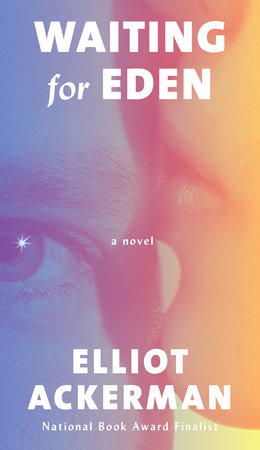
Ackerman is a past National Book Award finalist, which puts anything he writes on the radar of titles to watch. Waiting for Eden, a novel told from the perspective of a dead man who is waiting—on his marriage, on his friend, on understanding, on his life, on his afterlife—is Ackerman’s masterpiece. Clocking in at less than 200 pages, this slim novel is a meditation on the meaning of life. It’s quiet, tender, and absolutely haunting. It’s loved by critics and readers alike. All of these things make it perfect for awards season. Plus, the ALA listed it as one of its “2019 Notable Books,” which is a good Pulitzer indicator.
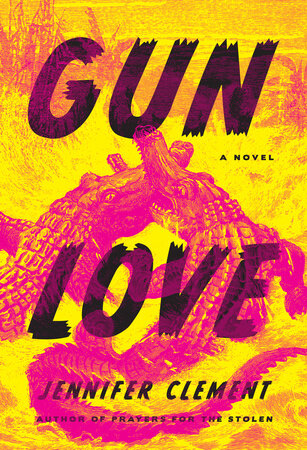
When this timely novel appeared on the longlist for National Book Award, it was a welcome surprise. It didn’t get a ton of press upon its release last March, but it still found a loyal readership. That, in itself, proves something. Since its NBA recognition, Time and Library Journal selected Gun Love as one of the best books of the year. It has momentum as we approach the Pulitzer finish line. Clement’s novel looks at issues of class and guns, and the focus on the mother-daughter relationship is orchestrated wonderfully. I wouldn’t be surprised at all to see it as a nominee (and maybe even the winner).
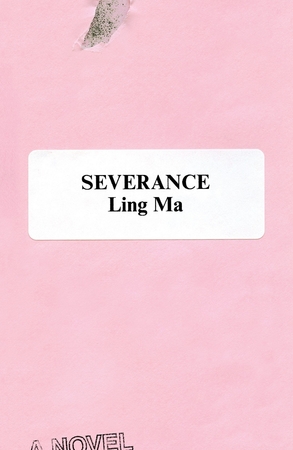
Okay, so quirky, satirical apocalyptic novels aren’t typical Pulitzer bait. I get that. But hear me out. Severance continues to show up on lists that matter. The New York Times cited it as one of the “100 Notable Books of 2018.” That’s a big deal. It won the Kirkus Prize. Another big deal. And it was a finalist for the 2019 PEN/Hemingway Award. Big deal again. On top of all those accolades, it appeared on “best of” lists from, among many other publications, Electric Literature, Lit Hub, and Bustle. The book is charming, and it’s so original that it’s hard to forget.
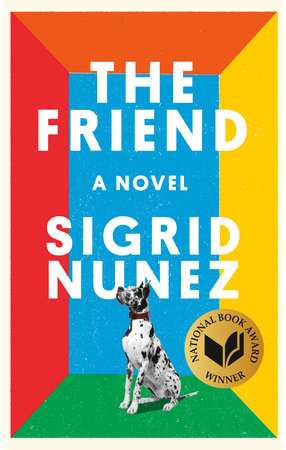
Before The Friend won the National Book Award, I had it at the top of the predictions. But history works against NBA winners and Pulitzer winners matching up. In fact, there have only been seven times when both awards went to the same book (Faulkner’s A Fable, Cheever’s The Stories of John Cheever, Porter’s The Collected Stories of Katherine Anne Porter, Updike’s Rabbit is Rich, Walker’s The Color Purple, Proulx’s The Shipping News, and Whitehead’s The Underground Railroad). The Friend is a novel that could join this exclusive list. Everyone I talk to loves this book—I mean, folks emphatically love it. It’s hard to resist a novel about dog-human relationships. (Yeah, it’s also about grief and loss, but still. Dogs.) Plus, it has all kinds of accolades, including the important mention from The New York Times as being one of the “100 Notable Books of 2018.” While history works against it, don’t be surprised if Nunez wins.
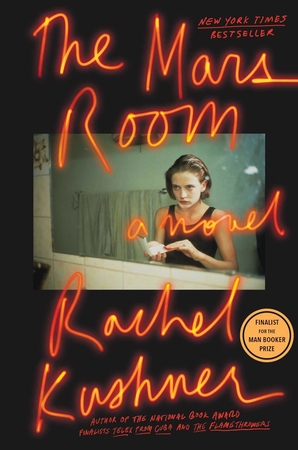
Many people thought Kushner’s 2013 novel The Flamethrowers was going to win the Pulitzer in 2014. The fact that it didn’t helps The Mars Room, which has received equally rapturous reviews. Additionally, it was a finalist for the National Book Critics Circle Award and the Man Booker Prize. Time listed it as the top fiction release of 2018. It was longlisted for the Andrew Carnegie Medal, and it received acknowledgment from the ALA and The New York Times. Each of these mentions is major in predicting the Pulitzer Prize. The Morning New’s Tournament of Books, a literary March Madness matchup, isn’t really a predictor for the Pulitzer Prize, but for what it’s worth The Mars Room did really well there too. It lost to My Sister, the Serial Killer (the eventual winner) in the zombie round. Kushner’s novel about Romy Hall and her time at Stanville Women’s Correctional Facility is a front runner.
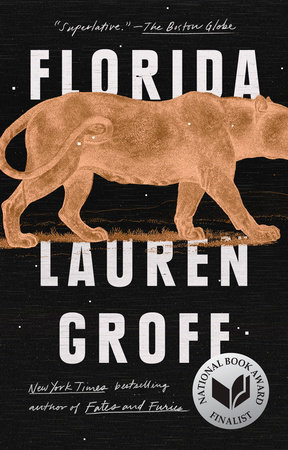
The Monsters of Templeton. Delicate Edible Birds. Arcadia. Fates and Furies. Florida. Those are Lauren Groff’s books, and somehow she doesn’t have a Pulitzer yet. Florida finds Groff back in her best form, the short story. These stories are haunting, oozing with humanity—both its horrors and its loves. Florida was a finalist for the Kirkus Prize and the National Book Award, and it won the Story Prize. It has a ton of buzz, and Groff has to eventually win a Pulitzer. Florida could be the book to do it.
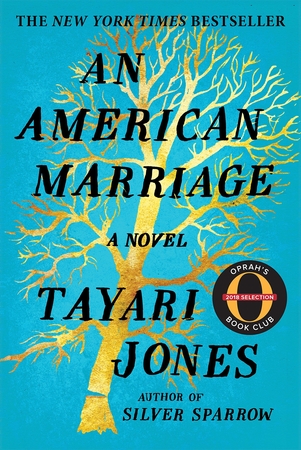
There’ve been several winners of the Pulitzer Prize for Fiction in this decade that have also been the literary “it book” of the year. Tartt’s The Goldfinch, Doerr’s All the Light We Cannot See, and Whitehead’s The Underground Railroad are the ones the come to mind that fit this trend. If the jury is looking to continue on that same path, Jones’ An American Marriage would fit the bill. It’s a novel that people love, share, and discuss. Even Oprah loves it. An American Marriage is, simply put, a brilliant American novel. It’s rich in character and place. It’s full of love and hope and despair. It’s classic in how it explores the notion of the American Dream, and it’s timely in its dissection of wrongful incarceration. The story of Celestial and Roy is one for the books. Don’t just take my word for it: it was a finalist for the L.A. Times Book Prize and longlisted for the National Book Award. Additionally, it received ringing citations for The New York Times and the ALA. It would be a beloved winner.
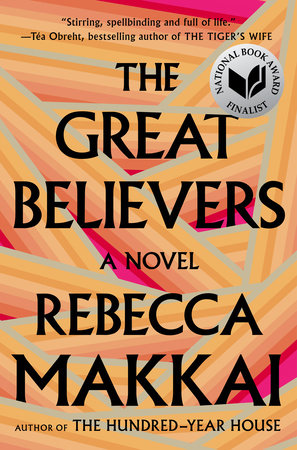
A 1980s-set novel about Chicago, the AIDS epidemic, and friendship is the most likely winner of the 2019 Pulitzer Prize for Fiction. It’s everywhere. Readers, writers, and bloggers can’t stop talking about it. It won the 2019 Andrew Carnegie Medal—just like recent Pulitzer winners The Underground Railroad, The Sympathizer, All the Light We Cannot See, and The Goldfinch. The Great Believers was a finalist for the L.A. Times Book Prize and the National Book Award. It made it onto the “100 Notable Books of 2018” by The New York Times, and it received an ALA citation. It also appeared on countless “best of” lists. The story is emotional and totally consuming, and it’s impossible to forget. Sometimes, a book is too big to ignore, and The Great Believers looks to be one of those books.
I did pretty well when I tried this prediction thing back in 2017. I got that Colson Whitehead’s The Underground Railroad would win, and I called Adam Haslett’s Imagine Me Gone as a nominee. I really do think Rebecca Makkai’s The Great Believers takes it, but the Pulitzer announcement usually comes with some surprises.
Here’s the thing to remember: April 15th is a day to celebrate literature. Whether a book you love or loathe wins, the public will be talking about books. And you know what? I think that makes us all winners.
The term “community” is one of the most worn out phrases of the early aughts. I’ve had more than three job titles featuring the word “community.” Each of these jobs had entirely different goals and tasks I completed in front of a computer. Every nonprofit I have interacted with has “community” peppered in mission and value statements. Facebook, Instagram, and Twitter sell community as a service. In the meat and produce sections of grocery stores, community is mentioned on food labels and store signs. Yesterday, I ate a bag of chips that had a paragraph about community under the nutrition information. Community is thrown around so often that I’ve lost sense of what it means.
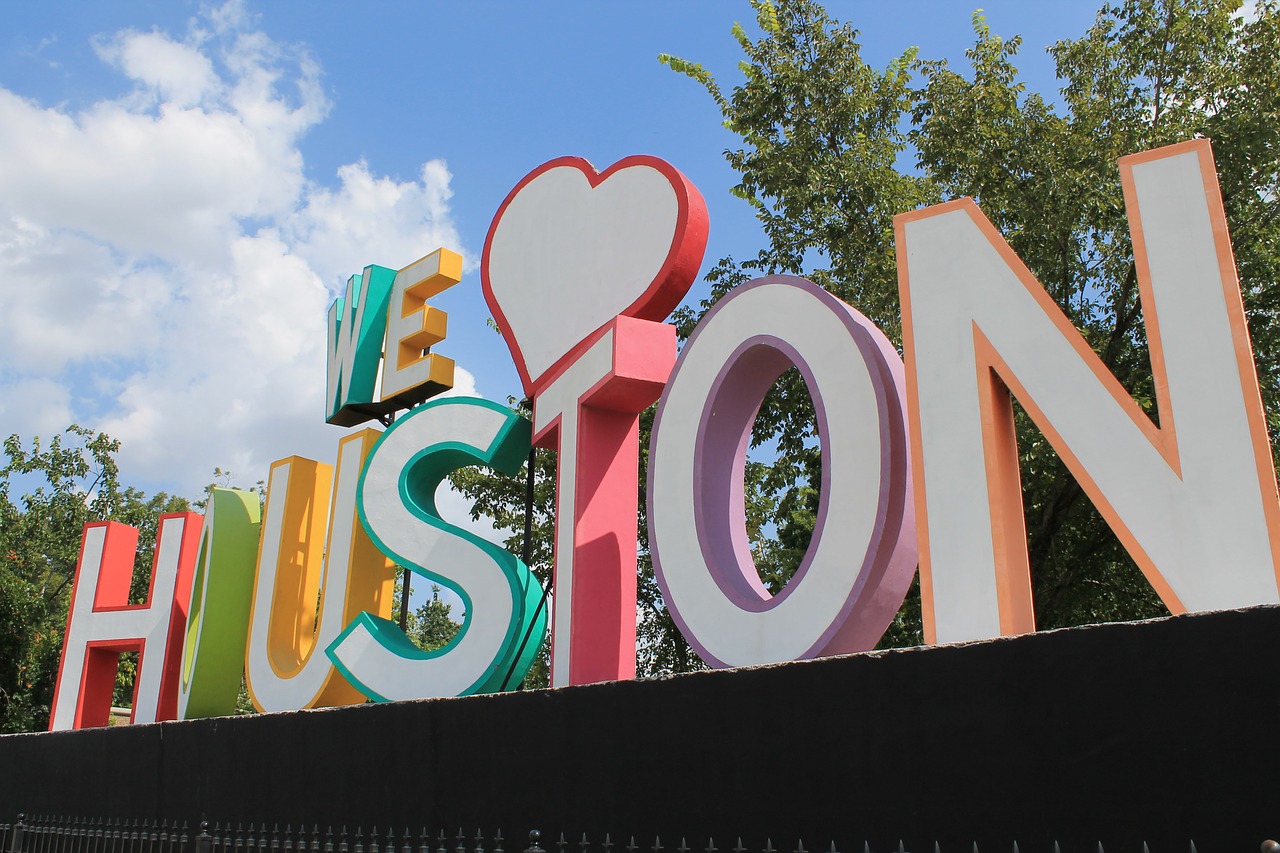
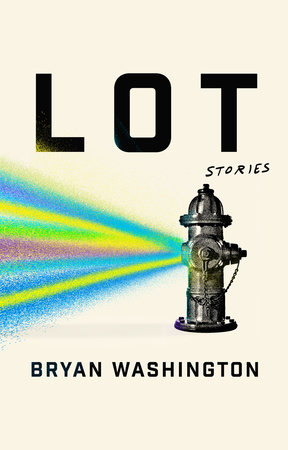
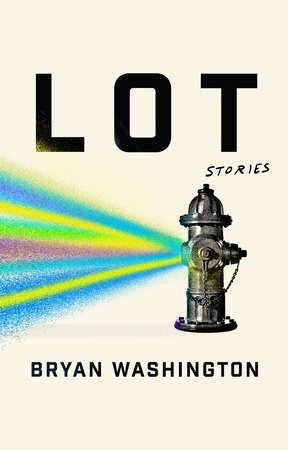
Enter Lot by Bryan Washington. Lot is a collection of short stories that feature characters from Houston neighborhoods. Places like Alief, Bayou, and Shepherd are depicted from many perspectives. Corporations and nonprofits depict community in one dimension—a space for pleasant interactions with people of your choosing. Lot tells stories of people trying to figure out how to survive and find joy in situations they don’t choose. Lot reminded me that the unit of a city is the neighborhood and that a community is any group of people trying to figure out what they owe each other.
I was happy to speak to Bryan about how he chose the short story genre to write about Houston, how this collection changed him as an artist, and how his relationship to Houston has changed since he penned these stories.
Candace Williams: While I read the book, the word “community” kept popping into my head. I’ve worked in schools, startups, and nonprofits that really preach community. It’s mentioned in most mission statements. When I think about Alief and Waugh, I’m thinking about the physical terrain of the neighborhoods and the orbits and constellations of people. I think the question “What do people owe to each other and to their situation?” is very important to this book. Very early on, I realized that in this book, community doesn’t necessarily mean friendship or being nice. That was very interesting to me because many people think of friendliness when they think of the word “community.” I’d really love to hear you talk more about community and how it works in this book.
Bryan Washington: One of the things I’m most interested in, or one of the themes that I gravitate to with the characters that I write, is they’re sort of seeking a place of comfort or a place where they fit in. Sometimes that’s with their blood family. Other times that’s with their found family. The idea of community is one that I come back to often, particularly in narratives about Houston, because one of the most fascinating things to me about this particular city are the ways in which people reach across ethnic lines and religious lines. And across languages to create a sort of community. Often times what they end up with isn’t necessarily what would be the expected outcome. I think that’s part of what makes Houston so rife for stories. The diversity of the city is such that you just have a lot of different narratives. A lot of different ways of life, and a lot of different ways of living that are just bubbling not only under the surface, but within plain sight.
On my end, I didn’t appreciate it until I left the city for a little while and got to travel a bit and came back. I was a little bit mystified upon returning how everybody was able to make it work despite their differences. So that’s something that was deeply interesting to me at the time and it was a really fun question to parse in each of these stories—What community meant to each of these characters, what were the sort of bonds that each of the characters have between one another, and how much pressure could be applied before they came apart or didn’t come apart and why on both fronts. So, sort of asking, “What is each character looking for? What are they going to do when they find it?” And the why, just continuing to ask “why?” for every conflict, every scenario, every character. That’s one of the ways in which the collection came together.
CW: Would you say that for you, writing is a way that you find comfort? Is it a comfortable process? Or is it the opposite? I kind of find that for me, poetry is both extremes. Sometimes I’ll be like, “Wow, that broke me apart and I need to see a therapist right away.” And then other times I’ll say, “Wow, this is one of the most cohesive uplifting things I’ve ever done.”
The process of writing for me is pretty hellish. It’s really a shitty experience. But, on the flip side, it’s just absolutely horrible.
BW: So, the process of writing for me is pretty hellish. It’s really a shitty experience. But, on the flip side, it’s just absolutely horrible. I saw Min Jin Lee when she passed through Houston maybe a year ago and someone had asked a similar question to her about what it took to just sit down in a chair and just slog through the process of writing a novel. Because it is work, you’re not building houses, and you’re not washing dishes, and you aren’t mowing laws. The actual physical toll on you is minimal and it is very much a privilege to be able to get to do what we do. But it is labor. Her thing was finding the joy in what you were writing, and not writing something that isn’t, if it doesn’t put you in the chair. If you aren’t excited to write it, then it’s like why do it?
That is sort of what fuels all of my work on the fiction side. If it’s not a story I’m excited to write, if I’m not excited to write about these characters, the conflicts, the conversations that they’re having, the ways in which they’re gravitating and moving through the world, then it’s not gonna be exciting. It’s probably not gonna be exciting for the reader. So that is something that I’m constantly having to evaluate with the project of Lot, or any other project that I’m working on. Is it something that I want to sit in the chair and do? And then if it is, everything else in my experience has sort of fallen into place. Even if the work is difficult, I want to be there and I want to do it.
CW: I was wondering how these stories fit into the timeline of your life and Houston’s life. How long did it take you to finish the whole collection?
BW: Three years total. From the first story until the last story, and then after we sold the stories, it was another two years before release. Originally, I thought of the stories that make up the collection as singular entities and I was submitting those to journals. Mostly the ones that I enjoyed reading. I didn’t really have a map or a foundation behind it. About half of them had already been published in one form or another out in the world prior to Riverhead picking it up. That in itself was a sort of validation as far as my seeing that people might be interested in these stories or they might have a little bit more value outside of my interest and my friend’s interest because it’s one of those things where I write for myself and for my friends really. You write the story that you wanna read. But seeing that external validation is pretty helpful as far as giving me a sort of a drive to finish the project.
Once we sold the text I got to work with my editor at Riverhead, Laura Perciasepe, and our goal from there was tying each of the narratives that we’d originally conceived as being separate into a full book. So, in lieu of reading one story about a particular hub of Houston, and then another story about a particular hub of Houston, and then the only thing that binds them together is the book’s literal binding, is the challenge to create a sort of community. Or a sort of atmosphere that tied all of the stories together.
CW: I just want to hear more about how this book might have changed you as an artist or even as a person because I think that’s a big artistic shift—to go from seeing it as disparate stories to kind of seeing it as separate stories that feed into one place or one work that you’re trying to build.
BW: I’m still trying to reckon with that. The way in which Lot changed my process or how it informed my process. One thing that I did fairly recently is read about half of the audiobooks for the recurring narrator stories.
CW: Wow.
BW: It was an illuminating experience because as I was reading it there were times where I would look up and I would make contact with the audio engineer and we would just think like, “Fuck, the narrator has really been through a lot,” or I would read certain passages and I was like, “Wow.” One of the ways I think that my process has changed is that there was a sort of kinetic energy that was running through the stories that now when I read them or when I look back at them I sort of wonder how I was able to conjure that at the time. Because it just seem very foreign to me. The energy that’s throughout the book.
Originally, when I was trying to decide what it would look like, in my head I thought of a collection that was made up of a series of Houston’s hubs. Each piece or each story would take place in a hub within the city and they would be connected, just like you said, by merit of geography. But, because each of those tiny little towns have very specific characteristics and details to them, those details would give each piece its own autonomy. I ended up moving away from that because it was really ambitious. That would have been really fucking difficult to pull off for a first time author let alone any author.
I was approaching it from too big of a focus on the geography in lieu of just trying to tell the stories. What ultimately ended up happening was that I latched on to a handful of voices. And one voice in particular, the recurring narrator. At first, the goal on my end was to figure out how to tell the stories about each of these hubs that tries to capture the character and the atmosphere of that area. Then, I thought: Here’s this one person, what’s going on in their life? Why do they feel the way they do when they’re moving through the world? How does it affect the people around them and where are they going to go from there?
Once I started asking those questions, everything else surrounding those particular narratives and the narratives of the other characters made a lot more sense and the process was a lot more seamless. It was still difficult to try and pull off and bring together, but the structural question was put to rest. More often than not, when I’m working on a longer project, the structure is the hold up. Trying to figure out how something will work. The interior of it. Piecing things together or just trying to figure out what component goes where is a lot less painful once I have an idea of what the makeup looks like.
CW: Playing with the words. I try to talk about, talk to students about that. Sometimes I’m just like, “Can you just play, kind of like you’re playing basketball or you’re just painting and you’re experimenting?” Get yourself to a place where you could actually play with language. That’s what we tend to hammer out of kids with language because we take it so seriously. As we should. But it turns into, “Can you read? Can you understand this and write about it? If you can’t then it was a waste of time and you need to be knocked back a class or whatever.” Instead of saying something like “Not everything you write has to be intelligible to everyone or even to you. You might write something and it doesn’t make sense to you until two or three years later.” How do we help kids keep the creativity going when it’s so cutthroat out there?
BW: Two revelatory things to me in that respect were: One, reading Helen Oyeyemi talk about the idea of writing a novel that’s like a game. Or writing a novel that’s existence is solely for the sake of this being a novel as opposed to some sort of large, overarching thing with all these important scenes and ideas that all have to build together to create the capital B-I-G, capital N-O-V-E-L novel. It just seems super cool to me because it’s something that I just hadn’t thought about. But then, you hear it and say, “Yeah.” The point of a novel that you’re writing should be to exist in and of itself. For the sake of itself and creating its own universe.
I think something else that’s been super helpful for me is that I teach ESL, so I’m working with a lot of kids who are just now coming to terms with English. Point blank. They’re trying to figure out the contours of the language. I’m watching the ways that they treat it very much like a game and they’re right I think.
CW: Yeah, it is a game.
BW: They try to figure out the adjective placement or try to figure out certain tonalities. Because a language is a language, they come across a new way of speaking, and that in itself becomes a language. So then they’ll find the words to adjust to that. I see the many different ways in which English is malleable. So, the question on my end becomes “How do we negotiate the malleability while trying to tell a narrative that has weight, and doing it in such a way that I’m able to tell the story that I wanna tell in a way that is clear for the reader?”
CW: So, do you think that if you attempted to write these stories now, do you think that they would be different or the same? Do you think that these areas of Houston have changed even since you’ve written these? Or do you think that your artistry has changed?
BW: I think they would be different partly because these particular areas of Houston have changed. The neighborhoods that I mentioned. Whether it’s East Town, whether it’s Montrose, whether it’s certain portions of Alief. Writing the book, in a lot of ways, was a little bit like lighting in a bottle. Two or three years ago those places were in a major moment of flux. And it would be very difficult I think to conjure or re-conjure that on the page now given not only how those parts of the city are but how my adjustment to them has been in the interim years. As far as what I’m drawn to on the page, they would just read as wildly different. I think that they’re, again the energy that I brought to Lot. Now that I’ve come out of another long project I can say that the process with which I approach stories has changed.
I don’t think that that’s a foreign idea. I think that every project has its own requirements from you as the creator. Is the same true for poets? I know that at times poems can be much smaller endeavors, much smaller projects if it’s one word in lieu of a much longer piece.
CW: I’m trying to take myself back to when I first started and not be writing toward a collection. For me, in poetry, things are better when I can play around more. If I get married to one form or one content idea or one speaker, then I might actually miss out. So I’ve been trying to talk to different poets and read different things that are out there for me. I would say a linear poet in a lot of ways. I’m a very logical, conversational poet. Everything has a logical next step and there’s a beginning.
It’s not predictable but it’s definitely linear. I’ve been trying to break that mold in a lot of ways. After this summer, I would like to say, “Oh, I kind of know the project I’m working on.” But I’m also working on some visual art right now and trying some other things. So it’s okay if keep my work in this pre-project stage. A lot of interesting things could actually happen.
BW: That’s so cool that you’re able to work across mediums. Because generally when I’m working, I mean certainly for all of my fiction, for a good chunk of my non-fiction, the way that I approach those narratives is very non-linear. This makes the essay pitching process just the worst because I can’t say what it will be like. I haven’t figured it out myself yet. But as far as fiction is concerned, I have an inclination to juggle multiple narrators and multiple timelines. To work with larger gaps in time. Sort of moving back and forth and playing with white space. Partly, this is the idea of making the text a game, and partly that’s what I have to do before I figure out what the narration would ultimately look like. To sort of move things around and, you know, just play with it until it makes some semblance of sense to me.
Once that happens, it’s usually a structural issue. I’ll move the right passage from page 15 to page three and all of a sudden everything else will click in my head. I must spend the time doing that work and moving it around. It can feel as if it’s dead work. You’re just sort of moving words or putting words and getting rid of them without actually playing into the conflicts on the page. If I don’t do it, then it’s really hard for the story to come together for me. It just won’t really make sense. Then, once it does, everything else fits into play.
CW: I’m just really interested in your thoughts on Houston and its future. Just so you know, my sixth graders come in wearing a lot more Houston gear.
BW: Oh great, absolutely.
CW: Well, I think it’s because of the Astros, right? But also Travis Scott and Beyoncé. My students are wearing Travis Scott gear. A lot of his artwork is about Astroworld and why it was put there and why it was taken away. I just think he’s had a huge impact on consciousness about gentrification, specifically in Houston. I think that, even my students are having a conversation about it which is pretty awesome in some ways. But then, on the other hand, I’m thinking about Brooklyn and also Atlanta. When people start to have conversations about your city or neighborhood, there’s a displacement process associated with that conversation. So the conversation can be good but it’s also scary.
So, if someone were to give you millions of dollars and said “Hey, you can build an art institution in Houston.” What would you want that institution to do? Where would it go? What would the goal be?
BW: That’s such an interesting question. And that’d be a huge responsibility so I don’t know could give you a clean answer. The one thing I will say is that I would want it [to be] Alief. Alief is a very diverse suburb within Houston. I don’t know exactly what the makeup of that particular museum would be. I think that there’s an interesting way in which people who aren’t from the city can acknowledge the expanse of the city’s diversity and the totality of the city’s diversity and what its implications are without actually centering the voices that make up that diversity. To sort of acknowledge that there is a massive, massive Latino influence upon the city. And, that there is a massive Black influence upon the city. And, that there’s a massive Asian influence upon the city. People who aren’t from the city will simultaneously center white voices to tell those stories and narratives and sort of dictate the terms of what those narratives are allowed to look like.
When folks approach Houston with the intent of finding one story they’re going to fail every time because there’s just too many different ways to live here.
Finding a way to tell the stories of each individual community and the ways in which they’ve managed to create community within the city, in the same place, would go a long way to also telling the story of how they ultimately managed to fit together. The ways in which they were able to come together. Because that’s what’s happened here. I mean, each of these communities within the city are very much themselves and yet, they’re willing to learn from those that are adjacent to them on our left, those that are adjacent to them. Give and take. It really is a gift to live here. The challenge will be to find a way to display the city’s individual components while also paying a huge homage to how they’re able to come and work together.
It’s really cool to see the city get a sort of national visibility and in some cases international visibility. Whether it’s Travis Scott, whether it’s Beyoncé. Whether it’s Solange. She just had the record come out. Half the tracks are street names. Like Almeda, Binz. That sort of thing goes a really long way because when you see those street names, those place names, that iconography, you’re able to attach a narrative to it. I feel like that’s how Hollywood becomes Hollywood. How Main Street in any city becomes Main Street, you know? Like, Canal street becomes Canal Street because of the narratives and the associations we bring to them. But, I think that it’s really not enough to have narratives associated with those places and things. Who is getting to tell those narratives? On what terms are they able to tell those narratives? Would they not be able to tell the ones that they want to tell? How they would like to tell it? Or, maybe they’re being dictative with a sort of dominant narrative in mind. Where it has to be a cis white narrative or a cis white vantage point.
With any changing city, whether it’s Brooklyn or whether it’s Oakland, there is a risk that’s there. Who gets to tell the stories? How are they getting to tell the stories? To what extent are the stories that they’re telling are being amplified in relation to the folks who have historically had control of this dominant narrative?
Trying to spread the wealth of stories to around the city would be the goal of that museum. It would take a really long time to do that. Houston has multitudes. I think that, in a lot of ways Los Angeles is a sister city. I very seldom hear someone say, “Oh, you know L.A. This is the story of L.A. It’s just one thing.” There’s a sort of general acknowledgement, at least from my end, that L.A. is made up of many different people. Many different narratives. I think the same is true of Houston. Which is why, when folks approach the city with the intent of finding one story they’re going to fail every time because there’s just too many different ways to live here. And that’s a gift, so the solution is not really a story, so much as more stories. I want more people to tell their stories. And from that you’re able create a story that’s, mural or a modulation of what the city is, and can be. Where it can go.
There is certain joy in discovering the brilliance of a new writer. With favorite, seasoned writers like Jesmyn Ward or Michael Chabon, I know to expect exceptional work. The gamble of picking up a name I am not familiar with could end with reading a jumbled mess. Yet, there is no greater rush than when I find a gem that I fall in love with. That rush has inspired me to create Debutiful, a literary website dedicated to celebrating debut authors and their books through book reviews and author interviews.
Narrowing down this list of debuts was difficult. There have already been a lot of stellar new works published and it would be impossible to read every single one that publishes in a single year. These are the newly published memoirs, novels, and short story collections that I have not stopped thinking about or titles that booksellers and writers have been enthusiastically recommending.
Here are the 20 best debut novels of the first half of 2019.
Mesha Maren’s atmospheric Southern noir was the first book I fell in love with this year. Her book explores queer sexuality and how where we live informs our life decisions. When Jodi McCarty is released after nearly two decades in prison, she is not exactly sure who she is or what she wants. Until she meets the enigmatic Miranda.
99 Nights in Logar follow a young boy in war-torn Afghanistan tracking down his family guard dog who bit his finger off. A coming-of-age tale, this novel offers a worldview into the ties of familial history.
Rabeah Ghaffari’s story set during the 1979 Iranian Revolution is more than a history lesson. The saga is a character study about how our place in the world is viewed by others, but more importantly, what our place in the world means to us.
Lauren Wilkinson’s debut is a Cold War spy thriller starring a black, female intelligence officer. But it’s so much more. It’s a meditation on double consciousness and bounces from 1980s Burkina Faso to present day America through complex threads and clever prose. It is sincerely one of the best books I have read so far this year. Read my interview with Wilkinson here.
Pitchaya Sudbanthad explores the past, present, and near future of his native Bangkok through tangentially connected stories that reveal the essence of the city. Ranging from tales about a missionary doctor to a post-World War II relationship to present-day political uneasiness, he showcases the complexities of the city’s history and culture.
In her novel, Lindsay Stern provides an insightful look into the difficulties of communication within a marriage. Two married college professors have a wedge driven between them when an attractive new colleague comes to town. It is a fresh take on the unraveling of a relationship and the fragility of our egos.
Connected through life in the circus, these stories delve into the lonely worlds of misfits and outcasts. While it would be easy to put the freak label on some of these characters, Mayer finds the nuances in their lives that give them humanity. The collection of short stories is dizzyingly fantastical on every single page.
Bryan Washington’s portrait of his hometown Houston reveals the modern-day struggles of race, socioeconomic status, and sexuality. Woven throughout the stories is an unnamed teen who struggles from adolescence to adulthood. His upbringing by a hyper-masculine father is a reoccurring clash that unfolds as he navigates his own identity and status in the world.
In this fiercely honest memoir, T Kira Madden offers a look into her unstable childhood through to her sexual awakening in her teenage years. She writes about her father’s alcoholism, being a misfit at her private school, and exploring her queerness that she never knew was there. Long Live the Tribe of Fatherless Girls is written with a raw emotional explosiveness that is so often hidden in our social media era.
I stayed away from this book at first because it was billed as being reminiscent of Bridget Jones’ Diary, which isn’t exactly my cup of tea. Then, on a whim, I read half of it through a single night. Reader, don’t make the mistake I did. It was a pleasure to watch the titular Queenie go through messy breakups, figuring out how to balance her two cultures and stand out as an independent black woman among her white peers.
A Woman is No Man is a multi-generational saga of Palestinian American women that Etaf Rum says was “violating our code of silence.” Rum questions why there aren’t many books by and about Arab American women. Her novel follows Deya in modern-day Brooklyn who is approaching her high school graduation (and an arranged marriage.) The book also explores the traumatic pasts of her mother Isra and her grandmother Fareeda.
Sarah Blake has published two poetry books as well as an e-chapbook, but this is her first official novel. So, I’m counting it. It’s epic, biblically so. Blake reimagines the Great Flood and puts Noah’s wife at the center of saving civilization with the Ark. It allows Hollywood another original Bible story to adapt, which is good because I’m kind of getting tired of Russell Crowe prancing around with a bad accent.
The Affairs of the Falcóns is a familial saga of undocumented Peruvians in the 1990s. Matriarch Ana struggles to keep her family afloat as the world lobs up every curve ball it can offer. Born in Peru, Melissa Rivero spent most of her childhood in America undocumented and became a U.S. citizen in her 20s. It is eye-opening to see exactly how much and how little immigration policy has changed.
Written by a former trial lawyer, Miracle Creek is a taut courtroom thriller. It moves from the courtroom to explore what it means to be a parent; more specifically, what it means to be a parent who is also an immigrant.
The Light Years is a memoir about hippies, psychedelic drugs, and life in the desert. Chris Rush is an artist by trade. He wrote this book to explore how LSD and acid shaped how he saw the world. This is an ideal narrative for anyone who is a fan of The Electric Kool-Aid Acid Test.
Beautiful. Bleak. Those are the two words I would ultimately use to describe Lin’s debut. It seems understated, mostly because a lot of people use beautiful to describe nearly everything. Everything from Lin’s prose to her characters to the unjust actions that happen to this Taiwanese family struggling to survive in Alaska is beautiful.
Stella is an Italian immigrant should have died a lot over the course of her century-long, but somehow survived. That is the general synopsis given for this book. Her name itself means “lucky star” in Italian. The book is twisty and complicated, but wholly original.
Subtitled “Riding the World’s Loneliest Horse Race,” this memoir lured me in with the story of a 1,000-kilometer horse race across the Mongolian grassland. Lara Prior-Palmer became the first woman champion of the Mongol Derby Champion at the age of 19.
Again, technically Ocean Vuong is a published writer (Night Sky Exit Wounds is a breathtaking collection of poems) and I am bending the rules a bit. With On Earth We’re Briefly Gorgeous, he raises the bar with a novel that will surely be on numerous Top Ten lists by the end of the year. The book is written in the form of a letter from a son to his illterate mother, the book gracefully explores sexuality and masculinity as well as race and class. The novel has such a softness to the prose that it stayed with me weeks after I finally finished it.
Toby and Rachel Fleishman are separating after 15 years of marriage. It happens. But what he doesn’t expect is that Rachel would just disappear after leaving the kids at his. Fleishman is in Trouble sounds like a downer, but every advanced praise refers to how blisteringly funny the novel is.
DON’T MISS OUT
Sign up for our newsletter to get submission announcements and stay on top of our best work.
YOUR INBOX IS LIT
Enjoy strange, diverting work from The Commuter on Mondays, absorbing fiction from Recommended Reading on Wednesdays, and a roundup of our best work of the week on Fridays. Personalize your subscription preferences here.