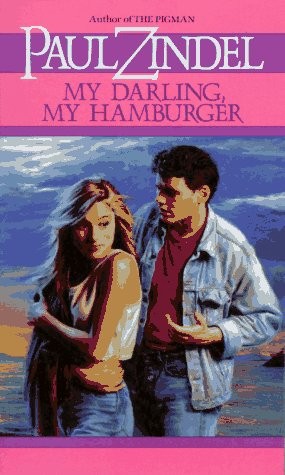
7 Novels About Envy

Envy thrives in our screen-saturated age. Images of celebrities and others who seem to have it all are just a finger-swipe away. But envy is nothing new, of course. While movies and TV shows like Ingrid Goes West and Black Mirror have recently been exploring the digital realm for manifestations of envy, writers have been focusing on this singular disease for centuries. The mix of contemporary and classic books below, for instance, all provide potent examples of how envy can corrode and corrupt human happiness, often causing significant destruction and sometimes even loss of life.

Purchase the book

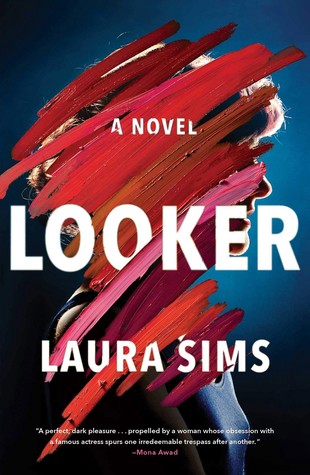
The narrator of my own envy-centered novel, Looker, lives a few houses down from a famous actress and her family, and as her life falls into ruin, she begins to look increasingly toward this woman with a seemingly picture-perfect existence. My troubled narrator’s looking sparks what becomes an all-consuming and terrible obsession. In the midst of her downward spiral, she longs for ancient times, “when what mattered was shielding our tribe from saber-toothed tigers. Giant Bears. There were actual dangers then.” This longing, though, is part of her delusional state of mind; wouldn’t one young warrior have envied another’s skill with the spear? Or his giant bear body count? Envy is as ancient as the world she describes.

Envy by Yuri Olesha

The fictional primer on envy, Soviet-style. While most envy-focused books tend toward darkness and despair, Olesha’s showcases this particular human weakness with biting satire, absurdity, and wit. Envy pits two characters at opposite ends of the social spectrum against one another: Andrei, a successful Soviet citizen with big plans for mass-producing sausage, and Nikolai, a down-and-out reject who resents Andrei for literally lifting him out of the gutter and giving him gainful employment. As Nikolai plots to ruin Andrei’s sausage-based success, the two tangle in ways that are both hilarious and heartbreakingly real.

Passing by Nella Larsen

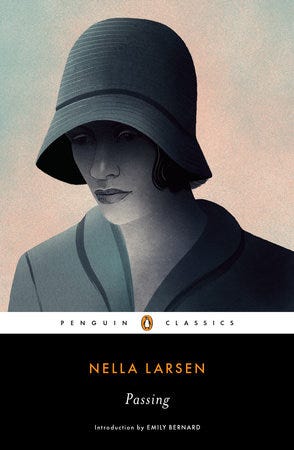
The fraught bond between a pair of childhood friends animates this gripping novel by Nella Larsen, set in 1920s New York City. One of the friends, Irene, can pass for white when necessity dictates, but her life is in Harlem with her visibly black husband and sons. Clare, on the other hand, is married to a white man who doesn’t know the truth about her identity. The trouble begins when Clare returns to Irene’s life and begins to covet what she has, making an ill-conceived return to Harlem society. Before long, Clare’s reckless covetousness leads to irrevocable tragedy.

In Nella Larsen’s ‘Passing,’ Whiteness Isn’t Just About Race

The True Deceiver by Tove Jansson

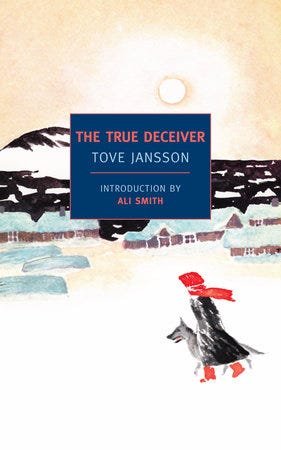
Sometimes envy can be a quiet, slow-burning, and even practical thing. This is the case in The True Deceiver, which focuses on the drama between two women in a small snowbound village: Anna, a wealthy, reclusive artist who lives alone in a sprawling home, and Katri, a village oddball who needs a home for herself and her dependent adult brother. Katri sets her sights on Anna’s house and insinuates herself into the artist’s life, refusing to employ social niceties to achieve her goal; she looks down on “the whole sloppy, disgusting machinery that people engage in with impunity all the time everywhere to help them get what they want.” Anna is her exact opposite in that regard, being utterly subservient to social niceties. The two women collide in this fascinating study of character and its consequences.

Mina by Kim Sagwa

Kim Sagwa’s Mina is many things: a twisted love story; a story of obsession, envy, and rage; a portrait of madness and murder; and a scathing look at contemporary urban life in Korea — its demands and pressures, as well as their consequences. Crystal, a teen who struggles endlessly to earn the grades she’ll need to succeed, envies Mina for her effortless excellence, and eventually turns on the girl who has been her best friend. The ending, which comes as a bright splash of violence, is the natural result of the societal forces that have made Crystal what she is: a scary, solipsistic denizen of the current and future Western-influenced world, where money, “success,” and surface appearances reign supreme.

My Brilliant Friend by Elena Ferrante

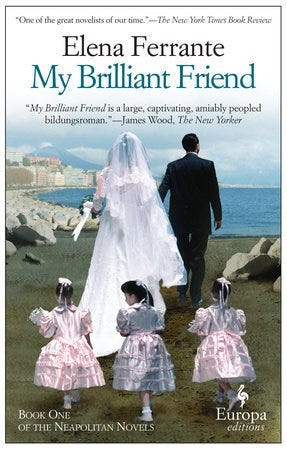
It feels reductive to call the intricately layered, nearly symbiotic, lifelong friendship between Lila and Elena of Ferrante’s Neapolitan Novels, simply “envious.” But envy is certainly part of what drives them alternately closer and apart. The two circle each other all their lives, desiring what the other has and indulging, at times, in subtle sabotage. Lila, for instance, tries to ruin Elena’s chance for the further education she herself has been denied; when the girls skip school (at her urging), she seems disappointed when Elena’s parents don’t pull her from middle school as punishment. “’All they did was beat you?’” she asks. Ferrante captures the knotted complexities of female friendship with grace, skill, and absorbingly stark realism.

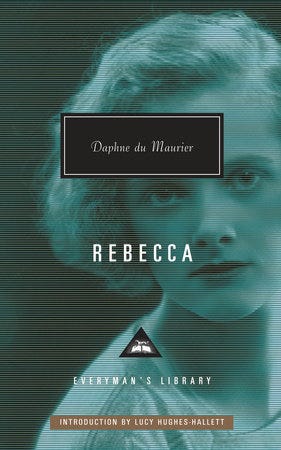
Rebecca by Daphne du Maurier

The best possible outcome of envying someone may be learning they are utterly unworthy of your envy. Rebecca gives that particular gift to the unnamed narrator, who steps uneasily into her role as the second wife of wealthy Maxim de Winter. At first, she fixates on what she hears of her predecessor: beautiful, elegant, beloved and seemingly perfect Rebecca. She’s troubled when people tell her: “You see…you are so very different from Rebecca.” But as the melodrama unwinds, our narrator learns that might in fact be a very good thing.

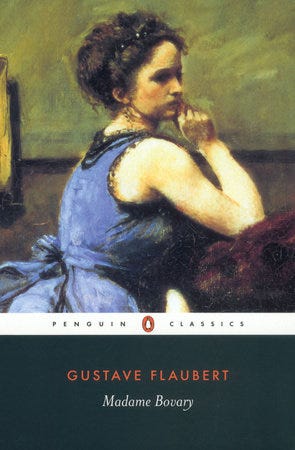
Madame Bovary by Gustave Flaubert

Emma Bovary: perhaps the most famous of all literary enviers. She desires a life rich in glamour and excitement, one that could have leapt from the pages of the romance novels she devours. Her real life, with husband Charles, is something to barely tolerate…until she tolerates it no more. “It was above all at mealtimes that she could bear it no longer, in that little room on the ground floor, with the smoking stove, the creaking door, the oozing walls, the damp floor-tiles; all the bitterness of life seemed to be served to her on her plate.” In Flaubert’s masterpiece, Emma’s journey from ardently longing for a different life to acting on her imagined passions secures her a dark, cruelly banal fate.

Recommended Reading Seeks Volunteer Readers

Calling all fiction lovers! Electric Literature is looking for new manuscript readers to join our editorial team. Recommended Reading is the weekly fiction magazine of Electric Literature, an organization dedicated to making literature more relevant, exciting, and inclusive. Recommended Reading publishes one story per week: a mix of original work, forgotten classics, and forthcoming excerpts, each with a personal foreword by today’s best writers.

Because Recommended Reading receives a large volume of submissions, a committed corps of volunteer readers is essential to helping the editors find new, unknown, and/or overlooked talent.

Responsibilities include:

  • Reading ten manuscripts per week, ranging from 2,000 to 8,000 words each.
  • Providing concise but thorough responses (one to two paragraphs) to these manuscripts, with a clear YES or NO recommendation for each.
  • Meeting weekly reading deadlines, and clearly communicating with editorial staff when scheduling conflicts arise.

The ideal applicant is:

  • An avid and attentive reader.
  • Self-motivated and able to meet deadlines.
  • Able to express herself clearly in writing.
  • A regular reader of Recommended Reading who is familiar with its back catalogue.
  • An educational background in literature and/or professional experience in literary criticism, editing, and fiction writing is a plus, but not required.
  • An active participant in their local literary scene, and an avid reader of contemporary literature.

This is a volunteer position that requires a commitment of approximately six hours per week. Readers will work remotely and on their own schedules (as long as they meet the weekly deadline).

Current readers are not allowed to submit their own fiction for consideration in Recommended Reading. Discussion of submissions outside of Recommended Reading is strictly prohibited, and will result in immediate termination.

For a sense of the kind of stories you’ll be reading, visit the Recommended Reading homepage here.

To apply please email a cover letter and a two paragraph critique of a short story published in Recommended Reading to Submittable by Monday, February 4th. If your resume is selected, the application process will also include a reading test and interview (in-person or video call.)

Electric Literature – READER APPLICATION

The Light In This Apartment is Better Without You In It

Territory of Light, excerpt

by Yūko Tsushima

The apartment had windows on all sides.

I spent a year there, with my little daughter, on the top floor of an old four-story office building. We had the whole fourth floor to ourselves, plus the rooftop terrace. At street level there was a camera store; the second and third floors were both divided into two rented offices. A couple whose small business made custom gold family crests, framed or turned into trophy shields, occupied half a floor, as did an accountant and a branch of a knitting school, but the rooms on the third floor facing the main street happened to remain vacant all the time I lived above them. I used to slip in there some nights after my daughter had finally gone to sleep. I would open the windows a fraction and enjoy a different take on the view, or walk up and down in the empty space. I felt as if I were in a secret chamber, unknown to anyone.

I was told that until I rented the fourth-floor apartment, the building’s previous owner had lived there, and while this certainly had its perks — sole access to the rooftop and the spacious bathroom that had been built up there — it also meant that by default I was left in charge of the rooftop water tower and TV antenna, and that I had to go down late at night and lower the rolling security shutter at the stairwell entrance after the office tenants had all gone home, a task which naturally had been the owner’s.

The whole building had gone up for sale and been bought by a locally famous businesswoman by the name of Fujino. I was to become the first resident of the newly christened Fujino Building №3. The owner herself was apparently new to the residential end of things, having specialized in commercial property till now, and, unsure about an apartment with an unusual layout in a dilapidated office building, she had tentatively proposed a low rent to see if there would be any takers. This happenstance was a lucky break for me. Also quite by chance, the man who at the time was still my husband had the same name as the building. As a result, I was constantly being mistaken for the proprietor.

At the top of the steep, narrow, straight stairs there was an aluminum door and, opposite that, a door to the fire escape. The landing was so small that you had to take a step down the stairs or up on to the threshold of the fire exit before being able to open the apartment door. The fire escape was actually an iron ladder, perpendicular to the ground. In an emergency, it looked like we might stand a better chance if I bolted down the main stairs with my daughter in my arms.

But once you got the door open, the apartment was filled with light at any hour of the day. The kitchen and dining area immediately inside had a red floor, which made the aura all the brighter. Entering from the dimness of the stairwell, you practically had to squint.

‘Ooh, it’s warm! It’s pretty!’ My daughter, who was about to turn three, gave a shout the first time she was bathed in the room’s light.

‘Isn’t it cosy? The sun’s great, isn’t it?’

She ran around the dining-kitchen as she answered with a touch of pride, ‘Yes! Didn’t you know that, Mommy?’

I felt like giving myself a pat on the head for having managed to protect my daughter from the upheaval around her with the quantity of light.

The one window that caught the morning sun was in a cubbyhole beside the entrance, a kind of storage room less than two tatami mats in area. I decided to make that our bedroom. Its east-facing window overlooked platforms hung with laundry on top of the crowded neighboring houses, and the roofs of office buildings smaller than Fujino №3. Because we were in a shopping district around a station on the main loop line, not one of the houses had a garden; instead, the neighbors lined up on the platforms and rooftops all the potted plants they could lay their hands on and even set out deckchairs, so that the view from above had a very homey feeling, and I often saw elderly people out there in their bathrobe yukata.

There were south-facing windows in every one of the straight line of rooms — the two-mat, the dining-kitchen, and the six-mat. These looked over the roof of an old low house and on to a lane of bars and eateries. For a narrow lane it saw a lot of traffic, with horns constantly blaring.

To the west, at the far end of the long, thin apartment, a big window gave on to the main road; here the late sun and the street noise poured in without mercy. Directly below, one could see the black heads of pedestrians who streamed along the pavement towards the station in the morning and back again in the evening. On the sidewalk opposite, in front of a florist’s, people stood still at a bus stop. Every time a bus or truck passed by the whole fourth floor shook and the crockery rattled on the shelves. The building where I’d set up house with my daughter was on a three-way intersection — four-way counting the lane to the south. Nevertheless, several times a day, a certain conjunction of red lights and traffic flow would produce about ten seconds’ silence. I always noticed it a split second before the signals changed and the waiting cars all revved impatiently at once.

To the left of this western window were just visible the trees of a wood that belonged to a large traditional garden, the site of a former daimyo’s manor. That glimpse of greenery was precious to me. It was the centerpiece of the view from the window.

‘That? Why, that’s the Bois de Boulogne,’ I answered whenever a visitor asked. The name of the wood on the outskirts of Paris had stuck in my mind, like Bremen or Flanders, some place named in a fairy tale, and it was kind of fun just to let it trip off my tongue.

Along the northern wall of the dining-kitchen were a closet, the toilet, and the stairs to the roof. The toilet had its own window, with a view of the station and the trains. That little window was my daughter’s favorite.

‘We can see the station and the trains! And the house shakes!’ she proudly reported to her daycare teacher and friends at the start.

But she quickly came down with a fever brought on by the move and spent nearly a week in bed. While I was at work I left her with my mother, who lived alone not far away. My job, at a library attached to a radio station, was to archive broadcast-related documents and tapes, and issue them on loan. At the end of the day I stopped by my mother’s and stayed with my daughter till past nine, then returned alone to the building. My husband would no doubt have helped out if I’d contacted him, but I didn’t want to rely on my husband, even if it meant putting my mother to extra trouble. In fact, I didn’t want him ever to set foot in my new life. I was afraid of any renewed contact, so afraid it left me surprised at myself. The frightening thing was how accustomed I had become to his being there.

Before he left, he had been urging me to move back to my mother’s. ‘She must be lonesome, and besides, how are you going to manage with the little one on your own? With you two at your mom’s, I could leave you without worrying.’

He had already chosen an apartment for himself along a suburban commuter line. He was due to move there in a month, when the place became vacant.

As for me, at that time I hadn’t been able to get as far as thinking about where to go. His decision had yet to fully sink in. Wasn’t there still a chance I’d hear him laugh it all off as a joke tomorrow? Then why should I worry about where I was going to live?

I told him I didn’t want to go back to my mother’s. ‘Anything but that. That would just be trying to disguise the fact that you’ve left us.’

He then offered to come with me to look for an apartment. ‘If you go by yourself you’ll just get ripped off. I won’t be able to sleep at night knowing you’re in some dump. Come on, now, leave it to me.’ It was late January, and every day was bright and clear. I began doing the rounds of real estate agents with my husband. All I had to do was tag along without a word. I would meet him in my lunch hour at a café near my work and we’d go to the local agencies, one after the other.

He specified a 2DK (two rooms plus dining-kitchen), sunny, with bath, for around thirty thousand to forty thousand yen a month. The first place we tried, he was laughed at: ‘These days you won’t find anything like that for under sixty to seventy thousand.’ ‘It’s actually for her and our child,’ he said, looking back at me. ‘Any old thing would do for me, but I want them to have the best possible . . . Are you sure you don’t have something?’

The next day, exactly the same conversation took place at another agency. Unable to contain myself, I whispered, ‘The bath doesn’t matter, really. And I’d be happy with one room.’ Then I spoke up to the realtor: ‘There are studios at thirty to forty thousand, aren’t there?’

‘Studios, yes . . .’ He reached to open a ledger.

At this point my husband said sternly, as if scolding a child, ‘You’re too quick to give up. You’re going about it the wrong way. Once you’ve settled in you’ll find you can afford the rent, even if it seems a stretch right now. But you can’t fix up a cheap apartment with the cash you save, the landlords don’t allow alterations . . . So, what have you got in the fifty to sixty thousand range?’

The realtor assured us that he could show us several possibilities in the fifty thousand or, better still, the sixty thousand yen range. ‘We’d like to see them,’ said my husband. Considering he was so hard up he’d had to borrow from me to pay for the lease and security deposit on his own apartment, I could hardly expect him to provide financial support after the separation. He had been insisting that living apart was the only way out of the impasse in which he found himself — a clean sweep, a fresh start on his own. In that case, I wanted to pay my own way too and not cadge any more from my mother. The maximum rent I could afford was therefore fifty thousand yen, which was what the place where we’d been living together cost. I calculated that without my husband’s living expenses to cover, I should be able to get by without borrowing. But it was a calculation made with gritted teeth. Fifty thousand yen was more than half my monthly pay.

That day, we were shown a sixty-thousand-yen rental condominium. There was nothing not to like and it was handy for the office, but I didn’t take it.

Almost every day, we toured a variety of vacancies. We looked at a seventy-thousand-yen condominium with a garden. And a policy of no children. My husband appealed to the landlord that it was just the one child, a girl, and she’d be away all day at daycare, but I could have told him it would do no good.

The viewings were creeping steadily upmarket. I was now able to shrug off hearing a rent that amounted to my entire pay. I felt neither uneasy nor conscious of the absurdity. We were enthusiastically inspecting apartments I couldn’t possibly rent, and we were apparently dead serious. But neither my husband nor I saw ourselves as the one doing the renting. He was accompanying me, and I was accompanying him.

‘Are we going again today?’

This question had become part of our morning routine. Weather permitting, most of my lunch hours were taken up by a busy whirl. And from January into early February every day was as fine as could be.

There was a house with a Japanese cypress beside its front entrance. At the top of five stone steps, a light-blue door beckoned. The door was barely three feet from the steps; the tree had just enough room to grow. Its branches hid a bay window whose frame had been painted the same color as the front door.

‘This is quite something.’ My husband sounded excited.

‘But I don’t care for that tree. I’d rather have a magnolia, say, or a cherry . . .’

‘A cypress has way more class.’

It was a two-story house. Downstairs were a room with a wooden floor and bay windows, a six-tatami room that didn’t get much light, and a dining-kitchen; upstairs were two well-lit tatami rooms and even a place to hang out laundry. By the time we checked out the laundry deck, both my husband and I were very nearly euphoric. Aware of the agent within earshot, we said to each other, all smiles:

‘I bet your friends would be happy to come over.’

‘And there’s plenty of room for them to stay . . .’

‘It’d be a great place to bring up a child. Easy for me to drop in too . . . I’m starting to envy you, I’d like to rent it myself. I’d have my desk by that window . . .’

‘The bookshelves can go along that wall.’

‘Right . . . Hey, I know, let me be your lodger. I’ll pay room and board on the dot.’

‘Sure. But you’re not getting a discount.’

As our laughter echoed in the empty rooms, it brought a weak smile to the realtor’s lips.

I couldn’t help thinking, once again, that I was never going to have to live alone with our daughter. If I could live with my husband I didn’t care where, and without him everywhere was equally daunting.

Back at the library that day, for a while I pictured life in the two-story house. My husband had enthused, ‘Take it, don’t worry about the rent, just get your family to help you,’ and then disappeared. I would put the stereo in the room with the bay windows and use that space for meals and for relaxing. I’d make the dark six-mat room downstairs our bedroom and keep the upstairs for guests until my daughter was older. No, on second thoughts, the sunny, spacious upper floor was obviously more comfortable. I wondered who would visit, apart from my husband. Since it was close to the office, would my colleagues come if I invited them?

As I was immersed in these thoughts, a high-school teacher from out of town asked to borrow some tapes of poetry readings for classroom use. My mind still far away, I inserted the series one by one in a tape recorder. We always had borrowers listen to a part of the tapes we issued to ensure they were the right ones.

For some reason, the words on the tape suddenly registered with me.

‘Quick now, give up this idle pondering!

And let’s be off into the great wide world!

I tell you: the fool who speculates on things

is like some animal on a dry heath,

led by an evil fiend in endless circles,

while fine green pastures lie on every side.’

Startled, I asked the teacher standing there, ‘What was that?’ Could that be poetry, I was wondering. He glanced at the window, evidently thinking I’d heard something outside, then cocked his head to one side with a puzzled smile.

My husband didn’t come home that night, nor the next. He was probably convinced that my new location had been decided.

I began to go around the agencies by myself. It was the first time I’d entered a realtor’s all alone.

The voice on the tape had reminded me of my last move, four years ago. The memory had caught me by surprise.

My husband was still a grad student and I hadn’t been working long at the library. Though we each had our own apartment, half the time he spent the night at mine. I had a call from him one day at the library: ‘We have an apartment. It’s new, and quiet, and sunny. It’s fantastic. I said we’d move in on Sunday. OK?’

It had been only the night before that we’d raised the subject of needing to look for a place for the two of us.

‘That was fast. You said we’d take it?’ Though astonished, I was also delighted by the effortlessness of the decision. I was not annoyed at having had no say in where I was to live. I was enjoying the feeling of being swept along by a man. I’d left home to be free to have him stay over and he’d found the place for me that time too, a room in a student boarding house used by his friends. But it had taken him a while to make up his mind that I was the one.

All I had to do was follow his instructions. I packed on Saturday night and was ready in the morning when the truck came around after stopping at his apartment. I had so little to load, it was the work of a moment. I joined him riding in the back and we set off, me with a stack of LPs on my lap, him with a shopping bag full of laundry in his arms.

In about thirty minutes we arrived. The new place was down a cul-de-sac in a residential area.

‘Is this it?’ I exclaimed happily. It was my first sight of my own apartment.

We lived there for a year and a half, until I became pregnant. Which meant I had never even found myself a place to live before now, I realized. Bizarre though it seemed, I had to admit it was true.

I made the rounds on my own, meticulously, in the vicinity of my daughter’s daycare. Before I knew it we were into March. Inevitably, the low-rent properties I was asking to see were a far cry from those I’d toured with my husband, and I often felt like retreating in dismay. However, the more of those gloomy, cramped apartments I looked at, the further the figure of my husband receded from sight, and while the rooms were invariably dark, I began to sense a gleam in their darkness like that of an animal’s eyes. There was something there glaring back at me. Although it scared me, I wanted to approach it.

Once, offered a real bargain, a very nice 2dk unit in a condominium building for thirty thousand yen, I went dubiously to look at it. Everything about it was normal, as far as I could see.

‘But this doesn’t make sense. Why is it so cheap?’

The realtor reluctantly confessed the truth, since I was bound to find out anyhow. ‘There was a family suicide. Gas, so it’s not as if it left traces. It was said to be a murder-suicide after a divorce battle. It was in the papers. And as if that weren’t bad enough, when a couple moved in next, the wife went and hanged herself . . . Yes, hanged herself. It beats me, it really does. The place has been empty ever since. It’s been a year now.’

‘I see . . . Then it was a sort of chain reaction? She must have thought she could stay untouched by the deaths,’ I said, fighting down an urgent desire to get out of there.

‘I expect you’re right. They’ve changed the tatami and repainted the walls, but of course the gas valve is still in the same position. That’s it there.’

The realtor pointed to a corner of the smaller room. A heap of corpses met my eyes on the tatami, toppled around the outlet.

‘She couldn’t help seeing the bodies, I guess . . .’

‘She seems to have had a breakdown. She’d only just arrived from her hometown . . .’

I said I’d think about it and made my escape. ‘There’s no hurry, it won’t be snapped up,’ the agent counseled. But though I wasn’t superstitious, I wasn’t sure I could stay unaffected, either.

A few evenings later, a different realtor escorted me to a tall, thin building. From below my first reaction had been a sigh at the sight of the formidable stairs, but the minute he opened the place up and I took one step inside, I crowed to myself that this was the apartment for me. The red floor blazed in the setting sun. The long-closed, empty rooms pulsed with light.

The first cherry blossoms were coming out by the time my daughter, made ill by exhaustion after the move, was well enough to start back at daycare. I taught her ‘Sakura, Sakura’ along with ‘The Little Bleating Goat’ and the song about the crow. Our voices boomed inside the bathroom, but it felt even better to belt the songs out on the rooftop. I was impressed, I admit, to discover I had such a fine voice. I bought a supply of nursery rhyme books and sang my way through them between bursts of applause from my daughter. In the back of my mind I was listening to the words I’d heard on the tape: Give up this idle pondering.

In tears of excitement, my daughter showered me with ‘Encores’ and ‘Bravos’ she’d picked up from a picture book.

I didn’t know my husband’s new address. All I’d been given was the phone number of the restaurant where he was now working part-time. Someone had told me that his new woman friend was the owner, and that she was old enough to be his mother. She might be just what he needed, I thought, after he’d led a group of his friends in trying to start a small theatre company and ended with nothing to show for it but debts.

He hadn’t been pleased at my deciding on a new place by myself, and had moved out before me, still aggrieved. I no longer had any intention of letting him into my apartment.

He would come, though. While afraid of that moment, at the same time I was beginning to be aware that I couldn’t turn his way once again. And this after I’d been so unwilling to break up in the first place. I was puzzled by how I had changed. But I could no longer go back.

Quick now, give up this idle pondering. And let’s be off!

So I told myself. My daughter had yet to notice her father’s disappearance.

‘. . . In the summer, let’s have a paddling pool on the roof. There’s room for a big one,’ I said as I put her to bed. ‘And let’s have a couple of sun-loungers as well. I could go for a beer too. Shall we string up fairy lights like the rooftop beer gardens do? Won’t they be pretty? And let’s plant lots of flowers. Sunflowers and dahlias and cannas. Shall we keep a rabbit? A guinea pig would be nice. But actually we could keep an even bigger animal. A goat — why not? And how about chickens? That’s it, we’ll have a farm. Won’t the neighbors be surprised when the cow goes moo . . .’

My daughter was watching my mouth with wide eyes. I stroked her head.

The two-mat bedroom was as small as a closet, and I felt at home.

What It Takes to Write, and Translate, Some of China’s Most Famous Stories

In 1984, a Chinese dentist named Yu Hua decided he was sick of looking at teeth all day. He wanted more variety, and more freedom. Maybe he wanted to become a writer. By 1994, he was among the most celebrated novelists in China.

Yu Hua’s early work sprang from his desire for freedom and exploration, and from reading modern and postmodern writers like Borges, Faulkner, and Kafka. The characters in his early stories, seven of which are collected in his most recently released book The April 3rd Incident, are trapped in their own subjectivity, the world around them a baffling fog. The teenage protagonist of the title story, who convinces himself his family and friends are plotting against him, bears more than a passing relationship to Juan Dahlmann, the delusional librarian in Borges’ masterwork “The South.” In another, “In Memory of Miss Willow Yang,” Yu Hua numbers and then rearranges the story’s sections, presenting the narrative outside chronological order. And in “Summer Typhoon,” the collection’s longest and most lyrical story, he describes a weeks-long earthquake panic through the eyes of an entire community.

Image result for april 3rd incident

In more recent years, Yu Hua has turned from metafiction to character-driven fiction and political criticism. He’s an op-ed contributor to the New York Times and the first Chinese winner of the James Joyce Award, and his work has been translated into 35 languages, from Catalan to Tamil. In the United States, he’s perhaps best known for his novels Brothers and To Live, or his essay collection China in Ten Words. Anyone who has read those books is in for both a surprise and a treat with The April 3rd Incident, and anyone new to Yu Hua’s work could find no better place to start.

I interviewed Yu Hua via email about the experience of returning to stories from decades ago. His translator, Allan H. Barr, translated my questions and Yu Hua’s replies; he and I then corresponded about his experience translating The April 3rd Incident. Both interviews are below.


Yu Hua

Lily Meyer: How did it feel to revisit these stories decades after writing them? Were you able to approach them as a reader, or only as a writer? Were you tempted to make changes?

Yu Hua: Revisiting these stories now, what strikes me most forcibly is that I no longer have the talent I had when I was young — though, of course, when I was young I didn’t have the talent I have now: they’re different kinds of talent. Changes in my society have made me into an author not so very much like the one I used to be: these days my writing is much more direct in addressing social realities. When I reread these stories, I sometimes feel an impulse to change the odd line here or there, but I haven’t done that, because those were lines that the younger me wrote, not the current me. That being so, I don’t feel I have the right to make revisions.

LM: Your writing since The April 3rd Incident has become much more character-driven, where these stories tend toward the conceptual. Are you still attracted to this abstract mode of writing? What can you achieve through the abstract that’s harder, or not possible, through the concrete?

YH: These stories were written before I began to write full-length novels, and you’re right, they’re a little abstract — certainly in terms of the characters, which to a large extent are symbols, symbols that emerged when I was trying to give expression to things. Once I started writing novels, I suddenly discovered that characters would often speak in their own voices, in words that were better — more apt and more natural — than the ones I originally had in mind, and so later my writing, as you say, became much more character-driven.

Revisiting these stories now, what strikes me most forcibly is that I no longer have the talent I had when I was young — though, of course, when I was young I didn’t have the talent I have now.

LM: You’ve spoken often about your influences over the years, and Borges seems to me to be a particularly clear influence in The April 3rd Incident. What did you take from his style, and how did you transform it so completely into your own?

YH: Borges had an impact on me, certainly, and you can see that in this book. Some of the stories, however, were written before I came into contact with Borges’ work. I wrote the title story, for example, in 1987, before ever reading Borges. At that point I was under Kafka’s spell. The sensation I got from reading Kafka was a compulsive feeling of dread, a dread that I felt as my own. And so what I received from Kafka was not an influence in terms of form or technique, but rather an emotional influence. Kafka activated a sense of dread that had been lurking deep in my heart, and then I gave it expression in my own way.

LM: “The April 3rd Incident” is one of the funniest and saddest articulations of adolescence I’ve ever read — its protagonist felt very much like Holden Caulfield — and yet it skates constantly on the edge of true darkness. How did you keep it on that edge?

YH: Salinger’s Catcher in the Rye was all the rage in China in the late 1980s and still is popular today, I think because you can find lots of Holden Caulfields, in any country and any era. The “he” in “The April 3rd Incident” is very different from Holden, but in one respect they are alike — both are excluded from the crowd, or they exclude themselves, because they don’t want to be part of it. That description of yours — “Skating constantly on the edge of true darkness” — is spot on, for that was precisely my state of mind as a 27-year-old writing this story. And it’s true that I needed to get the balance right; my method was to not let the protagonist ever get too excited, for that would fatally disturb the story’s equilibrium.

Kafka activated a sense of dread that had been lurking deep in my heart, and then I gave it expression in my own way.

LM: In “Summer Typhoon,” you write in the voice of a community, though never in the first or third person plural. How did you get the balance of characters and voices right?

YH: It would have been impossible to tell this entire story from the viewpoint of a single character — it needed multiple perspectives, but each character is independent, with a distinct voice that is his or hers alone. It’s not that easy to write a story from multiple angles: first you need to think about an order in which to introduce the various viewpoints, and then work out the transitions from one to the next. As for balance, I felt that the never-ending rain and the characters’ shared fear of an earthquake could help me there, for these things create an atmosphere that envelops both them and the reader. Just so long as I didn’t disrupt that atmosphere, the narrative could remain secure and keep its balance.

LM: In “In Miss Willow Yang,” the characters often find their knowledge of the world coming into direct conflict with their experience — take, for example, the narrator walking into his kitchen, which he knows doesn’t exist. What attracted, or attracts, you to that particular paradox? Does it have political echoes?

YH: By the time I wrote “Miss Willow Yang,” almost two years had passed since I wrote “The April 3rd Incident,” and by then I was a reader of Borges; I’m sure that Borges must have left his mark on this story. It is a slippery or, as you say, paradoxical narrative: as it progresses, it constantly contradicts itself. Its paradoxes probably do have political implications, for when I wrote the story I had still not fully emerged from the shadows of the Cultural Revolution. The Communist faith that had been inculcated in me from childhood to adolescence had all at once been discredited, and things that later I’d begun to believe in I very soon stopped believing in, so I was myself living in a paradox. That, too, was the political reality in China in those days: Deng Xiaoping wanted to repudiate the Cultural Revolution, but he refused to repudiate Mao Zedong, and that was the biggest paradox of all.

LM: When the outlander in “Miss Willow Yang” starts losing his sight, you write, “From that day on, he no longer took responsibility for his own body.” That seems true for a lot of the characters in The April 3rd Incident. Did you feel that way at the time? What’s the source of these character’s lack or loss of control?

YH: That loss of control seems to have been a keynote of the stories I wrote 30 years ago: the characters have no command of their own destiny, and sometimes they even lack a command of their own sensations. I’m not sure what caused me to create such situations, but one thing I can say with certainty: I encouraged myself to keep on writing such stories, because this sense of a loss of agency was something that I myself often felt, and I needed to get it off my chest. It was when I had unburdened myself of this feeling that I began to write novels, and then my writing moved in a new direction.


Allan H. Barr

LM: How did you come to work with Yu Hua, and in what ways did you collaborate or use him as a resource?

AHB: In my early academic career, I focused largely on the literature of late imperial China, but I always had an interest in current developments, and in time I thought I’d try my hand at translating a living author. It’s not that common for scholars of pre-modern China to get involved in contemporary literature, and when Yu Hua and I met for the first time in Beijing in 2001, he was rather tickled that someone with a background in Ming and Qing fiction would want to translate his work. We soon found we enjoyed working together, and by now I have now translated five of his books — two novels, two short-story collections, and a volume of essays.

In this case, Yu Hua personally selected seven stories that he thought would make a representative collection of his early work, and I suggested an order in which to arrange them. We also conferred about the title. As I was translating the stories, I emailed Yu Hua regularly with questions about particular words or passages that I wasn’t sure I fully understood. In some cases, I was relieved to find, the problem was not with my reading comprehension but with the text itself: the 1995 edition of Yu Hua’s collected works on which I basing my translation turned out to include a number of typos that his Chinese copy editors had failed to detect.

In some cases, I was relieved to find, the problem was not with my reading comprehension but with the text itself: the 1995 edition on which I basing my translation turned out to include a number of typos.

LM: The stories in The April 3rd Incident are simultaneously vague and detail-driven, and their humor, especially, lives in detail. Were there details you had to change to make the English version work?

Allan H. Barr: It’s true that a combination of vagueness and detail is a hallmark of Yu Hua’s narrative style. Precisely because details are relatively sparse, I am always keen to know just how Yu Hua visualizes the things that do make an appearance in his work. For example, in a couple of his novels we encounter the simple word yáng羊. Potentially this could mean “sheep,” or maybe “lamb,” or possibly “goat.” Which is it? Sometimes you can’t be sure about this kind of thing unless you ask Yu Hua himself. In “Love Story,” Yu mentions an item of clothing that translates literally as a “student dress.” What exactly is a “student dress”? His answer, when I asked him, was that at the time this story is set a student dress was a prized item in a young woman’s wardrobe; made with Dacron, it was deemed more fashionable than dresses made with cotton fiber. So I adjusted my translation accordingly and called it a “Dacron dress.”

LM: With stories like “Miss Willow Yang” and “The April 3rd Incident,” the reader has to be confused and uncertain for the story to work. How did you make sure not to give too much away as you translated?

AHB: You’re quite right that confusion and uncertainty are critical to the success of these two stories. A good deal of the confusion is actually hard-wired into their design, and there’s little I could have done to alter it. “The April 3rd Incident,” for example, is divided into 22 sections, numbered sequentially from 1 to 22, but the sections are not presented in the chronological order of the events that take place. Rather, they are arranged according to another scheme of Yu Hua’s devising, so that section 9, say, follows section 7 in terms of conventional narrative time. “Miss Willow Yang” is also divided into numbered sections, 13 in all, but in four sequences (numbered 1, 2, 3, 4; 1, 2, 3, 4; 1, 2, 3; and 1, 2), each sequence relating much the same story, but with significant — and perplexing — variations. So any translation that follows the original plan of these two stories is bound to throw the reader off balance to some degree.

One concern I had when translating “The April 3rd Incident” and “Summer Typhoon” was that they might actually sow a little too much confusion. In the original Chinese text of these two stories, the internal musings of characters are not visibly demarcated from the actual events, and Yu Hua and I agreed it would make sense to put internal imaginings in italics, Faulkner-style, to help the reader navigate what might otherwise be a rather too bewildering landscape. But plenty of confusion and uncertainty remains.

How a Japanese Novella about a Convenience Store Worker Became an International Bestseller

LM: Which story in this collection was the hardest to translate? Which was the most fun?

AHB: The hardest would have to be “Summer Typhoon.” Of the pieces in this book, its narrative arc is the least clear; it evokes an atmosphere more than it tells a story. Reading it, more than once I was unsure just what was happening, and several times I sought advice from Yu Hua as I considered how to present a scene or wondered whether to clarify something or leave it a bit mysterious. The most fun was definitely “The April 3rd Incident,” with its offbeat humor and its exasperating but oddly endearing hero.

LM: There are some moments of amazing lyricism in these stories — I’m thinking particularly of “Summer Typhoon.” How do you match your own lyrical language to Yu Hua’s?

AHB: The lyrical passages certainly stand out in “Summer Typhoon,” contrasting starkly with the scenes of discomfort and anxiety that form so much of the story. I suspect that these lyrical passages recall scenes that Yu Hua himself may have observed on his travels in China, but they describe places that are unfamiliar to me, and so I had only his words to go on as I thought about how to render these passages in English. Fortunately, having known Yu Hua a long time, I think I have a sense of what words will be a good match for his.

LM: How much do you want readers to think about your presence as a translator, or the fact that these stories are translated?

AHB: I take it as given that most readers are not going to think about the fact that the stories are translated, and I don’t have a problem with that. But I certainly appreciate it when — as here in this interview — a reader takes the trouble to think about the work involved in translating into English such a different language as Chinese.

Why Do I Have to Choose Between Being a Writer and Being a Mother?

I was standing at a housewarming party with a random group of friends-of-friends when the subject of motherhood came up. The women I was with were all around the same age — in our early twenties — and full of the bravado that comes with a few too many drinks.

“I don’t understand,” one announced, “women who have always wanted to be mothers. It’s 2017. Don’t they want to be something else?”

The pronouncement, made with enough swagger to deserve a place in a novel, was followed by a long sip of a beer as the rest of us turned to look, from person to person, to determine what the other women in the circle had to say to that.

“I’ve always wanted to be a mother,” I said finally, feeling as I did that it was the wrong thing to say, but also knowing it was true.

“Oh,” the young woman said, suddenly chagrined. “But you said you wanted to be a writer.”

Reading About the Worst Parts of Motherhood Makes Me Less Afraid

I am not surprised that the woman with the beer thought that being a writer and a mother were mutually exclusive. My whole life, I have been inundated with stories of women who have to give up their creativity to be mothers, or who lose their ability to create in the fog of having children. That’s what happened to the vivacious and then exhausted main characters in The Awakening and The Dept. of Speculation, while the heroines of Getting a Life by Helen Simpson either abandon careers for parenthood or barely see their children in order to maintain their careers. The life stories of the authors whose works I read in my early English classes, too, back up Doris Lessing’s belief that “no one can write with a child around” and Rachel Cusk’s that “to succeed in being one means to fail at being the other,” since most of them were women known for not having children (Virginia Woolf, Jane Austen, Emily Dickinson), or for having been brilliant writers and abusive or completely absent mothers (Anne Sexton and Doris Lessing). I know that this division is not true for all women writers, since modern novelists — Zadie Smith, Toni Morrison, and Lauren Groff, among them — have managed amazing careers with children, but fiction around the issue, and the canonized works I was given in high school and college, all seem to say that to create a life is to abandon the creative pursuits I’ve always seen as my life’s work.

At the time of that housewarming, I was dating a man who has since become my fiancé. We were in the dreamy phase just after we first said, “I love you.” But our dreams were complicated by the circumstances that led to our declaration of love. We’d said it after he finally opened up to me about his two battles with cancer, when he was ten and when he was eighteen. He had walked me through the questions he thought I was likely to have — the type of cancer, the chances of recurrence, the genetic likelihood of the disease — and then I had asked a question he didn’t know the answer to: “Can you have kids?”

My whole life, I have been inundated with stories of women who have to give up their creativity to be mothers, or who lose their ability to create in the fog of having children.

The question was there, out in the open, but the answer was a complete unknown. We looked at it as long as either of us could stand and then quickly, hurriedly, looked away. Both of us knew we wanted to be parents. We just didn’t know what it meant, really, if conceiving turned out to be a complicated process.

“We’ll still have kids,” my fiancé said confidently in subsequent discussions. We both agreed, since the science of conception had come a long way and adoption was always a possibility. Anyway, the reality of having children or not seemed far away.

When we got engaged, but before we shared the news with anyone we knew, I told my fiancé we needed to go into marriage with our eyes open about whether he could genetically have children.

“It’s not going to be a big deal,” I must’ve said a hundred times. I really believed exactly that. I just wanted to know.

And so, as an engagement present of sorts, my fiancé made an appointment for a fertility test. He made it with his hands literally shaking, the reluctance visible on his face. When he hung up the phone, he turned and asked if I’d marry him even if he couldn’t procreate the traditional way.

“We’ll make it work,” I promised.

We Need to Talk About Whiteness in Motherhood Memoirs

I believed that, in my core. But an interesting thing happened when the appointment was made, and then when the test took place, and when a lab mistake delayed the results for three long weeks. Both of us became terrified of the sacrifices involved. My fiancé was scared of the expense, the stress, and the burden of adoption or IVF. And I was scared of the stress, the sacrifice, and the time-sink of being a mother.

During the year and a half since that rooftop party, I had attended writing festivals and workshops, worked my way into a job as an assistant editor at a publishing company, and completed and then begun revising a novel. My life rested completely on having the time and freedom of mind that, I had read, would vanish when I became a mother. I did not want to be the unnamed narrator in Dept. of Speculation, or most of the protagonists in Getting a Life. But everywhere I turned during the wait for the fertility test results, I bumped into stories of women for whom motherhood sapped the time or mental energy to be anything else.

And the more I pushed on it, the more I read, the more my fear of being a mother and a writer grew: Was I giving up my writing by choosing to have kids? Was I completely tossing aside my identity as anything other than a mother? And what did it say about me that I cared so much about having kids? Was I less dedicated to being a writer than my peers? Less independent than the woman on the roof with the beer?

What did it say about me that I cared so much about having kids? Was I less dedicated to being a writer than my peers?

I had no answers that seemed large enough. All I knew was that I wanted to raise a child as innately as I wanted to read and edit and write.

“Exactly,” my fiancé said when I told him this. “Isn’t that enough?”

And for him, wanting a child was enough: He believed he was meant to be a father, and he intended to become one. For him, there was no great sacrifice involved and no need to agonize. No one would stand on a rooftop and say to him, “Oh, I thought you wanted to be a musician,” or a music executive, or any of the other roles he’s hoping to fill. For him the scary part, the unexpectedly expensive part, the part that was going to require deeper, undue sacrifice, was the acquisition of the child. What followed, according to all the books he’d read and movies he’d seen, could still be late nights at the office and business trips and open mic nights with the band of guys from work. What followed for him was all of these things, plus a family to come home to and a child to raise.

When the results came back, when we found out that my fiancé’s semen was viable, his fear lifted. But mine, to my great surprise, has continued. There is an anxiety in me over whether the woman on the roof was right, and whether the voice in the back of my mind that whispers I cannot be both a writer and a mother might be the most honest part of myself. And the stories I want to assuage this fear do not seem to be available: I am having such trouble finding narratives of women who are mothers and artists, or mothers and musicians, or mothers and writers — stories in which women are both, without their struggle to be more than a mother overwhelming them.

I am having such trouble finding narratives of women who are mothers and artists, or mothers and musicians, or mothers and writers.

But I know that it is possible. I know that it is possible because I read stories about men being fathers and artists, fathers and musicians, fathers and writers. I know that it is possible because no one ever turns to my fiancé when he says he wants kids and replied, “But I thought you wanted something more.”

I am many years from having a child, and I am grateful for that time. I am glad to have a chance to go to writing conferences and publishing events and to have the mental energy and creative inspiration to write regularly. I am grateful, too, because I hope I have time to find a new narrative of creative mothers.

Since the fertility test, I have been studying the lives of real-life writer-mothers, and I have been searching for fictional examples of the same. I am not denying how difficult raising a child is, nor how exhausting and time consuming, and I know that when I’m an early mother, I will be grateful to find other women who have expressed their exhaustion and that there’s room in the canon for stories about the real challenges of domestic life. But I am also looking for a narrative in which creative women do not have to choose between abandoning their work or their children. I hope to find a story of women who live as men do: loving and ambitious, child-raisers and artists. And if I don’t find that story in the lives of others, then I hope there is room for me to tell it from my own experience, because I believe deeply in my future as parent and writer both.

I’m an Award-Winning Short Story Writer and I Don’t Know What I’m Doing Either

A love affair, or a blow to the solar plexus. A ticking bomb that must be allowed to explode. A rebus. A nautilus shell, a string of boxcars, a filmstrip, a scene viewed the wrong way through a telescope, a pond, a snow globe. A magic trick (the sort performed by stage magicians, not sorcerers). A diorama in a natural history museum, with painted backgrounds and half a moose and forced perspective. A piece of photorealistic origami. A magical realist photograph.

What I don’t know about short stories could fill a book. Two books, actually, so far. When I teach, I’m always striving to explain what a short story is, usually by comparing it to something it surely is not. As a teacher (as well as a writer), I love metaphor, which might not speak well of me. It’s like talking to someone who won’t stop doing impressions. I love impressions, too. I love all imitations of greatness. A short story is a single instrument upon which any piece of music may be played; a novel is an orchestra, every song and every sound. A short story is the fin cutting the ocean’s surface that lets you feel and fear the shark beneath; a novel’s the entire Atlantic. A short story is an optical illusion: the hag and then the young beauty and then the hag again, the hag eyeballing you uncannily, the beauty always turning away. Or a vase, and then two faces in profile about to kiss and never getting there. A novel — well, it’s any number of old hags and young beauties and old beauties and young hags and, chances are, a fair number of kisses.

A short story is an optical illusion: the hag and then the young beauty and then the hag again, the hag eyeballing you uncannily, the beauty always turning away.

When I was young, it wasn’t uncommon to hear in MFA programs that short stories were apprentice work. You completed something small to learn how to complete something big, something real. As a grad student I must have written the first 40 pages of half a dozen theoretical novels before giving up, but if I began a short story I finished it. Then, with four stories, I landed a contract for my first book — this was in the olden days, by which I mean 1990, when it was still possible to sell a collection on the strength of four unpublished stories, written by a nobody — and for the first time in my life I was writing for publication. Not in hopes of publication, but for actual publication, with a deadline and a waiting editor. The first few stories I had to write under this particular gun felt all right, not so different from writing for a deadline in school, but I grew to dislike it, and there is at least one story in my first book which, when I remember it, not often, I think, Poor half-formed thing: you were the child of a deadline.

Once I’d finished that first book I began writing novels. I wrote two in a row and declared that I was no longer a short story writer: I had stretched my imagination out of shape and couldn’t go back. Short stories, I explained, were much harder than novels: they showed missteps. Novels were baggy and forgiving; stories had to be both art and perfectly constructed. Harder to mimic real life in a short story, easy to be hokey or overly epiphanic or both. No, I said, I was a novelist now.

There is at least one story in my first book which, when I remember it, not often, I think, “Poor half-formed thing: you were the child of a deadline.”

Then I began to write novels that didn’t go so well, and I rushed back to short fiction. My first story after about nine years of abstinence was pulled from the wreckage of a failed novel. What I’d forgotten: the way I could hold a short story in my head for the entire composition of it, how the first mysterious intimations — a sentence, an image, an exchange of dialogue — were still there when I typed the last line.

When I was young, I scrambled for stories, scavenging through the world looking for scraps. By world I mean stories my friends told me, newspaper articles I read on microfilm, my parents’ family lore, conversations overhead on Greyhound buses, even occasionally the work of other, better writers. There’s a scene in a story in my first book that I only years later realized was stolen from Tobias Wolff’s “Hunters in the Snow.”

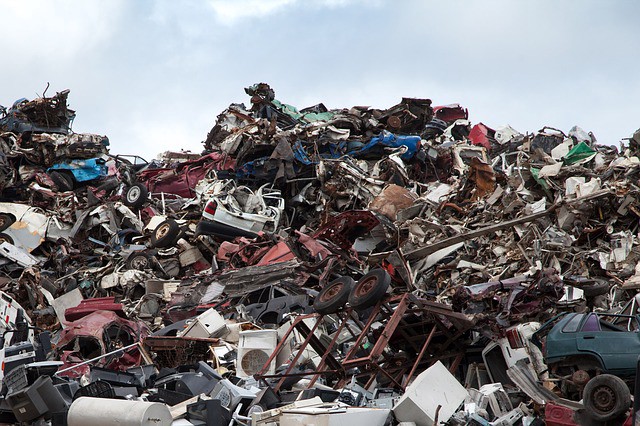
Older, I realized that I could will short stories into being. That is, I could decide to write a short story and go picking around my mental debris for a topic, then settle on characters and narrative and structure, and write the thing. Novels — impossible. Novels required an obsession with material and people and a great deal of uncertainty. But short stories required no more obsession than I already had stored up in my brain. Will felt like exactly the right word: I was willing stories into existence. I could work my brain like an electromagnet in a junkyard, turn it on, dip it into the heaps of my own mind, and pull something out. Perhaps not everything picked up was fiction-worthy, but some weird remnant would catch my fancy, and I could build a story around it. This felt like an extraordinary revelation.

I realized I could work my brain like an electromagnet in a junkyard. Not everything picked up was fiction-worthy, but some weird remnant would catch my fancy, and I could build a story around it.

Then, not long ago, I reread Allan Gurganus’s essay “Garden Sermon.” Allan was my first teacher my first semester of graduate school; his work means everything to me. “Garden Sermon” is about, among other things, novel writing, his own first (and great) book Oldest Living Confederate Widow Tells All, gardening, AIDS in the 1980s, taking care of the dying, the importance of taking things personally, heredity, teaching, compassion. Allan gave a public reading of it when I was his student in 1988.

There in the essay, these words:

“I tell my students: they can will the subject of a story but, a novel? no.”

Not even my revelation was original. I wasn’t ready the first time I heard it; time and other ideas covered it up; then a new wind gusted through the junk heaps, and the idea landed glintingly at my feet. And I thought, mine.

Pictured: a short story.

I change my mind about what a short story is nearly every day. So, then: a short story is that junkyard magnet. The form itself attracts. All the pieces of a short story — characters and lines of dialogue, events and images, setting, wild ideas — have been forged separately. Now they’re here, clinging to the one thing they have in common. In the junkyard itself, they mean nothing, a jumble. They are refuse. But once the magnet passes over they jump up and hang together, hub cap to hub cap to old pipe to wrenched-off refrigerator door. You see how they fit together, how they make a shape different from any other collection of scraps. Some of them don’t even touch the magnet: the current runs through the whole assemblage and holds it together. That story your parents always told about the early days of their marriage; the insult that ruined one of your oldest friendships; the morning news of 1962; other people’s writing; your worst memory of fourth grade. Turn on a magnet and watch them fly together.

Today, anyhow, that’s what I think.

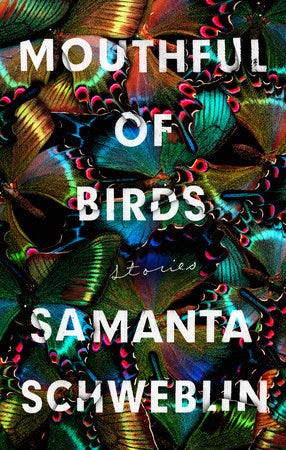
Samanta Schweblin’s ‘Mouthful of Birds’ is a Dark Magical Nightmare

There is a ferocity to the Argentine writer Samanta Schweblin’s stories that made me, I have to admit, slightly afraid to speak to her. When her bewitching short novel Fever Dream was released in English in 2014, Jia Tolentino wrote aptly in the New Yorker, “A low, sick thrill took hold of me as I read it. I was checking the locks in my apartment by page thirty.”

Purchase the book

The English-language release of Schweblin’s short story collection Mouthful of Birds, beautifully translated by Megan McDowell, takes on the quality of a nightmare. Dark fields off a highway ripple with masses of screaming women. A pregnancy shrinks backwards to the size of a pill. Children disappear in a hole in the ground. There is — I’ll warn you — the murder of a dog that will set your teeth on edge.

About four stories in, I was struck with that rare, buoyant feeling that the strange world on the page was actually my world, that the narrator was actually me. The narrator in question is a newly divorced father whose daughter has developed a compulsion for eating live birds. This is not a situation I’ve come close to, thus far in my life, so I cannot quite explain my feeling. But it was like holding a magnet to the tray of metal dust at a children’s museum. The little metal dust pieces were pulled out from some distant part of me; suddenly they had something to hold onto.

Samanta Schweblin is very interested in that magnet feeling — in the mysterious mechanics that click into motion inside our heads, spurred by a word on a page. There are murky darknesses inside all of us that can be dredged up by fiction.

When we spoke over Skype, from my office in Brooklyn to her apartment in Berlin, Schweblin told me, laughing, that readers are often surprised to meet her in person. They expect someone dark and reticent: “They’re like, ‘Wow! I never thought you would smile so much!’”

I was surprised myself, and grateful for her warmth and generosity as we spoke about the violence of art, about cultural misunderstandings and societal strictures, and how strangeness in literature can let us see it all anew.


Alison Lewis: You’ve been living in Berlin for several years now. Do you miss Argentina?

Samanta Schweblin: I do, but it’s a nice nostalgia. I live in Berlin because I like it. It’s a city where my world became very small, which could sound sad, but for me it’s divine and perfect. In Berlin I live in the little bubble of Spanish speakers and Latin Americans, so it’s just that: my spaces are smaller, and I feel that it gives me more time for writing. And not only for writing — for discovering new things. Sometimes it scares me to think of myself six years ago in Argentina; I was overwhelmed with the effort to meet societal expectations, so I didn’t have the space to choose what I really wanted to do. When are you going to go out and look for something new if you are constantly dealing with what you already know? So Berlin gives me that space, that emptiness.

AL: Is there something to the feeling of being uncomfortable that lets you discover the new?

SS: Feeling uncomfortable or feeling alone — not even alone — it’s feeling that you have the time to go out and discover what is going to happen in your day. It’s beautiful! Not everyone has that possibility in their city. It’s significant that I live in Berlin as a foreigner. And I want to still be living as a foreigner in twenty years; it’s what gives me the distance with which to see things as if for the first time, or to see them without understanding completely. I don’t speak German, so I am an exile even in my own language here. And all of that I find very generative for writing.

AL: In the story “Heads Against Concrete” in this collection, there’s the phrase “the cultural gap” which comes up very painfully at the end of a friendship between an Argentine artist and his Korean dentist; they reach a point of misunderstanding that they cannot overcome. Do you have that experience of the cultural gap often in Germany? And do you think it is ever something we can overcome — or not?
SS: I don’t know if it’s something we can overcome. I wrote that story when I was in Buenos Aires because I knew that dentist. We became friends, and we had an agreement like the characters in the story, where he would clean my teeth and in exchange I would do a task he asked me to. In Argentina, there are a great number of Korean immigrants, but they live completely isolated; it’s very rare for an Argentine to have a Korean friend. So I was proud to have this Korean friend, and that we were able to really communicate. Then the cultural gap appeared. He said something offensive and generalizing — that all Argentines are lazy — and I realized he really believed it. And that injured the relationship permanently. There wasn’t a way to set it right. I don’t know, I think it hurts a lot and we don’t find a way to dismantle these things.
AL: I don’t know, but maybe through reading, through art…?

SS: Yes, well, I hope so, but I don’t know. It has to do with taking for granted the social norms and ideas that we grow up with; we think they are the absolute truth when they aren’t. What’s certain is that when something scares us or makes us distance ourselves or feel prejudice towards others, it’s because of a lack of information. It happens because we don’t understand. So in that moment, instead of taking a step back, we should take a step forward and try to see what is actually happening. But instinctively we want to protect ourselves instead, to surround ourselves with our people who think like we do. So that creates this space between the two cultures in which you cannot reach out to those on the other side because you’re so far away.

Living as a foreigner gives me the distance with which to see things as if for the first time, or to see them without understanding completely.

AL: That story, “Heads Against Concrete,” ends with the line “these are not good times for very sensitive people.” I feel like many of your characters could be described as “sensitive people”; even as some of them, like the narrator of that story, are capable of great prejudice and cruelty, they carry a certain weakness within them. Would you describe them that way? And what attracts you to those kinds of characters?

SS: They’re characters who haven’t been able to arm themselves completely, as if they’re crippled in some way. But if they were strong or perfect, I’d be working with archetypes. It seems to me that the things the characters lack, or their obsessions, or the little places where they hurt are what make them interesting. And we are all a bit crippled like that, aren’t we?

AL: Yes, it’s true! And we hide it.

SS: Absolutely. We are constantly trying to perform a kind of normality, to present ourselves as perfectly as possible in order to be a part, to integrate, to be admired. But there is a trap in that because, in the end, it seems to me that the most genuine connections we make with others come from places of weakness, of pain, of fear.

AL: That makes me think of the moment of connection between the two employees in the story “Olingiris,” which I loved. There is something so endearing about these two women who come from the country with their own histories, their own hopes, but they get swept up in the bewildering machinery of the city. How do you conceive of these women?

SS: Well it’s a common story, of coming to Buenos Aires looking for a better life, and they do succeed in finding work, but they never come to understand how the city works or what the work they’re doing actually is. The idea in this story was that a woman can go to an esthetician to get rid of her leg hair, but she could also go to an esthetician and pay to pluck someone else’s leg hairs. So these women’s job is to have their leg hairs plucked; it’s flipped, so we’re distanced enough to see that situation in which neither the consumer nor the worker understands what the work is for, or even what they are even doing. The only possible connection in any case is in that moment of complete misunderstanding, of not knowing what to do, and the two women meet each other frozen in that same place.

The things the characters lack, or their obsessions, or the little places where they hurt are what make them interesting.

AL: In that story, one of the women treasures a book of fish drawings, particularly a drawing of a fish called an Olingiris. She’s given a newer copy of the same book, which she feels is different from the original, but in reality, they are exactly the same. Is that what you’re saying about these women too — that within the context of the city, of their workplace, they are identical?

SS: I mean that they themselves are identical. It’s the disillusionment of not finding a single difference, thinking “something has to make me different” — and no, you are the same. It’s like realizing you are one in a series. It’s horrible. Where these characters find themselves, in such a dark situation, there is at least some gratification in thinking that you are unique in your bad luck, in your suffering; it’s worse for you than for anyone else. But no, it goes that badly for everyone!

AL: Oof, it’s so dark! But there’s also that moment when the two women are crying together.

SS: There’s contact. There’s someone who sees you for the first time. Which in the end is what we are all always looking for.

AL: Are there authors who particularly inspired you when were first writing these stories?

SS: I think as a writer first you have your great teachers, and then later on you have more like little illuminations. Mouthful of Birds is my first book of stories, so it’s very influenced by my first great literary loves: Ray Bradbury, Raymond Carver, John Cheever, and many Latin American writers like Antonio di Benedetto, Adolfo Bioy Casares, Silvina Ocampo, Sara Gallardo, Julio Cortázar. Today my references are completely different. It’s been several years now that I’ve been reading and rereading four American writers who I love: Kelly Link, Aimee Bender, Elizabeth Strout, and Amy Hempel. They astound me. Elizabeth Strout and Amy Hempel work in the space of realism, but everything is infused with doubt, with enigma. And Kelly Link and Aimee Bender have something of Latin American magical realism, where I feel most at home; they are at the very edge of the fantastic. Sometimes they even cross over the edge.

AL: Oh it’s true. They’re all authors who, after you read them, you return to the world and it looks just a bit different, doesn’t it?

SS: Yes, that’s what the literature of the strange achieves. Our brains are constantly cataloguing what we see: your brother comes in and you say “my brother just came into the house.” Everything is labeled and classified. But a monster comes in and you can’t say “this is my brother;” you say “what is this?” Its eyes aren’t where they should be, it’s not the right height or color — so you are forced to really look at it for the first time. When you can achieve that effect with real objects, it creates a distance from our everyday lives that’s extraordinary. The extraordinary exists in our gaze — not in the object we’re looking at, and not in the text.

That’s what literature does in the end: it takes something from the order of the real, and it rethinks it in a way that can produce a certain magic, or a certain darkness, or a discovery.

AL: So when you’re, say, walking down the street, do you see the extraordinary? Is writing for you a way of showing what you see, which is maybe a little different from what the rest of us see?

SS: I don’t know that I see things differently. It’s not that you go walking and see extraordinary things where they don’t actually exist. What you do is you search for them, and above all it’s an internal search. Sometimes it’s sitting down to think through a situation by writing about it, and in doing so finding something singular. That’s what literature does in the end, or at least the most realistic literature: it takes something from the order of the real, and it rethinks it in a way that can produce a certain magic, or a certain darkness, or a discovery.

AL: Do you generally discover where a story is going as you’re writing it? Or do you know from the start where it will end?

SS: In general I do have a pretty clear idea of where I’m going, but it’s not a clear idea of the plot; it’s an emotional space where I want to arrive. I can see very concretely and specifically the particular feeling of the ending. It took me a while to realize this; for a long time I thought it was the plot that was pulling me forward. The plot seems like the weightiest, most untouchable thing in a book, but actually it’s just anecdotal. I have a very specific emotion that I want to hand to the reader with the same specificity, the same weight, the same colors, exactly. I want to put it inside you. And the plot is only the bridge that gets you there; it could be any bridge of any form. When I realized that, it gave me a great deal of freedom in my writing. I could change the path, or undo everything and rewrite it — you can do whatever you want, as long as you cross that bridge.

AL: What is it that pulls you so often towards writing short stories, as opposed to novels?

SS: In the short story there is a sensation of velocity that is very special, and a depth that is reached in so little space. It does something physical to your body and your reality, like when you finish a sprint and you’re trying to catch your breath. You think, “What happened?” What happened? You just read two pages and something in your world changed.

AL: I felt that in so many of these stories, I have to say — it’s like a physical impact! There is a lot of violence in these stories, and often a correlation between art and violence. In “The Heavy Suitcase of Benavides,” the wife’s murdered body, which is stuffed inside a suitcase, gets displayed as a work of art. And in “Heads Against Concrete,” the main character has this impulse towards violence which he ultimately transforms into art. Do you think there is something violent in art itself, or in the artistic impulse?

SS: Yes, I think so. It’s inevitable to be contaminated with darkness, with fears and doubts. Those things touch you; they get inside your body like poison. And art is a way to distill the poison. At least for me, writing is what gets it out of my body. There’s something healing too that has to do with darkness in the abstract versus darkness as something concrete. I’m not sure what, but something gets healed when you make a material, physical work of art out of that formless darkness that was lodged somewhere, who even knows where, in your body.

Fears and doubts get inside your body like poison. And art is a way to distill the poison.

AL: A lot of the violence in these stories also occurs between the sexes, especially in the first story, “Headlights,” where there is this field full of women who have been deserted on the way to their weddings. It felt to me almost like a creation myth — like the first betrayal. Do you think of it in that way?

SS: There is something a bit theatrical in that story, like out of a Greek myth. I was trying to think not only of the personal tensions of each of the characters but also the tensions that all of society and business puts onto them. So I took them outside the context of the city, and put them all in one place. At one point everyone is getting married at the same time in this story. Everyone is frozen in the same place, each with their own personal disasters, but all in the same moment.

AL: This is a tricky question to ask, but do you think there is something insurmountable in the space between men and women that the battle of sorts in this story embodies? Do you see a “cultural gap” in gender relations too?

SS: Well, there’s a lot of tension, isn’t there? Especially in recent years. But I don’t think it’s specifically between men and women. I think we don’t understand the other in general. It’s not that, in this story, the characters make decisions that are solely tied to the sex into which they each fit — because of course there is no black and white when it comes to sex and gender. But there is a communal way of thinking that is black and white, and this story plays with that through common, shared spaces that bring out our social instincts — when you act for the group and not for yourself. The story is built on a series of conventions and social agreements, which in fact are not the most natural ways for us to relate to one another. These objects that mean so much to us — in the story “Toward Happy Civilization,” it’s money, or here it’s the wedding dress — when these cultural objects are taken out of context, we see clearly the stupidity of their importance. They’re nothing; they’re empty.

You can feel pain as you’re reading, but when you return to your life, you aren’t hurt.

AL: So many of the stories in this collection end with emptiness, with fear or desperation, but there is a beautiful and to me quite mysterious story, “A Great Effort” — about a father and son who start visiting a masseuse — which is a story of real healing. I wondered if you think literature can sometimes work like the massages in that story: that through symbolism, and a series of physical sensations, and whatever other mechanisms which evade our understanding completely, we are cured of some suffering?

SS: How lovely. Yes, yes, of course I believe it. I believe it because I feel it; it happens to me as a reader and as a writer as well. In the end, I think literature is a mechanism that allows you as a human being, as a citizen of this world, to pull out your worst fears, face them, and test yourself — almost as if you were playing a videogame — and return to your life with information that is vital. You can feel pain as you’re reading, but when you return to your life, you aren’t hurt. You can feel death, and when you return to your life, you’re not dead. I don’t know that there is anything else in our world that lets you work, in such an intimate and precise way, on your understanding of life itself. There is something so specifically personal about reading: no other art or technology can give you that unique reaction where a particular word invokes a particular image that is yours and no one else’s. If I say “teapot,” the teapot that appears for you is unique because you know that teapot. It’s your grandmother’s, or the one you wanted to buy but couldn’t, or the one you carried with you from your birthplace — you know how much it weighs, how it smells, where it’s stained. And all that from the word “teapot!” The fact that literature does that is precious, and irreplaceable.

7 Books About Why We Need to Normalize Abortion

Today, Roe vs. Wade turns 46 years old. The landmark piece of legislation may not see its 47th birthday, it spite of the fact that 71% of Americans support abortion rights and one in four people who can get pregnant will have at least one abortion in their lifetime. And whether or not Roe survives, the GOP will continue to decimate access at the state level, doing their best to ensure that reproductive freedom remains an economic privilege, afforded to their wives and mistresses. They’ll leave the rest of us to die.

Beginning about 20 years ago, evangelicals hijacked the discourse about abortion and redefined the terms: abortion is murder, providers are serial killers, Planned Parenthood has cornered the black market on baby brains. The pro-choice movement pivoted to the defense, and in doing so, lost the ability to advocate for abortion in any sort of compelling way. The price to enter the conversation as someone who has actually had an abortion became impossibly high. And until recently, the vast majority of pro-choice voices have declined to root their own convictions in any personal experience.

Purchase the book

In 2015, my own abortion disclosure ignited a viral outpouring of stories via the hashtag #ShoutYourAbortion. Shout Your Abortion has subsequently evolved into a movement and a full-fledged organization, working to create places in art, media and real-life events all over the country for people to talk about their abortion experiences. SYA is not just for people who’ve had abortions, and people who have had abortions are not simply deciding to shout about them for their own personal empowerment; we’re doing this for everyone. The prevailing silence is toxic for everyone. And this whole country will go up in flames without abortion access. We’ll never be able to fight for it unless we learn to talk about it.

Legislatively, this hellscape does not match mainstream needs or values. Culturally, even those of us who are strongly pro-choice are often completely uncomfortable talking about abortion. The subject has been conspicuously avoided in art, literature, and in the conversations we have with the people we love. As a result, we’ve failed to develop any understanding of what abortion actually is, and how it works in peoples’ lives. Our collective perception lacks human touchstones, and people do not find empathy in theoretical exercises.

It’s a minefield of a conversation; they built it that way on purpose to keep us out. This reading list compiles work from my friends and colleagues intended to help you find your way in, and start getting comfortable with reality.

Life’s Work: A Moral Argument for Choice by Dr. Willie Parker

Dr. Willie Parker made his way out of southern poverty and became an OB-GYN with a faculty appointment at the University of Hawaii. A man of deep faith, Dr. Parker avoided performing abortions until 2002 when he had a revelation that lack of abortion care in the deep south was causing people to suffer. Today, Dr. Parker is one of the most vocal, visible providers in his field, guided by an absolute conviction that he is doing the Lord’s work and serving the most disenfranchised people in the country. Life’s Work is a philosophical memoir containing field notes from an unfathomably demonized profession. If you do Christmas with anti-choice relatives, give them this book.

Handbook for a Post-Roe America by Robin Marty

The GOP has decimated access to abortion in recent years, and now, 46 years after its passage, Roe v. Wade is on the precipice of reversal and the Supreme Court will take a generation to un-fuck. How do we fight when things are this bad? Activist and writer Robin Marty breaks it down by walking readers through worst-case scenarios of a post-Roe America, and offering individualized, pragmatic paths to join the fight no matter what you’re working with. Marty doesn’t shy away from topics like self-managed abortion care, and how to avoid surveillance if you or someone you know is accessing abortion outside of federal regulation. The book includes an extensive resource guide with clinics, action groups, abortion funds, and practical support groups in each state.

Misogynistic Dystopias, Ranked By How Likely They Are in Real Life

Shrill by Lindy West

Weeks before she submitted this manuscript, Lindy West and I inadvertently exploded the internet by talking about our abortions. I’m not sure if Lindy would have included “When Life Gives You Lemons,” otherwise, but I’m sure glad she did. Lindy writes about her relatively unremarkable abortion in a way that is typically disarming, entirely human, and totally normal.

Like a Mother: A Feminist Journey Through the Science and Culture of Pregnancy by Angela Garbes

In Like a Mother, Angela Garbes wonders why doctors don’t trust pregnant women enough to tell them the truth about what is really going on. Garbes is a journalist, a researcher, and a mother, who has terminated one pregnancy and who lost another one she was trying to keep. Her writing is visceral and gorgeous, and this book is absolutely singular, equally scientific and intimate, posing questions many of us have found ourselves wondering while feeling as though we were the only ones to wonder.

The Abortion by Richard Brautigan

In this “historical romance,” Brautigan the librarian meets Vida, the most beautiful woman to ever live. He knocks her up and she has an abortion in Tijuana. When I read this book fifteen years ago, I thought it was the horniest, sweetest book I’d ever read. I’m never reading it again.

Killing the Black Body: Race, Reproduction, and the Meaning of Liberty by Dorothy Roberts

One cannot responsibly claim to have formulated an opinion on any reproductive issue — from abortion, to birth control, to IVF — without knowledge of the systematic medical abuse of Black women’s bodies in America. Roberts is a brilliant theorist and historian but draws cultural conclusions which feel as relevant and foundational as they did 25 years ago. White women who believe themselves to be fiercely pro-choice absolutely must develop a capacity for complex racial analysis and this book is critical context.

My Darling, My Hamburger by Paul Zindel

Another reason we need volumes like the above is because of treasures like this one. Zindel wrote problem novels — novels for young adults tied to social ills that delivered a pat, if not patronizing solution. Afterschool specials in book form. MDMH was noteworthy because it was the first time I remember reading about abortion, and abortion was the heavy-handed punishment dealt bad girl Liz for having sex with her boyfriend, Sean. Sean was all set to run away with Liz until his alcoholic dad counseled him to ditch her lest teenage fatherhood ruined his future (no mention of Liz’s life, naturally). Sean gives Liz $300, but doesn’t take her to the clinic (foreshadowing of Fast Times at Ridgemont High and so many other books and movies that underscored that boys were not to be trusted), and Liz misses prom, graduation, and nearly bleeds to death. The message was clear: I was on my own.

We Deserve More Black Stories with Happy Endings

Slavery was legally abolished in 1865.

The segregation of blacks and whites was made illegal in 1954.

I have relatives who have had parents, grandparents, and great-grandparents, that were no stranger to those times. These relatives are alive and well today. Like me, they are Mississippians.

Lately, I’ve been thinking a lot about how close I am to that time of segregation, to slavery. How close I am to that time, particularly, because I am a Mississippian, and I know all too well how stubborn this state is. How resistant it can be to adopt and enforce the laws needed to create a better, fuller, and more whole way of living for those who are outside of whiteness.

I have been thinking about this a lot lately, because as a writer, and as an idealistic person in general, I crave to write the happy endings for black characters, in black settings, in America — even though I am so close to those times. I am an infant, existing in the aftermath of America’s atrocities. I am new to this. I am the stranger. I am the test with no study guide, hoping that all goes well.

I am an infant, existing in the aftermath of America’s atrocities.

I crave the happy ending, though I still have relatives who teach, and who have taught me, the importance of never fully trusting a white person (lest they betray you). “They are snakes. They are devils,” they say with good intentions, as they recount past experiences at the hands of hate.

I crave the happy ending, though I am still self-conscious of being the only black person in an ultra-white setting. In restaurants. In stores. At school.

I crave it, though the presence of black lives is still thought of as problematic by those who find it so easy to take our lives. They are taken by people who shout, “Make America Great Again.” By people who burn and discard anything designed to challenge their way of thinking. By people who support idiotic leaders in order to hold on to their need for power and control.

I crave it, though the idea of freedom, and togetherness, and acceptance in America is still so very new.

The years that separate me from my ancestors who experienced slavery, segregation, and the worst period of American history, are so small, so short, that its proximity horrifies me. Did they ever dream of a happy ending? Was there ever any time to do so?

Yes, I want to write the happy endings despite all of the obstacles, and I am aware that happy endings for black people exist, but in many ways, they are simply conditional.

Conditional, until we are pulled over by the wrong kind of cop.

Conditional, until we walk into the wrong kind of restaurant.

Conditional, until happy endings that we have worked our ass off to obtain, are challenged by the despicable thoughts of others — “That house is too nice for a ________, I should call the cops.” or “There is no way this BLACK woman could be a doctor.”

Our happy endings are conditional until we say one wrong word, or do one wrong thing that could be deemed as rebellious or anti-American.

I want to write the happy black endings that exist fully without tragedy. Happy endings like the countless books that I have read by white authors, featuring white characters. But I want them to be written because they exist outside of fantasy. I want them to exist because they reflect reality.

I am asking. I am wondering. I am hoping for a day when that happy ending will be.

I want to write the happy black endings that exist fully without tragedy. Happy endings like the countless books that I have read featuring white characters.

When will it be accepted with full trust, and not thrust away like something alien, like some sinister distraction created to make us believe in a false testimony that will equate to our inevitable end? An inevitable end that occurred because we trusted that happiness too much instead of conditionally like we’ve all been taught to.

In my research, I am attempting to approach blackness as if I have not lived a fully-black life in Mississippi. I am learning how to do this at the hands of my treasured teachers — Zora Neale Hurston, Anne Moody, W.E.B. Du Bois, Lawrence Otis Graham, and Michelle Wallace. There are many other teachers on my list, and Richard Wright is my latest one.

Native Son was a story that I was slow to accept. It took me four weeks to finish, twice as long as I anticipated, and that is because its end was already secured after the first few pages. I was not ready to go on and confirm what I already knew, that this black man would die. That this story would not be one that ended happily.

Richard Wright’s Native Son is a novel set during 1930’s Chicago. Its main protagonist is Bigger Thomas, a young African American man who receives the job of working for a very wealthy, and prominent white family as a chauffeur. Yes, there is violence, and yes there is death, but at its heart, it is a story about what happens to the dreamer, and the dream, when it becomes distorted by reality and seized by madness.

Richard Wright’s Bigger Thomas represented everything that my other teachers had warned me, either directly or indirectly, about. He was dark. Wildly masculine. Angry. Reckless. And too smart for his black and bleak circumstances.

Not only was I reluctant, but I was also angry with Bigger Thomas. Angry for his stupid crimes. Angry because I knew there would be no surprise ending, no deus ex machina to save the day.

There is something about books like this that get under my skin. That make me mumble words that are not of my character with each passing page and escalating conflict. If only he had learned to smother his frustrations, I think, if only he had learned to be an unhappy black man in happy white surroundings.

I wanted to distance myself from Bigger Thomas because he was an irrevocable black fuck-up who was beyond saving. But I knew that I needed to embrace his story. For research. To Learn. To help.

By the end of the novel, I was left with emptiness, and tears. This fictional black man had died, and non-fictional black men, women, and children were dying unnatural deaths in a non-fictional, American world. There seemed to be no escape, acceptance, or reprieve for blackness. Not in fictional settings, and especially not in non-fictional settings.

There seemed to be no escape, acceptance, or reprieve for blackness. Not in fictional settings, and especially not in non-fictional settings.

Bigger Thomas was not a hero. He was not an admirable or a good man, and even knowing how it would end, and even learning who Bigger Thomas was, there were small parts of me that rooted for him.

In my research, I am learning that blackness often consists of encouraging it, and its need to thrive, under almost any circumstance. It is accepting every character, the hero and the villain, simply because it contributes to the pool of our suppressed population.

I am learning that blackness is love.

It is the continued cheering of all our champions, chosen ones, monsters, and meddlers because in doing so, we ensure our existence, as opposed to the much more frightening option, our nothingness.

In the midst of our love for one another, there can also exist pain. Without escape, that pain only grows, becoming something bitter that takes away our breathes, and obliterates whatever peace that we have entirely.

Escape is what we, black people, dream of. Escape is what I often cling too when I read fictional works or watch fantastical movies. Escape is what made Jordan Peele’s movie Get Out so delightfully entertaining. But even Peele knew that in some way, the ending that he had provided, the one that would go on to make it to the big screen, would be questionable.

A man who is black wins. He burns down a home that is not his. He survives a setting that has been put into place to ensure his failure. He kills more than one of the characters who, at every step, have tried to physically and mentally invaded him like some unwelcome explorer. A black man wins through all of this.

Absurd.

In response to that absurdity, an alternate ending was issued. It is an alternate ending that reflects the true reality of blackness in America when forced to survive, and defend its basic right to live.

Of course, we lose.

In my research, I am learning that the way to survive blackness is to distance yourself from all characteristics that are deemed too black for their own good. If I want to live, I must remove myself from skin that is too dark. From hair that is too nappy.

If I want to live, I must eliminate and shun all traces of my unknown, untraceable African origins.

In my research, I am learning that is best to do all of these survival tactics, and more, but if is often not a guarantee of a happy ending to come. I am discovering that I can read all of the books, obtain all of the degrees, and speak and act in the most pleasant, professional way, but there will still be a probability of bullets finding their way into my body, obliterating the very last of my blackness like something that I could not see. Some bit of blackness that I had forgotten or overlooked, and like a favor, is wiped away by my white neighbor.

I can read all of the books, obtain all of the degrees, and speak and act in the most pleasant, professional way, but there will still be a probability of bullets finding their way into my body.

I. Am. Not. White. No matter how close I am able to obtain its aesthetic, and culture.

I feel like I am asking for impossible things for this time that I live in. I am too close to the time of segregation. Too close to the time of slavery. Too close to an era where hate for the other still exists. But I ask these things in order to remember, and keep in my heart, what I can do, and what can be done, to make the happy black endings an unconditional reality.

Inside, the emptiness that I was left with after reading Native Son, had shifted. I am a happy, bubbly, too-damn-idealistic-for-my-own-good black girl, I cannot deny it, and it is often hard for me to stay upset. Like Bigger Thomas, there is some subconscious understanding of myself, an ending that I can clearly see. As hope begins to thrive again, I decide that I will write the happy black endings, despite what reality says. I have made up my mind that if I am going to die anyway, by natural causes or otherwise, I will create what I truly want to. I decide that I will offer no alternate, more plausible ending for myself or my audience.

This idealistic, and happy ending of mine won’t exist for my reality, possibly, for my time, possibly, but it will exist for my children, and my children’s children.

When I am old, and my life is nearly at an end, they will ask me how I knew to dream for more, how I dared to write the worlds that demanded the best from humanity despite all the opposing evidence that it would not come into fruition. In response, I will say that I was psychic. I will say that I saw the future, and it was bigger.

Cat Puke Is the Wellspring of Creative Life


About the Author

Julia Wertz is a professional cartoonist, amateur historian, and part time urban explorer. Her books include Tenements, Towers, & Trash, Drinking at the Movies, The Infinite Wait, and the Fart Party. She is a regular contributor to the New Yorker. See her work at Juliawertz.com, her photography of abandoned places at Adventure Bible School, follow her on instagram, and read her diary comics on Patreon.

“Cat Puke Is the Wellspring of Creative Life: four comics” is published here by permission of the author, Julia Wertz. Copyright © Julia Wertz 2019. All rights reserved.