We’re not sorry to be saying goodbye to 2018. There were bright spots—Democrats delivered an absolute spanking in midterm elections for the House of Representatives! That’s the only one we can remember right now—but overall it’s been pretty grim. Climate change, disasters, government corruption, inhumane detention of refugees, the all-consuming rot of capitalism… well, here’s to a better 2019, right? Ha hahaha ha.
BUT ANYWAY. While every day was basically bad in some significant, all-consuming way, there were also many days on which Electric Literature published stuff you liked, or at least stuff you read! Here’s a look back at the most popular posts of this year. We hope they slightly leavened the experience of struggling through 2018, or at least gave you something new to think about for a few minutes.
The Fun Stuff
If you learn one thing from reading Electric Literature, we hope it’s this: Talking about books doesn’t need to be dorky or dull. (Well, maybe a little dorky.) Here, in ascending order of popularity, are your favorite humor pieces, charts, and diversions from this year.
These before-and-after shots (or sometimes before, after, after after, and after that) show the artistic and conceptual process of designing a perfect book cover. Electric Lit associate editor Jo Lou interviewed ten designers about their process, their changes, and how they landed on their final products.
Are you a Didion? A Butler? An Angelou with Atwood rising? Electric Lit’s resident astrologer Jeanna Kadlec (who is also now doing seasonal horoscopes!) encourages you to forget about those un-relatable scorpions and water-bearers and embrace a Zodiac sign that really speaks to you.
Party, Snack, Nap. Complain, Dawdle, Tweet. Sleep, Worry, Cry. There are so many options for your personal Eat, Pray, Love, generated from your initials!
What does the cover of Novel About the Sexual Awakening of a Young Woman look like? How about 20-Something Man from New York Writing About His Isolation? You’ve seen these books hundreds of times, but maybe you couldn’t picture them—until now. Designer Matthew Revert’s covers, paired with fake blurbs by Jo Lou, roast the everloving daylights out of the literary world.
After reading your social media reactions to this highly scientific piece by Helena Fitzgerald and Electric Lit editor-in-chief Jess Zimmerman, we have one more to add: If your favorite Shakespeare play is Twelfth Night, you have a 90% chance of saying “Drag me” when you post this link on Twitter.
Y’all loved these handy charts this year! This one helps you devise a plot—or at least marketing copy—for your highly anticipated novel. We heard even Jonathan Franzen used it to plan his next book, a darkly comic autobiographical novel about an unlucky man’s expedition to avenge his fear of spiders. That’s just what we heard.
This chart and its companion piece, our post about the “describe yourself like a male author would” Twitter thread, blew everything else this year out of the water. Any literary site will let you read about, say, Jane Austen, but only Electric Literature will inform you that if a male novelist were describing her, he’d write “She had curves like a silken bedsheet and I resolved to ravish her.”
The Serious Stuff
Jokes and infographics are all well and good, but for a lot of you, the real fun of reading comes from criticism, scholarly investigation, and generally thinking deeply about how books and other storytelling media influence, and are influenced by, the culture at large. In ascending order, here are the essays you were most excited to dig into this year.
Do you need permission to put that book you hate in the donate pile or stop renewing it at the library? Janet Frishberg will give you permission. Life is short.
This was the year Kendrick Lamar won a Pulitzer prize, and it was well-deserved. Leila Green’s beautiful essay shows her learning from Lamar’s music and applying his lessons to her fiction.
Does our culture encourage bitter young men, and allow their violence to thrive, by endlessly repeating the idea that men’s sexual frustration is all-important? Erin Spampinato says yes.
Terra Loire brings us good news: machismo is out, and it’s being replaced (in books and movies, at least) by a kinder and gentler masculinity.
The Middle of the Venn Diagram
We’re not sure where to put Helena Fitzgerald’s essay “Magic Mike XXL Is Basically ‘The Odyssey,’ But With Butts,” which is a serious investigation of how a particular work of cinema both enacts and reinscribes Joseph Campbell’s Hero’s Journey, but is also mostly about pointless sexy dancing. But we feel we have to mention it, because we loved it, and so did you.
The Recommendations
Electric Lit often publishes lists of books on a theme, so that readers interested in a particular country, time period, subject matter, or character type can populate their TBR lists. Here, in ascending order, are the lists you were most interested in this year.
Okay, Erin Bartnett’s list of wildlife that’s invaded library property isn’t technically recommendations, but we do HAVE some recommendations. For instance, put a capybara in the library!
R.O. Kwon’s annual list of books by WOC to watch out for is always a highlight of our year. We can’t wait to read the one for 2019!
The Fiction
Here’s the most beloved of the contemporary fiction we published this year in Recommended Reading. With recommendations by George Saunders, Sheila Heiti, and more, you don’t even have to take our word for it.
“With Jazz” by Bobbi Ann Mason, recommended by George Saunders
A story about wandering through the still-beautiful but ever-hostile American dreamscape, from a writer who was revolutionary for her time.
Novel Gazing is Electric Literature’s personal essay series about the way reading shapes our lives. This time, we asked: What’s a book that almost killed you?
When I was twelve years old I turned into a mermaid.
I had already learned to hate myself by then. I was trapped shuttling between the two poles of a spectrum I could never reach the middle of, always either too quiet or too loud. My laugh was penetrating, my shyness crippling, my body not a body anyone could want. I trailed behind all the girls I knew: last to a mobile phone, last to getting my ears pierced, last to make-up and tight tops and boobs.
Before lessons and in the playground and at home in the evenings, I cracked open books and left my last-place life for as long as I could. I became a dragon rider and a woman knight and a witch at a school for magic. I fought villains, loved heroes, and was loved in return by both.
Best of all, I was beautiful. I was elegant, smart, brave. I could fascinate people, charm them or kiss them or kill them. As long as I was reading, I could be anything at all, so long as it wasn’t myself.
It was a cold day when I picked up The Tail of Emily Windsnap at the library. I liked the cover, with its shiny fish tail, and I’d always had a secret adoration for anything to do with mermaids. I liked thinking they were out there, I guess — a little bit of magic the ocean was holding onto, keeping safe from the rest of us. Mermaids were lame by then, of course, the same way unicorns and play-acting were. But I loved them anyway.
I read the whole thing in a day and I was gone.
Emily Windsnap wasn’t much like me in most ways. She was skinny, for starters, and she lived on a boat, and she turned into a mermaid when she was immersed in water. But in other ways, I related to her so badly. Like me, she lived in a little town in England where nothing much happened at all. She wanted friends. She wanted magic. She wanted to feel part of something bigger and better than the regular world. She wanted to find part of her that she thought was missing — even if, in her case, that was a merman father. Best of all? She went out and got it all.
I wanted a bit of Emily’s magic so badly that for the first time in years, I went swimming for pleasure. I’d loved swimming as a child, but the grubbiness of local pools, the horror of changing in front of other girls, and the sheer grimness of putting tights back onto damp legs had pushed me away from it. It was only now, with the promise of magic laid out before me, that these problems were suddenly worth braving.
Sliding into the chlorinated water felt like getting closer to that mystical mermaid girl. In the water, goggles on, I was free. I could see all the way to the end of the pool, the light filtering through the water like liquid gold. I was weightless, slippery, graceful. It didn’t matter that my thighs jiggled or that my laugh was annoying. In the water, I was silent. I was beautiful.
It didn’t matter that my thighs jiggled or that my laugh was annoying. In the water, I was silent. I was beautiful.
I swam and swam and swam. I learned to hold my breath longer and longer, to use the water rather than to fight against it. I spent hours during our summers abroad in the pool, dolphin kicking my way from one end to the other, pretending with all my might that my pale white legs were a long and beautiful tail. So long as I was in the water, my looks and my personality didn’t matter. The water loved me just the way I was.
Knowing that I could go back to the water whenever I felt particularly down about myself made it more bearable. I was never that fast or strong or co-ordinated, so I was never at risk of being plucked out and plopped onto a school team for anything. Swimming always just belonged to me, and only me. It couldn’t be bent into someone else’s shape, the way I was always trying to do with my body.
But I still wasn’t quite as close to Emily Windsnap as I wished I could be. She swam in saltwater, after all, in the open sea. I swam in amber-lit pools filled with chlorine that dried my hair and skin out and made me itch all over sometimes.
So when we took a family holiday to Madeira, I was overwhelmed with the chance to do it at last. The hotel we stayed in had a tiny, rocky pool down at the base of the cliff it perched on where the waves slopped in and kept the water fresh naturally. No chlorine, just seawater. You could swim right up to the edge, poke sore elbows against the hard rock, and lift yourself right up into the waves as they washed in.
It was the best pool I’d ever swum in. At last, I felt like I was the closest I could get to being a mermaid.
Then my parents went one better. There was a bigger pool on the island, they said. Our little rockpool on steroids. Public use, for anyone, where the waves swept right out of the Atlantic and crashed together onto the swimmers. Immediately, I had to go.
And we did. We set our towels down at the shallow end, where the rock sloped gently into the water, and my younger siblings splashed happily about where it wasn’t too deep.
I swam at that end for a while, turning around in the water, imagining I was slender and shiny and scaly. I clamped my legs together and dolphin-kicked in circles, tasting the salt on my tongue. It was the freest I’ve ever felt.
Then my father said he would swim out with me to the far end of the pool. I turned and looked. The waves came in high at that end. Really high. Occasionally, two met coming in at the same time and turned into one super-wave, slamming down onto the swimmers below. They always popped back up, laughing, right away.
So, wide-eyed, I said, “Yes please!”
Out we swam, strong and sure. Breast-stroking, not dolphin-kicking, because without a tail dolphin-kicking was actually quite hard. With breast stroke, though, I could scud along for hours.
The bottom of the pool was so far away I couldn’t see it from the top. My mouth tasted of iodine and my eyes were sore and red. I was thrumming with the love of it, all the water around me, my last-place body so light and elegant beneath me.
Then the wave came in. Twice as big as the one I’d seen, a Frankenstein’s monster of a wave that must have been maybe three or four smaller waves combined. It may have been nothing to the older and more experienced swimmers but to me it filled the whole sky, tall as a tsunami.
It crashed onto my head and down I went. My feet kicked out for the bottom, to shoot up to the surface the way I’d done for many times, and met only empty water.
The air bubbled out of me frantically, I set myself against the water, and the water began to win. I was panicking, utterly and completely, arms and legs thrashing as I fought to get myself back to the surface.
I wasn’t a mermaid any more. In that moment, salt knifing up my nose, I wasn’t beautiful or weightless or strong. I was just a stupid girl who had swum too far out of her depth.
I wasn’t a mermaid any more. I was just a stupid girl who had swum too far out of her depth.
I made it to the surface, though I don’t remember how, and had time to drag in the tiniest bit of air before another wave came in. It wasn’t as big, this one, but it was enough to toss me under again, turning me over like I was nothing. Like I’d never had any power at all.
My dad saved me, the way the best dads always do. I think he caught me by my hair, in the end, hauled those long blonde strands up out of the water and towed me, choking, back to where the rock sloped up and out.
The saltwater burned coming back up. I started crying at some point between all the coughing and retching.
You have to understand — I’d been swimming my whole life, since the first time my mother took me to baby swimming classes and the instructor supposedly told her I was a natural, instinctively going for a rudimentary breaststroke instead of the messy doggy-paddle of the other children.
And I had never, not once, felt out of control the way I had beneath that wave.
That is the only time in my life that water has felt like an enemy. Like something out to hurt me, instead of to make me feel beautiful.
My parents, good people, did exactly the right thing: they took me right back into the water and floated with me. We swam some breaststroke at the shallow end, up and down and up and down, and they showed me how to trust the water again. We didn’t go back towards the waves.
Back at home after the holiday, I picked up the Tail of Emily Windsnap and read it for maybe the fourteenth time.
I realized then that I would never find the world that she had, deep beneath the waves. That magical ocean didn’t exist. The real ocean was vast and disinterested and strong, and it wasn’t made for people to live under. It didn’t love me or want me or even care one whit about what happened to me.
Don’t get me wrong, I still dreamed of living in that world of hers, with secret cracks in rocks that led to mermaid towns and school classes in Siren Singing and Hair Brushing. I dreamed of being beautiful and weightless and elegant, with a shimmering silver tail.
That magical ocean didn’t exist. The real ocean was vast and disinterested and strong, and it wasn’t made for people to live under.
But I understood, thanks to that monster wave and the crushing panic that followed it, that the world around me was the one I had. There was no magic in it for me to go and find. My body was the one I was stuck with, and it was never going to grow a tail. The water couldn’t turn me into anything I wasn’t already.
I also understood that if I wanted magic, I was going to have to make it myself.
That summer was the summer I wrote my first short story, about a group of girls who — shocker — turn into mermaids.
This summer, thirteen years later, I turned in my third novel draft to my agent, and we might be readying it to send to publishers soon. It’s not about mermaids or mysterious underwater kingdoms, but I’m hoping at least one reader, somewhere, will find a little bit of magic in it. Will learn after it, the way I did with The Tail of Emily Windsnap, that you can find a way towards not hating yourself without having to turn into a mermaid first.
I spent my teenage years with bitterly callused hands and my neck sunburned red. I’ve been kicked in the face by a steer the size of a car and I stick like velcro to rank horses. But, in 2017, when I had my first ever call with a New York publisher, his opening words to me were: “As a young woman, what gives you a right to write about this stuff?”
Purchase the book
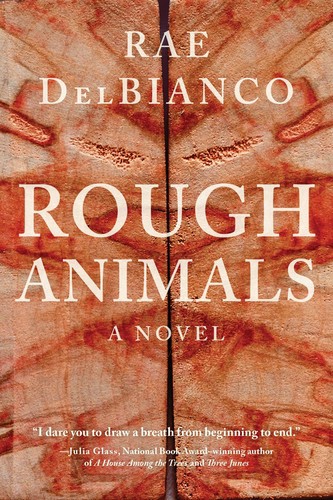
The Western is the unfortunate casualtyof a double definition: it is at once a living world and a species of genre fiction. This summer, I published my debut novel, Rough Animals, the story of a young Utah rancher, his twin sister, a fourteen year old female cartel assassin, and the harrowing family secret that their war against the elements and each other unravels. Rough Animals centers on the human costs of the everyday violence required in living off the land. While my farming life took place in Pennsylvania, the grit and dirt and animal struggles in the novel are all my own experience.
Two of Rough Animals’s three main characters are women: one adept at surviving in the woods, the other at killing in the desert. They are at once the true story of the West and a challenge to the Western: the real wilderness, from Utah all the way to my homeland in Pennsylvania, requires skill, strength, competence, and courage to eke a living from the ground. There are no “damsels in distress.” The West was and is a cruel place, and none of the following authors deny that. But if we step away from the Western as genre — the dramatic tropes, the binary good versus evil, the sexism and bigotry — we can yet look to the West as the core piece of our American identity that it still is. The following stories do not rewrite the West in the sense of updating a genre. They are among those few who are telling it truthfully, part of a voice that has been quietly persisting and is now, finally, growing too loud to be dismissed.
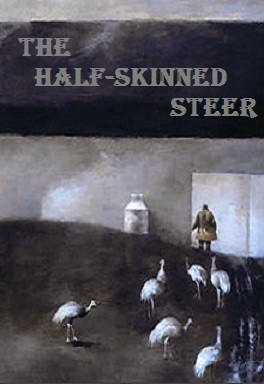
My all time favorite short story is a tale of time, age, and the brutality of nature. The Half-Skinned Steer tracks an octogenarian’s return to his Wyoming childhood ranch for the funeral of his brother. On the way, he relives with intensity the discovery of sexuality that made him leave the rural life decades before.
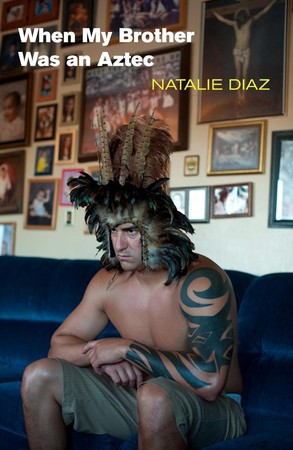
I first heard Diaz read at the Tin House Summer Workshop, the same week that Manuel Gonzales lectured to us on her poem “A Woman With No Legs”, a deeply moving, emotionally ravaging, and tactile work about a Mojave woman with diabetes. As a fellow queer woman writer, I admire her voice for the LGBT community as much as I admire her art.
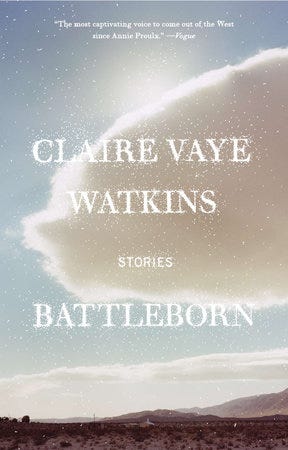
This short story collection is as forceful and unapologetic as the title suggests. In equal parts beautiful and brutal, Watkins’ West never shies away from difficult emotions, personalities, or truths in a landscape of chaos.
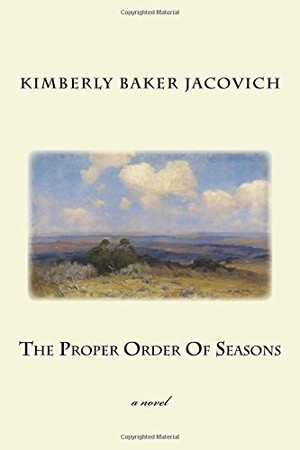
Tracking a former Civil War soldier’s homecoming to Texas, The Proper Order of Seasons is as emotionally riveting as it is violent. I believe that violence, when done well, can be one of the most powerful tools in literature, and Jacovich wields it to its full potential.
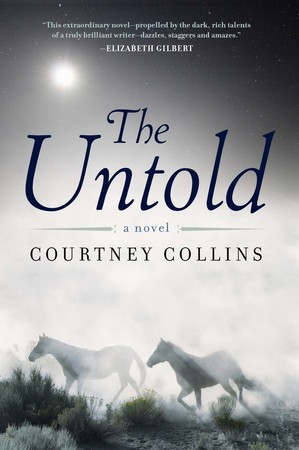
While The Untold takes place in Australia, its capturing of ranch life, wilderness, and life’s frontiers makes it too relevant not to include here. With a first chapter narrated by a dead baby, Collins is intent on overturning the difficult and brutal in life, and the reader is too fascinated not to join on the ride.
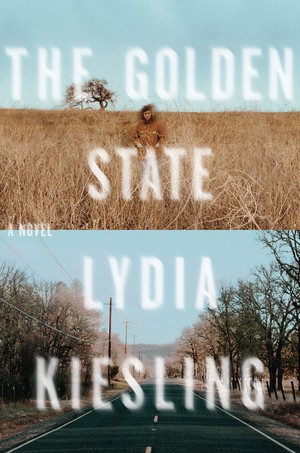
Kiesling’s debut is truly exceptional in its portrayal of motherhood as her main character navigates a desert world and the changes of her postpartum body. The book is a stunningly candid look at the ongoing fight in what we call “holding one’s life together,” as well as the first time I have ever seen one of the Carhartt jackets I grew up with on the cover of a book.
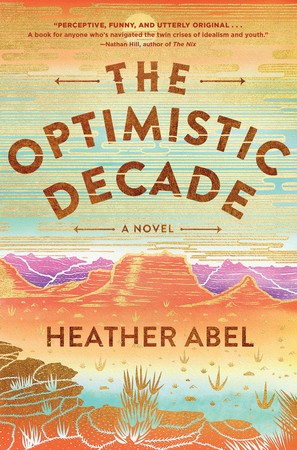
Another 2018 debut, Abel’s take on the West creates a world that mirrors our own within the Colorado desert. Abel looks at action, in all of its forms, and its role in our lives as we strive for meaning. Her narrative is among those defining our contemporary relationship with the West — one of activism, rather than the exploration and exploitation of its violent past centuries.
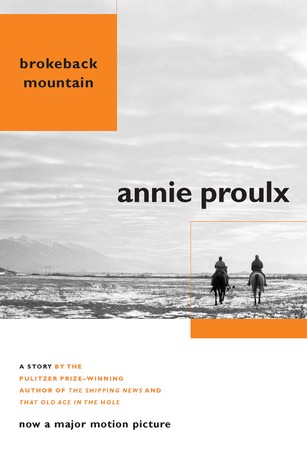
I must start and finish with Annie Proulx, one of the greatest writers the West has ever had. Brokeback Mountain is not only a landmark work for the LGBT community, it is the most resonant story I have ever read on regret. Proulx captures the pain of choosing the safe option in life out of fear, then realizing too late that going after what and who you loved most would have been worth every risk.
About the Author
Rae DelBianco grew up in Bucks County, Pennsylvania, where she raised livestock, founding a beef cattle operation at fourteen. She attended Duke University on a Robertson Scholarship, and is an alumnus of Curtis Brown’s Six Month Novel-Writing Course in London and of Tin House Summer Workshop. Rough Animals is her first novel, and has been featured by Vogue, Vulture, New York Magazine, NY Post, Publishers Weekly, Nylon, Southern Living, Outside Magazine, Chicago Review of Books, Refinery29, Ralph Lauren Magazine, and Literary Hub.
If you have a long daily commute to work, or generally spend a significant amount time on public transit, you probably understand and appreciate the benefits a good literary podcast. Rather than listening to the sounds of the train, you can put on your headphones and drown out the couple fighting next to you with the sound of a witty voice talking about literature.
But a good literary podcast that is not hosted by a white man — or, even more typically, a trio of white men — is not so easy to find. More often than not, literary podcasts are offering a pretty pale literary landscape; the hosts and of the writers they interview rarely celebrate diversity in the literary world. For those looking to make up for lost time spent on the subway, here is a list of podcasts that do.
Minorities in Publishing, hosted by Electric Literature contributing editor Jennifer Baker, “is a podcast discussing diversity (or lack thereof) in the book publishing industry with other professionals working in-house as well as authors and those in the literary scene.”
In this bi-weekly podcast, poets Danez Smith and Franny Choi “have conversations with the people who have chosen to stand between the world and its articulation into language.” They talk about and with poets who are changing the world of poetry, centering the discussion around the artists’ craft as well as the questions they seek to answer in their art.
Subtitled “A Home for Readers of Diverse Books,” this podcast covers books, both new and old, with an emphasis on subjects and authors of under-represented groups.
“The Black Chick Lit Podcast features in-depth discussions of the latest and greatest works penned by black women. Join Danielle and Mollie as they talk prose, judge every character’s decisions and laugh at their own jokes.” From The Hate U Give to Beloved, from film adaptations to new releases, Danielle and Mollie discuss it all.
“Through their pioneering podcast and social media they promote the message that anyone and everyone can be a reader and Mostly Lit strives to create more inclusive and diverse publishing and media landscape that also reflects that message.” The creator and host, Alex Reads, is a writer and actor whose passion for literature and performance lends itself to an engaging voice in his podcast alongside co-hosts Raifa Rafiq and Derek Owusu. Together, the trio talk about the “multicultural millennial” experience as it pertains to literature, pop-culture and film.
Disclaimer: this podcast is not about food, they just like the pun. Food 4 Thot discusses “sex, relationships, race, identity, what we like to read & who we like to read.” The thots — I mean hosts — are a poet, an editor, a writer, and a scientist, bringing a wide range of experience to an interesting range of topics.
Every month at Books & Boba, co-hosts Marvin Yueh and Reera Yoo select and highlight one book by an Asian or Asian America author. Their selections, which have included the likes of Ishiguro’s Never Let Me Go and Han’s To All the Boys I’ve Loved Before, are explored through discussions about the impact they’ve made on the host and interviews with the author. In between episodes about the month’s selection, they host a “Book News” episode, in which they talk about publishing news and new releases in Asian American Literature.
From their bio: “Every fortnight we share popular and unpopular opinions about the books you love.” Hosted by a culture critic, a book blogger, and a writer/editor/translator, this trio of witty voices lends a refreshing, insightful, and even snarky take on news in the African literature scene.
From the website: “In this age of globalization, one of the best ways to preserve the uniqueness of cultures is through the translation and appreciation of international literary works.” The name of this podcast — and the site from which it comes — acknowledges the fact that only around three percent of the books published in the United States are translated from other languages. Hosted by the creators of the site, Chad Post and Tom Roberge, the podcast explores an array of topics about international works, from evaluating different translations to introducing the recipients of the Best Translated Book Award.
Asian American Writers’ Workshop is a national nonprofit committed to telling the stories of Asian Americans. Their podcast has featured beloved writers like Hanya Yanagihara, Roxane Gay, and Claudia Rankine. “We’ve got it all: from avant-garde poetry to post-colonial politics, feminist comics to lyric verse, literary fiction to dispatches from the racial justice left.”
Sometimes talking with friends about books doesn’t yield many new or fresh opinions, especially if your experiences are similar. In this podcast, host Terry Brown aims to bring something different to the bookclub (even if the bookclub consists of just you and your headphones). “Each week Terry and his guest will discuss a piece of literature from the unique perspectives of a person of color.”
“Books, Beats, & Beyond focuses on alternative and marginalized history, progressive issues, and provocative and thought-provoking music.” Taj Salaam — self-described as just your average human who reads an above-average amount — interviews writers, journalists , musicians, scientists, and scholars.
This podcast is devoted exclusively to Canadian literature. Co-host Jen Lee said in an interview with CBC, “The thing about Canadian literature is that people think it’s staid or boring, and that discussions about inclusion or diversity aren’t happening. We try to meander into these conversations, but in a natural and organic fashion. And we are both interested in craft. [Co-host] Dina [del Bucchia], of course, is also a poet and she can ask wonderful questions about poetry that are well above my pay grade. And I care about things like how culture is being represented in our fiction, and people can present stories that we haven’t heard from yet.”
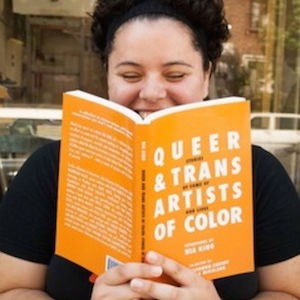
Host Nia King explores intersectionality in the literary and political world through this podcast by seeking out and talking with “political queer artists, trans artists, and artists of color who seem to have figured out how to make art and make rent without compromising their values. Nia King’s trying to figure out if her dream of making a living as an art activist is beyond reach.”
The most addictive and perplexing content of the holiday season is the magazine gift guide. I’m fascinated by this calculated approach to goodwill and how it encourages me to reduce my friends and family to single entities: The Baker, The Tech Fiend, The Mom, The Guilty, The Innocent.
If you’re shopping for The Reader, you’d be forgiven for concluding that a Reader is someone who spends all their free time drinking tea in bed and taking luxurious candlelit baths. You yourself may read a lot of books, but that’s not enough to be a Reader as far as gift guides are concerned. You have to also covet Jane Austen-themed socks and a witty Oscar Wilde mug.
So what do you get for the reader who’s just a reader, not The Reader? What do you get for people who like to read books instead of wearing them on a scarf? Here’s our list of things to avoid, and alternate gifts that readers may actually like.
What Not To Get: A Bookmark of Any Kind
So you think your literary friend might enjoy a bookmark! Your impulse is probably to buy the fanciest version you can find, which is, presumably, why a Secret Santa once gave me a metal one (bronze? Steel? It had the feel of a screwdriver). Perhaps you’ve seen the type; the body has a thin U-shaped cut out and they’re essentially meant to work like a giant paper clip, which, incidentally, is not something you should ever use as a bookmark. The weight of the thing made me apprehensive of what did, in fact, occur after I clipped it onto my book: it made the page flop sadly over, then tore the paper when I tried to slide it off, having far overreached its goal of marking my page. This bookmark was clamped on with such force that I would have been able to find my place even if I’d been sucked into a tornado and spat back out again. As I, regrettably, don’t know anyone who lives in Kansas and might enjoy such a feature, I later re-gifted it as a money clip. I’ve also received: an over-dyed suede bookmark that left two pages of my book smudged with purple, a tasseled bookmark that my dog pulled out of the book and tore to shreds, and a bookmark printed with the facade of a museum I’d never been to. I can appreciate that some people have real pet peeves about creasing a book (I think it adds a sense of being loved, like splatters on a cookbook) but you can do better by even your most perfectionist friend than buying them a bookmark.
Get instead: A book from a local bookstore which comes with its own paper bookmark tucked inside (two gifts for the price of one!)
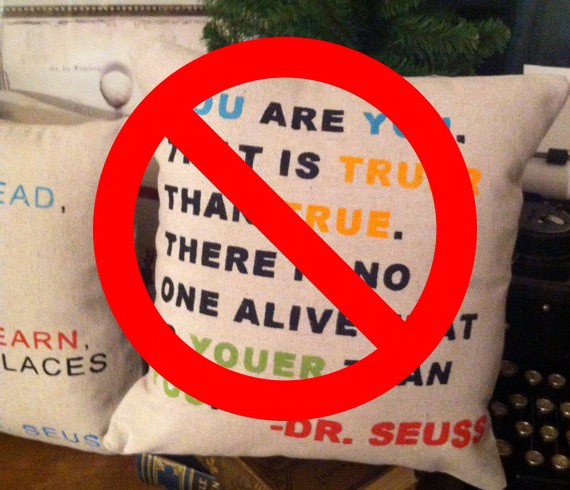
What Not To Get: A pillow embroidered with a literary quotation
I have five embroidered pillows; my mother needlepoints them by hand and they’re delightful. Once when I was selling an old kitchen table through Craigslist, a young woman came to my apartment, took one look at my couch, and asked if the pillows were also for sale. She thought she’d be able to get a 10-foot table home on the L train during rush hour, but still! Let’s agree there is nothing wrong with decorative cushions. However there is a time and place for quotations, namely graduation speeches, sympathy cards, and tote bags. Quotations can start books and sell books, but they shouldn’t adorn a pillow. As Cicero says, “A room without books is like a body without a soul,” and a room decorated with literary quotations is like telling everyone your favorite book is Moby Dick and what a shame so many people are intimidated by its length!
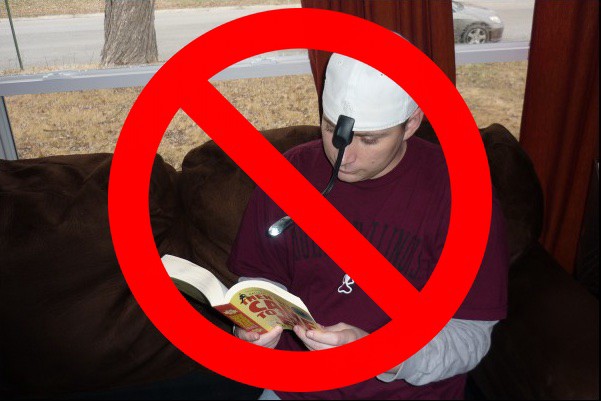
If you’ve ever stood in the checkout line at Barnes and Noble, you’ve probably seen these lights, which are about the size of a keychain flashlight and clip onto the cover of your book. The appeal, as I understand it, is that they allow you to read in bed while your partner sleeps, and since my husband needs less sleep than I do and we still haven’t figured out what to do when he wants to keep reading in bed and I want to pass out, we decided to try it. The overhead lights went off, he turned his mini light on, and I lay there, feeling like I was trying to sleep next to a man going spelunking, or, judging by the size of the light, a child working in the mines. The worst part was that the light was perceptible on my side of the bed, a guilt-inducing luminescence that reminded me that my better half was more committed to literature than me. He was reading Turgenev while I was trying to catch a few extra Zs because I’d stayed up too late the night before watching The Great British Baking Show. In short, I recommend skipping the artificial light in favor of the gift of daylight hours, free to read.
Get instead: Grocery delivery, babysitting coupons—anything that will allow your friend some leisure time to get reading done before bed.
What Not To Get: Tea
It’s time to banish the cliche that book lovers drink tea. It comes from the easily rebutted yet enduring belief that people who love books must either be tweedy scholars or homely women. The tweedy scholar drinks tea because he is modeled off a British person — no matter how many times Ricky Gervais hosts an award show, Americans can’t seem to shake the image of Brits as erudite, literary aficionados — and the homely woman does so because she’s not drinking anything stronger. This is a little more troubling than giving British people more credit than they’re due because it implies that if you love coffee or movies or large dogs or speed-skating, then a book is not for you. This readers-as-nerdy-homebodies trope is especially strange when you consider how we also love to stereotype writers as aspiring Hemingways who chase their coffee with whiskey and bad behavior, yet writers are among the most avid readers. But more to the point: if you haven’t read My Struggle with a generous glass of Pinot at hand, you’re doing it wrong.
Get instead: A pourover coffee maker and a bottle of wine for every volume of Knausgaard.
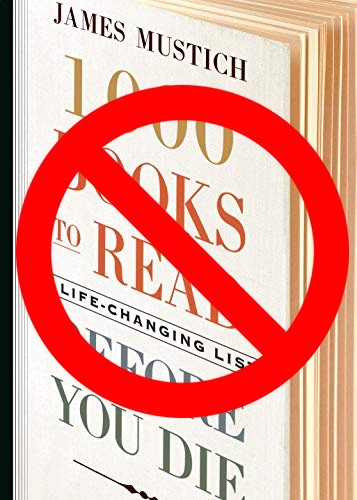
You think you’ve read a lot of books? You think you’ve covered most of the classics and are making headway on the important books of our time? Proud of your Goodreads list, you say? Able to stave off the anxiety that all true book lovers feel when they realize they can’t read everything before they die? Well, read this book, and think again. Essentially, this book combines the gift of condescension with the gift of panic.
Get Instead: Electric Literature’s Papercuts party game, so that they can feel good about all the literary knowledge they already have!
What Not To Get: Bookends
I hate to point out the obvious, but the purpose of bookends is to keep books upright when your shelf isn’t full. If you’re buying a gift for a true bookworm, they’re probably having the opposite problem and their shelves are packed end to end with books, their floor is covered in books, and their nightstand looks like a colorful game of Jenga.
Get instead: Floating shelves, because every wall looks better with books, even the one above your toilet.
Harry Potter. Sherlock Holmes. Willy Wonka. The best character names will worm their way into the apple of your memory — but that doesn’t mean they grow on trees. An iconic name might sound simple (James Bond) or simply outlandish (Katniss Everdeen), but whether it came from a name book or from a seemingly random collection of syllables, chances are your favorite character’s moniker wasn’t just picked from a hat.
So, to paraphrase Juliet, what is in a name? Well, that’s a hard question to answer. Dracula, for instance, has its etymology rooted in Romanian history, while Harry Potter was just a combination of a first name that J.K. Rowling liked and the surname of her childhood neighbors. And A.A. Milne named Christopher Robin’s beloved donkey Eeyore, because what does a donkey say? “Hee Haw.” Classic onomatopoeia.
No matter how the most famous characters got their appellations, there are certain types of names that are guaranteed to stick in your readers’ minds. Here are a few of the best ones — as well as tips on how to come up with some unforgettable names yourself.
Those that roll trippingly off the tongue
Shakespeare sure had a lot to say about words, words, words, didn’t he? Fitting, given his own contributions to the English language. And indeed, Hamlet has some choice words for a band of traveling actors, as he urges them to deliver speeches “trippingly on the tongue.” This advice remains among the Bard’s best, as a surefire way for creating a turn of phrase (or in this case, a name) that gets stuck in your head like a pop song.
Huckleberry Finn
The trick to creating a “catchy” name is in the pronunciation. Anna Karenina’s Stepan Arkadyevich Oblonsky might sound good in Russia, but in English, Arkadyevich is just a tough word to say. Huckleberry Finn, on the other hand, pours off the tongue like Mississippi molasses.
If it doesn’t sound good out loud, it probably won’t sound good in your reader’s head either. So say your character names out loud before you decide on one. And if it sounds good in the air, trust that it’ll be good on the page, too.
If it doesn’t sound good out loud, it probably won’t sound good in your reader’s head either.
Victor Frankenstein
Creative uses of consonance can also carry a name. Get it? Repeating consonants (or at least the sounds they signify, like Vic and Frank) is one effective way to forge a memorable turn of phrase.
But consonants can also call to mind certain associations in a way that vowels don’t. In the words of Dwight Schrute, “‘R’ is among the most menacing of sounds. That’s why they call it murder, not mukduk.” The hard T’s and R’s in “Victor Frankenstein” give it an unmistakably menacing sound — perfect for the protagonist of a gothic horror novel.
Atticus Finch
Finally, when it comes to giving your character a name, pay attention to syllables. Like Huckleberry Finn, To Kill A Mockingbird’s Atticus Finch has a multisyllabic first name and a monosyllabic last name. This way, there’s almost a rhythm to saying it. And nothing’s more catchy than rhythm.
Those that look good on the page
Character names that sound interesting are all well and good… but this is Electric Literature, not Electric Longform Spoken Content. Books are first and foremost a visual medium, so some of the best names in literature are the ones that look good on the page, too.
Bilbo Baggins
J.R.R. Tolkien’s eponymous Hobbit is a perfectly notable character all by his lonesome, but would his name be equally notable if it wasn’t for the back-to-back B’s? As you probably know, alliteration — repeating the first letter across multiple words — is a classic tool in the writer’s kit, and repeating the first letter across a first and last name should be, too.
Humbert Humbert
Or you could simply opt to repeat the first name itself. Repetition is another widespread literary device that is underutilized when it comes to character names. Take this example from Lolita, where Nabokov uses repetition to double down on the humiliation of his villain protagonist Humbert Humbert. Not to mention, seeing double makes it that much easier to pick the name out on the page.
Dickens wrote one of the greatest novels of the 19th century and then gave the protagonist a three-letter name. Let’s just call that what it is: a power move. But it works, because Pip just looks good on the page. Why?
Well, for one thing, it’s a palindrome (albeit a very short one), and it’s one letter off from being onomatopoeic, too (for peep). But at the end of the day, when it comes to naming your character, sometimes shorter is just better.
Granted, Pip isn’t a classic character just because his name looks good on the page. The moniker Pip is also fitting of someone small and seemingly insignificant who can grow to become enormous and stately. A character with great expectations, in other words.
But, despite being a prolific creator of fun names (Martin Chuzzlewit, Mr. Pumblechook, Betsy Trotwood… the list goes on and on) Dickens is far from the only author to use names to convey something about characteristics. We’ll look at some more examples of this next.
Those that evoke characteristics
Consonants have connotations, but sometimes a name can be even blunter than that in conveying meaning. Here are some examples of names that tell you everything you need to know about a character.
Hannibal Lecter
Thomas Harris’s Lecter is the most noted cannibal in literature. Is it a coincidence that his first name is Hannibal?
It’s not like you should always rhyme your character’s name with their primary characteristic — that’s probably a slippery slope that could result in you creating Mr. Mostman the Postman, or Abigail Dressler, the wrestler. But when done with sufficient nuance, the payoff can be huge.
Don’t always rhyme your character’s name with their primary characteristic — that’s probably a slippery slope that could result in you creating Mr. Mostman the Postman, or Abigail Dressler, the wrestler.
Holly Golightly
The protagonist of Truman Capote’s Breakfast at Tiffany’s, made famous by Audrey Hepburn in the film of the same name, bears the name Golightly — a common surname, but also suggestive of her airy disposition and reluctance to take things too seriously. This is a neat trick on Capote’s part: hecreates a realistic sounding name that nevertheless conveys something about the character.
Veruca Salt
The resident narcissist of Charlie and the Chocolate Factory, Veruca Salt simply sounds like a spoiled brat. That might seem accidental until you consider that Salt derives from the same root as “salary,” carrying connotations of wealth, while a verruca is a kind of foot wart that will send chills down the spine of anyone who’s ever used communal showers. So on a deeper level, Veruca Salt roughly translates to “rich wart.” And on the surface, the idea of pouring salt on a foot wart is just gross.
That’s why considering a name’s etymology isn’t just about leaving an Easter egg for the reader. It can be used to produce a reaction from them, even if they aren’t quite sure why.
Those that have made it into the modern lexicon
Penetrating pop culture is a fickle thing: who would’ve ever guessed that a name like Inigo Montoya would catch on in the way that it did? (R.I.P. William Goldman.) But sure enough, character names have been working their way into the modern lexicon since we started calling loverboys “Romeo” — and there are lessons to be learned from each of them.
Character names have been working their way into the modern lexicon since we started calling loverboys “Romeo.”
Scrooge
Dickens’ cold-hearted Scrooge, the Christmas-hating miser from A Christmas Carol, has become synonymous with those who hate the giving season and keep their money to themselves.
No one knows for sure how he got the name or why it caught on, but it’s suggested that Dickens saw the name Ebenezer Scroggie on a gravestone inscribed “a meal man” and misread it as “a mean man.” Whether this story is true or not, it’s a prime example of why, sometimes, the best character names come from real life.
Grinch
Dr. Seuss’ small-hearted Grinch, the Christmas-hating green monster has become synonymous with those who… well, you get the picture. And who knows how Theodore Geisel came up with this one? His most normal character name, The Cat in the Hat, was picked from a list of words that first graders can read, so all bets are off.
The fact is, it’s impossible to fully predict what names will stick in popular culture. Sometimes, the best approach might be to just pick one at random. But no matter what, with these tricks up your sleeves, you should never have to fall back on “Mary Sue” again.
About the Author
Emmanuel Nataf is the CEO of Reedsy, a marketplace that connects authors and publishers with the world’s best editors, designers and marketers. Over 5,000 books have been produced via Reedsy since 2015.
I was lying in my bunk bed at sleepaway camp when I realized I was going to die.
It was the summer of 2002, and my third summer at a girls’ camp on Lake Champlain. I was twelve years old, staring out at the starry sky outside my screen window, through the gauze of mosquito netting that somehow still let long-legged spiders inside, unable to fall asleep, trying to wrap my mind around the impossible idea of forever — when it struck me: forever was a really, really long time. And life, it occurred to me, was comparatively very short. And once you were dead, you were dead…forever.
The rest of my cabinmates were asleep, so there was no one to allay my fears. Beginning the very next day, everything from the prayer we sang before each meal to the few lines I sang in that summer’s production of Into the Woods as Cinderella’s Mother (who, by the way, is dead as of the time of her singing) took on a morbid tone.
I spent the rest of my time that summer grappling with the notion of inevitable, never-ending death and, in light of that, the limited plausibility of an afterlife. Even with what little I knew about science and the body and the history of the universe, heaven just didn’t hold water.
Even with what little I knew about science and the body and the history of the universe, heaven just didn’t hold water.
When I got home, I threw my fear and questions at my mom. “What happens when we die?” I asked. “What’s heaven like?” “How many sins can you do before you burn in hell?”
My mother’s answers varied, and none were satisfactory. Her idea of heaven: “I picture a sandy beach, with waves lapping at the shore, and everything is calm, and there’s soft music,” she said, which sounded horrifying, if for no other reason than for its dullness.
“But what kind of music?” “What if not everyone likes beaches?” “We’re just supposed to enjoy that forever?” The summer continued in this fashion, every night, and on through fall, into winter.
Last summer, I saw my father perform in a play in the small town where he and my mother have lived since 2008. He didn’t intend to get involved, but the play’s producer cornered him at the post office. “We’re short an undertaker,” she said. My dad, neither one to turn down a cry for help nor disappoint enthusiastic egging-on from my mom, accepted, which is how he came to play Joe Stoddard in the August 2017 production of Our Town in Tyringham, Massachusetts.
I’d read Our Town just once before, in a hurried, obligatory way. It’s one of those things you wind up reading at some point or another, I knew; one of those things collectively considered worth reading. When I told friends that my dad was going to perform in it, I heard story after story about friends’ first encounters with Our Town: how one woman returns to it every year, when she’s feeling sentimental about her son’s — and her own — aging. How one man got to act in it at several different points of time through his life, playing older and older characters each time. How another can’t read it at all anymore. “It’s too sad,” he said to me.
“Because everyone in the play dies?” I asked.
He shook his head. “Because everyone dies.”
In that first winter of my crisis of faith, my family took a road trip and we listened, on the way, to Les Misérables. In a song aptly named “Fantine’s Death,” Fantine, the unwed single mother who meets misfortune at every turn (though, much to its credit, the musical version of the book graciously omits the part where she sells her teeth), finally dies. In a weak delirium, she sings to her absent daughter:
Come to me, Cosette, the light is fading Don’t you see the evening star appearing? Come to me, and rest against my shoulder How fast the minutes fly away, and every minute colder
Something about Fantine’s willfully blithe words to her daughter in plain sight of her death made me anxious and afraid in the same way that contemplating forever did. How could Fantine face her death so calmly? How could she make promises to her daughter that she knew she couldn’t keep?
My parents were alarmed when I started to cry — a generous reaction, given that the occurrence of my crying wasn’t exactly rare. In their attempts to reassure me, they insisted on the existence, if not of God, then of something after death, of not-nothingness. I’d heard this from my parents before, but that night, I turned to my sister beside me in the backseat.
“Do you believe that?” I asked her. She said yes. She had faith in God, and that’s what faith was: she chose to believe. That answer scared me more than the song had.
That weekend, I had no choice but to pack my fears away. But I watched everyone closely the whole time, wondering whether they were pretending to not be worried about all this, or whether they genuinely weren’t. Neither prospect relieved my discomfort. All I knew was that there was no way everyone else was going through their whole lives feeling the way I was feeling. No way. Or, if they were, then how come all they were doing was going about the mundane business of living?
If other people felt this way, then how come all they were doing was going about the mundane business of living?
I continued to pray at night, the way I’d been taught: first a short rhyming prayer (“Now I lay me down to sleep / I pray the Lord my soul to keep…”) and then what I liked to think of as the improv set: asking God to please bless my friends and family, especially Grammy and Granddaddy and Grams, and thank you for x, y, z… But I prayed suspiciously, which was probably worse than not praying at all.
I bring a good friend — one of my oldest, from high school — with me to Massachusetts the weekend my dad is in Our Town. I’d hardly finished pitching the idea to her before she said, “Are you kidding? Of course I’m coming to see Mr. Bradley act. Let’s go.”
I forget, when I’m not in Tyringham, how much time my parents have been here now, and how well people know them. I’m reminded today by the fact that when I set up my folding chair on the lawn of the town church, the people near me look at me and smile, not just with Tyringham’s characteristic small-town friendliness but with a look of recognition. I look like my mother, I remind myself. I can’t always see it, but everyone tells me so.
When I’m here in Tyringham, I always fall back into the same easy rhythm. I come inside, drop my bags near the door, take off my shoes, and greet my parents. Unless it’s very late, there is always a pot of coffee on, and even before the current pot runs out, one of us is already making another one.
I say “one of us,” but it’s almost always my dad. My mom will offload the duty onto me, and I’ll offload it on my dad. “I don’t make it as well as you do,” I say, which is part of it. “I always make it too weak or too strong and I ruin it.” “Bullshit,” he says. But he’ll make it for me anyway.
I’ve known how both my parents take their coffee since I was six or seven because growing up, every Christmas, my sister and I would spring out of bed at the crack of dawn and try to get our parents up. At first Dad would get up, put on the coffee, and make Mom’s for us to take to her — just a splash of milk, no sugar. But once we were tall enough to reach the cabinet where Dad kept his Sweet’n’Low, we got up and made the coffee ourselves and took it to both of them. That was the deal: they’d wake up at whatever insane hour we designated to open gifts and get the day going, as long as we brought them their coffee.
It still works now. If my mom is sleeping in later than we know she’d want to, my dad or I will try to wake her up. “Okay,” she’ll say, “five minutes.” Twenty minutes later, when she still hasn’t made an appearance, one of us will bring up a mug and place it on her bedside table. The smell alone is enough to open her eyes, and just like that, she’s up.
The play begins. The stage manager, who is essentially a narrator — played in this production by two older women and a man, who alternate scenes — speaks directly to the audience.
STAGE MANAGER:
This play is called “Our Town.” It was written by Thornton Wilder; produced and directed by A…. In it you will see Miss C….; Miss D….; Miss E….; and Mr. F….; Mr. G….; Mr. H….; and many others.
The Stage Manager takes questions at one point, and members of the audience pipe up: they’re actors planted among us, asking just the right questions to unlock rich and quirky answers about the town.
PROFESSOR WILLARD: Let me see…Grover’s Corners lies on the old Pleistocene granite of the Appalachian range. I may say it’s some of the oldest land in the world. We’re very proud of that. A shelf of Devonian basalt crosses it with vestiges of Mesozoic shale, and some sandstone outcroppings; but that’s all more recent: two hundred, three hundred million years old….
At the intermission after the first act, I say to my friend, “The guy playing Howie Newsome looks like a cross between John Goodman and the guy who plays Walter in The Big Lebowski.”
“That’s also John Goodman,” she says. We watch Howie help a young member of the cast make a costume change, affixing his bow-tie to his collared shirt. The young actors in the play keep grinning and squirming, full of nerves. The adults are unflappable. They all know every single person in the audience — have grown up with most of them, been neighbors for decades, see each other every day, in their same routines.
For the final act of the play, we take our chairs and trundle up the hill behind the church to the graveyard. The place is a beautiful kind of mismatched, all large grey stones of differently pleasing shapes, each with plenty of space around it, some with small American flags planted in their soil.
When I spent summers here working, I used to walk around taking pictures of things in town: the tiny post office, the fire station, this graveyard. Cemetery is the less morbid term, I guess, but it never occurred to me that a graveyard was so bleak. Counterintuitively, the notion of dead bodies has never bothered me — the thing that scares me has already passed through them.
The third act is a funeral scene: that of Emily Webb, one of the characters we’ve followed throughout the play. She has died in childbirth, bearing a son to her husband, George Gibbs, whom we saw her marry in the second act. We see George and her family mourn, and then we watch Emily pass into a ghostly afterlife, interacting with people she knew from Grover’s Corners who died before her.
We watch her fight back against death, then accept the death-gift, in a sense, of being able to relive a lovely, mundane day from her life, an early birthday in her childhood home: her mother comes downstairs to make breakfast, and her father arrives back home from a trip out of state. She watches the neighbors talk in the street in their same routines, feels the familiarity of all she’s ever known rush past her, go by too fast for her to bear.
And then we see her take up the white umbrella that symbolizes her death, sit down, and fall silent, like all the other dead souls.
I knew this part was coming, but still I felt a sort of numb shock. Emily not only dies young, but is compelled — even after she sings the praises of everything in life that has been ripped from her — to come to peace with it? It fucking sucks. And it sucks most of all because we see a terrifying version of an afterlife where all there is to do is sit in silence and wait for…what? The second coming? Judgment day?
Wilder leaves the question unanswered, and ends his play.
EMILY: I never realized before how troubled and how…how in the dark live persons are. …From morning till night, that’s all they are—troubled.
It does no good for you to reason with me that once I’m dead, I won’t even know it. That’s the part that terrifies me most of all — terrifies the living me, right now, which, as far as I’m concerned, is the only me that matters.
EMILY: Live people don’t understand, do they?
MRS. GIBBS: No, dear—not very much.
EMILY: They’re sort of shut up in little boxes, aren’t they? I feel as though I knew them last a thousand years ago…
At some point, long after that first sleepless night at camp, but a long time ago from where I am now, I stopped praying. And I stopped thinking actively and obsessively about death, to the point where I was fairly certain I came across as someone who was not deeply distressed by it all the time.
But sometimes at night, before I fall asleep, or on planes, or when I’m especially worried about something, I find myself still going through the motions: hands together, fingers interlaced, the voice of my mind preparing to beseech someone: Dear someone, please this, please that — please, please, please…
SIMON STINSON: Yes, now you know. Now you know! That’s what it was to be alive. To move about in a cloud of ignorance; to go up and down trampling on the feelings of those about you. To spend and waste time as though you had a million years. To be always at the mercy of one self-centered passion, or another. Now you know—that’s the happy existence you wanted to go back to. Ignorance and blindness.
After the play, when I come home to Brooklyn from home in Massachusetts, I log back online to find the president making wild and thoughtless threats to every country with the power to bite back, and I can’t log off.
I try to parse how dire people think the situation is. On Twitter, gallows humor has been supplanted by nuclear humor, and it’s tough to discern whether beneath the wit there is real worry, or just increasing boredom with the escalating antics.
I leave my computer and crawl into bed with my boyfriend.
You find enough people and things to love while you’re living, so that no matter what you lose, you’re never quite alone.
“How serious is this, really?” I ask. “I don’t know what to do when people are joking about it. Like, when are we packing our bags to go spend the end times with our loved ones?
In response, on his iPad he pulls up maps, articles, irrefutable information that helps quell my alarm. This is something he’s very good at: countering my wild, flailing fear with facts and critical analysis. As I lie in the crook of his shoulder, I realize that in every prior instance in my life where I’ve sought reassurance about the life and/or death of myself and/or my loved ones and/or the world, I’ve sought it from my parents.
It’s strange, for the source of my existential comfort to have shifted so quietly, almost overnight. It’s a testament to the fact that I trust my partner, but more saliently, that I have found a new anchor on this earth, to love me and keep me, whom I’ll have even when I — when we both — lose the other people we love.. Maybe that’s the point: you find enough people and things to love while you’re living, so that no matter what you lose, you’re never quite alone.
MR. WEBB: I’m giving away my daughter, George. Do you think you can take care of her?
GEORGE: Mr. Webb, I want to…I want to try, Emily, I’m going to do my best. I love you, Emily. I need you.
EMILY: Well, if you love me, help me. All I want is someone to love me.
GEORGE: I will, Emily. Emily, I’ll try.
I don’t remember exactly when I stopped being so afraid of death, but I do remember when I started sleeping through the night again after that night at summer camp. That fall, we adopted a beagle who — though she grew up to be the world’s best dog (this has been fact-checked) — shaved a number of years off our lives the first two years of hers. If she wasn’t in the room with us howling herself hoarse, she was guaranteed to be in another room destroying something expensive.
One afternoon my mother was sitting in the kitchen at the island countertop when I wandered in, almost idly at this point, to pester her with more big questions. I settled that day on some variant of, “But how do you know there’s anything after we die?”
“I don’t!” she said, and for the first time, her exasperation came through loud and clear. I blinked.
“I don’t know,” she said, “and I’ll never know, and no one else will ever know, until we die, and maybe not even then. And until then, there’s nothing we can do about it. But what I do know is that somewhere in this house, Phoebe is chewing up another one of my shoes. And that I can do something about.”
I couldn’t help it. I laughed. And for the first time in months, it occurred to me that maybe that was exactly the thing about knowing you’re going to die: in the meantime, you might as well live. If absolutely nothing else, it’s a wonderful distraction.
EMILY: Good-by, Good-by, world. Good-by, Grover’s Corners…Mama and Papa. Good-by to clocks ticking…and Mama’s sunflowers. And food and coffee. And new-ironed dresses and hot baths…and sleeping and waking up. Oh, earth, you’re too wonderful for anybody to realize you.
At the end of the play, in the graveyard, when my friend and I went to congratulate my dad, I was surprised to find my eyes filling. I bent to fiddle with my folding chair, emotional and embarrassed. My mother dove for tissues, and, as she always does, found some.
My dad put a hand to my shoulder. “I find myself focusing on a different line every time we run through the show and getting emotional about something new,” he said. “This time, I started tearing up thinking about how, when I die, I’m really going to miss coffee.”
EMILY: I can’t bear it. They’re so young and beautiful. Why did they ever have to get old? …I love you all, everything.—I can’t look at everything hard enough.
My mom doesn’t take milk in her coffee now. She claims that she never did — that I must have been confused in insisting that we always brought her coffee with a splash of milk on Christmas morning.
It doesn’t really matter. As long as I can keep making her coffee and waking her up, I’ll do anything.
I meet a friend for coffee the week after the play, following our president’s brazen threats. For some reason, throughout the course of our conversation, I mention my parents’ age, and the fact that they’re aging, several times. I call it out self-consciously, tentatively.
“Yeah, you have mentioned that a few times,” says my friend. “Why do you think that is?”
“Probably just my crippling fear of my loved ones being hurt or dying,” I say, and even as I say it, and the darkness that that fear carries washes over me, I feel a sense of relief: relief that I’m not just afraid of dying myself, but am as afraid — if not more so — of other people dying, because what’s a world if you live in it alone?
I don’t want any of us to stop feeling these things. I love these things and I hope that everyone else loves them enough to want to fight to keep them.
Maybe it’s still selfish, the fear of having to live on earth without the people I love. But just as much, I feel for the people who, along with me, will be ripped from their places on this earth, from their warm beds and their cups of coffee in the morning, from their sunny streets and their snowy ones. I don’t want anyone to have to lose, any earlier than they must, their ability to learn to speak another language or swim, the chance to taste new foods and old favorites, the simple blessing of scrolling Twitter and finding, in a time of fear, jokes that make them laugh and feel a little bit less alone.
I don’t want anyone to have to stop showing the people they love their love, however they so choose: through small compromises or through lifelong commitment; through shared food or shared homes; through a rambling email or through the click and flush of a red heart on a dumb website. I don’t want any of us to stop feeling these things. I love these things and I hope that everyone else loves them enough to want to fight to keep them.
STAGE MANAGER: There are the stars—doing their old, old crisscross journeys in the sky. Scholars haven’t settled the matter yet, but they seem to think there are no living beings up there. Just chalk…or fire. Only this one is straining away, straining away all the time to make something of itself. The strain’s so bad that every sixteen hours everybody lies down and gets a rest.
I drink coffee despite the fact that it doesn’t seem to work for me the way it should. I can take a nap fifteen minutes or two hours post-coffee and sleep like the dead. I drink it anyway. It’s the smell of it, and the feel of enclosing a warm mug with my hands, as though it’s something I hold incredibly dear. And I do. I love it. It’s possibly the simplest, least fraught part of life that I love. Fuck God; I want to make of every little shred of deteriorating, un-sacred life a ritual, a rite. And I want it to last forever. I want to scroll my Twitter feed forever and I want a never-ending cup of coffee in my hands.
Now, that, I could pray to.
EMILY:
Do any human beings ever realize life while they live it?—every, every minute?
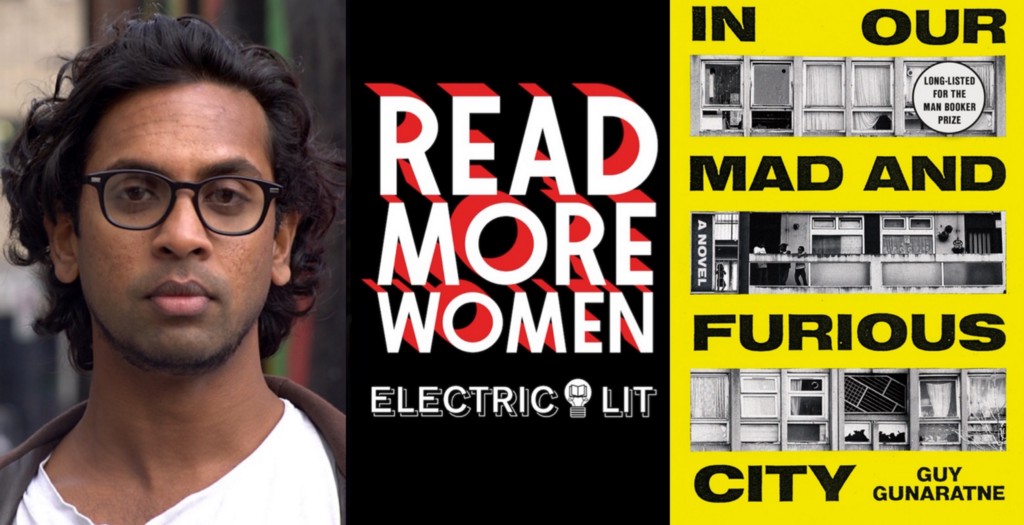
A lot of people write about London, but nobody writes about London the way Guy Gunaratne writes about London. His book In Our Mad and Furious City, longlisted for the 2018 Man Booker Prize, is an energetic and affecting portrayal of young immigrant London, right down to the grime music and the slang. Most of his main characters are men, but like any truly well-rounded author, Gunaratne both writes and reads women—and he reads women across genres. His five recommendations include not only novels but poetry, memoir, and plays.
Read More Women is Electric Literature’s series, presented in collaboration with MCD Books, in which we feature prominent authors, of any gender, recommending their favorite books by women and non-binary writers. Twice a month, you’ll hear about the five non-male authors who most delight your favorite writers.
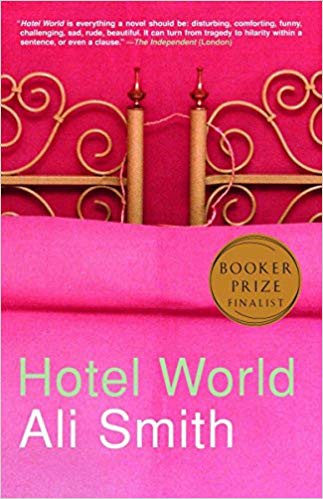
The first line reads: “Woooooooo-hooooooo what a fall what a soar what a plummet what a dash into dark into light.” And that’s what it’s like to read this great rush of a novel. Rarely have I ever fallen in love with a book so deeply. The thing was singing to me, it was dancing around. Ali Smith is a marvel to me, honest to God. I’d like everyone, everywhere to read everything she has ever written. Not only because you’d be reading one of the planet’s consistently brilliant writers — but because you’d also have ball with every book. Start with Hotel World, then read her first novel Like, and then work your way chronologically. Or start wherever. Up to you.
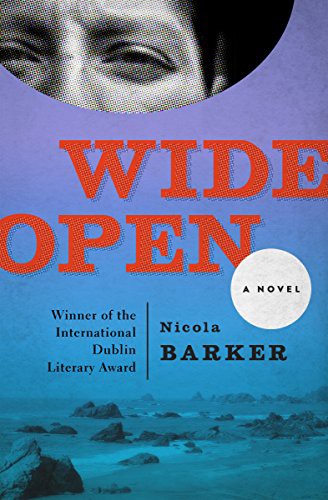
I can see here, now I’ve picked my copy off the shelf, that there is a scene in this novel about a birth of a boar, which I seem to have underlined and made notes about. That passage (and if you’ve read it, you’ll know the one I mean) has stayed with me long after reading. The book creeps under your skin, into your nerves. I shiver just holding it — a feeling close to awe. A lot of the books I tend to love are impossible to describe. I could try with this one, but I really don’t think I should. What could I say: it’s about some odd people on the Isle of Sheppey? Imagine. Anyway, read it. It’s phenomenal.
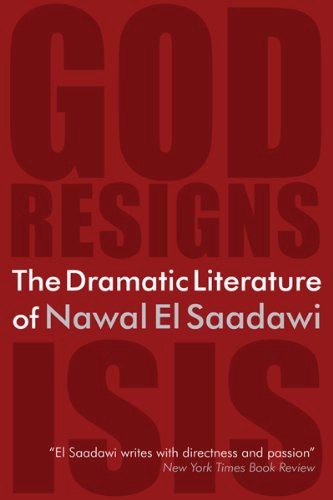
This one is a play. It’s about a meeting on a mountain where the prophets and the great women of history come to request God’s help. Jesus, Muhammad, Moses and Satan all makes an appearance, as do Bill Clinton and Benjamin Netanyahu. My favorite character has got to be Bint Allah, the daughter of God, an eighteen year old who is said to resemble Eve except that her hair is very short and she wears a pair of dancing shoes. “Her dress is cut above the knee.” This is a play about democracy, and the participation of women in the history of dissident acts. Essential, beyond question.
Maggie Nelson writes like nobody else. The meditative attention she pays to her subject matter, in everything I’ve read from her, has left me for long periods of spaced out days convinced I’m changed forever. And it lasts, that feeling. Few writers possess the power to reconfigure how you see the world. She changes how you see and hear it. Makes you re-think the language you use to understand yourself. The Art of Cruelty is the other I’d recommend from her.
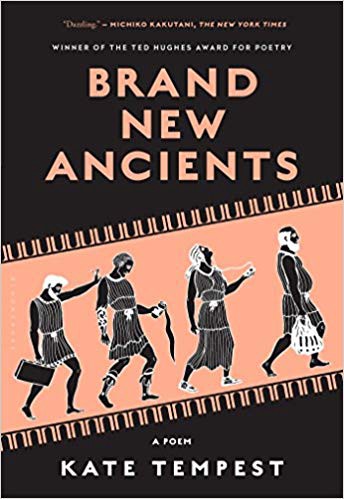
Kate Tempest is among an array of British poets that I’m particularly excited about. A blistering, kick-you-in-the-face, book. It’s very thin, and once it’s over it’s like a little anarchist has run into your head and has stuck up squatters rights. Years from now, this poem — and this poet — will be spoken about as having influenced a generation. For me, reading Brand New Ancients, at a time when my first novel had only just begun teething, it gave me all the permission I needed to push on.
This July, I hit a low. A how-do-we-keep-fighting-one-more-day low, a scream-silently-into-the-mirror low, a twilight-of-democracy low. Not my first, not my last. I tried to distract myself by retreating to the bubble of literary Twitter, where I started a thread listing some of my favorite overlooked fiction. Others added, until the list was heartbreakingly long. (All these masterpieces, neglected!) Soon, though, someone jumped in with a bit of scolding: “We’re 100 days out from an election,” she wrote. “That’s what we should all be thinking about.”
My self-righteous response was easy like-bait: “I refuse to live in a world where an oppressive regime prevents us from advocating for art,” I wrote, and added some feel-good words about fighting despotism through empathy. Soon, the woman apologized — a writer herself, she’d been despondent lately, she said — and I hold no ill will toward her. She might just as easily, as many have done before her and many continue to do, ask how one could post about books on a day when there’d been a mass shooting, a day when babies were in cages, a day when toddlers were gassed, a day when… well, any other day, really. Her question wasn’t new to me, in part because it’s something I ask myself on a daily basis. Is it really okay to talk about art right now? To leave the real and broken world behind and talk about fictional ones?
Is it really okay to talk about art right now? To leave the real and broken world behind and talk about fictional ones?
It’s a crisis many of us face not only when we promote our work, or someone else’s, but when we sit down to make that work itself. Anyone engaged in thoughtful reading and writing is also engaged in, and likely consumed by, national politics right now. No one I know is unaware that this is a particularly weird time to make art, rather than to spend every moment calling your senators.
But art has always had to exist alongside history. The notion that this, in particular, is suddenly the moment to drop all else feels like the epitome of too-late straight white awakening. There has never been a moment in which it was the most direct course of action for Americans of color to write or paint or make movies instead of protesting. There has never been a time when it was politically expeditious for LGBTQ+ artists to put down their banners and pick up their pens. And yet you’d be hard pressed to argue that James Baldwin’s talents would have been better used registering 20 more people to vote than writing The Fire Next Time.
The idea that art is born of leisure, during times of peace, is a simplistic romance, a non-artist’s daydream. (Wouldn’t it be nice to just be creative all day? In a cabin? With the tea and whatnot?) Someone recently asked if I need to be in a meditative state in order to write. Jesus, no. I write best angry. Don’t you? I write best desperate, I write best heartbroken, I write best with my pulse throbbing in my neck. Even in the best times, many of us read and write to confront the world and its failings, not to escape the same.
You’d be hard pressed to argue that James Baldwin’s talents would have been better used registering 20 more people to vote.
Listen: Ngūgiī Wa Thiong’o wrote an entire novel on toilet paper in his prison cell. Before her death at Auschwitz, Irene Nemerov wrote Suite Française in microscopic handwriting in a single notebook. Anna Akhmatova’s apartment was bugged and her books pulped, but she’d write her poems out for visitors on small slips of paper, wait till they’d memorized them, then burn the papers in the stove. And no, it’s not always political art we fight for. H. A. and Margaret Rey fled Paris in 1940 on bicycles they’d made themselves, carrying with them the manuscript of Curious George.
My new novel, which I’ve been out on the road promoting (yes, instead of canvassing, instead of marching) since the midpoint of this surreal year, largely chronicles the AIDS epidemic in 1980s Chicago. One of the lessons hammered in by my research was how both art and humor sustained a group weary from a lifetime of fighting, and the fight of a lifetime. And, more — how effective that art and that humor were, as both shields and weapons of attack. These people fought a plague and an indifferent government with wit (“Your gloves don’t match your shoes,” they chanted at the police who donned latex to assault them, “you’ll see it on the news!”); with creativity (they wrapped Jess Helms’s house in a giant condom); with theater and poetry and performance art and painting and music.
Of course, it’s one thing to believe in Angels in America, to believe in Picasso’s Guernica, and another to believe in your own sloppy first draft, or in a picture book about a monkey. One thing to fight for the first amendment, and another to retweet an invite for your friend’s poetry reading. It’s hard to feel you’re helping the world by announcing your Pushcart nomination.
But the exercise of freedom is a de facto defense of that same freedom. Freely making art, and freely talking about the art you made, is valuable in and of itself when free expression is being eroded. If anyone’s still taking that freedom for granted, it’s time to wake up and smell the history.
Write while you can. Paint while you can. Spread your art through the world. Not everyone is so lucky. Publish books and read books and teach books while you can. Take the art you love and blast it from your trumpet. Shout into the wind the names of the things you love.
Art is a radical act. Joy is a radical act.
This is how we keep fighting. This is how we survive.
DON’T MISS OUT
Sign up for our newsletter to get submission announcements and stay on top of our best work.
YOUR INBOX IS LIT
Enjoy strange, diverting work from The Commuter on Mondays, absorbing fiction from Recommended Reading on Wednesdays, and a roundup of our best work of the week on Fridays. Personalize your subscription preferences here.