Writers, like anyone, love our routines. But sometimes — oftentimes — routines lead to ruts and a change of scenery is just what the doctor ordered. Sometimes we need to leave our schedule behind, along with our responsibilities. But this is easier said than done when your responsibilities and routines consist of working to pay your bills and keep the roof over your head. Artist’s residencies provide a place to write without the worry of making it to the next paycheck, where you can focus solely on your craft. Paradoxically, though, many residencies won’t offer that without first asking for your money, and lots of it.
That’s why we’ve rounded up seven residencies where you can break out of the daily grind without breaking the bank. At these low- or no-cost residencies, located around the world, you can have all the time and space you need to complete your next memoir or book of poetry, along with the inspiration of new surroundings and without the stress of giving away all the contents of your wallet.
What better place to find inspiration than in a fishing village in the idyllic Italian countryside? The Bogliasco Foundation offers about 60 fellowships every year. These fellowships are free, though you do have to pay for airfare to Italy. Residencies last one month and include a private room, private work space and three meals a day — imagine all the free fresh fish you could be eating to fuel your creativity.
It’s not quite as exotic as Italy, but note that VSC is located in Johnson, Vermont, a town so far north in the Green Mountains that you might as well be in Canada — in a state that boasts of maple syrup just as delicious. Cost is $4,000 per month, but 90% of applicants receive financial aid and 150 fellowships are offered every year. Residencies include a private room, private studio, and meals.
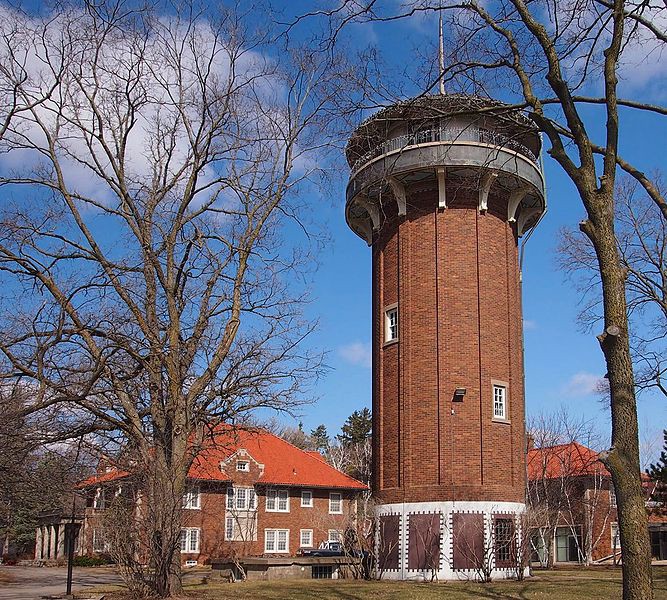
Have you ever wanted to write a noir fiction about an incident at a cereal factory? If the answer is either yes or no, spend a month in Red Wing, Minnesota at Tower View, an estate that was formerly used as Quaker Oats Company’s research laboratory. For better or for worse, a residency at Anderson Center won’t require you to conduct breakfast cereal-related experiments, but you will be offered a month’s lodging with dinners included and a private studio for writing.
At Art Farm Writers Residency, you’ll be asked to exercise more than just your mind (and the muscles required to type on your laptop). This residency offers indefinite lodging and studio space in return for 12 hours of maintenance per week, which could take the form of construction, carpentry, grounds work or office work. Here, that little voice telling you to stand up and look away from your computer screen every few hours takes material form.
This residency includes lodging, meals and lectures at one of three very different locations; Woodstock Area, New York, Palm Springs, California, or Martha’s Vineyard, Massachusetts. The program was created to give artists the space and time to create without worrying about anything else. The cost is $800 per week, but applicants are selected on a needs-blind basis and all accepted applicants will be offered enough financial aid to make the program possible for them.
Located at the foothills of the Blue Ridge Mountains in Virginia, the drive to this residency might remind you of the opening scene of The Shining, but you’ll get more writing done than Jack ever did at The Stanley Hotel (and hopefully less murdering). Your residency can last anywhere from two weeks to two months. There is a $40 application fee, but that’s the only thing you’ll be asked to pay.
Do you need some warm weather to help get through your writer’s block? The Studios of Key West offers month-long residencies to about 35 artists every year, and they’re free (apart from a $40 application fee) if you can get yourself to Florida. They include a picturesque room in a cottage and space to yourself to write.
In a recent New York Times Style Magazine article, writer Ligaya Mishan wrestles with the art of the literary retelling, when authors respond to a piece of literature by altering the narrative, adding their own flourishes, creating something altogether new. Is this plagiarism or art? It’s art, Mishan concludes, adding that “revisiting and recasting the work of fellow writers (constitutes) a sustained exploration of the human condition over time.” My favorite retellings are Jane Smiley’s A Thousand Acres, her modern take on King Lear, Curtis Sittenfeld’s Eligible, a hilarious retelling of Pride and Prejudice, and Joanna Trollope’s Austen redux, Sense and Sensibility. They each preserve the original’s landmarks, while dotting their own terrains with updated characters and modern plot turns. Mishan also cites Jean Rhys’ The Wide Sargasso Sea, an anti-colonialist prequel to Jane Eyre, which British author, Daphne du Maurier, was said to have recast in her own gothic masterpiece, Rebecca, a novel that celebrates 80 years in print.
There is no such thing as a feminist retelling of a novel written by a woman. The very existence of the novel is a feminist act.
My new novel, The Winters, has been called a “feminist” response to Rebecca, a word I bristle at only because it implies Rebecca isn’t feminist. In fact, du Maurier’s Rebecca is one of the most feminist characters of the 20th century, something for which she was horrifically punished, and which my book, in a way, tries to avenge. I’d even say that there is no such thing as a feminist retelling of a novel written by a woman. The very existence of the novel is a feminist act.
Not so with the works of our favorite male writers, I’m afraid. Retelling their best-known works, adding a feminist spin, isn’t merely to put a bow on the narrative. It is to kill the narrative dead, bury it and start all over again.
Let me take a stab at it:
The Picture of Dorian Gray
A young woman, now named Dorinda, sells her soul for a shot at eternal youth and beauty. As her portrait withers she stays the same age, much to the astonishment and horror of her L.A. friends, who have to pay a lot of money to look that good. (And even still, who’s her doctor?) Finally, sick of living so superficially, Dorinda decides to take a knife to her aging portrait and end the glossy charade. But she’s stopped in her tracks by how good she looks in the aged painting, her hair a cool flaxen gray blend, flatteringly cut to the chin, her wrinkles reflecting wisdom and experience, especially the way the outer corners of her eyes give off a knowing insouciance. It’s also great how the absence of estrogen has quieted her head to the point where she doesn’t give a shit about what men find attractive. She buys a few flattering caftans and devotes herself to causes that might turn around a planet headed towards disaster due to eons of idiot masculinist policies. It ends with a global matriarchal revolution that reestablishes the idea that the aging woman is a gathering force, that though youth is beautiful to behold, it’s fleeting for good reason, and that becoming a powerful, ethereal crone is #goals.
Moby-Dick
The female narrator and savior of a whaling expedition recounts how a crazed, vengeful captain, intent on getting back at a whale for taking off half his leg, almost dooms his entire crew. Doesn’t matter that she warns the captain about the innate godlessness of the sea and his powerlessness in the face of it. The captain is all “(S)trike through the mask! How can the prisoner reach outside, except by thrusting through the wall? To me, the white whale is that wall.”
“Yes, fine, I get it,” our narrator says, rubbing her temples, “but your megalomaniacal hubris is going to get us all killed. It’s one whale, man. Let. It. Go. Plus you get around just fine with that peg. It’s an inspiration really. Consider the example you could set, bowing to the forces of nature, working with them as opposed to against them, proving, in essence, that the interdependence of humans and nature is the ultimate goal, the one true manifest destiny, not this ridiculous and outmoded notion of male dominion.”
“I guess,” says the captain.
“Good. So let’s turn this baby around and port at Martha’s Vineyard.”
“Is there a Starbucks there?”
“Dude, you know that guy wanted to kill you, right?”
Heart of Darkness
Another goddamn boat, this one creeping up the Congo to retrieve (yet another) crazed colonizer driven mad by his own racism. Our female captain, Marlo (she drops the W in honor of That Girl), makes slow progress, her journey constantly interrupted by even more ridiculous men, some clutching unnecessary paperwork designed to make them seem important, others foisting endless repairs upon her shitty boat while talking up this great man she’s supposed to extract, who’s variously called “first-class” and “a very remarkable person.” After fending off attacks and one stray Russian, she finally meets this so-called very stable genius, only to be like, this guy? This guy’s a complete buffoon. If this murderous recluse, half off his gourd on power, is the best you have to offer, we’re all screwed. She kicks some dirt over his half-dead body and heads home to tell his long-suffering fiancée that she is way better off without him.
The Old Man and the Sea
Seriously. What is it with boats? This retelling is called “Plenty of Fish,” a modern take on a long boring fishing expedition, concerning an old woman (she’s over 40) heading out to sea (hetero dating) after a long time not catching any fish (dick). Don’t call this chick lit. It’s a nightmare, with no happy ending, just endless dates with guys that look nothing like their profile pic, yammering on about their workouts, The Wire, and how Bernie would have won.
Lolita
This one’s easy. A delusional pedophile moves in with a wealthy widow so he can rape her 12-year-old daughter. The widow finds a diary in which he’s written down all of his fantasies. She knocks him out with drugs, then she and her daughter, wearing her heavy metal tap shoes, kick him into hamburger meat. Of course there’s a trial, with some (men) painting the pedophile as the “real victim” in all this, who shouldn’t be blamed for something he didn’t even do (yet). Thankfully the mother and daughter are found innocent of the charges and hailed as heroines, an entire wing of The Wing named for them.
Lord of the Flies
A plane crashes near a remote island in the middle of the Pacific Ocean. The survivors are a group of preadolescent girls. After crying for a while and braiding each other’s hair, they form an ad hoc society. Unlike boys in a similar situation, these girls don’t split into factions or participate in shabby in-fighting. They don’t devolve into violence and chaos. They eschew the natural inclination to dominate in times of scarcity and danger and instead show how, with a spirit of cooperation, they can form something close to a perfect society.
Oh, who am I kidding? If the upcoming movie retelling features a bunch of hungry girls with no cell reception, you just know it’s going to be a bloodbath.
Shortly after the ensemble cast of Lady Windermere’s Fan took their bows after the play’s premiere performance in 1892, playwright Oscar Wilde addressed the cheering crowd at the St James’s Theatre in London. “Ladies and gentlemen,” he told his audience, “I have enjoyed this evening immensely. The actors have given a charming rendering of a delightful play, and your appreciation has been most intelligent.” He then went on to congratulate them (that is, the audience) on the success of their performance, which led him to believe they thought “almost as highly of the play” as he did himself. The impromptu speech, delivered with a cigarette in hand, remains a classic example of Wildean wit: self-deprecation leads to self-adulation, and mockery mingles with exaltation to the point where the writer’s disarming charm became both armor and cudgel. This was the Wilde who was the toast of the town, the one who lives on in performances of his very funny plays, in undergraduate classes that read The Picture of Dorian Gray, and even in the many Goodreads quotes that remind us of his knack for cutting epigrams. Yet it’s also the Wilde that biopics set up to deconstruct. In his move to the big screen, Wilde has long been turned from a wit into a martyr, a cautionary tale both about rampant homophobia and the perils of shameless superficiality.
Oscar Wilde died at age 46. He was destitute and living in Paris. Only eight years had passed since his famed speech, but his entire world had been upended. To know what happened in those pivotal years one need only watch any of the four filmed biopics of the playwright that have been produced in the last 60 years. Whether they begin in the glittering world of London theaters (as does the Peter Finch-starring 1960 film The Trials of Oscar Wilde, which opens with the speech above) or plunge us straight into Wilde’s penniless existence in France (as does the new Rupert Everett vehicle The Happy Prince, directed by the actor himself), the key story to be told about this 19th-century dandy is the one about how he lost everything he had — and for whom.
In his move to the big screen, Wilde has long been turned from a wit into a martyr.
Because to tell the tale of how the author of The Importance of Being Earnest ended up separating from his wife, barred from seeing his two kids, serving two years in prison doing hard labor, and becoming a persona non grata in English society is to tell the tale of Lord Alfred Douglas. Better known as “Bosie,” the young high-cheekboned man (played in 1997’s Wilde by Jude Law, if you need good mental image) had a longstanding relationship with Wilde — a “close friendship,” as the 1960 Oscar Wilde film euphemistically puts it. Bosie’s affiliation with the famed playwright led to Wilde bringing a libel suit against his friend’s father, Lord Queensbury, for calling him a sodomite — a suit he summarily lost, not least because the statement was true. This led to Wilde being tried and convicted for “sodomy and gross indecency” — in short, for being gay.
That trial, as it happens, remains the most revisited part of Wilde’s history. If one were to watch the four films made about Wilde in quick succession, you’d find the trial at the heart of them all, with lines from it being repeated word-for-word. Part of this has to do with how well-documented the trial was. Were it not for such accurate transcriptions, we never would have come to associate Wilde with the phrase “the love that dare not speak its name”; it originally came from a poem by Lord Alfred Douglas (“Two Loves”) which became incriminatory evidence for the lurid relationship between the two.
But if there’s a repetitiveness to the stories we’ve come to tell about Wilde, it is mostly because we’ve been driven to make him a martyr. In life, this meant punishing him for his flamboyance (and his sexuality), and in his after-life this means only telling that part of his story. In fairness, the impetus to tell the story of Wilde’s trials, with an emphasis on the cruelty of Lord Queensbury, corresponds to a desire to rehabilitate a writer who ended his life in penniless infamy. The two 1960 biopics, for example, follow this kind of narrative, and it’s no surprise to find their two respective Wildes playing a two-dimensional image of the playwright. Peter Finch, who punctuated his every line reading as if it were punchline, and Robert Morley, whose unblinking and affected Wilde seemed to constantly wear the mask of comedy on his face, gave us Wildean wit at its zenith and showed us its demise. There’s a thrust to see Wilde as a suffering gay in order to restore him to his rightful place in our cultural imagination.
The two — wit and suffering — are not mutually exclusive, but big screen attempts to tell Wilde’s story so heavily lean into his tragedy that they make his life and work feel subservient to it. This made more sense in 1960 where Hollywood productions were still beholden to the Motion Picture Code, which required that every portrayal of moral deviance (like, say, homosexuality) be paired with an ending that showed audiences the tragic consequences of non-normative sexual practices. The two more modern adaptations, produced independently and away from such censuring demands, have given us more softened takes on Wilde with well-rounded performances that go beyond gay minstrelsy. This is, no doubt, a reflection of the out gay filmmakers behind the films and out gay actors portraying him in an era where the “love that dare not speak its name” is more vocal than ever. Stephen Fry (in 1997) and Rupert Everett (in 2018) do away with the affectations that Finch and Morley had trotted out, and have chance to play a more tender Wilde. Moreover, able to sidestep moral censorship issues, the films show a decidedly more queer-friendly take on the writer. Not only do you see him openly swooning over Bosie and tearfully being moved by the generosity afforded him by his close friend Robbie, but there’s a number of (tastefully) graphic sex scenes and enough full frontal nudity that stop you from wrapping either relationship in any kind of euphemistic language.
Big screen attempts to tell Wilde’s story so heavily lean into his tragedy that they make his life and work feel subservient to it.
If there’s one thing these four films have in common, it is the centrality they place not only on the trials but on Wilde’ tempestuous affair with Bosie. Just as Wilde couldn’t quit Bosie in life (as The Happy Prince shows us, the two lived together after his prison sentence, seducing and inviting boys over to their estate before running out of money once Oscar’s wife and Bosie’s mother both cut them off financially), those wanting to introduce the Dorian Gray author to a new generation feel the need to re-tell this most infamous love story. But with time, we’ve seen filmmakers increasingly sour on Bosie. If he was a narcissistic buffoon in the 1960 iterations, he’s gone full fuckboi in these most recent films. His cruelty has become more astringent. One need only look at Jude Law’s 1997 performance, where at one point he yells at an invalid Wilde too sick to even get himself a glass of water: “There are two boys out there. If you’re not coming I’ll fuck them both myself!”
Here’s where The Happy Prince may be the most successful of this quartet of biopics. Despite focusing yet again on Wilde as a sad gay and rehearsing still some of the greatest hits we’d seen in those three previous versions (the play opening, the trial verdict, the prison sentence, all in flashbacks this time around), writer/director Rupert Everett makes a point of disassembling the Wilde/Bosie romance. Using its titular short story as a frame (we first see Oscar telling it to his two young boys and later to two young Parisian urchins), Everett manages to put not Bosie but Robbie Ross — Oscar’s first lover, a friend, and later his literary executor — at the center of this story. He becomes the helpful “swallow” to Wilde’s “Happy Prince,” their close friendship and platonic relationship the emotional anchor of the film. It’s a touching revisionist history that stages Wilde’s attempts to wrestle himself away from Bosie.
“The Happy Prince” is a touching revisionist history that stages Wilde’s attempts to wrestle himself away from Bosie.
Still, I crave other big-screen versions of Wilde. Ones where we see his queer sensibility without needing to have it serve as prologue for his dour decline, a cautionary tale about Victorian repression. Where’s the Oxford-set film about his time in college when he became enthralled with aestheticism and was taught by both Walter Pater and John Ruskin? Where’s the romantic drama all about the love triangle between Wilde, Bram Stoker and Florence Balcombe, Oscar’s childhood sweetheart who ended up marrying the Dracula writer instead? Where’s the road trip film all about the lecture tour Wilde did in North America that was tied to the U.S. premiere of Gilbert and Sullivan’s Patience? Where’s the behind-the-scenes drama all about the failed London production of Salomé which was to star Sarah Bernhardt? I hope they’re currently being daydreamed, written even. Wilde’s multitudes demand to be plumbed further, proof that he was and will be more than a mere example of the joys and dangers of utter decadence.
What are the best bad things? I think at this moment in history we can all agree: the best bad things are the ones that happened at least a century ago, so we don’t have to constantly worry about them. Which is why Katrina Carrasco’s novel about a 19th-century female detective, despite being full of thrills and suspense, is also kind of a nice break. Getting worked up about opium smuggling rings in 1887 feels wholesome and cleansing compared to getting worked up about the future. Maybe that’s why The Best Bad Things was listed among 2018’s most anticipated crime fiction on CrimeReads.
Many of Carrasco’s picks for her favorite books by non-men also look backward: to 15th-century Italy, to the vaguely-defined 19th century, to the Napoleonic era, or simply to the author’s own childhood.
Read More Women is Electric Literature’s series, presented in collaboration with MCD Books, in which we feature prominent authors, of any gender, recommending their favorite books by women and non-binary writers. Twice a month, you’ll hear about the five non-male authors who most delight, inspire, and influence your favorite writers.
How to Be Both is enchanting, with gorgeous prose, playfulness in form, and a deep curiosity about the world. Smith’s ability to examine ordinary objects in an extraordinary new way demonstrates such delight in the human experience, and her writing is a joy to read. The story is split into two sections, with one following a young British girl called George and the other following Francescho, a painter in 1400s Italy. (As another form experiment, some editions begin with George’s story, while others begin with Francescho’s.) The book explores duality and separation, how pictures or memories of people cannot be those people; Francescho says of painting: “As soon as I’d painted them into the skin of the fresco they stopped being the people I knew.” But as alluded to in the title, How to Be Both is perhaps more interested in blurring those binaries: in exploring spaces in between in relation to gender; to memories of people and their present selves; and to fiction and reality. In addition to Smith’s style and the freshness of her observations, I also love the book’s abundance of queer female characters and its carefully rendered, tender mother-daughter relationships.
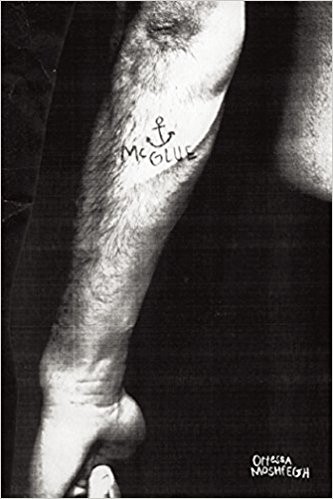
Dense, dark, and gristly prose — McGlue was my introduction to Moshfegh’s work, and I was immediately captivated by her writing and the foggy, twisting narrative she crafts. The book follows McGlue, a sailor in a murky epoch (somewhere in the 1800s) who is in prison for murder. But as he is an habitual drunk, and not inclined to straightforward storytelling, the events that led to his imprisonment must be slowly and painstakingly recollected, questioned, and reconstructed again. I love an unreliable narrator, and in McGlue, Moshfegh has created a grimy paragon of that conceit; for me, this book was a master class in the art of withholding information while keeping the reader engaged and curious. At times, as McGlue drifts in and out of remembering, the narrative lapses into a stream-of-consciousness style that reads more like poetry than prose; yet there is always a sense that Moshfegh has total control of the story, even as it becomes more delirious.
The Passion follows two principal characters: Villanelle, a gambler and adventurer, and Henri, a former cook and soldier for Napoleon. Winterson’s writing is lovely, which makes some of the wartime atrocities in the narrative seem even starker because they are told with such grace. While reading the book, I found myself underlining a great number of passages, either because the turn of phrase was so beautiful, or because Winterson perfectly encapsulated a feeling or experience. I read The Passion during a time of great upheaval in my life, soon after coming out as gay, when I was leaving much behind as I stepped into my new identity. And in the book I found these lines, which stunned me: “When passion comes late in life for the first time, it is harder to give up. And those who meet this beast late in life are offered only devilish choices. Will they say goodbye to what they know and set sail on an unknown sea with no certainty of land again? … And if they do, you will have to strap them to the mast as the boast pulls away because the siren calls are terrible to hear and they may go mad at the thought of what they have lost.” At the moment when I needed to see my heart reflected on the page to know I was neither crazy nor lost forever, The Passion spoke to me so deeply about love, loss, and the journey of living that it will remain one of the most important books I’ve ever read.
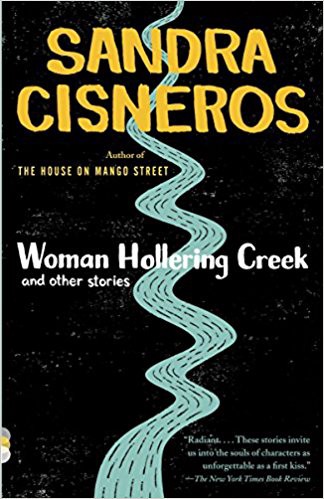
This collection of short stories set along the Mexico/U.S. border crackles with love and pain and fierceness. Woman Hollering Creek and Cisneros’s The House on Mango Street were my first experiences of reading books that wove Spanish and English together — the first time on the page I was welcomed in both languages, with the words of my family and my childhood. These books awoke my interest in the ways in which narratives can perform as open or shut (or call for deciphering, an invitation to unlock their meaning) to specific readers when multiple languages are in play. In Woman Hollering Creek, Cisneros uses her unmistakable voice to narrate “othered” lives. There are queer love stories that bear scars and weather insults, and queer love notes disguised in code. There are stories about women who break the constraints society places on them: women who work through ambivalence around motherhood, or carve their own way as female artists. In search of the furiously powerful divine feminine instead of a patiently suffering saint, one narrator says to the Virgen de Guadalupe: “I wanted you bare-breasted, snakes in your hands. I wanted you leaping and somersaulting on the backs of bulls. I wanted you swallowing raw hearts and rattling volcanic ash.” In her stories, Cisneros makes spaces for women and queer folks to find their own agency. She also writes radiant tales about women helping other women survive and thrive, and deep female friendships.
This memoir in graphic-novel form packs the double-punch of Bechdel’s drawings and her remarkable storytelling skill. Fun Home follows the author from childhood to young adulthood, tracing in parallel how the author comes into her own queerness while discovering her father is having affairs with men. Bechdel’s recounting of her youth and budding sexuality make the memoir an essential queer text, and her exploration of her relationship with her father makes the memoir strikingly singular and deeply emotional. In Fun Home, Bechdel and her father share a love of books — her father was a high school English teacher — and letter, books, and literary quotes appear in the illustrated panels and text accompanying them. These make the book pleasingly dense and rich: there is the sense of many layers of words and images that require decoding and interpretation, much as the adult Bechdel, guiding the narrative, finds herself trying to decipher the essential truth about her father and his character based on their relationship in her youth.
Serendipitous is a strange word to use for a book about a series of violent acts committed by a favored senator. But my relationship with Idra Novey’s Those Who Knewdid feel serendipitous. Novey and I spoke on October 5th, which is important to note because it was the week after the Brett Kavanaugh hearings. On the morning of Friday October 5th, the Senate confirmed Kavanaugh’s nomination. I was reduced to a series of motions — wipe tears from eyes, hit refresh arrow on twitter browser, text someone “WTF,” repeat ad infinitum. The news felt like too much to bear and yet, I couldn’t look away. I sat alone at my computer. But I knew the loneliness would end in some way, because that afternoon I was going to talk with Idra Novey about a novel she had been working on for four years about an all-too harmonious political event on a fictionalized island involving a powerful senator and a collective of women who knew how much that senator’s political power cost the women around him.
How could one handle reading a book that practically predicts the horrors we are watching unravel right before us? The answer comes in the way Novey has structured the novel around the forces of community and time. Those Who Knew takes place over the course of several years, with flashbacks to several years before, and excerpts from plays and newspaper articles from all the time in between.
What is so refreshing about Novey’s illustration of the way trauma can translate into momentum forward, into hope for change in the future, is the way she offers time as a force for healing. “It takes time” is not a new sentiment, nor is it one that has offered hope in the past, but what Novey does is people this time with deeply human agents for change. There’s Lena, the academic who nearly died at the hands of the senator. Her friend Olga, who mourns the loss of her beloved S and runs a second-hand bookshop, selling the books people dig up from their backyards. And finally there is Cristina, the daughter of a powerful man who marries the powerful senator, Victor. Their knowledge becomes power over time when these women form community. It is in this community, in the everyday exchanges and conversation, that change starts to wedge its way between the moments of sorrow and hopelessness. Novey is careful to illustrate that this hope for change does not mean that the pain of the initial trauma will disappear. Instead, she offers this community of characters who, in sharing their traumas, create a new framework for learning how to endure what they know so that they can create space for what they can imagine will change, and must change.
Serendipity is a rare, bright feeling when the news feels inevitably bleak these days. I was lucky to read this book when I did, and even more fortunate to spend time speaking on the phone with Idra Novey about Those Who Knew, which is a prescient model for how literature creates space for thinking through things we are in the thick of living through.
We spoke about how self-recrimination works to silence knowledge, why we need to separate toxic masculinity from being a male-bodied person, and how change can happen “book by book, conversation by conversation.”
Erin Bartnett: How are you today?
Idra Novey: Well, it’s an intense day. I’ve spent four years burrowing down into a novel about a woman pushed into silence about an assault and watching Dr. Christine Blasey Ford’s testimony was really hard. How about for you?
EB: Yeah, I mean not nearly the same, but the same. I can’t say I’ve been burrowing in the subject in quite the same way, but it’s a hard time.
IN: It’s a really hard time.
EB: Yeah, words are hard to come by.
IN: They are. When I was translating the Brazilian poet Paulo Henriques Britto, I asked him, “What was it like being a college student during the dictatorship in Brazil? How did you get through all the everyday things?” And he said, “Well, you just went on.”
EB: Yeah, there’s this horrible Faulkner quote that haunts me from Light in August where one character is witnessing another character who is about to make, what he deems, a horrible mistake. And he thinks to himself: “Too much happens. That’s it. Man performs, engenders so much more than he can bear or should have to bear. That’s how he finds that he can bear anything. That’s what’s so terrible. That he can bear anything, anything.”
IN: But I think it’s not only the mistake, it’s enduring the mistake that’s so excruciating. Because in the moment of the mistake, you begin to imagine the consequences — what will be endured in the aftermath of that mistake. It’s an agonizing kind of forecasting.
I’ve spent four years burrowing down into a novel about a woman pushed into silence about an assault and watching Dr. Christine Blasey Ford’s testimony was really hard.
EB: My first question is actually about forecasting and spans of time. When I read this book, I was in a moment which I’m sure we all are to some degree, where I felt like I just couldn’t take any more bad news. But your book was something different — the lens you take on acknowledges that life extends, it keeps going for the victims of sexual harassment, assault, and violence. And for me, that sense of time offered some hope for victims, because you get to witness the communities characters like Lena and Olga form to get through their pain. But at the same time, there are no false promises that the pain will go away, or that the haunting feeling associated with knowing what happened will go away.
IN: Thank you, from the start my instinct was that this novel about being pushed into silence would have to cover an extended period of time for exactly the reason you describe, to convey all the ways that the emotional consequences of assault remain in the body. For Lena and Olga, they have to manage those emotional consequences daily, for years.
EB: And this book is coming out in a moment where this issue is a really vital conversation that’s actively being had. How do you hope this book will engage in that conversation and how do you think this book will help us think through and deal with the experience of sexual violence?
IN: I hope readers will find consolation and also a new fuel perhaps in this novel, a renewed desire to create alliances despite the tensions that inevitable surface in any alliance. In the wake of the 2016 election while working on this novel, I felt acutely away of the various ways friends stirred out of their sense of resignation. For some friends, even if they didn’t feel capable of moving beyond resignation on Friday, maybe they’ll feel it on Sunday. Maybe they’ll feel it on Monday. And even if you feel defeated for far longer, as happens in the novel, you have to be open to the possibility that you will be stirred out of that resignation if not for yourself, then for the wellbeing of someone else. Two days from now, three days from now, a year from now. And we have to be in it for the long haul, not just the next twenty-four hours.
EB: To dive into the world of the novel, I was really fascinated by the way you create the “imagined world” in Those Who Knew because there are so many details that felt very close to me — there’s an island post-regime where books were buried and Jewish people were rounded up and now northerners with pale skin come to gawk at the island “post-tragedy,” as if there’s no other way to measure time. There’s even a 9/11-esque tragedy in the North. My experience of reading was uncanny — the island was a very familiar unfamiliar place. So I was wondering, for a novel called Those Who Knew, could you talk more about your process and decision to keep this distance between what the reader can actually know about the country and what they get to infer, create, and imagine?
IN: I think my fantasy for this novel was for readers to come away with some sense of knowing this country. To know it through family or friends, from what they’ve read or where they’ve lived. That is the power of writing a political parable, how it allows readers to bring their own history and knowledge to it. One bookseller told me the novel brought to mind relatives of hers in the Dominican Republic, and another reader told me it led him to revisit the relationship between the US and Iran. And another reader said “I just kept thinking about my family’s history in Haiti.”
I loved that all these early readers brought knowledge of different countries to their experience of the book. As for where I got the title, Gabriel Garcia Marquez has a novel Autumn of the Patriarch and on the second-to-last page comes the line: “We knew who we were, and he was left never knowing.” It was a line that stayed with me, and speaks to the profound ignorance that fuels chauvinism and patriarchy, the profound lack of knowledge of what a man like Trump refuses to know. He doesn’t even know about the toilet paper stuck to his own shoe. It’s a profound and dangerous ignorance, and far more so for people in power.
EB: That just got me thinking about the relationship between knowledge and power in this book. Because for Lena and Olga, there is collective power in what they know about Victor’s behavior and its consequences. And yet, that knowledge has to come up against a different kind of power Victor, the senator, has as a public political figure. And his power threatens to silence their knowledge. So Victor’s political power creates a lot of fear for those who know, too. And so there’s that dynamic alive in the book — both knowledge in power and the power that can threaten to silence that knowledge. And that makes knowledge feel dangerous.
IN: Yes, and the danger of knowledge is why so many battles take place over education, which plays out with Lena and her job with the Ministry of Education in the third section of the book. The end of the regime does not bring meaningful change to the rural center of the island. Victor’s progressive Truth and Justice Party doesn’t deliver on their promises to improve public education, or at least not for the small schools hidden in the interior of the country. I went to a rural public school and Lena’s job gave me a way to write about rural education that I’ve been wanting to write about for a long time — how often politics is a battle over knowledge, and who gets to withhold it from others.
EB: That brings me to one of my favorite characters in this book, Olga. She runs a bookstore filled with books she buys back from people who buried them in their yards during the regime, and then sells them to professors and students and northern tourists. She keeps a transaction log that is actually like a love poem written to her beloved “S” who is gone now. I think she’s the heart of the book in many ways, but also the seat of knowledge, too. How did you find Olga?
IN: I had a very vivid sense of Olga from the first draft. She was a strong presence in my mind throughout — she was company I wanted to keep. Olga is old enough to see the long haul — how lasting change often happens slowly, book by book, and conversation by conversation. The decision for her to run for office came to me in a later draft, as she is the moral center of the book. It was astonishing, after fantasizing about Olga running for public office for many months, to see so many women in this country placing their names on ballots and other women stepping forward as Lena does, to support the campaigns of groundbreaking female candidates like Stacey Abrams in Georgia.
EB: In the opposite direction. I wanted to talk about the decision to write parts of the book from the perspective of Victor, the senator who has committed a series of violent crimes against women. What was it like writing from Victor’s perspective? And why did you decide to do it?
IN: After finishing a novel, it’s possible to construct any number of reasons for inhabiting a character. But I just followed my instinct, as inhabiting Victor’s perspective made me uneasy, and when something makes you uneasy as a writer, you know you have to get past your resistance, and figure out why you’re resisting it. I’ve found the deepest truths, in any genre, usually await in the sections that create the greatest unease for me as a writer. But once I got Victor’s scenes down, I realized how critical they were to the book’s exploration of patriarchy and how a lack of consequences embolden politicians like Victor, how his continued popularity allowed him to minimize his crimes in his mind — to believe he deserved to get away with whatever crime would permit him to remain in power.
EB: That actually reminds me of a quote from Olga when she writes in her transcription log “I’ll never say it to Lena, but if Victor did push that girl he’s going to get away with it. The road was empty. There were no witnesses. Maybe Che Guevara disposed of some inconvenient girl like a soda can as well. Maybe he disposed of several. Who wants to hear it? People are too desperate for a hero.” That statement “people are too desperate for a hero” really haunts me. Because there is both Victor’s internal justification and the seeming lack of real consequences for his behavior because the public reveres him for so long as a political warrior for the people. So I wanted to ask you more about that statement — do you agree with that sentiment? Are we too desperate for a hero? And do you think that’s something we need to be wary of?
IN: With all the fake news spewing forth each day, it’s become easy to cling to whatever version of a candidate a voter might want to believe in. The narratives are all there online for the taking, and Olga sees that the students who worship Victor don’t want to deal with the cognitive dissonance of recognizing he has fought alongside the, yes, but is also complicit in an out-of-control lake full of pig shit.
To go against the tide of people desperately clinging to a false narrative takes incredible strength. Look at Christine Blasey Ford. She saw how strong the tide was, how likely she would be terrorized and unable to live in her own house, and she was right.
With all the fake news spewing forth each day, it’s become easy to cling to whatever version of a candidate a voter might want to believe in.
EB: It brings me to this other point that I saw for a lot of the characters — mostly women, but also Freddy and Oscar, too — there’s this incredible sense of self-recrimination and blame. This quote from Lena’s perspective I so identify with: “She had thought there would come a point in her life when there would be fewer hours like this, of self-recrimination so wrenching and overwhelming it felt as if she were devouring herself, wordlessly slicing up her soul just to stuff it back in her own mouth.” This line comes after Lena hates on herself for forgetting to refill her granola bar stash in her car! But Lena also blames herself for Maria P.’s death, and her “silence” about Victor’s violence. Freddy, Victor’s brother, feels the same guilt for his silence, but also about his relationship with his brother and father more generally. Olga has similar feelings about S’s death — which she blames herself for. Cristina and Lena both feel guilty for taking money from their families. There is so much guilt. And that guilt threatens to silence them, to destroy them in some way. Do you think that’s part of that tide we’re talking about?
IN: Absolutely. I kept coming back to Lena’s paralyzing sense of self-recrimination, and the kinds of self-recrimination I felt after the 2016 election, and for a million reasons before that. Once you internalize the mechanism of self-recrimination, it can take over your life. Lena comes to trust her impulse to self-recriminate more than any other aspect of herself. How do you let go of self-imposed shame that paralyzing? For Lena, it takes years.
EB: And time is something we so often don’t acknowledge as a legitimate mechanism for tuning our ears to other voices in our heads. There’s the agony of having to endure that time, but also the permission we need to take that time. We are allowed to take time.
IN: Yes, and that is something fiction conveys, the role time plays in a person’s ability to rise out of a place of resignation and despair. Even if you can’t stir yourself out of a cynical mindset this second, it doesn’t mean that you won’t. Freddy has to write his way through a number of scenes about complicity and inaction before he can work up the nerve to confront his brother.
EB: To return to Freddy — It was so refreshing to read how carefully you constructed the critique of the violence of the patriarchy and toxic masculinity in a way that acknowledges how these power structures ruin men like Freddy. And even Oscar. Because the patriarchy also destroys the relationships between men. There’s a father in Freddy’s play who tells a young Freddy not to cry. To “keep it in, find a spot on the wall. Like a senator. Fix your gaze on it. You want to be a man, right?” Can you talk more about that?
IN: I didn’t set out to write a novel about patriarchy. Although one of the first scenes I imagined for it was of a father warning his son to stop crying and keep his face as expressionless as as a senator. And one day that boy becomes a senator who doesn’t allow himself to cry. I was curious how those premonitions that play out in the living room as a child end up playing out in a national arena, in the theatre of our national politics. There’s nothing wrong with being a male bodied human being. We just need to raise male-bodied children to know we value their capacity for kindness and compassion more than their capacity to compete and defeat others. In many ways, I saw this novel as ultimately about having a son, and the desire to free him from a legacy of emotional repression.
We just need to raise male-bodied children to know we value their capacity for kindness and compassion more than their capacity to compete and defeat others.
EB: So I’m just discovering it for the first time. And it’s been really helpful in some ways, because I have three brothers, I have a partner who is a man, and it’s a very confusing time because I love them all so dearly. And bell hooks is starting to give me language for thinking though the differences between the patriarchy, masculinity, and the male body. Because these things so often get thrown together. What is the difference between the patriarchy, toxic masculinity, and being a male body? And how do we create this for our young boys?
IN: Exactly, we so often conflate the male body with toxic forms of masculinity and they’re not the same thing. Just like we separate the female body from conversations about femininity, it’s important to make that distinction for male bodies as well. Perpetuating toxic masculinity is not inevitable. It felt crucial for this novel about patriarchy to have several male characters who are agents of change. Oscar reflects in the novel on how self-absorbed and absent his father was during his childhood. Oscar stays home with his daughter as a way to prove to himself that he’s a different kind of man.
EB: As a last question, I want to return to something you said earlier about the fact that Olga recognizes that change happens book by book, conversation by conversation. Is there a book that you’ve read recently that gave you that hope, that reminded you that this change can happen book by book, conversation by conversation?
IN: I would recommend June Jordan’s book of essays, Some of Us Did Not Dieand especially the essay “Can We Get a Witness” about Anita Hill and that trial. And as a chaser, look up June Jordan’s poem “Poem About My Rights” from 1980. Every line of which, remains true.
Tent building begins at first light. The thwack of mallets into half-split stakes. The clatter of poles off the pileup. The slap and suck of boots in mud, the spit and churn of wheelbarrows in mud, the hard, flat drizzle of piss and rain and honey buckets flung just outside a neighbor’s door flaps. This morning in particular there is a leaden-sounding clunk, a curse on bearcat bitches, newbie pikers, the dripping kunte for brains who dropped a sandbag on the foreman’s foot. Behind it all, the so-called creek thunders by, relentless as the rain-swollen river it is. A seagull calls. A meat cart shudders. Somewhere on the bluff above camp, a rifle shot splits open whatever natural quiet is left, the two halves dropping to the ground, out of which flies the scream of a rooster and the tin whistle of the new cannery.
And yet, it’s Genevieve who wakes up Walter. Genevieve in her high mahogany bed. The noises that she makes are slick, unmistakable. He is careful not to breath too loudly, not to stare anywhere but at the ceiling. That she would pleasure herself a few hours into their pretense of a marriage is hardly a surprise. So much so he has prepared himself: He will not look at her; he will not reach under his blanket. Or if he does, he will do it so slowly, so discretely she will never realize.
Her technique, however, is almost disappointing. Not so much as an overblown sigh to provoke him, not so much as a grande-finale grunt of relief. Her timing seems almost medicinal in its efficiency. A slash of her hand, a rumple of kimono, and she is finished.
Hours pass, or maybe minutes. Smoke drifts through the tent, wet and acrid as the cook fires from which it escaped. Still Walter lies there on his Army-issued cot, under his Army-issued wool blanket. When he turns over — slowly, without a noise — Genevieve is on her side staring at the canvas wall. She seems unaware of him, almost as if she has forgotten he is there. The expression on her face, however, is so alien to everything he knows about her, so fragile and exposed, he almost feels as if he is spying on the daydream behind her eyes.
Outside the tent, a shovel clinks against gravel. A dog yelps and runs past the door flap. Genevieve glances over and meet his eyes. Years later, long after she has been dragged away by the men sent to fetch her, long after her tent is gone, the camp is gone, a town of 15,000 erected in its place, Walter will wonder if that moment was when he should have told her: he was lonely too, he had had his daydreams too, and his, like hers, were wistful and best left undiscussed — populated by people he had trusted in secret but never quite enough.
The day before, Walter and Genevieve were still at an impasse. Once again. She would not be attending the Passion Play, she said, nor would she listen to Walter’s reasoning. Even so, he continued in an undefeated voice: The Director of the Engineering Commission, Mr. Carmichael, had arranged for the senior staff at Ship Creek camp to view the performance on a special platform erected high above the mud and crowds. Afterwards, they were gathering at the Crescent Hotel where Mr. Carmichael’s wife was hosting a social, featuring lemon cake made from three real lemons, fresh from California.
“Jesus and wives,” said Genevieve. “All in one night!” She had her ruined foot propped on the desk chair and her petticoats whisked up. The foot was terrible, a childhood injury that had left everything below her ankle a lump of flesh and fluid, jammed into a half-laced work boot. She felt upward along her thigh, tied off, and inserted a brass syringe. “Medicinal,” she said, the way she always did when he forgot not to watch.
Lately, he forgot too often not to watch. Blood bloomed inside the barrel, then vapored off with the liquid into her veins. Was it the rawness of the drug that so compelled him? Or was it Genevieve and her ability to stand around high and half-naked, as if bronzed by her own sweat? She had a kind of cool, marbleish glow, her auburn hair in disarray over her shoulders.
Walter glanced at lantern behind her — the honey-colored kerosene, the drowned gnats in the ripe glass bulb. In the pecking order of the Engineering Commission, there were only three viable candidates for Deputy Chief of Surveying. Having arrived only this week, three days into the search for a candidate, he was the least likely to be selected.
All of which Genevieve knew. Just as she also knew that his attending the Passion Play with a woman of her wealth and education would demonstrate to Mr. Carmichael that Walter was a reliable citizen of their tent city, the kind likely to build a wood frame house with windows and donate to the school fund. The trick, however, was not to mention any of this to her. Especially not in a voice that sounded as though he were begging.
He leaned against the dresser behind him, ignoring the look she flashed his way — one that seemed to register his sweat-soaked tweed, his overdone bowler, the lingering phantom stink of a childhood spent on a chicken farm in Augustus, Arkansas. The shit. The gizzards. The homemade soap like curls of graying death beneath his nails. He did not pick at a button. He breathed as if he were strolling down a distant sidewalk, in foreign capital, a sprig of linden in his lapel. “Come,” he said. “Or don’t. I give up.”
She smiled. She thunked her foot to the floor. “We leave the minute the Christ rises,” she said. “Under one condition: I’m not your wife.”
“My sister, then.”
“Your daughter.”
Walter shook his head. He was twenty-six years old; she thirty-four or forty-three depending on the strength of the closest lantern.
“If only you realized how willing people are to believe the impossible,” she said. Then slid her hair up into a comb.
“That may be,” he said. “But they’re not idiots.”
“No,” she said. “Just hopeful.”
“Can’t you be my cousin?” he said. “Everybody has a cousin.”
“You know what ‘cousin’ means to strangers,” she said and blew a kiss at the ceiling. “I’ll be what I am. Your charge.”
Legally speaking he was, in fact, her guardian. An arrangement designed to humiliate them both. “You could be my fiancé,” he said. “Then just break it off in a month or two, after I’m named Deputy.” He toed a piece of gravel along the groove of the plank floor, hoping she would not take him up on the latter part of the suggestions. Married men, in this particular railway camp, rose so much faster. The wives in the Engineering Commission liked other wives to have dinner with.
Genevieve laughed. It was a slow and expensive-sounding, a whorl of tortoise shell. “Climbing is so tiring. Aren’t you out of breath?”
“If you need a rest,” he said, “we can always send you back home.”
It took a minute for his threat to actualize on her face. And when it did, he knew he had gone too far. He wanted to take it back, but what other option had she left him? “So,” she said, syringe in hand. “I’ll be your family spinster. Your hoary, infirm aunt with the gimpy leg.”
The night of the Passion Play, the air smelled of sweat and peanuts, pomade and burning spruce, plus the usual syrupy fog of fish guts and human waste. The Mercantile was low on axes, lime, and canvas. Puddles roiled with mosquitos. Outhouses and bathhouses had overflowed.
In was summer of 1915, when any man of any ability — or inability — could find work Ship Creek camp. The latest rolls reported 1,740 men, 263 women, and 14 children. And it was only June. The post office was located on a docked, leaky barge. The stage for the Passion Play was on a raised planked platform just barely staggering out of the mud behind the tent serving as the Catholic Church.
Thanks to the planning commission back in Washington, Ship Creek not only had laws against alcohol, firearms, narcotics and prostitution, but also a highly organized grid of streets designed by federal engineers — none of whom had factored in the power of Alaskan tides. Twice a day, brackish inlet slop overran the river and washed through camp. Drop your hat and it vanished, sucked below the muck. Step off the walkways and your boot was gone too, along with your far more valuable sock.
There were rare weeks when sun broke through the cloud cover, the sky a sudden berserk of blue. The ground dried. Broken bottles and tree limbs surfaced. Clouds of fine, gray silt blew over the tents, then settled, only to explode whenever a wagon passed or a fight broke out, the sediment baked into the men’s clothing suddenly loosened in a cough of powdered earth.
Mostly, though, it rained. And rained. And rained. As it was doing now. A flat, bleak drizzle so regular in its timing, it seemed designed to rinse away the gathering crowd. Past the pool hall, Walter kept close to Genevieve’s side, slowed only by the dramatic manner with which she swung out her foot. Look, she seemed to say, with each lurching step, look how terrible I am, how beautiful, how above you.
Boys in fish-smeared tatters stopped to openly gawk. A Dena’ina woman in a white-lady apron reached out to touch the brown crushed silk of her sleeve — an impulse Walter had also had, staring at the row of tiny mother-of-pearl buttons along her wrist.
Closer to the platform, people went so far as to widen them an aisle. In a world of dandy dancers, tent bitches, railroad humps, freight haulers, Army no-hows, Russian trappers, cannery pimps, café girls, and beleaguered, aging whores, how could a rich, middle-aged, crippled woman be considered remotely out of the ordinary?
Save for her attitude. And, perhaps, her ill-suited escort. Genevieve was taller than Walter, louder than Walter, richer and less afraid and more experienced about everything, including but not limited to absinthe, opera, fox hunting, lap dogs, Romance languages, and Greek mythology. All of which even a halfwit could see just in passing. And there were quite a few half-wits, by the look of the workmen at the edge of the stage. One tipped his hat at Genevieve, his smile bleary.
On the viewing platform, Mr. Carmichael waved Walter forward. One of the junior engineers rushed down to usher Genevieve up the steps. There was no time for introductions. Jesus and his disciples were already praying on the stage. Mr. Carmichael tipped his hat. Walter tipped his. Mrs. Carmichael nodded. Genevieve popped a peanut in her mouth. And chewed — quite loudly.
Walter glanced over at Mr. Carmichael. If appointed as Deputy, he would supervise the construction of a proper town on the bluff above the camp, complete with wooden houses, licensed businesses, and a functional drainage system, allowing Mr. Carmichael to occupy himself with the construction of the railway, and his Dena’ina mistress.
What an idiot Walter was, buying Genevieve peanuts. Her gloves were now stained with oil. And the crunching, the crackling of the bag. As gelatinous as society was in camp — slick with questionable pasts, wobbly with schemes for enrichment — there was an exoskeleton of propriety that the population seemed determined to keep in place. What else was there, really, to keep a few canvas tents at the north end of civilization from melting back into the tidal slop?
Four months ago, Walter had met Genevieve on the terrace of her family’s beaux art mansion in Milwaukee. She was loose and expansive on Brandy Alexanders, smoking a cigar stolen from her previous guardian. Walter was occupied in a similar fashion, free finally from his roommate at Princeton, his roommate’s father, the crystal snifters by the fireplace, the talk of the war in overseas.
Never in his life had he imagined he would end up the houseguest of the founder of the Greater Wisconsin Steamworks. The nuances of the weekend — the cheeses so easily mistaken for tiny frosted tarts, the towels in the water closet that hung like delicate foreign undergarments — had been, at times, overwhelming. Touch the linen, he discovered, and you left a fingerprint behind in grime.
Still, there he was, on the terrace. The six years of mimicry to strip the country from his speech, invisible. The pre-dawn hours of panicked study, justified. The late-night games of Dining Club poker now far more valuable than his degree. Cards, more than any other subject at Princeton, had proved essential. How else could Walter have funded his clothes, his books, those horrifying everyday expenditures that arose with each casual invitation to a collegiate picnic or a beer-soaked outing to town? Bored young men of means almost enjoyed being beaten by a young man of no means at all. Provided a game was occasionally thrown.
Their parents, perhaps, had a different opinion. Which was why Walter had slipped away, avoiding the inevitable insinuations about his roommate’s squandered allowance. A wall of boxwoods and climbing jasmine surrounded the spot where he was standing — not far from a tall, hunch-shouldered woman. She had a recklessness to her stance, not to mention the ability to stand alone in the dark without pretending to look up at the stars. Where had she been at dinner?
Tending to some elderly aunt, Walter suspected. As a paid companion. Or an accompanist to querulous soprano.
As she limped toward him with her misshapen foot, he had even felt a wisp of pity. On and on he had described his impending trip: the frontier, the ferries, the recently commissioned Federal railroad whose newly built towns he was hired to survey, construction of which would soon enable fast, efficient transport of resources across the Arctic and into barges bound for Seattle, San Francisco and beyond. “One day,” he said. “You may heat your bathtub water with Alaskan coal.”
“Alaska?” she said.
“There’ll be grizzlies,” he said. “And Natives. Every kind of — “ he paused, rejecting the word “danger” in favor of “challenge.”
She clapped her hands. “I want to come!”
“You should come,” he said. Then added, in a kindly, patronizing tone that he would cringe about for years, “I understand they’re in desperate need of school teachers.”
She laughed — a laugh so different from pearlescent titters of the debutantes he had been seated beside at dinner. Brash. Flippant. Too loud.
Only the next morning, when her guardian, an elderly second cousin, called on him on the sun porch did Walter understand what he had set in motion. The speed with which the wealthy moved. The efficiency. Genevieve had taken his invitation to come to Alaska as an actual invitation. Her guardian bore powers of attorney, titles of transfer and hints of previous, undiscussed scandals.
Genevieve, as it turns, was his roommate’s half-sister from his roommate’s father’s first wife — the original heir to the Steamworks. She had done better on her travels to the Continent, he said, fussing with his vest button, “ where people were…well….more Continental.”
“Of course,” Walter said, confused.
“I will add one thing,” said her guardian. “Genevieve’s excitements have worn the family down. If our arrangement doesn’t work out, if you feel overwhelmed at any point, there are certain gentlemen we can send up to Alaska to relieve you. Genevieve will come home — and will stay home — under more supervised circumstances.”
Walter tried to nod, even as oily discomfort pooled inside his mind: What men? What circumstances?
“Genevieve is aware of this condition,” said the guardian. His grip was as limp as bacon fat, his handshake quick and binding. Leading Walter to realize that this exchange was a purchase as much as an agreement — and that, like Genevieve, he too had been bought.
But at such a price. The amount of money offered to him to oversee the finances and movements of his middle-aged charge was staggering. Immediately, he wired his parents the funds needed to pay off the farm. His mother refused the money, save for the 75 cents it cost her to telegraph him back the message: YE ARE FROM BENEATH STOP I AM FROM ABOVE STOP YE ARE OF THIS WORLD STOP I AM NOT OF THIS WORLD.
Nothing wriggled by her. Nothing ever had — not a wormy hen, not a late-night snake and most especially not an inexplicable windfall from a son she had sent off on a train eight years ago and long suspected of ungodly arrogance.
On the train, Walter and Genevieve had separate compartments. On the ferry, separate berths. She was his aunt, his sister, the companion to his sister who was ill with motion sickness and couldn’t come out of the cabin. He was her brother, her nephew, her father’s attorney bearing legal documents. Whatever their story, Genevieve passed it along — with the addition of few conflicting half-truths — through porters, maids, and valets, who in turn whispered that story to their employers while brushing their hair or turning down their sheets. Genevieve’s one condition was that she wasn’t his fucking wife. Walter’s one condition was that he wasn’t her fucking guardian. Mostly because he could not stop her from doing anything she wished whenever she felt the urge — unless he threatened to send her back to Milwaukee, the consequences of which would punish not just her but him.
Walter had developed a taste for goose down pillows. And chilled crab cocktail. His threat had to be used judiciously, he soon realized, or it would wear thin. Such willpower had been taught to him early on, almost as toddler. The year the laying hens had died, their meat poisoned by sickness, he had watched his mother watch him, waiting until he could hardly walk before slicing off a wisp of salt pork. Thin as wafer. Rancid. She laid it on his tongue, got down on her knees, and begged: Get up, son. Walk, son. Live.
Who was he any more, he wondered, as they rattled on through America and then Canada in first-class berths, him worrying, worrying, worrying that they would be found out. This feeling had been with him ever since he could remember: nagging at him before sleep, after school as he doggedly followed rules, listening, studying, imitating, hiding. Underneath his accomplishments, always, he was an X on the page in the Bible where his mother recorded his birth next to all the other dead X’s, his father a drop too Choctaw to be white.
Genevieve, with her pale, glittering wealth, seemed to have squelched these kinds of quandaries. She was prideful, deviant, indulgent — a spendthrift dragging around a family bank account and a dirt-dusted boy from Arkansas. There came a point in the trip, the lowest point, when he gave up and simply signed off on all her purchases. At every station or port of embarkation from St. Paul to Olympia, she ordered barrels of oysters, crates of whiskey, tapered candles and laundered tablecloths. Plus otherworldly delights held aloft by Chinese coolies in lacquered wooden boxes or paraded down the aisles on chains. A monkey that farted songs on command. A parrot that plucked a pearl from your décolletage. All of which served as amuse-bouches at her intimate, in-compartment dinners with stevedores and stowaways, flexibly-minded doctors and secretive lesser titans, waifs from steerage, coquettes seduced from the captain’s table, laudanum-dazed heiresses, and, one time, an Argentinian spiritualist who claimed to see the dead children and ancient emperors you had once been in a past life.
Every morning, Genevieve shook these people out of her life in with the same nonchalance she used to free her hair from its combs. Then followed up with a gift that bedazzled each one into going away with gratitude, if not affection. A brooch. A pendant. A silver pocket watch with hand-enameled moons and stars. Even Walter had been sucked into her circle one evening, sampling from her brass syringe at her urging, the cocaine glittering through his veins and transforming him into a chattering, sweaty marionette who obsessed about his desire to become governor one day and escort his mother to an inaugural ball in Washington. In a carriage. With six white horses.
Nine hours later, he had woken up on her floor and tried to flee, stopping only to ask her if they had done anything, if he had done anything. As though, even drugged and ecstatic, she would have the slightest interest. He knew her tastes by then: the smooth-skinned women, the boyish girls, the raucous, foreign rarities of ill-defined sex.
She admired his directness, she said. But also felt the need to clarify. In the past, several of her guardians had assumed an openness about her, an openness which they had believed extended to themselves and their anatomy. She and Walter were allies of convenience. Nothing less. Nothing more. Nothing in between.
Though Walter, she added, did have a kind of ingénue charm.
At that moment, a moth fluttered through her compartment. Genevieve caught it, cupping her hand. Years later, Walter would realize that that was the moment his foolhardy fondness for Genevieve first began — watching as she tipped the moth out the window, holding it just so, allowing the lost bit of insect a moment to feel the wind before it was required to fly.
According to Mr. Carmichael, the production of the Passion Play had been undertaken by the lone Catholic priest in camp who, rumor had it, had felt compelled to compete with the lone Russian Orthodox priest, the lone Methodist pastor, and the non-denominational revivalist who lurked outside the pool hall trying to lay hands on slow-moving shoppers. The script was raw, basic, zero pageantry: the praying in the garden, the betrayal of Judas, the court of Pilate, the cross carried through the crowd, Jesus falling three times. Mary was played by the buxom Lithuanian wife of a railroad foreman, as wives in the Engineering Commission felt the production a little too Catholic to be associated with, the café girls were busy working, and whores were not allowed to volunteer.
The production seemed to move the crowd, especially in the final scene — Jesus lying on the stage, spent and bloody, Mary keening over him, her arms upraised. Perhaps it was the flat, gray clouds, the mountains in glacial blue relief behind her, but more than half the camp was weeping.
Genevieve sighed. Walter readied himself for her withering critical assessment. But Mrs. Carmichael commented first. “I wish,” she said, “there had been music.” She was far younger than Mr. Carmichael, dressed in modest Mercantile muslin. “It seemed a little…brutal.”
“God is a brute,” said Genevieve. “Imagine a world where Mary was in charge.”
Mrs. Carmichael tilted her head, as if confused. Then laughed. “Did you hear that, Bertrand? I’ve found another suffragist.”
“Worse, I’m afraid,” said Genevieve. “A Bohemian.”
“Hazel is an artist,” said Mr. Carmichael. “Aren’t you, petal?” His declaration inspired such pink on his wife’s cheeks that the entire gathering seemed to pause and admire it, her discomfort somehow refreshing.
“I like to draw,” she said. “Though I am self-taught. And not yet sure of my technique.”
“She’s sending in a drawing to Collier’s,” said Mr. Carmichael. “For their magazine cover contest.”
“Bertrand….please.”
Mr. Carmichael smiled. “She’s far too modest.”
“Perhaps,” said Genevieve. “Or perhaps too married.”
A cough from Mr. Carmichael. From his staff, assorted looks.
“Whatever do you mean?” said Hazel.
“Only that it’s easier for a wife — and for her husband — if she remains a hobbyist.”
Mr. Carmichael’s expression turned to irritation. One of his lesser aides stepped forward.
“Genevieve used to live in Paris,” said Walter.
Instantly, the crowd seemed to forgive her. She was eccentric, a little foreign. How exotic! Hazel, more than anyone, seemed impressed, positioning herself by Genevieve’s elbow, gazing at her with her face flushed and upturned. And so, it was to Hazel and only Hazel that Genevieve now spoke about the painters and sculptors, poets and dancers she had befriended as a patroness and, on select occasions, as a muse. An experience that inspired her to lean into Hazel in order to describe it, as if warming herself on the woman’s sun-browned charm.
That gleam in Genevieve’s gaze, that bedazzled tone of voice, Walt knew too well. There was no way to keep her from seducing the poor, provincial woman — in public, in front of her husband and his employer — not without drawing too much attention.
It was Mr. Carmichael, thankfully, who steered the conversation back on course. He had an idea. A fantastic idea. Yes, the Passion Play had been a success. But it had also been a bit depressing. Considering the sophistication of Walter’s wife — not to mention her experience — couldn’t she put on a theatrical? Something cheerful? Something fun and avant garde?
Walter cringed — visibly, already fearful of the word “wife” and its repercussions.
Hazel too looked stricken, for reasons that eluded Walter. But not Genevieve. Genevieve understood. Genevieve even sighed. “How difficult it must be,” she said, “to be the wife of the head of the commission and an artist.” How did Hazel manage? She must have so many commitments. So many invitations. So little time to herself. Were they to work on a production together, said Genevieve, she would handle everything. Hazel could design the scenery. Then go home — and voila — attend to her husband and family.
“We have no children,” whispered Hazel.
“All the more reason,” said Mr. Carmichael, “to support the men in camp.”
“Yes,” said Genevieve, her arm now dripping over his wife’s. “The men need entertainment. They work so hard.”
“Yes,” said Hazel. “I suppose they do.”
“I have every confidence,” said Walter, “that the two of you will astonish us all.”
Wasn’t her husband helpful? said Genevieve. She didn’t know what she would do without him. Hazel laughed. Walter did too. As her husband, Walter had only one response. “Thank you, darling,” he said, as if he’d said it all his life.
The morning after the Passion Play, Walter is still lying in his cot, trying not to openly stare at Genevieve. She is spent and rumpled, sitting up in bed with a pot of waxy rouge. He did not imagine her relieving herself earlier — nor will he forget it — but the expression on her face right after was so intimate, so impossible to match up to the wall of hardened features she now presents him with: eyes, nose, slightly bored smile as she looks into her hand mirror and applies a pinkish blush to her cheeks with the tip of her fingers. Did he dream it? Did she want him to see it?
“Five dollars,” bellows the wash-and-fold man through the door flaps. Sacks sail through air and land in a poof of dust and lavender. Genevieve smashes a pillow over her eyes. Half-open books and toppled bottles of moonshine litter the floor. A crumble of graying chocolate.
Down on his cot, Walter longs for tooth powder. And dry socks. He thinks of his tent 500 feet away. His desk. His drafting tools. His pencils. His surveying instruments in their tidy, plush-lined cases: his theodolite, transit, and an elegant, brass tachometer.
“If we’re married,” says Genevieve, swatting a mosquito on her arm. “We’ll have to send a man to fetch your things.”
“Or,” he says. “I could keep my own accommodations. As a study.”
Genevieve gives him a look. “Mr. Carmichael will ask questions.”
“You mean Mrs. Carmichael,” he says.
Genevieve digs through one of her trunks, pulling out a hookah, then a music box — the latter she tosses on a pile of wilted stockings.
“Married people,” he says, “sleep in separate beds all the time.”
“Yes,” she says, “but in the same room, where no one can see their loveless marriage.”
“Ours needn’t be that way,” he says — though he wish he hadn’t.
“What way?”
“Loveless.”
She only flicks a glare over her shoulder, then digs through her trunk, shakes the contents of a taffeta bag onto the bed — one of which is a ruby band that fits, just so, on her ring finger. “I do,” she says, and wriggles her hand. “Now get out, will you? Hazel is due here in an hour. I don’t have time for a fake-wife fuck if that’s what you’re implying.”
The fires on the bluff above Ship Creek burn all day. Forty square miles of spruce forest crashing and collapsing into white ash and wind. Take a breath and you taste burnt sap. Cough and a black deposit, the size of a lozenge, glistens dully on your handkerchief. Bald eagles scream through the smoke and skeleton trees. When the tide rolls in, bits of cinder fleck the surface of the water as if pieces of the midnight sky fell into the ocean, all their starlight drowned.
Straggling in from their fish camp on Point Wolzeroff, the Dena’ina trudge through the rows of tents, selling salmon belly or embroidery, bewildered by the destruction. The soldiers try to explain in their best White Man English: The bluff must be cleared. For the new town. For the railroad. The trains. Choo-choo.
Alaska City, the crew boys want to call this new town, and a general vote will soon decide the issue. In his office, Walter presses wet rolled rags against the windows to muffle the smoke. The list of town amenities that Mr. Carmichael has enumerated in his most recent memorandum is substantial: a residential grid, five commercial avenues, a park (but not too large), warehouse facilities for freight and ships.
Walter is a surveyor. His job is to measure lots, verify acreage. It’s not as though he didn’t major in engineering and master the basics of architecture — though positions of that pay grade were filled by men with more established Commission connections.
He allots a dockyard for the town. A residential building. A swimming basin. A park. Each meticulously placed on streets and lots drawn on quarter scale. His renderings, however, are less practiced, almost rudimentary: plazas, townspeople bustling down sidewalks. One features Genevieve, though he did not plan on drawing her and his better judgment calls for the use of his eraser. She is too handsome, too well coifed. But she is smiling — shyly, as if she has just been told a secret. He gives her a fur collar against the cold and an escort to hold her arm. The escort is most pointedly not Walter’s height, nor Walter’s build, nor anything like Water at all — save for his bowler, placed at an angle so that the shadow of the brim obscures his face.
Dinner at the Crescent Hotel goes as Genevieve requires. He and Genevieve are seen together, comfortably married, at a window table in the dining room. Despite the dry laws of the camp, the waiter quietly offers them a “menu water.” Genevieve orders two. Walter abstains. The theatrical planning, Genevieve says, is at a nascent stage. Hazel is charming. Hazel is delightful. But the only productions she has ever seen are the Passion Play and a vaudeville troupe last spring.
“You love vaudeville,” says Walter, remembering a certain opening night in Helena, Montana and a certain dazzling, tap-dancing Jewess.
Genevieve continues: Hazel grew up on a homestead and ran the café in the camp before meeting Mr. Carmichael. Hazel can split wood, milk a cow, shoot a long gun, and dress a caribou. Hazel makes something delicious and extraordinary, which she calls raspberry fool. “She’s very genuine,” says Genevieve. “No pretensions whatsoever. And my God, her drawings. She’s actually talented.”
“Enough so for a magazine like Collier’s?”
“Possibly. But Collier’s is so middlebrow. All those tidy illustrations. I believe I may have to influence what Hazel thinks of as success.”
Walter nods and saws through the gristle on his chop. He notices how delicately Genevieve lifts her fish off the bone. He notices the sweat on her temples as she glances down at — but does not touch — her foot. Not once has she ever mentioned the pain it must cause her. “Was it a horse?” he says. “Some kind of riding accident?”
“A fall from a second-story window.”
“Your nanny didn’t leave the window open?”
“I was sixteen,” says Genevieve. “I jumped. Trying to escape an institution meant to reform my…preferences.” Her tone is light, her eyes blazing.
There is nothing comforting he can say that won’t make her furious and accuse him of pity. When she quickly switches the conversation back to Hazel, he nods. Hazel needs more canvas for her backdrops. Hazel needs oil paints. Hazel should really see the catalogues from the shows at the Art Institute and the New York galleries. Hazel makes her own clothes, by the way. On a pedal machine. Hazel, Hazel, Hazel. Walter gestures for the check.
“Dear God,” she says. “I’m boring you.”
“You’ve got a crush,” he says.
She blushes, but only slightly.
“Be careful,” he adds, in a tone more bitter than he intended.
“I won’t endanger your promotion.”
He was not referring to his promotion. Seducing Hazel is one thing, worshipping her another. Doesn’t she realize? “It can be quite painful,” he says. “Caring for someone who will never care for you back.”
Genevieve avoids his warning with a last, decisive gulp of menu water. Walter examines the bill, checking and re-checking the addition, pausing mid-calculation — aware only now how his warning may have exposed him, if only to himself.
The days now begin and end with Hazel. The lovely, charming, exquisitely punctual Hazel. In she flits each morning with her willow basket packed with picnic sandwiches and charcoal pencils. By evening, she has finished with the sketches for what Genevieve has entitled “Alaskana: An Extravaganza in Two Acts” including those for “The Cleopatra Number” which has features a less-than-Alaskan pyramid drawn directly on the canvas walls of their tent.
To provide a sense of scale, says Genevieve.
To save on drawing paper, says Hazel, a costly rarity that must be shipped on the officer’s barge. Over the next week, she completes a Japanese temple for “The Mikado Number” and an oasis for “The Arabian Nights Number” behind the dresser and bed. Each is perfect in its details, down to minarets and date palms, rickshaws and straw-hatted drivers — all pieces of exotica that Hazel had never seen but has imagined into being based on the descriptions Genevieve provides. Genevieve, Hazel says, is an evocative storyteller.
Hazel, Genevieve says, can translate even an off-hand comment into an entire picture. And her work ethic! She sketches right up to the moment that Walter arrives. Only to startle at the sound of his footstep and drop her charcoals.
“There is no need to go,” pleads Genevieve. “Walter doesn’t mind.” But Hazel is too late already. Off she rushes to fix Bertrand’s supper — leaving a pirate galleon behind this evening, floating over a Caribbean sea behind Walter’s desk.
“Impressive,” he says, only after she has left. Not that Genevieve seems to hear him. She is studying the tattered sails, the ragged, limp, windless menace of the ship. “Surely some of the credit is due to your direction.”
“Well,” she murmurs. “Hazel does excel at doing what she is told.”
“Such an obliging nature,” he says. “Might work to your advantage.”
“Obliging,” says Genevieve, “is not exactly how I would describe it.”
“What other adjective would you have me use?”
“Frustrated. Ambitious far beyond a silly magazine. Aware she must disguise it.” She points to the galleon, where the figurehead is, like most figureheads, a woman confronting the oncoming waves, her breast exposed, her hair wind-blown — but, in this case, an expression of such fury on her face. Her mouth is twisted into a howl, her eyes seething slashes of black pencil.
At night, in his Army-issue cot, Walter no longer sleeps. Bottles crash, boots are tossed across neighboring tents. Someone believes a kid named Barstow has peed in his canteen and eaten his last fatty piece of salmon jerky.
Genevieve dreams on — immune or simply comforted by the mayhem.
After a few hours, Walter sits up finally and waits for dawn. Hazel’s figurehead looms over him on the wall, rageful and knowing, as if to tell him that yes, his feelings for Genevieve are foolish, farmboyish, one-sided. A figment of his isolation.
Still, the things he knows about her that no one else knows, the things he has kept pinned to the inside of his mind like a catalogue of crumbling butterflies too delicate to ever touch: Her love of ice cream — but only vanilla and only when eaten from a glass bowl. Her hatred of harp music, but only in drawing rooms. Her weakness for calf’s liver and Epsom salts and satin ribbon. He has seen her retch drunkenly into a potted palm and throw a strand of pearls of the deck of a ship, sober. Performing, perhaps, even then. But with a fearlessness that has always eluded him.
If only it were only lust he felt. If only so much of love was not also self-loathing.
Outside, five hundred fresh arrivals argue and mutter by barrel fires, most of them lying on bedrolls laid out directly on the mud. Bootleggers hawk their jittering wares from wheelbarrows. Threats are made. Punches missed and delivered. Walter is almost grateful to the nightly chorus. Even the slurred steps of a drunkard who stumbles past their door flap, calling out to a friend in the distance for help with his own feet.
The Engineering Commission, as tedious as it is, is almost a relief. Walter’s official project is to verify the boundaries of the train yards — a simplistic task that leaves him whole afternoons to return to the office and work in secret on his plan for the new town. He completes a tidy, commercial grid, each avenue identified by a number, each street by a letter. Then creates a linkage road between the docks and depot. Then adds as a city hall, a chamber of commerce and, almost against his own will, a theater.
Not that the building, however imaginary, would ever be completed in time for Genevieve’s production — a production, as he is careful to remind himself, that also belongs to Hazel. Both women now fall silent when he enters, as if he has just tracked mud all over their tender discussions. More disconcerting is their laughter. Everything is funny. And delightful! The way that Genevieve botches their tea, the way that Hazel breaks her charcoals — pressing so intently against her sheet of paper.
The following week, when Mr. Carmichael calls him into his office, he half expects to be confronted as to why his Petal is so constantly never home, bewitched as she is by Genevieve’s attentions. Instead, Walter is simply asked to take a seat. “I had no idea you could draft,” says Mr. Carmichael. “And with such foresight, such precision.”
It seems that a few days ago, while leaving a pound cake on Walter’s desk to take home to Genevieve, Hazel stumbled upon his drawings — and suggested that Mr. Carmichael take a look, if he was going to be working so late. “That park,” says Mr. Carmichael, swooning in his swivel chair. “That linkage road!”
He only has one question, about the double lot on Fourth Avenue.
“A theater,” says Walter. “I was thinking of the upcoming production.”
“I see,” says Mr. Carmichael. “A theater.” Such a thoughtful nod to both their wives. Romantic even. But as a member of the Commission, Walter must think bigger, more expansively. With some vision, some planning, this new town of theirs may grow beyond its role as a railway destination. What the territory needs is a capital. A Chicago of the Arctic. A New York of the North.
Consider, if Walter will, the Marshall Field’s in the Midwest or Penney’s stores spreading through the Rockies. That is the kind of attraction they should reserve for an enterprise, one that shows off their modernity, as well as their potential for commercial investment. As for now, Mr. Carmichael would like to borrow Walter’s layouts and designs. Just for a few days. Just to review them.
Walter nods and thanks him for the opportunity. That Mr. Carmichael will present his plans as Mr. Carmichael’s is too distasteful for either of them to mention — though, as Walter consoles himself, not without its advantages. The following day, he is invited to a meeting with the senior staff. The Commission needs such able-minded, self-starting engineers, Mr. Carmichael says. Walter is a young man of considerable promise.
Right after the designing of the costumes (the lace, the feathers, the silk, the parasols, the dressmaker’s dummy), the final touches to the libretto (the ink, the notebook, the crossing out of lines, the recitations of lines, the midnight readings by lantern light), the insertion of “The Igloo Number” and the painting of a banner that will flutter above the camp reading: ALASKANA: AN EXTRAVAGANZA IN TWO ACTS, Hazel suddenly needs silence, Genevieve claims. Hazel needs to concentrate.
Why must Walter clunk around in his boots? His noise, his sighing is intolerable. Genevieve meets him at the door flap. She speaks to him in whispers. Even though Hazel hardly seems to notice if or when he enters, her slender hand moving so rapidly over a corner of a drawing, before flipping it over a fresh page and beginning a new one. Then flipping it over to another fresh page. Each drawing, flawed, impossible, a failure once again. Or so it seems, from the slump in her shoulders.
Genevieve, meanwhile, is boiling water for Hazel’s tea or heating up a brick to wrap in flannel for Hazel’s cold feet. Six o’clock comes and goes. Still Hazel works on, until Walter is almost tempted to remind her of her husband and his supper — and his husband’s Dena’ina mistress who will no doubt cook him that supper if Hazel doesn’t hurry back home.
Not that he would risk such a comment. Especially not this evening, when he discovers that Hazel has prepared him one of her famous, creek-cooled raspberry fools. She has left it on his cot, in a mason jar with linen napkin. The fool is light, fluffy — a cloud of ripe, pink summer. “Hazel,” he says, but only to thank her.
Genevieve glares at him. And whisks him outside. “I made it,” she says. As a practice for the fool she is preparing for Mr. Carmichael tomorrow evening. Hazel works so hard. Hazel is so committed. The least Genevieve can do is relieve her from the drudgery of a few daily tasks.
“It’s a theatrical,” says Walter. “All she has to do is paint a few backgrounds.”
“Oh, that,” sighs Genevieve. “That was Mr. Carmichael’s idea.”
“Yes. And Mr. Carmichael likes his ideas.”
“We have decided that Hazel should pursue her own ideas. Just for a little while.” Hazel is working on a few, select drawings — which, if he can keep a secret, Genevieve is going to send to the Art Institute in Chicago, via a second-cousin-once-removed who happens to sit on the board.
“So,” says Walter. “There is a we.”
Nothing from Genevieve, save a slight, knowing smile.
“I’d prefer,” he says. “If you wouldn’t fuck her on my desk.”
Genevieve stiffens, but the expression on her face is strangely serene, as if she were drifting far, far above the wooden walkway and the mud and his petty ugliness — an ugliness that she no doubt believes stems from the threat to his position on the commission. “Hazel is different,” she says. “Hazel is special. If she knew how I felt, she would only mistrust my encouragements.”
“All you do is encourage her!”
“Of course I do. She has so little faith in her abilities.”
“You’re acting like her servant,” say Walter — though servant is hardly the right word. She is too dutiful, too devoted, as well as long-suffering and ignored. What she is acting like is Hazel’s wife.
The Crescent now becomes a nightly refuge. Walter stops there after work for a menu water. The first of which tastes like lukewarm kerosene. The fourth of which also tastes like lukewarm kerosene. A game at the pool hall follows. Until he is too tired or drunk to do anything more than stumble back to the tent and sit on the woodpile.
Just for a little while, he tells himself. Just to see if Hazel is still there. Which Hazel always is, her silhouette — like Genevieve’s — backlit by the light of the lantern. To and fro, the women move behind the canvas walls: the shadow Genevieve by the stove or the dresser, the shadow Hazel at his desk; the dark lines of the Japanese pagoda and Egyptian pyramid floating over them as if they existed in the kind of old-fashioned spectacle that traveling tinkers used to present to families after supper, using a candle and little figures cut from sheet metal.
More than once, as Hazel is feverishly drawing, Genevieve crosses the room to stand behind her. Her face is blocked by shadow, and though she doesn’t reach out to smooth Hazel’s braid off her shoulder or caress the back of Hazel’s neck — her longing is so glaring visible in how still she stands, how much distance she keeps.
Perhaps, thinks Walter, that is what love demands.
The moon rises. Half burned trees hiss smoke into the darkness. Down by the east end of the creek, fiddle music drifts over the roaring of the current.
Waits at the whore encampment have grown so lengthy, the pimps now hire musicians and give out tokens to reserve advance visits. The male to female ratio now stands 24:1 — a number that fails to factor in the Dena’ina women and girls removed by force from their fish camp by late night gangs of railway humps and soldiers.
Similar incidents involving white women have never been reported. And yet when Hazel steps out of the tent tonight, at this late hour, Walter knows he should offer to escort her. He even steps behind the woodpile to avoid having to do so. But she sees him. She smiles. He does as decorum requires and holds out his arm. Their walk for the most part is silent, interrupted only by the firelight and laughter they pass by, the hunched backs, the occasional hungry, drunken glance.
The Carmichaels’ tent is dark, the door flap tied down. No one, evidently, is waiting up for her. No one is even home. “I should join Mr. Carmichael at the Commission,” says Walter. “He always works so late.”
“He is with his mistress at the fish camp,” says Hazel. “She’s expecting another child. Or so I have been informed.” Her tone is as lovely and lilting as ever, her skin radiant in the dark.
Walter is so taken aback, he focuses on the ties on her door flap. For someone so lacking in innocence, how is he still so naïve? Of course Hazel would know about her husband. And why shouldn’t she bring it up? It’s not as if the entire camp doesn’t also know.
“It makes me happy,” says Hazel. “To see a husband so enamored with his wife.”
The ties on the tent flaps are triple knotted. And half in shadow. And not coming loose. Perhaps this why he says, with a little desperation, “Is it so easy to tell?”
“Not at all,” she says, with smile. “Besides, it is permitted.”
Years from now, long after his ascendency to territorial governor, long after his marriage to a young, buck-toothed daughter of a Seattle grocery store magnate who comes to Alaska for her grand tour, long after his young, buck-toothed bride befriends the eldest daughter of Hazel after Hazel dies in the birthing room of her downtown cabin, attempting to deliver her third child, he will try to forgive himself for what he says next. He was tired, he was forlorn, he was petty, and he was envious, and he couldn’t undo the fucking knots on the door flap. Which is maybe why he says, “No, Hazel, it really isn’t permitted. At all.”
She looks at him — confused. He keeps it simple. He keeps it factual. Hazel, for her part, seems neither shocked nor judgmental as she listens. About their pretense of a marriage. About the nature of his wife’s affections.
“I suppose,” she says, “I should have known.”
“She does act very tenderly toward you,” says Walter. “I tried to warn her.”
“It’s just,” says Hazel. “I thought she was my friend.”
“She is your friend,” he says. Then pauses. “It’s not as if her admiration for you would influence her admiration for your drawings.”
The effect is immediate. Hazel’s face drains of all expression. “No,” she says. “Not on purpose. But she might overestimate my — ”
Year later, Walter will wonder how he will able to say what he said next so quickly, with such agility. “Oh please don’t bring up that cousin from Chicago!” he say. “The man is an idiot. You mustn’t listen to his criticisms. I told Genevieve not to send him your work.”
This time, Hazel tries to recover with a stricken little smile. And a lie of her own. Of course, she says, Genevieve told her the same thing. That her cousin in Chicago is an idiot. That it doesn’t matter if he disliked her drawings and didn’t want to show them to his colleagues at the Art Institute.
“You need to try to New York,” said Walter. “Or Europe! Genevieve will help you.”
Hazel’s smile quivers — a broken daisy in the middle of her face. She thanks him for his help in getting home. She is a little tired. She is quite used to being alone at night. She can undo the knots. Perhaps it’s better that he goes.
Walter lingers outside, watching the tent fill up with lantern light, watching her figure as she sits down at a table — not hunched over one of her drawings, not moving at all, just sitting there. As if she had been snipped out from the shadows with scissors.
The next morning, Hazel doesn’t show up at their tent. Nor does she send a note. Perhaps she is sick, Walter tells Genevieve. He promises to ask Mr. Carmichael. There is no need to go to Hazel’s tent and disturb her. Especially if she isn’t feeling well.
At the commission, however, the entire office is astir. A memorandum has arrived. The memorandum is from the Department of the Interior, congratulating Mr. Carmichael on the approval of his layout for the new railway town, projected to accommodate up to 7,000 additional workers. Walter smiles. Walter applauds. Both are more difficult than he had imagined. His draftsmanship — his town — looks quite elegant drawn on vellum, certified with the commission’s official stamp.
To celebrate, Mr. Carmichael invites the entire senior staff — and Walter — and their spouses to an impromptu gathering at his tent. He has ordered a jigsaw puzzle from Seattle. Jigsaws, he claims, are the latest craze in mainland America, the idea being to fit a boxful of tiny, broken pieces into a much larger and more appealing picture.
“Come at six,” he says. “We’ll raise a glass to the future of the state!”
Inside, the Carmichael’s tent is only slightly larger than the standard issue model. And yet the luxuries they possess: wedding china, a dry kitchen, a backdoor flap that leads to a private outhouse. Hazel greets each guest at the door flap, a pink blossom of a hostess in pale calico. She delighted. She is welcoming. Most especially to Genevieve, much to Walter’s relief.
Genevieve, says Hazel, must come help her with the salmon croquettes.
Walter, says Mr. Carmichael, must come help him with his jigsaw. The jigsaw picture is of a racetrack, with horses, nose to nose, about to cross the finish line. Several different shades of similar blue complicate its assembly. Some belong to the sky, some to the silks of a rider, and some to places in the puzzle not yet identified.
Flouting the official dry laws of the camp, goblets of wild currant cordial are poured and passed around. Mr. Carmichael is so bedeviled by the piece he has chosen, he drains the entire contents of his goblet, pausing only to ask how the theatrical is progressing. “Hazel is such a perfectionist,” he says. “She won’t show me anything.”
Genevieve glances over from the kitchen, a tray of croquettes in her hands. So does Hazel. “The Extravaganza?” says Walter. “It’s going wonderfully. The last time I checked.”
“Are they sticking to schedule?” says Mr. Carmichael. Now that’s it’s already August, is a fall performance possible? Just between the two of them, he says, the men in camp have gotten restless. What they need is distraction — a reminder that life isn’t all work, work, work, and women of questionable character.
“A fall performance — ” says Walter. Then with a pause that feels almost fated, he glances down at the jigsaw, spies the perfect curvature, and fits in Mr. Carmichael’s piece.
“Would you look at that!” says Mr. Carmichael. All conversation stops as the head of the Engineering Commission climbs up on his chair, taps on his glass. “As everyone knows,” he says. “Walter is a man who can get things done.” He can survey a train yard. He can draft as well as an engineer. He can design as well as an architect. He doesn’t mind if his wife and her best friend take over his tent with their artistic creations. Nor is he stymied by a jigsaw.
It’s Walter who will serve as his Deputy. Effective immediately.
A few men look at Walter with loathing, a few with envy and resignation. Genevieve comes over and places a hand on his shoulder. “Bravo,” she says, in a tender voice, a genuine voice that for a moment sounds almost as if it has as much to do with his accomplishment as his protection of her and Hazel’s abandoned theatrical. She leans in, as if to kiss his cheek. She smells of lavender and cordial, sweat and cool pale skin. He doesn’t breathe. Even when she stops, just inches from his face and brushes back the hair on his forehead.
“To Walter!” says Hazel suddenly. The entire party, including Genevieve, swivels its attention to lovely, talented Hazel, who has raised her cut-glass goblet. She drains it. Then pours another and raises that one too. “To my husband,” she says, opening the stove door and tossing in a handful of paper. “To a new town. And a fall performance!”
There is a round of slight, polite applause. Nods of approval. A nearby engineer offers to tend the fire for her, but she waves him off. “I love performances,” says Hazel, tossing in another handful of paper. “Don’t you, Genevieve?”
“Hazel?” says Genevieve. “What is that you’re burning?”
“Some drawings, the ones that didn’t quite work.”
“Wait,” says Genevieve, a note of panic in her voice. A note that at first Walter is slow to understand. There is a crate by the wood stove, stuffed with drawing paper. Not that he can get there, not in time. Nor can Genevieve, not with her ruined foot. By the time they cross the crowded room, Hazel is stuffing whole armloads of drawings into the stove, the drawing paper thin, delicate, unlikely to smother the embers.
Mr. Carmichael is still staring down at his jigsaw, obsessed. “Petal,” he says. “Let’s not build up the fire. Not with so many guests.”
She ignores him — and leaves the door open. The draft whistles as it sucks up the overheated pipe, the drawings inside turning instantly to cinder. Faces, lines, trees. Genevieve tries to find the tongs, the poker, but there are no tools. She grabs for something with her bare hand. “Stop,” says Walter. “Be careful.”
Genevieve pulls out a still-burning scrap. She throws it on the ground and stomps it out. “How could you?” she says to Hazel, in a bewildered voice.
“They were charcoal to begin with,” says Hazel. “Now they’re charcoal again.”
“Hazel,” she says. “You’re breaking my heart.” The anguish in her voice is so unmistakable, Mr. Carmichael abandons his jigsaw puzzle.
“Petal,” he says. “What is going on?”
“Genevieve is leaving,” says Hazel. “She’s not feeling well.”
Genevieve bends down to pick up the blackened scrap at her feet, then stand up — blinking, her face a wreckage of features. There are so many people, though, so many skirts, such a little space inside the tent. There is no room for her swing out her foot. She stumbles. Walter reaches out to help her. “Don’t touch me,” she says. And limps her way to the door flap by herself.
“Hazel,” says Mr. Carmichael. “You didn’t really burn your pictures.”
“Wait,” says Hazel. “You haven’t had dessert.” She runs into the kitchen and brings him back a plate of raspberry fool — made by her this time, creek-cooled and topped with fruit she picked this morning. He should try it. Just a bite. Just to see what a proper fool tastes like.
“Too much cordial” is the verdict in the morning at the Anchorage, the docked barge which serves the camp’s official post office. “Too much cordial” is also the verdict at the Crescent, though the fact that the Carmichaels did not order a case of menu water for their party may have influenced the gossip at the bar. Gossip that centers on a thinly disguised catfight by the wood stove. Involving Mrs. Carmichael and the strange, uppity, possibly foreign wife of Mr. Carmichael’s top employee.
“Too much Genevieve” is the verdict at the commission. Not that anyone will articulate this verdict where Walter can overhear. But he can see it in how the staff avoids his eyes: It was Walter’s wife who got him the promotion, kissing up the way she did to lonely little Mrs. Carmichael. Now that the ladies have fallen out — as ladies so often do — how will he maintain his position as deputy?
Walter shuts himself inside his new office and sneaks back to the tent after lunch. Genevieve has not left her bed or gotten dressed. Her face is puffy, her kimono ripped across the sleeve. “She knows,” she says. “I know she knows.”
“Perhaps,” says Walter. “But it’s not as if she exposed you.”
“If she does know and she had any feelings for me — ”
“Stop,” said Walter. “There is no point.”
“Maybe I did something,” she says. “Did you notice if I did anything?”
“I noticed,” he says, “how much more generously you treated her than she treated herself.”
Genevieve fingers the blackened scrap on her lap with a motion that reminds of him of the boys at Princeton, adjusting and re-adjusting the position of the cards in their hand as if to magically change numbers into faces.
“Put it away,” he says, gently. “And get some rest.”
To his surprise, she listens to him, tucking Hazel’s drawing under a pillow. Sunlight presses through the canvas walls. There is the sound of whistling, the soft, relentless roar of the creek. She stares up the at the ceiling. “You would never send me away,” she says, with astonishment in her voice, as if just realizing this.
“I’m your guardian,” says Walter. “And as your guardian, I think you need some rest.” There is something strange about her grief, though, something distant and removed. So much so that after she falls asleep, he checks the dresser and the trunks and even under the bed. Her syringes are dry, the vials empty, there is no smuggled bottle of menu water. He sits on his cot, looking up at Hazel’s figurehead until the sun goes down and silences her fury. This deep into August, the darkness starts much earlier, but not nearly enough.
Weeks pass. Construction begins. The lumber mill whines and buzzes until the last scrap of daylight falls off the end of the earth into the ocean. Clouds of wind-blown sawdust mute the colors of sunset, and seagulls drop dead from the sky — their stomachs exploded from eating fish who have eaten too many tiny bits of shaved wood, thinking they were minnows.
Hazel is seen shopping at the Mercantile, picking her up mail, and attending the Ladies’ Guild luncheon where no one with any knack for social acceptance mentions Genevieve or the now-defunct theatrical. All of which is relayed to Genevieve by the wash-and-fold man, for a dollar tip.
At the commission, Mr. Carmichael never discusses the jigsaw party or Walter’s wife. Now that he has a deputy, he spends his days with his mistress or trout-fishing in the foothills. Only when there is an announcement to be made does he show up at the office, asking Walter to gather the staff. The announcement must be kept confidential: Despite the popular vote of the Ship Creek residents, the name of the new town on the bluff will not be Alaska City. It will be Anchorage, after the camp post office whose address is already established, thus insuring that correspondence — especially correspondence with Washington — will not be disrupted.
Polite applause follows. After which Mr. Carmichael announces that there will be a lottery for lots in the new town on the bluff. Senior staff members and their families will have preference. As deputy, Walter will supervise the assignments.
Walter, at this point, is supervising everything.
Much to his concern, Mr. Carmichael wants to see him for a minute in his office. It’s been aa long few weeks since Mr. Carmichael has been in his office, so long that his desk, his chair, his floor are covered in a layer of pristine sawdust. When a breeze blows through the gap between the window sill and sash, the air thickens with golden particles.
Walter coughs. Mr. Carmichael does not. Which may be a sign that Mr. Carmichael is about to mention the obvious: that Walter has claimed the double lot on Fourth Avenue for himself, ahead of the public lottery, ahead of Mr. Carmichael even. The J.C. Penny’s has been moved to Fifth Avenue and, as nod to Mr. Carmichael’s admiration of modernity, Walter has been in talks to develop a talking-picture theatre on C street.
As designed, Walter’s new home will have two identical, fully functional wings inside — one for him and one for Genevieve, allowing him a certain degree of freedom which Walter will never question. Or restrict. Genevieve can do what she likes in whatever rooms she likes and with whom she likes, he will tell her. Soon. When she is able to get out of bed and think a little more positively.
Sitting behind his Army-issued desk, Mr. Carmichael does not mention any of Walter’s breeches in conduct. Sweat glistens on his forehead. Each of his whalebone buttons worries against the snug fit of his vest. Walter is a good man, he says, a dependable man. Though there are so many employees in the commission, he wants Walter to be the first to know that “Hazel is with child.”
“You must be very happy,” says Walter.
“Well,” says Mr. Carmichael. “I never thought I’d see the day, I’ll tell you that.” After the whole blow-up between their wives, Hazel all of sudden changed her mind about having children. For his part, he has always admired Genevieve and would never penalize Walter for his wife’s behavior. But she did put a lot of pressure on Hazel. Not just about the theatrical, but about that Institute in Chicago.
Walter sits there at his Army-issued chair, studying a small golden pile of sawdust on the arm. He would like to leave. Mr. Carmichael asks him to stay. He has a question. It is delicate. “All that talk about Hazel’s drawing,” he says. “All that hand-wringing. You’re a sophisticated man, an educated man, Walter. All I want to know is…was she ever any good?”
Walter leans forward, as if confused.
“I mean, good the way paintings in a museum are good,” adds Mr. Carmichael. “The way people who get paid for their drawings are good.”
Down the hall, there is the tap-tap of the office telegraph, the scratch of a pencil. Walter thinks of figurehead on the pirate ship, the pagoda, the oasis — all drawn to please Genevieve, if not Mr. Carmichael. What did Hazel do when she was working on those ideas of her own? How was it he never looked over her shoulder at his desk? Or asked to see what she was drawing? Or picked up one of her crumpled efforts from off the floor? Was he too distracted? Too intimidated? Too worried that she might be everything that Genevieve implied she was, everything he wasn’t?
“I think,” says Walter, “She has baby on the way — and that’s all that’s important.”
“Of course,” says Mr. Carmichael, disappointment in his voice. He had always had such hopes for Hazel. She worked so hard at drawing, she loved it so much. His mother back in Montana had been similar. She played the piano very artistically, people in town always said, before she got married. The competitions she had won! In Helena and Big Sky and, once, in Salt Lake City. All his life, she played every afternoon before supper, the music so strange, so beautiful, he had the crazy idea that when her finger hit a key, it let loose a tiny, wild bird inside the instrument. Sometimes he would even lift off the top and look inside to check.
Then there was the year without rain, followed by the year where the calves got wasting sickness. His dad had to sell the piano to a neighboring rancher and his mother never played again. If you asked her, she would only say that she was just “a piano-teacher player.” He thinks about that a lot. He wonders if wasn’t what made him so attracted to Hazel — even if she never really seemed to care whether or not he showed up at the café just to order from her.
Years from now, Walter will realize that he needn’t have ever told Genevieve about Hazel and her baby. Or about the house on the double lot he had designed them. Or about the future that she and he could have together, not unhappily, if they tried — a future that would also include a thousand-acre property five miles south of what was soon to become Anchorage’s downtown but, at the time, is so far away from the bluff, it seems worthless, a wasteland of alders. Save for a creek that Walter will one day name Diamond Creek, after his father, Diamond Jake Livingston, the gambler turned chicken farmer, a creek that he will dam up into a lake and sell off in two-acre parcels of muddy undeveloped shoreline.
The day that the men show up to drag Genevieve away, Walter is at the Commission, sitting with Mr. Carmichael in his office. The men have Rocky Mountain Horses, mules and guns. She doesn’t fight them or struggle. She doesn’t try to run. She lets them bind her wrists and pull her onto a saddle. Walter did not send for them, though it was his name on the telegram that Genevieve sent the morning after the jigsaw party.
It is the wash-and-fold man who informs Walter of all this when he finds the tent empty. The wash-and-fold man — despite his name and bellowing voice — is only a boy. Walter asks him why he didn’t stop the men. Why he didn’t call someone. Walter is shouting. He is screaming. People hear him all the way down at the bathhouse. The boy runs away, terrified, without his two dollar tip.
Inside the tent, everything appears the same as always. Nothing has been taken. Save for Hazel’s drawing. Under the pillow where Genevieve hid it, Walter finds a bit of loose ash. He picks it up on the tip of his finger and, for reasons he will only understand later, long after he has retired from office, long after his wealth has ceased to either comfort or amaze him, long after his buck-toothed wife and his two unmarried daughters begin to spend their winters in Arizona for their constitutions, leaving Walter alone in his gargantuan home on 4th Avenue the night that his only son Gene, named not without penance after Genevieve, dies in a drunken car accident on off Seward highway — he eats that bit of ash off his finger. It dissolves on his tongue and tastes of blackened air, as if the fires on the bluff were still burning, as if he had forgotten and taken too deep a breath.
I f you’re lucky enough to be in Austin on the last Friday of any month, you’ll find something special among the shelves of Malvern Books: a warm room full of women and non-binary writers and several cold buckets of ice cream. I Scream Social is a feminist reading series that began in June 2015, and it has grown into a loving, open community of writers that come together every month to share their work, support each other, and eat ice cream. The event begins with an open mic (women-identified and non-binary readers only) and is followed by a set of featured readers — mixed in with plenty of ice cream-fueled conversation and friendship. Now the series is entering a new chapter with an anthology (released October 26) that features work by 45 of the women writers who have read at the series — you can (and should!) buy it here.
I Scream Social was started by Annar Veröld and Schandra Madha, two staffers at the indie bookstore Malvern Books who didn’t see their identities reflected in the literary events they attended. “There were a lot of really great events being held at Malvern, but we didn’t really see ourselves in the people that were attending, we didn’t really see ourselves in the events that were being held there. And by ‘ourselves,’ I mean young women of color and writers that were not on an MFA-track or had published their fifth book,” says Annar Veröld in a phone interview. “Just chill women that were part of a literary community. We wanted to know: where were these badass people that we were inspired to be and befriend hanging out, and how can we bring that to Malvern?”
“It was all about, and still is about, creating a literary community. We knew there was a really diverse literary community, and just by nature of who was approaching the store to ask for events, we weren’t seeing that diversity, and we wanted people to know that that space was for everyone,” adds Schandra Madha. “That it was for anyone who calls themselves a writer, no matter what that term means to them.”
“We wanted people to know that that space was for anyone who calls themselves a writer, no matter what that term means to them.”
Veröld and Madha knew that the audience they had in mind was out there already: the young women they had seen coming into the store during their day shift, people in their creative writing classes, local writers around town. “We knew that there were cool women that were interested in literature that we were a little too shy to befriend or approach,” says Veröld.
They knew from the start that the series would include free ice cream, but the vision for the community they were building really came together when Madha drew the image that became the icon for the poster: a woman using an ice cream cone as a microphone. “The right person is going to see that poster and connect with it and want to be a part of that,” says Veröld.
They began I Scream Social as a summer reading series, but by the time the summer ended, they had packed the house with “badass folks who were ready for more.”
“Women and femme writers are a cosmos as they step to the mic and show up on the page,” writes Kimberly Alidio in the I Scream Social anthology’s introductory poem. There is a raw power behind I Scream Social. In today’s world — when women so frequently feel like they’re screaming into a void — providing a microphone and a space for the full “cosmos” of women’s voices is a meaningful act.
“We wanted to amplify marginalized voices,” says Madha. “So we wanted to take these voices that were being silenced and make them super loud.”
There is something uniquely special about being at I Scream Social: a warm, welcoming energy that makes you feel like you and your writing belong there. “That room is just love, and everyone’s welcome,” says Veröld. “We get tons of first time open-micers and poets. It’s just a very safe space where you can have ice cream and hang out with us.”
“It’s like my church. It’s my once-a-month time to have communion with people,” adds Madha. “I always feel like I go into I Scream Social needing it, and feeling like I got what I needed afterward…it’s very re-invigorating when I’m feeling really hopeless.”
There is something uniquely special about being at I Scream Social: a warm, welcoming energy that makes you feel like you and your writing belong there.
At I Scream Social, Veröld and Madha have seen countless writers share their vulnerabilities and find the space to explore. “[One surprising thing] most recently is seeing audience members that have a love for literature but never really identified as writers, after many I Screams kind of re-committing themselves to the craft and trying to write their very first poem, and it being a stunner. I think always the thrill is that our audience never ceases to amaze us, and I think that’s definitely a moment of pride and joy,” says Veröld. “Another surprising thing was just writers who haven’t written in years being inspired by the series, and bringing something to the open mic. And then seeing their lives kind of change gears or shift because of that.”
The I Scream Social anthology takes the spirit of the reading series and channels it onto the page. The book organizes the contributors by which month they were featured, so reading each section is sort of like being there that night. Just like the events, the anthology contains a diverse array of voices and content, including poetry, fiction, lyrics, and even a play. Plus, the book begins with an innovative poem by Kimberly Alidio, which integrates lines from every piece in the anthology, each marked with a footnote to help readers navigate to the piece that contains whichever line has struck them.
But the anthology is just one of the many initiatives that have grown out of I Scream Social. The anthology’s publication has helped re-awaken Host Publications, a small press dedicated to publishing emerging writers. In January, Malvern Books is teaming up with Barrio Writers to host a kids’ version of I Scream Social. Additionally, Veröld and Madha are working to expand I Scream Social’s online presence.
The I Scream Social story is really a testament to how a community — a community of women, a community of writers — can be built from scratch in a way that is inclusive, thoughtful, and uplifting. All it takes to find a home with I Scream Social is to step into the room, or open up the pages of the anthology. There, you’ll find a congregation of women eager to listen to you, to share with you, and to welcome you as one of their own. The dedication in the book encapsulates this spirit perfectly: “For us, and you, for you are now one of us.”
The eleven stories in The Lonesome Bodybuilder are as acute as fiction can get. They are knife-sharp, almost unbearably precise. Each one bounces from the mundane to the surreal, the satirical to the sincere. Most often, Yukiko Motoya aims her leveling gaze at sexism in contemporary Japanese society, reserving her strangest fates for men who underestimate the women in their lives. In the world of The Lonesome Bodybuilder, there is no greater cosmic crime than devaluing a woman’s intelligence.
Purchase the book
Motoya tends to begin stories with women who devalue their own intelligence. No wonder, when they find themselves “confused, stifled, [and] misunderstood,” as the book’s translator Asa Yoneda put it. To her, the protagonists’ silences are “proposed as sites of failure — moments where they fail to understand the situation, to express themselves, to perform socially, to connect with others.” The collections’ greatest victories are the moments when characters first express themselves fully. Mostly, this takes place inside a relationship or marriage, and each every time, it involves an enormous struggle. Sometimes there’s a physical battle, a chase scene, a metamorphosis. Bodies twist, transform, explode with the need to be seen.
Yukiko Motoya aims her leveling gaze at sexism in contemporary Japanese society, reserving her strangest fates for men who underestimate the women in their lives.
Not all of Motoya’s shape-shifting happens through magic, though. In the title story, the narrator takes up bodybuilding. Her overworked husband fails to notice, though her “chest felt so solid it was as though there was a metal plate under my skin, [and] my arms looked huge enough to snap a log in half.” She’s happy at work, where her co-workers are supportive of her transformation, but the silence in her marriage grows unendurable, as agonizing for the reader as for the bodybuilder herself.
Other transformations, though, are solidly surreal. A saleswoman in a high-end boutique struggles to satisfy a customer who she’s never seen, but who she slowly comes to understand isn’t human. A woman named Tomoko tries to justify her choice to marry a man made of straw — “yes, that straw, stalks of dried rice or wheat, plant matter used as fodder for farm animals, or for their bedding — tied into bundles and rolled into a human shape.” When he gets upset, his straw flies apart, and she has to, quite literally, put her husband back together.
In “An Exotic Marriage,” the collection’s centerpiece, the narrator, Sen, marries a man who refuses to engage with the world. At the story’s beginning, he seems like a garden-variety sexist, informing San that because she’s a housewife, she “can’t understand how men don’t want to have to think about things when we get home.’” Soon, though, San’s problems get far worse. His features begin sliding around on his face, migrating downward, like it’s too much effort for his mouth to stay away from his jawline. Next, he stops going to work, devoting himself instead to cooking fritters for San. Ominously, the more fritters she eats, the more like her husband she becomes. Her features start changing, too. When they have sex, she can’t tell their bodies apart. “You don’t really want to think about anything,” her husband tells her as he force-feeds her, his voice unfamiliar in her ears. “There isn’t really anything you want to talk to me about.” In a scene like that, who cares what the fritters look like?
The translator Asa Yoneda takes a wide view of her art. Yoneda, who specializes in contemporary Japanese fiction and film, has compared translation to sculpture, sight-reading music, and chatting with friends. In a recent email exchange, she likened it to wave physics: “The more firmly I can feel the original [text],” she wrote, “the more amplitude I’m able to transmit through my translation.” More amplitude, in physics, loosely equates to louder sound — and in Yoneda’s translation, the fiction writer and playwright Yukiko Motoya comes through loud and clear.
Yoneda is the first to translate Motoya’s prose into English, which she describes as both “an honor and an adventure.” Motoya is a literary star in Japan: she’s won the Kenzaburo Oe Prize, the Yukio Mishima prize, and, most recently, the Akutagawa Prize, which is Japan’s most prestigious literary award. In awarding Motoya his namesake prize, Oe wrote that she “possesses an acuity in human observation that will be a life’s work, and the prose skill to describe it concisely.”
In the world of The Lonesome Bodybuilder, there is no greater cosmic crime than devaluing a woman’s intelligence.
Pulling off strangeness is a huge challenge, for writer and translator alike. For Yoneda, the straw husbands and alien shoppers meant that the hardest parts of translating The Lonesome Bodybuilder had little to do with “classic translation issues like whether I wanted to translate the meanings of names, what genders to assign to characters, or the exact nature of the ‘fritters’ that play an important and ominous part in ‘An Exotic Marriage.’” Instead, her biggest challenge was to help English-language readers relate to these lost, baffled characters in the way that Yoneda herself did. “Many of the narrators of these stories are extremely self-conscious,” she wrote me, “but perhaps less self-aware than one might expect. I was conscious of treading a line between empathizing with them and wanting to explain what I imagined they were going through.”
That balance is especially tricky because so many readers will come to The Lonesome Bodybuilder without context. Japanese women writers are not translated into English at nearly the rate that men are, a discrepancy Yoneda is doing her part to fix. In addition to Motoya, she’s worked with Banana Yoshimoto, Natsuko Kuroda, and Aoko Matsuda. Still, to most English-language readers, Motoya’s stories will feel unfamiliar — and that’s before the straw husbands show up.
Yoneda thought deeply about that unfamiliarity as she translated. Geographically, linguistically, and culturally, the stories in The Lonesome Bodybuilder are a long way from home. Translating them, Yoneda told me, felt “like starting a conversation, talking into a present and potential silence. That said, fiction translated from English has a much larger presence in Japan than Japanese fiction does in the English-reading world… So in some ways, the conversation has already started.”
When I asked Yoneda how she wants English-language readers to enter the conversation she’s beginning, she replied, “I would love it if readers could relate to these stories with some of whatever awareness they might bring to an encounter with someone who speaks another language. I hope there’s some appreciation for the two of you sharing space and time, respect for mutual differences…and more than anything, a wonder that any of this came to pass at all. Then again, it’s perfectly possible (and sometimes possibly even acceptable) to have a great conversation without even realizing that the person you’re talking to might not have spent their whole life speaking English.”
That could happen with The Lonesome Bodybuilder. A reader could easily be so transported by the dark-fairytale nature of Motoya’s stories, their glimmering weirdness and constant, sly humor, that she forgets to think about the translator. That reader’s conversation with Motoya could be a great one. But anyone who remembers that The Lonesome Bodybuilder is Asa Yoneda’s work as well as Yukiko Motoya’s will have an infinitely more fun reading experience: not only will she be astonished and delighted by the stories themselves, she’ll be delighted that she gets to read them, and grateful to the woman who made it happen. There is wonder in translation, and especially in a translation as thoughtful and skillful as this. The Lonesome Bodybuilder is a rare and absolute treat.
Starting today, Electric Literature is proud to announce Electric Eel, a newsletter about the possibilities of storytelling. Produced and edited by MCD x FSG and powered by Electric Literature, Electric Eel is a weekly look at the work of artists, activists, and organizations through the lens of storytelling. Sign up here to bless your inbox every Tuesday.
The first issue, which highlights Alexandra Bell’s “Counternarratives” project, describes the newsletter:
We’ll examine not what makes a good story — we are inundated with too many opinions about that already — but how a good story is told. Some of the best stories out there are being overlooked because they’re told by voices who have historically been underrepresented, or because we aren’t perceiving them as stories in the first place. We want to know: has anyone written the Great American Novel on Slack? How does a new book festival become an archive for its community? Is a high-concept restaurant in Los Angeles influenced by science fiction novels? What does it mean for an independent film studio to publish a zine?
The 2016 film Moonlight is about Chiron — a black boy gradually becoming a man in America’s ghettos — coming to terms with his sexuality in three chapters. Even two years after its release, there is a scene in it that still reaches me. Young Chiron is dealing with the homophobic bullying of his peers, a mother battling drug addiction, and uncertainty about his sexuality, when Juan, a neighborhood drug dealer, decides to become his mentor. During an outing to the beach Juan recalls a woman in Cuba giving him the nickname, Blue. Chiron then asks Juan if Blue is his truer name.
Juan responds, “At some point, you gotta decide for yourself who you gone be. Can’t let nobody make that decision for you.”
When I saw Moonlight as a gay, black man at the age of 22, I was shaken to realize that this was the first moment in cinema I had seen a black man reassuring a potentially gay, black male that his existence was not only valid, but also worth taking pride in.
With every viewing since then, I see both the glaring differences and similarities between my journey and Chiron’s. As a child, I was considered gifted because of my love for books and conditioned to think that obedience equaled safety in America. Everything that I’d been told about my future as a “good black kid” shattered when I was 15 years old, and came out to my mother; months later my older brother would come out as well. When my mother received the news I watched her cry on the basement floor, begging for God to change us. Ultimately my brother and I not only struggled with the homophobia that was embedded in Jamaican culture, and with the larger culture’s media that failed to empathetically portray our realities — we also struggled simply to love and support each other.
This was the first moment in cinema I had seen a black man reassuring a potentially gay, black male that his existence was worth taking pride in.
For years we retreated away from one another. I once called him during a break in my freshman year of university, to ask him to pick me up from our home, because I’d gotten into an argument with our mother about my sexuality. He arrived and told me, “You just need to grow up and deal with this.” As time passed, our distance widened. I moved across country, went to riots during movements like Nuit Debout in Paris, and wrangled with my queerness at every turn. Even in my writing, I realized that while many of the characters in my stories were queer, they were also white. For a long period of time I stopped writing, and tried to understand why I had erased myself in my own work.
When I think of the time lost between my brother and I, of the emotional mayhem we failed to confide in each other about, a scene in Moonlight provides me with an explanation. It is near the film’s end, when an adult Chiron meets with Kevin, his estranged high school crush. Kevin is surprised by the formerly sensitive Chiron’s new hardened, tough demeanor, and asks, “Who is you, Chiron?”
As viewers we understand that Chiron is no less sensitive, but that he’s built himself “strong” to stop others from getting close or from attempting to hurt him. It is in moments of representation like this that I find myself asking: how much less painful would coming out have been for bodies like mine, my brother’s, and Chiron’s, if we had only seen people like us represented consciously in the mainstream? Who could we have loved if we had been brave enough, if we had been shown and reassured? How much more accepting might our families, neighborhoods, or schools have been?
It is the idea of life’s most necessary experiences — of love, affection, closeness — being indefinitely delayed or completely restricted that haunts Chiron in Moonlight. As a child he struggles to even speak to peers or adults because he is so used to being judged; his teenage years are filled with isolation. The adult Chiron is a far cry from his child and teenage selves, but not in any liberated way. We see this when he teaches one of his young drug dealers a lesson in masculinity, by bullying and mocking him. “You can’t survive if you don’t know when these niggas fucking with you,” he says.
It is once Chiron confronts his mother’s abandonment near the film’s end that he is slowly able to allow his performative mask of masculinity to drop. His mother’s love, which was previously withheld, now — finally — validates him as a person worthy of both affection and intimacy. It’s why Chiron finds the courage to seek out Kevin, and eventually answer Kevin’s question — “Who is you?” — honestly. He admits that he has not been touched intimately by another person since Kevin himself, in their teen years. Chiron and Kevin embracing is one of the film’s last images, and it marks the end of Chiron’s long wait to live.
In my own life, I have wandered through the isolation and the waiting-for-life-to-begin that many gay, black men experience. During high school dances I looked on at the straight couples and their freedom with a feeling of longing. There were no first kisses under the bleachers, no dates or bringing boys back home to meet my parents. In my first year of university I ached so badly to be kissed that I made out with a boy whose father I discovered was a member of the Aryan Brotherhood. I lost my virginity at the age of 22, after a drunken night in the Philippines, and afterward breathed a sigh of relief that I was desirable enough to be wanted.
During high school dances I looked on at the straight couples and their freedom with a feeling of longing.
“Subconsciously, at a certain point, I think we all are not aware that people of color have the same capacity for a full human experience as white people,”said Mahershala Ali, the actor who plays the mentor of young Chiron, in an interview. “That’s what makes this movie so special, because of how these characters are framed so three-dimensionally, how emotionally intelligent [they] are.”
Chiron was fatherless. I myself lost two father figures: my biological father to murder, and my stepfather to the U.S. prison system, and then deportation. I learned to verbally spar with peers, and sometimes adults, who thought my shy nature warranted homophobic remarks. I remember how the moment when teenage Chiron breaks down crying as he says, “You don’t even know,” after a guidance counselor downplays his bullying, buried me under water and made it hard for me to breathe.
The film shows its emotional intelligence even more so in the scene when Chiron’s mother awakens as he returns home, to find him looking at her critically. She laments, “You don’t love me no more. You’re my only, and I’m your only.” As a child, my own mother’s distant demeanor would lift when I earned good grades or if she felt sentimental enough to say, “Prince, you’re the child that taught me to be affectionate.” Just as Chiron’s uniqueness made him difficult for his mother to understand or to love deeply, my sexuality made it difficult for my mother to understand me. It was impossible for me to be both her good child and her gay child.
Chiron’s mother’s words are electrifying because they express the stifled desire and entrapment that Chiron and many others like him feel — the claustrophobia in their lives, families, communities, and from the demands of the larger patriarchal, anti-black world, which urges black men to be both bulletproof and unfazed by trauma.
The road to meaningful three-dimensional representation for gay black men in the media has been nothing short of tumultuous. During the Harlem Renaissance, a revered period of black creativity, key figures like Claude McKay, Langston Hughes, and Wallace Thurman had to step carefully in writing about their attraction to other men. Homosexuality, from a psychological standpoint, was considered a “sexual orientation disturbance” until 1987. Those that were openly gay could be subject to forced conversion therapy, which even included electroshock therapy or replacing the testicles of a homosexual man with that of a heterosexual man. Gay black artists of the 1920s and on were justifiably afraid of publicly outing themselves, because of how easily their skin color and their sexuality could be criminalized.
Claude McKay, a Jamaican writer born in 1889, would go on to publish poems in The Liberator, a monthly socialist magazine. Most critics of McKay were careful to isolate his radical politics from his rumored relationships with men such as Walter Jekyll, in an attempt to sterilize his work from anything that might be taboo. Sections of both McKay’s and Jekyll’s works allude to a knowingness of queer life and a possible attraction to one another, as in the queer friends Jake and Ray in McKay’s novel Home to Harlem, or Jekyll’s 1907 study which compared the beauty of patwa, Jamaican Creole, to the “vocal ejaculations between [Jamaican men].” McKay’s literary achievements were not enough to shield him from homophobic reactions to his work. His poems published in an issue of Crisis came alongside a scathing review from W.E.B. Du Bois, in which the critic described feeling “like taking a bath” after reading the more homoerotic sections of Home to Harlem.
Homosexuality, from a psychological standpoint, was considered a ‘sexual orientation disturbance’ until 1987.
McKay’s work would inevitably influence many black writers, including Langston Hughes, who grew up in the religious Deep South and was also known to have had relationships with men. Wallace Thurman, although married to a woman, was once arrested in New York for agreeing to sexual favors from another man in exchange for cash. Both Hughes and Thurman were part of a group that called themselves “Niggeratti,” along with Zora Neale Hurston. Despite the undercurrent of homophobia and sexism among black intellectuals of the time, the group worked hard to challenge the status quo with their fashion, their writings, and the debates they engaged in amongst each other.
I was grateful to discover this era of artistry and the works it produced when I took an African American Literature course. Until that point, much of my reading and writing involved white authors and white characters. The media I’d consumed had ultimately led me to erase myself from my own creative imagination. Coming of age in an America shaken by the Black Lives Matter Movement helped me to realize the importance of the contextual cultural struggle behind the quiet representation of homoeroticism in Hughes’ poem, “Trumpet Player,” and of the riotous artistry of his Niggerati peers. Most of all, the work of gay and bisexual black writers of the Harlem Renaissance revealed a revolutionary sentiment: that the visibility of gay, black life was worth sacrificing the gag of artistic sterility for.
By the 1940s, America was still challenging the psyche of gay black writers. The explosive rage of the Harlem riots of 1943 could not provide James Baldwin solace for the rage that many black men felt in America. America’s brutality against black bodies had tortured Baldwin from birth, and influenced his decision to become a teenage preacher. He even believed that New York City’s torment of black Americans had led his friend to suicide in 1946. By 1948, at the age of 24 and already sickened, Baldwin decided to flee America for Paris.
In both the literary and the political realms, Baldwin’s sexuality was used to discredit him. Despite having a positive relationship with Martin Luther King, Jr., he was banned from speaking at the March on Washington. Eldridge Cleaver, leading member of the Black Panther Party, wrote in his book Soul On Ice: “The case of James Baldwin aside for a moment, it seems that many Negro homosexuals, acquiescing in this racial death-wish, are outraged and frustrated because in their sickness they are unable to have a baby by a white man.” In private letters to Albert Murray, the author Ralph Ellison claimed that Baldwin did not know the difference “between getting religion and going homo.”
Baldwin’s work helped me up from the rock bottom of my early adulthood. Unemployed and creatively uninspired, I read him and recognized myself in his political turmoil. If Baldwin could be dignified amidst the onslaught of racial violence and homophobia of his time, then I supposed I could be brave as well.
Baldwin’s work helped me up from the rock bottom of my early adulthood.
My admiration for him led me to France in 2016. There, I met a boy named Enzo, with eyes that caused my stomach to stir. Two years later I returned to Paris, where I lived for three months with Enzo, avoided tear gas during riots in the streets, and celebrated my 24th birthday, as an homage of Baldwin’s arrival to the city 70 years before, at the exact same age. During an outing to a park, Enzo held my face in his hands. “Even though there’s a lot about you I don’t understand,” he said, “I still love you very much.”
I smiled back, while thinking of Baldwin’s line in Another Country, about how the face of a lover “is an unknown precisely because it is invested with so much of oneself. It is a mystery, containing, like all mysteries, the possibility of torment.”
For Joseph Beam, a black gay writer and a prominent figure of the Philadelphia gay community, the need for his 1986 anthology, In The Life: A Black Gay Anthology, was clear. Beam was both inspired by the work of black lesbians and feminists, and felt that such a specifically oriented collection was crucial in a time of political and bodily devastation for the gay black community. In the anthology’s forward Beam stated that “Visibility is survival … We ain’t family [the LGBTQIA community]. Very clearly, gay male means: white, middle-class, youthful, naturalized, and probably butch; there is no room for Black gay men within the confines of this gay pentagon.”
Gay male means: white, middle-class, youthful, naturalized, and probably butch; there is no room for Black gay men within the confines of this gay pentagon.
The anthology featured works by activists, scholars, and writers, including Richard Bruce Nugent, a powerhouse writer of the Harlem Renaissance who had been the first African-American writer to center homosexuality in a piece of fiction, and was also a part of the Niggerati. Nugent’s short story, “SMOKE, LILIES, AND JADE,” was published in 1928 in Fire!!, a black-led literary magazine, and featured Alex, a bisexual man, who goes home with a male lover named Beauty. The literary magazine only published one issue, and was met with widespread disapproval from black intellectuals.
By the early 1990s, drag culture, ball culture, and voguing brought the artistic merits of gay, black men to the mainstream, with the release Madonna’s 1990 video for her single “Vogue,” and the release of the 1991 documentary, Paris Is Burning, about house culture in New York City. And yet, Benji Hart, a black, queer, femme artist and educator based in Chicago, interrogated this exposure for ball culture: “our cultural cameos in these (corporate) artists’ work have done nothing — do nothing — to illuminate our histories of struggle, nor to combat the structures that generate our need for resistance in the first place.”
The media landscape for rounded depictions of black, gay men was radically changed with the 1989 releases of two semi-documentary films, Tongues Untied, and Looking for Langston.The director of Tongues Untied, Marlon Riggs, used his own experience as a gay black man as a lens to look at the diverse experiences of others like him. The film featured many luminaries of the gay black artistic scene, including Essex Hemphill, a poet whose work focused on manhood, sexuality, and the effects of HIV/AIDS. Looking For Langston explored famed Harlem Renaissance writer Langston Hughes’ attraction to men as a larger ode to queer, black history. The shots of men dancing together in a bar mixed with the work of other famous gay writers visualizes a history of gay black life during the Harlem Renaissance as no other visual media had done before, and explicitly centered Hughes as a gay icon.
Although the 1990s brought a fresh crop of black representation to television — with series like The Cosby Show, Martin, A Different World, and The Fresh Prince of Bel-Air — most of these shows portrayed only a digestible, middle-class version of blackness. And programs like In Living Color often flaunted the homophobia of the black community, using black homosexuality as a punchline. In the “Men On…” skits, two feminized and presumably gay black men review forms of media and entertainment, joking about the joys of homosexual sex in prisons before breaking character to laugh with the audience. Their comedic cracks exemplify a point made by Marlon Riggs in his 1991 essay, “Black Macho Revisited: Reflections of Snap! Queen”: “Black macho movie characters dis’ — or should we say dish? — their antagonists with unkind references to it. Indeed references to, and representations of, Negro Faggotry seem a rite of passage among contemporary Black male rappers and filmmakers.”
As recently as the early 2000s, the media’s manipulation of the representation of gay, black men has continued. In 2004, The Oprah Winfrey Showaired an episode in which a “down low” black man opened up about his sexual exploits. With fear around HIV/AIDS still present, it scapegoated promiscuous black men for the virus’ presence within black communities. And yet, in the culture at large, a shift was clearly taking place. Unlike the Winfrey episode,the 2005 film Brokeback Mountain, about two “down low” white men, was met with critical acclaim, ushering in a new era for gay (white) representation.
In the last decade and a half there has been a greater range in the portrayals of gay black men in the media. On television there was the Logo Network’s series Noah’s Arc, charting the lives of gay black men in Los Angeles, as well as the character of Jamal in Empire, who struggles as a gay man in the hyper-masculine rap industry. Themusic industry itself has given us artists like Frank Ocean, who sings about falling in love with a man for the first time on “Thinkin Bout You,” or Kevin Abstract’s rap album American Boyfriend, all about a gay black man coming of age.
Danez Smith’s presence as a black, queer, HIV-positive person, unapologetically talking about the complexities of the black queer experience has been paramount in the world of poetry. Smith not only takes inspiration from past poets like Essex Hemphill but also prioritizes the politics of being black and queer in America, a nation that has been built on violence committed against the disenfranchised. In their poem “Dear White America,” Smith powerfully describes the rage born into the black experience in the lines, “each night, i count my brothers. & in the morning, when some do not survive to be counted, i count the holes they leave.”
With Moonlight, decades of struggle for a humanizing representation of gay black men in the media’s mainstream has finally culminated in a masterpiece whose importance reaches far beyond its Oscar win. Its success, and the long difficult history preceding its existence, reveal a enduring and painful truth — that black people have always been tasked with loving themselves before any else would. For many, this lesson can only be freeing once it shows itself in the light. It’s then that it can finally be confronted.
For me, it was during a recent trip to San Francisco, to accept an award from GLAAD for my work in media and activism, that this lesson became visible. On a street corner in the Castro at 2am my brother, once so comfortably estranged from me, told me he was proud of the person that I’d become. Despite our individual obstacles as gay black men, it was a work like Moonlight — a work which shows us with a deep and unaccustomed kind of humanity — that finally made us capable of loving each other.
DON’T MISS OUT
Sign up for our newsletter to get submission announcements and stay on top of our best work.
YOUR INBOX IS LIT
Enjoy strange, diverting work from The Commuter on Mondays, absorbing fiction from Recommended Reading on Wednesdays, and a roundup of our best work of the week on Fridays. Personalize your subscription preferences here.