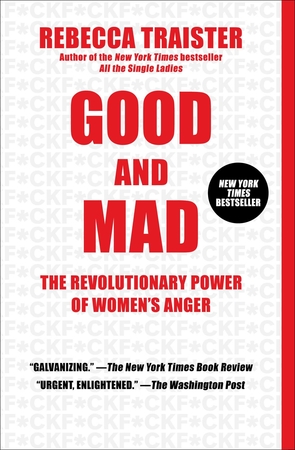
‘Good and Mad’ Helped Me Understand The Woman Who Makes Me Angriest

My grandmother and I are both angry about a lot of things. She was angry that Barack Obama was our 44th president; I am pissed that Donald Trump is our 45th. She is mad that immigrants are trying to come into the United States; I am furious that they are being kept out. She is enraged about the things they say on CNN; I am livid about the rhetoric on Fox. You get the idea: my grandmother and I are on opposite ends of the political spectrum. And, because of all this, she is often angry with me, and I am often angry with her. “Among the trickiest and most central dynamics between angry women is the degree to which they have often been angry at one another,” writes Rebecca Traister in her new book, Good and Mad: The Revolutionary Power of Women’s Anger.
My grandmother and I have clashed over many things in the 30 years we’ve known each other. Those things have included, but are not limited to: my hair, my career goals, my romantic partners, my future offspring, my clothes, my jewelry, my makeup, and my weight. But, more often than not, our disagreements have been over ideological differences, and lately, it is these fights that make both of us the angriest. Our most recent argument began with my grandmother making several comments over family dinner about everyone coming over the border being on drugs and it ended with me screaming I guess we just fucking disagree. (I would like to note here that it was this same grandmother who first taught me how to use the F word.)

Rebecca Traister and I, however, are on the same end of the spectrum. I may be biased because of this, but I think that she is a masterful writer and, as an editor friend of mine said, “the kind of genius we need right now.” Her new book, Good and Mad: The Revolutionary Power of Women’s Anger, is yet another example of Traister’s diligent reporting and thorough researching. The connections she makes between contemporary and historic events and figures are both unexpected and exciting, and also completely logical. Even despite the fact she wrote the entire book in four months (“I needed to work swiftly, to capture this rebellion [of female fury] before its sharp, spiky contours got retroactively smoothed and flattened by time,” she writes), her attention to detail and extreme depth of journalistic reporting is mind-blowing. But perhaps the most mind-blowing thing about Good and Mad was that after reading this book, a manifesto by a far-left-leaning writer, I found I better understood my extreme-right-wing grandmother. Traister’s book helped me understand my own anger and figure out how to use it for good, but she also helped me understand the anger of a person who makes me angry.

Perhaps the most mind-blowing thing about “Good and Mad” was that after reading this book, a manifesto by a far-left-leaning writer, I found I better understood my extreme-right-wing grandmother.

In Good and Mad, Traister explores the history of women’s anger thematically, jumping back and forth through time as she seamlessly moves from topic to topic: how women suppress or disguise their anger, how women’s anger is considered unattractive, how women’s anger can lead to their downfall, and how, of course, how women’s anger has the power to be revolutionary. “We must train ourselves to even be able to see and hear anger from women and understand it not only as rational, but as politically weighty,” writes Traister as she shows how female rage has fueled social movements from abolition to women’s suffrage to gun control to reproductive health to civil rights. “Perhaps,” she writes, “the reason that women’s anger is so broadly denigrated — treated as so ugly, so alienating, and so irrational — is because we have known all along that with it came the explosive power to upturn the very systems that have sought to contain it.”

Traister’s book is about women’s political and societal anger — she clearly states in the opening of Good and Mad that she is not going to dive into women’s individual or familial anger, because plenty of other excellent books have been written on the topic. But I couldn’t help but analyze my own and my grandmother’s personal anger, both for ourselves and at one another, while reading Good and Mad. In the case of me and my grandmother, our domestic disagreements are often due to political and societal issues — and isn’t the personal always political, and the political always personal? Your politics reflect your worldview, and that view is shaped by the things that personally happened to you, and sometimes those things can make you very angry. Traister encourages her readers to acknowledge, pay attention to, respect, and not shy away from other women’s anger. “Seek it out, notice it, ask women what makes them angry and then listen to them when they tell you,” writes Traister. “If part of what they’re angry at is you, take it in, acknowledge how their frustrations might mirror your own, even if they are refracted at you.” And so as I read, I found myself better understanding the reasons for my grandmother’s anger. Even though my grandmother and I may look as though we are angry about completely different and opposite things, under the surface, a lot of the anger comes from the same root problems.

Even though my grandmother and I may look as though we are angry about completely opposite things, under the surface, a lot of the anger comes from the same root problems.

My grandmother and I are angry because we have been told we aren’t supposed to be angry. Women are trained to shrink, to laugh off their feelings, to shut up, to leave the room, to make jokes instead of yell. “To full-throatedly express my ire would have been alienating, tactically unsound,” she explains. Traister quotes feminist writer Lindy West: “Not only are women expected to weather sexual violence, intimate partner violence, workplace discrimination, institutional subordination, the expectation of free domestic labor, the blame for our own victimization, and all of the subtler, invisible cuts that undermine us daily… we are not even allowed to be angry about it.” As a girl growing up in the 1930s and 1940s, my grandmother was taught to be quiet and demure — that was how she was told she would find respect and power in society — and as a girl growing up in the 1990s and 2000s, I wasn’t taught all that different. Don’t yell, be quiet, calm down. Phrases thrown at both of us, sixty years apart. We even do it to each other: my grandmother tells me to stop talking back and to be respectful, and I tell her to let it go and to shut up.

My grandmother and I are both angry because we get judged for our appearances. Like all women, my grandmother and I have been told all our lives that our main value as a women is our attractiveness. Even though my grandmother was, for many years, the secretary to one of the most powerful men in academia in Boston, doing much of his work for him behind the scenes, others judged her not by her intellect or attention to detail, but by her weight, her hair, her clothes. My grandmother eventually internalized this critical gaze and turned it on me, often angrily expressing her dislike of my weight, my hair, my clothes. And while these criticisms don’t feel good, and while it hurts to have my own grandmother remind me of all of society’s judgements, I can see now, after reading Good and Mad, that my grandmother is expressing her anger over the fact that this is what the world did to her. In a way, she is trying to protect me. If she is the one who tells me that my eyeliner is too dark or my jewelry too bright or my clothes too weird, if she tries to get me to follow the rules she was forced to follow, then maybe I will be spared that judgment. Through her yelling she is trying to tell me they won’t see your intelligence and your humor, they will only see the pink dye in your hair.

My grandmother and I are angry because our pain has been dismissed and ignored. I mean this in a literal sense — several times in her life, and in the lives of her daughters, my grandmother has expressed concern over physical pain to medical doctors who dismissed her worries, only to realize too late that they had made a mistake by ignoring her. My grandmother wasn’t able to have any more children after my mom and my aunt, due to her doctor’s mishandling of post-partum medical issues. My aunt died at age 49 of a rare type of cancer because doctors didn’t take her health concerns more seriously early on. But I also mean it figuratively: women’s feelings, especially their anger, are seen as shrill and hysterical, as nonexistent and not real. Traister writes about psychology professor Lisa Feldman Barrett, who conducted a study that revealed people believe women are usually angry because of internal factors, while men get angry because of external factors. Barrett summarized: “She’s a bitch, but he’s just having a bad day.” When my grandmother starts yelling, I roll my eyes, sigh, tell her to shut up. Not acknowledging her pain, her feelings, her anger, only makes her more angry. And, when my grandmother does the same thing back to me, when she tells me my feelings are trivial, misguided, reactionary, unwarranted, I feel dismissed and, therefore, angry. We both just want our hurt to be acknowledged.

My grandmother and I are angry because we feel we have no control. Often in her life, my grandmother has felt powerless and victimized. When she was a child, my grandmother’s mother died suddenly, and she was left at an orphanage for several years when her newly widowed father couldn’t take care of her. When she was a stay-at-home mom, my grandmother had to depend entirely on my grandfather financially. When country club suburbanites found out her maiden name was Italian, heard her father’s thick Gaeta accent, and learned he worked in a sausage factory, they thought less of my grandmother. And, after she worked so hard to try to shape herself to fit the system — wearing the right clothes, having the right accent, playing into exactly what the white, wealthy, WASP-y patriarchy wanted — she is angry with people like me who come along and want to blow the whole system up. She followed the rules, but I want to write new rules. She feels she worked to get her piece of the pie, and now I want to take her piece back and recut the pie in a different way. In Good and Mad, Traister writes of the white wealthy women who try to gain power by associating with white wealthy men. My grandmother is one of these women — as long as the system works for her, and it did, that’s all that matters in her mind. I do not agree with this thinking. I am angry because I feel that the groups I am fighting for have no control in our society, that I want to fight for a redistribution of power, that as long as rapists and white supremacists and greedy corporation-owners are in charge, none of the rest of us us have any control. Those scraps of power the patriarchy tosses out are not enough, but my grandmother is angry because she wants to hold onto her scraps. I understand that now. I don’t agree with why she is mad, I don’t condone her way of thinking, but I at least understand where my grandmother’s anger is coming from, and that makes it easier to bear.

Easier to bear, but it doesn’t make it hurt less. One thing Traister doesn’t really cover is what it is like when you are the target of a woman’s anger. Traister does write about how often men react violently to angry women because it reminds them of being reprimanded by the matriarchs of their childhood households. “We’re raised by women,” says Gloria Steinem, “so we experience female power when we’re younger. And men, especially, when they see a powerful woman as an adult, feel regressed to childhood and strike out at her.” When my grandmother directs her anger at me, it does send me back to that childhood version of myself, in part, because I once was that childhood version of myself with her. But what Traister doesn’t say is that having anger directed at you just plain hurts. For me to bear the brunt of my grandmother’s outrage at the world is painful. There is no denying that. But, at least, after reading Good and Mad, at least I can understand better where my grandmother’s anger is coming from, and what to do with my own, now and in the future. If in fifty years, I end up with a granddaughter who is super conservative (who knows what the kids will be into in 2068?), I will know what to do with any anger towards her. Because, as activist and organizer Jessica Morales Rocketto says: “…The other side of anger is hope. We wouldn’t be angry if we didn’t still believe that it could be better.” My anger at my grandmother comes from the fact that, while she thinks things are fine now, or were actually better back when America was great, I have hope for a future that can be even better, for both me and for her. A future where women are allowed to be angry, where women won’t be valued just by their looks, where women’s pain will be acknowledged and considered, and where women will finally have control over their lives.

I have hope for a future that can be even better, for both me and for her. A future where women are allowed to be angry.

I see my grandmother’s anger as directionless, unfocused; there are so many things she is upset about that she doesn’t know where to aim her fury, and so her rage often ends up directed at me, because I am right there. She often focuses on little things, like my too-long hair or my too-bright jewelry, because the big things that make her angry — feeling worthless, invisible, ignored, underappreciated, denied power — are too big to take on. So my grandmother yells at me for believing what I hear on CNN and wearing those “gaudy earrings” she hates. Naturally, this makes me angry in return. I could easily channel this anger back towards my grandmother, and I have; it’s what I’ve done every time we’ve fought over the past 30 years. But instead, now, inspired by Good and Mad, the next time my grandmother gets angry at me, I am going to try to understand what she is really angry about. When she yells at me for not listening to her Fox News talking points, I will see she is really angry that no one listens to women. And when she screams at me for not following conventional fashion standards, I will see that she is actually upset that women are still valued primarily for their appearance. I am going to acknowledge her anger, legitimize it, try to see where it is coming from, and then, and this is important, I am not going to throw my own anger back at her. Instead, I am going to use the anger I feel in those moments to fuel my energy to fight for causes I care about, to try to change the problems that make both me and my grandmother so angry, inspired by the many angry and revolutionary Traister writes about in Good and Mad.

“Women’s anger spurs creativity and drives innovation in politics and social change, and it always has,” writes Traister. “Anger has driven women to develop a million approaches to changing the world.” I want to use my anger to march in Black Lives Matter protests and volunteer for the National Domestic Workers Alliance and donate all the money I can to Planned Parenthood. I want my anger to be fuel for good. “Anger leads me to seek answers, to see change,” says the writer Moira Donegan.

There is something powerful about understanding another woman’s anger, and also about channeling my own anger into a force for revolution. Good and Mad showed me the way. I felt ready, a stirring near my heart.

As Traister writes: “Don’t forget how this feels.”
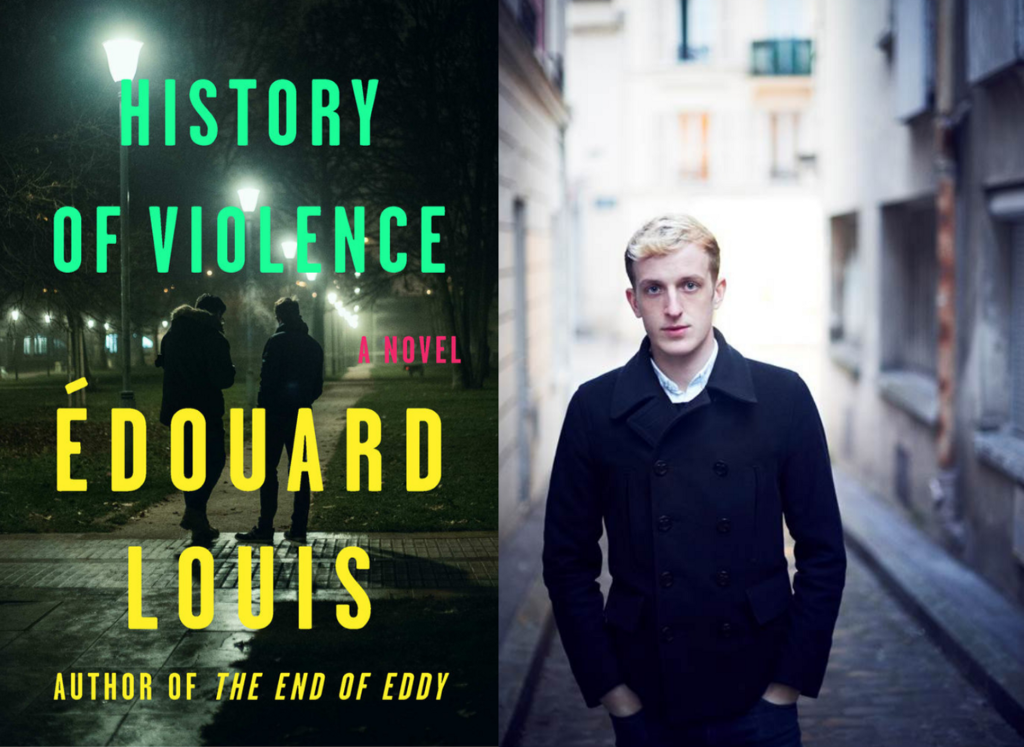
Édouard Louis on Fictionalizing His Violent Assault

A t the age of 22, the French writer and intellectual Édouard Louis upended the idealism French readers were used to encountering in bourgeois narratives about the lower class with The End of Eddy, a brutal, unsentimental, and hope-poor autobiographical novel written by a member of the lower class.

Haunting in its clear-sightedness, effective in its leanness, The End of Eddy tells Louis’ story of growing up queer and poor in a working-class village in northern France where an ingrained sense of powerlessness seeds bigotry and violence. An international runaway of a bestseller, The End of Eddy was translated into over twenty languages, was adapted into a play, and is soon to be a feature film with Isabelle Huppert.

Operating at a frequency of the hyper inspired, Louis published his second autobiographical novel, History of Violence, two years later. By turns unceremonious in its candor, then curiously tender, this book takes us through the giddy meeting of Édouard and a potential suitor at a public square near Édouard’s apartment late one Christmas Eve in Paris. Édouard’s reaction to this aborted love affair — which transitions without warning from sensual complicity to a night of rape and violence — is as surprising in this second book as his lack of sentimentality towards his childhood and caretakers was in his first, and it is this surprise, this veering off of the redemption course that many traditional memoirists have followed, that makes Édouard Louis such a thrilling voice to read.

We chatted by telephone about his terrific second novel. Our conversation was in French; the translations here are mine.


Courtney Maum: In History of Violence, the narrative device of our protagonist hearing his story related by his sister, through a door, to her husband, was genius. Did you come up with this idea immediately, or did you try other narrative structures for the book?

Édouard Louis: Thank you. It was something that took time. I started writing the book with the urgency to tell the factual story: I met a guy on Christmas Eve, our connection was beautiful and strong. We made love frequently; we really liked each other. And then he raped me and tried to kill me. My first urgency was to tell this violence, the violence of this story. To talk of anything else would be indecent!

In the beginning, there wasn’t this literary structure where my sister tells the story — an autobiography told by someone else — no, I talked about what happened, this guy, his childhood, what he told me about his father. But it was like I was talking about him as a subject, and that I had just fallen into the story with a clear conscience. I wanted to be closer to the reality. I wanted to show that we were two determined subjects with a past that we didn’t control, and that this meeting is the story of two stories who meet each other, two fragments of shame that slam together. I was this young guy from the countryside ashamed of my family. I hid my social origins, and he was an Algerian carrying his own story, ashamed of his sexual desires. His desire was mixed with the hatred of his desire. I needed to find a way to show that I also had a body that was bringing a story to this story. A way to put both these pasts in front of the mirror. The idea of an autobiography written by someone else, this pleased me a lot.

CM: I’m interested in hearing more about your decision to publish your books as fiction. If I’m not mistaken, regarding History of Violence, you have said that in fictionalizing your work, you can create a story about how one man can attack another, make it easier to accept. Can we talk more about this?

ÉL: For a long time, you have had “novels” on one side and “memoirs” on the other. There are precursors, of course, such as Marguerite Duras, but today there is something changing, a revolution in literature that allows the combination of these two forms. For me, the novel is an ambitious literary endeavor with a formal construction. Much like the sociologists I admire who are interested in the art of making — making diagrams, making concepts, the art of pure construction — the novel is a way to do this. What interested me with autobiographical fiction was the ability to really squeeze reality without running away from it.

Something I talk a lot about because it really touched me is that when I was a child in the little village where I grew up, the writer Jean-Marie Gustave Le Clézio won the Nobel Prize. At my house, no one read, but because it was the Nobel Prize everyone was talking about it. I remember an interview of his on the television. He was talking about how he went about making up his characters. I was there with my father, his back totally shot from working in the factory, and my mother, so poor, and I thought, why doesn’t Le Clézio speak of us? We are suffering, and he’s inventing people. Now I realize that this was the question of a child. But this scene was something inaugural to me, an original trauma. I could never get away from it.

Every society, every country, is formed around the question of inclusion/exclusion. To be an insider, an outsider, it’s all rooted in violence.

CM: In many of your interviews, you’ve expressed your desire to “be a writer of violence.” You’ve also cited the French director Mathieu Kassovitz — and specifically his film “Hate” — as an example of a creative work made by a “good artist of violence”. Who are the other artists you consider to be getting violence right?

ÉL: A lot of the people I admire, I admire because they are working on this essential question. Personally, I can’t write without admiration. For me, it’s a burst of energy, admiration. When I see something, read something, when I watch a film, I have this powerful feeling that I must hold myself to this level; I must try to create this much beauty and emotion even if it is violent in its beauty. I think Claudia Rankine is working in this register, and Svetlana Alexievich, and Ocean Vuong. These people are really digging into the material — into this question of violence — and they inspire me very much. Roxane Gay’s Hunger or the film Twelve Years a Slave.

I think at the heart of violence, there is a strong relationship between violence and the reality of our bodies, and what our bodies are. Every society, every country, every place in the world is formed around the question of inclusion/exclusion. There is always a line between inferior, superior. Accepted, not accepted. Loved, hated. If we want to understand the reality of a world, we must look at this pact of violence. It’s like with North America, the violence of slavery, violence against blacks, or in France, with immigrations, what occurs if you don’t have the right papers. To be an insider, an outsider, it’s all rooted in violence.

CM: I’m curious about your opinion on the current political state of France, and specifically the French president, Emmanuel Macron. My husband is French, and we watched the French presidential election from here, in the United States. We were traumatized by Trump’s election, so we were very happy to see someone elected who was young, who seemed sane. I’m generalizing, but I think the common perception of Macron here in America — at least in his first months in office — was that he’s cool, he’s intelligent, he’s a little provocative with his older wife. From what I’ve read, you really dislike Macron — can you tell us why?

ÉL: When I hear that Americans like Macron, I think it’s because Americans are racist. Today, France has a political stance against immigration that is the strongest it has ever been in the Fifth Republic. The boats that are refused entry, the immigrants who are dying in the Mediterranean, or what happened in Calais. There are laws being passed, and passed with force, such as the law that allows immigrant minors to be locked up. Before, this was illegal. People who were escaping misery, great difficulties, war, especially people under eighteen years old, you couldn’t lock them up. Now, laws like these are being enforced by Macron and his ministers with an unheard of force.

You know, Macron is part of a political mood. Trump, Macron, these are extremely violent people, and a lot of their reforms are similar. For example, Macron wants to lower taxes for the very rich and cut welfare for the poor. He made a move to cut back housing benefits for the poor by 5 euros a month, and there was a polemic around it. His ministers responded by saying that 5 euros was nothing. When I was growing up, though, 5 euros was two days of food. But this seems impossible to them. This is a violence against the poor; it’s also the end of shame. These people aren’t ashamed any more to make fun of poor people or of black people. In his team of ministers, Macron took three people who are opposed to gay marriage. One of them said that if he were mayor, he wouldn’t personally preside over a marriage between two women or two men. I think after Reagan and Thatcher there was a little bit of a cooling, of violence I mean, but now we are seeing a return to violence.

When I hear that Americans like Macron, I think it’s because Americans are racist.

CM: You know, I must say, this is really shocking to me. I’ll admit I don’t consume as much media as I used to because it’s…it’s hard to operate as a human being if you read all the news — but I must say, I’m not sure that all this information is getting to us. You know, Americans aren’t great with nuances. We like to structure things along “Good Guy”/”Bad Guy” terms. I personally think that in the French presidential election, Marine Le Pen was portrayed as The Bad Guy, and so for many Americans — or at least those who followed the French presidential election — computed that The Good Guy had won and they assumed France was in good hands. Also, Macron is held up almost as a figure from a glossy fashion magazine, in a lifestyle way. He is “younger” than Trump, less “stupid”, he is “thinner”, he dresses well…

ÉL: You are giving words to something important. In fact, many people have an ingrained bourgeois culture, a class racism, that leads them to believe that if Trump is a misogynist and racist and hates poor people but he does so with a language of the popular classes, than Macron isn’t a problem, because he presents as a member of the bourgeoisie. That if you are racist, but if you use the language of the bourgeois to express your racism, than it’s less of a problem.

You know, I travel to America, I teach sometimes at universities and conferences, and I see Macron appreciated and I think, why isn’t this information getting through?

CM: I’ve read that for your first book, The End of Eddy, one of the publishers you sent the book to said that no reader would ever believe that poverty like that existed in France today. This fascinates and disgusts me: first of all, the novel was submitted as fiction, no? So it’s your right to write about whatever you desire. But more importantly, that poverty does exist. What is going on behind a comment like this? Is this denial? What is this denial about?

ÉL: You can imagine the violence that this represented, someone saying, “What you say about your mother can’t be true.” This is a way to put her back into invisibility and silence, in the shadows. This editor was white, a Parisian bourgeois, and so far removed from the type of life that I describe that he couldn’t believe it could be true.

You know, there has been this trend in French literature for the last ten years or so. Literature recounting the life of the middle class that doesn’t know what to do with itself, computer scientists who are lost, people who convert to Catholicism to give sense to their lives. People are obsessively turned towards these questions. But when you get to the questions of the lower classes, these questions disappear. If people continue saying that the poor don’t exist, there will be a return of the fire. You know, it’s already happening, with Trump, with Brexit, or in Scandinavia where there is this postmodern ideology that classes don’t exist. But there are people who feel in their skin that this isn’t true.

CM: The language in your book is specific, it’s important. What “gueule” means to a French speaker, or the charged power of “cul”…to me this is a very French book, it’s specific to the experience of living in — or being raised in — a certain part of France. Your books are widely translated — to what extent, if any, do you concern yourself with how your work is being translated?

ÉL: The more local something is the more it speaks to the entire world. It’s like William Faulkner, it’s so powerful, it can be read everywhere even though he’s writing about this micro-community of a tiny piece of earth in Mississippi. But he has such an exacting knowledge of this small piece of the world. The truths, the emotions are so precise that they end up touching universal things like racism, the invention of self, fear, hate, violence. If he tried to do something general it wouldn’t have touched any one.

For the trips I’ve done for my books, when someone says in Japan or in Columbia, “I saw my life in your book”, that is living proof that what I believe is true, that it is locality that can make something universal.

CM: I’d like to talk about a phrase you’ve used about yourself: “transfuge de class” (a class defector). It can’t escape anyone’s notice that with your enormous — if deserved — success, you have entered a class that you yourself have said you have no interest in depicting as a writer. Is it challenging, this dichotomy? Is The End Of Édouard possible?

ÉL: The minute we start to write, we are part of the bourgeoisie, even if we don’t have money. Class isn’t just about money, it’s access to culture and to competencies that have to do with culture. Sartre brought this up in the 1950s when he talked about the contradicting heart of the author who both wants to belong to the bourgeoisie and to fight against their incarnate power. The difference between me and Sartre is that Sartre came from the bourgeoisie, and I don’t. I didn’t have — and I don’t have — a love for the class of my youth, not the way that so many of these intellectuals had an interest in the lower classes that they didn’t come from.

In my childhood, people voted for the Front National, my mother couldn’t work because women didn’t work outside the home, and I was spit on because I was “a faggot.” So I didn’t have a fascination for the lower classes. But we can be political without love. I can wish for my brother to have a better life even if I don’t love my brother.

We will have to see: my hate for the bourgeoisie increases day by day. I never troubled myself with this question before: if I hadn’t left my surroundings as a gay child, I would have died. But then I got to an upper class school, and I was treated as a “faggot”, too. My life is a fight to find people to welcome me better, or to welcome me at all. I didn’t find it in the countryside, and in the cultural and literary world, I am welcomed but there is an ugliness. In fact, it is doubly violent — I saw this a lot in New York — people think that because they are on the side of “culture” that they are good people. Editors, writers, journalists, they think that because they wrote a book, they are fighting Trump. But no. I went to so many receptions and people had so much faith in themselves.

CM: I’d love to talk about the object of a book as an instrument of violence. You have written about how when you returned home to Northern France on visits, you used to use a book or a leftist newspaper as a weapon, you’d sit there among your family with this polemic symbol of how different you were from them, how little you shared their values. Now you are an esteemed author of these violent objects. What is that like?

ÉL: I think there is an extreme violence for many of the people in the class I’m writing about. If my mom saw a book, it was a reminder of the life she never had, the possibilities she didn’t have, it was a way of saying “You are not that”, and she was humiliated by it. James Baldwin’s mother, also. In The Devil Finds Work he recounts that when he started getting interested in reading and writing, his family hid books from him, as if they felt that he would move inexorably away from them, forever, if he read.

It’s not just in France. Even Alice Walker talks about how culture removed her from her family. But we beat power with power, strangely, the only way to beat power is with power. That is why I try with my books to use this purely bourgeois object as a way to fight the culture of domination that is the bourgeois. And sometimes I think it works because the right attacks me, and the bourgeois, too!

On a more personal level, my family doesn’t really understand what I do. A book is something so foreign and far away and bizarre, they can’t imagine what my day looks like, what it means to research, to go to a conference or give a talk. We don’t speak the same language. I’m scared to speak to my mother of my life. If I speak about my books or a conference in the USA, it is a way of saying that I travel, when she never got to travel. All these words and phrases are traps. I seize this to write. I can’t fix this problem in my daily life but I can expose it.

Why should society use violence — such as punishment — against violence?

CM: The former Paris Review editor Lorin Stein is the English translator of your second book, History of Violence, and translated a New York Times op-ed of yours, “Why my father votes Le Pen.” While reading History of Violence, I couldn’t ignore the irony that your words about sexual abuse were being translated into English by a high profile white man who he, himself, has been accused of sexual misconduct and abuse of power. To the extent that you are aware of Lorin Stein’s sexual misconduct with women who worked under him, what do you think of him as a translator of your work?

ÉL: I wanted him. Lorin is my friend, and he is an excellent translator. I insisted, because the question was brought up by editors and people at FSG. It’s obviously very complicated. The first thing that is very important, because it’s one of my big subjects: I don’t believe in punishment. I don’t think it’s the best way to fix a problem, a situation. This is at the heart of History of Violence. Why should society use violence — such as punishment — against violence? The example (on a much larger scale) that I often cite is after 9/11. You had extreme violence, fire, blood — people dying — and what does the Bush administration do? They create violence elsewhere and they spill blood elsewhere and for me, there is a major tendency in our society that says: we are going to regulate violence with violence. Of course, you can’t compare a terrorist attack with what we are discussing, but precisely, what is interesting is to see that — at any level — small violences or big violences, the urge for punishment is the same.

What I say in this book is that this isn’t a solution that I find acceptable. I don’t want my story to put more violence in the world. After the sexual assault, the police told me: “We are going to put the guy who did this to you in jail for years. He made you suffer, so we will make him suffer.” Aren’t there other solutions? I’m not saying that we should be passive when someone commits a violent act. You have to ask questions and fix things, but I don’t understand the drive to make someone suffer because they were violent. And historically, if you look closely, you’ll see that it was in the most violent contexts that society found alternative ways of dealing with violence.

I realize that this could sound naïve, and almost puerile — I’m out of sync with the people around me. Sometimes I look around myself at others, I see their urges to punish, and think that people are part of a human kind that I don’t understand. That I’m an extraterrestrial, or something. The guy who assaulted me went to jail before assaulting me. Did it change him? Maybe he became even more violent there, in jail, so maybe, in a society without prison systems, he would not have assaulted me. It’s a question that needs to be addressed. It’s what we need in the very important #MeToo conversation, I think: how can we avoid reproducing violence against violence?

Once again, I’m talking about very different issues here, and I don’t compare what happened in my book and what some people say about Lorin. We must insist that no one talked about rape in his case [Ed. note: Lorin Stein was among those anonymously accused of “serious sexual abuses” in the “Shitty Men in Media List” document that circulated last October.], but it felt to me that some people wanted to punish him, and that the punishment was more important than anything else. He is the one who published my book in the USA. He is the one who made this book — about sexual violence — possible in the USA.

Crystal Hana Kim Thinks Worrying About Publication Kills Creativity

I n our monthly series “Can Writing Be Taught?” we partner with Catapult to ask their course instructors all our burning questions about the process of teaching writing. This month we’re talking to Crystal Hana Kim, author of If You Leave Me. Kim is both a contributing editor at Apogee and the director of writing instruction at Leadership Enterprise for a Diverse America, so she knows a LOT about evaluating and teaching writing. Her six-week fiction workshop in New York is already sold out, but don’t fret: she’ll also be teaching an online version of the class starting in December. The class is open to writers of all levels who are working on fiction projects of any length, and will help them gain skills they can apply to all future writing.

What’s the best thing you’ve ever gotten out of a writing class or workshop as a student?

When I was a graduate student, I took a seminar and workshop with Deborah Eisenberg. (If you haven’t read her yet, please do. She is brilliant.) Deborah taught me that a successful story will trust the reader while also keeping the reader tightly inside the narrative world. In other words, I learned that I didn’t have to hold the reader’s hand, that I could knock out the foundation and delve straight into the characters’ lives. At the same time, it’s important to keep the reader from irrelevant questions. When I teach, I keep these two maxims in mind.

I also loved reading my peers’ drafts. Writing can be a lonely endeavor, but it doesn’t have to be. Being able to help another writer always made me feel better. And reading others’ works, which were often stylistically and thematically different from mine, expanded my understanding of story, language, and power.

Writing can be a lonely endeavor, but it doesn’t have to be.

What’s the worst thing you’ve ever gotten out of a writing class or workshop as a student?

Sometimes, there’s the understandable fear that workshop will flatten one’s style, influencing students to all write in the same tone. However, I think a good workshop leader can prevent this by keeping each writer’s goals in mind. I once took a workshop where the teacher was not interested in this at all — rather, he thought there was only one way to write. As a result, everyone wrote with one reader in mind. That class flattened and tamped down our creativity and vision. It was my least favorite workshop, but it’s since then informed my teaching.

What is the lesson or piece of writing advice you return to most as an instructor?

Create a safe space for your students. Writing is personal. I remember the vulnerability I felt every time I handed a story in. The whole week, as I waited for the next workshop, I felt raw. It’s important for instructors to create a space where students feel comfortable taking risks and flexing new writing muscles. If the instructor believes there is only one way of writing or is unconcerned with the students’ goals, the workshop’s not going to be fruitful for anyone.

Does everyone “have a novel in them”?

Can anyone write string sentences into a novel-length form? Sure. But there’s a difference between “having a novel” in you and having a good or sellable novel in you. And of course, “good” and “sellable” are not the same. But more importantly, the phrase “have a novel in them/you” creates a hierarchy within forms of writing. I believe short stories are just as important as novels, as are essays, poems, hybrid forms, etc. The teacher’s role is to help each student become a better writer on their own grounds.

Why Kanishk Tharoor Draws Plumbing Diagrams in Writing Class

Would you ever encourage a student to give up writing? Under what circumstances?

No, I don’t think so. I firmly believe teachers are here to guide; they’re not here to determine success. I want to help each student grow as a writer, reader, thinker. Everyone is capable of that kind of growth. Unless you’re a seer, I don’t think you should tell anyone else to give up writing. I wish I was a seer, but alas I’m not.

What’s more valuable in a workshop, praise or criticism?

As a student, I needed both to feel motivated when I turned to revision. If you only receive praise, you won’t know what steps to take to improve your writing. If you only receive criticism, you can easily feel deflated. As a writer, you need to understand what’s working in order to figure out how to fix what isn’t. As a reader, giving praise tends to help you consider the writer’s motivations. And it can teach you what your readerly biases are. It can be easier to criticize, but praise is extremely useful.

Should students write with publication in mind? Why or why not?

No. Write with a reader in mind so that you are shaping your language, characters, and plot into a coherent world. But don’t write with publication in mind. That will only cloud your writing, paralyze you, or worse. To think about the publishing process (which is all business) is death to creativity.

To think about the publishing process (which is all business) is death to creativity.

In one or two sentences, what’s your opinion of these writing maxims?

  • Kill your darlings. Do it. Save your darlings in a different file if you have to. Maybe they’ll come in handy later. Or you can read through the document years later and laugh at what you once held so dear. (I do this, and it is equal parts funny/embarrassing/sweet.)
  • Show don’t tell. You need both, of course. But over-telling is boring. I never want to bore my reader.
  • Write what you know. Write what you know. Then imagine, question, and research, in order to write about what you don’t know.
  • Character is plot. Plot is rooted in the tension between what characters want and the obstacles that are preventing them from getting what they want. The two are inextricable from each other. You need both for a good story.

What’s the best hobby for writers?

Any sort of activity that uses your hands. I like pottery — throwing clay on the wheel and forming a physical object that has immediate use is so pleasurable after being stuck in my head all day.

What’s the best workshop snack?

Wine. Donuts. Since I started this Q&A with Deborah Eisenberg, I’ll end with her too. I’d never liked donuts until Deborah brought some from the Doughnut Plant to our workshop. Holy crap, those donuts are delicious.

7 Novels and Memoirs About Palestine and Palestinians

The only story most outsiders ever hear about Palestine is one related to enduring conflict. The character of the Palestinian is either a furious young man with a keffiyeh wrapped around his head slinging stones at Israeli soldiers, or a woman in hijab wailing in front of her destroyed home. The Palestinian as militant or victim. Over the course of many trips to the region, I’ve long wanted to write a different story about Palestinians — something outside the narrative of anger and loss.

Purchase the book

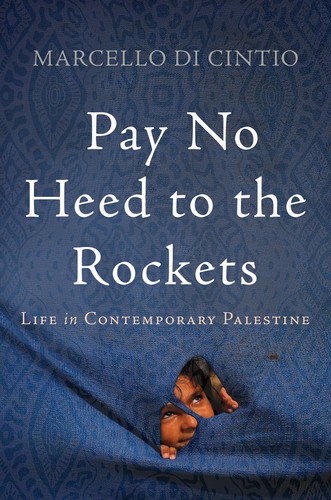
I figured that if I wanted to hear new stories about Palestine, I should ask the storytellers themselves. So for my book Pay No Heed to the Rockets: Life in Contemporary Palestine I sought out the poets and authors of Palestine. I figured these writers would have different stories to tell. My discussions with Palestine’s writers inevitably led to politics, but at least I could begin from a different starting point. Instead of asking a woman about the Israeli checkpoints, I could ask about the first poem she wrote. Instead of asking a man about his grandfather’s lost olive groves, I could ask about his grandfather’s library. These coffeehouse conversations revealed the regular lives of Palestinians. These are the stories I share in my book.

In Palestine, as elsewhere in the Middle East, poetry reigns as the most exalted literary genre. As a prose writer, though, I was drawn more to the narrative works — both fiction and memoir. Here are 10 of my favorite books of Palestinian prose, many by authors I had the honor of meeting and writing about in my book.

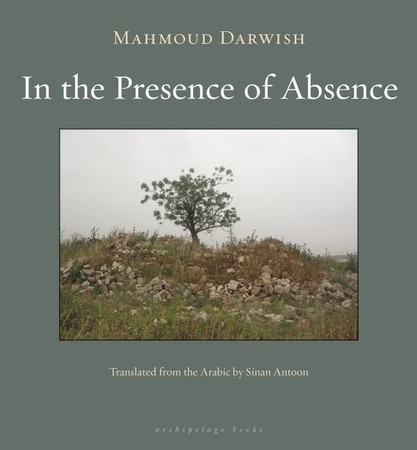
In the Presence of Absence by Mahmoud Darwish

Any list of Palestinian literature must begin with Darwish. The beloved poet was a rock star in the Arabic literary world. His book readings filled soccer stadiums. While rightly adored for his poetry, Darwish also wrote fascinating prose. My favorite is In the Presence of Absence, a strange and beautiful self-elegy in which the aging author addresses his younger self and tells him the story of his life to come.

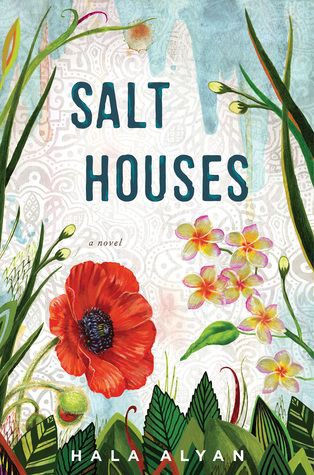
Salt Houses by Hala Alyan

Palestinian American Hala Alyan’s debut novel follows the lives of a displaced Palestinian family over three generations. Alyan’s skills as a poet — she has published four poetry collections — are evident on every page. Salt Houses is one of the most gorgeous books I’ve ever read. Alyan writes sentences that literally made me catch my breath.

The Many Faces of the Palestinian Diaspora

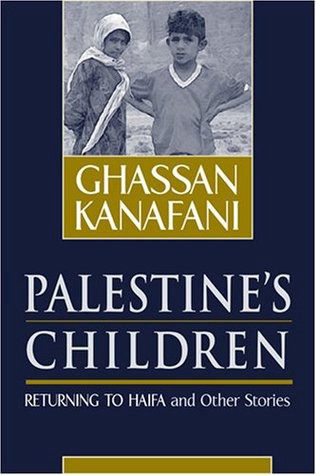
Palestine’s Children: Returning to Haifa and Other Stories by Ghassan Kanafani

Israeli agents assassinated author and political activist Ghassan Kanafani in 1972 with a car bomb. “Ghassan was very dangerous,” his widow told me. “He didn’t carry a gun, but he carried a pen.” That pen wrote some of the Arab world’s best short fiction of the 1960s and early 70s. Returning to Haifa may be the most famous. The story follows a Palestinian couple as they return to the home they fled during the 1948 war. They discover the child they were forced to leave behind has been raised by a Jewish couple and is now an Israeli soldier.

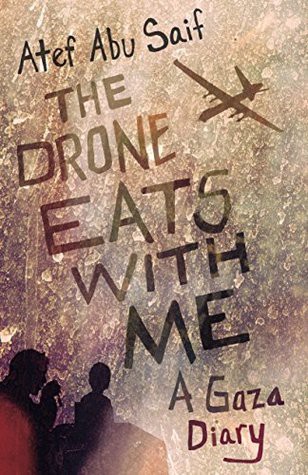
The Drone Eats With Me: A Gaza Diary by Atef Abu Seif

Atef Abu Seif’s memoir recounts his experience of Operation Protective Edge, Israel’s 2014 assault on Gaza. “I am not reporting on the war,” Seif told me when we spoke in 2015. “I am writing from the perspective of a family. A family that is being besieged and being attacked…. Things happen out of their control and they want to being order to their little world.” The Drone Eats With Me is intimate, humane, and intensely personal.

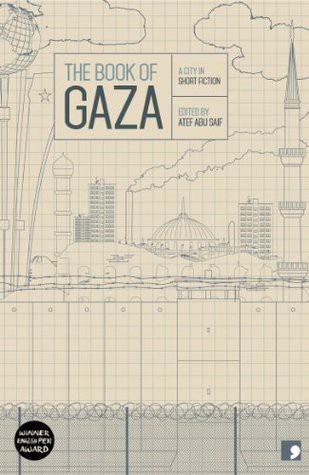
The Book of Gaza: A City in Short Fiction edited by Atef Abu Seif

Seif is also the deft hand behind this collection of short stories by Gazan writers, many of whom are young women. The stories are diverse and often surprising, like Ghareeb Asqalani’s “A White Flower for David” which relates the affection between an Israeli and Palestinian family, or the startlingly erotic piece by Najlaa Ataallah titled “The Whore of Gaza.” Each story opens a tiny window on life in contemporary Gaza — a place, these stories would suggest, is hated and loved in equal measure by those trapped behind its walls.

Palestinian Walks: Forays Into a Vanishing Landscape by Raja Shehadeh

Raja Shehadeh has kept a diary daily for much of his adult life (and when I met him in Ramallah he scolded me for not doing the same.) His personal observations of a lifetime under siege inform most of his books, including the rightly-celebrated Palestinian Walks. The book describes decades of Shehadeh’s hikes through the hills of Palestine, revealing both the beauty of the land itself, and all that continues to be lost under the occupation’s bulldozers.

I Saw Ramallah by Mourid Barghouti

Mourid Barghouti brings his poet’s eye to this memoir of returning to Palestine after a 30 year separation. The book spins back and forward through time and memory, bringing readers to Barghouti’s childhood village, his Egyptian exile, and to the wooden bridge that leads him back to Palestine as a grown man, husband and father. I Saw Ramallah shows what it means when the homeland transforms from an idealized memory to a reachable, physical space.

Haifa Fragments by khulud khamis

I spent six hours in khamis’s Haifa apartment listening to her complicated life story. She was born in Czechoslovakia to a Palestinian father and a Slovakian mother, raised in an Arab neighborhood in Haifa, and now lives among Israeli Jews. Her fractured identity fuels much of her poetry and fiction, especially her appropriately-titled debut novel Haifa Fragments. Her main characters all identify as Palestinian, but are not sure where — and with whom — they belong.

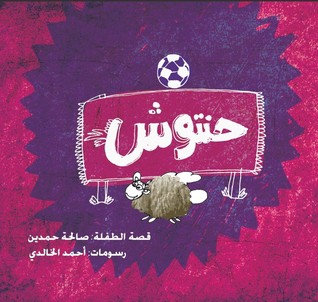
Hantoush by Salha Hamdeen

Salha Hamdeen was 16 when she wrote this fairy tale about a Bedouin girl — also name Salha — and her magical flying sheep, Hantoush. Salha rides Hantoush to flee Israeli landmines and gunfire and flies to Barcelona where she meets famed soccer player Lionel Messi. The story provides a sad and whimsical look into a child’s life in Palestine, and reveals what passes for fantasy under occupation.

The Poetry of Black Women Shows Us How to Move Forward

Adapted from the closing keynote address by writer and activist Patricia Spears Jones at the LitTAP conference on October 1, 2018.

Recently, I learned of the powerful life and poignant poetry of Pauli Murray, a Black Lesbian activist, lawyer, co-founder of NOW, and one the first ordained women priest in the Episcopal Church. “Hope is a bird’s wing/broken by a stone. . . . Hope is a song in the weary throat” are lines from her signature poem “Dark Testament,” written during the height of the Depression. That 8th section ends “Give me a song of hope and love/And a brown girl’s heart to hear it.” Her struggle against racism and sexism, what she named “Jane Crow,” is one of the reasons we can come together and consider how to make change in a truly awful period in this nation’s history, indeed around the globe.

The difference between poetry and rhetoric
is being ready to kill
yourself
instead of your children.

Those words start one of Audre Lorde’s most difficult poems, “Power.” As with Murray, Lorde honed a poetics that explored the harshest realities in our society. What a stark paradox she sets up (which is poetry, which is rhetoric) and why suicide or murder? Her anguish, her anger crystallized into poems that at first glance seem understandable (or as my students would say “relatable”). But then, you re-read them, and find yourself twisting and turning in the center of the hurricane’s eye. The poem ends in a presentiment of violence. Too often, our days start and end with presentiments of violence carried out by agents of the state: police officers, ICE agents, et al. Life in these United States demanded her warrior heart, her poet’s mind.

While Lorde offers us an armor of anger, we need, as Murray’s poem requests, our songs and we need to be able to sing them. Dwelling in the house of rage leaves the inhabitants scarred, wounded, exhausted.

We need to think about power just a bit differently. What happens when we have that power — when our ideas, our programs, our voices are central to the discourse, not adjacent or alternative to? How are we to be different?

The segregated, homophobic, and misogynistic world that Murray grew up in, and later Lorde encountered, as we can now see in those who now hold political power in this cultural moment, continues. But Murray and Lorde and June Jordan (throwing up all the Black queer women here) left us with tools, not only of resistance, but persistence. They knew struggle, but more importantly, they knew joy. Their work as poets and activists help create diverse and inclusive communities. It is how we use our authority or how we disperse it — that is key to expanding and exploring new paradigms of power. How are we ethical in our communities — what does welcome really mean as established organizations continue to expand their reach; how are the new opportunities impacting organizations created to develop and uplift specific communities? These are new questions, ones barely anticipated in, say, the 1970s.

If power is about acting and doing on behalf of creativity, generosity, openness, a liberality of consciousness that may arise from any individual or group making work, then turn it on. If we find new ways to collaborate, circulate, create in our cultural production, we may begin advancing a different and more humane vision of a world where the struggles involve choices for the songs we want or need to sing, instead of self-annihilation or the destruction of children or our environment not even in the imagination.

If we find new ways to collaborate, circulate, create in our cultural production, we may begin advancing a different and more humane vision of the world.

White male privilege and patriarchal power has been on full display in the past few weeks, indeed the past few years, and poetry has begun to spin a language that considers the emotional center of this political theater — much as Sophocles and Euripides did 3,000 years or so ago. I kept writing “the boys’ laughter/the judge’s tears” after hearing Dr. Ford’s testimony. #BlackLivesMatter to #metoo, those phrases erupt our language and define and spur action, demands justice, promote that paradigm shift — more phrases of outrage will come. And that is power.

So how will we wrest power, or more importantly craft that new paradigm of power? As someone who worked for the Heresies Collective in the 1980s, I know how difficult it is to a) work collectively and collegially and b) to come to consensus. It is a model that allowed diverse voices to enter the discourse. It took time. It was often difficult — but the publications that ensued are now foundational. That all voices must be heard does feast on time. It was a privilege to be part of the difficulties. Because patriarchal power works by limiting or bestowing privilege, we should consider how to change the notions of privilege as well. Transparency is often demanded, but even an era with so much of our lives on display, who knows what and how it is shared continues to be a purview of the few and far between. Social media is a tool and a resource — it cannot replace real-life community. We have privileged the conversations in social media over our own face to face communications. We should remember how important it is to meet and work together as is done within organizations when we use our time together as wisely as possible. That is a privilege, and privilege is something we gain and, like power, something we can easily lose.

Because patriarchal power works by limiting or bestowing privilege, we should consider how to change the notions of privilege as well.

We have the opportunity during these terrible times to consider what ground we truly walk on. We are two to three generations of American citizens who have not lived under legal segregation. We are the first generation where the rights of gay people are more codified. We are a generation in which women are fully present in the work force. But, we all know that these important gains are under assault and even more MUST BE DONE. And this is not just about politics. How are we to fashion our idea of a functional future if we do not start to imagine it. When I read Pauli Murray’s memoir “Song in the weary throat” what amazed me was that she never stopped thinking and fighting for full equality for Black people. She may have been the first Black woman to apply to University of North Carolina when it was totally segregated—yes, they rejected her, and she was probably the first Black woman to apply to Harvard Law which had only male students — they rejected her too. She knew what the outcomes would be, but she knew that sooner or later things would change.

We need that kind of desire to see that the work being done now—both in resistance to the nationalist, capitalist, white supremacist, misogynist old world order currently creeping towards some new section of the Inferno, leads to more of what Murray, Lorde, Jordan sought for us. We must make the most of the power we have here and now, and when you leave, gather as many ideas and hugs as possible. If a new world is coming, then let us use our power to shape it and the privilege to leave those forms to those who follow. As we take the outrage, the anguish and the joy, that these and other revolutionary poets have given us. This has been your time to feast on the power of language and the people who make best use of it. It is a privilege to engage with this world in thoughtful, ethical and caring ways.

It is a privilege to engage with this world in thoughtful, ethical and caring ways.

Every barrier that is placed in our way can be torn down. Building communities that seek to bring out the best in all of us, now that is a privilege and poets are builders — we bind so many people together in ways that often seem impossible. Looking at Murray, Lorde, Jordan and their peers, we can see how they were able to do what you’re doing here — meet others who sought a world of greater love, collaboration, creativity and learning even as they recognized the hatred, violence, war mongering, exploitation and environmental degradation at the heart of the American Dream. We are in a slightly different place, but those apocalyptic horsemen keep riding. We can hear them. But we can hear that brown girl’s song.

Mysterious People Seem to Be Living in My House

Addition

I began to hear funny noises coming from the addition we had built on our house: some whimpers, groans, some clattering. I did not investigate; in general I tried to avoid the addition. I was never clear on its purpose or what it had added. Then one afternoon an old man in a robe emerged from our laundry room carrying a basket. He nodded courteously, said “Excuse me,” and continued back down the hall to the addition, leaving a trail of white dust behind him.

This all happened while my wife was away. My wife was often away. While she was away I visited a medium. We lived in an area where this practice was not only accepted but popular, and living here I’d gotten the idea I should be more connected. The medium told me with little fanfare and much certainty that a man had once been killed in the very spot where we’d built our addition. The problem, she said, was that he didn’t know he was dead. If I informed him, he would leave, but I was no fan of confrontation and thus not in favor of this course of action.

My wife returned, as she always did, and I informed her of the trouble in our house. I felt she ought to know about trouble in her house. She frowned at me, then told me the man was her father, it was only her parents, did I not remember they were living with us now? In truth I did not. There had been some discussion, perhaps, that at some point in time we might consider… I seemed to recall them arriving at some point, a very long time ago, but only for a visit, though they’d had many bags. In any event, this cleared up why I had not responded to my father-in-law, if that’s who he was, but instead drew back in horror. He had been wondering.

I reported these developments to the medium. They disturbed her. She was a disturbed woman, generally speaking. These new developments suggested only that the murder was more depraved than previously suspected. Quite possibly a woman had also been killed, and in unimaginable fashion. “You cannot imagine it,” the medium said, though I tried.

In truth I was not sure my wife was telling me everything. I had thought maybe we’d built the addition for children we were maybe going to have; now I could not recall. As I said there had been some discussion, perhaps, that at some point in time we might consider… Always we had discussions. This part was certain. Though now it was certain there would be no children, because I did not want our children to live above where a man and possibly a woman had been murdered, and more importantly because my wife did not want to have children with me. This now was settled, and without any discussion.

As for the ghost of my father-in-law, he did not go away, and I hesitated to ask him to. I’d been successful once in asking him a question, the most important question, and I didn’t want to press my luck. I remembered how hopeful his face had been, so scrubbed of doubt, when I requested permission to marry his daughter. How different it looked now when this version of him stumbled past me in the hall. After my wife and I married, we’d moved across the country. Over time her parents grew ill, especially her mother. So my wife said. We hadn’t seen them in so long. I could barely recall where they lived, or had lived. Some snow-buried state where people trudged and hurried all at once. And now, here: Was this the same man? It was but it wasn’t. This ghost spilling laundry detergent on our floor could never have danced at our wedding like her father had. He lacked the same hip power. A haunting indeed. I wondered where his wife was. Supposedly she too lived with us now but I hadn’t seen her; perhaps she stayed in the addition.

I asked my wife: Hadn’t her parents grown ill? Hadn’t they died, hadn’t we flown back across the country to their funerals? Didn’t they know they were already gone? She told me those were the funerals of my own parents. Oh. We’d been to so many funerals, all cut from the same cloth. I hadn’t seen my own parents in so long either. I thought I’d been meaning to call, and perhaps I had been. It was hard to keep track.

I returned to the medium to impress upon her the reality of my situation, how it was better than suspected but also worse. The medium remained certain there’d been a murder under the addition, or, when pressed, a murder under some addition somewhere. “It’s why all the pyramids and monuments are haunted; men were murdered in the making.” Once more she told me to tell the man that he was dead, that he should leave, that he did not belong there.

And at last I did. I returned home and told the man that he was dead and should leave. And he did. So did his wife. So did my wife. They all left together in one car. My wife drove because the dead/elderly shouldn’t drive. My mother-in-law lay down in the back because she would die soon, if she hadn’t already. She looked very ill, as the dead/elderly do. She would not be my mother-in-law for long, for several reasons. This family turned the corner and vanished. I stayed behind. Sometimes I see them still, in the hall, the garden, the addition I ought to rent to some poor grad student. “Excuse me.” Funny noises. I know not to be scared. No one was murdered beneath this house; they are not really ghosts. Then again they are. It is funny how that works.

About the Author

Ben Hoffman’s fiction has won the Chicago Tribune’s Nelson Algren Award and Zoetrope: All-Story’s Short Fiction Contest. The recipient of a Carol Houck Smith Fellowship from the Wisconsin Institute for Creative Writing and a Wallace Stegner Fellowship from Stanford University, he now lives in Chicago.

“Addition” is published here by permission of the author, Ben Hoffman. Copyright © Ben Hoffman 2018. All rights reserved.

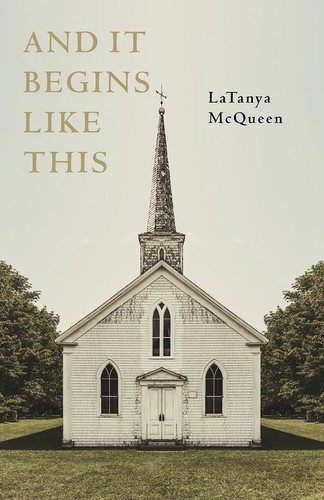
“And It Begins Like This” Uses America’s Racist Past to Make Sense of the Future

Two summers ago, my family and I took a guided tour of the International Civil Rights Museum in Greensboro, NC. It’s located in the original Woolworths where the lunch counter sit-ins began. At one point our group, which included several small black children, stopped at a display showing historic racist depictions of African-Americans: the minstrel characters, the Aunt Jemimas, the golliwogs and the pickaninnies, caricatures with bulging eyes, large lips, crinkly hair, many of them depictions from children’s books. I’m a school librarian; I watched the children staring. I felt horrified; I knew I could only begin to imagine the horror they felt. Yet the woman leading the tour defused the moment. She just leaned down to those children and smiled. “Do you see what they did? That’s how powerful we are, that they had to show these ugly images over and over everywhere to try and keep us down, but we didn’t let them.”

The children nodded their heads and smiled. They laughed to think of how some white people had had to make these ugly images to keep black people down.

Purchase the book

I’ve thought of that incident often since I read LaTanya McQueen’s And It Begins Like This. Her collection of linked essays reminds me of taking that guided tour. In her book, McQueen explores racist stereotypes of African-Americans, particularly black women. She examines the impact of centuries of psychological trauma upon the black community. McQueen seeks to discover the story of Leanna, her great-great grandmother, an enslaved woman who demanded that her children bore the name of their white father after she was set free. McQueen visits the land her ancestor, Leanna, owned in an effort to discover her story. She also visits the Whitney Plantation, the only plantation museum to focus on slavery. With And It Begins Like This, McQueen explores the legacy of America’s racist past in hopes of making sense of the future.

McQueen received her MFA from Emerson College, her PhD from the University of Missouri, and was the Robert P. Dana Emerging Writer Fellow at Cornell College. She currently teaches at Coe College where she is a Visiting Assistant Professor. We met last year in Tampa at the Association of Writers & Writing Programs conference.


Deirdre Sugiuchi: I recently completed a draft of a book about being sent to a fundamentalist Christian reform school by my parents. I didn’t begin writing it until both of my grandparents, who were huge influences in my life, passed away. In your essay In the Name of the Fathers you talk about how you never spoke about race until your mother died. Do you think this newfound ability to talk about race was due to your somehow being freed by your mother’s death or was it the growing racial backlash of the past decade?

LM: I’m not sure if it’s been freeing, because even thinking about this question I find myself tensing up a bit. At the time I began this book, I really had no intention of writing an essay collection, much less one that dealt with my own issues relating to my identity, so I guess to answer this I have to explain some of the surrounding circumstances leading up to writing it.

The first would be the death of my mother. My mother was always a secretive person. I was in college when she got cancer and she didn’t tell me for a long time after, and when she did she downplayed how serious it was, too afraid that if I knew I would quit school and move back home (she’d done that when she was in school and her father had a stroke). After she died, there were all these questions about who she was that came to the surface. Growing up, my mother was pretty abusive, particularly during the period after my parent’s divorce. It was something I never mentioned to the rest of my family until after she died, but when I did they began to tell me their own stories about some of her behaviors that hadn’t understood, and it became this sort of situation where we were all suddenly realizing here was someone suffering in all these ways we never knew.

I always knew about some of the abuse she went through, but I don’t think I ever really fully grasped the extent of it until after she died. I didn’t know how to deal with that, and I spent a decade afterward trying not to think about it. Then, during my PhD program my grandmother died, and I was left with the realization that the last person who could have really answered some of these lingering questions to what exactly happened to her was gone.

Something else — my mother always talked about this story about one of our ancestors, this woman who’d been a slave to the family of the state senator and who’d had a relationship with a white man from a neighboring farm. During Reconstruction, she took him to court to make sure her children would have his surname.

During my program I read a lot about inherited trauma, and so I felt like if I could understand this story, what this relationship was, that I could also somehow understand my mother. I experienced a lot of shame over my identity, and I knew my mother had and her family had as well. My mother was abusive toward me but she’d also been abused, so in thinking about this story of Leanna — it just seemed important to me to investigate the truth of it.

The first essay, In the Name of the Fathers, is my attempt to do that. I thought I’d write it and be freed of this story and all this other baggage, but after I wrote it, I shared it with a few other friends who told me the story wasn’t done. I ignored them at first, but a bunch of other circumstances cropped up that let me know I wasn’t. A few of the subsequent essays talk about what those were. Eventually, I got to the point where I realized I was also having my own sort of personal reckoning and this book became the arc documenting that self-acceptance.

I was wrestling whether I wanted to commit to this book or not, to write a book about race and the slavery and generational trauma, while also recognizing that that story is often asked of black writers.

DS: I also grew up in an abusive family, by people who were also abused. They were also multi-generational Southerners. I often wonder how much the dependence on corporal punishment and control of one’s offspring ties back to the South’s history. I think it is also reflected in the subjugation of women nationwide.

You have these horrific yet beautiful paragraphs, paragraphs that are almost prose poems, which detail the abuse of enslaved Africans. Later on you go on to say “I wonder if it is even possible for us to have new stories and burdened by history of slavery.… We are all staying with his past… All the actions of our ancestors are entangled in the shaping of this country, in who we are and what we’ve come to believe and understand about ourselves.” Can you discuss this?
LM: I’ve heard the prose poem comparisons before and I find that really interesting. I’m a huge fan of spoken word artists, people like Aziza Barnes or Porsha O. for example, and whenever I do read a poetry book I try to find readings with them to see the comparisons between how I hear their work and how they speak it, so maybe that is having some sort of effect on my own work without my realizing it.

I’ve also always been fascinated by the different rhetorical strategies used in sermons — the inclusion especially, as well as the use of anaphora. When I’ve read from the essays I’ve told that they are pretty concentric, which makes sense since linguistically, structurally, and thematically I seem to be circling back again and again over the same sort of issues.

The quote you’re referencing is in the essay where I visited the Oak Alley and Whitney Plantations in Louisiana. At the time, I was still wrestling whether I wanted to commit to this book or not, to write a book about race and the slavery and generational trauma, while also recognizing that that story is often asked of black writers. When I went to the Whitney I was struck by how here was this black tour guide telling all of these traumatic experiences to a mainly white audience, and they were responding in a way that felt not dissimilar to this white fetishization of black trauma narratives. I remember people being moved by the tour, some even wept, but when we think about say, the prison-industrial complex, how much can we say has changed? As a country we need to try and understand the history of how we got here, not revise or erase it, while also understanding the present-day connections.

DS: How much of your silence do you think stems from being in academia, studying in predominantly white institutions? How could Predominantly White Institutes or individuals themselves be more welcoming and inclusive?

LM: Being in these white spaces is part of it, yes, but also on some level you want to be accepted, or at least I did. I’ve never been the sort of person to rock the boat, so to speak, so when situations happened where someone said or did something racist, I didn’t comment on it because what could I do? At the same time, there were people who did speak up, time and time again, especially when things escalated with the protests on the campus, and seeing them do it, as well as the fallback from it, made me begin to examine my own silence.

One thing I think people can do, and I see this happen often — in the classroom, in online groups, in conversations, is that when someone does brings up an instance where they feel another person has done something offensive, to not double down in the defensiveness and disregard what is being said. The fear of being labeled a racist sometimes clouds the ability to actually listen to what’s being said.

DS: You speak of your godmother, Vanessa Siddle Walker, often in the book. She is the one who first outlined for you the cyclical backlash that follows whenever African Americans achieve racial progress. Can you discuss who she is and the importance of having her as a mentor, not just as a writer, but in your personal life?

LM: My godmother was my mother’s cousin. They grew up together and worked with their families on two neighboring farms situated on inherited land. She has excelled in her field, recently becoming the President-Elect of the American Educational Research Association. She has a new book, [The Lost Education of Horace Tate: Uncovering the Hidden Heroes Who Fought for Justice in Schools], that took her close to two decades to write. She has been a model and a mentor for me in terms of working in academia, and that has been especially important to me.

DS: You write about colorism in the black community, both in your own family and in the culture at large. You talk about the shame you felt as a child about having an identifiably black name and how even though you are light-skinned, how as a child you would rub your skin raw, “ashamed, even then” of your blackness. You speak of the Clark doll experiments of the 40s, of how Kiri Davis recreated them in 2006 to find that black girls still preferred the white doll. Later in the book you dissect how black women are other-ized into mammies or jezebels, Sapphires or tragic mulattas. Do you think that writing this book has helped you process the shame? What can we do as a culture right now to help counteract this racism, internalized and externalized, especially in children?

LM: Writing the book has helped make me see more of how the iterations of these stereotypes are ingrained in our society, and it’s helped to make me recognize my own behaviors in response to these depictions.

Another example of this is my name. I often informally go by “Tanya”. My mother used to call me that, but sometime over the years I started going by that in more formal interactions, and I realized I was doing that in response to how, quite often, people constantly misspelled my name and by doing this I was circumventing the awkwardness of having to deal with correcting others. I shouldn’t be attempting to accommodate others lack of effort to correctly get my name right, and yet here I was doing it anyway.

Also, I think I recognized that my full name was “black sounding” and was trying in some way to erase that. Maybe that was why my mother called me “Tanya” too, I don’t know.

A couple years ago someone wrote me to say they were looking at the notable entries in the Best American series and found my name, my full name, and had gone to find out who I was because it surprised them to see a black name in this anthology, surprised them that black work could be recognized in such a way, and he had to know who I was. I have thought a lot about that since, about how powerful representation can be to see.

For me, things began to change when I found other contemporary black writers, particularly black women writers, who were writing about varied experiences of their identity. Twitter, for all its problems, has been invaluable in this way for me. When I saw these writers, it really opened me up to not just writing this book but writing it in the way I wanted. I thanked a lot of them in the acknowledgements.

As a country we need to try and understand the history of how we got here, not revise or erase it, while also understanding the present-day connections.

DS: Who are some of your favorite black writers? I’m originally from Mississippi and am thankful for Jesmyn Ward’s work every day of my life.

LM: A writer I’ve been excited about recently is Dantiel W. Moniz. I read her story “Milk Blood Heat” in Ploughshares that I loved, and she has some others in Pleiades and Apogee Journal. I’m really grateful for writers like Leesa Cross Smith and Tiana Clark (who also write about the South), as well as Morgan Jerkins and Ashley Ford. One of my favorite novels is Oreo by Fran Ross, a book I’ve read multiple times and am always blown away by. Lastly, the writer who has had the biggest influence is Roxane Gay.

DS: In one of the final essays you say, “To be black in this world and not be filled with hate means at times having an unlimited amount of grace, because still so many of us continue to forgive…. Later on you go onto say, “It is these stories of survival I hold onto, these moments in which these women reclaim their agency. They are a reminder to me of the strength of women, the same strength, I hope, that runs through me.

Can you discuss the importance of holding onto survival? How did it help you while writing this book? How do you hold on?

LM: Part of your question seems to be one about forgiveness — how do you forgive others who have and continue to do you harm? How do you forgive people who don’t even want your forgiveness? It’s difficult, and it can seem easier to hold on to hate instead, but the thing about forgiveness is it’s not about the other person, it’s about you and being able to move on. There are a million ways in which this world and the people in it can break you, but you have to find a way to focus on the work that needs to be done and let go of what will hold you back. Forgiveness, for me, is about that.

At the time I started this book my godmother was finishing one of her own, a book that took her close to twenty years to write. Throughout those years she would often say how she wasn’t sure if she was doing the subject matter justice, she was very worried about it, but she told herself she would do the best she could and hoped it would be enough. I knew that this story about Leanna would disappear if I didn’t write about it. I felt like I had to at least try, and so I began it with the same sentiment as my godmother. I would do the best I could with what I had and hoped in the end it would be enough.

What kept me going in writing this book, what has always kept me going, is the work of other writers. This book is why representation matters because I wouldn’t have written it if not for these black women who made me feel seen, who made me feel as if my own story could ever matter. Finding them has opened me up, made me feel braver, more honest.

I remember I went to AWP the spring after Trump was elected. At the time I was about to graduate from my program, on the job market, and facing what felt like the very real possibility of unemployment. AWP can sometimes seem as if everyone everywhere is celebrating something, and here I was terrified about my future, feeling as if I’d wasted my life and was this failure. So I left the conference and on a whim managed to get in to the African American Museum of History and Culture. There’s this huge space inside where you have to wait to take an elevator down to the history section of the museum, and the room quickly filled up with rows and rows of people waiting to get in.

I looked around the room and saw it was filled with mostly black people who were filled with such joy to be there. We were cloistered together waiting to experience this museum, to see the history of how this country has enslaved and subjugated us, while also facing a future that would further inflict damage, and yet they still managed to find joy, hope even, and that’s when I remembered — black people survive. Despite everything, time and time again, we find a way to keep going in the hope of something larger than ourselves.

I do not know what the world has in store for you, for me, for any of us, I don’t know. I know at times it can all look bleak. My own life has had some bleak moments, but you keep going anyway. You have to keep going in the hope of what could be.

Long Live the Goth-esque Novel

During the spookier parts of the year/election season, when the light leaves the sky and shadows get longer and the updates on your phone make you feel like you’re being watched, you may be inclined to embrace the goth. We are here to tell you you are not alone.

The “gothic novel” as we know it according to literary scholars, came about in the late 18th century. The parameters for defining the gothic novel are contestable, but it’s generally understood to be a novel peopled by damsels in distress and mysterious heroes who reveal themselves to be royalty. There are labyrinthine passages and portraits with roving eyes and lots of creepy shadows. Think about Scooby Doo and you’re not totally in the wrong. Big in Europe — particularly Britain, Italy, and Germany — the gothic novel was not long for this world after it was mortally wounded by the parody. After Jane Austen’s (aka the original Roast Queen) Northanger Abbey, her famous takedown of Anne Radcliffe’s The Mysteries of Udolpho, was published in 1817, the classic gothic novel struggled to stay alive. Luckily, the strongest gothic elements adapted and survived to tackle more complicated questions, like the plight of the human condition in goth-esque novels like Frankenstein.

Here we offer a list of 7 goth-esque novels published in the last ten years that play with the tropes of the gothic novel to new effect. These are novels that challenge the whole damsel in distress formation, and deliver on creepy spaces and mysterious strangers and enchanted mystery. Because sometimes it’s okay to displace some of that dread induced by the news cycle into stories with a tangible end in sight.

Riddance; or, The Sybil Joines Vocational School for Ghost Speakers & Hearing-Mouth Children by Shelley Jackson

In Shelley Jackson’s most recent genre-bender, we encounter a vocational school for children with a stutter. Stuttering children, it turns out, are the best spirit mediums for the world for those who have sloughed off the mortal coil. The school is an ideal gothic hellscape — once a Cheesehill School for Wayward Girls, the cavernous castle/mansion has been modified, so as to be more conducive for the Headmistress’s shrouded mission: “a hallway is adjusted with dropped ceilings and wainscoting to the exact proportions of the trachea, larynx, or oral cavity.”The novel is an archive — constructed from transcripts between the living and the dead, archival material collected by an avid contemporary scholar, and texts like the Principles of Necrophysics.

The Only Good Thing About Winter Is This Story Written in Snow

Melmoth by Sarah Perry

Inspired by the 1820 gothic novel Melmoth the Wanderer, this book quickly earns its place on the list. In the original telling, Melmoth is a Faustian fool who exchanges his soul for another 150 years on Earth. Perry’s twist on the gothic novel oft-retold is that Melmoth is now a woman sentenced to wander the Earth as witness to all the violence and atrocities we call “history.” Our central character, 40-year-old Helen Phillips is a translator working in Prague. When her friend Karel encounters a mysterious letter in the library detailing an encounter with Melmoth, the damned soul who tricks people into wandering the Earth forever alone. He brings it to Helen. Helen doesn’t believe in any of it, until Karel disappears.
The Grip of It by Jac Jemc

We don’t have many castles in contemporary literature, but we do have plenty of nightmarish stories about homes that turn into money pits. What if the money pit became the haunted money pit? The first villain we meet is the real estate agent. When Julie and James tour the home they are about to buy, they hear an unfamiliar sound. The agent tells them it’s just the house “settling.” Julie and James decide to buy the house — it’s a great retreat nestled between a lake and a forest. How quaint! But the house is a buyer’s worst nightmare — there are rooms within rooms that seem to appear out of nowhere, and stains on the walls that map themselves into bruises on Julie’s body. I’m calling this 21st century incarnation of the genre the “suburban gothic novel.”

Jac Jemc’s ‘The Grip of It’ is a Master Class in Psychological Horror

White is for Witching by Helen Oyeyemi

The marriage plot, or the death plot. Was the gothic novel one problematic way women characters in novels entered a coming-of-age story? If growing up means learning how to deal with fear, then maybe so. Oyeyemi’s novel plays with this idea in White is for Witches. Miranda, who suffers from pica, lives with her twin brother and their widowed father in a haunted house across the street from a cemetery stacked with nameless graves. Lily, their mother, has been killed while on assignment as a photojournalist in Haiti. The Silver family mourns her, including the house they live in, which is filled with secret passages and craterly holes. The house is haunted by the women who lived there before them, and speaks its secrets to Miranda. She feels closer to the house than anyone else in her life until one night, she seems to disappear, too.

Revenge by Yoko Ogawa

Another 21st century twist on the labyrinthine gothic castle? An apartment lease you can’t get out of. When an aspiring writer moves into her new apartment, she discovers a tad too late that her landlady has murdered her husband. In another story, a surgeon becomes smitten with a corrupted cabaret singer who threatens to destroy him. The stories are interwoven in ways that mirror the detective aspects of an old-fashioned gothic novel — clues and connective tissue that the reader delights in finding on the way to a horrifying and twisting finish.

Ordinary People by Diana Evans

Ordinary People explores middle-class, middle-aged ennui for two couples living in and around London. Evans portrays what this anxiety looks like for two black and mixed-race couples who descend into despair over broken pieces of furniture and fitted sheets and domestic sacrifice and sexless nights. Melissa and Michael are two beautiful people living in London with their beautiful children. Damian and Stephanie live outside London with their three children in the suburb of Dorking. While devoted to realism in many ways, Ordinary People takes a gothic turn when Melissa, after leaving her career in magazine journalism to stay at home with the kids, comments that “Motherhood is an obliteration of the self.” She quickly becomes convinced the house is haunted. This one gets bonus points for having a soundtrack. Evans wrote about the marriage between the book and the soundtrack this way: “This is a book to be read and heard at the same time, then listened to again in pure sound, bringing the characters and their world back to you on the replay.”

The Blindfold by Siri Hustvedt

To the untrained eye, Iris Vegan is the perfect “damsel.” A blond-haired blue-eyed darling from the Midwest who has recently arrived in New York City. She’s become reliant on a cast of mysterious “mostly-men.” The first is a writer who collects objects discarded by other women, and then records Iris’s reactions to these items. The second is a photographer whose portrait of Iris vanishes only to appear in new spaces in the city. She goes through a stay at a mental hospital, encounters an older woman roommate who falls in love with her. After co-translating a German novella with her professor/lover, Iris takes on the appearance of one of the characters in the novella. She wanders the city in drag until her professor catches her. Once damsel, Iris transforms into the hero and the villain.

Why ‘Anne of Green Gables’ and ‘Little Women’ Still Inspire Us Today

The older I get, the more I find myself pulled to the past. Every day that I cross out another calendar box, I feel more nostalgic for the books of my childhood, even the ones that might seem too naive and whimsical for our shrewd modernity. In fact, especially those.

That’s why my latest book, Marilla of Green Gables, revisits one of those classic books that means so much to me, imagining Prince Edward Island before L.M. Montgomery’s heroine arrived. And that literary nostalgia also motivated Anne Boyd Rioux, critically-acclaimed author and editor of six books about 19th century American women writers, to write her latest work Meg, Jo, Beth, Amy: The Story of Little Women and Why It Still Matters.

I sat down with Anne to discuss the iconic novels that inspired us, Anne of Green Gables and Little Women, and why they can still inspire women today, more than 100 years after they were written.

SM: Welcome Anne — with an E, I must point out. I’m thrilled to sit down together to discuss these two books in light of our own recent work (Marilla of Green Gables and Meg, Jo, Beth, Amy: The Story of Little Women and Why It Still Matters).

ABR: Nice to meet you too, Sarah — with an H. It is exciting to be able to talk with you about our favorite books — Anne of Green Gables and Little Women. I think of both of us relate to these books on a personal level but also realize how important they have been in so many women’s lives and therefore how transformational they have been on a larger scale.

I think that there is something powerful (perhaps spiritual) about the connection we and so many readers have to these authors. They live on for us in their books and give us the courage and strength we need at times. Their books are old friends we can always turn to. I noticed in my research on Little Women, though, that girls aren’t reading the novel as much today as they used it. It was ubiquitous, as was Anne of Green of Gables. Do you think that the March sisters and Anne still have something to say to young girls today, when they have so many iconoclastic, adventurous heroines to choose from?

SM: Absolutely. You know, I’ve been fanatically watching “The Great American Read” on PBS. It’s become something of a stress-reducer in the middle of preparing for Marilla of Green Gables’ launch tour. When I start to feel my gut tightening with anxiety, I pop over to PBS online and listen to Meredith Vieira sing the praises of another classic book friend. It’s instant comfort. I highly recommend the virtual serotonin hit.

Point: Little Women and Anne of Green Gables are two of the top-voted books in that contemporary program. This is proof that given the choice of all the adventurous heroines on bookshelves, we are still choosing Alcott and Montgomery.

That’s not to say that there aren’t many incredible heroines of modern times. We need to stop thinking of it as a this or that, one or the other, winner or loser. Like all things, we ought to embrace each powerful female (characters and authors) as sisters of the force — one that benefits all with exponential development. Old to new, it’s imperative for us as female writers to be each other’s strongest advocates. If we don’t, who will?

And that’s why I believe these books thrive across generations. They are about young women overcoming adversity and fearlessly sharing the message: “You can, too.” That message may or may not be heard amid the onslaught of daily news sound bites. But between the reader and the page, the message has a chance to seed itself in a woman’s heart. I know its capacity. I experienced it the first time I read both Anne of Green Gables and Little Women. These books influenced who I grew to be as an adult and a feminist.

What was your goal when you started writing your book — when you ended — now?

ABR: I decided to write Meg, Jo, Beth, Amy in 2015 when I was finishing up my last book, Constance Fenimore Woolson: Portrait of a Lady Novelist, which was my first trade book for a general audience. I’m a literature professor, and I’ve become increasingly disenchanted with academic writing and communicating with only a small, select readership. I had been reading some books about books (like Rebecca Mead’s My Life in Middlemarch, which I reviewed for Electric Literature, and Maureen Corrigan’s So We Read On about the Great Gatsby) and thought what a great way to write about literature for a wider audience. I wondered what book I could write about and immediately thought of Little Women. Then I checked to see when exactly it was first published and realized that its 150th birthday was coming up in September 2018. So I had to get to work! I knew that the book had been important to me and that I would enjoy spending some time with it and exploring the various ways it had influenced our culture, but I wasn’t prepared for what I found. The depth of readers’ attachment to the book surprised me — from one woman telling me, “I am Jo,” to another reciting Beth’s death scene from memory — as well as the breadth of its world-wide impact. I didn’t realize that it had been translated into over 50 languages and made into television series all over the world — from Japan to Turkey to India. I came to realize that I wanted to both honor the book and its many fans and also challenge some of the nostalgic pieties about the book, to show that Little Women is more complex than it has been given credit for. My goal became for readers to take the novel seriously and not dismiss it as simply a sweet book for girls.

What about you? Why did you want to write your novel based on Anne of Green Gables? Do you think of it as an homage to the original?

SM: It was absolutely a passion project. My mother introduced me to Anne of Green Gables when I was very young. She read the novel to me. As soon as I learned to read on my own, one of my aunts gave me the three-books-in-one volume series as a gift. I’ve been a Green Gables devotee since my earliest recollections. The scenes from it are as salient in my memory as the scenes of my own childhood. But I never ever imagine writing Marilla of Green Gables until just last year.

I’ve been a Green Gables devotee since my earliest recollections. The scenes from it are as salient in my memory as the scenes of my own childhood.

I had published five other historical novels and was chatting with a handful of publishers to see what my next book might be. At HarperCollins, I met an extraordinary editor who asked me to write three, fresh book ideas — just a couple sentences each. I believe her exact words were, “Tell me what book would make your heart sing to write.” In all my years of writing and publishing, I had never had anyone open up the doors like that for me. She didn’t ask for the first 100 pages or how long I’d been journaling on a topic. She didn’t ask if I had one research document or one snippet of archive fact to present, never mind a chapter-by-chapter synopsis or a full manuscript, as is common protocol in publishing. She just said, show me your visions. I have to tell that part of Marilla’s story because it was unlike anything I’d ever experience. So very… kindred spirited. I’m forever grateful for having found her — a lion-hearted champion of my writing and a lifelong friend.

So one of those “dream big” ideas was Marilla Cuthbert’s story. In particular, I had always been fascinated by the cryptic un-telling of Anne of Green Gables, Chapter 37:

“What a nice-looking fellow he is,” said Marilla absently. “I saw him in church last Sunday and he seemed so tall and manly. He looks a lot like his father did at the same age. John Blythe was a nice boy. We used to be real good friends, he and I. People called him my beau.

Anne looked up with swift interest.

“Oh, Marilla — and what happened?”

Oh, Marilla, what happened? That question never left me and many other readers. This novel is my answer to that. It’s the story of Green Gables’ foundation and what led us to the start of Anne’s legacy there. There’s so much story ground that has yet to be nurtured and harvest. Even what I’ve written here in Marilla of Green Gables feels like the tip of the iceberg.

This novel is an homage to the original series, absolutely. But I’m not Lucy Maud Montgomery. She outdid herself in providing a bounty of esteemed and inspired literature. This is a novel by me, Sarah McCoy. I wrote from a place of grateful reverence to a fictional landscape that has given me much scope for imagination. I wrote praying each hour that I would honor that world and add to it in a way that would make its creator proud. I hope that readers will understand Marilla for who she is as a woman unto herself… as each of us are unto ourselves and yet, are part of a greater united sisterhood.

Do you feel that the female literary models of our youths shape our adulthood — as much as the real women in our lives?

ABR: I absolutely believe that female literary models help shape us, sometimes more than the women around us. That is certainly what so many have said about Little Women. It became clear to me during my research that for many women, particularly of earlier generations, Jo March in particular represented a path in life that girls weren’t seeing in their actual lives. Her ambitions to become a writer made her unique not only in 1868 but also in 1948 or 1978. Reading about her gave so many girls the idea that they could one day become writers too, and that they could shut the doors to their bedrooms and immerse themselves in fictional worlds — that they could demand rooms of their own and the right to express themselves on the page. Little Women has never gotten the credit it deserves for helping to create much of women’s literature, simply by showing girls that they have something important to say and could grow up to become authors. Ursula K. LeGuin said about Jo’s ambitions, “I don’t know where else I or many other girls like me, in my generation or my mother’s or my daughter’s, were to find this model, this validation.”

SM: I love what you said about girls shutting their bedroom doors and demanding a room of their own. That’s exactly what Little Women and the Anne series did for me. I saw that there were other creative women out there who didn’t kowtow to the social convention that a woman’s primary role was to be hostess to the men in her life. As an introvert, I found that unbearably difficult and also, terrifying! I needed the “door shut to a room of my own” to feel balanced and whole. I needed to quietly commune with authors and literary characters to understand myself, come to my own opinions, and find my own voice.

Reading about Jo March gave so many girls the idea that they could one day become writers too, and that they could shut the doors to their bedrooms and immerse themselves in fictional worlds.

I often wonder if the emphasis our modern society has placed on the projected image (Facebook, Instagram) and clever captions (Twitter) has stolen girls’ ability to escape to creative spaces where they can express themselves like Montgomery and Alcott did — like we did. Perhaps because of the all-too-public nature of reality, these books and their fictional narratives, people, settings, and scenes are actually a last bastion of intimate, solitary discovery. When we’re in a book and reading a chapter, there are no Twitter pings. No place on the page to click a Like button. No commenting to the author for instant reply. It’s the reader and his/her imagination left to interpret, decipher, and decide. For those precious hours of reading, the reader is removed from the public reality and allowed to be part of the inner thoughts, emotions, and truth of the novel’s world.

I still remember the scene in Anne of Green Gables when Marilla tells Anne Shirley that Green Gables is to be her home. It’s Chapter VIII. The scene is mostly all dialogue. Nothing extraordinary happens. No slates broken over a schoolboy’s head. No red current wine drunk by the bottle. No green hair or mouse puddings. It’s Marilla and Anne in the kitchen. They’ve just finished washing the dinner dishes.

“Matthew and I have decided to keep you…”

“I’m crying,” said Anne in a tone of bewilderment. “I can’t think why. I’m glad as glad can be. Oh, glad doesn’t seem the right word at all. I was glad about the White Way and the cherry blossoms — but this! Oh, it’s something more than glad…”

She goes on to express how very lonely, sad, and ostracized she felt all her life but being able to stay with the Cuthberts gave her roots, a place to call home, family and soon, bosom friends. It’s as if her life was beginning from a new seed and all because somebody planted her at Green Gables and added some love.

As a young girl, that scene made something rise up in my chest and nearly burst. I was a military child. We moved across cities, states, and even countries every few years. I had never been able to put into words or speak about the lonely, sad, excluded feeling I carried with me at each new place. It wasn’t something military children discussed and even if it was, I wasn’t at an age (7 years old) to properly psychoanalyze why I felt what I felt. I just knew that I never seem to fit… anywhere. Reading this scene for the first time by myself was an ‘ah ha’ moment. These characters understood what I was feeling — understood me. I wasn’t alone! And through that mutual acceptance, I was empowered. I had faith that like Anne, I could find a sanctuary in my family. And like her too, I would one day find that kindred spirits were not so scarce as I used to think.

It’s not the most glamorous or revolutionary scene. In fact, may readers rush by it as they’re cartwheeling through Anne Shirley’s madcap adventures. That’s what makes it such a gem. It’s quiet, intimate, and spoke entirely to my insecure childhood self. Who am I kidding? It still speaks to me. Is there a scene in Little Women that stood out to you as a girl and still resonates?

'Anne of Green Gables' Returns, Darker and More Defiant

ABR: I have always regretted that I didn’t have Jo to inspire me when I was young. I really could have used her example when I was struggling through the awkward teenage years. I didn’t read Little Women until I was in my early twenties (confession!). I was in graduate school, but that turned out to be a pretty important time for me to read the book as well. I was still trying to figure out how I was going to forge my own path in life — how I might teach and write and have a family. The ambition was there, but so was the worry about how to achieve it. The part of Little Women that really resonated with me came at the end, when Jo is married, has a couple of kids, and is running the Plumfield School with Professor Bhaer. She says, “the life I wanted then seems selfish, lonely, and cold to me now. I haven’t given up the hope that I may write a good book yet, but I can wait, and I’m sure it will be all the better for such experiences and illustrations as these,” and she points to her family. The very idea that her book could be better one day for the life she has with her family blew me away and was heartening. From all that I was hearing and reading, women basically had to give up their ambitions once they had a family. I came to believe with Jo (and Alcott) as well that the fuller my life, the better my work would be, and I absolutely believe that has been the case. It certainly has with this book, because my daughter (whom I gave the middle name Josephine) inspired a good deal of it.

SM: Your daughter is named Josephine? That speaks volumes to how a fictional woman could influence you as much, if not more, than a real one. It sounds like both of us came to these literary icons searching for kinship and a place to “fit in” when reality didn’t show us the selves we knew we were deep down — the selves we knew we could become if given the creative freedom to express ourselves.

About the Authors

Learn about more Sarah McCoy at www.sarahmccoy.com or on Facebook, Twitter, and Instagram @sarahmmccoy.

Learn more about Anne Boyd Rioux at www.anneboydrioux.com or on Facebook, Twitter, and Instagram @anneboydrioux.

These Book Covers Are So Terrible You Won’t Believe They’re Real

There is no shortage of terrible book covers for the classics, and scrolling through these abominations on the internet is always good for a laugh. Titles by Austen, Shakespeare, and Dickens that have crossed into the public domain are part of a never-ending assembly line of cheap reprints saddled with bafflingly ugly covers. Amateur Photoshopping and corny stock images abound. More often than not, the cover art is misleadingly sexy for the purpose of driving sales. Women with heaving bosoms and hunky men and stare out at the reader, sometimes even dressed in contemporary clothing that suggests the events take place in this century.

They all have the same black background with white text, under which lies some of the least aesthetically pleasing artwork you’ve ever seen.

Among the endless, nameless print-on-demand publishers producing this crap, one name stands out: Wordsworth Classics. These budget editions are easy to spot: they all have the same black background with white text, under which lies some of the least aesthetically pleasing artwork you’ve ever seen on a book.

Wordsworth Classics came into this world in 1992, the product of UK-based publisher Wordsworth Editions. They’re known for their cheap price: one of these paperbacks costs a mere £2.50 (they’re available in the U.S. for a comparable sum). They’re a great option if you love the classics but live on a tight budget, but there are sacrifices. The paper quality isn’t great. The introductions and supplemental essays don’t exactly pass muster. But worst of all are the covers, which are so offensively terrible that it makes you question whether the cheap price is worth it.

Gaze in horror at some of these truly appalling covers:

Crime and Punishment is a CBS sitcom and Raskolnikov just exclaimed “Uh ohhhhh!” and paused for laughter from the studio audience.

Ah, a more innocent age, when everyone rushed out in their wedding dresses and bathrobes to smell a fart.

Dracula’s life is pretty stressful, I don’t blame him for smoking some pot for a little relief. As for that underbite: do they make braces for vampires?

These pants look like they’re from the costume closet of a middle school’s underfunded theater program and get trotted out any time they do a show set vaguely in “olden times.” The twerp on the left clearly does not know what to do with his hand.

This is just a picture of Nina Dobrev in The Vampire Diaries with another face pasted on it, so someone should probably sue.

She and everyone else on this cover look especially weird because their bodies and clothing are photorealistic but their faces are illustrations that have been airbrushed into oblivion.

Side note: this Alice in Wonderland cover similarly stole an image of Mia Wasikowska from the 2010 movie and slapped someone else’s face on her.

Here’s what they did for this cover: they found a photo of two girls to serve as Jo and Meg, stuck that in the front, and then took Beth from separate image and Amy from a third image and pasted them in the background. They’re all a slightly different style and size and it’s driving me insane. Also, they’re stupidly staring off in different directions, all looking at nothing.

The portrait the title refers to is not only supposed to age in Dorian Gray’s place, it’s also supposed to change to reflect his evil nature. The only thing sinful about this portrait is that terrible beard. I love how he’s glaring out at the reader with one eyebrow raised, like he’s just sick of the real Dorian Gray’s bullshit. Also, Dorian Gray has decided to hang this portrait prominently in his study instead of hiding it in the attic. Don’t you try to shame him, he is not here for it!

A beloved children’s classic in which a child model wearing a Halloween costume from Party City sits for her glamor shots, blissfully unaware that a house cat with a horrible physical deformity and Brain from Pinky and the Brain lurk behind her.

Moll Flanders, the story of a woman whose great tragedy is that she never learned how to sit.

The underbite (is that Dracula in there?), the anime eyes, the expression like he just got kneed in the balls… it’s all too much.

Uncle Tom looks like someone just showed him this cover.

That woman is not sitting on the fence. She is floating behind it in midair. And her suitor is staring at her boobs. It just goes to show you: behind all the high society manners, 19th century people were just as thirsty as we are now!

So, who are the artists responsible for these monstrosities? Thankfully, there are credits on the back covers, which you can view on Amazon. The “Cover Design” seems to always be by the same guy, but I’ve seen two different “Contemporary Artists” credited for the “Cover Illustration”: a Mr. Clair, who is behind Wives and Daughters, and a Ms. Surridge, who is credited for Middlemarch.These are real people that you can hire. I’ve Googled them. They have websites and LinkedIn profiles. According to his LinkedIn, Mr. Clair has done 250 Wordsworth covers. His other work samples on his website seem perfectly normal. Perhaps the illustrators aren’t being paid well and so they do the bare minimum. And yet, these covers look like time and effort was put into making them so intricately ugly.

Clearly they know how to manufacture a normal-looking book and just sometimes choose not to.

What’s crazy is that apparently, Wordsworth Classics covers used to be fine. Reddit has plenty of threads full of people who are angry and incredulous about these literary abominations, and some commenters have pointed out that there was a time when the covers were blue and had perfectly innocuous old paintings as the artwork, which is a route that Penguin and many other publishers take when designing the classics. This cover for The Waves is perfectly fine! So is this one for The Count of Monte Cristo! Even now, if you scroll through their U.S. website, there are some completely fine current editions like The Aeneid and Adam Bede nestled amongst the eyesores. So clearly they know how to manufacture a normal-looking book without spending a ton of money and just sometimes choose not to. Or they just don’t care. Perhaps they know that no matter how bad the covers are, broke book lovers will always buy them because of them unbeatable price. But you would think that a plain black cover with just the title and no art would be cheaper and better than paying artists to make stuff that looks like this.

Then again, I wouldn’t be writing about plain black covers with just the title and no art. Wordsworth Classics, if your plan all along was to create these covers as a publicity stunt so that I would feel compelled to write about them on the internet, congrats, you succeeded!

Check out more for yourself on their U.K. and U.S. websites or Amazon for hours of grim fascination. They make a perfect gift for your enemies!