I first came across Jeff Jackson’s work through his buzzed-about first novel, Mira Corpora, which was published by indie favorite Two Dollar Radio in 2013. A hallucinatory book that is as beautiful as it is violent, I read it compulsively. Even though I finished it quickly, it was the type of book that stuck with me, filled with memorable images and a surprising tenderness. A few months later, I met Jackson at a reading. I was surprised to find out that the author behind the book was not a deranged, nihilistic weirdo, but a mild-mannered, kind man who was excited about all types of art. In 2016, the French indie press Kiddiepunk published his novella Novi Sad, a beautiful and slim volume on blue paper, that is described as a “sister book” to Mira Corpora.
Purchase the book
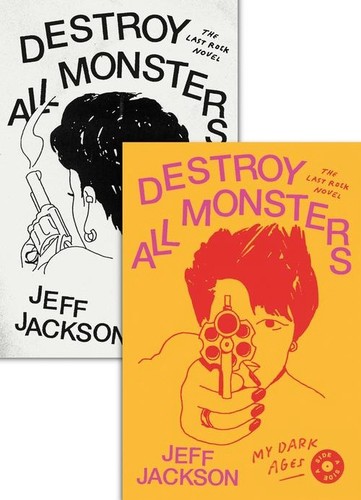
Jackson’s latest, Destroy All Monsters, is his big press debut. It synthesizes all the best parts of his past works: a dreamy violence, innovative structure, thought and care to how the story is presented on the page, and a narrative that both feeds into and splinters itself.
The book takes place in the fictional town of Arcadia, an industrial wasteland complete with shuttered factories and a creepy forest that serves as a dumping ground for dead bodies and the homeless. It focuses on the city’s music scene, specifically a couple, Xenie and Shaun, who are reeling with grief from a mysterious plague of incidents that involve the massacre of different bands across the country. Like a tape, Destroy All Monsters has an A side and a B side, which can be read in either order. We discussed the process of writing the book, his choices about structure, and some of his favorite art via Gchat.
Juliet Escoria: What part of this book came to you first? Was it the idea of bands getting shot, or a certain character, or something else? With the shooting at concerts, it feels political, but also not at all.
Jeff Jackson: My notes for the book go back over 10 years. It started with the image of a band being shot on stage in a small club. At the time, it was a very surreal image. It germinated into a story about an epidemic of similar killings happening across the country. This was long before the Bataclan shooting [in Paris]. Before Sandy Hook, even. It’s been alarming how current events have caught up to the book. While it’s true that this always has been a violent country, the novel feels more realistic now than I ever intended.
While it’s true that this always has been a violent country, the novel feels more realistic now than I ever intended.
JE: So it took you a long time to go from notes to a manuscript — you said on Twitter that it took 5 years to write. I also know that the path to publication wasn’t the easiest, either, which makes sense because the book breaks a lot of “rules” about what a novel is supposed to look like. Can you talk about both the process of writing it, and the process of publication?
JJ: I had a tortured time writing my first novel Mira Corpora which went through countless drafts and radically different versions. I was determined the next one would be easier, so I worked off a rough outline for Destroy All Monsters, trying to keep the structure in view the entire time. But my grand plans collapsed under me and this novel also underwent many shifts and reorganizations. It was especially difficult to figure out how much of the epidemic I could dramatize without it short-circuiting the manuscript.
Once the book was finished, I became haunted by a vision of the novel as Side A of a cassette or vinyl single. So I started to imagine what the B Side might look like. I wanted it to be something that both fleshed out the main text and also rewrote it, offering a completely different version of events and showcasing the characters in new scenes. Several friends told me that I was crazy — that I was taking a book that was already hard to sell and making it twice as difficult.
And it was a hard book to sell. When my agent read the manuscript, she deeply disliked it. We couldn’t find any common ground on it, so we parted ways. It took quite a while to find the right person to represent the book. As often happens, the reactions from agents echoed many of the later comments from publishers — it’s well written and the story is propulsive, but the structure is too odd, it’s too dark, it’s not commercial enough. I was extremely fortunate to land with FSG and their line of paperback originals which champion adventurous fiction.
FSG acquired the book without having read Side B. Initially, I thought Side B might work as a standalone novella that could be published separately. It wasn’t until I sat with it that I realized the two parts had to be under the same cover and that together they comprised the entire project. It says a lot about FSG that they understood and embraced the Side A / Side B concept. They bought one book and found themselves with something much stranger. But also, I think, much better.
JE: Wow, that’s cool of them. I would have expected push back to that. When you say that you had to figure out how much of the shootings to dramatize, do you mean that you didn’t want this element to overtake the plot?
JJ: Yes, the killings were so charged that they tended to overwhelm everything else and set up false expectations about the rest of the story. It wasn’t until I gave them their own section on Side B that I found a way to corral their energy so they still felt very dramatic without causing readers to become overly numb to the violence. The novel uses a lot of so-called experimental forms, but they’re never there for their own sake. The unusual structure aims to make things more engaging and surprising and immersive for the reader.
I love the idea of a book that works by itself while simultaneously being in conversation with another book — and how that combination creates a third space, something that only exists in the reader’s mind.
JE: I very much felt that. The book seems mostly to be about the individual characters and their expressions of grief, with the shootings being more of a propulsive factor.
Your previous works bear some similarities with this book. In some ways, Novi Sad felt like a B-side to Mira Corpora. One thing I like about reading a writer’s larger body of work is you get to see their obsessions and the way their minds work. Why do you think you like to explore the same stories or worlds from different angles?
JJ: I don’t know exactly. I do love the idea of a book that works by itself while simultaneously being in conversation with another book — and how that combination creates a third space, something that only exists in the reader’s mind.
Maybe that comes from my admiration for Ágota Kristóf’s “Lies” trilogy (The Notebook; The Proof; The Third Lie) where each book in the sequence reimagines and rewrites the previous volume. And maybe from David Lynch, too. Destroy All Monsters was finished when Twin Peaks: The Return aired, but I felt a real kinship with how he explored parallel story worlds throughout that series.
There was already this idea of other possible realities floating through my book, these questions about whether there might be more than the surface nihilism some of the characters embrace. So maybe the impulse was less meta-narrative and more metaphysical. It felt right to blow up that question by creating a flip-side to its reality.
JE: I also see a kinship to Rashoman/the telling of Jesus’ life in the Bible/the first season of True Detective. I kind of wonder why more people don’t see storytelling in this way.
Another thing I enjoyed is the different colors of the pages, and the different styles of font. One thing I like about poetry that is generally not considered with prose is the way the words look on a page, and this deviation of style in your book felt really effective and fresh for me. Did you always envision it this way, or did you mess around with the visual elements?
JJ: I’m glad that worked for you. The visual elements of the page are very important to me. It’s something I consider in early drafts and the layout becomes baked into the DNA of the book. I’ve sometimes found there’s a visual solution to a narrative problem — how the text is broken out or arranged can make something clear that wasn’t previously. In DAM, I pushed this further than I did in Mira Corpora or Novi Sad, but only because it was necessary for this particular story.
JE: So rather than being heavy-handed with explaining, you can accomplish it more subtly with a change in the way it’s presented on the page?
JJ: Exactly. These are solutions that I stumbled into out of desperation, but they’re part of a writer’s toolkit that don’t get used often enough.
JE: I’ve never really understood why publishers are reluctant to do that kind of thing, other than the practical reasons having to do with production costs.
Your novels so far are about youth on the fringes, all with a very punk rock feel. What were you like when you were Xenie and Shaun’s age?
JJ: Like them, I was obsessed with music. I was lucky to be living in New York City at a time when concerts were relatively cheap and I was constantly going to shows — seeing riot grrrl and punk bands in tiny clubs, avant garde jazz in deconsecrated synagogues, anti-folk troubadours in rundown squats, garage rock festivals in community centers, electronic and noise acts in downtown venues, etc. I wasn’t fully immersed in any one scene, but I was on the outskirts of a number of them. I was also part of a theater company, cutting up Kathy Acker texts with Buster Keaton films, making plays for people who typically hated theater. The company was run like a band and I drew on those rehearsal and performance dynamics when writing some of the musical scenes in DAM.
JE: That sounds like the dream NYC experience that doesn’t exist anymore.
One thing you post on Instagram regularly is photos with the caption Possible Novel Structure. What photo is the possible novel structure for Destroy All Monsters?
JJ: Hmmm.A cassette that’s colored violet, maybe. But that might be too literal since so many of the Possible Novel Structures invite more abstract associations. I’m curious — what would you pick?
JE: Ummmm… maybe like mirrored explosions, with some Escher-type stairs. We can put a purple tape in the middle. That’s tough.
JE: I know you read a ton of books, listen to a ton of music, and watch a ton of movies. What are some books, albums, and/or movies that really blew you away recently?
JJ: I’ve gotten behind on newer books, films, and music these days. So here are some older things I’ve been digging lately — B.S. Johnson’s The Unfortunates, a novel of pamphlets in a box you can read in any order; Carmen Laforet’s Nada, a coming-of-age novel written and set during WWII in a debauched Barcelona; Victor Segalen’s Rene Lys, a mix of autofiction and metafiction from the 1920s about life inside Peking’s Forbidden City. I’ve also been taken by a book of painter Jack Whitten’s sculptures which he created over the past 50 years but only recently started showing them.
I’m excited Criterion released Oliver Assayas’ Cold Water on Blu-Ray, one of the my all-time favorite films that’s been held up in music rights limbo for 20+ years. I recently discovered this wonderful batshit film from the 1970s called Femmes Femmes about two aging actresses who perform for each other in their Paris apartment. Two movies from earlier this year that knocked me out were Lucretia Martel’s hallucinatory Zama and Lynne Ramsay’s underappreciated YouWere Never Really Here.
Musically, a lot of my listening has been guided by what I’m working on with my band Julian Calendar. It’s been a weird mishmash of Tricky’s Maxinquaye, Dog-Faced Hermans Hum of Life, The Slits Peel Sessions, and The Zombies collected singles.
But one new album that demands a shout-out is Patois Counselors’ Proper Release, an incredible record that sounds a bit like if Pere Ubu were a dance band. But more accurately, it follows Duke Ellington’s definition of great art: “It’s simply beyond category.”
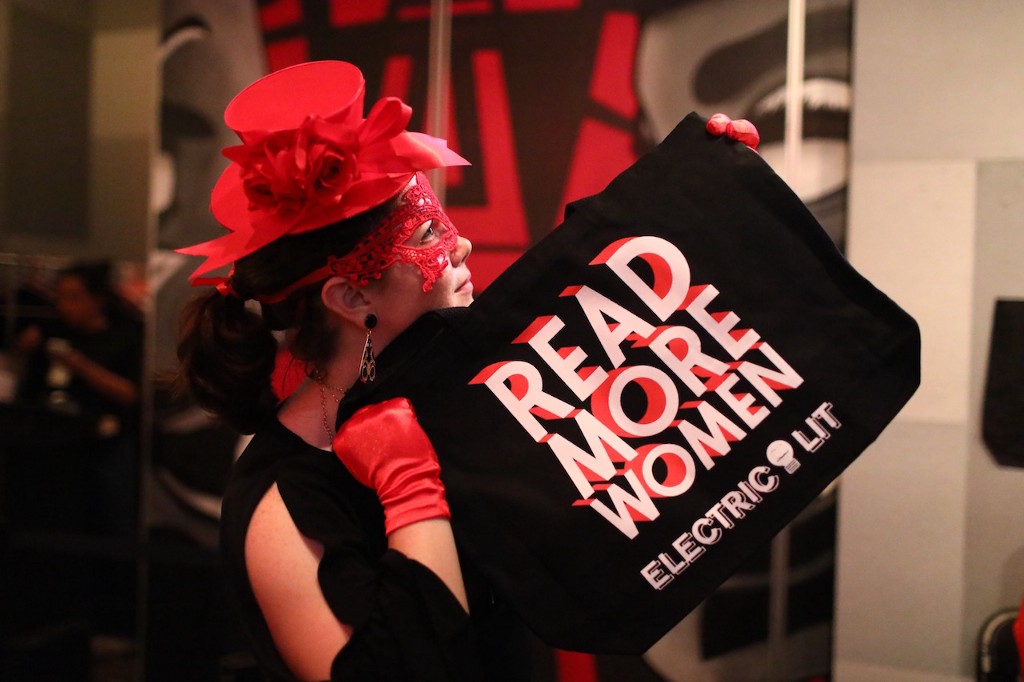
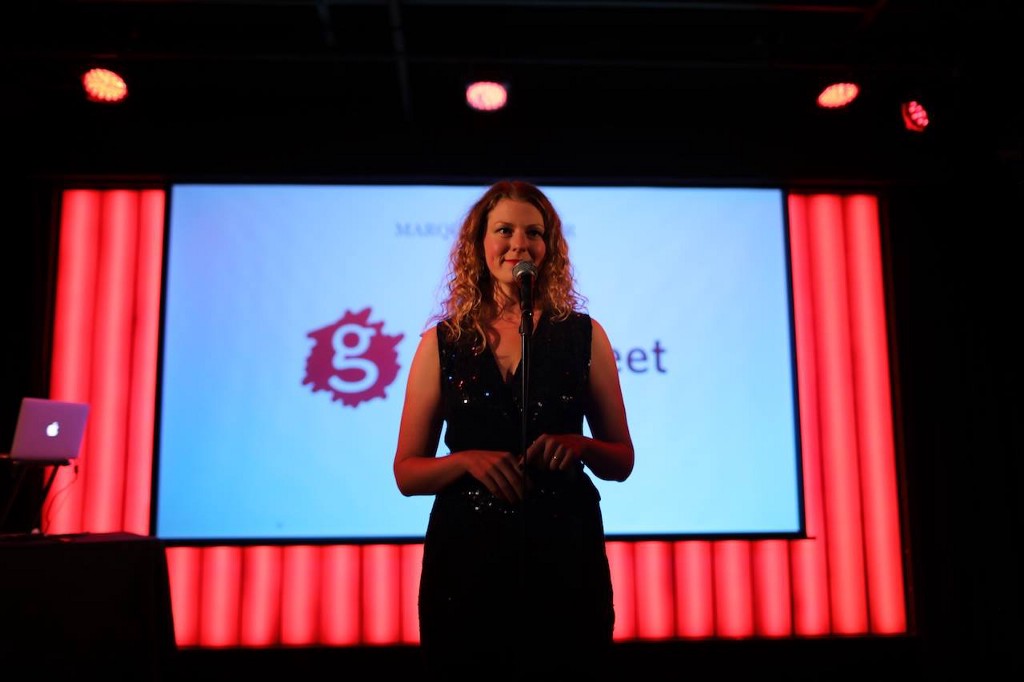
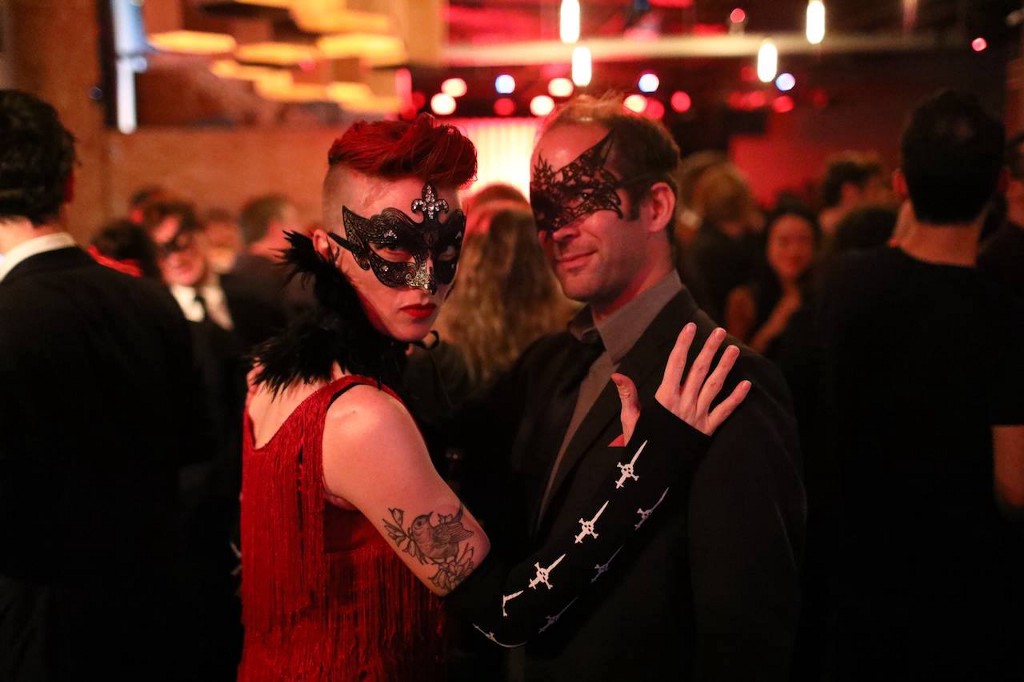
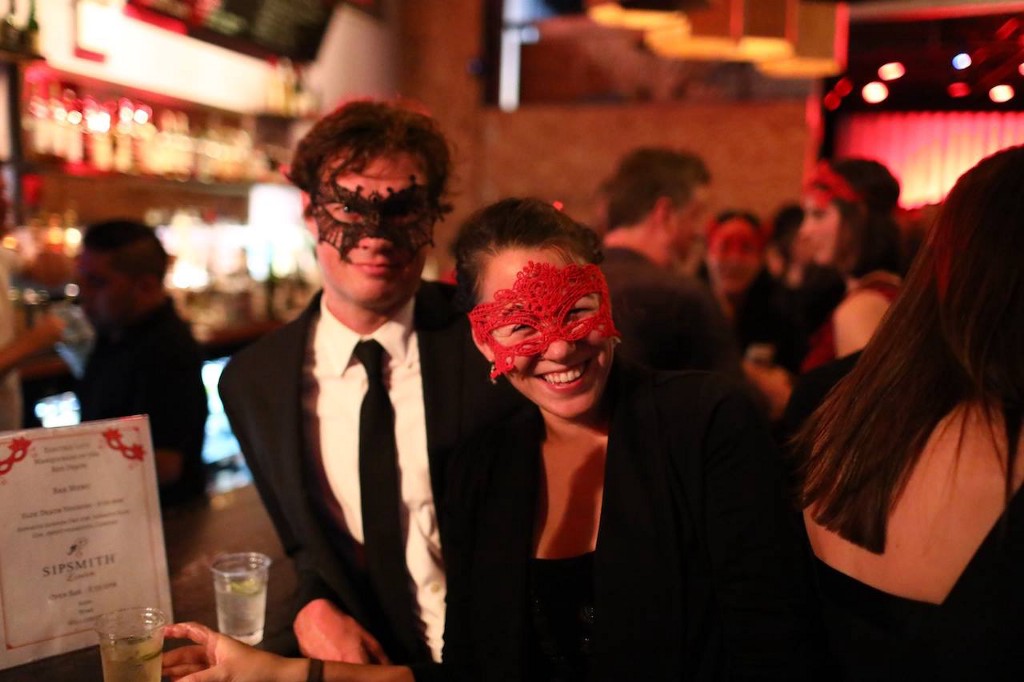
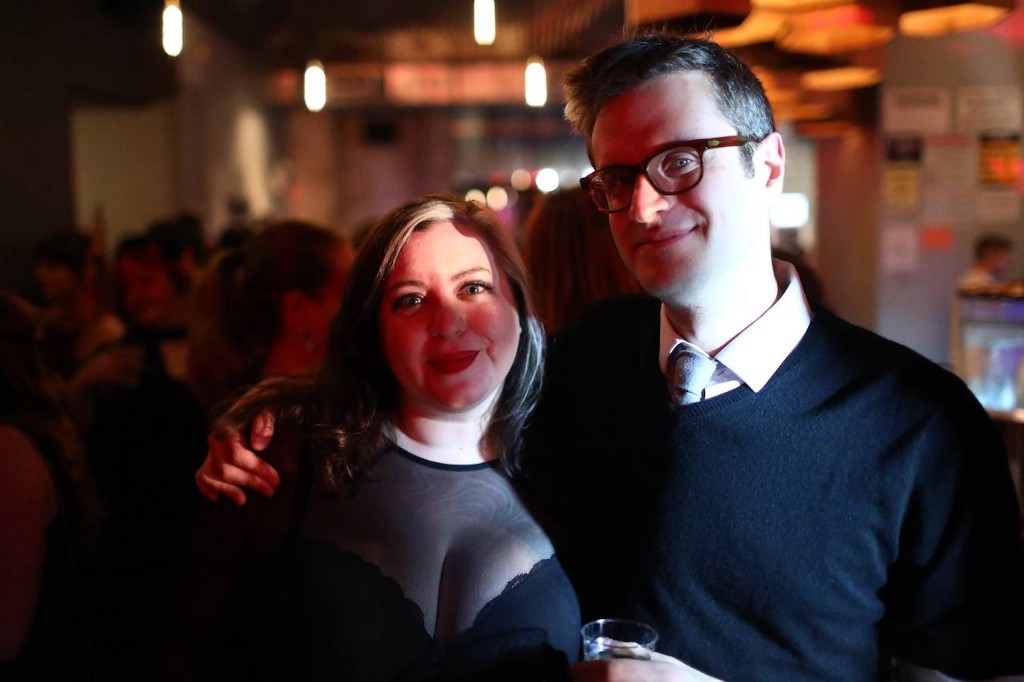
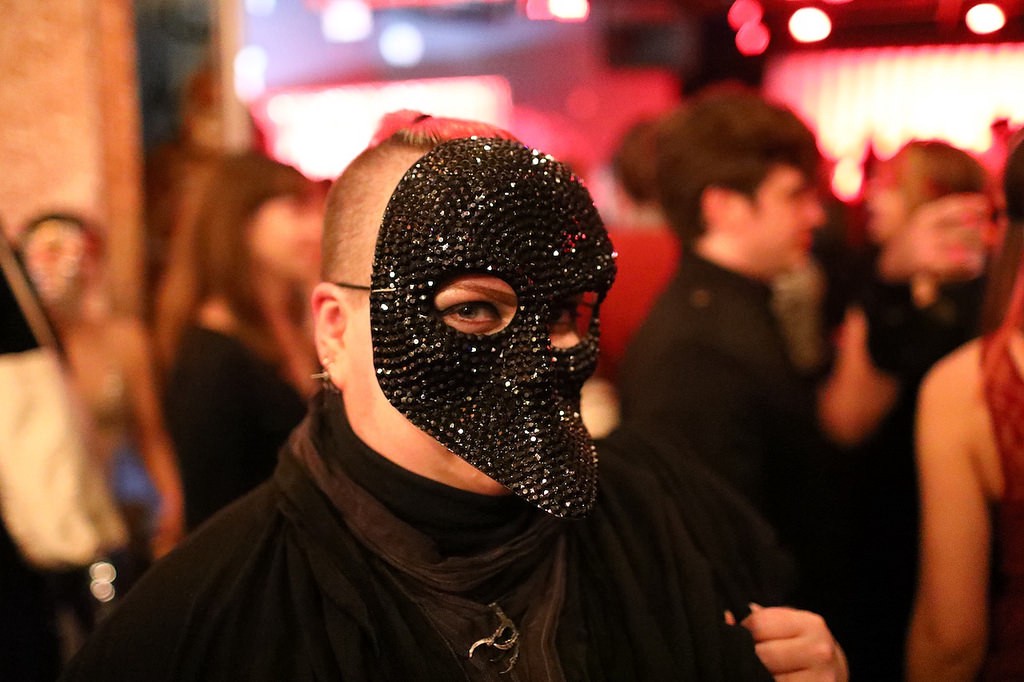
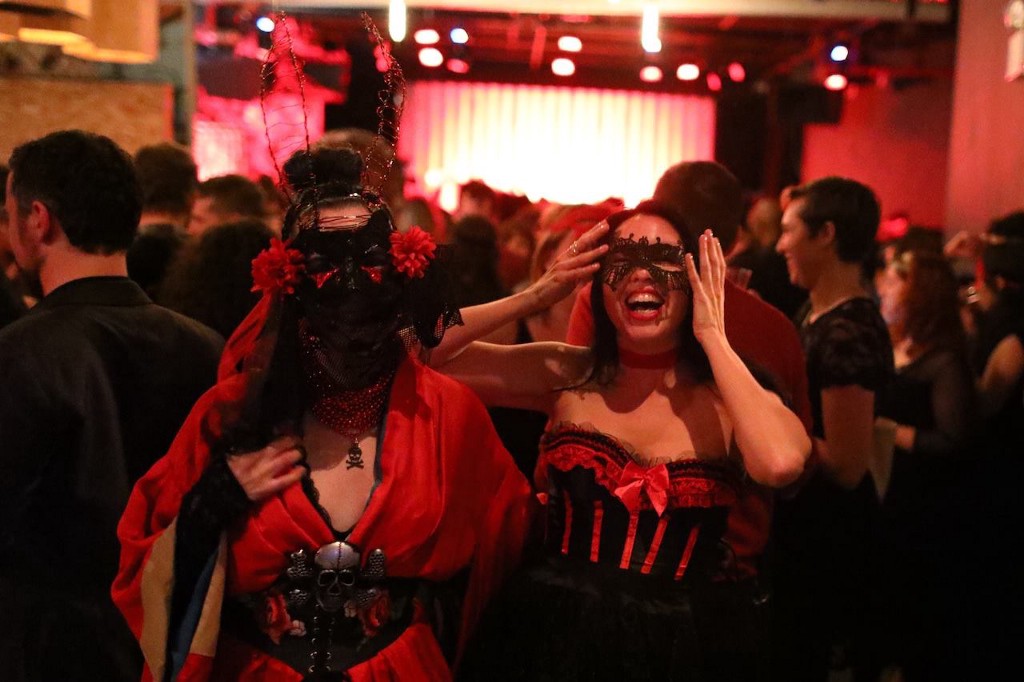
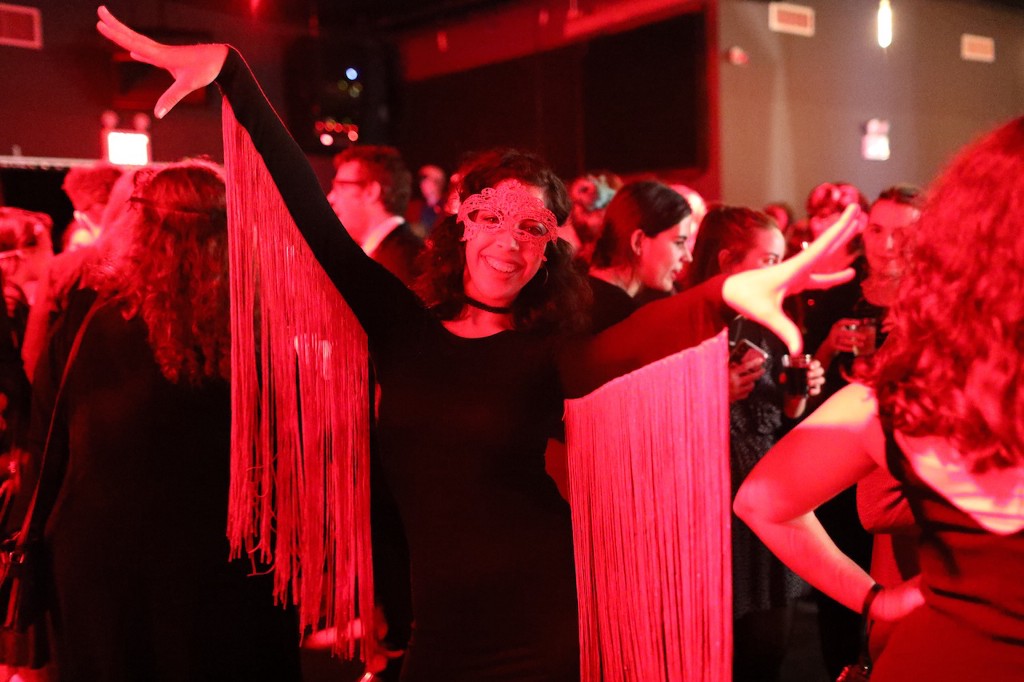
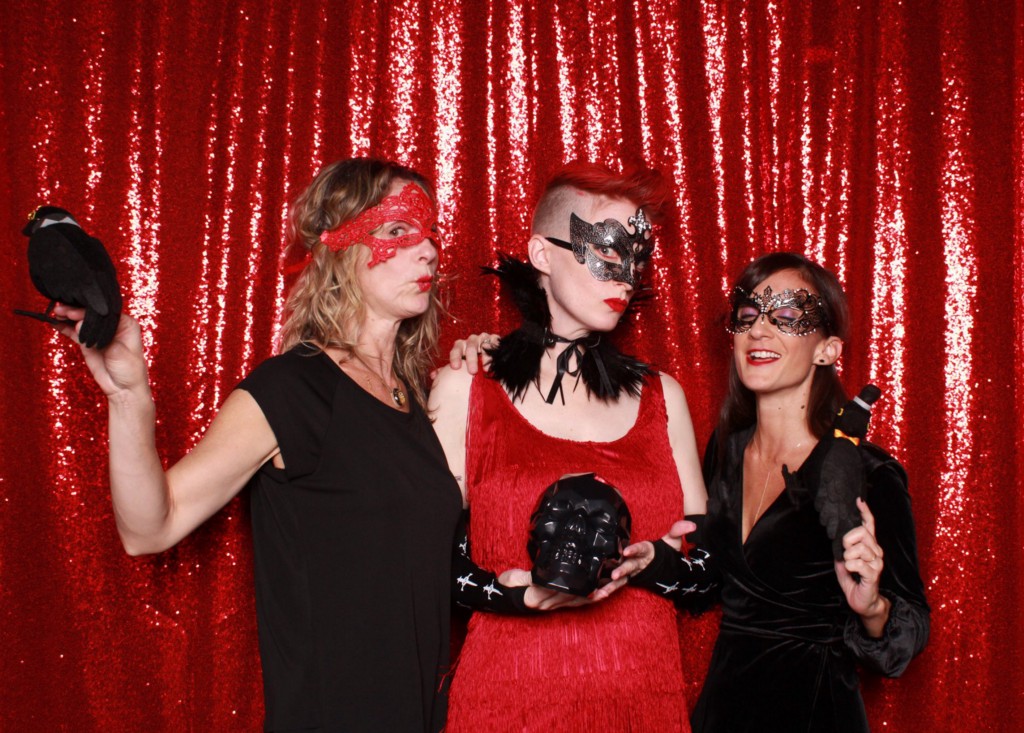
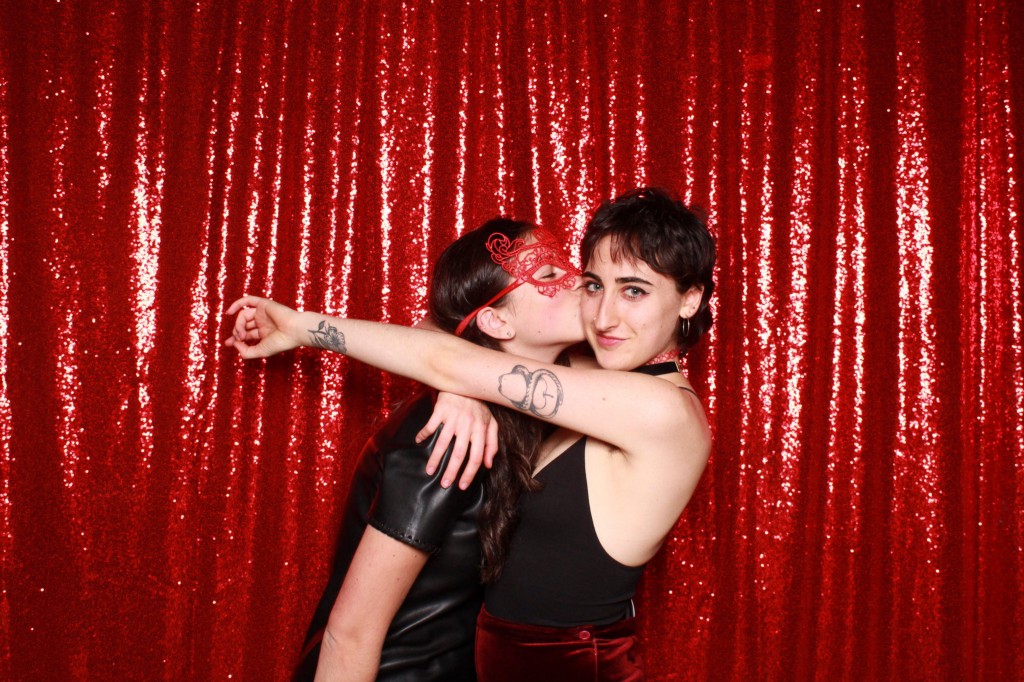
After darkness fell on October 25th 2018, New York’s most distinguished literati donned red and black masks for a night of revelry and fright. At Littlefield in Brooklyn beneath the (almost) full moon, novelists, bibliophiles, and editors alike bathed in the sanguine glow of disco lights, sipping themed cocktails and dancing the night away. At the end of the evening, attendees brought home “Read More Women” tote bags bursting at the seams with free books. Here are some of our favorite snapshots from photographer Andrew Janke and the uber-festive photo booth.
A Party to Die For
What do you think writers Scott Cheshire and Jason Porter are so animatedly debating here? A. The merits of new Southern Gothic. B. Which recent Hollywood adaptation of a beloved pop novel reigns supreme (the answer is Netflix’s Haunting of Hill House, but get back to us when Barry Jenkins’ IfBeale Street Could Talk comes out) OR C. How many Sloe Death Negronis is too many Sloe Death Negronis.
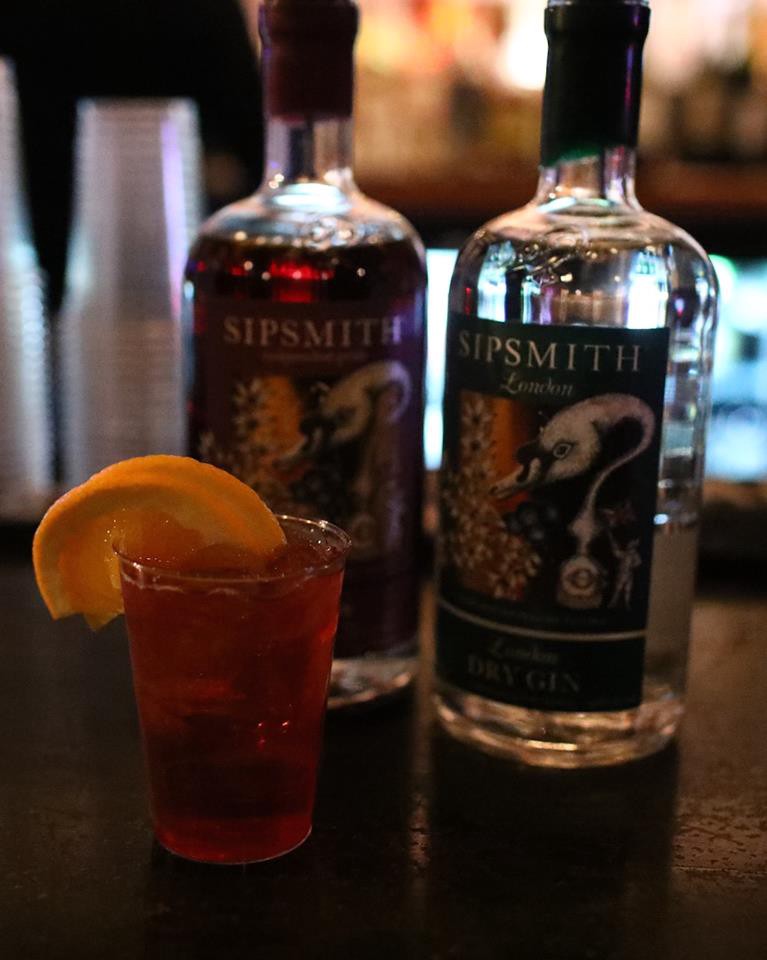
The specialty cocktail of the evening, a Sloe Death Negroni, courtesy of our beverage partners at Sipsmith London. Verdict? Absolutely to die for.
Our effervescent executive director Halimah Marcus revealing the winners of the raffle! Eight lucky devils took home coveted tote bags brimming with goodies from Alamo Drafthouse, Quirk Books, Catland, GrubStreet, Out of Print Tees, and The Nib. Prizes included movie tickets, enviable Poe accessories, and tarot cards.
Catherine LaSota of the LIC Reading Series and Andrew Lloyd-Jones of Liars’ League NYC flaunt their panache and valor like bona fide superheroes.
While the bartender brews bewitching concoctions behind them, Evan Ratliff of The Atavist and Samantha Henig of New York Times audio say, “Cheese and Die!” a la R.L. Stine. Samantha, please, the people must know, when will the next season of “Still Processing” premiere? We’re on the edge of our tombstones over here.
Helen Rosner of The New Yorker and Tim Willenken dazzled, all smiles and phantasmagoria, in the crepuscular half-light.
Oh, and about the disagreement earlier — do not fear! Scott and Jason seem to have made up after their riveting debate. I imagine they found common ground in the James Baldwin/Barry Jenkins intergenerational collab. Now that’s a creative duo nobody can shudder at.
Best Dressed/Best Deathed
Some guests flashed their A-game attire to ward off evil demons. Here are some of our favorite lewks of the night.
All guests were issued a mask with ticket, but some people brought their own from home or, uh, sometimes from other events. Here, Emma Story rocks a bedazzled Sleep No More mask.
Hannah Tinti slays in a scarlet kimono replete with skulls and roses beside Libby Flores, who floors onlookers in a lacy corset.
Ask Jaya Saxena about the fringe benefits of being an Electric Lit contributor (sorry).
Electric Lit contributor Monique Laban rocks a fierce face veil (that is also an homage to Janelle Monae’s Dirty Computer album cover).
We can’t believe Ariana Grande came to our little party! Bunnies get one negroni per ear, sorry, we don’t make the rules.
The dazzling Nina St. Pierre beams beneath this ornate headpiece.
Posthumous Photography
It seems there were equal parts tricks and treats in the photo booth.
Paul W. Morris and Libby Flores find glee amid the spine-chilling solemnity.
A beguiling coven! (From top left: Deirdre Coyle, Michael Seidlinger, Cecilia Corrigan, Megan DelBianco, Rae DelBianco, John Maher, Angeline Rodriguez, and Tiffany Kelly)
Amy Brill, Catherine LaSota, Yorick, and Marie Helene Bertino pucker up with a duo of dapper ravens.
Lit Hub makes an appearance. So does Didion; she always seems to sneak her way into spaces without announcing her presence.
Electric Lit’s resident astrologer Jeanna Kadlec (far right) along with (from left) Lilly Dancyger, EL contributor Deena ElGenaidi, and Nina St. Pierre.
EL movie columnist Manuel Betancourt (top), his husband, and their human son.
Electric Literature interns Frances Yackel and Hannah Seidlitz just really love their job.
The People Who Made It Possible
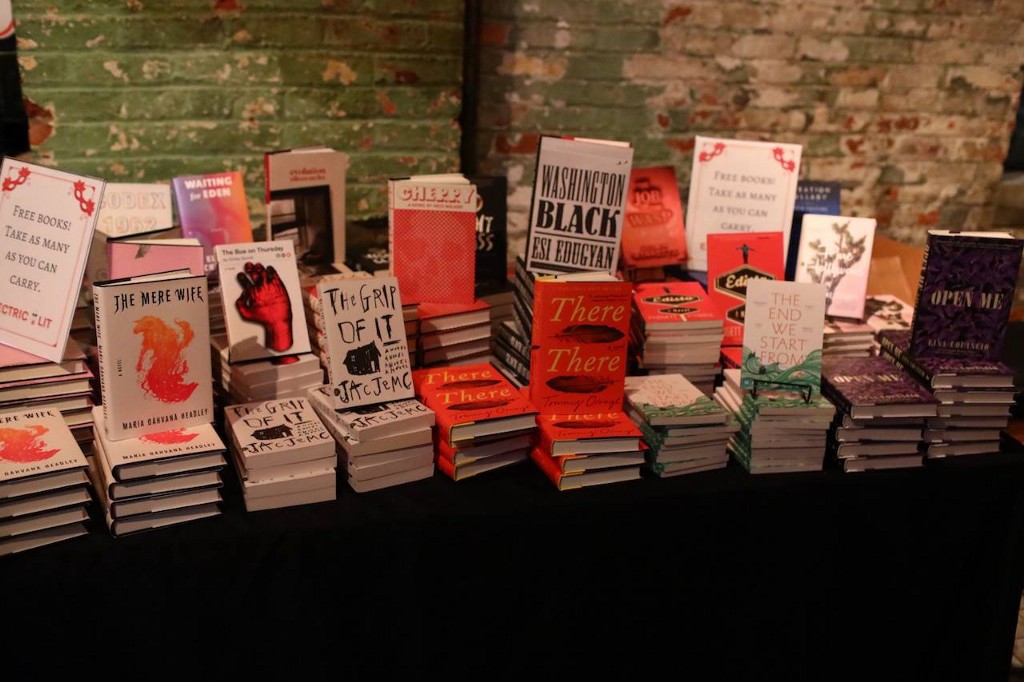
Thanks to our partners at Knopf and Grove and our friends at FSG and Catapult for stocking our book table with such a wonderful assortment of literary gems. Hope you snagged copies of your favorites from Tommy Orange, Eileen Myles, Ling Ma, and many more.
The whole Electric Literature team (top from left: executive director Halimah Marcus, associate editors Jo Lou and Erin Bartnett, marketing and membership manager Cristina Marcelo; bottom from left, editor-in-chief Jess Zimmerman, social media editor Brittany Allen, contributing editor Jenn Baker) had a ball, and adopted two new feathered friends! Edgar and… Allen.
Thank you to our sponsors and attendees for supporting us in our endeavor to make literature more exciting, relevant, and inclusive. We hope to see you next year!
To see all the photos from the evening, check out the full albums from Andrew Janke and the photo booth.
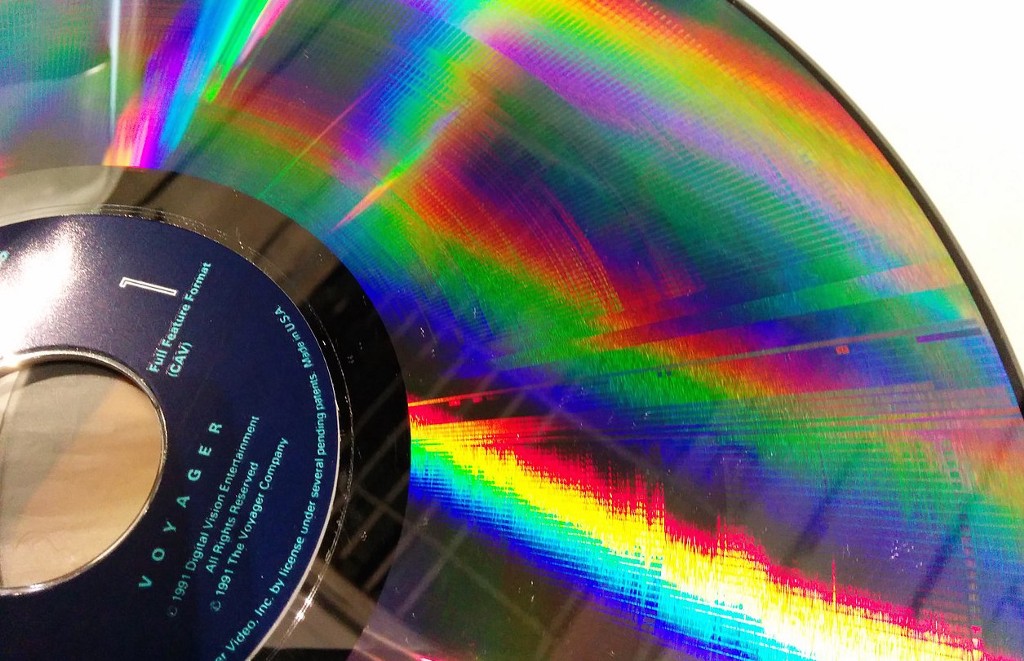
The glue used to bind LaserDiscs is breaking down. Years of improper storage and neglect, shuttered away in dark, damp garages — LaserDiscs are falling apart because we forgot about them. DVDs were smaller, cheaper. The quality is poorer but they were new, so we chose them over their bigger, clunkier forefathers. And then we made film so small that we didn’t have to carry it around at all, except for in our iPods and tablets. But the films that exist on LaserDiscs don’t exist anywhere else. The Blockbuster Video in Bend, Oregon is the last of its kind, and the glue used to bind LaserDiscs is breaking down.
What do we lose when we lose these physical media? Well, for starters, we often lose the content itself. This year, an Apple user complained to the company when a digital film they’d purchased suddenly and without warning disappeared from their library. Apple’s response: If the owner of those films (i.e. the distributor) decides to pull those films from digital circulation, you’re screwed. But more than that, we lose a connection to the past. That past isn’t always flattering — many LaserDiscs bear witness to an even less enlightened era of Hollywood — but it shouldn’t be allowed to disappear without even a scar.
What do we lose when we lose these physical media? We lose a connection to the past.
Sometimes physical media comes back from the brink. Remember when vinyl records came back into vogue in the mid-2000s, and suddenly everyone you knew was running out to buy brand-new record players? Crates of discount records popped up on sidewalks, new bands started releasing music on vinyl. And it hasn’t slowed down a bit — there’s National Record Store day, when you can find special edition vinyl from your favorite bands, and kitschy home decor made from records (bowls, coasters, etc.) is all the rage. Vinyl records are relics that made a successful comeback.
LaserDiscs haven’t had the same luck. It’s not surprising: big, heavy, fragile and expensive, this pre-DVD home media format wasn’t the most convenient way to buy and watch movies. They made their debut in 1978 (with Jaws) and stopped production in 2000 (with Bringing Out the Dead); in those 22 years, some of the best films in Western cinema were released on LaserDisc. Criterion Collection, the curated set of Very Important Movies that lines every film buff’s shelves, got its start releasing special editions of classic films on LaserDisc. But aside from some very enthusiastic corners of Reddit and your occasional suburban yard sale, there aren’t many places you can go to find, or even talk about, LaserDiscs. The idea that there are people who dedicate their careers, much less their free time, to preserving LaserDiscs is a surprising one. But film preservationists are a passionate group, and LaserDisc preservation is a small, but vitally important, facet of the larger drive to keep film history alive.
For a year and half of my life, I got to tell people I was a LaserDisc archivist. I spent a few hours every day (and full summer weeks) in my university’s film library, watching hours of film on LaserDisc, taking meticulous notes, and making a passionate plea to the administrators that preserving LaserDiscs was worth our funding. I talked to guys named Phil and Roger on the internet who could tell me literally anything I wanted to know about LaserDiscs: when a version of a film was released on LaserDisc, what type of glue the company used to seal it (which ended up being extremely important), and the precise minute mark where I could find a scene that never made it onto later DVD releases. I worked in a film library throughout grad school, so I spent most of my time prior to working on the special LaserDisc archival project watching movies and thinking about movies; I watched films all day long because it was my job, but the thrill of cracking open the plastic shell case of a LaserDisc, skimming the liner notes, and pushing play on the cartoonishly large remote made me feel like I was experiencing something different from my other library projects. They were the same films I could find streaming or on DVD, but on LaserDisc they felt like unearthed treasures that I had personally rediscovered.
At 25, I became extremely passionate about LaserDiscs. They are, along with my nostalgia for video rental stores and love of libraries, the foundation of my pro-physical media stance. Holding the LaserDisc cases in my hands reminded me how it felt to open a brand new CD and thumb through the booklet, feeling how fragile the disc was in my hands. Sure, I could copy the album to my iTunes library where it would, supposedly, stay forever. But the CD had mortality; the CD would scratch, break and warp. In the digital age these are drawbacks, but to me they’re an odd sort of comfort.
I’m in no way knocking the convenience and, for some, necessity of digital media. Kindles are great! Streaming movies is great! E-readers and streaming services have made books and film more accessible in a variety of ways. Digital media is just as useful as physical media, and I don’t think you have to disavow one to hold up the other.
But when we forsake the physical, we also lose a sense of history. Did you know that there are versions of films that were released on LaserDisc that don’t exist (in an official capacity) on DVD or through any streaming service? For example, The Alamo, with John Wayne, was released as a special edition LaserDisc with an hour of extended scenes, scenes that never made it to DVD. There are other films that had scenes purposefully repressed: Disney was particularly known for doing this. The Toy Story LaserDisc had a short Pixar film included on it that depicted a snowman ogling a very generously proportioned mermaid. The world is not hurting for overly-sexualized mermaids, but for the sake of film history, repression is always worth pushing back against.
The world is not hurting for overly-sexualized mermaids, but for the sake of film history, repression is always worth pushing back against.
Other LaserDiscs that were near and dear to my heart: Greed, an extremely rare, out-of-print silent film from 1924 that depicts the poignant collapse of one family as they grapple with suddenly becoming very poor after winning the lottery. The Magnificent Ambersons, directed and produced by Orson Welles, was released beautifully on LaserDisc by Criterion, and has since only been released on DVD once, with abysmal quality. And the original 1933 King Kong LaserDisc features the first ever film commentary, which was called an “audio essay” at the time. The commentary is slow and literary in a way that film commentary never is anymore, and it’s never been re-released.
Nostalgia has fueled a lot of comebacks. The return of vinyl was a worthwhile one: records produce a better sound, feel better and look great on our shelves. Less worthy comebacks have been made: I hear bands are releasing albums on cassette tape again. I hope that nostalgia uncovers LaserDiscs. I hope you all read my impassioned plea, and start searching garage sales, junk shops and eBay for some of the last remaining functional LaserDisc players. But I’d like to make an argument for a comeback that has nothing to do with nostalgia. After all, I have no nostalgia for LaserDiscs, whose heyday preceded my birth. I’m making a broader argument for saving physical media, spending the money it takes to preserve it. One of my favorite parts of being an archivist was getting to crack open the thick plastic of a LaserDisc case and open the book that always came with them, filled with behind-the-scenes photos, interviews with actors or just a few blurbs about the film’s release. LaserDisc packaging was less commercial than DVD packaging; it always read like a labor of love. There’s a joy in touch, a pleasure in the texture of a physical art object. The LaserDisc didn’t just hold the film, it was created for it; intentional. Designed to bring something to the viewer that they could only experience with that LaserDisc, that commentary, that blurb. It was a total package, a wonder of text, image and sound.
The glue used to bind LaserDiscs is breaking down, but they can’t disappear. Disney and James Bond and whoever else can try to pretend that a movie didn’t feature outrageously large mermaid breasts or outright misogyny, but the LaserDisc is a witness. And I think we lose a lot when we let them collect dust or, worse, fall apart. It’s our responsibility to preserve them, whether that means convincing library powers-who-be to archive them or starting collections of our own. Buying books, going to the library (did you know the books are just, like, free there?), buying movies on DVD instead of paying the (exact same?!) price to rent them digitally whenever you’re able. Physical media is worth our time because it witnesses our history. Preserving it keeps that history alive. I would love to see the day when filmmakers advocate for LaserDisc releases the way that bands have with vinyl. I won’t hold my breath. In the meantime, I spend my weekends hunting down players on eBay, scanning garage sales for discs and hoping I can do my small part.
Time is the inevitable foil of literary endeavors — or so it seems. An author’s mortality doesn’t necessarily impede a manuscript’s publication or posthumous literary fame. This reading list celebrates writers who got their best-known or most notable work out in the world once they themselves have passed away, in some cases, decades after their last breath. For various reasons, including infirmity, a hostile government, or straightforward rejection of a previously unpublished writer, these books didn’t make it to print in their author’s lifetimes, but instead achieved success in their afterlives.
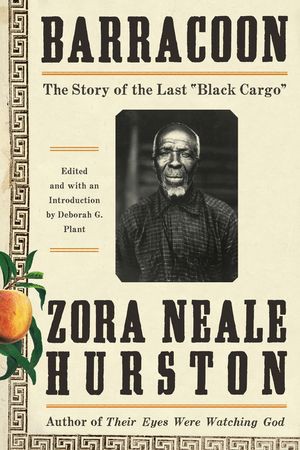
Zora Neale Hurston referenced Cudjo Lewis/Oluale Kossula, the last living person to be enslaved and trafficked from Africa to America, in her autobiography, Dust Tracks on a Road. But aside from that tantalizing mention, the shattering story — and Hurston’s manuscript based on interviews with Lewis remained locked away. Hurston apparently refused to adapt his dialect — from which the entire brutal story of his theft, and subsequent life and isolation in the New World is told — to standard English. That’s one story of the belated publication. Another is that Hurston may have been less enthusiastic about the project and/or was dodging her white benefactress Charlotte Osgood Mason, according to this theory. Whatever the reality of the book’s 60-plus-year journey to publication, its power as a document of American history is undeniable.
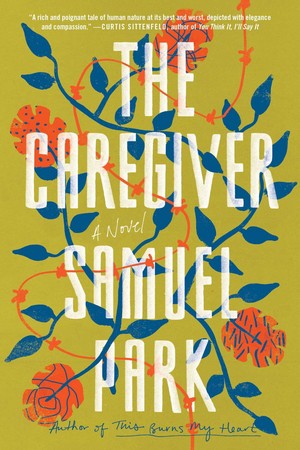
Samuel Park was born in Brazil to Korean immigrant parents and moved to California at age 14. He wrote The Caregiver while undergoing chemotherapy for late-stage stomach cancer and passed away before the novel’s publication. The caregiver in his novel is an undocumented Brazilian immigrant, Mara, who looks after Kathryn, a 40-something white woman who’s lived in Bel Air all her life and is dying of stomach cancer. Shifting between Los Angeles and Copacabana, the book turns over mortality, mothers, and mothering.
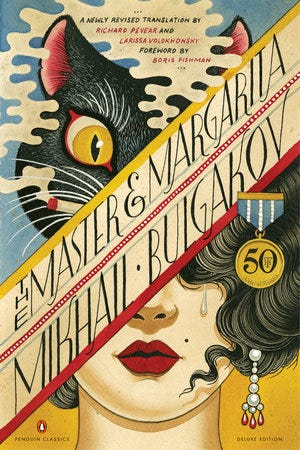
Mikhail Bulgakov wrote The Master and Margarita knowing full well it would not be published in his own (Stalinist) times. The novel was finally serialized in a magazine with some censorship 26 years after Bulgakov’s death. For me, The Master and Margaritais the best example of the novel as a full sensory literary flight. We move between Devil, who’s quite the shape-shifting looker (“his green left eye was utterly insane, and his right eye was empty, black, and dead”) arriving with a coterie that includes a hind leg-walking, vodka-loving cat in 1930s Moscow, where God and the Devil do not exist. Subsequently backwards to a headache-ridden Pontius Pilate on the eve of Jesus’ crucifixion in Jerusalem. Both the Devil and Jesus are mind readers. Oh yes, then there is a literary editor who refuses to believe the Devil’s prediction of his imminent decapitation, a frustrated poet called “Homeless,” and the mysterious “Master,” who has written a novel about Pontius Pilate. The novel has a giggle at the expense of the Russian literary scene via its depiction of the official writers’ union but also nods to tradition. Its epigraph comes from Goethe’s Faust. Bulgakov also drops lines from Pushkin’s poetry and has an opera of Eugene Onegin blasting. Plus, there’s an abundance of Tolstoy blouses, and the Oblonskys from Anna Karenina are referenced by one of the Devil’s cohorts. In our era of disbelief, global fake news, and Putin’s Russia, Bulgakov’s satire feels as crisp as ever.
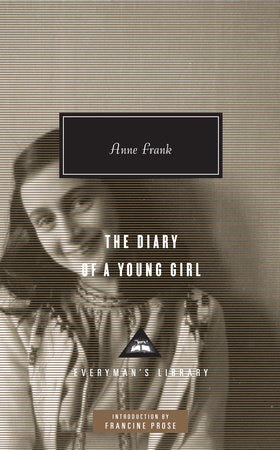
Perhaps the world’s most read (and especially tragic) posthumous book, The Diary of a Young Girl was published in Dutch in 1947, two years after Anne Frank perished from typhus in the Bergen-Belsen camp. Anne’s letters to her diary’s persona “Kitty” are filled with adorable observations and side-eyes such as “she’s perfectly sweet and perfectly boring” about a love rival. Her diary becomes increasingly somber as they prepare for their lives in the shadow and endure World War II hidden inside for two years. At a time when Nazi blustering is on the rise, we should all be re-reading Frank’s words.
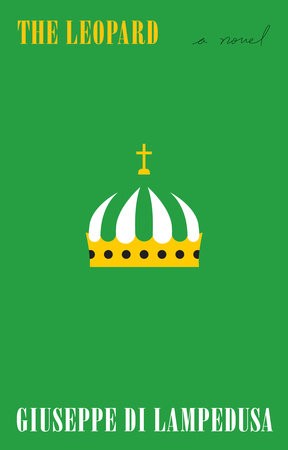
It’s never too late for a literary debut. Giuseppe Tomasi di Lampedusa, the last in a line of Sicilian princes, had his debut novel rejected twice. In 1957, couple of years after his death, The Leopard was published to great acclaim and is now considered an essential work of Italian literature. It’s one of those novels that readers are breathless about for good reason. Set in Sicily during the Risorgimento (the unification period of Kingdom of Italy, 1815–1871), The Leopard charts the crumbling of the provincial aristocracy and is based on Lampedusa’s ancestor. The island pulses decadence while its characters and status quo structures struggle with changing times. An alluring canine character/symbol, Bendicò, a Great Dane, features. The Leopard is an excellent primer on the formation of modern Italy.
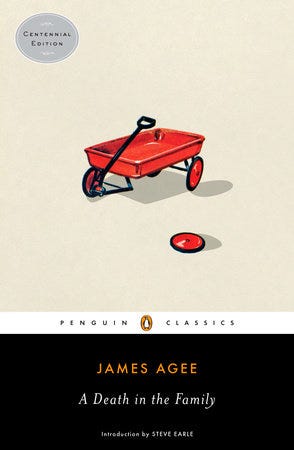
James Agee is most known for his nonfiction work with photographer Walker Evans on lives of Alabama sharecroppers Let Us Now Praise Famous Men. In 1958, two years after his passing, Agee won the Pulitzer for A Death in the Family. The novel is based on the death of Agee’s father. It’s impossible not to be reeled in by the its first line: “We are talking now of summer evenings in Knoxville, Tennessee, in that time that I lived there so successfully disguised to myself as a child.” It continues to follow the young Rufus through the untimely death of his father in a car accident, and its aftermath for the family’s members. Agee’s rendition of Rufus’s grasp of the death and how he processes adult conversations filled with words yet to be understood is both heartbreaking and magnificent.
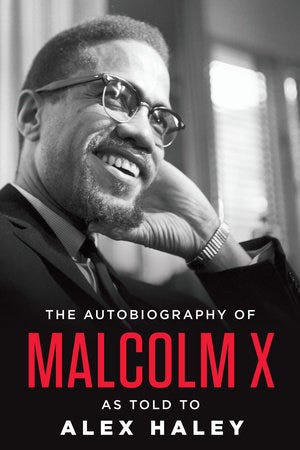
Nine months after he was assassinated in February 1965, Malcolm X’s only book, a collaboration with pre-Roots Alex Haley, was published. According to Manning Marable’s Malcolm X: A Reinvention of a Life, X believed that it would be miracle if he were still alive when the book was published. Haley finished the book after X’s death. Marable’s biography suggests diversions between the intents of the two men — Haley being a liberal republican. Regardless, The Autobiography of Malcolm X is an intense and all-engaging read. The book begins with his mother, with X in utero, answering the door when a gang of KKK members call to threaten the family. The book, which led to Spike Lee’s film starring Denzel Washington and the solidification of X’s global iconography, provokes more after the revelations of Marable’s biography. Incidentally, Marable, a Columbia University historian, died days before the pub date of the biography, which won the 2012 non-fiction Pulitzer.
M y fourth-grade fantasy was to have five older brothers and one twin brother; in reality, I had two little sisters. Sometimes in public I would slur my sister Debbie’s name so it sounded like “Danny.” Boys got to have more adventures and therefore more fun; pretending to have a brother was the closest I could get to both.
Having read many books for kids over the years with my now-teenaged daughter and son, I see that a similar belief about the relative potential for girls and boys to have adventures still holds true in children’s literature, regardless of strides made in the nonfictional world. While awareness of gender gaps is nothing new, I want to talk specifically about an issue in children’s chapter books I’ll call “the golden gender ratio.” Hearkening back to the ancient Greeks, the golden ratio is a mathematical relation deemed pleasing in art, architecture, and design. When a line is divided into two parts in the proportions of this ratio, the length of the longer segment divided by the length of the shorter segment is equal to the length of the whole line divided by the length of the longer segment, a ratio of approximately 1.618:1. Classic examples can be found in the layout of the Parthenon and Da Vinci’s The Last Supper.
Applying the ratio to middle grade children’s literature, we derive the following formula: For every smart/brave/adventurous fictional heroine, the author must supply 1.618 boys.
Applying the ratio to middle grade children’s literature, we derive the following formula: For every smart/brave/adventurous fictional heroine, the author must supply 1.618 boys. Rounding to the nearest whole number for human purposes, we see that adventurous trios must be 2:1 male: female. Or, to retain our original mathematical precision, novels for children must contain one smart/brave/adventurous girl, one smart/brave/adventurous boy, and one somewhat lacking boy, i.e., 1.618 boys.
While this pronouncement is based on the books brought home for and by my own two kids, an admittedly small and idiosyncratic sample, it was validated by a recent analysis of the hundred most popular children’s picture books of 2017, which revealed gender disparities along similar lines. Reporting on research conducted by the Observer newspaper and Nielsen market research company, Donna Ferguson notes in The Guardianthat main characters with speaking parts were twice as likely to be male, and, “on average, there were three male characters present in each story for every two females featured.”
The article goes on to quote a picture book publisher as saying, “If anybody wanted to put a weak girl in one of our books, I’d whack them over the head.” The problem, however, is not that girls are portrayed as weak — in fact, the opposite is often true — but rather that they are not portrayed enough. The example given of “new titles which break with tradition” serves only to underscore this fact: Julia Donaldson’s The Detective Dog, 2017’s bestselling picture book, features “a brave female dog [who] helps out a male sidekick and a male teacher.”
The problem is not that girls are portrayed as weak — in fact, the opposite is often true — but rather that they are not portrayed enough.
Of course, not every recent popular adventure series for kids follows the male to female golden ratio (Lemony Snicket’s A Series of Unfortunate Events series and Michael Buckley’s The Sisters Grimm series both feature two girls and a boy) but focusing more on girls is unusual enough that authors who do so, at least male authors, will be asked about it. Daniel Handler (Lemony Snicket’s given name) says in his essay, “The Righteous Anger of Girls,” that he writes more often about girls intentionally, because girls face more obstacles, which inherently makes a story more interesting. He writes, “A man walking alone down a road at night may or may not be a good story; turn him into a 12-year-old girl, and it’s already gripping.” Buckley, on the other hand, said in an interview that he is “often called a writer for girls” despite considering himself “a writer for kids — boys and girls.” Even so, he notes that “hands down,” his boy character, the fairy Puck in human form, is “the most popular character in the series. I get more fan mail about him than anyone else.” Let’s hope it’s because of Puck’s retractable wings.
The prime example of a series that embodies the golden gender ratio is, yes, Harry Potter. Though it seems unfair to pin the establishment of the literary gender gap on J.K. Rowling, is it plausible that the overwhelming popularity of the Harry Potter books set the ratio in stone? Or are these books merely emblematic of a larger, preexisting cultural bias?
In the Harry Potterseries and subsequent books featuring adventurous trios, if the alpha male is masterful in some traditionally male way — for example, in terms of bravery or skill in battle, as is Harry — then the second boy should be less so, as is Ron. In other words, one of the two main male characters should have qualities traditionally associated with the feminine, perhaps to soften or camouflage the overtly unequal nature of the ratio — and, according to my theory, to make the ratio more approximately approach 1.618:1. For example, in Rick Riordan’s The Lightning Thief, Grover, a sensitive satyr, establishes, of all things, an “empathy link” with the protagonist, Percy Jackson. (What could feminize/reduce someone to .618 of a boy more than that?) Grover also cries and stress eats and is less brave than both Percy and Annabeth, who happens to be the demigod daughter of Athena and thus exceptionally smart and skilled in battle. Likewise, in Nicholas Gannon’s The Doldrums, Adélaïde is the boldest of the three main characters, the most embracing of adventure; Archer, descendant of explorers on his father’s side, is also brave, though limited in what he can actually do by his overprotective mother; and Oliver, Boy Number Two, is simply afraid.
An astute reader might reasonably wonder: What is the role of the smart, brave girls in these books? Often the girl’s strengths are somehow distinct from the boys’ and thus vital for the team to be able to embark on their adventures at all — and ultimately to succeed — but Boy Number One is nevertheless the protagonist, the one for whom the outcome of the trio’s quest matters most. Archer, Adélaïde, and Oliver plan to rescue Archer’s grandparents from an iceberg (though .618 Oliver isn’t so sure). Brave, smart Annabeth nurses Percy back to health both before and after the trio’s quest — that is, Percy’s quest — to retrieve Zeus’s stolen lighting bolt and prevent a war between Zeus and Poseidon, Percy’s father. Before they set off, Annabeth tells Percy, “I’ve been waiting a long time for a quest, seaweed brain… If you’re going to save the world, I’m the best person to keep you from messing up.” Is the girl character merely the strong woman behind the successful man — the child version of putting one’s husband through dental school? Are the girl lead characters mostly there to support the boys in having their personal growth/epiphany so their manly courage can finally be revealed?
Is the girl character merely the strong woman behind the successful man — the child version of putting one’s husband through dental school?
Kate, the female lead character in Trenton Lee Stewart’s The Mysterious Benedict Society, consistently leads the way in all things physical and daring, but toward the end of the book the author points to how well the boys, Reynie and Sticky, are coming along. When Kate is captured by the evil Executives, her physical strength and combat know-how can no longer save her or the team; meanwhile, up in a tower with the main villain, “despite his terror, in the face of the Whisperer’s irresistible power, Sticky had resisted with all his might. He would never have done that if not for Reynie’s urging.”
Here we approach an interesting divide, wherein some female lead characters are both smart and brave (such as Adélaïde and Annabeth), while others are allowed to be smart and brave but not the best at both, in the way that Hermione is smarter than Harry but less skilled in battle, as if to ensure the girl’s magnificence approaches but never surpasses the lead boy’s magnificence. For example, Kate is by far the bravest, strongest, and most physically adept of the main trio of older kids, but she is by no means as brainy as Reynie and Sticky. (A fourth child, a toddler girl, seems mostly extraneous until the end, though she goes on to play a key role in subsequent books.)
And yet, despite his allotted magnificence Boy Number One often has some kind of deep-seated wound he battles internally in addition to the external menace the trio is battling. Most of these characters, girls and boys alike, have been orphaned, abandoned, or otherwise failed by their parents, and though the lead girl has often also endured hardship, the emotional impact of the lead boy’s ongoing struggles tends to trump hers. The aforementioned picture book publisher’s threat to whack creators of weak girls on the head notwithstanding, a de facto ban on weak girls in children’s books has resulted, however unintentionally, in a narrowing of possibilities and emotional development available to girls.
A de facto ban on weak girls in children’s books has resulted in a narrowing of possibilities and emotional development available to girls.
If girl characters must now be smart and brave and skilled, if they must start out strong and remain strong, then they are allowed only the slimmest of margins for personal growth, the traditional raison d’être of character-based literature. M.K., the little sister in S.S. Taylor’s The Expeditioners series, is not only “one of the best inventors of the New Modern Age,” according to the three siblings’ late father, but bold enough to bean two menacing government agents on the head with a wrench, thus instigating the trio’s escape into adventure. How could such a brilliant, badass ten-year-old possibly improve from there? Though boys in real life may have limited opportunities to explore and express emotions, boy characters, on the other hand, regardless of their strengths at the outset, seem to have more opportunities to grow and change than do girl characters.
A difference between books for middle-grade readers and young adult novels is the sex — which translates, as far as the golden gender ratio is concerned, into the two boys having sex and the girl feeling left out. In a non-representative sample of YA novels — ones my daughter liked enough for me to want to read — we see some interesting twists. In Andrew Smith’s Grasshopper Jungle, for example, the 2:1 ratio allows the main male protagonist to have sex with both his girlfriend and his male best friend when they’re trying to survive the imminent end of the world. (He does feel bad about this, though not quite bad enough to stop.) In Jandy Nelson’s I’ll Give You the Sun, a twin sister and brother both secretly like the same boy, their new next-door neighbor. He — spoiler alert — eventually reveals he is gay and therefore, at different stages of the book, appears to be a possible romantic partner for both twins.
So, where are the lesbians? That gay characters for teen readers seem to be predominantly male (my daughter also recommended Bill Konigsberg’s Openly Straight) appears to be another corollary of the golden gender ratio’s tacit notion that teens as well as younger children are more inclined to read about boys. Theories abound as to why teen girls enjoy reading about gay male characters, including that gay boys are seen as more sensitive and less threatening than heterosexual boys — like a boy but also like a girl’s best friend, somewhere between a girl and a boy — perhaps, dare I say, .618 of a boy.
I repeat, a little louder this time, where are the lesbians?
So, I repeat, a little louder this time, where are the lesbians? To find them I turned to the internet, which offered up lists of books with lesbian and bi characters — though obviously the need for such lists highlights the problem — which led me to more questions. Why do so many of the lesbian or bi characters have male-leaning or gender-neutral names (Cameron, Colby, Charlie, Taylor, Alex, Trout, Jamie, Louie)? Is this reflective of real life, or yet another nuance of the golden gender ratio, even in books clearly marketed to girls?
I often think about how we are teaching children to see the world. Back in second grade I remember being shocked when my teacher explained to the class that we must use the pronoun “he” if a group contained even a single boy. (Even when you had one hundred girls and one boy? Yes.) Only recently, in an era in which what pronoun to use is surfacing as a significant identity issue, has the “singular they” been finally ruled a legitimate replacement for yesteryear’s “he.” Even so, apart from biologists and entomologists, well-meaning people routinely refer to insects and amphibians and hermaphroditic sea slugs as “he” — “he” in our culture and language representing the default — particularly when simplifying the world for young children.
The golden gender ratio raises an important question: To what extent do girls count? It’s accepted that girls will read novels about boys but boys won’t read novels about girls. But why is this the case, and why do we think that’s okay? And is it also the case that by the time they reach high school many boys won’t read fiction at all, becoming less willing to enter the realm of the imagination and emotions — and so authors and publishers are merely doing whatever they can to lure them in earlier? A high school English teacher friend tells me most of her classroom sets of books focus on males, such as Lord of the Flies, one of her least favorite books. Maybe the problem, she says, is that adults (publishers, teachers, parents) choose books they think “everyone” will enjoy.
To what extent do girls count? It’s accepted that girls will read novels about boys but boys won’t read novels about girls. Why do we think that’s okay?
Back in second grade I came to recognize that though girls could wear both dresses and pants, the notion that girls had more choices was a hollow one — who wanted to wear dresses? Likewise, I see now that the current crop of over-the-top fearless genius girl characters represents an improvement and yet only partly so; options for girl characters — and the concomitant options that readers see for real girls — need to widen still further. The current choices seem to be either being invincible or not existing at all. While one might wish for the arts to lead the way to a more egalitarian future, that mission has not yet been accomplished for children’s literature. While it’s great that adventure books are now routinely featuring smart, strong, dynamic girls, we’ll know girls have truly achieved parity with boys when they can be not only as strong but as wounded and vulnerable — and more to the point, when they are as numerous, when they abundantly populate books both as leaders and regular kids.
Novel Gazing is Electric Literature’s personal essay series about the way reading shapes our lives. This time, we asked: What’s a book that almost killed you?
Somehow, Henri Charriere’s memoir Papillon convinced me that it would be a good idea to pee on an angry bull’s nose.
The bull didn’t appreciate it; he knocked me off a fence post, across a deep ditch and onto a gravel road. I don’t think it would have helped if I’d told him that a work of literature made me do it.
Papillon, released in 1970, deals with the author’s 1931 murder conviction and nine subsequent attempts to escape from French colonial prisons. There have been two really popular movie adaptations. The first, featuring Steve McQueen and Dustin Hoffman, appeared soon after the book’s English translation and a second was just released in 2017 with Charlie Hunnam and Rami Malek. I became interested in the story after reading a cartoon satire of the McQueen movie in Mad Magazine.
Charriere’s book is a little like Stephen King’s Shawshank Redemption in that both main characters are wrongfully convicted yet remain philosophical about their brutal punishments. The climactic prison break in each is linked to a calm acceptance of their own anti-social character traits.
The bull didn’t appreciate it. I don’t think it would have helped if I’d told him that a work of literature made me do it.
The French word Papillon means “butterfly” and refers to a large tattoo the narrator has on his chest. In fact, others always refer to him as “Papi” rather than Henri and his character is completely defined by a stubborn desire for freedom (and eventual rebirth — symbolism! — as a responsible citizen.)
Contemporary reviews praised the main character’s spiritual strength, but as a young reader I didn’t care about that. I was entranced by Papi’s physical survival, and adopted the book as an ersatz Boy Scout Manual full of practical advice that could be applied in life-crises that Baden Powell was unlikely to have imagined.
For example, one of the convicts, Julot, avoids transport to the horrible island prison compounds of French Guiana by injuring himself so he will be confined to an infirmary on the mainland. He deeply slashes his knee then pretend-stumbles down the ship’s gangplank. He is happily stretchered away, and later drags a urine-soaked hair through the cut so it will go bad and prolong his stay at the hospital. The anecdote contained just the right amount of grotesque detail to convince me it was true: the hair had to be “dragged” through the wound to ensure a deep-seated infection, you couldn’t just splash warm pee all over the surface of the joint. I was firmly convinced that if ever I found myself in a similar situation I would be well-advised to follow Julot’s recipe exactly.
Similarly, if you are escaping from Devil’s Island on a raft constructed from bags of coconuts, you have to chart the pattern of swells and wait for the seventh wave to carry you safely past the breakers and out to sea. Jumping into the surf too early will just result in being washed back against the rocks. If you are hiding out in the jungle, trying to set the broken leg of one of your fellow escapees, you must pull on his foot until he feels the bones are in the correct place, then apply sticks for splints; you can’t just immediately wrap the injury. If you secrete two metal “chargers” full of money in your rectum, they will always come out deepest first, the opposite order that you might reasonably expect. In a barren cell, you can duplicate the hallucinatory effects of drugs by laying a blanket across your mouth inducing a mild form of oxygen deprivation.
Those little factoids seemed like gold nuggets in the stream bed of the main narrative. The odd, parenthetical inclusions were proof that the memoir was true, because who could make that up? Who would even try?
In retrospect, however, all of the eccentric details in Papillon that I found so convincing could just as easily be interpreted as suspicious embellishments. Julot, in particular, should have been able to count on the filthiness of his environment to infect his knee; artificially introducing germs into the cut with a pee-soaked hair was an unnecessary flirtation with death or clumsy amputation.
At first reading, however, I was simply happy to glean so much practical knowledge.
The odd, parenthetical inclusions were proof that the memoir was true, because who could make that up? Who would even try?
The book also subtly encouraged a cavalier attitude towards one’s own physical well-being that I found strangely appealing. Characters were knocked unconscious by guards without suffering permanent head injuries; they endured years of malnourishment without losing teeth, and wandered through jungles without becoming malarial. Immediately after each failed escape attempt, Papillon shrugged off his additional punishment and started planning the next “cavale.” It wasn’t his unbroken spirit that impressed me, it was his unbroken body.
Papillon reinforces the young-person myth of indestructibility. The philosophy is knitted deeply into every page of the story, but for some reason the incident I chose to mimic was Papillon’s interaction with Brutus the bull.
After several escapes and recaptures, Papillon is transported to a compound on Royale Island. It’s part of the Iles de Salut group that includes Devil’s Island, which was the absolute last stop for incorrigible prisoners. On Royale, the inmates live in barracks rather than conventional barred cells and are allowed work details to break the monotony of incarceration and to contribute to their upkeep. One of Papillon’s jobs is to tend a bull named Brutus, and to get the stubborn animal to haul a thousand-gallon barrel of water up a hill to sluice out the toilets. The animal, he writes, “weighed over four thousand pounds and was a killer.” Papillon has no experience as a herdsman, but he is given the hazardous assignment anyway, and there is no mention of training or even helpful advice. But Papillon forges a successful working relationship with Brutus nevertheless.
It’s still surprising to me that all of Charriere’s bizarre tales of murder, cannibalism and betrayal couldn’t compete for memory space with one off-hand comment about this bull: “I made friends with Brutus at once by pissing on his muzzle: he adored lapping the taste of salt.” I unreservedly accepted the comment as truth. Superficially, it made sense, because I’d already heard about moose and deer being attracted to mineral licks, and even sucking road salt off the margins of highways. And Papillon doesn’t treat the incident like a new discovery; he immediately urinates in the animal’s face with a great deal of confidence, as if the technique is common knowledge. Besides, the incident was inconsequential to the plot of the story and I couldn’t imagine the author lying without an obvious purpose. Thus, I promptly incorporated it into my otherwise meager knowledge about bulls, and was given no reason to doubt it, until the weekend when I attended a friend’s wedding on Vancouver Island.
A group of us was staying for four days on a farm owned by the bride’s parents. It was a beautiful area and invited sight-seeing, so on several occasions I walked down a road that ended with a spectacular view of the ocean. An enormous bull was in a fenced field along this route and the animal followed my progress when I walked by, like a territorial farm dog bounding from one corner of its pasture to the other, snorting and pawing, charging and stopping. I’d never seen a domestic animal like this before. For one thing, he still had his horns, and they were shockingly broad and un-blunted. Secondly, the bull had rippling muscles, as if he had been bench-pressing tractor axles in the exercise yard of a prison farm, not grazing for fourteen hours a day and occasionally inseminating a neighbor’s cow.
The fence containing the beast was solidly built, but really, it was just wire stretched between posts. If the bull really wanted to, he could have pulled the entire contrivance from the ground with a shake of his head. He could have used his horns as needles and knitted a dump truck with the metal threads.
This was a scary animal.
To be honest, I was a little drunk when I experienced the sudden Papillon flashback. But late one night, after a wedding rehearsal party, I decided it would be appropriate to befriend the enormous beast just as Papi had won Brutus over, by peeing on its nose. I wasn’t so inebriated that I considered climbing into the field, but no special effort was necessary to get close to the bull. I just had to stand near the fence and he would appear, howling and vibrating with anger on the other side.
Unfortunately, the animal was as big as a locomotive and there was no chance of hitting my target from ground level. So, I climbed up the network of posts at the very corner of the field. Here, two timbers had been driven into the ground at sharp angles to brace two other uprights and provide solid anchors for the winch that must have mechanically tightened the wire strands.
It was, therefore, a very stable platform.
I levered my drunken body up the fence, using the wires as ladder rungs. I didn’t feel particularly threatened at this point, because the animal’s enormous head-plus-horns simply couldn’t fit into the corner. It doesn’t really make sense, but the beast treated the shiny metal filaments with a lot more respect than they deserved.
I planted my feet on top of the posts, shoulder width apart, and unzipped. The bull was quivering with rage, five or six feet away, with his shoulders at the level of my feet, and his upper lip curled malevolently. I paused for a moment then felt that weird sensation of unleashing a stream of watery beer with uniform mechanical pressure, as if my urinary tract were made of industrial strength valves and conduit rather than scraps of viscera.
I planted my feet on top of the posts and unzipped. The bull was quivering with rage, five or six feet away.
The liquid arced through the moonlight and spattered against the flat oblong expanse of bull-face between eyes and nostrils. It produced the loud, hollow noise of water from a garden hose lashing against a metal garage door.
I sort of expected the bull to tilt his head or extend his tongue, to give some signal that he was savoring the saltiness and confirm the truth of the anecdote in Papillon.
The bull paused, but gave no indication that he was enjoying the cascade. He may have been simply stunned by my foolishness. It was one of those situations where time is oddly distorted, but I imagined a fairly long liquid encounter.
Then the bull charged my fence corner.
His horns raked through the wires as if they were spider webs and his enormous head thumped the timbers right underneath my feet. The impact was stunning and I was thrown backwards a surprising distance, hitting gravel on the other side of a deep ditch. I don’t remember zipping up, or peeing all over myself, but that may be selective.
I do remember being happy that I hadn’t broken any bones, but tremendously disappointed that the book had misled me. For years, I had carried that false scrap of knowledge within me like a time bomb waiting to be detonated by circumstance.
For years, I had carried that false scrap of knowledge within me like a time bomb waiting to be detonated by circumstance.
I was pretty young when I read Papillon, but I knew, deep down, the story shouldn’t be taken literally. Very early in the book, the main character’s impression of Pradel, the prosecutor, is delivered through an imaginary speech: “My hands may not look like talons, but there are claws in my heart that are going to rip you to pieces.” Many of Papillon’s descriptive passages are positively delusional.
But that’s the interesting intersection between literature and young idiots. I let the book influence me, even as I understood that it was untrustworthy.
I now better understand the strong incentive to invent outlandish details like pissing on a bull’s nose and liberally salting them into the narrative. Despite book reviewer’s’ assertions that Papillon’s spirit is indomitable, he often appears disaffected and emotionally flat. Henri Charriere must have sensed it, and overcompensated with a series of those reckless-heroic encounters.
In his first prison escape, Papillon buys a boat from the lepers of Pigeon Island. He meets the leaders of the colony to ask for help and agrees to the three-thousand-franc price tag for a sixteen-foot sloop capable of ocean travel. While they talk, Papillon is given a metal bowl to drink from and happens to notice a finger stuck to it. One of the leaders of the leper colony, La Puce, had lost the digit while passing the container to his visitor.
The threat of infection was terrifying at the time, but Papillon is nonplussed as the body fragment is casually tossed onto the fire. La Puce then announces that he has “dry” leprosy and isn’t contagious, despite his frightening appearance.
Other characters are impressed by Papillon’s calmness. But, to me, his non-response borders on insanity: wouldn’t an emotionally normal person have some reaction to an unexpected severed finger, no matter how non-communicable it was? Offhand comments like the one about peeing on Brutus’s nose are meant to distract attention from that zombie-flatness.
Papillon resonated with me when I was young because of the cartoonish indestructability of the main character: a pretty standard, fragile-male response. Over time, I became fascinated by Papi’s sociopathic disconnect from others — which the publishers mislabeled a triumph of the human spirit.
But I suspect the book’s amazing world-wide popularity is related to the main character’s brand of stoicism. Papi is able to act without agonizing about his choices, and that’s pretty rare in the modern world. He can drink from a cup handed to him by a leper, stab a snitch, or abandon his Columbian wife in the jungle, as if it’s no big deal. Readers, who might struggle with choices on a breakfast menu, can fantasize about a life unburdened with recrimination.
I’ve always had a grudging respect for that species of tough guy — at least until my attempt to experience a bit of their false freedom led me to pee on a bull.
Getting knocked off a fence, however, provided a philosophical adjustment, a reminder that Papillon’s take on the world, while interesting, ultimately isn’t right.
If the bleak daily news cycle has you grasping for some comfort, you’re not alone. Google searches for “anxiety symptoms” hit an all-time high in October, according to Google Trends. With the swearing-in of Brett Kavanaugh to the Supreme Court and news that climate disaster is closer than we thought, hope may be the farthest idea from our minds.
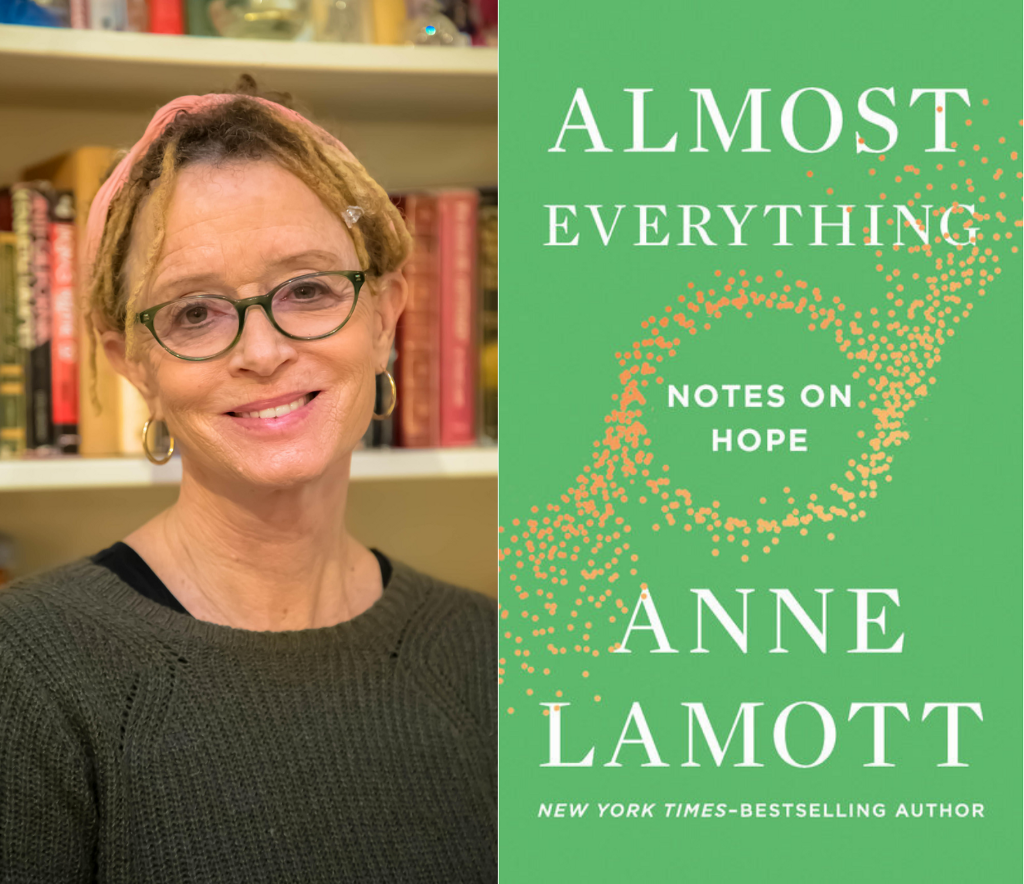
It’s easy to assume that the only people who possess cheery thoughts like hope are those willfully not paying attention. But as Anne Lamott shows us in her essay collection, Almost Everything: Notes on Hope, faith can exist side-by-side with uncertainty, as humor can with doom.
Purchase the book
Almost Everything, as you might expect from the title, includes a little bit of everything, connected by the central threads of humor and resilience against adversity. The essays in the collection are small morsels, offering tastes of Lamott’s wisdom about enduring themes like faith and family.
The rest of Lamott’s oeuvre spans decades and genres. Her first novel, Hard Laughter, was published in 1980. Since then, Lamott has published 18 books, including novels and essay collections. While her welcoming style often uses wit, she has covered topics, like alcoholism and cancer, that many other writers find difficult to render on the page, much less joke about.
It’s more important than ever to find humor in the darkness. As many of us stand up to resist ingrained systems of oppression, whether in the voting booth or in our daily lives, with each setback, it becomes easier to see the problems of our time as insurmountable. But if we lose hope, we’ll stop fighting, and our struggle will have been for nothing.
Almost Everything offers a dose of levity, but it doesn’t stray from the truth. At a time when many of us, myself included, require that kind of irrepressible wit just to get by, I had the privilege of talking to Lamott about her new book, writing, and staying hopeful in these uncertain times.
Rebecca Renner: Almost Everything is about hope. Recently, with the news about politics and the environment, it has been hard to find many things to be hopeful about. How do you stay hopeful? And how to you keep writing?
Anne Lamott: I get just as freaked out as anyone. I have a 9-year-old grandson who will be 29 at the latest when they say that huge evidence of climate disaster will appear — although it will probably be earlier. And so I grieve. But I also say with confidence that we do what we can. I send people money. I march, I donate, and I try to focus on the solution.
I have a lot of faith in God and in community and in goodness, the incredible goodness of the American people. But I also have a lot of hope in science. People’s response will be profound and astonishing.
I have a lot of faith in God and in community and in goodness, the incredible goodness of the American people. But I also have a lot of hope in science.
RR: Has the grief you mentioned ever stopped you from writing? Have you ever had one of those days where it’s just too much?
AL: Oh sure. Of course. Who hasn’t? But it’s usually because I see the news, and I make up stories that are just catastrophe thinking. I grew up with a lot of anxiety and fear. My parents were unhappy. One of the ways children cope is to do this kind of prophylactic catastrophe thinking, to imagine the worst.
There’s this funny 20 questions, like the 20 questions of alcoholism you’ve probably seen. Now this is the 20 questions of thinking. It says things like: Do you ever think alone? Do you ever lie about your thinking? Has thinking ever kept you from going to work? So I try to separate out what is true, which is to say what is real, what is science, what I can do to help, and what are the stories I’ve just made up that in my childhood seemed to comfort me, paradoxically.
I’m beyond grateful for the huge new energy you see from people in their twenties, which you didn’t see 20 years ago. You know, I felt like women were expecting us old feminists to march for women’s rights and abortion rights, and now people are really involved again. At the marches, it’s half younger people now.
There’s been a generational coming together, and people are pushing up their sleeves and staying informed. That’s all you can do. We stay aware. We do what we can. We show up. You know what? We do what’s possible.
RR: Do you think there is a healing quality to writing? Can writing help us keep moving forward?
AL: Of course it heals the writer to get to take [stories] from their rat exercise wheel of a mind — if they’re anything like me. You get to express it, to take it from terror to creation. If I write something and give it to you today — and it helps you feel less freaked out or impotent — and you give it to five of your friends, and they pass it on. That’s the way truth and hope spread — it’s quantum. Stories are what save us. They always have been.
Stories are what save us.
RR: I’m interested in how the stories we tell ourselves about ourselves shape our lives, and I think that is one of the themes of your collection. So let me get really philosophical with you: how much do you think we’re in control of our own narratives/our lives?
AL: In my own case, I began making up stories about myself to explain why my parents were so unhappy with each other. In the story children tell, it must be them. They must be causing some of the unhappiness between their parents, because otherwise you have zero control. And so you start to tell yourself a story about how you’re defective or annoying. And that explains it. That explains that the chill in the air at dining room table, and that gives you control, because then you can try to fix yourself — which is not possible — or you can try to be less annoying and more adorable and charming. So we develop the skills of people pleasing.
If you grew up in an alcoholic or addictive family or a family with mental illness, just about the first thing you agree to is not to see what’s going on. If you see it, it makes them so mad, and they tell you you’re imagining things. So you need to stop seeing what’s there. Part of the great healing of writing is to realize that what you see is going on, and what you see is true, and you’re a reliable narrator.
I think as powerless, really frightened little children — as most of the people I’m close to were, holding your breath and walking on eggshells, hoping dad isn’t drunk or that mom pulls it together and doesn’t have to go back to the doctor — we lose the most essential trust we can have, which is in ourselves. Writing — which takes tremendous trust and faking it, shitty first drafts, and rewrites and asking for way more help than your parents or the culture ever told you you deserved — is the way. Asking for help is the way we develop trust in ourselves. Writing really terrible first drafts is how we develop trust in our writing.
RR: Talk to me about your techniques for writing humor, especially when you’re writing about difficult subjects.
AL: I seem to trust that somehow my voice is helpful or comforting to a number of readers. My first novel was called Hard Laughter. It came out when I was 26. It was about my father’s brain cancer. We knew he wasn’t going to recover from it because it was a metastasized melanoma. I wrote the novel as a kind of love letter to my father, knowing he wasn’t going to live. He actually lived long enough to read it and to know that it was going to be published by Viking, so it was kind of a miracle. It was called Hard Laughter because it’s really, really hard to laugh when you feel that it’s like the end of the world, which it was. I was young. I was 23 when my dad got sick. It’s the same feeling as when we got the climate news on Monday. It just feels like the end of the world, and it’s really hard to laugh.
You can do the fake laugh so that people won’t think you’re a buzzkill, or you can stay in the truth and in the sharing of the bad news, the brain cancer or the climate change, and you and your friends will just start laughing. There’s a lot of laughter in doom. I’ve always said laughter is carbonated holiness, and it really is a spiritual experience when we can laugh. It breaks our shells, and then stuff gets in, breath gets in, light gets in, nourishment gets in.
You discover really by 20 what resonates for you, what you long to come upon, what voice, what material, what tone. You love, say, historical novels, you just get so lost in them. And in reading and in writing, that’s how we get found, by getting lost in the story.
I’ve always said to my writing students: Write what you’d like to come upon.
And that’s what I have always done. When I wrote Hard Laughter in the 70s, there was not a word on a family coming through cancer that wasn’t a tragedy. For our family it was a tragedy, but also we laughed, and we found a lot of comfort in sticking together. And I thought, God, I’d love to come upon something like that, a real family, not a Hallmark family.
So write what you’d like to come upon, because finding what you want to come upon is like finding your soul.
RR: One of the things that strikes me most about your writing is that you can make the intangible tangible. How do you write about abstract concepts we cannot see?
AL: If you showed me a paragraph you love that I’ve written, I can tell you the first draft looked like I was trying too hard, or it was full of clichés.
There’s a lot in Almost Everything about being able to give up identities, like the identity as the family flight attendant or the family diplomat. That’s really hard to write about without it seeming like a self-help book.
I always have a pen. That’s the secret to my writing. I always have a pen with me. All my blue jeans have a little ink stain in the back pocket. If I can’t find paper, I can write on my arms and hands and transcribe it later.
I might say to my partner, Neal, ‘Talk to me about how you’ve jiggled free from some of those early identities.’ He’ll start talking, and all of a sudden, I’ll go, ‘Don’t say anymore!’ Then I’ll scribble that down.
But I write lots and lots of drafts. Anything you like began as a shitty first draft. And the same thing can be said for any other writer you love. I hate criticism, hate it, but I’m so grateful for good feedback. I’m so grateful for editors, copy editors, and friends.
When I was coming up as a writer in the 70s and 80s before we had computers, when Correcto Tape was a huge breakthrough or Liquid Paper, people would talk about putting your work through the typewriter again. That meant you pushed back your sleeves, and you wrote one more draft, and you got really tough with yourself. You went through it paragraph by paragraph, sentence by sentence. A lot of it you could leave, but some of it you couldn’t — just like real life.
RR: What stories have you been reading and sharing? What is giving you hope?
AL: I loved Dopesick by Beth Macy. It reads like fiction in the sense that she’s such a good writer. It’s about the addicts and the parents and the towns affected by the opioid epidemic. But it’s also about the pharmaceutical companies’ complacency in creating the epidemic and the solutions that are working here and there, which is all we ever have.
I just read a book I really loved, a novel called The Devoted by Blair Hurley. I love books on faith, and this is from a Buddhist perspective. It’s about a very committed young woman going up the ranks at a zendo in Boston. It has everything I like to read about: devastation and finding your way home. It’s about the crumbs that lead us back to the past. She’s the kind of writer — I know you know this feeling — that makes you so jealous that you know you can’t write like that, you can’t think of those images, but you’re so grateful to read them. Because they’re mesmerizing, and they give you hope. Great writing gives you hope.
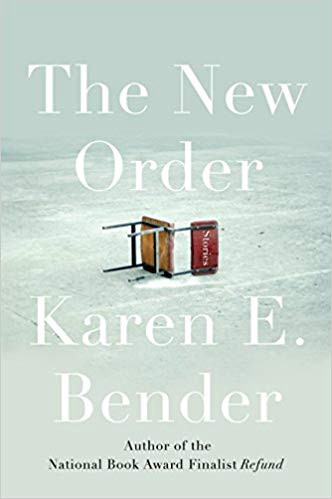
I admire Karen Bender’s stories for a number of reasons: their lyrical compression, their humanity, their structural innovations, and the fairness and respect she shows all of her characters. I loved her 2015 story collection, Refund, for the way she wrote so directly about fear, money, and especially anxiety — global and domestic, economic and familial. Her new collection, The New Order, moved me just as deeply.
Purchase the collection.
The book shines a penetrating light on our current political moment without a whiff of sanctimony. If I were to describe these stories (always impossible with the best ones), the topics would sound as if lifted from a CNN news ticker: sexual harassment, school shootings, political campaigns, the emotional toll of living under constant threat. And yet, there’s nothing preachy about the writing. Long after I finished the book, I found myself thinking less about the scenarios and more about the characters caught up in them. Bender renders her people with such precision and nuance, such warmth and compassion, that I cared about them as intensely as I do the people in my own life.
In the collection’s superb title story, the unnerving dynamics of teenage rivalry are juxtaposed with the terrifying landscape of gun violence. Take the story’s opening lines:
“We were friends, or we knew each other, and both of us had been in the other room when the attack occurred. This was in the 1970s, when these events didn’t happen at schools. A teacher and a ninth grader were shot in the cafeteria and another teacher was injured so that, from then on, her arm hung down like a broken wing.”
The ninth-grader who was killed had been a talented cellist. Her death changes the order of her school orchestra, hence the story’s title. The narrator, also a cellist, fiercely wants to claim first orchestra seat, and what follows is a sharply observed rivalry between her and another accomplished musician.
Nothing I’ve described here gives anything away because everything that comes after is a complete surprise. A story I initially thought would be about a school shooting becomes a powerful meditation on teen cruelty, and a story about teen cruelty becomes a staggering, incisive examination of female friendship, loneliness, guilt and ambition.
Bender’s elastic use of structure is reminiscent of Deborah Eisenberg and Joan Silber — all three wield a pace that’s unexpected and undulating. They consistently surprise by speeding right past moments that would seem crucial in a more conventional story, only to linger in the quieter, less-explored precincts of a character’s psyche. And like Eisenberg and Silber, Bender’s stories are long — “The New Order” clocks in at 27 pages. Bender luxuriates in the slow moments of her characters’ lives in interesting, experimental ways, conjuring an ending that’s at once shocking and emotionally resonant. There was a moment in “The New Order” when the story seemed to come full-circle. For another writer, this might have been the stopping place, but not Bender. One of the reasons the piece was such a visceral experience was that the story kept going and going, cracking open the narrative to reveal aspects of these characters’ lives that I never could have imagined.
Karen Bender is, hands down, one of our best story writers — and for anyone who hasn’t encountered her fiction, “The New Order” is the perfect place to start.
We were friends, or we knew each other, and both of us had been in the other room when the attack occurred. This was in the 1970s, when these events didn’t happen at schools. A teacher and a ninth grader were shot in the cafeteria and another teacher was injured so that, from then on, her arm hung down like a broken wing. The girl who was killed was a member of the cello section, and she was named Sandra. We were all part of the Intermediate Orchestra of our junior high school, and she had been in the cafeteria, where we were also supposed to be ten minutes after she had left the multipurpose room. The cafeteria was serving fish and chips and Sandra left early because she wanted to be first in line. The man went to the table and shot two teachers and also her, one, two, three, everyone looking on, in disbelief; the man had been one of the fathers at the school.
As part of the process to get us past the incident, which was what they called the attack, after the assemblies, and the short and not fruitful discussions in homeroom telling us to report any suspicious behavior to the vice principal, our orchestra teacher, Mr. Handelman, decided to proceed as usual. In two weeks we were supposed to audition for our chairs in the orchestra. We would each play for one minute and the teacher would rank us on tone, musicality, and pitch, and arrange us in a new order.
Lori and I had become, strangely, better friends after the incident. We didn’t know Sandra very well — mostly we knew her as a good cellist. She had a deep tone that you could hear in your stomach, when she played, that made the air feel like velvet. She usually occupied Seat Three. Lori was Seat Two. She had always been Seat Two. Seat One went to John Schubert, who was adept at pieces that required rapid finger work, whose thumb slid buttery up the strings and who was always, in a way that seemed almost supernatural, on key, but whose tone was sometimes thin, as though revealing some deep unsolved craving within him. We all regarded each other with sharp, interested eyes.
The new order was especially important because the first cello would perform a short, one-minute solo as part of a fall festival performance for the school. In the center of my heart, I wanted to be Seat One someday. I practiced a lot. I was going to audition with my favorite piece, “The Dying Swan,” which felt perhaps problematic, but it was what I was best at playing, and I loved how I felt when I played it — my chest pressing against the wood of the cello, the sense that I was inside the music, which felt like the heart of everything, and, at that age, I wanted to crouch inside the heart of the world.
I tried not to think about Sandra or the teachers when we sat in the cafeteria. We had not been allowed in it for a week as the school administration scrubbed any evidence of the incident from the room, but, unfortunately, there was nowhere else to feed us, so they let us back in. The room was now clean in a stringent, terrifying way, as though it represented all the thoughts we were not supposed to have about our futures. There were rumors about the incident. Everyone wanted to have a theory. Sandra had been wearing a tube top, and the murderous father instructed his daughter, a ninth grader named Jen, not to wear tube tops; he was rumored to find them immodest and harmful in some way no one could explain. Or he shot at Mrs. Simon, an algebra teacher, who had recently turned him down for a date, and Sandra, unfortunately, just got in the way. There was no clarity on anything (as though there could be), but the cloudiness of the incident made everyone eager to contribute to the memorial the school now set up in a corner, a peculiar display with a few bouquets of flowers, some posters with large hearts drawn on them. Everyone was eager to show a capacity for love.
We talked about the other members of the orchestra with an intense desire to categorize them, sort them in ways that were flattering and not. Lori assumed a new mantle of authority following the attack, a new hardness that made it seem she wanted to press herself like a bug into amber, into the air. I looked at Lori and I wanted to fold myself into her, which was an impulse that alarmed me; I didn’t know why I thought I would be safe in her; I wanted her, or someone in the world, to locate me. I wanted this so much I was dizzy. We glanced at the teachers, the other students, wondering who might kill us. It could be anyone, apparently, and it was unclear what could be the armor to stop it.
In this realm of anxiety, we briskly, authoritatively, ranked the others. We agreed that John was overrated in his playing but had a beautiful way of spinning the cello when he was bored, his long legs stretched out, and that Tracy L. in the flute section was a bad player because her high notes never quite hit the right way.
Lori called her mother a loser; her parents divorced, mother always out, or her mother’s girlfriends coming over and all of them drinking vodka shots in the car. My parents were always home, but moved as if the air were made of Jell-O, and they believed the world was always about to break. We sat in that gleaming, scrubbed cafeteria and ate our sugary hamburgers. The world was trembling around us, and it seemed it was going to eat us. We did not talk about the incident. We did not talk about everything we did each day to our classmates in our minds, for the boundary between the violence outside and inside our minds seemed thin and permeable; routinely I would be murdering an unbearable violinist who gave me cold, diminishing looks, or pressing myself naked against the first clarinetist who had delicate, beautiful arms I wanted to wrap around me; I wanted so much, always; the world was spangled and nothing felt quite real.
Lori talked on and on about the mundane, about the Corkys shoes she desired and the way she glared at the boy who once spit at her when she didn’t say hi back and the way the square of chocolate cake the cafeteria served today tasted like metal, which seemed unfortunate and wrong. I wanted her to help me so fiercely my skin burned. I wanted someone to help me.
Now we sat in that cafeteria, our lunches set out on the table, the hamburger and frozen fries and pudding separated into their little compartments, and we pretended we were merely eating, that we were safe. The theater of the two of us continuing convinced me, a little. I believe Lori felt this, too.
We both wanted to be first cello, to perform that solo, to play for a moment in a circle of brightness. We discussed the upcoming auditions for our new chairs carefully, not sharing what music we would audition with. Lori seemed particularly nervous, which was curious to me, for she was a good player, her tone better than anyone’s. She stretched and said, “I’m so bad. I’m going to fuck up,” a groan that was a lie, because she was better than I was, talented in an ineffable, natural way, and I understood that my role was to say to her, “No, you’re not going to,” which felt like opening my mouth too wide. And I was filled with a chilly, unruly fear. For this was the true thing: we both wanted to be first chair and perform that solo. We were both shouldering darkness, in that hot, dirty cafeteria, but what we wanted was a moment in the light, the auditorium filled with people listening to us play the music of composers who created these sounds two hundred years ago. We sat in the cafeteria, the other kids shouting to each other across the room, screaming. We wanted to taste those hamburgers forever; we wanted to live.
We had two weeks to practice. The entire orchestra was practicing. I walked by little practice rooms and heard the muffled sounds of violins, cellos, oboes, flutes, the intent sounds of students. Inside these rooms, everyone sounded angelic and furious. I imagined the students had lost their voices and could now only speak through their instruments, like this. I walked by a room and heard Lori practicing and stood, my heart lacy with panic, by her door.
In those days after the incident, we were different. We were all afraid. There was the way we all jolted up when the alarm system in the school went off, the false alarms that were a guttural, metronome sound. The way we all held our breath. The way the teachers walked down the corridors and could break into a run at any moment. The way it seemed the steel tables could lift off the linoleum floor.
Eating our lunch, we eyed each other like vultures. We were flying over the world, hovering, ready to dive in and grab what we needed. We were talking about our pieces and what we would play and Lori’s arm stretched out on the chair beside her and she was describing I don’t know what, the fact that her bow didn’t take resin well, or that again she thought she would fail during her solo, saying this again, when we both knew it wasn’t true. It felt false in an elaborate, manufactured way, made in a factory of lies, and this made me furious. I was furious at the way the school had not told us exactly why the father had gone on his rampage, or I was furious at the lame directions they gave us, to hit the ground if someone else did this, which I knew wouldn’t help a thing. I was furious at the way my parents or the school told us not to worry. I was furious when Lori claimed she would perform badly when she knew music so naturally and fully she would not. There was a flash of violence outside of me and within me, a massive truck driving over and through my skin.
“You won’t win,” I said. It just came out. There was no reason to say it. I just did.
I paused. Then I continued — “No one thinks you’ll win.” She stared at me. She lifted a trembling hand to brush hair off her face.
“Why not?” she asked, softly.
“People just say. Lots of people. No way.”
This was getting worse by the moment. I looked away. I felt a pressure in my throat, the capacity to say more and more.
“What people?”
“Many. I can’t say.”
This seemed the worst thing, the manufacture of others demeaning her. But I stood by this. I didn’t know how to stop.
“Well,” she said. She was unable to look at me. I felt powerful for the first time since the incident, as though I had become a steel spike, completely hard and sharp; but I also trembled, for I simultaneously felt a plunging sense of loss. It was confusing to experience both of these at once. I realized then how much I admired my friend, even loved her, and that I had damaged something I could not see. Lori didn’t stand up and walk away; she changed the subject to the staleness of the carrot cake on our plates, but it felt as though something finished between us, and that we were now unknowable to one another, separate, an ostrich and a bear.
We auditioned for our seats, all of us, in the room where the orchestra met, and we perched on metal chairs and listened to each other play. It took two hours to go through all of us, our teacher listening with a blank face, his eyelids quivering when he heard music that was startling or good. The violinists went, the flautists, the French horn section, the cellos. We were middle school students, the harshest audience in the world. My playing flew by; I imagined I was housed within the music, and, perhaps, briefly I was. But when I finished, my hand was trembling. I barely heard the music I played.
I sat in the back and listened as the other cellists performed; one by one, each carved their particular song into the air. Lori’s tone swelled dark and lovely into the room, and I was listening, knowing that she had beaten me with that tone, revealing some deep honeyed quality in herself — for the music, when played the right way, seemed to reveal a hidden internal beauty that, previously, no one could see. That was the most glorious feature of the orchestra, the surprising revelations of beauty from people who might be shallow or petty in everyday life. We were just sitting there in that grubby room and it would happen, a floating ribbon of sound. It was better than all of us. Some of the best players knew this and were coy about it. They rushed some golden thing off their violin or flute or trumpet and then gazed into the distance as though they had announced: See. Here.
I clutched my cello, feeling more sick by the moment due to a variety of things: the peculiar fact that, two weeks after the attack, we were continuing this process at all, which felt both cruel and a relief, the fact that I wanted to be first chair so much I could barely breathe, the fact that I wished, beyond anything, that I could play like Lori, and that I had ruined something between us by my spite.
And then there was a squawk of her bow. A bleat.
We all heard it — the inside of her skin had been turned out, and for a moment all of ours had as well. Her face twitched. She continued. It was shocking. Lori never made mistakes.
She did not look at anyone when she had finished, though I watched her, wanting to catch her eye, to be absolved of the awful fact: I made her mess up. It was a fact that was as clear to me as the sky. I had helped her doubt herself so she made this mistake, and suddenly I wanted to comfort her, in some sorry soft part of myself, but she put away her cello, picked up her backpack, and walked out.
They announced the new order the next day. Mr. Handelman tallied everyone’s score and read out where we were. The class was quiet for once. He announced violins, violas.
The order of these sections resembled what it had been before.
Then he announced the order of the cello section. We sat and waited to be called.
He said my name. First.
I looked up. How could this be? He glanced at me, nodded. “You played well,” he said, acknowledging all of our surprise. I could feel shock flicker across the faces of other cellists. I was now Seat One. It felt at the same time wrong and also completely predictable, clicking into a buried hope I held about myself. I felt like I contained a thousand golden coins. After he read the names, we shifted into our new seats. I carried my cello to the first seat and sat down. I looked at the others and they seemed very far away, even though they were all just a few feet beside me, and John Schubert right beside me. The sun had come up in the wrong part of the sky.
After her disastrous audition, Lori now occupied the seventh chair out of eight. We did not know how to look at each other. I had won but I hadn’t. There was now a piece of rotten fruit in the room. I wondered if there was any way to actually win, to ascend to some place of calm and triumph, but perhaps there was not. There was no way to win. This thought scared me so much I tried to think of one word, like “red” or “sneaker,” over and over, because I did not want to be thinking about this at all.
Sometimes Lori’s particular, deep tone rose through the others. I loved her tone. I wanted to inhabit it. I tried to send this message to her in my mind, my admiration of it. Our conversations were different now, and we mostly used the word “fine.” We were speaking another language entirely. Then she dropped out of orchestra and I didn’t see her at all.
I prepared for my solo. I practiced a lot, and our teacher nodded at me in a way that said he thought I could do it. But right before the concert, there was a slight earthquake and the auditorium where we were supposed to perform was damaged. The concert was canceled, forever.
A week later, we auditioned again for a holiday concert. This time, when I auditioned, I slipped down to seventh chair. I sat in the same chair Lori held before she left.
We threw our caps into the sky. We ran into each other on the wide, grassy field where we graduated junior high, filled with hundreds of ninth graders and their parents, the grass trampled by a thousand shoes. Lori’s parents were walking carefully, distant from each other, her mother shouting something to her father. Lori walked in front of them, clutching a bouquet of balloons, her face squinting as though the afternoon light had suddenly become too much. I raised my hand to wave at her, low enough so that if she wanted to ignore me, I could pretend I was scratching my face. She saw me and raised her hand the same way, and for one moment we were looking at each other, with no expression I could categorize — then we kept walking, past each other, and on.
We went to high school. Lori was districted for another school, so she vanished. Whenever I met someone from her school I asked if they knew her and found out various facts — that she was dating a football player, that she crashed her mother’s car, that she was working at Hardee’s. Then I heard nothing. Sometimes I passed Sandra’s older brother in our high school. He was on the basketball team, and walked with a loose, loping pace. Once I saw him pack up his belongings as he left his trigonometry class, and I was impressed by the way he organized his backpack, the tenderness with which he slid each notebook inside.
The teacher whose arm had been injured in the incident was transferred to the high school I attended. She taught and sometimes told stories about the moment she saw the father run into the cafeteria. She kept thinking he wanted to eat the food being served that day. Why else would someone come to the cafeteria? What other reason could there be? She often said that and sighed, and gently touched her wounded arm.
My life unfolded in ways that surprised me and did not. I stopped playing cello in high school, but that time in the orchestra left an echo — this fierce gleam of desire. The desire took various forms. It fell like a pale net over anything I could capture. It fell over people. It fell over a man who loved me for the way I kissed him and then thought I had the wrong taste; the man who admired me as long as I didn’t contribute more sentences to a conversation than he did; the man who loved the least pretty parts of me, loved my feet and legs, who I wanted to crawl inside because he seemed like a shelter, until he was not. We moved with the family to many cities over the years, and the net fell over each city as I tried to find a way to make it a home. It fell over my children, who appeared one way when I dreamed of them and another way when they arrived, who accepted my love but then were affronted by it, who believed I could offer nothing to them and rushed away. It fell over goals for work. I studied in my desired field, I took tests and failed them and took them again; but when I went from interview to interview there was something in my face, something lurking in the way I sat, that made them turn away. It fell over me as I walked down the street, as I walked by men I hoped would look at me and ones I hoped would not, it fell over my body, various days, as I tried to protect it — when that guy who came to fix the washer kept calling and telling me he would show up at any moment, when that boss somehow figured out where I lived and kept following me home, leaving oddly chosen gifts in my mailbox, the pink plush bunny, the Toblerone bar, until the day he whispered to me by the Xerox machine, bitch you didn’t thank me, and I quit the job and moved away.
There were many types of violence in the world, some quieter. I walked down the street and I imagined if the pounding I felt, in different forms each day, existed within me or outside of me. Had I done something? Or was this the way everything was supposed to be? How did you make your way through the world dodging the violence both outside and within? There was, in me, a continual restlessness, a movement, a wondering.
I was forty, then fifty. I never sold my cello, but I never played it either; it was in a closet, packed away. One day, I picked up the cello and played a few notes. It sounded terrible. I could hold my bow, but to pull the bow across the strings felt awkward. I could not move it with the right pressure. I could not believe that I was ever capable of making a sound that was like velvet or honey.
I sometimes thought about Lori, and the way we talked about that audition, the way we had all waited, frozen, for our chance to play, and how we fell, so quickly, into that new order. How the process of making that order once seemed the most significant event in the world, and how I now understood its brevity. How I wanted to be important, and how I wanted to be alive. I thought of the feeling that rose up, sharply, when I told her she wouldn’t win. How I felt like a spike. I was both appalled by and enjoyed that feeling.
During my life, I said things I wished I hadn’t. I stormed out of rooms, I ruined things with others, I acted foolishly and without thinking, I did things I don’t want to admit, actions that filled me with shame, but that moment was somehow the one I remembered.
Then, one day, she called me.
I was in the neighborhood, she said. I looked you up.
It was her voice. It sounded like her regular voice, from forty years ago, but also like it had been put through a strange, bleary horn.
“You may not remember me. I’m Lori Longstreet. From Garfield Junior High?”
Her voice trembled, but I knew it.
“From Advanced Orchestra?”
It still was somehow important, to me, that it was Advanced. “It’s me!”
She sounded delighted to be found. She was passing through the city where I lived, and she wanted to stop by. She was trying to see some old friends.
Old friends — she said it as if we had rollicked through school together. I thought of our sitting in the cafeteria, and wondered if she remembered exactly who I was.
I said I would be delighted to see her. I was. I wondered if she needed a place to stay.
She hesitated. That would be helpful, she said.
I lived alone in a rental then, a small house with blue vinyl siding that somewhat resembled wood. In the back, a deck overlooked a small yard, and during the spring, the azaleas rose, a pink and foamy tide. There was a spare room; my children didn’t visit often. So just like that, Lori was going to come by.
I needed to get the place ready. I wasn’t someone who loved cleaning, but it seemed important to clean the house. I vacuumed, I scrubbed the counters, I wiped smudges off walls. I noticed the crack in the window I never seemed to get fixed, and the peeling paint where the kitchen ceiling leaked. I noticed everything that was wrong. I rarely looked that closely at this place where I slept and ate, but when I did, I found extensive stains, odd smears. I understood that I mostly moved through my life trying not to look at them.
In the bathroom, I peered at myself in the mirror and haplessly rubbed moisturizer into my face. What would she see when she saw me? Would she remember what I had said? I remembered my words, how powerful I felt after they left my mouth, and how sour it became after I said them. The way we sat at the steel tables in the cafeteria, the way we negotiated our confusion and shame at being alive, the way we tried to believe in our claim to this air, these tables, these hamburgers before us, sitting on those hard steel benches, so cold they seemed to be balanced on ice.
She arrived in the afternoon. I saw her get out of a cab slowly. At first, I didn’t think I was looking at Lori at all, but at her mother. Her hair was now cut short and silver, in a bob. She had slipped into the body of her mother like it was a coat. It was always a surprise to experience this in people you hadn’t seen in a long time. But I pretended not to see any shift in her, as I knew she would pretend not to see any in me. I stepped out into the sunlight and waved.
“Hello!” she called. I hurried to the sidewalk to meet her. She hugged me, a firm hug, which was a change — she was not the type who hugged before. Her hair held the smell of a meadow, and I remembered how wildflower shampoo was her favorite many years ago. I felt the solidity of her arms.
We walked up to the house; she dragged a small suitcase behind her. She walked with care. I could see her fourteen-year-old face housed in her middle-aged face, which was the gift that friends from your youth gave you — they could locate the particular beauty in you from decades before, and you could locate it in them.
I wanted her approval. This nervousness surprised me, and I tried not to show it to her.
I opened the door and she stepped inside. I eyed my possessions critically, apprising what was there. A bamboo lamp stand, a porcelain lamp from my grandmother, a turquoise pillow with drawings my children had silk-screened on them, for an elementary school fundraiser. Lori walked in, placing her feet guardedly on the floor, and her expression held the same authority as her younger self, but was now overlaid with something else, a gauze-like film of calm.
“I like your house,” she said. “Look at this.”
She walked around, brushing her fingers against items in the living room — the lamp, the coffee table, a blue glass vase. She talked. She talked a lot about nothing. It seemed to me that she was nervous, but the quality of her talking was not anxious, but simply had the purpose of filling the air. She liked admiring things, in that nervous way people have when they want to establish intimacy quickly. She sat on the couch and stretched out her legs. She admired the potted geraniums, the strawberries I put in a dish as a snack. There was a self-absorbed quality to the admiration, as if she wanted me to approve of her. She had been in contact with many people from our junior high school: a month ago, she ran into John Schubert, the best cellist, by the avocados at Ralph’s supermarket. John told her about his experience as a music major at UCLA, which ended abruptly when he broke his wrist during a softball game; he now managed an instrument store in West Covina.
I remembered the low roar of that multipurpose room, all of us talking as we perched on our fold-out chairs. Mr. Handelman clapped and we picked up our instruments, and looked to him, waiting for him to begin conducting. That building no longer existed; it had been knocked down years ago to make room for a new basketball court.
“What do you think Mr. Handelman is doing now?” I asked. “Is he still teaching?”
Her face stilled.
“Oh,” she said, looking at me. “Don’t you know? Mr. Handelman had a heart attack last year. He was teaching until the last minute, and then, boom, he died.”
My heart jumped in the way it did when I heard bad news.
“Oh,” I said.
She wore the same expression she had when she was fourteen and knew information that I didn’t, as though her knowledge put her on a shelf above me. She had not lost this capacity.
“I thought you knew,” she said.
“I didn’t,” I said.
“Well,” she said. “I’m sorry. Let me tell you some good news, then — remember the trumpet section? Gail and Harold? They got married. And they play for a band in a circus. In Austria! They have an exciting life — ”
I wished there was something I could tell her that she didn’t know. But she sat in my living room, glowing almost, with her expansive knowledge of what everyone else was doing.
She kept talking. She was celebrating her twenty-sixth year of marriage with her husband, Fred, who was her best friend, and she was now an aficionado of French cooking and made excellent soufflés, and on her fiftieth birthday, her children threw a party for her at a restaurant on the Marina, just on their own, without her asking, and on and on. She did not sound like she was bragging, though of course she was, but I heard something else in her tone, what I knew of her from junior high school — the sense that she was asking permission, from me.
I listened. I could see that she was glad I was listening. We had tea, and then I made pasta with broccoli and garlic and Parmesan for dinner. We sat, facing each other at the table, the way we used to in the cafeteria. I wondered if she thought I looked old, my hand placed carefully on my cheek to conceal any weary parts of my face. She thought that everything I prepared was delicious.
“I could eat this forever,” she said. “I want the recipe.”
She even got a little card out of her purse and wrote it down, right then. When she brushed her hair from her face, it was an adult gesture echoing the way she did this as a child.
Her appreciation was nice, but I felt a kind of force behind her comments, a radiation, lifting off an explosion within. It made me want to duck under something. I kept peering at her, waiting for her to do something that would instantly reveal her adolescent self; I longed to see the authority she once had.
My response was to keep feeding her. After the pasta, more strawberries. Then some mint chip ice cream, which had been sitting in the freezer for so long there was a sheen of ice on the top.
Our conversation circled, floated around the room. But the discussion wasn’t answering some important questions. Did she ever play cello anymore? Did she remember playing in the orchestra? What else did she remember?
I wasn’t sure what I wanted her to say, but I wanted the past to be simpler than I remembered.
Her face flickered. “Oh, orchestra,” she said. “I stopped playing right after I dropped out. I just didn’t want to. I didn’t want to touch a cello after, everything.”
She clasped her hands in front of her, firmly, as though she were being interviewed in some legal way.
I felt a sadness settle in me, entwined with guilt.
“But you were so good,” I said, wanting her to know this, “I remember your tone. It was better than anyone’s — ”
“I was okay,” she said, noticing my expression. “I didn’t want to play anymore. Maybe I should have. But I just didn’t.
Something was there in me, I wanted to do something else. I had so much energy. You know? I tried running. I joined the track team. I ran with other girls for six miles until I couldn’t breathe. I wanted to run farther, until I hurt my knee. Then I went through a time when I was sleeping with a lot of different guys. Some I liked, some I didn’t, but I just wanted to feel how they made me feel, in every way possible. I learned a lot during that time. I still wanted things. After that, I started baking cakes. I wanted to make the best cakes, the sweetest. Then I gained forty pounds because I kept eating them. Each cake was more delicious than the other, and I had to finish them all. Then I started going to spin classes, and I dropped twenty pounds.”
She sat back, exhausted.
“In the last year or so,” she said, “I haven’t been well. I won’t go into the boring details, because I’m sick of talking about them, but, well. This stupid body. Now while I can still get around, I wanted to see everyone I knew.”
I looked at Lori, a slight chill inside me. There was nothing that appeared different about her, except for the careful way she walked. I peered at her, trying to figure it out.
“Oh,” I said, saying the things one said when confronted with vague medical information, “I didn’t know. I’m sorry — ”
She waved these words away. She closed her eyes.
“Whatever.”
“What — ” I said. “Do you need anything? Are you — ” “Let me show you pictures of the cakes,” she said.
She held out her phone, showing me photos of cakes she had made when she inhabited that particular expression of longing. The cakes were round, decorated with various types of perfectly formed, bright flowers, and, even if the cakes were iced in yellows and pinks, had the odd feeling of fortresses.
Finally, after talking for several hours, I told her I had to go to sleep; I showed her the room with her bed and her towels. Then I shut the door to my room and thought of her in the other room, and I had a sudden thought that she would open my door, march into the room, and stab me. I imagined the compliments about my pasta were all a front, that she had been waiting all these years, secretly, to do this. I could picture her standing over me, taking clear aim for my heart. I didn’t know why this idea came to me, but the more I thought it the more possible it seemed. I lay in the darkness for some time, listening for movement, but there was none. I locked the door.
In the morning, I woke up and, for a moment, did not get out of bed. I listened to Lori, moving around the house. In the pale, morning light, I did not feel she would stab me, but was comforted by her presence. I wanted her to stay another night, and I also wondered why she was here at all.
When I came out of my room, she was sitting at the kitchen table drinking coffee.
“Hi!” she said. She had to leave at around two — and was heading home.
I brought out some rubbery croissants from Safeway and we sat together, the same way we sat at that cafeteria table forty years ago.
I thought of us then, the way we leaned toward each other needing the fact of our own presence, then the feeling that we were made of fog. I thought of the sound of my voice when I told her she wouldn’t win, and the absolute steeliness of my whole self at that moment, the piercing of love between us, of our friendship. I took a bite of the horrible croissant.
“Lori,” I said. “Have you heard anything about Sandra’s family? What happened to them?”
It was not an honest question because I followed what had happened to them. The mother fell into depression, and they moved to Arizona. The older brother became a reporter on the local news in Phoenix. The father had a stroke a few years after the murder.
She put down her croissant. Her hand was a little shaky.
“I haven’t,” she said.
Then she told me this.
She had been annoyed at Sandra that morning. Sandra came into the orchestra room wearing a yellow tube top, and Lori felt a wilting inside because Sandra looked radiant in it, as though she had, through great will or knowledge, changed a deep force within herself. Sandra walked differently, more lightly when she wore it as well, as if she were balancing on a piece of sky. It was how some girls moved through the world now, with that precise assurance. But we were not those girls. Some were, but we were not. Lori told me that one reason she liked orchestra was not just because she enjoyed playing music but because she felt safe with that cello in front of her. It was like a large and kindly guard.
And here was Sandra in the tube top, her shoulders gleaming, Sandra walking and invisibly throwing glitter into the air. And then Lori felt certain that Sandra was going to crush her in some way she could not explain.
Lori wanted to get rid of her.
“Go,” she told Sandra. “It’s fish and chips day. Don’t you want to be the first in line?”
Fish and chips were Sandra’s favorite lunch. Everyone knew. Lori said that she remembered how Sandra looked at her, trying to figure out if leaving early was a good idea.
“Aren’t you hungry?” Lori had said. “It’ll be a long line.” She was doing her a favor, Lori told herself, telling her to
go first in line. In fact, she was being generous to Sandra, helpful even, ignoring the fact that she was happy when Sandra ran off. Lori was glad, just then, that she didn’t have to look at her. That clear feeling of relief. She didn’t have to watch Sandra walk through the orchestra room and feel that she, herself, was somehow flawed. Lori thought she would follow her to the cafeteria, in ten minutes, but then Sandra would have disappeared into the crowd and Lori then believed that she would not feel diminished.
She remembered, later, how clear her mind was the ten minutes after Sandra left. The worry that had rushed through her was gone.
And then there was the slow unfurling of catastrophe, the shouting and the sound of alarms, and the fact that no one could go to lunch at all. Mr. Handelman shutting the doors and locking them, the news that something was happening in the cafeteria, not just lunch, and that some people had been injured. No, not just injured: killed.
We didn’t hear that Sandra was dead until the next day, and this at first seemed a lie, a rumor, a joke, nothing that could be real.
Lori said that when she found out, she laughed — not because she thought it was funny, but because she had no idea what reaction to have. There was no sense to the statement that Sandra had been killed; nothing felt real at all. In fact, it seemed that her brain had shut down: she could not think. She could not believe this.
Lori spoke quickly and did not look at me as she told me all of this, the words surging with an intensity that made me wonder if this was the first time she was telling this story. And then she put her hand on mine and said,
“I want to thank you.”
Her hand felt too cool, like a ghoul’s.
“For what?”
“You understood,” she said. “You said I wouldn’t win.” She looked at me with an assumption of my innocence
that was so utterly incorrect it felt as though the world was constructed of nothing. I had not understood anything; she was wrong. The absolute wrongness of this made me concerned and suddenly I wanted to eat everything in the world. I took a bite of croissant and chewed it, slowly. I wondered if I should just allow her this misunderstanding of me, for I came out in such a good light.
“I did say that,” I said.
“I felt like my terrible nature was finally seen,” she said. “And you were right. I shouldn’t have been First Chair.”
I picked up our plates and put them in the sink so I wouldn’t have to look at her. Lori’s face shone with certainty about the misguided fact of my goodness.
“You didn’t shoot her,” I said, carefully. “You just told her to get lunch. You didn’t know — ”
“So?” she said. Her eyes were bright and troubled. “I somehow helped. If she had not gone to the cafeteria, she would be here.”
“Shut up,” I said, trying to sound a little light, but she jumped. “What are you talking about?” I continued. “It was him. He did it. Not you.”
“But I gave her the idea to go.”
I stared at her. I had to tell her — that she was wrong about me, that the actual reason I told her she would not win was because I wanted to win, I wanted to play in the circle of light.
“But then I heard you play in the auditions,” she said, “and I thought, she will be First Chair, I knew it before he said it, and then you were, and I felt somehow freed. I can’t explain why. But I was glad that you had won, not me.”
Just as I had felt forty years ago, sitting across from one another in that cafeteria, it seemed we were sitting on different continents. I waited for myself to correct her. I waited.
I did not.
On the continent across the table, she put her hands over her face and sighed. “So,” she said. There was a silence between us that felt a thousand years old. She got up and stood, a little lost, in the kitchen. She went into the room where she had slept and wheeled out her suitcase. I followed her, and I felt needy; I wanted to talk to her more. I didn’t want her to leave.
“Do you have a cello?” she asked.
I kept my old cello stored in the back of my closet with other items I didn’t use. I brought it out and unzipped its vinyl bag. I had not played in many years; it made no sense to keep it, but I carried it everywhere I had lived. The strings were limp with disuse. They were soundless when you plucked them. She rubbed her palms on the curved top of the cello, the rounded edges of it.
“Do you ever play?” Lori asked.
“No,” I said. “Never.”
“But you still have it,” she said.
I did. I refused to give it away.
“When was the last time you played?” I asked. She thought. “I don’t know. Thirty years ago?”
“I remember how you played,” I said. I wanted to convince her of something, of the beauty of her sound. “I remember it.” She looked at the cello and rubbed her palm across the
edges.
“May I try?” she asked.
“Yes,” I said.
She tuned the old instrument so that it had some approximation of a cello, and then sat down in the living room and leaned its neck against her shoulder. She settled herself behind the instrument, turned the tuning pegs, plucked the strings and listened to them. I had forgotten what it was to play an instrument, to feel myself creating the clear notes, to feel the fluttering and hum of music against my chest, that gorgeousness rising from my arms, my breath.
I waited to tell her why I had said what I said to her. I waited.
She tightened the bow and drew it across the strings of the cello.
“How do I sound?” she asked.
I felt we had been talking since the beginning of the world. Outside, it was just after noon; soon the sun would start dying. A sparrow called. Somehow I knew that this was the last time I would see her. We sat across from each other, our chairs balanced on the flat, grubby carpet, sitting up, politely, our backs straight, trying to hold down this room with only our own weight. A million years ago, we sat in the cello section of Garfield Junior High’s Advanced Orchestra; a million years ago, we sat on the cafeteria’s cold steel benches, as, around us, our classmates roared. Lori’s thin fingers touched the neck of the cello. She plucked the strings, A, D, G, C. They echoed in the small room. She set the bow on the strings and slowly drew it across them, and the two of us listened, waiting to hear the sound she made.
End
About the Author
KAREN E. BENDER is the author of Refund, a finalist for the National Book Award for Fiction, short-listed for the Frank O’Connor International Short Story Award, and long-listed for the Story Prize. She’s also the author of the novels Like Normal People and A Town of Empty Rooms. She has won grants from the Rona Jaffe Foundation and the NEA. She lives in Virginia with her husband, author Robert Anthony Siegel, and their two children.
About the Recommender
Molly Antopol’s debut story collection, The UnAmericans (W.W. Norton), won the New York Public Library’s Young Lions Fiction Award, a National Book Foundation 5 Under 35 Award, the French-American Prize, the Ribalow Prize and a California Book Award Silver Medal. The book was longlisted for the 2014 National Book Award and was a finalist the PEN/Robert W. Bingham Prize, the Barnes & Noble Discover Award, the National Jewish Book Award and the Sami Rohr Prize, among others. The book appeared on over a dozen “Best of 2014” lists and was published in seven countries. Her writing has appeared widely, including in The New York Times, Wall Street Journal, Granta, One Story, The New Republic and San Francisco Chronicle, and won a 2015 O.Henry Prize. She’s the recent recipient of fellowships from the Radcliffe Institute for Advanced Study at Harvard, the American Academy in Berlin, the American Library in Paris, and Stanford University, where she was a Wallace Stegner Fellow and has taught in their Creative Writing Program since 2008. She’s at work on a novel, which will also be published by Norton.
About Recommended Reading
Recommended Reading is the weekly fiction magazine of Electric Literature, publishing here every Wednesday morning. In addition to featuring our own recommendations of original, previously unpublished fiction, we invite established authors, indie presses, and literary magazines to recommend great work from their pages, past and present. The Recommended Reading Commuter, which publishes every Monday, is our home for flash and graphic narrative, and poetry. For access to year-round submissions, join our membership program on Drip, and follow Recommended Reading on Medium to get every issue straight to your feed. Recommended Reading is supported by the Amazon Literary Partnership, the New York State Council on the Arts, and the National Endowment for the Arts. For other links from Electric Literature, follow us, or sign up for our eNewsletter.
My boyfriend jokes that we might have a problem: I like scary movies and he likes funny movies. Why, you might ask, is this a problem? Because of a compatibility analysis by the founders of OkCupid (who, not for nothing, are also Harvard-grad mathematicians). This analysis determined that the longevity of a relationship can be determined by your answers to three seemingly innocuous little questions. We’re all good on the first two — one, have you ever traveled alone, and two, would you want to live on a sailboat for a year. (Yes, and yes, for both of us.) But the third question — do you prefer scary movies or funny movies? — apparently spells disaster. He loves comedy. I love horror. According to the data, we’re doomed.
While my boyfriend does not usually trust personality tests, he does trust data (it should be noted he is a software engineer). So this conclusion gave him a nasty knock. Luckily, he’s been willing to look past the numbers and see that we can smooth over our apparent incompatibility through the art of compromise. I’ve come to like our evolving Sunday night ritual, which is to watch the previous night’s Saturday Night Live and see if it’s still good. (The answer is “sometimes.”) And even though he’s a wuss about horror, my boyfriend is willing to surprise me with a trip to the #1 haunted house in the Pine Barrens. We take turns being more than one kind of person for each other. And ultimately, what is love sometimes if not equal parts hilarity and horror?
During the Halloween season, this kind of compromise becomes particularly crucial, both for horror buffs who are desperate for someone to watch Haunting of Hill House with and for wimps who are nervous someone’s going to jump out at them on the SUPPOSEDLY non-haunted hayride. If you’re in a mixed relationship like mine, what the hell do you watch on date night?
The good news is horror movies — like love — can do more than one thing at a time. They can even be funny! I’ve organized this on a scale of compromise depending on where you each fit on the comedy/horror scale. We begin with the funniest and end with the scariest.
Teen Wolf
This one is pretty easy to negotiate for because it’s not that scary (more fantasy than horror) but has all the trappings of Halloween. A young Michael J. Fox stars as Scott Howard, a disappointingly average high school character. He pines after Pamela who won’t notice him, ignores the advances of his best friend, Boof (???), and gets bullied by Mick, a rival high school basketball player who happens to be dating Pamela. When Scott starts to notice some pretty intense forms of puberty (hair everywhere!) he tries to hide it. But when he goes to a party with Boof (STILL NOT OVER THIS) and the two “accidentally” start making out in a closet, he gets too aggressive and claws her on the neck. Scott, horrified with himself, goes home to confront his father who tells him he’s a werewolf. When the secret gets out that he’s an aggressive wolf man, Scott becomes popular overnight (the full moon helps) and a basketball all-star courtesy of his wolf-strength. He’ll have to choose between who he is as a wolf and who he wants to be as a teenage boy.
Zombieland
Bill Murray! Woody Harrelson! While there may be some bits of flesh and gore and zombies in this one, Emma Stone models how to keep it all together and Jesse Eisenberg distracts us by being typically annoying. The film follows Eisenberg, a nerdy college kid who’s just trying to survive the zombie apocalypse. (Aren’t we all?!) In his search for sanctuary, he meets three strangers who join him on the deadliest road trip across the Southwestern United States. Watch this one for a bona fide confessional moment from Bill Murray (playing Bill Murray) regarding the one regret he has in life.
Shaun of the Dead
There’s nothing like an existential crisis that takes place in the middle of an apocalypse to spark the fires of love. If you’ve determined that your partner is willing to embrace the zombie genre and might be okay with a little blood and death so long as everyone expires in good spirits, then it might be time for you to graduate to Shaun of the Dead. Shaun has no direction, his friends don’t respect him, and his girlfriend has just dumped him. He’s too caught up in feeling sorry for himself to notice the plethora of zombies crowding in on his spot at the pub until it’s too late. Hilarity, gore, and even romance ensues. You’ll laugh, you’ll cry, you’ll never hear Queen’s “Don’t Stop Me Now” the same way again.
The Cabin in the Woods
An homage to the slasher, this film written by Joss Whedon and David Goddard (who worked together on Buffy the Vampire Slayer). A group of college students takes a trip to an abandoned cabin in the middle of the woods. Meanwhile, two special agents (Richard Jenkins and Bradley Whitford — a supreme duo) in some underground high tech facility are controlling the show. They’ve given all the students mind-altering drugs that will frustrate good decision making and increase libido. Part of an international experiment, the two agents make bets on which one of the students will get killed first, and by which monster. There’s also a blood sacrifice to be made. It’s a satire that still promises lots of slasher gore and jump scares, even when you know they’re coming.
Rocky Horror Picture Show
This one sits in the middle of the list because everyone needs to compromise. Maybe someone doesn’t like musicals. Maybe someone doesn’t like anything with “horror” in the title. Maybe someone has social anxiety or hates walking around in public in their underwear. Now you can all shut up and join the cult by going to a screening of Rocky Horror Picture Show. Bring toast, toilet paper, and a watergun and under no circumstances tell anyone it’s your first time. You’re welcome in advance for the date night advice.
Sharknado
In what might be the best portmanteau ever, this movie is about a tornado made of sharks. A freak cyclone picks up the ~man-eating sharks~ and floods the streets of L.A. with hungry aquatic monsters. Surfer dudes rush out to rescue their damsels. The tagline of the film is “Enough said!” but clearly that’s a lie. There was plenty more to be said in five more films: Sharknado 2: The Second One, Sharknado 3: Oh Hell No!, Sharknado: The 4th Awakens, Sharknado 5: Global Swarming, and finally, The Last Sharknado: It’s About Time. You think we’re making up those titles, but we’re NOT.
Parents
It’s 1954, and Michael is a socially-awkward 10 year-old with an overactive imagination. He and his parents have just moved from one suburbia to another. He has weird dreams that only get weirder after he accidentally sees his parents having sex one night. He believes he sees his parents biting each other, which in short order, leads him to believe his parents are cannibals. Watch this one when you’re trying to get your partner to consider vegetarianism.
Evil Dead II
This one is very gory but also very funny. A parody sequel to the original Evil Dead, which was funny but not on purpose, the movie opens with Ash and his girlfriend Linda taking a romantic trip to a cabin in the middle of nowhere. (Relationship advice: avoid cabins in the middle of nowhere.) Ash plays a tape of the previous inhabitant of the cabin reading from the Necronomicon (more advice — don’t do that) which inadvertently unleashes a demon that inhabits Linda and turns her into a “deadite,” so Ash has to cut off her head and bury her in the woods. After a overnight stay with Ash, the demon spirit re-inhabits Linda’s dead, severed head which then attacks Ash with a chainsaw. Ash is forced to kill her again. More severed and possessed limbs ensue. This one is really just loads of blood and guts. But they’re funny blood and guts, really! (An example that will appeal to Electric Lit readers: After Ash cuts off his own possessed hand with the chainsaw and traps it under a bucket, he weighs it down with a copy of A Farewell to Arms.) If you’re not quite ready for this level of gore, sequel Army of Darkness could claim a place several notches towards the “funny” end.
Scream
An early adopter of subverting horror for satire, before The Cabin in the Woods was a twinkle in Joss Whedon’s eye, Scream is a film in which all the characters know what happens in horror movies and still make bad choices anyway. A girl gets a call from an unknown stranger who asks her what her favorite scary movie is, and then she ends up dead. With the murderer still on the loose, the film follows Sidney Prescott, the next victim being stalked by the murderer known as Ghostface. It’s the Pumpkin Spice Latte of halloween films (and costumes). Disgusting and too much, it’s a good idea in theory.
Wolf’s Hole
Our editor-in-chief Jess Zimmerman is the wimp in her mixed relationship, and has refused to refer to or even consider this alien impostor film as anything but “the one where the dog skis down the mountain in a pot.” In this 1987 Czech film, a group of teenagers arrive at a cottage in the mountains for a ski trip. They don’t know how or why they were selected. There are eleven teenagers in attendance, but the workshop leaders are adamant that there should only be ten of them. Who is the intruder? There are a few ridiculous moments to leaven the fear; the big hint that the ski camp counselors are Not What They Seem is that they like to undress and thrash around in piles of snow when no one’s watching. But the important part is that the dog survives and at one point gets tossed down a hill in a pot, emerges unscathed, and eats the food left behind by the victims. Consider just contemplating that image and not watching Wolf’s Hole at all.
The Shining
The is the most horrifying end of the comedy-horror spectrum. There are some kind of funny moments that are mired in madness when Jack Torrance (Jack Nicholson), an aspiring writer and recovering alcoholic, chases his wife and child around an empty hotel with an axe. Okay, that didn’t make it sound very funny. But it’s a classic! And if your partner is a fan of data, you can tell them that scientists at King’s College in London proved that The Shining is the perfect scary movie based on its expert usage of suspense, shock value, relative realism, creepy setting, and gore. Just don’t tell them about the data suggesting that horror/comedy relationships are doomed.
Jamel Brinkley said of Donald Quist’s linked short story collection, For Other Ghosts, “The words gathered into a book of fiction are often said to conjure up a world. Usually this is an exaggeration, but what Donald Quist has accomplished in For Other Ghosts is to truly give us what feels like an entire world’s breadth and depth.” Indeed, reading For Other Ghosts is like stepping inside worlds within worlds, a universe within a universe where characters across a globe interact and appear to be side-by-side despite the “breadth and depth” of our earth. Structurally innovative, For Other Ghosts is twelve stories organized in three sections meant to distance the reader from an internal perspective toward a universal one. For Other Ghosts is not only about the impact of globalization, it is also about legacies, human nature’s true “ghosts,” and the shape of what lingers after politics, after war, after colonization, after misogyny, and after loss.
Donald Quist is author of the the essay collectionHarbors, a Foreword INDIES Bronze Winner and International Book Awards Finalist. His writing has appeared in AGNI, North American Review, The Rumpus, and was Notable in Best American Essays 2018. He is creator of the online micro-essay series PAST TEN, and co-host of the Poet in Bangkok podcast.
Donald and I spoke on the phone about our experiences publishing with “small” presses, our responsibilities as storytellers, and how globalization impacts characterization when writing about cultures you do not belong to.
Tyrese L. Coleman: This is your third book published with an independent or “small” press. I really wanted to speak with you about that because I find there isn’t much out there about writers who publish with independent, and in some cases, university presses. What are some of the benefits of working with an independent or university press?
Donald Quist: I feel like independent presses are making the most exciting work right now. They aren’t beholden to trends. They are publishing the most diverse, the bravest stories.
This is not to knock any big publishers, in case they want to publish me, but I do like working with small presses because there is more control over the finished product. It feels more like a team effort, and I don’t feel lost as a writer in a lot of the promotion and the aspects of making a book profitable. The goal with small publishers is to make a book that’s profitable, but that’s sort of second to publishing the work they find the most inventive. They’re more enthusiastic about the work. They’re more enthusiastic about you as an artist. They have a great investment in you. Because they’re a small press and if they choose you and work with you, it’s a huge compliment. I’ve noticed that, for me personally, it kind of brings out the best in my efforts because, again, it’s a team thing. It feels like something bigger than me.
TLC: How does For Other Ghosts speak to your essay collection, Harbors? I felt like they are complementary books. Was that intentional?
DQ: Well it was intentional to me, so that’s good to know and highly validating. Both books were created with the same ethos. This idea of writing in services of others. One of my writing philosophies is that everyone has varying levels of privilege, and with that privilege we owe it to ourselves and others to use whatever skills in our disposal to improve situations and try to limit the disparity of those around us. I was hoping that sort of tone would move throughout both books.
On a craft level, if someone were to read Harbors, stop and then read For Other Ghosts, it would almost feel like the first story of For Other Ghosts continues from Harbors. So, it moves from nonfiction into fiction. That was intentional. In fact, this is part of a three-book set that is going to come from Awst.
One of my writing philosophies is that everyone has varying levels of privilege, and with that privilege we owe it to ourselves and others to use whatever skills in our disposal to improve situations.
TLC: Would you classify some of the stories as autobiographical?
DQ: I would have to. I would say a lot of my fiction is autobiographical, but particularly that first story. It came about while I was traveling through Ghana with my father. I was trying to consolidate some of these ideals I have about Africa and about, specifically, the pan-African movement with sort of the realities of what globalization and colonization and those effects have on modern-day Ghana. It was this conflict between the dream and the reality, and my father’s intention of what made him leave or emigrate from Ghana to America. Sort of what happens when a lot of these ideals intersect or clash and then what to do with them. A lot of times you can get closer to the truth through fiction than through memoir. It became a fictional story and so it felt right to start the collection with that. I have a collection that seems to be about people and populations that don’t get a voice and often feel vanished and disappeared. People who feel like ghosts.
TLC: Have you seen the show Black Mirror? When you first start out watching it, you don’t realize that all of these short stories are happening in the same universe at the same time until you get to the last episode of the latest season. I felt like that when I first started reading For Other Ghosts, but then it felt like each story was about different people in different parts of the world, all scattered throughout, in the same time and universe.
DQ: That’s exactly what I was trying to do. I tried to connect, physically, some of the stories. So, characters show up in some, but they aren’t major characters. I wanted it to work where you could read it out of order, jump around, and each time find something new. There’s one story called “#COOKIEMONSTER” where all the characters from all the stories converge but not in the main storyline. They converge in the comments section [of different online articles] because characters and elements from every other story appear there.
TLC: Let’s talk about #COOKIEMONSTER, which is a story about sexual assault, privilege, and the so-called, “he said, she said.” It’s very topical right now, considering the allegations against Supreme Court judge, Brett Kavanaugh, and #metoo.
DQ: I started writing [that story] in 2012 because, from my observation, life as a woman is hard as fuck. And it doesn’t seem to get easier. Life as a woman of color is especially hard as fuck and it also doesn’t appear to be getting any easier. I guess that story just came about over years of me just trying to parse. The best way I could put it together was through the way I found examples: search engine results. What if I wrote an entire story out of search engine results? What if I approach this the way so many people do before completely making their mind up about how a situation occurred and about the character of a person?
It came from frustration and not knowing what to do with seeing people, specifically women who are victims of sexual violence, being literally silenced by the world and then being gaslit about it. The way people would often talk about instances of sexual violence — they are just so confident about who a man could be or who the accused person could be because of their character that it completely erased what a victim is trying to say. And oftentimes people invent narratives as to why this person would do it. This is not to say that there aren’t instances or outliers in which there have been those who have lied about being sexually assaulted or abused. But what does the majority of people who come forward have to gain? What could they get from this?
A lot of the book is about wrestling with the duality of people, acknowledging and accepting that just because a person might’ve done good things or made contributions to the community, does not mean that they couldn’t also have caused irreparable damage. I just hope that the book would enter into a discourse with that.
A lot of the book is about wrestling with the duality of people, acknowledging that just because a person might’ve made contributions to the community, does not mean that they couldn’t also have caused irreparable damage.
TLC: We’ve talked about the global feel of this book. You’ve lived in Thailand, and you’ve been to Ghana, and obviously the U.S. What other countries or cultures that you visited have influenced this book?
DQ: Because I was in Thailand for five years, I spent a lot of time visiting countries around Asia. I spent a lot of time in Cambodia and Vietnam. Those countries had a lot of immigrants who would come to Thailand because China, which is situated above them, would often cut chains to resources. China stripped these Southeastern Asian countries of a lot of their life blood. Specifically, in Laos, you kind of see this. The rivers become a trickle by the time they get down. I wanted to make sure I articulated how international agriculture policy can affect people’s daily lives on a very real level. I spent time in China. Been to Japan. From Japan, I wanted to convey in the final story in the collection a sense of quietness to it.
TLC: A lot of this collection involves characters who come from cultures unlike your own. What are some concerns you had about writing from their perspectives?
DQ: It was important to me to acknowledge that when I am writing about cultures beyond my own that I will most likely get it wrong. That I need to acknowledge the limit of my own perspective and to try to be as respectful as possible. That’s part of the reason why the collection took so long. To me, writing fiction takes a longer time because of the amount of research. I am doing more research for a fiction story than I’m doing for an essay. I don’t like the word “authenticity” because I feel like when we use the word “authenticity” we can marginalize people too, creating monoliths. Nobody talks about the authentic Californian surf shop. We don’t do that. The authentic Maine. We don’t do that. But I try to be as respectful in my portrayal of perspectives and cultures that I do not belong to as much as I can. And accept the fact that if I believe all writers have a right to write about whatever they want, I must acknowledge that all readers have the right to comment, and that’s part of putting the work out there. I need to do more work on my end to figure stuff out and to do research.
You know Brandon Taylor wrote that piece in Literary Hub about how writing about other people is not hard and how a failure of craft is not a moral failing. I read it a few times as I was sending this book out to places. His piece kind of helped a lot and came at the right time. And also, after reading that essay, I looked at the pieces, and I knew that when I started each story, I wanted to start by writing against a monolith of a culture or a monolith of a gender, or a monolith of a sexual identity. I wanted to make characters that were more nuanced and complex and couldn’t be easily classified. And I think that intention helped steer me away from some of the pitfalls.
Because this collection is about globalization and knowing that as I am writing about a Pakistani immigrant that lives in America that there is no mold for that. There are some cultural things I need to be aware of and show respect to, but there is also the freedom of knowing that, because of globalization, an individual is not living as one single representation of what we can picture of a certain identity. Everyone is multifaceted. If I can recognize the diffident identities that I possess then I should be able to recognize or create individual identities within my characters. And that itself hopefully steers me away from making caricatures.
DON’T MISS OUT
Sign up for our newsletter to get submission announcements and stay on top of our best work.
YOUR INBOX IS LIT
Enjoy strange, diverting work from The Commuter on Mondays, absorbing fiction from Recommended Reading on Wednesdays, and a roundup of our best work of the week on Fridays. Personalize your subscription preferences here.