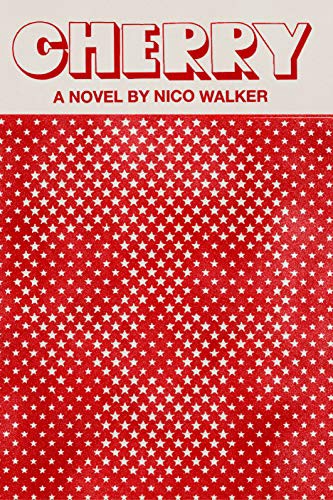
Many debut novelists are churned out of the M.F.A mill, their manuscripts drafted on an MacBook Air in a hip coffee shop and then submitted online to a literary agency for an unpaid intern to discover in the slush pile. Nico Walker is not your typical debut novelist. For starters, he wrote his debut novel on a typewriter in a federal prison where he is serving an 11 year sentence. It’s safe to say that Walker will not be signing his novels at your local bookstore anytime soon.
Walker enlisted in the army at 19 and served as a U.S Army Medic in the Iraq War in 2005 and 2006. After his tour, he came back to America with medals for valor and post-traumatic stress disorder. He turned to drugs to self-medicate the lingering trauma of war and developed an addiction to heroin. To fund his addiction, Walker started robbing banks. When he was finally caught, he had stolen almost $40,000 in 10 bank heists.
Purchase the book
Matthew Johnson, co-owner of Tyrant Books, discovered Walker from a long article in BuzzFeed and, after sending him a collection of Barry Hannah stories, struck up a friendship with him through letters. Johnson encouraged Walker to write a book about his life—and Cherry was born.
Walker writes with a wholly unique voice and structure that shows the possibilities of what can happen when we burn down the fences of what constitutes mainstream narrative. The strength of the narrator’s voice carries you between his youth, years in the army, drug use, and tumultuous relationships with the rapture of an old friend detailing your years apart.
Though the narrator’s story arc has the makings of an American epic, I found myself most rattled by the smaller moments in the novel, the quiet reflections on his lovers and friends, the cadence of a single sentence: “I tried to be good. But I was fucked up.” It was a pleasure to hear further from Nico over email about relationship failure, parallels of women and soldiers in combat, and the physicality of his writing.
Becca Schuh: For those who have yet to read Cherry, can you give a sense of the timeline of your life for the years the book covers?
Nico Walker: Yeah, it starts in late adolescence and it ends in arrested development.
BS: What were some of the challenges you faced in writing and editing a book from prison?
NW: Lots of challenges. It’s hard to tune things out here. I hope maybe I’m getting better at it than I have been before, otherwise it’s going to take me forever to finish the book I’m working on now. But there’s a lot of noise, a lot of stuff that gets in your head that you can’t avoid, you can’t ignore, and it makes you dumb just being around it, and it makes it hard to write. A lot of dudes in prison like to stand around and shout and just go blah blah blah all day, and it’s pretty terrible. Then the mail is slow; they have to go through everything. Mail goes out at certain times, so if you’re in a hurry you’re hit. No word processors obviously. But then that maybe works to my advantage with the way I write, which is all OCD, like all work no play OCD. Up, here we go, a dude at the email terminal next to me just starting screaming about something for some reason, and two minutes ago I had to stop typing so I could bend down and pick up a fireball candy that someone had tried to smash on the ground and that ended up going under my feet. These are good examples. I can’t wait to get out of prison. There were other things too. Like some days I couldn’t go type because we were locked down for fog or because the guards’ radios blanked out or whatever.
A lot of dudes in prison like to stand around and shout and just go blah blah blah all day, and it’s pretty terrible. I can’t wait to get out of prison.
BS: Did you find the process of fictionalizing your past to be cathartic?
NW: The best thing was feeling like it was all over with when I was done. Of course I’ve still got to talk about it now. But hopefully once the book’s in paperback and the movie’s on DVD or Netflix or whatever, it’ll be over then and I won’t have to talk about it anymore.
BS: How does the public perception of the Iraq War conflict with your personal experience as a veteran?
NW: I don’t know too much about it. I’ve seen a couple parts of some movies and they definitely weren’t anything like Iraq as I knew it. But then I was only in one or two places and only for a little while, so I’m not an expert on the war.
BS: Can you talk about the challenges of war veterans facing PTSD, and how the resources (or lack thereof) misalign with the needs of veterans?
NW: I don’t know what anyone can do about PTSD. You can’t un-experience things. I got a letter from a woman with PTSD the other day and she put it well. She said, You can’t unsee things. Which is about right. And you just can’t un-know what you know. What you know about life. What you know about what’s out there. There’s definitely a disconnect between Americans who’ve been to places like Iraq or Afghanistan, or whatever places like that, and people who haven’t ever been to such places. So it’s hard to think of any way that the one can get much help from the other. Time is the best thing that can help someone who’s having problems like PTSD.
[My novel] starts in late adolescence and it ends in arrested development.
BS: In your novel, the narrator starts robbing banks because of his drug addiction. Having gone through addiction yourself, what is your current perspective on the opioid crisis in the Midwest?
NW: Of course I think it’s tragic that all these thousands of people are dying every year. It seems like everyone knows someone who’s died. I definitely don’t think more laws are what’s needed. I definitely don’t think more “drug therapy” will help anyone. I think it’s a cultural problem. I think it’s a spiritual problem. I think there are a lot of people coming up in America who don’t want anything to do with what our country is about, don’t want to be what our society demands that they be. People are lonely. People are not valued. They find a quick way to feel good. Unfortunately it often kills them. Probably something should be done to make pharmaceutical grade opioids, like dilaudid, more easily available, so as to steer people away from the street drugs that are killing tens of thousands; just for a while anyway, while we work on solving the problem of why it is that people have this self-destructive desire to shoot dope.
People are lonely. People are not valued. They find a quick way to feel good. Unfortunately it often kills them.
BS: Your writing voice feels very natural — is this how words flow in your brain, or did you work to cultivate the voice of the narrator?
NW: The word order being out of the ordinary is something that comes naturally to me. Usually it’s something that I do that makes me sound dumb when I talk. But I noticed it and then I tried to develop it some and make it into something useful. Cadence or the rhythm of the sentences when I read them out loud is real important to me, maybe because I’m some kind of narcissist or something when it comes to the sound of my voice. Who knows. But I wanted to get it right, and so I tried a lot of things out for that, trying to get things to flow nicely.
BS: You portray several relationships where the characters have trouble figuring out their partners wants or needs. What inspired this focus?
NW: I was inspired by my own failings in my own personal life. The more distance there was between me and relationships I’d been in in the past, the more I’d blush about how selfish and dense I could be. I hope I’ve grown out of that some.
BS: “I tried to be good. But I was fucked up.” This line felt very simple and true to me. It also felt relatable do you think it’s a universal sentiment?
NW: Yeah, I think it’s true. I believe that most people, not all but most, who get into trouble get into it with the best intentions. For instance the narrator in Cherry, he creates a situation in his relationship with Emily wherein no one’s going to win. He knows that Emily’s heart is not a hundred percent in it and he’s only hoping that this will change for the better and that things will work out because of what will be there after the fact. He counts on things that aren’t true because he wants to believe in them.
BS: You portray a very visceral physicality with regard to injuries — how was the experience of writing such graphic and intense descriptions of wounded bodies?
NW: I didn’t like it. But it was necessary, I thought, for the book. I don’t get off on violence. There are books wherein violence is used for entertainment and I think that shit is stupid. I have a theory that books like that are usually written by soft motherfuckers, but this is neither here nor there. I’m not one for gore for gore’s sake. But I was just trying to show something for what it was like, and I thought it was important to do it that way.
Perhaps no literary character embodied 1990s women’s literature more than Bridget Jones, a London singleton who chronicled her comical and honest experiences with dating, her career, and an aging family in her diary. Initially serialized in the London Daily Telegraph, Helen Fielding’s Bridget Jones series was expanded into a full-length 1996 epistolary novel that gathered Bridget’s diary entries over the course of roughly a year. Bridget’s diary was an unfiltered stream of consciousness, the messy reflections of the original hot mess. Part of her appeal was the raw confessions that recorded her every flaw and mistake, making her both hilarious and deeply relatable, not unlike the friend or celebrity you secretly enjoy watching overshare on social media.
Stumbling upon Bridget Jones’s Diary and its sequel, Bridget Jones: The Edge of Reason, as a teen was a formative experience for me. At that time, I was ready to transition from the epistolary children’s literature I loved―in particular the Dear America and Amelia’s Notebooks series―to a version closer to what I imagined my life would be like as an adult. Having endured a Harriet the Spy-esque scare when my notebook was left behind in my 7th grade math class, I was much more on guard about what I would write in a journal of my own. The hard lesson was that even under lock and key our most secret diaries have audiences.
Helen Fielding announced there would be a third novel in the Bridget Jones series to be published in 2013, Bridget Jones: Mad About the Boy. The new novel would center on the not-so-happily-ever-after after (spoiler alert) Bridget’s longtime love interest and eventual husband Mark Darcy died tragically young, leaving Bridget a wealthy widow and single mother to two young children. The question would be how — if — Fielding would expand beyond the diary format to include some of the contemporary communication that was mostly nonexistent during the peak of Bridget Jones’s fame. Mid-90s and Y2K Bridget had instant message and email to record her misadventures, but failing in the public eye of social media was not available to her. Part of her diary’s charm was its near-claustrophobic intimacy. When Darcy does find her diary at the end of the first film adaptation and reads some of the scathing things she had written about him, Bridget, flustered and apologetic, says, “Everyone knows diaries are just full of crap.” Sure, Bridget is free to record that crap ad nauseam in her private journal, but how would that play out on social media?
Bridget, now casting around desperately in search of a purpose after Darcy’s tragic death, struggles to fit into the wider world. Trying to find relevance and now well into middle age, Bridget awkwardly attempts to negotiate the world of Twitter. There’s a substantial subplot devoted to Bridget’s “toy boy” social media-hip younger lover, and Bridget obsessively records her Twitter stats, becoming acutely conscious of any gains or losses in followers. For myself and fellow fans, the third novel was a flop, but what went wrong? This should be the perfect era for Bridget. Some of her favorite things to write about — her calories, daily food intake, and exercise stats — could easily be translated into in any number of mobile apps while her fragmentary entries could now be dashed off in Evernote. I could even imagine one of her drunken confessions could dictated off to ever-understanding Alexa in a nearby Amazon Echo. Yet social media seemed to do the queen of confession in, laying bare the worst in her vapid tendencies.
This should be the perfect era for Bridget. Yet social media seemed to do the queen of confession in, laying bare the worst in her vapid tendencies.
Surely contemporary epistolary fiction could be done, and done well. Meg Cabot’s novels, such as Boy Meets Girl, and Cecilia Ahern’s Love, Rosie, were known for witty encapsulations that comprised emails, social media posts, texts, and other creative ways to incorporate the bevy of options authors now have to choose from to craft an epistolary narrative. Or, as Gary Shteyngart proved with Super Sad True Love Story, set in a dystopian future and told in diary form, the journal could definitely still serve as a primary and more-than-adequate record even in a world saturated with media. If the epistolary is not the most relevant form of our time, I thought, maybe I can finally take a stab at writing one of my own. As I’d learn by writing my own epistolary novel, while communication has fundamentally changed since the advent of the genre, the fundamental challenge — and opportunity — for epistolary fiction to capture the tension between recording with verisimilitude or with a filter remains strikingly relevant.
Epistolary novels told through diaries or journals illustrate our personal reconstruction of our daily events. In journals, whether conscious of this or not, we often frame our activities and feelings in a way that fits an overarching narrative. It’s no coincidence that the time I started keeping a journal at 15 was when I started getting serious about being a writer, and sorting through my day’s events and reflecting on them — selectively — were some of my earliest attempts at imposing a narrative on my pretty mundane life.
In my earliest journals, post-Harriet the Spy experience, I reflexively fall back on language about how “nobody would ever read these so I can be as honest as I want.” Though I privately hoped that my journal would be read one day, if I ever made it as a person of note. I found an interesting angle to take in my freshman year of college when I read the unabridged journals of Sylvia Plath and Virginia Woolf to try to understand my new diagnosis of bipolar disorder through the lens of other bipolar writers. The idea that a journal might also double as the chronicle of art and the manic depressive temperament fascinated me. I latched onto this and tried to frame my daily events through that lens. My approach launched a pattern of filtering my day’s experiences, emotions, and thoughts into what I hoped would be the larger story of my life as a writer and manic depressive.
What I included in my journals was no less than the carefully selected daily life of a serious writer. Most of my sloppy writing, including late night texts, those tone-deaf earliest Facebook posts that keep haunting my Memories list, and the ever-awkward online dating messages, were deliberately left out.
For my most intimate audience — myself — I was cultivating a version of my life I wanted to remember, cherry-picking the events of the day I wanted to forget, writing them out of my narrative. It was here I found a solution to my problem. Up to that point, to tell the story of my characters in my novel with the utmost veracity, I felt I had to include everything, the good and the bad, the things we wished we could take back, the things we write that wouldn’t make it into a diary entry, never mind the sheer magnitude of data. Our personal records multiply with every text conversation, every email, every social media status; even every heart or reaction we make on a post could be considered another account in an ongoing archive. Yet the cost of that inclusion would be to risk showing that even the serious and sophisticated characters I’d envisioned would not bend to a plot.
Unless, I flipped my approach and constructed the story out of everything that isn’t said on the bloated, unfiltered record, just as I had done in my journal.
Unless the signal was not in the noise at all, but outside it.
Unless the real story was happening off screen entirely.
When I finally sat down to write an epistolary novel I didn’t anticipate it would be both easier and harder than I could ever imagine. The Magicals started out about a group of college friends in their mid-twenties in mid-2010s Philadelphia. Initially, I was pleased at how the page count seemed to reproduce on its own. The sheer amount of data to record — email subject lines, time stamps, usernames — rapidly generated pages and bolstered my word count. Seventy pages in, I was feeling falsely confident at how well it was going. Secretly, though, I could tell the novel read hollow. The characters, all smart and bright people, sounded self-absorbed and shallow, beta readers and fellow workshoppers agreed. I wasn’t satisfied because I was searching for a story and all I was writing was data. What I struggled with the most was constructing a traditional novel narrative out of the vast amount of output we generate daily, what I consider to be the “digital detritus.”
Secretly, I could tell the novel read hollow. I was searching for a story and all I was writing was data.
To wrestle out a plot, I started to deconstruct some of the cues I’d gotten from friends about my social media image over the years. When a relative messaged me on Facebook almost a decade ago to tell me that I should only post upbeat things because people didn’t want to hear about depression, I was offended but unable to get his words out of my head. My struggle with mental illness went by and large underground, which is why when we met up in-person friends were surprised at how much I was struggling. I came away from those conversations wondering how someone so close to me could have such a misunderstanding. That is, until I scrolled through my profile and saw picture after picture of positive thoughts, smiles, cats, positive affirmations, and happy times. What I wasn’t projecting to the world was how crippling my depressive episode had gotten. I had neatly erased that from my public image, either misrepresenting myself or cultivating a version of myself I wanted to star in a novel. I wrote my own narrative, but the bigger story was not being pixelated.
Recently I found myself introduced to more writers than I’d ever met before at my first MFA residency. During and after the residency we started to connect on social media. My grappling with revising the plot had brought a new awareness of the story I was creating online, the one I’d be writing for a new audience. This was also a chance to start new, for a reinvention now that I was at last on a path to the future I’d dared to pursue. For the new characters in my life, what kind of heroine would I be? Could I commit to authoring a narrative with complete verisimilitude, the uncensored, true version of myself, depression and acne breakouts and failures and all — or was this next chapter of the Sarah Chronicles just as carefully written as the reality I’d so often buried to create the person I wanted to be?
With the Bridget Jones series possibly complete, I look back to the woman who I’d idolized for nearly decades. Bridget’s commitment to total transparency, written in compulsively readable installments, proves that messy honesty generates a natural plot of its own. The very proper Mark Darcy’s iconic confession that, “I like you very much. Just as you are,” is significant because it speaks to his affection for her despite Bridget’s unfiltered life, the one her audience of voyeuristic readers consume, the one she cannot revise years later on Twitter.
I applaud Bridget’s sloppy confessions and strident refusal to change even in her latest installments, which challenge the authenticity we applaud in fiction and on social media. When writing modern epistolary novels, we confront the truths and fiction we create each day in our ongoing story.
In my revisions I trashed most of my ideas in order to rethink the epistolary novel. The friends, now aged up to their thirties in the new draft, reunited after several years back together again in the same city. The people they were seeing live would not be the same people they had followed through their twenties online. Omissions were more significant than the crafted life we cultivate online. The story was about the inevitable collision between expectation and disappointment, image and reality, fiction and truth when our relationships move offline and in the same room. The story was the fallout from the epistolary novel we are continually writing every day as the authors of our own digital narrative. What mattered more was unsaid.
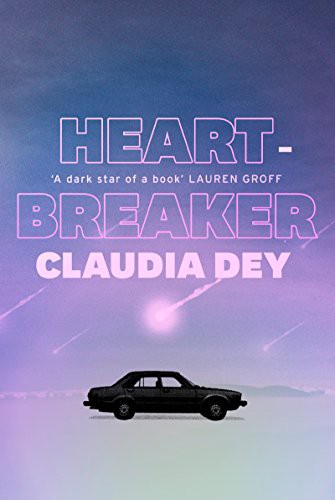
Claudia Dey had me at the title of her Paris Review piece, “Mothers as Makers of Death,” which came out earlier this year. Then I learned more about the author — who has written plays, worked as a cook in a lumber camp, acted in horror films, and is also co-designer of Horses Atelier. My heart skipped a beat. Then I read her novel Heartbreaker. I was smitten.
Heartbreaker is the most original novel I’ve read in some time. The novel is set in 1985 in “the territory,” the residual community of a cult somewhere north of nowhere. We learn immediately that Billie Jean has gone missing. The novel is structured into three different accounts, or sections — “Girl” “Dog” “Boy” — each section powered by one character who loves Billie Jean: her daughter, Pony Darlene, her dog, Gena Rowlands, and a teenage boy named Supernatural, each bearing witness to Billie Jean’s absence. Pony Darlene, Gena Rowlands, and Supernatural have lived their entire lives in the territory, but Billie Jean — the only outsider in the territory — appeared seventeen years ago when she fell from the mouth of a car she stole. She has never spoken of where she came from, or where she might be headed now.
Heartbreaker is lyrical on the line level, but the questions at the center of the book — about women’s struggle for multiplicity and messiness, about the way love can carve losers out of all of us — make the novel sing. Dey creates a cinematic landscape filled with vivid neon jumpsuits and duct tape and DIY and Air Supply. It’s a dark world where men are given another chance in another name, and women are assumed to be happy to stay home, to stay in the same story. And the town’s greatest resource? The literal blood of teenagers, sold at a premium. It is a world you know you should leave, and yet, there is an acute sense of the beauty there, too.
Dey and I spoke over the phone about the case for more “bad” moms in literature the desire to be “more than one thing,” the additive and subtractive nature of love, and why good art needs to be a little wild.
Erin Bartnett: I wanted to start by talking about the genesis of this book. I was so captivated by the dreamlike, near-dystopian atmosphere of the territory. What about that bleak setting was so fruitful for you?
Claudia Dey: I wanted to create a place that could not be pinned to a country, could not be pinned to a continent. I wanted it to be so remote that it was nationless. When I was researching the book I was completely consumed by images of places that I’d never been to but I could feel in my bones — the snowfields, dense woods, endless skies of Siberia, Iceland, Finland.
I used to work as a cook in lumber camps across Northern Canada. We would follow these hand-drawn maps, these unnamed logging roads, and miles into the bush, set up camp. I would be hours away from the nearest, smallest town. Let alone my life. I was so separate from the culture, so separate from the economy. And this was the 1990s — pre-cell phone. So there was this profound un-traceability and unreachability. When the planters were in camp, it had this Wild Wild Country feeling. The elation and dread of a private society, hidden from view. I was so struck by the wish for ease, for comfort, for heat, for closeness, the sense of scarcity, the longing for elsewhere — all of those details entered Heartbreaker. As did the duct tape, big trucks, big dogs, nicknames and bonfires. The moment the planters left, and the camp was vacated for the work day, I was so isolated. I love this George Saunders’ phrase “a hostile dreamscape”; this is how those empty campsites felt — my ears keen to the approach of a truck, an animal. Mud caked on my jeans, ice pelting the roof of my cook shack. And then looking out at this endless wilderness all around me and feeling that sharp sense of what it would be like to disappear. It was those years in those untraceable places that I think were the genesis for writing the Territory.
EB: In your Paris Review essay on motherhood, you talk about how a mother is never alone. And in order to finish this book, you needed to isolate yourself. Is there something productive about loneliness, too? Is there something you long for in that loneliness?
CD: Yeah, definitely. For me loneliness is a soft and familiar place. It’s a natural state. It’s something that I seek out. It’s like a very productive trance; it’s where the writing happens.
EB: Why did you choose to set this book in 1985? And then how did you situate yourself back into 1985 to write this book — what were you watching, listening to, reading?
CD: Now that I have some distance, I think I chose 1985 initially for the aesthetics — they were pleasing to me. I was aware that the novel had a dark and sorrowful heart — it holds a terrible pain — and so I wanted there to be redemptive elements — both for the reader and for myself. Those details can be a salvation. White Snake, Air Supply, The Eurhythmics, Nazareth’s “Love Hurts”, feathered hair, press-on nails, leopard print and hoop earrings — this is the sonic and visual world of the book and it is accompanies the grief at its center. It’s fantasy — fantasy is critical — it’s like a private source of oxygen. It’s also hopeful.
I would have been 13 in 1985. This was the beginning of the most riotous stage of my life — you are swapping out selves in grand, dangerous gestures. I was so inspired by this Dutch photographer who considers her portraits of teenagers to be “abstracts” — given the flux and changeability of the self inside the chaos upon chaos of that time. When you are a teenager, you are forming yourself and you use the culture to do that — another reason why the music and clothing were so important to me.
Lastly I am not sure I will ever write something contemporary because I don’t like what cell phones have done to us. We are like stunned gamblers curved over slot machines waiting for a blink of light rather than inside and attentive to observable life. I also knew that technically it would be very difficult to write a woman who disappears with the tracking hardware available to us now. So the reasoning was initially romantic but then, as I examine it, technical too.
I am not sure I will ever write something contemporary because I don’t like what cell phones have done to us. We are like stunned gamblers curved over slot machines waiting for a blink of light rather than inside and attentive to observable life.
EB: I feel like that’s so often the birth of the things we write — the marriage between some romantic idea and the reality of some technical challenge.
CD: It’s so true!
EB: I was really interested in the way you make love a kind of equation in Heartbreaker. Love can’t be Love without Loss. There’s an additive and subtractive nature at the heart of love for the characters in the book. Which makes sense, given that the book is about the loss of one person three characters love very much. I wanted to talk about how you structured the book around these three characters who love a missing person. But Billie Jean doesn’t share her story directly. Could you talk about the decision to structure the novel around the experiences of those who love Billie Jean rather than the beloved herself?
CD: I love your summation of the love mathematics that form the heart of the book. Truly, the decision to structure it the way that I did was intuitive. I don’t map out novels; I work from some kind of private circuitry. I knew in the earliest hours of writing Heartbreaker that I wanted it to be told by: Girl, Dog, Boy. I very consciously placed an animal at its center. I knew that the book would be built out of the voices and I wanted the voices to work in the way of chambers. Similar to how a theater works — you enter the chamber, the lights dim, they rise, and you’re with the storm of Pony Darlene. The lights dim, you exit the chamber you enter a new one, the lights rise, you’re with loyal, murderous Gena. They dim, you exit, lights rise, you’re across from watchful, beautiful Supes. Each chamber had to be its own dominion.
And I wanted to fulfill that Joan Didion maxim of writing a book that is read in a single sitting. That was from an interview that Didion did with the Paris Review in 1977. I read that interview recently and that line, her casual, never sentimental delivery of this clean and brilliant truth really struck me. Returning to your question of love: what intrigues me — and it’s in the epigraph of the book, ‘In love there’s no because’ — are the darker corners of ourselves that we cannot explain to others, let alone to ourselves, when we lose all logic, all morality, and become kind of rudderless inside a spell of love — that’s what I wanted to go into as deeply as I could. And I wanted Billie to be the center of that.
What intrigues me are the darker corners of ourselves that we cannot explain to others, let alone to ourselves, when we lose all logic, all morality, and become kind of rudderless inside a spell of love.
EB: Can we talk about naming in this book? The names in this book are amazing — Pony Darlene, Neon Dean, Supernatural…but then there’s Billie Jean and her dog Gena, who are the only two characters I noticed that get to name themselves. The others are named or renamed. Can you talk about how naming informs the identities these characters take on and struggle with?
CD: The names indicate the gap between how the characters experience their own interiors and how their interiors are perceived by others. There’s this tradition in The Territory — The Territory is the remains of a cult; you can see the sexism in the tradition — that the men receive these special nicknames and their birth names are eviscerated. This is a moment of ceremony and it marks a man as having progressed from boy to man. The women aren’t assigned any kind of obvious power in that way. As a writer, of course, it’s an opportunity to give the reader clues to a character’s history or true nature. Some of the choices were playful ones. I took a lot of delight in the naming. For the reader but also as a buoy for myself — some of the writing was agonizing.
EB: You mentioned that you wanted the animal narrator for this novel — why did you want to go in that direction?
CD: I think that, autobiographically, I had this moment that struck me so deeply: this was when I first became a mother and my son was about four months old and he was asleep on my chest. I could feel him dreaming. I was reading Anna Karenina, and I was inside this vast peasant scene when suddenly the narrative swerved and I was behind a dog’s eyes, his point of view. It surprised me, rearranged my brain chemistry. It really marked me as a writer. I think the element of surprise is at times underrated in art or misused, and this was employed with such grace.
I put this idea in the novel, but I will say it now because I love it: a healthy human heart has an irregular beat, and an unhealthy human heart a regular beat. And that sleight of hand in Anna Karenina — where we’re suddenly behind the dog’s eyes — showed me how much we need that irregular beat, that unevenness in our art. It’s a form of vitality, of wildness. It’s so easy to overcorrect, to discourage yourself from stylistic and intellectual risk, to, in the editing process, photo-shop a novel — glaze the life right out of it. I also needed Gena in order to further the story. So much of the book is about where secrecy and closeness intersect. All of the unspokens, all that we guard. And yet with the dog, a judgeless, ever loyal dog, who is homicidal on our behalf, we can confess everything.
EB: So that irregular beat — our desire for that, and the frustrated attempt to find that — I wonder too if that’s related to the refrain I found in every section, almost verbatim — that a person is more than one thing, a person is many things. As Billy Jean and Debra Marie both say: “Why can’t a woman be more than one person in a lifetime, why can’t she be two or three?”
CD: Yeah, I love that you note that. That is one of the central questions of the book. I feel if you parse it, you can see that question at work in each character — the adults’ past identities and the teenager’s ever-changing ones.
One point of sinister inspiration was the [Fundamentalist Church of Jesus Christ of Latter-Day Saints]. I have been obsessed by and have read countless survivor accounts — these teenage girls changing into wedding dresses in the backs of vans as they’re being driven over borders to be illicitly married in a roadside hotel to a man five times their age as their mother stands witness. I wanted to look at moral authority; what remains when you forfeit your moral authority? And so in the book you have the wolf pack — all of the initiations, the feeling of being accepted and not accepted, those marks of belonging at work between the women of The Territory. And then you have the lone wolf — Billie. For me, the construction of Billie was to examine the opposite of that wish to belong. In the end, she lived radically — guided only by what she loved. However dangerous, however haunting. Again, the epigraph points to that — that love is senseless.
EB: I wonder if Billie is able to be more than one woman in a lifetime because of her capacity to love. She is okay with loving more than one person in a lifetime — even at the same time — but she also understands, can quantify, how big and dangerous and beautiful her love for her daughter is.
CD: That is a beautiful, beautiful comment. Thank you. I think you are right — we look at multitudes within as a deceptiveness, but it can actually be something much more sublime, productive.
EB: Could you talk about how motherhood functions in Heartbreaker? I think you construct motherhood in a really nuanced way that illuminates the multiplicity in motherhood while pointing out the patriarchal column — a kind of singularity — placed on top of women in general, but especially women who are mothers.
CD: I am so tired of seeing the noble mother in books. We don’t see mothers being bad in novels. For me, motherhood contains all of my most settled and unsettled feelings. Billie talks about the love she feels for her daughter as an injury, a permanent injury. And that is the truth of it for me, your deepest and most vulnerable tenderness exposed to the open air. I wanted to write this version of motherhood — the one that felt closest to me. Essentially, with Heartbreaker, I tried to do the most personal thing in the most fictional way. In Billie, I got to write a woman who is a mother and also cheats, kills, lies, grieves, loves.
I am so tired of seeing the noble mother in books. We don’t see mothers being bad in novels. I got to write a woman who is a mother and also cheats, kills, lies, grieves, loves.
EB: You are a living example of what it means to be multiple selves: you’ve been a horror film actress, a cook in lumber camps across northern Canada, and co-designer of Horses Atelier (which has my dream jumpsuit). I often feel so pressured to be branded, to be one thing (which is another reason why this novel really spoke to me). How do you embrace the plural passions?
CD: Thank you, Erin! I guess I am restless. My experience has been that each form feeds the other forms. Also, identifying that whatever my current obsession might be — it has a form that fits it most precisely — whether it’s fiction or a horror film. I learn so much when I am doing something new. When I am slightly terrified and out of my depth and have to call up a different kind of courage or sharpness. I hate casualness! Or ease around work. I feel it all accumulates somehow — all of this traveling — for Heartbreaker for instance, those hours on set being stalked by a sea creature, trudging through hip-deep snowbanks, as well as the thousands of hours in a theatre, designing costumes — all of it entered the book. Work is work. Work is devotional.
That’s how literary critic Johnny Rotten signed off his long-running column “The Great Rock ’n’ Roll Novel” every month in TheLondon Review of Books. His fans tended to agree with the famous curmudgeon — there were so many remarkable memoirs, biographies, histories, and essay collections about rock, why so few worthy fictional efforts? It seemed like the perfect subject matter, but maybe like rock itself those familiar three chords were hard to animate into something fresh.
Purchase the book
Inspired by Mr. Rotten’s poison pen, Destroy All Monsters is my attempt to write the last rock novel. But as I fantasized about the fiery end of this genre, I knew I owed a serious debt to those novels that managed to capture the immediacy, mystery, identity-shifting allure, and raw power of the best rock. Set among far-flung scenes and subcultures, they share a compulsion to transgress boundaries, embodying the propulsive spirit of the music in their prose even as they unravel the complicated desires that fuel it.
Here are seven books that deserve a shot at the crown of the Great Rock ’n’ Roll Novel.
A haunting novel about obsession, self-creation, fandom, and narcissism — in other words, pure rock and roll. It explores the secret world of musician Nik Worth who has recorded countless albums but never released them, documenting an imaginary life where he’s a star, complete with elaborate press releases, reviews, articles, and fan letters. Narrated by Nik’s sister, Stone Arabia plumbs what music means separated from an audience and the contradictory motivations and sources of true artistry.
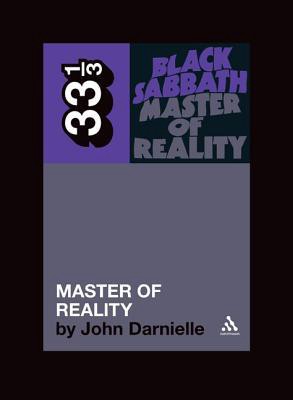
This bracing novella breaks the mold of the non-fiction 33 1/3 series which usually traces the history of a single album. It’s written from the point of view of a teenager locked in a psychiatric ward who’s pleading with his counselor to return his prized cassette of Black Sabbath’s Master of Reality. It’s a poignant example of how a band can become your life and a searing defense of music’s darkest emotions. John Darnielle has written more accomplished fiction, but this gut-punch of book remains my favorite.
Morvern Callar isn’t a traditional rock novel, but Morvern isn’t a traditional hero. She narrates a story about theft, identity, and authenticity, which begins with her boyfriend committing suicide and leaving behind his unpublished novel. Her tale is saturated with music — mix tapes, playlists, and the heady abandon of rave culture. It’s about the hedonism of music and allure of losing yourself completely. Director Lynne Ramsay adapted the novel into an equally brilliant film that functions as a sister artwork, telling a different version of Morvern’s story in the same unmistakable off-kilter key.
Graphic novels have proven good vehicles for capturing the texture of rock and there are many standouts, such as Anya Davidson’s Band for Life which details the glorious absurdities of musical collaboration. But my pick is this Love and Rockets collection which focuses on young Latinas Maggie and Hopey navigating the California punk scene, joining bands, going on tour, moving between various romances and communities. Storylines like “The Death of Speedy Ortiz” showcase Hernandez’s masterful characterizations and indelible mix of drama and empathy.
Set in a small Oklahoma town, this novel revolves around reclusive rock star Lena Wells, who was big in the 1970s, and a documentarian who’s supposed to film her comeback. It deals with fame and memory, shattered families and searching for purpose in the midst of tragedy. With songs and poems embedded in the text, Live from Medicine Park plays like a classic roots rock ballad, full of ragged heart and intensity.
The subtitle offers the best summary: “An Hallucinated Oral History of the Post-Punk Music Scene in Airdrie, Coatbridge and Environs 1978–1986.” Keenan is a longtime music writer who knows the potency of local scenes and the legends that spring up around them. The book is an affecting account of fictional band Memorial Device and those in their orbit, revealing the unexpected turns of people’s lives. It’s also an anatomy of Scotland in the 1980s, a shattering collective vision that’s hard to shake.
This early rock novel remains one of the best. Bucky Wunderlick, an amalgam of Mick Jagger and Bob Dylan, flees the Big Tour and holes up in a cold water flat in New York City circa 1972. He feels like he’s hit the limits of language, boiling his songs down to lyrics like “Pee Pee Maw Maw.” The book is set in a downtown scene that resembles a medieval fresco, a dangerous zone of counter-cultural hangover, utopian thugs, and sinister politics. It’s a great novel about retreat and stasis. Or as one of DeLillo’s peers put it: Silence, exile, cunning
“Where is Narnia?” I joked as I stepped through the back of the large wooden wardrobe featured in the center of a Lower East Side basement. I didn’t actually expect to find myself in the magical land of The Lion, The Witch and the Wardrobe, but this tour of Wildrence, a performance space home to inventive immersive projects, certainly invited flights of fancy. After exiting the wardrobe, I was led down a narrow hallway filled with empty picture frames and found myself in a room of stark white walls adorned with child-like drawings. What might have happened here? Or a better question would be: what could happen?
59 Grand Street is home to Wildrence, a self-described “storytelling space and consulting studio,” home to several of the site-specific interactive experiences that are appearing throughout the New York theater landscape. Wildrence’s projects include Here, which was inspired by the location’s set; The Bunker, a live immersive gameabout surviving the environmental apocalypse; and the interactive magic show Six Impossible Things. Currently running is Through the Wren, which invites guests to travel into a Gothic romance fairytale of the 1800s.
These strikingly different shows have all been housed in Wildrence’s basement space,a charming and eccentric series of rooms joined by a single narrow hallway. One resembles a parlor, with old-fashionedfurniture and a built-in kitchen, while down a hallway adorned with empty frames is a large room of stark white walls painted with figures of humans and a library filled with books of every genre.
These settings can and do change for every production — a task quickly undertakenby Yvonne Chang and Jae Lee, former architecture students who, after working in corporate offices, decided to venture into interactive design and established their own company. The duo transformed the space, an underground karaoke bar that was adorned with peeling paint and mold when the women first found it. But the size was right for the two women, who sought to create the kind of atmosphere they experienced in escape room puzzles and at immersive theater pioneer Sleep No More, but on a much smaller level.
“From our architectural experience, we saw potential,” Lee said, adding that some guests find even the narrow staircase descending from the street level disconcerting. “We played off [people’s] notions. Each room will be a rich room, filled with content, that is used enough that it can be useful for a lot of different genres [and] productions.”
The duo worked from the ground up, converting a single room into the multi-layered world of Wildrence, complete with the backlesswardrobe that did not transport me to Narnia but did inspire some flights of fancy.
The experiences offered by Wildrence— role-playing and interaction with performers and audience members — have become increasingly popular in recent years. Adventurous theatergoers have been donning ghostly white masks at Punchdrunk’s Sleep No More since 2011and began attending Mad Tea Parties at Then She Fell in 2012. And this month they are taking to the streets and traveling through time in DUMBO, Brooklyn in Firelight Collective’s Stars in the Night. More and more, audiences want to be a part of the performance rather than simply watch it, a desire that Zach Morris, co-artistic director of Third Rail Projects, ascribes to lack of human interaction in everyday life riddled with smartphones and online interaction. The average American spends more than 10 hours a day looking at screens, so 90 minutes of face-to-face interaction, even with strangers, can have a unique impact on a person.
The average American spends more than 10 hours a day looking at screens, so 90 minutes of face-to-face interaction can have a unique impact.
“We are simultaneously more connected than we ever have been and more disconnected. The way we communicate is through screens, which are essentially prosceniums” like the traditional stage that separates the actors from the audience, Morris told me. “When we seek culture, perhaps we want to be able to engage in it in a way that doesn’t have a membrane between us and it.”
“In the last several centuries we were not able to navigate our content,” he continued. “With the advent of the Internet, we’re not only able to navigate our content but have our content be responsive in a way it never has before. I think there’s something exciting about theater and performance that can be responsive. This type of work is responsive to an audience, it is navigable to an audience and fundamentally we are hardwired to want to be in a room with another human being. We’re longing for that, I think.”
Then She Fell, created by Third Rail Projects, opened in 2012 and was originally slated for a six-week run. First staged atGreenpoint Hospital in Brooklyn and currently running at the Kingsland Ward at St. Johns, Then She Fell thrust audiences into a mysterious and fantastical environment that questions the nature of love and desire. After being checked in by a doctor and nurses holding clipboards, the 15 guests permitted at each performance are guided through the halls of the hospital, encountering characters from and inspired by Lewis Carroll’s story.
Carlton Cyrus Ward as the White Rabbit in “Then She Fell.” (Photo by Darius Sneed)
The 18-year-old company, which has focused on public and site-specific projects, sought to “blow up” accepted conventions of the structure of performances and interactions between performers and audiences with its work. As he worked to put together his first immersive, Morris realized that it was the the audience who was the protagonist in this show, which runs counter to much of established Western drama. Adjusting his way of thinking to create and compose for that kind of work caused his head to “sort of explode,” he admitted.
“We started in earnest knowing we wanted to create an incredibly intimate evening and being fine with the idea that it was going to be for a very small audience group,” Morris told me. “We were going to be throwing all the rules as we understood them out — how a piece of theater could be made, what the formula for it could be, what its business model might be… We knew that because this form was inherently fragmented, so we wanted to have some sort of underpinning, point of entry for the audience to allow them to grab on.”
That entry point became the relationship between Carroll and Alice Liddell — one that inspired controversy and many questions about its nature. Morris did not seek to offer any answers to questions about this ambiguous relationship but instead set out to explore the questions themselves. Visitors to Kingsland Ward witness the Red and White queens interacting with Alice as well as a suggestive dance between Alice and Lewis Carroll; many have their own chances to talk to Alice about the nature of love, or take dictation of a passionate letter for Carroll.
The opening of Then She Fell followed several site-specific public works that Third Rail had created, which inspired reflection and resulted in changes in their approach to creating art and how the performers and audience members could engage with each other. Combined with their interest in large-scale environmental installations, Third Rail began creating immersive work — even though, Morris said, they weren’t familiar with that term at the time.
Engaging with the actors heightened every emotion inside an already charged setting.
In Then She Fell, the immersive atmosphere inspires intimacy. As I was guided through the hospital halls, I brushed a young Alice’s hair while she asked me if I had ever been in love before. Engaging with the actors heightened every emotion inside an already charged setting of excitement and, at times, unease. Hearing a young girl speak of her fears of marriage is one thing, but assisting her in her beauty routine as she confides in you is another. And while many have speculated on whether the relationship between Liddell and Carroll was romantic in nature, watching the two engage in a sensual dance from just a few feet away is so intimate that, while fascinating, is also uncomfortable.
“As we got deeper in the process we realized we wanted to create a piece in which we were posing these questions, either explicitly or implicitly, to the audience itself,” Morris said. “What is the nature of love? What is the nature of loss? What is unrequited love? What is requited but star-crossed love? What are the forces in play that bring people together or tear them apart?”
Wonderland is far from the only world explored by Third Rail Projects, who have also presented The Grand Paradise (an exploration of youth and desire set in a tropical resort), Ghost Light (a glimpse at life — and afterlife — backstage at Lincoln Center Theater) and, most recently, Behind the City (a wistful tour through space and time in New York). Many times, the space is as much a character of the show as the personalities inhabited by Third Rail’s performers. The impact of Then She Fell was decidedly intensified by taking place in an actual hospital ward, and frequent theatergoers (including myself) were thrilled by Ghost Light’s guide through the secret halls of Lincoln Center’s performance space.
“If it is space-driven, it’s about finding the space and building the world around it. If it’s character-driven, it’s about developing that and understanding what kind of space wants to hold it,” Morris said. “Then She Fell was very much space-driven. Though we had been developing work around Lewis Carroll’s writings, it wasn’t until we found the hospital that the setting of the world became the hospital.”
Some of Third Rail’s work is inspired by characters, while others are drawn from the performance space itself. The same applies to Wildrence: the performance space was the inspiration for the content and characters of the show Here, for which producer Kelly Bartnik invited the performers to sit in the space and choose different props or locations to create a story from them. The results, including a room filled with a childhood game of sheet forts, were surprising.
Moving from observer to participant enhances any emotions the show inspires — love, loss, longing, or even confusion — a technique utilizedin the recent show Stars in the Night. Firelight Collective’s show, playing in New York after a run in Los Angeles, guides groups of 12 through Brooklyn’s DUMBO neighborhood, exploring how the effects of a woman’s disappearance ripple through a community. Interactions with the wistful former lover or the frantic brother searching for his missing sibling while standing along the Brooklyn waterfront are heightened by the vast, open-air environment that is both beautiful and isolating.
Moving from observer to participant enhances any emotions the show inspires — love, loss, longing, or even confusion.
The show was inspired by the personal experiences of both artistic directors: Stephanie Feury was leaving a relationship, and Nathan Keyes was beginning one. The writing was sparked by love and loss and the locations soon followed. In Los Angeles, audiences were moved from point to point in an SUV, while in DUMBO they are guided throughout the streets on foot. The rejuvenated atmosphere of the rapidly transforming Brooklyn neighborhood, where the doorway of an historic warehouse can look directly onto the entry of a brand-new, sky-high condo, provides a fitting atmosphere for the already emotionally-charged performance in which the timing of scenes changes as well as locations.
“The story started to speak to us from a different level,” Keyes said. “We embraced the idea of taking the show to the streets and kind of laying the narrative over what was already there as a backdrop… We try to stay with the story and narrative. Once we’ve got a draft and it’s up on its feet, we start looking at the options and how the audience may respond there. Even in our first week, we tried a few different things that maybe led the audience down a road they shouldn’t go down. We’re constantly trying to tighten bolts and being really clear and trying figure out how they are going to respond and have many options for how the actors deal with that.”
As they walk through the Brooklyn streets, audiences encounterheartbroken lovers, but also siblings, children and parents. They are invited into shops, apartments and locales beneath the Brooklyn Bridge and offered snacks and cocktails. Decade pass rapidly during the 90-minute performance, but all the characters are connected— a fact the audiences may not realize until theperformance’s conclusion but quickly come together upon reflection with other people who attended the same performance. Heated discussions about who, where and when each person was took place on the sidewalk following the show I saw.
“As we kind of got deeper into loss, which is death, and losing love, and embracing love, and family and the complications around it, the people and the story began to link themselves,” Feury said. “That’s also happened with the spaces. You started with one space and because of these relationships and the need for these relationships and tying them together, these other spaces were needed.”
Those spaces invited new challenges, including building the sets from scratch and performing amidst MTA traffic. Brooklyn Bridge Park is picturesque, but, it’s also the location of loudsubway lines (that often run off-schedule) and real-life encounters with tourists. As one performance paused under the bridge to listen to a character frantically search for his sister, a police car and ambulance pulled up and began questioning the audience members. Much to everyone’s relief, the actor was able to stay in character.
As adventurousas an immersive show may appear to an audience member roaming the halls of a hospital or the streets of Brooklyn, the productions are well-oiled machines, with precisely-timed interactions moving from one moment to another. But actors are prepared for the unexpected, especially if audience members return to the venue determined to show off their knowledge or arrive intoxicated — two scenarios that took place during performances at Wildrence, one of which required the person to be escorted from the performance.
Unruly audience members or not, no two performances are alike — a distinction Morris said Third Rail Projects strives to cultivate with each production. While certain characteristics, such assensual dance performances, appear across Third Rail’s different projects, the company strives to reinvent its approach with each new show.
Lee and Chang share that goal, seeking to continue diversifying the experiences held at Wildrence so that they are challenged as much as the audiences. Lee likened the space to a game console that can invite audiences into a wide variety of experiences, depending on their taste and preferences.
“Not only does that keep audiences seeing new things that have never been seen before, it also keeps us as creators in this perpetual growth. We can do anything, learn more things, keep growing our skill set, the next time something comes,” Lee said. “Everything that comes through, we try to pick something up from it.”
“Perhaps the biggest lesson or tool is actually how to discover what it is you want to make and craft the tools to make it, as opposed to relying on the same methodology, the same tools, to create the last piece,” Morris said. “How do you blow the formula up and be like, ‘I want to make a piece of work unlike anything I’ve ever made. What are the tools I need to make them? Let’s craft those tools.’”
Those tools have evolved over time,as immersive theater’s popularity has risen. Inviting people to participate rather than merely watch expands the potential for a variety of experiences. Audiences aren’t content to just sit and watch anymore. They want to be a part of it — evidenced in the television shows like HBO’s “Mosaic,” which included an interactive app for viewers to engage with and the recently announced choose-your-own adventure series launched at Netflix. But immersive theater offers an even more intimate experience, as actors converse with and even engage physically with audience members. In a culture of remote cyber/online connections, many audiences are hungry for face-to-face engagement.
Audiences aren’t content to just sit and watch anymore. They want to be a part of it.
“Now audiences are OK with being touched or talked to or the other way around,” Lee said. “And they have some agency in changing the outcome of the conversation.”
That agency, and the different ways in which audiences seek engagement, is carefully crafted for the show by its creators, who never know what a guest at the show is really thinking, Morris said. Remembering that helps prevent the writers and directors from making any assumptions about how the work is perceived and ensuring respect for both the audience members and the cast — an issue reportedly taking place at Sleep No More, where performers claimed they were physically harassed by audience members.
“We believe one of our jobs in performing this work is to really create a space for them to have whatever experience they’re having, and find a way to honor their choices, the way they’re engaging,” he said. “By its nature, you are putting human beings into intense circumstances and creators need to be quite thoughtful about how you’re doing that with care and consent and with armatures in place to protect the audience as well as your performers. We’ve learned a lot about how far we can bring people with us.”
Morris credits the genre’s appeal to the intensely personal experiences the shows inspire, which, he said often differs greatly between guests of the same performance.
“There’s something profound about that. It is less about ensuring that the story is conveyed and more about can we create a space in which audience members can pull these images together in a way that is cogent and meaningful to them,” he said. “How do you continue to do that? How do you bend people’s reality? How do you make the impossible possible? How do you create a work where one person walks out [saying] ‘This is what happened’ [and another says] ‘No, that’s not what happened’ and they’re both right?”
That’s exactly what happened to me. While leaving Sleep No More, my friend and I began comparing our experiences, and they were very, very different. It almost felt like we had attended two separate productions. Wondering how I didn’t see what he did, I felt the urge to return to the show again. If I keep coming back to explore these productions, maybe one day I will end up in Narnia after all.
I carry a pencil case in my purse that says on its side: “I’m a girl, what’s your superpower?” When I first came into possession of this case I loved it, but now every time I take it out I ponder the message. Is it condescending? Shouldn’t it say “woman” instead of “girl”? And another even more important question: Is there something inherently powerful about being a woman? I believe so. We have an energy that rumbles within us and sets us apart, often making us threatening to men.
Often we don’t go forth in the world believing we have any power at all, regardless of our talents. It takes many of us most of a lifetime to recognize our strengths and capitalize on them. A 2017 internet poll I ran across recently said that the superpower most often chosen by women is invisibility. Really? Aren’t we already largely invisible?
Purchase the book
The disconnect between the astonishing nature of female power and our reluctance to assert ourselves in the world makes stories about women with superpowers particularly compelling. They provide us with a template for thinking about female power in general. What does it look like? Is it different from male power? Should it be different? These are pressing questions in a country that has never elected a woman for president.
In superpower stories we see women discovering and activating a range of wildly different powers, often synonymous with uncovering their true identities. For these characters, there isn’t always a relationship between having a superpower and having power in the world. Some of these fictional women come to prominence, kick butt, and save (or destroy) the world. Others deploy their power secretly, never attaining or wanting public status. Their power functions, story-wise, as a kind of divining rod uncovering a particular aspect of the world. All these stories provide excellent fodder for rumination about strength and power.
Women with superpowers abound in science fiction and fantasy novels where they use their powers to save civilization from evil. The rarer kind of female superpower story features an ordinary character operating in a largely recognizable world — she simply happens to be navigating that known world with a superpower. I was first drawn to stories of this nature when I was a child and read The Trouble with Jenny’s Ear, by Oliver Butterworth. After an illness Jenny, an ordinary girl, develops the ability to read other people’s minds. She goes on a quiz show and amazes the world by winning repeatedly, until her power fades. I love this book for the way the adults are revealed to be somewhat ridiculous and for the humble way Jenny embraces her fleeting talent. As an adult I’ve retained an interest in the way such stories reveal their characters, as well as the worlds they live in. Here are six novels that highlight an array of approaches to women with superpowers.
In this Aimee Bender novel for adults, a young girl, Rose, develops the capability to detect, in the food she eats, the emotions of the person who has prepared it. This capability allows her to be privy to the interior landscapes of those around her, in particular to the adults. It is a sensitivity that makes Rose compassionate, as she is aware of the loneliness and dissatisfactions of others, but the capability is often a burden. She unwittingly becomes aware of her parents’ messy emotions leading to their divorce. She can similarly intuit the emotions of friends and strangers, and the results are also not happy. This is a deeply psychological novel that explores what it means to be an individual who is highly attuned to others. Ultimately the power Rose has is the power of knowledge. She has eaten the proverbial apple, lost her innocence, learned about the prevalence of sadness in the world. Knowledge and power are not always accompanied by happiness.
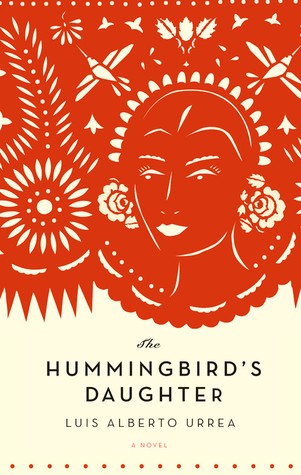
Luis Urrea’s epic novel The Hummingbird’s Daughter is based on the life of his Mexican aunt, Teresa Urrea (Teresita), who was reputed to possess such a remarkable ability to heal others that she became known as the Saint of Cabora. In the novel her healing power gains her widespread fame. The reverence in which she is held by people across a wide swath of Mexico makes her a threat to the government which eventually imprisons her. The book ends after she is released and has been able to convince an entire army not to shoot her with the strength of her resolve.
Teresita is unmarried, childless, schooled as a healer (a curandera). Like our other heroines, she is exceedingly humble about her supernatural talent. Urrea contrasts male and female power, presenting female power as the power of empathy and healing, male power as that of governments with armies possessing the wherewithal to kill.
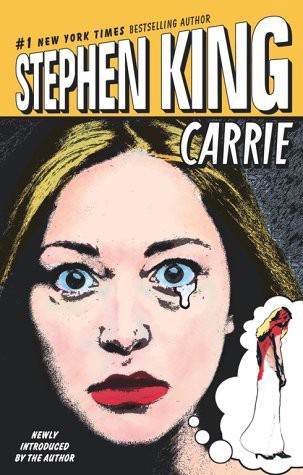
In Steven King’s classic tale of female empowerment and revenge, Carrie possesses the power of telekinesis. While the story veers into murder and mayhem, it begins in the ordinary world of high school. Carrie is an outcast at school and tortured at home by her hyper-religious mother. When she gets her first period in the shower at school, the other girls laugh at her and pelt her with tampons. Her tormentors arrange for her to be invited to the prom so they can further humiliate her by dumping pig’s blood on her head, but they are unprepared when Carrie, who has finally had enough of being a victim, unleashes the full force of her telekinetic power, killing them all, even her mother, and decimating the town.
This is an archetypal story of a young woman coming into her own and asserting herself for the first time and, while ultimately she is no more virtuous than her tormentors, we can’t help but root for her. King is clearly aware of the depth and explosivity of some female rage.
While it would be hard to claim that the world of Naomi Alderman’s novel The Power is not dystopian and futuristic, it is still one we largely recognize. And, as Alderman says: “So if we find my world to be a dystopia, then we are already living in a dystopia.”
The book narrates the story of female power writ large, the story of not a single empowered woman, but a whole world of empowered women who, when they reach puberty, develop the ability to inflict a painful electrical shock with a flick of the finger (harkening back to Roald Dahl’s book The Magic Finger). In this world women have come to rule and the matriarchy, as it turns out, is just as ruthless as the patriarchy has been. The novel asks us to consider: Is female power any better than male power? Does power always corrupt? Useful questions to ask, now and always.
Connie Willis’s comedic novel Crosstalk casts a skeptical gaze on what it means to have a superpower — at least the power of telepathy. Telepathy here is far from a blessing. The main character Briddey Flannigan undergoes, along with her boyfriend, a surgical procedure intended to enhance their emotional connection. But instead of enhanced romantic connection, Briddey finds herself able to hear the thoughts of others, at first only a few people, but eventually many random strangers. She “hears” all sorts of things she would rather not hear; the voices are invasive, annoying, and eventually overwhelming. It turns out she is one of several characters in the book, all with Irish lineage, who have this telepathic power. One of these people, a geeky coworker, teaches her strategies to protect herself and she eventually realizes — not a spoiler because it’s evident early on — that he is her soulmate.
The novel unfolds like a light romantic comedy, but it is also a provocative satire about our communication-obsessed culture in which our preoccupation with “connecting” has led us to exist in a nearly constant state of distraction.
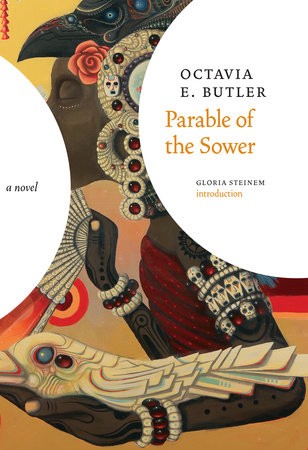
Octavia Butler’s novel Parable of the Sower is a futuristic, dystopian novel that I have included because it is a classic of the genre and because it’s central character Lauren has an unusual superpower called “hyperempathy” caused by her mother having taken drugs. Like the character in The Particular Sadness of Lemon Cake, Lauren is highly attuned to others and experiences people’s pain to such a degree that she often bleeds along with them. She can also partake of other people’s pleasure, particularly during sex, but she experiences this vicarious pleasure far more rarely.
The novel, structured around Lauren’s journal entries, begins in 2024 when Lauren is fifteen. The country (the U.S.) is in complete chaos. Water and food are scarce. Drug-taking is rampant. People are setting fires and shooting people with little pretext. Lauren and her family live with a few other people in an enclave that has begun to be breached by intruders, thieves, murderers.
Lauren has developed ideas about a new concept of God — God is change, sums it up most succinctly — and when her family members are all killed she takes off with a small group, determined to establish a community in which her ideas will inform a new way of life. The novel concludes in 2027 when the world has not improved in any discernible way, but Lauren’s ideas may be paving the way for something good to come.
The dystopian world of the novel provides us with a template against which we can clearly see the problems of our contemporary culture (the novel was first published in 1993). And while Lauren’s superpower plays a relatively minor role in the unfolding of the story, it prompts us to think about how much better the world would be if we were all, men and women alike, more empathetic. There is an underlying hope and optimism in this story, a stark contrast to Alderman’s nihilistic world view in The Power.
Pretend the beauty queen didn’t turn him away when he came over after she received grand prize. She invited him inside, he fiddled with the clasp on her pearls.
Should we take a walk in the pecan grove? Lily in left hand, knife in right. He asked first, she just couldn’t say.
I love a girl who begs until she gets. I love a girl who can’t go anywhere without. I love a girl who will kneel down and.
II.
At twenty-one, I fell in love at a music festival— then, life just one obvious symbol.
Us alone on the ferris wheel, imagine. Music from its neon axis,
Camptown ladies sing this song do-dah, do-dah.
I love a girl who offers to pay. I love a girl who swears every time she. I love a girl who can’t resist.
The tin buckets rolling into paradise. Tennessee brimmed with stars. My cheap nose ring fell out. Smell of June wind, fat fried, marijuana.
What didn’t I want? How couldn’t it be perfect? I don’t really want to talk about it. He asked what beer I wanted.
I hate a girl who smokes. I love a girl who won’t ask for light beer.
I had only practiced a few times. Nascent, right? That’s the word I’m looking for. I knew what to do, though. I’d already been raped,
my mistake. (Oh god, there’s no going back, it’s gone, my friend told me). But this different.
Even so, I thought of the beauty
queen in Georgia, buried in the pecan grove. For the talent portion, she’d worn a wedding dress (boy, could she sing the spangled banner).
The smell rotten shells on her grave (if it helps, envision magnolia, milk petals, the single hairy seed).
I love a girl who sings on key. I love a girl who knows what she needs. I love a girl who won’t talk back after.
III.
Mother admits she had a miserable childhood. Crab apples, heavy-lipped garden roses. Masculine grid of military bases, unaccounted days.
Mine was a long afternoon of back-dives, palaces built of pecans, self-pity, cream soda. Still I cried and cried.
I love a girl who starts taking off. I love a girl who could if she wanted but. I love a girl who comes up to the counter and says.
Please don’t worry! Later, at the honky tonk I fell in love properly, not lightly. Five beers into that simple two-count dance you dance
with older men, calloused hands, pointed boots. I sang along, do-dah, do-dah (no— the men dancing say— girls follow, men lead).
The ferris wheel two years before. He got out his guitar, remember what I said about the stars!
IV.
In elementary school we studied how fruit decays. Every day, watching the flesh. The stench still.
Peach rot, banana black, children with empty notebooks hurried by flies.
The girls, certainly, were asked to clean the piles. The boys in charge tracked results. I vomited on my suede boots.
Patricia got her period early. Mine came two years later on Resurrection Sunday. Are you rolling your eyes? Green synthetic dress, white shoes. Hymnal black, intact on my lap. Do-dah, do-dah. I couldn’t rise from the pew.
I love a girl who plays dumb to keep. I love a girl who understands her limits. I love a girl who is cute as a button but.
So what, the seasons pass now without symbol. It means nothing, no delightful egg uncovered in the yard, no pretend tomb, immaculate womb.
V.
Again, now, it is Easter. Lush monkey grass, magnolias browning, leaves waxed.
I visit my mother. She hands me a brush, excuses me to fix myself in the mirror. She files my nails, loving. She clips the hanging crescents,
loving. I don’t think I believe in heaven, she tells me while we pull weeds, arthritis setting the spine
(but maybe we should discuss it another time).
The stranger puts on his rabbit head for new children. The girls find all the eggs (little girls are cunning).
They work in pastel pairs. Night yard oiled with kumquats rubbed between fingers.
I love a girl who insists. I love a girl who drives a stick. I love a girl who puts on heels and becomes.
VI.
Here, pay attention here: he’s unlacing his shoes, handsome him.
Breath a little bad, dog eyes. And me, along, along. My breasts, you know, in that carnival light. Tin music. Buckets rolling into paradise.
Oh Susanna, don’t you cry for me.
I come from Alabama with a banjo on my knee. His blue jeans press into me. I’d give him anything
(when it’s over I won’t be happy, exactly, but I’ll be in a different room the rest of my life). Do-dah, do-dah.
It’s been six years. Face thinned, body recovered. Dog alive then, now dead.
It is spring. The beauty queen was murdered in Georgia, the town remarking that her house was pristine, clean as a doll’s. The pearl necklace unstrung is all that points to struggle.
I love a girl who bites. I love a girl who insists she isn’t nice. I love a girl with an appetite. I love a girl who doesn’t look. I love a girl who doesn’t look like she likes it.
About the Author
Katherine Noble is a writer and teacher living in Austin, Texas. She is a recent graduate of the Michener Center for Writers and a recipient of the Keene Prize in Literature. Her work can be found in West Branch,Beloit Poetry Journal, and elsewhere. She is currently trying to convince 7th grade English students to love poetry.
We asked these questions at our event for PEN America’s LitCrawl NYC, and now you can play along at home!
First Round
1. Robert Galbraith is the pen name of which bestselling author?
2. Name the author of this quote: “we all tell ourselves stories in order to live”.
3. Mrs. Dalloway by Virginia Woolf takes places in a course of a ____.
a) a day b) a week c) a month d) a year
4. This test measures the representation of women in movies and literature. The criteria is that it has to have at least two women in it, who talk to each other, about something besides a man. Who invented the test?
5. Crazy Rich Asians is the first Hollywood movie in 25 years with an all Asian cast. What was its literary predecessor and who was the author?
6. What genre is Octavia Butler known for?
7. This quartet spans a lifetime and revolves around two women growing up in post-war Italy. Name the series and the author. Hint: The first book has just been adapted into an HBO series
8. Which novelist co-founded the indie bookstore Books Are Magic in Brooklyn with her husband?
9. What is the world’s first novel? Hint: it was written by a Japanese woman.
10. Pulitzer prize-finalist Michelle Alexander wrote a book calling what the new Jim Crow?
Picture Round
Final Round
1. Fifty Shades of Grey by E. L. James started as fan fiction for which book?
2. Who is the first African American to win the Pulitzer prize?
a) Alice Walker b) Lynn Nottage c) Gwendolyn Brooks d) James Baldwin
3. This short story is set in a small town where every year the village people gather with stones for an annual ritual called “the lottery” where a villager is stoned to death to assure a good harvest. Name the author.
4. Name the book and the author of this first line: “It was a queer, sultry summer, the summer they electrocuted the Rosenbergs, and I didn’t know what I was doing in New York.”
5. Name this poet: “The caged bird sings
with a fearful trill
of things unknown
but longed for still”
6. Name the author and the author that this quote is from: “The four March sisters couldn’t be more different. But with their father away at war, and their mother working to support the family, they have to rely on one another.”
7. The novel Pachinko by Min Jin Lee is set in which two countries?
8. An unnamed college graduate decides to spend a year asleep in her apartment by using a combination of drugs. Name the book and the author.
9. The House of Spirit spans three generations of the Trueba family in an unnamed Latin American country. Who was the author?
10. This author disappeared for 10 days in 1926 and claimed not to remember what happened during that time. Name the author.
Answers
First Round
J. K Rowling
Joan Didion
a) a day
Alison Bechdel
The Joy Luck Club by Amy Tan
Science Fiction
The Neapolitan Quartet by Elena Ferrante
Emma Straub
The Tale of the Genji
Mass incarceration of African Americans
Picture Round
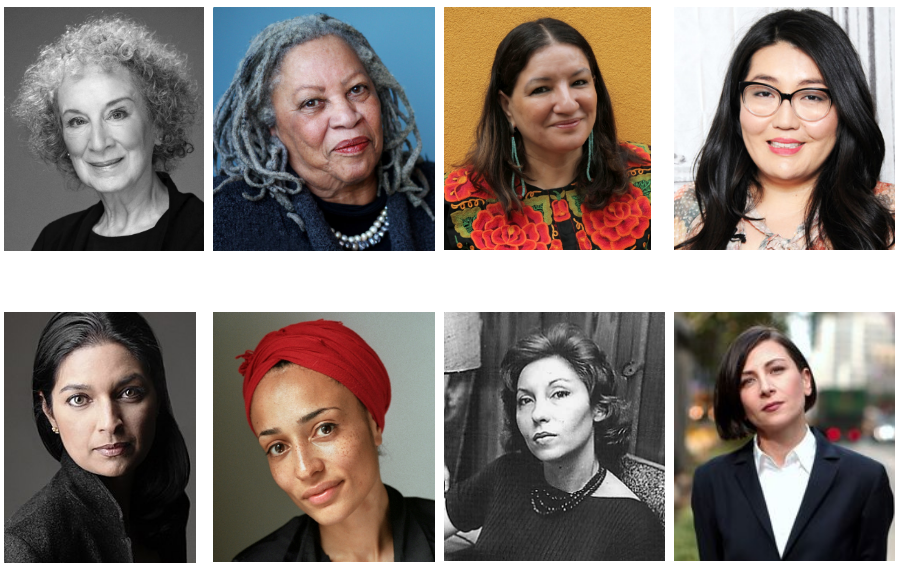
Top row: Margaret Atwood, Toni Morrison, Sandra Cisneros, Jenny Han
Bottom row: Jhumpa Lahiri, Zadie Smith, Clarice Lispector, Donna Tartt
Final Round
Twilight
c) Gwendolyn Brooks
Shirley Jackson
The Bell Jar by Sylvia Plath
Maya Angelou
Little Women by Louisa May Alcott
Korea and Japan
My Year of Rest and Relaxation by Ottessa Moshfegh
Flash fiction is many things: hilariously difficult to categorize; confusingly known as “microfiction,” “short shorts,” “minisagas,” “dribble,” and “drabble”; and sometimes, even dangerous.
But great might not be the first word that springs to mind. Remember, this is a style of writing so short (most cap it at 1,000 words) and so accessible that some have deemed it “Twitterature.” For every half-baked stab at micro-fiction in your Instagram feed, though, there’s a masterful short short story out there that you probably haven’t read yet. The best part? It won’t take more than three minutes to read them.
Here are seven examples of flash fiction (for a total of 21 minutes or less) that are totally worth your time.
“Chapter V,” Ernest Hemingway
“For sale: baby shoes, never worn” is far from Hemingway’s only foray into flash fiction (if it was indeed his story). This story from his collection In Our Time follows the typical arc of great flash fiction by starting with a straightforward but descriptive sentence to set the scene.
They shot the six cabinet ministers at half-past six in the morning against the wall of a hospital. There were pools of water in the courtyard. There were wet dead leaves on the paving of the courtyard. It rained hard. All the shutters of the hospital were nailed shut. One of the ministers was sick with typhoid. Two soldiers carried him downstairs and out into the rain. They tried to hold him up against the wall but he sat down in a puddle of water. The other five stood very quietly against the wall. Finally the officer told the soldiers it was no good trying to make him stand up. When they fired the first volley he was sitting down in the water with his head on his knees.
After his matter-of-fact opening, Hemingway folds back the layers until that first sentence takes on an entirely new meaning by the end. What starts as an impersonal report straight out of a newspaper clipping ends as a vivid portrait of human suffering. Never fear, though: not all short shorts are this depressing… just the good ones.
“Widow’s First Year,” Joyce Carol Oates
Ernest Hemingway’s (apocryphal) six-word story might be more famous — but this four-word story from Joyce Carol Oates has it beaten in the brevity stakes:
I kept myself alive.
Pulled from the anthology Hint Fiction, a collection of works running 25 words or less, this story reveals a key trick of the flash fictionist’s trade: let the title to do the heavy lifting. In isolation, “I kept myself alive” might be construed as a feel-good mantra — but in the context of the title, it provides a morbid twist on the setup-punchline structure of a joke.
“Give It Up!” Franz Kafka
Not all flash fiction needs to be breathlessly blunt like Hemingway’s. In this single paragraph, posthumously published story, Kafka crystalizes the mood and paranoia that defines most of his work:
It was very early in the morning, the streets clean and deserted, I was walking to the station. As I compared the tower clock with my watch I realized that it was already much later than I had thought, I had to hurry, the shock of this discovery made me unsure of the way, I did not yet know my way very well in this town; luckily, a policeman was nearby, I ran up to him and breathlessly asked him the way. He smiled and said: “From me you want to know the way?” “Yes,” I said, “since I cannot find it myself.” “Give it up! Give it up,” he said, and turned away with a sudden jerk, like people who want to be alone with their laughter.
Edgar Allan Poe once described the need for a “unity of effect” in short stories: the act of carrying a single emotion throughout the piece to elicit a particular reaction from the audience. In just 130 words, Kafka is able to suck readers into his world and leave them shaken.
“Sticks,” George Saunders
This excerpt is from a 1995 story that’s become a modern classic of the micro-fiction form. Depicting decades of a man’s life through the prism of a hand-made lawn ornament, these two paragraphs reveal the keen eye for specificity that has since helped writer George Saunders win the Booker Prize.
Every year Thanksgiving night we flocked out behind Dad as he dragged the Santa suit to the road and draped it over a kind of crucifix he’d built out of metal pole in the yard. […] The pole was Dad’s only concession to glee. We were allowed a single Crayola from the box at a time. One Christmas Eve he shrieked at Kimmie for wasting an apple slice. He hovered over us as we poured ketchup saying: good enough good enough good enough. Birthday parties consisted of cupcakes, no ice cream. The first time I brought a date over she said: what’s with your dad and that pole? and I sat there blinking…
It might be a little longer than your average short short, but in two paragraphs, Saunders seamlessly works in an emotional arc that’s more impactful than most novels. Most impressive is how he suggests a fleshed-out backstory through a handful of asides: Rod’s helmet, the father’s old army medals. And, like all great flash fiction, its ending hits stunningly hard and stays with you for a lot longer than three minutes.
Not all great flash fiction is bleaker than bleak! This winner of the 2015 Barthelme Short Prose Prize couldn’t be much farther from the gritty, sober tone of most flash fiction. Written in the oft-controversial second person, Behm-Steinberg’s story imagines a world where Taylor Swift (yes, the singer) is available in abundance to anyone who cares to order one from the internet.
It’s a bizarre story: a meditation on capitalism, fame, and consumer culture. It’s also riotously funny. Here’s an excerpt:
You’re in love; it’s great, you swipe on your phone and order: the next day a Taylor Swift clone shows up at your house. It’s not awkward, it’s everything you want. She knows all her songs, and she sings them just for you. When you put your Taylor Swift to bed (early, you got a big day tomorrow) you peek over the fence into the Rosenblatt’s yard, and the lights are blazing. Your best friend Tina has three Taylor Swifts swimming in her pool. She has a miniature Taylor Swift she keeps on a perch, a Taylor Swift with wings. You’re so jealous. She’s not even paying attention to them, she’s too busy having sex with her other Taylor Swifts, they’re so fucking loud it’s disgusting. You hate Taylor Swift…
This goes to show that flash fiction’s sole purpose isn’t just to depress readers. Instead, its constraints can allow the writer to distill their ideas into just a couple hundred words.
“im sorry, its a girl” said the doctor to the father.
“no, im sorry, youre a sexist” said the girl child to the world.
Taken from writer Adhiraj Singh’s parody collection, Terribly Tatti Tales, this story manages to fun at the poor grammar and heavy-handedness of most “Twitterature,” while simultaneously delivering a hilarious and rousing story in and of itself.
“Gator Butchering for Beginners,” Kristen Arnett
If you’re interested in more stories short enough to read on your commute, Electric Lit’s own Recommended Reading Commuter showcases the best flash, graphic, and experimental narratives out there. Take, for example, this particularly disturbing excerpt from up-and-coming Floridian writer Kristen Arnett on the minutiae of skinning an alligator:
It’s easy enough to slip the skin. Wedge your knife below the bumpy ridge of spine to separate cartilage from fat; loosen tendon from pink, sticky meat. Flay everything open. Pry free the heart. It takes some nerve. What I mean is, it’ll hurt, but you can get at what you crave if you want it badly enough.
Start with the head…
…and to hear where “Gator Butchering” ends, check out the full story. Spoiler: it’s about alligators, but it’s also not about alligators.
When it comes to flash fiction, you can’t be blamed for raising an eyebrow — especially if your only experience has been a badly-written paragraph on your Facebook wall. But hopefully, these stories demonstrate just how exciting it can be to read a story that goes straight to the heart without a single wasted word.
Sign up for our newsletter to get submission announcements and stay on top of our best work.
YOUR INBOX IS LIT
Enjoy strange, diverting work from The Commuter on Mondays, absorbing fiction from Recommended Reading on Wednesdays, and a roundup of our best work of the week on Fridays. Personalize your subscription preferences here.