When I first watched the trailer for Bel Canto, I asked out loud (by which I mean, I tweeted) whether anyone knew if Anne Patchett’s “unspecified South American country” had been specified for the film version. Surely, I mused, the filmmakers wouldn’t dare set this hostage narrative in a nondescript Latin American nation — not when it was so obviously based on the 1996 “Lima Crisis” that took place at the Japanese ambassador’s house in Peru. Patchett had gotten away with nodding to her real-life inspiration while leaving her novel devoid of geographical specifics; it’s all “the host country” this and “this godforsaken country” that. But in a film, where you can see the setting, surely they’d have more respect for both the audience and Peruvian history. After catching the film for myself, however, I can confirm that Chris Weitz’s adaptation is as uninterested in Peru as Patchett was. The film of Bel Canto joins the novel in a long line of U.S. cultural objects that treat South America more as a colorful and exotic (not to mention dangerous) image of a place than a real-life location.
Bel Canto imagines a scenario very much like the real Lima Crisis, a 1996 hostage situation wherein fourteen members of the Túpac Amaru Revolutionary Movement took over the residence of the Japanese ambassador for more than 120 days, but puts a fictional opera singer at the center. Roxane Coss (played in the film by Julianne Moore, who lip syncs to recordings by Renée Fleming) has been invited to sing for Mr. Hosokawa (Ken Watanabe) on his birthday. The Japanese businessman has been lured to “the host country” with the promise of seeing the famous soprano, because the president hopes to convince him to build some factories that would jumpstart the country’s failing economy. After Coss sings her beautiful arias, a group of armed revolutionaries take over hoping to hold the President for ransom. They’re unaware that President Matsuda (an obvious nod to then-Peruvian President Fujimori, who was of Japanese descent) is not even present for the performance, having canceled his appearance at the last minute.
Bel Canto joins a long line of U.S. cultural objects that treat South America more as a colorful and exotic (not to mention dangerous) image of a place than a real-life location.
Just as in real life, all the women are released — except for Ms. Coss, who’s just too beguiling and who the revolutionaries know is their main chance at leveraging a better deal. In the weeks that follow, and as negotiations prove more and more futile, her singing proves to be the soothing balm these otherwise violent terrorists require to see the finer things in life. She helps make their months-long ordeal a kind of utopian enclave where French ambassadors cook alongside young girl guerrillas, where a Japanese translator helps set up a daily chess match, where Russian businessmen fall for the soprano (who in turn becomes enamored with Mr. Hosokawa), and where kidnappers and kidnapped learn to live amicably before real life comes crashing into them staging a climactic finale worthy of one of the operas Coss sings so beautifully.
By Patchett’s own admission, her interest in the Lima Crisis stemmed mostly from its operatic plotline. Apart from the obvious source material, there’s nothing about Bel Canto that requires it to be set in Peru. Give or take a few cultural markers, the book could’ve taken place anywhere. All of the action takes place in the Vice President’s mansion-like house which is surrounded by a large wall that further isolates those inside. Her characters may spend a lot of time looking out the windows, but there was little they could see. “They could have been in London or Paris or New York or Tokyo,” her narrator tells us. “They could have been looking at a field of blue-tipped grass or a gridlock of traffic. They couldn’t see. No defining hints of culture or local color. They could have been any place where the weather was capable of staying bad for indeterminate amounts of time.” With such caveats baked into her prose, it was no surprise to find Patchett being candid about how, as she put it in an interview that bookends my edition of Bel Canto, the novel “is not an especially bold or insightful rendering of South America. It’s about a living room in South America.”
Both excuse and disclaimer, Patchett’s assertion doesn’t explain why her attentive renderings of Russian businessmen, Japanese translators, French ambassadors, and Dutch Red Cross volunteers stand in stark contrast with her bare-bones sketch of this “host country” and its revolutionaries. Then again, this type of broad-strokes portrait of Latin America is nothing new. Whether you’ve seen the poor sense of Colombian geography that anchors the drug kidnapping romcom Romancing the Stone, the murky politics of the kidnapping drama Proof of Life (set in the fictional “Tecala” country), the soundstage-created images of South American jungles in B-movies such as The Tiger Woman, or even sobbed your way through the brightly-colored vistas of Pixar’s Up, you’ve no doubt come across the hackneyed ideas of the region that Hollywood depends on. Everywhere south of the border (and particularly below Panama) is, in the U.S. cultural imaginary, all jungle and violence. Moreover, as even these brief but telling examples suggest, South America is a Manic Pixie Dream Continent, a mere backdrop for foreign nationals who end up finding themselves, or love, or perhaps both as in Bel Canto, while abroad.
Weitz’s adaptation muddles rather than clarifies Patchett’s nondescript location. His establishing shots may favor images of slum-ridden mountains, but at least the flag his revolutionaries fly looks like the Peruvian one. But on casting alone (and given his decision to shoot in Mexico City, inserting even a brief scene where a Red Cross worker visits the famed Mayan pyramids in its outskirts) he shows himself mostly uninterested in offering any kind of cohesive vision of any one Latin American country, as if they all could be blurred into one imagined nation. What emerges instead is a hodge-podge of a national portrait, with actors from Mexico, Guatemala, Colombia, and the U.S. filling roles from the “host country.” Their disparate dialects and accents stress (for Spanish-speakers, at least) how the film production didn’t even aim for any kind of authenticity. Father Arguedas, a priest who stays behind even after being asked to leave, is played by Bobby Daniel Rodriguez, whose mastery of Spanish is enough to fool those who just read subtitles but which clearly sounds clipped for those of us with an ear for it. Some revolutionaries, like Carmen (played by María Mercedes Coroy, so wonderful in Guatemala’s Ixcanul) clearly gesture to indigenous communities who speak little Spanish. And others still, like Comandante Benjamin (played by Mexican actor Tenoch Huerta), sound like they’re characters straight out of a Mexican telenovela — an underling of his uses the Mexican slang “güey,” a moment that had me cringing for the way it seemed both gesture to and otherwise ignore its own cultural specificity.
South America is a Manic Pixie Dream Continent, a mere backdrop for foreign nationals who end up finding themselves, or love, while abroad.
And speaking of telenovelas, that is where Patchett’s painful indifference to the country she’s decided to represent in the pages of her novel makes itself most known. The reason why President Matsuda opts to not attend the evening dinner with Ms Coss and Mr Hosokawa, we learn, is because he’s obsessed with a telenovela (the Thalía-starring vehicle Maria la del Barrio, as we’re shown in the film). In Patchett’s telling, these soaps air daily during the daytime with one weekly primetime summary episode, which is the one President Matsuda refuses to miss and which prompts him to skip out on the dinner that kickstarts the novel’s plot. It’s arguably a small (if crucial) detail, but this is very much a U.S.-centric vision of soap operas. Telenovelas, especially successful ones like Maria la del Barrio, aired nightly. (I have all-too-vivid memories of teenage tantrums I staged when it became obvious I wouldn’t make it back in time for my prime time soaps on any given weekday.)
Like every other attempt at using South American culture to color this story, Bel Canto cannot help but see its chosen setting as anything more than window dressing. What better way to account for a president’s vanity than have him be obsessed with telenovelas? What easier way to show oneself oblivious to their own cultural production than think telenovelas are strictly a daytime activity? This “host country” remains just a sketch beyond the windows of Patchett’s imagined living room. It’s a beautiful painted backdrop as broad and colorful as the kind that would adorn an opera stage.
Yesterday the National Book Foundation announced its “5 Under 35” picks: five young debut authors worth watching. But without diminishing the accomplishments of these incredible new writers, we have to note that the tendency of media and publishing to celebrate youth can be discouraging for aspiring and emerging writers approaching (or well into, or beyond) middle age. It’s important to remember that debuts can come later in life, too; you haven’t missed your chance to write a great book just because you’re old enough to run for president. Willa Cather was 39 when her first novel debuted in serial form in McClure’s. Toni Morrison published her first novel when she was 40, and George Eliot published Middlemarch at 52. (Is it a coincidence that many women writers debut work later in life?) Ultimately, why do we put so much stock in a debut author’s age? Authors of any age who write insightful, beautiful books should be celebrated.
So in addition to the NBF’s illustrious honorees, we’re highlighting five stellar debut works published in 2018 so far, written by authors who are over 35—because there’s no right age to start writing, and being a young debut author isn’t inherently more worthy of celebration than not being young. The authors we’ve chosen here deserve a whole lot of praise for writing through a life that offers more reasons to stop writing the longer you live it. We offer this list as an honorary award for those who keep going.
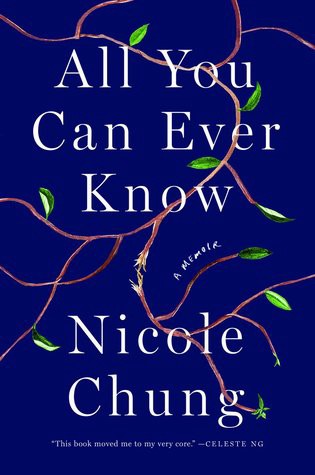
Chung’s memoir traces the storyline she grew up in. Born premature, Chung was put up for adoption by her Korean parents and raised by her white adoptive family in suburban Oregon. She dealt with prejudice her family couldn’t understand as she grew into her own identity as an Asian American writer. When her daughter was born, Chung tried to retrace her roots and untangle some of the past to braid it anew. Was the story she grew up with the whole truth? What does it mean to be family?
How do you reconcile your self against an identity? For each of the characters in Orange’s novel, to be an “Indian” — an “Urban Indian” living in Oakland, California is an evolving question. Time tips toward the Oakland powwow, where Tommy, the first character we meet in the novel, is planning to commit armed robbery. What will happen when the community gathers at the Oakland powwow, and what will it mean to be “authentically Indian?” The New York Times couldn’t help but be effusive: “Yes, Tommy Orange’s New Novel Really Is That Good” they blurted out in their headline for the review. And they’re right.
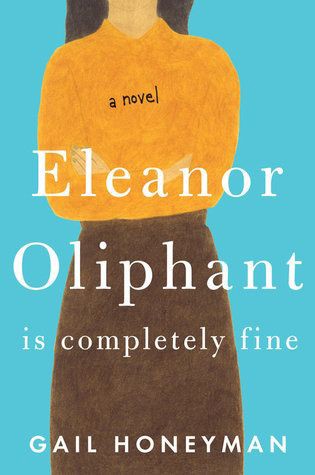
Eleanor Oliphant thinks the ingredients for a “perfect weekend” include a frozen pizza, some vodka, and a call to mom. Be sure to leave out interactions with humans, please. That is, until she and the (otherwise kind of offputting) IT guy from her office, Raymond, both stop to help an elderly man named Sammy when he takes a spill on the sidewalk. The three unlikely, antisocial friends ease into something like friendship as Raymond and Eleanor stumble into love. Reese Witherspoon loved the book so much, she’s making it into a movie.
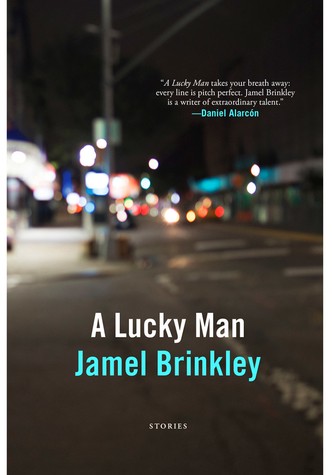
The phrase is worn out, but really — this is a book we need right now. Brinkley’s short story collection explores toxic masculinity as it plays out in the lives of boys and young men in Brooklyn and the South Bronx, confronting the choices, mistakes, and desires that erupt between the world as it is and as they want it to be. As one reviewer put it, these stories “find their footing on the violent edge of gender performativity and end in a reach for language to describe the incomprehensible.”
Hobson’s book is an intense family drama, following three adult sisters who confront family tensions and secrets on a trip to their childhood home. It’s a sort of northern Southern Gothic, heavy on the psychosexual baggage; it will not make you feel good about marriage or family, but it will make you feel good about the possibility of publishing a first novel even though you’re old enough to be into Patti Smith. (Please do not email, we know you can be into Patti Smith at any age.)
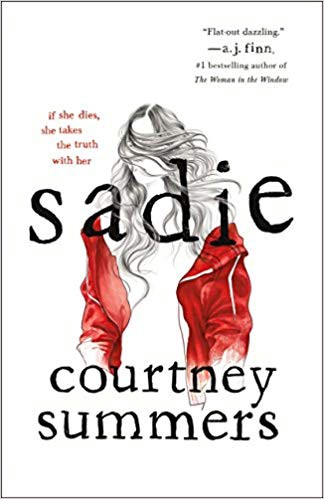
Courtney Summers is a master of the bitch. For ten years, she has written nuanced, wrenching stories about angry girls, unlikable girls, girls we now call “nasty.” Summers uncovers the stories behind them, explaining why they are the way they are without apologizing for it; her books deal with grief, poverty, trauma, and often, the aftermath of sexual assault. In her newest YA novel Sadie and its podcast tie-in, Summers examines how we consume stories about girls, and how we consume girls themselves.
The book follows nineteen-year-old Sadie, who leaves her hometown to find the man who murdered her younger sister Mattie. In alternating chapters, we read the transcripts from a radio producer named West who starts a Serial-style podcast, The Girls, to find Sadie and bring her home. It’s a harrowing, feminist thriller: Will West find Sadie? Will Sadie exact her revenge? Will she die trying?
Summers’ publisher Macmillan created the podcast in real life using selections from the audiobook as a pre-publication marketing tool, released over six weeks to drum up anticipation for the book. It could be written off as a simple teaser campaign, but it shouldn’t be; listening to the podcast in conjunction with the book, it becomes its own interesting artifact. Both Sadie and The Girls show how we tell stories about girls, but they do it in markedly different ways.
The Girls consists of six 20-minute episodes, and it explains itself thus: “It’s a story about family, about sisters, and the untold lives lived in small town America . . . And it begins, as so many stories do, with a dead girl.” Spurred by Sadie and Mattie’s surrogate grandmother May Beth, West retraces Sadie’s road trip through depressed Colorado towns, always a few steps behind. He interviews acquaintances and learns that the sisters’ mother is an addict, largely absent, and that Sadie essentially raised Mattie on her own. The show ends on a cliffhanger, about two thirds of the way through the story, but there are additional West chapters in the book.
When Summers listened to The Girls, it felt like a real podcast to her, separate from the narrative she’d created.
“I just listened to it on repeat over and over and I couldn’t believe I had written it,” she says. “It’s truly an adaptation so it made me feel one step removed from my own book, and I feel like I got as close as I could be to a reader of my own work.”
It could be written off as a simple teaser campaign, but it shouldn’t be; listening to the podcast in conjunction with the book, it becomes its own interesting artifact.
Even though it’s all part of the same book, certain themes become more prominent in the audio telling. From the beginning, West is reluctant to tell this story, not because of its tragedy but because it isn’t interesting enough. “Girls go missing all the time,” he says. “Restless teenage girls, reckless teenage girls, teenage girls and their inevitable drama . . . I wanted a story that felt fresh, new and exciting, and what about a missing teenage girl was that? We’ve heard this story before.” To West, Sadie is just another emotional runaway, unremarkable, as if all women who make choices he doesn’t agree with are the same. As if girls taking control over their lives is reckless.
As West tells it, girls are all of a type. After he learns that Sadie pulled a switchblade on someone, he goes back to her grandmother:
West McCray: Was Sadie a violent person, May Beth?
May Beth Foster: No. No! Never. I mean…she could’ve been, but in the way we all could be. It wasn’t something she was.
West seems to think that violence defines a person, not that Sadie may have been pushed — by anger, by trauma, by a need to protect herself — to brandish a knife. Later, he interviews a hitchhiker Sadie picked up, and dismisses her too: “Cat, in a lot of ways, is what I expected Sadie to be. Restless, reckless, dramatic.”
Eventually, talking to Cat about her own experiences as a runaway is a turning point for him. “It all suddenly, and belatedly, felt too real, and I didn’t like it,” he says. By the end of the podcast, West comes around to being truly, personally unsettled by Sadie’s story, and Cat’s, and all the stories of violence against women before and since, though it’s frustrating for him to have to come around at all. Still, he’s telling the story, producing it for an audience.
“I thought West would be the perfect vessel to pose those questions and to come to those realizations because he’s someone that is producing content, even as he realizes that, he still has to make this the way that people want to hear,” Summer says. “So he’s forever caught in that place of knowing something and feeling it and then also realizing that he’s an entertainer, he’s a host, he’s still gotta do his job. And it’s completely conflicting with his emotional response to Sadie’s story.”
Reading the book, West can be forgiven all this, but there’s something about actually hearing him say these things and not hearing Sadie’s voice as counterpoint that makes it feel so much more dismissive, more judgmental, and, frankly, more male. Of course, Sadie herself is absent from the podcast, even though it revolves around her. What’s more, Sadie has a stutter — audio wouldn’t be the best medium even if it were allowed to her — so she’s especially distanced from this mode of telling her story.
The book explores the idea that true crime podcasts may capitalize on the pain of victims, and creating an actual podcast with a true crime conceit brings those issues into relief. For Summers, it’s a complicated question.
The book explores the idea that true crime podcasts may capitalize on the pain of victims, and creating an actual podcast with a true crime conceit brings those issues into relief.
“I don’t think it’s true for every true crime story out there that it’s coming from a place of negative intent or an exploitative approach, it’s just that the possibility is there and so I think it’s worth asking the question of why we engage with this media, why we create this media. [Sadie’s] not an indictment against true crime, it’s a question of, why do we love it? What’s in it for us? Who does it potentially hurt, if anyone? How careful are we? Who should we be thinking of?”
We do need to read the book after the podcast, though perhaps not in the way that Macmillan’s marketing department expected. After listening to a grown man from New York attempt to tell a poor young woman’s story, it’s so much more important for her to tell her own. The book gives Sadie agency, and West’s stereotypes of girls seem thinner when juxtaposed with the full story of one.
For her part, Sadie also thinks about girls of a type. The girls working the parking lot of a truck stop. The pretty girls on Instagram. The runaway girl who needs a ride. But where West saw a “they,” Sadie sees a “we.” The way she discusses girls is more sardonic, recognizing that she doesn’t fit in with anyone’s expectations, but maybe no other girls do either. When she allows herself to dance with a boy, she thinks, “I let the music own me, turning myself into the idea of a girl, or an idea of an idea — a Manic Pixie Dream, I guess, the kind of everyone says they’re tired of but I don’t know that they really mean it. The girl nobody ends up loving long or loving well, but nobody wants to give up either.” It’s as if she knows her life is a story, and she won’t be silenced from the telling of it.
Sadie also thinks about girls of a type. The girls working the parking lot of a truck stop. The pretty girls on Instagram. The runaway girl who needs a ride. But where West saw a “they,” Sadie sees a “we.”
Every female character in the book, young and old, bears the weight of something — addiction, single parenting, a difficult family life, a dead husband. Summers allows them to feel their feelings and act on them. In Sadie’s chapters, we learn that sexual violence is a part of her story, and her reasons for seeking out the attacker go much deeper than teenage ennui: vengeance for her sister, herself, and for the protection of other girls. As opposed to West’s shock at the possibility that Sadie was violent, the book allows for female rage in a way that the world often doesn’t. Sadie’s story is about a girl following her anger and pain, recognizing and using her strength in a way that young women are rarely permitted. To put it plainly, Summers takes young women seriously in a way West — and much of our culture — doesn’t.
“I really wanted people to confront their own perceptions of teenagers,” Summers says. “We never take teenage girls seriously, do we? As soon as a teenage girl likes something, whether it was Twilight or Bieber or One Direction, as soon as a girl loves something it’s suddenly not worth our time or attention. We just look for ways to dismiss them. And it’s the same with their pain and the real things that they’re going through. We don’t give it the kind of gravity that it deserves because we treat girls like disposable objects.”
Like a meta Ouroboros, a book about dead girls and crime podcasts became a crime podcast about a dead girl. Summers upends the classic dead girl story by giving us both the story and the girl. Mattie and Sadie are fully-drawn characters. The book revolves around them, and Sadie takes control of her own life and her own story.
“I think we’re so used to consuming violence against women and girls as a form of entertainment that this is really an extension of that,” Summers says. “You never have to look too far to find some sort of story that centers on a brutalized girl that we sort of come to expect it as something that will entertain and give back to us in that way. And that’s a very strange thing when you pause to think about it. We’ve normalized that sort of violence and that sensationalism and we’ve turned it into bingeable content. We tune into it weekly on certain shows on TV and once you create that kind of relationship with that sort of media how can you not foster that sort of obsession with it?”
Sadie seems especially of and especially for our current moment, without feeling pedantic or ripped from the headlines. Summers shows men who think of abusers as “not the guy I know,” and much later in the book, West is chastised for explaining that he’s drawn to Sadie and Mattie’s story because he has a daughter of his own.
“You never have to look too far to find some sort of story that centers on a brutalized girl.”
“It’s so upsetting to think that they have to have a personal connection to a woman to be able to empathize and show compassion and care towards what women in the world are going through,” Summer says. “You really have to say, ‘I have a mother, I have a daughter, I have a sister,’ to be able to recognize that heinous crimes against women are heinous? It’s like, really? It was funny — well not fun, but I liked being able to articulate that little jab in Sadie.”
Like Summers’ other books, Sadie is dark. The murder of girls, the dismissal of women, the prevalence of sexual violence. The obliviousness of men, even if they are well-meaning. Characters who are attacked, over and over again. Summers jokes that she revels in making people cry, but she has reasons for hurting her characters, and her readers.
“I think it’s because, first of all, I respond to those kind of stories myself,” she says. “They resonate with me. And I think it’s because I sort of see them as a challenge to readers to pick them up. Like this is something I’m telling that is true about the world and it’s ugly and it hurts, but now what do you do about that going forward. What are you going to put out into your world, because we all have the ability to make positive choices, make positive change.”
A s a previous Temporary Protected Status-card holder with lots of family and friends who are still undocumented, I knew Jose Antonio Vargas’s work way before he wrote his recently released memoir, Dear America: Notes of an Undocumented Citizen. From his groundbreaking 2011 essay “My Life as an Undocumented Immigrant” in The New York Times Magazine where he came out as undocumented, I knew his was a fearless voice, a voice that gave me the courage to be honest with my immigration status.
In 2011, I was about to enter my last year of undergrad at UC Berkeley, without any federal funding because of my immigration status. I was fed up, I was tired, I was angry. Reading that essay gave me the courage to pursue my dream of becoming a writer. Without it, I would’ve perhaps never written the poems I did in grad school; or they would’ve taken much, much longer to understand that it was ok for them to be written.
Vargas’ voice gave me the courage to face my immigration status, to speak out, to demand humanity. Similarly, his new memoir reminds us that no human being can ever be “illegal,” that there is no such thing as a good or a bad immigrant, that immigration affects a vast majority of people in the US, “citizen” or “non-citizen” alike.
I spoke to Vargas over the phone about his life-long work fighting for the immigrant community.
Javier Zamora:I have a few questions for you, but first off, I want to say what an honor it is to talk to you! I want to thank you for all the work you’ve done, do, and will continue to do, for the undocumented community.
While reading Dear America, I kept thinking of Edwidge Danticat’s Create Dangerously: The Immigrant Artist at Work. In her book, she advises us [immigrants] to “create dangerously for people who read dangerously.” Early in the book she also mentions the following quote by the poet Ossip Mandelstam in which he defines creating dangerously as “creating as a revolt against silence.” You’re certainly doing what both Danticat and Mandelstam envision.
My question is, what do you want your undocumented readers, or previously undocumented readers like myself, to take away from your own revolt against silence? What should we do with this dangerous material? And how can we act?
Jose Antonio Vargas: Edwidge to me is essential. She is one of our essential writers. That’s why I asked her to write a blurb.
JZ: I saw that, which reminded me of her book.
JAV: You know I reached out completely cold? I think I messaged her on Facebook.
JZ: What?
JAV: I was surprised she responded. I was like “I would love for you to read the book and if you feel compelled I would love to have you blurb it.” I love she’s one of the very first people to read the book. That’s how much her work has meant to me. She’s a writer that has created a humanistic language around what being a migrant means and feels like. I would hope that this book honors that work and continues the work she started. Thank you for asking that question.
So, the question you asked… Another writer that meant a lot to me is Toni Morrison. The Bluest Eye is one of the very first books I ever really read and it was a book that really challenged me. When Toni Morrison writes, she writes without the white gaze; meaning that she centralizes the experiences of black people in her books. One of the things she has to do, is make sure she’s writing without the white gaze: meaning writing for just white people.
When I was writing this book, I wanted to make sure that I wasn’t writing for US citizens. That I wasn’t writing to explain my humanity to American citizens that want people like me to “fit.” I was really thinking about how to get into the psychology of understanding this position. Understanding this undocumented position. I think I’ve been depressed since I was 16. I just happen to be one of those people. You know I have friends that smoke weed and say that weed helps them. I just haven’t tried it. I never really tried to do drugs before. Thankfully I haven’t needed drugs to deal with my depression. I’ve dealt with my depression by asking: how many things can I be doing? How many balls can I be juggling? Just so I don’t have to deal with my depression.
JZ: And you talk a lot about that in the book; this idea of compartmentalizing identity, compartmentalizing feelings.
JAV: Yeah, really distracting myself from my own emotions. And part of living dangerously is facing yourself. Which is a very dangerous thing to do. I would argue that a lot of us spend a lot of our time trying intentionally not to face ourselves. This book was my attempt to really look at myself for the first time and try to understand why I am the way that I am. And try to get at the depression/mental health state that I’m in. Why haven’t I allowed myself to be in a romantic relationship? I don’t do that. I don’t. I never have made time for that. To be intimate with somebody you have to be willing to be intimate beyond just the physical intimacy. I never allowed for that to happen. And now I know why. Now I understand myself better by writing this book.
The message from me to undocumented or previously undocumented people is: the language that is so mainstream out there about what immigration is — which is political, politicized, all these acronyms that people have no idea what they are, TPS, DACA — our humanity is more than all these acronyms that people don’t know and all the politics that people don’t even really understand. My goal in writing this book is to say that our humanity is measured by more than pieces of paper and laws that can’t even pass. We owe ourselves — under these conditions, under these oppressive deplorable conditions — we owe ourselves dignity and we owe ourselves every bit of joy we can find.
My goal in writing this book is to say that our humanity is measured by more than pieces of paper and laws that can’t even pass.
JZ: To follow up on that, reading this book after I wrote my book of poems, I wrote it similarly to understand myself and to understand why I was a certain way. But after writing it, I found out that I was very much still traumatized. Writing was not enough to heal from my trauma. This realization convinced me to finally seek counseling out of my own volition. And I learned many coping mechanisms to deal with the stress. Even talking and traveling to give readings around the book was/is stressful.
Having said that, I can’t even begin to imagine the amount of stress you were in while writing this book. While living your life. I kept wondering, besides the juggling, the compartmentalizing that you talk about in the book, there must’ve been something else. Some other coping mechanism. I know you travel a lot and will continue to do so for this book. It must take a toll. I’m interested for other undocumented people, to share some other skills to deal with the stress.
JAV: Another coping mechanism is friendships. I treasure friendships. I was never really prepared to be a public person. I didn’t know what that really meant. The pressure for me to speak for people when I can’t, I’m one person, so there is a lot of expectations that are projected onto me, that have been really painful and hard to deal with. Because of that, the way I cope is to hold my friends very closely and very dearly. The friends that I don’t have to explain myself to. The friends that know I’m totally imperfect, totally flawed, but I’m trying to do the best I can. That is one way for me to cope.
Thankfully, I’ve been really blessed. I have some ride or die friends. The things for them too is that they know when I’m hiding from them. They’re like “Okayyyy. I know you don’t want to see me because you don’t want me to ask you questions, but how are you doing? Here I am, I see you anyway.”
Immigration is not solely about legality because legality has always been about power. About who gets to define what’s legal and who’s legal. That’s always been about who has the power to do that.
JZ: Thank you for that. Ok, now more into form. You were very visible when you wrote your NYT Magazine essay. You were very visible — and I remember clearly — when you spoke in front of Congress. When I watched the video, I feel like you held back in the book. You don’t dwell in the description of your emotions. Yet, I teared up watching the video in real-time. My question is, was the memoir always a thing you were thinking about in the back of your head? For me, trying to explain your life to Congress under five minutes, that must’ve been a turning point into realizing you have to write something larger.
JAV: It was not at all my intention to write a memoir. Initially, I wanted to write a manifesto. I wanted to do a migration manifesto. I wanted to be more academic; so what I did was read about 30 immigration-oriented books, different genres. I had just packed up everything I owned and for the first time in my life, I didn’t and don’t have a permanent address. I really wanted to understand my own mental state and why I never feel at home, anywhere, even though I have a home. The question became, what does psychological homelessness mean? And I tried to look at books that spoke about this and I couldn’t find one. When I was writing the book proposal, I wrote a manifesto book proposal. My editor, after she bought the book, said: “Jose, FYI [laughter] I want to go deeper into the personal.” I was like what? That’s not what I wrote in the proposal! She was like “Jose, you have to let us in, what was it really like?” And then she asked me a really fascinating question that no one had asked before; she wanted me to list the top ten most painful experiences in my life. [laughter] I think my first reaction was no fucking way. But then when I was writing it, it became apparent that every single painful thing was either about lying, passing, or hiding. Each one of those ten moments had to do with those three things. That’s how we came up with the structure.
It took me about nine months to read everything. I read a fascinating book by Dan-El Padilla Peralta who was undocumented, he was actually the first person to write a memoir. Fascinating guy. I read Sonia Nazario, Enrique’s Journey, I re-read that. I reread JFK’s A Nation of Immigrants, I read a lot of Edwidge Danticat. Reading is a lot like writing. I grew up in the Philippines watching Filipino telenovelas. You know, very melodramatic. There were so many moments in the book that were so intense, that I really didn’t want to overwrite anything. I was so careful in making sure that the language was spare and direct and not over-written.
JZ: Why?
JAV: Because I wanted the moments themselves. For example, the morning I left the Philippines and my mom, that was such a dramatic moment. But for me, the most dramatic thing about it was how little I remembered of it.
JZ: And even in the book your time in the Philippines is the shortest section. It’s the place you describe the least. I think another writer would’ve dwelled in it.
JAV: Right? And for me as a writer, what I say, what I chose not to say, is as important as what I do say. For example, that chapter about strangers is two pages! I really wanted to — and as a writer it’s all about momentum — I wanted the book to really build, so by the time you get to the detention section, I hope you understand how trapped this person — me — is: mentally, psychologically, physically. So in that section, the language is longer, is more legato it’s not staccato. For me that was all very intentional. In the beginning it was all very direct, very short. I was talking to a writer in the SF Chronicle — for me, I really appreciate when writers want to talk about craft — and he was like, some of the sections felt like prose poems.
JZ: Absolutely! They’re vignettes!
JAV: Totally! I was going for Sandra Cisneros’ House on Mango Street, with some Baldwin and Didion thrown in. That’s what I was going for, but again, every time I tried to write it, I overwrote. You know I grew up obsessed with The New Yorker, so I love complicated never-ending sentences. I love sentences with the semi-colons, dashes, and commas, all of that. As writers, punctuation is all we have as musical notes; so I really tried to not over-do it. Asking “Ok, Jose, do you really need that semi-colon?”
People migrating to America is much more complicated than the search for a better life and the quest for the “American Dream.”
JZ: A short follow-up, you mention in the acknowledgements, that you wrote and revised this book in people’s couches because you were moving around a lot. And I couldn’t help but wonder if this affected the shortness and brevity of each vignette?
JAV: Yes! OMG! You are the very first person to notice that my man. That’s craft. I call it plumbing. Trying to find the structure. The tempo, the length, the language, all of that matters to me. Thank you for recognizing that. I appreciate that. And you know, the longest sections were all written on airplanes. Yes. The longest sections in the book were all written on airplanes. Why? Because that is usually the only time — flying across the country from the west coast to the east coast — where I’m completely still, where I’m completely in one place and there is nowhere to go.
JZ: Wow. [laughter]. That’s fucking crazy.
JAV: You know for me, as a writer, I’ve written a couple documentaries over the past eight years now. You know architecture, structure is as important as the content, so all of these questions you’re asking, that’s totally what I was going for my man.
JZ: It’s all in the book. Now, let’s shift to my last question. I know you’ve done a lot of fact work with Define American, I think it’s your life’s calling to get at the facts around undocumented issues and anyone can go to your site and look at the truths regarding undocumented immigrants. Which makes me ask, what do you think are the top two facts that you want every citizen to absolutely know and understand?
JAV: First, I’m really proud that I’m an undocumented person and I could start and scale this organization [Define American]. I just wanted to say that. So one, immigration is not solely about legality. That’s one of the first things I want to say. The second thing is…Let me go back to that first one. Immigration is not solely about legality because legality has always been about power. About who gets to define what’s legal and who’s legal. That’s always been about who has the power to do that. The first thing.
The second thing is, we know the what, we know the where, we know maybe some of the when, but when it comes to the issue of migration we don’t know a lot about the why. Like, why are people coming? As you know from reading the book, understanding that question is really important.
People migrating to America is much more complicated than the search for a better life and the quest for the “American Dream.” It’s way more complicated than that. I would argue that the push-pull factors of migration and the fact that we are coming to this country because this country has been and is in our country. That whole section in the book of “we are here because you were there.” And by saying that, Javier, what I want to get at, is that this issue is much bigger than just America. The book is partly dedicated to the 258 million migrants in the world. The question of migration and who gets to be a citizen of a country is a global conversation, that even I — who can’t physically be part of it because I can’t travel outside this country — can’t take part in. Writing this book is me taking part in that global conversation.
The question of migration and who gets to be a citizen of a country is a global conversation, that even I — who can’t physically be part of it because I can’t travel outside this country — can’t take part in. Writing this book is me taking part in that global conversation.
JZ: And it’s a conversation that we’re going to continue to have for a long time.
JAV: For a long time. I would argue that it is, if you think about it, we haven’t even talked about climate change.
JZ: And water, we’re running out of water.
JAV: We’re running out of water! For me, migration is the defining issue of our time. For me, arriving at language that deepens the humanity and complexity of the issue in order to not be afraid of complicating what the issue is, is of utmost importance. That’s where I want my work, as a writer, as a filmmaker, as a storyteller, that’s where I want my work to live.
JZ: I think it does, and it will. I’ll end by thanking you and by going back to that essay by Edwidge Danticat where she says something along the lines of: if you do write dangerously — the immigrants that do — they imagine a future that is unimaginable in which their words are going to be read and people are maybe even going to risk their lives to read their work because they could foresee what was to become.
The other day I went to the Chopo market with a friend who is a punk music aficionado. On the way he told me that a while ago he went to Other Music in New York and ended up talking with a woman who was also a punk music lover. He told her the NY Dolls were the most punk of all the NY punks. She answered that was total bullshit and introduced him to GG Allin, the most punk of punks. Hours after telling him about the heroin overdose that killed GG after a concert, and about his funeral, where his friends and brother injected more heroin into his corpse and doused it in whisky, they kissed. Most likely, they will never see each other again.
***
A Punk could be an inexperienced young man.
***
It turns out GG’s brother (by the way, for the record, GG’s real name is Jesus Christ) now sells masks of his brother’s face (Halloween costumes?).
***
Before, I thought the most punk people at the Chopo were really the Rastas. Surrounded by metaleros, punks and rockers, their little tricolored oasis was the most rebellious of all.
***
Punk=Different
***
When I was a girl, in my mind there was a free but firm association between punctuation and punk. For me, an asterisk was a punk period. A Star. The best.
***
A punk could also be a passive homosexual, and soft wood for kindling.
***
The other evening, at an experimental music concert (whatever that means!), after much solemnity, finally this old guy came out like a celestial clown, surrounded by stuffed animals and full of mezcal and humor. I would say he was a punk in his genre.
***
Beginners 4ever!
***
In the 1930s, punk day was when children were allowed into the circus, gratis.
***
In German, a period or point is punkt.
***
The Algonquins, who invented the word punk (from ponk, dust-ashes) were neighbors with the Mohawk who invented the famous hairdo. Punk is a tribe.
***
Recently, a fashion or phenomenon called normcore appeared. It’s something like hardcore normal: beige ironed-down-the-middle pants, white button-down shirt and socks, moccasins (not the native kind). A uniform to conform. I was invited to a normcore costume party. I couldn’t bring myself to go. Sometimes some things that are against still aren’t punk — no matter what.
***
Seapunk: yay; steampunk: nay.
To each her own and Anarchy in the UK.
***
The first punk in my life was my grandfather. He was a Spanish Civil war refugee. And even though he used espadrilles, his scars and tattoo said it all.
***
Some would say that punk music is fast and strong.
***
The first time the word punk appears in print and with relation to music is in a 1976 Creem article that references Rudy “?” Martinez, part of the protopunk band ? and the Mysterians. They are Latino; the name of their band is pure Japanese sci-fi.
***
Alien is another way to refer to a foreigner. The immigrant as punk.
***
I remember the first time I saw a “proper” punk (already a contradiction in terms) when I was a little girl: it was London, the early 80s and I was on vacation with my parents. The feeling: awe. I hoped they might kidnap me. Though I worried that if they did, I might not understand their language. I was excited about spiked hair.
***
To declare war on the world!
***
Burroughs is a goddamn punk if you ask me, and I don’t mean because of his homosexuality.
***
Alien Kulture (1979–1981) was a British punk band with members of Pakistani origin.
***
Too drunk to fuck
***
Etow Oh Koam, an Algonquin-Mahican chief, accompanied three Mohawk chiefs to visit Queen Anne in England in 1710. They were popularly referred to as the Four Mohawk Kings. Those would be two good names for a punk band.
***
Nowadays punk is the name people give difference when they are too tired to think. So if someone’s too drunk to fuck but still does, would that qualify as a punk fuck?
***
Palmolive was the drummer for The Slits from 1976 up until she fought with Malcolm McLaren in 1978 and joined the Raincoats in 1979. She and Viv invited Ari Up, age 14, to make up The Slits. Palmolive’s real name was Paloma, of Spanish origin. Ari Up’s real name was Ariane, of German origin. Both had alien accents in the UK.
***
To be against ordinary language!
***
Speaking of punk names, ever think of Poly Styrene? I think some of the hottest sex to be had is while listening to X-Ray Specs.
***
In Mexico City a couple of years ago there was a famous fight that took place between Emos and Punks. But why did it all start, one wonders?
***
Is Glam Punk an oxymoron?
***
Remember the eighties kid TV show Punky Brewster about a little girl abandoned by both of her parents? All punks are orphans.
***
And Jesus died for somebody’s sins but not mine.
***
New Years chez Nina Hagen in LA: There were many amputees, who felt they had an extra limb, an appendix or excretion they had to cut out (in fact it was an arm, a leg or a regular finger). The whole thing might have qualified as punk.
***
And the children shall inherit the earth.
***
Freaks, Punks, Queers, Cunts — in the beginning were the words. And the words were made flesh. And the flesh was cut, marked, pierced, tattooed, inscribed all over and back to words again.
***
Urban jungle battles need Cherry Bombs.
***
We come crawling through these cracks, orphans, lobotomies; if you ask me what I want, I’ll tell you. I want everything. Whole rotten world come down and break. Let me spread my legs. (Cathy Acker, Pussy, King of the Pirates)
***
Punk is also: ashes from a fire that burns fast and strong.
About the Author
Gabriela Jauregui was born and raised in Mexico City is the author of a book of poems in English, Controlled Decay (Akashic, 2008), and two hybrid genre books, Leash Seeks lost Bitch (Song Cave 2015) and ManyFiestas (Gato Negro, 2017) as well as a book of short stories in Spanish (La memoria de las cosas, or The Memory of Things, 2015). Her critical and creative work has recently been published in Art Forum, Huizache Magazine, MAKE, and El País, amongst others. She is founding editor at Surplus Ediciones and has been named one of the 39 best Latin American authors under 39 by the Hay Festival’s Bogota39 list.
In a 1997 review, David Foster Wallace referred to John Updike as “a penis with a thesaurus.” Unfortunately, this is my type.
I have a propensity to sleep with boys who keep copies of Infinite Jest on display somewhere in their bedrooms. It’s not that this is a prerequisite — I’ve never denied myself a sexual experience purely because my partner didn’t employ the DFW bible as room decor — but rather, a not-so-happy coincidence.
This, alone, is not a character flaw. To each his own — the tome makes for an extremely reliable doorstop, and an even more effective paperweight. But willful display of the novel is often a precursor to a number of other traits in a man: namely, a tendency to recommend literature with all the presumed authority of a graduate professor, and none of the credentials. (I recently met a waiter who insisted that I peruse his thesis on Heart of Darkness before accompanying him to a screening of Apocalypse Now.)
For years, I scurried to complete assignments like these, but now, the didactic instinct kills the appeal — of the date, but more importantly, of the writer. Few things unflatter a man like delivering a verbal syllabus over dinner — but even more so, few things unflatter a writer like the men who so fervently recommend their works.
So to all of the single-and-looking lit-bros out there, I offer my one humble request: Please please stop recommending literature to me.
Few things unflatter a man like delivering a verbal syllabus over dinner — but even more so, few things unflatter a writer like the men who so fervently recommend their works.
The disservice in recommending literature in a romantic context has something to do with the patronizing quality, certainly, and something to do with the assumptions that underlie the impulse. But that’s not even the half of it: At the crux of the matter is the fact that it cheapens the literature itself.
For years, I couldn’t read Phillip Lopate without thinking, disdainfully, of the boy who’d handed me an early essay collection littered with his notes, watching me read from the other side of his decidedly tacky leather couch (a decade later, I fell for the very same collection in a non-fiction writing workshop). I couldn’t touch Welcome to the Monkey House without calling images of the boyfriend with the asterix tattoo (Kurt Vonnegut’s depiction of a butthole) who’d gifted me three separate Vonnegut box sets for two consecutive birthdays (and one Hanukkah), before shattering a ceramic mug of coffee against a wall behind me in fit of non-sci-fi-related rage. Milan Kundera — who later became one of my favorite writers — was long out of the question, as The Unbearable Lightness of Being had been passed to me mid-breakup with an inscription reading “I think this will be important for you.”
Nothing demolishes a great novel like the pedantic insinuation that it will be good for you.
Nothing demolishes a great novel like the pedantic insinuation that it will be good for you.
In college, I slept with a boy with a misspelled tattoo who studied poetry and wore things with the Carhartt logo positioned front and center. He was older in the way only boys in college can be, and thus I practically invited his pretension — I drank it right up. In fact, in my absolute devotion to configuring myself into the shape I imagined a “writer” might take, I was all the more open to his unsolicited criticism of my essays, and his insistence that I read Roberto Bolaño in bed before breakfast.
The problem was not what he recommended — he was slightly more creative than your basic Salinger-touting poet — but rather, the way it was presented to me. When I read fragments of Savage Detectives in his room, jammed into a clapboard house in a college town in upstate New York, it was a test — I read because I had something to prove. When I perused the novel later, it still gleamed with the residue of not being smart enough, or learned enough. For a long time, Bolaño put a bad taste in my mouth. I couldn’t read him without that bitterness.
I only flipped through Savage Detectives again some six years later while dog-sitting for neighbors in South Brooklyn (the novel was holding a stack of neatly extracted New York Times crossword puzzles in place). Having finally outgrown my pre-ordained concept of that shimmering writerly ideal, I found that some of the residue was gone — Bolaño no longer made me feel small. I read his work sans the weighty pretenses I had come to associate it with, and almost immediately, I was infatuated.
The man now takes up sufficient real estate in my personal library. The boy with the misspelled tattoo occupies far less space.
Later on, at some point in the midst of my first post-collegiate waitressing job, I began to read William Carlos Williams voraciously. Not typically an avid reader of poetry, my adoration surprised me. I hadn’t touched his writing since the summer prior to my freshman year, when I’d devoured his poems ardently under the watchful gaze of my then-boyfriend — a devoted worshipper in the church of Williams. But at some point in between double shifts shepherding plates of smoked salmon across a dining room, I realized that I had spent so much time making a display of my readership — proving my diligence — that I’d failed to actually read the work. It was only when a line from Autumn snagged my attention, folded into an essay in The Atlantic, that I’d found myself ready to pick up one of his collections again. As it turned out, I could only love Williams on my own, far from the man who’d offered him up to me. For anyone who has ever loved any great work of poetry, this should come as no surprise.
I had spent so much time making a display of my readership — proving my diligence — that I’d failed to actually read the work.
Of course, not all writers can worm their way into the intimate alcoves of our personal libraries. In my case, the reigning odd man out is Mr. Charles Bukowski — a writer who typically falls in the gold medal range on the objective ranking of American lit-bro favorites. In direct response to the sheer volume of Bukowski recommendations I have received while lying in bed beside one partner or another, I have spent much of my adult life either trying desperately to like Bukowski, pretending to like Bukowski, or wondering what the hell I must be missing when I page through Ham on Rye.
Maybe we’re simply not aligned, Charles and I, or maybe I’m in far too deep to determine with any clarity — but it seems I am sentenced to ask myself unendingly: Did men ruin Bukowski for me, or did I never like Bukowski to begin with?
I should clarify that I welcome — even request — reading suggestions from the people close to me. In these scenarios, neither party has something to prove. The offering is not a test, nor is it a stroking of someone or other’s already over-inflated ego. It is, instead, a desire to communicate — a thing great writing should make us want to do. Good-faith literary recommendations are simply driven by the human impulse to share experiences, good or bad, with people of import in our lives. At its core, this is a poetic exchange.
Did men ruin Bukowski for me, or did I never like Bukowski to begin with?
But this particular right — the right to recommend a novel, an essay, a poem — is a right you earn. It requires the absence of ulterior motives, romantic or otherwise. There can be no desired result. And if you watch a girl while she reads William Carlos Williams, chances are, this will taint her experience.
The French have a word for their own fashionable brand of boredom: ennui. It is the sort of lassitude one proclaims with a lengthy sigh, waving a cigarette unabashedly in someone else’s living room sans permission. It’s an elitist sort of boredom, preoccupied mostly with a world-weariness — a sense of fatigue in the face of things that are not themselves, particularly boring. That is how it feels to read a work of literature that has been jammed down your throat by a man who, for whatever reason, sees romance in assigned reading. These are the books, the essays, the poems, that are gripped by a certain malaise because of the pretenses under which they came into my life. However truly I may come to love them, however profound they may be, they are colored by the expectations that came along with completing them — what I was supposed to think of them, what they were supposed to mean to me. These are the works I ticked off my list with a bleary-eyed sense of ennui — they were carrying a weight that wasn’t theirs to bear.
As most reverent readers will tell you, there can be no work of literature quite so holy as the one that finds you at the right place and the right time. That might be Didion while New York is still new, then maybe Whitehead if you choose to stick around. Perhaps Sari Botton when you leave, and not one of those can be rearranged. That’s the magic of the thing.
So to the next boy who feels that it is his obligation to fill in the holes in my library: you do not reserve the right. Regardless of the purity of your literary offerings, the result is one more volume rinsed in the brine of the romantic encounter it came tangled up inside — whole archives of paperback casualties, none of which were worth the sex.
Remember when Twitter was good? Now you wake up in the morning and see that Toad from Mario Kart is trending and click to find out why and it ruins your day. Everyone’s feed is mostly politics horror, racism horror, climate change horror, yelling at people for not being horrified enough by all the horror, petty trash talk, and drama. It’s gotten to where the petty trash talk is actually the good stuff. So, in our best attempt at a Marie Kondo, we’re taking a look at our social media homes and asking: “Does this account spark joy?” Or conversation? Or community? Or creativity? The world is rough, so we should be good to each other, and sometimes that means using Twitter to tell stories, boost other writers up, or make us laugh at ourselves.
Here are twelve of our favorite authors who not only know how to write long form with style, but can also command 140 characters in ways that inspire. Use this list to bring some signal to the howling void of noise. Or heck, unfollow everyone else and rebuild from here.
I overheard a young man on the train on the way home today, talking to another young man. Holding hands. In college, I guessed. About that age anyway. Much younger than I am.
Maybe he's right. I don't know. It's not the first time I've heard the theory. He spoke with clarity and with confidence. Youthful, full of conviction. But.
Makkai, author of the beautiful book on the AIDS epidemic, The Great Believers, also has one of the freshest twitter threads. Go to her for author-comrade boosts and lists like these:
Things You Can Move: The dial Houses Your feet The goalposts Cities An inch The needle Heaven and earth Mountains That body A muscle Your ass The audience, to tears The deckchairs on the Titanic My cheese
Things You Can Bring: Date Change of clothes Troops home Heat Thunder House down Noise Funk Pain It You, into this world, and I can take you out again The bacon, home My baby back to me A gun to a knife fight The worst in me (out) Just yourselves, thanks!
If you read one thing on the internet today and it’s Tucker Shaw’s thread, read two things, because you need this whole thread, too. Read to remember, in the words of Audre Lorde: “When we speak we are afraid our words will not be heard or welcomed. But when we are silent, we are still afraid. So it is better to speak.”
27 years ago, 1600 black women took out a full page ad in the NYT to show support for Anita Hill. I was 20 years old. I put $25 toward the price of the ad and signed my name.
But i remember that she said, you don't have to pay to sign your name, but this is a moment for you to give money, and make a sacrifice, to show it matters to you.
Her thread inspired the creation of a GoFund Me campaign to put ads in the Wall Street Journal and New York Times in support of Dr. Christine Blasey Ford.
@tayari@annekate Channeling my outrage: I started a @gofundme to do the same for #ChristineBlaseyFord that you did for #AnitaHill 27 years ago. Let's raise enough to put a full page ad in @nytimes & @washingtonpost w/ women & men who support her & Kavanaugh ⚖️https://t.co/Uqnyj2LhV2
Jones’s thread also inspired one New York Times archivist to unlock the archive so we can zoom in on all the names in the full page ad, which include Audre Lorde and Farah Jasmine Griffith.
Phillips is a poet who has tweeted a beautiful thread about “fallow periods” in writing, and her own experience with the dreaded season. Read when “productivity” feels like an insensitive comment on your depression.
The other day I promised a #thread about why fallow periods in #writing are not only okay, they are sometimes good, especially after 1) finishing a substantial work or 2) experiencing some kind of personal trauma. First, I will tell the story of my most pronounced fallow period.
YOU ARE STILL A WRITER EVEN IF YOU ARE TAKING TIME OFF FROM WRITING. YOU ARE NOT USELESS IF YOU ARE NOT WRITING RIGHT NOW. YOU CAN STILL GIVE SOMETHING TO THE WORLD RIGHT NOW EVEN IF IT'S NOT A POEM. MAYBE THE WORLD ONLY NEEDS YOU TO BE YOU RIGHT NOW.
Go to Irby for important retweets, an education in how to use caps lock the right way, and the best methods for promoting your own work. (We’re sticking with Twitter for this list but Irby is also the Queen of Instagram.)
Did I download the audio file of Laura van den Berg's Politics and Prose reading/discussion to my phone and have I more or less listened to it on repeat for the last 3 days? I mean. Lower your voice. Why are you so loud. Let me live. Yes. It's very good.
I was trying to read during my early morning reading time and my brain was like fuck you, you need to hand write instead and I ended up having the best time.
Go to Chung for insights on the best reading recommendations and also to remind yourself that kids really do know everything.
I am SO EXCITED that @noahreservation is writing a food column! The first, on how his white mom taught him to cook Korean food and draw comfort from it in the best & worst of times, is up today (w/ perfect art by @sawdustbear): https://t.co/WLg4knPBvL
After a summer of retrogrades, things are picking up speed. Most notably, Mars, the planet of action, is direct, inspiring us to pick up creative projects and reestablish routines that may have fallen by the wayside. Jupiter, planet of expansion, and Saturn, planet of responsibility, are direct, too, bringing us extra boosts of luck and drive, respectively. The outer planets — Uranus (rebellion), Neptune (dreams), and Pluto (rebirth) — are still retrograde here at the start of autumn, but the feeling in the air is crisp and full of promise.
Venus has a short retrograde this season in Scorpio and then Libra, slowing us down and prompting us to look to past projects and loves for inspiration. Mercury, too, has its last retrograde of the year, from November 16 to December 6, encouraging us to review our communications — double checking newsletters and Tweetdecks, reading the fine print before signing contracts.
But the feeling is distinctly different from the heady, slow of summer. There’s a precision to fall 2018.
In part, this is because we have cleared summer’s eclipse season. We are now processing and integrating all that the eclipses of Cancer, Leo, and Aquarius brought us. The powerful, forward motion in the sky compels us to put into action everything we have downloaded. It asks us to do the work. It asks us to put our imagination into practice. Put the pen to paper. As Stephen King once said, “Writing equals ass in chair.”
This season also brings us a blessing. The big news of the season, in addition to Venus Retrograde, is Jupiter’s transition from Scorpio into Sagittarius on November 8. Jupiter changes signs about once a year, so this is noteworthy. However, Jupiter rules Sagittarius. Jupiter is the planet of expansion, and Sagittarius is the archer who loves freedom, who longs to roam. In Sagittarius, Jupiter is extraordinarily powerful and able to bring bounty to what it touches, whether it is a writing project, the revitalization of a home office, or a savings account dedicated to a new laptop or coworking space payment. Pay particular attention to where Jupiter is in your chart — particularly if you have any planets or angles (such as your rising/ascendant) here. Jupiter wants to bring luck — but you have to put in the work.
The powerful, forward motion in the sky compels us to put into action everything we have downloaded. It asks us to do the work. It asks us to put our imagination into practice.
ARIES
Mars, the planet of action, is now direct in your house of social consciousness, friendships, and the internet, which increases your energy for networking and putting time into your online presence. On October 1st, Pluto, planet of transformation, also goes direct in your house of fame and public recognition. Since Saturn, planet of responsibility, is also now direct and hanging out in this house, you have an extra boost of energy to focus on long-range career planning that may have taken a backseat this summer. Together, Saturn and Pluto want to build and transform and bring a new sense of seriousness to your writing efforts.
On October 5th, Venus, planet of love and beauty, stations retrograde in your house of intimacy. Venus is in Scorpio, a sign that she’s not so comfortable in; in Scorpio, Venus takes a walk on the darker side of things. Now is a time to explore darker characters, funky museums, and unusual inspirations. On Samhain/Halloween, however, she retrogrades back into Libra, a sign where she enjoys the finer things. Feed your Venus muse with beautiful surroundings, good conversation, and harmonious balance.
Feeding Venus will help mitigate the turbulence brought by Uranus, the planet of revolution, turbulence, and change, which retrogrades back into your sign of Aries, and into your house of identity and self, on November 6th. It’ll be here until January 6th, wrapping up some lessons, scraping over the last degrees of Aries once more. Check your chart to see if you have planets or angles (like your ascendant) here in these last degrees, as you will especially feel Uranus winding up over this part of your chart once more, making extra sure you’ve got the lessons, if that’s the case.
The season ends with Jupiter, the planet of expansion, changing signs. Jupiter shifts signs about once a year or so, but this shift brings a boon for you. On November 8th, Jupiter is going into Sagittarius — and into your house of publishing, travel, philosophy, and long-term plans. Jupiter is where we find our luck, if we use it right. This is a time to pitch and publish. Mark your calendar for November 26th, when the Sun and Jupiter make their annual conjunction (a time when they sit right next to each other) — this could be a lucky day to pitch a piece you’ve been sitting on.
WRITING PROMPT: Make a list of creative projects you meant to work on this summer, and didn’t. This isn’t a time for guilt — this is a time to make a long-term plan for the next year, and to commit to it. Now, sort the list a few different ways: what project would take the longest to complete? What would take the shortest amount of time? What would require others’ input, versus what could you complete on your own? And what project are you most excited about?
TAURUS
Have you recently felt a boost of energy when it comes to your writing? After spending the entire summer retrograde, Mars, the planet of action, is direct in your house of career and public recognition, giving you a sense of direction. It will be here until November 15th, when it enters Pisces and your house of social consciousness, friendships, and the internet — use this fierce energy to your benefit.
You get a boon with a full moon in your sign on October 24th. Full moons in our signs are often energetic boosts, with full moons being a time of release and completion. Use this energy to bring an existing project to its realization, or to release things or people in your creative life that are no longer serving you. Since the moon is in Taurus, the body, senses, and themes of nourishment and growth may be involved.
Uranus, the planet of rebellion and change, shifted from Aries to Taurus earlier in the summer, so you may have been feeling some sense of dissonance around the self and identity. However, on November 6th, Uranus retrogrades back into Aries for one last cull of your house of rest and spirituality. Review your practices around self-care: what served you well this summer during eclipse season and retrogrades, and what made you feel more tired? You, especially, need time to care for and connect with your body. How are you listening to your body?
For the last year, Jupiter has been transiting your house of committed partnerships, bringing you a newfound sense of how you want to commit to people: how you want to invite people to partner with you, personally and professionally. The people in our lives affect our work, affect our schedules, affect our emotional states, can even affect what we write about. This transit, however, is coming to a close. On November 8th, Jupiter, planet of expansion, is taking a deep dive into your house of intimacy. Get ready for some deep emotional depths: thinking about inheritance in many forms, about connection with folks in many forms. About the impacts of committed partnership, in business, creativity, and in life.
WRITING PROMPT: What committed relationships — personal and professional — have most impacted your writing life over the last year? Make a list. Friends, family, lovers. Your therapist; your writing group. Choose one person, and write them a letter. A thank you letter, an angry letter. A “this is what I’ve learned from you” letter. (You don’t have to send it.)
With the planets finally going direct, your creative drive and curiosity is unstoppable. Mars, planet of action, is finishing a trip through your house of publishing, travel, and long-term plans. If you spent the summer revising and reviewing projects while Mars was retrograde, now is the time to put those plans into action, to lay track for the train that is coming. On November 16th, Mars goes into Pisces, which is your house of career, fame, and public recognition: those plans and projects are getting ready for the spotlight, but you’ve got to put in the work.
These big plans are supported by other transits in the sky. On October 1st, Pluto, planet of transformation, stations direct. Pluto is currently in Capricorn, a sign known for building empires. Pluto is currently in your house of intimacy, allowing you to do some deep emotional work for those big projects, laying a strong foundation for how you ground yourself.
Meanwhile, Jupiter, planet of expansion and luck, is going through your house of daily habits and work. Your routines may have undergone a shift over this last year — a change for the better and more healthy and productive. Reflect on the changes you’ve gone through as you anticipate the projects you’ll be further developing in 2019 and the habits you’ll need to really level up. On November 9th, Jupiter dives into your house of committed partnerships, inviting you to take a deep look at the personal and professional partnerships that inform and influence your daily life (and, perhaps, your creative work).
Also hanging out in your house of daily habits and work? Venus in Scorpio, which is retrograde and consequently asking you to consider what is serving you in your creative life. How do your daily habits and routines serve your creativity? Not everyone writes every day, but how do you take care of your life (and your body) in a way that supports your creativity? Now is a time to review your schedule, your diet, your fitness: the ways that you run that make your mind run. On October 31st, Venus retrogrades further back into Libra and your house of creative inspiration and imagination, which inspires you to reconsider how you find the magical in the everyday.
You have a full moon in your house of self and identity on November 23rd. Full moons are a time of release and completion, and this moon is a time to really pay attention to how you have grown as a person over this past year, to tune in holistically to your creativity, your physical body, your spirit, your mind.
WRITING PROMPT: Where do you spend most of your time? Write out what a typical workday looks like for you, or what a typical not-working day looks like for you. Now, write out how you would actually like to be spending your time: on working days and on off or weekend days. What does an ideal schedule look like? How can you feed and nurture yourself creatively, even in the everyday?
CANCER
You may be breathing a bit easier after a summer of retrogrades and heavy eclipses, one of which was in your sign, in your house of self and identity, asking you to do some cleaning house. But more eclipses will be coming in 2019 in your houses of self and identity (Cancer), as well as of committed partnerships (Capricorn). You’re on the verge of major breakthroughs, and now is the time to get your house in order: to lay track for the train that is coming.
One of the big stories in the sky this autumn is Venus, planet of beauty and art and culture, which is retrograde until November 16th. Venus is in Scorpio, a sign that she isn’t always comfortable in — Venus wants to shine, and Scorpio is more comfortable in the shadows. However, she is blessing your house of creative expression and inspiration. Feed Venus in Scorpio with shadowy inspirations: offbeat museums, hole-in-the-wall restaurants, the dark and abject and hidden. Shore up your reserves here.
Venus retrogrades further back into Libra and your house of family and home on October 31st. If you haven’t been satisfied with the relationship between your physical workspace and your creativity, take this opportunity to revisit your workspace and redecorate. Bless it with beautiful touches.
Meanwhile, Jupiter, the planet of expansion and luck, is also transiting your house of creative expression and inspiration. Jupiter has been here for almost the last year, helping you get in touch with some of the deeper parts of yourself that you aren’t always comfortable with. As Jupiter gets ready to enter your house of daily habits and work, spending the rest of 2018 and 2019 transforming your routines and everyday work life, draw on this ability to dive deeply into the unknown that you aren’t always comfortable with. Especially as we ready for the eclipses that are coming.
WRITING PROMPT: The work you create can start to feel like home after a while, can start to feel like a security blanket. Same old project, same routine. But is the work you’re doing right now inspiring you, or do you feel a dull sense of obligation? Now is a time to take advantage of the direct energy in the sky and really sort through your motivations, Cancer. Journal about what inspires you, about the projects you would work on if you knew there would be no strings.
LEO
The eclipses this summer rocked your houses of self and identity, of committed partnerships: much of the story for you this year has been on how your relationship to yourself and to the important folks in your life informs your work. Whether this manifests in the content of the work itself or in the work/life balance, or in some other capacity, you are working through tensions between the personal and the professional. This fall, the story continues as the planets highlight your relationship between the self and the other, between your home and your career.
Mars, the planet of action, has spent the entire summer retrograde in your house of committed partnerships, asking you to review how you treat others you want to exist in relationship with — and also asking you how you expect to be treated. He is finally direct, barrelling forward, bringing people in and out of your life (personally and professionally). Creative folks don’t exist in isolation, and healthy relationships of all kinds are vital for an active and imaginative life. Long-term, committed creative partnerships may be highlighted for you this fall, whether that looks like a writing group, editor, agent, or other creative relationship.
Meanwhile, for the last year, Jupiter has been journeying through your house of family, home, and nesting. Jupiter is expansion: you may have been inspired to put down roots and invest in your community and/or family, whatever that looks like to you. Venus has also recently entered Scorpio and this particular house, bringing an extra bounty of love and beauty to this part of your life. Venus is retrograde, inviting you to consider your home office or workspace: what does the relationship between your creativity and your physical home (and the people in it) look like?
On November 8th, Jupiter jumps into Sagittarius, which for you is your house of creative energy and inspiration. Here, Jupiter is playful, energetic, flirtatious, and extraverted. Look for opportunities to go out with your creative friends and to spark inspiration by going out and being your big, beautiful, bold Leo self. On November 26th, Jupiter hooks up with the Sun for its once a year super-lucky conjunction — mark your calendar for a particularly high dose of inspiration.
WRITING PROMPT: What have you learned about yourself, creatively, through other people over the last few months? What kinds of creative people, events, and energy do you want to surround yourself with in the coming year?
VIRGO
Happy Birthday, Virgo! It’s autumn, which means it’s your season, and you’re ready to thrive. Jupiter, planet of expansion, has spent the past year in your house of communication and short-term plans, boosting your energy around a variety of creative projects. Venus, planet of love and beauty, also recently entered this house, offering you an extra burst of interest and inspiration. She will be retrograde most of the fall, offering you the chance to go back and tie up loose ends on any projects you (somehow) didn’t get to.
On November 8th, Jupiter will enter Sagittarius and your house of family, home, and nesting for the next year. If you feel a push-pull, don’t be surprised: Sagittarius is a sign that wants freedom, and for you, this is a feeling of wanting freedom — while at home and within the nest. Find time to carve space for yourself and your work, even if working from home. A home office, or even a well-ordered desk, could do the trick. Jupiter will bless your efforts.
Meanwhile, Mars, planet of action, is (finally) zooming direct through your house of daily routines and work. Most folks wouldn’t consider this sexy, but you’re not most folks, Virgo. Also, fall is upon us, and it’s cuffing season: time to rededicate yourself to your work, and Mars is giving you an extra sense of commitment to your work. On November 16th, Mars enters Pisces, which is your house of committed partnerships — personal and professional. Be on the lookout for folks who may bring long-term opportunities for creative partnership into your life.
Meanwhile, Pluto, planet of transformation and rebirth, is finally direct in Capricorn in your house of creative energy: your work ethic is on fire. Put it to good use and make that list of projects you’ve been meaning to get to. By the end of 2018, you’ll be sure to have accomplished it.
WRITING PROMPT: We aren’t sure if we believe that cleanliness is next to godliness, but certainly, a clean working space in the home helps to declutter the mind and invite Venus and her muses to play. This autumn, take the time to create (or redo) a space in your home that’s all your own, no matter how small. Write about it.
LIBRA
There’s a New Moon in your sign on October 8th, Libra. This is a good time to set intentions, start new projects, make a list of things to do this season. Start the autumn right.
Venus is in Scorpio in your house of value and material assets. Venus rules this particular house, which is also where you find your sense of self worth, where you lay foundation for how you build your life and the things in it. In Scorpio, Venus is asking you to consider the dark parts of yourself that might bring you shame, that you historically have swept under the rug. These next months bring you the opportunity to shine a lot on them, to clear out the dross that holds you back. When Venus retrogrades into Libra, back into your house of self and identity, this transforms into a chance for integration. What lessons have you learned over the last few months, with the summer of retrogrades and eclipse season?
Meanwhile, Jupiter, the planet of expansion, is also traipsing through your house of value and assets, transforming your relationship to your finances. On November 8th, Jupiter goes into Sagittarius, a sign that loves freedom and rules your house of communication, short-term plans, astrology, and writing. For those of you who are inclined to the occult, this next year may well bring a boon when it comes to writing about the occult. For others, Jupiter will bless your short-term creative projects. Jupiter craves travel and freedom, so especially consider opportunities — professional and personal — that feed this part of you creatively.
All of this energy is getting off to a start while Mars is (finally) direct in Aquarius, which is your house of creative inspiration. Mars was retrograde all summer, and while we all felt it, you may have felt especially melancholy, or in a rut, creatively. Now, the ideas are flowing once again.
WRITING PROMPT: Where is your favorite place to travel? Imagine yourself there, in a favorite spot. Picture it. Describe the people, the sights. The scents. The sounds.
SCORPIO
For the last year, Jupiter, planet of expansion, has been rooting through your house of self and identity, shining a light on what makes you tick. Over the last year, you have been pushed to grow in new ways: some that were perhaps expected and longed for, others that were perhaps unexpected and uncomfortable. You’ve been noticed, too, and for Scorpio, a sign that prefers to operate behind the scenes, born when the days are getting shorter and the night is expanding, this has been a time.
But it’s not just that others see you in a new way, Scorpio. You see yourself in a new way, too. This has been a profound year of growth for you, of coming to a new sense of self-understanding.
Now, Jupiter prepares to enter Sagittarius and your house of value on November 8th. This house isn’t just about material worth, however: it’s about your sense of self worth, of valuing yourself. Now that you have spent this last year coming to a new sense of identity, how are you going to let Jupiter expand your sense of value, how you truly consider yourself worthy?
You get a boost this season from Venus in Scorpio, which will retrograde through your house of self and identity, asking you to consider how you show love and affection to yourself. How you allow yourself to feel beautiful. On October 31st — Samhain — she will retrograde into Libra, which for you is your house of spirituality, where she will ask you to look for harmony. To look for opportunities for rest.
Meanwhile, a New Moon in your sign of Scorpio on November 7th brings a special opportunity for new beginnings. Journal, set intentions, start new projects.
WRITING PROMPT: What is an aspect of your creative process that you have had the most difficulty accepting? Write about it. Then, write about it from a perspective where that difficulty is a part of you that you accept.
SAGITTARIUS
The summer of retrogrades is over, and the planets are once again moving direct. Pluto, the planet of transformation and rebirth, is now moving direct in your house of value. For the past few years, Pluto has been asking you to consider and reevaluate your relationship to materiality: to possessions and your belongings, but also to money, to what you value, and to how these things relate to your sense of self-value. What is your attitude toward the relationship between your writing and money, between inspiration and money, between your life goals and money? Between your sense of self and how you provide for yourself in this world? The business side of writing isn’t always sexy, but Pluto is rooting through this deep side of your unconscious, and if you are willing to put in the work, there is rebirth to be had here.
Meanwhile, Venus, the planet of love, beauty, and value, is in the deep waters of Scorpio, rooting through your house of spirituality and rest, asking you to do that deep, unconscious work around your relationship to value.
But, a boon: Jupiter, the planet of luck and expansion, is finishing up a transit through your house of spirituality and rest and will be moving into your house of self and identity on November 8th. From the ultimate behind the scenes to all eyes on you. This may have felt like a year of internal work or preparation, but Jupiter getting ready to go into your sign will be the ultimate blessing. A particularly lucky day is when the Sun and Jupiter make their annual conjunction (when they are right next to each other), bringing a bounty on November 26th.
Remember, though: a transit on its own isn’t necessarily lucky. It’s what you make of it. Plant intentions for this Jupiter transit on your very own New Moon in Sagittarius, which takes place on December 7th.
WRITING PROMPT: Make a list of ten ways you would like to grow — personally, professionally, or otherwise — over this next year. Bonus points for doing this on the New Moon in Sagittarius.
CAPRICORN
We are approaching your birthday season, Capricorn. We are also approaching a series of eclipses next year that will be in your sign as well as your opposite sign, Cancer. But before we get there, the planets are asking: are you ready for what’s coming? Are you doing your work?
Work is something that comes pretty naturally to you, in that it is something that often emotionally fulfills you. However, is your work purposeful, or is it just there? Is it driving towards a goal, or is it just busy, helping you bide the time until the next indeterminate thing?
Planets which were retrograde, asking you to review and revise, are now direct, asking you to take action, to build a plan, to make moves. Mars is moving through your house of value, asking you to bring order to your finances and material possessions this fall, but also to organize your sense of value. On November 13th, Mars goes into Pisces, which is your house of communication and short term plans. You’ll find it easy to brainstorm and daydream some big new projects and plans for the new year.
Jupiter, the planet of luck and expansion, has been moving through Scorpio and your house of social consciousness, friends, and the internet, bringing blessings to your Twitter, your newsletter, your writing groups. On November 8th, Jupiter moves into freedom-loving Sagittarius and your house of spirituality, intuition, and rest. You feed this quiet part of yourself with independence: with travel, with alone time. Be sure to make ample room for that over this next year.
We do have one last major retrograde of the year: Venus, planet of love and beauty, which is retrograde in Scorpio, in your house of social consciousness, friendship, and the internet. Double check those newsletters, tweets, and online interactions. On October 31st, Venus spirals back into Libra and your house of career and public recognition — again, make sure to double check contracts and be particularly conscientious when asking for a promotion or pitching an editor. Retrogrades aren’t a time to put your life on hold; they’re just a time to take care, review, and revise. (But you always do that, don’t you, Capricorn?)
Underneath it all is Pluto, the planet of transformation and rebirth, which is still in your house of self and identity — where it has been for years — asking you to consider who you are, what you want, what drives you.
WRITING PROMPT: Time for a pro/con list. Which creative habits served you well this summer during the retrogrades and eclipses, and which slowed you down? What have you outgrown? What goals are you hanging on to for old times’ sake, that haven’t kept up with where you are now? Time for some autumnal cleaning.
AQUARIUS
Congratulations, Aquarius: you survived the summer of retrogrades and a nearly two-year long series of eclipses that rocked and redefined your houses of self and identity and committed partnership. Take a minute to take it in, to give yourself time to process and cohere and absorb the lessons of this last major season of your life.
This fall, the planets are encouraging you to cohere your lessons in senses of self, as well as home and career. Mars, the planet of action, was retrograde all summer long, but it is now moving direct through your house of self and identity, asking you to examine what you want and how you’re going to get there. Meanwhile, Venus, the planet of love and beauty, and Jupiter, planet of expansion, are moving through your house of career and public recognition, highlighting the work you’ve been putting in over the past year. Uranus, the planet of rebellion and change, has been journeying through your house of family and nesting, asking you where you make your home and who you consider family.
On November 8th, Jupiter enters Sagittarius and your house of social consciousness, friendships, and the internet. For the last year, Jupiter has been blessing your career big time — odds are good you’ve taken leaps forward. Here, in Sagittarius, Jupiter continues the party. You’ve laid a strong foundation with a work ethic and a commitment to building a career. Now, it’s time to build the relationships that will feed that career for years to come. No matter how introverted or extraverted you are, no matter if you live in Iowa or New York or Alabama, this transit is about doing the social work of connection.
Networking is business, but that doesn’t mean it’s inauthentic. This is about building your website, building an online presence, connecting with likeminded folks on Twitter, going to events that suit your personality, signing up for AWP. If you’re established, this is about mentoring and giving a hand to those who are coming after you. This is about volunteering to help kids with writing at the local school. This is about meeting people and talking with people you wouldn’t normally talk with about the love of the written word. This is about the fact that writing does not happen in isolation, that interesting people do not live in ivory towers, that ideas are best generated in flow.
This next year is about your writing — and writing community.
WRITING PROMPT: So, building a writing community. Do you have one? Have you had one? What’s your relationship to the word “networking”? How does this make you feel?
PISCES
For you, the big story this fall is the unconscious becoming conscious. The summer’s eclipses lit up your houses of daily routine and work, of spirituality and rest. What did you learn about active rest this summer, about learning to bring different parts of your self into harmony?
Mars, the planet of action, is here to continue the lesson. This fall, Mars completes a summer’s long journey through your house of spirituality and rest and the unconscious. Here, you’ve had the opportunity to experience awakenings around what you really want in life. Mars brings this lesson fully from the unconscious into the conscious on November 16th, when he goes into your sign of Pisces, and your house of self and identity. What do you want? Who are you becoming? And how are you going to get it?
Around the same time, Jupiter, planet of expansion, completes its transit through Scorpio in your house of publishing, travel, and wisdom. Over the last year, you’ve perhaps done some creative work that you put out into the world, or started preparing to put out. Certainly, you’ve spent the last year doing internal work: Jupiter in Scorpio in your house of wisdom asks you to go dig deep, to scrape the bottom, to be uncomfortable in life’s hardest lessons. But those lessons are about to turn to gold as Jupiter enters Sagittarius, where it is most at home, in your house of career and public recognition. This next year is a time to show up for yourself and your work. This is where you truly reap what you sow. Jupiter in this house can be a tremendously lucky transit — but you have to do the work.
Meanwhile, Pluto, the planet of transformation and rebirth, has gone direct in your house of social consciousness, friendships, and the internet, digging up the dross, sifting through the networks of your life that best serve you — and letting go of the ones that have outworn their utility. Pluto has spent several years in this part of your chart, and it will continue here for several more, transforming your personal and professional social lives. Creative work can be solitary, but Pluto in Capricorn — the sign of empire building — is here to teach you to build genuine, transformative connections that will be mutually beneficial for the long haul. You have a lot to give, Pisces. Don’t let others take advantage of your spirit. Hold onto your boundaries. Hold onto yourself.
WRITING PROMPT: Which of your projects is just on the cusp of becoming, Pisces? You know the one — the one that you’ve been sitting on, the one you aren’t quite confident about. It’s time. Grab a pen and start writing. But don’t just write the damn thing. Make a plan for how you’re going to finish (and sell) the damn thing. You’re worthy — and you’re ready.
September is a time for cooling weather, new school supplies, and the same damn books by mostly-white mostly-male authors that have been assigned in high schools and colleges for the last 50 to 100 years. These are not bad books! Many of them are great books! But are they the best books to assign to a student body that has gotten more diverse as education has become less elitist and inaccessible? Are they the books students are most likely to connect to and learn from? Or are they just the books we assign because they’re the books we’ve always read?
Welcome to Fire the Canon, Electric Lit’s limited series on making the standard high school syllabus more inclusive. We convened a panel of writers and educators to suggest alternatives and supplements to the usual assignments: Glory Edim, founder of Well Read Black Girl; high school English teacher Larissa Pahomov; National Book Award finalist Carmen Maria Machado; writer Jaya Saxena, who among other things wrote a series about classic children’s literature on The Toast; and writer and professor Kiese Laymon. Over the course of the back-to-school season, they’ll be suggesting books that they think do similar jobs to the old standbys, but feature a broader range of authors, characters, and voices.
First up is The Great Gatsby, F. Scott Fitzgerald’s novel about class, identity, longing, and the American Dream. Gatsby is incredibly rich for a novel that’s under 200 pages long (six hours when performed out loud), but high school readers rarely get to appreciate it fully, probably because its still-relevant concerns are couched in wealthy Jazz Age trappings. Here are the books our panelists think will bring its lessons home.
My bookshelf is filled with every single Toni Morrison book. Jazz, without question, is my favorite. Morrison’s get-right-into-it approach opens the novel with a mysterious, gossiping narrator who shares the details of a torrid affair. The interior lives of Joe Trace, Violet, and Dorcas quickly hold your attention, the plot is driven by the captivating rhythm of the Harlem Renaissance. Morrison’s sixth novel is rich with complicated voices, cultural memory, and unfulfilled desires. Jazz is politically sharp and pinpoints a changing landscape in New York City in the 1920s. How did the continuous flow of Southerners arriving in Harlem find their footing? What lives did they long for? Although, Morrison’s characters leave us with half-hearted answers, there is a sense of satisfaction. Because Morrison has given us an extraordinary love story: Passionate everyday people facing loss, experiencing joy, and coping with oppression. Now, add the layer of history, marred by racial violence. “History is over, you all, and everything’s ahead at last.” Morrison constructed a narrative open to all of life’s vibrant possibilities…and harsh realities. Overall, definitions and identities serve as a central theme in the novel (as in Gatsby). It should be required reading in every high school.
These days, your first contact with the American upper crust doesn’t happen when you move to New York — it happens when you first set foot on an elite college campus. In Donna Tartt’s best novel, Nick Carraway has been transformed into Richard Papen, hiding the fact that he’s from Plano Texas when he lands at bucolic Hampden college in Vermont, and gaining newcomer-observer status with a genteel clique of students who study Ancient Greek. Schools have gone co-ed, so instead of a cotillion-trained Daisy, we have Camilla, flexing her intellect right alongside the boys. Her heart is complicated, too, but she knows that choosing a man won’t solve her problems. And problems there are, because this group makes a literal bloody mess — only Tartt, unlike Fitzgerald, stages this at the beginning of the novel, so we get to see the long-term impact of their attempts at self-preservation.
While it might seem strange to replace such a singularly American novel with a novel so firmly ensconced in Colombian history, they have more in common than you’d think. Both share a singular breadth and ambition, and explore human lives against turbulent historical time periods, the strange movement of fate, and the inescapability of the past. And there’s probably no better indictment of American imperialism than the climax of the novel, which is based on the real-life Banana Massacre. Solitude can provoke a discussion of U.S. political interference in South America and elsewhere in the world, and demonstrate the American Dream doesn’t just fail Americans, but everyone it touches.
I don’t think the Great Gatsby is overrated. It does what it does very well. I think the main issue is that people are really ready to misread the Great Gatsby. I mean, Baz Luhrmann thought that the point of it was that it was a beautiful love story, not a commentary on the hollowness of American mythmaking and how ready we all are to delude ourselves with the “self-made man” for the sake of a good party. The misreading proves the point I guess — we’d prefer a love story. The House of Mirth is already part of the canon pretty much, but it also touches on themes of a morally corrupt upper class who offer all appearances and no substance, and is perhaps more obvious in its message than Gatsby. But honestly, I think we just need to teach better reading comprehension.
Jubilee explores the life of Vyry, a character based off of Walker’s grandmother. Some consider Jubilee to be one of the first black historical novels. While many focus on the daily terrors faced by Vyry, I’m equally amazed by the descriptive attention paid to the ways bruised black women’s bodies move through violent American deeply southern space in search of joy, and minutes of respite. Jubilee is a book that cannot be forgotten.
What does the American Dream look like when the U.S. economy is crumbling around you? Behold the Dreamers concerns two families—Cameroonian immigrants Jende and Neni Jonga and their employers, the white, wealthy Edwardses—and how they’re affected by the 2008 financial crisis. Like Gatsby, it’s about money, identity, self-invention, longing, and the way that Americanness and capital are inextricably intertwined. Unlike Gatsby, immigrants and non-white characters take center stage.
One of the things I love about New York City is the mere possibility of Eileen Myles. In 1974, it was possible for Myles to move to New York with the intention of being a poet. It was possible to build a community of poets around the St. Mark’s Poetry Project, and take advantage of workshops and events happening around the city. In 1977, it was possible to find a rent-stabilized apartment in the East Village, and in 1992, it was possible to run for President of the United States with an “openly female” campaign.
Purchase the book
When I was a child, queerness was not a possibility because I had no mental model for queerness. Until I turned 30, writing poetry was not a possibility because it never dawned on me that I could or should write creatively. The mere possibility of Myles’ work and life has had untold effects on queer artists and feminists like me. It was possible for Myles so it is possible for us.
On a cloudy Saturday morning, Myles and I conducted a phone interview with each of our rambunctious pit bulls vying for attention over the phone. We talked about settler colonialism, pedagogy, queer humor, and Myles’ trip to Palestine.
Candace Williams: In “I am Ann Lee,” I really love the midway revelation via footnote that we are in fact reading a keynote you delivered at the Feminine Mystic Conference. When I reread the poem with that information, it becomes a different experience in some ways. Can you talk about your process for writing and delivering the actual speech? What was it like in the room when you gave the keynote at the Feminine Mystic Conference?
Eileen Myles: Well, it was in a little church, like a chapel, which could have gone a lot of different ways, but in fact, it was actually really great. The setting was good and there was something about the shape of the setting that made me feel like I was doing what I was supposed to be doing. When I got the invitation, I was like, “How can I not want to speak at a conference called the Feminine Mystic put on by the Shaker Museum?”
Embarrassment propels me a bit. It’s always like, “Okay, I’ve made myself really uncomfortable. What do I close myself in now?”
I started by doing research. My friend, David Rattray, who died in the ‘90s, was a poet, translator, and a researcher. He worked at Reader’s Digest Books and I had him come to the first class I ever taught with NYU and it was expository writing for adults. It was an evening class. So, David came to talk to them and he said the first thing you always do when you’re doing a research project, is to make a list. I started to make a list because I had a few things on my mind and I started to find information about the Shakers. Now, I understand the Shakers differently. I understand that Ann Lee wasn’t celibate for celibacy sake. Women in colonial times were just cattle. A man could get a woman, and he would make her pregnant as many times as she could be, and one of those pregnancies would kill her, and then he could get another wife. A woman was just produce and it’s amazing that we’re still on some end of that same condition right now, politically.
But, just that alone made me really feel differently about all the Shakers. Also, it was really fun to say, because I think as somebody who does write about sex and is even a little bit known for it in some ways, it was really a pleasure to put my own sexual condition right at the top and say I haven’t had sex for X number of months. I thought, “Okay, this is outrageous.” This is a revelation that felt naked in a way because I feel like embarrassment propels me a bit. It’s always like, “Okay, I’ve made myself really uncomfortable. What do I close myself in now?” And it became facts, and thoughts, and feelings and so on. Then, the location, PTown was perfect and I was still uncomfortable and I couldn’t believe I had to write this talk. But, the political condition of the world was surrounding me, so I think writing a talk like that is kind of shedding. At a conference, I don’t have to worry about who’s coming. It’s self selecting so I imagined the room and the building while I was writing.
I was able to explore the Comey situation in an immediate way. We tweet to have a collective experience with other people and I think the very nature of the invite gave me an opportunity to talk and to process that stuff in detail. It was almost like processing with a friend.
CW: I think that sounds a little similar to how I write. I spend a lot of time reading, whether it’s poetry or historical documents. I like going into the archives and pulling up the New York Times from 50–100 years ago and seeing how they wrote about black people, how they wrote about the FBI, how they wrote about different things.
EM: Oh, that’s cool. That’s really smart.
CW: I teach sixth graders how to write. I say, “This is notebook is gathering place and some of these scribbles might become seed ideas that you water and grow into a finished piece, but you should always have some kind of gathering place for all of these ideas.” Actually, I’ll tell them that you said that maybe I was right about gathering.
EM: Good. Believe me, because you’re right, what an amazing thing.
CW: Thinking more about “I am Ann Lee,” I noticed that you mentioned Palestine pretty early in the poem, then you circle back to it multiple times in the book. I talk to a lot of poets who are afraid to even mention Palestine in a poem, or even in tweets. I have friends who can’t even tweet about Palestine because they’re afraid to be fired by their employer.
EM: It’s astonishing. I think it’s incomprehensible, but also entirely comprehensible how we got to this place. Israel’s policy with Palestine is the same as the United States’ policy of with the native people and the enslavement of African-American people. It’s like this America, the way it was constructed and established, is of choices that are so similar to the choices of Israel in Palestine. We’re watching the same thing happen.
CW: That reminds me of June Jordan’s poems about Palestine. I was wondering how you approach writing about Palestine. Is it similar to how you approach other topics or do you say to yourself, “Okay, I’m going to go ahead and talk about the Palestinian people and what’s going on in Israel.”
EM: Well, I had the astonishing good fortune, to travel to Palestine. There was a group called PalFest and I was invited to come to five cities in Palestine with this group. We were there to be shown and I think we were chosen as people who are already disposed to know and think about Palestine. For me, it’s really been the gradual thing. I just wrote an essay that I’m writing nervously about Palestine. I’m not even sure of the name of the journal, but it’s a friend of mine Ismail, who was on that trip, and he’s working with a magazine and they’re doing a Palestine issue. He asked a bunch of us to contribute.
The trip was the first time I’ve been in something that is exclusively about Palestine. It’s been leaking into my tweets and my life. I think I was really out of it in the ‘80s with talk of the PLO. I didn’t seem to get it. I didn’t know what was going on really. When I finally did understand, and started to see similarities to other struggles, natives peoples in this country, Ireland, and daily living for African-Americans. When I went to Palestine, the U.N. had us come to their offices and showed us maps. We went to checkpoints and museums. We had journalists and guides on the ground and it was mind blowing that this could be possible in this moment in time after so many fought against what happened in South Africa. I realized that we were in an apartheid state and we’re acting somehow as if that’s okay with the complete support of the EU and the United States. It was mind boggling. The world continues to be a place that produces the impossible.
The decisions made 75 years ago stick. In “I am Ann Lee,” I write about meeting that lawyer, Diana, who defended people whose homes were being knocked down. We talked about the politics of that, which were completely impossible. A village that’s about to be destroyed for no reason, for no reason, except that they want that land.
But, even here in Texas, we had a pipeline put through that nobody wanted. The state collaborated with the Carlos Slim, the Mexican billionaire who wanted to bring oil and gas from Texas to Mexico. These are rich people. They put that pipeline in because that’s what they wanted to do. It was government that was beyond government. The situation Palestine is exactly that and I don’t know. It renders me speechless that it’s possible, that our senator, Chuck Schumer believes that these are not human rights issues. Again, people are deemed not human, like they’re terrorists when they stand up for themselves. The people who are going into Congress during these hearings right now are being brought out and are not seen as people expressing their freedom of speech. They’re trouble. They’re problems.
I don’t have anything more articulate to say than that the very common, simple language I heard when I went there. They explained the colonial settler projects and then I understood. I was like, “Oh, right. We just settled this land. We acted as if there wasn’t anybody here,” you know?
It’s like when you talk about shepherds and you say, “Well, they’re not using the land.” Well, shepherds don’t use land like that. Don’t they graze? That’s the nature of it. We don’t say ranchers aren’t using the land if you don’t see cattle in every single spot, so this is in a rational deliberate erasure being supported with millions and billions of dollars.
Now, we’re cutting back billions of dollars in aid to Palestine, meaning that schools and people will be starved.
Why does the United States still ally itself with Israel? 24 states have laws against BDS. That’s, again, incomprehensible. Why does Israel, in a sense, have more rights than the United States in terms of our right to speak up and our right to protest?
CW: I was taught in school that I should be logical about things, that I should avoid emotion, and that if I thought about things long enough, then they would make sense. Then, I feel like when I hear people talking about colonialism and people losing their homes and sickness and schools, all of those things, to me, feel very simple. There’s a logic that our government and greedy people put around it but it’s actually impossible. It doesn’t make any sense yet it’s still so real in the lives of people. It seems impossible to even cut through but I think that at least we can write about it now, start talking about it, and hopefully make some changes.
EM: Just one more thing — the thing that people are looking at now is the argument that it is an ancient homeland. That’s just untrue. There was so many different peoples in that part of the world. There was so much immigration. Nobody’s talking about the ancient homeland of indigenous people here in the United States and what is constructed as Israel has so much less a valid claim than Native Americans do to the land we’re standing on.
I feel overwhelmingly engaged and outraged with Palestinian issues. How could I keep it out of my writing? The silence around Palestine is what’s astonishing to me.
Okay. I’ll let go of it there. All it is is that if you care something about something to the degree which I feel overwhelmingly engaged and angered and outraged with Palestinian issues, how could you keep it out of your writing? How could you not tweet about it? The silence around Palestine is what’s astonishing to me.
CW: One of the reasons that I like teaching is that teachers can help people break silence or to even know they can write. You mentioned your NYU expository writing class and I know that you teach quite a bit. I was wondering how you go about teaching writing and how you help people start to talk about the impossible.
EM: I think, like what you were saying about reading about something a lot, I feel like with politics and anything that you want to write about, you have to consume it and put it in your body and see how it circulates. The thing about teaching writing is that you’re really teaching someone to notice the rhythm of their mind and the way they manage language intrinsically. I think that everybody has a language body. In workshops, I always start with exercises that are about using language and texts that aren’t originated by the students, just appropriating stuff and making poems out of found speech. I don’t like the term “found” so much, but it’s just listening to the world, listening to a consciously chosen reading. I mean, it’s obvious we all go to readings all the time, we’re always taking down notes, and taking down words, and walking through the world taking language. I like to get people practicing taking language, not because appropriation is so inherently important, but to start to understand how the way you build something has everything to do with your metabolism, and your choice, and your energy, and your way of hearing, your way of not hearing, and knowing when to shut up, and when to listen, and what to put next to each other. I like to make people self-conscious about their own experience of taste and collage.
I think once you start to have a habit of language in mind and realize that there’s something signature about your particular way of assembling poems, and prose, and whatever genre, then you realize that everything is content. You just dive into an area, and then it’s like the more you become obsessed with it, the more it becomes part of your thinking and part of your moving. What you put back out into the world is intrinsically yours. Palestine is the material I’m using to construct the edifice of mind, existence, and belief. I mean, in a way you’re sort of always writing the same thing but you’re using different materials and different content for different purposes. Everything is an invite in some way.
Once you realize that there’s something signature about your particular way of assembling poems, and prose, and whatever genre, then you realize that everything is content.
At the height of writing Cool for You, which I call a nonfiction novel, I had this dilemma. My Irish grandmother was in a mental hospital for the last 17 years of her life. That was my dad’s mother and we used to go to the mental hospital when I was four years old. We would visit her one Sunday a month. It was never explained to me how she was there, how I had a grandmother, why she was there, and what the story was. When I was working on this book, I was looking at the idea of women inside of institutions, myself being a teacher, camp counselor, and family member. I petitioned the state of Massachusetts to get my grandmother’s records. Then, I got them. It was shocking because there was more information in them about my family than I had ever been given, not just about her but about who they were in 1940, and I didn’t know what to do with it.
It was exactly the same thing you were talking about, where I just read it, and read it, and read it, and read it, and read it until I sort of became it. Then, it came up in my work because it inhabited me. So, it’s kind of like that. I worked with a composer once on an opera and that’s exactly what he did. Writing is an act of composition. Michael had me write the libretto. Then, he memorized it and then he wrote the music to it. He needed to inhabit my speech and understand my rhythms, and write with it, and through it, and alongside it. He occupied it. So I feel like it’s an intimate to approach a subject. Palestine is like that. I feel like it’s one of my beloveds at this point in time. I mean, I can’t stand to use the word occupy in terms of Palestine, but I guess there are occupations that are liberations, and that’s probably what I’m talking about. Obviously writing is one of those and anything that we love is an occupation. It’s like you’re just occupying something to bring it to another pitch.
CW: I like the idea that you occupied what wasn’t even really the text of your grandmother, but the text of the state, and of the medical industry in relation to your grandmother. I like the idea that we can occupy the different texts that tend to be weaponized against us.
EM: Yeah, of course.
CW: For my writing, a big direction that I’m going in is erasure poetry. I find an article from the New York Times from 1906 that talks about people who are like me but lived a long time ago. The media depicted black people a certain way and that kind of dictated our future.
EM: Exactly.
CW: With erasure poetry, I’m actually able to change and subvert the power relationship. The New York Times still has way too much power over my life. Even if I don’t read it, it’s forming the opinions of people who either by voting, or even by these really underground backroom deals, influence everything around me. I wish more people really thought about found poetry and erasure. I’m going to teach a Poetry Project workshop about it soon because I think that erasure poetry really helped me understand the power of relationship between me and everything I read. Whether it’s an ad, or an article, or a tweet, there’s actually a power dynamic being enacted and I think we have to subvert some power dynamics and create new dynamics.
EM: Right. Right, right. No, I think that’s absolutely it. I remember a few years ago there was a group, who had an after-school program to teach kids how to unpack media and how to read the news. That is so interesting and so valuable because I feel like I came to it so late. I mean, I knew sort of maybe in the late ’70s (which is me and my late 20s), I started to understand that the demonstrations I went to were being reported inaccurately by the media. The numbers kept becoming smaller and smaller on the radio after I’d been someplace where it looked like a billion people were there. There was an investment on the part of the media and the government to say that we were fewer than we were. I saw that in action but it took me longer to understand it. It’s when I became engaged with any particular issue, during the ’80s and ’90s it was AIDS and Act Up, and you watched how the media describes it. You saw it every day. I see it with Palestine all the time, how they under-report it. Any violence towards Israel is over-reported. It’s not that things are lied about, they’re just omitted, or only one part of the conflict is described. It’s like the math is off and the math is invisible. The true calculation, you know?
CW: I try to teach media literacy with a librarian to our sixth graders. We try to teach them how to read the Internet, which they read all the time. I mean, they’re on their phone all the time and they’re on their computers all the time, but it’s just this really interesting thing to watch a child compare websites and talk to you about why they think that a website is accurate or not. Then, you have to explain to them that there are tricks that people use to make themselves seem more reliable than they actually are. Yeah, I just wish more people had access to that kind of information and training because I think it would change a lot of things.
EM: When I was growing up there was a class called political science but we did nothing. We just learned the difference between congress and the Senate, and so on. It was the most boring class. It was not at all lively or contemporary. Education is invested in the opposite of creating citizens.
CW: How so?
EM: Well, in that the tools that you’re describing are not routinely given to kids. People are not taught how to vote.
CW: No, not at all. I just think about my consciousness as a person. I went to college and I went to teacher grad school, but it wasn’t until I moved to New York and started reading my own stuff and meeting people, that I had heard my black history actually explained to me. Or even had the idea that the media could be wrong. I think gaslighting is also huge when it comes to power dynamics. I think we’re all being gaslit about gender, and race, and Palestine. The work of white supremacy and hegemony is that it erases all the work and it makes it seem like it’s a natural way of things.
EM: Exactly, exactly. Just the language you just used, “my black history,” it’s so intimate and empowered as opposed to being African-American and reading history.
CW: Yeah, definitely. Or even just making it feel like I actually have a place in history. My college was kind of conservative and I feel like we just read the Federalist Papers and Machiavelli 50 times. I read The Prince and The Art of War at least once a year for college credit. My college turns out a lot of lawyers and doctors. Honestly, a lot of white men who go on to have a lot of power. Why is it that I wasn’t reading something like Angela Davis, or Frederick Douglas, or Audre Lorde? How come I didn’t learn about Audre Lorde until I moved to Brooklyn in my early 20s? Why is that? That tells us who the education system is really for. I think it’s one of the reasons why I started teaching but I didn’t realize the full expanse of it until I actually started teaching in the Bronx, and seeing what kids are being taught, and why, and how it contributes to how they see themselves.
Earlier, you talked about helping people find their own voice or signature. I interviewed Michelle Tea a few weeks ago. In her book, Against Memoir, she has an essay about your work. During the interview, she said that queer humor is very important to her curation and writing and that queer humor helps us survive. Can you talk about how humor works for you? Do you think that there is kind of queer humor that is part of queer culture?
EM: Yeah, yeah. I mean, I feel like when I think about humor and its place in writing, I think about grade school. I went to very conservative Catholic schools. I’m thinking about how much we laughed and how important it was. We established our own secret hierarchies within the classroom. We were up against the nuns. Whether it was a song we were supposed to be singing or another activity, there was this elaborate anti-code in the room that linked us and disrupted the tedium of the day.
When it exploded, you were tossed out of the room. I spent a lot of time standing in the hall and I was in trouble all the time in grade school and junior high because I could not control my laughter. I was always trying to kindle it in my friends. When I think about it, it was like sexuality. It was like this incredible like bursting thing that had to do with the fact that we were alive despite the fact that the system was trying to tamp us down and tamp down our sexualities, tamp down our minds, tamp down our bodies, and tamp down our presence. So much of the writing process is like when I’m writing something and suddenly think of something funny. It totally comes alive. People always ask, “well, who do you write for?” You know, I don’t know that until I think there’s something funny. Then, I think I know who will think it is funny and it makes me work. The work changes velocity, it speeds up, and it starts to have a real shape. When I was a kid, when I first discovered jokes, I remember telling my dad a joke and my dad laughing, how important that made me feel, and how he seemed shocked that I told a joke. He was shocked that his own daughter was funny and that I wanted to tell him a joke. I saw me changing in his eyes at that moment and I wanted that moment repeatedly, you know? When I was young and an insomniac, I would just lie in bed making up jokes, thinking about how it would change tomorrow, how I would seem, what I would be, and who I would be. It always made you into another person. It always changed the power relation. So I think humor is just the bedrock of my writing, you know? I probably think of jokes and Gertrude Stein more than anything when I think about writing and what I do. She always talked about circulation, breathing, thinking, and talking at the same time, and this kind of simultaneity of mind and body. I think humor is right in there as a trigger.
CW: This is making me miss teaching younger grades and I think one of the hallmarks of second grade is kid humor, and just helping them figure out what’s funny, and why, and who might enjoy their humor. I like kid humor because they actually notice very gloomy things but somehow they’re still so optimistic and so giddy.
EM: You can’t resist. Kids are just mowed down by laughing, it just blows their minds. Their response is so total.
CW: I connect to kids in middle school by laughing with them. They do hilarious things and they don’t think that I notice. Iff they do something, and it’s hilarious, I’ll just crack up in front of them and we’ll share that laugh. I think they realize, “Oh, Candace, is actually a real person”.
EM: And you have to give the laugh it’s total time. If it’s happening, it becomes the message, it becomes a teaching moment like you’re describing. It doesn’t go away till it’s been given all its time. A joke has a size, which is an incredible thing. I think when you’re writing a poem, it’s the same thing. You don’t know how long a poem is, you’re starting a poem and you’re really not cognizant at the outset. The joke is alive and that’s exactly what you were just saying. It’s a teaching tool.
CW: I’ve followed you for a few years now on Twitter. You mention it in a few poems, especially “El Diablito.” What does social media do for you? What does it allow you to see?
EM: When I first started to write poems there was a lot of immediacy. There were open mics that I would take part in, so it meant that if I had written a good new poem, I could go to the thing on Friday night and my friends would be there. Once I arrived upon having a gang of poets, there being places that we agreed that we all went, and it’s St. Mark’s open mic. I mean, it was such a melange of older characters and newer characters, but we were the newer characters and so there was immediacy. In the telephone era, much more than the cell phone era, when I wrote a new poem I would call my friend and read it on the phone.
Part of writing on the internet is one way of touching this creature, which is us. It’s a new public body.
There was exchange that was immediate and that reduced as I went along. I remember one time there was a poetry organization did some kind of poetry team event (that wasn’t slam). There was a team from the Academy of American Poets and we were in competition. One competition was to write a spontaneous poem and I remember that I was trying to push Tracie Morris who was on my team into doing it, she was like, “Oh, I’m not gonna do that”. I got up and did something really dull. The opportunity to write a poem and distribute a poem at the same time just never seen like a rare egg. It seemed like a space that I could occupy.
I keep notebooks and I’m always composing. I’m composing all day long. I think most of us are doing that. When I discovered Twitter, I realized that I could come from a new kind of place of composition. I realized when I got a line, I could send it out to 25, or 50, 1,000, or 5,000 people depending on how many followers I had, and that you could engage the world regularly as a poet in a way that had never been possible. You could be alone and public at the same time. I realized that part of the difficulty with composing, in front of people was the fact of being in front of them. I can’t get up at a mic and write a poem but I can be sitting outside with my dog and get a good line and tweet it immediately. It’s revealed and hidden at the same time. It’s like the after-writing, which is private, can become public, which is an uncanny new tool.
It’s funny, I think I was going through a breakup a few years ago during a trip, and I just decided not to tweet. I just couldn’t let my insides out because I felt so vulnerable. So, I just wrote my tweets in notebooks. I still haven’t really dealt with that poem. They are like poems. I think they are pieces of poems or poems in themselves. I think they’re like poems and different from poems too. Tweeting might have produced fewer poems because it’s like jerking off in public. It’s sort of like you’re relieving some kind of tension in a way that you’re not used to. So it probably does affect the number of poems I write. But I still write plenty of poems. It’s not the problem. So that’s been an enormous tool…and there was a second part of this question that was interesting. What was it?
CW: What does it help you see?
EM: I think “who likes it” is interesting. There’s information that I get in my life that I continually think about like plants absorbing water. There’s all sorts of information. I just absorb without even thinking about it and I don’t know how that is. And I think that part of what happens when you tweet something, and a ridiculous number of people like it, is you really get this sense of how we absorb knowledge and information.
Tweeting is like the after-writing, which is private, can become public, which is an uncanny new tool.
I remember when I was reading about chaos theory and the notion of a singularity. Something that has a shape that always goes that way. I think certain lines have a singularity and it’s so interesting to experience that at that kind of a micro/macro level. It’s not like you put a whole poem out and think, “Whoa, that was a good one.” You put out this piece and everybody can put that into their own book somehow.
The search term is a much more interesting thing. We’ve all started to think of things in terms of how “If I know what I want but I can’t get to it, what piece of it would bring me there?” The search term is an interesting new use of language and I think it’s affecting us much more than we know. There’s an elephant in the room and we’re all discovering it in all these different ways. I Part of writing on the internet is one way of touching this creature, which is us. It’s a new public body. I think we were always engaging that as poets, but now, some of the dreams of the Internet are true and real and the question is which piece are true and how do we use it? Politically, we’re all obviously seeing it used incredibly by our president.
CW: Yes, and there are a lot of systems that we don’t see that use it. For example, the NYPD are constantly searching tweets from people who live in New York. IBM and Google are developing algorithms and software that allow our law enforcement agencies and the government to parse this information. There’s the NSA. It’s interesting how each person is able to search through Twitter. I do it all the time. Actually, when I wanted to read older interviews that you had done, I did that on Twitter, because it was easier to find all of that in public tweets than it was through a search engine. But also there’s this bigger level of institutions doing it at scale with terrible purposes or they do it so they can sell us things.
EM: It’s just a question of what part of our mind is out there.
CW: Yeah, the way I explain it when I do crypto and tech security trainings for artists and activists, is that it’s almost like a homunculus. Google is building a copy of you. This you that you don’t see gets coffee at the same time at the same places as you. It has all the same friends, uses all the same turns of phrase, and goes to the same stores. When I explain it that way, people are kind of shocked, and the scary thing is that we don’t own this copy of ourselves. That’s the intellectual property of Google and Facebook.
I don’t like saying that social media is good or bad, because it’s actually just a thing. What’s good and bad about it comes down to greed and what people are willing to do to monetize it or to weaponize it against other people. So, it’s definitely something I think about and talk to my students about. I tell them that down the road, everyone can Google them and see what they posted as 11- and 12-year-olds.
I’d like to ask you a final question. I love the poem “Acceptance Speech.” I feel like I probably could’ve just spent this whole interview asking questions about it. You talk about CETA, which is a program in the ’80s that funded artists in New York City. I started thinking about the Federal Art Project in the ’30s and ’40s and how most of my favorite artists, especially black artists and institutions in black neighborhoods like the Harlem Community Arts Center, were able to get money from that program. If you were given a few million dollars to pilot a similar program now, what kinds of projects would you fund, and what would you look for in the application process?
EM: I think I would just make poetry mundane. I think that I probably would assign poets to unlikely institutions across the country so there would be a pulse going on. There would be a different kind of news, a different relationship to language that would be driven and gathered locally. There are already are poets in the schools, MFA programs, and magazines.
This is just an interesting and amazing time to be a poet because of all the things we’re talking about. To normalize it by having poets occupy, not something as so obvious as libraries or the government, so I don’t even know what I’m talking about, it’s almost like—
CW: Like supermarkets?
EM: Like supermarkets. Or a farmer’s market. And maybe not even call it poetry. To have this relation to language be something that’s much more everywhere because it already is. People are already doing it. Ads are doing it, people are tweeting, and people are climbing this mountain of language in a whole different way, all the time. The program would be more like a facilitator.
Years ago I was at Naropa, and this poet Lorna Smedman, was giving a talk on Gertrude Stein. I appropriated her trick and started to use it in my classes. She used some text, maybe “Lifting Belly,” and she gave 80 people handouts. At certain points in the enterprise, she said, “Now let’s all read this together.” There was something so amazing about hearing Gertrude Stein together.
There are these plural possibilities in language, that certain poets use as part of what they do. I think that there’s so many ways that, unlike the school band, there could be a collectivity of voices in poetry and language. This could carry politics. Where there are pipes, water flows. It’s just more connectedness using poetry and language as the utility it is rather than the aesthetic object.
There could be a collectivity of voices in poetry and language. This could carry politics. Where there are pipes, water flows.
I mean it’s so funny is that when they started CETA in the ’80s, I applied and I got a little postcard that invited me to come for an interview. Somehow, I was so conditioned to get rejection and not acceptance, that I didn’t know I had been accepted. I thought I was rejected and I just threw the postcard away. Then all these friends of mine, Chris Crouse, Jeff Wright, and a bunch of my friends, created something called the Poetry Bus, and they traveled around New York State doing readings. There was a performance artist Diane Torr, who died recently, and there were CETA projects for women. I remember standing outside with Diane on a cold winter’s day for hours and being interviewed by various people but I couldn’t find my way into CETA.
It’s just so funny that I couldn’t even calculate acceptance as part of my story. That makes me think that the process is wrong. The cool thing about the Poetry Project when I got involved with it in the 70s was that I didn’t have to apply. I just came. They just made these little rooms behind the sanctuary, cold rooms with long tables, and you just walked in on Friday night and there was Alice Notley, you brought your beer and the workshop began. We were all there. There was a way of just gathering, more like Act Up than a poetry workshop. That kind of thing should be happening already and you just walk in and join it, rather than you apply to it. I would want whoever wanted to come, to come. Summer is such a jamboree of teaching poetry for a week and all these different places. I never pick the people. I never choose who takes my workshop. I always presume some people have MFAs and some people are in high school. I think it’s the best kind of workshop — that completely unstable level of proficiency. On some level, nobody knows how to write a poem. If I’m not writing a poem at this moment, I don’t know how to write a poem and I need to be brought there.
I have a lot of ideas, like doing a collective reading with CAConrad in a London gallery. These are ideas that I’ve gotten from other people like the LTTR collective. Ginger Brooks Takahashi, K8 Hardy, and Emily Roysdon were a gang of lesbians came out of the art world in the aughts. They had a magazine and gatherings. They did a Printed Matter event called called a Radical Read-in. Everybody came for two hours and read silently. You just hung out and read together. All sorts of people I know have friendships where they write together. They go to a coffee shop for two hours and write. I think collective writing is really great too. It’s nice not to think so much about production, readings, and creating little publications, as much as creating collectivities in which these activities are just happening.
DON’T MISS OUT
Sign up for our newsletter to get submission announcements and stay on top of our best work.
YOUR INBOX IS LIT
Enjoy strange, diverting work from The Commuter on Mondays, absorbing fiction from Recommended Reading on Wednesdays, and a roundup of our best work of the week on Fridays. Personalize your subscription preferences here.