Please Stop Peeing in Walden Pond

“The pure Walden water is mingled with the sacred water of the Ganges,” Thoreau wrote, on reading and reflecting at Walden Pond’s edge. That’s not all it’s mingled with, Henry. According to a new study published by the journal PLOS One and reported by The Guardian, the pure Walden water is also mingled with the sacred water of tourists’ loins.

The pure Walden water is mingled with the sacred water of tourists’ loins.

Every year, half a million would-be Transcendentalists flock to Walden Pond to admire the site that inspired Thoreau’s 1854 meditation Walden, or Life in the Woods. They burn campfires, hang out on the beach, and well, pee in the pond. “More than half of the summer phosphorus budget of the lake may now be attributable to urine released by swimmers,” the study reports. And while there have been some important efforts to restabilize the shorelines and reduce soil erosion in the past 40 years, there are still significantly higher percentages of algae in the darkening sediment in the pond. These are foreboding signs that the pond could soon become “a murky, green stew of algae” Curt Stager, one of the authors of the report, explained to CNET. This is why we can’t have nice things.

Say what you will about Thoreau and his pseudo-solitude out in the wilderness while his mom took care of his laundry at home. But this isn’t the only time we book lovers, in our overzealous passion for the ephemera of our favorite authors, have caused some trouble. Other wonders of nature are also being trampled by book lovers: after the publication of Bill Bryson’s Walk in the Woods and Cheryl Strayed’s Wild, both the Appalachian Trail and the Pacific Crest Trail experienced record-levels of hikers who eroded and trashed the trails. This cramped everyone’s solitude style, but more importantly, killed loads of butterflies. Before the surge of Patagonia and Danner boot-clad lost souls, the Katahdin Butterfly flourished at the top of the Appalachian Trail in Maine. Now, the Katahdin Butterfly is endangered.

This isn’t the only time we book lovers, in our overzealous passion for the ephemera of our favorite authors, have caused some trouble.

And how can we forget about the reportedly “‘aggressive’” Hemingway fan who got too close to the six-toed Martha Gelhourn (the cat, not to be confused with the war correspondent and ex-wife she’s named after), one of Hemingway’s approximately fifty polydactyl cats on his estate in Florida Keys? When Martha Gelhourn bit her, the tourist had Gelhourn put into custody at a local vet to check for rabies. After determining Gelhourn was rabies-free, Gelhourn was released back into the estate’s custody.

Then there are the very conscious, on-brand literary acts of vandalism, like the perpetual defacing of Sylvia Plath’s grave in Hepstonhall, England. Her tombstone reads “Sylvia Plath Hughes” but “Hughes” has been repeatedly chiseled off, and the whole tombstone kidnapped by those who believe Plath’s relationship to Hughes was toxic and linked to her suicide.

Sylvia Plath Looked Good in a Bikini—Deal With It

What does all this say about how we care for our beloved literary landmarks? In one way, it illuminates how books can mobilize passionate readers to gather and makes literary worlds come to life after the book’s been closed. But another, graver suggestion comes from Thoreau himself: “A lake,” he writes, “ is a landscape’s most beautiful and expressive feature. It is Earth’s eye; looking into which the beholder measures the depth of his own nature.” If ponds are anything like lakes, then our own depths are urine-drenched algae sludges. Looks like we’ve got some cleaning up to do.

How One of Wrestling’s Biggest Stars is Reenacting a Sexist 19th-Century Plot Device

This time last year, at World Wrestling Entertainment’s biggest event, WrestleMania, John Cena — perhaps the company’s biggest-known star — pulled out a move rarely seen in the WWE. He proposed to Nikki Bella, his girlfriend of more than five years, in the ring.

It was a long time coming: Bella had been vocal on reality television about her desire to marry Cena. (The two co-star on the show Total Divas and its spin-off, Total Bellas.) Their pre-WrestleMania storyline had leaned hard on Cena’s reluctance to put a ring on it, but this only made the end game more obvious. After Cena and Bella emerged victorious from their match with fellow wrestling/reality TV power couple The Miz and Maryse, Cena explained that when Bella underwent career-threatening neck surgery, he’d had a change of heart. “Right when they were wheeling you into the ER,” he said, “you were glassy and in and out [of consciousness], at the very last second I… leaned in and whispered… ‘Do you know, one day I’m going to marry you?’ And you said yes.

I need you to say yes one more time,” he continued as he pulled an engagement ring out of the pocket of the jean shorts in which he wrestles and got down on one knee to propose.

Since then, Bella has almost disappeared from the ring, wrestling in only two matches in the last year. On Total Divas she ascribed her absence to her neck injury, but for most casual WWE viewers, it would be natural to conclude that Bella stopped wrestling every week because, having landed a husband-to-be, her story is effectively over. This hearkens back to a time when it was the norm for women to leave work upon getting engaged. Nikki Bella has effectively reached the marriage plot.

The marriage plot was a common literary convention amongst authors like Jane Austen, Samuel Richardson, and George Eliot in the 18th and 19th centuries. What distinguishes a “marriage plot” from merely a plot containing a marriage is that it treats the quest for matrimony as the driving force of the story. Once betrothal is achieved, the narrative is over — and more specifically, for most works in this category, the woman’s story is done.

What distinguishes a “marriage plot” from merely a plot containing a marriage is that it treats the quest for matrimony as the driving force of the story.

Marriage plot-based works coincided with the rise of marriage as a declaration of love instead of a business transaction. They focused on middle class heterosexual couples and the hijinks that would ensue on their way to the altar, after which they would presumably live happily ever after. Today the trope can be found in pop culture far and wide, from Disney to perhaps the biggest and most (commercially, if not matrimonially) successful example in current culture, The Bachelor, to much-maligned romance novels and rom coms, to the dreaded amalgamation of the two genres: The Twilight Saga and the 50 Shades of Grey trilogy, which present marriage as the pinnacle of a woman’s life and the end of her story. We may be burdened with slightly more of Bella Swan and Anastasia Steele’s stories after they make it to the altar, but they are crafted as so utterly boring, protagonists so at the mercy of their husbands’ whims that they could turn even the keenest bride-to-be off of wedded bliss.

Anyone who’s watched even a minute of Nikki Bella on WWE or reality television can see that she’s not naturally inclined to limit her life this way. She’s vivacious, career-driven, and passionate. Though she’s never let the word pass her lips (she prefers “women’s empowerment”), it could be deduced that she’s a feminist, concerned about how her actions will further the plight of women in wrestling and the entertainment industry more broadly.

On Poverty, Sports, and Violent Men

But both Bella and Cena are deeply materialistic members of the self-made middle class for whom marriage — and perhaps more to the point, a lavish wedding — is still seen as the ultimate status symbol. Initially, the rise of the marriage plot coincided with the creation of the predominantly white middle class, and the majority of works grounded in this genre are about white people who are, if not wealthy in their own time, certainly wealthy by today’s standards. (Though families like Austen’s Bennetts considered themselves poor by comparison to their peers, they also own property and have servants.) Wrestling, too, was traditionally a pastime of the poor and working class of the South; it wasn’t until WWE came along on cable television, rendering many independent companies bankrupt, that wrestling became a money-making machine. In the ring, rich characters are often the bad guys whom the audience roots for the underdog to supersede, a fact that seems to escape Cena, who still carries on like the working class “thug” from West Newbury, Massachusetts, despite having a net worth of $55 million. Bella, for her part, wants to be “the female Rock” (Dwayne Johnson), setting up fashion, real estate and wine companies to secure her financial future away from wrestling. By choosing to center their engagement in storylines, WWE is incorporating the aspiration of marriage between two upwardly mobile stars into its brand.

While Bella spends time away from wrestling, Cena is still a common fixture. His current storyline sees him vying for a match at this year’s WrestleMania; it has only occurred to him earlier this week that he might not compete. If any member of this powerhouse couple should be inching towards the marriage plot, it’s Cena — after fifteen years at the top, it might be time to pass the torch onto someone else. But in wrestling, as in most other industries, women have a much shorter shelf life than male competitors. Female WWE employees who are over 35 are often embroiled in regressive storylines about their maturity while men are allowed to wrestle well into middle age. (Bella is 34; Cena will be 41 this month.) And besides, the dictates of the marriage plot say that a wedding is a woman’s only reasonable goal. Having achieved that, Bella does not, by the cultural standards WWE is trading in, need to chase anything more.

If any member of this powerhouse couple should be inching towards the marriage plot, it’s Cena. But in wrestling, as in most other industries, women have a much shorter shelf life than male competitors.

Though it hasn’t been explicitly stated that Bella is retiring to become a wife, implicitly her storyline buys into not only the idea that women wrestlers have a use by date and male wrestlers do not, but the outdated notion that women, especially women of a certain age, cannot be married and pursue work outside the home concurrently.

In a way, it’s Bella’s involvement in Total Divas, the majority of the cast of which are all married or in serious relationships, that subverts the marriage plot; the show banks on its viewers deeming all the participants interesting enough to keep watching them even after their televised weddings. In fact, the reality genre as a whole seems to flip the marriage plot script: how many reality show premises begin after the nuptials? Newlyweds, Basketball/Mob Wives, 19 Kids & Counting, Jon & Kate Plus 8, all of Tori Spelling’s recent ventures, the Kardashian konglomerate and The Real Housewives all contribute to shattering the marriage plot in some way, while simultaneously holding it up. Given the presumed gender breakdowns of reality TV and westling’s audiences, it’s not surprising that WWE would be less likely to balk at portraying marriage as a trophy to collect on the way to success. But women are 40 per cent of WWE’s audience, many of whom found the company through its women wrestlers’ involvement in reality TV. WWE positioning heterosexual relationships in stereotypical ways only does its increasingly diverse audience a disservice.

WWE positioning heterosexual relationships in stereotypical ways only does its increasingly diverse audience a disservice.

Roxane Gay writes in The New York Times about the marriage plot and The Bachelor: “Eventually, inevitably, there is a bold, desperately romantic declaration of love followed by a happily ever after.” Bella got her grand gesture and is well on the way to her happily ever after so, as far as the marriage plot is concerned, she doesn’t have to keep wrestling. If Bella’s neck is what’s preventing her from continuing her wrestling career, then her health and safety is more important than furthering any gender equality agendas. But if not her absence from the wrestling ring in favor of a wedding ring is disappointing and, unfortunately, to be expected.

Writing the Secret Language of Friendship

When I reunite with my friends from college after a long absence, I’m always astounded by how quickly we’re able to revert back to the easy jokes and comforting familiarity of our youth together: we call it the friend shorthand.

Purchase the novel

The friend shorthand is a common phenomenon that most people can relate to, but I’ve always wondered: can that bond still exist after an extended period of time, say, 10 years? What if one member of the group isn’t present? Does that change the dynamics of the friend group? What magic chemistry bonds a group of people together in the first place?

These questions and more are answered in Rebecca Kauffman’s novel The Gunners, which flashes back and forth between a group of childhood friends during their formative years and when they reunite as adults for the somber occasion of a comrade’s funeral. As the secrets from the rift that separated the group are revealed and reckoned with, the reader begins to question exactly how our interpersonal morals shape our friendships and our lives.

The author and I spoke about her construction of the novel, the nature of friend reunions, and the age old question: can people change?

Rebecca Schuh: The Gunners got me thinking about how social groups form. How did you go about creating a friend group on the page that felt authentic to real life?

Rebecca Kauffman: Mikey is the heart and soul of the book to me, and I felt strongly that he needed to be a good kind person with a good kind heart, that was the character I wanted to celebrate. I had a disagreement with my agent about that, she pointed out that that didn’t sound like it would make for a very interesting protagonist. I would tend to agree, but I dug my heels in and insisted on writing him that way because I wanted to celebrate a good brave heart even existing in a heavy and sad person. So in creating Mikey as a reserved, full of self doubt but supremely kind and giving person, which he doesn’t even recognize about himself, I wanted to surround him with people who were very different and would pull out different aspects of his personality.

That’s not to say that any of the other characters are bad people with bad hearts, but they might be incredibly bombastic or aggressive. So to differentiate each character from the next was both necessary, narratively speaking, and fairly real, drawn from my own past experiences and memories of my own little neighborhood crew. We were a rather diverse group of kids when it came to personalities.

RS: Did any of your friends inspire the characters or the dynamic of the group?

RK: Definitely the dynamic more than specific characters. I grew up in very rural Northeastern Ohio, all farmland. I grew up in a triplex with my immediate family, my grandma lived in the middle unit, then at the far end my aunt and uncle and their two sons who were very close in age to me. I also had a sister who is two years older than me. So the four of us were very close, totally inseparable companions. We had some sort of rowdy neighbor boys who were equally scary and thrilling to me. They would sometimes sort of join our little band of adventurers. We ran wild through the fields and the streams, we had a pond we would fish in.

We were pretty wild kids, but the setting of The Gunners is of course different and the individuals are quite different. The dynamic of total exuberance, having a little band of every day playmates, that was a direct connection. You don’t second guess yourself and your personality and intellect the way that you start to in adolescence and all that. I think there’s something purely joyful about that dynamic.

To be a good friend is to care for another person, to be vulnerable with them, to accept them for who they are, to help them be the best version of themselves, and ultimately, to be kind.

RS: I was thinking about how with adult friendships, you’re like okay, what do my friends and I have in common? What are we centered around? Is it a job? Mutual friends? So often as a kid, you’re just thrown together into this exuberant play world and then watching how those relationships grow and change. What did the characters have in common versus what was circumstantial about their growing up together?

RK: Despite growing up on the same block, so sharing [similar] socioeconomic status for the most part, each of those households was very different. I picture Alice’s household with her older brothers as being super loud and chaotic and messy and fun, constant arguments, constant fun, whereas Mikey’s home was silent — I picture his home being almost tomblike in just how somber his father was.

I imagine the individual home lives being different and fostering different kinds of energy. In Mikeys case this sort of devolved into questioning himself and this deeper heavier burden of who am I andow do I belong in this world? Versus Alice, for example, I don’t think those questions would have occurred to her at a young age. Maybe not ever.

And then when you re-encounter them as adults, by that point they have all gone down very different paths and the only common ground seems to be the past. I wondered if the past alone was enough to continue to unite them, and I don’t know that I have a clear answer. I would like to think yes, that’s my hunch, but I don’t ever set up to answer everything in my fiction.

RS: I was thinking about the phenomena where you reunite with friends you haven’t seen in a while and there’s this kind of magic that happens, slipping back into these patterns of behavior and speech. How do you think it’s possible that people are so easily able to slip back into old patterns that haven’t been alive in years?

RK: I think it’s instinct to a certain extent, if you’re a somewhat perceptive person you understand how your behavior is going to impact the people around you and what is going to create the best results. Writers in particular tend to be quite sensitive to that as fairly observant people in general. I feel that very acutely, it’s not something I’m super proud of — but I know that I can really quickly sort of transform myself based on past experiences with people and what I know would make them happy, what will make the dynamic the easiest between us. There’s something very natural and very human about that on the one hand, but on the other hand, I don’t know that I like my ability to do that all that much. There’s something that feels like it might be a little bit manipulative.

Why Are Friendships Between Teen Girls So Radioactive?

RS: That’s really interesting, I’d never thought about it that way before but that makes a lot of sense. Do you see one character as having more of the ability to shift the dynamic of a situation?

RK: Alice is definitely in control of pretty much every situation. Every scene where she’s present she’s controlling things. A review came out a day or two ago that pointed out that Alice isn’t just trying to be in control for the sake of being in control, but she tries to control things because she wants to pull things out of those around her. And I think that’s true, I wasn’t consciously writing towards that but I definitely think she has this amazing ability to pull other people out of their shell and force them to become vulnerable which ultimately, especially in Mikey’s case, allows him to at least see the possibility of a happier life and a happier way of fitting into the world than he would have come to on his own. It’s not really his choice. She forces that upon him, forces him to become vulnerable with her, but in my opinion it’s positive.

RS: When Mikey and Alice are alone, they talk about whether or not people can change. Do you believe that people can change?

RK: That is the question that made me write this book, and I don’t know. I probably entered into this book with the opinion that at their essence people don’t change, they can’t change. I don’t know that I feel that way now, but I also don’t know that I could firmly come down on the side that people do change. We alter our behavior to suit the people around us. As you grow up you start to notice things that you do and don’t like about yourself and you try and improve upon yourself, hopefully, but there’s a very base impulse that exists within each of us.

We alter our behavior to suit the people around us.

RS: I don’t know either. It’s a crazy thing to think about. Throughout the novel the characters are coming to peace with death in their own ways. Of course they’re attending a funeral, but there’s also the quote where someone says “sure, death’s a little scary, but life is the real bitch.” What was your process of bringing the characters to their individual realizations of death?

RK: That was Alice, quoting her own grandmother at the end of her life. I think probably all these characters would agree with that to a certain extent.

I would say that partly my decision to create an ensemble cast here is my interest in the fact that I think a lot of people I know, and I’m certainly guilty of this myself, think that their lives are in some way unique or their pain is in some way singularly profound. I just don’t think that’s true. We all experience joy and loss and pain at different stages but I just don’t think there’s that much that differs in human emotional landscapes from one person to the next. So I think having these characters hearing one another’s stories and what has burdened them in the ten years, that they’ve sort of fallen out of touch is one way for them to get out of that narcissistic impulse to think that somehow our individual pain is more profound. So I guess it’s not speaking super directly to questions of life and death but recognizing what is shared between us is an important part of the process of grappling with morality.

RS: Near the end of the book, there’s a line: “Mikey wondered if having a dear friend, and being a dear friend, might be almost as good as being a good man.” Do you have think that being a good friend is almost as good as being a good person?

RK: What does “being a good person” even mean? To be a good friend is to care for another person, to be vulnerable with them, to accept them for who they are, to help them be the best version of themselves, and ultimately, to be kind. Ideally you apply those qualities to everyone in your life whether or not they are a close friend.

I believe being a “good person” is completely meaningless outside the context of how you treat people. So treating everyone as a friend — with kindness, generosity, vulnerability — in my opinion far outweighs any other sort of way we might be tempted to quantify or define “goodness.”

Writing About the Ultimate Party Girl Made Me Realize How Much We Limit Women

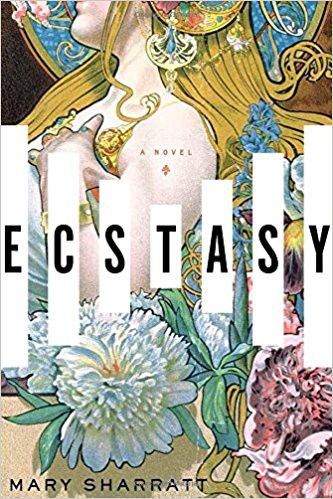
Alma Schindler Mahler, the historical heroine of my new novel Ecstasy, was everything I am not. She was larger than life. An exuberantly extroverted diva. The It-Girl of fin-de-siècle Vienna. When Alma stepped into the salon in her white crepe-de-chine gown, the air crackled with electricity, so mesmerizing was her presence. Artists, architects, and poets vied for her attention.

Gustav Klimt chased her across Italy to give her her first kiss when she was just a teenager. Gustav Mahler fell in love with her at a dinner party and proposed only weeks later.

Her subsequent husbands and lovers included Bauhaus-founder Walter Gropius, artist Oskar Kokoschka, and poet Franz Werfel. But she was her own woman to the last, polyamorous long before it was cool, one of the most controversial women of her time.

I, on the other hand, am a wallflower. At parties, I struggle with small talk and spend more time listening than speaking. What do I have to talk about anyway? I sit in my study and write all day, then rush to the boarding stable to muck out my horse. Hardly the most scintillating cocktail party conversation — but I prefer long hikes to cocktail parties anyway. I would have bored Alma in real life, and she would have overwhelmed me. So why was I so drawn to her as a character, this over-the-top party girl who was more interested in currying male favor than currying horses?

The simple answer would be that I was attracted to Alma because I saw in her something lacking in myself — that I felt compelled to write about my unlived life, my imaginary cinema self who is far more sparkling, witty, beautiful, and courageous than I could ever be. This idea — that authors create the heroines we long to become — is the most obvious explanation. It’s also wrong.

I would have bored Alma in real life, and she would have overwhelmed me. So why was I so drawn to her as a character?

The truth is that I fell in love with Alma because she was like me. In her diaries, Alma revealed a secret self that made my heart leap in recognition. In these private pages, I discovered a cerebral and paradoxically lonely young woman. Most poignantly of all, considering everything that happened later in her life, she burned with the ambition to become a composer. This Alma was so unlike the cliché of the extroverted socialite and femme fatale. This Alma became my soulmate — a thing that on the surface seemed impossible.

In February 1898, having just returned home from the Vienna Court Opera’s performance of Beethoven’s opera Fidelio, seventeen-year-old Alma wrote the following passage:

If only I were a somebody — a real person, noted for and capable of great things . . . I want to do something really remarkable. Would like to compose a really good opera — something no woman has ever achieved.

Alma was a highly cultured young woman who spent far more time reading or engaging with art and music than she did flirting at parties. She attended concerts, operas, plays, and art exhibitions several times in any given week. Her late father, Emil Schindler, was an iconic Austrian landscape painter and her stepfather, Carl Moll, was co-founder of the Vienna Secession art movement. Alma devoured philosophy books and avant-garde literature. She was a most accomplished pianist — her teacher thought she was good enough to study at Vienna Conservatory. However, Alma didn’t want a career of public performance. Instead she poured her entire soul into composing. Her lieder, written under the guidance of her mentor and lover, Alexander von Zemlinsky, are arresting, emotional, and highly original and can be compared with the early work of Zemlinsky’s other famous student, Arnold Schoenberg.

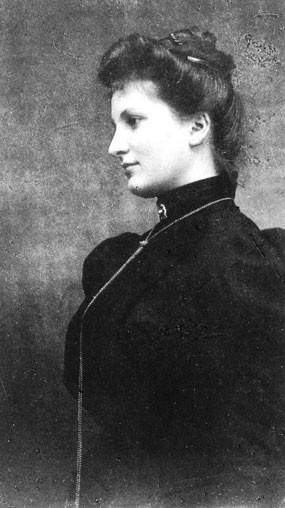
A portrait of Alma Mahler at around age 20

But the odds were stacked against her. Women who strived for a livelihood in the arts were mocked as the “third sex” — the fate of Alma’s friend, the sculptor Ilse Conrat. When a towering genius like Mahler asked Alma to give up her composing career as a condition of their marriage, she reluctantly succumbed.

Yet underneath it all she was still that questing young woman who yearned to create symphonies and operas. Shortly before her marriage, 22-year-old Alma wrote in her diary, “I have two souls: I know it.”

The times and circumstances Alma lived in all but forced her to enmesh herself in the lives of famous men in hope of being remembered at all. It’s only thanks to feminism that I have the liberty to hide in my writing cave instead of being decorative and charming in the salon. I could be my own person and follow my creative path because rule-breakers like Alma helped pave the way for me.

In terms of conventional “morality,” I am no better than Alma. For all her reputed promiscuity, I probably dated more people during my undergraduate years in college than Alma did during her entire life. My romantic escapades would have branded me a fallen woman — or worse — had I lived in Alma’s time. Never mind the fact that in turn-of-the-twentieth century Vienna, it was extremely rare for women to attend university at all. Entire faculties, including the School of Medicine, were barred to female students.

Realizing how similar I was to this ultimate party girl made me realize that ideas like introvert and It Girl are artificial and limiting. What Alma taught me is that there are no good women or bad women. She taught me the value of being fully, authentically human, whatever the cost. She drove home the point that pure and impure, faithful and loose, madonna and whore are simply poisonous projections used to deny women their full expression of being. Alma was not any one color, dark or light. She was the whole spectrum. So it is with all of us. Regardless whether we’re cloistered introverts or glamorous socialites, every woman contains the totality, the heights and the depths.

10 Satirical Covers for the Terrible Books You Can’t Get Away From

Designer Matthew Revert’s playful, witty mock book covers poke loving fun at the tropes of book design, a Zen activity that he says helps him relax for a few minutes between serious design work. But they also cut uncomfortably close to the bone about the occasionally stultifying predictability of publishing. I’ve paired them with parody book summaries based on the imaginary plots of some popular, but mostly overrated novels. You win the right to feel smug if you guess which books I’m satirizing for each—but most of these covers could go with like a hundred books, which is the whole point.

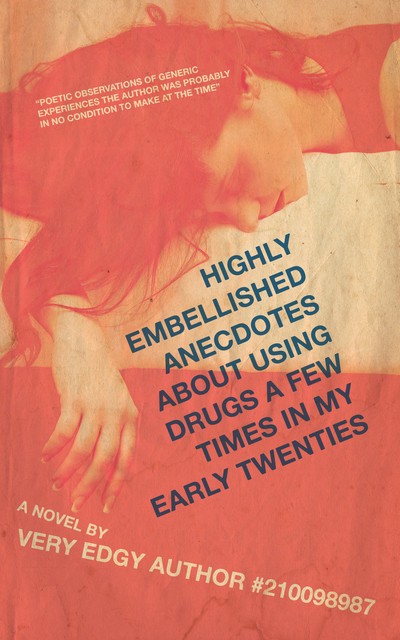
"Highly Embellished Anecdotes About Using Drugs a Few Times in My Early Twenties," a novel by Very Edgy Author #210098987. The illustration is a passed-out woman.
Artwork by Matthew Revert

A Billion Tiny Bits: A Memoir by Jonathan Xanax

At the age of 17, Jonathan Xanax woke up in a potato field in Idaho with all his teeth missing. The last thing he remembered was attending a black-tie gala in New York for billionaires three weeks ago. A hardcore substance abuser (weed, cocaine, Tide Pods) from the age of three, he made the hard decision to enter rehab when he was told he must quit using or die before he can legally enter a strip club. A true story of Jonathan’s three days in rehab.

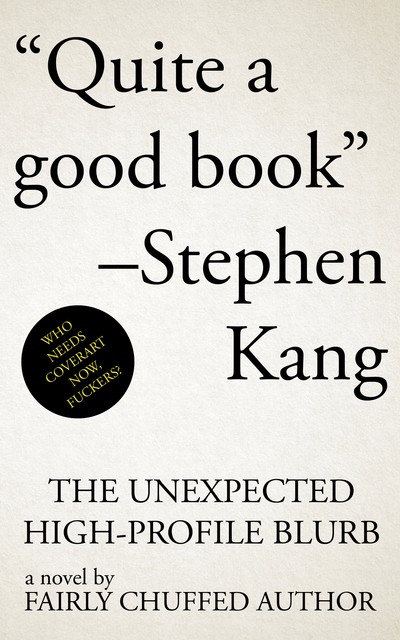
"The Unexpected High-Profile Blurb," a novel by Fairly Chuffed Author, features the quote "Quite a good book" by Stephen Kang larger than the title or author
Artwork by Matthew Revert

Always and Sometimes by Herbert Marshall-Harris

Always and Sometimes, New York Times best-selling author Stephen Kang raves, is “quite a good book for an airplane read that I happened to pick next to the recycling bin.” What more do you need to know?

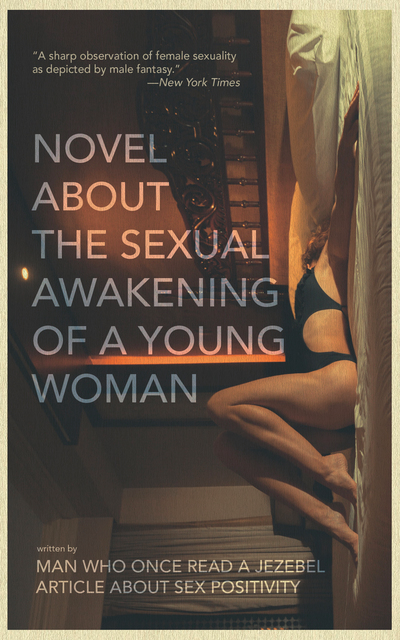
"Novel About the Sexual Awakening of a Young Woman" by Man Who Once Read a Jezebel Article About Sex Positivity features art of a woman lying on the floor in a revealing swimsuit.
Artwork by Matthew Revert

Lola by Chaz Dickler

The novel unfolds on a hallowed New England college campus where beautiful, delicate Lola is a sheltered freshman from the cornfields of South Carolina eager to start her intellectual endeavors. The naive country rose soon discovers, to her increasing trepidation, that for these cool coeds, sex, partying, and alcohol matter more than grades. Sweet Lola is seduced by the intoxicating allure of fitting in, losing her virginity and taking advantage of the exotic appeal her innocence has on the men around her. Dickler, a middle aged male writer, manages to capture the authentic female voice, giving his young blossoming protagonist plenty of character (like her coy gap-toothed smile), power (she’s hot in a farm girl way), and depth (she’s into obscure literature).

"20-Something Man from New York Writing About His Isolation," a novel by Some Random Guy. The cover art is a male figure silhouetted on an abstract painting.
Artwork by Matthew Revert

The Capturer in the Corn by B.K. Hollinger

Hayden Cauliflower moved to New York City with dreams of finding fame and success as the founder of a start up selling organic pet rocks as an affordable alternative to companionship. But his dreams are shattered after a disastrous appearance on the popular reality show Whale Pond. Hayden takes to wandering Central Park for days, eventually losing his mind and committing himself in an asylum for failed start up founders. An intimate portrait of a profoundly lonely man surrounded by unkind strangers in an urban jungle.

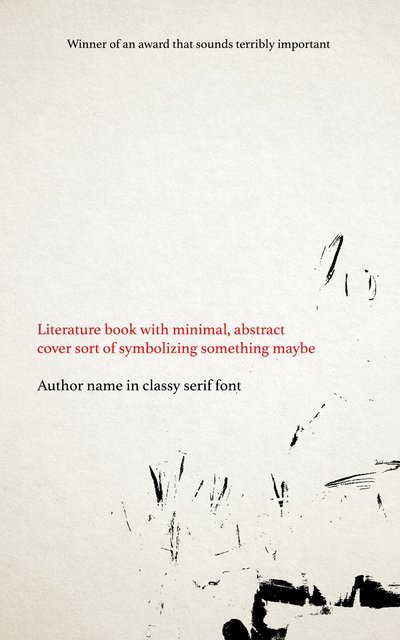
"Literature book with minimal, abstract cover sort of symbolizing something maybe" by Author name in classy serif font. The cover is mostly white with a few scribbles. At the top it says "Winner of an award that sounds terribly important"
Artwork by Matthew Revert

The Ripe Persimmon by Solomon Octavius XIV

The story begins with a used car salesman, Greg Sams, waking to find himself mutated into a grotesque rat with a radioactive tail. Instead of worrying about his sudden metamorphosis, Greg frets about meeting his company’s quota for the day. A gripping, hard-to-understand novella with obscure symbolism and high-brow metaphor, The Ripe Persimmon is one of the most seminal works of the 20th century. The perfect read for pretentious blue-bloods with refined literary taste who want to impress their equally obnoxious dates.

"Generic Conservative Rhetoric Written with Condescending Aggression," a rant by Author Who Is Definitely Not a Cuck. The cover art is an angry-looking red, white, and blue eagle, and the font is meme font. The blurb says "It's like a long YouTube user comment."
Artwork by Matthew Revert

WHITE PEOPLE ARE GOING EXTINCT by ANGRY WHITE MAN

NOT THAT I BELIEVE IN EXTINCTION, EVOLUTION IS A LIE AND NOT BIBLICAL, SCIENCE IS ANTI-CHRISTIAN PROPAGANDA CREATED BY NASTY-SMELLING FOREIGNERS TO TRICK US INTO SUBMISSION, WE MUST ARMS OURSELVES WITH AK-47S, IT IS OUR DUTY TO DEFEND AMERICA FROM ALIEN INVADERS TRYING TO ROB US OF OUR GOD-GIVEN RIGHT TO FLATSCREEN TVS, HOW DARE THESE MEXICANS COME TO THE LAND OF OUR ANCESTORS AND BREATHE OUR INHERITED AIR.

In white text on black background: "Book written by precocious teen who read a bit of a Laszlo Krasznahorkai novel then decided to write a novel of his own consisting of a single sentence regarding the topic of being misunderstood by those around him and the many ways such a context breeds isolation, which perfectly feeds into the exploration of his art"—it goes on in this vein for several hundred words that are not worth listening to. By Author who has added spurious diacritics to his very normal name.
Artwork by Matthew Revert

The First Dog by J̌öĥñ Šᵯíŧĥ

THE BOOK PUBLISHERS WERE TOO SCARED TO LET YOU READ by talented precocious teen, J̌öĥñ Šᵯíŧĥ. The First Dog features a woman assigned (by a quirk of fate) to tell the myth of the lonely first dog of Carabandora, a wasteland in Portugal, she narrates―entirely in a single sentence―this sad endless story, a bark, in a depressing New York diner to a disinterested waitress who just wants to get on with her shift, the story-teller locked in her own existence, traps the reader in the same snare even after the end of the only full-stop period of the book.

"Middle Class Crime Writer Fetishizing the Lower Class" by Guy Who Lives on a Farm. The art is a blonde woman huddling under a sheet in a blood-spattered room. Blurb: "A searing account of a lifestyle I can only assume is represented accurately."
Artwork by Matthew Revert

The Hunted: A Crime Novel by Carver Tree

A janitor drinking PBRs in the park is violently stabbed with an ice pick. A middle-school teacher waits for her husband who never returns. As the bodies pile up, Detective Wayne Watson is on the hunt to chase down Chicago’s third most dangerous man who’d go to any lengths to satiate his bloodlust. This is a city on the brink. This is The Hunted. Brimming with tension, secrets, and betrayal, The Hunted proves that Carver Tree is a master of crime thrillers.

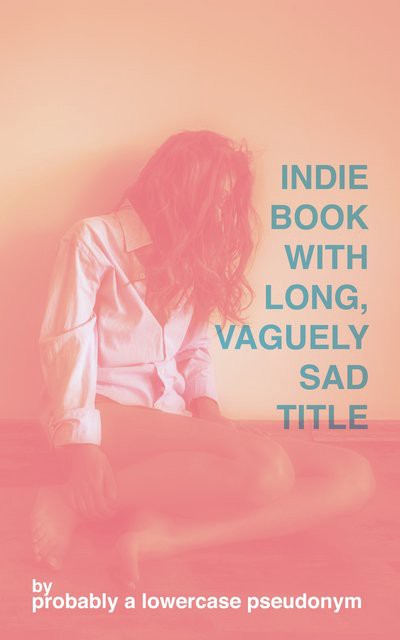
"Indie Book with Long, Vaguely Sad Title" by probably a lowercase pseudonym. The art is a woman slumped against a wall with her hair covering her face, all done in millennial pink.
Artwork by Matthew Revert

The Eternal Song of Dying Crickets in a Field by indigo del carmello

Sandra, a woman of quirky habits, lives a solitary life and believes her therapist is the one (he just doesn’t know it yet) and that her neighbor’s chihuahuas are trying to commune with her (they aren’t, she just smells weird). An unwanted visitor shows up on her doorstep and mayhem ensues. Managing to be funny, sad, angry, happy, and surprising all at once, this novel will have you feeling all of the feelings.

"My Son is a Great Illustrator," book five of the "Neverread" series, written by Proud Parent. The art is a really dreadful drawing of a D&D type character, probably a half-orc, in a Renaissance Faire shirt.
Artwork by Matthew Revert

The NeverReading Tale: Book Five by Chuck Branson

In the magical realm of Suburbtopia, Sir Brad the All-Knowing Tax Auditor and his most trusted sidekick Loyal Bob the Builder of Castles embark on a dangerous quest to retrieve the stolen soccer orb before the magical artifact falls into nefarious hands of Evil Soccer Mom and all is lost. Suitable for kids age 5 and up, this fantasy novel is a wholesome read for the entire family.

How Self-Publishing Made Today’s Small Independent Presses Possible

This post was made possible by a sponsorship from Reedsy.

When you look around at the most beloved books of the past decade, the books that seem destined to be classics, one thing becomes clear:

Small presses are amazing.

Whether we’re talking about the more literary side of things (like Citizen or Grief Is A Thing With Feathers, both published by Graywolf) or weirder sci-fi projects (like Small Beer Press raising a $72,000 Kickstarter for John Crowley’s translation of The Chemical Wedding), some of the coolest things happening in the book world are happening by way of the small press.

Some of the coolest things happening in the book world are happening by way of the small press.

We’re also seeing some pretty crazy sales numbers in the indie book world, supporting the idea that small presses are riding a huge wave right now. Between February 2014 and May 2016, the percentage of eBook sales attributed to the Big Five publishers fell from just under 40% to below 25% In that same window of time, indie publishers went from producing under 25% of eBook sales to being responsible for just below 45%.

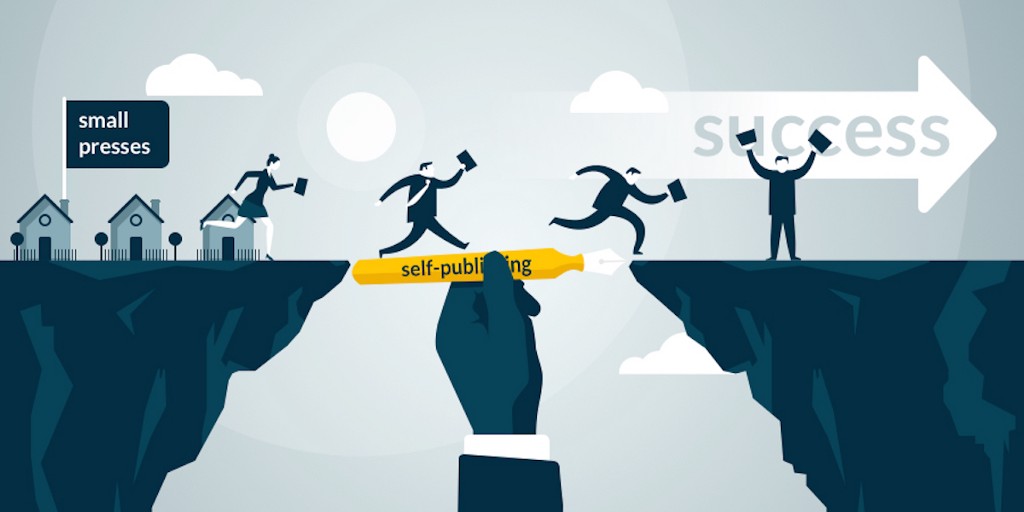
While the burst of small press publications we’ve seen over the last 10 years or so is undoubtedly a good thing, one thing that often gets overlooked is just how it came to be — and more specifically, how modern self-publishing made it all possible.

To understand all of this, you need to know what makes modern self-publishing different than the self-publishing of 10 years ago.

How to Name Your Small Indie Press

How Self-Published Authors Became Book Marketing Experts

In recent history, the only real marketplaces for books were controlled by major publishers. If you were an author who wanted to sell copies of your book, you needed major bookstores to carry it, and that could only happen if you went through a traditional publishing house. Self-publishing, as a result, was reserved for people who didn’t care about selling copies.

With the rise of the internet, and Amazon in particular, self-published authors found a way to sell books that didn’t involve negotiating with bookstores. And when a real sales channel opened up, dozens of book marketing strategies soon followed:

  • There was suddenly a premium on having a good author website, where you could blog or give away free writing to build a massive email list of readers.
  • Authors like Mark Dawson began using Facebook Ads to sell books, A/B test covers and to drive signups to their email lists.
  • Amazon released their own advertising platform (multiple, actually) that authors were able to use to boost their sales.
  • Authors began compiling “street teams” of their friends and colleagues, who could seed their book with reviews and social shares to get the ball rolling when a book debuted.
  • The position of “Freelance Book Publicist” was, for the first time, not just a job title you made up to sound employed.

Self-published authors were approaching book marketing the way a startup might approach marketing their company, and they were killing it.

Self-published authors were approaching book marketing the way a startup might approach marketing their company.

It didn’t take long for the success of self-published authors to trickle into the small press world. After all, most small presses are started by a couple of friends who’d like to publish other writers’ work — typically with the same processes self-published authors use.

How Kickstarter Is Changing Publishing

From Self-Published Authors To A New Generation of Presses

Literary magazines, anthologies, and full-blown presses start popping up at an astounding rate, and some pretty amazing writing was published as a result.

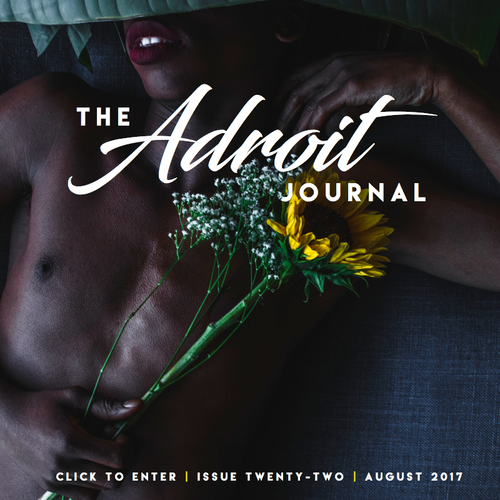
The Adroit Journal, one of the most popular literary journals in America (especially among young writers), was started by a group of teenagers and originally published using a print-on-demand publishing service.

Through some popular events (like letting writers submit unlimited amounts of work to the journal for one weekend), they were able to create a massive subscriber list, and laid the groundwork for an insanely successful journal.

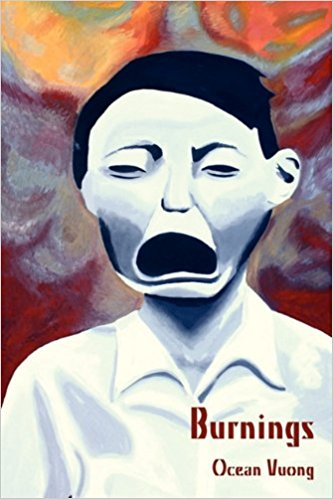
Sibling Rivalry Press, the amazing small press that published Ocean Vuong’s first chapbook, Burnings, uses Ingram — one of the biggest platforms used by self-published authors for book distribution — to distribute their books, and has built a massive community by publishing multiple literary magazines under the Sibling Rivalry umbrella.

And countless small presses use ecommerce platforms like Big Cartel, Shopify, and Squarespace to sell books directly to their readers — something that was previously only done by people who couldn’t get traditional publishing deals, i.e. self-published writers. Here’s an example from the amazing Two Dollar Radio, who recently published Hanif Abdurraqib’s They Can’t Kill Us Until They Kill Us, and host their entire store on Shopify:

All of this points to the same thing. What modern self-publishing has done — whether we’re talking about the small presses listed above or the new generation high-quality hybrid publishers like Bookouture and Mascot Books — is democratized our ability not just to publish books, but to market and sell them.

Modern self-publishing has democratized our ability not just to publish books, but to market and sell them.

As a result, some of the best writing of the last century has been published and championed by some of the coolest presses ever put together.

About the Author

Emmanuel is the CEO of Reedsy, a marketplace that connects authors and publishers with the world’s best editors, designers and marketers. Over 5,000 books have been produced via Reedsy since 2015.

The Art of Time Travel Through Friendship

An Involuntary Biography of Love

by João Tordo, translated by Hugo Dos Santos

The first time I saw him, he was sitting on a bench, in the middle of the street, playing a brown, four-string guitar, old and in poor shape. There were two people standing in front of his bench; to our left, the circular plaza, where girls sculpted of stone, in their perpetual youth, played with a metal hoop, next to a boy, also sculpted of stone, who drank from a waterspout. It was late April or early May (I can’t recall exactly), but Winter seemed reluctant to leave us. The passersby headed toward downtown Pontevedra wore coats, because a piercing cold cut through and up toward the threatening clouds above the city.

A man who listened with us sighed and said: “What a mess. Why don’t you go learn how to play.”

I stayed listening to him, along with a young girl wearing a knit hat and a book bag. Then she also left, while he went on fiddling with the instrument. The music was unpleasant and dissonant; watching his wan profile, his furrowed brow, despite his young age, his glasses at the end of his small nose and his lower lip hanging, it occurred to me that the instrument wasn’t meant to play music, but rather to soothe some unseen pain. He stopped and looked at me, surprised, as if I were not supposed to be there — nor the street nor the plaza nor the girls eternally playing with their hoop.

I tried to smile, but I must have made a strange face; I left. Because I was distracted, I didn’t pay attention to where I was going and the waterspout wet my shoes and the bottom of my pants. The next day I saw him again, but I didn’t approach: it was Sunday, I was tired and had come downtown strictly to pick up groceries — just enough to keep in the fridge for a couple of days, so that I would have to go out again on Tuesday, because I liked to get outside after all the hours spent at the university. I glimpsed him from a distance. This time he wasn’t playing: a light rain was coming down and the man with the boyish face sat next to his guitar and seemed to be reading a book, very concentrated, absorbed, shaking his right leg, seemingly unaware he was doing so.

I wanted to go talk to him, but I didn’t do it. I hesitated a few seconds, went as far as taking a step in his direction before retreating, asking myself why I would possibly want to talk to a stranger — even if in Pontevedra a stranger spotted more than once in the same place becomes a resident or, at the very least, a local attraction. Discouraged, I made my way home. I crossed the street and, without meaning to, ended up taking a route longer than usual, crossing Praça da Ferrería, decorated by the flowering camellias, the tables outside the coffee shop half-filled with tourists and old locals, and going up Benito Corbal in the direction opposite to that which I would have taken if I had wanted to go directly home. The grocery bags weighed heavier now. I ended up wandering, reflecting on that character sitting on the bench and on my life, taking my time on the sidewalks without noticing the people or shop windows or the late afternoon that slowly unveiled the evening. Lost in my thoughts and unaware of exactly how, I crossed Rua de Castelao. I imagined the writer who lent the street its name leaning over the railing on a balcony, a sunny second floor apartment facing a type of plaza; I imagined Castelao observing his own likeness sculpted in shale (in a style I considered questionable and rather somber — it was not uncommon to find myself meeting Castelao in a nightmare, his figure curved beneath the weight of Francoist Spain, spitting truths into my ear), the sculpture refusing to return his stare: one of those stares a real flesh and blood version, with a cornea and iris, the other version cold stone.

I made my way and, finally, nearing Joaquín Costa, I thought again of the man with the guitar. I thought also of Andrea, probably sitting on the couch reading a magazine or watching tv in that lethargic daze she always watched tv with — one leg over the arm of the couch, one arm hanging limply to the side — in her characteristic slouch. I remember that I walked through the front door after three flights of stairs and I remember that I called her name; no response. I crossed the foyer and, in the hallway, instead of turning right to go into the living room, I cut left toward the kitchen and, before resting my bags, whose handles had drawn deep grooves in the palms of my hands, I smelled cigarettes. In four or five decided steps I was at the door to Andrea’s room. I knocked; a few seconds later, she opened. Her eyes were bloodshot and she had her hair up, a pencil across the bun. She wore dirty overalls and held, in her right hand, a paintbrush. Her room was a mess. In the center, a white canvas looking like it had been smeared by a child, and a cigarette burning on an ashtray near the window.

“What have I told you about smoking,” I asked her.

Andrea shrugged her shoulders. Under her overalls, her chest quivered.

“You smoke.”

“Smoked. And you’re just sixteen.”

“Almost seventeen. Going on fifty.”

We eyed one another for a long moment. This often happened to us; while I searched for the right words, she searched for conflict. This was a challenge I had already lost. I thought of telling her about the figure of a man residing in the plaza where the stone girls played with a hoop and I thought of telling her that I wanted to invite him to come on my radio show, but I saw, through my daughter’s furrowed brow, that it would be in vain; that all my words would be little more than air exiting my mouth, swallowed by indifference.

“At least smoke outside, then,” I asked her.

I went into the living room and stood contemplating the moon, squeezed between the clouds, looking every now and then at my reflection in the window. I was starting to slouch, I thought; my shoulders slumped and my stomach protruded, despite my thinness. In other times, when I met Andrea’s mother, for instance, women had told me I was an attractive man. Now, I was sure I would pass unnoticed in a room full of people. From Andrea’s room I heard traces of the strange music she’d recently started listening to, melancholy songs in foreign tongues, and I wished what a father should never wish for — that the next day would come already, the day her mother was scheduled to pick her up, and then I wouldn’t have to see her for another week. It had become a source of stress in my life. Until she became a teenager she had been a sweet, if reticent, child, quiet, a conscientious student. She’d attended a Catholic school, to which I’d been opposed from the start without great effect: the Sacred Heart of Jesus of Pontevedra had been Andrea’s school during her early and later years, because Paula insisted. Maybe in response to that education, Andrea had come home one day with a tattoo, a crow on a wire that circled her ankle. I was at the kitchen table, reading the newspaper, and I saw it at once: it was Summer, my daughter wore a school skirt and the tattoo was fresh, the skin around it purplish and inflamed.

“What is that?” I asked.

“A cheese sandwich,” she said, and slipped into her room.

It was the first time Andrea spoke to me in that tone. Many would follow, of course; yet, in that instant, I understood that I had lost not only my marriage but also my daughter. Some time later, her mother called me and, in a voice heavy with spite — as if I were personally to blame for my daughter’s metamorphosis — announced to me that Andrea had a boyfriend (whom she described as a delinquent), that she had become cynical and keen to talk back and that she had decided she wouldn’t be going to college because she’d announced that, after high school, she intended to travel instead of studying. To undercut those notions, I tried to ensnare my daughter in long conversations, which turned into monologues. I took her to dinner at her favorite Chinese restaurant, Long Fon, and, when that trick failed, I took her to Alameda, where I soon understood my mistake: if Andrea had distanced herself, crossed over the invisible threshold to that limbo preceding adult life, it wouldn’t be in a fancy restaurant, with waiters in bowties and napkins folded in creative shapes, that I would find a way of reuniting us.

It had been three years since I’d started my radio show. It was a weekly program with virtually no audience; the station was called Rádio Pontevedra and the program was titled Happy Days, despite airing at night, between one and two-thirty a.m., and having very little to do with happiness. While I had majored in Literature, I had wanted to be a journalist — I had, at the age of twenty four, completed an internship at El País, in Madrid, which led to a brief and demeaning career in small-town journalism; through a friend, I later received an invitation to teach in Compostela. Since 1990, every Fall, I took in third-year students and spoke to them about Yeats, Eliot, Auden, Joyce, Woolf, Byatt and, depending on the current literary trends and my personal disposition, McEwan or Ishiguro or Amis. The university wore on me, however; the repeated readings bored me and my students seemed, with each passing semester, ever less interested in literature and ever more distracted by the banalities of a world tinged in monotony — or, who knows, maybe my own monotony had tinged everything in a neutral tone. It was possible that I had contaminated them. As such, the radio show offered the only outlet I knew of to escape the swamp of my existence and breathe for an hour and a half, far from the paperwork routines of the university and the vicissitudes of my life as a divorced man.

It was because of Happy Days that I formally met Saldaña Paris. Rather: I was thinking about my radio show when I saw him again. I don’t remember exactly how long it had been since the weekend when I had first seen him; I know that, on a morning when the weather had finally turned and the shy Spring sun had finally broken over the streets, I was walking through the old part of the city. It was Wednesday, a day I didn’t teach any classes, and, crossing the street to Praça Méndez Núñez, I was late to glance at the building for Café Universo, whose facade, painted in a purplish hue, contrasted elegantly with the sky. Those colors soothed me. Then I saw him. He stood next to the statue of Valle-Inclán, hovering over it, observing the most minor details of the writer’s face: the diamond-shaped beard, the metallic eyeglasses, the hat, the pointed nose. Rámon Mária del Valle-Inclán, the poet and romantic who lost his arm at the age of thirty-three: the statue carved of basalt in that stone plaza of Pontevedra was chiseled in his likeness, a short man, with a cane, an old and round pair of eyeglasses. Saldaña Paris was a little taller than the statue — if the statue was accurate, Valle-Inclán had been a very short man. I watched him touch the statue’s left arm, the sleeve of his basalt coat, thinner than the other sleeve, empty of flesh, disappearing inside his coat pocket. He stroked the sculpture with tenderness. He took a step back, pulled out a notepad from his back pocket and scribbled something. I approached, unable to contain my curiosity any longer or further delay the meeting that now felt inevitable, I introduced myself. He extended his hand, which felt small in mine. I had begun to tell him some banalities concerning Valle-Inclán when he interrupted me.

“Mr. Valle-Inclán lived in my country almost one hundred twenty years ago. According to some reports, he traveled from Galicia and established himself there as a translator and correspondent. He lived in Veracruz, where my maternal grandfather was born, whose name was Miguel, like me. Except his name was Miguel Agapito, a name he wasn’t particularly fond of.” He returned the notepad to his back pocket; he seemed to be trying to grow a moustache that was no more than some light fuzz. His eyes were blue: very blue and very sad. “Apparently,” he continued, “Valle-Inclán participated in a duel with a conservative or anti-liberal journalist and took a serious beating in Veracruz, which was not uncommon in those days.”

“That’s how he lost his left arm,” I continued. “In a similar argument with a journalist, an argument that turned violent.”

“Manuel Bengoechea, in the lobby of Hotel Paris, in Madrid. He hit Valle-Inclán with a cane, fracturing several bones. The left forearm acquired gangrene and they had to amputate it,” he added. He had a soft accent and frail voice, almost feminine. “Journalists bothered him and Valle-Inclán did not tolerate fools. Or anyone who argued without, as he deemed it, sound reasoning or logical grounds. I empathize. If our world were different, I’d do the same. Today is trickier because, if you live in Mexico, where at night clubs every Saturday night heads can be decapitated, arguing with someone can lead to, simply, the drawing of a gun and you taking a bullet to the head. And let’s agree that while it might be bad enough to lose an arm in an argument, it’s certainly not worth losing your life.”

I invited him for a drink. We crossed, slowly, Praça de La Leña and descended down Figueroa toward Praça Peregrina. He walked in silence, his hands behind his back, observing everything in his path with fluttering eyes, two colorful and restless fire-flies. I told him the story of the city and its buildings; Saldaña Paris agreed by nodding his head, stopping now and then to note something in his rumpled notepad. At last, we arrived at the newer part of Pontevedra. As soon as we were inside Café Moderno, he became very interested in the life-size statues of six men sitting around a table — in truth, the statues were replicas of replicas: in the plaza outside the cafe, the same men existed in a similar formation, chatting, sculpted in bronze and led, in the center, by violinist Carlos Quiroga (the others were Valentín Paz-Andrade, Castelao, Carlos Casares, Alexandre Bóveda, and Ramón Cabanillas, all of them Galician writers and intellectuals). Inside the cafe, the statues were in color, not bronze, and wore red, blue, and green ties; one of them had a bowtie, the other one a hat.

“What a bunch,” said Saldaña Paris. “They look like a Lego set imagined by Kafka.”

I showed him around the cafe. He didn’t seem interested in the gaudy paintings on the walls, but he seemed specifically drawn to one by Laxeiro titled El Manantial de la Vida. “Good title for a book,” he commented.

We sat next to an old couple and ordered beers. We continued talking about Valle-Inclán — he insisted that the Galician became a writer in Mexico, during his first trip across the Atlantic. I later asked my Mexican acquaintance what he was doing in these parts. He avoided my question.

“Where are you from?”

“I’m Spanish. My parents are from Rosal de la Frontera.”

“Where is that?”

“In Andalusia. Near the border with Portugal.”

“So you’re almost Portuguese.”

“I just made it,” I joked. “During Franco, my father used to say that, despite everything, the Spanish were actually lucky: at least, they weren’t Portuguese.”

“I like the Portuguese,” he objected.

“My father said a lot of dumb things.”

“This cafe is already familiar to me,” he said, after the waiter brought over our beers. I paid; he didn’t budge. “It’s as if I have been here before, even as I’m sure I’ve never set foot in this place.”

“Lots of people feel that,” I replied, taking a sip of my beer. “This was a movie theater once. On the first day it opened they projected sixty one films.”

“In Mexico, they would have set fire to this place during the revolution.”

“You have a low opinion of your country.”

“And why shouldn’t I?” he countered, picking up his beer.

He then started to explain how he felt about his countrymen: they were all bandits, caciques, drunks, losers, and assassins, terrified and insignificant; who, once the world was finally and decidedly swept clean to mark the end of times, the only surviving creatures would be mariachis, with their ridiculous costumes and their homemade musical instruments, singing their songs for the rest of eternity.

“Beautiful image,” I said. “Are you a musician?”

“I am above all a poet,” he answered. “Or maybe I’m a musician, and what I write are song lyrics. Except my songs are pretty shitty. When I was eighteen I wanted to be a lawyer, but then I read Bioy Casares and decided I wanted to be a writer. Then I read Borges and understood that I would never succeed in writing fiction, or that the son of a bitch had already written everything there was to be written, and so I decided again to become a lawyer. I enrolled in law school in Mexico City for two years. I spent the entire time walking up and down Insurgentes Sur, finding ways to skip class, until my parents told me — or rather, my father told me, because my mother had by that point already left for Tijuana with her boyfriend — that, if I wanted to keep living at home, I had to either study or work.”

“And so what did you do?”

“I left. Have you read Bolaño?”

“Some.”

“Well I didn’t know him at the time. Maybe he hadn’t even published yet. But when I read his work, much later, I learned that he had been writing my story over and over again. Our story: that of Mexicans lost in Mexico, as he called us. Instead of staying in school, I traveled. Once and for all, I left behind the notion of becoming a lawyer. I walked through the desert, I saw the cities of the interior, I visited Tehuantepec and Matamoros. I had my uncle’s inheritance money: it wasn’t much, but I also didn’t need much. I started writing. That is: I stopped scribbling and I started writing. I sent out a poetry manuscript that I’d assembled in cafes to a literary contest in Guadalajara, a contest for new writers, and I won. On the first try. It was unexpected: I, who had never published anything, anywhere, had suddenly won real money with fifty measly pages.”

The sadness had evaporated from him: he spoke with pleasure, as if he had, for months, been coerced into reticence, and had now finally found his chance at freedom. We drank our beers. I wanted to invite him to appear as a guest in my show, like I had been meaning to for several days, but I hadn’t yet found the right moment.

“And what did you do with the money?”

“What a question. I returned to Mexico City after learning me about the congratulatory letter from Guadalajara. It was the only time I heard him falter: that is, the only time he folded, let himself be overtaken by emotion. He could care less about my writing, of course. But his son had won something, had emerged among winners. When I arrived home, I picked up the check, packed a bag, and took off with aims of spending it all in Las Vegas. I couldn’t think of anything better to do with it. And, in Las Vegas, in another unexpected turn of luck, I won tons of money, which allowed me to travel to Europe. I landed in Madrid on a September morning in 1993, barely awake, and ten years would go by before I set foot in Mexico again.”

“Wait,” I interrupted, leaning forward. His eyes were bulging out of his head, as if he suffered from exophthalmos. “I would like you to tell me this entire story, but not here. And not now, tomorrow, between midnight and two in the morning.”

“What?”

“I’ll explain.”

On the following day I returned from Santiago at 10 p.m. I had dinner at home, alone, the television on mute. While I ate, I imagined Paula in bed with her boyfriend — she reading a magazine, he reading the sports pages — and I felt satisfied in being alone. It was true that, on the days of my show, I felt happier or less defeated — but it was also true that, on that particular Thursday, the anticipation of that special guest gave me an added sense of excitement. I admit that I am not sure what I saw in him. At first glance, Saldaña Paris was a bland man, without much refinement in his dress, with features stressed with an excessive anxiety; a short and awkward creature who would go unnoticed in any part of the world. Much later I understood — after it was too late, after I’d become far too involved — that it was precisely those features that fascinated me.

I was mesmerized by his melancholy, a melancholy he had no interest in abating; a long and persistent melancholy, that he kept like a companion. That unhealthy condition that presents itself in the form of ghosts and can weaken even the sturdiest of convictions. So opposed to my own condition, which I could not label as melancholy — maybe disappointment or a broken spirit. Saldaña Paris was truly melancholic: a man from another era, trapped in ours; a man from a time where happiness was not a requirement, merely the fortune of some lucky fools.

When I reached the entrance of Radio Pontevedra he was already waiting for me, leaning against the wall. It was eleven thirty. He had brought with him a guitar in a black case and that notepad in his back pocket. Spring had arrived, and the smells of camellias and of the Lérez River permeated the air. We said hello and walked in together; he didn’t seem nervous, rather intrigued. He asked several questions about the show, which I answered while we walked inside the radio station and settled in around the round table equipped with headphones and microphones. Over in the corner, the news played on a television screen.

“Every week I invite a guest,” I explained. “The idea is for the guest to be someone unknown. The concept of the program, actually, is to be the opposite of daytime radio shows where guests are, usually, either famous or relatively well-known people.”

“In that case you can rest assured. No one knows me. Neither here nor in Mexico. Even the woman from whom I rent a room calls me Eighteen.”

“Eighteen?”

“It’s my room number. She’s very old. I think she witnessed the fall of Rome, but I can’t be sure.”

Saldaña Paris rested his guitar and placed his notepad on the table. He fiddled with a pair of headphones, tried them on. On the other side of the glass I watched Julia Montel, who slid with elegance across the production room to the mixing table, where she adjusted a few of the controls. We heard her Andalusian accent echoing through the speakers:

“And a happy day to the two of you,” she said.

The Mexican poet raised his head, seemingly confused. Julia’s slim figure came into the room. She was beautiful, a realization that always arrested me when I first laid eyes on her every Thursday night and observed, askew, the way she picked up her brown hair with various clips, while the show unfolded and I allowed my interviewees to run on and on about whatever they felt like talking about. Every week, by the time the show came to an end, her long hair had transformed into an abstract sculpture, a wire frame, some loose threads here and there; her freckles more pronounced, her translucent green eyes. She had the advantage of both youth and beauty: Julia was twenty years younger than me and she had recently finished her degree in Vigo, where I still held out hope that Andrea would disappear for a few years. I had the disadvantage of feeling far too anxious and timid around her to ever tell her how much I liked her.

“I am the overnight producer,” she announced, as her introduction to Saldaña Paris.

I noticed for the first time the poet’s visceral and strange behavior. He stood up too quickly and grabbed Julia’s hand with far more intensity than was to be expected, leading it to his lips; he planted a kiss on the back of her hand, without ever ceasing to eye her over the frame of his glasses, and didn’t retake his seat until she had left the room in mild shock.

The lights dimmed and, eleven minutes later, we were on the air.

Jez Burrows Finds All His Stories in the Dictionary

Underneath the definition for the word “burrows” in the dictionary is this sentence: The little penguins dig out long burrows to use as nests.

Purchase the novel

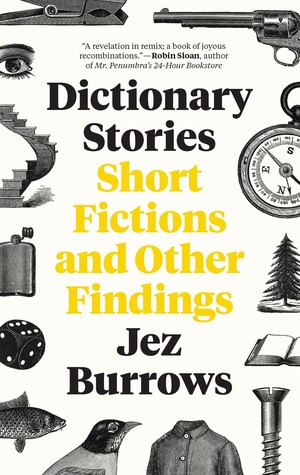
In 2015, Jez Burrows printed a zine collection of stories made up entirely of sample sentences pulled from the dictionary at his booth at the San Francisco Zine Fest. From there, his twelve-page zine evolved into Dictionary Stories, a collection of found sentences repurposed as genre-blending stories ranging from lists to flash fiction to longer prose stories.

I spoke with the author about his love of words and the challenges of creating new fiction made entirely from remixing and combining sentences.

Adam Vitcavage: What fascinates you about sample sentences from dictionaries?

Jez Burrows: I love language and I am fascinated by words in general. The most significant role dictionaries played in my life is a game my grandmother and I would play; we would pick a word and read the definition, then we would pick another word from the definition and continue that way. It was a glorified way to read the dictionary, really.

The idea [for the book] started one night when I had to look up a word’s definition and the sample sentence was so melodramatic that a light bulb went off. I had never paid attention to them before. I thought I could take advantage and play around with them.

AV: Did any of the early stories from the zine end up in this collection?

JB: A handful did, but the stories that made it through were richer and bolder because I edited them more closely. When I wrote those first stories, the method I had for sample sentences was looking through a print dictionary and trying to find sentences that would work.

AV: Why is the book organized into an alphabetical catalog?

JB: I wanted to pay homage to the source material and organizing it alphabetically seems like an obvious choice.

The New Oxford American Tells a Story — An Essay by Helen Betya Rubinstein

AV: When I’ve talked to writers of short story collections, they usually mention that finding the right sequence for their stories is so important because they need the first story to be compelling enough to make readers stay. Since this is a experimental collection, are there stories that stand out that you think will entice the reader to read the whole book?

JB: My book has a lot of different genres and form. Some stories are just prose and some are lists. One list, “Fifty More Ways to Leave Your Lover”, lends itself perfectly to sample sentences. Another short prose story called “A Walk” uses only sentences taken from the A section of the dictionary which adds another writing constraint. “Haunting the Docents” is about a heritage site where ghosts are hanging out with the tourists. If I had just tried to write that as a short story, I don’t know if the idea would come to me. That story came about purely because I found the right sentences.

The idea started one night when I had to look up a word’s definition and the sample sentence was so melodramatic that a light bulb went off.

AV: What was the most challenging part about the whole book?

JB: The alphabetical structure. When I started, my editor and I made a list of themes that would be great to cover in a story. The tricky part was trying to write to a theme with found content. There was a balancing act to make sure each letter has enough themes and that the themes felt varied but also complementary to each other. We wanted the stories to feel universal but also with a few red herrings and complete non-sequiturs added in just to be interesting.

AV: How long did you spend collecting the sentences on a story?

JB: It depends based on the form. Lists were more straightforward to put together. The fastest story was over the course of an afternoon where I got lucky and found the sentences I needed. There were a few stories I was chipping away at for many a fortnight. I knew I needed the perfect sentence to make it worth it, it was just a matter of finding it.

AV: Were you pouring over dictionaries before you went to bed at night?

JB: I ended up with a dozen dictionaries and digitized them to be searchable PDFs. A lot of the time was spent picking random pages and inputting interesting words to see if anything worked. The other half of the time was spent categorizing.

AV: What were the categories?

JB: I was using Scrivener to collect everything I was finding. I had a file for every dictionary I was doing and each dictionary had categories like: food, fitness, film, gardening. I had full sections that began with he and she as pronouns. Whenever I found something that fit into a category, I would drop it into a file just in case I ever needed it. Sometimes I would find a sentence that was so captivating, a sentence that I just had to use, that it become its own category.

Sometimes I would find a sentence that was so captivating, a sentence that I just had to use, that it become its own category.

AV: Out of all of this time looking in dictionaries, did you come across a word that is now your favorite?

JB: Yes. The word is “flocculent.” I don’t think I am ever going to have to use it, but it’s fascinating to say and means “having or resembling tufts of wool.”

AV: That’s a great word that I am sure you’ll use eventually. Your Instagram bio says that you’re an illustrator and a graphic designer. Then you say you’re a “writer (alleged).” Do you now feel like you’re a writer?

JB: Well, I honestly don’t know. When I tell people about the book, there are some who say that I am more of an editor than a writer. I guess you could make a case for that, but we’ll see. I am keeping that bio, it puts the emphasis on everyone else deciding if I am a writer or not.

Now Is the Time to Read This Novel About the Early Days of the Third Reich

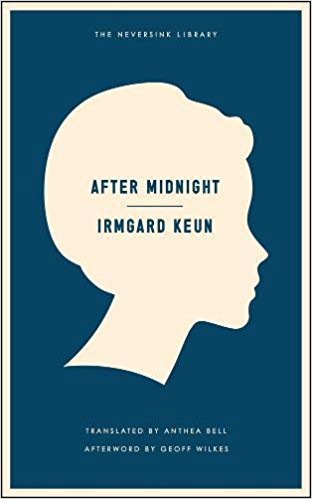
I ’d packed After Midnight, Irmgard Keun’s novel about life during the rise of the Third Reich, to read on the train from New York City. I didn’t know that its last pages took place on a train as well, or that they brimmed with tension and with the most bittersweet kind of hope. I also didn’t know that I’d be nearing the end of the book when Border Patrol entered the train at Syracuse, NY, to question nothing and no one except the family — man, woman, infant in arms — of visibly South American descent sitting a few rows behind me.

I just sat there — we just sat there, the great physical machine that contained us all sat there, while the man displayed papers and gave explanations. These satisfied the Border Patrol agents and they went away. The family got off the train at Buffalo. They had never crossed a border, not on that trip. They’d never meant to.

The policy that allowed Border Patrol to question them up to 100 miles from the edge of Canada was not new that winter of 2010. Neither was After Midnight, though Melville House had just put out the first English translation.

It was the Obama era. I posted indignantly on Facebook about Border Control’s incursion, how wrong it seemed. I also posted about how perfect and haunting the book was, in spite of — maybe because of — its moments of melodrama and dark humor. A few of my friends, the more permanent radicals, agreed on both counts. The rest didn’t talk about Border Control in those days.

Then 2016 happened. Experts on fascism asked us to notice what had changed, and I did. They didn’t ask, but I had to notice, what hadn’t changed because it had been there all along: Border Patrol on the buses and trains that never crossed the border, the Prosperity Gospel loathing of the poor as borderline human, the constant fear of harmless things and bland acceptance of genuine threats, the craving for that leader who would fix it all.

Experts on fascism asked us to notice what had changed, and I did. They didn’t ask, but I had to notice, what hadn’t changed because it had been there all along

America’s immigration policy, never gentle, became a scourge among even the most harmless — children, parents, spouses, business owners, local fixtures, friends. As winter turned to spring I felt like I was protesting always. I joined the indignant crowds protesting a travel ban in sight of the Statue of Liberty; I congregated in Washington Square Park with hundreds of others to reject Trump’s threats against sanctuary cities, drafty and leaking shelters that such things were; near City Hall I listened as unions described how they would rescue their members and city councilwomen their constituents. I did not know who I would rescue or how or whether I would know what to do. I had never rescued anyone before.

I thought: I should re-read After Midnight.

The other work on the rise of the Nazis that I felt compelled to re-read was the first volume of Art Spiegelman’s Maus, but that was different — a widely recognized classic that invited every reader to imagine themselves a mouse. And such books, putting the reader in that skin, are valuable, which is why they are numerous and often beloved. But After Midnight, alone among the books I’ve read, is a book by a cat that puts the reader square in a basket of kittens — where so many nice white well-meaning book-reading women like me, in real life, in the current moment, are.

How ‘The Remains of the Day’ Helped Me Understand Brexit and Trump

Keun published After Midnight in German in 1937, although the Nazis had banned her work years earlier due to frank portrayals of Weimar women at their most jazz-loving, sex-having, career-plotting, and generally liberated. The banning cost her her marriage to a Nazi supporter, and she became romantically involved with a Jewish doctor and went into exile. A few years after she finished the novel, she’d pull off one of the oddest survivals of World War II: having her suicide reported to the press so she could sneak back across the border and live under a false identity, largely in hiding, in Germany itself until the end of the war. That decision speaks to a woman who still felt a baffled love for her nation, even after it turned monstrous.

Sanna, After Midnight’s protagonist, is not so worldly wise as 1937 Keun, but she is in many ways equally determined. She is introduced to readers in the midst of managing her friend Gerti. Gerti is in love with a half-Jewish boy and, far from frightened, is driven to ever-greater throes of passion by the forbidden nature of their romance. A more conventional novel might have made her the heroine. The two girls (and their other friends) seem much alike to begin with, as they all spend the early pages plotting minor victories over the constricted world in which they find themselves: plotting to flirt with SA men while not overcommitting or angering them, to obtain a new blouse for the evening’s party, to lure a crush to that party.

Yet Sanna, not Gerti, breaks the pattern of her life and ends the brief novel fleeing her home and country. What turns her from her day-to-day concerns onto the path of a political exile isn’t the stuff of heroism, exactly — no sudden prophetic vision of the horrors to come or blaze of righteousness. A bit of young love, a bit of cynicism to see through the political passions of her elders, a bit of raw fear — those are the ingredients of an imperfect awakening.

What turns her from her day-to-day concerns onto the path of a political exile isn’t the stuff of heroism, exactly — no sudden prophetic vision of the horrors to come or blaze of righteousness.

Sanna’s good and bad qualities draw from the same well. Her good actions are often self-interested, meant to protect her self-image or the narrow circle of her loved ones. She’s impulsive, and her insights into her own character are imperfect. It’s easy to imagine the Sanna of the beginning of the book sticking a safety pin in her coat lapel, especially if Gerti did it first, and equally easy to imagine her pulling it out again — or forgetting entirely that it was there as she watches the police escort the dissenter at the parade away. It’s also easy to imagine her feeling terrible about that afterwards, for whatever else she may be, Sanna is at least willing to reflect on herself and try to do better.

Though Hitler appears in this novel, flying through town — and symbolically dividing the city, making it impossible for people to carry out their ordinary lives while his parade route takes priority — the real antagonists in the work are as un-epic in their villainy as Sanna is in her heroism. The good Germans of After Midnight use the Gestapo as a tool to pursue petty grudges and rivalries, flinging accusations of Communist sympathies and Jewish ancestry to clear perceived obstacles from their paths in love or business. They register that there are suddenly vicious consequences for the wrong off-hand remark or joke, but it only seems to excite real indignation in a few — and it excites something else, enthusiasm, a sense of exaltation, in others.

The thing that struck me most on reread, the thing I hadn’t yet noticed in 2010, was how futile every action can feel.

The thing that struck me most on reread, the thing I hadn’t yet noticed in 2010, was how futile every action can feel. People who have articulated theories against Nazism achieve little in this book. Some, like Sanna’s older brother Algin (once himself a banned writer, now the author of pro-regime propaganda, no doubt a figure of particular road-not-taken resonance for Keun), make doomed gestures at escape and fall into inertia. Others, like the journalist Heini, succumb to despair. But it is Sanna and her boyfriend Franz, each initially apolitical but driven by loathing for what Nazi Germany has done to their friends, who actually make dramatic moves of resistance.

Written as it was in the midst of the falling night, this is not a book that instructs us on the specifics of how to save ourselves, let alone others. Sanna saves only one person and her exile, even in its first moments, is a lonely thing — and we know that Keun, faced with the same loneliness, risked it all to return. What After Midnight does is let us look around in the dusk and see how alarming the familiar monsters have become where they loom. We know that dawn came once — but in daylight we did not do enough to clear them away, thinking them tame.

Being a Quiet Girl in a Very Noisy Time

Facebook recently informed me that I have had an account now for ten years: the whole of my adult life. I will be 28 in a few months, and in the past ten years I have watched, via Facebook, at least three acquaintances go through mental health crises: first, the odd syntax, then the long rants on obscure topics, the strangely-angled selfies, the unsolicited poetry, the deep silence of disappearance.

In each of these cases, I did nothing. I did not reach out in support. I did not report the posts. I did not try to get in touch with the person’s family or close friends. Instead, I agitated, trying from the shadows to guess what was going on, telling myself all the while that it wasn’t my business and that I should stay quiet.

What we have done to ourselves is create a perpetual theater of human interaction, in which one is never exactly off-stage.

Quiet is the word I most intimately associate with social media. The irony shouldn’t be lost on anyone; who has not felt cowed by the sheer volume of conversations being carried on on around us at all times? Scrolling through feed after feed, day after day, I become a virtual wallflower, lurking at the edges of chatter, aware of my own invisible, awkward presence. More than anything, social media has reminded me of my introversion on a daily basis, worried it to a dull and ever-present point:

How should I reply? Should I like this? Who read my post? Is this caption funny enough? Why didn’t she like that? What is he up to, now? Is it even my business? Do I even belong here? What if I say the wrong thing? What if I say nothing at all?

What we have done to ourselves is create a perpetual theater of human interaction, in which one is never exactly off-stage. In this theater, there are so many tones of voice, crossing each other all at once, that it is impossible to know when the drama has reached its peak. It’s hard to tell when you are meant to be the leading lady, or a member of the chorus, or just part of the audience.

I regret very much that I did not say anything. I am grateful that my acquaintances, as far as I can tell, may be all right.

I spent most of my teenage years selectively mute. I am borrowing the phrase from a fellow teacher, who used it to describe one of her students. For months, I turned the phrase over and over in my mind like a shiny coin, studying the engravings. I am still turning it over, even as I am sitting quiet girls down and telling them things like,“You’re going to have to start talking eventually. People aren’t ever going to leave you alone about it. I know. I was you. Everyone told me, and eventually I got so tired of it I started talking. Now look at me! I never shut up.”

In presenting myself this way, I am offering these quiet girls a model of hope: You don’t always have to be quiet. You can be powerful. Your words matter. Everyone wants to hear them.

Except none of this is true; I am still a quiet girl. I am not powerful. My words may matter, but no one, especially the fidgeting girl in front of me, wants to hear them. These quiet girls do not need my hope, because nothing is wrong with them, nothing at all.

These quiet girls do not need my hope, because nothing is wrong with them, nothing at all.

A scene: I am four years old. I am in the preschool classroom, standing at the play kitchen, where I pretend to chop tomatoes. Who am I chopping these imaginary tomatoes for? I chop and I chop and I chop a big pretend pile. I share with no one. I don’t even like tomatoes.

In an office somewhere: “We would like to hold her back a year, because she doesn’t seem to enjoy playing with other children.”

My mother: “Why does she need to enjoy playing with other children?”

It should not strike anyone as unusual that, in lieu of making friends, I wrote stories. I did this to entertain myself, to fill up the quiet space I had cultivated.

To be clear: quiet girls are not necessarily sad ones. I was terrifically happy. I was blissfully unaware that being quiet was a problem until my teenage years, when it seemed to be on everyone’s minds, when quiet came to mean weird or sad or strange.

I found community online, in the early phase of the internet: in Yahoo! Groups called “Serious Teen Writers” and “College Writers,” and “Fiction Writers,” among others. I still receive email notifications from these groups to the address I had carefully chosen at fourteen — username: “storyspinner” — even though as far as I can tell, no one populates these groups anymore. The emails all automated, scheduled to repeat into eternity.

At fourteen, I started my own literary journal, although I would not know what a literary journal was until years later. It was called The Writ, a play on words that captured the demand I felt to write. I took the necessary steps to bring The Writ to fruition: coded the website myself, did the layout for every issue (of which there were, ultimately, only two or three). Soon after I began soliciting work, a young man — initials, incidentally, B.S. — in one of my writers groups reached out, wondering if I would publish something written by his mother. Our correspondence became a partnership. He was a few years older than I was, and when he went to college, he decided to turn the magazine into a club of the same name. Perhaps of little relevance, B.S. also sent me my first invitation to Facebook, which I declined, as I wasn’t yet allowed to use social media.

By sixteen I had realized that he wasn’t interested in working together; he just wanted my idea. I had stopped communicating with him entirely, a habit we now call ghosting, a favorite defense mechanism of the introvert. Why he didn’t merely start from scratch still puzzles me. Instead, he sent an email:

Under Article one of the Constitution of The WRIT Teen Writers’ Magazine, if you do not reply, you will be expelled from the magazine. I hate to say this, but I have sent emails to you and gotten no reply. This is your final warning, and if there is no reply by the end of the week, I will formally take over all major productions under The WRIT’s requirements. I hope you understand this and do not take offense at this email if you are still there.

En Cristo por siempra,

B.S.

I have never looked back on this memory as traumatic, although I suppose it could and should have been. I suspect that I expected it, which foreshortened any anger or betrayal I might have felt. After all, I had not replied. After all, I could have said something.

I graduated from high school, as scheduled, in 2008, one of six valedictorians in a class of 385. At the ceremony, I would give a speech before a crowd of my teachers and peers and their families. I had written several drafts. Oddly enough, for a quiet girl, I wasn’t nervous; I had never been nervous about public speaking. It was more that I felt bothered.

For me, high school wasn’t the charmed experience I believed the rest of my classmates were having. “High school is rarely charmed for quiet girls, for smart girls, for girls like you,” I sometimes catch myself telling the ninth graders in my English classes. My valedictorian speech was full of the trite clichés I knew people wanted to hear. It was serious, because I was not brave enough to risk being funny, and it was gracious, because I knew that if I was going to speak in front of a crowd of people safely, that was all I could be. It was good, but it wasn’t honest.

I had realized that there is power in being a quiet girl: that when a quiet girl suddenly starts talking, people listen.

I brought the draft to my eleventh grade AP Language and Composition teacher, Mr. Benoit. He read it over. He had been patiently reading over my drafts of things for years, and once, I had cried in his class, after giving a speech to my peers about how much my dad meant to me. He liked the valedictorian speech, offered a few suggestions. I said I did not want to give it.

“Why?” he asked.

“I don’t feel this way. I feel like a lot of these people were hard on me. They don’t know me, and I don’t know them, and this is fake.”

“Why don’t you try writing another speech?” he suggested.

I considered it, but in the end I gave the false speech I had written, because I could not risk saying what I felt. I knew it was inappropriate for the occasion. I had cleaved to my lessons.

Of the six valedictorian speeches given that evening, mine was the only one quoted in the local paper:

“We may be here for a short while,” said Lewis as she advised the class of 2008 to strive to be remembered as more than just graduates. “Be remembered as part of a legacy.”

For a brief period in my mid-twenties, I thought I had left that quiet girl behind. I had taken everyone’s advice; I started saying what I felt, even when it wasn’t polite.

I had realized that there is power in being a quiet girl: that when a quiet girl suddenly starts talking, people listen. What I hadn’t yet realized is that they aren’t always listening for the right reasons. Mostly, they want you to shock them, to reveal yourself, to give occasion for them to remind you why you became a quiet girl in the first place.

“All this writing you’ve been doing,” says one, “is great, but now you need to go out, grow up, and live some life.”

Nowhere is this more apparent to me than on social media, where emerging to say any little thing can become the argument of someone’s afternoon. As a writer I’ve learned to choose my language carefully. I know that a word is both sign and signified; it means, and in meaning, it can wound.

My anxiety around speaking — on the page, online, out loud — is the anxiety of responsibility to use language well. Every year, I begin my freshman English classes by explaining language’s power. I tell them that when someone recites a story before a live audience, science has shown that the audience’s brain waves sync to the speaker’s.

“Stories are mind control,” I say, “They bring us in closer touch.”

I show them slides of advertisements. I show them propaganda.

“Stories will liberate or destroy us,” I continue. I see their concern.

In understanding the weight of language, at some point my care became apprehension. My quiet came back. I felt the need to take my time. On the page, this is possible. In the world, where the speed of language seems only to be increasing, I always feel three steps behind.

In the world, where the speed of language seems only to be increasing, I always feel three steps behind.

A scene: My boyfriend and I are in the kitchen. I am making bacon, and listening to him tell a story. The story reminds me of something. I become excited. I run into the other room, leaving the sizzling pan on the stove. I return with a book. I say, “I feel like this is the book I have been waiting my whole life to read.” I elaborate, “It’s not even that it’s a great book, just that I feel like it captures my childhood in a way.” I turn to a dog-eared page. I begin to read an underlined quote:

“It was only in 1984, four years after Don Novey took over the union, that the new max and supermax prisons began rolling online, Solano in 1984, ‘New Folsom’ (a quarter mile removed from ‘Old Folsom’) in 1986, Avenal and Ione and Stockton and San Diego in 1987, Corcoran and Blythe in 1988, Pelican Bay in 1989, Chowchilla in 1990, Wasco in 1991, Calipatria in 1992, Lancaster and Imperial and Centinela and Delano in 1993, Coalinga and a second prison at — ”

“You don’t have to read all that,” he says. “You can just get to the point.”

“But that was the point,” I say.

Even at home, there is occasion for failure; I am again in a too-small kitchen, chopping tomatoes only for myself.

On a random day at work, I decided to tally all of the questions my students asked. In approximately 230 minutes, there were 153 questions, or one every 90 seconds. Their questions ranged from “Can I go to the bathroom?” to “How do you know when the author is using irony?” to “Have you ever been to Aventura?” We cover the personal and the political and the practical. I am constantly answering questions, or asking them; research shows that teachers ask up to two questions per minute, or one every thirty seconds. I am never not talking.

Research shows that teachers ask up to two questions per minute, or one every thirty seconds. I am never not talking.

Still, I am quiet. When they want to know how I feel — not just how I feel right now — but how I feel deeply, overall, I do not answer them.

“You’re hard to read,” the savvy ones say, picking up the fact that my vibrant expressiveness, my raging joy and bewilderment and humor and delight are all a form of method acting, meant to solicit their engagement.

On social media I read the stories of teen girls who will not be quiet. Even their silence speaks.

Is it okay to admit, even just a little, that I want to be like that?

Instead I burrow; I agitate; I lay words down on paper. The realization that this life is a loneliness profound and sparsely punctuated: I wrote that sentence.

I engage with social media while hating it, wondering all the time whether or not I’m doing it right.

When a friend calls, I am both panicked and grateful.

“How are you?” we say, “How are you?”

We discuss what we came to discuss: my manuscript.

My friend, like all my dear, good friends, tells me: “I want to hear a little more of her voice.”