‘The Female Persuasion’ Relies on an Outdated Model of Mentorship

I n October of last year, I attended a press event for Meg Wolitzer’s new novel The Female Persuasion. At the door, the guests, mostly women, were asked to write their name as well as the name of their female mentor on their name tags. “Or a woman who has inspired you,” said the woman behind the table, perhaps sensing I was drawing a blank. “It can be anyone.” I ran through some of my favorite writers in my head. Carson McCullers had inspired me, but so had many others. If I was being honest, Mildred D. Taylor and Gertrude Chandler Warner probably did more to make me a writer, during those important elementary school years, than Flannery O’Connor did in college, when I was already committed.

The arriving guests began to bottleneck behind me as I stood, second guessing. I hastily scribbled something in Sharpie before heading into the private room already packed with writers and media professionals. On other women’s lapels I spotted the names of publishing executives and famous writers. At the bar, I ordered an “I Get to Decide” cocktail and surveyed the room, hoping to spot someone I knew.

“Who’s Bonnie?” a woman, who I later learned worked for a glossy women’s magazine, asked me. I looked down at my name tag, having already forgotten what I’d written. “Oh! She was my coach in high school,” I explained, just stopping myself from adding that maybe I didn’t understand the assignment. The woman told me that her mentor was the woman who first hired her at another magazine, but, she added kindly, “it could have been Lisa,” her high school basketball coach.

I hadn’t spoken to Bonnie (or almost anyone else I could have written on that name tag) in years. The truth was, I felt the same way about not having a mentor as I did about not having friends from high school: that it revealed a deficiency at my core somehow related to my disinclination to join clubs and teams. I’d thought of Bonnie because she was the first woman I’d ever known who ran her own business and worked hard doing what she loved. She pushed me to succeed in ways that took into account my particular temperament and hangups, a key quality for a mentor to have, in my view.

Implicit in the title of “mentor” is a singularity and hierarchy: the one person, more successful and senior, who helps you achieve your true potential.

But implicit in the title of “mentor” is a singularity and hierarchy: the one person, more successful and senior, who helps you achieve your true potential. I thought of the many trusted advisors I had in different parts of my life, and felt I was being ever so subtly encouraged to ignore them in favor of elevating a single person whom better fit the bill.

That weekend, I settled in to read The Female Persuasion, ready to discover the true meaning of a female mentor. The novel centers around the relationship between Greer Kadetsky, a young woman beginning her career after college, and Faith Frank, a second-wave feminist “a couple steps down from Gloria Steinem.” Faith Frank is the founder of Bloomer, a “less famous little sister to Ms.,” and is noted for her activism and influence as well as her trademark knee-high suede boots.

Greer learns about Faith from her friend Zee Eisenstat, and knows “shamefully little” before she goes to hear her speak. The night before her campus lecture, Greer researched Faith online, but even with Zee’s cultural instruction, the information proves disappointing: “While Google provided timeline and context, it gave her no real sense of how a person like Faith actually became her whole self.” And thus, the project of the novel is laid bare: for Greer to discover and become her whole self.

Eventually Faith hires Greer at Loci, a foundation funded by a venture capitalist for the purpose of hosting “summits” for women. Greer isn’t so much motivated by Loci’s mission as she is infatuated with Faith, who gives her attention like the sun in winter: rarely but with great intensity when it shows up. Greer subjugates herself in large and small ways to curry Faith’s favor, including, on a staff retreat, eating a steak Faith prepared rather than speaking up to say she’s a vegetarian.

The project of becoming her whole self is so intertwined with her idolization of Faith Frank that Greer can’t imagine sharing her mentor. Before her first day of work, Zee asks Greer to a deliver a letter she wrote to Faith, asking to be hired too. It’s an overreaching request, but instead of simply admitting that she’s not comfortable being used as a networking opportunity so early in her career, Greer tells Zee she will deliver the letter and instead lets it languish in a drawer. She even confesses the transgression to Faith, who doesn’t contradict her choice.

Over the next few years, as Zee follows her own path to a Teach for America type program, Greer is promoted through the ranks of Loci, and her relationship with Faith remains warm and convivial but not especially close. Greer imagines a connection between them, formed the day Faith first saw her potential as an insecure college student, but their interactions lead the reader to conclude that this connection is largely one-sided. Greer has imprinted on Faith as her mentor, but there as been no mutual agreement. In fact, there’s little to suggest Faith distinguishes Greer from her many anonymous fans. Suffice to say that if Greer had been at The Female Persuasion party, should would have had no trouble choosing the name for her name tag. But had the roles been reversed, and mentors were asked to write the names of their protégés, Faith might have listed dozens of names, or “young women everywhere,” or no one at all.

Being a Quiet Girl in a Very Noisy Time

After years of working together, their relationship ends when (spoilers ahead) Greer discovers that a project for which Loci collected a significant number of donations doesn’t actually exist. Greer wants to go public and return the money; Faith opts instead to avoid the scandal. Greer quits in protest, and Faith humiliates Greer by revealing to a room full of her colleagues how Greer betrayed Zee years earlier. The lesson Greer must learn in order to confront Faith is to think independently, based on her own code of ethics. Wounded but armed with a newfound sense of self, Greer takes what she’s learned at Faith’s knee and applies it to her own project, a Lean In–type book called Outside Voices that becomes a bestseller.

Wolitzer is clearly interested in puncturing the idealized definition of a mentor — Faith’s admonishment of Greer is cruel, and her motives complicated — but falls short of questioning the innate flaws of this very model of mentorship. At the end of the novel, Faith and Greer haven’t spoken in years, and yet, barely in her 30s, Greer is personally and professionally successful: a best-selling author (with a brownstone!), married to her highschool sweetheart, with whom she has a child. This portrait of “having it all” is depicted as self-actualization: Greer has become her own version of Faith Frank and has discovered her “whole self.” By the assessment of the novel, the mentorship has succeeded. But what the novel doesn’t ask is if Greer might have succeeded in spite of Faith, rather than because of her. If it were up to Faith, Greer would not have struck out on her own. She would still be working in her morally compromised job on projects further and further removed from the mission of helping women that initially inspired her.

Wolitzer is clearly interested in puncturing the idealized definition of a mentor , but falls short of questioning the innate flaws of this very model of mentorship.

In February, I participated in a Lit Hub roundtable of women editors; one of the questions we were asked was whether we’d had mentors who’d helped in our careers. Jennifer Acker of The Common answered that she’d had only male mentors in her career, and wondered why. “While I have had two strong women as bosses in my editorial career, they did not become mentors,” she said. “My real and enduring mentors in the publishing world have been men.” Was it, she wondered, “a question of scarcity, or a question of attitude? Scarcity could mean two things,” Acker explained, “that there are fewer women in positions of power, or that the women who do fill those roles are not in a position to be good mentors,” either because they are overextended or do not feel secure enough in their positions to invite the competition.

As I considered Acker’s experience, I found I was once again hung up on the same question that gave me pause at the doorway of the press party. It wasn’t her questions about why female mentors were harder to come by that fascinated me. Acker’s confidence in who her mentors have been, and who they might have been, felt alien. When did a boss, or an editor, or a professor, become a mentor? Was mentorship something two people agreed upon, like exclusivity in a romantic relationship, or was it years of loyalty you suddenly looked back on with surprise, like a long friendship?

Was mentorship something two people agreed upon, like exclusivity in a romantic relationship, or was it years of loyalty you suddenly looked back on with surprise, like a long friendship?

At the Female Persuasion party, I ran into a women with whom I’d gone to graduate school. She told me she now works for a national nonprofit, and had recently been asked by a younger women, in a very formal way, to be her mentor. My former classmate spoke about her new protégé with glowing pride, and told me about their monthly meet ups and how she occasionally bought her presents, such as a journal or a nice pen.

My reaction, at first, was to feel embarrassed for them both. How quaint, how formal, how rigid, and really, how useless. What would the arrangement lead to, other than a quick answer to a get-to-know you game at party?

For my part, my professional career has been aided by a long list of men and women: professors, bosses, and editors who have hired me, accepted me to graduate programs, introduced me to the right people, offered advice, published my work. Their contributions to my advancement have often been enormously important, but none of them sprang to mind when I was asked to list my mentors — maybe because their influence is usually confined to a specific time in my life. There’s always the knowledge that when the semester ends, when the job is over, when the issue comes out, our relationship will shift quietly into the past tense.

And yet, the people who have truly mentored me — supported me, encouraged me, held me to high standards and pushed me to embrace what I’m capable of—have been my friends. My peers who evolve alongside me, who have no institutional allegiances on my behalf, can advise me without ulterior motive, and I can advise them in return.

The people who have truly mentored me — supported me, encouraged me, held me to high standards and pushed me to embrace what I’m capable of—have been my friends.

After finishing the novel, I wondered how I might have approached it differently, had it not been for the conceit of press party. If only it had been positioned as a book that questions the value of traditional mentors, rather than one that valorizes them, I might have been less inclined to distrust the extent to which Faith had actually supported Greer. Not very much, I concluded by the end. Beyond the initial act of hiring her, Faith had done little to cultivated Greer’s passions and talents and usher her toward a career path that would be the best possible fulfillment of Greer’s ambitions. Rather, Faith had supported her own career path, and supported Greer’s insofar as their goals aligned.

Throughout The Female Persuasion, there are glimpses of the alternative, peer-to-peer mentor structures that have meant so much to me: Greer’s high school boyfriend Cory, who quits his job to take care of his mentally ill mother shows Greer the value of caregiving and domestic work; Greer’s best friend Zee, who has found her calling as a trauma counselor, demonstrates the value of direct, human-to-human services. And beyond their vocational roles, Cory and Zee have consistently demonstrated a conviction of character that Greer lacks, as she seeks the approval of a more public-facing form of success.

Nonlinear professional development requires nonlinear mentorship, in which peers in different stages of life advise one another equally.

Traditional mentorships, which are usually supported by institutions, rarely survive the kind of winding path it takes to make a career these days, when mailroom to corner office is yet another fantasy most people have long-since abandoned. Greer’s unicorn career — hired straight out of college into a prestigious job where she spends four years before quitting and publishing a national bestseller — is the millennial fantasy that has replaced the corner office. By contrast, the millennial reality is much more complicated. A more typical path to Greer’s level of success would require jumping around from job to job and proving oneself in smaller publications before getting a book contract. This nonlinear professional development requires nonlinear mentorship, in which peers in different stages of life advise one another equally.

After Greer quits, she confesses to Zee about the letter. At first Zee doesn’t even remember it, but is then shocked as disappointed. Without making excuses, Greer points out that Zee wouldn’t have even like working at Loci, still failing to quite see that for a long time, she hasn’t liked working there either.

Zee thinks of Greer as “an acolyte of Faith’s” who should have anticipated Faith’s betrayal. And yet, despite Zee’s implicit criticism, the fact and value of Faith’s mentorship goes unquestioned. Zee expounds that there are two kinds of feminists, “the famous ones, and everyone else,” arguing, essentially, that pursuing fame from feminism is an inauthentic, and that mentors — particularly famous mentors — are false Gods. But she admits that she wants one anyway: “I don’t have a mentor, Greer, and I’ve never had one. But I’ve had different women in my life who I like to be around, and who seem to like me. I don’t need their approval. I don’t need their permission. Maybe I should have had a little more of this; it might have helped. But I didn’t, and well, okay, fine, you’re right, I’m sure I would have hated it there [at Loci], and I don’t think I would have stayed very long. But I would’ve liked the chance to find out.”

Zee has had the support of horizontal mentors, yet still lusts after the more traditional, hierarchical structure. And ultimately, the novel validates that lust. At the end of the novel, Greer imagines writing to Faith and thanking her for “crack[ing] her head open in college” and pouring her strength, opinions, generosity, and influence into other women, as a part of “the big, long story of women pouring what they had into one another.”

Zee has had the support of horizontal mentors, yet still lusts after the more traditional, hierarchical structure. And ultimately, the novel validates that lust.

Greer, even with her newfound appreciation for the value of Zee’s friendship, still holds Faith on the ultimate pedestal of of influence, crediting her with the very first acknowledgement in her book, an acknowledgement to which Faith never responds. Greer’s experience has led her to accept the a view of mentorship in which “the older one first encourages the younger one,” until “one replaces the other.” This conclusion is presented as an insight, acknowledging the shortcomings of hierarchical mentorship but failing to fully imagine any alternative. The Female Persuasion falls disappointingly short of upsetting these outdated power structures; instead, it further invests in a future bound by the same roles that have been so limiting to its characters.

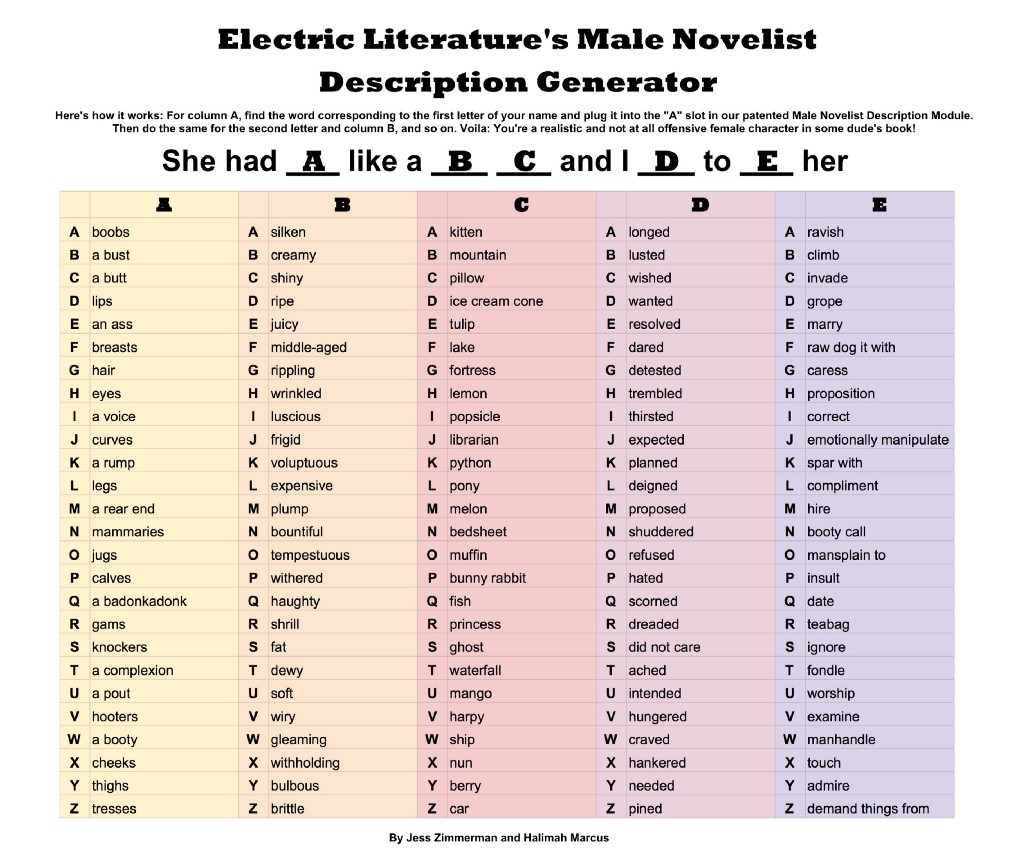
If You’re Not Sure How a Male Author Would Describe You, Use Our Handy Chart

The “describe yourself like a male author would” Twitter thread perfectly lampooned the worst habits of male novelists writing female characters. But it also required you to envision yourself as either a brainless sex object or a valueless nonentity, since those views of women are in fact the habits in question. Not everyone relished the idea of either writing salivating prose about their own hooters or acknowledging that their age, race, or size rendered them invisible.

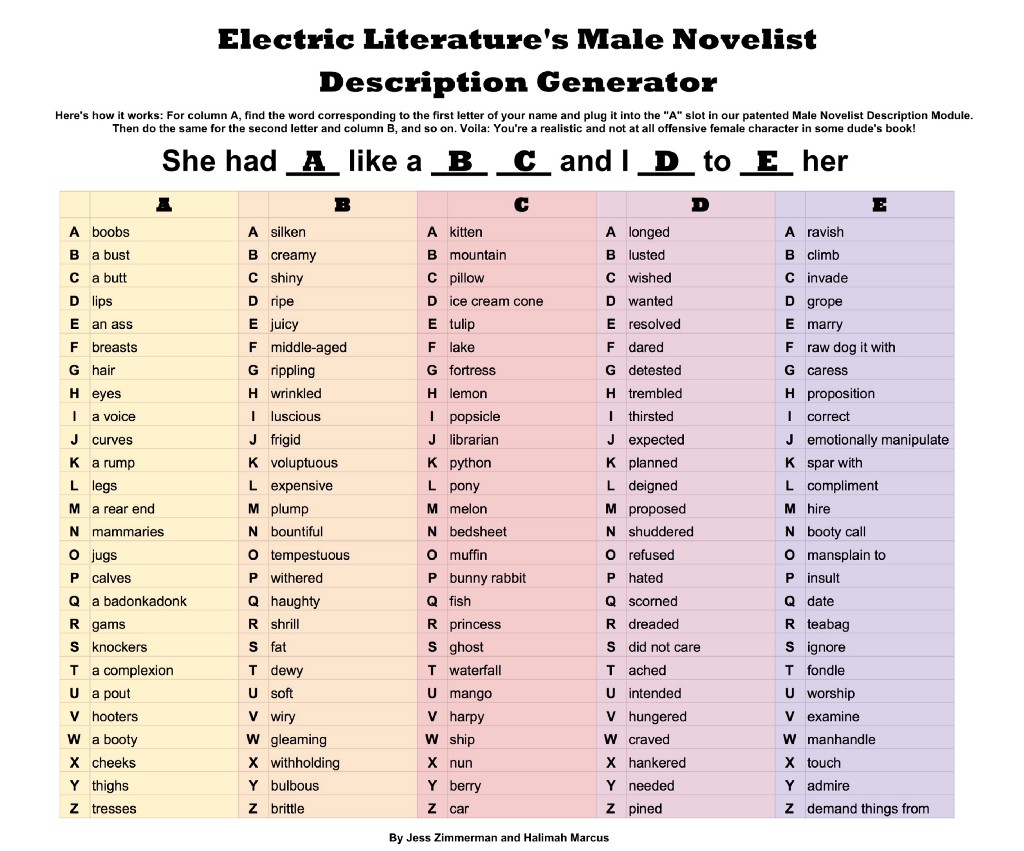
Enter: the Electric Literature automatic male novelist! Instead of objectifying yourself, let this chart objectify you based on the letters of your name. So for instance, if you’re Whitney Reynolds, originator of the Twitter challenge, you’d look up “w” in column A, “h” in column B, “i” in column C, and so forth, and then plug each word into the sentences below. Here’s your final result: “She had a booty like a wrinkled popsicle and I ached to booty call her.” Okay, there’s a little too much booty in that sentence, but since when is a little too much booty a bad thing?

If you run out of letters in your first name, move on to your last—Bo Derek would describe herself as “She had a bust like a tempestuous ice cream cone and I resolved to”… uh, this one gets a little rude, so we’ll just assume you get the idea. Literary greatness awaits!

Click to expand

‘Restless Souls’ is a War Story and Journey Epic that Fights for a New Masculinity

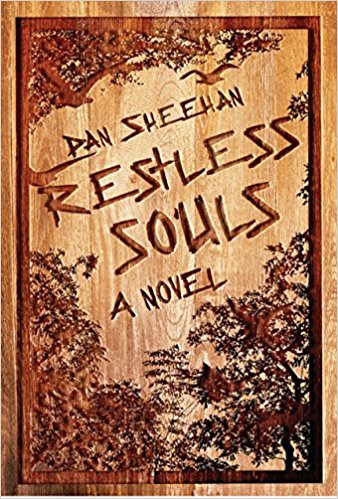
The first work by Dan Sheehan that I ever read was a visceral and twistedly comic short story set in Ireland about a man inheriting his infamous and imprisoned father’s urge to murder. The title, “Our Fathers,” was a double entendre, invoking the Lord’s prayer. I was engrossed. I met Sheehan a few years ago while we were both in New York and he was working as a contributing editor for Guernica Magazine. He had a joyfully hungry ear for a story and a genuine enthusiasm for discussing various pitches and experiences of reporting. He was about to head off to the West Coast to do research for what would become his first novel. A surreal and poignant debut, Restless Souls charts the journey of three young men from Dublin — Tom, Karl, and Baz — who are hoping to find redemption at an experimental PTSD clinic on the edge of a cliff in California.

Purchase the novel.

The shifting narrative flickers between this strange road trip and intimate vignettes from Tom’s memory of the haunting three years he spent in Sarajevo while the city was under relentless siege. Their odyssey from Tom’s mam’s house in Dublin to the Restless Souls clinic, via a random desert commune, is a last ditch effort to save Tom’s unraveling mind. But it is also an unspoken and desperate pact to save themselves from a churning guilt, an exorcising of the collective grief that all three are barely enduring following the suicide of their childhood friend Gabriel.

At the Dublin launch for Restless Souls in The Gutter Bookshop, self-deprecating and unfeigned in front of an audience thick with family and friends, Sheehan read out the first chapter. Even in the first few lines, I was struck by the focus on the act of bearing witness and what that means, a question I would return to time and again reading the book. I had recently returned from an assignment in Syria and had seen the devastation that an intractable war causes up close, but also the resilience of the mundane, the everyday life that continues regardless.

Amidst cruel losses and the most brutal of wars, the three laddish anti-heroes of Restless Souls are animated by a genuine humanity. I spoke with the author about exploring trauma and grief without shying away from the surreal mundanity, imperfect relationships, and strange humor that percolate through these experiences.

Caelainn Hogan: I was expecting to focus these questions on the more concrete themes of male friendship or the trials of survivor’s guilt, both central to Restless Souls and worth exploring. But what fascinated me most about your book was the way it explored ideas of perception, experience, and the concept of bearing witness. You completed years of research and you are writing about two very factual crises. Was the Restless Souls clinic always at the center of the novel? Did these more intangible subjects surface out of the process, or were they always fundamentally what you wanted to raise through the narrative?

Dan Sheehan: I knew that I wanted to find something less grounded in reality, more outlandish, to place at the end of what is essentially a quest narrative. The realities of adult life have been so brutalizing for these men, who, in their teenage years — in a way that many of us do I suppose — assumed that they stood together on unshakable foundations, and always would. They now feel that all of that promise and hope and invincibility has been stripped away and that the last chance to retrieve it is through a bold move, a grand gesture. Having said that, these Californian cliff side facilities do exist (they just usually house Don Draper-esque meditation gatherings rather than PTSD clinics) and the futuristic-seeming memory treatment detailed is real (it just hasn’t reached the human trial phase of research yet).

I had been researching the different therapies available to returning soldiers and trauma victims for a number of months when I came across a fascinating New Yorker profile of a neuro-scientist named Dr. Daniela Schiller and her pioneering work on memory reconsolidation (the process by which fixed long-term memories can be recalled and modified in order to dampen the intensity of their emotional impact, to essentially rewrite the memory). There can be a wariness in people with regard to manipulating memory because we tend to picture mad scientists and cold-blooded dystopias, but there are many out there, like Dr. Schiller, whose cutting-edge work comes from a place of deep compassion and an abiding belief in the duty of care we have toward those sufferers for whom all conventional treatment options have been exhausted.

Matt Gallagher & Phil Klay Discuss the War in Iraq and Finding Purpose at Home

CH: These treatments seem so alien compared to the mental health care available in Ireland, basically as surreal as zebras in a garden…

DS: Absolutely. The fact that in Ireland we’re only now, deep into the 21st century, coming to the realization that a national, multi-faceted approach to the mental health crisis is required, is pretty disgraceful. The bottom line is that before you can address a problem of this magnitude, you have to admit that there is one. You have to cultivate an atmosphere where that discussion can be part of the public discourse, and it took us a long, long time to do that. No country’s mental health services are perfect, of course, and, God knows, if you’re poor in the US, your chances of having access to adequate care are slim to nil, but there has at least been a reckoning with the existence of the problem for some time now, which is more than we in Ireland could say in the nineties and previous years. That’s been no secret of course, but I think spending time with these characters and considering the options they would and would not have had in the Ireland of the early nineties brought it home to me in a deeper way.

CH: This was a project that spanned five years and we have discussed your trips to Bosnia and the way you researched the conflict there, speaking directly with people preserving that history and visiting sites. You said that, when you were young, you were fixated by the images on the TV of the Bosnian war but also felt a sense of shame for being so eager to learn more about the horrors that befell Sarajevo. I sometimes grapple with this in my own work. Looking back, in what ways did the novel and your expectations of it shift? Did you always have that self awareness of the thin line between bearing witness and “disaster tourism” as you described it?

DS: I like to think I did for the most part, but that’s probably not true. From my experience, we (and by “we” I mean tourists, rather than journalists) tend to assume that if we briefly perform our grief — whether in the company of others or just as a sort of montage in our own heads — at one of these sites of recent tragedy or destruction, that we’ve done our job as empathetic, informed human beings. We give ourselves permission to revel, for want of a better word, in the rawness of the experience, as if our moment of silence or sorrow gives us the right to pass unjudged and unimpeded though the wreckage of other people’s lives, other people’s memories, without actually doing anything about it. I look back on my first visit to Sarajevo and I remember my genuine fascination with the food, the buildings, the history, but it’d be a lie to say that there wasn’t also a macabre interest in the conflict that had only ended a decade previous, a desire to suck up as much of that recent tragedy as I could. I still feel a little ashamed about that impulse, to be honest, but I’m glad that I’ve moved, and am hopefully still moving, in the right direction.

We tend to assume that if we briefly perform our grief at one of these sites of recent tragedy or destruction, that we’ve done our job as empathetic, informed human beings.

CH: By the end of the book, there is a distinct sense that no witness is reliable, but that we should perhaps embrace this. We are reminded of the strange power of a eulogy to reanimate a person we have lost, or a single frame of memory that can give us solace. It gives us the sense that we can, in some way, shape our own reality. That surreal monologue at the desert pitstop particularly struck me, with Karl putting himself on trial through the reincarnation of Gabriel, projecting his own guilt through some form of hallucinogenic ventriloquism. These days we seem to live in a state of constant staging and performance. How important was form for you in representing this state, and did you experiment with different approaches?

DS: There’s relief, and escape, to be found in stories, and I think one of the things that’s so fascinating and heartbreaking about the idea of a eulogy is that it provides a loved one the opportunity to briefly bring a person back to life though story, even if it’s only for a few minutes, even if that story is only the half-truth. There’s such a bewildering senselessness to so many deaths, but eulogies give, or can give, a coda to a life in a way that feels right to us, I suppose because we’re a species that needs stories in order to understand the world and our place in it.

I think the fact that these men are so dependent on, and paralyzed by, their memories meant that flashbacks were always going to play a major role in the structure of the novel.

CH: The novel takes on two brutally real crises: suicide and war. You decided to write these experiences through a fairly experimental fictional account, with a solid dose of humor. The sections recounting Tom’s narrative, and indeed his whole character, raise quite a few questions on the futility and limits of journalism. I think the scenes in Sarajevo captured the surreal and intimate mundanity of everyday life within a conflict. The way Tom involved himself in peoples’ lives was ethically complicated and he admits repeatedly he was chasing an experience. You referenced the work of journalists like Janine di Giovanni as important to your research. Her knack for highlighting the everyday humanity within even the most inhumane of conflicts is something I admire. How and why did you decide to make Tom a failed journalist, one who is broken by witnessing, and at the same time, unable to put his observations to any use?

DS: I think you highlight a very important point about di Giovanni’s journalism, and it’s something I greatly admire in your own work — that ability to capture the complex humanity of individual lives alongside the broader sweep of a brutal and dehumanizing conflict that threatens, in the eyes of world only fleetingly interested in their plight at least, to subsume that individuality. I suppose I saw Tom not necessarily as a failed journalist, but more as someone who naively thought he could throw himself into the deep end without pausing to consider the kind of emotional and experiential work required.

A War Story About Searching for the Disappeared

CH: Throughout Restless Souls there is an obsession with the act of recording and also a tension between the importance and the inefficacy of witnessing. Karl is a photographer and Tom a writer. We see a mother risking her life to save books from a burning building surrounded by sniper and mortar fire. A young boy is sent to fetch reporters despite the dangers. At the same time, people are burning obituary sections of newspapers to stay warm. In our so-called post-truth era, can fiction address societal and political issues in a way that nonfiction is unable to?

DS: I hope that there’s still an important role for both fiction and nonfiction to play in spotlighting the most significant societal and political issues we’re facing today, although I regularly end up doubting this. The tsunami of information and opinion and rebuttal (content for content’s sake) that washes over us all these days — most of it designed to be hoovered up but not dwelled upon or considered in any meaningful way — can be overwhelming. I still hope that the best journalism, like the best fiction, works like an oxygen mask or Moses’ staff: it offers a bubble of respite from all this and allows us to breathe again, to really consider what’s happening, even if only for a few extra moments.

I hope there’s still an important role for both fiction and nonfiction in the societal and political issues we’re facing today, although I regularly end up doubting this.

CH: Karl, Tom, and Baz are all affected by trauma and the experience of survivor’s guilt. The varying ways in which the characters lose control, and the impact one person’s pain has on another, seems to illustrate the unavoidable domino effect of trauma. We are confronted with the irreversibility of loss, the way it changes us and the fact we can never return to the same “normal.” The war in Sarajevo and the suicide of a best friend are two very different means to expose these workings of trauma and loss. How did you decide to bring these two crises together and parallel them?

DS: Well it took a long time to figure out how to bring these two traumas — so removed from one another by scale and distance — together in a way that created a narrative that was compelling and coherent and, most importantly, greater than the sum of its disparate parts. I wish I could say that there was a grand plan from the outset — some initial reason why I felt these two tragedies had to speak to one another. But, in reality, the book began as two distinct images I couldn’t shake from my head. The first was that of the beautiful Neo-Moorish library of Sarajevo, which sits on the banks of the Miljacka river, engulfed in flames. The second was of a young man hanging from the goalposts of a football pitch at dusk. Once I decided that they were the anchoring incidents of the two main narrative strands, it was a matter of making sure the stories spoke to one another as they expanded outward.

OIF

CH: Self-help narratives, therapy, and the quest-trip to find oneself are so often associated solely with women. War trauma is often positioned as an exception, a socially acceptable reason for men to seek treatment. Perhaps this explains why three lads would go on an epic journey to a PTSD clinic when they never sought help for the more intimate trauma of suicide. There is a true spirit of “ladism” while the novel simultaneously peels back the defenses and reveals the fragility of these men. They seem surrounded by women they can’t fully connect with, from fussing old mothers who can’t seem to handle the world, to a topless tanned maternal figure in the desert, and countless idealized girlfriends. In the end, as Karl truly reckons with himself, he acknowledges a guilt that he has been trying to escape and wishes his friends had been “more to me than just supporting players in my own story.” It made me think about these men’s perceptions of themselves, the pressures they feel to be a certain kind of man, the ways male privilege can be damaging to men themselves. What were your hopes when you set out to explore the psyches of these three men? And what did you discover through exploring their experience of vulnerability and loss?

DS: I think, for the most part, the women in the novel, even the ones who only briefly cross their path, are far more emotionally attuned to the what these three men are going through than they are themselves, and there’s a shame attached to that for Karl that causes him to bristle and pull away; the shame of knowing that his psychological and emotional frailties — these aspects of himself that he has, at least up to this point, been unequipped and unwilling to come to terms with — are being exposed. We’ve entered an era where the stigma attached to admissions of anxiety and depression in men is dissipating, and that’s a wonderful and necessary thing, but it’s also a very recent development, especially in Ireland. The first time I ever remember encountering a mental health campaign aimed at young men was when I went to college, which was only twelve years ago, so it was very important for me in creating these characters that they exist in a landscape largely devoid of options in this regard, because that was the reality of the time.

CH: Finally, I’m curious to know what you learned about your own processing of memory through writing the book? As much as Restless Souls is a manic road trip through California, it is equally a very intimate ode to Dublin, and I’m sure drew on and resurrected many personal experiences. We spoke about an idea you had for a new novel, also set in Ireland and exploring aspects of bereavement. Are there any unresolved questions raised by writing Restless Souls that you are itching to work through?

DS: It’s funny (in a bleak way), I didn’t realize how preoccupied I was with the themes of bereavement, grief, and regret until I started writing this book. I don’t know whether that’s because eliminating most of the positive side of the emotional spectrum is sort of necessary to create interesting conflicts in fiction, or because that’s just where my brain goes. The scenes in Dublin in the eighties and nineties are fictional of course, but the writing and re-writing of them did at times feel like resurrecting actual memories. I don’t have enough distance from the book yet to know what that means, but it’s hopefully something that’ll become clearer down the line.

Electric Literature is Seeking a Social Media Editor

The social media editor of Electric Literature is responsible for ensuring the widest possible audience for Electric Literature articles, using both targeted outreach and organic sharing. You’ll be actively engaged with our 225,000-follower Facebook feed and our 260,000-follower Twitter feed: scheduling posts, interacting with followers, and establishing a consistent, informed, and appealing social media voice. But you’ll also be a creative thinker, constantly coming up with new ways to get Electric Lit work in front of the readers who will appreciate it most.

Our mission is to make literature more relevant, exciting, and inclusive. Here’s how you’ll contribute to those goals:

  • Reading every piece on the site and expressing its content in clear, engaging, motivating ways.
  • Keeping up with news, conversations, jokes, and the general zeitgeist so you can foreground content that’s on people’s minds.
  • Generating innovative strategies to reach and appeal to diverse audiences beyond Electric Lit’s existing fans.
  • Engaging with Electric Lit’s most loyal readers to foster a sense of community.

This is a part-time position, some of which can be done remotely. Candidates should be available to come to Electric Lit’s offices in downtown Brooklyn at least twice a week. Compensation is a monthly stipend based on a commitment of 15–20 hours a week.

Qualifications

  • You have robust and active personal social media feeds — you don’t need to have a ton of followers, but we do expect to see evidence that you interact regularly and are plugged in to your communities.
  • You have at least a year of professional social media experience, in some capacity.
  • You’re an avid reader of contemporary fiction and criticism (being a writer of fiction, essays, or criticism yourself is a plus, but not required).
  • You thrive in a collaborative environment where you’re trusted to do your own work well, but may also engage in brainstorming or strategizing with your coworkers.

Skills and Expertise

  • You have a knack for talking to people online and getting them to listen and act.
  • You’re deeply familiar with the technical side of Facebook and Twitter, including scheduling posts and monitoring stats.
  • You are proficient in social management platforms such as Tweetdeck.
  • You have at least a passing familiarity with Tumblr and Instagram.
  • You follow news about popular social platforms and are able to draw actionable insights from that news.
  • You’re plugged in to new innovations in social media (bonus points if you can tell us about an up-and-coming network we haven’t heard of).

Responsibilities

  • Schedule tweets and Facebook posts for each article published on electricliterature.com, as well as sponsored posts and older “evergreen” articles at predetermined minimum intervals.
  • Regularly monitor notifications on Facebook and Twitter and engage with mentions, retweets, comments, and Facebook messages.
  • Follow publications, presses, authors, journalists and literary influencers on Twitter and engage with them from the EL account; retweet articles, posts, and information that connects to Electric Literature’s work and broader mission.
  • Stay informed on major literary conversations happening on social media and share information with staff.
  • Brainstorm, propose, and if approved, carry out special hashtag and engagement campaigns.
  • Assist with Instagram posting and help conceive and execute special projects on Instagram.
  • Post regularly on the Electric Lit Tumblr or manage an intern to do so.
  • Generate lists of interested parties for specific articles and reach out to ask them to share that content.
  • Occasionally create press lists for special projects and marquee articles.
  • Monitor social media analytics and performance; experiment with different posting times, formats, and framing to increase reach and engagement.
  • Stay informed about best practices for social media, and changes in platforms’ algorithms, tools, and policies.
  • Track engagement on sponsored posts and provide metrics for sponsorship reporting.
  • Draft and send the Electric Lit eNewsletter twice per week, with the input of the ED and EIC.

To apply, please send a cover letter, resume, and links to relevant social feeds (Twitter, Facebook if public, Instagram, Tumblr) to editors@electricliterature.com by 11:59 PM on April 22, with the subject: SOCIAL MEDIA EDITOR APPLICATION — Your Name.

The New Voices of South Asian Young Adult Literature

I n recent years, the variety of books being published by South Asian writers and about South Asian children and teens has exploded — from historical fiction to romance to fantasy to thriller and everything in between. I’ve written extensively about “how publishing success waxes and wanes with shifts in groups’ social and economic capital,” and I believe this boom in books — in so far it is; publishing is still extremely white — is attributable to the arc of 20th-century U.S. immigration history, the establishment of culturally-specific arts networks, and South Asians’ accrued cultural capital.

This year we again see a bump in the crop of books about the South Asian experience. I gathered five South Asian young adult writers, all who have books hitting shelves in 2018: Sandhya Menon (From Twinkle, With Love, May 2018), Sheba Karim (Mariam Sharma Hits the Road, June 2018), Tanaz Bhathena (A Girl Like That, February 2018), Sayantani DasGupta (The Serpent’s Secret, February 2018) and Nisha Sharma (My So-Called Bollywood Life, May 2018).

We chatted about writing race, ethnicity, culture, and identity, and the politics of publishing.

Pooja Makhijani: What does the term “South Asian literature” mean to each of you? What kind of work can and does it encompass?

Sayantani DasGupta: South Asia is a geographic region — comprising India, Pakistan, Bangladesh, Sri Lanka, Bhutan, Nepal, the Maldives and sometimes Afghanistan. When I hear “South Asian literature,” I usually think of writers from those regions, and not necessarily writers from the diaspora. Even though it’s not perfect, lately, people have been using “desi.” I like it better because, to me, it implies people from the region of South Asia, as well as all of us far-flung folks in the South Asian diaspora, all of us from immigrant families who code switch and border-dwell, mixing garam masala in our Thanksgiving turkey as it were.

Sheba Karim (Photo by Christine Rogers)

Sheba Karim: I agree with Sayantani that, for me, “South Asian” literature refers to literature from SAARC countries, while “South Asian diaspora” or desi literature is all encompassing. The field of desi literature is so incredibly expansive, and it always amazes me how there are as many differences as there are commonalities, whether in regard to language or identity politics.

Nisha Sharma: For me, books like Vikram Seth’s A Suitable Boy, which is set in 1950s India, and Tanuja Desai Hidier’s Born Confused about a New Jersey out-of-sorts teen, both occupy space in the South Asian literature arena. The settings are different and the authors are from different continents, but they both share stories rooted in South Asian community and culture.

Sandhya Menon: I agree that the term “desi” can be so accessible. It’s an instantaneous connection with others of similar backgrounds and cultures. It’s a shorthand to friendship, especially in the diaspora.

Pooja: Do you all remember the first South Asian books you ever read? What possibilities and limitations did reading those works offer you as a writer?

Tanaz Bhathena (Photo by Annette Seip)

Tanaz Bhathena: I went to an Indian school in Saudi Arabia and, by virtue, was lucky to have early exposure to South Asian literature at my school library. As a child, I devoured short stories and was really into a comic series called Tinkle Digest. Suppandi, Shikari Shambhu and Kalia the Crow were as popular as Archie, Veronica, and Betty — I remember racing to the library to get my hands on one before anyone else! As a teen, I slowly began writing my own stories; I vividly recall being inspired by Ruskin Bond’s short stories and R.K. Narayan’s Malgudi Days. That said, there were definite limitations to the books I read. As a Zoroastrian, I rarely ever saw depictions of my community in literature. My earliest reference was a Rudyard Kipling story, “How the Rhinoceros Got His Skin,” where the character was simply referred to as “the Parsee.” It wasn’t until I reached my teens and got hold of novels by Bapsi Sidhwa, Rohinton Mistry, and Thrity Umrigar that I began to see the possibilities of being able to write about Parsis. Rohinton Mistry’s Tales from Firozsha Baag inspired me to start my own short story collection — about a group of South Asian teens who went to school in Saudi Arabia. One of those stories became my debut novel.

I remember being both embarrassed and excited to see Indians in ‘Indiana Jones and The Temple of Doom’ — depicted as brain-eating savages of course.

Sheba: I grew up in the U.S., and I remember reading The Secret Garden as a little kid and becoming so excited that there was a Hindi/Urdu word (ayah) in the beginning of the book that I ran and showed my mother. Looking back, that’s pretty sad as India only appears in the first few pages as a place of death and pestilence. As a kid, the only book I read with a South Asian protagonist was The Jungle Book. I remember being both embarrassed and excited to see Indians in Indiana Jones and The Temple of Doom — depicted as brain-eating savages of course. One of my first (electrifying) exposures to South Asian literature was Midnight’s Children, and later, Cracking India by Bapsi Sidwa.

Nisha: I remember kids asking me about India and if it was like Indiana Jones, Sheba. When I first saw the movie, I thought, “What in the hell is this garbage?” But of course, that came with conflicting pride that Amrish Puri was acting in a Hollywood movie. It’s appalling how even bad representation sometimes makes us shrug and say, “Well, we’ve got something.” I’m glad we’re here changing the dialogue.

Sandhya Menon

Sandhya: Even growing up in India, I remember that there was a very clear hierarchy. Books by people like Stephen King and Robin Cook were in far greater supply and much more prized, it seemed to me, than books by Indian writers. When my aunt handed me a copy of Arundhati Roy’s The God of Small Things, which had gained international fame, I realized that the world at large did want to read books by Indian women, and that perhaps my voice was more valuable than I’d internalized.

Sayantani: I love The God of Small Things, but I was already an older teen when that came out. I grew up in the U.S., and when I was younger, there was always a huge disconnect between my personal identity and the stories I loved — from Little House on the Prairie to Betsy, Tacy and Tib to A Wrinkle in Time — there was never room for me in those books. No brown girls got to be heroes in those worlds. It’s probably one of the reasons I fell in love with science fiction films and television, such as Star Wars and Star Trek. At least in those distant galaxies, there seemed to be the possibility of someone who looked like me. It wasn’t until I started to read writers of color — Alice Walker, Paule Marshall, Julia Alvarez and Isabel Allende — that I learned to see myself in literature. Salman Rushdie was one of the first South Asian writers I read as a teen, and I fell in love; his novels were funny, profound and irreverent, with tons of unexplained Hindu and Urdu words and South Asian cultural references. His books not only opened up possibilities to me as a reader, but gave me an inkling of what I could be as a writer — unapologetic, energetic and funny!

It wasn’t until I started to read writers of color that I learned to see myself in literature.

Nisha: Because I was in training as a kathak dancer, I was fortunate enough to study Hindu mythology as part of my coursework. I read about gods and goddesses, South Asian folklore and love stories featuring kings and queens. I don’t remember a time when I wasn’t diving into a story from the “Mahabharata” or the “Ramayana” or a regional folktale. I was in my twenties when I started searching for contemporary romances with positive representation of South Asians. That’s when I realized the industry limitations I faced as a writer. These limitations were partly why I wrote my novel. South Asians make up over 1.7 billion people in this world and, according to my mother, it’s our mission in life to get married young and have babies. I have no idea why there aren’t more love stories out there.

Pooja: Have you ever felt expected to write to a certain narrative of South Asia or the South Asian diaspora?

Sayantani DasGupta

Sayantani: I love the Chimamanda Adichie quote about the danger of the singular story. I think the singular story about desis, particularly desi women, is that one of suffering and oppression. I’m not saying gender oppression isn’t very real in South Asian communities, but I think there’s a deeply problematic reason that I kept being told, back when I was subbing my joyous brown girl heroine adventure story, to think about writing a realistic fiction story about my heroine’s conflicts with her parents. But I didn’t want to write a story about oppressive parents and “cultural conflict”; it wasn’t actually my experience. The singular story that’s told about desis is one about oppression, not one about resistance.

Tanaz: As a first-generation Canadian immigrant, who wrote a book about the South Asian community in Saudi Arabia, my experience with this was very similar when it came to the typecasting that Sayantani describes for South Asian Americans. I’d query agents, who would get excited by the fact that my novel was set in Saudi Arabia — only to reject me when they found out I wasn’t Saudi and/or Muslim. There was an instance when a publisher wanted me to completely change the setting of my book to Mumbai, likely because I was of Indian origin, even though I’d lived for 15 years in Jeddah and Riyadh. I guess this is why it took me five years to find a publisher! But I had faith in my story and so did my agent. We kept pushing. I refused to be boxed into a narrative just because I’m South Asian.

Sheba: When my agent sent out That Thing We Call a Heart, one editor who rejected it wrote, “I was excited to read this because I really want to publish a Muslim book.” The phrasing “Muslim book” stuck with me, as if there is a such thing as one “Muslim” book. The problem remains that the vast majority of gatekeepers in publishing are white and many have a certain vision of “ethnic” literature that doesn’t jive with reality.

The problem remains that the vast majority of gatekeepers in publishing are white and many have a certain vision of “ethnic” literature that doesn’t jive with reality.

Sandhya: It’s pretty ridiculous that we’re in such a global age, and yet people expect us to tell the same old stories about ourselves over and over and over. I want people to see us laughing and loving and and chasing our dreams and falling flat on our faces and succeeding beyond anyone’s wildest dreams. I want vampires and werewolves who are Indian American and I want fictional (and real) presidents who are Indian American and female and gay. I just won’t stop dreaming and creating until all of that becomes true.

Nisha: An editor once told me that South Asian literature can only sell if it’s literary. An agent at a conference said that writing South Asian young adult was a waste of time because she knew South Asian teens and “they don’t read fiction.” My very first agent I signed with appeared to love my story at first, but then she told me that she refused to go to market with it unless I re-wrote the hero to be white, and changed the heroine’s conflict so that she was fighting against her parents so that she could break free from cultural shackles and be with her white savior. I’ve felt the expectations of others to write to a certain narrative. Those expectations stalled my writing for years, too. I had to consciously separate the expectations of others, and expectations that I developed for myself. Once I did that, I was able to get clarity in what I wanted to do and the stories I was meant to tell.

Nisha Sharma

Sayantani: I’m so unsurprised, but also so sad, to hear so many of us got this same feedback about South Asian stories needing to be of a certain literary type and about oppression and cultural conflict. It’s so frustratingly about Orientalism, racism and colonialism — demanding those kinds of stories is justifying the status quo, justifying this idea that critic Gayatri Chakrovorty Spivak talks about of “white men saving brown women from brown men.” We don’t need anyone to rescue us; we’re happy rescuing ourselves.

Nisha: In My So-Called Bollywood Life, my heroine even says, “I don’t need saving. I’m my own hero.” Desi women are strong, resilient creatures. We read romance, act as political leaders and fight rape culture. Why would any of us here and across the world want to read and write stories about stories enforcing a status quo that we’re all trying so hard to change?

Desi women are strong, resilient creatures. Why would any of us want to read and write stories about stories enforcing a status quo that we’re all trying so hard to change?

Pooja: Where do you find your stories? Why are these the stories you choose to tell?

Tanaz: Writing, for me, has always been a way of processing my thoughts and emotions, and that is usually reflected in my work in some form. When I started writing my first book, I wasn’t thinking about the market or what stories were already out there or what would get me an agent. In Saudi Arabia, I had to be really careful about the kind of stories I wrote; I never felt I could be completely honest with my work. I wanted to be able to write something uncensored — to tell a story the way it needed to be told — without the safety net I’d always set for myself as a writer. And I think that’s incredibly important to me whenever I’m writing — the ability to challenge myself and take risks.

Sheba: For my first novel, I drew heavily on my own experience growing up desi in the U.S. The idea for That Thing We Call a Heart was inspired by a short story I wrote for an Indian anthology in which the narrator finds solace in Urdu poetry. My goal in Mariam Sharma Hits the Road was to capture the intensity, power and beauty of best friendships

The idea for the next book I’m working on came to me in a dream. Gotta love those dreams!

The Secret Life of Curry

Sandhya: Tanaz, I love the idea of challenging yourself and taking risks. When I wrote When Dimple Met Rishi, I was terrified. Although I’d loved YA and rom-coms for many, many years, I’d never thought about writing one myself. And I’d never written so honestly about Indian American culture! It was scary on so many different levels: Could I do all of those things justice? Would people connect with what I was saying? Would anyone understand my humor? Thankfully, through reader response, I’ve realized that my fears were all for nothing. It turns out the world was really hungry for just such a story, which makes me feel so much better about all the other stories I have cooking on the backburner.

Sayantani: The Serpent’s Secret is based on the Bengali folktales I heard as a little girl: stories of flesh eating rakkhosh demons and evil serpent kings, brave princes and princesses and wise-cracking birds. The novel is the fun, fast-paced, space-inspired adventure fantasy that I wanted and needed as a girl but never found. It’s has an intergalactic, demon-fighting brown girl heroine that my now-teenage children never got when they were younger readers. The other thing that’s really important about these Bengali folktales and children’s stories that inspire The Serpent’s Secret is that they don’t belong to any one nationality or religious group. Bengalis from India, Bangladesh and the diaspora know and love these tales, as well as Bengalis from many religious backgrounds, including Hindus and Muslims. I wanted to tell this story to honor those connections between South Asians of different backgrounds, while resisting a homogenizing narrative about these being somehow pan-South Asian or pan-Indian stories — they’re not, they’re really regionally specific.

Sandhya: I’m a firm believer that art creates art. When I experience visceral responses to movies, other books, a visit to a museum or a really great song, my responses, along with the mental commentary that comes with it, are the fuel I use to write my novels. Although I’m fortunate enough to understand and appreciate art from two cultures, South Asian and American, I find that love exists across continents. It’s my favorite emotion to evoke in my work because of its universal nature. That’s why I choose to write romance; I want readers to feel like they’re falling in love, just as I feel like I’m falling in love every time I write a story. It’s a cycle of joy that keeps me going as a writer.

Reading About the Worst Parts of Motherhood Makes Me Less Afraid

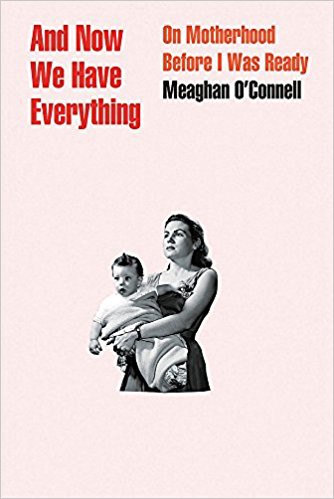
While reading Meaghan O’Connell’s And Now We Have Everything, I started to feel dizzy. She describes in excruciatingly pure detail how it felt to get an epidural while giving birth, and then have that epidural not work. I hadn’t known that was even possible, but through O’Connell’s experience, I learned that some pain can’t be quelled. Her epidural — which she hadn’t planned on getting — didn’t stop the baby from slamming into her uterus, “yanking the entire side of [her] body up and down with the contractions.” She described ligaments tearing away from her bones, causing pain so bad she said she wanted to die.

That’s when I started to feel lightheaded. Or maybe it was before that, when I read about the hollow needle that was inserted into her spine and the medicine that flowed through the needle into her body and felt like an electric shock. Or maybe it was reading about the hospital’s supply of what looked like giant knitting needles wrapped in cellophane used to break a woman’s water. (Actually, I’m pretty sure it was the description of the needles.) There are plenty of moments to choose from that may have made me feel woozy — giving birth is not for the faint-hearted.

But still I read further, faster, finishing the book in less than 24 hours. It was harrowing to read about, and likely brutal to experience, but I was grateful to hear about the horror of giving birth, and later, the struggles of parenting.

Though not yet a mother myself, I want to have kids, and like O’Connell, I find it to be a desire so vulnerable I almost can’t face it. When my fiancé and I talk about when we want children, a tiny part of my brain that I don’t entirely trust starts screaming, “Soon! Now!” But to say it out loud feels too precious, as if the world would hear me and punish me for being brazen enough to want something so good.

I have always been interested in reading stories about becoming a mother, as if it’s something I can study for and ace. I’m not worried about the good parts: I know I’ll love my hypothetical children; I know my fiancé will make a great father; I know there will be moments of joy so profound I can’t yet imagine them. I don’t feel like I need to prepare for the good parts. If I’m lucky enough to experience them, I’ll be glad when they happen.

I’m worried about the bad parts — the parts so bad no one wants to admit them. I want to prepare for motherhood by hearing about people surviving their worst days. I’m begging to hear about the nights you didn’t think you’d make it through without screaming, or when you were in so much pain giving birth you weren’t sure if you’d survive. I’m craving stories of being a human woman and making mistakes and coming out the other side. Hearing how women survive the worst parts of being a mother makes me less afraid to become one myself. When women like O’Connell talk about the hard parts, it lets me know that I’m not alone — that it’s not abnormal — if I should face them, too.

I’m craving stories of being a human woman and making mistakes and coming out the other side.

O’Connell balances the darkness in her story with moments of pure joy. I felt dizzy reading her birth story, but I cried tears of joy when she described her partner joining her in the operating room and both of them meeting their son.

I feel bolstered with this information — the bad with the good — and more ready to face whatever challenges may come. I imagine it’s the difference between wandering tunnels in the dark, and wandering in the dark but once having seen a map that leads to the light. It’s knowing there’s a way through because someone has been there before.

So I search the Internet for birth stories with complications and I read up on painful mastitis. When I read a particularly gruesome detail in And Now We Have Everything, I read it out loud to my fiancé, so that he would be prepared, too. (I ended up reading every particularly painful, funny, or insightful sentence out loud, which is to say, most of them.)

O’Connell writes about both the physical pain she felt, and the emotional turmoil of becoming a new mother. She experienced postpartum depression without realizing it, though I expect even mothers who don’t probably still experience some nights of despair and some moments of shock.

I found myself relating to O’Connell as she described the self-doubt she felt when she was pregnant or as a new mother, especially when she cried in the backseat of a car or in the middle of the street. I recognized myself in those moments, and I feel like that’s the kind of pregnant woman and mother I will be: one who cries a lot. When I’m depressed I cry about nothing, when I’m overwhelmed I cry about everything, when I’m happy the tears just fall like rain. Even not pregnant, I have cried in the middle of the street. If I get pregnant, I will definitely cry, but through my tears I will remember O’Connell crying and the insightful charming words she wrote about it, and I will know she stopped crying eventually long enough to write them, and that will give me hope.

There are stories of male pain everywhere in American culture. Jokes about men getting hit in the crotch are played for laughs for audiences of all ages. People are expected to get references to morning wood and blue balls, and there are names for those experiences. Women’s pain — especially physical pain, especially pain about motherhood, which is often construed as women’s One True Purpose — has fewer words to describe it and fewer shared stories in American culture.

Women’s pain  has fewer words to describe it and fewer shared stories in American culture.

And Now We Have Everything is part of the growing canon that breaks down female pain and puts it into words. I have a ravenous appetite for this genre, and a deep need to share my own painful stories with those who will listen. I need stories of struggle more than I want stories of heroism, though in my eyes O’Connell’s story includes both. In an interview, O’Connell said she was writing “in the spirit of ‘Can you guys believe this shit?’” By translating her specific experience of motherhood into a language the childless or the uterus-less can understand, as if talking to a friend about some particularly good gossip, it becomes a story to be shared. It feels like reading an adventure story — a quest, but through birthing classes and daycares, like Harry Potter with pacifiers and amniotic fluid. O’Connell is the Woman Who Lived, only her obstacles were nursing, postpartum depression, losing her sex drive, hearing the cries of someone she loves immensely, and birth itself.

O’Connell writes about having dreamy ideas of the perfect birth and feeling like she failed, in part because of a book she read that seems to romanticize the process. After she had given birth she listened to a podcast that interviewed that author, where the podcast host confronted the author about portraying birth as a relaxed process instead of the violent one so many women experience. When she heard the author admit that for some women it is indeed painful and it is indeed difficult, O’Connell felt relief and forgiveness for a feeling of failure she had been holding onto. She writes:

What if, instead of worrying about scaring pregnant women, people told them the truth? What if pregnant women were treated like thinking adults? What if everyone worried less about giving women a bad impression of motherhood?

To this, I add my own addendum: What if having negative feelings about some aspects of motherhood didn’t make you a bad mother? What if, in fact, having negative feelings about aspects of motherhood, and expressing those feelings, and seeking them out as common experience, actually made you better?

Talking about motherhood is already so charged for some women, with pressure to breastfeed, or not; or work, or not; or sleep train, or not. I’m already worried I won’t be able to breastfeed and I’ll have to explain to everyone in my life why I can’t. That I even have this anxiety before I have kids seems toxic, but it’s real. That’s why I search out these stories of women who became mothers before me and struggled with it — to preempt my own feelings of failure and to try to forgive myself before they occur. I don’t view O’Connell as a failure; I see her a success, and I hope that’s how I will see myself, even if I get knocked down in the process. And Now We Have Everything isn’t a book of parenting advice, but a story of the unvarnished reality of what becoming a mother meant to one woman. And for me, that’s a survival guide.

Flash Fiction Hidden in Dictionary Definitions

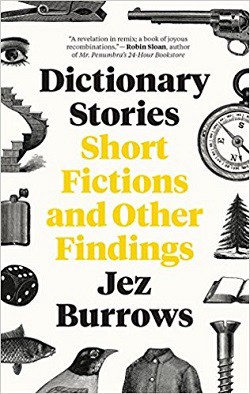
The following flash fictions come from Dictionary Stories: Short Fictions and Other Findings, a collection of very short stories each composed entirely of example sentences from dictionaries.

97-Over Par

The eleventh fairway of a tiny golf course on a hot, airless night. One of the great stars in the American golfing firmament, insensible with drink, was in a bad temper.

“Go to hell!” he spat. It was past midnight.

Socks at half-mast, missing putts that he would normally hole blindfolded, he swore violently under his breath, like an axeman at work in a tangled thicket. He was then at the height of his sporting career. He unscrewed the top of a flask and drank the contents.

He hit his third shot out of bounds at the 17th. Like a red rag to a bull. His face suddenly turned puce with futile rage, the ball bounced away, and he chased it. He fell with a thud that left him winded.

He lay exhausted and inert, his eyes closed, and with little to distinguish him from one already dead. He lit a cigarette to calm his nerves, and watched the smoke wreathe into the night air.

Sources: New Oxford American Dictionary, Collins English Dictionary, Macquarie Dictionary

The Greatest Story Never Told

“I’m going to tell you a story. Are you sitting comfortably? Here is a children’s fable about love and honesty. It’s a tale about the friendship between two boys, a drama about two young brothers who are abruptly abandoned by their father. It’s an adventure story, a tragic love story, and an unforgettable tale of joy and heartbreak. You’re going to enjoy this.

“The novel deals with several different topics: the sanctity of human life, the dangers of religious extremism, our obsession with the here and now, the yoke of marriage . . . Lots of people don’t bother to get married these days. I wonder whether you have thought more about it? That’s getting off the subject, but never mind. Nothing is more irritating than people who do not keep to the point. Let’s get down to business! Shady characters, an intriguing story, a touching reconciliation scene . . . it’s the best novel I’ve ever read. Now, let me see, where did I put it? Ah, there you are! The book was filmed as a six-part TV serial, and the play was adapted for the big screen! I didn’t enjoy the film; the acting was dreadful, but if you like steampunk, this is a great book for you. Oh, look! The sun’s coming out! I’m kind of thirsty. Would you like a cup of coffee? Shall we have a drink? Let’s have a cup of coffee. Hold on a minute, I’ll be right back.

“Are you all right? You were screaming. Anyway, um, where was I? Let me see, now; oh, yes, I remember. The book is set in the 1940s — ”

Sources: New Oxford American Dictionary, Collins COBUILD Primary Learner’s Dictionary

Fifty More Ways to Leave Your Lover

A fire escape.

A getaway car

A luxury yacht.

A formal complaint.

An uncomfortable silence.

The 100-meters sprint.

A trick question.

A divine revelation.

A foregone conclusion.

A humiliating defeat.

A tearful farewell.

A leaked government document.

A blunt statement of fact.

A bleak prophecy of war and ruin.

A fabulous two-week vacation.

A lack of common decency and sensitivity.

A deliciously inventive panoply of insults.

A joke in very bad taste, the one about the chicken farmer and the spaceship.

Clutching a large black Bible under your arm.

Stowed away on a ship bound for South Africa.

In the labyrinths beneath central Moscow.

Undercooked meats.

A hallucinatory fantasy.

Struggling under mountainous debts.

Nitpicking over tiny details.

Chasing after something you can’t have.

A dozen bottles of sherry.

A fifth of whiskey on a very hot evening in July.

Alcohol dependence.

Screaming incomprehensible blasphemies at one o’clock in the morning.

Sheer wanton vandalism.

Holding a corrections officer at knifepoint.

A misunderstanding of the facts and the law.

Compulsory military service.

Accusations of bribery.

Incontrovertible proof.

Under the guise of friendship.

A mood of resigned acceptance.

A series of lies and deceits.

A feeling of inferiority.

An aching feeling of nostalgia.

A serendipitous encounter.

A beautiful young woman.

An attractive, charismatic man.

A careless error.

A narrow escape.

A short speech.

A natural death.

A pretentious literary device.

Murder most foul.

About the Author

Jez Burrows is a British designer, illustrator, and writer. He is the author of Dictionary Stories: Short Fictions and Other Findings (Harper Perennial, 2018) and his writing has appeared in McSweeney’s, Smith Journal, and It’s Nice That. As an illustrator he has worked with The New York Times, WIRED, WNYC, Cards Against Humanity, and others. He grew up on a farm in Devon, studied graphic design at the University of Brighton, and now lives in San Francisco.

From the book DICTIONARY STORIES: Short Fictions and Other Findings by Jez Burrows. Copyright © 2018 by Jez Burrows. Reprinted by permission of Harper Perennial, an imprint of HarperCollins Publishers.

If You Know, Love, or Are a Black Man, Jamel Brinkley‘s Stories Will Feel Like Home

The short story certainly isn’t dead, nor is it making a “comeback.” It’s a concise form that continues to be cherished and dissected — and still has the capacity to go viral. Last year, a variety of short fiction collections gained acclaim, and it looks like 2018 has even more in store for us. It’s also an exciting time for new short fiction from authors of color.

Jamel Brinkley’s debut collection, A Lucky Man (Graywolf Press), is one of those titles to look forward to. It parses out the intersections of masculinity, forgiveness (of self and others), and the lives of Black boys and men coming into their own. I could connect with the characters as an African American, as a New Yorker, but also as a writer who seeks to dig deeper into the questions of what drives (and scares) us as individuals. Brinkley’s stories do this with not only finesse but care, not always providing answers or a straight conclusion but always leaving readers sated. His work has been published widely and has garnered him a Stegner Fellowship, The University of Wisconsin’s Creative Writing Fellowship, and inclusion in the The Best American Short Stories 2018 edited by Roxane Gay.

I had a chance to speak with Jamel about the shared connections and traumas of the Black community in New York and America, and how those experiences make their way into his stories.

Jennifer Baker: I’ve talked with a few writers about this before: the suggestion from readers that your fictional work may be autobiographical. And I wonder if, for writers of color, this gets heightened. Be it in the workshop environment or simply when sharing it with the larger world. When it comes to stories that feature Black men in particular and that looks at so many particulars of coming-of-age have you found that these stories tend to be routed in something personal for you?

Jamel Brinkley: This reminds me of something that happened at a reading I went to a few years ago. Chinelo Okparanta was the reader, and during the Q&A, a white woman asked a question that implied the work was basically pure autobiography, with maybe just a dash of fictional art. Chinelo answered the question in an elegant and diplomatic way, but then another published Black writer who was in the audience asked Chinelo if she often gets questions like the one asked by the white woman. It was a wonderful way to call attention to the presumption of autobiography that is often made of work by writers of color and, often, by women writers of all races. It happens a lot, yes, and even if it isn’t intended to be an insult, I take it as one. As if our imaginations are so lacking and limited that they can’t go beyond bare facts.

That said, I think all writers use refracted experiences. So my stories are rooted in things I’ve lived, be they house parties in Brooklyn, or J’ouvert, or day camp, or what have you. But often the root that get be started on a story becomes very small by the time the story is done, or it becomes transformed in a really significant way.

Jenn: And New York City has a big place in your collection.

Jamel: Yeah. I grew up in Brooklyn and the South Bronx, and I’ve also lived most of my adult life in Brooklyn. Those neighborhoods and people loom large for me. Toni Morrison has that phrase: “From my perspective there are only Black people. When I say ‘people,’ that’s what I mean.”

Well, when I think about characters or people that I want to write about, I think about the people I know from the Bronx and Brooklyn.

When I think about characters or people that I want to write about, I think about the people I know from the Bronx and Brooklyn.

Jenn: That’s kind of a refreshing take. At least to me it is, to not see us have to be “othered” in the way that we usually are in media but in NYC, when from and residing in NYC, I very rarely as a Black woman ever feel like I’m not part of the everyday population of this city.

Jamel: Right. We are at the center of our own lives.

Jenn: Do you find that’s also somewhat freeing to write about? In stories like “J’ouvert 1996” and “Everything the Mouth Eats” and “A Lucky Man” there’s no need to dissect race. Not to say you avoid speaking about race, but it’s not necessarily at the epicenter of an emotional or literary crisis for your characters. Which in itself is refreshing for me as a reader.

Jamel: It’s freeing in the way that just hanging out with my family is freeing, if that makes sense. Or the way that hanging out with my friends in school growing up was freeing. We know who we are, Black and Brown folks just living, and there’s no need to pander to whoever, a white audience or white readers. Of course, white supremacy in all of its manifestations is there, along with other forms of oppression, but in my stories I think they’re there as just one part of all the things my characters have to contend with in the struggle just to live everyday lives.

Jenn: What I also love are those details that I saw in my grandma’s house growing up. I don’t care who you are but if you were Black in America you more than likely had those oversized wooden spoons hanging on the walls.

Jamel: Oh without a doubt! It was fun to dip into my memories of details like that, or to look at old photographs and see those incredible details, which are so specific but communal and shared at the same time.

Jenn: And the fashion. House dresses. Scarves. Culottes all that comes to mind as a child of the ’80s living in NYC. The pyrex and cast irons that got passed down…

Jamel: Yes! And this is part of what I mean by freeing like family time is freeing. What we’re doing right now reminds me of sitting around with the aunties and cousins and talking about so-and-so’s house, or that outfit he used to wear. That kind of sharing is freeing.

Jenn: Extremely. I spoke to a (Black male) writer and he said to me that when you write a certain type of literary fiction and they feature Black men and you are a Black man that it’s hard to find your audience. It seems, to me at least, that A Lucky Man has found a lot of resonance based on what you’re saying of not worrying about a white gaze. But do you think as a Black male writer there is an absence of simply stories about young Black men living and not necessarily fighting for their lives in the sense of fighting against power structures/systemic systems?

Jamel: One thing that struck me while my collection was being considered by various publishing houses was how often the editor’s comments would be along the lines of, “These are such sensitive and nuanced portraits of these men!” On the one hand, that maybe does point to an absence of such stories about Black men, but on the other hand, my thought was, “But these are the kinds of Black men I know!” I will say too that I think almost 20 publishing houses looked at this book. Not one major/mainstream/corporate/however-you-want-to-say-it press showed significant interest. Only a few independent houses wanted to publish my collection. I know that short story collections are tough sells, so I’m sure that was a big part of it, but the kinds of stories I’m writing about Black men may have been a factor too. Is it a risk to publish stories like mine? I hope not, but maybe it is.

I know that short story collections are tough sells, so I’m sure that was a big part of it, but the kinds of stories I’m writing about Black men may have been a factor too.

Jenn: “Everything the Mouth Eats” is one of my favorite stories in the collection. What struck me is the dynamics of healing but also the writing of trauma. This story made me think more on how we see trauma exposed, but also as a woman, how often I see it handled and how little I see of it presented in a way that cares for the character. As a writer I felt like what was in your story was, “I want to get this across, but I also don’t want to abuse this person again for your entertainment.” So how do you approach a story like that?

Jamel: This reminds me of the discourse around sharing footage of Black people being murdered by the police, the ethics of that.

Jenn: You know, that was on my mind too actually.

Jamel: That story actually started because I wanted to write something that was in conversation with “Sonny’s Blues” by James Baldwin. And one of the things that strikes me about that story, is not just the incredible language in that final scene — a miracle of a scene, really — but the way the narrator’s voice ushers us toward that ending from the very beginning. Baldwin’s story feels powerfully voiced and radically peopled, and I wanted to see if I could do that in my story. The center of my story isn’t the trauma or abuse the brothers experienced, it’s the relationship between the brothers themselves.

Art Must Engage With Black Vitality, Not Just Black Pain

Jenn: Exactly. Because we’re leading up to an idea of what caused this fracture between them. And I feel like all of your stories are an interrogation of deeper feelings that exist yet cannot be verbalized. We’re dealing with this basic understanding and relating of one another on a human level. Is that always the seed of a story for you?

Jamel: The seeds of my stories vary. A seed could be a particular place, or a snippet of memory, or a character, or a voice. But in the process of trying to nurture that seed, I do think I’m always trying to push toward deeper feelings that are difficult to verbalize. I don’t think language as given is very good at capturing the range and complexity of human feeling. Somehow “emotion words” show themselves as lacking. Literary sentences and poetic lines can make language do things that, as commonly used, it isn’t very good at. I never want to expose my characters. There’s something lurid or tabloid about that word, expose. I want to explore my characters, a process which assumes their depth, complexity, and humanity. It also assumes that I won’t get answers to all the questions my stories ask of them, and that there will always be more questions.

Jenn: So, as an instructor of writing how do you push student writers to also pursue that complexity?

Jamel: This is a question I’m constantly asking myself. I’m starting to think that one way of pursuing that complexity is to court a certain amount of “messiness.” The kind of messiness that is tolerated in novels but not usually in stories. Here’s what I mean: Student writers are often told that a great story, as opposed to a great novel, has to be perfect. But what if the pursuit of perfection in story (a perfect arc or narrative shape, a perfect ending, etc.) serves to lessen the complexity of that story’s characters? What if characters end up saying things only for the perfection of the story, or if they show themselves only to the extent that the so-called perfection of a story will allow? One of the things I love about Edward P. Jones’s stories is that they feel untidy in a brilliant way. You get the sense that he loves his characters and they get to take the stage in ways that don’t make conventional sense. Those fugitive paragraphs about “minor” characters are kind of rebelling against the perfection of the story form, and I really admire that. It feels like life. So I think I just have to find ways to get my students to love their characters a little bit more than they love the perfection of the story-object. Wish me luck.

I’m starting to think that one way of pursuing that complexity is to court a certain amount of “messiness.”

Jenn: Godspeed, my friend. In terms of other short stories to learn more about, well anything, are there any in particular you’d recommend?

Jamel: Well, an Ed Jones story I’d recommend in terms of what I was just talking about would be “Old Boys, Old Girls.” I’d recommend “Virgins” by Danielle Evans to learn how to productively make trouble for your characters. “Gold Boy, Emerald Girl” by Yiyun Li is so patient, and it brilliantly handles multiple points of view, and that ending — my god! “The Ascent” by Ron Rash is a great lesson in writing close third, especially from the perspective of a child, and it doesn’t sensationalize the boy’s traumatic circumstances. “A Day” by William Trevor is a wonderful “aftermath” story. And “The Mistress” by Gina Berriault is great in terms of the consequences of a character’s desires. And if you want your socks knocked off in general, reread “Sonny’s Blues” forever.

Please Stop Peeing in Walden Pond

“The pure Walden water is mingled with the sacred water of the Ganges,” Thoreau wrote, on reading and reflecting at Walden Pond’s edge. That’s not all it’s mingled with, Henry. According to a new study published by the journal PLOS One and reported by The Guardian, the pure Walden water is also mingled with the sacred water of tourists’ loins.

The pure Walden water is mingled with the sacred water of tourists’ loins.

Every year, half a million would-be Transcendentalists flock to Walden Pond to admire the site that inspired Thoreau’s 1854 meditation Walden, or Life in the Woods. They burn campfires, hang out on the beach, and well, pee in the pond. “More than half of the summer phosphorus budget of the lake may now be attributable to urine released by swimmers,” the study reports. And while there have been some important efforts to restabilize the shorelines and reduce soil erosion in the past 40 years, there are still significantly higher percentages of algae in the darkening sediment in the pond. These are foreboding signs that the pond could soon become “a murky, green stew of algae” Curt Stager, one of the authors of the report, explained to CNET. This is why we can’t have nice things.

Say what you will about Thoreau and his pseudo-solitude out in the wilderness while his mom took care of his laundry at home. But this isn’t the only time we book lovers, in our overzealous passion for the ephemera of our favorite authors, have caused some trouble. Other wonders of nature are also being trampled by book lovers: after the publication of Bill Bryson’s Walk in the Woods and Cheryl Strayed’s Wild, both the Appalachian Trail and the Pacific Crest Trail experienced record-levels of hikers who eroded and trashed the trails. This cramped everyone’s solitude style, but more importantly, killed loads of butterflies. Before the surge of Patagonia and Danner boot-clad lost souls, the Katahdin Butterfly flourished at the top of the Appalachian Trail in Maine. Now, the Katahdin Butterfly is endangered.

This isn’t the only time we book lovers, in our overzealous passion for the ephemera of our favorite authors, have caused some trouble.

And how can we forget about the reportedly “‘aggressive’” Hemingway fan who got too close to the six-toed Martha Gelhourn (the cat, not to be confused with the war correspondent and ex-wife she’s named after), one of Hemingway’s approximately fifty polydactyl cats on his estate in Florida Keys? When Martha Gelhourn bit her, the tourist had Gelhourn put into custody at a local vet to check for rabies. After determining Gelhourn was rabies-free, Gelhourn was released back into the estate’s custody.

Then there are the very conscious, on-brand literary acts of vandalism, like the perpetual defacing of Sylvia Plath’s grave in Hepstonhall, England. Her tombstone reads “Sylvia Plath Hughes” but “Hughes” has been repeatedly chiseled off, and the whole tombstone kidnapped by those who believe Plath’s relationship to Hughes was toxic and linked to her suicide.

Sylvia Plath Looked Good in a Bikini—Deal With It

What does all this say about how we care for our beloved literary landmarks? In one way, it illuminates how books can mobilize passionate readers to gather and makes literary worlds come to life after the book’s been closed. But another, graver suggestion comes from Thoreau himself: “A lake,” he writes, “ is a landscape’s most beautiful and expressive feature. It is Earth’s eye; looking into which the beholder measures the depth of his own nature.” If ponds are anything like lakes, then our own depths are urine-drenched algae sludges. Looks like we’ve got some cleaning up to do.

How One of Wrestling’s Biggest Stars is Reenacting a Sexist 19th-Century Plot Device

This time last year, at World Wrestling Entertainment’s biggest event, WrestleMania, John Cena — perhaps the company’s biggest-known star — pulled out a move rarely seen in the WWE. He proposed to Nikki Bella, his girlfriend of more than five years, in the ring.

It was a long time coming: Bella had been vocal on reality television about her desire to marry Cena. (The two co-star on the show Total Divas and its spin-off, Total Bellas.) Their pre-WrestleMania storyline had leaned hard on Cena’s reluctance to put a ring on it, but this only made the end game more obvious. After Cena and Bella emerged victorious from their match with fellow wrestling/reality TV power couple The Miz and Maryse, Cena explained that when Bella underwent career-threatening neck surgery, he’d had a change of heart. “Right when they were wheeling you into the ER,” he said, “you were glassy and in and out [of consciousness], at the very last second I… leaned in and whispered… ‘Do you know, one day I’m going to marry you?’ And you said yes.

I need you to say yes one more time,” he continued as he pulled an engagement ring out of the pocket of the jean shorts in which he wrestles and got down on one knee to propose.

Since then, Bella has almost disappeared from the ring, wrestling in only two matches in the last year. On Total Divas she ascribed her absence to her neck injury, but for most casual WWE viewers, it would be natural to conclude that Bella stopped wrestling every week because, having landed a husband-to-be, her story is effectively over. This hearkens back to a time when it was the norm for women to leave work upon getting engaged. Nikki Bella has effectively reached the marriage plot.

The marriage plot was a common literary convention amongst authors like Jane Austen, Samuel Richardson, and George Eliot in the 18th and 19th centuries. What distinguishes a “marriage plot” from merely a plot containing a marriage is that it treats the quest for matrimony as the driving force of the story. Once betrothal is achieved, the narrative is over — and more specifically, for most works in this category, the woman’s story is done.

What distinguishes a “marriage plot” from merely a plot containing a marriage is that it treats the quest for matrimony as the driving force of the story.

Marriage plot-based works coincided with the rise of marriage as a declaration of love instead of a business transaction. They focused on middle class heterosexual couples and the hijinks that would ensue on their way to the altar, after which they would presumably live happily ever after. Today the trope can be found in pop culture far and wide, from Disney to perhaps the biggest and most (commercially, if not matrimonially) successful example in current culture, The Bachelor, to much-maligned romance novels and rom coms, to the dreaded amalgamation of the two genres: The Twilight Saga and the 50 Shades of Grey trilogy, which present marriage as the pinnacle of a woman’s life and the end of her story. We may be burdened with slightly more of Bella Swan and Anastasia Steele’s stories after they make it to the altar, but they are crafted as so utterly boring, protagonists so at the mercy of their husbands’ whims that they could turn even the keenest bride-to-be off of wedded bliss.

Anyone who’s watched even a minute of Nikki Bella on WWE or reality television can see that she’s not naturally inclined to limit her life this way. She’s vivacious, career-driven, and passionate. Though she’s never let the word pass her lips (she prefers “women’s empowerment”), it could be deduced that she’s a feminist, concerned about how her actions will further the plight of women in wrestling and the entertainment industry more broadly.

On Poverty, Sports, and Violent Men

But both Bella and Cena are deeply materialistic members of the self-made middle class for whom marriage — and perhaps more to the point, a lavish wedding — is still seen as the ultimate status symbol. Initially, the rise of the marriage plot coincided with the creation of the predominantly white middle class, and the majority of works grounded in this genre are about white people who are, if not wealthy in their own time, certainly wealthy by today’s standards. (Though families like Austen’s Bennetts considered themselves poor by comparison to their peers, they also own property and have servants.) Wrestling, too, was traditionally a pastime of the poor and working class of the South; it wasn’t until WWE came along on cable television, rendering many independent companies bankrupt, that wrestling became a money-making machine. In the ring, rich characters are often the bad guys whom the audience roots for the underdog to supersede, a fact that seems to escape Cena, who still carries on like the working class “thug” from West Newbury, Massachusetts, despite having a net worth of $55 million. Bella, for her part, wants to be “the female Rock” (Dwayne Johnson), setting up fashion, real estate and wine companies to secure her financial future away from wrestling. By choosing to center their engagement in storylines, WWE is incorporating the aspiration of marriage between two upwardly mobile stars into its brand.

While Bella spends time away from wrestling, Cena is still a common fixture. His current storyline sees him vying for a match at this year’s WrestleMania; it has only occurred to him earlier this week that he might not compete. If any member of this powerhouse couple should be inching towards the marriage plot, it’s Cena — after fifteen years at the top, it might be time to pass the torch onto someone else. But in wrestling, as in most other industries, women have a much shorter shelf life than male competitors. Female WWE employees who are over 35 are often embroiled in regressive storylines about their maturity while men are allowed to wrestle well into middle age. (Bella is 34; Cena will be 41 this month.) And besides, the dictates of the marriage plot say that a wedding is a woman’s only reasonable goal. Having achieved that, Bella does not, by the cultural standards WWE is trading in, need to chase anything more.

If any member of this powerhouse couple should be inching towards the marriage plot, it’s Cena. But in wrestling, as in most other industries, women have a much shorter shelf life than male competitors.

Though it hasn’t been explicitly stated that Bella is retiring to become a wife, implicitly her storyline buys into not only the idea that women wrestlers have a use by date and male wrestlers do not, but the outdated notion that women, especially women of a certain age, cannot be married and pursue work outside the home concurrently.

In a way, it’s Bella’s involvement in Total Divas, the majority of the cast of which are all married or in serious relationships, that subverts the marriage plot; the show banks on its viewers deeming all the participants interesting enough to keep watching them even after their televised weddings. In fact, the reality genre as a whole seems to flip the marriage plot script: how many reality show premises begin after the nuptials? Newlyweds, Basketball/Mob Wives, 19 Kids & Counting, Jon & Kate Plus 8, all of Tori Spelling’s recent ventures, the Kardashian konglomerate and The Real Housewives all contribute to shattering the marriage plot in some way, while simultaneously holding it up. Given the presumed gender breakdowns of reality TV and westling’s audiences, it’s not surprising that WWE would be less likely to balk at portraying marriage as a trophy to collect on the way to success. But women are 40 per cent of WWE’s audience, many of whom found the company through its women wrestlers’ involvement in reality TV. WWE positioning heterosexual relationships in stereotypical ways only does its increasingly diverse audience a disservice.

WWE positioning heterosexual relationships in stereotypical ways only does its increasingly diverse audience a disservice.

Roxane Gay writes in The New York Times about the marriage plot and The Bachelor: “Eventually, inevitably, there is a bold, desperately romantic declaration of love followed by a happily ever after.” Bella got her grand gesture and is well on the way to her happily ever after so, as far as the marriage plot is concerned, she doesn’t have to keep wrestling. If Bella’s neck is what’s preventing her from continuing her wrestling career, then her health and safety is more important than furthering any gender equality agendas. But if not her absence from the wrestling ring in favor of a wedding ring is disappointing and, unfortunately, to be expected.