The 8 Best Affordable Writing Retreats That Won’t Break the Bank

Networking, hustle, and industry understanding are unfortunate burdens of the life of a young and working writer. But trickier still is finding solitude. Privacy, quiet, and uninterruption are crucial to the craft; if solitude is one of the challenges of writing, it is also essential.

While residencies and fellowships are wonderful, most ask for applications and portfolios, and that can be prohibitive when you’re just starting out. Writing retreats are another means of getting away — and they can be done affordably, some even offering scholarships. Most bring together a small community of writers for a few days, so there is the opportunity for socializing and meeting the like-minded. Some involve travel to local sites or parks, or daily meetings to discuss the industry or the craft.

If you’re looking to get some peace and focus — or the best gift for your writerly friend this holiday season — here are some of the best writing retreats we found that won’t break your bank.

Wellspring House Retreat — Ashfield, Massachusetts, $260-$280/week

Retired English professor Preston Browning is the co-director of Wellspring House with his wife, author Ann Hutt Browning. The Wellspring House is run exclusively as a retreat for writers and artists, and as such is open all year: winter rates (mid-November to April 1st) are $260/week for an individual, and $290/week for a couple. Normal rates are only slightly higher: $280/week for an individual, and $310/week for a couple. You can also choose to stay just one to three nights for about $60–$90 per night. Each stay comes with access to the large living room and kitchen, along with access to one of the two common bathrooms (in total, the house hosts about six rooms). And if you’re really looking to get away, this retreat will help you do it: while the house offers modern amenities like laundry, the website warns that the house has no cell phone service.

From RMFW

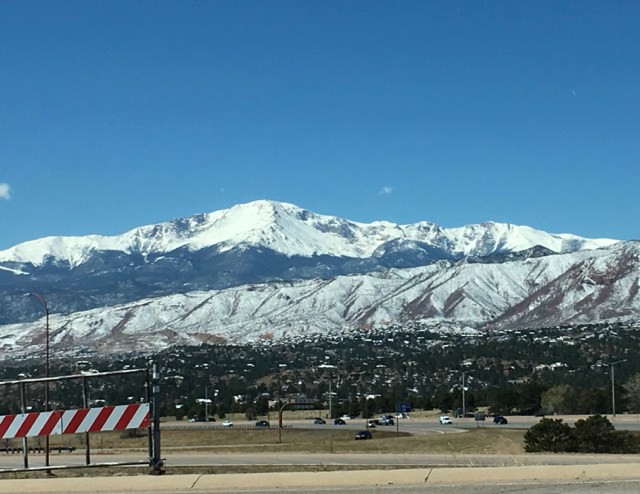
Rocky Mountain Fiction Writers Retreat — Colorado Springs, Colorado, $65-$399

The Rocky Mountain Fiction Writers Retreat takes place in the foothills of the Colorado Rockies, at the Franciscan Retreat Center. Spanning three nights, it often contains special agent and author guests — in 2018, for example, Sandra Bond from the Bond Literacy and authors Heather Webb and Corinne O’Flynn will be there, leading talks and workshops, including a Publishing AMA by Sandra Bond. Residents can choose days only ($65 total, including meals), to stay and share a bedroom with one other resident ($299 total), or to have their own private bedroom for the duration of the retreat ($399 total).

The farm, from Andlit

God’s Whisper Farm Writer’s Retreat — Radiant, Virginia, $195 + $25/night

At the God’s Whisper Farm Writer’s Retreat, writers stay on a farm containing goats, chickens, dogs, and cats. They can enjoy writing workshops, talks from writers, meditation sessions, open mics, and shared, home-cooked meals. All rooms have two bunks and cost $25/night, but if you want slightly more private accommodations, you can opt to stay at a nearby Airbnb or at Best Western. If you want to avoid fees altogether, there are also ten free campsites nearby. Keep in mind the $195 rate is an early bird rate; prices may go up if you book within about three months of the retreat, hosted in late June.

Kundiman Retreat, in partnership with Fordham University — Bronx, New York, $375 + $25 application fee

In partnership with Fordham University, the nonprofit organization Kundiman offers a retreat for 36 lucky participants who apply. Kundiman, according to their site, aims to nurture writers and readers of Asian American literature. Keeping with this mission, top Asian American poets and writers lead the Master Classes and manuscript consultations at the retreat. The five-day retreat also includes reading, writing circles, and informal social gatherings, with room and board included in the subsidized tuition fee. Applicants can apply to either the poetry or writing track: as part of the retreat, poetry fellows get a free consultation on a 10-page manuscript, while fiction fellows get a free consultation on a 15-page manuscript.

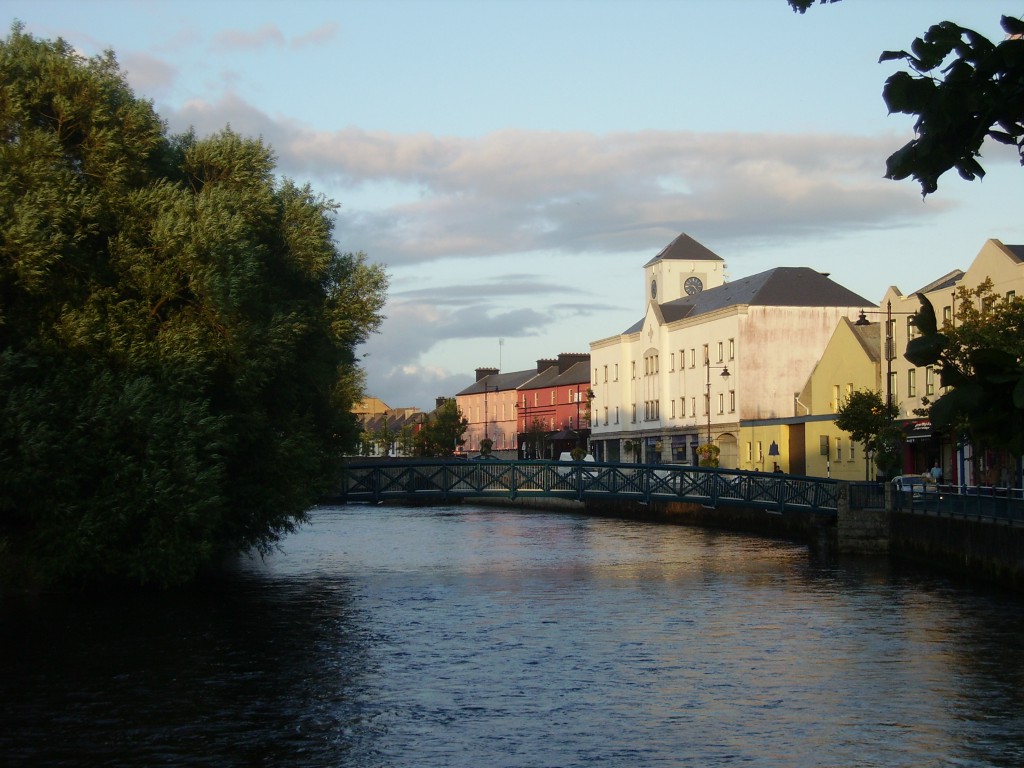
‘The Moth’ Retreat for Artists and Writers, Cavan, Ireland, €300, or about $355 a week

If you want to submerse yourself in history during your retreat, try crossing the pond and attending The Moth Retreat for Artists and Writers, located at a house in Cavan, Ireland. According to the retreat website, Samuel Beckett went to school just a half an hour northwest of the home, while renowned writers like Seamus Heaney and Patrick Kavanagh all lived within an hour’s drive. The house itself is completely private, and includes a large studio, kitchen, and breakfast room downstairs, and a bedroom and bathroom upstairs. Fresh eggs are provided every morning, though you are expected to furnish your own meals. If you want to bring a friend or guest, that will cost you an extra 100 euros. Need a ride to the bus station or help finding other provisions? The publishers of The Moth are nearby and ready to help, according to the retreat website.

The loft from Houselove

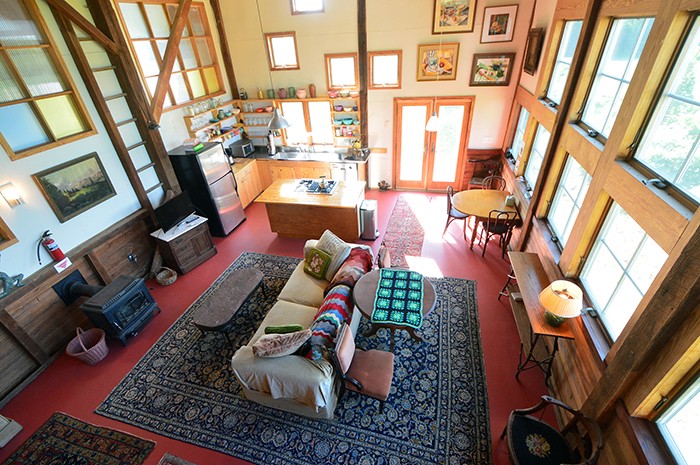
The Good Contrivance Farm Writer’s Retreat — Reisterstown, Maryland, $550 for one week

Another solitary retreat you could try is run by The Good Contrivance Farm, and is hosted in a contemporary loft apartment in the farm’s main barn. The Good Contrivance Farm is a non-profit that aims to preserve and restore historic farms in Maryland. To apply, send in a résumé and writing sample (space is booked on a first-come, first-served basis). Once booked, you’ll enjoy private use of the apartment, which includes great views of the farm, a full kitchen, 1.5 baths, a small library, and free WiFi. You can stay up to 4 weeks, with discounted rates the longer you stay (going as low as $450 per week if you stay the full four — though add $100 a week if you plan on having a second person stay with you.) Proceeds of the retreat all go to the non-profit.

The Watering Hole Winter Retreat — McCormick, South Carolina, $299–$399

The Watering Hole Winter Retreat is focused on building community among its 42 hosted poets. The retreat has no traditional classrooms, and aims to provide more publishing opportunities for poets of color, according to its site. Facilitators and speakers include renowned National Book Award winners, MacArthur Geniuses, recipients of the NAACP Image Award, and more. Interested writers can apply with a cover letter and three poems, and the site mentions that preference is given to applicants who are members of The Watering Hole Facebook Group and those who follow the organization’s Facebook fan page. During the fellowship, writers stay at modern cabins at Hickory Knob State Park.

The Mariandale Center’s Life Writing/Memoir Retreat — Ossining, New York, $350

The Mariandale Center is a quiet spot in Ossining, New York that hosts retreats and other programs. Included in the writing retreat are daily workshops, craft discussions, writing prompts, feedback on writing, and time to work on projects. Writers can also enjoy walks near the mountains and river. For this particular retreat, which spans three nights, all meals are included, and writers of all genres and experience levels are welcome.

How Indie Presses Are Elevating the Publishing World

Independent presses are a lifeline in the publishing world. At a time when large publishing houses are merging into even larger conglomerates, writers may feel like finding a home for their work requires a very specific, and at times corporate, mindset. But indies show that there’s another way. Via contests, open calls for submissions (for agented and unagented writers), and targeted requests, independent presses provide an alternate arena, making publishing more of a reality for marginalized artists and those with unique voices and writing styles. Plus, they’re getting more and more recognition. This year Graywolf Press had several titles as finalists or longlisted for the National Book Award. Paul Harding’s Pulitzer winning book Tinkers was published by a university aligned press (Bellevue Literary).

Rosalie Morales Kearns, Leland Cheuk, and Laura Stanfill are indie publishers seeking to add to the publishing landscape in unique ways that speak to their own experiences and beliefs. I spoke with them about the missions of their presses, the challenges they face, and what authors and publishers should take into account about the business.

Jennifer Baker: In a world full of presses, why did you decide to create yours and what stands out about it that you saw lacking in the marketplace?

Rosalie Morales Kearns: I started Shade Mountain Press in 2013, and launched its first two books in 2014. Our focus is on literary fiction by women. As a feminist, I certainly am not surprised by the VIDA count and other research showing how underrepresented women are in terms of their work being reviewed in the major venues, winning literary awards, being taught in university classes, and being taken seriously in general. Living in a white supremacist culture, I’m not surprised that women of color are even more drastically underrepresented. But perhaps I had a utopian vision that the small press world was more egalitarian, more inclusive, etc. I learned how wrong I was when I was seeking a publisher for my short story collection Virgins & Tricksters. It ended up being published in 2012 by Aqueous Books, a woman-owned press. But before that, as I researched small presses, I kept coming across publishers that praised themselves for being willing to take chances on less commercial work. Then I’d look at their new and forthcoming lists, and see seven out of eight titles by men, nine out of ten titles by men, sometimes 100% of their titles by men.

(Shade Mountain Press, “A mob of scribbling women”)

Leland Cheuk: When I started 7.13 Books last November, what stood out to me was how few literary debuts were being announced every year by the Big Five on Publishers Marketplace. It’s incomplete data since not every agent and editor announces their deal on PM, but when you see the number is in the low 200s, you start wondering how anyone gets published at all. Then you think about all the tens of thousands going into MFA and PhD programs in creative writing. Then you think about all the people who choose not to go into those programs but still want to write a book, all so they can one day be one of the lucky 200 people a year. Most writers don’t realize how small the target they’re aiming at really is. I certainly didn’t.

Most writers don’t realize how small the target they’re aiming at really is. I certainly didn’t.

Laura Stanfill: Forest Avenue began in 2012 as a grassroots effort to publish and promote local talent. Many Oregon authors were knocking on New York doors and being told their voice-driven, original work didn’t fit the established, commercially viable parameters the big houses had set. After hearing so many anecdotes about worthy manuscripts that almost-but-didn’t-quite make it in a city 3,000 miles away, I decided to publish literary fiction by Oregonians and get it on the shelves in Northwest bookstores. Other Portland independent presses — Microcosm, Hawthorne Books, Future Tense, Eraserhead, and others — inspired and mentored me.

JB: What have your experiences been in seeking out marginalized voices that fit the mission statement of your press? And what do you suggest other publishers do to promote more visibility (in-house and with their authors) of marginalized backgrounds?

RMK: Our 2015 and 2016 novels were the result of a submissions call for fiction by WOC. Our 2016 call was specifically for work by African American women, and that resulted in the brilliant novels that will be our 2017 and 2018 titles.

It’s not enough for a publisher to issue a general call for submissions with a little footnote or a little “by the way” statement tacked on at the end, mentioning that they particularly want to see more “diverse” submissions. If you put out a specific call, for authors from a specific background, the message you’re sending is that your next title will definitely be from that group. And that’s an important distinction.

(7.13 Books logo)

LC: There’s a huge disconnect between the publishing industry and the reality on the ground. When you read the slush, you see there’s plenty of talent, period — including marginalized voices in whichever ways you want to define that. I look for diversity in ethnicity, gender, sexuality, economic strata, but I also look for diversity in the art form of the adult literary novel as a whole, which includes criteria like aesthetics, genre, and storytelling methods. 7.13 has gotten 300 or so submissions in the first year and I estimate 75% are Anglo male because in general they’re more likely to submit whether the manuscript is ready or not. But as word has gotten out about the press, I’m seeing more diverse submissions now. I think it helps that my face is on the website and it’s clear I’m an editor of color. My 2019 list has two novels authored by Muslim American men, novels about same-sex relationships, a novel set abroad, a fabulist collection. When editors and agents say they have trouble “finding talent,” really what they’re saying is that they have less time and money to take chances. And understandably so. They’re working in divisions of big companies in a struggling industry. They’re downsizing, doing more with less, and so on. That said, the Big Five are putting out over 300,000 books a year, why are they claiming to have trouble “finding talent.” The bottom line is if they wanted to spend time and money “finding talent,” they would. Talent isn’t in witness protection.

LS: It’s not enough to dangle a welcome sign in front of a closed door.

Five years ago, as a brand-new publisher with no track record, I believed that inviting marginalized authors to submit would be enough to help our committee find manuscripts that matched our brand. Mistake #1: We issued that invitation on our website, as part of our press submission guidelines, hoping it would be discoverable. Mistake #2: We didn’t yet have a catalog of underrepresented voices to prove that my words were anything more than the same-old rhetoric, or that the door was really open.

We’ve learned a lot since then. Earning national distribution has allowed for more trade journal coverage, which has helped us articulate and amplify our brand through bigger platforms and therefore reach more authors and readers. Submissions grew by 170 percent the year we opened nationally, so that helped us receive — and fall in love with — more manuscripts by authors of marginalized backgrounds.

It’s not enough to dangle a welcome sign in front of a closed door.

JB: What questions should authors be asking of their publishers in general? Authors may consider publication as that final step but there’s so much more to it.

RMK: Authors should get a really clear idea of their publisher’s timetable, and make sure that the publisher is intending to send out advance reader copies, in hard copy, in a sufficient number and in a timely way (four or ideally more months before publication date).

If the publisher is going to do a very light edit, they should be clear on that with the author, so that the author understands they will have to do various rounds of proofreading themselves. My press hires a professional proofreader, and I also do proofreading at later stages, when I’m working with the book designer and then when the file is converted to ebook format. All kinds of glitches can creep in in the layout stage and in the ebook stage.

The publisher should also be clear about how much of the publicity work will be on the author, and the author needs to realize that this could take a lot of time. As a publisher I take charge of creating copy for book jackets, for the press release, and for other promotional materials (frankly, a lot of authors just aren’t that good at describing their own work). Also I handle the work of identifying possible reviewers, querying them, following up, etc.. But that being said, it’s certainly a common practice at very small presses to let the authors create the copy and do the legwork in identifying and contacting reviewers. Small-press publishers have only so much time.

The Great 2017 Indie Press Preview

LS: Information authors should request before signing include details about the press’s distribution model, the estimated pub date, applicable deadlines, publicity plans, galley quantity, sales goals, and specific contract terms. All small press publishers should give their authors a thorough onboarding packet, including information about these topics, the editorial process, rights information, and estimated first-run print quantity. If the press asks for subrights, this packet should detail the mechanisms the press has in place to sell those rights.

Transparency about sales goals is especially crucial; if an author enters a publishing contract expecting to earn enough royalties to pay rent for a year, and the publisher has a sales goal of a thousand copies, the disconnect can be emotionally and financially devastating to the author. Understanding distribution is equally important; if an author wants to see her book on the shelf at her local indie, and the press does print-on-demand and has set bookstore-unfriendly discounts, that author will be surprised and disappointed to learn that the store can’t order their title.

JB: I’d hope that independent presses aren’t seen as a substitute for a larger publisher but as a viable option. Are there some myths you’ve experienced that may make it hard for people to understand how an indie publisher operates in comparison?

LC: Writers don’t understand that if you sign with a big publisher, your eventual sales numbers can become a black mark on you. If you don’t meet sales expectations, you’ll have trouble signing with a big house again because they all look at BookScan. Writers don’t typically think about the all-too-common scenario of having an editor buy your book, get laid off, and then your book is in limbo with no sales, marketing, or publicity support or in the worst case, the deal is cancelled altogether. Writers don’t get that big houses can also ask you to pay out of pocket for your own publicist. Writers don’t get that you might very well end up selling only a few hundred books at a big house too. And if that happens your big house career is basically over. These are all things they don’t tell you in your MFA program.

LS: One of the biggest myths is that small presses can’t possibly sell as many books as Big Five presses. Reality: We actually can and do compete — not with the mega-sellers or the big advances — but with debut fiction, we can hold our own and often exceed what a similar big-five book is selling. I’m actually relying on debut fiction as my bread and butter, so I have a financial — and emotional — interest in these books doing well. They’re not sidelines. They’re our reason for existing.

Writers don’t understand that if you sign with a big publisher, your eventual sales numbers can become a black mark on you.

JB: What’s been a highlight for you as a publisher?

RMK: I end up feeling so invested in my press’s titles that I simply think of them in a shorthand way as “my” titles, and when they win recognition and awards, I’m as thrilled as if the honor was for me. I joke with the authors that I suppose I should give them a bit of credit too. Vanessa Garcia’s novel White Light, the title that earned a starred review in Kirkus, also landed on NPR’s Best Books of 2015 list. Besides being a huge thrill, it was also important for me as validation, confirming my judgment as a publisher and reassuring me that yes, I’m doing this right, I’m onto something with this press I’ve started.

LC: One of my authors had her book launch in front of a full house crowd at Powell’s Books in Portland. She said it was one of the best nights of her life. That’s what it’s all about, isn’t it? Publishing your book is an experience. It’s almost silly that we wait for permission to do so. But if that’s what writers need to move forward into authorhood, I’m happy to provide that permission.

(Forest Avenue Press logo)

LS: I’m lucky to have been able to attend every single one of our book launches, to date. Watching my authors take the mic and share their stories in front of a hundred-plus people reminds me why I pour so much time and love into our titles. It’s the moment when their potential becomes actualized, where their work moves fully out of their own personal spheres and into the world.

Being a 2017 Publishers Weekly Star Watch honoree means a lot to me because a local bookseller — Rosanne Parry of Annie Bloom’s Books — nominated me. And being on that list is a great reminder that small, independent presses belong in the same room as the big-five tastemakers, even though we don’t have big budgets or giant lists.

JB: What advice would you give someone creating their own independent press?

RMK:

  • It takes much more time and much more money than you imagine.
  • Be prepared to hire others for anything you’re not an expert in. Hire a professional cover designer, layout person, copyeditor, proofreader, publicist if you yourself lack expertise in those fields.

LC: Do not, under any circumstances, do it for the money. Do it for literature. Do it for your authors.

LS: Find allies and mentors with business models you want to emulate, and ask them for help. Once you’re established in the industry, help the next group of publishers by sharing what you’ve learned. Along the same lines, join PubWest. I joined the board of directors in 2016 with a focus on helping to bring in small presses whose financial health would be directly and positively impacted by having access to the conferences, discounts, roundtables, and networking.

Stop Dismissing Midwestern Literature

I’ve spent 18 years, on and off, living and writing outside the Midwest, but it’s still easy for the practiced ear to hear the nasal pitch in my voice and locate my hometown in Illinois between Chicago and I-80. I’m a professor in Connecticut, but the center of my cultural compass is a field or rusted warehouse in a state with a lot of vowels that many people can’t find on a map.

This is a challenging place to write from — but then again, it’s not really seen as a place at all. When I first began to send out my writing, I learned how Midwestern I was and heard that writing about the Midwest was “regional” in a bad way: not a good investment for a publishing house unless I could write about Chicago or plumb the gothic vein that confirmed readers’ stereotypes of hopelessly backward places and people or satirical wastelands of Suburbia.

I sent my first published essay as a writing sample for an academic job, and in my interview in a hotel room at MLA, a professor looked me up and down and said, “Wow. I expected someone more ‘Reba McEntire.’”


I first left the Midwest two days after my college graduation, eager to find the excitement and culture that was supposed to reveal my real life. The Midwest has typically been portrayed as a stultifying place that artists and Bohemians from Bob Dylan to the Walsh kids from 90210 flee on the way to finding themselves, in Greenwich Village or L.A. I drove out to Boston in a dented red pickup truck, not understanding that I was acting out a regional bias that has affected artistic culture for almost one hundred years.

Edward Watts, author of An American Colony: Regionalism and Roots of Midwestern Culture, describes the Midwest of the late 1700s, when it was “the Old Northwest,” the western edge of a new country settled with the violent extermination and relocation of Native Americans. Watts argues that the Old Northwest was the first colony of the United States, and that the current cultural relationship between Midwest and East Coast still ripples out from the dynamics established in that era.

Upon confessing homesickness I have heard, ‘I didn’t think there was anything there to miss.’ Yet Walt Whitman once described the Midwest as the nation’s ‘crown and teeming paradise.’

Watts, like me, moved from Illinois and lived in Connecticut, where his “ignorance of the East was a source of ridicule” but his “eastern friends’ provincial ignorance of the Midwest was, if anything, a badge of sophistication.” Watts writes that Midwesterners view the East “as the East views Europe, its own erstwhile colonial parent.”

Midwesterners aren’t an oppressed colonial minority. Watts explains that the Midwest fits in a postcolonial framework along with places like Australia where “white colonials stayed and made homes on land seized from a displaced or marginalized aboriginal population.” The Midwest illustrates the ongoing dynamics of imperialism, including the “sweeping amnesia” of colonialism that required strong identification with the centers of colonial cultural power. The Old Northwest — which Watts describes as “more diverse than the East in regard to race, class, and religion” — resisted that role but also internalized and reinterpreted its “own entanglement in empire.”

My own relationship with the small working and middle-class town of my birth is one of attachment threaded with sadness; it was a lovely yet harsh place to grow up. When I drive through hours of corn I am struck anew by the ecological costs of monocrop agriculture and the decimation of small-town life wreaked by the transition from family to factory farming. Racism forged white flight from the cities and the whiteness of sundown towns as the cities were renewed with waves of immigration. The economic upheavals of the Midwest are written in family stories: Then we moved north, the plant closed, we lost the farm. I love the place precisely because of the way all these forces weave together and find expression and evolution in Midwesterners’ lives. I don’t have a pamphlet or a sales pitch, and I’m still searching for the book that captures the essence I love. Maybe I could take you there to smell the rain, and we could set lawn chairs up in the garage to watch a storm roll in.


When I moved to the East Coast for the first time, I began to see the Midwest through the eyes of others. A new acquaintance would lean in at a party to ask where I was from, then express sympathy at my answer. “Wow. How in the world did you end up here?” he might say, as if I’d engineered a prison break. Upon confessing homesickness I have heard, “I didn’t think there was anything there to miss.” Yet Walt Whitman once described the Midwest as the nation’s “crown and teeming paradise.” So what happened?

In From Warm Center to Ragged Edge: The Erosion of Midwestern Literary and Historical Regionalism, 1920–1965, Jon Lauck argues that forces came together in the 1920s to turn the nation toward the coasts and to cement the image of the Midwest as the back alley of the nation. Literary editor Carl Van Doren played a large role. He penned an essay that appeared in the fall 1921 literary supplement of The Nation arguing that World War I had brought together and given voice to writers who needed to rebel against the “cult of the village” and who sought to reveal the “slack and shabby” underside of small-town Midwestern life. Van Doren pulled evidence from Edgar Lee Masters’ Spoon River Anthology, Sherwood Anderson’s Winesburg, Ohio, Sinclair Lewis’s Main Street, and F. Scott Fitzgerald’s This Side of Paradise. Masters, Lewis, and Anderson all disagreed with Van Doren, saying that he was simplifying works that were intended to portray a three-dimensional Midwest. But Van Doren’s thesis stuck, and also tanked the careers of Masters and Anderson, both of whom were dismissed after their later attempts to celebrate the Midwest were seen as sentimental schlock.

What is lost, among other things, is a potential narrative in which Midwestern writers helped to shape the canon and build literary realism.

Main Street by Sinclair Lewis in particular was read as a caricature of Midwestern small-town narrowness. And Lewis was rewarded handsomely for this portrait, essentially birthing the market for dissing the Midwest or focusing on its scariness. Lauck writes that attention to similar works — and lack of attention to those that celebrated the real Midwest — created a feedback loop that still affects our culture and literary canon. What is lost, among other things, is a potential narrative in which Midwestern writers helped to shape the canon and build literary realism.

Van Doren was influenced by critic Van Wyck Brooks and H. L. Mencken, who were among the early Modernists who fought for the role of the intellectual in modern culture and sought to wrest culture toward the coasts. In those same years, high culture began to be defined as whatever wasn’t Midwestern; The New Yorker was launched in 1925 with this tag line: “Not for the old lady from Dubuque.” The critic Stuart Pratt Sherman, Iowan by birth, opposed Van Doren’s dualism with a call for “middlebrow” culture: art and literature that would engage a broad audience. Yet the cultural production continued to shift toward the coasts.


Being away has sharpened my love and longing as I learn what I am missing elsewhere. We Midwesterners are often seen as friendly and a little naïve, our reticence or bashfulness inaccurately read as stupidity. If we make something of depth and substance, it is a bit of a surprise or maybe an accomplishment to have transcended the nothingness. If we leave the region of our birth, it’s assumed that we gratefully disappear into our destination.

Yet Midwesterners in all their urban, suburban, and rural varieties have a way of talking, walking, dreading, yearning, looking at the sky, cooking, planning their lives, and working, a way of being that is identifiable to other Midwesterners. My Midwestern antennae go up when I hear the flattened accent in all its guises, lengthened pauses, a certain shrug or prolonged but non-confrontational way of making eye contact.

It’s time for the Midwest to be defined culturally as a part of the country on par with other regions.

If a new acquaintance asks more than one question about me and seems genuinely interested in the answer, I will counter with “Where are you from?” We then locate where we have lived based on the number of hours it takes to drive to other locations or bodies of water, exchanging bemused smiles as if to say, And here we both are, out of our element. Nice work muddling through. We read each other’s speech, gestures, and facial expressions to see subregion and hear nearby cities. We smile, happy to have a little bit of home between us.


These days the so-called fly-over states with all the vowels are also dismissed as Trump territory. There’s plenty of racism in the Midwest…but also everywhere else. The Midwest these days seems almost to function as a geographical repository for images of deterioration, as an imaginary focal point where racism, addiction, white supremacy, and conformity are located.

It’s time for the Midwest to be defined culturally as a part of the country on par with other regions. Robert Dorman offers regionalism and the pride of regional cultural production as a “soft” form of identity for white people as a counterbalance to white identity and the virulence of racism. Lauck argues that our whole national culture has a responsibility to commit to a fairer view of a region “to protect it from degrading clichés and the realm of easy cynicism.”

Lauck mentions Belt Magazine and its press, Belt Publishing, as one promising press attempting to change this. (I’m in one of their newest anthologies called Rust Belt Chicago, with an essay about the ring of small towns around Chicago called Chicagoland). The press has published books about the cities in the region, each one with its own beautiful history of immigration, ethnicity, and race; architecture; art scene; agricultural and industrial past and present; and geography.

The supposed blankness of the Midwest hides its edginess. All the writers I love from the region are skirting those edges: Edna Ferber, Richard Wright, Meridel LeSueur, Thomas Dreiser. Sandra Cisneros writes in multiple genres about the Pilsen neighborhood in Chicago. There’s Bich Minh Nguyen’s story of refugee emigration from Vietnam to the suburbs of Detroit. Ira Sukrungruang’s Southside Buddhist. Lee Martin’s nonfiction is about his family’s unsuccessful migration from central Illinois to Chicago and then back again. There’s also Joe Oestreich’s writing about his life in the rock band Watershed as it skirted fame.

Other contemporary nonfiction writers from the Midwest who write about the region include Samantha Irby, Debra Marquart, Marvin V. Arnett, Cheri Register, Michael Martone, Angela Palm, Kate Hopper, Patricia Hampl, David Foster Wallace, Gayle Brandeis, Barrie Jean Borich, Paulette Bates Alden, Hanif Willis-Abduraqqib, Megan Stielstra, Ryan Van Meter, Kathleen Finneran, Karrie Higgins, Zoe Zolbrod, Rebecca McClanahan, Joe Mackall, Roxane Gay, and so many others I’ve missed.

The supposed blankness of the Midwest hides its edginess.

A tiny sampling of current Midwestern fiction I’ve loved includes Jane Smiley, Marilynne Robinson, Celeste Ng, Jane Hamilton, Angela Flournoy, Leon Forrest, and Nancy Zafris, along with many profiled in the book The New Midwest: A Guide to Contemporary Fiction of the Great Lakes, Great Plains, and Rust Belt, edited by Mark Athitakis, but this is not even a representative list. The wealth of literature — not to mention poetry and other genres best left to other writers to catalogue — quickly becomes overwhelming. What unites these writers is that they all create on the page a living place that is not so far away.

In four years, Van Doren’s thesis about the Midwest as cultural wasteland will celebrate its century of influencing American culture. And I hope that the era of the Midwest as a region too “regional” to read will slowly decline — but that requires, I think, Midwesterners like me to step out of our reticence and speak to the blankness, to say loudly what we loved and struggled with about the place that made us. When I left the Midwest for the second time, it was for a job, as happens to so many of us. My leaving was tinged with regret, and I miss my complicated homeland.

When I did a signing in a Barnes & Noble’s bookstore near my Illinois hometown, a woman stopped by and bought two copies — a complete stranger, without even glancing at the topic or the cover — because “you wrote a book and you’re from here. You made us proud.”

A Professor’s Affair With Her Student

“Hiddensee”

By Michelle Hart

When the girl was in college she had an affair with a woman twice her age. The woman herself had had an affair when she was sixteen with a man in his forties. The girl admired the woman so much that any similarity between them flattered her.

They met at the college’s gym. The girl, whose mother had died months before, had become haunted by the prospect of poor health. Also, she was a student, and worried about letting something free go to waste. For weeks, they ran next to one another on adjacent treadmills. The girl could not stop gawking at the woman, whose body was taut and muscular, the kind of body that seemed like it would never be stricken by disease.

Despite the drawn-out nature of her mother’s illness, the death had come as a shock. The girl sometimes felt she no longer knew how to live now that the life of the person who gave her life had ended. Yet whenever the girl was with the woman she was not occupied by grief; with the woman, the girl had hardly any thoughts at all.

The girl went to the woman’s house in Farmingdale twice a week. She would go whenever the woman wanted. Every time the woman invited the girl to her house the girl felt as though the woman was doing her a favor.

At first, the woman offered next to nothing about herself and answered the girl’s slight inquiries with as few words as possible. The girl could have dug more forcefully into the woman’s biography, but she didn’t. Mostly, she did not want to be an intrusion or a bother. Yet also, the girl was not entirely interested in the woman’s marriage or interests; she cared only that those interests included her. The girl would look at the woman’s polished fingernails, a strange pastel yellow, and forget that they belonged to someone twice her age. She would look around the woman’s house and forget that the woman shared it with someone else.

The woman asked the girl many questions about her life and would nod her head thoughtfully at the answers. Sometimes if the woman liked the girl’s answer, she would give the girl a kiss. When the woman didn’t kiss her, the girl assumed she’d said something wrong. The woman listened to the girl calmly and deliberately, often, it seemed, waiting for the girl to say something interesting. The girl became conscious of summoning only the details from her life that were unusual and arresting. The woman was a children’s book author. Whenever the girl was around the woman, she had the sensation that she could be a character in one of the woman’s stories, and would often find herself trying to come up with experiences from her life that the woman could put in a book.

Once, the girl explained why she’d chosen the college she was attending. When she was in kindergarten, the younger brother of a boy in her class had accidentally hung himself on the cord attached to the window-blinds. The boy’s brother was only three years old, which seemed like the most dreadful thing. The boy in her class had worn a sweatshirt with the college’s name emblazoned on it, the only thing the girl remembered about that time in her life other than the accidental suicide. When it came time for her to look at colleges, she became captivated by the idea of attending a school she associated with tragedy.

A laugh billowed from the woman’s body, as if she wasn’t expecting to find this funny. The girl was accustomed to making people laugh; she had always been “the funny one.” That the girl could make this woman laugh — a shrewd and elegant woman who was not easily amused — made the girl feel as though she was living a life that mattered.

She also told the woman that she had only one ovary, which was true. Because of a cyst, it had to be removed when she was born. The girl believed this was an interesting detail — at once tragic and funny. The woman asked, “Can you have children?”

“I don’t know,” the girl said. “I don’t think I want kids anyway. Do you?”

“I wouldn’t have made a very good parent. I wouldn’t have known how.”

The woman asked the girl about her parents. The girl lied and told the woman they were both still alive. She did not want the woman to see her as complicated.

The girl did eventually learn about the woman. It happened one night when they shared a bottle of wine. The woman refilled her own glass again and again without offering more to the girl. When the bottle was empty, the woman, drunk and slumped on the sofa, stared at the girl, her eyes rheumy with uncertainty. It seemed she wanted to tell the girl something; it was similar to the look she gave before they had sex, a look of thrift and want. The girl, who was on the other end of the sofa, was about to inch towards the woman and offer herself, when the woman began telling her a story, her story, as if the alcohol had uncorked it. The woman was born in Germany and moved to upstate New York with her parents and older sister when she was six. Her parents were stingy. The only time they ever spent money was to take her and her sister into Manhattan once a year to see a Yankees’ game and to eat at Lüchow’s, a famous German restaurant on the Lower East Side. One year the woman’s sister took her into the bathroom stall at Yankee Stadium and lifted up her shirt to reveal a vague heart-shaped stain on her chest. It was a lupus rash.

Because lupus was an autoimmune disorder, the woman’s sister, much like the girl’s mother, was frequently sick. This meant that she — the woman, then just a girl — was often ignored or left alone. The man with whom she’d had the affair was a family friend. He was not German. The first time he came over to offer his condolences, he brought the family an upmarket bottle of wine and a set of pens bearing his company’s logo; he had traveled for work and learned that it was customary to gift expensive wine and stationary. The woman used the pens to write and draw in her journal, which was how she started creating stories. He saw her doodling one day and he asked, his voice low and suggestive, “Do you ever write about me?” It was euphoric, the woman said, to be seen that way. It was euphoric to be seen at all.

At this, the girl nearly cracked open. She brimmed with so much affection for the woman that she thought she might burst. She wanted to tell the woman how grateful she was, how the woman’s desire for her allayed a lifetime of feeling ugly, how being seen by the woman meant that she was truly there.

But the woman misinterpreted the girl’s silence. She thought she wanted an explanation. “I think that when you’re miserable, you often do things that extend that misery,” the woman said. “There’s something about being miserable that makes it seem as though time has stopped.” This was not in any children’s book the girl had ever read.

Being with the woman reminded the girl of why she loved reading: to have her own life and innermost thoughts and feelings reflected back to her. Sometimes the girl worried that her own life would not make sense without the woman in it, without the woman articulating precisely how she — the girl — felt. She’d never imagined meeting someone who shared the same aches. That their childhoods shared similarities gave the girl the impression, upon looking at the woman, that she was looking at some future version of herself. That the woman had also had a traumatic childhood and still led a good life made the girl think she also could.

One evening, the girl fell asleep in the woman’s bed, and when she woke, she found the woman in her office with the door closed. The girl stood by the door and listened. “I don’t know what I’ll have,” the woman said into the phone. “Maybe I’ll order something.” She said, “I miss you.” She said, “I love you.” Her voice was so tender, so sweet, so unlike the tone she used in conversation with the girl. The girl’s stomach ached with jealousy, but with that came a warm sense of vindication; if the woman found happiness, then maybe the girl could too.

They agreed to stop seeing each other once the woman’s husband returned. At that point they’d been together for three months. On what she thought was their last night together, the girl met the woman in Manhattan. They went out for sushi, a food the girl had never eaten before. The restaurant was long and narrow, illuminated only by rectangular lanterns that seemed suspended freely in the air. Throughout the meal her eyes darted between the diners to their left and to their right. She was suddenly afraid they knew she and the woman were lovers. Their relationship had only ever occurred in the woman’s bedroom and now it was as if they had invited others into that bedroom.

The woman asked the girl what was wrong.

The girl said, “I’ve never been out before.”

“With a woman?”

“Yes.”

“Are you ashamed?”

“No,” the girl said. She didn’t know how to have a conversation about shame, or even why she felt it. The woman nodded. Her despondency, usually kept hidden, blew across the table like a draft. Many of the woman’s books seemed to be about shame, as much as children’s books could be about that, and the girl wondered whether the woman’s adolescent shame — her not being from America, her having been poor, her having an affair with a much older man, her having relationships with women, her living a semi-normal life while her sister was sick — had dissipated, or whether it was still there. The girl wondered if shame could become so outsized that it went away, like a balloon that swells until it pops.

After dinner, they walked through Washington Square Park. It was December, and being in Manhattan in December gave the girl the sense that she was in a movie. Despite the cold air she felt warm. She sighed and watched the faint cloud of her breath fade into the night.

The woman brought the girl underneath the stone archway at the end of the park and kissed her. The kiss was passionate, sloppy, as if the woman had become possessed by a teenager’s spirit — the ghost of who she used to be, who she never was. After a while, the woman pulled away. She looked wistful, her face filled with the flush of girlhood. In this moment, the girl could see the shape and color of the woman’s youth. The woman had told the girl previously that she’d gone to Columbia for graduate school, and the girl wondered now, having no sense of the city’s geography, if they were close to Columbia’s campus.

“I wish I could have been here with you,” the girl said.

“You wouldn’t have wanted to be with me then. I was not a very lovable person.”

The girl said, “I don’t think I’m a very lovable person either.”

She wanted the woman to tell her she was, to tell her that she could be.

“No one is lovable at your age,” the woman said.

The woman had said to the girl once, while they were naked in bed, that the girl would drive someone crazy one day. At the time, the girl swelled with pride, filled with promise and lust. She ignored the future tense. Now she panicked at the thought of finding this someone. No one is lovable at your age.

She met a boy in her philosophy class whom she considered soliciting for sex, but found it more pleasurable to imagine the act than to engage in its reality. Because she hadn’t spoken to him, she was able to long for him with ridiculous intensity. In her Jane Austen seminar, the girl wrote a story about her imagined tryst with him. She then sent it to the woman.

After corresponding for days about her imagined tryst with the boy in her class, the woman’s replies ranging from curious to callous, the affair eventually continued. The woman’s husband was home now, however, and the woman seemed frequently distressed. For the most part, the girl liked to imagine that it was the woman’s husband who was the thorn in the woman’s side.

She and the woman met infrequently — weeks went by without them seeing one another — and whenever they were together, the woman was in a rush. The girl was still so overcome with desire for the woman that she had to masturbate every day; this meant that when they did have sex, the girl often took a long time to come. If she took longer than usual she would feel as though she was wasting the woman’s time.

It was springtime. On an especially warm day the girl and her roommate brought their spare bath towels out onto the quad and lay, luxuriating in the light. While they were talking a boy walked by. He wore tight black jeans. The knot between his legs loomed. The girl and her roommate looked at each and laughed, at once acknowledging and trying to conceal their arousal. The roommate had a boyfriend back home, but said on days like these she wished she wasn’t attached. That was how she put it: “attached.” The girl was not attached. The roommate, whom the girl considered both prettier and smarter, said she envied the girl. There was nothing else in the world other than the girl’s solitude that could make the girl the object of her roommate’s envy.

On the phone with her father one day the girl asked what it was like to be married. He thought for a moment. He said marriage was like the card game War; both the pain and pleasure of it came from its longevity. After he said this he became excited, as if he was proud of his cleverness. The girl heard him gather a notebook and scratch what he had said down into it. Days are filled with small-scale squabbles, he said. Sometimes you won, sometimes you didn’t. But you just keep playing. He wrote that down too. To the girl, this seemed exhausting.

Her father said, “I’m glad we’re talking about this.”

“You are?” the girl said.

He hesitated. He had met someone, he said. She was a widow and lived in Argentina. She had some family in America, whom she visited every few months. Listening to him describe this woman, the girl understood her father’s desire for a relationship that had inherent parameters, geographic and emotional.

When she got off the phone with her father, the girl, spurred by her father’s new romantic life, found herself, as she had for the past year, oscillating between gratitude and resentment. Her father had kept the severity of her mother’s illness hidden from her, and while she was thankful to not have to confront it squarely, she begrudged him for keeping it a secret. The secret had given him a great deal of power over her, making her feel, after her mother died, like an idiot.

The next time the girl saw the woman she told her about the conversation with her father. They were in the woman’s kitchen. There was a stool by the counter on which the girl softly spun.

“I didn’t realize your parents were divorced,” the woman said.

The girl blanched. She forgot she hadn’t told the woman about her mother. “They’re not divorced,” the girl said.

The woman watched the girl struggle to sit still. To stop herself from spinning, the girl had lifted her leg and rested it on the counter. The woman leaned across the counter and studied how the girl was sitting. “Could you not put your foot on the chair?” she said.

The girl’s face became hot. “Sorry.”

The woman said, “So your parents have an open marriage.”

“I don’t know what that is.”

“A marriage where both parties are free to see other people.”

“Is that what you have?”

A smile split the woman’s face. She rubbed her mouth with the back of her hand, which erased the smile. “Marriage like War,” she said. “That’s good.”

“It doesn’t sound good.”

“Relationships are hard. Often they’re not worth it.”

“How can you say that?”

“From experience. I have been with my husband for a long time. When I met him, I thought, ‘This is okay.’ Sometimes it’s not okay. There have been whole years of our marriage where I thought, ‘What is going on? Why are we doing this?’”

The girl repeated the woman’s questions back to her. She did this not because she wanted the woman to answer them, but because their silliness and simplicity surprised her. “What is going on? Why are we doing this?” They didn’t seem like questions to ask about a marriage.

The woman must have thought the girl wanted the questions answered, or that the girl was teasing her. She narrowed her eyes and cocked her head to the side. A laugh broke through, curious and brusque. Any levity that the laugh produced soon dissolved into an air of awkwardness; the girl had overplayed a hand she hadn’t even been dealt. The woman’s eyes asked, Who are you to make light of something serious, something you can’t possibly understand? “All right,” the woman said, pushing herself away from the counter, away from the girl. “I need to take care of some things.” She called a taxi for the girl and slapped a twenty-dollar bill on the countertop.

Weeks passed. By then the girl’s semester was nearly over. She began to worry she would never see the woman again. Sorrow draped over her like a quilt, warm and indulgent. She thought about nothing else but how terrible she felt; there was nothing beyond it. There was insularity in sorrow. There was decadence in loneliness. There was something about being miserable that made it seem as though time had stopped.

Wallowing in her heartache, the girl sat in the college’s arboretum, the once-denuded trees slouching with the weight of new leaves, and listened to songs about unrequited love. Her favorite was Patsy Cline’s “Faded Love.” It had come on the radio one day while she was in the car with her father, just after her mother had died. It was a love song, of course, but the girl had imagined singing the words to her mother. And remember our faded love. After she’d heard “Faded Love,” she could only ever see her mother in the lyrics of love songs. At times the girl’s pining for her mother had felt romantic, filled with a longing that belied parental loss. She was at least grateful now to have someone else onto whom she could direct that yearning.

Just before the girl left for summer break, she and the woman ran into one another at the gym. Whenever this had happened, as it occasionally had, they would pretend to never have met. The charade always gave the girl a fizzy tingling. She would work out on the machine behind the woman and stare at the woman’s ass, all the while punch-drunk from having seen it bare. They would leave separately without ever acknowledging one another, though the girl often fantasized what it would be like to confront the woman in a crowded gym, to expose their affair. The girl had an improbable advantage over the woman: the woman had so much to lose — her marriage mostly — and the girl had nothing. The best part of having nothing was that it couldn’t be lost.

The girl went into the locker room and sat down on the wooden bench in front of her locker. She looked down at her body, which was more fit than it had ever been before. Everything good that will happen in my life, the girl thought, will happen because of the woman. A few minutes later the woman walked in to the locker room. Their lockers were not next to each other but they were in the same row. Silently, the woman opened hers. The woman’s eyes shifted to regard the girl peripherally, and in this clandestine look, the woman began taking off her clothes. First she took off her shirt, then her leggings, then her sports bra, and finally her underwear. This was how the woman was: she withheld and invited. The woman filled so many of the girl’s wants and at the same time left so many of her wants unfilled that the feeling of wanting in and of itself became desirable.

Seeing the woman naked, both in front of her and out of reach, reminded the girl of a picture of her mother that hung on the refrigerator door in her childhood home. The picture was taken in Florida, at the girl’s grandmother’s condo in Fort Lauderdale. The girl was young, six or seven. Her father stood in the swimming pool and she stood on his shoulders, her fists balled and her arms outstretched, like a cheerleader. The girl’s mother sat by the edge of the pool, facing the camera. In the photo she was beautiful in an arcane way; this was before she’d gotten cancer the first time, before she refused to be photographed. It must have been the girl’s aunt, also dead, who took the picture. Because it was a Polaroid, the blue of the water looked almost gold from weathering and age. Looking at the photograph now, after her mother had died, was like knocking on a locked door with no one on the other side.

The woman stood naked for a moment before putting her regular clothes on. As she turned to leave the locker room, she cupped her hand on the girl’s shoulder. The girl looked up, but before she could meet the woman’s gaze, she had drifted away and out the door.

The woman called the next day. It was the first time they’d ever spoken on the phone. The girl had forgotten she gave the woman her number. The woman hadn’t given the girl hers — they communicated only by email — and when the girl picked up, her voice wavered with confusion. The woman’s voice in the girl’s ear sounded both close and far away. “It was nice seeing you yesterday,” the woman said.

Flattered and confused, the girl let out a jittery laugh.

“Can I see you again?” the woman asked. As she asked it, she brought her voice lower, and the hiss of the whisper tickled the girl’s ear.

They arranged to meet later that same day. To make it, the girl had to skip a study session with some other students from her class. When she arrived at the woman’s house, she rang the doorbell and turned away from the door. She looked down at the whitewashed wood of the doorstep. There was a small spot where the wood had started to split and she could see the ground below it.

The woman came to the door and the girl glanced up at her, at once both jubilant and glum. The woman opened the door and stepped aside to let the girl in. “Come in,” the woman said. It felt as though it was the first time the girl had been to the woman’s house. The girl was unsure of what to do or what to say, and in this uncertainty she did and said nothing. She took her shoes off and left them by the door.

The woman closed the door behind the girl and said, “How are you?”

“Fine,” the girl said.

The woman smiled and sighed. “No one ever means that.” She kissed the girl on the cheek. “I have a friend who always answers that question by saying, ‘Great. My life is great.’ It bothers everyone.”

The girl wondered if the woman was deliberately ignoring their last two encounters. “I’m sorry,” the girl said. “For the last time I was here.” She didn’t know if she was supposed to apologize, or what she was apologizing for. The girl assumed she always had something to apologize for.

The joy fell from the woman’s face. “You don’t have to apologize.”

To stop herself from apologizing for her apology, the girl asked the woman if she had any plans for the summer. The woman was going to Hiddensee, an island off the coast of Germany. What the woman said was, “We’re going to Hiddensee.” For a moment, the girl thought the woman meant the two of them.

“I want your life,” the girl said.

The woman said, “I’m sure you’ll have it someday.”

The woman walked into the kitchen to get a glass of water. The girl, dumbfounded by the portent of the woman’s words, balked, standing still for a moment in the foyer. She didn’t think the woman wanted to be followed, so instead she ambled into the living room, which was on the opposite side of the house. In the living room were two large windows side by side, so close together that the girl had often wondered, on the rare occasion she found herself in this part of the house, why they weren’t just one window. She stood in front of these windows in a way that her body was bisected by the small sliver of wall between them. Her body reflected in the glass appeared vague, as if she was a sketch that had not yet been filled in.

She took a seat on one piece of a sectional sofa. When the woman found the girl, she sat down next to her. The girl inched closer to the woman, wanting to feel the warmth of the woman’s body. Being touched by the woman felt like putting pressure on a gaping wound. After a flicker of hesitation — or maybe it was just surprise — the woman lifted her arm to accept the girl. The girl rested her head on the woman’s shoulder and wrote her name with her fingernail on the woman’s leg. What she wrote was her signature, which she had been practicing since she was a child, in the case that she became famous. Over and over the girl signed her name on the woman’s leg before erasing it with her palm.

The woman fell back into the sofa and looked up at the ceiling. Instinctively, the girl looked up too. The ceiling was high and gave the girl the sense that she was very small. This feeling of smallness was pleasing; it made the world seem larger, more open to her.

After a moment, the woman said, “Do you think I’m a bad person?” She said this with a strange lilt, almost childlike, which was off-putting and confused the girl, who bristled. Many months earlier, the woman had told the girl about running into an old friend, someone the woman considered a genuinely good person. Of this encounter, the woman had asked the girl, “Have you ever spoken to someone who is a much kinder, better person than you are, and thought, ‘I have nothing in common with this person?’” The woman and the girl had laughed together about this, their insensitivity a devious secret. The girl loved thinking of the woman as selfish because it granted the girl permission to be selfish; the woman’s willingness to behave badly, even in middle age, absolved the girl of any guilt. Now, the woman’s intimation of guilt made the girl feel as if she needed to protect the woman from something, to console her. She didn’t know to take care of the woman. “If you’re a bad person,” the girl said, “then so am I.”

After college, the girl moved to Manhattan and got a job as an editorial assistant at a small publishing company. Also, she began writing a novel, taking her laptop on weekends to a cafe near her apartment. The cafe had a patio and in warmer months, the girl would write outside, besotted with her loneliness.

She had relationships with other women, whom she saw mostly in secret. The illicitness of these relationships was thrilling at first. Eventually, however, these women expressed their desire, to live an open life. Some wanted the girl to be a part of these open lives. The girl, believing a closed life was more exhilarating and could not be ruined, lost interest and broke the relationships off. If she went out with anyone for more than a few weeks she became restless. She was happiest when writing, just her and her fantasies, slightly fictionalized spirits from her childhood that appeared only in service to her and her story; she had the sense that a relationship and its emotional commitments would diminish her artistic enterprise.

Yet living life this way — cloistered, disconnected — became wearying. One day, just after her twenty-sixth birthday, the girl was in a taxi on the way back to her apartment. The taxi took her uptown via the FDR. It was dawn and the day was just breaking. The East River looked breathtaking in the early light; it literally took her breath. Seized by a sort of frenzied horror, she began to tremble. Her eyes started to water. Her fingers worried the seatbelt strap that held her in place. She shut her eyes, imagining someone cozying up to her in the taxi’s backseat, looking out at the gilded morning.

Caroline was a Japanese translator, whom the girl had met through mutual friends. She called the girl “hachimitsu,” which was the Japanese word for “honey.” In Japan, however, the word was not used as a term of endearment — it literally referred to the slow, golden goo.

Because they had been introduced by close friends the girl felt she should at least try to embrace the possibility of partnership. It did not take very long for the girl to realize she was in love. Caroline had both a down-home affability — she was from Kansas City — and a formidable intellect. She translated passages from Japanese novels in front of the girl, who was astonished by Caroline’s ability to take a thing and make it something else.

One summer night, six months or so into their relationship, Caroline and the girl strolled along St. Mark’s. The block had an electric and ineffable beauty, especially in summer. It vibrated with life. They walked hand in hand, the first time the girl had done that in public with another woman. Blissfully, they watched a group of skateboarders, figures from the girl’s suburban youth. The sound of the board kicking off the street sounded like the striking of a match. As they walked, the girl described to Caroline the plot of The Graduate. Caroline had never seen it. Listening to someone recount the plot of a movie is often a difficult thing to endure, but Caroline listened with consideration, wide-eyed and curious. She asked the girl to explain the characters’ motivations, their backstories. The girl was so surprised by Caroline’s genuine interest — in the story, in her — that she lost track of what she was saying.

She looked down at their braided hands. Caroline’s knuckles were cracked with eczema and the girl, almost without thinking, brought the rough skin to her lips. Caroline laughed, soft and sweet. The girl thought then that a nice life would be hearing that laugh every day. She thought then that she would never want anything else. Their eyes met and they each gave a smile like a wince, as if it hurt to be happy.

A year after they’d started dating, the girl and Caroline took a trip to Hiddensee. The girl wanted to impress Caroline with an unconventional choice of vacation spot; she thought it would make her appear knowledgeable, which she believed would make her seem like a more worthwhile partner. More than that, the girl wanted to stand where the woman had stood, to breathe in the island’s salty air and its marshy verdancy. She still believed that she would be happy in life if she did everything the woman did.

She wondered often if she was living a life the woman would be proud of. Just before leaving for Hiddensee, the girl had published her first story, a copy of which she’d sent to the woman’s address. She’d spent hours trying to figure out what to say, and finally just decided to write only her name, signing it the way she had practiced on the woman’s leg. To the girl’s surprise, the woman wrote an email in reply: “You should learn to write personalized notes for your readers.” The message’s gentle admonition, both indifferent and sensible, aroused the girl, and for days afterward she was sick with longing for the woman.

They stayed at a bed and breakfast in Rügen and in the afternoon took a ferry to Hiddensee. Tourism was limited on the island since it was not accessible by car. Once they were settled on the beach, they positioned themselves on a single towel with their bodies pressed up against one another. Caroline’s face was drawn against the nape of the girl’s neck. They lay like this for so long, and it was so comfortable despite the odd grassiness of the ground beneath them, that they fell asleep.

They were awoken some time later by the arrival of other vacationers. The sound of people and the shock of being stirred from sleep so abruptly caused the girl to tear away from Caroline. “I’m going to go for a swim,” she said.

The water was refreshing and calm. She submerged herself and stayed under until she couldn’t breathe. When she surfaced, she floated on her back. The sun embraced her, and for a time, it felt as though she was melting into the ocean. She looked back at the beach, which was surrounded by golden-green pastures and ramshackle cottages. The girl could see why the woman loved Hiddensee: every inch of it was infused with gorgeous melancholy, at once warm and forlorn. There is something about misery that makes it seem as though time has stopped.

Her eyes then alighted on Caroline, who was up now, reading a novel doorstop-thick. On Caroline’s wrist was a large rose-gold watch, the face of which was so big that one could tell the time from a distance. The midday sun, muted in Hiddensee but still potent, glinted off the watch. The light hit its surface in such a way that the girl imagined it made a sound like a struck bell. The girl, who was now a woman, treaded the water and listened. It was the sound of time passing.

Literary Holidays You Should Add To Your Calendar

To be honest, I don’t know how I feel about this year. It feels like it was all a blur of uncomfortable headlines, aggressive arguments (how do you feel about punching Nazis?), and each day felt like a new opportunity for more bullshit to seep through the cracks. With everything going on, it’s comforting to know that the year is fairly close, so why not start looking forward to great positive gatherings of literary people? Here are literary holidays to look forward to!

Christmas presents that might all be books.

December 24: Jolabokaflod

Every holiday season in Iceland, there is the Jolabokaflod, otherwise known as the “Christmas Book Flood.” From the last weeks of September up until early November, a majority of titles reach Iceland and become exciting presents. On Christmas Eve, everyone opens their presents and spends the rest of the night reading, which sounds much better than spending Christmas Eve arguing politics while sipping eggnog.

Robert Burns.

January 25: Burns Supper

Head to your local Scottish market to prepare for the Burns Supper! This haggis, whiskey, and poetry–centered feast is a moment to remember Robert Burns, a famous and beloved Scottish poet. The meal may be formal or informal, with the formal meal including a piper and several courses. A Burns Supper celebration will likely be attended by die-hard Burns fans, but it’s okay if you’re just there for the haggis and whiskey.

Theodore Seuss Geisel.

March 2nd: Dr. Seuss Day

Dr. Seuss Day is a day to remember a key foundational author and celebrate reading. Also known as National Read Across America Day, students will usually celebrate by wearing pajamas or wacky hats to school. It can be celebrated anywhere with the purpose of the holiday as a day of remembrance and nostalgia for the cornerstone of foundational literature.

Eliza Doolittle sticks out her tongue in a screengrab from ‘My Fair Lady.’

April 23: La Diada de Sant Jordi (Saint George’s Day)

Also known as the “Day of Books and Roses,” Saint George’s Day in Spain involves a celebratory festival honoring the patron saint of Catalonia with a long-held literary tradition. Every year, on April 23rd, a rose is exchanged for a book between loved ones as the streets of Barcelona fill with stalls and special activities for the public such as workshops, recitals, traditional dances (sardanas), and human towers (castells).

A red rose atop a book. (Photo by Aleix Cabrera on Unsplash)

May 20: Eliza Doolittle Day

“One day I’ll be famous! I’ll be proper and prim;

Go to St. James so often I will call it St. Jim!

One evening the king will say:

‘Oh, Liza, old thing,

I want all of England your praises to sing.

Next week on the twentieth of May

I proclaim ‘Liza Doolittle Day!‘”

Yes, My Fair Lady is musical theatre, but it’s based on George Bernard Shaw’s Pygmalion—plus, we need Eliza on this list to speak up against gender inequality and class prejudice. On May 20, we can honor her self-appointed holiday, and remember her through song, dance, and continuing to assert your presence when you are silenced.

James Joyce painted on a window. (Photo by William Murphy)

June 16: Bloomsday

On Bloomsday, celebrate James Joyce’s Ulysses through pub crawls, reenactments, and readings. James Joyce chose June 16th because it was the first date with his future wife, Nora Barnacle, which ended pretty well for him, if you catch my drift. The real hardcore Joyce fans will read all of Ulysses out loud together, sometimes going longer than the day itself. The epicenter of the day is in Dublin, but many cities in the U.S., including Los Angeles, New York, Tulsa, and Wichita, take part in the celebration.

Some flowers you can buy yourself. (Photo by Natalia Wilson)

Mrs. Dalloway Day: A beautiful Wednesday in June

Finally, a holiday with some liberty. In June, pick a Wednesday that is particularly beautiful and celebrate Mrs. Dalloway Day. Take a walk around your city and listen to the way it communicates. Buy some flowers yourself. Maybe host a party at your house. Reveal in the simultaneous tranquility and chaos of a beautiful Wednesday in June!

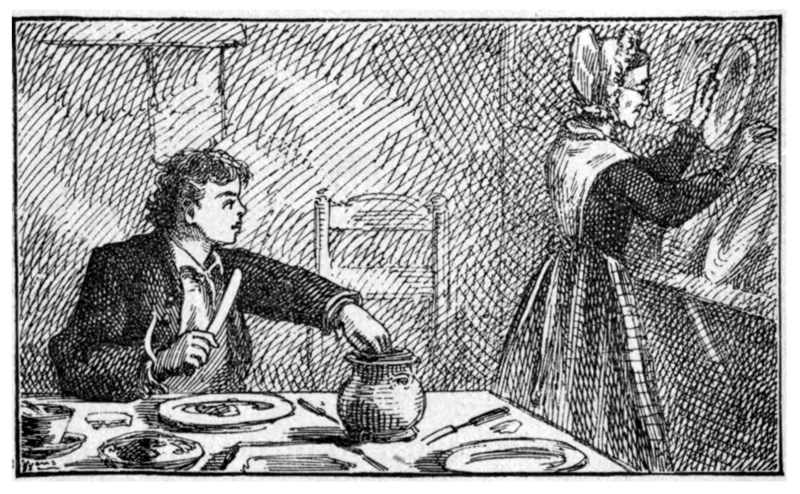
An illustration from Tom Sawyer.

July 4, 5, and 6: National Tom Sawyer Days

Don’t like Independence Day? Not a problem — there is now an option to celebrate National Tom Sawyer Days. Two days longer than Independence day, National Tom Sawyer Days celebrates a different yet still important historical setpiece. Fans of Mark Twain flock to his hometown, Hannibal, Missouri. There is much to do during these days of remembrance including a “frog long jump,” flea market, and a fireworks display over the Mississippi River on the Fourth of July, so you can still please those who wanted the fireworks show.

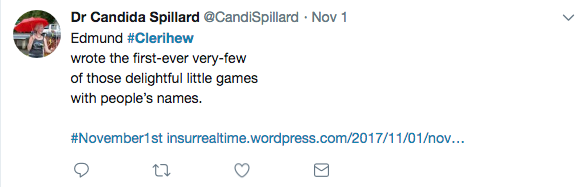
A tweet featuring a clerihew about Clerihew.

July 10: Clerihew Day

Make way for the poetry day! Clerihew Day is the light hearted day where we remember Edmund Clerihew Bentley, the creator of the four-line biographical poem. These poems are meant to be humorous and have the rhyme scheme of AA/BB with the person’s name in the first line. Celebrate the day by writing a poem about yourself or a friend and post it on twitter using the hashtag #clerihew…you never know if it’s the poem that’ll get you discovered.

July 13: “Odessa Reads. Odessa Is Read”

On Isaac Babel’s birthday this year, hundreds of voices were heard reading, spanning from the Literary Museum to the Opera house in Odessa. The literary scene in Odessa is small, yet thriving. This flash mob was a demonstration of the power of an underground literary scene. Although this only happened once in 2017, there is no reason to not expect its return next year on Isaac Babel’s birthday. You can celebrate in your city next year too! Bring out your favorite Babel text and read it in your language of choice.

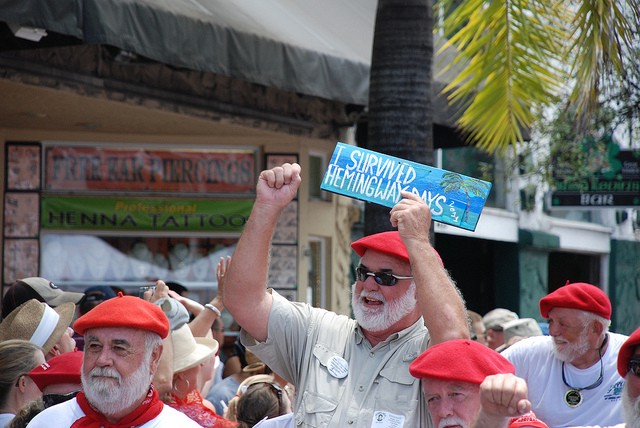
Hemingway impersonators celebrate in Key West. (Photo by Erin Borrini)

July 16 to 21: Hemingway Days

Santa impersonators never take a vacation. In December they are Santa, and in the summer they are Ernest Hemingway. The biggest celebration happens in Key West, Florida where there are short story competitions, a 5k run, theatrical performances, and a look-alike contest. So mark your calendars for late July—you won’t want to miss the hundreds of Hemingways. If you can’t make it to Florida, host your own Hemingway Day. Costumes required.

Martin Freeman as Bilbo in a screengrab from ‘The Hobbit.’

September 22: Hobbit Day

Hobbit Day is the way Tolkien fans honor the birthdays of Bilbo and Frodo Baggins. Both were born on September 22nd but in different years. Those who honor the holiday stick to the text for reference on how to party with lots of food, and others go without shoes, the same way the hobbits used to roll. On a more academic note, some teachers will use this as an opportunity to integrate Tolkien into the curriculum — and you know they had been waiting all year for this.

Finding the Patterns and Fragments in the Life of a Heroin Addict

Katherine Faw doesn’t use social media. The only trace of her on the internet is a website, which features photos of hands bearing long nails and a gleaming manicure; a man slumped over on the subway, passed out; the author in cool girl outfits. Even in person, she still seems enigmatic to me, like a character in one of her books — refreshing in a literary landscape of writers constantly tweeting about their family members and pets and exes.

Purchase the novel.

Katherine Faw’s debut, Young God, was published in 2014, a quick kick-in-the-teeth of a book about sex, drugs, and violence. Similar themes crop up in her latest, Ultraluminous. K, the narrator, is a drug-addicted prostitute, back in New York City after years in the Middle East. She has five men in her life — four paying to be there — a sketchy past, and a fixed schedule that seems to both comfort and confine her. The structure is recognizably Fawian in that it’s fragmentary, kinetic. But in this book the language is even more spare, each short chapter a series of mini vignettes that disarm the reader in both their precision and inscrutability. The result is something thrilling and wholly unique, deliciously trashy yet highbrow, cementing her place as one of the most visionary writers around.

I talked to Faw about female insularity and the fragments that make up the patterns of a K’s life.

Juliet Escoria: I know your first book, Young God, took years to write, and was originally twice as long as it was in its finished form. Ultraluminous is told in a similar structure — short fragments that build their way into a larger narrative. Did it start out this way, or was it more like Young God, in that it changed substantially over time?

Katherine Faw: It was only once I found the structure for Young God that I was really able to write it, but Ultraluminous did start out as itself. I knew I wanted to write about almost every day of one year in the life of this woman, to make a book out of repetition and patterns and time. The shape got sharper as I went on, but it was there from the beginning. Strangely, the book still took five years to write.

For the structure of Ultraluminous, I was really influenced by film. I wanted it to be a sequence of brief images that would add on to each other and add up to a whole. And the films mentioned in the book are ones that I watched while I was writing it. They’re all of the slow cinema school — languorous and boring and relentless, with small or big moments of pleasure and sadness and violence.

VIDEO: Katherine Faw Morris talks with Deniro Farrar and Isaac Fitzgerald

JE: The film thing really came across to me. It felt kaleidoscopic, like brightly colored flashing images, very visual. Patterns, for instance, are a big theme in the book — a placeholder for order and predictability for a character who doesn’t have a whole lot of either in her life. And, for K, they seem to also function as a type of superstition. Did that element come before or after your idea of K, the drug addict-prostitute-terrorist character, developed? Do you look for patterns in your own life?

KF: She was an obsessive maker of patterns from the beginning. For her they are a way to order the ultimate condition of the universe, which is chaos. She knows they are arbitrary and yet she compulsively looks for, and therefore finds them, everywhere. She’s also obsessed with cosmology, specifically the way the universe will end, because that is the only thing that will stop chaos, when nothing exists.

She’s a junkie, too, and heroin gives you a unique relationship to time, which is the utmost pattern we humans have come up with. It seems to speed time up because you notice so much less that it’s passing. At the same time, most junkies are ritualized, compulsive people, who carefully organize every day around getting high.
That is the only thing that will stop chaos, when nothing exists.

But all that was there from the first scenes I wrote. Mainly because her psychology and worries and preoccupations are mine or were mine during the time I was writing the book. It’s the only way I know how to make a book, to just sublimate who I am at the time into a piece of art. So I am an obsessive pattern-maker, yes. I do try to keep it in check, though, as it’s only the illusion of control. But I’ve always felt this tension between order and chaos.

JE: K is a prostitute, and there’s a lot of cock sucking and swallowing and fucking in this book. There’s a woman’s sexy body on the cover. This felt both refreshing and confrontational to me, reading it now, in 2017, where I feel like the messiness of sexuality and its inherent power dynamics are being shied away from, an old taboo resurfaced in a new way. Was writing about this subject matter was reactionary? How does it feel to publish such a sexual book into a politically charged climate?

KF: While I was writing, I felt like I was writing a book about a prostitute and what a prostitute does is have sex for money. It was important to me that I describe clearly what goes on between K and her clients. She’s good at her job, too, and she’s expensive. She’s skilled at sex and fantasy.

To me the book is very feminist. I think everything I write is about female ambition. Though I’m so surprised and grateful that this cultural discussion is finally happening, I do worry about the path getting narrow. In America, when it comes to sex, everything can get puritanical fast, and then women always lose. I just hope we can all keep in mind that there are no good girls and no bad girls. There is no right and wrong way to be a woman.

Support Electric Lit: Become a Member!

JE: I love that. I think that’s one of the more refreshing aspects of these conversations about misogyny and rape culture.

K, the narrator of Ultraluminous, grew up in Stuyvesant Town in Manhattan. I lived in New York for a few years, and I feel like I could draw parallels between what Stuy Town is — this kind of insular world — and the character and narrative of your book. Was this something that was done intentionally? What drew you to this neighborhood?

KF: I knew I wanted K to be a native New Yorker but sort of sequestered from the city, too. Stuyvesant Town is on the other side of 14th Street from Alphabet City, and especially when K was growing up, which would have been the ’80s and ’90s, it was its own world. It’s leafy-green with winding paths, and it really feels like a planned community in the D.C. suburbs.

Another reason I chose it is because it’s kind of shorthand for how New York has changed. And New York has changed a lot in the 15 years K has been away. Stuyvesant Town used to be middle-income housing that was rent-stabilized — though only for white people; it was notoriously segregated — but it was sold in a huge real estate deal that went bust during the financial crisis and was then resurrected. The apartments today are market rate, which is astronomical, and now it’s only for rich people.

But when K was growing up it was still a little bit busted, like all of New York used to be. My first friend in New York grew up in Stuy Town, and she would talk about how insular it was. Like kids would only date other kids who lived in Stuy Town, and everybody in all the buildings would go to the same beach on the Jersey shore in the summer. I wanted K as a little girl to feel protected and trapped, and at the same time to know that all she had to do was cross 14th Street to be in the real world.

Home by Maryse Meijer

JE: Yeah, I saw that about the rich people thing when I was Googling… apparently there’s a lottery for “affordable” apartments for “middle class” residents, which they define as $2800 for a one bedroom, and people making $84k and upwards a year. Which seems laughable to me, sitting here, right now, in a three-bedroom house that costs much less than that, in Appalachia, where an income of $84k is considered “rich.”

You grew up in this region, but have lived in NYC for a while now, right? How does having lived in these two wildly different regions inform your writing, and your identity? What’s your relationship to Appalachia now?

KF: I knew from an early age that I would go to New York as soon as I could, and I was lucky enough to be able to do that and to be able to stay here. I’ve lived here almost 17 years. I feel like my true self in New York in a way I never did in North Carolina, and I guess I do think of myself as a New Yorker now.

At the same time, I can be very defensive about Appalachia. I don’t like people who know nothing about it criticizing it. Nobody even pronounces it correctly. People who live in Appalachia say “Appalachia” one way, and then everybody else says it another way, like the people who actually live there must not know how to pronounce it correctly. I have this protective love for Appalachia and the people who live there that will never go away. It’s the place that raised me and I feel like I understand it.

I wanted K to feel that way about New York. After 15 years away, she has come back to a home that has completely changed. And money is what’s changed it. But she still has this protective love for New York and she still understands it, as it is and not as it was. Because everything, everywhere, is always moving forward and it is never going back.

I have this protective love for Appalachia and the people who live there that will never go away.

JE: Do you listen to music when you write? Or rather, if this book had a soundtrack, what would be on it?

KF: I have to write in silence. Music especially, but also people talking, gets in my brain and changes the natural rhythms in an outside way that I don’t like. That said, total silence in New York is impossible. So the music that I did not choose but that I’m sure infiltrated the book anyway is the norteño music my neighbors blast in their backyards from May to October, Friday to Sunday, almost but not quite drowned out by whatever the longest recording on YouTube is of white-noise thunderstorms. That is the sound of this book.

I think K is the same way. I think the music she hears is what’s played in the clubs the men take her to, what comes on the jukebox in the cop bar where she drinks with the ex-Ranger, and whatever floats up through the floorboards or in through her open windows when she’s in her apartment alone.

Nadia by Brit Bennett

JE: One time you interviewed me for the (sadly) now-defunct Adult Magazine, which you ended by saying: “I now have a great desire to make this an Into the Gloss interview.” Which made me really happy because I love talking about beauty products. So I’d like to end this interview the same way. What are some great beauty products?

KF: This makes me so happy, too. Thank you. How about my favorite red lipsticks? The best orange-red ever, which looks particularly good if you have yellow vampire skin like me, is Lana by NARS. For a true red, with more blue in it, I really like Sephora’s Always Red. It’s a liquid lipstick but it doesn’t make your lips look like the desert and it’s very Hollywood. My favorite pinky-red, which I wear almost every day, is Dragon Girl by NARS. It goes with everything — both snakeskin and leopard-print, my usual attire — and it’s a lip pencil so overdrawing your lips is easy. Bonus: the greatest pink of all time is Schiap, also by NARS. It manages to be both neon and classy. This interview has not been sponsored by NARS.

The Book James Baldwin Couldn’t Bring Himself to Write

Each month “Unfinished Business” will examine an unfinished work left behind by one of our greatest authors. What might have been genius, and what might have been better left locked in the drawer? How and why do we read these final words from our favorite writers — and what would they have to say about it? We’ll piece together the rumors and fragments and notes to find the real story.

The idea for Remember This House first came to James Baldwin in 1979. He envisioned traveling back to the American South to write about three leaders of the civil rights movement: Medgar Evers, Malcolm X, and Martin Luther King, Jr. He’d write about how he had known them, how they had crossed paths and purposes in their fight for racial equality, and how within five years each had been assassinated in that fight. Baldwin had touched on these events before in 1972’s No Name in the Street, but he felt there was more to say. He planned to travel to Atlanta, Selma, and Birmingham to talk with the widows, brothers, sisters of these men—and most of all, with their growing sons and daughters. A decade after the deaths of these leaders, he wondered how they and their cause appeared to their children’s generation.

Baldwin approached The New Yorker to write a long article on the subject, but soon realized the project would be more extensive. He ultimately proposed Remember This House as a new book to his literary agent, Jay Acton. He did so, he said, “in a somewhat divided frame of mind,” dedicated to the work but aware of its emotional toll. “This is a journey, to tell you the truth, which I always knew that I would have to make, but had hoped, perhaps (certainly, I had hoped) not to have to make so soon,” he wrote.

He was about to turn 55, Baldwin remarked, with some astonishment. Time was passing, and the civil rights movement had become the civil rights era. Baldwin felt an obligation to address it, and a reticence. “It means exposing myself as one of the witnesses to the lives and deaths of their famous fathers,” he wrote to Acton. “And it means much, much more than that — a cloud of witnesses, as old St. Paul once put it.” To write this book would mean facing those children and the memories he held of their fathers. It meant facing the question of whether or not the equality they had fought and died for was any closer at the dawn of 1980.

McGraw-Hill soon paid a $200,000 advance for the book (the equivalent of $600,000 today)— the largest in Baldwin’s career. But when he died of liver cancer, eight years later, at his home in the south of France, he had only written about thirty pages of notes for Remember This House. The journey back he’d envisioned making had never been completed.

By all accounts Baldwin made several attempts to write the book, but found it to be “impossible.” Still he continued to come back to the idea again and again. Even when Baldwin was finally so ill that he could not travel, he asked his assistant, David Leeming, if he could not go to speak with the widows and the children in his place. Not long before his death he asked Leeming to help him sort some papers at his desk, including Remember This House, which he hoped to return to “in a day or so.”

By all accounts Baldwin made several attempts to write the book, but found it to be ‘impossible.’

According to Leeming, as the 1980s had progressed, Baldwin’s former optimism had given way to a “general pessimism” about the “unlikelihood of the white world’s changing its ways.” In the essay The Evidence of Things Not Seen, Baldwin wrote about a string of unsolved murders of black children in Atlanta and the failures of both the white police force and the city’s black leaders to act in the crisis.

The “new South” was a myth, Baldwin said in interviews, and he had begun to think the same of some of the ideas he’d once embraced. Whites were eager to believe that America had become more equal. That if there were black politicians and policemen and television and movie stars, progress had been achieved. Baldwin saw the reality of suburban white flight, of the rise of black imprisonment, of racists no longer aware of their racism. The American Dream could not be shared with whites who did not genuinely desire to share it. Looking back, Baldwin felt that the moment had been missed, that the old language of equality and civil rights had become meaningless and that if there was real progress to be made in the future, a “new language” would be needed.


Upon Baldwin’s death in 1987, McGraw-Hill sued his estate to recoup the $200,000 advance for Remember This House — plus interest. Their chairman, Joseph L. Dionne, took the view that, “Mr. Baldwin effectively received an interest-free loan of $200,000 to write a book as to which we await evidence that he ever wrote more than a very rough 11-page draft. As a publicly owned company, McGraw-Hill is not in a position to waive repayment of that sum.”

A New York Times article at the time interviewed a variety of other prominent publishing executives, none of whom could think of any prior situation in which a deceased author’s estate had been sued for repayment of an advance. One industry lawyer said that doing such a thing had always been “considered simply not cricket.”

It took an outcry from the Author’s Guild to convince the publisher to retract the lawsuit, which according to Baldwin’s family, would have led to the eviction of Baldwin’s 89-year-old mother from her home.

After the suit was dropped in 1990, the rights to the 30-some pages of Remember This House reverted back to the Baldwin estate. There they remained for almost two decades before Baldwin’s sister, Gloria Karefa-Smart, one day handed them to filmmaker Raoul Peck. He had been studying the estate’s archives for several years, trying to make a documentary about Baldwin.

“Here, Raoul,” she said, “You’ll know what to do with these.”

And he did.

“A book that was never written!” Peck wrote, in his companion to the documentary I Am Not Your Negro. “That’s the story. … My job was to find that unwritten book.”

Peck’s documentary, released in 2016 to wide critical and audience acclaim. It would go on to earn an Oscar nomination for Best Documentary Film. Using a new, visual language, and Baldwin’s own words, he finally took the journey that Baldwin had once found so impossible.

His life’s work would go on to inspire generations of activists to come — those who still believe in forging that new language.

I Am Not Your Negro organizes excerpts from the 30 pages of Remember This House with other bits and pieces of Baldwin’s letters and notes and interviews to tremendous effect. Peck described his role in its creation as similar to a “librettist crafting the script for an opera from the scattered works of a revered author.”

Baldwin had written in a tiny note that he Remember This House should be “a funky dish of chitterlings.” Peck took this concept to heart, combining Baldwin’s words with all manner of other things: still images, film clips, speech excerpts, news footage, song lyrics, a Chiquita banana advertisement — even excerpts from Baldwin’s own FBI file. (Along with noting Baldwin’s homosexuality, the FBI file refers to him as “a dangerous individual who could be expected to commit acts inimical to the national defense and public safety to the United States in times of emergency.”)

Peck illuminates the three civil rights heroes through Baldwin’s memories, but also bears Baldwin’s witnessing to a new generation, a new millennium, almost 40 years after Baldwin first thought of the project.

I Am Not Your Negro is an inspiring and disturbing look into all of the things that made Baldwin so pessimistic in the 1980s, and the still divided, still cruel, still unequal America we inhabit today.


On the title page of that 30-page manuscript for Remember This House — dismissed as worthless by McGraw-Hill, but of such immense value to Peck — Baldwin apparently wrote the first word as “Re/member,” which according to Leeming, suggested his desire to “put a broken ‘house’ together again.” To not just recall, but to reassemble the “‘house’ of the fallen heroes.”

Baldwin joined that house upon his own death, at his home in the south of France surrounded by loved ones. In the days before, Leeming wrote, Baldwin had him read aloud bits of Pride and Prejudice, and they watched a favorite Charlie Chaplin film. His life’s work, and his unfinished business, would go on to inspire generations of activists to come — those who still believe in forging that new language.

In the companion book to I Am Not Your Negro, Raoul Peck shares a 1973 quote of Baldwin’s with us, which was sent to him by Baldwin’s sister Gloria in 2009:

There are new metaphors. There are new sounds. Men and Women will be different. Children will be different. They will have to make money obsolete. Make a man’s life worth more than that. Restore the idea of work as joy, not drudgery.

Baldwin’s despair that such a restoration would ever come to pass kept him from completing his final project, but the hope inspires Peck’s film.

What Does It Take for a Short Story to Go Viral?

For once, the piece of writing going viral on Twitter this weekend wasn’t a bad take, a particularly insufferable Vows column, or a new piece of investigative journalism about how everything is on fire. It was a short story. Kristen Roupenian’s story “Cat Person,” which appears in this week’s New Yorker, is written from the perspective of a college sophomore who has an unsatisfying one-night stand with an older guy, and it sparked a lot of conversations about sex and dating, the value of “relatability” in fiction, what it means for a work of art to feel “universal,” and even the definition of a story. The story has sparked more than 10,000 tweets, several rounds of backlash and backlash-to-backlash, and an entire new Twitter account anthologizing negative reactions. It’s like everyone on the internet was having a contentious book club meeting out in public.

It’s a perfect storm of a story: one that deals with a young woman’s complicated experience of sex and consent, coming at a time when such experiences are a topic of national conversation, and published in a high-prestige magazine. It’s not quite topical enough to seem crass—this isn’t a story about assault or harassment, it’s a story about bad sex—but like recent reporting on those topics, it illuminates a dark corner of many women’s personal histories. Apparently, that combination made it catnip (pun intended) for Twitter.

Most of the discussion fell into one of the following categories:

  • “I relate uncomfortably strongly to this and think it’s valuable to talk about”

  • “As a man, I’m confused and angry and possibly doing some heavy posturing” (again, there’s an entire Twitter feed for these! Let’s take some time to revel in the fact that an entire Twitter feed sprang up to collect contentious responses to a short story).

  • “If you think this is a ‘universal’ experience for women, maybe reconsider your ideas of what universal means”

  • “Stop calling it an article??!?”

Variations on these responses included “I found this relatable but didn’t like it,” “I didn’t find this relatable but everyone else did,” “I don’t think relatability is an important factor in fiction,” “I have muted all mentions of ‘cat person,’” and “why are there no cat-people in this story?”

We’re not going to weigh in authoritatively on any of these points except one (stop calling it an article!!!), because frankly we’re just delighted to see literary analysis happening at a scale so large it’s genuinely annoying. Congratulations to Kristen Roupenian for creating a piece of writing that struck so many nerves it briefly turned Twitter into an intro-level contemporary fiction class.

Unsatisfactory Paramours of Britain

Strange man

I met the man when I stopped to give him a lift on my way home from town doing nothing in particular. I was on my own as usual and here was somebody with his thumb out looking for company. And because my motives weren’t entirely altruistic and I knew I was going to get into something with him, I felt only loathing as he opened the passenger door. Later that afternoon, he backed me up against the kitchen counter, his mouth hard against mine, and pulled up my skirt and put his hand between my legs. His breathing was laboured, and I thought I heard him whisper something coarse. I stopped it there and drove him to his tent out in the countryside. Getting out of the car he put his fingers to his nose and thanked me. The rest of the day I wondered, every minute, if he would appear at my door with a rucksack and his hand outstretched at waist level. I locked the door and washed my infested body but couldn’t shake the scenario playing out in my imagination that he was back and sitting on the couch in the afternoon with the curtains drawn watching sports.

The next day I took the same route into town, my eyes scanning the roadside ahead while the everyday things of the country passed unnoticed. He was standing at a junction smiling like a man who’d won a bet, but there was a fight before we got anywhere and I dropped him off near a supermarket. In the rear-view mirror, I thought he looked sad about how things turned out. He was gone, and I drove towards home too fast and with the radio turned up until his existence was explained away by old rock songs, sung loudly.

There were never many friends because I pretended stuff didn’t happen, but anyone who knew me knew it all happened, all my bad decisions hung out for all to see, like one hot star in the evening sky.

Weirdos

The couple down the track had three kids they home-schooled in a small kitchen with a slate floor at a table positioned too close to the back door and butt-up against the stairs to the small loft all three kids slept in. Being home-schooled in that house was a cold and drafty affair, played out against the thudding soundtrack of the younger kids running up and down the uncarpeted staircase.

Even further along the track lived the woman’s parents. Their large, white house, set in the kind of acreage parks are made of, belied the impoverished hippy status of their daughter’s set-up. When the old man went into rehab to detox from a diazepam addiction, the family moved into the big house and wondered how they’d ever lived in the other. A “For Sale” sign appeared where the track met the road, and after several miscalculations on the part of prospective buyers, an arrow was attached to the sign’s pole with “100 yards” written across the tail in black marker which bled with the first rain.

It took months for the house to sell. The pot-holed track, already a factor, also deterred the suppliers of amenities to people without the money to pay the additional costs. The small house was completely off the grid, which appealed to the paranoid and those with something to hide and went some way to explaining why nobody noticed the man climbing in and out of my house through the kitchen window. Alex, my short-lived dalliance with lodgers, had lost his key some weeks back, but as it hadn’t had much of an impact on his life he hadn’t bothered to mention it. His boot prints on the kitchen counter were the first sign of something out of the ordinary happening in the house, soon joined by pistachio shells in my bed and finally his revelation on a ride into town that the police were looking for him after an incident at a naval base. If I was interested, he said, I could check out the bookmarks on my computer.

He had all kinds of stories, most of them too big for my terraced house and small life, and I asked him to leave. I could have just closed the kitchen window but the bad feeling I had about him necessitated lies, and I told him I was considering adoption. He stuck up his middle finger, his parting shot.

Teachers

Nick left me suddenly for a professor on his teacher training course. Apparently, when the faculty met to discuss the students’ progress the mention of his name made her smile. I didn’t know her, and her name got lost amongst the slew of new arrivals that year, cheerful and curious creatures that stuck together like spring lambs after the thaw. When the couple in the cottage on the other side of the track felt the warmth breath of a stranger on their necks, the fact that it had taken sixteen years was the bigger surprise. She liked new things, and he wanted nothing much to change. But he loved her, and when she took up running he bought her running shorts several sizes too small, and when she got into growing vegetables he surprised her with a plot dug under the shade of an old oak, and when she met her new Brian he broke his nose and stopped her from seeing their daughter.

For months afterwards, Jill would call out to him when he was drunk, and he would go to her until some wall or tree got in the way and stopped him. When the judge made the stopping permanent, Brian took to drinking in the park near her new man’s flat and as soon as he heard her calling he’d stagger up the steps to bang on the door until someone answered. The fact that it was usually someone from one of the nearby flats who tried to shoo him away didn’t bother Brian because he could do nothing else but heed the siren’s call until the day came that a bottle of pills helped him to fully understand her false promise.

Nick went to Kenya to teach English to rural children, and the professor went back to her students. When he got in touch years later to ask me to look up the side effects of Mefloquine, I wondered why he hadn’t done so himself with the computer he’d used to send the email. But vanity borne from some distorted sense of having been selected took over, and I responded with pages of extracts from online publications. It took several more years for the penny to drop that his contact had been something else.

A new man

When the new guy moved in, it was because he was different. I didn’t care that he couldn’t reach the out-of-date condiments at the back of the cupboard or that he enquired daily about menus and clean things. Sometimes it would rain for weeks, a cold, wet sheet wrapped tightly around our lives, and we’d stay indoors and take out our frustrations on each other. Television made me wistful, and I’d stare past the TV set and out the window at the hedgerow top and flat grey sky, disappointed there wasn’t more, feeling different to the man who chose to be distracted by flickering images and minor tasks.

The new guy wanted to take a trip and arrangements were made. But our lethargy had become a habit by the time the trip came around, and we sat at home and watched TV together and told no one of our change of plan. Later that evening the plane came down, and the owner of our intended B&B telephoned to check on our whereabouts and inform us of her outrage at our lack of consideration. I asked her “what’s it to you, you’ve got your money”, and put the phone down. Shame drove me into the kitchen in search of something in the cupboards, but I could find only beer. It was clear I needed a new start with someone who was taller than me, someone I could spend the summer with.

Jedi

What a Cross-Dressing Lady Knight Taught Me About Gender and Sexuality

Novel Gazing is Electric Literature’s personal essay series about the way reading shapes our lives. This time, we asked: What book was your feminist awakening?

On the morning of my first day of high school, everyone in my homeroom sat in silence — stiff-backed and rigid and afraid, sweating through the dress shirts our mothers had bought for us. No one knew what the social hierarchy was here, at this all-boys Catholic school where black-robed friars walked the halls and the upperclassmen towered over us, their voices deep enough to be our fathers’. It seemed better, that first morning, not to risk breaking any unspoken rules. It seemed better not to speak at all.

But this unnatural reserve didn’t last long: by mid-September, my homeroom buzzed with voices. The boys around me complained about our biology homework, and speculated together over whether the Bills had a shot at the Super Bowl this year. Most of all, though, they liked to talk about the girls at our sister school. Sluts, the boys called them, in an easy, matter-of-fact tone that made me flinch. Whores. Their disgust became even more pronounced when they talked about gay men. Fags, they said, the word making little tendrils of alarm uncurl along my spine. Homos. Worst of all were the times when my new classmates pretended to be gay. They lisped their words and waved around boneless wrists until it was clear that to be gay was also, in some mysterious but definite way, to be a grotesque parody of a woman.

While all of this happened, I stayed quiet. Watchful. Whenever I was at Saint Francis, my chest always went tight with fear, and I clenched my teeth until my jaws ached, reminding myself to always be careful. Every now and then, though, I slipped up.

Once, in the early weeks of school, I watched a group of freshmen play dodge ball with some upperclassmen. I couldn’t stop looking at one senior boy, the class president: earlier, he’d spoken to all the freshmen in the dim quiet of the school chapel, lecturing us about responsibility and respecting our teachers. Shirtless now in the cavernous gym, he ducked and wove and whipped until sweat gleamed against the lean muscles of his chest. I was still watching him when another boy stepped close and murmured something in his ear.

I had a fraction of a second — just long enough to feel a flicker of doubt, long enough to hear more acutely the squeak of sneakers and the boom and crack of balls — before the senior turned his head to look right at me, dark eyes pinning me in place. Caught.

And though I looked away immediately, I could feel the heat rising under my skin, shame flaring inside me like a lit match.


After days like these, there was only one way I knew to feel safe again, one way to make my muscles loosen and my jaw unclench. On the bus ride home, I would curl up with Tamora Pierce’s Song of the Lioness quartet, a series of young adult fantasy novels that detail the adventures of Alanna, a teenage girl who disguises herself as a boy in order to train for knighthood in the medieval kingdom of Tortall. I first began devouring the series in middle school, reading and re-reading the pastel-colored paperbacks until they were dog-eared, their spines broken from being opened again and again. But the Alanna books became even more important to me as high school began. Oddly enough, they felt relevant in a new and pressing way. Because even though she had violet eyes and a horse named Moonlight, Alanna’s daily life training at the palace ran strangely parallel to my own at Saint Francis.

In the first books of the series, Alanna has to keep her true identity a secret from her classmates. She refuses to go swimming, even on the hottest summer days, and binds her breasts once she starts developing. Despite these obstacles, she does well at the palace, making friends and facing down bullies. When one of them breaks her right arm, she starts to train with her left, practicing relentlessly until she’s ambidextrous. And yet, Alanna is still nagged by self-doubt, a creeping sensation of inferiority. Even after she finally defeats the bully who broke her arm, she can’t quite let herself feel proud of what she’s accomplished. “She was still,” the narrator tells us, from a perspective deep inside Alanna’s mind, “a girl masquerading as a boy, and sometimes she doubted she would ever believe herself to be as good as the stupidest, clumsiest male.”


For reasons I was only beginning to make out, Alanna and I were kin.

My freshman year at Saint Francis began in the fall of 1999, a time when there were very few YA novels about gay teens. But even if more had existed, I would have been too afraid to read them: afraid both to be seen with these books, and afraid to identify with their main characters. The Song of the Lioness series let me think about the experience of being closeted in a way that was safely distanced from my real life. In Alanna, I found a heroine who thrives despite her inability to come out, and despite the psychological costs of remaining in the closet.

In Alanna, I found a heroine who thrives despite her inability to come out, and despite the psychological costs of remaining in the closet.

The novels also held another truth, one I wouldn’t be able to fully register for another few years: how important it is to fight back against all those voices — both outward and inward — that claim that being either female or effeminate is disgusting and shameful.

If Pierce’s books armed me with a nascent feminism, they also helped me make real friends. Right before my freshman year began, my mother brought home a new, internet-enabled computer. I used it to find fan sites devoted to the world of Tortall. Hosted on free websites like Angelfire, GeoCities, and Tripod, these sites had names like “Lady Jayla’s World of Fantasy,” “Seraphsong’s Page,” and “The Dream Plains” — and nearly all of them, it turned out, had been made by girls around my own age. Soon I was trading long emails with half a dozen other fans. Our letters started out as detailed discussions of Pierce’s books, but before long the focus shifted to our daily lives: our friends, our schools, our families. These were the bookish, clever, sarcastic peers I couldn’t find at Saint Francis, but desperately needed in my life. Even now, almost twenty years later, I can tell you their names: Shanti, Alison, Kel, Eiram.

Before long I started role-playing with some of these friends online, in a chat room devoted to Pierce’s world. After the daily fear and silence of high school, the relief was incredible. In the chat room (which, for game purposes, was a tavern in Tortall), there was no need for macho posturing, no need to worry about my high, feminine voice or my short, weak frame. We were in a place where bodies vanished, leaving only our words — and those, too, would be gone the next time we logged in. Safe in this knowledge, I relaxed. I let myself be warm and funny and playful: all of the things I couldn’t allow myself to be at Saint Francis.

But I let myself be more than those things, too. My character, Darius, was a mage, and he always entered the chat room — the tavern — in the same way: he appeared magically, “in a blaze of silver fire.”

At school I wanted to be forgotten, to erase myself like an Etch-a-Sketch when you shook it hard enough. But in front of the new computer, chatting with all my new friends, I wanted so much more. I wanted to burn with a light that you wouldn’t soon forget.


Today, more than three decades after the publication of the first book in the Song of the Lioness series, many millennial-age women have written about how Pierce’s heroines provided them with powerful feminist role models. In her blurb for Pierce’s latest book, the author Sarah J. Maas writes that Pierce’s novels “shaped me not only as a young writer but also as a young woman. Her complex, unforgettable heroines and vibrant, intricate worlds blazed a trail for young adult fantasy — and I get to write what I love today because of the path she forged throughout her career.” Author Bruce Coville, meanwhile, observes that, “Having been with Tammy at signings and listened to the young women who speak from their hearts about how they were empowered by her books, I know it is impossible to overstate her impact.”

But the Alanna series was valuable to me for slightly different reasons. Long before I took classes in feminism and queer theory, it helped me to understand that misogyny is a weapon wielded against women and gay men alike. And it promised me, too, that this weapon could be overcome. The first book in the Song of the Lioness series culminates in a chapter where Alanna and her close friend, Prince Jonathan, enter the mysterious Black City and fight a group of evil creatures known as the Ysandir. Midway through the battle, the Ysandir realize that Alanna is actually a girl and use their magic to burn away her male clothes in an attempt to humiliate her. Although Jonathan is shocked to learn Alanna’s true identity, he keeps fighting alongside her, and together they defeat the Ysandir.

Long before I took classes in feminism and queer theory, ‘Alanna’ helped me to understand that misogyny is a weapon wielded against women and gay men alike.

In the final pages of the book, Jonathan — who has been trying to decide which of the knights-in-training he should select as his squire — asks Alanna whom he should choose. “A week ago,” the narrator tells us, “she would have told him to pick Geoffrey or Douglass. But she had not been to the Black City then. She had not proved to the Ysandir that a girl could be one of the worst enemies they could ever face.” Alanna keeps thinking about her time training at the palace, remembering all her hard work, all her accomplishments. “All at once,” the narrator says, “she felt different inside her own skin.”

Alanna tells Jonathan that he should pick her, and he says that she was already his first choice.

She felt different inside her own skin. The first time I read that sentence, more than twenty years ago, it was a promise. A promise that I would not always be so afraid, a promise that I could fight — and win — against all the voices that crackled inside me, telling me that I would never be as good as the stupidest, clumsiest male.

She felt different inside her own skin. It was a promise, but also a gift — one as beautiful and unexpected as silver fire.