When you really love a book, you kind of want to climb inside it and get lost. But of course, you can’t literally climb inside books—or can you? We found seven structures from around the globe that let you surround yourself with stories on all sides. These awe-inspiring tunnels, towers, and mazes combine art, architecture, and a deep love of literature.
The Yangzhou Zhongshuge library in Yangzhou, China
Step into this bookstore in Yangzhou, China and prepare to be mesmerized by a river of never-ending books. Architecture firm XL-Muse found inspiration in the city’s waterscape and created black mirrored glass floors that reflect the lighting bolt above and the ceiling-high arched shelves, guiding the visitors deeper into the tunnel of infinite tomes.
Using books as a building blocks for a giant tower, Slovakian artist Matej Kren tries invoke a sense of greatness, confusion and reflection in his art sculpture at the Museum of Modern Art in Bologna (MAMbo). He uses mirrors in the narrow inner-space to create an illusion of infinity and to confuse the viewer’s spatial perspectives. The conflict of false infinity in a tight space introduces the viewers to the problem of latent perception and how conventions cloud the way we experience place.
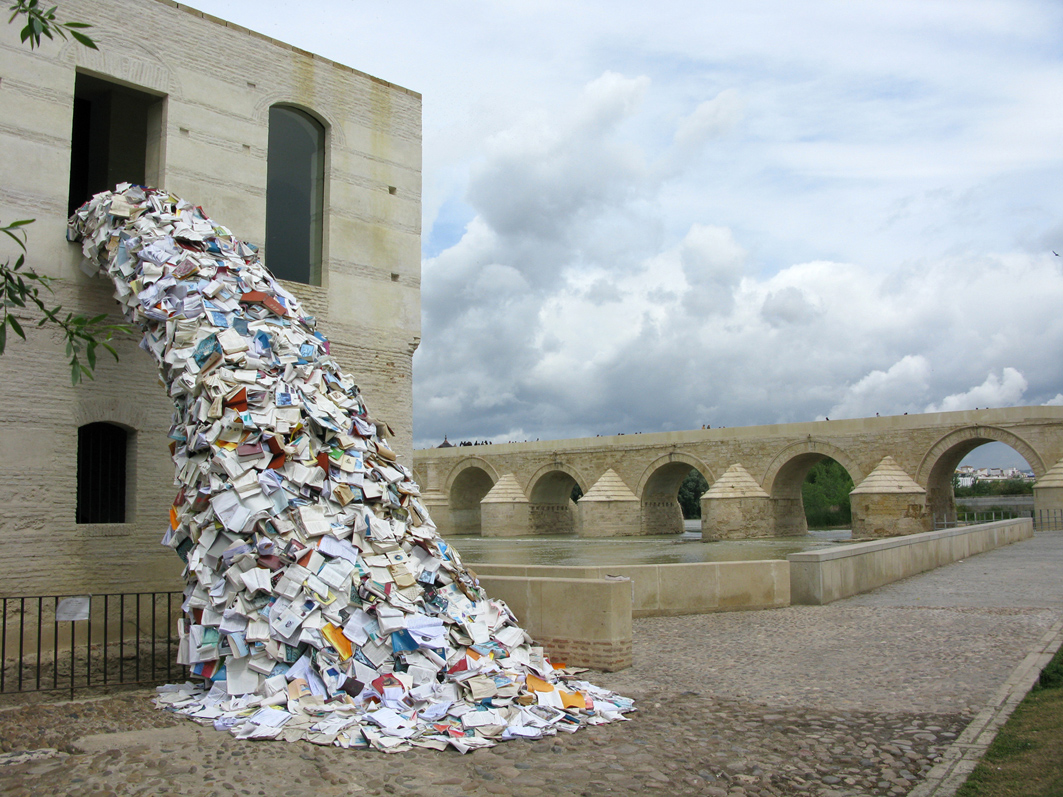
Spanish artist Alicia Martín’s sculpture in Madrid depicts a cascade of books tumbling out a window like a rushing waterfall. Her gravity-defying Biografias series transformed 5,000 used books, suspended from a mesh wire cage, into a giant sprawling chute. Pages from the books rustle in the wind, giving life and imbuing a restless energy to this inanimate art piece.
Tower of Babel by Marta Minujin in Buenos Aires, Argentina
This Tower of Babel was made of 30,000 donated books in languages from all over the world. Argentinian artist Marta Minujin created the 80-foot-high, seven-story art piece in celebration of Buenos Aires’s designation as the 2011 World Book Capital. At the dismantling of the sculpture, book lovers picked a book from the tower while the rest were preserved into archives of The Library of Babel, named after a story by the great Argentinian author Jorge Luis Borges.
Bargain hunters and #bookstagrammers alike pilgrimage to the Last Bookstore in downtown L.A. On the second floor of this bookstore is the Labyrinth: a vast and chaotic maze, home to more than 100,000 used books priced at just $1 each. The perfect place to get lost in a book, the space features doors that go nowhere, time-travel portholes looking into artwork of the cosmos, hidden pathways that lead into secret bank vaults and a glowing tunnel of paperbacks. Don’t forget to look down! The ground is covered in pennies.
Yet another mind-boggling literary sculpture by artist Matej Kren! This staggering installation at The Prague Municipal Library in the Czech Republic is made up of hundreds of used books stacked Jenga-style to form a cylindrical tower. The reflection of the mirror at the base of the tower resembles looking down into the watery pool of a wishing well. Another mirror placed on the ceiling creates the mirage of an endless stack of books going on forever. #trippy
https://vimeo.com/46750756
aMAZEme by Marcos Saboya & Gualter Pupo in London, U.K.
This mesmerizing time lapse video shows the construction of this gargantuan literary labyrinth from the placement of the first book until the opening day. Designed by Brazilian artists Marcos Saboya and Gualter Pupo with production company HungryMan, the maze pays homage to Jorge Luis Borges and his love of mazes. Volunteers meticulously arranged 250,000 books into the shape of the Borges’ fingerprint. The Argentinian writer once said: he did once say: “I have always imagined that paradise will be a kind of library.” Little did he know, that paradise would one day be a book maze shaped like his fingerprint.
Have you ever loved a book so much you wanted to live in it? I know when I was finished reading Gilead, by Marilynne Robinson, I yearned to be a resident in the town of Gilead and smell that fresh Iowan air while gazing at the rich gold landscape. Of course, a version of that is possible but now that I live in Brooklyn, that kind of vastness, space, silence, seems so far away from here that it is almost fictional.
What follows are some fictional cities that are truly works of the imagination, and will make you wish you could live in your library.
This entire list could be composed of the imagined metropolises of Italo Calvino’s Imaginary Cities. We have 55 to choose from and they are all named after women. For this list, we chose Isadora to represent, a place where, “the buildings have spiral staircases encrusted with spiral seashells, where perfect telescopes and violins are made, where the foreigner hesitating between two women always encounters a third, where cockfights degenerate into bloody brawls among the bettors.” It’s a city of desire and the desire never dies as we grow older. “In the square there is the wall where the old men sit and watch the young go by; he is seated in a row with them. Desires are already memories.”
This town-turned-city is based on Gabriel Garcia Marquez’s hometown, Aracataca. Initially, the people of Macondo don’t have connection to the outside world, but the village evolves into a thriving landscape and city. Think Garden of Eden but Colombian. I’d like to live in this place before the banana plantation is set up and (spoiler alert) the eventual windstorm destroys the town.
The exact location of Whoville is up for interpretation. Sometimes Whoville is on a clover, other times it is has been on a snowflake. Regardless, it is an entire town held together on a speck. Because it is so tiny, Whoville experiences any kind of change at a dramatic level. Any movement or unexpected weather can create quite the turbulence. But this city is great because of the locals! The Whos make great neighbors, the kind of neighbors that help you brave the weather.
Gethen is technically a whole fictional planet, but very little of it is inhabitable so the regions where people live amount to, roughly we’ll say, a city. Also known as Winter, Gethen is in the middle of an Ice Age in The Left Hand of Darkness. The people are biologically adapted to the cold, which does not mean they are perpetually curling up with their Netflix shows or tucked in with a couple dozen good books until the Ice Age breaks. But that’s what it would mean if I lived in Gethen.
Living in West Egg is a dream with a condition — we get to live there in Gatsby’s mansion. The place is sheer decadence: “The one on my right (Gatsby’s house) was a colossal affair by any standard — it was a factual imitation of some Hotel de Ville in Normandy, with a tower on one side, spanking new under a thin beard of raw ivy, and a marble swimming pool and more than forty acres of lawn and garden.” And the parties! “There was music from my neighbor’s house through the summer nights. In his blue garden men and girls came and went like moths among the whisperings and the champagne and the stars.” West Egg is based on Great Neck, Long Island, but modern-day Great Neck will not do the trick—we want to live in specific Gatsby luxury.
The Flying Okie cities, from the Cities in Flight series by James Blish
Hold onto your fidget spinners—the Spindizzy is about to take you to a whole other level. This machine from James Blish’s “Cities in Flight” series is an anti-gravity device discovered by resident Dr. Corsi that allows entire cities to fly through space. If flying through space isn’t your thing, Dr. Corsi’s second discovery in the course of the books might be: the “anti-agathic” drug, also known as the anti-aging drug. In other words, this drug allows you to fly back through years.
There’s something whimsical yet scary about living in the Emerald City. At the end of the yellow brick road, the people of Oz live in harmony with one thing in common: they all see the city with a green tint. The Wizard figured it was easier to give everyone green-tinted glasses than to actually build a city of emeralds, so the citizens live in a low-key Matrix where what they see isn’t exactly real. In later Oz books, after the humbug wizard is deposed, the city is redone with actual emeralds—so if living in luxury is more up your alley than living in blissful ignorance, the Emerald City still suits. But even if it meant wearing green goggles all the time, we’d be okay with it in exchange for eternal life, magical animals, and lunches that grow on trees.
Ankh-Morpork, from the Discworld books by Terry Pratchett
Ankh-Morpork isn’t a safe city; for one thing, it’s disgusting, and for another, Discworld teems with grumpy wizards, professional assassins, and werewolves (and the werewolves are the good guys—one of them’s on the police force). Plus, the entire planet is floating through space on the backs of four elephants who are themselves on the back of a turtle. But where else can you visit the Dwarf Bread Museum, the Isle of Gods, and the library of the Unseen University all in one day?
Arkham, a fictional town in Massachusetts, is a town for people who enjoy giving themselves a good fright. With salacious murders and brutal hauntings, Arkham would be a great place to live for three to five days, at which point the novelty and thrill of living in a horror story would probably wear off. The deceptive sleepiness of the town combined with some very awake afterlife makes this a desirable temporary oasis for finding your inner self and thinking about everyone—and every thing—that has ever back-stabbed you.
I t’s not like I didn’t know what I was getting into. After all, I’d picked up André Aciman’s Call Me By Your Namemostly out of a desire to read for myself a certain juicy scene involving a peach and a much too-horny teenager that friends kept whispering and snickering about. But as I made my way through the story of the precocious Elio and his obsession with Oliver, the dashing graduate student saying at his family’s Italian villa for the summer, I found myself blushing — not (just) at the sumptuous sex scenes between them, but at the musings on yearning and desire that make up the bulk of the text. Reading Aciman’s novel took me back to those cheek-flushed days when I’d pine away for boys I both hoped would fancy me and worried would never notice me at all. Feelings I’d long forgotten and thought I’d finally outgrown kept flooding back in ways that embarrassed and, I have to admit, titillated me to no end.
Told in the first person, Call Me By Your Name is a novel about longing. At seventeen, Elio is that shy if outgoing kid who hides behind his know-it-all attitude. “Is there anything you don’t know?” Oliver asks him at one point, in response to yet another mini-lecture on music, history, or the classics that Elio has thrust upon him. With a doting academic father and a loving liberal mother, whose laissez-faire parenting encourage his own independence, Elio is used to being in control of the perfectly constructed world around him. The feelings that erudite and attractive Oliver inspire in him vex Elio in ways he cannot begin to comprehend until he attempts to reconstruct them years later. In the novel, an adult Elio sets out to tell us about that fateful summer in the 1980s when he realized “that wanting to test desire is nothing more than a ruse to get what we want without admitting that we want it.” And hoo boy, is there a lot of testing and edging into uncharted territory throughout the book.
I may be close to twice Elio’s age, but reading the musings of a lustful and hungry 17-year-old felt all too familiar. This is, perhaps, because much of our vocabulary for desire is couched in youth. The feelings of sheer abandon, of an attraction that you can’t control, have been construed as signs of immaturity. Puppy-love, crushes, infatuations — these are things you’re supposed to outgrow. There’s nothing more ridiculous-sounding than a 33-year-old pining away, wondering whether that cute boy who just inched closer was giving him a sign.
But this is the reality, and one that Aciman nails: love (and it is a kind of love) makes words fail. His novel may make no room for the closet or the shame many of us grew up with, but it still pushed me to remember how desire, especially the kind that looks to be unrequited, can be paralyzing. When he is around, there is nothing you do that is not done for him, for his attention. But it also forces you to evaluate everything they do with the same attention; just as you are constantly crippled by the hope that they’re watching you intently and reading into everything you’re doing (say, noticing your guitar playing skills or any slight change in appearance), you’re driven by the conviction that they must be equally fixated on their own demeanor, eager to have you read into their behavior the very attraction you’re projecting and internalizing in equal measure.
Aciman’s novel pushed me to remember how desire, especially the kind that looks to be unrequited, can be paralyzing.
It’s no surprise than Elio succumbs to that most dreaded of pitfalls: imitation. “I tried imitating him a few times,” he admits. “But I was too self-conscious, like someone trying to feel natural while walking about naked in a locker room only to end up aroused by his own nakedness.” The novel plunges you deep into this mirrored sensibility where desire and identification are intertwined. As is obvious from its title, Elio’s plight is sutured to the near-narcissistic idea of same-sex desire. “Call me me by your name and I’ll call you by mine,” Oliver tells him as they lay in bed in post-coital bliss once they finally give in to their lust for one another.
That’s when it struck me that my blushing wasn’t just about remembering first crushes and feeling that sense of possibility anew. Entangled in my own all-too physical reaction to the book was the reminder that, unlike Elio, I’d never quite been able to indulge in such knee-buckling attractions. Definitely not in my teenage years. To read about Elio’s summer affair with Oliver was to be reminded of the way I’d forced myself to closet such desires. Where friends and schoolmates got to live out teenage flings with abandon, accruing the kind of anecdotes that would later inform the relationships in their 20s, 30s, and presumably beyond, I’d spent too many years denying my own attraction to other men. Part of why reading such nakedly sexual and unabashedly erotic longing in the voice of a 17-year-old embarrassed me was because I could only belatedly identify with it. I’d never been able to be Elio in my youth but could all too easily be him in my 30s.
Part of why reading such nakedly sexual and unabashedly erotic longing in the voice of a 17-year-old embarrassed me was because I could only belatedly identify with it.
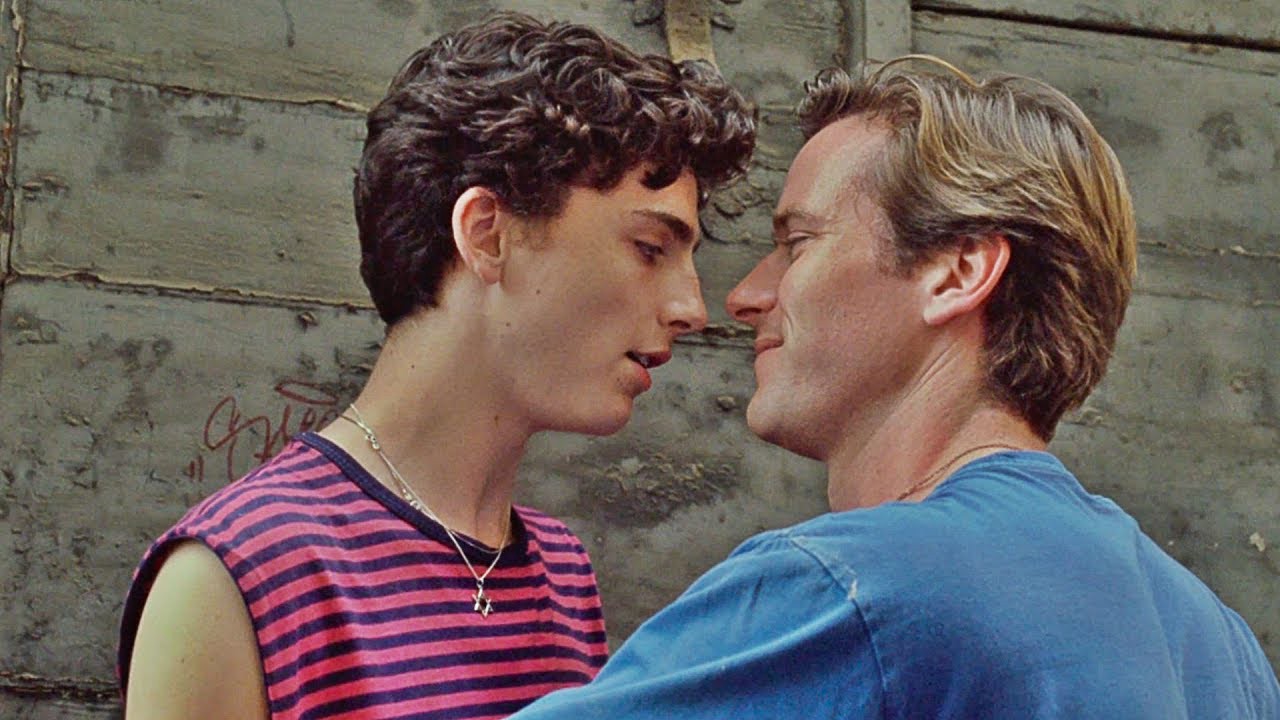
It’s why I worried about encountering him on the big screen. So much of the novel takes place in Elio’s head, with his near-insufferable soliloquies on desire, that I worried director Luca Guadagnino and screenwriter James Ivory wouldn’t be able to capture the very thing that had stirred such youthful (and shameful) feelings in me. I shouldn’t have worried. In the hands of Timothée Chalamet, Elio comes alive in ways I could never have dreamed of. Thankfully stripped of any kind of tired voiceover, Ivory and Guadagnino opt instead to let Elio and Oliver’s interactions brim with a physicality that speaks volumes. Elio’s bumbling walk whenever he’s moving in Oliver’s direction, as well as the infinitesimal changes in posture whenever he sees Oliver’s eyes alight on him, telegraph the many moments of interiority Aciman’s novel so depends on. The self-consciousness that comes across in Elio’s prose has been internalized in Chalamet’s body which, like a compass, is constantly looking for its North in Oliver.
And if words are “futile devices,” as Sufjan Stevens croons in one of the songs in the soundtrack, it’s no surprise Elio turns to actions — outlandish ones at that — to project exactly how he feels. Here’s where the film itself made me blush just as intently as the novel. Since they share adjacent rooms, Elio oftentimes sneaks into Oliver’s room to survey the realm of the man he desires. In one instance he happens upon one of Oliver’s recently-worn swimsuits. And, in what has to be one of the most sensual moments of the film (yes, even more than that peach scene) Elio splays himself out on all fours in Oliver’s bed as he wears the red shorts over his face and inhales the musky odor therein. I’m usually very composed while watching films, especially when surrounded by hundreds of other viewers as I was the night I first caught Call Me By Your Name at the New York Film Festival. But, during this scene, I quickly felt my pulse quickening and my palms getting increasingly damp. How many times had I fantasized about being so bold, so shameless? I thought back to instances where I’d been left alone in another man’s bedroom (while I took a phone call, or while they took a shower) and I’d kept myself from plundering their dirty laundry to get a whiff of the intoxicating smell that so drew me to them. Gladly, just as when I’d read (and later re-read) Aciman’s novel, there was no way others could see how flushed I got when I saw Chalamet all but convulse at the joy he felt upon inhaling Oliver’s smell.
But I blushed furiously in the dark, and also, I cried. Not only had Elio and Oliver survived their translation to the big screen, but in the process, they’d managed to further burrow themselves into my heart, making me both giddy and melancholy about having them in my life, if only for a short while. Seeing them biking along dirt roads, swimming in pools, groping one another inappropriately, and later embracing the electric connection they’ve inadvertently stumbled upon, they reduced me to a smitten schoolboy. And, like Elio in the final moving frame of the film, when the prospect of it all being over leaves him in a pool of tears, mourning something which had yet to be, I was a sobbing mess.
Part of wanting is understanding that those feelings have a depressingly short shelf life. Nothing quite like what Elio felt for Oliver could last long even (especially) after it was consummated. The emotions endure only as prized memories, mere flashes of lightning in darkness; or, as Guadagnino presents them at one point when we see Elio reminiscing, as overexposed and highly saturated images that brim with brightness, make everything else seem dull, but also singe your sight if you watch them for too long. And that’s where the ultimate if predictable tragedy of Call Me By Your Name lies: in its portrayal of the blistering ephemerality of longing. The way its flame engulfs you, making you unable to know whether you’re being warmed or burned. It’s no surprise Elio’s father, speaking to his devastated son after Oliver departs, instructs him to nurse his pain. “And if there is a flame,” he adds, “don’t snuff it out, don’t be brutal with it.” They’re words I could’ve used at 17, for sure. But they rang, in between blushes and tears, all the more poignant at 33.
I had never been to the National Book Awards before, but this year, a year when Anne Hathaway and Bill Clinton were presenting and the nominees were diverse in both voice and form (Carmen Maria Machado’s debut short story collection was on the fiction longlist alongside Daniel Alcaron and Jennifer Egan), this wonderful publication sent me in a press capacity. They promised an open bar, but I found a much more interesting spectacle. (And also an open bar.)
A dim Instagram picture of the appetizers Salman Rushdie ate and we probably weren’t supposed to see
I arrived to see guests including past winners Phil Klay and Jacqueline Woodson filing through the tent trying to avoid the red carpet. National Book Foundation Executive Director Lisa Lucas fretted over something “missing at table 4." That something, it emerged, was the table. (They found it.) I, um, accidentally found myself in the upstairs balcony area where fancy people like Salman Rushdie were eating confusing-looking appetizers that might have been flattened flan. The view from up there of 50-something delicate tables, stacked with books and wine glasses, made for an elegant calm before the storm.
The awards commenced with Cynthia Nixon introducing Bill Clinton — or she tried to, but he made for the stage before she could read his bio, to which he remarked in his speech, “First of all, I owe Cynthia an apology, I guess, for barging in but I thought I was being introduced.” Having just read a harrowing article in The Atlanticabout his history of sexual harassment, I found that one hard to stomach. (Did this year, of all years, have to be the one where a significant American literary award was presided over by a serial harasser?) But I guess Bubba spoke well, and he introduced and awarded Dick Robinson of Scholastic a Literarian Award, for outstanding service to the literary community. Robinson’s corporation is doing an incredible job of upholding the human ability to communicate in words and letters. Like really, especially now, American children would be illiterate without him.
Did this year, of all years, have to be the one where a significant American literary award was presided over by a serial harasser?
Anne Hathaway was up next, supremely eloquent in her introduction to lifetime achievement award winner Annie Proulx. “I don’t know Annie,” Anne remarked, “My connection to her is rather tenuous given that my character lives in a single paragraph towards the end of Brokeback Mountain…they beefed me up in the movie.” But clearly Anne knew her work; she told us, “Because of her work I am better able to welcome the tenderness of loss if not the loss itself.” The author, of course, was also riveting in her articulation of the role of great fiction anytime and in the Trump era, an era she described as “the opening of a savagely difficult book without a happy ending.” Proulx also brought the first major shock of the night when she told us, “Although this is for a lifetime achievement award I didn’t start writing until I was 58…so if you’ve been thinking about it and putting it off…”
Then we broke for dinner. It looked like the guests were eating a circular steak. I went to the ladies room and while waiting in line, imagined once again what it would be like to be a man, go to the bathroom, and just walk right in.
The press area was EXTREMELY LIT, as this photo shows (note: photo does not show a lit press area)
After a long video and a brief speech about the work of the National Book Foundation, the book awards, the sauce of the evening, began. Robin Benway, author of Far From the Tree, took the Young People’s Literature award. Her speech was full of family: her father would have asked her when she was getting to work on her next book, her book was dedicated to her brother, her mother was the one who taught her to look up every word she didn’t know. Also, she asked her current editor to forgive her for being more than a year late with a new manuscript now that she’d won an award. We second that.
Monica Youn, poet and — did everyone else know this? — lawyer, presented the poetry award. “We keep being asked, What can poetry do?” Monica said. Her answer: be ornery. Frank Bidart won the Poetry Award, and his first shoutout of gratitude was to his editor, Jonathan Galassi. Cheers to editors! “I realized within the past month, that I’m almost twice as old as all of the other finalists,” said Bidart. “Writing the poems was how I survived.” A theme of the evening was emerging — great literature doesn’t happen in a rush or a rushed life.
A theme of the evening was emerging — great literature doesn’t happen in a rush or a rushed life.
Paula J. Giddings was the presenter for nonfiction. The longlist was history heavy and I realized only after she entered the stall that I had been standing in the bathroom line with nominee Masha Gessen. Guess what: She won! I waited to pee with a National Book Award winner! “Okay, I actually don’t have notes because I did not think this was going to happen,” Gessen began her speech. “I was rooting for another finalist.” She then continued, “I didn’t think that a Russian book could be on the [American] National Book Award longlist but of course things have, um, changed.” True facts.
Jesmyn Ward with her National Book Award for Fiction, from the live stream
And finally, this editor’s most anticipated award came up: Fiction. Jacqueline Woodson was presenting. She has so many awards that it was impossible to type everything Cynthia said in her bio so you can google it. She took to the stage in an illustrious yellow and grey tux and fabulous oversized tie, and recalled the many states around which she hauled hardbacks to keep up with her award-judging reading. And then the award went to…it went to… it went to Jesmyn Ward for Sing, Unburied, Sing. Yes! Her speech was moving for what it said about confidence in her convictions. She talked about early rejections: “People will not read your work because these are not universal stories.” But now that she is a well-deserved (two time!) National Book Award winner, she has been recognized for, in her words, “my poor, my black, my southern.” So don’t listen to those rejections, kids.
The formal evening then came to a close, and I had no intention of staying sober enough to record the rest of it. Though I will say that Instagram sponsored the after-party, and they were the creators of the tagline: “I’m definitely not drunk I’m just reading.” Good words to live by.
In a slight revision of the old trash and treasure aphorism, it is also true that one man’s utopia is another man’s hell — and almost always a woman’s hell. The thing is, the worlds we each dream of all look very different, and there are many great authors—beyond the go-to guys like Isaac Asimov and Arthur C. Clarke—who tell stories of imagined worlds. Below is a list of stories that envision planets and places that are better, or at least an alternative, to the Earth you’re currently reading this from.
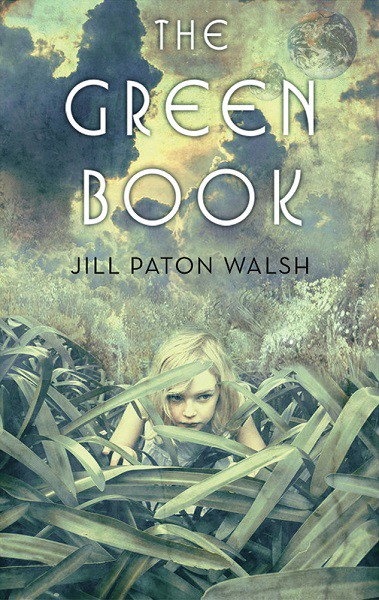
Pattie and her family are among the last refugees to flee a dying Earth in an old spaceship. And when the group finally lands on the distant planet which is to be their new home, it seems that the four-year journey has been a success. But as they begin to settle this shiny new world, they discover that the colony is in serious jeopardy. Nothing on this planet is edible, and they may not be able to grow food. With supplies dwindling, Pattie and her sister decide to take the one chance that might make life possible on Shine.
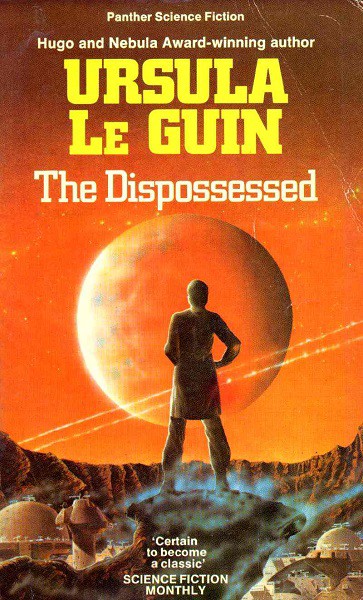
Shevek, a brilliant physicist, decides it’s time to bridge the distance and overcome that hatred that have separated his planet of anarchists from the rest of the civilized universe. To do this will mean giving up his family and life on Anarres, and traveling to the utopian mother planet Urras, where he challenge the structures of life, society, and government. This is a book about the illusions of a utopia, and the pitfalls of both communism and capitalism.
Solomon has been called an heir to Octavia Butler, and her debut novel does bring Butler’s seminal work Kindred to mind. The story follows a sharecropper, Aster, who lives in the lowdeck slums of the HSS Matilda, a space vessel organized much like the antebellum South. For generations, Matilda has ferried the last of humanity to a mythical Promised Land — and ship leaders have imposed deep indignities on workers like Aster. As the story moves towards civil war, the novel becomes both a reflection of history, and a warning for the future.
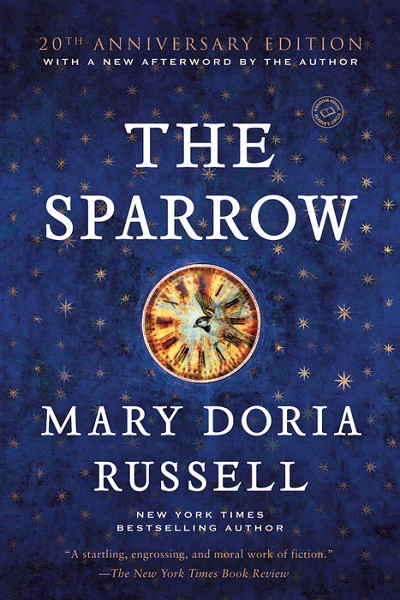
Russell is a trained paleoanthropologist, and she brings that expertise to her first novel, The Sparrow, about a Jesuit priest and linguist, Emilio Sandoz, and his expedition to the planet Rakat. The story follows two narratives, one that begins in 2059 after the voyage, and one that begins in 2019 when an astronomer first intercepts the transmissions of songs from Rakat’s people, the Alpha Centauri. Sandoz arranges to bring a mission to the singing planet even though 17 years will pass on Earth. He is the sole survivor. An unusual juxtaposition of religion and alien culture, the book won the Arthur C. Clarke and the James Tiptree, Jr. awards, the Kurd-Laßwitz-Preis, and the British Science Fiction Association Award.
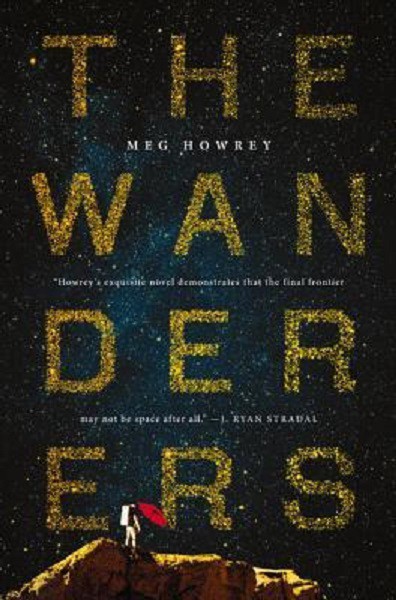
The Wanderers follows three astronauts—Helen Kane, Sergei Kuznetsov, and Yoshihiro Tanaka—who have been selected by the private aerospace company Prime Space to pilot a trip to Mars. They’ve all been to space before, but for this mission’s training, they must endure 17 months of the simulated world of Eidolon, created in the Utah desert. While it’s a novel about a vision of another world, it’s as much a story about relationships, interpersonal dynamics, and what survival reveals about humanity.
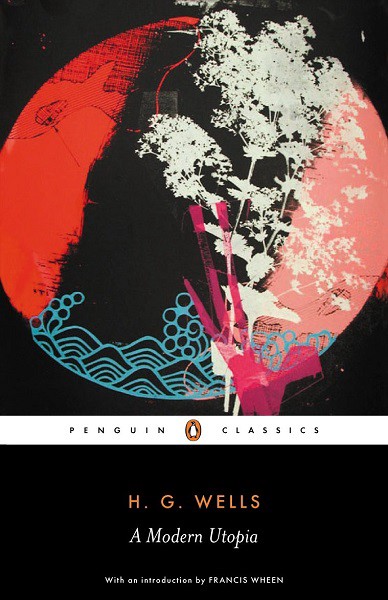
Wells, who—fun fact—was once serialized by Cosmo, is most often celebrated for his scientific romances such as War of the Worlds and The Time Machine, which paved the way for the modern sci-fi genre. But I’m putting him on here so we can mention A Modern Utopia, written in 1905. It’s full of beautifully written hard truths (see: “a Universe ceases when you shiver the mirror of the least of individual minds”), and it presents a truly fascinating new world: there is gender equality, no capital punishment, and every individual shares the plan for “comprehensive onward development.” In the words of Tina Fey, I want to go to there.
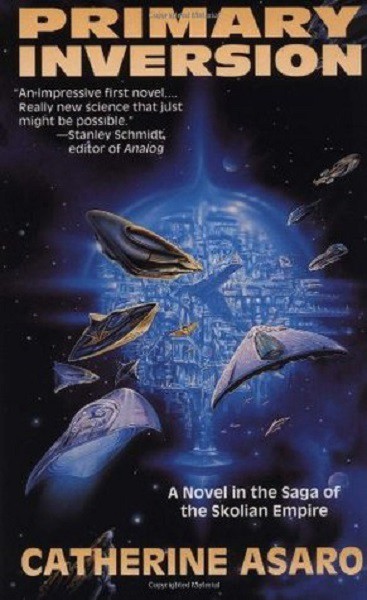
While Asaro, a doctor of chemical physics, writes many books about other worlds, she spends a lot of time looking out for this one: she’s a member of SIGMA, a think tank of speculative writers that advises the government as to future trends affecting national security. So she knows some stuff about…worlds. In the Skolian saga books, the titular Empire rules a third of the civilized galaxy through its mastery of faster-than-light communication. There is war and power struggle with the rival Eubian Concord, several generations of characters, political intrigue, and of course, romance.
When I lead a workshop, I often say on the first day “I hate adjectives.” I see the participants’ eyes widen in fear, shock, or contemplation. Let me explain.
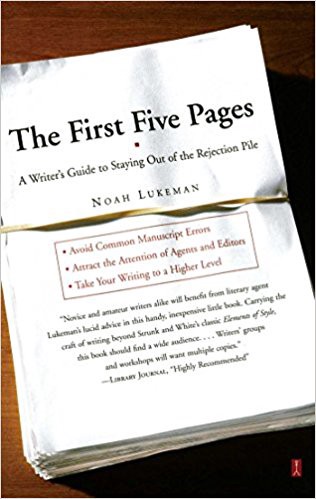
While I was in graduate school for my MFA, a good decade ago, I read The First Five Pages: A Writer’s Guide to Staying Out of the Rejection Pileby Noah Lukeman. Lukeman, a former literary agent, breaks his advice down at the line level as well as addressing the overall goals of writing. Each chapter ends with assignments that apply his advice. Lukeman is direct about what excites and bores him. It’s not an intimidating book so much as a reality check to consider what you may be doing without being conscious of it. He speaks to the reader as prospective editor, declaring we need confidence.
As an editorial assistant at the time, of course I wanted those tools — tools I felt I wasn’t getting in my MFA program so that I could solidify my style of writing for my career. I was eager to learn everything and this was where I was going to learn it. Like the nerd I am — yes, I was that person on honor roll/dean’s list and proud, dammit — I took to each chapter’s exercises with the ambition of finding the salve to any and all of my writer issues.
In Chapter 2 I hit his advice on adjectives and adverbs.
“The quickest and easiest way to reject a manuscript,” Lukeman wrote, “is to look for the overuse, or misuse, of adjectives and adverbs.” He goes on to list the six reasons why manuscripts reliant on adjectives and adverbs don’t work:
less is more;
writers shouldn’t underestimate the reader by assuming they can’t see what you want them to;
writers should always make the reader use their imagination;
the most overused adjectives and adverbs (big, small, wide, heavy, pretty, etc.) are common words that don’t add much to your writing;
they may not pack as much power as you think;
and, it can make for some slow reading despite intentions.
By the time I finished that chapter, let alone his book, I was a convert. I hated adjectives and adverbs. They were “weak”! They didn’t add anything! Words had to pack a punch! To the thesaurus! To this day The First Five Pages is a book I recommend and use in line-editing workshops to help people look closer at editing on a micro level. Lukeman’s book isn’t the only one to note this; William Strunk Jr.’s The Elements of Style also mentions using concrete words and omitting anything unnecessary. And that was published in the 1920s.
Now, I’ve toned down a bit in the past ten years, in some ways at least. My dislike for adjectives and adverbs is not as vehement. But I still agree with Lukeman that the abundant use of them brings something down in the writing rather than ramping it up. Just this weekend, after editing a piece rife with adjectives, I started reading a published book that was well-received. I went into this book eager to not edit and simply let myself fall into the content. That didn’t happen. Before I was even done with the introduction, I was bombarded with adjectives describing everything the narrator and those around them wore, as well as the sky and the club and the city. There was the slinky and sparkly skirt. The dazzling city. The loud music. The pretty people. Too much! The weight of all those adjectives and adverbs made it impossible for me to turn off my editor brain and enjoy the story.
Before I was even done with the introduction, I was bombarded with adjectives describing everything the narrator and those around them wore, as well as the sky and the club and the city.
Nope, I said and turned on Stranger Things 2 instead.
It is possible to write a long sentence that’s not a weighed-down sentence. There are pieces like Jamaica Kincaid’s “Girl” that are actually one sentence (with the help of commas and semicolons). But sentences that are over-reliant on adverbs and adjectives don’t just get longer; they get heavier.
Case in point:
After Ryan broke up with me, I dragged myself upstairs to my wooden, four-post bed and plush, overstuffed pillows where I sleepily rested my melancholy head, that is until my brother came and got me for evening dinner.
I made that one up, but I have received work laden with this many adjectives in one sentence. Contrast this with a description in Jacqueline Woodson’s Another Brooklyn:
Kings County Hospital. No rooms, just wards. Slide a curtain back and there’s a baby crying. Slide another one and there’s a girl with the crazily hanging arm. Curtains and children. Nurses and noise. Where was my brother?
Minimal usage. Clear visuals. Makes me fill in some of the blanks but provides the specifics I need to see the girl, the baby, and hear the noise that often blankets a hospital.
Here’s another, less weighed down, example:
I yawned tiredly from the day’s events.
Not horrible, but you can also keep it simple: I yawned, tired from the day’s events. Or: I yawned.
Or, instead of leaning on an adverb, heighten it with specifics: As soon as I came home I plopped myself on the sofa. I didn’t have the energy to take off my coat.
One of the best poetry collections I read last year was Counting Descentby Clint Smith. Here’s a bit of Smith’s poem, “Passed Down.”
Sometimes I forget there are freckles
on my face. It’s the sort of thing where
I’m not always proud of my skin
for being light enough to illuminate the patches
of darkness that emerge from beneath it.
There are many ways that Smith could’ve approached this description of his face, the tone of his skin, and the feelings that stem from observation. He could’ve said he was light brown or compared his shade to food, something many have said not to do. But what he chose was to be distinct with the smattering of (dark) freckles across his lighter skin tone as a Black man. “Patches of darkness” is what stands out to me here. “I’m not always proud of my skin” is what makes me re-read this poem. In the economy and the precision of his choices I can comprehend this pain without being given a laundry list of adjectives and adverbs while also not needing anything more in general to understand this inner conflict.
When nothing else can be gleaned but that someone is tall, pretty, old, young; or that their home is big, square, bright; or that someone’s wedding dress is cute, expensive, ivory, I’m not seeing details so much as a checklist.
Adverbs and adjectives can and have been used effectively. “Protests exploded nationally. Skittles and Arizona Iced Tea assumed totemic power,” says Ta-Nehisi Coates in “Fear of a Black President” in The Atlantic. Here “power” is a good word in and of itself, but Coates speaks to the symbolism of that power when it came to Trayvon Martin’s murder. To not recognize that candy and tea along with hoodies brought a visual that is both innocent and simplistic belies the galling nature of Martin’s death.
Often, adjectives and adverbs serve as a crutch for lazy writing. This can come about when presenting people as much as describing worlds. Adjectives/adverbs exist for a reason and, yes, they can be helpful. (I’m sure I’ve used several in this piece alone.) Yet when nothing else can be gleaned but that someone is tall, pretty, old, young; or that their home is big, square, bright; or that someone’s wedding dress is cute, expensive, ivory, I’m not seeing details so much as a checklist. Maybe this is one of those controversial opinions. In reality I don’t hate adjectives and adverbs; they definitely have their place in writing. But, before adding any into your work, consider whether they’re adding that desired description or an unnecessary weight.
I learned about Othello from a professor who didn’t want to discuss Othello; he wanted to tell us about Othello. He was tall and pale, and his dark hair created a contrast to his long, white face. He had his delivery down pat — no observation about a character hadn’t been said before, no quiz was new. For me, his observations about Iago, however rehearsed, were profound, but not for the reasons they should have been.
My professor didn’t talk about how people like Iago exist in the real world and tear people down for their benefit — Dick Cheney, Steve Bannon, Rush Limbaugh, to name a few. Instead, he — and I — focused on the way that people with wit and charisma could be dangerous in matters of the heart. I’d fallen for a few charming men, and I was happy to disparage them — villains weren’t always brooding in the corner, but they were sometimes the life of the party.
As for the character of Othello, I don’t remember much. I certainly didn’t have sympathy for his pride and jealousy; I didn’t connect with him, his experience, or his pain. I didn’t need to.
When I started teaching Othello, I started to realize that the play was not just a warning about the dangers of love and jealousy, but a warning about complicity and coercion, specifically on the part of people in power. Iago does not become evil alone. People support him, believe in him, and trust him, even though he’s clearly a misogynist and a racist.
Iago does not become evil alone. People support him, believe in him, and trust him, even though he’s clearly a misogynist and a racist.
The school I taught at was a private school in Washington, D.C. It was majority white and majority well-off, and it was full of potential Iagos — students who, if not as evil or conniving, were just as susceptible to believing that they deserved what they had and would go to lengths to prove it. Fifteen percent of students were outside of the financial majority, and about 20 percent were students of color (these numbers have since increased to 20 and 31 percent). Most of their teachers were like me: white, with a background in private school education. People with enough money to afford teaching at a private school, where the pay wasn’t great but the community was worth it.
Though none of us considered ourselves Iagos — we believed in equity, in kindness, in honesty, and of course we would never hurt another person for our benefit — we also murmured among ourselves about some faculty members getting positions solely because they were people of color. We resented multicultural work, because we considered ourselves educated, and therefore above racism, misogyny, and micro- or macro-aggressions. We expressed confusion about why some of the students of color couldn’t just be a bit more grateful for what they had there, in the white mansion on the hill.
I say “we” because even though I sat on the diversity committee and considered myself an ally to both students and faculty of color, I had those thoughts, and I was in those conversations. I am, as we all are, a part of the system of racism, classism, and sexism that fuels this country — handed down, in part, from the countries in Shakespeare’s Othello.
I am, as we all are, a part of the system of racism, classism, and sexism that fuels this country — handed down, in part, from the countries in Shakespeare’s Othello.
In 2007 and 2008, I worked for Barack Obama. I was sent to the white suburbs of St. Louis after volunteering in St. Louis city, where I made connections with black community leaders. During my time in the city, I’d arrive to the house parties I falsely believed I had a hand in organizing, and awkwardly wait for my time to sign up volunteers and build my team. These house parties were my first experience at being the only white person in the room, and I was often embarrassed to tell my story. I joined the campaign because I wanted a change in my life, and I joined because I could.
During Obama’s inauguration weekend, I went to the staff party, where Arcade Fire and Jay-Z performed. Obama gave a speech about continuing the good work of the campaign, and continuing to push for the change we believed in. After his speech, I noted that it was strange that so much of his staff was white, and a friend said to me: “It’s a privilege to quit your job, move somewhere, and work for free.”
At the end of Shakespeare’s Othello, the protagonist realizes that he murdered his wife on false grounds. She hadn’t cheated on him after all — he was trapped in a web of Iago’s lies. She lies dead behind him, and he speaks to his white comrades, saying: “When you shall these unlucky deeds relate, speak of me as I am…” Then, he stabs himself, falling onto his dead wife’s body.
At the conclusion of a modern movie adaptation of Othello, entitled simply O, the Othello character, Odin, walks through the hallways of an old New England dorm with a gun in his hand after smothering Desi (Desdemona) to death. The camera zooms in on the tears covering his face. When he gets to the porch, he yells at his classmates: “Somebody needs to tell the goddamn truth. My life is over…but while all y’all out here living yours, sitting around talking about the n****r that lost it back it high school, you make sure you tell them the truth…You tell them where I’m from didn’t make me do this.” Then he shoots himself, collapsing on a white wicker couch.
In the documentary O.J.: Made in America, the conversation between O.J. Simpson and LAPD detective John Lange plays as you watch one of the strangest and most televised car chases of all time. At that point, O.J. is the primary suspect in the murder of his wife, Nicole Brown Simpson and her friend Ron Goldman. As he is driven in a white Bronco by his friend Al Cowlings, he is holding a gun in his hand; he suggests more than a few times that he may use it to kill himself as Lange tries to keep him from doing so. He explains to Lange that he’s “sorry,” that “all he ever did was love Nicole,” and he says that he wants to be remembered for the person he feels he was, before all this.
What would have happened if, on that bright sunny day, as his friend drove him down the highway and away from his Brentwood home, he had shot himself instead? How would the story been different? Would the blame be placed on him, or the societal structures that never allowed him to find a sense of belonging in the first place? What the documentary makes clear that it isn’t just fame that caused his downfall, but a particular brand of it — for O.J. to become O.J., he had to base his identity around what white America required and wanted from him at that time. And regardless of whether there was a particular person plotting his downfall, there was, in a sense, a culture waiting to witness his demise.
When I taught Othello, I would start with an excerpt from Description of Africa, written by Leo Africanus, in 1550. The book was considered the most comprehensive written work on the subject of Africa until the 19th century, and we’d look at a section with the title, “The commendable actions and virtues of the Africans” and subtitle “What vices the foresaid Africans are subject unto” to get a better sense of the narratives and stereotypes Shakespeare was working with when he created Othello. We can’t know if Shakespeare read the text, but it seems likely that this idea from Africanus — “no nation in the world is so subject unto jealousy; for they will rather lease their lives, then put up any disgrace in the behalf of their women” — and this one — “yea they so behave themselves, as if they had continually lived in a forest among wild beasts” — made its way to him, and found homes in a text centered on a person from Africa who can’t control his jealousy.
Throughout O.J.: Made in America, it becomes clear that O.J.’s trial is not about whether he killed Nicole Brown or Ron Goldman but about whether or not a black man could ever be found innocent. In the documentary, we see that O.J. is as much a symbol as a person, as much a construction as a man. He knows this, too, and he plays into it, as do his team of lawyers and close friends. By the end, it seems as though a part of them comes to even believe it — they seem to think O.J.’s innocence could be a kind of revenge, not just for Rodney King, as the film suggests, but all the accused black men, subjected to generations of violence simply for the color of their skin.
I always asked my students if Othello could have been white. They’d debate it for a bit, going back and forth about how what he wrestles with is in part universal, and also connected to his gender. I’d wait for the moment when they’d bring in the Leo Africanus reference, and discuss how those stereotypes about jealousy wouldn’t resonate if Othello wasn’t African. Many of them say he was easier to prey on because of his race.
One year, one of my black students wondered what it would be like if Iago was black, and she said: “He wouldn’t have been as trusted as much as he was — I don’t think.” This was the same student who, after the Trump election, said to a room full of white students: “the fact that y’all are surprised is funny to me. I’m sorry, but…look around.”
O is not a great movie, and for that reason, we didn’t use it all that often when teaching Othello. Looking back, I wish I had. What O seems to get is what is ahead of its time about Othello, and it isn’t the fact that Othello was black. It is the message about the community that surrounds him, and how they allowed a person like Iago to flourish, exist, and believe in his power.
It is the message about the community that surrounds him, and how they allowed a person like Iago to flourish, exist, and believe in his power.
In O, the character of Iago (Hugo) is the son of the basketball coach. He is handsome, smart, and great at basketball. But O is better, and so at the start of the movie, O gets MVP instead of Hugo, kicking off Hugo’s plan to take O down. The decision to make the coach Hugo’s father gives Hugo’s revenge more heft, because we understand that Hugo has not just been slighted, but a societal code has been broken in the process. Usually, white people hand things to one another; it is familial, it is filial, it is in our blood.
Washington D.C. is 49% black, and no private school in the area reflects that number. In some ways, that is not a surprise, but even writing that sentence — even typing “it’s not a surprise” and then thinking, “it makes logical sense” — feels strange to me. There is no logic to systematic oppression that keeps money in certain pockets and not others based on skin color; and if there is, it is not a logic I want to feel comfortable with.
D.C. is 49% black, and Donald Trump, a white billionaire from New York, lives in its epicenter — a white house where, for eight years, Barack Obama lived. When Obama lived there, Donald Trump went on T.V. questioning where he came from, asking hackers to check his birthplace. Even when Obama showed the birth certificate, Trump continued to spread rumors because he could, and because people let him. We know what happened next.
During O.J.: Made in America, the documentarians chart how white and black people responded when he was not found guilty. I remember that my family, and everyone we knew, thought it was preposterous. They believed he did it, and they were shocked. In black communities, there was a sense of relief. A sense of justice. Even if they didn’t believe he was innocent, they knew that so many others had been, and it felt good to see a black man walk free.
In the past two years, numerous white police officers have been charged with murder, and they walk free. People on both sides are outraged, posts go up on Facebook, and then, quickly, we look away. Then it happens again. And again. And again.
And yet, O.J’s initial walk toward freedom will never be tolerated, particularly in the white community — it was a failure of the justice system as we know it, an outrage, and an insane breakdown of all we know to be right. I’m not arguing that Othello, O, or O.J., should be able to away with murder — I’m just saying that Michael Brelo, Daniel Pantaleo, and Darren Brown shouldn’t either.
I’m not arguing that Othello, O, or O.J., should be able to away with murder — I’m just saying that Michael Brelo, Daniel Pantaleo, and Darren Brown shouldn’t either.
At the end of the play, I’d ask my students if Othello deserves any compassion. Many of them would say yes: they would argue that it wasn’t his fault, that he was betrayed by his best friend, that he couldn’t have done anything to stop his actions. He was a victim. Others would say no: he didn’t have to believe Iago over his wife. He didn’t have to go so far as to kill her.
It’s certainly hard to argue that Othello had to kill Desdemona, even if she really had cheated. And yet, I was always happy that some of the students argued on his behalf, because I think those students understood something fundamental about the structures that caused Iago to get away with what were really his murders. In the end, it is Iago who deserves the blame. Yet he lives on, making the tragedy of Othello not just the tragedy of The Moor of Venice but the tragedy of a culture that believes in justice.
You want to know what I think about knuckle tattoos, about getting the words BOTH WAYS across your fingers, oriented so you can read it instead of the world. There is a man I know who can do it, though he has told me it will not be easy. There will be plastic gloves involved; you will have to be very gentle with your hands for a very long time.
I understand what you are getting at. I too have always wanted things both ways. As a child, my parents would pause me on the corner, metal bubby cart full of greens. Do you want to go to the bakery with Dad or do you want to go home with Mom? Sometimes we tarried there thirty or forty minutes while I looked between their faces, the cabs rushing south.
I want both ice cream and pie, to live by the ocean and in an ocean of strangers. One day I stick a jumbo yellow barrette in my hair, pair it with a white cotton sundress; the next I’ll pull out Carhart work pants and a loose tank top. I do not mix and match, I do not mashup. I separate, alternate, switch, repeat. Girls and boys and everyone else.
Is this too much desire? The world says yes, but I say no. There is something unmatched in juxtaposition, the way you can be using the hand you have inside a girl who is saying oh shit into your neck and then later it will be you saying oh shit from the crevasse made by two pillows as a man pulls you back again and again. More than this, it is the subway ride between them, the deliciously authentic and clearly untenable sense of dragging together into the moving, public light, gestures and words that we are told happen only in still, dark rooms on opposite sides of town. In Philadelphia the train hurtles above ground, past American flags painted on carpet factories and four-lane Interstate 95 which you have traveled in every season and in every kind of weather at some point in your life. I like that word — untenable. It means impossible to hold onto with your hands. It doesn’t mean impossible.
I don’t know if this is a story because what has happened so far may not be connected to what is coming. I have discovered that there are logistical reasons why the world does not put forth bothness as its first and most available offering, why we are told: you can’t have your cake and eat it too. This way of living is not for the faint of heart. It’s vain and detail-oriented work. A great deal of looking in the mirror. A great deal of hedging your bets — you can cut your hair short, but if you do, be prepared to lose weight and purchase earrings. It requires discipline, taking only what can fit in a purple backpack, and a great deal of advanced planning.
Let’s start at the beginning of the week, with Jeffrey, a scientist who I see on Mondays and Thursdays in my neighborhood. I have never seen the inside of his apartment though I know which window it is and walk by it often on my way to get Seltzer. He appears at my door in old white sneakers; later after he leaves he will jog eight miles in the dark. At first this disappointed me, I thought he would be a man good for quiet trouble, down to drink many beers on many porches and roam these cracked streets for hours in summer while we talked about music and movies and god and made out on a basketball court. Instead, I cook him pasta, pork chops, black rice. This is good, Jeffrey says, licking the plate clean with his bony index finger. He does the dishes then runs his hands through his hair which sticks up like a cartoon of a hedgehog, a cartoon of a boy. I’ve patched the elbows on two of his button-ups. There’s nothing to be done about the t-shirts but throw them away. After dinner, we sit on the steps so he can smoke and so I can watch the boys bouncing basketballs. His big knees rise nearly to his chest even from where he sits below me. We talk to my neighbor who works as an orderly at the hospital down the block. We talk about the little girl who died at the school nearby because there was no school nurse that day and about how there is still no school nurse there. I take a certain pleasure, I will admit, in how my neighbor sees us — two white kids sitting close together on a stoop.
Lamya is Tuesday and Wednesday nights, half an hour East on the train that runs across this city. She lives in a communal house of queer Muslims close to the gym where I box, which is how we met. We were assigned to hold the bag for each other at my first class. I fretted about kicking her in the face; she didn’t. As she jabbed and cross-kicked, I absorbed the bag absorbing her. I had never before seen a person in a hijab and athletic shorts — crimson mesh with white piping, the colors of an elite education. So, I said, over beers at one of the brew pubs in her neighborhood, how is it that you worship Allah and also fuck women? I think she got up right then. Sorry sorry sorry, I said. My interest in contradiction can make me rude. She sat down. For the rest of the date, we talked about Riot Grrrl. It took us months to kiss more than a peck. Are you attracted to me? I asked finally. Yes, she said. Oh yes. Now she gets excited just touching the edge of my skirt in a movie theater or the strap of my purple backpack at a lecture. Underneath her hijab, her hair is short and unbrushed. I feel ashamed to know this, as if underneath is not what I should be looking for.
I can’t tell you her real name. Her family in Jeddah are happy that she is a marine biologist and lives with other Muslims. She and her housemates sit on aluminum bar stools around a large kitchen island and eat bowls of expensive blueberry ice cream. I try to remember what I learned in tenth grade social studies when we did religions of the world, the Five Pillars of Islam. Only one comes back to me — There is no god but your God. The conclusion they reach is that Islam and fucking women are deeply contradictory but that it is possible to live in contradiction, that contradiction, in its nature, does not necessarily cancel out either property. The equation does not add up to zero, her friend, the doctor, says, before killing the rest of the pint. Later, when she is the tree and I the koala, Lamya cries, taking her hand like a duckbill to her eyes and flinging the tears across the room like a father.
Memory: my father getting ready for court. He calls my name and I come to where he is seated at my mother’s dressing table. He was colorblind and needs help. Does this go? he asks, holding up a red tie to a white shirt. Sure, I say. No, he says. It either does or it doesn’t. He is defending a man who killed his wife then put her body in the furnace of their apartment building. But he loved that dog, my father tells me as he is leaving, showing me a picture of a killer next to a German shepherd with extremely large paws.
I slip down into Lamya’s white cotton comforter, into sleep, underneath the memory, underneath my mother’s dressing table. In the dark green carpet are seashells that rattle when I pick them up. I keep rattling one and waiting for the thing that is doing the rattling to emerge from the shell’s hole but nothing emerges. Then the shell is closed, two shells cleaved together like a locket, and then always, that rattling sound. I wake to Lamya praying on the floor, the soles of her white feet facing the bay windows to the East. She chants words I have learned mean peace and blessings upon you, mean mercy. She touches her forehead to the carpet.
Beth is how I began loving this way, simultaneously, with all my pockets turned inside out. My Fridays and Saturdays, she calls herself a mama’s boi. In her farmhouse in North Carolina, where she lives with her forever partner who looks just like her but taller, she has a wall of snapback hats. Beth is only half her real name — she dropped the –any for a multitude of reasons, most of them about masculinity. She doesn’t believe in microwaves but believes very much in gyms, and in suffering for results. She still has a flip phone. As I drive the switchbacks, she yells at the inept receptionists of state senators, the national heads of agencies with intimidating acronyms. She organizes people to care about rivers and also builds complex wooden boxes which she fills with tiny objects — metal soldiers, trilobites, miniature slinkies. If you met her, you would want her. Most people do. We have picked blueberries in the woods of the highest point in West Virginia, we have lain with our spines against floorboards on the outside deck of a house on stilts in coastal Mississippi while Gulf-powerful mosquitoes sucked on our toes and ears. She says, relationship structure. She says, just tell me what you need. There came a certain point, she says, where I realized I could not just sit back and say, my girlfriend is killing me. She holds my hand and rubs my palm as if she is about to read it. She rolls her face an inch from mine and stays that way all night. This makes it challenging for me to breathe. I breathe slowly and lie awake. In pictures of her from childhood, which her mother offered to me in a neat album one Thanksgiving, Beth is thin in a striped bikini, squinting hard at the camera in an expression that might be crank or might be rage — as if the camera clicked just before she could scream.
Sunday mornings arrive bright and foreign with too much coffee and not enough dreaming. I drive the four lane highways of I-95 up or down the East Coast from wherever I have been with Beth. I listen to the radio, to books on tape, and talk to my friends on the phone. They live in Boulder, San Francisco, Tucson; they work, they marry. I’m tired, I say. Too much traveling, they say. Stay home. They talk to me about the jobs they are finding for their students who are felons, the briefs they are filing, the emails they are answering, the art they are making — huge canvases full of nothing but red, nothing but blue, real gold leaf on top of faux gold leaf. My sweet friend Leah, a nurse, keeps me from falling asleep by describing the latest videos I’ve missed — dogs snuggling panda bears, a man who built a palace for his cat entirely from cardboard boxes.
And then it’s dawn; not quite yet Monday. Beth has texted: Goodnight with an emoji of a person sleeping in old-fashioned pajamas. Lamya is on her knees, facing East. Jeffrey is smoking a cigarette and drinking coffee. Soon he will walk to work in his one tie, then he’ll be at my door again. You are thinking there is chaos here, and vast disappointment, and likely loss. You are thinking, when you build your body for too many people at once, no one comes to see it. And you are partly right, as I have said. It takes time to be in transit; I am often already gone, but not yet arrived.
There are places you can go where contradiction doesn’t matter, where logic isn’t anything, where the sum is always more than zero, but we hardly ever live there. Why? This is a useless line of thinking. That much I can report back.
At least I can say I tried. At least I can say I have found a way to live there one day a week. On Sundays, I park my truck on the street where my neighbor’s son has opened the fire hydrant. I fling open the door to my house and let the mail that has accumulated fall to the tiled floor of the vestibule. I sit down on a chair and because there is nothing to do yet, I do nothing. Don’t think, don’t remember, don’t dream.
I wonder if BOTH WAYS are really the words you want. I wonder if what you want is words.
I tell you my hands cannot take tattoos. The flesh there got puffed and scarred from the tailpipe of a Cameroonian motor bike when I was reaching for something in the dirt the summer I turned twenty-one. The man to whom the motorcycle belonged grew up minutes inland but just the day before, saw the ocean for the first time. I watched him wade in to his ankles then turn back.
My hands! I cried, they’re ruined now. My friend laughed. That will hurt like a mother, he said. And it will last forever.
Even in the case of their absence, families shape us in ways that are indelible. There are few goals more motivating than the pride of a parent, and there are few relationships more empowering—or volatile—than siblinghood. Families take so many different forms, have so many branches and offshoots within single generations, that Tolstoy’s logic feels increasingly dated: happy families can be so in wonderfully unique ways. In a toast of sorts to families of all kinds, we’ve unlocked nine stories from the Recommended Reading archives, with writing by the likes of Anna Noyes, Jodi Angel, Charles Baxter, Tara Ison, Lucy Corin and more.
For just $5 a month, members of Electric Literature get access to the complete Recommended Reading archives of over 280 stories — and year-round open submissions. Membership is tax-deductible, helps us pay writers, and keeps all of our new content free. So if you like what you’ve read, please join today!
Anna Noyes takes us on a family vacation with the narrator and her still fresh boyfriend, Luke. There’s nothing like a road trip to bring people together, she supposes, but the narrator finds herself growing closer to Luke’s mother than her actual partner. Luke’s mother, Ruth, is a life-loving woman that sees the narrator in a way that the others do not. This is a story about the unexpected mothers and daughters we meet in other.
In the unnamed marshlands of rural Australia, transformed into fable-like by an unknown force, there are three sisters living together. “Takolander’s creations are taciturn, mythic creatures; weathered statues amidst total ruin,” writes Kaite Raissian in the introduction. “And though the sisters are ‘spoken for’ by the story’s narrator, and ‘spoken at’ by the two male figures in the tale, they are still formidable presences — business people, the last vestiges of an area that nature and poverty have otherwise vanquished.” In this somewhat post-apocalyptic world, the reader leaves feeling like they have seen themselves in this trinity, and they are better because of it.
Clare Beams invites us to visit the families and mother of Middleford, “a tablecloth of a town, stretched loose and green over gentle New England hills.” But the idyllic town is struck by tragedy that claims the lives of schoolchildren, and Cele, the elderly, unofficial mother of Middleford, is looked to for guidance. This story follows the different ways tragedy can strike the individual — the witness, the leader, the family, the mothers—some expectant others in mourning. How can a town be a family to those whose families have been broken?
“Lulu,” an excerpt from Adrienne Celt’s The Daughters, tells a story of the titular girl and her mother’s trip to the Chicago Civic Opera House. The trip is initially dreamy and exciting, Lulu is taken to her namesake play and her mother is thrilled to show her the world of the opera. But the excursion quickly turns sour when the mother is forced to watch the world in which she used to be a star. “The roles we play, the costumes we wear, the tales we tell each other and ourselves… how else to reconcile our longing for fanciful escape with our desperate need for authentic, of-this-earth affection and love?” Tara Ison asks in the introduction.
“My son is fearful. Not scared. Scared is all right. I was scared during the war, but fearful is something else,” Steven Schwartz’s narrator tells us of his son, Rex, a father himself who is consistently absent from his children’s lives. If families are our first source of history, great fiction is a means of apprehending that past, of framing and understanding it. This is a story about trying to be a parent, and trying to be a son.
Welcome to the stream of consciousness of a guilty brother. After Alby punches his sister, he is forced to reconcile his mother’s dying words with his current actions. You can hear the family chemistry spewing from each dialogue. Mistakes are woven into empty promises and then stitched together by inappropriate sibling jargon. Matt Summell quickly takes you through all of the family drama, the way one bad gene can permeate into an entire lifetime, and how family can bring out the best and worst of each other.
Clarice Lispector’s debut collection of stories was also the beginning of her legend. Writes Ben Moser of New Directions, who published the translation of Near to the Wild Heart, Lispector was “a tissue of rumors, mysteries, conjectures, and lies that in the public mind became inseparable from the woman herself.” The title story from the collection invokes the prediction that women will seek out men like their fathers—and equally, how they will search for the exact opposite.
Patrick suffers his own apocalyptic moment as a white, suburban, fourteen-year-old when the world as he once knew it warps into a steep mountain of change. His normalcy is gone, and all he finds between himself, his father and his mother, is distance and misunderstanding. Simultaneously, California is on fire. While the world around him burns to make space for new fertile ground, Patrick’s life, too, is set on fire, making way for the next moment of tremendous change.
In a city of 8.6 billion people, three ladies find a home with each other. Nan, a mother and a recluse; Lexi, the daughter; and the downstairs neighbor, Wiener. Together, they build a protective and caring home in “The Babylon” as well as in each other, thus showing that home and family can stretch across unknown and unfamiliar pasts.
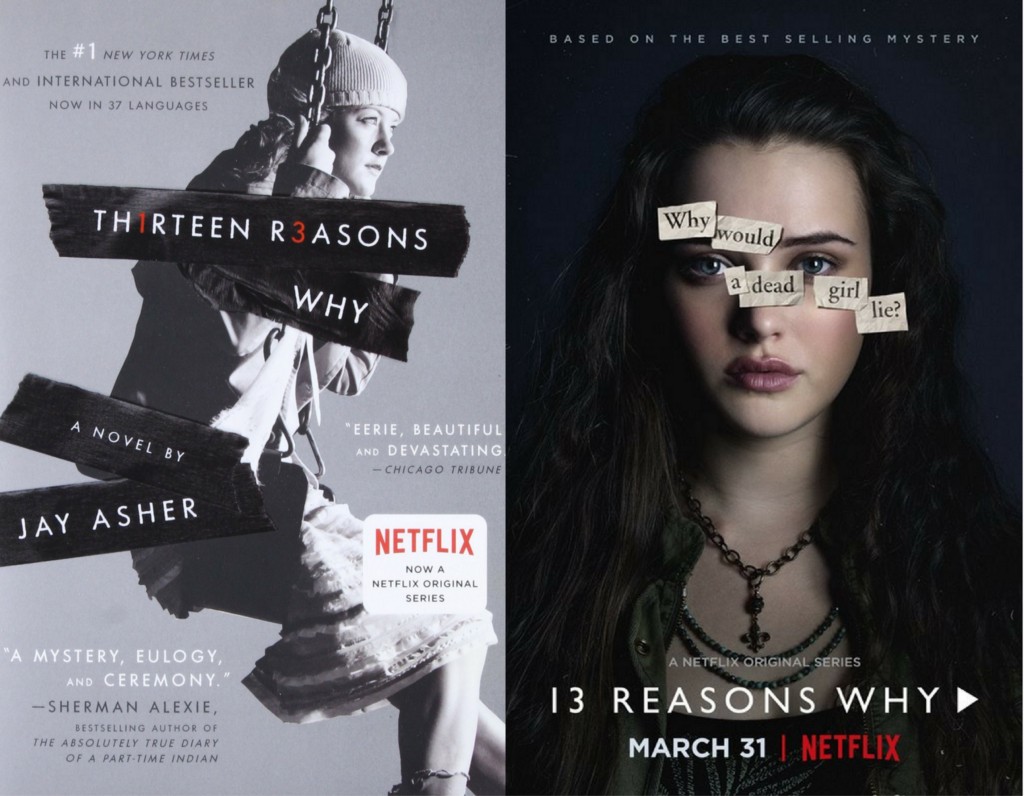
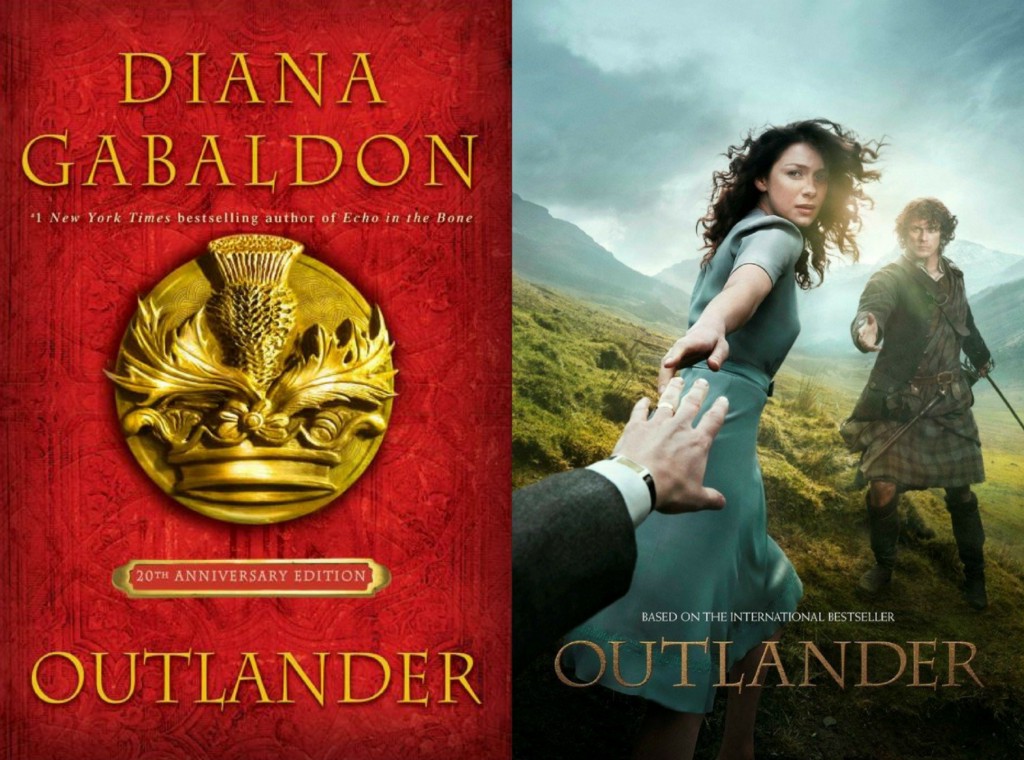
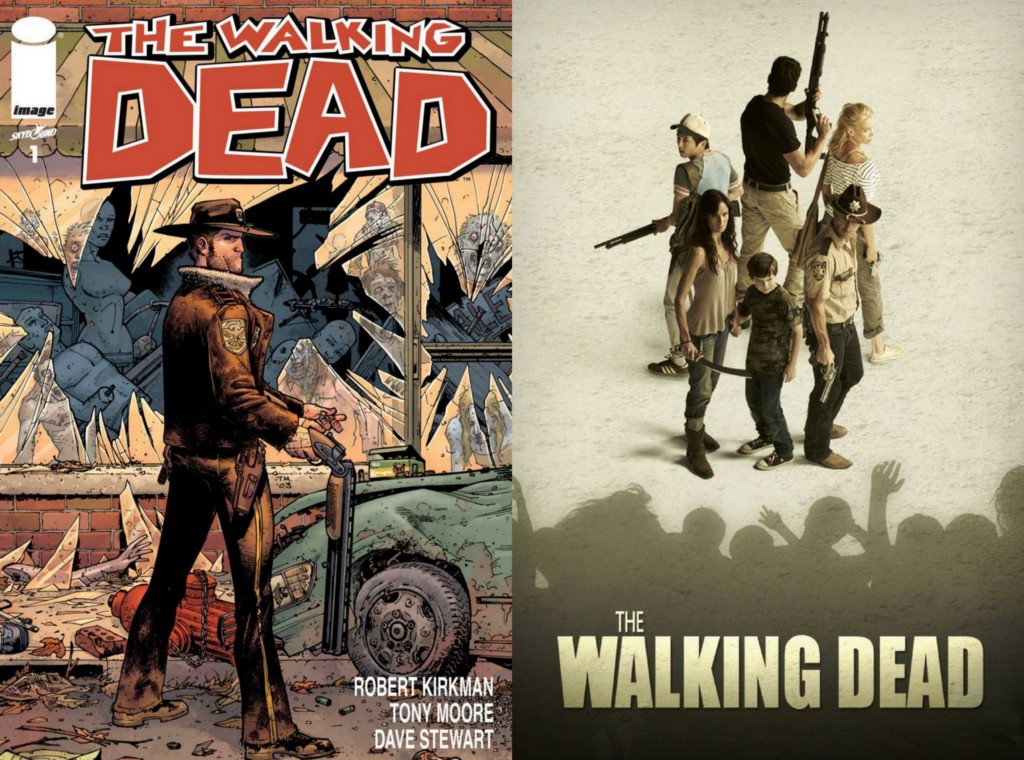
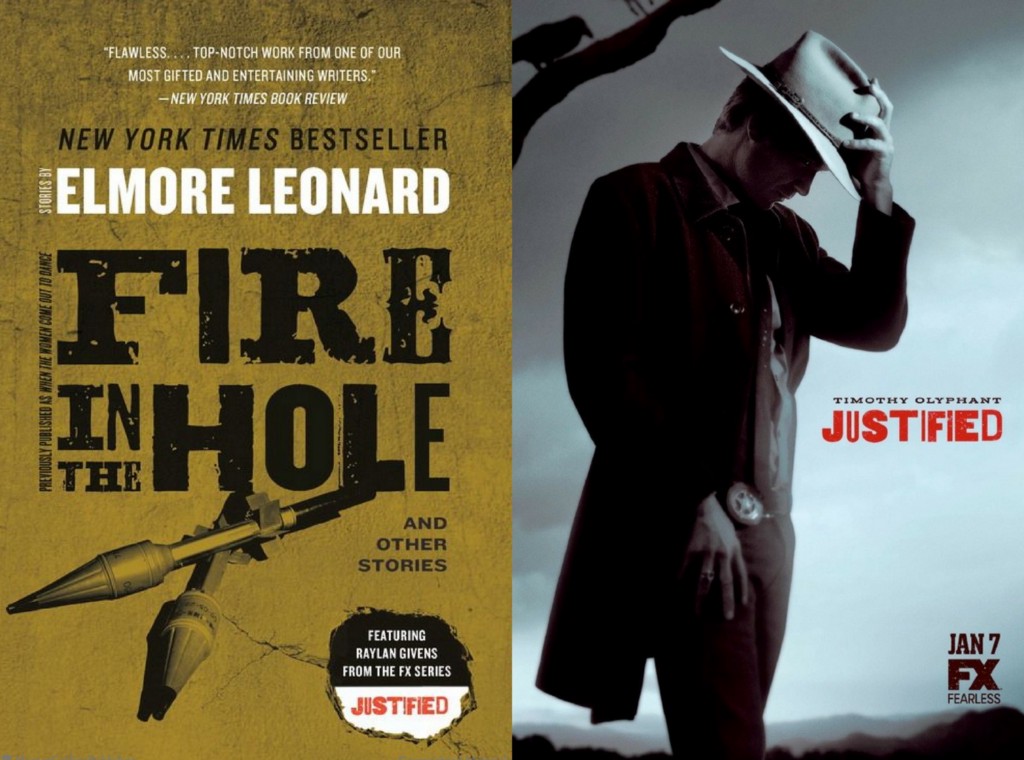
Hollywood has drawn source material from books since the industry existed. We all know that Game of Thrones came from George R. R. Martin’s bible-length fantasy novels, A Song of Ice and Fire, and that Margaret Atwood’s The Handmaid’s Tale inspired an equally gripping Hulu series, but even the most voracious readers might be surprised to learn that the following popular shows originated as paperbacks. So, next time you’re at the water cooler discussing last night’s cliffhanger, you can ask with a smirk: “Have you read the book?”
13 Reasons Why
Thirteen Reasons Why, the YA novel by Jay Asher, hit the bookshelves ten years before Netflix’s series of the same name became the most tweeted about show of 2017. Both versions are structured around the suicide of Hannah Baker and her cassette tapes, delivered to the individuals responsible for her death with an explanation of why she chose to end her life. A lot has changed in the ten-year gap between the publication of the novel and the series airing, especially the evolution of technology: In the book, the rumors about Hannah travel through word-of-mouth in the hallways, while in the TV show, compromising photos of her spread through social media and group chats.
Outlander
Long before Outlander became a hit show on Starz, the story of a time-traveler in the Scottish highlands originated in Diana Gabaldon’s bestselling 1991 historical science fiction series of the same name. With all the trimmings of popular TV (Sex! Scottish accents! Time traveling! Hot guy! Hot guy who is always shirtless!), it is a wonder that 24 years went by before its onscreen incarnation. With five more books in the Outlander series and one more in the works, fans can rest easy knowing that the show won’t run out of storylines before catching up with the books (*cough* Game of Thrones). #ClaireAndJamieForever
Pro tip: A great hack to find out what happens next is to read the book(s)!
The Walking Dead
AMC’s post-apocalyptic show about survivors navigating a zombie-ridden wasteland started as a comic book series with a cult following written by Robert Kirkman. Plenty of carnage and heartbreak feature in both the cloth and screen versions (R.I.P Glenn), but major deaths are “remixed” for the TV adaptation—characters die in the comic’s frames and on the show in different, but equally gory ways.
A lot has changed in the ten-year gap between the publication of the novel and the series airing, especially the evolution of technology.
Mindhunter
What started as the memoir of an F.B.I. agent who pioneered the psychological study of criminal profiling was adapted into the crime drama Mindhunter. The show follows two agents who interview incarcerated serial killers to get inside their mindset, and then use this insight to solve active cases. The Netflix show takes some liberties with the characters’ private lives, while the nonfiction books omits the steamy sex scenes. Overall, major occurrences from the show match with events depicted in the book, like that deeply unsettling interview with serial murderer Edmund Kemper (which yes, actually happened in real life).
FX’s Justified, about an Old West-style U.S. Marshal enforcing his own brand of unconventional justice in small-town Kentucky, was adapted from a short story, Fire in the Hole, by Elmore Leonard. The screenwriters did such a great job with Justified that Leonard was inspired to revisit his Raylan Givens character with the 2012 book Raylan: A Novel. A case of art imitating life imitating…more art.
Bones
Bones started as Kathy Reichs’s Temperance Brennan crime novels, which in turn are based on Reich’s own life story. In the TV show, which the author described as a “prequel to the book series,” Dr. Brennan is an intelligent and socially awkward forensic anthropologist in her 30s at the Jeffersonian Institute in D.C., solving crimes with her partner, FBI agent Seeley Booth. The books have a little more dramatic grit—Temperance is a 40-something recovering alcoholic, working in North Carolina and Montreal with an ex-husband and a kid, occasionally engaging in dysfunctional hookups with Canadian Detective Andrew Ryan.
House of Cards
House of Cards has a long lineage: it’s based on the BBC miniseries of the same name, which in turn is based on a book, which drew inspiration from Shakespeare’s Macbeth. Very meta. The dark, political thriller about a ruthless, power-hungry couple manipulating their way into the White House was Netflix’s first original series. Mirroring Frank Underwood’s humiliating fall from power last season, the show has been suspended indefinitely following numerous following allegations of actor Kevin Spacey’s sexual misconduct. Don’t feel comfortable watching past seasons? Read the book instead.
DON’T MISS OUT
Sign up for our newsletter to get submission announcements and stay on top of our best work.
YOUR INBOX IS LIT
Enjoy strange, diverting work from The Commuter on Mondays, absorbing fiction from Recommended Reading on Wednesdays, and a roundup of our best work of the week on Fridays. Personalize your subscription preferences here.