Sylvia Plath Looked Good in a Bikini—Deal With It

There is an oft-repeated story in most biographies of Sylvia Plath, concerning her return to Smith College after her suicide attempt and subsequent hospitalization. It was the start of the 1954 spring semester, and Plath was meeting, for the first time, the young woman who had occupied her dorm room during her illness — Nancy Hunter, later Nancy Hunter Steiner, who would go on to become Plath’s close friend, and pen a short memoir about their relationship, A Closer Look At Ariel.

As the story goes, Hunter had spent her time in Sylvia’s room feeling “haunt[ed]” by its former occupant. Plath had taken on a legendary status at Smith, thanks to both her brilliance as a student and her suicide attempt. According to Steiner, “…as the months passed I grew familiar with the details of the Plath legend through the speculative gossip that raged at the mention of her name.” In Plath’s absence, Hunter formed an image of her as a “girl-genius… as plain or dull or deliberately dowdy, a girl who rejected all frivolity in the pursuit of academic and literary excellence.” Now, meeting this mysterious figure for the first time, at a campus luncheon, Hunter was so taken aback by Plath’s appearance that she blurted out, “They didn’t tell me you were beautiful!”

This snapshot from Plath’s college years already contains the amalgamation of myth, rumors, misinformation, and surprise turns that has hallmarked Plath’s literary and personal legacies since the publication of Ariel in 1965. It’s all there, from the sudden mysterious disappearance (“speculative gossip, [rage] at the mention of her name”), to the wild projections of the missing woman (“dull…deliberately dowdy”) to the gobsmacked reactions to Plath’s actuality (Surprise! She’s beautiful!). Plath is always either under– or overwhelming her readers — Janet Malcolm famously wrote in The Silent Woman that Plath “disappoints her” in photographs. She’s looking for a red-haired witch who “eats men like air,” and all she gets is this lousy housewife, clutching her babies, hair done down in braids. Jessica Ferri, writing of handling those very braids when she worked in special collections at the Lilly Library in Indiana, exclaims, astonished, “There was so much of it!”

In my own life, more than once, I’ve been asked “Who’s that, there, on the cover?” while handling my dog-eared copy of Plath’s Unabridged Journals, which plainly state her name. When I reply, “That’s Sylvia Plath,” the response is almost always the same — it can’t be. They are looking for a magical witch, a goth girl, a myth. The image of Plath, smiling in her Smith graduation robes, causes cognitive dissonance and, ultimately, disappointment. It’s the same cognitive dissonance we, as a culture, collectively suffer about Sylvia Plath, and indeed about any woman lauded for her intellect who also has the nerve to inhabit a body: That’s her? Isn’t she a little too beautiful? Isn’t she not beautiful enough?

This pattern plays out in reaction to Plath’s image each time there is a new Plath publishing “event.” The latest is the U.K. edition of Plath’s Collected Letters, which sports as its cover art a photograph of a twenty-something Plath grinning for the camera in a white bikini. I first became aware of the cover, and its accompanying outrage, in a Facebook post from a well-known American poet, in which she (and, in the comments, other well-known American poets) expressed deep anger and exhausted frustration at the inherent sexism the choice apparently symbolized. Last week, I woke to Cathleen Allyn Conway’s piece about exactly this, in which she not only critiques the cover art for the Letters, but also that of a half-dozen other Plath books.

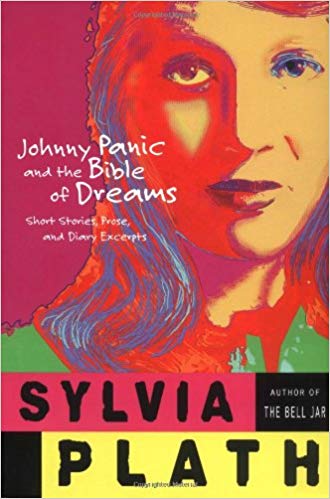
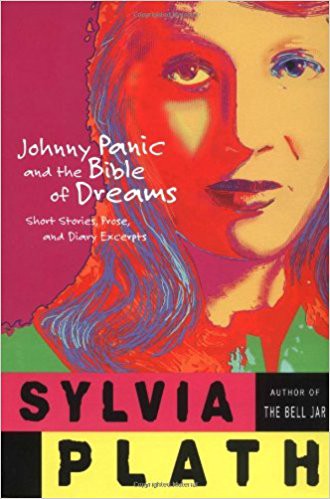
As I write this, all of those books, sometimes in multiple editions, stare back at me from between their bookends on my desk, reminding me that the politics of Plath somehow always end up as the politics of reduction and essentialism. Conway notes that the same bikini shot appeared on the cover of a recent edition of Johnny Panic and the Bible of Dreams, a collection of Plath’s prose; she lumps this cover in with a widely criticized edition of The Bell Jar as “proto-chick-lit” imagery. Presumably she would prefer covers like that of an earlier edition of Johnny Panic, whose psychedelic colors underline the idea of “mental illness” while also reinforcing the popular conception of Plath as a magical witch. While Conway does write “the rationale is that pictures of smiley Plath counterbalance the darkness in her work, lending extra tragedy to her illness and death,” she dismisses the notion because “this kind of correlation is not made for male authors.” This assessment fails to take into account another possible reason for including photographs of Plath that aren’t, frankly, morbid: they paint a fuller, more accurate picture of the living woman, rather than highlighting her tragic death.
In his introductions to Johnny Panic, to the heavily abridged 1982 edition of Plath’s Journals, and to her Collected Poems, Plath’s estranged husband Ted Hughes claims that Plath had one, singular “true self” which she hid from everyone but him; her poetry and prose, he says, were an attempt to put this “true self” into writing. Ariel, Hughes once said, “is just like her, but permanent,” an incendiary statement that would invent and bolster two absurd facets of the Myth of Sylvia Plath: that the “I” of the Ariel poems was the “true” Plath, and that the book itself was a finished thing — a mausoleum which you could enter at will, encountering the dead woman at every turn, enshrining one bleak version of Plath in the cultural mindset. Conway rightfully takes Hughes and his sister Olwyn to task in her piece, pointing out that they actively tried to construct Plath as an hysterical lunatic in the wake of her suicide; there can be no doubt about that. Unfortunately, in her assessment of Plath’s image, her “true” self, Conway is netted in the same dull trap that Hughes built and set in his public writing about Plath. According to Conway, Plath had one definitive look that was deeply connected to her true self, and it wasn’t a blond woman in a bikini. She quotes a 1954 letter from Plath to her mother, Aurelia, that states “[my] brown-haired personality is more studious, charming and earnest,” then extends this notion with her statement that, “We know brunette Sylvia was how Plath wanted to present herself.”

And herein lies the real problem: We don’t actually know this at all. One line in a letter to a worrying mother in Eisenhower’s America (who, as other texts describe, was shocked and dismayed when Plath dyed her hair blond in the first place) does not a “true” self prove. Moreover, this furthers Hughes’ dangerous idea that Plath, or any of us, has a single, definitive “self,” an idea we visit almost exclusively upon the heads of women writers. We celebrate Whitman’s celebration of himself, with its numinous notion that “I am large, I contain multitudes.” We have no problem reconciling the idea that he was both queer and a hetero-braggart who claimed to have fathered six illegitimate children, yet we take to task a photograph of a bikini-clad Plath in her college years — as though she could not possibly be both the genius she was, and a woman who was body confident, sexy, happy to smile for the camera.

The dangerous idea that Plath, or any of us, has a single, definitive ‘self’ is an idea we visit almost exclusively upon the heads of women writers.

Conway notes that Robert Lowell, Plath’s contemporary, is always pictured sitting gravely in a library or a study, with a back wall of books, as though this is the only way we can understand a writer or take them seriously. But to understand Plath at all is to know her as a woman of her time, which demanded that a woman of Plath’s race and class choose a single narrative — marriage and family — and stick with it, as she so famously chronicled in The Bell Jar. In pursuit of this end, women had to be experts, if not slaves, to material culture, as exquisitely documented in Elizabeth Winder’s Pain, Parties, Work. To deny Plath’s love affairs with beautiful things is to deny the reality of the conditions of her life.

But it’s also to deny the part of her personality that was not bleak, that was not morbid, that was not dictated by her illness or her marriage. She loved Revlon’s “Cherries In The Snow” lipstick and nail lacquer, and always dotted her clothes with a pop of red — red ballet flats, red scarves, the famous red bandeau headband Hughes ripped from her hair the first night they met, as a souvenir. These were a result of the world she occupied, but they were also extensions of her passion for aesthetics, for fashion and fine art — the current Plath exhibition at the Smithsonian contains the multitude of excellent paintings she produced in the Smith College studios. When Esther Greenwood, Plath’s Bell Jar protagonist, goes to the roof of her downtown Manhattan hotel and tosses the beautiful clothes she took with her for her summer job as a guest editor for a fashion magazine, item by item over the sleeping city, she isn’t doing so because she’s become some kind of ascetic, or because she now understands her true self, and beautiful things have nothing to do with it. She does it because she lives in a world that demands she be either/or, that makes no room for both/and. Rather than choosing a self, she begins the terrifying process of giving up any self at all, which culminates in a suicide attempt.

I’d like to believe that by now, the room for both/and exists, but reactions to the image of Plath in a bikini — which, incidentally, is a holiday snapshot taken by a boyfriend, not the calculated and manipulated result of a photoshoot — bode otherwise. This picture of Plath is not, as Conway claims, “a visual antithesis to the ambitious, intellectual poet.” It was taken, in fact, the summer she dated Gordon Lameyer and Richard Sassoon, who loved her equally for her physicality and her extraordinary intellect, and whom she loved for those things, in turn. The dialogue between the carnal and the intellectual was one Plath started as a very young woman, and did not give up until her death. At no point did she see these as mutually exclusive; she often described her love for Hughes as being the force it was because he embodied the physicality and intellectualism and artistry she both possessed and craved in another.

The reality, and it’s astounding to me that I have to write this sentence down, is that we can take a writer who wears a bikini seriously.

The reality, and it’s astounding to me that I have to write this sentence down, is that we can take a writer who wears a bikini seriously. I have three in my closet;, the most recent of which is a vintage-inspired red-halter. I bought it because I love red; I love red partly because I love Sylvia Plath. I wear “Cherries In The Snow” lipstick to the classes I teach, to parties, to intimidating meetings with condescending men, and when I do, I invoke her, just a little bit — for inspiration. For luck. For permission, which she gave me, which she gives me — to be brave. To try and astound. To say the things no one wants to say, or hear. To be beautiful, and to be smart, and sexual, and to never, ever fall into the foolish trap that these cannot coexist.
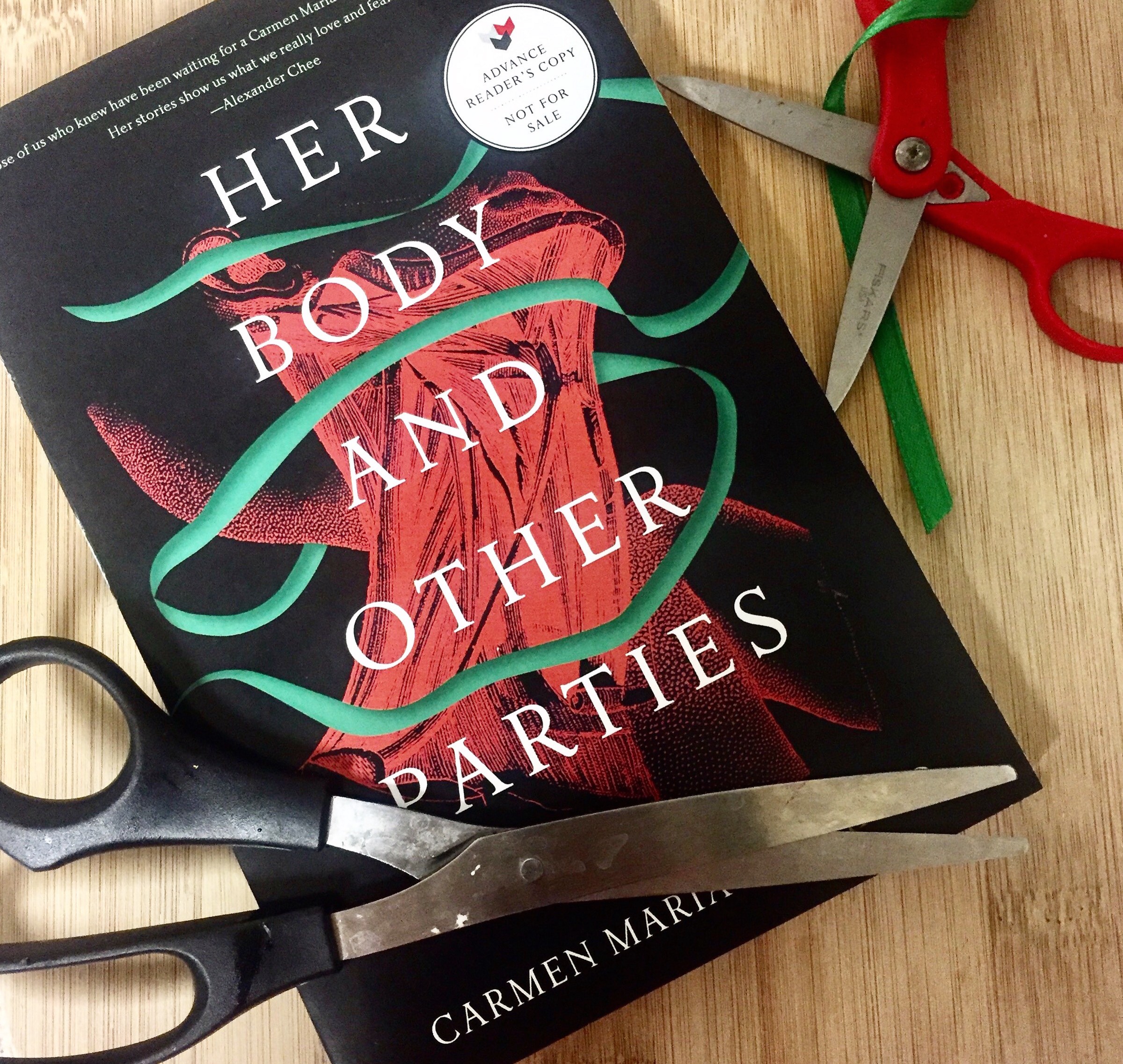
The Story Behind the Most Haunting Book Cover on the Shelves

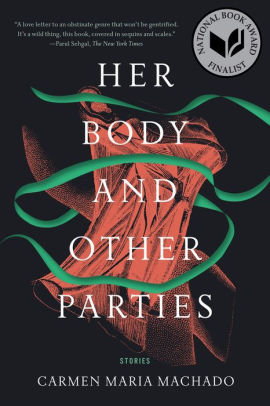
Carmen Maria Machado’s debut collection Her Body and Other Parties has been shortlisted for the National Book Award, and readers everywhere are talking about her intricate stories. Machado’s collection is dark, disturbing, sensual and sexy. Her work refuses to fit neatly into a category, and includes elements of psychological realism and science fiction, comedy and horror, fantasy and fabulism. In these eight stories, fables and classic fairy tales mix with a meditations on Law and Order: SVU, Girl Scouts lost in the woods, and a liposuction procedure.

The cover for Her Body and Other Parties picks up and intensifies the ambiance of the book. Kimberly Glyder, who has created numerous covers for Graywolf, Scribner, Little Brown, and more, captures Machado’s unique voice with a striking and sinuous image. Her design captures the simultaneous violence and sensuality in Machado’s work, in which women’s bodies both desire and disappear in fantastical and disturbing ways.

I talked to Machado and Glyder about the process of creating the cover, and in the process, discovered that this beautiful image has a secret.


Liz von Klemperer: What, if any, were your expectations for the cover?

Carmen Maria Machado: I had a Tumblr that I put together of visual inspiration, so when the time came I sent it to Kimberly. I also filled out a questionnaire my publisher gave me that included key words, images, and things I absolutely didn’t want on the cover. I suggested the colors black, white, grey and green because of the green ribbon in the first story, “The Husband Stitch.” In terms of themes, I just wrote “women” and “queer women,” and then I suggested the image be mid-century to modern, but the book isn’t really time period–dependent.

Image result for her body and other parts

LVK: What were the things you absolutely didn’t want on your cover?

CMM: I said “no dudes!” for obvious reasons. Nothing pink or girly either. I just don’t think it would be appropriate for the tone of the book. I also wanted to avoid women with Spanish fans, or salsa dancers. Nothing like that. I’ve noticed this happens a lot with women of color, and it just wasn’t what the book was about. I wouldn’t want that imagery on my book just because I happen to be Latina. They also asked for word associations and I said dark, moody, sexy, sensual, erotic, haunted, physical, death, ghost, decapitation, mouth, lips, organic, and sex at the end of the world.

LVK: Wow, that’s pretty thorough! Could you talk more about being apprehensive about your book cover being too derivative of your identity as a queer, Latina woman?

CMM: It’s complicated because booksellers want to sell your book, and obviously writers have their own ideas about what their book is about. My wife is a publicist, and we talk a lot about selling a book and packaging it for sale, and it’s an interesting dynamic between what’s going to sell and what’s not. A problem that happens a lot is that the people who want to sell your book want it to be pinkish or girly. I know Asian women take issue with publishers who put an Asian fan on the cover. So I’m really sensitive to imagery that is drawing on stereotypes or pat imagery that connects to the author’s identity, whether it’s gender or race or anything like that. For me luckily it wasn’t an issue with Graywolf at all, but I do know cases where that is a problem with the publisher, and I feel really grateful that I didn’t have to deal with it. But I was worried about it enough that I felt the need to mention it.

LVK: What was your first reaction when you saw the cover design Kimberly made?

CMM: She sent me two different covers at first. I had mentioned in the questionnaire that the image of the ribbon around the girls’ neck was unique to my book. I also mentioned the image of ghosts with bells in their eyes, which is from my Law and Order story. We ultimately chose the first option I mentioned, but with different colors. The black background was originally coral and green, and there was also pink and orange. The option we scrapped was a watercolor image of a woman’s face with bells for eyes. The watercolor image didn’t resonate with me, but I loved the other one. I wasn’t sure about the colors, though, so I threw it into Photoshop to mess with the colors and I realized I liked a dark background with a green ribbon. I sent that back to the publisher and suggested the color change. They made the edit, and I loved it. It was pretty low stress, compared to experiences I’ve heard with other publishers!

A problem that happens a lot is that the people who want to sell your book want it to be pinkish or girly.

LVK: Many of your stories feature women who disappear. I’m thinking specifically of “Real Women Have Bodies,” “Eight Bites,” and “Especially Heinous.” How did you go about envisioning these bodiless characters, and what that process was like?

Carmen Maria Machado: The imagery in “Real Women Have Bodies” is pretty straightforward. That story started with the play on words in the title, which is real women have curves. But what if real women just have to have bodies? What if the physicality of a body was validated someone as a “woman?” What would happen if women started to lose their bodies? There are actually a lot of moments of physicality in that story. For example, the moment where she looks through her fingers and she can see her bones. I was thinking about being a kid and putting your fingers on a flashlight and seeing your flesh glow orange though the shadow of your bones. That’s where the image of seeing through yourself came from.

I just read Roxane Gay’s new memoir Hunger, which is about how fat people are highly visible and completely invisible, and it really resonated with me as a reader and as a fat woman. It’s very strange. Women’s bodies are both put on pedestals and scrutinized down to every detail, but also we are blacked out of various conversations and elements of culture. That’s true of all women, and I think when we look at different iterations of non-white women, of queer women, of fat women, there are all these ways in which things are complicated. I feel that that state of being scrutinized and invisible is an incredibly real way to think about gender and the body in our current situation and probably forever. I think that’s why that imagery pops up.

LVK: Yeah, the cover really does justice to that idea. As in, how do you depict a body that’s disappearing? I love how Kimberly’s illustration is a red corset, cinching a waist. The green ribbon is loosely coiled around it, which to me indicates absence and empty space.

CMM: You know it’s also a neck, right? If you look at the illustration it’s actually a lower part of a jaw and the muscle of a woman’s face. But it also looks like a corset. That’s what’s so amazing about it! It’s so good!

If you look at the illustration it’s actually a lower part of a jaw and the muscle of a woman’s face. But it also looks like a corset.

LVK: Wow! I see it now!

CMM: Yeah, it’s inspired by an old medical illustration and turns into an optical illusion. It’s either a neck with a jaw but it looks like a corset and the ribbon is either being tied or untied, which is unclear, which I really like. There’s a lot coming out of it, you can read it in a bunch of different ways and it has so many dimensions.

LVK: Thanks for clarifying, that adds so much to the image. Is there anything else you’d like to add?

CMM: I’ve always loved collaboration and other artists working from my words. This is a really cool example of how that worked beautifully.


Liz von Klemperer: I talked to Carmen yesterday and she said in the Graywolf author questionnaire she mentioned words like dark, moody, sexy, sensual, haunted, physical, death, ghost, decapitation, mouth and lips. How do you interpret such disparate images?

Kimberly Glyder: I was struck by the medical image I found because the woman is looking up, exposing her neck. It has a sensual feel to it but it’s also quite haunting and spooky. I’m usually not entirely literal and also try not to be too conceptual. Words like “haunting” and “decapitation” might not draw a viewer in, and I’m specifically trying to look for visuals that will be beautiful or at least engaging on a cover. I want to intrigue people, but don’t want to scare anyone away. I thought that this image is a nice balance between all of the words Carmen mentioned. Originally I’d had a line across the throat, which I turned into the green ribbon, which I think is more evocative and beautiful.

I want to intrigue people, but don’t want to scare anyone away.

LVK: I originally thought the image was just a corset, and then Carmen pointed out that it’s also a neck. That took me a minute to figure out, and I like that it’s not immediately apparent, and that you have to mull it over.

KG: Yeah, I think that that’s an interesting way to look at the cover because, like her writing, it is nuanced and can be interpreted multiple ways. There’s a lot of raw, graphic detail in her writing, so to me this diagram is a pretty interesting take on that.

LVK: The book in general is so dark but there’s a delicate aspect to it that I see translated on the book cover. How did you balance those two tones of the book, and translate violence and the sensuality so effectively?

KG: Going into the book I was prepared for a disturbing read, because the questionnaire Carmen filled out was very dark. I was surprised, though, by all these moments of sensuality. Specifically the story the cover is based on. The ribbon is tied around the woman’s neck, and there’s something that’s very, as you said, delicate about that. So I was trying to find a balance. I wanted people to be drawn into the imagery, but not be literally scared off. I didn’t want it to look like a certain kind of genre, and I really wanted it to be open enough for people to be curious but intrigued enough to buy and read the book.

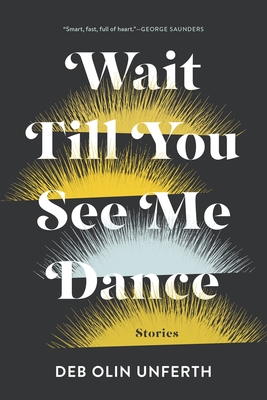
LVK: I also read Deb Olin Unferth’s Wait Till You See Me Dance, and the cover you created for that collection is distinctly different. It’s more paired down and simple, and has a different vibe. How do you bring your own style to book covers while giving each one a unique look to it?

Kimberly Glyder: The thing about Graywolf books is that they’re all so incredibly diverse and interesting. There are so many visuals I can pick up, and I look at every book as a completely unique project with a completely unique style. A consistent through line in my work is that I do a lot of hand lettering and drawing, but I do try to approach each project as a unique challenge.

LVK: What’s a common challenge that you come up on when you’re designing book covers?

KG: It’s very different and depends on the publisher. I had a great relationship with Graywolf because they fit me with the right books, and I also think that they trust me as a designer and trust my part in the creative process. Other publishers try to do this, but there are a lot more people weighing in in terms of sales reps and marketing people. It can get very difficult the more people are involved. It can really strip down your design sometimes. Most of my Graywolf covers have been chosen as-is and they go out in the world and they’re exactly how I would hope they would be.

LVK: It sounds like the process of designing a book cover is fairly collaborative with the artist, author, and publisher weighing in.

KG: When I do book covers I look at the information that’s given to me but it’s also very much a solo project, and I don’t think of it as collaborative. I’m just given a manuscript and a lot of publishers don’t give you information from the author, so many times I have nothing, I’m just told to design the cover. Although it feels like a solo process, I am always thinking about the buyer and about how people will engage with the cover either if it’s online or in a bookstore. I want it to be engaging enough that they will want to pick it up. So in that way I am being directed, but I’m also outside of the publishing process. My personal work consists of drawing and painting, and it’s exclusively my own and not something that I’m being directed to do.

LVK: Is there anything else you’d like to add?

KG: I had a great time working with Carmen, and I’m excited to hear what she has to say about the process!

The Best, Most Battered Books from #ReadtoShreds

There’s something about seeing a book that’s been well-worn. The annotations, dog-eared pages, and cracked spines tell a story entirely separate from the one between those creased covers. A book has a life of its own, and with any life comes the effects of age. It’s easy to get precious or self-congratulatory about one’s investment in literature, but books that have been handled, hauled around, creased, marked up, and carefully taped back together remind us that reading is also an act of love.

Back in early September, we fired up the hashtag #ReadtoShreds to seek out the most loved-to-bits books on the internet, and the result made us want to dig through our bookshelves to find more, more, more. (Well, not my bookshelves. I’m disqualified from this hashtag because I laminate all my paperbacks.) Take a look at some of the highlights, and be sure to share some of your own with us on Twitter and Instagram. And if you already have, who’s to say you can share just one?

It started with Benjamin Samuel’s bruised and battered high school copy of The Catcher in the Rye, which probably looks a lot like all of our high school copies of the book.

Our editor-in-chief, Jess Zimmerman, set the tone with these Hitchhiker’s Guide paperbacks. All the trademarks are there: missing covers, yellowed pages, a brittle spine on the verge of giving up.

A book passed down from generation to generation? This is the very definition of a book with a history and story of its own.

This copy of Red Peony is either awe-inspiring or as horrific as a crime scene photo, depending on who you are.

I had this exact edition of Anna Karenina but my copy remained pristine (because I never read the book until years, and at least one new edition, later).

Ryan Ellis’s stack of books reminds me of those quiet, used bookstores you stumble into on a whim with stacks of books from floor to ceiling, all of them so weathered they’re unreadable and you’re pretty sure its where books go to die.

Morgan Parker’s copy of Invisible Man is stripped bare, its pages as naked as it was when the book-block was first printed.

I still haven’t read Dune but this picture from Matt E. Lewis makes me want to see what it’s all about.

When is a book officially retired from circulation? Is it when the spine no longer holds the pages and, like Alanna Cotch here, a reader has to use tape, rubber bands, and more to keep it whole?

Heather Scott Partington with a life hack: If a book’s length and size is too intimidating, cut it into more readable, less overwhelming pieces.

Oh you better believe these books have seen some things.

Jenna Jimmereeno wrote another Franny and Zooey’s worth of annotations in her copy of Franny and Zooey.

Contributing editor Kelly Luce’s copy of Italo Calvino’s Invisible Cities has traveled and been taken along to perhaps as many cities, places as varied as those found in this experimental classic. This is what a book looks like when it is with you for life.

I call this one — from author, Ryan Britt — the end of an era. A book truly devoured, read through so completely it no longer is a book.

Does ‘Star Trek: Discovery’ Deliver on Its Promise of Diversity?

H i. I’m Rahawa Haile, an Eritrean-American writer and lifelong Star Trek fan. I’m joined by Nicole Chung, a writer and editor who’s still a little disappointed she couldn’t attend Starfleet Academy and troll Wesley Crusher. She and I both wanted to write about the new Trek series in anticipation of a mostly white/mostly male flood of episode reviews and thinkpieces. Since Star Trek: Discovery used leads who were women of color to promote the show and its commitment to diversity, who better to give feedback than us?

Star Trek: Discovery streams on CBS All Access on Sundays at 8:30 p.m. ET. If you want to watch and yell about it with us (not at us, please), we’re on Twitter at @rahawahaile and @nicole_soojung. But if you haven’t watched it yet, be aware that this conversation will contain many, many spoilers.

Nicole Chung: Hi Rahawa! Maybe before we get to SO WHAT DID YOU THINK?? about the long-awaited Star Trek: Discovery, we should talk about what brought us to sci-fi and Star Trek in the first place. I’ve been rereading favorite books with my older daughter, who certainly doesn’t need me to read to her, but I did not go through all that labor only to sit on the bench while she reads my favorite books by herself. Somehow I hadn’t realized just how many of the books I’d want to read aloud with her would be sci-fi and fantasy, from A Wrinkle in Time to The Lord of the Rings. Which seems like a silly thing to have overlooked! These books were life-giving to me as a kid.

Still, you can’t necessarily draw a line from loving Madeleine L’Engle to attending a small-town Star Trek convention (which I did, in early high school; my Starfleet Academy class ring no longer fits). When it comes to my love of the Trek multiverse, I must point the finger at my dad. We’d watch whatever Trek was currently on CBS on many a Saturday night, and often we’d stick around for very late Original Series reruns. We owned all the movies. Dad still loves Star Trek in all its iterations — except for NuTrek, about which we argue with no bitterness (he says “it’s Star Trek for people who don’t know anything about Star Trek”; I agree to a point, but don’t necessarily think that’s a bad thing, and I find the new cast utterly delightful).

I have a hard time ranking the Treks because they are so different, but Star Trek: The Next Generation is my sentimental fave and Deep Space Nine is the one I’m most likely to rewatch nowadays — I think it is the strongest and also the weirdest of all the series.

Rahawa Haile: I met Star Trek as a young girl in love with all things “space” as many children are. I grew up watching Star Trek: The Next Generation, proceeded to watch Deep Space Nine, and gave up a few seasons into Voyager. At 16, I was so thrilled for Enterprise’s premiere I begged my mom to buy me a small bottle of Alizé so I could pretend it was Romulan ale (I settled for “Cool Blue” Gatorade); it was to be a short-lived excitement. Enterprise was terrible. I came late to Star Trek: The Original Series. An episode here and there, sure, but rarely more.

Star Trek: Deep Space Nine felt like a revelation. As an eight-year-old in Miami — three hours south of the rocket launches at Kennedy Space Center — watching Avery Brooks, a black man, command a space station meant everything to me. It still does.

Watching Avery Brooks, a black man, command a space station meant everything to me. It still does.

NC: Brooks was so good throughout that entire series, and it was such a strange role — boilerplate Star Trek storyline at first, and then things got wild. The weirder that show got, the more I loved it.

I would have been excited about Discovery anyway, but two women of color leads in a Star Trek series seemed, well, too good to be true. I have been grappling with the fact that I was fully ready to be pandered to with this series, as a longtime sci-fi fan who’s not white. (When you’re usually ignored, honestly, a little pandering can be welcome.)

For me, it was thrilling just to see promo photos of Sonequa Martin-Green (who plays Michael Burnham) and Michelle Yeoh (who plays Philippa Georgiou) in their new uniforms, on the bridge, looking badass. I got choked up seeing Michelle in the captain’s chair. In their first scene together, when they’re walking through the desert on an alien world, discussing the mission and whether Martin-Green’s character is ready for her own command — it was about as happy as television has ever made me.

I was fully ready to be pandered to with this series. When you’re usually ignored, a little pandering can be welcome.

RH: Right. But I wish everything about Discovery didn’t feel so…opportunistic? The CBS All Access subscription. Their treatment of Yeoh (death) and Martin-Green (incarcerated). If the allure of diversity in this series — which their promo material relied on heavily — lies not only in who is seen but who has agency, the show is off to a very questionable start.

NC: I would like to talk more about this, because I too was rather dissatisfied — and it wasn’t just the early death of Yeoh’s character, though that was one disappointing result of larger plot and character issues. As you point out, just having people of color on the show is not enough; you also have to write them well, give them the kind of background, development, and agency nonwhite characters lack on so many shows.

I couldn’t understand why Martin-Green’s character would throw away seven years of camaraderie and mentorship to knock out her captain and attempt a mutiny, for example (even to save lives?). That move just felt rushed, like we’d need more backstory and a better grasp of the characters in order to fully understand it. Yes, Michael was triggered by a run-in with the Klingons, who killed her parents — but it seemed too great a leap to have her attack Captain Georgiou in the pilot.

As for Georgiou, she was allowed to be seen nurturing her crew, being an encouraging mentor . . . and yet, somehow, she was not shown to be a very good captain? She was rather hapless during the battle, anyway, until the (white, male) admiral showed up. Now the captain of Discovery, the ship where Michael Burnham (Sonequa Martin-Green) is headed, has in Jason Isaacs’s Lorca a captain who is in it to win it, and you could read this as a decision to give us yet another white male captain who can do the job an Asian woman couldn’t.

It doesn’t sit well with me that these two women I was so excited to watch in this universe had such a strange, almost nonsensical beginning and a relationship I just could not figure out.

Just having people of color on the show is not enough; you also have to write them well, give them the kind of background, development, and agency nonwhite characters lack on so many shows.

RH: Yes! I called Martin-Green “Michael Thrace” (a reference to the Battlestar Galactica reboot’s Kara Thrace) at one point because of this impulsiveness. If you’re going to part ways from Roddenberry’s utopian vision that starkly, give me the character development to back it up!

I’m uncomfortable with how much this series is indebted to the Battlestar Galactica reboot. I don’t care how impressive the CGI was: Episode two did not earn its battle. No episode two does, because television is not the movies. Visuals are not the reason Star Trek has enchanted viewers for 50 years. I need more than 40 minutes of set-up to care about the people in a battle like the second episode’s. My lifelong history of rooting for previous Federation leads does not mean Discovery gets to skip the heavy lifting of building characters in favor of shootouts. Action is meaningless if I know nothing about those who are acted upon.

I’m disappointed as much as everyone else by Yeoh’s death. Charlize Theron received endless praise for learning to fight during the filming of Atomic Blonde, but oh my God does Michelle Yeoh deserve an Emmy for managing to act like she doesn’t possess her legendary fighting skills in this episode.

NC: Yeah, as I keep saying to everyone, there’s no way Michelle Yeoh loses that or any fight IRL, sorry. And I liked the BSG reboot, except for the last bit of the series finale and literally two episodes I always skip (BSG fans can probably guess which ones), but I don’t think it’s a model for Star Trek.

Support Electric Lit: Become a Member!

RH: I tweeted that I don’t think Discovery knows what science fiction show it wants to be yet. It’s streaming on a subscription service meant to lure established fans; it’s promoting(ish) women of color leads meant to entice wider audiences; it’s action-driven and shiny because it believes it has to be as visually immersive as the recent films. I want stronger writing and more exploration.

Two scenes stuck out the most to me from the Discovery premiere. The first was when Martin-Green’s face looks almost golden in her spacesuit. That look of awe — that is what I’m here for. The other was in the brig, when her cell was about to be exposed to the vacuum of space. “How does a character face death?” will always be an interesting question. Watching her before she found a way out — her body language, her silence, everything — is what gives me hope for this series. (Although I’m a little surprised she didn’t close her eyes for the scene! Same with Chris Pratt in Guardians of the Galaxy. Readers, if you’re ever about to be exposed to the vacuum of space, please close your eyes.)

Overall, I think my kindest takeaway is that Martin-Green has the range. She can be stoic. She can be emotional. She can be a reserved soldier. She can lie. This is more dexterity than most Star Trek characters usually get to show. That kind of depth just isn’t written into them. These next few episodes are going to matter a lot. I want to see how she interacts with her fellow crewmen. Great emphasis has been placed on the novelty of having a series told from the POV of a character other than the captain, which might be neat, but is also incredibly vulnerable to the chemistry between Martin-Green and the rest of the crew. Can you imagine a DS9 told from Odo’s POV versus, say, Bashir’s? A TNG told from Worf’s POV versus Data’s? We’re talking about wildly different shows that would get old or stale for different reasons at different times.

I hope Discovery doesn’t waste Martin-Green. I hope it isn’t a show about her having to prove herself over and over again. Star Trek is about connections, successful or absent. I hope it shows us some.

I hope Discovery doesn’t waste Sonequa Martin-Green. I hope it isn’t a show about her having to prove herself over and over again.

NC: I’ve wondered about perspective on Discovery, too, because while other series have centered the captains, they’ve also been strong ensemble shows with different episodes unfolding from different characters’ perspectives. On TNG, I appreciated weird little episodes like “Suspicions,” which gave us a whole episode of Dr. Crusher playing detective; or “Data’s Day,” all about Data and his friendships with O’Brien, Keiko, and Crusher. I don’t know that a serialized show leaping from conflict to battle to shocking twist can do that kind of storytelling or perspective-shifting. And maybe we don’t miss it so much if Michael turns out to be the wonderfully developed character Martin-Green deserves! But it’s another one of those things I tend to think of as quintessential Star Trek, and it’ll feel odd if we don’t see it later.

RH: Let’s talk about the Klingons. I’m deeply disturbed by how flat they made them, how singularly intolerant. They may as well be DS9’s Jem’Hadar. The slogan “Remain Klingon” has made waves across the fandom as an allusion to the political climate in America. But listen, are the Klingons in Star Trek: Discovery the other or the bigots? Are they both? Because if so, I feel like I’ve just walked into someone telling me black people are the real racists. Who does the show want them to be? And, based on that answer, what does it mean that they’re the villains?

NC: That’s such a good point. It’s a little disappointing after the world-building with the Klingons I grew up watching on TNG, who were sometimes allies and sometimes not, but always complex and compelling. I thought the “Remain Klingon” rallying cry signaled the Klingons are meant to be the bigots, but the portrayal was confusing! I kept thinking of Worf’s line from the DS9 episode when Sisko and crew go back to Kirk’s Enterprise and witness the encounter with the Tribbles; they see some Klingons and note how different they look, and Worf is like, “Yeah, we don’t talk about that.” These Discovery Klingons were pretty much unrecognizable to me, which would be okay if the portrayal wasn’t so one-dimensional so far.

How Leonard Nimoy’s Spock Taught Me to Be a Writer

Of course, even on other Star Trek shows, whole species are often whittled down to a single trait: the Romulans are sneaky, the Klingons are warlike, the Cardassians are ruthless, the Ferengi are greedy. And yet within those broad strokes you see individuals (I guess I’m thinking about Garak now, because I am rewatching DS9 as I write this) who get to be full, interesting characters, of but also distinct from the general cultural stereotypes.

I’ve been trying to think of a sci-fi offering that’s been especially good when it comes to race and culture (both literal aliens, and also actors of color in all sorts of interesting roles). I keep going around, arguing with myself about whether sci-fi does race better or worse than other types of stories. I am not sure. It’s probably a silly question. But I ask it because sci-fi is where I’ve sometimes felt just slightly less invisible than I do in other genres (cozy mysteries, love stories, literary fiction…). I guess I’ve always appreciated Star Trek for its “diversity,” even when I have wanted a hell of a lot more of it.

I guess I’ve always appreciated Star Trek for its “diversity,” even when I have wanted a hell of a lot more of it.

RH: I hear you. DS9 excelled at portraying Ferengi (Rom) and Cardassians (Garak) who broke away from stereotypes. My gut reaction is to say, yes, of course sci-fi handled race better than other stories, but I wonder how much of that is still true; there’s an argument to be made that comics are currently doing this better and more consistently than just about any format out there. Televised sci-fi today can bring us representation in ways that are important within the context of their stories, sure, but that are also intrinsically tied to the historically exclusionary nature of that medium.

My takeaway from episode three is that this Star Trek is going to do whatever the hell it wants. No one trusts anyone. The captain might be good or bad. Whatever sense of camaraderie might develop among the crew will take longer than most old fans are used to seeing. I hope they stick around.

The Nobel Prize in Literature Committee is Back on Track

I f the Nobel Prize in Literature were a TV show, last year would have been the season it jumped the shark. The selection of Bob Dylan—Bob Dylan! Not even Leonard Cohen!—outraged some, confused everyone, and embarrassed the hell out of The New Republic’s Alex Shephard, who reported on the betting odds with a piece entitled “Who Will Win the 2016 Nobel Prize in Literature? Not Bob Dylan, that’s for sure.” Shephard hedged his bets this year, gamely including such literary luminaries as Kanye West and Bruce Springsteen on his list, albeit at no odds.

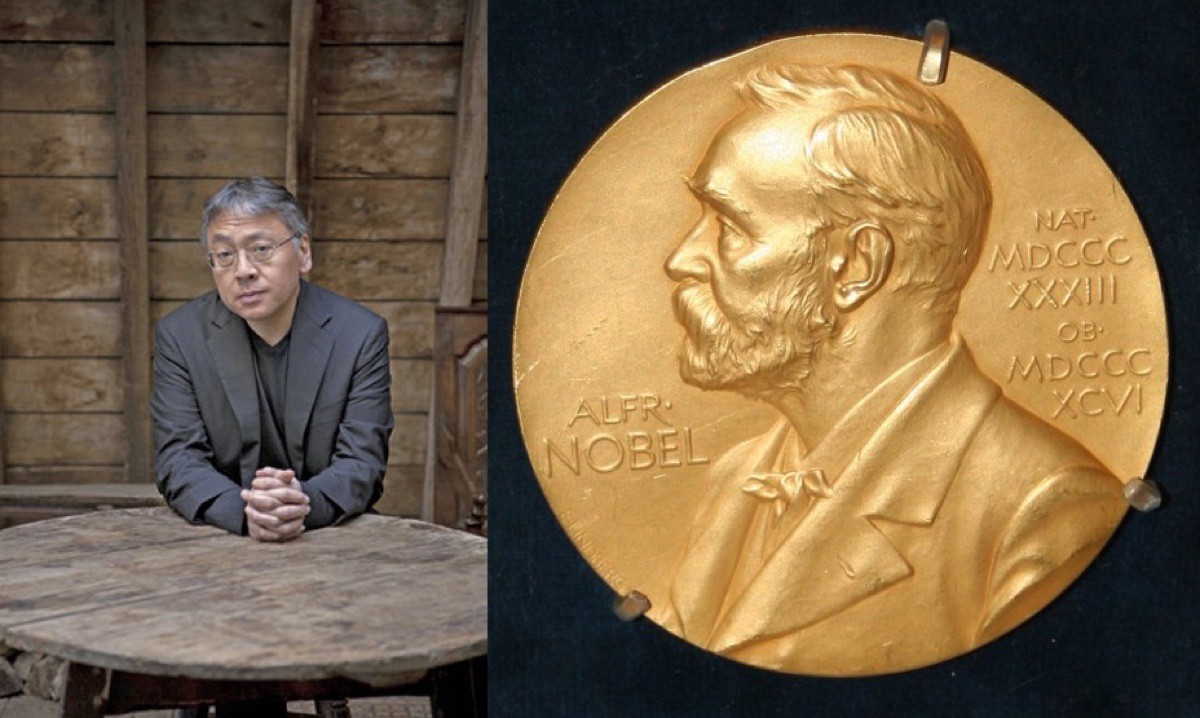
But if the Nobel Prize in Literature were a TV show, this year would be the season everyone assures you is worth sitting through last year to get to. Kazuo Ishiguro, the British novelist who won the Booker Prize in 1989 for his The Remains of the Day, isn’t exactly a surprising choice—by which I mean Americans have heard of him, and his work has even been made into a movie. Two movies! But it’s also just surprising enough. Ishiguro didn’t appear on the list of top betting odds; favorites included Kenyan novelist Ngugi Wa Thiong’o and Canadian national treasure Margaret Atwood. But he’s an undisputed master of the craft of fiction, a luminous writer praised by the committee for his “carefully restrained mode of expression” and “great emotional force.”

That tension—between restrained expression and great emotional force roiling beneath the surface—is especially characteristic of The Remains of the Day, Ishiguro’s best-known novel. The novel’s narrator and sole voice is an aging butler, so the restraint of the prose is also a form of character development; the experience of reading the novel is one of working down inch by inch through that reserve to touch the torrent of feeling it’s holding back. But the same tension appears in Never Let Me Go, in which a secluded and heavily supervised English boarding school turns out to have a dark secret, and An Artist of the Floating World, which like Remains of the Day is told through the reminiscences of a single flawed narrator considering—and concealing, and revealing—the worth of his life.

“I quite like language that suppresses meaning rather than language that goes groping after something that’s slightly beyond the words,” Ishiguro said in a 2015 interview with Electric Literature. “I’m interested in speech that kind of conceals and covers up. I’m not necessarily saying that’s Japanese. But I suppose it goes with a certain kind Japanese aesthetic; a minimalism and simplicity of design that occurs over and over again in Japanese things, you know. I do like a flat, plain surface where the meaning is subtly pushed between the lines rather than overtly expressed. But I don’t know if that’s Japanese, or if that’s just me.” Whether or not it’s Japanese in origin, the Nobel committee agrees that it’s global in impact. Maintaining the delicate balance between careful prose and emotional heft is a deft trick, and Ishiguro deserves to be recognized.

Plus, we’re all extremely relieved it wasn’t Bruce Springsteen.

How One of the Sickest Books Ever Written Cured Me

Novel Gazing is Electric Literature’s personal essay series about the way reading shapes our lives. This time, we asked: What’s a book you read in secret?

I got my first paycheck in April of 1999. I was 15 years old. I decided I would buy a book.

My sister drove me to the local mall, and I walked into Waldenbooks and scanned the shelves. This was an auspicious occasion: the first earnings of my life. I believed in signs and wonders and wanted to make my own, so I needed to choose wisely. I wanted to possess a book that would define me. I wanted a manifesto. I wished to become a real person by way of something bold and mean and poetic.

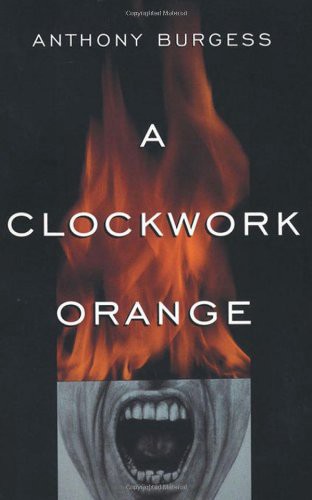
I did not have to search long. The book’s appearance on the shelf was almost audible, as if it were emitting a faint, hellish siren. On the cover were flames and a screaming mouth. The mouth’s teeth were crowded and stained. A Clockwork Orange by Anthony Burgess.

I must have known I would not be allowed to keep it. I must have known. But I still bought the book, such was my desire to own it. I wanted to own this book and I wanted it to own me. The title was sinister yet playful, wholly mysterious. The cover promised great suffering, great truth.

I broke into a sweat as I paid for it. I was ready.


When I was born it was clear I would not amount to much in the physical fitness department. I was born with an orthopedic condition that was never definitively diagnosed but resembled osteogenesis imperfecta. My femurs were bowed and required surgical correction with plates and screws. My bones could break with the slightest pressure, and they did. I spent a lot of my early childhood in body casts and wheelchairs. So I knew early on that I would never be able to join the Marines like my dad, or play sports, or ride a bike, or even take gym class like other children.

My family and my church told me it was God’s plan that I was born different. I was weak in body but could be strong in spirit. I could be a shining example of godliness in a world that is sometimes cruel.

Instead, I chose to read. In elementary and middle school I often spent time separate from my peers because of medical issues, and I filled that time with books. Throughout my life, in sickness and in health, holing up somewhere private and reading a book has been my human equivalent of a dog dragging itself under the porch at its final hour, a self-comforting instinct.

My family and my church told me it was God’s plan that I was born different. I was weak in body but could be strong in spirit.

High school was better, but by then I had developed scoliosis. For two years I wore a Milwaukee back brace, which was humiliating in its own special way that I tried to ignore. I attempted, and failed, to ignore a lot of things. My parents were zealously protective of me. Their concern was partly due to my medical history, but much of it was a result of the conservative Christian values they followed. Television, music, and clothing choices were strictly monitored. No “weirdo” friends were allowed, though the definition of “weirdo” remained elastic and nebulous. My father was a history teacher at the rural public high school I attended, and he was renown for his disciplinarian ways. The student body totaled less than 400 at the time. I felt watched and I watched. I was a paranoid alien.

The first book I remember reading as a child is a floppy-cover Winnie the Pooh book, but the book that permeated my subconscious before that was the Bible. The Bible is probably to blame for my literary inclinations, what with phrases like,“For now we see through a glass, darkly,” and, “We shall not all sleep, but we shall all be changed, In a moment, in the twinkling of an eye…” But as a teenager, around the time I started my first job, I began questioning my religious upbringing. God’s marvelous plans seemed more and more suspect to me. I had learned zero lessons from my physical crucible. I was no more enlightened than anyone else.

Above all, I wanted to be normal, meaning cool, or eligible for coolness. But this was not to be. I had an acute awareness of my situation. I knew that my peers regarded me as somewhat pathetic. Most of my classmates had known me since kindergarten. Reinventing myself as a forceful character was impossible when everyone saw me as the runty kid bearing up valiantly under her special burden. No matter how smart or how snarky I became, to my high school peers I would always be Tiny Tim with his little crutch and Positive Mental Attitude. The thought horrified me.

No matter how smart or how snarky I became, to my high school peers I would always be Tiny Tim with his little crutch and Positive Mental Attitude.

So around this age of 15, I decided that if I could not be normal I would be grossly, misguidedly abnormal. And if I could not be abnormal in outward expression, such as in my clothing choices or friendships or speech, I would be privately, spiritually abnormal. Like my hidden bones, I would be invisibly vicious.

Books, I knew, would deliver me to this new state of being. They taught me about the world when the world was unavailable to me. I wanted to read something ugly, detestable. My own revulsion beckoned. I wanted to take a bath in the nastiness of humankind. I couldn’t help myself. It is hard to help the pull toward depravity once you’ve been immersed in the Bible. All that blood and glory. All that revenge and love and death.


When my sister and I arrived home from the bookstore my parents called a greeting to us from the living room. As I walked past, one of my parents saw that I held a shopping bag. They asked me what I bought.

I took the book out of the bag. My mother or father, I can’t remember which, lifted it from my hands.

I don’t know if my dad ever watched Stanley Kubrick’s A Clockwork Orange, but he apparently knew enough about it to know it contained rape scenes and murder. He and my mother were aghast. They were appalled by the book’s subject matter, of course, but more appalled that I had chosen it. That their daughter was interested in a book like this.

And this, dear reader, told me I had chosen correctly.

I was taken back to Waldenbooks, where I returned the novel. I did not get the chance to open it.

That experience confirmed some things. Firstly, that adults were easily alarmed. Secondly, that the written word was powerful.

That experience confirmed some things. Firstly, that adults were easily alarmed. Secondly, that the written word was powerful. I had always suspected as much, but to see up close what a guttural reaction a book — a book! an inert, inanimate object! — could get was exciting. Art was dangerous. It had the power to permanently taint you, to muddy up the mind. As I said, I was ready.

Thirdly, I learned that my strategy must be one of patience. I loved my parents and did not want to hurt them, a minor roadblock to my spiritual rebellion. I would bide my time. My lurking curiosity would be waiting.


I have been lucky. Except for the brittle teeth that followed me into adulthood, most of my physical ailments are over with for now. I can walk without aid or pain, and other than being short I think I look fairly regular. My strange skeleton has offered me a multi-year reprieve from pain and grief, though I know it can’t last.

I still hanker after transgressive literature. I still search out books that I hope will explain things to me: illness, death, suffering, unkindness. I like stories that are unafraid of these mysteries, and are unafraid of being mysterious.

But for all my teenage aberrant aspirations, I have led a boring life. I stayed in the local area. I got married. I used to be a librarian, for God’s sake. I was boring. I am boring. My outward expression remains benign. I can’t help but be a little disappointed by this fact. I was really counting on my malignant spirit to take me places. People are led to believe, even those who live with illness, that being born with medical issues makes one special or superlative in some way. It does not. Everyone is equally entitled to be an unremarkable human.

Everyone is equally entitled to be an unremarkable human.

Still, I have never shaken the feeling of otherness. No matter where I go, no matter what environment into which I assimilate myself, I remain a paranoid alien. Reading and writing continues to be an escape, a place where I may transcend this infinitely banal and infinitely wonderful life. And I continue to hoard words of all kinds, including my own. When I received my first acceptance for publication, I told no one for a few years. I eventually mentioned it to my husband. He reacted with pleasure and pride, and the moment was lovely.

After a few days, though, I was sorry I told him. That secret had been lending me power.


Two years passed. I was a senior in high school. At a used book sale I happened to find a paperback copy of A Clockwork Orange.. The pages were coarse and smelled of rancid peanut butter.

I bought it for $2, no receipt. I vowed to be smarter this time. I kept it in my locker at school during the week. When I brought it home over weekends, I stuffed it under my mattress between furtive readings.

The book did not disappoint. Alex, a kid who seemed very adult to me — it was hard to believe that any fictional teenager was ever my age — brutalizes people with his friends and is then incarcerated. Once the predator, Alex becomes the victim of political machinations, including “reconditioning,” or government-sanctioned torture. After many twists and turns, this conditioning is eventually reversed and, in return for the favor, he publicly endorses the government administration.

In this edition of the book, Alex, both the manipulator and manipulated, remains a bastard. He was an unabashed bastard all along. But so was everyone else.

When I finished the novel, I was mystified: why had my parents considered this book so dangerous? I understood it had rape and violence and murder in it. But it was fiction. And even as some wicked layer of me championed Alex’s perverse appreciation of art and independence, I knew the crimes he committed were heinous acts, just as I knew the torture the government inflicted upon him was a heinous act. I had sympathy for his victims. I judged him even as I rooted for him. The book talked to me and I talked back at it. I gloried in some parts and recoiled from other parts. I questioned my own reactions. In other words, I experienced A Book.

When we read we consult ourselves: What is the meaning of anything? Do we think what we think we think? Do we like what we think? Should we change what we think?

Years later I would reread the novel with the missing final chapter. The copy of A Clockwork Orange that I’d picked up at the library sale, it turned out, was the U.S. edition, meaning the final chapter of the novel featuring Alex’s reformation and social assimilation had been excised. I also read Burgess’s introduction, “A Clockwork Orange Resucked,” where he vents his spleen. He hated his own book and the popular attention it received. He loathed Kubrick’s adaptation. In a separate interview he confessed that he wrote the novel in three weeks to make a deadline. All of this behind-the-curtain pettiness makes the book seem even less dangerous now.

But I’d like to think that my first reading of A Clockwork Orange answered my original question of what makes a book dangerous. When we read we consult ourselves: What is the meaning of anything? Do we think what we think we think? Do we like what we think? Should we change what we think? The reader’s brain is led through a guided dream. I think of the Bible, perhaps the most dangerous book of all. How many people have challenged themselves against that text, lost themselves in that dream? Any other book before or since it seems laughably safe in comparison.

In the end, I donated my $2 copy of A Clockwork Orange to a library book sale a few months after I finished it. I probably could have kept it without a fuss. To my slow-motion surprise, I was discovering that my parents were human. Over the preceding two years they had become more flexible, less restrictive. The change was gradual. But they tried, and I could see them trying.

I gave the book away, anyway. I had possessed the book, and it had possessed me. I figured that my curiosity, a burning sickness that has never left me, had been cured.

It was cured, all right.

10 Books That Show the Dark Side of Music Mania

The English restoration playwright William Congreve has the curious distinction of having written two famous lines, one of which is widely misattributed to Shakespeare and usually paraphrased, “Hell hath no fury like a woman scorned,” and the other most often misquoted as “Music hath charms to soothe the savage beast.” Both lines are from Congreve’s 1697 play, The Mourning Bride, and the bit about music actually reads: “Music hath charms to soothe a savage breast, To soften Rocks, or bend a knotted Oak.” While the more renowned William hardly needs two more quotable sayings added to his vast catalogue, music did often enter into his plays — its power to soothe (be it a troubled breast or beast) but also to bring about grief. In the opening of Act IV of Measure for Measure, which begins with a song, the Duke assures Mariana that “music oft hath such a charm / To make bad good, and good provoke to harm.”

The capacity for music to provoke harm and drive people mad goes back even earlier in Western literature, when Ulysses is advised by the goddess Circe, in Book 12 of Homer’s The Odyssey, about the Sirens. Sailing by the island of the Sirens, she warns, without being tied to the mast or having one’s ears plugged by wax, will guarantee that no man will ever see home, wife, or children again. “The high, thrilling song of the Sirens will transfix him, / lolling there in their meadow, round them heaps of corpses, / rotting away, rags of skin shriveling on their bones.” One wonders, just what were they singing?

In my novel, The Prague Sonata, music takes center stage as a young musicologist sets out on a quest to locate the missing parts of an eighteenth-century piano sonata manuscript and attempt to identify its composer. For all its sublime joys in the novel, music is also locked in a timeless dance with war and death. Any number of the composers and musicians who are conjured in the book — from Beethoven to Jimi Hendrix to “mad as a March hare” Schumann — paid dearly for their devotion to the musical Muses. And while thinking back over some of my favorite books in which music plays a central role I was struck by how many, whether fiction or not, leaned less toward the soothing than the dark side of music and musicians.

1. Annie Proulx, Accordion Crimes

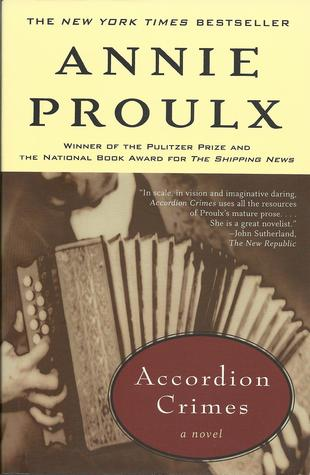
The green accordion in this sweeping hundred-year narrative provides both the music and the metaphor centering Proulx’s epic of immigrant, often malignant, America. Characters with names like Przybysz and Salazar, Baby and Malefoot, are all at one point or another the owners of the accordion, originally transported in the late nineteenth century by its anonymous maker from Sicily to New Orleans, where he is murdered by an anti-Italian mob. A dizzying, bloody odyssey follows from Mississippi to Montana to Maine and beyond, in which those who own the accordion often encounter racism, hatred, mindless violence, and every so often a ray of gladness brought about by the increasingly dilapidated accordion (which meets its own sad fate in Florida in the book’s final pages). Just as migrants bring with them the richly specific melodies of their homelands, they inevitably, per Proulx’s unflinchingly dark vision of America, encounter those who would deny them their songs, their voices, often their very lives. All brought to life — and death — with the author’s own musically prodigal language.

2. Michael Ondaatje, Coming Through Slaughter

Employing his singular gifts as both a poet and fiction writer, Ondaatje offers a deeply moving, uniquely hybrid collage-style portrait of Buddy Bolden, sometime New Orleans barber at Joseph’s Shaving Parlor and first of the greatest jazz trumpet players, whose sui generis approach to the instrument influenced the likes of Louis Armstrong and King Oliver. In lyrical prose punctuated with documentary facts, Ondaatje evokes the sad life of a gifted, doomed man. Alcoholic, haunted, prone to disappearing, ultimately mad, Bolden was also an incandescent and legendary musician who preferred playing in the key of B-flat and died on November 4, 1931, in the East Louisiana State Hospital. There is only one surviving photograph of him with his jazz band, and there are no known recordings. While Bolden’s breakdown and institutionalization in 1907 may not be directly attributable to his bond with music — in fact, his trumpet probably saved him from himself for a time — it is interesting that during his many years in “the bug house” he stopped speaking and never played another riff, not even a note, on his trumpet.

3. Thomas Mann, Doctor Faustus, The Life of the German Composer Adrian Leverkühn as Told by a Friend

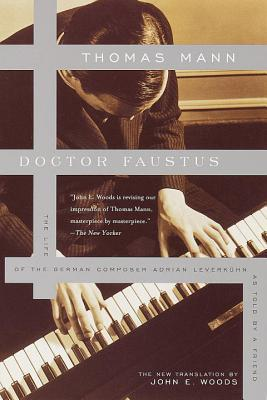
Mann’s postwar masterpiece is one of those necessary epics, like The Magic Mountain, that must be read slowly, savored empathically, in order to fully experience the tragedy of Leverkühn’s syphilitic descent into madness and invalidism that is directly compensated by his exceptional ability to compose transcendent music. After contracting the disease from a prostitute during his only sexual encounter — his symbolic selling of body and soul — Leverkühn grows more ill while at the same time his music is increasing touched by genius. Mann doesn’t shy away from symbolic references to the Faustian deal many Germans made during the rise of the Third Reich, collectively trading their ethics to embrace the deadly extremist nationalism of Nazism. Just as in the original Faustian tale, deals cut with the devil inevitably come to bad ends. While his prose style may be a bit traditionally rigorous for some, the reward is that few other novelists command a greater knowledge of classical music than Thomas Mann.

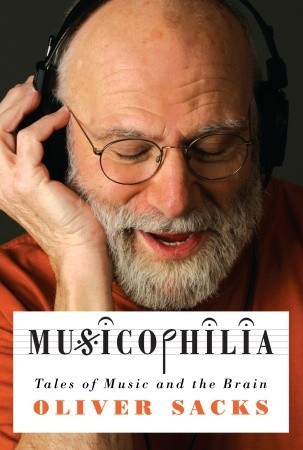
4. Oliver Sacks, Musicophilia: Tales of Music and the Brain

When the late, very great Oliver Sacks weighed in with one of his psycho-neurological collections of case studies centered on music a decade ago, I couldn’t put my hands on a copy fast enough. Like legions of others, I was fascinated by books like The Man Who Mistook His Wife for a Hat, An Anthropologist on Mars, and Awakenings, and now he’d written about a subject dear to my heart. Nor did he disappoint. Here was Silvia N., who suffered from musicogenic epilepsy, a syndrome in which music — in her case the Neapolitan songs from her childhood — provoked seizures cured by a partial temporal lobectomy. Here was Sydney A., a man with Tourette’s Syndrome who “lurched, jerked, lunged, yelped, made faces, and gesticulated exuberantly” upon hearing music on the radio. Here, too, were stories of Martin, whose childhood meningitis contributed to severe physical and mental disabilities, but also contributed to his becoming a musical savant who knew over two thousand operas (who’d have guessed there were so many in the first place?) as well as Bach’s cantatas. If you suffer from earworms — as I do, with sometimes near-pathological severity (I cannot listen to Rufus Wainwright, alas, without it sticking in my head for weeks) — Sacks has a chapter on that as well.

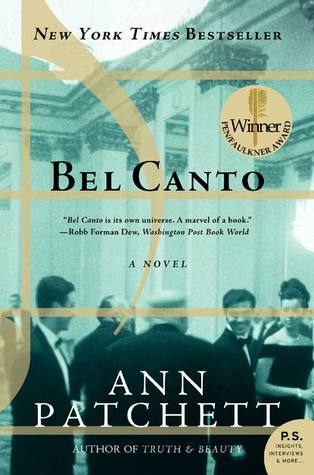
5. Ann Patchett, Bel Canto

The perils of being a famous musician are as inherent as they are various. While fans provide the means for a star-dusted performer to thrive, they also have the capacity, whether purposely or inadvertently, to put their idol in harm’s way. Patchett’s lyric soprano opera star, Roxane Coss, has doubts about accepting the invitation to perform at the birthday party of mega-rich electronics mogul Katsumi Hosokawa in an unnamed Latin American country that’s courting his investment, but the payday is irresistible. As her last aria rises to its conclusion, the lights in the vice-president’s palace abruptly go dark as Coss, Hosokawa, and the rest of the black-tie attendees find themselves swarmed by terrorists. The siege that ensues becomes a palpable opera itself — operas, including soaps, are woven throughout — as it stretches from days to months, enveloping its sizeable cast of captors and captives. Unexpected liaisons develop. Hidden talents are discovered. Violence is never far away (the author gives a particularly unflinching account of Coss’s diabetic accompanist’s death as his insulin runs out). When the siege does inevitably end, ensuing elements of romantic fantasy may dismay some readers, while enchanting others, but the hard edge of Patchett’s detailed portrayals preserve the darkness inherent in this music-saturated novel.

6. Robert Coover, “The Return of the Dark Children” (A Child Again)

Only Angela Carter rivals Robert Coover when it comes to rethinking, reviving, and retelling classic fables and fairy tales. With this adaptation of “The Pied Piper of Hamelin,” Coover takes an already grim cautionary tale and moves it to the gloomiest possible registers. The story begins, long after the piper has seduced all of Hamelin’s children away playing his “demonic flute,” with the reappearance of black rats “scurrying shadowily along the river’s edge and through the back alleyways.” The shortsighted, greedy townsfolk, who failed to pay their musically bewitching exterminator, now face a fresh ethical dilemma as a new generation of Hamelin kids are endangered once again. Hysteria grips the village, imaginations run amok. And a déjà vu choice must be made anew “between letting the children go, or living — and dying — with the rats.” Needless to say, as is too often the case with village elders, they opt for the inevitably expedient course of action. Sorry, children of Hamelin. And as for the future, the playing of music will be frowned upon and dancing discouraged. As if all the woes of the world were a piper’s fault.

7. Miles Davis with Quincy Troupe, Miles: The Autobiography
8. Quincy Troupe,
Miles and Me

Both jazz legend Miles’s autobiography and poet Quincy Troupe’s memoir, Miles and Me, which offers a disarmingly candid account of their Sturm und Drang relationship, unveil the demons, the mind-blowing contradictory behaviors, the self-confidence and self-hatred, and the very hard-earned genius of one of the greatest musicians of all time, jazz or otherwise. Bitches Brew wasn’t plucked out of thin air. None of Miles’s revolutionary work over the course of decades from the bebop-cool jazz of Kind of Blue to the fusion of Tutu came without profound personal costs. Miles’ drug and alcohol addictions, his distress over the blackness of his skin, his raging diabetes, his volcanic temper, his loneliness behind those wraparound shades — these are only a few of the monsters Miles battled, emerging triumphant on most counts while reinventing, over and over again, that singularly American kind of music: jazz. The biopic film treatment of Miles and Me, by the way, will reportedly be going into production in early 2018 with Michael K. Williams as Miles. I’m so there for that.

9. Lauren Belfer, And After the Fire

In The Prague Sonata, my protagonist recalls her mentor sternly lecturing, “More often than not, music means music. It’s not a poem about a tree. It’s not an essay about nematodes. It often stands for nothing greater or lesser than itself.” Whether one agrees with him or not, sometimes music can be a medium for communicating a message, and there is no guarantee that the message will be benign. In Lauren Belfer’s richly detailed novel, And After the Fire, a lost Bach cantata turns out to have been deliberately kept hidden for centuries after Bach’s eldest son, Wilhelm Friedemann, entrusts the manuscript to his talented piano student, the Jewish socialite Sara Itzig Levy. Shocked by its virulently anti-Semitic message, Sara hides the score and it remains hidden by generations of her family until, by chance, it is rediscovered in the present day. If Martin Luther was the father of the denomination to which Bach belonged — “be on guard against Jews,” Luther wrote in his essay “On Jews and their Lies” — Richard Wagner, one of Adolf’s favored German sons, took up the wicked cause. A bright book about dark hatreds.

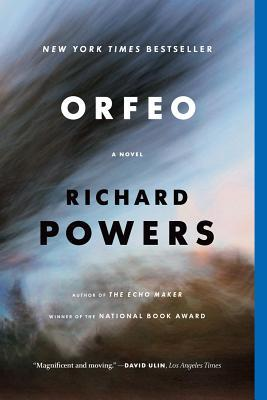
10. Richard Powers, Orfeo

Pity Peter Els. All this aging American composer of obscure avant-garde music ever wanted was to “break free of time and hear the future.” And if his innovative path to achieve this goal was to inscribe musical compositions in bacterial DNA at his homemade microbiology lab — where he uses, among other things, a salad spinner for a centrifuge and a rice cooker to distill water — then who would stand in his way? Well, for openers, two Homeland Security goons who show up at his door, looking like “counterfeit Jehovah’s Witnesses,” and begin questioning him, confiscating his equipment, and telling him not to go anywhere. The next day, as government investigators accompanied by a throng of media descend upon his abruptly quarantined house, Els decides to flee. Only a writer with Richard Powers’s rare imagination and technical dexterity could pull off the mad odyssey that follows. Dubbed the “Bioterrorist Bach,” Els unexpectedly finds himself an Internet sensation as he sets out on what is to be his final bit of performance art. When readers turn the last pages of Orfeo, they are fully aware that the Kafkaesque forces closing in on Els will not be deterred. It’s a good moment to remember that Olivier Messiaen’s Quartet for the End of Time was always one of Els’s favorite compositions but that he, unlike Messiaen, will not elude his personal apocalypse.

About the Author

Bradford Morrow is the author of eight novels, including Trinity Fields, The Diviner’s Tale, The Forgers, and now, The Prague Sonata. He is also the author of The Uninnocent, a short story collection. He is the editor of Conjunctions, which he founded in 1981. Morrow has received numerous awards and honors, including a Guggenheim Fellowship, O. Henry and Pushcart prizes, an Academy Award in Literature from the American Academy of Arts and Letters, and the PEN/Nora Magid Award for excellence in editing a literary journal. A Bard Center Fellow and professor of literature at Bard College, he lives in New York City. www.BradfordMorrow.com

In Her New Novel, Celeste Ng Goes Home

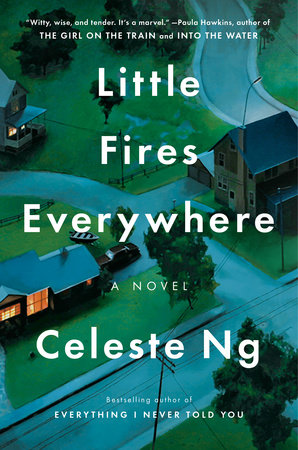
Like her best-selling 2014 debut, Everything I Never Told You, Celeste Ng’s new novel Little Fires Everywhere looks at communities and their complex, often fraught, relationship to identity. Ng focuses her thoughtful gaze on the kind of successful and self-satisfied hamlet found across suburban America — the type of place where fitting in requires not only the possession of certain attributes but the absence of others.

The community in Little Fires Everywhere is Shaker Heights, a real Ohio town (just ask Ng, who grew up there), created in 1914 by two railroad mogul brothers who envisioned a perfectly planned alternative to Cleveland’s city living. Rules abound, from town ordinances regarding the layout of the beautifully manicured cul-de-sacs to the unspoken decorums practiced by the idealistically progressive yet practically traditional society.

Into this landscape come Mia Warren, a photographer and free-spirit, and her bookish daughter Pearl. Mia has decided to pause their long-standing peripatetic lifestyle. They become tenants of the Richardsons, a wealthy, well-respected family that’s powered by the matriarch, Elena, a woman who seems to embody Shaker Heights itself. Though the four Richardson kids are entranced by Mia and Pearl, Elena finds herself at increasing odds with her tenants. When a local white family gets into a contested adoption and custody battle over an abandoned Chinese American baby girl, lines are drawn in the sand.

Little Fires Everywhere feels especially resonant today, as much of our country struggles with the reality of living in ever-less homogenous environments. But what elevates the novel beyond timeliness is that Ng doesn’t stick to examining the obvious opponents to change. She asks hard questions of people who believe themselves to be progressive and pro-diversity yet show a caustic reticence to individuality and even an unacknowledged racism when they’re asked to open their arms or adjust their lives.

I had the pleasure of talking with Ng over email about writing the novel before Trump, the challenges of writing about your home town, and the things she loves about Twitter.

Carrie Mullins: Tell me about Shaker Heights. In the book, the town is a bit like Pleasantville, and I felt a lingering claustrophobia as we moved among the lovely, landscaped houses. Why did you decide to set the novel there?

Celeste Ng: The novel grew out of my desire to write about my hometown — so it couldn’t ever have been set anywhere else. I had been away from home for about a decade at that point, and I was at the stage where I started to look back on those formative hometown years with some clarity. I still remembered them clearly, but I had also come to see that many of the things I’d grown up with were unusual.

I touch on some of these things (which are at both ends of the keyboard, so to speak) in the novel itself: the obsession with order in the community, the fact that we were so focused on improving race relations that there’s a race relations group at the high school. But those are all really manifestations of a larger issue that is really what sets Shaker Heights apart, and which to me is the heart of the novel: the tension between the almost hippie-ish idealism and the almost anal fixation on regulating everything. It stretches back past the founding of the town to the Shakers who once owned the land — it’s practically in the soil.

CM: Are there challenges to writing about a place that you know so intimately?

CN: In writing about a real place, I felt a responsibility to try to be both accurate and fair. This is especially true because Shaker Heights is a place that I love even as I have reservations, and criticisms, of some aspects of it. I hope I wrote this book at the sweet spot where I could be truthful — like one of those magic eye pictures where you have to be at the exact right distance to see the image.

I hope I wrote this book at the sweet spot where I could be truthful — like one of those magic eye pictures where you have to be at the exact right distance to see the image.

CM: The novel — though not necessarily all the characters within it — is very cognizant of how money and status affects people’s attitudes towards race and identity. For example, Bebe, an impoverished immigrant, is treated very differently than Brian, the son of two professionals. With everything that’s going on with DACA and, well, our government at large, highlighting this intersection feels especially timely. Of course there’s a time lapse between writing a novel and it hitting the store shelves; has the current political environment changed how you think or talk about the book, or how you think it will be received?

CN: It’s absolutely changed how I see the book and how I suspect it will be received. I wrote it at a very different political time — about from fall 2015 to midsummer 2016 — and I had been thinking about it and the plot and the characters since 2009. So it wasn’t written with our current times in mind, but now, in the Trump era, I can’t help but see it in conversation with what’s happening in our country now.

I guess this says two things: first, that the meaning we see in a book is always influenced by where we, as readers, are at the moment we read it. When I reread books I loved as a teenager, for example, I interpret them very differently now that I’m an adult. But the words on the page haven’t changed — so the change has to be in me. The second thing is this: the book takes place in 1997, and the fact that it feels so relevant to our current time suggests we haven’t come quite as far in the past 20 years as we’d like to think.

11 Novels That Expectant Parents Should Read Instead of Parenting Books

CM: Speaking of current events, I’m one of the many fans of your Twitter account. I think I came on board for #smallacts and stayed for the mix of humor and candor that has gained you over 29,000 followers. As someone who is hopelessly inept at the posting side of Twitter (I’m basically a lurker) all I can ask is, 29k!? Is having that kind of presence exhilarating or anxiety-provoking? Does being so visible to your audience have any effect on your fiction writing?

CN: I love that you say you came on board for #smallacts — I’ve had followers say to me in the past few months, “I didn’t know you wrote a book, I thought you were just funny on Twitter!” Honestly, I don’t know how I ended up with so many followers, but I’m happy they’re here and hope they get something out of the randomness that is my Twitter feed.

Even now I don’t think I’ve quite gotten my head around the audience that I have there; it still amazes me that anybody wants to hear what I have to say. I try to think of it as thousands of people standing in my corner cheering me on. And I like to listen as much as I can there myself — my favorite things are when people share things they love (articles, pictures, pets) and when they tell stories about themselves or others. When I see what other people are talking and thinking about, I feel like my brain’s been enriched, like mixing compost into soil. At its best, Twitter reminds me how smart and funny and interesting and witty and weird and kind people can be — basically, that we’re all human and that humans are both loveable and fallible. I think that feeds my fiction as well.

CM: Both this and your first novel, Everything I Never Told You, are books that play with perspective. What interests you about coming at one event from multiple points of view?

CN: I didn’t plan for that to happen, but it’s true! I’ve always been interested in how we piece stories together, how we make sense out of the jumble of events that make up life. So an omniscient narrator is a natural move: the narrator is piecing things together just as the reader does, helping the reader make connections and hear resonances. I’m also fascinated by the hard fact that we can never perfectly communicate what we mean: we do our best with words and pictures and gestures, but there’s no direct way to take your thoughts or feelings or experiences and put them in someone else’s brain. There’s always going to be something lost in transmission. Which means to have any hope of seeing the full picture, we need to hear multiple perspectives.

There’s always going to be something lost in transmission. Which means to have any hope of seeing the full picture, we need to hear multiple perspectives.

CM: It’s the contested adoption of May Ling/Mirabelle that brings the characters’ individual perspectives together. The question of identity is an issue for any adoptee, but it’s magnified in a transracial adoption. What led you to choose and investigate this situation for a novel?

CN: I’d remembered hearing about a transracial adoption case when I was in high school that divided the Asian community, but wasn’t able to find out anything more about it. As soon as I remembered it, though, the basic questions it raised seemed to tie all the threads of the novel together: race, class, parenting, identity. Then, as I began to research high-profile custody battles, the story came more and more into focus, and I realized it belonged in the book.

CM: The ironic thing about this terrible situation — a baby is abandoned, then fought over in court — is that there is still so much love flying off the pages. It got me thinking about the challenges of capturing motherhood; how do you show how intense it can be, and how complicated, for a varied audience? Stories about motherhood are also often dismissed as ‘female’ narratives or even ‘chick lit.’ Do you ever worry about those labels or having to prove that the mother/child relationship is worthy of literature?

CN: It infuriates me that stories about motherhood — and women in general — are so often and so easily dismissed. They are so obviously worthy of literature that I don’t even know how to begin arguing this point.

It infuriates me that stories about motherhood — and women in general — are so often and so easily dismissed.

It wasn’t my specific intent to challenge that view, but I hope I wrote a book that acts as a counterpoint. But while we have to stay aware of — and vocal about — this issue, it’s ultimately an attempt to distract us from the work. I think of the Toni Morrison quote where she says that all of racism is an attempt to keep you from doing your work. Here it is, because it’s worth sharing in full: “The function, the very serious function of racism is distraction. It keeps you from doing your work. It keeps you explaining, over and over again, your reason for being. Somebody says you have no language and you spend twenty years proving that you do. Somebody says your head isn’t shaped properly so you have scientists working on the fact that it is. Somebody says you have no art, so you dredge that up. Somebody says you have no kingdoms, so you dredge that up. None of this is necessary. There will always be one more thing.”

The best thing we can do to change things, aside from pointing out the double standard wherever we see it, is to make good work about motherhood, work that’s so indisputably good that its value as literature is self-evident and undeniable. And I think people are doing that, so I hope this attitude is changing.

‘Rebel in the Rye’ Can’t Escape the Image of the Author as Solitary Genius

Danny Strong’s Rebel in the Rye opens with a shot of the trembling hands of J.D. Salinger as he tries to jot down something — anything — on the page. But, as we learn soon enough, the young writer is haunted by the trauma of having been deployed in World War II. His experiences abroad and at the camps have left him unable to revisit the character that he’d carried with him across the pond and back: Holden Caulfield.

By the time the movie ends, we’re offered a much more hopeful image: Salinger, decked out in his signature blue boilersuit, is typing furiously away, filling up page upon page with an ease that’s near-intoxicating. The fears (of failure, of being ignored, of being misunderstood, or worse yet, feverishly loved) have given way to a renewed sense of accomplishment. But it’s a sense of accomplishment that’s decidedly not tied to the promise of being published. Those pages will never be read, alas, by the public at large. At the heart of both images — a writer whose words have failed him, and a writer whose words overwhelm his every waking hour — is the romanticized ideal of the writer as a solitary figure, either fighting with or conversing with his muse. For many of us, this has been the quintessential image of our writer heroes — and one Salinger himself fully gravitated towards and endorsed. Despite some attempts to complicate the Great Man theory of writing, the film ultimately endorses the vision of Salinger as a solitary genius.

Based on Kenneth Slawenski’s biography of the reclusive author, the film tracks Salinger’s move away from the spotlight and away from the published page. And, as its initial images suggest, it puts front and center the fact that Catcher in the Rye was quite literally a post-war novel. Catcher’s battlefield birthplace was what originally drew Strong to the material. “When I got to the war [section in Slawenski’s book] — when I learned that Holden Caulfield was written by a veteran who had PTSD, it kind of blew my mind,” he said at a post-screening Q&A in New York City ahead of the film’s release “This idea that one of the most iconic novels of the twentieth century, that so many high school students read and it affects them profoundly decade after decade after decade, was written by someone who’d come out of one of the worst experiences of the 20th century — I thought, that was very beautiful, very profound.” In Strong’s film, Salinger’s experiences as a soldier mark the central narrative pivot of the writer’s life story. Rebel in the Rye tracks how the talented young Jerome David (played by Nicholas Hoult) went from being an obnoxious Columbia student with dreams of becoming a published author to a recluse who needs nothing more than his typewriter to feel fulfilled. With the war working as the catalyst for this transformation, Salinger’s near zen-like devotion to his writing emerges as palliative practice that helps him overcome his PTSD by urging him to look within, to anchor his process in and for himself.

Salinger has become a poster man (surely we couldn’t possibly refer to him as a “boy” in any sense) for the supposedly awe-inspiring writerly integrity he embodied until his death in 2010. Here was, after all, a writer who rebuked fame and found fulfillment in writing for himself. When a reporter at the Q&A asked Strong whether he could live like that, knowing anything he wrote would never be read by anyone else, he couldn’t help but rehash ready-made soundbites about what writers are supposed to cherish: the practice, never the result. A professional writer he said, isn’t a writer who gets paid for her work; “a professional writer is someone who writes every day whether you get paid or not.” Strong’s film is, he claims, an attempt to tell the story “of what it means to be a true artist,” someone willing to write and not make anything from it for the rest of their life. This is a particularly insidious vision of artistic creation — one that doesn’t question the privilege that Salinger and his Great Man narrative have come to represent. This facile view of art ultimately weakens the film, as it reduces it to little else than a portrait of an artist as a young (and independently wealthy) man.

Support Electric Lit: Become a Member!

Following its protagonist’s lead, Rebel in the Rye cannot help but embody not just Salinger’s increasingly individualist and self-absorbed notion of writing, but his overwhelmingly masculinist sensibility. While women in his life first encouraged his work (his mother, played here by Hope Davis, was an early supporter of her son’s sudden whim to become a writer), Salinger’s relationships with women as he grew older and more well-known are presented as mere stepping stones for his career. The heartbreak he feels when his youthful lover Oona O’Neill (yes, Eugene’s daughter, played by Zoey Deutch) marries Charlie Chaplin while he’s at war almost destroys him, but also helps fuel his ambition. Writing becomes a way to keep himself sane and plow through his sense of betrayal. Likewise, his first wife, a European woman who may or may not have been a Nazi (the film neither confirms nor denies the accusation, but does use it as a punchline to introduce the accented beauty), is a mere footnote to his return home. His second wife is supportive, if aloof, but is presented as a hassle once she asks him to do the absolute minimum when it comes to building their family together. All Salinger cares about is his writing (“I want my writing to be truthful,” he never tires of repeating to anyone who’ll listen) and he spends his years stripping away his life in order to accommodate an understanding of writerly devotion that required only him.

Rebel in the Rye cannot help but embody not just Salinger’s increasingly individualist and self-absorbed notion of writing, but his overwhelmingly masculinist sensibility.

A crucial part of that narrative arc was, implausibly enough, Salinger’s relationship with his Columbia professor and Story journal editor, Whit Burnett (Kevin Spacey). There is no way to tell the story of this Solitary Great Man, apparently, without giving due credit to one of the many men who gave him a leg up — even as the women who were just as crucial to Salinger’s success remain sidelined. Rebel in the Rye tracks Salinger and Burnett’s relationship from their playfully combative exchanges in the classroom and eventually through their personal and professional fallout, when Burnett disappoints the ambitious up-and-comer by failing to secure a publishing contract for what would end up becoming Salinger’s Nine Stories. Burnett is shown to be instrumental not only in championing Salinger’s earlier efforts, publishing his first story in Story, but in nurturing and improving the young writer’s work. He pushes Salinger to move away from letting his work be driven by his self-amused and cocky voice and find instead a way to let his wise-ass sensibility help tell a story. Driven by his desire to publish — anything, anywhere, but preferably in The New Yorker — Salinger learns to revise and edit his work; he buckles down and begins seeing the world around him (say, a scene at a bar where he feels out of place) in narrative rather than merely scenic terms; this is what yields the 21 year-old’s first published story, “The Young Folks.”

Burnett is also presented as the first to suggest that Holden Caulfield deserved a novel of his own. Catcher in the Rye, Strong’s film suggests, couldn’t have come together had Burnett not urged his young pupil to let go of his impatience when it came to writing, encouraging him to see his breakthrough novel as a marathon worth running — and a better use of his talent than the quick sprints he so enjoyed when writing short stories. Burnett’s encouragement is what led Salinger to take Holden with him when he crossed the Atlantic to fight in World War II, an experience that resulted in making the phony-hating protagonist a postwar cultural staple. Burnett sanded down the impetuousness that made young Salinger both an insufferable cad and the kind of wunderkind that lead people to dismiss his personal shortcomings as necessary elements of his genius.

How Do You Convince the Most Solitary Person in Human History to Trust You?

If Burnett had not led the young writer to discover and embrace the beauty of editing and revision, the film suggests, we’d never have gotten as strong a version of Salinger’s work. It’s a lesson he only begrudgingly learned. When his agent, Dorothy Olding (Sarah Paulson) giddily tells him that The New Yorker is eager to publish a piece of his, she hesitates before adding, “they have some notes.” Salinger bristles at the thought, unable to see how someone else’s ideas could possibly enrich his own. It is only after he meets with the editors at their imposing Manhattan offices — and they promise him that he can pull the story if he thinks the changes ruin it — that he agrees to give it a shot. He is as surprised as anyone when he realizes that responding to feedback actually improves his writerly output.

Strong’s film truly comes alive in these scenes. Shots of Hoult, hunched over Salinger’s typewriter, feverishly cutting and marking his manuscript with a red pen are punctuated with Bear McCreary’s soaring score in the background. You can tell the actor/writer/director/producer (and co-creator of Fox’s Empire) cherishes that most sacred of writerly rituals: revision. By the time Salinger is done, he’s earned one of the most coveted publishing contracts in the United States — a first-look deal with The New Yorker — and, perhaps more importantly for a man obsessed with his own writerly identity, he’s produced a story he’s proud of. Sadly, anyone who knows Salinger’s story — the overnight success of Catcher; his increasing discomfort when meeting his super-fans; the decision to move away from the city, live in seclusion, and all but forsake his publishing career — this glorious celebration of the power of collaboration is short-lived. And though the revision scenes and the movie’s centering of Burnett display an interest in highlighting the collaborative nature of authorship, Rebel in the Rye is ultimately seduced by the idea that great writing is the product of a single lonely, brilliant mind.

Here lies a tortured genius finally left to his own devices and away from his biggest threats, his fans.

After all, the film must careen towards that final tableau where a now-at-peace (and divorced) Salinger can happily find serenity in writing. It is an insidious image on which to hang the Catcher in the Rye’s legacy, and yet one which feels unavoidable: here lies a tortured genius finally left to his own devices and away from his biggest threats, his fans.

In an early scene set in Burnett’s classroom, the affable teacher tells his students he’s leaving early that day, having been satisfied with the wisdom he’d imparted in the first few minutes of class. They can, he tells his students, do what they wish with their free time — like, say, writing, or masturbation. “Just be sure you know the difference,” he quips. Try as it might, the film’s final images, of a blissfully satisfied Salinger clanking away at his typewriter in his signature blue boilersuit in his secluded office, somehow do mistake the former for the latter — and all but endorses this hermetic vision of creation. This may look like writing, but it lacks a key aspect of that endeavor: the reader.

How Jesmyn Ward Brings Writing to Life

I t may be surprising to Jesmyn Ward that Sing, Unburied, Sing, her first novel since winning the National Book Award, is heralded as one of her most heart-rending and thought-provoking works to date. But to the fans who have been anticipating her next book, praise was to be expected. As with much of Ward’s work, the Black body features prominently in Sing, Unburied, Sing—in the relationships of parent and child, brother and sister, husband and wife, and, yes, the living and the dead. The themes Ward explores through characters and locale resonate so deeply that readers feel the thrum of loss, see the pathways to addiction, and understand how the past can haunt you despite your attempts at escape.

While on tour, Ward discussed her approach to the creative writing workshop, her thought process for creating characters that live on and off the page, and the work that went into her New York Times bestselling anthology The Fire This Time. Below is an excerpt of a longer interview with Jesmyn Ward. The full transcript and episode can be found on the Minorities in Publishing podcast site.

Jennifer Baker: Because your work is so lush and always invokes emotion, I wonder if you go over writing methods when it comes to helping your creative writing students find their process?

Jesmyn Ward: When I teach I attempt to expose them to as many contemporary writers as I can, because I think that often they come to me and they’re well versed in the classics but not really contemporary lit. So you know, I try to switch up my syllabus every semester and try to introduce them to new voices, so they can see what other writers who would be their contemporaries, what they’re writing, what they’re working on, what they’re thinking about. Of course my hope is that they read the work and then they find something in it that maybe that they like, that they find impressive, that maybe they want to emulate in their own work. One of the most important things that I teach them early on is that writing requires revision and that writing is a process. I teach undergrads and I think often undergrads don’t realize that. They think when you’re a writer, especially a creative writer, that you write something and it’s perfect and you hit send and it goes out to the world. They really don’t understand what a process it is and how there’s an entire group of people working together to revise your work, to refine your work, before it ever reaches an audience.

One of the most important things that I teach my students is that writing requires revision and that writing is a process.

JB: And do you ever broach the subject of the business or do you kind of concentrate on the craft itself?

JW: We mostly talk about craft in my courses, but I do always, on the last day of class or the next to last day of class, I just normally set that day aside for any questions that they might have about the business of being a writer and the business of publishing and then they can ask me anything. So we devote at least one class period to talking about the business of writing—talking about what it’s like to find an agent, what it’s like to work with an agent, what it’s like to work with a publishing company.

Fresh Faces Abound on the National Book Awards Longlist

JB: I was thinking a lot about the discussion of motherhood you had with Lisa Lucas when you were at the Schomburg. And you have this juxtaposition in Sing, Unburied, Sing with Leonie as a very raw character. As a mother writing a character like Leonie and also writing Jojo and Pop and Mam, how do you converge upon getting them all on the page in such a way that you feel like you can step away and effectively say, “that’s what I was going for”? Or do you even recognize that’s what you were going for?

JW: I don’t know. I think that it is an organic process. I mean, I think that as I write, especially through the first draft, like the rough draft, that I’m discovering who the characters are, that they’re just taking on some kind of life on the page and off the page as I’m writing my way into the story.

Because the process of writing about them complicates them, and they do things that surprise me as a writer. So yes, I think that when I commit to writing a story, part of what I’m really focused on, part of what I’m committed to doing when I am interested in telling a story, is to bring all the characters to life in one respect or another and make them complicated and as human as I can on the page. And so they take on shape, but they continue to take on shape even after I’m done with the rough draft, so when I’m going back into a draft and then revising and revising, I’m still adding more dimensions. I’m still complicating them again and again and again, so it’s a continuous thing, right? It’s a continuous task to complicate my characters and to make them more human, more believable, more, more surprising, I think. Human beings are surprising in that you never fully know, you know? You never fully know a human being. So that’s why I think, for Sing, Unburied, Sing, that’s why I think that a 13-year-old boy, Jojo, that he can be learning how to be a man and that part of learning how to be a man is to suppress his emotions and stand up straight and to walk a certain way and to act a certain way in violent situations. But at the same time he can also care for his little sister and nurture his little sister and be very maternal in a lot of ways. And I think that that happened over multiple drafts of the work.

Part of what I’m committed to doing is to bring all the characters to life in one respect or another and make them complicated and as human as I can on the page.

JB: Is there an awareness of what is “expected” or the stereotypes or these assumptions made, especially about Black life, in your mind when you’re writing? Or are you able to block that out? Because I find that I’m often thinking about how not to do things, and that can actually inhibit the process.

JW: That’s an interesting question. I don’t think about what not to do. I really focus on the situation that the characters find themselves in, and I focus on the place where they’re from, and I take all of that with me to the text as I’m trying to understand who the characters are. Because those things, place and the circumstance, of course that influences them, that determines certain aspects of their personality. So yes, I think that’s what I really focus on. That’s what I think about. I try to always think in terms of positives instead of negatives. I try to think in terms of dimensions and adding dimensions and I want to add this, I want to do this, I want this person to look at the world and understand it in this prism. And that just works for me in my process, thinking about audience and about, perhaps, what they expect to see in my characters or what they understand of them that I can’t. I can’t do that. I have to forget all that, because it makes me so anxious, being aware of audience and what they might hypothetically want.

I think that Black children in America are not afforded the gifts of childhood. They’re not seen as children, they’re seen as threats.

JB: I don’t want to say it’s a theme, but I feel like this is true of Black life or at least maybe working-class Black life, is the need for the younger characters to grow up quickly. And I wonder if that’s kind of indicative of being a Black child in America. This was referenced in some of the essays in The Fire This Time. But also here with Jojo of that road trip they took, of the consistency of him having to be the adult when he is surrounded, theoretically, by adults.

JW: Yes, I think that’s true. I think that Black children in America are not afforded the gifts of childhood, you know. They’re not seen as children, like you said, they’re seen as threats. They’re seen as adults. That assumption there, that they can handle whatever burdens—there’s a thoughtlessness to it, right? Especially when I think about Leonie and the way that she treats her children, there’s a thoughtlessness to it. Childhood for her is not some sort of sacred space. She believes the world is a harsh place and so therefore Jojo should be aware of that fact and treated accordingly, from the time that he’s eight, nine years old. And I think that that assumption on her part, that that’s telling, and that’s symptomatic of our larger culture. I mean, not just like Black families and Black parents and, you know, Black parental figures, but also the culture as a whole. I think that for some more thoughtful Black parents, that’s a struggle that they have, you know, that’s something that they have to actively push back. They have to actively attempt to create this space where their children are just allowed to be children. But, when Tamir Rice is being murdered in a park by police for playing with a toy gun, and he’s, what, twelve years old, I mean, that’s harsh. How do you protect your children’s childhood when the world is doing everything it can to rob them of that childhood? It’s tough.