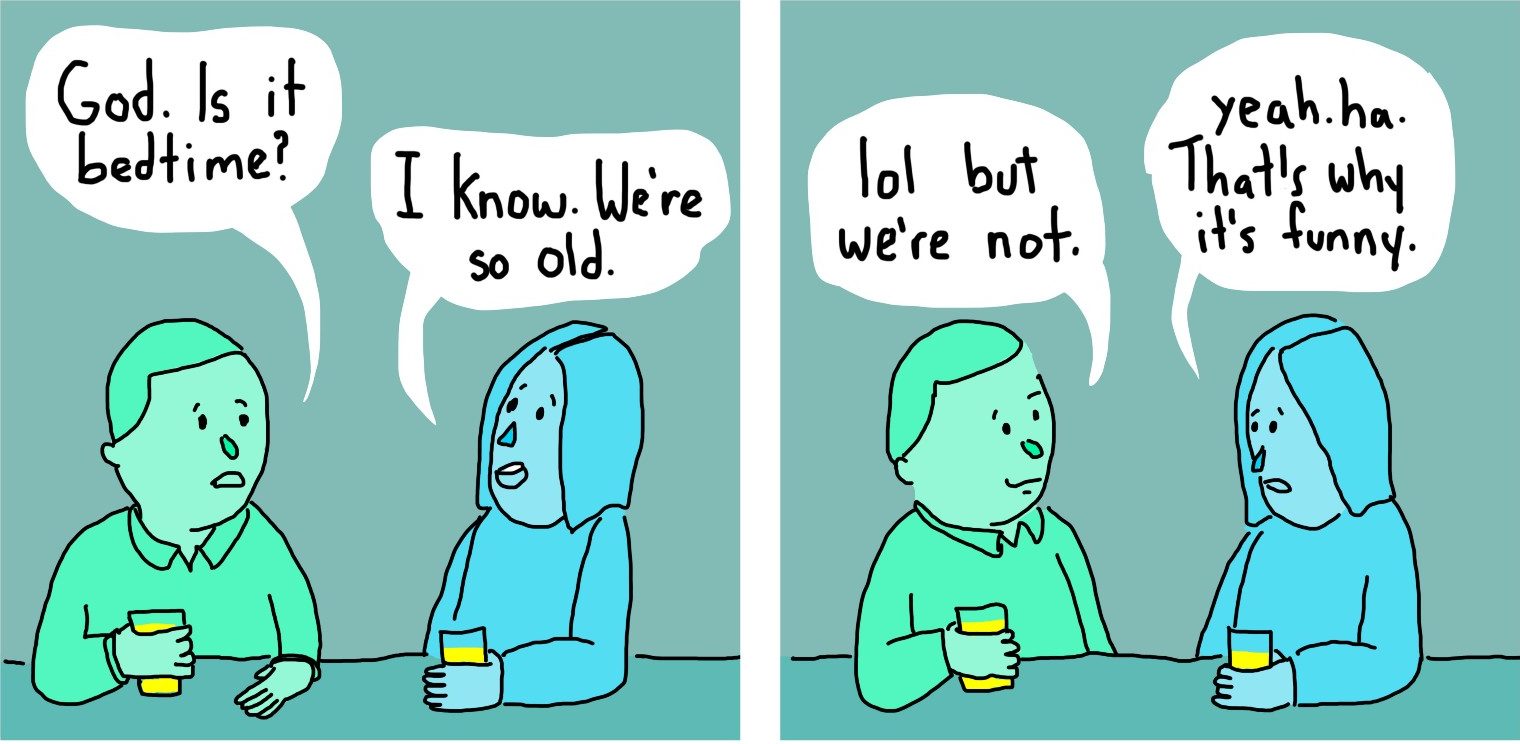
“Death is Inevitable”
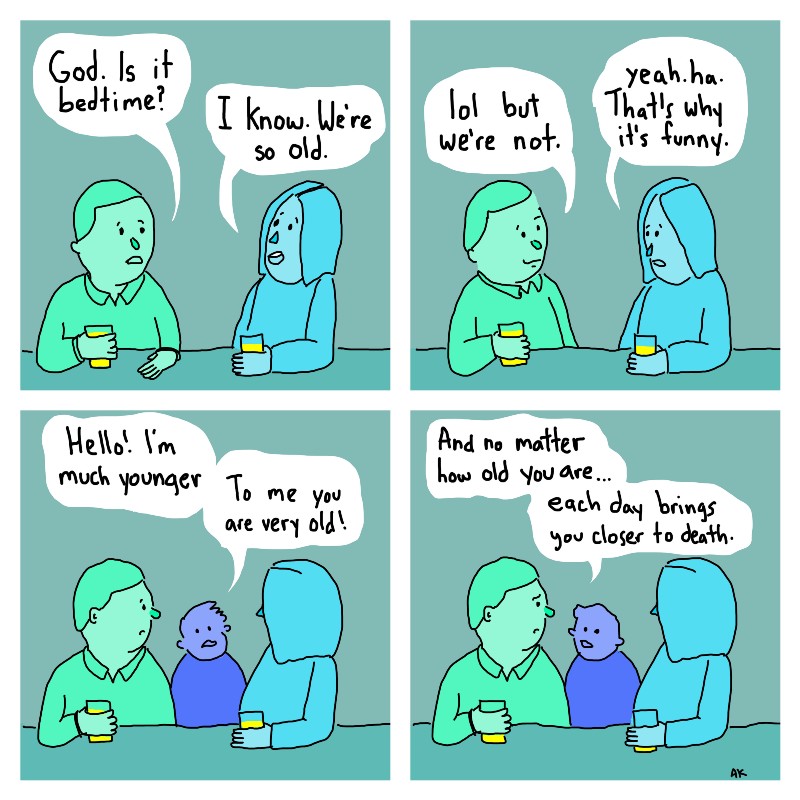
“I Love the Internet”

“My Best”




All it takes is a quick once-over of a current college campus to notice the drastic changes these academic havens have undergone in the last 50 years. Long gone are the days of almost exclusively male professors and submissive female students trying to get their M.R.S. degrees. In today’s higher-education institutional showdowns, diversity and open dialogue reign supreme. Thankfully, the campus novel genre has existed to document the vast transitions in both student body and campus atmosphere that have taken place in the last half-century.
In its most basic form, a campus novel is a book whose main setting is in and around a university. The genre’s heyday dates back to the 1950s with Kingsley Amis’s Lucky Jim, Mary McCarthy’s The Groves of Academe, and Vladimir Nabokov’s Pnin. Later, authors like Philip Roth, Saul Bellow and John Barth honed in on the campus as the setting for their erotic anxieties of intellectual misadventures. While some argue that the genre was (thankfully) retired sometime after Roth’s The Human Stain, the contemporary campus novel appears to be alive and well, encapsulating the ever-turbulent issues, emotional and political, that today’s students have to deal with.
Now, without having to bring up anyone’s graduating class, we can all agree that back-to-school season is an exciting time if you’re participating in it, reminiscing about it, or experiencing it at a distance via your children. Either way, these ten contemporary campus novels will transport you to college grounds teaming with academia, school spirit, and more than a fair share of scandal. And rest assured — this is not your father’s campus novel.
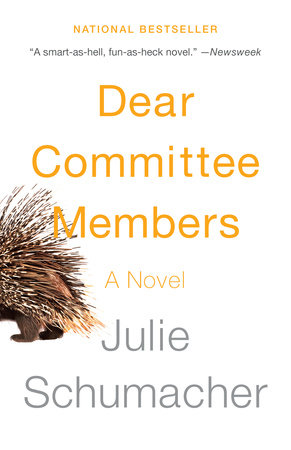
Dear Committee Members perfectly illustrates the eternal struggles between liberal arts departments and…what feels like the rest of the world. A frustrated professor of creative writing at a small midwestern liberal arts school must deal with budget cuts and grubby accommodations for his department while the Econ staff is living the life of luxury in their remodeled offices. Written as a series of recommendation letters the protagonist is often called upon to produce for his students, Schumacher takes a hilariously new take on both the campus and epistolary novel genres.

Finally, a novel willing to look at academia in the often-overlooked world of community colleges. Loaded with mayhem and drama, the novel dishes the gossip about the ins-and-outs of educational administration. At Cow Eye Community College, a school on the brink of ruin, Charlie arrives to unite the quarrelsome faculty members. Cow Country drew a lot of attention when it was purported to be written by American novelist Thomas Pynchon —the jury is still out on that one.

Zadie Smith adds some much needed diversity to the often homogenous campus novel genre. On Beauty centers around an interracial British- American family living in the university town of Wellington, Massachusetts. The main characters are academics, same as their spouses and children. Smith takes a page out of Amis’ book by combining comedy and intellect, all the while mingling high and low culture to give readers some refreshing variety.
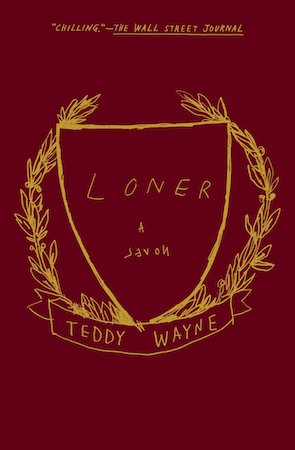
Loner begins on teenager David Federman’s first day at Harvard. Hailing from New Jersey, where he was overlooked and dissatisfied with his lot, he arrives in Cambridge for orientation thinking he will be surrounded by a fresh clique of upscale academics. Disappointed by his social prospects once again, he determines to infiltrate the glamorous world of Manhattanite Veronica Morgan Wells. Wayne explores issues of gender politics and privilege as it unfolds on a prestigious university campus.

A young impressionable student falls for her sophisticated older professor — sound familiar? A scandalous relationship of this sort seems to have reached its saturation point in literature and film, so how does one make a unique novel out of it? Have said young impressionable student fall for the wife of the professor instead. Now that’s a plot twist, and Choi does just that in My Education as she explores intimacy, aging, and obsession.

Taking place at Brown University circa 1982, The Marriage Plot, offers insight into contemporary relationships juxtaposed against those found in classic literature. The first portion of the novel features an old English professor asking his students, “What would it matter whom Emma [Bovary] married if she could file for separation later?” And so continues an exploration of the maladies that trouble relationships, including looming post-graduate life and mental illness.

Harbach offers insight into the world of sports at Westish College, nestled on the shore of Lake Michigan. An ode to small liberal arts schools, The Art of Fielding explores the tale of not only the star baseball player, but also his gay roommate, his best friend, as well as the college president and his daughter. All in all, the novel transports readers to the intimate settings of any college campus: dorm-rooms, dining halls, and sports fields.
10 Stories for the Back to School Season
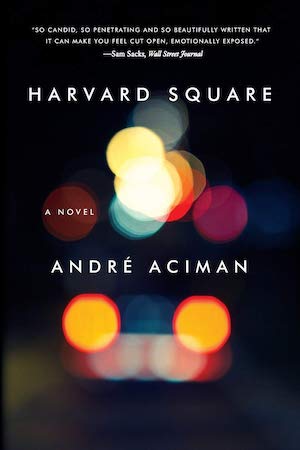
Yes, another book about Harvard. Wait wait, this one’s different, I promise. Harvard Square is about a Jew from Egypt who longs to be an acculturated American and a distinguished professor of literature. When he becomes close friends with a brash, rebellious Arab cab driver, he begins to lead a double life as an academic and an exile. That’s certainly one way to make Harvard interesting.
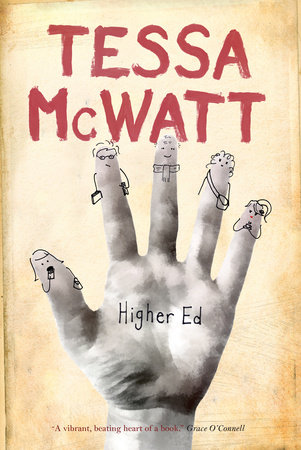
Imagine a world of brutal job cuts, unemployment, and the decreasing assurance of tenure — oh wait…On a 21st-century East London campus, Higher Ed hones in on the lives of five Londoners worried about their job security.

The Devil and Webster is an accurate reflection of the hot issues on college campuses as of late. Naomi Roth is the first female president of Webster College, which has abandoned its conservative background and begun to breed progressive grads. Naomi’s administration is affected when student protests about a popular professor’s denial of tenure fire up the campus.
Beloved fantasy writer Terry Pratchett, creator of Discworld, died in March 2015, but it took two and a half years for his final wishes to be carried out—because it’s tricky to find someone who will let you use a seven-ton steamroller to run over a hard drive.
Pratchett, who was living with early-onset Alzheimer’s for nearly a decade before his death, kept writing right up until the end—and a little past it. His last completed novel The Shepherd’s Crown came out a few months after his death, and The Long Cosmos, a collaboration with British science fiction author Stephen Baxter, was published last year. But he also had at least ten unfinished books, and he didn’t want them to see the light of day. So he stipulated that the drive containing his incomplete works was to be flattened by a steamroller. (These days, it’s not enough to burn or shred a manuscript; you have to break out the heavy, electronics-crushing machinery. Shy authors of the future may have to seek to destroy the Cloud.)
About to fulfill my obligation to Terry @SalisburyMuseum @Wiltshire_flo
Rob Wilkins, Pratchett’s longtime assistant (and the guy who wrote those tweets that made you cry after his death) was tasked with carrying out the execution. The Great Dorset Steam Fair hooked him up with a vintage steamroller named Lord Jericho, which actually sounds like a plausible Pratchett character, but the seven-ton machine didn’t quite do the trick; it wiped out the stone blocks that the drive was resting on, but didn’t destroy the drive itself. Those suckers are hardy. Wilkins had to throw it in a stone crusher to get the job done.
As any fan knows, Pratchett was a big believer in the power of books—in general, not just his own. One of his most indelible creations is the library of the Unseen University, presided over by its orangutan Librarian, in which ordinary books are shelved alongside books that have never been written, books that catch on fire if not kept under running water, and books that have to be nailed shut to prevent them from flying away. But those ordinary books are magical enough. “The truth is that even big collections of ordinary books distort space,” Pratchett wrote. “The relevant equation is: Knowledge = power = energy = matter = mass; a good bookshop is just a genteel Black Hole that knows how to read.” No wonder he wanted close control over the disposition of his work.
There goes the browsing history... Many thanks to @steamfair. Soon to be on display at @SalisburyMuseum in September https://t.co/Di8tvTO4Hi
“It’s something you’ve got to follow,” Wilkins told the BBC, about Sir Terry’s final request. But is it? Plenty of authors have asked for their unfinished work to be destroyed, and they don’t always get their wish. If they did, we wouldn’t have The Aeneid (which Virgil wanted burned), or Kafka’s The Trial (which he wanted burned), or Vladimir Nabokov’s The Original of Laura (which he wanted destroyed, but which his son finally published after 30 years of dithering), or Go Set a Watchman (which Harper Lee did not want published, and then mysteriously supposedly did, but probably didn’t). Other authors’ final works exist in a sort of Schroedinger’s Incomplete Novel space, where they haven’t been destroyed as requested but also haven’t been released: Edward Albee left behind two unfinished plays, which he asked friends to destroy, but as far as we know they haven’t yet. Sometimes, as with Laura and Watchman, manuscripts destined for the bonfire wind up hanging around in limbo for years and finally finding their way into print.

Maybe the trick to having your final wishes honored is to be a real drama queen about it. Setting manuscripts on fire is the expected route, plus any feeling of magnitude kind of gets undercut by the Guy Montag-ness of it all. But requesting that, in Neil Gaiman’s paraphrase of Pratchett’s instructions, “whatever he was working on at the time of his death to be taken out along with his computers, to be put in the middle of a road and for a steamroller to steamroll over them all”—that’s a request that, regardless of your sense of ethical versus literary obligation, you at least can’t ignore.
One lousy steamroller, ten unpublished novels and look at all the trouble I'm in...!
Or maybe the key is just to have a faithful amanuensis, the kind of person who thinks “you’ve got to follow” a final wish. The world may be a little poorer because of Rob Wilkins’ integrity, but listen: we got 70 Terry Pratchett novels, and you probably haven’t read every single one of them yet, and if you have, you could probably happily read them again. And deep in the library of the Unseen University, those lost books are probably sitting on a shelf, waiting to be read—if you can make it past the orangutan.


In Late to the Party, we ask writers to read a seminal author who has somehow passed them by. You can read previous entries here.

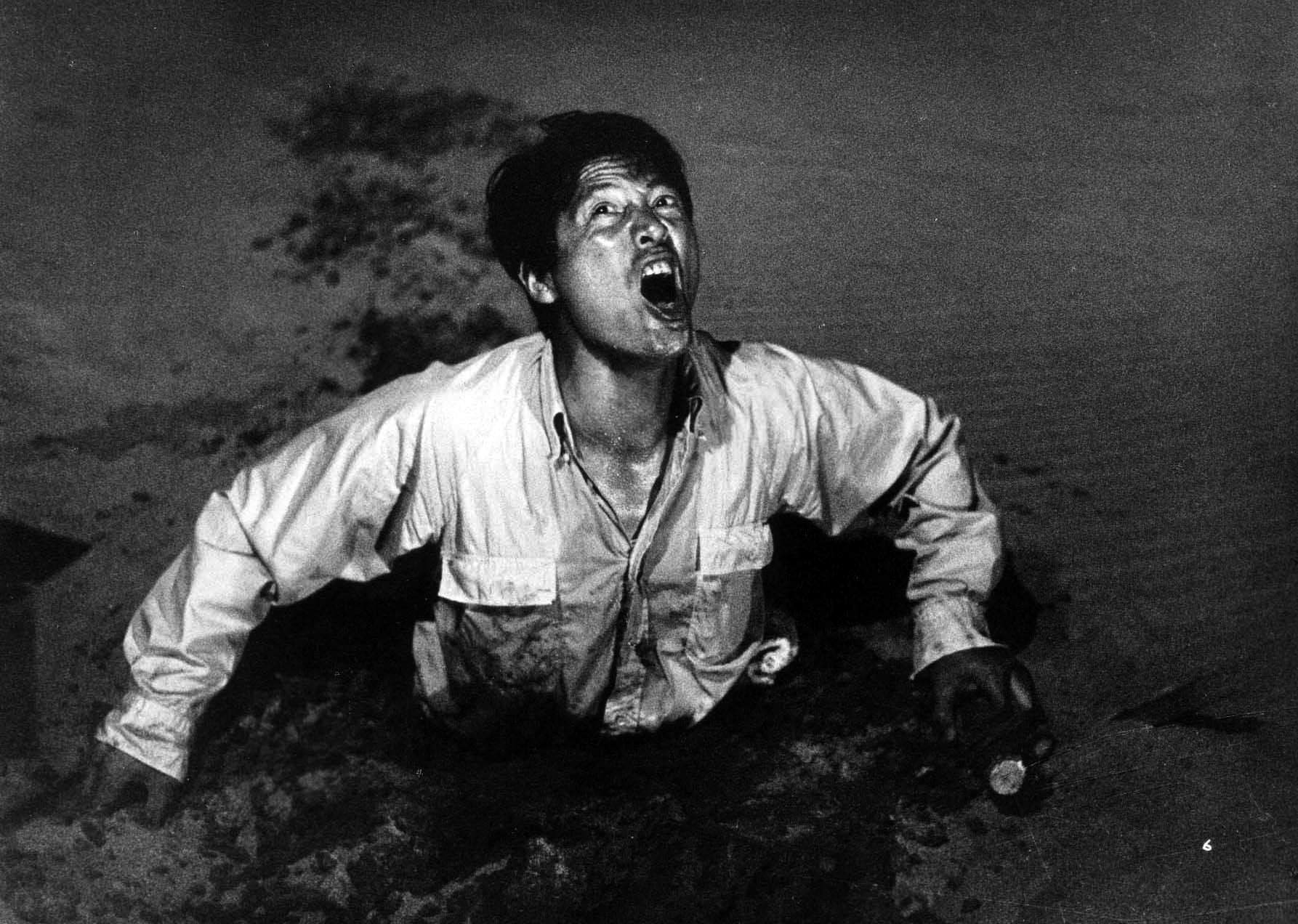
There was one thing I knew about The Woman in the Dunes that assured me I would connect with it on at least some level: I am all too familiar with the horrors of sand.
For a white guy, I’ve delved pretty deeply into Japanese literature, from Yukio Mishima to Yasunari Kawabata to Ryūnosuke Akutagawa’s Rashōmon and Other Stories (from which Akira Kurosawa adapted his classic film). I appreciate the spareness in diction, preciseness, meditative melancholy, and attention to the irreparable gulf of perception and misperception between each person and the next. I’ve found all these qualities in contemporary Japanese novels—at least, the contemporary Japanese novels I could find. Only three percent of the American book market represents titles in translation, and only a fraction of those books are translated from the Japanese.
But despite the slim pickings in a literary category I’ve come to love, I’d never gotten around to The Woman in the Dunes, the best-known novel by celebrated mid-century surrealist Kōbō Abe. Maybe it was his reputation for abashedly eerie weirdness; as a reader, I tend not to actively seek out the experimental or the nightmarish. When I mentioned to some friends what I was reading, those who were familiar with the book vacillated between displays of excitement and wide-eyed alarm. “Dude,” one said, “it’s compelling, but it’s dark, and strange.” Another: “He’s the Japanese Kafka—fair warning.” They knew that I find the Kafkas of the world intriguing, but not entirely to my taste.
That said, it was beyond time. And besides, there was the sand.
For seven summers in the prime of my youth, I worked at a beach club on Long Island as a cabana boy. Not the sexualized Matt Dillon in The Flamingo Kid kind of cabana boy, but the “sure, I can drag four 20-pound lounge chairs, two umbrellas, and a cooler filled with beer a mile and a half down to the ocean for you, Marilyn” kind of cabana boy. The kind that trudged miles across scorching white sand beaches in swampy heat day after day for four months, putting up beach parasols that always blew over, dragging beach furniture in little rickshaws with tires that were always flat, taking out the garbage for families with screaming children that never seemed to want to go home.
Later summers were better. I knew the families I worked for pretty well, and they would feed me dinner, slip me beer, and chat with me for hours at a time. But those early summers, before I had my own row of cabanas and simply relieved other cabana boys and girls on their courts four days a week, were rough.
The first workdays of the week, Maintenance Mondays, were the most Sisyphean of all. Most days, we’d sit on the porch on the front office and listen to the crusty growl of our sexist, racist, xenophobic club manager until someone complained that there was too much sand on the boardwalk. Pushbrooms in hand, we’d trudge across the club to spend an hour brushing said sand off a mile of hot tar-coated planks before trudging back and spending the rest of the day forced to pay attention to the manager while he did things like point at a news clipping of Stephen Hawking and say, “Not worried about black holes? What’s this ugly son-of-a-bitch got to live for, anyway?” until someone inevitably complained about more sand on another boardwalk—sometimes it was even the same sand on the same boardwalk—and we trudged back across the club to take care of it. Usually, these efforts were accompanied by club members saying things like “Boy, doesn’t get better than a job at the beach, does it? Beats the office!”

The worst of those days was after an early summer storm. That morning, there was a particular evil to the club manager’s slight smile, his aviator sunglasses barely hiding his glee. Shortly after arriving, I was down on the beach with six other kids with yard tools that looked like some unholy union between a garden rake and a deep sea dredge, raking up rotting, stinking seaweed and dumping it into huge black garbage bags. Occasionally someone would drive by on an ATV, look at us with a mixture of humor and pity, refuse to drive us and the bags the two miles to the dumpsters, then drive off. Then, when we each had a full bag, we’d haul them down the boardwalk toward the dump. Through an endangered bird nesting area. During mating season. Before nets had been strung up to keep the terns from dive-bombing pedestrians.
For more than half of that two-mile walk, the only thing worse than the smell of sixty pounds of seaweed rotting in each bag was trying to keep the birds from pecking at our eyes while we dodged the torrent of birdshit. Once we finally dropped the bags off at the dump, we walked back past the front office, where the club manager literally pointed and laughed at our sorry shit-and-seaweed-covered forms as we tried in vain to delay the inevitable return to the shoreline.
“What the fuck you waiting for?” At least I think that was it—we could barely make out what he was trying to spit out in that thick Queens accent of his between the bouts of belly laughter. “There’s lots more seaweed where that shit came from. Get back to it.”
Here’s what I learned from The Woman in the Dunes: There are definitely worse sand-related jobs than being a cabana boy. Also, Abe is really something else. Spare he may be, but Kawabata, Akutagawa, and Mishima he ain’t. Haruki Murakami might be the one with a novel called Kafka on the Shore, but with The Woman in the Dunes, Abe beat him to everything but the title.
In an article for Vice in 2013, in which Blake Butler read not only Woman in the Dunes but three other Abe novels in succession, he summarizes the whole book like so:
Abe’s most well-known novel, and for good reason. It gets very close to a feeling that I suspect many of us have had — that life is often fucked, and we are all trapped in an endless cycle of shit. Ostensibly it’s about an insect collector sent on a work trip into the desert, who then becomes stranded in a city that is stuck inside a pit of quicksand. There he meets a woman who seems determined to make him stay in the pit and be her husband. There are few who could make such an absurd scenario seem so plausible and familiar, like squeezing humanity from a bear trap, but Abe pulls it off. Emotions are close and logically considered, fleshed in the reader in a way that makes them almost trapped in the body of the protagonist too — a labyrinth with no real gap for exit. The first of many great examples of Abe’s amazing ability to take a bizarre, implausible situation — one that shouldn’t be able to sustain a novel-length text — and somehow make it seem as familiar as anything more largely considered “real.”
I started reading the novel a few weeks after Twin Peaks: The Return started its 18-episode run. Abe was train reading in the morning and afternoon, and the evenings saw me playing David Lynch binge catch-up. That was… a mistake. I hadn’t slept so poorly since the summer after I graduated college.
Haruki Murakami might be the one with a novel called ‘Kafka on the Shore,’ but Abe beat him to everything but the title.
The Woman in the Dunes and both iterations of Twin Peaks share much in terms of where their respective authorial eyes are focused. Like Lynch, Abe sees the ore of horror buried within the quotidian, just waiting to be mined. The infamous sand that makes up the titular dunes of the novel seems, at first, to be just that: crushed rock. (Once, a member of the beach club I worked at for seven summers asked me to plant a tree in front of her cabana. When I told her that trees needed nutrient-rich soil in which to grow and could not grow in sand, which is crushed rock, she responded with a whinge: “But it’s a beech tree!”) The novel goes to great pains to explain the science behind sand, as if to elucidate its nature as a real, understandable thing:
SAND: an aggregate of rock fragments. Sometimes including loadstone, tinstone, and more rarely gold dust. Diameter: 2 to 1/16 minutes.
A very clear definition indeed. In short, then, sand came from fragmented rock and was intermediate between clay and pebbles. But simply calling it an intermediate substance did not provide a really satisfactory explanation. Why was it that isolated deserts and sandy terrain came into existence through the sifting out of only the sane from soil in which clay, sand, and stones were thoroughly mixed together? If a true intermediate substance were involved, the erosive action of wind and water would necessarily produce any number of intermingling intermediate forms in the range between rock and clay.
That explanation proved as solid a foundation for the logic of the properties of the sand in the novel as underpinnings made of sand themselves. The sand of the seaside town where the book’s protagonist, a schoolteacher and amateur entomologist named Niki Jumpei but referred to almost always simply as “the man,” is eventually trapped is anything but what we think of as sand. It is as much a character in the novel as the landscape of a Sergio Leone film, determining the lives of those who live within it the way the smog-filled cities of China have forced its citizens into wearing air pollution masks.
The sand is not a fixed quantity, but increases and increases, constantly encroaching on the village and threatening its very existence. The sand goes on to prove to have corrosive qualities, as well—it dissolves wood, and, left long enough, rots flesh. It entirely determines the lifestyle of the town in which the man is trapped, as well as determining the necessity of trapping men like him to the survival of the townspeople.
Like David Lynch, Abe sees the ore of horror buried within the quotidian, just waiting to be mined.
But it’s important to the novel that the narrator thinks of the sand logically, because the absurdity of his situation demands an attempt to retain a grasp on those things in his world that are solid and understood. If this sounds existentialist in a Myth of Sisyphus sort of way, that’s probably because it is.
Part of the novel’s ability to feel real is rooted in Abe’s choice to use free-indirect speech to tell his story. When under pressure, the man thinks in fragments of thought that spiral into new fragments—some of which, during moments of clarity, feel precise and measured, while others, detailed as his thought process descends into paranoia and despair, are simply odd wanderings of the troubled mind. It’s not purely stream-of-consciousness, but let’s just say it’s likely Abe learned as much from Mrs. Dalloway as he did from “The Country Doctor.” The style allows readers (or at least this reader) to see replicated on the page some of their own natural patterns of thought.
Another reason the novel feels real? The man is a real shit to the eponymous woman. Of course he is! Why, when stuck in a horrible situation with someone who is fairly evidently a victim of kidnapping-related trauma and potentially also Stockholm syndrome, would you attempt to empathize before holding your fellow prisoner responsible for your predicament, abusing her verbally and eventually physically and—once you’ve mostly accepted the hopelessness of trying to escape and found a way to make something of a mutually-beneficial relationship with her—sexually?
Another reason the novel feels real? The man is a real shit to the eponymous woman.
While painful to read, this felt as spot-on to me as any of the book’s other takeaways on human nature. Is this not exactly what a semi-intellectual man afraid of powerlessness and the dissolution of what he knows would do in a situation in which he must face precisely those fears? Wouldn’t he subjugate and abuse a woman he barely knows in order to feel some semblance of control? The woman remains, for the bulk of the novel, a cipher; the man simply cannot understand how her own troubles motivate her, or why they might be more important to her than his. Masculinity was as frail and toxic in ‘60s Japan as it is anywhere else in the world today.
Universal, too, is the willingness of humankind to exploit and subjugate its own in the name of “getting by.” The townspeople, it turns out, sell the sand on the black market to construction companies, which use it to make cement. The substance that keeps them trapped in lives of toil and prompts them to kidnap strangers and enslave them in order to fight off that substance itself turns out to be their source of livelihood—the base ingredient of a mundane construction tool tied to a bureaucratic criminal conspiracy. If that doesn’t scream Lynchian, I don’t know what does.
In the end, what would happen in Kafka also happens here. After many escape attempts, each resulting in a worse fate than the last, the man’s spirit is broken. Left still in the little town by the shore, living with the woman in her little house in the dunes, he remains convinced he can leave whenever he wants but feeling “no particular need to hurry about escaping.” The result is, in a way, Nietzschean—gaze long enough into the sand and there you are, a sandpit yourself. Or, as Abe put it:
You can’t really judge a mosaic if you don’t look at it from a distance. If you really get close to it you get lost in detail. You get away from one detail only to get caught in another. Perhaps what he had been seeing up until now was not the sand but grains of sand.
Perspectives change when you’ve been ground down enough that you can’t even remember how you felt before the grinding started. And for the man, that means remaining a missing person, stuck for life in a hut in a seaside town shoveling sand away, never able to see the water.
I can relate. I didn’t get to swim in the ocean much as a cabana boy.
I n the sprawling neighborhood of American literature, a significant proportion of the houses seem to be haunted. Given that the metaphorical figures of ghost and house are both about as loaded as they come, it’s no surprise that heavy hitters from Nathaniel Hawthorne to Henry James to Toni Morrison have employed the device for their own storytelling purposes, and its possibilities remain far from played out. Ghosts — i.e. entities trapped in temporal loops by some trauma — are a great way to throw a wrench into standard narrative assumptions of forward motion; they’re also perfect analogues for all manner of anxieties and compulsions, from the psychological to the historical. And a fictional house is apt to serve as a ready metaphor for an individual psyche, or a family, or a milieu … or, for that matter, for the literary work itself.
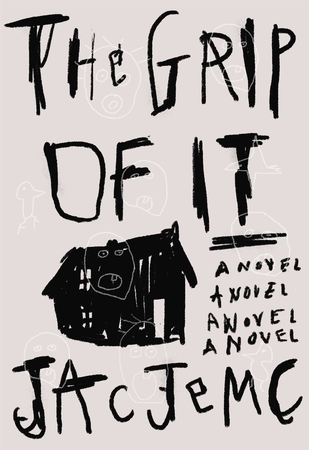
Jac Jemc’s second novel The Grip of It is a distinguished contribution to this creepy catalogue, partaking of the full richness of the tradition while extending the franchise through fresh moves of its own. Her haunted house — the fabulously-named 895 Stillwater Lane — is the new home of a young couple who’ve left the city to seek a fresh start in a small town, and swiftly emerges as a harrowing analogue for their marriage, with hidden passages and unquiet presences paralleling secrets they’ve concealed from each other and themselves. As Emily Dickinson cautions, “One need not be a Chamber — to be Haunted — / One need not be a House — / The Brain has Corridors — surpassing / Material Place.” Although the opening pages of The Grip of It neatly insinuate ghostly meddling, as the novel grows more fraught and claustrophobic, the prospect of an overtly supernatural antagonist begins to seem less like a menace than a relief. Just as an exchange of vows marks the end of many a classic romance, the cosigning of a mortgage turns out to be a hell of a way to kick off a horror story.
Jac Jemc’s first novel, My Only Wife, won the Paula Anderson Book Award and was a finalist for the PEN / Robert W. Bingham Prize for Debut Fiction; she is also the author of a short story collection (A Different Bed Every Time) and a chapbook of prose (These Strangers She’d Invited In). Her last name is pronounced “jems.” Although we both live in Chicago, and should probably hang out more, we conducted this conversation by email in August of 2017.
Martin Seay: A reader first encounters The Grip of It as a haunted-house story — which it certainly is, though it quickly reveals itself to be other things, too: a story about marriage, and about trust. In an essay called “The Shadow Chamber, The Boarding House, The Grip of It,” you also mention that some of the novel’s creepy twists and turns are inspired by the work of South African photographer Roger Ballen. I’m always interested to learn about the initial spark of a novel. Do you recall what The Grip of It was first, before it really began to take shape? Where did it begin?
Jac Jemc: The initial spark was simply: I want to write a haunted house story that doesn’t limit itself to the physical boundaries of the house. The initial working title for the book was The House, the Woods, the Water, but then Matt Bell announced he was publishing a fantastic book called In the House Upon the Dirt Between the Lake and the Woods, and I thought, “Welllll, great,” and had to change the title, but the idea of the haunting expanding to the natural world (both the nature surrounding the house and characters’ bodies) was there from the start. It wasn’t until much later that I realized I was really writing about a relationship again (which was also the focus of my first novel, My Only Wife). There’s something impossible to me about romantic/domestic relationships that I keep returning to — about the assumption that they’ll be a part of everyone’s narrative, about the ways we discuss the magic that supposedly guides them. There are moments when I can give myself over to the idea of romance, but there are more moments when I just can’t stop laughing at how absurd and embarrassing and lonely it really is. At some point I realized that writing about a haunting had brought me full-circle back to that idea.
There are moments when I can give myself over to the idea of romance, but there are more moments when I just can’t stop laughing at how absurd and embarrassing and lonely it really is.
I think I wanted to write a haunted house story because I love them and somehow it hadn’t occurred to me that I could participate in the creation of this thing I love. As a writer, I really move pretty blindly through what it is I like to write and plan to write. I’m sure I like haunted houses because I like thinking about the relationships between people and the ways that we can distrust those we’re closest to, including ourselves, but that’s not something that I could have identified before working on this book. The idea for the house came first, and all of the fissures between characters showed up much later. It’s not unusual for me to work in such a spontaneous way. I’ll often start with an image or a phrase, and grow the idea from there, without much more thought or planning. I wouldn’t say I’m even a particularly savvy reader of my own work, at least in the early stages. I trust my instincts and then eventually my motives begin to come clear, but it takes time.
MS: The Grip of It is the story of a young married couple who seek a fresh start by buying an old house in a small town; stuff gets weird right off the bat, and keeps getting weirder. The story is told in the first person, from the mostly-alternating perspectives of the couple, Julie and James. Something that struck me right away was their voices, which are convincing and distinct, but not exactly naturalistic: Their language is often expressive, figurative, oblique, and very much not designed to set up a baseline normalcy that’ll be disrupted by the supernatural later in the book. Since we have no access to any external point of view, we’re never sure how much we can trust our two narrators, a circumstance that resonates throughout the novel with unsettling force. It’s a bold move on your part, and kind of brilliant, I think. Can you say a little about how you developed the characters’ voices, and what the considerations were?
JJ: Well, the short answer is: figurative, oblique language is my jam. It’s what keeps me mashed to the page and working. At the time of drafting the book, that style of language was what was driving my writing, and so I sought a project that would match that obsession well. With revision, I tried to add more language and plot that was easier to grasp and I tried to restructure the book so that the haunting does feel as though it’s ramping up. In earlier drafts the language started and remained dense, without much everyday life/dialogue to anchor it, even flimsily, to the real world. There was also a third narrator, the neighbor Rolf, whose language was the dreamiest of the three of them, a spectral swirl that the reader was forced to slog through to try to figure out what was going on. Eventually he had to be cut and the information he shared had to be delivered in a more straightforward way to James and Julie, rather than to the reader. I was slow to figure out that balance. I also tried, over time, to pull apart James and Julie’s voices — the rhythms and what they talk about and how — but many similarities remain between them, as a nod to the way couples start to use the same expressions and tell each other’s stories and develop the same interests.
MS: I totally bought Julie’s and James’s narration, initially despite and later because of its peculiarity. I should mention that Grip also features some great minor characters — Julie’s down-to-earth colleague Connie, some just-the-facts police officers — who serve as smart and effective counterweights to all the strangeness.
When I was trying to figure out how to describe the narration in Grip, a word that I kept picking up and discarding was “poetic” — lame, I know, but maybe worth using in a specific sense here. What I mostly mean is that poetry (open-form poetry, anyway) strikes me as the literary form that a reader encounters with the least certainty about what its rules are supposed to be … whereas genre narratives like horror stories are largely defined by how they navigate rules and conventions. It seems like it shouldn’t be possible to use the rhetoric of poetry in a horror novel, but I think you do it really effectively in Grip. You’re a poet as well as a writer of novels and stories, and a lot of your work in each of those forms seems to operate in the unmarked territory that lies between them. How important were such formal considerations when you started writing The Grip of It? Its chapters are all quite brief, and some function almost like flash fictions; did the book always work that way, or did that approach emerge gradually?
JJ: I didn’t pay much attention to the rules and conventions of horror novels as I was writing. I’ve read a lot of horror stories, but not an impressive number of horror novels. The short chapters are a product of my own short attention span: usually, on a regular weekday, I try to write about a thousand words, so the chapters you see were probably each written in about a day, and then revision offered the opportunity to cut them down or expand them or mix them up. The short format of the chapters let me convince myself that I could work in a similar way to how I had been writing stories at the time, but instead of wrapping up the end of a story, I had to provide a launchpad into the next chapter. The language was always crucial because much of the haunting is suggested by the uncanny way James or Julie formulate something familiar with their words. Something normal is happening, but the reader knows that the character is experiencing it as strange because the words they’re using to describe that thing are off-kilter.
I didn’t pay much attention to the rules and conventions of horror novels as I was writing.
MS: Although The Grip of It is a fairly unconventional horror story, I appreciated the way it subtly acknowledges its forebears without ever imitating them. I thought I spotted quick nods to all sorts of scary predecessors — from Poe to Paranormal Activity — but in other interviews you’ve made particular mention of Shirley Jackson’s We Have Always Lived in the Castle and Mark Z. Danielewski’s House of Leaves as inspirations, or at least as favorites of yours. Some similarities aren’t hard to spot — like Jackson’s, the horror in Grip is psychological, human-scaled, and uncanny, without exactly being weird in the Lovecraftian sense; like House of Leaves, Grip is a story about a marriage, set in a spatially confounding house — but do you mind saying a little more about what you admire in these two novels, and how they were helpful with respect to Grip?
JJ: I admire House of Leaves for its willingness to be big and messy and for the fact that it was truly the scariest book I’d read. I am hard to creep out and that book did it. That said, I read it when I was 22 and I haven’t really returned to it (I wish I was better about rereading) so any influences are probably pretty distorted at this point. We Have Always Lived in the Castle was helpful in the way it allowed me think about what information gets shared when, how familial secrets drive the unease in the reader and keep them moving forward. I looked to that book for help with structure, but only after I’d amassed the raw material of my rough draft. I do love Edgar Allan Poe. “The Fall of the House of Usher” and the way it physicalizes the relationships in that book was in the back of my mind. And I did see Paranormal Activity — in the theater! I never see movies at the theater so the fact that I dragged my partner out to see that seems especially surprising to me looking back. I can’t say I loved the movie, but I do viscerally remember the way that people move in the surveillance videos, and what a clear indication of strangeness the movement represented. You’ve got a good eye! With much of my writing, it seems that I find inspiration in work that is quite different from my own; the connections seem really intuitive and clear in my head, but they’re often hard for me to articulate.
MS: You don’t have to answer this, but…about a hundred years ago I read a Bill Flanagan piece in Musician in which he talked about hints that songwriters sometimes drop to suggest that something they’ve written is about them personally. (His example was Springsteen in “Dancing in the Dark,” singing about how he gets up in the evening and comes home in the morning — regular business hours for a rock musician, but not for many other folks.) To be sure, In the Grip of It contains numerous clear indications that it is, like, super-duper-fictional … but am I nuts to also detect clues that it’s also rather specifically personal? I mean, you’ve dedicated Grip to your very awesome partner Jared — and the two of you conspicuously share first initials with your novel’s protagonist couple. Jared took the great author photo that’s on your book jacket; in the novel, James is a serious amateur photographer. Stuff like that. Am I — to use a classic ghost-story cliché — seeing something that’s not there? If I’m not mistaken about these glimmers of personal parallels, are they traces of your engagement with the material, or are they another hook to draw the reader in? Or both?
JJ: Ha. That is pure messiness on my part. I didn’t even think about the initials until after the book was finalized because I stole the names from some former coworkers and I was so worried they’d think I was saying something untoward about their relationship. The names had just been placeholders and then I became attached to their music (as it seems happens a lot from other writers I talk to). I can call out a few things that are not dissimilar to me and Jared: I always want Jared to get a haircut. I’m the more Type A between the two of us. Jared does video work and so he can handle a still camera pretty well, too. There’s more that’s pretty far away from us though: Jared does not have a gambling problem (though I have seen him genuinely enjoy a slot machine for an extended period of time that seemed mysterious to me) and he doesn’t like plants or nature. We’ve never moved a distance together to start over. Neither of us has ever seen a ghost and I don’t think I believe in them. I haven’t queried Jared on his feelings about ghosts too closely (though there is a really great Jincy Willett story called “The Haunting of the Lingards” about a couple and how their differing feelings about ghosts tears their marriage apart, so maybe I should).
MS: I am glad to get that on the record! I should probably say that I never felt as though Grip was disclosing anything specific about your life or your relationship — the particularizing details all seem invented — but I did get the strong sense that your visceral depiction of the struggle to maintain trust in the face of inevitable disappointment, confusion, and doubt is deeply felt, and carefully rendered in a way that I think will prompt uncomfortable recognition from any adult person who’s ever been half of a couple. (The fights in the book, for instance, are fantastic. The fact that they may be driven by some malevolent, identity-corroding supernatural force makes them seem more realistic rather than less so.)
JJ: Ah, yes. I think this is a fair assumption! I see what you’re saying. I have a few responses: 1) A fight scene is going to be informed by the way I fight or the way I’ve closely watched other people fight. 2) Jared and I really don’t argue much. It’s a pretty chill environment in the Jemc–Larson household. We nag each other about different things, but there’s a foundational trust that is quite different from the cracked ground on which Julie and James stand. That said, the urge to nag, my desire for Jared to know when the floor needs to be swept rather than my having to ask him to do it, is real and present enough that I can map that feeling onto a larger issue like a gambling problem, and how Julie needs to recognize that her commitment to James means that she is committed to supporting him through another instance of that (or a different) failure. I do think people can change, but I think that work is very slow and unreliable, and so you make your peace with the few imperfections, but that doesn’t mean you stop noticing them. And hopefully you’ve picked a person whose positives far outweigh the negatives for you. 3) There are things about the fights that I might be able to trace back to my parents more than James and Julie. My parents (neither of them will read this, but, Mom and Dad, please forgive me if someone brings it to your attention) fought a lot, and one of the people in the pair was not reasonable in their methods. (I’m trying to be generous.) Logic would flip-flop with such dexterity that I remember listening from my room, rapt, at both the one’s ability to fight so ruthlessly and the other’s to take the blows and try to force rationality into the situation. They love each other and have been together for 47 years, but I remain kind of astonished that two people with such different relationships to reason could remain so closely tied for so long. I try to avoid direct personal parallels, but some tie to my real emotions is always there.
Rejection is constant. Don’t let it deter you. It’s a lesson we need to keep reminding ourselves of, and a particularly hard lesson for some to learn when they’re starting out.
MS: To step away from the book for a moment … for a long time now, you have been faithfully blogging your rejections: When a publication or publisher turns down something that you’ve sent them, you record it on the internet, sometimes with a little detail about the particulars of the response and what (if anything) you think it might portend for whatever you’re submitting. (As of July 24, 2017, you’d blogged 374 rejections.) Years ago, when I first learned that you do this, I probably raised an eyebrow, assuming that this process was some kind of public self-flagellation. That was dumb of me. I have since come to understand the blog to be an outstanding resource for other writers — not in the usual sense that it provides information about markets and strategies or whatever, but in the more valuable sense that it demystifies the process of sending out work, it models professionalism and persistence and other good practices, it provides great examples of how to read one’s own writing in light of editor feedback, and, maybe best of all, it connects your labors as an independent writer to an entire community of people who are working hard to succeed at something they love. How long have you been doing this? Has your process changed over the years? As your writing has been published more and more widely and prominently, have your feelings about it changed?
JJ: I think it is a public self-flagellation though! You wouldn’t have been wrong. It’s something I constantly think about cutting off because I think it’s only getting more embarrassing with time, but apparently I like being embarrassed? It’s a way of atoning for all of the obnoxious self-promotion of social media, and I think that was a dynamic I was cognizant of from the start. Even in the beginning, if I met a friend for a drink, it felt easier to tell them I’d gotten a rejection letter than to tell them I’d had a story accepted. The latter felt braggadocious. Social media makes it so easy to brag, but I still don’t feel good about it. Right now, three weeks after the book has come out, I feel about ready to crawl into a hole because I’m so tired of talking about myself. That said, I do enjoy the spot of attention because it fills me up and helps give me confidence for the next thing, but I don’t have the stamina built up. I find myself ready to retreat and start ticking off the failures again pretty quickly. I’ve been keeping the blog for close to ten years. My process has remained pretty much the same, though I’m sure I’ve missed a few things out of sheer laziness. I am really bolstered, though, by the number of people who find it helpful. Rejection is constant. Don’t let it deter you. It’s a lesson we need to keep reminding ourselves of, and a particularly hard lesson for some to learn when they’re starting out.
MS: One last thing: What’s next for you? Mad King Ludwig, I hear?
JJ: And, yes, a novel about the Mad King: still plenty of ghosts and faulty architectures and interpersonal misses, but now with royalty and some nods toward our current political situation.
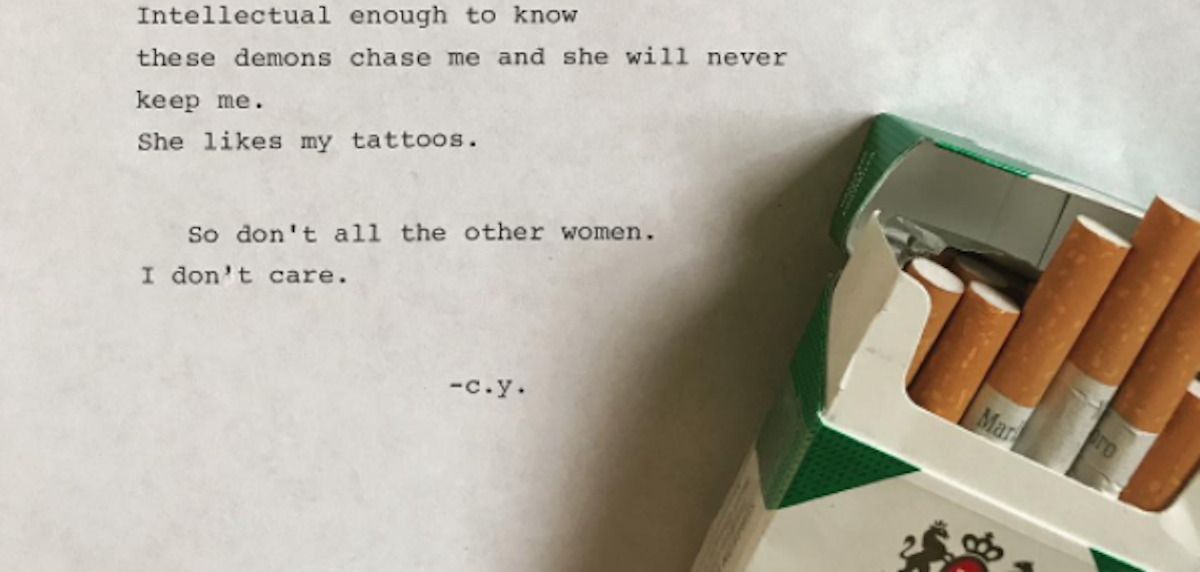
Izzy Leslie, a writer and digital artist from Portland, gave us all a great gift yesterday when she drew attention to the work (we use that term lightly) of poet Collin Yost.
this guy is a PUBLISHED author
Leonard Brohen over here is extremely high on his own supply.
Okay, W.H. Broden!
To be fair to William Brotler Yeats, this one’s not bad. With a better picture it would have a real A Softer World feeling to it:
Overall, though, the saga of Brobert Frost is a master class in mediocrity: who notices it, who doesn’t, who gets to have it without consequence, and who is so inured to their own that they mistake it for depth. We probably don’t need to spell it out any further than that.
Responses to Edgar Allan Bro were mostly mocking:
@badplantmom Lol these are so easy
But we think this one is probably the best way to react:
never doubt your abilities; someone is always worse than you are. https://t.co/rRtsNETmXj
You keep on doing you, Charles Brokowski! Aspiring poets everywhere need an inoculation against impostor syndrome.
Incidentally, both Pabro Neruda and Leslie have come under fire for, respectively, writing gassed-up poems and noticing them. One of them handled it with a lot more grace than the other.
this just KEEPS going but @badplantmom is as graceful as ever handling this dirtbag. cw slur in pic https://t.co/lpxvaVXm0V

Why yes, Broyce Kilmer, we are actually poetry experts! And we say bless you. Bless you for the reminder that poetry is not some rarefied pantheon that only the anointed can enter. It’s just writing, and writing some more, and maybe posting what you write on Instagram next to a cigarette and getting shirty when someone doesn’t like it. Go forth, poets, and when you doubt yourself, look upon Collin Yost, and shine.
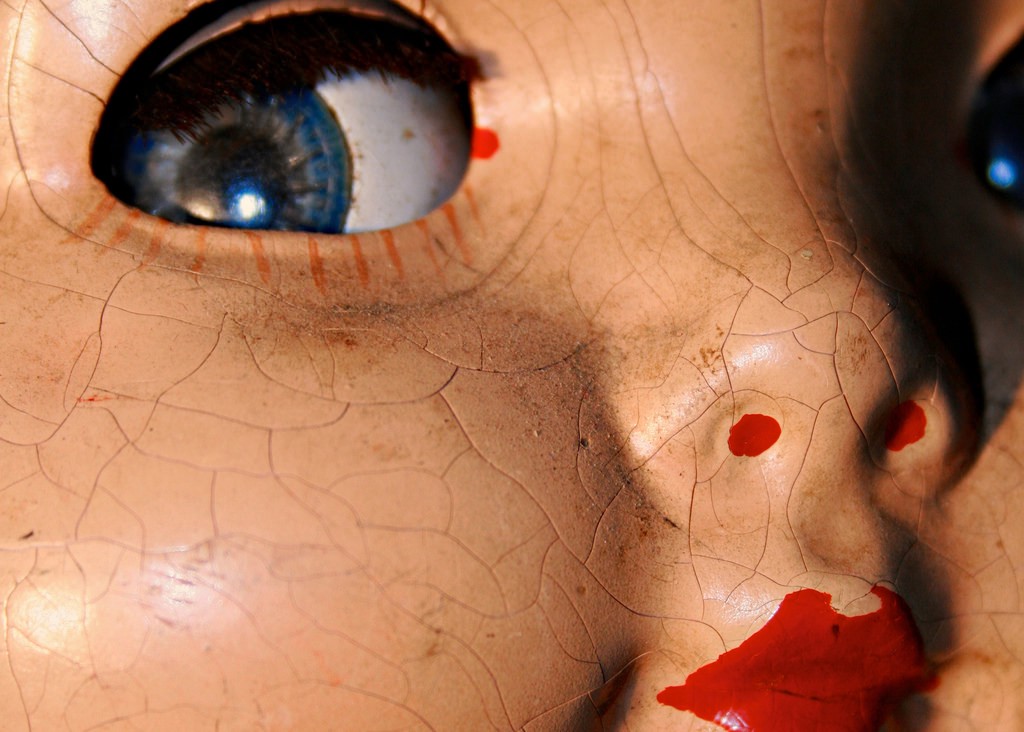
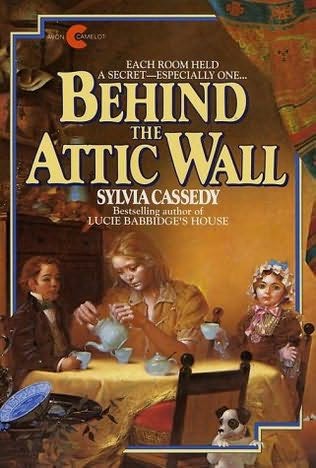
What do our favorite books from childhood say about us? I recently reread Sylvia Cassedy’s Behind the Attic Wall, which I loved obsessively as a pre-teen. I loved it all over again, but it did make me wonder: Why, among all my beloved books about babysitters and teen twins, was this creepy, unsettling novel the one that became my favorite? It’s a quirky choice, woefully underrated as middle grade readers go, lacking the cult following of the similarly weird A Wrinkle in Time, though I can’t for the life of me figure out why. This book is the whole package. Here we have Maggie, a misunderstood orphan (as in any kids’ book worth its salt — hi, Mary Lennox! Hey, Harry Potter!), who, in true fairy tale fashion, is sent to live with a pair of maiden aunts in a large, empty, potentially haunted house. There is a wryly funny uncle for comic effect. There are mean girls to rebel against. And of course, spooky living dolls squatting in a secret room in the attic. I mean, what’s not to love?
I didn’t quite understand, as a kid, what drew me to this book, but I loved the happy/sad feeling it gave me, the surreal sense that lingered after looking up from its pages. It was like the literary equivalent of spinning around too much, or spending 15 minutes hanging my head upside down off the couch. It allowed me, somehow, to see the world afresh.
Rereading the book for probably the twelfth time, I am struck by how tightly constructed it is, and how shot through with strands of the uncanny. I suppose no one should be surprised at Cassedy’s skillful craftsmanship; she attended the Writing Seminar program at Johns Hopkins, taught creative writing, and in her relatively short career wrote a manual on writing, among other things. Thus, on the first page, we know we are in an unsettling, unsettled world:
The man waiting at the station when she first stepped off the train was the tallest person she had ever seen. His round hat moved like a planet above the crowd, and the silver knob of his walking stick hovered just below it like a moon as he made his way toward her on the platform.
That first moment is disorienting, with that inhuman-seeming description of Uncle Morris. When Maggie first enters the house, which she is still convinced is the boarding school for girls it clearly used to be, she is startled by a ghostly figure who turns out to be her own reflection, which “hung fragilely within its frame.” Everything she sees is familiar and unfamiliar, definable and indefinable. Significantly, Maggie is 12, an age at which the world — oneself, even — is generally familiar and unfamiliar, definable and indefinable. It’s an age at which most girls don’t quite know themselves, and Maggie has no one to help her navigate it.
Right away we understand that Maggie is different from most girls. She is unpleasant and poorly-behaved (a welcome transgression from the virtuous heroine of many girls’ books, or so I felt circa 1990). The book’s obtuse adults don’t like her and for once it’s not really their fault. She’s genuinely unlikeable. The most sympathetic reader barely likes her, at least at first.
The book’s obtuse adults don’t like her and for once it’s not really their fault. She’s genuinely unlikeable. The most sympathetic reader barely likes her, at least at first.
As Maggie surveys the parlor, presided over by portraits of the original founders of the erstwhile Academy (remember them, they’ll be important later), she fixates on a china ballerina. Morris says, “Have you ever thought what that must be like?…I’m told it’s rather pleasant. Being a piece of china.” On a first read this seems a sign only of Morris’s eccentricity, a way to illustrate Maggie’s refusal to play along. But this exchange turns out to be oddly prophetic.

As Maggie explores the house, we are invited to recognize the uncanny nature of the place. Surveying the long empty hallway of closed doors, Maggie feels “a deep chill, cold as the breath of a passing ghost.” An empty chamber retains ghostly traces of a long-ago schoolroom. Soon she hears voices echoing throughout the empty house, and as the months pass, the voices begin to call her by name. She finally tracks the voices down through a secret passage in the attic and finds — what else? A couple of large, knee-high china dolls who have set up house in an IKEA-showroom-like arrangement of doll furniture.
When Maggie first sees the dolls’ lair, “everything had the air of being suddenly abandoned.” She searches for whoever has been playing with the dolls, but as it turns out, the dolls (though they don’t move their mouths or eyes), are in some impossible way alive, and have been the voices who have been talking to her. Deliciously, they refer to Maggie as “the one.” There it is, the key moment in any children’s novel — Harry Potter receiving his owl-mail, Meg Murry’s visit from Mrs. Whatsit, Charlie’s discovery of the last golden ticket — the revelation that this oddball child is actually special and important. That people have been waiting for her. It is, I suspect, the secret wish of every growing bookworm grub. Every child wants to feel chosen.
People have been waiting for her. It is, I suspect, the secret wish of every growing bookworm grub. Every child wants to feel chosen.
Significantly, the attic dolls aren’t scary. They comport themselves with starched propriety, asking normal, playing-house kind of things of Maggie. They would like help with pouring the tea at their tea party, and with taking their dog to the “garden” (an area of the attic wallpapered in roses). At first Maggie violently refuses, snapping at them, “I don’t play with dolls.” And it’s true, really — having grown up institutionalized, she’s had a youth without whimsy. Maggie’s turn is already over; she’s outgrown childhood before it even started.
Then again, the dolls don’t really want Maggie to play with dolls. They want to play with her. Like expectant parents, they have been waiting for someone to come animate their dull days. They have wanted her as she never imagined she could be wanted. The dolls take on kindly parental roles, showing immense patience with their unwilling child.
Significantly, the attic dolls aren’t scary. They comport themselves with starched propriety, asking normal, playing-house kind of things of Maggie.
Still, at first Maggie is alarmed. When one of the dolls moves slowly toward her (when I picture the way these grinning dolls must slowly, mechanically move, then the book does indeed become terrifying), Maggie wonders if they plan to kill her.
The dolls themselves are not actually threatening, but rather wistful, reading and rereading the same scrap of old newspaper about “two lost in a fire.” And yet Maggie repeatedly resists their charming entreaties, insisting on telling them that they are not, in fact, real. Are they real, or are they figments of a lonely girl’s imagination? The book never definitively answers this; as Lois Kuznets writes in When Toys Come Alive: Narratives of Animation, Metamorphosis, and Development, “Cassedy’s doll books insist on some space in which external and internal reality are blurred.”
As a 10-year-old, I fervently believed that in the world of the book the haunted dolls were real, in contrast to the other figments of Maggie’s imagination, like the Backwoods Girls she plays with/lectures. Her games with the Backwoods Girls — a gaggle of silly invisible children to whom she must explain everything — is more like how girls typically play. Maggie is the locus of expertise and information to be imparted to the girls. With the attic dolls, though, Maggie is the one being explained to, the one being nurtured. It’s the only way this unparented, unloved girl finds a sense of belonging. She insists that doesn’t need the dolls, but the dolls need her, and being needed is something Maggie has never before experienced.
As a reader, I was primed for this kind of message. Sadly, I thought, I wasn’t an orphan or even abused, and thus unlikely to have any sort of special adventure. But I was an oddball, a shy bookworm, and decidedly a doll girl, heavily invested in my imaginary life. My Cabbage Patch Kid dolls and I had a lasting and intense relationship.
As a reader, I was primed for this kind of message. Sadly, I thought, I wasn’t an orphan or even abused, and thus unlikely to have any sort of special adventure.
What’s fascinating to me now is how similar my own daughter is. Her poison is American Girl, and while she has amassed an inanimate crew shocking in size for a family living in a small New York City apartment, the OG closest to her heart is a now-raggedy Bitty Baby she was given on the occasion of her second birthday (when, coincidentally, I was just about to give birth to her little brother): Special Baby.
For nearly 6 years now, she has taken Special Baby on all sorts of adventures; Spesh has splashed on Cape Cod beaches and ridden the tea cups at Disneyland, traveled by subway and airplane and dolly stroller, and along the way has had ad-hoc reconstructive surgery on every single one of her limbs. Spesh has also gained herself a bit of a social media following: her appearances on Facebook and Instagram are frequently my most-engaged-with, garnering scared-face emojis and typed expressions of agony. Her dead-eyed stare often draws comment, and people lament about the nightmares she will give them.

Why is Spesh so unsettling to adults, when my daughter finds her to be perfectly adorable? It might have to do with her weathered appearance. She’s had such a freewheeling life that she looks antique, and there is something distinctly uncanny about an angelic baby-face that also looks very old. Those two states of being don’t generally belong together. In her great examination of the creepy doll phenomenon for Smithsonian, Linda Rodriguez McRobbie notes, “A fear of dolls does have a proper name, pediophobia, classified under the broader fear of humanoid figures (automatonophobia).” She points out that the sense of creepiness comes from just that contradiction: you’re invited in, but there’s that vacant stare; the doll looks like a cute baby, but is also clearly very old; the figure appears to be alive, but upon further inspection, is not. Our ancient survival instincts trigger alarm warnings at familiar-but-off behavior.
Why is Spesh so unsettling to adults, when my daughter finds her to be perfectly adorable?
McRobbie cites Frank McAndrew, a psychologist who published a research paper on “creepiness”: “Creepiness, McAndrew says, comes down to uncertainty. ‘You’re getting mixed messages. If something is clearly frightening, you scream, you run away. If something is disgusting, you know how to act,’ he explains. ‘But if something is creepy… it might be dangerous but you’re not sure it is… there’s an ambivalence.’” This helps me to understand both why people find Spesh so unsettling, and why Maggie recoils from the china creatures in Behind the Attic Wall — it’s the uncertainty, the ambivalence, the neither-this-nor-that-ness of it all.
Then there is the trope of the possessed doll, which must have arisen from this very ambivalence. The idea of a doll animated by devilish forces has wormed its way into popular culture, gaining wide exposure in movies like Child’s Play, or episodes of the television shows like The Twilight Zone. Who among us has not had a Chucky- or Talky Tina- induced nightmare or two?
It’s spread from our fiction, too, into real life—or perhaps I mean “real life.” Look at Annabelle the Raggedy Ann doll — paranormal investigators reported that the doll’s owners often found it in places other than where they had left it, and eventually concluded that the doll was possessed by a demonic spirit attempting to hopscotch its way into an actual human soul. Don’t worry, the doll now lives in a demon-proof case, in an Occult Museum. (It only seems responsible to point out that the Occult Museum is run by those very paranormal investigators.) Similarly, Robert the doll is a creepy-looking fellow blamed by its child owner for all manner of mischief before being locked in its own demon-proof case. Sounds silly, but to parents who have walked into the kitchen in the middle of the night and startled at a doll left sprawled across the floor, these stories of dolls coming alive and wreaking havoc hit a little too close to home. I personally live with dozens of dolls. What would happen if they were to rise up against me?
These stories of dolls coming alive and wreaking havoc hit a little too close to home. I personally live with dozens of dolls. What would happen if they were to rise up against me?
Ross Chambers examines this idea further in his essay “The Queer and the Creepy: Western Fictions of Artificial Life.” Discussing living dolls like the one in E.T.A. Hoffman’s The Sandman alongside the artificial life created in Frankenstein, Chambers writes, “There is a tradition of Western narrative in the manner of which I call a poetic fable that for two centuries has interested itself in the question of what the phenomenon of artificial life might mean for a definition of the human.” When something that shouldn’t be alive comes alive, he notes, it entails an “involuntary loss of control,” and creates an object that is simultaneously attractive and repulsive.
That complicates things, doesn’t it? Here is why the trope of the living doll idea just won’t go away. Because a living doll isn’t merely repulsive. It can also be attractive, even glamorous. I’m reminded of Cynthia, the mannequin who briefly became world-famous, appearing on the cover of Life magazine in 1937. Her creator, a soap-carving-artist (yes) named Lester Gaba, dressed her up, took her about town, and insisted that people treat her like a star. A weird chapter in American history, but what’s undeniable is that she, I mean, it, captured the popular imagination, if briefly. I mean, she had her own talk show, somehow. In a time when America was poised for paradigm-quaking changes, especially in terms of what was asked and expected of women, Cynthia was gorgeous, glam, and so passive her mouth didn’t even open. The subtext is eloquent, no?

In “The Uncanny,” Sigmund Freud claims that the uncanny is an effect of the return of the repressed. No wonder Talky Tina, murderous with rage at not being loved well enough, and Cynthia, beloved and placidly expecting nothing, both haunt us. No wonder we worry when children make their dolls say devilish things that they know they themselves would not be permitted to say, nervously laugh as kids play stern mommies or vengeful teachers. We ask children to repress so much that the thought of it all returning is terrifying. So the idea, which kids are very comfortable with, that their dolls might come alive — to us, it’s quite distressing.
Living dolls indicate a loss of control over where life comes from.
Living dolls indicate a loss of control over where life comes from. I think this is part of what makes Behind the Attic Wall so brilliant; it subverts this expectation. When the dolls need her help, Maggie finds some kindness that was lying dormant in her. Eventually, she gathers things they need, aids them in tea-sipping and dog-walking, helps them fix what is broken. Maggie is a traumatized shell of a girl in the beginning of the book, animated only by occasional fits of rage, but the dolls’ needs coax her back to life. For Maggie, the living dolls become a surrogate family and in the end, they give her ultimate control.
“The Sandman” might just be the ne plus ultra of creepy doll stories, as Dorothea A. von Mücke wrote in Public Books. 200 years after its publication, it’s still unsettling to read along as the traumatized poet Nathaniel misses all the cues that Professore Spalanzani’s daughter Olympia is a living doll. He confuses the animate and the inanimate–sees doll as being alive, and his actual girlfriend as being an automaton — which leads to madness and, eventually, death. Hoffman was known for exploring the unsettlingly porous boundaries between sanity and insanity. (He also wrote the original version of “The Nutcracker and Mouse King,” which explains how creepy I find that so-called Christmas classic about living dolls, ominous adults, and preadolescent girls getting swept away into alternate realities.)

There are many more notable uncanny dolls in children’s literature, of course. In the same era when I first read Behind the Attic Wall, I loved Betty Ren Wright’s The Dollhouse Murders, and Dare Wright’s The Lonely Doll. There’s Ian McEwan’s The Daydreamer, a truly delightful book that can be read by children or adults and was indeed published in two different editions, an illustrated one for children, and a standard trade paperback for adults (why don’t we do this more often?).
The Daydreamer contains a story called “The Dolls,” in which the protagonist finds that his sister’s doll, Bad Doll, wants her own room, and violently attacks him in an attempt to get her point across, summoning all the dolls to form an angry mob. The scene is predictably frightening:
As Bad Doll inched its way up with cries of ‘Oh blast and hell’s teeth!’ and ‘Damnation take the grit!’ and ‘Filthy custard!’ Peter became aware that the head of every doll in the room was turned in his direction. Pure blue eyes blazed wider than ever, and there was a soft whispering of sibilants like water tumbling over rocks, a sound which gathered into a murmur, and then a torrent as excitement swept through five dozen spectators.
They eventually tear off Peter’s limbs to use as their own. Talk about blurring the lines between alive and not-alive!
They eventually tear off Peter’s limbs to use as their own. Talk about blurring the lines between alive and not-alive!
A new addition to the body of creepy doll lit is Elena Ferrante’s children’s book, The Beach at Night, narrated by a doll who gets left alone (yep, on a beach, at night) and endures a terrifying series of events. (My daughter couldn’t read it for the terror, and I felt her panic — losing Special Baby is a recurring fear in our family.) In one of the most haunting scenes, the Mean Beach Attendant tries to steal the doll’s words, including her name. It is clear in the book that if she loses her words she will lose her life. It’s a fear we can all relate to, I think, and it loops back to the Behind the Attic Wall dolls. In the end, those dolls need Maggie to keep them alive, and when she abruptly stops visiting them, stops talking to them and hearing them, they slip back into the inanimate existence they endured before she arrived.
Here’s something to consider: While adults dislike the idea of dolls coming to life, children actively work to give their dolls life. Even the most credulous doll-lover knows that a doll’s life is a tenuous matter, kept aloft by the sheer force of a child’s words, and belief, and love. Children have the gift, the responsibility, of giving dolls, with their voices and names and words, life. It’s something kids know without having ever read The Velveteen Rabbit, in which the toys discuss how the love of a child can make them Real. It’s a compelling idea for children in the process of becoming themselves, becoming Real.
While adults dislike the idea of dolls coming to life, children actively work to give their dolls life.
Of course, giving a doll life means eventually taking it away, too, even if only by accident or eventual neglect. My daughter was moved to tears by seeing a snippet of Toy Story 3 where the lifeless dolls, no longer animated by a child’s love, are being given away. There’s something heartbreaking about the idea that these beloved toys go inert as kids outgrow them, because it’s such a blatant metaphor for the death of childhood — I should know, I sobbed while reading my kids the end of The House at Pooh Corner, when the toys discuss Christopher Robin going away to school and not needing them anymore.

We harbor in our collective unconscious the idea that a child’s love makes stuffed animals like the Velveteen Rabbit and Winnie the Pooh REAL. For children, this is a wonderful idea, one that gives them real agency. For adults, this idea becomes terrifying. Our ideas of reality are less porous than childrens’, and rather than living in a Muppet Babies world where our imaginations create reality, we tend to prefer to know what is real and what is not. We pride ourselves on it, in fact.
This is why Behind the Attic Wall occupies a unique place in the world of creepy doll stories — it stays poised between the child’s view of dolls and the adults’, just as Maggie herself straddles these two worlds. Maggie’s doll-friends are sweet, after all — they just want to have tea parties and clean handkerchiefs, and in this way they imitate the play of very young girls. But they are also ominous — in the end (spoiler alert!) they turn out to be animated by the loitering spirits of the dead Academy founders, the “two lost in a fire.” When Maggie abandons them the life again goes out of them. Maggie, it turns out, was what gave them the ability to live. Maggie’s dolls were never the super-sweet stuffies of early childhood — no Winnie the Poohs or Woody the Cowboys here — but nor are they the evil possessed dolls of horror films and occult museums. They occupy some place in between.
Maggie’s dolls were never the super-sweet stuffies of early childhood, but nor are they the evil possessed dolls of horror films and occult museums. They occupy some place in between.
I hope Behind the Attic Wall enjoys a renaissance, perhaps a new edition with a cover that will appeal more to today’s kids. After all, we need more books about the in-between of things. As artificial intelligence becomes a part of our everyday lives in ways E.T.A. Hoffman and Mary Shelley could have only dreamed of, I’m guessing our kids will bring a special perspective and understanding to stories that blend the alive and the not-alive.
And of course, I hope my own daughter reads Behind the Attic Wall some day. I think that she and Special Baby would really appreciate its blend of sweetness and terror, innocence and knowing. Last Halloween, for example, my tiny sweet daughter decided she wanted to dress up as—what else?—a spooky, undead doll.
Ange stared at her father’s hairy hands on the steering wheel. How gross, she thought. He’s like an ape. “Next is Holy Terror,” he said. “Read me the instructions.”
She opened the guidebook and searched for the name. Her finger traced the pages that were most heavily marked with his messy handwriting, past Contaminated Forevermore and Prairie Primeval until she found it, between To Be or Not to Be and Whamo Grano Blamo.
“From the railroad tracks at Greene, go north two dot five miles on State Highway 28,” she read. “Then right two dot seven miles.”
“Point seven,” he said. “The dot means point.”
“Missile is on the left.”
Putting down the book, she turned uncomfortably in her seat belt and a spear of underwire bit into her side as she looked out the back window at the dust rising between the car and the barbed-wire fence surrounding Justice Stops Here. She wished she had the nerve to ask him, so she could think about something else. Maybe she could make a joke about it, like it was no big deal. Or she could just say it directly, but if she was going to do that, she should have done it when he mentioned the Motel, which was hours ago. If she said something now, it would seem like that was all she’d thought about in the meantime.
Nuclear Heartland (Electric Literature’s Recommended Reading Book 276)
“Are these the railroad tracks?” he said, suddenly frantic. “How are you supposed to know if this is Greene? There’s nothing here!” As usual, she didn’t know the answer, but she turned to look out the front windshield to show solidarity with his latest navigational conundrum.
The trip had begun that morning, when he picked her up from her mother’s house in Souris, Manitoba. She hadn’t slept much because her breasts were throbbing and she couldn’t find a comfortable position on her side or back. She was used to sleeping on her stomach, her hands folded under her like a little angel, but there was no room for her arms any more.
She’d had to rush through breakfast because she knew it would take at least half an hour to rig up the beige granny bra from Eaton’s that she had converted into a kind of binding device. First she sucked in and pulled the bra over her head and shoulders. Next she leaned forward and slowly stretched the material over her breasts, one at a time. Then she had to disperse each breast within the bra, stuffing the sides under her armpits. After that, there was a whole system of fastening and adjusting involving an arsenal of safety pins and elastic bands. In the end, she’d settled for a slightly lopsided, smooshed-to-one-side look in exchange for a setup that was bearably painful and rarely stabbed her or came undone.
Meanwhile, her mother had spent the morning carefully arranging her hair and makeup to look like she’d rolled out of bed even-skinned and gently tousled, and the two of them had fought over the bathroom like a pair of teenagers. Ange knew her mother’s preparations meant she was planning to come outside when he arrived. It drove her crazy the way her mother performed for men. With some, she played at helplessness, saying things like, “It’s so good you were here. I have no idea about these things.” With others, usually the ones Ange liked best, she was cold and arrogant for no reason. With Ange’s father, it was always the independent woman routine, which left Ange torn between whatever loyalty she still felt for her mother and her desire to distance herself from the embarrassing display.
Despite the various acts her mother put on for men, Ange knew that she hated them all equally. “They’re all out to get you,” she told Ange, who had been shamed into wearing baggy clothes and keeping her T-shirt on in the pool since she was ten. “They only want you for your body,” her mother said, but the way Ange saw it, at fourteen years old, her body was completely trashed anyway. Her breasts were rippled with bruise-colored stretch marks, her ribs were deformed by the constant rubbing and digging of underwire, her shoulders were rutted with grooves from her bra straps, and her spine was probably growing crooked because when she stood up straight the other kids said she was flaunting her boobs.
It had been more than a year since Ange had seen her father. When he had called to suggest the trip, he’d talked to her mother for at least five minutes before asking for Ange, who was so preoccupied with trying to figure out why he was talking to her mother that she was defenseless when he asked if she would like to take an “environmental awareness” trip to North Dakota.
In the past, he had often involved her in his activism, which was fine when she was a cute kid having her picture taken holding signs she didn’t understand. But as she got older, he’d become increasingly critical of what he called her lack of interest in the world, and since they saw each other so infrequently after he moved to Regina, his criticism eventually became the basis of every conversation they had, until he finally seemed to lose interest in her altogether.
“Just for one night,” he’d said, and she’d agreed because she felt sorry for him. She regretted her moment of weakness as soon as it dawned on her that one night meant sleeping arrangements would have to be made, and that the making of those arrangements meant that he must have considered the developments that had taken place since the last time she’d spent a night with him or, worse, that he might not have considered them at all. Now here she was with Holy Terror in her immediate future and the Motel beyond that, and all she wanted was her bed at home.
“This one is interesting,” said her father, who had calmed down since seeing a sign identifying the place as Greene, North Dakota. “The guy from Nukewatch told me that he was here when they planted it, and the farmer who owns the field was so horrified, he put his farm up for sale the next day. He thought it was going to be a batch of dynamite or something, not a forty-ton intercontinental ballistic missile!”
Ange pressed her lips together and nodded her head to indicate impressed surprise, but the truth was that measurements like this meant nothing to her. A ton, a kilometer, an acre — she was incapable of conceptualizing such abstractions. The world, to her, consisted only of the known, which had dimensions that could be seen and felt, and the unknown, which did not. Travelling through the prairies with her father, she had no sense of north or south or of what distance they were from Souris, let alone from the U.S.S.R., a place that occupied a dark corner of her imagination along with various other things so often discussed but never experienced, such as World War II and the nucleus of a cell.
Sex had occupied that same strange space in her psyche, casting its glow over all of the frightening things that dwelled there, until she’d allowed James Betker to finger her in the back of the school bus and then, two weeks later, let Matthew Cain take her to his hunting camp. “You taste like a peach,” Matt had said when they kissed on the dank futon under a lamp in the shape of a miniature guillotine, and although she’d found it unoriginal and somewhat comical, she had liked it. Feeling suddenly playful, she’d said, “I’m freezing” and moved his hand to her erect nipple, then, when he tried to take off her shirt, she’d jumped off the couch and said, “Let’s light the wood stove!” in a voice so foolishly childlike it made her blush.
Hurrying over to the stove, she had felt him pursuing her, but not in the way that she wanted him to. When she bent down to open the filthy glass door, he had grabbed her from behind and pressed his erection into her left butt cheek, and when she had turned to him looking pained and confused, he’d said, “You’d better be ready to finish what you started.” All at once, with a sickening disappointment that felt somehow familiar, she had discovered that she had no choice about what happened to her, and that the promise of power and something like glory that sex had once extended to her had proven, like everything else, to be a miserable lie.
When they arrived at Holy Terror, it was almost dusk, and the corn hissed like a field of punctured tires. Ange and her father got out of the car and approached the site in silence, her father heading straight for the sign that read, Warning: Restricted Area. When they got close, they heard the mechanical whirr of the security camera over the hum that came from inside the fence. “Hey,” her father said, waving. “We’re on Candid Camera.” He moved toward her to parody a happy family pose, but she stepped aside and gave both him and the camera a stiff smile as she stared at the concrete slab through the metal links.
The cold wind ruffled her windbreaker and made the fence shake. She could feel her bra coming undone in the back, and she found that she had the same feeling she used to get as a child when she had to call her mother in the middle of the night to pick her up from a sleepover. Some small thing, like bumping into her friend’s dad on her way back to bed from the bathroom, left her feeling shamefully exposed, caught in an act that was meant to be private.
He had brought the guidebook with him, and he opened it and showed her the page. “This is what it looks like under there,” he said, pointing to a heavily marked diagram of something that looked not unlike the things she’d seen Wile E. Coyote light with a match in Road Runner cartoons. “That thing is forty times more powerful than the bomb that was dropped on Hiroshima. Can you imagine?”
What she had understood so far was that the concrete slab was a lid, under the lid was one of a thousand missiles that were buried under farmers’ fields across the prairies and aimed at the Soviet Union, and because of this they were all sort of doomed. When they’d first set out that morning and her father had begun his lecture, Ange had asked a few questions, such as how do missiles know where they’re going without someone driving and what if they hit a bird or a plane on the way, but after a while, she felt so impressed that someone had figured all of this out and so stupid for knowing so little that she just sat quietly and tried to react appropriately to what her father said without giving away too much. Specifically, she wanted him to think that she cared about the missiles without offering any accompanying indication that she cared about him.
“Just one of these could destroy an entire civilization in a second,” he said.
She made a concerned face. Of course he wouldn’t expect her to sleep in the same bed as him, she thought. There was no way he was that clueless. But even sleeping in the same room would be unbearably awkward and awful.
“And of course the Russians have missiles too. Can you guess where they’re aimed?”
She waited to see if he would answer his own question, as he often did. “Where?”
“Think about it.”
“I don’t know. Washington?” She knew that there was a D.C. and a state, but she didn’t know the difference and thought it was too late to ask.
Her father laughed. “No, they’re aimed right here where we’re standing, and if it happens, the prevailing winds would take the fallout directly northeast of here. Do you know what that means?”
“No.”
“Think about it.” She pretended to think about it until he told her the answer.
“Winnipeg would be wiped out, and we’d all get lethal doses of radioactivity. The Pentagon tries to pretend they’re here to protect us, but really they’re turning us into a human sacrifice to protect the big cities. Can you believe that?”
“I don’t know.”
“Well come on,” he said. “What do you think?”
She shrugged and wrapped her arms around herself, feeling miserable that the only thing she had to look forward to was an even more unpleasant scenario than the one she was currently enduring.
“I’m interested to know your opinion. Can you tell me your opinion?”
“Well . . . who has more, them or us?”
“It doesn’t matter, Ange. We have enough to wipe each other out. There’s no remainder, if that’s what you’re thinking.”
“Okay, so I guess . . . like, I hope it doesn’t happen,” she said.
“But doesn’t it make you angry?”
“I guess.”
“And do you think there’s anything you can do about it, or do you just want to wait and see what happens?”
“I don’t know,” she said.
“I guess, I guess, I don’t know.” He tensed his mouth and moved his head from side to side. “You don’t care, do you?”
She said, “I guess not” at the same time as he was saying, “You sound exactly like your mother,” then she turned and walked back to the car.
In Mohall, they ate pizza in silence, and she used a fork and knife instead of her hands. Afterwards, they made the short drive to the Motel, and her father’s knuckles were white on the wheel. “I’m sorry, okay?” he offered. “There are a lot of things that you don’t understand yet because I’ve never been willing to drag you into all that grown-up stuff.” He was quiet for a moment, then continued, “You know, your mother always cared more about outfits than anything we were trying to accomplish, and it’s because of people like her that it all went to shit.”
Ange looked out the window at a group of boys picking squashes and putting them in canvas bags slung over their shoulders. She thought about what her mother had said once: “Ever since you hit puberty, he turned on you. It was like he didn’t trust himself around you.” Ange knew it wasn’t true and that her mother had said it purely out of spite, but it had planted a seed, and that was all it took.
“What I mean,” her father said, “is that it’s not your fault.”
The outside of the Motel was the most dreary thing Ange could imagine. The parking lot was empty apart from an old blue pickup, and there wasn’t one person in sight. The radio was on in the truck, and country music blared out of its open door over the sound of an argument in one of the units. Ange decided to follow her father to the office so she could find out what the sleeping situation was before she was confronted with it in the room. As they walked, she tried to make out some of the argument, but all she could hear was a woman screaming, “No! This is bullshit!” again and again.
In the office, there was a ginger cat on the counter, and Ange stroked its fur while her father spoke to the fat man behind the desk.
“Sign here,” the man said before bending down with a loud groan and reappearing with a set of keys.
“You’re in number twelve. License plate number?”
“Why do you need that?”
“I need it if you want to park outside your unit.”
“Do you have paper and pen?” her father asked, clearly annoyed. The man pushed both across the desk and Ange’s father left without looking at her.
“He likes you,” the man said once Ange’s father was gone. “He doesn’t let anybody pet him normally.” Ange scratched behind the cat’s ears and under his chin. “What’s your name, honey?” the man asked. Ange could feel him scrutinizing her tits. People thought they had a right to do that. Everyone felt free to comment and stare.
“Ange,” she said, pronouncing it the way the kids at school did, not Ahnj, as her mother said it.
“You enjoying your holidays with your daddy?” the man asked. Ange moved her hands to the cat’s rump, digging her nails in and massaging above his tail. The man leaned forward and his voice became confiding and soft. “He is your daddy, isn’t he, honey?” he said. Suddenly Ange understood what he was getting at, but in an instant her outrage disintegrated against her will into tears, which fell down her cheeks with the fat man watching, so that she had to run out of the office like a fool.
“Hey, where are you going?” Her father, who was on his way back into the office, called after her as she walked away from him down the row of numbered doors.
“To find the room,” she said, furious beyond all reason. She had no patience for tears. When her father went to live in Regina, her mother had cried for what seemed like years. Ange had felt her mother’s crying in her guts. It tugged like a fish hook in her, and she went toward it not out of love but out of fear of being ripped apart. She would find her mother in her bedroom or in the closet or in the basement, and she would kneel next to her and stroke her hair and say, “It’s all right. It’s ohhkay,” until her mother stopped or fell asleep.
It took him so long to come to the room that she started to wonder if he had driven off without her. She had been sitting on the concrete stoop outside, swatting at bugs attracted by her blood and the fluorescent lights. He was silent as he opened the door and as they both went inside, but she could tell that something was wrong. She barely had a chance to notice that there were two double beds in the room before he spun around to face her.
“What the hell is wrong with you?” he shouted. “That man thought I was some sort of criminal.” His face was red and spit spattered his lips. Part of her wanted to laugh, because she had never seen him so out of control. “Do you have any idea how embarrassing that was for me?” She kept walking toward the bathroom, planning to lock herself in and make a bed of towels in the bath, but as she passed him he grabbed her hard around the fattest part of her arm and turned her around so they were face to face.
It was the first time he had touched her in years, but it wasn’t his roughness that made her feel violated, it was the intimacy of his hand against her bare skin. Feeling an urgent need to reverse what he had done, she leaned forward and bit into the soft flesh of his shoulder. Her teeth almost penetrated the skin before he socked her on the right side of her head and she fell, ears ringing, onto the brown carpet.
When she opened her eyes, she was lying on her side, her cheek pressed into the disgusting carpet. Her father kneeled down and she covered her face, expecting him to hit her again, but instead he tried to move her hands. She started to turn on her belly to get up, but he grabbed her around her waist from behind. They struggled on the floor. His arms reached around her on both sides, and he grabbed his right forearm with his left hand over her chest. He wound his ankles around her legs to stop her kicking him.
Her cheek was stinging and hot, and warm liquid leaked out of her nose and into her hair. An opened safety pin had stabbed her right shoulder, and she could feel it working its way in rhythmically with her sobs. The sound of her own crying infuriated her, but there was nothing she could do to stop it and trying only made it worse, so she gave in and told herself that everything was totally ruined. She couldn’t stop crying and she couldn’t make him let her go, so she just lay in his arms and thought about being ruined until he lifted her onto the bed and rocked her to sleep.
When she woke up it was morning. Her face still ached, and her head felt heavy. She could hear him in the shower. She tried to sit up, but when she lifted her head she discovered that it was stuck to the stiff orange top quilt, the one that her mother had always told her to remove before sleeping in a hotel bed because they were never washed. She slowly peeled the quilt away from her face and turned to see that the other bed was still made.
She stood and went over to the wardrobe mirror. One side of her face was bright pink, and there was dried snot caked under her nose. She undid the top two buttons of her shirt and lifted one sleeve over her shoulder to see where the safety pin had stabbed her. The tip had punctured her skin just below the shoulder blade, but it was easy to pull out, so she just refastened it through two loops in the strap of her bra, did her shirt up, and pushed hard on the place where the pin had been to soak up any blood in the flannel.
It was weird how okay everything felt, even with the bathroom door about to open and not knowing how her father would behave. She sat on the bed and waited, and when she got bored with waiting she turned on the TV and flipped through the channels.
When her father came out of the bathroom, he was holding a steaming face cloth. He offered it to her, and she pressed it to her cheek. She thought he looked like a little kid who doesn’t know what to do, and she felt sorry for him, but the feeling was different than the one that had made her agree to the trip. He watched her dab her face with the face cloth, and then they both silently packed up their things and took their bags outside.
“Do you have the guidebook?” he asked as she climbed into the car. She closed her door, opened the glovebox and showed him the book, then put it away again. When both of their seat belts were on, he lifted her hand from her lap and squeezed it in his until it almost hurt. They stayed there for a minute, staring at the grimy white vinyl exterior of the motel, a heavy pulse between their fingers.
As they drove home, they passed the squash boys again, and she waved to them, but they didn’t see her. Then came two fields of wheat, one on either side of the highway. There was more wheat there than she had ever imagined was possible. It went on and on. There must be enough to feed the whole country, she thought. There must be enough, probably, to feed the whole world. And to think that there were people who knew how to harvest it and turn it into flour, and other people who knew how to turn flour into bread. How clever people were, she thought, and how much there was of everything.
Electric Literature’s contributing editor Michael J Seidlinger is on the road as part of his project, #followmebook, visiting writers and exploring the limits of social media. As part of a limited summer series called “The Writing Life on the Road,” he’s sharing his conversations with writers he encounters as he makes his way from New York to California. This week, writer Nayomi Munewera, shares details and insights from her writing life in Oakland, California.
What follows are highlights from Nayomi’s interview with Michael. Her responses have been edited for clarity.
We’re at the Arbor Café in Oakland, California. It’s right around the corner from my house. It’s in a neighborhood called Temescal. It’s a big, beautiful café — there’s lots of people here, probably also writing novels. This is like my second home. I almost feel more at home at this café, because this is where I spend more time writing. If I’m home, I’ll just start reading, or doing something else, cleaning up, but here everyone is working, not a lot of people talking. The music is loud today but that’s not usually the case.
I’m not a word count person. I understand word count, but the way that I think about books is page count. So I’m working on a third book — I have two out — and my process has always been generating an idea that I’m really interested in, where I think ‘Okay, I can be obsessed with this for 3–5 years.’
For the third book, I remembered that my dad used to bring True Detective magazines into the house all the time during my adolescence. It was really weird, because we were an immigrant family that had a really nice home in the suburbs in LA and then there were these pictures of victims and bodies that would be on our living room table. This is totally interesting, obsessive in a different reality than what I’m living, and I think that kind of thing filters in and turns into an obsession later. So my process is to find an idea, and then a character, that will intrigue me enough to stay with me for a very long time. Then I’ll try to generate 300–500 pages. And it doesn’t matter what it looks like. It’s just about getting it out.
There’s some planning. A lot of it is intuitive and gut. For the second book, I was writing towards a certain event. The second book is about this woman who commits a terrible crime. That one I was writing towards the culminating scene where she does this horrible thing. I knew where I was going , I just didn’t know how I was going to get there. It’s just a big, ugly, messy thing.
My process has always been generating an idea that I’m really interested in, where I think “Okay, I can be obsessed with this for 3–5 years.”
I think just getting in the chair and being like ‘this is the time.’ There has to be coffee. Black coffee. I’m from Sri Lanka, and there you drink tea with like 5,000 spoons of sugar. I feel like in the past writers have had more rituals and that’s been more important. My writer friends don’t really rely on those things anymore.
I have ear plugs, because this café can be really loud. I really admire these writers who can write anywhere at any time. I heard this interview with Roxanne Gay and she said she writes on the plane. How amazing. I really am so envious of that. I am not a person that can do that. I guess a ritual is being in a place like a café. I can write with other people. I have a couple of other writer friends and we just get together; we don’t talk, just write. There’s something about the community of that. It’s very solitary but we’re in community, and that feels nice.

There are some people who are very anti-Facebook because it doesn’t feel good. I fucking love Facebook because it connects me with so many writers. My feed is pretty carefully curated to have a lot of writers. I don’t really have much of a separation between my personal and public life, but I have a lot of writers on Facebook. So I can say things like ‘What’s the best book out this month?’ and then there will be like 40 or 50 comments, and that’s great because you get to promote a book you love and it’s a tremendous way to get connected with people. I was just telling you about this book, The Fact of a Body, that came out and I posted about it, and then the writer posted on the thread. This was unthinkable 10–15 years ago. Then she and I had a private conversation about how we should write this piece talking about male writers who don’t read women writers. That conversation can happen on social media immediately and within minutes in a way that really connects us. And it’s immediate. You send it out and you don’t know who is going to comment but somebody might, and you might get an article out of it or you might get a novel idea out of it. My third novel, the idea came because a friend of mine posted this short story she wrote based on this place I got intrigued by. I researched it and was like, “shit, this is my novel.” That came from fucking Facebook.
Another thing I love about the online community is seeing people get stuff. People that have been struggling get an essay out, somebody finds a publisher or somebody finds an agent. You see them grow. I’ve been in a community with this person for years and now their book is coming out, and I got to see that in real time. That’s really beautiful, and I feel like almost every week one of my Facebook friends is doing some crazy shit. There are these circles of writer communities — people you actually hang out and write with and are friends with. Then there are the people you know from their book and maybe they blurbed for you or you blurbed for them. Then there are people you meet at writing festivals, residencies, someone you met once. We’re literary citizens. We were probably all those weird, nerdy kids that were in the corner reading a book. I have affection for those people.
We’re literary citizens. We were probably all those weird, nerdy kids that were in the corner reading a book. I have affection for those people.
The Writing Life on the Road: Noah Cicero’s Nevada
I have a writing group right now. It’s two South Asian writers, and we hang out at least once a week and write. Again, we try to talk. Sometimes it turns into a gossip session for three hours. We try to just say we’re going to write from this time to this time. It’s great, it keeps us accountable. We don’t share work, which I really appreciate. It’s very liberating. There’s no judgement or weird anxiety around it. (My husband is my first reader, and then it goes to my sister, then to others — they know how to edit me in a way I don’t think other folks do.) The writing group is more about carving out the time and space, more than sharing work. That’s nice, because it’s a lonely life.
“If you’re a girl & you want to be heard / Then maybe have a demon flap your gap,” suggests James Gendron in his book of narrative poetry, Weirde Sister. In a seven-chapter story in verse, Gendron assumes the voice of a woman who was accused of, and ultimately executed for, witchcraft during the witch trials of the early modern period. As history is narrated by those who survive it, and the powerless rarely get to dictate their legacy, Weirde Sister is a crucial act of bearing witness.
The book grapples with “the arbitrary / Network of intersectional oppression / Known as Early Modern Europe,” rendering an historic atrocity with universal urgency. Serving as testimony submitted over three centuries after the trials, it is both excavation and exoneration. And while fascination with witch hunts may have timeless appeal, Weirde Sister is also a timely appraisal of the present moment. Gendron injects a politics of eternity into the dark heart of the story, which pulses with the abiding truth that “humans are capable of such / Inhumanity it doesn’t really seem inhuman.”
Gendron injects a politics of eternity into the dark heart of the story.
As expressed in his acknowledgements, Gendron conceived of Weirde Sister “in solidarity with every person whose mere existence terrifies the powerful.” Indeed, the book is driven by imaginative leaps of empathy. Gendron’s narrator speaks from the margins with sensitivity and sincerity, claiming: “I was a witch because / People hated me & no one knew why.” When she first signs a contract with Satan, she is merely grateful for the attention and care the deity pays her. Her observations are inflected with a sense of bewilderment at the evils of the world, even as she acknowledges that her own precarious position within it is interpellated by state and social systems of power. She defends Satan as misunderstood, blameless in the ordering of the world as we know it:
“See this world is what is evil
Here where they push the kid
With the lice down the stairs
Where torture is not confined
To the realm of genre fiction
But undergirds the apparatus of state power”
It’s this same world order that allows the tourist economy of Salem to thrive on spooky sensationalism, willful amnesia glossing over histories of genocide and state violence. Gendron is clear about his own complicated interest in the Salem Witch Trials, explaining in the book’s preface that as a child he “felt normal in Salem because [he] was weird everywhere else.” The solace the place can provide is due in part to the town’s hokey Halloween infrastructure — what Gendron calls the “spooky-industrial complex” — which has of course arisen from a real tragedy.
Yet Gendron wonders if perhaps it is still better to be mocked than to be forgotten, pointing to countless other atrocities never commemorated. To this day, no one knows what was done with the accused witches’ corpses. The exact location of their deaths was only confirmed in 2016, and almost too perfectly, the site now abuts a Walgreen’s. These are the kinds of juxtapositions Gendron highlights and plays inside, creating fresh absurdities by confounding the old world with the new. Exhuming the witches’ memories in a sort of modern drag, he recontextualizes the trials in order to restore the human suffering at the story’s core.
Perhaps it is still better to be mocked than to be forgotten.
Gendron is at his most searingly lucid when exposing the arbitrariness of power and the pain it inflicts, though he is careful that Weirde Sister does not read like a treatise. Amid gruesome descriptions of bodily and emotional trauma appear aphoristic snatches of truth such as “The law too nakedly / scaffolds the halls of power” and “Men always think their feelings are your fault.” Such sharp observations are buttressed by a wry, winking sense of humor. The witches sleep on “cattresses” while ale becomes “the beverage of choicessity” and Satan “jots down new ideas for STDs.”
Satanism itself is treated as a sort of liberation theology, solace from the omnipresent threat of Puritanical violence. It seems the natural choice to take delight in the perversity of Satan over that of persecution. And Gendron’s delight is contagious, as when he writes, “Roll every tattoo in history into a ball / And light it on fire: / That’s just one grain of sand / On Hell Beach, baby / A beach where suffering is / Considered totally worth it.”
Gendron sometimes approaches this suffering slant, with a smile. Other moments of the book ring out with the intensity of their contemporaneity. Is it possible to think of witch hunts in 2017 without also conjuring the image of an American president who targets his country’s most vulnerable populations, even as he cries that any basic scrutiny is a “total witch hunt”? There is intrinsic value in reexamining the systems of power that allowed for three centuries of witch hunts, which “claimed an estimated 50,000 lives — a world-historical tragedy of which the Salem Witch Trials are but a late and geographically remote aftershock.” Perhaps the aftershocks are ongoing. Gendron’s consideration of a past tragedy is also a dark mirror for the modern world:
“Women can now be tried & even executed
For a host of crimes of a primarily sexual nature
A highly ambiguous sign of progress
And this right to be murdered by the state
Even accrues to children in cases
Of petty theft & animals convicted
Of involvement in acts of maleficent witchcraft
Highlighting the paradox that equality
Under the law often begins with the
Universalization of heretofore selective
Forms of oppression, the opening of new
Horizons in disenfranchisement
And the inequitable widening of the path
Into the graveyard”
If Weirde Sister’s critical lens reflects poorly on humanity, it does so in the most humane spirit, like a plea for improvement. Or as Gendron writes, “This is not an anti-human feeling / This is a feeling of wanting to protect humans from people.” As new horizons in disenfranchisement open up, Weirde Sister is a call to action, a necessary reminder that everything old is new again.
 Thank You!