A Child’s Story About a Love Triangle

“Solee”

by Crystal Hana Kim

I count the stray dog’s ribs on my way to school. Five bones protrude, like the rounded claw of a Dokkaebi clutching his club. Last month, there were six showing through the skin of his belly. I am happy. I am fattening him up after all.

He walks alongside me every day, and at the school yard entrance I give him a treat. He is so hungry he leaves a puddle of drool in my palm. But today he is frightened by a thunderclap rumbling through the air.

A man on a motorcycle. Wheels licking up bursts of dust. He waves and smiles. I am the only one on the road.

As he disappears, I wave back.

Solee (Electric Literature’s Recommended Reading Book 273)

I hear laughter before I take off my shoes. Daddy and Mommy in the kitchen, singing with the girls.

“Why is everyone so happy?” I ask.

“Come say hello to your uncle.” Daddy hugs me with his good arm. He is in a rare light mood; alcohol already swims in his mouth.

With Jieun and Mila and Mommy is the man from the morning. There is dust on his face and his skin is dark, like the farmers in the fields.

“Kyunghwan, meet Solee. She’s my oldest and smartest, like a boy.”

I tug down my short hair. I hate it when Daddy calls me a boy. “You’re the man on the motorcycle,” I say.

“You’re the girl who feeds the starving dog.” He laughs. Everyone laughs.

Daddy tells me to go bow to him properly, but I stick my head into Mommy’s soft stomach. She holds me, brushing my hair and letting my embarrassment drain out.

“Say hello like this!” Jieun stands on her chair, leans over Mila, and kisses the man on the cheek. Everyone laughs again.

He hugs me as though we know each other. His cheek is softer than Daddy’s, and his breath smells like tea, even though they are all drinking makgeolli. “Hello, Miss Solee,” he says.

They get drunk as if we girls are invisible. It’s nice. Once, on Jieun’s third birthday, Mommy and Daddy drank so much at dinner they stumbled out of the restaurant. They left us at the table, our hands sticky from rice cakes and sugar tea. In the doorway, they kissed. I hope they will do that again.

It’s early when I wake up. I lie still, letting the cool of the floor collect inside me. It’s my job to make tea in the morning. Jieun and Mila sleep with open mouths. I imagine dropping seeds down their throats, so the kernels will settle in their bellies and grow. Pear blossoms flowing out between their lips, crawling up the walls of the room. I could puppet them around by their stalks, have them get the tea.

I’m not the only one awake. Uncle is seated at the table with a book. Washed and brushed, he doesn’t look like a farmer anymore. I stare at my feet. I am wearing my nightclothes decorated with small frogs. They are too short in the sleeves and at the ankles.

“Morning, Solee.”

“Morning, Uncle.”

“That makes me feel old. Do I look like an old man to you?”

“I don’t know.”

“Call me Kyunghwan.” He points to the tea he has already made. The napkins are folded into flowers and tucked underneath each cup.

“I need to bring these to my parents,” I say.

“They’ll wake up soon. They can get their own tea. Come, sit.” He nods at the seat across from him. He gives me an American cookie. It is rectangular and beige and patterned with small, square indents. The sweetness makes the back of my ears hurt. I decide he is a nice man after all.

“What are your plans for today, Miss Solee?”

“I have school, and then I come home and help Mommy.”

“Jisoo says you could go to college. What subjects do you like?”

“Math is easy. Composition, because we get to write stories. Science, because we learn about animals and plants.”

Kyunghwan quizzes me with addition and subtraction problems. I start to boast that I even know multiplication, but I stop. Mommy says girls should show their smarts, but no one likes a bragger. That’s the reason the other school kids are not nice to me.

“What’s your dog’s name?”

I want to say something clever. “Dokkaebi.”

Kyunghwan smiles. “Those gremlins gave me nightmares when I was your age.” He tells me stories of Dokkaebis playing pranks on children and old men. He is a good storyteller, using his hands and baring his teeth in suspenseful moments. Soon it is seven o’clock. “I have to get dressed for school,” I say.

“I’m going hiking this afternoon. Do you want to come along?” He nods, as if I have already said yes. “We’ll buy you some sturdy shoes.”

“Bye, Kyunghwan,” I say, waving and bowing at the same time.

I’m glad Jieun and Mila are still too young to make tea.

Teacher Han raps my knuckles twice during mathematics. He tells me to pay attention. This afternoon, I will walk up a mountain with Kyunghwan. I play with my hair, brushing it down with my fingers. I wish Mommy hadn’t cut it short. Kyunghwan likes long hair. Last night during dinner, his eyes spiraled as Mommy twirled a long, loose strand.

After school, I play gonggi stones with my classmates and wait. Chunja is the best, throwing and catching quickly. She has her own set of stones, and they are smooth from all her hours of practice. I’m in the middle of catching the stones with the back of my hand when the talking starts.

“Look!”

“Who is he?”

“He looks like a movie star.”

“Someone’s daddy?”

“He’s handsome,” Chunja says.

The boys stare, too, pointing at his hairy legs and the big lump at his throat.

He calls my name, waving brown shoes. I drop the gonggi stones into Chunja’s hand, smiling at her surprise.

We arrive at Gasan. Even before we start climbing, there are large stains underneath Kyunghwan’s arms and around his neck. When the boys at school sweat, we make fun of them. But on him, it looks different.

“Movie star,” I whisper, hoping he will hear me.

He names flowers and trees. I try to remember them all, but the words bleed together.

“You see this?” Kyunghwan points to a strange little plant with nubs that curl inward, like a ram’s horns. “It’s Haemi’s favorite side dish. Gosari. Wouldn’t it be nice if we picked some for her?” He sets his hand on my head.

“My favorite side dish is fried eggs rolled up,” I say.

“Well, if you help me with this, I’ll make my most delicious eggs especially for you. All right?”

I nod. He opens his canvas bag, making room in the middle. We search for Mommy’s favorite plant. I pluck one and stare. It looks as if a fuzzy caterpillar is curling up on my palm, ready for sleep. I will not eat any of them, I decide.

As we collect, he explains that these are babies, that when they mature the leaves uncurl and bloom. When we have a big enough pile, we take a break. He lies down with his hands clasped behind his head, maybe drying his armpits. I copy him. He explains how we will dry the baby plants in the sun, dust them lightly with salt and oil, and then fry them over a fire.

“How did you know it was her favorite?”

“Haemi and I were friends. A long time ago. I introduced her to my cousin, Jisoo. And that’s how you and your sisters got to be here.”

It’s funny how he calls them by their first names. I roll over. I pick a dandelion and blow white fluff at him. “Do you have any children?”

“I wish I could have daughters as lovely as you girls. I missed my chance. Now I’m old and ugly.”

“I think you’re handsome,” I say. I turn my head to his chest, so he can’t see my face.

We head to the backyard and Kyunghwan finds the right spot for the gosari. Out of reach of the roof’s and the tree’s shadows, where the sun heats the ground all day. The back of my neck prickles, and I don’t want to watch these plants shrivel up any longer. I kick at a mud clump while Kyunghwan works. He is spreading them out to make sure they dry evenly.

“I’m tired,” I say. Dokkaebi is circling the tree and I whistle him over.

“We’re almost done.”

Dokkaebi snuffles his head into my hands.

“No food for you,” I say. I break a dirt clump over his back, mixing brown into his yellow fur. “I’m tired,” I say again. I know I’m whining, but I can’t help it.

Kyunghwan looks up. “I’m sorry. I should have brought you home earlier.” He pulls a handkerchief from his pocket. It is the color of boiled spinach. He dips it in a bucket of water and washes my face. From forehead to nose to chin. He is not tickling me, but it feels like he is.

He wraps the kerchief around my neck, and a trickle of water drips down to my belly. I follow the stain with my finger. “I want my special eggs now.”

“Go inside and let Haemi know we’re home. I’ll finish here, then I’ll cook you up something delicious. You can keep the handkerchief for being such a good partner today.”

I run into the house with my head raised, so everyone can see what Kyunghwan has given me to keep. “Look!”

“My wood nymph.” Mommy kisses me. “How was your hike with Uncle?”

“He picked some baby plants for you. He said they’re your favorite and that you like to eat them with your mouth wide open. Like this.” I copy Kyunghwan’s chewing, smacking my tongue against the roof of my mouth.

Before I can start describing the peak and my new brown shoes and the eggs that I will get to eat, her eyes close.

“Mommy?” I shake her, trying to bring her back to me. She does this sometimes. “Kyunghwan is waiting for you.”

She smiles slowly, like a goddess returning to her human body. She squeezes my hand. “Watch the girls while I talk to your uncle.” Raking her fingers through her curls, she walks out.

It has become a game between the two of us. I get up earlier each day, but Kyunghwan always wins. He sits in the kitchen with the hot tea ready. As we wait for the others to wake up, we talk.

Jieun and Mila come next, always running to him with their orange blanket dragging behind them, like an open dress. He pulls them onto his lap and feeds them spoonfuls of tea. I want him to feed me too, but he winks and I straighten up. He thinks of me as a grown-up.

At night, though, when everyone has gone to bed, I imagine him hugging me. I want to see him, and when I sneak into the hallway no one stops me. No three-legged crow guarding the door from intruders, as Mommy tells us on nights full of shouts and stomps.

At his door I bend down, dusting my ear against the crack to listen for his breathing. I have to lie as still as possible, but then I hear it. The in and out of Kyunghwan asleep.

It is Kyunghwan’s ninth day here and Daddy is in a good mood again. It is a Saturday, a no-school day for me, and Daddy is eating breakfast with us.

“Listen,” he says. “When Kyunghwan and I were boys, he found a secret pond.”

“Where the air tastes sweet and the water is clear!” Kyunghwan sings.

Daddy grins, gulps down his tea as if it is makgeolli. “We said we’d never show the pond to any women. But today we’ll go!”

Jieun is already jumping and swinging Mila around. Mommy shakes her head, not at the girls but at Daddy and Kyunghwan, singing a song we do not know.

At the pond, my sisters and I pull off shirts and skirts, and run into the water in our panties. Mine are covered in apples, Jieun’s in cucumbers, and Mila’s in orange pumpkins.

When Kyunghwan sees, he sings, “My face like an apple, how pretty I am, with eyes bright, nose bright, lips bright. My face like a cucumber — ”

“No more! Don’t sing the next part!” Jieun sprays water at Kyunghwan, but it doesn’t reach him. She doesn’t like her long face, even though we tell her it’s just a song. As we play, the adults bake themselves on boulders, squid laid out to dry.

Mommy wears a real bathing suit. It is black and shiny, with white trim. You can see the roundness of her breasts where the fabric stretches tight. I look down. I have two little nipples but no roundness. Little soybeans no one would want to look at.

“I’m going to catch a great big fish and fry it over a fire!” Daddy yells before jumping off his rock. One arm glued to his side and the good arm in an arch, pointing at the water. He makes a huge splash, and we whistle and whoop. Our voices echo off the rocks.

“Don’t forget who won the diving contest every year!” Kyunghwan starts with his back against a tree and runs straight off his boulder. As he falls, he flails around like a panicked animal.

He sinks, screaming.

Mommy shrieks his name.

A silence stretches out in ripples.

“Kyunghwan?” Daddy yells. “Stop it!”

Kyunghwan’s head bobs up with a howl. He winks at me.

“He’s a Dokkaebi!” I yell.

He fills the pond with a laughter that floats. It is contagious, and soon we are all laughing, holding our stomachs and chucking our heads above the water to stop ourselves from drowning.

“That wasn’t funny.” Mommy stands above us all, her arms across her chest.

“Oh, come on,” Kyunghwan says.

She turns, and Daddy leaves the water to comfort her. Kyunghwan shrugs, gulps air, and goes under.

When everyone is happy again, we cavalry fight. Jieun on Daddy’s shoulders, Mila on Mommy’s, and me on Kyunghwan’s. His hands push against my butt, nestling me until I am sitting with my legs draping his chest. His body is slick and I’m worried I’ll fall off. He lifts my arms, flaps them up and down until I feel it — I am high and soaring.

When the water weighs heavy in our bones and it becomes harder to float, we head to the hills above. Boulders crumble into pebbles. My skin smells like water and sun.

“This is where we’d fry fish,” Daddy whispers. He is so calm and peaceful, carrying sleepy Mila on his back. There is no fire pit anymore, but he describes one until I can almost see it: the logs burning and the fish skin crisping in the heat.

“Let’s get some wood,” Kyunghwan says. He and Daddy leave, their bodies hulking together into the forest.

We lie down around Mommy. She sings the apple-cucumber-pumpkin song, squeezing our noses at our parts. Jieun doesn’t mind so much now, and we hum along, rubbing Mila’s cheeks as Mommy sings, “Our funny round pumpkin.”

When Daddy and Kyunghwan come back, Mommy leaves us to sit with them. It is dark now, and Jieun draws a picture of our family into the sky, using the night’s stars to trace our crooked elbows and noses. Mila drools onto my shoulder. I try to stay awake.

On the first evening of Kyunghwan’s visit, the adults told stories when they thought we were asleep. Of the war that split our Korea, of a president who controls us, and of people who are dead. But they are quieter tonight. When Daddy goes to pee in the woods, Kyunghwan sits closer to Mommy. She looks over at me. I want to hear what they are saying, but their whispers twist together into streams.

The next day, Daddy is sick. I bring him his tea and he grumbles that his head is wound too tight.

“Come eat with us,” I say.

He wasn’t in the kitchen to see it, how Kyunghwan and Mommy smiled at each other. But Daddy gulps his tea and pushes the drained cup into my hand.

He leaves the house without saying good morning or goodbye. When he’s gone, Kyunghwan turns to me. “Solee, can you do your uncle a favor? Can you watch Jieun and Mila?”

“Where are you going?”

Mommy stares out the window, but there’s nothing there.

“Gasan. Haemi wants to collect more of those plants she loves. Can you be the lady of the house, Solee?”

“Can we go hiking tomorrow, just us?”

“Of course.” Kyunghwan squeezes my shoulder.

I smile at Mommy but she doesn’t see me. She touches my head, glances at the room where Jieun and Mila are still sleeping.

“Are you really going to Gasan?” I ask.

She bends down to me. She is pretty, with big eyes and pale, freckleless skin. “Where do you think I’d be going?”

I don’t know, but I know she’s lying.

“Don’t worry so much.” She smiles. “I’ll be back soon with an armful of plants for us.”

They don’t come home for dinner. Mila whines because I burn the rice, and Jieun says she wants oxtail soup, not dumplings. I give them two rice cakes and tell them they are brats, smacking my spoon against the table the way Mommy does when we misbehave. They cry, and everything is worse.

I don’t know where Daddy is. I want to tell him everything. How Kyunghwan and Mommy have gone to Gasan. How I am supposed to be the only one hiking with Kyunghwan.

“I miss Mommy,” Jieun says.

In bed, she asks for the goddess story. Even little Mila sighs happily when I begin.

“One day,” I say, “when the world was new, a goddess came down from the heavens. A man found her and fell in love with her beauty. Knees mucky from kneeling in the dirt before her, he asked her for her name. ‘Haemi,’ she said. The man snatched the name from the air and swallowed it. He wrapped her in a piece of silk, scooped her up, and brought her home. Mommy is truly a goddess from the heavens, and sometimes when she thinks of the sky, she fades away.”

“Again,” they mumble together. I stroke their heads and tell them the story again.

I fall asleep in the hallway, against Kyunghwan’s door. When I wake up, though, I am floating. “And who do I love?” I hear. It is Kyunghwan. He is holding me in his arms.

Mommy laughs. “Go to bed.”

I nestle my face farther into his shoulder so she can’t see my gloating. He loves me.

“Good night, Haemi.”

In the room, when he pulls the blanket over me, I open my eyes. “I love you, Kyunghwan.”

His laughter washes me with the sweet smell of alcohol. There has been so much laughing since he’s come, no shouting and stomping. He puts his mouth on my nose, just once and too quickly, and leaves.

I’m not sure what’s woken me up again. At first I think it is Kyunghwan coming back to me. But then I hear fighting, the deep snarl in Daddy’s voice. I try to go back to sleep.

This time it doesn’t end the normal way. There are louder yells, a thud. Mommy’s high pitch, though now Daddy is silent. It is shameful. Kyunghwan will hear.

I run into the hall to yell at them. How embarrassing! I will say. The way Teacher Han does when we get a question wrong in front of the principal. You are embarrassing yourselves!

What I see stops me. Mommy walking into Kyunghwan’s room, her face smudgy in the shadows. Glancing around like a thief. She closes the door behind her.

I check on Daddy. He lies on his back, his stomach bulging. One hand between his legs and the other clasping a stick he uses against our calves and palms. How embarrassing! I want to yell. He doesn’t wake when I shove his shoulder.

“Mother is in Kyunghwan’s room,” I say loudly. I prod him again. He grunts, a mess of noise erupting out of his mouth. “Did you hear me? Wake up!”

The dead-asleep look on his face doesn’t change.

I sit cross-legged outside Kyunghwan’s door. I think I can hear them. It sounds like she is crying. It sounds so painful that I clutch my stomach. I want her to stop. They whisper each other’s names. I imagine they are kissing. That they are naked, with her round breasts and his hairy, musty armpits.

I clutch Kyunghwan’s handkerchief, still tied around my neck. I put it to my face. I kiss it. When I stick my tongue out, it tastes dirty, not like what I imagined.

I am wearing my best shorts, light blue with pink stitching. He will hike with me today, and I will tell him again that I love him. I set two cups of tea across from each other and place the kettle in the middle, just the way he does. I try to fold the napkin into a flower, but I give up. A simple square will have to do.

But instead of coming into the kitchen, he is leaving. I see him out the kitchen window.

I rush into the yard. “Where are you going? Aren’t we hiking?” I grab at him. He is petting Dokkaebi’s nose.

“I have something to do today. Sorry, Miss Solee.” He squeezes my hand. His eyes are doing what Mommy’s do. She has infected him. “I have to go.”

He is carrying his bag. He is heading to his motorcycle.

“Hiking tomorrow?”

He shakes his head.

“Are you mad at me?”

Kyunghwan unties the handkerchief from my neck and I think he’s going to take it back, that he is angry.

He only wipes my face.

“I don’t want you to go.”

“I’ll try to come back soon, Miss Solee.”

“You don’t love me,” I say.

When he hugs me, I thrust my face to him so he will kiss me, at least this once, but he shifts and pulls a white envelope out of his pocket instead. “Can you give this to Haemi? When Jisoo leaves for work?”

He shoves it into my closed hand.

He doesn’t kiss me goodbye.

Dokkaebi walks with him as he pushes his motorcycle all the way to the end of the road. He turns, a little speck waving. A dog thief. A bad man. I don’t wave back this time.

Social Media is Blowing Up Over Problematic Young Adult Novels

Plus children’s books are addressing the refugee crisis and Netflix’s first acquisition is a comic-book publisher

In today’s literary roundup, intense YA Twitter posts are calling out books way before publication, the refugee crisis is the subject of more and more books for children even as young as four years old, and comic-book publisher Millarworld has been acquired by entertainment giant Netflix.

The YA Twitter community is not happy about ‘The Black Witch’

It turns out that the young adult literature world is a hotbed of internet callouts. An article in Vulture focuses on the furor over The Black Witch, a debut fantasy novel released on May 1. With reviewers calling it a compelling tale of romance and rebellion with valuable discussion about prejudice, many were excited for its publication. The positive buzz surrounding it came to a screeching halt in March when blogger/bookstore employee Shauna Sinyard wrote a scathing review of the novel saying it was “the most dangerous, offensive book I have ever read.” Her criticism of The Black Witch gained traction via social media, where her post asking the Twitter community to share her review got nearly 500 retweets. The call-to-action within the short post is a common feature of the YA social media community, whose determination to pinpoint and eradicate books deemed problematic is relentless. And the community surely did deliver; the publisher, Harlequin Teen, received a flood of angry emails demanding that the title be pulled, and the Goodreads rating dropped to a shocking 1.71. At the heart of this campaign against The Black Witch is an ever-thriving discussion about the overwhelming lack of diversity in publishing.“In the fight for racial equality, white people are not the focus. White authors writing books like #TheContinent or #TheBlackWitch, who say it’s an examination of racism in an attempt to dismantle it, you. don’t. have. the. range,” author L.L. McKinney wrote in a representative tweet. The Vulture article is stirring up strong opinions too; if nothing else, it makes for a gripping read.

[Vulture/Kat Rosenfield]

From Convicted Murderer to Debut Author

More children’s books are addressing the refugee crisis

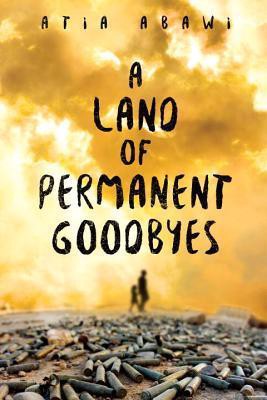
Determined to convey the importance of addressing the ongoing Syrian refugee crisis, a number of authors are taking on the subject in their children’s books as a way to raise awareness in readers from a young age. Writers wanting to humanize the conflict are featuring young Muslim refugees as the protagonists of their forthcoming titles. Some books are designed for readers as young as four years old, while others are geared toward middle and high school-aged students. The books delve into complicated issues such as the rise of the Islamic State as well as the Sunni and Shia divide. For instance, Atia Abawi’s A Land of Permanent Goodbyes is about a Syrian family that escapes an ISIS stronghold for Istanbul and then Greece. Teachers and librarians are using these titles as a way to explain the refugee crisis to students and give them perspective about the lives of other children and families in the world.

[NY Times/Alexandra Alter]

Netflix’s first acquisition is comic-book publisher Millarworld

The time has finally come. The ever-growing entertainment empire that is Netflix has made its first acquisition: the comic-book publisher Millarworld. The purchase was made with the intention of adapting the company’s titles into series and movies for subscribers. Under the deal, the comic-book creators will continue to develop stories and characters under the Netflix label. More and more, Netflix has been determined to create self-produced shows and limit reliance on licensed content from other studios. And with the superhero market thriving, Millarworld is the streaming giant’s next step into uninhibited growth. Some of Millarworld’s hit comics have already been turned into movies, such as “Kick-Ass” and “Kingsman.” “I’m so in love with what Netflix is doing and excited by their plans. Netflix is the future and Millarworld couldn’t have a better home,” Millarworld creator Mark Millar said in a statement.

[LA Times/David Ng]

The Future of Electric Lit is All About You

Dear readers,

Electric Literature is sparking some exciting new goals and projects, and as the new editor-in-chief, I want to share what you can expect from the future of the site. It’s going to be welcoming, wide-ranging, intimate, curious, and hopefully — dare I say? — electrifying.

Over the last eight years, Electric Lit has built a loyal and energetic following, many of whom are writers, aspiring writers, and other members of the literary community. We love you and hope you never leave us, and we will continue to bring you your favorite EL content—like interviews with up-and-coming authors, criticism of exciting and important new work, and the choicest hand-picked fiction from Recommended Reading.

But we also want to get back in touch with what made you become a reader in the first place. And we want to reach out to new readers who may not be part of the literary world, but whose lives have still been shaped by books and stories. Literature isn’t just about the required reading you may or may not have done in high school. It’s about the way we transmit our hopes and fears, our cultures and philosophies, our uncertainties and identities, through the medium of the story. If you’ve loved a book, if you’ve shared a book, if you’ve been changed by a book, if you’ve had an excited conversation about a book (any book!) in a bar at 2 a.m.: we’re talking to you.

Essay Submissions are Open!

And we hope you’ll talk back. To that end, we will introduce a new question every few months as a prompt for personal essays — questions that aren’t just about the process or analysis of books, but about the effect of books, the feeling of books, the way books make us feel electrified. The first prompt will be: What is a book you read in secret? I’ll be back in a few weeks to talk more about this question, what kind of stories you might tell about it, and how to submit, but I’m excited for you to get thinking, and I’m even more excited to tell you the name we’ve come up with for this series: Novel Gazing.

Of course, it won’t really be navel-gazing; we want you to look outward, from the works that influenced you to the people who might feel the same. Perhaps more importantly, the books won’t always be novels. They won’t even always be books. Maybe you’re interested in television, movies, art, dance, theater. We certainly are! Electric Lit has already been publishing some terrific work about film and TV, and we’re also going to give special attention to stories that bend or break the limits of the book in other ways. In the coming months, we’ll introduce you to stories published as pixels, stickers, cards, puzzles, 20,000-square-foot art installations, and tattoos. The book is a wonderful vehicle for a story, one of my favorites — but literature is much bigger than just the book. It’s the size of your life.

I want Electric Lit to be a place where we’re talking about what books mean and what they could become, how stories shape us and how we shape stories. I want to mimic the feeling of having that excited conversation about a book in a bar at 2 a.m. And I hope you’ll join us — by reading, by writing, or by becoming a member. Your support helps us pay writers, bringing you more and better content — and it also gets you other perks, including access to the full Recommended Reading archives, over 250 stories hand-picked by authors, presses, and Electric Literature staff. Our current membership drive is extremely cool: If you join in August, you’ll get a set of seven “Literary Witches” postcards, featuring portraits and poems from the upcoming book Literary Witches: A Celebration of Magical Women Writers. These are sold out, so you can’t get them anywhere else.

I’ll be sending more letters like this one, including letters introducing the Novel Gazing prompts. If you want to get them first, make sure to become a follower of Electric Literature on Medium.

So welcome, or welcome back. Let’s get started.

Can’t wait,

Jess

From Convicted Murderer to Debut Author

Curtis Dawkins answers questions about his crimes, life on the inside, and his debut story collection, ‘The Graybar Hotel’

Alcatraz Prison. Photo by Chris Carr, via Flickr.

Countless authors have tried to capture what goes on inside a prisoner’s mind, but how much do they really know?

Curtis Dawkins began drinking when he was twelve; later alcohol turned into a big enough problem that he dropped out of college. He entered rehab, then Alcoholics Anonymous. He got sober and by the late-90s had earned an MFA in creative writing from Western Michigan University, married fellow writer Kimberly Knutsen, and started a family.

But as time progressed, Dawkins began taking prescription painkillers. His addiction grew to ketamine and heroin. On Halloween Night in 2004, he attempted to rob Thomas Bowman on the porch of his home in Kalamazoo, Michigan. When Bowman resisted, Dawkins — who was high on crack and had drank alcohol for the first time in years — shot him in the chest. He then proceeded inside, where he threatened Bowman’s roommate. A SWAT team had arrived by then, and Dawkins held the roommate hostage. Three hours later, he walked out of his own volition and was taken into custody.

Support Electric Lit: Become a Member!

In July 2005, Dawkins was convicted of Bowman’s murder and found guilty of eight other charges related to the incident and sentenced to life in prison with no possibility of parole. Inside, Dawkins began to write again. Eventually, he began submitting to literary journals, with his sister’s help. An agent took notice and sold a collection of Dawkins’ stories to Scribner. That collection, now titled The Graybar Hotel, takes readers beyond the cells and reveals the idiosyncrasies, tedium, and desperation of long-term incarceration. The stories also go deep into the characters’ pasts, exploring what their lives were like before prison and their lingering troubles. The result is a rich portrait of a frequently forgotten crossroads of humanity.

I corresponded with Dawkins about prison life, the controversy swirling around this book, and how writing remains an integral part of his life.

Adam Vitcavage: I just want to start with the basics of this collection. When did you start writing the stories that eventually made in into Graybar Hotel?

Curtis Dawkins: I began writing the first story in the collection, “County,” literally hours after arriving at quarantine, the first stop of any post-trial prison sentence. It was as if my brain, relieved at being out of the cramped, overwhelming county jail after 11 months, wanted to revisit the place in order to wring some sense out of the experience. The first sentence of the story: “Italian Tom was a saucier until a Cadillac hit him doing sixty-five and knocked the recipes out of his head,” kept repeating itself in my head, until I wrote it down. And then I figured, “I’ve got nothing else to do, I might as well keep going.” Which is how most of the things I write get written.

AV: When you were writing these, was the goal always publication?

Author Curtis Dawkins. From MI Dept of Corrections

CD: At first, no. This was late in ’05, and for the first time in my writing career, I wrote just for the sake of writing. Then ambition entered through the side door when my long-time partner and great novelist Kim Knutsen said she loved “County,” which she thought I should call “Bob” (she still thinks it should be called that), and that I should send it out to see if I could get the story published. I couldn’t.

But a huge side benefit in my renewed love of writing was that, for the first time in a year, I was not thinking of the horrible tragedy and disaster I had caused. Writing was a tremendous, and probably lifesaving, relief. It was, and is, hugely therapeutic, just in the sense that writing gets my mind off reality.

AV: These stories are very humanizing, which I think is important. How did you create such vibrant, nuanced characters?

CD: These are the people I know. They are all amalgams of the men I’ve spent more than a decade with. I’m thrilled that you found the stories humanizing, which is more the reality than the cliche musclebound, tattooed, shank-wielding subject of screens both large and small. Those men are in every prison of course, but I am interested in what is underneath. That shank wielder might be great at origami or have a daughter he adores. I guarantee you there is something about him that is unique and possibly beautiful. All I do is pay attention, maybe fill in some unknowns with details of my own imagining.

“I am interested in what is underneath. That shank wielder might be great at origami or have a daughter he adores. I guarantee you there is something about him that is unique and possibly beautiful.”

AV: “573543” really stood out to me. It touches on the theme of addiction. Was a lot of this drawn from personal experience or did you stray from making this with a lot of biographical elements?

CD: “573543” might be the most biographical, until the very last story, where the inmate goes home, becomes true.

The titular number is my actual prison number, and the drug abuse, while no excuse for anything, has been a fact of my life since the age of 15 or 16. It is a fact of nearly every inmate’s life. Though so is softball and rain, rooting for the Tigers, and people who disappear. And jackasses gleefully chirping that your season is over.

I was having fun experimenting with fiction disguised as nonfiction, as well as the creepy fact that a deadman’s number is often reissued.

Jenny Zhang Doesn’t Care if You Feel Comfortable

AV: I always ask every author this: what do your daily writing schedule and habits look like?

CD: I write every day except Sunday. I start at about 11 a.m., until we go to lunch between 12 and 1. Then I print out (my typewriter has memory, so it works like a word processor) what I’ve worked on, and work on improving it. Or scrapping it and starting anew.

I have found that writing for more than a couple of hours per day really doesn’t accomplish anything. I try to stop when I know what is going to happen next. That seems to prime the pump for the next day. I think most of my writing is done in my mind without my help after the actual physical writing is finished.

And I’m always reading fiction. Always looking for new writers, and old writers I’ve never heard of, to read. The first job of writers is to read.

AV: What does writing mean for your life?

CD: Most of the guys in prison have no purpose to their life. A person needs that, something to work at, goals to pursue. Writing gives me that. No matter how hard it is, I’m grateful, and I never take it for granted.

AV: When I told people I’d be sending you some questions, and explained your background, I got a lot of mixed responses. Is how people perceive you and this book something you think or care about at all?

CD: I have mixed responses about myself every day, so I don’t blame people who know me only by a list of facts to feel similarly. I would feel the same about any inmate if I were in their shoes.

I would urge those suffering from “mixed” feelings to read the stories. If they still feel that way, I would be happy to address, or just listen, to their concerns via the mail system. Here’s my address:

Curtis Dawkins #573543
Lakeland Correctional Facility
141 First Street
Coldwater, MI 49036

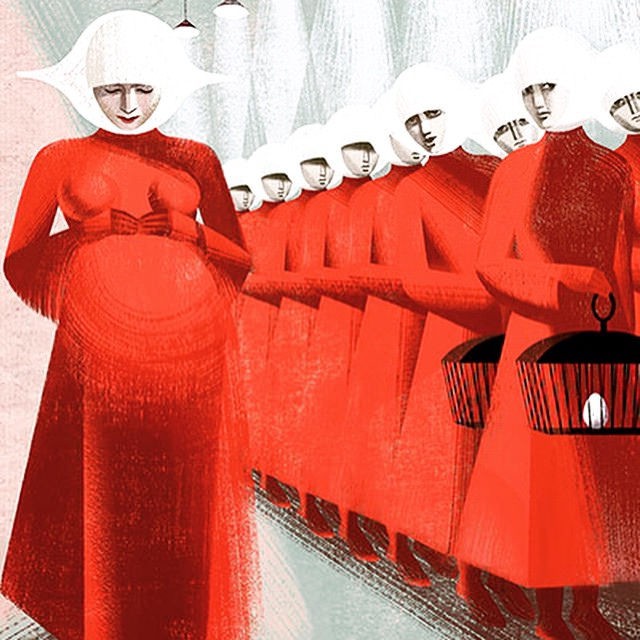
The Epilogue of ‘The Handmaid’s Tale’ Changes Everything You Thought You Knew About the Book

With the recent release of the Hulu original series The Handmaid’s Tale, Margaret Atwood’s 1984 novel by the same name has once again entered the public consciousness. And, at a time when legislators have voted to defund Planned Parenthood and our country has seen the election of a man accused of sexually assaulting no less than seventeen women, the dystopian story about an America in which women are gradually stripped of their rights rings eerily true. However, one of the most disturbing and often overlooked portions of the novel is the epilogue, which does not directly involve Offred, and is primarily narrated by a man.

Set in the distant future, The Handmaid’s Tale’s epilogue reveals that the main body of the novel is, in fact, a collection of tapes — Offred’s oral history of her time serving the Commander. The epilogue takes the form of a historian’s address at a prestigious university’s conference, as Professor Pieixoto, one of two men responsible for transcribing the cassette tapes into the document known as The Handmaid’s Tale, discusses the difficulties he met in attempting to verify the happenings recorded in the tapes. While the actual body of the novel is narrated by a woman, the novel ends with an analysis of these events presented by a man. Offred, the narrator of the novel, who has no identity other than the name of the man she works for, does not even get the final word in her own story.

Even the name “The Handmaid’s Tale,” as is revealed in the epilogue, was not chosen by Offred herself, but by the two male professors who discovered the tapes and transcribed them. Pieixoto himself describes the process of naming the transcribed document, saying that “all puns were intentional, particularly that having to do with the archaic vulgar signification of the word tail; that being, to some extent, the bone, as it were, of Gileadean society.” The two male researchers take full advantage of their ability to title the manuscript and bestow on it a cheeky name that alludes to and, by making a pun, mocks Offred’s sexual servitude. Thus, the entirety of Offred’s story is controlled by men; even the thoughts that she records are discovered, edited, and titled by men. She has no autonomy or authority over her own story.

The entirety of Offred’s story is controlled by men; even the thoughts that she records are discovered, edited, and titled by men.

Additionally, Pieixoto’s attempt to identify Offred by identifying the Commander she lives with not only reveals the erasure of women within Gileadean society, but also the way in which the men of Gilead have been glorified throughout history. Pieixoto does state that he tried to find the identity of Offred, but, since her original name is not provided in the manuscript and the other names in the manuscript such as “Luke” and “Moira” appear to be pseudonyms, he is unable to track her down. He offers two potential candidates to be Offred’s Commander, instead.

In discussing the identities of these two men, Pieixoto describes both of their contributions to Gileadean society, indicating that, though history has erased the women of Gilead, the men of Gilead have been remembered as heroes. One of the potential Commanders, Frederick R. Waterford, is credited with the design of the women’s uniforms, which Pieixoto says he borrowed from German POW camps in Canada during World War II. Pieixoto discusses Waterford’s role in the origins of some of Gilead’s other rituals, such as the Salvaging, and states that “there was little that was truly original about Gilead: its genius was synthesis.” Though not explicit moral praise of Gilead, the word ‘genius’ demonstrates a certain level of respect for the totalitarian regime, and, given what Pieixoto has just said about many of Gilead’s ideas coming from past societies, this demonstrates a dangerous apathy toward the plight of women in Gilead.

As is often the case in real life, in The Handmaid’s Tale, only privileged classes get to survive the course of history.


The erasure of oppressed groups is nothing new. Christopher Columbus, for example, has been hailed as discovering America despite the population of Native Americans already living there when he arrived, and whose population was later decimated by diseases brought over on English ships. But the fact that these men are regarded as important historical figures sharpens the pain of Offred’s narrative, and, frighteningly, feels like something that could happen in our own, modern-day America. Pieixoto does not discuss the identities of any female revolutionaries in his address, and he treats the entire female resistance with disregard, even mockery, referring to the Underground Femaleroad, one of the main escape routes for women trapped in Gilead, as “The Underground Frailroad,” playing off of the notion that women are the weaker sex.

That these men are regarded as important historical figures sharpens the pain of Offred’s narrative.

Moreover, Atwood herself has said that Gilead is rooted in actual history; in an essay in The New York Times, she writes, “The Republic of Gilead is built on a foundation of the 17th- century Puritan roots that have always lain beneath the America we thought we knew.” These Puritan roots look familiar to us, even today, and it’s part of what makes Gilead so horrifying. And, what’s more, just like in the novel, we have managed to ignore the warning signs and neglected to condemn the remainders of this Puritan bedrock. Pieixoto’s dismissal of Gilead as cultural relativism rather than an actual totalitarian regime is horrifying in part because it has happened in real life, and it’s not a stretch to imagine that it could happen again.

Perhaps even more disturbing than Offred’s total erasure is the blasé nature with which the scholars of the epilogue regard the events of the novel. Pieixoto remarks “we must be cautious about passing moral judgment upon the Gileadean. Surely we have learned by now that such judgments are of necessity culture-specific.” The professor listened to Offred’s description of the tortures that women were subjected to during her time, yet he is reluctant to judge the perpetrators of her suffering. Dr. Pieixoto, as a male scholar, is viewing these historical events from the distant perspective of privilege, and as a result, like many real-life scholars, he is unwilling to condemn something that would never have affected him personally, writing off the oppression of an entire gender as a matter of cultural misunderstanding.

Offred’s narration in clear contrast, makes clear that this is not the case. She depicts infertile women being subjected to indentured servitude and noncompliant women being tortured; the room in which she lives has had the chandelier removed to prevent her from committing suicide as her predecessor did — these are hallmarks of an oppressive regime, not a system of ideology. Through Pieixoto’s blasé reaction, Atwood makes it clear that to dismiss women’s rights as anything other than human rights is ignorant at best, and that to ignore violations of women’s rights in the name of cultural relativism is wrong.

The male scholars of the epilogue make little effort to critically examine the treatment of women under the Gilead regime.

A big part of the horror of The Handmaid’s Tale is that, despite the suffering that women endure, future society regards the treatment of Gilead’s women as a simple fact of history; something to be learned about rather than cautioned against. The male scholars of the epilogue make little effort to critically examine the treatment of women under the Gilead regime. “Offred records her story as best she can; then she hides it, trusting that it may be found later by someone who is free to understand it and share it,” Atwood writes in the Times piece. In the academics of the novel’s epilogue, Offred certainly finds her audience, but not the sympathetic one she might have hoped for.

In the future of the epilogue, women have clearly been restored to the public sphere, as Pieixoto is initially introduced in a speech by a woman. Gilead, at least on a global scale, is a regime that has an end, that has escape. However, the possibility of returning to a similar regime lurks just under the surface of Pieixoto’s address. If scholars are not willing to condemn the treatment of oppressed people, as happens in the epilogue of The Handmaid’s Tale, there is the possibility that history will repeat itself.

Fuck Those Dudes!

Track Couture

They don’t work the catwalk for the marathon
Because screw that, I’m supposed to drop
Dead to crown this run so some Athenian
Aristos can rejoice and promptly mop
Our blood up to glory-wash the polis?
What do Kenyethiopian I have to do
With all that Hellenistic Hootenanny?
Bad enough these broke-bottle streets, Athena
Nike elephant footsore of a shoe.

No, it’s the stadium for the strut-up stage,
Christened by that supermodel walk of walks:
What? You runners think you got these runway hips?
You can’t see me from out your starter blocks.
So here for sprint finals, lights! Cameras!
That’s Tashi representing Fine-Ass Island;
She wants revenge on Thea who pipped her, one
Hundredths at Eleusis for the gold garland…
Action! Pop from pistol to fast-twitch clash
And swiss watch finish sorting them out for flash
Then flag capes oh supergirl around the track.
Backstage Hermes men trip majestic, rehash
Their frat-boy stepping in between the stretch
And warm up. Cue the big top ratings, seems
This hoi polloi are still getting used to
Women athletes on the polis teams
Sent to gymnasium at Olympia, home of
The naked, young, and definitely restless.
Exactly right this moment’s equal billing,
Broader than Broadway style for masses come
In every sense to witness the fitness.

The same old nightmare wakes each runner up
Nights long hereafter, frost sweat at the finish
Photo while scores tally up from entrance,
Medals at stake in a strange skirmish
Of fashion sensibility once Eris
The broadcaster dropped her golden apple.
There’s one sleeps easy, Herakles of the games
Whose show-and-prove paragon example
Means even Artemis is somehow not vexed
By his far-shooter pose, and he’s aware
That if he wins the footrace and the dance-off
He can secure the thunderbolt share
From Zeus’s VC fund, and exit with
A myriad camera flashes, each to a clap
That cracks into primetime hoplite rumble.

Even chic new sports with music bumps at breaks
Come bowing to the ancient victory lap.

Late 20th Century Poet Jam Band

Put your hands together for…
DJ Ashley on broken record,
Telling it spent.
Here she’s off, she’ll glue you with womb juice.
Oh smack! She’s wet it with bile by accident.

Okely Copely playing dwarf violin,
Good ally to the oppressed;
He’s fittin’ to chin-check your privilege, Chuck
If he can get his own night hags off his chest.

Then Xiao-Li on Ukelele lead,
Having a right go!
She’s got some psychoanalytic science for that ass
And don’t forget that shit starts with “psycho”!

Up for Sundiata on dead horse drum
Rocking the red black and green,
Sugar Hill born with a Harvard full-ride,
But nobody knows the trouble that brother’s seen!

I’m that hype man from the Iowa School.
You know what it is, we scribbling lyrics all rugged.
This is how people yack in the streets, fool!
Because brevity is the soul of…aw fuck it!
Wit ain’t the what old Whitman whipped up,
And he’s the only cool dead white male.
Get the hell with that old Latin hiccough
We’re knocking the menthol right out your coffin nail!

Drop the needle on the vinyl, Ash,
Shoot! Before I come out my sense.
Um, the next song’s called Experimental Excremental.
(Man, we ain’t bothered we’ve lost the damn audience).

FTD

These miserable headlines tattooed
With vileness, just so long before one breaks down yelling “fuck that dude!”

Oh holy man who wants holes carved
Into so-called infidels on YouTube, fuck that dude!

Old mayor using jail to shake
His budget shortfall from the poor’s wallets, fuck that dude!

The diamond merchant slinging rocks
From hothouse ethnic cleansing blocs to WAGs, do fuck that dude!

General kook-a-bury starving dead
First taunted with bread for TV circus, fuck that dude!

Calling for machine guns each one,
You know so we can have shootouts in darkened theaters, yeah fuck that dude!

Demagogue for Europe post
World War I, for nations diced and served in blood stew, fuck that dude!

OK there’s some good in the world
So here’s your breather, here’s your sun still shines down interlude…

But damned birther, wall builder, judge
Slanderer, burnt ogre huckster, motherfuck that dude!

Oh whatevs, Uchenna, if those dudes
Were even reading you know what they’d say: That poet? Fuck that dude!

Jenny Zhang Doesn’t Care if You Feel Comfortable

White Americans want stories about “good immigrants.” Too bad.

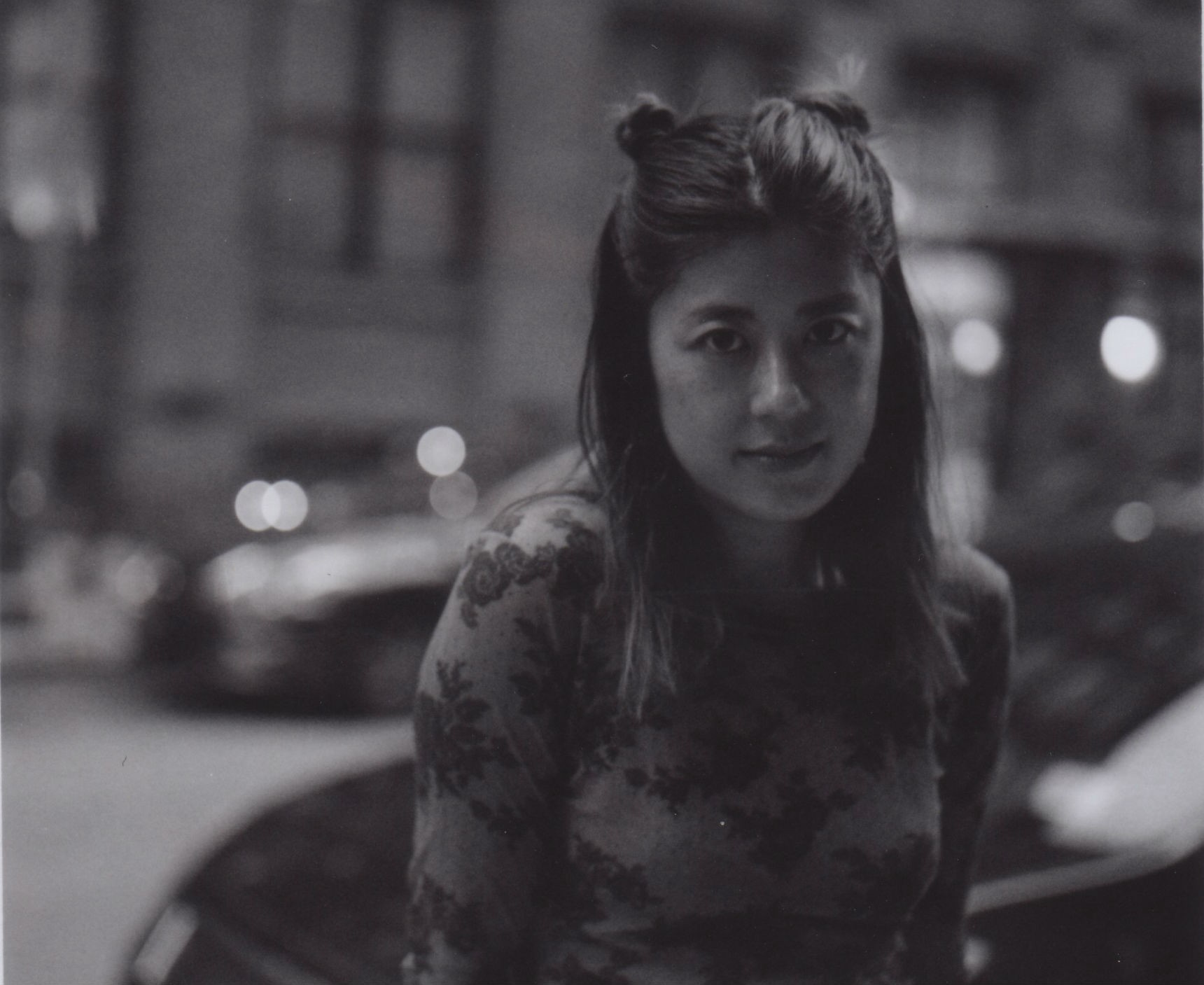
Author Jenny Zhang. Photo by Adalena Kavanagh.

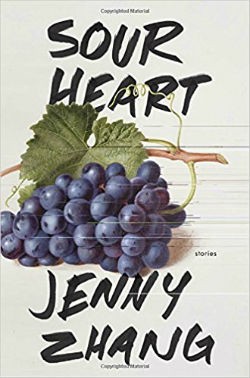
The American Dream is a self-flattering myth, and too often America’s literature of immigration whitewashes the experience, as if the indignities faced by immigrants are temporary, a smooth trajectory from foreignness to assimilation, and the rewards always worth the sacrifices. From the first story in Jenny Zhang’s new collection, Sour Heart, these tropes are challenged. We see just how much dirt is underneath, how low the wages really are, and how ambivalent the immigrant feels, but it is also a collection that chimes with the voices of young Chinese American girls who are lonely, brash, crude and loved — full lives that don’t offer neat conclusions, or let anyone off the hook, but demand the reader’s attention to the end. Zhang’s Sour Heart is the first book to debut on the new Lenny imprint at Random House. She is also the author of the poetry collection Dear Jenny, We Are All Find and the chapbook Hags.

Adalena Kavanagh: What is the genesis of this collection? Where and when was it written?

Jenny Zhang: I wrote the first story in this collection when I was a sophomore at Stanford. I holed up in my dorm room for a long weekend and wrote a shaky first draft about two codependent siblings who drift apart. I called it “The Evolution of My Brother” and included actual photos of me and my brother. You know, I was young and bratty and trying to fuck with people who assumed my fiction was thinly veiled memoir. I thought I would beat them to the punch. I thought I would shame them by being deadly earnest. I wasn’t wrong or right, but I was young and trying out different strategies to deal with being seen as incapable of doing more than faithfully transcribing my memories. From that point forward, I couldn’t stop writing stories about young girls and their relationships with their families. I found that people were either delighted or horrified with what I had written. Eventually in my second year of grad school at the Iowa Writers’ Workshop, I realized I was writing about a community of people, that these stories all exist in the same fictional universe. The center of each story brushes up against the periphery of another, just like in real life. After grad school, I didn’t know what to do with these stories. Every agent asked me the same question after reading my stories, “but are you working on a novel?” and I wavered between feeling like a failure and feeling true to myself. It is true that I was and am interested most in “minor literature,” small lives, writing and living in the margins. “Pity us who fight always at the boundaries,” Apollinaire writes in his last poem and I took it personally. I felt very much like a misfit of misfits — why couldn’t I write a novel? Why couldn’t I write short stories that were actually short? There was a class at Iowa called “The Long Short Story” that I couldn’t bring myself to take because I felt exposed by the title. Why would anyone write something so useless and unpublishable as a long short story? But one has to have a vision for their writing that is not dictated by the realities of publishing.

During that time, I published a book of poetry (on a whim I submitted some poems to a contest) and turned to writing non-fiction and started to build a name for myself through my pieces for Rookie. People were surprised to find out I went to Iowa to study fiction. It was my secret and I liked it that way. It freed me to write without an audience, without too many conflicting voices in my head. When I finally got an agent and sold my collection of short stories a year and a half ago, I had to finally look at them again. Really look at them. It was like opening up a time capsule to my brain and I saw clearly the limits of what I knew at 22, 23, 24. I had to mutilate most of these stories, cut entire pages out, add entire pages in, change almost every word on the page, but more than just aesthetic improvements, I had to re-envision what these stories were about. I had to change the story in some of the stories. Doing it was really difficult because I basically had to admit that I was limited back then. It had been ten years since I wrote the first version of the stories in this collection. But it was also reassuring to know that I had grown and hopefully in another ten years I’ll look back at these stories and cringe again. I had to also clarify what kind of tone I wanted to strike in this collection. Some of the stories reflected attitudes I no longer felt — for example that belonging to a family can only be bleak, painful, alienating, deadening even. Aging has brightened me.

AK: I’m increasingly interested in the perception of autobiography in fiction. I understand why writers shy away from their work being labeled autobiographical but I also think — so what? If you think weaving autobiography into fiction is less work, then you don’t understand the writing process. Did readers of your work voice concerns about autobiography or were you reacting to an internalized backlash? (I’m especially curious how your work was read in your MFA program.) Have you resolved the question of “autobiography” in your writing?

JZ: I like the response: “so what?” It’s true. So what? Who cares? Why do we need to trace every moment of invention back to an author’s biography? I get bratty about it because I don’t like how selectively the question of verifying autography is utilized. I mean, take Hans Christian Andersen, who is one of my favorite authors. He was writing the story of his own wretched upbringing, his years of poverty and starvation, and the winter he almost froze to death in the story of “The Ugly Duckling” and he infused his own sorrows over a failed love triangle into the fairytale of “The Little Mermaid,” but because he’s writing about ducks and swans and fictional creatures, his work is handed over to the province of the fantastical and allegorical. In my MFA program a lot of people did read autobiography into my writing and I do find it interesting who, at the end of a workshop, invokes the dreaded defense, “but it really happened!” and who doesn’t. I never did but I saw plenty of people purposely reveal that they had written fiction based on their own lives as a way of justifying why what they had written was good. Of course, like you say, writing about things that really happened doesn’t entitle your work to be meaningful, just as writing about things that never happened to you directly doesn’t absolve you of the responsibility to write deeply and to convince your readers that something like this could happen and does happen in the fictional universe you’ve created. I’ve created a fictional universe in Sour Heart that can never be fully extricated from the reality I’ve lived in because I didn’t use someone else’s brain to come up with the stories I’ve come up with. This is true for anyone, including men who are writing about ducks.​ Maybe that seems overly simplistic but after years of wasting energy trying to convince others I’m writing fiction in the most conservative understanding of the term, it’s how I’ve come to understand the writing process.

The other thing is when we encounter something unbelievably horrifying, our impulse is to verify it really happened or to dismiss it. When I was writing about, say the abject poverty that many immigrants experience, sometimes my peers at Iowa would look at me askance and imply or even say outright, “But you don’t look like someone who has suffered much.” I hated giving in to their demands that I make my suffering visible in order to have the right to write about the things I write about in this book. That isn’t to say anyone can write about anything and expect to be rewarded. It’s not that I think crude and vulgar depictions of poverty by someone who has never been poor should be read with an uncritical eye, but I do want people to engage on the level of my writing, not on the level of who I appear to be.

I don’t think the question of autobiography will be resolved in my work so long as women and people of color are seen as memoirists no matter what kind of writing they may be doing and white men are seen are innovative experimentalists no matter how explicitly they’ve mined their personal lives. That said, when writing these stories, I decided I wasn’t going to be afraid of being read autobiographically. Every story is in the first person. I didn’t go to extreme lengths to ensure every character was loveable or even likeable, but I didn’t make them monsters either. They are children, after all, who (hopefully) are still allowed the right to make mistakes, learn, and grow.

“I don’t think the question of autobiography will be resolved in my work so long as women and people of color are seen as memoirists no matter what kind of writing they may be doing and white men are seen are innovative experimentalists no matter how explicitly they’ve mined their personal lives.”

AK: You say, “I found that people were either delighted or horrified with what I had written.” I was struck by your matter-of-fact descriptions of poverty in this collection — that kind of honesty is refreshing. The only time I felt shamed by other writers in a workshop was when I described my childhood bedroom in our tenement apartment in Washington Heights in a short story. One woman visually cringed at the poverty, and at the time I thought I had done something wrong writing-wise but I realized I had just made her uncomfortable, and then I was glad I’d made her uncomfortable. What delighted people, and what horrified them about your work? Do you think people were delighted and horrified by the right things?

JZ: This is why I sometimes side-eye the “reading fiction makes you more empathetic!” argument for why fiction is “necessary” (which is a whole other can of worms, e.g. why does fiction have to be “necessary” or instructive?) because just as many people read fiction to validate and confirm what they already believe. Like: okay, I’ll read about someone’s suffering but only in a way that doesn’t make me feel bad about myself one bit. When something disturbs me, I turn inward: why did I have such a visceral reaction of disgust? What is it in me that cannot stand to keep reading, watching, listening, etc? Some people go straight to blame, like: why did you do this to me? Why did you force me to feel this way? I wonder if the woman who was made uncomfortable by your story asked herself why or if she only asked why you had to write the story that way.

I also find it interesting when people have different standards, thresholds and expectations for different mediums. Like people who love watching TV shows with explicit, graphic violence against women but cannot stand to read it in literary fiction. Or they love it when men make art about women who have been violated and abused but when a woman does it on her own terms, it’s seen as offensive, profane, emptily salacious. What does it mean if you are impressed by an article written by a well-to-do white journalist about Asian American poverty in America, but you dismiss work by an actual Asian American writer who grew up poor? I don’t know — maybe the former truly is a finer piece of work than the latter, but it’s still worthy of investigation. We all have major blind spots.

The question of whether or not people were horrified or delighted by the “right” things is a really fascinating and thorny question. I think every woman or person of color have had that experience of making a joke in mixed company and realizing that the men in the room or the white people in the room are laughing at the “wrong” thing — a joke about rape culture is read as a joke about rape, or a layered joke about racism is an opportunity for white people to openly indulge in racism. I’ve read poems in the past critiquing the sexualization and fetishization of Asian women and afterward, a white man came up to me to say that he loves being with “Oriental women.” All he heard and saw was an Asian girl saying the word “pussy” on stage. There have been plenty of times when someone was more horrified that I would have the audacity to write about something as harrowing as sexual violence than they seemed horrified by the sheer prevalence of sexual violence against young girls. There have plenty of times when I suspected someone liked that I was writing about young Asian American girls behaving terribly because it justified their own prejudices and dislike of Asian people. But there have also been many times when someone spoke beyond the most superficial layer of these stories and was able to dig in deeper, to see that a story that isn’t afraid to be explicit about a young girl’s body is not only a story about a young girl’s body. These stories are also about familial love, loneliness, the ache and pull of a homeland, and other things that may be less flashy, less noticeable especially if the reader is hung up on not wanting to feel any discomfort.

AK: Going back to my second question about perceived autobiography in fiction, I think you also said something important in another interview. “I really felt the happiest and safest in my fictional girlhood. I think the girls in these stories are the same way. There’s the story of their lives, and there’s the story that they’re telling.” Diminishing a work as less fictive because it shares autobiographical details with an author’s life demonstrates a simplistic understanding of truth as it relates to stories, even true ones.

What is it about girlhood that compels girls to create a fictional space?

What compelled you to devote this collection to girlhood?

JZ: I felt large as a girl but was often treated as if I were tiny, fragile, stupid. It was safer in my head, there were less limits, more possibilities. I was drawn to the theatricality of girlhood — there are so many ways to perform femininity, to regurgitate youth, so many lies we must accept in order to be an acceptable girl. Anyone who has ever experienced pain (which is to say everyone) knows the temptation to escape, to forget, to feel into a fantasy life that is free from pain. The irony, of course, is that we just create a different kind of a pain, a more glamorous one. Why did it give me so much joy to pretend to be scrappy Laura Ingalls from Little House on the Prairie and play-act the hardships of a young farmer girl out on the frontier when I had actual hardships in my life? Fantasy often isn’t about creating the polar opposite of what you know but what you believe to be a better version of what you know, a version where you are in control. To some extent, as a girl, I wasn’t in control of my body, my safety, and my well-being. Other people were and sometimes those people caused me harm, or didn’t know how to protect me, or were trying to do the best they could with what they had. In my fantasies, I wasn’t helpless, but rather fearless, strong, desired, and respected. That version of me embraced hardship, experienced pain is a kind of romance.

I wasn’t thinking about making a statement or a paean to girlhood when I wrote this collection, but I did want to write without fear — without fear of being seen as limited because I found young girls to be a worthy fictional subject; without of being marginalized because often only white characters are considered “universal” subjects; without fear that I wouldn’t be taken seriously because I wanted to write about children. I wanted to write something challenging and well, why shouldn’t the vessel for serious, difficult, literary fiction be young girls?

AK: Which brings me to something you wrote about a Tracy Emin photograph in your essay, “How It Feels”: “…The photo is so much that it becomes a statement against allowing others to tell your story, against those who would insist on your victimhood.” In these stories were you writing against any particular narratives or attempting to present an alternative narrative? If so, what were you writing against? And if not, was there anything you were writing toward?

JZ: I’m writing against oversimplification, I’m writing against crude stereotypes, a culture that does not extend Whitman’s multitudes to immigrants and people of color. I’m not interested in perfect villains and perfect victims. I didn’t want my characters to have to be “good” immigrants in order to be worthy of having their stories told. Their stories cannot be reduced to: we came, we suffered, we persevered. In these stories, the American dream, if achieved at all, is achieved at great cost, only after immense casualties. There are entire stories that can be told in the humble interstices of the more well-known stories about immigrants and young girls. The English canon is full of vile protagonists, narcissists, con-men, despicable anti-heroes, but once we turn the gaze to what is considered “ethnic” literature or “immigrant” literature, we are less willing to be challenged. I wanted these stories to be truthful about the misery of immigrating and starting over, but I also wanted these stories to be plump with humor, adventure, and daring. Some of these characters are too confident to be lost to a singular narrative of victimhood. Other characters are too overflowing with familial love to be purely pitied. Some of these characters victimize others but are too young to be fully held accountable; nonetheless, they commit acts that are too heinous to be forgivable. It’s easy to root for the helpless and the wretched, but in real life, we aren’t cleanly divided into good vs. bad, giving vs. needy. Everyone is flawed, but some of us are punished lethally for it, and others get away with it ad infinitum. The characters in these stories pay dearly for their missteps, but they are also afforded opportunities. I wanted to create narratives that resist crass moralizing and instead demand to be engaged on a more difficult, nuanced level.

“It’s easy to root for the helpless and the wretched, but in real life, we aren’t cleanly divided into good vs. bad, giving vs. needy. Everyone is flawed, but some of us are punished lethally for it, and others get away with it ad infinitum.”

AK: In the essay, “How It Feels,” you wrote, “I think everyone wants to make something touchable, but most of us don’t out of fear of being laughable.” You’re referencing how your mother described a version of your story, “The Evolution of my Brother,” as ‘touchable’.

Do you ever take into account how your family will react to your work?

JZ: I try not to think about it. That makes me a big hypocrite after going on and on about wanting people to confront the things that make them uneasy and not recede into escapism, but I think some amount of delusion is needed to survive. The director Barry Jenkins once tweeted something my friend Alice Kim said at a panel, “You should write like your parents are dead… or you’re dead…or everyone’s dead,” and a lot of people, myself included, related to that sentiment and felt very encouraged by it. The idea is to trick yourself into feeling free when you write and how can you do that if you are worried about your reputation and what your parents will think? When you are worried about what the world will think? Even among writers, it’s very common to read a friend’s work and think: Is this what you really think about me? Writing to be liked shouldn’t be the goal. Not every story can be a tribute. Sometimes, one wants to be savage too.

As a counterpoint, my friend Durga Chew-Bose, who wrote a beautiful collection of essays, Too Much And Not the Mood, many of which explore her relationship to her family and to daughterhood, said in an interview that she “definitely writes because my parents are alive.” She describes her essays as “devotional” and does not shy away from the “responsibility” of writing about her family. I think there’s room for every kind of writing, and there’s something really holy and remarkable about writing that is “devotional.” To honor the people who inspire you isn’t cheesy or limiting. To hold yourself responsible to anyone who may see their lives in your stories doesn’t have to be limiting. It’s a challenge worth taking. I think, to some extent, we all do try to write like everyone’s dead. In the first throes of writing, I do my best to believe no one’s left on earth. It’s what frees me to write. But after the first few drafts, I start to come back down to earth. I’m not shameless. I know who I am and the expectations placed on someone like me. I can’t lie to myself about the burden of representation. I have it whether I willingly accept it or not. I can’t pretend that my family won’t feel exposed in some way by my decision to write about Chinese American immigrant families, even if it’s fiction. I’d like to be as unapologetic as a white artist and insist freedom of (my) expression is more important anything else, but I can’t. I was socialized to care about the living and I do.

At the same time, I don’t think my family is stupid. They are intelligent and sharp. They are readers. They know what literature is and isn’t. They know how seriously I take my imagination. Véra Nabokov didn’t immediately divorce Vladimir after reading Lolita, in fact, quite the opposite — as legend goes, she saved it from the incinerator. When I try to imagine how my family will react to my writing, I do not imagine them as imbeciles. I imagine them as they are — brilliant humans who love me.

“I’d like to be as unapologetic as a white artist and insist freedom of (my) expression is more important anything else, but I can’t. I was socialized to care about the living and I do.”

AK: The mother-daughter relationships in this collection are almost suffocating, and full of obligation (all of which felt very familiar!) I wonder, is there anything more embarrassing than the family you were born into? Why was it so important to you to write about family?

JZ: There’s such an appetite for stories about immigrant families who hate and resent and misunderstand each other, or sensational horror stories about how unbelievably strict immigrant parents are with their children. Americans gobbled up the story of Amy Chua’s tiger mom parenting a bit too gleefully and without enough context. After that article came out, it felt like white Americans could finally justify why they disliked Asians. It’s easy to point the finger outward but we rarely look inward. I don’t know if white America knows what their parenting looks like to the rest of the world. The Chinese families I knew found the American style of parenting nothing short of cruel and unusual. Just as the West may have a crude understanding of the East, so it also goes the other way around. The glimpses of so-called American parenting literally gave my mother nightmares.

At the same time, it is not easy to be the child of Chinese immigrants. I hate using the word ‘filial piety’ because the term in English is so warped and often weaponized against Chinese people, but it is a foundational aspect of Chinese culture. There is a culture of sacrifice and obligation in China that does not exist on the same level in America. When my parents left China in the 80’s, their attitudes froze in time. They were no longer able to connect to how ideas of parenting were evolving in China but they also couldn’t keep up with American values of parenting. How many times did I wish I could have been born into a different family? Too many to count. And how many times did I feel ashamed for wishing that? Too many too count. Love can be suffocating and burdensome. From the moment I was born, I was loved. It was all I ever knew. As I got older, I resented how much I was loved. I wanted to be loved less by my family and loved more by others — friends, lovers, basically anyone who wasn’t related to me. The more I understood how white supremacy operates in this country, the more I understood I would always be hated. When you grow up knowing you are considered lowly and inferior on the explicit basis of race and ethnicity, how are you supposed to love yourself and the family you came from?

When I tell the story of my family to someone who didn’t grow up Chinese-American, it can feel like I’m selling them out. So many people have offered (well-intentioned!) sympathy, but when they say something like, “That must have been terrible to grow up like that,” I feel protective of my family and my upbringing. I want to say it back. It’s very Western to idealize a kind of love that does not come with any expectations, that still permits both the giver and recipient to be completely free. To this day, I know my parents would go hungry so that I could eat more. They would sell all their earthly possessions so I could have whatever I want. It’s intense to know that they would work themselves to death if it meant I could live well. Now, things aren’t so desperate. But there was a time when we only had one umbrella when it rained — to speak both metaphorically and literally — and there was no question that they would hold it over my head and let themselves be rained on. I can already imagine someone reading this and thinking, Well that’s a stupid example. Just buy another umbrella! Well, some people cannot afford to. Or someone reading that and thinking, How overbearing! It’s really not that big of a deal. In America, we idealize romantic relationships where a man will do anything for the woman he loves, but are creeped out by a parent who will do the same for their children.

At the same time, I don’t want to paint too rosy of a picture. Like you point out, many of the girls in these stories are so close to their mothers that it’s suffocating. Some more voluntarily than others — though, when you’re a child, is anything truly voluntary? Parental love can be weaponized and just as lethal as parental neglect. Many of the parents in these stories are simply not equipped to really know what their children are going through. The parents have imported the dangers of their childhood and superimposed them over the dangers their own children face. It’s the best they can do. Many of them are still in precarious living situations and are still trying to survive, stay awake long enough to work three jobs. Sometimes, it can feel like because I’m Chinese, anything I say about my life will inevitably be exploited, used as anthropological evidence. It was important for me to write about family — the complexity of family and the complexity of being a daughter, the pleasures and agonies of depending on someone, being cared for, the pleasures and agonies of freedom, independence, growing up to be more than someone’s daughter. Sometimes all I want to be in this world is my parents’ daughter. All other identities trouble me. Other times, I wish I could belong to no one, come from nothing. It was important I write beyond the tropes of second-generation kids hating their parents and desperately trying to break free. I mean there is plenty of that in these stories but also plenty of love, gratitude, a bond that survives even the traumas of displacement, racism, and poverty.

AK: Did you face any resistance to your use of pin yin (romanized Chinese) or Chinese characters in these stories? When I read the book and saw that I understood most of the pin yin, and some of the Chinese characters, I felt like I was getting into another level of understanding. It made me think about all the times I read books with French words and I just skimmed over those parts, resigned to not getting the reference, feeling just slightly alienated, but not letting it stop me from continuing. Did you think about your audience and how including Chinese could either reward or alienate a reader depending on whether they know Chinese?

JZ: I decided early on I wasn’t going to accommodate non-Chinese readers while also assuming that most readers are smart and motivated and creative enough to read these stories without demanding total transparency and fluency. Even when I read a book that is entirely in English, I expect there to be words I don’t understand. I prefer it. I want to be challenged not coddled. My editor, the great, great Kaela Myers, was completely on the same page as me and encouraged me to be even bolder than I initially dared. We decided that we didn’t want the pin yin to be formatted differently from the English in any way (e.g. italicized) and we decided that we didn’t need to translate any of it, even if it was fairly long. I read a lot of Nabokov and Ferrante when I was editing these stories and I took pleasure in not knowing — the onus was on me whether I wanted to look up a French or Italian word or sentence, or if I wanted to keep reading and have faith that there were multiple levels of enjoyment I could access. American English speakers can be some of the most arrogant and self-centered in the world. I think it’s loathsome to expect the rest of the world to learn your language but refuse to reciprocate. I don’t think there’s anything admirable about demanding complete linguistic convenience at all times.

I’m not alienated when I encounter a language I don’t understand in fiction — I’m up for the challenge. The reader who doesn’t want to be challenged at all won’t enjoy my stories. What is so terrible about not knowing? We watch movies that we are too young to understand and get things out of it, don’t we? Then later, if we so desire and have the curiosity, we might watch them again and get something more out of them. If the mere presence of untranslated Chinese puts a reader off, that’s their problem not mine. And anyway, I’ve heard that all my life. If I’m having a private conversation with my mother in Chinese and someone yells at us, “Speak English!” what are we supposed to do? Because that has happened to me and that has happened to many people in this country. People have been murdered for daring to speak to their parents in their mother tongue.

I think highly of my audience — I truly believe they are capable of making dazzling leaps, that they are not afraid to work to find meaning, that they are curious and smart, they take advantage of a little thing called “google that shit,” they aren’t complete imbeciles who freeze up at the first sign of the unknown. I was very lucky to have an editor who also believe such readers exist. I tried to include many points of entry and occasions for pleasure in these stories. I wanted there to be something of value and enjoyment for the reader who knows virtually nothing about the people and situations I’m writing about, as well as for someone who might not know a lot but is willing to put in the time and work to find out more, as well as for the reader who may be extremely well versed and intimate with what I’m depicting.

Writing a collection of short stories in English about growing up bicultural and bilingual means already so much has been translated. I’ve been plenty accommodating and I say a certain amount of alienation won’t kill you.

AK: You’ve published poetry, essays, and now fiction. What are you working on next, or what do you want to be working on?

JZ: I’m writing poetry here and there. I have a second book of poems that I have been sitting on because a part of me always thinks: who wants to read poetry? Post election, it seems like the American people — at least those of us who were greatly disturbed by the election results — are reaching for poetry again. Poetry is great in a time of crisis. Dystopian despair matches well with poetic idealism. I’m writing a lot of short stories in the third person. I exhausted myself of the first person with this book. I’m also trying to write a novel. It’s about… surprise surprise… a family! But they are grown in this one. They get to do adult things like have sex and join fringe political movements and betray each other. I have no idea how it will turn out.

You Can Now Buy and Live On the Farm from ‘Charlotte’s Web’

Children’s author E.B. White’s Maine farm, where he set his most beloved work, is up for sale

The Maine farm where E.B. White’s iconic spider character Charlotte spun her famous web is now for sale for a hefty $3.7 million. The author spent 50 years on the seaside property, where he wrote some of his most beloved works, including classics Charlotte’s Web and Stuart Little.

White and his wife Katherine, the fiction editor at The New Yorker where White was a contributor, lived on the seaside property from the 1930’s until their deaths. The farm’s most notable feature is the barn in which a little pig named Wilbur met a spider named Charlotte. (That is, the barn in the novel is based on this barn. I’m pretty sure Charlotte’s Web is not based on a true story. We’d know by now, right?)

You know, this barn:

THE BARN was very large. It was very old. It smelled of hay and it smelled of manure. It smelled of the perspiration of tired horses and the wonderful sweet breath of patient cows. It often had a sort of peaceful smell—as though nothing bad could happen ever again in the world…The barn was pleasantly warm in winter when the animals spent most of their time indoors, and it was pleasantly cool in summer when the big doors stood wide open to the breeze. The bam had stalls on the main floor for the work horses, tie-ups on the main floor for the cows, a sheepfold down below for the sheep, a pigpen down below for Wilbur…

It’s so peaceful and warm and manure-smelling! Wilbur lived there, you guys! (Again: he didn’t.)

Upending the Small Town Murder Mystery

The inspiration for Charlotte’s Web came to White when he found an intricate spider web in this very barn, where he really did rais. Returning weeks later, he observed that the creature was spinning an egg sac. He never saw the spider again and decided to take the sac, place it in a candy box, and set it atop his bureau in New York. Some time later, the tiny spiders began to escape through the small holes in the box and thereafter, they spun webs all over White’s room and possessions. (Based on this story E.B. White does not seem to have been very protective of his local hygiene, but we’re sure the house is lovely.) His resulting meditation on life, mortality, and time—and his newfound affection for spiders—spurred the idea for Charlotte’s Web.

The current owners of the home, the Gallants, have been living on this historic property for the past 35 years, and they’ve meticulously preserved it—including the barn and White’s seaside writing shack. Now they’re ready to let someone else have a crack at it. If you’ve got access to a cool $4 mill, and the ability to either tolerate 24/7 crying or avoid thinking about the ending of Charlotte’s Web, it could be you.

What Sam Shepard Taught Me About Gods, Dads, and Death

I like to think that Sam Shepard would have approved — or, at least, disapproved in a deeply sympathetic way — of the fact that I started reading his work because of my dad. Shepard’s plays are, like so much canonical mid-to-late-twentieth century American theatre, just full of dads: horrible, mythic dads, dads as original sin, dads striding Zeus-like across the landscape, everywhere dads. Shepard was, both by his own admission and in the myth that grew up around him, influenced by his own father, a raging alcoholic who named his son after himself and who disappeared and reappeared like some kind of vengeful, absent ghost throughout Shepard’s childhood. His father haunts his work like a shittier version of Hamlet’s dad, showing up again and again in one form or another across more than 40 years of published work.

A perhaps apocryphal story goes that one of Shepard’s plays, probably Buried Child or Fool for Love, was staged somewhere out west, near his dad’s old stomping grounds. An older drunk man, seemingly a town local, bought a ticket and sat down in the front row. During a monologue by the character based on Shepard’s father, the old guy started talking back to the character. “Sam,” he yelled “you’re a fucking liar, and you’ve always been a liar! You always said that, but it was a lie!” He then vanished into the night, muttering, and although no one could ask him, it was easy to assume that this man had known Shepard’s dad, and that the facsimile on stage was so close to the truth that seeing the play had resurrected some long-standing argument with the older Sam.

Support Electric Lit: Become a Member!

I doubt the veracity of this anecdote only because it’s too perfect; it seems like something that might happen inside of one of Shepard’s plays. But it also captures the legend that swirled around Sam Shepard, how difficult it is to untangle the influence of his writing from the legend of his life, and why it might be unnecessary to try. Sometimes it’s best to believe the story even when you know it probably isn’t true, and sometime it’s useful to let someone like Shepard exist as something larger than a human individual. Perhaps what seems most devastating to me about Shepard’s passing is that I never thought he could die, because I never quite believed he was real.

This blurring of reality and fiction is a lot of what made Shepard famous, and a large part of what gives his work such a runaway, addictive quality. It’s one reason why so many writers who read his work when we were young and impressionable felt that it cracked something open, that it offered a new and heady kind of permission. One of the points of celebrity is that we are all looking to make gods for ourselves. Another way to say this, of course, is that we’re looking for dads. We want figures whom we can claim as our own origins, in the way traditional conceptions of the family allow children to narrate their identities out of the story of who their parents are. This desire for precedence is why some of us invent our parents as figures larger than human, and is perhaps also why many of us turn to artists or public figures — and Shepard was both, even if he didn’t always want to be the second one — as influences by which we can define our identities. From what they represent, our ideas of ourselves can be born.

One of the points of celebrity is that we are all looking to make gods for ourselves. Another way to say this, of course, is that we’re looking for dads.

It’s hard to talk about Shepard because he ends up sounding like a parody– this swaggering, sexy cowboy genius who wrote like Samuel Beckett if Beckett had gotten high on LSD on a road trip across the American West, this extraordinarily fuckable hobo with his evil father and his mysterious past, who played in bands and had relationships with both Patti Smith and Jessica Lange, who had hung out with Bob Dylan but also wrote plays that fit easily into the same pantheon with Williams and O’Neill. A figure this outsize inspires a religious sense of devotion, and all gods act as a crutch for the people who choose to turn to them. Not in the sense of holding us back, but that their existence, their example, allows us to get somewhere we wouldn’t have been able to go without their influence.

Anyway, I found Sam Shepard’s plays through my dad, who was born in 1950s and lived in New York in the ’70s and ’80s and, like a lot of intellectual dudes of that same age, thought of Shepard as the be-all and end-all of American masculinity, thrilled that someone could be manliest strong silent cowboy in the world and also win the Pulitzer Prize. My dad had copies of almost all of Shepard’s published plays in our house when I was growing up and, because as a kid I was constantly trying to fast-forward myself into adulthood by reading things that adults liked to read, I picked up Buried Child one day, and in very quick succession, at around age fourteen, read everything else Shepard had written.

I had never been to the American West, had never been drunk, had never had a fight that involved real physical violence. I had never experienced any of the emotions or situations, the grand and awful things, with which Shepard grappled in his plays. And yet I found them to be exactly what I needed at the time, unsettlingly and necessary and generative. I was looking for art that was the opposite of myself. Shepard’s work spoke to a desire to access something uglier than my reality, something where all the yelling happened out in the open. It offered a landscape, both literal and emotional, that matched the roiling emotions I carried around inside myself, emotions I still thought I couldn’t share with anyone else. (One of the joys of adulthood, of course, is discovering the many, many, many people who got into writers like Shepard around the same age I did because they felt exactly the same sort of emotions).

In this way, Shepard’s work was sort of like pop music. People imagine that because pop music is marketed to teenagers, it must be about the teenage experience, but as actual teenagers we listened to pop music not because it was about us, but because it pointed toward an imaginary future we hadn’t experienced yet. Often we like art not because it speaks to our experiences, but because it opens up our ability to imagine future experiences. It creates a preparatory and hopeful emotional landscape, a map of places we have not yet been.

Pulitzer-Winning Playwright Sam Shepard Has Died

When I first encountered Shepard’s writing, I was looking for things that said I could be big in a world that, both literally and figuratively, constantly urged me to be smaller. I was looking for monstrous, capacious work with a bottomless appetite, for a vision of a world that was expanding rather than shrinking. Shepard’s landscapes and his people were one and the same thing. Many of his plays were ostensibly about, or at least set in, the American West, but what gave them such a sense of expansion was the humanity of the characters within them, rather than the size of the country. Shepard was the writer who showed me that characters could speak in pure emotion, and that just two people in a room together could be electric, could be an entire world. The way in which the landscape inside and the landscape outside became one and the same echoed what I would later connect with when I discovered Melville — writing in which the vastness and weirdness of the country was just a way to get at the vastness and weirdness of the human beings in it, caged in their relationships and their rooms and their bodies, howling that frustrated vastness into the edge of an endless desert. His plays confront the enormity of trauma and of grief, which is why they’re often also very bleakly funny — these emotions are too large, too inconsolable, to stay within the bounds of logical expression. His writing offered the idea that these worst, weirdest, ugliest human emotions were how we break free from the smallness of ourselves and our lives, how we break into the vast landscape looming out beyond us in the night.

When I first encountered Shepard’s writing, I was looking for things that said I could be big in a world that, both literally and figuratively, constantly urged me to be smaller.

Shepard once described romantic love between men and women as “basically impossible.” His work posits that most human relationships — not only romance, but family and friendship and all attempts to be close to one another — are fractured and unfeasible, an experiment that fails over and over again. Yet when I come back to his plays as an adult, they seem more than anything to be about forgiveness, despite their depictions of our human failures to be good to one another. That very admission of impossibility, of the brokenness of our attempts to know one another, and the fact that Shepard presents this without pretending to offer any answers, is perhaps why his work ultimately seems to radiate forgiveness. It’s also what is both devastating and comforting about his death.

Shepard was enormously influenced by Samuel Beckett. Both men were writers who set up shop up right against the omnipresence of mortality, and the total absence of answers that mortality carries with it. They were both writers willing to put up a fight against the bleakness of existence, while knowing from the start that they would lose, that the point of the fight was its inevitable loss. An old friend of mine works as a doctor at the VA out in a part of the country where a lot of Shepard’s plays take place. She once described how her relationship to death had changed over a few years on the job: “It used to be a fight with a mortal enemy,” she explained, “but now it’s more like a pick-up game with an old buddy.” That casual pick-up game with death was what both Shepard and Beckett were writing: a ferocious game, but one full of the acceptance of loss, the open and forgiving acknowledgement of futility. Maybe the greatest forgiveness is admitting that one does not have any of the answers, that there is ultimately nothing to be done.

Shepard’s work said that within this futility, one could make a lot of noise, could leave a lot of claw-marks on the walls. A long, sustained career becomes a text in itself, and his life was a stunning progression from noise into a stillness, a long arc of forgiveness without absolution. Shepard’s late works were still relentless and bloody, but he aged into a taciturn elder statesman, someone who had lived enormously, who had filled up every corner of every room available.

A long, sustained career becomes a text in itself, and his life was a stunning progression from noise into a stillness, a long arc of forgiveness without absolution.

It’s dangerous to link one’s identity and the things one loves to human legends, but Shepard’s life, as much as his work, offers an exploded view of humanity, an argument against a world that asks us to make ourselves smaller and to shrink from hard truths. As it did when I first read his plays, his writing offers a route by which to expand into the horrors and rewards of living, a bloody and capacious permission for both rage and forgiveness. Both dads and gods are untrustworthy, worth breaking with and casting oneself far away from, growing up into languages that move beyond their imitation. But, as Shepard’s work and life show, these ghosts still stalk the landscape after we leave them behind. To confront them is to remind ourselves how we got where we are, and what we dreamed of being when we first looked to larger figures — to seek imaginary dads, to learn how to begin to speak ourselves into existence.

Paying Homage to the Kings of Fulton in Brooklyn

By t’ai freedom ford

Presenting the ninth installment of The Bodega Project, where authors from across New York reflect on their communities through that most relied-on and overlooked institution, the bodega. Read the introduction to the series here.

The hood determined to stay hood. Even when outsiders have other plans. We stay hood. Roll up in that new French joint on Malcolm X and sit at the bar. Order beers. Fries to go. Then, when the fries come boxed and bagged, ask for two plates. With hot sauce. And ketchup. Murder them plates with the vinegary red. Sop it up with French fry after French fry. Douse the plate and repeat.

This how the hood get down. Which means we don’t need no bodega facelifts for the new neighbors. No Plexiglas blinging like cubic zirconia. No hummus no shredded parmesan no pita chips no kombucha no neon-hosed hookahs. No fucking craft beers (okay, maybe a decent IPA). No organic nothing. This the hood. Or at least I thought it was.

They followed me. From Bed-Stuy. The Original Hood. The one Biggie and Jay-Z boasted about — toasted to. Then everything got bought up. All these modern monstrosities boxed up against our brownstone beauties. And suddenly a bunch of Caspers ghosting up the block. Rents blowing up like Baghdad. So we move. Another hood. A train stop away. Some call it Ocean Hill. Some say East New York. Borderline Brownsville. When I looked up the crime stats for the neighborhood, on a red to green scale from less safe to safer, our new apartment was all up in the red zone. Less safe. But that’s relative right? I scanned a list of reported crimes near this home:

Armed Robbery. @gunpoint. 2 Indian male perps fled.

Shooting/Stabbing. Person shot in left temple & EMS transporting victim to Brookdale hospital.

Grand Larceny. From Motorcycle.

Petit Larceny. From car.

Robbery. Bicycle.

Burglary. Residence Night.

Perp Search/Chase. MOS in foot pursuit, aviation requested.

And the list went on and on. For some reason I thought, Okay, I’ll be safe here. The hood will remain the hood.

A year later I watch them come up from the train. White and transparent as a glass of milk. The luggage-laden Airbnb’ers, with their pale skin, black socks, and white-white sneakers. They look lost at first — twirling themselves in circles, looking at the phone in their hand like it’s a compass. The blue-haired girl with thigh tats and a nose ring. The bald guy with a ratty knit cap, beard, and cut-off pants. They look hella comfortable bouncing down Rockaway Ave with their newly adopted pitbulls. They act like they grew up here: chilling on stoops with their coffee mugs and their New York Times, bleaching the block with their blatant sense of entitlement.

Don’t get me wrong. I shop at Whole Foods and Trader’s and greenmarkets and food co-ops same as the new neighbors. Hell, I’m bourgie AF. The kind of girl who appreciates artisanal goat cheese and fresh figs, purple basil and heirloom tomatoes, olive focaccia and aged balsamic vinegar. The kind of girl who throws cocktail parties and dinner parties and tea parties. The kind of girl who’s inevitably humbled when she must make a last-minute hustle to the bodega for aluminum foil… ice… safety pins… cranberry juice. In those instances I’m reduced to basic bitch. Bodega hood chick. And I’m okay with that.

Cause you can take the girl out the hood, but you can’t take the hood out the girl. Plenty of times, after a night of bourbon and boogieing, I’ve rolled up in the bodega for a chicken vegetable Cup O’ Noodles or can of Beefaroni. I’m not ashamed to say that I’ve ordered a deli sandwich through a Plexiglas window at three something in the morn. But bodega runs is in the blood. Cause back in the day, you thought you were grown when your moms would send you to the bodega by yourself. Back before restaurants and sneaker boutiques and art galleries were all clamoring for the name, and the street cred it now conjures.

Growing up in the projects of Astoria in the 1980s though, bodega was not a part of our ghetto vocab. We called them corner stores, and the two we frequented were known simply as the front store and the back store. The front store sat on Astoria Boulevard directly across from the “Welcome to Astoria Houses” sign. On our way to school we’d stop in to buy Salt and Vinegar Bon Tons and hot pickles, Charleston Chews and Chick-O-Sticks, quarter water juices and Italian ices. When our mother sent us to the front store it was most often for loosies (three for a quarter), packets of Kool-Aid, or the coffee-colored pantyhose that came in a plastic egg. The back store was on First Street, a shadowy block lined with broken down private houses. In one of those houses lived Charlie, this white boy with cerebral palsy who pulled from his father’s tobacco stash to teach us how to roll and smoke cigarettes. Our mother didn’t really like us going to the back store. But the back store had the best spiced ham heroes, so we’d scour the projects to collect enough cans to sneak over for a sandwich every now and then.

Bodega was not a part of our ghetto vocab. We called them corner stores, and the two we frequented were known simply as the front store and the back store.

When we left New York for Atlanta in 1985, we found there were no corner stores, bodegas or otherwise. There were 7-Elevens, and what they called convenience stores, even though you had to drive miles to get to one. If you lived in the hood or in any Black neighborhood in Atlanta there might be a candy lady, which was like the hood equivalent of a teenager’s dream bodega. The candy lady stocked her own ziplocked bags of chips and crème-filled cookies, and penny candies like Tootsie Rolls or Jolly Ranchers. Plastic cups full of frozen Kool-Aid. Jars of pickles, which she’d fish out from the briny liquid with her long curved fingernails. Those candy ladies were probably the first Black-owned businesses I’d ever witnessed.

Living in New York the last seventeen years I’ve zigzagged all over Brooklyn, adapting to each new hood and adopting the perks and quirks of each new bodega. When I lived on Nostrand Ave, Big Vic used to sit on a milk crate in front of the beverage coolers scribbling through math problems. When I came into the store for a couple of beers he would say, “Ay yo, ma, don’t you teach? Think you can help me with this?” and I’d squint at his Algebra textbook and walk him through an equation.

On Franklin Ave, Mami and Papi owned the entire building that housed their bodega. Every morning at 7:57 they’d come down from the apartment above to heave up the heavy corrugated gate. Papi would listen to Yankees games on a little handheld radio, and when there weren’t any games that interested him he’d croon salsa ballads to Mami. While I practiced my Spanish on Mami and Papi, their son, who went to Baruch College, would be there on weekends helping out. I’d talk college and politics with him from time to time, noticing his perfect English, all proper and American and missing the music of his parents’ Puerto Rican accents.

Mami and Papi seemed to have everything crammed into that little store. Lightbulbs. Pork rinds. Electrical tape. Tube socks. Cat litter. Spaghetti sauce. They’d accept packages for me before UPS turned this into a formal service. They also knew the block’s gossip — told me about the strange white men who’d been snooping around my building. Eventually those white men would buy the building and send me packing once again.

Then Mami and Papi get some competition from the bodega down the street: New Millennium. The Dominican owner flirts with me and my girlfriends. Holds my hand when I hand him the money. I like this place because they have Sabra hummus and bags of pita bread in the deli case. The windows are crowded with organic popcorns and exotic flavors of kettle chips. I’m impressed. Maybe flattered even, until I realize these fancy foodstuffs ain’t for me. I mean, sure, I can buy them, but no one really cares if my black ass is impressed. This is the moment most people in a gentrifying neighborhood experience — when resentment sets in because all these improvements are for somebody else.

This is the moment most people in a gentrifying neighborhood experience — when resentment sets in because all these improvements are for somebody else.

Where I live now, the bodega is wack. No music. No one to practice Spanish with. No lottery when I’m feeling lucky and need a couple of Win 4 Life scratch-offs. No oatmeal when I’m trying to make peanut butter oatmeal cookies. We making nachos, but my bodega don’t have restaurant-style tortilla chips. And how come when I’m craving watermelon I can’t walk into my bodega and walk out with a big ass watermelon? Not diced-up in a cup. Not a plastic-wrapped wedge. Not watermelon Now & Laters. Not watermelon Arizona iced tea. I mean a whole, country ass watermelon.

Clearly I need to chill. Especially when there’s a dude on Atlantic near Saratoga selling gigantic watermelons out the back of a rusty pickup. And I need to remind myself that a bodega that could care less about the new neighbors is just what I’ve wanted all along.

On Saratoga Avenue near Eastern Parkway there’s this bodega now called Hipster Gourmet. Sounds about right. You can see where they painted over the old word and plastered the word hipster on top of it. It makes me realize how even a bodega’s name matters.

My bodega is called Kings of Fulton. Its position on the block is not unlike a throne. The corner of Fulton and Rockaway Avenues is its kingdom. It’s flanked on one side by a bus stop, the other side, a subway entrance. The Yemeni owner keeps quarters in a brown paper bag worn soft and wrinkled like my grandmama’s hands. In spite of our complaints, us patrons are its loyal subjects. Even though there’s a sign outside that reads:

NO HANGING OUT!
This is a business and we
need space and tranquility
for our customers.

Please —
DO NOT HANG OUT HERE!

I’m like yo — this is a business in the hood. You can’t be expecting space or tranquility. Plus, the minute a hood dude buys a bag a chips, he becomes your customer. If he chooses to eat those chips over the course of an hour while standing outside then it is what it is. This is the county of Kings. Here, we all wear crowns.

By the school where I teach, at the corner of Myrtle and Clinton Aves, there used to be a bodega my students affectionately called “The Sprite Store,” because it had a logo of the soda brand on its awning. But then the Sprite store moved to the middle of the block, and a restaurant my students couldn’t afford took its place. Now they loiter out front as they wait for the bus to come. Brown and boisterous they startle the pale patrons seated at the sidewalk tables, all the while respecting the architecture that subtly tells them they’re not welcome.

I ask my students if they would ever steal from their neighborhood bodega. They flinch and frown and shudder at the thought, Noo! They say. When I ask why, one student says, “Because I go there like everyday. They dead know me.” So, I ask, but what if you were broke and needed some food, a bacon egg and cheese or something. And she says, “Then I would just be like: bruh, hold me down.”

This is why, at the end of the day, bodegas are indispensable. They give us glimpses into worlds beyond the boroughs. They nourish and sustain us. They are the life of the party. They wash our clothes. They clean house. They feed stray cats. They give us credit. They anticipate our random ass needs. And sometimes they betray us. Spiffy themselves up for the new kids on the block. But mostly they hold us down.

About the Author

t’ai freedom ford is a New York City high school English teacher and Cave Canem Fellow. Her first poetry collection, how to get over, is available from Red Hen Press. t’ai lives and loves in Brooklyn, where she is an editor at No, Dear Magazine.

–– Photography by Anu Jindal

Read other installments of The Bodega Project

The Bodega Project – Electric Literature

— The Bodega Project is supported by a grant from the New York City Department of Cultural Affairs.