Jane Austen Was a Damn Savvy Investor and Has a New £10 Note to Prove It

Plus James Comey is writing a book, most likely a rom-com

In today’s literary roundup, Jane Austen’s financial savvy is on display in a new Bank of England exhibit, Sherman Alexie cancels the book tour for his memoir about a stormy relationship with his mother, publishing houses will battle it out this week to acquire James Comey’s new book, and George Eliot’s Middlemarch is imagined through a LGBTQ lens in a new Web series.

Jane Austen £10 note revealed, along with the author’s financial savvy

While writing is historically not the most economically fruitful career choice, some of those who do make it big have an interest in and understanding of finances that helped in making ends meet. Beneath Jane Austen’s dwelling on fashion, holiday homes, and the intricacies of courting lies a force that has been driving real and fictional people’s decisions since, well, forever — money. The Bank of England thinks so too, because it’s making Austen the star of an exhibition about the literary connections authors have to the Bank. In Austen’s novels, marriage isn’t simply driven by romance and love; instead, it’s necessary for achieving economic stability. The author herself was also well aware of the importance of smart saving. Displayed in the exhibit is one of her ledger’s from Hoare’s bank that show Austen wisely invested her hard-earned writing money. The English novelist will also be featured on the new £10 note beginning today, in honor of the 200th anniversary of her death. Austen isn’t the only one that had money on her mind; also featured in the exhibit will be authors such as The Wind in the Willows creator Kenneth Grahame, George Eliot, and Charles Dickens. The exhibit will open at the Bank’s museum on July 19th.

[The Guardian/Maev Kennedy]

Sherman Alexie cancels b00k tour for new memoir about his mother

Sherman Alexie has called off the tour and most events promoting his new memoir about his mother, Lillian Alexie. The book, You Don’t Have to Say You Love Me, which came out this June, chronicles the author’s complicated and turbulent relationship with his mother. In a letter he published on Facebook, Alexie explains that he has been suffering from depression, noting that he has been receiving signs that he should stop the book tour. “Lillian haunted me when she was alive. And she has haunted me since her death in July 2015. And she has haunted me in spectacular ways since I published my memoir a month ago. She has followed me from city to city during my promotional book tour,” Alexie wrote. In an interview with TIME from about a month ago, the award-winning author said that he had been seeing reminders of his mother at various stops on the book tour. “I assumed I would no longer have to deal with her and her judgment of me. She continues to haunt me, even more so now,” he writes in the letter.

[The Guardian/Alison Flood]

James Comey is writing a book…about leadership and ethics

James B. Comey, the former FBI director who has been at key figure in so many of the country’s recent political scandals, is writing a book, much to the publishing world’s delight. So, is it going to be an explosive tell-all? Probably not. Comey’s work will reportedly focus on ethics and leadership, exploring the principles that have guided him through the toughest moments of his career, including his few months working for Trump. Comey is now meeting with editors and publishers in New York, with the manuscript expected to go to auction later this week. The fight for the book is said to be intense. Here’s hoping we get a few more steamy scenes like those conversations Comey relayed to Congress in his recent testimony.

[NY Times/Alexandra Alter]

Yale undergrad adapts George Eliot’s Middlemarch as Web series

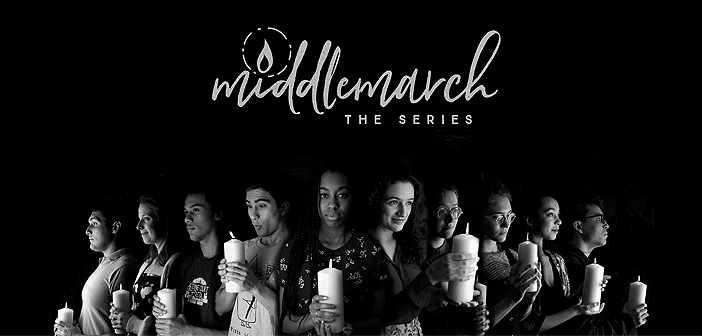
George Eliot’s Middlemarch, although referenced constantly in other literature, has not been given the same modern day adaptations as other famous novels. But, Yale undergrad Rebecca Shoptaw has decided to change that by creating a Web Serial aptly called “Middlemarch: The Series.” The series will run to seventy episodes, with the first half already available online and the rest continuing to air again in August. Shoptaw’s rendition of the novel reimagines Eliot’s residents of the town of Middlemarch as students at Lowick College in the fictional Middlemarch, Connecticut. Dot Brooke (or Dorothea Brooke) is an idealistic sophomore still deciding on a major who decides to film herself and her friends for one year to “help us figure out what we want to do later.” A notable aspect of the Web series is the focus on themes of gender identity and sexual orientation, namely their fluidity and mutability amongst the characters. In an interview with Web site Fandomania, Shoptaw said she was able to use this LGBTQ lens with Eliot’s novel because “healthier relationships are almost entirely free of the gendered power dynamics that too often shape the relationships in classic novels.”

[The New Yorker/Rebecca Mead]

Suicidal Ideation and Who We Allow to Be Real

Introducing Our New Editor

We’re thrilled to announce that Jess Zimmerman is the new Editor-in-Chief of electricliterature.com! Electric Literature’s mission is to expand the influence of literature in popular culture by fostering lively literary conversations, and Zimmerman plans to serve that mission by reaching beyond the traditional literary audience.

“Jess Zimmerman is a brilliant writer and editor with a rare understanding of how to make work affecting, intelligent, and engaging,” said Executive Director Halimah Marcus. “She views literature as dynamic and relevant, and she brings that sensibility with her to Electric Literature.”

“There’s a tendency to think of literature as an academic enterprise,” said Zimmerman, “but storytelling is deeply embedded in the human experience. Literature should feel vital — vital as in important, but also vital as in alive.”

Zimmerman is best known for her cultural commentary and essays in The Toast, Slate, The New Republic, Hazlitt, Catapult, and elsewhere. She is the author of Basic Witches: How To Summon Success, Banish Drama, And Raise Hell With Your Coven with Jaya Saxena. She was the founding editor of Archipelago and has been a contributing editor for Establishment and Atlas Obscura.

Since our founding in 2009, we have been a trailblazer in digital publishing and have cultivated one of the largest online audiences for literary writing with our playful approach, smart criticism, and acclaimed series Recommended Reading, the Bodega Project, and the Writing Life Around the World.

Please join us in welcoming her to the team!

Suicidal Ideation and Who We Allow to Be Real

Relegating women, POC, and queer people as minor characters in their own lives

2003 © movie still from Last Life in the Universe

I was laying down when the nurse practitioner was rubbing a gelatinous substance on my neck, cool like how I imagined waves would be running over my body, drowning me into a calm oblivion full of neon and pastel colors leaving lines like jellyfish long after their departure. I was in the middle of having a sonogram done; only a few weeks before, my doctor ordered one, because the lymph nodes in my neck were swollen, too swollen. I left without any answers. A week later, they called for another test.

There was a problem, but they didn’t know what it was. They still don’t. So, I trudged through the labyrinth of making another appointment, speaking to various people who didn’t have any answers. I find myself, in those instances, checking off boxes, checking off female even though I don’t identify as female, but there is no other option. No option for “other” or “gender neutral” or “non-binary” or something. I look like a woman, so I’m not going to argue. I’m used to not arguing, taking up as little space as possible, being silent. Sometimes, I prefer this.

When the beginning of June rolls around, I always read Anne Sexton’s poem, “The Truth the Dead Know.” It’s cliché to admit, maybe, but it’s one of those poems that has burrowed itself in my bones, that understand the strange excitement the world contains, but also the disappointments — most of all, the desire to disappear. To die. The first stanza gets it immediately:

“Gone, I say and walk from church,

refusing the stiff procession to the grave,

letting the dead ride alone in the hearse.

It is June. I am tired of being brave.”

And then, the third:

“My darling, the wind falls in like stones

from the whitehearted water and when we touch

we enter touch entirely. No one’s alone.

Men kill for this, or for as much.”

I don’t remember when I first felt like I wanted to disappear. Do any of us? The one thing all humans have in common is the survival instinct — the need to stay alive, sometimes no matter the cost. Humans have been known to cannibalize others in extreme circumstances to stay alive and yet, sometimes, that instinct malfunctions. We want to disappear, we try to undo our bodies, ourselves. Yet, it is hard for most of us to admit when we have suicidal thoughts — that we suffer from depression or anxiety or any mental illness. And yet, according to Healthline, “the NIMH estimates that in the United States, 16 million adults had at least one major depressive episode in 2012. That’s 6.9 percent of the population. According to the World Health Organization (WHO), 350 million people worldwide suffer from depression. It is a leading cause of disability.”

“I don’t remember when I first felt like I wanted to disappear. Do any of us?”

I remember being in middle school, writing and listening to The Cure and staring at my carpet wanting to slip into another reality — or none at all. I remember feeling this way in college, during my assault, after my assault, watching an ex throw up after drinking too much for the umpteenth time, then taking care of him — only to have him forget, on lunch breaks during various jobs, while giving my 12th graders a lecture on “The Canterbury Tales,” during Hurricane Sandy while sitting in the dark waiting for the lights to come on — during perfectly mundane, even calm moments. Sometimes, the idea that I should be happier led me to believe there is something wrong with me, that I will never be as happy as I want to be — if happiness is even the end goal, and can be the end goal, for humans.

Depression, and suicidal ideation, has historically been documented when it comes to men — all sorts of literature has been written by men, and for men, including Ernest Hemmingway, F. Scott Fitzgerald, David Foster Wallace, James Wright, Richard Brautigan, etc. And some of these writers, I do like, like Brautigan — but there is, and has always been, a proverbial (and often real) award that these men get for being complicated, depressed, even otherworldly humans whose struggles have been long romanticized.

And yet, for women, people of color, or queer writers, they are often labeled crazy or hard to deal with — whether they deal with depression, or even just their womanhood or their “othered” gender and/or racial identity, in their work. Whatever happened to Zelda Fitzgerald, for instance? Sylvia Plath, Anne Sexton, Yoko Ono, Billie Holiday, Nina Simone, Lee Krasner, and Candy Darling are just an array of marginalized people whose work was either largely written off as “crazy” or other — or whose hard work and dedication were never fully as celebrated as their male counterparts. It’s well known that Krasner, for example, didn’t get a huge studio space until her husband Jackson Pollock died.

“But my experiences are not unique — and that’s the problem.”

Zelda Fitzgerald is the tragic, perfect example of a woman writer whose own talent was ignored because she had a famous writer husband — whose mental illness was mocked — and whose alcoholic husband abused her (and clearly contributed to her declining mental health), and yet, hardly anyone talks about Zelda. Except that she was F. Scott’s crazy wife — as if we should feel bad for him. Delmore Schwartz, for instance, wrote how F. Scott was “regarded as a toy, puppet, and victim of the zeitgeist [and] will certainly be invoked as a witness of how America destroys its men of genius by giving them a false and impossible idea of success.” As if men are the ones who are destroyed. Not that they do the destroying.

In an interview in 1923, he also stated that “women care for ‘things,’ clothes, furniture, for themselves … and men, in so far as they contribute to their vanity.” Zelda, agreed, adding, “I don’t mean that money means happiness, necessarily. But having things, just things, objects makes a woman happy. The right kind of perfume, the smart pair of shoes.” But what other choice did she have, considering the time?

Of course, Zelda did bear a lot of privilege for her time, especially considering she was not a poor woman — and she was white, so she had more visibility than women of color without a doubt. But it would be untrue to say her life wasn’t full of tumultuous highs and lows — and that she wasn’t a victim of abuse and her society’s neglect of mental health, considering the affects of Victorian female hysteria were basically still believed then (and you could argue the affects still linger even now). By the end of her life, Zelda was institutionalized — where she died at age 47 in a fire.

Literature Needs Angry Female Heroes

Like Yoko Ono being blamed for breaking up The Beatles (because men can’t make their own ruinous decisions, or you know, bands can’t break up just because), Hemingway accused Zelda of stifling her husband’s creativity (not that his excessive drinking was maybe the cause) — and even her own husband criticized her only novel, saying she wrote too autobiographically — and worse, that she stole details he was going to use for his own book Tender Is the Night.

But this isn’t just about Zelda Fitzgerald being a second character in her own life — being routinely ignored and abused by the men around her. This is about how countless women, people of color, and queer people are treated like the minor characters in their own lives — how their own struggle with mental illness, and physical ailments too, are relegated to the side, not taken as seriously. I myself went to the hospital for Toxic Shock Syndrome, only to be turned away, basically told I was making my symptoms up — and luckily, my primary care physician believed me when I called and gave me medication. Yet, I could have died. Or the time I was told by a psychologist that I wasn’t raped, because I was dating the person who raped me, and better yet, that I had to “get over it.”

But my experiences are not unique — and that’s the problem. It’s easy to see these problems, like marginalized writers being ignored, or healthcare inequalities for marginalized people, as not being related — but they so evidently are. Our labeling women and queer people as crazy and tragically fragile, like Nina Simone or Billie Holiday, happens in vastly different ways than male artists who also suffer from similar mental health issues and substance abuse problems (like Elvis Presley, Elliott Smith, Brian Wilson).

Take Billie as an another example, an important example of a black queer woman: No one knew, and still don’t, what to do with a black woman who was all parts vulnerable, sexual, resilient, complicated — all while in a hyper-masculine world. She’s still known for being dependent on dominate men and having addictions, despite the fact that she did have affairs with women, wanted to be a jazz singer since age 12, and was in control of her overall persona and her writing (she co-wrote “Lady Sings the Blues” with William Dufty for instance). No one is all powerful or necessarily all submissive — and to pretend that women, queer people, and people of color are dependent on their supposed flaws and weaknesses — their struggles — is to assume they have no agency.

The men, more often than not, are still revered as geniuses. Yes, Wilson is often referred to as crazy, but usually in the context as a “crazy genius.” For instance, in the Daily Mail, Wilson is written about as a “tortured soul” but “musical genius”: “In spite of it all, Wilson, now 74, became a musical genius — albeit a tortured soul — and co-founded along with brothers Dennis and Carl, arguably the quintessential American band, The Beach Boys.”

While I don’t disagree in that I, too, love Brian Wilson, let’s also take a look at how Amy Winehouse has been written about, so notoriously as irresponsible and attention-seeking, when in reality, she was suffering, like Wilson. Since the documentary about her life came out several years ago, the media has largely been more sympathetic to Winehouse — but it also shouldn’t take her death to do that, as if we need women to be martyrs.

And even then, her documentary hardly focuses on the mental and psychological affects of bulimia and body dysmorphia. According to the National Eating Disorder Association, “research suggests that nearly 50% of individuals with an eating disorder (ED) are also abusing drugs and/or alcohol, a rate 5 times greater than what is seen in the general population.” But, why would we talk about that?

As Pitchfork intelligently pointed out, even now, Winehouse’s behavior supersedes her actual work, in a way someone like Presley or Wilson’s work is never spoken about:

“Indeed, even after her death, those in the media were seen expressing resentment at the way Winehouse suffered in public, rather than feeling regretful for participating in the circus that amplified and intensified her diseases. Douglas Wolk, in his review of At the BBC, calls the album ‘a stinging reminder that she spent the better part of her too-brief career making her audience complicit in her self-destruction.”

Of course, this is not to disparage Wilson’s own struggle with mental health — or deny that in the ’70s when this was happening, he was mocked in a way that mocked mental health issues, an attitude all too common of that time. Or any man’s struggle, but it is remiss to say that women, queer people, and people of color are seen in the same way — and are allowed the same grace and generosity of language that white men often have received.

Language in all of its myriad forms is too important and precious for us to be sloppy with; at its simplest form, language is used to communicate in order to allow us as animals to survive — and at its most complex, to share complicated ideas and strategize new ways to streamline our ordinary lives (like creating software) to the intricacies of being in love and having sex beyond procreation. Communication has become so specific, and so complicated, that bots have created their own language as a way to negotiate, even “feigning interest,” as humans do, in order to create meaning and value. When we value one experience over another, we grant a new language, thus reality, to that experience. While the bots are far from being intelligent in their own right, it is still a language — and a new world to comprehend, just as the way we talk about mental health, and give space in language for marginalized voices creates a new reality.

“Communication has become so specific, and so complicated, that bots have created their own language as a way to negotiate.”

The beauty of language is the fact that it bends, destroys, and creates worlds based on the complex nuances of precise word choice — at least, if you believe in deconstruction of language. If we use our language to be more generous and diplomatic — as an equalizer for all experience, not just some experience — then we can allow marginalized experiences to go from the imaginary, the silent, the repressed — to an intrinsic part of our societal consciousness these experiences deserve. Everything is imagined until it isn’t — until we allow it to be real. Everything is real until it isn’t.

9 Stories About Sports, Games, and Gamesmanship

Obviously, Electric Lit’s day-to-day work banter is full of intellectually high- and fabulously low-brow literary and pop-culture references. But we also spend a lot of time talking about sports. Our discussions run the gamut from the NBA to cycling because competition of all kinds makes for great narratives. Epic sagas that twist and turn for all nine innings generate as much suspense and thrill as stories about gambles rolled, shots taken, and competing truths.

In the sporting spirit, we’ve unlocked 9 stories from the Recommended Reading archives that capture the heat of competition and the thrill — sometimes sinister, sometimes exhilarating — of the games people play.

Baseball

Home Run” by Steven Milhauser

Recommended by Electric Literature

In a long, single sentence, Milhauser tells a baseball story that is as much about the charm of a certain kind of Americana as it is about the sport itself. As a ball soars through the air (straight through the galaxy!) the excitement and anticipation of the crowd watching seems to soar just as high. This is a story for day dreamers and baseball-lovers alike.

Basketball

On the Swish and Roar” by Kawai Strong Washburn

Recommended by Electric Literature

Sibling rivalry can have absolutely nothing to do with organized sport. This story opens with a bust-up between Dean, the star of the high school basketball team, his younger brother Noa, the brightest kid in every class he takes, and their mother. After the fight, when Dean’s performance takes a nose-dive in the run-up to a critical, college-scholarship-deciding game, this becomes less a story about sport, and more an examination of the identities we protect, and the positions we play in our families.

Gambling

Everything You Want Right Here” by Delaney Nolan

Recommended by Electric Literature

Gambling is not a sport, it’s a game of chance and luck, but the life of the gambler shares an important thing with the life of a sportsman: it is lonely. This Pushcart Prize-winning original fiction story is about a married couple living in the foreseeable future in a casino called Les Sables. Outside the adult playground, there is only desert, nowhere to go. Despite winning big on their first night, we find that Natalie, the woman, longs for a way out. And it is through her longing that Nolan brings loneliness to the surface.

Fetch

Ball” by Tara Ison

Recommended by Rick Moody

In the title story of Ison’s collection, the narrator, who lives alone in a big house with a jacuzzi, becomes obsessed with Tess, her cockapoo dog. Tess, meanwhile, is obsessed with her Ball — or balls of any kind — and insists the game is played during any and all moments: when her owner is trying to sleep, trying to have sex, or trying to soak in the jacuzzi. The narrator’s lover competes with Tess for her attention, and we, the reader get the creeping sense that our protagonist’s obsessive love for her dog might not be so pure.

9 Stories About Exploring Extremes

Chess

202 Checkmates” by Rion Amilcar Scott

Recommended by Daniel José Older

A young girl quickly becomes enthralled with the game of chess after her father teaches her the ways of the game. Of course, it’s also the time with her father and his undivided attention that she finds thrilling. When she finds a new competitor in the park — one who might be better than her teacher — more essential life lessons arise about sorrow, joy, cheating, and how we define victory.

Bullfighting

Mariachi” by Juan Villoro

Recommended by George Braziller Press

“The story investigates masculinity and authenticity,” writes Lexi Freiman, editor of Juan Villoro’s collection The Guilty, “using the beloved ‘national prejudice’ that is the mariachi.” It is an unfortunate truth that society often uses sport and athletic prowess as a means of affirming—authenticating, even — a man’s masculinity. Juan is a national celebrity with a phallic insecurity, a mariachi often compared to a bullfighter. Through superlative penis jokes and anecdotes about the excessive courtesy of porn stars, Villoro’s tale trounces stereotypes.

Baseball

Miller Field” by Tyler Sage

Recommended by Leigh Newman

There is something of reconciliation in true sportsmanlike behavior. James is a talented, high school baseball player training under hitting coach Stubbs Chapman—who is both aging and dwindling in relevance in the baseball world. The boy and coach have a tense relationship, each refusing to recognize the talent of the other. When James returns to the town at 42, he runs into his old teacher, rival, coach, and nemesis, and finds that they are finally teammates.

Hawking

The Pilgrim Hawk” by Glenway Westcott

Recommended by Michael Cunningham

Hawking is one of those activities that is somewhere between sport and game; you might say it lives in the same realm as “fish & tackle shops” or “rod & gun clubs” — but usually in Europe, not the American West. While Alwyn Tower, an American expat, is staying with his French heiress friend in her home outside Paris, an itinerant Irish couple arrive with their hawk, Lucy. The hawk is restless and sullen, and as conversation and wine flow, the story becomes a meditation on captivity and something sport does not always allow for: independence.

Rowing

Supernova” by Dani Shapiro

Recommended by Electric Literature

Parenthood involves many competing elements, not the least of which is the tug-of-war that between the wants of a parent, and the needs of a child. In this story, a father, Shenkman has built himself a man cave in the form of a sparkling personal gym. His rowing machine is his refuge where he takes out his frustrations: that he can’t cross the distance between himself and his son, and that he can’t beat the time of another rower, Lindgren, his college friend who owns the same rowing machine program. In fact, Lindgren seems to have a lot of things Shenkman doesn’t, and from there the seeds of competitive obsession begin to grow.

Piecing Together a Novel

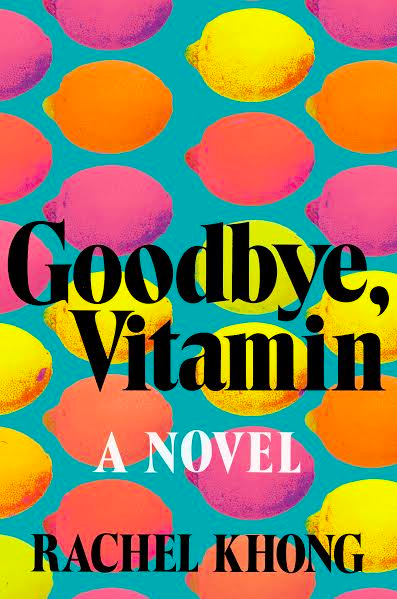
Goodbye, Vitamin is Rachel Khong’s debut novel, and it holds an impressive amount of wisdom and emotion in its slim 200 or so pages. At the risk of sounding trite, I admit that this story of thirty-year-old Ruth and her year tending to her father as he transforms with Alzheimer’s truly made me both laugh and cry. Rachel Khong has skills.

The circumstances are relatable — aging parents, bad breakups, questions about the path of one’s career and next steps — but Khong’s delicate handling of this material brings new insights on every page. Over the course of small sections that are broken up by date as the year of the novel proceeds, Khong gives space to those mysterious moments in life that just can’t be explained, but that give life its meaning. And the characters — Ruth, her parents, her friend, and the graduate students who see Ruth’s father as a mentor — are distinctive and real on the page.

Khong, who lives in California, is the former Executive Editor of Lucky Peach magazine, and I was fortunate to meet with her in person in May at a Brooklyn café. She was in town promoting the final slated book publication from Lucky Peach, All About Eggs, which is part cookbook and part essay/anecdote collection. We discussed the connection between cooking and writing, the beauty of the short novel, and the questions debut women writers get asked all too often.

Catherine LaSota: Can you tell me a little bit about your history with food and your professional relationship to writing, and how the two merged?

Rachel Khong: I’ve been writing fiction for a really long time, but not because I thought I’d make money at it. Growing up, I always wrote fiction and did something else, journalism essentially — music journalism, features and other things. Writing for Lucky Peach happened very serendipitously. I headed back to San Francisco, and they were starting this magazine and needed help, and I love cooking. It was kind of a perfect situation, and so I joined, I think, in 2011, and that was when that whole career started.

CL: Food plays a pretty prominent role in Goodbye, Vitamin.

RK: Yeah, I think it plays a big role in my book and my brain, especially because it gives form to my days.

CL: I read your piece in Grub Street, so I feel like I know a little bit about your writing days and how much you eat prosciutto.

RK: (laughs) Yeah! Ha.

CL: But you also cook a lot yourself.

RK: I do, and that was why food writing made as much sense as it did. I got into cooking more when I was in grad school, for writing — it’s just kind of enmeshed and tangled together. It’s hard to separate those two loves.

CL: Can we talk about the genesis of your idea for Goodbye, Vitamin?

RK: The form of the book is a year. It came out of a short story that I had written about a similar character, I think her name was Ruth, too — she had the same voice — and I wrote this really short story about her dating an alcoholic fisherman, and that was the seed of how the book got started. I just loved her voice and wanted to be in it. She had a different life, but she had the same voice and sense of humor, and was in the same place in life, sort of feeling out of it and not really excited by her career or just various things in her life that had not quite worked out the way she wanted them to. So that was the seed of who the Goodbye, Vitamin Ruth was.

CL: What were you reading while this book came together?

Rachel Khong. Photo by Andria Lo.

RK: I started writing the book only because I realized that novels could be possible for me after reading things like Mary Robison’s Why Did I Ever — she was my teacher in Florida, too. Also Joan Didion’s Play It as It Lays; Speedboat by Renata Adler; Sleepless Nights by Elizabeth Hardwick. I was reading these books and realized, oh, I don’t have to just write short stories — that’s all I thought I was capable of doing, and I never thought that I could write a longer thing. Reading these really small books, often by women, I realized it is possible. If this counts as a novel, I can do this, too. If I can break it down into these little pieces that I can ultimately puzzle and fit together, it seems really doable. So that’s why I started it. I don’t think I would have been brave enough to start it if I hadn’t read those books.

To know that you don’t have to have this huge, plot-heavy tome spanning generations in order to count as a novel…I don’t want to say mine is as important, but small books can be just as important. Those books I remember way more than I remember anything by, I don’t know, Jonathan Franzen (laughs).

CL: He was totally in the back of my mind as you were talking about long novels.

RK: I love the books that get at the things that matter in a way that kind of dances around talking about them directly, because it’s almost more profound that way. I think there’s a tendency to over explain or over explore things or, on the other hand, to be very opaque about it. But I love that middle ground where it’s looking at hard topics but almost distrustful of over explaining something or trying too hard to get clarity.

CL: It’s like when someone asks, well, what is this book about? The answer to that is: you have to read the book! You have to get immersed in the form of it and the language of it, and language isn’t perfect enough to explain in one paragraph what it is about — that’s why you wrote a whole book.

RK: Yeah, yeah.

CL: That being said, I did see some themes emerge that I’d like to ask you about. Memory, for example.

RK: I was really interested in memory, and Alzheimer’s came in as a way to explore that, but I was also interested in breakups, or this particular breakup she’d had, I guess, and her trying to figure out why it had happened. And thinking that it must have something to do with the separate memories that each person has in a relationship — in any relationship, really. You’re bringing your own memories to it of this other person, of who you are when you’re with them, and when those memories are incompatible, or when one person remembers one thing and another person doesn’t, how does that work? I was interested in that in romantic relationships, but also with parents and kids, because there’s a huge swath of time that you can’t remember as a child, and your parents are very much remembering that as people, and so what is that about?

CL: Near the end of the book, there is a discussion about defining ourselves in terms of who we are in relation to other people, and to me this feels like something you explore throughout Goodbye, Vitamin.

RK: That’s interesting, I hadn’t really thought of it that way. I’m always into the ways we change from person to person. I think women have to do it a lot more than men do, right? I find myself wanting to respond to the other person, or there is that thing that you have with friends, where you start to mimic what they’re doing. Or, I start to talk a certain way when I’ve hung out with a friend for too long.

CL: Do you think there’s an empathy that women in particular have?

RK: Yeah, I mean, of course, yeah.

CL: Do you feel, having written a novel, like you have become exposed in some way?

RK: Yeah, I have been dreading the whole publicity thing. I don’t know, there are so many ways to be misrepresented or say the wrong thing. That’s what I’ve been worried about. It does feel like being exposed. I’ve gotten to hide behind food or whatever journalistic subject I’ve had for years now, and now I have a book out. It’s fiction, but it’s so personal, and these are things I think about a lot, and things I’ve stolen from ex-boyfriends…

CL: I think the question of, “How much of this is you?” is something that women get asked more than men.

RK: I think it’s really true! Especially if it’s a first person novel, and if it’s a debut novel, especially, oh, this must be about you!

CL: Right. But my response to that is, every book that every writer writes has something of themselves in it. Men, too!

RK: Yeah.

CL: Some people just don’t fess up to it, and that’s bullshit.

RK: It is bullshit.

Surveillance, Satire and the Female Body

CL: But this is not a memoir; it’s fiction. And people do need to respect that line. What’s the draw of writing fiction for you?

RK: Just writing in general, I love the puzzle of it, and to make something out of essentially nothing — it’s a very cheap and free endeavor. With fiction, the puzzle is so much more fun because you have all of these things to work with. In nonfiction, if you don’t have somebody saying the right thing, or if you can’t quite get an interview out of this person, then you have to put it together a different way. Fiction can just do whatever.

CL: Is fiction about control?

RK: It’s kind of about control, I guess. But also it’s just a lot more fun. You can be more surprised with yourself. There’s a part of it that’s not control at all, that’s totally something separate from you, like that inspiration thing we were talking about. Maybe you’re writing a scene about something, and then out of nowhere the perfect conclusion to it comes, and you’re not quite sure how that happened. A big appeal of fiction is to have those moments of, oh, this puzzle is figured out, and I didn’t even quite do it myself.

CL: But you did do it yourself.

RK: Yeah, everyone should take credit for what they’ve written, but there are those moments that feel like dictation. Like, oh, this moment I didn’t overthink, didn’t overwork, is actually the better thing — I should just trash the rest of this!

CL: The age thirty shows up in different ways in your book. It’s the age that Ruth’s father was when her parents met, and it’s also the age that Ruth is herself during this story.

RK: She used to be younger, she used to be like twenty-six or something, and then I realized as I was working on it that I was kind of aghast at her. I was like, no, you are so young, this doesn’t even make sense, why are you so sad about your job? Of course you are figuring it out! Thirty is still young, but I think there is that external pressure (at age thirty), too, and I wanted her to feel that about herself. It was just less convincing to me as I was getting older myself, as I was working on the book.

CL: I find that is true with essay writing, too — over the course of time (sometimes years) you spend writing the work, your relationship to it changes, so at what point do you know it’s done?

RK: Part of it was being sick of it, right? (laughs) Part of it is needing to finish it, because I feel like a really different person than when I started it, but that’s what the book is about, too — the really different versions of ourselves we are over time. I’ve always been the kind of a person who is really good at — and this isn’t a good thing about myself — really leaving people or places behind if I’ve grown in a different direction. So I’ve lost touch with a lot of people. I have lots of close friends, but I haven’t gone back to a lot of places I’ve lived, because it’s not how I function, I guess.

CL: Does they feel like different segments of your life?

RK: Yeah, I guess it’s like segments of life, or it’s hard for me to remember what it’s like to be in college or something. It’s hard for me to reconcile all these people I used to be with the person I am now. Not that I’m so evolved, or whatever, but I think there’s a different kind of person — my husband is like this — where he views himself as just one continuous person. He can remember really well what he felt like as a boy who was really short and growing out of that and now being a normal height; he can see the person he is now in the person he was then, and vice versa. I can do that a little bit, but I wish I could do it more. I wish that my narrative was so continuous. For me, it’s like, I used to be this person, and now I’m this person, and in five years maybe I’ll be not so much like her. Like I won’t understand her problems anymore, I guess.

CL: So it sounds like you have to write another book now! The way you talk about the stages of your life makes me curious if you are really good at throwing shit away.

RK: No. I guess that’s surprising based on what I just said. But I have a lot of shit in my purse, like Ruth. And I definitely am a nostalgic person, but I wish I were more a person who could look back and say, oh, I remember that, and I see how that moment transformed me into the person I am today. I feel like I can’t grasp life in that way — it doesn’t seem that comprehensible to me. I’m just always trying to figure out shit in the moment, constantly. And learning from mistakes is its own challenge.

The Monster of the Green Lake

Continue reading Episode 6: A Hidden World
Previous Episode: Episode 4: A Very Odd Occurrence of Birds

1. Before Shelley made it to the bend of trees that led to the lake, an indecent fog had set in, obscuring everything but the enormous wooden sign:

Green Lake: No swimming after 8 p.m.

Fishing with license, in season.

She braked with a sudden jerk, feeling the bike chain seize, then go loose. That always happened when she hit the brakes too quickly. She climbed off, setting the bike on its kickstand, and knelt down to inspect the chain.

It had come off. Shelley swore lamely and stood, looking around, seeing that the strand of red-and-pink yarn led to a tall weeping willow. She crept over and found that the yarn had been double-knotted around a single, low limb, with several loose strands hanging down. The girl, Jamie, had left some kind of object tied to one of these strands. It was an extremely small silver key, the kind from a locket or diary.

Shelley reached out and touched the key, quietly untied it from its loop, and placed it in the pocket of her coat.

Behind her, she suddenly felt something moving. An irregular shadow of some kind appeared and quietly faded away. “Hello?” Shelley said, trying not to sound nervous. She turned to face the fog. “Hello? Who’s out there?” she said into the darkness.

The only sound was that of the lake, ageless, almost placid.

“Hello?” she said again. “Is anybody there?”

Out of the low, green fog came an unusual creature — fearsome at first, then absurd: the Monster of the Green Lake.

Shelley stood up and nervously backed against the tree, unsure of what was standing before her.

The monster was over six feet tall and was really just someone in an enormous rubber suit, the shape of which resembled a cross between the Loch Ness Monster and a child’s idea of a dinosaur. The suit looked several decades old, its rubber skin flaking, with wide cracks around the elbows and knees. From a panel near the center of the monster’s chest came a labored sound. Shelley did not know if it was trying to speak. It sounded like “Hpmph” or “Hello,” but she continued to back up.

“Who are you?” she asked.

“Hmphraphm?” the monster replied.

Shelley took a step forward, and the monster stopped moving. “What do you want?” she asked. “Who are you?”

The monster tried to remove its gigantic mask, lost its grip, tried again. Finally, it came free, and the face of a boy, roughly 20 years old, with reddish-brown hair and squinting eyes, appeared.

“Who am I? I’m the monster of the goddamn lake. I’m practically the mayor of this town. That’s how much personal charisma I happen to have. Let me guess. You came up here to get your picture taken? It’s 10 dollars. Fifteen if you actually want me to stand in the lake.”

The boy spoke so fast it was hard to know how to answer.

“No, please.” The girl said, shaking her head, recognizing him from somewhere. “Wait a minute. I know you.”

“Of course you do. You used to be friends with my little sister, Anne,” the boy said. “I’m Junior. Junior Hanford. You know Anne. Anne with the cleft lip. You used to come over and have sleepovers and play ‘light as a feather’ at my house on Friday nights. You even sent me a Valentine once. Then you decided you were too good for me. Went on to boys in your own grade.”

“I don’t remember that,” she said with a half-grin.

“Well, I’m sure you don’t. You were a lot younger and a whole lot nicer then.”

“What’s that supposed to mean?”

“It means what it means. I saw you walking into church, and you acted like you didn’t even know me.”

“I probably didn’t see you.”

“If that’s how you want to play it, kid, it’s okay by me. What are you doing up here by yourself anyway? The entire town’s in a panic. Everybody’s out looking for that girl, or didn’t you hear?”

“I know,” Shelley said and leaned against the tree. “What are you doing up here?”

“I got a job working for Mr. Dupont. I’m a night clerk at his motel. The one by the highway. He asked me if I wanted to make a few extra bucks this week, for Founder’s Day. People come by and get their picture taken, that sort of thing. But nobody’s been by in the last few hours.”

She felt her hopes suddenly dashed.

“Did you ever hear the story of when Grant Dupont first spotted that thing?” he asked.

“Only a thousand times,” Shelley said with a frown.

The boy ignored her, his voice suddenly becoming practiced and exuberant. “On September 15, 1953, a quiet summer evening, Mr. Grant Dupont, of Somerset, Illinois, was alone in his boat fishing when, all of a sudden, a tremendous tidal wave erupted from the center of the lake, and a gigantic green creature reared its head above the waves. Mr. Dupont just happened to have his camera with him, and he snapped a photograph, which revealed the monster’s strange, fearsome shape. And that’s what happened right where you’re standing. The Monster of the Green Lake.”

She rolled her eyes. The boy noticed and grinned.

“Mr. Dupont asked me to memorize all that before he gave me this costume. I did it in a couple hours. I have, like, a nearly superhuman memory. It’s uncanny, really. I scored so goddamn high on all my intelligence tests that the army almost didn’t let me in. Made me a communication specialist. Boy, was that ever a mistake,” Junior said. He reached behind his shoulder and tried to unzip the costume. He struggled for a few seconds, then stopped, too proud to ask for help.

“I’m supposed to stand around here until 10:00 in case someone wants to get their goddamn picture taken, but nobody’s been around the last couple of hours. I guess they’re all at home, talking on the phone to one another about what happened to that girl.”

“It’s terrible. I…you didn’t see her up here by any chance?”

“Nah. I mean I’ve seen her up here before, swimming with a few of her friends. Or just sitting back by that tree. But not today. I guess it was too hot for everybody.”

Audio: “Star Witness” | A Story in Seven Parts

Shelley gave a slight nod. “I came up here because I thought maybe she was here.”

“No. Nobody here but us monsters.”

She gave a false laugh, and knelt down, going back to fixing her bicycle chain.

“What’s wrong with your bike?”

“The chain always comes off when I stop too fast.”

“Need any help?”

“No, thank you.”

The boy shrugged at this and examined his rubber-suited glove.

“Hey, what time is it anyway? I ought to be heading up to the motel pretty soon.”

She gave a quick look at her wrist. “Almost 10:00,” she said.

“I don’t mind working at night. I start at eleven and get off at seven. I don’t sleep very much, but the pay is decent.”

Shelley kept working at the bicycle chain, fitting it back among the sprockets. “That sounds awful.”

He tried to unzip his rubber suit again but was unable. “No, I like it, actually. I do a room check every couple hours. I just poke around the motel, make sure there’s no trouble. Mostly closing people’s doors, turning off the outside lights. I like it because I get to look into people’s rooms every night.”

“You look into their rooms?”

“Sure. It’s the best part.”

“What do you see?”

“It’s mostly people sleeping, some of them watching the TV. Sometimes you see a couple fighting. My favorite one was one night, about three in the morning, I was walking around, and I see this naked woman, and not that she was ugly—she was just a regular woman—but she was naked, and it made me stop, so I kind of crept up close and looked in the window, and she went and lied down in her bed, and there was a naked man in there, too, and I thought, well, I know what this is, but then I looked and there was a baby between them. It was the whole family, and they were together in bed, sleeping. Like they were at home. It was one of the best things I ever saw. You know, I didn’t expect to see that baby there. That’s what I like about that job. I’m always seeing things like that. People forget that they’re in public, you know. They always end up surprising me.”

Shelley thought of what it must look like, the shadows and light, the stillness of the near-empty room, the sound of something no one else would ever see. “That sounds lovely,” Shelley said. Junior looked deep into her eyes, and then quickly glanced away.


2. By then, Shelley had gotten the chain back on. She wiped her greasy hands on the slick, dark grass and dried them with her skirt.

Shelley stood upright and faced the boy. “I should be going,” she said.

“Sure, but first, can I ask you something? I see you singing in the choir in church sometimes. How come you like singing with all those fuddy-duddies?”

“I don’t know. It’s just something to do. I started going with my grandma.”

“I like to watch you sing. Because you stand in the back row, and you think nobody is noticing you. You think everybody is watching Amy Talbert. So sometimes you roll your eyes at her.”

Shelley felt her face go flame red. “I never do that.”

“Oh, sure you do. You do it all the time. You are a champion eye roller. I used to think you had to be practicing at home. I bet you were afraid nobody was noticing you. Was that it? Let me ask you this: You still got a beau? That fellah with the rough older brothers?”

“Who, Wayne?”

“That’s him. You still go around with him?”

“No. I mean sometimes. Not seriously or anything.”

“Not seriously. Well, that’s good.” He smiled. “You know I’d like to know what you like about him.”

“What?”

“I mean why do you like him? His personality, the kind of car he drives, his big old dumb glasses, what?”

“I just like him. He’s nice to me. And we work together at the diner.”

“Wow. He’s nice to you. And you work together at the diner. You got awful high standards.”

“You’re one of those people who think they’re smarter than they actually are, aren’t you?”

The boy grinned. “I don’t know. Probably. I guess that’s a pretty accurate way to describe me.”

“Don’t you think most girls find that annoying?”

“Usually. But I don’t have much interest in most girls.”

“Oh, and why not?”

“Because there are a lot of girls in this town who don’t know how to do anything but yammer on and on about who said what or who wore a dress one size too small. None of them have an interesting thought in their awful little heads. There’s nothing the least bit surprising about them. And besides that, I mean, most of them don’t even know how to kiss. Or what’s supposed to come after that.”

“Which you have all figured out, I bet.”

“You bet right. I’ve made up a whole new way of kissing.”

She smiled and quickly remembered why she was standing there in the dark, at the lake. The boy, Junior, tried to unzip his suit once more but could not get his arm around behind him.

Shelley could not help but laugh.

“What’s so funny?”

“I’m sorry. Nothing,” she said.

“Go on and laugh,” he said with a mock frown. “You know I thought about calling you up sometime, but I still haven’t made up my mind yet.”

She laughed even louder. “I’m sorry. I should go.”

She looked over at the red-and-pink strand, saw where it ended by the lake, and took hold of the handlebars of her bicycle.

“Oh, I get it. The cold-shoulder routine. I know how it works. I got three sisters.”

“That isn’t it. I just have to be going.”

The boy shrugged unhappily.

“Before I go, do you mind me asking?” Shelley quietly whispered. “Are you sure you didn’t see that girl up here tonight? Earlier today, maybe?”

“Yeah, I’m sure.” He itched the side of his sunburned nosed and said, “Come to think of it, the other day, maybe a week or two ago, I was on my way home from the motel, walking back through the woods, and I saw her. Jamie Fay. Out by the cemetery. It was early. Maybe close to six or seven in morning. And she was out there, by herself, sitting by those Civil War graves, by the one that looks like the Washington Monument. It’s funny. It was like she had already disappeared, the way she looked sitting there. Like she was practicing being a ghost.”

“The cemetery? You saw her there?”

“A week or two ago. It looked like she was waiting on somebody. But then a police car pulled up. Someone from the sheriff’s office must have driven her home. I haven’t seen her out there since.”

She nodded, coming to a decision. The boy looked at her and smiled slyly.

“You thinking of going out to the cemetery by yourself?” he asked.

“No.” The sound of it was so clearly a lie that both of them chose to ignore it.

“You’re braver than you look. But you ought to leave all of this to the sheriff.”

“I will,” she said. “Thanks for your help.”

“Maybe I’ll see you around sometime.”

“Maybe.”

“Maybe next time we can practice rolling our eyes at each other.”

“Maybe.”

“Goodnight.”

“Goodnight.”

She quietly reached over and helped the boy unzip the back of the rubber suit. He smiled shyly. Shelley rode on once again, pedaling into the dark.

Two miles away was the new cemetery, with its slanted iron gates. Shelley paused as she passed through, finding a white ballet flat, a generic one from the failing shoe store, placed on one of the finials of the cast-iron fence. She climbed off her bike and took the shoe in hand.

There, along the grayed instep, were the missing girl’s initials.

JF.

She looked up when she heard something move.

Before she could make a sound, Shelley saw the outline of someone’s shape blocking her path.


Continue reading Episode 6: A Hidden World

Electric Literature is Looking for Readers!

Calling all fiction lovers! Electric Literature is looking for new manuscript readers to join our editorial team. Recommended Reading publishes one story per week: a mix of original, previously published, and forthcoming, with an personal foreword by another top writer or editor to every story.

Because Recommended Reading receives a large volume of submissions, a committed corps of volunteer readers is essential to helping the editors find new, unknown, and/or diamond-in-the-rough talent. Recommended Reading is the weekly fiction magazine of Electric Literature, an organization dedicated to making literature more relevant in popular culture.

Specific responsibilities of the role include:

  • Providing concise but thorough responses to ten submitted manuscripts per week, with a clear YES or NO recommendation for each
  • Meeting weekly reading deadline, and clearly communicating with editorial staff when scheduling conflicts arise
  • Closely reading Recommended Reading and other similar journals, with an eye toward the shape of contemporary short fiction

The ideal applicant is:

  • An avid and attentive reader
  • Self-motivated and able to meet deadlines
  • Able to express herself clearly in writing
  • Very familiar with the Recommended Reading back catalogue
  • Educational and/or professional experience in literary criticism and fiction writing is a plus, but not required.

This is a volunteer position that requires a commitment of approximately six hours per week. Readers will work remotely and on their own schedules (as long as they meet the weekly deadline).

Current readers are not allowed to submit their own fiction for consideration in Recommended Reading.

For a sense of the kind of stories you’ll be reading, visit the Recommended Reading homepage here.

To apply please email a cover letter and a two paragraph critique of a short story published in the last month to editors [at] electricliterature [dot] com by Monday, July 24th, 2017.

The Loneliness and Disenchantment of the Alligator

They decided to call the alligator Minnie only after she’d laid nine eggs, late in the summer of 1952. For all of her 54 years she’d never been given a name because no one knew her sex. But then she revealed herself, her hopes deposited in the sand.

Alligator babies like the ones Minnie hoped to have are around six gangly inches long at hatching, mostly legs and tail, their green brown armor unformed and soft. Their vulnerability makes them seem cute, like they would make good pets, and it’s tempting to put one in a box and try to keep it.

In the 1880s, a number of baby alligators were put in a box and sent to El Paso, Texas, a city that lies on the edge of the state, the country, and the Chihuahuan Desert. They took up residence in a pool downtown, in the middle of a park called San Jacinto Plaza. Alligators, including Minnie, would live there for around 80 years.

The pool was surrounded by streetcar lines and major avenues intersecting, not far from the train station and the international border. It was a place people passed frequently, a place on the way to somewhere, and many stopped at the pool for a moment to peer in and wonder. Alligators, after all, are modern dinosaurs, having dwelt on earth for some 150 million years. This is bound to appeal to the imagination. How strange to think we could possess them. What a special thing to see in the middle of a dusty desert town.

Alligators are not particularly fearsome hunters. Their method is to wait and lurk, preferably in a covered place where they can’t be seen, until something edible moves nearby. Then they lunge. They feed.

But alligators don’t eat very often; they can go up to two years without eating when they have to. Lurking and stillness take up much more of their time.

So alligators do not entertain. However appealing the babies might be, the adults bore us. We can, for a moment, admire their prehistoric bearing, but before long we wish they’d do something.

The El Paso alligators were motionless for so much of the time that some people began to wonder if they were even real. A few would throw rocks or lit cigarettes at them to try to get a reaction. Two alligators died from stoning. In the 1960s, the remaining gators got moved to the zoo. The enchantment was gone from the plaza; the desert held one less mystery.

If only the doubters had been there the day after Minnie laid her eggs, when she was, according to the local news, “as active as a tiny sand lizard.” Her keepers tried to cover the eggs with dirt to protect them, but Minnie wouldn’t let anyone near. She was probably too old for them to hatch but kept her guard up anyway, pacing in the fading desert sun.

“Four Corners of Sunday,” by Ellen Welcker

Double Take: ‘The Epiphany Machine’ Takes Tragicomedy Into Terrifying New Corners

 “Double Take” is our literary criticism series wherein two readers tackle a highly-anticipated book’s innermost themes, successes, failures, trappings, and surprises. In this edition, frequent Electric Literature contributors Kyle Lucia Wu and Tobias Carroll discuss David Burr Gerrard’s The Epiphany Machine.


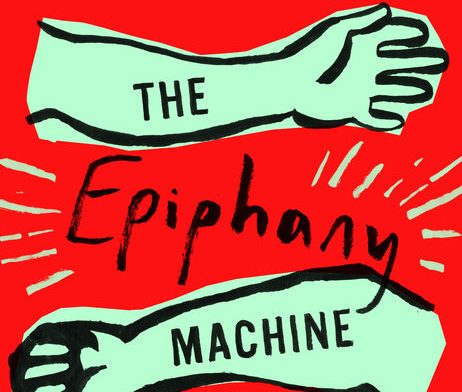
The eponymous Epiphany Machine central to David Burr Gerrard’s novel is marketed to the world with the slogan, “Everyone else knows the truth about you, now you can know it, too.” What does it actually do? It tattoos revelations to your forearms. It seems like a baffling device, little more than a cult, until people realize it actually works. The main character, Venter, is no different and falls into the drama surrounding the device and its operator, Adam Lyons. Then stuff gets even weirder.
Spoilers are encouraged and fair-warned, with the hope that readers purchase the novel and join the discussion in the comments.

Kyle Lucia Wu: So there is a lot of talk about “breastfucking” in this book. It is Epiphany Machine owner Adam Lyons’s seemingly preferred mode of sexual activity (though we never see him engaging in it, simply talking about it). He tries to argue at one point that it is a perfect form of sexual interaction, and Venter, the main character, points out that there is no pleasure for the woman in breastfucking. What do you think this says about Adam? That he’s only concerned in singular pleasure, not mutual? Something Oedipal?

Tobias Carroll: I’d like to say that that’s par for the course for Adam, who seems paradoxical from the start and keeps adding contradictory aspects as the book proceeds. He’s deeply committed to the workings of the Machine and is decidedly principled about it; yet, by the end of the novel, it’s revealed that (mild spoilers, though I’ll try to be vague) his precise ethical standards have a couple of significant exceptions.

So maybe “breastfucking” is something of a reflection of this. It is, in the words of Deadwood, ”A lie agreed upon.” Or something emblematic of Adam’s successful attempts to convince himself that, no, this is totally mutually pleasurable for all involved, when in reality, it’s not.

“We can’t just know a little bit. We need to know everything.”

I suppose that circles around to one of the big questions of the book: Did you walk away with the impression that the Epiphany Machine did more harm than good? I keep going back and forth on this question, which is a pretty great representation of the layers on which the novel works. Is the Machine, ultimately, a force for ill? Is it more of a relic of a bygone era that no longer has a place in this century? It’s a pretty powerful symbol — even as its role in a relatively realistic novel borders on the metafictional. Layers on top of layers.

KLW: I do think it does more harm than good ultimately, but not in a malicious way. There’s a limit to what we should know about each other, and a point where knowing the truth is no longer useful. It reminds me of the Black Mirror episode, “The Entire History of You,” where everyone has video chips in their heads that record their memories to the point where we can replay any interaction for ourselves or others. Of course there’s reasons why this might be helpful — what exactly did my boss ask me for when I wasn’t listening? — or just replaying a certain memory — but it’s very easy to see how downhill it could and would go. Suddenly you can’t trust anyone’s retelling of their memory unless they play you the exact video so you can see for yourself. The Epiphany Machine is the same.

In the beginning of the book, having an epiphany tattoo is looked down upon and thought to be part of a cult. Then they start to be interesting, maybe personally revealing: Lots of people don’t know themselves, so it becomes pretty alluring to be able to be told the truth about yourself without all that pesky self-investigation. By the end of the book, they’re largely required. The problem is that with any kind of illumination like this, I don’t think humanity can handle only having it in small doses. We can’t just know a little bit. We need to know everything.

In the end, it’s brought up that political pundits have suggested the next presidential candidates must get epiphany tattoos and show them on the debate stage. It might be interesting to imagine what 45’s might have been. But a good point this brings up is: Would it even matter? If we all get used to seeing so much truth, would seeing the bad truths become normalized?

TC: The morning I’m typing this, 45 has tweeted a video in which he assaults a wrestler with the CNN logo for a face, so–as much as I’d like to think it could make a difference, I suspect it would be normalized. Though I’d also love to see what epiphany tattoo attack ads would look like. Maybe “love” is too strong of a word: I’d be morbidly curious to witness it in an alternate world, but I’d be terrified about it in this one.

Talking politics also calls to mind Gerrard’s first novel, Short Century, which also engaged with a host of political issues, albeit in a very different way. It, too, had subplots about alter egos–which means that we might be getting into to the realm of preferred authorial themes. Did you find any areas in which the two books overlapped?

“It should also be said that Gerrard is committed to giving us flawed, potentially unlikeable narrators at the forefront of each of his books, something I love.”

KLW: I love digging into an author’s preoccupations. I see a lot of parallels with Short Century and The Epiphany Machine: a lot politics, a lot of anger, and a lot of talk about persuasion. I think Short Century tells its story with more rage. The Epiphany Machine is told more passively, because of its very different narrator. Venter’s opinions are fairly changeable and muted — after all, he is very dependent on the opinion of others. In Short Century, the narrator, Arthur, seems to strongly believe that he understands others better than they understand themselves — he’s very confident in his own empathy. Now that I’m saying that, it sounds like the idea behind the Epiphany Machine. “It knows you better than you know yourself!” Maybe there is something that connects empathy and epiphanies. It could be argued they are there so you can feel empathy with yourself: Once you know your biggest secret, you can accept it. Or is it to feel empathy with others, by having them reveal their biggest flaw upfront?

It should also be said that Gerrard is committed to giving us flawed, potentially unlikeable narrators at the forefront of each of his books, something I love.

Also — incest? At the forefront of Short Century is the reveal of the narrator’s incestuous relationship with his sister. There isn’t any incest in The Epiphany Machine, but I do think that the way he blurs the lines between Adam, Rose, Venter, and Isaac does mar the traditional familial lines, and points to a preoccupation of boundaries in families.

TC: I absolutely agree with you on that. I also don’t think it’s coincidental that both of Venter’s father figures have names that are pretty loaded with Old Testament connotations: Adam as this primal father figure (which he succeeds at with respect to the Machine, but is less successful at with actual people), and Isaac, whose paternal role ends up being more pronounced with trying to help Ismail than with Venter. I don’t know. It very much seems in keeping with a novel about people being literally assigned roles and stations in society and wrestling with whether or not to live up to those.

Double Take: Dan Chaon’s ‘Ill Will’ is the Darkest Novel You’ll Read This Year

KLW: That’s a great point that parallels with the epiphany tattoos themselves. Once they get it on their forearms, they then have to decide whether they are going to keep fulfilling their tattoo or whether they’ll go against it. I mean, Isaac’s tattoo was should never become a father, and he deliberately became one.

“Once you know your biggest secret, you can accept it.”

How do you feel about the use of history (9/11) or real people (John Lennon)? I’m not a huge Beatles fan and John Lennon doesn’t hold much personal significance to me, but I was wondering how I’d feel if it had been about a musician I feel close to in my head. Do you think the choice to use a famous person in a narrative is risky because it may anger or alienate readers, or do you think it’s smart because readers already have an investment in this character?

TC: I think it works in the case of Lennon in a way that it might not have with, say, George Harrison. Some of it might be that (especially in recent years) Lennon has emerged as a much more flawed pop cultural figure — the fact that we can discuss him being abusive, for instance. And the fact that his killing has also (like it or not) become somewhat mythologized–I’m thinking back to the movie from a few years ago where Jared Leto played Mark David Chapman, and (if memory serves) Salman Rushdie’s The Ground Beneath Her Feet also contained a fictionalized riff on Lennon’s death. Tying the Epiphany Machine to the Beatles, and making it a sort of magical-realist distillation of a certain aspect of Boomer culture, clicked for me.

The point at which the book began to focus more on the abuses of the US post-9/11 took a little bit of time for me to process–a sense of, “Oh, this is where this is going.” That’s a little more immediate for me: I was living in New York at the time, and I think I’m always going to have a complex relationship to descriptions of that event, and that point in time, in fiction.

“I’d be terrified to get an epiphany tattoo IRL.”

That said, the way the Epiphany Machine leapt from cult Boomer relic to adjacent to American paranoia ultimately worked for me–it was something of a narrative leap, but it clicked. And the section about two-thirds of the way through, where nearly every epiphany ends with but is stronger than terrorists seemed like a perfect (and unsettling) evocation of the early years of the Bush presidency.

…though I was also impressed with how that section threw a whole lot of ambiguity into the narrative about whether the Machine was actually doing Adam’s bidding or if it was genuinely tapping into the user’s subconscious–or some sort of collective unconscious.

KLW: That’s a very interesting point that was never clarified. If Adam’s not in control of the machine, how would he possibly fix that on every arm? I tend to think it’s pointing to the way our collective unconscious wraps its arms around a certain idea.

There’s a point that’s glossed over around the middle of the book where Venter refers to thinking as a drug. “Thinking, like any other drug, can be a useful distraction from pain.” I think that’s actually a large part of this book, that thought is a kind of danger the way a drug is.

TC: And it also goes into Gerrard’s running concern over the dangers of ideological extremism, the characters who are seduced into acting on behalf of abusive governments in both of his novels tend to have thought way too hard about things, and end up causing abundant harm for others as well as corrupting themselves…

KLW: Several sections of this book deal with Stephen Merdula’s fake book that has several different explanations for how the Epiphany Machine came to be (thereby making all of them void). Several of them are also the testimonials that Venter takes from people who have used the epiphany machine. I loved the testimonials from people and found them pretty fascinating, especially because they’re often not at all objective — they believe in their epiphanies or don’t, and that shows completely in their storytelling. They’re saying “It changed my life!” or “It changed nothing” — completely skewed by their own opinions. How effective did you think these interludes were in the narrative?

TC: It clicked for me. Ultimately, this was a novel that was set in a world pretty close to our own, but with a very slight dose of surrealism. But for the Epiphany Machine to work and not just feel like a decidedly clever symbol or narrative device, getting a sense of how it might fit into people’s daily lives makes a lot of sense to me.
I can also say that, having thought about this a fair amount since finishing the book, I’d be terrified to get an epiphany tattoo IRL.

KLW: I think I’d be wildly curious about what mine would say, but not brave/reckless enough to have it embedded in my arm.
TC: Am I crazy for seeing Adam Lyons as a weird fictional analogue for Michael Seidenberg of Brazenhead Books? (Which I suppose would also make this slightly-alternate New York a close cousin to the slightly-alternate New York of Jonathan Lethem’s Chronic City, which I’m totally in favor of.)

KLW: I love that reading of Adam. I think Adam is a bit more of an antihero than Michael, but there seem to be parallels in personality and in their business models (both more interested in spreading wisdom than gaining money). And the Upper East Side apartment. (And wasn’t Jonathan Lethem one of Brazenhead’s first Brooklyn employees?) This is a wonderful reading of Adam’s shop for many reasons.

A brazen head historically was an automaton, a brass head that could speak to its owner and answer his questions — a magical object that somehow knew more than the humans it was interacting with. The epiphany machine is a perfect, albeit more aggressive and permanent stand-in for that. There were always dangers to a brazen head, whether it reflected hubris, allowed you to misinterpret the answers, or maybe just told you too much about yourself — and this certainly falls in line with the theme of thinking or knowledge as a drug. There is a danger to knowing your epiphany through this machine, many layers of danger in fact, just one of them being that everyone can read it on your skin.

TC: Over the course of the novel, Venter moves from an enthusiastic acolyte of Adam’s work to a more oppositional role–to borrow the essential punk term, he’s pretty much a corporate sellout. And he betrays his best friend in a pretty horrific fashion. So I’m curious: Do you think the narrative lets him off too easily by the end? To an extent, it seems like Ismail needs to suffer for Venter to have a more genuine epiphany; on the other hand, this is a novel with a premise and structure that question the role of epiphanies.

KLW: That’s a very good question that I struggled with as well. Does Venter deserve to end up with Rebecca in the end, and baby Rose? Does he deserve to have his parents reunited, arguably the most common fantasy among young children whose parents are separated? What he does to Ismail seems like such a betrayal not least because Venter seems to know in his heart that Ismail is innocent, though he does go back and forth about what he knows to be true and what he has convinced himself to be true.

I think the fact that his loyalties seem to sway so wildly (and we see this with all his primary relationships in the book: Rebecca, Ismail, Adam, his father) is just another indicator that Venter genuinely doesn’t know how to think for himself, what his epiphany predicted, but his epiphany just made him more uncertain. Sometimes he tries to push against his epiphany just because he knows he has it, but this backfires as well.

Do you think that this book is arguing for epiphanies or against epiphanies? I think an epiphany is another thing we can clutch onto for some sense of identity, the kind a job or any role in society can provide. But anything we hold onto too tightly like this, anything we expect to get all the answers from, ends up being way more of a crutch than anything else. It’s dangerous to believe too sturdily in almost anything — even, or especially, something about yourself.

TC: I’d go in the “against” camp, myself. Nearly every prominent character who gets a tattoo ends up regretting it. Ismail’s tattoo destroys his life; Venter’s provides a means by which authority figures can manipulate him and by which he can hold off on taking responsibility for his own actions. Epiphanies seem to me to be best when they’re temporary: That great insight you have about yourself one day might no longer apply to the person you are a month later, and trying to cling to that is like a more sophisticated version of wearing your high school varsity jacket when you’re pushing 30. (Or 40, or 50.) It’s essentially arguing that, on a fundamental level, you’ll never change from the person you were when you had that realization–which is a deeply dangerous proposition.

Agatha Christie’s Letters Reveal the Author’s Fantastically Sassy Nature

Plus a new bookselling technique hides covers, and George R.R. Martin was apparently not on board with a major GOT decision

The weekend awaits, and this Friday is teeming with literary news. Turns out, Agatha Christie dealt her fair share of sass in correspondence with publisher Billy Collins, blind-date-with-a-book asks readers to take a chance on coverless book-picking, and George R.R. Martin apparently wrote a future for one of his characters quite different than what played out on the show.

Agatha Christie gets sassy in these unseen letters to her publisher

Apparently, Agatha Christie had quite the temper. New correspondence between the English crime novelist and her publisher Billy Collins reveal her sometimes hot-headed responses and protestations. In one letter, she is displeased with the cover for The Labours of Hercules, claiming the Pekingese on the cover was not up to standards. In another, she expressed her anger over seeing her books in shops despite not having received her own copies and being told its publication date. “I do think it’s treating your authors disgracefully,” she added. Yikes. Still, the relationship between Collins and Christie was also one of appreciation and admiration. Often, they would ask each other for favors: Christie asking for tennis balls (Collins’ brother was a tennis player) and Collins requesting that Agatha host his friend. In fact, Collins even bought Christie, his most profitable author, a car in 1953 to express his regard. These letters, plus unseen photographs of the author, will be on display at the Theakston Old Peculier crime writing festival (July 20–23) and then will move to Christie’s former home in Devon.

[The Guardian/Danuta Kean]

Blind-date-with-a-book entices with words only

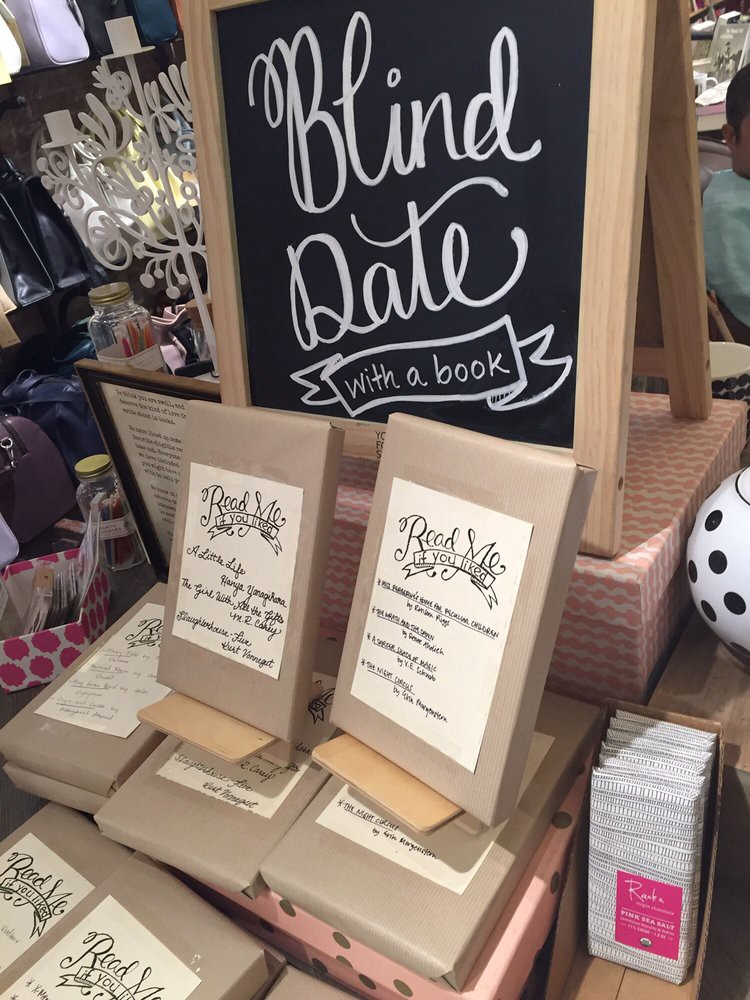
We all know the ‘you can’t judge of a book by its cover’ maxim, while valid, is nearly impossible to enforce. Until now that is. Book Culture, a bookstore on the Upper West Side of Manhattan has come up with a brilliant way for people to shop strictly for the sake of words. Blind-date-with-a-book is a new book-buying experience, in which employees pick lesser-known titles, wrap them up in brown paper, and write a list of books of the same genre with overlapping themes. Since the new strategy was introduced in October, it’s been a hit — especially during the holidays. Blind-date-with-a-book has been increasingly popping up in bookstores and libraries around the country. Here’s hoping this book-picking is more successful than most blind dates are.

[Fox 5 NY/Stacey Delikat]

George R.R. Martin had different post-Red Wedding plans

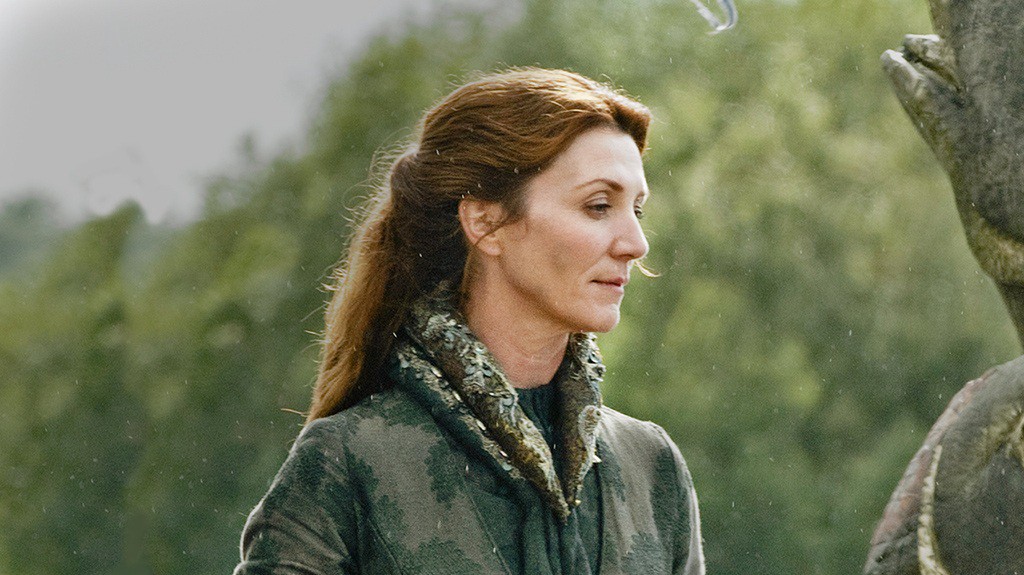
Sometimes the author does know best. [Fair warning: some spoilers ahead] In fact, if George R.R. Martin had gotten his way with Game of Thrones, the grace and class that is Caitlyn Stark would still be leading the Stark clan instead of probably unceremoniously abandoned somewhere after her brutal slaughter. In the novels (which are pretty behind the show’s plot at this point), Lady Stonehart is the resurrection of Catelyn Stark, brought back to life after the Red Wedding by the Lord of Light. Well, the showrunners had different plans for Lady Stark and decided that leaving her bloody body behind would do. In an interview with Time, Martin describes the disagreements he had with the show’s creators about which route the plot would go. (Martin preferred sticking with the books, obviously). “In my version of the story, Catelyn Stark is re-imbued with a kind of life and becomes this vengeful wight who galvanizes a group of people around her and is trying to exact her revenge on the Riverlands. David and Dan made a decision not to go in that direction in their story, pursuing other threads,’’ he said. All in the name of good TV-watching, I suppose.

[Forbes/Paul Tassi]

Literature Needs Angry Female Heroes