A Story About What A Thrice-Divorced Man Took for Granted

“Dr. Hamidi’s Difficult Divorce”

by Dina Nayeri

June 2009

Isfahan, Iran

In order to finalize his own ugly business, as if the universe were demanding one last slice of flesh, Bahman was compelled to watch thirteen consecutive divorces, a full docket. By the sixth one, he stared baffled at his young lawyer — who was also slowly succumbing to the malaise of it, uneasy shoulders sinking, loose lips draped over half his cigarette — and mouthed, “This is absurd.”

“Forgive me, Agha Doctor, what do you mean?” The attorney raised both eyebrows as if Bahman should have expected this farce, as if an ordinary man should be accustomed to watching pale husbands slump and flinch, pretty wives crumble thirteen times just to complete his own errand. There is always an instant, isn’t there, when youth fails? And who wants to see it?

They sat in plastic chairs just outside the cleric’s office, watching through the crack in the door, which had been left ajar, it seemed, expressly for that purpose. His young lawyer kept wiping his hands on his cheap gray trousers and sipping hot tea. Sometimes the boy would get up to refill the two fingers of liquid in his tulip glass from the rusted samovar atop a long table in the corner where two secretaries in black chadors were engaged in some joyless business. Why had he hired the fidgety lawyer? After all, despite Bahman’s secular education and volumes of subversive poetry, his children’s indulgent American degrees and his fugitive first wife, he was still the male in an Iranian divorce: a secure position. Things would go easily for him here. Though, yes, he was planning to tell some lies, and, more important, when is a third divorce ever easy?

Yesterday, drinking at home from his own samovar, Bahman had reflected on today’s errand with anticipation. It had been coming for a long time. He considered how the next chapter of his life might read. Perhaps he would buy a new couch and lose weight. Maybe get a new crown on his molar and take a plane trip somewhere warm, somewhere without visa hassles: Cyprus, or Dubai, or Istanbul. He might even arrange to see his children.

On that last morning before his court date, Sanaz didn’t yell or throw anything. Instead, he heard her weeping in the guest bedroom and knocked on the half-open door. He stood there, shuffling in the doorway in his royal blue pajamas. And when she looked at him with wrecked eyes, covered in all that garish makeup, her chipped toenails three shades of red and filed far too straight, he worked up the courage to say, “Why are you sad, azizam?” Then, gathering himself, he whispered, “Don’t you know how young you are? Same age and already Niloo — ”

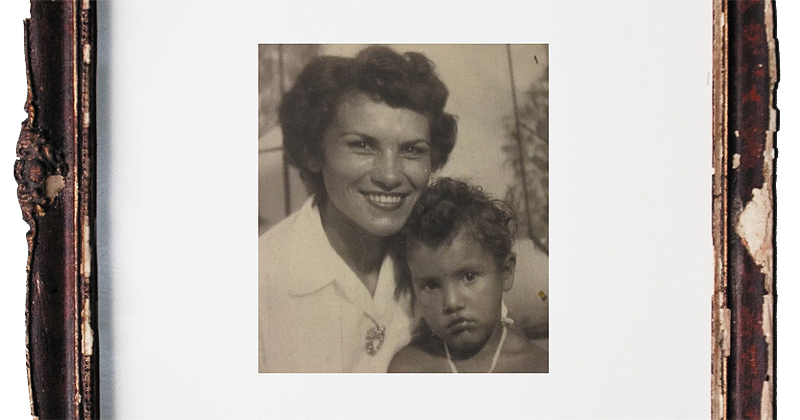
Aaakh, dirt on my head . . . always Niloo, Niloo!” She spat mucus and tears. “You are a weak man without reputation or rank or anything and your bastard daughter is nothing to me.” He wanted to point out that Niloo was the furthest thing from a bastard. Of his three wives, the first had been the most educated and charming. Pari was the love of his youth, and her talents had passed on to their children. He had a photo of him and Pari at a picnic in Ardestoon, her head on his shoulder, his hand on her cheek as if it was any ordinary privilege. Do young men realize what they take for granted? In the photo he seems oblivious to the cheek he is touching. Was Pari loved enough before she ran away to America?

He was ashamed of having blurted Niloo’s name so gracelessly, in such a discussion. It was an ungainly moment and he fled the scene. He had not spoken of their embarrassing age difference in three years — three years of lost friendships, of angry relatives, of humiliation, isolation, and money hemorrhaging as if from a wet paper bag. Releasing the words like that, alone in a doorway in blue pajamas, felt like the skin of his heart peeling away. For half a day, he loitered in a tea shop near the Thirty-Three Arches waiting for that overexposed, raw flesh feeling to subside.

Between two routine cavity fillings, he walked by the courthouse to prepare himself for the next day. Rows of men with typewriters sat outside, hawking their services for a few hundred tomans a page — petitions and eloquent appeals and supplications in impressive legalese. Rows and rows of peddler-poets, would-be scholars, novelists, historians, and songwriters selling fluency to those whose words had run out. Farther out in the fringes, lingering greasily near both the male and female entrances to the courthouse, idling away the hours smoking cigarettes and casting furtive glances at petitioners, were the witnesses for hire, extra pairs of eyes to reclaim those moments lost to inopportune privacy. Bahman watched a woman rush out of the courthouse, speak to one for ten minutes as she clutched her black coverings to her mouth, and guide him to the men’s entrance. How long have the courts been so willfully blind? He wandered back to his office.

Today, on entering the courthouse through that same door, he had been inspected for weapons by three pasdars. His mobile phone was taken away and his late father’s green handkerchief was eyed with great suspicion, since it resembled the wristbands of Green Movement protesters. Luckily, his modest suit and the counting beads worrying away in his fingers (signs of a resigned, aged sort of life . . . pickled, fallen into place, as they say in the village) saved him and the guards waved him through, returning to their bags of pistachios and sunflowers, cracking and chewing and spitting as they talked. They were young men, none over thirty. Probably they were sick of frisking the old men who passed through these doors to divorce their sisters or mothers or former lovers. The thought saddened Bahman, and before he went in, he said to the youngest pasdar, “Ghotbi will be good, I think.” He glanced around as he considered what more he could say about the new Iranian national soccer coach. “World Cup for sure.”

The young pasdar eyed him strangely for a second. Then he grinned. “For sure, Agha Doctor.” He held out his bag of pistachios and patted Bahman on the back, a rude gesture considering Bahman’s age, and yet this is what he had wanted, to be young like the boy. Bahman took one and nodded thanks. The boy said, “If life was simple, I’d go to South Africa and watch all the games from the front.”

Now, squirming under the harsh light of the courthouse waiting room, he heard a couple explaining their situation to the judge. Though inclined to resist this circus, which felt much like watching twenty strangers on the toilet, he strained to listen. He might as well let go of his private distaste now that he was stuck. From the moment he stepped into this muggy clerical office and breathed its overused air, he’d been caught in a wonderland crafted by Rumi or Hafez or some other cruel wit.

“I grant her divorce,” the young man said, “let her have it.” This caught Bahman’s attention because what Iranian man would agree to a divorce he didn’t initiate? It’s a matter of pride. If the wife requests it, only madness and impotence are legal reasons. If this is a case of mutual abandonment, the man should request it for both of them, since he needs to show no cause and it’s a smaller headache for everyone. Is this boy admitting to insanity? Impotence? Maybe he wants to rub yogurt on the marriage gift, to negotiate away the sum to which every divorced woman is entitled. Maybe his family made a lazy deal for him — sometimes young men in love agree to hefty marriage gifts at the time of the aghd, thinking they will never divorce, or that if they do, they will be too heartbroken to care.

“Why are you seeking divorce so soon?” the judge asked the young woman. “So little time living together,” he said, and flipped some pages. Bahman sat forward in his chair, staring openly into the room, because at least the universe was offering him the pleasure of a decent story — in divorce court, everyone lies.

The young wife looked more weathered than her husband, her grief-pale skin shiny in spots while he seemed to have spent time outdoors. A voice behind the door, a mother or sister perhaps, was weeping. Maybe the girl couldn’t have children. Maybe he was a philanderer. Maybe she was a philanderer — women did that too, of course, and why not? A life of pleasure is at least lived. Maybe he had lost all their money gambling, or couldn’t perform in the bedroom. Or she had promised to care for an ailing parent who had sucked the life out of her. The judge continued his inspection of the pair — how could so young a couple have bungled it so quickly?

The wife, hardly more than a teenager, tucked in the edges of her headscarf, her expression full of guilt and failure. She was younger than his daughter Niloo, and Bahman wished he could speak to this girl, to say, I don’t know you, but listen: you couldn’t have done anything to fix things. She rubbed the side of her neck again and again, the same gesture that comforted Pari, his first wife, when she was nervous or angry or confused. Bahman watched the girl, and soon everything faded but the rhythm of her fingers. In their worst moments, Pari had clutched her own throat with both hands, rubbing and clawing as if to remove an iron collar.

“A strange punishment, having to watch this,” Bahman muttered, meaning to compare the situation to the forced mass witness, in certain backward countries, of executions and beatings. And yet, wasn’t he living in one of those same countries, the ones involved in every human ugliness and ruin? Didn’t rural mullahs reign free far from the eyes of scholars and doctors? But who could say such things aloud? Much less so in a court of law, in these troubled times. Even here in Isfahan, a big city, scholars and doctors kept their eyes closed. On and on, the world slumbered.

He considered it and thought this notion poetic and true enough to say aloud. “The world slumbers, my friend.” He glanced at his lawyer.

The boy stared. “You will get the best service,” he said. “The best. All will be well, Doctor.” He scratched at a strange bald patch on his chin. Bahman wiped the tea out of his own thick but tidy mustache. Each morning he trimmed it straight with a ruler held above his lips.

That morning, in the sterile gray brick hotel that had housed him for a single night, uninviting down to its last metal beam, he woke with a distended stomach. He had long given up meat, grains, sugar, and dairy. He ate stingily, slept militantly, and consumed enough water to run a small mill. And yet, somehow, every third morning, he woke with a stomach that looked three months’ pregnant. No pain, no nausea. Just a tight drum that said, Hello, old friend. Let’s take a holiday. Remember all the work we did, back when we played soccer all afternoon and ate sultan-kabobs and made love for two hours without the smallest complaint? No more of that; it’s twilight.

Now he was afraid of falling asleep before his young wife for fear of his unruly stomach. It seemed strange for fifty-five. Despite a lifetime of study, poetry, food, and invigorating old-world living, Bahman was losing. His father’s muddled village genes began to prevail, afflicting him with wild, unpredictable physical changes. The hair follicles in the back of his head were the latest to succumb, abandoning their places to a swirl of unseemly baldness.

Bahman shifted in the hard curve of the plastic chair (like sitting in a salad bowl, he thought) and leaned in to peer past the judge’s door. His beads dangled on his knee as he counted to thirty-three, then started at one again. The air carried the smell of cheap cleaning solutions and of unwashed men. The naked bulbs overhead shone too brightly, making the squeaky linoleum floor seem institutional and depressing. Everywhere ran the hurried black streaks of people’s shoes. The young wife facing the judge rushed to speak. “Too soon or not, we’ve agreed. By mutual consent.” How many people were crammed in the cleric’s office?

“No, not mutual,” said her husband. “That is not what I said. I never left. I stayed and worked my fingers raw and I suffered every degradation to please her. Now that she requests it, I grant the divorce. It’s a different thing, agha.”

It is indeed different to have your hand forced. Bahman didn’t want to end things, of course, but what do you do when the woman is no longer the same? Sanaz, the girl who had brought him back to life, had turned thirty, dyed her hair a garish medley of blonde and black, and, for all practical purposes, lost her mind. He would have been fine if she had grown demanding and firm, running the household with unkind hands as some women do, or if she had shown signs of aging so that, when they both smiled, their worn cheeks and lined eyes might begin to match. He would have welcomed odd hobbies or a desire to go to underground parties. He would have loved it if she grew fat and happy. And to be perfectly honest, he would have looked the other way if suddenly, as happens often in marriages like his, a male “cousin” her own age started coming around sometimes, taking her to family functions. But instead of lovers, she had taken to rants and rages, her silences sometimes lasting days, then broken by screaming fits in which she threw his toothbrushes into the aftabeh, the washbasin beside the toilet, or ripped the pages out of all his poetry books or called him vile names, accusing him of impotence and stinginess and cruelty.

A few weeks ago, she hurled threats of divorce, and though he had never considered it himself, it seemed a very sensible thing. That night in bed, he turned it over in his mind and it calmed his stomach so that it unclenched for an hour or two.

The Sanaz he knew was gone, and there was nothing to be done about it. He wouldn’t try to change her. She had promised to vacate the house without trouble if he stayed one night in a hotel so that her sister and brother-in-law, an Agha Soleimani, could collect her personal things. She was showing kindness, and he imagined that she preferred not to wreck their memories, all his aging photos of Nain, Tehran, and Ardestoon with his son and daughter, children from another lifetime, when they were young and relied on him for every small joy. And the photos of the four visits with them since; of course, she wouldn’t touch those, or the sketches or the poems. And, when this was over, he would still have the throws and ghilim rugs that his mother had woven. Life would remain intact. Blessings abounded.

Sometimes he examined his old furniture, pieces he had bought in the eighties or nineties, chipped armoires, fading rugs, and couches that smelled of decades of cigarettes, and he thought: Everything in life feels like this couch. The past was like a crisp, airy sitting room awash in warm hues, and the present is that same room shut up for twenty years in its own dust and decay then thrust into harsh daylight. Niloo and Kian, his first set of children, the children of his youth, flung at a tender age to America and Europe, were forever encased in soft candlelight.

“But do you want to divorce?” asked the judge, and through the crack in the door, Bahman saw him draw two blue file folders close to his face, never looking up.

“I don’t want a divorce; I want that in the record. I am amenable, that’s all.”

Ei vai, mister, it comes to the same thing,” the judge sighed, and mumbled something to his secretary, a severe woman of about sixty who was leaning over the judge’s desk and may or may not have been shaking her head. Bahman couldn’t see her figure; her heavy chador obscured every subtle movement. Her neck was gone, its turns and tensions lost. The cleric turned back to the husband. “Do you want to keep the marriage gift? Is that your issue? You still owe what was promised.”

How young they were, this troubled couple . . . but, yes, the boy ought to pay. Bahman was prepared to pay, as any man should. He had made mistakes, been selfish and hedonistic and afraid, and now, slowly waking up to these things, dreaming of newness and rigor, of study and frugality and discipline (a small taste of Niloo’s ways), he felt that paying Sanaz was a necessary and just step.

“No, Your Honor,” said the boy. “I only want the official court record to show the truth that I’m only going along. To hell with the money. I’ll pay it when it comes to me, Allah willing.”

Oh, but Bahman too had said “when it comes to me” to poor Pari . . . and he had never come through in any meaningful way. How is Pari? he wondered.

The court secretary muttered at the young husband’s cursing. “Khanom,” the judge said, turning to the young wife. “Your husband seems to be suffering here . . . look, he’s barely making sense. Why don’t you go with him? See if you can’t live with him for a few months. Maybe he can make you happy if you try.”

At that, Bahman chuckled into his fist. He wished he could call his daughter to share the joke. Since she had left Iran as a child, he had seen Niloo four times, in four short visits throughout her adolescence and adulthood. Somewhere in there, in the years between Niloo the eight-year-old Isfahani girl and Niloo the thirty-year-old American or European or whatever she now was, they had come close to sharing two or three jokes about love and sex. Though it was uncomfortable to interact with her as a foreign adult, she had his sense of humor. She would laugh at this, he was certain. Niloo had studied at Yale, a name he didn’t know until she said it one day when she was eighteen, swearing that it was as good as that other one, the one Iranians recognize for mass-producing famous doctors and senators and things. Bahman believed her, even before he looked up “Yale” on the Internet in the grimy offices of his friend the agricultural supply salesman. After that he made sure to say around town, “I sent one daughter to Yale. I’ll send the other.”

During the American election, he had called Niloo in the middle of the night. “Niloo joon,” he said, “I’ve had a prophetic dream about the man you should choose for your president. It’s a riddle: Obama is better pronounced oo-ba-ma. And in Farsi this means he is with us. John McCain is pronounced joon-mikkane, which, as you know, means he works hard. But who cares if someone works hard if he is not with you? This is what I’m thinking.” He knew he sounded stoned. She probably smelled the hashish and opium through the telephone, or sensed it by whatever magic instinct was granted to families of hedonists. She gave a small laugh and said that, yes, she would vote for the one who is with us. “We’re having an election soon too,” he said weakly. “Mousavi. That’s our man here.” She said, yes, she knew that too.

On hanging up, he had been embarrassed. His daughter thought him a clown, not a wordsmith or a poet, but an aging addict.

Niloo had married a weighty European man — not weighty in physique, as the man was very tall and thin; but weighty, as they say, in all other matters. From what Bahman could tell, Niloo had grown into a serious woman. Ever since her mother took her out of Iran, she worked or studied constantly, never taking time to feast or to delight or to lose herself, though she had been a happy child with a wild, musical laugh, a dangerous sweet tooth, dancing feet, and lots of clever schemes. Now she toiled and toiled, trying to prove something. Maybe his weighty son-in-law with the unpronounceable name needed an unsmiling wife for his friends, a wife who could quote Shakespeare and Molière alongside the great Rumi.

He had met the boy once in Istanbul, years after the wedding, which had been a secret affair with no photos. He hoped the boy made Niloo happy. The idea calmed his heart since he had spent decades shrinking under the darkest worries: What if I sent my children to America only to see them suffer? But the boy loved Niloo from the depths of his belly, a love that bent and broke him as Bahman too was bent and broken. A love he had thought Sanaz felt for him. But you can’t make someone love you, as they say, and shouldn’t try, unless you’re twenty and have a muscular heart, a heart itching to be broken in. Sometimes, in calmer years, failing isn’t such a curse.

The young wife was shouting now, her voice shaking, fists balled like six-year-old Niloo caught up in the first pangs of conviction, ready to battle away the hours and the days. “No, that is not possible,” she said to the cleric. She grabbed her husband’s arm, whispering, urging him to remember their private talks. “We agreed. He can call it what he wants. It’s all decided. We’ve sat up all night with uncles and both fathers and everyone. We’re here and we’ve agreed.”

“Yes, khanom,” said the judge. “But nothing is agreed until the court too has agreed. The man here doesn’t seem to want it. What’s the trouble in the marriage?”

The girl hesitated, battling with herself. Clearly, there was something shameful she didn’t want to make public. “He’s never there,” she shouted, her hands flailing over the judge’s papers as she pushed against his desk to steady herself. “He’s an addict. We don’t get along. We can’t have children. What does the reason matter? We’ve agreed. And he has agreed to pay.”

“I’m not an addict,” shot the husband. “What are you talking about? No, Your Honor, I don’t drink anything. I don’t smoke anything. I eat nothing but bread and cheese and dry herbs. She has taken everything from me, so she can have this too. But I want the court to have the correct story because I will not leave this world with lies on my lips. I swear to Hassan and Hossein and every imam — ”

The wretched husband was raising his voice, losing control of himself. “Yes, yes, calm down,” said the judge. “Who’s talking about leaving this world, agha?”

“I’m done with this life, and I swear, I just want to leave my house in order.”

At this, a fury of voices broke out inside the chambers. It seemed at least three relatives were standing behind the door, obscured till now. The girl moaned and flung herself into an older woman’s arms. “He will kill me with this drama.”

Bahman turned to his attorney and said, “Could you not have gotten the time correct at least?” This spectacle was making him nervous for his own turn, the tales he too was preparing to weave. “Can we pay someone?”

Agha, it’s not an exact thing,” said the attorney, massaging his knees. “Do you do your root canals at the very hour you say? And, anyhow, there’s tea just there.”

“That boy is an addict,” said Bahman. “Ranting about killing himself. Making foolish requests about who petitioned whom for what.” Statistically almost every other working-class twentysomething man in Iran was an addict — and just listening to his accent, it was clear he had never stepped into university.

“What boy?” said the attorney, downing the cold remnants in his cup.

“My friend, wake up,” said Bahman, tapping the lawyer’s chin with his counting beads as you would a child. “Listen to what is going on there!”

“I’ll get us some chai,” said the attorney, and got up to refill his own cup and to fetch one for Bahman. He let out exhausted grumbles as he hauled himself up.

By the time the relatives in the chambers calmed the man and his wife, the judge seemed to have lost his patience. He ordered that they live together for a month and not come back a day before the end of the sentence. “I can’t! Please, agha,” the woman begged the judge, her hands trembling on his desk so he could see. “You don’t know how it is. Please, for the love of the prophet.”

The judge shook his head. “You don’t have to share his bedroom. Go on now.”

But the woman wouldn’t leave. Before the words had traveled past the judge’s gray lips, she had thrown herself onto his desk, causing such commotion that the judge sprang up and the court secretary rushed to remove her. Her mother (or aunt or whoever) took her by the waist and was trying to calm her when the girl looked tearfully up and began to whisper prayers.

Bahman too was on his feet. Without his permission his weary shoes had taken him to the threshold of the chambers and his hand was on the edge of the door. His lawyer called him back as he peered in. This wretched girl was Niloo’s age. Look at the desperation in her eyes — a trapped bird. Had Niloo ever, in her young life, felt caged by circumstance? Had he, with his fatherly hopes for her and her brother, sent them off to a foreign land to struggle and pray to deaf gods? Did she belong to a place, to a people? Was she satisfied down to the soft of her bones?

The judge decided that the young wife would spend two days in jail, so that she might learn to behave herself in a courtroom. Bahman wanted to burst in, for once in his life to thunder at the senselessness of the world. This judge was his age, his peer. Have some patience, brother, he wanted to say; she’s a weak thing and she’s at your mercy. But something about those words seemed presumptuous and offensive to the girl, and who wants to draw such attention to themselves? He would send the family some money, if he could find their name. Maybe this unhappy wife could run away in the night. Maybe she had a lover she hoped to marry, the reason for her desperation. Of course. Bahman hoped the girl had a lover who would protect her — why else would one fling one’s body onto the desk of some old mullah?

He returned to his seat, smiling at the thought. He patted his lawyer’s hand, accepted the cup of tea and sugar cube that were offered, and said, “Please get me that young woman’s name and address,” and when the boy opened his mouth, Bahman clutched his beads and said, “No, friend. Enough objections from you.”

Support Electric Lit — Become a Member!

Member benefits include:

  • Access 270 stories in the Recommended Reading archive
  • Submit your fiction year-round
  • Get exclusive discounts tickets to special events
  • Support great writing

All for only $5 a month!

Already a member? Learn about your benefits here.

Electric Literature’s mission is to keep literature a vibrant part of popular culture through digital innovation. We aim to broaden the audience for literature by supporting writers and building a community of readers, and as a 501(c)3 nonprofit, we rely on reader support to achieve these important goals.

The best way to support our mission is to become a member of Electric Literature. Members enjoy exclusive content from our publication, including the entire Recommended Reading archives of over 200 issues by the best fiction writers of yesterday, today, and tomorrow. Each issue is accompanied by a personal recommendation by a top writer or editor written exclusively for Recommended Reading. You’ll have access to the new issues as well; every story we publish will be free for one month before moving behind the paywall.

And because avid readers make the best writers, members also have exclusive access to year-round open submissions. Members can submit an additional 4 stories per year, at any time. Non-members can only submit 2 times per year, during designated open submission periods.

Memberships start at just $5 a month, though you are invited to give more if you are able. We encourage you to be as generous as possible; our staff is small, dedicated, and hardworking, and your tax-deductible contribution helps us pay our writers and contributing editors fairly, while offering all our new content for free.

Electric Lit, Inc. is 501(c)3 nonprofit, and membership fees are tax-deductible to the extent permitted by law.

Jane Austen Was a Damn Savvy Investor and Has a New £10 Note to Prove It

Plus James Comey is writing a book, most likely a rom-com

In today’s literary roundup, Jane Austen’s financial savvy is on display in a new Bank of England exhibit, Sherman Alexie cancels the book tour for his memoir about a stormy relationship with his mother, publishing houses will battle it out this week to acquire James Comey’s new book, and George Eliot’s Middlemarch is imagined through a LGBTQ lens in a new Web series.

Jane Austen £10 note revealed, along with the author’s financial savvy

While writing is historically not the most economically fruitful career choice, some of those who do make it big have an interest in and understanding of finances that helped in making ends meet. Beneath Jane Austen’s dwelling on fashion, holiday homes, and the intricacies of courting lies a force that has been driving real and fictional people’s decisions since, well, forever — money. The Bank of England thinks so too, because it’s making Austen the star of an exhibition about the literary connections authors have to the Bank. In Austen’s novels, marriage isn’t simply driven by romance and love; instead, it’s necessary for achieving economic stability. The author herself was also well aware of the importance of smart saving. Displayed in the exhibit is one of her ledger’s from Hoare’s bank that show Austen wisely invested her hard-earned writing money. The English novelist will also be featured on the new £10 note beginning today, in honor of the 200th anniversary of her death. Austen isn’t the only one that had money on her mind; also featured in the exhibit will be authors such as The Wind in the Willows creator Kenneth Grahame, George Eliot, and Charles Dickens. The exhibit will open at the Bank’s museum on July 19th.

[The Guardian/Maev Kennedy]

Sherman Alexie cancels b00k tour for new memoir about his mother

Sherman Alexie has called off the tour and most events promoting his new memoir about his mother, Lillian Alexie. The book, You Don’t Have to Say You Love Me, which came out this June, chronicles the author’s complicated and turbulent relationship with his mother. In a letter he published on Facebook, Alexie explains that he has been suffering from depression, noting that he has been receiving signs that he should stop the book tour. “Lillian haunted me when she was alive. And she has haunted me since her death in July 2015. And she has haunted me in spectacular ways since I published my memoir a month ago. She has followed me from city to city during my promotional book tour,” Alexie wrote. In an interview with TIME from about a month ago, the award-winning author said that he had been seeing reminders of his mother at various stops on the book tour. “I assumed I would no longer have to deal with her and her judgment of me. She continues to haunt me, even more so now,” he writes in the letter.

[The Guardian/Alison Flood]

James Comey is writing a book…about leadership and ethics

James B. Comey, the former FBI director who has been at key figure in so many of the country’s recent political scandals, is writing a book, much to the publishing world’s delight. So, is it going to be an explosive tell-all? Probably not. Comey’s work will reportedly focus on ethics and leadership, exploring the principles that have guided him through the toughest moments of his career, including his few months working for Trump. Comey is now meeting with editors and publishers in New York, with the manuscript expected to go to auction later this week. The fight for the book is said to be intense. Here’s hoping we get a few more steamy scenes like those conversations Comey relayed to Congress in his recent testimony.

[NY Times/Alexandra Alter]

Yale undergrad adapts George Eliot’s Middlemarch as Web series

George Eliot’s Middlemarch, although referenced constantly in other literature, has not been given the same modern day adaptations as other famous novels. But, Yale undergrad Rebecca Shoptaw has decided to change that by creating a Web Serial aptly called “Middlemarch: The Series.” The series will run to seventy episodes, with the first half already available online and the rest continuing to air again in August. Shoptaw’s rendition of the novel reimagines Eliot’s residents of the town of Middlemarch as students at Lowick College in the fictional Middlemarch, Connecticut. Dot Brooke (or Dorothea Brooke) is an idealistic sophomore still deciding on a major who decides to film herself and her friends for one year to “help us figure out what we want to do later.” A notable aspect of the Web series is the focus on themes of gender identity and sexual orientation, namely their fluidity and mutability amongst the characters. In an interview with Web site Fandomania, Shoptaw said she was able to use this LGBTQ lens with Eliot’s novel because “healthier relationships are almost entirely free of the gendered power dynamics that too often shape the relationships in classic novels.”

[The New Yorker/Rebecca Mead]

Suicidal Ideation and Who We Allow to Be Real

Introducing Our New Editor

We’re thrilled to announce that Jess Zimmerman is the new Editor-in-Chief of electricliterature.com! Electric Literature’s mission is to expand the influence of literature in popular culture by fostering lively literary conversations, and Zimmerman plans to serve that mission by reaching beyond the traditional literary audience.

“Jess Zimmerman is a brilliant writer and editor with a rare understanding of how to make work affecting, intelligent, and engaging,” said Executive Director Halimah Marcus. “She views literature as dynamic and relevant, and she brings that sensibility with her to Electric Literature.”

“There’s a tendency to think of literature as an academic enterprise,” said Zimmerman, “but storytelling is deeply embedded in the human experience. Literature should feel vital — vital as in important, but also vital as in alive.”

Zimmerman is best known for her cultural commentary and essays in The Toast, Slate, The New Republic, Hazlitt, Catapult, and elsewhere. She is the author of Basic Witches: How To Summon Success, Banish Drama, And Raise Hell With Your Coven with Jaya Saxena. She was the founding editor of Archipelago and has been a contributing editor for Establishment and Atlas Obscura.

Since our founding in 2009, we have been a trailblazer in digital publishing and have cultivated one of the largest online audiences for literary writing with our playful approach, smart criticism, and acclaimed series Recommended Reading, the Bodega Project, and the Writing Life Around the World.

Please join us in welcoming her to the team!

Suicidal Ideation and Who We Allow to Be Real

Relegating women, POC, and queer people as minor characters in their own lives

2003 © movie still from Last Life in the Universe

I was laying down when the nurse practitioner was rubbing a gelatinous substance on my neck, cool like how I imagined waves would be running over my body, drowning me into a calm oblivion full of neon and pastel colors leaving lines like jellyfish long after their departure. I was in the middle of having a sonogram done; only a few weeks before, my doctor ordered one, because the lymph nodes in my neck were swollen, too swollen. I left without any answers. A week later, they called for another test.

There was a problem, but they didn’t know what it was. They still don’t. So, I trudged through the labyrinth of making another appointment, speaking to various people who didn’t have any answers. I find myself, in those instances, checking off boxes, checking off female even though I don’t identify as female, but there is no other option. No option for “other” or “gender neutral” or “non-binary” or something. I look like a woman, so I’m not going to argue. I’m used to not arguing, taking up as little space as possible, being silent. Sometimes, I prefer this.

When the beginning of June rolls around, I always read Anne Sexton’s poem, “The Truth the Dead Know.” It’s cliché to admit, maybe, but it’s one of those poems that has burrowed itself in my bones, that understand the strange excitement the world contains, but also the disappointments — most of all, the desire to disappear. To die. The first stanza gets it immediately:

“Gone, I say and walk from church,

refusing the stiff procession to the grave,

letting the dead ride alone in the hearse.

It is June. I am tired of being brave.”

And then, the third:

“My darling, the wind falls in like stones

from the whitehearted water and when we touch

we enter touch entirely. No one’s alone.

Men kill for this, or for as much.”

I don’t remember when I first felt like I wanted to disappear. Do any of us? The one thing all humans have in common is the survival instinct — the need to stay alive, sometimes no matter the cost. Humans have been known to cannibalize others in extreme circumstances to stay alive and yet, sometimes, that instinct malfunctions. We want to disappear, we try to undo our bodies, ourselves. Yet, it is hard for most of us to admit when we have suicidal thoughts — that we suffer from depression or anxiety or any mental illness. And yet, according to Healthline, “the NIMH estimates that in the United States, 16 million adults had at least one major depressive episode in 2012. That’s 6.9 percent of the population. According to the World Health Organization (WHO), 350 million people worldwide suffer from depression. It is a leading cause of disability.”

“I don’t remember when I first felt like I wanted to disappear. Do any of us?”

I remember being in middle school, writing and listening to The Cure and staring at my carpet wanting to slip into another reality — or none at all. I remember feeling this way in college, during my assault, after my assault, watching an ex throw up after drinking too much for the umpteenth time, then taking care of him — only to have him forget, on lunch breaks during various jobs, while giving my 12th graders a lecture on “The Canterbury Tales,” during Hurricane Sandy while sitting in the dark waiting for the lights to come on — during perfectly mundane, even calm moments. Sometimes, the idea that I should be happier led me to believe there is something wrong with me, that I will never be as happy as I want to be — if happiness is even the end goal, and can be the end goal, for humans.

Depression, and suicidal ideation, has historically been documented when it comes to men — all sorts of literature has been written by men, and for men, including Ernest Hemmingway, F. Scott Fitzgerald, David Foster Wallace, James Wright, Richard Brautigan, etc. And some of these writers, I do like, like Brautigan — but there is, and has always been, a proverbial (and often real) award that these men get for being complicated, depressed, even otherworldly humans whose struggles have been long romanticized.

And yet, for women, people of color, or queer writers, they are often labeled crazy or hard to deal with — whether they deal with depression, or even just their womanhood or their “othered” gender and/or racial identity, in their work. Whatever happened to Zelda Fitzgerald, for instance? Sylvia Plath, Anne Sexton, Yoko Ono, Billie Holiday, Nina Simone, Lee Krasner, and Candy Darling are just an array of marginalized people whose work was either largely written off as “crazy” or other — or whose hard work and dedication were never fully as celebrated as their male counterparts. It’s well known that Krasner, for example, didn’t get a huge studio space until her husband Jackson Pollock died.

“But my experiences are not unique — and that’s the problem.”

Zelda Fitzgerald is the tragic, perfect example of a woman writer whose own talent was ignored because she had a famous writer husband — whose mental illness was mocked — and whose alcoholic husband abused her (and clearly contributed to her declining mental health), and yet, hardly anyone talks about Zelda. Except that she was F. Scott’s crazy wife — as if we should feel bad for him. Delmore Schwartz, for instance, wrote how F. Scott was “regarded as a toy, puppet, and victim of the zeitgeist [and] will certainly be invoked as a witness of how America destroys its men of genius by giving them a false and impossible idea of success.” As if men are the ones who are destroyed. Not that they do the destroying.

In an interview in 1923, he also stated that “women care for ‘things,’ clothes, furniture, for themselves … and men, in so far as they contribute to their vanity.” Zelda, agreed, adding, “I don’t mean that money means happiness, necessarily. But having things, just things, objects makes a woman happy. The right kind of perfume, the smart pair of shoes.” But what other choice did she have, considering the time?

Of course, Zelda did bear a lot of privilege for her time, especially considering she was not a poor woman — and she was white, so she had more visibility than women of color without a doubt. But it would be untrue to say her life wasn’t full of tumultuous highs and lows — and that she wasn’t a victim of abuse and her society’s neglect of mental health, considering the affects of Victorian female hysteria were basically still believed then (and you could argue the affects still linger even now). By the end of her life, Zelda was institutionalized — where she died at age 47 in a fire.

Literature Needs Angry Female Heroes

Like Yoko Ono being blamed for breaking up The Beatles (because men can’t make their own ruinous decisions, or you know, bands can’t break up just because), Hemingway accused Zelda of stifling her husband’s creativity (not that his excessive drinking was maybe the cause) — and even her own husband criticized her only novel, saying she wrote too autobiographically — and worse, that she stole details he was going to use for his own book Tender Is the Night.

But this isn’t just about Zelda Fitzgerald being a second character in her own life — being routinely ignored and abused by the men around her. This is about how countless women, people of color, and queer people are treated like the minor characters in their own lives — how their own struggle with mental illness, and physical ailments too, are relegated to the side, not taken as seriously. I myself went to the hospital for Toxic Shock Syndrome, only to be turned away, basically told I was making my symptoms up — and luckily, my primary care physician believed me when I called and gave me medication. Yet, I could have died. Or the time I was told by a psychologist that I wasn’t raped, because I was dating the person who raped me, and better yet, that I had to “get over it.”

But my experiences are not unique — and that’s the problem. It’s easy to see these problems, like marginalized writers being ignored, or healthcare inequalities for marginalized people, as not being related — but they so evidently are. Our labeling women and queer people as crazy and tragically fragile, like Nina Simone or Billie Holiday, happens in vastly different ways than male artists who also suffer from similar mental health issues and substance abuse problems (like Elvis Presley, Elliott Smith, Brian Wilson).

Take Billie as an another example, an important example of a black queer woman: No one knew, and still don’t, what to do with a black woman who was all parts vulnerable, sexual, resilient, complicated — all while in a hyper-masculine world. She’s still known for being dependent on dominate men and having addictions, despite the fact that she did have affairs with women, wanted to be a jazz singer since age 12, and was in control of her overall persona and her writing (she co-wrote “Lady Sings the Blues” with William Dufty for instance). No one is all powerful or necessarily all submissive — and to pretend that women, queer people, and people of color are dependent on their supposed flaws and weaknesses — their struggles — is to assume they have no agency.

The men, more often than not, are still revered as geniuses. Yes, Wilson is often referred to as crazy, but usually in the context as a “crazy genius.” For instance, in the Daily Mail, Wilson is written about as a “tortured soul” but “musical genius”: “In spite of it all, Wilson, now 74, became a musical genius — albeit a tortured soul — and co-founded along with brothers Dennis and Carl, arguably the quintessential American band, The Beach Boys.”

While I don’t disagree in that I, too, love Brian Wilson, let’s also take a look at how Amy Winehouse has been written about, so notoriously as irresponsible and attention-seeking, when in reality, she was suffering, like Wilson. Since the documentary about her life came out several years ago, the media has largely been more sympathetic to Winehouse — but it also shouldn’t take her death to do that, as if we need women to be martyrs.

And even then, her documentary hardly focuses on the mental and psychological affects of bulimia and body dysmorphia. According to the National Eating Disorder Association, “research suggests that nearly 50% of individuals with an eating disorder (ED) are also abusing drugs and/or alcohol, a rate 5 times greater than what is seen in the general population.” But, why would we talk about that?

As Pitchfork intelligently pointed out, even now, Winehouse’s behavior supersedes her actual work, in a way someone like Presley or Wilson’s work is never spoken about:

“Indeed, even after her death, those in the media were seen expressing resentment at the way Winehouse suffered in public, rather than feeling regretful for participating in the circus that amplified and intensified her diseases. Douglas Wolk, in his review of At the BBC, calls the album ‘a stinging reminder that she spent the better part of her too-brief career making her audience complicit in her self-destruction.”

Of course, this is not to disparage Wilson’s own struggle with mental health — or deny that in the ’70s when this was happening, he was mocked in a way that mocked mental health issues, an attitude all too common of that time. Or any man’s struggle, but it is remiss to say that women, queer people, and people of color are seen in the same way — and are allowed the same grace and generosity of language that white men often have received.

Language in all of its myriad forms is too important and precious for us to be sloppy with; at its simplest form, language is used to communicate in order to allow us as animals to survive — and at its most complex, to share complicated ideas and strategize new ways to streamline our ordinary lives (like creating software) to the intricacies of being in love and having sex beyond procreation. Communication has become so specific, and so complicated, that bots have created their own language as a way to negotiate, even “feigning interest,” as humans do, in order to create meaning and value. When we value one experience over another, we grant a new language, thus reality, to that experience. While the bots are far from being intelligent in their own right, it is still a language — and a new world to comprehend, just as the way we talk about mental health, and give space in language for marginalized voices creates a new reality.

“Communication has become so specific, and so complicated, that bots have created their own language as a way to negotiate.”

The beauty of language is the fact that it bends, destroys, and creates worlds based on the complex nuances of precise word choice — at least, if you believe in deconstruction of language. If we use our language to be more generous and diplomatic — as an equalizer for all experience, not just some experience — then we can allow marginalized experiences to go from the imaginary, the silent, the repressed — to an intrinsic part of our societal consciousness these experiences deserve. Everything is imagined until it isn’t — until we allow it to be real. Everything is real until it isn’t.

9 Stories About Sports, Games, and Gamesmanship

Obviously, Electric Lit’s day-to-day work banter is full of intellectually high- and fabulously low-brow literary and pop-culture references. But we also spend a lot of time talking about sports. Our discussions run the gamut from the NBA to cycling because competition of all kinds makes for great narratives. Epic sagas that twist and turn for all nine innings generate as much suspense and thrill as stories about gambles rolled, shots taken, and competing truths.

In the sporting spirit, we’ve unlocked 9 stories from the Recommended Reading archives that capture the heat of competition and the thrill — sometimes sinister, sometimes exhilarating — of the games people play.

Baseball

Home Run” by Steven Milhauser

Recommended by Electric Literature

In a long, single sentence, Milhauser tells a baseball story that is as much about the charm of a certain kind of Americana as it is about the sport itself. As a ball soars through the air (straight through the galaxy!) the excitement and anticipation of the crowd watching seems to soar just as high. This is a story for day dreamers and baseball-lovers alike.

Basketball

On the Swish and Roar” by Kawai Strong Washburn

Recommended by Electric Literature

Sibling rivalry can have absolutely nothing to do with organized sport. This story opens with a bust-up between Dean, the star of the high school basketball team, his younger brother Noa, the brightest kid in every class he takes, and their mother. After the fight, when Dean’s performance takes a nose-dive in the run-up to a critical, college-scholarship-deciding game, this becomes less a story about sport, and more an examination of the identities we protect, and the positions we play in our families.

Gambling

Everything You Want Right Here” by Delaney Nolan

Recommended by Electric Literature

Gambling is not a sport, it’s a game of chance and luck, but the life of the gambler shares an important thing with the life of a sportsman: it is lonely. This Pushcart Prize-winning original fiction story is about a married couple living in the foreseeable future in a casino called Les Sables. Outside the adult playground, there is only desert, nowhere to go. Despite winning big on their first night, we find that Natalie, the woman, longs for a way out. And it is through her longing that Nolan brings loneliness to the surface.

Fetch

Ball” by Tara Ison

Recommended by Rick Moody

In the title story of Ison’s collection, the narrator, who lives alone in a big house with a jacuzzi, becomes obsessed with Tess, her cockapoo dog. Tess, meanwhile, is obsessed with her Ball — or balls of any kind — and insists the game is played during any and all moments: when her owner is trying to sleep, trying to have sex, or trying to soak in the jacuzzi. The narrator’s lover competes with Tess for her attention, and we, the reader get the creeping sense that our protagonist’s obsessive love for her dog might not be so pure.

9 Stories About Exploring Extremes

Chess

202 Checkmates” by Rion Amilcar Scott

Recommended by Daniel José Older

A young girl quickly becomes enthralled with the game of chess after her father teaches her the ways of the game. Of course, it’s also the time with her father and his undivided attention that she finds thrilling. When she finds a new competitor in the park — one who might be better than her teacher — more essential life lessons arise about sorrow, joy, cheating, and how we define victory.

Bullfighting

Mariachi” by Juan Villoro

Recommended by George Braziller Press

“The story investigates masculinity and authenticity,” writes Lexi Freiman, editor of Juan Villoro’s collection The Guilty, “using the beloved ‘national prejudice’ that is the mariachi.” It is an unfortunate truth that society often uses sport and athletic prowess as a means of affirming—authenticating, even — a man’s masculinity. Juan is a national celebrity with a phallic insecurity, a mariachi often compared to a bullfighter. Through superlative penis jokes and anecdotes about the excessive courtesy of porn stars, Villoro’s tale trounces stereotypes.

Baseball

Miller Field” by Tyler Sage

Recommended by Leigh Newman

There is something of reconciliation in true sportsmanlike behavior. James is a talented, high school baseball player training under hitting coach Stubbs Chapman—who is both aging and dwindling in relevance in the baseball world. The boy and coach have a tense relationship, each refusing to recognize the talent of the other. When James returns to the town at 42, he runs into his old teacher, rival, coach, and nemesis, and finds that they are finally teammates.

Hawking

The Pilgrim Hawk” by Glenway Westcott

Recommended by Michael Cunningham

Hawking is one of those activities that is somewhere between sport and game; you might say it lives in the same realm as “fish & tackle shops” or “rod & gun clubs” — but usually in Europe, not the American West. While Alwyn Tower, an American expat, is staying with his French heiress friend in her home outside Paris, an itinerant Irish couple arrive with their hawk, Lucy. The hawk is restless and sullen, and as conversation and wine flow, the story becomes a meditation on captivity and something sport does not always allow for: independence.

Rowing

Supernova” by Dani Shapiro

Recommended by Electric Literature

Parenthood involves many competing elements, not the least of which is the tug-of-war that between the wants of a parent, and the needs of a child. In this story, a father, Shenkman has built himself a man cave in the form of a sparkling personal gym. His rowing machine is his refuge where he takes out his frustrations: that he can’t cross the distance between himself and his son, and that he can’t beat the time of another rower, Lindgren, his college friend who owns the same rowing machine program. In fact, Lindgren seems to have a lot of things Shenkman doesn’t, and from there the seeds of competitive obsession begin to grow.

Piecing Together a Novel

Goodbye, Vitamin is Rachel Khong’s debut novel, and it holds an impressive amount of wisdom and emotion in its slim 200 or so pages. At the risk of sounding trite, I admit that this story of thirty-year-old Ruth and her year tending to her father as he transforms with Alzheimer’s truly made me both laugh and cry. Rachel Khong has skills.

The circumstances are relatable — aging parents, bad breakups, questions about the path of one’s career and next steps — but Khong’s delicate handling of this material brings new insights on every page. Over the course of small sections that are broken up by date as the year of the novel proceeds, Khong gives space to those mysterious moments in life that just can’t be explained, but that give life its meaning. And the characters — Ruth, her parents, her friend, and the graduate students who see Ruth’s father as a mentor — are distinctive and real on the page.

Khong, who lives in California, is the former Executive Editor of Lucky Peach magazine, and I was fortunate to meet with her in person in May at a Brooklyn café. She was in town promoting the final slated book publication from Lucky Peach, All About Eggs, which is part cookbook and part essay/anecdote collection. We discussed the connection between cooking and writing, the beauty of the short novel, and the questions debut women writers get asked all too often.

Catherine LaSota: Can you tell me a little bit about your history with food and your professional relationship to writing, and how the two merged?

Rachel Khong: I’ve been writing fiction for a really long time, but not because I thought I’d make money at it. Growing up, I always wrote fiction and did something else, journalism essentially — music journalism, features and other things. Writing for Lucky Peach happened very serendipitously. I headed back to San Francisco, and they were starting this magazine and needed help, and I love cooking. It was kind of a perfect situation, and so I joined, I think, in 2011, and that was when that whole career started.

CL: Food plays a pretty prominent role in Goodbye, Vitamin.

RK: Yeah, I think it plays a big role in my book and my brain, especially because it gives form to my days.

CL: I read your piece in Grub Street, so I feel like I know a little bit about your writing days and how much you eat prosciutto.

RK: (laughs) Yeah! Ha.

CL: But you also cook a lot yourself.

RK: I do, and that was why food writing made as much sense as it did. I got into cooking more when I was in grad school, for writing — it’s just kind of enmeshed and tangled together. It’s hard to separate those two loves.

CL: Can we talk about the genesis of your idea for Goodbye, Vitamin?

RK: The form of the book is a year. It came out of a short story that I had written about a similar character, I think her name was Ruth, too — she had the same voice — and I wrote this really short story about her dating an alcoholic fisherman, and that was the seed of how the book got started. I just loved her voice and wanted to be in it. She had a different life, but she had the same voice and sense of humor, and was in the same place in life, sort of feeling out of it and not really excited by her career or just various things in her life that had not quite worked out the way she wanted them to. So that was the seed of who the Goodbye, Vitamin Ruth was.

CL: What were you reading while this book came together?

Rachel Khong. Photo by Andria Lo.

RK: I started writing the book only because I realized that novels could be possible for me after reading things like Mary Robison’s Why Did I Ever — she was my teacher in Florida, too. Also Joan Didion’s Play It as It Lays; Speedboat by Renata Adler; Sleepless Nights by Elizabeth Hardwick. I was reading these books and realized, oh, I don’t have to just write short stories — that’s all I thought I was capable of doing, and I never thought that I could write a longer thing. Reading these really small books, often by women, I realized it is possible. If this counts as a novel, I can do this, too. If I can break it down into these little pieces that I can ultimately puzzle and fit together, it seems really doable. So that’s why I started it. I don’t think I would have been brave enough to start it if I hadn’t read those books.

To know that you don’t have to have this huge, plot-heavy tome spanning generations in order to count as a novel…I don’t want to say mine is as important, but small books can be just as important. Those books I remember way more than I remember anything by, I don’t know, Jonathan Franzen (laughs).

CL: He was totally in the back of my mind as you were talking about long novels.

RK: I love the books that get at the things that matter in a way that kind of dances around talking about them directly, because it’s almost more profound that way. I think there’s a tendency to over explain or over explore things or, on the other hand, to be very opaque about it. But I love that middle ground where it’s looking at hard topics but almost distrustful of over explaining something or trying too hard to get clarity.

CL: It’s like when someone asks, well, what is this book about? The answer to that is: you have to read the book! You have to get immersed in the form of it and the language of it, and language isn’t perfect enough to explain in one paragraph what it is about — that’s why you wrote a whole book.

RK: Yeah, yeah.

CL: That being said, I did see some themes emerge that I’d like to ask you about. Memory, for example.

RK: I was really interested in memory, and Alzheimer’s came in as a way to explore that, but I was also interested in breakups, or this particular breakup she’d had, I guess, and her trying to figure out why it had happened. And thinking that it must have something to do with the separate memories that each person has in a relationship — in any relationship, really. You’re bringing your own memories to it of this other person, of who you are when you’re with them, and when those memories are incompatible, or when one person remembers one thing and another person doesn’t, how does that work? I was interested in that in romantic relationships, but also with parents and kids, because there’s a huge swath of time that you can’t remember as a child, and your parents are very much remembering that as people, and so what is that about?

CL: Near the end of the book, there is a discussion about defining ourselves in terms of who we are in relation to other people, and to me this feels like something you explore throughout Goodbye, Vitamin.

RK: That’s interesting, I hadn’t really thought of it that way. I’m always into the ways we change from person to person. I think women have to do it a lot more than men do, right? I find myself wanting to respond to the other person, or there is that thing that you have with friends, where you start to mimic what they’re doing. Or, I start to talk a certain way when I’ve hung out with a friend for too long.

CL: Do you think there’s an empathy that women in particular have?

RK: Yeah, I mean, of course, yeah.

CL: Do you feel, having written a novel, like you have become exposed in some way?

RK: Yeah, I have been dreading the whole publicity thing. I don’t know, there are so many ways to be misrepresented or say the wrong thing. That’s what I’ve been worried about. It does feel like being exposed. I’ve gotten to hide behind food or whatever journalistic subject I’ve had for years now, and now I have a book out. It’s fiction, but it’s so personal, and these are things I think about a lot, and things I’ve stolen from ex-boyfriends…

CL: I think the question of, “How much of this is you?” is something that women get asked more than men.

RK: I think it’s really true! Especially if it’s a first person novel, and if it’s a debut novel, especially, oh, this must be about you!

CL: Right. But my response to that is, every book that every writer writes has something of themselves in it. Men, too!

RK: Yeah.

CL: Some people just don’t fess up to it, and that’s bullshit.

RK: It is bullshit.

Surveillance, Satire and the Female Body

CL: But this is not a memoir; it’s fiction. And people do need to respect that line. What’s the draw of writing fiction for you?

RK: Just writing in general, I love the puzzle of it, and to make something out of essentially nothing — it’s a very cheap and free endeavor. With fiction, the puzzle is so much more fun because you have all of these things to work with. In nonfiction, if you don’t have somebody saying the right thing, or if you can’t quite get an interview out of this person, then you have to put it together a different way. Fiction can just do whatever.

CL: Is fiction about control?

RK: It’s kind of about control, I guess. But also it’s just a lot more fun. You can be more surprised with yourself. There’s a part of it that’s not control at all, that’s totally something separate from you, like that inspiration thing we were talking about. Maybe you’re writing a scene about something, and then out of nowhere the perfect conclusion to it comes, and you’re not quite sure how that happened. A big appeal of fiction is to have those moments of, oh, this puzzle is figured out, and I didn’t even quite do it myself.

CL: But you did do it yourself.

RK: Yeah, everyone should take credit for what they’ve written, but there are those moments that feel like dictation. Like, oh, this moment I didn’t overthink, didn’t overwork, is actually the better thing — I should just trash the rest of this!

CL: The age thirty shows up in different ways in your book. It’s the age that Ruth’s father was when her parents met, and it’s also the age that Ruth is herself during this story.

RK: She used to be younger, she used to be like twenty-six or something, and then I realized as I was working on it that I was kind of aghast at her. I was like, no, you are so young, this doesn’t even make sense, why are you so sad about your job? Of course you are figuring it out! Thirty is still young, but I think there is that external pressure (at age thirty), too, and I wanted her to feel that about herself. It was just less convincing to me as I was getting older myself, as I was working on the book.

CL: I find that is true with essay writing, too — over the course of time (sometimes years) you spend writing the work, your relationship to it changes, so at what point do you know it’s done?

RK: Part of it was being sick of it, right? (laughs) Part of it is needing to finish it, because I feel like a really different person than when I started it, but that’s what the book is about, too — the really different versions of ourselves we are over time. I’ve always been the kind of a person who is really good at — and this isn’t a good thing about myself — really leaving people or places behind if I’ve grown in a different direction. So I’ve lost touch with a lot of people. I have lots of close friends, but I haven’t gone back to a lot of places I’ve lived, because it’s not how I function, I guess.

CL: Does they feel like different segments of your life?

RK: Yeah, I guess it’s like segments of life, or it’s hard for me to remember what it’s like to be in college or something. It’s hard for me to reconcile all these people I used to be with the person I am now. Not that I’m so evolved, or whatever, but I think there’s a different kind of person — my husband is like this — where he views himself as just one continuous person. He can remember really well what he felt like as a boy who was really short and growing out of that and now being a normal height; he can see the person he is now in the person he was then, and vice versa. I can do that a little bit, but I wish I could do it more. I wish that my narrative was so continuous. For me, it’s like, I used to be this person, and now I’m this person, and in five years maybe I’ll be not so much like her. Like I won’t understand her problems anymore, I guess.

CL: So it sounds like you have to write another book now! The way you talk about the stages of your life makes me curious if you are really good at throwing shit away.

RK: No. I guess that’s surprising based on what I just said. But I have a lot of shit in my purse, like Ruth. And I definitely am a nostalgic person, but I wish I were more a person who could look back and say, oh, I remember that, and I see how that moment transformed me into the person I am today. I feel like I can’t grasp life in that way — it doesn’t seem that comprehensible to me. I’m just always trying to figure out shit in the moment, constantly. And learning from mistakes is its own challenge.

The Monster of the Green Lake

Continue reading Episode 6: A Hidden World
Previous Episode: Episode 4: A Very Odd Occurrence of Birds

1. Before Shelley made it to the bend of trees that led to the lake, an indecent fog had set in, obscuring everything but the enormous wooden sign:

Green Lake: No swimming after 8 p.m.

Fishing with license, in season.

She braked with a sudden jerk, feeling the bike chain seize, then go loose. That always happened when she hit the brakes too quickly. She climbed off, setting the bike on its kickstand, and knelt down to inspect the chain.

It had come off. Shelley swore lamely and stood, looking around, seeing that the strand of red-and-pink yarn led to a tall weeping willow. She crept over and found that the yarn had been double-knotted around a single, low limb, with several loose strands hanging down. The girl, Jamie, had left some kind of object tied to one of these strands. It was an extremely small silver key, the kind from a locket or diary.

Shelley reached out and touched the key, quietly untied it from its loop, and placed it in the pocket of her coat.

Behind her, she suddenly felt something moving. An irregular shadow of some kind appeared and quietly faded away. “Hello?” Shelley said, trying not to sound nervous. She turned to face the fog. “Hello? Who’s out there?” she said into the darkness.

The only sound was that of the lake, ageless, almost placid.

“Hello?” she said again. “Is anybody there?”

Out of the low, green fog came an unusual creature — fearsome at first, then absurd: the Monster of the Green Lake.

Shelley stood up and nervously backed against the tree, unsure of what was standing before her.

The monster was over six feet tall and was really just someone in an enormous rubber suit, the shape of which resembled a cross between the Loch Ness Monster and a child’s idea of a dinosaur. The suit looked several decades old, its rubber skin flaking, with wide cracks around the elbows and knees. From a panel near the center of the monster’s chest came a labored sound. Shelley did not know if it was trying to speak. It sounded like “Hpmph” or “Hello,” but she continued to back up.

“Who are you?” she asked.

“Hmphraphm?” the monster replied.

Shelley took a step forward, and the monster stopped moving. “What do you want?” she asked. “Who are you?”

The monster tried to remove its gigantic mask, lost its grip, tried again. Finally, it came free, and the face of a boy, roughly 20 years old, with reddish-brown hair and squinting eyes, appeared.

“Who am I? I’m the monster of the goddamn lake. I’m practically the mayor of this town. That’s how much personal charisma I happen to have. Let me guess. You came up here to get your picture taken? It’s 10 dollars. Fifteen if you actually want me to stand in the lake.”

The boy spoke so fast it was hard to know how to answer.

“No, please.” The girl said, shaking her head, recognizing him from somewhere. “Wait a minute. I know you.”

“Of course you do. You used to be friends with my little sister, Anne,” the boy said. “I’m Junior. Junior Hanford. You know Anne. Anne with the cleft lip. You used to come over and have sleepovers and play ‘light as a feather’ at my house on Friday nights. You even sent me a Valentine once. Then you decided you were too good for me. Went on to boys in your own grade.”

“I don’t remember that,” she said with a half-grin.

“Well, I’m sure you don’t. You were a lot younger and a whole lot nicer then.”

“What’s that supposed to mean?”

“It means what it means. I saw you walking into church, and you acted like you didn’t even know me.”

“I probably didn’t see you.”

“If that’s how you want to play it, kid, it’s okay by me. What are you doing up here by yourself anyway? The entire town’s in a panic. Everybody’s out looking for that girl, or didn’t you hear?”

“I know,” Shelley said and leaned against the tree. “What are you doing up here?”

“I got a job working for Mr. Dupont. I’m a night clerk at his motel. The one by the highway. He asked me if I wanted to make a few extra bucks this week, for Founder’s Day. People come by and get their picture taken, that sort of thing. But nobody’s been by in the last few hours.”

She felt her hopes suddenly dashed.

“Did you ever hear the story of when Grant Dupont first spotted that thing?” he asked.

“Only a thousand times,” Shelley said with a frown.

The boy ignored her, his voice suddenly becoming practiced and exuberant. “On September 15, 1953, a quiet summer evening, Mr. Grant Dupont, of Somerset, Illinois, was alone in his boat fishing when, all of a sudden, a tremendous tidal wave erupted from the center of the lake, and a gigantic green creature reared its head above the waves. Mr. Dupont just happened to have his camera with him, and he snapped a photograph, which revealed the monster’s strange, fearsome shape. And that’s what happened right where you’re standing. The Monster of the Green Lake.”

She rolled her eyes. The boy noticed and grinned.

“Mr. Dupont asked me to memorize all that before he gave me this costume. I did it in a couple hours. I have, like, a nearly superhuman memory. It’s uncanny, really. I scored so goddamn high on all my intelligence tests that the army almost didn’t let me in. Made me a communication specialist. Boy, was that ever a mistake,” Junior said. He reached behind his shoulder and tried to unzip the costume. He struggled for a few seconds, then stopped, too proud to ask for help.

“I’m supposed to stand around here until 10:00 in case someone wants to get their goddamn picture taken, but nobody’s been around the last couple of hours. I guess they’re all at home, talking on the phone to one another about what happened to that girl.”

“It’s terrible. I…you didn’t see her up here by any chance?”

“Nah. I mean I’ve seen her up here before, swimming with a few of her friends. Or just sitting back by that tree. But not today. I guess it was too hot for everybody.”

Audio: “Star Witness” | A Story in Seven Parts

Shelley gave a slight nod. “I came up here because I thought maybe she was here.”

“No. Nobody here but us monsters.”

She gave a false laugh, and knelt down, going back to fixing her bicycle chain.

“What’s wrong with your bike?”

“The chain always comes off when I stop too fast.”

“Need any help?”

“No, thank you.”

The boy shrugged at this and examined his rubber-suited glove.

“Hey, what time is it anyway? I ought to be heading up to the motel pretty soon.”

She gave a quick look at her wrist. “Almost 10:00,” she said.

“I don’t mind working at night. I start at eleven and get off at seven. I don’t sleep very much, but the pay is decent.”

Shelley kept working at the bicycle chain, fitting it back among the sprockets. “That sounds awful.”

He tried to unzip his rubber suit again but was unable. “No, I like it, actually. I do a room check every couple hours. I just poke around the motel, make sure there’s no trouble. Mostly closing people’s doors, turning off the outside lights. I like it because I get to look into people’s rooms every night.”

“You look into their rooms?”

“Sure. It’s the best part.”

“What do you see?”

“It’s mostly people sleeping, some of them watching the TV. Sometimes you see a couple fighting. My favorite one was one night, about three in the morning, I was walking around, and I see this naked woman, and not that she was ugly—she was just a regular woman—but she was naked, and it made me stop, so I kind of crept up close and looked in the window, and she went and lied down in her bed, and there was a naked man in there, too, and I thought, well, I know what this is, but then I looked and there was a baby between them. It was the whole family, and they were together in bed, sleeping. Like they were at home. It was one of the best things I ever saw. You know, I didn’t expect to see that baby there. That’s what I like about that job. I’m always seeing things like that. People forget that they’re in public, you know. They always end up surprising me.”

Shelley thought of what it must look like, the shadows and light, the stillness of the near-empty room, the sound of something no one else would ever see. “That sounds lovely,” Shelley said. Junior looked deep into her eyes, and then quickly glanced away.


2. By then, Shelley had gotten the chain back on. She wiped her greasy hands on the slick, dark grass and dried them with her skirt.

Shelley stood upright and faced the boy. “I should be going,” she said.

“Sure, but first, can I ask you something? I see you singing in the choir in church sometimes. How come you like singing with all those fuddy-duddies?”

“I don’t know. It’s just something to do. I started going with my grandma.”

“I like to watch you sing. Because you stand in the back row, and you think nobody is noticing you. You think everybody is watching Amy Talbert. So sometimes you roll your eyes at her.”

Shelley felt her face go flame red. “I never do that.”

“Oh, sure you do. You do it all the time. You are a champion eye roller. I used to think you had to be practicing at home. I bet you were afraid nobody was noticing you. Was that it? Let me ask you this: You still got a beau? That fellah with the rough older brothers?”

“Who, Wayne?”

“That’s him. You still go around with him?”

“No. I mean sometimes. Not seriously or anything.”

“Not seriously. Well, that’s good.” He smiled. “You know I’d like to know what you like about him.”

“What?”

“I mean why do you like him? His personality, the kind of car he drives, his big old dumb glasses, what?”

“I just like him. He’s nice to me. And we work together at the diner.”

“Wow. He’s nice to you. And you work together at the diner. You got awful high standards.”

“You’re one of those people who think they’re smarter than they actually are, aren’t you?”

The boy grinned. “I don’t know. Probably. I guess that’s a pretty accurate way to describe me.”

“Don’t you think most girls find that annoying?”

“Usually. But I don’t have much interest in most girls.”

“Oh, and why not?”

“Because there are a lot of girls in this town who don’t know how to do anything but yammer on and on about who said what or who wore a dress one size too small. None of them have an interesting thought in their awful little heads. There’s nothing the least bit surprising about them. And besides that, I mean, most of them don’t even know how to kiss. Or what’s supposed to come after that.”

“Which you have all figured out, I bet.”

“You bet right. I’ve made up a whole new way of kissing.”

She smiled and quickly remembered why she was standing there in the dark, at the lake. The boy, Junior, tried to unzip his suit once more but could not get his arm around behind him.

Shelley could not help but laugh.

“What’s so funny?”

“I’m sorry. Nothing,” she said.

“Go on and laugh,” he said with a mock frown. “You know I thought about calling you up sometime, but I still haven’t made up my mind yet.”

She laughed even louder. “I’m sorry. I should go.”

She looked over at the red-and-pink strand, saw where it ended by the lake, and took hold of the handlebars of her bicycle.

“Oh, I get it. The cold-shoulder routine. I know how it works. I got three sisters.”

“That isn’t it. I just have to be going.”

The boy shrugged unhappily.

“Before I go, do you mind me asking?” Shelley quietly whispered. “Are you sure you didn’t see that girl up here tonight? Earlier today, maybe?”

“Yeah, I’m sure.” He itched the side of his sunburned nosed and said, “Come to think of it, the other day, maybe a week or two ago, I was on my way home from the motel, walking back through the woods, and I saw her. Jamie Fay. Out by the cemetery. It was early. Maybe close to six or seven in morning. And she was out there, by herself, sitting by those Civil War graves, by the one that looks like the Washington Monument. It’s funny. It was like she had already disappeared, the way she looked sitting there. Like she was practicing being a ghost.”

“The cemetery? You saw her there?”

“A week or two ago. It looked like she was waiting on somebody. But then a police car pulled up. Someone from the sheriff’s office must have driven her home. I haven’t seen her out there since.”

She nodded, coming to a decision. The boy looked at her and smiled slyly.

“You thinking of going out to the cemetery by yourself?” he asked.

“No.” The sound of it was so clearly a lie that both of them chose to ignore it.

“You’re braver than you look. But you ought to leave all of this to the sheriff.”

“I will,” she said. “Thanks for your help.”

“Maybe I’ll see you around sometime.”

“Maybe.”

“Maybe next time we can practice rolling our eyes at each other.”

“Maybe.”

“Goodnight.”

“Goodnight.”

She quietly reached over and helped the boy unzip the back of the rubber suit. He smiled shyly. Shelley rode on once again, pedaling into the dark.

Two miles away was the new cemetery, with its slanted iron gates. Shelley paused as she passed through, finding a white ballet flat, a generic one from the failing shoe store, placed on one of the finials of the cast-iron fence. She climbed off her bike and took the shoe in hand.

There, along the grayed instep, were the missing girl’s initials.

JF.

She looked up when she heard something move.

Before she could make a sound, Shelley saw the outline of someone’s shape blocking her path.


Continue reading Episode 6: A Hidden World

Electric Literature is Looking for Readers!

Calling all fiction lovers! Electric Literature is looking for new manuscript readers to join our editorial team. Recommended Reading publishes one story per week: a mix of original, previously published, and forthcoming, with an personal foreword by another top writer or editor to every story.

Because Recommended Reading receives a large volume of submissions, a committed corps of volunteer readers is essential to helping the editors find new, unknown, and/or diamond-in-the-rough talent. Recommended Reading is the weekly fiction magazine of Electric Literature, an organization dedicated to making literature more relevant in popular culture.

Specific responsibilities of the role include:

  • Providing concise but thorough responses to ten submitted manuscripts per week, with a clear YES or NO recommendation for each
  • Meeting weekly reading deadline, and clearly communicating with editorial staff when scheduling conflicts arise
  • Closely reading Recommended Reading and other similar journals, with an eye toward the shape of contemporary short fiction

The ideal applicant is:

  • An avid and attentive reader
  • Self-motivated and able to meet deadlines
  • Able to express herself clearly in writing
  • Very familiar with the Recommended Reading back catalogue
  • Educational and/or professional experience in literary criticism and fiction writing is a plus, but not required.

This is a volunteer position that requires a commitment of approximately six hours per week. Readers will work remotely and on their own schedules (as long as they meet the weekly deadline).

Current readers are not allowed to submit their own fiction for consideration in Recommended Reading.

For a sense of the kind of stories you’ll be reading, visit the Recommended Reading homepage here.

To apply please email a cover letter and a two paragraph critique of a short story published in the last month to editors [at] electricliterature [dot] com by Monday, July 24th, 2017.

The Loneliness and Disenchantment of the Alligator

They decided to call the alligator Minnie only after she’d laid nine eggs, late in the summer of 1952. For all of her 54 years she’d never been given a name because no one knew her sex. But then she revealed herself, her hopes deposited in the sand.

Alligator babies like the ones Minnie hoped to have are around six gangly inches long at hatching, mostly legs and tail, their green brown armor unformed and soft. Their vulnerability makes them seem cute, like they would make good pets, and it’s tempting to put one in a box and try to keep it.

In the 1880s, a number of baby alligators were put in a box and sent to El Paso, Texas, a city that lies on the edge of the state, the country, and the Chihuahuan Desert. They took up residence in a pool downtown, in the middle of a park called San Jacinto Plaza. Alligators, including Minnie, would live there for around 80 years.

The pool was surrounded by streetcar lines and major avenues intersecting, not far from the train station and the international border. It was a place people passed frequently, a place on the way to somewhere, and many stopped at the pool for a moment to peer in and wonder. Alligators, after all, are modern dinosaurs, having dwelt on earth for some 150 million years. This is bound to appeal to the imagination. How strange to think we could possess them. What a special thing to see in the middle of a dusty desert town.

Alligators are not particularly fearsome hunters. Their method is to wait and lurk, preferably in a covered place where they can’t be seen, until something edible moves nearby. Then they lunge. They feed.

But alligators don’t eat very often; they can go up to two years without eating when they have to. Lurking and stillness take up much more of their time.

So alligators do not entertain. However appealing the babies might be, the adults bore us. We can, for a moment, admire their prehistoric bearing, but before long we wish they’d do something.

The El Paso alligators were motionless for so much of the time that some people began to wonder if they were even real. A few would throw rocks or lit cigarettes at them to try to get a reaction. Two alligators died from stoning. In the 1960s, the remaining gators got moved to the zoo. The enchantment was gone from the plaza; the desert held one less mystery.

If only the doubters had been there the day after Minnie laid her eggs, when she was, according to the local news, “as active as a tiny sand lizard.” Her keepers tried to cover the eggs with dirt to protect them, but Minnie wouldn’t let anyone near. She was probably too old for them to hatch but kept her guard up anyway, pacing in the fading desert sun.

“Four Corners of Sunday,” by Ellen Welcker