Attention Travelers — Please Remove All Jackets, Shoes, Laptops, Belts…and Books?

Plus Oprah has picked a new novel for her book club and a program to combat book deserts will help out Florida kids

The start of the week may be slow, but the literary world is always around to help distract you from those post-weekend blues. In today’s roundup, the TSA may be asking travelers to reveal something sacred and secret…which books they’re reading, Oprah anoints a literary superstar, and vending machines in South Florida will be offering free books to children.

TSA wants to go over your reading habits with a fine-tooth comb

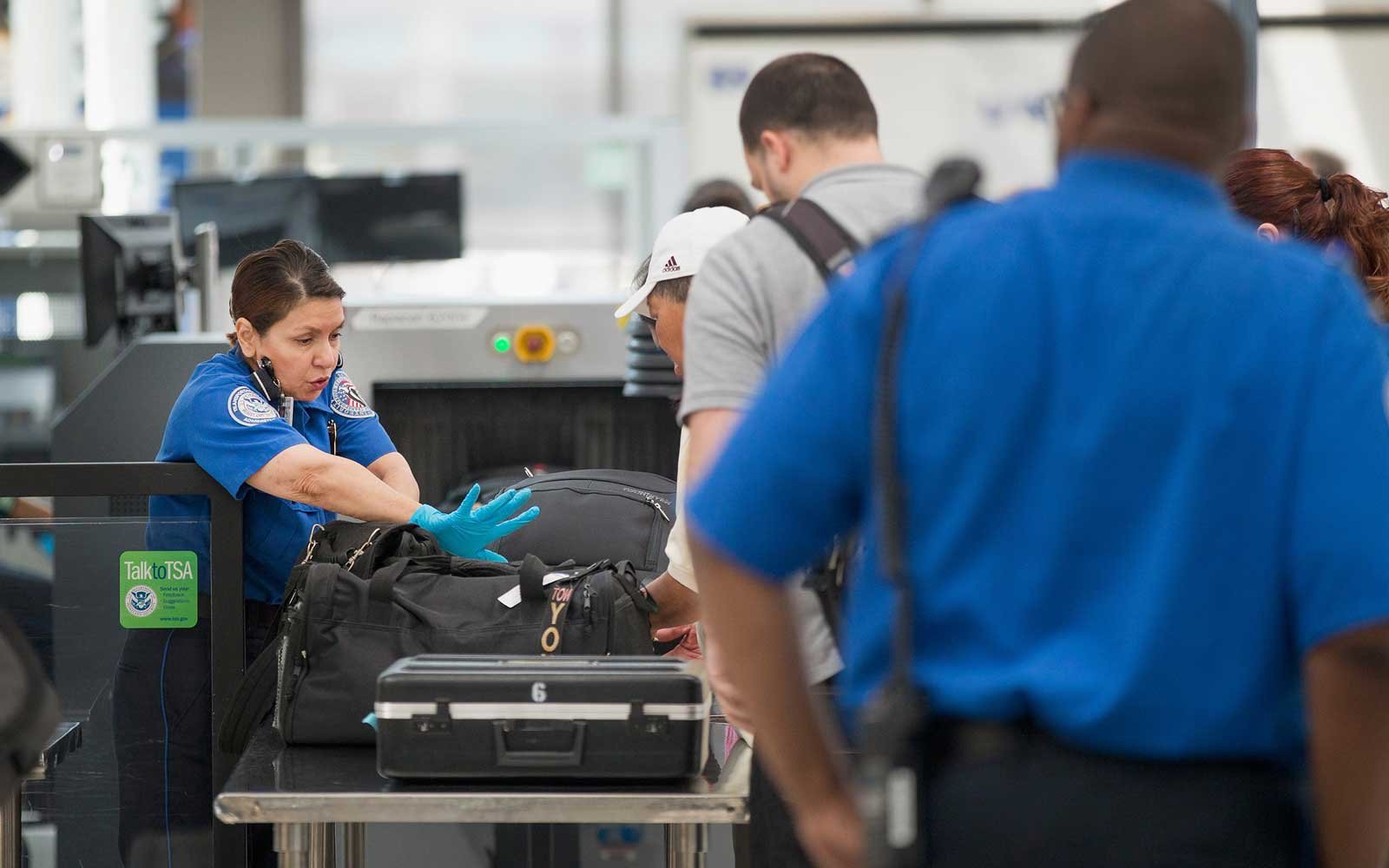
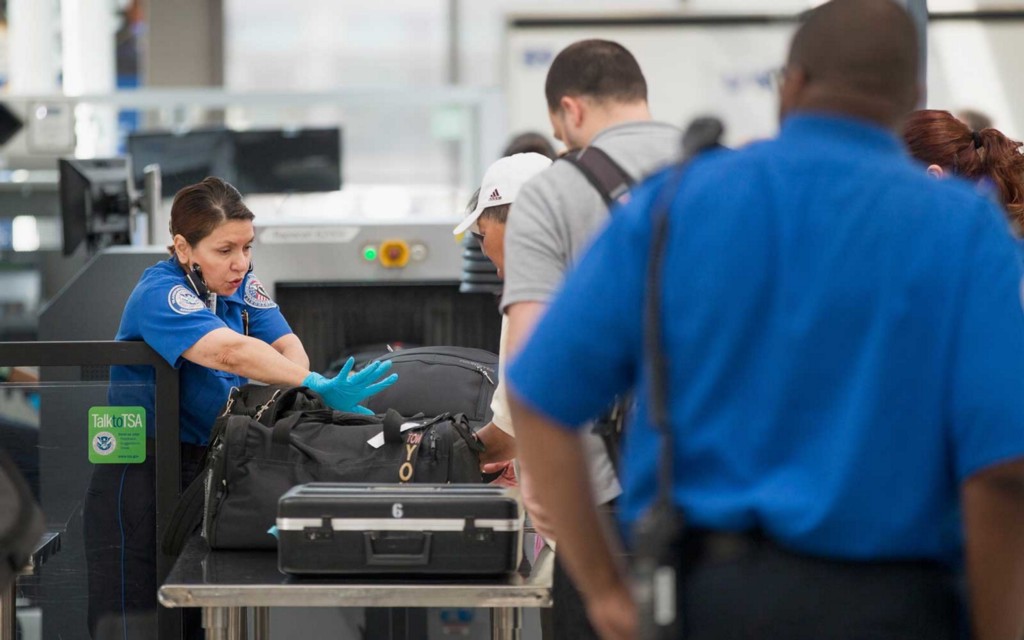
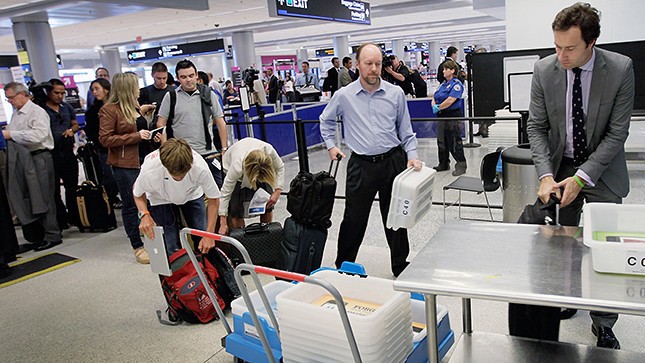
As if TSA procedures weren’t harrowing enough, we might have to start showing agents which books we’re reading. The Wall Street Journal reports that new security measures are being put in place that will ask travelers in the security line to take out their reading materials and paper goods just as they would their laptops. The new practice was reportedly tested in May in Kansas City, MO — apparently, it did not go well, and testing had to be halted after only a few days. But John Kelly, the Department of Homeland Security Secretary, told Fox News that the department will “likely” enforce this policy. “What we’re doing now is working out the tactics, techniques, and procedures, if you will, in a few airports, to find out exactly how to do that with the least amount of inconvenience to the traveler,” Kelly said. The ACLU has raised concerns regarding the privacy breaches of this potential new requirement. Looks like the TSA is going to see more copies of Fifty Shades of Grey than it bargained for. Oh, and were you planning on bringing that copy of 1984 on vacation to the shore? Good luck…

[The Hill/Brandon Carter]

Imbolo Mbue’s novel Behold the Dreamer is Oprah’s new Book Club pick

Oprah Winfrey has crowned a new literary superstar. On Monday, the talk show host announced a new pick for her famous book club: Behold the Dreamers by Imbolo Mbue. A powerful tale of immigration and striving, the book tells the story of Jendi and Nene Jonga, a couple from Central Africa who come to America with hope and high spirits. Eventually, they realize the American Dream isn’t all it’s cracked up to be. Winfrey extolled the novel for its relevant themes. “It’s got everything that’s grabbing the headlines in America right now. It’s about race and class, the economy, culture, immigration and the danger of the us-versus-them mentality,” Winfrey said. The story weaves in truths from Mbue’s own immigration to America from Cameroon. Oprah added that the book is ripe with ideals such as the pursuit of happiness, love, and family. She calls it a perfect beach read and because there is no reason not to believe everything Oprah says, I can’t wait to get my hands on a copy.

[CBS]

10 Books on the American Immigrant Experience

Vending machines to give 100,000 books to children in South Florida

Many of us can’t imagine a world in which books aren’t readily available at libraries, bookshops, or to borrow from friends and family. Unfortunately, this is the case in many communities considered to be ‘book deserts,’ or areas where printed books and reading materials are difficult to obtain. To combat this, a partnership between Jet Blue and Random House Children’s Books has resulted in a program that offers free books to communities in need. Last year, the reading program helped communities in Detroit and Washington D.C. Today, four vending machines will be installed in Broward County in South Florida to distribute 100,000 children’s books. This year, books will be available in both Spanish and English.

[Fox4/Justin Sullivan]

It’s Harry Potter’s 20th Anniversary and Fans Are (Understandably) Going Wild

The Quiet Death of Privacy in “The Circle”

The adaptation of Dave Eggers’ novel nails the insidious rhetoric of Silicon Valley

Emma Watson as Mae Holland in ‘The Circle’ (2017)

The Circle, the large communications conglomerate from which James Ponsoldt’s film gets its name, is all about sleek surfaces and minimal design. When Mae (Emma Watson) first lands a job at the California company’s Google-esque compound, she’s greeted by glass buildings, open-concept office spaces, and desks that only house screens and keyboards. Just as its product TruYou helped to declutter the digital footprint of its users — integrating social media profiles, payment systems, email addresses, and “every last tool and manifestation of [people’s] interests” into one central account — The Circle’s campus is likewise a study in simplicity. In transparency, even.

Keeping with the Dave Eggers’ novel on which The Circle is based, Ponsoldt’s film follows Mae as she rises within the company’s ranks. She begins as a lowly “Customer Experience” (CE for short) rep. A newbie to the world of zinging and smiling (think tweeting and liking), Mae quickly masters the many screens she’s encouraged to oversee at her CE job (including her phone, a tablet, and three monitors at her desk, all of which keep her abreast of customer complaints, social events on campus, and conversations happening across the company) before she immerses herself in her corporation’s mission to “close the circle” and, in the PR-ready lingo of The Circle, “reach completion.” As it turns out, this means imagining a world in which Circle users are constantly being surveilled.

Tom Hanks in ‘The Circle’

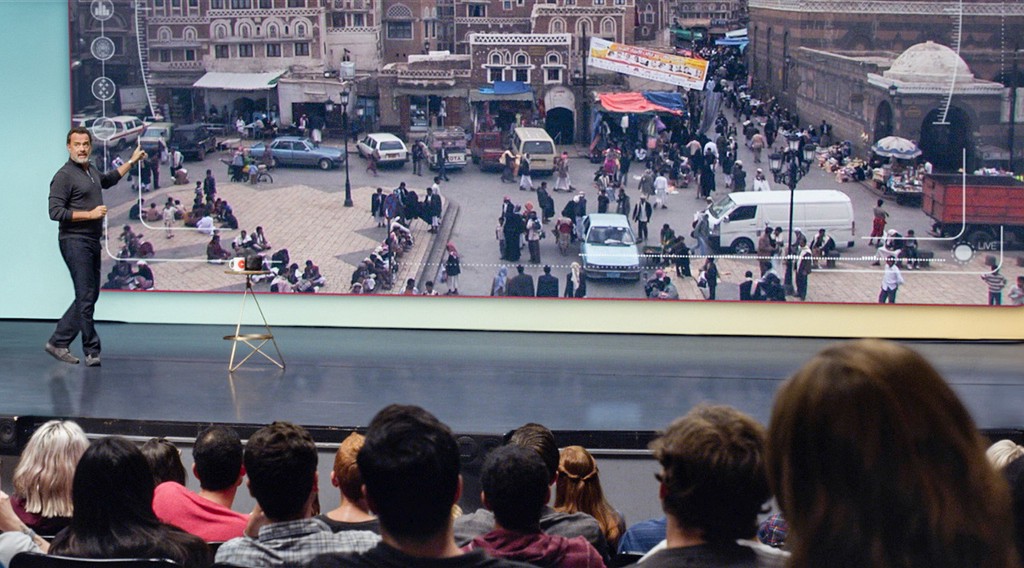
Eamon Bailey (Tom Hanks), one of the three men who first founded The Circle, states his aims bluntly in the film: “Knowing is good. But knowing everything is better.” Upon introducing their new product, a small HD camera that can be easily and wirelessly installed anywhere in the world (imagine logging on to check out the waves at your favorite surfing beach! Or having access to your apartment’s closed circuit cameras at the tip of your fingers!), Bailey recruits Mae to be the first Circler to go fully transparent: donning the SeeChange camera around the clock, thereby giving millions of viewers a front row seat to her entire life.

Injury by Proxy: Why “The Handmaid’s Tale” Is So Painful to Watch

Clearly, Eggers’ premise was aimed at litigating some of the darker consequences to our oversharing digital economy. For every minute connection one might feel posting on social media or communicating with someone on the other side of the world, Eggers provocatively showed the many freedoms simultaneously being relinquished. When we first meet Mae in the film, she is blissfully kayaking by herself. This is an activity that later will bring her grief from her coworkers, who can’t fathom her never posting anything from these trips alone. In their estimation, not only is she depriving herself of ways to mingle and meet people with a similar interest, she’s robbing her worldwide followers the chance to experience her peaceful kayak mornings. It’s all a bit too blunt — and that’s even before Eggers ties Mae’s ambivalence about The Circle to the various sexual encounters she has with men, each a stand-in for the different ways of relating in The Circle’s world.

In moving to the big screen Ponsoldt wisely sidesteps these tricky erotic encounters. Instead, Mae becomes more of an active agent in her own narrative, leaving room for the director to nail the ripe-for-self-parody moments at the start of the film, as the young ingénue first navigates her new workplace. If the adaptation of The Circle falters at all it’s in the shared shortcomings that beset Eggers’ technophobic manifesto. Mae’s descent into a wholehearted belief in The Circle’s autocratic policies feels all too tidy, more a way for Eggers to make his overarching point than an investment in a believable character arc. Still, depicting an all-too-plausible dystopia, the film manages to perfectly skewer Silicon Valley’s (ab)use of language when it comes to the commodification and dismantling of individual privacy.

“With the technology available,” Bailey says at one point in the novel,

communication should never be in doubt. Understanding should never be out of reach or anything but clear. It’s what we do here. You might say it’s the mission of the company — it’s an obsession of mine, anyway. Communication. Understanding. Clarity.

It’s one of the many moments where Bailey’s (and The Circle’s) rhetoric is so farcically self-serving that you wonder how Mae — or any of her coworkers, let alone their customers — doesn’t see right through it. The blatant obfuscation mostly goes unremarked in the novel and film, though Hanks, doing his best Gates/Jobs/Zuckerberg impression, makes Bailey’s speeches more convincing than they are in the text. For those at The Circle, his slickly expressed ideas feel intuitively correct, like thoughts they’ve had but never felt compelled to articulate. The presentations, breathlessly anticipated by those in the company — playing in the film like a mix of an Apple keynote speech and a TED talk — get at the way that contemporary digital branding pushes language and logic to a near breaking point. When we hear Circlers advocate for “clarity” and transparency, what they’re in fact proposing is the dissolution of personal privacy, a sleight of hand central to the insidious Silicon Valley rhetoric that both Eggers and Ponsoldt stridently call out.

In the presentation when Bailey announces that Mae will go transparent, he has them restage one of their earlier conversations. He wants to walk the audience through what had led Mae to make revelations crucial to the future of his company. But, in presenting them he reduces her ideas to epigrammatic one-liners, of the type you’d find in a Hallmark card or on an inspirational poster. Or, in the marketing copy of The Circle’s advertising:

SECRETS ARE LIES

SHARING IS CARING

PRIVACY IS THEFT

The sharing economy on which the company’s philosophy rests (as well, crucially, as their bottom line) is one that leaves no room for secrets. Bailey is a man who earnestly asks “What if we all behaved as if we were being watched?” while trying to make that panopticon-like proposition seem desirable. The implicit moralism of his pronouncements — which go unquestioned by the world at large and ultimately drives Mae to inexplicably abandon her need for privacy, to instead champion transparency at all costs — is what makes at least the message of Eggers’ text so astute, despite the awkward bluntness of its execution. The film ends up playing like a supbar Black Mirror episode, where a tyrannical dystopia becomes, in Mae’s eyes, blissfully utopic: “a glorious openness, a world of perpetual light,” as she puts it in the novel. But it still gives us a fascinating Orwellian riff on Silicon Valley — only, instead of the thought-limiting language of newspeak what we get are platitudes that seem utterly benign.

Shelley Enters the Woods

Continue reading Episode 3: The Secret Song
Previous episode: Episode 1: The Girl Goes Missing

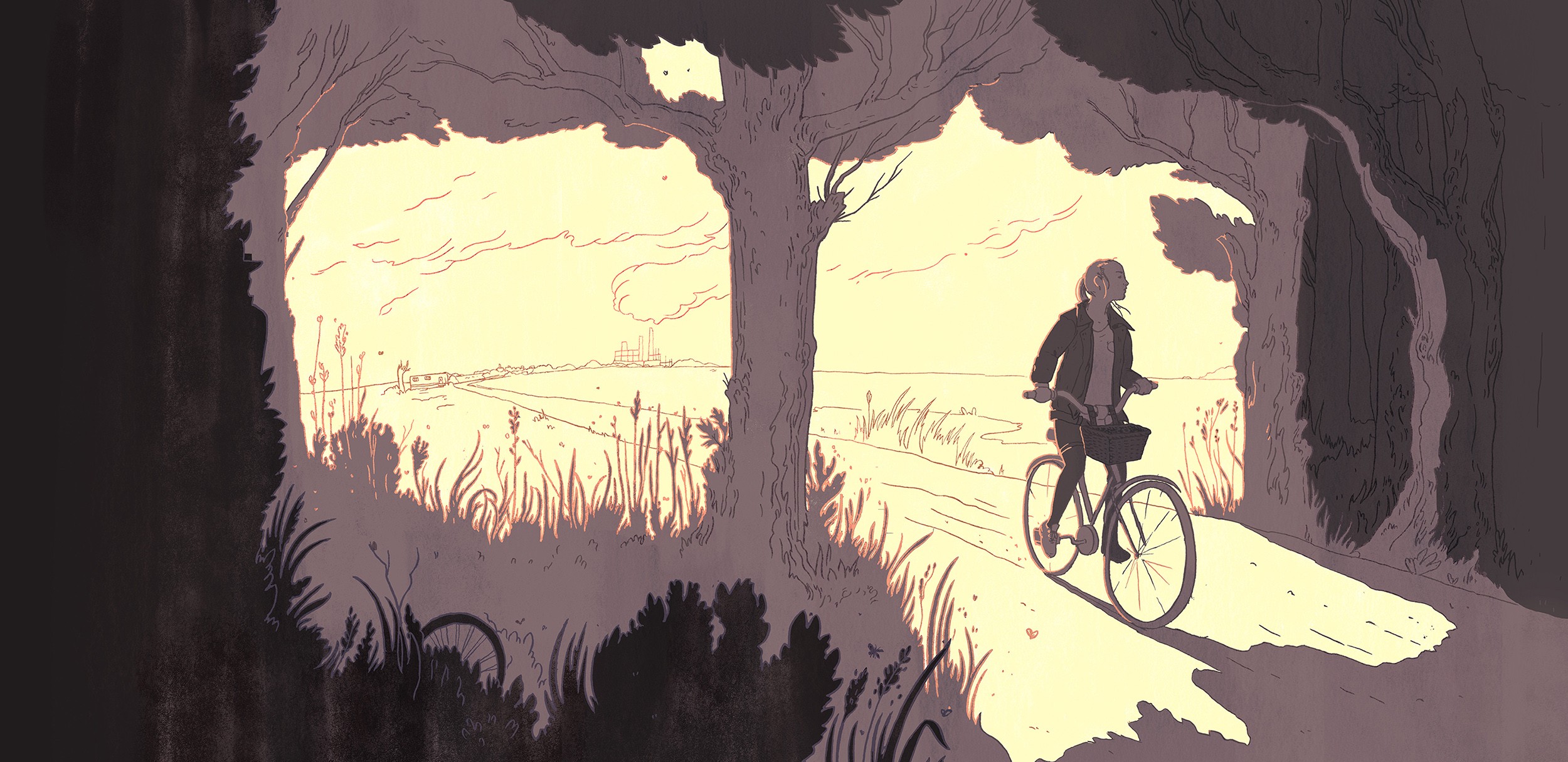
1. Everything looked different at night. Shelley watched the police cruiser speed toward town and disappear. The world became dark again. Pedaling as hard as she could, she sang to ward off the unappealing shadows of the abandoned farms and unused mills, each familiar sight now looking slightly unfamiliar, looking stark in the half-light. It was a song her grandmother used to sing whenever they went to church, though she hadn’t been in some time.

Why should the shadows come?
Why should my heart be lonely,
Away from heaven and home?
For Jesus is my portion
My constant friend is He
For His eye is on the sparrow
And I know He watches me.

By the time Shelley had finished the last verse, the town square, obscured by several broken streetlamps, was finally in view. There, in the middle of the square was the Civil War memorial, a statue of a Union soldier cradling a Confederate comrade. The state line between Kentucky was only 20 miles south, and several generations ago town members had fought on both sides of the conflict. Beside it was an eternal flame, for the fallen of World War II and Korea, which had not been lit in years. Across the square lawn, the town hall and police station, with their lights on, though looking empty. Shelley glided quietly past, the blue shoebox rattling in the wire basket as she turned onto Main.

There, along the street, were the blank, square-faced shops, all lifeless at 7:30 on a Friday night — the hardware store, the pharmacy, the gas station, and the restaurant, the Lighthouse, which closed each day after lunch. The tobacco store, the laundromat that had been abandoned four years before, and the hair salon with blown-up photographs of hairstyles from the 1980s, each of their windows covered with several degrees of dust.

But all of these places, which had been so familiar just hours earlier, seemed eerie now, phantomed.

When she turned down Beecher Street to go to the library, Shelley saw the flashing red lights once again. Seems like some sort of trouble, she thought. Before she buried the bird, she decided she ought to at least investigate.

Two squad cars were parked near the corner of Beecher and Evergreen. Shelley stood her bicycle beside a crowd of more than a dozen people in the middle of the street, mostly neighbors who lived on the block, though some folks, like glum-looking Anselm Peters — an octogenarian who showed up at every minor incident, including fires, bar fights, and domestic disputes — were, like Shelley and her grandmother, devoted enthusiasts of the police radio scanner.

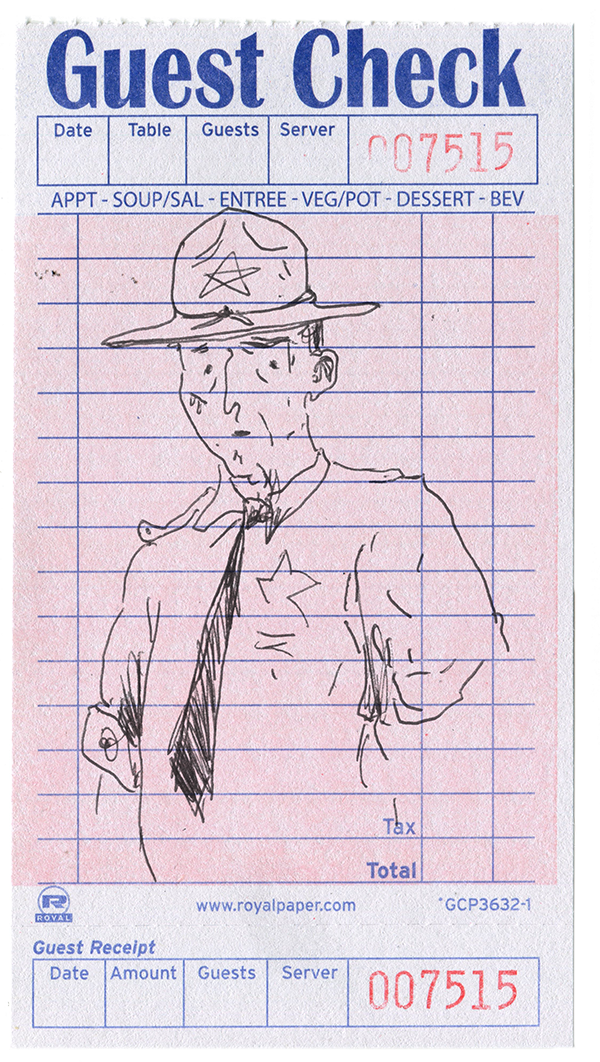
Deputy Gary Polk, with his wide neck and slumped shoulders, was asking the crowd to please back up onto the sidewalk. Other neighbors began to arrive in housecoats, bathrobes, and pajamas. Gary waved his arms, ushering more of these onlookers off the street, and grabbed the radio from his vest to whisper:

“This is 304 to base. Talked to some people around here, and they all said the bicycle belonged to a girl named Jamie Fay. We just spoke to her mother, but she hasn’t seen her for the last couple hours. You want to call Wes and ask him how he wants to proceed? Over.”

There was an explosion of static, and soon the cigarette-soaked voice of Darlene Wills came back over the radio. “You get a description of the girl? Over.”

“I got a pretty good one: female, 12 years old. Brown hair, blue eyes. And this is what she was wearing before school today: yellow shirt, jeans, white shoes. Over.”

The fact that the girl was someone Shelley knew—knew intimately—caused an otherworldly, indistinct feeling to take hold, sort of like fainting and coming to. She felt she had to tell somebody right away. She spotted Mrs. Blake, the pianist at church, standing on the sidewalk across the street from the Fays.

Shelley approached her and said, “I babysat Jamie Fay for three years.”

Mrs. Blake looked interested, though unsurprised. “You did?”

“From the time she was seven ’til she was 10. Then her mom stopped working,” Shelley said. “She was Miss Somerset in the Founder’s Day parade last year.” Unbidden, she added, “She’s not one to run off.”

The woman nodded, apparently in agreement.

Shelley quickly crossed the street, passing among the onlookers and gossips, and found a yarn chime hanging in a tree in front of Jamie’s house. One of the deputies was speaking to Mr. and Mrs. Fay on the front lawn. Other neighbors continued to arrive and crowd the sidewalk. Shelley ignored them and extended a hand to the chime. It was a few old spoons and forks that the girl, Jamie, had tied together with blue and white string. Above that hung a blue and pink God’s eye, which Shelley had taught her how to tie. “It’s supposed to represent the power of understanding things that are unknowable,” she had read from a craft book on the day they made them. “To observe everything that might be a mystery.” Shelley now put a thumb and finger to the diamond-shaped decoration and immediately had an idea of where the girl might be hiding.

But arrogance or ambition or maybe her sense of adventure won over, and she decided not to tell anyone. Instead of speaking, Shelley climbed onto the seat of her bicycle and began to pedal off.


2.Between the town square and the rural farm road, Shelley had the idiotic fantasy of going see if the girl, Jamie, was where she thought she was. If she was there, Shelley planned on getting her quickly back home. Nobody had to know she was involved. Better to let Jamie answer the police and her parents’ questions and stay out of it. Shelley ignored the stoplight, which only ever blinked red after 6 p.m., took a right on Main, gliding past the smalls street of shops, past the gas station, past the creamery.

Just along the rural route was a narrow gravel road that led past the blue bridge and over to the woods. The girl, Jamie, had a queer habit of hiding out there. What she most liked to do was disappear into a copse of trees, down by the river. Shelley and the girl had made a number of forts there over the past few summers, and one day had even built a castle made of sticks and logs, both of them able to climb inside and hide. Shelley had warned her to stay away from the caves — as there were all manner of myths about Confederate deserters and runaway slaves who had gone seeking shelter and ended up meeting their ends when the caves filled with water. Jamie, a good student and soprano in the church choir, always obeyed. So the first place to look was the woods. Why Shelley had not told one of the deputies, she did not know — other than pride and a sudden sense of excitement, she would not have been able to explain until much later.

The woods were much farther from town than she remembered, now that it was dark. Even as she rode, Shelley began to doubt that Jamie would have walked out there all by herself. But she was already halfway, crossing the metal bridge, and the woods were opening before her.

There was a field, an unpainted fragment of an abandoned farmhouse, the shape of the forest like arms reaching up, crowding out the dark sky. Farther on, the intersection of moonlight passing through the endless branches, a brief fragment of the moon.

Dust and mud from the road, flying up. Wind at her back, blowing at her hair, urging her on.

The feeling of timelessness, the moon a partner to the forest, giving everything a paler shade.

Beyond a passel of peeling birch trees up ahead, Shelley saw a shadow, something moving. Before she could slow down, a figure stepped out of the woods, the face of a ghoul appearing just beyond the front of her handlebars, only a few feet before her.

Shelley crashed — first swerving into some brambles and fallen branches as she pulled hard on the brakes. A moment later, she tumbled headfirst over the handlebars into the culvert.

The crash ended with Shelley on her back with several different kinds of sticks in her hair. Before she could look up and scream, the shadow switched on a flashlight and was moving toward her. It was a man, standing alongside the road, his features obscured and weak. Once she was able to right herself again, she noticed the black-and-white squad car parked along the ditch, the town crest etched along the grimy side panel.

Eventually Shelley could see it was Deputy Will Farnum, and that he was hunched over, frightened, out of breath. He was a tall man, with closely cropped hair and a receding hairline. He looked more terrified than she did.

“Are you okay?” he murmured, still fighting for breath.

“Deputy Will,” Shelley said, lifting her bike and smiling. “I’m okay.” She found the blue shoebox containing her pet bird in the grass, righted her bicycle, and returned the box to the basket in front.

The deputy stood, straightening his lanky knees. “I’m so sorry, Shelley. You gave me quite a scare,” he wheezed. “What are you—what are you doing out here this time of night?”

“I was just going for a ride. On my bicycle. What are you doing out here?”

“Looking for that girl. One of her neighbors said she liked to come out here. I was having a look, and somehow I got turned around.”

He pointed faintly in the direction of the woods.

“The knees of your pants are all covered in mud,” Shelley said.

“The thing of it, Shelley, is that I did something stupid. I lost my keys.”

“You what?”

“My keys. The keys to my patrol car. The sheriff is going to have my head if I can’t find them. It’s the third time this month I lost something.”

He looked down and pulled at a retractable silver keychain attached to his gun belt, which was now absent of any keys. “I’ve been looking for them for the last half hour or so. It doesn’t look like I’ll find them.”

“Would you like me to help you look?”


3. She gave the deputy a slight smile and began searching through the waist-high grass near the police vehicle.

The deputy knelt down beside her, slowly flashing the light from side to side in the brambles before them.

“It’s awful nice of you, Shelley. But you’ve always been kind. I’d be obliged if you didn’t happen to mention this to anyone. I’m pretty embarrassed as it is, and you know the sheriff. He can be awful unforgiving sometimes.”

“It’s okay,” she said. She added, “I didn’t see you at lunch today.”

“I was up in Ahern all afternoon, in court, for an arraignment. Something to do with the Dove family.”

Shelley looked at him and blinked nervously.

“When I got back to town, I got the call on the radio and came out here, and then I dropped my keys,” he said. “It’s been a long day.” The deputy stood upright and stopped searching. “How about you? How was your day?”

“It was long, too. I hate to mention it, but Mr. Peepers died.”

“Which one was he, the box turtle or the little mouse?”

“The parakeet.”

“Oh. Well, it must have been the heat. It’s been awful hot for September.”

“That’s what my grandmother said. But parakeets are from the tropics, aren’t they?”

“I guess they are, Shelley. But animals, they got senses we don’t. They know when trouble is coming.”

It was then that she noticed a scratch on the side of the deputy’s face.

“Your cheek is bleeding, Deputy.”

He frowned and felt at it with the back of his hand. “I must have cut it on one of those branches over there. This is just my luck. I hate to say it, but I was born unlucky. Reminds me of when I used to be a schoolteacher at the high school.”

“You were a schoolteacher?”

“For a few years. I was I was terrible at it. I had the exact wrong disposition. I kept wanting to help those kids, to inspire them but I…I was too nervous. I made them all anxious. They ended up making some terrible jokes about me, sayings and the like. Anyways, for me, I guess it feels like the whole world is always coming to an end.”

“I never would have guessed that.”

“No? Well, I had a sister who passed away when I was young. After that, everything was different.”

“I’m sorry to hear that, Deputy.”

“She was my older sister. Sissie, we called her. She passed away when I was 10. They found a tumor, right there in the back of her head. Everybody said I was different after that. I used to spend hours staring in mirrors. I had an aunt who said you could talk to the dead through them. You ever try that? Talking to someone who’s not actually there?”

Shelley thought of the empty chair that sat at the kitchen table, the one that had once belonged to her mother.

“They don’t ever talk back. No matter what you say.”

“No.”

“It’s the reason I never got married. I’ve been in love with someone all my life who wasn’t even there.” He paused. “Listen to me go on.”

The deputy began to search through the weeds again. Shelley leaned over and used both hands to feel among the stiff grasses and bare ground.

After a while the deputy looked up. “Were you out here looking for that girl? Jamie Fay?”

Shelley gave a slight nod. “I used to babysit her. She used to come out here sometimes to play hide-and-go-seek and build forts. I thought maybe — I don’t know. Thought I might be able to find her.”

Up in the tree, the deputy’s flashlight caught something bright red. The deputy held the light on it, and both Shelley and he saw it was a tree full of God’s eyes, all of them pink and white and red, all of them of different sizes, 30 or 40 of them, hung at differing lengths with string and yarn. Shelley put out a hand, watching as each of them spun in the darkening air.

“Looks like she’s been busy,” the deputy said.

Shelley held one of the smaller God’s eyes in her palm. “Looks like she’s trying to tell somebody something,” she said. The angular object hung there patched-together and frayed, as uncanny as blood.


Continue reading Episode 3: The Secret Song

It’s Harry Potter’s 20th Anniversary and Fans Are (Understandably) Going Wild

Social media, bookstores, and schools are honoring the book that started it all

June 26, 1997 is a date many readers know and cherish. On this day 20 years ago, Harry Potter, his beloved companions, his treacherous enemies, and the wizarding world entered (and promptly dominated) the literary canon via Harry Potter and the Philosopher’s Stone. For weeks now, Potterheads everywhere have been preparing for the anniversary of the book that started it all, and on this magical day, the festivities have peaked. All over the globe, celebrations have commenced to honor a world and a set of characters that have been received like no other; in fact, to this day, the book remains one of the best-selling titles of all time. To honor this momentous year, a number of events and goings-on reveal the magic that is the Harry Potter fandom.

Mini Potterheads gather to beat a world record

The Guinness World Record for Largest Gathering of People Dressed like Harry Potter is really a category and as of Friday, it has been topped by over 100. Nearly 700 robed and bespectacled students from eleven Bolton primary schools gathered on the lawn to successfully beat the record. Wearing a Gryffindor tie was not enough; Guinness judges take this category very seriously, requiring that everyone also wears glasses, carries a wand, and dons the signature forehead lightning bolt. Yet, from the looks of the photos, a number of kids are missing integral parts of the costume, which frankly, has us questioning whether these kids were the largest group of Harry look-alikes in history. Bloomsbury Publishing worked with the schools to host the gathering, offering each participant a free copy of the book.

Social media magic spells have fans celebrating together worldwide

Considering the wide expanse of the HP fandom, social media is a great way to connect with fellow Hogwarts fanatics, and it surely has not disappointed on the 20th anniversary. Twitter teamed up with Bloomsbury and Pottermore to create an official emoji, which appears when users enter #HarryPotter20. (Bloomsbury gets a big thanks on this anniversary — the publisher famously saw potential in Rowling’s story after the manuscript had been rejected by over ten other houses.) Naturally, the hashtag continues to be the top worldwide trend on the site, with fans reminiscing and recounting their experiences with the boy who lived. J.K. Rowling tweeted to her following of nearly 11 million people to reflect and offer thanks for the support the series has received. “20 years ago today a world that I had lived in alone was suddenly open to others. It’s been wonderful. Thank you.#HarryPotter20,” she wrote. Facebook also had some surprises in store; when typing in “Harry Potter” into a status, effects mimicking a wand casting a spell will appear on the user’s screen.

Bookstores continue to be harbringers of joy by planning special anniversary events

Bookstores around the country are preparing a host of events to celebrate the 20th anniversary. 20 bookshops have been selected by Bloomsbury to compete in a themed family quiz. Other stores are organizing costume competitions, simulated house sorting, and Triwizard quizzes for both long-time fans and Harry Potter beginners. Waterstones Aberdeen is planning a treasure hunt and an evening game of Quidditch Pong. All in all, it looks like a day full of magic for Potter fans.

Literature’s Great Alternative Families

The Case for the Child Saint of Indiana

1.

The girl is petitioning for the sainthood of another girl who has died. She did not know this girl personally, which, in her opinion, makes her a more impartial and trustworthy petitioner. Anne spoke with her just once, though she had seen her plenty of times. The dead girl went to her school. In life, the saint was only two years older, though now Anne is catching up, since the dead do not grow older and must eternally remain their age at their death-date.

Anne writes impassioned letters to the local priest, the bishop, and Cardinal Maida, who lives in Detroit. These letters outline the candidate’s virtues and accomplishments: She was a straight-A student. She gave free piano lessons to one of his sister’s friends. She was pure of heart. She occasionally read books out loud to old people at the retirement home. She wanted to be an optometrist, to help people see.

There has also never been a saint from Indiana, a fact Anne points out to bolster her case, politically.

2.

There are many available library books about saints, but only one about how someone is made a saint. Its cover shows a flock of monks and nuns soaring above clouds, each with a fat yellow halo.

Should a candidate show promise, the book tells her, he is assigned an Advocate for the Cause of Sainthood, usually a cardinal, who makes a case for the candidate’s beatification. Until that cardinal is assigned, Anne will be this advocate. She will gather the evidence. She will compile the accounts of the saint’s supernatural deeds.

In order to get someone beatified, you must to prove they’ve caused miracles by way of intercession. This means, as far as the advocate can figure, they are a kind of answering machine for God.

And so Anne prays to her, hoping she might intercede on her behalf. So far she has answered several of these prayers, including a request for the smooth recovery of his aunt after her hip replacement. Anne includes this in the letters.

3.

In addition to the letters, she keeps a manila envelope containing a copy of her obituary, notes from interviews with her friends, a newspaper article detailing the accident on the freeway, and a list of possible miracles.

Anne saw her perform one of these last summer, at the parish picnic. She made a dollar bill levitate between her hands. Seated at one of the card tables near the dunk tank, she took a dollar, crumpled it up, and then gently cupped it in her palms. After a few twitches, the bill floated three, four inches above her hands.

Anne’s sister said she could see the string in the right light, like spiderweb. She had looked it up later and found out you could buy this kind of string online. You put one end in your mouth and taped the other to the table. But Anne didn’t see any string.

“Was that real?” Anne asked the girl later that night, the one time she spoke with her.

She smiled. She had very large teeth.

“You saw, right?”

When she learned the girl had died, she thought of that balled-up dollar bill bobbing in midair.

4.

The advocate could never be a saint herself. She is far too evil. She entertains evil thoughts. She watches forbidden TV shows in the basement. She soaks paper towels in hand sanitizer and watches them burn up in invisible flame. She has wished terrible things would happen to her teachers (tiger pit, amoebic dysentery), or to his sister (mustache, Madagascar hissing cockroaches in bed). The advocate has lived a selfish life, she knows it. She is not some magical person. But if she saints the dead girl, she will have done some good in the world. Even if Anne can’t be a saint, getting the girl beatified could make her better.

This is another sign of the saint’s sainthood.

5.

She needs more evidence. This is why she has not heard back from the bishop or Cardinal Maida. To this end, she has written to the family, begging for their cooperation in her mission, but they have yet to respond.

One afternoon she walks to the dead girl’s house to interview them. (She found the address in the parish directory, opposite a family portrait in which the girl, her older brother, and her parents stood in front of a gray backdrop that looked like the bottom of a storm cloud.)

The advocate walks along River Road, where he sees a heron snag a minnow from the soupy brown water.
She imagines a spring erupting from the saint’s yard upon her arrival. Or a flock of white doves roosting on the roof. A blue flower that never wilts its petals. One hundred crumpled-up dollar bills floating like little green clouds above her head.


The house is four miles away. By the time she gets there it is much later than she’d imagined. Inside she can see the girl’s parents watching TV. Law and Order, is her guess.

She wants to interview them. Do they recall any instances of bilocation? Stigmata? Did their daughter corporally mortify? Experience visions?

The dead girl’s father changes the channels during commercials. The advocate can see the gold watch on the man’s thick wrist. On the wall is a framed painting of a kiwi.

Spying on them, watching them watch TV, she feels like she is dead herself. She cannot bring herself to ring the doorbell or ask for an interview. She cannot think of how to start the conversation.

A dog barks at her through the skinny windows on the stoop, and then the door opens. It is the candidate’s mother. She wears a large pink robe.

“Can I help you?” she asks.

“Can I use your bathroom? It’s an emergency. I’m sorry.”

“Um. Sure. That’s fine I guess.”

The house smells like cooked fish. The dog leaps up and puts his paws on her shoulders like he is trying to dance with her. The saint’s mother leads her to a bathroom near the front door.

Anne does not have to use the bathroom, so she says a quick prayer of apology for lying to the saint’s mother, flushes the toilet, and runs the sink.

She has plenty of time to interview them, she tells herself as she scans the bathroom wall for any blobs resembling Christ or the Virgin. Maybe she could call the girl’s brother, who’s in college in Bloomington.

She tries to sneak a glimpse of the living room before she leaves, but all she sees is the painting of the kiwi.

Before returning home, she takes a few blades of grass from her yard and slips them into a Ziplock sandwich baggie. They’ll go in the envelope.

A saint is anyone who goes to Heaven. It should not be so difficult to prove the girl is up there, sitting on furniture made of cloud, watching a TV made of cloud. Why shouldn’t she be counted in the Communion of Saints?

The advocate walks the long way home in the dark. She has not told her parents where she was going, only that she was taking a walk. They will be worried about her.

It occurs to her that the amount of time it will take to get the candidate sainted is much longer than the girl had to live. It could take the advocate’s whole life, or longer.

Love Blind

Literature’s Great Alternative Families

An author looks at the deep bonds that hold together literature’s most memorable families of choice

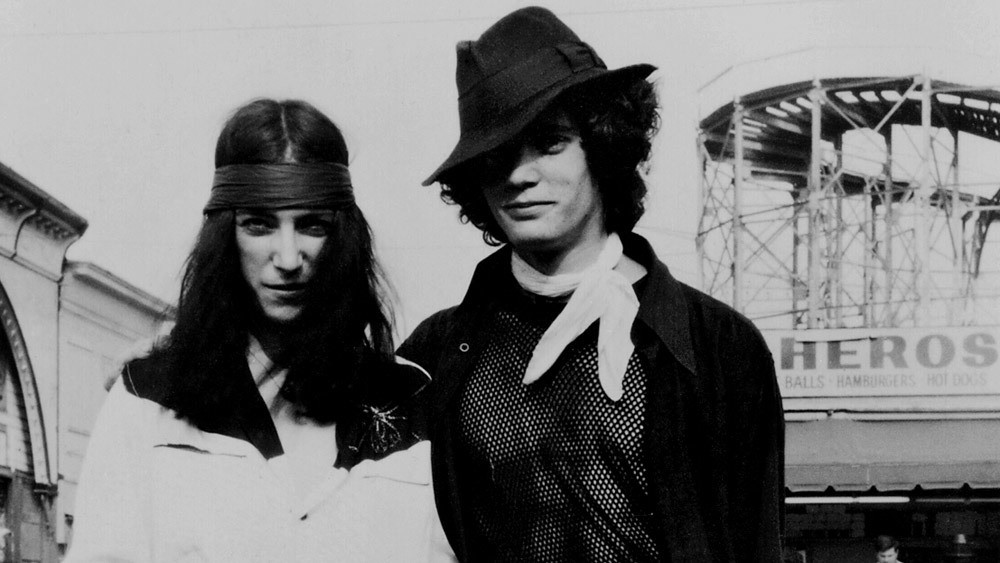
Smith & Mapplethorpe, Just Kids

There is no shortage of pithy, heartwarming or glib adages about family. Oscar Wilde said, “After a good dinner one can forgive anybody, even one’s own relations,” though this year, post-election, found plenty of blood relations tossed from celebrations and family gatherings. There’s another essential family, the constructed family, that motley crew of old friends who have loyally stuck by you over the years. This family we make — a branching original family tree — is where many of us turn when reckoning with The Big Questions. I think people trust their friends exactly because they don’t have to be our friends.

My third novel, Before Everything, explores the bonds of friendship, testing just how far people will go with one another. The breakdown or honoring of the nuclear family is a well-trod subject in literature. I wanted to consider some novels that celebrate profound love within the alternative family, those that are makeshift, surprising, and often shaped by extraordinary circumstance or history.

1. Winnie the Pooh by A.A. Milne

Children’s books might have created my love of the ragtag, constructed family, and this is my favorite, hands down. Pooh, Piglet, Eeyore, Owl, Christopher Robin, and Tigger — that ultimate trans-species family — celebrate birthdays, get lost together, work out hurt feelings and always finally embrace each other’s distinct and quirky habits.

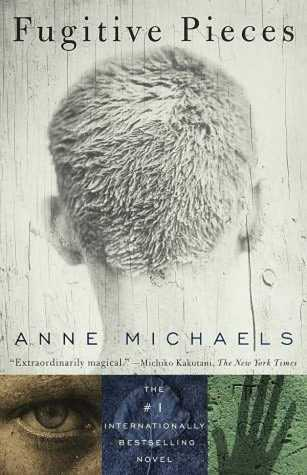
2. Fugitive Pieces by Anne Michaels

Despite the devastating premise of this Holocaust novel, where a boy loses his parents and sisters while he hides in a kitchen cupboard, I have endlessly jammed this book into the hands of friends telling them they are in for an extraordinary treat. Michaels has woven such a gorgeous story about love and the opportunity to repair what is broken. Athos, a Greek archaeologist finds Jakob buried in mud and becomes his surrogate parent giving him protection, guidance, education while helping him reckon with a fragmented past that cannot ever be fully understood.

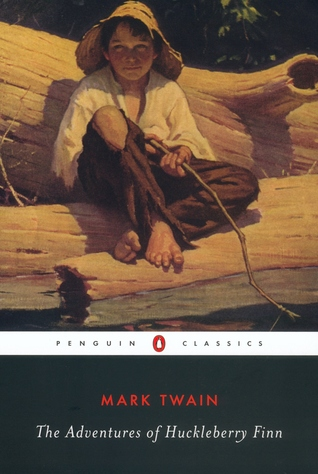
3. The Adventures of Huckleberry Finn by Mark Twain

I think Huck and Jim are our great American outlaw family, on the run from the immorality and hypocrisy of slavery. I especially love the passages of them on their raft, their funny home that “floats(s) where the current wanted her to; then we lit the pipes and dangled our legs in the water, and talked about all kinds of things — we was always naked, day and night, whenever the mosquitoes would let us.”

4. The Maytrees by Annie Dillard

I don’t think it’s any accident that Dillard used Provincetown, Massachusetts — that ramshackle village of fishermen, artists and a LGBTQ community that has harbored many a created family over the years — as the setting for her novel. This book reminds me that erotic love might dwindle, couples drift apart, or find other lovers, but what endures to shape an enduring family is people’s deep sense of responsibility to one another. I promise you your copy will be dog-eared and underlined with remarkable passages about loyalty, love and friendship.

5. Of Mice and Men by John Steinbeck

George and Lennie are the ultimate oddball duo. The seasonal lives of itinerant laborers remind us of bonds and brutal choices shaped by necessity and a need to dream of a real home. This raw punch of a novel takes Lennie’s triumphant ode to male friendship, “I got you to look after me, and you got me to look after you, and that’s why,” to a most dire consequence that wrecks me every time I read the book.

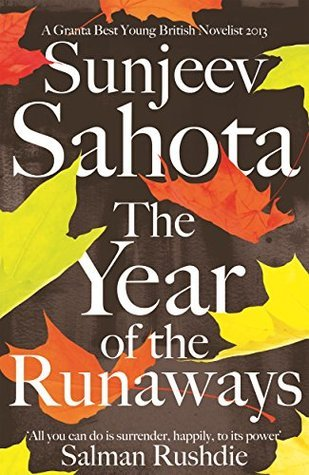
6. The Year of the Runaways by Sunjeev Sahota

The intertwined stories of Avtar, Randeep, Tochi and Narinder shape a difficult and perfect story of creating love from nothing. Hungry, with little opportunity and under fear of deportation, this fragile family of housemates speaks profoundly to current global migrations and how, despite extraordinary suffering, we keep trying to move forward to make make any hopeful chance for a better life.

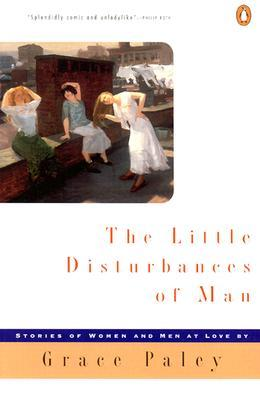
7. “The Used Boy-Raisers” by Grace Paley

In Grace Paley’s short story, “The Used Boy-Raisers” from her first collection The Little Disturbances of Man when ex husbands eat breakfast eggs with new husbands the idea of the traditional nuclear family is challenged from the very first sentence. In this collection and her two subsequent story collections, Paley’s characters expand the terms of family to include every mom on the playground, shopkeeper, lover, political ally and tough kid on the block while still dearly embracing fathers, mothers and every bossy aunt.

8. The Underground Railroad by Colson Whitehead

From the opening chapter of this remarkable young woman’s escape odyssey, mixing the factual with the fantastic, we understand that slavery wreaked horrific, irreparable damage on African families and generations of African-Americans born into American slavery. The litany of loss in the opening pages is stunning, children torn from their parents and village, families separated, sold off to plantations in different states; husbands, wives and their offspring split at the whim of owners. The constructed family emerges as necessity in the midst of this extremity although the new patchwork family is also easily crippled and warped by the institution of slavery. Once Cora and Caesar run away, we embark on a breathtaking and painful odyssey where every choice and act of trust creates the possibility for genuine connection and betrayal.

9. LaRose by Louise Erdrich

Maybe every novel by Louise Erdrich showcases her exploration of family and shifting familial webs, but in LaRose, her most recent complex novel, where, after the accidental death of one child, another child is given away following an ancient tribal custom, family boundaries are rearranged and readers are asked to consider how to forgive others and themselves.

10. Drop City by T.C. Boyle

It’s not possible to make a list of makeshift families without including at least one disaster attempt at a non-traditional family, and Drop City is exactly that. From an early scene of children on a commune being ladled LSD-laced punch as part of the their lunch meal, I was cringing and entirely in for the ride.

11. Just Kids by Patti Smith

Her loving portrait of her extraordinary friendship with Robert Mapplethorpe — young, adventurous, artists carving their path in New York City, 1967 — is an ode to that first exciting alternative family shaped by passion and vision and youth. Reading Just Kids took me back to my own scrappy, excited first years in New York where each day’ s encounters brimmed with possibility.

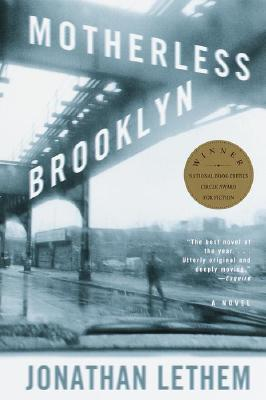
12. Motherless Brooklyn by Jonathan Lethem

Maybe Dickens gave us the classic quest for new family in Great Expectations but so does Lionel Essrog, Lethem’s orphan narrator in Motherless Brooklyn. Essrog sputters and twirls with Tourettic urgency to deliver his unlikely crew of brothers gathered, tutored and fathered by Frank Minna — small-time crook, detective, and owner of a Brooklyn limo agency. After Minna is murdered the family structure collapses and it’s the outcast Essrog’s chance to untangle the whodunnit in this genre-bending novel.

13. Find Me by Laura Van Den Berg

Joy, the lonely, addicted narrator of Van Den Berg’s dystopian, post-apocalyptic novel reluctantly makes a family of the other quarantined patients all the while searching for and imagining a reunion with the mother who abandoned her as a child. The tension between Joy’s desire for and resistance to make genuine connection and attachments makes this such a breathtaking vision of our very human need for being known.

Great Dysfunctional Families of Fiction: A Reading List

About the Author

Author Victoria Redel. Photo by Marion Ettlinger

Victoria Redel is the author of the new novel, Before Everything, as well as four previous works of fiction and three collections of poetry. She has contributed to The New York Times, the Los Angeles Times, Elle, O, the Oprah Magazine, Granta, One Story, and the Harvard Review. She received her MFA in poetry from Columbia University and teaches at Sarah Lawrence College. She lives in Manhattan.

Millennials May Not Be Getting Jobs or Houses, But They Are Saving Libraries

Plus famous novelists get candid about Jane Austen and John Green announces his new novel after a five-year hiatus

The end of the week comes with its own slew of literary news. In today’s roundup, a Pew Research Center study concludes that Millennials — that’s right, Millennials! — are making the most use of public libraries, authors write handwritten notes about Jane Austen (some of them a little cheeky) for a good cause, and John Green finally returns from his post-The Fault in Our Stars hiatus.

Millennials are the generation using public libraries the most

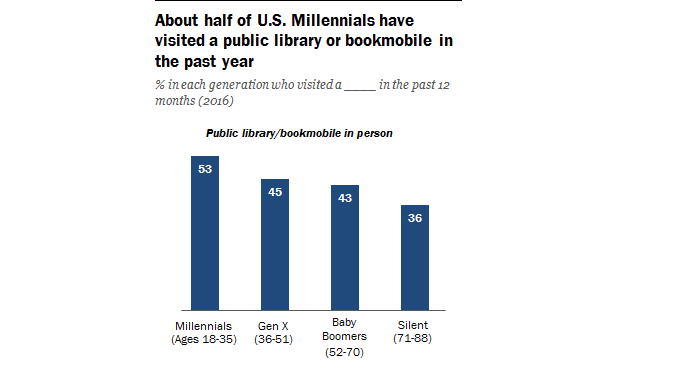
Millennials are known for a lot of questionable things: avocado toast, colorful beverages/assorted food products, selfies, smartphone addiction…the list of stereotypes is endless. However, the generation of tech addicts might yet redeem themselves. According to a study conducted by Pew Research Center, Millennials have been using public libraries more than Gen Xers, Baby Boomers, and members of the Silent Generation. The report says that 53% of people aged 18–35 (at the time of the study) said they used a public library or bookmobile within the last 12 months, compared to 45% for Gen X and 43% for Baby Boomers. Although the term “millennials” encompasses college students who have no choice but to frequent their campus libraries, Pew noted that the report specifically asked about public facilities. This new conclusion aligns with another study conducted by Pew in 2014 proving that Millennials are reading more books than members of any other generation. It counts if we’re going to the library to use the free WiFi, right?

[Pew Research Center/Abigail Geiger]

Auction asks novelists to write about Jane Austen

Some very important authors are about to reveal how they really feel about literary icon Jane Austen. As part of an auction to raise money for the Royal Society of Literature, novelists including Margaret Atwood, Kazuo Ishiguro, and Ian McEwan have submitted handwritten homages about the Georgian era British writer. According to Awtood, Pride and Prejudice “set a bad example” for her in its depiction of unpleasant romantic prospects via the men in the book. Atwood writes, “Were underage readers of this book, such as myself, doomed to a series of initially hopeful liaisons in which unpleasant men turned out to be simply unpleasant?” Meanwhile, Ishiguro’s letter admires Austen’s technique and nuance in Mansfield Park and McEwan writes about society’s connectedness in Northanger Abbey. The writers comment on how Austen’s works have influenced their own writing. There are 18 items up for auction, so be sure to cast your bids before midnight on June 27th.

[The Guardian/ Katy Guest]

New John Green novel is finally written in the stars

Since the 2012 release of The Fault in Our Stars and its immense popularity, hordes of teens and adults alike have latched onto John Green’s evocative stories about growing up, love, and circumstances that can drastically alter them both. Now, Green is about to emerge from his writing hiatus, with news that his next book is on the horizon. Titled Turtles All the Way Down, the novel will be released on October 10th. The story follows a young woman, Aza Holmes, who tries to solve the disappearance of a fugitive billionaire while also struggling with her own mental illness. In a news release, the YouTube star/author noted the personal significance this story has for him. “This is my first attempt to write directly about the kind of mental illness that has affected my life since childhood, so while the story is fictional, it is also quite personal,” he writes. Ever since the immense popularity of The Fault in Our Stars and his subsequent cult-like following, Green has been vocal about his longtime struggles with mental illness. The book will be published by Penguin Random House, and if the author’s other books are any indication, we can predict that Turtles All the Way Down will surely get a warm welcome from Green’s loyal fans.

[LA Times/ Libby Hill]

Walking the East Bay in the Footsteps of Maya Angelou, June Jordan & Pat Parker

Ted Wilson Reviews the World: A Comb

★★★★☆

Hello, and welcome to my week-by-week review of the world. Today I am reviewing a comb.

Most people have hair as well as a desire to see that hair groomed, so this review will have very broad appeal. I came across a comb recently that was your standard black comb but with one exception: Even though it was new and right out of the package, there was a hair in it as if it had been used. I was grossed out but quite intrigued.

I looked around to see if I could match the hair to any of the other customers in the store. There were eight different possible candidates the but none of them would admit it was theirs. Without a DNA test I was out of luck.

I contacted the maker of the comb, Hotel Quality Hair Care Products International to ask if anyone working in their factory had lost a hair. The nice woman I spoke with explained that they do not have a factory and all their combs are made in China. I contacted China but have yet to receive a response.

Other than the errant strand of hair, it was a great comb! Comb technology reached its apex decades ago and no one has come along to disrupt it. There are no electric combs or combs connected to the internet to tell you when your hair is messy. Combs are just combs, simple and effective. If the comb doesn’t work, it’s your hair that’s the problem.

Even bald or slovenly people would enjoy this comb if only for the sensation of dozens of little teeth running along one’s scalp. It feels both invigorating and slightly sensual. It made me feel like an ace.

Unfortunately I lost the comb. That’s to be expected. Lost combs litter America. But when I purchased a new one, it was like the old one had never left me. The combs were identical in every way. Genius.

BEST FEATURE: The comb can very easily be turned into a shiv if needed.
WORST FEATURE: One of the prongs dislodged and got stuck in my ear canal.

Please join me next week when I’ll be reviewing a wicker basket.

TED WILSON REVIEWS THE WORLD: UBER

A Visit to the Irish Embassy in Queens

By Dan Sheehan

Presenting the fourth installment of The Bodega Project, where authors from across New York reflect on their communities through that most relied-on and overlooked institution, the bodega. Read the introduction to the series here.

Sure the shamrocks were growing on Broadway
Every girl was an Irish colleen
The town of New York was the county of Cork
All the buildings were painted green

Sure the Hudson looked just like the Shannon
Oh, how good and how real it did seem
I could hear me mother singin’, sweet Shannon bells ringin’
’twas only an Irishman’s dream

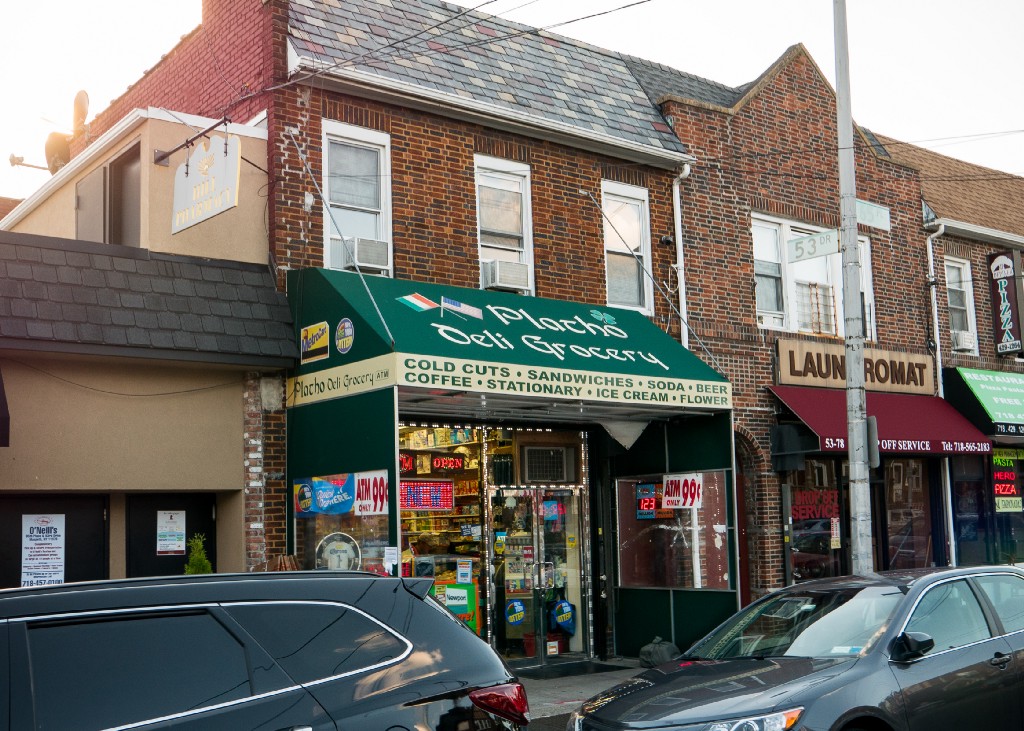
With the exception of the deli across the street from my office on 14th Street, and the one near my building in Harlem, there is only one bodega in the city that I visit with any kind of regularity. Once or twice a year, I make the 90-minute trek to a part of Queens so inaccessible to me that it’s become the yardstick against which all other pain-in-the-ass errands are measured. I take a train to another train to a bus to the outer reaches of the borough, and then jog down the street for a few minutes until the familiar green and yellow awning with the crossed Irish and American flags emblazoned on its front appears before me — a little oasis of familiarity in a sprawling suburban desert. I do this because the deli houses an ATM and my doctor — who I recently discovered is not technically a doctor — only accepts cash.

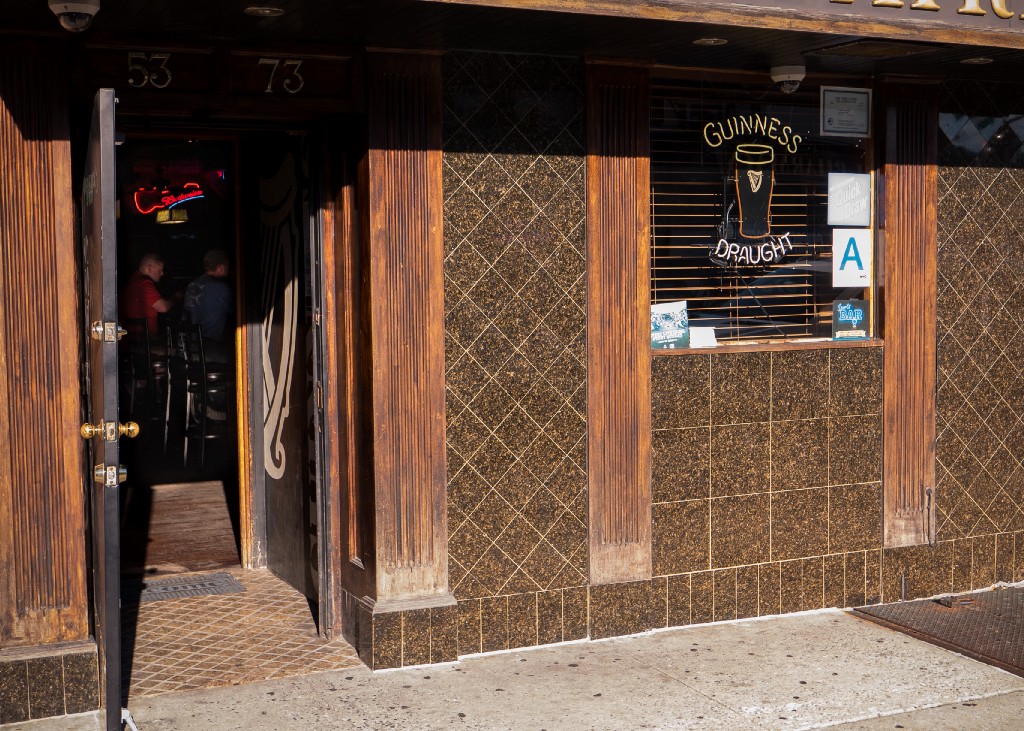
Now I have been told on a few occasions that there are in fact physicians on the island of Manhattan — fully qualified medical professionals whose clinics sit snugly along my regular train line, and whom I could visit without having to set up an out-of-office email and update the timezone on my phone. This seems plausible, though I’ve never investigated the matter. I like my (not-quite-a) doctor. I like his manic energy and fondness for Viagra jokes. I like that his staff bellow at one another through the halls, and that his waiting room has an ornamental jar with Ashes of Disgruntled Patients printed across the lid. I like that his office shares a supporting wall with an Irish bar. I like these things because formality unnerves me, and short of a triage tent this is about the least formal medical facility you could imagine.

Even a cursory scan of the inside of the neighboring bodega makes it clear that the person in charge of the furnishings is, like my doctor, in possession of a delightfully unconventional worldview. It is, without question, the most gaudily Hibernicized store I’ve ever encountered. To be clear, I’m not talking about merely a Tricolor, a few boxes of Barry’s tea bags, and a fridge full of Guinness cans — though these items are of course present and correct. No, this particular bodega has gone all-in on the tat and tastes of the old country, stocking its shelves with, at an extended glance: county flags in all 32 varieties; Donegal Catch frozen fish sticks; baskets of loose, misshapen chocolates; knockoff jerseys with lopsided crests; and my personal favorite — stacks of DVDs with water-damaged photocopies for covers retailing at $5 a pop. The DVD library includes, but is not limited to, the following titles: Love/Hate (a popular Irish gangland series); The Daniel O’Donnell 50th Birthday Documentary (a celebration of an asexual Irish crooner); A Scare at Bedtime with Podge & Rodge (a ten-minute late-night bridging program from the early 2000’s where two red-haired puppet brothers tell lewd cautionary tales); and, for the more historically minded, Ken Loach’s Civil War drama The Wind That Shakes the Barley.

I have so many questions. Who is buying these DVDs in the year of our Lord 2017? Why would anyone want fish sticks from 3000 miles away? Is there anyone walking the earth right now in one of those jerseys? How does one get in contact with the supplier of these ersatz wonders? Is his warehouse filled with endless rows of vaguely nationalistic junk to suit the respective tastes of every other immigrant community in New York?

Is his warehouse filled with endless rows of vaguely nationalistic junk to suit the respective tastes of every other immigrant community in New York?

The only other person in the store is a middle-aged Indian man standing behind the counter. I approach and ask if he’s the owner. After a moment’s hesitation, he says no. I ask if the owner is Irish. He says no — Indian, like the rest of the staff. I ask what the story is with all the Irish stuff. He says he doesn’t know, but that people seem to like it. The more questions I put to him, the more uncomfortable he becomes, which, I realize too late, is wholly understandable given the current socio-political climate. If there has ever been, in recent American history, an appropriate time for a strange white man to quiz a non-white immigrant about the peculiarities of his business model and the nationality of his staff, 2017 is not it. I explain that I’m a writer from Ireland, that I’m merely curious about the décor, and that I come out here to visit the doctor from time to time.

Why? He asks me. Why? is an excellent question, and the answer is tied to my first significant experience with the plastic paddy aesthetic that has become so important to the owners of Irish bars and bodegas like this one.

Some background: it has long been a point of pride between my brother and me to avoid doctor visits like they were trips to the gallows. At some point in our pre-teen or early teenage years, when our sibling rivalry was running hottest, we decided that admitting you needed to see a doctor was a sign of weakness. As soon as that was agreed upon, arguing over who had the stronger immune system and stomach became a small but sturdy foundation stone in our relationship. To this day, I will still eat expired food and refuse to wear a coat outside of the calendar-designated winter season to prove to myself that this most childish and nonsensical of boasts remains at least partially true.

That preserved idiocy was the reason it took a week and a half of death-rattle coughing fits before I finally resigned myself to the fact that I would have to find a doctor in New York. It was March of 2013 and I had been in the city for a little under a month. I had not brought a coat over from Ireland because mid-February is technically Spring and therefore I wouldn’t need one for another eight months. A day or two after arriving I set out to find a bar job and figured that the best place to do that would be Times Square. Now, if you’re thinking to yourself: wouldn’t that be the loudest, fakest, most unpleasant choice? Wouldn’t the bulk of the patrons be tourists who often don’t tip? Wouldn’t the turnover of staff in such a place be high enough that the management, if the mood struck them, could treat everyone like shit? You would be correct on all counts.

I worked as a waiter in a sort of Irish superpub — right in the erratically beating heart of what many consider to be the worst part of the city — for about nine months, eight and a half of which were out of spite. It was, is, run by a wizened old goblin from back home — a mumbling love child of John Wayne in The Quiet Man and Mr. Burns from The Simpsons. He made the trip across the pond forty or fifty or sixty years ago with, I assume, nothing more than a dream, a few dollars in his pocket, and a commitment to performative armchair republicanism, institutional racism, and cultivating Tammany Hall-style political friendships. From those humble beginnings, he now sits atop a fortress of kitsch in a Disneyfied corporate mecca. The kind of place where you can hear a pleasing babble of Irish accents from the authentic young staff, and where the résumés of black job applicants go straight in the trash. Where members of the NYPD and FDNY gather in their dress uniforms on St. Patrick’s Day to raise a glass to their ancestors, and where a senior bartender once muttered the N-word when President Obama appeared on the television. Where you can sup on a creamy pint of Guinness, delivered to your table by a trained bartender who will never be promoted above bar back because he’s Ecuadorian.

To be fair, this city is full of wonderful Irish bars — I had my wedding reception in one of them — and the powers that be at this Times Square operation were certainly behavioral outliers in their field, at least as far as I can tell from my extensive on-the-ground research these past four years. But the fact remains, that’s where I ended up working. That’s where my hacking and spluttering was unnerving the patrons, eating into the very meager tips one can accumulate when one has been demoted from evening to midday shifts for arguing with management. Eventually, a slightly more seasoned employee told me about a medical center that charges uninsured patients a flat fee of 55 dollars, cash. She informed me that many of my co-workers had availed themselves of this service in recent months and wisely suggested that I pay the place, and its accompanying bodega, a visit before the cost of my commute to work exceeded my take home pay.

I of course did not detail any of this to the bodega manager, though he has doubtless interacted with many of my under-the-weather former colleagues down through the years. Instead I thanked him for letting me linger, bought a box of Barry’s tea, a packet of Tayto cheese-and-onion crisps, and a Podge & Rodge DVD, and left, none the wiser as to the provenance of the décor. The more I think about it though, the simplest answer — the one he actually gave me — is probably all there is to it: people seem to like this stuff. If I’m being honest with myself, I like this stuff. Not because I pine for the tastes of the old sod, or because I’m eager to garland my apartment with flags and plastic tchotchkes, or because I’m itching for a more regular hit of Podge and Rodge. What I’m drawn to is the idea that dotted across every borough of the most ethnically diverse city in the world are little embassies of home.

What I’m drawn to is the idea that dotted across every borough of the most ethnically diverse city in the world are little embassies of home.

From the most strategically curated corporate incarnations of Times Square to the gloriously kitschy mom-and-pop stores of the outer reaches, this city, for good or ill, feels like it’s invested in where I come from, in who I am. It feeds a dream of inflated significance — which yes, at its worst, can draw to the surface a repugnant vein of tribalism in those already so inclined — but which also serves a far more modest purpose. It helps to stave off homesickness, at least for a while, by letting us know that there’s a place for us here, that we’re seen, that we belong.

About the Author

Dan Sheehan is an Irish fiction writer, journalist, and editor. His writing has appeared in The Irish Times, The Los Angeles Review of Books, Guernica, TriQuarterly, Words Without Borders, Electric Literature, and Literary Hub, among others. He lives in New York where he is the Book Marks Editor at Literary Hub. His debut novel, Restless Souls, will be published in 2018 by Weidenfeld & Nicolson (UK) & Ig Publishing (US). You can find him on Twitter @danpjsheehan.

— Photography by Anu Jindal

The Bodega Project – Electric Literature

— The Bodega Project is supported by a grant from the New York City Department of Cultural Affairs.

Chavisa Woods Knows How to Love a Misfit in Rural America

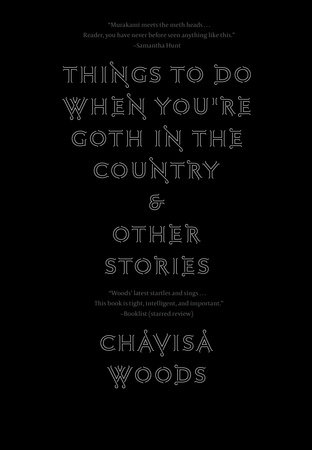
I picked up Chavisa Woods’ collection of stories Things to Do When You’re Goth in The Country And Other Stories from my rural post office. If packages arrive at all they often arrive late and when I opened the package the object — hard cover with a black dust jacket, the title’s font in silver Blackletter — was in such stunning contrast to the colors of the rye field I sat in that the world around me — which seemed real with life — became suspect. The collection of stories published in May 2017 from Seven Stories Press does just this, focusing on the cash poor in rural America. This is Woods’ third book exploring the communities she grew up in. Most stories take place in or around Illinois in towns where the army base and the prison are both near by and this nation’s endless wars are far away and on TV and mostly fought by you or your neighbors.

The characters in Woods’ collection speak to us from the edges, or, as the incarcerated narrator of the story “A Little Aside” calls it “the moment between, when they go into the space between” — the older sister who has fled her small town but returned to visit; the dykey middle schooler feeding a fugitive living in a mausoleum; a trans guy with the Gaza Strip on his head; an elderly widow and devout Christian who feels tormented by desire for her own hot body; a teenager with upside down crosses on her cheek and a string of baby doll heads around her neck performing from the book of Ezekiel at Bible Study.

10 Books for Country Goths

“The sky is blood,” that narrator from “A Little Aside” declares, capturing the particular American violence that is unacknowledged and constant that works its way throughout the whole book. Chavisa Woods is the oracle at work here displaying again and again how folks are trapped into protecting the system that oppresses them. In “What’s Happening in The News” a young narrator determined to become the first “Christian Actress” in Hollywood even though its ruled by the “Gay Mafia” watches as her friend’s dreams are usurped by army recruiters.

“I’m in the army, now. I’m getting outa here, fuckers.’ […] Even if they were just there to bomb the real world, at least they’d get to see it first.”

When her best friend decides to enlist instead of following his lifelong dream to be a filmmaker, citing that maybe his purpose is to make the world safe for others, she doesn’t sugar coat what’s happening —

“When people begin to talk in words you’ve heard before, it’s easy to know who’s writing the script.”

The script we are following is dictated by very specific historical events that show up in this book: 9/11, the death of Osama Bin Laden, and the 2014 Israel-Gaza conflict. There were startling reminders of the narrative that followed those events: the rise of nationalism and army enlistment after the World Trade Center attack, that moment when a Fox news anchor said “Barack Obama is dead, I’m sorry I mean Osama…,” the switch to spelling Osama’s name as Usama — “It’s on purpose,” one narrator declares in a panic, “see, its USA-ma. They’re doing it on purpose. They’re renaming him as if he’s now property of the USA. Get it? USAma.”

And similarly the 2014 Israel-Gaza Conflict, where rockets sent from the Palestinian side unleashed a multi-week military assault from Israel is brought to a defamiliarized horror through “A New Mohawk” where a narrator wakes up to a section of the Gaza Strip on his head, with explosions and shouting and bodies falling to the floor. Its only when these tiny dead bodies — dying in real time — are presented to people that the conflict, far away and on TV and armed by the US Government, becomes real. But even then, the Gaza Strip Mohawk bearer has to constantly redirect the pity he’s receiving for the inconvenience of his itchy, warring head to the outrage over how little people care about this mass death.

The characters from that “between space” govern these stories and are often queer and/or Goth. “These feathers of faggotry were my privilege,” states the narrator of “How to Stop Smoking in Nineteen Thousand Two Hundred and Eighty-Seven Seconds, Usama.” The main character, driving a rental car she can’t smoke in, is back in her hometown on a visit from New York City.

Our narrator is broke in Brooklyn but it’s nothing like the endless cycles that she watched her whole life and is now viewing through her youngest brother. “Little-little hasn’t been off probation for more than a few months at a time since he was thirteen. Every time he breaks any part of his probation, whether it’s a ticket, a missed phone call, or a failure to report a change in address, he goes to jail.”

Queerness untrashes people, a different narrator says in the title story, and we feel the grittiness of this position — it’s not lonely — Woods never delves into nostalgia — but it makes for existence having a different purpose.

This is expressed best in the title story, where the role of being Goth feels like the work of something biblical: actually embodying the death that everyone refuses to look at, but that’s all around them.

“I would look to the farmers saying ‘Air Force,’ pointing their calloused fingers west and felt the wars which are endless and meant to be endless ripping open my guts with their flapping blades and I would know I was dead too. And I would know for a moment that it wasn’t only me painting my eyes so black and my skin so pale. It wasn’t something autonomous inside me making me need to look so dead. Dead as the kids dropping hands like bricks and the carcasses of children God promised to spread around vain altars. Dead as the elite Republican Guard. Dead as the Iraqi insurgents and people just trying to drive their cars home to dinner on the only road home that is awfully near a pipeline. Dead as oil and sand. Dead as the conscientiousness of this country[.]”

As serious as this all is, somehow Chavisa Woods offers it to us free of didacticism and full of humor and flat out absurdity, as if to say, it’s absurd what we refuse to see and acknowledge. She creates a kind of meta reality — this world but peeling back the other possibility of our reality underneath, like a cross between Shirley Jackson and the comics of Simon Hanselman. But unlike Jackson, Woods doesn’t limit the evil to small towns but reminds us again and again of the larger violence at work making the smaller ones possible. Meaning, you won’t read this and think “how perfectly horrible.” This is not the sentimentality that James Baldwin warns against.

You can say that these stories seem like they were ready made for a post 2017 election but they were written during the Obama presidency; the experience of America that many people have woken up to in the last six months is the America that has been happening since the beginning of this country. Chavisa Woods writes with vision and experience from “this moment between” delivering us into the world that’s always been here.