Literature’s Great Alternative Families

An author looks at the deep bonds that hold together literature’s most memorable families of choice
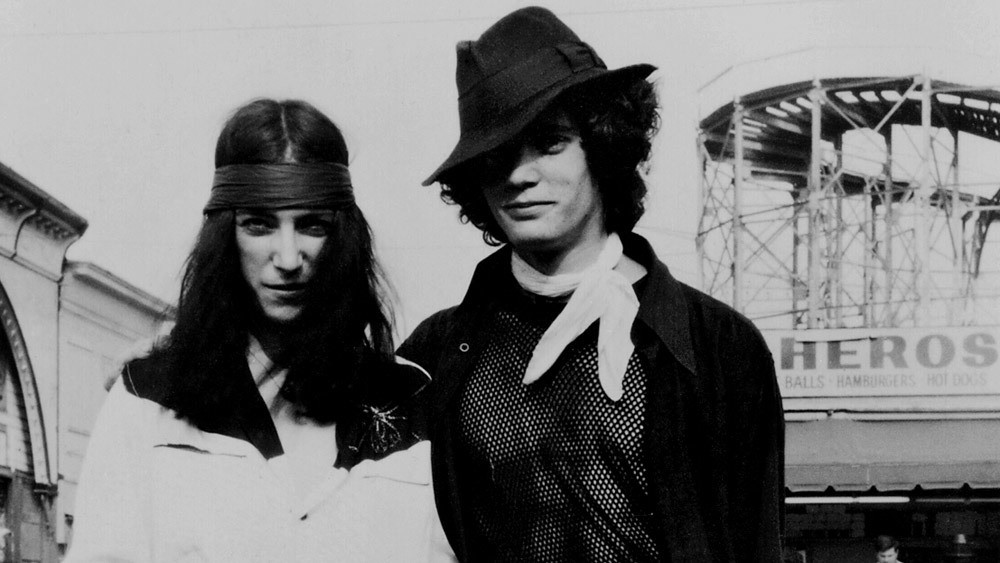
Smith & Mapplethorpe, Just Kids

There is no shortage of pithy, heartwarming or glib adages about family. Oscar Wilde said, “After a good dinner one can forgive anybody, even one’s own relations,” though this year, post-election, found plenty of blood relations tossed from celebrations and family gatherings. There’s another essential family, the constructed family, that motley crew of old friends who have loyally stuck by you over the years. This family we make — a branching original family tree — is where many of us turn when reckoning with The Big Questions. I think people trust their friends exactly because they don’t have to be our friends.

My third novel, Before Everything, explores the bonds of friendship, testing just how far people will go with one another. The breakdown or honoring of the nuclear family is a well-trod subject in literature. I wanted to consider some novels that celebrate profound love within the alternative family, those that are makeshift, surprising, and often shaped by extraordinary circumstance or history.

1. Winnie the Pooh by A.A. Milne

Children’s books might have created my love of the ragtag, constructed family, and this is my favorite, hands down. Pooh, Piglet, Eeyore, Owl, Christopher Robin, and Tigger — that ultimate trans-species family — celebrate birthdays, get lost together, work out hurt feelings and always finally embrace each other’s distinct and quirky habits.
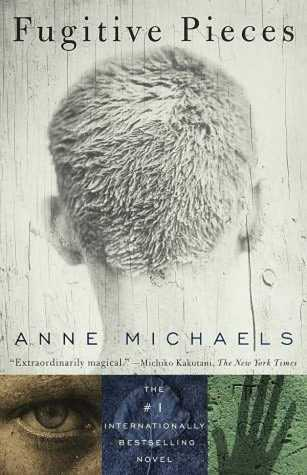
2. Fugitive Pieces by Anne Michaels

Despite the devastating premise of this Holocaust novel, where a boy loses his parents and sisters while he hides in a kitchen cupboard, I have endlessly jammed this book into the hands of friends telling them they are in for an extraordinary treat. Michaels has woven such a gorgeous story about love and the opportunity to repair what is broken. Athos, a Greek archaeologist finds Jakob buried in mud and becomes his surrogate parent giving him protection, guidance, education while helping him reckon with a fragmented past that cannot ever be fully understood.
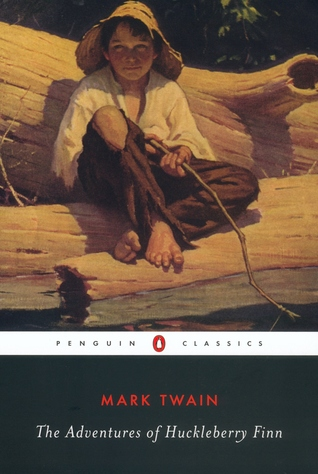
3. The Adventures of Huckleberry Finn by Mark Twain

I think Huck and Jim are our great American outlaw family, on the run from the immorality and hypocrisy of slavery. I especially love the passages of them on their raft, their funny home that “floats(s) where the current wanted her to; then we lit the pipes and dangled our legs in the water, and talked about all kinds of things — we was always naked, day and night, whenever the mosquitoes would let us.”
4. The Maytrees by Annie Dillard

I don’t think it’s any accident that Dillard used Provincetown, Massachusetts — that ramshackle village of fishermen, artists and a LGBTQ community that has harbored many a created family over the years — as the setting for her novel. This book reminds me that erotic love might dwindle, couples drift apart, or find other lovers, but what endures to shape an enduring family is people’s deep sense of responsibility to one another. I promise you your copy will be dog-eared and underlined with remarkable passages about loyalty, love and friendship.
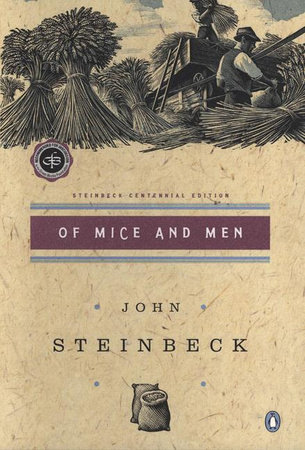
5. Of Mice and Men by John Steinbeck

George and Lennie are the ultimate oddball duo. The seasonal lives of itinerant laborers remind us of bonds and brutal choices shaped by necessity and a need to dream of a real home. This raw punch of a novel takes Lennie’s triumphant ode to male friendship, “I got you to look after me, and you got me to look after you, and that’s why,” to a most dire consequence that wrecks me every time I read the book.
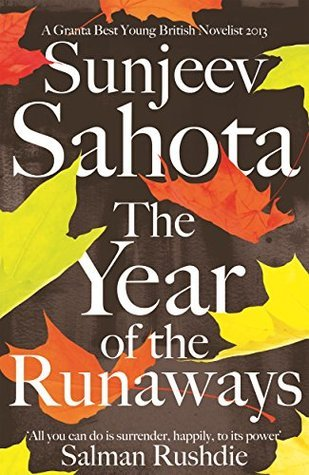
6. The Year of the Runaways by Sunjeev Sahota

The intertwined stories of Avtar, Randeep, Tochi and Narinder shape a difficult and perfect story of creating love from nothing. Hungry, with little opportunity and under fear of deportation, this fragile family of housemates speaks profoundly to current global migrations and how, despite extraordinary suffering, we keep trying to move forward to make make any hopeful chance for a better life.
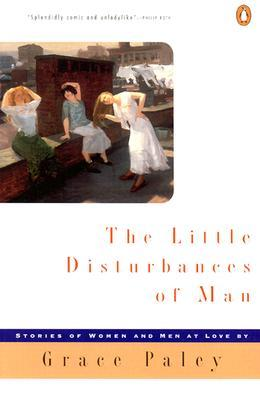
7. “The Used Boy-Raisers” by Grace Paley

In Grace Paley’s short story, “The Used Boy-Raisers” from her first collection The Little Disturbances of Man when ex husbands eat breakfast eggs with new husbands the idea of the traditional nuclear family is challenged from the very first sentence. In this collection and her two subsequent story collections, Paley’s characters expand the terms of family to include every mom on the playground, shopkeeper, lover, political ally and tough kid on the block while still dearly embracing fathers, mothers and every bossy aunt.
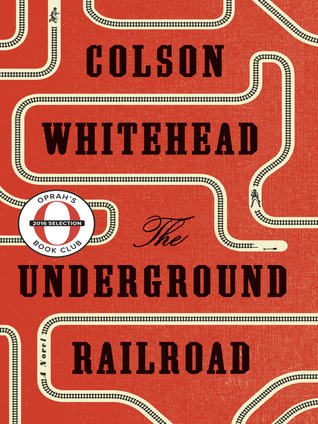
8. The Underground Railroad by Colson Whitehead

From the opening chapter of this remarkable young woman’s escape odyssey, mixing the factual with the fantastic, we understand that slavery wreaked horrific, irreparable damage on African families and generations of African-Americans born into American slavery. The litany of loss in the opening pages is stunning, children torn from their parents and village, families separated, sold off to plantations in different states; husbands, wives and their offspring split at the whim of owners. The constructed family emerges as necessity in the midst of this extremity although the new patchwork family is also easily crippled and warped by the institution of slavery. Once Cora and Caesar run away, we embark on a breathtaking and painful odyssey where every choice and act of trust creates the possibility for genuine connection and betrayal.

9. LaRose by Louise Erdrich

Maybe every novel by Louise Erdrich showcases her exploration of family and shifting familial webs, but in LaRose, her most recent complex novel, where, after the accidental death of one child, another child is given away following an ancient tribal custom, family boundaries are rearranged and readers are asked to consider how to forgive others and themselves.

10. Drop City by T.C. Boyle

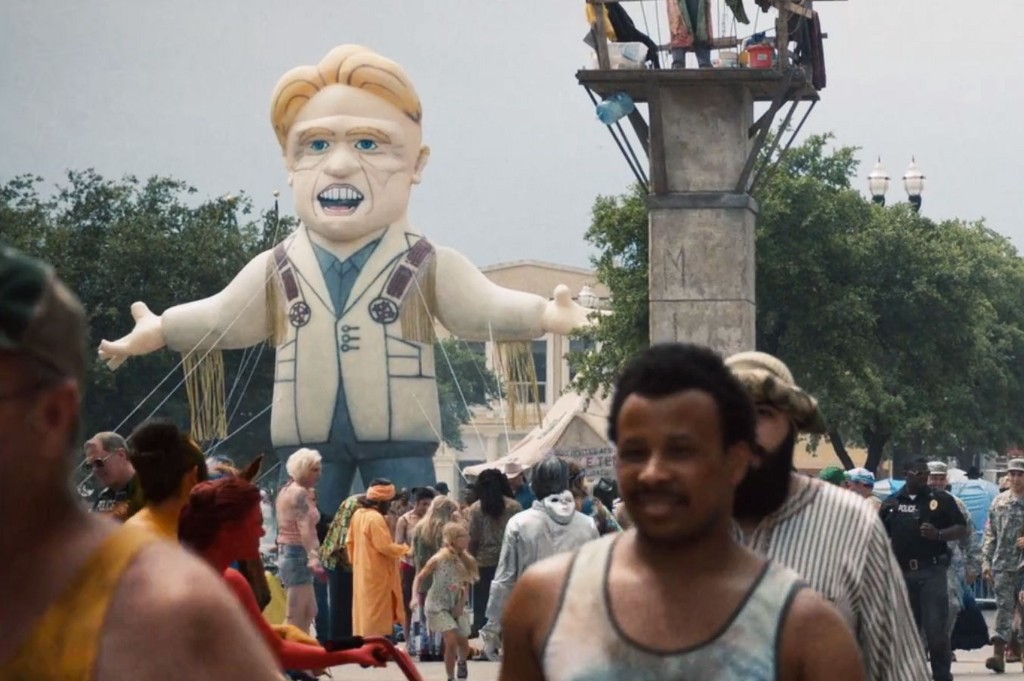
It’s not possible to make a list of makeshift families without including at least one disaster attempt at a non-traditional family, and Drop City is exactly that. From an early scene of children on a commune being ladled LSD-laced punch as part of the their lunch meal, I was cringing and entirely in for the ride.

11. Just Kids by Patti Smith

Her loving portrait of her extraordinary friendship with Robert Mapplethorpe — young, adventurous, artists carving their path in New York City, 1967 — is an ode to that first exciting alternative family shaped by passion and vision and youth. Reading Just Kids took me back to my own scrappy, excited first years in New York where each day’ s encounters brimmed with possibility.
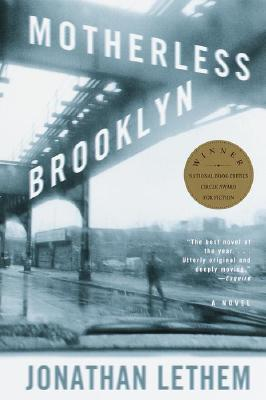
12. Motherless Brooklyn by Jonathan Lethem

Maybe Dickens gave us the classic quest for new family in Great Expectations but so does Lionel Essrog, Lethem’s orphan narrator in Motherless Brooklyn. Essrog sputters and twirls with Tourettic urgency to deliver his unlikely crew of brothers gathered, tutored and fathered by Frank Minna — small-time crook, detective, and owner of a Brooklyn limo agency. After Minna is murdered the family structure collapses and it’s the outcast Essrog’s chance to untangle the whodunnit in this genre-bending novel.
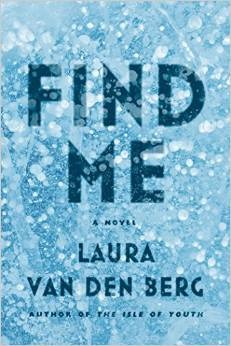
13. Find Me by Laura Van Den Berg

Joy, the lonely, addicted narrator of Van Den Berg’s dystopian, post-apocalyptic novel reluctantly makes a family of the other quarantined patients all the while searching for and imagining a reunion with the mother who abandoned her as a child. The tension between Joy’s desire for and resistance to make genuine connection and attachments makes this such a breathtaking vision of our very human need for being known.

Great Dysfunctional Families of Fiction: A Reading List

About the Author

Author Victoria Redel. Photo by Marion Ettlinger

Victoria Redel is the author of the new novel, Before Everything, as well as four previous works of fiction and three collections of poetry. She has contributed to The New York Times, the Los Angeles Times, Elle, O, the Oprah Magazine, Granta, One Story, and the Harvard Review. She received her MFA in poetry from Columbia University and teaches at Sarah Lawrence College. She lives in Manhattan.


Millennials May Not Be Getting Jobs or Houses, But They Are Saving Libraries

Plus famous novelists get candid about Jane Austen and John Green announces his new novel after a five-year hiatus

The end of the week comes with its own slew of literary news. In today’s roundup, a Pew Research Center study concludes that Millennials — that’s right, Millennials! — are making the most use of public libraries, authors write handwritten notes about Jane Austen (some of them a little cheeky) for a good cause, and John Green finally returns from his post-The Fault in Our Stars hiatus.

Millennials are the generation using public libraries the most

Millennials are known for a lot of questionable things: avocado toast, colorful beverages/assorted food products, selfies, smartphone addiction…the list of stereotypes is endless. However, the generation of tech addicts might yet redeem themselves. According to a study conducted by Pew Research Center, Millennials have been using public libraries more than Gen Xers, Baby Boomers, and members of the Silent Generation. The report says that 53% of people aged 18–35 (at the time of the study) said they used a public library or bookmobile within the last 12 months, compared to 45% for Gen X and 43% for Baby Boomers. Although the term “millennials” encompasses college students who have no choice but to frequent their campus libraries, Pew noted that the report specifically asked about public facilities. This new conclusion aligns with another study conducted by Pew in 2014 proving that Millennials are reading more books than members of any other generation. It counts if we’re going to the library to use the free WiFi, right?

[Pew Research Center/Abigail Geiger]

Auction asks novelists to write about Jane Austen

Some very important authors are about to reveal how they really feel about literary icon Jane Austen. As part of an auction to raise money for the Royal Society of Literature, novelists including Margaret Atwood, Kazuo Ishiguro, and Ian McEwan have submitted handwritten homages about the Georgian era British writer. According to Awtood, Pride and Prejudice “set a bad example” for her in its depiction of unpleasant romantic prospects via the men in the book. Atwood writes, “Were underage readers of this book, such as myself, doomed to a series of initially hopeful liaisons in which unpleasant men turned out to be simply unpleasant?” Meanwhile, Ishiguro’s letter admires Austen’s technique and nuance in Mansfield Park and McEwan writes about society’s connectedness in Northanger Abbey. The writers comment on how Austen’s works have influenced their own writing. There are 18 items up for auction, so be sure to cast your bids before midnight on June 27th.

[The Guardian/ Katy Guest]

New John Green novel is finally written in the stars

Since the 2012 release of The Fault in Our Stars and its immense popularity, hordes of teens and adults alike have latched onto John Green’s evocative stories about growing up, love, and circumstances that can drastically alter them both. Now, Green is about to emerge from his writing hiatus, with news that his next book is on the horizon. Titled Turtles All the Way Down, the novel will be released on October 10th. The story follows a young woman, Aza Holmes, who tries to solve the disappearance of a fugitive billionaire while also struggling with her own mental illness. In a news release, the YouTube star/author noted the personal significance this story has for him. “This is my first attempt to write directly about the kind of mental illness that has affected my life since childhood, so while the story is fictional, it is also quite personal,” he writes. Ever since the immense popularity of The Fault in Our Stars and his subsequent cult-like following, Green has been vocal about his longtime struggles with mental illness. The book will be published by Penguin Random House, and if the author’s other books are any indication, we can predict that Turtles All the Way Down will surely get a warm welcome from Green’s loyal fans.

[LA Times/ Libby Hill]

Walking the East Bay in the Footsteps of Maya Angelou, June Jordan & Pat Parker

Ted Wilson Reviews the World: A Comb

★★★★☆

Hello, and welcome to my week-by-week review of the world. Today I am reviewing a comb.

Most people have hair as well as a desire to see that hair groomed, so this review will have very broad appeal. I came across a comb recently that was your standard black comb but with one exception: Even though it was new and right out of the package, there was a hair in it as if it had been used. I was grossed out but quite intrigued.

I looked around to see if I could match the hair to any of the other customers in the store. There were eight different possible candidates the but none of them would admit it was theirs. Without a DNA test I was out of luck.

I contacted the maker of the comb, Hotel Quality Hair Care Products International to ask if anyone working in their factory had lost a hair. The nice woman I spoke with explained that they do not have a factory and all their combs are made in China. I contacted China but have yet to receive a response.

Other than the errant strand of hair, it was a great comb! Comb technology reached its apex decades ago and no one has come along to disrupt it. There are no electric combs or combs connected to the internet to tell you when your hair is messy. Combs are just combs, simple and effective. If the comb doesn’t work, it’s your hair that’s the problem.

Even bald or slovenly people would enjoy this comb if only for the sensation of dozens of little teeth running along one’s scalp. It feels both invigorating and slightly sensual. It made me feel like an ace.

Unfortunately I lost the comb. That’s to be expected. Lost combs litter America. But when I purchased a new one, it was like the old one had never left me. The combs were identical in every way. Genius.

BEST FEATURE: The comb can very easily be turned into a shiv if needed.
WORST FEATURE: One of the prongs dislodged and got stuck in my ear canal.

Please join me next week when I’ll be reviewing a wicker basket.

TED WILSON REVIEWS THE WORLD: UBER

A Visit to the Irish Embassy in Queens

By Dan Sheehan

Presenting the fourth installment of The Bodega Project, where authors from across New York reflect on their communities through that most relied-on and overlooked institution, the bodega. Read the introduction to the series here.

Sure the shamrocks were growing on Broadway
Every girl was an Irish colleen
The town of New York was the county of Cork
All the buildings were painted green

Sure the Hudson looked just like the Shannon
Oh, how good and how real it did seem
I could hear me mother singin’, sweet Shannon bells ringin’
’twas only an Irishman’s dream

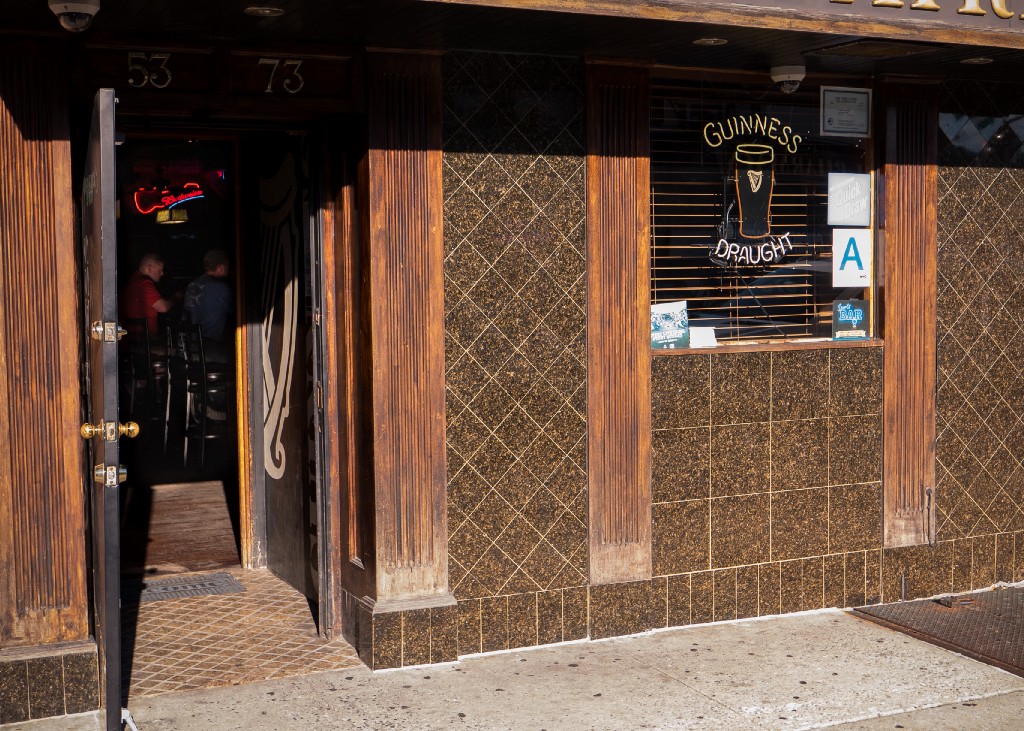
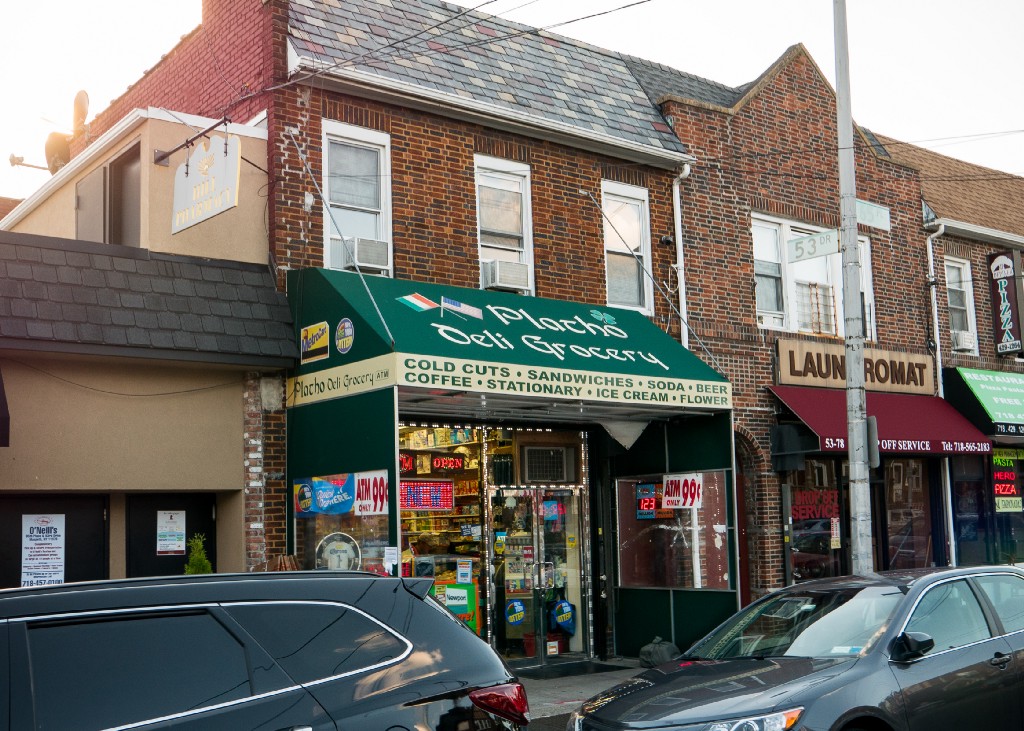
With the exception of the deli across the street from my office on 14th Street, and the one near my building in Harlem, there is only one bodega in the city that I visit with any kind of regularity. Once or twice a year, I make the 90-minute trek to a part of Queens so inaccessible to me that it’s become the yardstick against which all other pain-in-the-ass errands are measured. I take a train to another train to a bus to the outer reaches of the borough, and then jog down the street for a few minutes until the familiar green and yellow awning with the crossed Irish and American flags emblazoned on its front appears before me — a little oasis of familiarity in a sprawling suburban desert. I do this because the deli houses an ATM and my doctor — who I recently discovered is not technically a doctor — only accepts cash.

Now I have been told on a few occasions that there are in fact physicians on the island of Manhattan — fully qualified medical professionals whose clinics sit snugly along my regular train line, and whom I could visit without having to set up an out-of-office email and update the timezone on my phone. This seems plausible, though I’ve never investigated the matter. I like my (not-quite-a) doctor. I like his manic energy and fondness for Viagra jokes. I like that his staff bellow at one another through the halls, and that his waiting room has an ornamental jar with Ashes of Disgruntled Patients printed across the lid. I like that his office shares a supporting wall with an Irish bar. I like these things because formality unnerves me, and short of a triage tent this is about the least formal medical facility you could imagine.

Even a cursory scan of the inside of the neighboring bodega makes it clear that the person in charge of the furnishings is, like my doctor, in possession of a delightfully unconventional worldview. It is, without question, the most gaudily Hibernicized store I’ve ever encountered. To be clear, I’m not talking about merely a Tricolor, a few boxes of Barry’s tea bags, and a fridge full of Guinness cans — though these items are of course present and correct. No, this particular bodega has gone all-in on the tat and tastes of the old country, stocking its shelves with, at an extended glance: county flags in all 32 varieties; Donegal Catch frozen fish sticks; baskets of loose, misshapen chocolates; knockoff jerseys with lopsided crests; and my personal favorite — stacks of DVDs with water-damaged photocopies for covers retailing at $5 a pop. The DVD library includes, but is not limited to, the following titles: Love/Hate (a popular Irish gangland series); The Daniel O’Donnell 50th Birthday Documentary (a celebration of an asexual Irish crooner); A Scare at Bedtime with Podge & Rodge (a ten-minute late-night bridging program from the early 2000’s where two red-haired puppet brothers tell lewd cautionary tales); and, for the more historically minded, Ken Loach’s Civil War drama The Wind That Shakes the Barley.

I have so many questions. Who is buying these DVDs in the year of our Lord 2017? Why would anyone want fish sticks from 3000 miles away? Is there anyone walking the earth right now in one of those jerseys? How does one get in contact with the supplier of these ersatz wonders? Is his warehouse filled with endless rows of vaguely nationalistic junk to suit the respective tastes of every other immigrant community in New York?

Is his warehouse filled with endless rows of vaguely nationalistic junk to suit the respective tastes of every other immigrant community in New York?

The only other person in the store is a middle-aged Indian man standing behind the counter. I approach and ask if he’s the owner. After a moment’s hesitation, he says no. I ask if the owner is Irish. He says no — Indian, like the rest of the staff. I ask what the story is with all the Irish stuff. He says he doesn’t know, but that people seem to like it. The more questions I put to him, the more uncomfortable he becomes, which, I realize too late, is wholly understandable given the current socio-political climate. If there has ever been, in recent American history, an appropriate time for a strange white man to quiz a non-white immigrant about the peculiarities of his business model and the nationality of his staff, 2017 is not it. I explain that I’m a writer from Ireland, that I’m merely curious about the décor, and that I come out here to visit the doctor from time to time.

Why? He asks me. Why? is an excellent question, and the answer is tied to my first significant experience with the plastic paddy aesthetic that has become so important to the owners of Irish bars and bodegas like this one.

Some background: it has long been a point of pride between my brother and me to avoid doctor visits like they were trips to the gallows. At some point in our pre-teen or early teenage years, when our sibling rivalry was running hottest, we decided that admitting you needed to see a doctor was a sign of weakness. As soon as that was agreed upon, arguing over who had the stronger immune system and stomach became a small but sturdy foundation stone in our relationship. To this day, I will still eat expired food and refuse to wear a coat outside of the calendar-designated winter season to prove to myself that this most childish and nonsensical of boasts remains at least partially true.

That preserved idiocy was the reason it took a week and a half of death-rattle coughing fits before I finally resigned myself to the fact that I would have to find a doctor in New York. It was March of 2013 and I had been in the city for a little under a month. I had not brought a coat over from Ireland because mid-February is technically Spring and therefore I wouldn’t need one for another eight months. A day or two after arriving I set out to find a bar job and figured that the best place to do that would be Times Square. Now, if you’re thinking to yourself: wouldn’t that be the loudest, fakest, most unpleasant choice? Wouldn’t the bulk of the patrons be tourists who often don’t tip? Wouldn’t the turnover of staff in such a place be high enough that the management, if the mood struck them, could treat everyone like shit? You would be correct on all counts.

I worked as a waiter in a sort of Irish superpub — right in the erratically beating heart of what many consider to be the worst part of the city — for about nine months, eight and a half of which were out of spite. It was, is, run by a wizened old goblin from back home — a mumbling love child of John Wayne in The Quiet Man and Mr. Burns from The Simpsons. He made the trip across the pond forty or fifty or sixty years ago with, I assume, nothing more than a dream, a few dollars in his pocket, and a commitment to performative armchair republicanism, institutional racism, and cultivating Tammany Hall-style political friendships. From those humble beginnings, he now sits atop a fortress of kitsch in a Disneyfied corporate mecca. The kind of place where you can hear a pleasing babble of Irish accents from the authentic young staff, and where the résumés of black job applicants go straight in the trash. Where members of the NYPD and FDNY gather in their dress uniforms on St. Patrick’s Day to raise a glass to their ancestors, and where a senior bartender once muttered the N-word when President Obama appeared on the television. Where you can sup on a creamy pint of Guinness, delivered to your table by a trained bartender who will never be promoted above bar back because he’s Ecuadorian.
To be fair, this city is full of wonderful Irish bars — I had my wedding reception in one of them — and the powers that be at this Times Square operation were certainly behavioral outliers in their field, at least as far as I can tell from my extensive on-the-ground research these past four years. But the fact remains, that’s where I ended up working. That’s where my hacking and spluttering was unnerving the patrons, eating into the very meager tips one can accumulate when one has been demoted from evening to midday shifts for arguing with management. Eventually, a slightly more seasoned employee told me about a medical center that charges uninsured patients a flat fee of 55 dollars, cash. She informed me that many of my co-workers had availed themselves of this service in recent months and wisely suggested that I pay the place, and its accompanying bodega, a visit before the cost of my commute to work exceeded my take home pay.

I of course did not detail any of this to the bodega manager, though he has doubtless interacted with many of my under-the-weather former colleagues down through the years. Instead I thanked him for letting me linger, bought a box of Barry’s tea, a packet of Tayto cheese-and-onion crisps, and a Podge & Rodge DVD, and left, none the wiser as to the provenance of the décor. The more I think about it though, the simplest answer — the one he actually gave me — is probably all there is to it: people seem to like this stuff. If I’m being honest with myself, I like this stuff. Not because I pine for the tastes of the old sod, or because I’m eager to garland my apartment with flags and plastic tchotchkes, or because I’m itching for a more regular hit of Podge and Rodge. What I’m drawn to is the idea that dotted across every borough of the most ethnically diverse city in the world are little embassies of home.

What I’m drawn to is the idea that dotted across every borough of the most ethnically diverse city in the world are little embassies of home.

From the most strategically curated corporate incarnations of Times Square to the gloriously kitschy mom-and-pop stores of the outer reaches, this city, for good or ill, feels like it’s invested in where I come from, in who I am. It feeds a dream of inflated significance — which yes, at its worst, can draw to the surface a repugnant vein of tribalism in those already so inclined — but which also serves a far more modest purpose. It helps to stave off homesickness, at least for a while, by letting us know that there’s a place for us here, that we’re seen, that we belong.

About the Author

Dan Sheehan is an Irish fiction writer, journalist, and editor. His writing has appeared in The Irish Times, The Los Angeles Review of Books, Guernica, TriQuarterly, Words Without Borders, Electric Literature, and Literary Hub, among others. He lives in New York where he is the Book Marks Editor at Literary Hub. His debut novel, Restless Souls, will be published in 2018 by Weidenfeld & Nicolson (UK) & Ig Publishing (US). You can find him on Twitter @danpjsheehan.

— Photography by Anu Jindal

The Bodega Project – Electric Literature

— The Bodega Project is supported by a grant from the New York City Department of Cultural Affairs.
Chavisa Woods Knows How to Love a Misfit in Rural America

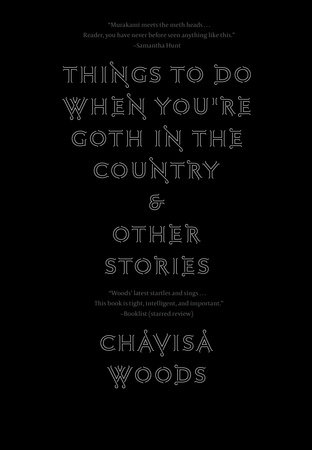
I picked up Chavisa Woods’ collection of stories Things to Do When You’re Goth in The Country And Other Stories from my rural post office. If packages arrive at all they often arrive late and when I opened the package the object — hard cover with a black dust jacket, the title’s font in silver Blackletter — was in such stunning contrast to the colors of the rye field I sat in that the world around me — which seemed real with life — became suspect. The collection of stories published in May 2017 from Seven Stories Press does just this, focusing on the cash poor in rural America. This is Woods’ third book exploring the communities she grew up in. Most stories take place in or around Illinois in towns where the army base and the prison are both near by and this nation’s endless wars are far away and on TV and mostly fought by you or your neighbors.

The characters in Woods’ collection speak to us from the edges, or, as the incarcerated narrator of the story “A Little Aside” calls it “the moment between, when they go into the space between” — the older sister who has fled her small town but returned to visit; the dykey middle schooler feeding a fugitive living in a mausoleum; a trans guy with the Gaza Strip on his head; an elderly widow and devout Christian who feels tormented by desire for her own hot body; a teenager with upside down crosses on her cheek and a string of baby doll heads around her neck performing from the book of Ezekiel at Bible Study.

10 Books for Country Goths

“The sky is blood,” that narrator from “A Little Aside” declares, capturing the particular American violence that is unacknowledged and constant that works its way throughout the whole book. Chavisa Woods is the oracle at work here displaying again and again how folks are trapped into protecting the system that oppresses them. In “What’s Happening in The News” a young narrator determined to become the first “Christian Actress” in Hollywood even though its ruled by the “Gay Mafia” watches as her friend’s dreams are usurped by army recruiters.

“I’m in the army, now. I’m getting outa here, fuckers.’ […] Even if they were just there to bomb the real world, at least they’d get to see it first.”

When her best friend decides to enlist instead of following his lifelong dream to be a filmmaker, citing that maybe his purpose is to make the world safe for others, she doesn’t sugar coat what’s happening —

“When people begin to talk in words you’ve heard before, it’s easy to know who’s writing the script.”

The script we are following is dictated by very specific historical events that show up in this book: 9/11, the death of Osama Bin Laden, and the 2014 Israel-Gaza conflict. There were startling reminders of the narrative that followed those events: the rise of nationalism and army enlistment after the World Trade Center attack, that moment when a Fox news anchor said “Barack Obama is dead, I’m sorry I mean Osama…,” the switch to spelling Osama’s name as Usama — “It’s on purpose,” one narrator declares in a panic, “see, its USA-ma. They’re doing it on purpose. They’re renaming him as if he’s now property of the USA. Get it? USAma.”

And similarly the 2014 Israel-Gaza Conflict, where rockets sent from the Palestinian side unleashed a multi-week military assault from Israel is brought to a defamiliarized horror through “A New Mohawk” where a narrator wakes up to a section of the Gaza Strip on his head, with explosions and shouting and bodies falling to the floor. Its only when these tiny dead bodies — dying in real time — are presented to people that the conflict, far away and on TV and armed by the US Government, becomes real. But even then, the Gaza Strip Mohawk bearer has to constantly redirect the pity he’s receiving for the inconvenience of his itchy, warring head to the outrage over how little people care about this mass death.

The characters from that “between space” govern these stories and are often queer and/or Goth. “These feathers of faggotry were my privilege,” states the narrator of “How to Stop Smoking in Nineteen Thousand Two Hundred and Eighty-Seven Seconds, Usama.” The main character, driving a rental car she can’t smoke in, is back in her hometown on a visit from New York City.

Our narrator is broke in Brooklyn but it’s nothing like the endless cycles that she watched her whole life and is now viewing through her youngest brother. “Little-little hasn’t been off probation for more than a few months at a time since he was thirteen. Every time he breaks any part of his probation, whether it’s a ticket, a missed phone call, or a failure to report a change in address, he goes to jail.”

Queerness untrashes people, a different narrator says in the title story, and we feel the grittiness of this position — it’s not lonely — Woods never delves into nostalgia — but it makes for existence having a different purpose.

This is expressed best in the title story, where the role of being Goth feels like the work of something biblical: actually embodying the death that everyone refuses to look at, but that’s all around them.

“I would look to the farmers saying ‘Air Force,’ pointing their calloused fingers west and felt the wars which are endless and meant to be endless ripping open my guts with their flapping blades and I would know I was dead too. And I would know for a moment that it wasn’t only me painting my eyes so black and my skin so pale. It wasn’t something autonomous inside me making me need to look so dead. Dead as the kids dropping hands like bricks and the carcasses of children God promised to spread around vain altars. Dead as the elite Republican Guard. Dead as the Iraqi insurgents and people just trying to drive their cars home to dinner on the only road home that is awfully near a pipeline. Dead as oil and sand. Dead as the conscientiousness of this country[.]”

As serious as this all is, somehow Chavisa Woods offers it to us free of didacticism and full of humor and flat out absurdity, as if to say, it’s absurd what we refuse to see and acknowledge. She creates a kind of meta reality — this world but peeling back the other possibility of our reality underneath, like a cross between Shirley Jackson and the comics of Simon Hanselman. But unlike Jackson, Woods doesn’t limit the evil to small towns but reminds us again and again of the larger violence at work making the smaller ones possible. Meaning, you won’t read this and think “how perfectly horrible.” This is not the sentimentality that James Baldwin warns against.

You can say that these stories seem like they were ready made for a post 2017 election but they were written during the Obama presidency; the experience of America that many people have woken up to in the last six months is the America that has been happening since the beginning of this country. Chavisa Woods writes with vision and experience from “this moment between” delivering us into the world that’s always been here.

Walking the East Bay in the Footsteps of Maya Angelou, June Jordan & Pat Parker

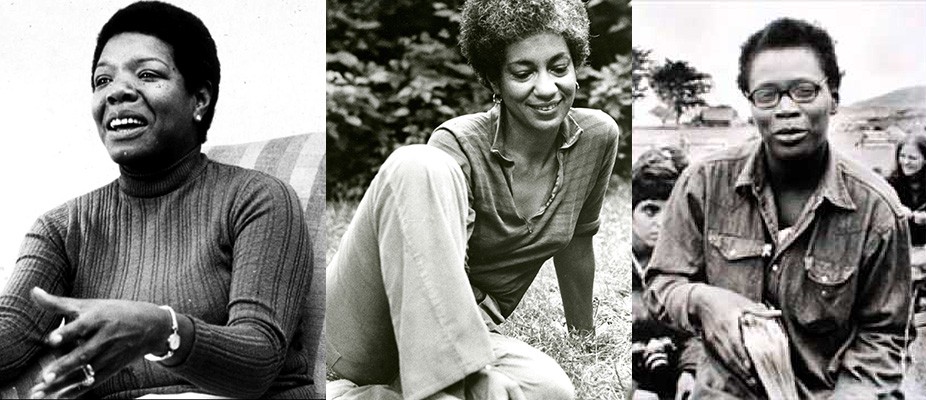
Going through old paperwork from visiting writers at the Poetry Center and American Poetry Archives — at director Steve Dickison’s suggestion — revealed some interesting stuff. There were 8×10 headshots, newspaper clippings, and Pat Parker’s typewriter-typed resume; I read handwritten notes from Ai, Jayne Cortez, and one note from June Jordan about battling breast cancer. There’s a memorandum June sent in 1976, dated August 18th, that begins:

To: Everyone empowered to bring poetry into the environment that depends upon her commitment to that art

From: The Black Woman Poet, June Jordan

Audre Lorde sent a letter on her own monogrammed stationary, and there was a photo of Gwendolyn Brooks taken by Jewelle Gomez. Maya Angelou sent the Center a galley copy of Just Give Me a Cool Drink of Water. And there were addresses. Maya lived in Berkeley in the 70s, Pat Parker lived and worked in the East Bay, and June at one point was living on 8th Avenue in Brooklyn and then moved to Berkeley in the late 80s to teach at UC. I realized that I could go to these places.

Maya Angelou sent the Center a galley copy of Just Give Me a Cool Drink of Water. And there were addresses.

Two summers ago, while a poet-in-residence at the Juniper Summer Writing Institute, I was invited to write in Emily Dickinson’s bedroom. The room was bare, with the exception of a dresser and a desk and chair. Behind a roped area, I sat for an hour, writing whatever came from my stream of consciousness. In her room, Emily became more than her words; I understood her as a body that shaped and was shaped by spaces she inhabited. Now, I could do a similar thing with these poets. Luckily, my doctor’s appointment that following week put me a block away from the Oakland Women’s Health Center that Pat Parker resigned from in 1986.

It is no longer there. There are now offices for an internist, chiropractor, and naturopath, and across the street is my old therapist’s office. I went there weekly to work out the aftershocks of my Saturn Return and the anxieties of living 3,000 miles from home. Then I didn’t know I was a stone’s throw away from the workplace of the poet whose “wit and challenge” Pamela Sneed says she hears in my poetry. I didn’t know much about Pat Parker. But her name was familiar. She often appeared in anthologies with Audre Lorde, Cheryl Clarke, and June Jordan. She was a dyke poet.

In 2014, a few other poets/artists and I were invited to read Parker’s “Movement in Black” at a gathering for Older Lesbians Organizing for Change. I sat outside of 2930 McClure Street, eating a BLT and reading aloud the poem to passersby:

Movement in Black

Movement in Black

Can’t keep em back

Movement in Black.

Vickie Randle, who knew Pat personally and had an original copy of the poem with notes from when they would perform the piece, said that Parker asked, wherever she went, for the organizer to gather black women to read this piece. And I understand the need to do this. I give readings and sometimes wonder where the folks who share my intersectional struggles are. Even though I sometimes skirt the idea of a target audience when I write, I do imagine myself, in all my external and internal qualities, to be that audience.

I am the Black woman

& I have been all over

up on platforms & stages

talking about freedom . . .

I go into the office building. For some reason I thought it would be an open area and a receptionist would greet me. Instead there were three floors, with five doors on each level. On my way out, a woman who works behind one of those doors comes in and I inform her that a famous poet used to work here in the 80s. At that moment, I wished I made a copy of a poem to give her. She knows nothing about the Women’s Health Center, says the owner Dr. Tufts would know, but the doctor isn’t in.

It’s interesting to go where the poet once lived, and not their final resting place. In these spaces is where they lived, where they were in routines that defined their living. Like at Dickinson’s, I felt the dimensions of a space that held and influenced Pat — how it feels on my sides and the top of my head. These spaces are the (physical) forms and structures to their poetry.

I felt the dimensions of a space that held and influenced Pat. These spaces are the (physical) forms and structures to their poetry.

I get on the 18 bus that takes me to Solano and Colusa in Berkeley, walking distance from Maya and June’s former homes. Doing all this humanizes these poets — they are removed from their pedestals when I literally walk the same streets they’ve walked. I’m having a rooted experience of their poetry — it belongs to space and time, to people, to a constellation of exchanges and encounters that rooted them to this world. As the bus crosses the various ecotones that delineate neighborhoods and class, I wonder, what makes these poets different from me? The bus goes by Pegasus Bookstore on Shattuck, and when I recognize myself alongside them, as poet-to-poet, I see we are part of a poetic lineage. They have contributed to my presence in the now.

After being at Pat’s former employment with nothing to share, I make a detour. Solano Avenue has an assortment of businesses and I immediately spot a stationery store and figure they must have a photocopy machine. It is broken and the sales associate says I’m two blocks away from another one. It is six blocks, but I’m grateful to have writing to offer.

Colusa Street is lined with mature trees, there’s an elementary school where the children are in recess; the homes hide behind tall gates, and I feel I am being watched from curtains, from windows, from people who know their neighbors and I’m not one of them. I ask myself, Will you go to the door? Will you ring the bell? Will they know Maya Angelou?

I ask myself, Will you go to the door? Will you ring the bell? Will they know Maya Angelou?

She was the poet people exclaimed back at me when I said I wanted to be a poet. All the women, particularly my family members, had a line or two they would recited from “Phenomenal Woman.” Maya made things identifiable. And who didn’t know Maya after she read at Bill Clinton’s inauguration? My high school English teacher said that would be me one day. There was Maya’s “Still I Rise” recited by Alfre Woodard in the movie Beauty Shop — the women getting their hair did serenaded with celebratory words about their black womanhood, their will to survive, and their beauty. Angelou is easy on your spirits. When I listened to the 1971 audio recording of her reading from Just Give Me A Cool Drink of Water, enunciating each word like a machete cutting through sugar cane, I appreciated her dramatic voice and the music of her rhyme schemes, and understood why audiences loved her poetry. She was self-possessed and confident in her hereness.

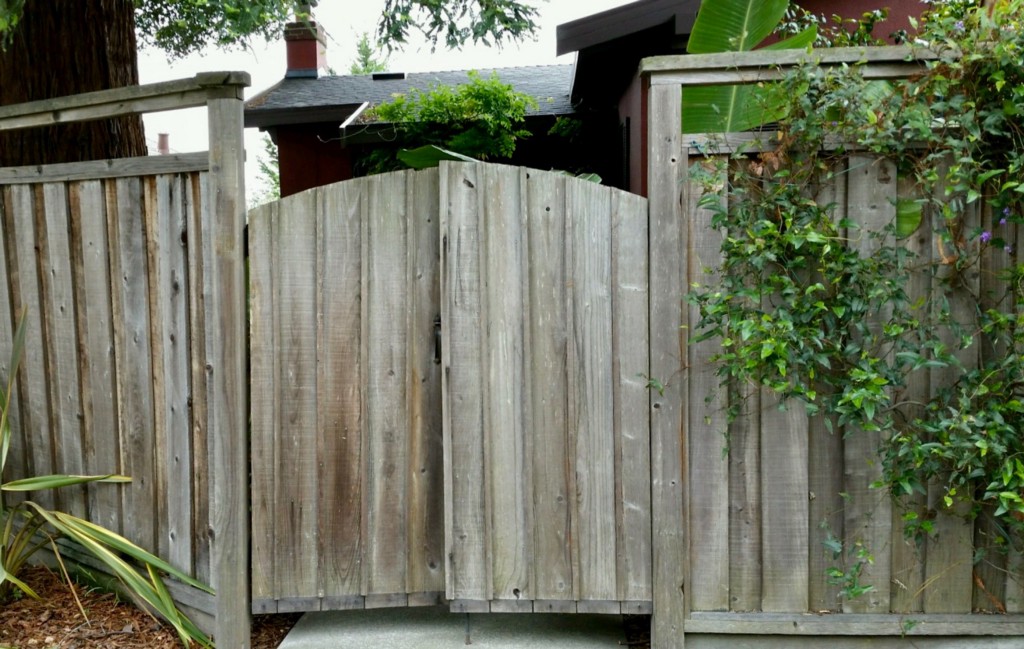
I arrive at Angelou’s former residence and no one is home. The gate is in need of repair. One section leans to the side, and I peek into the opening it creates. There is a backyard, and surely Maya sat out there and wrote a poem or many. At the gate’s door, I leave five copies of “They Went Home”:

They went home and told their wives,

that never once in all their lives,

had they known a girl like me,

But . . . They went home.

They said my house was licking clean,

no word I spoke was ever mean,

I had an air of mystery,

But . . . They went home.

My praises were on all men’s lips,

they like my smile, my wit, my hips,

they’d spend one night or two or three,

But . . .

Gate at Maya Angelou’s former residence. Photo: Arisa White

This is the first poem of Angelou’s I read over and over again from an anthology of women’s poetry from around the world. Ain’t I A Woman was a gift from my high school global studies teacher. On the photocopies of “They Went Home,” I write: “Happy National Poetry Month” on the top and “Maya Angelou lived here!” on the bottom. I leave a rock to keep the poems from blowing away, but also for the heaviness of the heart. This is what I was told as an exchange student in Israel. A group of us wanted to know why there were stones on the graves. As I walk from Maya’s gate, a breeze cools my face, and I grab a handful of gravel from a neighbor’s yard, walk back and pour more heart on her poems.

I leave a rock to keep the poems from blowing away, but also for the heaviness of the heart.

I go back to Solano, make a left, then a right, then walk for about 20 minutes to get to the home where June Jordan lived and died. I notice the ravens — on the phone lines, near the dumpsters, and atop a mailbox. At one point I pass a house that has an enclosed bookcase, hiked up on a pole. You can take a book, but need to leave one in exchange. Finally, I’m at the street that promises to deliver me to June. This neighborhood feels more alive than Maya’s old street, with a school, a church, shops in walking distance, and people in motion. I am excited to see a car parked in front of Jordan’s former home, and the lights are on in the kitchen, and I dare myself to knock.

June Jordan’s former home. Photo: Arisa White

I’m not sure what I will say, how to introduce myself really — Hi, my name is Arisa White and I’m a poet researching black poets in The Poetry Center Archives at San Francisco State University and I recently found out June Jordan lived here. Feels so wordy. I debate just leaving a copy of the essay “Finding the Way Home” on the front steps and letting it be a day. My first knock is tentative. My second knock has more presence to it. I want whoever is home to come answer.

My second knock has more presence to it. I want whoever was home to come answer.

Heather peeks through the side window with that “Who are you?” look on her face. I smile back, completely understanding that protectiveness you feel when a stranger arrives at your doorsteps. Heather opens the door, I introduce myself with a pared-down version of my rehearsed original, end it with: “Did you know June Jordan lived here?”

Indeed she knew and it was one of the pluses for purchasing the home from Chris, June’s son, in 2006. Heather invites me in and there I stand in June’s home. There were some renovations, the exterior used to be painted cornflower blue, and she points to the trumpet vines that run alongside the house and into the backyard. Heather tells me that Jordan wrote about the trumpet vines in the later years of her poetry.

Trumpet vine sneaks in

dressing up the window screen

tendrils wreck the wall

We go into the backyard, and Heather informs me that “June hosted salons.” They were quite memorable — the neighbor across the street still remembers them. June kept a lively home, and Heather’s former boss was often at those parties. This is the boss from the organization where Heather did environmental breast-cancer awareness, using June’s poetry to further illuminate the issue. She tells me that she keeps the place happening as well, which is one way she’s continuing Jordan’s legacy.

Heather excuses herself and goes back into the house to find a particular June poem, and the grass in the backyard is so green, even in my memory it remains emerald. She can’t locate it, and I have nothing more to ask or say, but I am grateful. I thank Heather for inviting me into her home and for sharing her stories. Before I go, I give her a copy of Jordan’s essay and leave my information just in case anything more comes to mind.

Heather and I have emailed each other a few times since; she has introduced me to her former boss Jeanne, and when I asked her what’s her favorite June Jordan poem, she wrote back to say, “Calling on All Silent Minorities”:

HEY

C’MON

COME OUT

WHEREVER YOU ARE

WE NEED TO HAVE THIS MEETING

AT THIS TREE

AIN’ EVEN BEEN

PLANTED

YET

I don’t have a favorite June Jordan poem yet, but this journey to her home was a gratifying way to find my way to one. I now own her collected poems. I’ve watched all the videos they have of her in the poetry archives, and this tour of poets’ spaces was an embodied way to honor the dead and find where they live on. This is how we meet them over and over again. How they stay breathing.

Black Women in the Archives, a digital collection, at The Poetry Center’s American Poetry Archives is now live.

9 Weird and Unexpected Visions of the Post-Apocalypse

These are not your standard, run-of-the-mill worldwide cataclysms

We live in a time when post-apocalyptic settings abound in popular culture. The acclaimed horror film It Comes At Night is set after society has been left in ruins; the television series The 100 has put its survivors through everything from warring quasi-medieval factions to sinister artificial intelligences. Over the course of its three seasons on HBO, The Leftovers earned abundant acclaim for its depiction of society recovering from a mysterious event that could be interpreted as a cosmic blip, a miracle, or the beginning of the end-of-the-world. And while Darren Aronofsky’s planned adaptation of Margaret Atwood’s MaddAdam novels seems to have stalled, other works — including Ana Lily Amirpour’s film The Bad Batch — will soon show off new ways to depict society after society-as-we-know-it has ended. It’s a topic literature has been thinking about for years. What follows is a look at ten novels that take on the crumbling of all that is and the birth of a new society in unconventional ways. These aren’t the post-apocalyptic stories you expect; they aren’t set in the aftermaths of wars or following some sort of scientific miracle gone horribly awry. These are subtler apocalypses, all the more unsettling thanks to their strangeness.

1. Dhalgren by Samuel R. Delany

The cultural influence of Samuel R. Delany’s Dhalgren is a significant one: it’s a book that posits an end more delirious than violent. It’s a sprawling novel set in the isolated city of Bellona, where at times reality itself appears to have broken down. Delany’s novel is innovative both for his use of prose and for the constantly fluctuating nature of its setting; it’s a powerful, singular work that helped redefine what the end of the world could be.

2. Kalpa Imperial by Angélica Gorodischer; transl. by Ursula K. Le Guin

Technically, I’m not sure if Gorodischer’s history of a fictional empire falls into the category of the post-apocalyptic. Still, it opens in the ruins of an industrial society after an unspecified war or cataclysm — so Gorodischer certainly leaves readers plenty of room to interpret. And the points she makes in the book that follows about the cyclical nature of societies and the stories they tell themselves hit with a deep resonance.

3. City of Bohane by Kevin Barry

Kevin Barry’s hallucinatory crime novel is set in the near future in an Irish city on the coast. And while its setting is a few decades off, it seems clear that something has gone wrong with society: the landscape has turned harsh, the level of technology has declined, and struggles for power have only become more violent. And the tales Barry tells in this book are heightened by the surrealism of its setting and the haunted possibilities of its tomorrows.

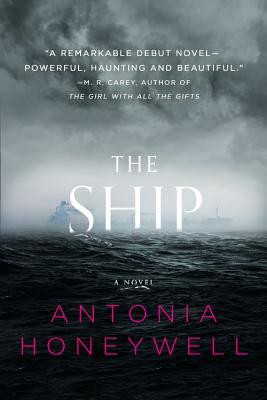
4. The Ship by Antonia Honeywell

Lalla, the protagonist of The Ship, has lived much of her life sheltered from a society that’s crumbled around her. As London turns in on itself, she and her family escape to a seemingly better place: a community that will travel on the ocean, at once embodying and seeking a better life. Honeywell captures the dangers of life in a crumbling city and the claustrophobia of shipboard living; the result is a disorienting take on the quest to preserve the best parts of a vanished world.

5. Novi Sad by Jeff Jackson

In Jeff Jackson’s novella Novi Sad, a group of people hole up in an abandoned hotel and wait for the world to end. The city around them continues to function, though: people vanish, crimes are committed, bodies are found. It’s a haunting work, both for the way in which Jackson writes about the end of everything and for the suggestion that the end of the world is a different experience for everyone.

Injury by Proxy: Why “The Handmaid’s Tale” Is So Painful to Watch

6. Amnesia Moon by Jonathan Lethem

It’s probably fair to say that Amnesia Moon is one of several works of fiction with a literary lineage connecting back to Delany’s Dhalgren. It begins like a more conventional post-apocalyptic narrative: readers will encounter characters seeking to survive in the wake of a nuclear war. Soon, though, the landscape turns into something stranger; reality is revealed to be more malleable than it seemed. And in the midst of this, Lethem deconstructs post-apocalyptic stories even as he remakes the subgenre.

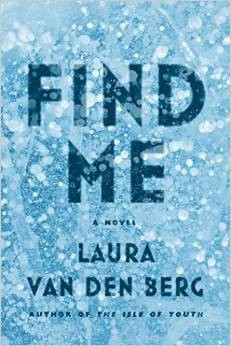
7. Find Me by Laura van den Berg

Many stories set at or after the end of the world involve attempts to remember the world as it was before — a better place, or a more stable one. Find Me turns that idea on its head. Here, society has become shattered due to a plague that leads to extensive memory loss. Here, it isn’t infrastructure or the weather or some sort of menacing creature that’s plaguing the landscape; instead, it’s something much more intimate, and even more unsettling.

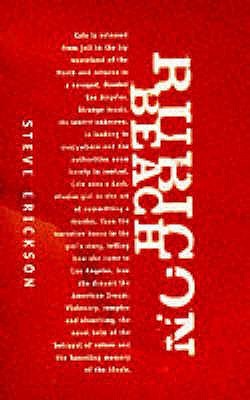
8. Rubicon Beach by Steve Erickson

Many of Steve Erickson’s novels feature altered or devastated cities, whether through cataclysm, warfare, or political unrest. In Rubicon Beach, he writes memorably of a near-future Los Angeles that’s been flooded, a crumbling urban landscape that’s evolved into something altogether different from the place familiar to most readers. Erickson’s fiction blends the anxieties of today with the ravages of history and the strangeness of tomorrow; Rubicon Beach exemplifies that synthesis.

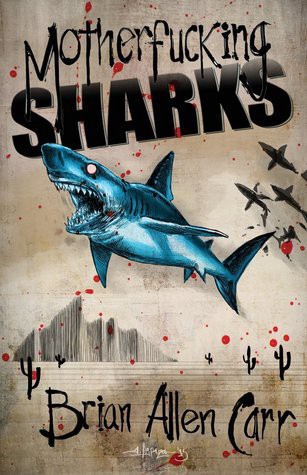
9. Motherfucking Sharks by Brian Alan Carr

Sometimes, the end of the world is just weird. Brian Alan Carr’s Motherfucking Sharks is set in a Western-tinged wasteland, albeit one that has a very crucial difference between it and the archetypal Old West. When the rain comes, it brings with it sharks that swim through the air and devour everything they see. Violent and bleakly comic, Carr’s short novel packs a nasty punch.

Dracula Is Getting the Sherlock Treatment

Plus José Eduardo Agualusa may use his prize money to build a public library in Mozambique, and interactive storytelling is back

If today’s literary news tells us anything, it’s that the magical force that is storytelling is alive and well. Sherlock creators are set to reimagine Dracula for the BBC, Puss in Book lets viewers choose the feline’s fate as part of a new interactive Netflix series, and José Eduardo Agualusa wins the prestigious literary prize for his novel about the tumultuous past of his home country.

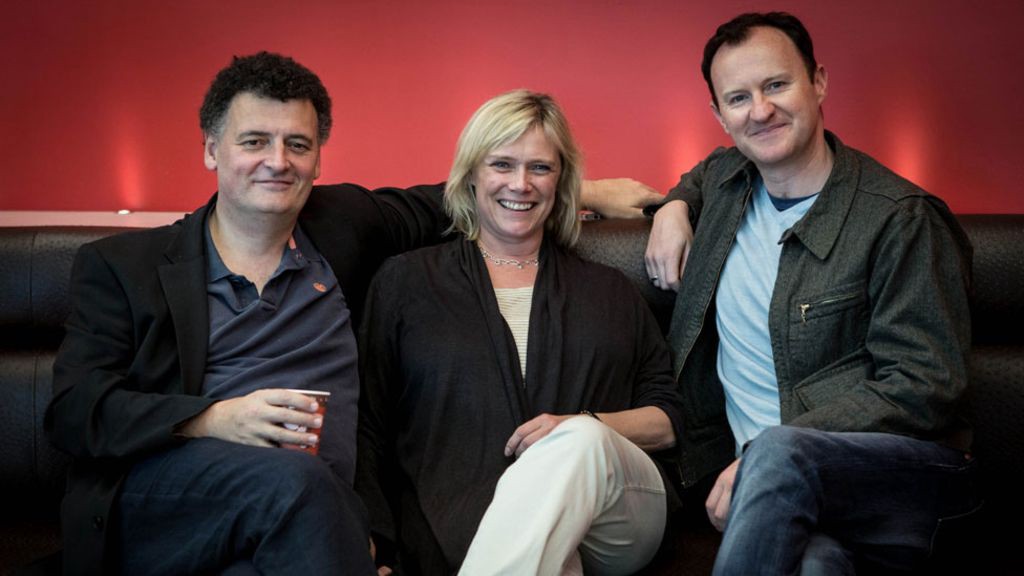
Is Dracula finally getting the Cumberbatch makeover it deserves?

For Sherlock fans who have been mourning the possible end of the show since January’s finale, there is some good news on the horizon. While there has been no official word about if/when Sherlock is returning, there are talks that the creators behind the modern-day detective series, Mark Gatiss and Steven Mofatt, are working on a new project: a series based on Bram Stoker’s Dracula. Like Sherlock, this will be a mini-series consisting of feature-length episodes to air on the BBC. The famous books on which the two series are based bear some similarities as well; both were published in the late 1800’s and take place (at least in part) in London. There is no word yet on the show’s lead or setting, but it is likely to air in 2019. Seeing as there is a general exasperation with vampires since the Twilight saga, we trust that the geniuses behind Benedict Cumberbatch as Sherlock Holmes will do Dracula justice. (Cumberbatch in cape and fangs, anyone?)

[Variety/ Stewart Clark]

How to Write an Expat Novel Without Succumbing to the Old Clichés

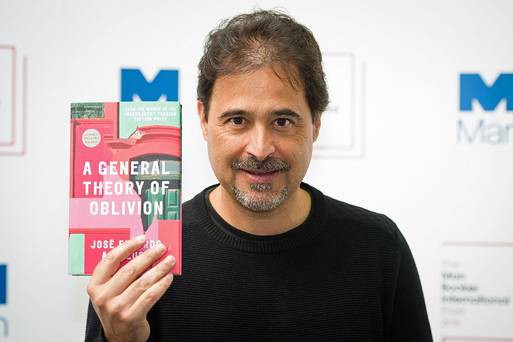
Winner of the International Dublin award wants to build a library

Angolan writer José Eduardo Agualusa has scored some big bucks. Earlier today, he was declared the winner of the 2017 International Dublin literary award for A General Theory of Oblivion, an honor that comes with a cool €100,000 prize. He has expressed a desire to build a library in his adopted home of Mozambique. In fact, a location for the library, which will be open to the public, has already been chosen. Over 100 novels from around the world were longlisted for this year’s International Dublin award (previously known as the Impac award), including Margaret Atwood’s The Heart Goes Last and The Japanese Lover by Isabelle Allende. Agualusa’s book tells a unique story of an agoraphobic woman who bricks herself into her apartment on the eve of Angolan independence and remains there for 30 years. The novel, which was also shortlisted for the Man Booker International Prize, explores themes of othering and xenophobia that Agualusa said “couldn’t be more current.”

[The Guardian/Danuta Kean]

Netflix’s interactive “Puss in Book” series lets viewers choose the plot

Netflix continues to explore innovative storytelling in TV and movies (innovative and sometimes downright bonkers — looking at you, OA), but it isn’t afraid to give the old models another go around, too. On Tuesday, the streaming service released a new episode of its animated series Puss in Book: Trapped in an Epic Tale,= that has a choose-your-own-adventure spin to it. In the interactive show, Puss has trapped himself in a book of fairytales and must find a way to get out. To do so, he enlists the help of the viewers who have to make decisions for him (via a remote or touch screen) in order for the story to continue. In this first episode, there are 13 choices, 2 different endings, thereby allowing for 3,000 different ways one could watch the show that ranges from 18–36 minutes in length. Netflix will continue to experiment with interactive technology, with a second show of the same kind, Buddy Thunderstruck: The Maybe Pile, to premiere on July 14th. So, nostalgic 30-something readers. It may just be time to get those choose-your-own-adventure books out of your parents’ attic like your Mom has been asking you to do for the last twenty damn years.

[Refinery 29/Madeline Buxton]

How to Write an Expat Novel Without Succumbing to the Old Clichés

Nicholas Bredie on life in Istanbul, the start of an uprising, and subverting the tropes of the expat novel

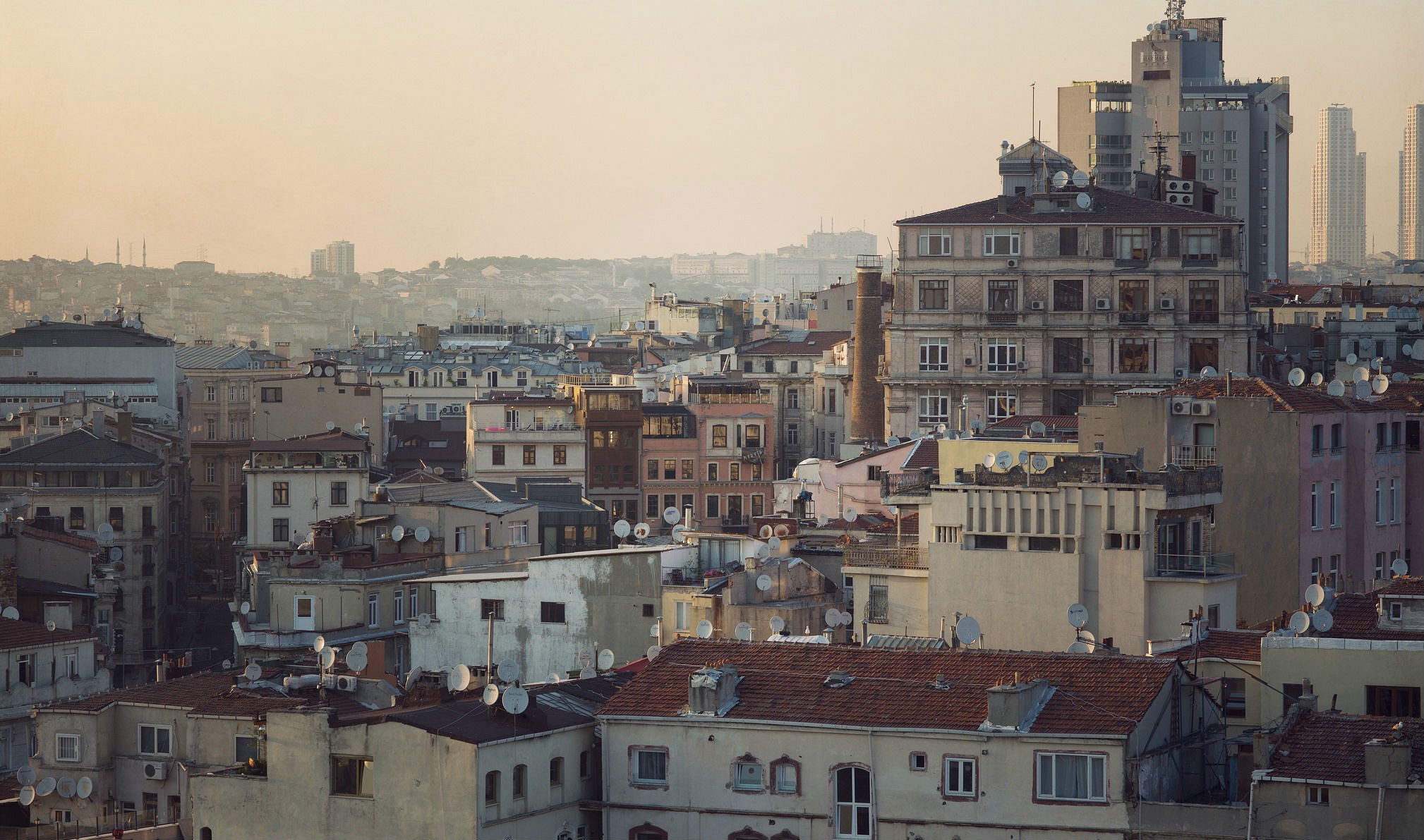
Sunset in Istanbul. Photo by 仁仔 何 via Flickr.

After having spent a few weeks “living” in Turkey with author Nick Bredie and Nora Lange and experiencing the thrilling 2013 Gezi Park uprising alongside them and millions of Turks, I sat down to read Bredie’s new novel, Not Constantinople, with romantic ideas about revisiting the Turkey I’d seen and felt, and stepping into the fictional characters he’d created loosely based on his partner and himself. And so went those expectations. Bredie’s novel took me, instead, on a wild ride of disillusioned expats and the drama they attracted and created for themselves in contemporary Istanbul. It did everything but disappoint, and although I was hungry for more, I at least got to ask the author a bit more about how he conceived of the whole thing.

Maureen Moore: You’ve written a captivating story, an expat adventure, a chronicle of an American teacher in contemporary Turkey, with romance, intrigue, political drama…all to say a good part of which was inspired by your own three-year experience of living in Istanbul. Having walked some of the very streets you describe in the book with you, I couldn’t help but be transported back to magical, mysterious Istanbul. And yet, for your main characters Fred and Virginia, there seems to be more a feeling of disenchantment and disillusionment with the place. What were you hoping to say about Istanbul with this book?

Nicholas Bredie: As the book quickly diverged from the experience of living in Istanbul to what I guess you could call an expat adventure, I started looking at other expat novels as models for how the story might go. It’s kind of a genre, the expatriate story. You read enough of them and things like travel, romance, intrigue, and a privileged male protagonist ‘living all he can’ seem to reoccur. What befalls this guy can really vary: happy self actualization a la Chad Newsome or Midnight in Paris, total loss as in Tender is the Night or Let it Come Down, or what I’d term the Spanish solution, the sort of mild melancholy epiphany you get at the end of For Whom the Bell Tolls and Leaving the Atocha Station. This might be the most satisfying outcome. However, I didn’t really want to go in any of these directions. The more I thought about it, the more I wanted to undermine these possibilities, along with a lot of the romantic orientalism which attends a place like Istanbul. I think this is something about the book that can throw readers expecting the magic of the east, or a love story. When you strip away that stuff, what you’re left with is a kind of disillusionment, which can be funny and absurd but also naked and unsettling. That’s what I was aiming for.

MM: Something that contributed to that unsettling feeling was seeing everything about the city written in its American English equivalent. I think I found that to be rare, finding these foreign names of places and things in English. Even one of Turkey’s most famous writers is referred to as Mr. Cotton. I’d love to hear it a little bit about this choice.

NB: I think it is connected to the idea of undermining or disenchanting. Having the names in plain English takes some of the exoticism out of them. There are some linguistic jokes in there too. For example Mr. Cotton’s neighborhood, Orhan Pamuk’s neighborhood, is Nişantaşı. He takes some care explaining the origin of that name in Istanbul, his memoir. It translates as “target stone,” because that was where the Ottomans set up their targets to practice archery and shooting. But Nişantaşı is also the Turkish word for “starch,” and it’s a kind of tony neighborhood, so I translated it as ‘The Starch.’

MM: For the reader, I also felt it further marked Fred and Virginia’s foreignness, as if they didn’t want to call those places by their Turkish names. It further separated them from the expected experience of the place.

NB: When we moved abroad, my uncle who was a foreign correspondent for a number of years said that the most important thing you can do is abandon analogy. To not try and compare, and make your experience fit some preconceived notions. How the characters behave and how they diverge ultimately in the book has to do with how they deal with their expectations of life abroad. In real life it is a situation of extremes: there is no family and no old friends and little language and a host of received notions about the place. Insert a Greek family who may or may not have the rights to your apartment and you have a real high-pressure fictional situation.

MM: That’s so true; I spent some time abroad as well in Portugal, living and working, and daily life is more complicated or sometimes stressful. People deal with it in different ways. There’s a quote somewhere that the narrator says about the character Fred: that he hadn’t left his own well-tamed country to play by rules abroad.

NB: Yeah and that is Fred’s particular maybe misguided understanding of his privilege of a foreigner abroad, later on he compares himself to a pirate, whether that’s a fair analogy or not, let the reader decide. But he certainly decided that what it means to be abroad is to be above rules.

MM: Right, take certain liberties, one of which is this elaborate scheme that he invents with the Greek. Are you interested in sharing that?

Author Nicholas Bredie

NB: Oh yeah, I think that’s even on the jacket copy. The essay-writing scheme. The essay-writing scheme is something that, I hate to say, was in part taken from life. There was an illicit essay-writing service at the university where we worked, and there was a certain amount of pressure put on teachers to try and discover the plagiarized papers. I mean this is common, it happens at Harvard too. After a while though you started feeling like you should be paid extra to play policeman, and you also felt bad for these kids who were doing an undergraduate degree in a second language. I could never do that. They’re under an enormous amount of pressure to produce and obviously that kind of situation drives people to cheat. And then you as a teacher heard about how much money they were paying for these papers, you started thinking, I mean, yeah, *nervous laughter.*

MM: So the other big event already mentioned is that this Greek family moves in to Fred and Virginia’s apartment right off the bat. Reading it, I couldn’t help but think: I was in your apartment in Turkey, and for a second I was like wait, did this happen to Nick and Nora in real life? Because I never heard about it, and I think I would have. Is this something that has happened, or could happen, in contemporary Turkey?

NB: To say that I have any expertise in the real estate laws of Turkey would be a lie. That said, we moved into a gentrifying neighborhood that was a mix of very hip cafes and these abandoned buildings. It took a while for us to understand that the buildings were abandoned because their ownership was contested. That it was a neighborhood where Greeks and Armenians and Jews had lived until the 1950s, when there were pogroms and other repressive measures which drove them from Istanbul. I don’t know if the ownership was contested for our apartment. But our landlord was like ‘don’t change the name on the electricity or the water bill, just link your bank account. This is what everyone does.’

MM: Link your bank account to a bill that’s in someone else’s name that you don’t know?

NB: Yeah, you just linked the account number of the bill to your account. At the same time, a building that was abandoned one day would be lavishly restored the next day, and you had to figure that somebody had received a deed or lease to it somehow. That was the seed of the idea of having the Greeks come back for their apartment.

10 Great Novels of Exile and Dislocation

MM: Did you have any contact with someone who had experienced something remotely similar to a family moving in to reclaim their property?

NB: I had heard stories of squatters ‘selling’ apartments and then reappearing later. Then around the time that I was starting the novel, Nora was teaching this great article by the scholar Amy Mills about the minorities, the Greeks and the Jews and the Armenians, and the void that they had left having been suddenly driven from the city, and it reminded me of stories of people trying to get their property back after the Holocaust, not only art or money but also property.

MM: In terms of the writing process, I was curious how much of that story did you write while living there versus here in L.A.?

NB: I wrote about three quarters of the first draft there, starting in 2012. In retrospect, what’s interesting was I was writing about real estate and development tied up in Istanbul’s history and minorities. Beyond the stuff in our neighborhood, I had heard stories about a historic Roma quarter near the city walls that had been demolished and replaced with what they called Ottoman style townhouses. That happened in 2008, and while I was writing the first draft there had been rumors that the park at Taksim Square was going to be replaced with a recreation of the Ottoman barracks that it had in turn replaced in the 1940s. It was one of these sort of absurd stories that you felt couldn’t be real. I mean there were like ten kids with flyers standing outside the metro station saying, ‘there are plans to change this park into a shopping mall in the form of the original artillery barracks,’ and you know you kind of shrug it off like ‘this is impossible.’ But then of course I was writing and I kind of thought, ‘well this would be a funny fictional story to explore’ whether it actually happens or not. And then lo and behold that plan turned out to be true. As you know, because you were there, the protest against the destruction of the park developed into this huge movement and protests and sometimes riots that consumed the city and also made it into the book. The book was headed towards some version of that event, the destruction of the park, before it became a reality. And so when it happened and we were caught up in it, I did have this incredible sensation of life imitating art. This led to a decision that I’m of two minds about. Since the book was already underway, I decided not to change the timeline of the narrative to fit the historical facts. So the Gezi moment in the book takes place in ‘mid-autumn,’ while the real event took place in May and June, 2013. I didn’t change it in part because I don’t want to claim ownership over the Gezi events, they belong to the people who put their lives on the line standing up to the powerful and the cops. At the same time, Gezi happened to be the perfect culmination of themes already at work in the book. And since there is no such thing as coincidence, Gezi also gave me a way to fill the hole I’d dug undermining the tropes of the East and expat romance, which was commitment, of a political nature.

MM: That’s pretty wild you had heard of some notion of this before it all unfolded.

NB: Yeah, well it was absurd on paper, which was what attracted me to it in the first place. But in retrospect nothing was out of the realm of the possibility considering what has happened since. I think what’s sadder is that in some ways that Gezi moment was a kind of high point and things have gotten a lot tougher after that politically and economically. And so in some ways the world that is portrayed in the novel almost a historical period.

MM: I remember being there with you guys. Literally the day after the initial uprising or revolt in the park, the Saturday after people had gotten gassed and everything, there was this incredible feeling of solidarity and unity and people of different generations, different walks of life. It was so fascinating to be an outsider, even with a superficial understanding of things. Just to kind of witness that moment.

NB: It was a special time and place.

A 9/11 Story About the Arrogance of a Man’s Apathy

“Alexi & Kurt”

by Catherine Lacey

Traffic was backed up for blocks, holding his car at a standstill in the neighborhood he used to live in, on his old street. The car rolled slowly past the door that had once been his and he found himself staring at it, waiting for his past self to come walking out. Still painted the same blue, he noticed, nauseated and annoyed by how much time had passed. Fifteen years already? He didn’t want to do the math.

Traffic, the driver said, flicking his eyes at him in the rearview.

Yeah. Kurt rolled down the window, peered up at his old balcony. He could almost see it and began to feel wistful, almost weepy — No. He was being ridiculous. He raised the window, but the memory of his time with Alexi sat like a pill in his throat. They’d had a good run for a few months, hadn’t they? Or had they? Maybe they’d even been in love for a little while or maybe it only seemed that way from a distance. A vague set of images cued up — Alexi across a room at a party they’d gone to, pretending to not be together. He and Alexi sharing a midnight cigarette on his roof — or was it hers? Alexi in the second row of some theater somewhere, staring neutrally at him onstage as he was interviewed for a film festival — though he couldn’t now remember what it had been. Anyway. It had been a good summer, he thought. They’d had a good time.

But then a bomb went off — or at least what sounded like a bomb — a plane crashing into a building a mile away. Alexi had been at her place that morning, a microscopic two-bedroom she shared with another actress in a hazardous walk-up, and when she heard it, she immediately thought of Kurt, became increasingly frantic when he didn’t pick up the phone, then terrified that something had happened, then certain that something had happened because he would have found a way to reach her by now, and her body went wild trying to escape itself — vomiting and achy and collapsing — and she thought of how tragic it was that this, potentially losing him to whatever had happened out there (so many rumors in the street), had finally revealed that their love had a real weight, real roots in her. Against her roommate’s shouts and tears, she walked out into the ash-hazy streets, surrounded by a chorus of sirens as she dashed to his place, arriving coated in ash and sweat at his door, trembling. His first words to her: You should take a shower.

So she did, crying but keeping quiet, not wanting him to worry.

How was it that he seemed so calm? Hadn’t he been worried about her? Hadn’t he been afraid? Or perhaps, she thought, he was swallowing his fear to be steady for her, that his love had manifested not in mania but in solidity, that this was the way they balanced each other. This moment, this horrible moment, had made them see, she thought, how necessary they were for each other. She stood wrapped in a towel, feeling so changed and important.

Kurt gave her a change of clothes, jean shorts and a T-shirt that she’d left at his place that Kurt had put by the door for the last couple weeks, hoping she would take them home. He handled her toxic, dusty clothes with dish gloves, sealing them in plastic bags and disinfecting everything they’d touched.

This is all outside of our control, he said as Alexi clutched on to him, her hair wet, eyes red.

Her outsize emotions bothered him. The few people she knew in the city — her roommate and her two other real friends — had been accounted for. She didn’t know anyone who worked in the Financial District. She hadn’t personally lost anything. This wasn’t her tragedy. She was reacting too much like a certain kind of actress would, taking any opportunity as a chance to perform.

They didn’t speak much for the rest of the afternoon or night, just listened for a while to a radio that worked, turning it off to have athletic, wordless sex to which they each ascribed a different meaning.

Weeks later, when she asked him what he had been thinking of that day, she was unnerved (then upset, then repulsed) by what he said. It wasn’t Alexi’s safety or his safety or even his friends’ safety (and did he even have any friends?) and wasn’t even the staggering heaps of human life wasted only blocks from his luxury west SoHo loft. No. He confessed to Alexi that he thought of how the funding for The Walk would probably fall through now — and, yes, Kurt said, he realized she might think this was shallow or detached, and he realized that he wasn’t experiencing the attack in the emotionally penetrable way that she was, not that there was anything wrong with that, per se, but there really sort of was, if you thought about it, but listen, he told her as she began to sob, will you just fucking listen to what I’m saying for once instead of obsessing over your own emotional reality? Huh? For once? Can you do that for me?

The way his beautiful face went hard — eyes molted with his young-man beliefs — this would be the image Alexi kept with her long after she left him. Maybe his heart had atrophied after being so publicly beloved, and maybe that’s why he seemed unmoved by the shrines to the lost, the faded, photocopied portraits of the dead on every street corner — Have you seen this person? — a city of unashamed eye contact, millions of people now reverent with each other, seeing the holy in each other, and this man, this little monster, was worried about his fucking production schedule.

Everyone out there right now, he said, all the volunteers and firefighters and everyone having their big come-to-Jesus, everyone crying over this admittedly truly horrible and terrifying thing — listen — no, listen!

She tamped down her tears to hear the exact ways in which he was terrible.

You may think you’re crying because all those people died and it’s tragic, but you’re still crying for yourself. You’re crying because you know it could have been you. You’re crying because life is not special and everyone dies and the complexity of your “self” is still going to vanish someday and there’s no such thing as justice.

Her tears had stopped.

No one can cry for someone else.

She examined his face as if he were an object.

I’m not prone to ecstatic displays of emotion to get attention, but I still feel things. I just organize that experience in a different way. I process it logically.

It saddened her that this was the man she had chosen to sleep with for a whole summer into autumn, a man so stingy with himself that he refused to witness another’s pain.

When I realized what had happened, I thought, one, human life is temporary; and two, the only way I can cope with this fact is making something that outlives me; and three, the film I have been developing for the last three years is probably going to get delayed yet again if there are problems with funding; and four, yes, I could be so much as a pile of dust tomorrow and that’s sad; and five, the only way that I can deal with that fact is by working, that I could make something bigger than me, something that has an effect on other people.

She felt nauseous as she considered the many ounces of him that she had sucked into her body. What was he really made of? Do you understand what I’m saying? Or do you just want to think I’m a bad guy because I don’t cry the way you do?

(She remembered him sipping a goblet of red wine in his living room the night of the attacks, after they’d had what she thought was emotionally potent sex. He was enjoying the most expensive bottle he had, alone, because Alexi was on a diet for a role, so he sat in the living room reading a novel — a fucking novel! — while she stayed in bed, the dust on the windows filtering the light all gauzy, her head swimming in the sincere enormity of the present, distantly wondering why he had gotten out of bed without explanation, why he didn’t answer when she asked where he was going, why he wasn’t in bed with her, warm at her side.)

I’m a different fucking person from you. I see the world differently, I process emotion differently. And there’s nothing wrong with that. You just need to grow up and accept it.

(He had returned to bed that night with lips edged and breath heavy with Cabernet, and though Alexi’s face was swollen red and salt-gritty from tears flowing, drying, and flowing again, he made no move to comfort her, just turned out the light and was snoring in minutes.)

I don’t need to become more like you. Hell, you probably need to be less like the sort of person you are.

That was the last thing he ever said to her. He had trouble getting to sleep after she left mid-argument, and not because his call had gone straight to voice mail and not because she had tried to make him feel coldhearted, and not because he missed her, because he didn’t, because he enjoyed being alone, really enjoyed it, and he didn’t lie awake that night for two hours because of the World Trade Center, and when he later woke up crying, he knew it wasn’t sadness for life lost or the victims’ families or the bravery of people who risked their own insignificant lives for the insignificant lives of others. No. He must have just been crying for himself. Simple anxiety. He crossed his arms, felt his biceps, his chest, his belly, moved his hands down to his thighs. He was here. He didn’t need to cry for himself. He didn’t need to cry at all, he thought, and he stopped, fell asleep, slept until noon.

The traffic had finally loosened but Kurt hadn’t noticed, had been completely folded into this memory. The car was crossing the bridge when he opened his eyes, night-black river below, people walking along the lamplit waterfront in pairs, staring at each other or at the skyline, all of it so much more fragile than it seemed, everyone on the edge of oblivion, as usual. He watched the bridge beams rush by outside the window and thought about something he read once about some tiny muscles in the human face that send signals to other brains while bypassing a person’s awareness, skipping the eyes, going straight to their core. An unknown sonar, some language none realized they were speaking, an honest whisper. He wondered what his face may have said to her.