Want a signed copy of your favorite author’s novel? Get ready to jump through some hoops. Plus, more of the day’s literary news
There’s good news and bad news on the literary front today: a new California law has really ticked off a bookstore owner, rare books by President Obama’s father were sold at auction, Chuck Palahniuk has been creating coloring books, and finally yes, this is really happening outside of Fahrenheit 451: more than 6,000 books were just burned in Libya.
New California law requires authentication of autographed merch
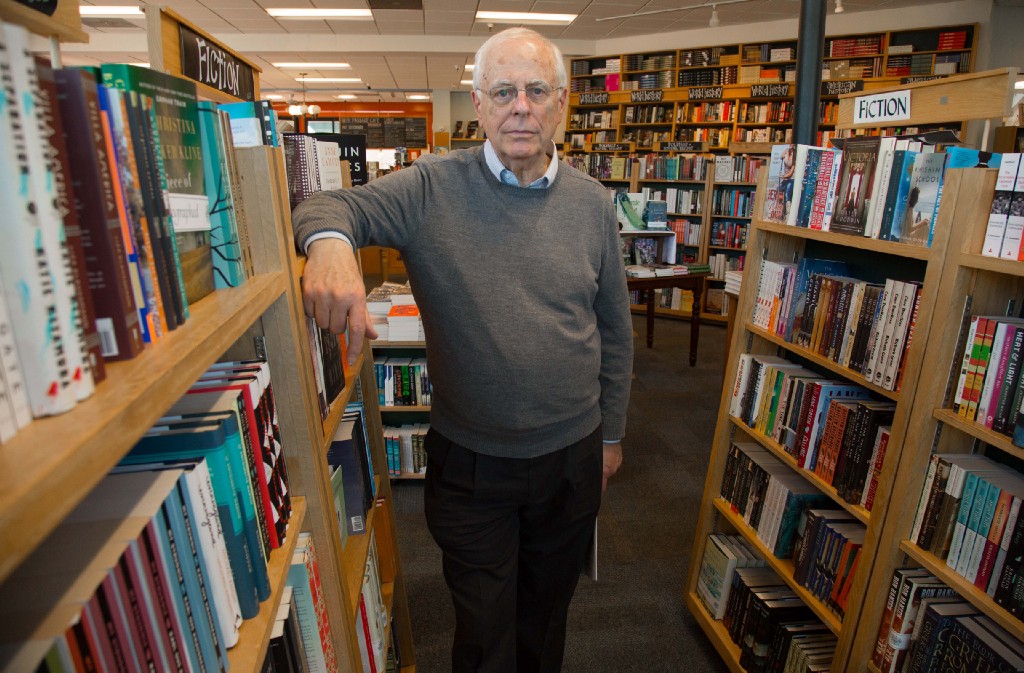
Getting an autographed book in California just got a whole lot tougher, and booksellers aren’t standing for it. According to a new law in the Golden State, every piece of autographed merchandise valued at more than $5 must be authenticated. The rule was initially intended to apply to sports memorabilia, but in effect covers anything with a signature on it. Bill Petrocelli, who co-owns Bay Area bookstore Book Passage, has decided to go ahead and sue the state over this new regulation. Book Passage is a beloved community locale that sells books and hosts over 700 author events. All autographed books are sold for their cover place (no premiums!), but now that practice could prove unworkable. In addition to producing certificates of authenticity, the law would require booksellers to keep detailed records of every (autographed) sale for seven years, with excessive penalties hanging over their heads if they fail to do so. Petrocelli claims this extensive process will both be an inconvenience and a breach of customers’ privacy rights. As someone who hates waiting in long lines and loves book signings, I wish Bill the best of luck with his lawsuit.
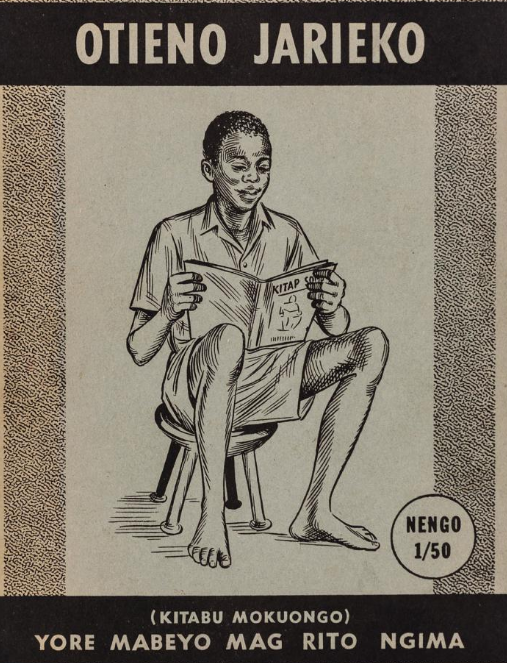
One little book decided the course of history. Books written by former president Barack Obama’s father (of an identical name) were put up for auction by Dutch online auction house Adams Amsterdam Auction and have now been sold. Written in the 1950’s and in Obama Sr.’s native language, Luo, the series of books was intended to promote adult literacy in Africa. Director of the program Elizabeth Mooney noticed the author’s talent and encouraged him to apply to an overseas study program at the University of Hawaii. As we all know, the rest is history…In Hawaii, he met Ann Dunham and married her; their union eventually graced us with future President Barack Obama. For this reason and also on account of their rarity, these books possess a special significance. The auctioned set was owned by a private Dutch citizen who bought the books to teach himself Luo when he was a volunteer in Africa. Besides this set, there are only two known copies: one owned by the Library of Congress, and the other by Northwestern University.
Chuck Palahniuk is releasing his second coloring book novella
Chuck Palahniuk is a man of many talents. Besides being the award-winning Fight Club novelist and freelance journalist, the renowned author can now add coloring-book creator to his résumé. Last year, Palahniuk hopped on the adult coloring book bandwagon when he came out with Bait: Off-Color Stories For You To Color, which paired his stories with illustrations from various artists. His second novella (his first was Inclinations in 2015), Legacy: An Off-Color Novella For You To Color will be released on November 7th. It will feature artists such as Duncan Fegredo and Buffy the Vampire Slayer cover artist Steve Morris. According to Palahniuk, Legacy will be a fantasy story based in the modern world. And knowing Chuck, it should definitely be…interesting. (The first rule of coloring books is you don’t talk about coloring books. Or is that the second rule?)
Books, as popular conduits of society’s multitudinous ideas, often have to suffer the unfortunate consequences of closed-mindedness. Some people are even hellbent on eliminating ideas they find disagreeable. According to a video on a Libyan media platform, police forces in Benghazi, loyal to rogue general Khalifa Haftar, have now set fire to more than 6,000 books. The video shows a police officer claiming the tomes promote violence and the “ideas of Muslim brotherhood.” This is nothing new for Libya; authorities have been seizing books they deem “erotic” or “anti-Islamic” for quite some time now. In January, following a roundup of books deemed to advocate secularism, over 100 Libyan writers and a roster of international artists and academics condemned this censorship, calling it “intellectual terrorism.” This is all starting to sound a little too Fahrenheit 451 for our liking.
Books that take women and their creative inspirations seriously
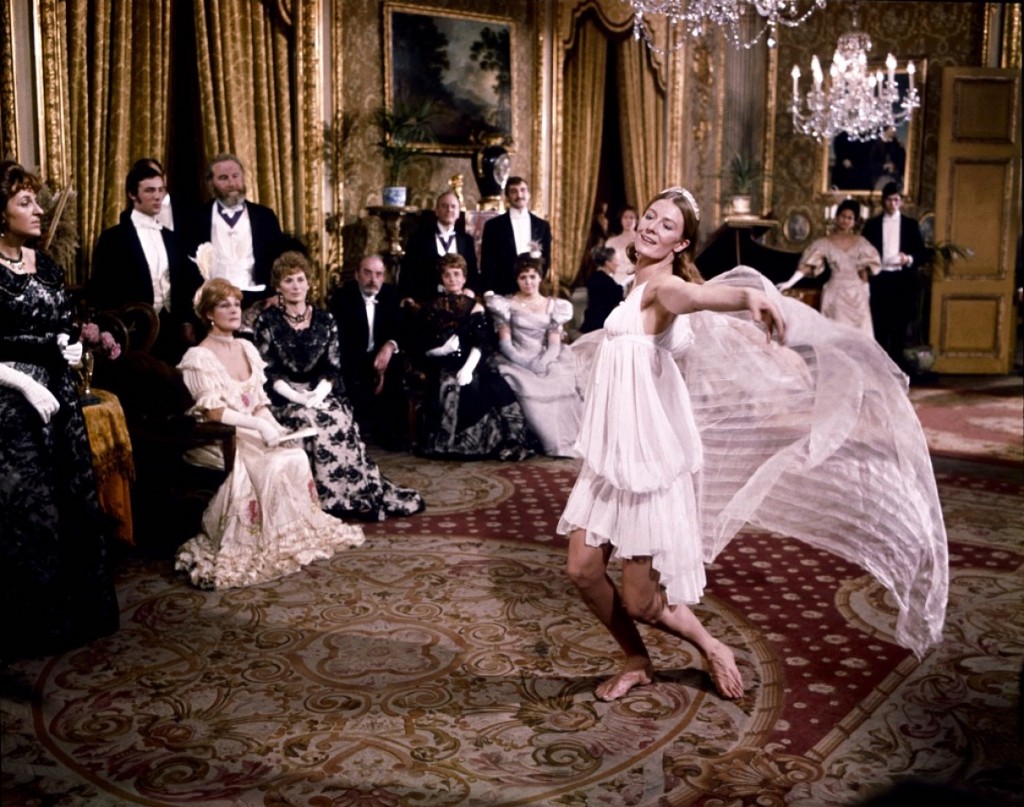
Vanessa Redgrave as Isadora Duncan. Isadora (1968)
Countless novels depict the fictionalized life of a real artist, or the artistic life of a fictional one. Think of works like The Master by Colm Tóibín, Portrait of the Artist as a Young Man by James Joyce, or An Artist of the Floating World by Kazuo Ishiguro. If you noticed that these are all novels about men, that’s the point. A quick scan of the literature shows that the writerly gaze has been most often turned on male artists and their creative processes and passions.
Lately, however, the cultural spotlight is increasingly shone on the experiences of female artists, whether it’s a television show that dares to portray a female filmmaker using a man as her artistic and sexual muse, or a conversation about why books about women are less likely to win major literary prizes.
Novelists also seem to have taken a noticeable interest in women in the arts. Many of these eleven books were published in the last few years. The type of artist varies; there are dancers, painters, writers, and singers. In some, the characters are entirely invented. In others, they’re based on real lives — it turns out there is a smaller, yet no less interesting, pool of real women artists to choose from. All seek to capture not just the life and work of one woman, but the process of becoming an artist.
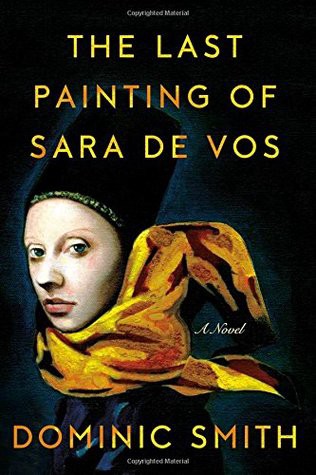
1. The Last Painting of Sara de Vos by Dominic Smith
Dominic Smith’s novel is an engaging mix of art heist and art history. In 1957, a painting is stolen from the de Groot family’s home in New York City. The artwork was painted by Sara de Vos, who Smith based on one of the real, though rare, female members of a 17th century Dutch masters guild. Jumping between Holland, New York, and Sydney, this novel intertwines the life of two passionate women painters who have much in common, despite living three hundred years apart.
2. Isadora by Amelia Gray
Thanks to her fluid, free-moving dance performances, Isadora Duncan is known as one of the founders of modern dance. She was also infamous for her private life — at the turn-of-the-century, she shocked with her bisexuality, heavy drinking, and string of personal tragedies. In this novel, Gray chronicles Duncan’s varied life, as well as her commitment to a new, less rigid dance that suggested that the natural female body could be a form of artistic expression.
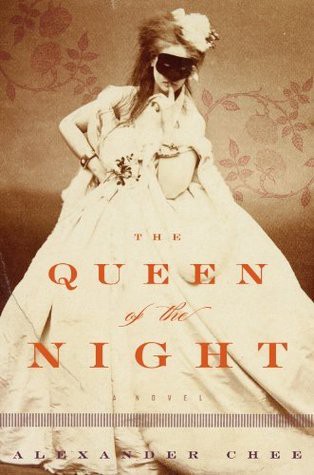
3. The Queen of the Night by Alexander Chee
Anyone who’s felt a shiver watching The Phantom of the Opera will love the richness with which Chee recreates the world of the 19th century Parisian opera in his lyrical second novel, Queen of the Night. This is the story of Lilliet Berne, an American soprano who gets what seems like the offer a life time — an opera written just for her — until she realizes the show is based on her past, one she’d rather keep secret. Chee did a ton of research while writing the novel, and opera fans will appreciate the details he brings to Lilliet’s role.
4. Cat’s Eye by Margaret Atwood
If you’re looking for a mix of art-as-emotional-mirror and complex female relationships, who else to turn to but Margaret Atwood? Elaine Risley is a middle-aged Canadian painter whose past comes bubbling up when she attends a retrospective of her work in Toronto. It turns out that Elaine’s artistic success is directly related to her fraught relationship with her childhood friend Cordelia, a fact which literally stares her in the face at her opening.
5. Swing Time by Zadie Smith
Zadie Smith has been obsessed with dance since she was a child, in part because “you see visually what in other art forms, we have to talk about metaphorically.” So it’s no surprise that dance shapes Smith’s latest novel about two biracial girls in London who both aspire to be dancers, though only one has real talent. The other, who is the book’s nameless narrator, must substitute being an artist-creator for proximity to an artist, working as a PA for a mega pop star.
6. The Woman Upstairs by Claire Messud
Most artists are preoccupied with the question of legitimacy — how successful, how recognized must you be before you can consider yourself a true artist? Messud ponders this question in the tale of Nora Eldridge, a forty-something third grade teacher in Massachusetts who becomes beguiled by her new students’ parents. The Shadids are smart and world-traveled, so when the wife, who is a respected artist, invites Nora to share her studio space, Nora is thrilled. This simple act quickly leads into a psychological spiral as Nora wants what she can’t have: talent, fame, and the assurance that she is a true artist.
This Pulitzer Prize-winning novel jumps back and forth between three narratives to showcase the timeless influence of great art — and one of history’s greatest artists, Virginia Woolf. In one thread, Woolf herself struggles with finding an opening to the beginning of her novel, Mrs. Dalloway. In another,Clarissa, a modern-day Mrs. Dalloway, plans a party for her friend and ex-lover who is dying of AIDS. In the last, a California housewife, inspired by Woolf’s own act of suicide, wonders if there is a way out of her airless life and sham marriage. All three stories stand on their own while also resonating with and building on Woolf and her work.
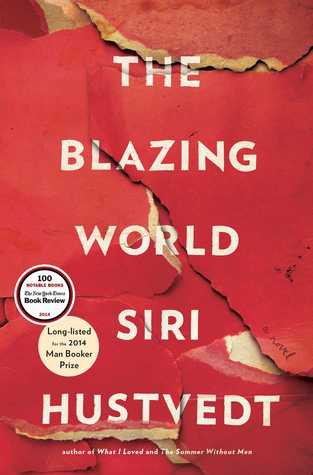
8. The Blazing World by Siri Hustvedt
There may not be a more apropos time to read Hustvedt’s Booker Prize-nominated novel about a female artist who, frustrated by the misogyny of the art world, shows her work under the guise of three different male artists. To her satisfaction, her art becomes a huge success, to her dismay, some of the men won’t cop to the true author of the work. This is a novel about art, the perceptions of the artist, and frankly about the way that society still imparts inherent value to men over women.
9. The Children’s Book by A.S. Byatt
At the center of Byatt’s novel, which was shortlisted for the Booker Prize, is Olive, a woman who runs a seemingly ideal late-19th century household, filled with summer parties and frolicking children. However hidden behind the manor’s beautiful facade is a tangled web of affairs and jumbled parentage, which Olive slyly writes into her stories for children. Byatt always includes a fair amount of history in her novels, and this one nods to many other children’s writers of the time, including J.M. Barrie, Edith Nesbit, and Kenneth Grahame.
10. The Last Nude by Ellis Avery
The protagonist of Avery’s novel sounds like someone a writer would invent to encapsulate the roaring twenties, however Tamara de Lempicka was a real Polish-Russian painter who became famous for her scandalously realistic nude paintings. Lempicka was also known for her bisexual relationships, including the one with a 17-year-old Italian American prostitute named Rafaela Fanoat, which is the heart of this novel.
11. The Painter from Shanghai by Jennifer Cody Epstein
This novel is based on the unlikely true story of early 20th century Chinese painter Pan Yuliang. As a child, Yuliang was sold into prostitution by her uncle, who needed the money to support his opium habit. Pan became the concubine for a wealthy customs inspector who allowed her to go to art school in Shanghai and eventually Europe. The move made Pan into a talented painter, but when she returned to China, which was on the brink of revolution, her art was considered too modern. Pan’s journey questions the inherent value of a piece of art versus the society and lens that its viewed in.
“Double Take” is our literary criticism series wherein two readers tackle a highly-anticipated book’s innermost themes, successes, failures, trappings, and surprises. In this edition, Electric Literature’s own Halimah Marcus discusses Dan Chaon’s bleak thriller Ill Will with Sam Allingham. Allingham is a former contributor to Electric Literature’s Recommended Reading and the author of The Great American Songbook. He also happens to have been Chaon’s undergraduate student at Oberlin College. (Fun fact: one of the dead guys in Ill Will is named Peter Allingham, because Prof. Chaon recognized that Allingham is a good last name.)
Ill Will centers around the life of Dustin Tillman, a psychologist and widowed father living in the suburbs of Cleveland. Dustin has recently begun treating Aqil, a former police officer obsessed with a series of drowning deaths in the region. Aqil plies Dustin with an elaborate conspiracy theory about a satanic serial killer, until Dustin is eventually persuaded to join the ad hoc investigation. At the same time, Dustin’s traumatic past resurfaces when he learns that his adoptive brother, Rusty, who was convicted of murdering Dustin’s mother, father, aunt, and uncle, has been acquitted and released from prison. Rusty’s trial embodied the height of the “Satanic Panic” of the 1980s and led Dustin to write his thesis about Satanic cults and recovered memories. As Dustin becomes increasingly preoccupied with his and Aqil’s investigation, his youngest son Aaron’s recreational drug use grows into a crippling addiction. The novel’s tangled plot is told through a multi-perspective and formally experimental narrative, making for a gripping, blood-chilling read.
Spoilers are encouraged and fair-warned, with the hope that readers purchase the novel and join the discussion in the comments.
Halimah Marcus: One of the reasons I want to talk about Ill Will — which I think is pretty brilliant — is that it’s formally experimental but also, in many ways, a traditional mystery or horror story. There’s the formula of the past childhood trauma informing the present day. I’m thinking of In the Woods by Tana French, or even Season 1 of Dexter, and I’m sure there are many other examples. In the case of this novel, Dustin Tillman’s parents were murdered when he was a child and now he’s a psychiatrist “investigating” a possible serial killer. Formally, there are the broken sentences, the weird spacing, and the parallel narratives, which are both physically parallel in vertical columns and chronologically parallel. And then there’s the plot, which is dark as fuck. So where do you want to start?
Sam Allingham: I’m glad you started with the ways in which the book is and isn’t a traditional thriller; I love how it manages to maintain such a creepy atmosphere while also providing some high-level postmodern winks about the thriller form. Putting “investigation” in quotation marks feels right, because Dustin is so self-conscious (and a little too excited) about stepping into his role in the thriller. It’s like his past has made him obsessed with the structure of these sort of crimes — so obsessed that he can’t quite see the real horror staring him in the face. Not for nothing does his patient-turned buddy (and co-investigator) Aqil introduce him to people as a guy who’s writing a book about a serial killer. But it’s not quite Dustin’s book; as Dustin begins to unravel, the narrative unravels too. It gets more diffuse, with more parallel narratives, bigger gaps. Maybe we should talk about these gaps, divisions, and disjunctions. It’s hard to get across to someone who hasn’t read the book how upsetting it is to have awful stuff suddenly elided, or to be ripped out of a character’s scene just as something horrible is about to happen!
HM: It’s also very effective! Inextricably connected to these post-modern winks is the fact that Dustin is one of the most intensely unreliable narrators I’ve ever encountered. Ill Will reminded me that an unreliable narrator can be more than a crafty trick. It’s a workshop term that’s usually applied to self-interested or self-aggrandizing narrators telling stories in a way that flatters themselves, and I forget that it can also refer to so much else. Dustin is an easily manipulated, traumatized person with shaky psychological footing, and occupying his perspective is, as you say, really upsetting. Karen Russell’s Swamplandia was the last book that I read that totally exploded the concept of an unreliable narrator and how such a character could shape a story. Both novels use their narrator’s confusion about what’s real and what’s imagined to catch the reader off guard with something horrific. But Swamplandia was entirely from the point of view of one person, Ava Bigtree. Whereas Ill Will features multiple narrators and some sections in the third person, which provide reality checks and supply information Dustin can’t. I guess my point is that Dustin is a character that justifies those gaps, divisions, and disjunctions because he himself is so disjointed. There’s a joke in the book about how his sons are always finishing his sentences because he trails off before obvious words. When Chaon ends in a sentence abruptly or drops a period or put extra spaces in the middle of a line, it mimics Dustin’s brain on the fritz. And you don’t realize until the end how deep those disjunctions go and the tragedy of their consequences.
SA: Yeah, you’re absolutely right — it’s the sense of tragedy (or maybe doom?) that keeps the whole thing from feeling like an exercise in style. Chaon is just so good at manipulating the terms of sympathy we feel for Dustin, especially since (spoiler alert) the death of his wife from cancer is such a central part of the story. For such a propulsive and structurally ambitious thriller, there’s a surprising number of scenes that stick because they represent Dustin in incredibly sensitive, emotional moments, like the one from his childhood where he and his newly adopted brother Rusty, who later gets blamed for murdering their parents, first watch the stars together. You can tell that Rusty isn’t entirely to be trusted, but Dustin’s loneliness is so palpable that his growing fascination with his brother and the trauma that follows both feel understandable. There are other flashbulb moments like these, in which Chaon communicates the emotional intensity of Dustin’s inner life so beautifully that you forget the disjointedness of the episodes, not to mention the fact that some of them might be misremembered, or even made up! I love how he places these little observational epiphanies that might satisfy in the context of a character-driven narrative in the midst of this thriller that’s really about psychological deterioration. It’s like he’s saying: sure, you can have these moments of realization, but what do they mean when your mind and your daily life are both falling apart?
But maybe we’re focusing a bit too much on Dustin. You’re right that as his point of view gets weirder his younger son seems like more of a reliable character, although his life is maybe even darker than his dad’s! What did you think of Aaron?
HM: Because drug addicts are the original unreliable narrators, right? Poor Aaron. I really feel for that kid. His mom has just died and his dad is so far out to lunch he doesn’t even notice his son is a heroin addict. It was heart wrenching but also kind of funny when Dustin realizes Aaron is doing heroin and says, “For some reason, I had thought it was a fashion choice — that he was trying to be what we used to call ‘Goth.’” Aaron also has a total lack of self-awareness, but in a more familiar, decodable way. Chaon is incredibly clever about circumnavigating his character’s limitations. For example, the way Aaron behaves with Terri, his best friend Rabbit’s mom, who is also dying of cancer, betrays his unprocessed feelings about his own mother’s death from the same disease. Somehow I knew more about Aaron than he knew about himself, and I felt tremendous compassion toward him, similar to how I might feel toward a friend who was spinning out. Yet even though I understood Aaron to be an isolated heroin addict, I didn’t get my head around how doomed he was until it was too late. I’m curious to know what you thought of him, and I also want to talk about Rusty and Aqil on our way to spoiling the shit out of the ending, which I completely failed at predicting.
Chaon is incredibly clever about circumnavigating his character’s limitations.
SA: I think one of the hardest parts of Aaron’s character is the way in which he doesn’t quite have the language or the perspective to handle what’s going on. I mean, his romance with his friend’s dying mother is just so painful to witness; like his father, he doesn’t seem to realize his desires or the desires of others until things have gone too far. And then there’s the weird hellscape he enters when he visits House of Willis, the drug house/abandoned funeral parlor. We can’t be sure whether the place is truly as creepy as it seems, or whether Aaron’s perspective is so fractured and high and paranoid that it comes across as a nightmare. But then again, the people he meets there really do seem like demons…
I found myself rooting for Aaron, even if at times I wanted to get out from behind him to see the world he was moving through from some more distant vantage point. But that’s precisely what Chaon doesn’t let us do, and it makes the horror feel more visceral.
The ending is one of the most delightfully horrible aspects of the book; it recasts everything that came before. I almost don’t want to give it away, so maybe I’ll give the spoiler warning again, so that people really can just go read the book. (DO IT: read the book.)
Dustin’s relationship with his “patient” Aqil feels codependent and a little odd, sure, but once you find out that Aqil is the killer it curdles everything. When the news came out, I immediately remembered an early part in which Aqil, who enters Dustin’s life as a patient in his therapy practice, kneels in front of Dustin and takes his hand: a weird moment on first read, and uncomfortably intimate, but when you realize Aqil had already essentially marked Dustin as a pawn, a true mark… it becomes almost unbearable. And we’re implicated, too. How could Dustin miss the truth? But then again, so did we!
The ending is one of the most delightfully horrible aspects of the book; it recasts everything that came before.
HM: I’m about to go even deeper into spoiler territory, but how did you interpret Aqil’s motivations for involving Dustin in his investigation/murder plot? At one point, Aqil speculates that the alleged serial killer, nick-named Jack Daniels, is opportunistic. That he noticed the pattern of young, white, frat boys getting wasted and falling into rivers, and recognized a chance to get away with murder. Serial killers often target vulnerable populations such as sex workers and the homeless. Young white men are not usually thought of as vulnerable, and everyone assumes their deaths are a result of reckless self-endangerment rather than foul play.
Later, Aqil posits a technique Jack Daniels might use to subdue and disorient the victim, involving a sensory deprivation tank and a feeding tube of whiskey. So what came first, the plot to manipulate or the plot to murder? Was Aqil obsessed with a serial killer to the degree that he became one, or was he Jack Daniels all along?
I’m able to find plausible motivations for his behavior in the former possibility, but struggle with the latter. If his plot to murder Aaron was pre-meditated from the first time he walked into Dustin’s office, it’s not clear to me what role he needed Dustin to play. Aaron is a vulnerable, isolated, and defenseless drug addict. Aqil doesn’t need to become close with Aaron’s father in order to gain access to him. Perhaps he wanted to eliminate Dustin as a witness, but the only reason Dustin knows Aqil from Adam is because Aqil sought him out in the first place.
Even though the situation is ambiguous, I come down on the side of Aqil committing a murder of opportunity. He began as an obsessed investigator, albeit one with horrific proclivities, and transformed into a killer.
“Sensory Deprivation Tank” by Jon Roig on Flickr. Terrifying, right?
SA: You’re blowing my mind a little, I must admit. It never occurred to me that Aqil could be anything other than a committed killer, working his way slowly into Aaron and Dustin’s life for the pure enjoyment of it. That was what made the retrospective reading so intense for me — but, in some ways, the idea that Aqil slowly transformed due to the intense nature of the investigation is actually more horrifying. Still, I don’t see any reason why Aqil being interested in murder from the start as being implausible. Part of the enjoyment would be in becoming Dustin’s trusted confidant, and drawing the web tighter, bit by bit. (An episode like the “lost wallet” is an example of this.) Though if there’s anything in the whole book that seems a bit too grotesque to be real, the sensory deprivation tank is definitely it, whiskey or no whiskey.
Since we’re talking about the ending, I’m interested in talking a little bit about Rusty, Dustin’s adopted brother. For most of the book he’s an off-stage figure, but in the end we get to spend some time with him, post-prison, and I found these sections some of the most interesting in the whole book. Obviously returning to society after a roughly thirty-year prison sentence is bound to cause all sorts of dislocations, but I liked how Rusty’s observations about our current society — the fixation on smartphones, for example — added to the dark, semi-apocalyptic tone of the whole book. At a time when the rest of the book was sort of flying off the rails, his struggle to deal with regular life (and a horrible kitchen injury) added an unexpected spike of sympathy in the midst of what was clearly going to be a gruesome finale. It’s like we get this sudden glimpse of humanity before he gets snuffed out.
This leads me to one big question for the ending, with the ultimate spoiler alert. There’s such a body count at the end, and pretty much all of the characters you might have sympathized with are dead; despite all this work Chaon puts in to make us feel for these people, he doesn’t spare any of them! Certainly this seemed in keeping with the book’s overall tone, but how did you feel about the ending?
HM: For being physically absent for much of the novel, Rusty is incredibly well-drawn. The sections you site about his post-prison life really complete his characterization. A lesser writer would try to get away without giving Rusty his due. Like Aqil, he’s a master manipulator. Unlike Aqil, we have information about his history of violence. Aqil did something to get kicked off the police force, but we don’t know what. Rusty was falsely convicted of murdering Dustin parents and Aunt and Uncle, and is suspected to have burned down his foster home, murdering his foster family as well. These are accusations and rumors, but we know with greater certainty that Rusty sexually abused Dustin when he was a kid. Specific sexual acts he performed with Dustin are corroborated by Dustin’s cousin Kate, with whom Rusty had a sexual relationship. It’s possible Dustin could have misremembered these experiences, as he did others, but Rusty himself admits his intentions when he says, addressing himself in the second person, “You knew from the beginning that you could fuck him up.”
That line really punched me in the gut. Despite everything I knew about him, Rusty was winning me over. On his phone calls with Aaron, Rusty seemed sane compared to Dustin. Rusty seemed like the one who had Aaron’s best interest at heart. I guess in the end, the novel’s two master-manipulators, Rusty and Aqil, manipulated me too.
I suppose it’s time you and I offer our own satisfying conclusion, to the best of our abilities. So, what was your biggest take away from, or lasting reaction to Ill Will? For a novel populated by deeply dishonest people, I’m still in awe at the relentless honesty of the project as a whole. It’s rare that narrative art eschews redemption to this degree, but to offer redemption would be to undermine the weight of the story. Which isn’t to say the story isn’t resolved; killing everyone off is a resolution unto itself.
SA: I was deeply, deeply impressed by this book. As I think the reader can tell from both of our responses so far, Chaon is equally good at the more traditional pleasures of literary character building and the spikier, slightly stranger realm of post-modern storytelling. He can evoke readerly sympathy for his characters by presenting these uncomfortably intimate moments from their lives, while also showing how the stories they tell about themselves have frightening gaps, and that they resort to all manner of cobbled-together narratives to fill these gaps. I keep coming back to the fact that Dustin’s attempt at playing detective was what led him to Aqil. He thinks he’s entering this genre playacting as a detective, but it’s not playacting — and he’s the victim, not the detective. And, because Chaon is so good at both sides of the narrative, by the time he meets his fate, you know exactly why his way of seeing the world led him there. There’s something very tragic about the narrative construction: the hubris of wanting to solve these murders, the flawed “hero,” the sudden reversal of fate.
Chaon is equally good at the more traditional pleasures of literary character building and the spikier, slightly stranger realm of post-modern storytelling.
But I’ve also been mulling over the only aspect of the book that I found slightly unsatisfying: not on a technical or emotional level, but on a moral one. I know it’s a little bit unfashionable to talk about morality in fiction, and maybe it’s not even the right word to use here, but there’s just no moral center whatsoever in this novel: moments of beauty and human connection get snuffed out, one by one, and anyone who seems to be a source of comfort ends up revealing themselves to be hopelessly compromised. I can see why you think of the novel as brutally honest (it is!) and I agree that any sense of redemption would have cheapened the sense of devastation the reader gets at the end — and yet in the breakdown of Dustin’s character and the half-transfer of our sympathy to Aaron I feel like we lose sight of some of the investment we had in Dustin initially. When he comes to Rusty with a gun, that particular part of the tragedy feels inevitable but not quite as emotionally affecting as it could have been.
But that might be asking too much. I certainly felt an enormous sense of terror at the end of the novel, as everything unraveled. Maybe the end of the book is more about the revel of Aqil’s character, and is meant to be satisfying as a horror novel; maybe all the sympathy was just a way to buckle me in tight, so I couldn’t turn away!
Sam Allingham grew up in rural New Jersey and Philadelphia. After graduating from Oberlin College, he worked for many years as a music teacher for adults and small(ish) children, before receiving an MFA from Temple University in 2013. His work has appeared in One Story, American Short Fiction, and N+1, among other publications. He lives in West Philadelphia and teaches at Temple University. The Great American Songbook is his first book.
Halimah Marcus is the Executive Director of Electric Literature and the Editor-in-chief of its weekly fiction magazine, Recommended Reading.
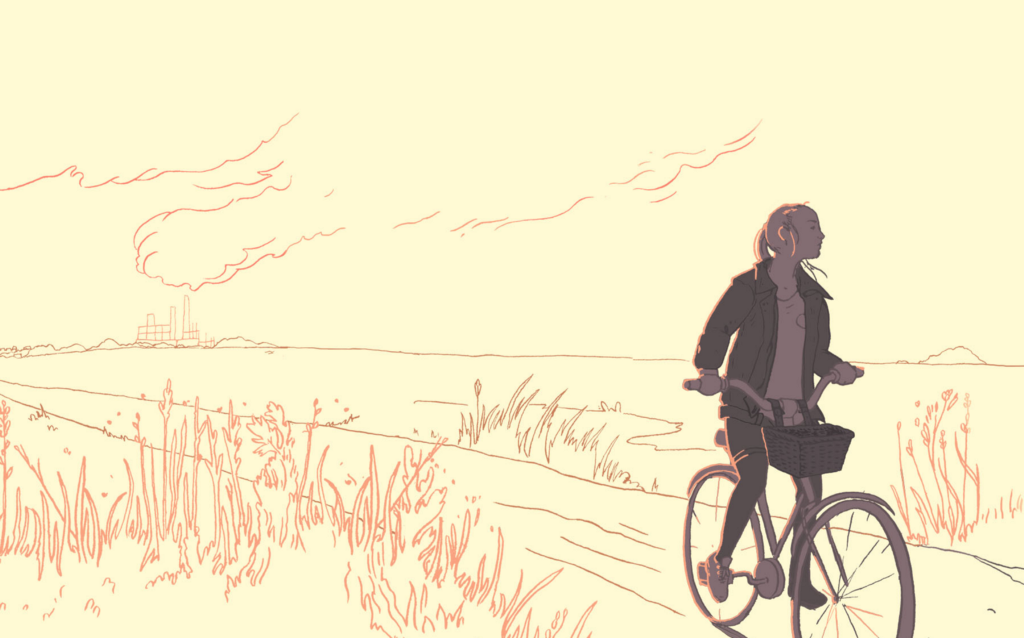
1. On the way home, the girl did not notice the color of the sky or the shape of the night, as she was too busy questioning why there were no secrets anymore.
She pedaled past the town square, the abandoned shops, the gas station sign flickering in its insignificance, feeling upset. Everything — the empty roads and lonely looking houses set far back from the road, the dilapidated buildings spaced several hundred yards apart — seemed to lack mystery.
Even the diner, where she had spent the better part of the past nine hours on her feet waiting tables, was no place for anything fascinating or curious. Before her shift ended, her boss, Mr. Dupont, had the nerve to accuse her of daydreaming and flirting with one of the short-order cooks. Out of embarrassment — for the accusation was partly true — Shelley had turned and spilled an entire tray of ice cream, then mumbled a few extraordinarily tame epithets. She repeated these now as she rode: “Oh Hell and Holy Ghost.”
Her one good pair of nylons now had a rip somewhere at the back of her right thigh, which had happened when she knelt down to clean up the overturned dessert. Although she tried to ignore it, she could feel the broken seam inching up her leg as she rode along, reminding her of everything that had gone wrong that day.
Sometimes 19 was too young and too old at exactly the same time.
The girl had an interesting face — almost anybody could see. Her brown eyes were flecked with green, and her expressions usually carried an open, questioning quality that most people considered friendly or unserious.
Up the back stairs, she could hear her grandmother speaking to somebody inside the kitchen. As Shelley approached the door, she realized her grandmother was talking to herself once again, addressing the dozens of photos of her former kindergarten students that were posted on the refrigerator. She was reciting a familiar story to them, her voice punctuated by the sounds of the police scanner buzzing faintly on the kitchen table and the chatter of Mr. Peepers, their pet bird, in his cage by the window. Shelley stood by the screen door and listened quietly.
“Then, of course, there was the sly fox,” her grandmother said. “He played the fiddle so sweetly that it sounded like a mother bird singing to her young. And he would hide out in the woods, just beyond the shadowy fields, and he would play his fiddle at midnight, and all the chickens would begin pecking at their doors. And then the fox, he would begin to play quieter and quieter, and all the hens in the henhouse would begin fussing until they had each crept out, and they would scoot across the field and into the dark shadows of the midnight woods, and one by one, the fox would wring their necks and gobble them up in his razor-sharp mouth.”
2. Shelley entered the kitchen and found her grandmother at the table, putting a blob of white frosting on an uneven red velvet cake. She leaned over and kissed her grandmother on her powdery forehead, then stood on tip-toe to put a wad of cash into the coffee can on top of the refrigerator.
It was only 6 p.m. on a Friday, and all she wanted in the world was for the day to be over.
“Don’t you look bushed?” her grandmother said with a grin, keeping one hand on the frosting knife, the other on the cake plate.
“I am.” Shelley collapsed into a seat at the opposite end of the table, took off one of her canvas tennis shoes, and began massaging her left foot. “I swear I must have walked as far as China, running back and forth from that kitchen all day.”
“You want me to draw you a bath?”
“No thanks. I’ll just sit here a minute,” she said, putting her feet up on the empty chair beside her. “I tell you, I just can’t believe how unfair the world is.”
“Now why’s that?” her grandmother asked.
“Because Wayne and I got in a load of trouble at work today. He was back at the grill and the only one working on the line through the rush, and wouldn’t you know there was some kind of outfit moving these little yellow houses on the back of their trucks—five or six of them on these flatbed trucks—and Wayne and I were staring out the window daydreaming, and he asked me if maybe I’d like to sneak into one of the houses with him. Like we could live together, and our kids would never have to go to school, and we could see the whole world traveling around like that. I said I’d like to, but then a bunch of orders got called up, and he ended up burning some eggs. Then Mr. Dupont came up and laid into us about paying attention instead of spending our time daydreaming and love-talking. Then I got upset and dropped a tray of ice cream. And I had to pay for it out of my tips.”
Her grandmother smiled, adding another glob of frosting. Glancing up, she said, “Don’t move. You look just like the picture of your mother sitting there.”
Shelley frowned, ignoring the comment. “Is that for the cakewalk tomorrow?”
“It is.”
“The sheriff picking it up?”
“Said he would.”
Shelley looked across the small linoleum table and again noticed that the police scanner volume had been turned all the way up. It chirped with a far-off though consistent static. Her grandmother’s black-and-white composition book was open to a page where she had scribbled something nearly illegible. “What’s that?” Shelley asked.
“We got a new one today: 11-26. Abandoned bicycle.”
“Oh, that is new. I never heard that one before.”
“It is. I had to check the code book myself.” Her grandmother leaned forward conspiratorially. “A call came from over at Wright and Evergreen about 20 minutes ago. Somebody found a bicycle just sitting next to the curb. No one knows whose it is. Gary Polk’s the officer on the scene.”
“Gary Polk? Oh, I don’t like him at all. He came into the diner yesterday and looked me up and down like I was a pony at the 4-H. And when I walked past him, he pinched my behind. I like Deputy Will better. He’s tall…and nice. He never tries to make a grab at anyone.”
“You just be thankful someone makes a grab at you every so often.”
“Very funny,” she said. “Anything else exciting happen?”
“Well, earlier there was a 10-91A. A stray animal. It was the Hanford’s cat that run away. The black one. It was at the grocery store. It went inside, right down to where the cat food aisle was. Mrs. Hanford had to come pick it up. By the way, did you hear that Junior Hanford’s back in town?”
“No. I didn’t.”
“I thought you used to have quite a thing for him.”
“I never did!”
“When you used to pal around with his sister. You had a crush on that boy. I believe you were in the fifth grade, and Junior was in the eighth.”
“I shouldn’t have ever told you,” Shelley said with a short smile. “But you always find a way to wheedle things out of me.”
“It just so happens that I can’t abide secrets, big or small.”
The police scanner interrupted with harsh static.
“Unit 304 to base. Located the bicycle. It’s a girl’s one. Pink, with streamers. Going to try and find out who it belongs to. Over.”
“Ha. Some mystery,” Shelley sulked. “Friday night and this is all the excitement they got for us.” She took out her pad from work and began to finish a sketch she had started earlier in the day.
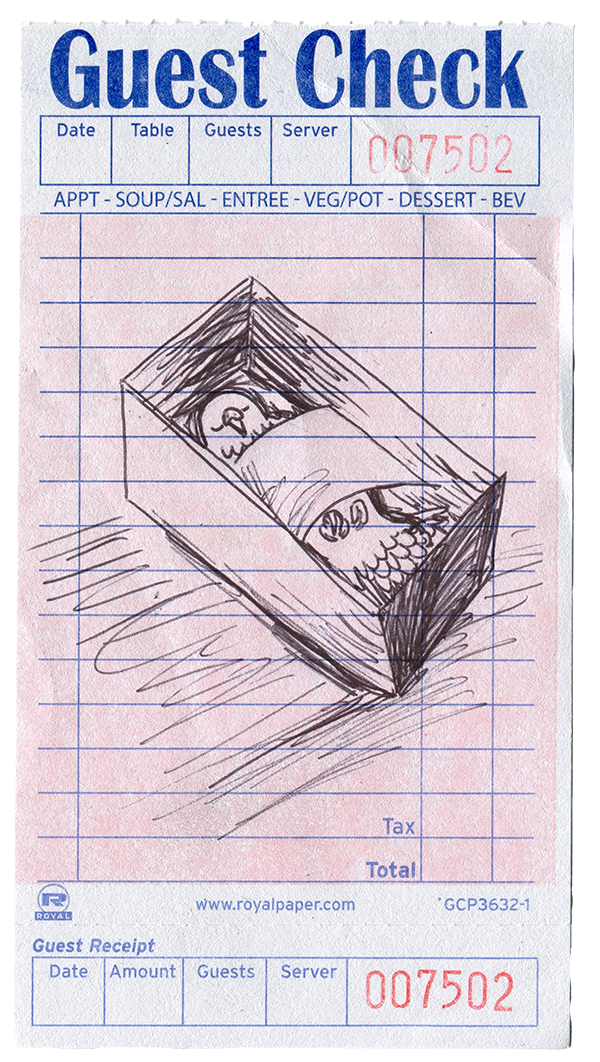
Over the past several months, the girl had begun using the ticket book from the diner as a kind of notepad, drawing the lunch counter’s customers in a series of furious lines and curves. They looked like a series of police sketches. More than once, Shelley had followed customers home after her shifted ended, adding details about the kinds of cars they drove, where they lived, what their houses looked like—a rogue’s gallery of all the interesting inhabitants of town. She was now working on a drawing of a man who had come into the restaurant the day before — Raymond Dove — a felon, known arsonist, and suspected methamphetamine distributor who had a wide, rangy-looking face and one arm that was noticeably shorter than the other. She now settled into the drawing, ignoring the subtle buzz from the scanner until it abruptly announced:
“Unit 304 to base. Approaching a group of kids on the corner of Fourth. One of them gave me the finger. Think it was Mike Lee’s son. Going to ask them who this bike belongs to. But are you sure the sheriff don’t have anything better for me to do than chasing kids around?”
It was then that Shelley noticed that Mr. Peepers had become uncharacteristically quiet. Shelley stood up and peered through the wire cage and found the creature lying among the pages of yesterday’s newspaper. She turned to her grandmother and used the nickname she always did when faced with trouble of a serious nature: “Honey.”
“What is it?” her grandmother asked.
“It looks like Mr. Peepers is dead.”
The grandmother slowly stood and leaned beside her granddaughter. “I thought something was wrong with him. He didn’t say nothing but swear words all day.”
Shelley stared forlornly through the slats of the cage. “Now I’m going to have to go bury him, I guess.”
“Where you plan on doing that?”
“Behind the library.”
“You’re going to get in trouble. Ms. Briff already told you that’s not your own personal cemetery.”
“I don’t care,” Shelley said. “It’s public property. And it’s got the best view of any place in town. Which is the least I can do for him. Besides, I’ve got four other animals buried there already.”
Her grandmother gave her a skeptical look.
“I’ll be quick. Nobody’ll notice. I promise.”
Her grandmother nodded and put one last swipe of frosting in place. Maybe it was the heat, or the bird dying, but the cake looked like a lopsided heart, collapsing in on itself.
3.Outside in the garage, the girl searched for a coffin. There was stack of old shoeboxes her grandmother had collected from “before the war,” but Shelley never had any idea which war she meant. The war in Korea maybe. She found a blue one and climbed up the back porch stairs, stopping on the top step to listen to her grandmother again.
“And where were we, boys and girls? Oh, yes, well, that wily old fox, that wily old fox began to play that fiddle, he began to play and not just any old song, but ‘Wildwood Flower,’ and the woodsman, he had lost one chicken too many and followed those feathers out to the woods, and then he heard that sound. He was standing there in the middle of that darkened forest, and he began to think of his wife, his one true love that had drowned a year before, and then his axe began to feel mighty heavy, and it fell from his shoulder, and he laid it there in the grass where it disappeared, and then he started to march off to where the sound of that lovely voice was calling, deeper and deeper into the midnight forest, and when he looked up, he saw that the trees all wore the sad face of his lovely departed.”
Shelley opened the door and found her grandmother beginning on a second cake, dolloping on pile after pile of white frosting, humming to herself. The girl closed her eyes, took a deep breath, and carefully reached inside the cage for the deceased bird, feeling its cold, reptilian feet. Carefully she deposited the animal in the shoebox, found a piece of blue tissue paper in the junk drawer, placed it over the bird as a ceremonial cloak, and closed the lid.
“Okay, I’ll be back in a bit,” she said and kissed her grandmother on the forehead again. She paused at the door, staring at the profile of her grandmother sitting there frosting the cake, imagining it, like a moment from some soap opera or crime show on television, as the very last time she’d ever see her.
Once more, she heard the police scanner crackle with static.
“Unit 304 to base, unit 304 to base…”
Outside, she placed the shoebox in the wire basket on her bicycle and began to pedal off. She looked around and saw almost everything had gone a faint blue.
Trees passing by looked skeletal, unfamiliar. The sound of the wind hid her unease. She stuck to Fayetteville Road, riding as fast she could.
Up ahead, somewhere in the distance, a pair of lights flashed. A police cruiser fled past in a fury, and Shelley pedaled as hard as she could, desperately trying to keep up.
The part of a cruise ship that is under the water line is called “below,” and everything that is upwards is called “above.” Two different worlds inside a huge body. Once you get inside this huge white shining girl, your own world suddenly gets its particular dimensions: its height is 19 decks (there is no 13th, of course), length — 1,083 feet, weight — 143,724 GT.
Countless doors, stairs, twists and turns, and a single throughway, the 4th deck that separates “below” and “above,” and connects bow and stern. You can cross the ship through that highway called M1, and you can get anywhere from there through the numerous doors on both sides of it. The main gangways are there, and that M1 is where the lowest illuminators are.
Below are mechanical rooms, electrical rooms, engine rooms, laundry, tailor’s shop, crew cabins, and no illuminators. Circuits and mechanisms; pumps and drives; propellers and thrusters; broken garments and broken hearts; fixed garments and non-fixable hearts; dirty laundry and dirty secrets; clean and pressed laundry, and unpurified, messy truths; love and hatred; brutal lies and touching revelations; orgasms and fights; gossip and tattle; whispers and shouts; break-ups and make-ups; vows and betrayals. Everything that keeps the ship moving is below.
Above is the playground, the display, the stage where the fascinating show runs called Happy-To-Be-A-Crew-Member. It is where crew members get, and passengers give. Money. It is where passengers get, and crew members give. Perfect service. Food. Entertainment. Crew members make passengers’ dreams come true. Smiling. Joking. Serving. Months without a vacation. Hoping to make their own dreams come true some day. Everyone gets what they come for. They consume each other, they leave their prints on the ship’s skin, and they don’t leave any trace in each other’s lives. They’re all being consumed by the ship. Every day, cruise by cruise, non-stop. Turnaround day turns into a new one, each cruise turns into a new one, just the same. Tons of food being thrown every day down to feed fish. Tons of food. Tons of shit. Everything goes below, and down, and out into the ocean.
The ship recycles crew members and passengers. She spits them out on turnaround days, their fingerprints erased, their words dissolved, their emotions dismissed. She empties herself, getting ready to consume new joiners, to do with them all just the same. She does with them “what spring does with the cherry trees” but in a cruise ship way.
Once you get behind these walls, once you’ve given your passport to some officer with a glossy smile and Italian accent and got your crew member’s ID, you can be your true self in here. Or you can be the opposite. You can be whoever you want. No one cares as long as you have your name tag and cruise pin on the left side of your breast. You are what is written there. A buffet steward, a waiter, a supervisor, a cook, a cabin attendant, whatever. What’s behind your name tag, cruise pin, and your courteous smile — doesn’t really matter. Light makeup, hair done in a neat knot — if you’re a female crew member; perfectly shaven face and short haircut — if you’re a male. Clean, tidy uniform, no alcohol or cigarette fumes but no explicit perfume either, no suffering or longing of any kind in the eyes, no visible tattoos — for both male and female crew members. You are a walking light tidy odorless smiling courtesy. No one looks you in the eye — they look at your name tag. You are surrounded by fleeting people who don’t give a damn about you, as long as you do your job properly. And very soon you learn not to give a damn either.
What happens on the ship stays on the ship. If you’re married on land, you can be single again here. If your partner finished their contract and went home, you can find another one among new joiners. If you have kids to take care of, you are free from all obligations, just keep sending money. If you’re shy, you can be daring. If you’re lonely on land, you can find yourself any sort of company here. If you’re in the closet, you can come out in here. If you want solitude, you can be lonely — no one cares. You can do whatever you want each contract, each ship.
Once you step over the gangway, you start counting days of your life. Counting down until the end of the contract, and then counting down the days at home until a new ship. You call ship life “shit life,” but you keep living it. Someone tells you when you are allowed to go out, when you are allowed to eat, sleep, pee, puke, or whatever. Months without a Saturday — six if you are European, nine if you are Mexican, Filipino, Indian, or Indonesian. You stop seeing the difference between yourself and other nations, you only see the difference in uniforms, but your inequality is safely recorded in your contracts — in the Term of a Contract and Salary columns.
You can extend or you can reduce your contract. But you need to have a substantial reason for that. And you don’t.
And then you come back home for your two months vacation. You can extend or you can reduce. But you need to have a substantial reason for that. And you don’t. So you count days to your next contract. You can’t sleep till noon like you were dreaming of doing while you were on the ship. You wake up at 6 a.m. because of the sunlight coming from the window. You didn’t have a window for months, you would wake up under water. You hear birds sing, and dogs bark, and brakes creak, and kids scream outside. It is all so loud, and so much of it. So you can’t sleep.
You are constantly hungry, because you need to cook and wash up now, or you need to think where and what to eat, and you are too lazy to do that. You didn’t think about that for months, you had all you needed at crew mess to keep you alive.
You have plenty of time but you don’t know what to do with it. You can go anywhere but you don’t know where to go. Your course was set by somebody for months, your schedule was made by Assistant Maitre D’, your breaks were defined, and you didn’t have many choices. You start thinking that that was the freedom. Freedom from choice.
Your apartment is a mess because there are no Crew Rounds to check on your tidiness. You’re a total mess. You need your cabin boy to have that all done for 10 bucks per cruise. Your hair is a mess, because you don’t know how to do it if not in a neat knot, and no one forces you to do it a neat knot for now.
You stare at people’s breasts, looking for their name tags. Who are they if they don’t have it defined on their name tags? And who are you?
You wander around like a ghost. It is so hard to take your course if it’s not set by someone. You were moving to your particular destination at a speed of 22 knots for months, and now … now you just drift. You are already not the one you used to be, and you are not yet the one you want to be, whoever that person is. And that point, that ideal you, seems so distant and so blurred, and it seems you’ll never reach it. Because it’s shaken and shifted too often and too much, like a ship may be shaken in a few storms during a 5-day Hawaii to Catalina crossing.
You meet your friends, they laugh, make jokes, talk about the times they had when you were away. You have your stories as well, but these people are not part of them, and you are not part of their stories anymore. They have land stories, and you have sea stories — their edges slightly contact but never mix up. They are not your people anymore. You are surrounded by fleeting people wherever you go.
You’ve been everywhere, and you end up nowhere. You are in a temporary place, in the middle of waiting — wherever you go. Your suitcase is your most constant companion. The place that used to be your home now is just another port where you have some more overnights than in other ports. You can drop anchor here and settle here again, but you need a substantial reason for that. And you don’t have it.
So yeah, you actually count days to your next contract, to a new round of your shit ship life, because once you get “below,” from then on you will be suffocating on land, and crave a breath under the water line.
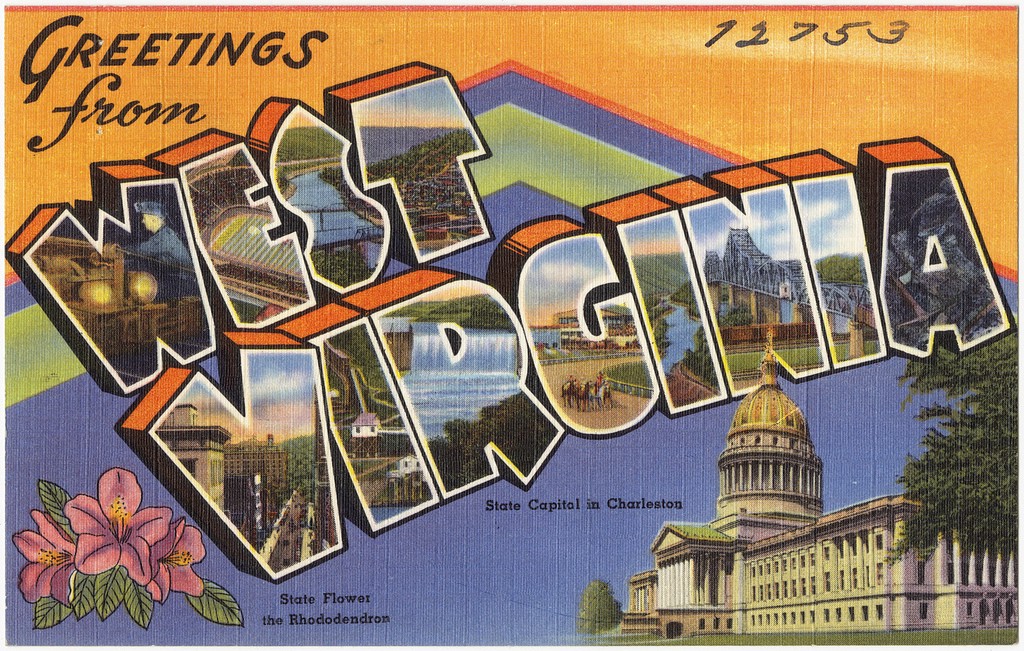
Electric Literature’s contributing editor Michael J Seidlinger is on the road as part of his project, #FollowMeBook, visiting writers and exploring the limits of social media. As part of a limited summer series called “The Writing Life on the Road,” he’s sharing his conversations with writers as he makes his way from New York to California. This week, Juliet Escoria, author of Black Cloud, Witch Hunt, and the forthcoming Juliet the Maniac, shares details and insights from her writing life in West Virginia.
What follows are highlights from Juliet’s interview with Michael. Her responses have been edited for clarity.
Setting the Scene
We’re sitting on my front porch in Beckley, West Virginia in my neighborhood full of smallish houses that were built mostly in the 50’s. I think our house has a fair amount of lead in it, I’m guessing. Our porch for some reason has carpeting on it. I’m not sure why our landlord thought it was a good idea, but it’s here.
My dog, Jelly, who’s obnoxious but very cute, is out here. There is also a cat named The Snow Leopard, not officially, but that’s what we call it. That’s its reputation on the streets. It is a very intimidating cat that will fuck you up.
Where She Writes
I am specific to a certain spot, and if I don’t have my spot then it’s hard for me to write. I work in the basement, and I have a very small desk that has seen me through three books now, and now I’m superstitious about it. Say I had a bunch of money and for some reason I wanted to buy a really big, expensive desk, I wouldn’t do it. I’d keep this tiny, little, shitty desk that I got on Craigslist.
How She Writes
One thing that changed my writing process was not caring if the section or story is good at all when I get started. I will write the worst draft ever, just to get it down. It’s almost outlining, in a way. Like the first draft is figuring out where it’s going to go, and then I redo it and redo it and redo it, over and over and over again. Toward the end, I change the font and spacing, then go through it again. The last thing I do is print it out, read it aloud, and then make a few more go-rounds that way.
I used to exclusively write late at night. But then when you get married, you have to maintain a relationship and stuff so staying up till 6 in the morning doesn’t fit in so well.
Creating (and Sometimes Missing) Deadlines
Sometimes I’ll create arbitrary goals for myself, such as “I have to finish this by this date” and that helps me. For a while, I wanted to write one section of the book per week. Sometimes I’d have really good weeks where I’d finish four, and then Christmas would come and we’d be out of town and I wouldn’t work on it for a couple of weeks. I don’t think it’s good to get hung up on small stuff like that. Still, I feel bad when I don’t write. When I finished the draft of Juliet the Maniac, and I was waiting to hear back from my agent, I wasn’t writing for a while, on purpose just to give myself a break. But then I started to feel generally purposeless.
Starting Projects
When I finished Black Cloud, I wanted to work on what eventually became Juliet the Maniac but it wasn’t working out. I think I was still preoccupied with the story collection. And a few months ago, in between waiting for my agent to get back to me with her notes, I wanted to write a short story, because I’d been missing short stories. Again, I couldn’t focus on it. I feel very much held hostage by whatever my writing wants to do, which is frustrating.
Being stressed out about money is not good for writing.
Life Outside New York
New York and I were not good together, when it came to writing. I had to work so much that I was barely writing at all. It got better when I moved back to California. I think West Virginia has been the best place for me, though, by far. It’s quiet here, and there is not a whole lot to do. I like it. We have plenty of space too, I think that helps, so I have my little station and Scott [McClanahan] has his. And, like I said, I definitely need my spot that I work out of.
Scott and I don’t have a lot of money but it’s comfortable here anyway because everything is so cheap. We’re not stressed out about money. We can do, not like, everything we want, but reasonable things, so that is good. Being stressed out about money is not good for writing.
From Family-images.com, West Virginia page
Writing in Appalachia
There’s an Appalachian writing scene that neither of us are a part of. It’s very insular and academic, very niche and there’s only so much funding. A lot of these people you never would have heard of, but they work at this university and have won these prizes. They don’t like Scott because they think he plays into the stereotypes. They want you to write about apple pie or something. They like stuff about coal mining and mountaintop removal and those types of topics. I don’t count as an Appalachian writer. I just happen to live in Appalachia.
I don’t count as an Appalachian writer. I just happen to live in Appalachia.
There are some guys who have put together a music and reading series called Travelin’ Appalachians Revue, that comes through the state every summer, and that’s always really nice. The crowds are supportive and interested, and there is not an ounce of jadedness or cynicism. Beyond that there is not a whole lot in terms of scene.
Finding Your Community
We have some friends here who write and they’re great — Mesha Maren and her husband, Randal O’Wain. But mostly I find and maintain my community through my phone. Texting other writers and then of course, social media. I value the chat functions a lot more than the social media platforms themselves.
But I feel like we’ve reached a saturation point of social media. I think something is going to happen to it, like we’ve reached some sort of tipping point. But maybe we haven’t, maybe it’s just going to get worse. The current state of politics doesn’t help. It’s hard to pay attention to books when you read that people are going to be deported, and are worried about the possibility of World War III. And then there is everyone’s need to show what a great person they are via their social media, and that is frustrating.
I like doing readings because you can go to different cities and meet the people that you know from the internet, and suddenly they are actual people, as opposed to internet people. That I think is good enough in itself. I don’t know if readings help in terms of book sales or visibility. Mostly I do readings to hang out with friends who live in different cities, and then I can write off the traveling expenses on my taxes.
Buzzfeed gets a draft of Milio Yiannopoulus’s memoir, Amazon buys Whole Foods and other literary news
Summer Fridays are usually sleepy days in the literary world, when editors and writers a like are out chasing ice cream trucks by 2pm. Not so, last week. BuzzFeed got their hands on a the draft of Milio Yiannopoulus’s book, and apparently it’s a bore. Amazon is moving into the grocery aisle as it plans on buying Whole Foods, and Israeli author David Grossman has won the Man Booker International Prize.
BuzzFeed got its hands on the draft of Milo Yiannopoulos’s forthcoming book
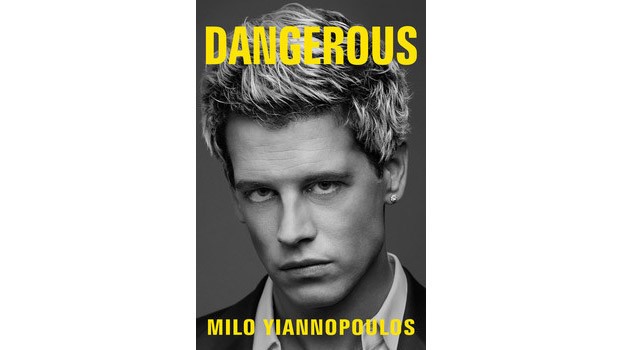
Now, I know everyone is just so excited about Milo Yiannopoulus’s new book, but before you spend July 4th waiting in line to get your hands on it, we have some bad news: apparently, it’s terrible. BuzzFeed has acquired the draft of Dangerous, a book surrounded by a great deal of controversy — both because of the author and its original publication plans. Simon & Schuster was the original publisher of the book, offering Yiannopoulus a $250K contract late last year; but when videos of the former Breitbart editor seemingly condoning pedophilia emerged in February, the publishing powerhouse backed out of the deal (the book is now being self-published). According to BuzzFeed, the 200-page draft contains no gossip and nothing newsworthy, unless readers are interested in his beauty regimen, which is apparently discussed extensively in the manuscript. Yiannopoulos has organized the book in sections titled after people who supposedly hate him, including “Why Twitter Hates Me,” “Why Ugly People Hate Me,” etc. The basic sentiment behind the book’s argument is one Milo has always preached: you should be able to say what you want and not have to feel apologetic about it. Boring and outdated, BuzzFeed calls the draft a “staggering failure.” Let’s just hope Yiannopoulus doesn’t improve the draft based on Buzzfeed’s pro-bono editorial note.
In its continuous quest to infiltrate every aspect of life, Amazon will add organic groceries to the list of things it wants to sell you. After opening up a series of bookstores, the online shopping powerhouse is continuing its quest for physical property — this time in the form of supermarkets. On Friday, Amazon announced that it will buy out grocery chain Whole Foods for a meager $13.4 billion (if we’re talking in terms of the steep price scale of the ritzy food store). Amazon, now the largest internet company by revenue in the world, has come a long way since its beginnings as an online bookstore. This purchase will allow for the online retailer to move into the grocery industry, a business worth $700–800 billion in yearly sales in America. Despite the transfer of power, the chain would retain its name, its Austin headquarters, and its current CEO John Mackey. Through the deal, Amazon will acquire over 460 stores across the United States, Canada, and Britain, raising questions about if and how technology will be incorporated into the food stores. Should we expect to find discounted books, vacuums, and school supplies galore scattered through the Whole Foods produce aisles?
[NYTimes/Michael J. de la Merced and Nick Wingfield]
Israeli author David Grossman has won the Man Booker International Prize
Israeli author David Grossman has won the Man Booker International Prize for his stand-up book about a stand-up comedian. A Horse Walks into a Bar was translated by Jessica Cohen, whom Grossman will split the £50,000 monetary reward with. Grossman’s novel was chosen from 126 titles, which were narrowed down to a 13-book longlist and a 6-book shortlist, among which were books from Norway, France, and Argentina. The book is about a comedian in a small Israeli town who breaks down on stage in front of his audience. This is the first year the Man Booker International Prize has been awarded to a single book; before 2016, the award was given every second year to an author for her entire body of work.
Hello, and welcome to my week-by-week review of the world. Today I am reviewing a watermelon.
It’s summertime, which means watermelons are still available to purchase just as they are any other time of year — but what makes summertime watermelons stand apart from the rest is that they don’t taste like a sheet of paper.
I recently bought a watermelon because I wanted my groceries to weigh 10 lbs. more than usual for the exercise. Unfortunately the watermelon I purchased was too large, and halfway home my arms gave out, so I had to abandon my groceries and roll the watermelon the rest of the way.
With watermelons there is always a certain amount of mystery. Will it be ripe? Will it have been hollowed out by a worm and replaced with hundreds of baby worms? You never know.
I had a good feeling about the one I’d purchased though, but when I cut it open I was met with the most surreal sensation. It was ripe — that wasn’t the issue. The strange thing was the pattern of the seeds looked just like Jesus’s face. Not Jesus the biblical figure, but Jesus my mechanic.
I thought it was a practical joke, or maybe a subtle marketing campaign on behalf of Tech Auto Repair. In Japan they can grow square watermelons, so it wouldn’t be that much of a stretch to think someone could grow ones with seeds in the patterns of a specific human face.
I think the campaign backfired because now the next time I see Jesus I’ll have to pretend I’m not picturing my knife slicing into his face and red juice running out.
The other issue with the seeds was I kept getting them stuck in my teeth. Normally I don’t care if I have food stuck in my teeth because my charm and confidence allow me to gracefully overcome such superficial trivialities, but I always worry about the possibility of a seed taking root in my gums. Getting a tooth removed is expensive. I can’t imagine what it costs to get an entire plant removed.
This watermelon was quite delicious and made even more so with the addition of feta cheese. I don’t know what part of the cow feta cheese comes from but it’s the perfect accompaniment to a watermelon.
BEST FEATURE: I saw my neighbor watching me while I ate the watermelon and I could tell she wanted some too and I’m not proud to say it but I enjoyed the power I held over her. WORST FEATURE: I found some worms in the rind when I was done.
Please join me next week when I’ll be reviewing a Crayon.
Presenting the third installment of The Bodega Project, where authors from across New York reflect on their community through that most relied-on and overlooked institution, the bodega. Read the introduction to the series here.
Everyone knows the Korean bodega, that ubiquitous fixture of the New York landscape — with its flowers and fruit out front, Tropicana and Corona in the cooler, Marlboros and Trojans behind the counter. But no one stops to wonder where the Korean bodegueros go for their own daily provisions.
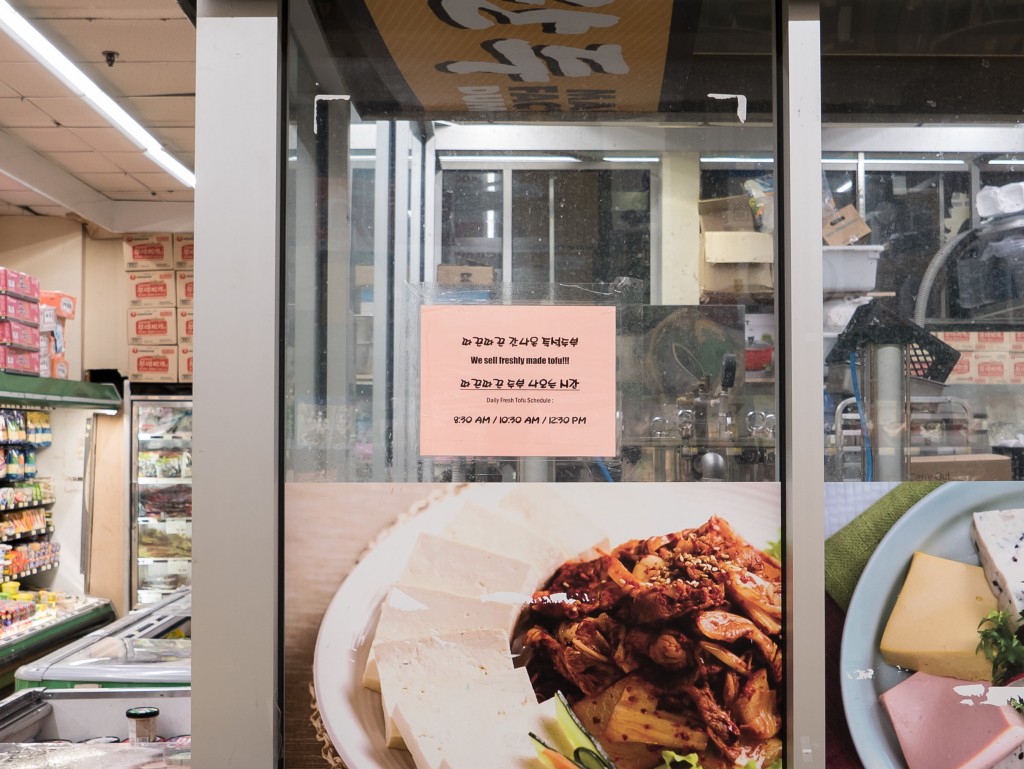
Ironically enough, we didn’t have “Korean bodegas” in Flushing — home to the largest Korean community in New York, and second largest in the country after L.A.’s Koreatown. They’re an American construct, designed to please the Western palate. Instead we shopped at the Korean grocery store, teeming with the sorts of goods (usually of the fermented, pungent, foreign variety) no bodega owner would dare stock in his own Manhattan store.
We were a family of grocers, and on Sundays after church we went to Hanyang Mart on our side of Northern Boulevard, next to the Kentucky Fried Chicken. The parking lot would be filled with other Korean families also stocking up on the week’s groceries. On the opposite side of the boulevard, next door to Edward D. Jamie Jang-ui-sa where my grandparents had their funeral Mass, was another mart called Hanareum — now donning the English-friendly appellative H-Mart. Pre-dating both was the Guhwa in the heart of downtown, where we used to shop before my mother learned to drive a car. If you’ve ever passed down Northern, with its auto body shops, ethnic eateries, and fast foods of both the chain and mom-n-pop variety, you’d know there was nothing trendy about our corner of Queens.
In the colder months we’d pull up to the aroma of goguma — Korean sweet potatoes — roasting over a coal fire under a tent. It was my parents’ favorite treat when they were growing up, but my siblings and I were not interested in goguma. You had to peel back its cumbersome purple skin to scoop out the soft, caramelized flesh steaming inside. “This like pure candy!” my father would argue. We begged to differ, preferring our desserts to be more obvious, more American, the kinds a Korean grocer carried but never brought home to his family: Oreos and Reese’s Pieces and Jell-O Pudding so cloying our taste buds were shocked to numbness.
I realize now that for my parents, and for most of their immigrant generation, the goguma was their madeleine — one bite brought them right back to childhood and the home villages they had left behind.
Most days my mother’s shopping list was simple:
— dashima: dried kelp — miyeok: dried seaweed — myeolchi: dried anchovies — doenjang: fermented soybean paste — gochujang: spicy red pepper paste — bundles of scallion, watercress, and mugwort — mackerel for pan-frying — 40-pound bag of mepssal: short-grained white rice — 10-pound bag of chapssal: sweet, glutinous rice — various namul — wild herbs — whose names I never learned in English (if they even exist at all) — a box of Asian pears, because invariably someone in the community was moving house, or opening a new business; giving birth, or passing on.
It was only on banquet days that my mother would toss in the extra-fancy foods: cellophane noodles for japchae, mandu wrappers for dumplings, rice flour for scallion pancakes, or beef short ribs for barbecued galbi, which she marinated in soy sauce sweetened with kiwi or Asian pear. A box of Napa cabbage and ten pounds of Korean radish would be added to the cart maybe once a season, to make large batches of kimchi to share with extended family.
Yet each item that landed in our grocery cart, I would later learn, had been a negotiation between my mother’s Northern roots and my father’s Southern ones. Take, for example, the staple dish miyeok-guk: seaweed soup. New mothers eat it to replenish nutrients after giving birth. Children eat it on their birthday, perhaps to honor their mothers’ suffering during said childbirth. Some families eat the soup with every meal — which makes me wonder about the filial guilt ladled with each spoonful.
Yet each item that landed in our grocery cart, I would later learn, had been a negotiation between my mother’s Northern roots and my father’s Southern ones.
My mother grew up eating a version of miyeok-guk with bits of beef to flavor the broth. “Because so cold, North Korea,” my mother would explain. “We needing the meat.” While my father’s family, who lived near the Donghae Sea, prepared it with clams or mussels.
My mother’s American compromise combines both seafood and meat.
It is funny to think of my mother as a grocery shopper, because much of what she buys (often in bulk) ends up immediately stashed in the freezer or aging in the larder. She eschews her brand-new purchases in favor of the older ones decomposing in the crisper or passing their expiration date in the pantry. For her, cooking is an endless game of preservation and survival — salvaged scraps stretched into something if not delicious, then at least nourishing in the most fundamental sense. According to my father, my mother is a terrible cook. According to my siblings, she is still reliving the War, frozen in her refugee ways.
I’d peer into the carts and baskets of the other Hanyang shoppers to see variations of our same Korean meals. Similar negotiations must have taken place in each of those households. Which cultural practices were forced to assimilate, and which were simply lost?
We did not socialize at Hanyang; that happened in our church basement. Yes, you were seen and heard at the market (our community was only so big) but it was not a place to linger. Still, sometimes we ran into other ajumma’s — ma’am’s — from church. They shared the same diminutive stature, permed bobs, and pancake makeup to prevent tanning from the sun. We’d bow, and they’d share news of which melons were on sale, which greens looked fresh and which to avoid. We’d exchange short pleasantries like these before pushing on our way.
Though once, as a teen, I refused to get out of the car to accompany my mother into Hanyang. I was wearing perhaps my bulky volleyball uniform. I feared running into someone I knew from church, I feared being judged for my unfashionable clothes, I feared how their judgment would reflect badly on my family as a whole. The anonymity that comes with grocery shopping was a sensation I would only experience after I moved out of my parents’ home.
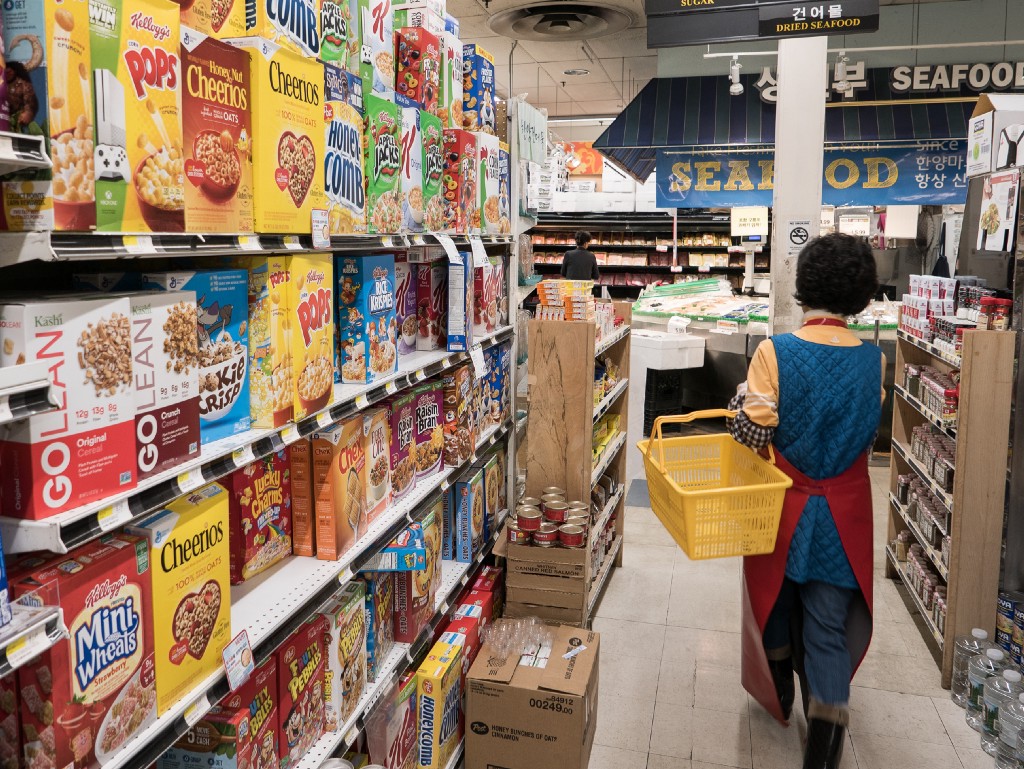
Over time, Hanyang devoted an aisle to “American” merchandise: Kellogg’s cereal, Wonder bread, Skippy peanut butter. But I never saw white kids from school shop there. Their families went to the Key Food just off Utopia Parkway — which has since closed.
I don’t shop much at Hanyang anymore. In yet another irony, the very foods I felt ambivalent about in childhood have seeped into the mainstream. Bibimbap is a regular fixture on the midtown lunch circuit. Kimchi, gochujang, toasted seaweed all come in hip packaging with no embarrassingly misspelled English labels. Korean food is #trending.
Just as Flushing is also changing. On my most recent trip to Hanyang, to buy ingredients to prepare my mother’s seventieth birthday dinner, I recognized not a single face from my community. The old waves have migrated east toward Long Island, or have passed away. The new waves speak a modern Korean that sounds foreign to my ears. The butcher’s assistant, a young Latino man, helped me select cuts of meat for the miyeok-guk, the japchae, the mandu. We spoke a pastiche of Spanish and Korean — when a word in one language failed us, we switched to the other. Once or twice I bumped carts with ajumma’s who were not Korean at all, but Chinese.
The old waves have migrated east toward Long Island, or have passed away. The new waves speak a modern Korean that sounds foreign to my ears.
I recently learned Hanyang was the name for Seoul during the Joseon Dynasty. Schoolchildren in Korea learn this fact from Day 1, and I imagine there is something laughable about the disconnect between a plain grocery — seated on this blue-collar, commercial stretch of Queens — and the regal capital of kings and queens from six hundred years ago. But for me, it evokes beyond its historical legacy. Its American identity as a Korean grocer’s grocery is the only Hanyang I’ve ever known.
About the Author
Patricia Park is the author of the novel Re Jane, named Editors’ Choice by The New York Times Book Review, Best Books of 2015 by American Library Association, and currently in development for a television series with Paramount and TV Land. She was born and raised in Queens, NY.
If the literature is any indication, the Elizabethan era was probably not the best time to be a “good” father, at least by today’s standards. While we may be thanking our own dads this Father’s Day, all Shakespeare’s characters have to be grateful for are ruined childhoods, emotional abuse, and bartered love. In the 1500 and 1600s (not to mention the historical and mythological periods in which Shakespeare set so many of his plays), the paterfamilias dictated everything from the the family’s coat of arms to its holiday travel plans. Oh, and marriage? You better believe that was the father’s call. In short, only complete submission and respect was tolerated from children.
In tragedies and comedies alike, Shakespeare shows us that fatherhood came with a lot of responsibilities, including selling your daughter to the highest bidder. Shakespeare not only nailed the expectation for obedience in his works; staying true to universal teenage rebellion, most children in his plays are not on board with their controlling fathers’ ridiculous demands.
For this Father’s Day, here’s a rogues’ gallery of Shakespeare’s most famous patriarchs. We’ve tallied up their sins and ranked them, from the sort of unpleasant, overbearing, or bloodlustful to the outright dastardly. Warning: a good deal of this behavior would now be considered criminal; in other cases, the fatherly transgressions are still very much a part of our culture. From nonstop hovering to threats of exile, the playwright’s works lay bare (some) tropes and truths of fatherhood that simply seem to transcend time.
— From lousy to worse…
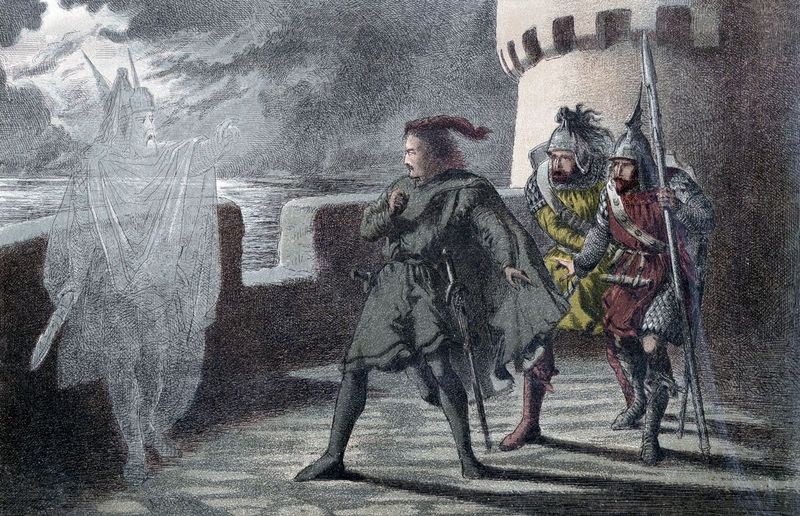
You thought death would stop me from nagging?
9. King Hamlet from Hamlet
All things considered, King Hamlet is the best of a bad lot — mainly because he isn’t around all that much. Appearing as a ghost to a number of the characters, his interactions with his son (other Hamlet) is mainly focused on avenging his death. It’s hard to be a good father when you’re busy calling out for blood and harping about your wrongful murder, but the King does his level best. Is he taking his son on camping trips or teaching him how to drive stick-shift? No, but then again he does care enough to return from the afterlife.
Sure, this seems like a good match.
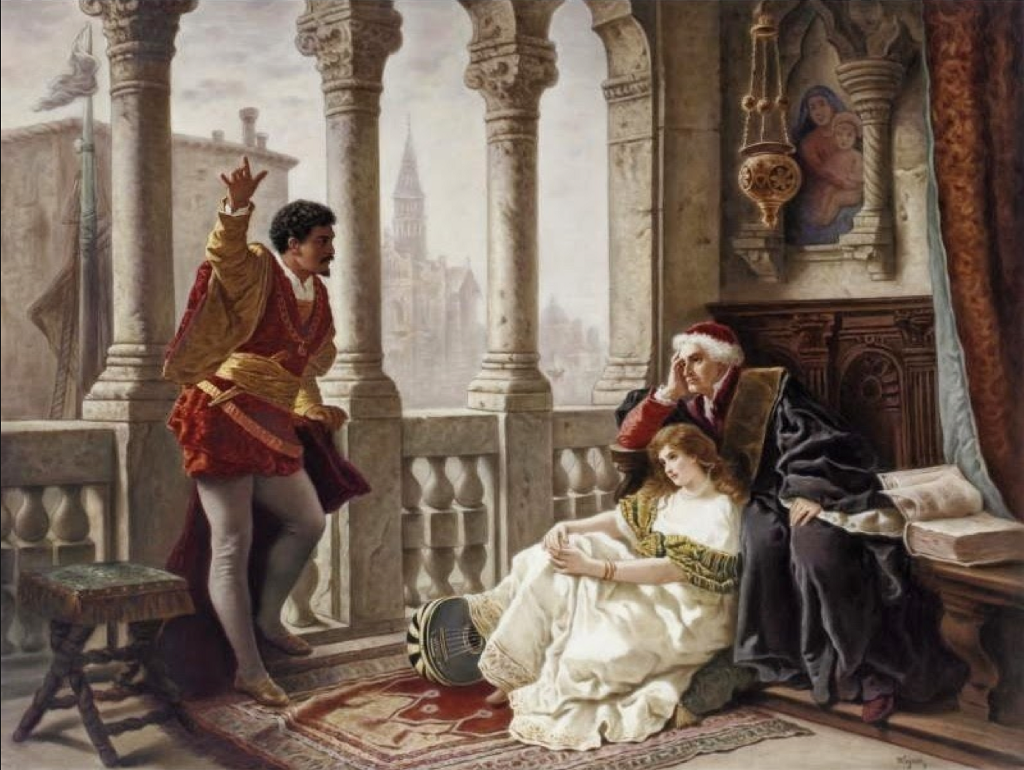
8. Prospero from The Tempest
Prospero, the former Duke of Milan and father of Miranda, seems to have his daughter’s best interests at heart, which makes him an all-around decent parent. Because they are stranded on an island, he acts as both a father and mother figure, telling Miranda, “I have done nothing but in care of thee, of thee, my dear.” Despite their removed setting, they still can’t escape those pesky old-fashioned norms, which dictate that Prospero choose Miranda’s husband. All in all, his overbearing nature is minimal compared to the other patriarchs. Plus, he gets points for being able to perform magic tricks to keep things entertaining on those long, lonely island nights. His cruel and inhumane treatment of Caliban, on the other hand, is another matter and pretty unbecoming of a supposedly decent dad.
To thine ownself be true. That definitely won’t get you killed.
7. Polonius from Hamlet
Polonius is a classic helicopter parent: annoying but reasonably decent. Despite his mouthiness and nosiness (yes, that rare combination), I can’t help but see some sincerity in his preoccupation with Ophelia and Laertes. When Laertes departs for France, he gives him fatherly wisdom before having his servant go and spy on him to ensure that he is behaving morally. Still, he tells him “to thine ownself be true,” a piece of advice fathers are giving their children to this day. The advice only goes so far, unfortunately — both his children end up dead, like just about everyone else in this play.
Family meeting time!
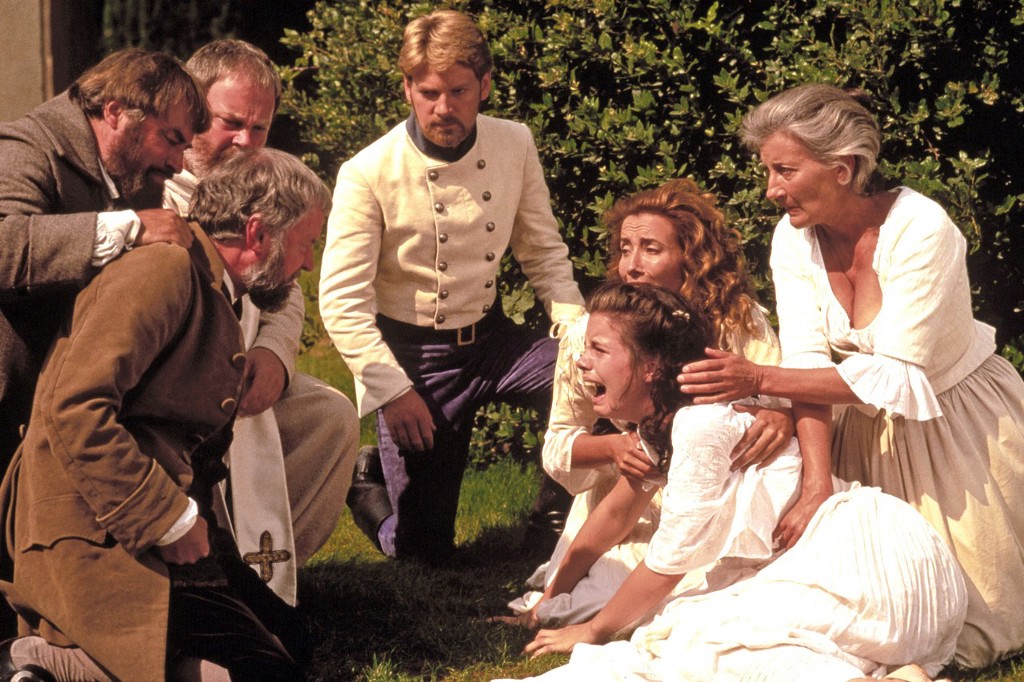
6. Leonato from Much Ado About Nothing
It’s hard to determine whether Leonato’s fatherly intentions are as true as Prospero’s. Like most other Shakespearean fathers, he is completely controlling of his daughter, Hero. Despite a vast difference in age, he tells Hero to welcome the advances of suitor Don Pedro. Yet, when a rumor is spread that Hero is no longer pure, he is both outraged that his daughter is unchaste and affronted that people are talking negatively about his child.
Follow your gut, Lear. Banish her.
5. Lear from King Lear
King Lear’s insecurity is certainly to blame for his questionable expressions of fatherly “love.” Or, his dream of being king while his children handle the responsibilities of the position simply drives them further away. Lear stages a test of flattery to determine which of his three daughters loves him most (and who he can give the biggest piece of the kingdom to). After Cordelia refuses to participate, he orders her out of the kingdom, then proceeds to throw the king of all tantrums and eventually descends into madness. Essentially, Lear and his children manage to turn a family squabble into all-out civil war — all in the name of (basically) a minor filial rebellion. Typical.
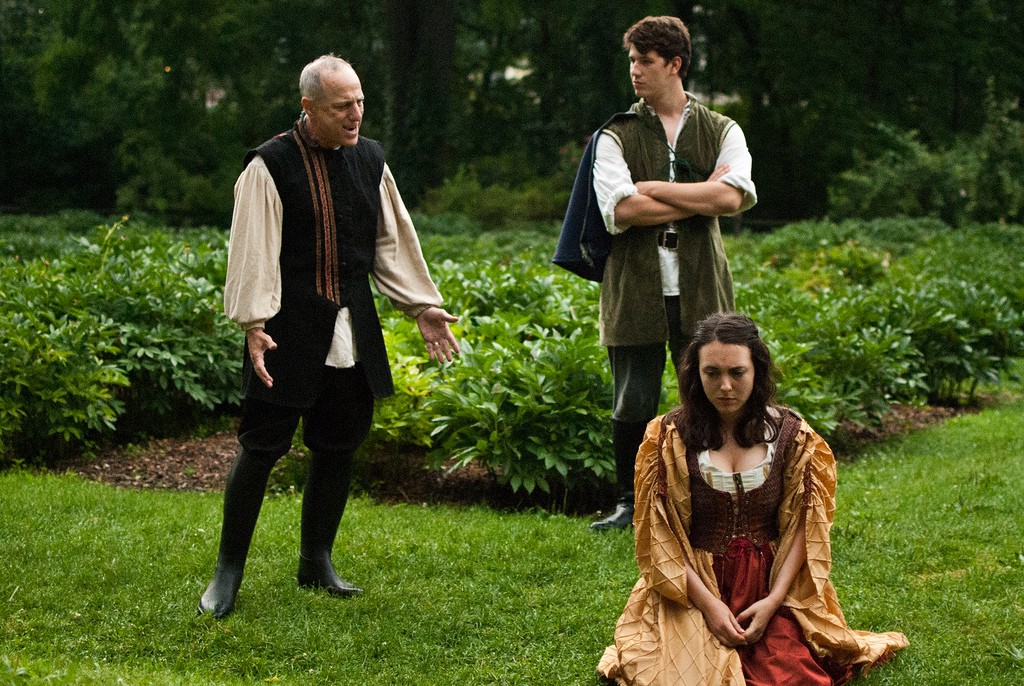
The golden rule of parenting: nobody gets any until Julia Stiles gets some.
4. Baptista from The Taming of the Shrew
In typical Shakespearean father fashion, Baptista spends way too much time interested in his children’s love lives. Thankfully, while his daughters, Bianca and Katherine, don’t have to suffer through any sort of love tests, Baptista isn’t opposed to shamelessly taking bribes from their suitors. In a scene that results in him looking pretty damn foolish, he is duped by a costumed suitor who runs off with Bianca. Ah, karma.
Time to meet the boyfriend.
3. Brabantio from Othello
Brabantio takes the “disapproving father” trope to a whole new (horrible) level. Although he humors Othello by inviting him over to his home, Brabantio does not think it’s possible she actually fell in love with him, short of being drugged or bewitched. Thus, in a charming combo pack, Desdemona’s father is both racist and sexist. Lovely. Thinking his daughter to be his property, he is terrified of her interracial marriage. His solution? He disowns her after unsuccessfully trying to strip Othello of his title. His only redeeming fatherly act is that he dies of grief upon his daughter’s escape.
This is why you don’t give kids bedrooms with balconies.
2. Lord Capulet from Romeo and Juliet
Lord Capulet is a pretty horrible father, mainly due to his short temper and itchy finger (yes, that’s his own twisted euphemism for an inclination toward child abuse); he takes Brabantio’s manipulation to a whole new level by making emotional and physical threats. The father of Juliet, he seems like a good dad at the beginning when he shoos away Paris’s advances after his much-too-young daughter. However, his character quickly deteriorates in the eyes of the audience when he finally allows Paris to propose to her and her refusal throws him into a rage. He’s not too great at giving compliments, either. So fed up with her, he says, “Out, you baggage, / you tallow face.”
Give me obedience or give me death.
1. Egeus from A Midsummer Night’s Dream
Fatherhood may not be Egeus’s strong suit, but threatening people sure is. The worst father of them all, he’d rather not have his daughter around than have her disobey his orders. Egeus tries to keep Hermia from marrying the love of her life, Lysander, and instead urges her to marry Demetrius. So intent on controlling her, he demands that her punishment be the death penalty should she not comply with his orders. The Duke of Athens, Theseus, has more mercy on her than her own father, reducing the sentence from death to exile to a nunnery.
Sign up for our newsletter to get submission announcements and stay on top of our best work.
YOUR INBOX IS LIT
Enjoy strange, diverting work from The Commuter on Mondays, absorbing fiction from Recommended Reading on Wednesdays, and a roundup of our best work of the week on Fridays. Personalize your subscription preferences here.