1. On the way home, the girl did not notice the color of the sky or the shape of the night, as she was too busy questioning why there were no secrets anymore.
She pedaled past the town square, the abandoned shops, the gas station sign flickering in its insignificance, feeling upset. Everything — the empty roads and lonely looking houses set far back from the road, the dilapidated buildings spaced several hundred yards apart — seemed to lack mystery.
Even the diner, where she had spent the better part of the past nine hours on her feet waiting tables, was no place for anything fascinating or curious. Before her shift ended, her boss, Mr. Dupont, had the nerve to accuse her of daydreaming and flirting with one of the short-order cooks. Out of embarrassment — for the accusation was partly true — Shelley had turned and spilled an entire tray of ice cream, then mumbled a few extraordinarily tame epithets. She repeated these now as she rode: “Oh Hell and Holy Ghost.”
Her one good pair of nylons now had a rip somewhere at the back of her right thigh, which had happened when she knelt down to clean up the overturned dessert. Although she tried to ignore it, she could feel the broken seam inching up her leg as she rode along, reminding her of everything that had gone wrong that day.
Sometimes 19 was too young and too old at exactly the same time.
The girl had an interesting face — almost anybody could see. Her brown eyes were flecked with green, and her expressions usually carried an open, questioning quality that most people considered friendly or unserious.
Up the back stairs, she could hear her grandmother speaking to somebody inside the kitchen. As Shelley approached the door, she realized her grandmother was talking to herself once again, addressing the dozens of photos of her former kindergarten students that were posted on the refrigerator. She was reciting a familiar story to them, her voice punctuated by the sounds of the police scanner buzzing faintly on the kitchen table and the chatter of Mr. Peepers, their pet bird, in his cage by the window. Shelley stood by the screen door and listened quietly.
“Then, of course, there was the sly fox,” her grandmother said. “He played the fiddle so sweetly that it sounded like a mother bird singing to her young. And he would hide out in the woods, just beyond the shadowy fields, and he would play his fiddle at midnight, and all the chickens would begin pecking at their doors. And then the fox, he would begin to play quieter and quieter, and all the hens in the henhouse would begin fussing until they had each crept out, and they would scoot across the field and into the dark shadows of the midnight woods, and one by one, the fox would wring their necks and gobble them up in his razor-sharp mouth.”
2. Shelley entered the kitchen and found her grandmother at the table, putting a blob of white frosting on an uneven red velvet cake. She leaned over and kissed her grandmother on her powdery forehead, then stood on tip-toe to put a wad of cash into the coffee can on top of the refrigerator.
It was only 6 p.m. on a Friday, and all she wanted in the world was for the day to be over.
“Don’t you look bushed?” her grandmother said with a grin, keeping one hand on the frosting knife, the other on the cake plate.
“I am.” Shelley collapsed into a seat at the opposite end of the table, took off one of her canvas tennis shoes, and began massaging her left foot. “I swear I must have walked as far as China, running back and forth from that kitchen all day.”
“You want me to draw you a bath?”
“No thanks. I’ll just sit here a minute,” she said, putting her feet up on the empty chair beside her. “I tell you, I just can’t believe how unfair the world is.”
“Now why’s that?” her grandmother asked.
“Because Wayne and I got in a load of trouble at work today. He was back at the grill and the only one working on the line through the rush, and wouldn’t you know there was some kind of outfit moving these little yellow houses on the back of their trucks—five or six of them on these flatbed trucks—and Wayne and I were staring out the window daydreaming, and he asked me if maybe I’d like to sneak into one of the houses with him. Like we could live together, and our kids would never have to go to school, and we could see the whole world traveling around like that. I said I’d like to, but then a bunch of orders got called up, and he ended up burning some eggs. Then Mr. Dupont came up and laid into us about paying attention instead of spending our time daydreaming and love-talking. Then I got upset and dropped a tray of ice cream. And I had to pay for it out of my tips.”
Her grandmother smiled, adding another glob of frosting. Glancing up, she said, “Don’t move. You look just like the picture of your mother sitting there.”
Shelley frowned, ignoring the comment. “Is that for the cakewalk tomorrow?”
“It is.”
“The sheriff picking it up?”
“Said he would.”
Shelley looked across the small linoleum table and again noticed that the police scanner volume had been turned all the way up. It chirped with a far-off though consistent static. Her grandmother’s black-and-white composition book was open to a page where she had scribbled something nearly illegible. “What’s that?” Shelley asked.
“We got a new one today: 11-26. Abandoned bicycle.”
“Oh, that is new. I never heard that one before.”
“It is. I had to check the code book myself.” Her grandmother leaned forward conspiratorially. “A call came from over at Wright and Evergreen about 20 minutes ago. Somebody found a bicycle just sitting next to the curb. No one knows whose it is. Gary Polk’s the officer on the scene.”
“Gary Polk? Oh, I don’t like him at all. He came into the diner yesterday and looked me up and down like I was a pony at the 4-H. And when I walked past him, he pinched my behind. I like Deputy Will better. He’s tall…and nice. He never tries to make a grab at anyone.”
“You just be thankful someone makes a grab at you every so often.”
“Very funny,” she said. “Anything else exciting happen?”
“Well, earlier there was a 10-91A. A stray animal. It was the Hanford’s cat that run away. The black one. It was at the grocery store. It went inside, right down to where the cat food aisle was. Mrs. Hanford had to come pick it up. By the way, did you hear that Junior Hanford’s back in town?”
“No. I didn’t.”
“I thought you used to have quite a thing for him.”
“I never did!”
“When you used to pal around with his sister. You had a crush on that boy. I believe you were in the fifth grade, and Junior was in the eighth.”
“I shouldn’t have ever told you,” Shelley said with a short smile. “But you always find a way to wheedle things out of me.”
“It just so happens that I can’t abide secrets, big or small.”
The police scanner interrupted with harsh static.
“Unit 304 to base. Located the bicycle. It’s a girl’s one. Pink, with streamers. Going to try and find out who it belongs to. Over.”
“Ha. Some mystery,” Shelley sulked. “Friday night and this is all the excitement they got for us.” She took out her pad from work and began to finish a sketch she had started earlier in the day.
Over the past several months, the girl had begun using the ticket book from the diner as a kind of notepad, drawing the lunch counter’s customers in a series of furious lines and curves. They looked like a series of police sketches. More than once, Shelley had followed customers home after her shifted ended, adding details about the kinds of cars they drove, where they lived, what their houses looked like—a rogue’s gallery of all the interesting inhabitants of town. She was now working on a drawing of a man who had come into the restaurant the day before — Raymond Dove — a felon, known arsonist, and suspected methamphetamine distributor who had a wide, rangy-looking face and one arm that was noticeably shorter than the other. She now settled into the drawing, ignoring the subtle buzz from the scanner until it abruptly announced:
“Unit 304 to base. Approaching a group of kids on the corner of Fourth. One of them gave me the finger. Think it was Mike Lee’s son. Going to ask them who this bike belongs to. But are you sure the sheriff don’t have anything better for me to do than chasing kids around?”
It was then that Shelley noticed that Mr. Peepers had become uncharacteristically quiet. Shelley stood up and peered through the wire cage and found the creature lying among the pages of yesterday’s newspaper. She turned to her grandmother and used the nickname she always did when faced with trouble of a serious nature: “Honey.”
“What is it?” her grandmother asked.
“It looks like Mr. Peepers is dead.”
The grandmother slowly stood and leaned beside her granddaughter. “I thought something was wrong with him. He didn’t say nothing but swear words all day.”
Shelley stared forlornly through the slats of the cage. “Now I’m going to have to go bury him, I guess.”
“Where you plan on doing that?”
“Behind the library.”
“You’re going to get in trouble. Ms. Briff already told you that’s not your own personal cemetery.”
“I don’t care,” Shelley said. “It’s public property. And it’s got the best view of any place in town. Which is the least I can do for him. Besides, I’ve got four other animals buried there already.”
Her grandmother gave her a skeptical look.
“I’ll be quick. Nobody’ll notice. I promise.”
Her grandmother nodded and put one last swipe of frosting in place. Maybe it was the heat, or the bird dying, but the cake looked like a lopsided heart, collapsing in on itself.
3.Outside in the garage, the girl searched for a coffin. There was stack of old shoeboxes her grandmother had collected from “before the war,” but Shelley never had any idea which war she meant. The war in Korea maybe. She found a blue one and climbed up the back porch stairs, stopping on the top step to listen to her grandmother again.
“And where were we, boys and girls? Oh, yes, well, that wily old fox, that wily old fox began to play that fiddle, he began to play and not just any old song, but ‘Wildwood Flower,’ and the woodsman, he had lost one chicken too many and followed those feathers out to the woods, and then he heard that sound. He was standing there in the middle of that darkened forest, and he began to think of his wife, his one true love that had drowned a year before, and then his axe began to feel mighty heavy, and it fell from his shoulder, and he laid it there in the grass where it disappeared, and then he started to march off to where the sound of that lovely voice was calling, deeper and deeper into the midnight forest, and when he looked up, he saw that the trees all wore the sad face of his lovely departed.”
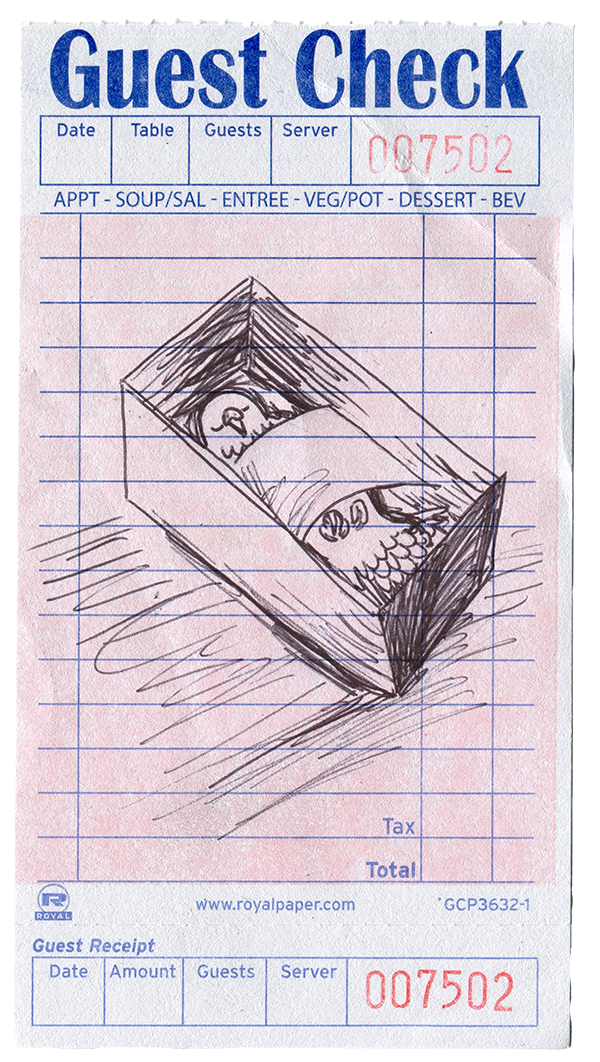
Shelley opened the door and found her grandmother beginning on a second cake, dolloping on pile after pile of white frosting, humming to herself. The girl closed her eyes, took a deep breath, and carefully reached inside the cage for the deceased bird, feeling its cold, reptilian feet. Carefully she deposited the animal in the shoebox, found a piece of blue tissue paper in the junk drawer, placed it over the bird as a ceremonial cloak, and closed the lid.
“Okay, I’ll be back in a bit,” she said and kissed her grandmother on the forehead again. She paused at the door, staring at the profile of her grandmother sitting there frosting the cake, imagining it, like a moment from some soap opera or crime show on television, as the very last time she’d ever see her.
Once more, she heard the police scanner crackle with static.
“Unit 304 to base, unit 304 to base…”
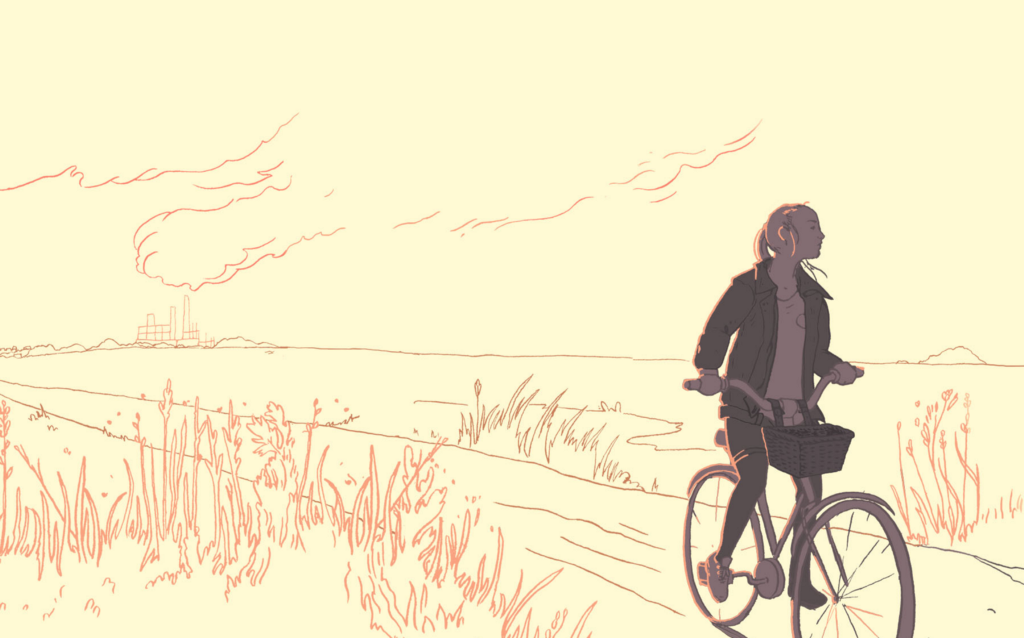
Outside, she placed the shoebox in the wire basket on her bicycle and began to pedal off. She looked around and saw almost everything had gone a faint blue.
Trees passing by looked skeletal, unfamiliar. The sound of the wind hid her unease. She stuck to Fayetteville Road, riding as fast she could.
Up ahead, somewhere in the distance, a pair of lights flashed. A police cruiser fled past in a fury, and Shelley pedaled as hard as she could, desperately trying to keep up.
The part of a cruise ship that is under the water line is called “below,” and everything that is upwards is called “above.” Two different worlds inside a huge body. Once you get inside this huge white shining girl, your own world suddenly gets its particular dimensions: its height is 19 decks (there is no 13th, of course), length — 1,083 feet, weight — 143,724 GT.
Countless doors, stairs, twists and turns, and a single throughway, the 4th deck that separates “below” and “above,” and connects bow and stern. You can cross the ship through that highway called M1, and you can get anywhere from there through the numerous doors on both sides of it. The main gangways are there, and that M1 is where the lowest illuminators are.
Below are mechanical rooms, electrical rooms, engine rooms, laundry, tailor’s shop, crew cabins, and no illuminators. Circuits and mechanisms; pumps and drives; propellers and thrusters; broken garments and broken hearts; fixed garments and non-fixable hearts; dirty laundry and dirty secrets; clean and pressed laundry, and unpurified, messy truths; love and hatred; brutal lies and touching revelations; orgasms and fights; gossip and tattle; whispers and shouts; break-ups and make-ups; vows and betrayals. Everything that keeps the ship moving is below.
Above is the playground, the display, the stage where the fascinating show runs called Happy-To-Be-A-Crew-Member. It is where crew members get, and passengers give. Money. It is where passengers get, and crew members give. Perfect service. Food. Entertainment. Crew members make passengers’ dreams come true. Smiling. Joking. Serving. Months without a vacation. Hoping to make their own dreams come true some day. Everyone gets what they come for. They consume each other, they leave their prints on the ship’s skin, and they don’t leave any trace in each other’s lives. They’re all being consumed by the ship. Every day, cruise by cruise, non-stop. Turnaround day turns into a new one, each cruise turns into a new one, just the same. Tons of food being thrown every day down to feed fish. Tons of food. Tons of shit. Everything goes below, and down, and out into the ocean.
The ship recycles crew members and passengers. She spits them out on turnaround days, their fingerprints erased, their words dissolved, their emotions dismissed. She empties herself, getting ready to consume new joiners, to do with them all just the same. She does with them “what spring does with the cherry trees” but in a cruise ship way.
Once you get behind these walls, once you’ve given your passport to some officer with a glossy smile and Italian accent and got your crew member’s ID, you can be your true self in here. Or you can be the opposite. You can be whoever you want. No one cares as long as you have your name tag and cruise pin on the left side of your breast. You are what is written there. A buffet steward, a waiter, a supervisor, a cook, a cabin attendant, whatever. What’s behind your name tag, cruise pin, and your courteous smile — doesn’t really matter. Light makeup, hair done in a neat knot — if you’re a female crew member; perfectly shaven face and short haircut — if you’re a male. Clean, tidy uniform, no alcohol or cigarette fumes but no explicit perfume either, no suffering or longing of any kind in the eyes, no visible tattoos — for both male and female crew members. You are a walking light tidy odorless smiling courtesy. No one looks you in the eye — they look at your name tag. You are surrounded by fleeting people who don’t give a damn about you, as long as you do your job properly. And very soon you learn not to give a damn either.
What happens on the ship stays on the ship. If you’re married on land, you can be single again here. If your partner finished their contract and went home, you can find another one among new joiners. If you have kids to take care of, you are free from all obligations, just keep sending money. If you’re shy, you can be daring. If you’re lonely on land, you can find yourself any sort of company here. If you’re in the closet, you can come out in here. If you want solitude, you can be lonely — no one cares. You can do whatever you want each contract, each ship.
Once you step over the gangway, you start counting days of your life. Counting down until the end of the contract, and then counting down the days at home until a new ship. You call ship life “shit life,” but you keep living it. Someone tells you when you are allowed to go out, when you are allowed to eat, sleep, pee, puke, or whatever. Months without a Saturday — six if you are European, nine if you are Mexican, Filipino, Indian, or Indonesian. You stop seeing the difference between yourself and other nations, you only see the difference in uniforms, but your inequality is safely recorded in your contracts — in the Term of a Contract and Salary columns.
You can extend or you can reduce your contract. But you need to have a substantial reason for that. And you don’t.
And then you come back home for your two months vacation. You can extend or you can reduce. But you need to have a substantial reason for that. And you don’t. So you count days to your next contract. You can’t sleep till noon like you were dreaming of doing while you were on the ship. You wake up at 6 a.m. because of the sunlight coming from the window. You didn’t have a window for months, you would wake up under water. You hear birds sing, and dogs bark, and brakes creak, and kids scream outside. It is all so loud, and so much of it. So you can’t sleep.
You are constantly hungry, because you need to cook and wash up now, or you need to think where and what to eat, and you are too lazy to do that. You didn’t think about that for months, you had all you needed at crew mess to keep you alive.
You have plenty of time but you don’t know what to do with it. You can go anywhere but you don’t know where to go. Your course was set by somebody for months, your schedule was made by Assistant Maitre D’, your breaks were defined, and you didn’t have many choices. You start thinking that that was the freedom. Freedom from choice.
Your apartment is a mess because there are no Crew Rounds to check on your tidiness. You’re a total mess. You need your cabin boy to have that all done for 10 bucks per cruise. Your hair is a mess, because you don’t know how to do it if not in a neat knot, and no one forces you to do it a neat knot for now.
You stare at people’s breasts, looking for their name tags. Who are they if they don’t have it defined on their name tags? And who are you?
You wander around like a ghost. It is so hard to take your course if it’s not set by someone. You were moving to your particular destination at a speed of 22 knots for months, and now … now you just drift. You are already not the one you used to be, and you are not yet the one you want to be, whoever that person is. And that point, that ideal you, seems so distant and so blurred, and it seems you’ll never reach it. Because it’s shaken and shifted too often and too much, like a ship may be shaken in a few storms during a 5-day Hawaii to Catalina crossing.
You meet your friends, they laugh, make jokes, talk about the times they had when you were away. You have your stories as well, but these people are not part of them, and you are not part of their stories anymore. They have land stories, and you have sea stories — their edges slightly contact but never mix up. They are not your people anymore. You are surrounded by fleeting people wherever you go.
You’ve been everywhere, and you end up nowhere. You are in a temporary place, in the middle of waiting — wherever you go. Your suitcase is your most constant companion. The place that used to be your home now is just another port where you have some more overnights than in other ports. You can drop anchor here and settle here again, but you need a substantial reason for that. And you don’t have it.
So yeah, you actually count days to your next contract, to a new round of your shit ship life, because once you get “below,” from then on you will be suffocating on land, and crave a breath under the water line.
Electric Literature’s contributing editor Michael J Seidlinger is on the road as part of his project, #FollowMeBook, visiting writers and exploring the limits of social media. As part of a limited summer series called “The Writing Life on the Road,” he’s sharing his conversations with writers as he makes his way from New York to California. This week, Juliet Escoria, author of Black Cloud, Witch Hunt, and the forthcoming Juliet the Maniac, shares details and insights from her writing life in West Virginia.
What follows are highlights from Juliet’s interview with Michael. Her responses have been edited for clarity.
Setting the Scene
We’re sitting on my front porch in Beckley, West Virginia in my neighborhood full of smallish houses that were built mostly in the 50’s. I think our house has a fair amount of lead in it, I’m guessing. Our porch for some reason has carpeting on it. I’m not sure why our landlord thought it was a good idea, but it’s here.
My dog, Jelly, who’s obnoxious but very cute, is out here. There is also a cat named The Snow Leopard, not officially, but that’s what we call it. That’s its reputation on the streets. It is a very intimidating cat that will fuck you up.
Where She Writes
I am specific to a certain spot, and if I don’t have my spot then it’s hard for me to write. I work in the basement, and I have a very small desk that has seen me through three books now, and now I’m superstitious about it. Say I had a bunch of money and for some reason I wanted to buy a really big, expensive desk, I wouldn’t do it. I’d keep this tiny, little, shitty desk that I got on Craigslist.
How She Writes
One thing that changed my writing process was not caring if the section or story is good at all when I get started. I will write the worst draft ever, just to get it down. It’s almost outlining, in a way. Like the first draft is figuring out where it’s going to go, and then I redo it and redo it and redo it, over and over and over again. Toward the end, I change the font and spacing, then go through it again. The last thing I do is print it out, read it aloud, and then make a few more go-rounds that way.
I used to exclusively write late at night. But then when you get married, you have to maintain a relationship and stuff so staying up till 6 in the morning doesn’t fit in so well.
Creating (and Sometimes Missing) Deadlines
Sometimes I’ll create arbitrary goals for myself, such as “I have to finish this by this date” and that helps me. For a while, I wanted to write one section of the book per week. Sometimes I’d have really good weeks where I’d finish four, and then Christmas would come and we’d be out of town and I wouldn’t work on it for a couple of weeks. I don’t think it’s good to get hung up on small stuff like that. Still, I feel bad when I don’t write. When I finished the draft of Juliet the Maniac, and I was waiting to hear back from my agent, I wasn’t writing for a while, on purpose just to give myself a break. But then I started to feel generally purposeless.
Starting Projects
When I finished Black Cloud, I wanted to work on what eventually became Juliet the Maniac but it wasn’t working out. I think I was still preoccupied with the story collection. And a few months ago, in between waiting for my agent to get back to me with her notes, I wanted to write a short story, because I’d been missing short stories. Again, I couldn’t focus on it. I feel very much held hostage by whatever my writing wants to do, which is frustrating.
Being stressed out about money is not good for writing.
Life Outside New York
New York and I were not good together, when it came to writing. I had to work so much that I was barely writing at all. It got better when I moved back to California. I think West Virginia has been the best place for me, though, by far. It’s quiet here, and there is not a whole lot to do. I like it. We have plenty of space too, I think that helps, so I have my little station and Scott [McClanahan] has his. And, like I said, I definitely need my spot that I work out of.
Scott and I don’t have a lot of money but it’s comfortable here anyway because everything is so cheap. We’re not stressed out about money. We can do, not like, everything we want, but reasonable things, so that is good. Being stressed out about money is not good for writing.
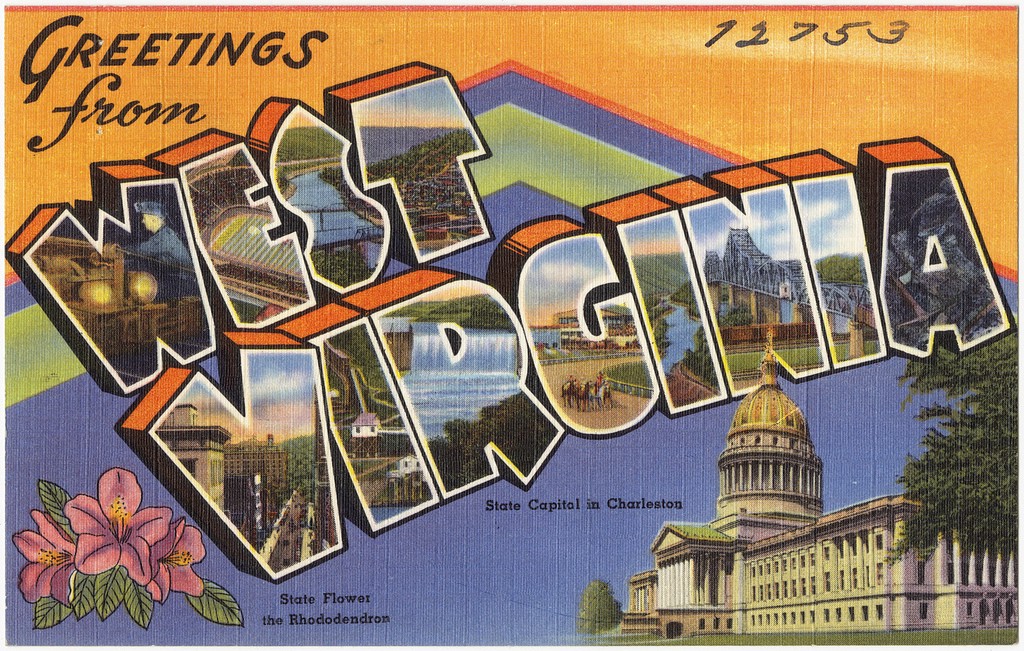
From Family-images.com, West Virginia page
Writing in Appalachia
There’s an Appalachian writing scene that neither of us are a part of. It’s very insular and academic, very niche and there’s only so much funding. A lot of these people you never would have heard of, but they work at this university and have won these prizes. They don’t like Scott because they think he plays into the stereotypes. They want you to write about apple pie or something. They like stuff about coal mining and mountaintop removal and those types of topics. I don’t count as an Appalachian writer. I just happen to live in Appalachia.
I don’t count as an Appalachian writer. I just happen to live in Appalachia.
There are some guys who have put together a music and reading series called Travelin’ Appalachians Revue, that comes through the state every summer, and that’s always really nice. The crowds are supportive and interested, and there is not an ounce of jadedness or cynicism. Beyond that there is not a whole lot in terms of scene.
Finding Your Community
We have some friends here who write and they’re great — Mesha Maren and her husband, Randal O’Wain. But mostly I find and maintain my community through my phone. Texting other writers and then of course, social media. I value the chat functions a lot more than the social media platforms themselves.
But I feel like we’ve reached a saturation point of social media. I think something is going to happen to it, like we’ve reached some sort of tipping point. But maybe we haven’t, maybe it’s just going to get worse. The current state of politics doesn’t help. It’s hard to pay attention to books when you read that people are going to be deported, and are worried about the possibility of World War III. And then there is everyone’s need to show what a great person they are via their social media, and that is frustrating.
I like doing readings because you can go to different cities and meet the people that you know from the internet, and suddenly they are actual people, as opposed to internet people. That I think is good enough in itself. I don’t know if readings help in terms of book sales or visibility. Mostly I do readings to hang out with friends who live in different cities, and then I can write off the traveling expenses on my taxes.
Buzzfeed gets a draft of Milio Yiannopoulus’s memoir, Amazon buys Whole Foods and other literary news
Summer Fridays are usually sleepy days in the literary world, when editors and writers a like are out chasing ice cream trucks by 2pm. Not so, last week. BuzzFeed got their hands on a the draft of Milio Yiannopoulus’s book, and apparently it’s a bore. Amazon is moving into the grocery aisle as it plans on buying Whole Foods, and Israeli author David Grossman has won the Man Booker International Prize.
BuzzFeed got its hands on the draft of Milo Yiannopoulos’s forthcoming book
Now, I know everyone is just so excited about Milo Yiannopoulus’s new book, but before you spend July 4th waiting in line to get your hands on it, we have some bad news: apparently, it’s terrible. BuzzFeed has acquired the draft of Dangerous, a book surrounded by a great deal of controversy — both because of the author and its original publication plans. Simon & Schuster was the original publisher of the book, offering Yiannopoulus a $250K contract late last year; but when videos of the former Breitbart editor seemingly condoning pedophilia emerged in February, the publishing powerhouse backed out of the deal (the book is now being self-published). According to BuzzFeed, the 200-page draft contains no gossip and nothing newsworthy, unless readers are interested in his beauty regimen, which is apparently discussed extensively in the manuscript. Yiannopoulos has organized the book in sections titled after people who supposedly hate him, including “Why Twitter Hates Me,” “Why Ugly People Hate Me,” etc. The basic sentiment behind the book’s argument is one Milo has always preached: you should be able to say what you want and not have to feel apologetic about it. Boring and outdated, BuzzFeed calls the draft a “staggering failure.” Let’s just hope Yiannopoulus doesn’t improve the draft based on Buzzfeed’s pro-bono editorial note.
In its continuous quest to infiltrate every aspect of life, Amazon will add organic groceries to the list of things it wants to sell you. After opening up a series of bookstores, the online shopping powerhouse is continuing its quest for physical property — this time in the form of supermarkets. On Friday, Amazon announced that it will buy out grocery chain Whole Foods for a meager $13.4 billion (if we’re talking in terms of the steep price scale of the ritzy food store). Amazon, now the largest internet company by revenue in the world, has come a long way since its beginnings as an online bookstore. This purchase will allow for the online retailer to move into the grocery industry, a business worth $700–800 billion in yearly sales in America. Despite the transfer of power, the chain would retain its name, its Austin headquarters, and its current CEO John Mackey. Through the deal, Amazon will acquire over 460 stores across the United States, Canada, and Britain, raising questions about if and how technology will be incorporated into the food stores. Should we expect to find discounted books, vacuums, and school supplies galore scattered through the Whole Foods produce aisles?
[NYTimes/Michael J. de la Merced and Nick Wingfield]
Israeli author David Grossman has won the Man Booker International Prize
Israeli author David Grossman has won the Man Booker International Prize for his stand-up book about a stand-up comedian. A Horse Walks into a Bar was translated by Jessica Cohen, whom Grossman will split the £50,000 monetary reward with. Grossman’s novel was chosen from 126 titles, which were narrowed down to a 13-book longlist and a 6-book shortlist, among which were books from Norway, France, and Argentina. The book is about a comedian in a small Israeli town who breaks down on stage in front of his audience. This is the first year the Man Booker International Prize has been awarded to a single book; before 2016, the award was given every second year to an author for her entire body of work.
Hello, and welcome to my week-by-week review of the world. Today I am reviewing a watermelon.
It’s summertime, which means watermelons are still available to purchase just as they are any other time of year — but what makes summertime watermelons stand apart from the rest is that they don’t taste like a sheet of paper.
I recently bought a watermelon because I wanted my groceries to weigh 10 lbs. more than usual for the exercise. Unfortunately the watermelon I purchased was too large, and halfway home my arms gave out, so I had to abandon my groceries and roll the watermelon the rest of the way.
With watermelons there is always a certain amount of mystery. Will it be ripe? Will it have been hollowed out by a worm and replaced with hundreds of baby worms? You never know.
I had a good feeling about the one I’d purchased though, but when I cut it open I was met with the most surreal sensation. It was ripe — that wasn’t the issue. The strange thing was the pattern of the seeds looked just like Jesus’s face. Not Jesus the biblical figure, but Jesus my mechanic.
I thought it was a practical joke, or maybe a subtle marketing campaign on behalf of Tech Auto Repair. In Japan they can grow square watermelons, so it wouldn’t be that much of a stretch to think someone could grow ones with seeds in the patterns of a specific human face.
I think the campaign backfired because now the next time I see Jesus I’ll have to pretend I’m not picturing my knife slicing into his face and red juice running out.
The other issue with the seeds was I kept getting them stuck in my teeth. Normally I don’t care if I have food stuck in my teeth because my charm and confidence allow me to gracefully overcome such superficial trivialities, but I always worry about the possibility of a seed taking root in my gums. Getting a tooth removed is expensive. I can’t imagine what it costs to get an entire plant removed.
This watermelon was quite delicious and made even more so with the addition of feta cheese. I don’t know what part of the cow feta cheese comes from but it’s the perfect accompaniment to a watermelon.
BEST FEATURE: I saw my neighbor watching me while I ate the watermelon and I could tell she wanted some too and I’m not proud to say it but I enjoyed the power I held over her. WORST FEATURE: I found some worms in the rind when I was done.
Please join me next week when I’ll be reviewing a Crayon.
Presenting the third installment of The Bodega Project, where authors from across New York reflect on their community through that most relied-on and overlooked institution, the bodega. Read the introduction to the series here.
Everyone knows the Korean bodega, that ubiquitous fixture of the New York landscape — with its flowers and fruit out front, Tropicana and Corona in the cooler, Marlboros and Trojans behind the counter. But no one stops to wonder where the Korean bodegueros go for their own daily provisions.
Ironically enough, we didn’t have “Korean bodegas” in Flushing — home to the largest Korean community in New York, and second largest in the country after L.A.’s Koreatown. They’re an American construct, designed to please the Western palate. Instead we shopped at the Korean grocery store, teeming with the sorts of goods (usually of the fermented, pungent, foreign variety) no bodega owner would dare stock in his own Manhattan store.
We were a family of grocers, and on Sundays after church we went to Hanyang Mart on our side of Northern Boulevard, next to the Kentucky Fried Chicken. The parking lot would be filled with other Korean families also stocking up on the week’s groceries. On the opposite side of the boulevard, next door to Edward D. Jamie Jang-ui-sa where my grandparents had their funeral Mass, was another mart called Hanareum — now donning the English-friendly appellative H-Mart. Pre-dating both was the Guhwa in the heart of downtown, where we used to shop before my mother learned to drive a car. If you’ve ever passed down Northern, with its auto body shops, ethnic eateries, and fast foods of both the chain and mom-n-pop variety, you’d know there was nothing trendy about our corner of Queens.
In the colder months we’d pull up to the aroma of goguma — Korean sweet potatoes — roasting over a coal fire under a tent. It was my parents’ favorite treat when they were growing up, but my siblings and I were not interested in goguma. You had to peel back its cumbersome purple skin to scoop out the soft, caramelized flesh steaming inside. “This like pure candy!” my father would argue. We begged to differ, preferring our desserts to be more obvious, more American, the kinds a Korean grocer carried but never brought home to his family: Oreos and Reese’s Pieces and Jell-O Pudding so cloying our taste buds were shocked to numbness.
I realize now that for my parents, and for most of their immigrant generation, the goguma was their madeleine — one bite brought them right back to childhood and the home villages they had left behind.
Most days my mother’s shopping list was simple:
— dashima: dried kelp — miyeok: dried seaweed — myeolchi: dried anchovies — doenjang: fermented soybean paste — gochujang: spicy red pepper paste — bundles of scallion, watercress, and mugwort — mackerel for pan-frying — 40-pound bag of mepssal: short-grained white rice — 10-pound bag of chapssal: sweet, glutinous rice — various namul — wild herbs — whose names I never learned in English (if they even exist at all) — a box of Asian pears, because invariably someone in the community was moving house, or opening a new business; giving birth, or passing on.
It was only on banquet days that my mother would toss in the extra-fancy foods: cellophane noodles for japchae, mandu wrappers for dumplings, rice flour for scallion pancakes, or beef short ribs for barbecued galbi, which she marinated in soy sauce sweetened with kiwi or Asian pear. A box of Napa cabbage and ten pounds of Korean radish would be added to the cart maybe once a season, to make large batches of kimchi to share with extended family.
Yet each item that landed in our grocery cart, I would later learn, had been a negotiation between my mother’s Northern roots and my father’s Southern ones. Take, for example, the staple dish miyeok-guk: seaweed soup. New mothers eat it to replenish nutrients after giving birth. Children eat it on their birthday, perhaps to honor their mothers’ suffering during said childbirth. Some families eat the soup with every meal — which makes me wonder about the filial guilt ladled with each spoonful.
Yet each item that landed in our grocery cart, I would later learn, had been a negotiation between my mother’s Northern roots and my father’s Southern ones.
My mother grew up eating a version of miyeok-guk with bits of beef to flavor the broth. “Because so cold, North Korea,” my mother would explain. “We needing the meat.” While my father’s family, who lived near the Donghae Sea, prepared it with clams or mussels.
My mother’s American compromise combines both seafood and meat.
It is funny to think of my mother as a grocery shopper, because much of what she buys (often in bulk) ends up immediately stashed in the freezer or aging in the larder. She eschews her brand-new purchases in favor of the older ones decomposing in the crisper or passing their expiration date in the pantry. For her, cooking is an endless game of preservation and survival — salvaged scraps stretched into something if not delicious, then at least nourishing in the most fundamental sense. According to my father, my mother is a terrible cook. According to my siblings, she is still reliving the War, frozen in her refugee ways.
I’d peer into the carts and baskets of the other Hanyang shoppers to see variations of our same Korean meals. Similar negotiations must have taken place in each of those households. Which cultural practices were forced to assimilate, and which were simply lost?
We did not socialize at Hanyang; that happened in our church basement. Yes, you were seen and heard at the market (our community was only so big) but it was not a place to linger. Still, sometimes we ran into other ajumma’s — ma’am’s — from church. They shared the same diminutive stature, permed bobs, and pancake makeup to prevent tanning from the sun. We’d bow, and they’d share news of which melons were on sale, which greens looked fresh and which to avoid. We’d exchange short pleasantries like these before pushing on our way.
Though once, as a teen, I refused to get out of the car to accompany my mother into Hanyang. I was wearing perhaps my bulky volleyball uniform. I feared running into someone I knew from church, I feared being judged for my unfashionable clothes, I feared how their judgment would reflect badly on my family as a whole. The anonymity that comes with grocery shopping was a sensation I would only experience after I moved out of my parents’ home.
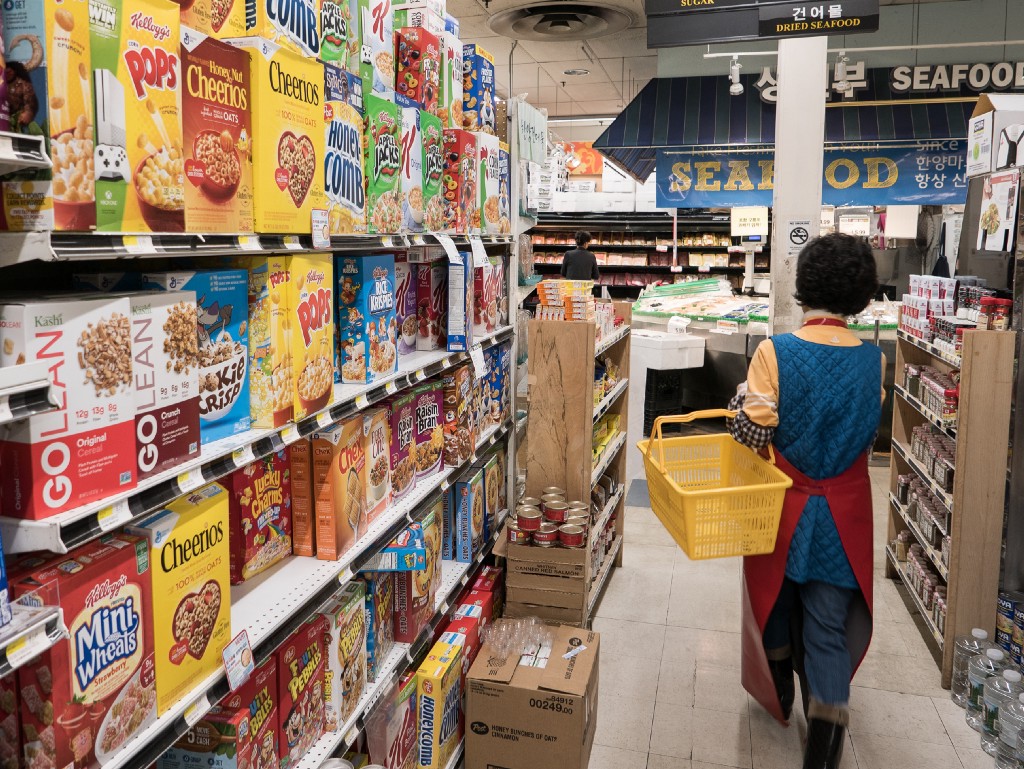
Over time, Hanyang devoted an aisle to “American” merchandise: Kellogg’s cereal, Wonder bread, Skippy peanut butter. But I never saw white kids from school shop there. Their families went to the Key Food just off Utopia Parkway — which has since closed.
I don’t shop much at Hanyang anymore. In yet another irony, the very foods I felt ambivalent about in childhood have seeped into the mainstream. Bibimbap is a regular fixture on the midtown lunch circuit. Kimchi, gochujang, toasted seaweed all come in hip packaging with no embarrassingly misspelled English labels. Korean food is #trending.
Just as Flushing is also changing. On my most recent trip to Hanyang, to buy ingredients to prepare my mother’s seventieth birthday dinner, I recognized not a single face from my community. The old waves have migrated east toward Long Island, or have passed away. The new waves speak a modern Korean that sounds foreign to my ears. The butcher’s assistant, a young Latino man, helped me select cuts of meat for the miyeok-guk, the japchae, the mandu. We spoke a pastiche of Spanish and Korean — when a word in one language failed us, we switched to the other. Once or twice I bumped carts with ajumma’s who were not Korean at all, but Chinese.
The old waves have migrated east toward Long Island, or have passed away. The new waves speak a modern Korean that sounds foreign to my ears.
I recently learned Hanyang was the name for Seoul during the Joseon Dynasty. Schoolchildren in Korea learn this fact from Day 1, and I imagine there is something laughable about the disconnect between a plain grocery — seated on this blue-collar, commercial stretch of Queens — and the regal capital of kings and queens from six hundred years ago. But for me, it evokes beyond its historical legacy. Its American identity as a Korean grocer’s grocery is the only Hanyang I’ve ever known.
About the Author
Patricia Park is the author of the novel Re Jane, named Editors’ Choice by The New York Times Book Review, Best Books of 2015 by American Library Association, and currently in development for a television series with Paramount and TV Land. She was born and raised in Queens, NY.
If the literature is any indication, the Elizabethan era was probably not the best time to be a “good” father, at least by today’s standards. While we may be thanking our own dads this Father’s Day, all Shakespeare’s characters have to be grateful for are ruined childhoods, emotional abuse, and bartered love. In the 1500 and 1600s (not to mention the historical and mythological periods in which Shakespeare set so many of his plays), the paterfamilias dictated everything from the the family’s coat of arms to its holiday travel plans. Oh, and marriage? You better believe that was the father’s call. In short, only complete submission and respect was tolerated from children.
In tragedies and comedies alike, Shakespeare shows us that fatherhood came with a lot of responsibilities, including selling your daughter to the highest bidder. Shakespeare not only nailed the expectation for obedience in his works; staying true to universal teenage rebellion, most children in his plays are not on board with their controlling fathers’ ridiculous demands.
For this Father’s Day, here’s a rogues’ gallery of Shakespeare’s most famous patriarchs. We’ve tallied up their sins and ranked them, from the sort of unpleasant, overbearing, or bloodlustful to the outright dastardly. Warning: a good deal of this behavior would now be considered criminal; in other cases, the fatherly transgressions are still very much a part of our culture. From nonstop hovering to threats of exile, the playwright’s works lay bare (some) tropes and truths of fatherhood that simply seem to transcend time.
— From lousy to worse…
You thought death would stop me from nagging?
9. King Hamlet from Hamlet
All things considered, King Hamlet is the best of a bad lot — mainly because he isn’t around all that much. Appearing as a ghost to a number of the characters, his interactions with his son (other Hamlet) is mainly focused on avenging his death. It’s hard to be a good father when you’re busy calling out for blood and harping about your wrongful murder, but the King does his level best. Is he taking his son on camping trips or teaching him how to drive stick-shift? No, but then again he does care enough to return from the afterlife.
Sure, this seems like a good match.
8. Prospero from The Tempest
Prospero, the former Duke of Milan and father of Miranda, seems to have his daughter’s best interests at heart, which makes him an all-around decent parent. Because they are stranded on an island, he acts as both a father and mother figure, telling Miranda, “I have done nothing but in care of thee, of thee, my dear.” Despite their removed setting, they still can’t escape those pesky old-fashioned norms, which dictate that Prospero choose Miranda’s husband. All in all, his overbearing nature is minimal compared to the other patriarchs. Plus, he gets points for being able to perform magic tricks to keep things entertaining on those long, lonely island nights. His cruel and inhumane treatment of Caliban, on the other hand, is another matter and pretty unbecoming of a supposedly decent dad.
To thine ownself be true. That definitely won’t get you killed.
7. Polonius from Hamlet
Polonius is a classic helicopter parent: annoying but reasonably decent. Despite his mouthiness and nosiness (yes, that rare combination), I can’t help but see some sincerity in his preoccupation with Ophelia and Laertes. When Laertes departs for France, he gives him fatherly wisdom before having his servant go and spy on him to ensure that he is behaving morally. Still, he tells him “to thine ownself be true,” a piece of advice fathers are giving their children to this day. The advice only goes so far, unfortunately — both his children end up dead, like just about everyone else in this play.
Family meeting time!
6. Leonato from Much Ado About Nothing
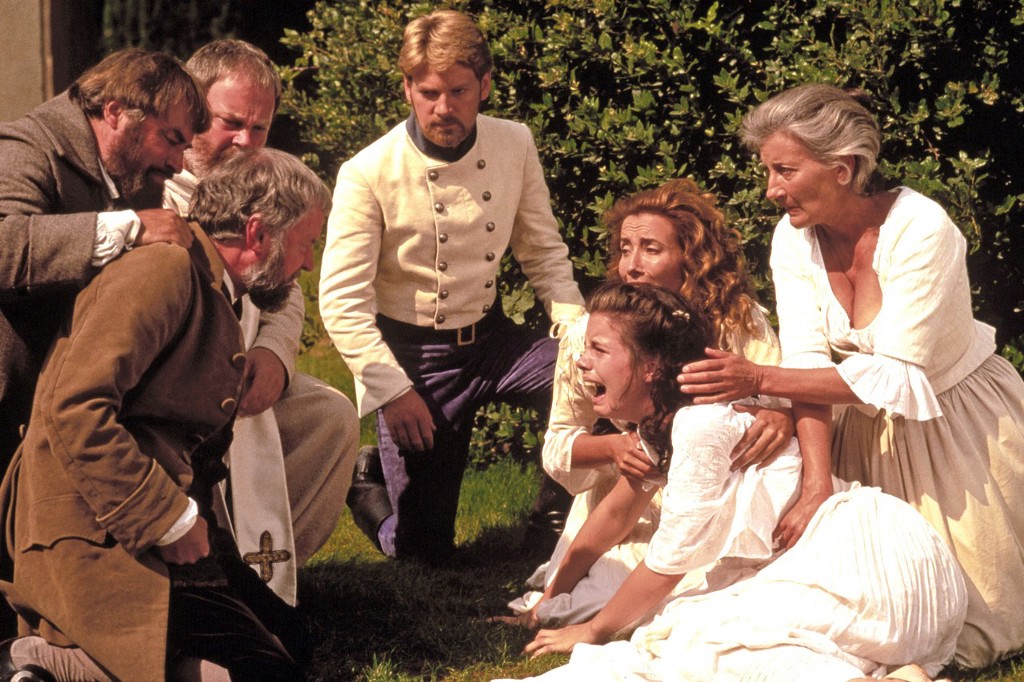
It’s hard to determine whether Leonato’s fatherly intentions are as true as Prospero’s. Like most other Shakespearean fathers, he is completely controlling of his daughter, Hero. Despite a vast difference in age, he tells Hero to welcome the advances of suitor Don Pedro. Yet, when a rumor is spread that Hero is no longer pure, he is both outraged that his daughter is unchaste and affronted that people are talking negatively about his child.
Follow your gut, Lear. Banish her.
5. Lear from King Lear
King Lear’s insecurity is certainly to blame for his questionable expressions of fatherly “love.” Or, his dream of being king while his children handle the responsibilities of the position simply drives them further away. Lear stages a test of flattery to determine which of his three daughters loves him most (and who he can give the biggest piece of the kingdom to). After Cordelia refuses to participate, he orders her out of the kingdom, then proceeds to throw the king of all tantrums and eventually descends into madness. Essentially, Lear and his children manage to turn a family squabble into all-out civil war — all in the name of (basically) a minor filial rebellion. Typical.
The golden rule of parenting: nobody gets any until Julia Stiles gets some.
4. Baptista from The Taming of the Shrew
In typical Shakespearean father fashion, Baptista spends way too much time interested in his children’s love lives. Thankfully, while his daughters, Bianca and Katherine, don’t have to suffer through any sort of love tests, Baptista isn’t opposed to shamelessly taking bribes from their suitors. In a scene that results in him looking pretty damn foolish, he is duped by a costumed suitor who runs off with Bianca. Ah, karma.
Time to meet the boyfriend.
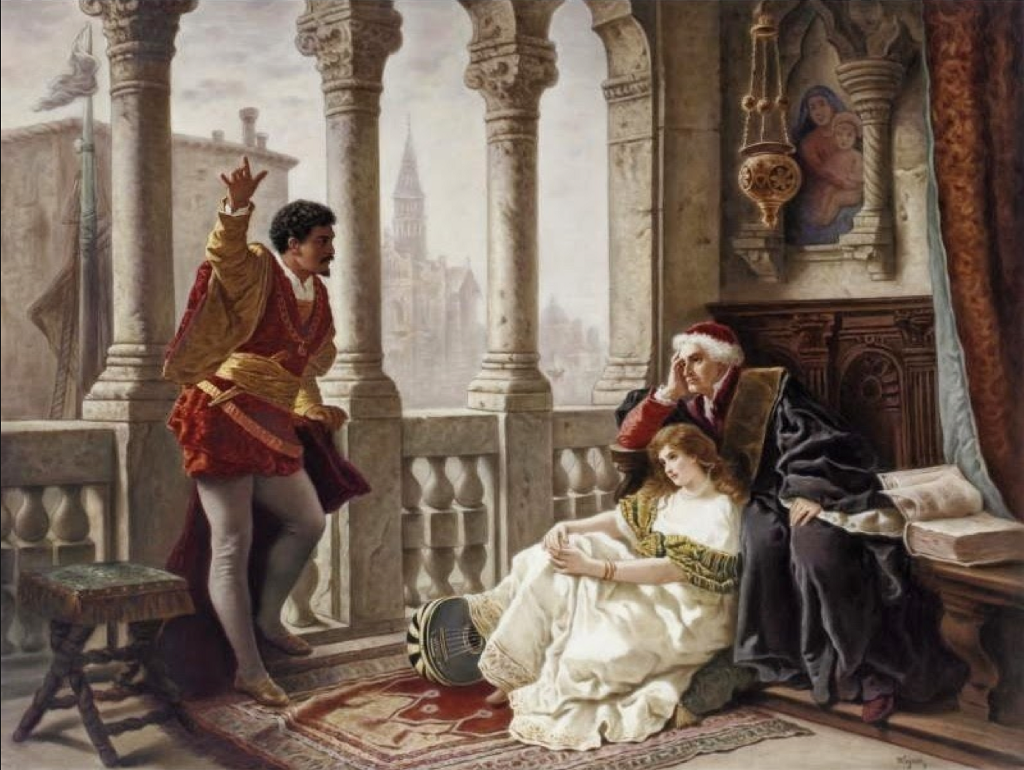
3. Brabantio from Othello
Brabantio takes the “disapproving father” trope to a whole new (horrible) level. Although he humors Othello by inviting him over to his home, Brabantio does not think it’s possible she actually fell in love with him, short of being drugged or bewitched. Thus, in a charming combo pack, Desdemona’s father is both racist and sexist. Lovely. Thinking his daughter to be his property, he is terrified of her interracial marriage. His solution? He disowns her after unsuccessfully trying to strip Othello of his title. His only redeeming fatherly act is that he dies of grief upon his daughter’s escape.
This is why you don’t give kids bedrooms with balconies.
2. Lord Capulet from Romeo and Juliet
Lord Capulet is a pretty horrible father, mainly due to his short temper and itchy finger (yes, that’s his own twisted euphemism for an inclination toward child abuse); he takes Brabantio’s manipulation to a whole new level by making emotional and physical threats. The father of Juliet, he seems like a good dad at the beginning when he shoos away Paris’s advances after his much-too-young daughter. However, his character quickly deteriorates in the eyes of the audience when he finally allows Paris to propose to her and her refusal throws him into a rage. He’s not too great at giving compliments, either. So fed up with her, he says, “Out, you baggage, / you tallow face.”
Give me obedience or give me death.
1. Egeus from A Midsummer Night’s Dream
Fatherhood may not be Egeus’s strong suit, but threatening people sure is. The worst father of them all, he’d rather not have his daughter around than have her disobey his orders. Egeus tries to keep Hermia from marrying the love of her life, Lysander, and instead urges her to marry Demetrius. So intent on controlling her, he demands that her punishment be the death penalty should she not comply with his orders. The Duke of Athens, Theseus, has more mercy on her than her own father, reducing the sentence from death to exile to a nunnery.
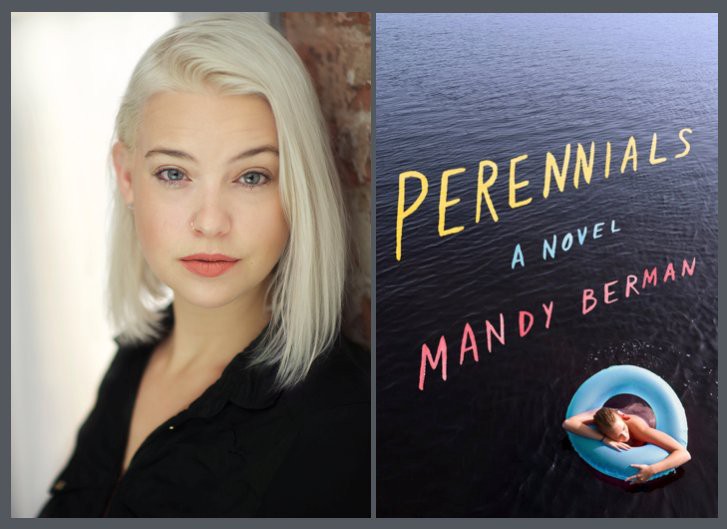
Mandy Berman’s debut novel, Perennials, opens with Rachel, age thirteen, trying to wake up her mother so that she can be driven to summer camp. Soon, we arrive to Camp Marigold, in the Berkshires, and meet Fiona, Rachel’s best “camp friend.” A book that tracks a summer in a sleepaway camp might sound like a saccharine beach reach, but Perennials is far from sweet. Berman tackles the changing female body, power dynamics in sex, and the pain involved in going from a girl to a woman. Soon after arriving at Camp Marigold, the novel jumps forward six years to give us insight into the lives of many people from the Marigold days: young campers, the director, Rachel’s struggling single mom. Perennials is about camp, but camp turns out to be more than just a place to spend the summer.
I recently met up with Berman in Brooklyn, where we discussed writing about the female body, turning a string of short stories into a novel, and why Philip Roth’s masturbation scenes get taken more seriously than Judy Blume.
Michelle Lyn King: I was thinking of your book yesterday because I heard a Brooklyn Heights tween in CVS discussing how one of her friends didn’t want to be in her cabin at sleepaway camp and she was really upset about it. She was so hurt.
Mandy Berman: Oh no! That’s a real issue. That’s a legitimate issue.
King: It was! She was really hurt. It reminded me how camp is this microcosm for…life. Okay, so, why don’t we begin by talking about how the book began? I know you went to Columbia’s MFA program. Did you start it there?
Berman: Yeah, I did start it there. I basically wrote it throughout the two years that I studied there. It started as a collection of linked stories. I knew that I wanted to write something in a camp world because it was something about that this idea — like you were saying — of the microcosm that really appealed to me. This sense that so much tends to happen there within such a short period of time. It’s really kind of this pressure cooker. I thought it would be a really perfect setting for fiction. Mo’s story was the first one I started writing. There was someone I knew when I worked at summer camp who had a similar story, who was a woman in her 30s and was a virgin. I was really curious about how a person gets to that place in their life and how things turn out that way for them, so I took that and ran with it. From there, all these different characters were appearing, like Rachel appeared, and Nell, and then Fiona appeared when I wrote Rachel’s story. I actually kind of worked backwards, in a way. With every workshop [at Columbia], I was essentially workshopping what was a different story and then they eventually became chapters.
Author Mandy Berman. Photo by Martin Bentsen.
King: That’s really interesting. I love that. I want to talk more about camp. Obviously, this is fiction and I don’t assume what happens to these characters happens to you, but I do assume you went to camp…
Berman: Yeah, I did. Yeah, I went to sleepaway camp for four summers, so from when I was 11 to 15 at Camp Sloane, which is in The Berkshires in Connecticut. So, same kind of setting. And then I went back for one summer when I was 19 as a counselor. I was there both of those ages that I write about. The 13-year-old summer and the 19-year-old summer were both formative for me.
King: Why is that? Other than those being really formative years, in general.
Berman: There was something about camp being the kind of place where you could try things out for the first time. It felt like a safe space to be able to figure out who you were, away from the “real world.” Middle school, where everything is…you know. I was bullied a lot as a kid. Camp was a place where I could get away from that. I could figure out another aspect of myself. I could try out being more outgoing, more friendly, less afraid to speak my mind. It was also a place to try out experiences for the first time. The first place to kiss a boy. You know, I feel like I might’ve even been a bully-er. I was a completely different person at camp. I took on a leadership role there. It was trying things on for size.
King: Yeah, you really get to be whoever you want at camp. There’s no one to fact-check you. I’m thinking of how in her Manhattan school, [the character] Rachel isn’t that experienced compared to her other city friends. But then she comes to camp and she’s the girl from the city, one of the more experienced girl, especially compared to Fiona.
Berman: Yeah, and in comparison to Fiona, Rachel is able to see how Fiona sees her and she seizes on that. I think there is power in being the girl from the city, who has seen a little bit more of the world. Things start earlier there. I think she uses that to her advantage.
King:Let’s talk about their friendship a bit. I haven’t really seen a female friendship written about in this way, mostly because they’re not part of each other’s “real life.” It’s a really specific type of friendship. They can tell one another things that they might not tell their friends who are in their day to day life. For example, Fiona tells Rachel that she wishes [her sister] Helen had never been born, and Rachel tells Fiona things about her dad that she doesn’t tell her friends back home. It seems like you get to be this other person, yes, but also you get to be the most pure version of yourself. You can tell people secrets and know they’re not going to tell everyone at school because they don’t know anyone at your school. I’m interested in hearing how you developed their friendship. There’s so much there. There’s a really intense power dynamic, the most obvious one being that Rachel is more outgoing. Guys naturally like her more. But Fiona has this family that Rachel really craves. I’m thinking of that moment when it’s Visiting Weekend and Rachel is so excited because her mom bought her all these snacks at CVS and then Rachel gets a horse. It’s this, Oh, fuck moment. Rachel realizes Fiona is always going to be able to one-up her when it comes to money and family.
Berman: Right. And then later in that chapter Rachel sneaks out to see Matthew [the guy Fiona likes]. I think the reason that chapter is so important is that it’s a pattern we then see for the rest of their friendship. It’s Rachel’s first moment of realizing, Okay, well, I might not have money and I might not have this nuclear family, but I have power over men and this is the way I’m going to use my power and then I’m going to withhold it from Fiona because that’s another form of power. So, there’s definitely that. There’s also…so much for Fiona is a given. It’s actually quite hard for her to see the ways in which she’s privileged and lucky. She doesn’t really have a lot to compare it to, except for Rachel. That moment where she goes to Rachel’s apartment [in New York] and she’s like, You only have one bedroom? That’s not the world she grew up in. She grew up in Westchester. Her whole life is very much life the family that she grew up in. I don’t think she quite realizes until she makes a friend like Rachel that those things aren’t a given. Those things are actually privileges and they’re something to be grateful for. I don’t think she even knows to use that to her advantage because she doesn’t realize it’s something she’s been given, and so she ends up playing the victim a lot because, as far as she knows, she is. In her sphere, she’s the middle child. She was kind of neglected and less good looking and less outgoing. I think Rachel forces her to see something outside the scope of herself.
King:For sure. Fiona doesn’t have the best image of herself at all. How females consider their body plays a large role in this book. Within the first few pages Rachel gets her period for the first time and is like, I didn’t know it could be brown. That really stuck with me. And then when Fiona goes to college and gains weight and feels so uncomfortable in her body. You write about women’s relationships to their body in a really honest way. I would love to hear how you considered women and their bodies when you were writing this book. That’s a terrible way to phrase that. I hope you know what I mean…
Berman: [Laughs] I do. And that was something that was really important to me in terms of writing a narrative about young women. Your body and your changing body is such a huge part of your life. How the outside world reacts to these changes that you have no control over winds up being so formative. You experience the male gaze for the first time. It was important for me to talk about the changing body in an honest way because so often we don’t. I don’t want to stay destigmatize because I don’t think it’s something that needs to be destigmatized. I think it’s just something that I wanted to talk about in the way that it had happened to me. It’s just a part of life. We talk about men’s bodies. You read early Philip Roth and he’s going on and on about the way he masturbates. Those things are so part of cannon and we don’t really get that in the same honest, unapologetic way for women’s bodies. And then with Fiona’s weight gain, that was something that happened to me. Gaining the Freshman Fifteen. It’s something that’s talked about and joked about a lot, but it was such a huge moment for my insecurities, for my self-confidence. Seeing your body look different than you’ve ever seen it before. I remember when I lost that weight and went back to school sophomore year, all the extra attention that I got and how easy that was to get. It’s so fucked up and fascinating at the same time. I think every woman goes through it in one way or another.
“You read early Philip Roth and he’s going on and on about the way he masturbates. Those things are so part of cannon and we don’t really get that in the same honest, unapologetic way for women’s bodies.”
King:Absolutely. When you wrote that Fiona wanted to tell people, This isn’t actually me. I was like, YES. I broke out in acne my sophomore year of college after basically never getting a breakout before, and I remember feeling like I wasn’t in my body. I was just constantly aware of my body in a way that I had never been, and felt ashamed for that, but couldn’t really help it. I find that a lot of books — even books that do write about women in a complex way, even books by women — kind of avoid writing about the body because it’s such tricky territory. I think sometimes…I don’t want to speak for all women here, obviously. I’m speaking about my own experience. I think it can be difficult to admit that gaining weight or breaking out in acne or whatever made you feel really bad and insecure. But that’s a lot of people’s experience. That was my experience. I was so glad to see it written about.
Berman: Oh, good. I remember there were some notes in workshop [about this]. Fiona’s body stuff used to be more pronounced in the first draft. The way the scene in the hotel room ended was with her throwing up originally, and a lot of workshop notes were, No. It’s too much. We read enough about about bulimia and eating disorders and it sort of borders on trite. And while I ended up taking that out, I ended up taking it out for different reasons. Not because eating disorders are trite, but because something less strong ended up feeling more powerful. Her running her hands under hot water ended up being weirder and more memorable than making herself throw up. But it kind of bummed me out that everyone thought writing about eating disorders was trite and bordered on YA. Everyone was like, Yeah, it’s really hard to do this without it getting too YA, too Lifetime movie. That sucks.
King: That absolutely sucks. It makes me mad. I have to say, before I read this book I expected it to be just about the best friends, about Fiona and Rachel. I don’t want to say it’s marketed in that way —
Berman: It is.
King: Yeah. Well, there have been so many books about female friendship that have come out in the last few years — I hesitate to phrase it that way because obviously they are also about a hundred other things and each one is very different — but I understand it’s a buzzy phrase. I think Rachel and Fiona very much are the beating heart of this novel, but there’s a lot more happening here. The first time I read the book, when it shifted to Denise [Rachel’s mom] in her car driving back from sleepaway camp, I was the tiniest bit thrown. I was like, Oh, wait. I thought we were just staying with the best friends. I thought we were just staying with these girls. That’s when I understood that the book was going to open up and give us insight into all these different characters. I know a little bit about that that decision, based off you talking about starting the book off as a linked collection, but I’d love to hear a bit more about how you decided to focus in on these characters. Were there characters that you thought you were going to focus in on or maybe you did write and then they were cut?
Berman: The one character I cut was Mikey. It was just too hard to write a twelve-year-old boy. It sounded so silly. I couldn’t do it. It sounded so juvenile. It just didn’t work. I was trying to write about his obsession with comic books and I was like, You know, this just isn’t going to happen for me. [Laughs]
King:Oh, yeah. I could never imagine what goes on in a twelve-year-old boy’s head. [Laughs] Truly, who knows?
Berman: But, yeah, as far as the form goes, it started that way. All these different narrative perspectives. I think it’s marketed the way it is because it’s easy for people to understand just one storyline, like just in terms of picking up a book and buying it. But I’m really interested in how different people react differently to the same events. So, over the course of one summer, you get so many different people’s internal experiences. Ostensibly, all the same things happened that summer, but the way that they all experienced those things are completely different. For example, the Jack chapter, which is probably the most different —
King: Yeah, I want to talk specifically about him.
Berman: Yeah, his chapter was one of the earliest I wrote. [SPOILER] I just felt like Rachel would definitely sleep with an older guy. It just felt like what she would do. So, I thought, why don’t I just write this guy’s story and see what comes out? The way that I write is I don’t outline beforehand. I just sort of discover as I do, and I was just really drawn to writing everyone’s experiences. Everyone came in at different times. Helen actually didn’t come in until much later. Shira was another one who came in early. I wanted to know what the experience was like for someone who wasn’t white to come to this predominately white camp. I wanted that voice to be in the book. I just kept being drawn to different people. I’d start with one story and be drawn to a character that showed up in that story. Rachel and Fiona’s mothers were much later voices. I didn’t want the whole book to feel too young. I wanted it to be more well-rounded. It was a good challenge.
King: That’s interesting that you say Helen didn’t come until much later, because [SPOILER] her death is the thing that will ultimately end up defining that summer for all those people. Everything else sort of pales in comparison, especially for Fiona and her family. So, when did she come in?
Berman: She…I think probably when I started writing Fiona’s chapters. Helen showed up at the dinner table scene, and then I was like, Oh, well, she’d most likely go to this camp, too. I think I had already written Shira at this point and was like, Well, they’ll be around the same age, so why don’t I put them together? And I’ll put them in Rachel’s tent. It was a way of condensing all those stories. And then it just…it sort of hit me that Helen was the martyr of the story, that she needed to die, and that she needed to die before her first period. That was so important to me. That became what interested me the most, writing a narrative about a girl who is still a girl. I wanted at least one of those. Writing that was…it was fun and it was sad, but getting to write about all these things that she was doing for the first time, I felt like we needed that younger spirit.
King: And she still has this darkness to her. I’m thinking of when she’s at a birthday party and she eats another slice cake, because she knows she can and she knows it’ll make the adults jealous. She can eat two slices of cake and not gain a pound.
Berman: Yeah. She has some rebellion to her. She sneaks over with Mikey at one point to go to the shed. She’s at this point where she’s starting to play with all the different ways she can rebel and test her limits.
King:Which is what camp is for, in a way. I want to talk more about Jack [the camp director]. Let’s begin by you talking about what your character development was like for him. It would’ve been so easy for you to make him into this incredibly sinister, predatory man, and it’s much more complex than that. He understands that he’s just a conquest for Rachel. He understands their power dynamic.
Berman: I definitely struggled with that for a long time, how to not make him a cliche, especially because he’s the only male voice. I didn’t want him to be “the bad guy,” because even though he is a bad guy, I wanted you to feel for him until the very end. Going into his family was certainly important in that regard. Learning that he had been heartbroken and that he didn’t have a much of a relationship with his son. I actually probably did the most research for that role. Just like…what do camp directors do during the year?
King: What do camp directors do during the year?
Berman: They raise money, basically. But a lot of camp directors do just live year-round at these places. I thought there was a lot of opportunity for loneliness there. I think loneliness tends to be a pretty good motivator for almost anything. Writing about his background story allowed me to recognize the things that were a bit more tender and sad about him.
King: Yeah. He’s almost too sad to hate. He’s…
Berman: He’s pathetic.
King:Yeah, he’s pathetic. I want to talk about the sexual assault, and how you went about writing that. I reread that scene a few times and would be really interested…I imagine it was a difficult scene to write. It seems like you were…I don’t want to use the word careful, but it seems like you were in control of the scene.
Berman: The most important thing to me is that it was ambiguous. That readers were left feeling uncomfortable about it and not quite sure how to take it. I wanted it to be a slow-burn over the following chapters. The ambiguity and the drunkenness was really important to that, but I think that writing a character…I wouldn’t necessarily call Rachel promiscuous but I would call her in control of her sexuality. I wanted to write someone who would maybe, in previous narratives, be dismissed as a slut or “asking for it.” I wanted to explore how that happens, the ways that young women’s lives are so complicated that it’s not just a matter of asking for it. It was important to me to have a nuanced portrayal of it.
King: Yeah. That makes sense. And I feel like the kind of people who use phrases like “she was asking for it” are also the people who say, If she knew him, it doesn’t count. And Rachel admits, he was her friend. She liked him. They hung out together.
Berman: Yeah. There’s such a fine line. She knows him. They’re both wasted. She’s letting him walk her home. She doesn’t push him away, really. But she is clearly too incapacitated to sleep with him and afterwards it’s clear that it’s not what she wanted. That situation is a little microcosm of what we as women experience every day.
King: We keep going back to this word microcosm, and that’s really what camp is. I was reading some of the Amazon reviews and you tweeted one —
Berman: Dark and creepy! [Laughs]
King:[Laughs] Right. As if that’s a bad thing! I think a lot of times when people hear a novel is set in a sleepaway camp, they might thing, That must be a really fun book.
Berman: Totally. And it’s being marketed as a summer read. Yeah. I’m sure there will be more people who think they’re picking up a light-hearted beach book and might be unpleasantly surprised. As a woman writer, I think you’re always going to get a lighter treatment than you might want. If you’re a woman writing about women and writing about women’s inner lives, it’s not always seen as serious as you want. I hate to keep going back to the Philip Roth analogy.
“As a woman writer, I think you’re always going to get a lighter treatment than you might want.”
King: I am happy to talk about Philip Roth for three hours.
Berman: I love Philip Roth for many reasons. I’m probably not even well-versed enough in his work to be talking about him as much as I am, but I guess I’m talking more about the treatment of his books versus the treatment of books about young adolescent women. We just don’t have those as serious members of the canon in the same way Portnoy’s Complaint is. Books like that, for me at least, are Judy Blume books. And those are considered fluffy, but books like Are You There, God, It’s Me, Margaret? and Summer Sisters were so formative. They were one of the first things that reflected back on me as I was growing up. All of those books that were young adult, “girl” books were so real and beautiful and moving and important to me, and they’re not considered serious literature.
King:Absolutely. This is a book that takes girls and girlhood seriously. One scene that really stayed with me is when Mikey and Shira go out on the canoe and when they come back late the counselor asks where they were. Mikey lies and when the counselor asks Shira if he’s telling the truth, you write that Shira understands the rules are different for boys —
Berman: For white boys, especially.
King: Yeah. Can you actually talk more about Shira’s character? She’s this outcast in many ways.
Berman: It was important to me that the book was not one note in a lot of ways. I didn’t want it to be one note class-wise. I didn’t want it to be one-note with gender, with sexuality, with race, with age. Any of these things. I wanted so many different varieties of voices. So, it made the most sense to me to have one non-white character. I wanted to pull out of scope for a little bit, and I think Rachel does some of this, as well. She’s obviously from a different class than Fiona and Helen are, but I wanted to shed some light on some of the ridiculousness of this camp world and the insular nature of it. Some of the irony of it, as well. The fact that these kids who come here every summer to ostensibly be in nature actually have no interest in boating or hiking or swimming in the lake. They just want to go to the dances and get dressed up and gossip. I thought Shira was a really good example of someone who just wanted to be outside. I think of her as pre-sexual. She’s not really interested in boys yet. She just wants to have new experiences in a way that a kid might, especially a kid who has spent most of their life in a small apartment in the Bronx. That was a difficult one to write. I will say that Victor LaValle, again, was hugely helpful with this. He’s black and I’m obviously not. He was…he helped usher me through these double-standards in terms of the way Shira might need to protect herself and react in that experience and the way that Mikey wouldn’t have to. Being new to this camp but also being a girl of color who is genuinely more afraid, with good reason, of getting in trouble. Of becoming the scapegoat. So, even though it kind of tears up the relationship between Mikey and Shira, she needs to do it in this moment of self-preservation. And later she gets really homesick because she just wants to be a kid again. She’s faced with this really adult decision that she instinctively knows to do, but isn’t really ready for.
King: Is there anything we haven’t talked about that you want to talk about?
Berman: One of the most important things to me writing this book was that I wanted the experience that I had to be written down. I haven’t read enough of them.
King: Like what?
Berman: Well, when we were talking about women’s bodies. Your changing body and the way the world is reacting to it. But just the complexity of female friendships. How they can be simultaneously be so loving and so…girls can be so loyal to each other and have a deep connection that is only possible between two girls, especially of that age, but also with just such an ability to be cruel to each other, too. To pick and pick and pick at these little things until they grow into a lifetime of resentments and insecurities and issues with other women. I wanted to explore how that duality is possible.
My family was a TV Guide family. Every Thursday the issue would arrive, flexible and thick, giving promising weight to that day’s batch of mail. On the table next to my father’s recliner was a marked-off spot where the TV Guide was to be stashed when nobody was using it. This rule of order was a rare critical point of agreement in our house. It was a stop-the-presses moment whenever the TV Guide went missing, on the same level as having to scour the neighborhood whenever the dog wandered off.
I watched a lot of television as a kid in the eighties, and my family couldn’t afford cable until my junior year of high school, so the machinery of pre-digital TV broadcasting was an object of fascination for me, much the way that some commuters follow upgrades to public transit. I memorized call letters, channel numbers, and network affiliates; I knew which affiliates belonged to the same network because their program listings were bulleted together in the TV Guide.
It was a stop-the-presses moment whenever the TV Guide went missing, on the same level as having to scour the neighborhood whenever the dog wandered off.
Nowadays, nobody even identifies channels with their numbers anymore, except when they’re painted on the sides of news vans. But in the days before remote control I could spin the dial through the void of snowy frequencies — extending to the faraway UHF tundra of Channel 83 — to stop on a dime on any channel I wanted.
We lived north of Boston, a TV hub that had four low-number network stations and three decent independent stations. Since our house had a rotating aerial antenna, we could also watch, with tolerable levels of snowiness, affiliates in New Hampshire, Worcester, Rhode Island, and even Maine when the weather cooperated. The compactness of New England geography meant that all of these channels got listed in our TV Guide. More than any young adult novel, it was my weekly mandatory reading.
On one level, TV Guide was a template for planning your TV-watching week. The front matter was crammed with articles, reviews, and interviews that teased new episodes of shows. If a new episode of MacGyver ran up against a Very Special Episode of The Hogan Family, you knew you would have to make a decision. You could read the brief present-tense episode summary (“MacGyver joins a U.S.-Soviet team trying to salvage gold from a wrecked World War II transport plane”) and work out a schedule — not a small thing if your family owned only one TV.
If a new episode of MacGyver ran up against a Very Special Episode of The Hogan Family, you knew you would have to make a decision.
It’s a dated notion now — evaporated, of course, with the advent of TiVo, On Demand, and Internet TV, all of which encourage at-will binge-watching on our laptops in bed. (Even the red TV Guide cover logo evolved with the shape of television screens — rounder in the Philco years, corners squared off in the 1970s, and, in its 21st-century incarnation, stretched horizontally to match the aspect ratio of flatscreens.)
TV Guide covers from the Philco years, the 1970s, and the 21st century
But in its best years, TV Guide was more than a guide; itallowed you to participate in the cultural conversation of television even through those shows you never watched, like you might read The New York Times Book Review about books you don’t ever plan to read. Before the Internet was available to host this conversation, TV Guide was the document that brought it to the masses, physically and metaphorically denser than the gossipy, photo-filled space-holder we find in the supermarket today. Its editors were determined to ensure that Americans embrace television as serious, even highbrow art. Toward that end, the magazine brought in the heavy lumber, a who’s who of literati, to write for its pages. It brought in John Cheever, a National Book Critics Circle, National Book Award, and Pulitzer Prize winning author, to write about the experience of watching TV commercials:
I am not an aesthetician, but in my opinion any art form or means of communication enjoys a continuous process of growth and change, rather like something organic, and one must be responsible to one’s beginnings.
Also delivering critical wit and social commentary for the magazine were Clive James, Anthony Burgess, Margaret Mead, John Updike, Joyce Carol Oates, David Halberstam, and William F. Buckley, Jr. (“The Winter Olympics aren’t a velleity for the Swiss,” wrote Buckley in 1988. “They are a compulsion.”). For much of its early existence, right alongside The New York Review of Books, TV Guide treated television as a medium of cultural heft and assumed that its readers wanted it that way. Its vocabulary took for granted that its audience, when they weren’t tuning in, were reading books.
TV Guide was more than a guide; itallowed you to participate in the cultural conversation of television even through those shows you never watched, like you might read The New York Times Book Review about books you don’t ever plan to read.
And so into the living room it brought theory: “Why the Feminists Condemn Television” reads the cover of the August 8, 1970 issue, with Marlo Thomas of That Girl lying on the grass.
It tackled social concerns: “How TV Police Shows Give Police a Headache” (December 18, 1971, over a picture of the Partridge family).
It even attempted conscientious media criticism: over Michael J. Fox on the cover of the September 21, 1985 issue are headlines teasing a retrospective of the hostage crisis in Iran. “Were There Payoffs to Terrorists?” “How Fair Was the Reporting?” “Was TV a Good or Bad Influence?”
This was the forum against which the anthropologist Mead, in January 1973, profiled An American Family, the twelve-part PBS documentary series widely considered to be one of the earliest entries in the genre of reality television. Observing the members of southern California’s Loud family from the bushes, Mead identified the then-unnamed genre as “a new kind of art form … as significant as the invention of drama or the novel — a new way in which people can learn to look at life, by seeing the real life of others interpreted by the camera.”
In was in this cozy medium that Joyce Carol Oates, in 1985, wrote a simmering defense of Hill Street Blues, a show that shocked her for presenting something beyond what she expected of television, something “Dickensian in its superb character studies, its energy, its variety; above all, its audacity.”
In was in this cozy medium that Joyce Carol Oates, in 1985, wrote a simmering defense of Hill Street Blues, a show that shocked her for presenting something beyond what she expected of television.
Oates’ essay came more than twenty years after Susan Sontag defended the value of camp to high culture in Partisan Review and twenty years before dramas like Mad Men would be analyzed by television critics, such as The New Yorker’s Emily Nussbaum, as avenues for the complex moral reasoning once offered almost exclusively by novels. Nussbaum was awarded the 2016 Pulitzer Prize in the category of Criticism precisely for her capability of leveraging the art as it reconciled its auteurist and commercial ambitions. “There’s something … that I find myself craving these days,” she wrote in response to the Mad Men finale in October 2015, “that rude resistance to being sold to, the insistence that there is, after all, such a thing as selling out.”
The boundaries once closely and politely hewn by television are gone: not just the tidy genres — the “Comedy” or “Western” or “Crime Drama” suffixed onto the entries TV Guide’s listings — nor the screen dimensions, but the size of the bite. Episodes aren’t episodic anymore. Not only can shows be watched in binges, they can be re-watched just as easily, so arcs are written with a forgiveness of the leaky human memory. It can take three series binges of Arrested Development before you realize that its visual gags (the dozens of hand references) in Season One set up a plot line (Buster Bluth losing his hand to a seal) late in Season Two. Where television used to be vegging material, now it’s presented in a way that expects the viewer to subscribe.
TV Guide’s writers cared about how media was received by the viewer, held hostage at home by four networks and a scatter of affiliates. This was a time, after all, when the literary and the visual often intersected: when Dick Cavett had to separate the feuding Gore Vidal and Norman Mailer, when Sontag and Marshall McLuhan were cameoing in Woody Allen films. TV Guide understood that, for many, television was the conduit through which history would be learned and events of the day critiqued. And its forays into the highbrow were not limited to the written word. For the cover of the March 5, 1966 issue, Andy Warhol featured Get Smart’s Agent 99, Barbara Feldon, in a Beatles-esque foursquare silkscreen. Salvador Dalí painted a moonscape-as-commentary for the June 8, 1968 issue that also featured an interview with the artist. Such was the occasional dispatch of culture that ended up in the hands of homemakers and teenagers and anyone who just wanted to know who Johnny Carson’s guests would be that week, or which Creature Feature movies were showing on Sunday afternoon.
TV Guide covers designed by Andy Warhol and Salvador Dalí
Walter Annenberg was already descended from a publishing family when he launched TV Guide in 1952. (His father, Moses “Moe” Annenberg, published the Daily Racing Form and later purchased The Philadelphia Inquirer.) Annenberg’s TV Guide essentially took the formats of preexisting local TV-listings publications out of New York, Boston, Chicago, Philadelphia, Washington, and Scranton — all of which he purchased — and streamlined them into a national resource with regional tangents. The first national issue hit newsstands on April 3, 1953. The cover featured a blanket-wrapped Desi Arnaz, Jr., who had been born to Lucille Ball three months earlier via a Caesarian section that was scheduled to coincide with the birth of Lucy Ricardo’s son, Ricky, on I Love Lucy, on January 19, the eve of Dwight Eisenhower’s inauguration. The tabloidish headline — “Lucy’s $50,000,000 Baby” — was the first wry grenade tossed in the magazine’s critique of celebrity endorsement, suggesting that corruption was at hand in the decision to bring into the world a child with no choice but to be famous.
With that, TV Guide seized the reins as the playbill that introduced television to its audience of new users. There were other television viewing guides, but the ubiquity of TV Guide was so accepted that some chair manufacturers would include pockets sized precisely to keep the digest-size magazine close at hand. In the 1980s I owned a TV Guide-brandedboard game, with TV trivia questions printed in booklets the same size as the magazine.
In 1988, Triangle Publications sold TV Guide to Rupert Murdoch’s News Corp. for $3 billion. It was under Murdoch that the magazine was thinned into more of a pop culture pamphlet, stripping away the challenge and commentary, outside of its “Cheers & Jeers” section. (The move suggests that Murdoch, for all his hard editorial influence on his other properties, felt that politics had its place, and it wasn’t in the home.) Ten years after the News Corp. acquisition, TV Guide was acquired by what would later become GemStar International Group, maker of VCR Plus recording devices, at which point the brand’s focus switched to digital menus, interactive programming, and producing Entertainment Tonight-style spotlights on the TV Guide Channel.
TV Guide,in its best incarnation,was doomed long before the developments of DVRs. As digital cable guides became more of a preferred utility, the magazine changed its format, abandoning the digest size in 2005 in favor of the larger-size format, doing away with local editions, then switching to a biweekly publishing schedule the following year. It still gets sold in the checkout aisle next to Us Weekly and Soap Opera Digest, and, if reports are to be believed, it still makes money.
TV Guide,in its best incarnation,was doomed long before the developments of DVRs.
I don’t watch anywhere near as much television as I used to. I TiVo Jeopardy! every evening. When I do binge-watch a show, it’s usually an older series such as The Rockford Files or thirtysomething, something I missed the first time around that taps into my nostalgia for older production models, storylines forged to maneuver around analog limits, or even just for cars with bumpers made out of metal.
Part of that can be attributed to snobbery, I’ll admit, but I think it also arises from a hesitance to subscribe to something new that I know will ask so much more of me than it used to. Even a great series like Sherlock, with its feature-film-length episodes and piling up of clever dramatic twists, can be an exhausting project to watch, requiring not just a blocking out of time but a strategic intake of breath before the journey begins.
It used to be that television was the medium through which powerful external forces subverted their way into your living room. But then television broke out of the living room, knowing that the consumer would follow it wherever it went. And maybe that’s why the model that once thrived for TV Guide can no longer work: it’s because we already know more about what we watch and how we watch than John Cheever or Joyce Carol Oates or any critical mind can tell us.
Plus Tracy K. Smith is our new poet laureate, Stephen King is blocked by Trump, and the handmaids strike again
In today’s literary news, Black Mirror is set to unsettle and unnerve you in ink starting next year, red-cloaked women stage a sit-in to fight an abortion bill in Ohio, Tracy K. Smith may be coming to your area as the new poet laureate, and it finally happened: President Trump blocked Stephen King.
Black Mirror will be adapted as a series of books
Get ready to be unnerved and unsettled by Charlie Booker’s twisted sensibilities and preoccupations…in print! The British show turned Netflix hit, Black Mirror, is being adapted into a three-volume series of books, according to an announcement from Penguin Random House. Booker is set to edit the series, which will feature contributions from a slew of TBA literary talent. Booker described the project in typically wry fashion: “All-new Black Mirror stories from exciting authors — that’s a joyous prospect. And they’re appearing in a high-tech new format known as a book…Apparently, you just have to glance at some sort of ink code printed on paper and images and sounds magically appear in your head, enacting the story. Sounds far-fetched to me, but we’ll see.” Like the series, the books will take anthology form, but you can count on a consistently skewed worldview.
Tracy K. Smith has been named the new U.S. poet laureate. 45 years old, Smith has already won a number of awards, including the Pulitzer Prize. Librarian of Congress Carla Hayden bestowed the title on Smith today saying, “Her work travels the world and takes on its voices; brings history and memory to life; calls on the power of literature as well as science, religion and pop culture.” Smith, whose new status provides her with an office in the Library, a travel fund, and an official budget, is free to do what she likes with her new resources. The current Princeton professor expressed a desire to travel to small towns and rural areas where literary festivals usually don’t take place, and to expose young people to poetry. Smith is now among a group of distinguished poet laureates who came before her, including Robert Hass, Rita Dove, and Robert Pinsky.
It finally happened: Stephen King blocked by Trump on Twitter
Stephen King’s online war against President Trump seems to have come to an end. Apparently fed up with King’s continuous criticism via Twitter, Trump has blocked him from seeing his posts. The famous author, who has a large following of 3.3 million, has been using his platform to mock the POTUS and voice his concerns about the new administration since November. Finding out about his barred access to Trump’s controversial Twitter page King tweeted, “Trump has blocked me from reading his tweets. I may have to kill myself.” The block didn’t go down without a fight from the literary community. Fellow Trump critic J.K. Rowling assured King that he would still get his doses of Trump ridiculousness from her: “I still have access. I’ll DM them to you,” she tweeted at him. Literary camaraderie is unbeatable.
Women dressed as handmaids protest abortion bill in Ohio
A red cloak and a white bonnet speak a thousand words these days. Over the past few months, women have been donning costumes from Margaret Atwood’s dystopian novel The Handmaid’s Tale as a way to protest in favor of reproductive rights all over the United States. Protests in Missouri around the state capitol garnered attention in early May. Now, Ohio is the latest state to experience the handmaids’ silent rally. On Tuesday, a group of costumed women went to the statehouse to protest State Bill 145, which would ban a prevalent method for second-trimester abortions. They took the front row of the hall, silently observing the decision process. Protests of this kind are garnering a lot of attention on social media, bearing resemblance to Hulu’s own depictions of the fictional group caped and hooded in red and white. NARAL Pro Choice Ohio documented much of the protest via Twitter, noting the statements made during the hearing. Photos depict the women walking in pairs with eyes downcast, as would be typical in the oppressive, fictional land of Gilead.
Sign up for our newsletter to get submission announcements and stay on top of our best work.
YOUR INBOX IS LIT
Enjoy strange, diverting work from The Commuter on Mondays, absorbing fiction from Recommended Reading on Wednesdays, and a roundup of our best work of the week on Fridays. Personalize your subscription preferences here.