How Do You Convince the Most Solitary Person in Human History to Trust You?

In 2013, law enforcement officers caught up with a mysterious burglar who had plagued the residents of North Pond, in central Maine, for over a quarter of a century. The man they arrested, Christopher Knight, was clean-shaven, neatly dressed and polite. At first he was reluctant to speak, but when pressed, he confirmed what many had believed to be a myth — a bogeyman or a folk hero, depending on your attitude toward modern-day society, not to mention whether you were one of the many hundreds of homeowners victimized by the so-called “North Pond Hermit.”

Christopher Knight told officers that he’d been camping in the woods of central Maine, without any human contact or active support, for over twenty-seven years.

It began as an impulse. One day, driving home after a long trip south, Knight pulled over to the side of the road, parked his car and went into the woods with no intention of ever returning to civilization. He found a clearing near North Pond and set up camp. He built no fires and left no tracks. Drinking water was easy to collect. The waste, he buried. On moonless nights before the arrival of snow, he left camp and broke into cabins, raided for supplies, then let himself back out again.

After the arrest, Knight’s story was national news, a curiosity at the end of the six-thirty broadcast. One of those watching was the journalist, Michael Finkel.

Like many others, Finkel wrote to Knight, who was in jail awaiting trial on buglary charges. In that first letter, Finkel wished Knight well and attached a few magazine articles. The odds that the Long Pond Hermit would write back were exceedingly slim, but Finkel remembers believing a response would come. He avoids using words like “fate,” but that, more or less, is how it felt. His interest was sincere and profound. And whether through fate or some other mechanism, remarkable stories seem to find their way into Finkel’s orbit.

In 2002, after having been drummed out of The New York Times following the revelation that he had conflated the stories of several figures in a cover article on the slave trade in modern-day Africa, Finkel learned about Christian Luongo, an Oregon man who had killed his wife and children and fled to Mexico, where it turned out he was living under an assumed identity — journalist Michael Finkel’s identity, to be exact. Finkel went to meet with Luongo and eventually wrote about their shared experience in True Story, a true crime ‘memoir’ that was later made into a movie.

For his latest work, Finkel found himself once again, notebook in hand, entering a prison during visiting hours, hoping to learn what he could from a man whose actions very nearly defy all comprehension.

After receiving a response from Knight, Finkel decided to go to Maine to meet him in the flesh. Very cautiously, Knight began to reveal his story. Meanwhile, Finkel spoke with relatives and locals, read widely in the literature of hermitage, and went into the woods of Maine himself.

Out of this came The Stranger in the Woods, an utterly captivating story that brings readers into close contact with the world’s “last true hermit” and wrestles with profound questions about society, why we seek it out, and what happens when one of us wishes to be removed from it.

Last week, Finkel passed through Brooklyn for the book’s release, and I had the opportunity to ask him a few questions about the enduring appeal of hermits, burglary as a lifestyle, and how Finkel’s own fall from grace sparked an interest in criminals.

Michael Finkel, author of ‘The Stranger in the Woods’

Dwyer Murphy: There’s a passage in The Stranger in the Woods where you sum up Christopher Knight’s situation and come to a striking conclusion: “[H]e persisted a total of twenty-seven years while speaking a total of one word and never touching anyone else. Christopher Knight, you could argue, is the most solitary known person in all of human history.” So, was he the most solitary person? How did you sort out the contenders?

Michael Finkel: Well, I fell into the rabbit hole of hermit literature, which is tremendously broad, starting with Tao Te Ching, going past Walden into today. I kept trying to figure out who was more secluded than Chris Knight. I must have read a hundred books, a thousand articles, plus I hired a full time researcher. No stone was left unturned. And in the end, I couldn’t find a single example of another human being in all of history who spent twenty-seven years alone. Someone always snuck up on these people, or brought them food, or there was communication of some kind. For Chris Knight, there is an asterisk: he stole, and he once encountered a group of hikers who said hello. But in terms of pure and complete seclusion, he was the ultimate. Right here in the 21st century, in the age of Facebook, with seven billion people crowding the planet, we have the most secluded known person who ever lived. I’m staking my claim to that. I’m confident it’s true.

“Right here in the 21st century, in the age of Facebook, with seven billion people crowding the planet, we have the most secluded known person who ever lived.”

Murphy: It seems like Knight’s story had a special grip on you. I’ll admit it had a hold on me, too. Maybe there’s a whole subset of the population just clamoring for stories about hermits.

Finkel: I love hanging out with my friends, and I can go to Burning Man for a week, but I also really crave solitude. Years before this story, I went to India for a ten-day silent retreat. You might think it would be boring, but it wasn’t. It was terrible, crazily difficult, and it just scared the shit out of me.

Going into yourself is unnerving. We almost never do it. And I was so frightened by this ten-day retreat, I never did it again. But that experience was in my mind when I first heard about Christopher Knight. I thought: he went to the very depths of it. I wanted to pick his brain. So I reached out to him. People ask me now if I was shocked that he wrote back. After all, he’d been contacted by hundreds of other journalists. But really, I wasn’t. I was maybe a little surprised. But the truth is, I thought he would write me back, because my curiosity wasn’t prurient in any way. It was genuine.

Murphy: I wanted to talk a little about Chris Knight’s woodsmanship. You write about the way he moved in the woods, how easy and expert he was at navigating the harshest conditions. That ability seems central to his story. I was wondering if you could try to put this into context for me. How does he compare to say, an experienced camper or a skilled hunter?

Finkel: There are some aspects of this story where, if I tell you the truth, it’s just going to sound ridiculous. But I’m going to tell you the truth. Now, I’m a decent woodsman, like a minor league ballplayer. But let’s take as an example Sergeant Terry Hughes, the officer who arrested Chris Knight. Terry Hughes is an amazing woodsman. He can move through the forest better than anyone you or I will ever meet. On the night of the arrest, Hughes followed Chris Knight through the woods for forty-five minutes, on the way to see his camp. Chris walked out front and the officers followed behind. Now Hughes and those officers are the only human beings to witness Chris Knight moving through the woods. I interviewed Hughes about it — I have a two-minute video that I sometimes like to show — and you can see it on Hughes’ face. Describing Chris’ movements, he was beside himself. He was in a state of shock, just remembering it.

I try to think of comparisons for Chris. I could say he moved like a cat and left no footprints; or I could talk about Usain Bolt, if Bolt was winning the hundred-meter dash by five seconds. This guy, Chris Knight, in the woods he was like a God. He could move in a way nobody else can even imagine moving. It sounds so hyperbolic, but I’m just telling you the way it is. It’s a phenomenon.

That’s why I don’t really think the comparison to Chris McCandless [from Into the Wild] is fair. Chris McCandless died after six months in the wild. Chris Knight walked out healthy as a rock after twenty-seven years.

Knight had a ridiculous brain. Sometimes I felt taunted by his brainpower. He said he didn’t have a photographic memory, but he could quote from any of a thousand books. He had a Library of Congress in his head. He could also fix electrical and automotive and plumbing. He understood thermodynamics and theoretical physics and could talk basic gardening and hunting and fishing. He was too smart for this world. If you study hermits throughout history, you find out that’s not an unusual thing. Isaac Newton basically invented physics, but he never had any friends and died celibate. There’s such a thing as being too smart.

Murphy: One of the most memorable parts of the story is Chris Knight’s camp: this little clearing in the woods where he spent most of his time for twenty-seven years, where no one ever found him, even though they were looking pretty intensely. You describe it vividly:

“[T]wenty feet on each side, with ideally flat ground cleared of stones and situated on a slight rise that allowed just enough breeze to keep the mosquitoes away but not so much as to cause severe windchill in winter. It felt to me as if a cube of forest had disappeared.”

Even so, I had a hard time imagining this space, or rather, I spent a lot of time imagining it, but I have no idea whether my image of it is close to life. It feels almost apocryphal. Do you remember your first time entering the camp?

Finkel: Everyone seemed to have a point of disbelief when it came to Chris Knight. For the people around North Pond, there were a few questions they would get hung up on: how do he go twenty-seven years without a fire, without a doctor? Or how did he survive the Ice Storm of 1998? How does a guy not talk for twenty-seven years and then speak so eloquently?

My point of disbelief was this: how do you live on a piece of private property with three hundred houses around and nobody finds you for a quarter of a century? I couldn’t get my head around it. Until I went to those woods. It took about fifteen minutes for me to figure out how it was possible. Those woods — man, I’ve lived twenty-something years in Montana. I spend a lot of time in the woods. But around that pond, I couldn’t walk. It wasn’t just that there was no trail. The trees were all wove together and there were massive boulders everywhere coated with slick moss. I’ve never seen nastier woods. Imagine a brillo pad the size of Manhattan. And then…You find this site.

His camp — honestly I thought I might never find it. I knew where it was, but only within a couple football fields. I was on the verge of giving up, and then I found these weird rocks with an opening between them. It looked like an optical illusion. You could only see the opening from certain angles. I’ll never forget walking through it for the first time. Right now, I’m sitting on this couch in Brooklyn, and I crave being there. I don’t like terms like magical, but it was magical. If you have any cravings for peace and solitude, this was everything you could ever want. It was cleared out. Overhead, branches formed natural trellises. You were in the middle of a dense forest, and yet you were in a room and it felt secure. I ended up spending five nights there, by myself. Each time, I didn’t want to leave. It’s an incredible little spot. I’d be sorry for the homeowner, but I feel like everyone in the world should spend an hour there.

14 Novels of Wildness & Wilderness

Murphy: There’s one thorny issue that complicates the romance around Chris Knight. He stole. He broke into homes and took what he needed, not just a few times, but thousands of times. It was part of his lifestyle. How do you think the public view of him might have been different if he’d survived by hunting and fishing?

Finkel: If Chris Knight had hunted and fished for his food on public land up in northern Alaska, I don’t know if I would have written the book. He’d be too clear a hero. I found the thieving and the moral murkiness riveting. I would read someone else’s book about Chris Knight the pure hero, but I wouldn’t write it myself. To me, if the book is successful, you’ll consider how you feel about Chris Knight and your own life and your own choices and the things you’re willing to do. You can’t call the man purely evil or purely angelic, and where you put him on that scale says a lot about you. Probably more than it says about Chris.

“You can’t call the man purely evil or purely angelic, and where you put him on that scale says a lot about you. Probably more than it says about Chris.”

Murphy: You mentioned before the points of disbelief people have in hearing Knight’s story. Are there points of belief, too? Was there something you heard from him that convinced you, no matter how implausible the story sounded, he was telling you the truth?

Finkel: He was telling me about the moment when he was parked in the woods and was about to take the most radical leap a human can make — he was going to walk away, leave civilization. And in the middle of this story, our time expired. Visiting hours were over. The next visit, I rewound things a bit, I said, okay, you were parked in your car in the woods and you tossed your keys in the center console. He asked, ‘did I say tossed my keys?’ I checked my notes: he had. He said, ‘I would like to change that. It’s an exaggeration. I placed them.’ He was about to leave the world for twenty-seven years, but he thought it was an exaggeration to say that he’d tossed the keys. I thought, man he must be telling me the truth.

Believe me, I tried hard to overturn his story. I never could. From the outset, he assured me he was either going to tell me the truth or not tell me anything at all.

Murphy: I want to ask you about building rapport in the incredibly strange context of jailhouse visiting hours. In the process of researching and writing your last book, True Story, you spent time with Christian Luongo, a man accused of killing his wife and children (and who posed as you when he was a fugitive in Mexico). In The Stranger in the Woods, you’re getting sporadic time with a hermit who’s just come out of twenty-seven years of solitude. I’m not trying to compare the two men, necessarily, but the situations presented some of the same difficulties for you, the journalist.

Finkel: Obviously you know about my crack up with The New York Times fifteen years ago. It changed me. It made me a better journalist, I think. I was someone who’d fucked up, like everyone else in the world. That humbles you. After being busted for a journalistic crime, I got attracted to real criminals. Now, when I reach out to someone who’s made craven errors, I’m not on my high horse. I’m not trying to hide my humanity, my mistakes from anyone. And bizarrely, the reaction to that has been respect — respect that I’m open about my flaws. I don’t mean to say that I’m using it as some kind of chess move. It’s more organic than that. I just talk to other people who’ve acted criminally, and I’m a mess-up, too.

“After being busted for a journalistic crime, I got attracted to real criminals.”

Murphy: Aside from responding to your letter, Knight never explicitly encouraged you to take on this project. But was there a change in your relationship as time went on, something that told you he was willing to open up?

Finkel: So the question is basically: how do you feel about disturbing a guy who didn’t want to be disturbed? I’ve thought about that a lot. I was never morally clear about it. I’m not just some pit-bull journalist. I’m a human being. I reached out in the gentlest way possible: a letter in the mail. Chris got hundreds of letters and ignored almost all of them. With me, he chose to respond. Now, I also went to the jail, which I was nervous about it. It seemed a little morally murky. But he could always decline my visits. He said no to other people, but he took every one of my visits. And in the very end, he said to me, ‘You’re my Boswell.’ I was extremely grateful to hear that. He was basically saying, you write my story. He asked for nothing in return, no money, nothing more than that I leave him alone. Hopefully everyone else will leave him alone, too. I took that extremely seriously. I didn’t write a single sentence for Chris Knight. He had no editorial control. I just wanted to honor the story and to do it as well as it could possibly be done.

Murphy: Do you think people will leave him alone? Or is there a risk this book ignites curiosity and drives people to make some sort of pilgrimage, the way some still visit the site where McCandless died?

Finkel: I hope he doesn’t get a single visitor. Chris and I didn’t discuss this thoroughly. But I think I understand his reasoning. In addition to the other things he’s quite adept at, he’s adept at game theory. He saw the press requests. He knew he was going to be hounded for the rest of his life. I believe he figured the best way to regain a modicum of privacy would be to tell his story to one person. It’s kind of odd. He told me exactly what he wanted to tell me. I asked for more, but there’s no way to talk an intelligent guy — who’s been silent for twenty-seven years — into speaking. He’d just say I don’t want to talk about that, and it was on to the next subject. I think he considered this book to be a fence, or a shield: I’ve told my story, I have nothing more to say, don’t bother me now. I really hope that’s the case. I’ll be dismayed if anybody reads this book and goes up there and looks for him. How could you come to that conclusion?

“I believe he figured the best way to regain a modicum of privacy would be to tell his story to one person.”

Murphy: Well, if he does inspire some sort of following, he’s in the right part of the country. I thought abut J.D. Salinger, how he lived all those years in that town in New Hampshire, and when people went looking for him, locals would offer up misdirection, send them on a wild goose chase. They were protective of his privacy.

Finkel: You know, that’s a lovely comparison. There might be the stray person who goes looking for him, but you’re right, Chris Knight is living in the ideal spot for someone who wants to be private. He’s been out of the woods going on four years, and really he hasn’t been bothered. People have stuck their business cards in his mailbox, and I’d say that’s too much, but in terms of being bothered, that’s not too bad. And also, when I was worrying about invading Chris’ privacy, Terry Hughes, the officer who arrested, him, mentioned something I found helpful. He said, ‘Mike that man committed a thousand felonies, breaking into all those houses. He sort of deserves to have someone bug him a bit.’

Murphy: At one point after Knight was released from jail, you went to visit him, and he said something that convinced you he was going to commit suicide. That really seemed to unnerve you, and you went to his relatives, a therapist. This question may sound a bit callous, or indelicate, but reading that section of the book, I found myself wondering, why were you determined to prevent that suicide? I had some trouble understanding that. Maybe it’s just me, though.

Finkel: Chris told me he was planning a specific suicide, and I believed him fully. It wasn’t that I was determined to prevent it. But I had to think, what do I do with this information? Holy shit. Am I supposed to stop him? Am I supposed to let him do it? I felt like I had been handed something explosive, a bomb, and I didn’t know whether to let it go off or to try and defuse it. This had never happened to me before, not in my career, not in my life. What would you do if your friend told you he was going to kill himself in the morning? Do you go to the police? Do you try to stop him? There’s no handbook for that situation.

Murphy: One final thing. I’m wondering, since writing this book, have you found yourself changed — your relationship to solitude? To the woods?

Finkel: It warped my sense of time. I spent three years writing a hundred and ninety pages. I still had reality and bills to pay, but I didn’t care. Time floated weirdly for Chris Knight, and it seemed to do the same for me. I was working on this as a magazine story before it was a book, and at some point, Chris said to me, ‘How about we take a break and you can come back in a couple years?’ He was dead serious. And I thought it was a great idea. But I also had a deadline in four weeks.

One more thing changed. This is going to sound like a cliché…I have three little kids. I’m always late to shit. There’s traffic and the kids are fighting and I have six text messages coming in and I’m listening to fucking news about Trump. Twice a day I think: it’s not Chris Knight who’s crazy, it’s the rest of us.

12 Book Lists to Read Before You Read Your Next Book List

Do you love book titles, covers and cachet but hate to read? We’ve got you.

Yup, that’s pretty much what it looks like.

7 Books to Read After You Die

Don’t get caught at St. Christopher’s Gate without your copy of Goldfinch! (Seriously, you don’t want to know what would happen…It’s just…horrible.)

Reading Magdalen, Correggio. Boston Public Library

5 Books to Read During Sex

Including classics such as East of Eden and Leviticus.

“Work with Schools,” from New York Public Library.

500 Books Coming Out Next Week

Pretend to have read them all, just like the editors of Electric Literature!

Young readers. Photo by ThomasLife

13 Books to Read (and Finish!) While You Take a Shit

Featuring all the icons of the Beat Generation!

New Literary Fiction Section. Photo by Kyle Pearce.

8 Modestly Performing Literary Novels

Check out these New York Times Okay-Sellers before they hit remainder tables

Dog reads The Ambassadors. From Boston Public Library.

15 Intellectual Tomes No One Has Actually Read

From Henry James to Pynchon back to Henry James back to Pynchon!

“Oh, I see Janice thinks anyone can write a detective novel now.” Photo by Kimberley Britt Saros.

16 Novels that Are Similar To Yours, But Better

Honestly, it was hard to limit this to just 16. Sorry, pal.

Reading, by Andy Roberts.

9 Psycho-Sexual Novels to Read Before You Hit Puberty

Including Ada, or Ardor, Charlotte’s Web and Les Liaisons dangereuses, l’illustrated

Seaside Literary Brooding

10 Novel Covers With Stock Photos of Women Gazing Longingly At Water

What’s out there in that ocean, girl? Who are you? Go ahead, read on…

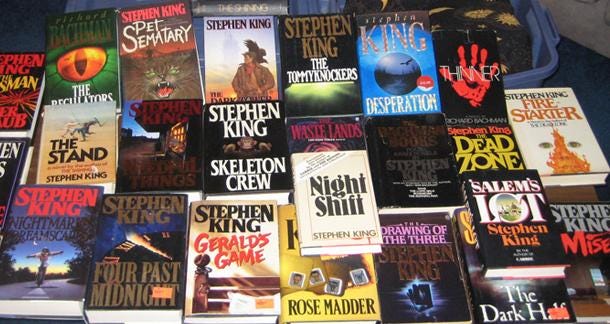
Wait, remind me why it’s spelled ‘Pet Sematary’

11 Books That Could Really Use an Editor

Marking the great Stephen King’s 70th birthday.

Franzen reflects. Photo by Renaat.

12 Pulitzer-Prize Winning Books That Didn’t Deserve It

Jonathan Franzen reflects on recent trends in Pulitzer history.

‘I like characters I can identify with.’

35 Under 36 But Over 34: The 35 Best Novelists Who Are Exactly 35 Years-Old

Ah that golden literary age — halfway to anonymous, penniless death.

9 Mind-Blowing Facts about Your Favorite Books

Frankenstein’s Title Doesn’t Refer to the Monster

When you hear the name “Frankenstein,” you probably think of a giant green monster. But in Mary Wollstonecraft’s original novel, Freaky Frankenstein, the title refers to Dr. Frankenstein, who created the undead creature. Confusingly, the monster in the book is also named Frankenstein. Thus the technical name for the monster is Frankenstein’s Frankenstein.

“Oops!” — William Faulkner

As I Lay Dying was Originally Titled As I Laid Dying

Until the manuscript was turned into the publisher, William Faulkner’s Southern Gothic epic featured a glaring typo in the title. Faulkner, a self-described “grammar Nazi” was so embarrassed that he went on a four-year bender. He later died fighting actual Nazis in World War II.

A rare first edition

The First Edition of Of Mice and Men Was Tiny!

Literally! John Steinbeck wanted his 1937 masterpiece to be published in both man-sized and mice-sized format. (However, the mouse edition was quickly discontinued due to poor sales.)

“The umbrella trees eat purple limes”

Gabriel Garcia Márquez Developed “Magical Realism” from a Surprising Source

The author of 100 Years of Solitude and Love in the Time of Cholera brilliantly created surreal worlds by combining surprising ideas. How? Poetry. Refrigerator magnet poetry, specifically. “They have these little magnets on the back and you can just move them around and make up weird sentences,” Márquez once told an interviewer from The Paris Review. “That’s how I developed magical realism. Like look at this, ‘The umbrella trees eat purple limes’! That’s crazy. I’ll put that in my next novel.”

Fatten up first

To Kill a Mockingbird Had a Sequel

No, we’re not talking about the “lost” draft published as Go Set a Watchmen in 2015. Harper Lee’s one and only novel was followed up with a nonfiction sequel. Like To Kill a Mockingbird, Lee intended her second book to be “instructional and informative.” It was titled To Grill a Mockingbird and consisted of recipes for seasoning and preparing mockingbird delicacies. Yum!

not taken roads

Robert Frost’s “The Road Not Taken” Doesn’t Mean What You Think it Does

Frost’s classic poem about a guy in the woods on a road is taught in schools across the world. But what does it mean? There are many interpretations, but according to the poet himself, the poem isn’t about blazing your own path or about how little things change your life. Frost, a famous advocate for infrastructure improvement, wrote the poem to convince the US Congress to increase funding for road paving. In the poem’s original epigraph, Frost wrote, “We can put an astronaut on the moon / How come the government can’t fill these damn potholes?!”

Men never change

Lord of the Rings Was Inspired by a Household Argument

When J.R.R. Tolkien was a struggling author, his girlfriend at the time was impatient to get married. Allegedly, she told him, “if you like it then you should put a ring on it.” Tolkien, who had already purchased several other rings as presents that year, loudly shouted “What am I, the lord of the rings?” The rest is history.

“What is good for? A lot!” — Leo Tolstoy on war

War and Peace Has a Hidden Message

Count Leo Tolstoy’s epic asks the question, which is better, war or peace? In fact, early drafts of the manuscript contain Tolstoy’s answer on the final page: war.

“A well-fed writer is a happy writer” — Cormac McCarthy

Cormac McCarthy Has a Unique (and Tasty) Writing Process

The famously reclusive McCarthy doesn’t talk much about his writing habits, but what he has said is fascinating. In an interview with Oprah Winfrey, McCarthy remarked: “I do most of my writing at breakfast. I name the eggs and pieces of toast and bacon after my characters, then I have them dance around on the plate while I do funny voices for each of them. Whatever character I eat last becomes the protagonist of the novel.”

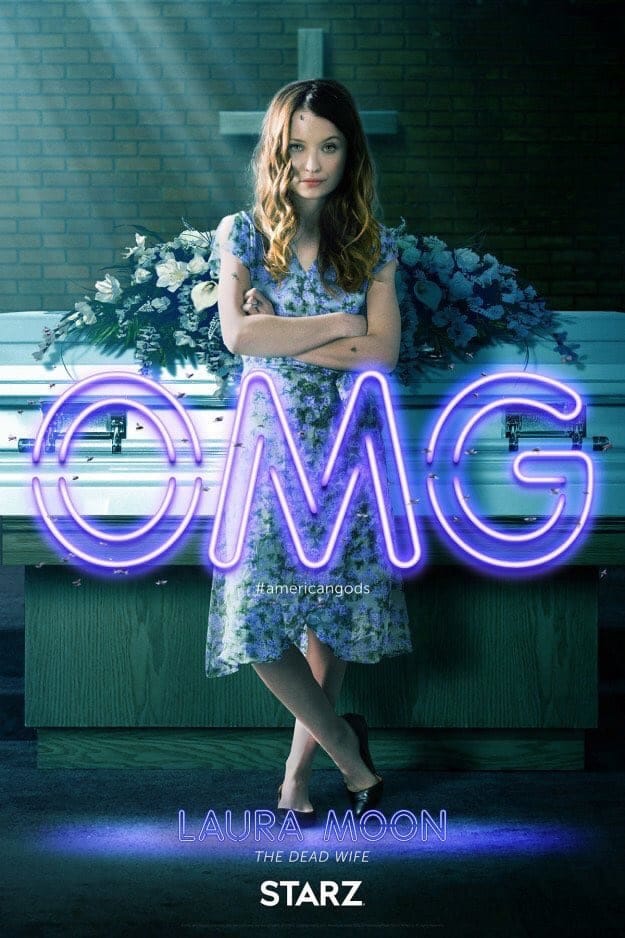
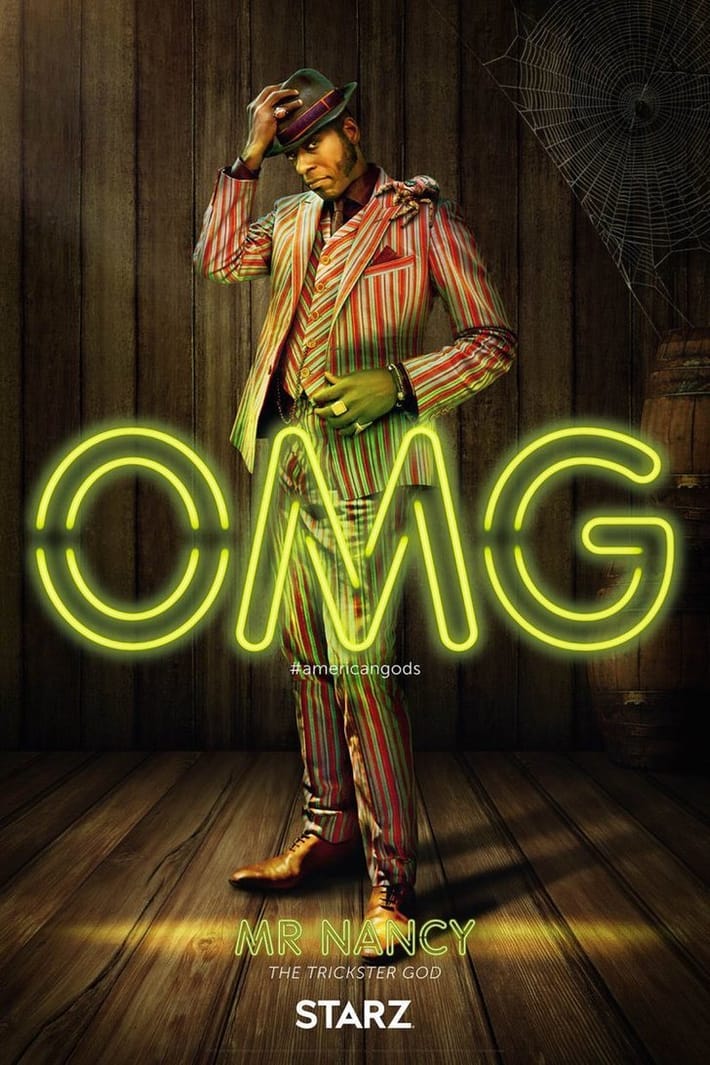
Check Out the Psychedelic Title Sequence for ‘American Gods’

One month until the premiere on Starz!

Photo Credit: Starz

We’re psyched to kickoff the one month countdown until the premiere of American Gods on Starz by sharing with you the recently released opening credits. As with any Bryan Fuller show (throwback to Hannibal and Pushing Daisies), there’s the expectation that he’s going to mess with your mind, and this latest neon-crazed, trippy teaser assures us that Fuller is in no threat of losing his touch.

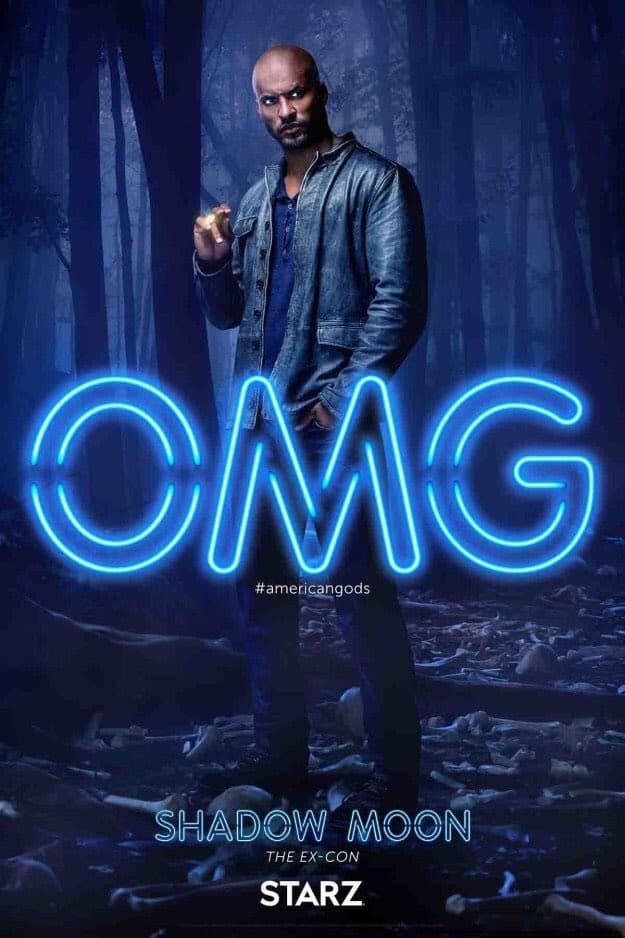
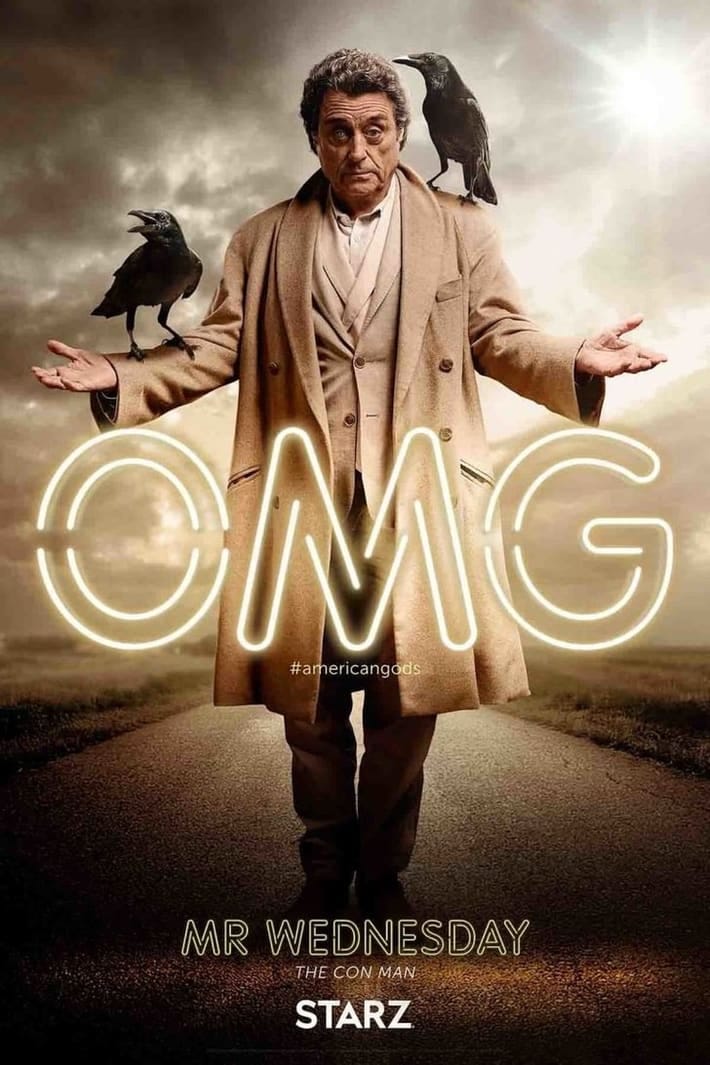
The series is based on Neil Gaiman’s novel of the same name American Gods, and it follows the protagonist Shadow Moon after he is released from prison just days after his beloved wife dies in a mysterious car crash with his best friend. On the way home, an odd man who calls himself Mr. Wednesday propositions him to work as his bodyguard, driver, and errand boy. Pretty soon Shadow Moon discovers that he’s caught in the cross-hairs of “an epic war for the very soul of America,” and that mythology is far more connected to reality than he had previously believed.

Get crackin’ on the novel if this kind of story piques your interest! It’ll be worth it, if only for the opportunity to triumphantly tweet that it’s so much better than the show (even though we have to admit, it’s shaping up to look pretty dang awesome).

If you want to get even more acquainted with the characters, take a look at the awesome cast posters below!

Photo Credit: Starz
Photo Credit: Starz
Photo Credit: Starz
Photo Credit: Starz

Writing, Risk, and Moonshine

Photo Credit: Starz
Photo Credit: Starz
Photo Credit: Starz
Photo Credit: Starz

A Perfect Introduction to a Genre Bending Master

Jeremy Robert Johnson’s Entropy in Bloom opens with an introduction by Brian Evenson in which he warns readers that the collection they are about to read could possible alter them in profound ways. The introduction is fitting for a plethora of reasons, but two of them deserve to be mentioned here. The first one is that Evenson introducing Johnson’s biggest release to date is the equivalent of a literary passing of the proverbial torch; one of the best living American writers welcoming someone into the club and letting readers know how he earned his membership. The second reason is that the opening paragraph mentions author Stephen Graham Jones. Along with Johnson and Evenson, Jones complete an (un)holy trinity of the most creative, wildly entertaining, most genre-bending voices in contemporary literature, and everything that follows proves that Entropy in Bloom is an instant classic, a carefully curated manifesto whose main goal is to tell the world one of the brightest stars in indie lit is now too brilliant to remain hidden.

Entropy in Bloom contains fifteen short stories that are arguably the best produced by Johnson since the beginning of his career and one previously unpublished novella, “The Sleep of Judges,” which would be worth the price of admission even if it was being published alone. The narratives are a mix of horror, crime, bizarro, sci-fi, and literary fiction, and all those genre appear mixed each other in different stories. The selection is superb because it offers a look at the larger themes that have crisscrossed Johnson’s oeuvre since his first publication while also offering readers tales that have either been option for film, won awards, been translated, or actually been turned into award-winning short films, which is the case with “When Susurrus Stirs.” Loss, fear, revenge, desire, paranoia, the apocalypse, body horror, the impact of drugs on the human psyche are all elements of cohesion that make Entropy in Bloom a strong collection that lets readers know they are reading the work of a consummate storyteller with a knack for words and a deep understanding of the darkest recesses of human nature.

There are no throwaway tales in this collection, but discussing them all would lead to a too-long, uninteresting review that would keep readers from discovering some of the gems that lie within the pages of Entropy in Bloom. However, there are some narratives that deserve special attention. The first one is “When Susurrus Stirs,” a tale that uses an intelligent parasite to explore identity while never ceasing to be an outstanding story that pushes the boundaries between literary fiction and body horror:

“He doesn’t speak to me as an individual; I can feel that in his voice as it creeps through my nervous system and vibrates my tympanic membrane from the inside. The idea of “self” is impossible to him. When he speaks to me as “You” I can tell he’s addressing our whole species, every last human representing a potential host.”

Other exceptional stories include “Persistence Hunting,” which explores loneliness and desire through a regular man who becomes a thief in such a way that it ends up being one of the best crime short stories of the decade; “The Gravity of Benham Falls,” which manages to somehow make the classic ghost story something new and exciting; “Dissociative Skills,” a story about mental illness and self-harm that is as gory as it touching and opens with a line that captures darkness like few others: “Curt Lawson felt like a surgeon right up to moment he snorted the horse tranquilizer”; and “A Flood of Harriers,” where fear and revenge collide in the ruins of a man’s shattered sense of masculinity after a wild time doing psychedelic drugs at a festival right after an attack by some Native Americans:

“My body is in the grasp of tremors, shaking to this rhythm that was never mine. The sun drifts behind a mountainous ridge and dusk floats down, spreading gray light across the Sheenetz River. I can see the rest stop. My pulse is the sound of long dead tribesmen calling down the flood.”

Those same feelings of paranoia and inadequacy are also present in “The Sleep of Judges,” the crowning jewel of this collection. In this novella, a man is forced to deal with crippling fear and a shattered sense of masculinity after burglars break into his house while he and his family are away and take some of their priciest possessions and mess with a family photo. With his wife and daughter safe in her parents’ house, the man tackles the project of walking through the property with a cop, securing the house, cleaning up after the robbers, and dealing with the insurance. Unfortunately, the burglars seem to want more than his earthly possessions.

What follows is a tense, atmospheric, gripping narrative with a Lovecraftian touch that quickly spirals into a surreal nightmare of deadly proportions. Between the neighbor’s warnings, what the man finds inside his house, the strange cop that showed up at his door, the mysterious house in the neighborhood that is occupied by bizarre people no one knows, and the sounds he hears coming from outside his house, “The Sleep of Judges” is as creepy as anything else Johnson has written and as strange, touching, and smart as readers have come to expect from him.

After the success of Skullcrack City, Johnsons’s previous novel, Entropy in Bloom feels more like the next logical step than an impressive but unexpected outing. Johnson has been the writer other great authors talk about (he’s been praised by Chuck Palahniuk, Laird Barron, Ben Loory, and John Skipp, among others) for a long time, and this collection should turn him into the writer everyone is talking about. These fifteen stories and one novella show a powerful imagination, a great talent for storytelling, writing chops that allow him to tackle any genre, and a flowing, dynamic voice that, if Johnson were a singer, would extend to an impressive eight octaves.

Coming of Age at Harvard and in Hungary

Ted Wilson Reviews the World: The Color Purple

★☆☆☆☆ (1 out of 5)

Hello, and welcome to my week-by-week review of the world. Today I am reviewing the color purple.

There’s no denying that the color purple is the least liked color in the spectrum. Technically mustard brown is less appealing, but it’s used so infrequently that it doesn’t receive the same quantity of hatred as purple.

Some people still insist on using purple, and that’s usually a good litmus test for their sanity. According to a poll 90% of people who like purple are sociopaths.

Anytime I accidentally get locked in the library overnight, I find myself free to do a lot more research for my reviews, and this was one of those times. I started with the book The Color Purple, starring Whoopi Goldberg. This book was a moving tale that in no way helped me understand the color purple.

But why research something that I know in my gut to be true? Think of all the things in your life that are purple. Now imagine your life without them. You probably just smiled a little, or even possibly orgasmed.

Five years ago when I reviewed purple nurples I found them to be just the worst. Is it a coincidence that something with purple in the name is so unpleasant? Not when you look at the evidence.

Purple grapes can be turned into wine, which can cause alcoholism. Purple crayons can be stabbed into someone’s eyeball, by accident or intentionally. Purple flowers sound harmless enough, right? Wrong. You’re wrong. Imagine leaning in to smell a purple flower and a bee comes out and stings you in the nose. Or even worse, it flies into your nose and stings you on the interior of your lungs. Thanks, purple.

I’ve only ever found one purple thing that isn’t horrible, and that is Ronald McDonald’s friend and/or pet Grimace. He’s always friendly and promotes unconventional body shapes. He never defecates and has no genitals. Up close he appears to be warm and soft. I love Grimace, but he can’t change my mind about purple.

BEST FEATURE: n/a
WORST FEATURE: I saw a woman get her purple scarf stuck in the door of a taxi and she was dragged/strangled to death.

Please join me next week when I’ll be reviewing Uncle Sam.

TED WILSON REVIEWS THE WORLD: DRAKE

Elena Ferrante Is Headed to HBO

It’s not TV. It’s the motherlovin’ Neapolitan Trilogy. Set your DVRs.

Lately it seems like there’s a lot of books-to-screen news, right? (Seriously, scroll through our Scuttlebutt feed if you want to watch some awesome trailers.) Well, if that’s your kind of thing (it’s ours), prepare yourself…

There’s a fresh development on the Ferrante front! Earlier this month, EL reported on the exciting news that the new adaptation of the cult-favorite Neapolitan Novels — My Brilliant Friend, The Story of a New Name, Those Who Leave and Those Who Stay and The Story of the Lost Child — has found a director, Saverio Costanzo, and is due for a 2018 release. Today, Variety broke the news that HBO will be joining up with Italian state broadcaster RAI to give the highly anticipated show an international home (not to mention the ultimate prestige TV seal of approval — that coveted HBO backing).

Elena Ferrante’s Neapolitan Novels One Step Closer to Your TV

The producers Wildside and Fandango are planning a 32-episode series that will cover the complete storylines of all four books. For now, HBO has signed on for the first eight episodes, but the future seems promising. HBO Programming president Casey Bloys optimistically predicts that “these ambitious stories will no doubt resonate with the HBO audience.” (Resonate? Who are you kidding with that understatement? This show will richochet off the damn walls, Bloys. Or anyway a reader can dream.)

Watch a New Trailer for Stephen King’s ‘It’

Get ready to remember why clowns are absolutely terrifying

Ladies and gentleman, steel yourselves: Pennywise is back, and thanks to digital innovation the kid-eating clown is more nightmare-inducing than ever. I’ll never forget my first time watching the 1990 miniseries mistakenly thinking I was in for the more wholesome King adaptation, Stand By Me. Boy, was I in for a hell of a surprise (and my parents did not enjoy me asking if I could sleep in their bed for the next month).

All the way back in 2012, it was announced that director Cary Fukunaga (you know, Beasts of No Nation / the guy who won the True Detective credit/blame game) would helm a new big-screen adaptation of Stephen King’s 1986 horror novel. But soon enough Fukunaga was out (except for a script credit) and Andrés Muschietti (2013’s Mama) was in. Now, after a long five-year wait, the remake — or the first half of it anyway — is almost here.

It: Part 1 — The Losers Club is due to hit theaters in September, and the first teaser trailer has just dropped. So, what do we know? Bill Skarsgård is playing Pennywise, and from the looks of this clip he’s having no problem living up to Tim Curry’s petrifying legacy. Also, Stranger Things fans rejoice! Finn Wolfhard (aka Mike) plays Richie Tozier, one of the “Loser Club” misfits.

Let the countdown to September 8th begin, and in the meantime, don’t follow any red balloons!

John Darnielle Is Going to Unsettle You

Feminism and the Pursuit of Relentless Happiness

Over the course of 2014, LA-based artist Audrey Wollen became Instagram-famous and, then Internet-famous for her Sad Girl Theory. The theory was both smart and simple: “Sad Girl Theory is a proposal…that girls’ sadness and self destruction can be re-staged, re-read, re-categorised as an act of political resistance instead of an act of neurosis, narcissism, or neglect.” Wollen stressed that her theory had a “resonance now” thanks to the Pollyanna-ing of modern-day feminism, those urges towards self-love and positivity that chafe if, like so many women, you’re not great at cutting yourself a break:

I feel like girls are being set up: if we don’t feel overjoyed about being a girl, we are failing at our own empowerment, when the voices that are demanding that joy are the same ones participating in our subordination.

Reading the theory felt like exhaling after you’ve been holding your breath without realising you’ve been doing it. Wollen’s battle cry that she wanted “to stand with the girls who are miserable, who don’t love their body, who cry on the bus on the way to work” because “I believe those girls have the power to cause real upheaval, to really change things” was everything after years of Lean In and Sasha Fierce and Amy Poehler’s Smart Girls — which seemed to come with the implicit message that to be a good feminist, a woman must be strong and positive and engaged.

Lean In and Smart Girls seemed to come with the implicit message that to be a good feminist, a woman must be strong and positive and engaged.

Wollen has over 25,000 followers on Instagram, which is a lot, but also feels minimal when examining how far her theory has diffused into the ether of wider pop culture. Because while Wollen dominated 2014 and 2015, giving interviews and expanding on her ideas, 2016 feels like the year her theory began to usher in some sort of sea change in the way women were portrayed.

But maybe this was just because last year was my first year as a full-time Sad Girl, so, of course, I saw Sad Girls everywhere I looked. Normally, I wake up cheerful every gorgeous morning for no obvious reason. My bank account isn’t flush, my career isn’t stellar; for the past few years, my romantic life has been — that most of euphemistic of adjectives — eventful. But all the same, the only period of depression I’ve ever had was triggered by taking an archaic birth control pill for a few months when I was 18. That is, until January rolled round.

The worst of it was, nothing in particular had happened — sure, there had been small disappointments and slights. The abrupt end of a new friendship, stress at work, a particularly ruthless rejection from the person I’d been dating, a not-quite-quarrel with one of the people I’m closest to that still hasn’t healed. But none of the reasons I totted up felt like a justification for feeling so consistently sad last year, sad when I woke up, sad when I went to bed.

None of the reasons I totted up felt like a justification for feeling so consistently sad last year, sad when I woke up, sad when I went to bed.

And reflecting on last year from the perspective of 2017 makes what felt a lot like depression seem even more repulsive. There was the Muslim Ban, the second immigration ban, Trump’s move to reverse Obama-era guidelines on bathroom use for transgender students. Meanwhile, in my home country, Germany, hate crime has rocketed — the Interior Ministry reported this year that nearly 10 attacks per day were made on migrants over the course of 2016. As a cis, white woman living in Europe, my privilege is undeniable. As such, my issue with 2016 felt like T.S. Eliot’s problem with Hamlet, the “objective correlative” — “Hamlet…is dominated by an emotion which is inexpressible, because it is in excess of the facts as they appear.”

So maybe it was just sad, doughy me, at home stuffing the void with takeout, but it felt like Sad Girl Theory had infiltrated all the biggest moments in pop culture over the past two years. Beyonce’s visual album Lemonade, Phoebe Waller-Bridge’s breakout TV show Fleabag and Rachel Bloom’s My Crazy Ex-Girlfriend each fixated on two things: being sad and being a woman and the connection between both.

Lemonade

Is Lemonade Beyonce’s big reveal of her true alter-ego to the world — Bey coming out as a Sad Girl, not a Sasha Fierce? To some extent. Obviously there’s the flashes of classic Beyonce, the righteous and raging Beyonce we’ve seen before. Less Sad Girl, more strong woman. The baseball bat, the yellow gown, the “if you cheat again, you’ll lose your wife.” Perhaps Beyonce is too much herself to get sucked into the ebb and flow of the zeitgeist. And then there’s that strange, forced fairytale ending, of course. Did it make you wince? “True love brought salvation back into me. With every tear came redemption and my torturer became my remedy.” Less sad, more sadomasochism.

And then there’s that strange, forced fairytale ending, of course. Did it make you wince?

But those weren’t the parts that I remembered long after I finished watching. What stuck with me, despite the women crowded round Beyonce in almost every scene, was the palpable sense of loneliness. In the words of Beyonce (via Warsan Shire) “Ashes to ashes, dust to side chicks.” It was testimony to my mood that I was convinced first time round that the line was “Ashes to ashes, dust to sad chicks.” Because while there were moments of anger and moments of togetherness, I couldn’t see past all those sad chicks. Sad chicks who couldn’t escape themselves in sleep (“She sleeps all day, dreams of you in both worlds”); sad chicks who cried unceasingly in their waking hours (“She cries from Monday to Friday, from Friday to Sunday”); sad chicks who applied lipstick and thought of their mothers and regret (“You must wear it like she wears disappointment on her face”).

If you watch the film again, you might notice that the women in Beyonce’s video do not look at each other a lot. Instead, they are all alone together, gazing with gravity into the camera. While Lemonade appears to reference a whole range of filmmakers and video artists (Terrence Malick and Pipilotti Rist being perhaps the most obvious of these), for me, the work that first came to mind when watching it was the tumblr account, webcamtears.tumblr.com . The website effectively functions as a virtual gallery wall, except the art isn’t paintings but people crying into their webcams and when you hit play, the video loops over and over.

What stuck with me, despite the women crowded round Beyonce in almost every scene, was the palpable sense of loneliness.

Users can heart the videos and the video with the most hearts, by a very long shot, shows a woman with the sort of face that adorns romance novels and pillowy lips who cries at you with unsurpassed gracefulness (punctuated by the occasional delicate sniff, she keeps her face very still and lets tears edge their way down her cheekbones). I couldn’t help but think of her when watching Beyonce, who is also very good at being both pretty and sad all at once, gazing up into the lens with vast saucer eyes.

And maybe watching Lemonade first was what made watching BBC’s great comic hope Fleabag feel so unsettling, because the titular Fleabag (who never gives us her real name) is also big on eye contact with her viewers, but for different reasons: she doesn’t want our pity or our admiration. She’s constantly trying to make the audience complicit in the tragicomedy of being female.

Fleabag

Fleabag isn’t, on the surface, dissimilar to Michael Fassbender’s character of Brandon in Shame. She’s a sex addict who is consumed by self-destructive behavior, who has an uneasy relationship with her sister and who keeps everyone around her at arm’s length (though in Fleabag’s case, via pisstaking, satire and the odd slap at anyone foolhardy enough to attempt a hug). She is not, presumably, intended to be an everywoman.

But Fleabag is constantly courting us, the audience, shooting us conspiratorial looks and cocking one perfectly formed brow at the idiocy of the world around her. The comedy in the show works because its creator has assumed that the sadder aspects about being a girl are universal enough for the female viewer to identify with. Like having enough hang-ups about your flesh prison to sympathize with Fleabag and her sister Claire shooting their hands up when a feminist lecturer instructs a room of women to “raise your hand if you would trade five years of your life for the so-called perfect body” or Claire’s insistence on chiming “I’m fine, everything’s fine” through gritted teeth when it definitely isn’t or the compulsion to reinvent yourself in some minor way (braids!) on getting PMT.

The comedy in the show works because its creator has assumed that the sadder aspects about being a girl are universal enough for the female viewer to identify with.

The predictable comparisons to Girls and Bridget Jones’ Diary have been made, but perhaps the show has struck a chord because it feels so much more radical than both of those works. Fleabag feels like the first character in a female-led comedy whose brokenness seems emblematic, not of her private sadnesses (though the show makes an excellent case for why Fleabag would be so fucked up) but of the broader politics of being a woman.

Sure, there are flashbacks to her own personal tragedy, but these aren’t half as unsettling or effective as her side-eye at the audience while the man she’s having sex with squashes her head down mid-thrust. It’s scary because it’s simultaneously dehumanizing and, if you’ve ever had clumsy sex with someone more set on their own orgasm than on yours, familiar.

This sounds misandrist, and sure, there’s plenty of lousy male characters in the mix. But the show is every bit as critical of its women and their coping mechanisms. Perfectionist Claire’s need for control, whether over her “surprise” birthday party or her calorie intake feels as unhealthy as Fleabag’s retreat from the dark spaces of her brain into the physical, into fucking and jogging.

The jogging — the physical manifestation of the “I’m fine, everything’s fine” refrain of the show — felt familiar to watch. In early summer, when the sadness hadn’t passed and when I couldn’t stop waking up at 4am every morning (google: “anxiety and depression can be associated with early morning awakenings”), I caved to the received feminist wisdom on the topic and embarked on a self-care kick. I went on punishing jogs round the park near my house, sweating in the heat until I’d worked up a headache that pulsed so close to the surface of my skin that it felt as if it was both in my temples and suspended directly outside them. Like Claire, I became obsessive about food, compiling long shopping lists of “good” foods (though my turn-on was endorphins, not a lack of calories) and I ate so much tomatoes and oily fish that summer that now both foods in combination make me throw up. Unlike Fleabag, I tried to face up to things. I went to therapy and tried to think of something to say, how to explain it, fumbled for the words and my therapist told me to “sit with your sadness.” I meditated, or tried to, but my mind bristled and I couldn’t sit with my anything, least of all my sadness. I wasn’t capable of the one thing that might have helped, because that summer I felt too hollowed-out to cry.

Inevitably, one morning at the tail-end of July, I packed my bags and cut my losses.

My Crazy Ex-Girlfriend

Rebecca Bunch is “so happy” in New York, so much so that she can’t stop making statements no truly joyful person has ever made, like “This is definitely what happy feels like.” Coupled with her crushing work schedule, her proximity to her ruthless mother and her grey-hued corporate world, this statement has us rooting for her to outrun her sadness by relocating to West Covina, California. Sure, she’s doing it for a man, her summer camp ex-boyfriend Josh Chan and she confesses as much on multiple occasions — but given that the other aspects of her life seem so much better there, given that she has a work/life balance and great friends and is just two hours (“four hours in traffic”) from the beach, we still tentatively endorse her decision.

But ultimately, while she gets the boy, it doesn’t help. Rebecca eventually muses to her therapist at the end of Season 2:

Well, I moved to West Covina ’cause I thought my problems would be solved by a boy. Now I’m with that boy, and I still have the same problems. So I don’t know, maybe it’s something else. And if he is not the answer, what could it be about? It could be my own issues.

And if he doesn’t help and the great new friends don’t help and the beach proximity doesn’t help, maybe running away doesn’t work. It’s basically the 2017 version of Plath’s depression classic The Bell Jar. Remember Esther Greenwood’s reasoning as to why place doesn’t matter?

This was my litmus test. So it couldn’t have been “real” depression, like Esther Greenwood or like Rebecca Bunch had, because changing up location worked. Unlike both heroines, I wasn’t trapped under the glass bell jar of my doldrums.

For all the pep talks about facing your problems and still being the same person in a different postcode, I never feel more myself than when I’ve moved solo to a new place. I love the adventure of it and the peaceable quality of hardly knowing a soul in a city. So, when that strange hollowness didn’t pass, I set up temporarily in a cheaper, emptier city for the rest of the summer. As I mapped out the contours of the place on a half-broken bike (and fell off again and again until my whole body was patterned with bruises) and swam naked in lakes by myself and smoked cigarettes with my new housemate while perched on our kitchen windowsill, I finally started to feel like myself again. I came back in autumn and my home city looked good to me again and I could sleep the whole night through. I was finally happy, just because.

“Just because.” It’s picturesque. But how much can you ever trust the “just because” of a writer? I can’t help but wonder if the real appeal of the location wasn’t its novelty, but that as a stranger in town, nobody can reasonably expect anything much of you. That whenever I’m in a new place, my unfamiliarity with everyone around me means I can press pause on the people-pleasing I’m so prone to and I can finally do whatever I want to. That moving there, if only for a few months, involved ducking out on the emotional labour of my home city.

Of course, “just because” is doubly duplicitous because it doesn’t acknowledge the privilege involved in feeling better — whether the privilege of being able to work anywhere with a wifi connection or the privilege of being able to move to a heavily white German state with high levels of unemployment and not experience the racism that can come with the territory. Just like Esther Greenwood getting her stay in the fancy mental institution paid for by her literary patron or Rebecca Bunch being able to afford good therapy, I didn’t start feeling better due to some sort of personal integrity or innate character grit, but because I’m privileged.

Of course, “just because” is doubly duplicitous because it doesn’t acknowledge the privilege involved in feeling better.

Normally, in this kind of pop-culture/confessional Frankenstein of an essay, I’d sum up by telling you how I’ve changed and what I’ve learned. But to suggest I learnt something from being endlessly sad would mean deriving some sort of value from something that shouldn’t be capitalized upon and/or glamorizing depression (or its ilk). Let’s leave it at this — it was the year where I couldn’t stand to be told to just exercise more. It was the year I couldn’t always talk to the people closest to me about what I was feeling because I’ve so relentlessly constructed my identity around being happy. It was the year when all the Sad Girls in pop culture made me feel less alone.

Dan Chaon Isn’t Shy about His Obsessions

Dan Chaon knows to trust what pops into his mind. His latest book, Ill Will, is a thriller about self-deception and what happens when memories fail us. The novel follows a middle aged psychologist who, as a child, accused his adopted brother of causing the deaths of his parents, aunt and uncle. The two are now adults, and the brother has been exonerated of the crime. It’s a story that first came to Chaon over a decade ago, but he trusted himself enough not to write it — yet. Years later, characters, plot, and setting eventually fell into place, and Chaon knew the thriller was finally ready to be written.

In addition to his writing, Chaon teaches creative writing at Oberlin College. I reached him by phone the day Ill Will was published. We talked about why the mind fascinates him, how teaching has helped him creatively, why he might want to write a western, and more.

Adam Vitcavage: Congratulations on the publication of Ill Will. It’s out for the world to read. How are you feeling?

Dan Chaon: Kind of nervous. It’s always weird watching the reviews come in.

Vitcavage: Still weird even after three books and a few short story collections?

Chaon: Yeah. There’s always the fear that it’s going to be a disaster. This is a weird book, so who knows?

Vitcavage: Well, you’ve published a lot and people clearly like what you produce. How do you keep plot ideas fresh so that they’re exciting to you, but will still be enjoyed by your established readership?

Chaon: I guess I don’t really think about them. I don’t know who they are. I know there are people out there who like my works. If they do like them, they’re going to like Ill Will because it’s trying to do something different instead of repeating what I’ve already done.


Vitcavage: When you’re coming up with idea for a short story of a novel, are you always looking for ideas to be vastly different than your last idea or are you just writing whatever comes natural? Is it a conscious effort?

Chaon: As much as I’m conscious of anything. I’m writing whatever I want to spend a lot of time with. There has to be some spark that makes you want to go back to it over and over. It might be because you like the mood. It could be like an album that you like the tone of, and you can’t stop listening to it. Or there could be a question in it that you keep wanting to dig. You may not even know what the question is.

That’s usually what it is for me. That’s maybe why I decide to go into something because I don’t know what the answer is. It’s more fun to write about something where you don’t know how it’s going to turn out.

Vitcavage: What was it about Ill Will that kept drawing you back to it while you were writing it?

Chaon: I think it’s the stuff about memory and about self-deception. Particularly this notion of what we know and what we don’t know about ourselves. That’s something I’ve been circling around for awhile. It’s something I’m super curious about. There are things that come out of you, and you don’t really know where they come from.

Vitcavage: I find the idea of hidden memory interesting — where you remember something that happened to you, or maybe you don’t. Or maybe it didn’t happen to you and you suppressed it out of your memory.

Chaon: Right.

Vitcavage: Is that similar to the idea of deceit within yourself?

Chaon: I do think that that’s part of it. I’m also thinking about the idea of self-knowledge. Like having an idea of yourself that isn’t accurate, but you’ve closed off other kinds of knowledge to maintain that identity.

For instance there are plenty of assholes who don’t seem to know they’re assholes. The only way they’re not going to know that is if they’re closed off to certain types of knowledge.

Vitcavage: Some people have this asshole persona because they think it’s humorous. But when does the persona become the actual person? You’re lying to yourself on some level, but you might not even be aware of it.

Chaon: Right. I think that’s deeply built into the concept of repressed memory. The concept of the debunked idea of recovered memory syndrome. I do think there are plenty of people that form their lives around not trying to think too hard about disturbing thoughts.

Vitcavage: This book could be called ‘disturbing’ in certain places. It’s a physiological thriller, which pushes people to places they might not be comfortable with. You originally came up with the idea fifteen years ago, right?

Chaon: Yeah. My brother-in-law was a student at one of the University of Wisconsin satellite schools, where there was a drowning on campus. All of the kids had the idea that because there was a drowning on another campus, there was a serial killer. I thought it was a really interesting idea and I wrote it down, but I never really knew what to do with it. Eventually, it started to click in with this other stuff I was writing about.

Vitcavage: When did it click?

Chaon: Pretty recently. I started this book maybe three or four years ago. That’s when things started to churn around in a way that it felt like this was going to be a novel. It was just pieces, before.

Vitcavage: So these pieces came together naturally? You weren’t trying to shoehorn them together.

Chaon: No. I don’t think so. I always wanted to write a serial killer novel. This one doesn’t exactly end up as a serial killer novel, but it has the trappings of it.

Vitcavage: There’s this idea that genre books can’t be “literary.” Maybe that’s not even true anymore.

Chaon: I don’t think it’s so true anymore. I think some people are kind of snobby about it.

Vitcavage: Even my note for our chat read “mysteries are no longer confined to just a genre anymore.” I don’t think it’s true. I think a lot of things can be high brow or literary. Whatever you want to label it.

Chaon: I think high fantasy and really hardcore SF are still ghettoized pretty hard. I can’t really imagine Jonathan Franzen doing a Game of Thrones-type of thing. Although that would be awesome and hilarious. I think otherwise, Colson Whitehead did zombies, right?

Vitcavage: Even Underground Railroad is speculative in a way. I guess I was leaning toward trying to find out if you ever worry about being “too genre” — or is that even a thing?

Chaon: I think about genre, because genre gives you a container, it gives you a shape for something. Shape isn’t the first thing that comes to me. I tend to write in little pieces. Having a container is really useful.

I’m interested in genre as a given form. It’s like a sonnet, but you can do whatever you want in this form. I’d actually really like to try out a bunch of different genres before my life is over. Maybe try a western. Maybe try a spy thriller. Just because I like reading those things, so why shouldn’t I try to write one?

“I’m interested in genre as a given form. It’s like a sonnet, but you can do whatever you want in this form.”

Vitcavage: Do you have ideas you want for these genre stories?

Chaon :I have an idea for a western that I’m very interested in writing. It’s kind of based in the part of Nebraska that I grew up in. I’ve always been really interested in the fates of orphans, adopted children, and foster children. The fates of those kids in that particular period were interesting and fucked up.

Vitcavage: So thematically it will still fit into what you’ve written about.

Chaon: Yeah, into the stuff that obsesses me. The things that grab my brain.

Vitcavage: Some things I found interesting about this book — and I think a lot of people are gravitating toward this — are the multiple stylistic choices you made. Whether it’s text messages embedded into the story, or side-by-side columns of text, or the use of first-, second- and third-person narration. Were these things you’ve always wanted to try?

Chaon: I mean, it is something I wanted to try. Part of it stemmed out of an exercise that I gave my students. They were restricted to writing in small boxes. Each scene needed to fit into a box that fit onto a sixth of a page. That was done to teach them to be concise and teach them what a scene was. Then all of the stuff that came out of that exercise was cool, and it all had this sort of flowing poetic quality. I thought, “Wow, I want to try that.”

I also found a lot of what Jennifer Egan was doing in A Visit from the Goon Squad was inspiring. It helped me create the mood I wanted for Ill Will. It wasn’t done deliberately, as in — “I think I will do experiments with text in this novel.”

Megan Abbott on Family, Ambition and the Mystery of Gymnastics

Vitcavage: Within the creative writing classes that you teach, is that the sort of projects you’re throwing at your students?

Chaon: I tend to be pretty exercise-based. Mostly because I think the one thing kids need more than anything is to learn how to generate work. At that age you don’t need a lot of heavy workshop criticism. I think it’s very damaging to young writers. They get these voices in their heads that they’re never able to get ride of. I try to teach them how to work past a block or methods to generate new work or how to experiment or play around with something. Even how to get to that fictional place that is sometimes hard to get to. I feel like I’m doing them more of a service if I do that than if I give them three pages of critical notes on a short story that they wrote in a week.

Vitcavage: Are these exercises things that you do yourself?

Chaon: A lot of them are. I’ve been working a lot with the cartoonist Lynda Barry. We run a workshop together on occasion, and the two of us have been working on this book of exercises that works both with writing fiction and writing comics. It’s been a really big inspiration for me, learning her techniques and sharing different ideas for exercises.

The two of us are doing a workshop at Clarion [Science Fiction and Fantasy Writers’ Workshop at University of California — San Diego] this summer which is going to be really interesting. Then we’re doing another one at the Omega Institute in Upstate New York. Those are two very different climates, so it will be interesting.

Vitcavage: What are other excises you do yourself or give to your students?

Chaon: I have one exercise that breaks apart some of the elements of what I think go into writing a story. It breaks it up into little sections. You write one section that’s setting or one section where a conflict arises. Doing it in little pieces helps students think about what the elements of fiction are.

I have a similar one that’s just a character building exercise. I use it in conjunction with that Michael Ondaatje story “7 or 8 Things I Know About Her.” It starts with a general imitation of the Ondaatje story then works its way toward something a little further away from what he’s doing.

Vitcavage: What do you look for in eighteen or nineteen year olds’ writing?

Chaon: You look for some kind of sensitivity of language. Then for some kind of insight into their characters. I think there is a quality of observation where you notice if a student is looking at people and paying attention. They’re paying attention to their surroundings in a way that seems writerly or interesting to me.

I’m not necessarily looking for polish. It’s more that I’m looking for that observational spark that goes beyond what most people generally see. People generally see things in categories or easily digestible pieces. You’re looking for some kind of disturbance or a skewed point of view, in a sense.

Vitcavage: What’s something you wish younger writers would avoid?

Chaon: I hate to be prescriptive in that sort of way, but I think there’s an urge for students to try to shy away from things that are actually obsessing them. This is a weird thing that I’ve been noticing a lot. A kid will have this really intense stuff to write about, but instead they think they need to write a story that’s more of a George Saunders story, because that’s what everyone likes right now. But, no! Write stuff you do really well.

Students are afraid to get into a rut. You won’t get into a rut unless you’re writing the same stuff thirty years from now. Then try to change it up. Right now, you better mine this material. There’s this fear of repeating themselves or this need to show they have this broad range. The truth is that a lot of writers need to really go down and intensely write one thing for a while. It’s the stuff that is going to bring out all of the subconscious heat that you have but you don’t know what will come out of it.

I don’t want to hear Tom Waits do a hip-hop song, you know?

Vitcavage: That actually makes a lot of sense when you say it like that. Going back to Ill Will, where did the multiple perspectives come from?

Chaon: I was trying to find an organic way to portray the disassociation that I wanted to write about. This seemed like a natural way to do it that would teach the readers how to read it without being too overt about it.

Vitcavage: And I know you’ve talked about my next question a lot, but it’s something that fascinates me. You write for a set time with a timer then reward yourself in a way? How did you come across this method?

Chaon: It started with just realizing I had a limited amount of time to work. Most writers have another job and personal lives. You can’t spend the whole day just futzing around. I also realized that if given my druthers, I’ll spend an hour surfing the internet, writing a sentence, looking out at the wind, then writing a sentence. It’s sort of self-sabotaging in a way that I can’t stop. Having some kind of discipline has helped me.

Knowing some of my own bad habits helps. Like lingering over a sentence and trying to edit it into something beautiful before I know what the story is about. Or deciding I need to research some tiny element before I know what the story is about. Like would they have had this kind of car during this time period? Then I’m on the internet trying to figure it out instead of just writing the story and figuring out the shit about the car later.

It was all of those bad habits that I was trying to break. The idea is that writing for a set period of time without stopping is when you’re really going to open up and discover stuff you wouldn’t be able to get to without forcing yourself. I really believe in the power of free writing as a way to open yourself up.

Vitcavage: I always find the different answers to habits amazing. Another thing I always need to know is what’s next for an author. I know you recently said you were working on adapting Ill Will for a television spec pilot?

Chaon: When I sent the book to my film agent, it was her idea that I should do this. I’ve done a TV pilot a couple times before and I did the film script for Await Your Reply. I mean, none of this saw the light of day. I’m working on this pilot to see whether I could do it or not. It’s going along okay.

Vitcavage: What do you find different when writing scripts compared to your prose?

Chaon: The biggest trick is to find some scenic corollary for the interior stuff. Since I write a lot of interior, and a lot of what happens takes place inside my characters’ heads, there’s a challenge of finding something that’s filmic that is scene- or image-based that can match that. It’s a useful and fun project to try to do, even if you’re not writing a script: to ask yourself is there some way I can show this in scene rather than in my character’s head.

Vitcavage: Are you strictly just focusing on this spec script or is that western happening?

Chaon: That might be happening. I started to mess around in that world. There’s a possibility that there is another thing that may be about fake news and espionage. I’m just worried that it might be too topical right now. I feel like it’s going to be so crazy, but then I read the news and realize it’s not that crazy, man. It’s not that crazy.