I start my twenty-second session of physical therapy, as I’ve started the twenty-one others, by paying upfront. I have myself and pickup basketball to blame for my broken wrist and the surgery to correct it, but many people recovering here are in the middle of legally faulting someone else, and who knows when those lawsuits will result in costs being covered. I use my hurt hand to hold the check down while I sign it with the one that works.
The office specializes in hands, arms, and shoulders, and today, like always, it’s nearly full of managed hurt. Most people spend many weeks in physical therapy, and I recognize almost everyone: the Belgian high-school girl who hurt her pointer finger playing varsity volleyball pokes neon-colored putty to work her grip. The two female police officers sit together as usual, cracking each other up with cop-speak jokes and comparing workman’s comp attorneys. The young guy in the Oxford-cloth button down with two phones, talking to a series of people about money stuff while a therapist uses a machine to send a current through his forearm. I haven’t seen the woman with the plastic-surgeon dad in a while, probably since she can get cortisone shots at home. My first day, a patient with a heavily wrapped shoulder waiting next to me asked, “What are you in for?” Recovery is a sentence; best settle in.
I find an open seat in the room where each chair is paired with a wooden TV-dinner tray, rickety as the limbs that lean on it, under a lithograph of Escher’s hands drawing each other to life. I prefer it to the other room with old elementary-school desks for tables and a framed close-up from Michelangelo’s Sistine Chapel ceiling, the really famous part where God reaches out to Adam’s limp (injured?) hand. The entire place has an oppressive level of metaphor density, and this print definitely isn’t helping. The woman who works me over twice a week asks how my wrist feels, and I say “fine,” probably to offset all the meaning. She’s good at juggling patients, has to be, and she lays a big blue bag of hot sand on my hand to loosen it up and returns to nursing someone in the other room.
Therapy sessions have the same conversational context as haircuts, only your hair is broken and it hurts. My therapist and I have been through so much small talk in two months that I have a fuller picture of her than my coworkers and neighbors. I know that she plays Mahjong with her friends twice a month and that she picked up the game pretty quickly from her grandmother. I know that her husband is finishing up his MBA and has an enviable ease with foreign languages. I know that his grandmother is a surly Holocaust survivor. Right now they’re childless but thinking sometime maybe eventually. She’s left-handed and forever after whoever borrowed her special tape scissors. We’ve told each other our stories, including what we’ve done more or less every weekend for the last two-and-a-half months.
After she returns and removes the heat, she has me do some wrist curls with a five-pound weight, then squeeze a Charles-Atlas-style gripper thirty times. Once I’ve limbered up a bit, my therapist gives me what she calls a “strong stretch,” which involves me looking away and down from the pain while she applies her full body weight to my hand, aiming for ninety degrees of wrist flexion. I try the Zen thing of detaching myself from the material experience. I imagine my arm as cold dough that grows more pliable as it’s kneaded and rolled. A car door iced shut overnight finally forced free. An iron bar glowing orange on an anvil, muttering sparks at each hit but slowly taking a useful shape. I am the Tin Man rusted still, already possessing a heart but needing oil and adventure to discover it.
The purpose of physical or occupational therapy arises out of the fact that adults can’t be trusted to hurt themselves after injury. Each of the three times the cast came off my son’s arm, he was unleashed back onto the baseball field and into the schoolyard and the swimming pool without need for therapy. His body knits bone constantly anyway, and he, like most kids, can easily forget hurt. Adults, though, have vivid memories of pain and tend to convert pain, and the anticipation of it, into suffering. We quickly restrict or retire hurt limbs, which in turn leads our bodies to slowly give up on them. After I fell on my wrist back in May, I wrapped and iced and defended it for several weeks to give it the time I thought it needed to heal itself, but time instead eroded my range of motion. And then the surgery and the pins and the screw permanently through the bone and the nine-week cast all conspired to fix my hand straight. Now it has to be bent further than I want it to if I want it to come back to something like normal.
The Zen thing fails. My wrist pops and smarts like hell but won’t be pushed past my best angle reached a few weeks ago. My therapist reminds me, again, of how I first arrived with flexion and extension of basically zero, to make me feel better about today’s fifty and sixty degrees. It occurs to me that the old saying really should go, “Time fixes all wounds,” with ‘fix’ smuggling in all its senses.
All the effort going on in these rooms makes them stuffy, and my therapist cracks the window near my seat. The days have gotten glorious, and I’m glad to welcome in the loud, warm air of 57th Street, to look away from the scar. I think of my kids and their classmates running in the schoolyard this morning before the bell called them inside, how they left their coats in piles and let out their bodies.
“We’re all done for today,” she says. “See you next week.”
Last year people, books, and Instagram pages clamored to suggest I’d enjoy the Danish art of hygge. Hygge the books said is a celebration of the simple, homely, and cozy. It is warm socks, gingerbread, a family meal, coffee-foam, or a well-loved cardigan. In these cold months, the idea is appealing. A word plucked from a foreign language can be seductive. It implies that with this one word we can swallow the wisdom of a people different from ourselves, and be given a new way to talk about our lives. During my childhood every bookshop was crammed with Zen. The Zen of Gardening. The Zen of Marriage. The Zen of Eating.
It’s an odd exercise, this selection of a single word. Words in dictionaries are like animals in dioramas. Interesting, educational, but dead. Words find their natural habitats in paragraphs, sentences, and stanzas. I haven’t seen a corresponding spike of interest in Danish writing and writers. Perhaps this is because Soren Kierkegaard’s Sickness Unto Death is a less attractive coffee table book. But surely, it is fascinating that a language and culture has room for both hygge and Frygt og Bæven (Fear and Trembling)?
The work of translators has shaped my life and writing. As a teenager, I lurked in Daunt Books in Marylebone, London. Daunt looks like a bookshop in a picture book, wooden floors, green glass lights, a huge stained glass window. I didn’t fit in. At that age, I had pink hair, giant black biker boots, and an iPod in my ears at all times. The iPod was rather scratched, and I played the same few songs on loop. But I adored Daunt because they organized books by country. Before a reader jets off they can pick up a travel guide and local classic from the same shelf. This system made it easy for me to find Japanese and Chinese novels without knowing the names of specific novelists.
Asia is in the basement. Japan and China stand side by side. I didn’t recognize most of the names and would choose books by their covers, their size, or just an opening sentence. Although my English vocabulary was extensive, my foreign language skills were weak. I knew I’d never read any of these works in the original. Having my grandfather’s eyebrows or my grandmother’s chin didn’t give me their words, grammar, or even the right accent. My chest ached with this failure. I could say I was part Japanese and part Chinese and it would be true. Some rituals, habits, and aesthetic preferences had made it across oceans into our London house. But I didn’t even know what they were. What was Japanese? What was just my Mom being weird?
At home, my mother had a collection of novels from both countries. These books smelled faintly of glue, and the pages had tanned a deep gold with time. Newer editions of these same novels could be found at Daunt. But I was most interested in the now. I was looking for an alternate universe version of myself, one whose accent was perfect, who lived in Tokyo or Shanghai. There were few contemporary translations. Once in a while, not as often as I would like, a new book appeared. No one recommended me these books. I didn’t hear about them from friends or the radio. The only way I knew they existed was that they arrived on the shelf. I still remember the satisfying square of Hitomi Kanehara’s Autofiction. It is a physically small book and barely added to the weight of my satchel. I read it in a hungry gasp on the Tube and then back in my bedroom. It begins with a woman having a panic attack on an airplane. The story that unfolds is strange, sad, and quite surreal. The book doesn’t claim to teach the reader anything about Japan or Japanese Culture. But it helped me feel connected to a part of myself that I didn’t know. In the back of Autofiction, I learned she’d written a book called Snakes and Earrings. And so I searched it out.
I was looking for an alternate universe version of myself, one whose accent was perfect, who lived in Tokyo or Shanghai.
Years later, I’d live briefly in Tokyo. I’d study Japanese language and literature in university classes. I’d borrow my mother’s copy of Kokoro by Natsume Soseki, whose impact on Japanese literature can be imagined if you picture Virginia Woolf and Dickens melding into the same person. Some might say I should’ve started with classics and language classes — that these things would have given me the grounding to understand Autofiction. I disagree. Autofiction gave me a connection that leant me the courage to learn. When I wrote my own novel, Harmless Like You, I was asked who were my influences. I gave the names of English language novelists, but also Kanehara and Soseki. If they hadn’t been translated I’d be a different writer.
Much is lost in translation, and this is especially true for languages as different as Japanese and English. I wasn’t understanding the totality of Kanehara’s work. But I doubt I will ever wring out all that is in Mrs. Dalloway or Pale Fire. For me, fiction is about attempting the empathetic leap, not about perfect success. The original title of Autofiction was オートフィクション (O — tofuikushion). In other words, the Japanese phonetical spelling of the English — Autofiction. Kanehara is also leaping and translating.
Sociologists David Comer Kidd and Emanuele Castano at the New School found that reading literary fiction enhances our capacity for empathy. I’ve made no study, but suspect that reading literature from other cultures expands our empathy for those from different shores.
The Translator’s House in Amsterdam invited me to visit to promote the understanding between translators and writers. Jeske van der Velden has been translating a short story of mine into Dutch. Jeske read my story more carefully than I thought possible. When a character of mine strained under the weight of her husband, Jeske wanted to know which was more important — the emotional or the physical strain? Did I imagine the blood on the girl’s hands as sticky or wet? What was more important to me, the sound of a word or its meaning?
To allow us both a breath, we decided to get dinner in what she termed Amsterdam’s hipster district. Designer lightbulbs cast their multicolored glow over the pale pine table and the fistful of flowers resting in a jam jar. Hesitantly, I outlined my empathy idea to her. I wanted to know what she thought. She considered and then began —
Milan Kundera called the novel the paradise of individuals, because it gives you a lot of space and possibility to express someone’s point of view from the inside. So I think, in that sense, all fiction gives people the possibility to look at the world from the perspective of another person’s life. Kundera calls this an ‘experimental self.’ Literature from other countries would possibly open up that space even further, and you’re not looking at the culture from the outside but from someone’s point of view who lives there or has grown up there.
As a translator she said she’d become very aware of the relation between culture and language —
Some expressions or experiences become embedded in language that is almost unique to that culture. Therefore the two are very closely related. So what you’re trying to do as a translator is to make the author you’re translating understood in your own language, while at the same time stretch your culture and language a bit to accommodate what makes their voice and experience different. Which in the end might change your own culture a little bit.
When I asked her for an example she reminded me of a column I wrote about wishbones. Jeske had explained to me that the Dutch do not have the idea of a wishbone. For them it is a simple bone and devoid of magic —
But if the idea is translated often enough, if enough people read it and learn about it, it becomes part of their mental system or language.
It was a lovely idea and in the warmth of the Noorderlicht Restaurant, I felt a corresponding heart-warming. The waitress came over to interrupt our little interview with laminated menus. One in English. One in Dutch. Jeske and I compared menus. The English was missing an entry. What is it I asked? Jeske wrinkled her eyebrows. A type of fish? In the tiniest of gestures, this is what I ordered.
It was quite delicious. As I tasted the sweet sharp fish, I said how happy it made me, the idea of cultures shuffling over and making room for these new ideas. Jeske tilted her head slightly, took a breath and said, But it is not so simple.
Is it ever?
Academic and translator, Gideon Toury argued that the way something is translated not only depends on the tastes and beliefs of the translator but on the relative powers of the cultures involved. The more economic and cultural power is associated with a language, the less weirdness readers would accept. Jeske explained that Dutch, with its relatively small number of first language speakers, accepts a lot of strangeness. Whereas work translated into English is more often smoothed out. Translators call this domestication. This saddened me. How can a culture stretch to accommodate a new idea if that idea is bleached away?
How can a culture stretch to accommodate a new idea if that idea is bleached away?
Hygge it seems has entered English culture. The idea of hygge and homeliness is beautiful. But what does it mean that our favoured foreign word is about not leaving the comfort of home? In this time of increasing xenophobia, I hope we can stretch to accommodate not just words, but books, ideas, philosophies. We need all the new ideas we can grasp.
As I read through a student story recently, I had the sensation that I was walking. It was a trudging sort of walk, one foot after the other; I was moving through scene after scene, each one skillfully written. But there was something that was a little flat in the story — all of the action and dialogue were weighted the same way. There was the sense that the narration was flat, always on one level, without pauses or breath or stillness. I stood up, suddenly, and I understood my response to the story — the scene didn’t have a nuanced sense of movement. When we read stories, we move along with them, our breath attending to the cadences of the sentences, the scenes, the shape of the action. My experience reading the many similar scenes felt like walking and walking in a straight line.
If scenes were breath, this is what the scenes in a story like this would feel like as you read them:
But a story with a varied pace, in which scenes have been shaped to highlight certain elements, does not feel like this as you read it. A story that is paced to emphasize a certain moment could look like this:
Or let’s look at a scene in terms of a phrase of movement. Here is a scene that is written so that all of the actions and dialogue are equally weighted:
Jane and Lisa are eating lunch at a café. Jane has ordered a cheese sandwich. Lisa has ordered a salad.
“This is a terrible sandwich,” said Jane, putting it down.
“Really? Why?” asked Lisa.
“The bread is kind of soggy,” said Jane.
A car drives into the front window of the restaurant. Glass shatters.
Jane and Lisa look up at the car.
“What just happened?” asks Jane.
“My salad is pretty bad, too,” said Lisa.
A man falls out of the door of the car. He is bloody. Jane gets up and helps him. He dies.
So if this story were translated into movement, it would be a straight line, like this:
The pacing of this scene lends equal weight to all of the actions. We don’t know what the author wants to highlight as important; we don’t know where to pause, what to invest in as a reader. The experience of reading is, in some ways, an experience of movement — you are swept along by the writer’s sentences, cadences, pauses, crescendos. So how do you slow down a scene, highlighting certain aspects and not others?
The experience of reading is, in some ways, an experience of movement — you are swept along by the writer’s sentences, cadences, pauses, crescendos.
Think of a scene as a phrase of movement. By slowing down and leaning into some moments, you help the reader pay attention to them — you lend them more importance. Watch this dancer’s phrase.
See what happens to the scene when you slow down, like this:
Jane and Lisa are eating lunch at a café. Jane has ordered a cheese sandwich. Lisa has ordered a salad.
“This is a terrible sandwich,” said Jane, putting it down.
“Really? Why?” asked Lisa.
“The bread is kind of soggy,” said Jane.
There is a thunderous crash at the front of the restaurant. Diners scream as a car drives into the front window of the restaurant; glass shatters, tables are upended, plates and forks and knives skid across the floor. Jane and Lisa jump up; a man falls out of the door of the car. His shirt is soaked with blood and he looks dazed. Jane dashes toward him and holds him as he closes his eyes.
In this scene, the pacing slows when the car crashes into the restaurant; this allows the reader to identify this as a moment of importance and it highlights and shapes the reading experience. Or another way to do it is this:
Jane and Lisa are eating lunch at a café. Jane has ordered a cheese sandwich. Lisa eats a salad.
“This is a terrible sandwich,” said Jane, putting it down.
“Really? Why?” asked Lisa.
“The bread is kind of soggy,” said Jane.
A car drives into the front window of the restaurant. Glass shatters.
Jane and Lisa look up at the car and continue eating.
“What just happened?” asks Jane.
“My salad is pretty bad, too,” said Lisa. She digs her fork into it. Jane leans over and contemplates Lisa’s salad. It actually looks delicious to her. The lettuce is green and lacy and a few tomatoes are scattered throughout the leaves, and the vinaigrette clings to the leaves like drops of rain.
“Let me try it,” said Jane.
Jane’s fork stabs the salad and she brings out a luscious dark red raspberry.
“Look at this,” she says.
They look eagerly into the salad while, around them, customers swarm around the car and a bloody man falls out of the door of the car.
Here the emphasis is a bit different; the narrative slows down and the salad, and the two women’s relation to it, and perhaps what it could represent, becomes the important element. In this case, what the author highlights reveals something about the characters and what they value, too.
Or what would happen if we really slowed down the action at the beginning and then sped it up.
Like this dancer:
When Jane and Lisa walked into the restaurant; they were meeting for the first time in years. It was the first time they had met since Jane moved across the country, and it was the first time Lisa had seen Jane since her divorce. When they entered the large, busy diner, they did not recognize each other for a moment, and walked through the roar of the crowd, wondering who each one had become. When they spotted each other, they stopped, walked quickly toward each other, and hugged, carefully.
They sat and each ordered. As they waited for their food, they regarded each other with interest.
“It’s been a long time,” said Jane.
Their food arrived and they began to eat it.
Here, when a writer uses exposition to set the scene, the pace is slower at the beginning, giving the reader the chance to look out, to draw a breath, to see what the landscape is in front of her. A beginning that is slower can give the reader context, can give us information on the characters, can set us firmly in a world.
Words reside on a page, but it can be helpful to remember: A scene is an arc of movement.
Words reside on a page, but it can be helpful to remember: A scene is an arc of movement. The reader moves with you through each sentence as the writer decides where each sentence reaches, stops, takes a breath. Sometimes the pace of the sentences is such that the sentences just need to walk, and sometimes they need to run and pause and reach. By exploring all of the possibilities for pacing within a story, for exploring all of the movement, pauses, and acceleration inherent in it, a story can be much more than walking in a straight line. You can explore the ways in which narrative can move and also the opportunities inherent in various levels of space. The narration unfolds the way a body moves. As you read a beautifully paced story, you sense in your own body, your own mind, the way the words can run, leap, and, sometimes, fly.
[Dancer is: Gina Kohler, Assistant Professor of Dance and Assistant Director of the MFA in Dance program at Hollins University. Video shot at Hollins University dance studio.]
Hello, and welcome to my week-by-week review of the world. Today I am reviewing my snowman.
If you come from a part of the world where snow does not exist, let me explain what a snowman is. A snowman is a bunch of snow, formed into a shape that vaguely resembles that of a man. Unlike a golem, however, a snowman does not actually come to life. Or does it? I decided to find out.
Magic isn’t something I ever believed in, so when David Copperfield sawed himself in half, I knew it wasn’t really attempted suicide. And when David Blaine coughed up live frogs, I knew it wasn’t Revelation 16:13 coming true — it was just a guy who swallowed some frogs for attention.
But while magic could never make my snowman come to life, I knew there was a chance science might. Science can do some crazy things. So to give my snowman every possible advantage, I filled his torso with a variety of organs I purchased from the butcher. Just in case.
And if he did come alive, I wanted him to be able to procreate (or at least have a good time), so I carved for him a beautiful snow penis. It was exquisite. Much better than any existing penis on any animal I’ve ever seen. If my snowman was going to come to life, he wasn’t going to be one of those hideous, legless creatures with disproportionately weak arms and a smoking habit. He was going to be awesome.
Unfortunately, the raccoons could smell the organs through his snowy flesh and got to him overnight. Thank goodness I didn’t also sleep outside that night. I have way more organs and I’m a heavy sleeper.
I’ll never know if he could come to life, but I do know that if he did, I would have named him Juan and we would have been good friends.
BEST FEATURE: Juan’s mouth stones were repurposed as miniature paperweights. WORST FEATURE: I had to watch his remains melt away over the course of two weeks.
Please join me next week when I’ll be reviewing Satchel Paige.
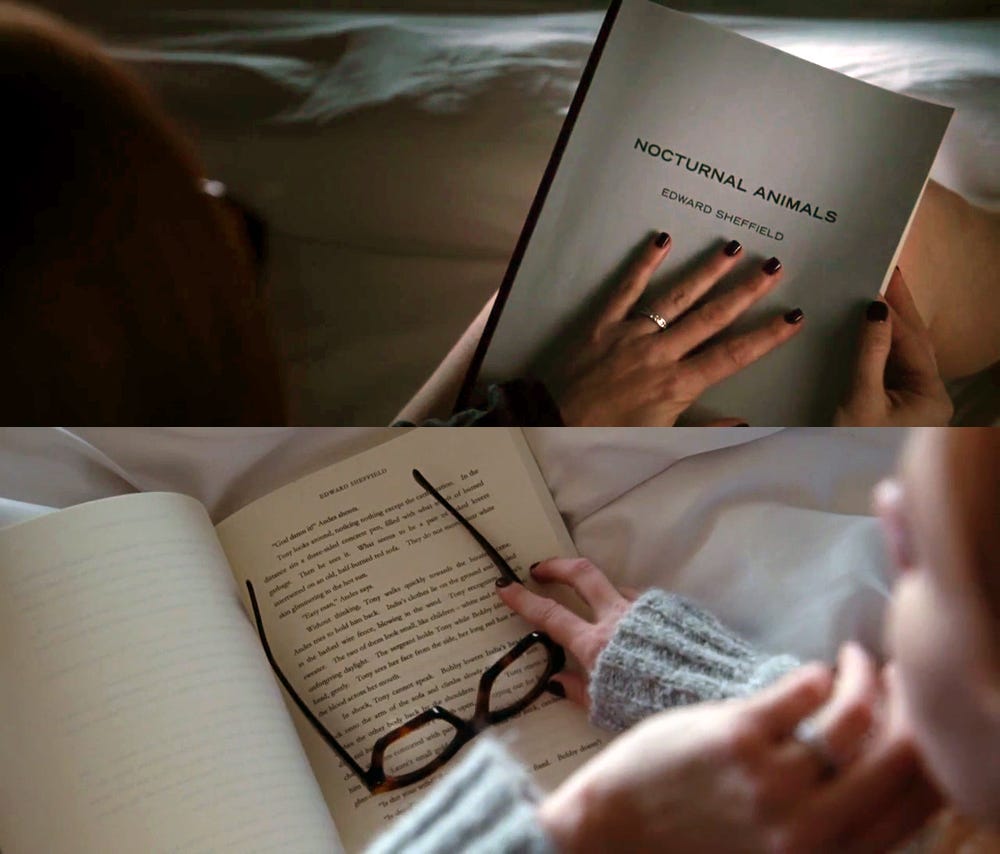
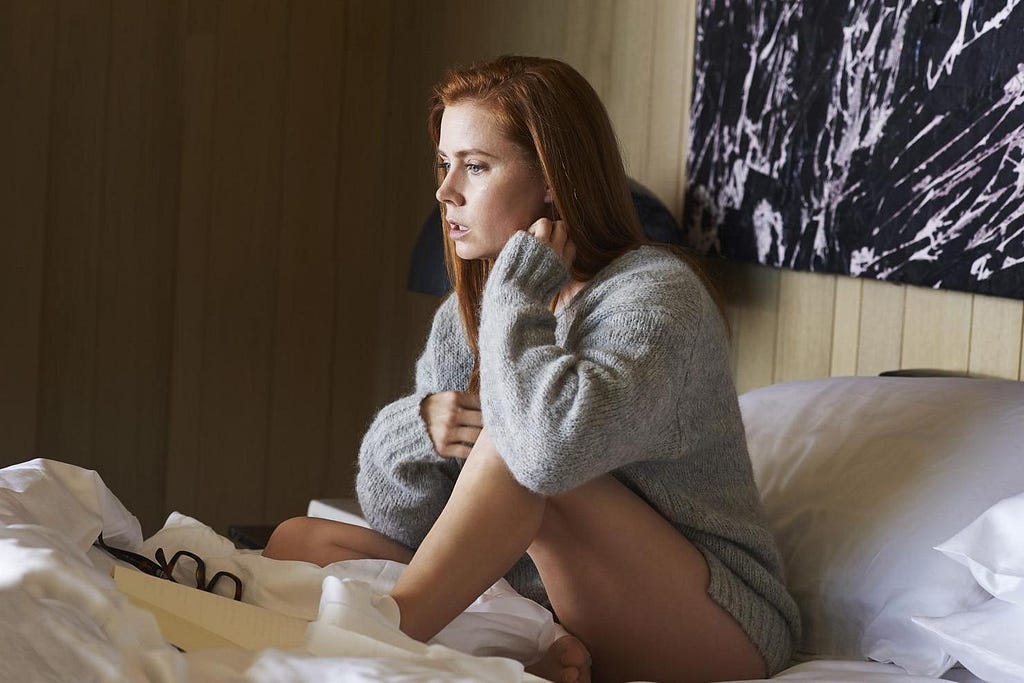
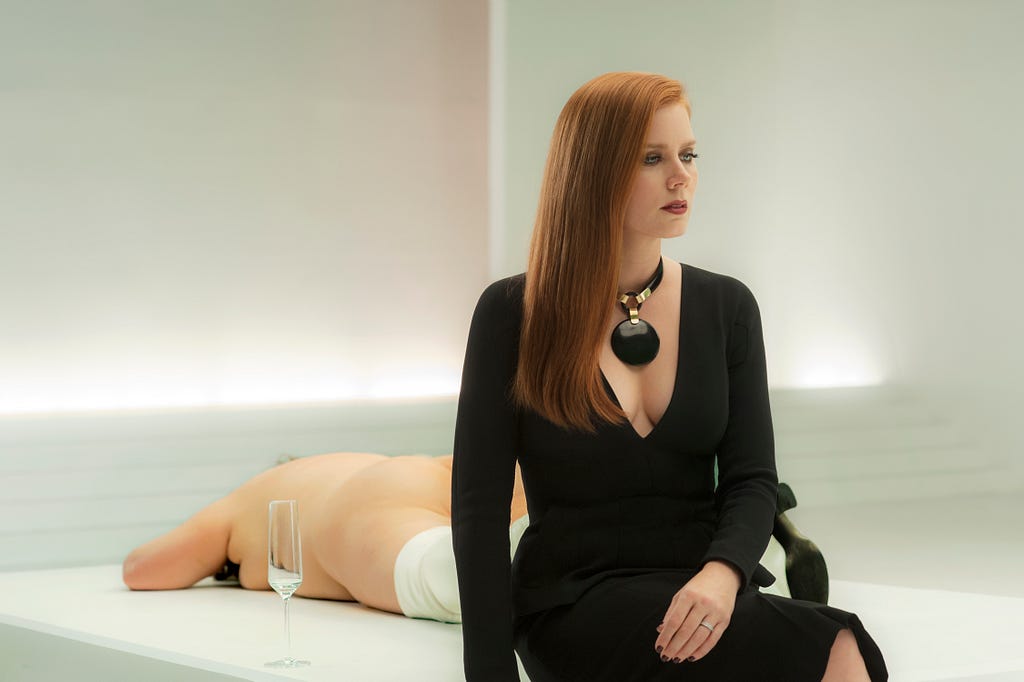
Amy Adams spends most of her time in Nocturnal Animals reading. Her character, Susan, has been sent a galley of a book by her ex-husband, Edward. They haven’t spoken in nineteen years. Not only is the title of his novel a reference to the pet name he had for her when she couldn’t sleep (from which this film gets its name), but it comes with a surprising dedication: “For Susan.”
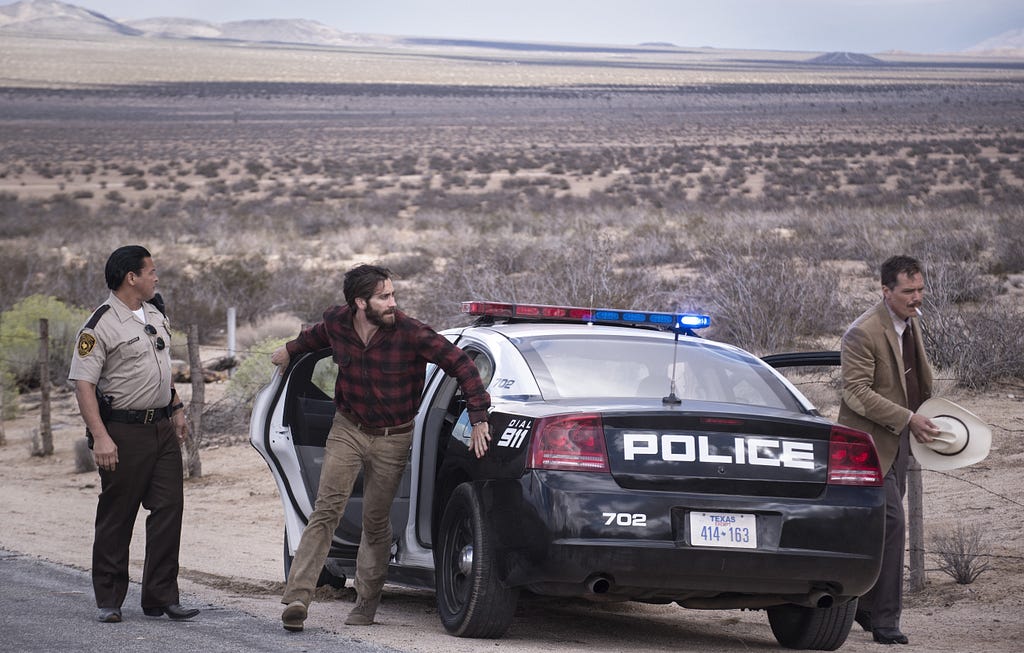
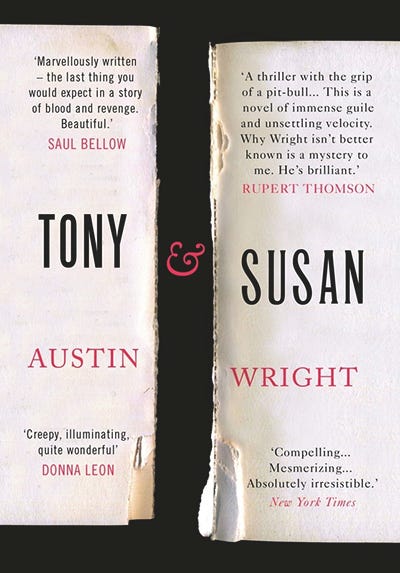
Even more surprising is that it depicts a thinly veiled version of the two of them as a blissful couple on a road trip with their teenaged daughter. Except in Edward’s book, which Susan reads feverishly in her beautiful if cold Los Angeles home, the character of the wife is raped and killed early on, the plot hinging on her husband’s subsequent search for justice. As director Tom Ford writes it in his adapted screenplay, the moment Susan realizes what kind of work her ex-husband has authored, “She is stunned. The deafening silence and the stillness of her bedroom is in sharp contrast to the scene she just read. It takes her a moment to calm down.” A thriller wrapped in a marital revenge drama, Ford’s Nocturnal Animals — like Austin Wright’s Tony and Susan, the novel on which it’s based — is also a film about the imagined female reader.
Edward’s novel, with its titillating violence against women, thrills and terrifies Susan in equal measure — both for what it tells her about her ex-husband (played by Jake Gyllenhaal), as what it reveals to her about herself. To be sure, this is the promise of all great literature: a book, Kafka instructs us, “must be an ice axe to break the sea frozen inside us.” Or, in Proust’s words, “In reality every reader is, while he is reading, the reader of his own self.” But Susan stands as a peculiar avatar for a reader because the book she’s engaged with is particularly designed as a weapon against her. In the book, as in the film, she is cautious about approaching it, preferring to read while she’s alone.
Jake Gyllenhaal as novel protagonist Tony Hastings and its author, Edward Sheffield, in ‘Nocturnal Animals’
Following the book’s violent opener — which sees Tony (Edward’s alter-ego in his novel, also played by Gyllenhaal in the film) standing helpless as his wife and daughter are abducted by three men on an otherwise empty West Texas highway — Susan begins to worry about what’s yet to come. She recognizes the genre Edward has opted for, and she knows where the story is headed. But since her identification has already been co-opted (she can’t, after all, root against the book’s protagonist, especially when it so clearly feels modeled on her ex-husband, whom she both pities and cares for), she begins to fear that Edward may be laying a trap for her, guiding her thoughts towards places she has gone great lengths to avoid. As in Wright’s novel, the process of reading Edward’s novel leads her to retrace their failed relationship, which among other reasons fractured because she was unable to champion his writing as much as he would have liked.
But there’s a deeper fear here too, one that speaks to the kind of danger a book can conjure for its reader. It is a fear which Wright’s Susan voices in the source novel, stating that “she hopes she’s not being manipulated into some ideology she doesn’t approve.” As a moment of character introspection, this admission is revelatory. Here is a reader all too aware of the way reading can lure you into places you wouldn’t otherwise visit. In Wright’s novel Susan resides in the suburbs, a wife and mother whose picture perfect existence might crumble if she allows Edward’s novel to rattle her. She lives cocooned from outside disturbances, something that Edward’s novel pointedly reminds her. The most fascinating aspect of Wright’s Tony and Susan is the constant frisson between Susan-as-reader and ourselves as readers. The chapter sections that deal with her reactions to the novel come across like a running commentary on the attachment of contemporary audiences to lurid works of fiction. “Tony’s [fictional] world resembled Susan’s except for the violence in its middle,” we are told,
which makes it totally different. What, Susan wonders, do I get from being made to witness such bad luck? Does this novel magnify the difference between Tony’s life and mine, or does it bring us together? Does it threaten or soothe me?
As if to drive the point home, the narrator tells us that these questions “pass through her mind without answers in a pause in her reading.” Wright’s novel is constantly making us aware of these kinds of readerly responses to the text, making us question our own involvement in Tony’s and Susan’s plights, and leading us to wonder whether (and why) reading such violent novels can be both soothing and threatening at the same time.
Edward’s “Nocturnal Animals” is not a far cry from the type of airport paperback thrillers that make it onto book club and bestseller lists, all the while bracketing their own violence as belonging to a fictional elsewhere, one unrelated to the comfortable home where you sit down to read them. Devoid of the inner monologue which Wright offers his character on the page, Ford merely presents us with shots of Adams sighing or looking aside as she sets down the book. There’s anguish in her eyes, giving us the sense that the icy cold woman she is today might be thawing — proof of the humanistic power of the printed word, an art form more earthly and able to connect with real people than the conceptual art she deals in. (It’s no coincidence as well that we frequently see Adams reading at home alone, without the harsh if elegant makeup she dons for work). This change in Susan’s demeanor, Wright and Ford suggest, has to do with being confronted with violence. There’s something in the experience of reading about the indiscriminate violence depicted in Edward’s novel that destabilizes her worldview, and even risks upending it altogether.
In many ways Tony and Susan is a probing commentary on a reader’s imagined safety when dealing with portrayals of violence. “The book weaves around [Susan’s] chair like a web,” we’re told. “She has to make a hole in it to get out. The web damaged, the hole will grow, and when she returns, the web will be gone.” It’s a clear metaphor for entrapment, one which imagines her process of reading as a helpless struggle and pinpoints the feeling of losing oneself in a page-turner, though it recasts it in a wholly sinister light.
If, as recent cognitive scientists suggest, reading fiction makes us more empathetic (and remind us that women are more likely to pick up a book of fiction than men), this figure, of a female reader as a damsel in distress caught in a web of her own making, is particularly illuminating. It not only reimagines the most reviled of readers — those driven by emotions and seemingly easy to manipulate — but specifically maps that other looked-down upon group of readers: women. That the two groups have, historically, been lumped together is not so much a coincidence as a matter of fact. And so, while ideas of empathy and identification, of sentimentality and imagination, are embodied by Susan whenever she picks up Edward’s novel, the male author is shown to wield those concepts as a means of punishing his female protagonist, making a mockery of her own self-indulgent, empathetic reading experience.
In the big screen translation, Ford further complicates this tension. The suburban reader who lives vicariously through pulpy novels, providing her a sense of danger from the comfort of her picket-fenced home, has been transposed onto a vacuous coastal elite who lives an empty life and has no contact with what’s “real” — here, quite literally, and in a Trumpian sort of way, geographically in the South. In this new iteration, Susan is an art dealer whose gallery show opens the film: naked obese women dance in slow motion on giant screens to the delight of a gawking, Angeleno crowd. Everyone tells her it’s a success. She thinks it’s just junk. Overall, the dirty and gory reality that Edward offers her in his book, about laconic detectives and chauvinist criminals, becomes all the more striking. The contrast is made salient thanks to the film’s visual style, as Ford takes the sterile world of Susan’s Los Angeles — with its minimalist design and monochromatic palette — and juxtaposes it with the grimy, dust-covered world of West Texas, which feels oversaturated in comparison.
In the film’s final scene, Adams’ Susan sits and scans around the restaurant where she’s supposed to meet Edward. A few drinks later she realizes he’s not coming. Ford cuts to black before we’re allowed to see what she will do with the understanding that this has been, among other things, a cruel joke at her expense. The empathy she has expended on the novel — and which Ford visualizes with the golden cross that Susan often fondles as she reads, and which we see Tony wearing in the film’s in-book sections — is diminished as meaningless, as hollow as anything adorning her expensive house, as aimless as the cars littering the many establishing shots of the Los Angeles cityscape that punctuate the film. She’s been manipulated, playing right into Tony’s game, caring too much for his characters and his new career only to have that sentiment mocked and dismissed.
That the film ends on such a nihilistic (and torturous) note makes apparent the gendered dynamic that Wright had already embedded in his metafictional page-turner. “If Edward couldn’t live without writing,” Susan “couldn’t live without reading.” In other words, man writes, woman reads. In Nocturnal Animals, which is eager to ogle and revere its male characters and quite happy to make Susan a prop on which to hang the misogyny and elitism she begrudgingly exults, this simple proposition leaves an unsavory aftertaste. Whatever irony there was in Wright’s prose has gone. What’s left is a disdain for the type of reader Susan represents, the type of audience we ourselves have been nudged to become. And like Edward, Ford ultimately gets the last laugh, leading us on in expectation without ever showing up.
Stuck on an idea for your next short story? Every now and then we gather news headlines that are strange enough to be fiction. Here’s a batch of headlines to get your creative juices flowing along with suggested genres:
Self-conscious to the point of inanity, [Franco’s] Actors Anonymous is built on a towering stack on unwarranted pretension that sporadically attempts to undercut itself with a scene where a professor tells Franco that his book isn’t very good. Also includes an oral sex scene in a public bathroom that ends with a character spitting semen on to an unflushed turd.
“Readable” has become the chosen term of praise in our times precisely because so many of us find ourselves unable to concentrate as we once could or still aspire to. But to praise readability is to embrace the vicious feedback loop that our culture now finds itself in.”
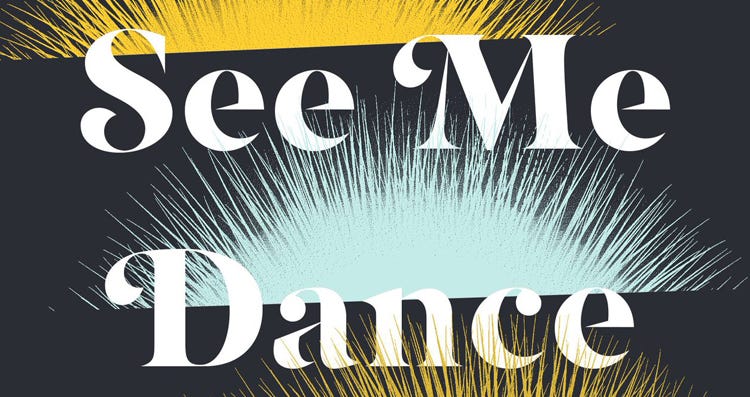
“She could see she was becoming a thoroughly unlikable person.” So begins Likable, the first piece in Deb Olin Unferth’s short story collection Wait Till You See Me Dance. This unnamed, unapologetically self-aware character imagines her offensiveness growing as she ages, and ultimately embraces this quality as a pseudo superpower. “Likable”acts as a springboard for Unferth to explore the fairytale stock figure, the crone: a simultaneously wise yet repulsive, and often nefarious, older woman. Age serves the crone well in that it imbues her with knowledge, while conversely rendering her unpleasant and disagreeable. She is overlooked, yet powerful. Unferth both modernizes and lifts the curtain of this tried and true archetype to reveal complex characters with faults, victories, and desires.
In the books second story, “Pet,” Unferth’s present day crone takes the form of a single mother living in a basement apartment with her aloof and angry teenage son. The central plot is her struggle to care for two ailing turtles that once belonged to her sisters’ children. When the distraught protagonist attempts to return the turtles, her sister replies, “I don’t care what you do with those turtles but don’t bring them here. I’m the good guy for once. Their aunt stole them — it wasn’t anything I did.” These women feel a real danger associated with aging, and the negative societal implications that follow. By foisting the turtles upon the protagonist, the sister attempts to free herself of impending crone status at the cost of dooming her own kin. Unferth’s characters, despite their best efforts, find themselves exhibiting crone characteristics.
“In Unferth’s world, moving forward is an act of fortitude.”
The turtles themselves are a classic symbol of age and endurance. With the ability to live over 100 years, the turtle is a mystical and ancient being, and yet the protagonist carts around in a tool case throughout the story. She takes them to the vet and to her support group, but they are considered inconvenient, and their illness is not taken seriously. The comically dark trio fumble throughout the story, unable to get the care and respect they deserve. At the end of the story, they return to the protagonist’s basement apartment, only to have find feces covering the bathroom walls due to a faulty drain. Amidst this chaos, she receives an unexpected call from a man in the support group. He suggests she release the turtles in a local pond. The story ends with the protagonist imagining releasing the turtles into a pond, where the can commune with other turtles. She envisions them far from their artificial basement dwelling, and frees herself by proxy.
Unferth’s exploration of the crone raises a pertinent and wholly modern question: how does the middle age women exist inside this space of erasure? When a woman is seen as unviable in a sexual marketplace that hinges upon the male gaze, existence outside of this gaze is simultaneously delegitimizing and empowering. In the title story the protagonist, another unnamed woman, is an ESL teacher. She is underpaid, her students resent her, and she is apathetic to the ineffectiveness of her teaching. She does, however, reveal to the reader that she has a unique power. She knows when people will die, saying, “I can look into their faces and see if they have long to last. It’s like having a knack for math or a green thumb…people wear their health on their faces.” Despite her usual apathy towards the success of her students, she takes a liking to a pupil who she knows could die, because if he does not pass the test, as he will be forced to return to his war torn home country. His English is very poor, and her only hope of saving him is switching his grade so he passes. To change his grade, she must bribe a disagreeable office assistant by driving her to a traditional Native American dance ceremony. The drive takes hours, and the assistant taunts her by calling her “Mary,” a reference to a movie —
“…where the angel comes to earth and shows a man the future and how bad it’s going to be, and the man looks at the future and says, ‘But what about Mary? What happens to her?’ And the angel says, ‘You’re not going to like it George.’ And George says, ‘Well, I have to know. Tell me, Angel.’ And the angel says, ‘She’s an old maid! She works at the library!’ and the man says, ‘Noooooo!”
It is poignant that we never know the narrators name, and that the only identification we have is a false name concocted by a mean spirited, manipulative person, who has no name other than “the assistant.” The narrator ultimately gets fired and is not able to influence the outcome of the boys test, but despite this dreary plot line there is a hint of redemption in the very last sentence. The narrator says, “I may be an old maid, and I may spend the rest of my life loving people who never loved me, and loving them in ways that aren’t good for me, but I stepped around with her. I danced.” She realizes that being unwatched, albeit isolating, offers a greater freedom of movement. Unferth is a master of comic darkness punctuated by a glimmer of hope.
Unferth brand of dark humor echoes Voltaire’s Candide, and she directly references the classic satire in Voltaire Night. This story features another unnamed middle age woman who teaches a continuing education class, this time in fiction. The narrator describes her student’s writing as “nothing to shout about. Not good, mostly unreadable.” At the end of the term, she proposes a game: everyone must recount the worst thing that’s happened to them. Her primary motivation for this game is that she will be able to talk about a recent breakup and have a captive audience. Like Voltaire’s own Candide, the student’s tales of woe are abundant. Although the students revel in the opportunity to air their grievances, there is ultimately no prize to be won. No one’s suffering has currency. In true crone fashion, the narrator becomes leader of a strange and somewhat sinister cult. Students take the class again just to attend Voltaire night. Their stories become increasingly tragic, and she wonders if it’s all gone too far. Attendees seem to be under a spell. Voltaire night lasts longer and longer, into the wee hours of the morning.
Voltaire’s message that we must “cultivate our garden” despite continual and senseless setbacks is prevalent throughout Unferth’s collection. By the end of each story, Unferth’s characters, despite constant humiliations and degradation, manage to pick themselves up. They exercise their offbeat power and savor small victories amidst the erasure imposed upon them. In Unferth’s world, moving forward is an act of fortitude.
When I began reading Emily Ruskovich’s debut novel Idaho, I thought it was going to be a plot-heavy mystery. The book opens on Ann, a middle-aged woman living in northern Idaho, rummaging through her husband Wade’s truck and thinking about Wade’s two young daughters — June, who has been missing for 18 years, and May, who is dead. From there, the story unfolds not as a thriller, but as a lyrical meditation on memory, loss, and recovery. We learn early on that it was Jenny, Wade’s ex-wife and May and June’s mother, who committed the murder. The book spans over forty years, opening in 2004 and moving back and forth in time, from the mid-1980s, when Jenny and Wade were still together and a happy, young couple to the mid-2020s, when Jenny is released from jail. At the heart of the book is the relationship between Wade and Ann, who meet not long before the murder of Wade’s daughters and begin a romantic relationship shortly thereafter. Ann helps to care for Wade, who is suffering from genetic early-onset dementia, and she works to piece together his life with his ex-wife and two children before he is too sick to remember any of it. I spoke with Emily Ruskovitch over email about why this book needed to be set in Idaho, how she crafted its lyrical prose, and why she set a chapter eight years into the future.
Michelle Lyn King: In an interview with Salon, you mentioned how your childhood on Hoodoo mountain was an influence in writing Idaho. I would love to hear more about that. How exactly did growing up in Northern Idaho influence you? Why did this story need to be set there?
Emily Ruskovich: I never made an actual decision to set the novel in Idaho; Idaho was there from the very beginning, from the very first moment I started to feel my way around this story, and in that way, the story and the setting feel inextricable from each other. The feeling I get from these characters is the feeling I get from the mountains of Idaho. It is beautiful and quiet and secret and can also be very scary. The mountain where the Mitchells live is a version of the mountain where my family lived. Our houses look different, but the layout of the land is very similar. The rotting furniture and junked cars the characters find out in the woods were very familiar sights for my siblings and me when we would go exploring the land surrounding our own. It was not a very friendly place in a lot of regards, and it was often quite scary. People were often armed. There was a lot of racism and anti-government sentiment. I remember finding some haunting things out in the woods, and I remember that one day, our half-built chicken house simply disappeared. Even the cinderblocks that formed the foundation, all of it gone. We were in the middle of nowhere, on a property that was incredibly difficult to access, and yet someone had come up in the night to steal every last piece of lumber, right down to the last brick. Another time, very early in the morning, we were threatened by a dangerous man who was waiting for us in our garden, in the dark. These facts are shocking to me, of course, perhaps even more shocking now than they were then. I feel alarmed at them, because, in spite of it all, the mountain remains the place I love most in the world, because it was our place. My family carved out a beautiful and kind place, as many people did, in an otherwise hostile landscape, just as Wade and Jenny did when they were young. Our acreage, like theirs, was strange and beautiful. Streams of pinecones; the tree sap smelled like honey. It was a very wild place, and some of the best years of my life were spent there. There were a lot of wonderfully kind people to be found, if you looked. A couple who made knives for a living, who lived two miles up the dirt road from us, nearly at the top of the mountain, were our dear friends and closest neighbors. We relied a great deal on their help when we first moved there. The anecdote in the third chapter about Wade and Jenny buying the land on the promise that the road would be plowed by the county (because a school bus driver lived even farther up), was something that really happened to my parents. The man who sold them the land told them they did not need to worry about buying a tractor to plow. He spun a story about a school bus driver that didn’t actually exist, in order to convince my trusting parents to buy. So we were in a bind once winter came. We used to have to haul our groceries up the mountain in a sled, just like Wade does in the story. Sometimes we hiked two miles down through the darkness and the snow just to catch the school bus. .
MK: I wonder if you could tell me a bit about how you structured the novel. The novel spans forty years and provides insight into the lives of many characters, not just the three main ones. Did you know the framework for the book when you began it?
ER: I didn’t even know at first that this was a novel. The first chapter of the novel was once a stand-alone story that I wrote during my first year in graduate school at the University of Iowa. One of my teachers, Ethan Canin, told me that it wasn’t a story but the beginning of a novel, but I didn’t listen — or, at least I didn’t know that I had listened. I didn’t want to listen. The idea of writing a novel terrified me, and I worried that I would ruin the story that I very much loved by expanding it. But a few years later, when my editors suggested the same thing, I realized that I had been feeling the same thing, too. I realized that ever since Ethan Canin put the thought into my mind, the story had evolved, grown inside of me, almost subconsciously, so that when I devoted myself to it, finally, a couple of years later, many of the chapters came quite quickly, the voices already very real to me, especially that of May, whose voice is the childhood voice of my younger sister Mary. But the first perspective I wrote from, aside from Ann’s, was Wade’s father Adam. It’s strange that he was the one I chose to start with, as he was only mentioned once in the original story, just briefly, and his story isn’t integral to the overall plot, but I feel it’s integral to the feeling of the novel. The scene of him looking for his own home really haunted me. That scene seemed to evoke the tragedy of dementia differently than the Wade chapters. So writing about Adam was a way of writing about Wade, too. Once I wrote Adam’s perspective, the structure of the novel really opened up. I suddenly had a lot of freedom to explore.
MK: I’m very interested to hear about Eliot’s function in the book. You could have made the decision to never return to him, to have him just be this character that, in a sense, brought Ann and Wade together. I loved that we did return to him. Can you tell me about that decision and his character?
ER: My husband said something to me about Eliot recently that really struck a chord with me. He said that it was interesting that Eliot had built his whole identity around an absence. The absence of his leg. And what a fragile thing that was to do, to believe that the story of your life began the moment you lost something crucial. I’m not really sure how aware I was of this connection as I was writing, that Eliot has done the same thing that Ann has done, in a way: she has built her life around an absence, around Wade’s pain. Writing about Eliot was, therefore, a way of also writing about Ann. Sometimes Eliot feels the presence of his missing limb, just as Ann feels, everywhere and all the time, the presence of Jenny in her life — the start and end of everything.
But I was more conscience of writing about Eliot as a way of writing about June. June is the only member of the Mitchell family whose perspective isn’t in the novel. And so writing about Eliot was a way of writing about her. It was a way of getting close to her own vision of herself, without writing from her perspective directly, which I felt I couldn’t honestly do, since she is lost not only to her family, but to the novel itself, which never does provide a clear answer to what happened. But getting so close to Eliot was a way of getting close to June’s love. Eliot’s chapter also opens up the possibility that June is the one who set his backpack on the edge of the dock, that June has committed a mostly-accidental act of violence — violence born of love — by putting his backpack there, which resulted in the loss of Eliot’s leg. And I think this is an interesting and disturbing parallel to her mother’s act of horrific — and also almost-accidental — violence toward May.
So I feel that Eliot, even though he’s somewhat in the periphery of the main plot, is the beginning of everything, as you said. Without him, there is no Ann and Wade. And without his voice, we wouldn’t have what I think is this crucial access to June.
MK: Can you tell me about organizing the timeline? What goals does a nonlinear timeline allow you to achieve that a linear one does not?
ER: I think a nonlinear timeline, in this case, more closely mimics the way memory works, the constant intrusion of the past into the present. I also think that a nonlinear timeline allowed me to write more accurately about the violence of what occurred, because it allowed me to explore that violence somewhat outside of time. It is not a straightforward story, even though at the heart of the novel is an absolute event, an absolute moment in time from which everything else emerges. But the way that event is processed, understood, remembered, forgotten — all of that is very mysterious, and I feel that writing from various points of time, non-chronologically, helped me convey that mystery.
MK: There are sections of the book set in the not-so-distant future, in the year 2025. I thought this was such an interesting and bold choice. How did your arrive at the decision to set parts of the book in the future? Were you ever encouraged not to do so or did you ever consider not doing so?
ER: I think that the feeling that exists between Jenny and Ann in the end is more complicated and more intimate than a context can alter. Their interaction is so personal that I don’t think it will matter if the world is different in 2025. Ann will still feel this way about Jenny, and Jenny will still feel this way about Ann. It’s the same as reading a book about the distant past. Even though many of the things people struggle with in those stories are so vastly different than our present day concerns, we still feel for them, and understand them, and empathize with them. We still are them. We love our families. We worry about each other. We fall in love. We feel hope and despair and anger and joy. And those things are untouchable, even by time.
“We love our families. We worry about each other. We fall in love. We feel hope and despair and anger and joy. And those things are untouchable, even by time.”
And because so much of Ann’s story is an act of speculation, it makes sense that the novel itself would be speculative in this very traditional sense. Ann is always looking into Wade’s past, but she is also painfully aware of stepping toward her future — her life after Wade. And it’s true that the novel will arrive at its own future, too. It will one day arrive at 2025, just as Ann one day arrived there, and at that moment, the novel will cease to be speculative; that dimension of the book will be lost. But I think that’s okay. I think that’s really interesting.
No one ever suggested that I change the timeline, and, while I had some nervousness about it at first, the more I thought about it, the more I felt it was an important dimension to the novel. The reason I first thought to explore it was simply a practical one: I really needed June and May’s childhood to take place in the 1990s because I myself was a child in the 90s, and I wanted their world to look the same as mine did, so that I felt their childhoods even more deeply.
MK:What was the research process like for this book? I’m curious to know how you went about researching women’s correctional facilities in Idaho or Wade’s disease. I’d also very curious to know if you returned to Idaho at all while writing this book.
ER: I didn’t do a lot of research as I wrote. I looked up statutes regarding the murder of a child in Idaho, and information about sentencing in Idaho. This I did online, in a fairly quick search. And I read one book called Women Behind Bars: The Crisis of Women in the U.S. Prison System by Silja J.A. Talvi that was extremely informative and so heartbreaking and shocking. I learned a great deal from it. But I would say that mostly, as I wrote, I just imagined as deeply as I could and hoped that imagining so deeply would mean that I had created something close to what was real. (There is some author who says something like this; a friend quoted it to me once and it really stuck with me. I wish I knew who the author was.) I did learn some things about how a prison is run from my dad, who worked as a counselor at a correctional facility for young people. And, for a brief time, I co-facilitated a memoir-writing class at a medium-security men’s prison. But I have never been inside of a women’s prison. In a way, the best research I did was when my husband and I drove to the Women’s Correctional Facility in Pocatello, Idaho, and we just sat in our car in the parking lot, looking at the un-spectacular building that we knew held so much pain and longing, so many stories. It was heartbreaking to see the little plastic slide out in the yard, and imagine the women playing with their children when they visited, trying to make it a nice time for them, trying to be cheerful. We noticed the things that the women would see through the fence — the hills of sage and scrub-brush, the quaint garden that volunteers kept up just outside, and we just stayed there for awhile, trying to picture what it would be like to only know this one view, your whole sense of the world framed by a single window, your whole life defined by a single crime from many years before. It’s been something I have thought about a great deal since I was very young. I’ve imagined deeply, all throughout my life, what it would be like to go to prison, wondering if a person might find some way of protecting her interior life in spite of everything.
“I’ve imagined deeply, all throughout my life, what it would be like to go to prison, wondering if a person might find some way of protecting her interior life in spite of everything.”
I can’t quite recall how much research I did on Alzheimer’s disease, but I don’t think it was substantial. I know that I looked up whether or not early-onset dementia was genetic, and at what age symptoms begin to show. I am sure there were a few other facts I looked up, too, but mostly, I felt like facts weren’t as important as the stories I have heard or read, which have affected me so much. Ever since I first learned what the disease was, when I was young, I have paid such close attention to stories about people coping with their loved one’s disease, and I feel that just from listening for so long, that I have learned a great deal. But it wasn’t from any focused research, it was just from years of listening and feeling. It was actually from a work of fiction that I learned the most. I read Alice Munro’s The Bear Came Over the Mountain, and the way she evoked the perseverance of a self — in spite of extraordinary loss — was one of the most moving things I’ve ever read. It had a profound influence on me.
And, yes, I did return to Idaho as I wrote! I returned many times. My parents were still living on the mountain where the novel takes place, so I spent my summers with them, working on the novel.
MK:I’d like to end with the subject of language. The prose in Idaho is, in a word, stunning. I kept finding myself rereading sentences over and over again. In many ways, the sentences mirror Idaho’s landscape. It also matches the interior landscape of the book’s characters. I’m curious as to how the narrative voice of the book came to be. Can you please tell me a bit about that?
ER: This is a really wonderful question, and I am so glad that you thought the language was effective, but I’m not really sure I know how the narrative voice arose. It arose partly because I had such a strong sense of my characters, and I felt their voices and tried to evoke those voices on the page. But it also didn’t quite “arise” — it was something that I had to really work hard on and struggle with. The language was so important to me, and so I did a lot of rewriting, deleting, starting over. It was a very long process. A few of the passages I’m sure I re-wrote fifty or more times, first allowing some poetry on the page, and then pulling it back, and then stepping it forward, over and over again. I never wanted the poetic language to feel indulgent or exploitive or inappropriate or separate of the characters, but rather a part of their understanding of themselves. If I ever felt that I was risking dishonesty by using poetic language, I was very disciplined about getting rid of it. It was a delicate balance to strike: How do you write honestly with poetic language about something that is absolutely not poetic, that’s horrifying and ugly? It’s a very difficult question, and I feel that I managed it only by getting close enough to my characters that the language was a part of their perspectives. I never wrote, in absolute or direct terms, about the murder itself. The murder is explored only through speculation and through memory, both of which are necessarily very flawed, and there is room for poetry in those flaws. It was by focusing on language that I found a way to express the impossibility of ever getting close enough to what occurred to understand it at all.
“How do you write honestly with poetic language about something that is absolutely not poetic, that’s horrifying and ugly?”
Also, I pay a lot of attention to rhythm. When I write, I speak. I read every single sentence aloud many times. I have muttered my entire novel to myself more times than I can count. One review mentioned that the language is a kind of consolation to the reader, and I was very moved by that, and hope that it is true. In the novel, there are many questions that are left unanswered, but that was what felt right to me, what felt most real. And so maybe the poetic language is a way of giving the sense of an answer, just a sense of one, that the story itself is unable to provide.
The Ladykillers star and typewriter enthusiast is also an author
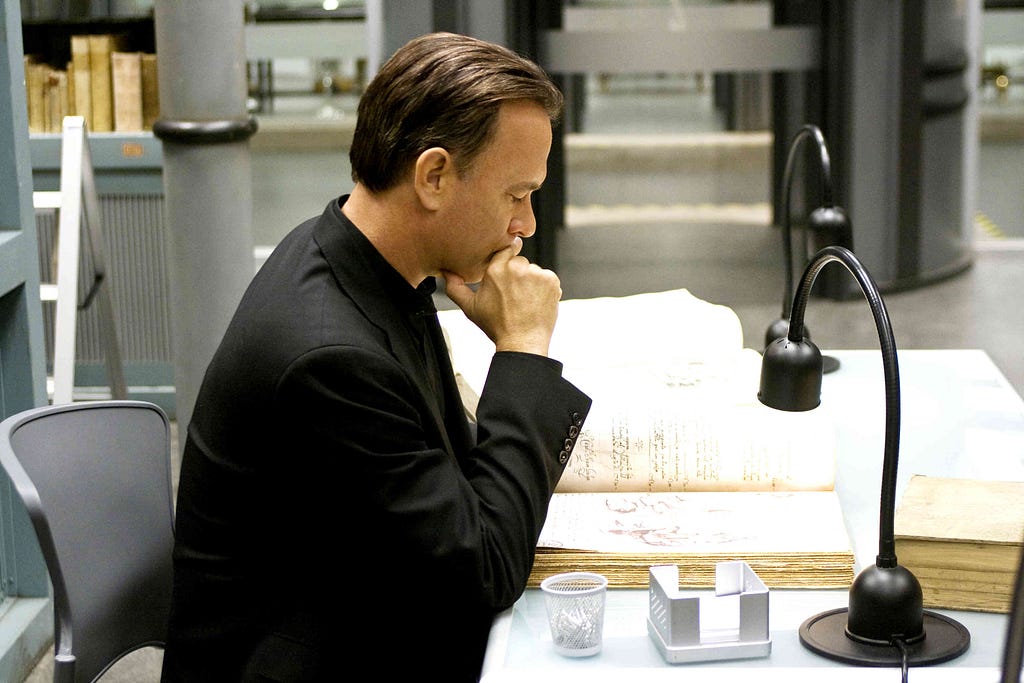
Tom Hanks can now add publishing a book to his extensive resume. The actor has written a short story collection, titled Uncommon Type: Some Stories. It’sdue out in October and is centered around his fascination with the typewriter. Wait, a typewriter-themed collection? Yes, that does sound a little odd, now that you mention it. According to publisher Alfred A Knopf, the seventeen narratives will include “a story about an immigrant arriving in New York City after his family and life have been torn apart by his country’s civil war; another about a man who bowls a perfect game (and then another, and another) becoming ESPN’s newest celebrity; another about an eccentric billionaire and his faithful executive assistant on the hunt for something larger in America; and another about the junket life of an actor.”
How those snippets will relate to Hanks’ love of typewriters remains unclear, but perhaps his typewriter app, Hanx Writer, will make an appearance.
The collection isn’t Hanks’ first foray into fiction. His story “Alan Beam Plus Four” appeared in The New Yorker in 2014. While the piece probably won’t change the way you think about art, it’s certainly a far more professional attempt at craft and narrative than the literature churned out by some of Hanks’ colleagues in Hollywood. To name just a few of our favorites:
— Paradise Alley: A Novel, by Sylvester Stallone, 1978: It’s a novelization of his own film. Also the title.
— Holy Cow: A Novel, by David Duchovny, 2015: This novel is from the perspective of a cow.
— Propeller One-Way Night Coach: A Fable for All Ages, by John Travolta, 1997: A children’s book written and illustrated by John Travolta, who likely had no training or experience writing or illustrating children’s books.
— Palo Alto, by James Franco, 2010: By most accounts not a terribly written collection of stories. However, Franco’s decision to star in the film adaptation of his own collection pretty much nullifies any sort of goodwill.
Then again, Hanks did recently make a movie with Sam Shepard — the actor, Pulitzer Prize-winning playwright, and author of the acclaimed short story collections, Cruising Paradise and Day out of Days. Maybe Hanks will follow that path rather than the one blazed by Stallone and Franco? We’ll soon see.
DON’T MISS OUT
Sign up for our newsletter to get submission announcements and stay on top of our best work.
YOUR INBOX IS LIT
Enjoy strange, diverting work from The Commuter on Mondays, absorbing fiction from Recommended Reading on Wednesdays, and a roundup of our best work of the week on Fridays. Personalize your subscription preferences here.